Binance Square
#dolomite

dolomite

10.4M vues
75,313 mentions
Phoenix Group
·
--
$DOLO /USDT – Short-Term Bearish Momentum $DOLO is currently down 2.36%, failing to sustain levels above $0.1854. Support at $0.1683 is being tested, and a break below this level could lead toward $0.160–$0.155. Selling pressure remains slightly dominant in the near term. Trade Setup: Short Entry: $0.174 – $0.176 Take Profit (TP): $0.168 / $0.160 Stop Loss (SL): $0.185 Market Outlook: The short-term trend is bearish, with lower highs forming. Minor bounces may occur near support, but overall momentum favors sellers until key resistance is reclaimed. Traders should monitor $0.168 for potential continuation or reversal.@Dolomite_io #Dolomite #DeFiGems #BinanceSignals #DOLO
$DOLO /USDT – Short-Term Bearish Momentum

$DOLO is currently down 2.36%, failing to sustain levels above $0.1854. Support at $0.1683 is being tested, and a break below this level could lead toward $0.160–$0.155. Selling pressure remains slightly dominant in the near term.

Trade Setup:

Short Entry: $0.174 – $0.176

Take Profit (TP): $0.168 / $0.160

Stop Loss (SL): $0.185

Market Outlook:
The short-term trend is bearish, with lower highs forming. Minor bounces may occur near support, but overall momentum favors sellers until key resistance is reclaimed. Traders should monitor $0.168 for potential continuation or reversal.@Dolomite #Dolomite #DeFiGems #BinanceSignals #DOLO
$DOLO Airdrop trên Binance Square sẽ kết thúc vào ngày 30/9/2025. Dolo có nguồn cung : 1,000,000,000 DOLO. Phần thưởng Binance Square : 330,000 DOLO sẽ được phân phối cho mọi người khi hoàn thành đầy đủ các nhiệm vụ. - Mục Tiêu của DOLO: 😍Tăng cường tính minh bạch: DOLO sử dụng công nghệ blockchain để cung cấp một hệ thống minh bạch, cho phép người dùng theo dõi và xác minh giao dịch một cách dễ dàng. 🐳Giảm chi phí giao dịch: Bằng cách loại bỏ các trung gian, DOLO giúp giảm thiểu chi phí giao dịch, từ đó tạo điều kiện thuận lợi hơn cho người dùng. 👀Bảo mật cao: Công nghệ blockchain cung cấp một mức độ bảo mật cao cho dữ liệu và giao dịch, giúp bảo vệ thông tin cá nhân và tài sản của người dùng. Dự án DOLO Blockchain có tiềm năng lớn trong việc thay đổi các quy trình kinh doanh truyền thống và mở ra cơ hội mới cho các doanh nghiệp và người tiêu dùng. #Dolomite @Dolomite_io
$DOLO Airdrop trên Binance Square sẽ kết thúc vào ngày 30/9/2025.
Dolo có nguồn cung : 1,000,000,000 DOLO.
Phần thưởng Binance Square : 330,000 DOLO sẽ được phân phối cho mọi người khi hoàn thành đầy đủ các nhiệm vụ.
- Mục Tiêu của DOLO:

😍Tăng cường tính minh bạch: DOLO sử dụng công nghệ blockchain để cung cấp một hệ thống minh bạch, cho phép người dùng theo dõi và xác minh giao dịch một cách dễ dàng.

🐳Giảm chi phí giao dịch: Bằng cách loại bỏ các trung gian, DOLO giúp giảm thiểu chi phí giao dịch, từ đó tạo điều kiện thuận lợi hơn cho người dùng.

👀Bảo mật cao: Công nghệ blockchain cung cấp một mức độ bảo mật cao cho dữ liệu và giao dịch, giúp bảo vệ thông tin cá nhân và tài sản của người dùng.

Dự án DOLO Blockchain có tiềm năng lớn trong việc thay đổi các quy trình kinh doanh truyền thống và mở ra cơ hội mới cho các doanh nghiệp và người tiêu dùng.
#Dolomite @Dolomite
O token DOLO, da plataforma Dolomite, caiu 37% e agora vale $0.2176, após tocar $0.3719. Suporte chave: $0.2220 → pode segurar o preço e favorecer recuperação. Resistências: $0.2167 e $0.3450 → rompimento sinaliza força compradora. Indicadores: RSI em sobrevenda → possível repique, mas tendência ainda é baixista até romper $0.30. Cenários: 🔹 Segurar $0.2220 → chance de alta rumo a $0.2990–$0.3450. 🔹 Perder $0.2180 → risco de queda para $0.1970–$0.1925. #DOLO #CryptoDolo #Dolomite #BinanceCrypto
O token DOLO, da plataforma Dolomite, caiu 37% e agora vale $0.2176, após tocar $0.3719.
Suporte chave: $0.2220 → pode segurar o preço e favorecer recuperação.
Resistências: $0.2167 e $0.3450 → rompimento sinaliza força compradora.
Indicadores: RSI em sobrevenda → possível repique, mas tendência ainda é baixista até romper $0.30.
Cenários:
🔹 Segurar $0.2220 → chance de alta rumo a $0.2990–$0.3450.
🔹 Perder $0.2180 → risco de queda para $0.1970–$0.1925.

#DOLO #CryptoDolo #Dolomite #BinanceCrypto
✨ The future of decentralized trading is here with @Dolomite_io ✨ Unlike traditional exchanges, #Dolomite is built for ⚡ speed, 🔒 security, and 💡 innovation. With Layer 2 scalability, traders enjoy ultra-low fees 💰, lightning-fast swaps ⏱️, and a smooth user experience. $DOLO isn’t just another token—it’s the fuel 🔥 powering a next-gen DeFi ecosystem 🌐 where transparency and composability give users full control. Dolomite is creating a bridge 🌉 between liquidity and innovation, making it easier than ever to level up your strategies 📈. In a market where trust and performance matter most, Dolomite is standing out as the go-to platform for serious traders 🎯. If you’re ready to take your DeFi journey to the next level, it’s time to explore Dolomite and see what true decentralized trading feels like 🚀. #Dolomite | $DOLO
✨ The future of decentralized trading is here with @Dolomite
Unlike traditional exchanges, #Dolomite is built for ⚡ speed, 🔒 security, and 💡 innovation. With Layer 2 scalability, traders enjoy ultra-low fees 💰, lightning-fast swaps ⏱️, and a smooth user experience.

$DOLO isn’t just another token—it’s the fuel 🔥 powering a next-gen DeFi ecosystem 🌐 where transparency and composability give users full control. Dolomite is creating a bridge 🌉 between liquidity and innovation, making it easier than ever to level up your strategies 📈.

In a market where trust and performance matter most, Dolomite is standing out as the go-to platform for serious traders 🎯. If you’re ready to take your DeFi journey to the next level, it’s time to explore Dolomite and see what true decentralized trading feels like 🚀.

#Dolomite | $DOLO
Breaking the Barriers: How Dolomite Addresses DeFi’s Hidden Issues When I first started diving into decentralized finance, everything seemed full of potential — open systems, borderless lending, and financial independence. However, as I explored further, I began to notice some flaws. Many DeFi lending platforms felt limiting. They supported only a few assets, which restricted my ability to use the tokens I actually owned. I craved flexibility, but instead encountered constraints masquerading as innovation. Then there was the problem of composability — or rather, its absence. Each platform operated in isolation, making it challenging to move liquidity or integrate strategies across different protocols. My funds felt trapped and scattered among various systems that wouldn’t communicate with one another. The vision of open finance began to resemble a confusing maze of disconnected elements. And let's not forget the constant anxiety over liquidation that hung over every trade. A slight market dip could erase hours of careful planning. I wanted a system that collaborated with me — not one that worked against me. This is where Dolomite comes into play. It dismantles these barriers by unifying assets, enhancing risk management, and linking liquidity within a cohesive ecosystem. As a DeFi user seeking more control and flexibility, Dolomite finally provides what I've been looking for, transforming frustration into true empowerment. @Dolomite_io #Dolomite $DOLO {spot}(DOLOUSDT) $BNB {spot}(BNBUSDT)
Breaking the Barriers: How Dolomite Addresses DeFi’s Hidden Issues

When I first started diving into decentralized finance, everything seemed full of potential — open systems, borderless lending, and financial independence. However, as I explored further, I began to notice some flaws. Many DeFi lending platforms felt limiting. They supported only a few assets, which restricted my ability to use the tokens I actually owned. I craved flexibility, but instead encountered constraints masquerading as innovation.

Then there was the problem of composability — or rather, its absence. Each platform operated in isolation, making it challenging to move liquidity or integrate strategies across different protocols. My funds felt trapped and scattered among various systems that wouldn’t communicate with one another. The vision of open finance began to resemble a confusing maze of disconnected elements.

And let's not forget the constant anxiety over liquidation that hung over every trade. A slight market dip could erase hours of careful planning. I wanted a system that collaborated with me — not one that worked against me.

This is where Dolomite comes into play. It dismantles these barriers by unifying assets, enhancing risk management, and linking liquidity within a cohesive ecosystem. As a DeFi user seeking more control and flexibility, Dolomite finally provides what I've been looking for, transforming frustration into true empowerment.
@Dolomite #Dolomite $DOLO
$BNB
$DOLO DOLOUSDT — @Dolomite_io Near Support, Eyeing a Short-Term Rebound DOLOUSDT is trading around 0.104 after a mild pullback, approaching a support zone where buyers have recently been active. Price action looks neutral-to-slightly bullish if support holds with volume confirmation. Trade Plan Entry (long): 0.1035–0.1045 (watch for bullish confirmation near support) Target 1: 0.1065 (minor resistance) Target 2: 0.1080 (next resistance zone) Stop Loss: 0.1015 (below recent low) My View DOLOUSDT could see a small rebound if it holds above 0.1035. A quick move toward 0.1080 is possible on improving volume — but if it slips below 0.1015, stay out and wait for stability. #DOLO #Dolomite {future}(DOLOUSDT)
$DOLO

DOLOUSDT — @Dolomite Near Support, Eyeing a Short-Term Rebound

DOLOUSDT is trading around 0.104 after a mild pullback, approaching a support zone where buyers have recently been active. Price action looks neutral-to-slightly bullish if support holds with volume confirmation.

Trade Plan

Entry (long): 0.1035–0.1045 (watch for bullish confirmation near support)

Target 1: 0.1065 (minor resistance)
Target 2: 0.1080 (next resistance zone)

Stop Loss: 0.1015 (below recent low)

My View

DOLOUSDT could see a small rebound if it holds above 0.1035. A quick move toward 0.1080 is possible on improving volume — but if it slips below 0.1015, stay out and wait for stability.

#DOLO #Dolomite
Dolomite The Architecture Of DeFi That Breaks Centralized WallsIn the fast evolving world of decentralized finance, few names are quietly shaping a new financial frontier like Dolomite. Built on the Arbitrum network, Dolomite isn’t just another decentralized exchange or margin protocol, it is a fully composable trading environment where traders, liquidity providers, and developers interact in one continuous layer of transparency. Its design reflects what DeFi always promised but rarely achieved a trustless system that mirrors the power of traditional markets without the control of intermediaries. Dolomite operates as a cross margin protocol where users can trade, borrow, and lend directly from their wallets. The system manages all operations through smart contracts, allowing users to use one asset as collateral to trade another within the same environment. This design opens a new dimension for efficiency and safety because collateral never leaves the user’s control while liquidity flows seamlessly across the protocol. The result is a DeFi architecture that feels professional enough for institutional scale yet remains entirely decentralized. At the heart of Dolomite’s appeal is its dynamic risk engine. Instead of using fixed parameters, Dolomite analyzes on chain liquidity and volatility in real time to set borrowing limits. This makes the system responsive to market conditions, reducing the probability of liquidation cascades that often crash prices in other DeFi protocols. Its margin framework allows multiple collateral types under one unified account so users can maintain open positions with diversified protection. It brings the sophistication of centralized margin platforms into a trustless model where users retain full control of their assets. Another major pillar of Dolomite’s ecosystem is composability. Developers can integrate Dolomite’s liquidity and margin infrastructure directly into their own protocols. This gives rise to a network effect where decentralized applications can share liquidity, collateral, and execution paths. The protocol becomes more than a trading venue it turns into a liquidity hub that strengthens the entire Arbitrum ecosystem. This design aligns with the long term DeFi vision where assets move freely between platforms without friction or fragmentation. The project’s tokenomics are built around a model that rewards active participation rather than speculative holding. Liquidity providers earn through real yield generated from trading fees and interest margins rather than unsustainable emissions. Governance participants gain the ability to propose and vote on upgrades that shape the protocol’s direction. The distribution encourages long term alignment between traders, developers, and investors ensuring that Dolomite grows through genuine utility and not temporary hype. What sets Dolomite apart in the crowded DeFi landscape is its emphasis on financial depth. Traditional decentralized exchanges only allow spot swaps, but Dolomite integrates spot, margin, and lending into one synchronized system. It means capital efficiency rises while users avoid fragmentation across multiple platforms. The simplicity of connecting a wallet and immediately accessing margin markets demonstrates how the protocol is bridging the usability gap that once limited DeFi’s mainstream growth. Institutional players are also watching closely. The transparency of Dolomite’s smart contracts combined with its real time risk monitoring offers a foundation for regulated entities to interact with DeFi infrastructure safely. In an era where large capital seeks decentralized yield with compliance transparency, Dolomite stands as a model that could define how institutions enter decentralized markets without compromising control or security. Beyond trading, Dolomite’s integration possibilities extend into broader financial infrastructure. Stablecoin vaults, yield optimizers, and synthetic asset platforms can all plug into Dolomite’s margin framework. Each integration compounds liquidity depth and enhances user experience. This fluid architecture shows that Dolomite isn’t trying to compete against other DeFi apps but to unite them under a single interoperable environment. In perspective, Dolomite is building what many early crypto pioneers envisioned an open, transparent, and efficient market structure that eliminates the dependence on centralized custodians. Its foundation on Arbitrum ensures scalability and low fees while its modular design keeps it adaptable for future innovations in restaking, layer two rollups, and cross chain liquidity sharing. As the decentralized economy matures, the projects that will endure are those that create sustainable systems with real usage. Dolomite embodies this principle. It replaces speculation with structured efficiency and demonstrates that DeFi can be both safe and scalable. The vision is simple but powerful a world where every trader from retail to institutional can access deep liquidity, transparent risk, and true asset ownership in one decentralized network. Dolomite is not just another project on Arbitrum it represents a quiet revolution in decentralized finance. By merging composability, advanced margin infrastructure, and real yield mechanisms, it is setting a new benchmark for what next generation DeFi should look like. The future of open markets will belong to those who remove friction without removing control and in that race Dolomite is clearly ahead. $DOLO @Dolomite_io #Dolomite This post is for educational purposes only. Not financial advice—always DYOR and manage risk.

Dolomite The Architecture Of DeFi That Breaks Centralized Walls

In the fast evolving world of decentralized finance, few names are quietly shaping a new financial frontier like Dolomite. Built on the Arbitrum network, Dolomite isn’t just another decentralized exchange or margin protocol, it is a fully composable trading environment where traders, liquidity providers, and developers interact in one continuous layer of transparency. Its design reflects what DeFi always promised but rarely achieved a trustless system that mirrors the power of traditional markets without the control of intermediaries.

Dolomite operates as a cross margin protocol where users can trade, borrow, and lend directly from their wallets. The system manages all operations through smart contracts, allowing users to use one asset as collateral to trade another within the same environment. This design opens a new dimension for efficiency and safety because collateral never leaves the user’s control while liquidity flows seamlessly across the protocol. The result is a DeFi architecture that feels professional enough for institutional scale yet remains entirely decentralized.

At the heart of Dolomite’s appeal is its dynamic risk engine. Instead of using fixed parameters, Dolomite analyzes on chain liquidity and volatility in real time to set borrowing limits. This makes the system responsive to market conditions, reducing the probability of liquidation cascades that often crash prices in other DeFi protocols. Its margin framework allows multiple collateral types under one unified account so users can maintain open positions with diversified protection. It brings the sophistication of centralized margin platforms into a trustless model where users retain full control of their assets.

Another major pillar of Dolomite’s ecosystem is composability. Developers can integrate Dolomite’s liquidity and margin infrastructure directly into their own protocols. This gives rise to a network effect where decentralized applications can share liquidity, collateral, and execution paths. The protocol becomes more than a trading venue it turns into a liquidity hub that strengthens the entire Arbitrum ecosystem. This design aligns with the long term DeFi vision where assets move freely between platforms without friction or fragmentation.

The project’s tokenomics are built around a model that rewards active participation rather than speculative holding. Liquidity providers earn through real yield generated from trading fees and interest margins rather than unsustainable emissions. Governance participants gain the ability to propose and vote on upgrades that shape the protocol’s direction. The distribution encourages long term alignment between traders, developers, and investors ensuring that Dolomite grows through genuine utility and not temporary hype.

What sets Dolomite apart in the crowded DeFi landscape is its emphasis on financial depth. Traditional decentralized exchanges only allow spot swaps, but Dolomite integrates spot, margin, and lending into one synchronized system. It means capital efficiency rises while users avoid fragmentation across multiple platforms. The simplicity of connecting a wallet and immediately accessing margin markets demonstrates how the protocol is bridging the usability gap that once limited DeFi’s mainstream growth.

Institutional players are also watching closely. The transparency of Dolomite’s smart contracts combined with its real time risk monitoring offers a foundation for regulated entities to interact with DeFi infrastructure safely. In an era where large capital seeks decentralized yield with compliance transparency, Dolomite stands as a model that could define how institutions enter decentralized markets without compromising control or security.

Beyond trading, Dolomite’s integration possibilities extend into broader financial infrastructure. Stablecoin vaults, yield optimizers, and synthetic asset platforms can all plug into Dolomite’s margin framework. Each integration compounds liquidity depth and enhances user experience. This fluid architecture shows that Dolomite isn’t trying to compete against other DeFi apps but to unite them under a single interoperable environment.

In perspective, Dolomite is building what many early crypto pioneers envisioned an open, transparent, and efficient market structure that eliminates the dependence on centralized custodians. Its foundation on Arbitrum ensures scalability and low fees while its modular design keeps it adaptable for future innovations in restaking, layer two rollups, and cross chain liquidity sharing.

As the decentralized economy matures, the projects that will endure are those that create sustainable systems with real usage. Dolomite embodies this principle. It replaces speculation with structured efficiency and demonstrates that DeFi can be both safe and scalable. The vision is simple but powerful a world where every trader from retail to institutional can access deep liquidity, transparent risk, and true asset ownership in one decentralized network.

Dolomite is not just another project on Arbitrum it represents a quiet revolution in decentralized finance. By merging composability, advanced margin infrastructure, and real yield mechanisms, it is setting a new benchmark for what next generation DeFi should look like. The future of open markets will belong to those who remove friction without removing control and in that race Dolomite is clearly ahead.
$DOLO @Dolomite
#Dolomite

This post is for educational purposes only. Not financial advice—always DYOR and manage risk.
Dolomite in Sedimentary EnvironmentsDolomite in sedimentary environments has fascinated geologists, mineralogists, and geochemists for a long time. This interest comes from its presence in ancient rock formations and its relative rarity in modern settings. Dolomite, a calcium magnesium carbonate mineral with the chemical formula CaMg(CO₃)₂, is the foundation of dolostone. This sedimentary rock makes up a large part of Earth’s carbonate record, especially from the Paleozoic and Precambrian eras. Despite its prevalence in the geological past, the large-scale formation of dolomite seems to be uncommon today. This leads to what scientists call the “Dolomite Problem.” This puzzle has been a key topic in sedimentary geology for decades. Why do ancient sedimentary layers show extensive sequences of dolostone while modern environments produce it only under special conditions? To understand dolomite's role in sedimentary environments, we need to look at how it occurs, forms, and the geochemical and microbial influences at play. We must also consider its effects on understanding past environments and resources. From a sedimentological viewpoint, dolomite mainly appears in carbonate platforms, shallow marine areas, evaporitic basins, and less frequently in freshwater settings. Many ancient sedimentary layers, hundreds of meters thick, are mostly composed of dolostone and often mixed with limestone. These rocks hold important records of Earth’s history, including sea-level changes, paleoclimate signals, and details of ancient marine ecosystems. In modern settings, dolomite usually forms in more restricted locations, like hypersaline lagoons or tidal flats, where evaporation and high salinity create unique chemical conditions. The clear difference between the geological record and modern observations has led to much debate and inspired many models for dolomitization, the process through which dolomite forms as either a primary precipitate or a secondary alteration product replacing existing limestone. Dolomite can form in two main ways in sedimentary settings: primary precipitation and secondary replacement. Primary dolomite refers to mineral grains that precipitate directly from solution in marine or freshwater bodies. However, this process seems very limited under today’s ocean conditions because significant barriers prevent dolomite precipitation. Magnesium ions in seawater are highly hydrated, and removing their hydration shells to create solid dolomite requires a lot of energy. So, while calcite and aragonite (the calcium carbonate minerals that make up limestone) can easily precipitate from seawater, dolomite formation is slower and needs special conditions or biological help. In contrast, secondary dolomitization is when limestone converts to dolostone through the replacement of calcium with magnesium in the crystal structure. This happens when magnesium-rich fluids seep through limestone, gradually changing its mineral makeup. There is plenty of evidence of secondary dolomitization in ancient sedimentary rocks, and many of the large dolostone sequences in the geological record are believed to have formed this way. The geochemical conditions for dolomite formation in sedimentary settings are intricate and closely linked to pore water chemistry, temperature, and fluid flow. In evaporitic areas like the coastal sabkhas of the Persian Gulf, where seawater gets concentrated through evaporation, high Mg:Ca ratios and elevated salinities create favorable conditions for dolomite precipitation. Modern dolomite crystals have been found forming within microbial mats and in shallow subsurface sediments. These occurrences suggest that dolomite can form at Earth’s surface today, but only in specific niches where chemical and microbial factors come together. In contrast, the widespread dolostone units found in ancient strata indicate much larger processes that were either more common in the past or operated under different oceanic conditions. Some theories suggest that higher seawater Mg:Ca ratios during specific geological periods allowed for more extensive dolomitization. Others propose that higher global temperatures, large shallow seas, and increased microbial activity together created environments suitable for dolomite formation. The role of microbes in dolomite formation is an exciting area of research. Laboratory experiments and field studies indicate that microbial communities, particularly sulfate-reducing bacteria, can influence dolomite precipitation by changing local geochemical conditions. As microbes break down organic matter, they alter the saturation levels of carbonate minerals and reduce the barriers that typically slow dolomite formation. Microbial extracellular polymeric substances can bind magnesium ions and help detach water molecules from their hydration shells, effectively lowering the energy needed for incorporation into the crystal structure. This phenomenon, often called “organomineralization,” helps explain both modern dolomite formation in microbial mats and ancient widespread dolostone deposits that might have developed in microbial-rich shallow seas. If microbial mediation was more common in Earth’s past oceans, this could help solve the Dolomite Problem by connecting ancient environmental conditions with biological activity. The sedimentary textures of dolomite offer valuable insights into its origins and history. In many instances, dolomite crystals appear as finely crystalline mosaics, indicating widespread replacement of limestone. In other cases, coarse crystalline dolomite cements fill voids, fractures, or pore spaces, suggesting dolomitization during deeper burial stages. These textural relationships assist geologists in reconstructing the timing and mechanisms of dolomite formation within sedimentary basins. For instance, shallow-water dolomitization may involve the tidal movement of magnesium-rich seawater through carbonate sediments, while burial dolomitization might reflect the movement of brines during compaction and tectonic activities. Each type of dolomitization has distinct implications for porosity and permeability, which ultimately impact the reservoir quality of dolostones in petroleum systems. One of the most economically important aspects of dolomite in sedimentary settings is its role in hydrocarbon reservoirs. Many of the world’s largest oil and gas fields are found in dolostone formations. Dolomitization often improves porosity by replacing calcite with smaller dolomite crystals, creating pores, or by selectively dissolving calcite and leaving voids behind. These enhanced pore spaces make dolostones excellent reservoirs for hydrocarbons. For instance, the Middle East has vast dolostone reservoirs that contribute significantly to global oil production. Similarly, dolomite reservoirs are widespread in North America, especially in the Paleozoic carbonate layers of the Appalachian and Williston basins. Thus, understanding the sedimentary and diagenetic history of dolomite is important for energy exploration and production. Dolomite in sedimentary environments also plays a key role in the carbon cycle and climate regulation. As a carbonate mineral, dolomite stores carbon dioxide in solid form, helping to manage atmospheric CO₂ over long periods. Large dolostone formations represent significant carbon sinks that have held onto carbon for hundreds of millions of years. The processes that control dolomite formation and dissolution, therefore, impact long-term climate patterns. Additionally, dolostones often preserve isotopic records of ancient seawater chemistry, making them valuable archives for paleoclimatology. Carbon and oxygen isotope ratios in dolomite can reveal insights into past temperatures, global ice volumes, and oceanic circulation patterns. Therefore, studying dolomite in sedimentary environments not only informs us about Earth’s geological history but also sheds light on processes that govern the planet’s long-term climate stability. The Dolomite Problem continues to challenge geoscientists, but progress in experimental geochemistry, sedimentology, and microbiology is gradually revealing the conditions necessary for dolomite formation. Modern examples, such as the sabkhas of Abu Dhabi or Lagoa Vermelha in Brazil, show that dolomite precipitation is possible in restricted environments where high salinity, microbial activity, and geochemical gradients converge. Laboratory experiments have successfully created dolomite under controlled conditions by mimicking microbial involvement or altering solution chemistry, supporting the idea that biological processes and unique geochemical conditions are crucial for dolomite formation. These findings suggest that ancient oceans, with their distinct chemical compositions, shallow epicontinental seas, and abundant microbial life, may have been much more favorable for dolomite precipitation than today’s oceans. In summary, dolomite in sedimentary environments is a fascinating and complex topic in carbonate geology. As a mineral, dolomite is both prevalent and puzzling: it dominates the ancient rock record yet forms only sparingly under present conditions. Its occurrence in sedimentary settings ranges from restricted evaporitic lagoons to extensive carbonate platforms, where it holds crucial information about past geochemical, biological, and climatic conditions. Dolomitization, whether primary or secondary, significantly affects the texture, porosity, and reservoir quality of sedimentary rocks. This makes dolomite important for both academic research and energy exploration. The interaction among geochemistry, microbial mediation, and diagenetic processes continues to deepen our understanding of how dolomite forms, while the Dolomite Problem remains a reminder of the complexities of Earth’s sedimentary systems. By studying dolomite in both modern and ancient contexts, geoscientists not only tackle a longstanding scientific puzzle but also gain valuable insights into the workings of Earth’s carbon cycle, the preservation of climate records, and the availability of important natural resources. Dolomite thus highlights the intricate connections between minerals, life, and our evolving planet, emphasizing both the challenges and opportunities in sedimentary geology. #Dolomite @Dolomite_io $DOLO {spot}(DOLOUSDT)

Dolomite in Sedimentary Environments

Dolomite in sedimentary environments has fascinated geologists, mineralogists, and geochemists for a long time. This interest comes from its presence in ancient rock formations and its relative rarity in modern settings. Dolomite, a calcium magnesium carbonate mineral with the chemical formula CaMg(CO₃)₂, is the foundation of dolostone. This sedimentary rock makes up a large part of Earth’s carbonate record, especially from the Paleozoic and Precambrian eras. Despite its prevalence in the geological past, the large-scale formation of dolomite seems to be uncommon today. This leads to what scientists call the “Dolomite Problem.” This puzzle has been a key topic in sedimentary geology for decades. Why do ancient sedimentary layers show extensive sequences of dolostone while modern environments produce it only under special conditions? To understand dolomite's role in sedimentary environments, we need to look at how it occurs, forms, and the geochemical and microbial influences at play. We must also consider its effects on understanding past environments and resources.
From a sedimentological viewpoint, dolomite mainly appears in carbonate platforms, shallow marine areas, evaporitic basins, and less frequently in freshwater settings. Many ancient sedimentary layers, hundreds of meters thick, are mostly composed of dolostone and often mixed with limestone. These rocks hold important records of Earth’s history, including sea-level changes, paleoclimate signals, and details of ancient marine ecosystems. In modern settings, dolomite usually forms in more restricted locations, like hypersaline lagoons or tidal flats, where evaporation and high salinity create unique chemical conditions. The clear difference between the geological record and modern observations has led to much debate and inspired many models for dolomitization, the process through which dolomite forms as either a primary precipitate or a secondary alteration product replacing existing limestone.
Dolomite can form in two main ways in sedimentary settings: primary precipitation and secondary replacement. Primary dolomite refers to mineral grains that precipitate directly from solution in marine or freshwater bodies. However, this process seems very limited under today’s ocean conditions because significant barriers prevent dolomite precipitation. Magnesium ions in seawater are highly hydrated, and removing their hydration shells to create solid dolomite requires a lot of energy. So, while calcite and aragonite (the calcium carbonate minerals that make up limestone) can easily precipitate from seawater, dolomite formation is slower and needs special conditions or biological help. In contrast, secondary dolomitization is when limestone converts to dolostone through the replacement of calcium with magnesium in the crystal structure. This happens when magnesium-rich fluids seep through limestone, gradually changing its mineral makeup. There is plenty of evidence of secondary dolomitization in ancient sedimentary rocks, and many of the large dolostone sequences in the geological record are believed to have formed this way.
The geochemical conditions for dolomite formation in sedimentary settings are intricate and closely linked to pore water chemistry, temperature, and fluid flow. In evaporitic areas like the coastal sabkhas of the Persian Gulf, where seawater gets concentrated through evaporation, high Mg:Ca ratios and elevated salinities create favorable conditions for dolomite precipitation. Modern dolomite crystals have been found forming within microbial mats and in shallow subsurface sediments. These occurrences suggest that dolomite can form at Earth’s surface today, but only in specific niches where chemical and microbial factors come together. In contrast, the widespread dolostone units found in ancient strata indicate much larger processes that were either more common in the past or operated under different oceanic conditions. Some theories suggest that higher seawater Mg:Ca ratios during specific geological periods allowed for more extensive dolomitization. Others propose that higher global temperatures, large shallow seas, and increased microbial activity together created environments suitable for dolomite formation.
The role of microbes in dolomite formation is an exciting area of research. Laboratory experiments and field studies indicate that microbial communities, particularly sulfate-reducing bacteria, can influence dolomite precipitation by changing local geochemical conditions. As microbes break down organic matter, they alter the saturation levels of carbonate minerals and reduce the barriers that typically slow dolomite formation. Microbial extracellular polymeric substances can bind magnesium ions and help detach water molecules from their hydration shells, effectively lowering the energy needed for incorporation into the crystal structure. This phenomenon, often called “organomineralization,” helps explain both modern dolomite formation in microbial mats and ancient widespread dolostone deposits that might have developed in microbial-rich shallow seas. If microbial mediation was more common in Earth’s past oceans, this could help solve the Dolomite Problem by connecting ancient environmental conditions with biological activity.
The sedimentary textures of dolomite offer valuable insights into its origins and history. In many instances, dolomite crystals appear as finely crystalline mosaics, indicating widespread replacement of limestone. In other cases, coarse crystalline dolomite cements fill voids, fractures, or pore spaces, suggesting dolomitization during deeper burial stages. These textural relationships assist geologists in reconstructing the timing and mechanisms of dolomite formation within sedimentary basins. For instance, shallow-water dolomitization may involve the tidal movement of magnesium-rich seawater through carbonate sediments, while burial dolomitization might reflect the movement of brines during compaction and tectonic activities. Each type of dolomitization has distinct implications for porosity and permeability, which ultimately impact the reservoir quality of dolostones in petroleum systems.
One of the most economically important aspects of dolomite in sedimentary settings is its role in hydrocarbon reservoirs. Many of the world’s largest oil and gas fields are found in dolostone formations. Dolomitization often improves porosity by replacing calcite with smaller dolomite crystals, creating pores, or by selectively dissolving calcite and leaving voids behind. These enhanced pore spaces make dolostones excellent reservoirs for hydrocarbons. For instance, the Middle East has vast dolostone reservoirs that contribute significantly to global oil production. Similarly, dolomite reservoirs are widespread in North America, especially in the Paleozoic carbonate layers of the Appalachian and Williston basins. Thus, understanding the sedimentary and diagenetic history of dolomite is important for energy exploration and production.
Dolomite in sedimentary environments also plays a key role in the carbon cycle and climate regulation. As a carbonate mineral, dolomite stores carbon dioxide in solid form, helping to manage atmospheric CO₂ over long periods. Large dolostone formations represent significant carbon sinks that have held onto carbon for hundreds of millions of years. The processes that control dolomite formation and dissolution, therefore, impact long-term climate patterns. Additionally, dolostones often preserve isotopic records of ancient seawater chemistry, making them valuable archives for paleoclimatology. Carbon and oxygen isotope ratios in dolomite can reveal insights into past temperatures, global ice volumes, and oceanic circulation patterns. Therefore, studying dolomite in sedimentary environments not only informs us about Earth’s geological history but also sheds light on processes that govern the planet’s long-term climate stability.
The Dolomite Problem continues to challenge geoscientists, but progress in experimental geochemistry, sedimentology, and microbiology is gradually revealing the conditions necessary for dolomite formation. Modern examples, such as the sabkhas of Abu Dhabi or Lagoa Vermelha in Brazil, show that dolomite precipitation is possible in restricted environments where high salinity, microbial activity, and geochemical gradients converge. Laboratory experiments have successfully created dolomite under controlled conditions by mimicking microbial involvement or altering solution chemistry, supporting the idea that biological processes and unique geochemical conditions are crucial for dolomite formation. These findings suggest that ancient oceans, with their distinct chemical compositions, shallow epicontinental seas, and abundant microbial life, may have been much more favorable for dolomite precipitation than today’s oceans.
In summary, dolomite in sedimentary environments is a fascinating and complex topic in carbonate geology. As a mineral, dolomite is both prevalent and puzzling: it dominates the ancient rock record yet forms only sparingly under present conditions. Its occurrence in sedimentary settings ranges from restricted evaporitic lagoons to extensive carbonate platforms, where it holds crucial information about past geochemical, biological, and climatic conditions. Dolomitization, whether primary or secondary, significantly affects the texture, porosity, and reservoir quality of sedimentary rocks. This makes dolomite important for both academic research and energy exploration. The interaction among geochemistry, microbial mediation, and diagenetic processes continues to deepen our understanding of how dolomite forms, while the Dolomite Problem remains a reminder of the complexities of Earth’s sedimentary systems. By studying dolomite in both modern and ancient contexts, geoscientists not only tackle a longstanding scientific puzzle but also gain valuable insights into the workings of Earth’s carbon cycle, the preservation of climate records, and the availability of important natural resources. Dolomite thus highlights the intricate connections between minerals, life, and our evolving planet, emphasizing both the challenges and opportunities in sedimentary geology.
#Dolomite @Dolomite $DOLO
@Dolomite_io _io is changing the game in DeFi! 💥 Experience lightning-fast trading, lending, and borrowing — all powered by Arbitrum. With secure smart contracts and deep liquidity, #Dolomite is where DeFi meets true efficiency. Don’t miss what’s next for $DOLO {spot}(DOLOUSDT) 🚀
@Dolomite _io is changing the game in DeFi! 💥 Experience lightning-fast trading, lending, and borrowing — all powered by Arbitrum. With secure smart contracts and deep liquidity, #Dolomite is where DeFi meets true efficiency. Don’t miss what’s next for $DOLO
🚀
#Dolomite @Dolomite_io has seen notable price moves in 2025 driven by product releases, cross-chain integrations, and TVL growth. For market participants, Dolomite’s attractiveness depends on continued protocol-level innovation, competitive fee economics, and the team’s ability to win liquidity against larger DEXs and AMM designs. This report reviews product features, tokenomics, adoption vectors, competition, a scenario-based price outlook to 2030, and practical signals to monitor.$DOLO {spot}(DOLOUSDT)
#Dolomite
@Dolomite has seen notable price moves in 2025 driven by product releases, cross-chain integrations, and TVL growth. For market participants, Dolomite’s attractiveness depends on continued protocol-level innovation, competitive fee economics, and the team’s ability to win liquidity against larger DEXs and AMM designs. This report reviews product features, tokenomics, adoption vectors, competition, a scenario-based price outlook to 2030, and practical signals to monitor.$DOLO
Dolomite’s 2026 Expansion: Shaping the Future of Capital Efficient DeFiIn 2026, Dolomite’s momentum continues to accelerate as it reshapes the decentralized finance landscape with novel approaches to asset utility and liquidity. Its Dynamic Collateral system remains a revolutionary feature that allows users to retain staking rewards and governance participation while leveraging assets as loan collateral. This dual benefit eliminates a major inefficiency in traditional DeFi lending, enabling holders to maximize returns without sacrificing access to liquidity. Dolomite’s modular architecture deployed primarily on Ethereum Layer 2 solutions, such as Arbitrum, combined with cross-chain links to BNB Chain, Berachain, Mantle, Solana, and Bitcoin-compatible Layer 2s like Spiderchain, creates a seamless multi-chain ecosystem. This connectivity reduces fragmentation and allows users to execute complex financial strategies spanning multiple blockchains without the friction that usually impedes DeFi composability. The DOLO token has seen boosted liquidity and adoption due to notable listings on top exchanges including Binance, Coinbase, Bybit, KuCoin, Bitget, and Bitunix. These listings expand DOLO’s market reach and provide users with greater trading flexibility. Complementing this growth is the DRIP incentive program, which rewards active lending with token distributions and governance-linked NFTs that strengthen community engagement and protocol stewardship. An important development solidifying Dolomite’s foundation is its collaboration with Chainlink’s decentralized oracles that power a refined Value-at-Risk model. This system monitors portfolio exposures with precision, allowing users to manage risk more efficiently. The protocol’s acceptance of a USD1 stablecoin fully backed by US government bonds adds a layer of financial stability that appeals to institutional investors wary of crypto volatility. Further expanding its ecosystem, Dolomite’s native integration with the Bitcoin ecosystem through Spiderchain allows Bitcoin holders to participate in trustless lending and borrowing without relying on asset wrapping or risky bridges. The speed and low costs provided by Spiderchain ensure a seamless experience for Bitcoin users entering DeFi protocols. Governance continues to play a pivotal role with the veDOLO token rewarding long-term holders with enhanced voting power and decision-making capabilities. The DRIP program uniquely combines token rewards with NFT governance assets, encouraging sustainable participation and community growth. Recent protocol upgrades have refined interest rate models to reduce volatility and protect liquidity providers while enhancing liquidity pool composition and capital utilization. Upcoming Zero-Liquidation Pools will offer safer leverage opportunities, aligning risk management with user demand for flexible borrowing. Dolomite’s ongoing commitment to mobile-first user interfaces ensures that users can manage complex financial strategies with ease from anywhere, driving mass adoption by bridging sophisticated DeFi tools with everyday accessibility. As Dolomite moves forward, it pioneers a fully interoperable, capital-efficient, and decentralized financial ecosystem that empowers users globally to realize the full potential of their assets with innovative tools designed for the future of finance. @Dolomite_io #Dolomite $DOLO

Dolomite’s 2026 Expansion: Shaping the Future of Capital Efficient DeFi

In 2026, Dolomite’s momentum continues to accelerate as it reshapes the decentralized finance landscape with novel approaches to asset utility and liquidity. Its Dynamic Collateral system remains a revolutionary feature that allows users to retain staking rewards and governance participation while leveraging assets as loan collateral. This dual benefit eliminates a major inefficiency in traditional DeFi lending, enabling holders to maximize returns without sacrificing access to liquidity.
Dolomite’s modular architecture deployed primarily on Ethereum Layer 2 solutions, such as Arbitrum, combined with cross-chain links to BNB Chain, Berachain, Mantle, Solana, and Bitcoin-compatible Layer 2s like Spiderchain, creates a seamless multi-chain ecosystem. This connectivity reduces fragmentation and allows users to execute complex financial strategies spanning multiple blockchains without the friction that usually impedes DeFi composability.
The DOLO token has seen boosted liquidity and adoption due to notable listings on top exchanges including Binance, Coinbase, Bybit, KuCoin, Bitget, and Bitunix. These listings expand DOLO’s market reach and provide users with greater trading flexibility. Complementing this growth is the DRIP incentive program, which rewards active lending with token distributions and governance-linked NFTs that strengthen community engagement and protocol stewardship.
An important development solidifying Dolomite’s foundation is its collaboration with Chainlink’s decentralized oracles that power a refined Value-at-Risk model. This system monitors portfolio exposures with precision, allowing users to manage risk more efficiently. The protocol’s acceptance of a USD1 stablecoin fully backed by US government bonds adds a layer of financial stability that appeals to institutional investors wary of crypto volatility.
Further expanding its ecosystem, Dolomite’s native integration with the Bitcoin ecosystem through Spiderchain allows Bitcoin holders to participate in trustless lending and borrowing without relying on asset wrapping or risky bridges. The speed and low costs provided by Spiderchain ensure a seamless experience for Bitcoin users entering DeFi protocols.
Governance continues to play a pivotal role with the veDOLO token rewarding long-term holders with enhanced voting power and decision-making capabilities. The DRIP program uniquely combines token rewards with NFT governance assets, encouraging sustainable participation and community growth.
Recent protocol upgrades have refined interest rate models to reduce volatility and protect liquidity providers while enhancing liquidity pool composition and capital utilization. Upcoming Zero-Liquidation Pools will offer safer leverage opportunities, aligning risk management with user demand for flexible borrowing.
Dolomite’s ongoing commitment to mobile-first user interfaces ensures that users can manage complex financial strategies with ease from anywhere, driving mass adoption by bridging sophisticated DeFi tools with everyday accessibility.
As Dolomite moves forward, it pioneers a fully interoperable, capital-efficient, and decentralized financial ecosystem that empowers users globally to realize the full potential of their assets with innovative tools designed for the future of finance.
@Dolomite #Dolomite $DOLO
Echoes of Precision: Dolomite and the Language of True DeFi”There’s a rhythm to precision — a quiet, deliberate pulse that defines great systems. Dolomite speaks that language fluently. It’s where decentralized finance stops shouting and starts performing. Every element of Dolomite feels intentional. Its cross-margin architecture isn’t just functional; it’s graceful — a living mechanism designed for fluidity and strength. Traders can lend, borrow, and execute complex positions without surrendering control. Each move is pure autonomy, wrapped in the safety of on-chain logic. But Dolomite’s beauty isn’t only in code. It’s in philosophy. It understands that freedom without structure is chaos, and structure without freedom is tyranny. Dolomite exists in perfect balance — the quiet order of decentralized intelligence. This isn’t DeFi as speculation; it’s DeFi as art — measured, transparent, and deeply human @Dolomite_io #Dolomite $DOLO {future}(DOLOUSDT)

Echoes of Precision: Dolomite and the Language of True DeFi”

There’s a rhythm to precision — a quiet, deliberate pulse that defines great systems. Dolomite speaks that language fluently. It’s where decentralized finance stops shouting and starts performing.

Every element of Dolomite feels intentional. Its cross-margin architecture isn’t just functional; it’s graceful — a living mechanism designed for fluidity and strength. Traders can lend, borrow, and execute complex positions without surrendering control. Each move is pure autonomy, wrapped in the safety of on-chain logic.

But Dolomite’s beauty isn’t only in code. It’s in philosophy. It understands that freedom without structure is chaos, and structure without freedom is tyranny. Dolomite exists in perfect balance — the quiet order of decentralized intelligence.

This isn’t DeFi as speculation; it’s DeFi as art — measured, transparent, and deeply human
@Dolomite #Dolomite $DOLO
Article
When Risk Becomes Adaptive: How Dolomite Redefines Lending EfficiencyIn traditional DeFi lending, risk is often treated as a fixed ceiling: every borrower faces the same rigid limits, regardless of portfolio composition. This one-size-fits-all approach keeps markets safe but severely restricts capital efficiency. Dolomite approaches the problem differently, introducing E-Mode and Segregated Risk, features designed to make risk dynamic, relational, and context-aware. By tailoring parameters to the composition and correlation of assets, Dolomite allows borrowers to maximize efficiency without compromising safety. At the heart of this system is the recognition that not all assets behave equally. Highly correlated assets, such as stablecoins or wrapped ETH derivatives, carry far less risk when paired together than when mixed with illiquid governance tokens or niche LP shares. Dolomite leverages this insight: E-Mode loosens borrowing constraints for portfolios that remain within defined correlated groups, while Segregated Risk tightens protections when users step into riskier territories. In essence, risk is no longer static; it adapts to the portfolio and the market environment. Dolomite’s modular architecture makes this possible. The adaptive risk framework operates separately from the core lending mechanics, ensuring that the system’s safety and stability remain intact. Users can inspect smart contract functions like getAccountRiskOverride to see exactly how their risk profile is being assessed, making the process transparent and understandable. For borrowers, this translates to tangible benefits: greater borrowing power for correlated portfolios, automatic safeguards for volatile holdings, and a clearer signal of risk across diverse assets. For example, a user borrowing against a basket of ETH derivatives can enjoy more favorable margins than a user leveraging a volatile governance token, even if both positions would be treated identically in traditional protocols. By giving efficiency as a reward for thoughtful portfolio management, Dolomite blends capital optimization with systemic prudence. This adaptive model aligns more closely with real-world finance, where portfolio structure influences risk and leverage terms. Implementing such nuanced systems is not without challenges. Accurate asset correlations, real-time price feeds, and automated monitoring are critical. Dolomite addresses this with reliable oracles, modular risk controls, and mechanisms that adjust parameters automatically when correlations break down. For users, education remains essential: understanding which assets qualify for E-Mode and how Segregated Risk activates ensures that adaptive risk remains an advantage rather than a source of confusion. The benefits of this approach become even clearer at scale. Supporting over 1,000 assets in a conventional money market is daunting, as uniform risk rules quickly force inefficiencies or excessive restrictions. Dolomite’s dynamic framework enables long-tail tokens to coexist alongside blue-chip assets, maintaining safety while unlocking opportunities for liquidity, yield, and collateral usage. Efficient portfolios enjoy sharper margins, while higher-risk assets remain contained, expanding the asset menu without destabilizing the system. For the DeFi user, Dolomite’s approach changes the experience. Risk management becomes strategic, not arbitrary: borrowers can optimize positions based on correlations and portfolio composition rather than adhering to blanket rules. For developers and integrators, it demonstrates that safety and efficiency can coexist in protocols that adjust intelligently to context. This philosophy embodies a core principle: DeFi doesn’t need to choose between flexibility and security—they can reinforce each other. By making risk adaptive, Dolomite turns lending into a living, responsive system. Borrowers are empowered, assets are utilized more efficiently, and systemic safety is maintained. The protocol illustrates that thoughtful architecture and modular risk controls can scale both breadth and depth, proving that capital efficiency and stability are not mutually exclusive, even in complex, multi-asset markets. #Dolomite | $DOLO | @Dolomite_io

When Risk Becomes Adaptive: How Dolomite Redefines Lending Efficiency

In traditional DeFi lending, risk is often treated as a fixed ceiling: every borrower faces the same rigid limits, regardless of portfolio composition. This one-size-fits-all approach keeps markets safe but severely restricts capital efficiency. Dolomite approaches the problem differently, introducing E-Mode and Segregated Risk, features designed to make risk dynamic, relational, and context-aware. By tailoring parameters to the composition and correlation of assets, Dolomite allows borrowers to maximize efficiency without compromising safety.

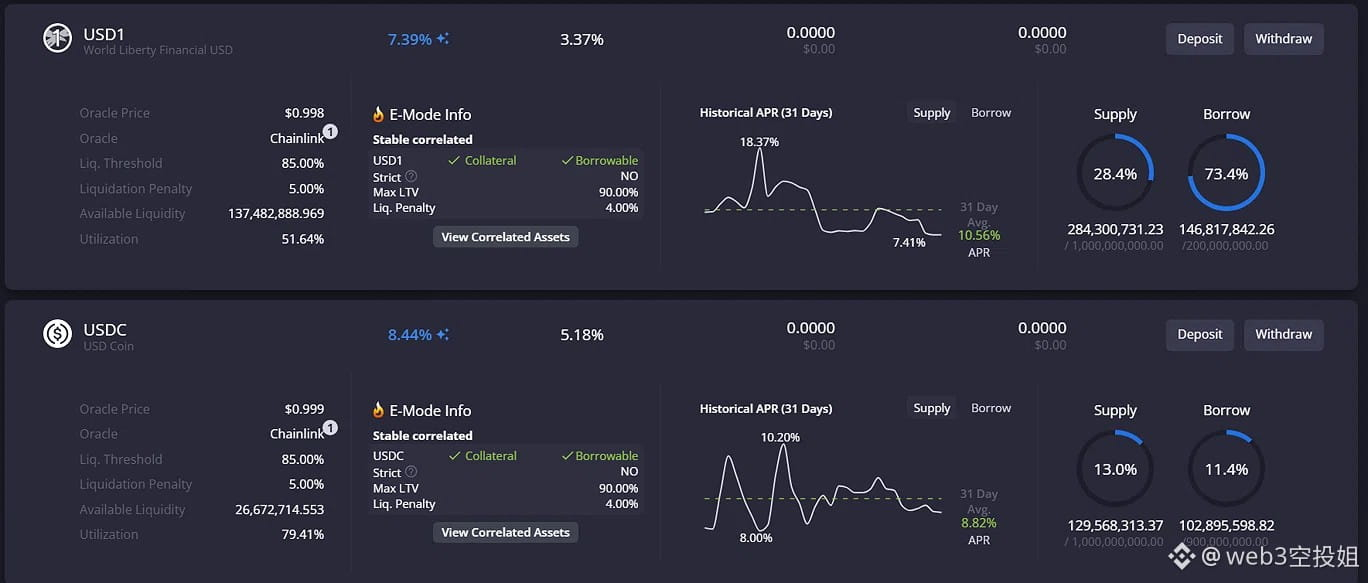
At the heart of this system is the recognition that not all assets behave equally. Highly correlated assets, such as stablecoins or wrapped ETH derivatives, carry far less risk when paired together than when mixed with illiquid governance tokens or niche LP shares. Dolomite leverages this insight: E-Mode loosens borrowing constraints for portfolios that remain within defined correlated groups, while Segregated Risk tightens protections when users step into riskier territories. In essence, risk is no longer static; it adapts to the portfolio and the market environment.

Dolomite’s modular architecture makes this possible. The adaptive risk framework operates separately from the core lending mechanics, ensuring that the system’s safety and stability remain intact. Users can inspect smart contract functions like getAccountRiskOverride to see exactly how their risk profile is being assessed, making the process transparent and understandable. For borrowers, this translates to tangible benefits: greater borrowing power for correlated portfolios, automatic safeguards for volatile holdings, and a clearer signal of risk across diverse assets.

For example, a user borrowing against a basket of ETH derivatives can enjoy more favorable margins than a user leveraging a volatile governance token, even if both positions would be treated identically in traditional protocols. By giving efficiency as a reward for thoughtful portfolio management, Dolomite blends capital optimization with systemic prudence. This adaptive model aligns more closely with real-world finance, where portfolio structure influences risk and leverage terms.

Implementing such nuanced systems is not without challenges. Accurate asset correlations, real-time price feeds, and automated monitoring are critical. Dolomite addresses this with reliable oracles, modular risk controls, and mechanisms that adjust parameters automatically when correlations break down. For users, education remains essential: understanding which assets qualify for E-Mode and how Segregated Risk activates ensures that adaptive risk remains an advantage rather than a source of confusion.

The benefits of this approach become even clearer at scale. Supporting over 1,000 assets in a conventional money market is daunting, as uniform risk rules quickly force inefficiencies or excessive restrictions. Dolomite’s dynamic framework enables long-tail tokens to coexist alongside blue-chip assets, maintaining safety while unlocking opportunities for liquidity, yield, and collateral usage. Efficient portfolios enjoy sharper margins, while higher-risk assets remain contained, expanding the asset menu without destabilizing the system.

For the DeFi user, Dolomite’s approach changes the experience. Risk management becomes strategic, not arbitrary: borrowers can optimize positions based on correlations and portfolio composition rather than adhering to blanket rules. For developers and integrators, it demonstrates that safety and efficiency can coexist in protocols that adjust intelligently to context. This philosophy embodies a core principle: DeFi doesn’t need to choose between flexibility and security—they can reinforce each other.

By making risk adaptive, Dolomite turns lending into a living, responsive system. Borrowers are empowered, assets are utilized more efficiently, and systemic safety is maintained. The protocol illustrates that thoughtful architecture and modular risk controls can scale both breadth and depth, proving that capital efficiency and stability are not mutually exclusive, even in complex, multi-asset markets.

#Dolomite | $DOLO | @Dolomite
SERIES#1 •••••The Dolomite Advantage: Unmatched Asset Support••••• _______Dolomite is redefining the DeFi lending and borrowing ______ experience by offering a level of asset support that is truly unmatched. Unlike traditional platforms such as Aave and Compound, which are often limited to a curated list of blue-chip tokens, Dolomite has the unique capability to support over 1,000 different assets. This broad compatibility extends far beyond standard ERC-20 tokens to include yield-bearing assets, LP tokens, and even niche assets that hold value within specific ecosystems. By providing a market for these diverse assets, Dolomite empowers users to leverage their entire digital portfolio, unlocking capital that would otherwise sit idle. This not only enhances an individual user's capital efficiency but also creates a more liquid and robust DeFi ecosystem as a whole. ______Pioneering a Secure and Flexible DeFi Future______ This extensive asset support is a core component of Dolomite's mission to maximize the utility of every digital asset. The platform’s modular architecture and risk management system are designed to accommodate this vast array of tokens without compromising security. For example, by offering isolated borrow positions, Dolomite mitigates the risk of a single asset's volatility affecting an entire portfolio, a common concern in cross-collateralization models. Furthermore, Dolomite's "DeFi-Native Rights" approach ensures that users can use assets as collateral while still earning their native yield, such as staking rewards. This unique feature, combined with its wide asset compatibility, positions Dolomite as a next-generation protocol that is not just a competitor to existing platforms, but a leader in shaping the future of decentralized finance. #Dolomite $DOLO @Dolomite_io
SERIES#1
•••••The Dolomite Advantage: Unmatched Asset Support•••••

_______Dolomite is redefining the DeFi lending and borrowing ______
experience by offering a level of asset support that is truly unmatched. Unlike traditional platforms such as Aave and Compound, which are often limited to a curated list of blue-chip tokens, Dolomite has the unique capability to support over 1,000 different assets. This broad compatibility extends far beyond standard ERC-20 tokens to include yield-bearing assets, LP tokens, and even niche assets that hold value within specific ecosystems. By providing a market for these diverse assets, Dolomite empowers users to leverage their entire digital portfolio, unlocking capital that would otherwise sit idle. This not only enhances an individual user's capital efficiency but also creates a more liquid and robust DeFi ecosystem as a whole.

______Pioneering a Secure and Flexible DeFi Future______

This extensive asset support is a core component of Dolomite's mission to maximize the utility of every digital asset. The platform’s modular architecture and risk management system are designed to accommodate this vast array of tokens without compromising security. For example, by offering isolated borrow positions, Dolomite mitigates the risk of a single asset's volatility affecting an entire portfolio, a common concern in cross-collateralization models. Furthermore, Dolomite's "DeFi-Native Rights" approach ensures that users can use assets as collateral while still earning their native yield, such as staking rewards. This unique feature, combined with its wide asset compatibility, positions Dolomite as a next-generation protocol that is not just a competitor to existing platforms, but a leader in shaping the future of decentralized finance.
#Dolomite $DOLO @Dolomite
Article
Dolomite’s Next Chapter: Strategies, Integrations, and Powering DeFi Loops@Dolomite_io has long aimed to blur the barrier between advanced DeFi mechanics and everyday users. The project’s recent announcements from deploying “Strategies” to integrating new stablecoins and upgrading its ZAP engine show it pushing hard to deliver on that promise. In doing so, Dolomite is trying to become a platform where composability, yield, and leverage are not privileges for power users but tools accessible to anyone. The recent tweets you shared shine a spotlight on exactly how that vision is unfolding. From complexity to simplicity: What are Dolomite Strategies? One of the biggest recent shifts is the introduction of Dolomite Strategies. The project describes these as “optimized DeFi loops you can deploy in seconds, no professional experience required.” In simpler terms: loops (combinations of lending, borrowing, yield farming, leverage) that used to require careful orchestration selecting assets, debt types, collateral ratios, and routes across protocols are now bundled into ready-to-use packages. This isn’t just a UX convenience. It’s a structural move to lower the barrier to advanced yield. Many ambitious users balk at the complexity of DeFi because one wrong parameter, mispriced slippage, or suboptimal routing can wipe out gains. By packaging common loops into vetted strategies, #Dolomite is absorbing that risk and complexity into a tested layer. Users can opt into optimized paths instead of reinventing each transaction. The effect on mind-share is subtle but powerful. When someone sees “Deploy Strategy in seconds” instead of “Manually open loops across three protocols,” it changes their mental model of what DeFi can be: not a math puzzle but a fluid toolkit. New stablecoins, stronger foundation: cUSD & stcUSD integration Another key shift: Dolomite has added support for cUSD and stcUSD, collateral tokens from Cap Money. The announcement flagged that these stablecoins bring three promises: diversified backing, depeg protection, and yield bearing status. Diversified backing helps reduce single-asset risk. Depeg protection signals a design intended to guard against one stablecoin collapsing (a vulnerability many protocols have experienced). Because these tokens also yield returns, they aren’t passive they actively contribute to the capital economy of the chain. Dolomite’s messaging goes further: they call cUSD and stcUSD “fully composable collateral.” That means users can supply them, borrow against them, loop them into strategies, and earn yield—all without leaving the Dolomite environment. In a market where many stablecoins sit inert or require wrapping, giving users more yield-bearing collateral options is a compelling differentiator. It positions Dolomite as a richer playground for capital, not just leverage. Upgrading the ZAP engine via Enso: slippage, routing, and smoothness To fully realize those Strategies and stablecoin integrations, Dolomite also upgraded its ZAP engine in partnership with Enso. The goal: ultra-low slippage swaps and loops across Ethereum and Arbitrum chains, with multi-step routing handled behind the scenes. This means when a user wants to swap or enter a levered position, the system is internally optimizing routes, minimizing price drag, and stitching together what would otherwise be fragmented trades. The announcement emphasized that Enso integration reduces friction, making the performance feel instantaneous even though multiple steps may be happening in the background. From a product perspective, this is crucial. High slippage and routing inefficiencies have long been one of the silent killers of DeFi strategies. Making those invisible makes advanced operations feel more like tapping a button than solving a puzzle. It strengthens trust: users are more willing to try loops if they believe less capital will leak in the process. Multi-chain ambition, deeper integrations Dolomite is also accelerating its chain footprint. The project announced active integration with Berachain, supporting Proof-of-Liquidity mechanisms and enabling lending while staking. That suggests Dolomite is building not just connectors but systemic coordination across chains. Simultaneously, the team confirmed it is now live on Ethereum mainnet, giving access to core liquidity and enabling on-chain participation directly on the base layer. All this works in tandem with collateral, looping, and strategy primitives. The result: Dolomite is no longer just a niche or side chain experiment it’s spanning the major rails, with tools that adapt across environments. These integration moves serve both defensive and offensive strategies. Defensively, Dolomite reduces reliance on any one chain’s congestion or cost model. Offensively, it opens new markets of liquidity and users. For builders, the ability to move between chains without rewriting their logic is increasingly table stakes and Dolomite is building that capability. Incentive engine: oDOLO rewards, promotions, and yield dynamics Expanding features is necessary, but sustaining them requires a well-structured incentive system. Dolomite continues its oDOLO weekly claims, distributing rewards across a broad basket of assets: HONEY, USDC, BERA, WBTC, and more. These rewards serve multiple functions: they subsidize adoption, signal alignment with active participants, and keep capital animating the system. Rather than being token dumps, these rewards often coincide with new feature launches or integrations, giving users both reason and liquidity to experiment with new loops and collateral options. That timing helps reinforce that using newer capabilities (like cUSD, Strategies, Enso routing) is not just optional it is economically encouraged. Over time, as more capital flows in and distribution slows, $DOLO has a shot at turning a higher base of users into long-term stakers rather than opportunistic speculators. The art will be balancing incentive intensity against dilution, and shifting from marketing-driven allocations to usage-driven rewards. What the leadership and community are saying Dolomite’s public communication has emphasized two recurring themes: “multi-chain growth” and “accessibility.” In interviews and tweet threads, team members have framed the evolution from niche DeFi loops to a platform where advanced yield is accessible to anyone. By introducing Strateg ies, they often frame it as “DeFi pro power, no skill barrier needed.” That messaging aligns with their recent push to onboard users from less technical demographics. The community chatter echoes optimism. Many users and observers note that Dolomite is making things you’d expect only veteran traders might use levered loops, composable stables, cross-chain swaps feel like default capabilities. The adoption of new collateral and tool improvements frequently appear in “viral” screenshots of returns or trade summaries, reinforcing word-of-mouth. The recent Binance Square post, “Engine Upgrade With Integration Of Enso,” nails that tone: highlighting faster transactions, lower slippage, cross-chain flow, and simplification of workflows. It’s not just about a technical hook; it’s about making Dolomite feel faster, smoother, and more accessible in practice. The post titled “Dolomite Recently, there have been many actions” aggregates fresh updates: Berachain integration, mainnet support, stablecoin addition, and Strategy rollouts. It reinforces that the project sees itself in motion less a static protocol and more a living, expanding suite. What these moves mean for your readers For your readers whether they are crypto natives or curious participants Dolomite’s new direction confirms something important: DeFi is evolving from optional experiments to essential infrastructure. The features being introduced are not gimmicks; they are building blocks for a future where users expect yield, leverage, composability, and minimal friction by default. Here are a few takeaways to highlight: • Lower barrier to entry: Strategies reduce setup complexity, enabling even casual users to tap into loops safely. • Collateral choice matters: Having yield-bearing, depeg-protected stablecoins as collateral opens more resilient capital paths. • Slippage is the silent tax: Upgrading routing with Enso means users keep more of their returns—not just in ideal markets but during real volatility. • Cross-chain matters: Supporting Ethereum, Arbitrum, Berachain means you’re not boxed by one chain’s limitations. • Incentives underwrite adoption: oDOLO rewards ensure capital flows where the protocol wants it. Early users tend to define norms for long-term systems. Looking ahead: What to watch • How quickly Strategies gain TVL and whether users migrate away from “manual loop setup.” • Whether cUSD / stcUSD collateral sees meaningful adoption and becomes liquid in markets. • Performance and slippage metrics post-Enso upgrade: do users notice lower drag in practice? • How governance evolves: will EDLO / DOLO token holders shape new strategies, vault parameters, or cross-chain policy? • Integration momentum: new chains, new partners, or more stablecoin support. • The behavior of reward distribution over time: whether it transitions from promotional to sustainable incentive. Dolomite’s recent images and announcements aren’t just promotional they represent a push to reshape the user experience in DeFi. The strategy is clear: turn complexity into templates, expand collateral choice, speed routing, and join more chains. In doing so, Dolomite is positioning itself not just as another protocol you might use, but as the platform you expect to use instinctively.

Dolomite’s Next Chapter: Strategies, Integrations, and Powering DeFi Loops

@Dolomite has long aimed to blur the barrier between advanced DeFi mechanics and everyday users. The project’s recent announcements from deploying “Strategies” to integrating new stablecoins and upgrading its ZAP engine show it pushing hard to deliver on that promise. In doing so, Dolomite is trying to become a platform where composability, yield, and leverage are not privileges for power users but tools accessible to anyone. The recent tweets you shared shine a spotlight on exactly how that vision is unfolding.
From complexity to simplicity: What are Dolomite Strategies?
One of the biggest recent shifts is the introduction of Dolomite Strategies. The project describes these as “optimized DeFi loops you can deploy in seconds, no professional experience required.” In simpler terms: loops (combinations of lending, borrowing, yield farming, leverage) that used to require careful orchestration selecting assets, debt types, collateral ratios, and routes across protocols are now bundled into ready-to-use packages.
This isn’t just a UX convenience. It’s a structural move to lower the barrier to advanced yield. Many ambitious users balk at the complexity of DeFi because one wrong parameter, mispriced slippage, or suboptimal routing can wipe out gains. By packaging common loops into vetted strategies, #Dolomite is absorbing that risk and complexity into a tested layer. Users can opt into optimized paths instead of reinventing each transaction.
The effect on mind-share is subtle but powerful. When someone sees “Deploy Strategy in seconds” instead of “Manually open loops across three protocols,” it changes their mental model of what DeFi can be: not a math puzzle but a fluid toolkit.
New stablecoins, stronger foundation: cUSD & stcUSD integration
Another key shift: Dolomite has added support for cUSD and stcUSD, collateral tokens from Cap Money. The announcement flagged that these stablecoins bring three promises: diversified backing, depeg protection, and yield bearing status.
Diversified backing helps reduce single-asset risk. Depeg protection signals a design intended to guard against one stablecoin collapsing (a vulnerability many protocols have experienced). Because these tokens also yield returns, they aren’t passive they actively contribute to the capital economy of the chain.
Dolomite’s messaging goes further: they call cUSD and stcUSD “fully composable collateral.” That means users can supply them, borrow against them, loop them into strategies, and earn yield—all without leaving the Dolomite environment.
In a market where many stablecoins sit inert or require wrapping, giving users more yield-bearing collateral options is a compelling differentiator. It positions Dolomite as a richer playground for capital, not just leverage.
Upgrading the ZAP engine via Enso: slippage, routing, and smoothness
To fully realize those Strategies and stablecoin integrations, Dolomite also upgraded its ZAP engine in partnership with Enso. The goal: ultra-low slippage swaps and loops across Ethereum and Arbitrum chains, with multi-step routing handled behind the scenes.
This means when a user wants to swap or enter a levered position, the system is internally optimizing routes, minimizing price drag, and stitching together what would otherwise be fragmented trades. The announcement emphasized that Enso integration reduces friction, making the performance feel instantaneous even though multiple steps may be happening in the background.
From a product perspective, this is crucial. High slippage and routing inefficiencies have long been one of the silent killers of DeFi strategies. Making those invisible makes advanced operations feel more like tapping a button than solving a puzzle. It strengthens trust: users are more willing to try loops if they believe less capital will leak in the process.
Multi-chain ambition, deeper integrations
Dolomite is also accelerating its chain footprint. The project announced active integration with Berachain, supporting Proof-of-Liquidity mechanisms and enabling lending while staking. That suggests Dolomite is building not just connectors but systemic coordination across chains.
Simultaneously, the team confirmed it is now live on Ethereum mainnet, giving access to core liquidity and enabling on-chain participation directly on the base layer. All this works in tandem with collateral, looping, and strategy primitives. The result: Dolomite is no longer just a niche or side chain experiment it’s spanning the major rails, with tools that adapt across environments.
These integration moves serve both defensive and offensive strategies. Defensively, Dolomite reduces reliance on any one chain’s congestion or cost model. Offensively, it opens new markets of liquidity and users. For builders, the ability to move between chains without rewriting their logic is increasingly table stakes and Dolomite is building that capability.
Incentive engine: oDOLO rewards, promotions, and yield dynamics
Expanding features is necessary, but sustaining them requires a well-structured incentive system. Dolomite continues its oDOLO weekly claims, distributing rewards across a broad basket of assets: HONEY, USDC, BERA, WBTC, and more. These rewards serve multiple functions: they subsidize adoption, signal alignment with active participants, and keep capital animating the system.
Rather than being token dumps, these rewards often coincide with new feature launches or integrations, giving users both reason and liquidity to experiment with new loops and collateral options. That timing helps reinforce that using newer capabilities (like cUSD, Strategies, Enso routing) is not just optional it is economically encouraged.
Over time, as more capital flows in and distribution slows, $DOLO has a shot at turning a higher base of users into long-term stakers rather than opportunistic speculators. The art will be balancing incentive intensity against dilution, and shifting from marketing-driven allocations to usage-driven rewards.
What the leadership and community are saying
Dolomite’s public communication has emphasized two recurring themes: “multi-chain growth” and “accessibility.” In interviews and tweet threads, team members have framed the evolution from niche DeFi loops to a platform where advanced yield is accessible to anyone. By introducing Strateg ies, they often frame it as “DeFi pro power, no skill barrier needed.” That messaging aligns with their recent push to onboard users from less technical demographics.
The community chatter echoes optimism. Many users and observers note that Dolomite is making things you’d expect only veteran traders might use levered loops, composable stables, cross-chain swaps feel like default capabilities. The adoption of new collateral and tool improvements frequently appear in “viral” screenshots of returns or trade summaries, reinforcing word-of-mouth.
The recent Binance Square post, “Engine Upgrade With Integration Of Enso,” nails that tone: highlighting faster transactions, lower slippage, cross-chain flow, and simplification of workflows. It’s not just about a technical hook; it’s about making Dolomite feel faster, smoother, and more accessible in practice.
The post titled “Dolomite Recently, there have been many actions” aggregates fresh updates: Berachain integration, mainnet support, stablecoin addition, and Strategy rollouts. It reinforces that the project sees itself in motion less a static protocol and more a living, expanding suite.
What these moves mean for your readers
For your readers whether they are crypto natives or curious participants Dolomite’s new direction confirms something important: DeFi is evolving from optional experiments to essential infrastructure. The features being introduced are not gimmicks; they are building blocks for a future where users expect yield, leverage, composability, and minimal friction by default.
Here are a few takeaways to highlight:
• Lower barrier to entry: Strategies reduce setup complexity, enabling even casual users to tap into loops safely.
• Collateral choice matters: Having yield-bearing, depeg-protected stablecoins as collateral opens more resilient capital paths.
• Slippage is the silent tax: Upgrading routing with Enso means users keep more of their returns—not just in ideal markets but during real volatility.
• Cross-chain matters: Supporting Ethereum, Arbitrum, Berachain means you’re not boxed by one chain’s limitations.
• Incentives underwrite adoption: oDOLO rewards ensure capital flows where the protocol wants it. Early users tend to define norms for long-term systems.
Looking ahead: What to watch
• How quickly Strategies gain TVL and whether users migrate away from “manual loop setup.”
• Whether cUSD / stcUSD collateral sees meaningful adoption and becomes liquid in markets.
• Performance and slippage metrics post-Enso upgrade: do users notice lower drag in practice?
• How governance evolves: will EDLO / DOLO token holders shape new strategies, vault parameters, or cross-chain policy?
• Integration momentum: new chains, new partners, or more stablecoin support.
• The behavior of reward distribution over time: whether it transitions from promotional to sustainable incentive.
Dolomite’s recent images and announcements aren’t just promotional they represent a push to reshape the user experience in DeFi. The strategy is clear: turn complexity into templates, expand collateral choice, speed routing, and join more chains. In doing so, Dolomite is positioning itself not just as another protocol you might use, but as the platform you expect to use instinctively.
Dolomite’s October Pulse: Resilient Ecosystem and Expanding DeFi AmbitionsDolomite heads deeper into October with expanding reach and steady momentum, relying on a resilient architecture and an ongoing strategy of rewards and governance. The Dynamic Collateral model serves as the foundation, empowering users to engage with margin trading, lending, spot, and yield farming for over a thousand tokens, all without losing the ability to vote, earn rewards, and keep assets flexible. This synergy creates fertile ground for inventive DeFi strategies, supporting both passive and active participants. After recent technical upgrades, Dolomite continues to strengthen its modular core, combining margin, lending, and swap routes into a single unified experience. The protocol’s Zap feature, tightly integrated with DEX aggregators, streamlines multi-step trading and borrowing actions, minimizing costs and complexity for those who manage diversified portfolios. The focus on composability makes Dolomite adaptable for partner protocols and future cross-chain expansion. Governance engagement is thriving, with the DRIP airdrop campaign and minerals option incentives driving increased veDOLO token lockups. These locked positions ensure a stable and growing base of decision-makers, guiding risk management, asset onboarding, and protocol directions. This participatory approach is critical for Dolomite’s credibility and underpins its collective strength. Dolomite’s integration with Berachain and Botanix’s Bitcoin Layer 2 now unlocks direct BTC yield generation and proof-of-liquidity markets that are drawing new capital into the ecosystem. These integrations not only diversify token utility, but also bring speed and ultra-low fees to cross-chain trading, boosting Dolomite’s allure for arbitrageurs and institutional participants alike. Price performance remains under close watch. While some forecasts project steady incremental growth for DOLO through the quarter, short-term reactions to broader market sentiment and upcoming Binance listing events may add volatility. Analysts expect bullish momentum through the end of October, especially as new virtual liquidity pools go live and zero-liquidation lending becomes a tangible reality. Security is continually reinforced, with upgraded smart contract audits and safety modules released on a rolling basis. Community trust is cemented by transparent token tracking, external reserves for key stablecoins, and open protocol development roadmaps. Compliance remains a guiding principle, as the platform maintains robust frameworks for USD1 and other regulated assets. This is drawing fresh institutional interest just as wider regulatory conversations around collateral and stablecoins intensify throughout Q4. Dolomite’s community is surging as a result of interactive campaigns and ongoing airdrop activity, which reward both new and legacy users for platform engagement and governance participation. The ecosystem’s current growth is being driven not just by speculative activity, but by actual use cases across changing market conditions. The final weeks of October are set to amplify all these dynamics, keeping Dolomite at the heart of user-driven and multi-chain DeFi innovation. @Dolomite_io #Dolomite $DOLO

Dolomite’s October Pulse: Resilient Ecosystem and Expanding DeFi Ambitions

Dolomite heads deeper into October with expanding reach and steady momentum, relying on a resilient architecture and an ongoing strategy of rewards and governance. The Dynamic Collateral model serves as the foundation, empowering users to engage with margin trading, lending, spot, and yield farming for over a thousand tokens, all without losing the ability to vote, earn rewards, and keep assets flexible. This synergy creates fertile ground for inventive DeFi strategies, supporting both passive and active participants.
After recent technical upgrades, Dolomite continues to strengthen its modular core, combining margin, lending, and swap routes into a single unified experience. The protocol’s Zap feature, tightly integrated with DEX aggregators, streamlines multi-step trading and borrowing actions, minimizing costs and complexity for those who manage diversified portfolios. The focus on composability makes Dolomite adaptable for partner protocols and future cross-chain expansion.
Governance engagement is thriving, with the DRIP airdrop campaign and minerals option incentives driving increased veDOLO token lockups. These locked positions ensure a stable and growing base of decision-makers, guiding risk management, asset onboarding, and protocol directions. This participatory approach is critical for Dolomite’s credibility and underpins its collective strength.
Dolomite’s integration with Berachain and Botanix’s Bitcoin Layer 2 now unlocks direct BTC yield generation and proof-of-liquidity markets that are drawing new capital into the ecosystem. These integrations not only diversify token utility, but also bring speed and ultra-low fees to cross-chain trading, boosting Dolomite’s allure for arbitrageurs and institutional participants alike.
Price performance remains under close watch. While some forecasts project steady incremental growth for DOLO through the quarter, short-term reactions to broader market sentiment and upcoming Binance listing events may add volatility. Analysts expect bullish momentum through the end of October, especially as new virtual liquidity pools go live and zero-liquidation lending becomes a tangible reality.
Security is continually reinforced, with upgraded smart contract audits and safety modules released on a rolling basis. Community trust is cemented by transparent token tracking, external reserves for key stablecoins, and open protocol development roadmaps.
Compliance remains a guiding principle, as the platform maintains robust frameworks for USD1 and other regulated assets. This is drawing fresh institutional interest just as wider regulatory conversations around collateral and stablecoins intensify throughout Q4.
Dolomite’s community is surging as a result of interactive campaigns and ongoing airdrop activity, which reward both new and legacy users for platform engagement and governance participation. The ecosystem’s current growth is being driven not just by speculative activity, but by actual use cases across changing market conditions.
The final weeks of October are set to amplify all these dynamics, keeping Dolomite at the heart of user-driven and multi-chain DeFi innovation.
@Dolomite #Dolomite $DOLO
Article
Dolomite's Dynamic Leap: Redefining Decentralized Finance with Virtual Liquidity and Community PowerDolomite continues to push the boundaries of decentralized finance by delivering a deeply flexible and comprehensive platform that empowers users to maximize their asset utility. The innovative Dynamic Collateral system at its core enables holders of hundreds of tokens to seamlessly borrow, lend, trade, stake, and govern without sacrificing the original asset’s benefits. By allowing every token in a user’s wallet to serve multiple functions simultaneously, Dolomite introduces a new paradigm of capital efficiency that removes the traditional compromises found in DeFi ecosystems.This multifaceted utility is matched by an evolving interest rate model designed to bring predictability and fairness to borrowing costs. The protocol limits rate surges at high utilization levels, ensuring both liquidity providers and borrowers can interact with confidence and stable returns. This strategy has seen its Total Value Locked increase substantially as participants respond to a more favorable and less volatile environment on the network.Underlying Dolomite’s robustness is a modular architecture that supports swift onboarding of new assets and protocols. Advanced features like the Zap routing tool facilitate complex multi-step transactions by bundling swaps, borrows, and collateral moves into simple, one-click actions. This simplicity, combined with cost-saving efficiencies, opens the door for novice users to participate in sophisticated yield farming and trading strategies without steep learning curves or excessive fees.Cross-chain interoperability remains a critical strength, powered by integrations with leading protocols like Chainlink’s Cross-Chain Interoperability Protocol. This foundation enables seamless asset movement across major blockchains, including Ethereum, Berachain, and Bitcoin’s Layer 2 networks, dramatically expanding liquidity access while minimizing fragmentation. The integration with Bitcoin’s Layer 2 by Botanix brings native BTC lending and borrowing capabilities, eliminating reliance on wrapped assets and expanding cross-chain financial opportunities.Adding to its appeal for institutional and compliance-conscious investors, Dolomite incorporates USD1, a treasury-backed, fully auditable stablecoin managed by World Liberty Financial and securely held by BitGo. This collateral innovation enhances the protocol’s appeal, combining DeFi’s efficiency with mainstream financial rigor and security.Governance is increasingly intertwined with active community participation. The platform’s DRIP campaign continues to distribute DOLO tokens and governance NFTs, motivating long-term commitment and enabling holders of veDOLO tokens to influence critical decisions such as emission rates, collateral additions, and risk parameters. This decentralized governance approach ensures decisions reflect stakeholder interests while fostering a resilient ecosystem.Further growth is fueled by partnerships with Berachain and Botanix’s Bitcoin Layer 2, introducing yield optimization through proof-of-liquidity mechanisms and enabling rapid, low-cost transactions. These collaborations provide users with enhanced borrowing flexibility and diverse options for yield generation while reinforcing the platform’s multi-chain vision.Despite ongoing market fluctuations typical to cryptocurrency tokens, Dolomite’s continued innovation and expanding user base position it strongly for sustained growth. Upcoming features such as zero-liquidation lending pools promise to make leveraged trading safer and more accessible, broadening mainstream adoption potential within the DeFi space.Dolomite’s combination of technical innovation, user-first design, and community-driven governance marks it as a pioneering project shaping the future landscape of decentralized finance. Its ongoing evolution offers a compelling blueprint for how layered asset utility, efficient liquidity, and social governance can combine to unlock the full promise of DeFi.@Dolomite_io #Dolomite $DOLO

Dolomite's Dynamic Leap: Redefining Decentralized Finance with Virtual Liquidity and Community Power

Dolomite continues to push the boundaries of decentralized finance by delivering a deeply flexible and comprehensive platform that empowers users to maximize their asset utility. The innovative Dynamic Collateral system at its core enables holders of hundreds of tokens to seamlessly borrow, lend, trade, stake, and govern without sacrificing the original asset’s benefits. By allowing every token in a user’s wallet to serve multiple functions simultaneously, Dolomite introduces a new paradigm of capital efficiency that removes the traditional compromises found in DeFi ecosystems.This multifaceted utility is matched by an evolving interest rate model designed to bring predictability and fairness to borrowing costs. The protocol limits rate surges at high utilization levels, ensuring both liquidity providers and borrowers can interact with confidence and stable returns. This strategy has seen its Total Value Locked increase substantially as participants respond to a more favorable and less volatile environment on the network.Underlying Dolomite’s robustness is a modular architecture that supports swift onboarding of new assets and protocols. Advanced features like the Zap routing tool facilitate complex multi-step transactions by bundling swaps, borrows, and collateral moves into simple, one-click actions. This simplicity, combined with cost-saving efficiencies, opens the door for novice users to participate in sophisticated yield farming and trading strategies without steep learning curves or excessive fees.Cross-chain interoperability remains a critical strength, powered by integrations with leading protocols like Chainlink’s Cross-Chain Interoperability Protocol. This foundation enables seamless asset movement across major blockchains, including Ethereum, Berachain, and Bitcoin’s Layer 2 networks, dramatically expanding liquidity access while minimizing fragmentation. The integration with Bitcoin’s Layer 2 by Botanix brings native BTC lending and borrowing capabilities, eliminating reliance on wrapped assets and expanding cross-chain financial opportunities.Adding to its appeal for institutional and compliance-conscious investors, Dolomite incorporates USD1, a treasury-backed, fully auditable stablecoin managed by World Liberty Financial and securely held by BitGo. This collateral innovation enhances the protocol’s appeal, combining DeFi’s efficiency with mainstream financial rigor and security.Governance is increasingly intertwined with active community participation. The platform’s DRIP campaign continues to distribute DOLO tokens and governance NFTs, motivating long-term commitment and enabling holders of veDOLO tokens to influence critical decisions such as emission rates, collateral additions, and risk parameters. This decentralized governance approach ensures decisions reflect stakeholder interests while fostering a resilient ecosystem.Further growth is fueled by partnerships with Berachain and Botanix’s Bitcoin Layer 2, introducing yield optimization through proof-of-liquidity mechanisms and enabling rapid, low-cost transactions. These collaborations provide users with enhanced borrowing flexibility and diverse options for yield generation while reinforcing the platform’s multi-chain vision.Despite ongoing market fluctuations typical to cryptocurrency tokens, Dolomite’s continued innovation and expanding user base position it strongly for sustained growth. Upcoming features such as zero-liquidation lending pools promise to make leveraged trading safer and more accessible, broadening mainstream adoption potential within the DeFi space.Dolomite’s combination of technical innovation, user-first design, and community-driven governance marks it as a pioneering project shaping the future landscape of decentralized finance. Its ongoing evolution offers a compelling blueprint for how layered asset utility, efficient liquidity, and social governance can combine to unlock the full promise of DeFi.@Dolomite #Dolomite $DOLO
Article
Dolomite’s New Horizons: Empowering DeFi with Virtual Liquidity and Community GovernanceAs October takes shape, Dolomite enters a new chapter that extends far beyond traditional decentralized finance capabilities. At its core, Dolomite’s Virtual Liquidity model revolutionizes asset utilization by enabling stablecoins and other tokens to perform multiple roles simultaneously. No longer are stablecoins mere parking spots earning passive yield. Instead, they can be borrowed against, looped for leverage, stacked across farms, and leveraged for governance—all within a unified ecosystem that maximizes capital efficiency.This multi-functionality has driven remarkable adoption and capital flows into the protocol. Borrowing volumes recently surpassed $130 million, reflecting the trust users place in Dolomite’s isolated margin accounts that contain risk and prevent cascading liquidations. This steady climb speaks to the platform’s maturation from a promising DeFi experiment to a fundamental infrastructure supporting professional traders, institutional investors, and active community members.Interest rate reforms introduced in the past month are central to such growth. By capping borrow costs and smoothing volatile spikes during peak utilization, Dolomite creates an inviting environment for liquidity providers and leveraged borrowers. These changes, combined with AI-optimized rate adjustments, have contributed to a substantial increase in total value locked and daily trading volume, affirming market confidence.Alongside financial engineering, Dolomite’s governance is undergoing a transformation. With the launch of its Governance Forum on Discord, the protocol embraces a social dimension, turning opaque voting into living conversation. Ownership of veDOLO tokens now translates into tiered participation powers—some holders can comment, others can propose, while the largest proponents shape the protocol’s strategic decisions. This structure balances influence with community inclusivity, ensuring that governance is both transparent and meaningful.Interoperability advances through Chainlink’s Cross-Chain Interoperability Protocol and integration with Bitcoin’s Layer 2 networks have unlocked a new horizon. Native BTC lending and borrowing without wrapping opens vast capital markets to Dolomite users, while cross-chain movement of tokens fosters holistic and multifaceted strategies.Partnerships with Berachain’s proof-of-liquidity v2 mechanism provide liquidity providers with auto-compounding rewards and enhanced borrow capabilities, while offering users more avenues for yield creation. Such innovations highlight Dolomite’s commitment to composable DeFi, where partners and users build synergistic value.Innovative incentive programs like DRIP reward not only active borrowing but align Dolomite directly with broader ecosystem growth, offering multi-protocol yield opportunities. Ready-to-use loop strategies empower new and experienced users alike, simplifying complex yield farming and trading tactics.The platform’s roadmap looks beyond just improved features to a redefinition of DeFi participation itself, where capital is productive, governance is social, and each new update introduces layered benefits for users. With zero-liquidation pools and programmable liquidity pools on the horizon, Dolomite carries the promise of more secure and accessible leverage options.At a time when many DeFi projects struggle to move past experimentation, Dolomite’s innovative synergy of virtual liquidity, community governance, and cross-chain integration signals its rise as a cornerstone infrastructure shaping the future of decentralized finance.@Dolomite_io #Dolomite $DOLO

Dolomite’s New Horizons: Empowering DeFi with Virtual Liquidity and Community Governance

As October takes shape, Dolomite enters a new chapter that extends far beyond traditional decentralized finance capabilities. At its core, Dolomite’s Virtual Liquidity model revolutionizes asset utilization by enabling stablecoins and other tokens to perform multiple roles simultaneously. No longer are stablecoins mere parking spots earning passive yield. Instead, they can be borrowed against, looped for leverage, stacked across farms, and leveraged for governance—all within a unified ecosystem that maximizes capital efficiency.This multi-functionality has driven remarkable adoption and capital flows into the protocol. Borrowing volumes recently surpassed $130 million, reflecting the trust users place in Dolomite’s isolated margin accounts that contain risk and prevent cascading liquidations. This steady climb speaks to the platform’s maturation from a promising DeFi experiment to a fundamental infrastructure supporting professional traders, institutional investors, and active community members.Interest rate reforms introduced in the past month are central to such growth. By capping borrow costs and smoothing volatile spikes during peak utilization, Dolomite creates an inviting environment for liquidity providers and leveraged borrowers. These changes, combined with AI-optimized rate adjustments, have contributed to a substantial increase in total value locked and daily trading volume, affirming market confidence.Alongside financial engineering, Dolomite’s governance is undergoing a transformation. With the launch of its Governance Forum on Discord, the protocol embraces a social dimension, turning opaque voting into living conversation. Ownership of veDOLO tokens now translates into tiered participation powers—some holders can comment, others can propose, while the largest proponents shape the protocol’s strategic decisions. This structure balances influence with community inclusivity, ensuring that governance is both transparent and meaningful.Interoperability advances through Chainlink’s Cross-Chain Interoperability Protocol and integration with Bitcoin’s Layer 2 networks have unlocked a new horizon. Native BTC lending and borrowing without wrapping opens vast capital markets to Dolomite users, while cross-chain movement of tokens fosters holistic and multifaceted strategies.Partnerships with Berachain’s proof-of-liquidity v2 mechanism provide liquidity providers with auto-compounding rewards and enhanced borrow capabilities, while offering users more avenues for yield creation. Such innovations highlight Dolomite’s commitment to composable DeFi, where partners and users build synergistic value.Innovative incentive programs like DRIP reward not only active borrowing but align Dolomite directly with broader ecosystem growth, offering multi-protocol yield opportunities. Ready-to-use loop strategies empower new and experienced users alike, simplifying complex yield farming and trading tactics.The platform’s roadmap looks beyond just improved features to a redefinition of DeFi participation itself, where capital is productive, governance is social, and each new update introduces layered benefits for users. With zero-liquidation pools and programmable liquidity pools on the horizon, Dolomite carries the promise of more secure and accessible leverage options.At a time when many DeFi projects struggle to move past experimentation, Dolomite’s innovative synergy of virtual liquidity, community governance, and cross-chain integration signals its rise as a cornerstone infrastructure shaping the future of decentralized finance.@Dolomite #Dolomite $DOLO
Connectez-vous pour découvrir d’autres contenus
Rejoignez la communauté mondiale des adeptes de cryptomonnaies sur Binance Square
⚡️ Suviez les dernières informations importantes sur les cryptomonnaies.
💬 Jugé digne de confiance par la plus grande plateforme d’échange de cryptomonnaies au monde.
👍 Découvrez les connaissances que partagent les créateurs vérifiés.
Adresse e-mail/Nº de téléphone