

Insighter Yi Xi
19k Publications

Insighter Yi Xi
 Compte Square Vérifié+
Signaler
Bloquer l’utilisateur
Web3 Analyst | Daily Market Insights | Blockchain Researcher | Trader Since 2020 | Twitter/X: @Insighter_YIXI

Traders League Badge Expert
Trade régulièrement
2.1 an(s)
110 Suivis
66.6K+ Abonnés
104.3K+ J’aime
1 Badges
Publications
Tous
Citations
Vidéos
Direct
PINNED
🚀 Congratulations Guy's.... $BTC BREAKOUT 86K IS THE KEY
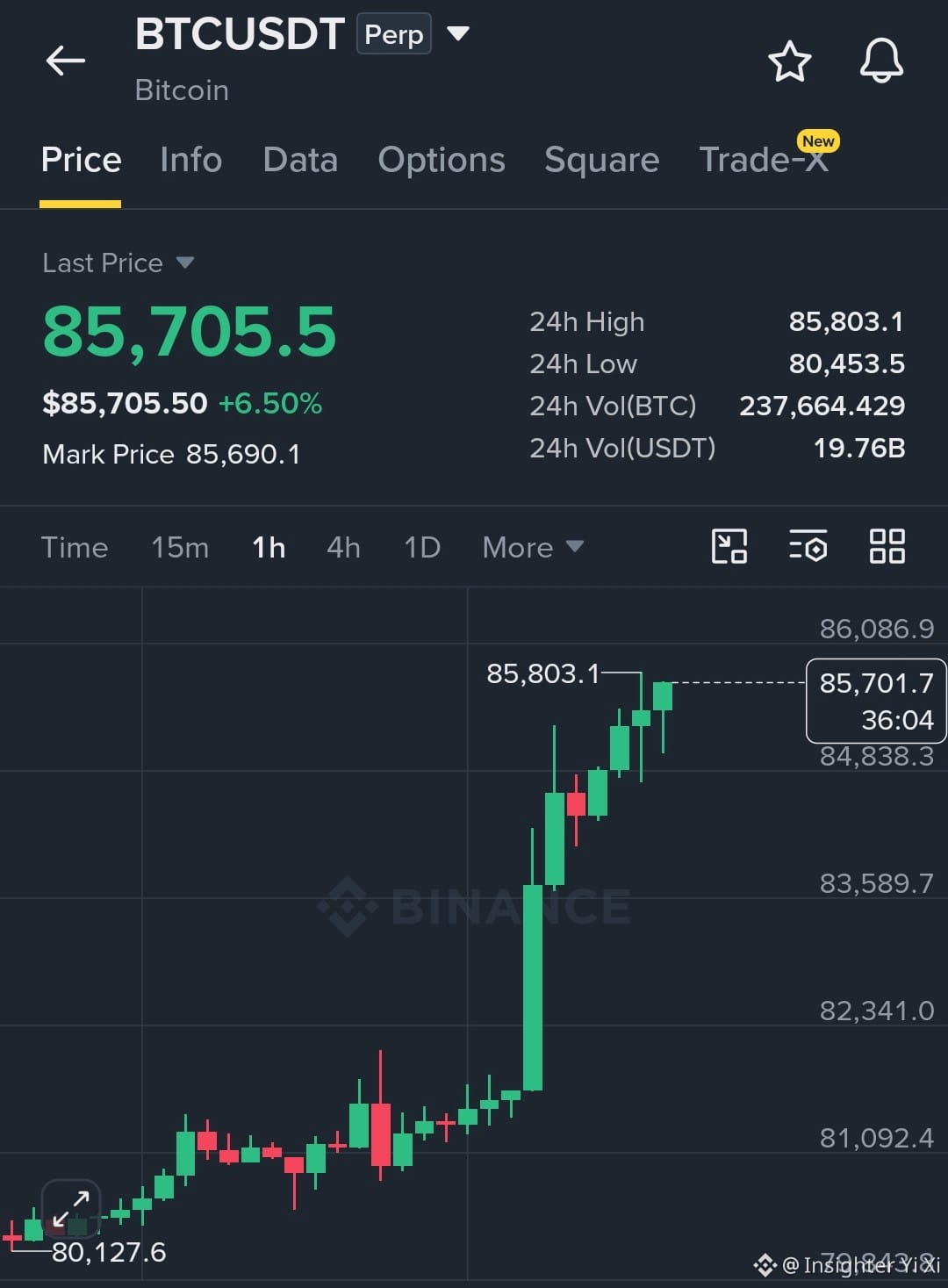
#BTC is trading around 85,705, up 6.5%, with strong volume. Price has pushed through the 84,838 area and is now testing the 85,803–86,087 resistance zone.
{future}(BTCUSDT)
My setup:
Long entry: 84,800–85,200
SL: 83,550
TP1: 86,100
TP2: 87,000
TP3: 88,200
If BTC gets rejected around 86K, I’d wait for a pullback rather than chase the candle. A clean 15m/1h hold above 86,100 would strengthen the breakout structure.
Risk management: keep leverage controlled and protect capital.
#bitcoin #Ethereum
🚀 Congratulations Guy's.... $BTC BREAKOUT 86K IS THE KEY
#BTC is trading around 85,705, up 6.5%, with strong volume. Price has pushed through the 84,838 area and is now testing the 85,803–86,087 resistance zone.
My setup:
Long entry: 84,800–85,200
SL: 83,550
TP1: 86,100
TP2: 87,000
TP3: 88,200
If BTC gets rejected around 86K, I’d wait for a pullback rather than chase the candle. A clean 15m/1h hold above 86,100 would strengthen the breakout structure.
Risk management: keep leverage controlled and protect capital.
#bitcoin #Ethereum
#BTC is trading around 85,705, up 6.5%, with strong volume. Price has pushed through the 84,838 area and is now testing the 85,803–86,087 resistance zone.
My setup:
Long entry: 84,800–85,200
SL: 83,550
TP1: 86,100
TP2: 87,000
TP3: 88,200
If BTC gets rejected around 86K, I’d wait for a pullback rather than chase the candle. A clean 15m/1h hold above 86,100 would strengthen the breakout structure.
Risk management: keep leverage controlled and protect capital.
#bitcoin #Ethereum
Insighter Yi Xi
·
--
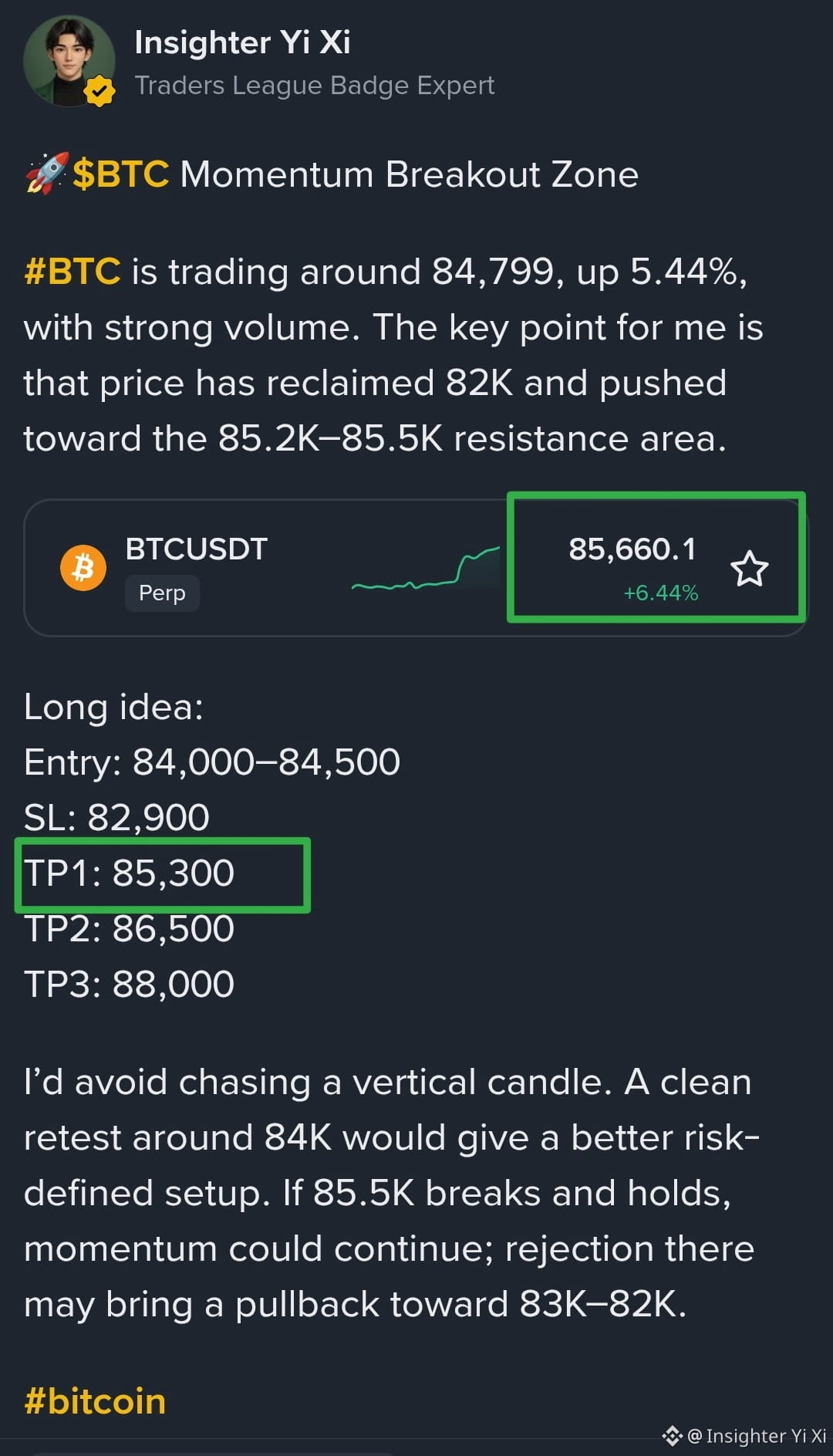
Congratulations Guy's #bitcoin All Tp Successfull ❤️ My Long Call Perfect ✅👍$BTC
2
582
PINNED
Insighter Yi Xi
·
--
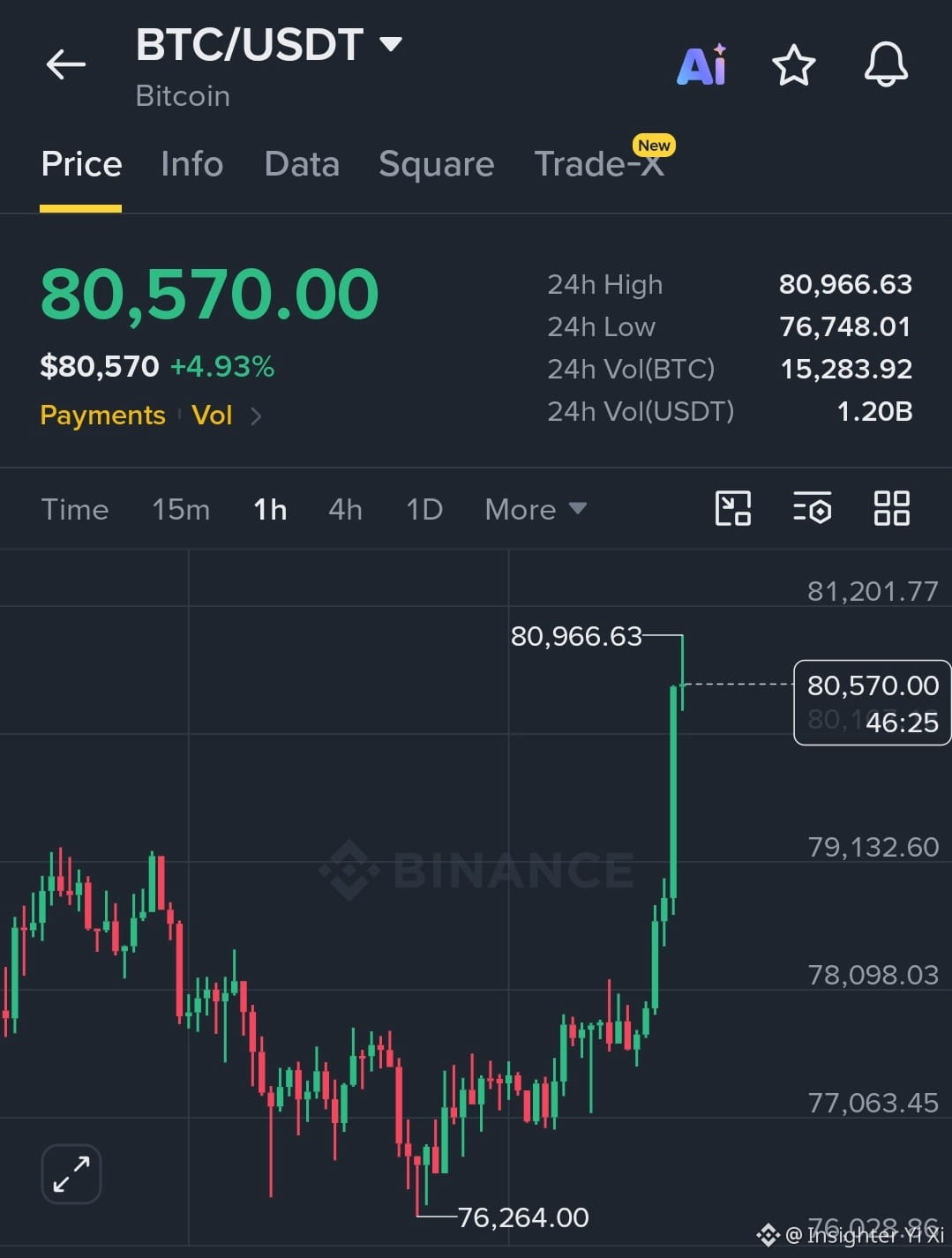
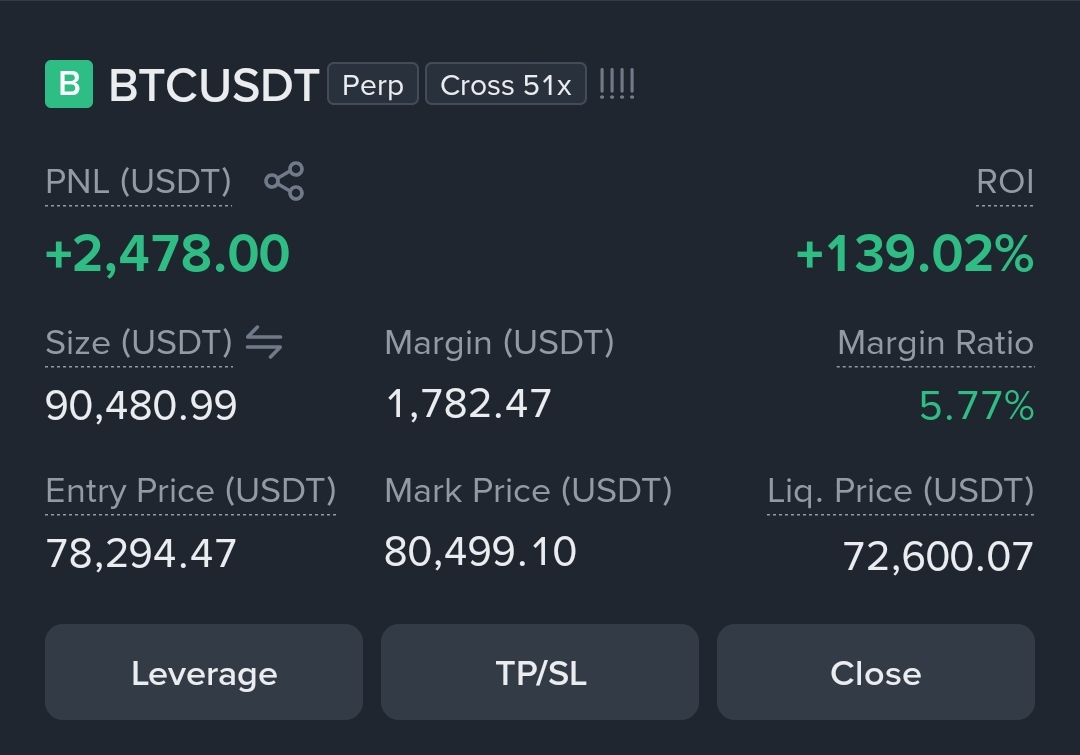
congratulations guy's tp1 successfull
$BTC USDT BREAKOUT PRESSURE
#BTC is trading around 78,786, holding firmly above the 78K area after a strong move. The key resistance is 79,000–79,400; a clean 15m/1h close above this zone could open the way toward 80,200–81,000. If 79K rejects again, a pullback toward 78,100–77,400 is possible.
Long Entry: 78,700–79,050 after confirmation
TP1: 79,400
TP2: 80,200
TP3: 81,000
SL: 77,900
Momentum remains bullish, but avoid chasing a sharp candle directly into resistance.
#EtherXRPETFInflowStreaksEnd #US10YearTreasuryYieldHitsHighestSinceNov2023
$BTC USDT BREAKOUT PRESSURE
#BTC is trading around 78,786, holding firmly above the 78K area after a strong move. The key resistance is 79,000–79,400; a clean 15m/1h close above this zone could open the way toward 80,200–81,000. If 79K rejects again, a pullback toward 78,100–77,400 is possible.
Long Entry: 78,700–79,050 after confirmation
TP1: 79,400
TP2: 80,200
TP3: 81,000
SL: 77,900
Momentum remains bullish, but avoid chasing a sharp candle directly into resistance.
#EtherXRPETFInflowStreaksEnd #US10YearTreasuryYieldHitsHighestSinceNov2023
1
1
4
635
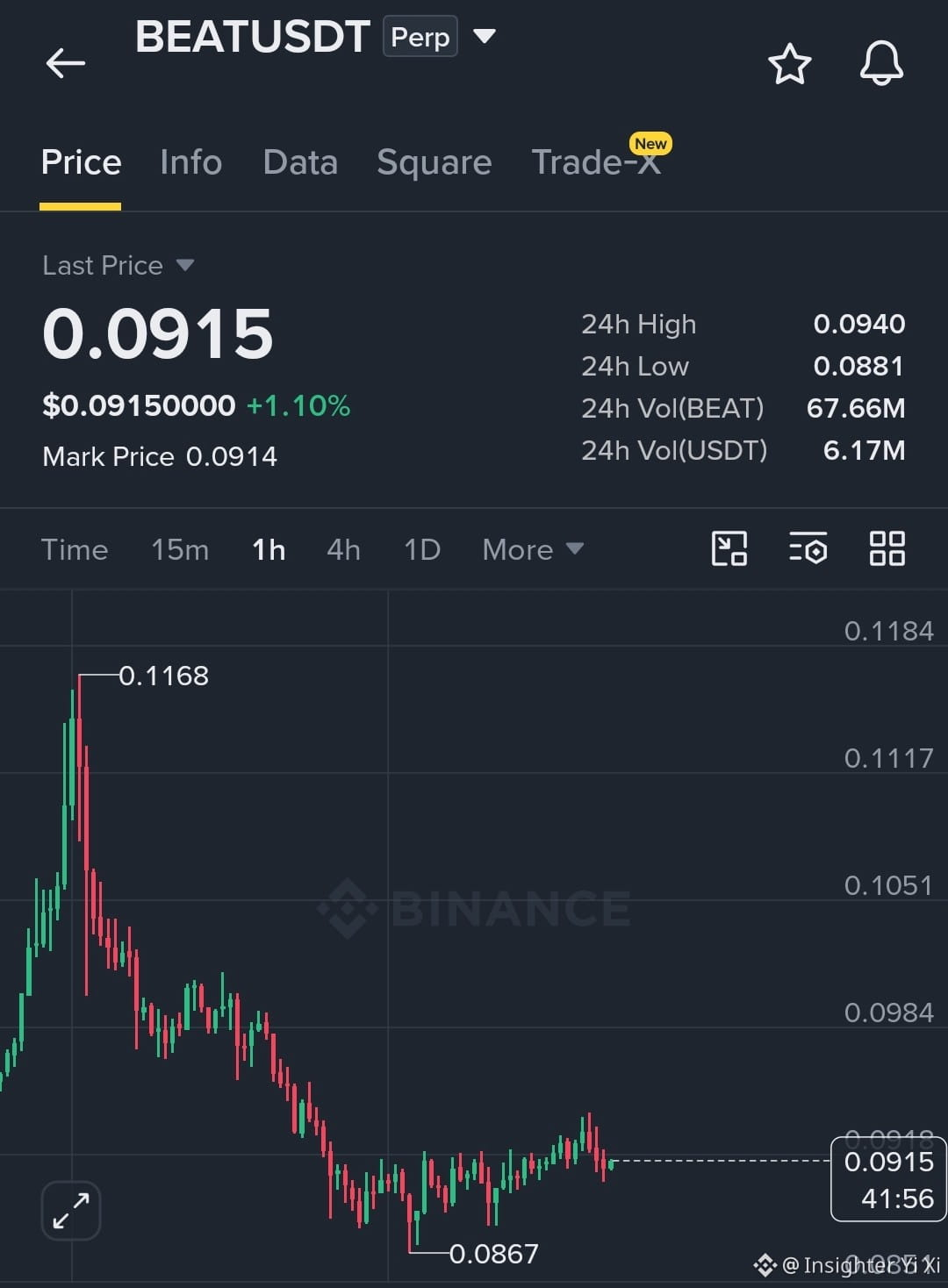
$BEAT USDT breakout watch, but don’t chase
#BEAT is holding around 0.0915, with strong recent volatility. Binance data shows the 24h range at 0.0881–0.0940, so 0.0940 is the first key breakout area.
{future}(BEATUSDT)
My Long setup:
Entry: 0.0900–0.0915 on a clean hold/retest
SL: 0.0867
TP1: 0.0940
TP2: 0.0984
TP3: 0.1051
I’d avoid chasing a sudden candle. If BEAT breaks 0.0940 with volume and then holds the level as support, the higher targets become more interesting. If 0.0867 breaks, I’d step aside and reassess.
Futures are highly volatile, so keep leverage controlled and risk only what you can afford to lose.
#BEATUSDT #BEAT #Binance #cryptotrading
$BEAT USDT breakout watch, but don’t chase
#BEAT is holding around 0.0915, with strong recent volatility. Binance data shows the 24h range at 0.0881–0.0940, so 0.0940 is the first key breakout area.
My Long setup:
Entry: 0.0900–0.0915 on a clean hold/retest
SL: 0.0867
TP1: 0.0940
TP2: 0.0984
TP3: 0.1051
I’d avoid chasing a sudden candle. If BEAT breaks 0.0940 with volume and then holds the level as support, the higher targets become more interesting. If 0.0867 breaks, I’d step aside and reassess.
Futures are highly volatile, so keep leverage controlled and risk only what you can afford to lose.
#BEATUSDT #BEAT #Binance #cryptotrading
#BEAT is holding around 0.0915, with strong recent volatility. Binance data shows the 24h range at 0.0881–0.0940, so 0.0940 is the first key breakout area.
My Long setup:
Entry: 0.0900–0.0915 on a clean hold/retest
SL: 0.0867
TP1: 0.0940
TP2: 0.0984
TP3: 0.1051
I’d avoid chasing a sudden candle. If BEAT breaks 0.0940 with volume and then holds the level as support, the higher targets become more interesting. If 0.0867 breaks, I’d step aside and reassess.
Futures are highly volatile, so keep leverage controlled and risk only what you can afford to lose.
#BEATUSDT #BEAT #Binance #cryptotrading
1
226
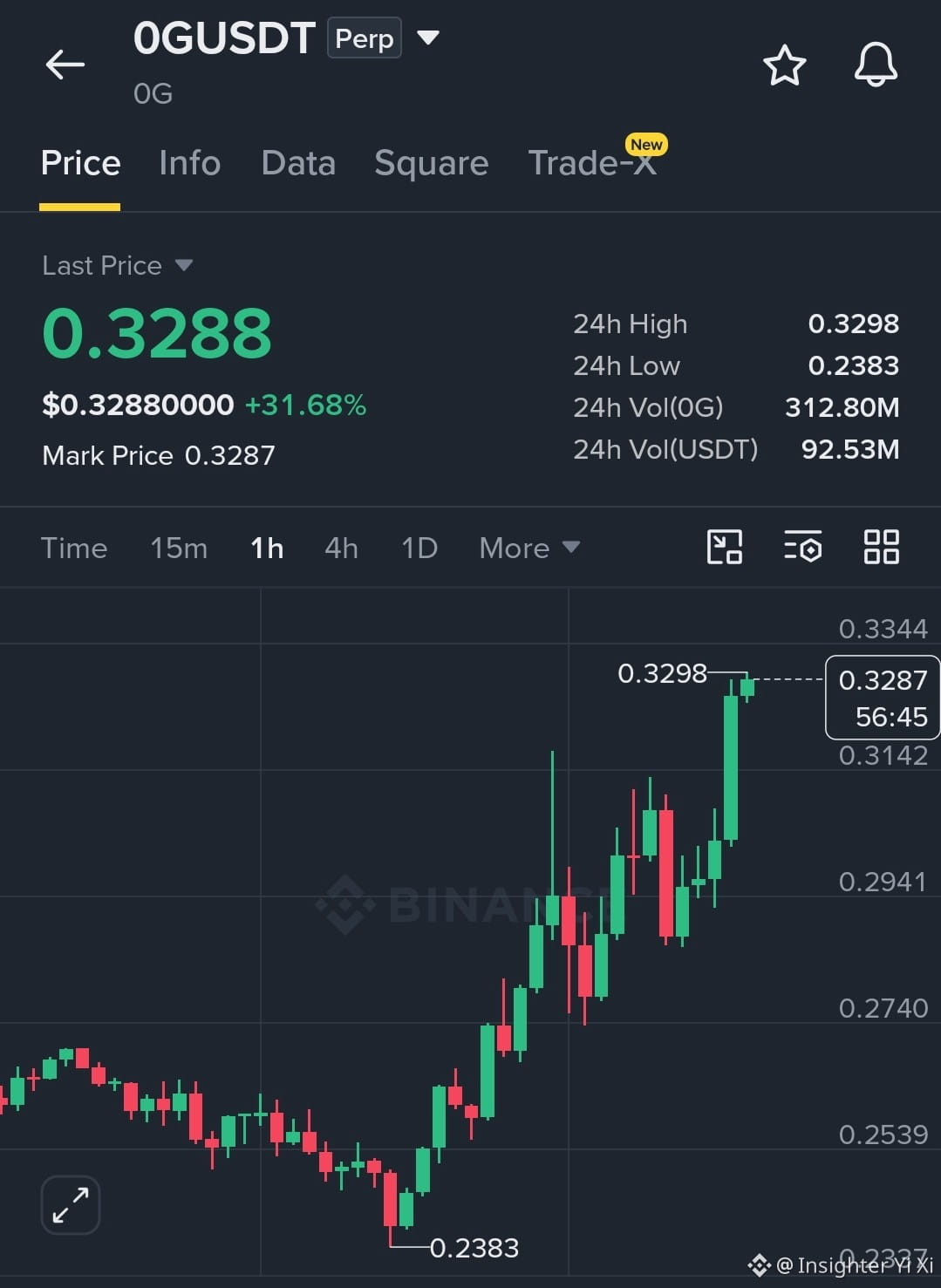
$0G is moving fast but I’m not chasing the candle
#0G is trading around 0.3288, up 31.68%, with strong volume around 92.53M USDT. Price is testing the 0.3298–0.3344 resistance zone, so this is where confirmation matters.
{future}(0GUSDT)
My setup is to wait for a pullback/retest rather than enter after the spike:
Long Entry: 0.3140–0.3190
SL: 0.3040
TP1: 0.3298
TP2: 0.3344
TP3: 0.3500
If 0.3298–0.3344 breaks with a strong 15m close and holds on retest, momentum can continue. If price loses 0.3142, I’d step back and wait for a cleaner setup.
Volume is the key here strong move, but volatility is also high. Manage risk and don’t chase.
This is my chart-based view, not a guarantee. DYOR and use proper risk management.
#EarningsSeason #HackersDrainOver12.4MXRPFromDCENTWallets #OpenAIDelaysGPT6.1OverSafetyIssues
$0G is moving fast but I’m not chasing the candle
#0G is trading around 0.3288, up 31.68%, with strong volume around 92.53M USDT. Price is testing the 0.3298–0.3344 resistance zone, so this is where confirmation matters.
My setup is to wait for a pullback/retest rather than enter after the spike:
Long Entry: 0.3140–0.3190
SL: 0.3040
TP1: 0.3298
TP2: 0.3344
TP3: 0.3500
If 0.3298–0.3344 breaks with a strong 15m close and holds on retest, momentum can continue. If price loses 0.3142, I’d step back and wait for a cleaner setup.
Volume is the key here strong move, but volatility is also high. Manage risk and don’t chase.
This is my chart-based view, not a guarantee. DYOR and use proper risk management.
#EarningsSeason #HackersDrainOver12.4MXRPFromDCENTWallets #OpenAIDelaysGPT6.1OverSafetyIssues
#0G is trading around 0.3288, up 31.68%, with strong volume around 92.53M USDT. Price is testing the 0.3298–0.3344 resistance zone, so this is where confirmation matters.
My setup is to wait for a pullback/retest rather than enter after the spike:
Long Entry: 0.3140–0.3190
SL: 0.3040
TP1: 0.3298
TP2: 0.3344
TP3: 0.3500
If 0.3298–0.3344 breaks with a strong 15m close and holds on retest, momentum can continue. If price loses 0.3142, I’d step back and wait for a cleaner setup.
Volume is the key here strong move, but volatility is also high. Manage risk and don’t chase.
This is my chart-based view, not a guarantee. DYOR and use proper risk management.
#EarningsSeason #HackersDrainOver12.4MXRPFromDCENTWallets #OpenAIDelaysGPT6.1OverSafetyIssues
1
429
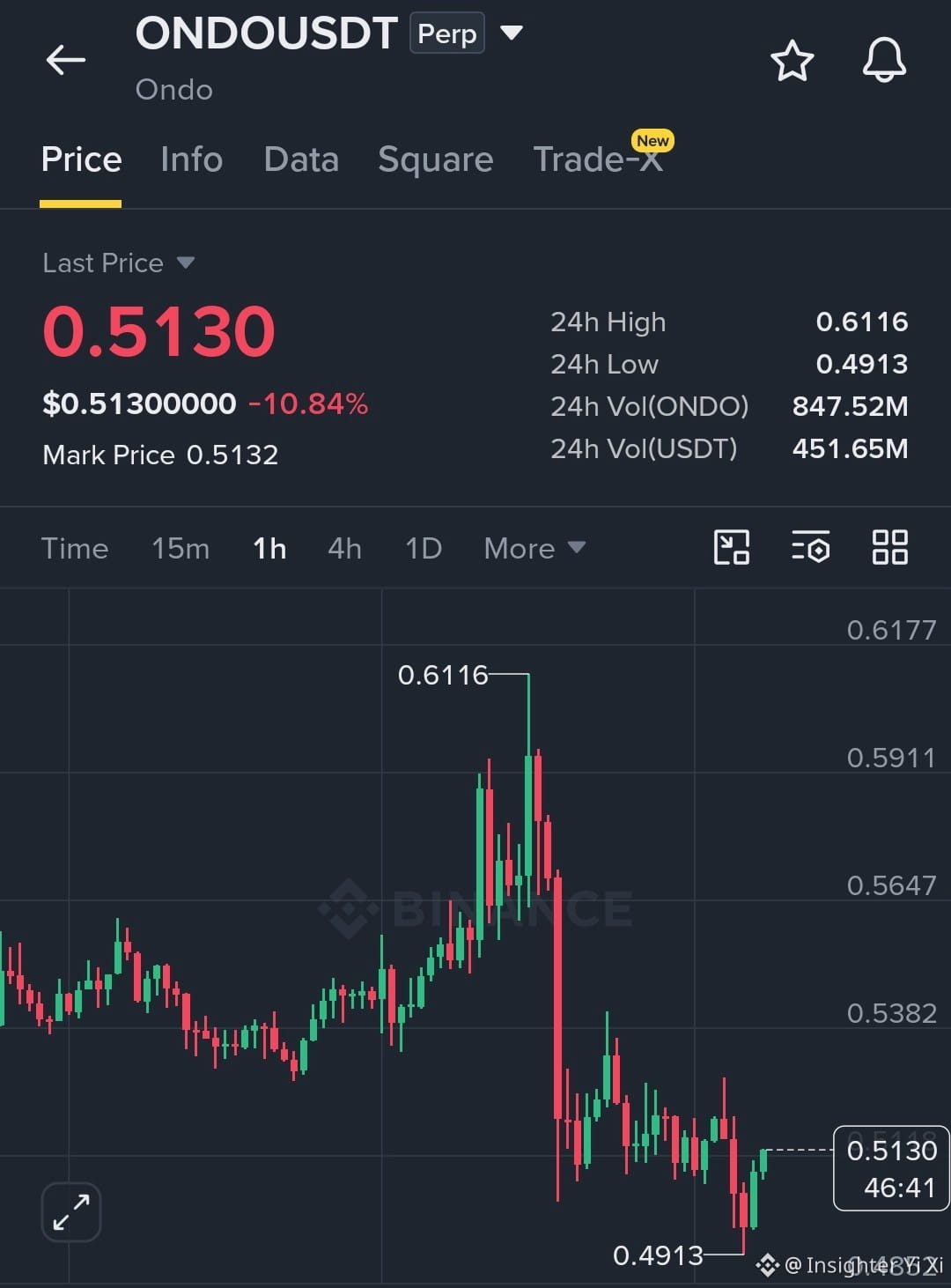
$ONDO sharp pullback, but support is close
#ONDO is down 10.84% at 0.5130, after reaching 0.6116. Volume is still strong at around $451M, so I’m watching whether buyers defend the 0.49–0.51 area rather than chasing the falling candle.
{future}(ONDOUSDT)
My Long setup:
Entry: 0.500–0.515 after a clear 15m bounce
SL: 0.482
TP1: 0.538
TP2: 0.565
TP3: 0.591
If 0.485 breaks with momentum, I’d cancel the long idea and wait for a new base.
Levels are based on the chart you shared. Manage risk carefully no setup is guaranteed.
#ChainlinkLaunchesCCIP2WithEnterpriseVerification #QNTFallsOver40%FromMorningHigh #UKFCAWinsCourtOrderToRecover851400Pounds
$ONDO sharp pullback, but support is close
#ONDO is down 10.84% at 0.5130, after reaching 0.6116. Volume is still strong at around $451M, so I’m watching whether buyers defend the 0.49–0.51 area rather than chasing the falling candle.
My Long setup:
Entry: 0.500–0.515 after a clear 15m bounce
SL: 0.482
TP1: 0.538
TP2: 0.565
TP3: 0.591
If 0.485 breaks with momentum, I’d cancel the long idea and wait for a new base.
Levels are based on the chart you shared. Manage risk carefully no setup is guaranteed.
#ChainlinkLaunchesCCIP2WithEnterpriseVerification #QNTFallsOver40%FromMorningHigh #UKFCAWinsCourtOrderToRecover851400Pounds
#ONDO is down 10.84% at 0.5130, after reaching 0.6116. Volume is still strong at around $451M, so I’m watching whether buyers defend the 0.49–0.51 area rather than chasing the falling candle.
My Long setup:
Entry: 0.500–0.515 after a clear 15m bounce
SL: 0.482
TP1: 0.538
TP2: 0.565
TP3: 0.591
If 0.485 breaks with momentum, I’d cancel the long idea and wait for a new base.
Levels are based on the chart you shared. Manage risk carefully no setup is guaranteed.
#ChainlinkLaunchesCCIP2WithEnterpriseVerification #QNTFallsOver40%FromMorningHigh #UKFCAWinsCourtOrderToRecover851400Pounds
2
234
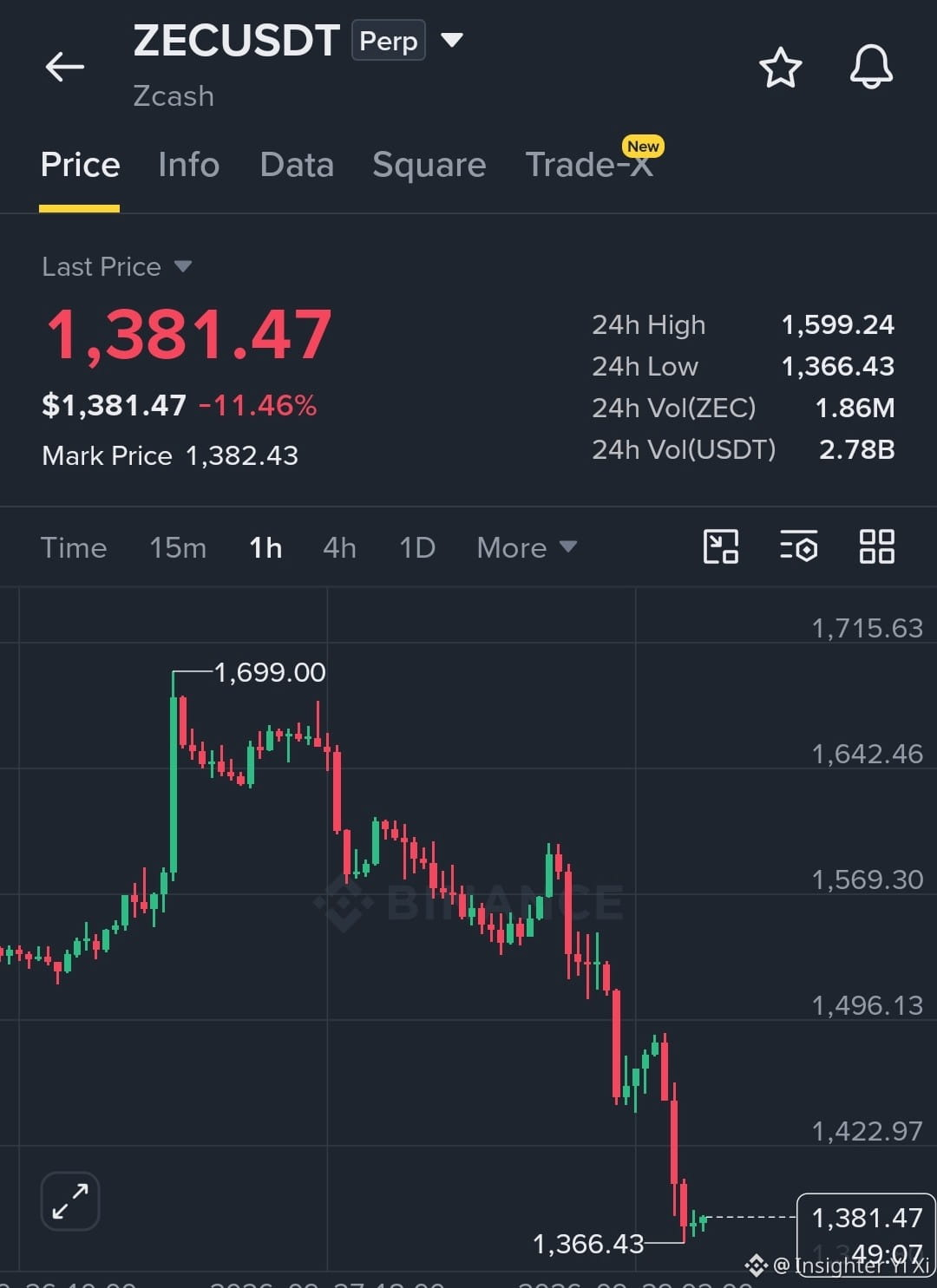
#ZEC big drop, now watching the reaction zone
$ZEC has pulled back sharply to 1,381, down 11.46%, after trading as high as 1,599. With volume around $2.78B, this is a high-volatility area, so I wouldn’t rush into the first bounce.
{future}(ZECUSDT)
My Long setup:
Entry: 1,375–1,400 after a confirmed 15m bounce
SL: 1,345
TP1: 1,423
TP2: 1,496
TP3: 1,569
The key level for me is 1,366. If that support fails decisively, I’d step aside rather than force the long.
Setup is based on the levels you shared. Manage risk carefully; targets are not guaranteed.
#QNTFallsOver40%FromMorningHigh #ChainlinkLaunchesCCIP2WithEnterpriseVerification
#ZEC big drop, now watching the reaction zone
$ZEC has pulled back sharply to 1,381, down 11.46%, after trading as high as 1,599. With volume around $2.78B, this is a high-volatility area, so I wouldn’t rush into the first bounce.
My Long setup:
Entry: 1,375–1,400 after a confirmed 15m bounce
SL: 1,345
TP1: 1,423
TP2: 1,496
TP3: 1,569
The key level for me is 1,366. If that support fails decisively, I’d step aside rather than force the long.
Setup is based on the levels you shared. Manage risk carefully; targets are not guaranteed.
#QNTFallsOver40%FromMorningHigh #ChainlinkLaunchesCCIP2WithEnterpriseVerification
$ZEC has pulled back sharply to 1,381, down 11.46%, after trading as high as 1,599. With volume around $2.78B, this is a high-volatility area, so I wouldn’t rush into the first bounce.
My Long setup:
Entry: 1,375–1,400 after a confirmed 15m bounce
SL: 1,345
TP1: 1,423
TP2: 1,496
TP3: 1,569
The key level for me is 1,366. If that support fails decisively, I’d step aside rather than force the long.
Setup is based on the levels you shared. Manage risk carefully; targets are not guaranteed.
#QNTFallsOver40%FromMorningHigh #ChainlinkLaunchesCCIP2WithEnterpriseVerification
1
423
$BNB watching the support reaction
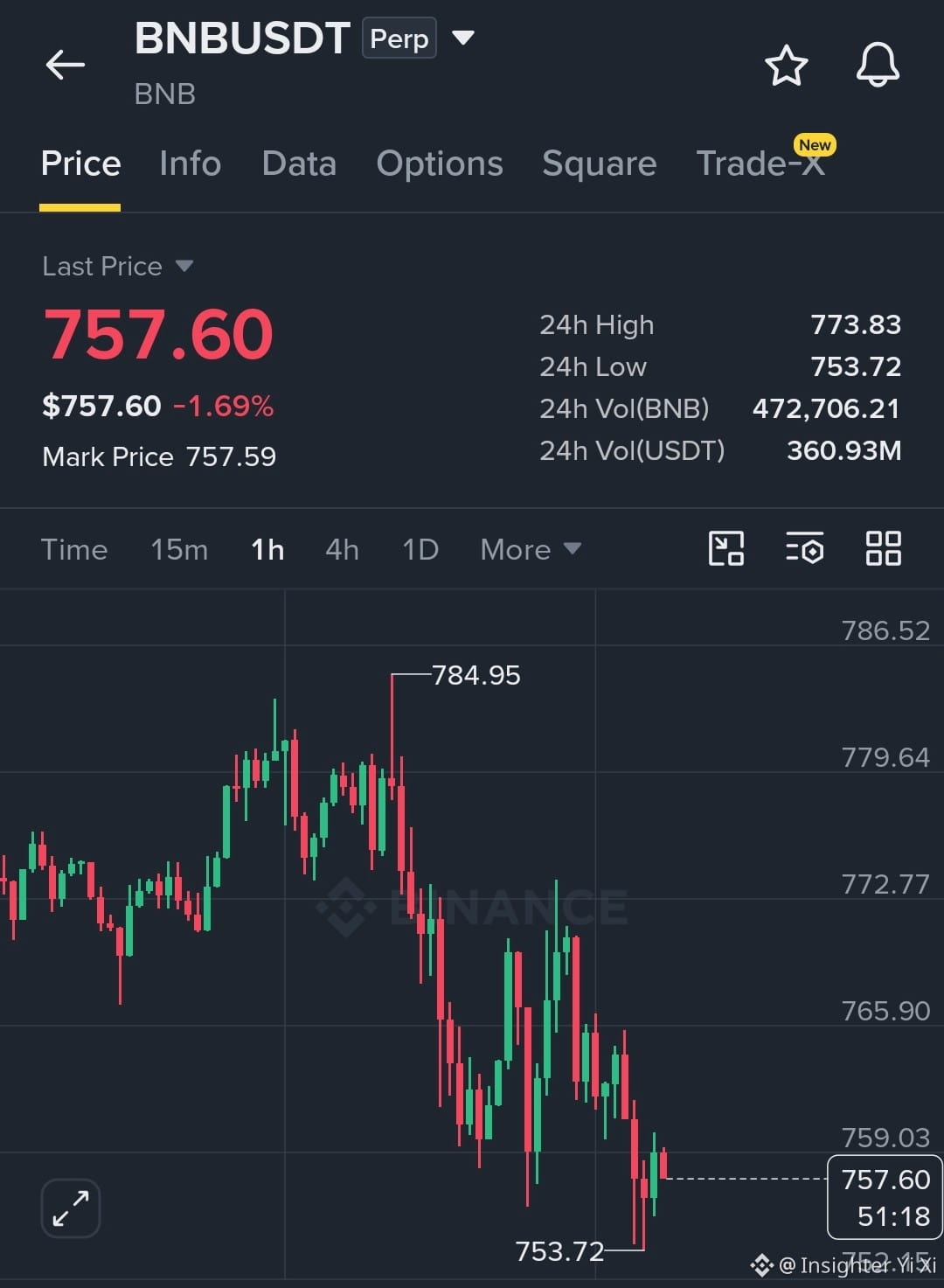
#bnb is sitting near 757.60 after a 1.69% drop, with the chart showing a tight battle around 753–759. For me, this is more of a wait-for-confirmation setup than a chase.
{future}(BNBUSDT)
Long idea:
Entry: 754–759 after a clear bounce
SL: 749
TP1: 766
TP2: 773
TP3: 780
If 752 breaks and stays below it, I’d avoid the long and wait for a fresh structure. The key is seeing buyers defend support first.
Risk-managed setup only no trade is guaranteed.
#QNTFallsOver40%FromMorningHigh #UKFCAWinsCourtOrderToRecover851400Pounds #KospiFalls2.7%SamsungSKHynixDropOver5%
$BNB watching the support reaction
#bnb is sitting near 757.60 after a 1.69% drop, with the chart showing a tight battle around 753–759. For me, this is more of a wait-for-confirmation setup than a chase.
Long idea:
Entry: 754–759 after a clear bounce
SL: 749
TP1: 766
TP2: 773
TP3: 780
If 752 breaks and stays below it, I’d avoid the long and wait for a fresh structure. The key is seeing buyers defend support first.
Risk-managed setup only no trade is guaranteed.
#QNTFallsOver40%FromMorningHigh #UKFCAWinsCourtOrderToRecover851400Pounds #KospiFalls2.7%SamsungSKHynixDropOver5%
#bnb is sitting near 757.60 after a 1.69% drop, with the chart showing a tight battle around 753–759. For me, this is more of a wait-for-confirmation setup than a chase.
Long idea:
Entry: 754–759 after a clear bounce
SL: 749
TP1: 766
TP2: 773
TP3: 780
If 752 breaks and stays below it, I’d avoid the long and wait for a fresh structure. The key is seeing buyers defend support first.
Risk-managed setup only no trade is guaranteed.
#QNTFallsOver40%FromMorningHigh #UKFCAWinsCourtOrderToRecover851400Pounds #KospiFalls2.7%SamsungSKHynixDropOver5%
1
211
$MUBARAK breakout strength, but don’t chase
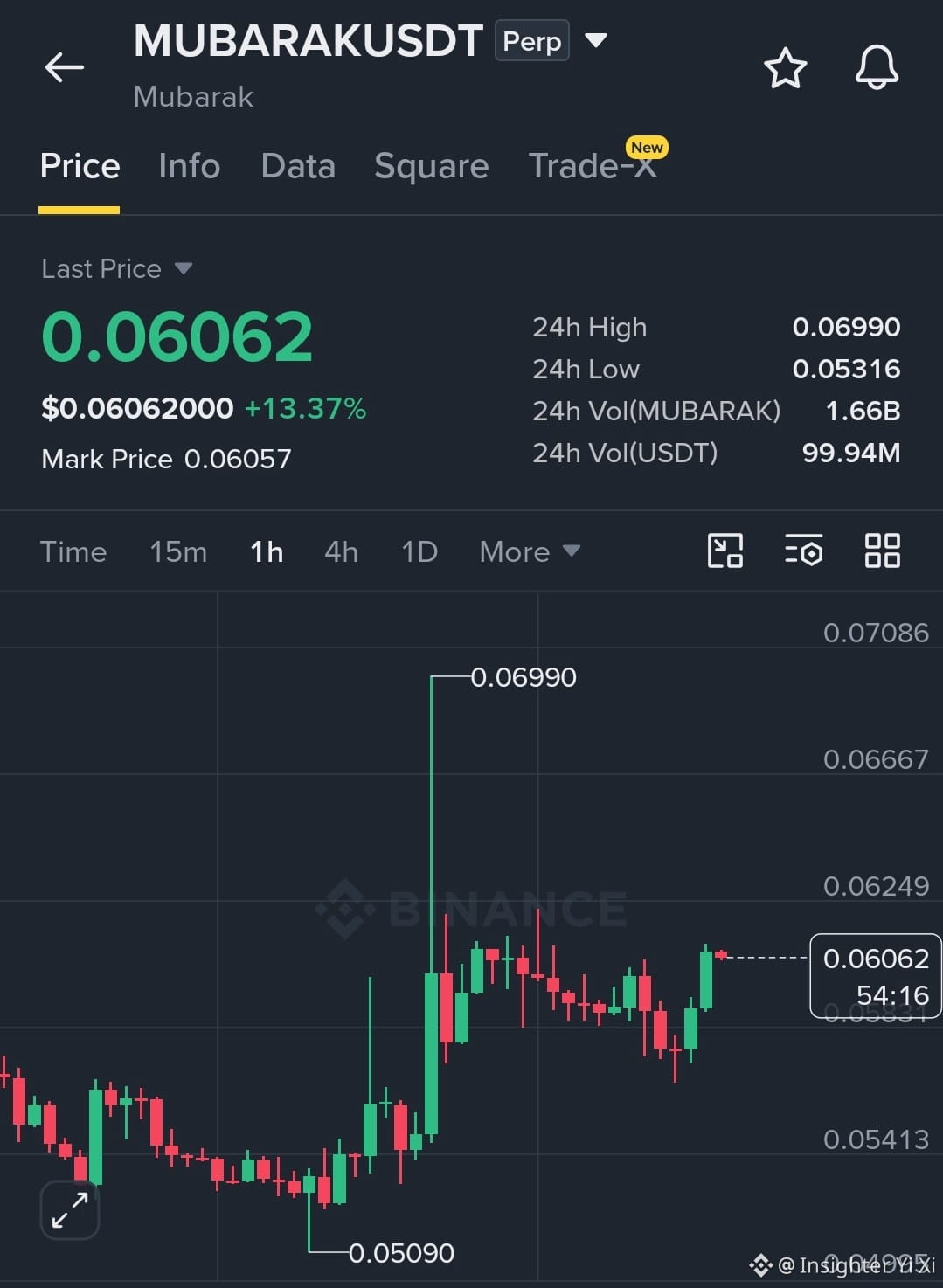
#MUBARAK is holding around 0.06062, up 13.37%, with strong 24h volume near $100M. The chart shows the important 0.0625–0.0630 area; a clean 15m close above it could open room toward the recent high zone.
{future}(MUBARAKUSDT)
My Long setup:
Entry: 0.0600–0.0620 on a controlled pullback/retest
SL: 0.0570
TP1: 0.0645
TP2: 0.0670
TP3: 0.0695
I’d avoid chasing a sudden candle. If 0.0570 breaks, the bullish setup weakens and I’d rather wait for a new structure.
Trade plan only, not a guarantee. Manage risk and size accordingly.
#QNTFallsOver40%FromMorningHigh #KospiFalls2.7%SamsungSKHynixDropOver5%
$MUBARAK breakout strength, but don’t chase
#MUBARAK is holding around 0.06062, up 13.37%, with strong 24h volume near $100M. The chart shows the important 0.0625–0.0630 area; a clean 15m close above it could open room toward the recent high zone.
My Long setup:
Entry: 0.0600–0.0620 on a controlled pullback/retest
SL: 0.0570
TP1: 0.0645
TP2: 0.0670
TP3: 0.0695
I’d avoid chasing a sudden candle. If 0.0570 breaks, the bullish setup weakens and I’d rather wait for a new structure.
Trade plan only, not a guarantee. Manage risk and size accordingly.
#QNTFallsOver40%FromMorningHigh #KospiFalls2.7%SamsungSKHynixDropOver5%
#MUBARAK is holding around 0.06062, up 13.37%, with strong 24h volume near $100M. The chart shows the important 0.0625–0.0630 area; a clean 15m close above it could open room toward the recent high zone.
My Long setup:
Entry: 0.0600–0.0620 on a controlled pullback/retest
SL: 0.0570
TP1: 0.0645
TP2: 0.0670
TP3: 0.0695
I’d avoid chasing a sudden candle. If 0.0570 breaks, the bullish setup weakens and I’d rather wait for a new structure.
Trade plan only, not a guarantee. Manage risk and size accordingly.
#QNTFallsOver40%FromMorningHigh #KospiFalls2.7%SamsungSKHynixDropOver5%
1
237
$HBAR is moving fast but this is where patience matters
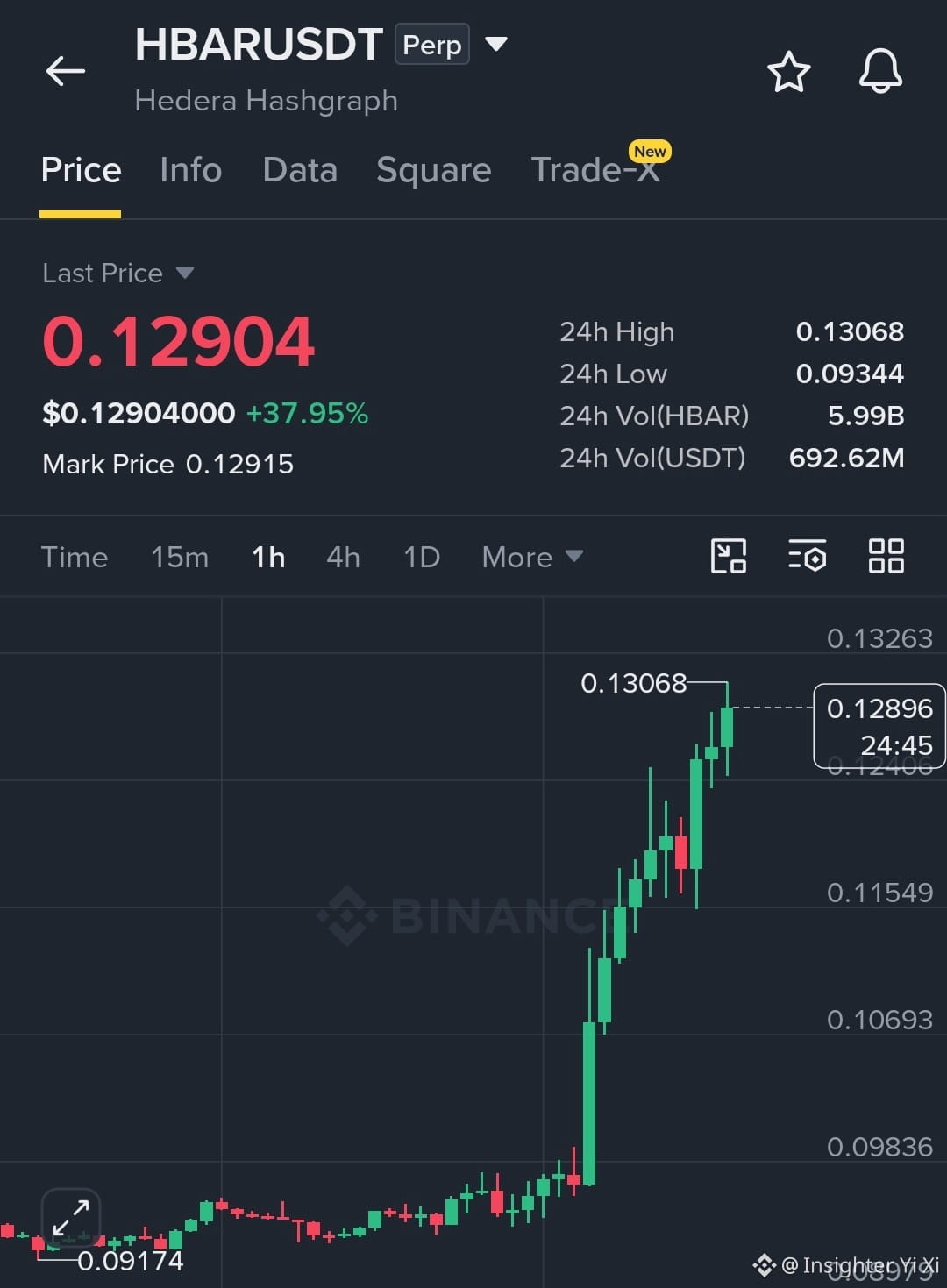
#HBARUSDT is around 0.1290, up nearly 38%, with strong volume. Price is sitting close to the 0.13068 high, so I wouldn’t chase the green candle here.
{future}(HBARUSDT)
My setup would be to wait for a pullback/retest:
Entry: 0.1260–0.1280
SL: 0.1215
TP1: 0.1326
TP2: 0.1380
TP3: 0.1450
If 0.1307 breaks with a strong close and holds on retest, momentum could continue. If it rejects hard, I’d rather wait for a better entry than FOMO.
Trade with a plan and manage risk this setup is based on the chart levels, not a guaranteed outcome.
#HBAR #Hedera #Crypto #BinanceSquare
$HBAR is moving fast but this is where patience matters
#HBARUSDT is around 0.1290, up nearly 38%, with strong volume. Price is sitting close to the 0.13068 high, so I wouldn’t chase the green candle here.
My setup would be to wait for a pullback/retest:
Entry: 0.1260–0.1280
SL: 0.1215
TP1: 0.1326
TP2: 0.1380
TP3: 0.1450
If 0.1307 breaks with a strong close and holds on retest, momentum could continue. If it rejects hard, I’d rather wait for a better entry than FOMO.
Trade with a plan and manage risk this setup is based on the chart levels, not a guaranteed outcome.
#HBAR #Hedera #Crypto #BinanceSquare
#HBARUSDT is around 0.1290, up nearly 38%, with strong volume. Price is sitting close to the 0.13068 high, so I wouldn’t chase the green candle here.
My setup would be to wait for a pullback/retest:
Entry: 0.1260–0.1280
SL: 0.1215
TP1: 0.1326
TP2: 0.1380
TP3: 0.1450
If 0.1307 breaks with a strong close and holds on retest, momentum could continue. If it rejects hard, I’d rather wait for a better entry than FOMO.
Trade with a plan and manage risk this setup is based on the chart levels, not a guaranteed outcome.
#HBAR #Hedera #Crypto #BinanceSquare
1
347
5 COINS I’M WATCHING MOMENTUM VS PULLBACK 👀
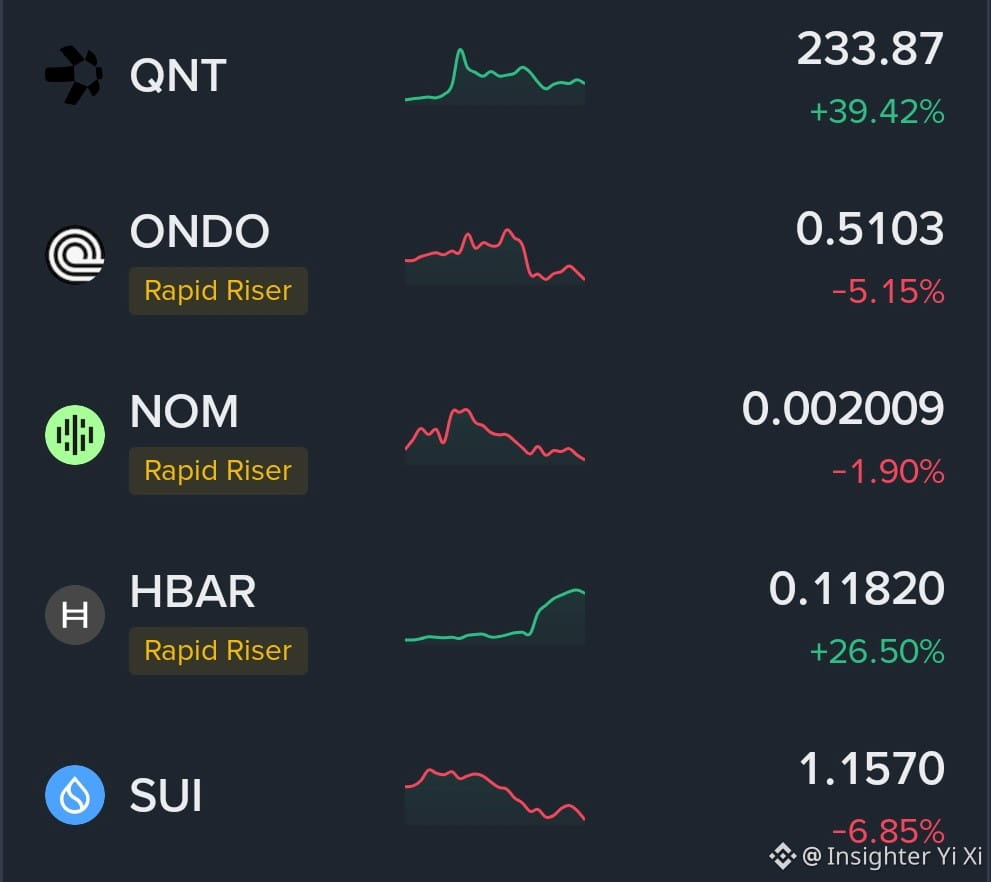
The altcoin board is mixed right now. #QNT +39.42% and HBAR +26.50% are showing the strongest momentum, while ONDO -5.15%, #NOMUSDT -1.90% and #SUI🔥 -6.85% are under pressure.
{future}(QNTUSDT)
$QNT 233.87
Big move already, so I wouldn’t chase the candle. I’d watch 228–234 for a hold/retest.
Entry: 229–234 | SL: 220 | TP: 245 / 258 / 270
{future}(HBARUSDT)
$HBAR 0.11820
Strong momentum, but after +26.50% the safer setup is a pullback rather than buying the spike.
Entry: 0.114–0.118 | SL: 0.109 | TP: 0.123 / 0.128 / 0.135
#ONDO 0.5103
Currently weak. I’d wait for price to reclaim 0.520 before looking for a recovery setup.
Entry: 0.512–0.520 | SL: 0.500 | TP: 0.535 / 0.550
#NOM 0.002009
Small move but still below momentum levels. A clean reclaim of 0.00205 would make the chart more interesting.
Entry: 0.00202–0.00205 | SL: 0.00195 | TP: 0.00215 / 0.00230
{future}(SUIUSDT)
$SUI 1.1570
Down 6.85%, so I’m not interested in catching the falling move. I’d want stabilization around 1.14–1.16 first.
Entry: 1.155–1.170 | SL: 1.125 | TP: 1.20 / 1.24
My approach here is simple: strong coins → wait for a retest; weak coins → wait for confirmation. No FOMO, no blind entries. These are chart-based levels, not guaranteed outcomes.
Always manage your risk and do your own research before trading.
5 COINS I’M WATCHING MOMENTUM VS PULLBACK 👀
The altcoin board is mixed right now. #QNT +39.42% and HBAR +26.50% are showing the strongest momentum, while ONDO -5.15%, #NOMUSDT -1.90% and #SUI🔥 -6.85% are under pressure.
$QNT 233.87
Big move already, so I wouldn’t chase the candle. I’d watch 228–234 for a hold/retest.
Entry: 229–234 | SL: 220 | TP: 245 / 258 / 270
$HBAR 0.11820
Strong momentum, but after +26.50% the safer setup is a pullback rather than buying the spike.
Entry: 0.114–0.118 | SL: 0.109 | TP: 0.123 / 0.128 / 0.135
#ONDO 0.5103
Currently weak. I’d wait for price to reclaim 0.520 before looking for a recovery setup.
Entry: 0.512–0.520 | SL: 0.500 | TP: 0.535 / 0.550
#NOM 0.002009
Small move but still below momentum levels. A clean reclaim of 0.00205 would make the chart more interesting.
Entry: 0.00202–0.00205 | SL: 0.00195 | TP: 0.00215 / 0.00230
$SUI 1.1570
Down 6.85%, so I’m not interested in catching the falling move. I’d want stabilization around 1.14–1.16 first.
Entry: 1.155–1.170 | SL: 1.125 | TP: 1.20 / 1.24
My approach here is simple: strong coins → wait for a retest; weak coins → wait for confirmation. No FOMO, no blind entries. These are chart-based levels, not guaranteed outcomes.
Always manage your risk and do your own research before trading.
The altcoin board is mixed right now. #QNT +39.42% and HBAR +26.50% are showing the strongest momentum, while ONDO -5.15%, #NOMUSDT -1.90% and #SUI🔥 -6.85% are under pressure.
$QNT 233.87
Big move already, so I wouldn’t chase the candle. I’d watch 228–234 for a hold/retest.
Entry: 229–234 | SL: 220 | TP: 245 / 258 / 270
$HBAR 0.11820
Strong momentum, but after +26.50% the safer setup is a pullback rather than buying the spike.
Entry: 0.114–0.118 | SL: 0.109 | TP: 0.123 / 0.128 / 0.135
#ONDO 0.5103
Currently weak. I’d wait for price to reclaim 0.520 before looking for a recovery setup.
Entry: 0.512–0.520 | SL: 0.500 | TP: 0.535 / 0.550
#NOM 0.002009
Small move but still below momentum levels. A clean reclaim of 0.00205 would make the chart more interesting.
Entry: 0.00202–0.00205 | SL: 0.00195 | TP: 0.00215 / 0.00230
$SUI 1.1570
Down 6.85%, so I’m not interested in catching the falling move. I’d want stabilization around 1.14–1.16 first.
Entry: 1.155–1.170 | SL: 1.125 | TP: 1.20 / 1.24
My approach here is simple: strong coins → wait for a retest; weak coins → wait for confirmation. No FOMO, no blind entries. These are chart-based levels, not guaranteed outcomes.
Always manage your risk and do your own research before trading.
1
2
1.3k
$NMR is moving fast but I’m not chasing the candle
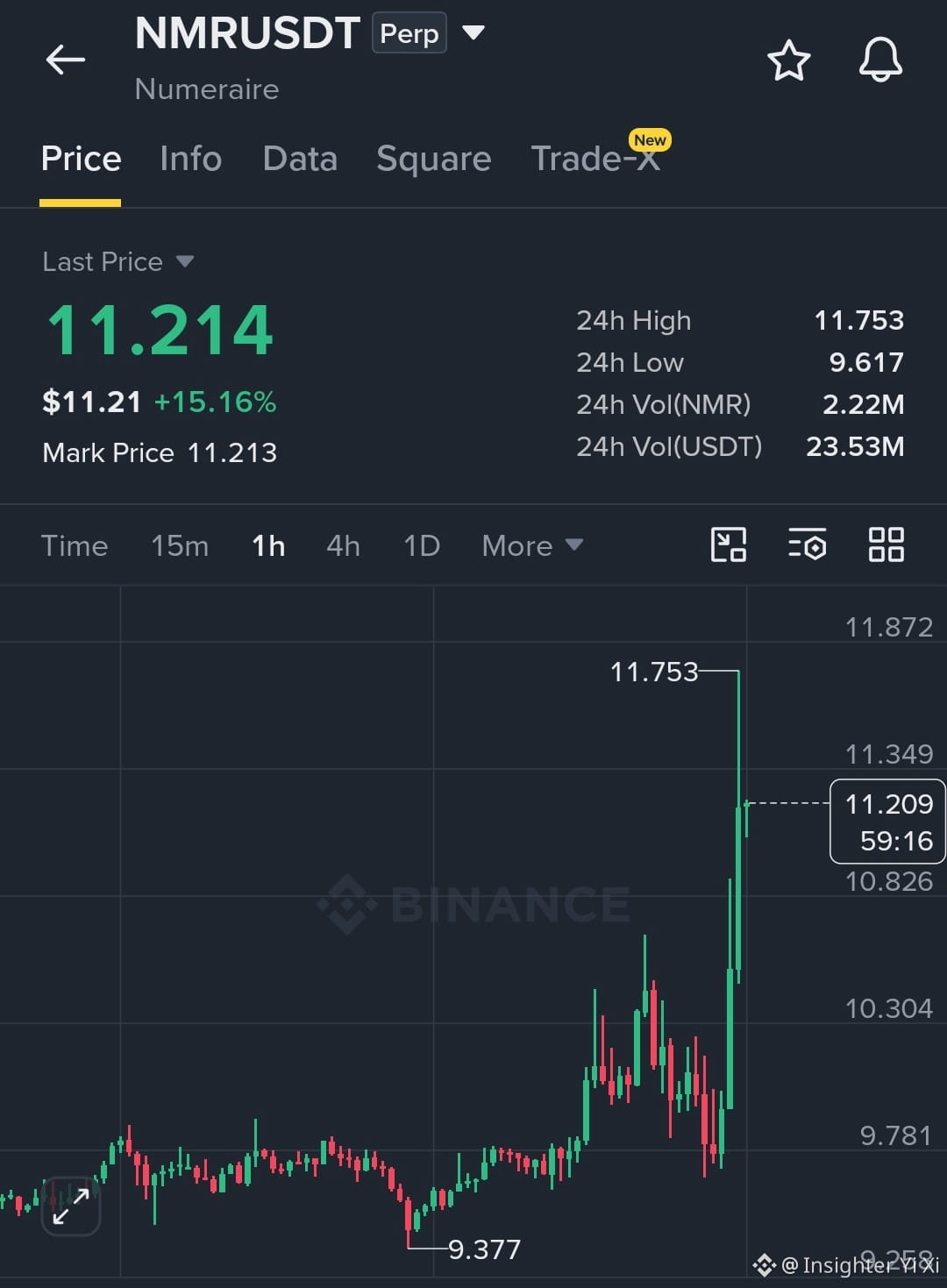
#NMR is around 11.21, up 15%+ and the chart is showing strong momentum. The key area now is 11.75–11.87, which is the nearby resistance zone from the levels shown.
{future}(NMRUSDT)
My plan would be to wait for a clean breakout and retest instead of entering after a big green move.
Long setup
Entry: 11.20–11.35 on a successful retest
SL: 10.82
TP1: 11.75
TP2: 11.87
TP3: 12.30
If NMR loses 10.82, I’d step aside and wait for a new structure.
Momentum is strong, but a move can also bring sharp pullbacks. No FOMO manage risk and confirm the level first.
#ChinaMayLetAlibabaByteDanceBuyNvidiaChips
$NMR is moving fast but I’m not chasing the candle
#NMR is around 11.21, up 15%+ and the chart is showing strong momentum. The key area now is 11.75–11.87, which is the nearby resistance zone from the levels shown.
My plan would be to wait for a clean breakout and retest instead of entering after a big green move.
Long setup
Entry: 11.20–11.35 on a successful retest
SL: 10.82
TP1: 11.75
TP2: 11.87
TP3: 12.30
If NMR loses 10.82, I’d step aside and wait for a new structure.
Momentum is strong, but a move can also bring sharp pullbacks. No FOMO manage risk and confirm the level first.
#ChinaMayLetAlibabaByteDanceBuyNvidiaChips
#NMR is around 11.21, up 15%+ and the chart is showing strong momentum. The key area now is 11.75–11.87, which is the nearby resistance zone from the levels shown.
My plan would be to wait for a clean breakout and retest instead of entering after a big green move.
Long setup
Entry: 11.20–11.35 on a successful retest
SL: 10.82
TP1: 11.75
TP2: 11.87
TP3: 12.30
If NMR loses 10.82, I’d step aside and wait for a new structure.
Momentum is strong, but a move can also bring sharp pullbacks. No FOMO manage risk and confirm the level first.
#ChinaMayLetAlibabaByteDanceBuyNvidiaChips
2
200
#BTW USDT is moving fast 👀
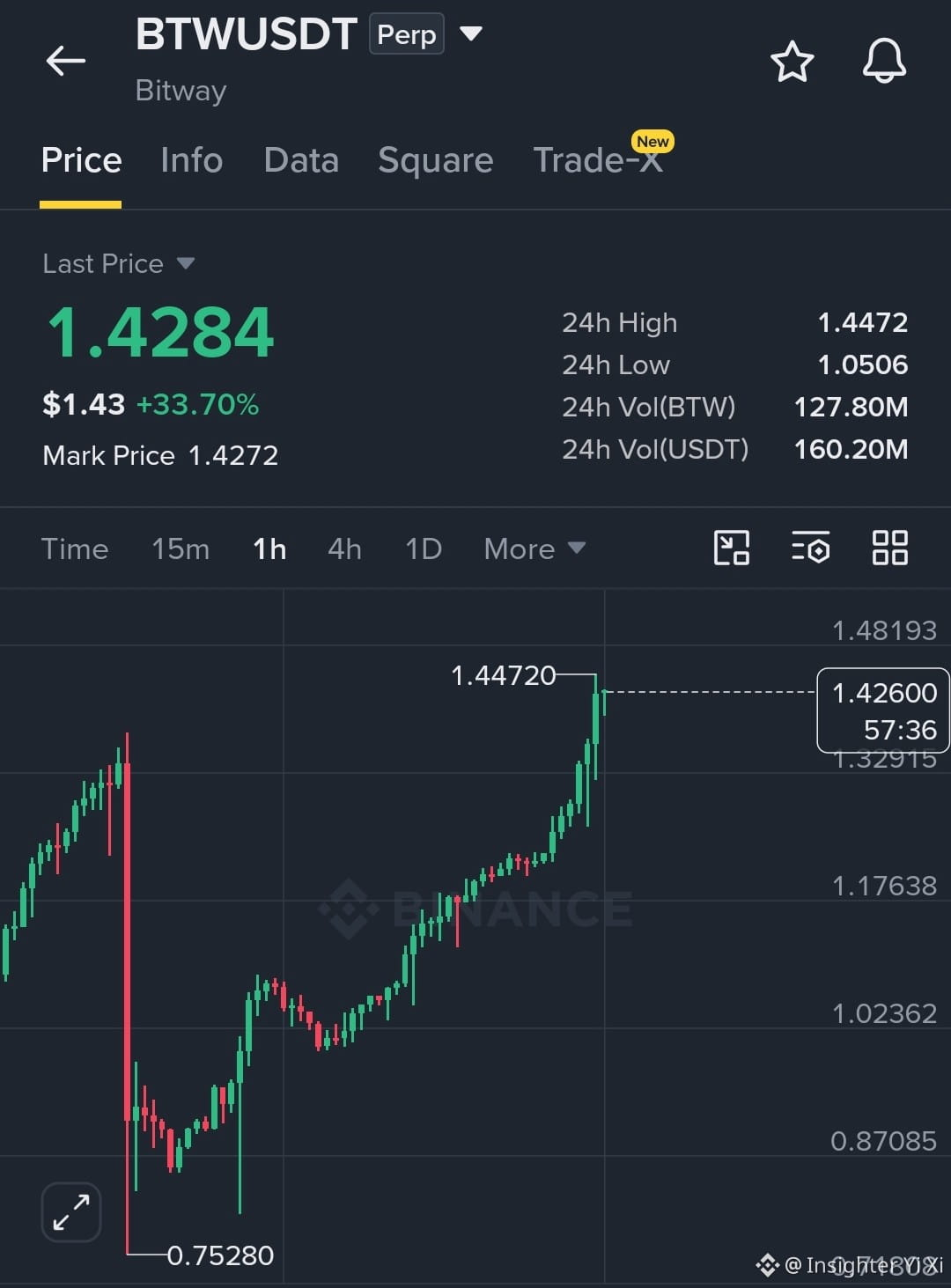
$BTW is up around 33% and trading near 1.4284, with strong volume behind the move. But price is already close to the 1.4472 high, so personally I wouldn’t chase it here.
{future}(BTWUSDT)
I’m watching the 1.36–1.40 area for a healthy pullback and possible long entry.
Entry: 1.36–1.40
SL: 1.31
TP1: 1.447
TP2: 1.48
TP3: 1.55
If BTW breaks 1.4472 and holds the retest, the setup can become stronger. If it loses 1.329, I’d rather wait than force a trade.
Strong momentum is good, but chasing a big green candle can be risky. I’d prefer confirmation and proper risk management.
DYOR. Trade your own plan.
#BitwiseFilesFinalNEARSpotETFProspectus #SKoreaFSCConsidersVirtualAssetMarketMaker
#BTW USDT is moving fast 👀
$BTW is up around 33% and trading near 1.4284, with strong volume behind the move. But price is already close to the 1.4472 high, so personally I wouldn’t chase it here.
I’m watching the 1.36–1.40 area for a healthy pullback and possible long entry.
Entry: 1.36–1.40
SL: 1.31
TP1: 1.447
TP2: 1.48
TP3: 1.55
If BTW breaks 1.4472 and holds the retest, the setup can become stronger. If it loses 1.329, I’d rather wait than force a trade.
Strong momentum is good, but chasing a big green candle can be risky. I’d prefer confirmation and proper risk management.
DYOR. Trade your own plan.
#BitwiseFilesFinalNEARSpotETFProspectus #SKoreaFSCConsidersVirtualAssetMarketMaker
$BTW is up around 33% and trading near 1.4284, with strong volume behind the move. But price is already close to the 1.4472 high, so personally I wouldn’t chase it here.
I’m watching the 1.36–1.40 area for a healthy pullback and possible long entry.
Entry: 1.36–1.40
SL: 1.31
TP1: 1.447
TP2: 1.48
TP3: 1.55
If BTW breaks 1.4472 and holds the retest, the setup can become stronger. If it loses 1.329, I’d rather wait than force a trade.
Strong momentum is good, but chasing a big green candle can be risky. I’d prefer confirmation and proper risk management.
DYOR. Trade your own plan.
#BitwiseFilesFinalNEARSpotETFProspectus #SKoreaFSCConsidersVirtualAssetMarketMaker
1
236
#SOXS Bears Are Back But Can Momentum Hold?
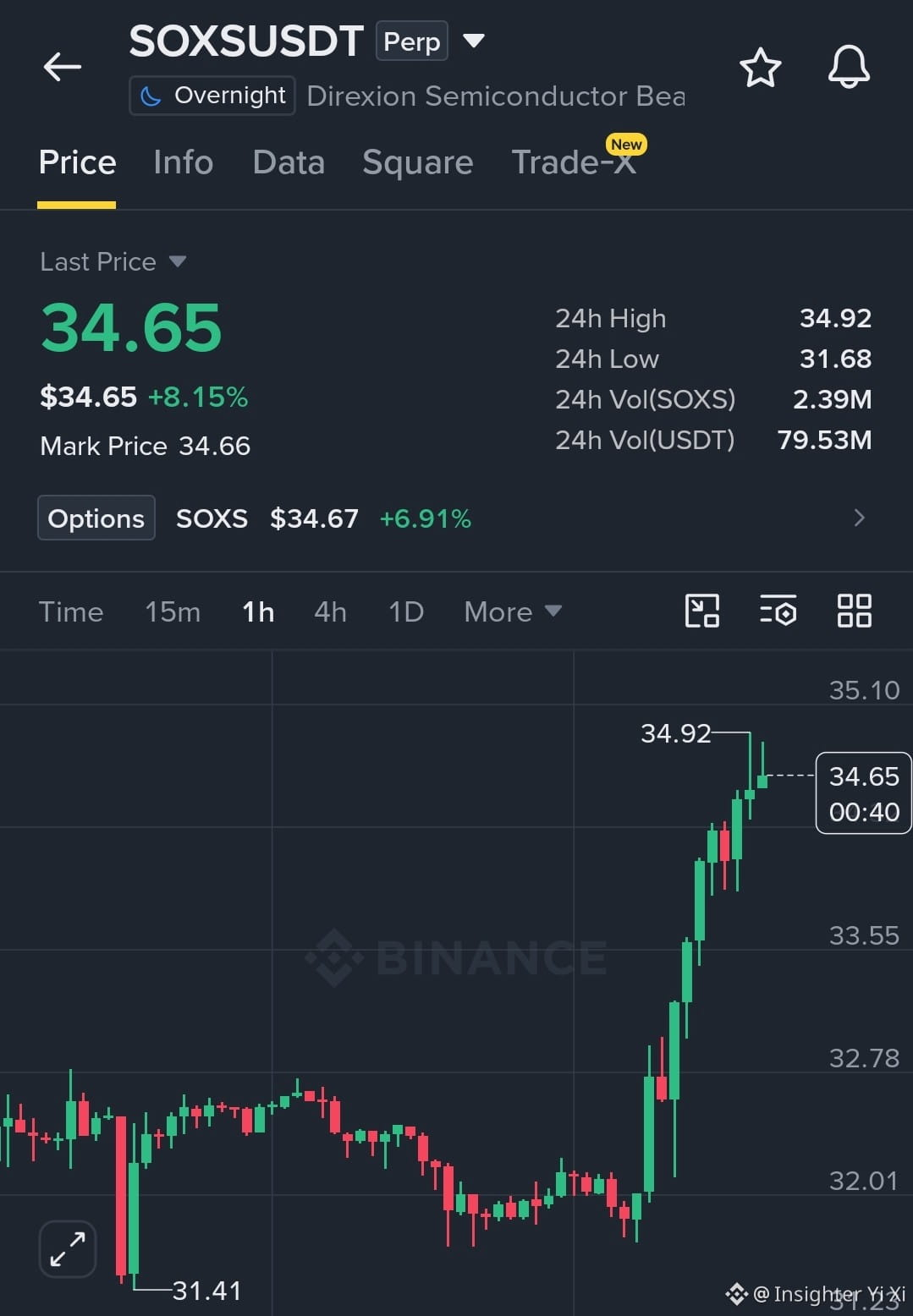
$SOXS is trading at 34.65, up 8.15%, with 79.53M USDT in 24-hour volume. Price is approaching the 34.92–35.10 resistance zone, where a rejection or breakout could determine the next move.
{future}(SOXSUSDT)
My trade plan conditional Long
Entry: 33.60–34.10 after a confirmed bounce
Stop Loss: 32.75
TP1: 34.90
TP2: 35.80
TP3: 36.60
What I’m watching: A strong candle close above 35.10 followed by a successful retest could support further upside. If price loses 33.55, I’d reassess the setup rather than force an entry.
Important: SOXS is a leveraged inverse semiconductor ETF, so its exposure and risks differ from ordinary crypto assets. Check the underlying product structure and volatility before trading.
No FOMO, no guaranteed targets. Protect your capital and manage risk. DYOR.
#BitwiseFilesFinalNEARSpotETFProspectus #DogecoinETFsPostBiggestWeekSinceLaunch
#SOXS Bears Are Back But Can Momentum Hold?
$SOXS is trading at 34.65, up 8.15%, with 79.53M USDT in 24-hour volume. Price is approaching the 34.92–35.10 resistance zone, where a rejection or breakout could determine the next move.
My trade plan conditional Long
Entry: 33.60–34.10 after a confirmed bounce
Stop Loss: 32.75
TP1: 34.90
TP2: 35.80
TP3: 36.60
What I’m watching: A strong candle close above 35.10 followed by a successful retest could support further upside. If price loses 33.55, I’d reassess the setup rather than force an entry.
Important: SOXS is a leveraged inverse semiconductor ETF, so its exposure and risks differ from ordinary crypto assets. Check the underlying product structure and volatility before trading.
No FOMO, no guaranteed targets. Protect your capital and manage risk. DYOR.
#BitwiseFilesFinalNEARSpotETFProspectus #DogecoinETFsPostBiggestWeekSinceLaunch
$SOXS is trading at 34.65, up 8.15%, with 79.53M USDT in 24-hour volume. Price is approaching the 34.92–35.10 resistance zone, where a rejection or breakout could determine the next move.
My trade plan conditional Long
Entry: 33.60–34.10 after a confirmed bounce
Stop Loss: 32.75
TP1: 34.90
TP2: 35.80
TP3: 36.60
What I’m watching: A strong candle close above 35.10 followed by a successful retest could support further upside. If price loses 33.55, I’d reassess the setup rather than force an entry.
Important: SOXS is a leveraged inverse semiconductor ETF, so its exposure and risks differ from ordinary crypto assets. Check the underlying product structure and volatility before trading.
No FOMO, no guaranteed targets. Protect your capital and manage risk. DYOR.
#BitwiseFilesFinalNEARSpotETFProspectus #DogecoinETFsPostBiggestWeekSinceLaunch
2
123
🚀$MARSCOIN breakout watch don’t chase the candle
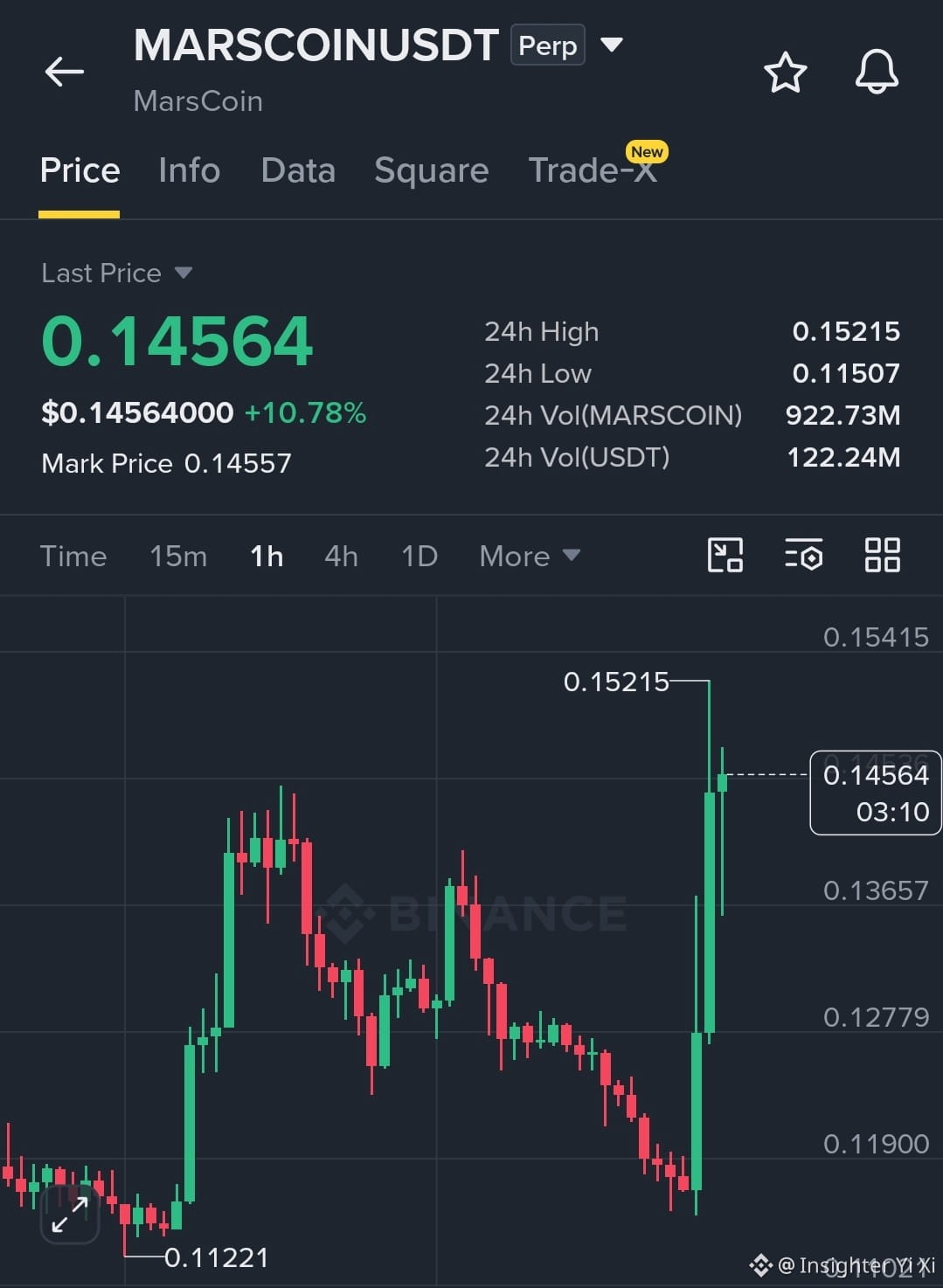
$MARSCOIN is showing strong momentum at 0.14564 (+10.78%), with heavy 24h volume around 122M USDT. Price is close to the 0.15215 high, so I’d rather wait for a clean breakout/retest than chase the current move.
{future}(MARSCOINUSDT)
My Long setup:
Entry: 0.1410–0.1440 on pullback/retest
SL: 0.1360
TP1: 0.1520
TP2: 0.1600
TP3: 0.1680
If 0.15215 breaks with a strong candle and holds on retest, momentum could continue. If it loses 0.1360, this setup is invalid.
Trade with a defined risk no FOMO, no blind entries. DYOR.
#BitwiseFilesFinalNEARSpotETFProspectus #DogecoinETFsPostBiggestWeekSinceLaunch
🚀$MARSCOIN breakout watch don’t chase the candle
$MARSCOIN is showing strong momentum at 0.14564 (+10.78%), with heavy 24h volume around 122M USDT. Price is close to the 0.15215 high, so I’d rather wait for a clean breakout/retest than chase the current move.
My Long setup:
Entry: 0.1410–0.1440 on pullback/retest
SL: 0.1360
TP1: 0.1520
TP2: 0.1600
TP3: 0.1680
If 0.15215 breaks with a strong candle and holds on retest, momentum could continue. If it loses 0.1360, this setup is invalid.
Trade with a defined risk no FOMO, no blind entries. DYOR.
#BitwiseFilesFinalNEARSpotETFProspectus #DogecoinETFsPostBiggestWeekSinceLaunch
$MARSCOIN is showing strong momentum at 0.14564 (+10.78%), with heavy 24h volume around 122M USDT. Price is close to the 0.15215 high, so I’d rather wait for a clean breakout/retest than chase the current move.
My Long setup:
Entry: 0.1410–0.1440 on pullback/retest
SL: 0.1360
TP1: 0.1520
TP2: 0.1600
TP3: 0.1680
If 0.15215 breaks with a strong candle and holds on retest, momentum could continue. If it loses 0.1360, this setup is invalid.
Trade with a defined risk no FOMO, no blind entries. DYOR.
#BitwiseFilesFinalNEARSpotETFProspectus #DogecoinETFsPostBiggestWeekSinceLaunch
1
227
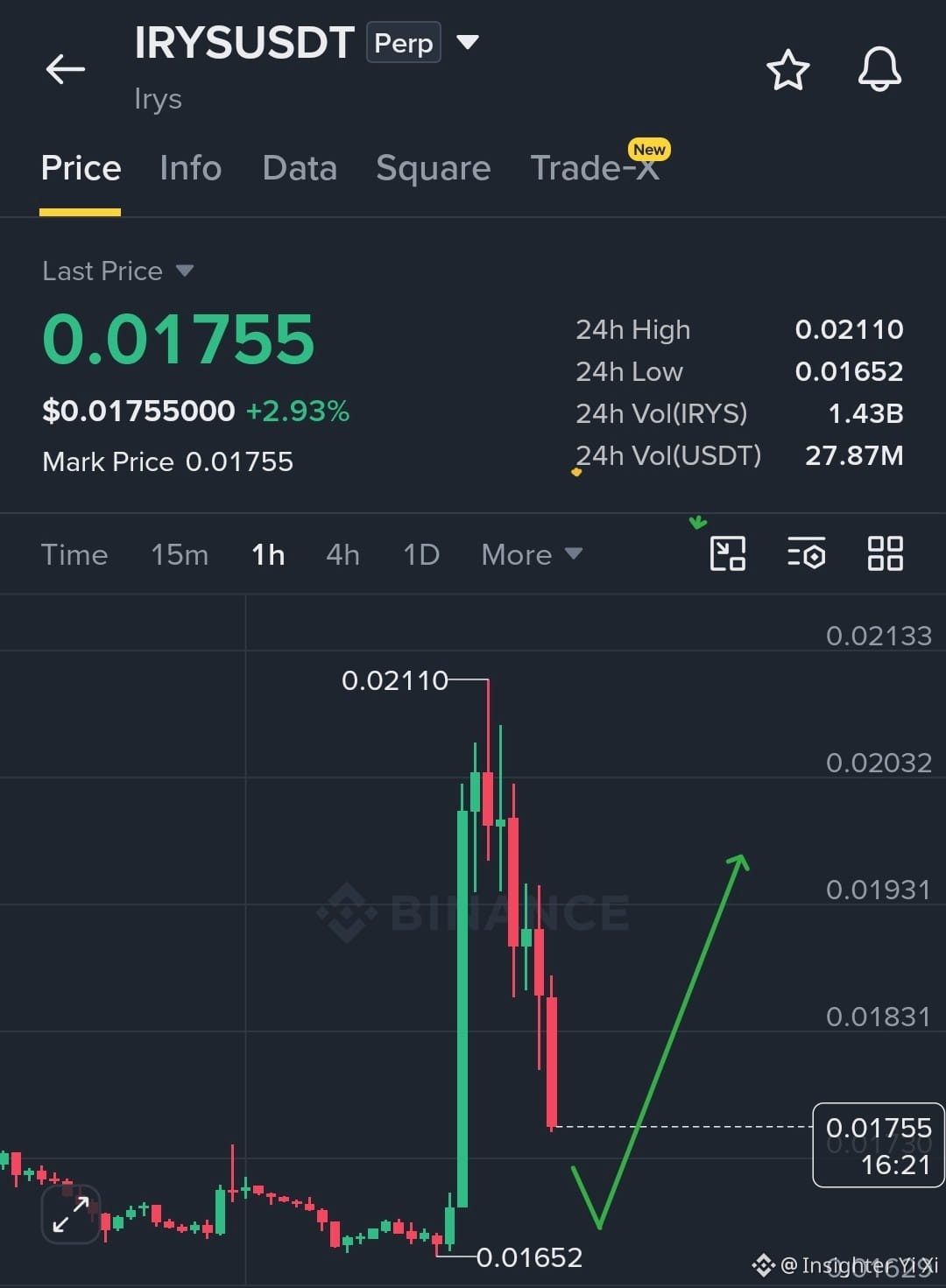
$IRYS is holding around 0.01755 after bouncing from 0.01652. What catches my attention is the heavy 1.43B IRYS volume — buyers are active, but price still needs to reclaim the nearby resistance before I’d call this a clean breakout.
My plan is to wait for confirmation, not chase the move:
{future}(IRYSUSDT)
🟢 LONG ENTRY: 0.01740–0.01775
🛑 SL: 0.01625
🎯 TP1: 0.01831
🎯 TP2: 0.01931
🎯 TP3: 0.02032
The key area is 0.01831. A strong 15m close above it and successful retest could give the setup more strength. If 0.01652 breaks again, I’d stay out and wait for a new structure.
My view: recovery is interesting, but confirmation matters more than FOMO.
Manage risk and DYOR.
#IRYSUDT
$IRYS is holding around 0.01755 after bouncing from 0.01652. What catches my attention is the heavy 1.43B IRYS volume — buyers are active, but price still needs to reclaim the nearby resistance before I’d call this a clean breakout.
My plan is to wait for confirmation, not chase the move:
🟢 LONG ENTRY: 0.01740–0.01775
🛑 SL: 0.01625
🎯 TP1: 0.01831
🎯 TP2: 0.01931
🎯 TP3: 0.02032
The key area is 0.01831. A strong 15m close above it and successful retest could give the setup more strength. If 0.01652 breaks again, I’d stay out and wait for a new structure.
My view: recovery is interesting, but confirmation matters more than FOMO.
Manage risk and DYOR.
#IRYSUDT
My plan is to wait for confirmation, not chase the move:
🟢 LONG ENTRY: 0.01740–0.01775
🛑 SL: 0.01625
🎯 TP1: 0.01831
🎯 TP2: 0.01931
🎯 TP3: 0.02032
The key area is 0.01831. A strong 15m close above it and successful retest could give the setup more strength. If 0.01652 breaks again, I’d stay out and wait for a new structure.
My view: recovery is interesting, but confirmation matters more than FOMO.
Manage risk and DYOR.
#IRYSUDT
1
156
#ADA PULLBACK ZONE OR BREAKDOWN?
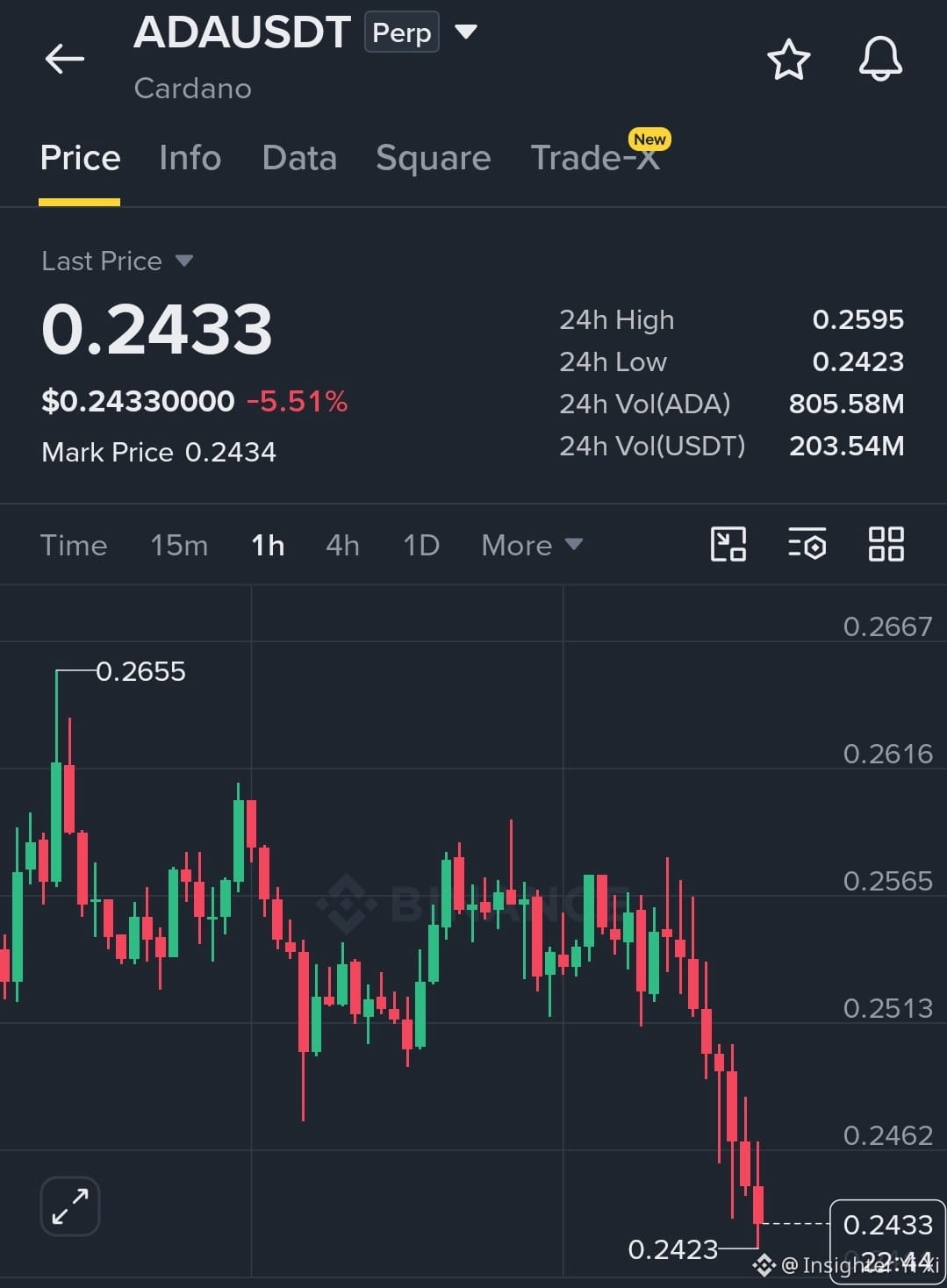
$ADA is trading around 0.2433, down 5.51%, with the session low near 0.2423. The key question now is whether buyers defend this area or sellers push it lower. Recent technical coverage also identifies $0.245–$0.236 as an important support region.
{future}(ADAUSDT)
My setup LONG on confirmation
🟢 Entry: 0.2430–0.2460
🛑 Stop Loss: 0.2380
🎯 TP1: 0.2513
🎯 TP2: 0.2565
🎯 TP3: 0.2615
I would avoid chasing while ADA is falling. A 15m reclaim/hold above 0.2462 would make the setup cleaner. If 0.2380 breaks decisively, I’d step aside rather than force the long.
Risk first use proper position size and DYOR.
#BitwiseFilesFinalNEARSpotETFProspectus #ChinaMayLetAlibabaByteDanceBuyNvidiaChips
#ADA PULLBACK ZONE OR BREAKDOWN?
$ADA is trading around 0.2433, down 5.51%, with the session low near 0.2423. The key question now is whether buyers defend this area or sellers push it lower. Recent technical coverage also identifies $0.245–$0.236 as an important support region.
My setup LONG on confirmation
🟢 Entry: 0.2430–0.2460
🛑 Stop Loss: 0.2380
🎯 TP1: 0.2513
🎯 TP2: 0.2565
🎯 TP3: 0.2615
I would avoid chasing while ADA is falling. A 15m reclaim/hold above 0.2462 would make the setup cleaner. If 0.2380 breaks decisively, I’d step aside rather than force the long.
Risk first use proper position size and DYOR.
#BitwiseFilesFinalNEARSpotETFProspectus #ChinaMayLetAlibabaByteDanceBuyNvidiaChips
$ADA is trading around 0.2433, down 5.51%, with the session low near 0.2423. The key question now is whether buyers defend this area or sellers push it lower. Recent technical coverage also identifies $0.245–$0.236 as an important support region.
My setup LONG on confirmation
🟢 Entry: 0.2430–0.2460
🛑 Stop Loss: 0.2380
🎯 TP1: 0.2513
🎯 TP2: 0.2565
🎯 TP3: 0.2615
I would avoid chasing while ADA is falling. A 15m reclaim/hold above 0.2462 would make the setup cleaner. If 0.2380 breaks decisively, I’d step aside rather than force the long.
Risk first use proper position size and DYOR.
#BitwiseFilesFinalNEARSpotETFProspectus #ChinaMayLetAlibabaByteDanceBuyNvidiaChips
1
772
$TSM is sitting on the edge $445.8 is the level to watch
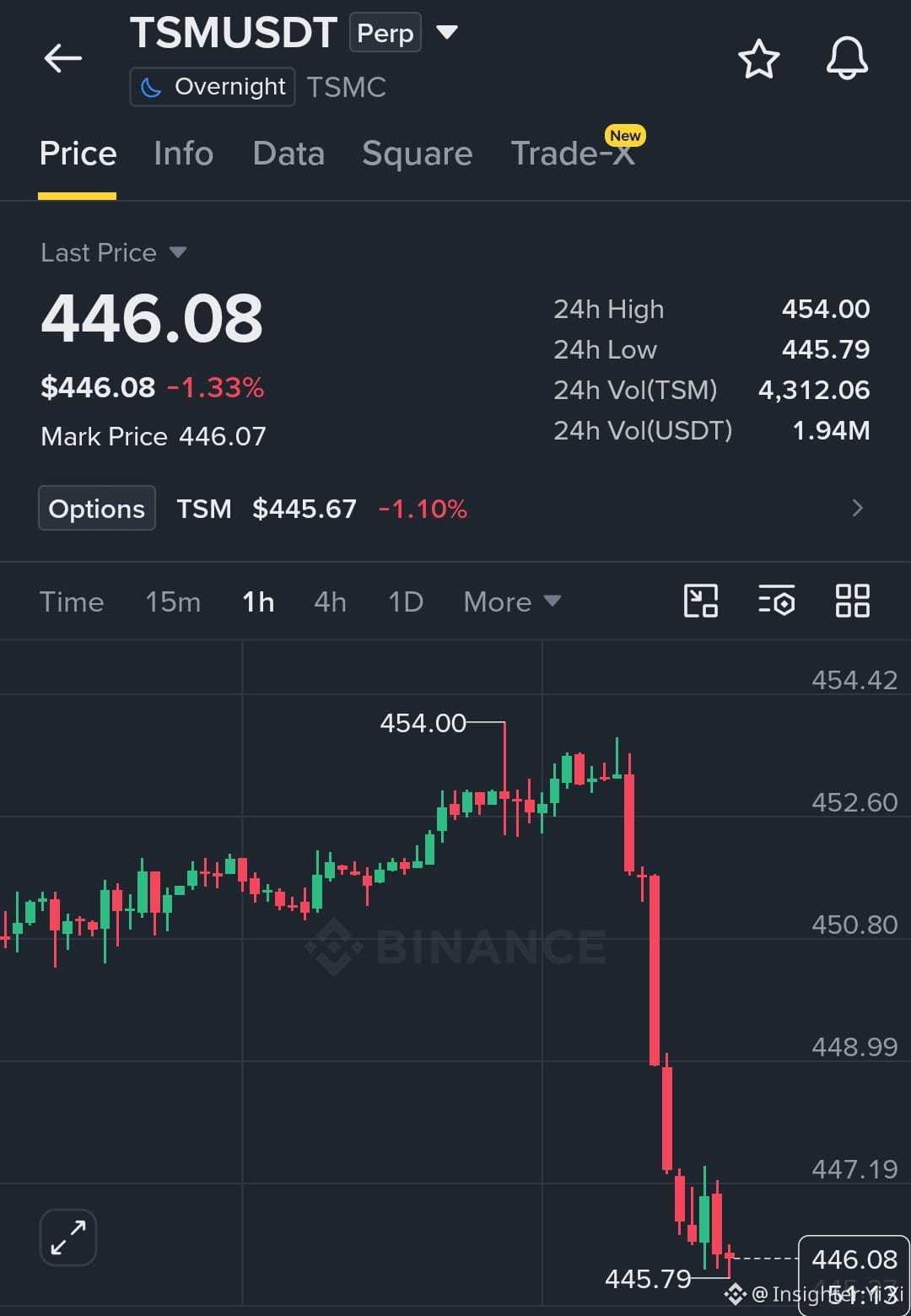
#TSMUSDT is trading near 446.08, down 1.33%, with the session low at 445.79. Price is testing the lower end of the current range, so I’m watching the reaction here before chasing either direction.
{future}(TSMUSDT)
Long setup:
Entry: 446.00–448.00
SL: 443.80
TP1: 450.80
TP2: 452.60
TP3: 454.00
A clean break below 445.79 would weaken this setup, so I’d rather wait for confirmation than force an entry.
My view: reclaiming 448.99 would give the bounce more structure. Risk management first.
#BitwiseFilesFinalNEARSpotETFProspectus #DogecoinETFsPostBiggestWeekSinceLaunch #StrategyStriveAdd2305BitcoinThisWeek
$TSM is sitting on the edge $445.8 is the level to watch
#TSMUSDT is trading near 446.08, down 1.33%, with the session low at 445.79. Price is testing the lower end of the current range, so I’m watching the reaction here before chasing either direction.
Long setup:
Entry: 446.00–448.00
SL: 443.80
TP1: 450.80
TP2: 452.60
TP3: 454.00
A clean break below 445.79 would weaken this setup, so I’d rather wait for confirmation than force an entry.
My view: reclaiming 448.99 would give the bounce more structure. Risk management first.
#BitwiseFilesFinalNEARSpotETFProspectus #DogecoinETFsPostBiggestWeekSinceLaunch #StrategyStriveAdd2305BitcoinThisWeek
#TSMUSDT is trading near 446.08, down 1.33%, with the session low at 445.79. Price is testing the lower end of the current range, so I’m watching the reaction here before chasing either direction.
Long setup:
Entry: 446.00–448.00
SL: 443.80
TP1: 450.80
TP2: 452.60
TP3: 454.00
A clean break below 445.79 would weaken this setup, so I’d rather wait for confirmation than force an entry.
My view: reclaiming 448.99 would give the bounce more structure. Risk management first.
#BitwiseFilesFinalNEARSpotETFProspectus #DogecoinETFsPostBiggestWeekSinceLaunch #StrategyStriveAdd2305BitcoinThisWeek
1
177
#NIL just hit the danger zone bounce setup or another leg down?
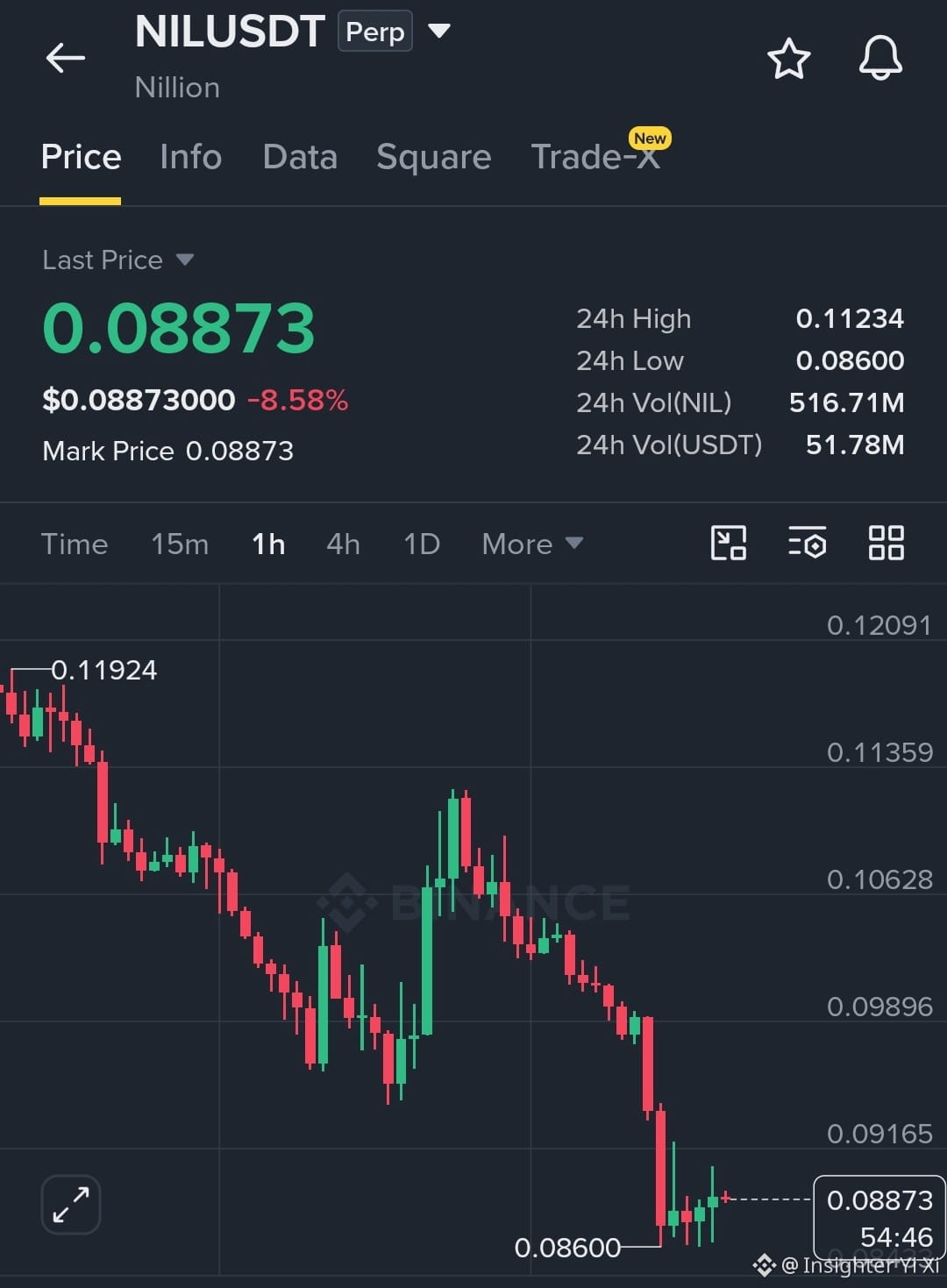
$NIL is down 8.58%, trading around 0.08873 after falling from the 0.11234 high. The key area now is 0.0860–0.0880 support. If this zone holds and buyers reclaim 0.0916, a relief bounce could develop.
{future}(NILUSDT)
Long setup:
Entry: 0.0880–0.0910
SL: 0.0848
TP1: 0.0960
TP2: 0.0990
TP3: 0.1060
If 0.0860 breaks with strong selling volume, I’d avoid forcing a long and wait for a fresh structure.
My view: this is a high-volatility reaction zone, so confirmation matters more than chasing the first bounce. Manage risk carefully and DYOR.
#BitwiseFilesFinalNEARSpotETFProspectus #StrategyStriveAdd2305BitcoinThisWeek #DogecoinETFsPostBiggestWeekSinceLaunch
#NIL just hit the danger zone bounce setup or another leg down?
$NIL is down 8.58%, trading around 0.08873 after falling from the 0.11234 high. The key area now is 0.0860–0.0880 support. If this zone holds and buyers reclaim 0.0916, a relief bounce could develop.
Long setup:
Entry: 0.0880–0.0910
SL: 0.0848
TP1: 0.0960
TP2: 0.0990
TP3: 0.1060
If 0.0860 breaks with strong selling volume, I’d avoid forcing a long and wait for a fresh structure.
My view: this is a high-volatility reaction zone, so confirmation matters more than chasing the first bounce. Manage risk carefully and DYOR.
#BitwiseFilesFinalNEARSpotETFProspectus #StrategyStriveAdd2305BitcoinThisWeek #DogecoinETFsPostBiggestWeekSinceLaunch
$NIL is down 8.58%, trading around 0.08873 after falling from the 0.11234 high. The key area now is 0.0860–0.0880 support. If this zone holds and buyers reclaim 0.0916, a relief bounce could develop.
Long setup:
Entry: 0.0880–0.0910
SL: 0.0848
TP1: 0.0960
TP2: 0.0990
TP3: 0.1060
If 0.0860 breaks with strong selling volume, I’d avoid forcing a long and wait for a fresh structure.
My view: this is a high-volatility reaction zone, so confirmation matters more than chasing the first bounce. Manage risk carefully and DYOR.
#BitwiseFilesFinalNEARSpotETFProspectus #StrategyStriveAdd2305BitcoinThisWeek #DogecoinETFsPostBiggestWeekSinceLaunch
1
278
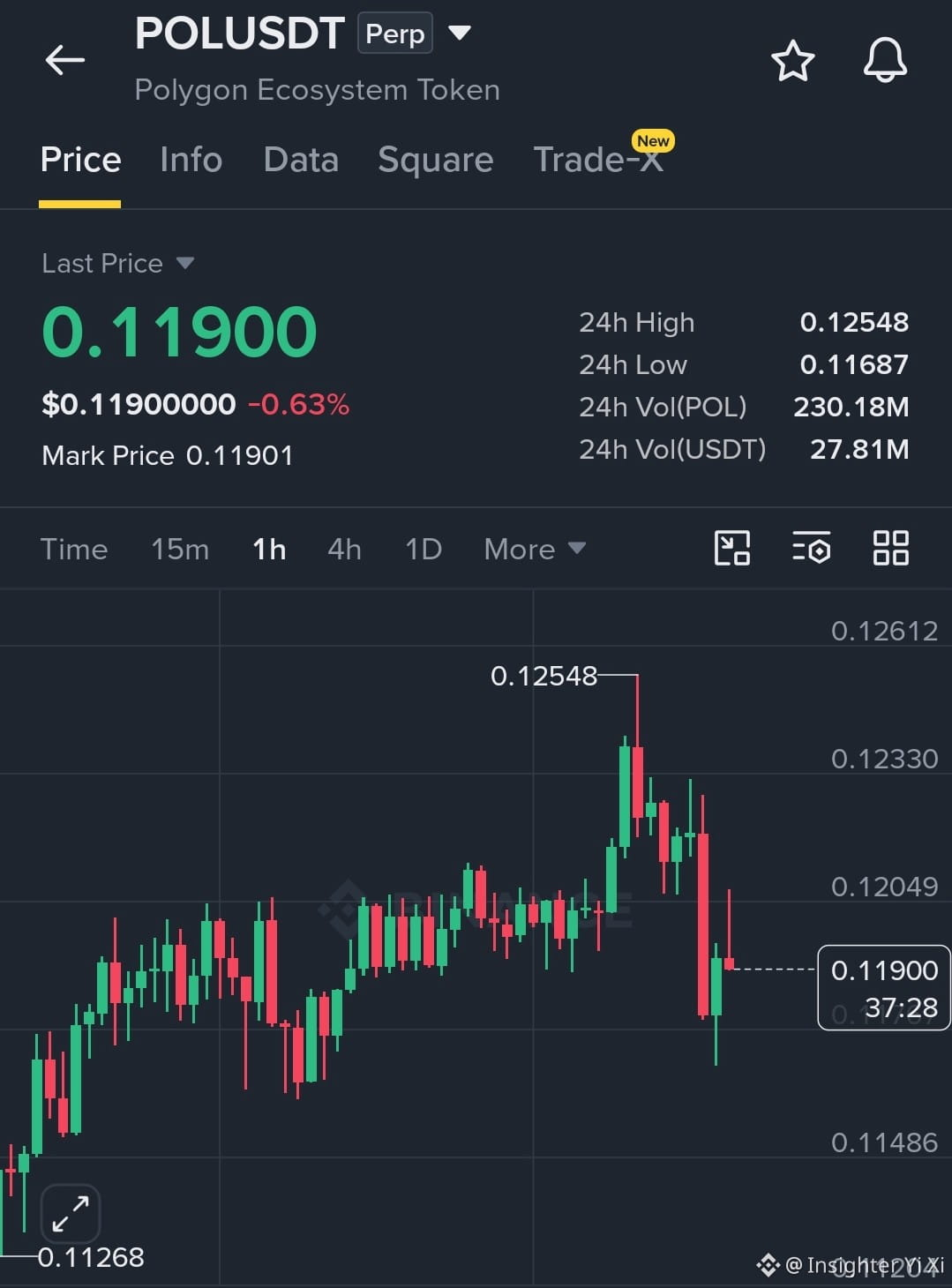
$POL /USDT buyers are being tested right now.
#POL is trading around 0.1190, close to the day’s lower range after rejection from 0.12548. This is the kind of area where the next reaction can define the short-term direction.
{future}(POLUSDT)
I’m watching 0.1168–0.1180 closely for a potential buyer response.
LONG ENTRY: 0.1172–0.1190
SL: 0.1145
TP1: 0.1205
TP2: 0.1233
TP3: 0.1255
🔥 KEY LEVEL: 0.1205
A strong reclaim above 0.1205 could shift momentum back toward 0.1233–0.1255.
But if 0.1145 breaks, the setup is invalidated no need to force the trade.
Don’t chase. Watch the reaction. Trade the confirmation.
Technical setup only. Manage your risk.
#BitwiseFilesFinalNEARSpotETFProspectus #TrumpRejectsIranHormuzReopening
$POL /USDT buyers are being tested right now.
#POL is trading around 0.1190, close to the day’s lower range after rejection from 0.12548. This is the kind of area where the next reaction can define the short-term direction.
I’m watching 0.1168–0.1180 closely for a potential buyer response.
LONG ENTRY: 0.1172–0.1190
SL: 0.1145
TP1: 0.1205
TP2: 0.1233
TP3: 0.1255
🔥 KEY LEVEL: 0.1205
A strong reclaim above 0.1205 could shift momentum back toward 0.1233–0.1255.
But if 0.1145 breaks, the setup is invalidated no need to force the trade.
Don’t chase. Watch the reaction. Trade the confirmation.
Technical setup only. Manage your risk.
#BitwiseFilesFinalNEARSpotETFProspectus #TrumpRejectsIranHormuzReopening
#POL is trading around 0.1190, close to the day’s lower range after rejection from 0.12548. This is the kind of area where the next reaction can define the short-term direction.
I’m watching 0.1168–0.1180 closely for a potential buyer response.
LONG ENTRY: 0.1172–0.1190
SL: 0.1145
TP1: 0.1205
TP2: 0.1233
TP3: 0.1255
🔥 KEY LEVEL: 0.1205
A strong reclaim above 0.1205 could shift momentum back toward 0.1233–0.1255.
But if 0.1145 breaks, the setup is invalidated no need to force the trade.
Don’t chase. Watch the reaction. Trade the confirmation.
Technical setup only. Manage your risk.
#BitwiseFilesFinalNEARSpotETFProspectus #TrumpRejectsIranHormuzReopening
1
489
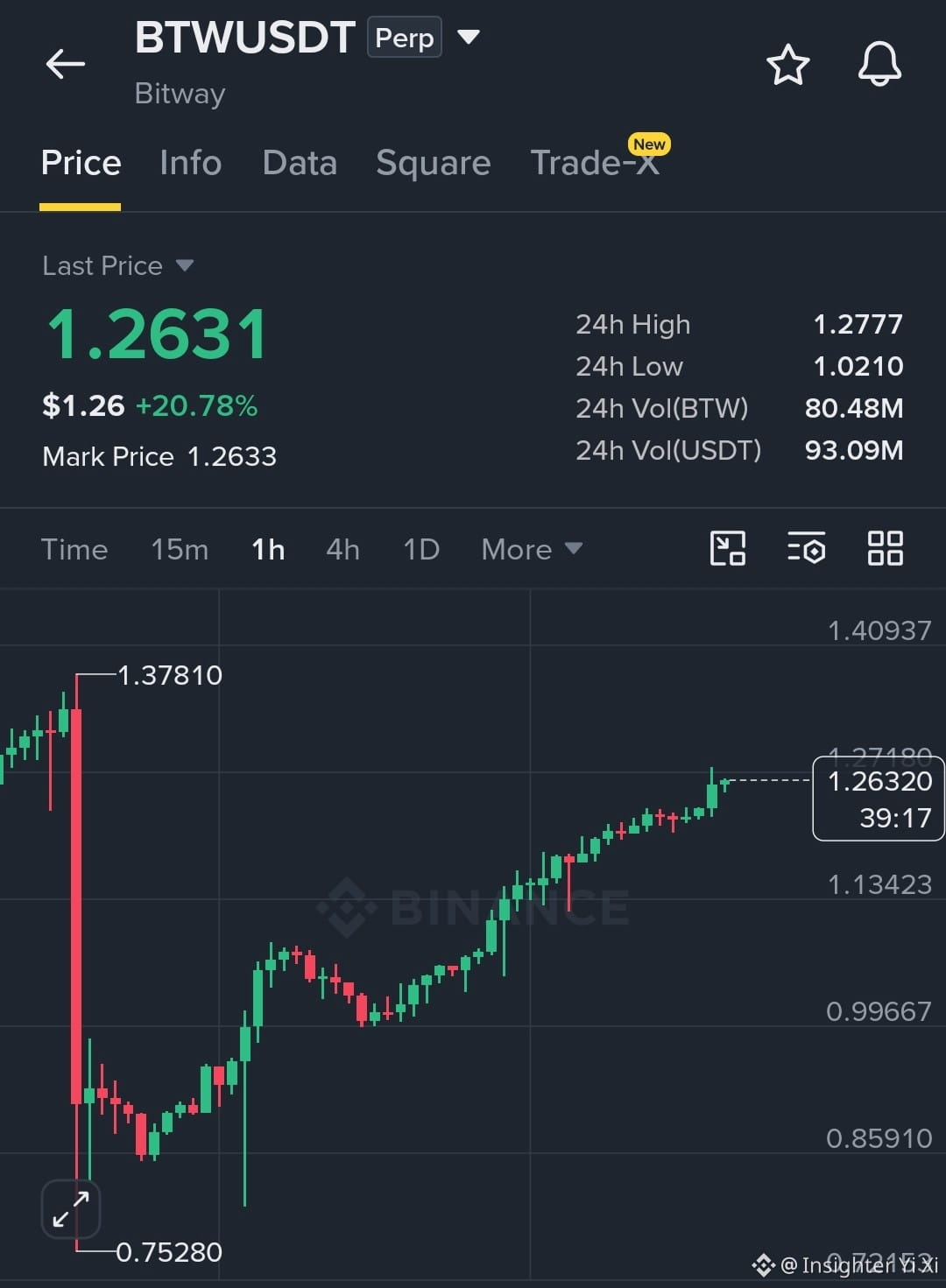
$BTW /USDT and now testing the top
#BTW is moving aggressively, up 20.78%, with more than 93M USDT in 24h volume. Price is sitting near 1.263, just below the 1.2777 high, so this is a level where I’d avoid chasing.
{future}(BTWUSDT)
My focus is on whether 1.20–1.23 can become support after a pullback.
LONG ENTRY: 1.20–1.23
SL: 1.145
TP1: 1.278
TP2: 1.375
TP3: 1.409
A clean breakout and hold above 1.278 would give the setup stronger confirmation. If price loses 1.145, I’d step aside rather than force the trade.
Strong momentum is interesting, but after a 20% move, waiting for the retest can be safer than chasing the candle.
Risk management first. Levels are technical zones, not guaranteed results.
#StrategyStriveAdd2305BitcoinThisWeek #CircleTetherFreezeBitgetHackerWallet
$BTW /USDT and now testing the top
#BTW is moving aggressively, up 20.78%, with more than 93M USDT in 24h volume. Price is sitting near 1.263, just below the 1.2777 high, so this is a level where I’d avoid chasing.
My focus is on whether 1.20–1.23 can become support after a pullback.
LONG ENTRY: 1.20–1.23
SL: 1.145
TP1: 1.278
TP2: 1.375
TP3: 1.409
A clean breakout and hold above 1.278 would give the setup stronger confirmation. If price loses 1.145, I’d step aside rather than force the trade.
Strong momentum is interesting, but after a 20% move, waiting for the retest can be safer than chasing the candle.
Risk management first. Levels are technical zones, not guaranteed results.
#StrategyStriveAdd2305BitcoinThisWeek #CircleTetherFreezeBitgetHackerWallet
#BTW is moving aggressively, up 20.78%, with more than 93M USDT in 24h volume. Price is sitting near 1.263, just below the 1.2777 high, so this is a level where I’d avoid chasing.
My focus is on whether 1.20–1.23 can become support after a pullback.
LONG ENTRY: 1.20–1.23
SL: 1.145
TP1: 1.278
TP2: 1.375
TP3: 1.409
A clean breakout and hold above 1.278 would give the setup stronger confirmation. If price loses 1.145, I’d step aside rather than force the trade.
Strong momentum is interesting, but after a 20% move, waiting for the retest can be safer than chasing the candle.
Risk management first. Levels are technical zones, not guaranteed results.
#StrategyStriveAdd2305BitcoinThisWeek #CircleTetherFreezeBitgetHackerWallet
1
246
Connectez-vous pour découvrir plus de contenu
Rejoignez la communauté mondiale des adeptes de cryptomonnaies sur Binance Square
⚡️ Suviez les dernières informations importantes sur les cryptomonnaies.
💬 Jugé digne de confiance par la plus grande plateforme d’échange de cryptomonnaies au monde.
👍 Découvrez les connaissances que partagent les créateurs vérifiés.
Adresse e-mail/Nº de téléphone