
The Web3_Grinder
60 Posts

The Web3_Grinder
Report
Block User
Occasional Trader
5.6 Years
5 Following
9 Followers
32 Liked
Posts
All
Quotes
PINNED
Are you buying $MARSCOIN now, waiting for a dip, or simply not interested?
Let’s see what Binance traders are actually thinking. 👇
{spot}(MARSCOINUSDT)
Are you buying $MARSCOIN now, waiting for a dip, or simply not interested?
Let’s see what Binance traders are actually thinking. 👇
Let’s see what Binance traders are actually thinking. 👇
1️⃣ Buying now
42%
2️⃣ Waiting for a dip
39%
3️⃣ Not interested
19%
69 votes • Voting closed
1.1k
Everyone talks about what happens on-chain.
$BTC → price
$ETH → gas
$XMR → privacy
$SOL → speed
But there’s another layer crypto is slowly changing:
how people interact.
Think about it.
Your wallet can be non-custodial.
Your assets can be yours.
Your transactions can be secured.
But then you go back to a messaging platform where someone else controls the account, the infrastructure and the rules around your conversations.
That’s the gap Liberdus is trying to explore.
Not another token narrative.
Not another “Web3 social app.”
A communication layer where identity, messaging and payments can exist inside the same ecosystem with $LIB powering the network.
And the Toll mechanism adds something most messaging platforms never really consider:
your attention has economic value.
That’s a much bigger conversation than simply “private messaging.”
Maybe the next phase of crypto isn’t just about owning assets.
Maybe it’s about owning more of the way we interact.
Everyone talks about what happens on-chain.
$BTC → price
$ETH → gas
$XMR → privacy
$SOL → speed
But there’s another layer crypto is slowly changing:
how people interact.
Think about it.
Your wallet can be non-custodial.
Your assets can be yours.
Your transactions can be secured.
But then you go back to a messaging platform where someone else controls the account, the infrastructure and the rules around your conversations.
That’s the gap Liberdus is trying to explore.
Not another token narrative.
Not another “Web3 social app.”
A communication layer where identity, messaging and payments can exist inside the same ecosystem with $LIB powering the network.
And the Toll mechanism adds something most messaging platforms never really consider:
your attention has economic value.
That’s a much bigger conversation than simply “private messaging.”
Maybe the next phase of crypto isn’t just about owning assets.
Maybe it’s about owning more of the way we interact.
$BTC → price
$ETH → gas
$XMR → privacy
$SOL → speed
But there’s another layer crypto is slowly changing:
how people interact.
Think about it.
Your wallet can be non-custodial.
Your assets can be yours.
Your transactions can be secured.
But then you go back to a messaging platform where someone else controls the account, the infrastructure and the rules around your conversations.
That’s the gap Liberdus is trying to explore.
Not another token narrative.
Not another “Web3 social app.”
A communication layer where identity, messaging and payments can exist inside the same ecosystem with $LIB powering the network.
And the Toll mechanism adds something most messaging platforms never really consider:
your attention has economic value.
That’s a much bigger conversation than simply “private messaging.”
Maybe the next phase of crypto isn’t just about owning assets.
Maybe it’s about owning more of the way we interact.

157
XRP UPDATE: The breakout didn’t happen. Now the support matters.
Yesterday, we identified $1.43–$1.50 as the key resistance zone.
$XRP failed to break it and has now pulled back toward $1.38, right inside the support area we were watching.
The bullish case isn’t dead yet. Spot XRP ETFs just recorded another $12.3M in inflows, pushing cumulative inflows to roughly $1.696B.
But price needs to respond.
$1.35–$1.38 is now the key zone.
Hold it, and XRP could attempt another move toward $1.43–$1.50.
Lose it, and $1.27 becomes the next major area to watch.
So yesterday’s thesis hasn’t been invalidated yet.
XRP is simply at the other side of the decision zone now 👀
#xrp
XRP UPDATE: The breakout didn’t happen. Now the support matters.
Yesterday, we identified $1.43–$1.50 as the key resistance zone.
$XRP failed to break it and has now pulled back toward $1.38, right inside the support area we were watching.
The bullish case isn’t dead yet. Spot XRP ETFs just recorded another $12.3M in inflows, pushing cumulative inflows to roughly $1.696B.
But price needs to respond.
$1.35–$1.38 is now the key zone.
Hold it, and XRP could attempt another move toward $1.43–$1.50.
Lose it, and $1.27 becomes the next major area to watch.
So yesterday’s thesis hasn’t been invalidated yet.
XRP is simply at the other side of the decision zone now 👀
#xrp
Yesterday, we identified $1.43–$1.50 as the key resistance zone.
$XRP failed to break it and has now pulled back toward $1.38, right inside the support area we were watching.
The bullish case isn’t dead yet. Spot XRP ETFs just recorded another $12.3M in inflows, pushing cumulative inflows to roughly $1.696B.
But price needs to respond.
$1.35–$1.38 is now the key zone.
Hold it, and XRP could attempt another move toward $1.43–$1.50.
Lose it, and $1.27 becomes the next major area to watch.
So yesterday’s thesis hasn’t been invalidated yet.
XRP is simply at the other side of the decision zone now 👀
#xrp
The Web3_Grinder
·
--
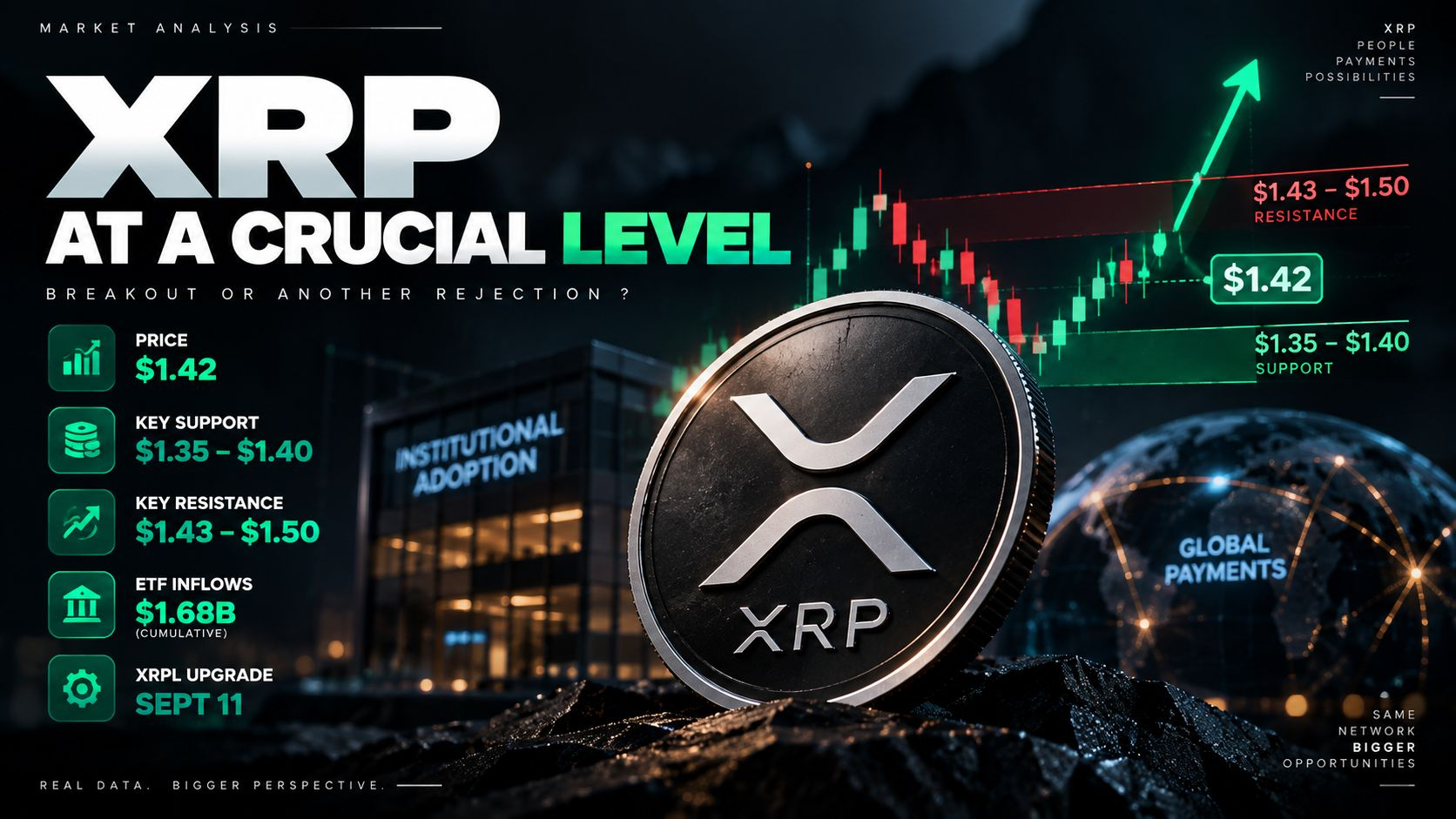
XRP is sitting at a very interesting point right now
After a strong August rally, $XRP is now trading around $1.42, holding above the $1.35–$1.40 support zone.
But the interesting part isn’t just the price.
Spot XRP ETFs have continued attracting institutional money, with cumulative inflows reaching around $1.68B. At the same time, the XRPL is approaching a major network upgrade expected around September 11.
Technically, $XRP now needs to prove it can break through the $1.43–$1.50 resistance area. If that happens with strong volume, the next move could become much more interesting.
But losing $1.35 would change the picture completely and could send XRP back toward the $1.27 area.
So the real question is:
Is XRP preparing for another breakout, or is this just another rejection before a deeper correction? 🤔
After a strong August rally, $XRP is now trading around $1.42, holding above the $1.35–$1.40 support zone.
But the interesting part isn’t just the price.
Spot XRP ETFs have continued attracting institutional money, with cumulative inflows reaching around $1.68B. At the same time, the XRPL is approaching a major network upgrade expected around September 11.
Technically, $XRP now needs to prove it can break through the $1.43–$1.50 resistance area. If that happens with strong volume, the next move could become much more interesting.
But losing $1.35 would change the picture completely and could send XRP back toward the $1.27 area.
So the real question is:
Is XRP preparing for another breakout, or is this just another rejection before a deeper correction? 🤔
1
99
Verified
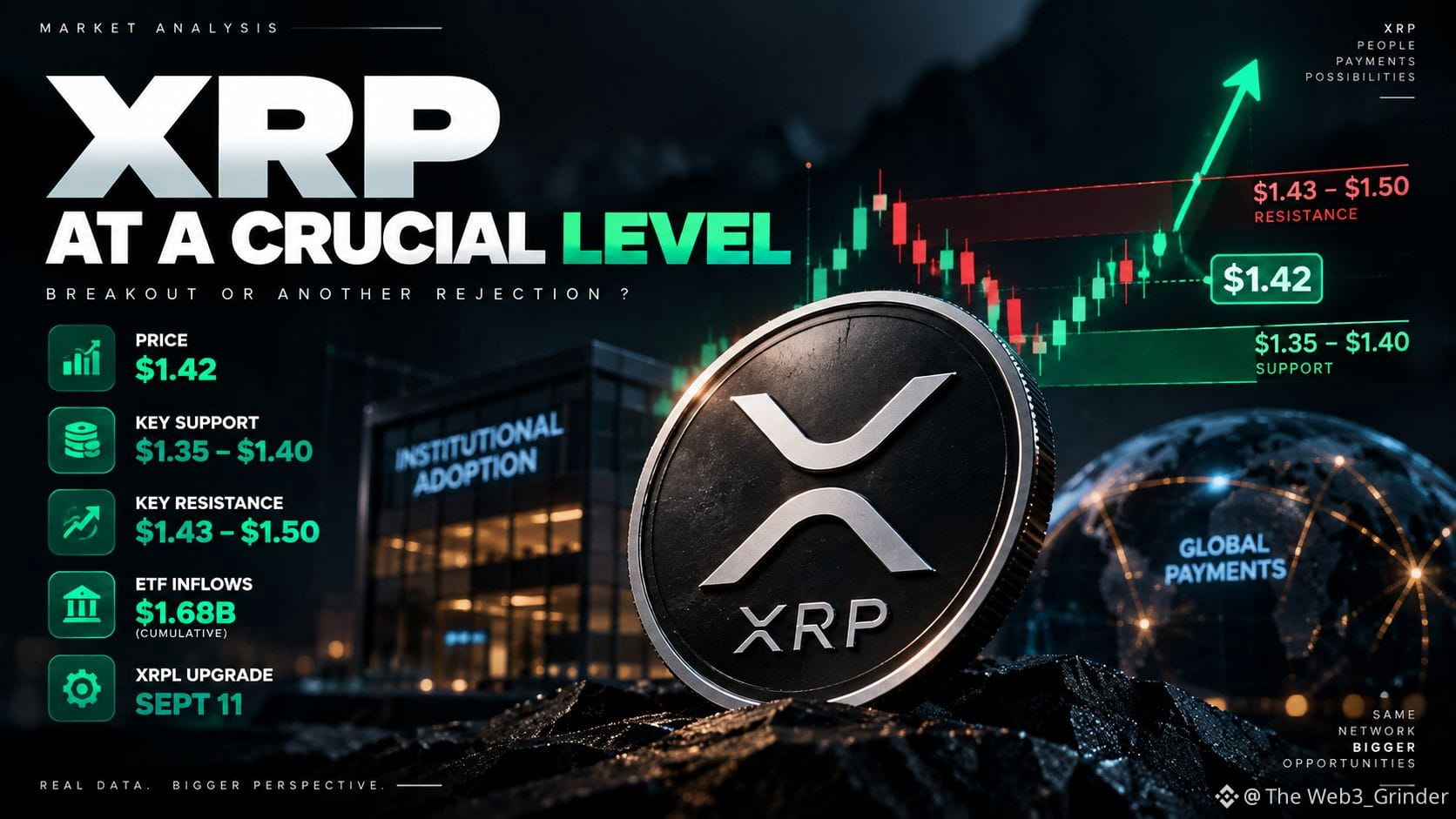
XRP is sitting at a very interesting point right now
After a strong August rally, $XRP is now trading around $1.42, holding above the $1.35–$1.40 support zone.
But the interesting part isn’t just the price.
Spot XRP ETFs have continued attracting institutional money, with cumulative inflows reaching around $1.68B. At the same time, the XRPL is approaching a major network upgrade expected around September 11.
Technically, $XRP now needs to prove it can break through the $1.43–$1.50 resistance area. If that happens with strong volume, the next move could become much more interesting.
But losing $1.35 would change the picture completely and could send XRP back toward the $1.27 area.
So the real question is:
Is XRP preparing for another breakout, or is this just another rejection before a deeper correction? 🤔
{spot}(XRPUSDT)
XRP is sitting at a very interesting point right now
After a strong August rally, $XRP is now trading around $1.42, holding above the $1.35–$1.40 support zone.
But the interesting part isn’t just the price.
Spot XRP ETFs have continued attracting institutional money, with cumulative inflows reaching around $1.68B. At the same time, the XRPL is approaching a major network upgrade expected around September 11.
Technically, $XRP now needs to prove it can break through the $1.43–$1.50 resistance area. If that happens with strong volume, the next move could become much more interesting.
But losing $1.35 would change the picture completely and could send XRP back toward the $1.27 area.
So the real question is:
Is XRP preparing for another breakout, or is this just another rejection before a deeper correction? 🤔
After a strong August rally, $XRP is now trading around $1.42, holding above the $1.35–$1.40 support zone.
But the interesting part isn’t just the price.
Spot XRP ETFs have continued attracting institutional money, with cumulative inflows reaching around $1.68B. At the same time, the XRPL is approaching a major network upgrade expected around September 11.
Technically, $XRP now needs to prove it can break through the $1.43–$1.50 resistance area. If that happens with strong volume, the next move could become much more interesting.
But losing $1.35 would change the picture completely and could send XRP back toward the $1.27 area.
So the real question is:
Is XRP preparing for another breakout, or is this just another rejection before a deeper correction? 🤔
1
1
52
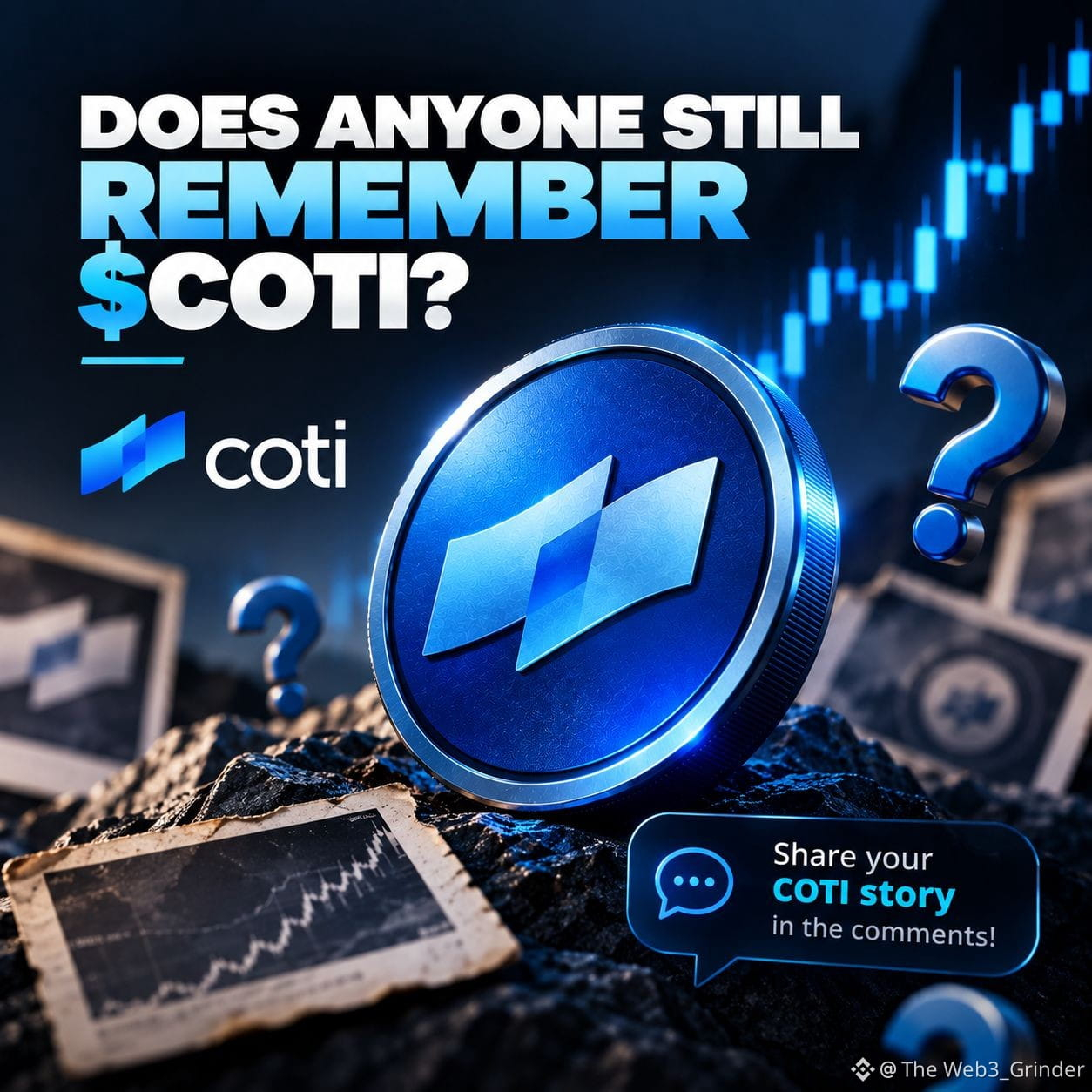
Does anyone still remember $COTI ?
Back in 2021, COTI was one of those projects everyone seemed to be talking about. The token went all the way to around $0.68, becoming a major altcoin narrative during that cycle.
Fast forward to today, COTI is suddenly moving again.
+33% in 7 days and +35% over the past month. That kind of move is enough to put an old name back on traders’ radars.
So now I'm curious:
Did you ever hold or trade $COTI back in the day?
Maybe you caught the 2021 run, got rekt, took profits… or completely forgot about it until now 😂
Drop your best COTI story or memory in the comments. 👇
Let’s see who’s been here since the old days
{spot}(COTIUSDT)
Does anyone still remember $COTI ?
Back in 2021, COTI was one of those projects everyone seemed to be talking about. The token went all the way to around $0.68, becoming a major altcoin narrative during that cycle.
Fast forward to today, COTI is suddenly moving again.
+33% in 7 days and +35% over the past month. That kind of move is enough to put an old name back on traders’ radars.
So now I'm curious:
Did you ever hold or trade $COTI back in the day?
Maybe you caught the 2021 run, got rekt, took profits… or completely forgot about it until now 😂
Drop your best COTI story or memory in the comments. 👇
Let’s see who’s been here since the old days
Back in 2021, COTI was one of those projects everyone seemed to be talking about. The token went all the way to around $0.68, becoming a major altcoin narrative during that cycle.
Fast forward to today, COTI is suddenly moving again.
+33% in 7 days and +35% over the past month. That kind of move is enough to put an old name back on traders’ radars.
So now I'm curious:
Did you ever hold or trade $COTI back in the day?
Maybe you caught the 2021 run, got rekt, took profits… or completely forgot about it until now 😂
Drop your best COTI story or memory in the comments. 👇
Let’s see who’s been here since the old days
160
This is what happens when a tiny token suddenly gets a major exchange spotlight🔥 👀
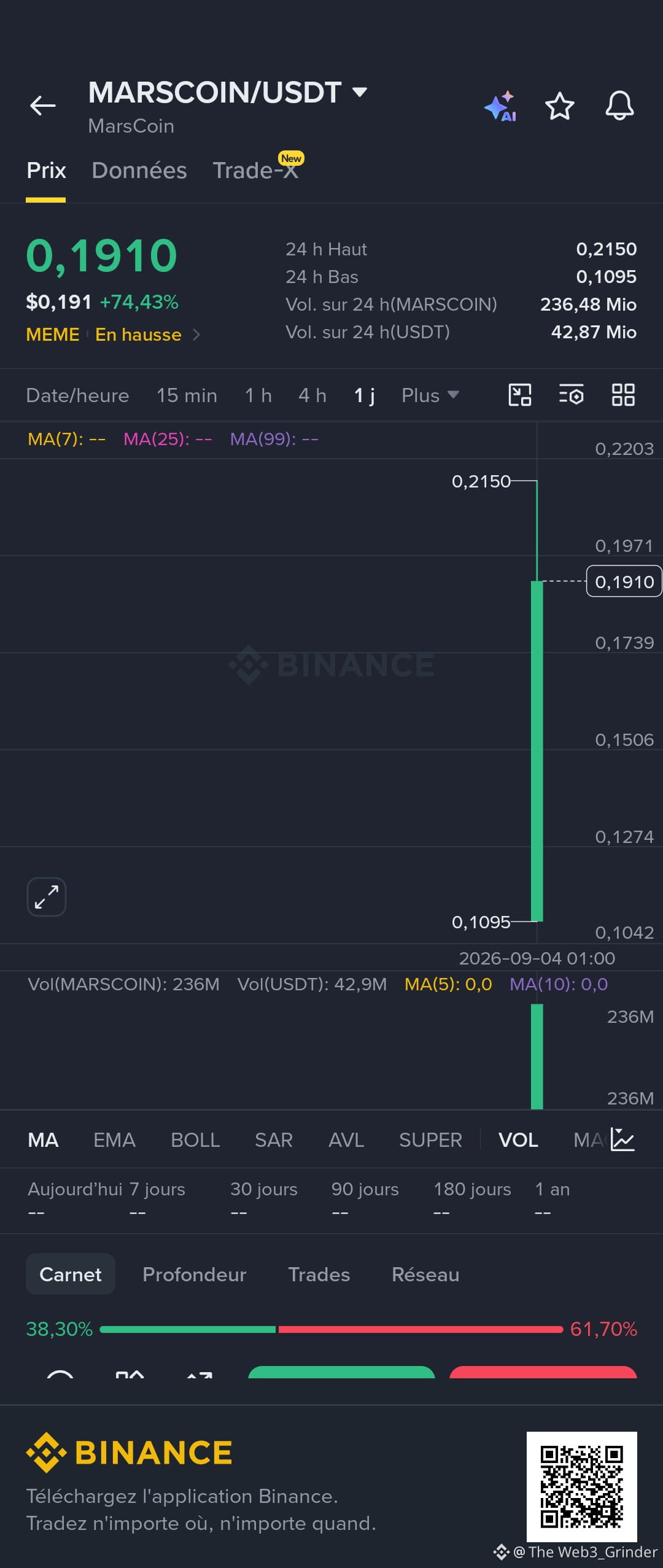
$MARSCOIN just exploded into the spotlight after Binance announced its Spot listing with MARSCOIN/USDT, USDC and TRY pairs.
The reaction was immediate: the token surged more than 73% after the announcement and briefly pushed its market cap above $170M.
But the bigger move happened over the week.
MARSCOIN gained roughly 288% in seven days, turning a relatively quiet BNB Chain meme token into one of the market's most watched small caps.
There's also an unusual narrative behind it: MARSCOIN is tied to the growing “meme stock” trend, where speculative tokens are being connected to tokenized traditional assets such as SpaceX-related securities.
Still, Binance applied its Seed Tag, explicitly warning that MARSCOIN is a new, highly volatile and higher-risk asset.
So the interesting question isn't whether the hype is real.
Can $MARSCOIN turn Binance's spotlight into lasting liquidity, or is this simply another post-listing pump? 🤔
{spot}(MARSCOINUSDT)
This is what happens when a tiny token suddenly gets a major exchange spotlight🔥 👀
$MARSCOIN just exploded into the spotlight after Binance announced its Spot listing with MARSCOIN/USDT, USDC and TRY pairs.
The reaction was immediate: the token surged more than 73% after the announcement and briefly pushed its market cap above $170M.
But the bigger move happened over the week.
MARSCOIN gained roughly 288% in seven days, turning a relatively quiet BNB Chain meme token into one of the market's most watched small caps.
There's also an unusual narrative behind it: MARSCOIN is tied to the growing “meme stock” trend, where speculative tokens are being connected to tokenized traditional assets such as SpaceX-related securities.
Still, Binance applied its Seed Tag, explicitly warning that MARSCOIN is a new, highly volatile and higher-risk asset.
So the interesting question isn't whether the hype is real.
Can $MARSCOIN turn Binance's spotlight into lasting liquidity, or is this simply another post-listing pump? 🤔
$MARSCOIN just exploded into the spotlight after Binance announced its Spot listing with MARSCOIN/USDT, USDC and TRY pairs.
The reaction was immediate: the token surged more than 73% after the announcement and briefly pushed its market cap above $170M.
But the bigger move happened over the week.
MARSCOIN gained roughly 288% in seven days, turning a relatively quiet BNB Chain meme token into one of the market's most watched small caps.
There's also an unusual narrative behind it: MARSCOIN is tied to the growing “meme stock” trend, where speculative tokens are being connected to tokenized traditional assets such as SpaceX-related securities.
Still, Binance applied its Seed Tag, explicitly warning that MARSCOIN is a new, highly volatile and higher-risk asset.
So the interesting question isn't whether the hype is real.
Can $MARSCOIN turn Binance's spotlight into lasting liquidity, or is this simply another post-listing pump? 🤔
204
The quantum race is quietly becoming a crypto narrative. 👀
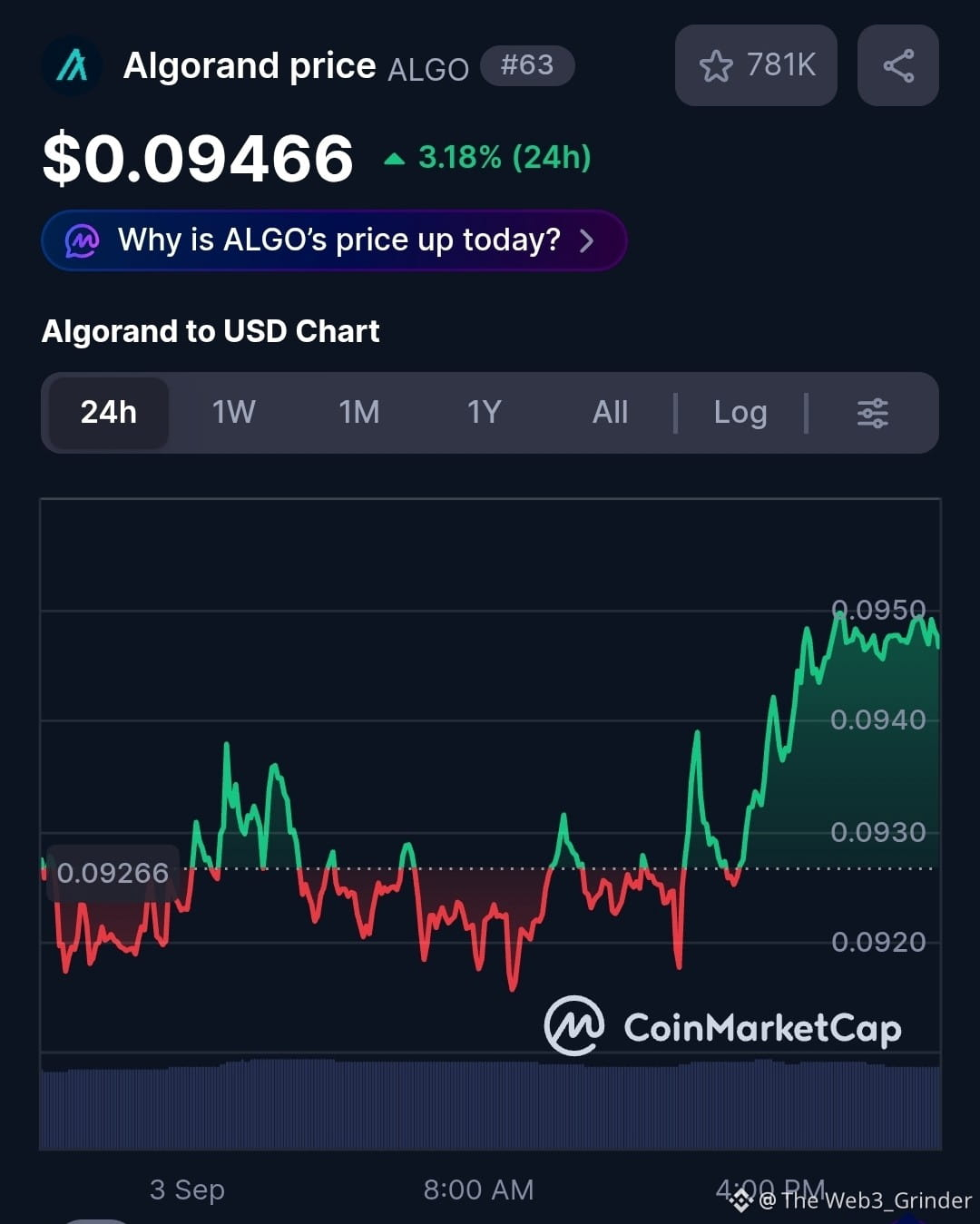
$ALGO is getting fresh attention today, rising around 6% as traders focus on Algorand’s post-quantum security roadmap. Its 24h trading volume has also jumped roughly 22%, showing that the move isn't happening without market participation.
The bigger story is what’s happening under the hood.
Algorand has already completed quantum-resistant transactions on mainnet and is now rolling out native post-quantum accounts, with the broader goal of making the network quantum-resistant by the end of 2027.
That matters because quantum computing isn't just a theoretical discussion anymore. Blockchains are starting to prepare before the technology becomes a real security threat.
With $ALGO gaining momentum again, could quantum resistance become one of the next major narratives driving attention toward Algorand?
#ALGO
The quantum race is quietly becoming a crypto narrative. 👀
$ALGO is getting fresh attention today, rising around 6% as traders focus on Algorand’s post-quantum security roadmap. Its 24h trading volume has also jumped roughly 22%, showing that the move isn't happening without market participation.
The bigger story is what’s happening under the hood.
Algorand has already completed quantum-resistant transactions on mainnet and is now rolling out native post-quantum accounts, with the broader goal of making the network quantum-resistant by the end of 2027.
That matters because quantum computing isn't just a theoretical discussion anymore. Blockchains are starting to prepare before the technology becomes a real security threat.
With $ALGO gaining momentum again, could quantum resistance become one of the next major narratives driving attention toward Algorand?
#ALGO
$ALGO is getting fresh attention today, rising around 6% as traders focus on Algorand’s post-quantum security roadmap. Its 24h trading volume has also jumped roughly 22%, showing that the move isn't happening without market participation.
The bigger story is what’s happening under the hood.
Algorand has already completed quantum-resistant transactions on mainnet and is now rolling out native post-quantum accounts, with the broader goal of making the network quantum-resistant by the end of 2027.
That matters because quantum computing isn't just a theoretical discussion anymore. Blockchains are starting to prepare before the technology becomes a real security threat.
With $ALGO gaining momentum again, could quantum resistance become one of the next major narratives driving attention toward Algorand?
#ALGO
57
This token just entered price discovery and the numbers are getting hard to ignore. 👀
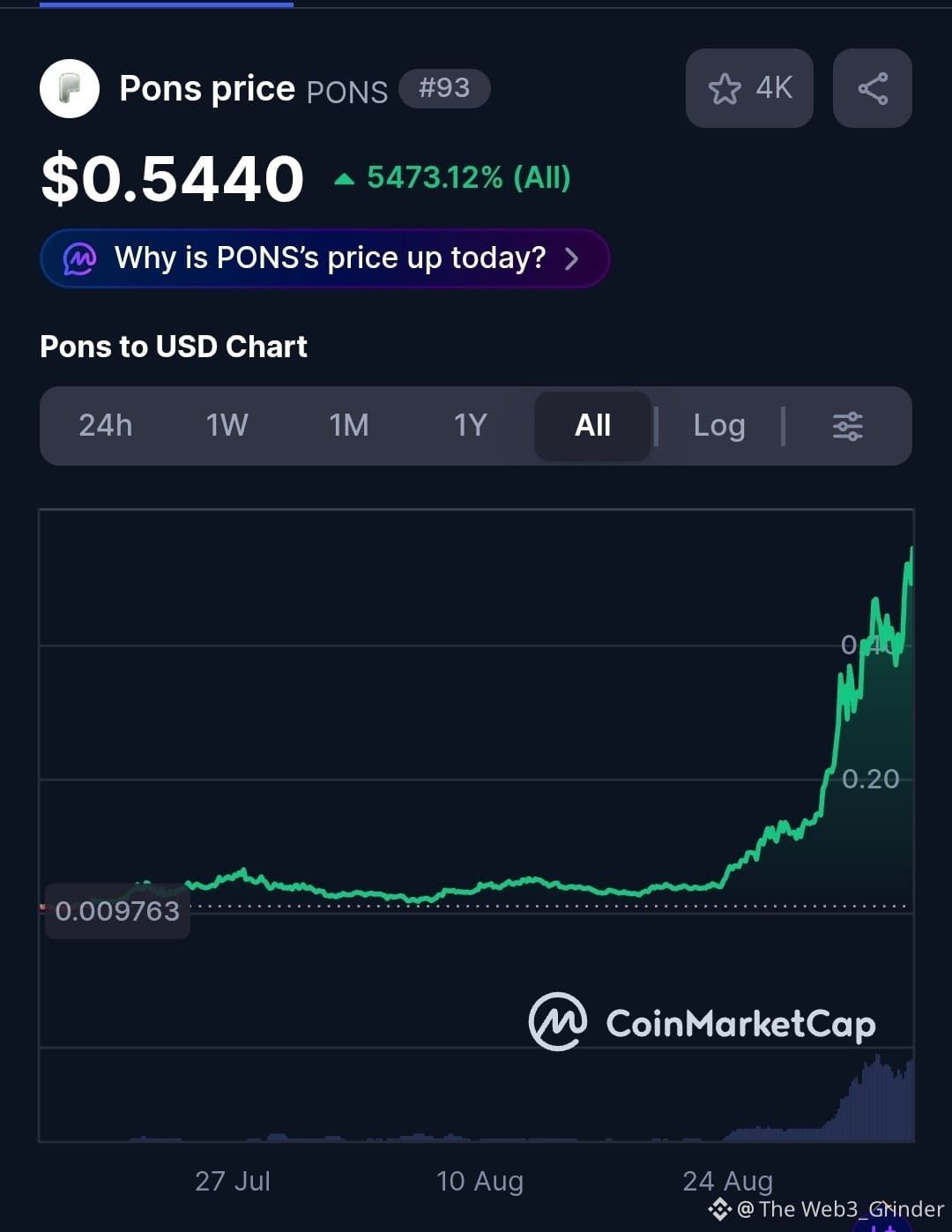
#pons just hit a fresh all-time high around $0.524, pushing its 7-day gain above 300% while 24h trading volume climbed past $138M.
The timing is interesting.
Binance Alpha added PONS on September 2, giving traders access to market and limit orders. Since then, the token has attracted another wave of attention while the broader crypto market remains under pressure.
But the bigger story may be happening underneath the price.
Pons, the launchpad built on Robinhood Chain, recorded a record $5.95M in daily fees, according to DeFiLlama. That's a sign that activity around the platform itself is accelerating, not just speculation around the token.
With $PONS now approaching the $500M valuation zone, the question becomes much more interesting:
Is this just a short-term Binance Alpha-driven hype cycle, or is PONS becoming a serious infrastructure play on Robinhood Chain? 🤔
This token just entered price discovery and the numbers are getting hard to ignore. 👀
#pons just hit a fresh all-time high around $0.524, pushing its 7-day gain above 300% while 24h trading volume climbed past $138M.
The timing is interesting.
Binance Alpha added PONS on September 2, giving traders access to market and limit orders. Since then, the token has attracted another wave of attention while the broader crypto market remains under pressure.
But the bigger story may be happening underneath the price.
Pons, the launchpad built on Robinhood Chain, recorded a record $5.95M in daily fees, according to DeFiLlama. That's a sign that activity around the platform itself is accelerating, not just speculation around the token.
With $PONS now approaching the $500M valuation zone, the question becomes much more interesting:
Is this just a short-term Binance Alpha-driven hype cycle, or is PONS becoming a serious infrastructure play on Robinhood Chain? 🤔
#pons just hit a fresh all-time high around $0.524, pushing its 7-day gain above 300% while 24h trading volume climbed past $138M.
The timing is interesting.
Binance Alpha added PONS on September 2, giving traders access to market and limit orders. Since then, the token has attracted another wave of attention while the broader crypto market remains under pressure.
But the bigger story may be happening underneath the price.
Pons, the launchpad built on Robinhood Chain, recorded a record $5.95M in daily fees, according to DeFiLlama. That's a sign that activity around the platform itself is accelerating, not just speculation around the token.
With $PONS now approaching the $500M valuation zone, the question becomes much more interesting:
Is this just a short-term Binance Alpha-driven hype cycle, or is PONS becoming a serious infrastructure play on Robinhood Chain? 🤔
79
🚨 Something interesting is happening with $ETH
While spot Bitcoin ETFs just ended a 9-day inflow streak, Ethereum ETFs are still seeing strong demand.
ETH ETF inflows have now reached a 10-day streak.
Are you rotating into $ETH, or sticking with $BTC ?
🚨 Something interesting is happening with $ETH
While spot Bitcoin ETFs just ended a 9-day inflow streak, Ethereum ETFs are still seeing strong demand.
ETH ETF inflows have now reached a 10-day streak.
Are you rotating into $ETH , or sticking with $BTC ?
While spot Bitcoin ETFs just ended a 9-day inflow streak, Ethereum ETFs are still seeing strong demand.
ETH ETF inflows have now reached a 10-day streak.
Are you rotating into $ETH , or sticking with $BTC ?
83
🚨 $220M in crypto positions were liquidated in just 1 hour.
$209M came from long positions.
Bitcoin and Ethereum accounted for most of the liquidations.
Did you get caught in the move, or are you still holding?
$BTC $ETH
🚨 $220M in crypto positions were liquidated in just 1 hour.
$209M came from long positions.
Bitcoin and Ethereum accounted for most of the liquidations.
Did you get caught in the move, or are you still holding?
$BTC $ETH
$209M came from long positions.
Bitcoin and Ethereum accounted for most of the liquidations.
Did you get caught in the move, or are you still holding?
$BTC $ETH
93
🚨 Bitcoin is back around $80K.
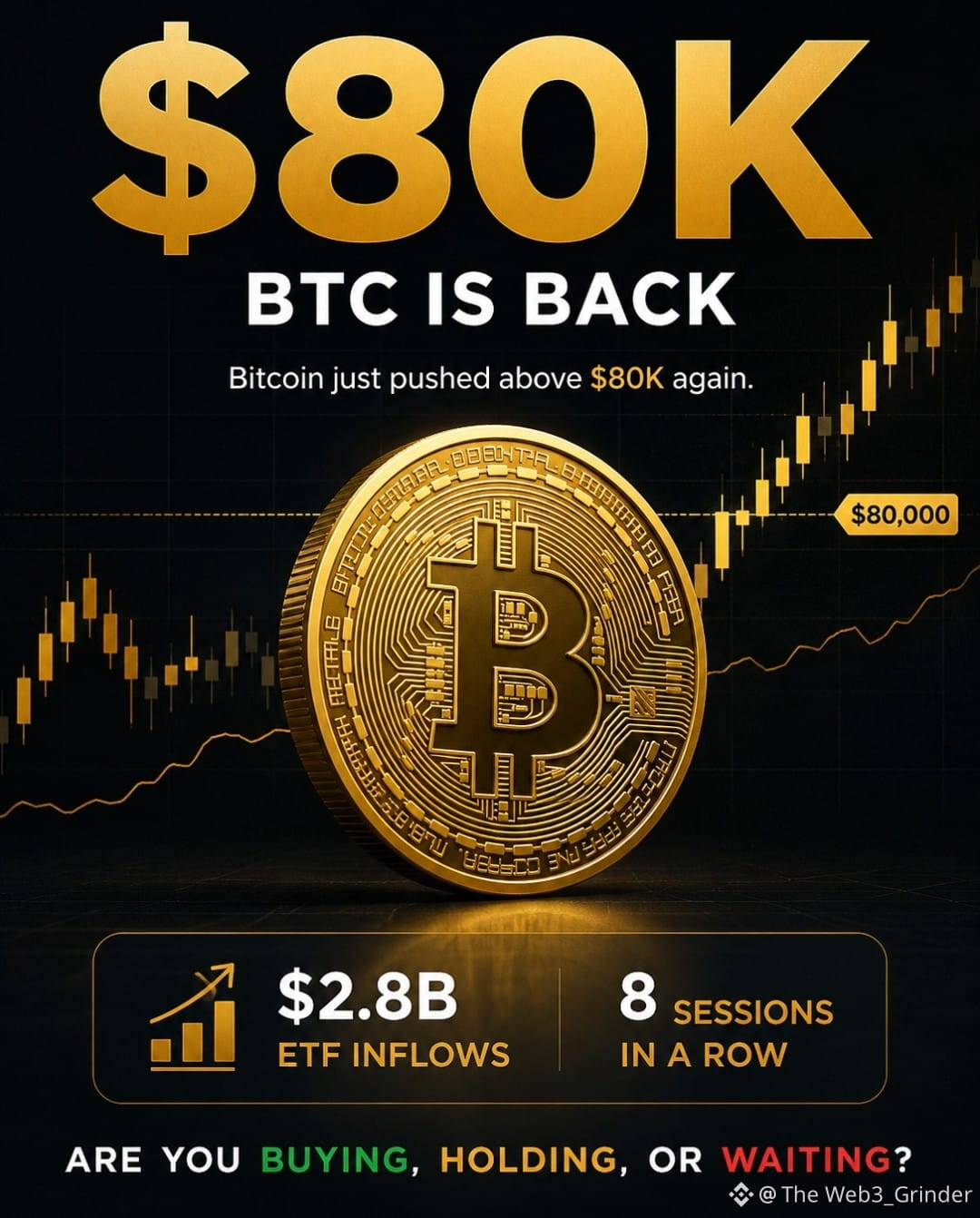
$BTC just pushed above $80K again, while spot BTC ETFs continue to see strong inflows around $2.8B over the last 8 sessions.
Now the big question:
Are you buying this move, holding, or waiting for a pullback?
{spot}(BTCUSDT)
🚨 Bitcoin is back around $80K.
$BTC just pushed above $80K again, while spot BTC ETFs continue to see strong inflows around $2.8B over the last 8 sessions.
Now the big question:
Are you buying this move, holding, or waiting for a pullback?
$BTC just pushed above $80K again, while spot BTC ETFs continue to see strong inflows around $2.8B over the last 8 sessions.
Now the big question:
Are you buying this move, holding, or waiting for a pullback?
88
·
--
Bullish
$HYPE just hit a new ATH around $86.7.
It’s now trading at $83.77 after the pullback.
Are you taking profit, holding, or buying the dip?
{future}(HYPEUSDT)
$HYPE just hit a new ATH around $86.7.
It’s now trading at $83.77 after the pullback.
Are you taking profit, holding, or buying the dip?
It’s now trading at $83.77 after the pullback.
Are you taking profit, holding, or buying the dip?
105
FROM DIGITAL CASH TO PRIVATE COMMUNICATION
Dash started with a simple goal: make digital payments faster, easier and more private.
Today, $DASH focuses heavily on payments, with features like InstantSend, usernames and CoinJoin for enhanced transaction privacy.
Liberdus takes a different route.
Instead of asking how we can improve digital money, it asks:
What if communication itself didn't need a centralized platform?
With Liberdus, you can create an account without a phone number or email, send encrypted messages, and use LIB for payments inside the same network.
And the infrastructure underneath it is different too.
Liberdus uses Shardus, a blockless and sharded architecture where transactions can be processed individually and in parallel across the network.
So I find the comparison interesting:
$DASH → making digital payments more private and usable.
$LIB → bringing privacy and decentralization into everyday communication.
Two projects.
Two different use cases.
But both are exploring the same bigger question:
Can we make everyday digital interactions less dependent on centralized intermediaries?
#DASH #Privacy
FROM DIGITAL CASH TO PRIVATE COMMUNICATION
Dash started with a simple goal: make digital payments faster, easier and more private.
Today, $DASH focuses heavily on payments, with features like InstantSend, usernames and CoinJoin for enhanced transaction privacy.
Liberdus takes a different route.
Instead of asking how we can improve digital money, it asks:
What if communication itself didn't need a centralized platform?
With Liberdus, you can create an account without a phone number or email, send encrypted messages, and use LIB for payments inside the same network.
And the infrastructure underneath it is different too.
Liberdus uses Shardus, a blockless and sharded architecture where transactions can be processed individually and in parallel across the network.
So I find the comparison interesting:
$DASH → making digital payments more private and usable.
$LIB → bringing privacy and decentralization into everyday communication.
Two projects.
Two different use cases.
But both are exploring the same bigger question:
Can we make everyday digital interactions less dependent on centralized intermediaries?
#DASH #Privacy
Dash started with a simple goal: make digital payments faster, easier and more private.
Today, $DASH focuses heavily on payments, with features like InstantSend, usernames and CoinJoin for enhanced transaction privacy.
Liberdus takes a different route.
Instead of asking how we can improve digital money, it asks:
What if communication itself didn't need a centralized platform?
With Liberdus, you can create an account without a phone number or email, send encrypted messages, and use LIB for payments inside the same network.
And the infrastructure underneath it is different too.
Liberdus uses Shardus, a blockless and sharded architecture where transactions can be processed individually and in parallel across the network.
So I find the comparison interesting:
$DASH → making digital payments more private and usable.
$LIB → bringing privacy and decentralization into everyday communication.
Two projects.
Two different use cases.
But both are exploring the same bigger question:
Can we make everyday digital interactions less dependent on centralized intermediaries?
#DASH #Privacy

93
·
--
Bullish
WHAT HAPPENS WHEN SOME NODES GO DOWN?
One thing I find interesting about decentralized networks is what happens when some of the computers keeping them alive simply stop working.
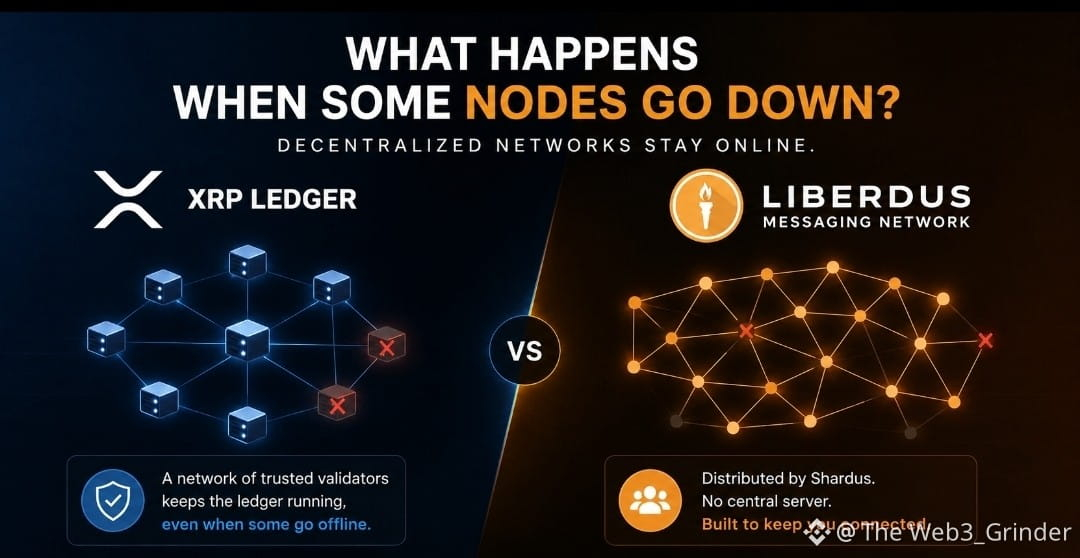
On the $XRP Ledger, validators don't all have to be perfect. The consensus protocol is designed to keep making progress even when some trusted validators are unavailable or misbehaving.
Liberdus takes this idea into a different type of network.
Its validators collectively keep the network online instead of relying on a central server. Liberdus uses Shardus, a blockless and sharded architecture where transactions can be processed individually and in parallel across the network.
And that's where it gets interesting.
With a centralized service:
One infrastructure = one major point of failure.
With a distributed network:
Many independent nodes = the network can keep operating when some participants have problems.
That's important for a blockchain.
But it's arguably even more interesting for a messaging network, where people expect the service to be available whenever they need it.
So while $XRP and Liberdus solve completely different problems, their validator architectures highlight the same challenge:
How do you keep a decentralized network running when individual participants fail?
That's one of the reasons I'm interested in what Liberdus is doing with Shardus.
WHAT HAPPENS WHEN SOME NODES GO DOWN?
One thing I find interesting about decentralized networks is what happens when some of the computers keeping them alive simply stop working.
On the $XRP Ledger, validators don't all have to be perfect. The consensus protocol is designed to keep making progress even when some trusted validators are unavailable or misbehaving.
Liberdus takes this idea into a different type of network.
Its validators collectively keep the network online instead of relying on a central server. Liberdus uses Shardus, a blockless and sharded architecture where transactions can be processed individually and in parallel across the network.
And that's where it gets interesting.
With a centralized service:
One infrastructure = one major point of failure.
With a distributed network:
Many independent nodes = the network can keep operating when some participants have problems.
That's important for a blockchain.
But it's arguably even more interesting for a messaging network, where people expect the service to be available whenever they need it.
So while $XRP and Liberdus solve completely different problems, their validator architectures highlight the same challenge:
How do you keep a decentralized network running when individual participants fail?
That's one of the reasons I'm interested in what Liberdus is doing with Shardus.
One thing I find interesting about decentralized networks is what happens when some of the computers keeping them alive simply stop working.
On the $XRP Ledger, validators don't all have to be perfect. The consensus protocol is designed to keep making progress even when some trusted validators are unavailable or misbehaving.
Liberdus takes this idea into a different type of network.
Its validators collectively keep the network online instead of relying on a central server. Liberdus uses Shardus, a blockless and sharded architecture where transactions can be processed individually and in parallel across the network.
And that's where it gets interesting.
With a centralized service:
One infrastructure = one major point of failure.
With a distributed network:
Many independent nodes = the network can keep operating when some participants have problems.
That's important for a blockchain.
But it's arguably even more interesting for a messaging network, where people expect the service to be available whenever they need it.
So while $XRP and Liberdus solve completely different problems, their validator architectures highlight the same challenge:
How do you keep a decentralized network running when individual participants fail?
That's one of the reasons I'm interested in what Liberdus is doing with Shardus.
1
74
SHARDUS EXPLAINED SIMPLY
If you've heard about Liberdus but never really understood what Shardus does, here's the simple version.
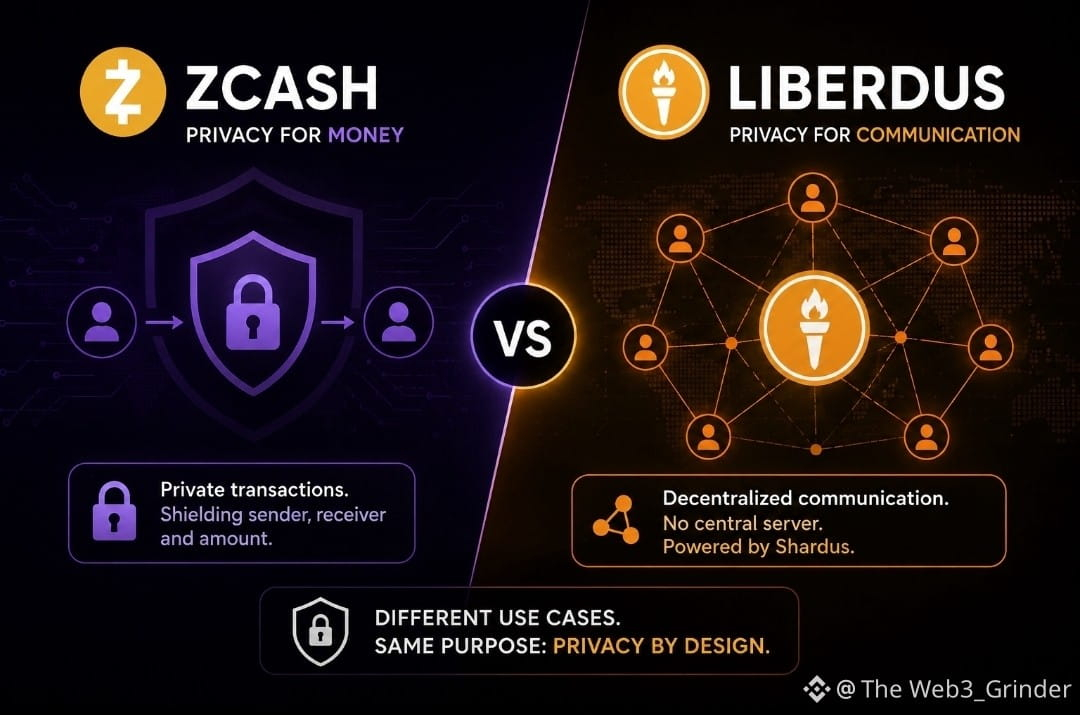
Zcash ($ZEC ) is focused on privacy for financial transactions. Liberdus is trying to bring that privacy mindset to communication.
But instead of putting the whole messaging network on one company's servers, Liberdus uses Shardus, a distributed network of validators.
Think about WhatsApp. You send a message, but the infrastructure behind it is still operated by a company. If that infrastructure has a problem, everyone depending on it feels the impact.
With Shardus, the network is split across multiple nodes. Sharding allows different parts of the network to handle different workloads instead of making one central system do everything.
That's the part I find interesting.
Zcash protects financial privacy.
Liberdus uses Shardus to build decentralized communication infrastructure.
Two different approaches, but both start from the same question:
How much control should we really give to a single intermediary?
#zcash
{spot}(ZECUSDT)
SHARDUS EXPLAINED SIMPLY
If you've heard about Liberdus but never really understood what Shardus does, here's the simple version.
Zcash ($ZEC ) is focused on privacy for financial transactions. Liberdus is trying to bring that privacy mindset to communication.
But instead of putting the whole messaging network on one company's servers, Liberdus uses Shardus, a distributed network of validators.
Think about WhatsApp. You send a message, but the infrastructure behind it is still operated by a company. If that infrastructure has a problem, everyone depending on it feels the impact.
With Shardus, the network is split across multiple nodes. Sharding allows different parts of the network to handle different workloads instead of making one central system do everything.
That's the part I find interesting.
Zcash protects financial privacy.
Liberdus uses Shardus to build decentralized communication infrastructure.
Two different approaches, but both start from the same question:
How much control should we really give to a single intermediary?
#zcash
If you've heard about Liberdus but never really understood what Shardus does, here's the simple version.
Zcash ($ZEC ) is focused on privacy for financial transactions. Liberdus is trying to bring that privacy mindset to communication.
But instead of putting the whole messaging network on one company's servers, Liberdus uses Shardus, a distributed network of validators.
Think about WhatsApp. You send a message, but the infrastructure behind it is still operated by a company. If that infrastructure has a problem, everyone depending on it feels the impact.
With Shardus, the network is split across multiple nodes. Sharding allows different parts of the network to handle different workloads instead of making one central system do everything.
That's the part I find interesting.
Zcash protects financial privacy.
Liberdus uses Shardus to build decentralized communication infrastructure.
Two different approaches, but both start from the same question:
How much control should we really give to a single intermediary?
#zcash
1
66
·
--
Bullish
WHAT IF COMMUNICATION WAS DECENTRALIZED TOO?
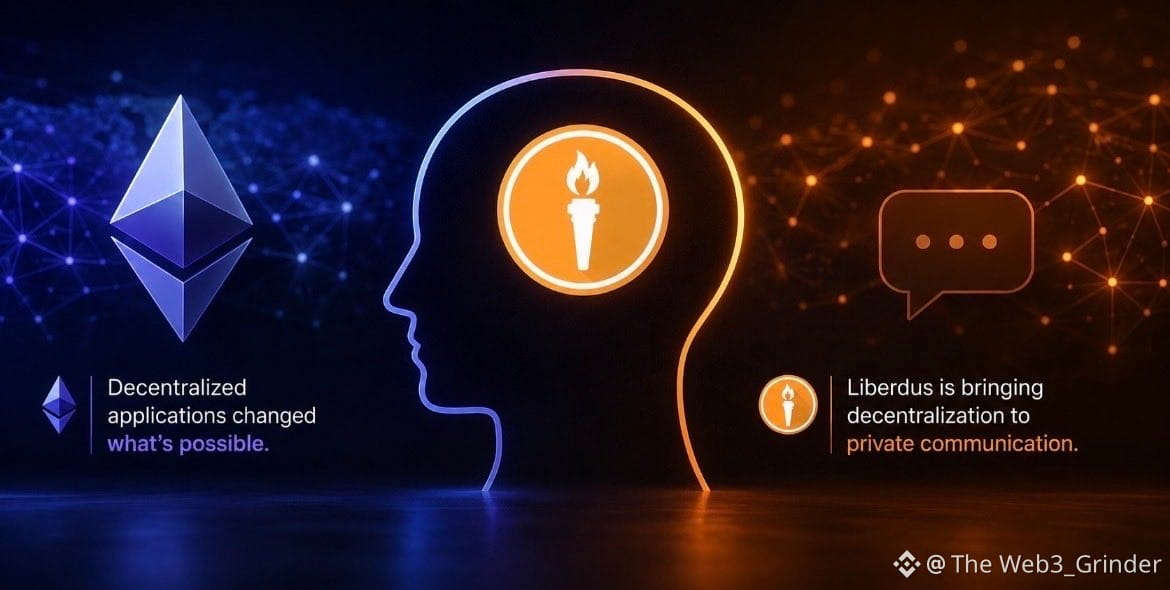
@Ethereum_official changed the conversation around what an application could be.
Instead of an app’s backend running entirely on a company’s servers, decentralized applications can run their logic on a public, decentralized network.
Think about a simple example:
A traditional app:
Company servers → company controls the infrastructure → users depend on the company.
A decentralized app:
Distributed network → no single server to down → users interact with infrastructure that isn’t controlled by one company.
Ethereum brought this model to applications.
But what about communication?
Most messaging platforms still depend on centralized infrastructure. If the company goes offline, changes its rules, or controls the servers carrying your messages, users ultimately depend on that central intermediary.
Liberdus takes the decentralization idea into messaging.
Its network uses distributed validator infrastructure rather than relying on a single centralized messaging server, while users can create accounts without a phone number or email.
That’s an important shift:
$ETH helped show that applications don’t have to depend on one centralized infrastructure.
Liberdus is exploring the same question for private communication.
Different technology.
Different use case.
Same idea: decentralization shouldn’t stop at money.
#ETH
{spot}(ETHUSDT)
WHAT IF COMMUNICATION WAS DECENTRALIZED TOO?
@Ethereum changed the conversation around what an application could be.
Instead of an app’s backend running entirely on a company’s servers, decentralized applications can run their logic on a public, decentralized network.
Think about a simple example:
A traditional app:
Company servers → company controls the infrastructure → users depend on the company.
A decentralized app:
Distributed network → no single server to down → users interact with infrastructure that isn’t controlled by one company.
Ethereum brought this model to applications.
But what about communication?
Most messaging platforms still depend on centralized infrastructure. If the company goes offline, changes its rules, or controls the servers carrying your messages, users ultimately depend on that central intermediary.
Liberdus takes the decentralization idea into messaging.
Its network uses distributed validator infrastructure rather than relying on a single centralized messaging server, while users can create accounts without a phone number or email.
That’s an important shift:
$ETH helped show that applications don’t have to depend on one centralized infrastructure.
Liberdus is exploring the same question for private communication.
Different technology.
Different use case.
Same idea: decentralization shouldn’t stop at money.
#ETH
@Ethereum changed the conversation around what an application could be.
Instead of an app’s backend running entirely on a company’s servers, decentralized applications can run their logic on a public, decentralized network.
Think about a simple example:
A traditional app:
Company servers → company controls the infrastructure → users depend on the company.
A decentralized app:
Distributed network → no single server to down → users interact with infrastructure that isn’t controlled by one company.
Ethereum brought this model to applications.
But what about communication?
Most messaging platforms still depend on centralized infrastructure. If the company goes offline, changes its rules, or controls the servers carrying your messages, users ultimately depend on that central intermediary.
Liberdus takes the decentralization idea into messaging.
Its network uses distributed validator infrastructure rather than relying on a single centralized messaging server, while users can create accounts without a phone number or email.
That’s an important shift:
$ETH helped show that applications don’t have to depend on one centralized infrastructure.
Liberdus is exploring the same question for private communication.
Different technology.
Different use case.
Same idea: decentralization shouldn’t stop at money.
#ETH
1
77
·
--
Bullish
DECENTRALIZATION ISN’T JUST ABOUT MONEY
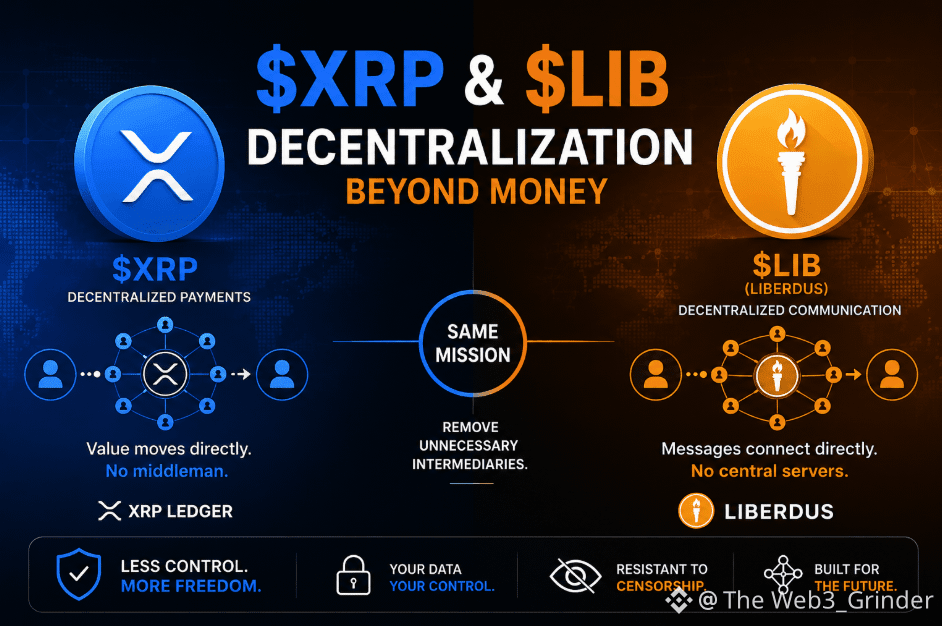
$XRP and the XRP Ledger are based on a simple principle: there is no need for a single institution to be involved in every payment.
On the #XRPL , transactions are processed by a network of validators who reach a consensus, rather than relying on a central authority. A direct payment in XRP can be made from one account to another without going through a traditional financial intermediary.
Now let’s apply this same principle to communication.
Today, when you send a message via a traditional messaging app, you generally rely on a company to manage the infrastructure that connects you to the person you’re messaging.
If that infrastructure goes down, your messages are also blocked.
If the company changes its terms of service, you’re forced to accept them.
If the company controls the servers, it ultimately controls the infrastructure you depend on.
Liberdus takes a different approach.
Its messaging network operates through distributed validation nodes rather than centralized servers, and the network is designed to be fault-tolerant and censorship-resistant.
And this isn’t just about the infrastructure.
You can create a Liberdus account without a phone number or email address, and communications are end-to-end encrypted.
So think about the difference:
$XRP : transferring value without going through a traditional financial intermediary.
LIB: communicating without relying on a centralized messaging infrastructure.
Different problems.The same philosophy of decentralization.
Maybe decentralization was never supposed to be just about money.
DECENTRALIZATION ISN’T JUST ABOUT MONEY
$XRP and the XRP Ledger are based on a simple principle: there is no need for a single institution to be involved in every payment.
On the #XRPL , transactions are processed by a network of validators who reach a consensus, rather than relying on a central authority. A direct payment in XRP can be made from one account to another without going through a traditional financial intermediary.
Now let’s apply this same principle to communication.
Today, when you send a message via a traditional messaging app, you generally rely on a company to manage the infrastructure that connects you to the person you’re messaging.
If that infrastructure goes down, your messages are also blocked.
If the company changes its terms of service, you’re forced to accept them.
If the company controls the servers, it ultimately controls the infrastructure you depend on.
Liberdus takes a different approach.
Its messaging network operates through distributed validation nodes rather than centralized servers, and the network is designed to be fault-tolerant and censorship-resistant.
And this isn’t just about the infrastructure.
You can create a Liberdus account without a phone number or email address, and communications are end-to-end encrypted.
So think about the difference:
$XRP : transferring value without going through a traditional financial intermediary.
LIB: communicating without relying on a centralized messaging infrastructure.
Different problems.The same philosophy of decentralization.
Maybe decentralization was never supposed to be just about money.
$XRP and the XRP Ledger are based on a simple principle: there is no need for a single institution to be involved in every payment.
On the #XRPL , transactions are processed by a network of validators who reach a consensus, rather than relying on a central authority. A direct payment in XRP can be made from one account to another without going through a traditional financial intermediary.
Now let’s apply this same principle to communication.
Today, when you send a message via a traditional messaging app, you generally rely on a company to manage the infrastructure that connects you to the person you’re messaging.
If that infrastructure goes down, your messages are also blocked.
If the company changes its terms of service, you’re forced to accept them.
If the company controls the servers, it ultimately controls the infrastructure you depend on.
Liberdus takes a different approach.
Its messaging network operates through distributed validation nodes rather than centralized servers, and the network is designed to be fault-tolerant and censorship-resistant.
And this isn’t just about the infrastructure.
You can create a Liberdus account without a phone number or email address, and communications are end-to-end encrypted.
So think about the difference:
$XRP : transferring value without going through a traditional financial intermediary.
LIB: communicating without relying on a centralized messaging infrastructure.
Different problems.The same philosophy of decentralization.
Maybe decentralization was never supposed to be just about money.
1
107
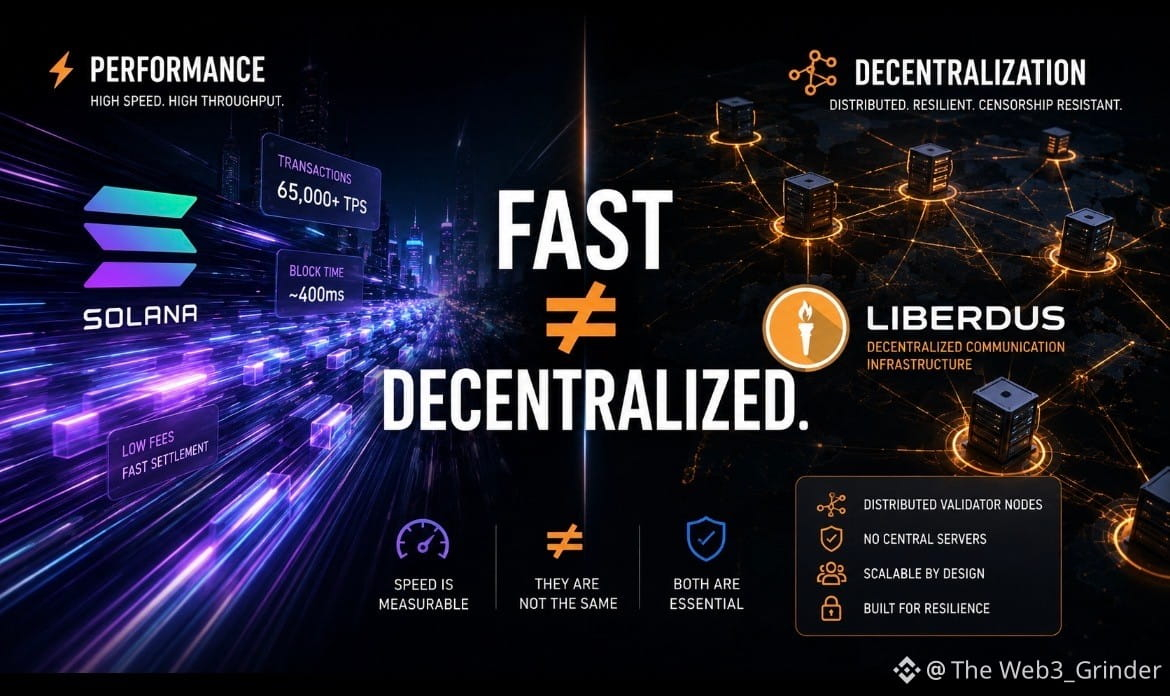
Solana has built its reputation around performance: high throughput, low latency and a network designed to process transactions quickly.
But performance and decentralization measure two different things.
A blockchain can be extremely efficient while still raising questions about how control is distributed across its validator set, stake, infrastructure and software clients.
Solana itself tracks decentralization through metrics such as the Nakamoto Coefficient, which measures the minimum number of independent entities that could collectively disrupt the network.
And that’s the important distinction:
Performance asks:
“How much can the network process?”
Decentralization asks:
“How widely is control distributed?”
#Liberdus approaches this from a different architectural direction.
Its network operates without centralized servers, relying instead on a distributed set of validator nodes powered by the Shardus protocol. The architecture is designed around scalability, fault tolerance and censorship resistance.
This isn’t about saying “ $SOL is centralized.”
It’s about recognizing that:
Fast ≠ Decentralized.
Both matter when you’re building infrastructure people are supposed to trust.
#Solana
Solana has built its reputation around performance: high throughput, low latency and a network designed to process transactions quickly.
But performance and decentralization measure two different things.
A blockchain can be extremely efficient while still raising questions about how control is distributed across its validator set, stake, infrastructure and software clients.
Solana itself tracks decentralization through metrics such as the Nakamoto Coefficient, which measures the minimum number of independent entities that could collectively disrupt the network.
And that’s the important distinction:
Performance asks:
“How much can the network process?”
Decentralization asks:
“How widely is control distributed?”
#Liberdus approaches this from a different architectural direction.
Its network operates without centralized servers, relying instead on a distributed set of validator nodes powered by the Shardus protocol. The architecture is designed around scalability, fault tolerance and censorship resistance.
This isn’t about saying “ $SOL is centralized.”
It’s about recognizing that:
Fast ≠ Decentralized.
Both matter when you’re building infrastructure people are supposed to trust.
#Solana
But performance and decentralization measure two different things.
A blockchain can be extremely efficient while still raising questions about how control is distributed across its validator set, stake, infrastructure and software clients.
Solana itself tracks decentralization through metrics such as the Nakamoto Coefficient, which measures the minimum number of independent entities that could collectively disrupt the network.
And that’s the important distinction:
Performance asks:
“How much can the network process?”
Decentralization asks:
“How widely is control distributed?”
#Liberdus approaches this from a different architectural direction.
Its network operates without centralized servers, relying instead on a distributed set of validator nodes powered by the Shardus protocol. The architecture is designed around scalability, fault tolerance and censorship resistance.
This isn’t about saying “ $SOL is centralized.”
It’s about recognizing that:
Fast ≠ Decentralized.
Both matter when you’re building infrastructure people are supposed to trust.
#Solana
1
4
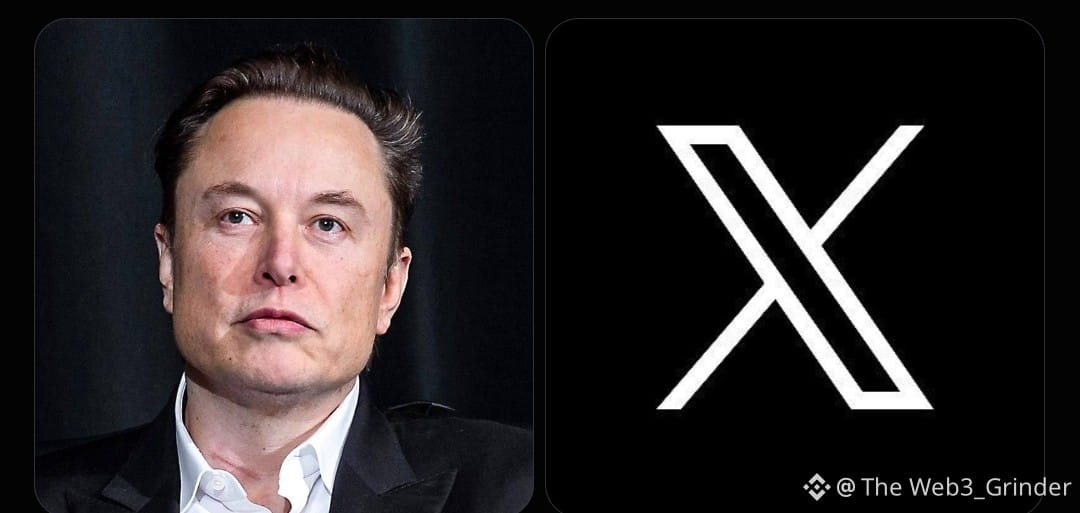
🔥 X could be taking creator payments deeper into crypto.
The platform is reportedly considering $USDC and other stablecoins for creator payouts as it winds down its Revenue Sharing program and moves creators to Original Content Rewards.
If stablecoins become a standard payout option, creators could get paid faster and with fewer traditional payment rails involved.
X has been pushing toward becoming an everything app. Could crypto payouts be the next major piece? 👀
#USDC #stablecoin
🔥 X could be taking creator payments deeper into crypto.
The platform is reportedly considering $USDC and other stablecoins for creator payouts as it winds down its Revenue Sharing program and moves creators to Original Content Rewards.
If stablecoins become a standard payout option, creators could get paid faster and with fewer traditional payment rails involved.
X has been pushing toward becoming an everything app. Could crypto payouts be the next major piece? 👀
#USDC #stablecoin
The platform is reportedly considering $USDC and other stablecoins for creator payouts as it winds down its Revenue Sharing program and moves creators to Original Content Rewards.
If stablecoins become a standard payout option, creators could get paid faster and with fewer traditional payment rails involved.
X has been pushing toward becoming an everything app. Could crypto payouts be the next major piece? 👀
#USDC #stablecoin
1
47
·
--
Bullish
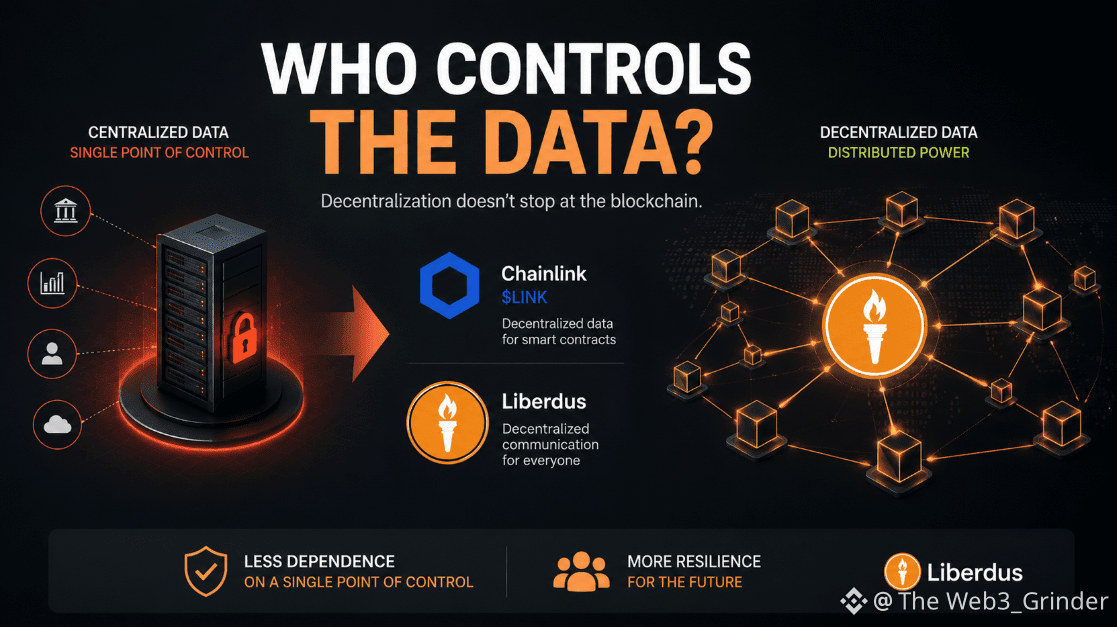
DECENTRALIZATION DOESN'T STOP AT THE BLOCKCHAIN
A blockchain doesn't live in isolation.
Imagine a smart contract that needs the current price of #bitcoin .
It needs reliable information from outside the blockchain.
That's where Chainlink ($LINK ) comes in.
Its decentralized oracle network helps blockchain applications access external data without relying on a single source.
And this highlights an important point:
Decentralization isn't only about the blockchain. It's about the infrastructure surrounding it.
Blockchains need data.
People need communication.
And that's where Liberdus takes a similar architectural approach.
Instead of relying on a single centralized server, Liberdus uses a distributed network powered by the Shardus framework.
Different technologies. Different problems.
Same principle: reduce dependence on a single point of control.
#Chainlink #LINK
DECENTRALIZATION DOESN'T STOP AT THE BLOCKCHAIN
A blockchain doesn't live in isolation.
Imagine a smart contract that needs the current price of #bitcoin .
It needs reliable information from outside the blockchain.
That's where Chainlink ($LINK ) comes in.
Its decentralized oracle network helps blockchain applications access external data without relying on a single source.
And this highlights an important point:
Decentralization isn't only about the blockchain. It's about the infrastructure surrounding it.
Blockchains need data.
People need communication.
And that's where Liberdus takes a similar architectural approach.
Instead of relying on a single centralized server, Liberdus uses a distributed network powered by the Shardus framework.
Different technologies. Different problems.
Same principle: reduce dependence on a single point of control.
#Chainlink #LINK
A blockchain doesn't live in isolation.
Imagine a smart contract that needs the current price of #bitcoin .
It needs reliable information from outside the blockchain.
That's where Chainlink ($LINK ) comes in.
Its decentralized oracle network helps blockchain applications access external data without relying on a single source.
And this highlights an important point:
Decentralization isn't only about the blockchain. It's about the infrastructure surrounding it.
Blockchains need data.
People need communication.
And that's where Liberdus takes a similar architectural approach.
Instead of relying on a single centralized server, Liberdus uses a distributed network powered by the Shardus framework.
Different technologies. Different problems.
Same principle: reduce dependence on a single point of control.
#Chainlink #LINK
1
52
Log in to explore more content
Join global crypto users on Binance Square
⚡️ Get latest and useful information about crypto.
💬 Trusted by the world’s largest crypto exchange.
👍 Discover real insights from verified creators.
Email / Phone number
Trending Topics
FedRateWatch
1.5M views
6,880 Discussing
Share & Win Traffic Reward in our Trending Hashtag Campaign
✨Topic: FOMC September, What's The Fed's Next Move?
👉How to Join:
Publish a short post or article with hashtag #FedRateWatch
Create content based on the below angles:
- August core CPI rose 0.3% month-over-month, and the odds of a 25bp hike this week are now close to 90%. Do you anticipate a rate hike this week? Is it a one-off, or the start of a longer hiking cycle?
- If the hike lands, how does it play out for BTC, tech stocks, and gold? Bullish or bearish?
- How are you planning to trade next? Share your BTC, stocks or gold trade/holdings with our trade sharing widget.
⏰Campaign Period:
- 2026-09-15 11:00 - 2026-09-17 3:00 UTC
🎁Reward:
- Qualified posts that comply with the above guidelines and contain more than 100 words will be reviewed and may receive a random traffic boost of 500 to 3,000 views. You will receive a notification from your feed secretary if your post is selected.
- Get a chance to have your article featured on Binance Square Official
Need ideas for your post? Visit the topic page #FedRateWatch or the Square Guide on How to Post for Better Reach.
Binance Square Official
·653 Likes
·1.7M views
ZcashRises6%
62,969 views
710 Discussing
XRPSinks10%
41,420 views
469 Discussing