

Written by: White 55, Mars Finance
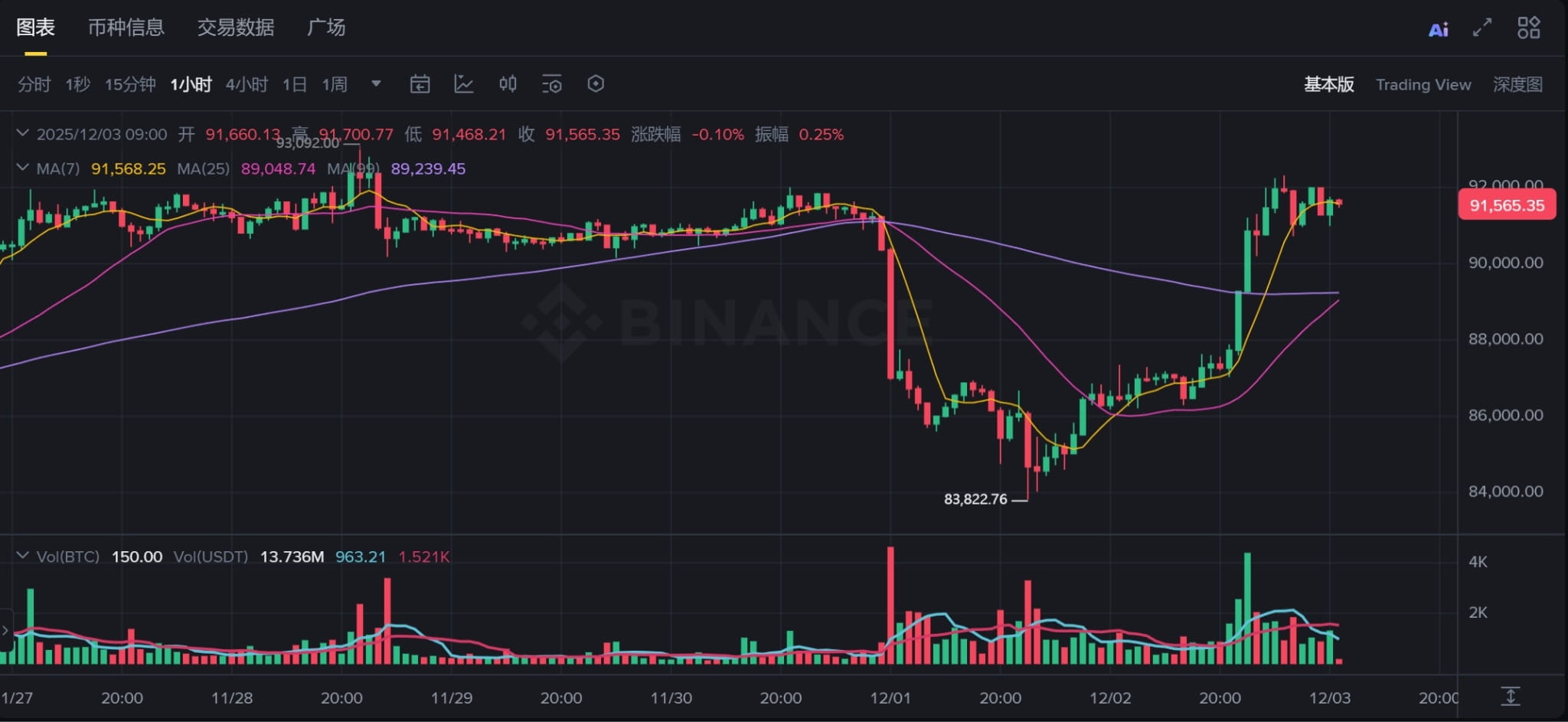
After experiencing two months of continuous decline and market sentiment hitting rock bottom, Bitcoin staged a dramatic comeback on December 3rd. The price rebounded strongly by 9.5% from a low of $84,000, regaining the $92,000 level, while Ethereum surged over 10% to break the $3,000 mark.
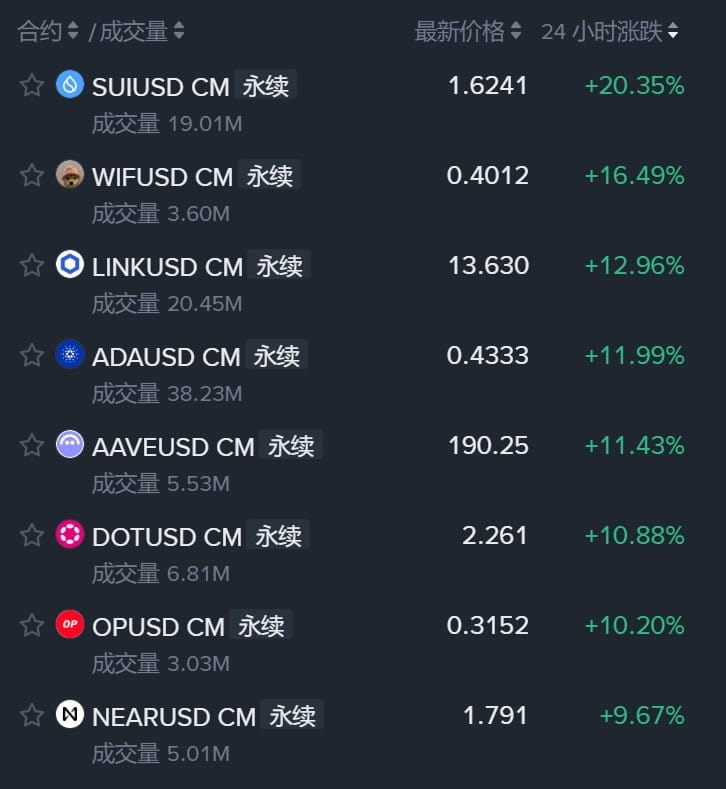
Mid-cap tokens like Solana, Cardano, SUI, and LINK have recorded double-digit gains.
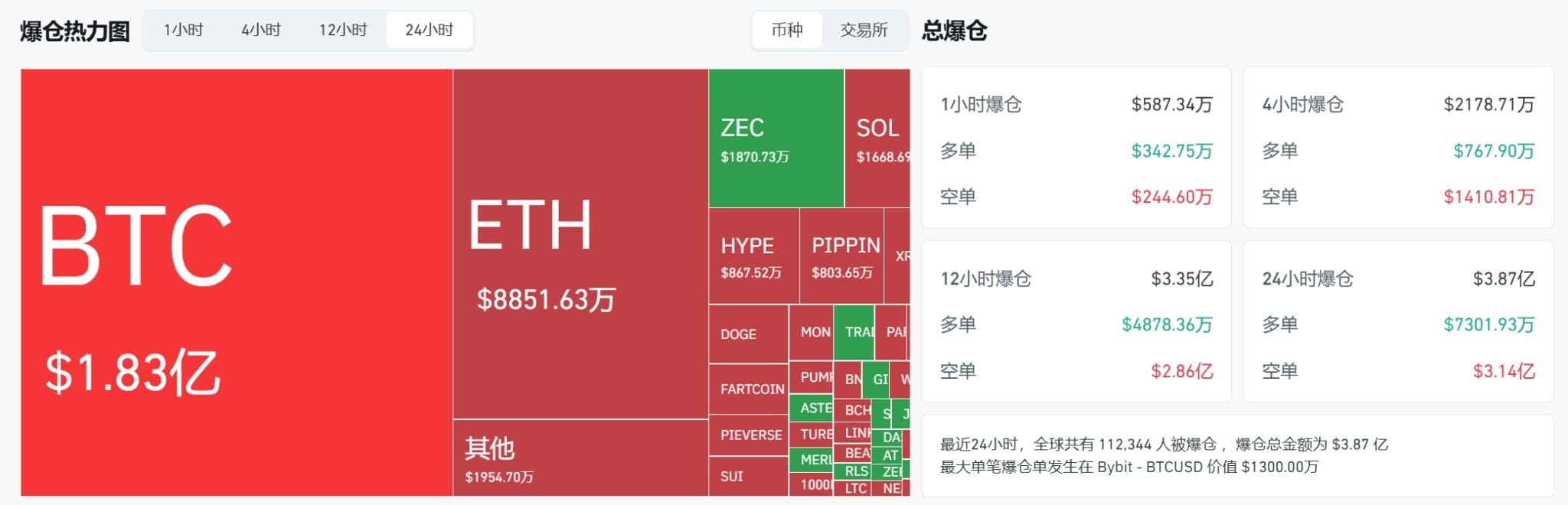
This turnaround seems to have injected a shot of adrenaline into the market, with over $400 million in liquidations across the network in the past 24 hours, mainly from short positions, with 110,000 traders being forcibly liquidated. The largest single liquidation occurred on Bybit, with a BTCUSD contract worth $13 million evaporating in an instant.
This rebound is not an isolated event, but rather the inevitable result of multiple intertwined factors. From macro liquidity expectations and institutional fund movements to on-chain data and policy signals, the market is searching for a new direction at a delicate balance.
Three catalysts working in tandem: the resonance of liquidity, technological upgrades, and policy shifts.
The probability of a Fed rate cut has surged, and liquidity expectations are reshaping market logic.
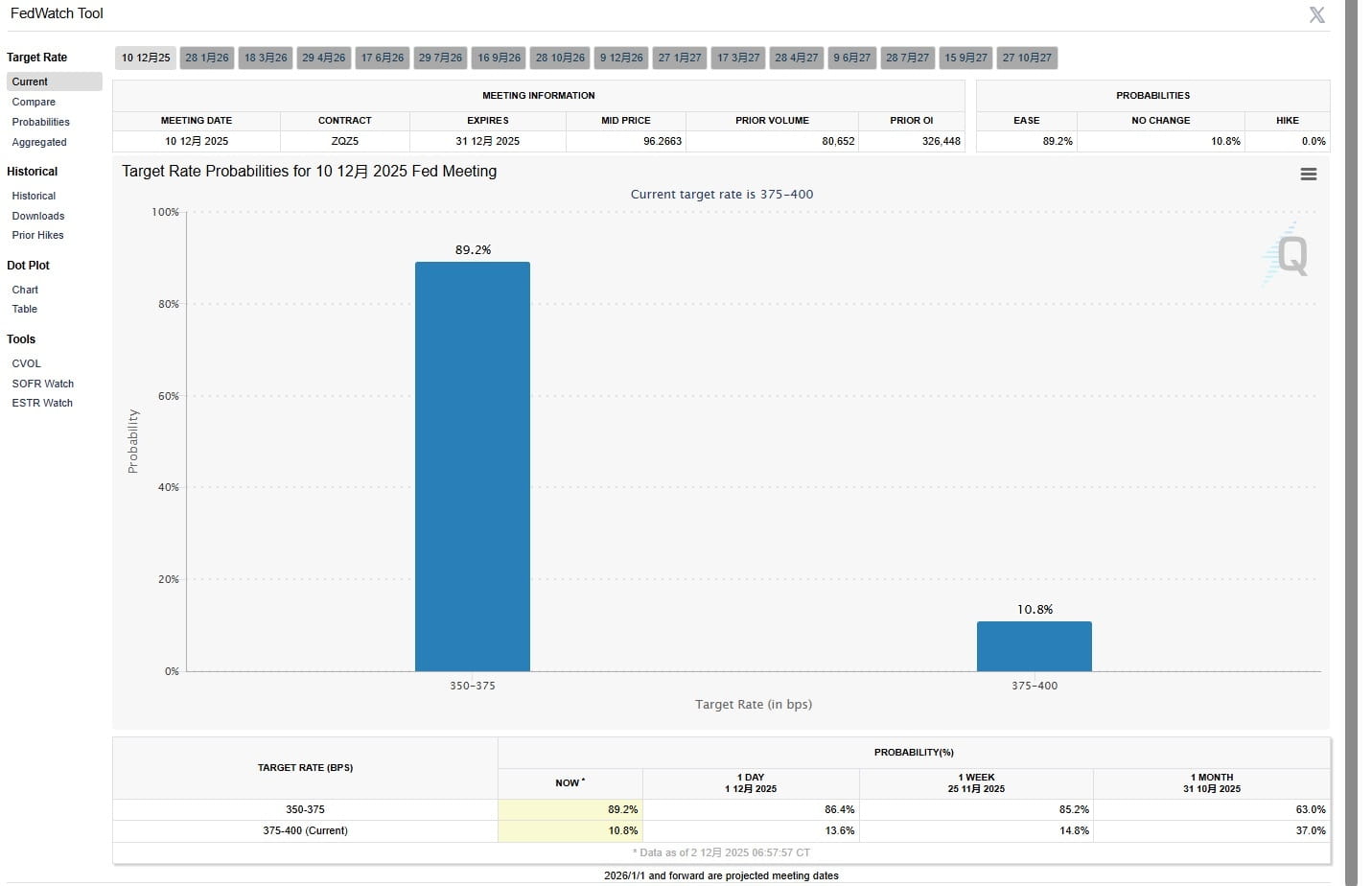
According to the latest data from the CME FedWatch tool, the market's probability of betting on a 25 basis point rate cut by the Federal Reserve on December 10 has surged from 35% a week ago to 89.2%.
The immediate trigger for this dramatic shift was the November PPI data, which was far below expectations, indicating a continued easing of inflationary pressures.
Despite the Trump administration’s tariff policies pushing up costs in the short term, Federal Reserve officials have repeatedly emphasized that a “soft landing” remains the core objective until 2026, avoiding a premature shift to tightening.
If the interest rate cut is implemented, the weakening of the US dollar and the decline in US Treasury yields will directly benefit risk assets such as Bitcoin. More importantly, this may open a window for consecutive interest rate cuts in the first quarter of 2026, prompting funds to position themselves for "interest rate cut trading" in advance.
Ethereum Fusaka Upgrade: Technological Leap Activates Ecosystem Value
The Fusaka upgrade, which will be activated on December 4, is another milestone event for Ethereum since the merger.
Its core PeerDAS technology increases the blob capacity from 9 to 15, further reducing Layer 2 transaction fees by 30%-50%, and for the first time, enabling ordinary accounts to possess "account abstraction" capabilities such as social recovery and batch operations. This upgrade not only optimizes data availability management, but more importantly, paves the way for stateless Verkle Trees clients, reducing node synchronization time from weeks to hours. This technological advantage coincides with a market low, and the ETH/BTC exchange rate has stabilized and rebounded, indicating a potential rotation of capital from Bitcoin to altcoins.
Federal Reserve Chair Change: Hassett May Usher in an Era of "Ultra-Easy" Monetary Policy
Trump signaled at a cabinet meeting that Kevin Hassett, director of the National Economic Council, is the frontrunner to succeed him as chairman of the Federal Reserve.
Hassett, a representative of the interest rate cut advocates, has publicly criticized Powell for raising interest rates excessively and advocated for including Bitcoin in the national strategic reserve.
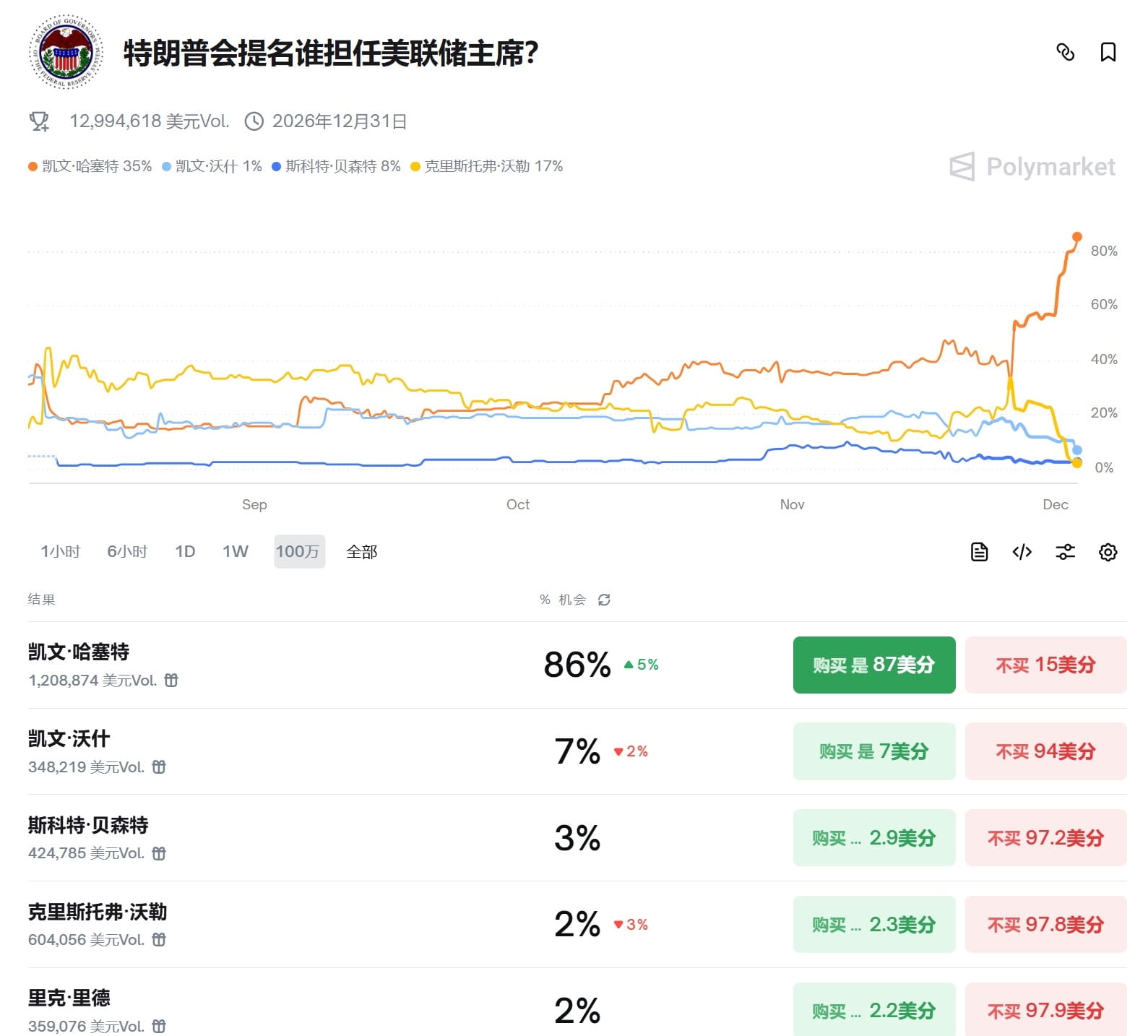
Polymarket predicts his nomination probability has risen to 86%, and if it comes to fruition, the Federal Reserve's policy may shift towards comprehensive easing. Even if other candidates take office, the candidates selected by the Trump team all tend to favor pro-cyclical policies, potentially bringing an end to the Fed's confrontational cycle with cryptocurrencies.
Hidden Clues in Fund Flows: Institutional Investors Quietly Position Themselves While Retail Investors Suffer Leveraged Losses
Whale transfers and ETF fund reversals: Silent accumulation has begun.
On the morning of December 3, Arkham data showed that 1,800 BTC (approximately $82.1 million) were transferred from a Fidelity escrow address to two anonymous wallets.
Such large transfers usually indicate institutional position adjustments. Meanwhile, after the US stock market opened, BlackRock's IBIT ETF saw trading volume exceed $1 billion in half an hour, triggering an influx of funds on the first day after Vanguard lifted its ban on Bitcoin ETFs.
This phenomenon contrasts with the recent net outflow trend of ETFs: in November, there was a single week with a withdrawal of $2 billion, but currently AUM still accounts for 6.6% of Bitcoin's total market capitalization. If it rebounds to above 8%, it will signify a true restoration of institutional confidence.
Leveraged liquidation and market structural fragility
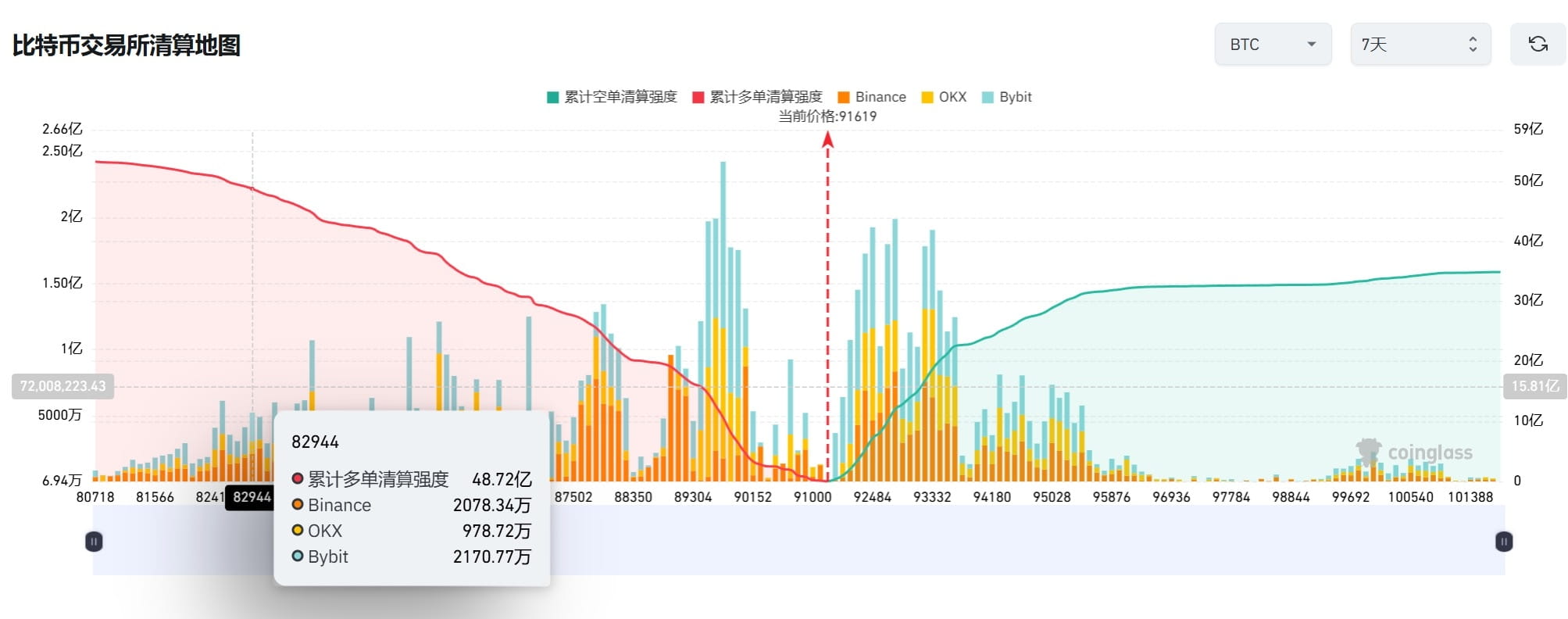
In this rebound, the total liquidation amounted to $400 million, but the long-short structure has quietly changed: if BTC falls in the next 7 days, the liquidation intensity of long positions will be greater; while in the 30-day time frame, the liquidation pressure of short positions has increased significantly.
This indicates that although short-term leverage risks have not disappeared, the bearish forces in the medium to long term are being weakened.
It is worth noting that MicroStrategy has set aside a new $1.4 billion reserve to cover dividend payments and avoid being forced to sell its Bitcoin holdings, a move that has eased market concerns about institutional selling pressure.
The gap between historical patterns and current reality: Will the Christmas rally repeat itself?
The game of pros and cons of seasonal patterns
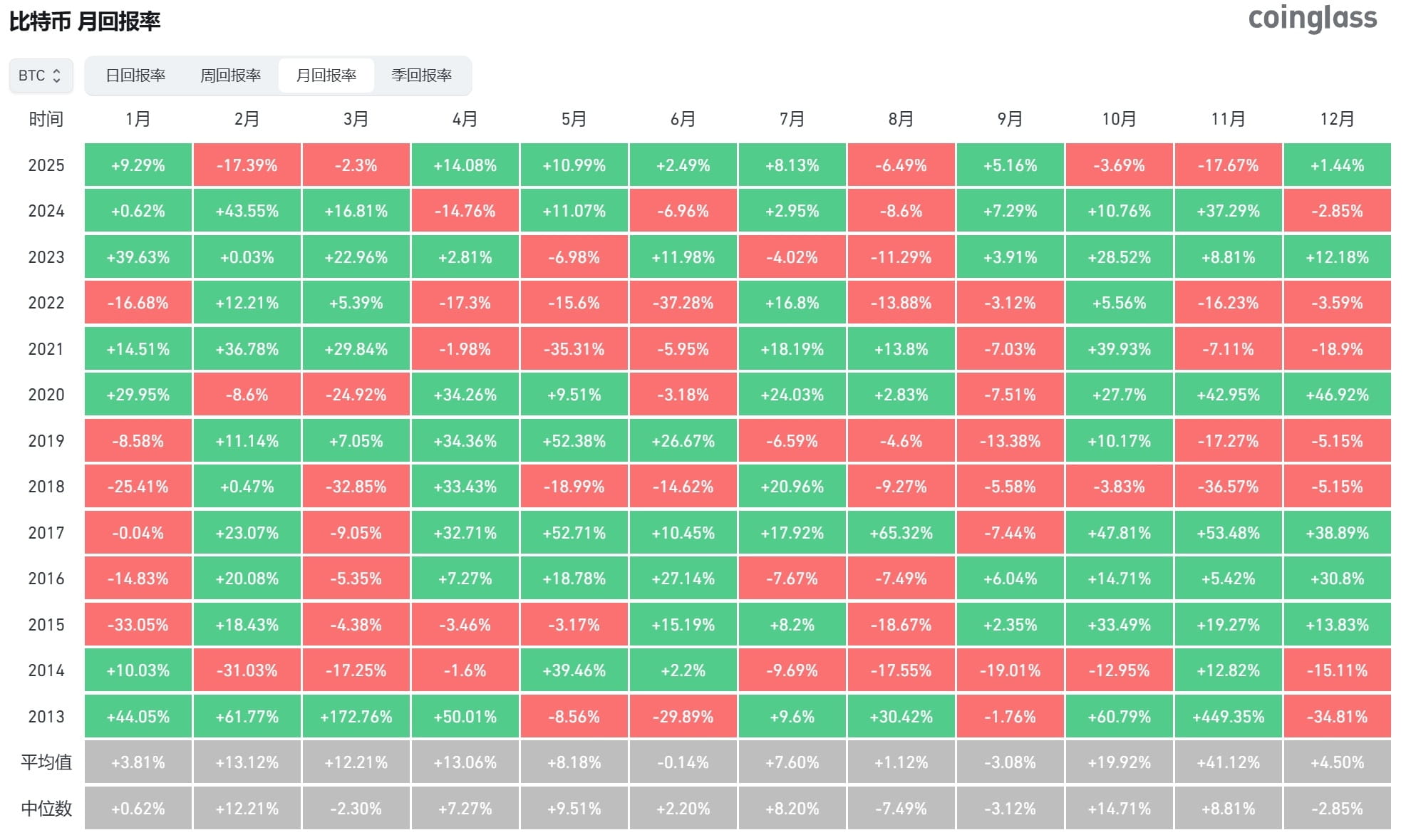
Over the past eight years, Bitcoin has seen gains in December in six of those years, with an average increase of 9.48%, and even more dramatic increases of 46% and 36% in 2017 and 2020, respectively.
The underlying logic of this "Christmas rally" lies in the inflow of year-end bonuses, the emergence of buying opportunities after tax losses are recovered, and the reduction of selling pressure caused by reduced institutional activity.
However, history does not simply repeat itself – the current Fear & Greed Index is still in the extreme fear range of 20, and analysts’ expectations for the probability of a Christmas rally have dropped from 70% to 30-40%.
Challenges of a diverging macroeconomic environment
The correlation between Bitcoin and traditional risk assets continues to strengthen. Since October, Nvidia's better-than-expected earnings report has driven a surge in US stocks, but Bitcoin has fallen by 3%, highlighting its sensitivity as a "high-beta asset" in a high-interest-rate environment.
On the other hand, if the $959 billion balance in the Treasury's General Account (TGA) is gradually released after the US government shutdown ends, it could potentially recreate the liquidity boom seen in 2019 when Bitcoin surged 35% after the government reopened. However, this process will take time; the TGA has not yet shown a significant decline, and the effects of the liquidity injection may not be seen until mid-December.
The New Normal in Crypto Markets: A Structural Shift from Retail Speculation to Institutional Dominance
Regulatory compliance is reshaping the capital landscape.
The U.S. Securities and Exchange Commission will meet on December 4 to discuss rules for tokenized securities. Texas has taken the lead in purchasing Bitcoin through the BlackRock ETF, and Thailand has implemented a 0% capital gains tax on Bitcoin traded on exchanges.
These policy moves have accelerated the integration of traditional finance with the crypto world, but have also brought new sources of volatility—for example, S&P's downgrade of Tether to the lowest level triggered a crisis of confidence in stablecoin pegs.
Mining company transformation and revaluation of computing power
With the explosive growth in demand for AI computing power, some mining companies, such as TeraWulf, are beginning to transform into a dual-track model of "Bitcoin mining + AI processing." These companies, leveraging their power reserves and computing power flexibility, have gained favor with tech giants like Google, and the trend of their stock prices decoupling from Bitcoin is becoming a new option for hedging against market volatility.
Key milestones in the next 30 days: Three major events in December will set the tone for the market.
December 4: The Ethereum Fusaka upgrade and the SEC tokenization conference will be held concurrently, and the technical and policy aspects may resonate with each other.
December 10: The Federal Reserve will decide whether to cut interest rates. If so, Bitcoin may quickly test the $100,000 resistance level.
December 16: The delayed release of November non-farm payroll data will reveal the true state of the job market. If the data is weak, it may strengthen expectations of an interest rate cut in early 2026.
Conclusion: The Ropes of Rationality Beneath the Revelry
This Bitcoin rally is more like a carefully orchestrated liquidity test—the Fed's dovish leanings, Ethereum's technological upgrades, and Trump's political hints have all woven together a narrative of hope for December. But the market vividly remembers the November crash, when the same leveraged frenzy resulted in 170,000 people losing $547 million in a single day.
Perhaps Galaxy Digital founder Mike Novogratz's observation is more sober: while he firmly believes that Bitcoin will return to $100,000 by the end of the year, he also reminds the market that it needs to digest the mid-term psychological trauma of the "1011" crash.


