
⚙️ I. Technological Breakthroughs: From 'Digital Gold' to 'Programmable Reserves' Underlying Reconstruction
1. Expansion Plan Evolution: Breaking the 'Impossible Triangle' Bottleneck
Thunderbolt Protocol: Increases transaction speed by 10 times through UTXO Bundling technology, introduces OP_CAT opcode to enhance smart contract functionality, laying the foundation for Bitcoin DeFi ecosystem.
BitVM Rollup Solution: Moves 99% of computation off-chain, with the main chain only verifying fraud proofs, increasing Bitcoin TPS from 7 to theoretically over 100,000 while maintaining decentralization.
Lightning Network Optimization: Adopts Schnorr signatures + MAST technology, channel capacity reaches 18,000 BTC (2025 data), micro-payment efficiency increases by 300%.
Plain Explanation:
Bitcoin is like a congested old road (7 transactions/second), Thunderbolt adds a multi-level interchange (UTXO bundling), BitVM builds a parallel highway (off-chain computation), and the Lightning Network is a dedicated bike lane (small payments) — together they solve different traffic flows.
2. Smart Contract Revolution: Activating Sleeping Trillions of Liquidity
BRC-2.0 Upgrade: EVM-compatible smart contracts will be enabled in September, supporting 6-character token issuance, with the trial project Adderrels NFT having achieved a floor price of $900.
RGB Protocol Mainnet Launch: Achieves off-chain smart contracts with client verification, the first token RGB application completed 60% in 5 days, costing $4 per transaction, with a secondary premium reaching 3 times.
SAT 20 Asset Binding Satoshi: Follows UTXO free flow, supporting cross-layer settlement of assets across multiple protocols like Ordinals/Runes.
Plain Explanation:
BRC-2.0 teaches Bitcoin to 'vending machine' (smart contracts), RGB is 'detachable cargo' (off-chain scaling), SAT 20 gives each 'coin' (Satoshi) an ID — sleeping gold is turning into liquid capital.
3. Cross-Chain Interoperability: Building a BTC-Centric Multi-Chain Universe
Fiamma Bridge: Based on BitVM 2 technology, supports native BTC across 11 chains (including Ethereum, Aptos), mapping assets FIABTC 1:1 pegged and earning points.
XBIT Exchange Integrates Aptos: 18% of users convert BTC to stablecoins before entering Aptos DeFi, with cross-chain efficiency increased by 3 times, transaction fee < $0.5.
zkBridge Zero-Knowledge Verification: Polyhedra Network realizes Bitcoin and multi-chain asset transfers, avoiding centralization risks of relay nodes.
Plain Explanation:
Cross-chain bridges are like currency exchangers: Fiamma is the 'digital version of SWIFT' (multi-chain interoperability), XBIT is like an 'airport currency exchange booth' (fast and low cost), zkBridge is an 'invisible safe' (cryptographic security).
🌐 II. Ecological Evolution: Foundation of Reserve Currency Status Scenarios
1. Institutional Adoption: Gradual penetration from ETFs to national strategies
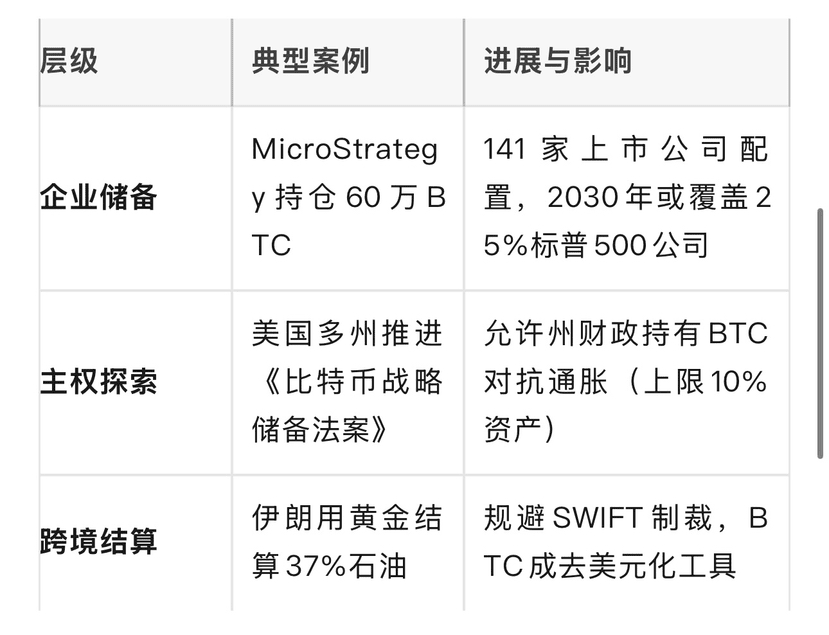
2. Green Mining: The Key Turning Point to Eliminate ESG Doubts
Energy Structure: 52.4% of mining uses renewable energy, with carbon intensity reduced to 288g CO₂e/kWh (below the global grid average of 442g).
Innovative Models:
Union Jack Oil mines using wasted natural gas, reducing flaring + instant monetization.
MiningToken's AI cloud mining platform MTCloud achieves 35% energy savings with 100% clean energy.
Regulatory Premium: Mining companies using over 50% low-carbon electricity receive debt interest rate discounts of 50-150 basis points.
Plain Explanation:
Bitcoin mining has upgraded from 'coal-powered generation' to 'green power stations': oilfield waste gas generation (Union Jack), AI scheduling for energy savings (MiningToken) — environmental protection is no longer a shortcoming but a premium point.
⚖️ III. The Ultimate Showdown with Gold: Reevaluation of Value Storage Attributes
Attribute Comparison Table
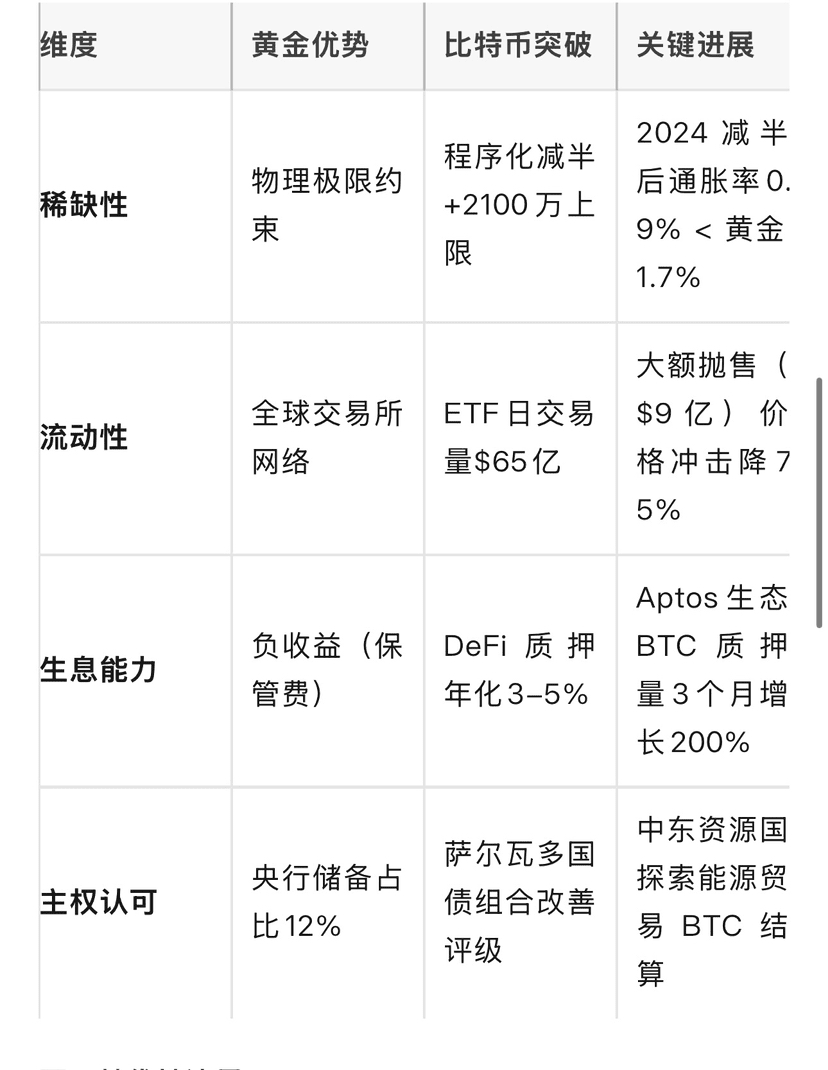
Irreplaceability Boundaries
The Ultimate Defense Line of Gold:
Cross-Civilization Consensus (China and India account for 52% of global consumption)
Physical Resistance to Quantum Attacks
Erosion Zone of Bitcoin:
Cross-Border Efficiency (0.1% cost for on-chain transfers vs. 3% for physical gold transport)
Segmentation Precision (1 Satoshi ≈ $0.0006 vs 1 gram of gold ≈ $65 minimum unit)
⚠️ IV. Risks and Challenges: The Unfinished Journey to Reserve Currency
1. Technical Vulnerabilities
Quantum Threat: Breaking 256-bit ECC requires 15 million qubits (current strongest is 127 qubits), Lamport signature upgrade is urgent.
Smart Contract Vulnerabilities: Spark Protocol LRC 20 AMM test failed, users forced to refund.
2. Regulatory Cliff
Compliance Split: China completely bans vs Hong Kong Monetary Authority 100% reserve requirement vs the U.S. (GENIUS Act) framework.
Securitization Risks: BRC-20 tokens may face unregistered securities charges, Adderrels NFT plummeted 60% due to upgrade delays.
3. Ecological Internal Consumption
Expansion Route Split: No Upgrade Faction (RGB) vs Sidechain Faction (Stacks) vs Mainchain Upgrade Faction (Thunderbolt), community consensus is hard to reach.
Short-termism of Miners: BRC-20 transactions account for 65% of the network, causing congestion and skyrocketing fees, which harm normal transfer demands.
🔮 V. Future Path: Reserve Pattern Simulation for 2030
Optimistic Scenario (Accelerated Sovereign-Level Adoption)
Key Catalysts:
More countries follow El Salvador to include BTC in foreign reserves (especially high-inflation emerging markets).
Volatility drops to 1.5 times that of gold, attracting conservative funds like pensions.
Cross-Chain Technology Realizes Gold Tokenization (PAXG) and Interoperability with BTC, forming a mixed reserve pool.
Scale Prediction: If capturing 25% of gold market value, BTC price will exceed $200,000.
Pessimistic Constraints (Structural Barriers)
CBDCs Squeeze: Digital Dollar may marginalize Bitcoin's role in cross-border payments.
Alternative Public Chain Diversion: Smart contract platforms like Ethereum siphon off institutional funds (Bitcoin DeFi locked only $320 million vs. Ethereum $56 billion).
Ultimate Balance Point: Bitcoin may become a 'digital version of gold ETF' — enterprises/individuals use it to allocate anti-inflation assets while central banks still rely on physical gold as the ultimate insurance policy. Just like Union Jack Oil's transformation: using oilfield waste gas to mine BTC, then using the proceeds to buy gold for hedging.


