
1. What is asset tokenization?
When lawyers meet Lego blocks
Professionally, the ERC-3643 protocol splits property rights into standardized digital tokens (each token corresponds to 0.0001% ownership), and binds to Hong Kong SPV legal entities for confirmation. It’s like turning an entire building into a box of Legos:
Each block represents a fixed proportion of ownership (professional term: equity fragmentation)
Blocks come with a manual ensuring the rights of the assembler (corresponding to: on-chain smart contracts + judicial jurisdiction)
The assembled model can be disassembled and resold (mapping: secondary market liquidity)
Case: 100,000 tokens split from Hong Kong W Hotel, minimum holding of 100 HKD, rent calculated automatically by the hour
2. How does technology ensure authenticity?
IoT + Blockchain = Anti-cheat Rent Collector
The professional architecture relies on oracles (like Chainlink) to synchronize charging pile operation data to Ant Chain in real-time, triggering smart contracts for automatic dividends. In simple terms, it's like equipping assets with live streaming cameras:
For each degree of electricity charged at the charging pile, data is instantly transmitted to the blockchain (professional: IoT + oracle verification)
The system automatically sends "electricity fee red envelopes" to investors (realized: smart contracts automatically executed)
Everyone can check the charging records at any time (reflecting: on-chain data is immutable)
Real effect: The dividend delay for the Shenzhen charging pile project reduced from 15 days to 20 minutes
3. How to participate?
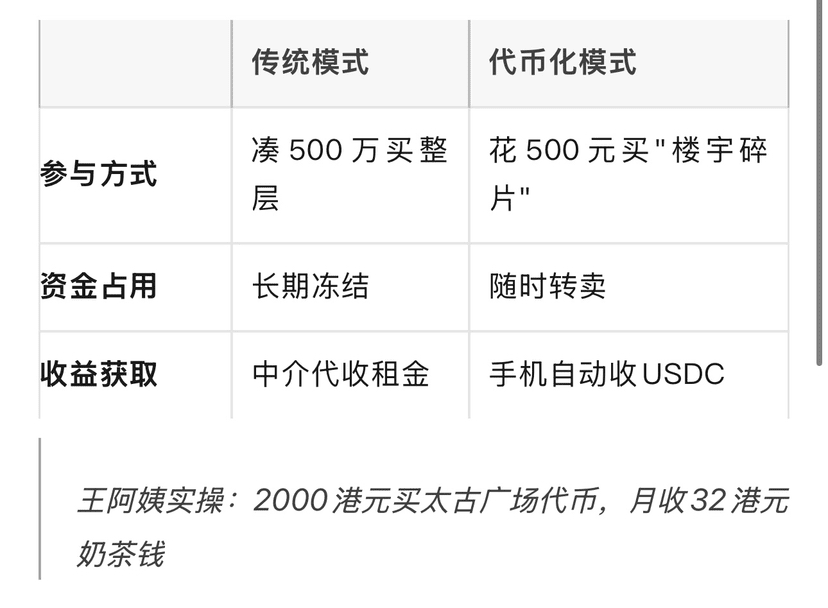
From buying a whole cow to purchasing a cup of yogurt
Professional financial models show that tokenization increases real estate annual liquidity from 8% to 62% (JLL 2024 report). From the perspective of ordinary people, this represents a qualitative change in investment logic:
4. Dual perspectives on risk control
Vault Guardian + Pitfall Guide
The professional mechanism adopts a three-tier circuit breaker: trading suspension if token price deviates from net asset value by 20% (refer to Hong Kong Stock Exchange rules). Newbies only need to remember three survival rules:
Verify identity: Check if the project has a Deloitte monthly audit report (avoid the "African gold mine" scam)
Check the water flow: Choose projects with a 7-day trading volume > $1 million (avoid art token underperformance)
Grip the handle: Only invest in licensed platforms in Hong Kong (recognize SFC licenses 1/4/9)
Bitter lesson: A certain wine token became worthless due to a warehouse fire, and uninsured investors lost all their money
5. The mixed wallet of the future has arrived
From single deposits to asset cubing
Professional forecasts show that by 2030, 30% of national debt will be tokenized (Boston Consulting Report). For ordinary people, this means a revolution in wealth management:
Morning: Interest from US Treasury token arrives (annualized 4.5%)
Noon: Use charging pile dividends to offset parking fees
Evening: Sell shares of Manhattan apartment tokens to pay tuition
Ultimate form: Digital wallet = "automatic money-making cube" of national debt returns + property rent + photovoltaic power station dividends
Core value rediscovery
The essence of technology:
Blockchain is not alchemy, but rather the transformation of assets into mathematical language (professional expression: programmability empowers financial democratization)
Life's truth:
Tokenization is like melting gold bars into coins —
✅ Easier to circulate: Buy a loaf of bread with 1 coin at any time
⚠️ But the purity of the coins depends on the credibility of the mint (i.e., the qualifications of the project party)
As warned by the Hong Kong Monetary Authority: "The value of on-chain tokens is always anchored to the reality of off-chain assets"

