
#strategybitcoinholdingsmoveintounrealizedloss
strategybitcoinholdingsmoveintounrealizedloss
Hot
Latest

·
--
Bullish
#strategybitcoinholdingsmoveintounrealizedloss
🚨 STRATEGY'S BITCOIN TREASURY ENTERS UNREALIZED LOSS — IS MICHAEL SAYLOR UNDER PRESSURE?
One of the world's largest corporate Bitcoin holders is facing a major test as Strategy's massive BTC holdings reportedly move into unrealized losses.
This is an important moment for the Bitcoin market because Strategy has built its entire corporate strategy around accumulating and holding BTC.
🔥 Why This Matters:
Bitcoin trading below Strategy's average purchase price puts its holdings underwater.
Unrealized losses do not mean the company has actually sold its Bitcoin.
Market volatility could increase pressure on investor confidence.
Strategy's future buying decisions will remain closely watched.
📊 What Happens Next?
🟢 Bullish scenario: BTC recovers above Strategy's average acquisition cost, potentially restoring confidence in corporate Bitcoin accumulation.
🔴 Bearish scenario: Bitcoin falls further, increasing paper losses and raising questions about Strategy's financing and risk exposure.
But remember: Strategy has experienced Bitcoin drawdowns before. An unrealized loss is not automatically a financial disaster.
The real test is whether Michael Saylor continues buying Bitcoin when the market turns against him.
Would you keep accumulating $BTC if your portfolio went millions underwater?
#bitcoin #strategy #BTC
403

·
--
#StrategyBitcoinHoldingsMoveIntoUnrealizedLoss
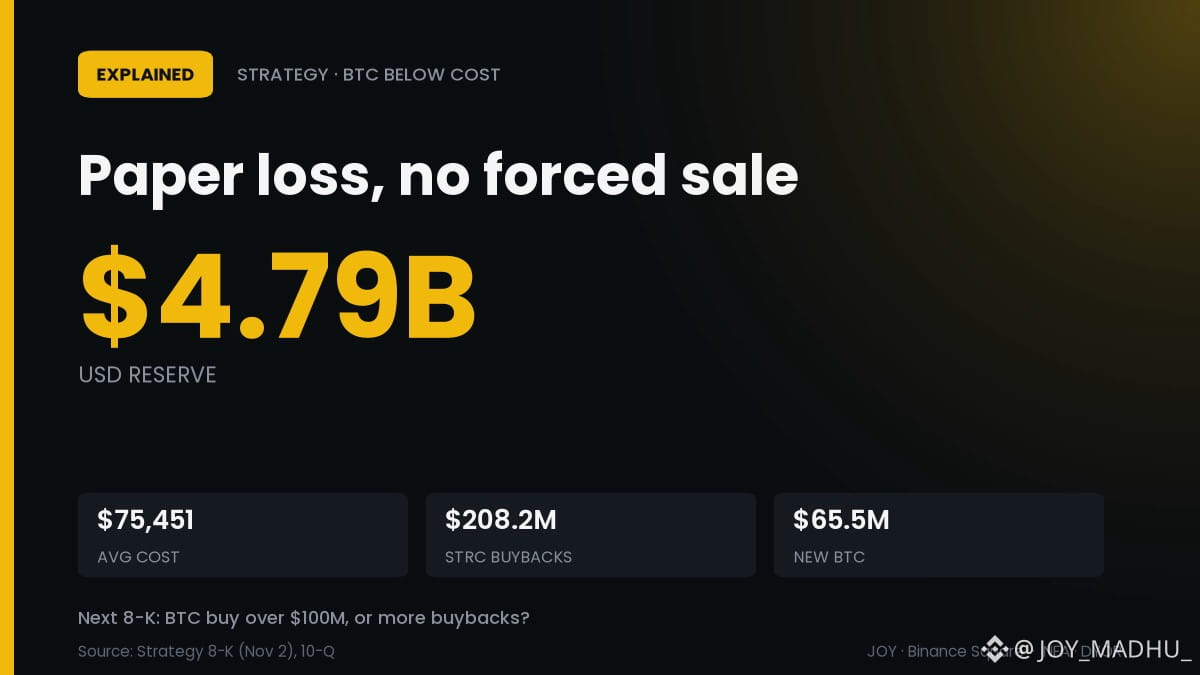
🛡️ $4.79B Cash Cushion: Why Strategy Isn't Forced to Sell
Strategy's BTC sits below its $75,451 average cost, but its filings show no margin call.
🏦 $4.79B USD reserve on Nov 1 for dividends and interest
📊 $208.2M on STRC buybacks vs $65.5M on new BTC last week
📅 Earliest bondholder cash demand: Sept 15, 2027
⚠️ A board plan still allows up to $1.25B of BTC sales
The catch: selling is now a choice, not a forced move.
Next 8-K by Monday: a BTC buy over $100M, or more buybacks? 👇
$BTC $MSTR
#StrategyBitcoinHoldingsMoveIntoUnrealizedLoss #Bitcoin #Strategy
6

🏦 Strategy's Bitcoin Position Highlights Market Risk!
Strategy has built a significant Bitcoin treasury, but declining BTC prices can create substantial unrealized losses.
📈 The important lesson is that institutional ownership does not eliminate market risk.
Study average acquisition prices, market conditions, and available capital before considering a spot investment.
Knowledge matters more than following big investors blindly.
$BTC $MSTR $ETH $SOL
#strategybitcoinholdingsmoveintounrealizedloss
8
📉 Strategy's Bitcoin Holdings Enter Unrealized Loss Territory!
Bitcoin's latest price weakness has pushed Strategy's BTC holdings below their reported average acquisition cost.
📊 Market Impact: This development highlights how market corrections can affect even large institutional Bitcoin holders.
💡 Smart investors should focus on market fundamentals, research, and disciplined spot trading instead of emotional decisions.
$BTC $MSTR $ETH $BNB
#strategybitcoinholdingsmoveintounrealizedloss
15
🛡️ Even Large Bitcoin Holders Face Market Corrections!
Strategy's unrealized Bitcoin losses remind investors that market volatility affects portfolios of every size.
📊 A responsible investment approach includes:
✔️ Careful research.
✔️ Realistic risk assessment.
✔️ Available capital only.
✔️ No excessive exposure.
✔️ Patience during volatility.
Protecting capital should always come before chasing quick profits.
$BTC $ETH $MSTR $ADA
#strategybitcoinholdingsmoveintounrealizedloss
16
🧠 Understand the Difference: Unrealized vs Realized Loss!
Strategy's Bitcoin holdings moving below their average purchase price highlights an important financial concept.
An unrealized loss reflects a decline in market value. It becomes realized when an asset is sold below its cost basis.
💡 Investors should understand their entry price, investment horizon, and risk exposure.
Make informed spot decisions without leverage or borrowed funds.
$BTC $MSTR $BNB $LINK
#strategybitcoinholdingsmoveintounrealizedloss
8
🚀 Strategy's Bitcoin Holdings Offer an Important Market Lesson!
When Bitcoin trades below an institution's average purchase price, investors get a reminder that even large treasury strategies involve uncertainty.
📈 Watch Bitcoin demand, institutional flows, market sentiment, and company announcements.
Do not copy institutional buying decisions without understanding the risks.
Focus on carefully researched spot opportunities and disciplined financial management.
$BTC $MSTR $ETH $SOL $BNB
#strategybitcoinholdingsmoveintounrealizedloss
10

·
--
Bullish
Verified
#strategybitcoinholdingsmoveintounrealizedloss
🚨 BREAKING: STRATEGY’S BITCOIN TREASURY SLIPS INTO UNREALIZED LOSS AS BTC DROPS BELOW $75K 🚨📉
With Bitcoin ($BTC) dipping below the $75,000 threshold, Michael Saylor’s Strategy (formerly MicroStrategy) has seen its massive 849,327 BTC treasury slip slightly below its aggregate acquisition cost basis, putting the holdings temporarily underwater on paper.
$BTC
{future}(BTCUSDT)
📊 The Numbers Behind the Slip
🟠 Total BTC Stack: ~849,327 BTC acquired for roughly $64.08 Billion.
🎯 Break-Even Line: Average purchase cost sits at ~$75,451 per coin.
📉 Unrealized Loss Status: With spot btc touching the $74,000–$74,800 range, Strategy’s paper valuation dipped to ~$63.58 Billion—reflecting a temporary ~$500 Million paper loss.
$ETH
{future}(ETHUSDT)
🛡️ Operational & Liquidity Reality Check
🔒 Zero Margin-Call Threat: Strategy’s Bitcoin stack remains completely unencumbered (unpledged against debt), meaning price drawdowns do not trigger liquidation calls.
💵 USD Reserve Cushion: Strategy maintains ~$4.79 Billion in USD reserves, providing ample liquidity to cover corporate operations and preferred dividend payments without needing to liquidate spot Bitcoin.
📝 Paper vs. Realized Loss: The dip is purely accounting-based. Michael Saylor’s strategy remains focused on net treasury accumulation, historically treating cost-basis tests as long-term buying windows.
$SOL
{future}(SOLUSDT)
💡 Trader Bottom Line: A brief dip below cost basis adds psychological pressure and accounting scrutiny, but Strategy’s balance sheet structure remains insulated from forced selling! 📊⚡
#strategy #MichaelSaylor #BitcoinFiveWeeklyLosses #AnthropicRejectsIPODelayValuationinQuestion
#strategybitcoinholdingsmoveintounrealizedloss
🚨 BREAKING: STRATEGY’S BITCOIN TREASURY SLIPS INTO UNREALIZED LOSS AS BTC DROPS BELOW $75K 🚨📉
With Bitcoin ($BTC ) dipping below the $75,000 threshold, Michael Saylor’s Strategy (formerly MicroStrategy) has seen its massive 849,327 BTC treasury slip slightly below its aggregate acquisition cost basis, putting the holdings temporarily underwater on paper.
$BTC
📊 The Numbers Behind the Slip
🟠 Total BTC Stack: ~849,327 BTC acquired for roughly $64.08 Billion.
🎯 Break-Even Line: Average purchase cost sits at ~$75,451 per coin.
📉 Unrealized Loss Status: With spot btc touching the $74,000–$74,800 range, Strategy’s paper valuation dipped to ~$63.58 Billion—reflecting a temporary ~$500 Million paper loss.
$ETH
🛡️ Operational & Liquidity Reality Check
🔒 Zero Margin-Call Threat: Strategy’s Bitcoin stack remains completely unencumbered (unpledged against debt), meaning price drawdowns do not trigger liquidation calls.
💵 USD Reserve Cushion: Strategy maintains ~$4.79 Billion in USD reserves, providing ample liquidity to cover corporate operations and preferred dividend payments without needing to liquidate spot Bitcoin.
📝 Paper vs. Realized Loss: The dip is purely accounting-based. Michael Saylor’s strategy remains focused on net treasury accumulation, historically treating cost-basis tests as long-term buying windows.
$SOL
💡 Trader Bottom Line: A brief dip below cost basis adds psychological pressure and accounting scrutiny, but Strategy’s balance sheet structure remains insulated from forced selling! 📊⚡
#strategy #MichaelSaylor #BitcoinFiveWeeklyLosses #AnthropicRejectsIPODelayValuationinQuestion

1
101

MicroStrategy’s Bitcoin Empire Hits Unrealized Loss: What It Means for the Market
For the first time in months, the biggest corporate whale in crypto is underwater. As BTC slips below $75,451, MicroStrategy’s massive treasury has officially crossed into unrealized loss territory.
The hard numbers driving the market narrative today:
• Total Holdings: 849,327 BTC
• Average Cost Basis: $75,451 per BTC
• Estimated Paper Loss: $500M to $1B
As a trader, you need to separate the headline from the actual market mechanics. Before you panic sell, remember that this isn't a leveraged futures position about to be margin-called. MicroStrategy uses fair value accounting, meaning these are purely paper losses. The company has explicitly stated there are no debt covenants or price triggers forcing them to liquidate their holdings if the market drops.
Institutional drawdowns of this size frequently act as psychological shakeouts. When retail traders hit the panic button over corporate paper losses, whales often use the generated liquidity to treat these zones as accumulation levels.
Don't get flushed out by the news cycle. Stick to your trading plan, manage your risk rigorously, and watch how price reacts at major support blocks.
Are you buying the dip or waiting for lower targets? Drop your thoughts below. 👇
$BTC
{future}(BTCUSDT)
$MSTR
{future}(MSTRUSDT)
#strategybitcoinholdingsmoveintounrealizedloss #bitcoin #MicroStrategy #CryptoNews
MicroStrategy’s Bitcoin Empire Hits Unrealized Loss: What It Means for the Market
For the first time in months, the biggest corporate whale in crypto is underwater. As BTC slips below $75,451, MicroStrategy’s massive treasury has officially crossed into unrealized loss territory.
The hard numbers driving the market narrative today:
• Total Holdings: 849,327 BTC
• Average Cost Basis: $75,451 per BTC
• Estimated Paper Loss: $500M to $1B
As a trader, you need to separate the headline from the actual market mechanics. Before you panic sell, remember that this isn't a leveraged futures position about to be margin-called. MicroStrategy uses fair value accounting, meaning these are purely paper losses. The company has explicitly stated there are no debt covenants or price triggers forcing them to liquidate their holdings if the market drops.
Institutional drawdowns of this size frequently act as psychological shakeouts. When retail traders hit the panic button over corporate paper losses, whales often use the generated liquidity to treat these zones as accumulation levels.
Don't get flushed out by the news cycle. Stick to your trading plan, manage your risk rigorously, and watch how price reacts at major support blocks.
Are you buying the dip or waiting for lower targets? Drop your thoughts below. 👇
$BTC
$MSTR
#strategybitcoinholdingsmoveintounrealizedloss #bitcoin #MicroStrategy #CryptoNews

1
109

·
--
Verified
#strategybitcoinholdingsmoveintounrealizedloss
📉 Strategy’s Bitcoin holdings have moved into a paper loss — meaning Bitcoin’s current value has fallen below the amount the company paid for these assets or their accounting value. This doesn’t mean Strategy has sold Bitcoin or realized a loss.
₿ According to the report, the company posted an unrealized loss of $17.44 billion in the fourth quarter of 2025. As of January 4, 2026, it held 673,783 Bitcoin.
🧾 As the price of Bitcoin falls, so does the market value of the Bitcoin the company holds; this can result in large losses being reported in financial statements. If the price rises again, this paper loss may shrink.
⚠️ Summary: For now, this is a valuation-related loss; it won’t count as a realized loss on a sale unless the company sells its Bitcoin.
$ZIL $HANA $IDOL
{future}(IDOLUSDT)
{future}(HANAUSDT)
{future}(ZILUSDT)
#strategybitcoinholdingsmoveintounrealizedloss
📉 Strategy’s Bitcoin holdings have moved into a paper loss — meaning Bitcoin’s current value has fallen below the amount the company paid for these assets or their accounting value. This doesn’t mean Strategy has sold Bitcoin or realized a loss.
₿ According to the report, the company posted an unrealized loss of $17.44 billion in the fourth quarter of 2025. As of January 4, 2026, it held 673,783 Bitcoin.
🧾 As the price of Bitcoin falls, so does the market value of the Bitcoin the company holds; this can result in large losses being reported in financial statements. If the price rises again, this paper loss may shrink.
⚠️ Summary: For now, this is a valuation-related loss; it won’t count as a realized loss on a sale unless the company sells its Bitcoin.
$ZIL $HANA $IDOL

365

·
--
Strategy’s holding price is below its average cost|A paper price gap does not mean forced selling|Stay disciplined with BTC at $74,100
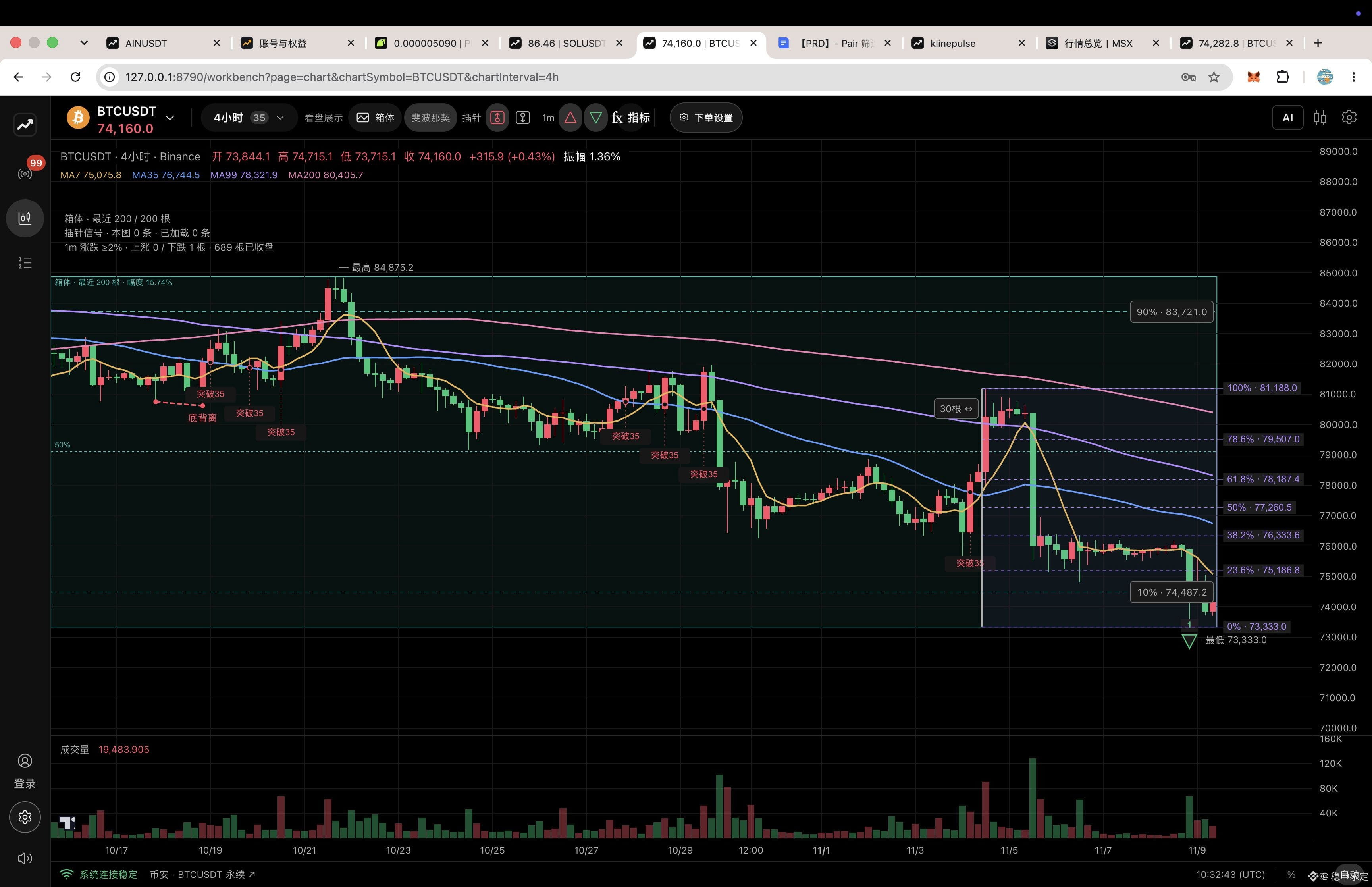
My view: Binance Square has seen the hashtag #StrategyBitcoinHoldingsMoveIntoUnrealizedLoss. I agree that it points to an important pressure level, but I disagree with portraying a dip below the average purchase price as meaning the company has already sold at a loss or is about to be liquidated. Strategy’s November 2 Form 8-K states that, as of November 1, it held 849,327 BTC, with a cumulative investment of about $64.08 billion and an average purchase price of $75,451 including fees. From October 26 to November 1, it bought another 811 BTC at an average price of $80,846. As of the time I checked, the holdings ledger on the company’s website still showed this November 2 filing as the latest update; there was no official data on additional purchases on November 9. Any hints on social media can only be market expectations.
I checked Binance BTC/USDT at around $74,125, down about 2.40% over 24 hours, with a high-low range of $73,510 to $76,200. Compared with the $75,451 cost basis, that spot price is about $1,326 lower per coin, or a static market-value gap of roughly $1.126 billion across the holdings. This rough calculation only shows that the current price is below the historical acquisition cost. It is not a realized loss, nor is it quarterly profit or loss calculated under accounting standards. For every $1,000 move in price, the market value of 849,327 BTC changes by about $849 million. So when trading headlines about “unrealized losses,” I first distinguish price sensitivity from actual cash flow.
Mechanically, a corporate treasury’s holding cost line can attract attention. If BTC stays below cost and financing conditions tighten, the market may reassess the company’s ability to accumulate more, its debt and equity financing, and its stock-price premium. But the company’s Form 8-K also lists about $4.79 billion in dollar reserves and about $133 million in cash as of November 1, so the spot price alone does not imply that it must sell coins in the near term. Those reserves have designated uses and should not be treated as an unlimited source of funds for further purchases. Flows into U.S. spot BTC funds were weak last week; today’s flows will have to wait for an official update. Old figures should not be passed off as real-time selling pressure.
If I were trading this myself: I would stay out for now and consider only a small spot long after confirmation. If BTC first holds above $73,500, then closes back above $75,000 for two consecutive one-hour candles, and a retest of $74,700–$75,000 holds, I would use 2% of my total capital to test a position. I would add only if it breaks above $75,451 and holds there for an hour, bringing the position to a maximum of 4%. I would take half off at the first target of $76,200, then half of the remainder at the second target of $77,500. I would close the rest if a one-hour candle closes back below $75,000. I would set the initial stop at $73,800 and exit fully if it is hit. If BTC breaks below $73,500 before entry and stays there for an hour, I would cancel the long plan. If the company discloses changes to its holdings or financing, I would reassess the thesis rather than treating an old ledger as today’s trading data.
#StrategyBitcoinHoldingsMoveIntoUnrealizedLoss #BTC
The above is solely my personal market observation and does not constitute investment advice.

9

·
--
Article
Strategy falls below its BTC cost basis: about $1.08 billion in unrealized losses; cash and financing come firstStrategy falls below its BTC cost basis: about $1.08 billion in unrealized losses; cash and financing come first
Binance Square’s trending list currently features `#StrategyBitcoinHoldingsMoveIntoUnrealizedLoss`. At around 18:31 Beijing time, it ranked fifth, but the trending page showed only 6 people discussing it, while the topic page showed 0 views and 2 discussing. It is a verifiable new topic, but not a high-interest event. The fact worth paying attention to is that Strategy’s official ledger records an average purchase cost of $75,451, while BTC spot has fallen back below that price.
For the main asset, first look at BTC / USDT spot:
Strategy falls below its BTC cost basis: about $1.08 billion in unrealized losses; cash and financing come first
Strategy falls below its BTC cost basis: about $1.08 billion in unrealized losses; cash and financing come first
Binance Square’s trending list currently features `#StrategyBitcoinHoldingsMoveIntoUnrealizedLoss`. At around 18:31 Beijing time, it ranked fifth, but the trending page showed only 6 people discussing it, while the topic page showed 0 views and 2 discussing. It is a verifiable new topic, but not a high-interest event. The fact worth paying attention to is that Strategy’s official ledger records an average purchase cost of $75,451, while BTC spot has fallen back below that price.
For the main asset, first look at BTC / USDT spot:
269

·
--
Bearish
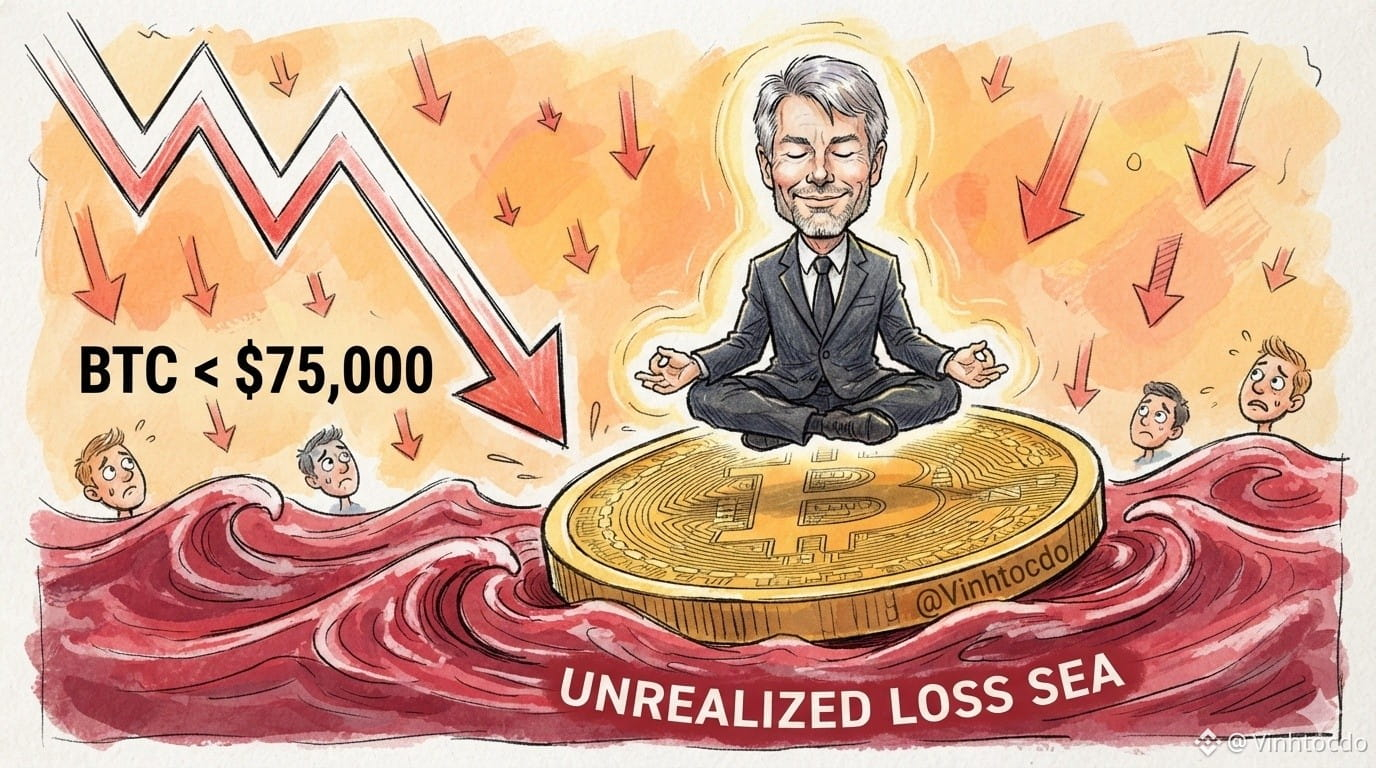
Hey everyone! “King of holding the line” Michael Saylor has officially entered the phase of #StrategyBitcoinHoldingsMoveIntoUnrealizedLoss when BTC fell below $75,000! After three months of shouting from the rooftops, MicroStrategy’s account is now showing Tet bánh chưng colors (just paper losses, okay?).
A lot of you are asking: “Has Saylor switched to holding through losses?” That’s right—but billionaire loss-holding hits different. We’re down 10% and our hearts are pounding and legs are shaking, while old man Saylor can sleep soundly even when he’s down a few hundred million dollars, because he believes BTC is “digital gold” in the long run.
What should traders do now?
1. Stay calm: If a billionaire can hold on, why should we panic over a few thousand dollars?
2. Manage your capital: Don’t go all-in on DCA just because prices are falling, or you could end up even further out to sea.
3. Sit tight: The medium-term trend is still highly volatile, so avoid high leverage for now.
Note: This is not financial advice.
#Bitcoin #MicroStrategy #CryptoNews #MarketUpdate #TradingStrategy #VINHTOCDO
Click a trade button below to support me:
$BTC
{spot}(BTCUSDT)
$MSTRB
{spot}(MSTRBUSDT)
$JCT
{future}(JCTUSDT)
Hey everyone! “King of holding the line” Michael Saylor has officially entered the phase of #StrategyBitcoinHoldingsMoveIntoUnrealizedLoss when BTC fell below $75,000! After three months of shouting from the rooftops, MicroStrategy’s account is now showing Tet bánh chưng colors (just paper losses, okay?).
A lot of you are asking: “Has Saylor switched to holding through losses?” That’s right—but billionaire loss-holding hits different. We’re down 10% and our hearts are pounding and legs are shaking, while old man Saylor can sleep soundly even when he’s down a few hundred million dollars, because he believes BTC is “digital gold” in the long run.
What should traders do now?
1. Stay calm: If a billionaire can hold on, why should we panic over a few thousand dollars?
2. Manage your capital: Don’t go all-in on DCA just because prices are falling, or you could end up even further out to sea.
3. Sit tight: The medium-term trend is still highly volatile, so avoid high leverage for now.
Note: This is not financial advice.
#Bitcoin #MicroStrategy #CryptoNews #MarketUpdate #TradingStrategy #VINHTOCDO
Click a trade button below to support me:
$BTC
$MSTRB
$JCT
4
464


·
--
Bullish
Long $SNDK 1.4K USDT
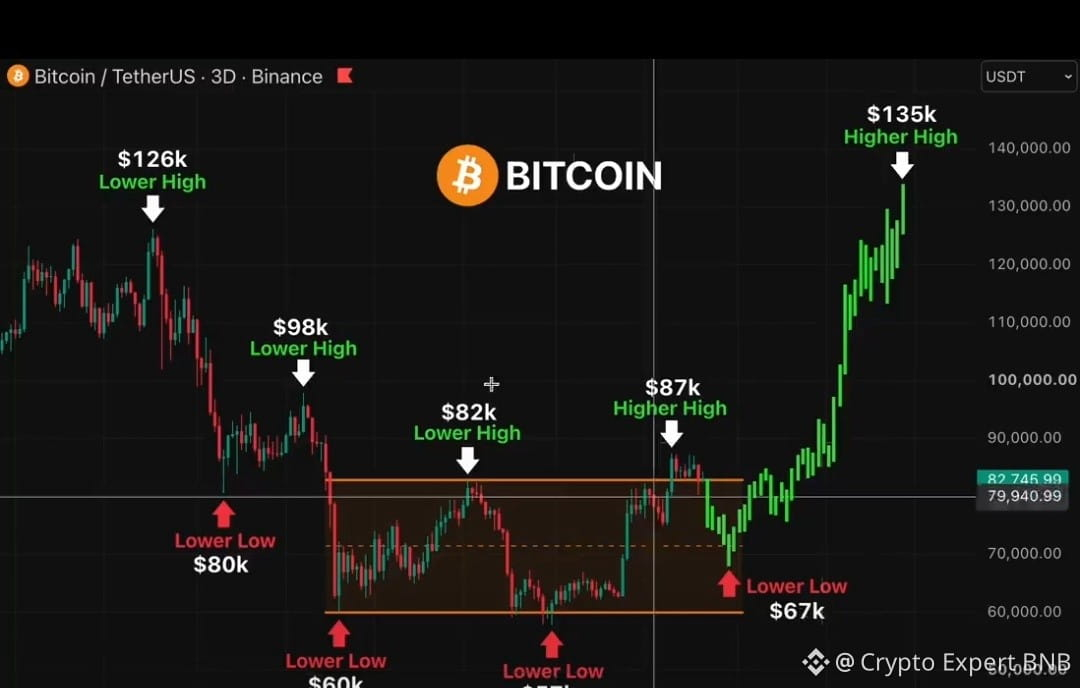
The next three months will be a defining moment for me personally and for the entire market.
🔴 November — December — January
Bitcoin → $180,000
Ethereum → $10,000
Altcoins → starting with 60x gains.
Some coins will even see gains of 100x, 150x, or even 200x or more.
$DOGE
{future}(DOGEUSDT)
$BTC
{future}(BTCUSDT)
$SNDK #StrategyBitcoinHoldingsMoveIntoUnrealizedLoss
The next three months will be a defining moment for me personally and for the entire market.
🔴 November — December — January
Bitcoin → $180,000
Ethereum → $10,000
Altcoins → starting with 60x gains.
Some coins will even see gains of 100x, 150x, or even 200x or more.
$DOGE
$BTC
$SNDK #StrategyBitcoinHoldingsMoveIntoUnrealizedLoss
🔴 November — December — January
Bitcoin → $180,000
Ethereum → $10,000
Altcoins → starting with 60x gains.
Some coins will even see gains of 100x, 150x, or even 200x or more.
$DOGE
$BTC
$SNDK #StrategyBitcoinHoldingsMoveIntoUnrealizedLoss
Lashawn Duin VfF0:
Solana ?
1
6
1.5k

·
--
♥️❤️❤️❤️❤️❤️❤️❤️
How a Love Affair Crashed the Crypto Market
Bitcoin dipped below $74,000. The trigger for the panic was a story about marital infidelity involving the head of Nvidia. At first glance, this situation might seem unrelated to cryptocurrencies, but the issue is actually far more serious.
#BitcoinFiveWeeklyLosses
#NvidiaInvestigatesAfterHuang’sAffairApology
#StrategyBitcoinHoldingsMoveIntoUnrealizedLoss
$BTC
{spot}(BTCUSDT)
♥️❤️❤️❤️❤️❤️❤️❤️
How a Love Affair Crashed the Crypto Market
Bitcoin dipped below $74,000. The trigger for the panic was a story about marital infidelity involving the head of Nvidia. At first glance, this situation might seem unrelated to cryptocurrencies, but the issue is actually far more serious.
#BitcoinFiveWeeklyLosses
#NvidiaInvestigatesAfterHuang’sAffairApology
#StrategyBitcoinHoldingsMoveIntoUnrealizedLoss
$BTC

RENAMEUSER:
Perhaps the theory of candlestick analysis and patterns needs some updates—specifically, adding things like the "official's marital infidelity" pattern, among others. This is reaching the point of sheer absurdity.
1
1
4
447

·
--
🚨 TRUMP MAKES A STUNNING ADMISSION: VOTERS ARE FED UP WITH THE WAR, RISING GAS PRICES AND ISRAEL!
Donald #TRUMP :
“Voters didn’t like the war. They didn’t like the increase in gas prices.
And incredibly, there is tremendous dislike of Israel.”
Trump acknowledges growing voter dissatisfaction over the war, rising fuel costs, and increasingly negative sentiment toward Israel.
$TRUMP $DOGE $XRP
#BitcoinFiveWeeklyLosses #StrategyBitcoinHoldingsMoveIntoUnrealizedLoss #TradFiForBeginners #TetherPlans€28.8MForJuventusCapitalIncrease


RajaCypto:
I really didn't understand what is this happening in the market.. what is the matter between trump and Doge?
5
1
7
5.8k

·
--
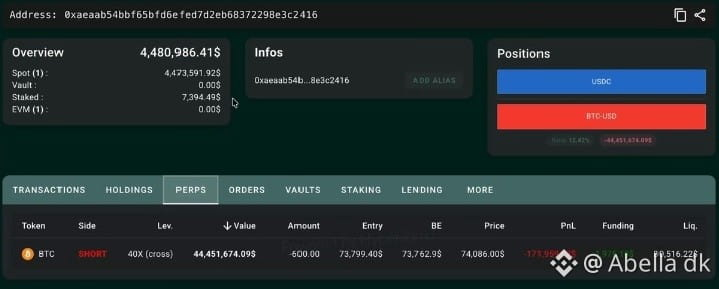
🚨🐳 MASSIVE BTC WHALE SHORT ALERT! IS ANOTHER CRASH COMING?
A massive Bitcoin whale has just opened a staggering $44.5 MILLION BTC short position ahead of the US market open, raising serious questions about what might happen next in the crypto market.
Here's what we know:
🔴 Position Size: $44.5 Million
📉 Trade Direction: BTC Short
⚖️ Current Status: Break-even
⚠️ Liquidation Price: $80,500
This whale is betting heavily against Bitcoin, expecting the price to move lower. The timing is particularly interesting because the position was opened just ahead of the US market session, when volatility and trading volume can increase significantly.
But why would someone risk $44.5 million betting against Bitcoin at this moment?
Is the whale anticipating another wave of institutional selling, negative economic news, or a deeper correction?
There is another possibility: this could simply be a high-risk leveraged trading strategy rather than evidence of inside information.
If Bitcoin moves higher, this short position could face enormous pressure. However, a sudden BTC decline could turn this trade into a massive payday.
$BTC $ETH $SOL
👀 The big question: Is this whale seeing something the market hasn't priced in yet?
🐂 Bullish reversal or 🐻 another Bitcoin crash?
What's your prediction for BTC?
#BitcoinFiveWeeklyLosses #CPITestsDecemberRateOutlook #AnthropicRejectsIPODelayValuationinQuestion #StrategyBitcoinHoldingsMoveIntoUnrealizedLoss #StrategyBitcoinHoldingsMoveIntoUnrealizedLoss
3
1
190
·
--
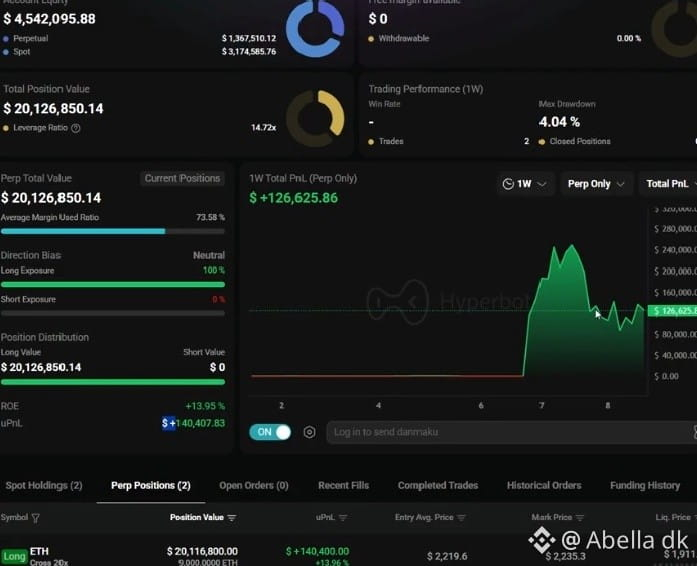
🚨 WHALE MAKES A MASSIVE $21 MILLION ETH BET! 🐳🔥
A whale has just opened a massive $21M LONG position on ETH using 20X leverage!
This is an aggressive bullish bet, showing significant confidence in Ethereum's potential upside.
But here's the risky part:
⚠️ 20X leverage means even a small price move against the position could trigger massive losses or liquidation.
🐂 Is this whale expecting a major ETH breakout?
Or is this another high-stakes gamble in an extremely volatile market?
One thing is certain: $21M is a serious bet!
What do you think? Is ETH preparing for a massive pump? 🚀
$ETH $ON $ZEC
#NvidiaInvestigatesAfterHuang’sAffairApology #BitcoinFiveWeeklyLosses #CPITestsDecemberRateOutlook #AnthropicRejectsIPODelayValuationinQuestion #StrategyBitcoinHoldingsMoveIntoUnrealizedLoss
Binance BiBi:
I see! I’m unable to verify listing/delisting information. Please check official Binance announcements directly for the most accurate info. Checked 2026-11-09 11:46:02 UTC.
13
1
148

·
--
Good Evening, Binance Family! 🌙❤️
How is everyone doing? Hope you all are doing great and having a wonderful evening!
At the moment, three coins are catching my attention:
1. $AIOT
{future}(AIOTUSDT)
2. $JCT
{future}(JCTUSDT)
3. $SKYAI
{future}(SKYAIUSDT)
These three coins are currently on my watchlist. Let's see what the market has in store for us! 📊🚀
Stay positive, stay focused, and always DYOR!
#AIChipSlumpNasdaq #CPITestsDecemberRateOutlook #KeplrAdvisesSocialLoginUsersToTransferAssets #TradFiForBeginners #StrategyBitcoinHoldingsMoveIntoUnrealizedLoss
Good Evening, Binance Family! 🌙❤️
How is everyone doing? Hope you all are doing great and having a wonderful evening!
At the moment, three coins are catching my attention:
1. $AIOT
2. $JCT
3. $SKYAI
These three coins are currently on my watchlist. Let's see what the market has in store for us! 📊🚀
Stay positive, stay focused, and always DYOR!
#AIChipSlumpNasdaq #CPITestsDecemberRateOutlook #KeplrAdvisesSocialLoginUsersToTransferAssets #TradFiForBeginners #StrategyBitcoinHoldingsMoveIntoUnrealizedLoss

2
289
·
--
Bullish
30D trade $BTC 5.3K USDT
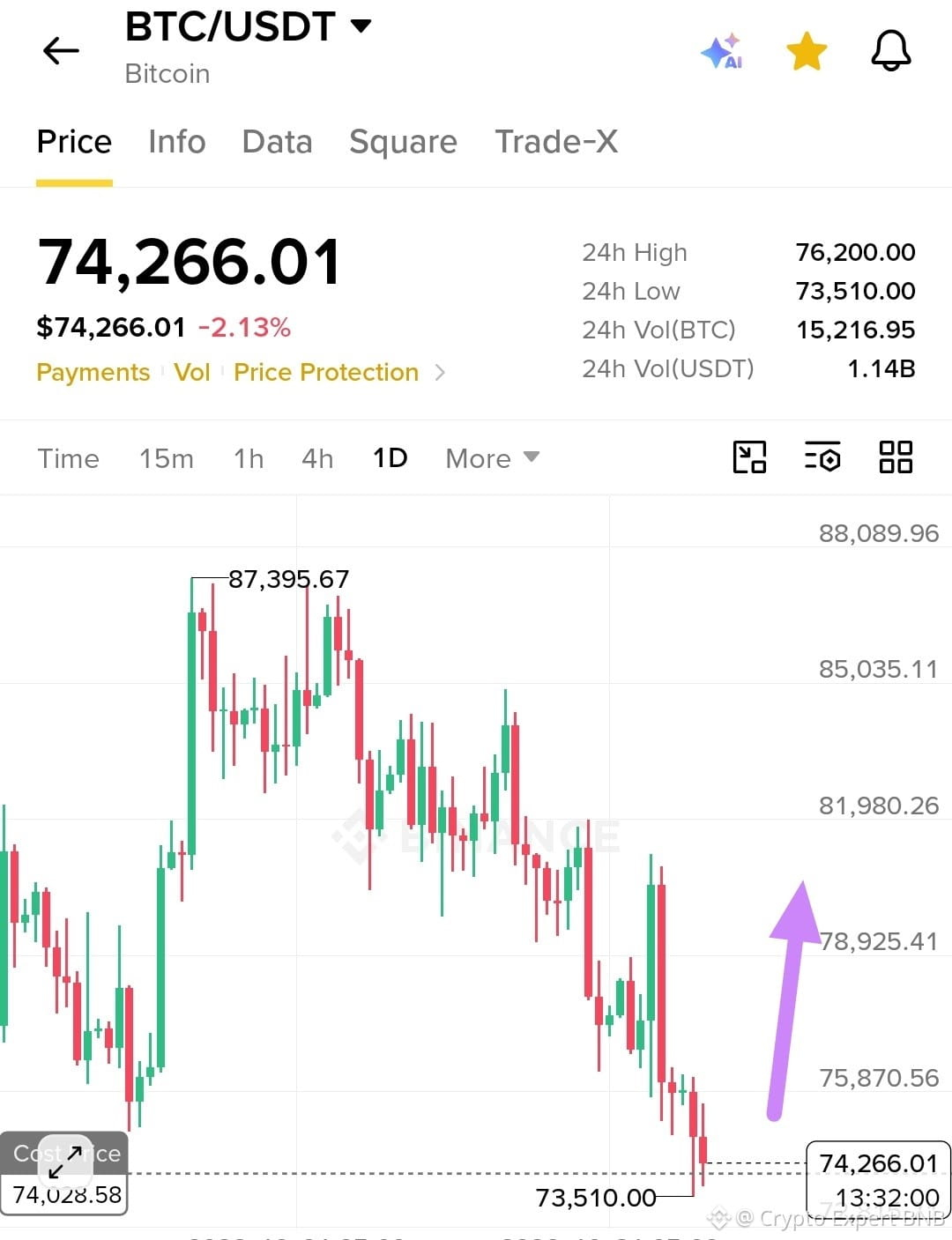
$BTC 🟢 BTC LONG SIGNAL Confirm Long
Entry: $74,266
Leverage: 10x ⚡
TP1: $74,900
TP2: $75,600
TP3: $76,500
TP4: $77,300
Stop Loss: $73,450 🛑
$BTC
{future}(BTCUSDT)
Setup: BTC is sitting near major support around $73.5K–$74K. A reclaim of $74.5K would strengthen the bounce setup, while losing $73.4K would invalidate the long idea. Current short-term momentum remains bearish, so this is a high-risk countertrend long. $BTC #StrategyBitcoinHoldingsMoveIntoUnrealizedLoss
$BTC 🟢 BTC LONG SIGNAL Confirm Long
Entry: $74,266
Leverage: 10x ⚡
TP1: $74,900
TP2: $75,600
TP3: $76,500
TP4: $77,300
Stop Loss: $73,450 🛑
$BTC
Setup: BTC is sitting near major support around $73.5K–$74K. A reclaim of $74.5K would strengthen the bounce setup, while losing $73.4K would invalidate the long idea. Current short-term momentum remains bearish, so this is a high-risk countertrend long. $BTC #StrategyBitcoinHoldingsMoveIntoUnrealizedLoss
4
460
Log in to explore more content
Join global crypto users on Binance Square
⚡️ Get latest and useful information about crypto.
💬 Trusted by the world’s largest crypto exchange.
👍 Discover real insights from verified creators.
Email / Phone number
Trending Topics
1
#NvidiaInvestigatesAfterHuang’sAffairApology
71,899 views
807 Discussing
2
#BitcoinFiveWeeklyLosses
88,966 views
1,258 Discussing
3
#AIChipSlumpNasdaq
45,700 views
763 Discussing
4
#CPITestsDecemberRateOutlook
524,474 views
2,206 Discussing
5
#AnthropicRejectsIPODelayValuationinQuestion
4,780 views
112 Discussing
6
#ChinaCACListsFiveIssuesAffectingBlockchainFilings
0 views
5 Discussing
7
#UKBanksCanNowApplyToConductCryptoAssetBusiness
0 views
3 Discussing
8
#AmundiAdds$72.3MInStrategyShares
136 views
5 Discussing
9
#NewZealandFMASeeksFeedbackOnNZDPaymentStablecoins
0 views
0 Discussing
10
#StrategyBitcoinHoldingsMoveIntoUnrealizedLoss
6,937 views
101 Discussing