
Re Protocol
107 Beiträge

Re Protocol
 Square Verified
Melden
Nutzer blockieren
Onchain capital for real-world risk. Stewarded by the Resilience Foundation. Website: re.xyz
4 Following
48 Follower
153 Like gegeben
Beiträge
Alle
Videos
PINNED
·
--

Artikel
August-Performance-Update: Kapitalwachstum und Cross-Chain-ExpansionAugust war erneut ein Monat mit starkem Wachstum für Re. Re hat eine viertel-Milliarde $ bei den Gesamteinlagen überschritten. Die Einlagen stiegen um nahezu 36 % – der größte monatliche Anstieg des Protokolls seit März und der zweitgrößte seit Aufzeichnung. Außerdem brachte der August eine fortgesetzte Expansion über mehrere Chains hinweg. reUSD ging über Chainlink CCIP auf Solana live und ergänzte neue Lending- und Collateral-Integrationen über Jupiter Lend, Kamino und Feather.
648,5 Mio. $ Total Value Locked
+11,7 % TVL-Wachstum
256,4 Mio. $ Gesamteinlagen
+35,8 % Einlagenwachstum
Kapitalposition
August-Performance-Update: Kapitalwachstum und Cross-Chain-Expansion
August war erneut ein Monat mit starkem Wachstum für Re. Re hat eine viertel-Milliarde $ bei den Gesamteinlagen überschritten. Die Einlagen stiegen um nahezu 36 % – der größte monatliche Anstieg des Protokolls seit März und der zweitgrößte seit Aufzeichnung. Außerdem brachte der August eine fortgesetzte Expansion über mehrere Chains hinweg. reUSD ging über Chainlink CCIP auf Solana live und ergänzte neue Lending- und Collateral-Integrationen über Jupiter Lend, Kamino und Feather.
648,5 Mio. $ Total Value Locked
+11,7 % TVL-Wachstum
256,4 Mio. $ Gesamteinlagen
+35,8 % Einlagenwachstum
Kapitalposition
648,5 Mio. $ Total Value Locked
+11,7 % TVL-Wachstum
256,4 Mio. $ Gesamteinlagen
+35,8 % Einlagenwachstum
Kapitalposition
2
308
·
--
Übersetzung ansehen
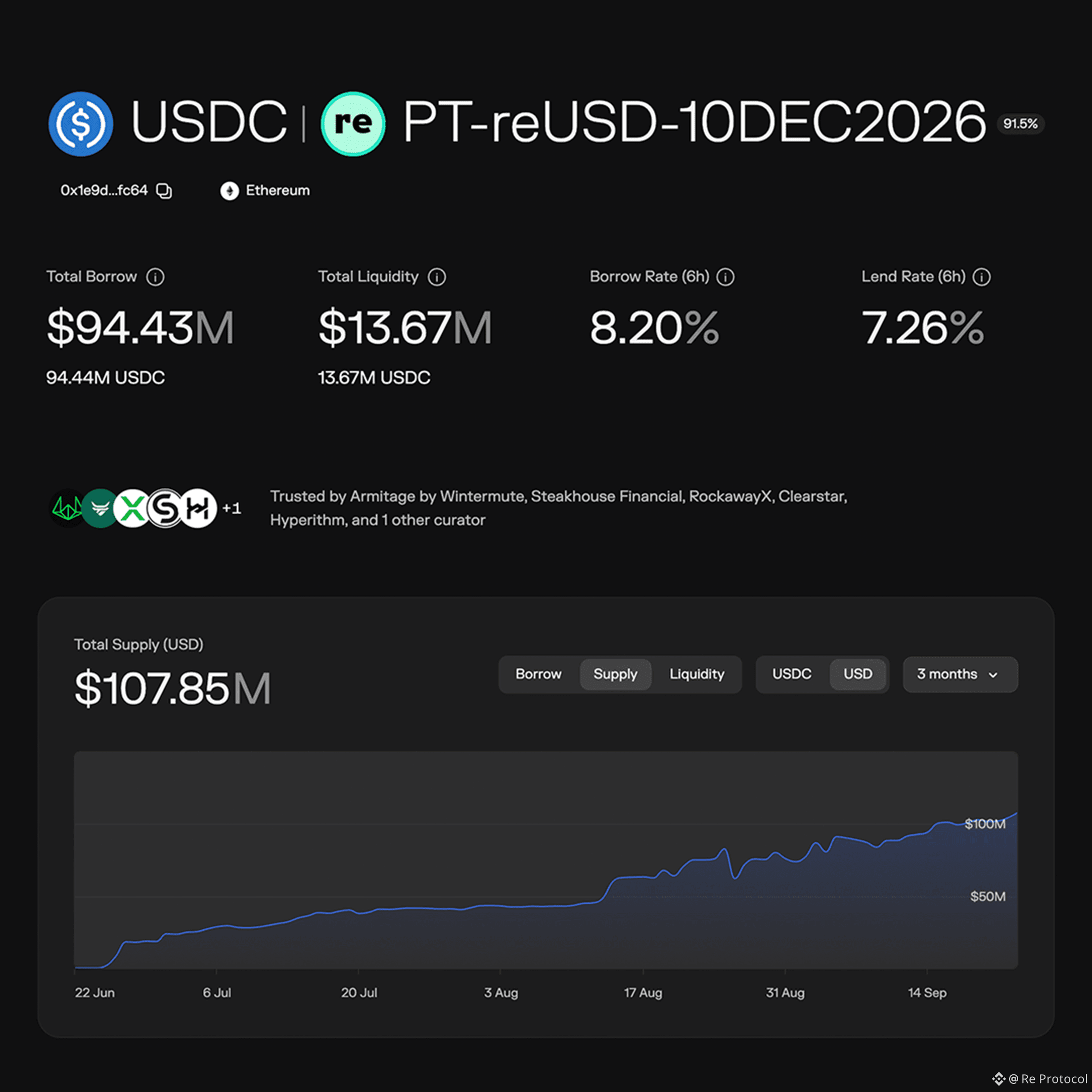
The USDC / PT-reUSD market on Morpho crossed $100M+ in supply.
If you're sitting on idle USDC, lend it against PT-reUSD for 7.26% APY.
Real-world yield composable at scale.
Lend here:
https://app.morpho.org/ethereum/variable/0x1e9d614631a7df0ec07fb05b2c8cb2491575fd1a63a33bf187a6afb295a4fc64/usdc-pt-reusd-10dec2026
#reinsurance #RWA #DeFi #TradFi
The USDC / PT-reUSD market on Morpho crossed $100M+ in supply.
If you're sitting on idle USDC, lend it against PT-reUSD for 7.26% APY.
Real-world yield composable at scale.
Lend here:
https://app.morpho.org/ethereum/variable/0x1e9d614631a7df0ec07fb05b2c8cb2491575fd1a63a33bf187a6afb295a4fc64/usdc-pt-reusd-10dec2026
#reinsurance #RWA #DeFi #TradFi
If you're sitting on idle USDC, lend it against PT-reUSD for 7.26% APY.
Real-world yield composable at scale.
Lend here:
https://app.morpho.org/ethereum/variable/0x1e9d614631a7df0ec07fb05b2c8cb2491575fd1a63a33bf187a6afb295a4fc64/usdc-pt-reusd-10dec2026
#reinsurance #RWA #DeFi #TradFi
1
2
65
·
--

Artikel
Der nächste Re-Meilenstein: 10 Mio. US-Dollar an Ertrag2026 ist ein Jahr voller Meilensteine für Re. Der Start von $RE [1], dem Governance-Token des Protokolls. Eine Viertelmilliarde an Einlagen. Eine halbe Milliarde an gebundenem Prämien [2]. Expansion über Chains hinweg [3].
Jetzt kommt noch ein weiteres: 10 Mio. US-Dollar an insgesamt erwirtschafteten Erträgen für Inhaber von reUSD und reUSDe. Aber woher stammt dieser Ertrag? Und wie fließt er zurück zu den Inhabern? Lassen Sie uns das erkunden.
Alles über Ertrag
reUSD [2] und reUSDe [3] sind Re (https://re.xyz)'s ertragserzeugende Tokens. Nutzer hinterlegen entweder Stablecoins, um sie zu prägen, oder erwerben sie über Sekundärmärkte. Jeder Token hat sein eigenes Ertragsprofil: eine Basisrate plus eine Spanne, die vom Protokoll hinzugefügt wird.
Der nächste Re-Meilenstein: 10 Mio. US-Dollar an Ertrag
2026 ist ein Jahr voller Meilensteine für Re. Der Start von $RE [1], dem Governance-Token des Protokolls. Eine Viertelmilliarde an Einlagen. Eine halbe Milliarde an gebundenem Prämien [2]. Expansion über Chains hinweg [3].
Jetzt kommt noch ein weiteres: 10 Mio. US-Dollar an insgesamt erwirtschafteten Erträgen für Inhaber von reUSD und reUSDe. Aber woher stammt dieser Ertrag? Und wie fließt er zurück zu den Inhabern? Lassen Sie uns das erkunden.
Alles über Ertrag
reUSD [2] und reUSDe [3] sind Re (https://re.xyz)'s ertragserzeugende Tokens. Nutzer hinterlegen entweder Stablecoins, um sie zu prägen, oder erwerben sie über Sekundärmärkte. Jeder Token hat sein eigenes Ertragsprofil: eine Basisrate plus eine Spanne, die vom Protokoll hinzugefügt wird.
Jetzt kommt noch ein weiteres: 10 Mio. US-Dollar an insgesamt erwirtschafteten Erträgen für Inhaber von reUSD und reUSDe. Aber woher stammt dieser Ertrag? Und wie fließt er zurück zu den Inhabern? Lassen Sie uns das erkunden.
Alles über Ertrag
reUSD [2] und reUSDe [3] sind Re (https://re.xyz)'s ertragserzeugende Tokens. Nutzer hinterlegen entweder Stablecoins, um sie zu prägen, oder erwerben sie über Sekundärmärkte. Jeder Token hat sein eigenes Ertragsprofil: eine Basisrate plus eine Spanne, die vom Protokoll hinzugefügt wird.
3
2
399
·
--
Neues Etappenziel: Re hat mit insgesamt über 300 Mio. USD Einlagen die Marke von 300 Mio. USD überschritten.
Stand: 21. September 2026.
#reinsurance #RWA #Stablecoins
Neues Etappenziel: Re hat mit insgesamt über 300 Mio. USD Einlagen die Marke von 300 Mio. USD überschritten.
Stand: 21. September 2026.
#reinsurance #RWA #Stablecoins
Stand: 21. September 2026.
#reinsurance #RWA #Stablecoins
1
3
459
·
--
$10,000,000 insgesamt an Auszahlungen an Inhaber von reUSD und reUSDe.
Ausbezahlt aus Prämien für regulierte Versicherungsprogramme.
Stablecoin-Kapital wird in der Realwirtschaft produktiv eingesetzt.
#reinsurance #RWA #yield
$10,000,000 insgesamt an Auszahlungen an Inhaber von reUSD und reUSDe.
Ausbezahlt aus Prämien für regulierte Versicherungsprogramme.
Stablecoin-Kapital wird in der Realwirtschaft produktiv eingesetzt.
#reinsurance #RWA #yield
Ausbezahlt aus Prämien für regulierte Versicherungsprogramme.
Stablecoin-Kapital wird in der Realwirtschaft produktiv eingesetzt.
#reinsurance #RWA #yield
1
2
120
·
--
Der reUSD-Markt ist live auf Exponent.
• PT-reUSD (Dez-2026) · Fixer Zinssatz bis zur Fälligkeit
• YT-reUSD (Dez-2026) · 30x Re Points
• reUSD LP (Dez-2026) · 30x Re Points
Besuche die Märkte:
PT-reUSD:
app.exponent.finance/market/income/reUSD-10DEC26
YT-reUSD:
app.exponent.finance/market/farm/reUSD-10DEC26
reUSD LP:
app.exponent.finance/liquidity/pool/reUSD-10DEC26
#reinsurance #RWA #SolanaDeFi #Solana
Der reUSD-Markt ist live auf Exponent.
• PT-reUSD (Dez-2026) · Fixer Zinssatz bis zur Fälligkeit
• YT-reUSD (Dez-2026) · 30x Re Points
• reUSD LP (Dez-2026) · 30x Re Points
Besuche die Märkte:
PT-reUSD:
app.exponent.finance/market/income/reUSD-10DEC26
YT-reUSD:
app.exponent.finance/market/farm/reUSD-10DEC26
reUSD LP:
app.exponent.finance/liquidity/pool/reUSD-10DEC26
#reinsurance #RWA #SolanaDeFi #Solana
• PT-reUSD (Dez-2026) · Fixer Zinssatz bis zur Fälligkeit
• YT-reUSD (Dez-2026) · 30x Re Points
• reUSD LP (Dez-2026) · 30x Re Points
Besuche die Märkte:
PT-reUSD:
app.exponent.finance/market/income/reUSD-10DEC26
YT-reUSD:
app.exponent.finance/market/farm/reUSD-10DEC26
reUSD LP:
app.exponent.finance/liquidity/pool/reUSD-10DEC26
#reinsurance #RWA #SolanaDeFi #Solana
1
2
70
·
--
Verifiziert

Artikel
Wie Rückversicherung Rückversicherung öffnet: Zugang und Transparenz für einen geschlossenen MarktWenn Sie eine Versicherung kaufen, ist das etwas, das Sie sehen können: Sie erwerben eine Police, und wenn etwas schiefgeht, das von dieser Police abgedeckt ist, reichen Sie einen Anspruch ein. Hinter dieser Police steht jedoch noch eine weitere Ebene, die Sie nie sehen werden: die Rückversicherung.
Rückversicherung ist in vielerlei Hinsicht eine versteckte Schicht. Traditionelle Rückversicherung ist seit langem das Revier einer vergleichsweise kleinen Zahl von Branchenriesen und sie ist eine Blackbox. Der Markt funktioniert seit jeher hinter verschlossenen Türen: Preisgestaltung, Deals und Leistungsdaten sind typischerweise privat und für Außenstehende nicht zugänglich. Rahmenverträge werden privat zwischen Versicherern und Rückversicherern ausgehandelt; die Konditionen werden an die beteiligten Vertragsparteien und an die Regulierungsbehörden offengelegt, und so gut wie niemand sonst erhält Zugang zu ihnen.
Wie Rückversicherung Rückversicherung öffnet: Zugang und Transparenz für einen geschlossenen Markt
Wenn Sie eine Versicherung kaufen, ist das etwas, das Sie sehen können: Sie erwerben eine Police, und wenn etwas schiefgeht, das von dieser Police abgedeckt ist, reichen Sie einen Anspruch ein. Hinter dieser Police steht jedoch noch eine weitere Ebene, die Sie nie sehen werden: die Rückversicherung.
Rückversicherung ist in vielerlei Hinsicht eine versteckte Schicht. Traditionelle Rückversicherung ist seit langem das Revier einer vergleichsweise kleinen Zahl von Branchenriesen und sie ist eine Blackbox. Der Markt funktioniert seit jeher hinter verschlossenen Türen: Preisgestaltung, Deals und Leistungsdaten sind typischerweise privat und für Außenstehende nicht zugänglich. Rahmenverträge werden privat zwischen Versicherern und Rückversicherern ausgehandelt; die Konditionen werden an die beteiligten Vertragsparteien und an die Regulierungsbehörden offengelegt, und so gut wie niemand sonst erhält Zugang zu ihnen.
Rückversicherung ist in vielerlei Hinsicht eine versteckte Schicht. Traditionelle Rückversicherung ist seit langem das Revier einer vergleichsweise kleinen Zahl von Branchenriesen und sie ist eine Blackbox. Der Markt funktioniert seit jeher hinter verschlossenen Türen: Preisgestaltung, Deals und Leistungsdaten sind typischerweise privat und für Außenstehende nicht zugänglich. Rahmenverträge werden privat zwischen Versicherern und Rückversicherern ausgehandelt; die Konditionen werden an die beteiligten Vertragsparteien und an die Regulierungsbehörden offengelegt, und so gut wie niemand sonst erhält Zugang zu ihnen.
1
2
329
·
--
Drei neue Deals abgeschlossen. Wir haben die folgenden Verträge übernommen:
→ Specialty Auto: Geschäftsfahrzeuge auf der Straße
→ Professional Lines für Startups: Ansprüche gegen ein Unternehmen
→ Large Excess Casualty: Deckung, die zahlt, nachdem die primäre Versicherung eines Unternehmens aufgebraucht ist
Jeder Vertrag ist eine Gesellschaft, die dafür zahlt, ein Risiko zu übertragen, das sie nicht allein halten kann. Diese Prämie bindet ITD an 510,6 Mio. USD.
#reinsurance #RWA #DeFi #TradFi
Drei neue Deals abgeschlossen. Wir haben die folgenden Verträge übernommen:
→ Specialty Auto: Geschäftsfahrzeuge auf der Straße
→ Professional Lines für Startups: Ansprüche gegen ein Unternehmen
→ Large Excess Casualty: Deckung, die zahlt, nachdem die primäre Versicherung eines Unternehmens aufgebraucht ist
Jeder Vertrag ist eine Gesellschaft, die dafür zahlt, ein Risiko zu übertragen, das sie nicht allein halten kann. Diese Prämie bindet ITD an 510,6 Mio. USD.
#reinsurance #RWA #DeFi #TradFi
→ Specialty Auto: Geschäftsfahrzeuge auf der Straße
→ Professional Lines für Startups: Ansprüche gegen ein Unternehmen
→ Large Excess Casualty: Deckung, die zahlt, nachdem die primäre Versicherung eines Unternehmens aufgebraucht ist
Jeder Vertrag ist eine Gesellschaft, die dafür zahlt, ein Risiko zu übertragen, das sie nicht allein halten kann. Diese Prämie bindet ITD an 510,6 Mio. USD.
#reinsurance #RWA #DeFi #TradFi

1
2
310
·
--
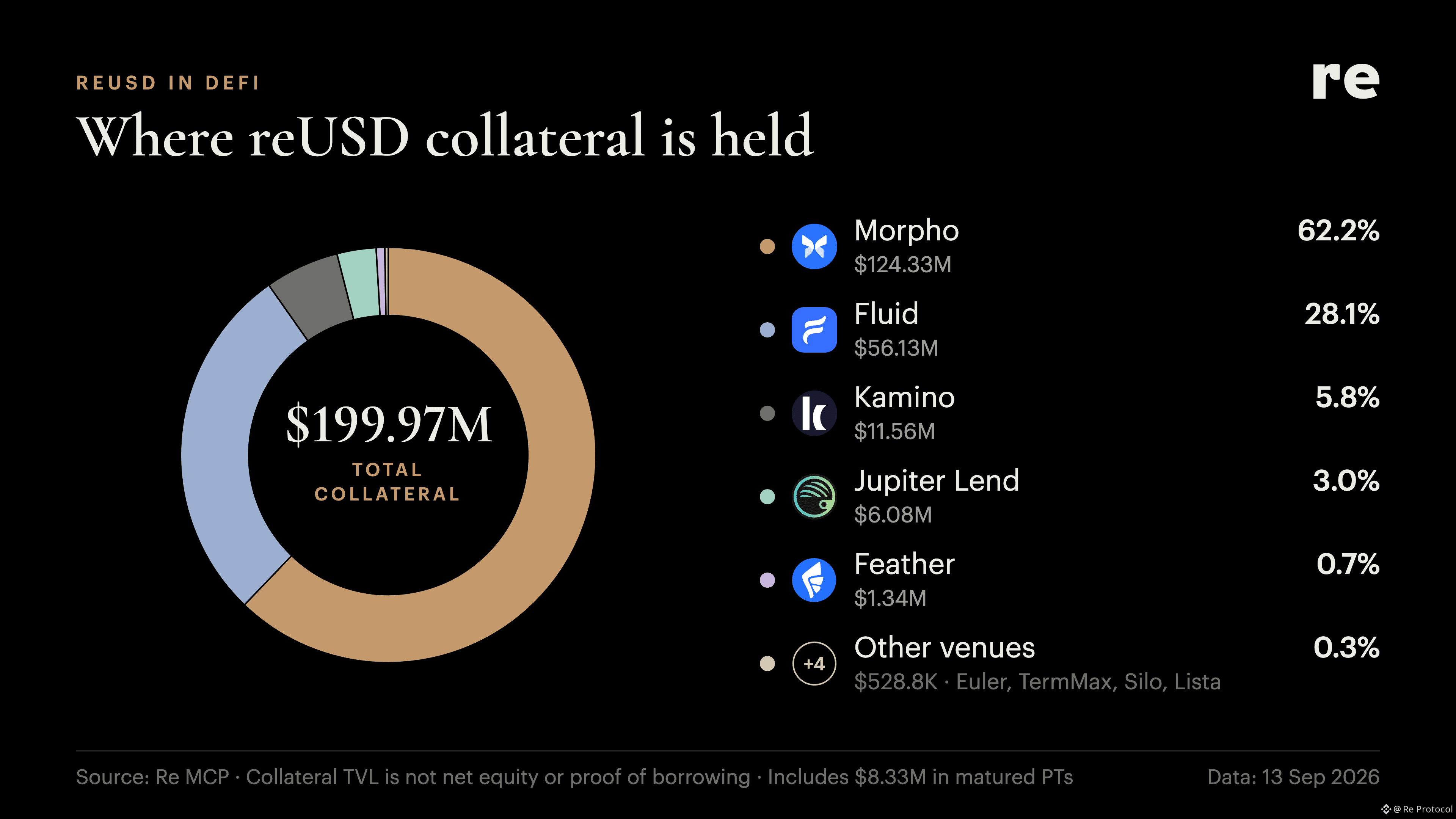
Die meisten reUSD liegt nicht untätig.
199,97 Mio. USD arbeiten über neun Kreditplattformen hinweg. DeFi-Kompositionalität, gemessen am Sicherheitenbestand.
#reinsurance #RWA #lending
Die meisten reUSD liegt nicht untätig.
199,97 Mio. USD arbeiten über neun Kreditplattformen hinweg. DeFi-Kompositionalität, gemessen am Sicherheitenbestand.
#reinsurance #RWA #lending
199,97 Mio. USD arbeiten über neun Kreditplattformen hinweg. DeFi-Kompositionalität, gemessen am Sicherheitenbestand.
#reinsurance #RWA #lending
1
2
180
·
--

Artikel
Über die Broker-Beziehungen von Cover Re: Woher der Deal-Flow kommtCover Re ist der lizenzierte Rückversicherer im Re-Ökosystem. Ein Teil des Kapitals, das bei Re hinterlegt wird, wird offchain als Sicherheit für Rückversicherungsverträge eingesetzt, die von Cover Re gezeichnet werden – und trägt so dazu bei, Rendite für Einleger von reUSD und reUSDe zu erwirtschaften. Aber wer bringt Cover Re mit den Versicherern auf der anderen Seite zusammen?
Rückversicherung ist ein beziehungsgetriebener Markt, in dem hunderte Milliarden US-Dollar an Risiko über private Transaktionen übertragen werden – statt über eine öffentliche Börse. Makler stehen dabei im Zentrum: Sie fungieren als zentrale Anlaufstelle, über die Versicherer Vertragsgeschäft an Rückversicherer heranbringen. So helfen sie dabei, geeignete Märkte zu identifizieren, Konditionen auszuhandeln und Transaktionen auch nach der Bindung zu verwalten.
Über die Broker-Beziehungen von Cover Re: Woher der Deal-Flow kommt
Cover Re ist der lizenzierte Rückversicherer im Re-Ökosystem. Ein Teil des Kapitals, das bei Re hinterlegt wird, wird offchain als Sicherheit für Rückversicherungsverträge eingesetzt, die von Cover Re gezeichnet werden – und trägt so dazu bei, Rendite für Einleger von reUSD und reUSDe zu erwirtschaften. Aber wer bringt Cover Re mit den Versicherern auf der anderen Seite zusammen?
Rückversicherung ist ein beziehungsgetriebener Markt, in dem hunderte Milliarden US-Dollar an Risiko über private Transaktionen übertragen werden – statt über eine öffentliche Börse. Makler stehen dabei im Zentrum: Sie fungieren als zentrale Anlaufstelle, über die Versicherer Vertragsgeschäft an Rückversicherer heranbringen. So helfen sie dabei, geeignete Märkte zu identifizieren, Konditionen auszuhandeln und Transaktionen auch nach der Bindung zu verwalten.
Rückversicherung ist ein beziehungsgetriebener Markt, in dem hunderte Milliarden US-Dollar an Risiko über private Transaktionen übertragen werden – statt über eine öffentliche Börse. Makler stehen dabei im Zentrum: Sie fungieren als zentrale Anlaufstelle, über die Versicherer Vertragsgeschäft an Rückversicherer heranbringen. So helfen sie dabei, geeignete Märkte zu identifizieren, Konditionen auszuhandeln und Transaktionen auch nach der Bindung zu verwalten.
2
336
·
--
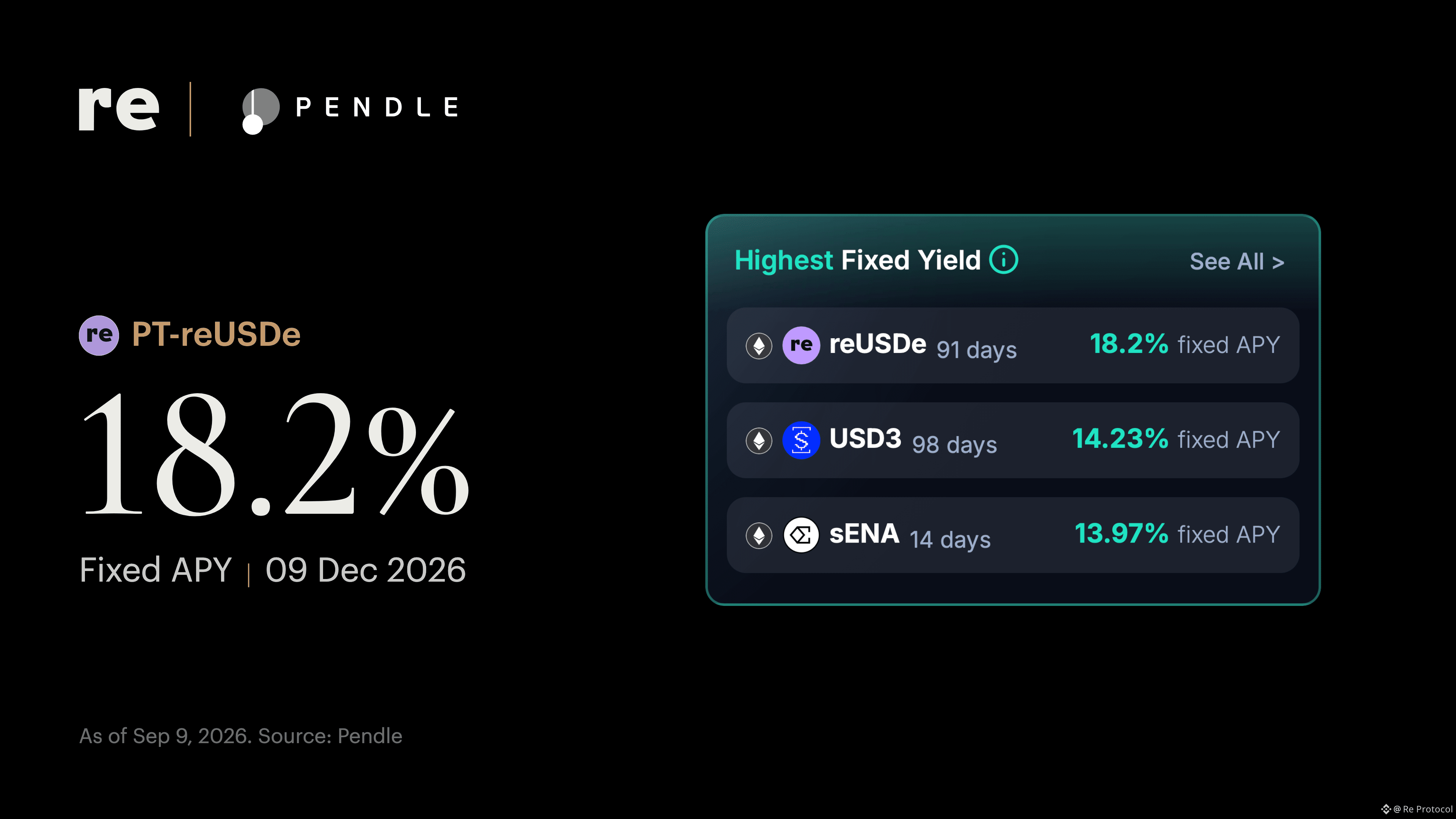
Wir haben ReChat zur Re-App hinzugefügt.
Frag nach der reUSD-Versorgung, dem TVL, der Preisentwicklung oder allem aus den Dokumenten.
Öffne app.re.xyz → tippe auf die Sprechblase in der unteren rechten Ecke.
#reinsurance #RWA #defi
Wir haben ReChat zur Re-App hinzugefügt.
Frag nach der reUSD-Versorgung, dem TVL, der Preisentwicklung oder allem aus den Dokumenten.
Öffne app.re.xyz → tippe auf die Sprechblase in der unteren rechten Ecke.
#reinsurance #RWA #defi
Frag nach der reUSD-Versorgung, dem TVL, der Preisentwicklung oder allem aus den Dokumenten.
Öffne app.re.xyz → tippe auf die Sprechblase in der unteren rechten Ecke.
#reinsurance #RWA #defi
2
101
·
--
Fünf Jahre, eine Richtung.
Die gebundene Prämie bezieht sich auf unterzeichnete Rückversicherungsverträge (Kontrakte). Die Beträge sind für die gesamte Vertragslaufzeit fest zugesagt.
#reinsurance #RWA #DeFi
Fünf Jahre, eine Richtung.
Die gebundene Prämie bezieht sich auf unterzeichnete Rückversicherungsverträge (Kontrakte). Die Beträge sind für die gesamte Vertragslaufzeit fest zugesagt.
#reinsurance #RWA #DeFi
Die gebundene Prämie bezieht sich auf unterzeichnete Rückversicherungsverträge (Kontrakte). Die Beträge sind für die gesamte Vertragslaufzeit fest zugesagt.
#reinsurance #RWA #DeFi
2
108
·
--

Artikel
So bewegt sich Ihr Geld innerhalb von ReDer Einstieg in Re Protocol ist einfach: Stablecoins einzahlen, reUSD [1] oder reUSDe [2] prägen.
Aber wie genau läuft das mit Ihrem Geld? Was macht es, solange es sich innerhalb des Protokolls befindet? Wie verdient es? Und wie findet es seinen Weg zurück zum Einzahler? Lassen Sie uns das erkunden.
Wohin Ihre Einzahlung geht.
Die von Ihnen eingezahlten Stablecoins werden verwendet, um den Token Ihrer Wahl zu prägen. USDC, DAI, USDe oder sUSDe können als Zahlungsmittel für die Einzahlung verwendet werden, um reUSD zu prägen; USDe und sUSDe werden als akzeptiertes Zahlungsmittel für reUSDe akzeptiert.
Egal ob Sie reUSD oder reUSDe prägen (oder beides): Ihre Tokens existieren nicht zwangsläufig an derselben Stelle. Von Anfang an werden sie auf zwei Ziele aufgeteilt: onchain und offchain.
So bewegt sich Ihr Geld innerhalb von Re
Der Einstieg in Re Protocol ist einfach: Stablecoins einzahlen, reUSD [1] oder reUSDe [2] prägen.
Aber wie genau läuft das mit Ihrem Geld? Was macht es, solange es sich innerhalb des Protokolls befindet? Wie verdient es? Und wie findet es seinen Weg zurück zum Einzahler? Lassen Sie uns das erkunden.
Wohin Ihre Einzahlung geht.
Die von Ihnen eingezahlten Stablecoins werden verwendet, um den Token Ihrer Wahl zu prägen. USDC, DAI, USDe oder sUSDe können als Zahlungsmittel für die Einzahlung verwendet werden, um reUSD zu prägen; USDe und sUSDe werden als akzeptiertes Zahlungsmittel für reUSDe akzeptiert.
Egal ob Sie reUSD oder reUSDe prägen (oder beides): Ihre Tokens existieren nicht zwangsläufig an derselben Stelle. Von Anfang an werden sie auf zwei Ziele aufgeteilt: onchain und offchain.
Aber wie genau läuft das mit Ihrem Geld? Was macht es, solange es sich innerhalb des Protokolls befindet? Wie verdient es? Und wie findet es seinen Weg zurück zum Einzahler? Lassen Sie uns das erkunden.
Wohin Ihre Einzahlung geht.
Die von Ihnen eingezahlten Stablecoins werden verwendet, um den Token Ihrer Wahl zu prägen. USDC, DAI, USDe oder sUSDe können als Zahlungsmittel für die Einzahlung verwendet werden, um reUSD zu prägen; USDe und sUSDe werden als akzeptiertes Zahlungsmittel für reUSDe akzeptiert.
Egal ob Sie reUSD oder reUSDe prägen (oder beides): Ihre Tokens existieren nicht zwangsläufig an derselben Stelle. Von Anfang an werden sie auf zwei Ziele aufgeteilt: onchain und offchain.
2
123
·
--
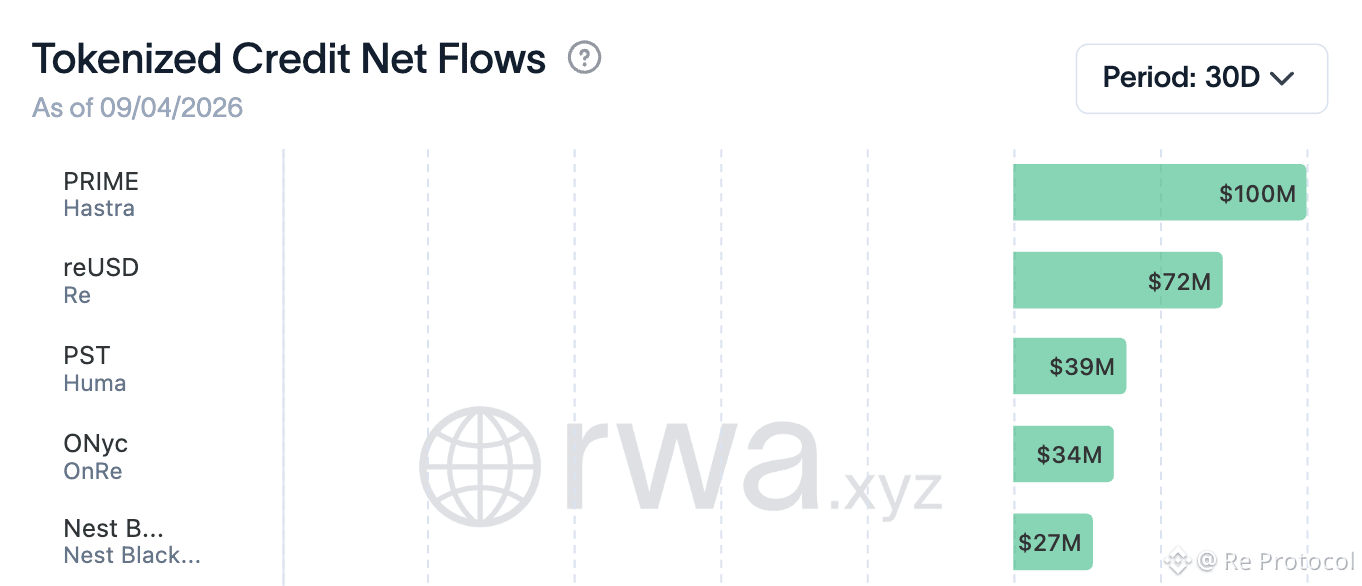
$72M Nettozuflüsse in reUSD über die letzten 30 Tage laut RWA.xyz.
Kapital entscheidet sich für besicherte Rückversicherungs-Kollaterale.
#reinsurance #RWA #REUSD
$72M Nettozuflüsse in reUSD über die letzten 30 Tage laut RWA.xyz.
Kapital entscheidet sich für besicherte Rückversicherungs-Kollaterale.
#reinsurance #RWA #REUSD
Kapital entscheidet sich für besicherte Rückversicherungs-Kollaterale.
#reinsurance #RWA #REUSD
1
2
103
·
--
Empfiehl eine Wallet und verdiene Re Points.
Empfehlungen funktionieren in beide Richtungen:
✅ Deine Empfehlung erhält einen 6%-Bonus auf ihre Punkte
✅ Du erhältst 6% ihrer täglichen ungebosteten Punkte
So bekommst du deinen Link:
→ Öffne app.re.xyz/points
→ Scrolle nach unten zu „Your Referrals“ und kopiere deinen Link
→ Optional: Erstelle deinen eigenen personalisierten Empfehlungslink unter „Add referral code“
#reinsurance #RWA #DeFi
Empfiehl eine Wallet und verdiene Re Points.
Empfehlungen funktionieren in beide Richtungen:
✅ Deine Empfehlung erhält einen 6%-Bonus auf ihre Punkte
✅ Du erhältst 6% ihrer täglichen ungebosteten Punkte
So bekommst du deinen Link:
→ Öffne app.re.xyz/points
→ Scrolle nach unten zu „Your Referrals“ und kopiere deinen Link
→ Optional: Erstelle deinen eigenen personalisierten Empfehlungslink unter „Add referral code“
#reinsurance #RWA #DeFi
Empfehlungen funktionieren in beide Richtungen:
✅ Deine Empfehlung erhält einen 6%-Bonus auf ihre Punkte
✅ Du erhältst 6% ihrer täglichen ungebosteten Punkte
So bekommst du deinen Link:
→ Öffne app.re.xyz/points
→ Scrolle nach unten zu „Your Referrals“ und kopiere deinen Link
→ Optional: Erstelle deinen eigenen personalisierten Empfehlungslink unter „Add referral code“
#reinsurance #RWA #DeFi
2
99
·
--
August war einer der stärksten Monate von Re in der Aufzeichnung.
→ TVL: 650,7 Mio. $
→ Gesamteinlagen: 258,6 Mio. $
→ reUSD live auf Solana
→ reUSD live als Sicherheiten auf Jupiter Earn, Kamino und Featherlend
Rufen Sie das vollständige Update zur August-Performance auf:
blog.re.xyz/august-2026-performance-update
#reinsurance #RWA #solana #Kamino #jupiter
August war einer der stärksten Monate von Re in der Aufzeichnung.
→ TVL: 650,7 Mio. $
→ Gesamteinlagen: 258,6 Mio. $
→ reUSD live auf Solana
→ reUSD live als Sicherheiten auf Jupiter Earn, Kamino und Featherlend
Rufen Sie das vollständige Update zur August-Performance auf:
blog.re.xyz/august-2026-performance-update
#reinsurance #RWA #solana #Kamino #jupiter
→ TVL: 650,7 Mio. $
→ Gesamteinlagen: 258,6 Mio. $
→ reUSD live auf Solana
→ reUSD live als Sicherheiten auf Jupiter Earn, Kamino und Featherlend
Rufen Sie das vollständige Update zur August-Performance auf:
blog.re.xyz/august-2026-performance-update
#reinsurance #RWA #solana #Kamino #jupiter
4
336
·
--
Wo passt Re in die RWA-Bewegung?
Die meisten RWAs benötigen Einzelhandels- oder institutionelle Nachfrage, um Stablecoins und digitale Vermögenswerte zu erzeugen. Die Rückversicherung erzeugt diese Vermögenswerte bereits von sich aus.
Karn Saroya, CEO von Re, im Edge Podcast mit DeFi Dad:
#reinsurance #RWA #realworldassets
Wo passt Re in die RWA-Bewegung?
Die meisten RWAs benötigen Einzelhandels- oder institutionelle Nachfrage, um Stablecoins und digitale Vermögenswerte zu erzeugen. Die Rückversicherung erzeugt diese Vermögenswerte bereits von sich aus.
Karn Saroya, CEO von Re, im Edge Podcast mit DeFi Dad:
#reinsurance #RWA #realworldassets
Die meisten RWAs benötigen Einzelhandels- oder institutionelle Nachfrage, um Stablecoins und digitale Vermögenswerte zu erzeugen. Die Rückversicherung erzeugt diese Vermögenswerte bereits von sich aus.
Karn Saroya, CEO von Re, im Edge Podcast mit DeFi Dad:
#reinsurance #RWA #realworldassets
3
229
·
--

Artikel
Karn Saroya im The Edge Podcast: So erschließt man eine der exklusivsten Renditen im FinanzwesenKarn Saroya, CEO von Re, ist DeFi Dad im Podcast „The Edge“ beigetreten, um zu erläutern, wie die Kapitalstruktur von Re aufgebaut ist und warum Rückversicherung zu den wenigen realen Vermögenswerten (RWAs) gehört, die mehr Ertrag erzeugen, als sie absorbieren.
Zwölf Jahre im Versicherungsgeschäft
Karn ist nun im zwölften Jahr dabei, Technologie im Versicherungsbereich aufzubauen.
Die Erfahrung des Teams beim Hochskalieren des Geschäfts auf eine Milliarde Dollar Prämien offenbarte eine tiefe Diskrepanz zwischen dem, wie Menschen eine Versicherung kaufen wollten, und der Art und Weise, wie die Branche sie bereitstellte. Das Team reagierte, indem es eine nationale Versicherungsagentur aufbaute, die in allen fünfzig Bundesstaaten tätig ist, und schließlich nach und nach ein Versicherungsunternehmen von Grund auf auf die Beine stellte. Dabei wurden Führungskräfte eingestellt, die zuvor bei öffentlich gehandelten Versicherern gearbeitet hatten, und man arbeitete während des gesamten Prozesses direkt mit Rückversicherungsmaklern und Rückversicherern zusammen.
Karn Saroya im The Edge Podcast: So erschließt man eine der exklusivsten Renditen im Finanzwesen
Karn Saroya, CEO von Re, ist DeFi Dad im Podcast „The Edge“ beigetreten, um zu erläutern, wie die Kapitalstruktur von Re aufgebaut ist und warum Rückversicherung zu den wenigen realen Vermögenswerten (RWAs) gehört, die mehr Ertrag erzeugen, als sie absorbieren.
Zwölf Jahre im Versicherungsgeschäft
Karn ist nun im zwölften Jahr dabei, Technologie im Versicherungsbereich aufzubauen.
Die Erfahrung des Teams beim Hochskalieren des Geschäfts auf eine Milliarde Dollar Prämien offenbarte eine tiefe Diskrepanz zwischen dem, wie Menschen eine Versicherung kaufen wollten, und der Art und Weise, wie die Branche sie bereitstellte. Das Team reagierte, indem es eine nationale Versicherungsagentur aufbaute, die in allen fünfzig Bundesstaaten tätig ist, und schließlich nach und nach ein Versicherungsunternehmen von Grund auf auf die Beine stellte. Dabei wurden Führungskräfte eingestellt, die zuvor bei öffentlich gehandelten Versicherern gearbeitet hatten, und man arbeitete während des gesamten Prozesses direkt mit Rückversicherungsmaklern und Rückversicherern zusammen.
Zwölf Jahre im Versicherungsgeschäft
Karn ist nun im zwölften Jahr dabei, Technologie im Versicherungsbereich aufzubauen.
Die Erfahrung des Teams beim Hochskalieren des Geschäfts auf eine Milliarde Dollar Prämien offenbarte eine tiefe Diskrepanz zwischen dem, wie Menschen eine Versicherung kaufen wollten, und der Art und Weise, wie die Branche sie bereitstellte. Das Team reagierte, indem es eine nationale Versicherungsagentur aufbaute, die in allen fünfzig Bundesstaaten tätig ist, und schließlich nach und nach ein Versicherungsunternehmen von Grund auf auf die Beine stellte. Dabei wurden Führungskräfte eingestellt, die zuvor bei öffentlich gehandelten Versicherern gearbeitet hatten, und man arbeitete während des gesamten Prozesses direkt mit Rückversicherungsmaklern und Rückversicherern zusammen.
4
240
·
--
Neues Meilenstein: Re hat $250 Millionen an gesamten Einzahlungen überschritten.
#reinsurance #Stablecoins #yield
Neues Meilenstein: Re hat $250 Millionen an gesamten Einzahlungen überschritten.
#reinsurance #Stablecoins #yield
#reinsurance #Stablecoins #yield
1
2
218
Anmelden und weiter Inhalte entdecken
Krypto-Nutzer weltweit auf Binance Square kennenlernen
⚡️ Bleib in Sachen Krypto stets am Puls.
💬 Die weltgrößte Kryptobörse vertraut darauf.
👍 Erhalte verlässliche Einblicke von verifizierten Creators.
E-Mail-Adresse/Telefonnummer
Trendthemen
AIStocksWhatNext
518,585 Aufrufe
3,863 Kommentare
Teile & gewinne Traffic-Rewards in unserer angesagten Hashtag-Kampagne
✨Thema: Welche anderen Investitionsmöglichkeiten gibt es noch, während KI-Aktien weiter steigen?
👉So machst du mit:
Veröffentliche einen kurzen Beitrag oder Artikel mit dem Hashtag #AIStocksWhatNext
Teile, ob du bullisch oder bärisch bist, und poste deine KI-Aktienbestände oder Trades – die Nutzung des Trade-Widgets kann deine Berechtigung verbessern.
Du kannst deinen Beitrag auch stärken, indem du Daten oder Diagramme teilst und KI-generierte Bilder vermeidest.
✍️Erstelle Inhalte basierend auf den folgenden Blickwinkeln:
- Nvidia sagt, dass sich der Chip-Umsatz im nächsten Jahr verdoppeln wird, und die führenden KI-Unternehmen erreichen weiterhin Rekordumsätze – der Rechenaufwand dahinter ist ebenso beeindruckend. Verläuft die Nachfrage nach KI wirklich gerade erst so richtig, oder geht es nur noch eine Weile weiter? KI-Aktien steigen derzeit branchenweit. Ist das ein echter Ausbruch oder nur ein kurzfristiger Rückprall?
- Branchenführer fordern dazu auf, die Entwicklung von KI zu verlangsamen, während Trump plant, eine „AI Force“ aufzubauen, und behauptet, KI könne in der Zukunft 25% des US-BIP ausmachen. Auf welcher Seite stehst du? Wird staatliche Unterstützung ein langfristiger Gewinn für KI-Aktien sein?
- Kaufst du KI-Aktien? Teile deinen KI-bezogenen Trade/deine Bestände mit unserem Trade-Sharing-Widget.
⏰Kampagnenzeitraum:
- 2026-09-22 7:00 - 2026-09-24 4:00 UTC
🎁Belohnung:
- Qualifizierte Beiträge, die die oben genannten Richtlinien einhalten und mehr als 100 Wörter enthalten, werden überprüft und können möglicherweise einen zufälligen Traffic-Boost von 500 bis 3.000 Views erhalten. Du erhältst eine Benachrichtigung von deiner Feed-Sekretärin, wenn dein Beitrag ausgewählt wurde.
- Erhalte die Chance, dass dein Artikel auf Binance Square Official vorgestellt wird
Brauchst du Ideen für deinen Beitrag? Besuche die Thema-Seite #AIStocksWhatNext oder die Square Guide on How to Post for Better Reach.
Binance Square Official
·436 Likes
·1.1M Aufrufe
BitcoinTops$87KAtEightMonthHigh
1,326 Aufrufe
38 Kommentare
ZECBreaksAbove$1600AtRecordHigh
613 Aufrufe
25 Kommentare