
Momentum Map
376 Beiträge

Momentum Map
Melden
Nutzer blockieren
Momentum Map.
Decoding market noise into actionable crypto insights.
Technical Analysis | Whale Tracking | Daily Market Shifts
Trading is risk; stay sharp.
Trade eröffnen
Regelmäßiger Trader
6.9 Jahre
116 Following
108 Follower
265 Like gegeben
Beiträge
Portfolio
Alle
Zitierungen
Videos
Live
·
--
STOP . STOP . ZEC ZUM MOND.🚀 ZEC HAT GERADE $1.000 DURCHBROCHEN — WAS JETZT?
$ZEC zeigt ernsthafte Stärke. Nach dem Durchbrechen der psychologischen Marke von $1.000 könnten die nächsten Tage sehr interessant werden. Jüngste Binance-Marktdaten zeigen einen starken Ausbruch mit hohem Volumen.
📈 BULLISHER FALL
• Ausbruch über $1.000 = starkes Momentum
• ETF-Zugang lenkt frische Aufmerksamkeit auf ZEC
• Short-Liquidationen haben die Bewegung beschleunigt
• Wenn $1.000–$1.020 als Unterstützung hält, ist ein weiterer Anstieg möglich
🎯 Kurzfristige Zonen:
Widerstand: $1.150 → $1.200
STOP . STOP . ZEC ZUM MOND.
🚀 ZEC HAT GERADE $1.000 DURCHBROCHEN — WAS JETZT?
$ZEC zeigt ernsthafte Stärke. Nach dem Durchbrechen der psychologischen Marke von $1.000 könnten die nächsten Tage sehr interessant werden. Jüngste Binance-Marktdaten zeigen einen starken Ausbruch mit hohem Volumen.
📈 BULLISHER FALL
• Ausbruch über $1.000 = starkes Momentum
• ETF-Zugang lenkt frische Aufmerksamkeit auf ZEC
• Short-Liquidationen haben die Bewegung beschleunigt
• Wenn $1.000–$1.020 als Unterstützung hält, ist ein weiterer Anstieg möglich
🎯 Kurzfristige Zonen:
Widerstand: $1.150 → $1.200
$ZEC zeigt ernsthafte Stärke. Nach dem Durchbrechen der psychologischen Marke von $1.000 könnten die nächsten Tage sehr interessant werden. Jüngste Binance-Marktdaten zeigen einen starken Ausbruch mit hohem Volumen.
📈 BULLISHER FALL
• Ausbruch über $1.000 = starkes Momentum
• ETF-Zugang lenkt frische Aufmerksamkeit auf ZEC
• Short-Liquidationen haben die Bewegung beschleunigt
• Wenn $1.000–$1.020 als Unterstützung hält, ist ein weiterer Anstieg möglich
🎯 Kurzfristige Zonen:
Widerstand: $1.150 → $1.200
289
·
--
Teilweise korrekt
Artikel
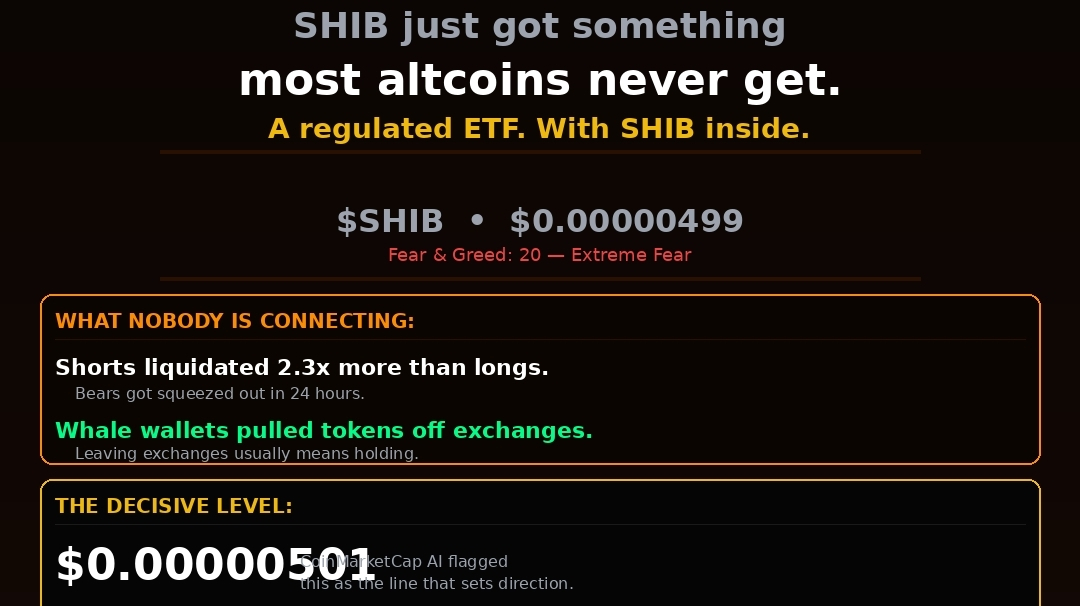
SHIB hat gerade etwas erhalten, das die meisten Altcoins nie bekommen.Die SEC hat den ETF-Antrag von T. Rowe Price mit direkter SHIB-Exposition genehmigt. Ein lizensierter Vermögensverwalter. Regulierte Verwahrung. SHIB ist darin enthalten.
Hier ist, was heute niemand miteinander verbindet.
Short-Seller wurden gerade ordentlich unter Druck gesetzt. Die Liquidationen bei Short-Positionen lagen in den letzten 24 Stunden 2,3-mal höher als bei Longs. Die Bären haben gegen SHIB gewettet und wurden schnell rausgedrängt.
Zur gleichen Zeit haben Wal-Wallets große Beträge von den Börsen abgezogen. Tokens, die Börsen verlassen, bedeuten normalerweise, dass sie gehalten werden, nicht verkauft.
Preis: $0.00000499. Im Vergleich zu diesem Monat ein Rückgang von 16,5%. 94% unter dem Allzeithoch von $0.00008616.
SHIB hat gerade etwas erhalten, das die meisten Altcoins nie bekommen.
Die SEC hat den ETF-Antrag von T. Rowe Price mit direkter SHIB-Exposition genehmigt. Ein lizensierter Vermögensverwalter. Regulierte Verwahrung. SHIB ist darin enthalten.
Hier ist, was heute niemand miteinander verbindet.
Short-Seller wurden gerade ordentlich unter Druck gesetzt. Die Liquidationen bei Short-Positionen lagen in den letzten 24 Stunden 2,3-mal höher als bei Longs. Die Bären haben gegen SHIB gewettet und wurden schnell rausgedrängt.
Zur gleichen Zeit haben Wal-Wallets große Beträge von den Börsen abgezogen. Tokens, die Börsen verlassen, bedeuten normalerweise, dass sie gehalten werden, nicht verkauft.
Preis: $0.00000499. Im Vergleich zu diesem Monat ein Rückgang von 16,5%. 94% unter dem Allzeithoch von $0.00008616.
Hier ist, was heute niemand miteinander verbindet.
Short-Seller wurden gerade ordentlich unter Druck gesetzt. Die Liquidationen bei Short-Positionen lagen in den letzten 24 Stunden 2,3-mal höher als bei Longs. Die Bären haben gegen SHIB gewettet und wurden schnell rausgedrängt.
Zur gleichen Zeit haben Wal-Wallets große Beträge von den Börsen abgezogen. Tokens, die Börsen verlassen, bedeuten normalerweise, dass sie gehalten werden, nicht verkauft.
Preis: $0.00000499. Im Vergleich zu diesem Monat ein Rückgang von 16,5%. 94% unter dem Allzeithoch von $0.00008616.
6
1.2k
·
--
$BNB
{spot}(BNBUSDT)
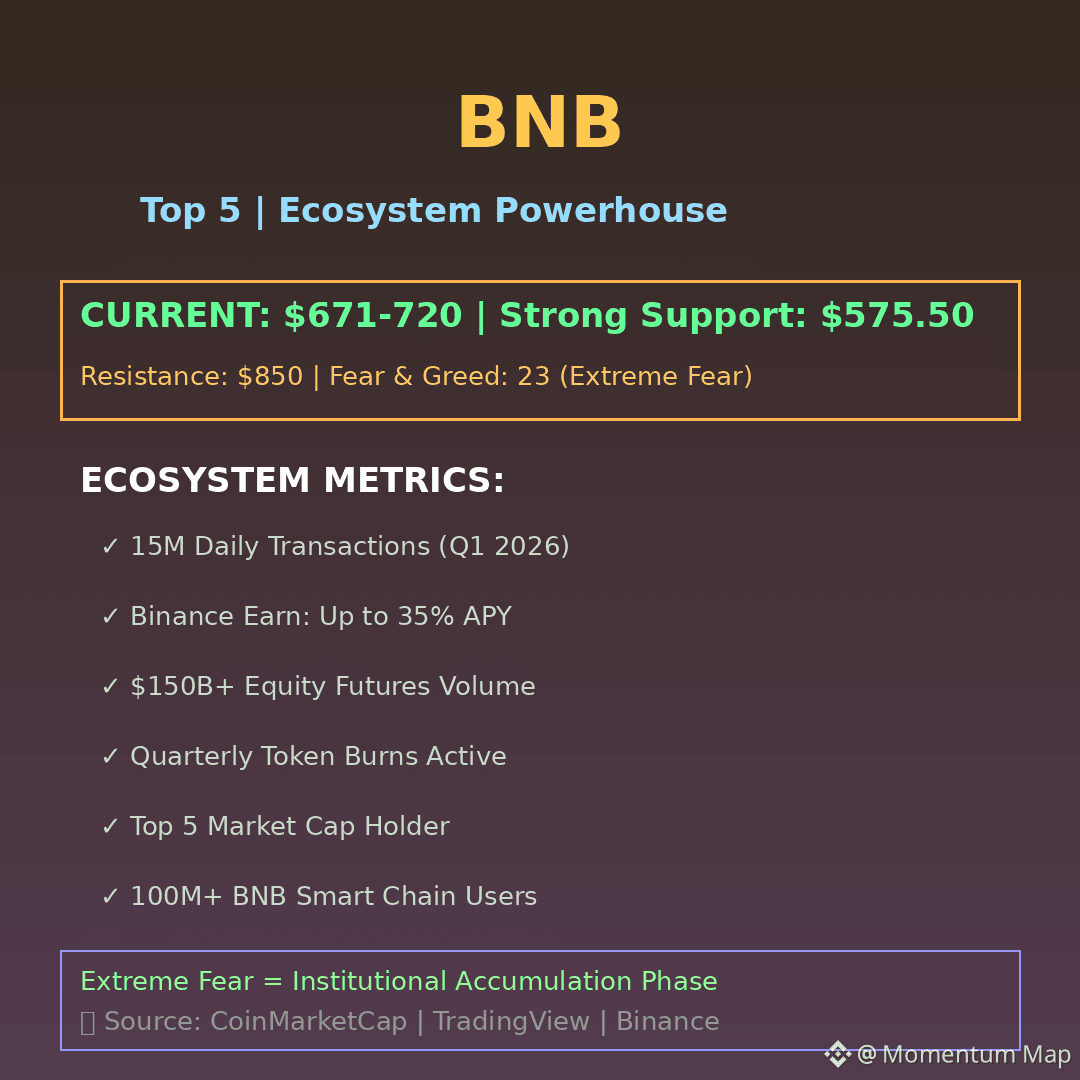
ist hart von der $575 Unterstützung abgeprallt—jetzt testen wir den $720 Widerstand. #5 Rang. Die eigentliche Frage: Warum schläft der Markt bei 15M täglichen Transaktionen + Extremangst-Sentiment?
Das Binance-Ökosystem läuft: $150B+ an Futures-Volumen, Binance Earn-Renditen bis zu 35% APY, vierteljährliche Verbrennungen reduzieren das Angebot. Die Smart Chain beherbergt über 100M Nutzer. Traditionelle Finanzen treffen auf Krypto-Infrastruktur.
Angst & Gier bei 23 = Phase der institutionellen Akkumulation. Ein Widerstandsbruch in Richtung $850 wird mit diesem makroökonomischen Setup unausweichlich.
Überwiegt der Nutzen des Ökosystems das Angst-Sentiment bis zum 30. Juni?
💾 Speichere das für den Checkpoint am 28. Juni.
📊 *CoinMarketCap | TradingView | Binance*
#BNBCoin #Choiceisyours #Binance #InstitutionalPlay #MomentumMap
$BNB
ist hart von der $575 Unterstützung abgeprallt—jetzt testen wir den $720 Widerstand. #5 Rang. Die eigentliche Frage: Warum schläft der Markt bei 15M täglichen Transaktionen + Extremangst-Sentiment?
Das Binance-Ökosystem läuft: $150B+ an Futures-Volumen, Binance Earn-Renditen bis zu 35% APY, vierteljährliche Verbrennungen reduzieren das Angebot. Die Smart Chain beherbergt über 100M Nutzer. Traditionelle Finanzen treffen auf Krypto-Infrastruktur.
Angst & Gier bei 23 = Phase der institutionellen Akkumulation. Ein Widerstandsbruch in Richtung $850 wird mit diesem makroökonomischen Setup unausweichlich.
Überwiegt der Nutzen des Ökosystems das Angst-Sentiment bis zum 30. Juni?
💾 Speichere das für den Checkpoint am 28. Juni.
📊 *CoinMarketCap | TradingView | Binance*
#BNBCoin #Choiceisyours #Binance #InstitutionalPlay #MomentumMap
ist hart von der $575 Unterstützung abgeprallt—jetzt testen wir den $720 Widerstand. #5 Rang. Die eigentliche Frage: Warum schläft der Markt bei 15M täglichen Transaktionen + Extremangst-Sentiment?
Das Binance-Ökosystem läuft: $150B+ an Futures-Volumen, Binance Earn-Renditen bis zu 35% APY, vierteljährliche Verbrennungen reduzieren das Angebot. Die Smart Chain beherbergt über 100M Nutzer. Traditionelle Finanzen treffen auf Krypto-Infrastruktur.
Angst & Gier bei 23 = Phase der institutionellen Akkumulation. Ein Widerstandsbruch in Richtung $850 wird mit diesem makroökonomischen Setup unausweichlich.
Überwiegt der Nutzen des Ökosystems das Angst-Sentiment bis zum 30. Juni?
💾 Speichere das für den Checkpoint am 28. Juni.
📊 *CoinMarketCap | TradingView | Binance*
#BNBCoin #Choiceisyours #Binance #InstitutionalPlay #MomentumMap
189
·
--
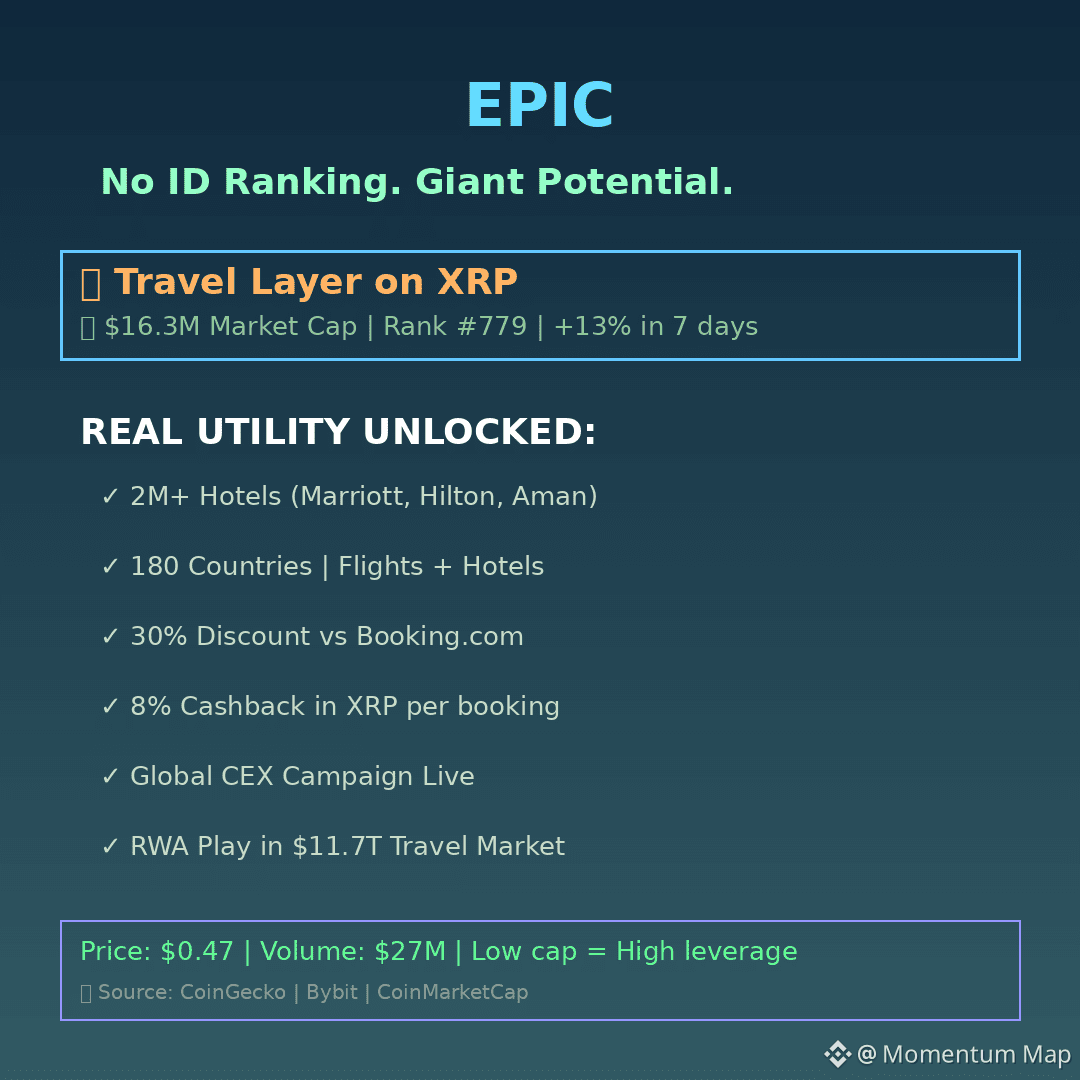
Rang #779. Marktkapitalisierung $16,3M. Volumen $27M. Die meisten Trader wissen nicht, dass EPIC existiert.
Aber hier ist, worauf sie schlafen: Echte Utility. Über 2M Hotels (Marriott, Hilton), 180 Länder, 30% Rabatte im Vergleich zu Booking.com. 8% XRP Cashback pro Buchung. RWA-Play in einem $11,7 BILLIONEN Reisemarkt. XRP-Integration. Globale CEX-Expansion läuft.
+13% in 7 Tagen, während der Crypto schläft. Volumenspitze signalisiert institutionelle Anerkennung eines echten Produkts, nicht Hype.
Kann eine Reiseschicht der nächste Kategorie-Killer im Crypto werden?
💾 Speichere das für den Checkpoint am 25. Juni.
📊 *CoinGecko | Bybit | CoinMarketCap*
#Epictravel #RWA #XRPEcosystem #HiddenGem #MomentumMap
Rang #779. Marktkapitalisierung $16,3M. Volumen $27M. Die meisten Trader wissen nicht, dass EPIC existiert.
Aber hier ist, worauf sie schlafen: Echte Utility. Über 2M Hotels (Marriott, Hilton), 180 Länder, 30% Rabatte im Vergleich zu Booking.com. 8% XRP Cashback pro Buchung. RWA-Play in einem $11,7 BILLIONEN Reisemarkt. XRP-Integration. Globale CEX-Expansion läuft.
+13% in 7 Tagen, während der Crypto schläft. Volumenspitze signalisiert institutionelle Anerkennung eines echten Produkts, nicht Hype.
Kann eine Reiseschicht der nächste Kategorie-Killer im Crypto werden?
💾 Speichere das für den Checkpoint am 25. Juni.
📊 *CoinGecko | Bybit | CoinMarketCap*
#Epictravel #RWA #XRPEcosystem #HiddenGem #MomentumMap
Aber hier ist, worauf sie schlafen: Echte Utility. Über 2M Hotels (Marriott, Hilton), 180 Länder, 30% Rabatte im Vergleich zu Booking.com. 8% XRP Cashback pro Buchung. RWA-Play in einem $11,7 BILLIONEN Reisemarkt. XRP-Integration. Globale CEX-Expansion läuft.
+13% in 7 Tagen, während der Crypto schläft. Volumenspitze signalisiert institutionelle Anerkennung eines echten Produkts, nicht Hype.
Kann eine Reiseschicht der nächste Kategorie-Killer im Crypto werden?
💾 Speichere das für den Checkpoint am 25. Juni.
📊 *CoinGecko | Bybit | CoinMarketCap*
#Epictravel #RWA #XRPEcosystem #HiddenGem #MomentumMap
260
·
--
Teilweise korrekt
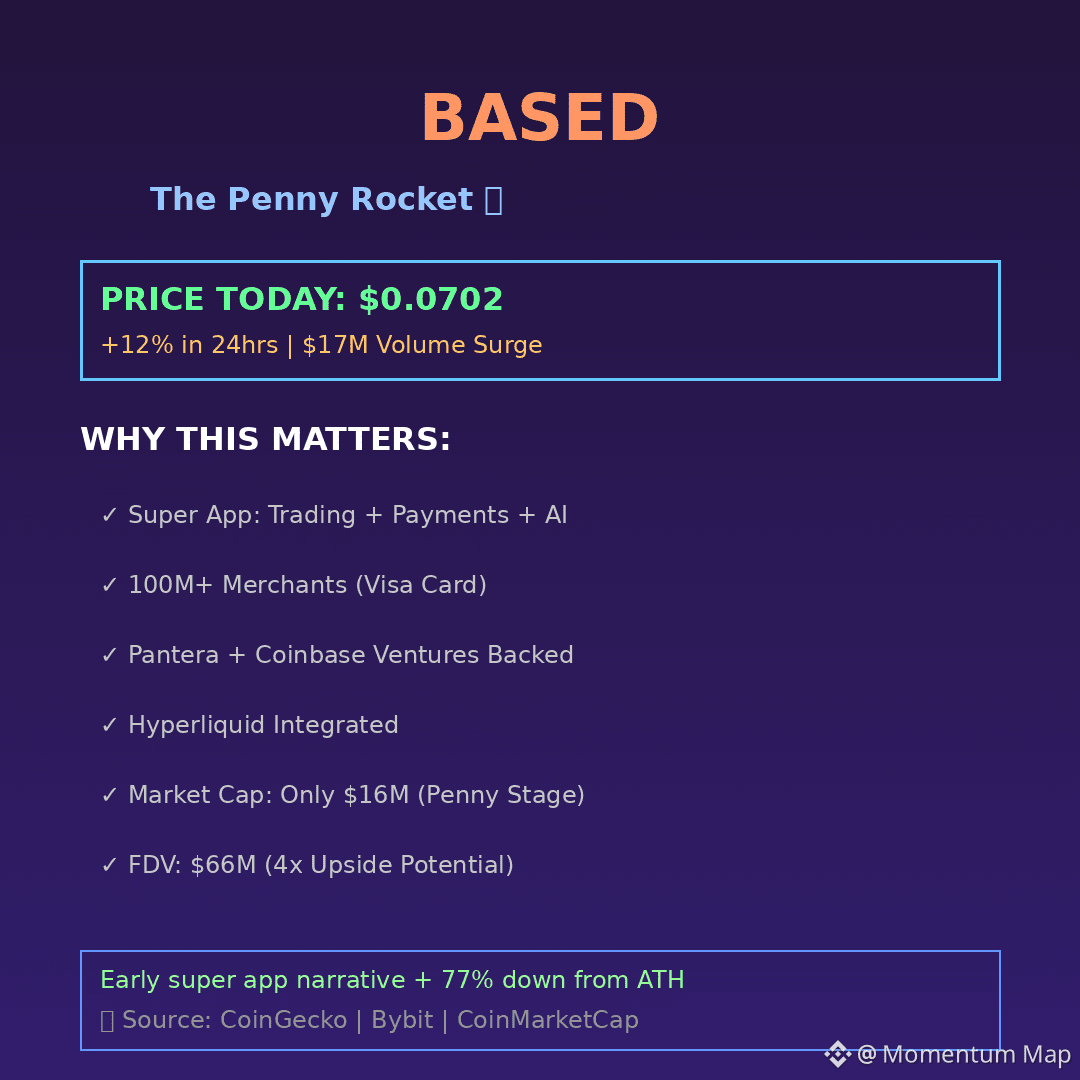
$BASED hat gerade 12% in 24 Stunden gepostet – das Volumen ist auf $61,7M explodiert ($16M Marktkapitalisierung). Das ist ein Verhältnis von 2,2x Volumen zu Kapital. Hier ist der Grund, warum Trader einsteigen:
Super-App auf Hyperliquid. Trading + 100M+ Händler (Visa-Karte) + Prognosemärkte in EINER App. Von Pantera & Coinbase Ventures unterstützt. Echtes Produkt, echter Einnahmenstrom.
Um 77% von ATH ($0,311 auf $0,07) gefallen – institutionelle Einstiegszone. Marktkapitalisierung nur $16M, FDV $66M. 4x Spielraum in der frühen Adoptionsphase.
Die Frage: Können Super-Apps schneller sein als traditionelle Finanzen?
💾 Speichere das für das Update am 20. Juni.
#BASED #Todays #Binance #HyperliquidEco #MomentumMap
$BASED hat gerade 12% in 24 Stunden gepostet – das Volumen ist auf $61,7M explodiert ($16M Marktkapitalisierung). Das ist ein Verhältnis von 2,2x Volumen zu Kapital. Hier ist der Grund, warum Trader einsteigen:
Super-App auf Hyperliquid. Trading + 100M+ Händler (Visa-Karte) + Prognosemärkte in EINER App. Von Pantera & Coinbase Ventures unterstützt. Echtes Produkt, echter Einnahmenstrom.
Um 77% von ATH ($0,311 auf $0,07) gefallen – institutionelle Einstiegszone. Marktkapitalisierung nur $16M, FDV $66M. 4x Spielraum in der frühen Adoptionsphase.
Die Frage: Können Super-Apps schneller sein als traditionelle Finanzen?
💾 Speichere das für das Update am 20. Juni.
#BASED #Todays #Binance #HyperliquidEco #MomentumMap
Super-App auf Hyperliquid. Trading + 100M+ Händler (Visa-Karte) + Prognosemärkte in EINER App. Von Pantera & Coinbase Ventures unterstützt. Echtes Produkt, echter Einnahmenstrom.
Um 77% von ATH ($0,311 auf $0,07) gefallen – institutionelle Einstiegszone. Marktkapitalisierung nur $16M, FDV $66M. 4x Spielraum in der frühen Adoptionsphase.
Die Frage: Können Super-Apps schneller sein als traditionelle Finanzen?
💾 Speichere das für das Update am 20. Juni.
#BASED #Todays #Binance #HyperliquidEco #MomentumMap
787
·
--
Teilweise korrekt
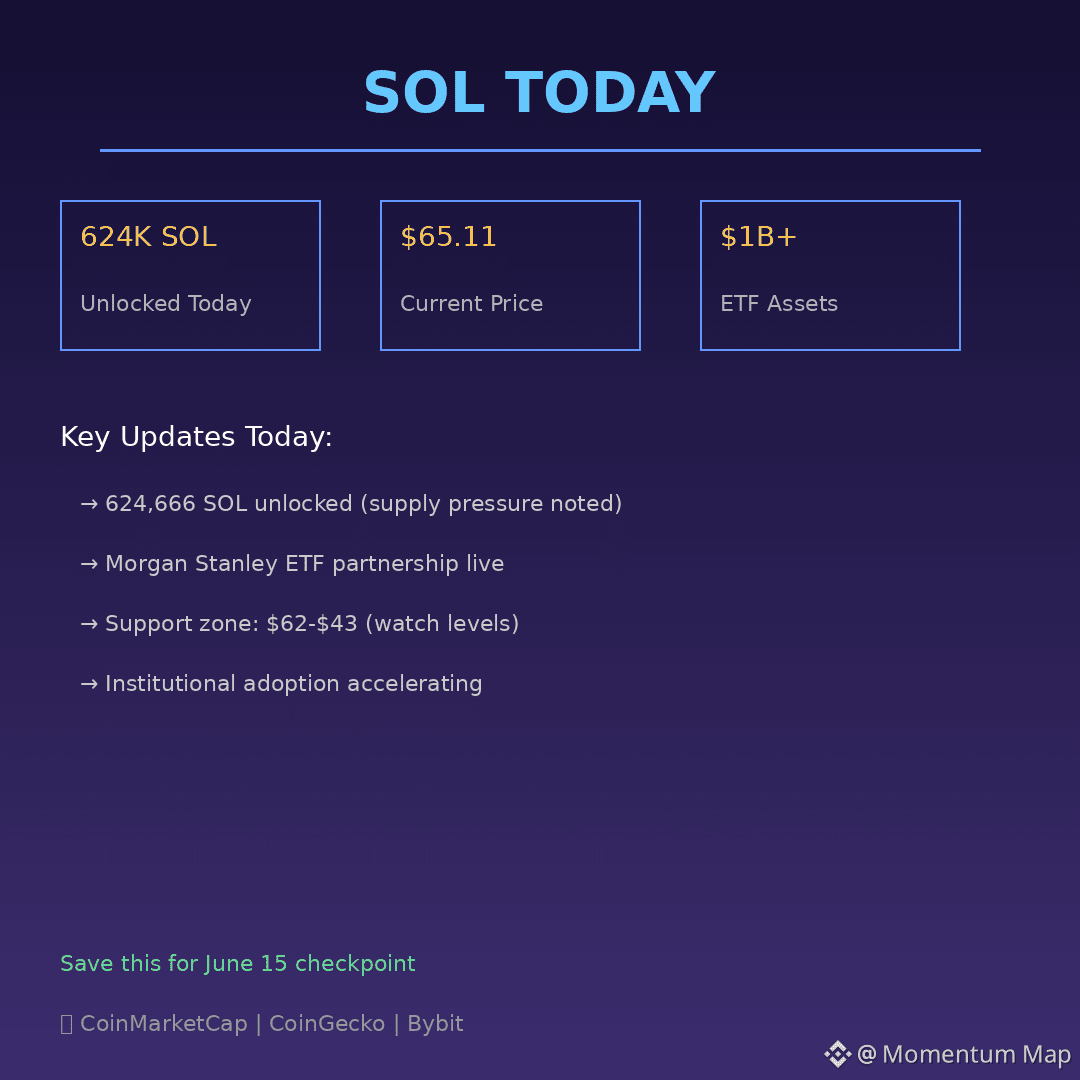
624K SOL HEUTE freigeschaltet—Versorgungscheck ✅. Aber hier ist die Sache: Die institutionelle Akzeptanz ist die ECHTE Geschichte. Der ETF-Weg von Morgan Stanley ist jetzt live, Solana-Assets überschreiten $1B. Preis $65,11 mit Unterstützungszonen bei $62-$43. Alpenglow Testnet ist live. Firedancer skaliert täglich.
Zwei Seiten: Token-Dilution vs. institutioneller Momentum. Extreme Angst (12/100)—historische Phase der Wal-Akkumulation.
Ist diese Schwäche eine Ladezone für Institutionen? Ja oder Nein?
📌 Speichere das für den Checkpoint am 15. Juni.
#solana #today #BinanceSquare #istandwithiran #MomentumMap
624K SOL HEUTE freigeschaltet—Versorgungscheck ✅. Aber hier ist die Sache: Die institutionelle Akzeptanz ist die ECHTE Geschichte. Der ETF-Weg von Morgan Stanley ist jetzt live, Solana-Assets überschreiten $1B. Preis $65,11 mit Unterstützungszonen bei $62-$43. Alpenglow Testnet ist live. Firedancer skaliert täglich.
Zwei Seiten: Token-Dilution vs. institutioneller Momentum. Extreme Angst (12/100)—historische Phase der Wal-Akkumulation.
Ist diese Schwäche eine Ladezone für Institutionen? Ja oder Nein?
📌 Speichere das für den Checkpoint am 15. Juni.
#solana #today #BinanceSquare #istandwithiran #MomentumMap
Zwei Seiten: Token-Dilution vs. institutioneller Momentum. Extreme Angst (12/100)—historische Phase der Wal-Akkumulation.
Ist diese Schwäche eine Ladezone für Institutionen? Ja oder Nein?
📌 Speichere das für den Checkpoint am 15. Juni.
#solana #today #BinanceSquare #istandwithiran #MomentumMap
143
·
--
Verifiziert
Artikel
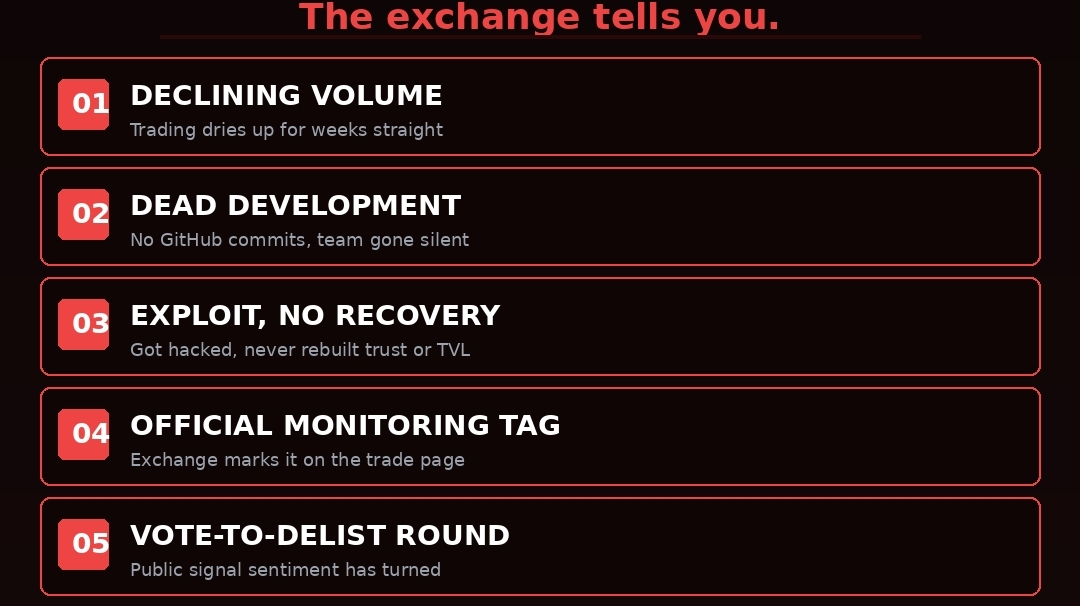
Hier sind die 5 Warnsignale, die jedes Token dem Risiko eines Delistings aussetzen.Du musst nicht raten, welche Coins in Schwierigkeiten sind.
Die Börse sagt dir Bescheid. Die meisten Leute schauen einfach nicht nach.
1. Sinkendes Volumen — wenn das tägliche Trading wochenlang austrocknet, verlieren Börsen den Grund, ein Paar gelistet zu halten.
2. Tote Entwicklung — keine GitHub-Commits, keine Aktualisierungen des Fahrplans, das Team ist seit Monaten ruhig.
3. Ein früherer Exploit ohne Wiederherstellung — Projekte, die getroffen wurden und nie wieder Vertrauen oder TVL aufgebaut haben.
4. Unter einem offiziellen Monitoring-Tag sitzen — Binance markiert diese buchstäblich mit einem Warnetikett auf der Handelsseite.
Hier sind die 5 Warnsignale, die jedes Token dem Risiko eines Delistings aussetzen.
Du musst nicht raten, welche Coins in Schwierigkeiten sind.
Die Börse sagt dir Bescheid. Die meisten Leute schauen einfach nicht nach.
1. Sinkendes Volumen — wenn das tägliche Trading wochenlang austrocknet, verlieren Börsen den Grund, ein Paar gelistet zu halten.
2. Tote Entwicklung — keine GitHub-Commits, keine Aktualisierungen des Fahrplans, das Team ist seit Monaten ruhig.
3. Ein früherer Exploit ohne Wiederherstellung — Projekte, die getroffen wurden und nie wieder Vertrauen oder TVL aufgebaut haben.
4. Unter einem offiziellen Monitoring-Tag sitzen — Binance markiert diese buchstäblich mit einem Warnetikett auf der Handelsseite.
Die Börse sagt dir Bescheid. Die meisten Leute schauen einfach nicht nach.
1. Sinkendes Volumen — wenn das tägliche Trading wochenlang austrocknet, verlieren Börsen den Grund, ein Paar gelistet zu halten.
2. Tote Entwicklung — keine GitHub-Commits, keine Aktualisierungen des Fahrplans, das Team ist seit Monaten ruhig.
3. Ein früherer Exploit ohne Wiederherstellung — Projekte, die getroffen wurden und nie wieder Vertrauen oder TVL aufgebaut haben.
4. Unter einem offiziellen Monitoring-Tag sitzen — Binance markiert diese buchstäblich mit einem Warnetikett auf der Handelsseite.
221
·
--
Artikel
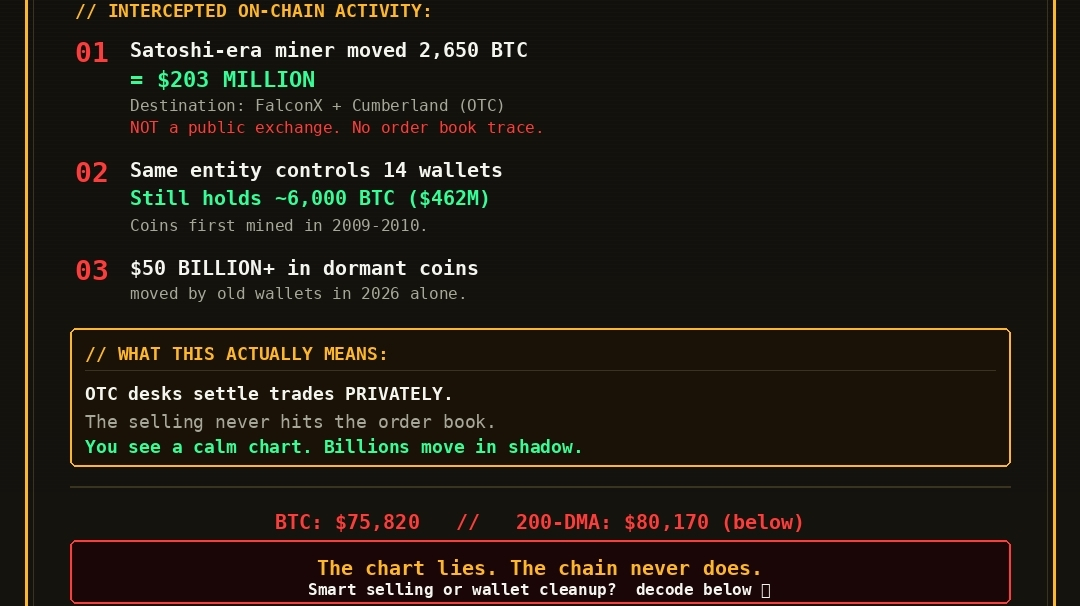
STOP . . .Es gibt ein Geheimnis, das dir niemand erzählt hat.
Die größten Bitcoin-Halter verkaufen NICHT an Börsen.
Hier ist, was die On-Chain-Daten gerade enthüllt haben.
Ein Miner aus der Satoshi-Ära — jemand, der 2009 Bitcoin gemined hat — hat gerade 2.650 BTC bewegt.
Das sind 203 Millionen Dollar.
Aber das Ziel war nicht Binance. Nicht Coinbase. Nicht irgendeine Börse, die du sehen kannst.
Es ging zu FalconX und Cumberland.
OTC-Schreibtische.
Over-the-Counter (OTC) Trading passiert privat. Der Verkauf berührt niemals das öffentliche Orderbuch. Du siehst ein ruhiges Chart, während Milliarden im Schatten den Besitzer wechseln.
STOP . . .
Es gibt ein Geheimnis, das dir niemand erzählt hat.
Die größten Bitcoin-Halter verkaufen NICHT an Börsen.
Hier ist, was die On-Chain-Daten gerade enthüllt haben.
Ein Miner aus der Satoshi-Ära — jemand, der 2009 Bitcoin gemined hat — hat gerade 2.650 BTC bewegt.
Das sind 203 Millionen Dollar.
Aber das Ziel war nicht Binance. Nicht Coinbase. Nicht irgendeine Börse, die du sehen kannst.
Es ging zu FalconX und Cumberland.
OTC-Schreibtische.
Over-the-Counter (OTC) Trading passiert privat. Der Verkauf berührt niemals das öffentliche Orderbuch. Du siehst ein ruhiges Chart, während Milliarden im Schatten den Besitzer wechseln.
Die größten Bitcoin-Halter verkaufen NICHT an Börsen.
Hier ist, was die On-Chain-Daten gerade enthüllt haben.
Ein Miner aus der Satoshi-Ära — jemand, der 2009 Bitcoin gemined hat — hat gerade 2.650 BTC bewegt.
Das sind 203 Millionen Dollar.
Aber das Ziel war nicht Binance. Nicht Coinbase. Nicht irgendeine Börse, die du sehen kannst.
Es ging zu FalconX und Cumberland.
OTC-Schreibtische.
Over-the-Counter (OTC) Trading passiert privat. Der Verkauf berührt niemals das öffentliche Orderbuch. Du siehst ein ruhiges Chart, während Milliarden im Schatten den Besitzer wechseln.
3
3
1.1k
·
--
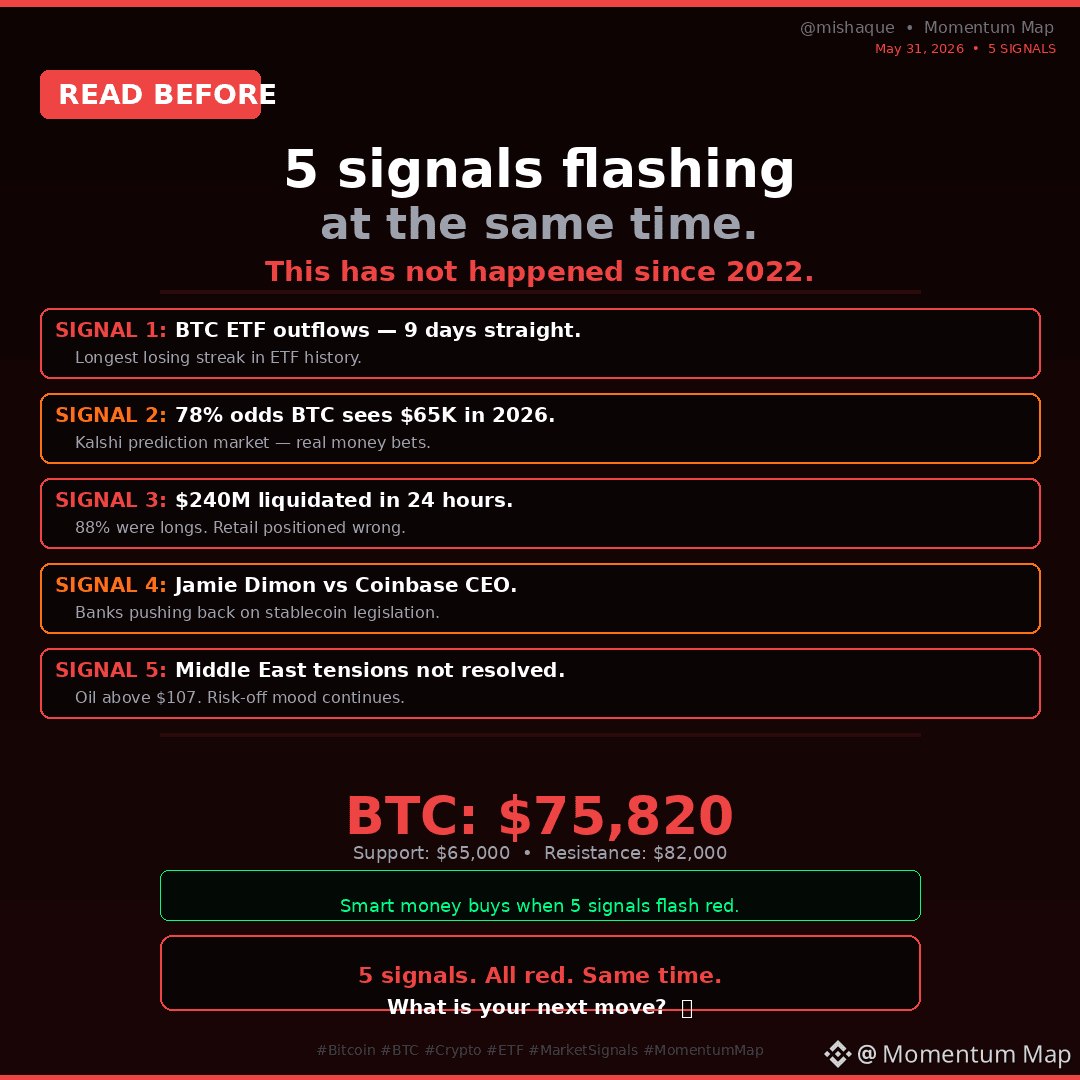
5 Signale blitzen gleichzeitig.
Das ist seit 2022 nicht mehr passiert.
1. BTC ETF-Abflüsse laufen seit 9 Tagen ununterbrochen.
Längste Verlustserie in der ETF-Geschichte.
2. Kalshi-Vorhersagemarkt: 78% Wahrscheinlichkeit, dass BTC in diesem Jahr $65.000 erreicht.
Echtes Geld. Echte Wetten.
3. $240 Millionen innerhalb von 24 Stunden liquidiert.
88% waren Longs. Retail hat sich auf die falsche Seite positioniert.
4. Jamie Dimon hat gerade den CEO von Coinbase öffentlich angegriffen.
Banken wehren sich gegen die Gesetzgebung zu Stablecoins.
Die größten Akteure in der Finanzwelt kämpfen gegeneinander.
5. Spannungen im Nahen Osten sind weiterhin ungelöst.
Öl über $107. Globale Risikobereitschaft verlässt den Raum.
BTC steht gerade bei $75.820.
Unterstützung: $65.000.
Widerstand: $82.000.
Als zuletzt 5 Signale rot zusammen blitzten – bewegte sich der Markt innerhalb von 2 Wochen um 30% in eine Richtung.
Niemand weiß, in welche Richtung.
Aber das kluge Geld hat sich bereits positioniert.
Bist du es auch?
Speichere das. Komm am 7. Juni zurück. 👇
#bitcoin #BTC #crypto #etf #MomentumMap
5 Signale blitzen gleichzeitig.
Das ist seit 2022 nicht mehr passiert.
1. BTC ETF-Abflüsse laufen seit 9 Tagen ununterbrochen.
Längste Verlustserie in der ETF-Geschichte.
2. Kalshi-Vorhersagemarkt: 78% Wahrscheinlichkeit, dass BTC in diesem Jahr $65.000 erreicht.
Echtes Geld. Echte Wetten.
3. $240 Millionen innerhalb von 24 Stunden liquidiert.
88% waren Longs. Retail hat sich auf die falsche Seite positioniert.
4. Jamie Dimon hat gerade den CEO von Coinbase öffentlich angegriffen.
Banken wehren sich gegen die Gesetzgebung zu Stablecoins.
Die größten Akteure in der Finanzwelt kämpfen gegeneinander.
5. Spannungen im Nahen Osten sind weiterhin ungelöst.
Öl über $107. Globale Risikobereitschaft verlässt den Raum.
BTC steht gerade bei $75.820.
Unterstützung: $65.000.
Widerstand: $82.000.
Als zuletzt 5 Signale rot zusammen blitzten – bewegte sich der Markt innerhalb von 2 Wochen um 30% in eine Richtung.
Niemand weiß, in welche Richtung.
Aber das kluge Geld hat sich bereits positioniert.
Bist du es auch?
Speichere das. Komm am 7. Juni zurück. 👇
#bitcoin #BTC #crypto #etf #MomentumMap
Das ist seit 2022 nicht mehr passiert.
1. BTC ETF-Abflüsse laufen seit 9 Tagen ununterbrochen.
Längste Verlustserie in der ETF-Geschichte.
2. Kalshi-Vorhersagemarkt: 78% Wahrscheinlichkeit, dass BTC in diesem Jahr $65.000 erreicht.
Echtes Geld. Echte Wetten.
3. $240 Millionen innerhalb von 24 Stunden liquidiert.
88% waren Longs. Retail hat sich auf die falsche Seite positioniert.
4. Jamie Dimon hat gerade den CEO von Coinbase öffentlich angegriffen.
Banken wehren sich gegen die Gesetzgebung zu Stablecoins.
Die größten Akteure in der Finanzwelt kämpfen gegeneinander.
5. Spannungen im Nahen Osten sind weiterhin ungelöst.
Öl über $107. Globale Risikobereitschaft verlässt den Raum.
BTC steht gerade bei $75.820.
Unterstützung: $65.000.
Widerstand: $82.000.
Als zuletzt 5 Signale rot zusammen blitzten – bewegte sich der Markt innerhalb von 2 Wochen um 30% in eine Richtung.
Niemand weiß, in welche Richtung.
Aber das kluge Geld hat sich bereits positioniert.
Bist du es auch?
Speichere das. Komm am 7. Juni zurück. 👇
#bitcoin #BTC #crypto #etf #MomentumMap
256
·
--
Artikel
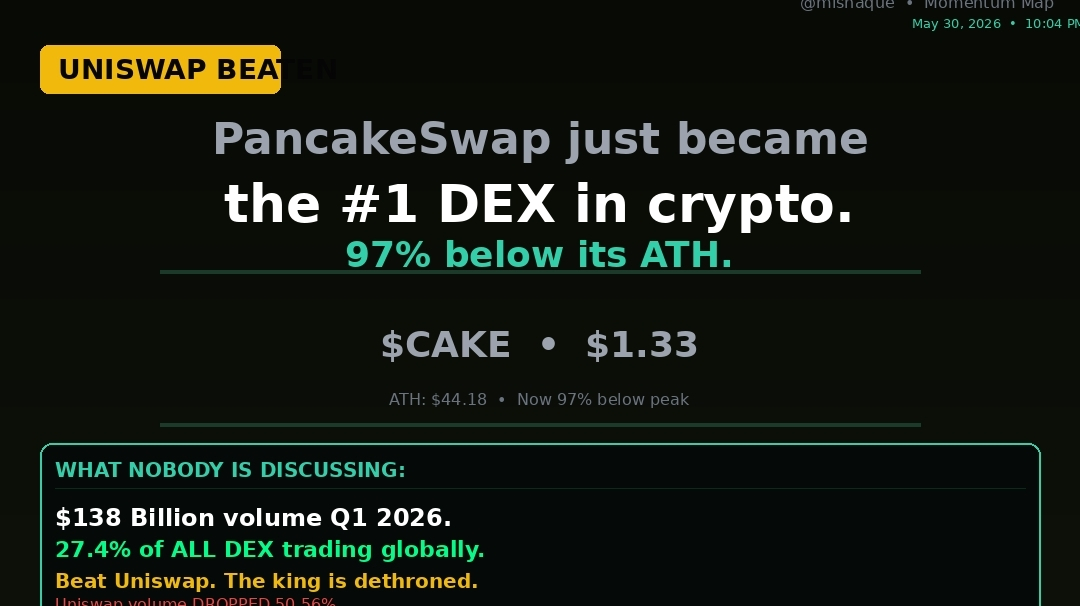
Die #1 DEX im Krypto ist nicht mehr auf Ethereum.PancakeSwap hat gerade Uniswap überholt.
$138 Milliarden Handelsvolumen im Q1 2026.
27.4% des gesamten dezentralen Handels weltweit.
Das Volumen von Uniswap ist im gleichen Zeitraum um 50% gefallen.
Der Thron hat den Besitzer gewechselt.
Aber es wird noch interessanter.
Du kannst jetzt Apple- und Tesla-Aktien auf PancakeSwap traden.
Über 60 tokenisierte US-Aktien sind jetzt auf der BNB Chain live.
Kein Brokerage-Konto nötig. Nur USDC und eine Wallet.
Die RWA-Integration von Ondo Finance ist live.
Sicherheitsbewertung: 92.23% auf CoinGecko.
CAKE wird heute bei $1.33 gehandelt.
ATH lag bei $44.18.
Das ist 97% unter dem Allzeithoch.
Die #1 DEX im Krypto ist nicht mehr auf Ethereum.
PancakeSwap hat gerade Uniswap überholt.
$138 Milliarden Handelsvolumen im Q1 2026.
27.4% des gesamten dezentralen Handels weltweit.
Das Volumen von Uniswap ist im gleichen Zeitraum um 50% gefallen.
Der Thron hat den Besitzer gewechselt.
Aber es wird noch interessanter.
Du kannst jetzt Apple- und Tesla-Aktien auf PancakeSwap traden.
Über 60 tokenisierte US-Aktien sind jetzt auf der BNB Chain live.
Kein Brokerage-Konto nötig. Nur USDC und eine Wallet.
Die RWA-Integration von Ondo Finance ist live.
Sicherheitsbewertung: 92.23% auf CoinGecko.
CAKE wird heute bei $1.33 gehandelt.
ATH lag bei $44.18.
Das ist 97% unter dem Allzeithoch.
$138 Milliarden Handelsvolumen im Q1 2026.
27.4% des gesamten dezentralen Handels weltweit.
Das Volumen von Uniswap ist im gleichen Zeitraum um 50% gefallen.
Der Thron hat den Besitzer gewechselt.
Aber es wird noch interessanter.
Du kannst jetzt Apple- und Tesla-Aktien auf PancakeSwap traden.
Über 60 tokenisierte US-Aktien sind jetzt auf der BNB Chain live.
Kein Brokerage-Konto nötig. Nur USDC und eine Wallet.
Die RWA-Integration von Ondo Finance ist live.
Sicherheitsbewertung: 92.23% auf CoinGecko.
CAKE wird heute bei $1.33 gehandelt.
ATH lag bei $44.18.
Das ist 97% unter dem Allzeithoch.
270
·
--
Artikel
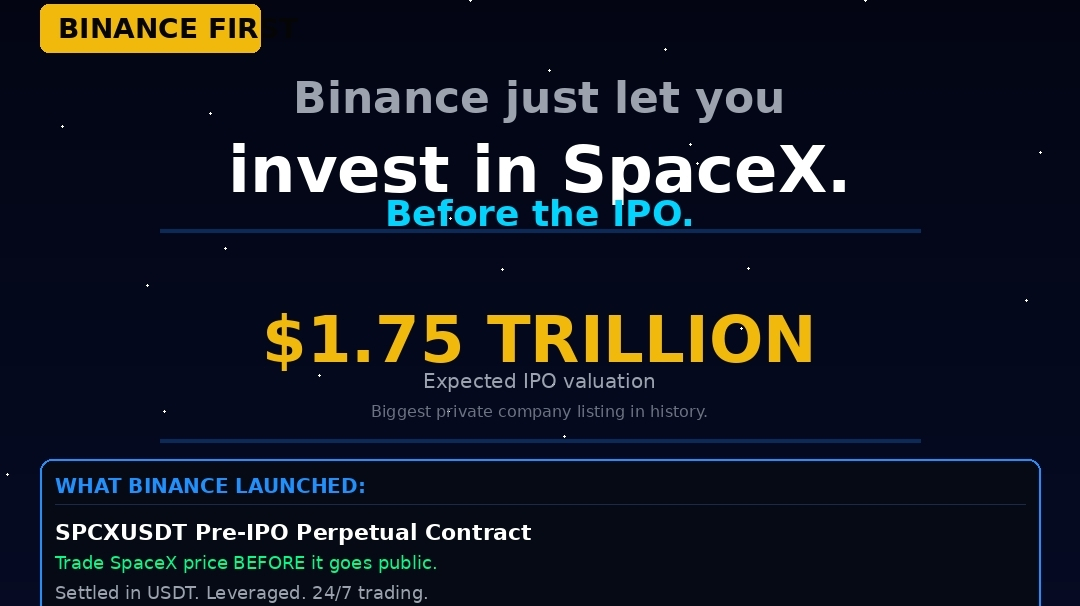
Binance hat dir gerade erlaubt, in SpaceX zu investieren.Vor dem IPO.
Lies das nochmal.
SpaceX — das Unternehmen, das Menschen zum Mars schickt — wird voraussichtlich mit einer Bewertung von 1,75 Billionen Dollar an die Börse gehen.
Der größte Börsengang einer privaten Firma in der Geschichte.
Bis letzte Woche konnten nur VCs und Milliardäre darauf zugreifen.
Jetzt hat Binance den SPCXUSDT Pre-IPO Perpetual gestartet.
Du kannst den erwarteten Preis von SpaceX handeln. In USDT. Mit Leverage. 24/7.
33 Millionen Dollar Handelsvolumen allein am ersten Tag.
OKX, Crypto.com und Hyperliquid haben innerhalb von Tagen konkurrierende Produkte gestartet.
Alle rennen, um den Retail-Zugang zu privaten Unternehmen zu ermöglichen.
Binance hat dir gerade erlaubt, in SpaceX zu investieren.
Vor dem IPO.
Lies das nochmal.
SpaceX — das Unternehmen, das Menschen zum Mars schickt — wird voraussichtlich mit einer Bewertung von 1,75 Billionen Dollar an die Börse gehen.
Der größte Börsengang einer privaten Firma in der Geschichte.
Bis letzte Woche konnten nur VCs und Milliardäre darauf zugreifen.
Jetzt hat Binance den SPCXUSDT Pre-IPO Perpetual gestartet.
Du kannst den erwarteten Preis von SpaceX handeln. In USDT. Mit Leverage. 24/7.
33 Millionen Dollar Handelsvolumen allein am ersten Tag.
OKX, Crypto.com und Hyperliquid haben innerhalb von Tagen konkurrierende Produkte gestartet.
Alle rennen, um den Retail-Zugang zu privaten Unternehmen zu ermöglichen.
Lies das nochmal.
SpaceX — das Unternehmen, das Menschen zum Mars schickt — wird voraussichtlich mit einer Bewertung von 1,75 Billionen Dollar an die Börse gehen.
Der größte Börsengang einer privaten Firma in der Geschichte.
Bis letzte Woche konnten nur VCs und Milliardäre darauf zugreifen.
Jetzt hat Binance den SPCXUSDT Pre-IPO Perpetual gestartet.
Du kannst den erwarteten Preis von SpaceX handeln. In USDT. Mit Leverage. 24/7.
33 Millionen Dollar Handelsvolumen allein am ersten Tag.
OKX, Crypto.com und Hyperliquid haben innerhalb von Tagen konkurrierende Produkte gestartet.
Alle rennen, um den Retail-Zugang zu privaten Unternehmen zu ermöglichen.
1.1k
·
--
Artikel
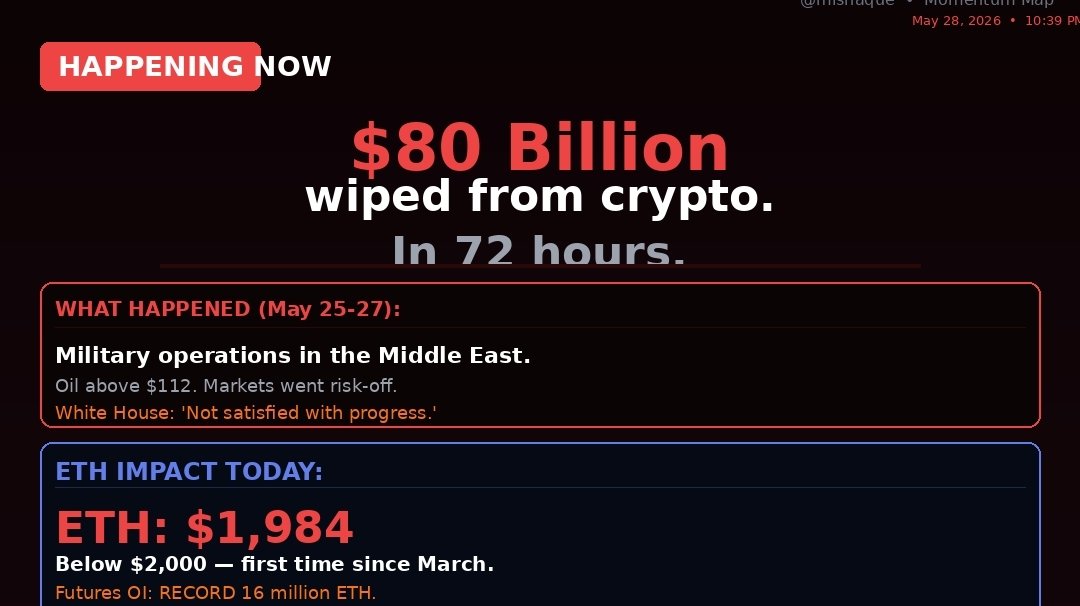
80 Milliarden Dollar in 72 Stunden aus dem Krypto-Markt gewischt.Militärische Operationen im Nahen Osten eskalierten zwischen dem 25. und 27. Mai.
Öl sprang über 112 Dollar.
Die Märkte sind voll risikoscheu.
Das Weiße Haus erklärte, dass es "nicht zufrieden mit dem Fortschritt" ist.
ETH steht jetzt bei 1.984 Dollar.
Unter 2.000 Dollar zum ersten Mal seit März.
1 Milliarde Dollar an Liquidationen über den Markt.
ETH-Futures-Offenheit erreichte einen REKORD von 16 Millionen ETH.
ETF-Abflüsse laufen seit 11 Tagen ununterbrochen.
Die Vorhersagemärkte geben jetzt 63% Wahrscheinlichkeit, dass ETH dieses Jahr wieder 1.500 Dollar erreicht.
Aber hier ist, was die Bären ignorieren.
Das Glamsterdam-Upgrade wird weiterhin im Juni ausgeliefert.
80 Milliarden Dollar in 72 Stunden aus dem Krypto-Markt gewischt.
Militärische Operationen im Nahen Osten eskalierten zwischen dem 25. und 27. Mai.
Öl sprang über 112 Dollar.
Die Märkte sind voll risikoscheu.
Das Weiße Haus erklärte, dass es "nicht zufrieden mit dem Fortschritt" ist.
ETH steht jetzt bei 1.984 Dollar.
Unter 2.000 Dollar zum ersten Mal seit März.
1 Milliarde Dollar an Liquidationen über den Markt.
ETH-Futures-Offenheit erreichte einen REKORD von 16 Millionen ETH.
ETF-Abflüsse laufen seit 11 Tagen ununterbrochen.
Die Vorhersagemärkte geben jetzt 63% Wahrscheinlichkeit, dass ETH dieses Jahr wieder 1.500 Dollar erreicht.
Aber hier ist, was die Bären ignorieren.
Das Glamsterdam-Upgrade wird weiterhin im Juni ausgeliefert.
Öl sprang über 112 Dollar.
Die Märkte sind voll risikoscheu.
Das Weiße Haus erklärte, dass es "nicht zufrieden mit dem Fortschritt" ist.
ETH steht jetzt bei 1.984 Dollar.
Unter 2.000 Dollar zum ersten Mal seit März.
1 Milliarde Dollar an Liquidationen über den Markt.
ETH-Futures-Offenheit erreichte einen REKORD von 16 Millionen ETH.
ETF-Abflüsse laufen seit 11 Tagen ununterbrochen.
Die Vorhersagemärkte geben jetzt 63% Wahrscheinlichkeit, dass ETH dieses Jahr wieder 1.500 Dollar erreicht.
Aber hier ist, was die Bären ignorieren.
Das Glamsterdam-Upgrade wird weiterhin im Juni ausgeliefert.
290
·
--
Artikel
Eid ul Adha Mubarak an die gesamte Krypto-Community.Möge Allah dein Opfer annehmen und deine Familien mit Frieden und Wohlstand segnen. Ameen.
Jetzt — etwas, was der Markt verpasst hat, während die Welt gefeiert hat.
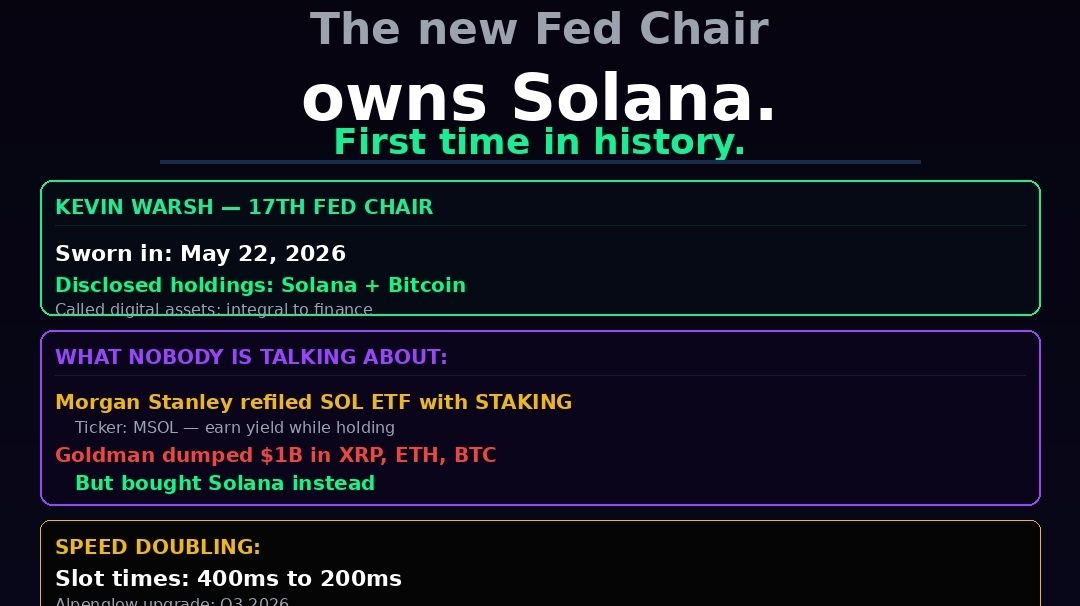
Der neue Vorsitzende der Federal Reserve hält Solana.
Kevin Warsh wurde am 22. Mai 2026 als 17. Vorsitzender der Federal Reserve vereidigt.
Er ist der ERSTE Fed-Vorsitzende in der Geschichte, der Krypto-Assets offenlegt.
Seine offengelegten Vermögenswerte umfassen Solana und Bitcoin.
Er erklärte öffentlich, dass digitale Vermögenswerte integral für die Zukunft der Finanzen sind.
Die Person, die die Zinssätze für die gesamte globale Wirtschaft steuert — hält SOL in ihrem Portfolio.
Eid ul Adha Mubarak an die gesamte Krypto-Community.
Möge Allah dein Opfer annehmen und deine Familien mit Frieden und Wohlstand segnen. Ameen.
Jetzt — etwas, was der Markt verpasst hat, während die Welt gefeiert hat.
Der neue Vorsitzende der Federal Reserve hält Solana.
Kevin Warsh wurde am 22. Mai 2026 als 17. Vorsitzender der Federal Reserve vereidigt.
Er ist der ERSTE Fed-Vorsitzende in der Geschichte, der Krypto-Assets offenlegt.
Seine offengelegten Vermögenswerte umfassen Solana und Bitcoin.
Er erklärte öffentlich, dass digitale Vermögenswerte integral für die Zukunft der Finanzen sind.
Die Person, die die Zinssätze für die gesamte globale Wirtschaft steuert — hält SOL in ihrem Portfolio.
Jetzt — etwas, was der Markt verpasst hat, während die Welt gefeiert hat.
Der neue Vorsitzende der Federal Reserve hält Solana.
Kevin Warsh wurde am 22. Mai 2026 als 17. Vorsitzender der Federal Reserve vereidigt.
Er ist der ERSTE Fed-Vorsitzende in der Geschichte, der Krypto-Assets offenlegt.
Seine offengelegten Vermögenswerte umfassen Solana und Bitcoin.
Er erklärte öffentlich, dass digitale Vermögenswerte integral für die Zukunft der Finanzen sind.
Die Person, die die Zinssätze für die gesamte globale Wirtschaft steuert — hält SOL in ihrem Portfolio.
2
380
·
--
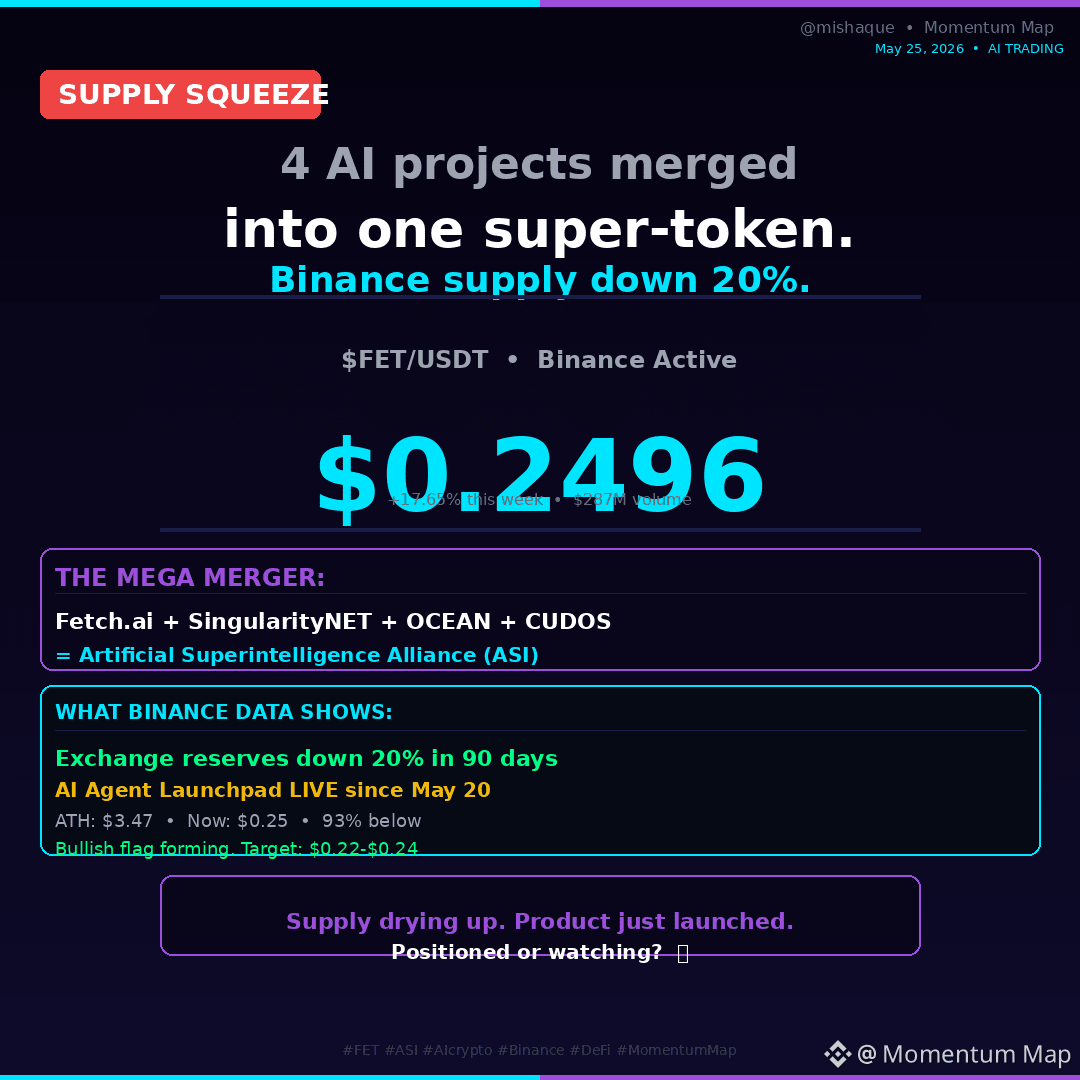
4 KI-Projekte wurden gerade zu einem Super-Token fusioniert.
Fetch.ai. SingularityNET. OCEAN. CUDOS.
Jetzt genannt die Allianz der Künstlichen Superintelligenz.
Handelnd als $FET auf Binance. Genau jetzt.
Hier sind die Daten, die niemand liest.
Die Reserven von Binance sind in 90 Tagen um 20% gefallen.
Tokens verlassen die Börse schneller, als sie eintreffen.
Klassisches Setup für einen Angebotsengpass.
Vor 5 Tagen — KI-Agenten-Launchpad ging LIVE.
Erstes echtes Produkt. Kein Fahrplan. Kein Versprechen.
Eingesetzt. Funktioniert. On-Chain.
Preis heute: $0.2496.
Diese Woche um 17.65% gestiegen.
$287 Millionen Handelsvolumen in 24 Stunden.
ATH war $3.47.
Der aktuelle Preis liegt 93% darunter.
93% unter dem Höchststand.
Angebot verlässt Binance.
Produkt gerade gestartet.
Entweder der Markt holt auf.
Oder das bleibt der am meisten ignorierte KI-Token auf Binance.
Positioniert oder noch am Zuschauen?
Speichere das. Komm am 1. Juni zurück. 👇
#FET #AIcrypto #Binance #defi #MomentumMap
4 KI-Projekte wurden gerade zu einem Super-Token fusioniert.
Fetch.ai. SingularityNET. OCEAN. CUDOS.
Jetzt genannt die Allianz der Künstlichen Superintelligenz.
Handelnd als $FET auf Binance. Genau jetzt.
Hier sind die Daten, die niemand liest.
Die Reserven von Binance sind in 90 Tagen um 20% gefallen.
Tokens verlassen die Börse schneller, als sie eintreffen.
Klassisches Setup für einen Angebotsengpass.
Vor 5 Tagen — KI-Agenten-Launchpad ging LIVE.
Erstes echtes Produkt. Kein Fahrplan. Kein Versprechen.
Eingesetzt. Funktioniert. On-Chain.
Preis heute: $0.2496.
Diese Woche um 17.65% gestiegen.
$287 Millionen Handelsvolumen in 24 Stunden.
ATH war $3.47.
Der aktuelle Preis liegt 93% darunter.
93% unter dem Höchststand.
Angebot verlässt Binance.
Produkt gerade gestartet.
Entweder der Markt holt auf.
Oder das bleibt der am meisten ignorierte KI-Token auf Binance.
Positioniert oder noch am Zuschauen?
Speichere das. Komm am 1. Juni zurück. 👇
#FET #AIcrypto #Binance #defi #MomentumMap
Fetch.ai. SingularityNET. OCEAN. CUDOS.
Jetzt genannt die Allianz der Künstlichen Superintelligenz.
Handelnd als $FET auf Binance. Genau jetzt.
Hier sind die Daten, die niemand liest.
Die Reserven von Binance sind in 90 Tagen um 20% gefallen.
Tokens verlassen die Börse schneller, als sie eintreffen.
Klassisches Setup für einen Angebotsengpass.
Vor 5 Tagen — KI-Agenten-Launchpad ging LIVE.
Erstes echtes Produkt. Kein Fahrplan. Kein Versprechen.
Eingesetzt. Funktioniert. On-Chain.
Preis heute: $0.2496.
Diese Woche um 17.65% gestiegen.
$287 Millionen Handelsvolumen in 24 Stunden.
ATH war $3.47.
Der aktuelle Preis liegt 93% darunter.
93% unter dem Höchststand.
Angebot verlässt Binance.
Produkt gerade gestartet.
Entweder der Markt holt auf.
Oder das bleibt der am meisten ignorierte KI-Token auf Binance.
Positioniert oder noch am Zuschauen?
Speichere das. Komm am 1. Juni zurück. 👇
#FET #AIcrypto #Binance #defi #MomentumMap
290
·
--
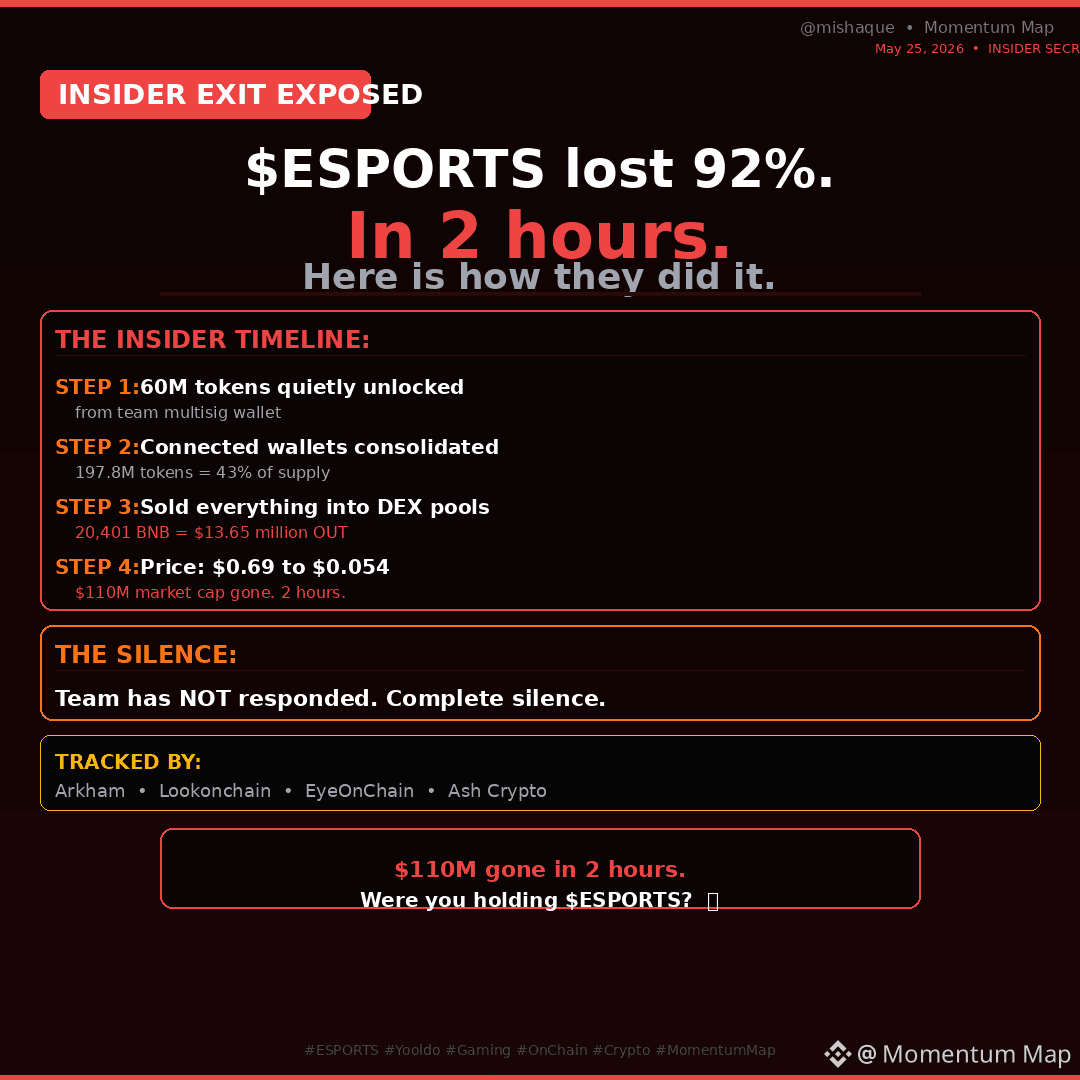
$ESPORTS hat in 2 Stunden 92% verloren.
Hier ist genau, wie Insider es gemacht haben.
Schritt 1: 60 Millionen Token wurden leise aus dem Team-Multisig-Wallet freigegeben.
Schritt 2: Verbundene Wallets haben 197,8 Millionen Token konsolidiert.
Schritt 3: Alles wurde in DEX-Liquiditätspools verkauft.
Schritt 4: 20.401 BNB wurden abgezogen. $13,65 Millionen. Weg.
43% des gesamten zirkulierenden Angebots. Ein Zug. Zwei Stunden.
$110 Millionen Marktkapitalisierung ausgelöscht.
Der Preis fiel von $0,69 auf $0,054.
Das Team hat seitdem kein einziges Wort gesagt.
Vollständige Stille.
Arkham hat es verfolgt.
Lookonchain hat es verfolgt.
EyeOnChain hat es verfolgt.
Jeder hat es in Echtzeit gesehen.
Niemand konnte es stoppen.
Das ist HEUTE passiert. 25. Mai 2026.
Nicht 2022. Nicht letztes Jahr. Heute.
Wenn du gerade irgendeinen Gaming-Token hältst – überprüfe das Team-Wallet. Überprüfe das Multisig. Überprüfe den Freigabeplan.
Denn so sieht es aus, wenn Insider gehen, bevor du es tust.
Hast du $ESPORTS gehalten?
Speichere das. Lerne daraus. 👇
#esports #Yooldo #gaming #Onchain #MomentumMap
$ESPORTS hat in 2 Stunden 92% verloren.
Hier ist genau, wie Insider es gemacht haben.
Schritt 1: 60 Millionen Token wurden leise aus dem Team-Multisig-Wallet freigegeben.
Schritt 2: Verbundene Wallets haben 197,8 Millionen Token konsolidiert.
Schritt 3: Alles wurde in DEX-Liquiditätspools verkauft.
Schritt 4: 20.401 BNB wurden abgezogen. $13,65 Millionen. Weg.
43% des gesamten zirkulierenden Angebots. Ein Zug. Zwei Stunden.
$110 Millionen Marktkapitalisierung ausgelöscht.
Der Preis fiel von $0,69 auf $0,054.
Das Team hat seitdem kein einziges Wort gesagt.
Vollständige Stille.
Arkham hat es verfolgt.
Lookonchain hat es verfolgt.
EyeOnChain hat es verfolgt.
Jeder hat es in Echtzeit gesehen.
Niemand konnte es stoppen.
Das ist HEUTE passiert. 25. Mai 2026.
Nicht 2022. Nicht letztes Jahr. Heute.
Wenn du gerade irgendeinen Gaming-Token hältst – überprüfe das Team-Wallet. Überprüfe das Multisig. Überprüfe den Freigabeplan.
Denn so sieht es aus, wenn Insider gehen, bevor du es tust.
Hast du $ESPORTS gehalten?
Speichere das. Lerne daraus. 👇
#esports #Yooldo #gaming #Onchain #MomentumMap
Hier ist genau, wie Insider es gemacht haben.
Schritt 1: 60 Millionen Token wurden leise aus dem Team-Multisig-Wallet freigegeben.
Schritt 2: Verbundene Wallets haben 197,8 Millionen Token konsolidiert.
Schritt 3: Alles wurde in DEX-Liquiditätspools verkauft.
Schritt 4: 20.401 BNB wurden abgezogen. $13,65 Millionen. Weg.
43% des gesamten zirkulierenden Angebots. Ein Zug. Zwei Stunden.
$110 Millionen Marktkapitalisierung ausgelöscht.
Der Preis fiel von $0,69 auf $0,054.
Das Team hat seitdem kein einziges Wort gesagt.
Vollständige Stille.
Arkham hat es verfolgt.
Lookonchain hat es verfolgt.
EyeOnChain hat es verfolgt.
Jeder hat es in Echtzeit gesehen.
Niemand konnte es stoppen.
Das ist HEUTE passiert. 25. Mai 2026.
Nicht 2022. Nicht letztes Jahr. Heute.
Wenn du gerade irgendeinen Gaming-Token hältst – überprüfe das Team-Wallet. Überprüfe das Multisig. Überprüfe den Freigabeplan.
Denn so sieht es aus, wenn Insider gehen, bevor du es tust.
Hast du $ESPORTS gehalten?
Speichere das. Lerne daraus. 👇
#esports #Yooldo #gaming #Onchain #MomentumMap
473
·
--
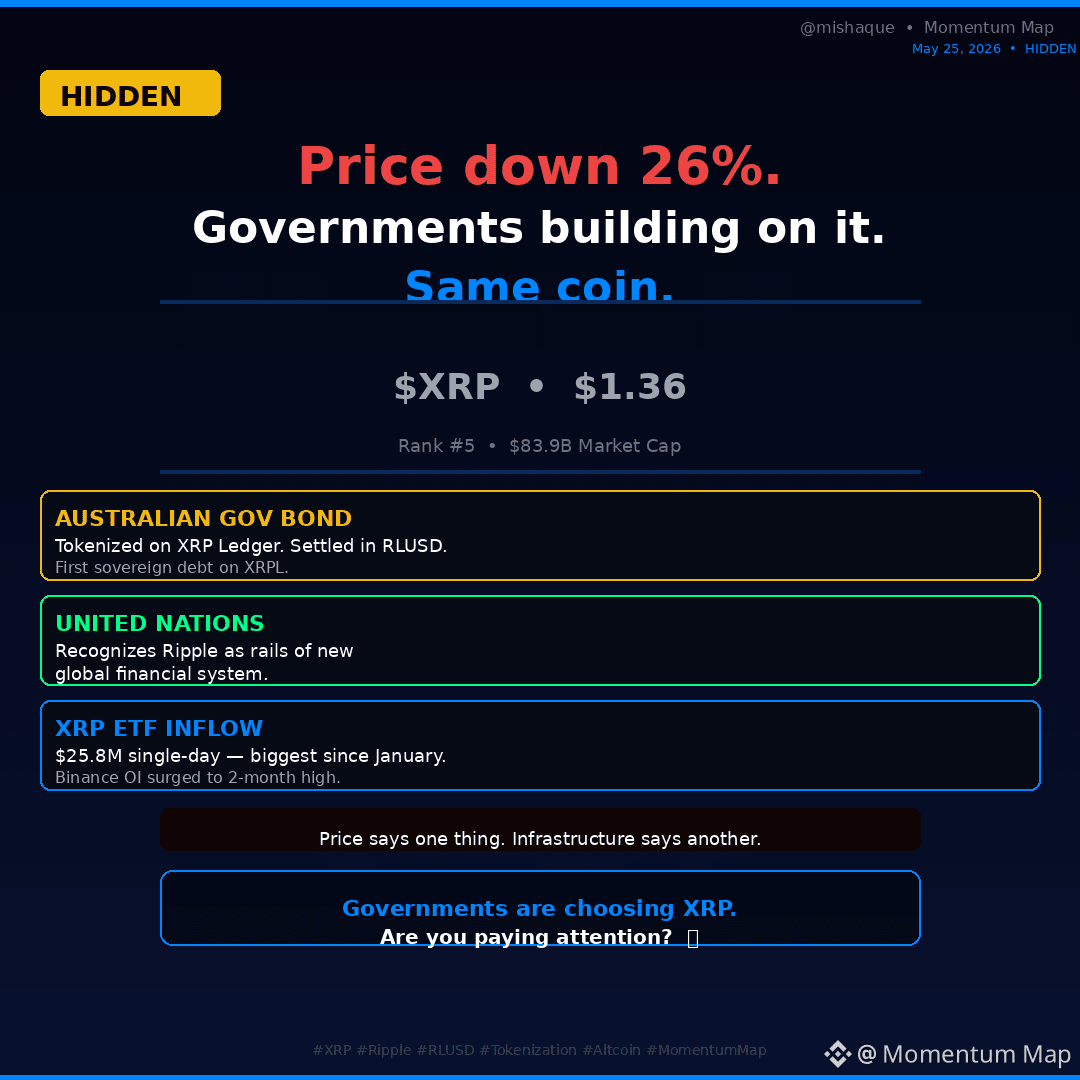
XRP ist in diesem Jahr um 26% gefallen.
Aber letzte Woche hat die australische Regierung eine Anleihe auf dem XRP Ledger tokenisiert.
Abgerechnet in RLUSD.
Die erste staatliche Anleihe überhaupt auf XRPL.
Die Vereinten Nationen erkennen Ripple jetzt als Infrastruktur für das neue globale Finanzsystem an.
XRP ETFs haben an einem Tag 25,8 Millionen Dollar angezogen — der größte Zufluss seit Januar.
Das Open Interest von Binance hat gerade ein 2-Monats-Hoch erreicht.
Der Preis sagt das eine.
Die Regierungen sagen das andere.
Einer von ihnen lügt.
Achten Sie darauf?
Speichern Sie das. Kommen Sie in 30 Tagen zurück. 👇
#xrp #Ripple #RLUSD #Altcoin #MomentumMap
XRP ist in diesem Jahr um 26% gefallen.
Aber letzte Woche hat die australische Regierung eine Anleihe auf dem XRP Ledger tokenisiert.
Abgerechnet in RLUSD.
Die erste staatliche Anleihe überhaupt auf XRPL.
Die Vereinten Nationen erkennen Ripple jetzt als Infrastruktur für das neue globale Finanzsystem an.
XRP ETFs haben an einem Tag 25,8 Millionen Dollar angezogen — der größte Zufluss seit Januar.
Das Open Interest von Binance hat gerade ein 2-Monats-Hoch erreicht.
Der Preis sagt das eine.
Die Regierungen sagen das andere.
Einer von ihnen lügt.
Achten Sie darauf?
Speichern Sie das. Kommen Sie in 30 Tagen zurück. 👇
#xrp #Ripple #RLUSD #Altcoin #MomentumMap
Aber letzte Woche hat die australische Regierung eine Anleihe auf dem XRP Ledger tokenisiert.
Abgerechnet in RLUSD.
Die erste staatliche Anleihe überhaupt auf XRPL.
Die Vereinten Nationen erkennen Ripple jetzt als Infrastruktur für das neue globale Finanzsystem an.
XRP ETFs haben an einem Tag 25,8 Millionen Dollar angezogen — der größte Zufluss seit Januar.
Das Open Interest von Binance hat gerade ein 2-Monats-Hoch erreicht.
Der Preis sagt das eine.
Die Regierungen sagen das andere.
Einer von ihnen lügt.
Achten Sie darauf?
Speichern Sie das. Kommen Sie in 30 Tagen zurück. 👇
#xrp #Ripple #RLUSD #Altcoin #MomentumMap
1
1
386
·
--
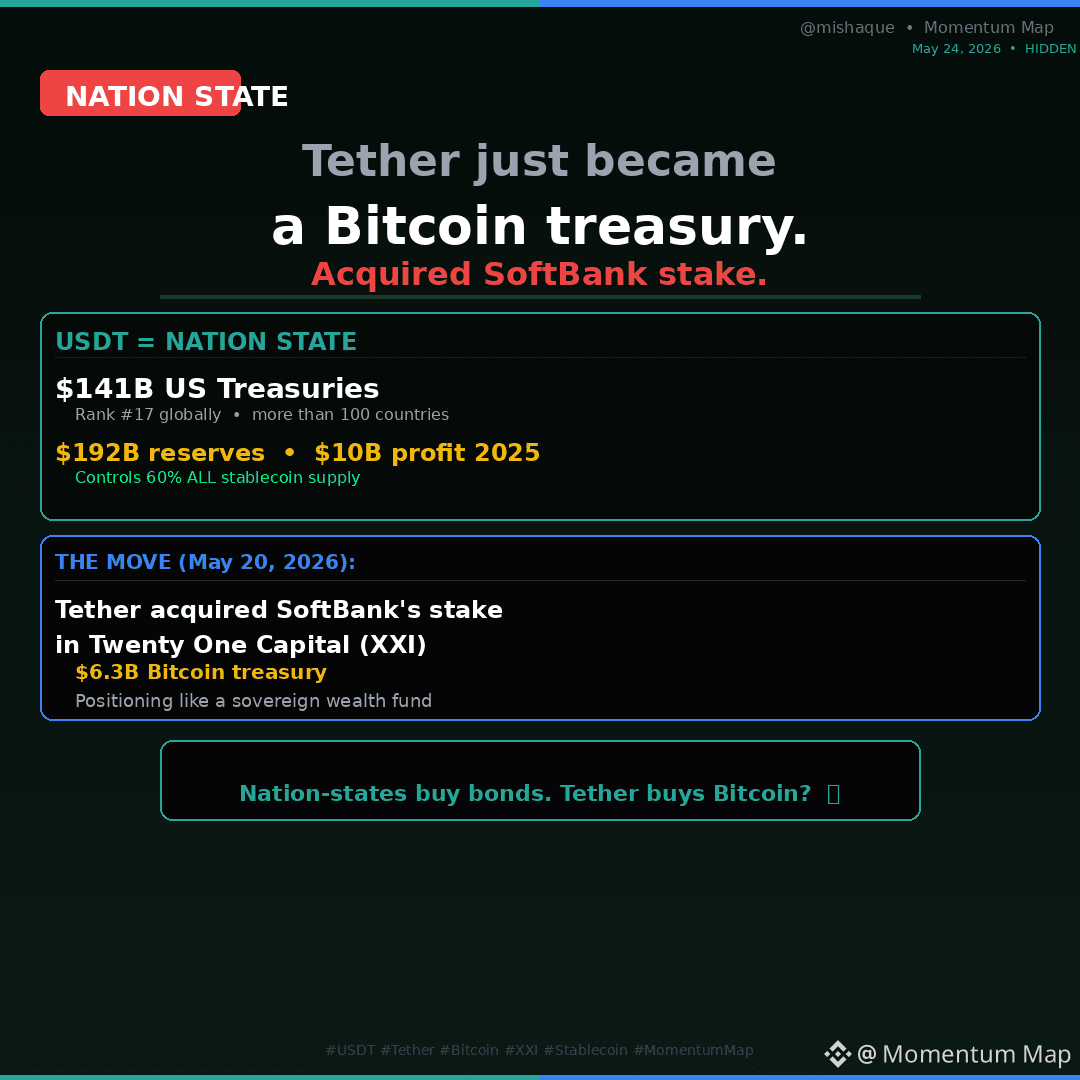
Tether ist gerade zu einer Bitcoin-Reserve geworden.
Am 20. Mai — hat sich den Anteil von SoftBank an Twenty One Capital geschnappt.
Das sind 6,3 Milliarden Dollar an Unternehmens-Bitcoin-Beständen.
Aber hier kommt der eigentliche Schock:
USDT kontrolliert 60% des gesamten Stablecoin-Angebots.
Hält 141 Milliarden Dollar in US-Staatsanleihen — Rang #17 weltweit.
Hat 2025 einen Gewinn von 10 Milliarden Dollar gemacht.
192 Milliarden Dollar Reserven für ein Angebot von 186 Milliarden Dollar.
Tether ist kein Stablecoin mehr.
Es ist ein Nationalstaat, der sich als Unternehmen tarnt.
Nationalstaaten kaufen Anleihen. Tether kauft Bitcoin.
Welche Zukunft vertraust du mehr?
#Tether #bitcoin #XXI #stablecoin #MomentumMap
Tether ist gerade zu einer Bitcoin-Reserve geworden.
Am 20. Mai — hat sich den Anteil von SoftBank an Twenty One Capital geschnappt.
Das sind 6,3 Milliarden Dollar an Unternehmens-Bitcoin-Beständen.
Aber hier kommt der eigentliche Schock:
USDT kontrolliert 60% des gesamten Stablecoin-Angebots.
Hält 141 Milliarden Dollar in US-Staatsanleihen — Rang #17 weltweit.
Hat 2025 einen Gewinn von 10 Milliarden Dollar gemacht.
192 Milliarden Dollar Reserven für ein Angebot von 186 Milliarden Dollar.
Tether ist kein Stablecoin mehr.
Es ist ein Nationalstaat, der sich als Unternehmen tarnt.
Nationalstaaten kaufen Anleihen. Tether kauft Bitcoin.
Welche Zukunft vertraust du mehr?
#Tether #bitcoin #XXI #stablecoin #MomentumMap
Am 20. Mai — hat sich den Anteil von SoftBank an Twenty One Capital geschnappt.
Das sind 6,3 Milliarden Dollar an Unternehmens-Bitcoin-Beständen.
Aber hier kommt der eigentliche Schock:
USDT kontrolliert 60% des gesamten Stablecoin-Angebots.
Hält 141 Milliarden Dollar in US-Staatsanleihen — Rang #17 weltweit.
Hat 2025 einen Gewinn von 10 Milliarden Dollar gemacht.
192 Milliarden Dollar Reserven für ein Angebot von 186 Milliarden Dollar.
Tether ist kein Stablecoin mehr.
Es ist ein Nationalstaat, der sich als Unternehmen tarnt.
Nationalstaaten kaufen Anleihen. Tether kauft Bitcoin.
Welche Zukunft vertraust du mehr?
#Tether #bitcoin #XXI #stablecoin #MomentumMap
169
·
--
Artikel
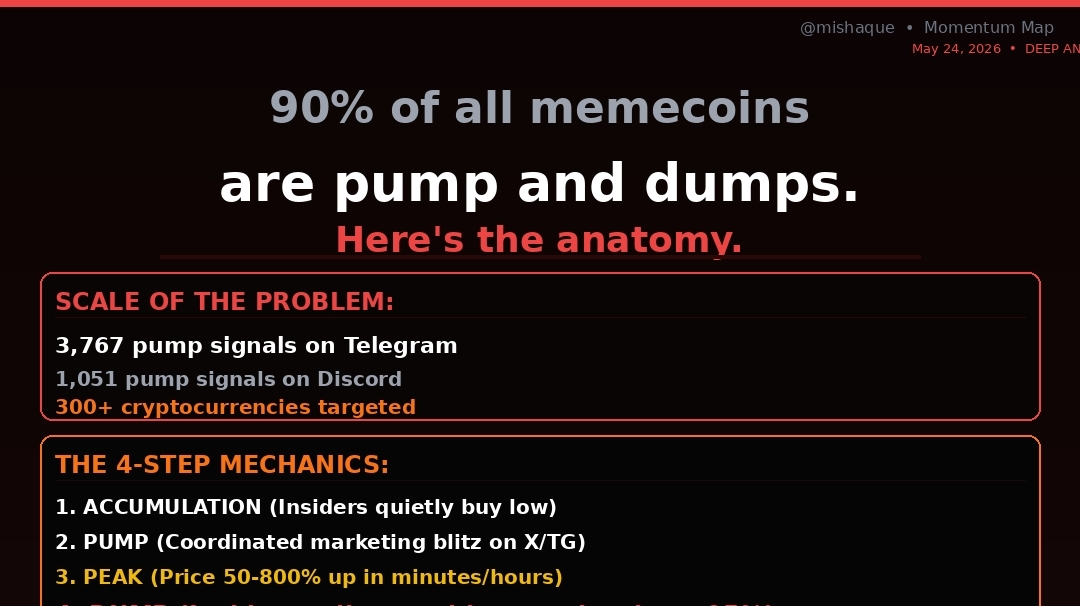
Das ist keine Vorhersage. Das ist eine datenbasierte Realität.90% aller Memecoins, die 2025 gestartet wurden, passen in das Lehrbuch-Profil für Pump und Dump.
Forschung verfolgte 412 koordinierte Pump- und Dump-Operationen über 6 Monate.
3.767 Pump-Signale auf Telegram. 1.051 auf Discord. 300+ Kryptowährungen im Visier.
Hier ist die Anatomie, über die niemand spricht.
SCHRITT 1 — AKKUMULATION.
Insider und Wale kaufen heimlich Coins mit geringer Liquidität für ein paar Cent. Niemand merkt es.
SCHRITT 2 — PUMP.
Koordinierter Marketing-Blitz trifft X, Telegram, TikTok gleichzeitig. "Diese Coin wird 100x!!" Screenshots früherer Gewinne überschwemmen die Feeds.
Das ist keine Vorhersage. Das ist eine datenbasierte Realität.
90% aller Memecoins, die 2025 gestartet wurden, passen in das Lehrbuch-Profil für Pump und Dump.
Forschung verfolgte 412 koordinierte Pump- und Dump-Operationen über 6 Monate.
3.767 Pump-Signale auf Telegram. 1.051 auf Discord. 300+ Kryptowährungen im Visier.
Hier ist die Anatomie, über die niemand spricht.
SCHRITT 1 — AKKUMULATION.
Insider und Wale kaufen heimlich Coins mit geringer Liquidität für ein paar Cent. Niemand merkt es.
SCHRITT 2 — PUMP.
Koordinierter Marketing-Blitz trifft X, Telegram, TikTok gleichzeitig. "Diese Coin wird 100x!!" Screenshots früherer Gewinne überschwemmen die Feeds.
Forschung verfolgte 412 koordinierte Pump- und Dump-Operationen über 6 Monate.
3.767 Pump-Signale auf Telegram. 1.051 auf Discord. 300+ Kryptowährungen im Visier.
Hier ist die Anatomie, über die niemand spricht.
SCHRITT 1 — AKKUMULATION.
Insider und Wale kaufen heimlich Coins mit geringer Liquidität für ein paar Cent. Niemand merkt es.
SCHRITT 2 — PUMP.
Koordinierter Marketing-Blitz trifft X, Telegram, TikTok gleichzeitig. "Diese Coin wird 100x!!" Screenshots früherer Gewinne überschwemmen die Feeds.
189
·
--
Artikel
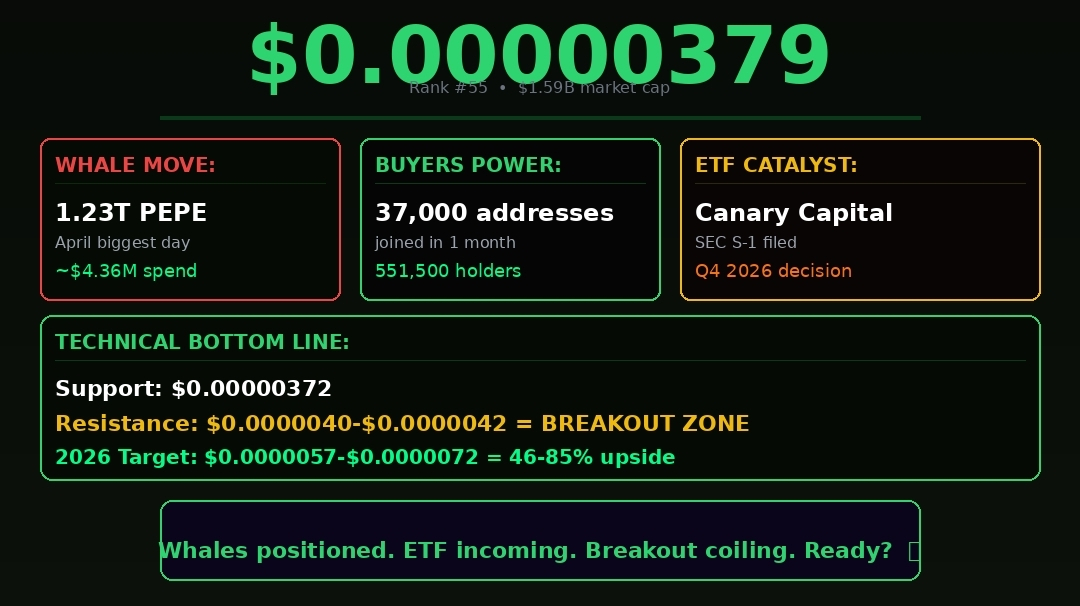
PEPE-Wale haben gerade 1,23 Billionen Tokens bewegt.Aprils größtes einzelnes Akkumulationsereignis von 2026.
Ungefähr $4,36 Millionen intelligentes Kapital, das sich ruhig positioniert, während der Einzelhandel in Panik verkauft.
Hier ist die BOTTOM LINE, über die niemand diskutiert.
Preis: $0.00000379.
Rang: #55.
Marktkapitalisierung: $1,59 Milliarden.
86% unter dem Allzeithoch von $0.000028.
Drei Katalysatoren feuern gleichzeitig:
1. Wal-Akkumulation: 1,23 Billionen PEPE in einer Aprilsitzung.
2. Halter-Explosion: 37.000 neue einzigartige Adressen seit Mitte April (jetzt 551.500 insgesamt).
3. ETF kommt: Canary Capital hat am 8. April S-1 bei der SEC für einen Spot PEPE ETF eingereicht.
PEPE-Wale haben gerade 1,23 Billionen Tokens bewegt.
Aprils größtes einzelnes Akkumulationsereignis von 2026.
Ungefähr $4,36 Millionen intelligentes Kapital, das sich ruhig positioniert, während der Einzelhandel in Panik verkauft.
Hier ist die BOTTOM LINE, über die niemand diskutiert.
Preis: $0.00000379.
Rang: #55.
Marktkapitalisierung: $1,59 Milliarden.
86% unter dem Allzeithoch von $0.000028.
Drei Katalysatoren feuern gleichzeitig:
1. Wal-Akkumulation: 1,23 Billionen PEPE in einer Aprilsitzung.
2. Halter-Explosion: 37.000 neue einzigartige Adressen seit Mitte April (jetzt 551.500 insgesamt).
3. ETF kommt: Canary Capital hat am 8. April S-1 bei der SEC für einen Spot PEPE ETF eingereicht.
Ungefähr $4,36 Millionen intelligentes Kapital, das sich ruhig positioniert, während der Einzelhandel in Panik verkauft.
Hier ist die BOTTOM LINE, über die niemand diskutiert.
Preis: $0.00000379.
Rang: #55.
Marktkapitalisierung: $1,59 Milliarden.
86% unter dem Allzeithoch von $0.000028.
Drei Katalysatoren feuern gleichzeitig:
1. Wal-Akkumulation: 1,23 Billionen PEPE in einer Aprilsitzung.
2. Halter-Explosion: 37.000 neue einzigartige Adressen seit Mitte April (jetzt 551.500 insgesamt).
3. ETF kommt: Canary Capital hat am 8. April S-1 bei der SEC für einen Spot PEPE ETF eingereicht.
391
·
--
Artikel
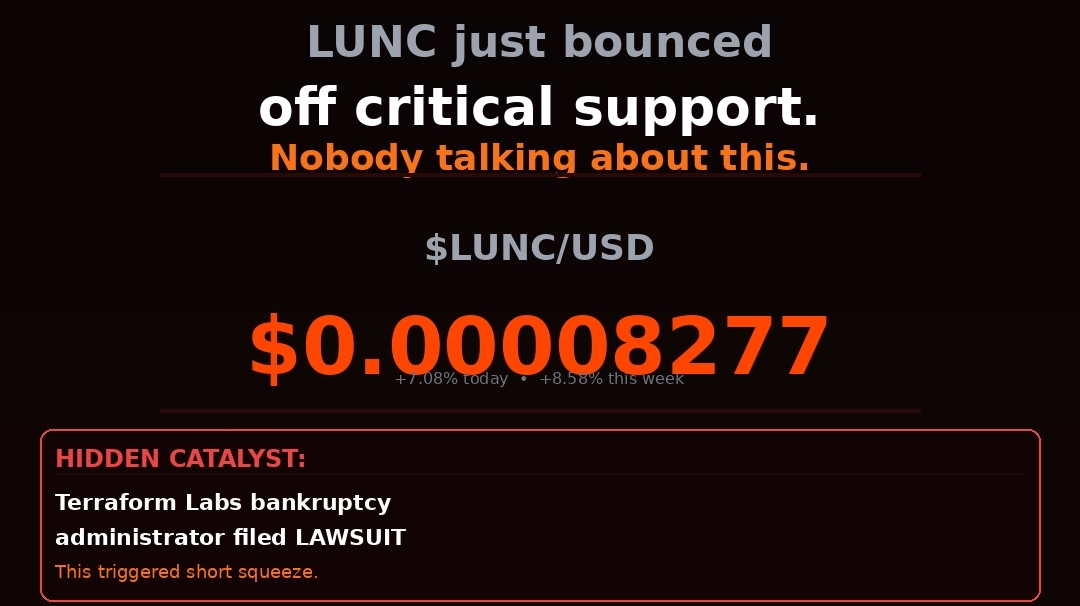
LUNC hat gerade eine kritische Unterstützung abgeprallt.+7,08% heute.
+8,58% diese Woche.
Aber niemand spricht darüber, WARUM.
Hier ist die versteckte Geschichte.
Der Insolvenzverwalter von Terraform Labs hat eine Klage eingereicht.
Diese einzelne rechtliche Maßnahme hat einen Short Squeeze ausgelöst, wie Händler sagen. Geld fließt zurück rein. Shorts decken sich ein. Preis springt zurück.
Der Preis liegt jetzt bei $0.00008277.
Aber die Gefahr, die jeder ignoriert, liegt unter der Oberfläche.
Das Staking-Verhältnis von LUNC ist unter 15% gefallen.
Kritische Schwelle für die Netzwerksicherheit.
115 Milliarden LUNC-Coins wurden in den letzten Wochen unstaked.
LUNC hat gerade eine kritische Unterstützung abgeprallt.
+7,08% heute.
+8,58% diese Woche.
Aber niemand spricht darüber, WARUM.
Hier ist die versteckte Geschichte.
Der Insolvenzverwalter von Terraform Labs hat eine Klage eingereicht.
Diese einzelne rechtliche Maßnahme hat einen Short Squeeze ausgelöst, wie Händler sagen. Geld fließt zurück rein. Shorts decken sich ein. Preis springt zurück.
Der Preis liegt jetzt bei $0.00008277.
Aber die Gefahr, die jeder ignoriert, liegt unter der Oberfläche.
Das Staking-Verhältnis von LUNC ist unter 15% gefallen.
Kritische Schwelle für die Netzwerksicherheit.
115 Milliarden LUNC-Coins wurden in den letzten Wochen unstaked.
+8,58% diese Woche.
Aber niemand spricht darüber, WARUM.
Hier ist die versteckte Geschichte.
Der Insolvenzverwalter von Terraform Labs hat eine Klage eingereicht.
Diese einzelne rechtliche Maßnahme hat einen Short Squeeze ausgelöst, wie Händler sagen. Geld fließt zurück rein. Shorts decken sich ein. Preis springt zurück.
Der Preis liegt jetzt bei $0.00008277.
Aber die Gefahr, die jeder ignoriert, liegt unter der Oberfläche.
Das Staking-Verhältnis von LUNC ist unter 15% gefallen.
Kritische Schwelle für die Netzwerksicherheit.
115 Milliarden LUNC-Coins wurden in den letzten Wochen unstaked.
356
Anmelden und weiter Inhalte entdecken
Krypto-Nutzer weltweit auf Binance Square kennenlernen
⚡️ Bleib in Sachen Krypto stets am Puls.
💬 Die weltgrößte Kryptobörse vertraut darauf.
👍 Erhalte verlässliche Einblicke von verifizierten Creators.
E-Mail-Adresse/Telefonnummer