


The United States announced several key economic data last night (April 30):
The quarter-on-quarter GDP growth rate for the first quarter is -0.3%, lower than the market expectation of -0.2%.
The year-on-year core PCE growth rate for March is 2.6%, a new low since June 2024, in line with expectations.
GDP data shows a substantial economic slowdown, while the cooling of core PCE suggests that inflation is gradually being controlled. After the data was released, the three major U.S. stock indices fell more than 2% at one point during the session, reflecting a rising market sentiment of concern over economic recession.
While economic contraction and consumer confidence dropping to historic lows are reasonable concerns for traditional financial investors, for cryptocurrency traders, such weak macro data actually reinforces expectations that the Federal Reserve will initiate a rate-cutting cycle.
According to the CME FedWatch Tool, the market has currently adjusted its expectations for the number of interest rate cuts by the Federal Reserve this year to 4 times. Historically, whenever the Federal Reserve initiates a easing cycle and increases dollar liquidity, the price of Bitcoin often becomes one of the beneficiaries.
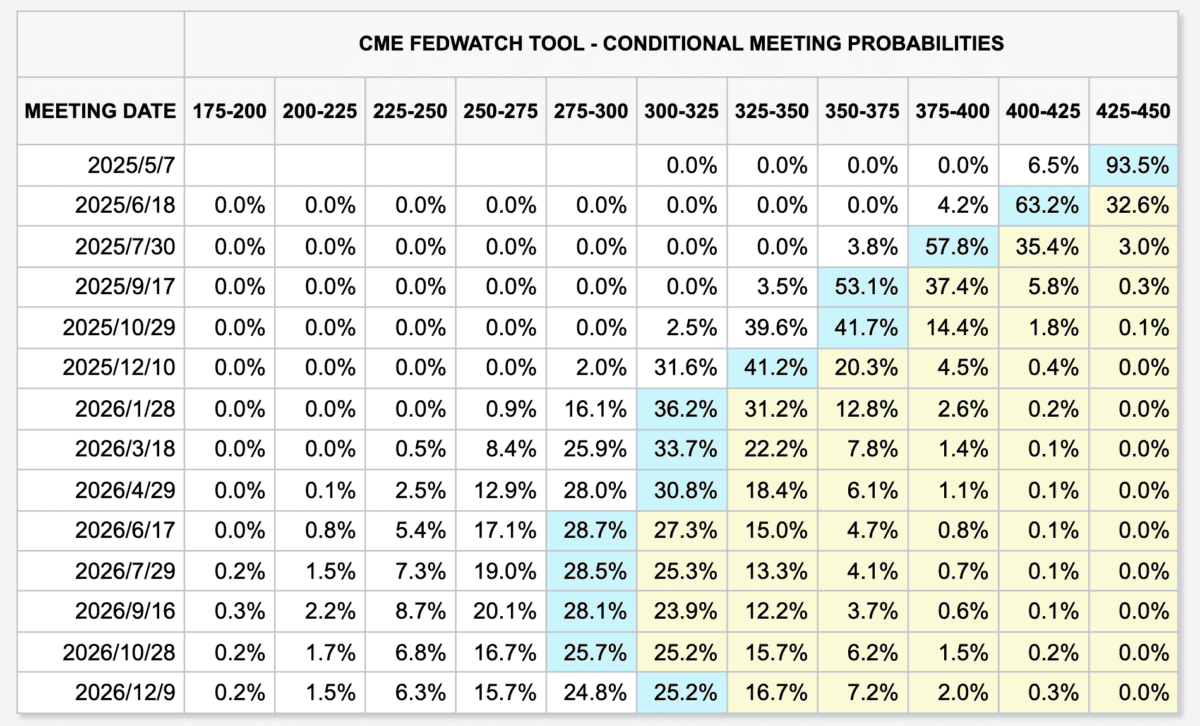
Next, the market's focus will shift to the non-farm payroll report (NFP) to be released on May 2, which will reveal the number of new jobs added in April and the resilience of the labor market. If the result is below expectations, it will further solidify the logic of 'rate-cut trading', potentially providing a short-term boost to the stock market and crypto assets.
From a technical perspective, $95,500 has become the current key resistance level for Bitcoin. Multiple analysts point out that if this price level can be effectively broken and maintained, it will open up space for an attack on the $100,000 barrier.
Source

