
#uspostquantumcryptographydeadline2031
uspostquantumcryptographydeadline2031
263,863 views
1,327 Discussing
Hot
Latest

·
--
Bullish
#USPostQuantumCryptographyDeadline2031
🚨 The clock is ticking toward the quantum era.
By 2031, organizations handling critical systems will face a new reality: today's encryption may not be enough against tomorrow's quantum computers. The race to adopt Post-Quantum Cryptography (PQC) isn't just a technology upgrade—it's a national security, business resilience, and digital trust imperative.
🔐 Protect data before quantum threats arrive.
⚡ Modernize cryptographic infrastructure.
🛡️ Build systems that can withstand the next generation of computing power.
The organizations that start preparing today will be the ones leading tomorrow.
2031 isn't the beginning of the journey—it's the deadline.
#USPostQuantumCryptographyDeadline2031 #PostQuantumCryptography #PQC #QuantumComputing #CyberSecurity #Encryption #DigitalTransformation #DataSecurity #FutureProof #TechnologyLeadership #QuantumSafe #Innovation #CyberResilience 🚀🔒
$NVDAB
{spot}(NVDABUSDT)
$SPCXB
{spot}(SPCXBUSDT)
$MUB
{spot}(MUBUSDT)
#USPostQuantumCryptographyDeadline2031 BendingSpoonsSeeking$1.62BIPO#SpaceXToJoinBloombergGlobalLargeCapIndex #CFTCSeeksPublicInputOnPerpetualContracts
#USPostQuantumCryptographyDeadline2031
🚨 The clock is ticking toward the quantum era.
By 2031, organizations handling critical systems will face a new reality: today's encryption may not be enough against tomorrow's quantum computers. The race to adopt Post-Quantum Cryptography (PQC) isn't just a technology upgrade—it's a national security, business resilience, and digital trust imperative.
🔐 Protect data before quantum threats arrive.
⚡ Modernize cryptographic infrastructure.
🛡️ Build systems that can withstand the next generation of computing power.
The organizations that start preparing today will be the ones leading tomorrow.
2031 isn't the beginning of the journey—it's the deadline.
#USPostQuantumCryptographyDeadline2031 #PostQuantumCryptography #PQC #QuantumComputing #CyberSecurity #Encryption #DigitalTransformation #DataSecurity #FutureProof #TechnologyLeadership #QuantumSafe #Innovation #CyberResilience 🚀🔒
$NVDAB
$SPCXB
$MUB
#USPostQuantumCryptographyDeadline2031 BendingSpoonsSeeking$1.62BIPO#SpaceXToJoinBloombergGlobalLargeCapIndex #CFTCSeeksPublicInputOnPerpetualContracts
🚨 The clock is ticking toward the quantum era.
By 2031, organizations handling critical systems will face a new reality: today's encryption may not be enough against tomorrow's quantum computers. The race to adopt Post-Quantum Cryptography (PQC) isn't just a technology upgrade—it's a national security, business resilience, and digital trust imperative.
🔐 Protect data before quantum threats arrive.
⚡ Modernize cryptographic infrastructure.
🛡️ Build systems that can withstand the next generation of computing power.
The organizations that start preparing today will be the ones leading tomorrow.
2031 isn't the beginning of the journey—it's the deadline.
#USPostQuantumCryptographyDeadline2031 #PostQuantumCryptography #PQC #QuantumComputing #CyberSecurity #Encryption #DigitalTransformation #DataSecurity #FutureProof #TechnologyLeadership #QuantumSafe #Innovation #CyberResilience 🚀🔒
$NVDAB
$SPCXB
$MUB
#USPostQuantumCryptographyDeadline2031 BendingSpoonsSeeking$1.62BIPO#SpaceXToJoinBloombergGlobalLargeCapIndex #CFTCSeeksPublicInputOnPerpetualContracts
1
139

·
--
Post-quantum cryptography is trending number one, but most people don't know what this means for $BTC
Post-quantum cryptography tops the trending list, but most folks are unaware of its implications for $BTC
#USPostQuantumCryptographyDeadline2031 has been trending number one for two consecutive days.
To put it simply: The US requires all federal systems to migrate to quantum-resistant cryptography by 2031. This is a long-term but certain fundamental event for the crypto industry.
The SHA-256 mining algorithm of $BTC and its elliptic curve signatures could theoretically be compromised by sufficiently powerful quantum computers. But that's a long-term risk (5-10 years), not an immediate concern.
What's really key is: the emergence of this timeline will push public chain projects to proactively prepare for quantum-resistant upgrades. Whoever can complete the migration first will gain a narrative advantage in the next cycle.
With the Fear and Greed Index at 22, the market is still in a frozen state. But this topic is worth our early attention.
Looking at the CoinRadar system, there isn’t any coin that has directly benefited from this trend yet. However, in the long run, the quantum resistance concept might become a new narrative track.
Do you know which projects are already preparing for quantum-resistant cryptography?
This does not constitute investment advice. The market carries risks, trade cautiously.
#Quantum #BTC #CoinRadar
Post-quantum cryptography is trending number one, but most people don't know what this means for $BTC
Post-quantum cryptography tops the trending list, but most folks are unaware of its implications for $BTC
#USPostQuantumCryptographyDeadline2031 has been trending number one for two consecutive days.
To put it simply: The US requires all federal systems to migrate to quantum-resistant cryptography by 2031. This is a long-term but certain fundamental event for the crypto industry.
The SHA-256 mining algorithm of $BTC and its elliptic curve signatures could theoretically be compromised by sufficiently powerful quantum computers. But that's a long-term risk (5-10 years), not an immediate concern.
What's really key is: the emergence of this timeline will push public chain projects to proactively prepare for quantum-resistant upgrades. Whoever can complete the migration first will gain a narrative advantage in the next cycle.
With the Fear and Greed Index at 22, the market is still in a frozen state. But this topic is worth our early attention.
Looking at the CoinRadar system, there isn’t any coin that has directly benefited from this trend yet. However, in the long run, the quantum resistance concept might become a new narrative track.
Do you know which projects are already preparing for quantum-resistant cryptography?
This does not constitute investment advice. The market carries risks, trade cautiously.
#Quantum #BTC #CoinRadar
Post-quantum cryptography tops the trending list, but most folks are unaware of its implications for $BTC
#USPostQuantumCryptographyDeadline2031 has been trending number one for two consecutive days.
To put it simply: The US requires all federal systems to migrate to quantum-resistant cryptography by 2031. This is a long-term but certain fundamental event for the crypto industry.
The SHA-256 mining algorithm of $BTC and its elliptic curve signatures could theoretically be compromised by sufficiently powerful quantum computers. But that's a long-term risk (5-10 years), not an immediate concern.
What's really key is: the emergence of this timeline will push public chain projects to proactively prepare for quantum-resistant upgrades. Whoever can complete the migration first will gain a narrative advantage in the next cycle.
With the Fear and Greed Index at 22, the market is still in a frozen state. But this topic is worth our early attention.
Looking at the CoinRadar system, there isn’t any coin that has directly benefited from this trend yet. However, in the long run, the quantum resistance concept might become a new narrative track.
Do you know which projects are already preparing for quantum-resistant cryptography?
This does not constitute investment advice. The market carries risks, trade cautiously.
#Quantum #BTC #CoinRadar
1
1
191

·
--
$quq $BTC $US #USPostQuantumCryptographyDeadline2031
#USPostQuantumCryptographyDeadline2031
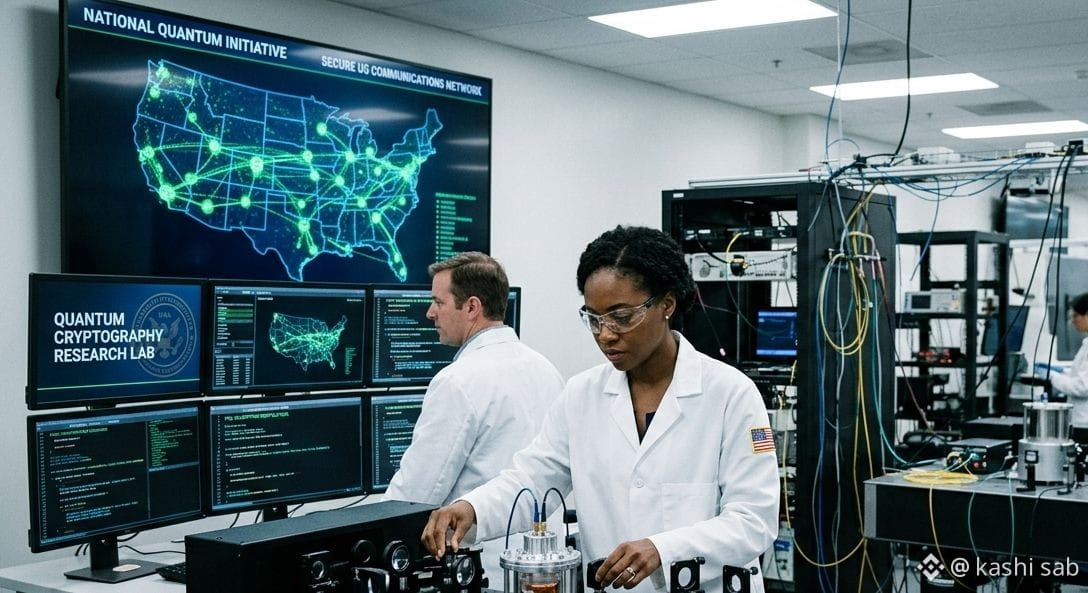
The hashtag refers to the U.S. government's push to transition federal systems to post-quantum cryptography (PQC) by 2030–2031, following executive orders signed on June 22, 2026. The goal is to protect sensitive data from future quantum computers that could potentially break today's encryption standards. �
Reuters +1
Key points:
🔐 Federal agencies are expected to migrate critical systems to quantum-resistant encryption by 2030–2031. �
Reuters +1
⚛️ The U.S. is also targeting a powerful quantum computer by 2028. �
Reuters +1
🌐 The move aims to defend against future "harvest now, decrypt later" cyber threats. �
Wikipedia +1
Short social post:
🚀 The U.S. is accelerating its quantum future! With a Post-Quantum Cryptography deadline set for 2031, agencies are racing to adopt quantum-resistant security before next-generation computers challenge today's encryption. 🔐⚛️ #USPostQuantumCryptographyDeadline2031 #CyberSecurity #QuantumComputing
{spot}(QTUMUSDT)
$quq $BTC $US #USPostQuantumCryptographyDeadline2031
#USPostQuantumCryptographyDeadline2031
The hashtag refers to the U.S. government's push to transition federal systems to post-quantum cryptography (PQC) by 2030–2031, following executive orders signed on June 22, 2026. The goal is to protect sensitive data from future quantum computers that could potentially break today's encryption standards. �
Reuters +1
Key points:
🔐 Federal agencies are expected to migrate critical systems to quantum-resistant encryption by 2030–2031. �
Reuters +1
⚛️ The U.S. is also targeting a powerful quantum computer by 2028. �
Reuters +1
🌐 The move aims to defend against future "harvest now, decrypt later" cyber threats. �
Wikipedia +1
Short social post:
🚀 The U.S. is accelerating its quantum future! With a Post-Quantum Cryptography deadline set for 2031, agencies are racing to adopt quantum-resistant security before next-generation computers challenge today's encryption. 🔐⚛️ #USPostQuantumCryptographyDeadline2031 #CyberSecurity #QuantumComputing
#USPostQuantumCryptographyDeadline2031
The hashtag refers to the U.S. government's push to transition federal systems to post-quantum cryptography (PQC) by 2030–2031, following executive orders signed on June 22, 2026. The goal is to protect sensitive data from future quantum computers that could potentially break today's encryption standards. �
Reuters +1
Key points:
🔐 Federal agencies are expected to migrate critical systems to quantum-resistant encryption by 2030–2031. �
Reuters +1
⚛️ The U.S. is also targeting a powerful quantum computer by 2028. �
Reuters +1
🌐 The move aims to defend against future "harvest now, decrypt later" cyber threats. �
Wikipedia +1
Short social post:
🚀 The U.S. is accelerating its quantum future! With a Post-Quantum Cryptography deadline set for 2031, agencies are racing to adopt quantum-resistant security before next-generation computers challenge today's encryption. 🔐⚛️ #USPostQuantumCryptographyDeadline2031 #CyberSecurity #QuantumComputing
1
259

·
--
#USPostQuantumCryptographyDeadline2031 The Post-Quantum Cryptography (PQC) deadline in the US set for 2031 refers to a crucial timeline established by the federal government to phase out traditional cryptographic algorithms vulnerable to quantum computers. Based on guidelines from NIST (National Institute of Standards and Technology) and NSA (National Security Agency), 2031 marks the full enforcement of quantum-safe standards across various government sectors.
#USPostQuantumCryptographyDeadline2031 The Post-Quantum Cryptography (PQC) deadline in the US set for 2031 refers to a crucial timeline established by the federal government to phase out traditional cryptographic algorithms vulnerable to quantum computers. Based on guidelines from NIST (National Institute of Standards and Technology) and NSA (National Security Agency), 2031 marks the full enforcement of quantum-safe standards across various government sectors.
67

·
--
Bullish
🚨 BIG NEWS ALERT! 🚨....#USPostQuantumCryptographyDeadline2031
The United States government just dropped a MAJOR deadline that could reshape cybersecurity as we know it! 🏛️⚡
🗓️ Mark your calendars$RESOLV :
All federal agencies must fully transition to Post-Quantum Cryptography (PQC) by December 31, 2031 – and this isn't a suggestion, it's the LAW now! 📜🔒
✅ This directive was formally sealed via executive orders signed on June 22, 2026 – making it official! 🖊️🇺🇸$RE
{future}(REUSDT)
🎯 Why does this matter?
Because "Q-Day" – the day quantum computers can break traditional encryption – is no longer sci-fi… it's a ticking time bomb! 💣💻
This move is all about protecting national security infrastructure from future quantum decryption threats. 🛡️🔐$LAYER
{future}(LAYERUSDT)
👀 The clock is ticking… 7.5 years to overhaul the entire federal crypto-system!
Will they make it? Or will Q-Day come knocking first? 🤔⏳
🚨 BIG NEWS ALERT! 🚨....#USPostQuantumCryptographyDeadline2031
The United States government just dropped a MAJOR deadline that could reshape cybersecurity as we know it! 🏛️⚡
🗓️ Mark your calendars$RESOLV :
All federal agencies must fully transition to Post-Quantum Cryptography (PQC) by December 31, 2031 – and this isn't a suggestion, it's the LAW now! 📜🔒
✅ This directive was formally sealed via executive orders signed on June 22, 2026 – making it official! 🖊️🇺🇸$RE
🎯 Why does this matter?
Because "Q-Day" – the day quantum computers can break traditional encryption – is no longer sci-fi… it's a ticking time bomb! 💣💻
This move is all about protecting national security infrastructure from future quantum decryption threats. 🛡️🔐$LAYER
👀 The clock is ticking… 7.5 years to overhaul the entire federal crypto-system!
Will they make it? Or will Q-Day come knocking first? 🤔⏳
The United States government just dropped a MAJOR deadline that could reshape cybersecurity as we know it! 🏛️⚡
🗓️ Mark your calendars$RESOLV :
All federal agencies must fully transition to Post-Quantum Cryptography (PQC) by December 31, 2031 – and this isn't a suggestion, it's the LAW now! 📜🔒
✅ This directive was formally sealed via executive orders signed on June 22, 2026 – making it official! 🖊️🇺🇸$RE
🎯 Why does this matter?
Because "Q-Day" – the day quantum computers can break traditional encryption – is no longer sci-fi… it's a ticking time bomb! 💣💻
This move is all about protecting national security infrastructure from future quantum decryption threats. 🛡️🔐$LAYER
👀 The clock is ticking… 7.5 years to overhaul the entire federal crypto-system!
Will they make it? Or will Q-Day come knocking first? 🤔⏳

1
256

·
--
#uspostquantumcryptographydeadline2031
🇺🇸🔐 The United States is accelerating its transition to post-quantum cryptography, with major government systems expected to adopt quantum-resistant security standards by 2031. As quantum computing technology advances, concerns are growing that current encryption methods could eventually become vulnerable. This shift highlights the importance of preparing digital infrastructure for a new era of cybersecurity. The move is drawing attention across the technology and crypto sectors, where security remains a top priority. Investors and industry leaders are closely monitoring developments in quantum computing and its potential impact on blockchain networks, data protection, and the future of secure digital transactions.$US
#Crypto #Blockchain #CyberSecurity #quantumcomputing #BinanceSquare
#uspostquantumcryptographydeadline2031
🇺🇸🔐 The United States is accelerating its transition to post-quantum cryptography, with major government systems expected to adopt quantum-resistant security standards by 2031. As quantum computing technology advances, concerns are growing that current encryption methods could eventually become vulnerable. This shift highlights the importance of preparing digital infrastructure for a new era of cybersecurity. The move is drawing attention across the technology and crypto sectors, where security remains a top priority. Investors and industry leaders are closely monitoring developments in quantum computing and its potential impact on blockchain networks, data protection, and the future of secure digital transactions.$US
#Crypto #Blockchain #CyberSecurity #quantumcomputing #BinanceSquare
🇺🇸🔐 The United States is accelerating its transition to post-quantum cryptography, with major government systems expected to adopt quantum-resistant security standards by 2031. As quantum computing technology advances, concerns are growing that current encryption methods could eventually become vulnerable. This shift highlights the importance of preparing digital infrastructure for a new era of cybersecurity. The move is drawing attention across the technology and crypto sectors, where security remains a top priority. Investors and industry leaders are closely monitoring developments in quantum computing and its potential impact on blockchain networks, data protection, and the future of secure digital transactions.$US
#Crypto #Blockchain #CyberSecurity #quantumcomputing #BinanceSquare
3
3
1.1k

Article
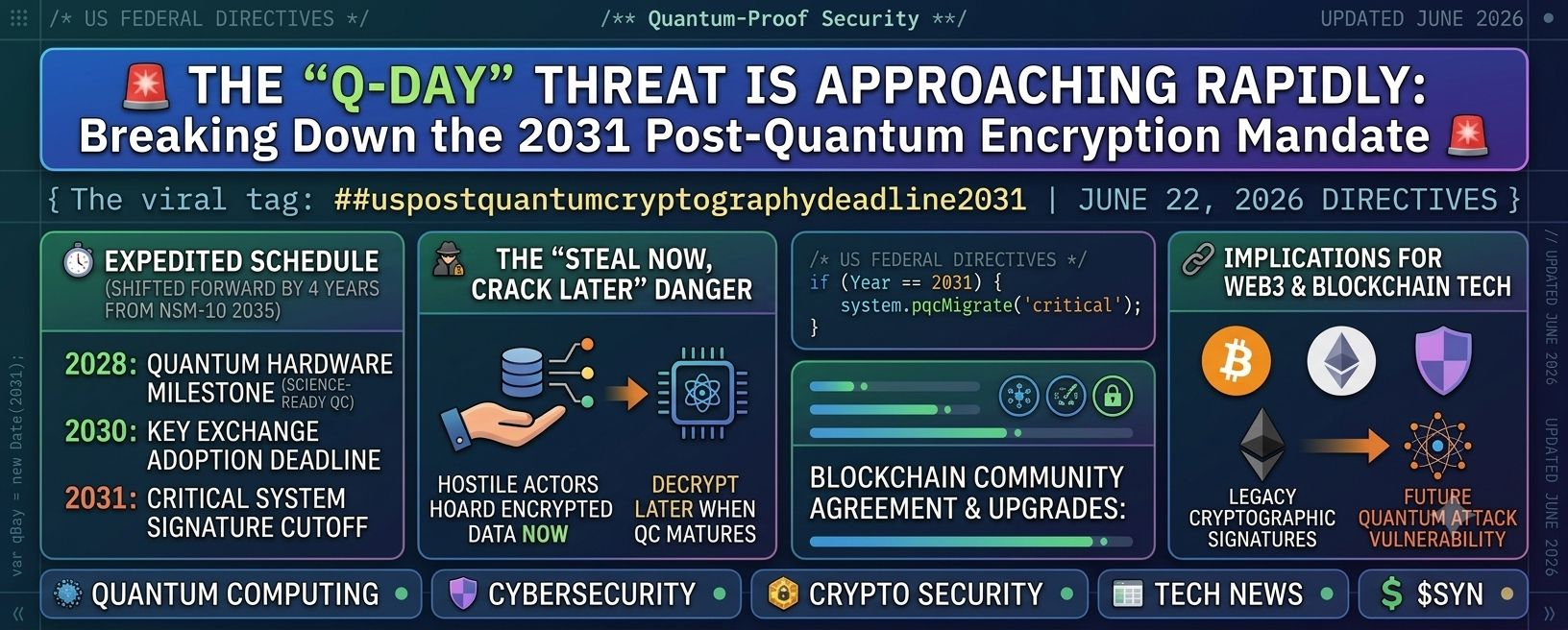
THE "Q-DAY" THREAT IS APPROACHING RAPIDLY: Breaking Down the 2031 Post-Quantum Encryption MandateThe tag #uspostquantumcryptographydeadline2031 is viral for a major reason: the window to secure systems against quantum attacks has been severely shortened.
On June 22, 2026, new executive directives were issued to speed up the United States federal government's shift toward Post-Quantum Cryptography (PQC). Below is a factual overview of the revised schedule and its implications for digital security and crypto assets.
⏱️ The Expedited Schedule
2031 Signature Cutoff: Government agencies are obligated to migrate the digital signatures of critical systems to novel, quantum-proof protocols by the close of 2031.
2030 Key Exchange: Federal frameworks must adopt PQC methods for secure key establishment no later than the end of 2030.
Shifted Forward by 4 Years: These mandates drastically push up the prior 2035 objective, which was initially outlined in the 2022 National Security Memorandum-10 (NSM-10).
Hardware Milestone: Alongside these encryption updates, a parallel directive aims to produce a fully functional, science-ready quantum computer by the year 2028.
🕵️ The "Steal Now, Crack Later" Danger
The main driver behind this rushed schedule is an identified national security vulnerability dubbed "harvest now, decrypt later." Hostile actors are currently hoarding encrypted data with the goal of decrypting it later when quantum technology becomes capable of shattering standard encryption models.
⛓️ Implications for Web3 & Blockchain Tech
The "Q-Day" Threat: Although the recent orders require updates specifically for federal infrastructure rather than decentralized protocols, they establish a clear official expectation for "Q-Day"—the exact moment quantum machines will likely bypass current encryption.
Network Weaknesses: Distributed ledgers such as Bitcoin and Ethereum depend heavily on legacy cryptographic signatures. These face severe upcoming dangers from next-generation quantum computing hardware.
Moving Forward: Defensive solutions are already available, as NIST recently completed post-quantum frameworks like ML-DSA for digital signing. The true hurdle now is for blockchain communities to reach agreement and implement network upgrades before quantum technology overtakes them.
The sprint towards a quantum-proof digital world has fully begun.
#quantumcomputing #CyberSecurity #CryptoSecurity #technews
$ALGO
{spot}(ALGOUSDT)
$IOTA
{future}(IOTAUSDT)
$ZEC
THE "Q-DAY" THREAT IS APPROACHING RAPIDLY: Breaking Down the 2031 Post-Quantum Encryption Mandate
The tag #uspostquantumcryptographydeadline2031 is viral for a major reason: the window to secure systems against quantum attacks has been severely shortened.
On June 22, 2026, new executive directives were issued to speed up the United States federal government's shift toward Post-Quantum Cryptography (PQC). Below is a factual overview of the revised schedule and its implications for digital security and crypto assets.
⏱️ The Expedited Schedule
2031 Signature Cutoff: Government agencies are obligated to migrate the digital signatures of critical systems to novel, quantum-proof protocols by the close of 2031.
2030 Key Exchange: Federal frameworks must adopt PQC methods for secure key establishment no later than the end of 2030.
Shifted Forward by 4 Years: These mandates drastically push up the prior 2035 objective, which was initially outlined in the 2022 National Security Memorandum-10 (NSM-10).
Hardware Milestone: Alongside these encryption updates, a parallel directive aims to produce a fully functional, science-ready quantum computer by the year 2028.
🕵️ The "Steal Now, Crack Later" Danger
The main driver behind this rushed schedule is an identified national security vulnerability dubbed "harvest now, decrypt later." Hostile actors are currently hoarding encrypted data with the goal of decrypting it later when quantum technology becomes capable of shattering standard encryption models.
⛓️ Implications for Web3 & Blockchain Tech
The "Q-Day" Threat: Although the recent orders require updates specifically for federal infrastructure rather than decentralized protocols, they establish a clear official expectation for "Q-Day"—the exact moment quantum machines will likely bypass current encryption.
Network Weaknesses: Distributed ledgers such as Bitcoin and Ethereum depend heavily on legacy cryptographic signatures. These face severe upcoming dangers from next-generation quantum computing hardware.
Moving Forward: Defensive solutions are already available, as NIST recently completed post-quantum frameworks like ML-DSA for digital signing. The true hurdle now is for blockchain communities to reach agreement and implement network upgrades before quantum technology overtakes them.
The sprint towards a quantum-proof digital world has fully begun.
#quantumcomputing #CyberSecurity #CryptoSecurity #technews
$ALGO
$IOTA
$ZEC
On June 22, 2026, new executive directives were issued to speed up the United States federal government's shift toward Post-Quantum Cryptography (PQC). Below is a factual overview of the revised schedule and its implications for digital security and crypto assets.
⏱️ The Expedited Schedule
2031 Signature Cutoff: Government agencies are obligated to migrate the digital signatures of critical systems to novel, quantum-proof protocols by the close of 2031.
2030 Key Exchange: Federal frameworks must adopt PQC methods for secure key establishment no later than the end of 2030.
Shifted Forward by 4 Years: These mandates drastically push up the prior 2035 objective, which was initially outlined in the 2022 National Security Memorandum-10 (NSM-10).
Hardware Milestone: Alongside these encryption updates, a parallel directive aims to produce a fully functional, science-ready quantum computer by the year 2028.
🕵️ The "Steal Now, Crack Later" Danger
The main driver behind this rushed schedule is an identified national security vulnerability dubbed "harvest now, decrypt later." Hostile actors are currently hoarding encrypted data with the goal of decrypting it later when quantum technology becomes capable of shattering standard encryption models.
⛓️ Implications for Web3 & Blockchain Tech
The "Q-Day" Threat: Although the recent orders require updates specifically for federal infrastructure rather than decentralized protocols, they establish a clear official expectation for "Q-Day"—the exact moment quantum machines will likely bypass current encryption.
Network Weaknesses: Distributed ledgers such as Bitcoin and Ethereum depend heavily on legacy cryptographic signatures. These face severe upcoming dangers from next-generation quantum computing hardware.
Moving Forward: Defensive solutions are already available, as NIST recently completed post-quantum frameworks like ML-DSA for digital signing. The true hurdle now is for blockchain communities to reach agreement and implement network upgrades before quantum technology overtakes them.
The sprint towards a quantum-proof digital world has fully begun.
#quantumcomputing #CyberSecurity #CryptoSecurity #technews
$ALGO
$IOTA
$ZEC
4
9
7.5k

·
--
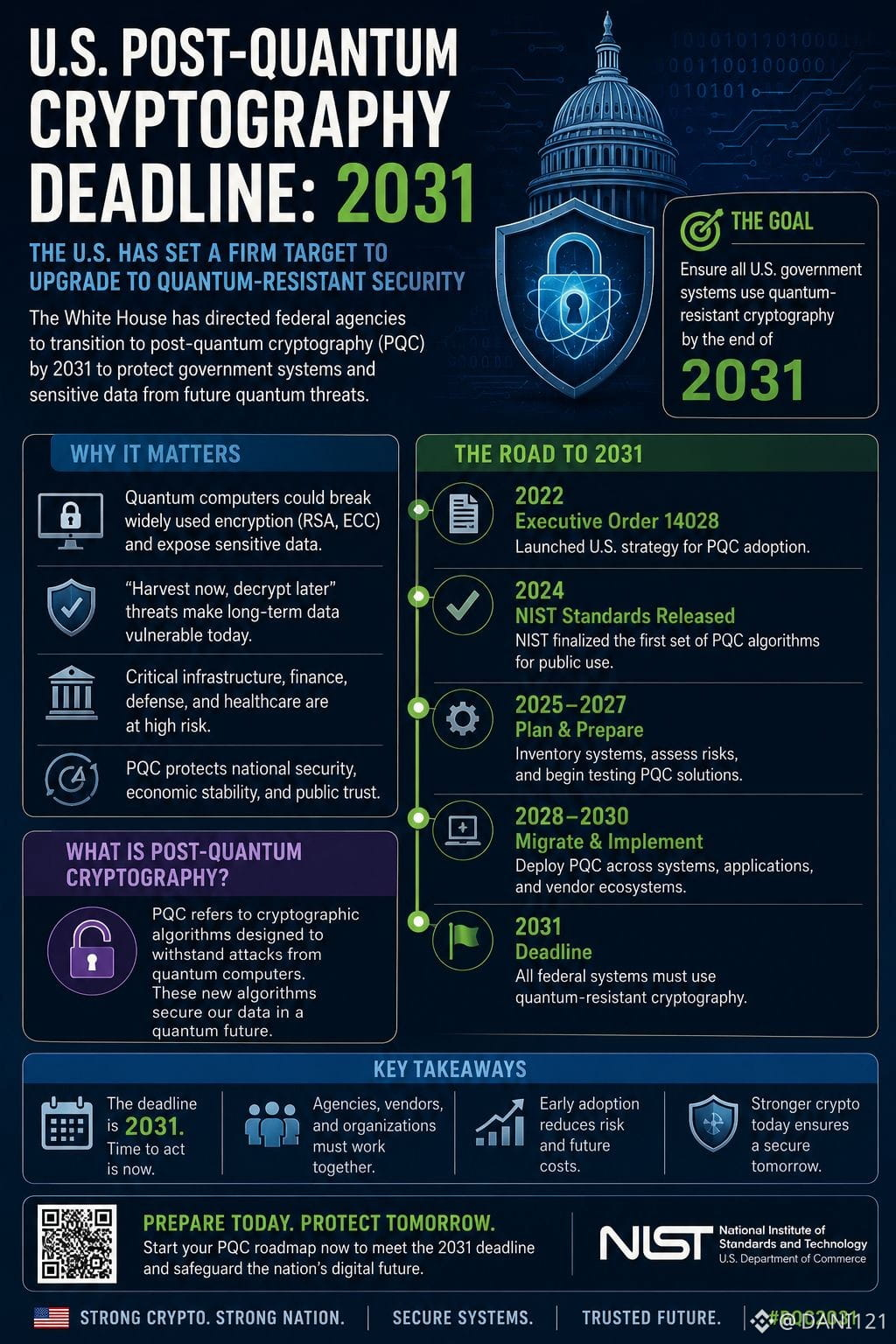
#uspostquantumcryptographydeadline2031 🇺🇸 U.S. Sets 2031 Post-Quantum Cryptography Deadline
President Donald Trump signed an executive order directing key U.S. government systems to transition to post-quantum cryptography (PQC) by 2030 or 2031. The goal is to protect federal networks from future quantum computers that could break widely used encryption methods. (Reuters)
Key Highlights
🔐 Federal agencies must accelerate migration to quantum-resistant encryption
📅 Key systems targeted for completion by 2030–2031
⚛️ A separate order aims to build a powerful U.S. quantum computer by 2028
🛡️ The policy addresses “harvest now, decrypt later” risks
⚠️ The deadline applies primarily to government systems; private companies will set their own migration schedules. (Reuters)
Why It Matters
PQC uses newer algorithms designed to resist attacks from future quantum machines. The announcement raises pressure on government contractors, cloud providers, banks, and critical-infrastructure operators to identify cryptography that relies on vulnerable public-key systems and begin upgrading it. (Reuters)
Social Media Post
🚨 U.S. Sets 2031 Post-Quantum Cryptography Deadline
The U.S. is accelerating its shift to quantum-resistant cybersecurity, with key federal systems targeted to move to post-quantum cryptography by 2030–2031.
🔐 Quantum-safe encryption push
📅 2031 federal deadline
⚛️ Powerful quantum computer targeted by 2028
🛡️ “Harvest now, decrypt later” risk addressed
🏦 Government and contractors face migration pressure
The quantum race is no longer just about computing power—it is becoming a major cybersecurity and infrastructure challenge.
#QuantumComputing #Cybersecurity #PQC #PostQuantum #Encryption #Technology #USGovernment #AI #Markets
#uspostquantumcryptographydeadline2031 🇺🇸 U.S. Sets 2031 Post-Quantum Cryptography Deadline
President Donald Trump signed an executive order directing key U.S. government systems to transition to post-quantum cryptography (PQC) by 2030 or 2031. The goal is to protect federal networks from future quantum computers that could break widely used encryption methods. (Reuters)
Key Highlights
🔐 Federal agencies must accelerate migration to quantum-resistant encryption
📅 Key systems targeted for completion by 2030–2031
⚛️ A separate order aims to build a powerful U.S. quantum computer by 2028
🛡️ The policy addresses “harvest now, decrypt later” risks
⚠️ The deadline applies primarily to government systems; private companies will set their own migration schedules. (Reuters)
Why It Matters
PQC uses newer algorithms designed to resist attacks from future quantum machines. The announcement raises pressure on government contractors, cloud providers, banks, and critical-infrastructure operators to identify cryptography that relies on vulnerable public-key systems and begin upgrading it. (Reuters)
Social Media Post
🚨 U.S. Sets 2031 Post-Quantum Cryptography Deadline
The U.S. is accelerating its shift to quantum-resistant cybersecurity, with key federal systems targeted to move to post-quantum cryptography by 2030–2031.
🔐 Quantum-safe encryption push
📅 2031 federal deadline
⚛️ Powerful quantum computer targeted by 2028
🛡️ “Harvest now, decrypt later” risk addressed
🏦 Government and contractors face migration pressure
The quantum race is no longer just about computing power—it is becoming a major cybersecurity and infrastructure challenge.
#QuantumComputing #Cybersecurity #PQC #PostQuantum #Encryption #Technology #USGovernment #AI #Markets
President Donald Trump signed an executive order directing key U.S. government systems to transition to post-quantum cryptography (PQC) by 2030 or 2031. The goal is to protect federal networks from future quantum computers that could break widely used encryption methods. (Reuters)
Key Highlights
🔐 Federal agencies must accelerate migration to quantum-resistant encryption
📅 Key systems targeted for completion by 2030–2031
⚛️ A separate order aims to build a powerful U.S. quantum computer by 2028
🛡️ The policy addresses “harvest now, decrypt later” risks
⚠️ The deadline applies primarily to government systems; private companies will set their own migration schedules. (Reuters)
Why It Matters
PQC uses newer algorithms designed to resist attacks from future quantum machines. The announcement raises pressure on government contractors, cloud providers, banks, and critical-infrastructure operators to identify cryptography that relies on vulnerable public-key systems and begin upgrading it. (Reuters)
Social Media Post
🚨 U.S. Sets 2031 Post-Quantum Cryptography Deadline
The U.S. is accelerating its shift to quantum-resistant cybersecurity, with key federal systems targeted to move to post-quantum cryptography by 2030–2031.
🔐 Quantum-safe encryption push
📅 2031 federal deadline
⚛️ Powerful quantum computer targeted by 2028
🛡️ “Harvest now, decrypt later” risk addressed
🏦 Government and contractors face migration pressure
The quantum race is no longer just about computing power—it is becoming a major cybersecurity and infrastructure challenge.
#QuantumComputing #Cybersecurity #PQC #PostQuantum #Encryption #Technology #USGovernment #AI #Markets
11
3.8k

·
--
#USPostQuantumCryptographyDeadline2031
What the Hell is that?
US Post-Quantum Cryptography Deadline 2031 is a federal mandate requiring all US government systems to migrate to quantum-resistant encryption standards by 2031.
Why it exists — Quantum computers will eventually break today's RSA/ECC encryption, threatening all secure digital communications.
Who set it — NIST finalized the first Post-Quantum Cryptography (PQC) standards in 2024 (FIPS 203, 204, 205).
The deadline — NSA and CISA require federal agencies and critical infrastructure to complete migration by 2031.
What changes — Current public-key cryptography gets replaced by lattice-based and hash-based algorithms (e.g., CRYSTALS-Kyber, CRYSTALS-Dilithium).
Why it matters to everyone — Banks, tech firms, and defense contractors doing business with the US government must also comply, making it a global cybersecurity shift.
$BTC #USPostQuantumCryptographyDeadline2031 $ETH $BNB #Binance
#USPostQuantumCryptographyDeadline2031
What the Hell is that?
US Post-Quantum Cryptography Deadline 2031 is a federal mandate requiring all US government systems to migrate to quantum-resistant encryption standards by 2031.
Why it exists — Quantum computers will eventually break today's RSA/ECC encryption, threatening all secure digital communications.
Who set it — NIST finalized the first Post-Quantum Cryptography (PQC) standards in 2024 (FIPS 203, 204, 205).
The deadline — NSA and CISA require federal agencies and critical infrastructure to complete migration by 2031.
What changes — Current public-key cryptography gets replaced by lattice-based and hash-based algorithms (e.g., CRYSTALS-Kyber, CRYSTALS-Dilithium).
Why it matters to everyone — Banks, tech firms, and defense contractors doing business with the US government must also comply, making it a global cybersecurity shift.
$BTC #USPostQuantumCryptographyDeadline2031 $ETH $BNB #Binance
What the Hell is that?
US Post-Quantum Cryptography Deadline 2031 is a federal mandate requiring all US government systems to migrate to quantum-resistant encryption standards by 2031.
Why it exists — Quantum computers will eventually break today's RSA/ECC encryption, threatening all secure digital communications.
Who set it — NIST finalized the first Post-Quantum Cryptography (PQC) standards in 2024 (FIPS 203, 204, 205).
The deadline — NSA and CISA require federal agencies and critical infrastructure to complete migration by 2031.
What changes — Current public-key cryptography gets replaced by lattice-based and hash-based algorithms (e.g., CRYSTALS-Kyber, CRYSTALS-Dilithium).
Why it matters to everyone — Banks, tech firms, and defense contractors doing business with the US government must also comply, making it a global cybersecurity shift.
$BTC #USPostQuantumCryptographyDeadline2031 $ETH $BNB #Binance
53

#USPostQuantumCryptographyDeadline2031
The clock is ticking for data security: The US government has set a firm 2031 deadline for migrating to Post-Quantum Cryptography (PQC). As quantum computing advances, traditional encryption methods (like RSA) will soon become vulnerable to decryption. To get ahead of this threat, National Security Memorandum 10 (NSM-10) and the Quantum Computing Cybersecurity Preparedness Act require all federal agencies—and their supply chains—to fully transition to quantum-resistant algorithms by 2031.
Why This Matters Right Now
"Harvest Now, Decrypt Later": Cyberadversaries are actively stealing encrypted data today, intending to decrypt it once powerful quantum computers become available.
Long Integration Timelines: Replacing foundational cryptography across legacy systems, cloud environments, and infrastructure takes years of planning, testing, and execution.
Commercial Ripple Effect: While the mandate directly targets federal systems, commercial sectors (finance, healthcare, critical infrastructure) must follow suit to remain compliant and secure.
The Next Steps for Organizations
Inventory: Discover and catalog all cryptographic assets and dependencies.
Assess: Identify vulnerabilities and prioritize high-value data.
Migrate: Begin testing NIST-approved PQC algorithms (like ML-KEM and ML-DSA) within your architecture.
The 2031 deadline might seem distant, but cryptographic transitions are notoriously complex. Zero hour is approaching—is your organization quantum-ready?
#QuantumComputing #Cybersecurity #PostQuantumCryptography #PQC #DataProtection #USPostQuantumCryptographyDeadline2031
$BTC
{future}(BTCUSDT)
#USPostQuantumCryptographyDeadline2031
The clock is ticking for data security: The US government has set a firm 2031 deadline for migrating to Post-Quantum Cryptography (PQC). As quantum computing advances, traditional encryption methods (like RSA) will soon become vulnerable to decryption. To get ahead of this threat, National Security Memorandum 10 (NSM-10) and the Quantum Computing Cybersecurity Preparedness Act require all federal agencies—and their supply chains—to fully transition to quantum-resistant algorithms by 2031.
Why This Matters Right Now
"Harvest Now, Decrypt Later": Cyberadversaries are actively stealing encrypted data today, intending to decrypt it once powerful quantum computers become available.
Long Integration Timelines: Replacing foundational cryptography across legacy systems, cloud environments, and infrastructure takes years of planning, testing, and execution.
Commercial Ripple Effect: While the mandate directly targets federal systems, commercial sectors (finance, healthcare, critical infrastructure) must follow suit to remain compliant and secure.
The Next Steps for Organizations
Inventory: Discover and catalog all cryptographic assets and dependencies.
Assess: Identify vulnerabilities and prioritize high-value data.
Migrate: Begin testing NIST-approved PQC algorithms (like ML-KEM and ML-DSA) within your architecture.
The 2031 deadline might seem distant, but cryptographic transitions are notoriously complex. Zero hour is approaching—is your organization quantum-ready?
#QuantumComputing #Cybersecurity #PostQuantumCryptography #PQC #DataProtection #USPostQuantumCryptographyDeadline2031
$BTC
The clock is ticking for data security: The US government has set a firm 2031 deadline for migrating to Post-Quantum Cryptography (PQC). As quantum computing advances, traditional encryption methods (like RSA) will soon become vulnerable to decryption. To get ahead of this threat, National Security Memorandum 10 (NSM-10) and the Quantum Computing Cybersecurity Preparedness Act require all federal agencies—and their supply chains—to fully transition to quantum-resistant algorithms by 2031.
Why This Matters Right Now
"Harvest Now, Decrypt Later": Cyberadversaries are actively stealing encrypted data today, intending to decrypt it once powerful quantum computers become available.
Long Integration Timelines: Replacing foundational cryptography across legacy systems, cloud environments, and infrastructure takes years of planning, testing, and execution.
Commercial Ripple Effect: While the mandate directly targets federal systems, commercial sectors (finance, healthcare, critical infrastructure) must follow suit to remain compliant and secure.
The Next Steps for Organizations
Inventory: Discover and catalog all cryptographic assets and dependencies.
Assess: Identify vulnerabilities and prioritize high-value data.
Migrate: Begin testing NIST-approved PQC algorithms (like ML-KEM and ML-DSA) within your architecture.
The 2031 deadline might seem distant, but cryptographic transitions are notoriously complex. Zero hour is approaching—is your organization quantum-ready?
#QuantumComputing #Cybersecurity #PostQuantumCryptography #PQC #DataProtection #USPostQuantumCryptographyDeadline2031
$BTC

20

🇺🇸 JUST IN: President Trump has signed two executive orders aimed at accelerating U.S. quantum computing development and transitioning federal systems to post-quantum cryptography by 2031.
#USPostQuantumCryptographyDeadline2031
$SPCXB $TSLAB $BTC
{spot}(BTCUSDT)
{spot}(TSLABUSDT)
{spot}(SPCXBUSDT)
🇺🇸 JUST IN: President Trump has signed two executive orders aimed at accelerating U.S. quantum computing development and transitioning federal systems to post-quantum cryptography by 2031.
#USPostQuantumCryptographyDeadline2031
$SPCXB $TSLAB $BTC
#USPostQuantumCryptographyDeadline2031
$SPCXB $TSLAB $BTC


1
201

·
--
US Post Quantum Cryptography Deadline 2031
So the government just gave us 5 years to panic... and we're still here arguing about dog coins.
Guys, the US literally set a deadline to ditch all our current encryption before quantum computers break the internet, and my biggest worry today is still whether my stop loss will get hunted. I can't lie, if a quantum computer can crack Bitcoin wallets in seconds by 2031, are we even early or are we just exit liquidity for the machines?
Be honest,.. does this make you want to bury your keys in a lead box in the backyard, or do you just not care because "2031 is basically a lifetime away" in crypto years?
Team "buy more because quantum proof chains will moon" or team "we're all rekt anyway so who cares"? Drop your copium below.#USPostQuantumCryptographyDeadline2031
US Post Quantum Cryptography Deadline 2031
So the government just gave us 5 years to panic... and we're still here arguing about dog coins.
Guys, the US literally set a deadline to ditch all our current encryption before quantum computers break the internet, and my biggest worry today is still whether my stop loss will get hunted. I can't lie, if a quantum computer can crack Bitcoin wallets in seconds by 2031, are we even early or are we just exit liquidity for the machines?
Be honest,.. does this make you want to bury your keys in a lead box in the backyard, or do you just not care because "2031 is basically a lifetime away" in crypto years?
Team "buy more because quantum proof chains will moon" or team "we're all rekt anyway so who cares"? Drop your copium below.#USPostQuantumCryptographyDeadline2031
So the government just gave us 5 years to panic... and we're still here arguing about dog coins.
Guys, the US literally set a deadline to ditch all our current encryption before quantum computers break the internet, and my biggest worry today is still whether my stop loss will get hunted. I can't lie, if a quantum computer can crack Bitcoin wallets in seconds by 2031, are we even early or are we just exit liquidity for the machines?
Be honest,.. does this make you want to bury your keys in a lead box in the backyard, or do you just not care because "2031 is basically a lifetime away" in crypto years?
Team "buy more because quantum proof chains will moon" or team "we're all rekt anyway so who cares"? Drop your copium below.#USPostQuantumCryptographyDeadline2031
32

·
--
Bullish
#USPostQuantumCryptographyDeadline2031 $BTC
{spot}(BTCUSDT)
🚨 #USPostQuantumCryptographyDeadline2031 — The Silent Tech Race Has Started 🔐⚡
Most people are watching AI… but smart money is watching Post-Quantum Cryptography (PQC).
The U.S. push toward stronger cryptographic readiness before 2031 could reshape security across:
✅ Banking
✅ Blockchain & Crypto
✅ Cloud Infrastructure
✅ Government Systems
✅ Digital Identity
Why this matters 👇
Quantum computing has the potential to challenge today’s encryption standards. That means institutions are preparing NOW — not later.
📌 Markets reward early movers.
📌 Security narratives create opportunity.
📌 Crypto + infrastructure + AI could collide in unexpected ways.
Projects and sectors connected to:
🔹 Security
🔹 Privacy
🔹 Infrastructure
🔹 Next-gen cryptography
…may become the next conversation wave.
Question for the community 👇
Will Post-Quantum tech become bigger than the AI narrative in the next cycle? 👀
🔥 Follow for more market narratives & trending insights
🪙 Stay early. Stay informed. Stay ahead.
#USPostQuantumCryptographyDeadline2031 #Crypto #Blockchain #BinanceSquare #Web3 #CyberSecurity #AI #JALILORD9
#USPostQuantumCryptographyDeadline2031 $BTC
🚨 #USPostQuantumCryptographyDeadline2031 — The Silent Tech Race Has Started 🔐⚡
Most people are watching AI… but smart money is watching Post-Quantum Cryptography (PQC).
The U.S. push toward stronger cryptographic readiness before 2031 could reshape security across:
✅ Banking
✅ Blockchain & Crypto
✅ Cloud Infrastructure
✅ Government Systems
✅ Digital Identity
Why this matters 👇
Quantum computing has the potential to challenge today’s encryption standards. That means institutions are preparing NOW — not later.
📌 Markets reward early movers.
📌 Security narratives create opportunity.
📌 Crypto + infrastructure + AI could collide in unexpected ways.
Projects and sectors connected to:
🔹 Security
🔹 Privacy
🔹 Infrastructure
🔹 Next-gen cryptography
…may become the next conversation wave.
Question for the community 👇
Will Post-Quantum tech become bigger than the AI narrative in the next cycle? 👀
🔥 Follow for more market narratives & trending insights
🪙 Stay early. Stay informed. Stay ahead.
#USPostQuantumCryptographyDeadline2031 #Crypto #Blockchain #BinanceSquare #Web3 #CyberSecurity #AI #JALILORD9
🚨 #USPostQuantumCryptographyDeadline2031 — The Silent Tech Race Has Started 🔐⚡
Most people are watching AI… but smart money is watching Post-Quantum Cryptography (PQC).
The U.S. push toward stronger cryptographic readiness before 2031 could reshape security across:
✅ Banking
✅ Blockchain & Crypto
✅ Cloud Infrastructure
✅ Government Systems
✅ Digital Identity
Why this matters 👇
Quantum computing has the potential to challenge today’s encryption standards. That means institutions are preparing NOW — not later.
📌 Markets reward early movers.
📌 Security narratives create opportunity.
📌 Crypto + infrastructure + AI could collide in unexpected ways.
Projects and sectors connected to:
🔹 Security
🔹 Privacy
🔹 Infrastructure
🔹 Next-gen cryptography
…may become the next conversation wave.
Question for the community 👇
Will Post-Quantum tech become bigger than the AI narrative in the next cycle? 👀
🔥 Follow for more market narratives & trending insights
🪙 Stay early. Stay informed. Stay ahead.
#USPostQuantumCryptographyDeadline2031 #Crypto #Blockchain #BinanceSquare #Web3 #CyberSecurity #AI #JALILORD9

1
40

·
--
Bullish
#uspostquantumcryptographydeadline2031 #xrp
⚡ POST-QUANTUM CRYPTO: THE NEXT BIG CRYPTO NARRATIVE?
The U.S. has set a 2031 deadline for federal systems to adopt Post-Quantum Cryptography (PQC), putting quantum-resistant security in the spotlight. 🚀
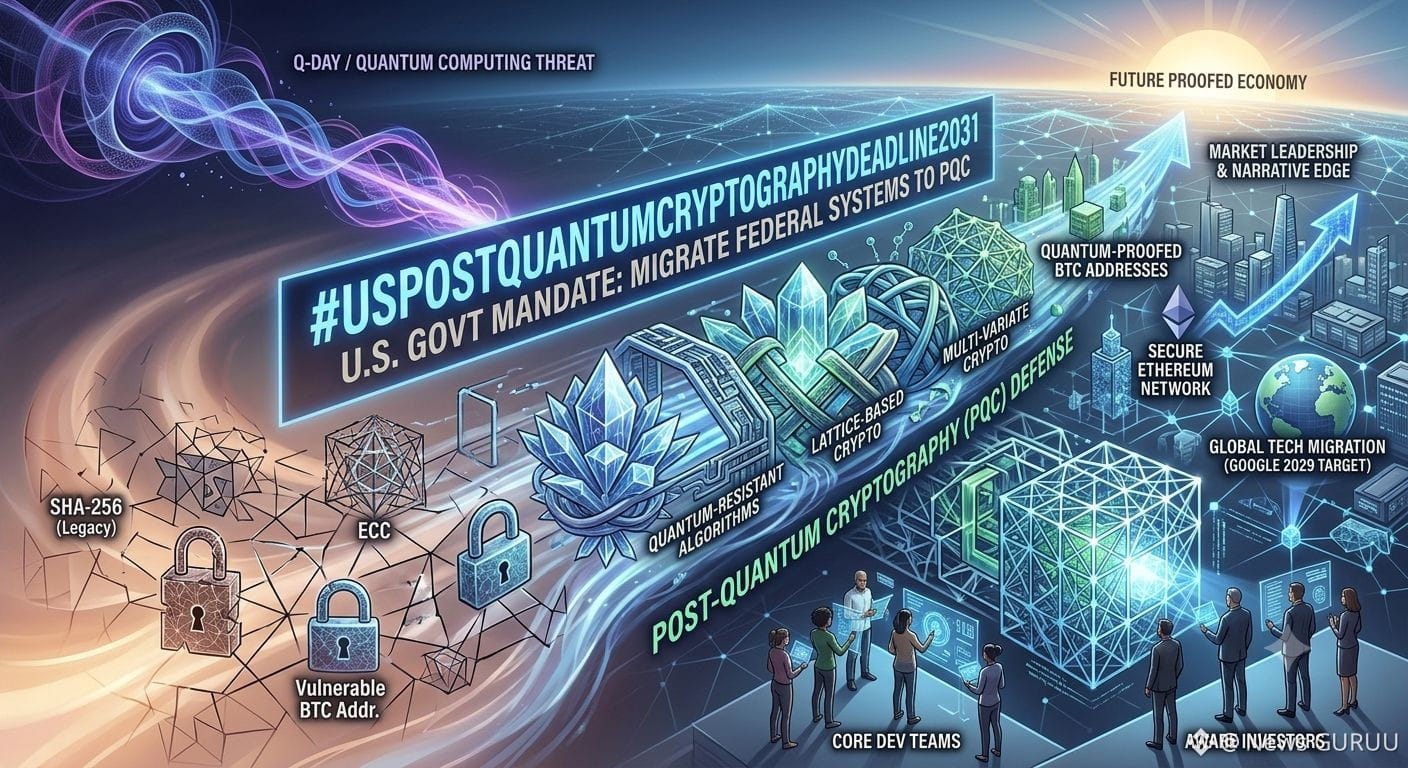
🔹 Quantum computing could challenge current blockchain encryption in the future.
🔹 Major networks and tech giants are already preparing for the transition.
🔹 Projects that upgrade to quantum-resistant infrastructure early may gain a major long-term advantage.
💰 Trading View: BUY strong blockchain infrastructure and security-focused projects on dips. This is a long-term trend that the market may still be underestimating.
⚠️ Focus on fundamentals, not hype. The winners will be the chains that adapt first." CLICK ON THE BELOW YELLOW COIN TAG TO GO TO DESIRED TRADING PAGE TO GET BENEFIT TRADE OK." $BTC $ETH $XRP
{spot}(XRPUSDT)
{spot}(ETHUSDT)
{spot}(BTCUSDT)
#uspostquantumcryptographydeadline2031 #xrp
⚡ POST-QUANTUM CRYPTO: THE NEXT BIG CRYPTO NARRATIVE?
The U.S. has set a 2031 deadline for federal systems to adopt Post-Quantum Cryptography (PQC), putting quantum-resistant security in the spotlight. 🚀
🔹 Quantum computing could challenge current blockchain encryption in the future.
🔹 Major networks and tech giants are already preparing for the transition.
🔹 Projects that upgrade to quantum-resistant infrastructure early may gain a major long-term advantage.
💰 Trading View: BUY strong blockchain infrastructure and security-focused projects on dips. This is a long-term trend that the market may still be underestimating.
⚠️ Focus on fundamentals, not hype. The winners will be the chains that adapt first." CLICK ON THE BELOW YELLOW COIN TAG TO GO TO DESIRED TRADING PAGE TO GET BENEFIT TRADE OK." $BTC $ETH $XRP
⚡ POST-QUANTUM CRYPTO: THE NEXT BIG CRYPTO NARRATIVE?
The U.S. has set a 2031 deadline for federal systems to adopt Post-Quantum Cryptography (PQC), putting quantum-resistant security in the spotlight. 🚀
🔹 Quantum computing could challenge current blockchain encryption in the future.
🔹 Major networks and tech giants are already preparing for the transition.
🔹 Projects that upgrade to quantum-resistant infrastructure early may gain a major long-term advantage.
💰 Trading View: BUY strong blockchain infrastructure and security-focused projects on dips. This is a long-term trend that the market may still be underestimating.
⚠️ Focus on fundamentals, not hype. The winners will be the chains that adapt first." CLICK ON THE BELOW YELLOW COIN TAG TO GO TO DESIRED TRADING PAGE TO GET BENEFIT TRADE OK." $BTC $ETH $XRP
4
15
13.1k

·
--
🔐🚀 Is Crypto Ready for the Quantum Era?
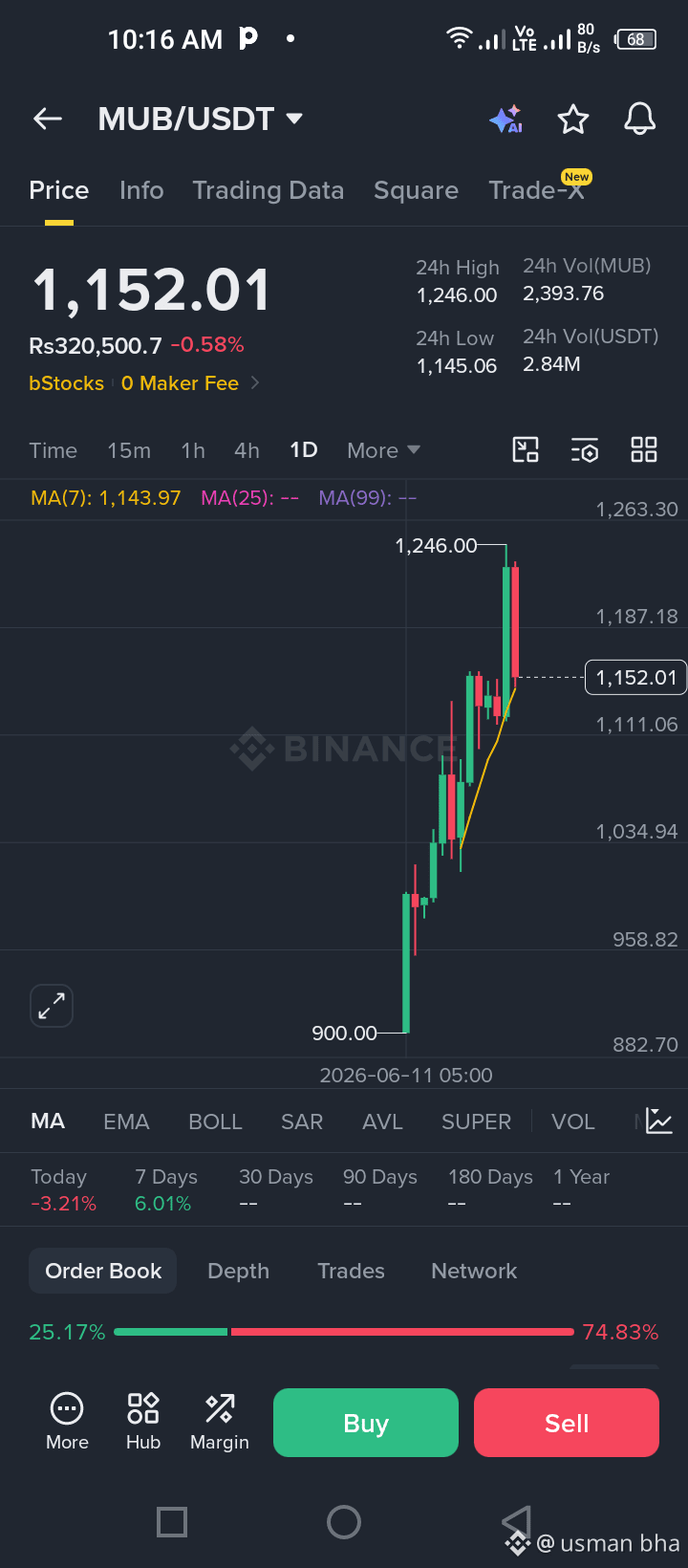
$MUB The United States has set a 2031 target for transitioning to post-quantum cryptography, marking one of the most significant cybersecurity upgrades of our time. 🌐
As quantum computing continues to evolve, the encryption methods that protect today's digital systems could eventually face new challenges. That's why the crypto industry is keeping a close eye on quantum-resistant security solutions. 👀
💥 Why This Matters for Crypto
🔐 Stronger, next-generation encryption could reshape digital security
⚡ Blockchain networks may need quantum-resistant upgrades in the future
🏦 Financial institutions are already strengthening their cybersecurity strategies
🌍 Future crypto infrastructure could be built with post-quantum protection from day one
📈 Quantum technology is becoming an increasingly important long-term investment theme
🚀 What Investors Should Watch
✅ Adoption of post-quantum cryptography
✅ Blockchain projects developing quantum-resistant solutions
✅ Government cybersecurity initiatives and regulations
✅ Institutional investment in quantum computing technologies
✅ Crypto projects focused on future-proof security
The quantum era may still be years away, but the race to secure tomorrow's digital economy is already underway. 🔥
Trade here #MUB #ETH #USPostQuantumCryptographyDeadline2031
🔐🚀 Is Crypto Ready for the Quantum Era?
$MUB The United States has set a 2031 target for transitioning to post-quantum cryptography, marking one of the most significant cybersecurity upgrades of our time. 🌐
As quantum computing continues to evolve, the encryption methods that protect today's digital systems could eventually face new challenges. That's why the crypto industry is keeping a close eye on quantum-resistant security solutions. 👀
💥 Why This Matters for Crypto
🔐 Stronger, next-generation encryption could reshape digital security
⚡ Blockchain networks may need quantum-resistant upgrades in the future
🏦 Financial institutions are already strengthening their cybersecurity strategies
🌍 Future crypto infrastructure could be built with post-quantum protection from day one
📈 Quantum technology is becoming an increasingly important long-term investment theme
🚀 What Investors Should Watch
✅ Adoption of post-quantum cryptography
✅ Blockchain projects developing quantum-resistant solutions
✅ Government cybersecurity initiatives and regulations
✅ Institutional investment in quantum computing technologies
✅ Crypto projects focused on future-proof security
The quantum era may still be years away, but the race to secure tomorrow's digital economy is already underway. 🔥
Trade here #MUB #ETH #USPostQuantumCryptographyDeadline2031
$MUB The United States has set a 2031 target for transitioning to post-quantum cryptography, marking one of the most significant cybersecurity upgrades of our time. 🌐
As quantum computing continues to evolve, the encryption methods that protect today's digital systems could eventually face new challenges. That's why the crypto industry is keeping a close eye on quantum-resistant security solutions. 👀
💥 Why This Matters for Crypto
🔐 Stronger, next-generation encryption could reshape digital security
⚡ Blockchain networks may need quantum-resistant upgrades in the future
🏦 Financial institutions are already strengthening their cybersecurity strategies
🌍 Future crypto infrastructure could be built with post-quantum protection from day one
📈 Quantum technology is becoming an increasingly important long-term investment theme
🚀 What Investors Should Watch
✅ Adoption of post-quantum cryptography
✅ Blockchain projects developing quantum-resistant solutions
✅ Government cybersecurity initiatives and regulations
✅ Institutional investment in quantum computing technologies
✅ Crypto projects focused on future-proof security
The quantum era may still be years away, but the race to secure tomorrow's digital economy is already underway. 🔥
Trade here #MUB #ETH #USPostQuantumCryptographyDeadline2031
63

·
--
Bullish
#USPostQuantumCryptographyDeadline2031
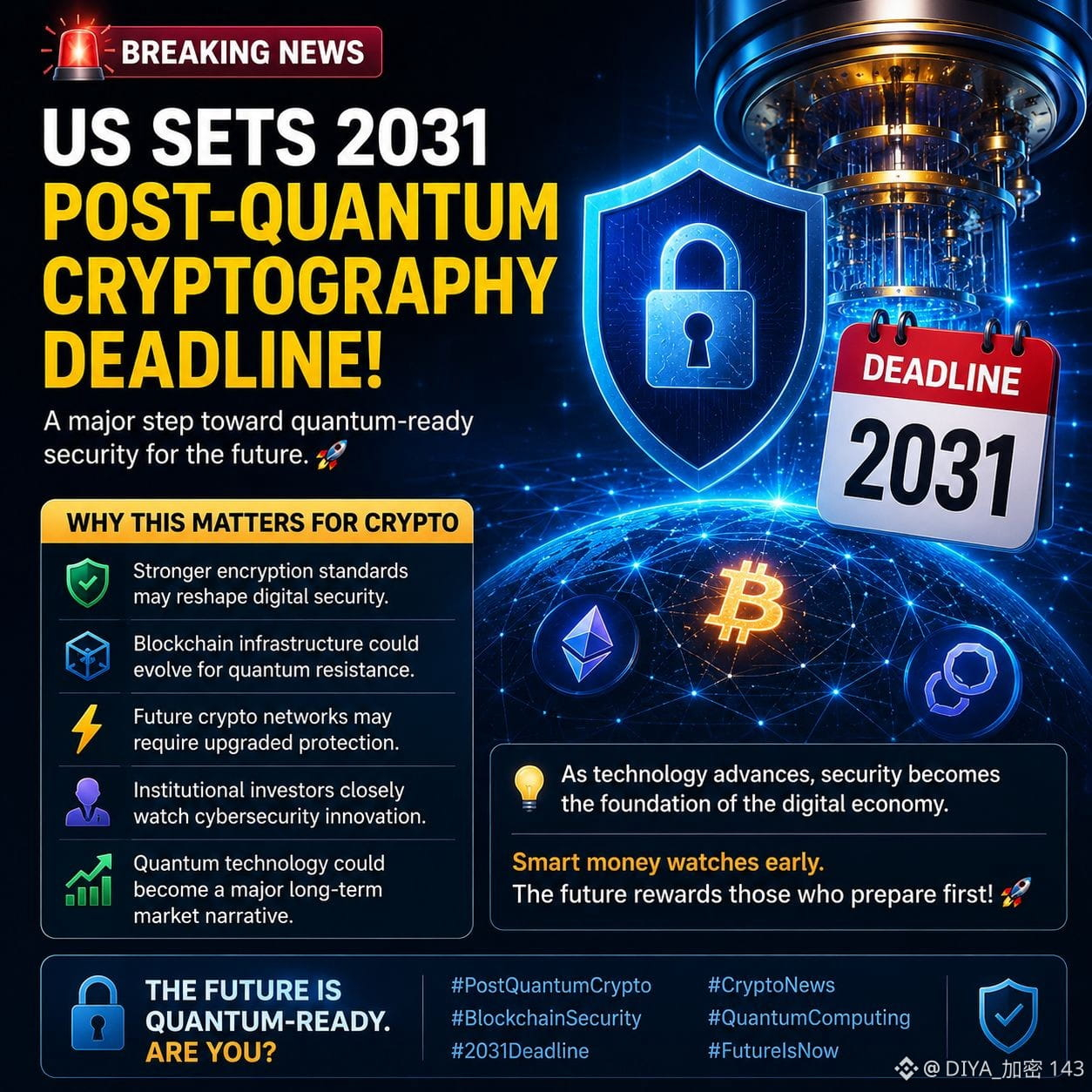
🚨 Quantum computing is getting closer, and cybersecurity is evolving with it.
The US is pushing toward a 2031 transition to post-quantum cryptography, a move that could influence the future of blockchain security and digital assets. 🔐⚡
As encryption standards advance, crypto networks may need stronger protection to stay ahead of future threats.
The future belongs to those who prepare early. 🚀
#CryptoNews #Ethereum $ETH $BTC $BITCOIN #Crypto_Jobs🎯
#USPostQuantumCryptographyDeadline2031
🚨 Quantum computing is getting closer, and cybersecurity is evolving with it.
The US is pushing toward a 2031 transition to post-quantum cryptography, a move that could influence the future of blockchain security and digital assets. 🔐⚡
As encryption standards advance, crypto networks may need stronger protection to stay ahead of future threats.
The future belongs to those who prepare early. 🚀
#CryptoNews #Ethereum $ETH $BTC $BITCOIN #Crypto_Jobs🎯
🚨 Quantum computing is getting closer, and cybersecurity is evolving with it.
The US is pushing toward a 2031 transition to post-quantum cryptography, a move that could influence the future of blockchain security and digital assets. 🔐⚡
As encryption standards advance, crypto networks may need stronger protection to stay ahead of future threats.
The future belongs to those who prepare early. 🚀
#CryptoNews #Ethereum $ETH $BTC $BITCOIN #Crypto_Jobs🎯
7
216

·
--
#uspostquantumcryptographydeadline2031 🇺🇸 U.S. Sets 2031 Post-Quantum Cryptography Deadline
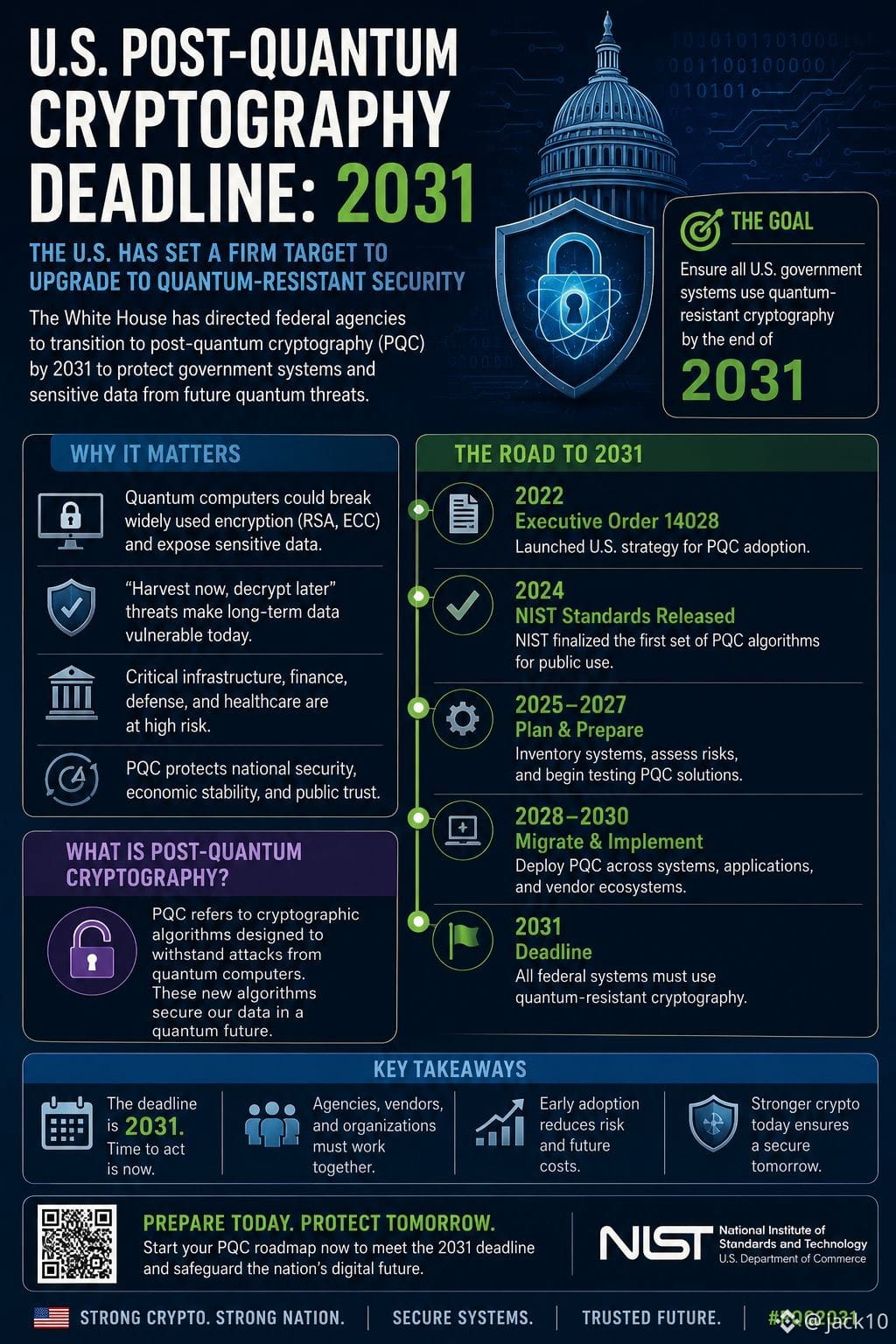
President Donald Trump signed an executive order directing key U.S. government systems to transition to post-quantum cryptography (PQC) by 2030 or 2031. The goal is to protect federal networks from future quantum computers that could break widely used encryption methods. (Reuters)
Key Highlights
🔐 Federal agencies must accelerate migration to quantum-resistant encryption
📅 Key systems targeted for completion by 2030–2031
⚛️ A separate order aims to build a powerful U.S. quantum computer by 2028
🛡️ The policy addresses “harvest now, decrypt later” risks
⚠️ The deadline applies primarily to government systems; private companies will set their own migration schedules. (Reuters)
Why It Matters
PQC uses newer algorithms designed to resist attacks from future quantum machines. The announcement raises pressure on government contractors, cloud providers, banks, and critical-infrastructure operators to identify cryptography that relies on vulnerable public-key systems and begin upgrading it. (Reuters)
Social Media Post
🚨 U.S. Sets 2031 Post-Quantum Cryptography Deadline
The U.S. is accelerating its shift to quantum-resistant cybersecurity, with key federal systems targeted to move to post-quantum cryptography by 2030–2031.
🔐 Quantum-safe encryption push
📅 2031 federal deadline
⚛️ Powerful quantum computer targeted by 2028
🛡️ “Harvest now, decrypt later” risk addressed
🏦 Government and contractors face migration pressure
The quantum race is no longer just about computing power—it is becoming a major cybersecurity and infrastructure challenge.
#QuantumComputing #Cybersecurity #PQC #PostQuantum #Encryption #Technology #USGovernment #AI #Markets
#uspostquantumcryptographydeadline2031 🇺🇸 U.S. Sets 2031 Post-Quantum Cryptography Deadline
President Donald Trump signed an executive order directing key U.S. government systems to transition to post-quantum cryptography (PQC) by 2030 or 2031. The goal is to protect federal networks from future quantum computers that could break widely used encryption methods. (Reuters)
Key Highlights
🔐 Federal agencies must accelerate migration to quantum-resistant encryption
📅 Key systems targeted for completion by 2030–2031
⚛️ A separate order aims to build a powerful U.S. quantum computer by 2028
🛡️ The policy addresses “harvest now, decrypt later” risks
⚠️ The deadline applies primarily to government systems; private companies will set their own migration schedules. (Reuters)
Why It Matters
PQC uses newer algorithms designed to resist attacks from future quantum machines. The announcement raises pressure on government contractors, cloud providers, banks, and critical-infrastructure operators to identify cryptography that relies on vulnerable public-key systems and begin upgrading it. (Reuters)
Social Media Post
🚨 U.S. Sets 2031 Post-Quantum Cryptography Deadline
The U.S. is accelerating its shift to quantum-resistant cybersecurity, with key federal systems targeted to move to post-quantum cryptography by 2030–2031.
🔐 Quantum-safe encryption push
📅 2031 federal deadline
⚛️ Powerful quantum computer targeted by 2028
🛡️ “Harvest now, decrypt later” risk addressed
🏦 Government and contractors face migration pressure
The quantum race is no longer just about computing power—it is becoming a major cybersecurity and infrastructure challenge.
#QuantumComputing #Cybersecurity #PQC #PostQuantum #Encryption #Technology #USGovernment #AI #Markets
President Donald Trump signed an executive order directing key U.S. government systems to transition to post-quantum cryptography (PQC) by 2030 or 2031. The goal is to protect federal networks from future quantum computers that could break widely used encryption methods. (Reuters)
Key Highlights
🔐 Federal agencies must accelerate migration to quantum-resistant encryption
📅 Key systems targeted for completion by 2030–2031
⚛️ A separate order aims to build a powerful U.S. quantum computer by 2028
🛡️ The policy addresses “harvest now, decrypt later” risks
⚠️ The deadline applies primarily to government systems; private companies will set their own migration schedules. (Reuters)
Why It Matters
PQC uses newer algorithms designed to resist attacks from future quantum machines. The announcement raises pressure on government contractors, cloud providers, banks, and critical-infrastructure operators to identify cryptography that relies on vulnerable public-key systems and begin upgrading it. (Reuters)
Social Media Post
🚨 U.S. Sets 2031 Post-Quantum Cryptography Deadline
The U.S. is accelerating its shift to quantum-resistant cybersecurity, with key federal systems targeted to move to post-quantum cryptography by 2030–2031.
🔐 Quantum-safe encryption push
📅 2031 federal deadline
⚛️ Powerful quantum computer targeted by 2028
🛡️ “Harvest now, decrypt later” risk addressed
🏦 Government and contractors face migration pressure
The quantum race is no longer just about computing power—it is becoming a major cybersecurity and infrastructure challenge.
#QuantumComputing #Cybersecurity #PQC #PostQuantum #Encryption #Technology #USGovernment #AI #Markets
2
5
3.8k

#USPostQuantumCryptographyDeadline2031 #USPostQuantumCryptographyDeadline2031 🔐⚛️
The U.S. government has formally accelerated its transition to post-quantum cryptography (PQC), setting 2031 as a key deadline for federal systems to adopt quantum-resistant digital signatures. The order was signed on June 22, 2026 by President Donald Trump.
Key Deadlines
📅 By December 31, 2030
High-value federal systems must support quantum-resistant key establishment and encryption methods.
📅 By December 31, 2031
Federal agencies must migrate critical digital-signature infrastructure to NIST-approved post-quantum standards.
Why it matters
⚠️ Quantum computers could eventually break widely used public-key cryptography such as RSA and ECC, which secure websites, banking systems, government networks, and many blockchain applications. The transition aims to protect against future "harvest now, decrypt later" attacks.
🏛️ The directive puts pressure not only on federal agencies but also on contractors, cybersecurity vendors, and critical infrastructure operators to prepare for quantum-resistant security.
₿ For crypto markets, the announcement increases attention on quantum-resistant upgrades across blockchain networks. While today's quantum computers cannot break major cryptocurrencies, the industry is increasingly planning for long-term quantum risks.
Market Impact
📈 The executive orders are viewed as supportive for companies involved in quantum computing, cybersecurity, cryptographic infrastructure, and quantum networking technologies. They also underscore the U.S. government's goal of building a scientifically relevant quantum computer by 2028.
Bottom line: The 2031 PQC deadline transforms post-quantum security from a research project into a national priority, accelerating adoption of quantum-resistant cryptography across both government and industry.
#USPostQuantumCryptographyDeadline2031 #USPostQuantumCryptographyDeadline2031 🔐⚛️
The U.S. government has formally accelerated its transition to post-quantum cryptography (PQC), setting 2031 as a key deadline for federal systems to adopt quantum-resistant digital signatures. The order was signed on June 22, 2026 by President Donald Trump.
Key Deadlines
📅 By December 31, 2030
High-value federal systems must support quantum-resistant key establishment and encryption methods.
📅 By December 31, 2031
Federal agencies must migrate critical digital-signature infrastructure to NIST-approved post-quantum standards.
Why it matters
⚠️ Quantum computers could eventually break widely used public-key cryptography such as RSA and ECC, which secure websites, banking systems, government networks, and many blockchain applications. The transition aims to protect against future "harvest now, decrypt later" attacks.
🏛️ The directive puts pressure not only on federal agencies but also on contractors, cybersecurity vendors, and critical infrastructure operators to prepare for quantum-resistant security.
₿ For crypto markets, the announcement increases attention on quantum-resistant upgrades across blockchain networks. While today's quantum computers cannot break major cryptocurrencies, the industry is increasingly planning for long-term quantum risks.
Market Impact
📈 The executive orders are viewed as supportive for companies involved in quantum computing, cybersecurity, cryptographic infrastructure, and quantum networking technologies. They also underscore the U.S. government's goal of building a scientifically relevant quantum computer by 2028.
Bottom line: The 2031 PQC deadline transforms post-quantum security from a research project into a national priority, accelerating adoption of quantum-resistant cryptography across both government and industry.
The U.S. government has formally accelerated its transition to post-quantum cryptography (PQC), setting 2031 as a key deadline for federal systems to adopt quantum-resistant digital signatures. The order was signed on June 22, 2026 by President Donald Trump.
Key Deadlines
📅 By December 31, 2030
High-value federal systems must support quantum-resistant key establishment and encryption methods.
📅 By December 31, 2031
Federal agencies must migrate critical digital-signature infrastructure to NIST-approved post-quantum standards.
Why it matters
⚠️ Quantum computers could eventually break widely used public-key cryptography such as RSA and ECC, which secure websites, banking systems, government networks, and many blockchain applications. The transition aims to protect against future "harvest now, decrypt later" attacks.
🏛️ The directive puts pressure not only on federal agencies but also on contractors, cybersecurity vendors, and critical infrastructure operators to prepare for quantum-resistant security.
₿ For crypto markets, the announcement increases attention on quantum-resistant upgrades across blockchain networks. While today's quantum computers cannot break major cryptocurrencies, the industry is increasingly planning for long-term quantum risks.
Market Impact
📈 The executive orders are viewed as supportive for companies involved in quantum computing, cybersecurity, cryptographic infrastructure, and quantum networking technologies. They also underscore the U.S. government's goal of building a scientifically relevant quantum computer by 2028.
Bottom line: The 2031 PQC deadline transforms post-quantum security from a research project into a national priority, accelerating adoption of quantum-resistant cryptography across both government and industry.
17
·
--
#USPostQuantumCryptographyDeadline2031
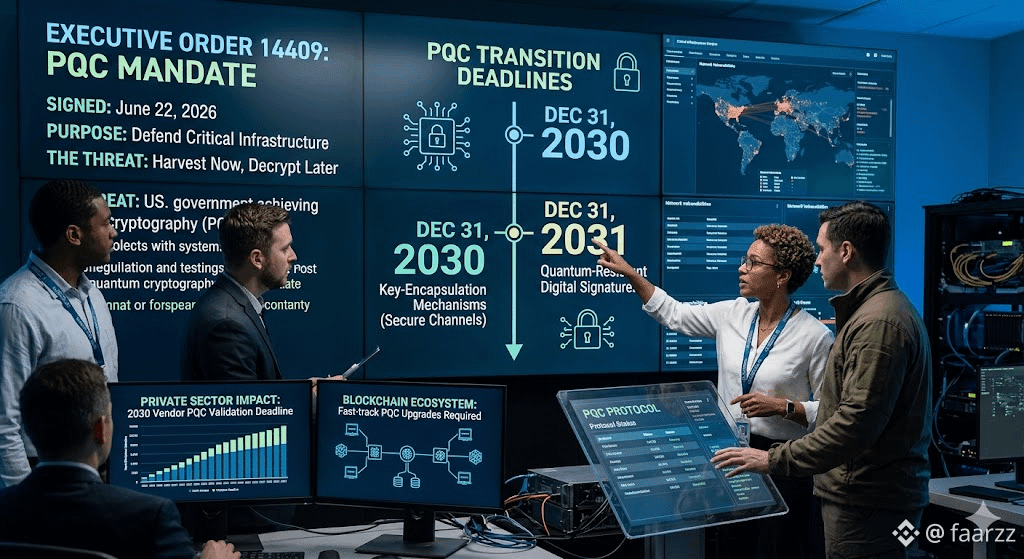
The U.S. government has mandated an accelerated transition to Post-Quantum Cryptography (PQC) for all federal "high-value assets" and "high-impact systems," turning previous voluntary guidelines into an enforceable policy.
Signed into effect on June 22, 2026, Executive Order 14409 aims to defend critical infrastructure against the looming threat of "Harvest Now, Decrypt Later" cryptographic attacks by hostile actors.
The mandate enforces a strict two-phase compliance timeline: December 31, 2030: Deadline for implementing NIST-standardized PQC key-encapsulation mechanisms to secure encrypted channels.
December 31, 2031: Deadline for transitioning to quantum-resistant digital signatures for user authentication and data integrity.
This policy heavily impacts the private sector, as any technology vendor or enterprise failing to validate their products under PQC standards by 2030 will face a total lockout from the lucrative federal marketplace. Furthermore, the 2031 deadline puts immense pressure on public blockchain networks to fast-track quantum-resistant upgrades.
#SpaceXToJoinBloombergGlobalLargeCapIndex
#NakamotoShiftsToBitcoinFocusedBusiness
#USPostQuantumCryptographyDeadline2031
The U.S. government has mandated an accelerated transition to Post-Quantum Cryptography (PQC) for all federal "high-value assets" and "high-impact systems," turning previous voluntary guidelines into an enforceable policy.
Signed into effect on June 22, 2026, Executive Order 14409 aims to defend critical infrastructure against the looming threat of "Harvest Now, Decrypt Later" cryptographic attacks by hostile actors.
The mandate enforces a strict two-phase compliance timeline: December 31, 2030: Deadline for implementing NIST-standardized PQC key-encapsulation mechanisms to secure encrypted channels.
December 31, 2031: Deadline for transitioning to quantum-resistant digital signatures for user authentication and data integrity.
This policy heavily impacts the private sector, as any technology vendor or enterprise failing to validate their products under PQC standards by 2030 will face a total lockout from the lucrative federal marketplace. Furthermore, the 2031 deadline puts immense pressure on public blockchain networks to fast-track quantum-resistant upgrades.
#SpaceXToJoinBloombergGlobalLargeCapIndex
#NakamotoShiftsToBitcoinFocusedBusiness
The U.S. government has mandated an accelerated transition to Post-Quantum Cryptography (PQC) for all federal "high-value assets" and "high-impact systems," turning previous voluntary guidelines into an enforceable policy.
Signed into effect on June 22, 2026, Executive Order 14409 aims to defend critical infrastructure against the looming threat of "Harvest Now, Decrypt Later" cryptographic attacks by hostile actors.
The mandate enforces a strict two-phase compliance timeline: December 31, 2030: Deadline for implementing NIST-standardized PQC key-encapsulation mechanisms to secure encrypted channels.
December 31, 2031: Deadline for transitioning to quantum-resistant digital signatures for user authentication and data integrity.
This policy heavily impacts the private sector, as any technology vendor or enterprise failing to validate their products under PQC standards by 2030 will face a total lockout from the lucrative federal marketplace. Furthermore, the 2031 deadline puts immense pressure on public blockchain networks to fast-track quantum-resistant upgrades.
#SpaceXToJoinBloombergGlobalLargeCapIndex
#NakamotoShiftsToBitcoinFocusedBusiness
17

·
--

Article
Important🚨 The USA sets a deadline of 2031 for post-quantum cryptography — will this change the future of blockchain security? 🔐⚡🌐
A major tech shift is catching eyes as the US government moves towards a 2031 deadline for transitioning to post-quantum cryptography, urging organizations to gear up for the next generation of cybersecurity 👀💎
Important
🚨 The USA sets a deadline of 2031 for post-quantum cryptography — will this change the future of blockchain security? 🔐⚡🌐
A major tech shift is catching eyes as the US government moves towards a 2031 deadline for transitioning to post-quantum cryptography, urging organizations to gear up for the next generation of cybersecurity 👀💎
A major tech shift is catching eyes as the US government moves towards a 2031 deadline for transitioning to post-quantum cryptography, urging organizations to gear up for the next generation of cybersecurity 👀💎
2
436
Log in to explore more content
Join global crypto users on Binance Square
⚡️ Get latest and useful information about crypto.
💬 Trusted by the world’s largest crypto exchange.
👍 Discover real insights from verified creators.
Email / Phone number
Trending Topics
1
#EthereumSurpasses$2700
4,030 views
113 Discussing
2
#CanaryFilesSecondAmendmentForStakedSEIETF
18,485 views
440 Discussing
3
#SaylorHintsStrategyBitcoinBuy
2.3M views
13,182 Discussing
4
#BOJRaisesRatesTo31YearHigh
315,291 views
3,708 Discussing
5
#BuffettStepsDownAsBerkshireChairman
152,433 views
2,026 Discussing
6
#XRPExchangeReservesHitSevenYearLow
173,964 views
1,850 Discussing
7
#HKCompletesFirstHKDStablecoinUseCase
177,240 views
2,086 Discussing
8
#VietnamPlansFirstCryptoLicensesIn2026
114,444 views
1,406 Discussing
9
#BTCBreaks80K
587,347 views
6,064 Discussing
10
#BitcoinMarketCapTopsTesla
150,617 views
1,534 Discussing