

#hackers
hackers
426,137 views
228 Discussing
Hot
Latest

·
--
Crypto: Hackers demand $3 million in Monero from Revolut
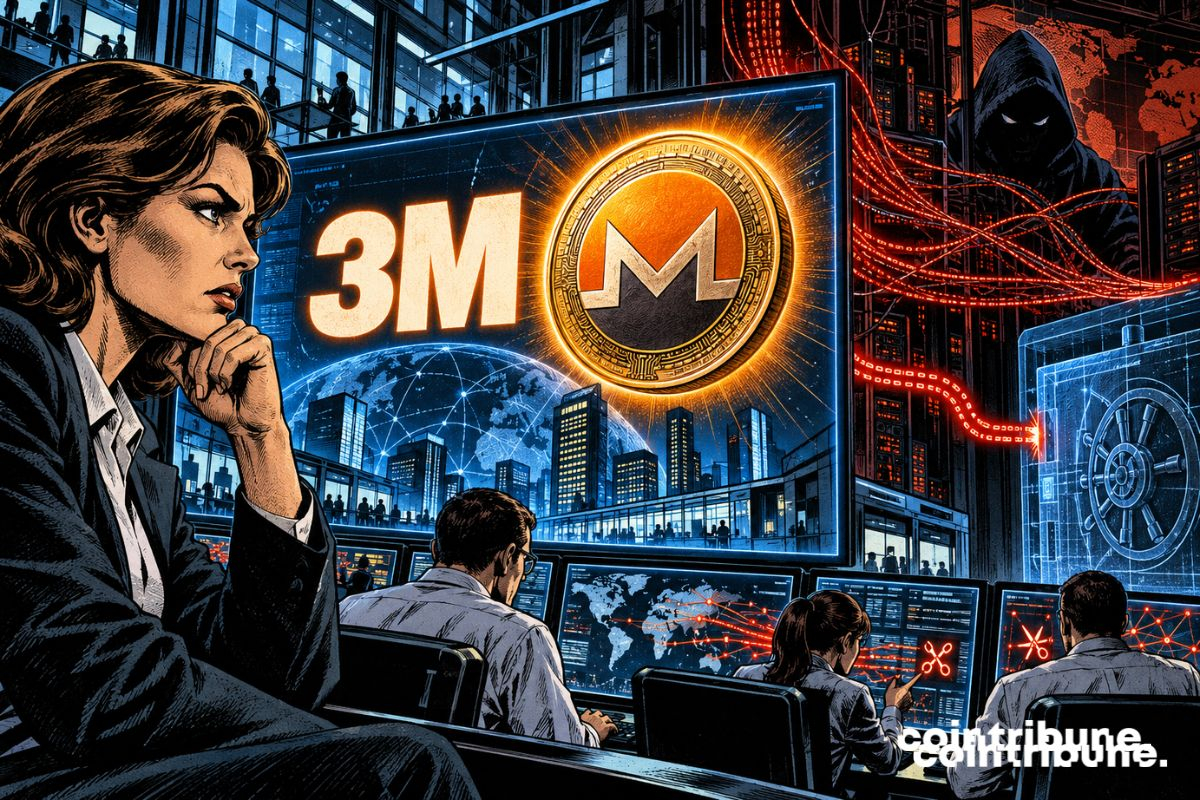
Revolut is facing new pressure following a data leak revealed days earlier. A group that presents itself as iamnotavillain is now demanding 6,000 XMR. This is approximately $3 million and threatens to sell the stolen information if the fintech does not pay. The attackers set a 24-hour deadline. About 680 customers, including several major crypto holders, would be affected. Revolut, for its part, says it has not received any request directly.
The attackers demand 6,000 XMR, approximately $3 million.
About 680 Revolut customers would be affected by the breach.
Revolut says its core systems and customers’ funds were not hacked.
The attackers now demand 6,000 XMR
The matter comes at a bad time for Revolut, which is rapidly developing its digital-asset activities. Cointribune detailed this week Revolut’s expansion into cryptocurrencies, including stablecoins, trading, and payments.
This time, the fintech is dealing above all with a case related to personal data. The iamnotavillain group posted its ultimatum on Wednesday on a site accompanied by a countdown timer. The hackers demand 6,000 Monero and claim they will hand over the files to other criminal groups if Revolut does not pay within 24 hours.
An initial demand of 10,000 BTC had circulated earlier on Telegram. However, the authors of the current ultimatum say that amount came from an impersonator or a former associate.
The choice of Monero is less surprising. Unlike bitcoin, whose transactions are publicly visible on the blockchain, the XMR crypto is designed to conceal more information about transfers. Revolut says it has had no direct contact with the group and has received no extortion demand through its own channels.
$HACK.ETF
{etf_us}(HACK.ETF)
$EXI.ETF
{etf_us}(EXI.ETF)
$REVB.US
{stock_us}(REVB.US)
#hackers
Crypto: Hackers demand $3 million in Monero from Revolut
Revolut is facing new pressure following a data leak revealed days earlier. A group that presents itself as iamnotavillain is now demanding 6,000 XMR. This is approximately $3 million and threatens to sell the stolen information if the fintech does not pay. The attackers set a 24-hour deadline. About 680 customers, including several major crypto holders, would be affected. Revolut, for its part, says it has not received any request directly.
The attackers demand 6,000 XMR, approximately $3 million.
About 680 Revolut customers would be affected by the breach.
Revolut says its core systems and customers’ funds were not hacked.
The attackers now demand 6,000 XMR
The matter comes at a bad time for Revolut, which is rapidly developing its digital-asset activities. Cointribune detailed this week Revolut’s expansion into cryptocurrencies, including stablecoins, trading, and payments.
This time, the fintech is dealing above all with a case related to personal data. The iamnotavillain group posted its ultimatum on Wednesday on a site accompanied by a countdown timer. The hackers demand 6,000 Monero and claim they will hand over the files to other criminal groups if Revolut does not pay within 24 hours.
An initial demand of 10,000 BTC had circulated earlier on Telegram. However, the authors of the current ultimatum say that amount came from an impersonator or a former associate.
The choice of Monero is less surprising. Unlike bitcoin, whose transactions are publicly visible on the blockchain, the XMR crypto is designed to conceal more information about transfers. Revolut says it has had no direct contact with the group and has received no extortion demand through its own channels.
$HACK.ETF
$EXI.ETF
$REVB.US
#hackers
Revolut is facing new pressure following a data leak revealed days earlier. A group that presents itself as iamnotavillain is now demanding 6,000 XMR. This is approximately $3 million and threatens to sell the stolen information if the fintech does not pay. The attackers set a 24-hour deadline. About 680 customers, including several major crypto holders, would be affected. Revolut, for its part, says it has not received any request directly.
The attackers demand 6,000 XMR, approximately $3 million.
About 680 Revolut customers would be affected by the breach.
Revolut says its core systems and customers’ funds were not hacked.
The attackers now demand 6,000 XMR
The matter comes at a bad time for Revolut, which is rapidly developing its digital-asset activities. Cointribune detailed this week Revolut’s expansion into cryptocurrencies, including stablecoins, trading, and payments.
This time, the fintech is dealing above all with a case related to personal data. The iamnotavillain group posted its ultimatum on Wednesday on a site accompanied by a countdown timer. The hackers demand 6,000 Monero and claim they will hand over the files to other criminal groups if Revolut does not pay within 24 hours.
An initial demand of 10,000 BTC had circulated earlier on Telegram. However, the authors of the current ultimatum say that amount came from an impersonator or a former associate.
The choice of Monero is less surprising. Unlike bitcoin, whose transactions are publicly visible on the blockchain, the XMR crypto is designed to conceal more information about transfers. Revolut says it has had no direct contact with the group and has received no extortion demand through its own channels.
$HACK.ETF
$EXI.ETF
$REVB.US
#hackers
86

·
--
Revolut hit with a hacker ransom of 3M Monero or 10,000 Bitcoin! Company says it was “never directly contacted.” Behind this farce, the hackers are targeting two major hot sectors: Bitcoin and privacy coins. The market may wobble in the short term, but security is the real rule in the long run. #黑客事件 $BTC $XMR
Revolut targeted with $3M Monero or 10,000 Bitcoin ransom! "No direct contact" from hackers. This drama shows how BTC and privacy coins like XMR are hacker hotspots. Market may dip short-term, but security is king in the long run. #hackers $BTC $XMR
Revolut hit with a hacker ransom of 3M Monero or 10,000 Bitcoin! Company says it was “never directly contacted.” Behind this farce, the hackers are targeting two major hot sectors: Bitcoin and privacy coins. The market may wobble in the short term, but security is the real rule in the long run. #黑客事件 $BTC $XMR
Revolut targeted with $3M Monero or 10,000 Bitcoin ransom! "No direct contact" from hackers. This drama shows how BTC and privacy coins like XMR are hacker hotspots. Market may dip short-term, but security is king in the long run. #hackers $BTC $XMR
Revolut targeted with $3M Monero or 10,000 Bitcoin ransom! "No direct contact" from hackers. This drama shows how BTC and privacy coins like XMR are hacker hotspots. Market may dip short-term, but security is king in the long run. #hackers $BTC $XMR
180
·
--
#Hackers target Revolut! Demand $3M in XMR, threaten to expose customer data
This European fintech giant has been hacked, with attackers specifically asking for Monero payments, citing "privacy concerns" and giving a tight 24-hour deadline. The choice isn't random—XMR's privacy features let hackers move funds undetected. In the short term, XMR could see speculation, but in the long run, events like this will increase regulatory pressure. Revolut users are currently facing data breach risks, and the security issues across the entire crypto space are once again thrust into the spotlight.
#RevolutHack $XMR $BTC
#Hackers target Revolut demanding $3M in Monero, threatening to sell customer data
This European fintech giant just got hacked with attackers specifically asking for Monero payments, citing "privacy concerns" and giving a tight 24-hour deadline. The choice isn't random - XMR's privacy features let hackers move funds undetected. Short term, this could spark XMR speculation, but long term, such events increase regulatory pressure. Revolut users now face data breach risks, putting crypto security back in the spotlight.
#RevolutHack $XMR
#Hackers target Revolut! Demand $3M in XMR, threaten to expose customer data
This European fintech giant has been hacked, with attackers specifically asking for Monero payments, citing "privacy concerns" and giving a tight 24-hour deadline. The choice isn't random—XMR's privacy features let hackers move funds undetected. In the short term, XMR could see speculation, but in the long run, events like this will increase regulatory pressure. Revolut users are currently facing data breach risks, and the security issues across the entire crypto space are once again thrust into the spotlight.
#RevolutHack $XMR $BTC
#Hackers target Revolut demanding $3M in Monero, threatening to sell customer data
This European fintech giant just got hacked with attackers specifically asking for Monero payments, citing "privacy concerns" and giving a tight 24-hour deadline. The choice isn't random - XMR's privacy features let hackers move funds undetected. Short term, this could spark XMR speculation, but long term, such events increase regulatory pressure. Revolut users now face data breach risks, putting crypto security back in the spotlight.
#RevolutHack $XMR
This European fintech giant has been hacked, with attackers specifically asking for Monero payments, citing "privacy concerns" and giving a tight 24-hour deadline. The choice isn't random—XMR's privacy features let hackers move funds undetected. In the short term, XMR could see speculation, but in the long run, events like this will increase regulatory pressure. Revolut users are currently facing data breach risks, and the security issues across the entire crypto space are once again thrust into the spotlight.
#RevolutHack $XMR $BTC
#Hackers target Revolut demanding $3M in Monero, threatening to sell customer data
This European fintech giant just got hacked with attackers specifically asking for Monero payments, citing "privacy concerns" and giving a tight 24-hour deadline. The choice isn't random - XMR's privacy features let hackers move funds undetected. Short term, this could spark XMR speculation, but long term, such events increase regulatory pressure. Revolut users now face data breach risks, putting crypto security back in the spotlight.
#RevolutHack $XMR
87
·
--
#enigmatic movement at 2026 end!!!
The massive Bitcoin sidechain hack that occurred on September 6, 2026, resulted in $320 #million worth of Bitcoin being drained from the #liquidNetwork but #hackers have already returned roughly $273 million (3,400 BTC), leaving $47 million (598.5 BTC) still outstanding.
#enigmatic movement at 2026 end!!!
The massive Bitcoin sidechain hack that occurred on September 6, 2026, resulted in $320 #million worth of Bitcoin being drained from the #liquidNetwork but #hackers have already returned roughly $273 million (3,400 BTC), leaving $47 million (598.5 BTC) still outstanding.
The massive Bitcoin sidechain hack that occurred on September 6, 2026, resulted in $320 #million worth of Bitcoin being drained from the #liquidNetwork but #hackers have already returned roughly $273 million (3,400 BTC), leaving $47 million (598.5 BTC) still outstanding.
56

·
--
⚠️ DROPBOX CONFIRMS BREACH OF THOUSANDS OF ACCOUNTS BY HACKERS 💻
Dropbox Inc. confirmed that a group of cybercriminals broke into thousands of accounts on its platform over the past month, accessing and downloading data stored in the cloud, Bloomberg News reported 🚨.
The company acknowledged that the security incident affected individual and corporate users, compromising sensitive data 📊.
Dropbox's technical team is already notifying the impacted accounts and implementing enhanced protocols to mitigate new risks and protect the files hosted on its network 🛡️.
#Dropbox #Ciberseguridad #Hackers #SeguridadDigital #TechNews
$BTC
{spot}(BTCUSDT)
$ETH
{spot}(ETHUSDT)
$BNB
{spot}(BNBUSDT)
⚠️ DROPBOX CONFIRMS BREACH OF THOUSANDS OF ACCOUNTS BY HACKERS 💻
Dropbox Inc. confirmed that a group of cybercriminals broke into thousands of accounts on its platform over the past month, accessing and downloading data stored in the cloud, Bloomberg News reported 🚨.
The company acknowledged that the security incident affected individual and corporate users, compromising sensitive data 📊.
Dropbox's technical team is already notifying the impacted accounts and implementing enhanced protocols to mitigate new risks and protect the files hosted on its network 🛡️.
#Dropbox #Ciberseguridad #Hackers #SeguridadDigital #TechNews
$BTC
$ETH
$BNB
Dropbox Inc. confirmed that a group of cybercriminals broke into thousands of accounts on its platform over the past month, accessing and downloading data stored in the cloud, Bloomberg News reported 🚨.
The company acknowledged that the security incident affected individual and corporate users, compromising sensitive data 📊.
Dropbox's technical team is already notifying the impacted accounts and implementing enhanced protocols to mitigate new risks and protect the files hosted on its network 🛡️.
#Dropbox #Ciberseguridad #Hackers #SeguridadDigital #TechNews
$BTC
$ETH
$BNB

613



·
--
GOLD How a Single Hack Turned into a Crypto Disaster
Hackers gained access to the X (Twitter) account of Real $TRUMP Coins - linked to the sale of physical Trump collectible coins - and used it to promote a new token named GOLD.
Leveraging the high-profile brand, the token's market capitalization skyrocketed to nearly 60 million in a short time. Then came a swift collapse: the token's value crashed by roughly 99%, leaving thousands of traders with catastrophic losses.
According to on-chain analytics, wallets associated with the deployment sold approximately 224.5 million GOLD, realizing around 330,000 in profits. Meanwhile, an individual claiming responsibility for the breach alleged they netted over 8.2 million.
Speculation also surfaced online pointing to potential involvement by Iranian hackers, though no formal confirmation has been provided.
The takeaway even a familiar name and a high-profile account do not guarantee that a token is legitimate. In crypto, always verify the official source and audit on-chain data before buying.
#TRUMP #GOLD #iran #hackers
GOLD How a Single Hack Turned into a Crypto Disaster
Hackers gained access to the X (Twitter) account of Real $TRUMP Coins - linked to the sale of physical Trump collectible coins - and used it to promote a new token named GOLD.
Leveraging the high-profile brand, the token's market capitalization skyrocketed to nearly 60 million in a short time. Then came a swift collapse: the token's value crashed by roughly 99%, leaving thousands of traders with catastrophic losses.
According to on-chain analytics, wallets associated with the deployment sold approximately 224.5 million GOLD, realizing around 330,000 in profits. Meanwhile, an individual claiming responsibility for the breach alleged they netted over 8.2 million.
Speculation also surfaced online pointing to potential involvement by Iranian hackers, though no formal confirmation has been provided.
The takeaway even a familiar name and a high-profile account do not guarantee that a token is legitimate. In crypto, always verify the official source and audit on-chain data before buying.
#TRUMP #GOLD #iran #hackers
Hackers gained access to the X (Twitter) account of Real $TRUMP Coins - linked to the sale of physical Trump collectible coins - and used it to promote a new token named GOLD.
Leveraging the high-profile brand, the token's market capitalization skyrocketed to nearly 60 million in a short time. Then came a swift collapse: the token's value crashed by roughly 99%, leaving thousands of traders with catastrophic losses.
According to on-chain analytics, wallets associated with the deployment sold approximately 224.5 million GOLD, realizing around 330,000 in profits. Meanwhile, an individual claiming responsibility for the breach alleged they netted over 8.2 million.
Speculation also surfaced online pointing to potential involvement by Iranian hackers, though no formal confirmation has been provided.
The takeaway even a familiar name and a high-profile account do not guarantee that a token is legitimate. In crypto, always verify the official source and audit on-chain data before buying.
#TRUMP #GOLD #iran #hackers
195


·
--
🔥 🔥🔥🔥🔥🔥Nearly $1 billion in losses over six months
Crypto projects lost $972 million across 207 hacks in the first half of 2026.
📊 Immunefi recorded a record number of attacks, although the average loss per incident decreased.
Risks are shifting from code to infrastructure, keys, and attacks targeting people
#HackerAlert #hackers #HackerNews
$BNB
{future}(BNBUSDT)
🔥 🔥🔥🔥🔥🔥Nearly $1 billion in losses over six months
Crypto projects lost $972 million across 207 hacks in the first half of 2026.
📊 Immunefi recorded a record number of attacks, although the average loss per incident decreased.
Risks are shifting from code to infrastructure, keys, and attacks targeting people
#HackerAlert #hackers #HackerNews
$BNB
Crypto projects lost $972 million across 207 hacks in the first half of 2026.
📊 Immunefi recorded a record number of attacks, although the average loss per incident decreased.
Risks are shifting from code to infrastructure, keys, and attacks targeting people
#HackerAlert #hackers #HackerNews
$BNB
1
7
445

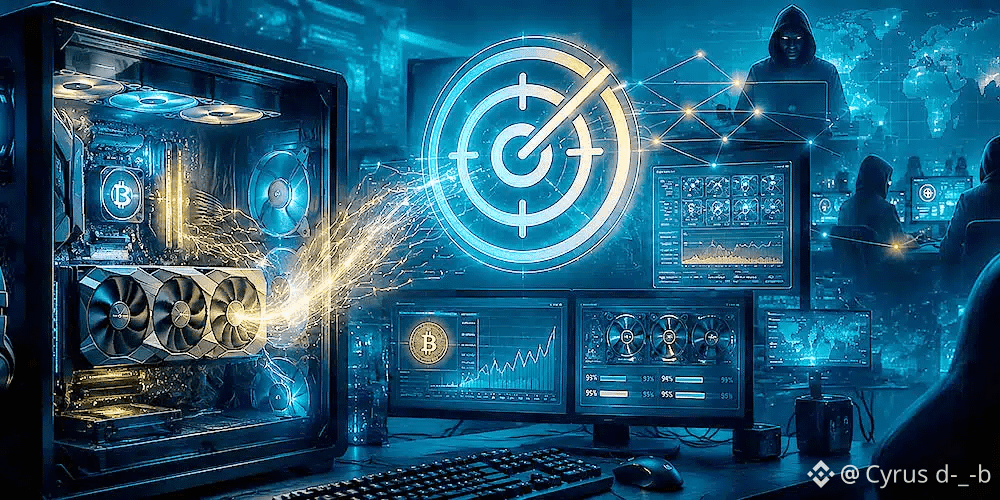
Hackers use AI chatbots to sneak in malware and get gamers' GPUs mining #Criptomonedas
The #hackers have found a pretty dirty, yet eye-catching way to capitalize on the AI boom: using chatbots and poisoned search results to sneak in malware disguised as well-known PC utilities. #Microsoft has detected a cryptojacking campaign by hackers using chatbots that directly targets users with powerful rigs, especially gamers and hardware enthusiasts, because that's where the GPUs capable of mining cryptocurrencies are, without the attacker having to foot the electricity bill.
Given that Iran used to be a paradise for the #criptomineria due to its super cheap energy, considering everything going on with the country and the U.S., hackers now have to find ways to cut down on energy costs from the rest of the planet to maintain their #Mining ratio, and that involves gamers' PCs worldwide.
The trap starts with something very everyday that you’re probably doing daily. We search for a tool like HWMonitor, CrystalDiskInfo, Display Driver Uninstaller, FurMark, Pack, or PDFgear, and wind up unknowingly on a fake site that looks legit, download a ZIP file, and think we’re installing the official and normal software.
The problem is that this package is rigged to execute malicious code via DLL sideloading, a technique that exploits legitimate executables to load a DLL and kick off the infection without raising too many eyebrows.
Microsoft explains that the campaign relies on over 150 malicious domains and has been active since March 2026, so it's really recent and coincides, as we mentioned, with the desperation of the cheap energy party in Iran coming to an end.
Once inside the system, the malware installs ScreenConnect, a legitimate remote access tool that's being misused here. It then deploys miners like gminer, lolMiner, and SRBMiner-MULTI, all aimed at squeezing the GPU.
$BTC $BNB
{spot}(BTCUSDT)
Hackers use AI chatbots to sneak in malware and get gamers' GPUs mining #Criptomonedas
The #hackers have found a pretty dirty, yet eye-catching way to capitalize on the AI boom: using chatbots and poisoned search results to sneak in malware disguised as well-known PC utilities. #Microsoft has detected a cryptojacking campaign by hackers using chatbots that directly targets users with powerful rigs, especially gamers and hardware enthusiasts, because that's where the GPUs capable of mining cryptocurrencies are, without the attacker having to foot the electricity bill.
Given that Iran used to be a paradise for the #criptomineria due to its super cheap energy, considering everything going on with the country and the U.S., hackers now have to find ways to cut down on energy costs from the rest of the planet to maintain their #Mining ratio, and that involves gamers' PCs worldwide.
The trap starts with something very everyday that you’re probably doing daily. We search for a tool like HWMonitor, CrystalDiskInfo, Display Driver Uninstaller, FurMark, Pack, or PDFgear, and wind up unknowingly on a fake site that looks legit, download a ZIP file, and think we’re installing the official and normal software.
The problem is that this package is rigged to execute malicious code via DLL sideloading, a technique that exploits legitimate executables to load a DLL and kick off the infection without raising too many eyebrows.
Microsoft explains that the campaign relies on over 150 malicious domains and has been active since March 2026, so it's really recent and coincides, as we mentioned, with the desperation of the cheap energy party in Iran coming to an end.
Once inside the system, the malware installs ScreenConnect, a legitimate remote access tool that's being misused here. It then deploys miners like gminer, lolMiner, and SRBMiner-MULTI, all aimed at squeezing the GPU.
$BTC $BNB
The #hackers have found a pretty dirty, yet eye-catching way to capitalize on the AI boom: using chatbots and poisoned search results to sneak in malware disguised as well-known PC utilities. #Microsoft has detected a cryptojacking campaign by hackers using chatbots that directly targets users with powerful rigs, especially gamers and hardware enthusiasts, because that's where the GPUs capable of mining cryptocurrencies are, without the attacker having to foot the electricity bill.
Given that Iran used to be a paradise for the #criptomineria due to its super cheap energy, considering everything going on with the country and the U.S., hackers now have to find ways to cut down on energy costs from the rest of the planet to maintain their #Mining ratio, and that involves gamers' PCs worldwide.
The trap starts with something very everyday that you’re probably doing daily. We search for a tool like HWMonitor, CrystalDiskInfo, Display Driver Uninstaller, FurMark, Pack, or PDFgear, and wind up unknowingly on a fake site that looks legit, download a ZIP file, and think we’re installing the official and normal software.
The problem is that this package is rigged to execute malicious code via DLL sideloading, a technique that exploits legitimate executables to load a DLL and kick off the infection without raising too many eyebrows.
Microsoft explains that the campaign relies on over 150 malicious domains and has been active since March 2026, so it's really recent and coincides, as we mentioned, with the desperation of the cheap energy party in Iran coming to an end.
Once inside the system, the malware installs ScreenConnect, a legitimate remote access tool that's being misused here. It then deploys miners like gminer, lolMiner, and SRBMiner-MULTI, all aimed at squeezing the GPU.
$BTC $BNB
131

·
--
🚨 LATEST — CRYPTO THIEF SENTENCED
🚓 A hacker known as “GothFerrari” has been sentenced to 78 months in U.S. federal prison after helping steal over $250 MILLION in crypto ( $BTC / $ETH / $SOL )
The attacks reportedly involved:
→ Social engineering
→ Hardware wallet thefts
→ Coordinated crypto burglaries 👀
This is another reminder of one brutal truth in crypto:
📍Security matters MORE than hype.
People focus on charts…
while attackers focus on access.
In this market, protecting your wallet is just as important as picking the right coin. 🔒
Always:
• Use cold storage
• Protect seed phrases
• Avoid phishing links
• Never trust random DMs
One mistake can erase everything.
#Crypto #Bitcoin #CyberSecurity #Hackers #Blockchain
{future}(SOLUSDT)
{future}(ETHUSDT)
{future}(BTCUSDT)
🚨 LATEST — CRYPTO THIEF SENTENCED
🚓 A hacker known as “GothFerrari” has been sentenced to 78 months in U.S. federal prison after helping steal over $250 MILLION in crypto ( $BTC / $ETH / $SOL )
The attacks reportedly involved:
→ Social engineering
→ Hardware wallet thefts
→ Coordinated crypto burglaries 👀
This is another reminder of one brutal truth in crypto:
📍Security matters MORE than hype.
People focus on charts…
while attackers focus on access.
In this market, protecting your wallet is just as important as picking the right coin. 🔒
Always:
• Use cold storage
• Protect seed phrases
• Avoid phishing links
• Never trust random DMs
One mistake can erase everything.
#Crypto #Bitcoin #CyberSecurity #Hackers #Blockchain
🚓 A hacker known as “GothFerrari” has been sentenced to 78 months in U.S. federal prison after helping steal over $250 MILLION in crypto ( $BTC / $ETH / $SOL )
The attacks reportedly involved:
→ Social engineering
→ Hardware wallet thefts
→ Coordinated crypto burglaries 👀
This is another reminder of one brutal truth in crypto:
📍Security matters MORE than hype.
People focus on charts…
while attackers focus on access.
In this market, protecting your wallet is just as important as picking the right coin. 🔒
Always:
• Use cold storage
• Protect seed phrases
• Avoid phishing links
• Never trust random DMs
One mistake can erase everything.
#Crypto #Bitcoin #CyberSecurity #Hackers #Blockchain

2
152

·
--

Article
Satoshi Nakamoto Saga: Craig Wright Admits to Document Forgery#Write2Earn Craig Wright admits forging documents in #SatoshiNakamoto 's claim amid a legal battle with COPA, casting doubt on his credibility.
STORY HIGHLIGHTS
Craig Wright, self-proclaimed Satoshi Nakamoto, admits to forging documents in high-profile legal battle.
COPA challenges Wright's Nakamoto identity, supported by influential figures like Jack Dorsey.
Wright's credibility tarnished as an information security specialist by admitting to document manipulation.
Craig Wright, the Australian computer scientist who has long claimed to be Satoshi Nakamoto — inventor of Bitcoin under a pseudonym –has admitted forging documents supporting his claim. The confession resulted from a high-profile legal fight between Wright and the Cryptocurrency Open Patent Alliance (COPA), leaving shadows over his years-old self-claim for being the founder of digital currency.
Reflections on Day 4 of COPA v Wright, the identity issue.
The blame game shifted from Citrix MetaFrame to Ira Kleiman and Atlassian today.
We learnt that Calvin is supposedly not funding this case, he only provided a loan (that money is gone, Calvin).
We saw complete 180s… pic.twitter.com/MAERPYcmcI
— Norbert ⚡️ (@bitnorbert) February 8, 2024
Satoshi Nakamoto’s Courtroom Drama
Under tough cross-examination, Wright admitted the falsity of several documents he had submitted as proof that he is Satoshi Nakamoto. The revelation followed after COPA’s legal team had pointed out inconsistencies and anachronisms in the papers, including mentions of font styles and technologies that allegedly were not around at the time when they claimed these documents to have been created.
Wright explained these inconsistencies by a number of factors, such as errors made while previous attorneys worked on the case; acts of sabotage performed by disgruntled former employees, and illegal modifications introduced into code-base documents that were done with the help of #hackers .
The COPA Challenge
COPA, with the support of the influentials in the crypto world, including Jack Dorsey, who is a Twitter co-founder, has tried to refute Wright’s claims that there was persuasive evidence for his Nakamoto identity.
The main goal of this union is to keep the white paper, which serves as a cornerstone for Bitcoin, accessible to anyone and not covered by individual copyright claims that could prevent open development or use.
Questions of Credibility
Wright’s confession does much damage to his credibility, especially considering that he is an information security specialist. The court was made aware of Wright’s technical capabilities, such as his ability to change document metadata – admittedly taught by him to students at various universities. This disclosure has made the case even more complicated, considering that any document Wright submits in his defense comes into question under these circumstances.
Despite this blow, Wright still plays a vital role in different legal cases across many courts within several countries, such as the US, Norway, and Britain. The anonymous funders of these lawsuits have seen Wright gather a large legal team, suggesting the heightened stakes in his attempt to become acknowledged as the creator of Bitcoin.
Although Wright’s claims and the resulting judicial turmoil have implications beyond the court, they influence Bitcoin origins through perceptions about cryptocurrencies as a whole. His promotion of a Bitcoin design that matches his conception of digital cash rather than its current use as an investment tool highlights the political fractures within the crypto community. Therefore, this case is about Satoshi Nakamoto’s identity and the potential path Bitcoin will take in the future.#TrendingTopic #PYTH
Satoshi Nakamoto Saga: Craig Wright Admits to Document Forgery
#Write2Earn Craig Wright admits forging documents in #SatoshiNakamoto 's claim amid a legal battle with COPA, casting doubt on his credibility.
STORY HIGHLIGHTS
Craig Wright, self-proclaimed Satoshi Nakamoto, admits to forging documents in high-profile legal battle.
COPA challenges Wright's Nakamoto identity, supported by influential figures like Jack Dorsey.
Wright's credibility tarnished as an information security specialist by admitting to document manipulation.
Craig Wright, the Australian computer scientist who has long claimed to be Satoshi Nakamoto — inventor of Bitcoin under a pseudonym –has admitted forging documents supporting his claim. The confession resulted from a high-profile legal fight between Wright and the Cryptocurrency Open Patent Alliance (COPA), leaving shadows over his years-old self-claim for being the founder of digital currency.
Reflections on Day 4 of COPA v Wright, the identity issue.
The blame game shifted from Citrix MetaFrame to Ira Kleiman and Atlassian today.
We learnt that Calvin is supposedly not funding this case, he only provided a loan (that money is gone, Calvin).
We saw complete 180s… pic.twitter.com/MAERPYcmcI
— Norbert ⚡️ (@bitnorbert) February 8, 2024
Satoshi Nakamoto’s Courtroom Drama
Under tough cross-examination, Wright admitted the falsity of several documents he had submitted as proof that he is Satoshi Nakamoto. The revelation followed after COPA’s legal team had pointed out inconsistencies and anachronisms in the papers, including mentions of font styles and technologies that allegedly were not around at the time when they claimed these documents to have been created.
Wright explained these inconsistencies by a number of factors, such as errors made while previous attorneys worked on the case; acts of sabotage performed by disgruntled former employees, and illegal modifications introduced into code-base documents that were done with the help of #hackers .
The COPA Challenge
COPA, with the support of the influentials in the crypto world, including Jack Dorsey, who is a Twitter co-founder, has tried to refute Wright’s claims that there was persuasive evidence for his Nakamoto identity.
The main goal of this union is to keep the white paper, which serves as a cornerstone for Bitcoin, accessible to anyone and not covered by individual copyright claims that could prevent open development or use.
Questions of Credibility
Wright’s confession does much damage to his credibility, especially considering that he is an information security specialist. The court was made aware of Wright’s technical capabilities, such as his ability to change document metadata – admittedly taught by him to students at various universities. This disclosure has made the case even more complicated, considering that any document Wright submits in his defense comes into question under these circumstances.
Despite this blow, Wright still plays a vital role in different legal cases across many courts within several countries, such as the US, Norway, and Britain. The anonymous funders of these lawsuits have seen Wright gather a large legal team, suggesting the heightened stakes in his attempt to become acknowledged as the creator of Bitcoin.
Although Wright’s claims and the resulting judicial turmoil have implications beyond the court, they influence Bitcoin origins through perceptions about cryptocurrencies as a whole. His promotion of a Bitcoin design that matches his conception of digital cash rather than its current use as an investment tool highlights the political fractures within the crypto community. Therefore, this case is about Satoshi Nakamoto’s identity and the potential path Bitcoin will take in the future.#TrendingTopic #PYTH
STORY HIGHLIGHTS
Craig Wright, self-proclaimed Satoshi Nakamoto, admits to forging documents in high-profile legal battle.
COPA challenges Wright's Nakamoto identity, supported by influential figures like Jack Dorsey.
Wright's credibility tarnished as an information security specialist by admitting to document manipulation.
Craig Wright, the Australian computer scientist who has long claimed to be Satoshi Nakamoto — inventor of Bitcoin under a pseudonym –has admitted forging documents supporting his claim. The confession resulted from a high-profile legal fight between Wright and the Cryptocurrency Open Patent Alliance (COPA), leaving shadows over his years-old self-claim for being the founder of digital currency.
Reflections on Day 4 of COPA v Wright, the identity issue.
The blame game shifted from Citrix MetaFrame to Ira Kleiman and Atlassian today.
We learnt that Calvin is supposedly not funding this case, he only provided a loan (that money is gone, Calvin).
We saw complete 180s… pic.twitter.com/MAERPYcmcI
— Norbert ⚡️ (@bitnorbert) February 8, 2024
Satoshi Nakamoto’s Courtroom Drama
Under tough cross-examination, Wright admitted the falsity of several documents he had submitted as proof that he is Satoshi Nakamoto. The revelation followed after COPA’s legal team had pointed out inconsistencies and anachronisms in the papers, including mentions of font styles and technologies that allegedly were not around at the time when they claimed these documents to have been created.
Wright explained these inconsistencies by a number of factors, such as errors made while previous attorneys worked on the case; acts of sabotage performed by disgruntled former employees, and illegal modifications introduced into code-base documents that were done with the help of #hackers .
The COPA Challenge
COPA, with the support of the influentials in the crypto world, including Jack Dorsey, who is a Twitter co-founder, has tried to refute Wright’s claims that there was persuasive evidence for his Nakamoto identity.
The main goal of this union is to keep the white paper, which serves as a cornerstone for Bitcoin, accessible to anyone and not covered by individual copyright claims that could prevent open development or use.
Questions of Credibility
Wright’s confession does much damage to his credibility, especially considering that he is an information security specialist. The court was made aware of Wright’s technical capabilities, such as his ability to change document metadata – admittedly taught by him to students at various universities. This disclosure has made the case even more complicated, considering that any document Wright submits in his defense comes into question under these circumstances.
Despite this blow, Wright still plays a vital role in different legal cases across many courts within several countries, such as the US, Norway, and Britain. The anonymous funders of these lawsuits have seen Wright gather a large legal team, suggesting the heightened stakes in his attempt to become acknowledged as the creator of Bitcoin.
Although Wright’s claims and the resulting judicial turmoil have implications beyond the court, they influence Bitcoin origins through perceptions about cryptocurrencies as a whole. His promotion of a Bitcoin design that matches his conception of digital cash rather than its current use as an investment tool highlights the political fractures within the crypto community. Therefore, this case is about Satoshi Nakamoto’s identity and the potential path Bitcoin will take in the future.#TrendingTopic #PYTH
3
819
·
--
🚨 ROBBING MORE THAN $100 MILLION IN BITCOIN FROM “SECURE” ACCOUNTS 🔐
Cybercriminals stole more than $100 million in Bitcoin belonging to thousands of accounts that were presumed safe ⚠️.
The incident marks a new scandal for the crypto sector and impacts investors’ trust again, who have been a recurring target of thefts and cyberattacks in the industry 💸.
The news adds pressure on the custody and security dynamics of digital assets.
#Bitcoin #BTC #SeguridadCrypto #Hackers #Crypto
$BTC
{spot}(BTCUSDT)
$ETH
{spot}(ETHUSDT)
$BNB
{spot}(BNBUSDT)
🚨 ROBBING MORE THAN $100 MILLION IN BITCOIN FROM “SECURE” ACCOUNTS 🔐
Cybercriminals stole more than $100 million in Bitcoin belonging to thousands of accounts that were presumed safe ⚠️.
The incident marks a new scandal for the crypto sector and impacts investors’ trust again, who have been a recurring target of thefts and cyberattacks in the industry 💸.
The news adds pressure on the custody and security dynamics of digital assets.
#Bitcoin #BTC #SeguridadCrypto #Hackers #Crypto
$BTC
$ETH
$BNB
Cybercriminals stole more than $100 million in Bitcoin belonging to thousands of accounts that were presumed safe ⚠️.
The incident marks a new scandal for the crypto sector and impacts investors’ trust again, who have been a recurring target of thefts and cyberattacks in the industry 💸.
The news adds pressure on the custody and security dynamics of digital assets.
#Bitcoin #BTC #SeguridadCrypto #Hackers #Crypto
$BTC
$ETH
$BNB
180

·
--
Bearish
🔥North Korean hackers continue to expand and have their sights set on the Defi sector 👈
This is quite surprising, as in less than three weeks #hackers linked to North Korea managed to deliver two major blows. The first was the protocol #DRIFT on Solana, and now the
protocol #KelpDAO . These hackers continue to evolve by applying different techniques to detect vulnerabilities.
Both events caused significant losses for the sector #cripto . Over $500 million dollars were diverted through the vulnerabilities of Drift and kelpdao.
Coincidence or targeted attacks on a specific sector? According to some analysts, these two incidents point to something more "organized". These attacks are becoming more frequent, and it’s no longer about hacks on exchanges or code failures, but now they are targeting the infrastructure of the sector.
But it doesn't stop there, as the repercussions of exploiting vulnerabilities are not limited to a single dapp, but extend to other protocols, as recently occurred with kelpdao and #AAVE .
With the recent events, do you feel safe using any Defi protocol?
👉More crypto updates ...
Share and follow me for more 👈😎
$AAVE
{spot}(AAVEUSDT)
🔥North Korean hackers continue to expand and have their sights set on the Defi sector 👈
This is quite surprising, as in less than three weeks #hackers linked to North Korea managed to deliver two major blows. The first was the protocol #DRIFT on Solana, and now the
protocol #KelpDAO . These hackers continue to evolve by applying different techniques to detect vulnerabilities.
Both events caused significant losses for the sector #cripto . Over $500 million dollars were diverted through the vulnerabilities of Drift and kelpdao.
Coincidence or targeted attacks on a specific sector? According to some analysts, these two incidents point to something more "organized". These attacks are becoming more frequent, and it’s no longer about hacks on exchanges or code failures, but now they are targeting the infrastructure of the sector.
But it doesn't stop there, as the repercussions of exploiting vulnerabilities are not limited to a single dapp, but extend to other protocols, as recently occurred with kelpdao and #AAVE .
With the recent events, do you feel safe using any Defi protocol?
👉More crypto updates ...
Share and follow me for more 👈😎
$AAVE
This is quite surprising, as in less than three weeks #hackers linked to North Korea managed to deliver two major blows. The first was the protocol #DRIFT on Solana, and now the
protocol #KelpDAO . These hackers continue to evolve by applying different techniques to detect vulnerabilities.
Both events caused significant losses for the sector #cripto . Over $500 million dollars were diverted through the vulnerabilities of Drift and kelpdao.
Coincidence or targeted attacks on a specific sector? According to some analysts, these two incidents point to something more "organized". These attacks are becoming more frequent, and it’s no longer about hacks on exchanges or code failures, but now they are targeting the infrastructure of the sector.
But it doesn't stop there, as the repercussions of exploiting vulnerabilities are not limited to a single dapp, but extend to other protocols, as recently occurred with kelpdao and #AAVE .
With the recent events, do you feel safe using any Defi protocol?
👉More crypto updates ...
Share and follow me for more 👈😎
$AAVE
4
2.2k

Article
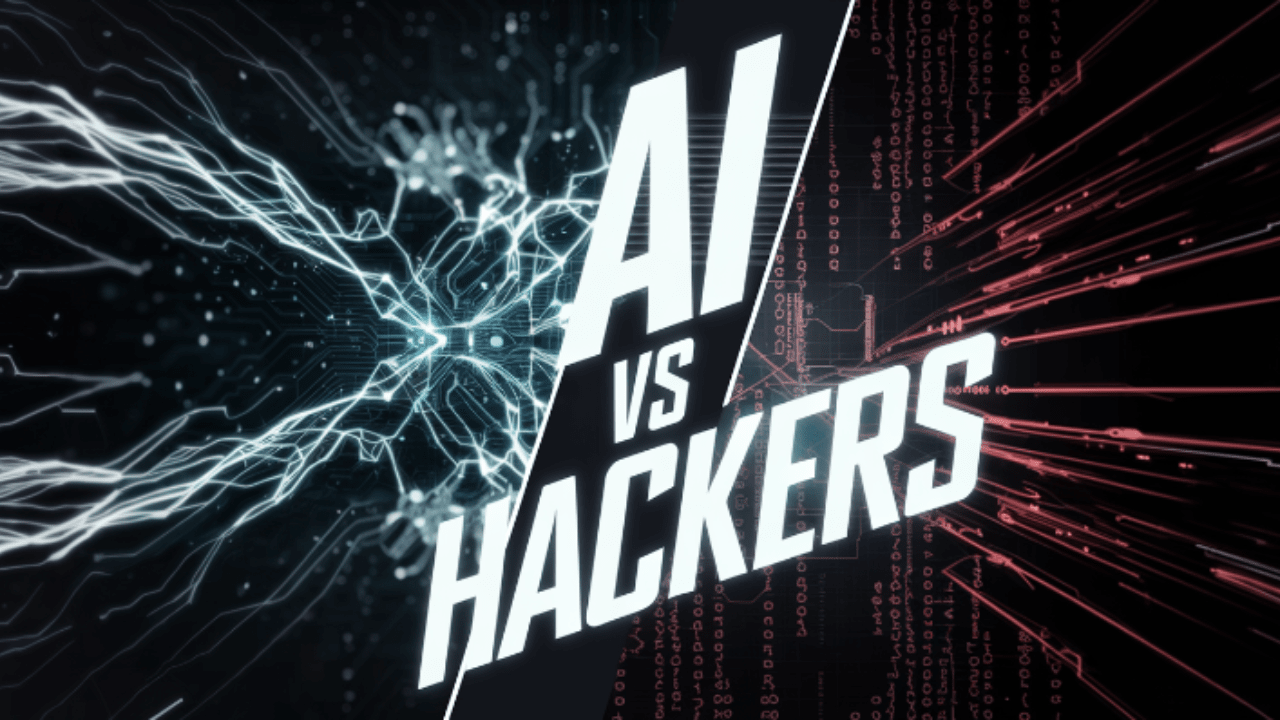
AI vs Hackers: The Cybersecurity Battle in CryptoSo, let’s talk about cryptocurrency. It’s all about trustless systems and decentralized networks, right? And there’s this big promise of security thanks to blockchain tech. But here’s the kicker — crypto is like a magnet for hackers. Seriously, from exchange breaches to phishing scams, we’re talking billions lost over the last decade.
Now, enter Artificial Intelligence (AI). It’s stepping into this wild world — playing both the hero and, well, sometimes the villain. This ongoing battle between AI and hackers? It could really shape the future of crypto security.
Why Are Hackers Drawn to Crypto?
You see, hackers love money, and crypto is like a shiny trophy for them. Unlike traditional banking, once crypto is stolen and shuffled around wallets or mixed up with privacy tools, good luck getting it back. Here are some common ways they strike:
Exchange hacks: Centralized exchanges are like gold mines, holding billions in user funds — a prime target.
Smart contract exploits: If there’s a flaw in DeFi protocols, hackers can drain liquidity pools in mere minutes.
Phishing scams: Fake websites, wallets, and messages — they trick people into handing over their seed phrases. It’s sneaky.Ransomware & malware: They often demand payments in Bitcoin or Monero because, you know, it’s all about that anonymity.
And here’s where AI comes into play, acting as both a protector and, at times, a potential threat.
AI as the Defender of Crypto
AI-driven cybersecurity is becoming essential for protecting blockchain platforms, wallets, and exchanges. Here’s how it’s making a difference:
Real-Time Fraud Detection: AI models can sift through billions of transactions to spot weird patterns — like sudden withdrawals or spikes in trading volume — and flag them before things get out of hand.Phishing Defense: With AI-powered spam filters and natural language processing, it can sniff out suspicious emails or fake Telegram/Discord bots pretending to be the real deal.Smart Contract Auditing: AI tools can comb through DeFi protocols for vulnerabilities way faster than human auditors, helping to prevent exploits before they even get launched.Behavioral Biometrics: Some crypto wallets are testing out AI that learns how users typically behave (like their typing speed, login times, or device signatures) to catch unauthorized access attempts.
Pretty fascinating stuff, right? The battle between AI and hackers is just heating up, and it’s going to be interesting to see how it all unfolds.
Hackers’ Counterattack: Weaponizing AI
You know, while AI is busy protecting crypto users, hackers are also stepping up their game with some serious AI upgrades.
Take AI-powered phishing, for instance. It's all about personalized messages that sound just like crypto influencers or even friends on platforms like Telegram and Discord. Sneaky, right?Then there are deepfake scams—where fake, AI-generated videos of CEOs pop up, claiming there are “airdrop campaigns” to lure in unsuspecting investors. It’s like something out of a sci-fi movie!
And let’s not forget the automated exploit search. AI models can now scan through thousands of smart contracts, spotting vulnerabilities way quicker than the old methods ever could.
Crypto wallet attacks? Oh, they’re getting clever too. Hackers are using AI to guess weak private keys or wallet seed phrases, and even automating brute-force attempts. It's wild how AI is giving these hackers the same edge it gives to those trying to defend against them: speed, scale, and a lot of smarts.
The Endless Arms Race in Web3
Honestly, it’s like this never-ending cat-and-mouse game:
Hackers take advantage of DeFi contracts → AI auditors swoop in to patch those vulnerabilities.Hackers let loose deepfake scams → AI detection tools raise the alarm.Hackers create more sophisticated phishing campaigns → AI responds with smarter filters.
It’s a continuous back-and-forth, and in the fast-paced crypto world, even a minute’s delay can mean millions down the drain.
Real-World Example
Just look at the Poly Network hack back in 2021—$600 million vanished because of some smart contract flaws. Now, that wasn’t AI-related, but can you imagine if an AI-powered attacker was scanning DeFi contracts at scale? Future exploits could be even quicker and more automated.
And on the flip side, major exchanges like Binance and Coinbase are now leveraging AI models to keep an eye on transactions for any suspicious behavior. This tech is really helping to cut down on large-scale thefts and money laundering attempts. It’s a wild world out there!
The Human Factor: Still the Weakest Link
You know, even with fancy AI defenses in place, crypto users are still pretty vulnerable. It’s kind of wild how hackers often use social engineering tactics—like tricking someone into giving up their seed phrase, clicking on a sketchy link, or signing off on a dodgy transaction. Sure, AI can help spot these scams better, but at the end of the day, it’s really up to users to stay aware and informed.
Future Outlook: AI as Crypto’s Gatekeeper
When we think about the future of AI versus hackers in the crypto space, it’s clear that this will seriously impact how secure Web3 becomes.
Imagine a Positive Future: AI audits, constant monitoring, and even behavioral biometrics could bring hacks down to nearly zero. Sounds great, right?
But then there’s the Dark Future: hackers could take control of AI bots that could drain wallets, mess with markets, and even create deepfake leaders. Scary stuff.
So, it’s not really about whether AI will come out on top, but rather who’s going to use it better—the defenders of crypto or the hackers looking to exploit it?
Conclusion
In the crypto world, this whole showdown between AI and hackers isn’t just a tech issue; it’s really about trust. If we don’t have solid defenses, getting mainstream users on board with Web3 is going to be a tough sell. If AI steps up as the protector of decentralized finance, then we could see the industry flourish. But if hackers start to dominate with their AI-driven attacks, we might find ourselves set back years.
Ultimately, in this digital battlefield, it’s going to take vigilance, innovation, and teamwork to figure out if AI will be our shield or our sword in this crypto revolution.
#Aİ #Hackers
AI vs Hackers: The Cybersecurity Battle in Crypto
So, let’s talk about cryptocurrency. It’s all about trustless systems and decentralized networks, right? And there’s this big promise of security thanks to blockchain tech. But here’s the kicker — crypto is like a magnet for hackers. Seriously, from exchange breaches to phishing scams, we’re talking billions lost over the last decade.
Now, enter Artificial Intelligence (AI). It’s stepping into this wild world — playing both the hero and, well, sometimes the villain. This ongoing battle between AI and hackers? It could really shape the future of crypto security.
Why Are Hackers Drawn to Crypto?
You see, hackers love money, and crypto is like a shiny trophy for them. Unlike traditional banking, once crypto is stolen and shuffled around wallets or mixed up with privacy tools, good luck getting it back. Here are some common ways they strike:
Exchange hacks: Centralized exchanges are like gold mines, holding billions in user funds — a prime target.
Smart contract exploits: If there’s a flaw in DeFi protocols, hackers can drain liquidity pools in mere minutes.
Phishing scams: Fake websites, wallets, and messages — they trick people into handing over their seed phrases. It’s sneaky.Ransomware & malware: They often demand payments in Bitcoin or Monero because, you know, it’s all about that anonymity.
And here’s where AI comes into play, acting as both a protector and, at times, a potential threat.
AI as the Defender of Crypto
AI-driven cybersecurity is becoming essential for protecting blockchain platforms, wallets, and exchanges. Here’s how it’s making a difference:
Real-Time Fraud Detection: AI models can sift through billions of transactions to spot weird patterns — like sudden withdrawals or spikes in trading volume — and flag them before things get out of hand.Phishing Defense: With AI-powered spam filters and natural language processing, it can sniff out suspicious emails or fake Telegram/Discord bots pretending to be the real deal.Smart Contract Auditing: AI tools can comb through DeFi protocols for vulnerabilities way faster than human auditors, helping to prevent exploits before they even get launched.Behavioral Biometrics: Some crypto wallets are testing out AI that learns how users typically behave (like their typing speed, login times, or device signatures) to catch unauthorized access attempts.
Pretty fascinating stuff, right? The battle between AI and hackers is just heating up, and it’s going to be interesting to see how it all unfolds.
Hackers’ Counterattack: Weaponizing AI
You know, while AI is busy protecting crypto users, hackers are also stepping up their game with some serious AI upgrades.
Take AI-powered phishing, for instance. It's all about personalized messages that sound just like crypto influencers or even friends on platforms like Telegram and Discord. Sneaky, right?Then there are deepfake scams—where fake, AI-generated videos of CEOs pop up, claiming there are “airdrop campaigns” to lure in unsuspecting investors. It’s like something out of a sci-fi movie!
And let’s not forget the automated exploit search. AI models can now scan through thousands of smart contracts, spotting vulnerabilities way quicker than the old methods ever could.
Crypto wallet attacks? Oh, they’re getting clever too. Hackers are using AI to guess weak private keys or wallet seed phrases, and even automating brute-force attempts. It's wild how AI is giving these hackers the same edge it gives to those trying to defend against them: speed, scale, and a lot of smarts.
The Endless Arms Race in Web3
Honestly, it’s like this never-ending cat-and-mouse game:
Hackers take advantage of DeFi contracts → AI auditors swoop in to patch those vulnerabilities.Hackers let loose deepfake scams → AI detection tools raise the alarm.Hackers create more sophisticated phishing campaigns → AI responds with smarter filters.
It’s a continuous back-and-forth, and in the fast-paced crypto world, even a minute’s delay can mean millions down the drain.
Real-World Example
Just look at the Poly Network hack back in 2021—$600 million vanished because of some smart contract flaws. Now, that wasn’t AI-related, but can you imagine if an AI-powered attacker was scanning DeFi contracts at scale? Future exploits could be even quicker and more automated.
And on the flip side, major exchanges like Binance and Coinbase are now leveraging AI models to keep an eye on transactions for any suspicious behavior. This tech is really helping to cut down on large-scale thefts and money laundering attempts. It’s a wild world out there!
The Human Factor: Still the Weakest Link
You know, even with fancy AI defenses in place, crypto users are still pretty vulnerable. It’s kind of wild how hackers often use social engineering tactics—like tricking someone into giving up their seed phrase, clicking on a sketchy link, or signing off on a dodgy transaction. Sure, AI can help spot these scams better, but at the end of the day, it’s really up to users to stay aware and informed.
Future Outlook: AI as Crypto’s Gatekeeper
When we think about the future of AI versus hackers in the crypto space, it’s clear that this will seriously impact how secure Web3 becomes.
Imagine a Positive Future: AI audits, constant monitoring, and even behavioral biometrics could bring hacks down to nearly zero. Sounds great, right?
But then there’s the Dark Future: hackers could take control of AI bots that could drain wallets, mess with markets, and even create deepfake leaders. Scary stuff.
So, it’s not really about whether AI will come out on top, but rather who’s going to use it better—the defenders of crypto or the hackers looking to exploit it?
Conclusion
In the crypto world, this whole showdown between AI and hackers isn’t just a tech issue; it’s really about trust. If we don’t have solid defenses, getting mainstream users on board with Web3 is going to be a tough sell. If AI steps up as the protector of decentralized finance, then we could see the industry flourish. But if hackers start to dominate with their AI-driven attacks, we might find ourselves set back years.
Ultimately, in this digital battlefield, it’s going to take vigilance, innovation, and teamwork to figure out if AI will be our shield or our sword in this crypto revolution.
#Aİ #Hackers
Now, enter Artificial Intelligence (AI). It’s stepping into this wild world — playing both the hero and, well, sometimes the villain. This ongoing battle between AI and hackers? It could really shape the future of crypto security.
Why Are Hackers Drawn to Crypto?
You see, hackers love money, and crypto is like a shiny trophy for them. Unlike traditional banking, once crypto is stolen and shuffled around wallets or mixed up with privacy tools, good luck getting it back. Here are some common ways they strike:
Exchange hacks: Centralized exchanges are like gold mines, holding billions in user funds — a prime target.
Smart contract exploits: If there’s a flaw in DeFi protocols, hackers can drain liquidity pools in mere minutes.
Phishing scams: Fake websites, wallets, and messages — they trick people into handing over their seed phrases. It’s sneaky.Ransomware & malware: They often demand payments in Bitcoin or Monero because, you know, it’s all about that anonymity.
And here’s where AI comes into play, acting as both a protector and, at times, a potential threat.
AI as the Defender of Crypto
AI-driven cybersecurity is becoming essential for protecting blockchain platforms, wallets, and exchanges. Here’s how it’s making a difference:
Real-Time Fraud Detection: AI models can sift through billions of transactions to spot weird patterns — like sudden withdrawals or spikes in trading volume — and flag them before things get out of hand.Phishing Defense: With AI-powered spam filters and natural language processing, it can sniff out suspicious emails or fake Telegram/Discord bots pretending to be the real deal.Smart Contract Auditing: AI tools can comb through DeFi protocols for vulnerabilities way faster than human auditors, helping to prevent exploits before they even get launched.Behavioral Biometrics: Some crypto wallets are testing out AI that learns how users typically behave (like their typing speed, login times, or device signatures) to catch unauthorized access attempts.
Pretty fascinating stuff, right? The battle between AI and hackers is just heating up, and it’s going to be interesting to see how it all unfolds.
Hackers’ Counterattack: Weaponizing AI
You know, while AI is busy protecting crypto users, hackers are also stepping up their game with some serious AI upgrades.
Take AI-powered phishing, for instance. It's all about personalized messages that sound just like crypto influencers or even friends on platforms like Telegram and Discord. Sneaky, right?Then there are deepfake scams—where fake, AI-generated videos of CEOs pop up, claiming there are “airdrop campaigns” to lure in unsuspecting investors. It’s like something out of a sci-fi movie!
And let’s not forget the automated exploit search. AI models can now scan through thousands of smart contracts, spotting vulnerabilities way quicker than the old methods ever could.
Crypto wallet attacks? Oh, they’re getting clever too. Hackers are using AI to guess weak private keys or wallet seed phrases, and even automating brute-force attempts. It's wild how AI is giving these hackers the same edge it gives to those trying to defend against them: speed, scale, and a lot of smarts.
The Endless Arms Race in Web3
Honestly, it’s like this never-ending cat-and-mouse game:
Hackers take advantage of DeFi contracts → AI auditors swoop in to patch those vulnerabilities.Hackers let loose deepfake scams → AI detection tools raise the alarm.Hackers create more sophisticated phishing campaigns → AI responds with smarter filters.
It’s a continuous back-and-forth, and in the fast-paced crypto world, even a minute’s delay can mean millions down the drain.
Real-World Example
Just look at the Poly Network hack back in 2021—$600 million vanished because of some smart contract flaws. Now, that wasn’t AI-related, but can you imagine if an AI-powered attacker was scanning DeFi contracts at scale? Future exploits could be even quicker and more automated.
And on the flip side, major exchanges like Binance and Coinbase are now leveraging AI models to keep an eye on transactions for any suspicious behavior. This tech is really helping to cut down on large-scale thefts and money laundering attempts. It’s a wild world out there!
The Human Factor: Still the Weakest Link
You know, even with fancy AI defenses in place, crypto users are still pretty vulnerable. It’s kind of wild how hackers often use social engineering tactics—like tricking someone into giving up their seed phrase, clicking on a sketchy link, or signing off on a dodgy transaction. Sure, AI can help spot these scams better, but at the end of the day, it’s really up to users to stay aware and informed.
Future Outlook: AI as Crypto’s Gatekeeper
When we think about the future of AI versus hackers in the crypto space, it’s clear that this will seriously impact how secure Web3 becomes.
Imagine a Positive Future: AI audits, constant monitoring, and even behavioral biometrics could bring hacks down to nearly zero. Sounds great, right?
But then there’s the Dark Future: hackers could take control of AI bots that could drain wallets, mess with markets, and even create deepfake leaders. Scary stuff.
So, it’s not really about whether AI will come out on top, but rather who’s going to use it better—the defenders of crypto or the hackers looking to exploit it?
Conclusion
In the crypto world, this whole showdown between AI and hackers isn’t just a tech issue; it’s really about trust. If we don’t have solid defenses, getting mainstream users on board with Web3 is going to be a tough sell. If AI steps up as the protector of decentralized finance, then we could see the industry flourish. But if hackers start to dominate with their AI-driven attacks, we might find ourselves set back years.
Ultimately, in this digital battlefield, it’s going to take vigilance, innovation, and teamwork to figure out if AI will be our shield or our sword in this crypto revolution.
#Aİ #Hackers
456
219
41
456
·
--
💰 Hackers steal over $600 million in crypto in a month April was the worst month for crypto breaches this year, with losses exceeding $600 million.
🚨 DeFi took the brunt, with just two major incidents accounting for over 80% of all losses. Hackers are increasingly using AI and deepfakes, shifting attacks from code to people and infrastructure.
#AI #hackers #CertiKSaysAprilCryptoHackLossesHit$650M
$BNB
{spot}(BNBUSDT)
💰 Hackers steal over $600 million in crypto in a month April was the worst month for crypto breaches this year, with losses exceeding $600 million.
🚨 DeFi took the brunt, with just two major incidents accounting for over 80% of all losses. Hackers are increasingly using AI and deepfakes, shifting attacks from code to people and infrastructure.
#AI #hackers #CertiKSaysAprilCryptoHackLossesHit$650M
$BNB
🚨 DeFi took the brunt, with just two major incidents accounting for over 80% of all losses. Hackers are increasingly using AI and deepfakes, shifting attacks from code to people and infrastructure.
#AI #hackers #CertiKSaysAprilCryptoHackLossesHit$650M
$BNB
3
2.5k

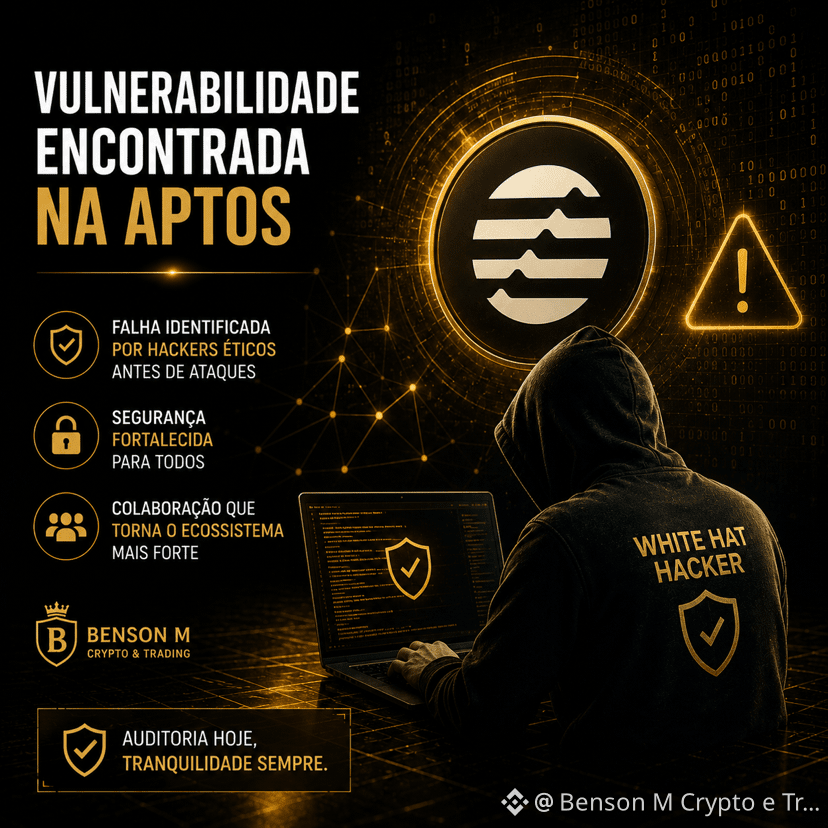
🔒🚨 #Hackers ethical identify a vulnerability in the Aptos blockchain.
The flaw was discovered by researchers before causing harm to users.
This type of audit strengthens the security of the ecosystem and highlights the importance of collaboration between developers and cybersecurity specialists.
Security continues to be one of the pillars of modern blockchains.
#Aptos #Blockchain #Crypto #CyberSecurity #Markets
🔒🚨 #Hackers ethical identify a vulnerability in the Aptos blockchain.
The flaw was discovered by researchers before causing harm to users.
This type of audit strengthens the security of the ecosystem and highlights the importance of collaboration between developers and cybersecurity specialists.
Security continues to be one of the pillars of modern blockchains.
#Aptos #Blockchain #Crypto #CyberSecurity #Markets
The flaw was discovered by researchers before causing harm to users.
This type of audit strengthens the security of the ecosystem and highlights the importance of collaboration between developers and cybersecurity specialists.
Security continues to be one of the pillars of modern blockchains.
#Aptos #Blockchain #Crypto #CyberSecurity #Markets
131

·
--
Bullish
#hackers exploited Kelp DAO,s LayerZero bridge, minting 116,500 unbacked rs$ETH tokens worth $292M. The attack involved manipulating RPC infrastructure in a 1-of-1 DVN configuration.
$ETH
{spot}(ETHUSDT)
#KelpDAOFacesAttack
#hackers exploited Kelp DAO,s LayerZero bridge, minting 116,500 unbacked rs$ETH tokens worth $292M. The attack involved manipulating RPC infrastructure in a 1-of-1 DVN configuration.
$ETH
#KelpDAOFacesAttack
$ETH
#KelpDAOFacesAttack
185
·
--
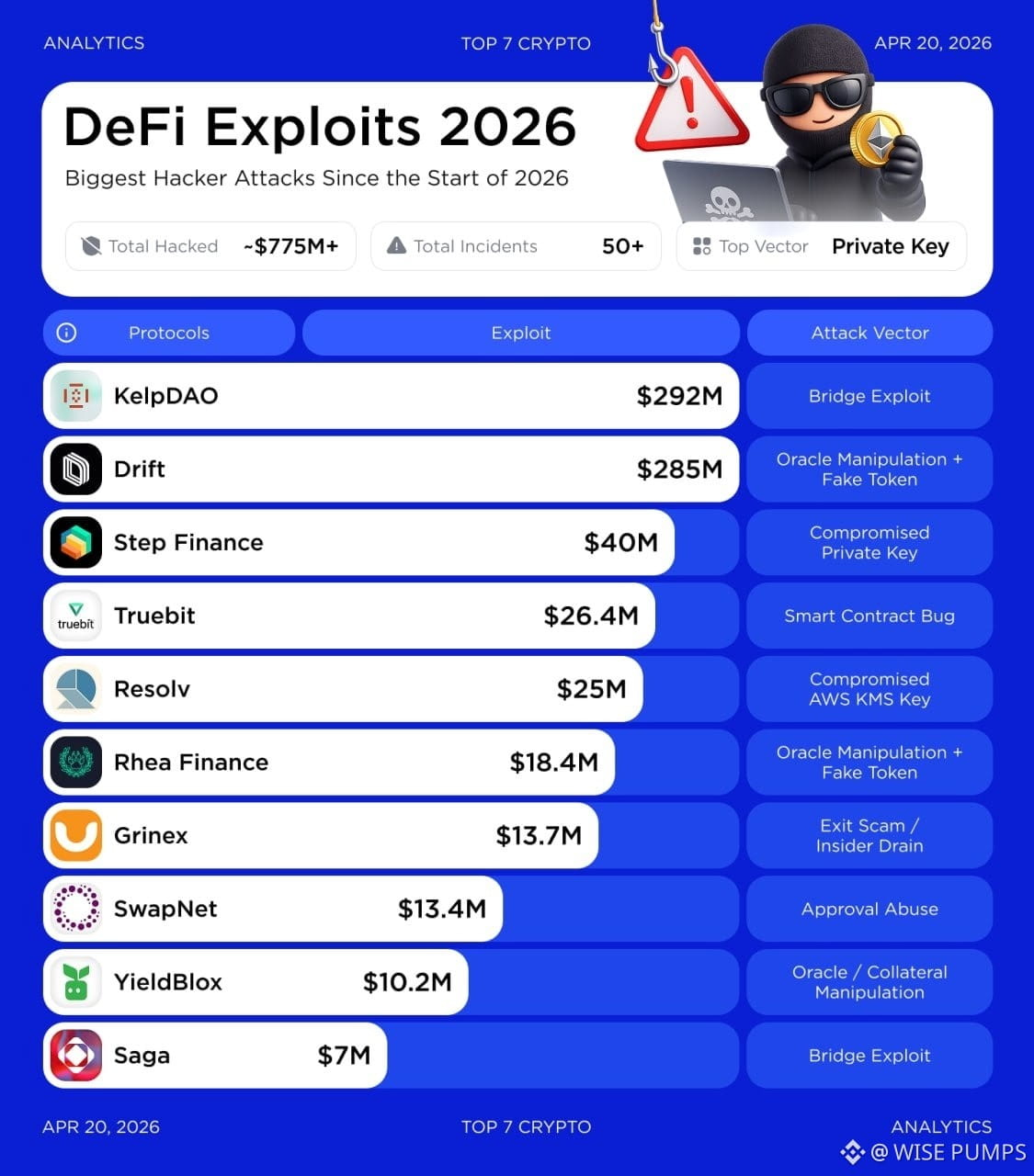
*DeFi Exploits 2026 - $775M Already Gone*
Just 4 months into 2026 and #hackers have already drained over *$775M across 50+ incidents*. The pace is accelerating, and the attack vectors keep evolving.
*Top exploits so far:*
• KelpDAO - $292M
• Drift - $285M
• Step Finance - $40M
• Truebit - $26.4M
• Resolv - $25M
• Rhea Finance - $18.4M
• Grinex - $13.7M
• SwapNet - $13.4M
• YieldBlox - $10.2M
• Saga - $7M
*Top attack vector in 2026:* Private Key compromises - the human layer remains the weakest link.
KelpDAO's rsETH exploit alone triggered the *$5B Aave #liquidity crunch* we're watching right now. Bridges and oracles keep printing losses - and 2026 is on pace to cross $3B by year-end.
*Top 7 Ecosystem:* | |
#RAVEWildMoves @wisegbevecryptonews9
*DeFi Exploits 2026 - $775M Already Gone*
Just 4 months into 2026 and #hackers have already drained over *$775M across 50+ incidents*. The pace is accelerating, and the attack vectors keep evolving.
*Top exploits so far:*
• KelpDAO - $292M
• Drift - $285M
• Step Finance - $40M
• Truebit - $26.4M
• Resolv - $25M
• Rhea Finance - $18.4M
• Grinex - $13.7M
• SwapNet - $13.4M
• YieldBlox - $10.2M
• Saga - $7M
*Top attack vector in 2026:* Private Key compromises - the human layer remains the weakest link.
KelpDAO's rsETH exploit alone triggered the *$5B Aave #liquidity crunch* we're watching right now. Bridges and oracles keep printing losses - and 2026 is on pace to cross $3B by year-end.
*Top 7 Ecosystem:* | |
#RAVEWildMoves @WISE PUMPS
Just 4 months into 2026 and #hackers have already drained over *$775M across 50+ incidents*. The pace is accelerating, and the attack vectors keep evolving.
*Top exploits so far:*
• KelpDAO - $292M
• Drift - $285M
• Step Finance - $40M
• Truebit - $26.4M
• Resolv - $25M
• Rhea Finance - $18.4M
• Grinex - $13.7M
• SwapNet - $13.4M
• YieldBlox - $10.2M
• Saga - $7M
*Top attack vector in 2026:* Private Key compromises - the human layer remains the weakest link.
KelpDAO's rsETH exploit alone triggered the *$5B Aave #liquidity crunch* we're watching right now. Bridges and oracles keep printing losses - and 2026 is on pace to cross $3B by year-end.
*Top 7 Ecosystem:* | |
#RAVEWildMoves @WISE PUMPS
1.3k
Log in to explore more content
Join global crypto users on Binance Square
⚡️ Get latest and useful information about crypto.
💬 Trusted by the world’s largest crypto exchange.
👍 Discover real insights from verified creators.
Email / Phone number
Trending Topics
1
#EthereumBreaksAbove$2700
39 views
25 Discussing
2
#GrayscaleZcashETFHits$1BNetAssets
332 views
25 Discussing
3
#BitcoinSpotETFsNetInflow$191M
4,044 views
146 Discussing
4
#CFTCUpdatesGuidanceOnTokenizedAssets
26,113 views
988 Discussing
5
#BitgetSays$352MAffectedInHack
9,998 views
84 Discussing
6
#BinanceWillListHyperliquid(HYPE)
225,254 views
3,528 Discussing
7
#BrazilOrdersReportingOf$10KSelfCustodyTransfers
3,980 views
52 Discussing
8
#FedProposesRulesForBankIssuedStablecoins
22,930 views
606 Discussing
9
#OndoFinanceSoughtSaleAfterFoundersDeath
14,067 views
396 Discussing
10
#FedOctoberRateHikeOddsRiseTo69.7%
94,008 views
1,536 Discussing