
#flex
flex
12,203 views
65 Discussing
Hot
Latest

$FLEX LONG
Will buyers manage to develop an upward move and consolidate their success? The bulls are trying to take control of the initiative in the current zone, creating the conditions for continued growth. As long as the quotes remain above the key risk threshold, the scenario of an upward move remains viable, although local pullbacks always require attention.
➡️Entry point: 128.12
🎯Take 1: 128.97119909 (+0.66%)
🎯Take 2: 129.88239817 (+1.38%)
🎯Take 3: 131.24919681 (+2.44%)
🛡Protection: 126.69320137 (-1.11%)
⚠️ This is not financial advice. Trade at your own risk. DYOR.
#FLEX #CryptoEducation #RWA 📈
$FLEX
Will buyers manage to develop an upward move and consolidate their success? The bulls are trying to take control of the initiative in the current zone, creating the conditions for continued growth. As long as the quotes remain above the key risk threshold, the scenario of an upward move remains viable, although local pullbacks always require attention.
➡️Entry point: 128.12
🎯Take 1: 128.97119909 (+0.66%)
🎯Take 2: 129.88239817 (+1.38%)
🎯Take 3: 131.24919681 (+2.44%)
🛡Protection: 126.69320137 (-1.11%)
⚠️ This is not financial advice. Trade at your own risk. DYOR.
#FLEX #CryptoEducation #RWA 📈
$FLEX

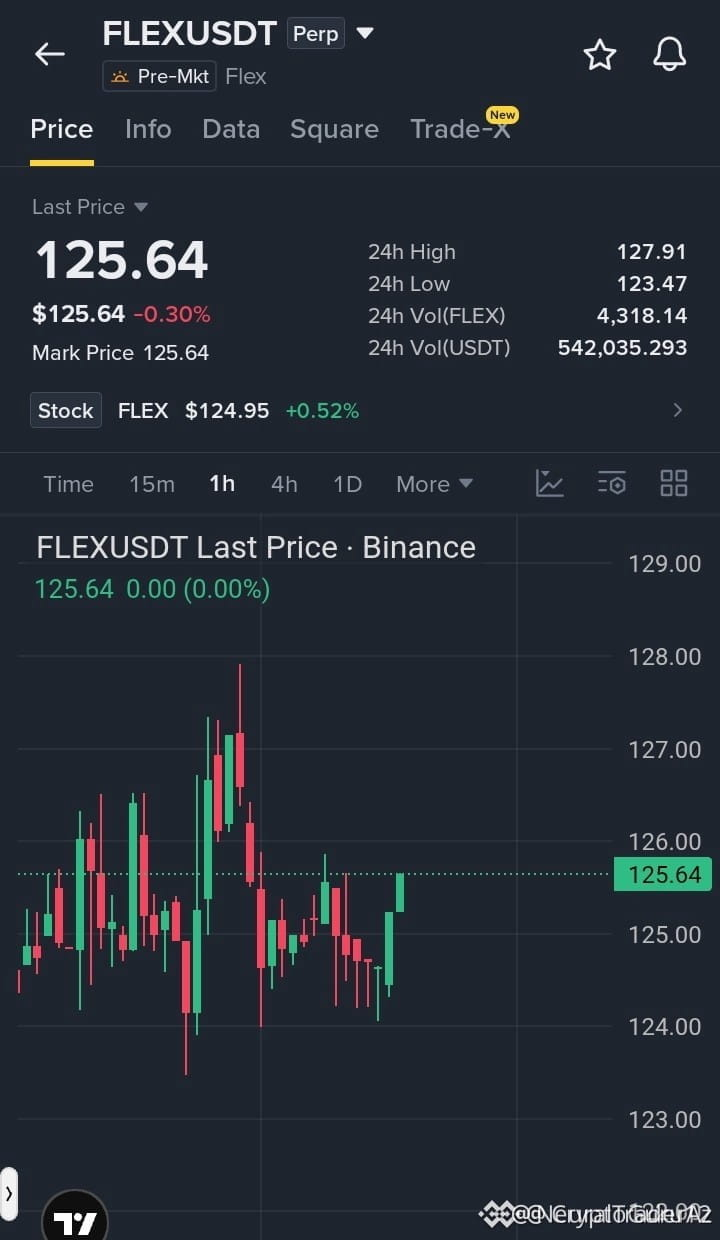
$FLEX BOUNCES OFF 124.00 — CLEAR PATH TO 128.00? 📈🎯
Entry: 125.20–125.80 📥
TP1: 126.50 🎯
TP2: 127.20 🎯
TP3: 128.00 🎯
SL: 124.30 🛑
The 124.00 zone printed a clean liquidity sweep, and bulls stepped in fast — reclaiming 125.00 with momentum. That reclaim redefines the near-term structure. 📊 Secondary tickers $AKE and $ACU are watching this tape closely for spillover strength.
Resistance at 126.00 is the pivot. A decisive break up here shifts the balance toward the recent highs, with targets stacking into 128.00. The setup is clean, but patience is the edge — let confirmation come to you. 🔥
Will $FLEX clear 126.00 on the first attempt, or do we see one more shakeout before the breakout? 💬 What's your read on this structure?
⚠️ Not financial advice. Always manage your risk. 🛡️
🏷️ #FLEX #AKE #ACU #CryptoSignals #MarketStructure
📊🚀
Entry: 125.20–125.80 📥
TP1: 126.50 🎯
TP2: 127.20 🎯
TP3: 128.00 🎯
SL: 124.30 🛑
The 124.00 zone printed a clean liquidity sweep, and bulls stepped in fast — reclaiming 125.00 with momentum. That reclaim redefines the near-term structure. 📊 Secondary tickers $AKE and $ACU are watching this tape closely for spillover strength.
Resistance at 126.00 is the pivot. A decisive break up here shifts the balance toward the recent highs, with targets stacking into 128.00. The setup is clean, but patience is the edge — let confirmation come to you. 🔥
Will $FLEX clear 126.00 on the first attempt, or do we see one more shakeout before the breakout? 💬 What's your read on this structure?
⚠️ Not financial advice. Always manage your risk. 🛡️
🏷️ #FLEX #AKE #ACU #CryptoSignals #MarketStructure
📊🚀

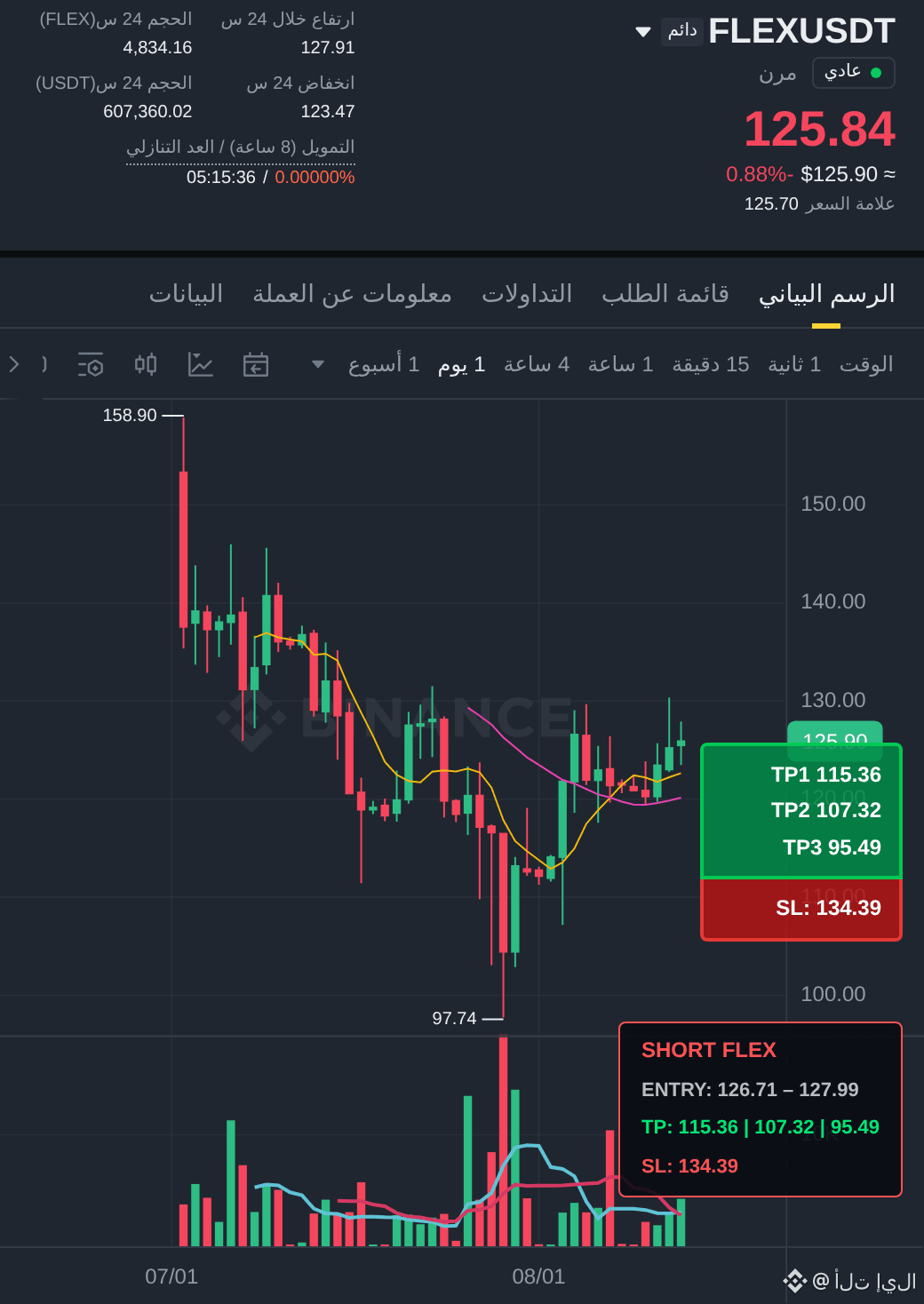
Is FLEX continuing its decline? Here is a bearish continuation setup
Continuation — 📉 Sell
Here’s what the data says:
• Price: 127.35 (24h range: 123.47–127.91)
• RSI(14): 60.6 — near the overbought zone
• EMA20: $125.72 | EMA50: $124.84 ⚠️ Above EMA50
• Volume: $601.6K
📉 If yes, here’s the plan:
📉 Entry: 126.71 – 127.99
🛑 Stop loss: 134.39
🎯 Target 1: 115.36
🎯 Target 2: 107.32
🎯 Target 3: 95.49
This resistance level has rejected the price multiple times recently.
This is the kind of setup that comes before sharp liquidations of long positions.
Small size—let the trade breathe, let it run.
Time passes 👈 $FLEX 👉 move now
#FLEX
Continuation — 📉 Sell
Here’s what the data says:
• Price: 127.35 (24h range: 123.47–127.91)
• RSI(14): 60.6 — near the overbought zone
• EMA20: $125.72 | EMA50: $124.84 ⚠️ Above EMA50
• Volume: $601.6K
📉 If yes, here’s the plan:
📉 Entry: 126.71 – 127.99
🛑 Stop loss: 134.39
🎯 Target 1: 115.36
🎯 Target 2: 107.32
🎯 Target 3: 95.49
This resistance level has rejected the price multiple times recently.
This is the kind of setup that comes before sharp liquidations of long positions.
Small size—let the trade breathe, let it run.
Time passes 👈 $FLEX 👉 move now
#FLEX


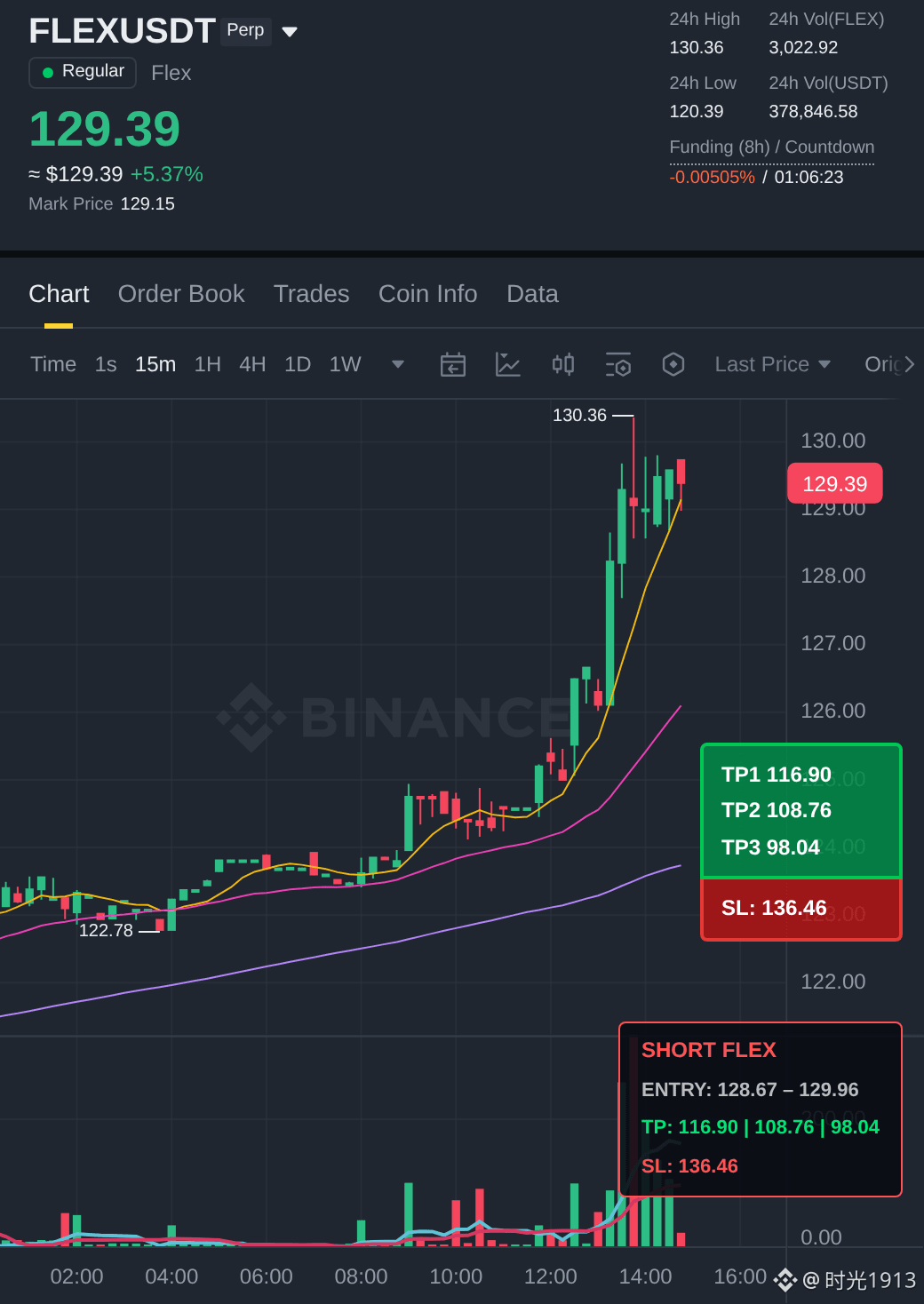
📉 Is $FLEX ready for another leg down? Here's the continuation case
$FLEX CONTINUATION | 📉 SHORT
💰 Price: 129.37
📊 24H Range: 120.39 – 130.36
📦 Volume: $356.0K
📐 Technicals:
RSI(14): 81.9 — Extremely Overbought 🔴
EMA20: $124.68 | EMA50: $123.14 ⚠️ Above EMA50
📉 Entry: 128.67 – 129.96
🛑 Stop: 136.46
🎯 TP1: 116.90
🎯 TP2: 108.76
🎯 TP3: 98.04
The FLEX distribution pattern is complete — markdown phase begins.
Never fight the tape when structure is broken.
The FLEX short is a process — trust the structure.
Pattern Complete 👉 $FLEX 👈 Go Now
#FLEX #scalping #shortsignal
$FLEX CONTINUATION | 📉 SHORT
💰 Price: 129.37
📊 24H Range: 120.39 – 130.36
📦 Volume: $356.0K
📐 Technicals:
RSI(14): 81.9 — Extremely Overbought 🔴
EMA20: $124.68 | EMA50: $123.14 ⚠️ Above EMA50
📉 Entry: 128.67 – 129.96
🛑 Stop: 136.46
🎯 TP1: 116.90
🎯 TP2: 108.76
🎯 TP3: 98.04
The FLEX distribution pattern is complete — markdown phase begins.
Never fight the tape when structure is broken.
The FLEX short is a process — trust the structure.
Pattern Complete 👉 $FLEX 👈 Go Now
#FLEX #scalping #shortsignal

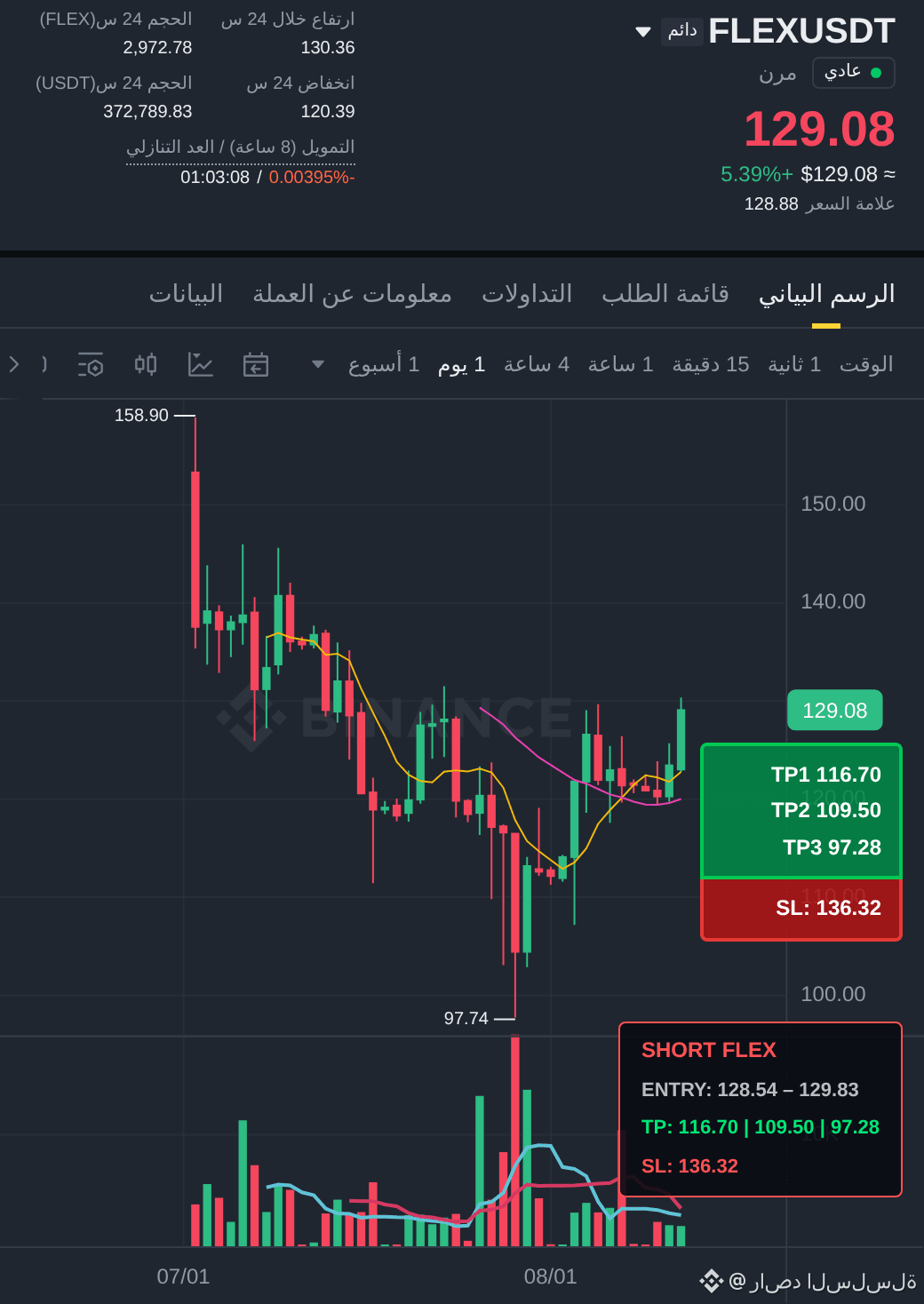
Is the $FLEX price still falling? Here is the next bearish wave argument
$FLEX continues | 📉 sell
💰 Price: 129.12
📊 24h Range: 120.39 – 130.36
📦 Volume: $356.0K
📐 Technical Indicators:
RSI(14): 81.9 — buying peak 🔴
EMA20: $124.68 | EMA50: $123.14 ⚠️ above EMA50
📉 Entry: 128.54 – 129.83
🛑 Stop Loss: 136.32
🎯 Target 1: 116.70
🎯 Target 2: 109.50
🎯 Target 3: 97.28
EMA50 is above the current price — the medium-term trend favors the bears.
Not financial advice. Set your risk before selling.
Invest in 👈 $FLEX 👉 now
#FLEX #إشارات_قصيرة #استراتيجية_البيع
$FLEX continues | 📉 sell
💰 Price: 129.12
📊 24h Range: 120.39 – 130.36
📦 Volume: $356.0K
📐 Technical Indicators:
RSI(14): 81.9 — buying peak 🔴
EMA20: $124.68 | EMA50: $123.14 ⚠️ above EMA50
📉 Entry: 128.54 – 129.83
🛑 Stop Loss: 136.32
🎯 Target 1: 116.70
🎯 Target 2: 109.50
🎯 Target 3: 97.28
EMA50 is above the current price — the medium-term trend favors the bears.
Not financial advice. Set your risk before selling.
Invest in 👈 $FLEX 👉 now
#FLEX #إشارات_قصيرة #استراتيجية_البيع
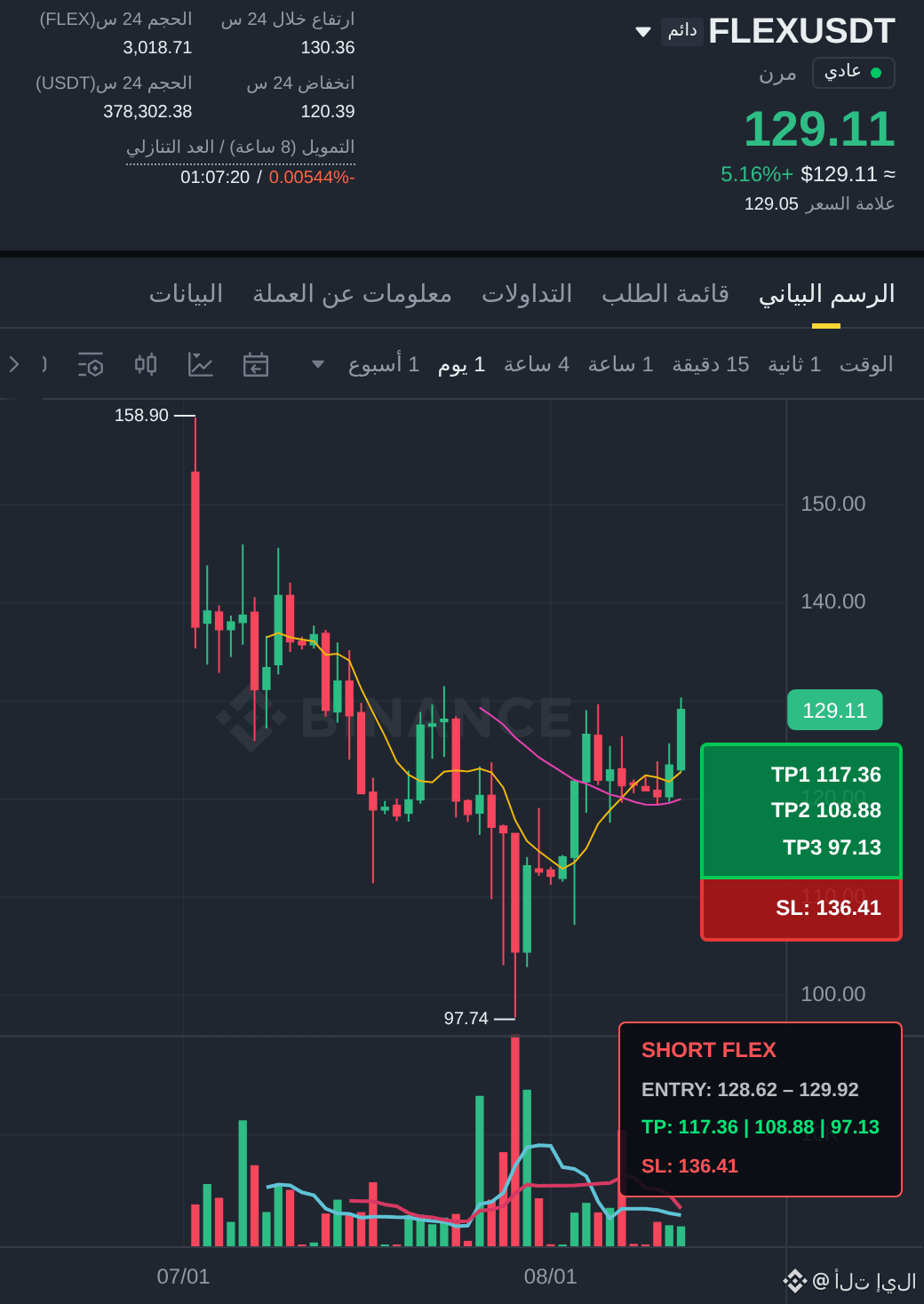
Is $FLEX it continuing to fall? Here is the next bearish wave argument
$FLEX continuation — 📉 sell
129.27 | RSI 82 | Volume $356.0K
EMA20: $124.68 | EMA50: $123.14 ⚠️ Above EMA50
📉 Entry: 128.62 – 129.92
🛑 Stop Loss: 136.41
🎯 Target 1: 117.36
🎯 Target 2: 108.88
🎯 Target 3: 97.13
Risk management is everything in crypto. Stop first.
Entry alert 👈 $FLEX 👉 right now directly
#FLEX #إشارات_قصيرة #استراتيجية_البيع
$FLEX continuation — 📉 sell
129.27 | RSI 82 | Volume $356.0K
EMA20: $124.68 | EMA50: $123.14 ⚠️ Above EMA50
📉 Entry: 128.62 – 129.92
🛑 Stop Loss: 136.41
🎯 Target 1: 117.36
🎯 Target 2: 108.88
🎯 Target 3: 97.13
Risk management is everything in crypto. Stop first.
Entry alert 👈 $FLEX 👉 right now directly
#FLEX #إشارات_قصيرة #استراتيجية_البيع
Would you add to a $FLEX short here? Here's my reasoning
$FLEX SETUP — 📉 SHORT
Here's what the data shows:
• Price: 122.86 (24H Range: 119.50–125.69)
• RSI(14): 58.8 — Neutral-High
• EMA20: $121.50 | EMA50: $121.37 ⚠️ Above EMA50
• Volume: $264.8K
📉 If yes, here's the plan:
📉 Entry: 122.19 – 123.42
🛑 Stop: 129.59
🎯 TP1: 110.96
🎯 TP2: 103.23
🎯 TP3: 92.96
This resistance level has rejected price multiple times recently.
Structure breaks first, then price follows.
Short FLEX is the right trade — market agrees.
Higher Low Printed 👉 $FLEX 👈 Buy
#FLEX #scalping #shortsignal
$FLEX SETUP — 📉 SHORT
Here's what the data shows:
• Price: 122.86 (24H Range: 119.50–125.69)
• RSI(14): 58.8 — Neutral-High
• EMA20: $121.50 | EMA50: $121.37 ⚠️ Above EMA50
• Volume: $264.8K
📉 If yes, here's the plan:
📉 Entry: 122.19 – 123.42
🛑 Stop: 129.59
🎯 TP1: 110.96
🎯 TP2: 103.23
🎯 TP3: 92.96
This resistance level has rejected price multiple times recently.
Structure breaks first, then price follows.
Short FLEX is the right trade — market agrees.
Higher Low Printed 👉 $FLEX 👈 Buy
#FLEX #scalping #shortsignal
Can you add here $FLEX short? Here is my justification
$FLEX SETUP — 📉 SHORT
This is what the data shows:
• Price: 122.86 (24h range: 119.50–125.69)
• RSI(14): 58.8 — neutral-high
• EMA20: $121.50 | EMA50: $121.37 ⚠️ above EMA50
• Volume: $264.8K
📉 If yes, here’s the plan:
📉 Entry: 122.19 – 123.42
🛑 Stop loss: 129.59
🎯 Target 1: 110.96
🎯 Target 2: 103.23
🎯 Target 3: 92.96
This resistance level has been rejected several times recently.
A break in structure happens first, then the price follows.
Short FLEX is the right trade — the market agrees.
A higher low was printed 👉 $FLEX
#FLEX
$FLEX SETUP — 📉 SHORT
This is what the data shows:
• Price: 122.86 (24h range: 119.50–125.69)
• RSI(14): 58.8 — neutral-high
• EMA20: $121.50 | EMA50: $121.37 ⚠️ above EMA50
• Volume: $264.8K
📉 If yes, here’s the plan:
📉 Entry: 122.19 – 123.42
🛑 Stop loss: 129.59
🎯 Target 1: 110.96
🎯 Target 2: 103.23
🎯 Target 3: 92.96
This resistance level has been rejected several times recently.
A break in structure happens first, then the price follows.
Short FLEX is the right trade — the market agrees.
A higher low was printed 👉 $FLEX
#FLEX
Does $FLEX show signs of bearish reversal? Here’s the evidence
$FLEX Prepared by — 📉 Sell
📍 @ 122.64 | Volume: $264.8K
RSI 59 | EMA20: $121.50
📉 Trading plan:
📉 Entry: 122.05 – 123.28
🛑 Stop loss: 129.44
🎯 Target 1: 110.75
🎯 Target 2: 104.07
🎯 Target 3: 92.37
This is the type of setup that precedes harsh liquidations of long positions.
This is a game of probabilities. The edge builds over many trades.
The opportunity is for those who move 👈 $FLEX 👉 now
#FLEX #إشارات_قصيرة #استراتيجية_البيع
$FLEX Prepared by — 📉 Sell
📍 @ 122.64 | Volume: $264.8K
RSI 59 | EMA20: $121.50
📉 Trading plan:
📉 Entry: 122.05 – 123.28
🛑 Stop loss: 129.44
🎯 Target 1: 110.75
🎯 Target 2: 104.07
🎯 Target 3: 92.37
This is the type of setup that precedes harsh liquidations of long positions.
This is a game of probabilities. The edge builds over many trades.
The opportunity is for those who move 👈 $FLEX 👉 now
#FLEX #إشارات_قصيرة #استراتيجية_البيع
Will you enter $FLEX for a sale here? Here is my full analysis
$FLEX setup — 📉 Sell
📍 @ 122.73 | Volume: $264.8K
RSI 59 | EMA20: $121.50
📉 Trading plan:
📉 Entry: 122.12 – 123.34
🛑 Stop loss: 129.51
🎯 Target 1: 111.24
🎯 Target 2: 103.42
🎯 Target 3: 92.20
Risk management is everything in crypto. Set your stop before entering.
Do your own research. This is just a technical note.
Smart trading 👈 $FLEX 👉 Start now
#FLEX #إشارات_قصيرة #استراتيجية_البيع
$FLEX setup — 📉 Sell
📍 @ 122.73 | Volume: $264.8K
RSI 59 | EMA20: $121.50
📉 Trading plan:
📉 Entry: 122.12 – 123.34
🛑 Stop loss: 129.51
🎯 Target 1: 111.24
🎯 Target 2: 103.42
🎯 Target 3: 92.20
Risk management is everything in crypto. Set your stop before entering.
Do your own research. This is just a technical note.
Smart trading 👈 $FLEX 👉 Start now
#FLEX #إشارات_قصيرة #استراتيجية_البيع
$FLEX LONG
Can buyers develop an upward momentum? Bulls are still holding the initiative, creating conditions for the continuation of the move upward and the achievement of the planned goals. Seller pressure looks restrained, which increases the chances of a favorable outcome, provided the current trading pace is maintained.
🔹Entry zone: 123.98
🎯Take 1: 124.62497743 (+0.52%)
🎯Take 2: 125.54995486 (+1.27%)
🎯Take 3: 126.937421 (+2.39%)
❌Stop-loss: 122.31253386 (-1.34%)
⚠️ This is not financial advice. Trade at your own risk. DYOR.
#FLEX #RWA #AIcrypto 📈
$FLEX
Can buyers develop an upward momentum? Bulls are still holding the initiative, creating conditions for the continuation of the move upward and the achievement of the planned goals. Seller pressure looks restrained, which increases the chances of a favorable outcome, provided the current trading pace is maintained.
🔹Entry zone: 123.98
🎯Take 1: 124.62497743 (+0.52%)
🎯Take 2: 125.54995486 (+1.27%)
🎯Take 3: 126.937421 (+2.39%)
❌Stop-loss: 122.31253386 (-1.34%)
⚠️ This is not financial advice. Trade at your own risk. DYOR.
#FLEX #RWA #AIcrypto 📈
$FLEX
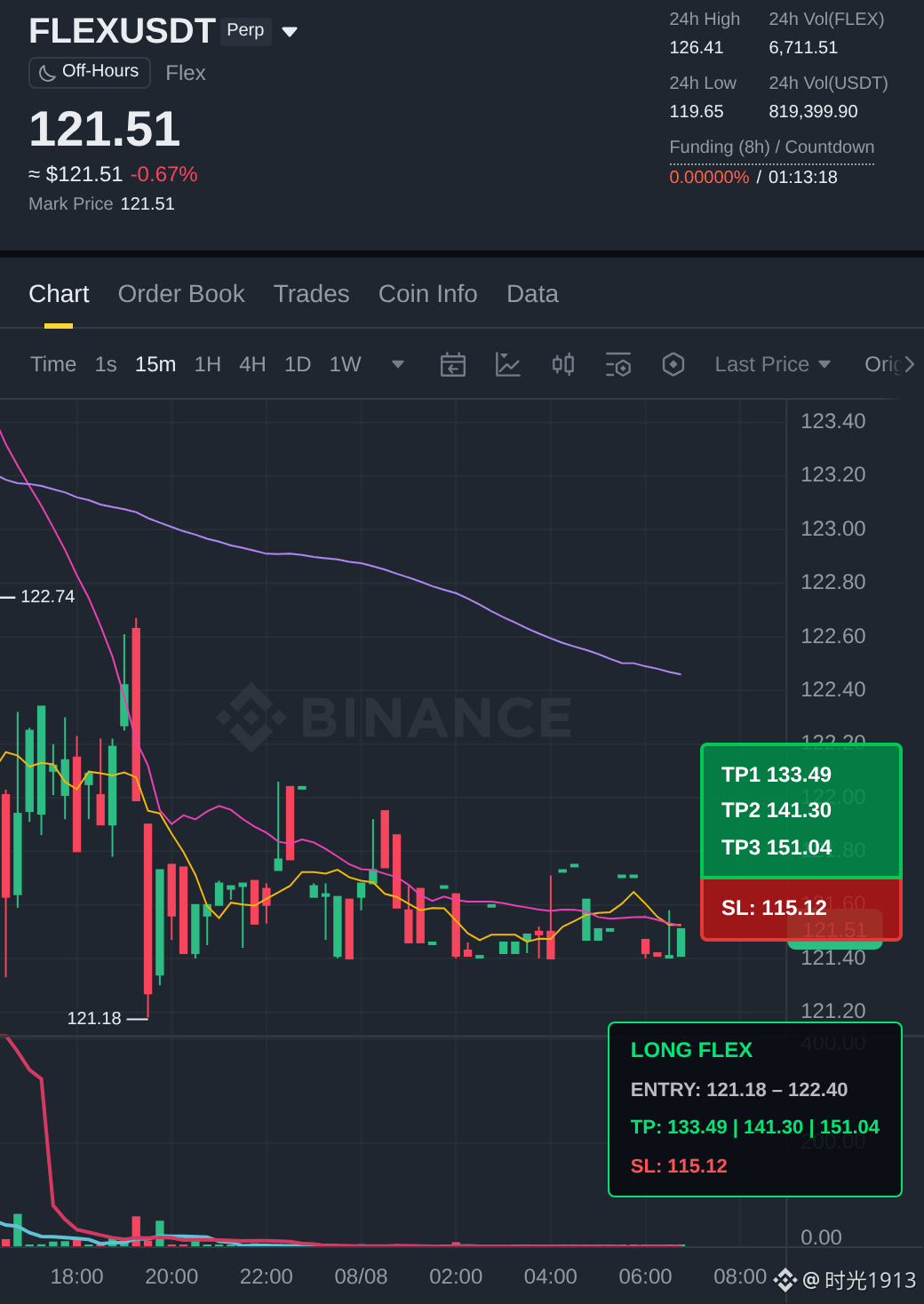
Would you enter $FLEX long for the continuation move? Here's the plan
$FLEX CONTINUATION | 📈 LONG
💰 Price: 121.79
📊 24H Range: 119.65 – 126.41
📦 Volume: $823.9K
📐 Technicals:
RSI(14): 43.2 — Near Oversold
EMA20: $122.01 | EMA50: $122.69 ⚠️ Below EMA50
📈 Entry: 121.18 – 122.40
🛑 Stop: 115.12
🎯 TP1: 133.49
🎯 TP2: 141.30
🎯 TP3: 151.04
The chart is telling a bullish story — listen to it.
The FLEX higher lows continue — textbook uptrend.
Be Early On 👉 $FLEX 👈 Right Now
#FLEX #scalping #longsignal
$FLEX CONTINUATION | 📈 LONG
💰 Price: 121.79
📊 24H Range: 119.65 – 126.41
📦 Volume: $823.9K
📐 Technicals:
RSI(14): 43.2 — Near Oversold
EMA20: $122.01 | EMA50: $122.69 ⚠️ Below EMA50
📈 Entry: 121.18 – 122.40
🛑 Stop: 115.12
🎯 TP1: 133.49
🎯 TP2: 141.30
🎯 TP3: 151.04
The chart is telling a bullish story — listen to it.
The FLEX higher lows continue — textbook uptrend.
Be Early On 👉 $FLEX 👈 Right Now
#FLEX #scalping #longsignal
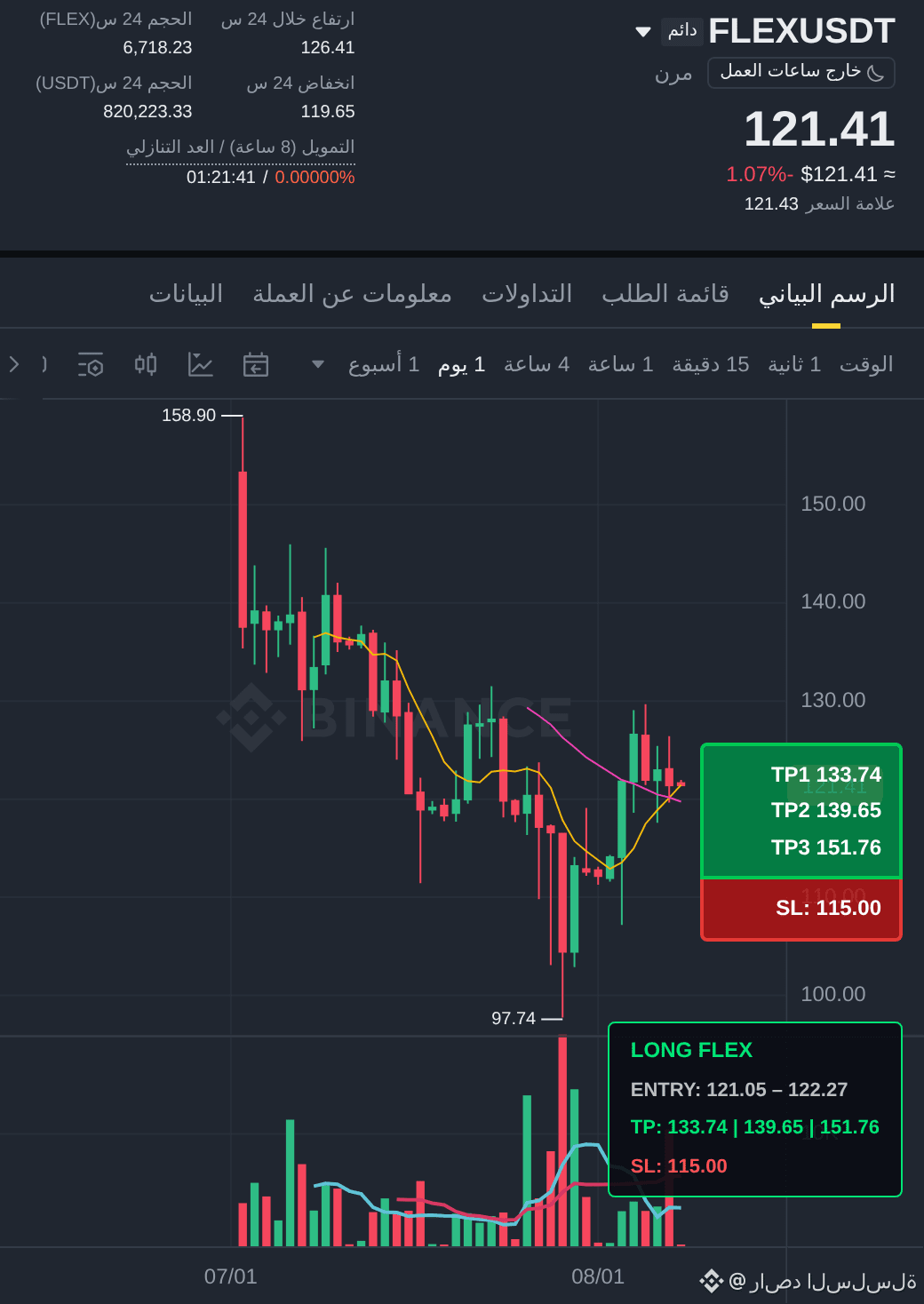
Is the $FLEX uptrend continuing? The data supports continuation
$FLEX Continuation — 📈 Buy
121.58 | RSI 43 | Volume $823.9K
EMA20: $122.01 | EMA50: $122.69 ⚠️ Below EMA50
📈 Entry: 121.05 – 122.27
🛑 Stop loss: 115.00
🎯 Target 1: 133.74
🎯 Target 2: 139.65
🎯 Target 3: 151.76
Not financial advice. Define your risk before entering.
Setup complete 👈 $FLEX 👉 Execute now
#FLEX #إشارات_قصيرة #استراتيجية_الشراء
$FLEX Continuation — 📈 Buy
121.58 | RSI 43 | Volume $823.9K
EMA20: $122.01 | EMA50: $122.69 ⚠️ Below EMA50
📈 Entry: 121.05 – 122.27
🛑 Stop loss: 115.00
🎯 Target 1: 133.74
🎯 Target 2: 139.65
🎯 Target 3: 151.76
Not financial advice. Define your risk before entering.
Setup complete 👈 $FLEX 👉 Execute now
#FLEX #إشارات_قصيرة #استراتيجية_الشراء
Is $FLEX ready to continue rising? Here is the next wave argument
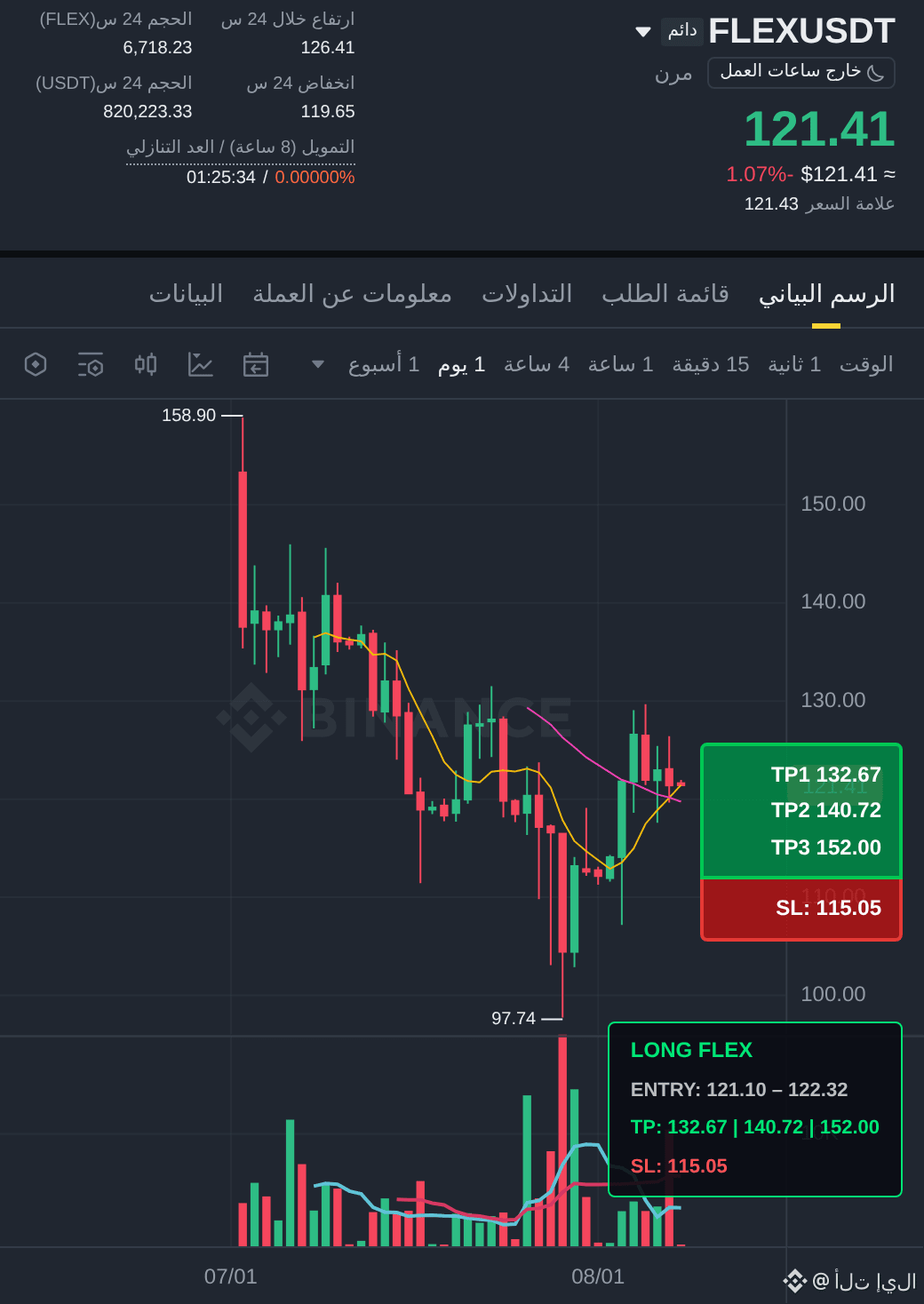
$FLEX continuation | 📈 buy
💰 Price: 121.71
📊 24h range: 119.65 – 126.41
📦 Volume: $823.9K
📐 Technical indicators:
RSI(14): 43.2 — neutral
EMA20: $122.01 | EMA50: $122.69 ⚠️ below EMA50
📈 Entry: 121.10 – 122.32
🛑 Stop loss: 115.05
🎯 Target 1: 132.67
🎯 Target 2: 140.72
🎯 Target 3: 152.00
This support level has held firm several times over the past weeks.
This is the kind of setup that comes before sharp rallies.
Do your own research. This is only a technical note.
Catch the move 👈 $FLEX 👉 now
#FLEX #إشارات_قصيرة #استراتيجية_الشراء
$FLEX continuation | 📈 buy
💰 Price: 121.71
📊 24h range: 119.65 – 126.41
📦 Volume: $823.9K
📐 Technical indicators:
RSI(14): 43.2 — neutral
EMA20: $122.01 | EMA50: $122.69 ⚠️ below EMA50
📈 Entry: 121.10 – 122.32
🛑 Stop loss: 115.05
🎯 Target 1: 132.67
🎯 Target 2: 140.72
🎯 Target 3: 152.00
This support level has held firm several times over the past weeks.
This is the kind of setup that comes before sharp rallies.
Do your own research. This is only a technical note.
Catch the move 👈 $FLEX 👉 now
#FLEX #إشارات_قصيرة #استراتيجية_الشراء

Market Brief: $FLEX 📊
Suggested Direction: Range-bound / Choppy
Entry: 122.6684-123.8516
Stop-Loss Reference: 122.0767
Target Prices: 124.4926/125.4787/126.7113
Analysis: This price action is painfully slow—what is FLEX doing, dragging its feet? It has been hovering around 123.26 for half the time. The two EMA lines are tangled like earphone wires; they cross with nothing to show for it—direction is basically unclear. RSI at 53.2 is also half-asleep; both bulls and bears are soft. Don’t tell me about some big-picture trend—right now it’s just range trading. It’s uncomfortable both ways. If you ask me, don’t get itchy before it breaks out/breaks down; let it pick a side on its own. If you really have to act, set the stop-loss below 122.07—don’t hold on and hope. Manage your position size yourself; don’t end up shouting for help later. Being in a rush is useless. This kind of market just grinds people down—be patient and wait for a breakout or a breakdown, then follow. If you’re impulsive and can’t help it, go wash your hands first.
Note: Suggested Stop-Loss Level: 122.076704, please adjust position size according to your own risk tolerance
#FLEX
Suggested Direction: Range-bound / Choppy
Entry: 122.6684-123.8516
Stop-Loss Reference: 122.0767
Target Prices: 124.4926/125.4787/126.7113
Analysis: This price action is painfully slow—what is FLEX doing, dragging its feet? It has been hovering around 123.26 for half the time. The two EMA lines are tangled like earphone wires; they cross with nothing to show for it—direction is basically unclear. RSI at 53.2 is also half-asleep; both bulls and bears are soft. Don’t tell me about some big-picture trend—right now it’s just range trading. It’s uncomfortable both ways. If you ask me, don’t get itchy before it breaks out/breaks down; let it pick a side on its own. If you really have to act, set the stop-loss below 122.07—don’t hold on and hope. Manage your position size yourself; don’t end up shouting for help later. Being in a rush is useless. This kind of market just grinds people down—be patient and wait for a breakout or a breakdown, then follow. If you’re impulsive and can’t help it, go wash your hands first.
Note: Suggested Stop-Loss Level: 122.076704, please adjust position size according to your own risk tolerance
#FLEX

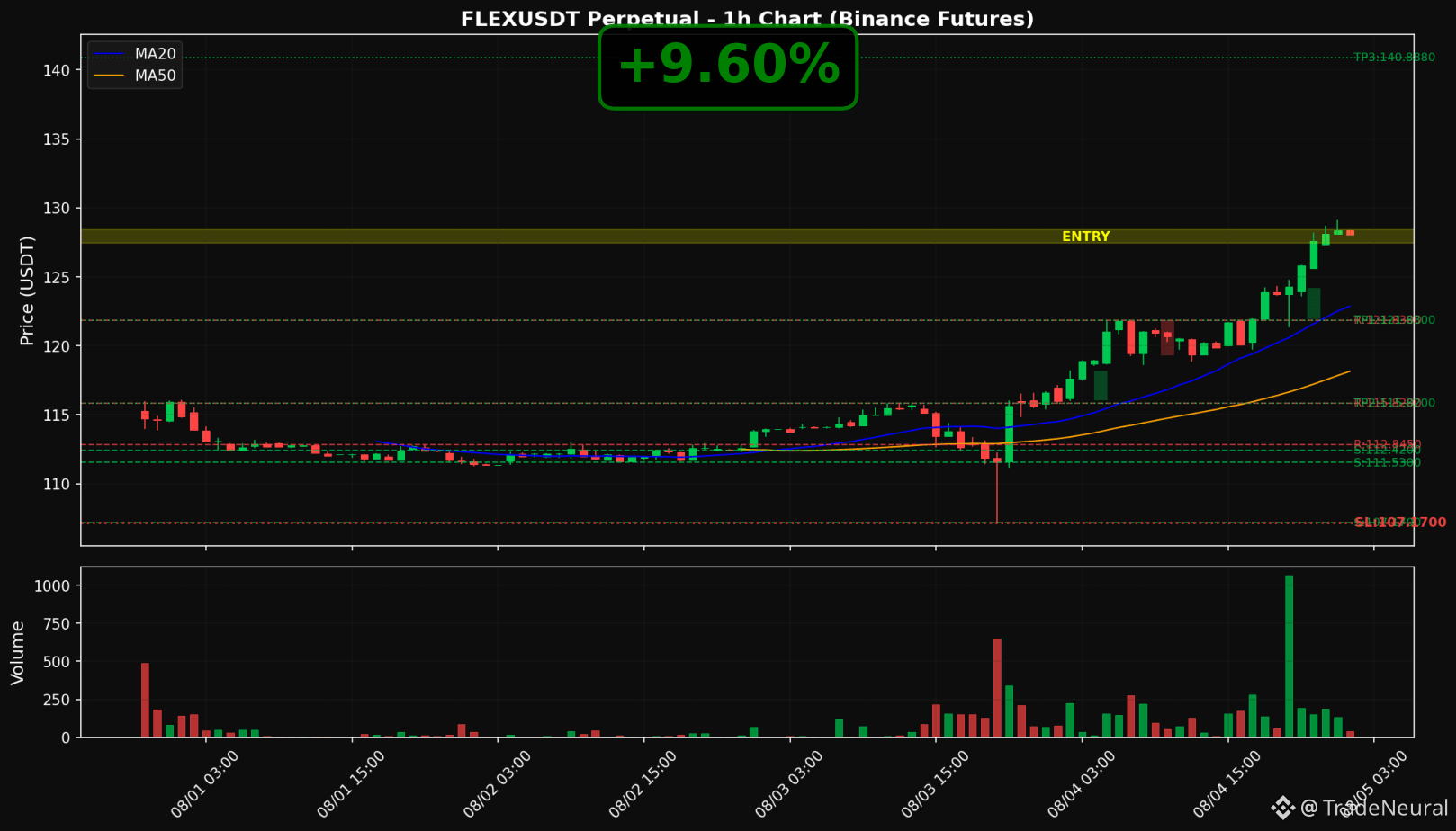
FLEX +9.6% Pump — 1H
Current: $128 | +9.6% | RSI 76 | MACD +0.30 | EMA9>EMA21 | VPoc 123
Analysis: Overbought RSI 76 at upper BB 129. Bullish MA20>MA50 but extended. EMA9>EMA21 uptrend.
Setup: Short | Entry $127-$129 | SL $132 | TP1 $123 | TP2 $119 | TP3 $116 | R:R 1:2.5
Catalyst: Flex Ltd electronics manufacturing tokenized stock rallies on AI server supply chain demand, NVIDIA GB200 rack buildout driving EMS rotation.
#FLEX #TradingSetup #Crypto
Current: $128 | +9.6% | RSI 76 | MACD +0.30 | EMA9>EMA21 | VPoc 123
Analysis: Overbought RSI 76 at upper BB 129. Bullish MA20>MA50 but extended. EMA9>EMA21 uptrend.
Setup: Short | Entry $127-$129 | SL $132 | TP1 $123 | TP2 $119 | TP3 $116 | R:R 1:2.5
Catalyst: Flex Ltd electronics manufacturing tokenized stock rallies on AI server supply chain demand, NVIDIA GB200 rack buildout driving EMS rotation.
#FLEX #TradingSetup #Crypto

$FLEX now reports 115.45; it is up 3.007% over the past 24 hours. The funding rate is 0.00000000, and the open interest is 592.85. Price is moving upward, yet there is no positive funding rate accumulation, which suggests that contract long positions have not formed a crowded, pay-for-chasing structure. Open interest is only a static figure, so I won’t claim that funding is increasing. Spot market data is also missing, so for now we can’t confirm whether there is a divergence between contract sentiment and spot sentiment. The only thing we can confirm right now is that the price increase has already appeared, and the leverage pricing remains fairly restrained.
For macro transmission, we need to look at the Fed’s rate path, the US dollar, and US Treasury yields.
Trading tag: #TradFi #链上美股 #FLEX
Is the broader environment favorable or unfavorable for FLEX? Tell me your view.
For macro transmission, we need to look at the Fed’s rate path, the US dollar, and US Treasury yields.
Trading tag: #TradFi #链上美股 #FLEX
Is the broader environment favorable or unfavorable for FLEX? Tell me your view.

I’m watching $FLEX rise 3.007% over the past 24 hours. The funding rate is still 0. Open interest is 592.85. Volatility is picking up, but it’s not crowded.
If the bullish discussions on X continue to spread, the zero funding rate suggests the cost of chasing hasn’t been piled up yet—it feels more like a sentiment probe, and we still can’t confirm a squeeze.
I’m inclined to wait until the price holds above 115.45 before getting in. I’ll first take a position sized by units priced at 115.45; if it breaks down, I’ll撤.
Trading tag: #TradFi #链上美股 #FLEX
Everyone says FLEX is going up/down—where do you stand?
If the bullish discussions on X continue to spread, the zero funding rate suggests the cost of chasing hasn’t been piled up yet—it feels more like a sentiment probe, and we still can’t confirm a squeeze.
I’m inclined to wait until the price holds above 115.45 before getting in. I’ll first take a position sized by units priced at 115.45; if it breaks down, I’ll撤.
Trading tag: #TradFi #链上美股 #FLEX
Everyone says FLEX is going up/down—where do you stand?
Market Quick Report: $FLEX 📊
Recommended Direction: Range-bound
Entry: 111.2932-112.3668
Stop-Loss Reference: 110.7564
Target Prices: 112.9483/113.8429/114.9612
Analysis: Alright, FLEX is making people’s eyelids fight for control. There’s 111.83 sitting there, and the two EMA lines are sticking near 112 like they’re still half-asleep. A crossover? A crossover my ass. The RSI is already 28.8—by rights it should bounce after being oversold, but this market is acting like you’re lying flat with zero motivation: it won’t bounce, and it doesn’t want to. With an unclear trend but still forcing trades, you’re basically just paying the exchange fees as a donation. One thing I can say: don’t get carried away—wait for it to grind out a direction. If you *really* can’t stand staying idle, set your stop-loss at 110.756432 and do whatever—who cares. If it breaks down, accept it; if it doesn’t, keep waiting it out. Anyway, I’m not expecting it to get you rich overnight.
Tip: Suggested Stop-Loss Level: 110.756432. Please adjust your position size according to your own risk tolerance.
#FLEX
Recommended Direction: Range-bound
Entry: 111.2932-112.3668
Stop-Loss Reference: 110.7564
Target Prices: 112.9483/113.8429/114.9612
Analysis: Alright, FLEX is making people’s eyelids fight for control. There’s 111.83 sitting there, and the two EMA lines are sticking near 112 like they’re still half-asleep. A crossover? A crossover my ass. The RSI is already 28.8—by rights it should bounce after being oversold, but this market is acting like you’re lying flat with zero motivation: it won’t bounce, and it doesn’t want to. With an unclear trend but still forcing trades, you’re basically just paying the exchange fees as a donation. One thing I can say: don’t get carried away—wait for it to grind out a direction. If you *really* can’t stand staying idle, set your stop-loss at 110.756432 and do whatever—who cares. If it breaks down, accept it; if it doesn’t, keep waiting it out. Anyway, I’m not expecting it to get you rich overnight.
Tip: Suggested Stop-Loss Level: 110.756432. Please adjust your position size according to your own risk tolerance.
#FLEX

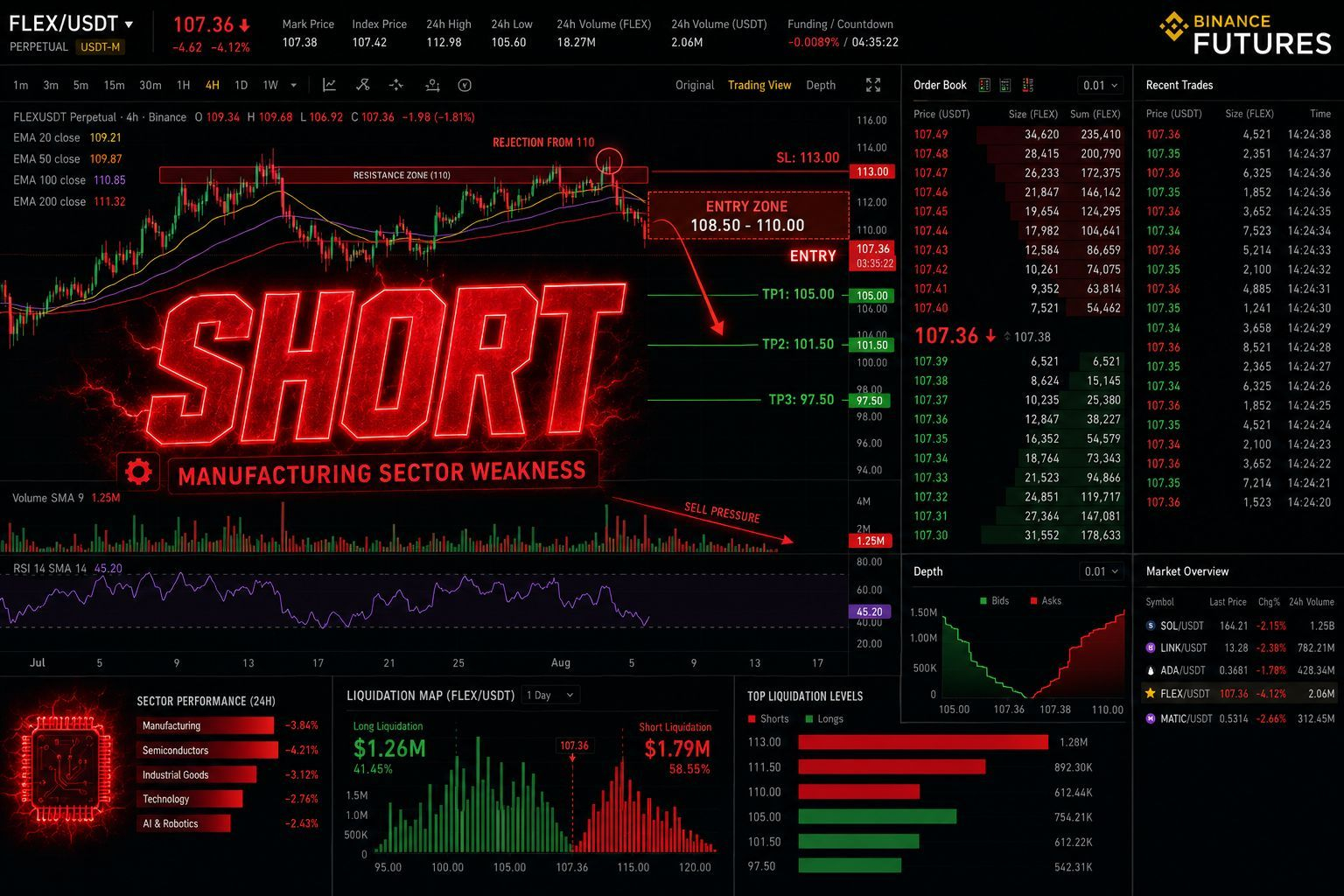
🔴 $FLEX REJECTS KEY RESISTANCE – SHORT PRESSURE MOUNTING 📉
Entry: 108.50–110.00 ⚡
Target 1: 105.00 🚀
Target 2: 101.50 🎯
Target 3: 97.50 💥
Stop Loss: 113.00 ⚠️
📉 Price just got slapped off the 110 zone after a textbook manufacturing breakdown setup. Bears are stepping in with conviction – 4H chart shows a clean breakdown pattern while the 15m volume confirms institutional selling pressure at $1.9M vs $4.0M expected. 📊 RSI at 45.2 leaves plenty of room to run before hitting oversold. The real question is whether we get a quick flush below 105 or a retest of the resistance first.
💡 This isn't a blind short – it's a structural move backed by sector headwinds and a clear order block rejection. 💬 Would you market sell here or wait for the 105 breakdown confirmation? 👇
⚠️ Not financial advice. Always manage your risk. 🛡️
🏷️ #FLEX #ShortSetup #Manufacturing #Bearish #Trading
🐻 📉
Entry: 108.50–110.00 ⚡
Target 1: 105.00 🚀
Target 2: 101.50 🎯
Target 3: 97.50 💥
Stop Loss: 113.00 ⚠️
📉 Price just got slapped off the 110 zone after a textbook manufacturing breakdown setup. Bears are stepping in with conviction – 4H chart shows a clean breakdown pattern while the 15m volume confirms institutional selling pressure at $1.9M vs $4.0M expected. 📊 RSI at 45.2 leaves plenty of room to run before hitting oversold. The real question is whether we get a quick flush below 105 or a retest of the resistance first.
💡 This isn't a blind short – it's a structural move backed by sector headwinds and a clear order block rejection. 💬 Would you market sell here or wait for the 105 breakdown confirmation? 👇
⚠️ Not financial advice. Always manage your risk. 🛡️
🏷️ #FLEX #ShortSetup #Manufacturing #Bearish #Trading
🐻 📉
Log in to explore more content