
PoorCryptoMan
8.7k Posts

PoorCryptoMan
@PoorCryptoMan $BTC $ETH $BNB #PoorCryptoMan
16 Following
82 Followers
398 Liked
Posts
All
Quotes
📚 WHALE SCHOOL, BTC Dominance
BTC dominance is Bitcoin's share of the total crypto market cap.
High dominance (58%+) = Risk-off. Money hiding in BTC. Alts underperforming.
Falling dominance = Risk-on. Money rotating into alts. Alt season potential.
During bear markets, dominance usually rises. BTC seen as safer.
During alt seasons, dominance drops as alts outperform.
Track dominance to know when to hold BTC vs when to rotate to alts.
nfa. dyor.
#crypto #learn
Drop your favorite coin below
#CryptoNews #News #Bitcoin
📱 Follow @PoorCryptoMan
BTC dominance is Bitcoin's share of the total crypto market cap.
High dominance (58%+) = Risk-off. Money hiding in BTC. Alts underperforming.
Falling dominance = Risk-on. Money rotating into alts. Alt season potential.
During bear markets, dominance usually rises. BTC seen as safer.
During alt seasons, dominance drops as alts outperform.
Track dominance to know when to hold BTC vs when to rotate to alts.
nfa. dyor.
#crypto #learn
Drop your favorite coin below
#CryptoNews #News #Bitcoin
📱 Follow @PoorCryptoMan
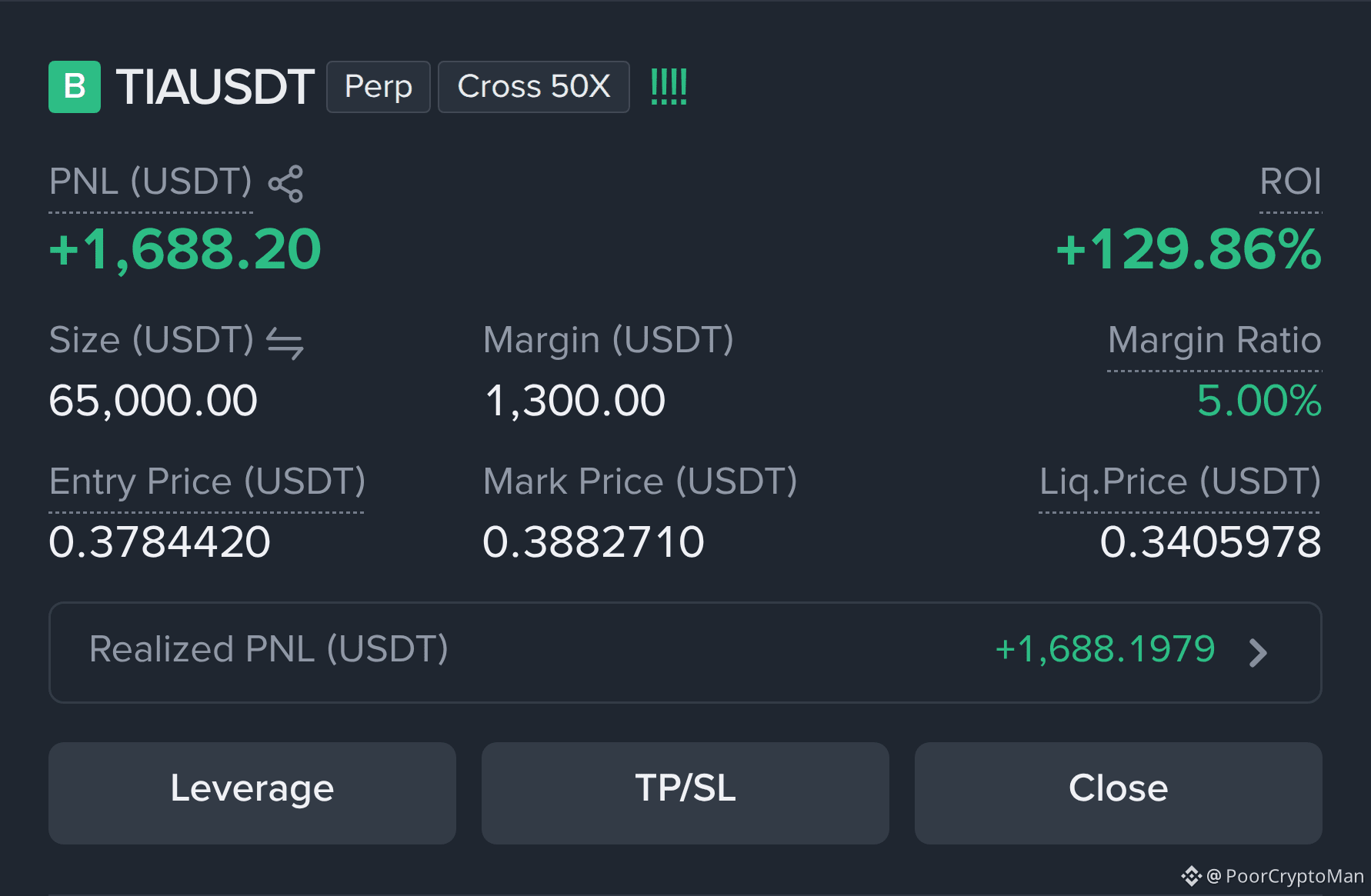
Save this one. $TIA just brought us +129.86%
🟢 Side: LONG
⚙️ Leverage: 50x
📍 Entry: 0.378442
💰 Exit: 0.388271
📊 Profit: 🟢 +129.86%
Solid win, another one in the books.
🟢 Side: LONG
⚙️ Leverage: 50x
📍 Entry: 0.378442
💰 Exit: 0.388271
📊 Profit: 🟢 +129.86%
Solid win, another one in the books.
📣 NEW SIGNAL
▬▬▬▬▬▬▬▬▬▬▬▬▬▬
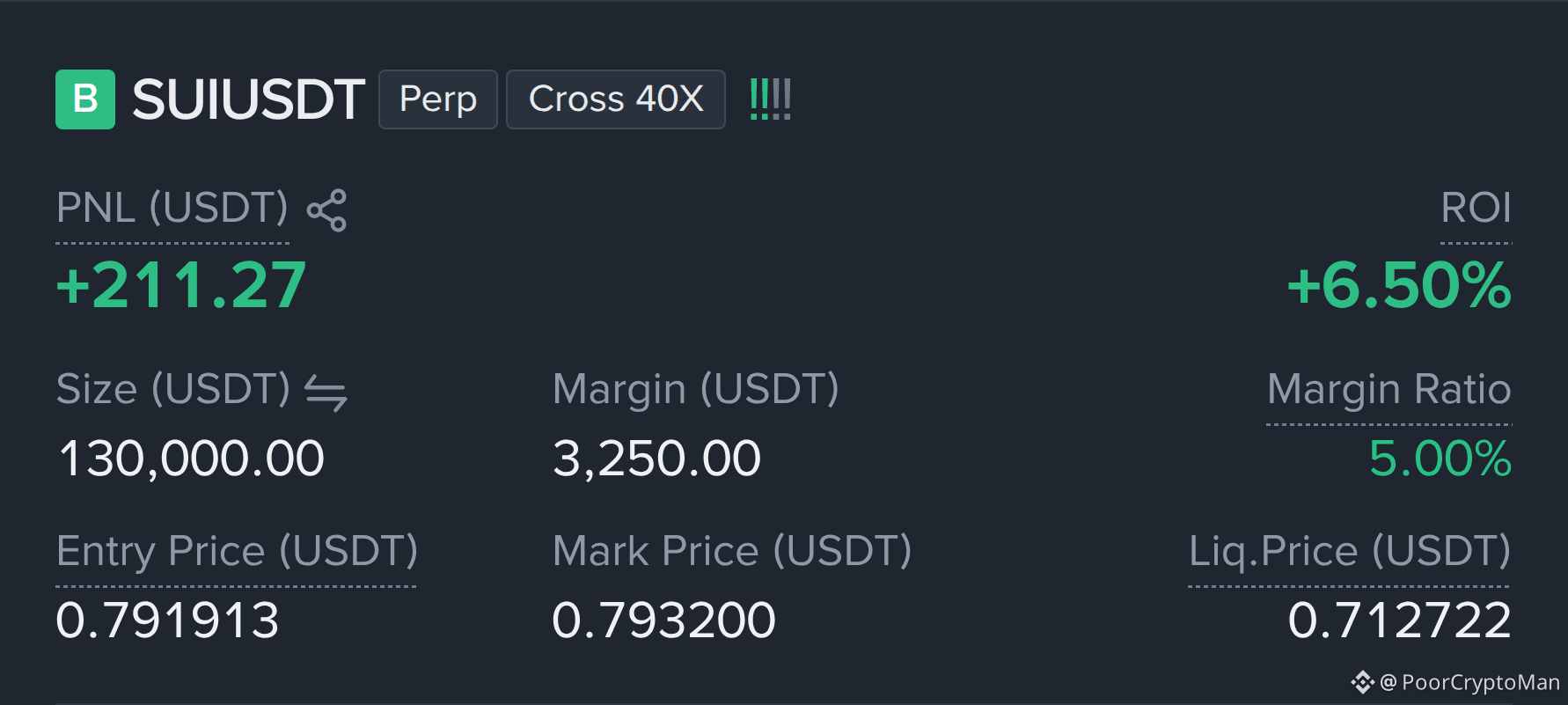
🟢 SUIUSDT ↗️
Direction: LONG
⚙️ Leverage: 50x
💰 Risk: 2%
📍 Entry: $0.7919
🛑 Stop Loss: $0.7836
🎯 Take Profits:
• TP1: $0.8034 (25%)
• TP2: $0.8132 (50%)
• TP3: $0.8231 (75%)
• TP4: $0.8330 (100%)
▬▬▬▬▬▬▬▬▬▬▬▬▬▬
Grade B | 51% Win Rate
✅ After TP1, move SL to entry
#SUI #Trading #CryptoSignals #LongSetup
▬▬▬▬▬▬▬▬▬▬▬▬▬▬
🟢 SUIUSDT ↗️
Direction: LONG
⚙️ Leverage: 50x
💰 Risk: 2%
📍 Entry: $0.7919
🛑 Stop Loss: $0.7836
🎯 Take Profits:
• TP1: $0.8034 (25%)
• TP2: $0.8132 (50%)
• TP3: $0.8231 (75%)
• TP4: $0.8330 (100%)
▬▬▬▬▬▬▬▬▬▬▬▬▬▬
Grade B | 51% Win Rate
✅ After TP1, move SL to entry
#SUI #Trading #CryptoSignals #LongSetup
══════════════════
LONG SIGNAL 📈
══════════════════
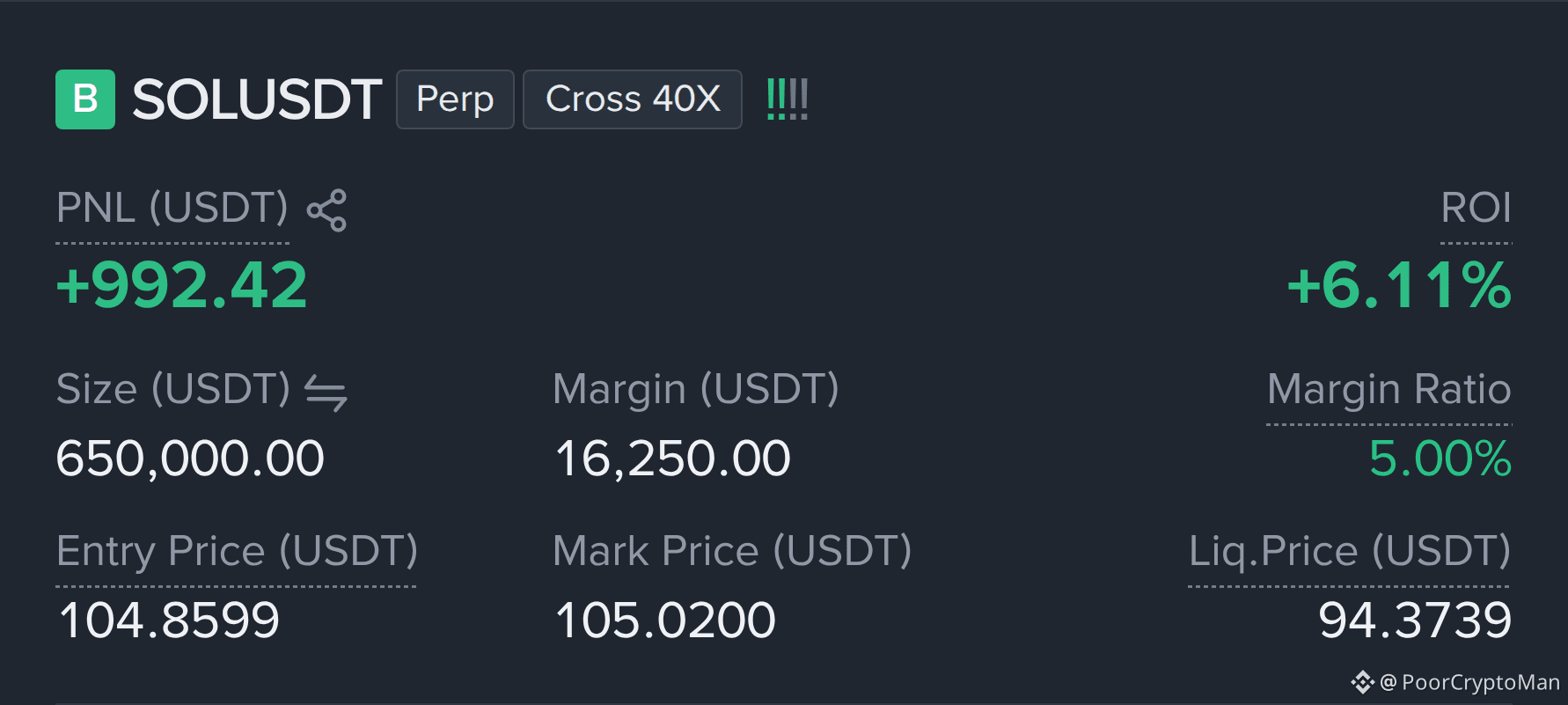
🟢 SOLUSDT
• Direction: LONG
• Leverage: 50x
• Risk: 2%
• Entry Zone: $104.86
• Stop Loss: $103.98
📊 Take Profit Levels:
☐ TP1: $106.16
☐ TP2: $107.25
☐ TP3: $108.35
☐ TP4: $109.44
══════════════════
Grade B | 52% WR | R:R 2.0
⚠️ DYOR • NFA
══════════════════
#SOL #Trading #CryptoSignals #LongSetup
LONG SIGNAL 📈
══════════════════
🟢 SOLUSDT
• Direction: LONG
• Leverage: 50x
• Risk: 2%
• Entry Zone: $104.86
• Stop Loss: $103.98
📊 Take Profit Levels:
☐ TP1: $106.16
☐ TP2: $107.25
☐ TP3: $108.35
☐ TP4: $109.44
══════════════════
Grade B | 52% WR | R:R 2.0
⚠️ DYOR • NFA
══════════════════
#SOL #Trading #CryptoSignals #LongSetup
══════════════════
LONG SIGNAL 📈
══════════════════
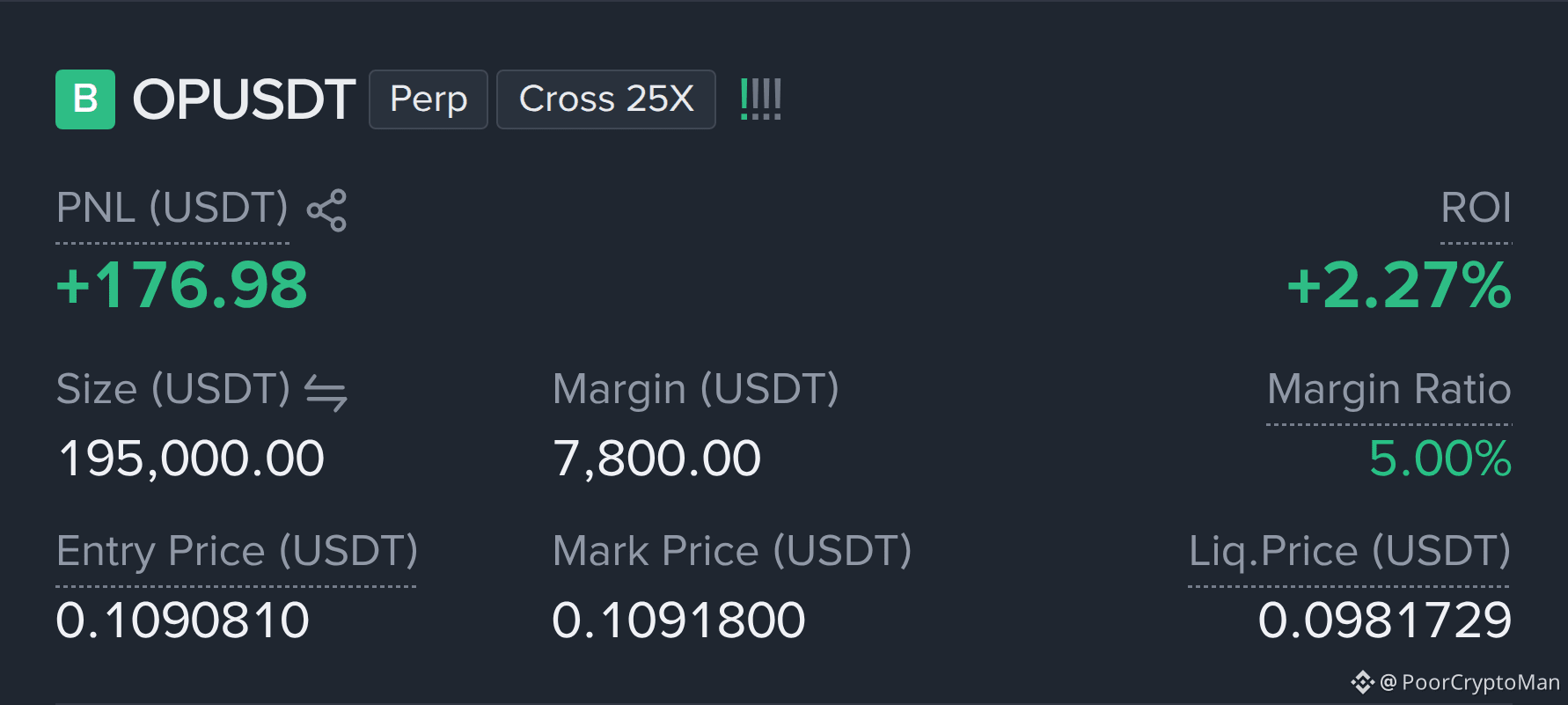
🟢 OPUSDT
• Direction: LONG
• Leverage: 46x
• Risk: 2%
• Entry Zone: $0.1091
• Stop Loss: $0.1069
📊 Take Profit Levels:
☐ TP1: $0.1117
☐ TP2: $0.1140
☐ TP3: $0.1164
☐ TP4: $0.1188
══════════════════
Grade B | 54% WR | R:R 2.0
⚠️ DYOR • NFA
══════════════════
#OP #Trading #CryptoSignals #LongSetup
LONG SIGNAL 📈
══════════════════
🟢 OPUSDT
• Direction: LONG
• Leverage: 46x
• Risk: 2%
• Entry Zone: $0.1091
• Stop Loss: $0.1069
📊 Take Profit Levels:
☐ TP1: $0.1117
☐ TP2: $0.1140
☐ TP3: $0.1164
☐ TP4: $0.1188
══════════════════
Grade B | 54% WR | R:R 2.0
⚠️ DYOR • NFA
══════════════════
#OP #Trading #CryptoSignals #LongSetup
Divergence alert 📉
Potential bullish reversals:
None spotted today
Potential bearish setups:
$BTC - RSI divergence
$ETH - RSI divergence
$SOL - RSI divergence
XRP - RSI divergence
DOGE - RSI divergence
Divergences happen when price and indicators disagree. Not always right, but worth watching.
Bookmark this one
#SOL #BTC #XRP #TechnicalAnalysis #Trading
📱 Follow @PoorCryptoMan
Potential bullish reversals:
None spotted today
Potential bearish setups:
$BTC - RSI divergence
$ETH - RSI divergence
$SOL - RSI divergence
XRP - RSI divergence
DOGE - RSI divergence
Divergences happen when price and indicators disagree. Not always right, but worth watching.
Bookmark this one
#SOL #BTC #XRP #TechnicalAnalysis #Trading
📱 Follow @PoorCryptoMan
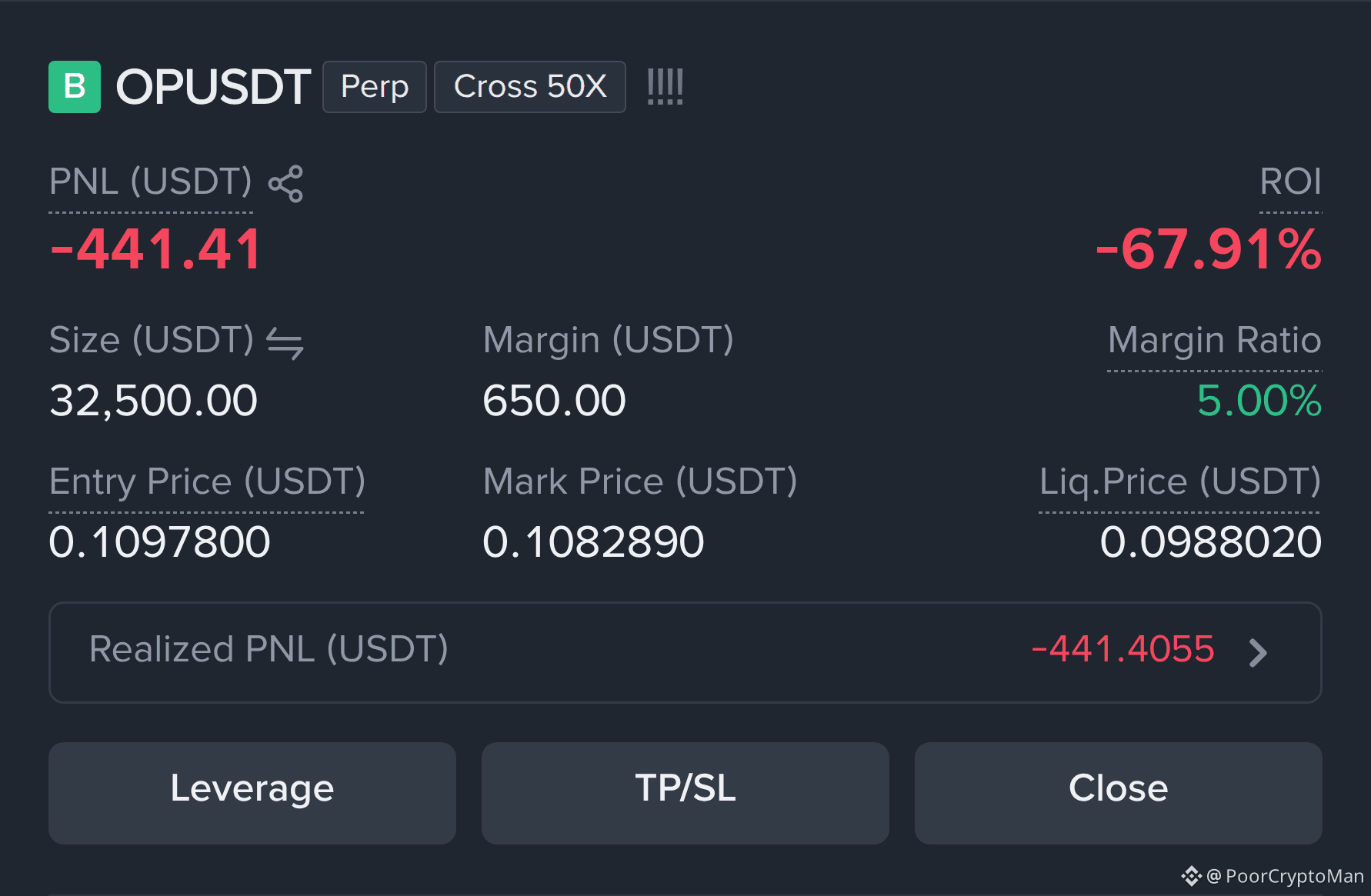
$OP wrapped up right at break even. Banked TP2 profit a while ago, so we're all good.
🟢 Direction: LONG
⚙️ Leverage: 50x
📍 Entry: 0.10978
💰 Exit: 0.108289
📊 ROI: 🔴 -67.91%
Break even close with earlier profits locked in, safe and clean.
🟢 Direction: LONG
⚙️ Leverage: 50x
📍 Entry: 0.10978
💰 Exit: 0.108289
📊 ROI: 🔴 -67.91%
Break even close with earlier profits locked in, safe and clean.
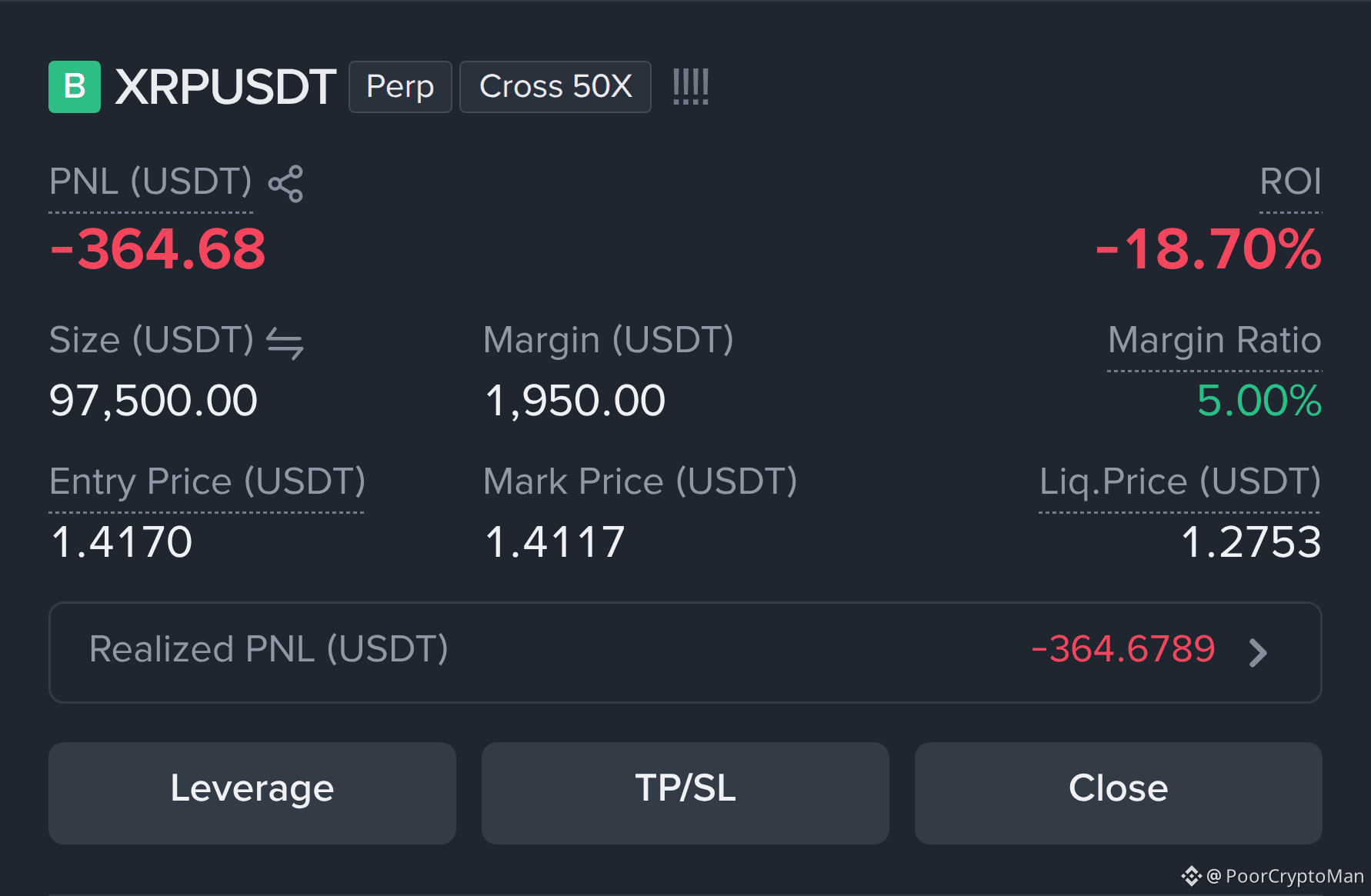
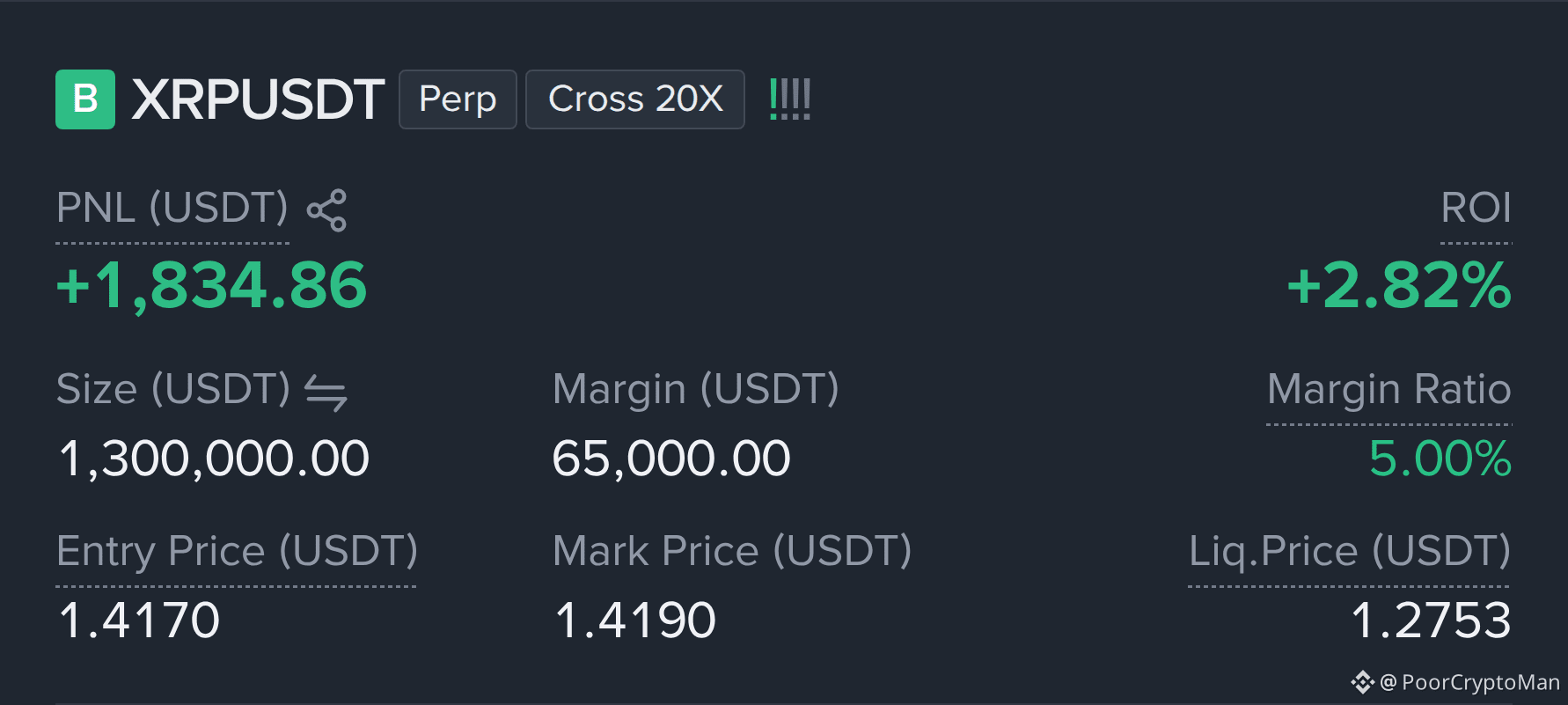
$XRP hit my stop loss. 18.70% down. That's just how the game goes sometimes.
🟢 Went long
⚙️ Ran 50x leverage
📍 Entered at 1.417
💰 Exited at 1.4117
📊 ROI landed at 🔴 -18.70%
🟢 Went long
⚙️ Ran 50x leverage
📍 Entered at 1.417
💰 Exited at 1.4117
📊 ROI landed at 🔴 -18.70%
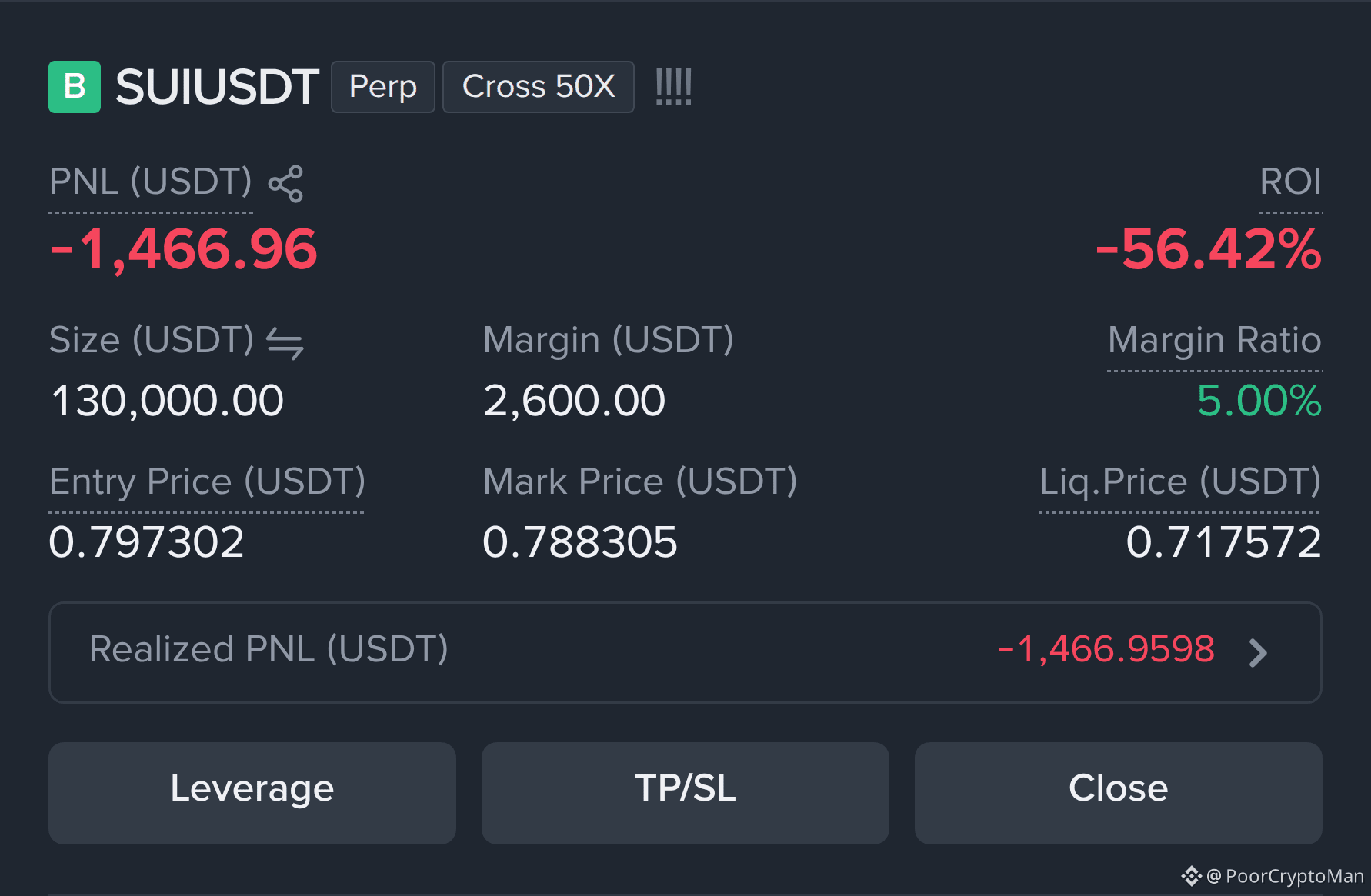
$SUI just rejected our long, 56.42% loss. We take it and move on.
🟢 Side: LONG
⚙️ Leverage: 50x
📍 Entry: 0.797302
💸 Exit: 0.788305
📉 ROI: 🔴 -56.42%
🟢 Side: LONG
⚙️ Leverage: 50x
📍 Entry: 0.797302
💸 Exit: 0.788305
📉 ROI: 🔴 -56.42%
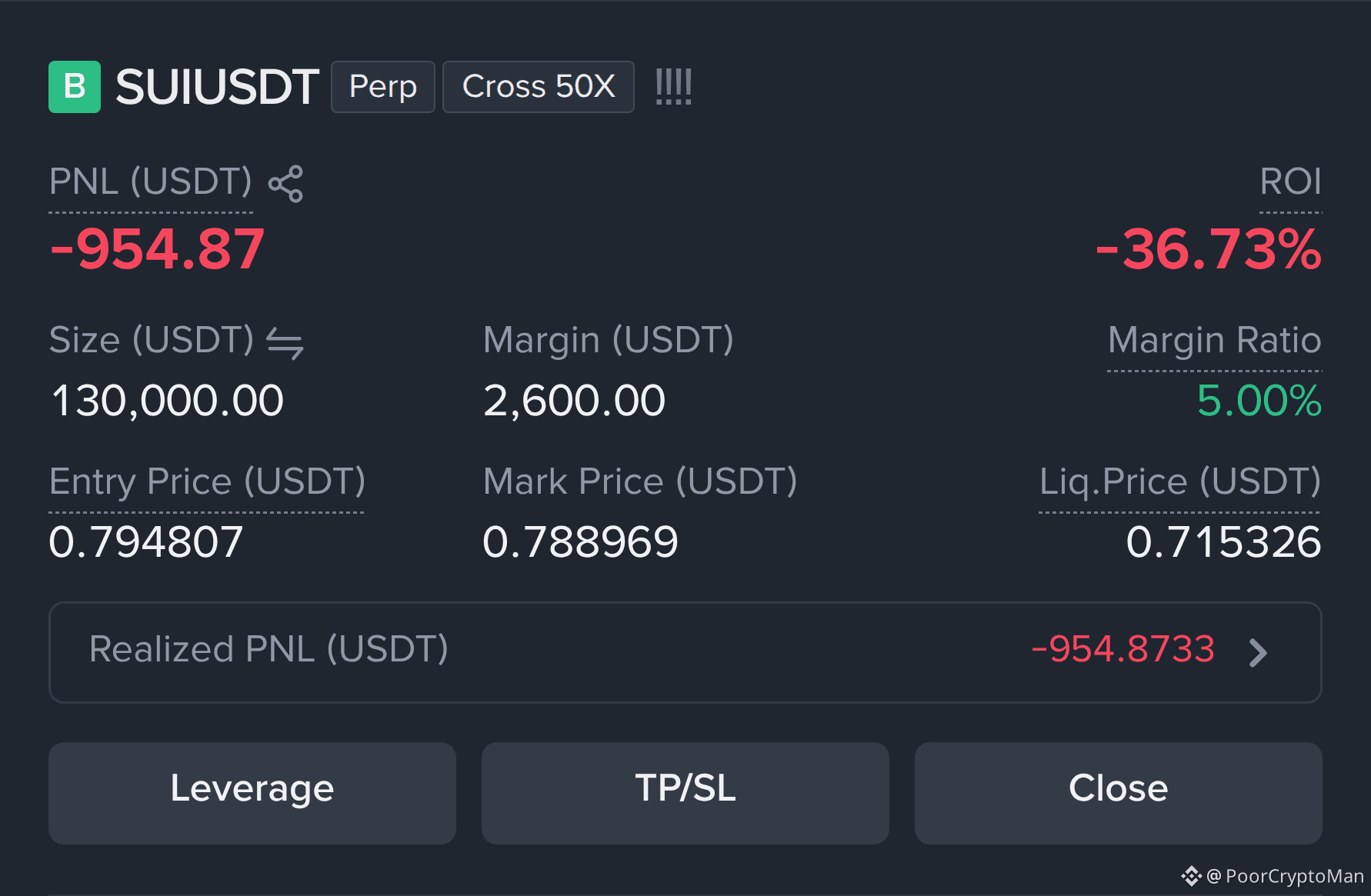
⚖️ SUI is sitting right at breakeven. TP2 came through earlier, so I moved my stop loss up.
🟢 Direction: LONG
⚙️ Leverage: 50x
📍 Entry: 0.794807
💰 Exit: 0.788969
📊 ROI: 🔴 -36.73%
🟢 Direction: LONG
⚙️ Leverage: 50x
📍 Entry: 0.794807
💰 Exit: 0.788969
📊 ROI: 🔴 -36.73%
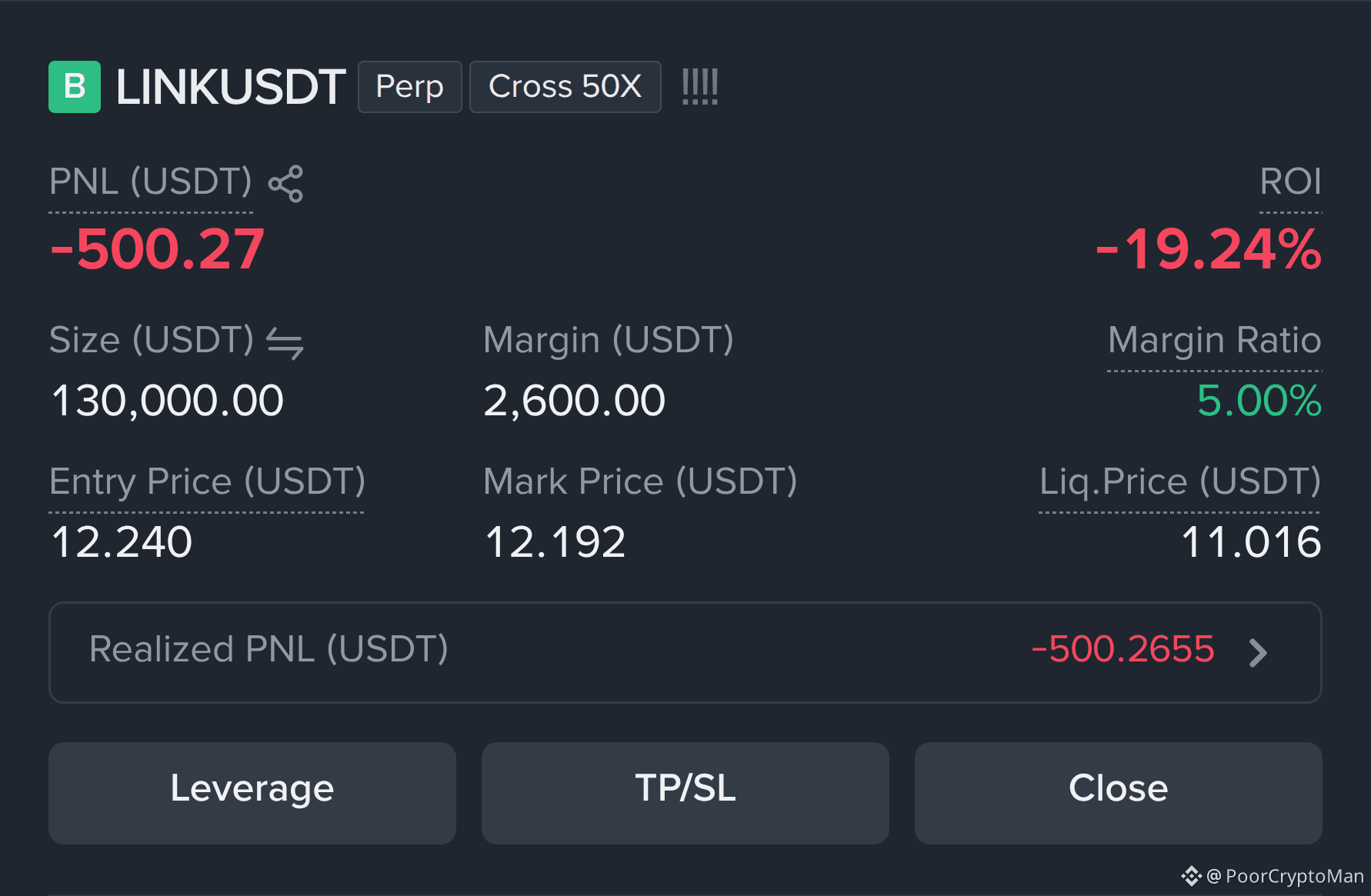
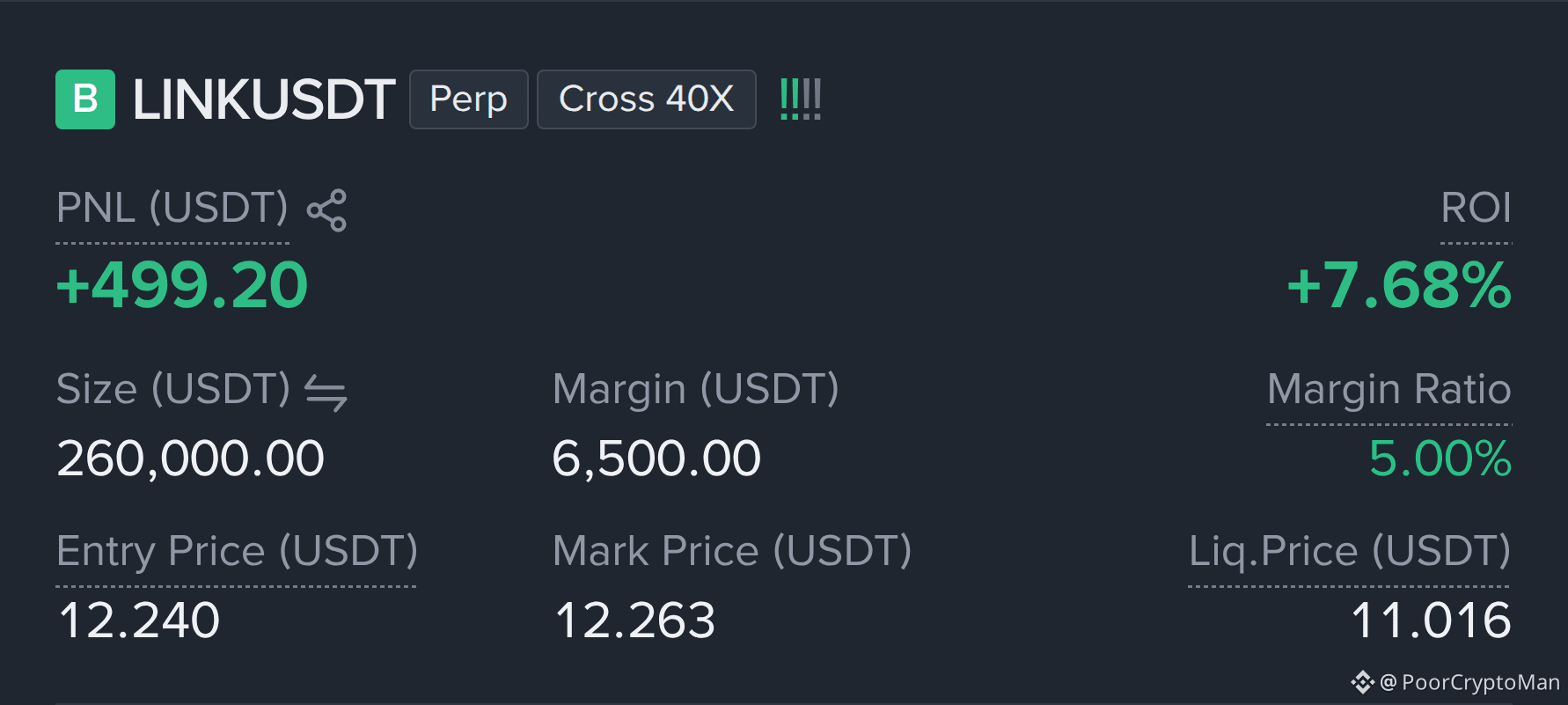
Stop loss on LINK just hit. Down 19.24%, and there's no way I'm revenge trading after this.
🟢 Position: LONG
⚙️ Leverage: 50x
📍 Opened at: 12.2395
💰 Closed at: 12.1924
📊 ROI: 🔴 -19.24%
🟢 Position: LONG
⚙️ Leverage: 50x
📍 Opened at: 12.2395
💰 Closed at: 12.1924
📊 ROI: 🔴 -19.24%
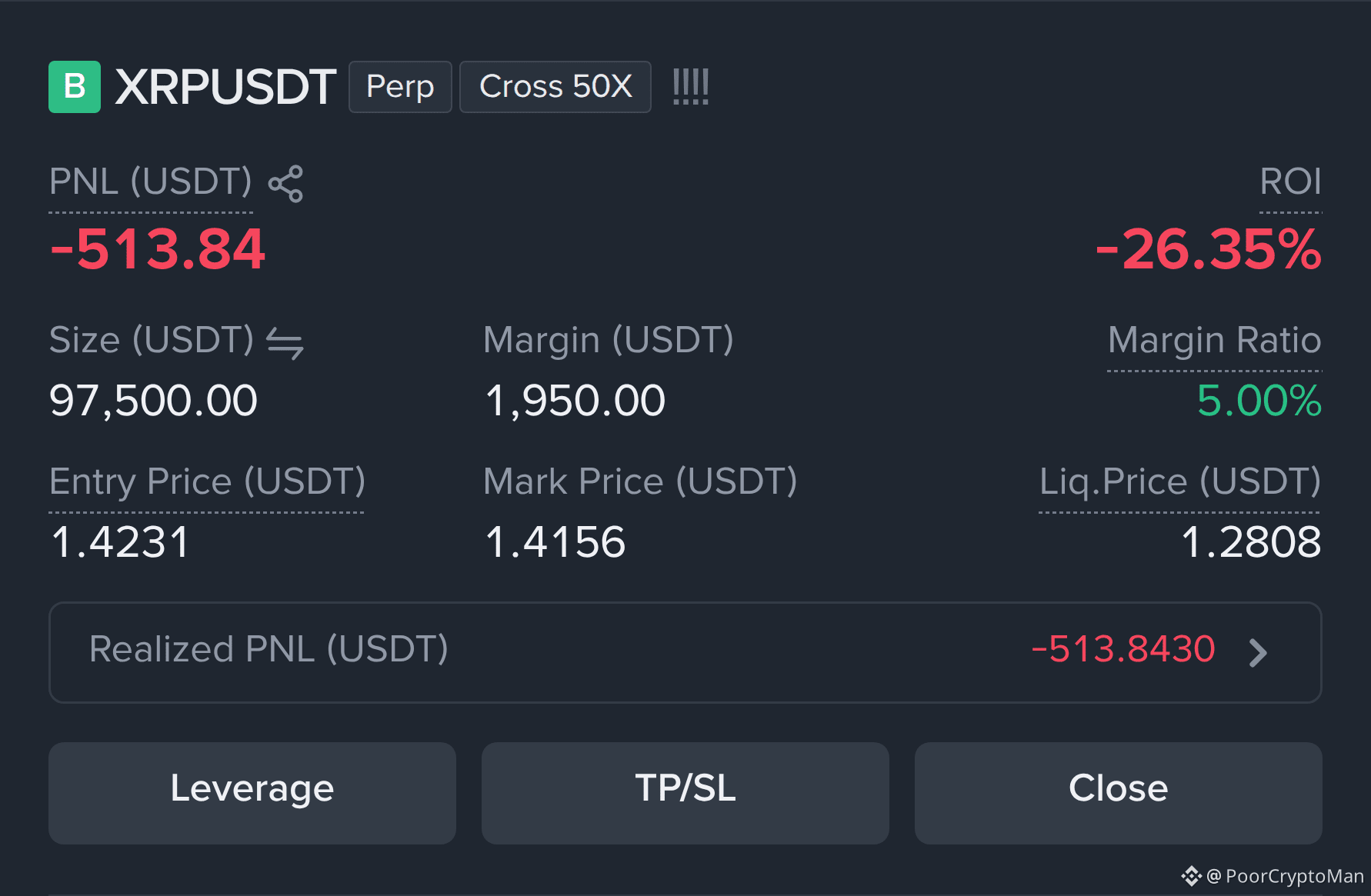
XRP trade just got stopped out. 26.35% loss. It happens, part of the game.
🟢 Side: LONG
⚙️ Leverage: 50x
📍 Entry: 1.4231
💰 Exit: 1.4156
📊 Result: 🔴 -26.35%
🟢 Side: LONG
⚙️ Leverage: 50x
📍 Entry: 1.4231
💰 Exit: 1.4156
📊 Result: 🔴 -26.35%
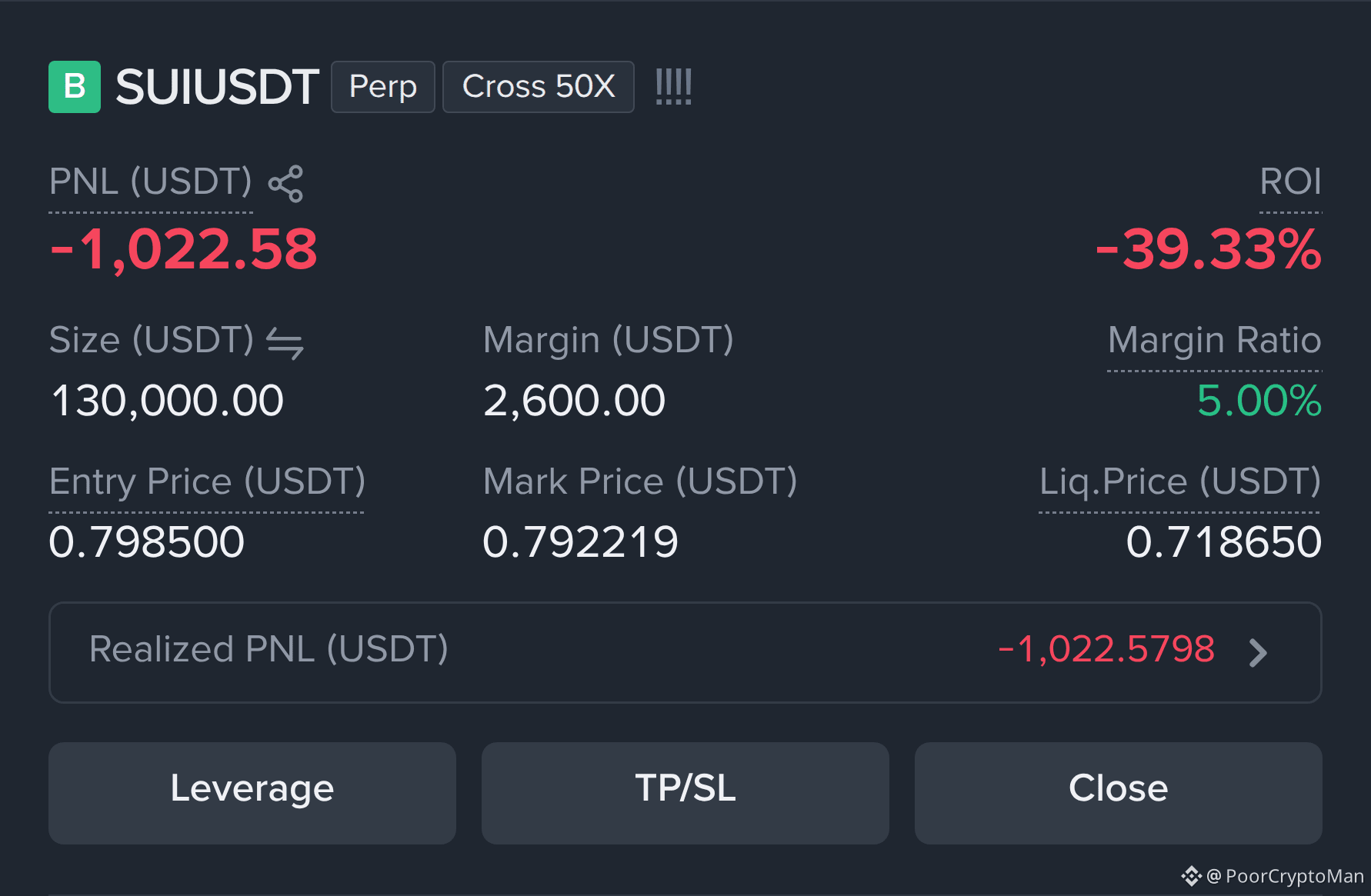
🛑 SL hit on $SUI . 39.33% loss. next trade loading
🟢 Direction: LONG
⚙️ Leverage: 50x
📍 Entry: 0.7985
💰 Exit: 0.792219
📊 ROI: 🔴 -39.33%
#SUI #RiskManagement #TradingDiscipline #CutLosses
🟢 Direction: LONG
⚙️ Leverage: 50x
📍 Entry: 0.7985
💰 Exit: 0.792219
📊 ROI: 🔴 -39.33%
#SUI #RiskManagement #TradingDiscipline #CutLosses
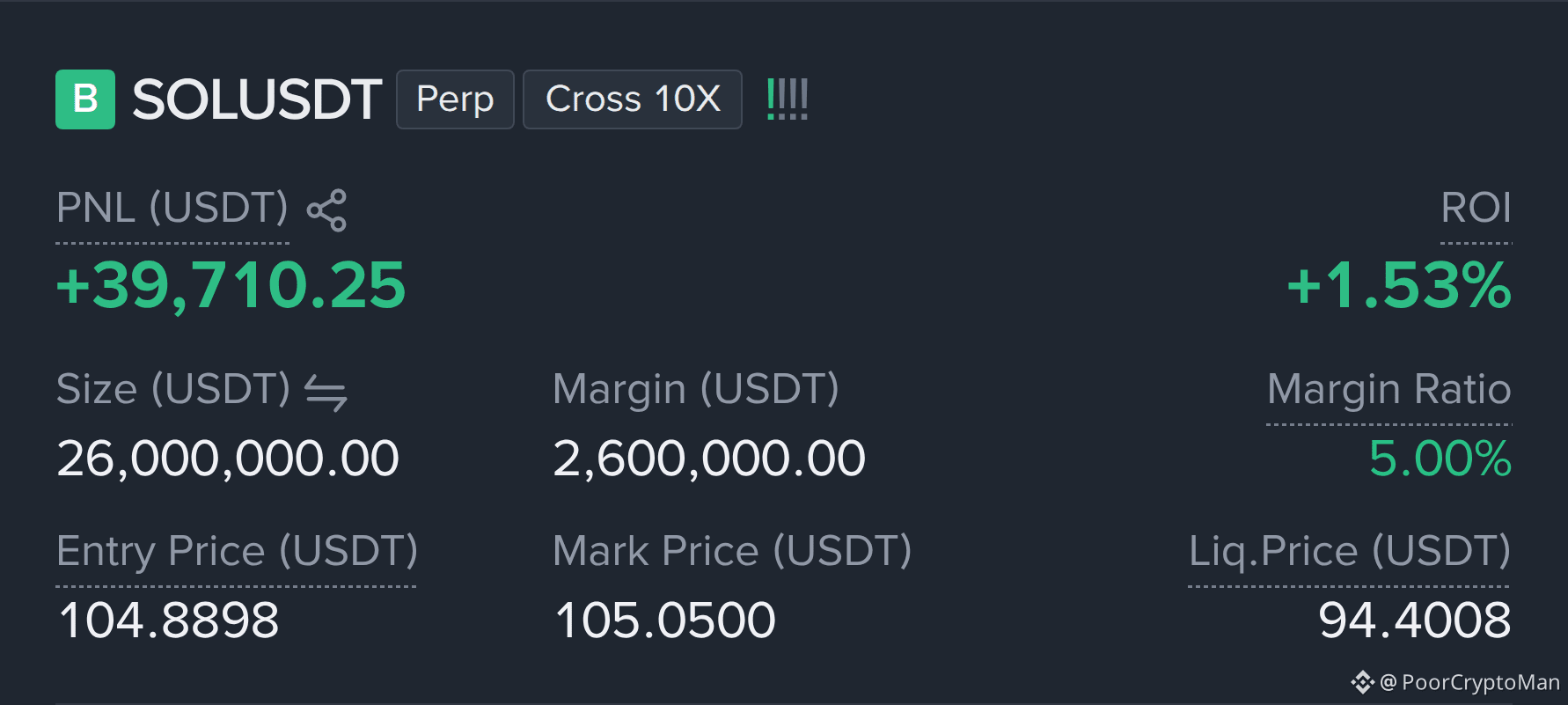
📣 NEW SIGNAL
▬▬▬▬▬▬▬▬▬▬▬▬▬▬
🟢 SOLUSDT ↗️
Direction: LONG
⚙️ Leverage: 50x
💰 Risk: 2%
📍 Entry: $104.89
🛑 Stop Loss: $104.45
🎯 Take Profits:
• TP1: $105.75 (25%)
• TP2: $106.40 (50%)
• TP3: $107.04 (75%)
• TP4: $107.69 (100%)
▬▬▬▬▬▬▬▬▬▬▬▬▬▬
Grade B | 52% Win Rate
✅ After TP1, move SL to entry
#SOL #Trading #CryptoSignals #LongSetup
▬▬▬▬▬▬▬▬▬▬▬▬▬▬
🟢 SOLUSDT ↗️
Direction: LONG
⚙️ Leverage: 50x
💰 Risk: 2%
📍 Entry: $104.89
🛑 Stop Loss: $104.45
🎯 Take Profits:
• TP1: $105.75 (25%)
• TP2: $106.40 (50%)
• TP3: $107.04 (75%)
• TP4: $107.69 (100%)
▬▬▬▬▬▬▬▬▬▬▬▬▬▬
Grade B | 52% Win Rate
✅ After TP1, move SL to entry
#SOL #Trading #CryptoSignals #LongSetup
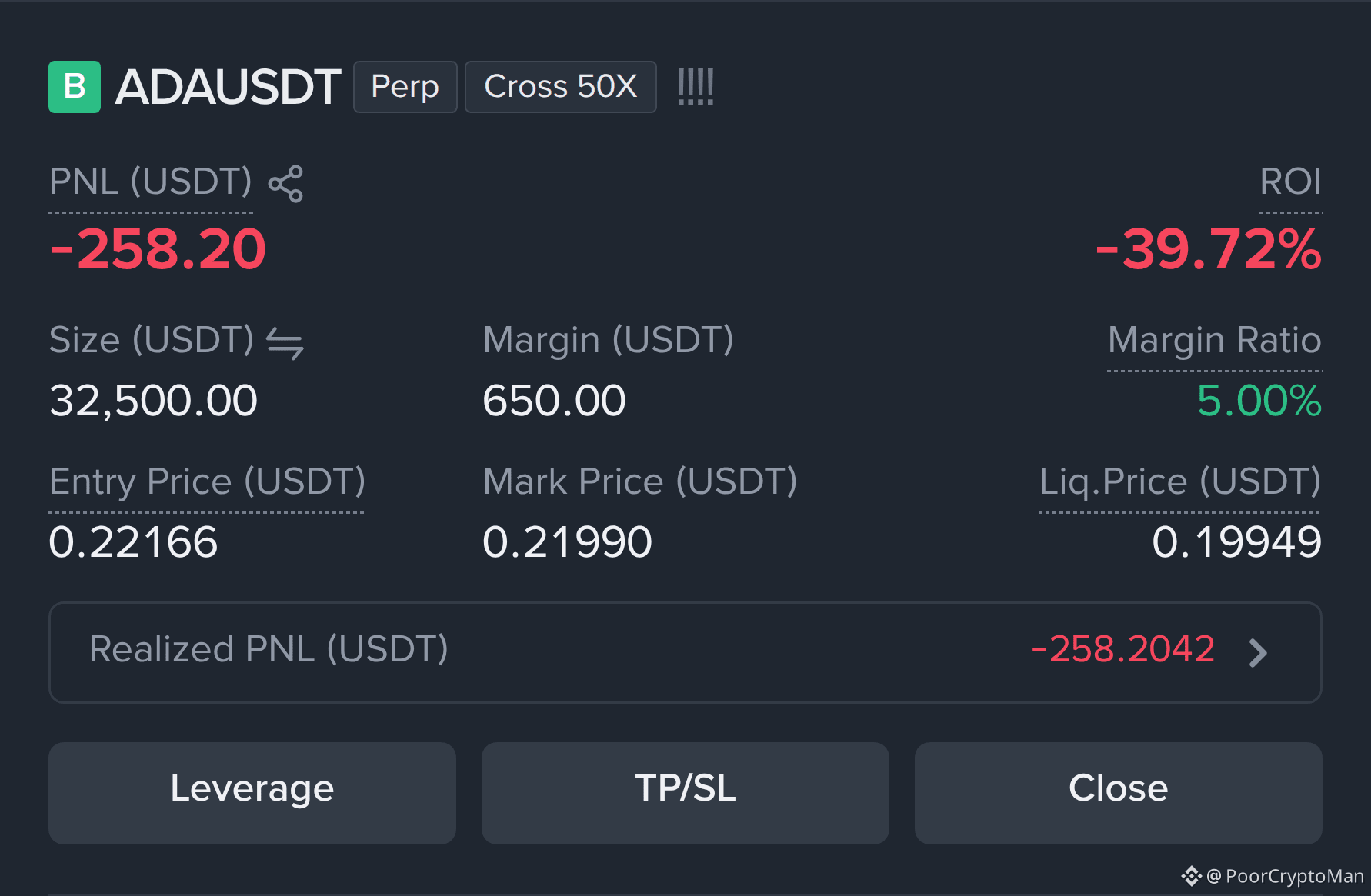
$ADA took a 39.72% loss. The stop loss saved us from a bigger disaster.
🟢 Direction: LONG
⚙️ Leverage: 50x
📍 Entry: 0.221656
💰 Exit: 0.219895
📊 ROI: 🔴 -39.72%
🟢 Direction: LONG
⚙️ Leverage: 50x
📍 Entry: 0.221656
💰 Exit: 0.219895
📊 ROI: 🔴 -39.72%
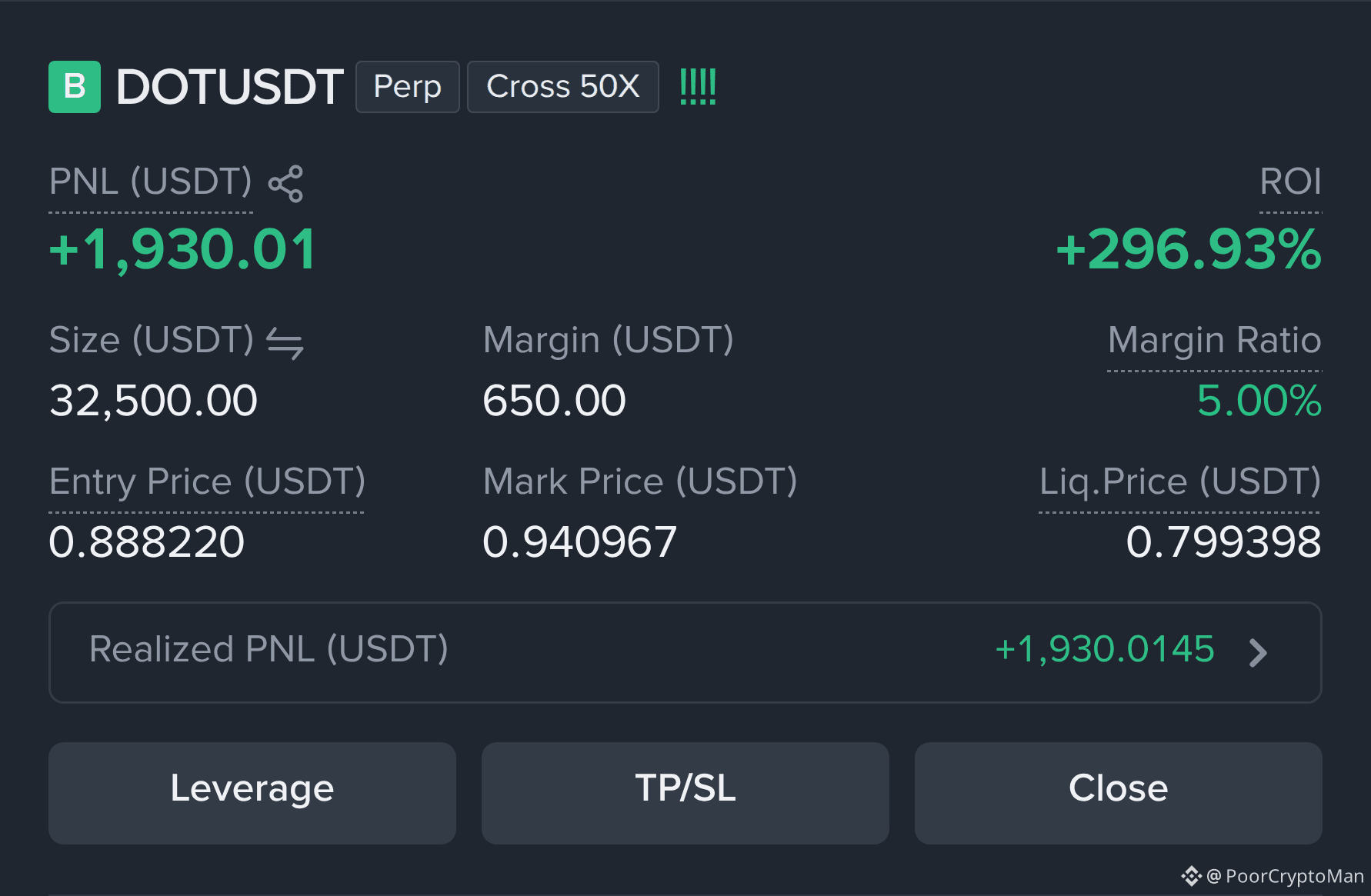
You'll want to screenshot this one. $DOT just delivered a complete sweep with +296.93%
🟢 Went long
⚙️ 50x leverage
📍 Entry at 0.88822
💰 Exit at 0.940967
📊 Final return: 🟢 +296.93%
Amazing work on DOT, a clean sweep indeed
🟢 Went long
⚙️ 50x leverage
📍 Entry at 0.88822
💰 Exit at 0.940967
📊 Final return: 🟢 +296.93%
Amazing work on DOT, a clean sweep indeed
Ethereum L2s now process more combined transaction throughput than any single chain, including Solana. The real shift happened after Dencun activated blob space.
• Average transaction costs on Arbitrum fell from 0.38 to below 0.01 in under a year for token transfers. Base saw a similar 95% drop during peak usage windows. This is not a temporary spike. Intent-based architectures keep the chain profitable without forcing users back on L1.
• Liquidity follows usability. Base has 15 million unique wallets that interacted in the last quarter, but Arbitrum still holds 42% of L2 bridged TVL. That gap reveals the market, users prefer speed now, yet capital requires proven settlement reliability.
• Gas fees on L1 no longer act as the bottleneck for adoption. Consumers interact with proofs, not base layer pricing. The modern fee war is between proposer constraints, not Ethereum blockspace.
• Cheap fees solved one problem and created another. Transaction spam rates on L2s have outpaced organic growth by 4 to 1. Data availability costs are next to compress.
The next scaling cycle will not come from lower prices. It will come from proving that cheap execution can stay sound after the subsidy cycles end. Blob space made Ethereum addressable. Proof security will determine how long that stays true.
Share with your crypto friends
#CryptoTips #TradingTips #HODL #BullRun #CryptoNews
📱 Follow @PoorCryptoMan
• Average transaction costs on Arbitrum fell from 0.38 to below 0.01 in under a year for token transfers. Base saw a similar 95% drop during peak usage windows. This is not a temporary spike. Intent-based architectures keep the chain profitable without forcing users back on L1.
• Liquidity follows usability. Base has 15 million unique wallets that interacted in the last quarter, but Arbitrum still holds 42% of L2 bridged TVL. That gap reveals the market, users prefer speed now, yet capital requires proven settlement reliability.
• Gas fees on L1 no longer act as the bottleneck for adoption. Consumers interact with proofs, not base layer pricing. The modern fee war is between proposer constraints, not Ethereum blockspace.
• Cheap fees solved one problem and created another. Transaction spam rates on L2s have outpaced organic growth by 4 to 1. Data availability costs are next to compress.
The next scaling cycle will not come from lower prices. It will come from proving that cheap execution can stay sound after the subsidy cycles end. Blob space made Ethereum addressable. Proof security will determine how long that stays true.
Share with your crypto friends
#CryptoTips #TradingTips #HODL #BullRun #CryptoNews
📱 Follow @PoorCryptoMan
📣 NEW SIGNAL
▬▬▬▬▬▬▬▬▬▬▬▬▬▬
🟢 XRPUSDT ↗️
Direction: LONG
⚙️ Leverage: 50x
💰 Risk: 2%
📍 Entry: $1.42
🛑 Stop Loss: $1.41
🎯 Take Profits:
• TP1: $1.43 (25%)
• TP2: $1.44 (50%)
• TP3: $1.44 (75%)
• TP4: $1.45 (100%)
▬▬▬▬▬▬▬▬▬▬▬▬▬▬
Grade B | 55% Win Rate
✅ After TP1, move SL to entry
#XRP #Trading #CryptoSignals #LongSetup
▬▬▬▬▬▬▬▬▬▬▬▬▬▬
🟢 XRPUSDT ↗️
Direction: LONG
⚙️ Leverage: 50x
💰 Risk: 2%
📍 Entry: $1.42
🛑 Stop Loss: $1.41
🎯 Take Profits:
• TP1: $1.43 (25%)
• TP2: $1.44 (50%)
• TP3: $1.44 (75%)
• TP4: $1.45 (100%)
▬▬▬▬▬▬▬▬▬▬▬▬▬▬
Grade B | 55% Win Rate
✅ After TP1, move SL to entry
#XRP #Trading #CryptoSignals #LongSetup
I noticed something interesting today...
Tech scan (4H) 🔍
Looking at Top Gainers:
🟢 $ARB : LONG (12/15)
🟢 $RAY : LONG (12/15)
🟢 $IOST : LONG (12/15)
🟢 SUSHI: LONG (12/15)
🟢 MARSCOIN: LONG (12/15)
🟢 COTI: LONG (12/15)
🟢 $1000CAT: LONG (12/15)
🟢 ZEC: LONG (12/15)
Strong signals: 8 | Weak: 0
Comment your prediction
#MARSCOIN #SUSHI #IOST #ChartPatterns #TechnicalAnalysis
📱 Follow @PoorCryptoMan
Tech scan (4H) 🔍
Looking at Top Gainers:
🟢 $ARB : LONG (12/15)
🟢 $RAY : LONG (12/15)
🟢 $IOST : LONG (12/15)
🟢 SUSHI: LONG (12/15)
🟢 MARSCOIN: LONG (12/15)
🟢 COTI: LONG (12/15)
🟢 $1000CAT: LONG (12/15)
🟢 ZEC: LONG (12/15)
Strong signals: 8 | Weak: 0
Comment your prediction
#MARSCOIN #SUSHI #IOST #ChartPatterns #TechnicalAnalysis
📱 Follow @PoorCryptoMan
📣 NEW SIGNAL
▬▬▬▬▬▬▬▬▬▬▬▬▬▬
🟢 LINKUSDT ↗️
Direction: LONG
⚙️ Leverage: 50x
💰 Risk: 2%
📍 Entry: $12.24
🛑 Stop Loss: $12.19
🎯 Take Profits:
• TP1: $12.34 (25%)
• TP2: $12.41 (50%)
• TP3: $12.48 (75%)
• TP4: $12.55 (100%)
▬▬▬▬▬▬▬▬▬▬▬▬▬▬
Grade B | 57% Win Rate
✅ After TP1, move SL to entry
#LINK #Trading #CryptoSignals #LongSetup
▬▬▬▬▬▬▬▬▬▬▬▬▬▬
🟢 LINKUSDT ↗️
Direction: LONG
⚙️ Leverage: 50x
💰 Risk: 2%
📍 Entry: $12.24
🛑 Stop Loss: $12.19
🎯 Take Profits:
• TP1: $12.34 (25%)
• TP2: $12.41 (50%)
• TP3: $12.48 (75%)
• TP4: $12.55 (100%)
▬▬▬▬▬▬▬▬▬▬▬▬▬▬
Grade B | 57% Win Rate
✅ After TP1, move SL to entry
#LINK #Trading #CryptoSignals #LongSetup
Log in to explore more content