

#crudefuturessink
crudefuturessink
198,890 views
1,239 Discussing
Hot
Latest

🚨 Has the real oil crash begun... or is this the biggest buy opportunity in 2026? 🛢️
Markets don’t move on emotions... but on liquidity.
After the sharp drop, everyone is talking about going short, but the pros are asking a different question:
Where will the smart money flow in?
If oil breaks the current support levels, we might see a new wave of selling, but if strong reversal signals appear, this area could turn into one of the best buy opportunities.
📉 Don’t chase the price... 📊 Wait for confirmation before making your move.
The market rewards the patient and punishes the hasty.
💬 What do you think... will we see oil at $70 or is a rebound around the corner?
🔥 Share your thoughts, save this post, and follow me daily for the hottest analyses and opportunities before anyone else.#CrudeFuturesSink
🚨 Has the real oil crash begun... or is this the biggest buy opportunity in 2026? 🛢️
Markets don’t move on emotions... but on liquidity.
After the sharp drop, everyone is talking about going short, but the pros are asking a different question:
Where will the smart money flow in?
If oil breaks the current support levels, we might see a new wave of selling, but if strong reversal signals appear, this area could turn into one of the best buy opportunities.
📉 Don’t chase the price... 📊 Wait for confirmation before making your move.
The market rewards the patient and punishes the hasty.
💬 What do you think... will we see oil at $70 or is a rebound around the corner?
🔥 Share your thoughts, save this post, and follow me daily for the hottest analyses and opportunities before anyone else.#CrudeFuturesSink
Markets don’t move on emotions... but on liquidity.
After the sharp drop, everyone is talking about going short, but the pros are asking a different question:
Where will the smart money flow in?
If oil breaks the current support levels, we might see a new wave of selling, but if strong reversal signals appear, this area could turn into one of the best buy opportunities.
📉 Don’t chase the price... 📊 Wait for confirmation before making your move.
The market rewards the patient and punishes the hasty.
💬 What do you think... will we see oil at $70 or is a rebound around the corner?
🔥 Share your thoughts, save this post, and follow me daily for the hottest analyses and opportunities before anyone else.#CrudeFuturesSink
3
291

·
--
Verified
#crudefuturessink 🛢️ Crude Futures Sink as Supply Outlook Improves
Crude futures have fallen sharply as traders price in a potential normalization of oil flows through the Strait of Hormuz and a lower geopolitical risk premium. Recent trading pushed Brent and WTI toward multi-month lows, although prices later saw modest rebounds amid ongoing shipping uncertainty. (Reuters)
Key Highlights
📉 Crude futures decline sharply
🚢 Expectations of improving Hormuz flows weigh on prices
🛢️ Gulf producers prepare to increase exports
🌍 Supply-risk premium fades
⚠️ Shipping permits, insurance costs, and regional stability remain key risks
Why It Matters
Oil markets had priced in major disruption risk during the regional conflict. As prospects for tanker movement and additional supply improve, traders are removing that premium. However, a full recovery in flows could still take time because shipping conditions and compliance requirements remain uncertain. (Reuters)
Social Media Post
🚨 Crude Futures Sink as Supply Fears Ease
Crude futures are under pressure as markets price in improving oil flows and a fading geopolitical risk premium.
🛢️ Futures slide
🚢 Hormuz shipping outlook improves
📉 Supply fears ease
🌍 Gulf exports prepare to rise
⚠️ Volatility remains high
Oil traders are watching tanker traffic, insurance rules, and regional diplomacy for the next major move.
#Oil #CrudeOil #Brent #WTI #Energy #Commodities #Hormuz #Markets #Trading
#crudefuturessink 🛢️ Crude Futures Sink as Supply Outlook Improves
Crude futures have fallen sharply as traders price in a potential normalization of oil flows through the Strait of Hormuz and a lower geopolitical risk premium. Recent trading pushed Brent and WTI toward multi-month lows, although prices later saw modest rebounds amid ongoing shipping uncertainty. (Reuters)
Key Highlights
📉 Crude futures decline sharply
🚢 Expectations of improving Hormuz flows weigh on prices
🛢️ Gulf producers prepare to increase exports
🌍 Supply-risk premium fades
⚠️ Shipping permits, insurance costs, and regional stability remain key risks
Why It Matters
Oil markets had priced in major disruption risk during the regional conflict. As prospects for tanker movement and additional supply improve, traders are removing that premium. However, a full recovery in flows could still take time because shipping conditions and compliance requirements remain uncertain. (Reuters)
Social Media Post
🚨 Crude Futures Sink as Supply Fears Ease
Crude futures are under pressure as markets price in improving oil flows and a fading geopolitical risk premium.
🛢️ Futures slide
🚢 Hormuz shipping outlook improves
📉 Supply fears ease
🌍 Gulf exports prepare to rise
⚠️ Volatility remains high
Oil traders are watching tanker traffic, insurance rules, and regional diplomacy for the next major move.
#Oil #CrudeOil #Brent #WTI #Energy #Commodities #Hormuz #Markets #Trading
Crude futures have fallen sharply as traders price in a potential normalization of oil flows through the Strait of Hormuz and a lower geopolitical risk premium. Recent trading pushed Brent and WTI toward multi-month lows, although prices later saw modest rebounds amid ongoing shipping uncertainty. (Reuters)
Key Highlights
📉 Crude futures decline sharply
🚢 Expectations of improving Hormuz flows weigh on prices
🛢️ Gulf producers prepare to increase exports
🌍 Supply-risk premium fades
⚠️ Shipping permits, insurance costs, and regional stability remain key risks
Why It Matters
Oil markets had priced in major disruption risk during the regional conflict. As prospects for tanker movement and additional supply improve, traders are removing that premium. However, a full recovery in flows could still take time because shipping conditions and compliance requirements remain uncertain. (Reuters)
Social Media Post
🚨 Crude Futures Sink as Supply Fears Ease
Crude futures are under pressure as markets price in improving oil flows and a fading geopolitical risk premium.
🛢️ Futures slide
🚢 Hormuz shipping outlook improves
📉 Supply fears ease
🌍 Gulf exports prepare to rise
⚠️ Volatility remains high
Oil traders are watching tanker traffic, insurance rules, and regional diplomacy for the next major move.
#Oil #CrudeOil #Brent #WTI #Energy #Commodities #Hormuz #Markets #Trading
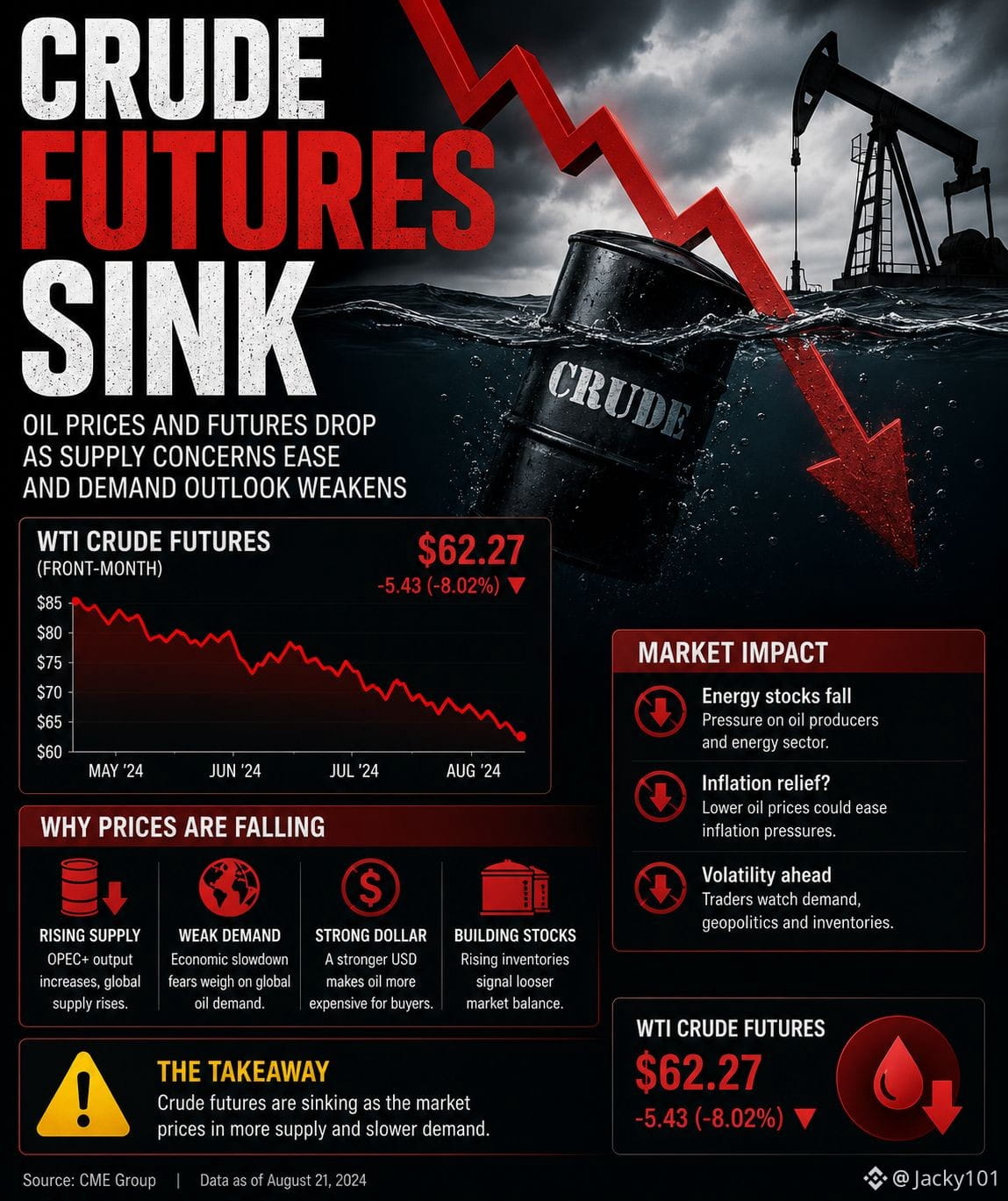
4
937

#opg $OPG
#CrudeFuturesSink
Crude oil futures are slipping as global demand uncertainty collides with resilient supply flows. Traders are reassessing positions amid mixed signals from major economies, fluctuating inventories, and shifting OPEC+ expectations.$SPCXB A stronger dollar and cautious macro outlook are adding pressure, while geopolitical tensions continue to inject volatility. Short-term sentiment leans bearish, yet structural constraints and potential supply disruptions could limit deeper declines. Market participants remain highly reactive to data releases, policy cues, and unexpected shocks. Risk management and timing are critical in navigating this evolving energy landscape with discipline and strategic clarity for traders and investors alike, watching trends closely in coming sessions ahead.
#opg $OPG
#CrudeFuturesSink
Crude oil futures are slipping as global demand uncertainty collides with resilient supply flows. Traders are reassessing positions amid mixed signals from major economies, fluctuating inventories, and shifting OPEC+ expectations.$SPCXB A stronger dollar and cautious macro outlook are adding pressure, while geopolitical tensions continue to inject volatility. Short-term sentiment leans bearish, yet structural constraints and potential supply disruptions could limit deeper declines. Market participants remain highly reactive to data releases, policy cues, and unexpected shocks. Risk management and timing are critical in navigating this evolving energy landscape with discipline and strategic clarity for traders and investors alike, watching trends closely in coming sessions ahead.
#CrudeFuturesSink
Crude oil futures are slipping as global demand uncertainty collides with resilient supply flows. Traders are reassessing positions amid mixed signals from major economies, fluctuating inventories, and shifting OPEC+ expectations.$SPCXB A stronger dollar and cautious macro outlook are adding pressure, while geopolitical tensions continue to inject volatility. Short-term sentiment leans bearish, yet structural constraints and potential supply disruptions could limit deeper declines. Market participants remain highly reactive to data releases, policy cues, and unexpected shocks. Risk management and timing are critical in navigating this evolving energy landscape with discipline and strategic clarity for traders and investors alike, watching trends closely in coming sessions ahead.
169

·
--
#CrudeFuturesSink describes a dip in crude oil futures, usually triggered by expectations of lower demand, rising inventories, macroeconomic tensions, or a stronger dollar. When futures drop, the market reads it as traders anticipating weaker prices in the short term. This can impact producers, exporters, energy stocks, and commodities-linked currencies. It also tends to affect inflation, as cheaper crude can lower transportation and energy costs. In trading terms, this move reflects selling pressure, increased caution, and potential volatility, especially if it coincides with relevant economic data or geopolitical decisions.
#CrudeFuturesSink describes a dip in crude oil futures, usually triggered by expectations of lower demand, rising inventories, macroeconomic tensions, or a stronger dollar. When futures drop, the market reads it as traders anticipating weaker prices in the short term. This can impact producers, exporters, energy stocks, and commodities-linked currencies. It also tends to affect inflation, as cheaper crude can lower transportation and energy costs. In trading terms, this move reflects selling pressure, increased caution, and potential volatility, especially if it coincides with relevant economic data or geopolitical decisions.
140

#CrudeFuturesSink Crude futures slide as oversupply fears outweigh demand hopes. 📉
Markets are pricing in a glut narrative — OPEC+ output, weaker China demand signals, and a stronger dollar all stacking pressure on prices. Traders watching the $60s level closely as a potential next support zone.
Worth remembering: futures moves like this ripple into energy stocks, airline costs, and inflation expectations almost immediately.
#CrudeOil #Commodities
#CrudeFuturesSink Crude futures slide as oversupply fears outweigh demand hopes. 📉
Markets are pricing in a glut narrative — OPEC+ output, weaker China demand signals, and a stronger dollar all stacking pressure on prices. Traders watching the $60s level closely as a potential next support zone.
Worth remembering: futures moves like this ripple into energy stocks, airline costs, and inflation expectations almost immediately.
#CrudeOil #Commodities
Markets are pricing in a glut narrative — OPEC+ output, weaker China demand signals, and a stronger dollar all stacking pressure on prices. Traders watching the $60s level closely as a potential next support zone.
Worth remembering: futures moves like this ripple into energy stocks, airline costs, and inflation expectations almost immediately.
#CrudeOil #Commodities
230

#CrudeFuturesSink #CrudeFuturesSink 🛢️📉
Crude oil futures recently fell sharply as traders priced in the expected reopening of the Strait of Hormuz and improving prospects for a U.S.-Iran agreement, reducing fears of a major supply disruption. Reports indicate that WTI crude dropped to around the mid-$70s per barrel after a steep selloff, with some sessions marking the biggest daily decline in weeks.
#CrudeFuturesSink #CrudeFuturesSink 🛢️📉
Crude oil futures recently fell sharply as traders priced in the expected reopening of the Strait of Hormuz and improving prospects for a U.S.-Iran agreement, reducing fears of a major supply disruption. Reports indicate that WTI crude dropped to around the mid-$70s per barrel after a steep selloff, with some sessions marking the biggest daily decline in weeks.
Crude oil futures recently fell sharply as traders priced in the expected reopening of the Strait of Hormuz and improving prospects for a U.S.-Iran agreement, reducing fears of a major supply disruption. Reports indicate that WTI crude dropped to around the mid-$70s per barrel after a steep selloff, with some sessions marking the biggest daily decline in weeks.
87

·
--
Bullish
#CrudeFuturesSink
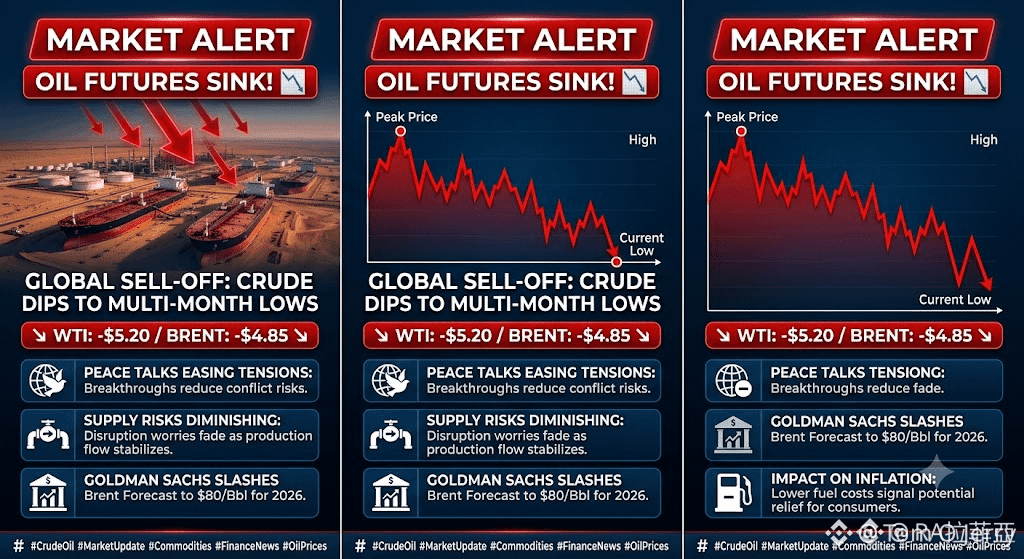
🚨 OIL DUMPING HARD!
Global sell-off sends crude to multi-month lows 📉
Peace talks + stable supply = bearish pressure
⚠️ Smart money is repositioning
Are you watching this move or missing it?
$BTC #CrudeFuturesSink
{spot}(BTCUSDT)
#CrudeFuturesSink
🚨 OIL DUMPING HARD!
Global sell-off sends crude to multi-month lows 📉
Peace talks + stable supply = bearish pressure
⚠️ Smart money is repositioning
Are you watching this move or missing it?
$BTC #CrudeFuturesSink
🚨 OIL DUMPING HARD!
Global sell-off sends crude to multi-month lows 📉
Peace talks + stable supply = bearish pressure
⚠️ Smart money is repositioning
Are you watching this move or missing it?
$BTC #CrudeFuturesSink
5
180

Article
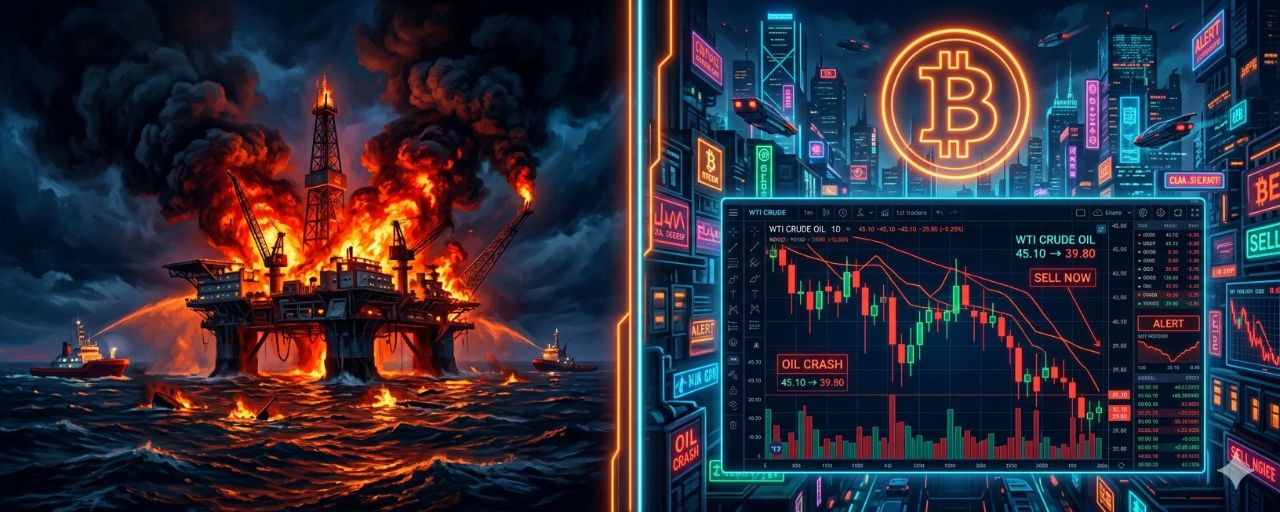
CrudeFuturesSink: The 2026 Oil Market Rollercoaster#CrudeFuturesSink The oil market in 2026 has been one of the most dramatic and confusing trading environments in modern history, presenting a fascinating paradox for futures traders.
The Great Contradiction
Before the war, the world faced a massive oil surplus. The World Bank projected global commodity prices would fall roughly 7%, hitting a six-year low. Brent crude was forecast to average in the low-$60s . U.S. banks even downgraded their forecasts to $60-$65 per barrel .
Then came the conflict.
The Shock
The U.S.-Iran war effectively closed the Strait of Hormuz - a chokepoint through which roughly 20% of global daily oil supply normally transits. Suddenly, 15 to 20 million barrels per day faced disruption . Brent and WTI futures surged above $100, and physical cash markets traded well above $170 .
The market flipped into extreme backwardation - paying massive premiums for immediate delivery. For disciplined traders, this actually created positive roll yield opportunities .
The Crash
Now, with peace talks showing "encouraging progress," the market has violently reversed . Brent has shed more than 25%, falling below $77 after peaking above $100 . Traders have unwound geopolitical risk premiums .
But here's the catch - inventories tell a different story. Global oil stocks are crashing at record speed, approaching eight-year lows. Even if the Strait opened today, it would take 1-2 months for normal flows to resume .
What It Means for Traders
The "sell first, ask questions later" reaction may be overdone. The market is treating a preliminary agreement as a completed recovery, but the physical reality is far messier. Production shut-ins can't be reversed overnight. Tankers need insurance. Mines need clearing .
Goldman Sachs expects it will take three months for bearish scenarios to fully price in - and even then, a normal market may not return for six to nine months .
This is a classic relative value trading environment where understanding the disconnect between futures sentiment and physical reality creates opportunity. As Binance Research noted, the market is in a "broad de-risking process" where geopolitical risk trumps traditional fundamentals
$CL $BZ $BTC
{future}(BTCUSDT)
CrudeFuturesSink: The 2026 Oil Market Rollercoaster
#CrudeFuturesSink The oil market in 2026 has been one of the most dramatic and confusing trading environments in modern history, presenting a fascinating paradox for futures traders.
The Great Contradiction
Before the war, the world faced a massive oil surplus. The World Bank projected global commodity prices would fall roughly 7%, hitting a six-year low. Brent crude was forecast to average in the low-$60s . U.S. banks even downgraded their forecasts to $60-$65 per barrel .
Then came the conflict.
The Shock
The U.S.-Iran war effectively closed the Strait of Hormuz - a chokepoint through which roughly 20% of global daily oil supply normally transits. Suddenly, 15 to 20 million barrels per day faced disruption . Brent and WTI futures surged above $100, and physical cash markets traded well above $170 .
The market flipped into extreme backwardation - paying massive premiums for immediate delivery. For disciplined traders, this actually created positive roll yield opportunities .
The Crash
Now, with peace talks showing "encouraging progress," the market has violently reversed . Brent has shed more than 25%, falling below $77 after peaking above $100 . Traders have unwound geopolitical risk premiums .
But here's the catch - inventories tell a different story. Global oil stocks are crashing at record speed, approaching eight-year lows. Even if the Strait opened today, it would take 1-2 months for normal flows to resume .
What It Means for Traders
The "sell first, ask questions later" reaction may be overdone. The market is treating a preliminary agreement as a completed recovery, but the physical reality is far messier. Production shut-ins can't be reversed overnight. Tankers need insurance. Mines need clearing .
Goldman Sachs expects it will take three months for bearish scenarios to fully price in - and even then, a normal market may not return for six to nine months .
This is a classic relative value trading environment where understanding the disconnect between futures sentiment and physical reality creates opportunity. As Binance Research noted, the market is in a "broad de-risking process" where geopolitical risk trumps traditional fundamentals
$CL $BZ $BTC
The Great Contradiction
Before the war, the world faced a massive oil surplus. The World Bank projected global commodity prices would fall roughly 7%, hitting a six-year low. Brent crude was forecast to average in the low-$60s . U.S. banks even downgraded their forecasts to $60-$65 per barrel .
Then came the conflict.
The Shock
The U.S.-Iran war effectively closed the Strait of Hormuz - a chokepoint through which roughly 20% of global daily oil supply normally transits. Suddenly, 15 to 20 million barrels per day faced disruption . Brent and WTI futures surged above $100, and physical cash markets traded well above $170 .
The market flipped into extreme backwardation - paying massive premiums for immediate delivery. For disciplined traders, this actually created positive roll yield opportunities .
The Crash
Now, with peace talks showing "encouraging progress," the market has violently reversed . Brent has shed more than 25%, falling below $77 after peaking above $100 . Traders have unwound geopolitical risk premiums .
But here's the catch - inventories tell a different story. Global oil stocks are crashing at record speed, approaching eight-year lows. Even if the Strait opened today, it would take 1-2 months for normal flows to resume .
What It Means for Traders
The "sell first, ask questions later" reaction may be overdone. The market is treating a preliminary agreement as a completed recovery, but the physical reality is far messier. Production shut-ins can't be reversed overnight. Tankers need insurance. Mines need clearing .
Goldman Sachs expects it will take three months for bearish scenarios to fully price in - and even then, a normal market may not return for six to nine months .
This is a classic relative value trading environment where understanding the disconnect between futures sentiment and physical reality creates opportunity. As Binance Research noted, the market is in a "broad de-risking process" where geopolitical risk trumps traditional fundamentals
$CL $BZ $BTC
145

·
--
🚨 BREAKING: "Discount" on Global Crude Oil!
The peace deal between the US and Iran is officially in place. The Strait of Hormuz is open again. What's the impact? The war risk premium has completely evaporated. Crude oil prices just tanked to their lowest level in the last 3 months (Brent dropped to $77, WTI to $74).
A geopolitical plot twist that gives drivers' wallets a breather! ⛽️📉
#CrudeFuturesSink #OilPricesSurges #Ekonomi
🚨 BREAKING: "Discount" on Global Crude Oil!
The peace deal between the US and Iran is officially in place. The Strait of Hormuz is open again. What's the impact? The war risk premium has completely evaporated. Crude oil prices just tanked to their lowest level in the last 3 months (Brent dropped to $77, WTI to $74).
A geopolitical plot twist that gives drivers' wallets a breather! ⛽️📉
#CrudeFuturesSink #OilPricesSurges #Ekonomi
The peace deal between the US and Iran is officially in place. The Strait of Hormuz is open again. What's the impact? The war risk premium has completely evaporated. Crude oil prices just tanked to their lowest level in the last 3 months (Brent dropped to $77, WTI to $74).
A geopolitical plot twist that gives drivers' wallets a breather! ⛽️📉
#CrudeFuturesSink #OilPricesSurges #Ekonomi
81

·
--
#CrudeFuturesSink
📉 #CrudeFuturesSink: Why are crude oil futures taking a dive?
📌 Key Points:
- 📉 Sliding due to increased global supply and economic demand concerns.
- 🇺🇸 U.S. crude inventories rose more than expected → bearish pressure.
- 🇨🇳 Industrial activity lower than projected → decreased consumption forecast.
- 🛢️ OPEC+ is keeping cuts, but the market anticipates upcoming adjustments.
💡 For traders: Keep an eye on key levels and macro news; expect high volatility ⚠️
#CrudeFuturesSink
📉 #CrudeFuturesSink: Why are crude oil futures taking a dive?
📌 Key Points:
- 📉 Sliding due to increased global supply and economic demand concerns.
- 🇺🇸 U.S. crude inventories rose more than expected → bearish pressure.
- 🇨🇳 Industrial activity lower than projected → decreased consumption forecast.
- 🛢️ OPEC+ is keeping cuts, but the market anticipates upcoming adjustments.
💡 For traders: Keep an eye on key levels and macro news; expect high volatility ⚠️
📉 #CrudeFuturesSink: Why are crude oil futures taking a dive?
📌 Key Points:
- 📉 Sliding due to increased global supply and economic demand concerns.
- 🇺🇸 U.S. crude inventories rose more than expected → bearish pressure.
- 🇨🇳 Industrial activity lower than projected → decreased consumption forecast.
- 🛢️ OPEC+ is keeping cuts, but the market anticipates upcoming adjustments.
💡 For traders: Keep an eye on key levels and macro news; expect high volatility ⚠️
1
107

·
--
#CrudeFuturesSink Oil prices 🛢️ 🛢️ 🛢️ are stabilizing around 80💲, folks, and crude oil futures 🛢️ 🛢️ 🛢️ have triggered a massive sell-off in the global market, hitting 📉 multi-month lows as geopolitical tensions ease.
We can see, guys, that advancements in peace negotiations 🕊️ and the drop 🔽 in supply disruptions have sparked a wave of "sell now" among traders 👥👥, as they cash out their profits $CVX
{future}(CVXUSDT)
#CrudeFuturesSink Oil prices 🛢️ 🛢️ 🛢️ are stabilizing around 80💲, folks, and crude oil futures 🛢️ 🛢️ 🛢️ have triggered a massive sell-off in the global market, hitting 📉 multi-month lows as geopolitical tensions ease.
We can see, guys, that advancements in peace negotiations 🕊️ and the drop 🔽 in supply disruptions have sparked a wave of "sell now" among traders 👥👥, as they cash out their profits $CVX
We can see, guys, that advancements in peace negotiations 🕊️ and the drop 🔽 in supply disruptions have sparked a wave of "sell now" among traders 👥👥, as they cash out their profits $CVX
1
114

·
--
Bullish
#crudefuturessink
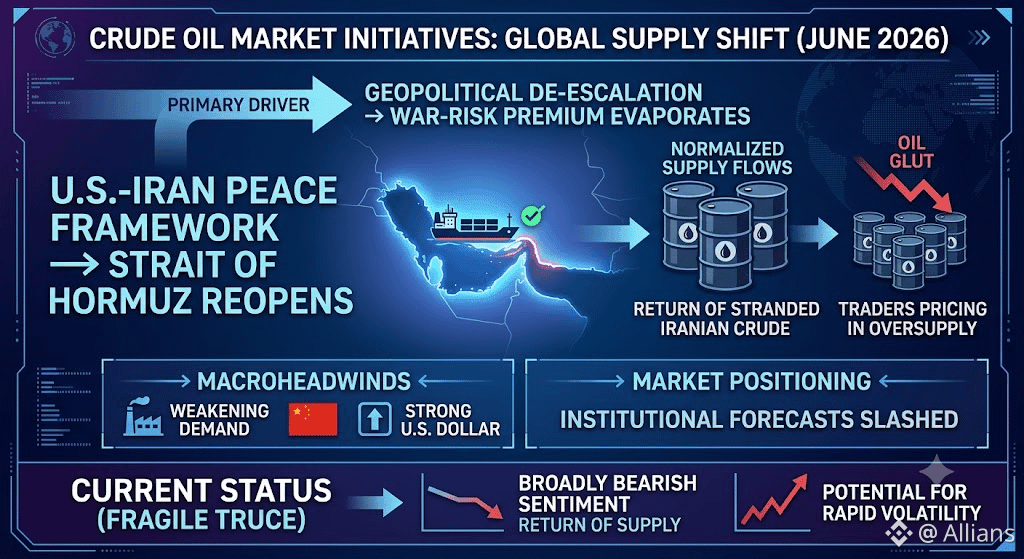
reflects a sharp decline in crude oil $CL prices as of June 2026, driven primarily by significant geopolitical de-escalation.
The interim peace framework between the U.S. and Iran has led to the reopening of the strategic Strait of Hormuz, effectively eliminating the war-risk premium that previously inflated energy costs.
Market sentiment has shifted bearish as traders anticipate an "oil glut" resulting from the normalization of shipping lanes and the return of stranded Iranian supply to the global market.
These pressures are compounded by macroeconomic headwinds, including weakening global demand—particularly in China—and a strengthening U.S. Dollar. Although institutional forecasts for Brent $BZ crude have been slashed, the outlook remains fluid.
Analysts warn that the truce is fragile; any breakdown in ongoing diplomatic negotiations in Switzerland could trigger renewed volatility or a sudden bullish reversal in the energy sector.
#IranWontBlockHormuzFor60Days
#JapanCorporatePensionFundAllocates1%ToCrypto
#crudefuturessink
reflects a sharp decline in crude oil $CL prices as of June 2026, driven primarily by significant geopolitical de-escalation.
The interim peace framework between the U.S. and Iran has led to the reopening of the strategic Strait of Hormuz, effectively eliminating the war-risk premium that previously inflated energy costs.
Market sentiment has shifted bearish as traders anticipate an "oil glut" resulting from the normalization of shipping lanes and the return of stranded Iranian supply to the global market.
These pressures are compounded by macroeconomic headwinds, including weakening global demand—particularly in China—and a strengthening U.S. Dollar. Although institutional forecasts for Brent $BZ crude have been slashed, the outlook remains fluid.
Analysts warn that the truce is fragile; any breakdown in ongoing diplomatic negotiations in Switzerland could trigger renewed volatility or a sudden bullish reversal in the energy sector.
#IranWontBlockHormuzFor60Days
#JapanCorporatePensionFundAllocates1%ToCrypto
reflects a sharp decline in crude oil $CL prices as of June 2026, driven primarily by significant geopolitical de-escalation.
The interim peace framework between the U.S. and Iran has led to the reopening of the strategic Strait of Hormuz, effectively eliminating the war-risk premium that previously inflated energy costs.
Market sentiment has shifted bearish as traders anticipate an "oil glut" resulting from the normalization of shipping lanes and the return of stranded Iranian supply to the global market.
These pressures are compounded by macroeconomic headwinds, including weakening global demand—particularly in China—and a strengthening U.S. Dollar. Although institutional forecasts for Brent $BZ crude have been slashed, the outlook remains fluid.
Analysts warn that the truce is fragile; any breakdown in ongoing diplomatic negotiations in Switzerland could trigger renewed volatility or a sudden bullish reversal in the energy sector.
#IranWontBlockHormuzFor60Days
#JapanCorporatePensionFundAllocates1%ToCrypto
2
2
302

·
--
📉 Crude futures are under pressure as prices continue to decline amid shifting market sentiment and demand concerns. Traders are closely monitoring global economic signals and geopolitical developments for the next major move. 🌍⚡
Stay informed, manage your risk, and trade wisely .#CrudeFuturesSink
📉 Crude futures are under pressure as prices continue to decline amid shifting market sentiment and demand concerns. Traders are closely monitoring global economic signals and geopolitical developments for the next major move. 🌍⚡
Stay informed, manage your risk, and trade wisely .#CrudeFuturesSink
Stay informed, manage your risk, and trade wisely .#CrudeFuturesSink
1
196
#CrudeFuturesSink
Crude oil futures fell as easing geopolitical tensions reduced concerns about potential supply disruptions. Investors are closely monitoring developments in the Middle East, while markets remain focused on global demand and economic Outlook
plz 🙏 like and comment for ma
#CrudeFuturesSink
Crude oil futures fell as easing geopolitical tensions reduced concerns about potential supply disruptions. Investors are closely monitoring developments in the Middle East, while markets remain focused on global demand and economic Outlook
plz 🙏 like and comment for ma
Crude oil futures fell as easing geopolitical tensions reduced concerns about potential supply disruptions. Investors are closely monitoring developments in the Middle East, while markets remain focused on global demand and economic Outlook
plz 🙏 like and comment for ma
1
121

·
--
Bearish
#CrudeFuturesSink Crude experienced a significant weekly drop (down nearly 11%) as geopolitical supply concerns eased and shipping resumed through the Strait of Hormuz.
#CrudeFuturesSink Crude experienced a significant weekly drop (down nearly 11%) as geopolitical supply concerns eased and shipping resumed through the Strait of Hormuz.
268

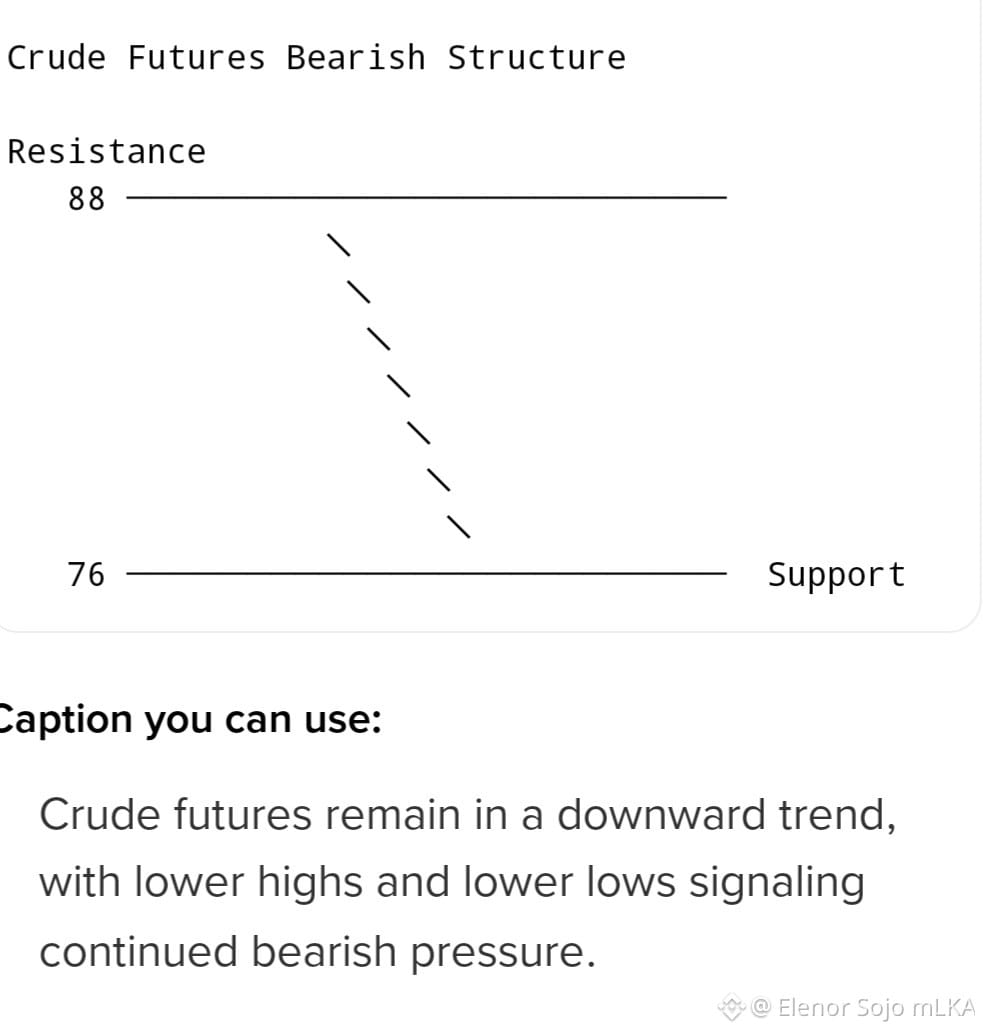
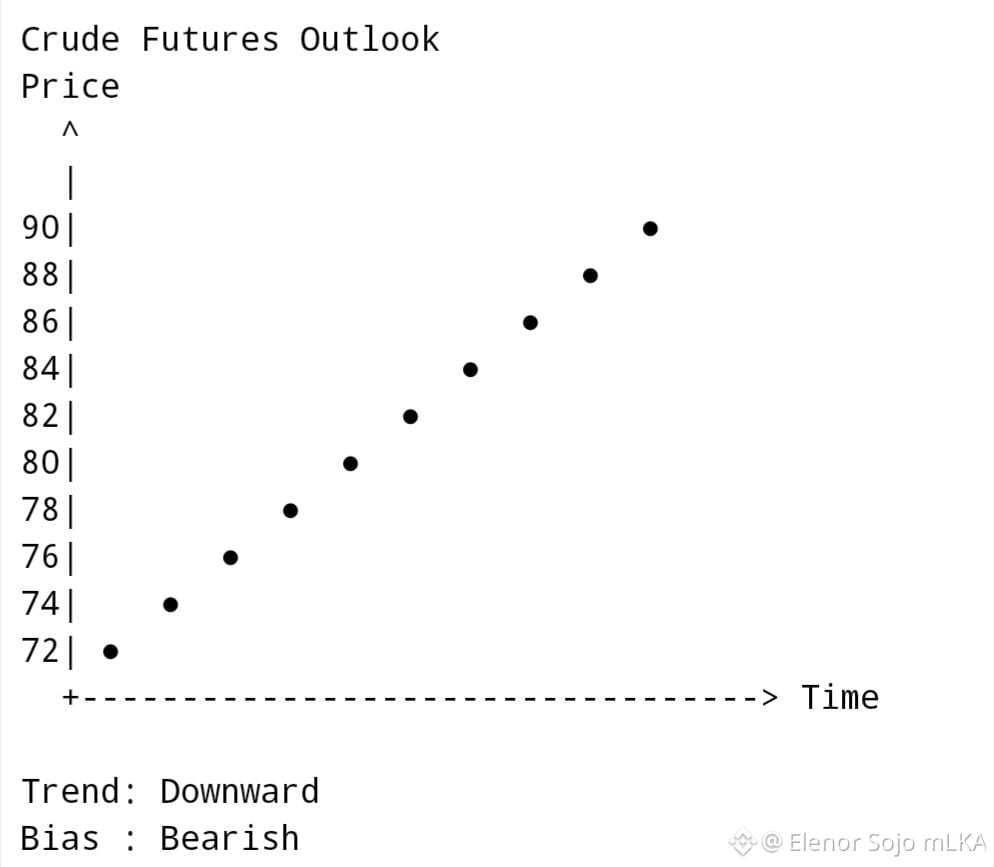
#CrudeFuturesSink
Prediction: Bearish bias.
Crude futures may sink in the near term if:
demand expectations weaken,
the U.S. dollar stays firm,
inventories rise,
or macro risk sentiment turns negative.
☆Explanation:
》Crude futures look vulnerable to downside pressure. If sellers keep control, price may continue drifting lower toward the next support zones. Any rebound is likely to face resistance unless a strong supply disruption or bullish demand catalyst appears.
Trading-style version:
Bias: Bearish
Momentum: Weak / fading
Outlook: Sell rallies rather than chase highs
Risk to view: Geopolitical supply shock, OPEC+ surprise cuts, stronger-than-expected demand data
#CrudeFuturesSink
Prediction: Bearish bias.
Crude futures may sink in the near term if:
demand expectations weaken,
the U.S. dollar stays firm,
inventories rise,
or macro risk sentiment turns negative.
☆Explanation:
》Crude futures look vulnerable to downside pressure. If sellers keep control, price may continue drifting lower toward the next support zones. Any rebound is likely to face resistance unless a strong supply disruption or bullish demand catalyst appears.
Trading-style version:
Bias: Bearish
Momentum: Weak / fading
Outlook: Sell rallies rather than chase highs
Risk to view: Geopolitical supply shock, OPEC+ surprise cuts, stronger-than-expected demand data
Prediction: Bearish bias.
Crude futures may sink in the near term if:
demand expectations weaken,
the U.S. dollar stays firm,
inventories rise,
or macro risk sentiment turns negative.
☆Explanation:
》Crude futures look vulnerable to downside pressure. If sellers keep control, price may continue drifting lower toward the next support zones. Any rebound is likely to face resistance unless a strong supply disruption or bullish demand catalyst appears.
Trading-style version:
Bias: Bearish
Momentum: Weak / fading
Outlook: Sell rallies rather than chase highs
Risk to view: Geopolitical supply shock, OPEC+ surprise cuts, stronger-than-expected demand data
1
1
228

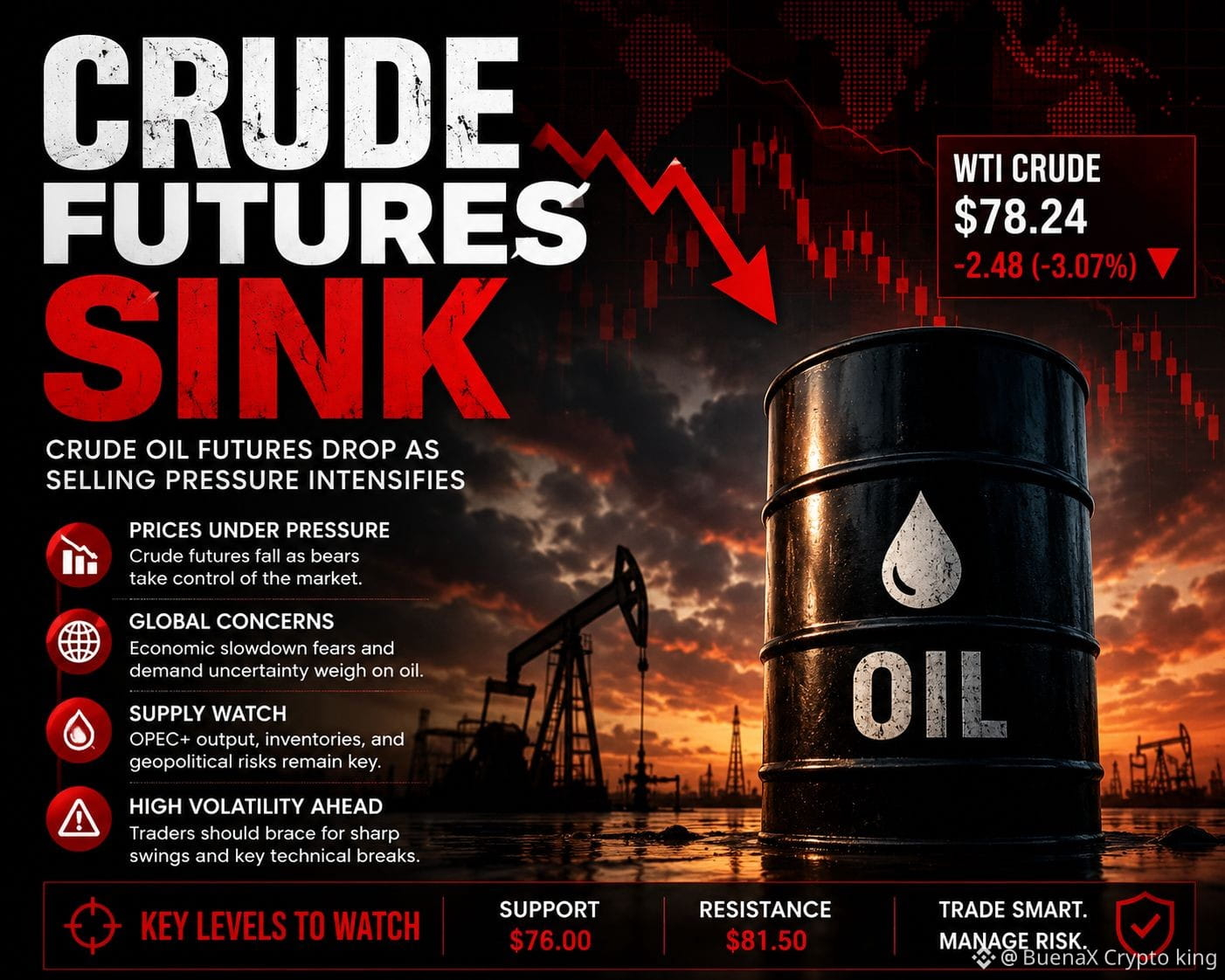
Crude Futures Sink as Market Sentiment Turns Cautious
Crude oil futures moved lower today as traders reacted to growing uncertainty in global markets. The decline comes amid concerns about economic growth, shifting demand expectations, and ongoing discussions surrounding global energy supply.$TNSR
{future}(TNSRUSDT)
Market participants remain focused on several key factors, including production levels from major oil-producing nations, inventory data, and geopolitical developments that could influence future price movements. While supply concerns have supported prices in recent months, recent selling pressure suggests traders are becoming more cautious about near-term demand prospects.$SPORTFUN
{future}(SPORTFUNUSDT)
Analysts note that a stronger U.S. dollar and concerns about slowing industrial activity in some regions have also weighed on crude prices. As a result, investors have reduced bullish positions, leading to increased volatility across energy markets.
Despite the current weakness, the broader outlook for crude oil remains dependent on upcoming economic data and supply-side developments. A recovery in global demand or unexpected production cuts could provide support for prices, while further signs of economic slowdown may extend the decline.$TRUMP
{future}(TRUMPUSDT)
For traders, the coming sessions will be critical. Key support levels are being closely monitored, and a decisive break below these zones could trigger additional selling pressure. Conversely, any positive catalyst may encourage buyers to return to the market.
As volatility continues to rise, risk management remains essential for both short-term traders and long-term investors navigating the evolving energy landscape.
#CrudeFuturesSink #CrudeOil #OilMarket #FuturesTrading #EnergyMarkets #MarketUpdate #Commodities #TradingNews #Investing #GlobalMarkets
Crude Futures Sink as Market Sentiment Turns Cautious
Crude oil futures moved lower today as traders reacted to growing uncertainty in global markets. The decline comes amid concerns about economic growth, shifting demand expectations, and ongoing discussions surrounding global energy supply.$TNSR
Market participants remain focused on several key factors, including production levels from major oil-producing nations, inventory data, and geopolitical developments that could influence future price movements. While supply concerns have supported prices in recent months, recent selling pressure suggests traders are becoming more cautious about near-term demand prospects.$SPORTFUN
Analysts note that a stronger U.S. dollar and concerns about slowing industrial activity in some regions have also weighed on crude prices. As a result, investors have reduced bullish positions, leading to increased volatility across energy markets.
Despite the current weakness, the broader outlook for crude oil remains dependent on upcoming economic data and supply-side developments. A recovery in global demand or unexpected production cuts could provide support for prices, while further signs of economic slowdown may extend the decline.$TRUMP
For traders, the coming sessions will be critical. Key support levels are being closely monitored, and a decisive break below these zones could trigger additional selling pressure. Conversely, any positive catalyst may encourage buyers to return to the market.
As volatility continues to rise, risk management remains essential for both short-term traders and long-term investors navigating the evolving energy landscape.
#CrudeFuturesSink #CrudeOil #OilMarket #FuturesTrading #EnergyMarkets #MarketUpdate #Commodities #TradingNews #Investing #GlobalMarkets
Crude oil futures moved lower today as traders reacted to growing uncertainty in global markets. The decline comes amid concerns about economic growth, shifting demand expectations, and ongoing discussions surrounding global energy supply.$TNSR
Market participants remain focused on several key factors, including production levels from major oil-producing nations, inventory data, and geopolitical developments that could influence future price movements. While supply concerns have supported prices in recent months, recent selling pressure suggests traders are becoming more cautious about near-term demand prospects.$SPORTFUN
Analysts note that a stronger U.S. dollar and concerns about slowing industrial activity in some regions have also weighed on crude prices. As a result, investors have reduced bullish positions, leading to increased volatility across energy markets.
Despite the current weakness, the broader outlook for crude oil remains dependent on upcoming economic data and supply-side developments. A recovery in global demand or unexpected production cuts could provide support for prices, while further signs of economic slowdown may extend the decline.$TRUMP
For traders, the coming sessions will be critical. Key support levels are being closely monitored, and a decisive break below these zones could trigger additional selling pressure. Conversely, any positive catalyst may encourage buyers to return to the market.
As volatility continues to rise, risk management remains essential for both short-term traders and long-term investors navigating the evolving energy landscape.
#CrudeFuturesSink #CrudeOil #OilMarket #FuturesTrading #EnergyMarkets #MarketUpdate #Commodities #TradingNews #Investing #GlobalMarkets
455

·
--
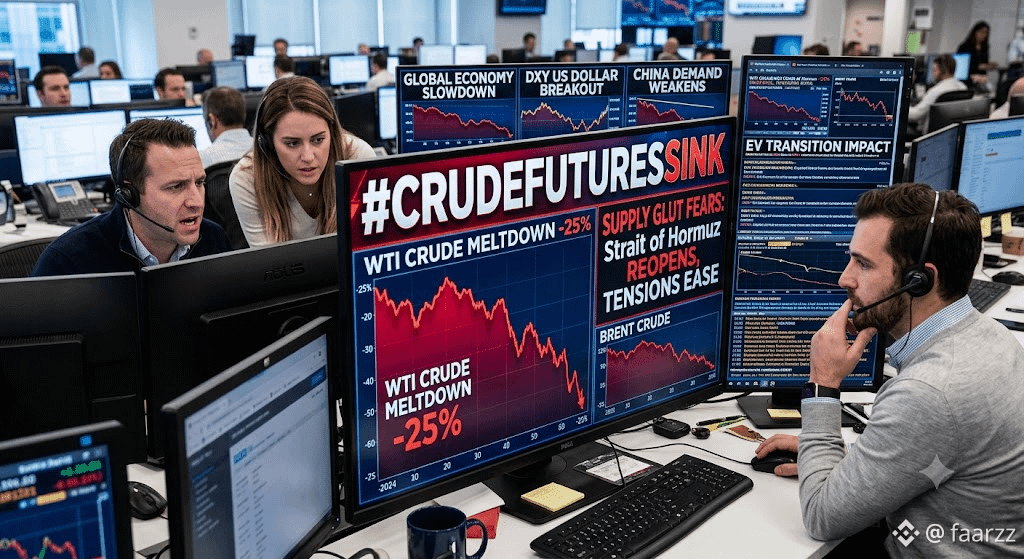
#crudefuturessink is trending as global OIL $CL prices plunge to multi-month lows, with Brent dropping near $79 and WTI hitting the mid-$70s.
The primary catalyst is a major reduction in the geopolitical war-risk premium following a preliminary peace framework between the U.S. and Iran, which has officially reopened the strategic Strait of Hormuz.
While paper traders aggressively price in an imminent supply glut from returning Iranian crude, market bulls argue that physical infrastructure damage and depleted global inventories will limit the downside. Meanwhile, a dominant U.S. dollar and weakening demand forecasts, particularly from China, continue to pressure the market.
$BZ
#JapanCorporatePensionFundAllocates1%ToCrypto
#HormuzOilFlowsDespiteIranClaim
#crudefuturessink is trending as global OIL $CL prices plunge to multi-month lows, with Brent dropping near $79 and WTI hitting the mid-$70s.
The primary catalyst is a major reduction in the geopolitical war-risk premium following a preliminary peace framework between the U.S. and Iran, which has officially reopened the strategic Strait of Hormuz.
While paper traders aggressively price in an imminent supply glut from returning Iranian crude, market bulls argue that physical infrastructure damage and depleted global inventories will limit the downside. Meanwhile, a dominant U.S. dollar and weakening demand forecasts, particularly from China, continue to pressure the market.
$BZ
#JapanCorporatePensionFundAllocates1%ToCrypto
#HormuzOilFlowsDespiteIranClaim
The primary catalyst is a major reduction in the geopolitical war-risk premium following a preliminary peace framework between the U.S. and Iran, which has officially reopened the strategic Strait of Hormuz.
While paper traders aggressively price in an imminent supply glut from returning Iranian crude, market bulls argue that physical infrastructure damage and depleted global inventories will limit the downside. Meanwhile, a dominant U.S. dollar and weakening demand forecasts, particularly from China, continue to pressure the market.
$BZ
#JapanCorporatePensionFundAllocates1%ToCrypto
#HormuzOilFlowsDespiteIranClaim
1
2.1k

#crudefuturessink
Crude oil futures are trending as prices continue to face downward pressure amid concerns over global demand, economic uncertainty, and shifting market expectations. The recent decline in crude futures has caught the attention of traders and investors worldwide, influencing sentiment across both traditional and crypto markets. Energy prices often play a key role in shaping inflation expectations and broader market trends. As volatility remains high, market participants are closely monitoring supply-demand dynamics, geopolitical developments, and economic data releases. The coming days could be crucial in determining whether crude oil futures stabilize or continue their current downward trajectory.
#CrudeFuturesSink #coin #Rise
#crudefuturessink
Crude oil futures are trending as prices continue to face downward pressure amid concerns over global demand, economic uncertainty, and shifting market expectations. The recent decline in crude futures has caught the attention of traders and investors worldwide, influencing sentiment across both traditional and crypto markets. Energy prices often play a key role in shaping inflation expectations and broader market trends. As volatility remains high, market participants are closely monitoring supply-demand dynamics, geopolitical developments, and economic data releases. The coming days could be crucial in determining whether crude oil futures stabilize or continue their current downward trajectory.
#CrudeFuturesSink #coin #Rise
Crude oil futures are trending as prices continue to face downward pressure amid concerns over global demand, economic uncertainty, and shifting market expectations. The recent decline in crude futures has caught the attention of traders and investors worldwide, influencing sentiment across both traditional and crypto markets. Energy prices often play a key role in shaping inflation expectations and broader market trends. As volatility remains high, market participants are closely monitoring supply-demand dynamics, geopolitical developments, and economic data releases. The coming days could be crucial in determining whether crude oil futures stabilize or continue their current downward trajectory.
#CrudeFuturesSink #coin #Rise
CLUS-0.12%
2
90

·
--
Partly True
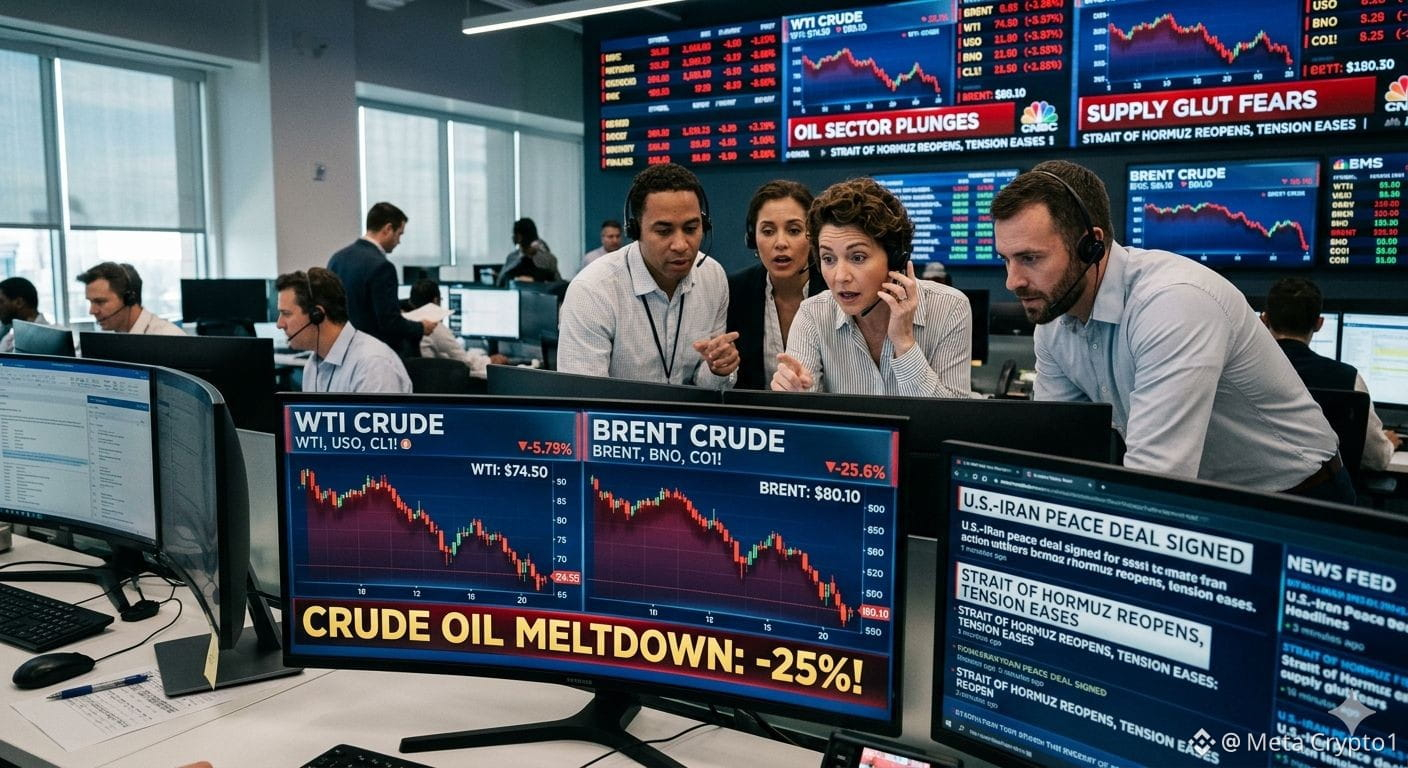
📉 CRUDE OIL CRASH: Time to Buy the Dip or Short to $70? 🛢️
Crude futures just suffered a massive 25% meltdown! Brent is clinging to $80 and WTI has plunged into the mid $70s.
This is the lowest we have seen oil prices since the start of the conflict earlier this year.
Here is exactly what is driving the market and how to trade it:
⚡ 1. The Catalyst: The U.S Iran Peace Deal
The geopolitical risk premium is completely evaporating. President Trump signed a preliminary deal with Iranian President Pezeshkian extending the ceasefire.
Even bigger news: the Strait of Hormuz is officially open and over 12 million barrels of oil crossed overnight.
🔄 2. Sentiment vs. Physical Reality
The Bears 🐻: Expecting a massive supply glut. Reopening the strait and lifting sanctions could theoretically unleash 800,000+ barrels per day of Iranian crude back onto the global market.
The Bulls 🐂: Arguing that paper traders are overreacting. Damaged infrastructure takes months to repair.
Furthermore, global oil inventories are heavily depleted; refilling them will create a natural price floor.
📊 3. Technical & Macro Headwinds
The Strong Dollar: The U.S. Dollar Index ($DXY) just hit a 13-month high. A dominant dollar always puts heavy pressure on dollar denominated commodities like crude.
The Fragile Floor: Remember, this entire downside depends on peace holding.
News just broke that upcoming diplomatic talks in Switzerland were postponed. Any sign of a breakdown will cause a violent bullish reversal.
#crudefuturessink
📉 CRUDE OIL CRASH: Time to Buy the Dip or Short to $70? 🛢️
Crude futures just suffered a massive 25% meltdown! Brent is clinging to $80 and WTI has plunged into the mid $70s.
This is the lowest we have seen oil prices since the start of the conflict earlier this year.
Here is exactly what is driving the market and how to trade it:
⚡ 1. The Catalyst: The U.S Iran Peace Deal
The geopolitical risk premium is completely evaporating. President Trump signed a preliminary deal with Iranian President Pezeshkian extending the ceasefire.
Even bigger news: the Strait of Hormuz is officially open and over 12 million barrels of oil crossed overnight.
🔄 2. Sentiment vs. Physical Reality
The Bears 🐻: Expecting a massive supply glut. Reopening the strait and lifting sanctions could theoretically unleash 800,000+ barrels per day of Iranian crude back onto the global market.
The Bulls 🐂: Arguing that paper traders are overreacting. Damaged infrastructure takes months to repair.
Furthermore, global oil inventories are heavily depleted; refilling them will create a natural price floor.
📊 3. Technical & Macro Headwinds
The Strong Dollar: The U.S. Dollar Index ($DXY) just hit a 13-month high. A dominant dollar always puts heavy pressure on dollar denominated commodities like crude.
The Fragile Floor: Remember, this entire downside depends on peace holding.
News just broke that upcoming diplomatic talks in Switzerland were postponed. Any sign of a breakdown will cause a violent bullish reversal.
#crudefuturessink
Crude futures just suffered a massive 25% meltdown! Brent is clinging to $80 and WTI has plunged into the mid $70s.
This is the lowest we have seen oil prices since the start of the conflict earlier this year.
Here is exactly what is driving the market and how to trade it:
⚡ 1. The Catalyst: The U.S Iran Peace Deal
The geopolitical risk premium is completely evaporating. President Trump signed a preliminary deal with Iranian President Pezeshkian extending the ceasefire.
Even bigger news: the Strait of Hormuz is officially open and over 12 million barrels of oil crossed overnight.
🔄 2. Sentiment vs. Physical Reality
The Bears 🐻: Expecting a massive supply glut. Reopening the strait and lifting sanctions could theoretically unleash 800,000+ barrels per day of Iranian crude back onto the global market.
The Bulls 🐂: Arguing that paper traders are overreacting. Damaged infrastructure takes months to repair.
Furthermore, global oil inventories are heavily depleted; refilling them will create a natural price floor.
📊 3. Technical & Macro Headwinds
The Strong Dollar: The U.S. Dollar Index ($DXY) just hit a 13-month high. A dominant dollar always puts heavy pressure on dollar denominated commodities like crude.
The Fragile Floor: Remember, this entire downside depends on peace holding.
News just broke that upcoming diplomatic talks in Switzerland were postponed. Any sign of a breakdown will cause a violent bullish reversal.
#crudefuturessink
2
18
8.4k
Log in to explore more content
Join global crypto users on Binance Square
⚡️ Get latest and useful information about crypto.
💬 Trusted by the world’s largest crypto exchange.
👍 Discover real insights from verified creators.
Email / Phone number
Trending Topics
1
#ZcashETFPostsFirstWeeklyOutflow$93.6M
16,556 views
57 Discussing
2
#GreekPoliceBustCryptoScamRingArrest17
23,072 views
279 Discussing
3
#BitcoinRejectedAt$87K
90,362 views
118 Discussing
4
#FedOctoberRateHikeOddsFallTo17%
55,960 views
662 Discussing
5
#NvidiaHitsRecordHighUp2.4%
32,445 views
452 Discussing
6
#CanaryFilesAmendedS1ForPEPEETF
11,649 views
297 Discussing
7
#USRussiaUkraineTalksReportedlyIncludeLukoilOilDeal
20,142 views
342 Discussing
8
#BitcoinParesGainsAfterRallyTo$86.5K
42,767 views
156 Discussing
9
#CerebrasSinksNearly20%OnReportNvidiaToPowerOpenAI
99,357 views
963 Discussing
10
#SECProposesCryptoCustodyRules
129,807 views
1,198 Discussing