

#cftcseekscommentoneventcontractreportingrules
cftcseekscommentoneventcontractreportingrules
18,176 views
193 Discussing
Hot
Latest

#CFTCSeeksCommentOnEventContractReportingRules Regulatory movement like this from the U.S. Commodity Futures Trading Commission is not a technical detail — it’s a sign that “event contracts” are moving out of the gray area.
The critical point here is not only compliance, it’s liquidity and access: who will be able to offer, who will be restricted, and how this changes price formation in these markets?
Because whenever regulation comes in with a focus on reporting and rule definition, the first effect usually is reduced operational freedom… and then a full reorganization of the players.
The real question is: will this legitimize the sector or end up concentrating the market even more among a few large operators?..
#CFTCSeeksCommentOnEventContractReportingRules Regulatory movement like this from the U.S. Commodity Futures Trading Commission is not a technical detail — it’s a sign that “event contracts” are moving out of the gray area.
The critical point here is not only compliance, it’s liquidity and access: who will be able to offer, who will be restricted, and how this changes price formation in these markets?
Because whenever regulation comes in with a focus on reporting and rule definition, the first effect usually is reduced operational freedom… and then a full reorganization of the players.
The real question is: will this legitimize the sector or end up concentrating the market even more among a few large operators?..
The critical point here is not only compliance, it’s liquidity and access: who will be able to offer, who will be restricted, and how this changes price formation in these markets?
Because whenever regulation comes in with a focus on reporting and rule definition, the first effect usually is reduced operational freedom… and then a full reorganization of the players.
The real question is: will this legitimize the sector or end up concentrating the market even more among a few large operators?..
49

·
--
#cftcseekscommentoneventcontractreportingrules
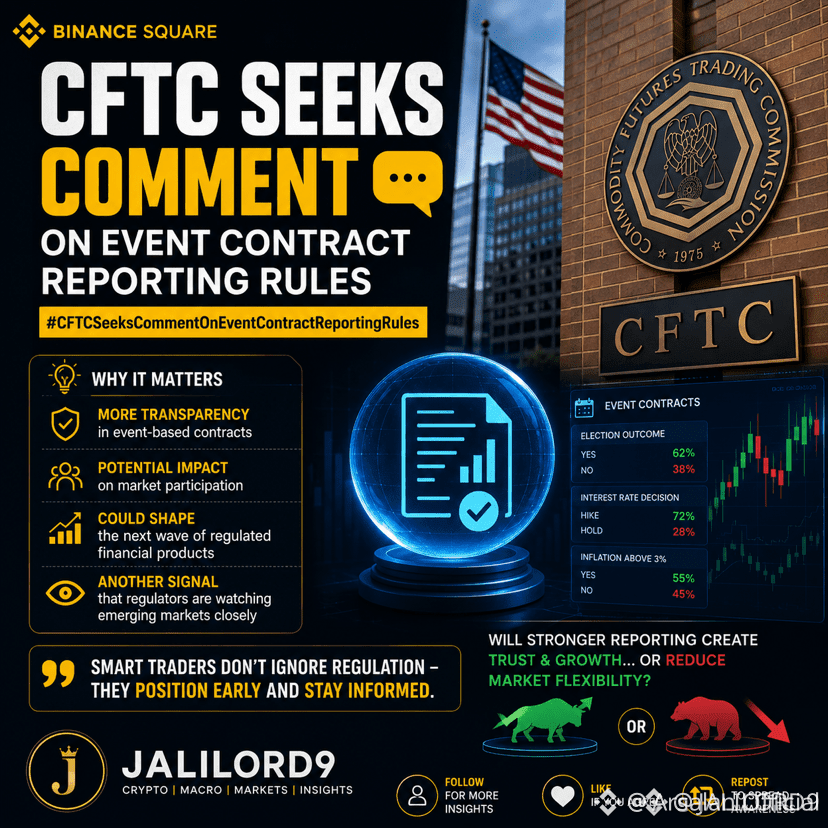
🚨 Big Crypto Regulation Update Incoming?
Commodity Futures Trading Commission (CFTC) is now seeking public comments on new event contract reporting rules, a move that could impact prediction markets and parts of the broader crypto ecosystem.
Why this matters 👇
📌 Regulators are increasing focus on digital asset markets
⚖️ New reporting standards may improve transparency
🌍 Regulatory decisions often shape future crypto innovation
Markets connected to derivatives, prediction platforms, and blockchain-based financial products may watch this closely.
Key takeaway:
The crypto industry continues evolving as regulators work toward clearer frameworks for emerging financial technology.
Stay informed — regulation often drives major market narratives.
#CryptoNews #CFTC #Blockchain #Regulation #Web3 #BinanceSquare #CryptoUpdate$SYN $SLX
{stock_us}(CMG.US)
#cftcseekscommentoneventcontractreportingrules
🚨 Big Crypto Regulation Update Incoming?
Commodity Futures Trading Commission (CFTC) is now seeking public comments on new event contract reporting rules, a move that could impact prediction markets and parts of the broader crypto ecosystem.
Why this matters 👇
📌 Regulators are increasing focus on digital asset markets
⚖️ New reporting standards may improve transparency
🌍 Regulatory decisions often shape future crypto innovation
Markets connected to derivatives, prediction platforms, and blockchain-based financial products may watch this closely.
Key takeaway:
The crypto industry continues evolving as regulators work toward clearer frameworks for emerging financial technology.
Stay informed — regulation often drives major market narratives.
#CryptoNews #CFTC #Blockchain #Regulation #Web3 #BinanceSquare #CryptoUpdate$SYN $SLX
🚨 Big Crypto Regulation Update Incoming?
Commodity Futures Trading Commission (CFTC) is now seeking public comments on new event contract reporting rules, a move that could impact prediction markets and parts of the broader crypto ecosystem.
Why this matters 👇
📌 Regulators are increasing focus on digital asset markets
⚖️ New reporting standards may improve transparency
🌍 Regulatory decisions often shape future crypto innovation
Markets connected to derivatives, prediction platforms, and blockchain-based financial products may watch this closely.
Key takeaway:
The crypto industry continues evolving as regulators work toward clearer frameworks for emerging financial technology.
Stay informed — regulation often drives major market narratives.
#CryptoNews #CFTC #Blockchain #Regulation #Web3 #BinanceSquare #CryptoUpdate$SYN $SLX
3
2
1.5k

·
--
Bearish
#CFTCSeeksCommentOnEventContractReportingRules The CFTC is officially seeking public comment on proposed amendments to its event contract reporting rules, aiming to bring greater transparency and oversight to the rapidly growing prediction markets.
What’s Changing?
The Commodity Futures Trading Commission (CFTC) wants to update how exchanges report data on event contracts—derivatives tied to real-world outcomes like elections, economic data, or sports. The proposed rules focus on:
Enhanced Transparency: Requiring more detailed, timely data reporting from designated contract markets (DCMs).
Risk Mitigation: Ensuring platforms have robust safeguards against market manipulation and integrity risks.
Clearer Definitions: Standardizing what constitutes a "gaming" or "contrary to the public interest" contract.
Why It Matters
Prediction markets have surged in popularity, drawing massive volume and mainstream attention. Because these contracts look different from traditional commodities, the CFTC is working to modernize its regulatory framework to protect retail investors while still allowing for market innovation.
How to Participate
The regulatory body is opening a 60-day window for market participants, platforms, and the public to weigh in on the feasibility and scope of these new reporting requirements.
Take Action: If you are an investor, platform operator, or market enthusiast, now is your chance to shape the future of decentralized and centralized prediction markets. Submit your feedback via the CFTC Comments Portal.
#CFTCSeeksCommentOnEventContractReportingRules #CryptoRegulation #PredictionMarkets #CFTC #FinanceNews
$BTC
{future}(BTCUSDT)
#CFTCSeeksCommentOnEventContractReportingRules The CFTC is officially seeking public comment on proposed amendments to its event contract reporting rules, aiming to bring greater transparency and oversight to the rapidly growing prediction markets.
What’s Changing?
The Commodity Futures Trading Commission (CFTC) wants to update how exchanges report data on event contracts—derivatives tied to real-world outcomes like elections, economic data, or sports. The proposed rules focus on:
Enhanced Transparency: Requiring more detailed, timely data reporting from designated contract markets (DCMs).
Risk Mitigation: Ensuring platforms have robust safeguards against market manipulation and integrity risks.
Clearer Definitions: Standardizing what constitutes a "gaming" or "contrary to the public interest" contract.
Why It Matters
Prediction markets have surged in popularity, drawing massive volume and mainstream attention. Because these contracts look different from traditional commodities, the CFTC is working to modernize its regulatory framework to protect retail investors while still allowing for market innovation.
How to Participate
The regulatory body is opening a 60-day window for market participants, platforms, and the public to weigh in on the feasibility and scope of these new reporting requirements.
Take Action: If you are an investor, platform operator, or market enthusiast, now is your chance to shape the future of decentralized and centralized prediction markets. Submit your feedback via the CFTC Comments Portal.
#CFTCSeeksCommentOnEventContractReportingRules #CryptoRegulation #PredictionMarkets #CFTC #FinanceNews
$BTC
What’s Changing?
The Commodity Futures Trading Commission (CFTC) wants to update how exchanges report data on event contracts—derivatives tied to real-world outcomes like elections, economic data, or sports. The proposed rules focus on:
Enhanced Transparency: Requiring more detailed, timely data reporting from designated contract markets (DCMs).
Risk Mitigation: Ensuring platforms have robust safeguards against market manipulation and integrity risks.
Clearer Definitions: Standardizing what constitutes a "gaming" or "contrary to the public interest" contract.
Why It Matters
Prediction markets have surged in popularity, drawing massive volume and mainstream attention. Because these contracts look different from traditional commodities, the CFTC is working to modernize its regulatory framework to protect retail investors while still allowing for market innovation.
How to Participate
The regulatory body is opening a 60-day window for market participants, platforms, and the public to weigh in on the feasibility and scope of these new reporting requirements.
Take Action: If you are an investor, platform operator, or market enthusiast, now is your chance to shape the future of decentralized and centralized prediction markets. Submit your feedback via the CFTC Comments Portal.
#CFTCSeeksCommentOnEventContractReportingRules #CryptoRegulation #PredictionMarkets #CFTC #FinanceNews
$BTC

71

The CFTC is asking for public feedback on new reporting rules for event contracts, aiming to improve transparency and create a clearer regulatory framework. It's a proposal for how these markets report data—not a blanket approval of prediction markets.
#CFTCSeeksCommentOnEventContractReportingRules
The CFTC is asking for public feedback on new reporting rules for event contracts, aiming to improve transparency and create a clearer regulatory framework. It's a proposal for how these markets report data—not a blanket approval of prediction markets.
#CFTCSeeksCommentOnEventContractReportingRules
#CFTCSeeksCommentOnEventContractReportingRules
26

#CFTCSeeksCommentOnEventContractReportingRules That looks like a news headline hashtag about the CFTC requesting public comments on event-contract reporting rules.
I can help in a few useful ways:
Explain it in plain English
Break down market impact for crypto/prediction markets
Turn it into a clean headline or tweet
Summarize why traders may care
Plain-English version:
The U.S. CFTC is asking the public to comment on proposed rules about how event contracts should be reported, which could affect platforms tied to prediction-style markets and related derivatives.
Cleaner headline:
CFTC seeks public comment on event contract reporting rules.
Why it matters:
This may signal closer regulatory attention on event-based contracts, potentially affecting compliance requirements, market structure, and how some trading products are offered in the U.S.
If you want, I can also turn this into:
a 1-line market summary,
a tweet, or
a bullish/bearish impact analysis for crypto.$SPCXB
{spot}(SPCXBUSDT)
$NVDAB
{spot}(NVDABUSDT)
$MUB
{spot}(MUBUSDT)
@Binance_Announcement @Binance_Square_Official @Binance_News
#CFTCSeeksCommentOnEventContractReportingRules That looks like a news headline hashtag about the CFTC requesting public comments on event-contract reporting rules.
I can help in a few useful ways:
Explain it in plain English
Break down market impact for crypto/prediction markets
Turn it into a clean headline or tweet
Summarize why traders may care
Plain-English version:
The U.S. CFTC is asking the public to comment on proposed rules about how event contracts should be reported, which could affect platforms tied to prediction-style markets and related derivatives.
Cleaner headline:
CFTC seeks public comment on event contract reporting rules.
Why it matters:
This may signal closer regulatory attention on event-based contracts, potentially affecting compliance requirements, market structure, and how some trading products are offered in the U.S.
If you want, I can also turn this into:
a 1-line market summary,
a tweet, or
a bullish/bearish impact analysis for crypto.$SPCXB
$NVDAB
$MUB
@Binance Announcement @Binance Square Official @Binance News
I can help in a few useful ways:
Explain it in plain English
Break down market impact for crypto/prediction markets
Turn it into a clean headline or tweet
Summarize why traders may care
Plain-English version:
The U.S. CFTC is asking the public to comment on proposed rules about how event contracts should be reported, which could affect platforms tied to prediction-style markets and related derivatives.
Cleaner headline:
CFTC seeks public comment on event contract reporting rules.
Why it matters:
This may signal closer regulatory attention on event-based contracts, potentially affecting compliance requirements, market structure, and how some trading products are offered in the U.S.
If you want, I can also turn this into:
a 1-line market summary,
a tweet, or
a bullish/bearish impact analysis for crypto.$SPCXB
$NVDAB
$MUB
@Binance Announcement @Binance Square Official @Binance News
1
152

·
--
Bearish
#cftcseekscommentoneventcontractreportingrules
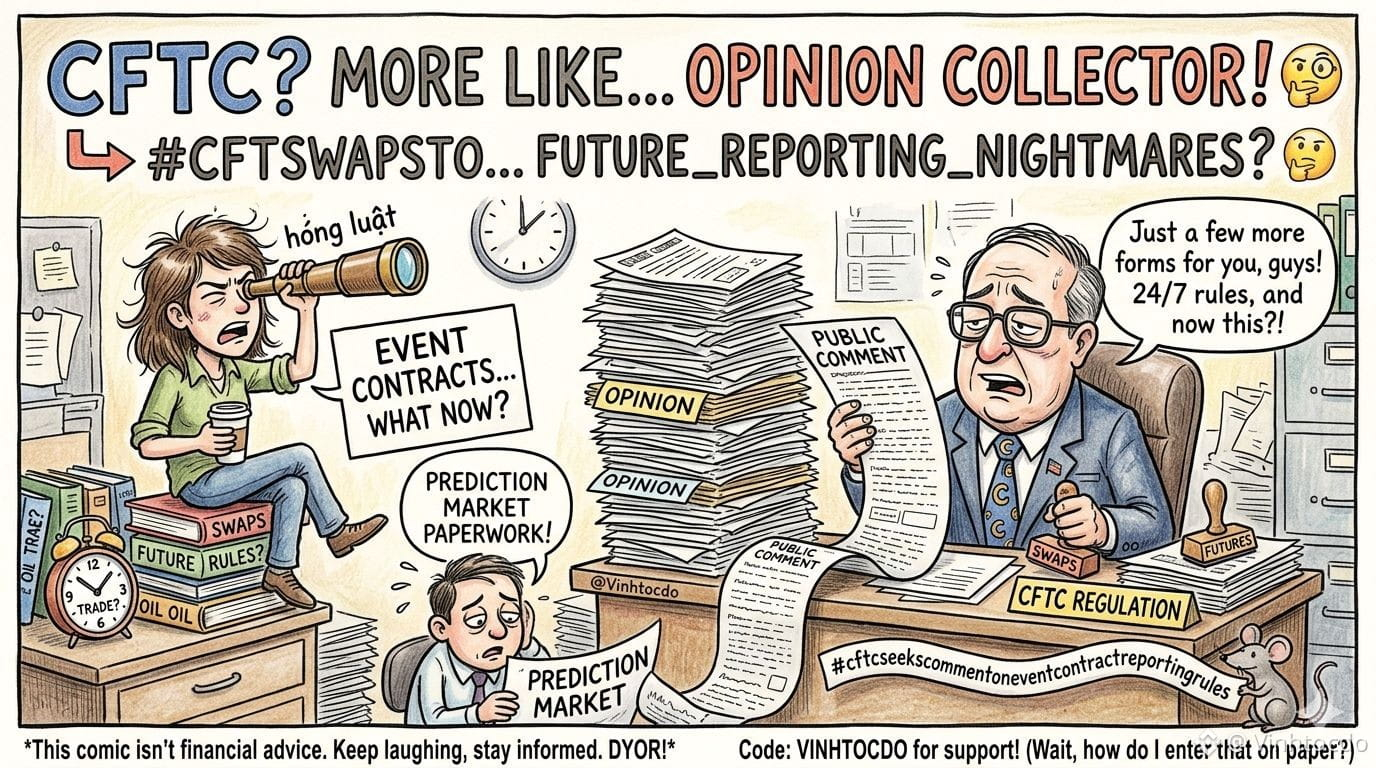
Brothers, lately CFTC has been "taking care of" collecting opinions, I don't know what's going on! 🤦♂️
Just the other day they asked for feedback from us traders about keeping 24/7 overnight trading on some crude oil and energy contracts. Today they’re coming out again with a request for comments on the rules for reporting contract events.
This time, they want to change the way they report data for event-linked contracts (election betting, economics, etc.) from "Swaps" to "Futures" to make it easier to manage.
Prediction platforms are going to have plenty of paperwork to do!
As for us traders, we’ll just sit and wait to see the regulations.
Enter code VINHTOCDO to support me.
DYOR — This is not financial advice!
#CFTC #USstock #Binance #VINHTOCDO
$NVDAB
{spot}(NVDABUSDT)
$TSLAB
{spot}(TSLABUSDT)
$MUB
{spot}(MUBUSDT)
#cftcseekscommentoneventcontractreportingrules
Brothers, lately CFTC has been "taking care of" collecting opinions, I don't know what's going on! 🤦♂️
Just the other day they asked for feedback from us traders about keeping 24/7 overnight trading on some crude oil and energy contracts. Today they’re coming out again with a request for comments on the rules for reporting contract events.
This time, they want to change the way they report data for event-linked contracts (election betting, economics, etc.) from "Swaps" to "Futures" to make it easier to manage.
Prediction platforms are going to have plenty of paperwork to do!
As for us traders, we’ll just sit and wait to see the regulations.
Enter code VINHTOCDO to support me.
DYOR — This is not financial advice!
#CFTC #USstock #Binance #VINHTOCDO
$NVDAB
$TSLAB
$MUB
Brothers, lately CFTC has been "taking care of" collecting opinions, I don't know what's going on! 🤦♂️
Just the other day they asked for feedback from us traders about keeping 24/7 overnight trading on some crude oil and energy contracts. Today they’re coming out again with a request for comments on the rules for reporting contract events.
This time, they want to change the way they report data for event-linked contracts (election betting, economics, etc.) from "Swaps" to "Futures" to make it easier to manage.
Prediction platforms are going to have plenty of paperwork to do!
As for us traders, we’ll just sit and wait to see the regulations.
Enter code VINHTOCDO to support me.
DYOR — This is not financial advice!
#CFTC #USstock #Binance #VINHTOCDO
$NVDAB
$TSLAB
$MUB
2
2
82

$BTC Latest Analysis (June 26, 2026)
Bitcoin remains under short-term pressure after falling from recent highs. The market is showing cautious sentiment as investors take profits and react to uncertainty around interest rates and institutional demand. Recent ETF outflows and weaker buying momentum have also contributed to the decline. �
The Economic Times +1
Technical Outlook:
Trend: Short-term bearish, long-term still being watched closely.
Support: Around $62,000. A break below this level could lead to further downside.
Resistance: Around $64,000–$65,000. A move above this zone would improve bullish momentum. �
The Economic Times +1
Conclusion:
Bitcoin is currently in a consolidation phase. Traders should watch the key support and resistance levels closely. Until buying volume and institutional inflows improve, volatility is likely to remain high. This is market analysis, not financial advice.#KoreaActivatesSidecarAsKOSPI200FuturesFall5% #SOLSlides20%InAMonth #CFTCSeeksCommentOnEventContractReportingRules #OpenAIWeighsDelayingIPOTo2027
$BTC Latest Analysis (June 26, 2026)
Bitcoin remains under short-term pressure after falling from recent highs. The market is showing cautious sentiment as investors take profits and react to uncertainty around interest rates and institutional demand. Recent ETF outflows and weaker buying momentum have also contributed to the decline. �
The Economic Times +1
Technical Outlook:
Trend: Short-term bearish, long-term still being watched closely.
Support: Around $62,000. A break below this level could lead to further downside.
Resistance: Around $64,000–$65,000. A move above this zone would improve bullish momentum. �
The Economic Times +1
Conclusion:
Bitcoin is currently in a consolidation phase. Traders should watch the key support and resistance levels closely. Until buying volume and institutional inflows improve, volatility is likely to remain high. This is market analysis, not financial advice.#KoreaActivatesSidecarAsKOSPI200FuturesFall5% #SOLSlides20%InAMonth #CFTCSeeksCommentOnEventContractReportingRules #OpenAIWeighsDelayingIPOTo2027
Bitcoin remains under short-term pressure after falling from recent highs. The market is showing cautious sentiment as investors take profits and react to uncertainty around interest rates and institutional demand. Recent ETF outflows and weaker buying momentum have also contributed to the decline. �
The Economic Times +1
Technical Outlook:
Trend: Short-term bearish, long-term still being watched closely.
Support: Around $62,000. A break below this level could lead to further downside.
Resistance: Around $64,000–$65,000. A move above this zone would improve bullish momentum. �
The Economic Times +1
Conclusion:
Bitcoin is currently in a consolidation phase. Traders should watch the key support and resistance levels closely. Until buying volume and institutional inflows improve, volatility is likely to remain high. This is market analysis, not financial advice.#KoreaActivatesSidecarAsKOSPI200FuturesFall5% #SOLSlides20%InAMonth #CFTCSeeksCommentOnEventContractReportingRules #OpenAIWeighsDelayingIPOTo2027
1
1
77

·
--
Bearish
$SEI
{spot}(SEIUSDT)
Trede now 👆👆👆👆👆👆👆👆👆
USDT - SHORT Trade Setup
🔴 SHORT SCENARIO
Entry: 0.05415 – 0.05475
SL: 0.05685
TP: 0.05265 / 0.05145 / 0.04965
#KoreaActivatesSidecarAsKOSPI200FuturesFall5% #AppleRaisesPricesAcrossProductLines #SOLSlides20%InAMonth #USReleases172MBarrelsFromSPR #CFTCSeeksCommentOnEventContractReportingRules $POL
{spot}(POLUSDT)
$HEI
$SEI
Trede now 👆👆👆👆👆👆👆👆👆
USDT - SHORT Trade Setup
🔴 SHORT SCENARIO
Entry: 0.05415 – 0.05475
SL: 0.05685
TP: 0.05265 / 0.05145 / 0.04965
#KoreaActivatesSidecarAsKOSPI200FuturesFall5% #AppleRaisesPricesAcrossProductLines #SOLSlides20%InAMonth #USReleases172MBarrelsFromSPR #CFTCSeeksCommentOnEventContractReportingRules $POL
$HEI
Trede now 👆👆👆👆👆👆👆👆👆
USDT - SHORT Trade Setup
🔴 SHORT SCENARIO
Entry: 0.05415 – 0.05475
SL: 0.05685
TP: 0.05265 / 0.05145 / 0.04965
#KoreaActivatesSidecarAsKOSPI200FuturesFall5% #AppleRaisesPricesAcrossProductLines #SOLSlides20%InAMonth #USReleases172MBarrelsFromSPR #CFTCSeeksCommentOnEventContractReportingRules $POL
$HEI
17

·
--
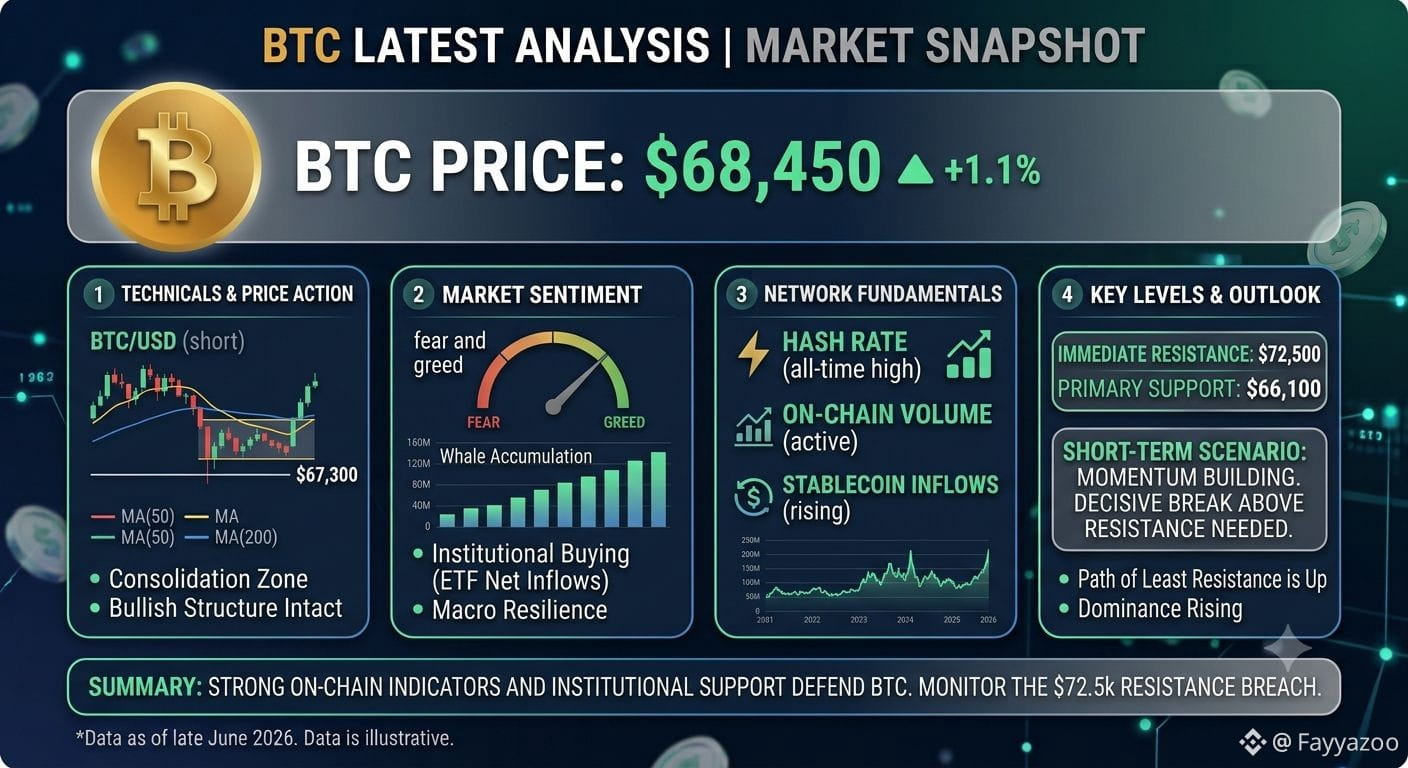
Bitcoin ($BTC ) Analysis: Consolidation Zone
Data as of late June 2026. Data is illustrative.
Bitcoin is showing strong structural resilience, holding above the vital $67,300 support level. This confirms significant buying pressure and robust institutional accumulation. While immediate upside momentum has paused, technical indicators suggest a consolidating bull market.
Key support is solidified at $66,100, while a decisive break above $72,500 resistance is required to confirm the next leg of the primary rally. This consolidation is healthy, allowing moving averages to reset, and the path of least resistance remains distinctly upward.
{spot}(BTCUSDT)
#KoreaActivatesSidecarAsKOSPI200FuturesFall5% #KoreaActivatesSidecarAsKOSPI200FuturesFall5% #AppleRaisesPricesAcrossProductLines #USReleases172MBarrelsFromSPR #CFTCSeeksCommentOnEventContractReportingRules
Bitcoin ($BTC ) Analysis: Consolidation Zone
Data as of late June 2026. Data is illustrative.
Bitcoin is showing strong structural resilience, holding above the vital $67,300 support level. This confirms significant buying pressure and robust institutional accumulation. While immediate upside momentum has paused, technical indicators suggest a consolidating bull market.
Key support is solidified at $66,100, while a decisive break above $72,500 resistance is required to confirm the next leg of the primary rally. This consolidation is healthy, allowing moving averages to reset, and the path of least resistance remains distinctly upward.
#KoreaActivatesSidecarAsKOSPI200FuturesFall5% #KoreaActivatesSidecarAsKOSPI200FuturesFall5% #AppleRaisesPricesAcrossProductLines #USReleases172MBarrelsFromSPR #CFTCSeeksCommentOnEventContractReportingRules
Data as of late June 2026. Data is illustrative.
Bitcoin is showing strong structural resilience, holding above the vital $67,300 support level. This confirms significant buying pressure and robust institutional accumulation. While immediate upside momentum has paused, technical indicators suggest a consolidating bull market.
Key support is solidified at $66,100, while a decisive break above $72,500 resistance is required to confirm the next leg of the primary rally. This consolidation is healthy, allowing moving averages to reset, and the path of least resistance remains distinctly upward.
#KoreaActivatesSidecarAsKOSPI200FuturesFall5% #KoreaActivatesSidecarAsKOSPI200FuturesFall5% #AppleRaisesPricesAcrossProductLines #USReleases172MBarrelsFromSPR #CFTCSeeksCommentOnEventContractReportingRules
69
·
--
Bullish
$BAS
{future}(BASUSDT)
Trede now 👆👆👆👆👆👆👆👆
- LONG
Trade Plan:
Entry: 0.047510 – 0.048404
SL: 0.036184
TP1: 0.056787
TP2: 0.062674
TP3: 0.071504
#KoreaActivatesSidecarAsKOSPI200FuturesFall5% #AppleRaisesPricesAcrossProductLines #SOLSlides20%InAMonth #SolmateSharesDropOver98% #CFTCSeeksCommentOnEventContractReportingRules $POL
{spot}(POLUSDT)
$HEI
$BAS
Trede now 👆👆👆👆👆👆👆👆
- LONG
Trade Plan:
Entry: 0.047510 – 0.048404
SL: 0.036184
TP1: 0.056787
TP2: 0.062674
TP3: 0.071504
#KoreaActivatesSidecarAsKOSPI200FuturesFall5% #AppleRaisesPricesAcrossProductLines #SOLSlides20%InAMonth #SolmateSharesDropOver98% #CFTCSeeksCommentOnEventContractReportingRules $POL
$HEI
Trede now 👆👆👆👆👆👆👆👆
- LONG
Trade Plan:
Entry: 0.047510 – 0.048404
SL: 0.036184
TP1: 0.056787
TP2: 0.062674
TP3: 0.071504
#KoreaActivatesSidecarAsKOSPI200FuturesFall5% #AppleRaisesPricesAcrossProductLines #SOLSlides20%InAMonth #SolmateSharesDropOver98% #CFTCSeeksCommentOnEventContractReportingRules $POL
$HEI
18

·
--
Bullish
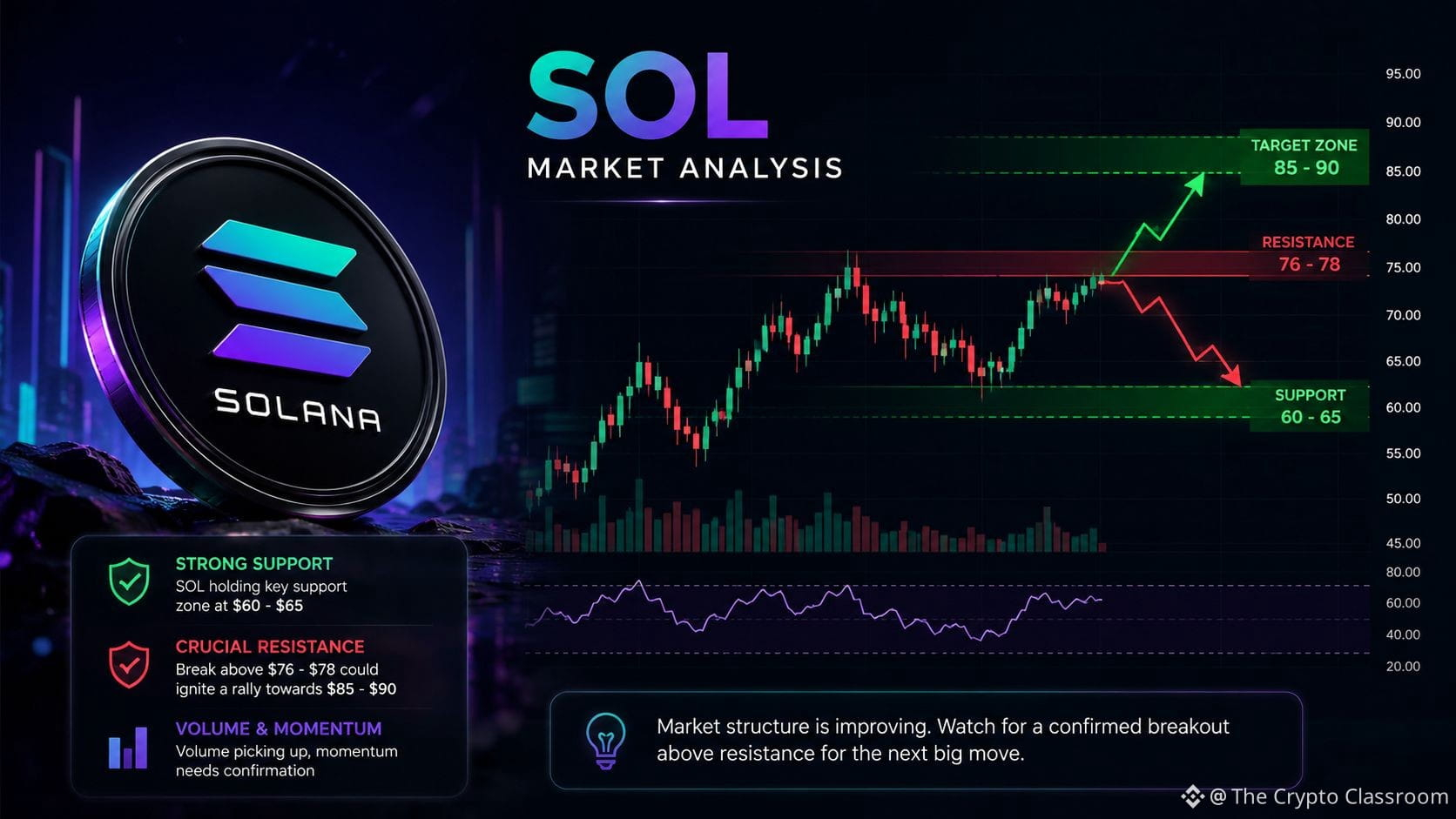
🚀 Solana ($SOL ) Market Analysis
$SOL is showing signs of stabilization after defending the $60-$65 support zone. Buyers have stepped in, but the price still faces strong resistance around $76-$78. A successful breakout above this area could open the door toward $85-$90, while failure may lead to another retest of lower support.
📊 Key Levels 🟢 Support: $60 - $65 🔴 Resistance: $76 - $78 🎯 Bullish Target: $85 - $90
$SOL
Market sentiment remains cautiously bullish, but volume confirmation is still needed before a sustained uptrend can be confirmed. Risk management remains essential as volatility is expected to stay elevated.
⚠️ DYOR (Do Your Own Research). This is not financial advice.
{future}(SOLUSDT)
#KoreaActivatesSidecarAsKOSPI200FuturesFall5% #SOLSlides20%InAMonth #USReleases172MBarrelsFromSPR #CFTCSeeksCommentOnEventContractReportingRules #OpenAIWeighsDelayingIPOTo2027
🚀 Solana ($SOL ) Market Analysis
$SOL is showing signs of stabilization after defending the $60-$65 support zone. Buyers have stepped in, but the price still faces strong resistance around $76-$78. A successful breakout above this area could open the door toward $85-$90, while failure may lead to another retest of lower support.
📊 Key Levels 🟢 Support: $60 - $65 🔴 Resistance: $76 - $78 🎯 Bullish Target: $85 - $90
$SOL
Market sentiment remains cautiously bullish, but volume confirmation is still needed before a sustained uptrend can be confirmed. Risk management remains essential as volatility is expected to stay elevated.
⚠️ DYOR (Do Your Own Research). This is not financial advice.
#KoreaActivatesSidecarAsKOSPI200FuturesFall5% #SOLSlides20%InAMonth #USReleases172MBarrelsFromSPR #CFTCSeeksCommentOnEventContractReportingRules #OpenAIWeighsDelayingIPOTo2027
$SOL is showing signs of stabilization after defending the $60-$65 support zone. Buyers have stepped in, but the price still faces strong resistance around $76-$78. A successful breakout above this area could open the door toward $85-$90, while failure may lead to another retest of lower support.
📊 Key Levels 🟢 Support: $60 - $65 🔴 Resistance: $76 - $78 🎯 Bullish Target: $85 - $90
$SOL
Market sentiment remains cautiously bullish, but volume confirmation is still needed before a sustained uptrend can be confirmed. Risk management remains essential as volatility is expected to stay elevated.
⚠️ DYOR (Do Your Own Research). This is not financial advice.
#KoreaActivatesSidecarAsKOSPI200FuturesFall5% #SOLSlides20%InAMonth #USReleases172MBarrelsFromSPR #CFTCSeeksCommentOnEventContractReportingRules #OpenAIWeighsDelayingIPOTo2027
121

·
--
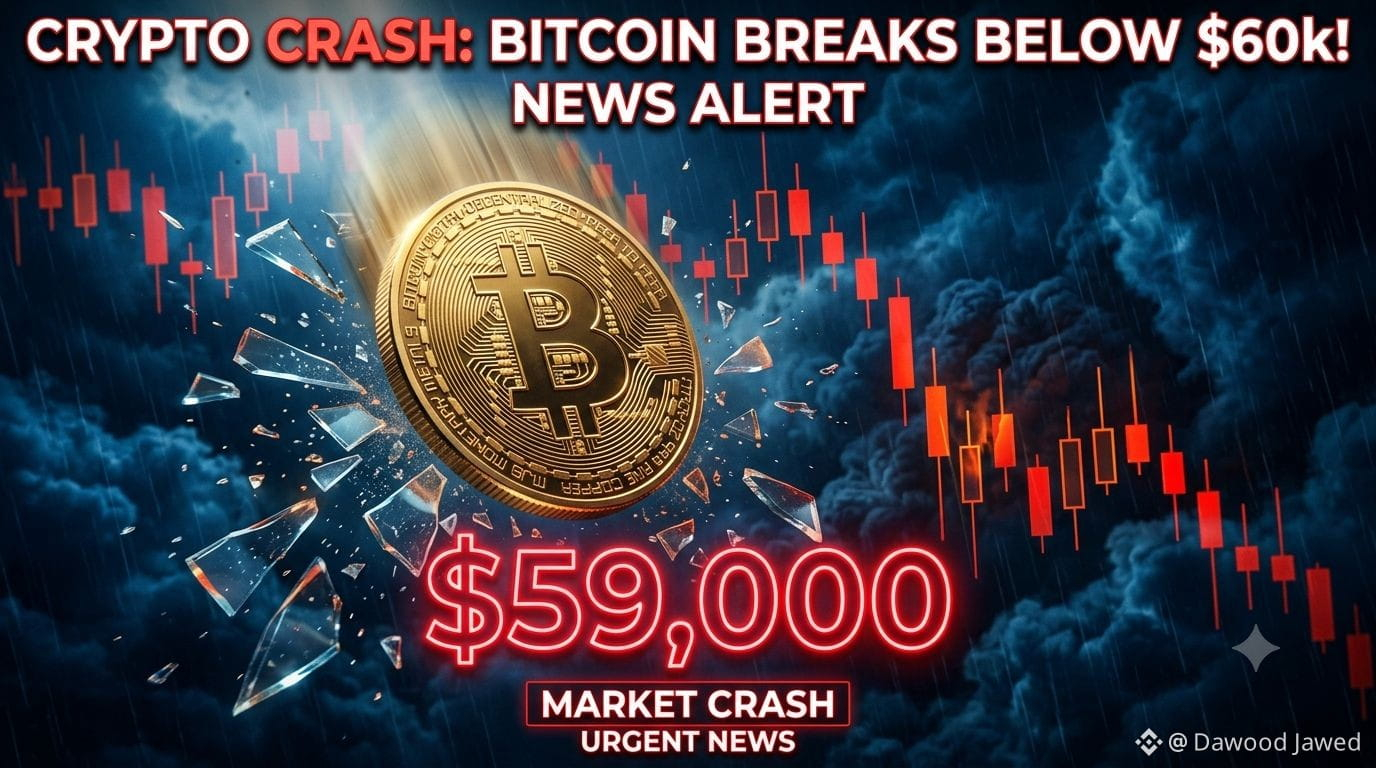
$BTC BIGGEST UPDATE — June 26, 2026
📊 CURRENT PRICE SNAPSHOT
BTC Price~$59,000–$61,00024h
Change🔴 -2.26% to -4.1%
All Time High$126,198 (Oct 6, 2025)
Key Support$59,000
1. 💥 BTC HITS LOWEST LEVEL OF 2026
Bitcoin fell to its lowest level of 2026 as several factors combined to trigger heavy selling across the crypto market. The drop below $60,000 shocked many investors who expected a recovery#USReleases172MBarrelsFromSPR #SOLSlides20%InAMonth #USReleases172MBarrelsFromSPR #USReleases172MBarrelsFromSPR #CFTCSeeksCommentOnEventContractReportingRules
{spot}(BTCUSDT)
$BTC BIGGEST UPDATE — June 26, 2026
📊 CURRENT PRICE SNAPSHOT
BTC Price~$59,000–$61,00024h
Change🔴 -2.26% to -4.1%
All Time High$126,198 (Oct 6, 2025)
Key Support$59,000
1. 💥 BTC HITS LOWEST LEVEL OF 2026
Bitcoin fell to its lowest level of 2026 as several factors combined to trigger heavy selling across the crypto market. The drop below $60,000 shocked many investors who expected a recovery#USReleases172MBarrelsFromSPR #SOLSlides20%InAMonth #USReleases172MBarrelsFromSPR #USReleases172MBarrelsFromSPR #CFTCSeeksCommentOnEventContractReportingRules
📊 CURRENT PRICE SNAPSHOT
BTC Price~$59,000–$61,00024h
Change🔴 -2.26% to -4.1%
All Time High$126,198 (Oct 6, 2025)
Key Support$59,000
1. 💥 BTC HITS LOWEST LEVEL OF 2026
Bitcoin fell to its lowest level of 2026 as several factors combined to trigger heavy selling across the crypto market. The drop below $60,000 shocked many investors who expected a recovery#USReleases172MBarrelsFromSPR #SOLSlides20%InAMonth #USReleases172MBarrelsFromSPR #USReleases172MBarrelsFromSPR #CFTCSeeksCommentOnEventContractReportingRules
83

·
--
Bearish
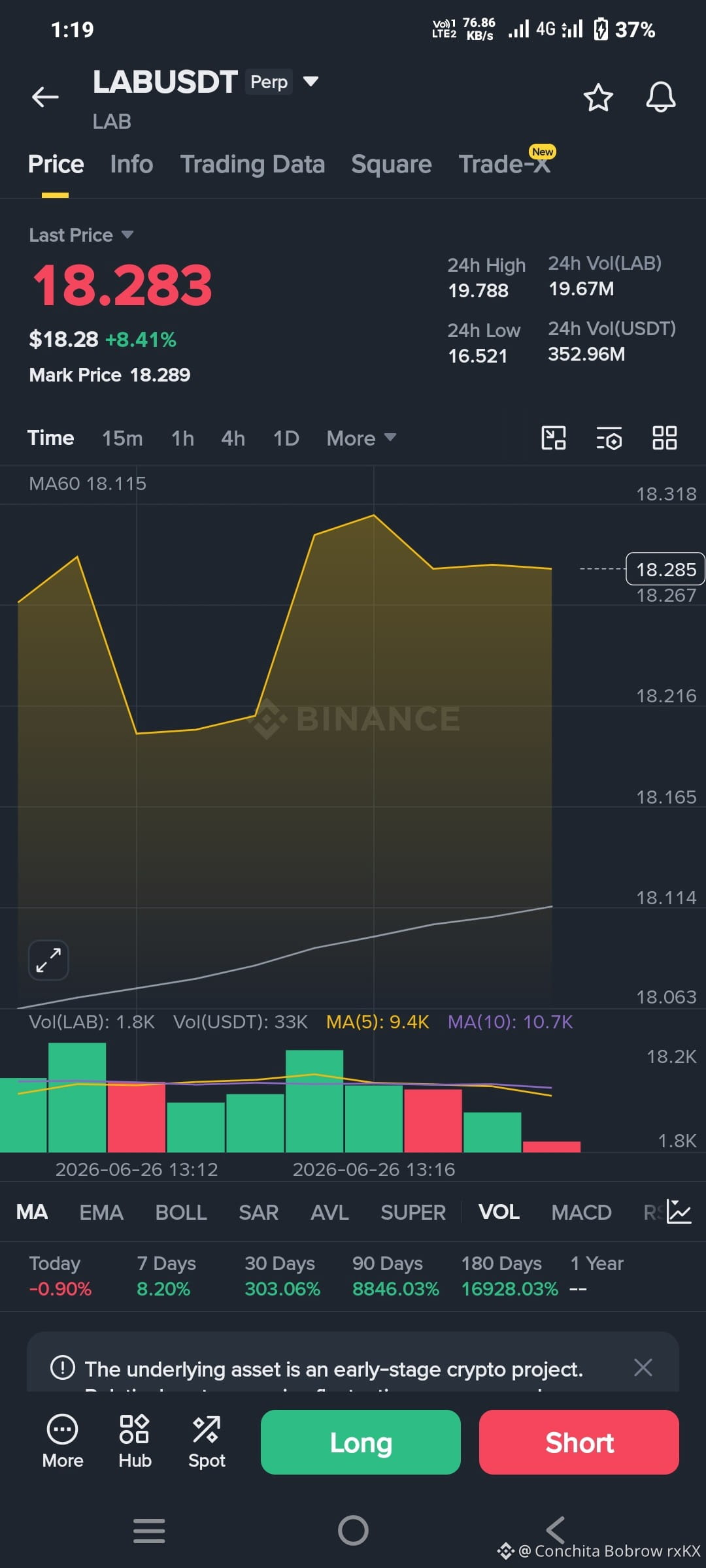
$LAB People at the trading square are shouting to rush in and go long?! This coin is definitely going to drop:
The unlock time can be delayed or brought forward—it's all up to the 🐶’s whim. The rules themselves are just a prop. When everyone is rushing to go long, that’s usually the time to think in the opposite direction. Last time, after delayed messages were treated as good news to pump the price up, they turned around and created a trap. This time’s script won’t be any different.
Short at market price, quickly!!⬇️⬇️⬇️
#SOLSlides20%InAMonth #KoreaActivatesSidecarAsKOSPI200FuturesFall5% #SolmateSharesDropOver98% #USReleases172MBarrelsFromSPR #CFTCSeeksCommentOnEventContractReportingRules
$LAB
{future}(LABUSDT)
$LAB People at the trading square are shouting to rush in and go long?! This coin is definitely going to drop:
The unlock time can be delayed or brought forward—it's all up to the 🐶’s whim. The rules themselves are just a prop. When everyone is rushing to go long, that’s usually the time to think in the opposite direction. Last time, after delayed messages were treated as good news to pump the price up, they turned around and created a trap. This time’s script won’t be any different.
Short at market price, quickly!!⬇️⬇️⬇️
#SOLSlides20%InAMonth #KoreaActivatesSidecarAsKOSPI200FuturesFall5% #SolmateSharesDropOver98% #USReleases172MBarrelsFromSPR #CFTCSeeksCommentOnEventContractReportingRules
$LAB
The unlock time can be delayed or brought forward—it's all up to the 🐶’s whim. The rules themselves are just a prop. When everyone is rushing to go long, that’s usually the time to think in the opposite direction. Last time, after delayed messages were treated as good news to pump the price up, they turned around and created a trap. This time’s script won’t be any different.
Short at market price, quickly!!⬇️⬇️⬇️
#SOLSlides20%InAMonth #KoreaActivatesSidecarAsKOSPI200FuturesFall5% #SolmateSharesDropOver98% #USReleases172MBarrelsFromSPR #CFTCSeeksCommentOnEventContractReportingRules
$LAB
1
182

$BITCOIN
{alpha}(10x72e4f9f808c49a2a61de9c5896298920dc4eeea9)
$BTC
{future}(BTCUSDT)
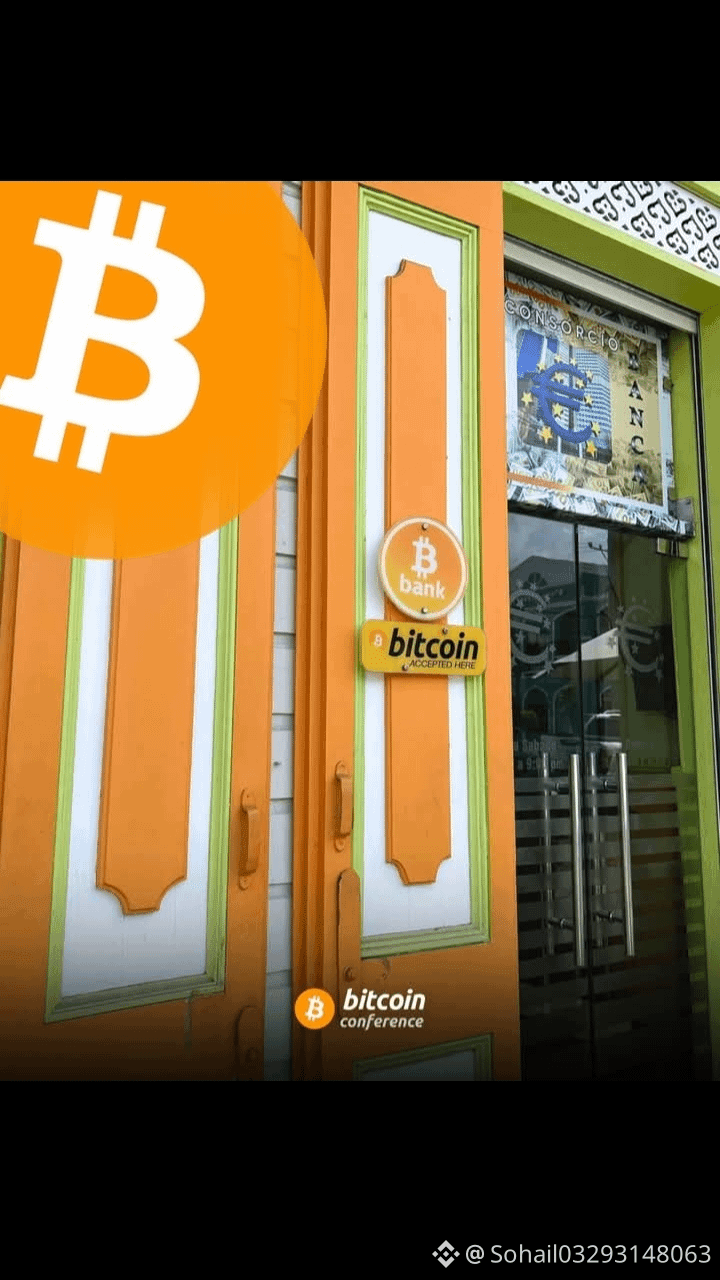
“#Bitcoin accepted here” signs are popping up in the Caribbean‼️👀
🇩🇴 A Reddit user was in the Dominican Republic and "saw quite a few places that accepted BTC as a method of payment." 💯
#DowClimbsTowardRecord
#OpenAIWeighsDelayingIPOTo2027
#CFTCSeeksCommentOnEventContractReportingRules
#SOLSlides20%InAMonth
#KoreaActivatesSidecarAsKOSPI200FuturesFall5%
$BITCOIN
$BTC
“#Bitcoin accepted here” signs are popping up in the Caribbean‼️👀
🇩🇴 A Reddit user was in the Dominican Republic and "saw quite a few places that accepted BTC as a method of payment." 💯
#DowClimbsTowardRecord
#OpenAIWeighsDelayingIPOTo2027
#CFTCSeeksCommentOnEventContractReportingRules
#SOLSlides20%InAMonth
#KoreaActivatesSidecarAsKOSPI200FuturesFall5%
$BTC
“#Bitcoin accepted here” signs are popping up in the Caribbean‼️👀
🇩🇴 A Reddit user was in the Dominican Republic and "saw quite a few places that accepted BTC as a method of payment." 💯
#DowClimbsTowardRecord
#OpenAIWeighsDelayingIPOTo2027
#CFTCSeeksCommentOnEventContractReportingRules
#SOLSlides20%InAMonth
#KoreaActivatesSidecarAsKOSPI200FuturesFall5%
36

·
--
Bullish
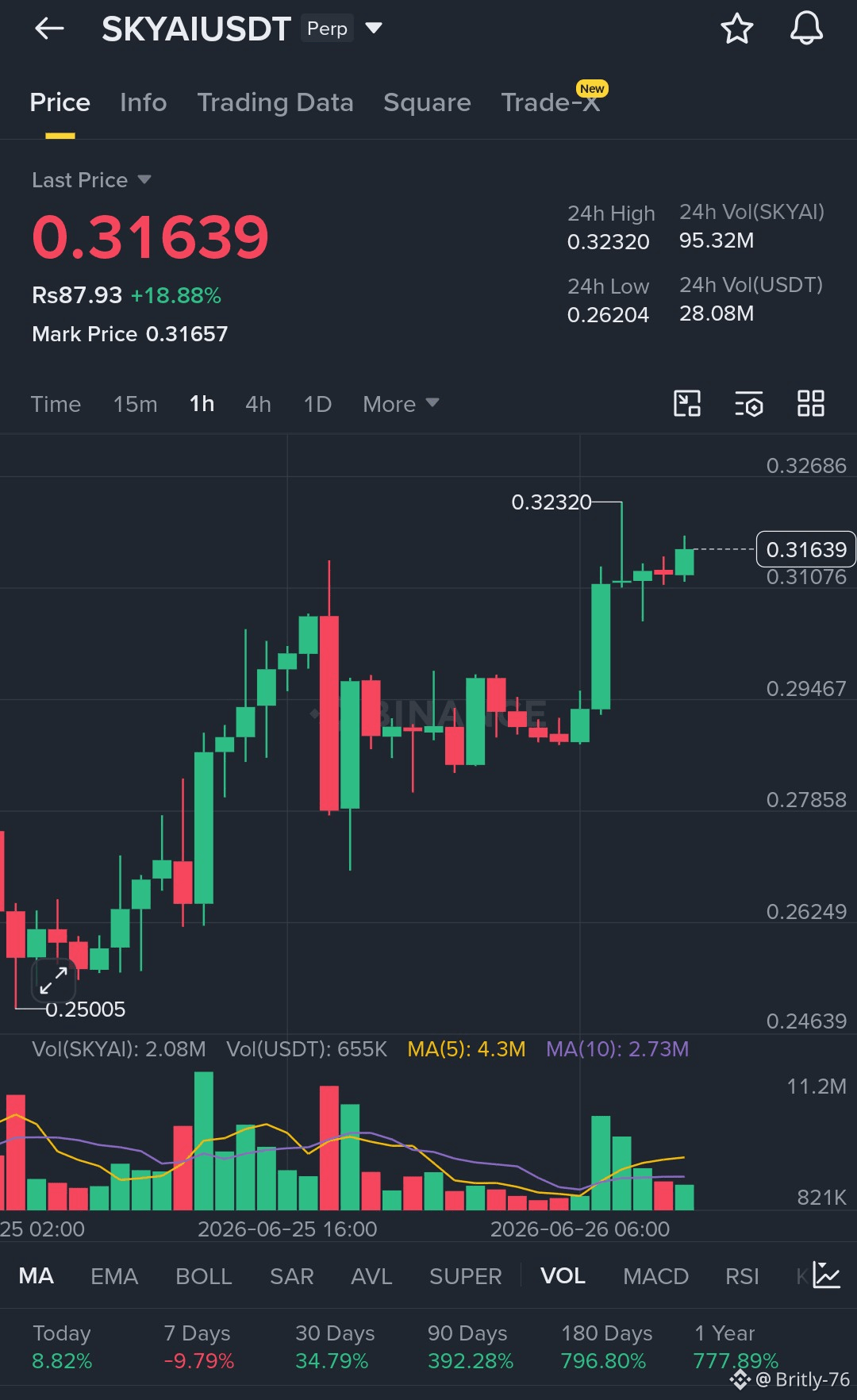
$SKYAI
LONG SETUP 📈
Momentum is accelerating after a clean breakout above key resistance, with buyers defending higher lows and volume confirming strength. Holding above the breakout zone keeps the trend firmly bullish, positioning price for another expansion leg.
EP: 0.3130 – 0.3170
TP1: 0.3250
TP2: 0.3350
TP3: 0.3480
SL: 0.3040
Stay disciplined, protect capital, and let the trend do the work.
$SKYAI
#KoreaActivatesSidecarAsKOSPI200FuturesFall5%
#CFTCSeeksCommentOnEventContractReportingRules
{future}(SKYAIUSDT)
$SKYAI
LONG SETUP 📈
Momentum is accelerating after a clean breakout above key resistance, with buyers defending higher lows and volume confirming strength. Holding above the breakout zone keeps the trend firmly bullish, positioning price for another expansion leg.
EP: 0.3130 – 0.3170
TP1: 0.3250
TP2: 0.3350
TP3: 0.3480
SL: 0.3040
Stay disciplined, protect capital, and let the trend do the work.
$SKYAI
#KoreaActivatesSidecarAsKOSPI200FuturesFall5%
#CFTCSeeksCommentOnEventContractReportingRules
LONG SETUP 📈
Momentum is accelerating after a clean breakout above key resistance, with buyers defending higher lows and volume confirming strength. Holding above the breakout zone keeps the trend firmly bullish, positioning price for another expansion leg.
EP: 0.3130 – 0.3170
TP1: 0.3250
TP2: 0.3350
TP3: 0.3480
SL: 0.3040
Stay disciplined, protect capital, and let the trend do the work.
$SKYAI
#KoreaActivatesSidecarAsKOSPI200FuturesFall5%
#CFTCSeeksCommentOnEventContractReportingRules
82

·
--
Bullish
#CFTCSeeksCommentOnEventContractReportingRules $BNB
{spot}(BNBUSDT)
#CFTCSeeksCommentOnEventContractReportingRules 📊🇺🇸
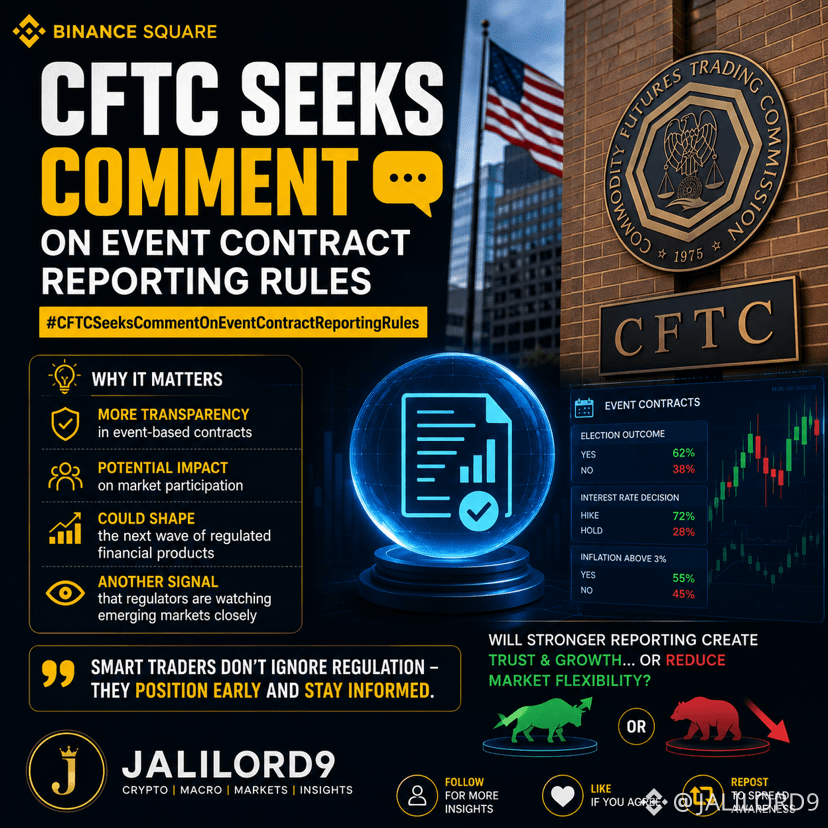
Regulation is back in focus — and markets are paying attention. 👀
The CFTC opening discussions around event contract reporting rules could become another key moment for how prediction markets and financial innovation evolve.
💡 Why this matters:
✅ More transparency in event-based contracts
✅ Potential impact on market participation
✅ Could shape the next wave of regulated financial products
✅ Another signal that regulators are watching emerging markets closely
Smart traders don’t ignore regulation — they position early and stay informed. 🔥
Will stronger reporting create trust and growth… or reduce market flexibility? 📈📉
👇 Drop your take below:
Bullish for market maturity or bearish for innovation?
❤️ Follow JALILORD9 for more crypto, macro & market insights.
🔁 Repost if you stay ahead of narratives.
#Crypto #BinanceSquare #CFTC #Trading #MarketNews #Investing #Blockchain #Regulation #JALILORD9
#CFTCSeeksCommentOnEventContractReportingRules $BNB
#CFTCSeeksCommentOnEventContractReportingRules 📊🇺🇸
Regulation is back in focus — and markets are paying attention. 👀
The CFTC opening discussions around event contract reporting rules could become another key moment for how prediction markets and financial innovation evolve.
💡 Why this matters:
✅ More transparency in event-based contracts
✅ Potential impact on market participation
✅ Could shape the next wave of regulated financial products
✅ Another signal that regulators are watching emerging markets closely
Smart traders don’t ignore regulation — they position early and stay informed. 🔥
Will stronger reporting create trust and growth… or reduce market flexibility? 📈📉
👇 Drop your take below:
Bullish for market maturity or bearish for innovation?
❤️ Follow JALILORD9 for more crypto, macro & market insights.
🔁 Repost if you stay ahead of narratives.
#Crypto #BinanceSquare #CFTC #Trading #MarketNews #Investing #Blockchain #Regulation #JALILORD9
#CFTCSeeksCommentOnEventContractReportingRules 📊🇺🇸
Regulation is back in focus — and markets are paying attention. 👀
The CFTC opening discussions around event contract reporting rules could become another key moment for how prediction markets and financial innovation evolve.
💡 Why this matters:
✅ More transparency in event-based contracts
✅ Potential impact on market participation
✅ Could shape the next wave of regulated financial products
✅ Another signal that regulators are watching emerging markets closely
Smart traders don’t ignore regulation — they position early and stay informed. 🔥
Will stronger reporting create trust and growth… or reduce market flexibility? 📈📉
👇 Drop your take below:
Bullish for market maturity or bearish for innovation?
❤️ Follow JALILORD9 for more crypto, macro & market insights.
🔁 Repost if you stay ahead of narratives.
#Crypto #BinanceSquare #CFTC #Trading #MarketNews #Investing #Blockchain #Regulation #JALILORD9
62

·
--
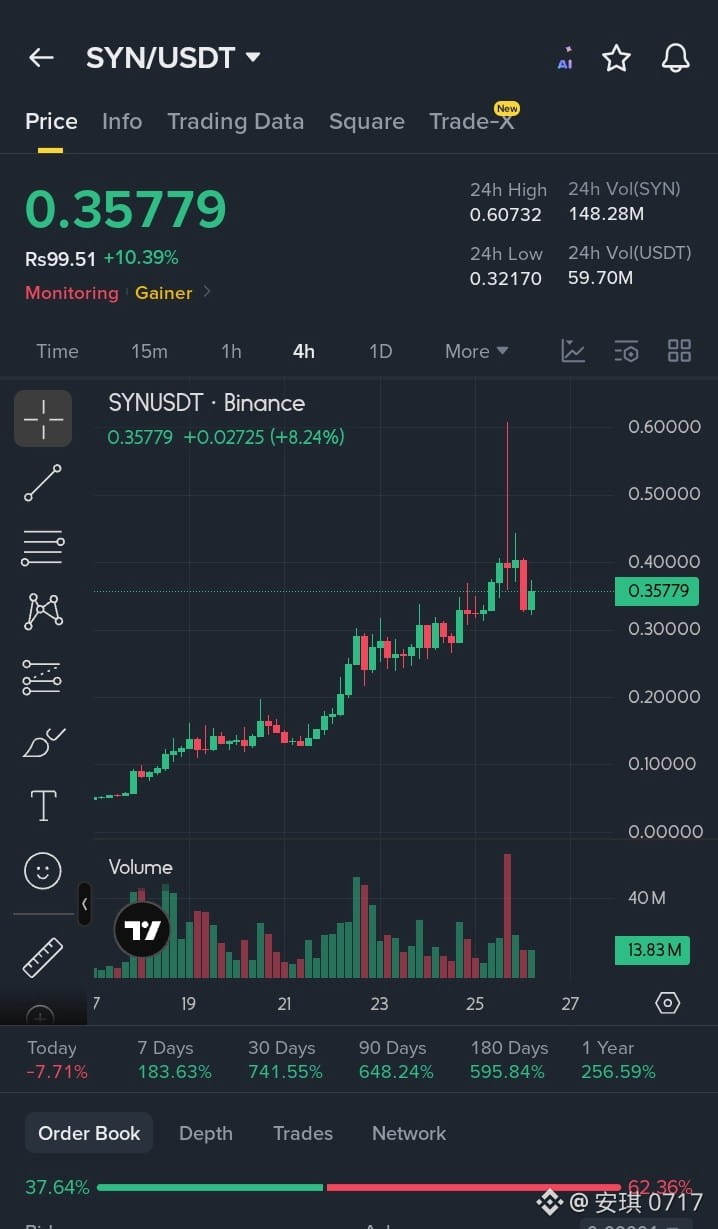
Wait what 😳 $SYN Massive pump – short opportunity from resistance
🚀 Entry: 0.3500 – 0.3578
🎯 Target: 0.3100
✅ TP (i): 0.3300
✅ TP (ii): 0.3200
✅ TP (iii): 0.3100
🛑 SL: 0.3800
Direction: Short
#SOLSlides20%InAMonth #KoreaActivatesSidecarAsKOSPI200FuturesFall5% #CFTCSeeksCommentOnEventContractReportingRules #OpenAIWeighsDelayingIPOTo2027 #DowClimbsTowardRecord $G $HEI
Wait what 😳 $SYN Massive pump – short opportunity from resistance
🚀 Entry: 0.3500 – 0.3578
🎯 Target: 0.3100
✅ TP (i): 0.3300
✅ TP (ii): 0.3200
✅ TP (iii): 0.3100
🛑 SL: 0.3800
Direction: Short
#SOLSlides20%InAMonth #KoreaActivatesSidecarAsKOSPI200FuturesFall5% #CFTCSeeksCommentOnEventContractReportingRules #OpenAIWeighsDelayingIPOTo2027 #DowClimbsTowardRecord $G $HEI
🚀 Entry: 0.3500 – 0.3578
🎯 Target: 0.3100
✅ TP (i): 0.3300
✅ TP (ii): 0.3200
✅ TP (iii): 0.3100
🛑 SL: 0.3800
Direction: Short
#SOLSlides20%InAMonth #KoreaActivatesSidecarAsKOSPI200FuturesFall5% #CFTCSeeksCommentOnEventContractReportingRules #OpenAIWeighsDelayingIPOTo2027 #DowClimbsTowardRecord $G $HEI
25

Binance update today BTC ETH BNB and 10 most popular coinsHere’s your market update for Friday, June 26, 2026:
Majors
BTC: $60,298.52 — down about 2.3% in the last 24h
24h range: $58,115.01 – $61,962.40
ETH: $1,571.53 — down about 4.9% in the last 24h
24h range: $1,512.00 – $1,659.89
BNB: $564.45 — down about 1.2% in the last 24h
24h range: $540.60 – $571.42
10 most popular coins on Binance Web3 search right now
KDRS — $0.00093994, +788.96%
PVE — $0.00026273, -17.27%
AIAIAI — $0.00010142, +4335.11%
SLX — $0.3677, +3.02%
NES — $0.2061, -13.98%
ZKP — $0.04736, -10.00%
M — $0.8846, +27.15%
PVE — $0.00003132, -43.15%
ARX — $0.2824, +5.87%
BAS — $0.04939, +10.82%
A quick note: the “most popular” list here reflects top-searched/trending Web3 tokens, so it includes newer and much riskier tokens than majors like BTC/ETH/BNB.
#Crypto #Bitcoin #BTC #Ethereum #ETH #BNB #Binance #BinanceWeb3 #CryptoNews #CryptoMarket #Altcoins #Web3 #Blockchain #Trading #CryptoTrading #DigitalAssets #DeFi #Investing #MarketUpdate #DYOR
$BTC
{spot}(BTCUSDT)
$ETH
{spot}(ETHUSDT)
$BNB
{spot}(BNBUSDT)
#Crypto #Bitcoin #BTC #Ethereum #ETH #BNB #Binance #BinanceWeb3 #CryptoNews #CryptoMarket #Altcoins #Web3 #Blockchain #Trading #CryptoTrading #DigitalAssets #DeFi #Investing #MarketUpdate #dyor #MicronRevenueJumps346%To$41.5B #USDTMarketCapHits$186BOvertakingETH #CFTCSeeksCommentOnEventContractReportingRules #KoreaActivatesSidecarAsKOSPI200FuturesFall5%
Binance update today BTC ETH BNB and 10 most popular coins
Here’s your market update for Friday, June 26, 2026:
Majors
BTC: $60,298.52 — down about 2.3% in the last 24h
24h range: $58,115.01 – $61,962.40
ETH: $1,571.53 — down about 4.9% in the last 24h
24h range: $1,512.00 – $1,659.89
BNB: $564.45 — down about 1.2% in the last 24h
24h range: $540.60 – $571.42
10 most popular coins on Binance Web3 search right now
KDRS — $0.00093994, +788.96%
PVE — $0.00026273, -17.27%
AIAIAI — $0.00010142, +4335.11%
SLX — $0.3677, +3.02%
NES — $0.2061, -13.98%
ZKP — $0.04736, -10.00%
M — $0.8846, +27.15%
PVE — $0.00003132, -43.15%
ARX — $0.2824, +5.87%
BAS — $0.04939, +10.82%
A quick note: the “most popular” list here reflects top-searched/trending Web3 tokens, so it includes newer and much riskier tokens than majors like BTC/ETH/BNB.
#Crypto #Bitcoin #BTC #Ethereum #ETH #BNB #Binance #BinanceWeb3 #CryptoNews #CryptoMarket #Altcoins #Web3 #Blockchain #Trading #CryptoTrading #DigitalAssets #DeFi #Investing #MarketUpdate #DYOR
$BTC
$ETH
$BNB
#Crypto #Bitcoin #BTC #Ethereum #ETH #BNB #Binance #BinanceWeb3 #CryptoNews #CryptoMarket #Altcoins #Web3 #Blockchain #Trading #CryptoTrading #DigitalAssets #DeFi #Investing #MarketUpdate #dyor #MicronRevenueJumps346%To$41.5B #USDTMarketCapHits$186BOvertakingETH #CFTCSeeksCommentOnEventContractReportingRules #KoreaActivatesSidecarAsKOSPI200FuturesFall5%
Majors
BTC: $60,298.52 — down about 2.3% in the last 24h
24h range: $58,115.01 – $61,962.40
ETH: $1,571.53 — down about 4.9% in the last 24h
24h range: $1,512.00 – $1,659.89
BNB: $564.45 — down about 1.2% in the last 24h
24h range: $540.60 – $571.42
10 most popular coins on Binance Web3 search right now
KDRS — $0.00093994, +788.96%
PVE — $0.00026273, -17.27%
AIAIAI — $0.00010142, +4335.11%
SLX — $0.3677, +3.02%
NES — $0.2061, -13.98%
ZKP — $0.04736, -10.00%
M — $0.8846, +27.15%
PVE — $0.00003132, -43.15%
ARX — $0.2824, +5.87%
BAS — $0.04939, +10.82%
A quick note: the “most popular” list here reflects top-searched/trending Web3 tokens, so it includes newer and much riskier tokens than majors like BTC/ETH/BNB.
#Crypto #Bitcoin #BTC #Ethereum #ETH #BNB #Binance #BinanceWeb3 #CryptoNews #CryptoMarket #Altcoins #Web3 #Blockchain #Trading #CryptoTrading #DigitalAssets #DeFi #Investing #MarketUpdate #DYOR
$BTC
$ETH
$BNB
#Crypto #Bitcoin #BTC #Ethereum #ETH #BNB #Binance #BinanceWeb3 #CryptoNews #CryptoMarket #Altcoins #Web3 #Blockchain #Trading #CryptoTrading #DigitalAssets #DeFi #Investing #MarketUpdate #dyor #MicronRevenueJumps346%To$41.5B #USDTMarketCapHits$186BOvertakingETH #CFTCSeeksCommentOnEventContractReportingRules #KoreaActivatesSidecarAsKOSPI200FuturesFall5%
66

·
--
$INJ Injective (INJ) is showing incredible momentum today, leading the charts with a strong upward trend.
Currently up by over 8.50%, it's proving to be one of the top performers in the market.
This surge reflects strong bullish sentiment and growing investor interest.
Keep a close eye on INJ as it continues to showcase its potential.#SOLSlides20%InAMonth #USReleases172MBarrelsFromSPR #CFTCSeeksCommentOnEventContractReportingRules
$INJ Injective (INJ) is showing incredible momentum today, leading the charts with a strong upward trend.
Currently up by over 8.50%, it's proving to be one of the top performers in the market.
This surge reflects strong bullish sentiment and growing investor interest.
Keep a close eye on INJ as it continues to showcase its potential.#SOLSlides20%InAMonth #USReleases172MBarrelsFromSPR #CFTCSeeksCommentOnEventContractReportingRules
Currently up by over 8.50%, it's proving to be one of the top performers in the market.
This surge reflects strong bullish sentiment and growing investor interest.
Keep a close eye on INJ as it continues to showcase its potential.#SOLSlides20%InAMonth #USReleases172MBarrelsFromSPR #CFTCSeeksCommentOnEventContractReportingRules

96
Log in to explore more content
Join global crypto users on Binance Square
⚡️ Get latest and useful information about crypto.
💬 Trusted by the world’s largest crypto exchange.
👍 Discover real insights from verified creators.
Email / Phone number
Trending Topics
1
#BitwiseFilesFinalNEARSpotETFProspectus
81,653 views
1,362 Discussing
2
#BitgetHackerMoves$83MStolenXRP
31,670 views
159 Discussing
3
#SOLSpotETFWeeklyInflow$188M
20,771 views
130 Discussing
4
#DogecoinETFsPostBiggestWeekSinceLaunch
51,305 views
949 Discussing
5
#StrategyStriveAdd2305BitcoinThisWeek
138,798 views
2,133 Discussing
6
#TrumpRejectsIranHormuzReopening
120,857 views
1,608 Discussing
7
#TokenizedStockDEXVolumeHits$20.9B
171 views
7 Discussing
8
#CircleTetherFreezeBitgetHackerWallet
105,991 views
1,503 Discussing
9
#SECSaysTokenBuybacksNotAutoSecurities
70,802 views
875 Discussing
10
#ChinaUSAgreeOn$30BTariffCut
5,477 views
47 Discussing