
#babylon
babylon
702,960 views
2,586 Discussing
Hot
Latest


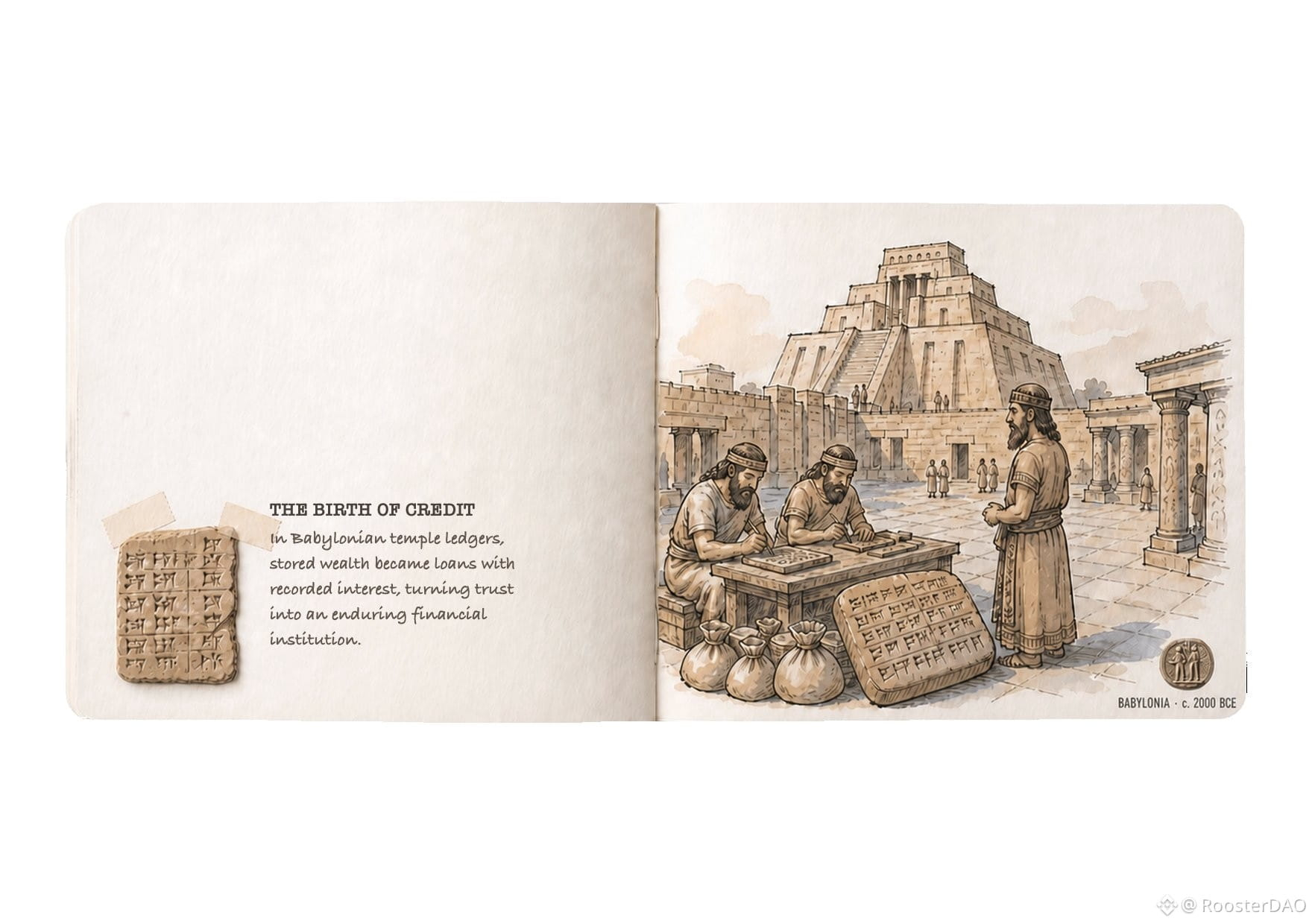
Before banks had marble halls, temples kept silver, grain, and promises.
Babylon’s clay ledgers turned stored wealth into recorded loans—and trust into an institution. The first chapter of finance was written in mud.
#FinancialHistory #Credit #Babylon #ROOFUND
Babylon’s clay ledgers turned stored wealth into recorded loans—and trust into an institution. The first chapter of finance was written in mud.
#FinancialHistory #Credit #Babylon #ROOFUND

Verified
Zero-knowledge proofs are becoming more relevant for Bitcoin, but there is a practical question that often gets overlooked:
How cheaply can Bitcoin verify those proofs?
That is where Babylon’s BABE becomes interesting.
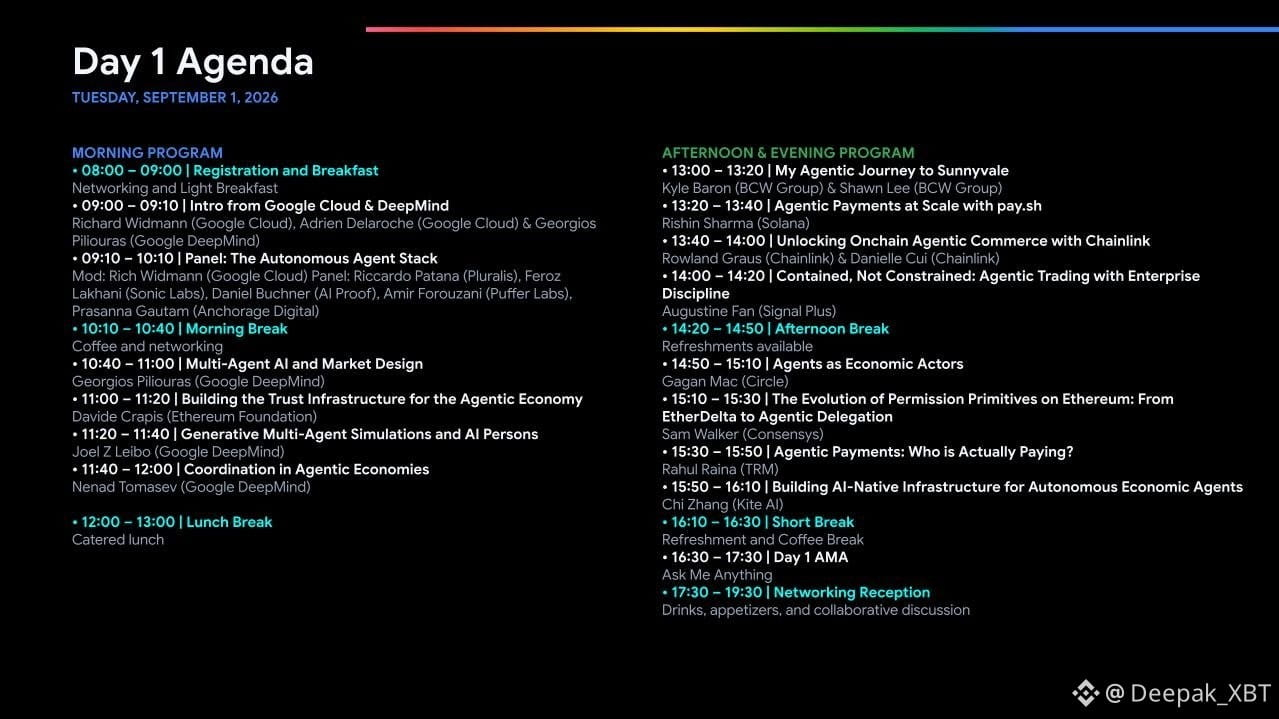
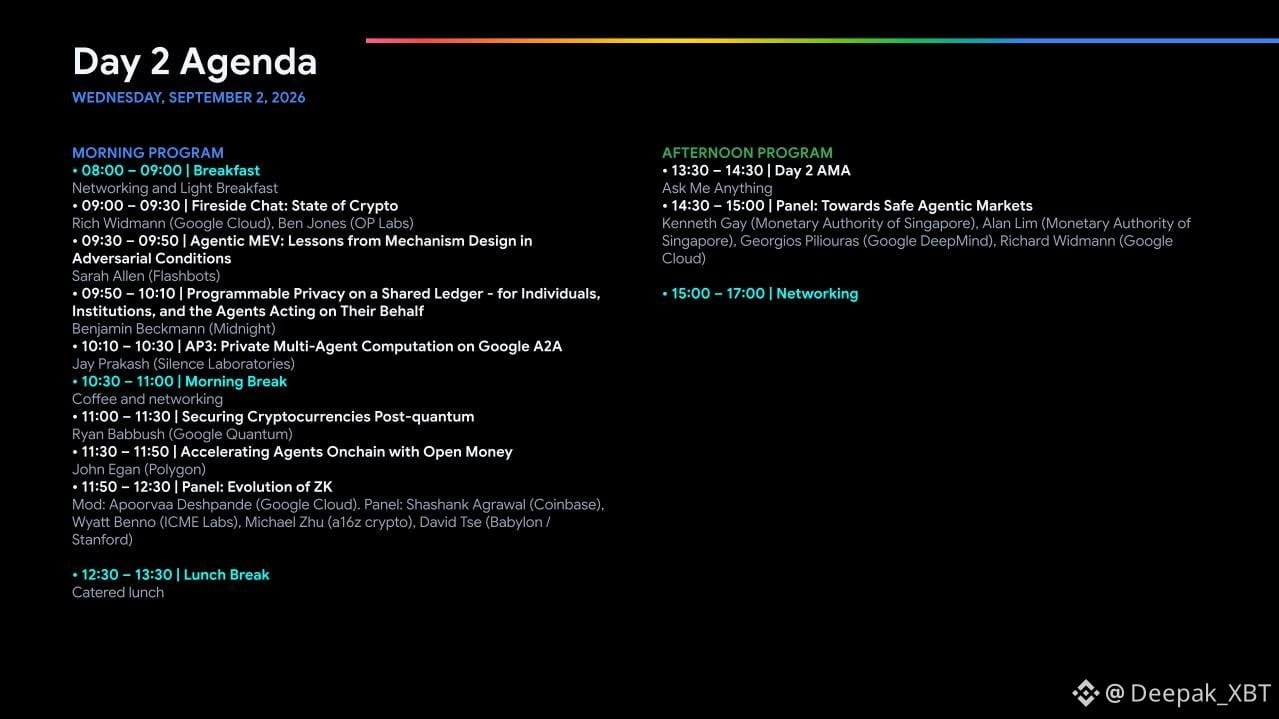
Today at the Google Web3 x AI Summit 2026, Babylon co-founder David Tse is joining a panel with Michael Zhu from a16z, Wyatt Benno from ICME Labs, and Shashank Agrawal from Coinbase to discuss the evolution of ZK proofs.
David is expected to explain how BABE can make ZK proof verification on Bitcoin 1,000x cheaper. The underlying research describes BABE as a protocol for verifying Groth16 proofs on Bitcoin while significantly reducing the associated costs.
What interests me here is not simply the 1,000x number.
If verification becomes cheap enough, ZK proofs could become much more practical for Bitcoin-based applications where Bitcoin itself needs to verify activity or state from another system.
That could matter for things like trustless Bitcoin vaults, where withdrawals can be tied to verification of a specific smart-contract state on Bitcoin.
For me, BABE is interesting because it addresses the less visible bottleneck: making cryptographic verification economically practical on Bitcoin.
Curious to hear David’s explanation today.
@BabylonLabs_io $BABY
#Babylon #bitcoin.” #zkProofs #Web3
How cheaply can Bitcoin verify those proofs?
That is where Babylon’s BABE becomes interesting.
Today at the Google Web3 x AI Summit 2026, Babylon co-founder David Tse is joining a panel with Michael Zhu from a16z, Wyatt Benno from ICME Labs, and Shashank Agrawal from Coinbase to discuss the evolution of ZK proofs.
David is expected to explain how BABE can make ZK proof verification on Bitcoin 1,000x cheaper. The underlying research describes BABE as a protocol for verifying Groth16 proofs on Bitcoin while significantly reducing the associated costs.
What interests me here is not simply the 1,000x number.
If verification becomes cheap enough, ZK proofs could become much more practical for Bitcoin-based applications where Bitcoin itself needs to verify activity or state from another system.
That could matter for things like trustless Bitcoin vaults, where withdrawals can be tied to verification of a specific smart-contract state on Bitcoin.
For me, BABE is interesting because it addresses the less visible bottleneck: making cryptographic verification economically practical on Bitcoin.
Curious to hear David’s explanation today.
@BabylonLabs_io $BABY
#Babylon #bitcoin.” #zkProofs #Web3


Verified
A protocol has spent months building the plumbing to let idle Bitcoin work as collateral without it ever leaving the Bitcoin network. Whether that plumbing gets real volume soon may come down to a single vote on one of DeFi's biggest lending markets.
Babylon's Trustless Bitcoin Vaults are pending a governance proposal on Aave V4 that would let native BTC deposited through Babylon function as non-custodial DeFi collateral — no wrapped tokens, no custodians. It's still awaiting approval. Outside of that, BABY has mostly been tracking the broader Bitcoin and macro rally rather than moving on its own news.
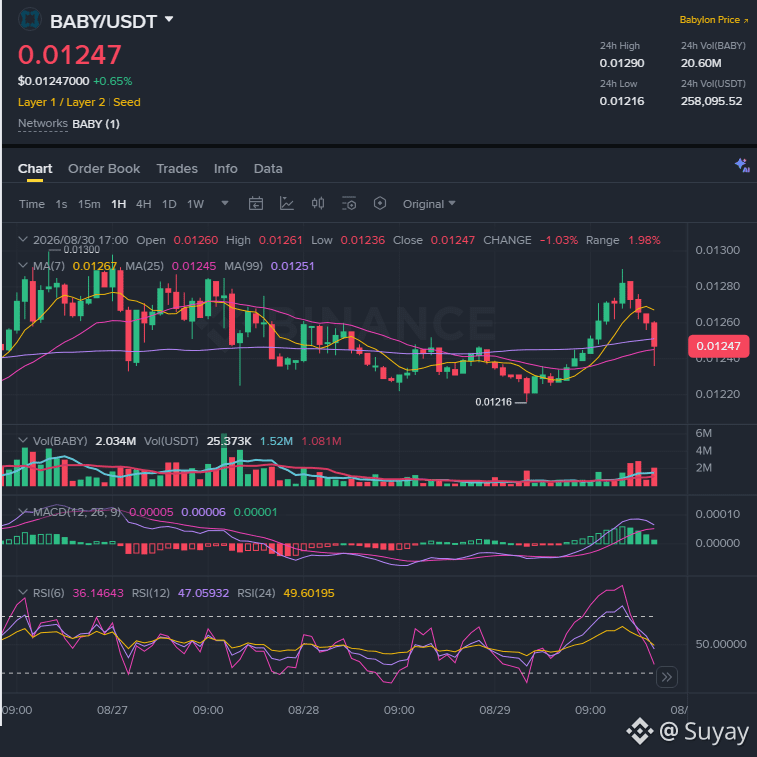
On the 1H chart, BABY spent days ranging between 0.0122 and 0.0130, climbed toward the top of that range, then reversed sharply in the last few hours, dropping through the MA7 (0.01267) down to its current 0.01247 — right on top of the MA25 (0.01245). RSI(6) has fallen to a short-term-oversold 36.14, while RSI(24) stays neutral at 49.60, and the MACD histogram is only barely positive after a stretch of negative readings.
Governance votes on major protocols move in weeks, not hours, so the Aave integration isn't a this-week catalyst even if it passes. On the 1H timeframe, RSI this oversold usually just marks the tail end of a quick pullback — what actually matters here is whether price holds the MA25 it's currently sitting on, or breaks below it into the lower part of the week's range.
Not financial advice — for informational purposes only.
$BABY #Babylon #bitcoin #Binance
Babylon's Trustless Bitcoin Vaults are pending a governance proposal on Aave V4 that would let native BTC deposited through Babylon function as non-custodial DeFi collateral — no wrapped tokens, no custodians. It's still awaiting approval. Outside of that, BABY has mostly been tracking the broader Bitcoin and macro rally rather than moving on its own news.
On the 1H chart, BABY spent days ranging between 0.0122 and 0.0130, climbed toward the top of that range, then reversed sharply in the last few hours, dropping through the MA7 (0.01267) down to its current 0.01247 — right on top of the MA25 (0.01245). RSI(6) has fallen to a short-term-oversold 36.14, while RSI(24) stays neutral at 49.60, and the MACD histogram is only barely positive after a stretch of negative readings.
Governance votes on major protocols move in weeks, not hours, so the Aave integration isn't a this-week catalyst even if it passes. On the 1H timeframe, RSI this oversold usually just marks the tail end of a quick pullback — what actually matters here is whether price holds the MA25 it's currently sitting on, or breaks below it into the lower part of the week's range.
Not financial advice — for informational purposes only.
$BABY #Babylon #bitcoin #Binance

#Babylon Babylon (BABY) is under pressure, with the token around $0.0099 and still showing weak short-term momentum. The recent decline is partly explained by supply pressure: a BABY unlock occurred on August 10, releasing tokens to investors, team and advisors. Babylon’s fundamentals remain interesting because BABY powers governance, transactions and security within its Bitcoin-focused ecosystem. For your $10 investment, I would not panic-sell solely because of the drop. However, BABY remains high-risk because more tokens will unlock through 2029. My view: short-term bearish/volatile, long-term cautiously bullish if Babylon adoption grows. Avoid aggressive averaging down; wait for stabilization and stronger volume before adding.$BABY


Security & Architecture
Publication : Why self-hosted security changes everything for Bitcoin Staking 🔐
The biggest challenge in Bitcoin staking has always been counterparty risk.
Transferring your tokens to a bridge (bridge) or a third party requires giving up sovereignty over your private keys.
The Babylon protocol solves this dilemma with its Self-Custodied Programmable Vaults on Bitcoin’s main layer (L1).
Your Bitcoins remain under your complete control while securing other PoS networks.
It’s the perfect alliance between maximum security and passive yield! 💎₿ #Babylon
#BitcoinStaking #BTC #Web3Security #BinanceSquare
Publication : Why self-hosted security changes everything for Bitcoin Staking 🔐
The biggest challenge in Bitcoin staking has always been counterparty risk.
Transferring your tokens to a bridge (bridge) or a third party requires giving up sovereignty over your private keys.
The Babylon protocol solves this dilemma with its Self-Custodied Programmable Vaults on Bitcoin’s main layer (L1).
Your Bitcoins remain under your complete control while securing other PoS networks.
It’s the perfect alliance between maximum security and passive yield! 💎₿ #Babylon
#BitcoinStaking #BTC #Web3Security #BinanceSquare

Focus on UTXO Segregation & Self-Custody #baby #Babylon
The individual UTXO vault structure in Babylon’s Trustless Bitcoin Vaults (TBV) is a game changer for security. Instead of pooling funds into a single contract, @BabylonLabs_io keeps every user's BTC isolated on-chain via native Taproot scripts. You get DeFi collateral efficiency without sacrificing self-custody. $BABY is setting a whole new standard here! #baby
Can you see this Market stabilizing So it's time make your investment
$SOL
$TAO Going to Create Huge Splash guys don't take your eye off on this token
The individual UTXO vault structure in Babylon’s Trustless Bitcoin Vaults (TBV) is a game changer for security. Instead of pooling funds into a single contract, @BabylonLabs_io keeps every user's BTC isolated on-chain via native Taproot scripts. You get DeFi collateral efficiency without sacrificing self-custody. $BABY is setting a whole new standard here! #baby
Can you see this Market stabilizing So it's time make your investment
$SOL
$TAO Going to Create Huge Splash guys don't take your eye off on this token

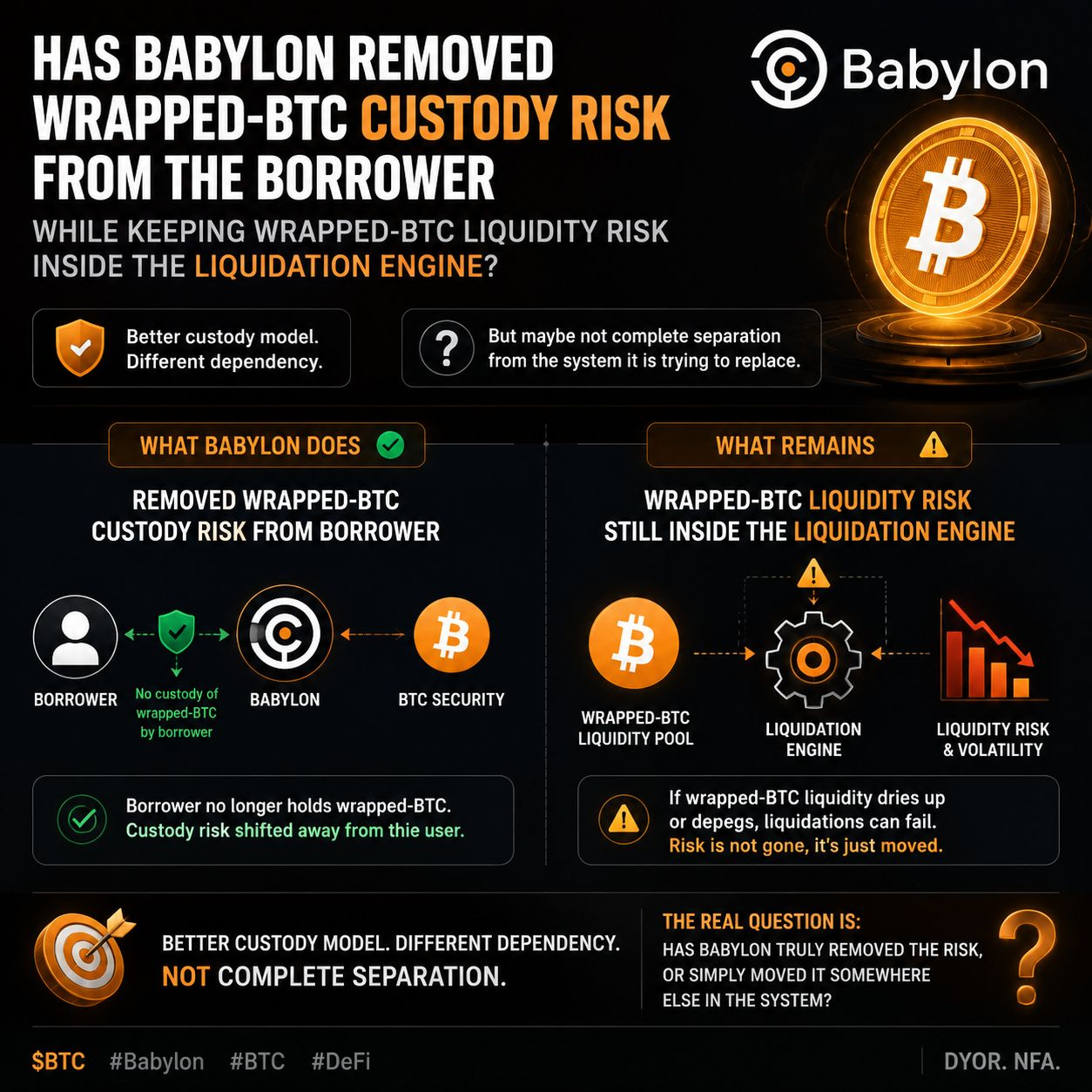
Babylon may have removed the wrapped-BTC custody risk from the borrower — but the wrapped-$BTC liquidity risk still appears to remain inside the liquidation engine.
That’s a better custody model, no doubt. 🔥
But it’s a different dependency, not necessarily complete separation.
The real question is: Has Babylon truly removed the risk, or simply moved it somewhere else in the system? 👀
$BTC #Babylon #BTC #defi
That’s a better custody model, no doubt. 🔥
But it’s a different dependency, not necessarily complete separation.
The real question is: Has Babylon truly removed the risk, or simply moved it somewhere else in the system? 👀
$BTC #Babylon #BTC #defi
😎😎Conversational & Problem-Solving #Babylon
Sitting on idle BTC because you don't trust wrapped tokens or third-party custodians? That’s exactly what Trustless Bitcoin Vaults (TBV) by @BabylonLabs_io solve. Real native Bitcoin collateralization without ever giving up your keys.Cross-chain bridges have historically been the biggest vulnerability in crypto, which is why @BabylonLabs_io's approach with Trustless Bitcoin Vaults (TBV) is so vital. Excited to see where $BABY takes this next! #baby
Sitting on idle BTC because you don't trust wrapped tokens or third-party custodians? That’s exactly what Trustless Bitcoin Vaults (TBV) by @BabylonLabs_io solve. Real native Bitcoin collateralization without ever giving up your keys.Cross-chain bridges have historically been the biggest vulnerability in crypto, which is why @BabylonLabs_io's approach with Trustless Bitcoin Vaults (TBV) is so vital. Excited to see where $BABY takes this next! #baby
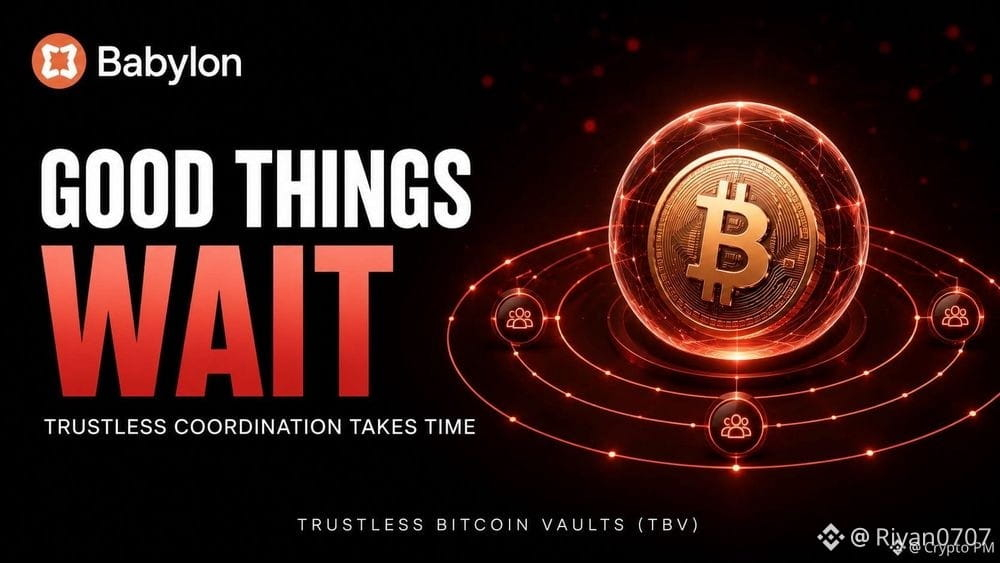

🚀 BABYLON (BABY) — Bitcoin’s DeFi Story Is Getting Interesting! 🔥
Bitcoin isn’t only about holding BTC anymore 👀
Babylon is building a way to bring Bitcoin’s security into the world of DeFi, without changing Bitcoin itself.
💡 Why I’m watching $BABY : • Bitcoin-focused ecosystem • Staking & security narrative • DeFi + Bitcoin is a powerful combination • Strong potential if Bitcoin utility keeps expanding
📊 My view: $BABY is definitely a coin worth keeping on the watchlist. But remember — crypto is volatile, so don’t FOMO into a pump.
What do you think about $BABY ? 👇 🚀 Bullish or 🐻 Bearish?
#baby #Babylon #bitcoin #bitcoin #bitcoin #DeFi #Binance #BinanceSquare #CryptoCommunity
Bitcoin isn’t only about holding BTC anymore 👀
Babylon is building a way to bring Bitcoin’s security into the world of DeFi, without changing Bitcoin itself.
💡 Why I’m watching $BABY : • Bitcoin-focused ecosystem • Staking & security narrative • DeFi + Bitcoin is a powerful combination • Strong potential if Bitcoin utility keeps expanding
📊 My view: $BABY is definitely a coin worth keeping on the watchlist. But remember — crypto is volatile, so don’t FOMO into a pump.
What do you think about $BABY ? 👇 🚀 Bullish or 🐻 Bearish?
#baby #Babylon #bitcoin #bitcoin #bitcoin #DeFi #Binance #BinanceSquare #CryptoCommunity

Unlike typical "baby" themed tokens, Babylon is a high-utility Layer-1 blockchain built using the Cosmos SDK. It specializes in scaling Bitcoin's security to other Proof-of-Stake (PoS) networks via innovative trustless BTC staking.
Market Metrics: As of August 2026, the live price of $BABY trades near $0.0118 with a market capitalization of roughly $49M to $51M. It maintains high liquidity, recording over $51M to $252M in 24-hour trading volumes.
Utility & Tokenomics: The token possesses a total supply of roughly 10 billion tokens. It is structurally utilized to process network transaction fees, execute smart contracts, and govern the ecosystem. It features a dual-staking mechanism enabling users to secure the network alongside Bitcoin to earn network rewards.
Current Catalyst: Binance is actively hosting a Babylon (BABY) Trading Tournament running until August 12, 2026. This promotional event distributes 30 million tokens in vouchers, temporarily bloating local trading volumes and scaling near-term speculative volatility.
#Babylon #USDT
Market Metrics: As of August 2026, the live price of $BABY trades near $0.0118 with a market capitalization of roughly $49M to $51M. It maintains high liquidity, recording over $51M to $252M in 24-hour trading volumes.
Utility & Tokenomics: The token possesses a total supply of roughly 10 billion tokens. It is structurally utilized to process network transaction fees, execute smart contracts, and govern the ecosystem. It features a dual-staking mechanism enabling users to secure the network alongside Bitcoin to earn network rewards.
Current Catalyst: Binance is actively hosting a Babylon (BABY) Trading Tournament running until August 12, 2026. This promotional event distributes 30 million tokens in vouchers, temporarily bloating local trading volumes and scaling near-term speculative volatility.
#Babylon #USDT
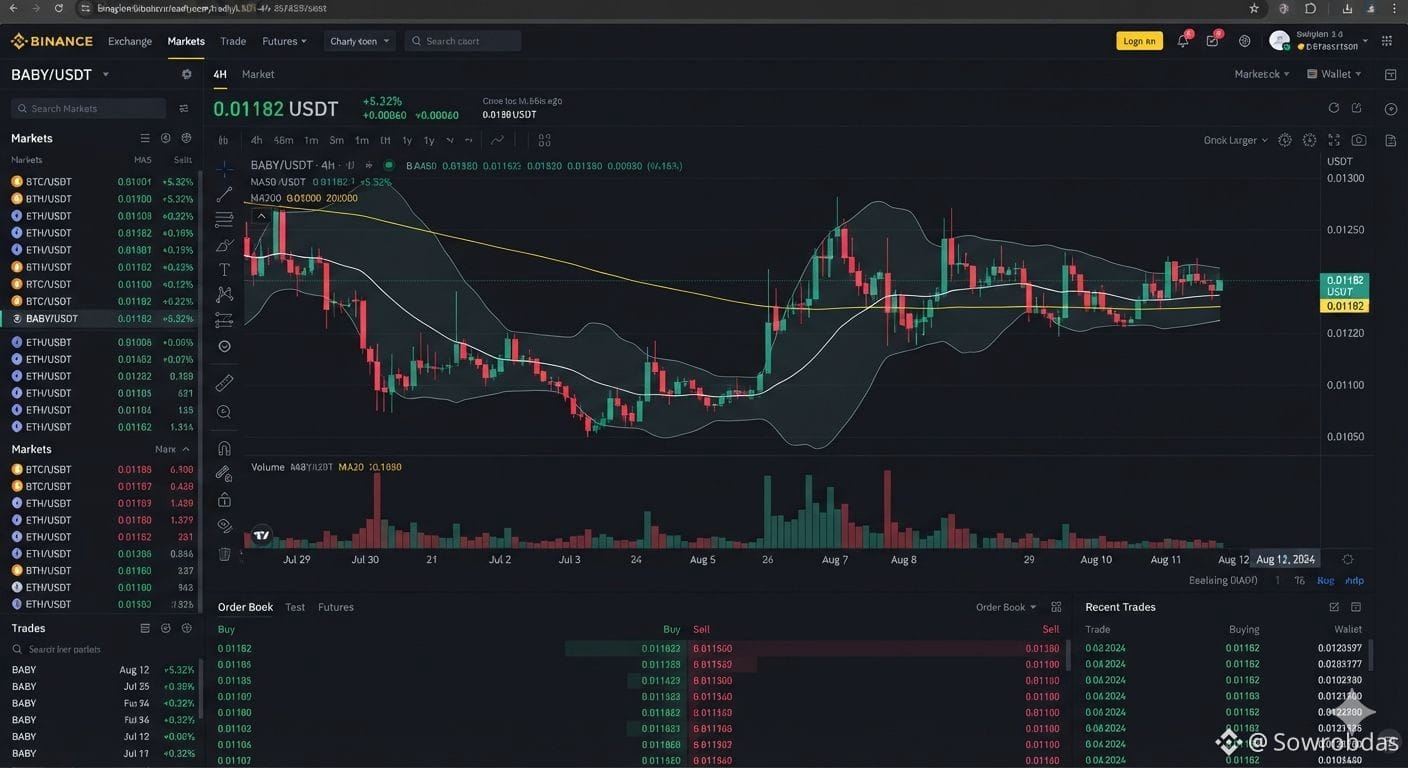

🚨🔥 $BABY … Is this coin hiding a bigger wave than the market expects? 👀🚀
Many people look at $BABY as just a price that moves on the screen… but the real story behind it is bigger.
Babylon is building infrastructure that makes Bitcoin more usable as a security asset and collateral within the Web3 ecosystem, with the ability to use BTC in Staking and DeFi without wrapping it or moving it to another network.
As for #BABY, it’s not just a speculation token; it has roles in fees, governance, and securing the network through Staking. It can also be used in a co-staking model with BTC.
🎯 So where could it go?
No one can accurately predict the top, but if Babylon’s usage expands and liquidity and demand for BABY increase, the outlook could change dramatically.
🔥 The real upside scenario needs:
📈 Network usage growth
🐋 Large liquidity entering
🔒 More Staking
🌐 Wider Bitcoin usage within DeFi
⚠️ Meanwhile, inflation, token unlocks, and market volatility must be monitored—these factors could weigh on the price.
The question worth following now:
Is $BABY
just a new project… or one of the next Bitcoin plays? 👀🔥
#BABY #Babylon #Bitcoin #Crypto #Binance inance
Many people look at $BABY as just a price that moves on the screen… but the real story behind it is bigger.
Babylon is building infrastructure that makes Bitcoin more usable as a security asset and collateral within the Web3 ecosystem, with the ability to use BTC in Staking and DeFi without wrapping it or moving it to another network.
As for #BABY, it’s not just a speculation token; it has roles in fees, governance, and securing the network through Staking. It can also be used in a co-staking model with BTC.
🎯 So where could it go?
No one can accurately predict the top, but if Babylon’s usage expands and liquidity and demand for BABY increase, the outlook could change dramatically.
🔥 The real upside scenario needs:
📈 Network usage growth
🐋 Large liquidity entering
🔒 More Staking
🌐 Wider Bitcoin usage within DeFi
⚠️ Meanwhile, inflation, token unlocks, and market volatility must be monitored—these factors could weigh on the price.
The question worth following now:
Is $BABY
just a new project… or one of the next Bitcoin plays? 👀🔥
#BABY #Babylon #Bitcoin #Crypto #Binance inance


Bitcoin ( #BTC ) has always been recognized as the most secure and valuable cryptocurrency network, built on trust, scarcity, and decentralization. However, Bitcoin’s ecosystem has historically been limited when it comes to earning opportunities and smart contract applications.
This is where Babylon brings innovation. Babylon is a Bitcoin staking protocol that allows holders to use their Bitcoin to help secure Proof-of-Stake networks while earning potential rewards — without giving up ownership of their $BTC.
The idea behind Babylon is powerful: it connects Bitcoin’s unmatched security with the growing world of decentralized applications. Instead of keeping ( @BTC ) idle, users can potentially put their Bitcoin to work while maintaining the core principles of security and decentralization.
As the crypto industry continues to evolve, projects that expand Bitcoin’s utility could play an important role in the future of Web3. The combination of Bitcoin’s strength and Babylon’s staking technology represents a step toward a more connected and efficient blockchain ecosystem.
Bitcoin is not just digital gold — it may become the foundation of a broader decentralized financial future. 🔥
#Bitcoin #BTC #Babylon #Crypto $BABAB @Babylon
This is where Babylon brings innovation. Babylon is a Bitcoin staking protocol that allows holders to use their Bitcoin to help secure Proof-of-Stake networks while earning potential rewards — without giving up ownership of their $BTC.
The idea behind Babylon is powerful: it connects Bitcoin’s unmatched security with the growing world of decentralized applications. Instead of keeping ( @BTC ) idle, users can potentially put their Bitcoin to work while maintaining the core principles of security and decentralization.
As the crypto industry continues to evolve, projects that expand Bitcoin’s utility could play an important role in the future of Web3. The combination of Bitcoin’s strength and Babylon’s staking technology represents a step toward a more connected and efficient blockchain ecosystem.
Bitcoin is not just digital gold — it may become the foundation of a broader decentralized financial future. 🔥
#Bitcoin #BTC #Babylon #Crypto $BABAB @Babylon
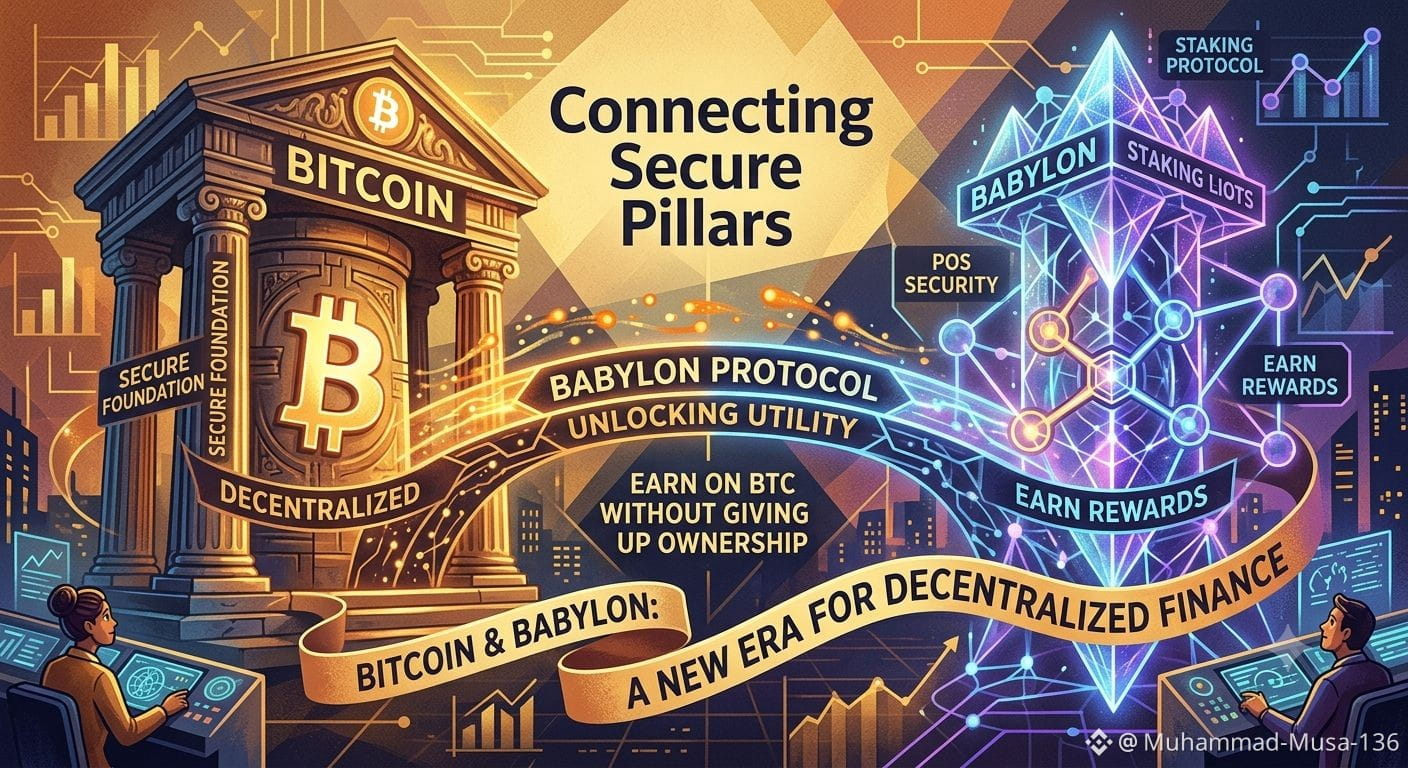

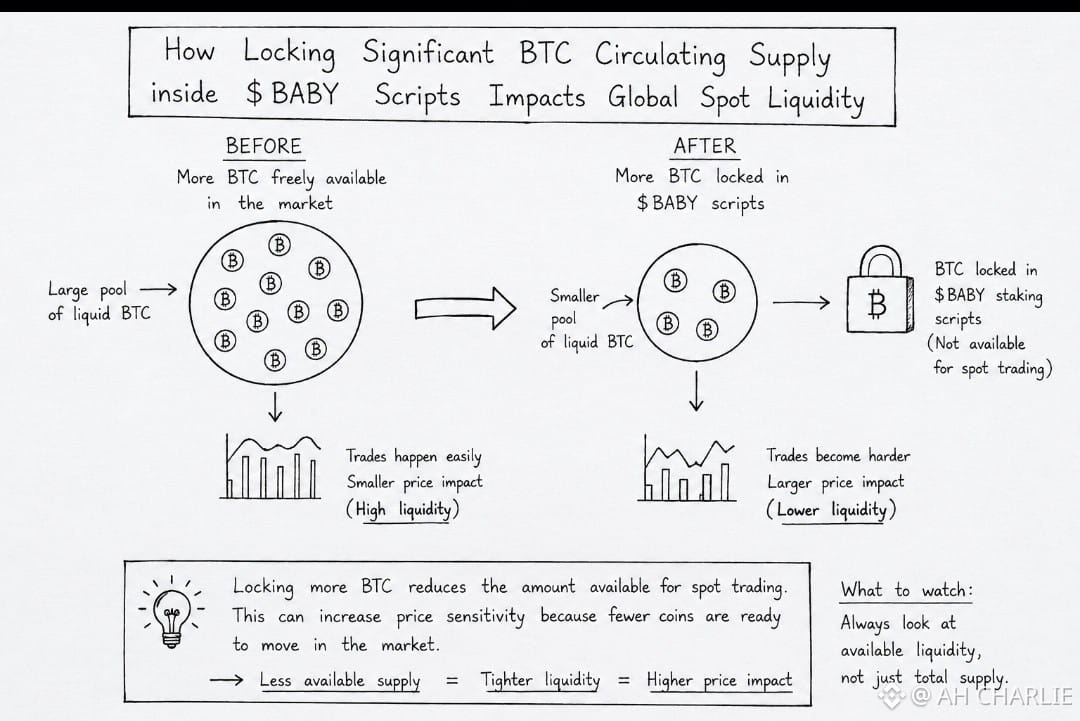
Today's $BABY market structure made me revisit one question- what actually happens to Bitcoin's spot liquidity when more BTC becomes locked inside Babylon's staking scripts instead of remaining freely available?
Most people immediately expect a supply shock. They aren't completely wrong, but they often stop the analysis too early.
Bitcoin doesn't disappear when it's committed to Babylon. It simply becomes less active in the day-to-day market. Spot liquidity is the amount of BTC that can change hands without causing large price swings.
When a meaningful share sits inside staking scripts, the pool of immediately tradable coins becomes smaller. That doesn't automatically push prices higher. Liquidity is shaped by many forces.
Market makers, exchange balances, derivatives, and investor behavior still matter. Yet a tighter pool of available coins can make the market react more sharply when fresh demand or sudden selling appears.
The same amount of buying pressure may move price further because fewer coins are circulating where trades actually happen. They often focus on how much BTC is locked. You should also ask where the remaining BTC is sitting and whether it is willing to move.
That's the structural difference many charts fail to show. Watching available liquidity instead of total supply often gives a clearer picture of how the market may respond long before price tells the story.
@BabylonLabs_io #Babylon #baby
Most people immediately expect a supply shock. They aren't completely wrong, but they often stop the analysis too early.
Bitcoin doesn't disappear when it's committed to Babylon. It simply becomes less active in the day-to-day market. Spot liquidity is the amount of BTC that can change hands without causing large price swings.
When a meaningful share sits inside staking scripts, the pool of immediately tradable coins becomes smaller. That doesn't automatically push prices higher. Liquidity is shaped by many forces.
Market makers, exchange balances, derivatives, and investor behavior still matter. Yet a tighter pool of available coins can make the market react more sharply when fresh demand or sudden selling appears.
The same amount of buying pressure may move price further because fewer coins are circulating where trades actually happen. They often focus on how much BTC is locked. You should also ask where the remaining BTC is sitting and whether it is willing to move.
That's the structural difference many charts fail to show. Watching available liquidity instead of total supply often gives a clearer picture of how the market may respond long before price tells the story.
@BabylonLabs_io #Babylon #baby

Token Economics|$BABY : Inflation and Co-Staking N/A
Let’s discuss Babylon’s token economics for breaking down the model behind $BABY . We’ll split the ledger apart.
The current price of $BABY was not found; 24h N/A; circulating market cap not disclosed; FDV not disclosed; circulating supply not found; total supply not found. The ratio between FDV and circulating market cap reflects future inflation pressure.
The community’s recent proposals focus on two points: first, reducing the BABY inflation rate by about 30 percentage points to reduce dilution of price from newly added supply. Second, introducing a BTC-BABY co-staking mechanism, where stakers must lock both BTC and BABY, creating more demand scenarios for BABY.
Token utility can be viewed in three layers: governance voting, staking yield distribution, and protocol security guarantee collateral. Once co-staking is implemented, BABY’s demand side gains an additional layer of support and no longer relies purely on inflation incentives.
24h trading volume is not disclosed; the turnover rate reflects market activity. A ratio of trading volume to market cap below 5 percentage points indicates low turnover, while above 15 percentage points indicates high turnover. Rank not found; amplitude N/A percentage points.
The road ahead for Babylon is still long—just keep an eye on it.
#baby #Babylon #BTCStaking @BabylonLabs_io
Let’s discuss Babylon’s token economics for breaking down the model behind $BABY . We’ll split the ledger apart.
The current price of $BABY was not found; 24h N/A; circulating market cap not disclosed; FDV not disclosed; circulating supply not found; total supply not found. The ratio between FDV and circulating market cap reflects future inflation pressure.
The community’s recent proposals focus on two points: first, reducing the BABY inflation rate by about 30 percentage points to reduce dilution of price from newly added supply. Second, introducing a BTC-BABY co-staking mechanism, where stakers must lock both BTC and BABY, creating more demand scenarios for BABY.
Token utility can be viewed in three layers: governance voting, staking yield distribution, and protocol security guarantee collateral. Once co-staking is implemented, BABY’s demand side gains an additional layer of support and no longer relies purely on inflation incentives.
24h trading volume is not disclosed; the turnover rate reflects market activity. A ratio of trading volume to market cap below 5 percentage points indicates low turnover, while above 15 percentage points indicates high turnover. Rank not found; amplitude N/A percentage points.
The road ahead for Babylon is still long—just keep an eye on it.
#baby #Babylon #BTCStaking @BabylonLabs_io
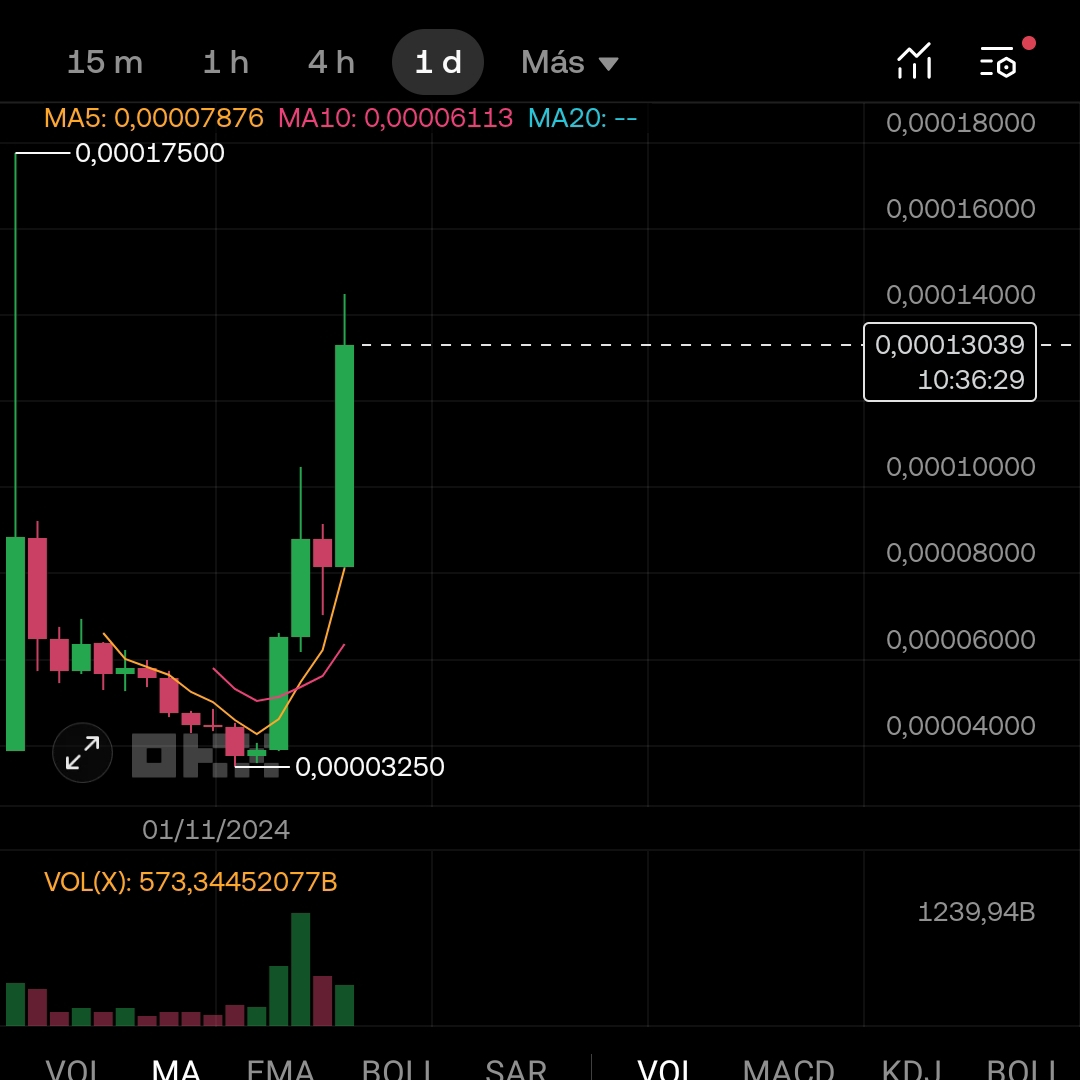
$BABY #babylon
Bitcoin has been treated as an asset to hold. The next chapter is using it as pristine collateral.
At FintechTV, Babylon’s Chief Marketing Officer, Tristan, breaks down how native Bitcoin can be used as collateral while preserving the properties that bitcoiners value most: sovereignty, verifiability, and confidence in code instead of intermediaries.
He also shares why regulatory clarity is accelerating the adoption of digital assets across the Middle East, and why institutions are going beyond exposure to Bitcoin to make Bitcoin work.
Bitcoin has been treated as an asset to hold. The next chapter is using it as pristine collateral.
At FintechTV, Babylon’s Chief Marketing Officer, Tristan, breaks down how native Bitcoin can be used as collateral while preserving the properties that bitcoiners value most: sovereignty, verifiability, and confidence in code instead of intermediaries.
He also shares why regulatory clarity is accelerating the adoption of digital assets across the Middle East, and why institutions are going beyond exposure to Bitcoin to make Bitcoin work.


Verified
everyone's staring at the same clock today 🇺🇸 #FOMC
⚡️Today Fed will drop their rate decision & Powell's replacement gets on the mic for the press conference and half of crypto twitter is just sitting there refreshing charts waiting to see which way things snap. rate held at 3.5 / 3.75 is what most people expect but nobody actually knows what happens after that presser starts talking.
📍this is the kind of day where everyone remembers how connected crypto still is to what one committee in a room decides. one sentence about inflation and entire portfolios move.
and that's exactly why the stuff outside that room matters more than people give it credit for.
while everyone's glued to a rate decision they can't control, there are things actually being built that don't depend on what any central bank says next. #Babylon Trustless Bitcoin Vaults, TBV, let your actual bitcoin work as collateral without wrapping it or handing it to a custodian. no fed announcement changes whether your own BTC can be used to borrow against on Aave v4, it's just live on testnet right now, self custodial the whole way through.
funny how that works. the biggest headline of the day is a room full of people deciding rates and the more useful thing today is realizing you don't need to wait on anyone's decision to actually put your bitcoin to work.
go try the testnet flow while the rest of the timeline is busy doomscrolling fed headlines.
@BabylonLabs_io $BABY #baby
⚡️Today Fed will drop their rate decision & Powell's replacement gets on the mic for the press conference and half of crypto twitter is just sitting there refreshing charts waiting to see which way things snap. rate held at 3.5 / 3.75 is what most people expect but nobody actually knows what happens after that presser starts talking.
📍this is the kind of day where everyone remembers how connected crypto still is to what one committee in a room decides. one sentence about inflation and entire portfolios move.
and that's exactly why the stuff outside that room matters more than people give it credit for.
while everyone's glued to a rate decision they can't control, there are things actually being built that don't depend on what any central bank says next. #Babylon Trustless Bitcoin Vaults, TBV, let your actual bitcoin work as collateral without wrapping it or handing it to a custodian. no fed announcement changes whether your own BTC can be used to borrow against on Aave v4, it's just live on testnet right now, self custodial the whole way through.
funny how that works. the biggest headline of the day is a room full of people deciding rates and the more useful thing today is realizing you don't need to wait on anyone's decision to actually put your bitcoin to work.
go try the testnet flow while the rest of the timeline is busy doomscrolling fed headlines.
@BabylonLabs_io $BABY #baby
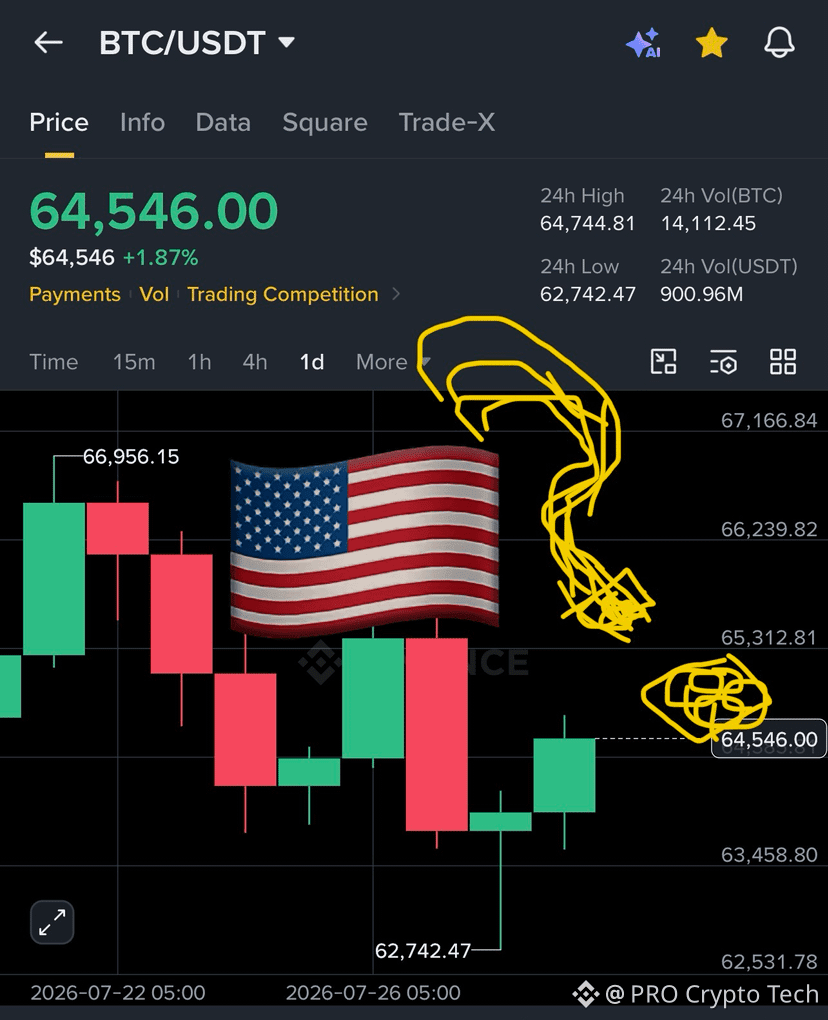
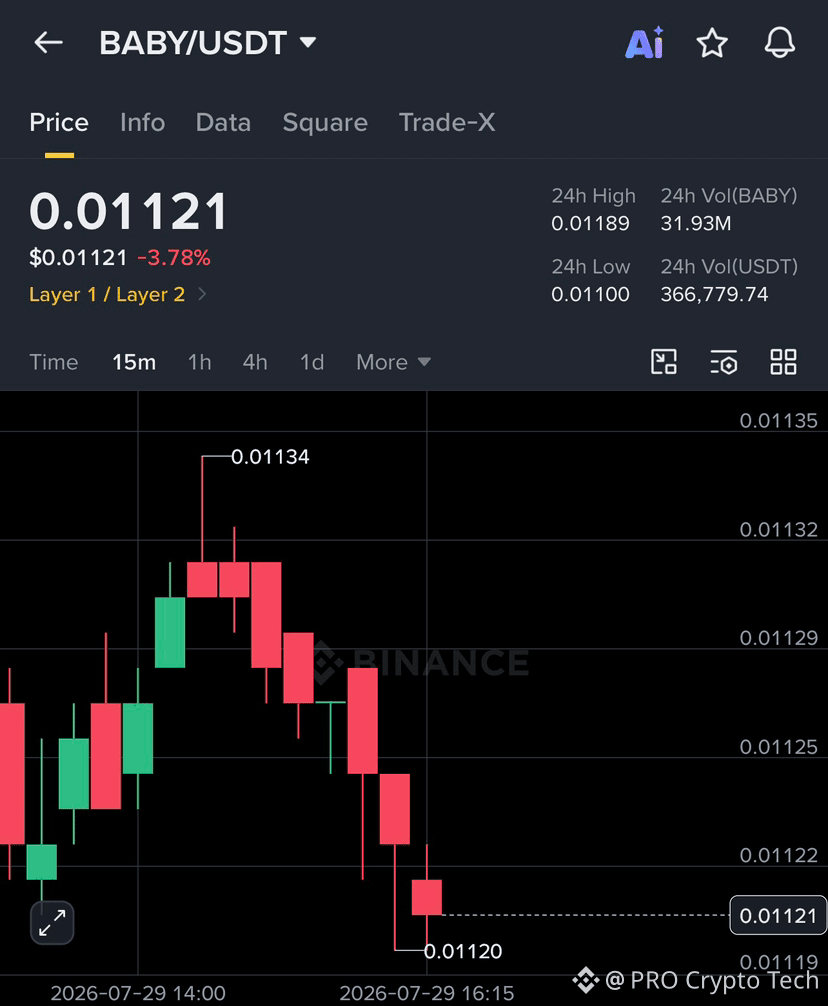

People Keep Asking: “Isn’t Crypto Just Charts, Volatility, And Chasing Green Candles?”
So This Is The Answer: It Is, Until You Find A Room Full Of Real Human Beings.
Two Weeks Ago, Life Hit Hard. Job Restructuring, Empty Inbox, And A Utility Bill Staring At Me. Panic Set In, And My Thumb Was Hovering Over The Sell Button On My Btc. I Was Ready To Walk Away From Web3 Entirely. To Drown Out The Quiet, I Jumped Into A Babylon Voice Chat. I Expected Heavy Technical Talk About Trustless Bitcoin Staking And Pos Security.
Instead, I Walked Into A Girl Named "Luna" Trying To Explain How Babylon Lets You Stake Native Btc Directly On The Bitcoin Network Without Wrapping Or Losing Custody—all While Her Toddler Was Screaming In The Background That She Drew A Dragon. Nobody Told Her To Mute. For 10 Minutes, A Room Full Of Btc Stakers Stopped Talking About Yield And Started Hyping A 4-year-old’s Crayon Dragon. I Didn’t Sell That Night. Babylon Wasn't Just Solving The Bitcoin Utility Problem By Unlocking Native Btc Yield—it Created A Space Where Real People Show Up For Each Other When Life Gets Heavy.
@BabylonLabs_io #Babylon #baby $BABY #BTC #viralpost
So This Is The Answer: It Is, Until You Find A Room Full Of Real Human Beings.
Two Weeks Ago, Life Hit Hard. Job Restructuring, Empty Inbox, And A Utility Bill Staring At Me. Panic Set In, And My Thumb Was Hovering Over The Sell Button On My Btc. I Was Ready To Walk Away From Web3 Entirely. To Drown Out The Quiet, I Jumped Into A Babylon Voice Chat. I Expected Heavy Technical Talk About Trustless Bitcoin Staking And Pos Security.
Instead, I Walked Into A Girl Named "Luna" Trying To Explain How Babylon Lets You Stake Native Btc Directly On The Bitcoin Network Without Wrapping Or Losing Custody—all While Her Toddler Was Screaming In The Background That She Drew A Dragon. Nobody Told Her To Mute. For 10 Minutes, A Room Full Of Btc Stakers Stopped Talking About Yield And Started Hyping A 4-year-old’s Crayon Dragon. I Didn’t Sell That Night. Babylon Wasn't Just Solving The Bitcoin Utility Problem By Unlocking Native Btc Yield—it Created A Space Where Real People Show Up For Each Other When Life Gets Heavy.
@BabylonLabs_io #Babylon #baby $BABY #BTC #viralpost


#baby $BABY For years, I believed the safest place for my Bitcoin was simply sitting in my wallet. Holding felt responsible, but I often wondered if BTC could do more without giving up the security that made me trust it in the first place.
That changed when I started reading about Babylon's Trustless Bitcoin Vaults (TBV).
What caught my attention wasn't the promise of higher yields. It was the idea that native Bitcoin could participate in DeFi without wrapping it or handing custody to someone else. That feels like a meaningful shift.
The first integration with Aave v4 shows that TBV isn't just about borrowing. It's about creating a trustless foundation where Bitcoin liquidity can move between applications while remaining secured by Bitcoin itself.
The real question for me isn't how much BTC gets deposited on day one.
It's whether Bitcoin continues finding productive uses after incentives fade.
If liquidity keeps flowing because the infrastructure genuinely improves capital coordination, Babylon could become much more than another DeFi protocol. It could help transform Bitcoin from passive savings into productive, trustless capital.
That's the future I'm watching.
#Babylon #BABY #Bitcoin #BTCFi $BABY
@BabylonLabs_io $RIVER
That changed when I started reading about Babylon's Trustless Bitcoin Vaults (TBV).
What caught my attention wasn't the promise of higher yields. It was the idea that native Bitcoin could participate in DeFi without wrapping it or handing custody to someone else. That feels like a meaningful shift.
The first integration with Aave v4 shows that TBV isn't just about borrowing. It's about creating a trustless foundation where Bitcoin liquidity can move between applications while remaining secured by Bitcoin itself.
The real question for me isn't how much BTC gets deposited on day one.
It's whether Bitcoin continues finding productive uses after incentives fade.
If liquidity keeps flowing because the infrastructure genuinely improves capital coordination, Babylon could become much more than another DeFi protocol. It could help transform Bitcoin from passive savings into productive, trustless capital.
That's the future I'm watching.
#Babylon #BABY #Bitcoin #BTCFi $BABY
@BabylonLabs_io $RIVER
Log in to explore more content