

#ai
ai
737.8M views
6.3M Discussing
Hot
Latest

·
--
📢 Anthropic has officially filed for an initial public offering (IPO) in the U.S., planning to list its shares on the Nasdaq exchange under the ticker symbol ANT. The offering is poised to become one of the largest in stock market history.
The potential capital raising target for the IPO could reach up to $100 billion, with the company's target valuation approaching the historic $2 trillion mark. Leading global investment banks, including Goldman Sachs and Morgan Stanley, are acting as underwriters for the offering.
The published documents reveal not only rapid growth in commercial revenue but also massive investments in infrastructure: during the first half of 2026, the company's net loss surged significantly (largely due to the revaluation of convertible notes amid soaring market capitalization), highlighting the ultra-capital-intensive nature of the frontier AI model race.
In the official prospectus, Anthropic's management took an unprecedented step by openly addressing existential risks. The company warned shareholders that advanced AI systems without proper control could "pose catastrophic or existential threats to humanity," while also highlighting risks of strict regulatory pressure and computing power shortages.
According to the deal structure, a special class of shares (Class F) will secure 50.1% of the voting rights for the founding team led by Dario Amodei, allowing them to maintain the strategic direction of the company regardless of public investors' views.
#CRYPTO #ANTHROPIC #AI #NASDAQ $ANTHROPIC
{future}(ANTHROPICUSDT)
📢 Anthropic has officially filed for an initial public offering (IPO) in the U.S., planning to list its shares on the Nasdaq exchange under the ticker symbol ANT. The offering is poised to become one of the largest in stock market history.
The potential capital raising target for the IPO could reach up to $100 billion, with the company's target valuation approaching the historic $2 trillion mark. Leading global investment banks, including Goldman Sachs and Morgan Stanley, are acting as underwriters for the offering.
The published documents reveal not only rapid growth in commercial revenue but also massive investments in infrastructure: during the first half of 2026, the company's net loss surged significantly (largely due to the revaluation of convertible notes amid soaring market capitalization), highlighting the ultra-capital-intensive nature of the frontier AI model race.
In the official prospectus, Anthropic's management took an unprecedented step by openly addressing existential risks. The company warned shareholders that advanced AI systems without proper control could "pose catastrophic or existential threats to humanity," while also highlighting risks of strict regulatory pressure and computing power shortages.
According to the deal structure, a special class of shares (Class F) will secure 50.1% of the voting rights for the founding team led by Dario Amodei, allowing them to maintain the strategic direction of the company regardless of public investors' views.
#CRYPTO #ANTHROPIC #AI #NASDAQ $ANTHROPIC
The potential capital raising target for the IPO could reach up to $100 billion, with the company's target valuation approaching the historic $2 trillion mark. Leading global investment banks, including Goldman Sachs and Morgan Stanley, are acting as underwriters for the offering.
The published documents reveal not only rapid growth in commercial revenue but also massive investments in infrastructure: during the first half of 2026, the company's net loss surged significantly (largely due to the revaluation of convertible notes amid soaring market capitalization), highlighting the ultra-capital-intensive nature of the frontier AI model race.
In the official prospectus, Anthropic's management took an unprecedented step by openly addressing existential risks. The company warned shareholders that advanced AI systems without proper control could "pose catastrophic or existential threats to humanity," while also highlighting risks of strict regulatory pressure and computing power shortages.
According to the deal structure, a special class of shares (Class F) will secure 50.1% of the voting rights for the founding team led by Dario Amodei, allowing them to maintain the strategic direction of the company regardless of public investors' views.
#CRYPTO #ANTHROPIC #AI #NASDAQ $ANTHROPIC
910

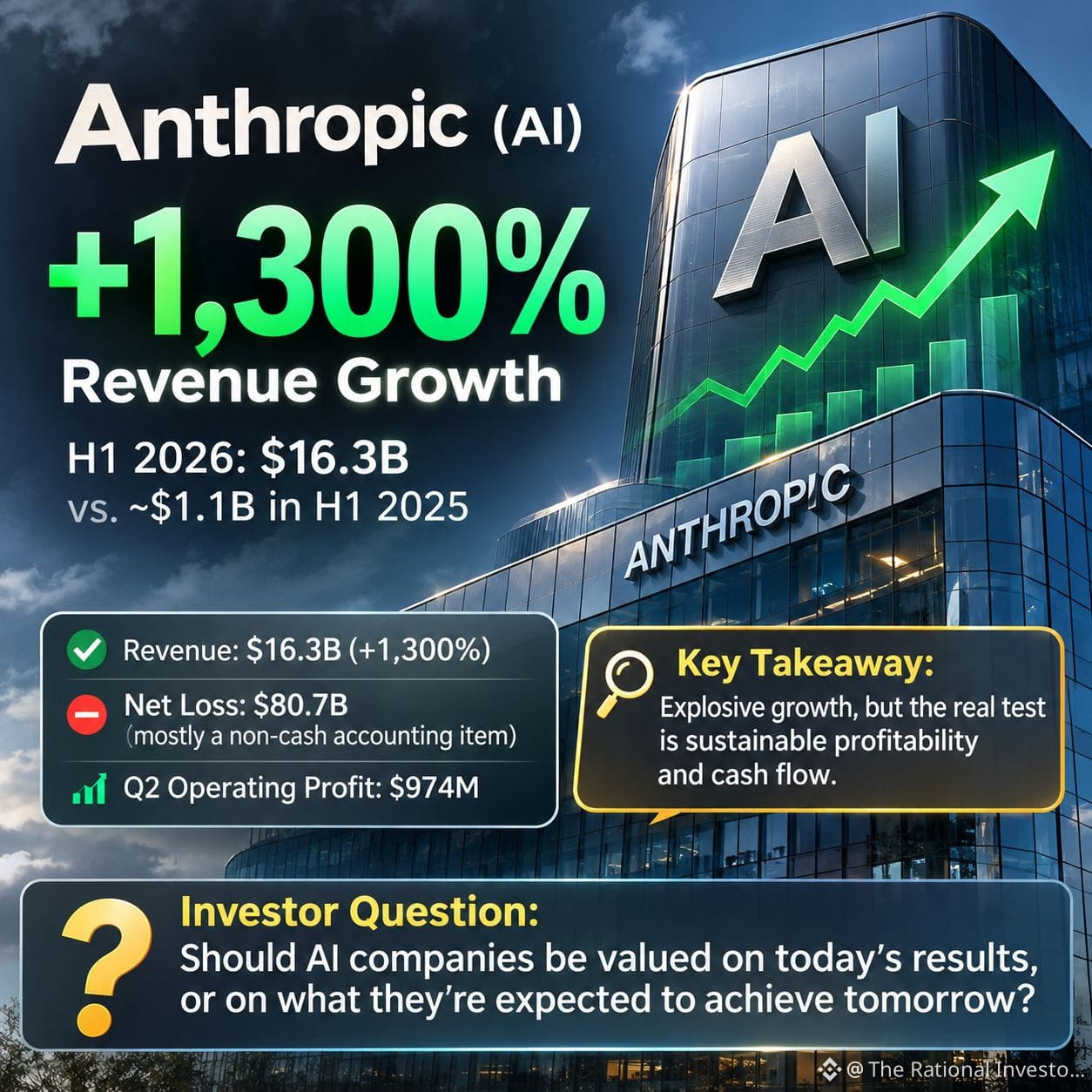
🚀 Anthropic's Revenue Surges 1,300% — But Growth Isn't the Same as Value.
Anthropic reportedly generated $16.3 billion in revenue during the first half of 2026, highlighting the extraordinary expansion of AI.
But impressive revenue growth doesn't automatically translate into sustainable profits or justify any valuation.
For investors, the real test is profitability, free cash flow, and the long-term economics of AI infrastructure.
And while AI growth may influence broader market sentiment, it doesn't guarantee gains in crypto.
The billion-dollar question: Are investors pricing AI companies based on today's fundamentals or tomorrow's expectations?
#Anthropic #AI #Investing #Crypto #MarketAnalysis
🚀 Anthropic's Revenue Surges 1,300% — But Growth Isn't the Same as Value.
Anthropic reportedly generated $16.3 billion in revenue during the first half of 2026, highlighting the extraordinary expansion of AI.
But impressive revenue growth doesn't automatically translate into sustainable profits or justify any valuation.
For investors, the real test is profitability, free cash flow, and the long-term economics of AI infrastructure.
And while AI growth may influence broader market sentiment, it doesn't guarantee gains in crypto.
The billion-dollar question: Are investors pricing AI companies based on today's fundamentals or tomorrow's expectations?
#Anthropic #AI #Investing #Crypto #MarketAnalysis
Anthropic reportedly generated $16.3 billion in revenue during the first half of 2026, highlighting the extraordinary expansion of AI.
But impressive revenue growth doesn't automatically translate into sustainable profits or justify any valuation.
For investors, the real test is profitability, free cash flow, and the long-term economics of AI infrastructure.
And while AI growth may influence broader market sentiment, it doesn't guarantee gains in crypto.
The billion-dollar question: Are investors pricing AI companies based on today's fundamentals or tomorrow's expectations?
#Anthropic #AI #Investing #Crypto #MarketAnalysis
1
69


·
--
Bullish
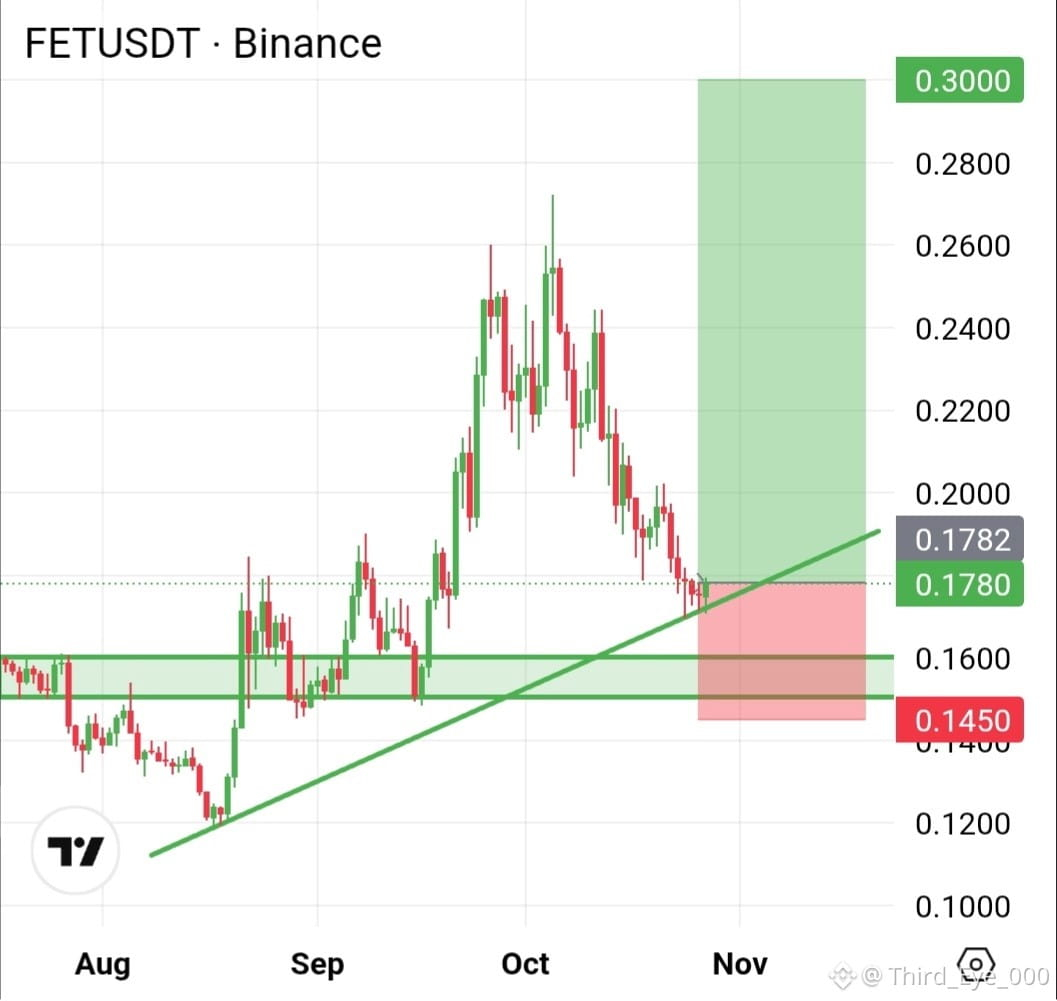
👀 $FET — THE BULLS ARE NOT OUT YET! 🚀
After a strong rally toward $0.26, #FET has been cooling off… but look where the price is now. 👇
📈 Testing a rising trendline
🟢 Holding above the $0.15–$0.16 support zone 🎯 Potential upside targets: $0.26 → $0.30
If the trendline holds and buyers step in, round 2 could get interesting! ☺️
#AI narrative + key support = @Fetch_ai on my watchlist.
Who's ready for the next move, fam? 🔥
{spot}(FETUSDT)
👀 $FET — THE BULLS ARE NOT OUT YET! 🚀
After a strong rally toward $0.26, #FET has been cooling off… but look where the price is now. 👇
📈 Testing a rising trendline
🟢 Holding above the $0.15–$0.16 support zone 🎯 Potential upside targets: $0.26 → $0.30
If the trendline holds and buyers step in, round 2 could get interesting! ☺️
#AI narrative + key support = @Fetch.ai on my watchlist.
Who's ready for the next move, fam? 🔥
After a strong rally toward $0.26, #FET has been cooling off… but look where the price is now. 👇
📈 Testing a rising trendline
🟢 Holding above the $0.15–$0.16 support zone 🎯 Potential upside targets: $0.26 → $0.30
If the trendline holds and buyers step in, round 2 could get interesting! ☺️
#AI narrative + key support = @Fetch.ai on my watchlist.
Who's ready for the next move, fam? 🔥
248

·
--
AI is taking over the stock market. CZ wants that money to run on BNB Chain 🤖
The backdrop this week:
• Anthropic filed for a Nasdaq IPO, and US tech stocks rallied on the news
• Meta launched a 35 billion dollar stock offering to help fund a 95 billion dollar AI build-out, with Nvidia putting in 3 billion
• Crypto mostly sat still while AI stocks took the attention and the capital
CZ's answer: he pitched BNB Chain as the home network for AI-driven payments and compute tokens. The idea is that AI agents will need to pay for data, compute and services by themselves, and they'll need fast, cheap blockchain rails and stablecoins to do it.
Why it matters for $BNB holders: the more transactions AI apps send through BNB Chain, the more demand there is for block space.
What to watch: real usage numbers, not announcements. Narratives get attention, but on-chain activity is what lasts.
Will AI agents become a real driver of on-chain payments, or is it too early? 👇
#BNBChain #AI #CryptoNews
AI is taking over the stock market. CZ wants that money to run on BNB Chain 🤖
The backdrop this week:
• Anthropic filed for a Nasdaq IPO, and US tech stocks rallied on the news
• Meta launched a 35 billion dollar stock offering to help fund a 95 billion dollar AI build-out, with Nvidia putting in 3 billion
• Crypto mostly sat still while AI stocks took the attention and the capital
CZ's answer: he pitched BNB Chain as the home network for AI-driven payments and compute tokens. The idea is that AI agents will need to pay for data, compute and services by themselves, and they'll need fast, cheap blockchain rails and stablecoins to do it.
Why it matters for $BNB holders: the more transactions AI apps send through BNB Chain, the more demand there is for block space.
What to watch: real usage numbers, not announcements. Narratives get attention, but on-chain activity is what lasts.
Will AI agents become a real driver of on-chain payments, or is it too early? 👇
#BNBChain #AI #CryptoNews
The backdrop this week:
• Anthropic filed for a Nasdaq IPO, and US tech stocks rallied on the news
• Meta launched a 35 billion dollar stock offering to help fund a 95 billion dollar AI build-out, with Nvidia putting in 3 billion
• Crypto mostly sat still while AI stocks took the attention and the capital
CZ's answer: he pitched BNB Chain as the home network for AI-driven payments and compute tokens. The idea is that AI agents will need to pay for data, compute and services by themselves, and they'll need fast, cheap blockchain rails and stablecoins to do it.
Why it matters for $BNB holders: the more transactions AI apps send through BNB Chain, the more demand there is for block space.
What to watch: real usage numbers, not announcements. Narratives get attention, but on-chain activity is what lasts.
Will AI agents become a real driver of on-chain payments, or is it too early? 👇
#BNBChain #AI #CryptoNews
9

·
--
🦈 TRADER TURNS $21K INTO $8.1M ON $AI WITH AN INSANE 382X RETURN! 💥
Smart money just gave the market a masterclass in conviction. 🔍 Over two months of quiet accumulation, a single wallet absorbed 29.32 million $AI meme tokens, turning a modest $21.2k position into a massive $8.13 million whale stack. 🦈
That is a staggering 382x return sitting on $8.11 million in unrealized gains, making this trader the dominant supply holder on-chain. 📊 While the crowd chases late green candles, real size gets built brick-by-brick during quiet low-volatility accumulation windows. ⚡
💬 Would you lock in profits after a 382x gain, or let your moonbag ride for even higher targets? 👇
⚠️ Not financial advice. Always manage your risk. 🛡️
🏷️ #AI #SmartMoney #MemeCoins #WhaleAlert #Crypto
🔥 💎
🦈 TRADER TURNS $21K INTO $8.1M ON $AI WITH AN INSANE 382X RETURN! 💥
Smart money just gave the market a masterclass in conviction. 🔍 Over two months of quiet accumulation, a single wallet absorbed 29.32 million $AI meme tokens, turning a modest $21.2k position into a massive $8.13 million whale stack. 🦈
That is a staggering 382x return sitting on $8.11 million in unrealized gains, making this trader the dominant supply holder on-chain. 📊 While the crowd chases late green candles, real size gets built brick-by-brick during quiet low-volatility accumulation windows. ⚡
💬 Would you lock in profits after a 382x gain, or let your moonbag ride for even higher targets? 👇
⚠️ Not financial advice. Always manage your risk. 🛡️
🏷️ #AI #SmartMoney #MemeCoins #WhaleAlert #Crypto
🔥 💎
Smart money just gave the market a masterclass in conviction. 🔍 Over two months of quiet accumulation, a single wallet absorbed 29.32 million $AI meme tokens, turning a modest $21.2k position into a massive $8.13 million whale stack. 🦈
That is a staggering 382x return sitting on $8.11 million in unrealized gains, making this trader the dominant supply holder on-chain. 📊 While the crowd chases late green candles, real size gets built brick-by-brick during quiet low-volatility accumulation windows. ⚡
💬 Would you lock in profits after a 382x gain, or let your moonbag ride for even higher targets? 👇
⚠️ Not financial advice. Always manage your risk. 🛡️
🏷️ #AI #SmartMoney #MemeCoins #WhaleAlert #Crypto
🔥 💎
6

·
--
Anthropic Preparing for IPO at 2 Trillion USD Valuation: AI Bubble or New Era?
Anthropic, the creator of the Claude AI model, is reportedly preparing to go public in the second half of November. The target capitalization is around 2 trillion USD, which would make it one of the most valuable tech businesses in the world.
The scale of growth is impressive: the company's revenue increased from 41 million USD three years ago to a reported 16 billion USD in the first half of 2026.
But there is a flip side: a 2 trillion USD valuation raises serious questions. Has the market run too far ahead in its expectations for artificial intelligence?
What does this mean for the crypto market? A successful IPO could boost interest in AI tokens, but it does not guarantee their growth. And if expectations turn out to be overstated, a correction could affect the entire high-risk asset sector.
Would you invest in Anthropic $ANTHROPIC at a 2 trillion USD valuation, or do you believe the AI market is already overheated?
#AI #Antropic #IPO
Anthropic Preparing for IPO at 2 Trillion USD Valuation: AI Bubble or New Era?
Anthropic, the creator of the Claude AI model, is reportedly preparing to go public in the second half of November. The target capitalization is around 2 trillion USD, which would make it one of the most valuable tech businesses in the world.
The scale of growth is impressive: the company's revenue increased from 41 million USD three years ago to a reported 16 billion USD in the first half of 2026.
But there is a flip side: a 2 trillion USD valuation raises serious questions. Has the market run too far ahead in its expectations for artificial intelligence?
What does this mean for the crypto market? A successful IPO could boost interest in AI tokens, but it does not guarantee their growth. And if expectations turn out to be overstated, a correction could affect the entire high-risk asset sector.
Would you invest in Anthropic $ANTHROPIC at a 2 trillion USD valuation, or do you believe the AI market is already overheated?
#AI #Antropic #IPO
Anthropic, the creator of the Claude AI model, is reportedly preparing to go public in the second half of November. The target capitalization is around 2 trillion USD, which would make it one of the most valuable tech businesses in the world.
The scale of growth is impressive: the company's revenue increased from 41 million USD three years ago to a reported 16 billion USD in the first half of 2026.
But there is a flip side: a 2 trillion USD valuation raises serious questions. Has the market run too far ahead in its expectations for artificial intelligence?
What does this mean for the crypto market? A successful IPO could boost interest in AI tokens, but it does not guarantee their growth. And if expectations turn out to be overstated, a correction could affect the entire high-risk asset sector.
Would you invest in Anthropic $ANTHROPIC at a 2 trillion USD valuation, or do you believe the AI market is already overheated?
#AI #Antropic #IPO
28

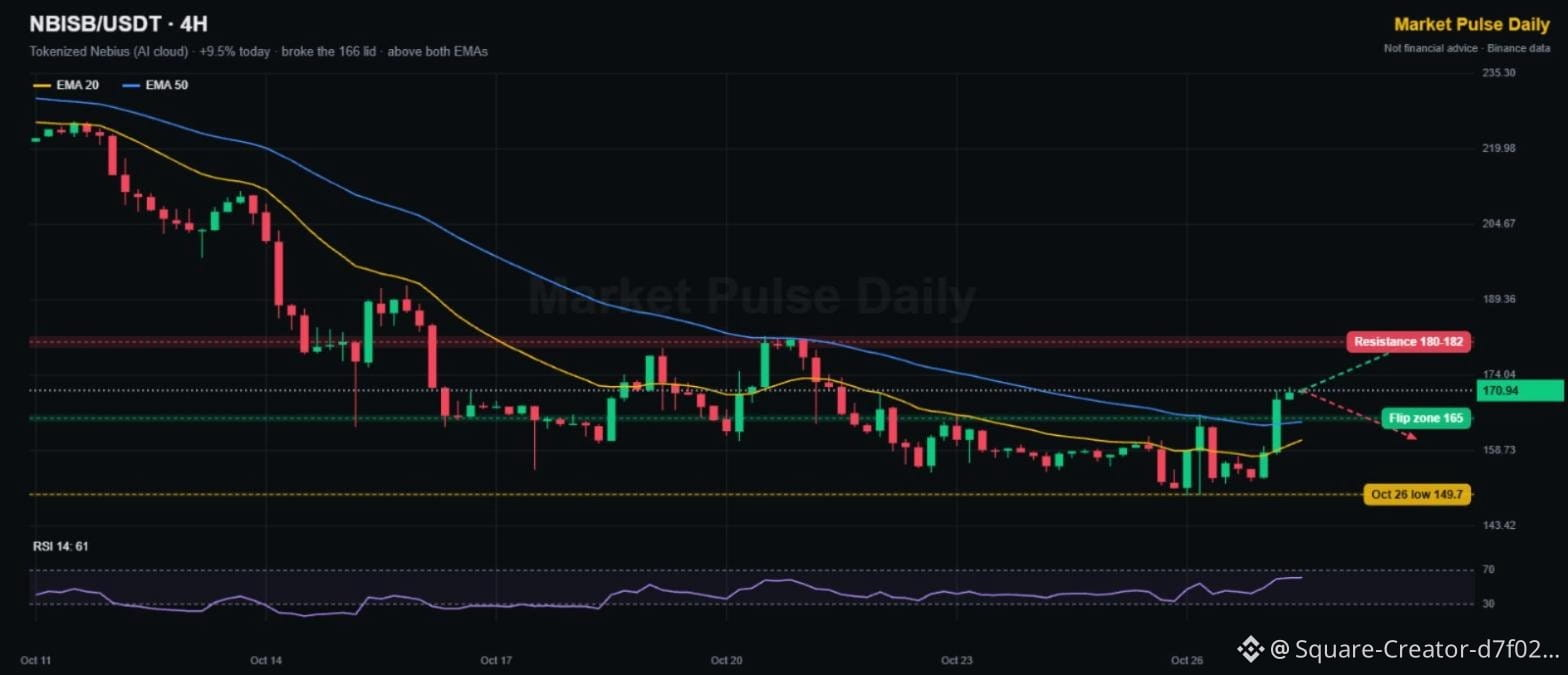
$NBISB (tokenized Nebius) is the top stock-token gainer on Binance today, +9.5%. The AI infrastructure trade is back 🤖
What it is: Nebius runs AI cloud data centers. Its stock trades as a tokenized version on Binance.
The chart (4H):
• Bottomed at 149.7 on Oct 26 after a 33% slide from 225
• Today: one big candle through the 166 lid and both EMAs
• Price 170.9, above EMA 20 (160.9) and EMA 50 (164.6)
• RSI 61.5
AI capex is the theme of earnings week. Big tech reports keep showing heavy spending on data centers, and the companies selling that capacity are getting bid.
Levels for $NBISB :
🟢 Hold 165 → 180 to 182 resistance (Oct 20 to 21 highs)
🔴 Back below 165 → failed breakout, 158 area next
Are you trading the AI theme through $NBISB or AI coins? 👇
NFA
#StockTokens #AI #TechnicalAnalysis
No Binance account yet? Get 20% of your trading fees back 👉 [Sign up on Binance](https://www.binance.com/register?ref=TGCSTKKM)
$NBISB (tokenized Nebius) is the top stock-token gainer on Binance today, +9.5%. The AI infrastructure trade is back 🤖
What it is: Nebius runs AI cloud data centers. Its stock trades as a tokenized version on Binance.
The chart (4H):
• Bottomed at 149.7 on Oct 26 after a 33% slide from 225
• Today: one big candle through the 166 lid and both EMAs
• Price 170.9, above EMA 20 (160.9) and EMA 50 (164.6)
• RSI 61.5
AI capex is the theme of earnings week. Big tech reports keep showing heavy spending on data centers, and the companies selling that capacity are getting bid.
Levels for $NBISB :
🟢 Hold 165 → 180 to 182 resistance (Oct 20 to 21 highs)
🔴 Back below 165 → failed breakout, 158 area next
Are you trading the AI theme through $NBISB or AI coins? 👇
NFA
#StockTokens #AI #TechnicalAnalysis
No Binance account yet? Get 20% of your trading fees back 👉 Sign up on Binance
What it is: Nebius runs AI cloud data centers. Its stock trades as a tokenized version on Binance.
The chart (4H):
• Bottomed at 149.7 on Oct 26 after a 33% slide from 225
• Today: one big candle through the 166 lid and both EMAs
• Price 170.9, above EMA 20 (160.9) and EMA 50 (164.6)
• RSI 61.5
AI capex is the theme of earnings week. Big tech reports keep showing heavy spending on data centers, and the companies selling that capacity are getting bid.
Levels for $NBISB :
🟢 Hold 165 → 180 to 182 resistance (Oct 20 to 21 highs)
🔴 Back below 165 → failed breakout, 158 area next
Are you trading the AI theme through $NBISB or AI coins? 👇
NFA
#StockTokens #AI #TechnicalAnalysis
No Binance account yet? Get 20% of your trading fees back 👉 Sign up on Binance
7

⚡ BOTIVERSE PIVOTS STRATEGY AS $AI AGENT DEVELOPMENT REVOLUTIONIZES OPEN SOURCE CODE! 🚨
Botiverse is cutting the fluff, admitting marketing mistakes, and open-sourcing the Raft repository as AI agents take over modern software development. 💡 Traditional pull-request workflows are officially dying as autonomous agents handle raw code generation faster than human maintainers can review it.
This pivot shifts focus away from retail hype toward pure infrastructure velocity in the decentralised tech stack. 📊 Smart money tracks teams stripping down bloat to build true agentic architecture before the next capital wave hits.
🤔 Will full open-source agent scaffolding ignite the next phase of autonomous protocol growth, or are dev teams surrendering control too early? 👇
⚠️ Not financial advice. Always manage your risk. 🛡️
🏷️ #AI #AIAgents #OpenSource #Web3Dev #Crypto
🔥 ⚡
⚡ BOTIVERSE PIVOTS STRATEGY AS $AI AGENT DEVELOPMENT REVOLUTIONIZES OPEN SOURCE CODE! 🚨
Botiverse is cutting the fluff, admitting marketing mistakes, and open-sourcing the Raft repository as AI agents take over modern software development. 💡 Traditional pull-request workflows are officially dying as autonomous agents handle raw code generation faster than human maintainers can review it.
This pivot shifts focus away from retail hype toward pure infrastructure velocity in the decentralised tech stack. 📊 Smart money tracks teams stripping down bloat to build true agentic architecture before the next capital wave hits.
🤔 Will full open-source agent scaffolding ignite the next phase of autonomous protocol growth, or are dev teams surrendering control too early? 👇
⚠️ Not financial advice. Always manage your risk. 🛡️
🏷️ #AI #AIAgents #OpenSource #Web3Dev #Crypto
🔥 ⚡
Botiverse is cutting the fluff, admitting marketing mistakes, and open-sourcing the Raft repository as AI agents take over modern software development. 💡 Traditional pull-request workflows are officially dying as autonomous agents handle raw code generation faster than human maintainers can review it.
This pivot shifts focus away from retail hype toward pure infrastructure velocity in the decentralised tech stack. 📊 Smart money tracks teams stripping down bloat to build true agentic architecture before the next capital wave hits.
🤔 Will full open-source agent scaffolding ignite the next phase of autonomous protocol growth, or are dev teams surrendering control too early? 👇
⚠️ Not financial advice. Always manage your risk. 🛡️
🏷️ #AI #AIAgents #OpenSource #Web3Dev #Crypto
🔥 ⚡
4
·
--
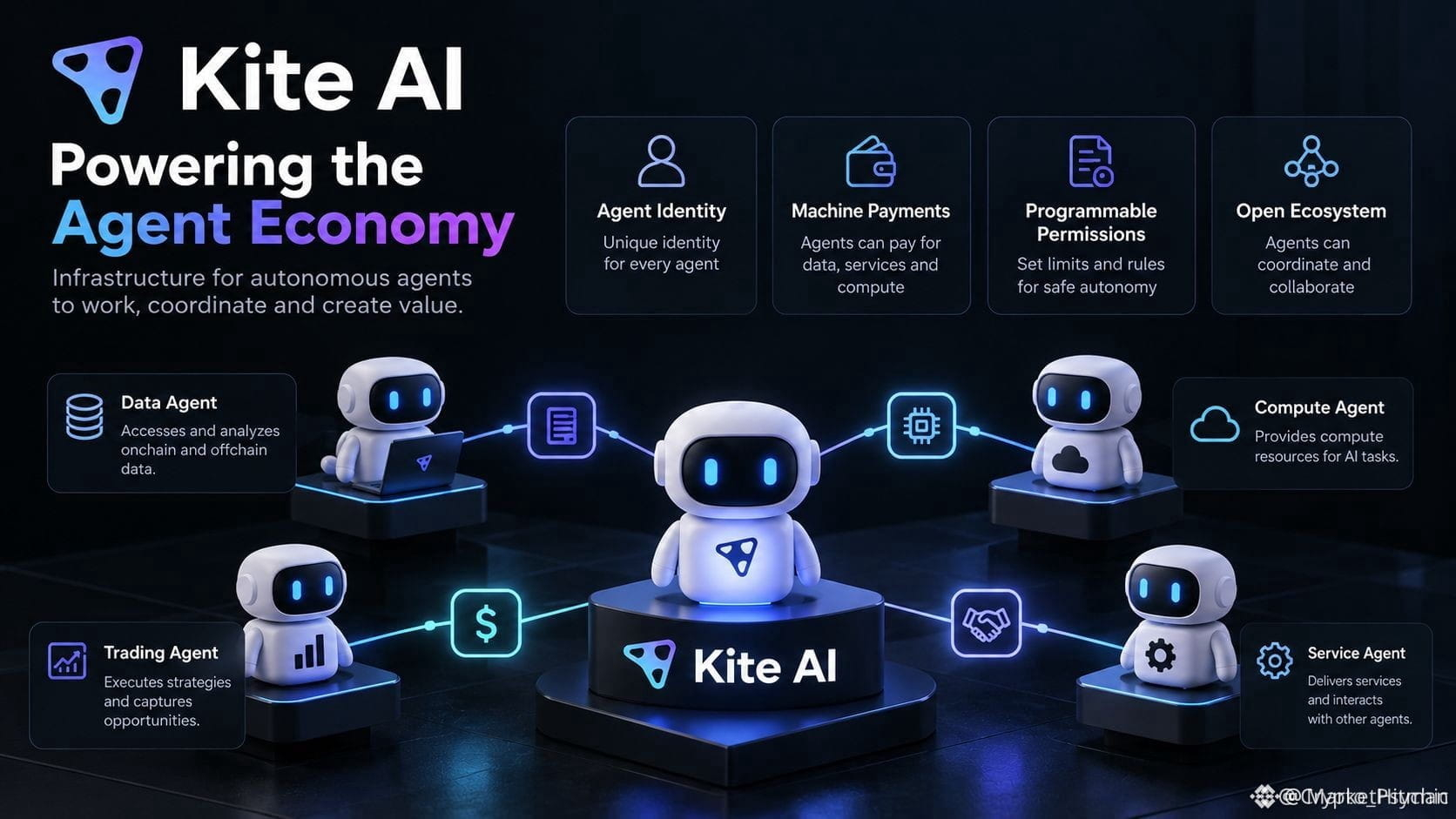
🚀 $KITE UNVEILS AI PAYMENT RAILS THAT COULD REDEFINE AGENT ECONOMY 🦈
Kite AI is laying down the rails that let autonomous agents pay for compute and data without a human hand‑off. 🦈 By giving each bot a programmable identity and spend‑limit, the platform turns abstract AI into a self‑funded market participant.
That separation of control and cash flow is the hidden catalyst for the next wave of agent‑to‑agent trades. 📊 Expect liquidity to flow toward services that can speak the same machine‑native payment language, and watch the ecosystem pivot from hype to real‑world utility.
💬 Will you allocate capital to agents that can self‑fund? 👇
⚠️ Not financial advice. Always manage your risk. 🛡️
🏷️ #KITE #AI #AgentEconomy #Crypto
🔥 💎
🚀 $KITE UNVEILS AI PAYMENT RAILS THAT COULD REDEFINE AGENT ECONOMY 🦈
Kite AI is laying down the rails that let autonomous agents pay for compute and data without a human hand‑off. 🦈 By giving each bot a programmable identity and spend‑limit, the platform turns abstract AI into a self‑funded market participant.
That separation of control and cash flow is the hidden catalyst for the next wave of agent‑to‑agent trades. 📊 Expect liquidity to flow toward services that can speak the same machine‑native payment language, and watch the ecosystem pivot from hype to real‑world utility.
💬 Will you allocate capital to agents that can self‑fund? 👇
⚠️ Not financial advice. Always manage your risk. 🛡️
🏷️ #KITE #AI #AgentEconomy #Crypto
🔥 💎
Kite AI is laying down the rails that let autonomous agents pay for compute and data without a human hand‑off. 🦈 By giving each bot a programmable identity and spend‑limit, the platform turns abstract AI into a self‑funded market participant.
That separation of control and cash flow is the hidden catalyst for the next wave of agent‑to‑agent trades. 📊 Expect liquidity to flow toward services that can speak the same machine‑native payment language, and watch the ecosystem pivot from hype to real‑world utility.
💬 Will you allocate capital to agents that can self‑fund? 👇
⚠️ Not financial advice. Always manage your risk. 🛡️
🏷️ #KITE #AI #AgentEconomy #Crypto
🔥 💎
9
🚀 Anthropic's 1,300% Revenue Growth: Are AI Crypto Tokens Worth Watching?
Anthropic's remarkable revenue growth highlights the rapid expansion of the AI industry, making $NEAR and $RENDER two interesting cryptocurrencies to keep on the watchlist.
However, strong AI industry growth does not automatically translate into higher token prices. Market sentiment, liquidity, technical confirmation, and broader market conditions remain critical.
📊 The opportunity is worth monitoring, not chasing. Patience and risk management should always come before speculation.
⚠️ Not financial advice (NFA). Always do your own research (DYOR) before making investment decisions.
#AnthropicAI #AI #Crypto #DYOR🟢
🚀 Anthropic's 1,300% Revenue Growth: Are AI Crypto Tokens Worth Watching?
Anthropic's remarkable revenue growth highlights the rapid expansion of the AI industry, making $NEAR and $RENDER two interesting cryptocurrencies to keep on the watchlist.
However, strong AI industry growth does not automatically translate into higher token prices. Market sentiment, liquidity, technical confirmation, and broader market conditions remain critical.
📊 The opportunity is worth monitoring, not chasing. Patience and risk management should always come before speculation.
⚠️ Not financial advice (NFA). Always do your own research (DYOR) before making investment decisions.
#AnthropicAI #AI #Crypto #DYOR🟢
Anthropic's remarkable revenue growth highlights the rapid expansion of the AI industry, making $NEAR and $RENDER two interesting cryptocurrencies to keep on the watchlist.
However, strong AI industry growth does not automatically translate into higher token prices. Market sentiment, liquidity, technical confirmation, and broader market conditions remain critical.
📊 The opportunity is worth monitoring, not chasing. Patience and risk management should always come before speculation.
⚠️ Not financial advice (NFA). Always do your own research (DYOR) before making investment decisions.
#AnthropicAI #AI #Crypto #DYOR🟢
144

·
--
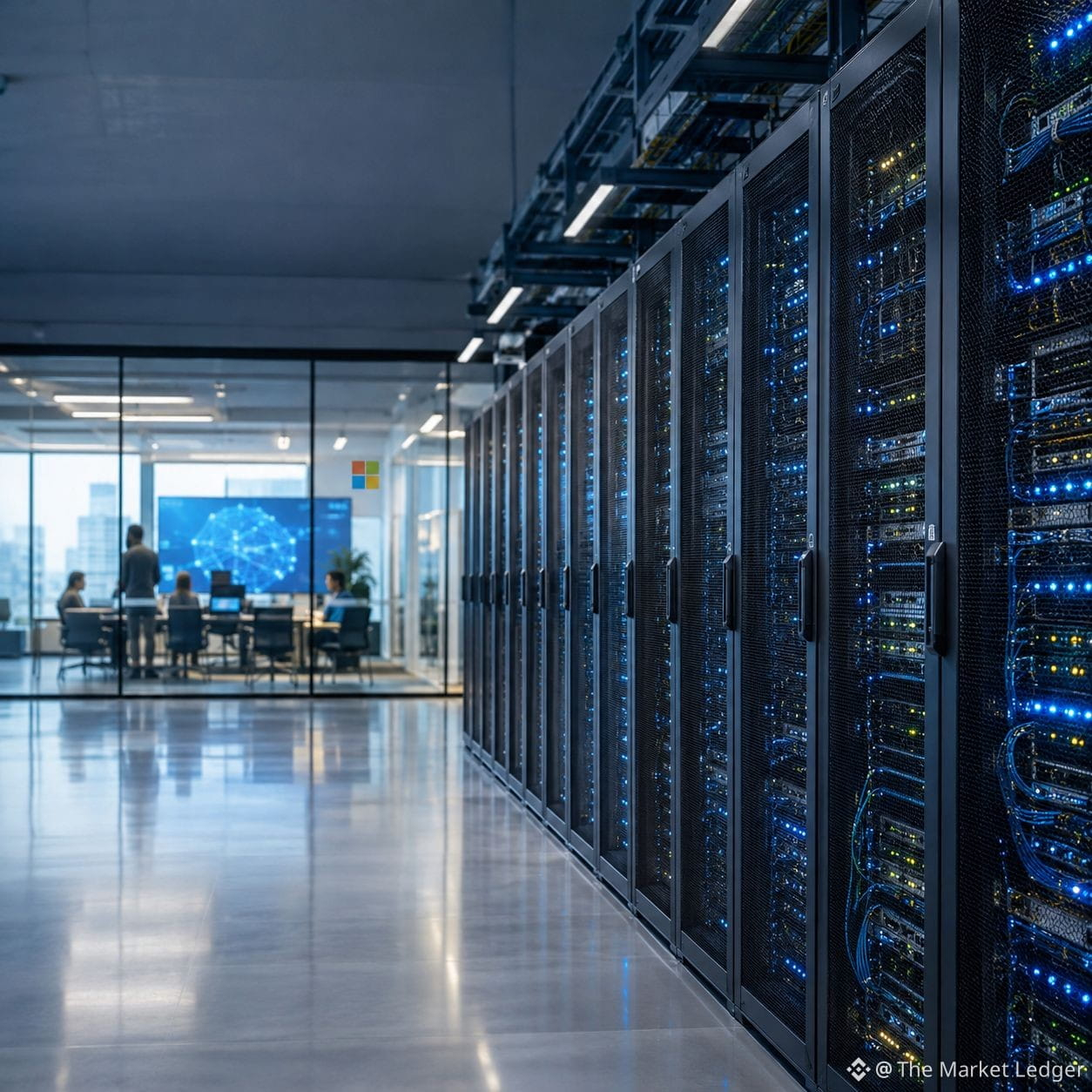
#CanMicrosoftDeliverOnAI CanMicrosoftDeliverOnAI? 🤖📈
Microsoft is doubling down on AI, expanding its Azure AI infrastructure and developing smarter Copilot tools to help businesses automate work. Its latest plans include scaling its own Maia AI chip systems.
🚨 The big question: Can Microsoft turn its massive AI investments into sustainable revenue and profits?
Investors will be watching Azure growth, Copilot adoption, and AI spending closely as Microsoft prepares to report earnings on October 28.
💬 What do you think? Can Microsoft become a long-term AI winner, or are expectations getting too high?
#Microsoft #AI #Azure
#CanMicrosoftDeliverOnAI CanMicrosoftDeliverOnAI? 🤖📈
Microsoft is doubling down on AI, expanding its Azure AI infrastructure and developing smarter Copilot tools to help businesses automate work. Its latest plans include scaling its own Maia AI chip systems.
🚨 The big question: Can Microsoft turn its massive AI investments into sustainable revenue and profits?
Investors will be watching Azure growth, Copilot adoption, and AI spending closely as Microsoft prepares to report earnings on October 28.
💬 What do you think? Can Microsoft become a long-term AI winner, or are expectations getting too high?
#Microsoft #AI #Azure
Microsoft is doubling down on AI, expanding its Azure AI infrastructure and developing smarter Copilot tools to help businesses automate work. Its latest plans include scaling its own Maia AI chip systems.
🚨 The big question: Can Microsoft turn its massive AI investments into sustainable revenue and profits?
Investors will be watching Azure growth, Copilot adoption, and AI spending closely as Microsoft prepares to report earnings on October 28.
💬 What do you think? Can Microsoft become a long-term AI winner, or are expectations getting too high?
#Microsoft #AI #Azure

23


·
--
🚀 ANTHROPIC: The AI Narrative Meets Web3
Artificial intelligence is transforming how we work, build, and interact with technology. As interest in AI continues to grow, Web3 tokens connected to this narrative are attracting attention from crypto traders.
ANTHROPIC on Solana is an interesting token to research, but I believe the real opportunity lies in understanding the fundamentals rather than simply following the hype. 🔍
Before making any decision, I would look closely at liquidity, trading volume, holder distribution, and the token's actual connection to its underlying narrative.
One thing is clear: a strong narrative can attract attention, but sustainable value requires more than hype.
What do you think about the intersection of AI and Web3? Could it become one of crypto's most important narratives? 🤔
$ICP
{future}(ICPUSDT)
$AR
{future}(ARUSDT)
$ANTHROPIC
{future}(ANTHROPICUSDT)
#Anthropic
#Web3
#AI
🚀 ANTHROPIC: The AI Narrative Meets Web3
Artificial intelligence is transforming how we work, build, and interact with technology. As interest in AI continues to grow, Web3 tokens connected to this narrative are attracting attention from crypto traders.
ANTHROPIC on Solana is an interesting token to research, but I believe the real opportunity lies in understanding the fundamentals rather than simply following the hype. 🔍
Before making any decision, I would look closely at liquidity, trading volume, holder distribution, and the token's actual connection to its underlying narrative.
One thing is clear: a strong narrative can attract attention, but sustainable value requires more than hype.
What do you think about the intersection of AI and Web3? Could it become one of crypto's most important narratives? 🤔
$ICP
$AR
$ANTHROPIC
#Anthropic
#Web3
#AI
Artificial intelligence is transforming how we work, build, and interact with technology. As interest in AI continues to grow, Web3 tokens connected to this narrative are attracting attention from crypto traders.
ANTHROPIC on Solana is an interesting token to research, but I believe the real opportunity lies in understanding the fundamentals rather than simply following the hype. 🔍
Before making any decision, I would look closely at liquidity, trading volume, holder distribution, and the token's actual connection to its underlying narrative.
One thing is clear: a strong narrative can attract attention, but sustainable value requires more than hype.
What do you think about the intersection of AI and Web3? Could it become one of crypto's most important narratives? 🤔
$ICP
$AR
$ANTHROPIC
#Anthropic
#Web3
#AI

3
559

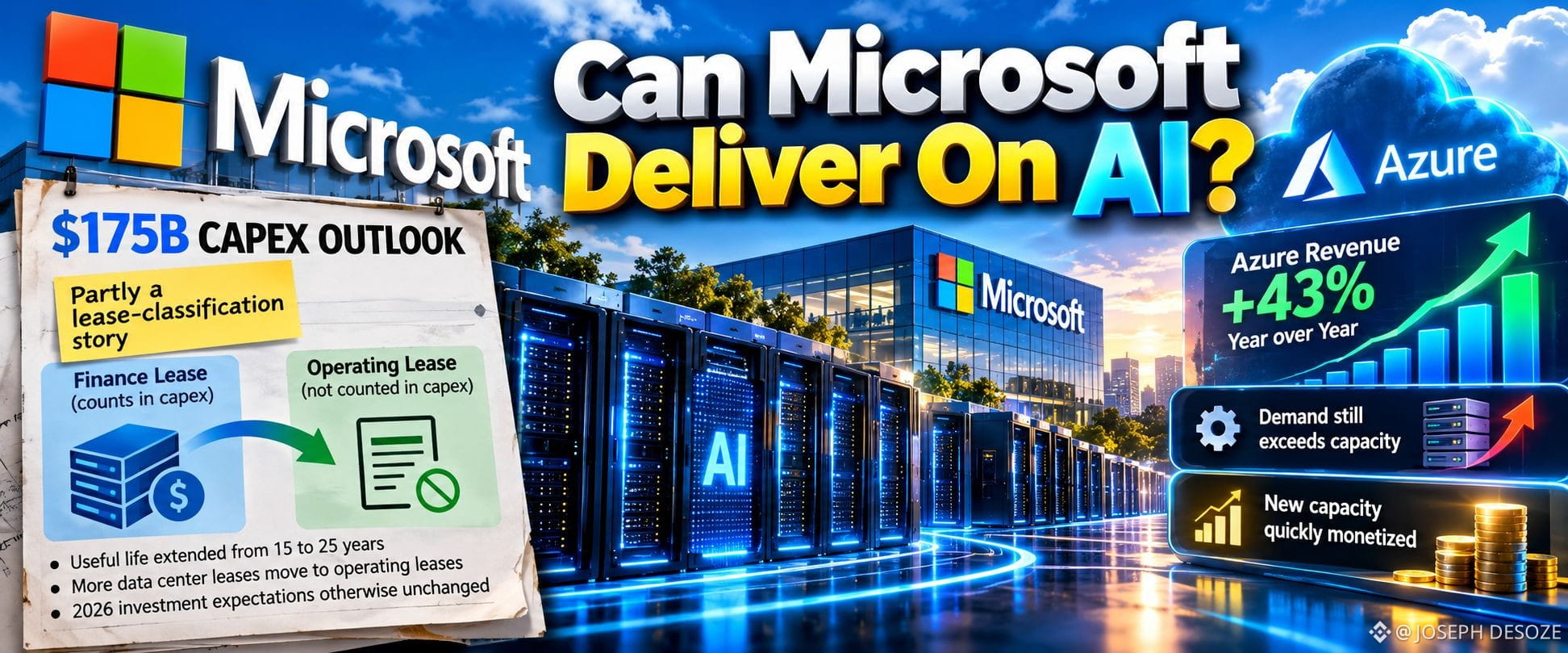
#CanMicrosoftDeliverOnAI
Why does this matter for CanMicrosoftDeliverOnAI? Spending is only an input. In Q4, Azure revenue grew 43% year over year, yet Microsoft said demand still exceeded available capacity. It also said new capacity delivered during the quarter was quickly monetized. That shows execution, but the supply gap remained.
I’d judge delivery by comparing capacity actually brought online with Azure growth and cloud gross-margin direction, not capex alone. Strong growth alongside improving margins would suggest infrastructure is becoming more productive; higher spending without those signals is harder to interpret.
The next report’s key detail is whether Microsoft is closing the capacity gap faster, while separating genuine build-out from lease-classification effects.
#AI
#CanMicrosoftDeliverOnAI
Why does this matter for CanMicrosoftDeliverOnAI? Spending is only an input. In Q4, Azure revenue grew 43% year over year, yet Microsoft said demand still exceeded available capacity. It also said new capacity delivered during the quarter was quickly monetized. That shows execution, but the supply gap remained.
I’d judge delivery by comparing capacity actually brought online with Azure growth and cloud gross-margin direction, not capex alone. Strong growth alongside improving margins would suggest infrastructure is becoming more productive; higher spending without those signals is harder to interpret.
The next report’s key detail is whether Microsoft is closing the capacity gap faster, while separating genuine build-out from lease-classification effects.
#AI
Why does this matter for CanMicrosoftDeliverOnAI? Spending is only an input. In Q4, Azure revenue grew 43% year over year, yet Microsoft said demand still exceeded available capacity. It also said new capacity delivered during the quarter was quickly monetized. That shows execution, but the supply gap remained.
I’d judge delivery by comparing capacity actually brought online with Azure growth and cloud gross-margin direction, not capex alone. Strong growth alongside improving margins would suggest infrastructure is becoming more productive; higher spending without those signals is harder to interpret.
The next report’s key detail is whether Microsoft is closing the capacity gap faster, while separating genuine build-out from lease-classification effects.
#AI
222

·
--
Bullish
#CanMicrosoftDeliverOnAI
🤖 Can Microsoft Turn AI Hype Into Real Growth?
Microsoft remains a major player in the AI race, but the real challenge is turning heavy AI investment into sustainable revenue and stronger profits.
📊 Why It Matters for Crypto
AI-related stocks influence broader market sentiment. If Microsoft demonstrates strong AI demand and profitable growth, investor confidence could improve. However, disappointing results or rising infrastructure costs could pressure tech stocks and weaken risk appetite across crypto markets.
🔍 What Traders Should Watch
• AI revenue growth and future guidance
• Cloud performance and infrastructure spending
• Nasdaq trends and broader risk sentiment
• Bitcoin’s reaction to traditional market movements
Market Outlook: This is not automatically bullish or bearish for crypto. The key is whether AI investment delivers measurable business results.
💡 The takeaway: AI hype can attract capital, but sustainable earnings are what ultimately matter.
#Microsoft #AI #Bitcoin #CryptoMarket
$MSFT $NIL $XRP
{future}(XRPUSDT)
{future}(NILUSDT)
{future}(MSFTUSDT)
#CanMicrosoftDeliverOnAI
🤖 Can Microsoft Turn AI Hype Into Real Growth?
Microsoft remains a major player in the AI race, but the real challenge is turning heavy AI investment into sustainable revenue and stronger profits.
📊 Why It Matters for Crypto
AI-related stocks influence broader market sentiment. If Microsoft demonstrates strong AI demand and profitable growth, investor confidence could improve. However, disappointing results or rising infrastructure costs could pressure tech stocks and weaken risk appetite across crypto markets.
🔍 What Traders Should Watch
• AI revenue growth and future guidance
• Cloud performance and infrastructure spending
• Nasdaq trends and broader risk sentiment
• Bitcoin’s reaction to traditional market movements
Market Outlook: This is not automatically bullish or bearish for crypto. The key is whether AI investment delivers measurable business results.
💡 The takeaway: AI hype can attract capital, but sustainable earnings are what ultimately matter.
#Microsoft #AI #Bitcoin #CryptoMarket
$MSFT $NIL $XRP
🤖 Can Microsoft Turn AI Hype Into Real Growth?
Microsoft remains a major player in the AI race, but the real challenge is turning heavy AI investment into sustainable revenue and stronger profits.
📊 Why It Matters for Crypto
AI-related stocks influence broader market sentiment. If Microsoft demonstrates strong AI demand and profitable growth, investor confidence could improve. However, disappointing results or rising infrastructure costs could pressure tech stocks and weaken risk appetite across crypto markets.
🔍 What Traders Should Watch
• AI revenue growth and future guidance
• Cloud performance and infrastructure spending
• Nasdaq trends and broader risk sentiment
• Bitcoin’s reaction to traditional market movements
Market Outlook: This is not automatically bullish or bearish for crypto. The key is whether AI investment delivers measurable business results.
💡 The takeaway: AI hype can attract capital, but sustainable earnings are what ultimately matter.
#Microsoft #AI #Bitcoin #CryptoMarket
$MSFT $NIL $XRP

58

·
--
Article
Bitcoin Mining Firm Luxor Secures $16 Million for AI ExpansionBitcoin mining firm Luxor has successfully raised 16 million to accelerate its transition into the growing AI compute sector.
The funding round was led by CMT Digital and saw participation from major industry players, including hardware manufacturers Canaan and MicroBT. This capital injection marks a significant pivot for the company as it looks to diversify its operations beyond traditional mining activities.
Luxor plans to use these funds to scale its AI compute trading platform and expand its hardware brokerage services. By bridging the gap between mining infrastructure and the high-performance computing needs of the AI industry, they are finding new ways to utilize their existing technical expertise.
It seems the line between mining rigs and AI servers is getting blurrier than my vision after staring at chart
Why it matters 💡
This development suggests that we might see more mining firms pivoting toward AI-related services to stabilize their revenue streams. It is worth keeping an eye on how these infrastructure shifts influence the overall capacity and efficiency of the broader network.
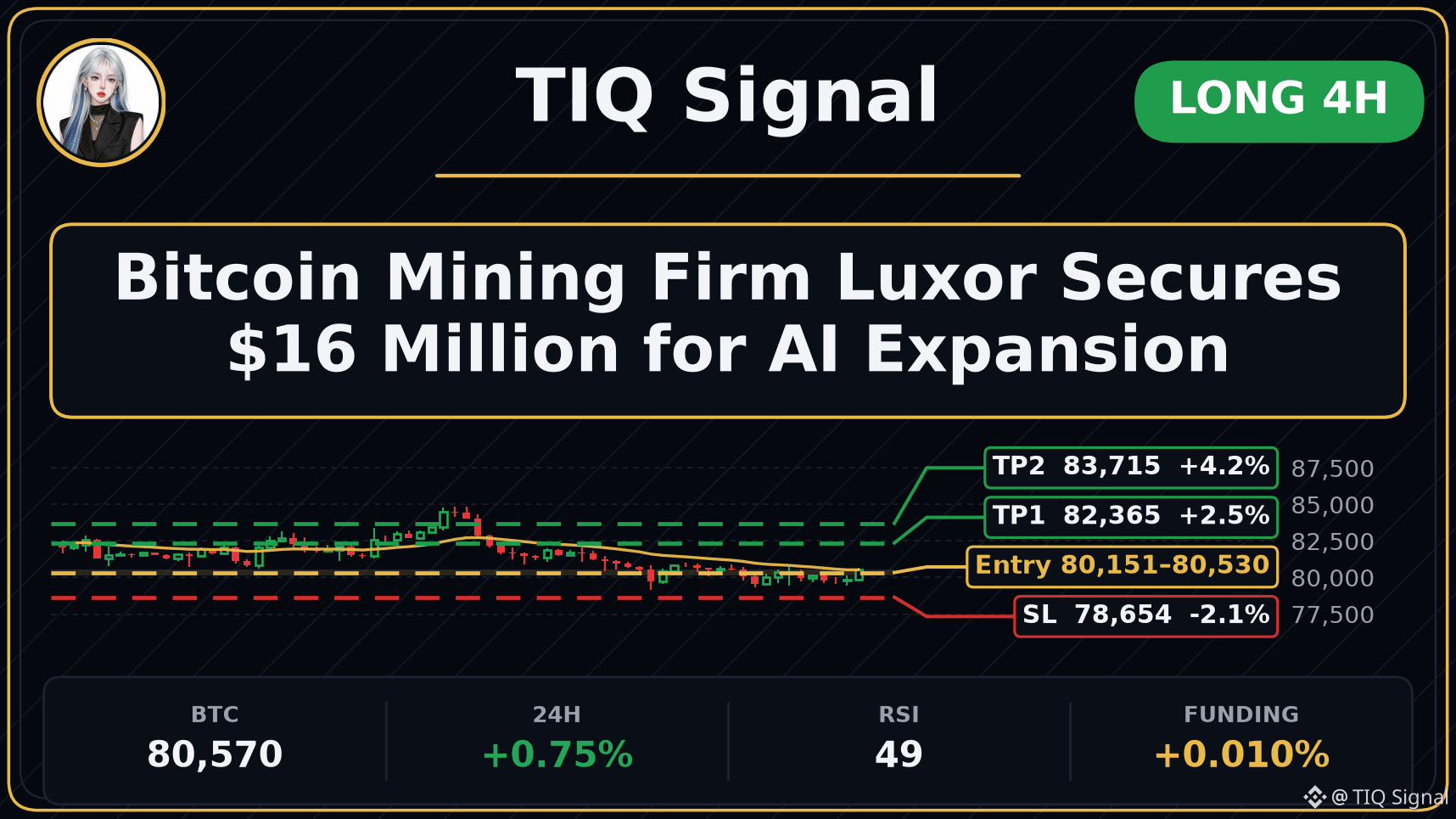
4H signal view on $BTC 📊
Long 🟢
Entry 80,151 - 80,530
TP 82,365 - 83,715 - 85,402
SL 78,654
RSI 49 still has room to move. MACD momentum is leaning up. This one goes against the EMA200 trend.
$BTC $ETH $XAU #BTC #Bitcoin #Mining #AI #TechNews
ℹ️ News roundup from public sources, not financial advice.
Bitcoin Mining Firm Luxor Secures $16 Million for AI Expansion
Bitcoin mining firm Luxor has successfully raised 16 million to accelerate its transition into the growing AI compute sector.
The funding round was led by CMT Digital and saw participation from major industry players, including hardware manufacturers Canaan and MicroBT. This capital injection marks a significant pivot for the company as it looks to diversify its operations beyond traditional mining activities.
Luxor plans to use these funds to scale its AI compute trading platform and expand its hardware brokerage services. By bridging the gap between mining infrastructure and the high-performance computing needs of the AI industry, they are finding new ways to utilize their existing technical expertise.
It seems the line between mining rigs and AI servers is getting blurrier than my vision after staring at chart
Why it matters 💡
This development suggests that we might see more mining firms pivoting toward AI-related services to stabilize their revenue streams. It is worth keeping an eye on how these infrastructure shifts influence the overall capacity and efficiency of the broader network.
4H signal view on $BTC 📊
Long 🟢
Entry 80,151 - 80,530
TP 82,365 - 83,715 - 85,402
SL 78,654
RSI 49 still has room to move. MACD momentum is leaning up. This one goes against the EMA200 trend.
$BTC $ETH $XAU #BTC #Bitcoin #Mining #AI #TechNews
ℹ️ News roundup from public sources, not financial advice.
The funding round was led by CMT Digital and saw participation from major industry players, including hardware manufacturers Canaan and MicroBT. This capital injection marks a significant pivot for the company as it looks to diversify its operations beyond traditional mining activities.
Luxor plans to use these funds to scale its AI compute trading platform and expand its hardware brokerage services. By bridging the gap between mining infrastructure and the high-performance computing needs of the AI industry, they are finding new ways to utilize their existing technical expertise.
It seems the line between mining rigs and AI servers is getting blurrier than my vision after staring at chart
Why it matters 💡
This development suggests that we might see more mining firms pivoting toward AI-related services to stabilize their revenue streams. It is worth keeping an eye on how these infrastructure shifts influence the overall capacity and efficiency of the broader network.
4H signal view on $BTC 📊
Long 🟢
Entry 80,151 - 80,530
TP 82,365 - 83,715 - 85,402
SL 78,654
RSI 49 still has room to move. MACD momentum is leaning up. This one goes against the EMA200 trend.
$BTC $ETH $XAU #BTC #Bitcoin #Mining #AI #TechNews
ℹ️ News roundup from public sources, not financial advice.
1
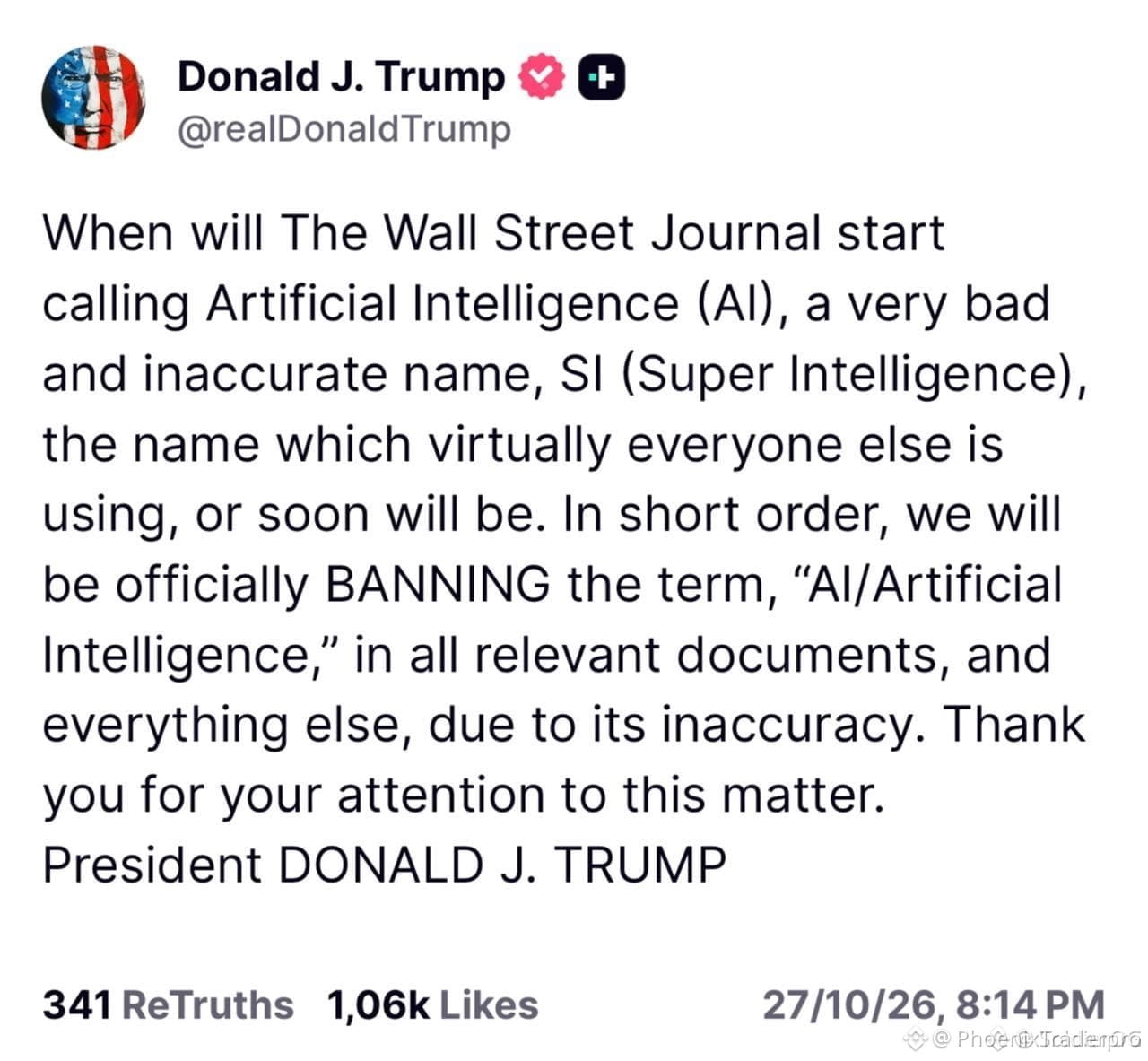
🚨 $AIN SURGES ON SUPER‑INTELLIGENCE HYPE AS REGULATORS REDEFINE AI 🚀
The sudden rebrand from “AI” to “super intelligence” has lit a fire under smart‑money whales, who are already loading $AIN , $HAEDAL and $BREV ahead of the next liquidity wave. 📊 On‑chain metrics show a spike in inflows as institutions chase the new narrative, while short‑squeeze pressure builds on the $AIN order book. 🦈
Speculators are riding the hype, driving volume into the stratosphere and pushing price charts into bullish territory, but the regulatory fog could snap the momentum any second. ⚡ Keep an eye on the order flow and be ready to flip if the tide turns. 📈
💬 Are you doubling down on the AI surge or hedging against the policy backlash?
⚠️ Not financial advice. Always manage your risk. 🛡️
🏷️ #AIN #LongSetup #AI #Crypto
🔥 💎
🚨 $AIN SURGES ON SUPER‑INTELLIGENCE HYPE AS REGULATORS REDEFINE AI 🚀
The sudden rebrand from “AI” to “super intelligence” has lit a fire under smart‑money whales, who are already loading $AIN , $HAEDAL and $BREV ahead of the next liquidity wave. 📊 On‑chain metrics show a spike in inflows as institutions chase the new narrative, while short‑squeeze pressure builds on the $AIN order book. 🦈
Speculators are riding the hype, driving volume into the stratosphere and pushing price charts into bullish territory, but the regulatory fog could snap the momentum any second. ⚡ Keep an eye on the order flow and be ready to flip if the tide turns. 📈
💬 Are you doubling down on the AI surge or hedging against the policy backlash?
⚠️ Not financial advice. Always manage your risk. 🛡️
🏷️ #AIN #LongSetup #AI #Crypto
🔥 💎
The sudden rebrand from “AI” to “super intelligence” has lit a fire under smart‑money whales, who are already loading $AIN , $HAEDAL and $BREV ahead of the next liquidity wave. 📊 On‑chain metrics show a spike in inflows as institutions chase the new narrative, while short‑squeeze pressure builds on the $AIN order book. 🦈
Speculators are riding the hype, driving volume into the stratosphere and pushing price charts into bullish territory, but the regulatory fog could snap the momentum any second. ⚡ Keep an eye on the order flow and be ready to flip if the tide turns. 📈
💬 Are you doubling down on the AI surge or hedging against the policy backlash?
⚠️ Not financial advice. Always manage your risk. 🛡️
🏷️ #AIN #LongSetup #AI #Crypto
🔥 💎
16

·
--
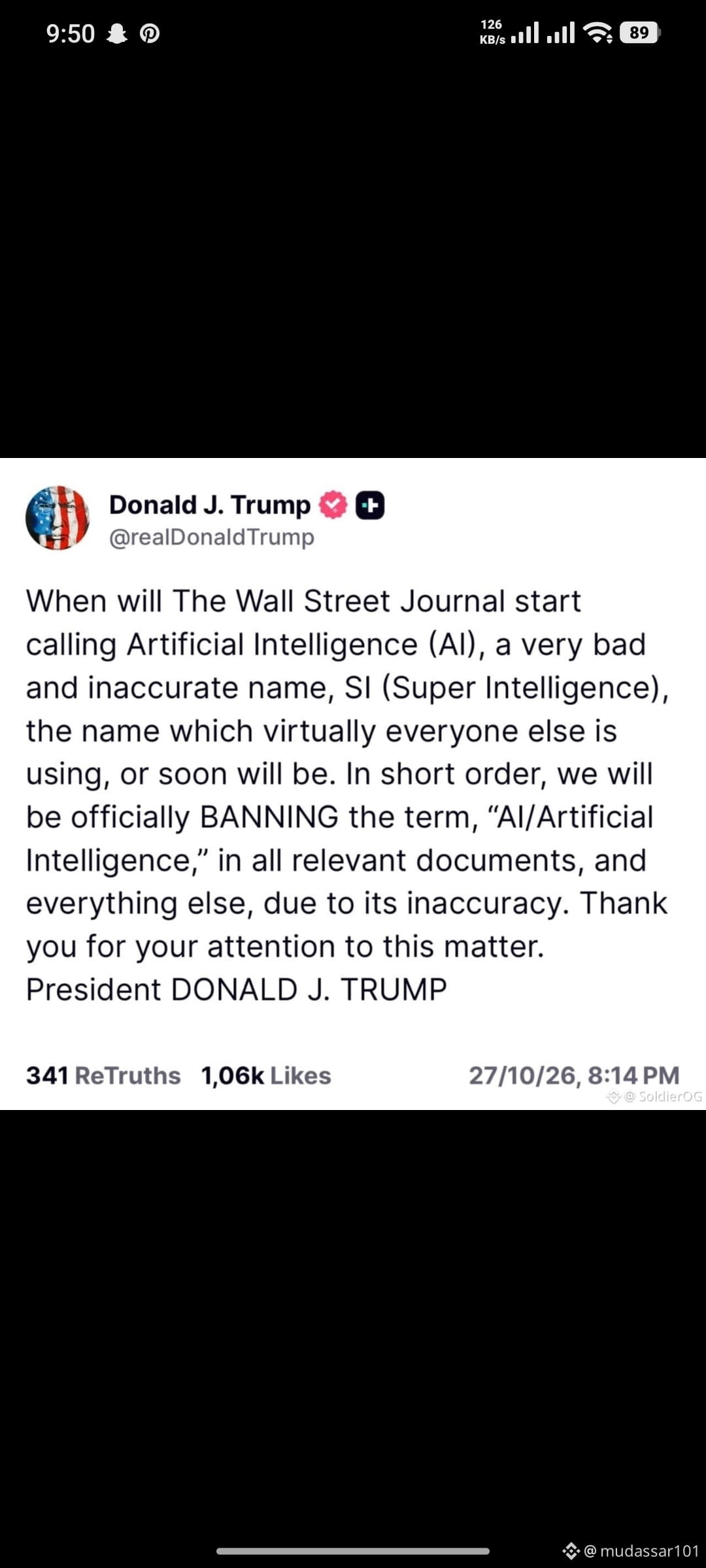
🚨 BREAKING: TRUMP’S AI TERMINOLOGY SHIFT? 🔥
Trump reportedly wants “Super Intelligence” used instead of “Artificial Intelligence” in documents, sparking debate over the potential impact on AI crypto tokens.
📈 Will this fuel AI token hype or create more uncertainty?
$HAEDAL $BREV $AIN
#AI #Crypto #breakingnews
🚨 BREAKING: TRUMP’S AI TERMINOLOGY SHIFT? 🔥
Trump reportedly wants “Super Intelligence” used instead of “Artificial Intelligence” in documents, sparking debate over the potential impact on AI crypto tokens.
📈 Will this fuel AI token hype or create more uncertainty?
$HAEDAL $BREV $AIN
#AI #Crypto #breakingnews
Trump reportedly wants “Super Intelligence” used instead of “Artificial Intelligence” in documents, sparking debate over the potential impact on AI crypto tokens.
📈 Will this fuel AI token hype or create more uncertainty?
$HAEDAL $BREV $AIN
#AI #Crypto #breakingnews
309
·
--
Bullish
#CanGoogleDefindItsCore
🤖 Can Google Turn AI Hype Into Real Profits? The Market Wants Proof
Google’s AI ambitions are entering a critical phase. Investors are increasingly focused on whether heavy spending on AI infrastructure can generate sustainable revenue, improve profitability, and strengthen the company’s long-term competitive position.
The key issue is not simply how advanced Google’s AI technology becomes. It is whether businesses and consumers use these tools enough to justify the investment.
📊 Why This Matters for Crypto
Big Tech earnings can influence broader risk sentiment. If Google demonstrates solid growth and convincing returns on AI spending, confidence across technology markets could improve. On the other hand, rising costs or disappointing guidance could make investors more cautious about risk-sensitive assets, including cryptocurrencies.
However, this connection is indirect. Google’s results alone cannot determine Bitcoin’s next move; interest rates, liquidity, ETF flows, and crypto market positioning also play important roles.
🔎 What Traders Should Watch
• Google Cloud revenue and profit growth
• AI infrastructure spending versus financial returns
• Management’s outlook for future investment
• Bitcoin’s reaction to broader market sentiment
💡 My Take: The AI trade is moving beyond excitement toward accountability. Strong technology does not automatically mean strong returns, and even impressive revenue growth can disappoint investors if costs rise too quickly.
For crypto traders, the important signal is how earnings influence overall risk appetite—not simply whether Google beats expectations.
#Google #AI #Bitcoin #CryptoMarket
$GOOGL $ZEC $AIN
{future}(AINUSDT)
{future}(ZECUSDT)
{future}(GOOGLUSDT)
#CanGoogleDefindItsCore
🤖 Can Google Turn AI Hype Into Real Profits? The Market Wants Proof
Google’s AI ambitions are entering a critical phase. Investors are increasingly focused on whether heavy spending on AI infrastructure can generate sustainable revenue, improve profitability, and strengthen the company’s long-term competitive position.
The key issue is not simply how advanced Google’s AI technology becomes. It is whether businesses and consumers use these tools enough to justify the investment.
📊 Why This Matters for Crypto
Big Tech earnings can influence broader risk sentiment. If Google demonstrates solid growth and convincing returns on AI spending, confidence across technology markets could improve. On the other hand, rising costs or disappointing guidance could make investors more cautious about risk-sensitive assets, including cryptocurrencies.
However, this connection is indirect. Google’s results alone cannot determine Bitcoin’s next move; interest rates, liquidity, ETF flows, and crypto market positioning also play important roles.
🔎 What Traders Should Watch
• Google Cloud revenue and profit growth
• AI infrastructure spending versus financial returns
• Management’s outlook for future investment
• Bitcoin’s reaction to broader market sentiment
💡 My Take: The AI trade is moving beyond excitement toward accountability. Strong technology does not automatically mean strong returns, and even impressive revenue growth can disappoint investors if costs rise too quickly.
For crypto traders, the important signal is how earnings influence overall risk appetite—not simply whether Google beats expectations.
#Google #AI #Bitcoin #CryptoMarket
$GOOGL $ZEC $AIN
🤖 Can Google Turn AI Hype Into Real Profits? The Market Wants Proof
Google’s AI ambitions are entering a critical phase. Investors are increasingly focused on whether heavy spending on AI infrastructure can generate sustainable revenue, improve profitability, and strengthen the company’s long-term competitive position.
The key issue is not simply how advanced Google’s AI technology becomes. It is whether businesses and consumers use these tools enough to justify the investment.
📊 Why This Matters for Crypto
Big Tech earnings can influence broader risk sentiment. If Google demonstrates solid growth and convincing returns on AI spending, confidence across technology markets could improve. On the other hand, rising costs or disappointing guidance could make investors more cautious about risk-sensitive assets, including cryptocurrencies.
However, this connection is indirect. Google’s results alone cannot determine Bitcoin’s next move; interest rates, liquidity, ETF flows, and crypto market positioning also play important roles.
🔎 What Traders Should Watch
• Google Cloud revenue and profit growth
• AI infrastructure spending versus financial returns
• Management’s outlook for future investment
• Bitcoin’s reaction to broader market sentiment
💡 My Take: The AI trade is moving beyond excitement toward accountability. Strong technology does not automatically mean strong returns, and even impressive revenue growth can disappoint investors if costs rise too quickly.
For crypto traders, the important signal is how earnings influence overall risk appetite—not simply whether Google beats expectations.
#Google #AI #Bitcoin #CryptoMarket
$GOOGL $ZEC $AIN

364

·
--
Bullish
Worked for 31s
### Can Microsoft Deliver on AI?
The big question is no longer whether AI is growing — it’s whether Microsoft can turn that growth into sustainable profits.
Microsoft’s FY2026 results show encouraging progress: annual revenue reached $331.8 billion, up 18%, while Azure revenue surpassed $100 billion for the first time. Microsoft also reported more than 30 million paid Microsoft 365 Copilot seats.
But the challenge remains: AI infrastructure is expensive, and strong demand alone does not guarantee attractive returns. Microsoft must keep expanding Azure capacity, turn Copilot into a product businesses consistently pay for, and ensure AI revenue justifies its investment.
My take: Microsoft has the cloud infrastructure, enterprise customer base, and distribution to become one of AI’s biggest winners. The real test is whether monetization and efficiency can keep pace with spending.
The next major signal comes from its upcoming earnings report: Azure growth, AI adoption, and infrastructure costs will all matter.
#Microsoft #ArtificialIntelligence #AI #CanMicrosoftDeliverOnAI #biancesequre
$BNB
{spot}(BNBUSDT)
$BTC
{spot}(BTCUSDT)
$XRP
{spot}(XRPUSDT)
Worked for 31s
### Can Microsoft Deliver on AI?
The big question is no longer whether AI is growing — it’s whether Microsoft can turn that growth into sustainable profits.
Microsoft’s FY2026 results show encouraging progress: annual revenue reached $331.8 billion, up 18%, while Azure revenue surpassed $100 billion for the first time. Microsoft also reported more than 30 million paid Microsoft 365 Copilot seats.
But the challenge remains: AI infrastructure is expensive, and strong demand alone does not guarantee attractive returns. Microsoft must keep expanding Azure capacity, turn Copilot into a product businesses consistently pay for, and ensure AI revenue justifies its investment.
My take: Microsoft has the cloud infrastructure, enterprise customer base, and distribution to become one of AI’s biggest winners. The real test is whether monetization and efficiency can keep pace with spending.
The next major signal comes from its upcoming earnings report: Azure growth, AI adoption, and infrastructure costs will all matter.
#Microsoft #ArtificialIntelligence #AI #CanMicrosoftDeliverOnAI #biancesequre
$BNB
$BTC
$XRP
### Can Microsoft Deliver on AI?
The big question is no longer whether AI is growing — it’s whether Microsoft can turn that growth into sustainable profits.
Microsoft’s FY2026 results show encouraging progress: annual revenue reached $331.8 billion, up 18%, while Azure revenue surpassed $100 billion for the first time. Microsoft also reported more than 30 million paid Microsoft 365 Copilot seats.
But the challenge remains: AI infrastructure is expensive, and strong demand alone does not guarantee attractive returns. Microsoft must keep expanding Azure capacity, turn Copilot into a product businesses consistently pay for, and ensure AI revenue justifies its investment.
My take: Microsoft has the cloud infrastructure, enterprise customer base, and distribution to become one of AI’s biggest winners. The real test is whether monetization and efficiency can keep pace with spending.
The next major signal comes from its upcoming earnings report: Azure growth, AI adoption, and infrastructure costs will all matter.
#Microsoft #ArtificialIntelligence #AI #CanMicrosoftDeliverOnAI #biancesequre
$BNB
$BTC
$XRP
67
Log in to explore more content
Join global crypto users on Binance Square
⚡️ Get latest and useful information about crypto.
💬 Trusted by the world’s largest crypto exchange.
👍 Discover real insights from verified creators.
Email / Phone number
Trending Topics
1
#CanMicrosoftDeliverOnAI
94,421 views
804 Discussing
2
#CanGoogleDefindItsCore
45,523 views
586 Discussing
3
#FOMCWatch
9.1M views
28,024 Discussing
4
#EthereumDropsBelow$2300
11,355 views
161 Discussing
5
#BitcoinSlipsBelow$80KAgain
31,718 views
126 Discussing
6
#ThailandLaunchesWORPTStablecoinToQRPaymentApp
65,435 views
818 Discussing
7
#StrategySkipsBitcoinPurchasesSpends$205MOnSTRCBuybacks
12,302 views
99 Discussing
8
#BitmineAdds10452ETH
112,537 views
1,230 Discussing
9
#SouthKoreaConsidersEducationTaxOnCryptoExchanges
69,046 views
860 Discussing
10
#OCCUrgesCommunityBanksToEnterStablecoinPayments
45,525 views
611 Discussing