
#us10yeartreasuryyieldnears5
us10yeartreasuryyieldnears5
969 views
28 Discussing
Hot
Latest

·
--
Last time the 10-year yield got this close to 5%, $BTC traders who ignored it watched months of grind lower while they kept averaging down expecting the usual bounce.
That sting of getting caught overleveraged in greed (we're sitting at 68 right now) is exactly what this setup risks repeating, especially if you're still treating every $BTC dip as a gift instead of a warning.
Higher 10-year yields pull real capital out of crypto because 5% risk-free from Treasuries suddenly beats parking in $USDT or chasing the next $DOT move. Institutions rotate, liquidity thins, and that's when the cascade of liquidations starts even without a crypto-specific headline. We saw the same pattern when yields pushed higher in 2023: the market felt unstoppable until it wasn't, and overconfident longs got flushed in waves. Right now too many people are positioned as if rates don't matter, which is how these quiet macro shifts turn into the dumps that catch everyone offsides.
Where do you think this yield move actually takes crypto from here?
#US10YearTreasuryYieldNears5 #US2YearYieldRisesTo4 #CryptoLiquidations
Last time the 10-year yield got this close to 5%, $BTC traders who ignored it watched months of grind lower while they kept averaging down expecting the usual bounce.
That sting of getting caught overleveraged in greed (we're sitting at 68 right now) is exactly what this setup risks repeating, especially if you're still treating every $BTC dip as a gift instead of a warning.
Higher 10-year yields pull real capital out of crypto because 5% risk-free from Treasuries suddenly beats parking in $USDT or chasing the next $DOT move. Institutions rotate, liquidity thins, and that's when the cascade of liquidations starts even without a crypto-specific headline. We saw the same pattern when yields pushed higher in 2023: the market felt unstoppable until it wasn't, and overconfident longs got flushed in waves. Right now too many people are positioned as if rates don't matter, which is how these quiet macro shifts turn into the dumps that catch everyone offsides.
Where do you think this yield move actually takes crypto from here?
#US10YearTreasuryYieldNears5 #US2YearYieldRisesTo4 #CryptoLiquidations
That sting of getting caught overleveraged in greed (we're sitting at 68 right now) is exactly what this setup risks repeating, especially if you're still treating every $BTC dip as a gift instead of a warning.
Higher 10-year yields pull real capital out of crypto because 5% risk-free from Treasuries suddenly beats parking in $USDT or chasing the next $DOT move. Institutions rotate, liquidity thins, and that's when the cascade of liquidations starts even without a crypto-specific headline. We saw the same pattern when yields pushed higher in 2023: the market felt unstoppable until it wasn't, and overconfident longs got flushed in waves. Right now too many people are positioned as if rates don't matter, which is how these quiet macro shifts turn into the dumps that catch everyone offsides.
Where do you think this yield move actually takes crypto from here?
#US10YearTreasuryYieldNears5 #US2YearYieldRisesTo4 #CryptoLiquidations
35

·
--
everyone thinks greed at 68 means easy up-only season, but actually macro is quietly setting up a brutal trap for overleveraged longs.
most traders are busy chasing green candles on alts while completely ignoring debt markets, only to wake up wiped out when liquidity gets sucked dry overnight.
look at the 2023 playbook when yields made a similar push. while everyone was apeing into bags and bidding high beta plays like $DOT and $FIL, the bond market was screaming danger. when the benchmark yield pushes toward 5%, borrowing costs spike, capital rotates straight back into risk-free treasuries, and $BTC margin books end up taking the hit first.
smart money treats bond yields as the ultimate liquidity gauge, not random chart indicators. ngl, if you are sitting on heavy leverage while traditional yields hit multi-year highs, you are essentially fighting the global cost of capital.
are you de-risking into stablecoins here or betting crypto decouples this time?
#US10YearTreasuryYieldNears5 #CryptoLiquidations #US2YearYieldRisesTo4
everyone thinks greed at 68 means easy up-only season, but actually macro is quietly setting up a brutal trap for overleveraged longs.
most traders are busy chasing green candles on alts while completely ignoring debt markets, only to wake up wiped out when liquidity gets sucked dry overnight.
look at the 2023 playbook when yields made a similar push. while everyone was apeing into bags and bidding high beta plays like $DOT and $FIL , the bond market was screaming danger. when the benchmark yield pushes toward 5%, borrowing costs spike, capital rotates straight back into risk-free treasuries, and $BTC margin books end up taking the hit first.
smart money treats bond yields as the ultimate liquidity gauge, not random chart indicators. ngl, if you are sitting on heavy leverage while traditional yields hit multi-year highs, you are essentially fighting the global cost of capital.
are you de-risking into stablecoins here or betting crypto decouples this time?
#US10YearTreasuryYieldNears5 #CryptoLiquidations #US2YearYieldRisesTo4
most traders are busy chasing green candles on alts while completely ignoring debt markets, only to wake up wiped out when liquidity gets sucked dry overnight.
look at the 2023 playbook when yields made a similar push. while everyone was apeing into bags and bidding high beta plays like $DOT and $FIL , the bond market was screaming danger. when the benchmark yield pushes toward 5%, borrowing costs spike, capital rotates straight back into risk-free treasuries, and $BTC margin books end up taking the hit first.
smart money treats bond yields as the ultimate liquidity gauge, not random chart indicators. ngl, if you are sitting on heavy leverage while traditional yields hit multi-year highs, you are essentially fighting the global cost of capital.
are you de-risking into stablecoins here or betting crypto decouples this time?
#US10YearTreasuryYieldNears5 #CryptoLiquidations #US2YearYieldRisesTo4

271

Last week the 10-year yield started pushing toward 5% while most crypto traders stayed glued to green candles and ignored the bond market entirely.
The real pain is getting liquidated on leveraged $BTC longs because you treated rising yields as background noise. You hold through the grind, then the unwind hits and there is no clean exit.
This is not a random spike. The 10-year nearing 5% raises the hurdle rate for every risk asset. Capital that was happy sitting in crypto now has a safer, higher-yielding alternative, which historically pulls liquidity out of $BTC first and then the rest of the complex. $USDT inflows typically accelerate as positions get closed and traders park cash. In a market sitting at Fear & Greed 68, that rotation often arrives faster than people expect. Alts that were already thin on liquidity, including names like $FIL, tend to feel the pressure even more.
The 2-year climbing at the same time only tightens the noose. Most people missed the last similar setup because they were too busy chasing whatever was pumping. The lesson is that when Treasuries start competing, overleverage becomes the fastest way to lose money.
Where do you think this goes from here if the 10-year actually prints 5?
#US10YearTreasuryYieldNears5 #US2YearYieldRisesTo4 #CryptoLiquidations
Last week the 10-year yield started pushing toward 5% while most crypto traders stayed glued to green candles and ignored the bond market entirely.
The real pain is getting liquidated on leveraged $BTC longs because you treated rising yields as background noise. You hold through the grind, then the unwind hits and there is no clean exit.
This is not a random spike. The 10-year nearing 5% raises the hurdle rate for every risk asset. Capital that was happy sitting in crypto now has a safer, higher-yielding alternative, which historically pulls liquidity out of $BTC first and then the rest of the complex. $USDT inflows typically accelerate as positions get closed and traders park cash. In a market sitting at Fear & Greed 68, that rotation often arrives faster than people expect. Alts that were already thin on liquidity, including names like $FIL , tend to feel the pressure even more.
The 2-year climbing at the same time only tightens the noose. Most people missed the last similar setup because they were too busy chasing whatever was pumping. The lesson is that when Treasuries start competing, overleverage becomes the fastest way to lose money.
Where do you think this goes from here if the 10-year actually prints 5?
#US10YearTreasuryYieldNears5 #US2YearYieldRisesTo4 #CryptoLiquidations
The real pain is getting liquidated on leveraged $BTC longs because you treated rising yields as background noise. You hold through the grind, then the unwind hits and there is no clean exit.
This is not a random spike. The 10-year nearing 5% raises the hurdle rate for every risk asset. Capital that was happy sitting in crypto now has a safer, higher-yielding alternative, which historically pulls liquidity out of $BTC first and then the rest of the complex. $USDT inflows typically accelerate as positions get closed and traders park cash. In a market sitting at Fear & Greed 68, that rotation often arrives faster than people expect. Alts that were already thin on liquidity, including names like $FIL , tend to feel the pressure even more.
The 2-year climbing at the same time only tightens the noose. Most people missed the last similar setup because they were too busy chasing whatever was pumping. The lesson is that when Treasuries start competing, overleverage becomes the fastest way to lose money.
Where do you think this goes from here if the 10-year actually prints 5?
#US10YearTreasuryYieldNears5 #US2YearYieldRisesTo4 #CryptoLiquidations
126

·
--
Have you noticed how most retail traders celebrate extreme greed while the bond market quietly sets up the next liquidity drain?
Most investors keep losing money during sudden macro pullbacks because they trade chart patterns in isolation and ignore where global capital is flowing. Getting caught off guard by sudden drawdowns is the direct result of chasing green candles when macro conditions are tightening.
The common belief that digital assets are completely decoupled from traditional debt markets is simply wrong. When risk-free sovereign paper offers near five percent returns, institutional capital stops chasing speculative upside and rotates to safety. The smartest move right now is not blindly holding through volatility, but systematically derisking high-beta positions like $FIL and parking profits in $USDT until the macro picture stabilizes.
From there, redefine your entry strategy around patient spot accumulation on $BTC instead of longing breakouts on leverage. Watching bond yields gives you an early warning system that momentum indicators simply cannot provide, allowing you to position defensively before forced liquidations hit the order books.
Where do you expect capital to rotate if yields push firmly above the five percent mark?
#US10YearTreasuryYieldNears5 #US2YearYieldRisesTo4 #CryptoLiquidations
Have you noticed how most retail traders celebrate extreme greed while the bond market quietly sets up the next liquidity drain?
Most investors keep losing money during sudden macro pullbacks because they trade chart patterns in isolation and ignore where global capital is flowing. Getting caught off guard by sudden drawdowns is the direct result of chasing green candles when macro conditions are tightening.
The common belief that digital assets are completely decoupled from traditional debt markets is simply wrong. When risk-free sovereign paper offers near five percent returns, institutional capital stops chasing speculative upside and rotates to safety. The smartest move right now is not blindly holding through volatility, but systematically derisking high-beta positions like $FIL and parking profits in $USDT until the macro picture stabilizes.
From there, redefine your entry strategy around patient spot accumulation on $BTC instead of longing breakouts on leverage. Watching bond yields gives you an early warning system that momentum indicators simply cannot provide, allowing you to position defensively before forced liquidations hit the order books.
Where do you expect capital to rotate if yields push firmly above the five percent mark?
#US10YearTreasuryYieldNears5 #US2YearYieldRisesTo4 #CryptoLiquidations
Most investors keep losing money during sudden macro pullbacks because they trade chart patterns in isolation and ignore where global capital is flowing. Getting caught off guard by sudden drawdowns is the direct result of chasing green candles when macro conditions are tightening.
The common belief that digital assets are completely decoupled from traditional debt markets is simply wrong. When risk-free sovereign paper offers near five percent returns, institutional capital stops chasing speculative upside and rotates to safety. The smartest move right now is not blindly holding through volatility, but systematically derisking high-beta positions like $FIL and parking profits in $USDT until the macro picture stabilizes.
From there, redefine your entry strategy around patient spot accumulation on $BTC instead of longing breakouts on leverage. Watching bond yields gives you an early warning system that momentum indicators simply cannot provide, allowing you to position defensively before forced liquidations hit the order books.
Where do you expect capital to rotate if yields push firmly above the five percent mark?
#US10YearTreasuryYieldNears5 #US2YearYieldRisesTo4 #CryptoLiquidations
136

If you are still ignoring macro signals and only watching chart patterns, stop now.
Too many traders keep getting caught on the wrong side of sharp pullbacks, wondering why solid technical setups fail overnight while capital quietly drains away.
The US 10-year Treasury yield is creeping right up against 5%, and the market is split on what comes next. One camp argues that higher bond yields will drain speculative liquidity straight out of risk assets, forcing institutional money back into safe fixed returns. You can already see traders parking profits into $USDT as volatility ramps up across majors like $BTC.
At the same time, others believe this macro pressure is already priced in, expecting crypto to decouple once yields inevitably hit a local ceiling. But history suggests fighting high yields in a market showing Greed is a risky bet. When sovereign debt offers guaranteed 5%, speculative assets without immediate yield like $DOT face serious headwinds until liquidity conditions ease.
Where do you see capital rotating if the 10-year yield cleanly breaks above 5%?
#US10YearTreasuryYieldNears5 #US2YearYieldRisesTo4 #CryptoLiquidations
If you are still ignoring macro signals and only watching chart patterns, stop now.
Too many traders keep getting caught on the wrong side of sharp pullbacks, wondering why solid technical setups fail overnight while capital quietly drains away.
The US 10-year Treasury yield is creeping right up against 5%, and the market is split on what comes next. One camp argues that higher bond yields will drain speculative liquidity straight out of risk assets, forcing institutional money back into safe fixed returns. You can already see traders parking profits into $USDT as volatility ramps up across majors like $BTC .
At the same time, others believe this macro pressure is already priced in, expecting crypto to decouple once yields inevitably hit a local ceiling. But history suggests fighting high yields in a market showing Greed is a risky bet. When sovereign debt offers guaranteed 5%, speculative assets without immediate yield like $DOT face serious headwinds until liquidity conditions ease.
Where do you see capital rotating if the 10-year yield cleanly breaks above 5%?
#US10YearTreasuryYieldNears5 #US2YearYieldRisesTo4 #CryptoLiquidations
Too many traders keep getting caught on the wrong side of sharp pullbacks, wondering why solid technical setups fail overnight while capital quietly drains away.
The US 10-year Treasury yield is creeping right up against 5%, and the market is split on what comes next. One camp argues that higher bond yields will drain speculative liquidity straight out of risk assets, forcing institutional money back into safe fixed returns. You can already see traders parking profits into $USDT as volatility ramps up across majors like $BTC .
At the same time, others believe this macro pressure is already priced in, expecting crypto to decouple once yields inevitably hit a local ceiling. But history suggests fighting high yields in a market showing Greed is a risky bet. When sovereign debt offers guaranteed 5%, speculative assets without immediate yield like $DOT face serious headwinds until liquidity conditions ease.
Where do you see capital rotating if the 10-year yield cleanly breaks above 5%?
#US10YearTreasuryYieldNears5 #US2YearYieldRisesTo4 #CryptoLiquidations
52

·
--
5% on the 10Y Treasury isn’t a crisis it’s a signal that risk is being priced again.
I’m not chasing yield. I’m watching how equities react when bonds finally demand real compensation.
When 10Y hits 5%, short-duration tech stocks lose their discount. That’s not news it’s math.
I screen for stocks with P/E above 25 and free cash flow yield below 2%. That list shrinks when yields rise.
I’m not adding exposure. I’m holding cash. Waiting for the next cluster of oversold setups that ignore this.
My view is wrong if the S&P 500 rallies 5% in the next 30 days without a 10Y yield drop below 4.7%.
What’s your play? #US10YearTreasuryYieldNears5%
Not financial advice. My levels, my risk.
5% on the 10Y Treasury isn’t a crisis it’s a signal that risk is being priced again.
I’m not chasing yield. I’m watching how equities react when bonds finally demand real compensation.
When 10Y hits 5%, short-duration tech stocks lose their discount. That’s not news it’s math.
I screen for stocks with P/E above 25 and free cash flow yield below 2%. That list shrinks when yields rise.
I’m not adding exposure. I’m holding cash. Waiting for the next cluster of oversold setups that ignore this.
My view is wrong if the S&P 500 rallies 5% in the next 30 days without a 10Y yield drop below 4.7%.
What’s your play? #US10YearTreasuryYieldNears5%
Not financial advice. My levels, my risk.
I’m not chasing yield. I’m watching how equities react when bonds finally demand real compensation.
When 10Y hits 5%, short-duration tech stocks lose their discount. That’s not news it’s math.
I screen for stocks with P/E above 25 and free cash flow yield below 2%. That list shrinks when yields rise.
I’m not adding exposure. I’m holding cash. Waiting for the next cluster of oversold setups that ignore this.
My view is wrong if the S&P 500 rallies 5% in the next 30 days without a 10Y yield drop below 4.7%.
What’s your play? #US10YearTreasuryYieldNears5%
Not financial advice. My levels, my risk.
·
--
5% on the 10Y Treasury isn’t a crisis it’s a filter.
Most traders panic when yields rise. I watch for who’s still buying risk assets anyway.
If equities hold above key levels while yields hit 5%, it means liquidity isn’t fleeing it’s reallocating.
That’s the signal. Not the yield itself.
I’m watching the SPY 500-day MA and the 10Y yield on a scatter plot. No trade yet.
If SPY climbs 5% while the yield stays above 4.9%, I’m wrong.
What’s your take? #US10YearTreasuryYieldNears5%
Not financial advice. My levels, my risk.
5% on the 10Y Treasury isn’t a crisis it’s a filter.
Most traders panic when yields rise. I watch for who’s still buying risk assets anyway.
If equities hold above key levels while yields hit 5%, it means liquidity isn’t fleeing it’s reallocating.
That’s the signal. Not the yield itself.
I’m watching the SPY 500-day MA and the 10Y yield on a scatter plot. No trade yet.
If SPY climbs 5% while the yield stays above 4.9%, I’m wrong.
What’s your take? #US10YearTreasuryYieldNears5%
Not financial advice. My levels, my risk.
Most traders panic when yields rise. I watch for who’s still buying risk assets anyway.
If equities hold above key levels while yields hit 5%, it means liquidity isn’t fleeing it’s reallocating.
That’s the signal. Not the yield itself.
I’m watching the SPY 500-day MA and the 10Y yield on a scatter plot. No trade yet.
If SPY climbs 5% while the yield stays above 4.9%, I’m wrong.
What’s your take? #US10YearTreasuryYieldNears5%
Not financial advice. My levels, my risk.
2
·
--
5% on the 10Y Treasury isn’t a crisis it’s a signal that risk is priced again.
I’ve seen this before. When yields climb past 4.5%, algo models start dumping growth stocks and rotating into cash equivalents. Not because inflation is worse but because the baseline return on safe assets now exceeds the expected return on most equities.
My screener flags this as a regime shift. I’m watching for breaking 5.1% as a trigger to consider shorting high-duration tech names with weak free cash flow. No position yet. Waiting for confirmation on volume and closing price.
If the yield drops below 4.7% in the next 5 days with rising equity volume, my view is wrong. The market is pricing in a pivot, not persistence.
What’s your take? #US10YearTreasuryYieldNears5%
Not financial advice. My levels, my risk.
5% on the 10Y Treasury isn’t a crisis it’s a signal that risk is priced again.
I’ve seen this before. When yields climb past 4.5%, algo models start dumping growth stocks and rotating into cash equivalents. Not because inflation is worse but because the baseline return on safe assets now exceeds the expected return on most equities.
My screener flags this as a regime shift. I’m watching for breaking 5.1% as a trigger to consider shorting high-duration tech names with weak free cash flow. No position yet. Waiting for confirmation on volume and closing price.
If the yield drops below 4.7% in the next 5 days with rising equity volume, my view is wrong. The market is pricing in a pivot, not persistence.
What’s your take? #US10YearTreasuryYieldNears5%
Not financial advice. My levels, my risk.
I’ve seen this before. When yields climb past 4.5%, algo models start dumping growth stocks and rotating into cash equivalents. Not because inflation is worse but because the baseline return on safe assets now exceeds the expected return on most equities.
My screener flags this as a regime shift. I’m watching for breaking 5.1% as a trigger to consider shorting high-duration tech names with weak free cash flow. No position yet. Waiting for confirmation on volume and closing price.
If the yield drops below 4.7% in the next 5 days with rising equity volume, my view is wrong. The market is pricing in a pivot, not persistence.
What’s your take? #US10YearTreasuryYieldNears5%
Not financial advice. My levels, my risk.
·
--
5% on the 10Y Treasury isn’t a crisis it’s a signal that risk pricing is finally catching up.
I’ve watched this move for months. The yield isn’t breaking because of inflation it’s breaking because liquidity is drying up and algo flows are flipping from duration long to short.
Traders who still think bonds are safe havens are ignoring the real dynamic: the Fed’s balance sheet runoff is the new market maker.
This level forces a retest of 4.8% as support. If it holds, equities get a reprieve. If it breaks, risk assets bleed slowly not crash.
I’m watching 4.95% as my entry zone for long-duration ETFs on pullbacks. Not buying now. Waiting for volume confirmation.
What would prove me wrong? If the yield spikes to 5.3% in under 72 hours without a Fed comment or data shock. That means the market lost control not me.
What’s your take? #US10YearTreasuryYieldNears5%
Not financial advice. My levels, my risk.
5% on the 10Y Treasury isn’t a crisis it’s a signal that risk pricing is finally catching up.
I’ve watched this move for months. The yield isn’t breaking because of inflation it’s breaking because liquidity is drying up and algo flows are flipping from duration long to short.
Traders who still think bonds are safe havens are ignoring the real dynamic: the Fed’s balance sheet runoff is the new market maker.
This level forces a retest of 4.8% as support. If it holds, equities get a reprieve. If it breaks, risk assets bleed slowly not crash.
I’m watching 4.95% as my entry zone for long-duration ETFs on pullbacks. Not buying now. Waiting for volume confirmation.
What would prove me wrong? If the yield spikes to 5.3% in under 72 hours without a Fed comment or data shock. That means the market lost control not me.
What’s your take? #US10YearTreasuryYieldNears5%
Not financial advice. My levels, my risk.
I’ve watched this move for months. The yield isn’t breaking because of inflation it’s breaking because liquidity is drying up and algo flows are flipping from duration long to short.
Traders who still think bonds are safe havens are ignoring the real dynamic: the Fed’s balance sheet runoff is the new market maker.
This level forces a retest of 4.8% as support. If it holds, equities get a reprieve. If it breaks, risk assets bleed slowly not crash.
I’m watching 4.95% as my entry zone for long-duration ETFs on pullbacks. Not buying now. Waiting for volume confirmation.
What would prove me wrong? If the yield spikes to 5.3% in under 72 hours without a Fed comment or data shock. That means the market lost control not me.
What’s your take? #US10YearTreasuryYieldNears5%
Not financial advice. My levels, my risk.
·
--
5% on the 10Y Treasury isn’t a crisis it’s a signal the market finally priced in reality.
I’ve seen this level before. It doesn’t break trends. It confirms them.
Traders who chase yield swings are betting on Fed panic. I’m not.
My screener shows bond futures are flatlining near key resistance. No breakout.
That means equities aren’t collapsing because of this they’re holding because algo flows still favor stability.
I’m watching 10Y yield at 5.00% as a potential short-term resistance level for risk assets.
I’m not adding exposure. I’m not shorting. I’m waiting for volume confirmation.
If the yield drops below 4.75% in the next 3 days with rising equity volume that’s when I’d reconsider my view.
What’s your setup? #US10YearTreasuryYieldNears5%
Not financial advice. My levels, my risk.
5% on the 10Y Treasury isn’t a crisis it’s a signal the market finally priced in reality.
I’ve seen this level before. It doesn’t break trends. It confirms them.
Traders who chase yield swings are betting on Fed panic. I’m not.
My screener shows bond futures are flatlining near key resistance. No breakout.
That means equities aren’t collapsing because of this they’re holding because algo flows still favor stability.
I’m watching 10Y yield at 5.00% as a potential short-term resistance level for risk assets.
I’m not adding exposure. I’m not shorting. I’m waiting for volume confirmation.
If the yield drops below 4.75% in the next 3 days with rising equity volume that’s when I’d reconsider my view.
What’s your setup? #US10YearTreasuryYieldNears5%
Not financial advice. My levels, my risk.
I’ve seen this level before. It doesn’t break trends. It confirms them.
Traders who chase yield swings are betting on Fed panic. I’m not.
My screener shows bond futures are flatlining near key resistance. No breakout.
That means equities aren’t collapsing because of this they’re holding because algo flows still favor stability.
I’m watching 10Y yield at 5.00% as a potential short-term resistance level for risk assets.
I’m not adding exposure. I’m not shorting. I’m waiting for volume confirmation.
If the yield drops below 4.75% in the next 3 days with rising equity volume that’s when I’d reconsider my view.
What’s your setup? #US10YearTreasuryYieldNears5%
Not financial advice. My levels, my risk.

The US 10-year Treasury yield is nearing the significant 5% mark, a level closely watched by the financial markets. This benchmark rate influences borrowing costs across the economy, from mortgages to corporate debt, and often serves as a key indicator of broader economic sentiment and inflation expectations. A sustained move above 5% could signal increased concerns about inflation or a potential shift in Federal Reserve policy, potentially impacting risk assets like cryptocurrencies. Investors are closely monitoring this development for signs of economic health and future monetary policy direction.
This is not financial advice. Please consult with a qualified financial advisor before making any investment decisions.
#US10YearTreasuryYieldNears5%
The US 10-year Treasury yield is nearing the significant 5% mark, a level closely watched by the financial markets. This benchmark rate influences borrowing costs across the economy, from mortgages to corporate debt, and often serves as a key indicator of broader economic sentiment and inflation expectations. A sustained move above 5% could signal increased concerns about inflation or a potential shift in Federal Reserve policy, potentially impacting risk assets like cryptocurrencies. Investors are closely monitoring this development for signs of economic health and future monetary policy direction.
This is not financial advice. Please consult with a qualified financial advisor before making any investment decisions.
#US10YearTreasuryYieldNears5%
This is not financial advice. Please consult with a qualified financial advisor before making any investment decisions.
#US10YearTreasuryYieldNears5%
1
·
--
5% on the 10Y Treasury isn’t a crisis it’s a filter.
I’ve seen this level before. It doesn’t break markets. It breaks weak positions.
Traders who panic and short equities here are ignoring the real signal: liquidity is tightening, not collapsing.
My screener shows bond futures are pricing in slower cuts, not hikes. That’s a shift, not a crash.
I’m watching the 10Y yield at 4.98% to 5.02% as a potential reversal zone. No entry yet. Waiting for price action to confirm.
The thing that proves me wrong: if the yield closes above 5.2% for three straight days with rising volume.
What’s your take? #US10YearTreasuryYieldNears5%
Not financial advice. My levels, my risk.
5% on the 10Y Treasury isn’t a crisis it’s a filter.
I’ve seen this level before. It doesn’t break markets. It breaks weak positions.
Traders who panic and short equities here are ignoring the real signal: liquidity is tightening, not collapsing.
My screener shows bond futures are pricing in slower cuts, not hikes. That’s a shift, not a crash.
I’m watching the 10Y yield at 4.98% to 5.02% as a potential reversal zone. No entry yet. Waiting for price action to confirm.
The thing that proves me wrong: if the yield closes above 5.2% for three straight days with rising volume.
What’s your take? #US10YearTreasuryYieldNears5%
Not financial advice. My levels, my risk.
I’ve seen this level before. It doesn’t break markets. It breaks weak positions.
Traders who panic and short equities here are ignoring the real signal: liquidity is tightening, not collapsing.
My screener shows bond futures are pricing in slower cuts, not hikes. That’s a shift, not a crash.
I’m watching the 10Y yield at 4.98% to 5.02% as a potential reversal zone. No entry yet. Waiting for price action to confirm.
The thing that proves me wrong: if the yield closes above 5.2% for three straight days with rising volume.
What’s your take? #US10YearTreasuryYieldNears5%
Not financial advice. My levels, my risk.

·
--

Article
U.S. 10-year Treasury yields near the 5% mark, increasing opportunity-cost pressure on crypto【Yields hit a fresh high】
The U.S. 10-year Treasury yield rose on September 11 to around 4.98%, further approaching the 5% psychological threshold after setting a new high of 4.857% on September 10—its highest level since November 2023. The latest Bloomberg Markets Pulse survey shows that most of the institutions polled already expect yields to officially stand above 5% by the end of this year. If that comes true, it would mark the longest stretch of a more-than-5% long-term rate environment in nearly 20 years, not a one-off spike that quickly fades.
【Why rates can’t come down】
Behind this are several overlapping factors: first, inflation stickiness is clearly higher than what the Fed model originally projected; second, the Fed has yet to deliver on the rate-cut path that the market had previously priced in, choosing instead to stay on hold; third, the massive fiscal deficit creates heavy pressure from government bond supply. On top of that, recent geopolitical tensions have pushed up oil prices, adding a volatility premium—all of which together push long-term yields higher. Before the FOMC meeting on September 15–16, market pricing for this rate hike has already risen to more than 60% this week, echoing the yield trend; these are not two separate lines moving independently.
U.S. 10-year Treasury yields near the 5% mark, increasing opportunity-cost pressure on crypto
【Yields hit a fresh high】
The U.S. 10-year Treasury yield rose on September 11 to around 4.98%, further approaching the 5% psychological threshold after setting a new high of 4.857% on September 10—its highest level since November 2023. The latest Bloomberg Markets Pulse survey shows that most of the institutions polled already expect yields to officially stand above 5% by the end of this year. If that comes true, it would mark the longest stretch of a more-than-5% long-term rate environment in nearly 20 years, not a one-off spike that quickly fades.
【Why rates can’t come down】
Behind this are several overlapping factors: first, inflation stickiness is clearly higher than what the Fed model originally projected; second, the Fed has yet to deliver on the rate-cut path that the market had previously priced in, choosing instead to stay on hold; third, the massive fiscal deficit creates heavy pressure from government bond supply. On top of that, recent geopolitical tensions have pushed up oil prices, adding a volatility premium—all of which together push long-term yields higher. Before the FOMC meeting on September 15–16, market pricing for this rate hike has already risen to more than 60% this week, echoing the yield trend; these are not two separate lines moving independently.
The U.S. 10-year Treasury yield rose on September 11 to around 4.98%, further approaching the 5% psychological threshold after setting a new high of 4.857% on September 10—its highest level since November 2023. The latest Bloomberg Markets Pulse survey shows that most of the institutions polled already expect yields to officially stand above 5% by the end of this year. If that comes true, it would mark the longest stretch of a more-than-5% long-term rate environment in nearly 20 years, not a one-off spike that quickly fades.
【Why rates can’t come down】
Behind this are several overlapping factors: first, inflation stickiness is clearly higher than what the Fed model originally projected; second, the Fed has yet to deliver on the rate-cut path that the market had previously priced in, choosing instead to stay on hold; third, the massive fiscal deficit creates heavy pressure from government bond supply. On top of that, recent geopolitical tensions have pushed up oil prices, adding a volatility premium—all of which together push long-term yields higher. Before the FOMC meeting on September 15–16, market pricing for this rate hike has already risen to more than 60% this week, echoing the yield trend; these are not two separate lines moving independently.
35
everyone thinks a fear and greed index sitting at 68 means clear skies ahead for altcoins, but actually macro is quietly setting up a brutal liquidity trap.
most degens are aggressively longing breakouts on names like $BTC and rotating blindly into high-beta plays, completely ignoring that capital is getting way more expensive on the traditional side. ngl watching your portfolio bleed out while you thought you bought the bottom is the worst feeling in this market.
look at what happened during the last rate spike cycle. traders kept stacking $DOT and speculative alts thinking crypto was completely decoupled, only to get wiped out the moment debt markets sucked the liquidity out of risk assets. when short-term treasury yields shoot up like this, smart money parks size into risk-free returns or sits in $USDT instead of bidding your favorite tokens.
the pump feels solid until order books suddenly thin out and leverage gets flushed. you do not need to panic sell everything, ser, but apeing into resistance while macro yields are pushing higher usually ends in pain.
are you guys derisking here or just riding the wave out?
#US2YearYieldRisesTo4 #US10YearTreasuryYieldNears5 #CryptoLiquidations
everyone thinks a fear and greed index sitting at 68 means clear skies ahead for altcoins, but actually macro is quietly setting up a brutal liquidity trap.
most degens are aggressively longing breakouts on names like $BTC and rotating blindly into high-beta plays, completely ignoring that capital is getting way more expensive on the traditional side. ngl watching your portfolio bleed out while you thought you bought the bottom is the worst feeling in this market.
look at what happened during the last rate spike cycle. traders kept stacking $DOT and speculative alts thinking crypto was completely decoupled, only to get wiped out the moment debt markets sucked the liquidity out of risk assets. when short-term treasury yields shoot up like this, smart money parks size into risk-free returns or sits in $USDT instead of bidding your favorite tokens.
the pump feels solid until order books suddenly thin out and leverage gets flushed. you do not need to panic sell everything, ser, but apeing into resistance while macro yields are pushing higher usually ends in pain.
are you guys derisking here or just riding the wave out?
#US2YearYieldRisesTo4 #US10YearTreasuryYieldNears5 #CryptoLiquidations
most degens are aggressively longing breakouts on names like $BTC and rotating blindly into high-beta plays, completely ignoring that capital is getting way more expensive on the traditional side. ngl watching your portfolio bleed out while you thought you bought the bottom is the worst feeling in this market.
look at what happened during the last rate spike cycle. traders kept stacking $DOT and speculative alts thinking crypto was completely decoupled, only to get wiped out the moment debt markets sucked the liquidity out of risk assets. when short-term treasury yields shoot up like this, smart money parks size into risk-free returns or sits in $USDT instead of bidding your favorite tokens.
the pump feels solid until order books suddenly thin out and leverage gets flushed. you do not need to panic sell everything, ser, but apeing into resistance while macro yields are pushing higher usually ends in pain.
are you guys derisking here or just riding the wave out?
#US2YearYieldRisesTo4 #US10YearTreasuryYieldNears5 #CryptoLiquidations
18
·
--
Have you noticed that every time the 2-year Treasury yield tags 4%, everyone suddenly trades like it is 2022 again?
Traders dump $BTC, hide in $USDT, then get chopped when the headline fade lasts two days instead of two months. You lose money trading the number, not the yield itself.
Look at this as a case study. Last time the 2-year sat at 4%, the Fed was still hiking and draining liquidity on purpose. This time it is the same print in a delayed-cut world, with sticky inflation and a 10-year doing the real damage.
$BTC has already lived through higher-for-longer. It has not lived through this much leverage while greed sits at 68 on the index. That mismatch is where liquidations come from.
Alts like $DOT get hit first because they are the easy risk-off switch, not because the thesis broke. The real tell is whether this yield move flushes crowded longs or just chops the market for a week.
Where do you think this goes from here?
#US2YearYieldRisesTo4 #US10YearTreasuryYieldNears5 #CryptoLiquidations
Have you noticed that every time the 2-year Treasury yield tags 4%, everyone suddenly trades like it is 2022 again?
Traders dump $BTC , hide in $USDT, then get chopped when the headline fade lasts two days instead of two months. You lose money trading the number, not the yield itself.
Look at this as a case study. Last time the 2-year sat at 4%, the Fed was still hiking and draining liquidity on purpose. This time it is the same print in a delayed-cut world, with sticky inflation and a 10-year doing the real damage.
$BTC has already lived through higher-for-longer. It has not lived through this much leverage while greed sits at 68 on the index. That mismatch is where liquidations come from.
Alts like $DOT get hit first because they are the easy risk-off switch, not because the thesis broke. The real tell is whether this yield move flushes crowded longs or just chops the market for a week.
Where do you think this goes from here?
#US2YearYieldRisesTo4 #US10YearTreasuryYieldNears5 #CryptoLiquidations
Traders dump $BTC , hide in $USDT, then get chopped when the headline fade lasts two days instead of two months. You lose money trading the number, not the yield itself.
Look at this as a case study. Last time the 2-year sat at 4%, the Fed was still hiking and draining liquidity on purpose. This time it is the same print in a delayed-cut world, with sticky inflation and a 10-year doing the real damage.
$BTC has already lived through higher-for-longer. It has not lived through this much leverage while greed sits at 68 on the index. That mismatch is where liquidations come from.
Alts like $DOT get hit first because they are the easy risk-off switch, not because the thesis broke. The real tell is whether this yield move flushes crowded longs or just chops the market for a week.
Where do you think this goes from here?
#US2YearYieldRisesTo4 #US10YearTreasuryYieldNears5 #CryptoLiquidations
50
·
--
The US 2-year Treasury yield hitting 4% has preceded some of the nastiest $BTC crashes in recent memory, yet almost nobody in crypto is talking about it.
You are probably still riding the greed wave with the index at 68 and loading up on positions. This rate spike is the kind of thing that quietly sucks liquidity out of the market and leaves you holding bags when the liquidations start.
The 2-year yield is not some abstract number. It tells you what the market expects from the Fed over the next couple of years. When it rises like this, bonds start looking attractive again. Why risk $BTC volatility when you can lock in 4% risk-free? That same logic hits $USDT holders too because the opportunity cost of sitting in stables goes up.
We watched this exact pattern play out in 2022. Yields rose, crypto got dumped, and billions in longs got liquidated. The setup looks uncomfortably similar right now, especially with everyone searching for the next move in $BTC while ignoring the bond market. If this yield continues higher, the rotation out of risk assets could hit harder than most expect.
Where do you think this goes from here?
#US2YearYieldRisesTo4 #US10YearTreasuryYieldNears5 #CryptoLiquidations
The US 2-year Treasury yield hitting 4% has preceded some of the nastiest $BTC crashes in recent memory, yet almost nobody in crypto is talking about it.
You are probably still riding the greed wave with the index at 68 and loading up on positions. This rate spike is the kind of thing that quietly sucks liquidity out of the market and leaves you holding bags when the liquidations start.
The 2-year yield is not some abstract number. It tells you what the market expects from the Fed over the next couple of years. When it rises like this, bonds start looking attractive again. Why risk $BTC volatility when you can lock in 4% risk-free? That same logic hits $USDT holders too because the opportunity cost of sitting in stables goes up.
We watched this exact pattern play out in 2022. Yields rose, crypto got dumped, and billions in longs got liquidated. The setup looks uncomfortably similar right now, especially with everyone searching for the next move in $BTC while ignoring the bond market. If this yield continues higher, the rotation out of risk assets could hit harder than most expect.
Where do you think this goes from here?
#US2YearYieldRisesTo4 #US10YearTreasuryYieldNears5 #CryptoLiquidations
You are probably still riding the greed wave with the index at 68 and loading up on positions. This rate spike is the kind of thing that quietly sucks liquidity out of the market and leaves you holding bags when the liquidations start.
The 2-year yield is not some abstract number. It tells you what the market expects from the Fed over the next couple of years. When it rises like this, bonds start looking attractive again. Why risk $BTC volatility when you can lock in 4% risk-free? That same logic hits $USDT holders too because the opportunity cost of sitting in stables goes up.
We watched this exact pattern play out in 2022. Yields rose, crypto got dumped, and billions in longs got liquidated. The setup looks uncomfortably similar right now, especially with everyone searching for the next move in $BTC while ignoring the bond market. If this yield continues higher, the rotation out of risk assets could hit harder than most expect.
Where do you think this goes from here?
#US2YearYieldRisesTo4 #US10YearTreasuryYieldNears5 #CryptoLiquidations
9
·
--
Picture this: the market is comfortably sitting in greed territory, yet traditional debt markets are quietly pricing in something that should make every leverage trader pause.
Most traders get wiped out not because their individual chart setup failed, but because they ignored macro liquidity draining out beneath them. Chasing breakouts when the cost of capital is actively climbing is how healthy portfolios turn into unexpected liquidation statistics.
When the US 2-year yield pushes back to 4%, it reshapes the risk-reward calculus for institutional capital. A guaranteed risk-free return puts immediate friction on high-beta speculative assets, pulling institutional liquidity toward safe cash equivalents. While retail continues bidding momentum across names like $DOT and hunting swings in $FIL, borrowing costs quietly tighten across the broader market.
This dynamic rarely triggers an immediate collapse, which is why it catches so many participants off guard. Instead, it manifests as thin order books and fading spot demand, leaving even $BTC vulnerable to severe cascade liquidations on sudden macro headlines.
Are you actively de-risking your spot exposure here, or waiting for the macro picture to clear?
#US2YearYieldRisesTo4 #US10YearTreasuryYieldNears5 #CryptoLiquidations
Picture this: the market is comfortably sitting in greed territory, yet traditional debt markets are quietly pricing in something that should make every leverage trader pause.
Most traders get wiped out not because their individual chart setup failed, but because they ignored macro liquidity draining out beneath them. Chasing breakouts when the cost of capital is actively climbing is how healthy portfolios turn into unexpected liquidation statistics.
When the US 2-year yield pushes back to 4%, it reshapes the risk-reward calculus for institutional capital. A guaranteed risk-free return puts immediate friction on high-beta speculative assets, pulling institutional liquidity toward safe cash equivalents. While retail continues bidding momentum across names like $DOT and hunting swings in $FIL , borrowing costs quietly tighten across the broader market.
This dynamic rarely triggers an immediate collapse, which is why it catches so many participants off guard. Instead, it manifests as thin order books and fading spot demand, leaving even $BTC vulnerable to severe cascade liquidations on sudden macro headlines.
Are you actively de-risking your spot exposure here, or waiting for the macro picture to clear?
#US2YearYieldRisesTo4 #US10YearTreasuryYieldNears5 #CryptoLiquidations
Most traders get wiped out not because their individual chart setup failed, but because they ignored macro liquidity draining out beneath them. Chasing breakouts when the cost of capital is actively climbing is how healthy portfolios turn into unexpected liquidation statistics.
When the US 2-year yield pushes back to 4%, it reshapes the risk-reward calculus for institutional capital. A guaranteed risk-free return puts immediate friction on high-beta speculative assets, pulling institutional liquidity toward safe cash equivalents. While retail continues bidding momentum across names like $DOT and hunting swings in $FIL , borrowing costs quietly tighten across the broader market.
This dynamic rarely triggers an immediate collapse, which is why it catches so many participants off guard. Instead, it manifests as thin order books and fading spot demand, leaving even $BTC vulnerable to severe cascade liquidations on sudden macro headlines.
Are you actively de-risking your spot exposure here, or waiting for the macro picture to clear?
#US2YearYieldRisesTo4 #US10YearTreasuryYieldNears5 #CryptoLiquidations

163
If you're still treating rising Treasury yields as background noise, stop now.
Too many traders lose money chasing $BTC pumps without realizing how a 4 percent 2-year yield tightens conditions and makes exits brutal.
The US 2-year yield hitting 4 percent changes the game. Higher rates boost the appeal of $USDT and other cash-like holdings, which usually means less capital flowing into crypto. Some argue this time is different because of institutional adoption and current greed levels around 68. I see it the other way. These yield increases have a track record of preceding risk-off moves, and $DOT often feels the pressure early.
The optimistic view is that it's transitory or already baked into prices. Fair point, but I would rather respect the macro than hope it does not matter.
Where do you think this goes from here?
#US2YearYieldRisesTo4 #US10YearTreasuryYieldNears5 #CryptoLiquidations
If you're still treating rising Treasury yields as background noise, stop now.
Too many traders lose money chasing $BTC pumps without realizing how a 4 percent 2-year yield tightens conditions and makes exits brutal.
The US 2-year yield hitting 4 percent changes the game. Higher rates boost the appeal of $USDT and other cash-like holdings, which usually means less capital flowing into crypto. Some argue this time is different because of institutional adoption and current greed levels around 68. I see it the other way. These yield increases have a track record of preceding risk-off moves, and $DOT often feels the pressure early.
The optimistic view is that it's transitory or already baked into prices. Fair point, but I would rather respect the macro than hope it does not matter.
Where do you think this goes from here?
#US2YearYieldRisesTo4 #US10YearTreasuryYieldNears5 #CryptoLiquidations
Too many traders lose money chasing $BTC pumps without realizing how a 4 percent 2-year yield tightens conditions and makes exits brutal.
The US 2-year yield hitting 4 percent changes the game. Higher rates boost the appeal of $USDT and other cash-like holdings, which usually means less capital flowing into crypto. Some argue this time is different because of institutional adoption and current greed levels around 68. I see it the other way. These yield increases have a track record of preceding risk-off moves, and $DOT often feels the pressure early.
The optimistic view is that it's transitory or already baked into prices. Fair point, but I would rather respect the macro than hope it does not matter.
Where do you think this goes from here?
#US2YearYieldRisesTo4 #US10YearTreasuryYieldNears5 #CryptoLiquidations
48

·
--
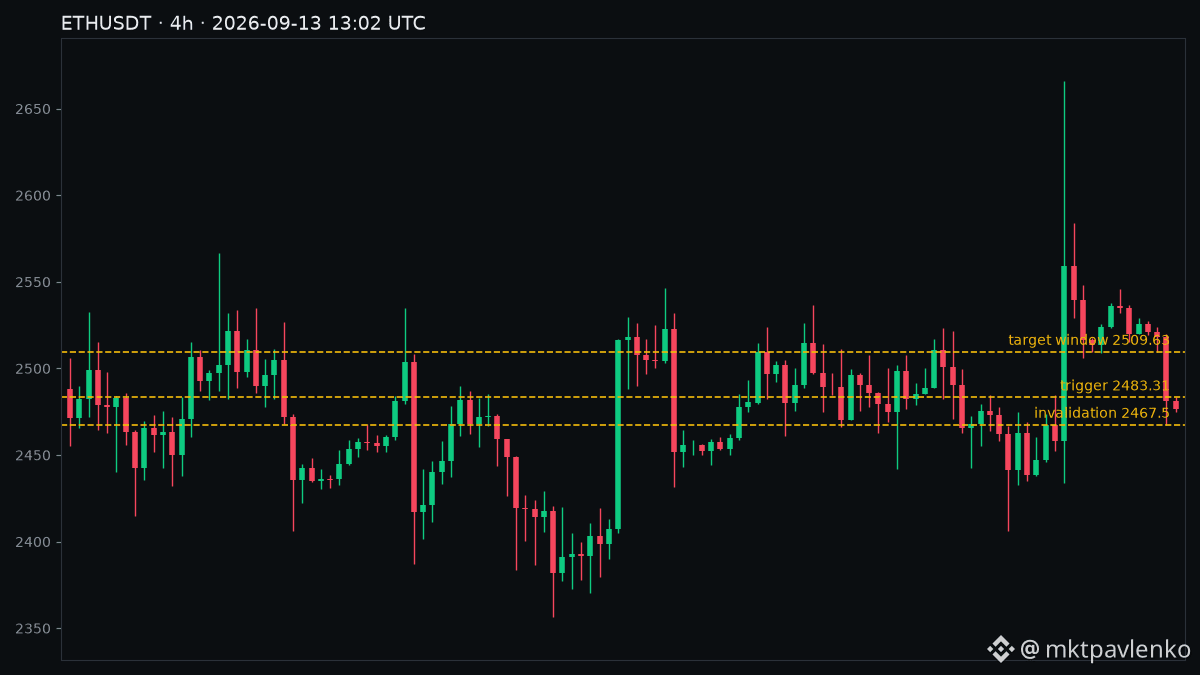
$ETH has one clean binary for the next 4h candle: can it reclaim $2,483.31, or does the $2,467.50 sweep become continuation? Price is $2,476.90, with the latest candle still below its $2,483.31 high. That makes the close more useful than the headline about liquidations. A close above $2,483.31 is the trigger, a break below $2,467.50 invalidates the idea, and $2,509.63 is the first target window before the next 4h close - which side gets the close? #EtherRalliesAsBearishBetsLiquidate #CryptoLiquidations$674MIn24H #US10YearTreasuryYieldNears5%
$ETH has one clean binary for the next 4h candle: can it reclaim $2,483.31, or does the $2,467.50 sweep become continuation? Price is $2,476.90, with the latest candle still below its $2,483.31 high. That makes the close more useful than the headline about liquidations. A close above $2,483.31 is the trigger, a break below $2,467.50 invalidates the idea, and $2,509.63 is the first target window before the next 4h close - which side gets the close? #EtherRalliesAsBearishBetsLiquidate #CryptoLiquidations$674MIn24H #US10YearTreasuryYieldNears5%
491
Why is everyone obsessing over short-term price action while completely ignoring what happens on September 15?
Most traders lose money because they react to sudden volatility after the fact instead of positioning before macro and regulatory events hit the order books. We rush to buy every minor bounce in $BTC, only to get blindsided when policy decisions trigger sudden market-wide shakeouts.
The upcoming procedural vote on the Clarity Act is a classic case study of how regulatory structure quietly dictates market liquidity. When lawmakers debate jurisdictional boundaries for digital assets, institutional desks do not gamble on high leverage. They de-risk and adjust their exposure across core assets like $ETH.
If this procedural hurdle fails, the regulatory fog thickens, leaving market participants in limbo for another cycle. If it clears, it establishes the operational certainty needed for institutional capital to confidently enter networks like $DOT.
Treating legislative milestones as irrelevant background noise is why retail portfolios constantly get caught on the wrong side of market momentum. Regulatory clarity is the real foundation for sustainable liquidity.
Where do you think the market heads once the procedural vote concludes?
#ClarityActFacesProceduralVoteSept15 #CryptoLiquidations #US10YearTreasuryYieldNears5
Why is everyone obsessing over short-term price action while completely ignoring what happens on September 15?
Most traders lose money because they react to sudden volatility after the fact instead of positioning before macro and regulatory events hit the order books. We rush to buy every minor bounce in $BTC , only to get blindsided when policy decisions trigger sudden market-wide shakeouts.
The upcoming procedural vote on the Clarity Act is a classic case study of how regulatory structure quietly dictates market liquidity. When lawmakers debate jurisdictional boundaries for digital assets, institutional desks do not gamble on high leverage. They de-risk and adjust their exposure across core assets like $ETH .
If this procedural hurdle fails, the regulatory fog thickens, leaving market participants in limbo for another cycle. If it clears, it establishes the operational certainty needed for institutional capital to confidently enter networks like $DOT .
Treating legislative milestones as irrelevant background noise is why retail portfolios constantly get caught on the wrong side of market momentum. Regulatory clarity is the real foundation for sustainable liquidity.
Where do you think the market heads once the procedural vote concludes?
#ClarityActFacesProceduralVoteSept15 #CryptoLiquidations #US10YearTreasuryYieldNears5
Most traders lose money because they react to sudden volatility after the fact instead of positioning before macro and regulatory events hit the order books. We rush to buy every minor bounce in $BTC , only to get blindsided when policy decisions trigger sudden market-wide shakeouts.
The upcoming procedural vote on the Clarity Act is a classic case study of how regulatory structure quietly dictates market liquidity. When lawmakers debate jurisdictional boundaries for digital assets, institutional desks do not gamble on high leverage. They de-risk and adjust their exposure across core assets like $ETH .
If this procedural hurdle fails, the regulatory fog thickens, leaving market participants in limbo for another cycle. If it clears, it establishes the operational certainty needed for institutional capital to confidently enter networks like $DOT .
Treating legislative milestones as irrelevant background noise is why retail portfolios constantly get caught on the wrong side of market momentum. Regulatory clarity is the real foundation for sustainable liquidity.
Where do you think the market heads once the procedural vote concludes?
#ClarityActFacesProceduralVoteSept15 #CryptoLiquidations #US10YearTreasuryYieldNears5
31
Log in to explore more content
Join global crypto users on Binance Square
⚡️ Get latest and useful information about crypto.
💬 Trusted by the world’s largest crypto exchange.
👍 Discover real insights from verified creators.
Email / Phone number
Trending Topics
1
#AnthropicCEOCallsForAISlowdown
52,241 views
674 Discussing
2
#AnthropicChoosesNasdaqForPotentialIPO
23,099 views
292 Discussing
3
#SECReceivesGrayscaleLitecoinTrustETFFiling
181,828 views
2,043 Discussing
4
#ClarityActFacesProceduralVoteSept15
344,003 views
2,922 Discussing
5
#US10YearTreasuryYieldNears5%
128,500 views
1,642 Discussing
6
#CryptoLiquidations$674MIn24H
31,306 views
240 Discussing
7
#TokenizedStockHoldersUp619.1%
91,125 views
1,303 Discussing
8
#RevolutConfirmsFakeGovEmailDataBreach
138,013 views
1,595 Discussing
9
#CanadaOSFISaysTokenizedDepositsEqualTraditionalDeposits
6,848 views
132 Discussing
10
#USBankCompletesCrossBorderPaymentPilotOnStellar
101,511 views
1,361 Discussing