
#tradingbasics
tradingbasics
32,032 views
480 Discussing
Hot
Latest

·
--
If you have seen position sizing used and nodded along, here it is properly.
Sizing is how much of your account a single trade can cost you.
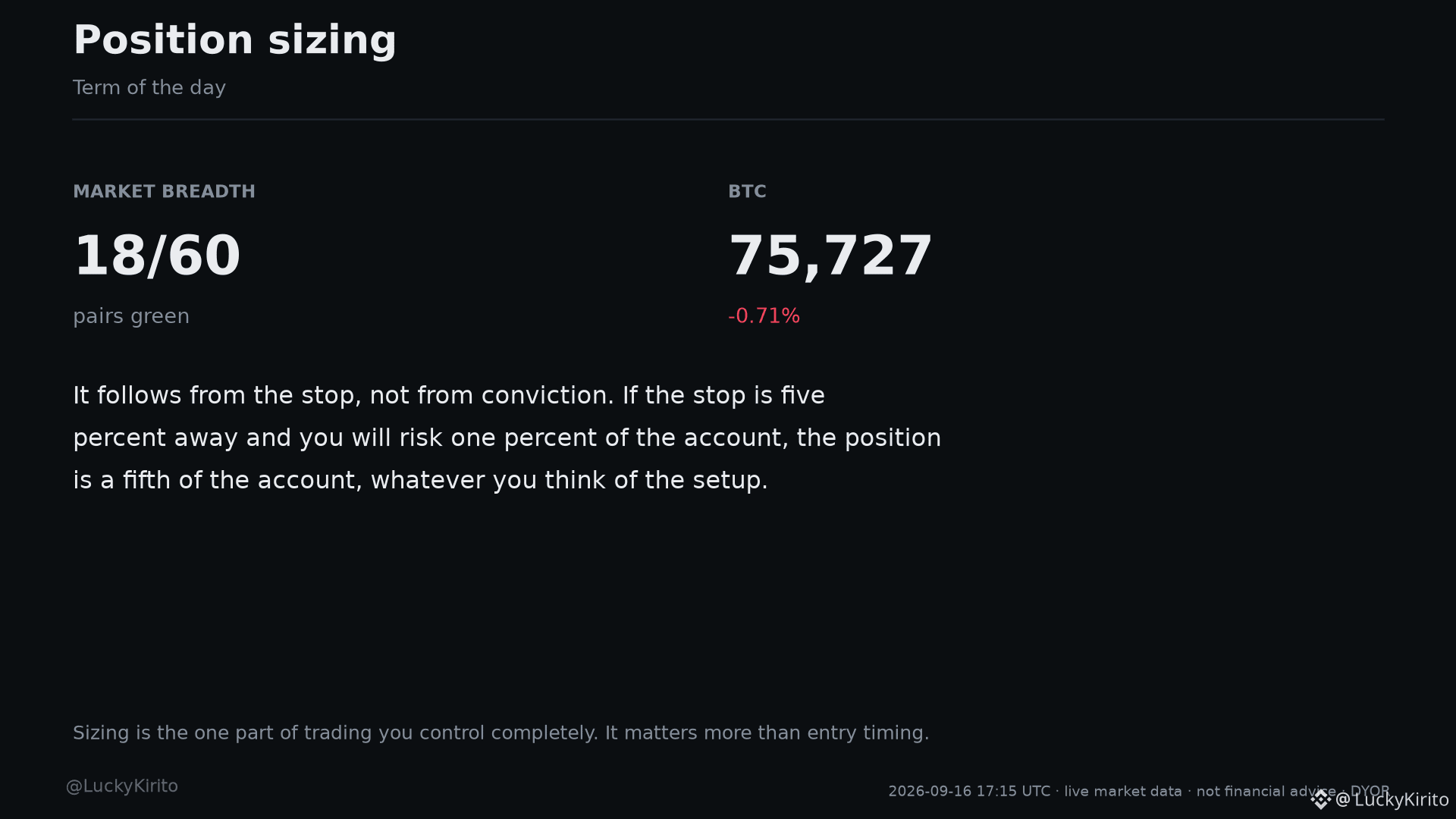
It follows from the stop, not from conviction. If the stop is five percent away and you will risk one percent of the account, the position is a fifth of the account, whatever you think of the setup.
Sizing is the one part of trading you control completely. It matters more than entry timing.
Right now: BTC at 75,727 (-0.71%), 18 of 60 liquid pairs green, SYN leading at +103.1%.
#Write2Earn #TradingTips #RiskManagement #TradingBasics
Automated technical analysis, not financial advice. I am not responsible for your trades. DYOR.
If you have seen position sizing used and nodded along, here it is properly.
Sizing is how much of your account a single trade can cost you.
It follows from the stop, not from conviction. If the stop is five percent away and you will risk one percent of the account, the position is a fifth of the account, whatever you think of the setup.
Sizing is the one part of trading you control completely. It matters more than entry timing.
Right now: BTC at 75,727 (-0.71%), 18 of 60 liquid pairs green, SYN leading at +103.1%.
#Write2Earn #TradingTips #RiskManagement #TradingBasics
Automated technical analysis, not financial advice. I am not responsible for your trades. DYOR.
Sizing is how much of your account a single trade can cost you.
It follows from the stop, not from conviction. If the stop is five percent away and you will risk one percent of the account, the position is a fifth of the account, whatever you think of the setup.
Sizing is the one part of trading you control completely. It matters more than entry timing.
Right now: BTC at 75,727 (-0.71%), 18 of 60 liquid pairs green, SYN leading at +103.1%.
#Write2Earn #TradingTips #RiskManagement #TradingBasics
Automated technical analysis, not financial advice. I am not responsible for your trades. DYOR.
44
·
--
Worth knowing: what support and resistance actually means.
These are the prices where a market has repeatedly stopped moving.
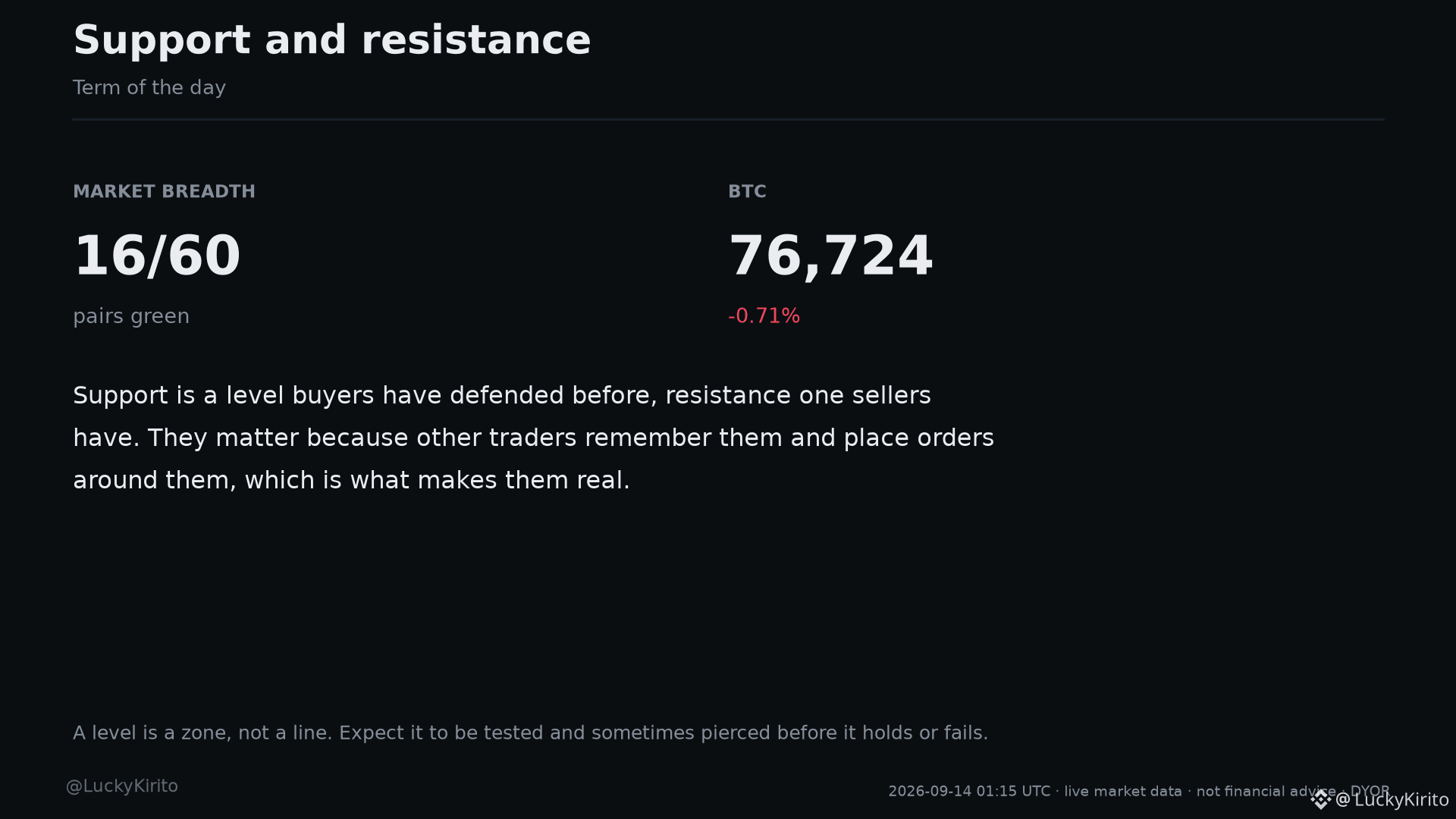
Support is a level buyers have defended before, resistance one sellers have. They matter because other traders remember them and place orders around them, which is what makes them real.
A level is a zone, not a line. Expect it to be tested and sometimes pierced before it holds or fails.
Right now: BTC at 76,724 (-0.71%), 16 of 60 liquid pairs green, LSK leading at +54.3%.
#Write2Earn #RiskManagement #TradingBasics #CryptoEducation
Automated technical analysis, not financial advice. I am not responsible for your trades. DYOR.
Worth knowing: what support and resistance actually means.
These are the prices where a market has repeatedly stopped moving.
Support is a level buyers have defended before, resistance one sellers have. They matter because other traders remember them and place orders around them, which is what makes them real.
A level is a zone, not a line. Expect it to be tested and sometimes pierced before it holds or fails.
Right now: BTC at 76,724 (-0.71%), 16 of 60 liquid pairs green, LSK leading at +54.3%.
#Write2Earn #RiskManagement #TradingBasics #CryptoEducation
Automated technical analysis, not financial advice. I am not responsible for your trades. DYOR.
These are the prices where a market has repeatedly stopped moving.
Support is a level buyers have defended before, resistance one sellers have. They matter because other traders remember them and place orders around them, which is what makes them real.
A level is a zone, not a line. Expect it to be tested and sometimes pierced before it holds or fails.
Right now: BTC at 76,724 (-0.71%), 16 of 60 liquid pairs green, LSK leading at +54.3%.
#Write2Earn #RiskManagement #TradingBasics #CryptoEducation
Automated technical analysis, not financial advice. I am not responsible for your trades. DYOR.
118
·
--
Term of the day: Order book depth.
Depth is how much size is resting near the current price.
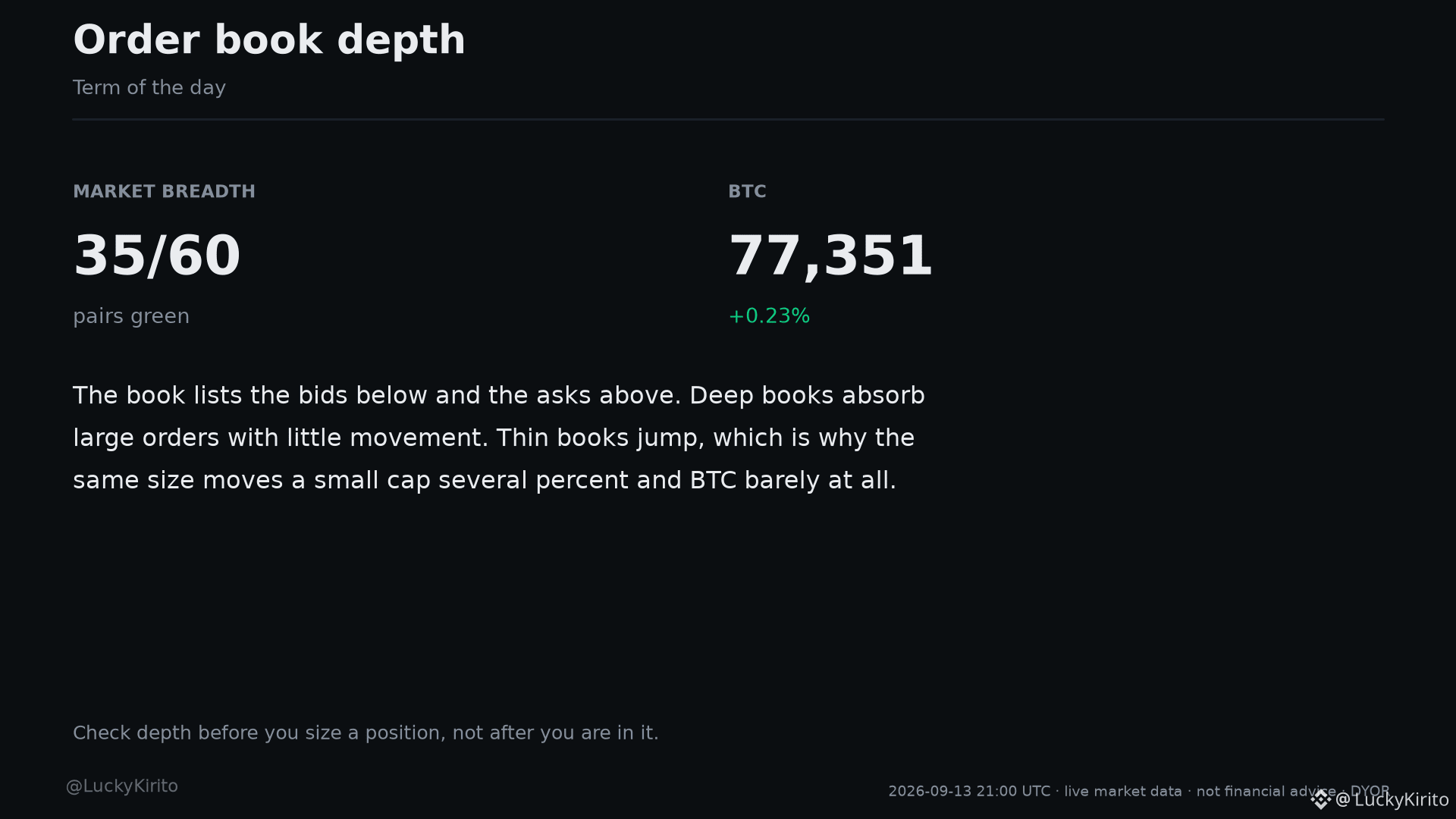
The book lists the bids below and the asks above. Deep books absorb large orders with little movement. Thin books jump, which is why the same size moves a small cap several percent and BTC barely at all.
Check depth before you size a position, not after you are in it.
Right now: BTC at 77,351 (+0.23%), 35 of 60 liquid pairs green, LSK leading at +311.5%.
#Write2Earn #TradingBasics #CryptoEducation #TradingStrategy
Automated technical analysis, not financial advice. I am not responsible for your trades. DYOR.
Term of the day: Order book depth.
Depth is how much size is resting near the current price.
The book lists the bids below and the asks above. Deep books absorb large orders with little movement. Thin books jump, which is why the same size moves a small cap several percent and BTC barely at all.
Check depth before you size a position, not after you are in it.
Right now: BTC at 77,351 (+0.23%), 35 of 60 liquid pairs green, LSK leading at +311.5%.
#Write2Earn #TradingBasics #CryptoEducation #TradingStrategy
Automated technical analysis, not financial advice. I am not responsible for your trades. DYOR.
Depth is how much size is resting near the current price.
The book lists the bids below and the asks above. Deep books absorb large orders with little movement. Thin books jump, which is why the same size moves a small cap several percent and BTC barely at all.
Check depth before you size a position, not after you are in it.
Right now: BTC at 77,351 (+0.23%), 35 of 60 liquid pairs green, LSK leading at +311.5%.
#Write2Earn #TradingBasics #CryptoEducation #TradingStrategy
Automated technical analysis, not financial advice. I am not responsible for your trades. DYOR.
65
·
--
Worth knowing: what liquidation actually means.
Liquidation is the exchange closing your leveraged position for you.
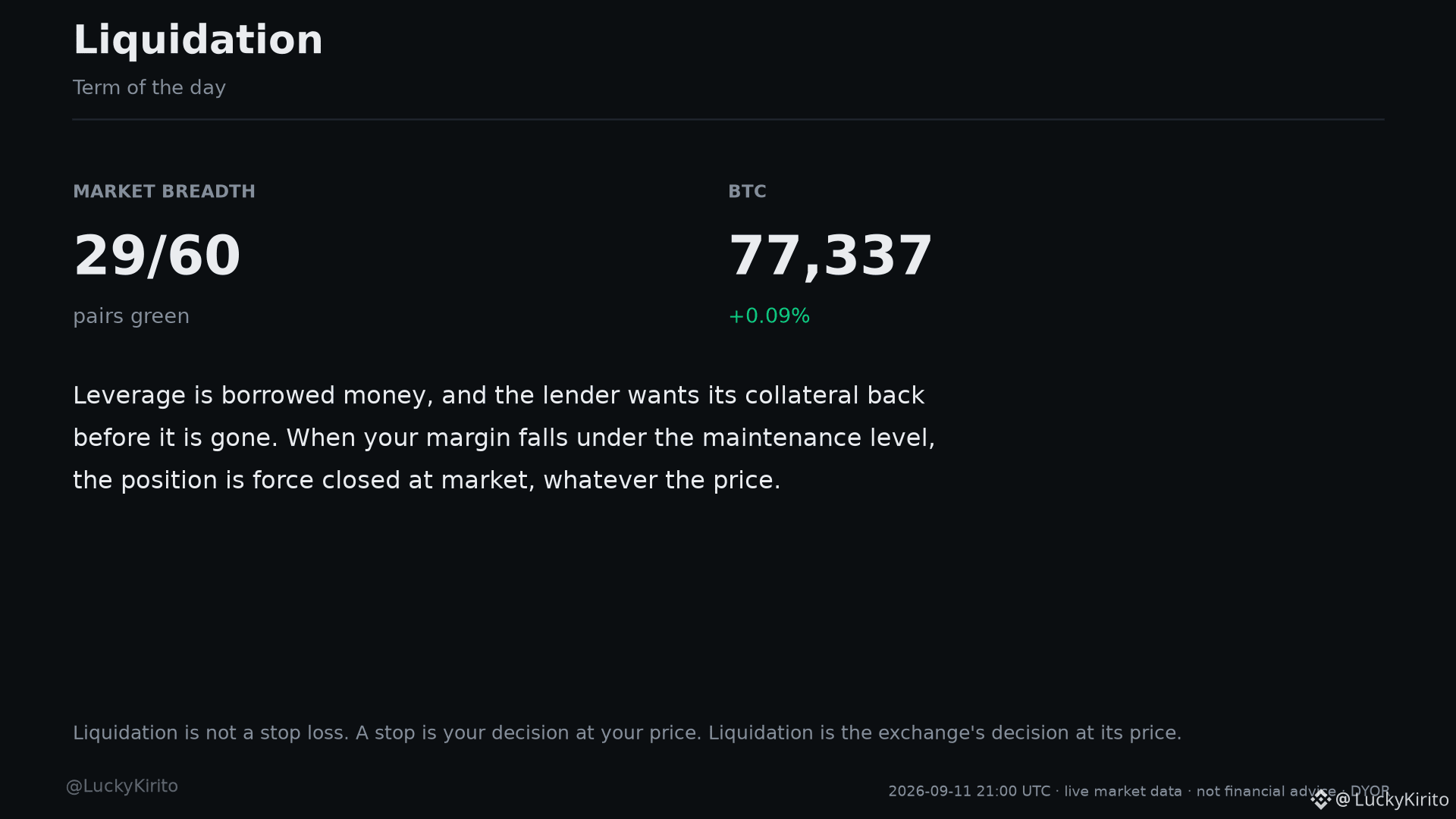
Leverage is borrowed money, and the lender wants its collateral back before it is gone. When your margin falls under the maintenance level, the position is force closed at market, whatever the price.
Liquidation is not a stop loss. A stop is your decision at your price. Liquidation is the exchange's decision at its price.
Right now: BTC at 77,337 (+0.09%), 29 of 60 liquid pairs green, MET leading at +23.5%.
#Write2Earn #TradingBasics #CryptoEducation #TradingStrategy
Automated technical analysis, not financial advice. I am not responsible for your trades. DYOR.
Worth knowing: what liquidation actually means.
Liquidation is the exchange closing your leveraged position for you.
Leverage is borrowed money, and the lender wants its collateral back before it is gone. When your margin falls under the maintenance level, the position is force closed at market, whatever the price.
Liquidation is not a stop loss. A stop is your decision at your price. Liquidation is the exchange's decision at its price.
Right now: BTC at 77,337 (+0.09%), 29 of 60 liquid pairs green, MET leading at +23.5%.
#Write2Earn #TradingBasics #CryptoEducation #TradingStrategy
Automated technical analysis, not financial advice. I am not responsible for your trades. DYOR.
Liquidation is the exchange closing your leveraged position for you.
Leverage is borrowed money, and the lender wants its collateral back before it is gone. When your margin falls under the maintenance level, the position is force closed at market, whatever the price.
Liquidation is not a stop loss. A stop is your decision at your price. Liquidation is the exchange's decision at its price.
Right now: BTC at 77,337 (+0.09%), 29 of 60 liquid pairs green, MET leading at +23.5%.
#Write2Earn #TradingBasics #CryptoEducation #TradingStrategy
Automated technical analysis, not financial advice. I am not responsible for your trades. DYOR.
14
·
--
Worth saying plainly: trading without a stop.
A position with no stop has no defined loss, so the size of the loss gets decided by whatever the market does next and by how long you can bear to watch it.
Decide the invalidation level before you enter, and place the order when you place the entry. A stop you have to remember to use is not a stop.
Today's market makes the point: 牛来 is +47.1% while IOST is -55.8%, a spread of 103 points across the same 60 liquid pairs on the same day.
#Write2Earn #TradingBasics #CryptoEducation #TradingStrategy
Automated technical analysis, not financial advice. I am not responsible for your trades. DYOR.
Worth saying plainly: trading without a stop.
A position with no stop has no defined loss, so the size of the loss gets decided by whatever the market does next and by how long you can bear to watch it.
Decide the invalidation level before you enter, and place the order when you place the entry. A stop you have to remember to use is not a stop.
Today's market makes the point: 牛来 is +47.1% while IOST is -55.8%, a spread of 103 points across the same 60 liquid pairs on the same day.
#Write2Earn #TradingBasics #CryptoEducation #TradingStrategy
Automated technical analysis, not financial advice. I am not responsible for your trades. DYOR.
A position with no stop has no defined loss, so the size of the loss gets decided by whatever the market does next and by how long you can bear to watch it.
Decide the invalidation level before you enter, and place the order when you place the entry. A stop you have to remember to use is not a stop.
Today's market makes the point: 牛来 is +47.1% while IOST is -55.8%, a spread of 103 points across the same 60 liquid pairs on the same day.
#Write2Earn #TradingBasics #CryptoEducation #TradingStrategy
Automated technical analysis, not financial advice. I am not responsible for your trades. DYOR.

262

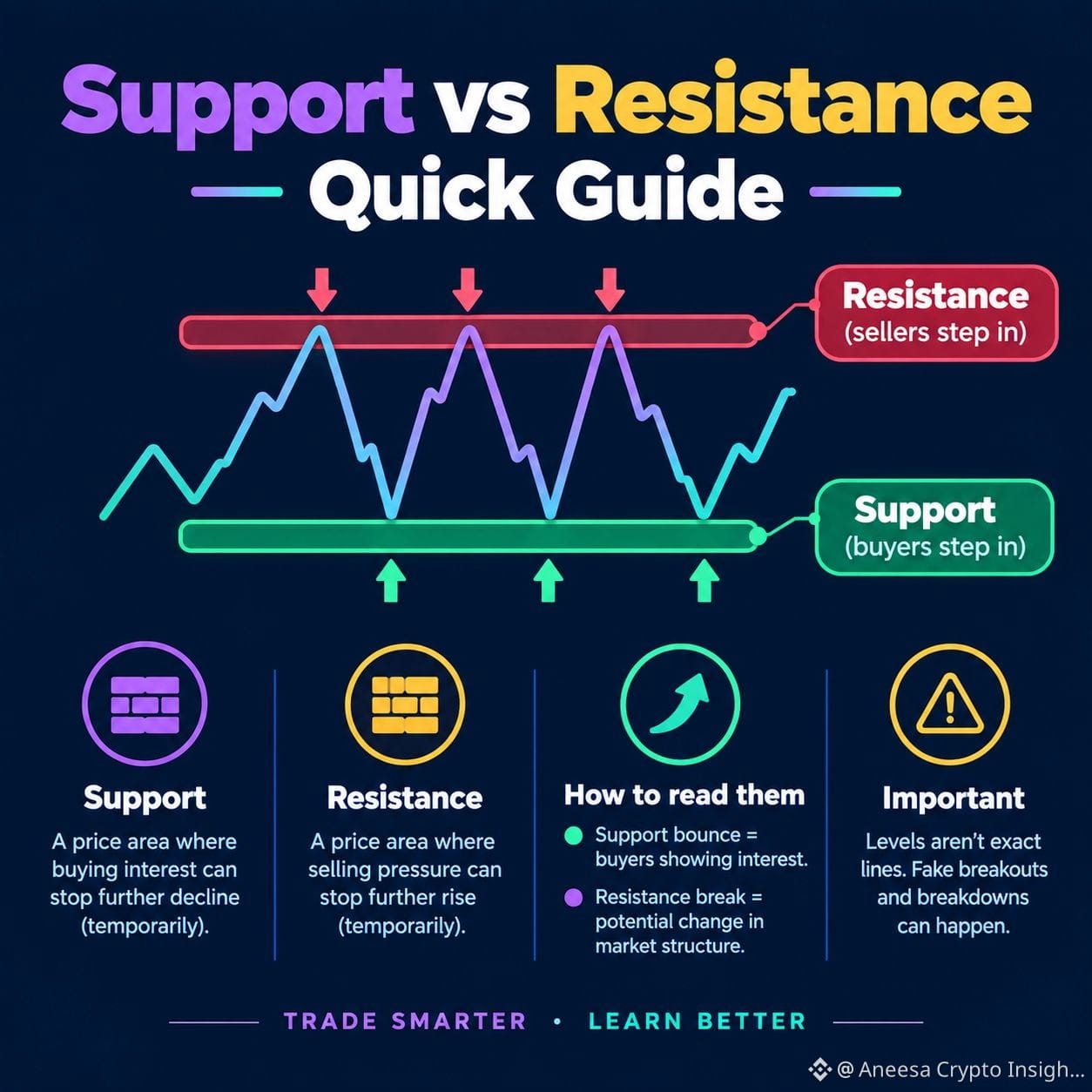
🎓 Support vs Resistance — Quick Guide
🧱 Support: A price level where buyers step in and may help stop the drop.
🧱 Resistance: A price level where sellers step in and may limit the rise.
💡 How to read them: ↗️ Bounce from support → buyers may be showing interest.
⬆️ Break above resistance → market structure may be changing.
⚠️ Remember: Levels aren’t perfect. Fake breaks and volatility are normal.
ℹ️ Not financial advice. DYOR.
👉 Follow Aneesa Crypto Insights for simple crypto education.
#CryptoEducation #SupportAndResistance #TradingBasics #crypto
🎓 Support vs Resistance — Quick Guide
🧱 Support: A price level where buyers step in and may help stop the drop.
🧱 Resistance: A price level where sellers step in and may limit the rise.
💡 How to read them: ↗️ Bounce from support → buyers may be showing interest.
⬆️ Break above resistance → market structure may be changing.
⚠️ Remember: Levels aren’t perfect. Fake breaks and volatility are normal.
ℹ️ Not financial advice. DYOR.
👉 Follow Aneesa Crypto Insights for simple crypto education.
#CryptoEducation #SupportAndResistance #TradingBasics #crypto
🧱 Support: A price level where buyers step in and may help stop the drop.
🧱 Resistance: A price level where sellers step in and may limit the rise.
💡 How to read them: ↗️ Bounce from support → buyers may be showing interest.
⬆️ Break above resistance → market structure may be changing.
⚠️ Remember: Levels aren’t perfect. Fake breaks and volatility are normal.
ℹ️ Not financial advice. DYOR.
👉 Follow Aneesa Crypto Insights for simple crypto education.
#CryptoEducation #SupportAndResistance #TradingBasics #crypto
37

Tools & Features: Optimize your orders on Binance
Title: Limit Order vs Market Order: When to use which one? ⚡ vs 🎯
Content:
The choice of order type directly affects your fees and the quality of your executions:
Market Order: Immediate execution at the best available price. Ideal in urgent situations, but watch out for slippage and Maker/Taker fees.
Limit Order: You set your exact entry or exit price. The order executes only if the market reaches your level. Ideal for disciplined trading.
Prefer Limit orders to keep full control over your execution prices!
#BinanceAcademy #TradingBasics #CryptoEducation #SpotTrading #Binance @Bananas31_bsc
Tools & Features: Optimize your orders on Binance
Title: Limit Order vs Market Order: When to use which one? ⚡ vs 🎯
Content:
The choice of order type directly affects your fees and the quality of your executions:
Market Order: Immediate execution at the best available price. Ideal in urgent situations, but watch out for slippage and Maker/Taker fees.
Limit Order: You set your exact entry or exit price. The order executes only if the market reaches your level. Ideal for disciplined trading.
Prefer Limit orders to keep full control over your execution prices!
#BinanceAcademy #TradingBasics #CryptoEducation #SpotTrading #Binance @BANANAS31
Title: Limit Order vs Market Order: When to use which one? ⚡ vs 🎯
Content:
The choice of order type directly affects your fees and the quality of your executions:
Market Order: Immediate execution at the best available price. Ideal in urgent situations, but watch out for slippage and Maker/Taker fees.
Limit Order: You set your exact entry or exit price. The order executes only if the market reaches your level. Ideal for disciplined trading.
Prefer Limit orders to keep full control over your execution prices!
#BinanceAcademy #TradingBasics #CryptoEducation #SpotTrading #Binance @BANANAS31
55
·
--
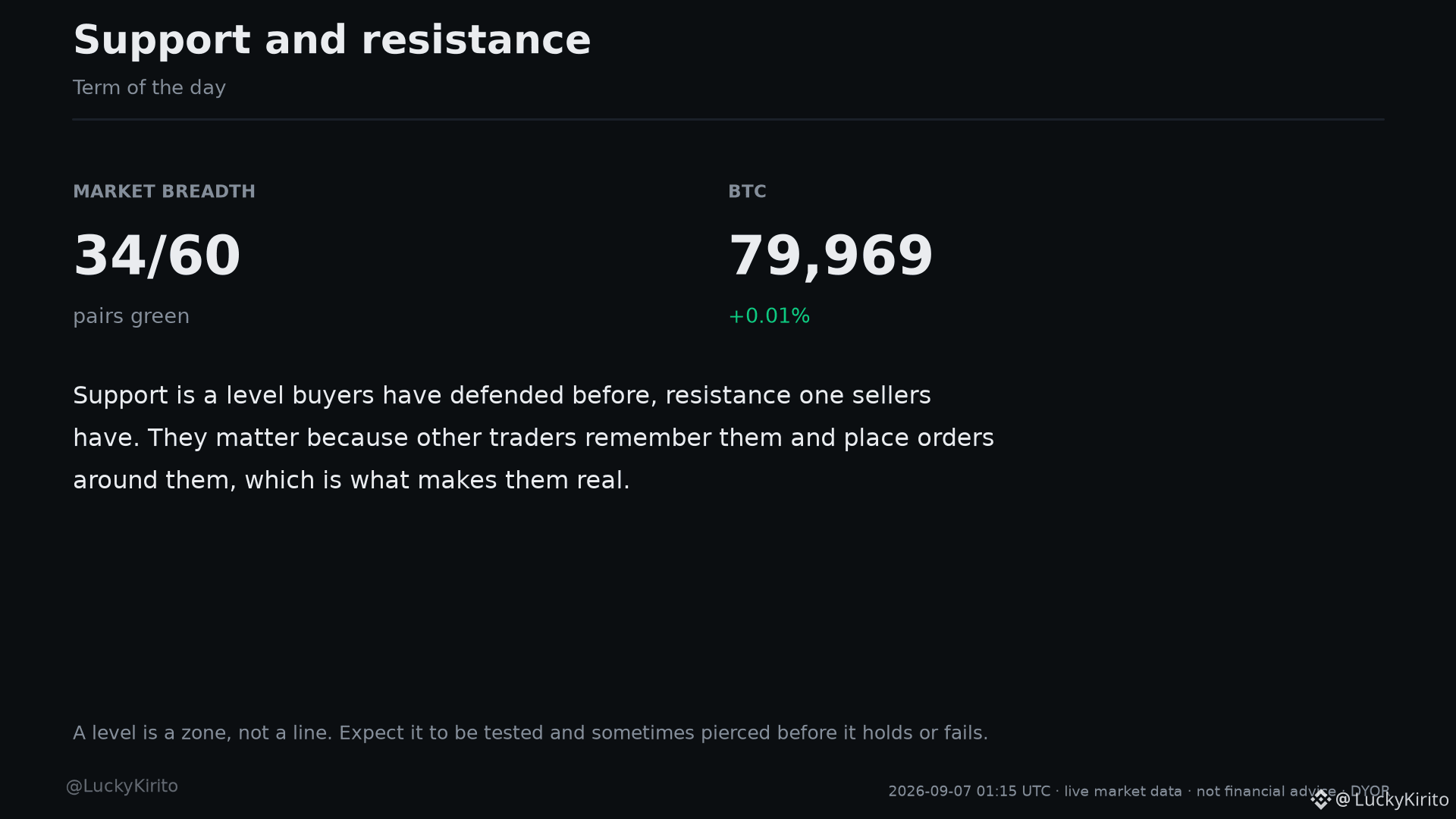
If you have seen support and resistance used and nodded along, here it is properly.
These are the prices where a market has repeatedly stopped moving.
Support is a level buyers have defended before, resistance one sellers have. They matter because other traders remember them and place orders around them, which is what makes them real.
A level is a zone, not a line. Expect it to be tested and sometimes pierced before it holds or fails.
Right now: BTC at 79,969 (+0.01%), 34 of 60 liquid pairs green, RAY leading at +35.7%.
#Write2Earn #TradingTips #RiskManagement #TradingBasics
Automated technical analysis, not financial advice. I am not responsible for your trades. DYOR.
If you have seen support and resistance used and nodded along, here it is properly.
These are the prices where a market has repeatedly stopped moving.
Support is a level buyers have defended before, resistance one sellers have. They matter because other traders remember them and place orders around them, which is what makes them real.
A level is a zone, not a line. Expect it to be tested and sometimes pierced before it holds or fails.
Right now: BTC at 79,969 (+0.01%), 34 of 60 liquid pairs green, RAY leading at +35.7%.
#Write2Earn #TradingTips #RiskManagement #TradingBasics
Automated technical analysis, not financial advice. I am not responsible for your trades. DYOR.
These are the prices where a market has repeatedly stopped moving.
Support is a level buyers have defended before, resistance one sellers have. They matter because other traders remember them and place orders around them, which is what makes them real.
A level is a zone, not a line. Expect it to be tested and sometimes pierced before it holds or fails.
Right now: BTC at 79,969 (+0.01%), 34 of 60 liquid pairs green, RAY leading at +35.7%.
#Write2Earn #TradingTips #RiskManagement #TradingBasics
Automated technical analysis, not financial advice. I am not responsible for your trades. DYOR.
30
·
--
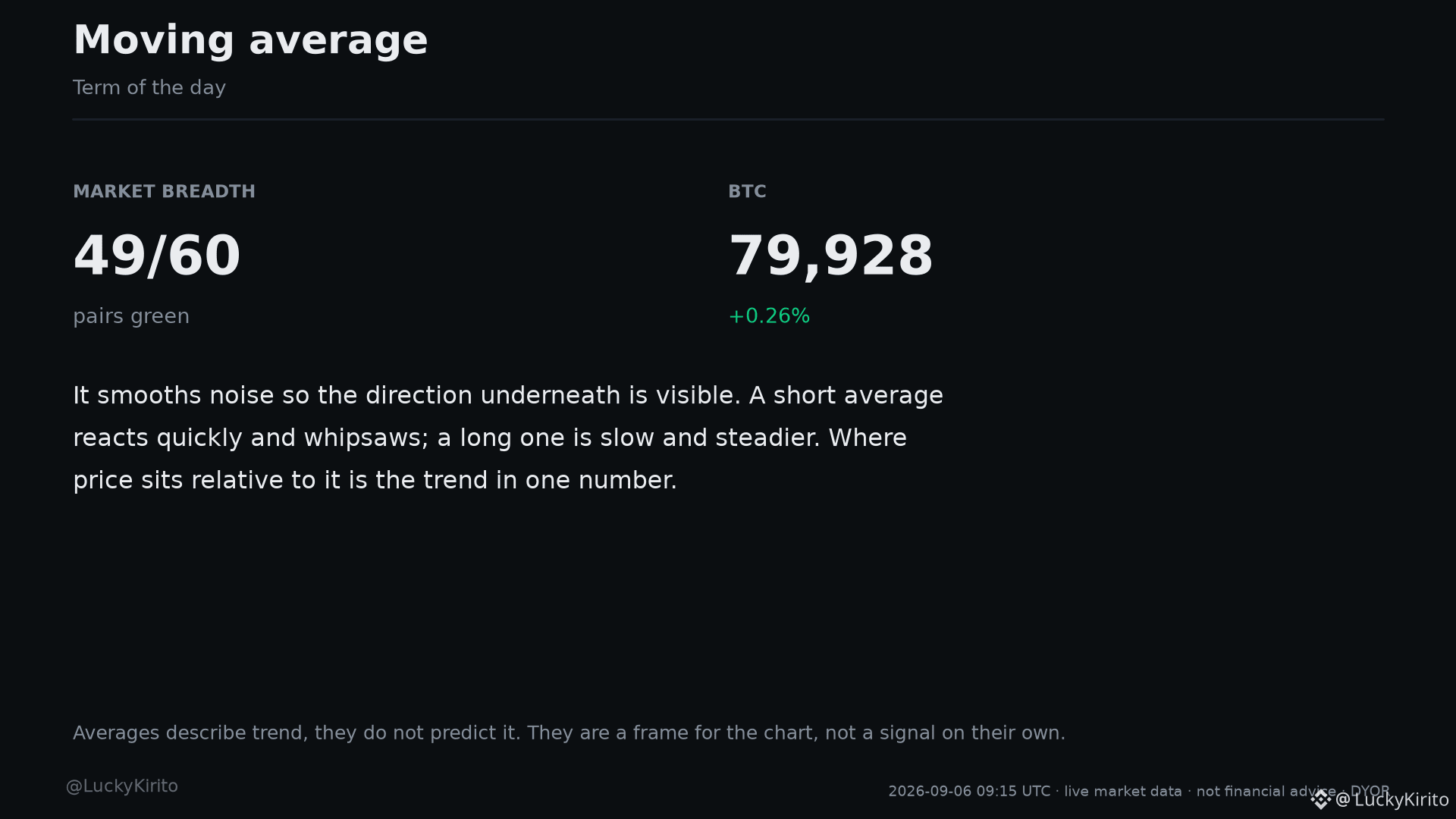
Worth knowing: what moving average actually means.
A moving average is the average close over a window, redrawn each bar.
It smooths noise so the direction underneath is visible. A short average reacts quickly and whipsaws; a long one is slow and steadier. Where price sits relative to it is the trend in one number.
Averages describe trend, they do not predict it. They are a frame for the chart, not a signal on their own.
Right now: BTC at 79,928 (+0.26%), 49 of 60 liquid pairs green, ARB leading at +49.4%.
#Write2Earn #TradingBasics #CryptoEducation #TradingStrategy
Automated technical analysis, not financial advice. I am not responsible for your trades. DYOR.
Worth knowing: what moving average actually means.
A moving average is the average close over a window, redrawn each bar.
It smooths noise so the direction underneath is visible. A short average reacts quickly and whipsaws; a long one is slow and steadier. Where price sits relative to it is the trend in one number.
Averages describe trend, they do not predict it. They are a frame for the chart, not a signal on their own.
Right now: BTC at 79,928 (+0.26%), 49 of 60 liquid pairs green, ARB leading at +49.4%.
#Write2Earn #TradingBasics #CryptoEducation #TradingStrategy
Automated technical analysis, not financial advice. I am not responsible for your trades. DYOR.
A moving average is the average close over a window, redrawn each bar.
It smooths noise so the direction underneath is visible. A short average reacts quickly and whipsaws; a long one is slow and steadier. Where price sits relative to it is the trend in one number.
Averages describe trend, they do not predict it. They are a frame for the chart, not a signal on their own.
Right now: BTC at 79,928 (+0.26%), 49 of 60 liquid pairs green, ARB leading at +49.4%.
#Write2Earn #TradingBasics #CryptoEducation #TradingStrategy
Automated technical analysis, not financial advice. I am not responsible for your trades. DYOR.
37

·
--
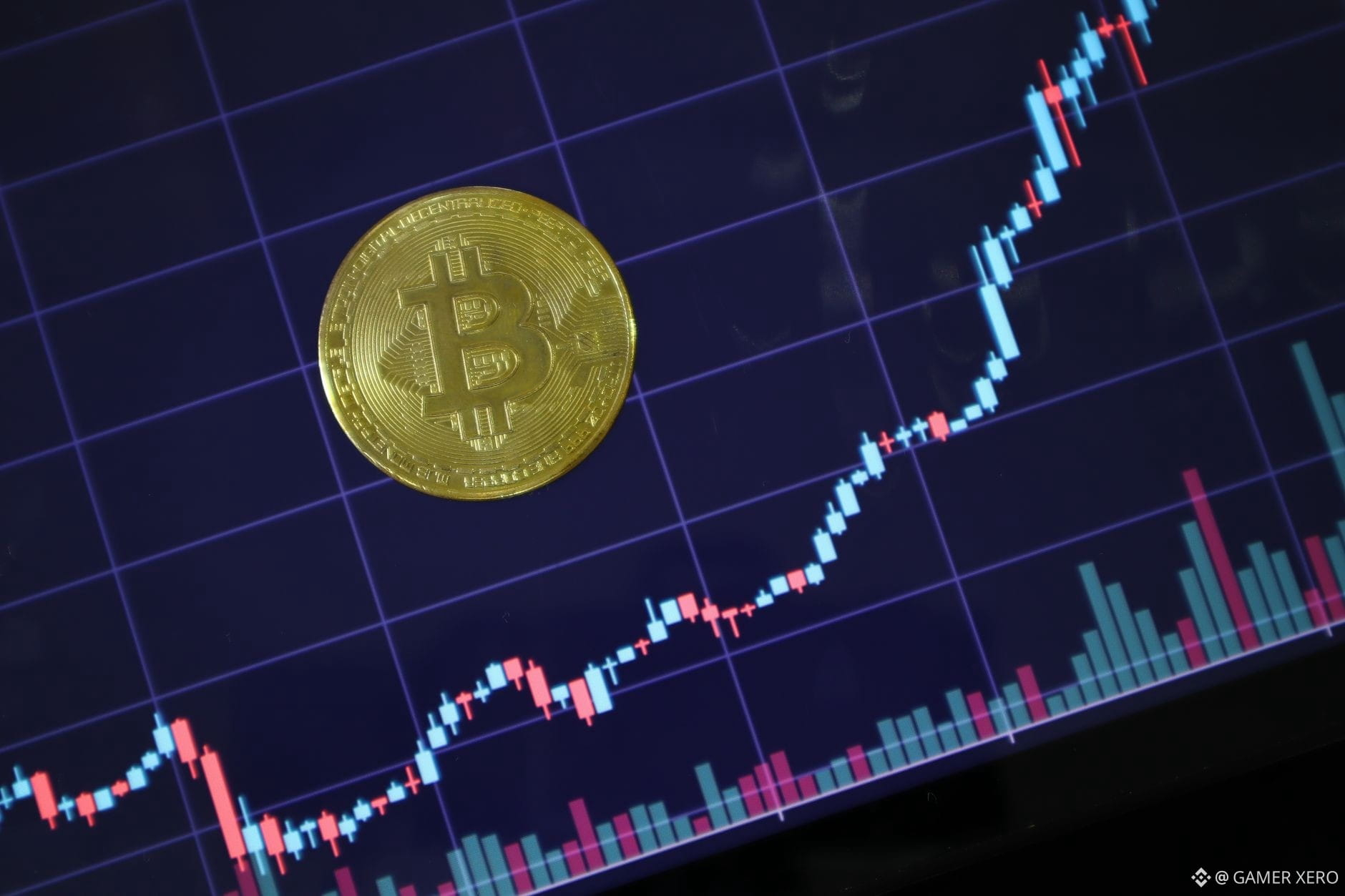
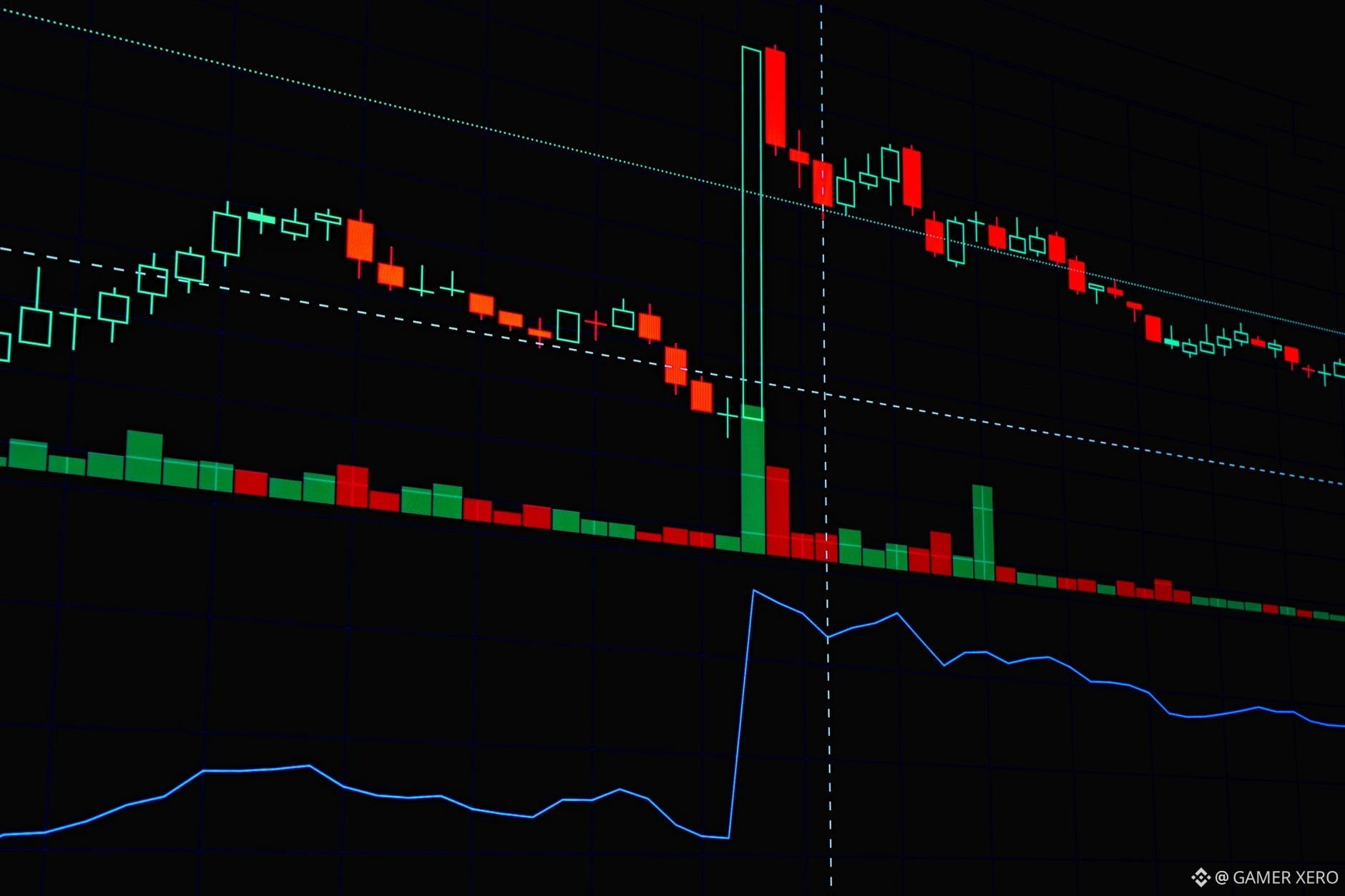
Seeing $BTC trading at $79,799 and $ETH around $2,457, many newbies wonder whether to click “Buy” or set a limit. A market order takes the best available price instantly – you get filled right away, but the exact execution price can slip, especially in fast‑moving markets. A limit order lets you specify the price you’re willing to pay; the trade only executes if the market reaches that level.
For a simple test, place a limit buy for $BTC at $79,600. If the price drops from $79,799 toward that level, the order will fill, giving you a slightly better entry than a market order would have. If it never reaches $79,600, the order stays open and you avoid paying a higher price. Do the same with $ETH: set a limit at $2,440 while the current price sits at $2,457.
The key is to balance patience with market conditions. In a tight 24‑hour range, limit orders can improve your entry, but in a breakout they might leave you on the sidelines. How do you decide which order type fits your trading style?
#CryptoEducation #TradingBasics #BinanceTips #GAMERXERO
Seeing $BTC trading at $79,799 and $ETH around $2,457, many newbies wonder whether to click “Buy” or set a limit. A market order takes the best available price instantly – you get filled right away, but the exact execution price can slip, especially in fast‑moving markets. A limit order lets you specify the price you’re willing to pay; the trade only executes if the market reaches that level.
For a simple test, place a limit buy for $BTC at $79,600. If the price drops from $79,799 toward that level, the order will fill, giving you a slightly better entry than a market order would have. If it never reaches $79,600, the order stays open and you avoid paying a higher price. Do the same with $ETH : set a limit at $2,440 while the current price sits at $2,457.
The key is to balance patience with market conditions. In a tight 24‑hour range, limit orders can improve your entry, but in a breakout they might leave you on the sidelines. How do you decide which order type fits your trading style?
#CryptoEducation #TradingBasics #BinanceTips #GAMERXERO
For a simple test, place a limit buy for $BTC at $79,600. If the price drops from $79,799 toward that level, the order will fill, giving you a slightly better entry than a market order would have. If it never reaches $79,600, the order stays open and you avoid paying a higher price. Do the same with $ETH : set a limit at $2,440 while the current price sits at $2,457.
The key is to balance patience with market conditions. In a tight 24‑hour range, limit orders can improve your entry, but in a breakout they might leave you on the sidelines. How do you decide which order type fits your trading style?
#CryptoEducation #TradingBasics #BinanceTips #GAMERXERO
14

·
--
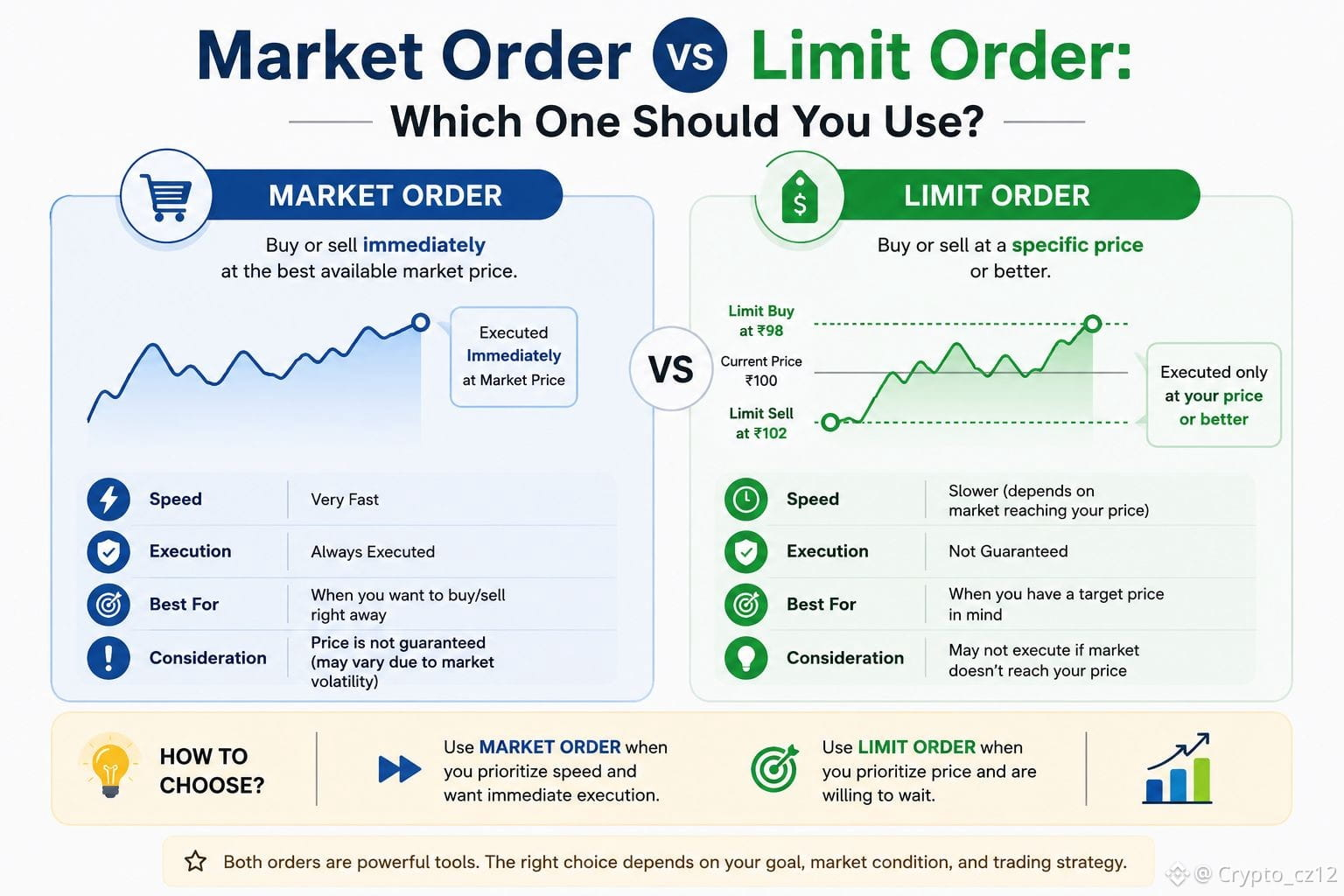
Market Order vs Limit Order: Which One Should You Use?
Market = instant fill, costs you the spread; limit = you set the price, no guaranteed fill; when each makes sense.
$BTC $ETH $SOL
{future}(SOLUSDT)
{future}(ETHUSDT)
{spot}(BTCUSDT)
#TradingBasics #SpotTrading
Market Order vs Limit Order: Which One Should You Use?
Market = instant fill, costs you the spread; limit = you set the price, no guaranteed fill; when each makes sense.
$BTC $ETH $SOL
#TradingBasics #SpotTrading
Market = instant fill, costs you the spread; limit = you set the price, no guaranteed fill; when each makes sense.
$BTC $ETH $SOL
#TradingBasics #SpotTrading
134
·
--
When the market hovers between a tight high‑low band, the first tool many traders reach for is a stop‑loss. It’s not a magic ticket, but a simple way to define the most you’re willing to lose on a trade and keep emotions out of the equation.
Imagine you’re watching $BTC at $80,823, just a few points above its 24‑hour low of $77,101. You decide the next bounce could take it toward the recent high of $82,300, so you enter a long position at $80,900. To protect yourself if the price turns, you set a stop‑loss a little below the low—say $77,500. If $BTC slides back, the order will trigger automatically, capping the loss without you needing to watch the chart 24/7.
The key is consistency: choose a stop‑loss distance that matches your risk tolerance and the asset’s volatility, then stick to it. How do you determine the right stop‑loss level for the coins you trade?
#CryptoEducation #TradingBasics #RiskManagement #GAMERXERO
When the market hovers between a tight high‑low band, the first tool many traders reach for is a stop‑loss. It’s not a magic ticket, but a simple way to define the most you’re willing to lose on a trade and keep emotions out of the equation.
Imagine you’re watching $BTC at $80,823, just a few points above its 24‑hour low of $77,101. You decide the next bounce could take it toward the recent high of $82,300, so you enter a long position at $80,900. To protect yourself if the price turns, you set a stop‑loss a little below the low—say $77,500. If $BTC slides back, the order will trigger automatically, capping the loss without you needing to watch the chart 24/7.
The key is consistency: choose a stop‑loss distance that matches your risk tolerance and the asset’s volatility, then stick to it. How do you determine the right stop‑loss level for the coins you trade?
#CryptoEducation #TradingBasics #RiskManagement #GAMERXERO
Imagine you’re watching $BTC at $80,823, just a few points above its 24‑hour low of $77,101. You decide the next bounce could take it toward the recent high of $82,300, so you enter a long position at $80,900. To protect yourself if the price turns, you set a stop‑loss a little below the low—say $77,500. If $BTC slides back, the order will trigger automatically, capping the loss without you needing to watch the chart 24/7.
The key is consistency: choose a stop‑loss distance that matches your risk tolerance and the asset’s volatility, then stick to it. How do you determine the right stop‑loss level for the coins you trade?
#CryptoEducation #TradingBasics #RiskManagement #GAMERXERO
74

·
--
Chart Reading Tip (Use $ETH Chart)
📉 How to Understand Candlestick Charts? (Beginner Guide)
Every candle tells a story. Green candles show bullish momentum and red candles show bearish pressure:
Long Wick at Bottom: Buying pressure (Buyers are active).
Long Wick at Top: Selling pressure (Sellers are active).
Which timeframe do you prefer for chart analysis? (1H, 4H, or Daily?) 👇
ETHSOL #CryptoTips s #tradingbasics #BinanceSquare #HIGH #Binance
{etf_us}(BINC.ETF)
Chart Reading Tip (Use $ETH Chart)
📉 How to Understand Candlestick Charts? (Beginner Guide)
Every candle tells a story. Green candles show bullish momentum and red candles show bearish pressure:
Long Wick at Bottom: Buying pressure (Buyers are active).
Long Wick at Top: Selling pressure (Sellers are active).
Which timeframe do you prefer for chart analysis? (1H, 4H, or Daily?) 👇
ETHSOL #CryptoTips s #tradingbasics #BinanceSquare #HIGH #Binance
📉 How to Understand Candlestick Charts? (Beginner Guide)
Every candle tells a story. Green candles show bullish momentum and red candles show bearish pressure:
Long Wick at Bottom: Buying pressure (Buyers are active).
Long Wick at Top: Selling pressure (Sellers are active).
Which timeframe do you prefer for chart analysis? (1H, 4H, or Daily?) 👇
ETHSOL #CryptoTips s #tradingbasics #BinanceSquare #HIGH #Binance
36
·
--
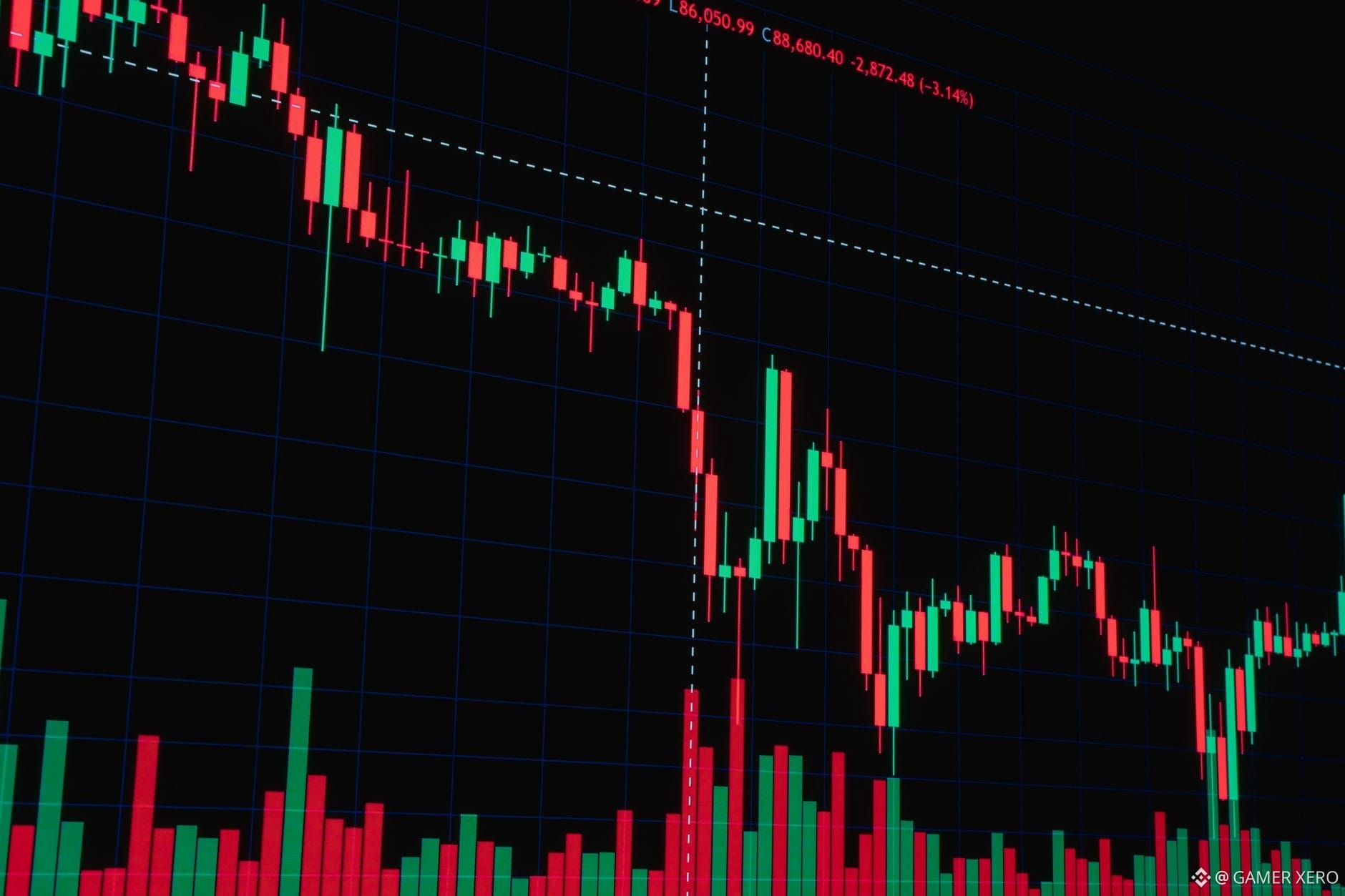
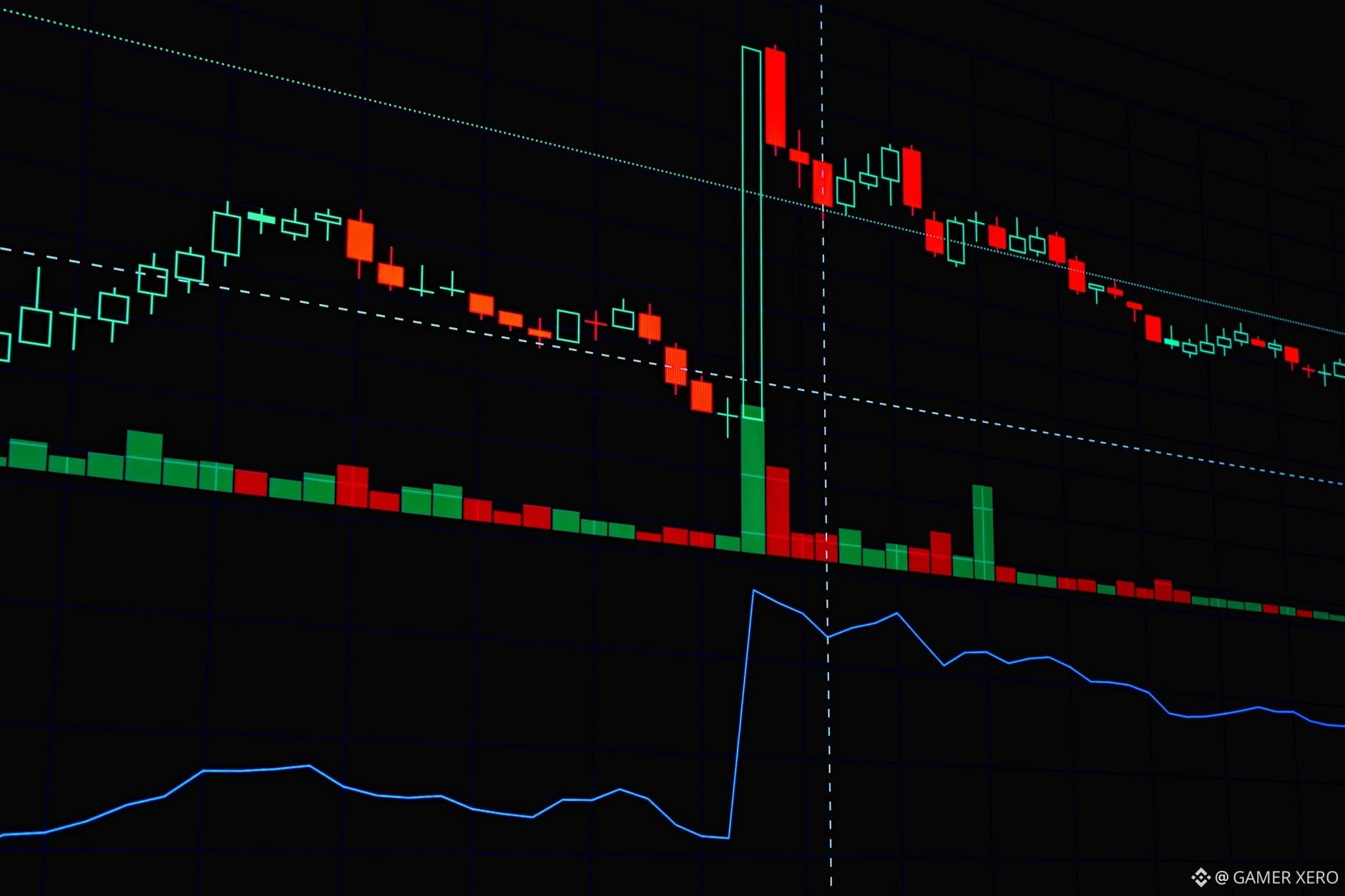
Seeing $BTC hover around $77,308 and $ETH near $2,432 the market looks calm, but the real action often happens off the chart in the order‑book. A limit order lets you set the exact price you’re willing to trade, turning a passive observation into a controlled entry.
Here’s a simple step‑by‑step you can try on Binance Spot:
1. Open the $BTC/USDT trading view and select the “Limit” tab.
2. Pick a price a few percent below the current 24‑hour low – for example $76,500, just under today’s low.
3. Enter the amount you’d like to buy, say 0.01 BTC, and set a “Good‑Till‑Cancelled” duration.
4. Check the depth chart; if the cumulative buy volume builds at $76,500, your order is more likely to fill when sellers step in.
Apply the same idea to $ETH: place a sell‑limit a few dollars above the recent high ($2,546) to catch a potential pull‑back.
Using limit orders keeps you from chasing the market, reduces slip‑age, and gives you a clear risk‑reward picture before the trade even opens. Have you tried setting a limit order based on order‑book depth, and what criteria do you use to pick the trigger price? 📈
#CryptoEducation #TradingBasics #GAMERXERO
Seeing $BTC hover around $77,308 and $ETH near $2,432 the market looks calm, but the real action often happens off the chart in the order‑book. A limit order lets you set the exact price you’re willing to trade, turning a passive observation into a controlled entry.
Here’s a simple step‑by‑step you can try on Binance Spot:
1. Open the $BTC /USDT trading view and select the “Limit” tab.
2. Pick a price a few percent below the current 24‑hour low – for example $76,500, just under today’s low.
3. Enter the amount you’d like to buy, say 0.01 BTC, and set a “Good‑Till‑Cancelled” duration.
4. Check the depth chart; if the cumulative buy volume builds at $76,500, your order is more likely to fill when sellers step in.
Apply the same idea to $ETH : place a sell‑limit a few dollars above the recent high ($2,546) to catch a potential pull‑back.
Using limit orders keeps you from chasing the market, reduces slip‑age, and gives you a clear risk‑reward picture before the trade even opens. Have you tried setting a limit order based on order‑book depth, and what criteria do you use to pick the trigger price? 📈
#CryptoEducation #TradingBasics #GAMERXERO
Here’s a simple step‑by‑step you can try on Binance Spot:
1. Open the $BTC /USDT trading view and select the “Limit” tab.
2. Pick a price a few percent below the current 24‑hour low – for example $76,500, just under today’s low.
3. Enter the amount you’d like to buy, say 0.01 BTC, and set a “Good‑Till‑Cancelled” duration.
4. Check the depth chart; if the cumulative buy volume builds at $76,500, your order is more likely to fill when sellers step in.
Apply the same idea to $ETH : place a sell‑limit a few dollars above the recent high ($2,546) to catch a potential pull‑back.
Using limit orders keeps you from chasing the market, reduces slip‑age, and gives you a clear risk‑reward picture before the trade even opens. Have you tried setting a limit order based on order‑book depth, and what criteria do you use to pick the trigger price? 📈
#CryptoEducation #TradingBasics #GAMERXERO
54
·
--
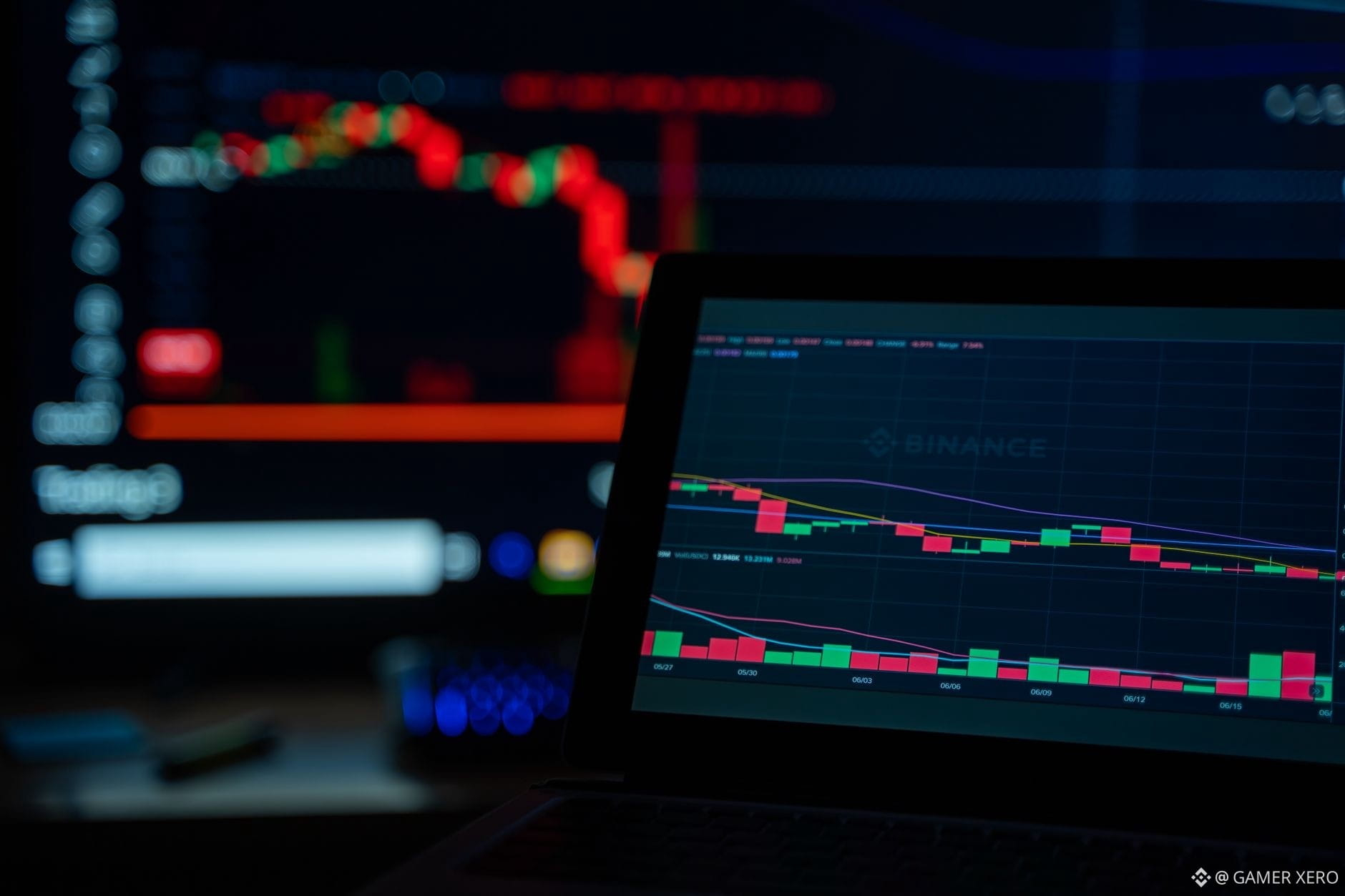
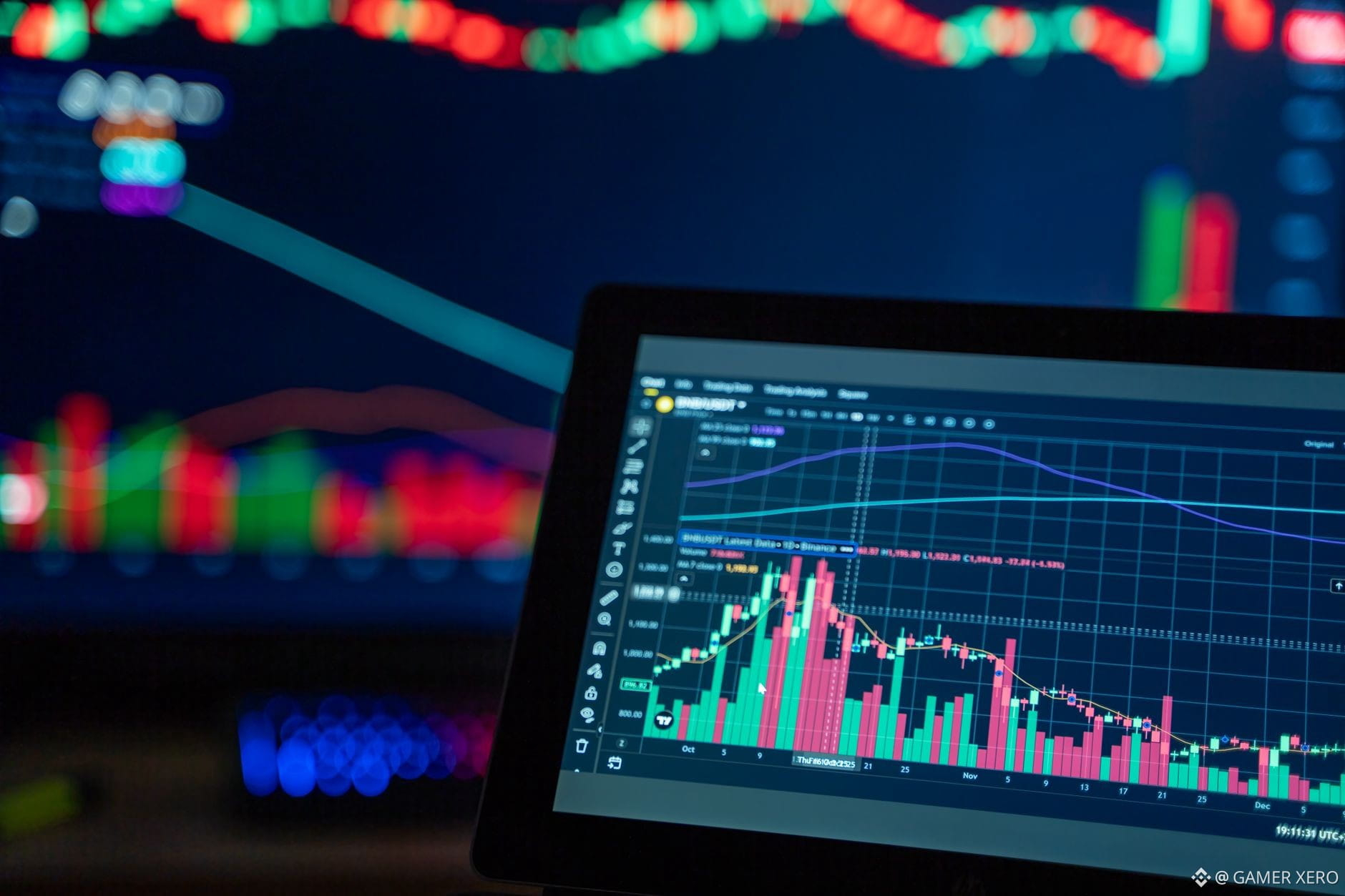
Seeing $BTC hug a $1,030‑wide 24 hour band around $64,490 on Binance? That tight range is perfect for a simple limit‑order exercise. A limit order lets you set the exact price you’re willing to trade, and the order sits in the book until the market reaches it. No need to watch the chart every second—your order does the waiting.
For a beginner, try this: on the current day $BTC’s low is $64,027 and the high is $65,059. Place a limit‑buy order a little above the low, say $64,100, with a modest amount you’re comfortable with. If price dips to that level, the order fills automatically; if it holds above, the order remains pending, protecting you from chasing a move. The same idea works on $ETH, whose 24 h range is $1,885‑$1,923. A limit‑sell at $1,920 could capture a small upside if the price climbs back toward the high.
Have you tried using limit orders in a narrow‑range market, and what results did you see?
#CryptoEducation #BinanceTips #TradingBasics #GAMERXERO
Seeing $BTC hug a $1,030‑wide 24 hour band around $64,490 on Binance? That tight range is perfect for a simple limit‑order exercise. A limit order lets you set the exact price you’re willing to trade, and the order sits in the book until the market reaches it. No need to watch the chart every second—your order does the waiting.
For a beginner, try this: on the current day $BTC ’s low is $64,027 and the high is $65,059. Place a limit‑buy order a little above the low, say $64,100, with a modest amount you’re comfortable with. If price dips to that level, the order fills automatically; if it holds above, the order remains pending, protecting you from chasing a move. The same idea works on $ETH , whose 24 h range is $1,885‑$1,923. A limit‑sell at $1,920 could capture a small upside if the price climbs back toward the high.
Have you tried using limit orders in a narrow‑range market, and what results did you see?
#CryptoEducation #BinanceTips #TradingBasics #GAMERXERO
For a beginner, try this: on the current day $BTC ’s low is $64,027 and the high is $65,059. Place a limit‑buy order a little above the low, say $64,100, with a modest amount you’re comfortable with. If price dips to that level, the order fills automatically; if it holds above, the order remains pending, protecting you from chasing a move. The same idea works on $ETH , whose 24 h range is $1,885‑$1,923. A limit‑sell at $1,920 could capture a small upside if the price climbs back toward the high.
Have you tried using limit orders in a narrow‑range market, and what results did you see?
#CryptoEducation #BinanceTips #TradingBasics #GAMERXERO
96
·
--
Watching $BTC trade around $63,450 on Binance shows how a tight range can hide the real mechanics behind a trade. One tool that turns that quiet market into a controlled entry is the **limit order**. Unlike a market order that fills at the best available price, a limit order lets you set the exact price you’re willing to buy or sell. If the market never reaches your level, the order stays pending – no slippage, no surprise fills.
For a beginner, try this: set a buy limit for $BTC at $63,300, just below today’s low of $62,716. If the price dips toward that level, your order will trigger automatically, securing a position without constantly watching the chart. On the sell side, place a limit at $63,700, a modest $400 above the current price, to capture a small upside if the bullish push re‑appears. The same principle works for $ETH – a buy limit at $1,880 and a sell limit at $1,910 would mirror the current $1,898 price range.
What’s your go‑to order type when the market is moving sideways?
#CryptoEducation #TradingBasics #BinanceTips #GAMERXERO
Watching $BTC trade around $63,450 on Binance shows how a tight range can hide the real mechanics behind a trade. One tool that turns that quiet market into a controlled entry is the **limit order**. Unlike a market order that fills at the best available price, a limit order lets you set the exact price you’re willing to buy or sell. If the market never reaches your level, the order stays pending – no slippage, no surprise fills.
For a beginner, try this: set a buy limit for $BTC at $63,300, just below today’s low of $62,716. If the price dips toward that level, your order will trigger automatically, securing a position without constantly watching the chart. On the sell side, place a limit at $63,700, a modest $400 above the current price, to capture a small upside if the bullish push re‑appears. The same principle works for $ETH – a buy limit at $1,880 and a sell limit at $1,910 would mirror the current $1,898 price range.
What’s your go‑to order type when the market is moving sideways?
#CryptoEducation #TradingBasics #BinanceTips #GAMERXERO
For a beginner, try this: set a buy limit for $BTC at $63,300, just below today’s low of $62,716. If the price dips toward that level, your order will trigger automatically, securing a position without constantly watching the chart. On the sell side, place a limit at $63,700, a modest $400 above the current price, to capture a small upside if the bullish push re‑appears. The same principle works for $ETH – a buy limit at $1,880 and a sell limit at $1,910 would mirror the current $1,898 price range.
What’s your go‑to order type when the market is moving sideways?
#CryptoEducation #TradingBasics #BinanceTips #GAMERXERO
10

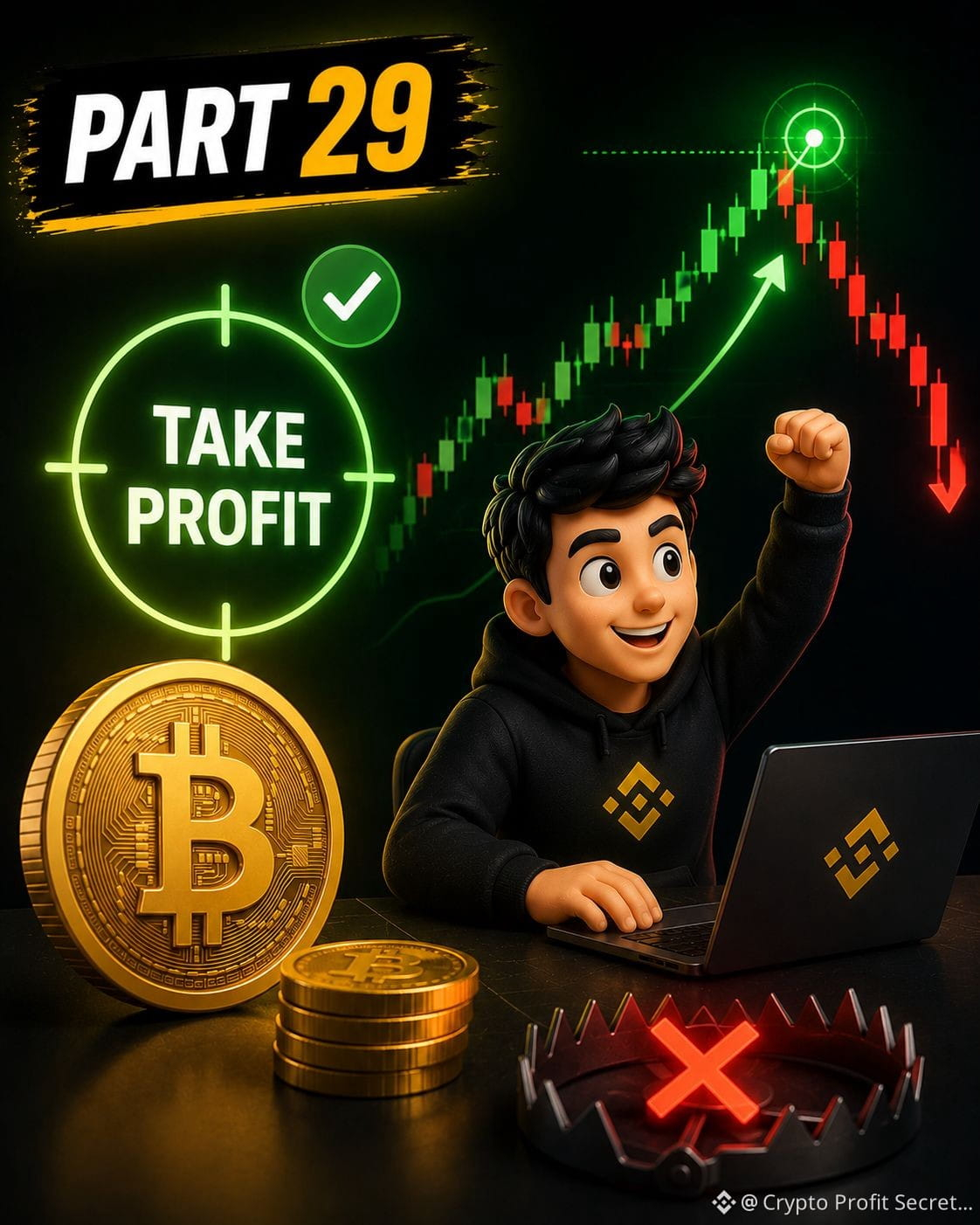
📚 Crypto Learning Series – Part 30
📰 News Dekho... Not Just Price
Many beginners trade by just looking at charts.
But news also has a big impact on the crypto market.
💡 ETF updates, regulations, partnerships, and economic events can change market trends.
📊 Check Before You Trade
✅ Any major crypto news?
✅ Is there an economic event today?
✅ Is the market sentiment positive or negative?
🧠 Simple Rule
Chart + News = Better Decision
🔑 Golden Rule
"Smart traders follow both charts and news."
#CryptoLearning #CryptoNews #BTC #BinanceSquare #TradingBasics $BTC
{spot}(BTCUSDT)
📚 Crypto Learning Series – Part 30
📰 News Dekho... Not Just Price
Many beginners trade by just looking at charts.
But news also has a big impact on the crypto market.
💡 ETF updates, regulations, partnerships, and economic events can change market trends.
📊 Check Before You Trade
✅ Any major crypto news?
✅ Is there an economic event today?
✅ Is the market sentiment positive or negative?
🧠 Simple Rule
Chart + News = Better Decision
🔑 Golden Rule
"Smart traders follow both charts and news."
#CryptoLearning #CryptoNews #BTC #BinanceSquare #TradingBasics $BTC
📰 News Dekho... Not Just Price
Many beginners trade by just looking at charts.
But news also has a big impact on the crypto market.
💡 ETF updates, regulations, partnerships, and economic events can change market trends.
📊 Check Before You Trade
✅ Any major crypto news?
✅ Is there an economic event today?
✅ Is the market sentiment positive or negative?
🧠 Simple Rule
Chart + News = Better Decision
🔑 Golden Rule
"Smart traders follow both charts and news."
#CryptoLearning #CryptoNews #BTC #BinanceSquare #TradingBasics $BTC

3
54
·
--
When the market’s moving sideways you’ll see a lot of “just hit the button” orders. Those are market orders – they guarantee you get filled, but the execution price can drift a few cents or even a few dollars when liquidity is thin. A limit order, on the other hand, lets you set the exact price you’re willing to trade at; if the market never reaches that level, the order simply stays open.
Try this on $BTC right now: the 24‑hour range is $63,880 – $65,025. If you want to buy a dip without chasing the current $64,825 price, place a limit buy at $64,200. Should the price pull back to that point, your order fills automatically, protecting you from a higher average entry. For a sell side, you could set a limit sell at $65,500 – a level just above today’s high – to capture upside without constantly watching the chart.
Using limits helps you control entry and exit points, reduces slippage, and keeps emotions in check. Have you tried setting a limit order this week, and how did it compare to a market order you placed?
#CryptoEducation #TradingBasics #LimitOrders #GAMERXERO
When the market’s moving sideways you’ll see a lot of “just hit the button” orders. Those are market orders – they guarantee you get filled, but the execution price can drift a few cents or even a few dollars when liquidity is thin. A limit order, on the other hand, lets you set the exact price you’re willing to trade at; if the market never reaches that level, the order simply stays open.
Try this on $BTC right now: the 24‑hour range is $63,880 – $65,025. If you want to buy a dip without chasing the current $64,825 price, place a limit buy at $64,200. Should the price pull back to that point, your order fills automatically, protecting you from a higher average entry. For a sell side, you could set a limit sell at $65,500 – a level just above today’s high – to capture upside without constantly watching the chart.
Using limits helps you control entry and exit points, reduces slippage, and keeps emotions in check. Have you tried setting a limit order this week, and how did it compare to a market order you placed?
#CryptoEducation #TradingBasics #LimitOrders #GAMERXERO
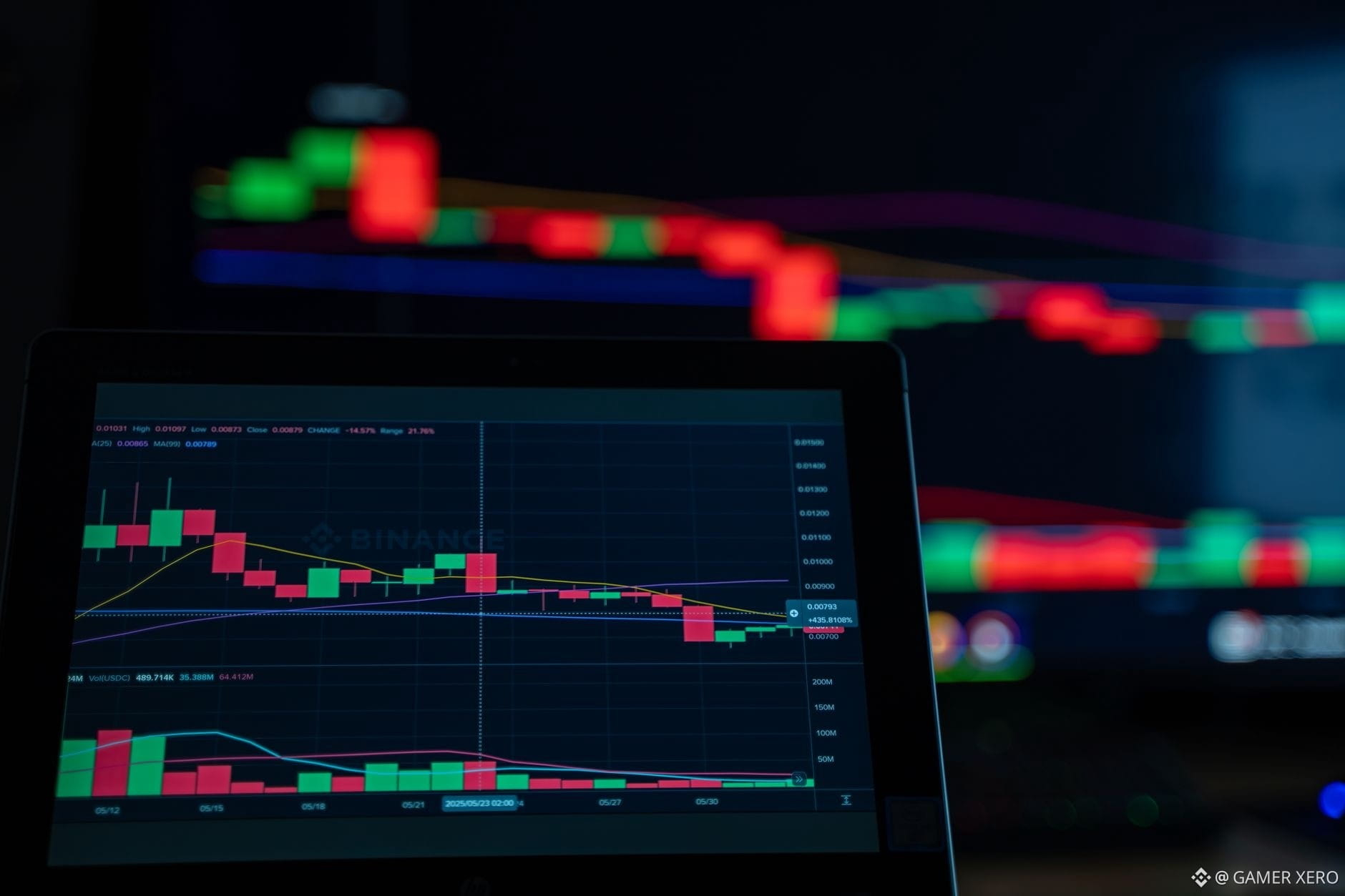
Try this on $BTC right now: the 24‑hour range is $63,880 – $65,025. If you want to buy a dip without chasing the current $64,825 price, place a limit buy at $64,200. Should the price pull back to that point, your order fills automatically, protecting you from a higher average entry. For a sell side, you could set a limit sell at $65,500 – a level just above today’s high – to capture upside without constantly watching the chart.
Using limits helps you control entry and exit points, reduces slippage, and keeps emotions in check. Have you tried setting a limit order this week, and how did it compare to a market order you placed?
#CryptoEducation #TradingBasics #LimitOrders #GAMERXERO
16
·
--
Watching the order book on Binance right now, $BTC trades at $65,114.38 and $ETH at $1,920.28. Most new traders jump straight to market orders, assuming faster fills, but that can leave you paying a few cents more per coin when the spread widens. A limit order lets you set the exact price you’re willing to pay, and the trade only executes if the market reaches that level.
Here’s a simple test: place a buy limit for 0.001 $BTC at $65,050. If the price dips below that level during the next hour, your order fills automatically; if it stays above, you keep the cash in your spot wallet and avoid a higher‑priced fill. Do the same on $ETH—set a limit at $1,910 for 0.05 ETH. You can watch the depth view, see existing sell walls, and choose a price just under the current market to increase the chance of execution without chasing the price.
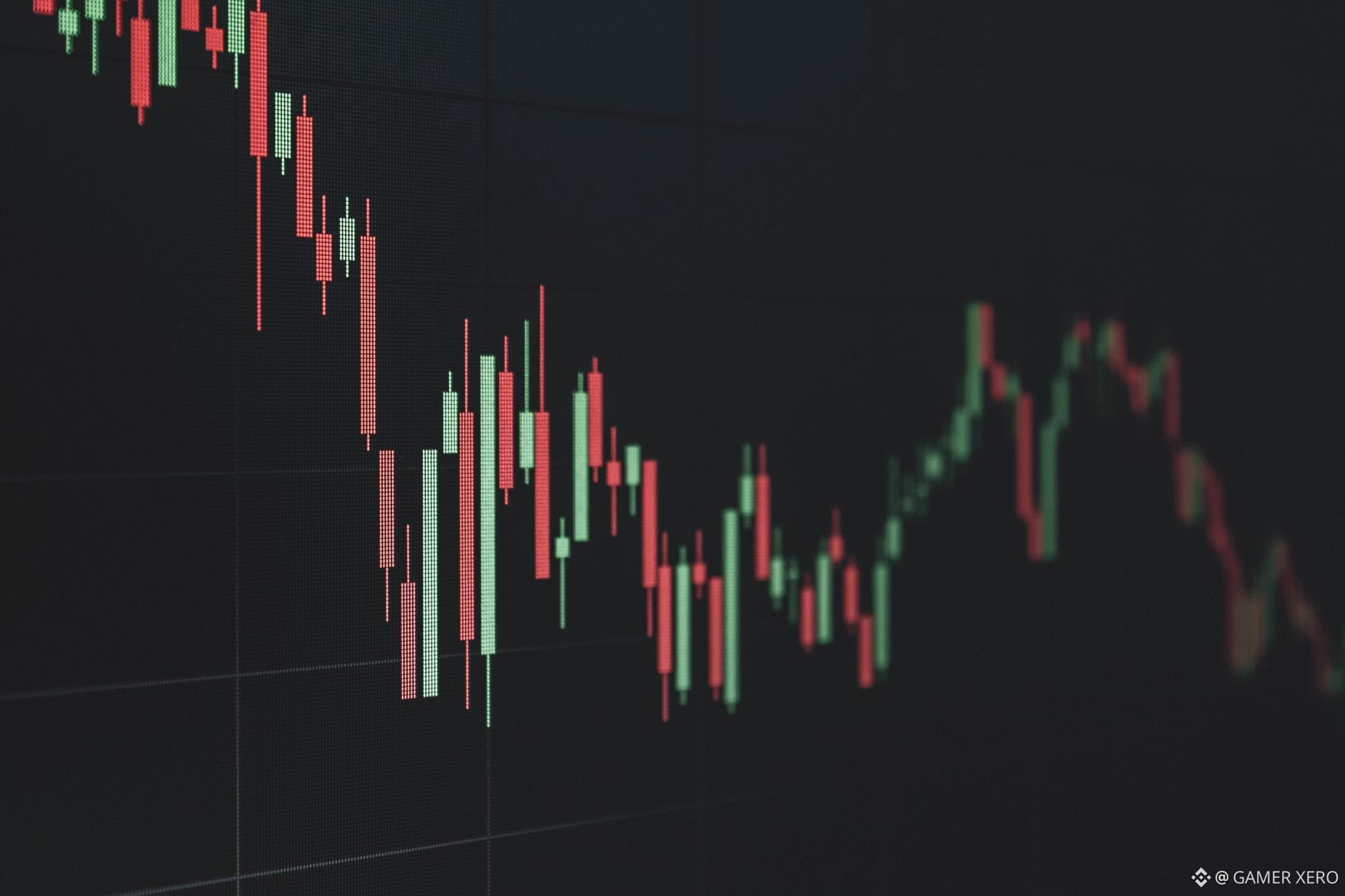
The key takeaway is that limit orders give you price control and reduce slippage, especially in a tight 24‑hour range like today’s $BTC high $65,474 and low $64,826. Have you tried using limit orders for entry or exit, and what settings worked best for you?
#CryptoEducation #BinanceTips #TradingBasics #GAMERXERO
Watching the order book on Binance right now, $BTC trades at $65,114.38 and $ETH at $1,920.28. Most new traders jump straight to market orders, assuming faster fills, but that can leave you paying a few cents more per coin when the spread widens. A limit order lets you set the exact price you’re willing to pay, and the trade only executes if the market reaches that level.
Here’s a simple test: place a buy limit for 0.001 $BTC at $65,050. If the price dips below that level during the next hour, your order fills automatically; if it stays above, you keep the cash in your spot wallet and avoid a higher‑priced fill. Do the same on $ETH —set a limit at $1,910 for 0.05 ETH. You can watch the depth view, see existing sell walls, and choose a price just under the current market to increase the chance of execution without chasing the price.
The key takeaway is that limit orders give you price control and reduce slippage, especially in a tight 24‑hour range like today’s $BTC high $65,474 and low $64,826. Have you tried using limit orders for entry or exit, and what settings worked best for you?
#CryptoEducation #BinanceTips #TradingBasics #GAMERXERO
Here’s a simple test: place a buy limit for 0.001 $BTC at $65,050. If the price dips below that level during the next hour, your order fills automatically; if it stays above, you keep the cash in your spot wallet and avoid a higher‑priced fill. Do the same on $ETH —set a limit at $1,910 for 0.05 ETH. You can watch the depth view, see existing sell walls, and choose a price just under the current market to increase the chance of execution without chasing the price.
The key takeaway is that limit orders give you price control and reduce slippage, especially in a tight 24‑hour range like today’s $BTC high $65,474 and low $64,826. Have you tried using limit orders for entry or exit, and what settings worked best for you?
#CryptoEducation #BinanceTips #TradingBasics #GAMERXERO
18

📚 What Is a 24-Hour Trading Range?: Reading the high and low of a session
On July 31, 2026, Every crypto reports a 24-hour high and low — today $BTC traded between $63,832 and $65,164.
The distance between them is the session's range: a wide range signals volatility, a narrow one signals indecision and equilibrium.
📌 Key Takeaway:
Range analysis is a snapshot of the tug-of-war between buyers and sellers — the tighter the range, the closer the market is to choosing a side.
#Education #TradingBasics #CryptoMarkets
#BinanceAlphaAlert
📚 What Is a 24-Hour Trading Range?: Reading the high and low of a session
On July 31, 2026, Every crypto reports a 24-hour high and low — today $BTC traded between $63,832 and $65,164.
The distance between them is the session's range: a wide range signals volatility, a narrow one signals indecision and equilibrium.
📌 Key Takeaway:
Range analysis is a snapshot of the tug-of-war between buyers and sellers — the tighter the range, the closer the market is to choosing a side.
#Education #TradingBasics #CryptoMarkets
#BinanceAlphaAlert
On July 31, 2026, Every crypto reports a 24-hour high and low — today $BTC traded between $63,832 and $65,164.
The distance between them is the session's range: a wide range signals volatility, a narrow one signals indecision and equilibrium.
📌 Key Takeaway:
Range analysis is a snapshot of the tug-of-war between buyers and sellers — the tighter the range, the closer the market is to choosing a side.
#Education #TradingBasics #CryptoMarkets
#BinanceAlphaAlert
29
Log in to explore more content
Join global crypto users on Binance Square
⚡️ Get latest and useful information about crypto.
💬 Trusted by the world’s largest crypto exchange.
👍 Discover real insights from verified creators.
Email / Phone number
Trending Topics
1
#FedRateWatch
1.4M views
6,628 Discussing
2
#ZcashRises6%
44,621 views
601 Discussing
3
#XRPSinks10%
30,294 views
393 Discussing
4
#BitcoinETFsShed$450M
5,258 views
82 Discussing
5
#CircleOpensArcMainnet
14,315 views
267 Discussing
6
#ZcashHoldersBackNU7Upgrade
25,251 views
433 Discussing
7
#MSTRTradingVolumeSurpassesMorganStanley
24,816 views
589 Discussing
8
#BitcoinFalls4%
51,237 views
911 Discussing
9
#SKHynixInTalksToMakeMemoryChipsInUS
20,569 views
359 Discussing
10
#OpenAIDiscussesNewFundingAt$1.2TValuation
5,009 views
58 Discussing