
#tether
tether
4.8M views
7,094 Discussing
Hot
Latest

Tether is backing Plenti’s expansion into Peru and Bolivia — putting Latin America’s demand for dollar-based savings tools firmly in focus.
This is more than a corporate investment headline. In markets where people actively seek ways to preserve purchasing power, access to digital dollar products can become a practical financial tool rather than a purely crypto-native use case.
Plenti now has additional backing as it targets growth across two new markets, while Tether continues to extend its presence beyond trading venues and deeper into real-world financial access.
The key question is execution: can Plenti turn that funding into trusted, accessible products that people actually use for saving and moving value?
Latin America remains one of the most important regions to watch for stablecoin adoption. Will this expansion set a stronger benchmark for digital-dollar utility in the region?
#Stablecoins #Tether #LatinAmerica
This is more than a corporate investment headline. In markets where people actively seek ways to preserve purchasing power, access to digital dollar products can become a practical financial tool rather than a purely crypto-native use case.
Plenti now has additional backing as it targets growth across two new markets, while Tether continues to extend its presence beyond trading venues and deeper into real-world financial access.
The key question is execution: can Plenti turn that funding into trusted, accessible products that people actually use for saving and moving value?
Latin America remains one of the most important regions to watch for stablecoin adoption. Will this expansion set a stronger benchmark for digital-dollar utility in the region?
#Stablecoins #Tether #LatinAmerica

🚨 Tether’s Bigger Vision Is Taking Shape
Tether’s CEO has outlined an ambitious strategy focused on expanding the global dollar network, increasing $BTC holdings, and buying more gold. 🌎
The idea is simple: strengthen Tether’s reserves while expanding its role in the global financial system.
💵 Dollar: Expand access to digital dollars worldwide.
₿ Bitcoin: Increase exposure to $BTC as a long-term asset.
🥇 Gold: Add more traditional value protection to reserves.
This suggests Tether may be positioning itself as more than just a stablecoin company.
Dollar + Bitcoin + Gold — an interesting combination for the future of finance. 👀
What do you think about Tether’s strategy?
#Tether #Bitcoin #CryptoPatience
@syedarslan4627
Tether’s CEO has outlined an ambitious strategy focused on expanding the global dollar network, increasing $BTC holdings, and buying more gold. 🌎
The idea is simple: strengthen Tether’s reserves while expanding its role in the global financial system.
💵 Dollar: Expand access to digital dollars worldwide.
₿ Bitcoin: Increase exposure to $BTC as a long-term asset.
🥇 Gold: Add more traditional value protection to reserves.
This suggests Tether may be positioning itself as more than just a stablecoin company.
Dollar + Bitcoin + Gold — an interesting combination for the future of finance. 👀
What do you think about Tether’s strategy?
#Tether #Bitcoin #CryptoPatience
@syedarslan4627


Tether and Bitfinex just lost a big fight in court
What’s the lawsuit actually about? Investors claim that between 2017 and 2019, Tether printed massive amounts of USDT that weren’t fully backed by real dollars, then used that stablecoin to buy up BTC and ETH across exchanges. The theory is this pumped prices artificially, and when the truth came out, regular investors were left holding the bag. We’re talking claims of hundreds of billions in alleged losses.
Tether and Bitfinex tried to get the Second Circuit to step in and kill the class certification before things went any further. The court said no. So now the case heads into the next phase, where both sides will fight over whether unbacked stablecoin issuance actually caused prices to move the way plaintiffs claim.
This case has been dragging on since 2019, and it’s finally reaching a stage where real evidence and real experts get tested in front of a judge. Win or lose, it’s a reminder that stablecoin backing claims aren’t just PR talk, they can end up as the central question in a multibillion dollar lawsuit.
Definitely one to keep an eye on if you hold USDT or trade on platforms tied to Tether liquidity.
#Tether #Bitfinex #crypto #USDT #Binance
What’s the lawsuit actually about? Investors claim that between 2017 and 2019, Tether printed massive amounts of USDT that weren’t fully backed by real dollars, then used that stablecoin to buy up BTC and ETH across exchanges. The theory is this pumped prices artificially, and when the truth came out, regular investors were left holding the bag. We’re talking claims of hundreds of billions in alleged losses.
Tether and Bitfinex tried to get the Second Circuit to step in and kill the class certification before things went any further. The court said no. So now the case heads into the next phase, where both sides will fight over whether unbacked stablecoin issuance actually caused prices to move the way plaintiffs claim.
This case has been dragging on since 2019, and it’s finally reaching a stage where real evidence and real experts get tested in front of a judge. Win or lose, it’s a reminder that stablecoin backing claims aren’t just PR talk, they can end up as the central question in a multibillion dollar lawsuit.
Definitely one to keep an eye on if you hold USDT or trade on platforms tied to Tether liquidity.
#Tether #Bitfinex #crypto #USDT #Binance

Verified
Xinbi Guarantee Liquidation Hits the Network
🔒 About 39.27 million USDT was frozen across 10 addresses on the TRON network linked to Xinbi Guarantee, according to MistTrack data.
One of the addresses held more than 10 million USDT.
The move comes after the freezing of funds linked to Huione Guarantee, in a clear escalation against illegal brokerage platforms associated with Telegram.
⚠️ Most importantly: this action reminds the market that USDT is not an asset that is inherently immune to freezing; Tether can block the movement of USDT from specific addresses.
The question: Are we seeing the start of a broader campaign targeting illicit finance networks via Telegram?
$USDT $TRX
#USDT #Tether #TRON #crypto
🔒 About 39.27 million USDT was frozen across 10 addresses on the TRON network linked to Xinbi Guarantee, according to MistTrack data.
One of the addresses held more than 10 million USDT.
The move comes after the freezing of funds linked to Huione Guarantee, in a clear escalation against illegal brokerage platforms associated with Telegram.
⚠️ Most importantly: this action reminds the market that USDT is not an asset that is inherently immune to freezing; Tether can block the movement of USDT from specific addresses.
The question: Are we seeing the start of a broader campaign targeting illicit finance networks via Telegram?
$USDT $TRX
#USDT #Tether #TRON #crypto

Tether directly froze 10 TRON addresses today, totaling 39.3 million USDT, all pointing to a so-called escrow platform called Xinbi.
Since 2022, this platform has been running Chinese escrow services on Telegram, and its on-chain traces have never been clean. The stablecoin industry leader personally took action to freeze them—basically a verdict that the funds are problematic, and it likely involves black/gray industries or money-laundering routes.
Don’t just focus on big inflows to exchanges. This type of freeze action is more solid evidence than any KOL’s trading call. Under compliance pressure, the "reversibility" of USDT is getting stronger.
$USDT #Tether #加密安全
Since 2022, this platform has been running Chinese escrow services on Telegram, and its on-chain traces have never been clean. The stablecoin industry leader personally took action to freeze them—basically a verdict that the funds are problematic, and it likely involves black/gray industries or money-laundering routes.
Don’t just focus on big inflows to exchanges. This type of freeze action is more solid evidence than any KOL’s trading call. Under compliance pressure, the "reversibility" of USDT is getting stronger.
$USDT #Tether #加密安全
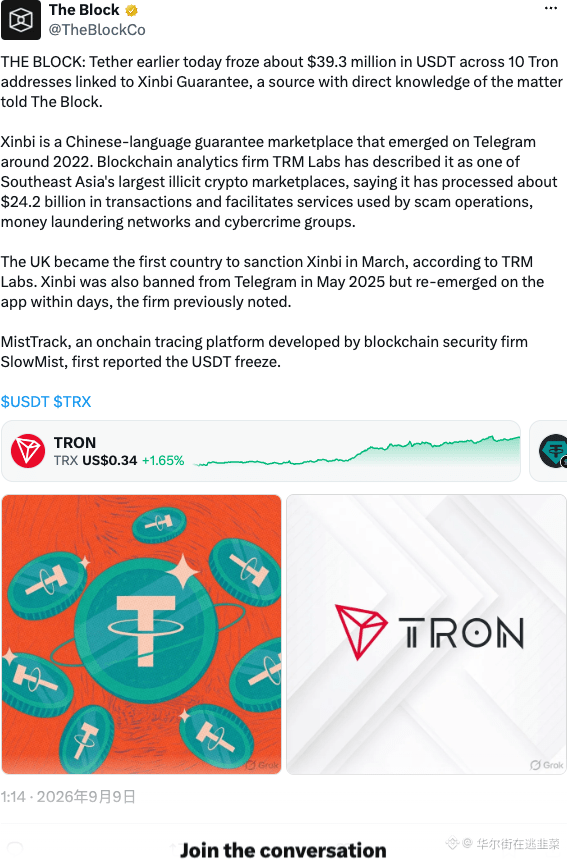


TELEGRAM WENT DOWN, THEN $39M USDT GOT FROZEN. COINCIDENCE? 💀
Tether has just frozen around 39.27M USDT across 10 Tron addresses, linked by MistTrack to the Xinbi Guarantee.
Previously, Tether also froze funds related to the Huiwang Guarantee, in a move targeting illicit custody platforms operating via Telegram.
As for me personally, this morning I saw Telegram suddenly run into an issue without any official reason, and then a few hours later I saw nearly $40M USDT frozen.
I’m just thinking—no proof that these two things are related.
But the timing is exactly like:
Telegram: “We’re having an issue.”
Tether: “We’re having a freeze.”
Me: “Hmm… interesting.” 💀
Brothers, do you think this is just a coincidence, or are you starting to find it a bit sus?
#Telegram #USDT #Tether #BrainrotCrypto
Tether has just frozen around 39.27M USDT across 10 Tron addresses, linked by MistTrack to the Xinbi Guarantee.
Previously, Tether also froze funds related to the Huiwang Guarantee, in a move targeting illicit custody platforms operating via Telegram.
As for me personally, this morning I saw Telegram suddenly run into an issue without any official reason, and then a few hours later I saw nearly $40M USDT frozen.
I’m just thinking—no proof that these two things are related.
But the timing is exactly like:
Telegram: “We’re having an issue.”
Tether: “We’re having a freeze.”
Me: “Hmm… interesting.” 💀
Brothers, do you think this is just a coincidence, or are you starting to find it a bit sus?
#Telegram #USDT #Tether #BrainrotCrypto

What if I told you that the fate of $91 billion depends on just two signatures? 🤯
The cybersecurity guys at #Hacken dissected $USDT under a microscope and found a few “interesting” surprises. Spoiler: there’s nothing decentralized about it.
Here’s what you should know:
🔴 On TRON, half of all the USDT supply (~$91.3B) runs on it. This is governed by a 2-out-of-3 scheme. Meaning a hacker only needs to steal TWO keys to gain control of this amount.
🔴 Ethereum, Avalanche, and Celo use the same sets of keys (a 3-out-of-6 scheme). Compromising three signers puts multiple networks at once at risk.
🔴 Freezing funds or issuing new tokens can be done instantly. There’s no time delay (no timelock) to give you a chance to stop the hack.
🔴 Smart contracts technically don’t restrict issuance. If they’ve gathered enough signatures for a quorum, tokens can be printed without limits—without any on-chain checks of the actual dollar reserves.
#Tether is convenient and liquid, but it’s a 100% centralized machine that runs on trust in a handful of people. Don’t put all your eggs in one basket!
Which stablecoin do you trust most for storing capital: USDT, USDC, or maybe DAI?
The cybersecurity guys at #Hacken dissected $USDT under a microscope and found a few “interesting” surprises. Spoiler: there’s nothing decentralized about it.
Here’s what you should know:
🔴 On TRON, half of all the USDT supply (~$91.3B) runs on it. This is governed by a 2-out-of-3 scheme. Meaning a hacker only needs to steal TWO keys to gain control of this amount.
🔴 Ethereum, Avalanche, and Celo use the same sets of keys (a 3-out-of-6 scheme). Compromising three signers puts multiple networks at once at risk.
🔴 Freezing funds or issuing new tokens can be done instantly. There’s no time delay (no timelock) to give you a chance to stop the hack.
🔴 Smart contracts technically don’t restrict issuance. If they’ve gathered enough signatures for a quorum, tokens can be printed without limits—without any on-chain checks of the actual dollar reserves.
#Tether is convenient and liquid, but it’s a 100% centralized machine that runs on trust in a handful of people. Don’t put all your eggs in one basket!
Which stablecoin do you trust most for storing capital: USDT, USDC, or maybe DAI?

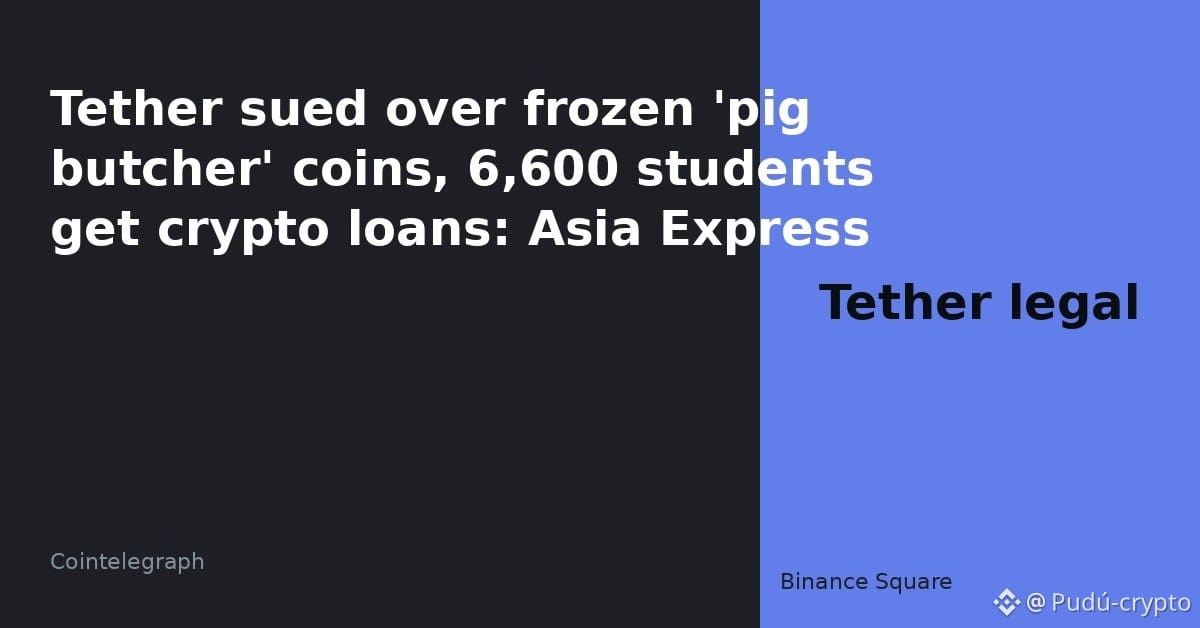
⚖️ Lawsuit against Tether over frozen funds and crypto loans for students in Asia
Reports revealed that two Thai businessmen filed a lawsuit against Tether after a quantity of USDT—linked to a fraud case—was frozen, raising questions about the use of stablecoins. In a related context, thousands of students in Asia used loans backed by cryptocurrencies to fund their education, highlighting the growing adoption of crypto applications in the region.
━━━━━━━━━━━━━━
📊 Impact: 📈 High
🏷️ OTHER
#Tether #USDT #CryptoLoans #Asia #Legal
📰 Source: cointelegraph.com
Reports revealed that two Thai businessmen filed a lawsuit against Tether after a quantity of USDT—linked to a fraud case—was frozen, raising questions about the use of stablecoins. In a related context, thousands of students in Asia used loans backed by cryptocurrencies to fund their education, highlighting the growing adoption of crypto applications in the region.
━━━━━━━━━━━━━━
📊 Impact: 📈 High
🏷️ OTHER
#Tether #USDT #CryptoLoans #Asia #Legal
📰 Source: cointelegraph.com

The U.S. Treasury market is changing buyers, and Tether wants to be the one to take the baton
Background: In June, Japan, China, and the UK — three traditional major buyers of U.S. Treasuries — all reduced their holdings at the same time, with foreign investors buying about $72 billion less in total that month; meanwhile, U.S. federal debt broke through $40 trillion, and the yield on the 30-year Treasury auction surged to 5.216%, the highest since 2001. As traditional buyers step back, the Treasury does indeed need a new source of funding to fill the gap.
Against this backdrop, Tether CEO Paolo Ardoino said the company’s goal is to break into the top five buyers of U.S. Treasuries; right now it ranks around 16th or 17th. There is also a policy basis for this: the GENIUS Act, which took effect last year, requires stablecoin issuers to hold highly liquid assets such as short-term Treasuries as reserves, effectively locking in demand for Treasury purchases at the policy level; the Senate is also set to vote on the CLARITY Act on September 15, so Washington is clearly pushing this line forward. The Aspen Economic Strategy Group has also published a report discussing how stablecoins could create meaningful incremental demand for short-term Treasuries.
Foreign investors reducing holdings, Treasury yields surging, and the GENIUS Act requiring reserves to be allocated to Treasuries — these are all hard facts that can be verified from independent data sources. But specific figures like "currently ranked in the top five" and "able to distribute holdings to 650 million people to reduce the risk of selling" are numbers Ardoino himself gave in interviews.
USDT’s market cap is now about $183.4 billion, and its scale is indeed more than twice that of USDC (about $74.5 billion); this supply gap is real. On the flip side, the more Treasuries Tether buys, the more USDT’s stability becomes tied to the liquidity of the Treasury market and short-end interest rate policy — if Treasury auctions were ever to soften or rates were to shift abruptly, this would not be a pure positive; it could become a new risk exposure.
If Tether really does break into the top five buyers of U.S. Treasuries, do you think that marks the maturation of the stablecoin industry, or does it mean USDT is becoming a "too big to fail" systemic player that regulators must watch closely?
#Tether #USDT #美债 #稳定币 #GENIUS法案
v
Background: In June, Japan, China, and the UK — three traditional major buyers of U.S. Treasuries — all reduced their holdings at the same time, with foreign investors buying about $72 billion less in total that month; meanwhile, U.S. federal debt broke through $40 trillion, and the yield on the 30-year Treasury auction surged to 5.216%, the highest since 2001. As traditional buyers step back, the Treasury does indeed need a new source of funding to fill the gap.
Against this backdrop, Tether CEO Paolo Ardoino said the company’s goal is to break into the top five buyers of U.S. Treasuries; right now it ranks around 16th or 17th. There is also a policy basis for this: the GENIUS Act, which took effect last year, requires stablecoin issuers to hold highly liquid assets such as short-term Treasuries as reserves, effectively locking in demand for Treasury purchases at the policy level; the Senate is also set to vote on the CLARITY Act on September 15, so Washington is clearly pushing this line forward. The Aspen Economic Strategy Group has also published a report discussing how stablecoins could create meaningful incremental demand for short-term Treasuries.
Foreign investors reducing holdings, Treasury yields surging, and the GENIUS Act requiring reserves to be allocated to Treasuries — these are all hard facts that can be verified from independent data sources. But specific figures like "currently ranked in the top five" and "able to distribute holdings to 650 million people to reduce the risk of selling" are numbers Ardoino himself gave in interviews.
USDT’s market cap is now about $183.4 billion, and its scale is indeed more than twice that of USDC (about $74.5 billion); this supply gap is real. On the flip side, the more Treasuries Tether buys, the more USDT’s stability becomes tied to the liquidity of the Treasury market and short-end interest rate policy — if Treasury auctions were ever to soften or rates were to shift abruptly, this would not be a pure positive; it could become a new risk exposure.
If Tether really does break into the top five buyers of U.S. Treasuries, do you think that marks the maturation of the stablecoin industry, or does it mean USDT is becoming a "too big to fail" systemic player that regulators must watch closely?
#Tether #USDT #美债 #稳定币 #GENIUS法案
v

Orionx (backed by Tether) permanently shuts down after an audit found a $7 million shortfall in customer funds
• Orionx, an exchange backed by Tether, announced its permanent closure.
• An audit found that more than $7 million in customer assets had been moved to wallets outside the exchange's custody system.
• This is a severe custody gap in the cryptocurrency industry.
#BinanceSquare #CryptoNews #USDT #Tether #Blockchain
$usdt
vlikevn Titanbot
Source: CoinTelegraph
• Orionx, an exchange backed by Tether, announced its permanent closure.
• An audit found that more than $7 million in customer assets had been moved to wallets outside the exchange's custody system.
• This is a severe custody gap in the cryptocurrency industry.
#BinanceSquare #CryptoNews #USDT #Tether #Blockchain
$usdt
vlikevn Titanbot
Source: CoinTelegraph

$USDT Market Update: Safe-Haven Demand & Liquidity Overview! 💵🛡️
As broad market volatility continues, Tether tether mains the premier source of market liquidity and portfolio hedging across major exchanges.
Key Market Highlights:
Peg Stability: $1.00 — tether maintains its tight 1:1 USD peg, providing trader protection during sharp market pullbacks.
Liquidity & Dominance: Tether's market cap sits near record highs above $180 Billion, capturing the majority of global stable coin volume.
Market Outlook: Increased tether inflows onto exchanges usually signal growing buying power, laying the groundwork for upcoming altcoin re-entry.
Trading Tip: Holding an active cash allocation in tether ensures instant execution readiness whenever market dips present high-conviction entry zones!
Are you sitting in stablecoins or deployed in the market? Drop your thoughts below! 👇
#USDT
#Tether
#Stablecoin
#CryptoAnalysis #BinanceSquare #CryptoNews
As broad market volatility continues, Tether tether mains the premier source of market liquidity and portfolio hedging across major exchanges.
Key Market Highlights:
Peg Stability: $1.00 — tether maintains its tight 1:1 USD peg, providing trader protection during sharp market pullbacks.
Liquidity & Dominance: Tether's market cap sits near record highs above $180 Billion, capturing the majority of global stable coin volume.
Market Outlook: Increased tether inflows onto exchanges usually signal growing buying power, laying the groundwork for upcoming altcoin re-entry.
Trading Tip: Holding an active cash allocation in tether ensures instant execution readiness whenever market dips present high-conviction entry zones!
Are you sitting in stablecoins or deployed in the market? Drop your thoughts below! 👇
#USDT
#Tether
#Stablecoin
#CryptoAnalysis #BinanceSquare #CryptoNews
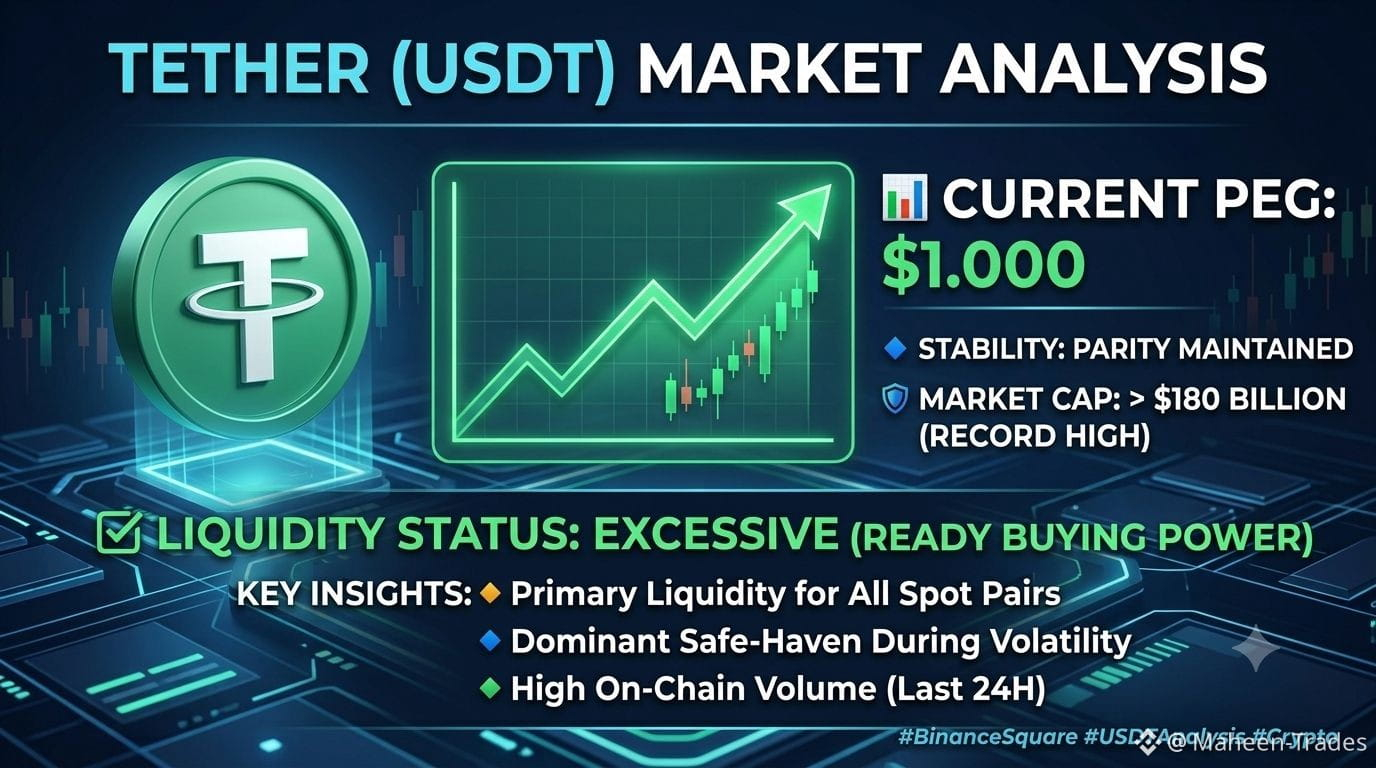
⚖️ Crypto investors sue Tether after $42 million in assets were frozen
Two Thai investors have filed a lawsuit against Tether, the issuer of the USDT stablecoin, alleging that the company froze their USDT holdings, which are valued at more than $42 million. The lawsuit says the freeze was carried out based on an unofficial request from a U.S. government official, without any court order or prior legal process.
━━━━━━━━━━━━━━
📊 Impact: 📈 High
🏷️ REGULATION
#Tether #USDT #Regulation #LegalAction #CryptoNews
📰 Source: dailyhodl.com
Two Thai investors have filed a lawsuit against Tether, the issuer of the USDT stablecoin, alleging that the company froze their USDT holdings, which are valued at more than $42 million. The lawsuit says the freeze was carried out based on an unofficial request from a U.S. government official, without any court order or prior legal process.
━━━━━━━━━━━━━━
📊 Impact: 📈 High
🏷️ REGULATION
#Tether #USDT #Regulation #LegalAction #CryptoNews
📰 Source: dailyhodl.com

🏛️ Stablecoins are quietly becoming a bigger force in traditional finance 👀
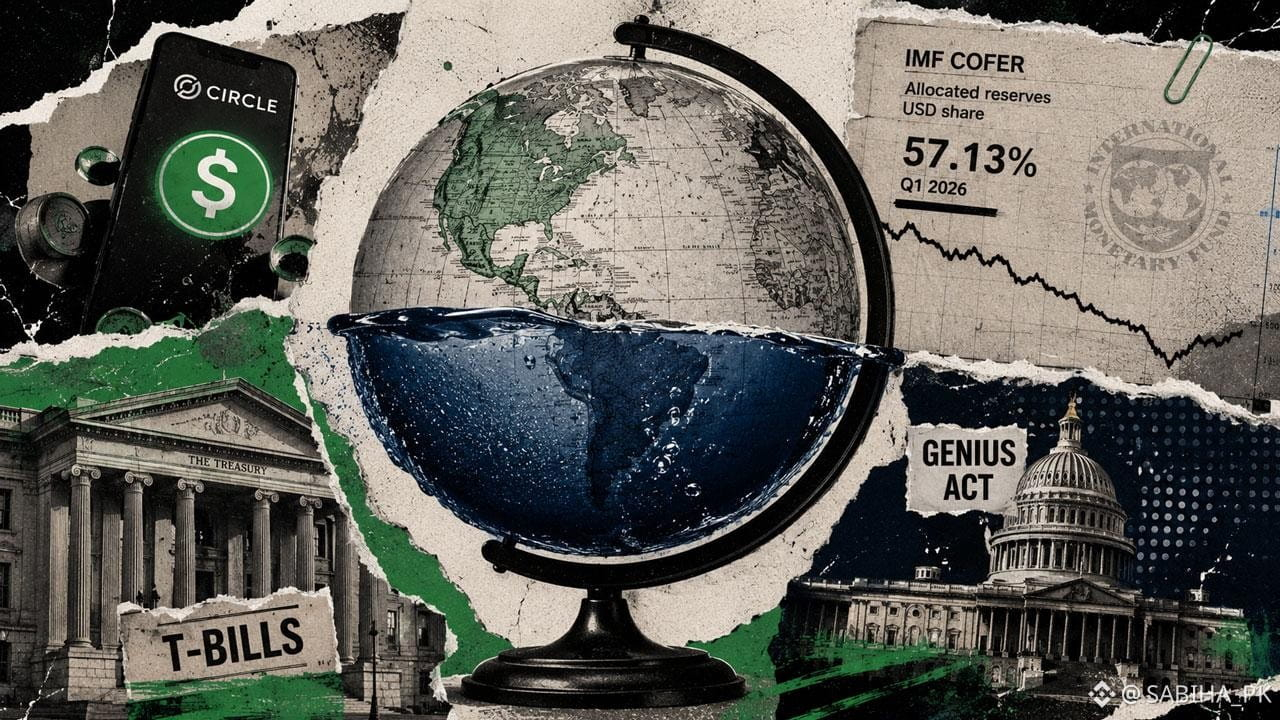
Tether and Circle have added nearly $70B in US Treasury bills since 2022, showing how much stablecoin growth is now connected to the traditional financial system.
But let’s keep it realistic — they still hold less than 1% of all Treasuries outstanding. Stablecoins can support demand at the margin, but they’re nowhere close to replacing central banks or major institutional buyers.
Still, the trend is worth watching. As stablecoins grow, their role in global liquidity and US debt markets could become much bigger. 🚀
#Crypto #Stablecoins #Tether #USDC #Binance
Tether and Circle have added nearly $70B in US Treasury bills since 2022, showing how much stablecoin growth is now connected to the traditional financial system.
But let’s keep it realistic — they still hold less than 1% of all Treasuries outstanding. Stablecoins can support demand at the margin, but they’re nowhere close to replacing central banks or major institutional buyers.
Still, the trend is worth watching. As stablecoins grow, their role in global liquidity and US debt markets could become much bigger. 🚀
#Crypto #Stablecoins #Tether #USDC #Binance
⚖️ Tether (USDT) freeze of some addresses renews the debate over legal documentation
Reports revealed that Tether froze more than $42.4 million worth of USDT across 10 addresses on the Ethereum network. The reports indicate that the legal justification for this freeze came after a notable delay from the actual execution time, raising questions about compliance mechanisms.
━━━━━━━━━━━━━━
📊 Impact: 📈 High
🏷️ OTHER
#Tether #USDT #Compliance #Blockchain #CryptoRegulation
📰 Source: forkast.news
Reports revealed that Tether froze more than $42.4 million worth of USDT across 10 addresses on the Ethereum network. The reports indicate that the legal justification for this freeze came after a notable delay from the actual execution time, raising questions about compliance mechanisms.
━━━━━━━━━━━━━━
📊 Impact: 📈 High
🏷️ OTHER
#Tether #USDT #Compliance #Blockchain #CryptoRegulation
📰 Source: forkast.news

Verified
⚖️ $42 Million Lawsuit Against Tether
Thai businessmen have filed a lawsuit against Tether over the freezing of 42.4 million USDT without a warrant.
📌 The plaintiffs claim that US authorities obtained a warrant only after more than three months had passed.
This case could define the limits of Tether's control over private wallets.
#Tether #USDT
$USDT
Thai businessmen have filed a lawsuit against Tether over the freezing of 42.4 million USDT without a warrant.
📌 The plaintiffs claim that US authorities obtained a warrant only after more than three months had passed.
This case could define the limits of Tether's control over private wallets.
#Tether #USDT
$USDT
⚖️ Lawsuit targets Tether over alleged freeze of $42.4 million in USDT
A Thai businessman has filed a lawsuit against Tether, the issuer of the USDT stablecoin, alleging an unlawful freeze of his and his partner’s assets worth $42.4 million in USDT. The claim comes after months of blocking access to these stablecoins, and before the issuance of a seizure warrant by federal authorities.
━━━━━━━━━━━━━━
📊 Impact: 📈 High
🏷️ OTHER
#Tether #USDT #Legal #Stablecoin #CryptoNews
📰 Source: decrypt.co
A Thai businessman has filed a lawsuit against Tether, the issuer of the USDT stablecoin, alleging an unlawful freeze of his and his partner’s assets worth $42.4 million in USDT. The claim comes after months of blocking access to these stablecoins, and before the issuance of a seizure warrant by federal authorities.
━━━━━━━━━━━━━━
📊 Impact: 📈 High
🏷️ OTHER
#Tether #USDT #Legal #Stablecoin #CryptoNews
📰 Source: decrypt.co

Thai businessmen have sued Tether! $42 million USDT frozen over a “pig butchering” scam—the traders are suing directly to demand their funds be unlocked.
This is interesting when you look closely: if Tether wins, it means centralized stablecoins can freeze your money at any time. If the businessmen win, it sets a precedent for suing to unlock frozen assets. Either way, it’s a signal that regulation is tightening.
In the short term, the USDT supply is too big to fail, but this lawsuit is worth watching. If a black swan happens, funds will likely flow to BTC and decentralized stablecoins as a hedge.
$USDT $BTC #Tether #stablecoin
Thai businessmen suing Tether over $42M in frozen USDT tied to pig butchering scams. They want their coins unlocked.
Think about it: if Tether wins, your centralized stablecoins can be frozen anytime. If they win, it opens the door to lawsuits over frozen funds. Either way, regulation is tightening.
Short-term USDT is too big to fail, but watch this case closely. Any black swan event and money flows straight to BTC as a safe haven.
$USDT $BTC #Tether #Stablecoin
This is interesting when you look closely: if Tether wins, it means centralized stablecoins can freeze your money at any time. If the businessmen win, it sets a precedent for suing to unlock frozen assets. Either way, it’s a signal that regulation is tightening.
In the short term, the USDT supply is too big to fail, but this lawsuit is worth watching. If a black swan happens, funds will likely flow to BTC and decentralized stablecoins as a hedge.
$USDT $BTC #Tether #stablecoin
Thai businessmen suing Tether over $42M in frozen USDT tied to pig butchering scams. They want their coins unlocked.
Think about it: if Tether wins, your centralized stablecoins can be frozen anytime. If they win, it opens the door to lawsuits over frozen funds. Either way, regulation is tightening.
Short-term USDT is too big to fail, but watch this case closely. Any black swan event and money flows straight to BTC as a safe haven.
$USDT $BTC #Tether #Stablecoin

Stablecoin issuer Tether is sued over allegations that it illegally froze the funds of two Thai businessmen months before a federal seizure order was issued. The plaintiffs say they cannot access their $USDT assets worth $42.4 million. The development has reignited legal debate over the asset-freezing powers of centralized stablecoin issuers. #Tether #USDT #CryptoNews
Tether was sued for allegedly freezing its $USDT assets valued at $42.4 million about three months ago, without a formal search warrant having been issued. The plaintiffs argue that this was carried out with an unofficial request from U.S. law enforcement. This has reignited debate about the role of centralized stablecoin issuers in legal proceedings. #Tether #USDT #CryptoLaw

Tether faces a rather unusual legal lawsuit.
A group of Thai businessmen filed legal action against the company.
The reason is the freezing of $42 million in USDT.
These funds were linked to a scam known as pig butchering.
After detecting irregularities related to this fraud, the company decided to block the coins.
It’s a reminder of how centralized control affects users.
What do you think about this kind of measure?
#Tether #USDT #Cripto
A group of Thai businessmen filed legal action against the company.
The reason is the freezing of $42 million in USDT.
These funds were linked to a scam known as pig butchering.
After detecting irregularities related to this fraud, the company decided to block the coins.
It’s a reminder of how centralized control affects users.
What do you think about this kind of measure?
#Tether #USDT #Cripto

Log in to explore more content