

#smci
smci
32,271 views
357 Discussing
Hot
Latest

·
--
Multi-period resonance: $ONG / $MSFT / $SMCI 30 minutes strengthen, 4-hour uptrend confirmation 🔥
════════════════════
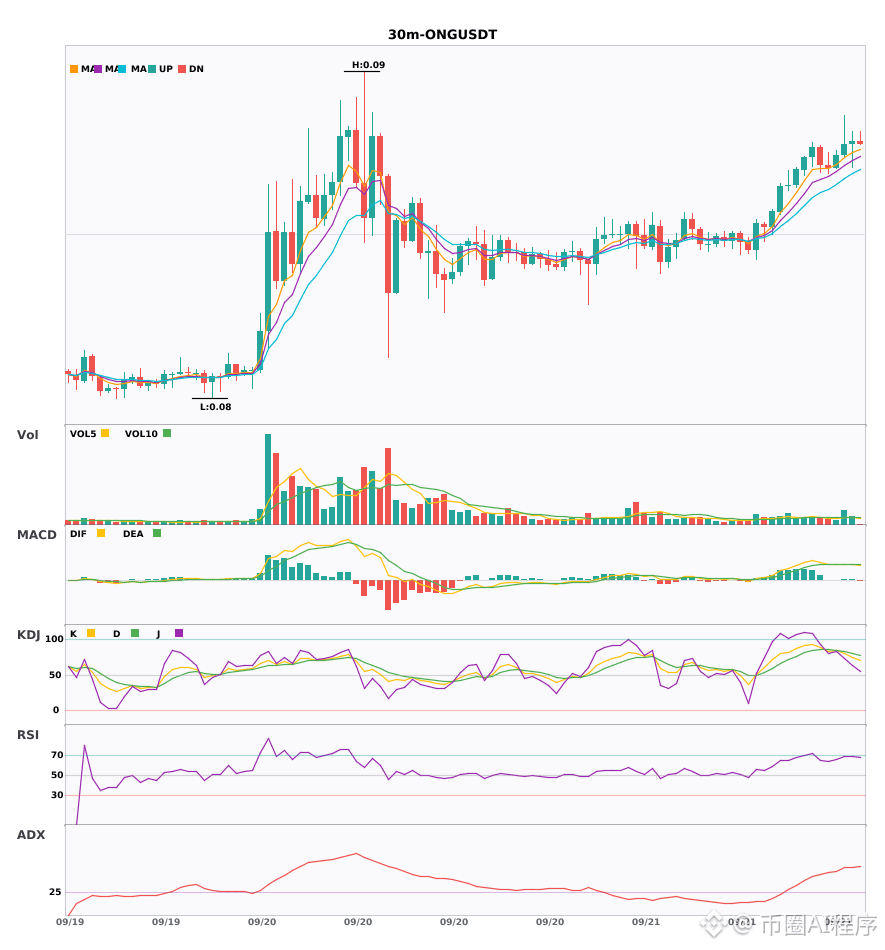
🔴 $ONG 30 minutes Bullish signal
⚠️ Technical analysis: 4-hour bullish resonance confirmed | Enter on the 30-minute timeframe: MACD golden cross above zero, bullish momentum released | EMA5 > EMA8 > EMA13 bullish alignment | KDJ strong trend, bulls in control (K is 79.5, D is 83.1) | Volume expands (1.8x)
════════════════════
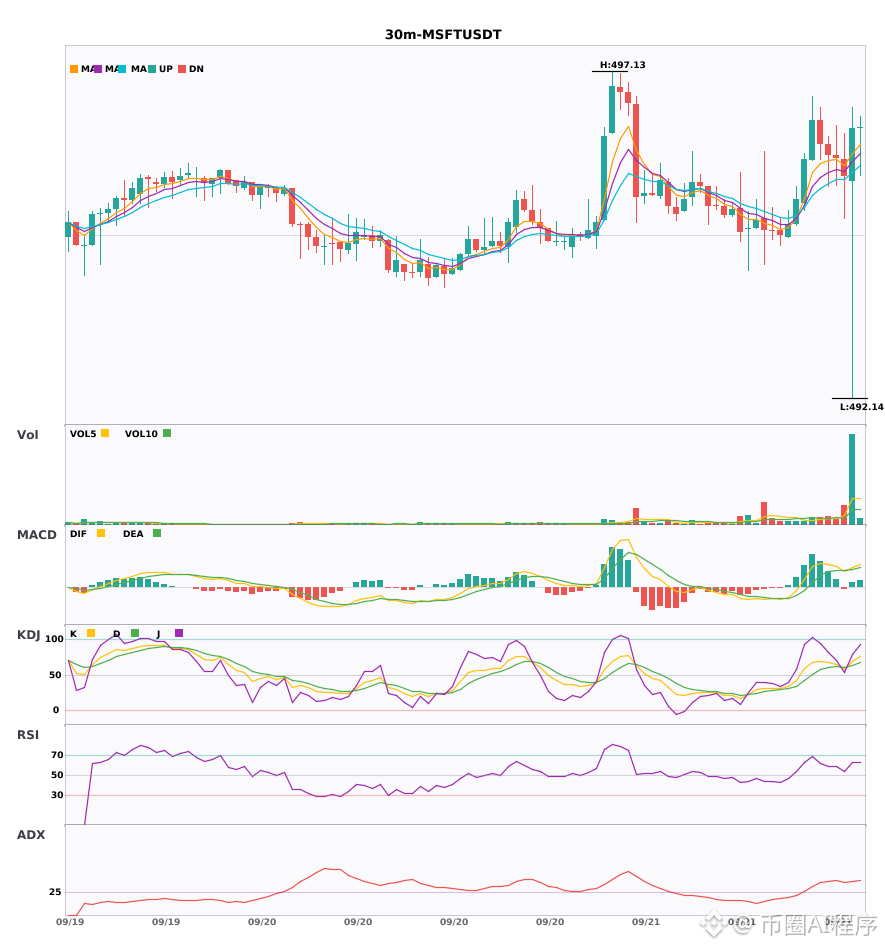
🔴 $MSFT 30 minutes Bullish signal
⚠️ Technical analysis: 4-hour bullish resonance confirmed | Enter on the 30-minute timeframe: MACD golden cross above zero, bullish momentum released | EMA5 > EMA8 > EMA13 bullish alignment | KDJ golden cross, bullish in the short term (K is 68.6, D is 63.4) | Volume surges (5.9x)
════════════════════
🔴 $SMCI 30 minutes Bullish signal
⚠️ Technical analysis: 4-hour bullish resonance confirmed | Enter on the 30-minute timeframe: MACD golden cross above zero, bullish momentum released | EMA5 > EMA8 > EMA13 bullish alignment | KDJ golden cross, bullish in the short term (K is 76.5, D is 75.0) | Volume surges (8.0x)
════════════════════
🔔 Watch for first-hand market moves/abnormalities 🔔
#多周期共振 #ONG #MSFT #SMCI
📌 When trading, pay attention to whether the candlestick pattern matches
Multi-period resonance: $ONG / $MSFT / $SMCI 30 minutes strengthen, 4-hour uptrend confirmation 🔥
════════════════════
🔴 $ONG 30 minutes Bullish signal
⚠️ Technical analysis: 4-hour bullish resonance confirmed | Enter on the 30-minute timeframe: MACD golden cross above zero, bullish momentum released | EMA5 > EMA8 > EMA13 bullish alignment | KDJ strong trend, bulls in control (K is 79.5, D is 83.1) | Volume expands (1.8x)
════════════════════
🔴 $MSFT 30 minutes Bullish signal
⚠️ Technical analysis: 4-hour bullish resonance confirmed | Enter on the 30-minute timeframe: MACD golden cross above zero, bullish momentum released | EMA5 > EMA8 > EMA13 bullish alignment | KDJ golden cross, bullish in the short term (K is 68.6, D is 63.4) | Volume surges (5.9x)
════════════════════
🔴 $SMCI 30 minutes Bullish signal
⚠️ Technical analysis: 4-hour bullish resonance confirmed | Enter on the 30-minute timeframe: MACD golden cross above zero, bullish momentum released | EMA5 > EMA8 > EMA13 bullish alignment | KDJ golden cross, bullish in the short term (K is 76.5, D is 75.0) | Volume surges (8.0x)
════════════════════
🔔 Watch for first-hand market moves/abnormalities 🔔
#多周期共振 #ONG #MSFT #SMCI
📌 When trading, pay attention to whether the candlestick pattern matches
════════════════════
🔴 $ONG 30 minutes Bullish signal
⚠️ Technical analysis: 4-hour bullish resonance confirmed | Enter on the 30-minute timeframe: MACD golden cross above zero, bullish momentum released | EMA5 > EMA8 > EMA13 bullish alignment | KDJ strong trend, bulls in control (K is 79.5, D is 83.1) | Volume expands (1.8x)
════════════════════
🔴 $MSFT 30 minutes Bullish signal
⚠️ Technical analysis: 4-hour bullish resonance confirmed | Enter on the 30-minute timeframe: MACD golden cross above zero, bullish momentum released | EMA5 > EMA8 > EMA13 bullish alignment | KDJ golden cross, bullish in the short term (K is 68.6, D is 63.4) | Volume surges (5.9x)
════════════════════
🔴 $SMCI 30 minutes Bullish signal
⚠️ Technical analysis: 4-hour bullish resonance confirmed | Enter on the 30-minute timeframe: MACD golden cross above zero, bullish momentum released | EMA5 > EMA8 > EMA13 bullish alignment | KDJ golden cross, bullish in the short term (K is 76.5, D is 75.0) | Volume surges (8.0x)
════════════════════
🔔 Watch for first-hand market moves/abnormalities 🔔
#多周期共振 #ONG #MSFT #SMCI
📌 When trading, pay attention to whether the candlestick pattern matches
207

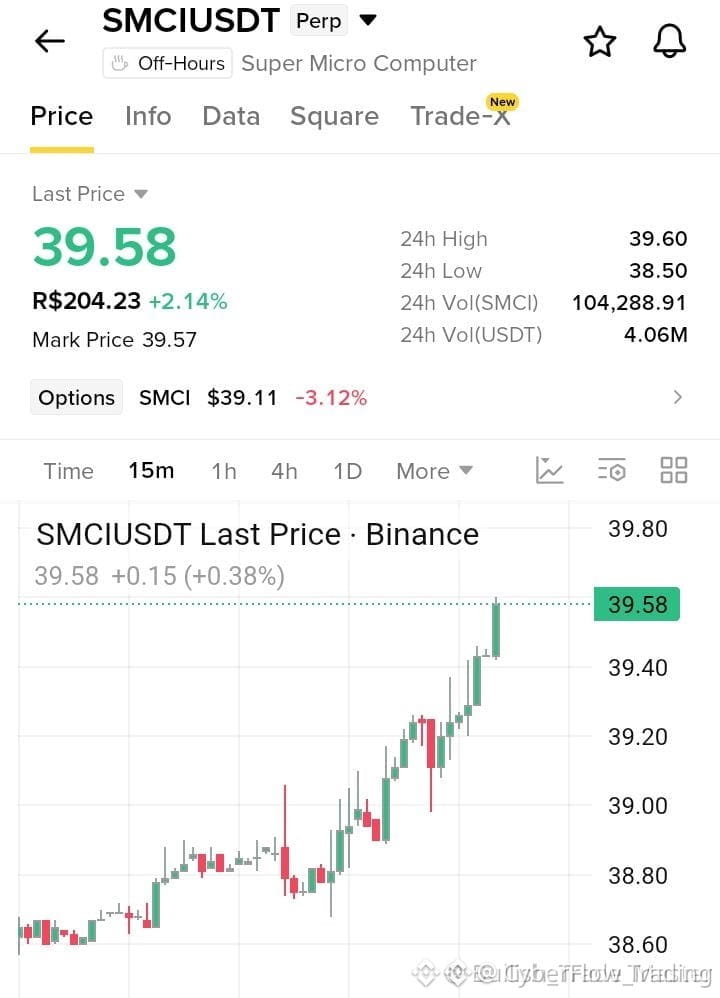
💥 $SMCI IGNITES POWERFUL BULLISH EXPANSION AS BUYERS STEP UP IN FORCE! 🚀
Buyers are aggressively absorbing sell orders on $SMCI , driving a powerful price expansion that is sweeping through key overhead liquidity with serious velocity. ⚡ The tape is showing clean structural demand, signaling that smart money is actively fueling this move. 📊
We are seeing identical high-conviction momentum building up across correlated runners like $SAGA and $BTW as capital rotates into top-tier setups. 💡 When a trend develops this degree of buyer aggression, patient traders get rewarded by following the underlying order flow.
💬 Are you positioning into this bullish expansion early, or waiting for a backtest before taking entry? 👇
⚠️ Not financial advice. Always manage your risk. 🛡️
🏷️ #SMCI #SAGA #LongSetup #Breakout #Crypto
🔥 💎
💥 $SMCI IGNITES POWERFUL BULLISH EXPANSION AS BUYERS STEP UP IN FORCE! 🚀
Buyers are aggressively absorbing sell orders on $SMCI , driving a powerful price expansion that is sweeping through key overhead liquidity with serious velocity. ⚡ The tape is showing clean structural demand, signaling that smart money is actively fueling this move. 📊
We are seeing identical high-conviction momentum building up across correlated runners like $SAGA and $BTW as capital rotates into top-tier setups. 💡 When a trend develops this degree of buyer aggression, patient traders get rewarded by following the underlying order flow.
💬 Are you positioning into this bullish expansion early, or waiting for a backtest before taking entry? 👇
⚠️ Not financial advice. Always manage your risk. 🛡️
🏷️ #SMCI #SAGA #LongSetup #Breakout #Crypto
🔥 💎
Buyers are aggressively absorbing sell orders on $SMCI , driving a powerful price expansion that is sweeping through key overhead liquidity with serious velocity. ⚡ The tape is showing clean structural demand, signaling that smart money is actively fueling this move. 📊
We are seeing identical high-conviction momentum building up across correlated runners like $SAGA and $BTW as capital rotates into top-tier setups. 💡 When a trend develops this degree of buyer aggression, patient traders get rewarded by following the underlying order flow.
💬 Are you positioning into this bullish expansion early, or waiting for a backtest before taking entry? 👇
⚠️ Not financial advice. Always manage your risk. 🛡️
🏷️ #SMCI #SAGA #LongSetup #Breakout #Crypto
🔥 💎
35

·
--
The old dog glanced at $SMCI: the price is still hovering around $39.24, and over the past 24 hours it has only moved 1.422%. But Funding has accumulated to 0.007933%, and OI remains steady at 47,918 contracts. In plain terms, the price hasn’t gone anywhere, yet the long funding fee is still climbing continuously.
This spot is a bit awkward. Funding staying positive means longs are continuously paying fees to shorts—this is a signal of crowded positioning. Combined with OI staying high while the price chops within a narrow range, we can infer that longs are hard-fighting by paying the funding rate, and shorts haven’t been forced out either. Both sides are bleeding in this standoff. This kind of balance is extremely fragile: if one side concedes, it can trigger a one-way move. Looking only at the data set $SMCI , right now longs are bearing higher costs.
I think this isn’t a good moment to chase longs. Positive funding with price lagging is a classic pattern of longs getting trapped and then adding. If there isn’t a subsequent breakout with volume to break the deadlock, it can easily lead to a downside stampede. My plan is to observe with a light position. If it falls below $39, I’ll cut 30% first. If it breaks above $40.50 (near the upper edge of the dense trading zone within the past 24 hours) and funding turns negative or stays flat, then I’ll consider adding.
Trading tag: #BinanceFutures #TradFi #USDⓈM #SMCI #SMCIUSDT $SMCI
The old dog glanced at $SMCI : the price is still hovering around $39.24, and over the past 24 hours it has only moved 1.422%. But Funding has accumulated to 0.007933%, and OI remains steady at 47,918 contracts. In plain terms, the price hasn’t gone anywhere, yet the long funding fee is still climbing continuously.
This spot is a bit awkward. Funding staying positive means longs are continuously paying fees to shorts—this is a signal of crowded positioning. Combined with OI staying high while the price chops within a narrow range, we can infer that longs are hard-fighting by paying the funding rate, and shorts haven’t been forced out either. Both sides are bleeding in this standoff. This kind of balance is extremely fragile: if one side concedes, it can trigger a one-way move. Looking only at the data set $SMCI , right now longs are bearing higher costs.
I think this isn’t a good moment to chase longs. Positive funding with price lagging is a classic pattern of longs getting trapped and then adding. If there isn’t a subsequent breakout with volume to break the deadlock, it can easily lead to a downside stampede. My plan is to observe with a light position. If it falls below $39, I’ll cut 30% first. If it breaks above $40.50 (near the upper edge of the dense trading zone within the past 24 hours) and funding turns negative or stays flat, then I’ll consider adding.
Trading tag: #BinanceFutures #TradFi #USDⓈM #SMCI #SMCIUSDT $SMCI
This spot is a bit awkward. Funding staying positive means longs are continuously paying fees to shorts—this is a signal of crowded positioning. Combined with OI staying high while the price chops within a narrow range, we can infer that longs are hard-fighting by paying the funding rate, and shorts haven’t been forced out either. Both sides are bleeding in this standoff. This kind of balance is extremely fragile: if one side concedes, it can trigger a one-way move. Looking only at the data set $SMCI , right now longs are bearing higher costs.
I think this isn’t a good moment to chase longs. Positive funding with price lagging is a classic pattern of longs getting trapped and then adding. If there isn’t a subsequent breakout with volume to break the deadlock, it can easily lead to a downside stampede. My plan is to observe with a light position. If it falls below $39, I’ll cut 30% first. If it breaks above $40.50 (near the upper edge of the dense trading zone within the past 24 hours) and funding turns negative or stays flat, then I’ll consider adding.
Trading tag: #BinanceFutures #TradFi #USDⓈM #SMCI #SMCIUSDT $SMCI
29

·
--
$SMCI past 24 hours fell 5.66% to 38.85, but the funding rate is zero—longs and shorts have temporarily stopped paying interest to each other. With price moving down and the funding rate at zero, this usually points to a critical game phase before the market makes a short-term directional choice. The shorts have not clearly suppressed, and the longs have not conceded and exited. The position size of 46902.82 together with 4.28 million in trading volume suggests liquidity is still there, but there is no consensus on direction. Watch the price around 38: if it continues to see increased volume but stalls without further decline, a short-term rebound may be brewing; if it directly breaks below 35, shorts may take back control.
Trading tag: #TradFi #链上美股 #SMCI
Where do you think this set of judgments is most likely to be wrong?
$SMCI past 24 hours fell 5.66% to 38.85, but the funding rate is zero—longs and shorts have temporarily stopped paying interest to each other. With price moving down and the funding rate at zero, this usually points to a critical game phase before the market makes a short-term directional choice. The shorts have not clearly suppressed, and the longs have not conceded and exited. The position size of 46902.82 together with 4.28 million in trading volume suggests liquidity is still there, but there is no consensus on direction. Watch the price around 38: if it continues to see increased volume but stalls without further decline, a short-term rebound may be brewing; if it directly breaks below 35, shorts may take back control.
Trading tag: #TradFi #链上美股 #SMCI
Where do you think this set of judgments is most likely to be wrong?
Trading tag: #TradFi #链上美股 #SMCI
Where do you think this set of judgments is most likely to be wrong?
40
·
--
$SMCI fell 5.658% over the past 24 hours, with the price at 38.85. In terms of microstructure, bearish forces dominate but lack incremental momentum, and the market is standing by.
With the funding rate at zero coexisting with price declines, it suggests that the long vs. short battle has entered a stalemate. A zero funding rate means neither side has a strong willingness to pay, but the slow, downward drift indicates that selling pressure is persistent—just without an aggressive short faction driving an acceleration.
The strongest counterargument is that technology stocks’ earnings reports or AI compute-demand may have unexpectedly strong data, which could instantly reverse the sector’s sentiment. If the price continues to probe lower, the longs that previously added leverage at high levels will face stop-loss pressure.
Trading tag: #TradFi #链上美股 #SMCI
Where do you think this assessment is most likely to be wrong?
$SMCI fell 5.658% over the past 24 hours, with the price at 38.85. In terms of microstructure, bearish forces dominate but lack incremental momentum, and the market is standing by.
With the funding rate at zero coexisting with price declines, it suggests that the long vs. short battle has entered a stalemate. A zero funding rate means neither side has a strong willingness to pay, but the slow, downward drift indicates that selling pressure is persistent—just without an aggressive short faction driving an acceleration.
The strongest counterargument is that technology stocks’ earnings reports or AI compute-demand may have unexpectedly strong data, which could instantly reverse the sector’s sentiment. If the price continues to probe lower, the longs that previously added leverage at high levels will face stop-loss pressure.
Trading tag: #TradFi #链上美股 #SMCI
Where do you think this assessment is most likely to be wrong?
With the funding rate at zero coexisting with price declines, it suggests that the long vs. short battle has entered a stalemate. A zero funding rate means neither side has a strong willingness to pay, but the slow, downward drift indicates that selling pressure is persistent—just without an aggressive short faction driving an acceleration.
The strongest counterargument is that technology stocks’ earnings reports or AI compute-demand may have unexpectedly strong data, which could instantly reverse the sector’s sentiment. If the price continues to probe lower, the longs that previously added leverage at high levels will face stop-loss pressure.
Trading tag: #TradFi #链上美股 #SMCI
Where do you think this assessment is most likely to be wrong?
115
·
--
[M1_mag7]
$SMCI in the past 24 hours, it dropped 5.113%. The price is stuck around $36, the funding rate remains completely unchanged at zero, and the number of open contracts is 39,849.43. The old dog glanced at this setup—on-chain US stock contracts with the funding rate at zero isn’t that common. Right now, neither the long nor the short side has paid anyone, so everything is frozen there.
The angle is M1_mag7, focusing on Mag7-type large-cap benchmark assets and their linkage with SPY and QQQ. But the input doesn’t provide broader market data, so I can only dig from $SMCI itself. With the funding rate at zero—no long overcrowding and no short overcrowding—yet the price is falling without the funding rate moving with it. This suggests the selloff may not be driven by speculative sentiment on the contract side, but more like a tug-of-war between spot activity and macro expectations. OI is close to 40k, trading volume is 1.7 million units, but since the input doesn’t specify whether the units are contracts or dollars, I can’t force a ratio to claim liquidity is high or low. Looking only at these two numbers: positions don’t look like they’re clearly unwinding, but the price is dropping. This combination is kind of interesting—either holders are hard-holding, or the turnover rate is being diluted. Without a secondary meme comparison, I can’t tell who’s leading the sector in gains, but since $SMCI is just a single stock contract, its price action depends more on its own fundamentals; sector beta here could be a weak signal.
My take: in the short term, $SMCI is more likely to trade sideways and slightly weak, but it’s not yet at the brink of a breakdown. The funding rate at zero provides a buffer—both sides haven’t been forced into a corner. If the price decline accelerates from here, it could force out stop-loss orders. Where is the anti-consensus point? Some people say a zero funding rate means it’s “safe.” I disagree. A zero rate might just be calm before the storm. Once the price breaks below the current level of $36, it could trigger a chain of liquidations, because a lot of orders are stacked around this price level. In terms of action, I’m choosing to observe for now—neither adding nor reducing. The triggers I’m watching are: an effective breakdown below 35.5 (estimated about a 1.4% drop from the current $36; the input doesn’t give support levels, so I can only estimate based on the current price) or the funding rate suddenly turning negative-to-positive. Only then would I consider adjusting my position.
The most likely thing this thesis could be wrong about is if the broader market suddenly rebounds and drives $SMCI up quickly—then the funding rate might not be able to keep up, and my sideways range view would fail. Since the input contains no macro data, I can’t assume anything about the Fed or the dollar’s direction. I can only keep a close eye on $SMCI’s own price and funding rate changes.
Trading tags: #BinanceFutures #TradFi #USDⓈM #SMCI #SMCIUSDT $SMCI
[M1_mag7]
$SMCI in the past 24 hours, it dropped 5.113%. The price is stuck around $36, the funding rate remains completely unchanged at zero, and the number of open contracts is 39,849.43. The old dog glanced at this setup—on-chain US stock contracts with the funding rate at zero isn’t that common. Right now, neither the long nor the short side has paid anyone, so everything is frozen there.
The angle is M1_mag7, focusing on Mag7-type large-cap benchmark assets and their linkage with SPY and QQQ. But the input doesn’t provide broader market data, so I can only dig from $SMCI itself. With the funding rate at zero—no long overcrowding and no short overcrowding—yet the price is falling without the funding rate moving with it. This suggests the selloff may not be driven by speculative sentiment on the contract side, but more like a tug-of-war between spot activity and macro expectations. OI is close to 40k, trading volume is 1.7 million units, but since the input doesn’t specify whether the units are contracts or dollars, I can’t force a ratio to claim liquidity is high or low. Looking only at these two numbers: positions don’t look like they’re clearly unwinding, but the price is dropping. This combination is kind of interesting—either holders are hard-holding, or the turnover rate is being diluted. Without a secondary meme comparison, I can’t tell who’s leading the sector in gains, but since $SMCI is just a single stock contract, its price action depends more on its own fundamentals; sector beta here could be a weak signal.
My take: in the short term, $SMCI is more likely to trade sideways and slightly weak, but it’s not yet at the brink of a breakdown. The funding rate at zero provides a buffer—both sides haven’t been forced into a corner. If the price decline accelerates from here, it could force out stop-loss orders. Where is the anti-consensus point? Some people say a zero funding rate means it’s “safe.” I disagree. A zero rate might just be calm before the storm. Once the price breaks below the current level of $36, it could trigger a chain of liquidations, because a lot of orders are stacked around this price level. In terms of action, I’m choosing to observe for now—neither adding nor reducing. The triggers I’m watching are: an effective breakdown below 35.5 (estimated about a 1.4% drop from the current $36; the input doesn’t give support levels, so I can only estimate based on the current price) or the funding rate suddenly turning negative-to-positive. Only then would I consider adjusting my position.
The most likely thing this thesis could be wrong about is if the broader market suddenly rebounds and drives $SMCI up quickly—then the funding rate might not be able to keep up, and my sideways range view would fail. Since the input contains no macro data, I can’t assume anything about the Fed or the dollar’s direction. I can only keep a close eye on $SMCI ’s own price and funding rate changes.
Trading tags: #BinanceFutures #TradFi #USDⓈM #SMCI #SMCIUSDT $SMCI
$SMCI in the past 24 hours, it dropped 5.113%. The price is stuck around $36, the funding rate remains completely unchanged at zero, and the number of open contracts is 39,849.43. The old dog glanced at this setup—on-chain US stock contracts with the funding rate at zero isn’t that common. Right now, neither the long nor the short side has paid anyone, so everything is frozen there.
The angle is M1_mag7, focusing on Mag7-type large-cap benchmark assets and their linkage with SPY and QQQ. But the input doesn’t provide broader market data, so I can only dig from $SMCI itself. With the funding rate at zero—no long overcrowding and no short overcrowding—yet the price is falling without the funding rate moving with it. This suggests the selloff may not be driven by speculative sentiment on the contract side, but more like a tug-of-war between spot activity and macro expectations. OI is close to 40k, trading volume is 1.7 million units, but since the input doesn’t specify whether the units are contracts or dollars, I can’t force a ratio to claim liquidity is high or low. Looking only at these two numbers: positions don’t look like they’re clearly unwinding, but the price is dropping. This combination is kind of interesting—either holders are hard-holding, or the turnover rate is being diluted. Without a secondary meme comparison, I can’t tell who’s leading the sector in gains, but since $SMCI is just a single stock contract, its price action depends more on its own fundamentals; sector beta here could be a weak signal.
My take: in the short term, $SMCI is more likely to trade sideways and slightly weak, but it’s not yet at the brink of a breakdown. The funding rate at zero provides a buffer—both sides haven’t been forced into a corner. If the price decline accelerates from here, it could force out stop-loss orders. Where is the anti-consensus point? Some people say a zero funding rate means it’s “safe.” I disagree. A zero rate might just be calm before the storm. Once the price breaks below the current level of $36, it could trigger a chain of liquidations, because a lot of orders are stacked around this price level. In terms of action, I’m choosing to observe for now—neither adding nor reducing. The triggers I’m watching are: an effective breakdown below 35.5 (estimated about a 1.4% drop from the current $36; the input doesn’t give support levels, so I can only estimate based on the current price) or the funding rate suddenly turning negative-to-positive. Only then would I consider adjusting my position.
The most likely thing this thesis could be wrong about is if the broader market suddenly rebounds and drives $SMCI up quickly—then the funding rate might not be able to keep up, and my sideways range view would fail. Since the input contains no macro data, I can’t assume anything about the Fed or the dollar’s direction. I can only keep a close eye on $SMCI ’s own price and funding rate changes.
Trading tags: #BinanceFutures #TradFi #USDⓈM #SMCI #SMCIUSDT $SMCI
37

·
--
$SMCI fell 5.144% in the past 24 hours, with the price hanging around 37.25. This drawdown isn’t exactly “blowing up” in on-chain U.S. stock futures contracts, but there’s a detail worth breaking down: its funding rate is 0. This means neither the long nor the short side is willing to pay funding to the counterparty, and the market is in a kind of cold, no-action mode.
My take is that the main reason behind $SMCI’s drop isn’t the company itself blowing up—it’s liquidity being squeezed out of risk assets due to political and military tensions. A funding rate of zero is evidence of that. When macro uncertainty suddenly spikes, traders’ first reaction is to reduce positions, not to open new ones. In such an environment, technology hardware names like $SMCI—sensitive to interest rates and risk sentiment—are often sold off first to raise cash or rotate into more defensive assets. Its trading volume is 2.86 million, with open interest of 38.5k contracts. This isn’t a deep book; once institutional-sized sell orders start hitting, the price can easily enter a free-fall.
The strongest counterpoint is this: if the market believes the geopolitical risk is just noise, funding should quickly flow back as dip-buyers move in. But the funding rate stays frozen at zero, which suggests there’s no large-scale new long positioning stepping in to catch the falling knife. The open-interest data also hasn’t changed drastically, supporting the idea that this isn’t a full-on long-versus-short battle—more like existing capital is withdrawing.
Next, if geopolitical headlines keep intensifying, some hedge funds may be forced to further reduce growth stocks like $SMCI to meet margin calls or rotate toward commodities, gold, and other traditional safe havens. That would keep draining its liquidity, causing the price to linger at low levels longer, even drifting lower.
My action is very clear: I’m not touching it now. In a liquidity drought like this, the odds of any directional bet are low. I won’t try to guess where the bottom is. If the price can keep building volume and stabilizing in the 36.8–37 range, and the funding rate turns positive (even just 0.001), then I’ll consider using 5x leverage to go long, with a stop-loss at 36.3. If the price breaks directly below 36, I’ll keep watching until a clear volume-and-price reversal signal appears.
Against-the-consensus view: the market may currently be overreacting to geopolitical risk, treating $SMCI like a dumping ground for risk to clear out. But if there are no new escalation events in the coming week, this panic selloff could actually create a decent rebound opportunity. Still, until signals show up, I choose to hold cash and wait.
Trading tag: #TradFi #链上美股 #SMCI
Where do you think this thesis is most likely to be wrong?
$SMCI fell 5.144% in the past 24 hours, with the price hanging around 37.25. This drawdown isn’t exactly “blowing up” in on-chain U.S. stock futures contracts, but there’s a detail worth breaking down: its funding rate is 0. This means neither the long nor the short side is willing to pay funding to the counterparty, and the market is in a kind of cold, no-action mode.
My take is that the main reason behind $SMCI ’s drop isn’t the company itself blowing up—it’s liquidity being squeezed out of risk assets due to political and military tensions. A funding rate of zero is evidence of that. When macro uncertainty suddenly spikes, traders’ first reaction is to reduce positions, not to open new ones. In such an environment, technology hardware names like $SMCI —sensitive to interest rates and risk sentiment—are often sold off first to raise cash or rotate into more defensive assets. Its trading volume is 2.86 million, with open interest of 38.5k contracts. This isn’t a deep book; once institutional-sized sell orders start hitting, the price can easily enter a free-fall.
The strongest counterpoint is this: if the market believes the geopolitical risk is just noise, funding should quickly flow back as dip-buyers move in. But the funding rate stays frozen at zero, which suggests there’s no large-scale new long positioning stepping in to catch the falling knife. The open-interest data also hasn’t changed drastically, supporting the idea that this isn’t a full-on long-versus-short battle—more like existing capital is withdrawing.
Next, if geopolitical headlines keep intensifying, some hedge funds may be forced to further reduce growth stocks like $SMCI to meet margin calls or rotate toward commodities, gold, and other traditional safe havens. That would keep draining its liquidity, causing the price to linger at low levels longer, even drifting lower.
My action is very clear: I’m not touching it now. In a liquidity drought like this, the odds of any directional bet are low. I won’t try to guess where the bottom is. If the price can keep building volume and stabilizing in the 36.8–37 range, and the funding rate turns positive (even just 0.001), then I’ll consider using 5x leverage to go long, with a stop-loss at 36.3. If the price breaks directly below 36, I’ll keep watching until a clear volume-and-price reversal signal appears.
Against-the-consensus view: the market may currently be overreacting to geopolitical risk, treating $SMCI like a dumping ground for risk to clear out. But if there are no new escalation events in the coming week, this panic selloff could actually create a decent rebound opportunity. Still, until signals show up, I choose to hold cash and wait.
Trading tag: #TradFi #链上美股 #SMCI
Where do you think this thesis is most likely to be wrong?
My take is that the main reason behind $SMCI ’s drop isn’t the company itself blowing up—it’s liquidity being squeezed out of risk assets due to political and military tensions. A funding rate of zero is evidence of that. When macro uncertainty suddenly spikes, traders’ first reaction is to reduce positions, not to open new ones. In such an environment, technology hardware names like $SMCI —sensitive to interest rates and risk sentiment—are often sold off first to raise cash or rotate into more defensive assets. Its trading volume is 2.86 million, with open interest of 38.5k contracts. This isn’t a deep book; once institutional-sized sell orders start hitting, the price can easily enter a free-fall.
The strongest counterpoint is this: if the market believes the geopolitical risk is just noise, funding should quickly flow back as dip-buyers move in. But the funding rate stays frozen at zero, which suggests there’s no large-scale new long positioning stepping in to catch the falling knife. The open-interest data also hasn’t changed drastically, supporting the idea that this isn’t a full-on long-versus-short battle—more like existing capital is withdrawing.
Next, if geopolitical headlines keep intensifying, some hedge funds may be forced to further reduce growth stocks like $SMCI to meet margin calls or rotate toward commodities, gold, and other traditional safe havens. That would keep draining its liquidity, causing the price to linger at low levels longer, even drifting lower.
My action is very clear: I’m not touching it now. In a liquidity drought like this, the odds of any directional bet are low. I won’t try to guess where the bottom is. If the price can keep building volume and stabilizing in the 36.8–37 range, and the funding rate turns positive (even just 0.001), then I’ll consider using 5x leverage to go long, with a stop-loss at 36.3. If the price breaks directly below 36, I’ll keep watching until a clear volume-and-price reversal signal appears.
Against-the-consensus view: the market may currently be overreacting to geopolitical risk, treating $SMCI like a dumping ground for risk to clear out. But if there are no new escalation events in the coming week, this panic selloff could actually create a decent rebound opportunity. Still, until signals show up, I choose to hold cash and wait.
Trading tag: #TradFi #链上美股 #SMCI
Where do you think this thesis is most likely to be wrong?
42
·
--
SMCI fell 5.14% in 24 hours. Put that drawdown among AI server stocks and it’s not exactly surprising. The price is stuck at 37.25, with trading volume of 2.86 million, open interest of 38,532.2 contracts, and a funding rate of 0. That’s all the data there is—but what I’m really watching is the momentum behind it: as geopolitical tensions heat up, market patience for growth stocks like this is being consumed rapidly.
Why do I say that? First, the funding rate is zero, so bulls and bears are temporarily balanced, but the price is still moving downward. This shows that the selling pressure is real and tangible; it’s not just shorts crowding in and hammering it. Instead, buying demand is withdrawing. Second, while the open interest number alone isn’t extreme, combined with the price decline, you can infer that some longs are cutting losses and exiting, or shifting their positions elsewhere. As political and military events escalate, risk-hedging sentiment rises. The first reaction of capital is to pull back from high-beta, high-valuation tech names like SMCI—either rotating into defense-related assets, or simply going to cash. This isn’t a problem with SMCI itself; it’s a switch in macro risk appetite that turns its stock price into an outlet for sentiment.
What’s the strongest counterevidence? If the geopolitical situation suddenly eases, or if SMCI secures a defense-sector order that changes expectations (admittedly unlikely), the stock could rebound sharply. But I think what the market is overlooking is the siphon effect these kinds of events can have on the tech sector’s funding chain. The second-order impact is clear: growth funds near quarter-end, facing redemption pressure, will prioritize cutting positions that have recently underperformed—like SMCI. Liquidity then flows into more certain sectors, such as energy or defense/industrial military stocks, even if their fundamentals aren’t as strong.
My take is simple: at this level, SMCI is more likely to keep falling than to rise. The invalidation conditions are also straightforward: if the stock can break above and hold the $40 psychological and technical level on heavy volume, then my logic fails. Crossing $40 means the market’s risk appetite for SMCI is back.
As for action: I’m not doing anything right now. This isn’t a strong one-way signal, and the open interest data is relatively one-dimensional. I need to see a clearer chain of evidence—for example, the price continues drifting lower while open interest slowly increases, which would be a sign that shorts are quietly building positions. At that point, I would consider shorting with a small position size, with a stop-loss placed above 40.5. If it just chops sideways here, I’ll keep observing and wait for a confirmed breakout direction.
Trading tag: #TradFi #链上美股 #SMCI
Where do you think this thesis is most likely to be wrong?
SMCI fell 5.14% in 24 hours. Put that drawdown among AI server stocks and it’s not exactly surprising. The price is stuck at 37.25, with trading volume of 2.86 million, open interest of 38,532.2 contracts, and a funding rate of 0. That’s all the data there is—but what I’m really watching is the momentum behind it: as geopolitical tensions heat up, market patience for growth stocks like this is being consumed rapidly.
Why do I say that? First, the funding rate is zero, so bulls and bears are temporarily balanced, but the price is still moving downward. This shows that the selling pressure is real and tangible; it’s not just shorts crowding in and hammering it. Instead, buying demand is withdrawing. Second, while the open interest number alone isn’t extreme, combined with the price decline, you can infer that some longs are cutting losses and exiting, or shifting their positions elsewhere. As political and military events escalate, risk-hedging sentiment rises. The first reaction of capital is to pull back from high-beta, high-valuation tech names like SMCI—either rotating into defense-related assets, or simply going to cash. This isn’t a problem with SMCI itself; it’s a switch in macro risk appetite that turns its stock price into an outlet for sentiment.
What’s the strongest counterevidence? If the geopolitical situation suddenly eases, or if SMCI secures a defense-sector order that changes expectations (admittedly unlikely), the stock could rebound sharply. But I think what the market is overlooking is the siphon effect these kinds of events can have on the tech sector’s funding chain. The second-order impact is clear: growth funds near quarter-end, facing redemption pressure, will prioritize cutting positions that have recently underperformed—like SMCI. Liquidity then flows into more certain sectors, such as energy or defense/industrial military stocks, even if their fundamentals aren’t as strong.
My take is simple: at this level, SMCI is more likely to keep falling than to rise. The invalidation conditions are also straightforward: if the stock can break above and hold the $40 psychological and technical level on heavy volume, then my logic fails. Crossing $40 means the market’s risk appetite for SMCI is back.
As for action: I’m not doing anything right now. This isn’t a strong one-way signal, and the open interest data is relatively one-dimensional. I need to see a clearer chain of evidence—for example, the price continues drifting lower while open interest slowly increases, which would be a sign that shorts are quietly building positions. At that point, I would consider shorting with a small position size, with a stop-loss placed above 40.5. If it just chops sideways here, I’ll keep observing and wait for a confirmed breakout direction.
Trading tag: #TradFi #链上美股 #SMCI
Where do you think this thesis is most likely to be wrong?
Why do I say that? First, the funding rate is zero, so bulls and bears are temporarily balanced, but the price is still moving downward. This shows that the selling pressure is real and tangible; it’s not just shorts crowding in and hammering it. Instead, buying demand is withdrawing. Second, while the open interest number alone isn’t extreme, combined with the price decline, you can infer that some longs are cutting losses and exiting, or shifting their positions elsewhere. As political and military events escalate, risk-hedging sentiment rises. The first reaction of capital is to pull back from high-beta, high-valuation tech names like SMCI—either rotating into defense-related assets, or simply going to cash. This isn’t a problem with SMCI itself; it’s a switch in macro risk appetite that turns its stock price into an outlet for sentiment.
What’s the strongest counterevidence? If the geopolitical situation suddenly eases, or if SMCI secures a defense-sector order that changes expectations (admittedly unlikely), the stock could rebound sharply. But I think what the market is overlooking is the siphon effect these kinds of events can have on the tech sector’s funding chain. The second-order impact is clear: growth funds near quarter-end, facing redemption pressure, will prioritize cutting positions that have recently underperformed—like SMCI. Liquidity then flows into more certain sectors, such as energy or defense/industrial military stocks, even if their fundamentals aren’t as strong.
My take is simple: at this level, SMCI is more likely to keep falling than to rise. The invalidation conditions are also straightforward: if the stock can break above and hold the $40 psychological and technical level on heavy volume, then my logic fails. Crossing $40 means the market’s risk appetite for SMCI is back.
As for action: I’m not doing anything right now. This isn’t a strong one-way signal, and the open interest data is relatively one-dimensional. I need to see a clearer chain of evidence—for example, the price continues drifting lower while open interest slowly increases, which would be a sign that shorts are quietly building positions. At that point, I would consider shorting with a small position size, with a stop-loss placed above 40.5. If it just chops sideways here, I’ll keep observing and wait for a confirmed breakout direction.
Trading tag: #TradFi #链上美股 #SMCI
Where do you think this thesis is most likely to be wrong?
31

·
--
$SMCI has fallen 4.155% over the past 24 hours, with the price dropping to 38.29 and the funding rate exactly returning to zero. Viewed through the lens of the Trump trade, the core contradiction is clear: the market has not yet finished pricing in policy risk for tech stocks, and both bulls and bears are waiting for a clear signal, resulting in a price decline without panic positioning or extreme funding rates.
From the price action, a 4.16% drop is not dramatic in U.S. equity perpetual contracts, but the signal sent by the steady grind lower is that sellers are gradually applying pressure. A funding rate of zero is a key point: it means the current cost of holding longs and shorts is balanced, with neither side paying the other. Combined with this price level, funding returning to zero usually occurs during a consolidation phase or a quiet period before a directional choice. The open interest figure of 35173.58 cannot be interpreted on its own because there is no historical comparison or absolute benchmark, but it has not collapsed sharply, which suggests that large-scale stop-loss liquidations have not yet been triggered. Is this a single-signal judgment? No. Price declines and a zero funding rate are signals from two different dimensions, and together they point to a strong wait-and-see mood.
Why is this structure appearing? The biggest backdrop is uncertainty over Trump’s policies toward the tech industry and trade. The market is preparing for potential risks from tariffs or supply chain adjustments, but no specific policy has been implemented, so capital is reluctant to make large bets. As a server hardware manufacturer, SMCI is directly affected by global trade policy. This uncertainty makes bulls unwilling to add exposure, while bears also fear the risk of a sudden policy thaw. So the price has fallen, but funding has not turned negative, which means bears are not mounting a full-scale offensive either. This is not a typical strengthening of bearish consensus; it looks more like both sides hitting the brakes.
What is the strongest counterargument? If Trump’s team suddenly announces a clear policy that benefits tech manufacturing or supply-chain reshoring, SMCI could rebound quickly, and the current mild-downtrend structure would be broken instantly. The market may be underestimating the tail risk that Trump trade policies could arrive faster than expected. If that happens, funding rates could quickly turn positive from zero, and the price may stage a sharp relief rally.
On the second-order impact side, if this wait-and-see pattern continues, market makers will reduce leverage when providing depth, retail follow-through will weaken, and market liquidity will contract. Lower liquidity itself amplifies volatility, so once anything happens, price swings could become much more violent than usual.
Trading tag: #TradFi #链上美股 #SMCI
Where do you think this framework is most likely wrong?
$SMCI has fallen 4.155% over the past 24 hours, with the price dropping to 38.29 and the funding rate exactly returning to zero. Viewed through the lens of the Trump trade, the core contradiction is clear: the market has not yet finished pricing in policy risk for tech stocks, and both bulls and bears are waiting for a clear signal, resulting in a price decline without panic positioning or extreme funding rates.
From the price action, a 4.16% drop is not dramatic in U.S. equity perpetual contracts, but the signal sent by the steady grind lower is that sellers are gradually applying pressure. A funding rate of zero is a key point: it means the current cost of holding longs and shorts is balanced, with neither side paying the other. Combined with this price level, funding returning to zero usually occurs during a consolidation phase or a quiet period before a directional choice. The open interest figure of 35173.58 cannot be interpreted on its own because there is no historical comparison or absolute benchmark, but it has not collapsed sharply, which suggests that large-scale stop-loss liquidations have not yet been triggered. Is this a single-signal judgment? No. Price declines and a zero funding rate are signals from two different dimensions, and together they point to a strong wait-and-see mood.
Why is this structure appearing? The biggest backdrop is uncertainty over Trump’s policies toward the tech industry and trade. The market is preparing for potential risks from tariffs or supply chain adjustments, but no specific policy has been implemented, so capital is reluctant to make large bets. As a server hardware manufacturer, SMCI is directly affected by global trade policy. This uncertainty makes bulls unwilling to add exposure, while bears also fear the risk of a sudden policy thaw. So the price has fallen, but funding has not turned negative, which means bears are not mounting a full-scale offensive either. This is not a typical strengthening of bearish consensus; it looks more like both sides hitting the brakes.
What is the strongest counterargument? If Trump’s team suddenly announces a clear policy that benefits tech manufacturing or supply-chain reshoring, SMCI could rebound quickly, and the current mild-downtrend structure would be broken instantly. The market may be underestimating the tail risk that Trump trade policies could arrive faster than expected. If that happens, funding rates could quickly turn positive from zero, and the price may stage a sharp relief rally.
On the second-order impact side, if this wait-and-see pattern continues, market makers will reduce leverage when providing depth, retail follow-through will weaken, and market liquidity will contract. Lower liquidity itself amplifies volatility, so once anything happens, price swings could become much more violent than usual.
Trading tag: #TradFi #链上美股 #SMCI
Where do you think this framework is most likely wrong?
From the price action, a 4.16% drop is not dramatic in U.S. equity perpetual contracts, but the signal sent by the steady grind lower is that sellers are gradually applying pressure. A funding rate of zero is a key point: it means the current cost of holding longs and shorts is balanced, with neither side paying the other. Combined with this price level, funding returning to zero usually occurs during a consolidation phase or a quiet period before a directional choice. The open interest figure of 35173.58 cannot be interpreted on its own because there is no historical comparison or absolute benchmark, but it has not collapsed sharply, which suggests that large-scale stop-loss liquidations have not yet been triggered. Is this a single-signal judgment? No. Price declines and a zero funding rate are signals from two different dimensions, and together they point to a strong wait-and-see mood.
Why is this structure appearing? The biggest backdrop is uncertainty over Trump’s policies toward the tech industry and trade. The market is preparing for potential risks from tariffs or supply chain adjustments, but no specific policy has been implemented, so capital is reluctant to make large bets. As a server hardware manufacturer, SMCI is directly affected by global trade policy. This uncertainty makes bulls unwilling to add exposure, while bears also fear the risk of a sudden policy thaw. So the price has fallen, but funding has not turned negative, which means bears are not mounting a full-scale offensive either. This is not a typical strengthening of bearish consensus; it looks more like both sides hitting the brakes.
What is the strongest counterargument? If Trump’s team suddenly announces a clear policy that benefits tech manufacturing or supply-chain reshoring, SMCI could rebound quickly, and the current mild-downtrend structure would be broken instantly. The market may be underestimating the tail risk that Trump trade policies could arrive faster than expected. If that happens, funding rates could quickly turn positive from zero, and the price may stage a sharp relief rally.
On the second-order impact side, if this wait-and-see pattern continues, market makers will reduce leverage when providing depth, retail follow-through will weaken, and market liquidity will contract. Lower liquidity itself amplifies volatility, so once anything happens, price swings could become much more violent than usual.
Trading tag: #TradFi #链上美股 #SMCI
Where do you think this framework is most likely wrong?
26
·
--
$SMCI During the past 24 hours, it has fallen 4.155%, quoted at $38.29. The funding rate stays at zero, and open interest is 35,000 contracts. Under the Trump-trade theme, the market’s sensitivity to technology-sector policies is rising; however, I don’t see signs of panic selling in this data.
My core judgment is that the price drop reflects a contraction in short-term risk appetite rather than a trend-driven short takeover. With the funding rate at zero, neither bulls nor bears are under cost pressure. Open interest staying stable suggests that large players have not exited. This is a single-signal read. Because I don’t have other-coin data or macro indicators for comparison, I can only infer from SMCI’s own structure: price is down, but open interest doesn’t decline—typically pointing to profit-taking or a probe/positioning shakeout, not the start of a one-way move.
The strongest counterargument is: if Trump clearly supports domestic manufacturing or AI infrastructure, SMCI—being a server-related stock—could quickly reclaim lost ground. During the last round of similar policy rumors, the related stocks’ intraday volatility exceeded 8%. The invalidation conditions are clear. If the price stays below $37 and open interest falls below 30,000 contracts, then my current judgment would be wrong—meaning the selling pressure has become substantive.
For second-order effects: if longs continue to hold positions, a break below $37 could trigger a chain reaction of stop-losses. Shorts, meanwhile, face the risk of a short squeeze if policy suddenly shifts. Under the current structure, nobody has an absolute safety buffer.
In terms of action, I choose to wait. If the price holds above $38.5 and volume expands, I’ll consider a small long position, with a stop-loss set at $37.8. If it directly breaks below $37, I’ll switch to short—but using only one-tenth of the position size. For open-interest data, I only care about the direction of change, not the absolute number compared with trading value, because the contract valuation unit is unclear.
Three-scenario summary: Aggressive traders can go long with a light position in the $38.0–$38.3 range to bet on a policy-driven rebound. Conservative traders should wait for either a break above $39.5 or a drop below $37.0 before acting. Risk-avoidant traders should ignore this move, because volatility hasn’t yet provided enough margin of safety.
The market is currently treating SMCI as a policy barometer, but looking at the positioning data, the people making heavy bets haven’t moved yet. If Trump’s speech next week doesn’t mention technology, this level may just range-bound through the day.
Trading label: #TradFi #链上美股 #SMCI
Where do you think this set of judgments is most likely to be wrong?
$SMCI During the past 24 hours, it has fallen 4.155%, quoted at $38.29. The funding rate stays at zero, and open interest is 35,000 contracts. Under the Trump-trade theme, the market’s sensitivity to technology-sector policies is rising; however, I don’t see signs of panic selling in this data.
My core judgment is that the price drop reflects a contraction in short-term risk appetite rather than a trend-driven short takeover. With the funding rate at zero, neither bulls nor bears are under cost pressure. Open interest staying stable suggests that large players have not exited. This is a single-signal read. Because I don’t have other-coin data or macro indicators for comparison, I can only infer from SMCI’s own structure: price is down, but open interest doesn’t decline—typically pointing to profit-taking or a probe/positioning shakeout, not the start of a one-way move.
The strongest counterargument is: if Trump clearly supports domestic manufacturing or AI infrastructure, SMCI—being a server-related stock—could quickly reclaim lost ground. During the last round of similar policy rumors, the related stocks’ intraday volatility exceeded 8%. The invalidation conditions are clear. If the price stays below $37 and open interest falls below 30,000 contracts, then my current judgment would be wrong—meaning the selling pressure has become substantive.
For second-order effects: if longs continue to hold positions, a break below $37 could trigger a chain reaction of stop-losses. Shorts, meanwhile, face the risk of a short squeeze if policy suddenly shifts. Under the current structure, nobody has an absolute safety buffer.
In terms of action, I choose to wait. If the price holds above $38.5 and volume expands, I’ll consider a small long position, with a stop-loss set at $37.8. If it directly breaks below $37, I’ll switch to short—but using only one-tenth of the position size. For open-interest data, I only care about the direction of change, not the absolute number compared with trading value, because the contract valuation unit is unclear.
Three-scenario summary: Aggressive traders can go long with a light position in the $38.0–$38.3 range to bet on a policy-driven rebound. Conservative traders should wait for either a break above $39.5 or a drop below $37.0 before acting. Risk-avoidant traders should ignore this move, because volatility hasn’t yet provided enough margin of safety.
The market is currently treating SMCI as a policy barometer, but looking at the positioning data, the people making heavy bets haven’t moved yet. If Trump’s speech next week doesn’t mention technology, this level may just range-bound through the day.
Trading label: #TradFi #链上美股 #SMCI
Where do you think this set of judgments is most likely to be wrong?
My core judgment is that the price drop reflects a contraction in short-term risk appetite rather than a trend-driven short takeover. With the funding rate at zero, neither bulls nor bears are under cost pressure. Open interest staying stable suggests that large players have not exited. This is a single-signal read. Because I don’t have other-coin data or macro indicators for comparison, I can only infer from SMCI’s own structure: price is down, but open interest doesn’t decline—typically pointing to profit-taking or a probe/positioning shakeout, not the start of a one-way move.
The strongest counterargument is: if Trump clearly supports domestic manufacturing or AI infrastructure, SMCI—being a server-related stock—could quickly reclaim lost ground. During the last round of similar policy rumors, the related stocks’ intraday volatility exceeded 8%. The invalidation conditions are clear. If the price stays below $37 and open interest falls below 30,000 contracts, then my current judgment would be wrong—meaning the selling pressure has become substantive.
For second-order effects: if longs continue to hold positions, a break below $37 could trigger a chain reaction of stop-losses. Shorts, meanwhile, face the risk of a short squeeze if policy suddenly shifts. Under the current structure, nobody has an absolute safety buffer.
In terms of action, I choose to wait. If the price holds above $38.5 and volume expands, I’ll consider a small long position, with a stop-loss set at $37.8. If it directly breaks below $37, I’ll switch to short—but using only one-tenth of the position size. For open-interest data, I only care about the direction of change, not the absolute number compared with trading value, because the contract valuation unit is unclear.
Three-scenario summary: Aggressive traders can go long with a light position in the $38.0–$38.3 range to bet on a policy-driven rebound. Conservative traders should wait for either a break above $39.5 or a drop below $37.0 before acting. Risk-avoidant traders should ignore this move, because volatility hasn’t yet provided enough margin of safety.
The market is currently treating SMCI as a policy barometer, but looking at the positioning data, the people making heavy bets haven’t moved yet. If Trump’s speech next week doesn’t mention technology, this level may just range-bound through the day.
Trading label: #TradFi #链上美股 #SMCI
Where do you think this set of judgments is most likely to be wrong?
40

·
--
$SMCI.US (Super Micro Computer) is showing high volatility but remains strongly tied to the AI-server growth story. The stock recently closed around $37.38, after falling nearly 4% in the latest session.
🔹 Bullish factor: FY2026 Q4 revenue reached $11.1B, while gross margin jumped to 17.5%, showing significant profitability improvement.
🔹 AI momentum: Strong AI infrastructure demand and major enterprise partnerships remain important catalysts.
🔹 Risk: SMCI is still well below its $58.78 52-week high, while short interest remains elevated at about 16.95% of float, increasing volatility.
🔹 Key levels: Watch $37–38 as support and $40–42 as the near-term resistance zone.
Overall: 📈 Neutral-to-bullish above $38, but a break below $37 could increase selling pressure. SMCI is a stock, not a cryptocurrency.
#SMCI #SMCIUSDT #SMCIB #ClarityActFacesProceduralVoteSept15 #SECReceivesGrayscaleLitecoinTrustETFFiling
{stock_us}(SMCI.US)
$SMCI.US (Super Micro Computer) is showing high volatility but remains strongly tied to the AI-server growth story. The stock recently closed around $37.38, after falling nearly 4% in the latest session.
🔹 Bullish factor: FY2026 Q4 revenue reached $11.1B, while gross margin jumped to 17.5%, showing significant profitability improvement.
🔹 AI momentum: Strong AI infrastructure demand and major enterprise partnerships remain important catalysts.
🔹 Risk: SMCI is still well below its $58.78 52-week high, while short interest remains elevated at about 16.95% of float, increasing volatility.
🔹 Key levels: Watch $37–38 as support and $40–42 as the near-term resistance zone.
Overall: 📈 Neutral-to-bullish above $38, but a break below $37 could increase selling pressure. SMCI is a stock, not a cryptocurrency.
#SMCI #SMCIUSDT #SMCIB #ClarityActFacesProceduralVoteSept15 #SECReceivesGrayscaleLitecoinTrustETFFiling
🔹 Bullish factor: FY2026 Q4 revenue reached $11.1B, while gross margin jumped to 17.5%, showing significant profitability improvement.
🔹 AI momentum: Strong AI infrastructure demand and major enterprise partnerships remain important catalysts.
🔹 Risk: SMCI is still well below its $58.78 52-week high, while short interest remains elevated at about 16.95% of float, increasing volatility.
🔹 Key levels: Watch $37–38 as support and $40–42 as the near-term resistance zone.
Overall: 📈 Neutral-to-bullish above $38, but a break below $37 could increase selling pressure. SMCI is a stock, not a cryptocurrency.
#SMCI #SMCIUSDT #SMCIB #ClarityActFacesProceduralVoteSept15 #SECReceivesGrayscaleLitecoinTrustETFFiling

SMCI-2.26%
SMCIUS-1.36%
214

$SMCI is at 39.89 now, and in the past 24 hours it has risen by less than two percentage points. The funding rate is pinned at zero, and open interest isn’t really moving either. What does the market’s flat reaction mean? It means that this one isn’t being treated as the core underlying asset of a political trade right now.
My take: In the short term, the direct pricing impact of political noise on $SMCI is close to zero. The reason is simple—funding rate is zero. That means traders on both the long side and the short side don’t have much financing cost, so both sides are just standing by. The price is ticking up slightly, but OI hasn’t changed. This is typical of directionless chop, not capital positioning ahead of tariffs being good or bad.
Last time something similar happened—when funding was also zero but price moved sideways—it was mid-April. Back then, it consolidated for five days before choosing a direction.
What’s the strongest counterargument? If Trump suddenly calls for exemptions for a certain kind of server or an AI chip from the tariffs, and $SMCI ’s business happens to be directly affected, then shorts could get instantly squeezed and the price might surge through the previous high. But currently there’s no specific signal pointing to that.
My invalidation condition is: when the funding rate starts to deviate meaningfully from zero—for example, jumping above 0.01% within a day or dropping below -0.01%—and at the same time the price experiences more than 5% one-way movement. Only then would it suggest that political expectations are being priced in.
Second-order effects: if anything really moves, it depends on where it sits in the AI server supply chain. If tariffs hit assembly plants in Southeast Asia or Mexico, and $SMCI ’s capacity layout is concentrated in those regions, then its costs would rise and profit margins would come under pressure. But that requires specific policy language and company supply-chain data to verify—right now it’s all guesswork. So for now, the market is paying the cost of time; everyone being forced to wait is essentially anyone trying to make a directional bet.
In terms of trading, I’m waiting. I haven’t seen any directional change in the funding rate, and I haven’t seen open interest expand significantly. For it, political events are just background noise. If I absolutely have to trade, I’d test with a small position and lean short—because the macro environment suppresses tech stock valuations. But the stop-loss must be firmly set above the recent high; take-profit would be at the prior low. Multiples shouldn’t exceed 3x, and position size should be kept below 5% of total capital.
Trading tags: #TradFi #链上美股 #SMCI
Where do you think this assessment is most likely to be wrong?
$SMCI is at 39.89 now, and in the past 24 hours it has risen by less than two percentage points. The funding rate is pinned at zero, and open interest isn’t really moving either. What does the market’s flat reaction mean? It means that this one isn’t being treated as the core underlying asset of a political trade right now.
My take: In the short term, the direct pricing impact of political noise on $SMCI is close to zero. The reason is simple—funding rate is zero. That means traders on both the long side and the short side don’t have much financing cost, so both sides are just standing by. The price is ticking up slightly, but OI hasn’t changed. This is typical of directionless chop, not capital positioning ahead of tariffs being good or bad.
Last time something similar happened—when funding was also zero but price moved sideways—it was mid-April. Back then, it consolidated for five days before choosing a direction.
What’s the strongest counterargument? If Trump suddenly calls for exemptions for a certain kind of server or an AI chip from the tariffs, and $SMCI ’s business happens to be directly affected, then shorts could get instantly squeezed and the price might surge through the previous high. But currently there’s no specific signal pointing to that.
My invalidation condition is: when the funding rate starts to deviate meaningfully from zero—for example, jumping above 0.01% within a day or dropping below -0.01%—and at the same time the price experiences more than 5% one-way movement. Only then would it suggest that political expectations are being priced in.
Second-order effects: if anything really moves, it depends on where it sits in the AI server supply chain. If tariffs hit assembly plants in Southeast Asia or Mexico, and $SMCI ’s capacity layout is concentrated in those regions, then its costs would rise and profit margins would come under pressure. But that requires specific policy language and company supply-chain data to verify—right now it’s all guesswork. So for now, the market is paying the cost of time; everyone being forced to wait is essentially anyone trying to make a directional bet.
In terms of trading, I’m waiting. I haven’t seen any directional change in the funding rate, and I haven’t seen open interest expand significantly. For it, political events are just background noise. If I absolutely have to trade, I’d test with a small position and lean short—because the macro environment suppresses tech stock valuations. But the stop-loss must be firmly set above the recent high; take-profit would be at the prior low. Multiples shouldn’t exceed 3x, and position size should be kept below 5% of total capital.
Trading tags: #TradFi #链上美股 #SMCI
Where do you think this assessment is most likely to be wrong?
My take: In the short term, the direct pricing impact of political noise on $SMCI is close to zero. The reason is simple—funding rate is zero. That means traders on both the long side and the short side don’t have much financing cost, so both sides are just standing by. The price is ticking up slightly, but OI hasn’t changed. This is typical of directionless chop, not capital positioning ahead of tariffs being good or bad.
Last time something similar happened—when funding was also zero but price moved sideways—it was mid-April. Back then, it consolidated for five days before choosing a direction.
What’s the strongest counterargument? If Trump suddenly calls for exemptions for a certain kind of server or an AI chip from the tariffs, and $SMCI ’s business happens to be directly affected, then shorts could get instantly squeezed and the price might surge through the previous high. But currently there’s no specific signal pointing to that.
My invalidation condition is: when the funding rate starts to deviate meaningfully from zero—for example, jumping above 0.01% within a day or dropping below -0.01%—and at the same time the price experiences more than 5% one-way movement. Only then would it suggest that political expectations are being priced in.
Second-order effects: if anything really moves, it depends on where it sits in the AI server supply chain. If tariffs hit assembly plants in Southeast Asia or Mexico, and $SMCI ’s capacity layout is concentrated in those regions, then its costs would rise and profit margins would come under pressure. But that requires specific policy language and company supply-chain data to verify—right now it’s all guesswork. So for now, the market is paying the cost of time; everyone being forced to wait is essentially anyone trying to make a directional bet.
In terms of trading, I’m waiting. I haven’t seen any directional change in the funding rate, and I haven’t seen open interest expand significantly. For it, political events are just background noise. If I absolutely have to trade, I’d test with a small position and lean short—because the macro environment suppresses tech stock valuations. But the stop-loss must be firmly set above the recent high; take-profit would be at the prior low. Multiples shouldn’t exceed 3x, and position size should be kept below 5% of total capital.
Trading tags: #TradFi #链上美股 #SMCI
Where do you think this assessment is most likely to be wrong?
25
$SMCI rose 1.994% over the past 24 hours. The price is hovering around 39.89. Open interest is 38,672.28 contracts, locked in within the venue, and the funding rate is zero.
Based purely on the data, this doesn’t look like a chart that’s about to explode upward, nor does it resemble a precursor to a crash. The price is rising steadily and mildly; open interest shows no obvious increase or decrease; the funding rate is sitting on the zero line. For now, both long and short sides are in a delicate balance.
But people who trade political-event catalysts don’t look only at the order book. In the pricing logic of on-chain U.S.-stock futures, there’s always a slice of U.S. policy expectations baked into the price. So what is the market pricing right now? Either a bet that there will be a shift in U.S. tax-and-finance policies related to tech stocks, or an anticipation that some industrial-support signals will come out of Washington. A ticker like $SMCI is sensitive to any hint of news. The price hasn’t moved, yet open interest is hanging there, which suggests funds are positioning themselves. They’re betting that the next political headline will ignite it.
The fact that the funding rate is zero is particularly interesting. Neither the longs nor the shorts have paid each other—so their holding costs are the same. In this situation, what matters is who can’t stand the waiting-game of the news. If a sudden policy rumour about tech stocks turns bearish, this lot of positions could instantly flip into short-side ammo and get dumped downward. Conversely, if the wind turns favorable, these positions become fuel for the upside.
Strongest counter-evidence here: no confirmed political event has actually happened—so all these expectations could just be subjective speculation. If the next two weeks pass calmly, $SMCI may grind in this range, wearing down the patience of the positioned funds. Then the price could drift lower again.
The second-order effect is this: if political expectations don’t materialize, those longs that set up leverage in advance will be forced to cut exposure. Liquidity would temporarily leave on-chain U.S.-stock futures and chase other hotspots. Their cost basis is around this area; falling below 39.50 might trigger the first wave of stop-loss orders.
My take: Before any political event lands, $SMCI is likely to consolidate and wait for news. Directionally I’m slightly bullish, but I’ll only trade it from the right side.
If I enter a long, the parameters would be: long bias, 3x leverage. Place the stop-loss below the recent low—say 39.00. Take the first profit target at 42.00. Use half the total capital as position size. If it breaks below 39.00, cut unconditionally. If it breaks above 42.00, add to the position.
The invalidation condition is simple: if next week sees no political-related rumour or news of any kind, and $SMCI itself breaks below 39.00, then my call is wrong—meaning the positioned funds are withdrawing.
Trading tag: #TradFi #链上美股 #SMCI
Where do you think this setup is most likely to be wrong?
$SMCI rose 1.994% over the past 24 hours. The price is hovering around 39.89. Open interest is 38,672.28 contracts, locked in within the venue, and the funding rate is zero.
Based purely on the data, this doesn’t look like a chart that’s about to explode upward, nor does it resemble a precursor to a crash. The price is rising steadily and mildly; open interest shows no obvious increase or decrease; the funding rate is sitting on the zero line. For now, both long and short sides are in a delicate balance.
But people who trade political-event catalysts don’t look only at the order book. In the pricing logic of on-chain U.S.-stock futures, there’s always a slice of U.S. policy expectations baked into the price. So what is the market pricing right now? Either a bet that there will be a shift in U.S. tax-and-finance policies related to tech stocks, or an anticipation that some industrial-support signals will come out of Washington. A ticker like $SMCI is sensitive to any hint of news. The price hasn’t moved, yet open interest is hanging there, which suggests funds are positioning themselves. They’re betting that the next political headline will ignite it.
The fact that the funding rate is zero is particularly interesting. Neither the longs nor the shorts have paid each other—so their holding costs are the same. In this situation, what matters is who can’t stand the waiting-game of the news. If a sudden policy rumour about tech stocks turns bearish, this lot of positions could instantly flip into short-side ammo and get dumped downward. Conversely, if the wind turns favorable, these positions become fuel for the upside.
Strongest counter-evidence here: no confirmed political event has actually happened—so all these expectations could just be subjective speculation. If the next two weeks pass calmly, $SMCI may grind in this range, wearing down the patience of the positioned funds. Then the price could drift lower again.
The second-order effect is this: if political expectations don’t materialize, those longs that set up leverage in advance will be forced to cut exposure. Liquidity would temporarily leave on-chain U.S.-stock futures and chase other hotspots. Their cost basis is around this area; falling below 39.50 might trigger the first wave of stop-loss orders.
My take: Before any political event lands, $SMCI is likely to consolidate and wait for news. Directionally I’m slightly bullish, but I’ll only trade it from the right side.
If I enter a long, the parameters would be: long bias, 3x leverage. Place the stop-loss below the recent low—say 39.00. Take the first profit target at 42.00. Use half the total capital as position size. If it breaks below 39.00, cut unconditionally. If it breaks above 42.00, add to the position.
The invalidation condition is simple: if next week sees no political-related rumour or news of any kind, and $SMCI itself breaks below 39.00, then my call is wrong—meaning the positioned funds are withdrawing.
Trading tag: #TradFi #链上美股 #SMCI
Where do you think this setup is most likely to be wrong?
Based purely on the data, this doesn’t look like a chart that’s about to explode upward, nor does it resemble a precursor to a crash. The price is rising steadily and mildly; open interest shows no obvious increase or decrease; the funding rate is sitting on the zero line. For now, both long and short sides are in a delicate balance.
But people who trade political-event catalysts don’t look only at the order book. In the pricing logic of on-chain U.S.-stock futures, there’s always a slice of U.S. policy expectations baked into the price. So what is the market pricing right now? Either a bet that there will be a shift in U.S. tax-and-finance policies related to tech stocks, or an anticipation that some industrial-support signals will come out of Washington. A ticker like $SMCI is sensitive to any hint of news. The price hasn’t moved, yet open interest is hanging there, which suggests funds are positioning themselves. They’re betting that the next political headline will ignite it.
The fact that the funding rate is zero is particularly interesting. Neither the longs nor the shorts have paid each other—so their holding costs are the same. In this situation, what matters is who can’t stand the waiting-game of the news. If a sudden policy rumour about tech stocks turns bearish, this lot of positions could instantly flip into short-side ammo and get dumped downward. Conversely, if the wind turns favorable, these positions become fuel for the upside.
Strongest counter-evidence here: no confirmed political event has actually happened—so all these expectations could just be subjective speculation. If the next two weeks pass calmly, $SMCI may grind in this range, wearing down the patience of the positioned funds. Then the price could drift lower again.
The second-order effect is this: if political expectations don’t materialize, those longs that set up leverage in advance will be forced to cut exposure. Liquidity would temporarily leave on-chain U.S.-stock futures and chase other hotspots. Their cost basis is around this area; falling below 39.50 might trigger the first wave of stop-loss orders.
My take: Before any political event lands, $SMCI is likely to consolidate and wait for news. Directionally I’m slightly bullish, but I’ll only trade it from the right side.
If I enter a long, the parameters would be: long bias, 3x leverage. Place the stop-loss below the recent low—say 39.00. Take the first profit target at 42.00. Use half the total capital as position size. If it breaks below 39.00, cut unconditionally. If it breaks above 42.00, add to the position.
The invalidation condition is simple: if next week sees no political-related rumour or news of any kind, and $SMCI itself breaks below 39.00, then my call is wrong—meaning the positioned funds are withdrawing.
Trading tag: #TradFi #链上美股 #SMCI
Where do you think this setup is most likely to be wrong?
1
$SMCI Now 39.89—over the past 24 hours it’s risen by almost two percentage points, but volume is only 690,000 contracts. Put this kind of move on an S&P chain futures contract, it doesn’t look “hot.”
This is politics-led trading: the main play is waiting for the policy “boots” to actually land. Money would rather stand by than chase highs. Look at the funding rate: 0.00000000—no one is paying anyone on either side, so the position cost is zero. The price is going up, but there’s no funding expense pressure driving it. That suggests over-the-counter capital hasn’t rushed in in a big way due to policy expectations; everyone holding is waiting.
Why is it a single-signal read? Because I only have two hard data points in hand: price and funding. OI is 38,672 contracts, but there’s no liquidation line distribution or concentration data, so I can’t tell which side has stacked thicker. In this structure right now: the price is inching up, funding fees are effectively zero, and volume is sluggish. The rise is supposedly due to some policy expectations—but the input doesn’t include any relevant news, so I won’t guess. The only thing that’s clear is: with zero-fee rate going up, longs have no extra cost pressure, and shorts aren’t in a hurry to close. Both sides are stuck, waiting for an external catalyst.
What’s the strongest counterproof? If a positive headline suddenly drops—say a regulatory policy comes out that’s favorable to tech stocks—then price could just shoot up a straight candle. But volume is only 690,000 contracts, liquidity is thin, and even if it’s good news, it may amplify volatility rather than create clean follow-through. Conversely, if the policy message turns bearish, that thin volume can’t withstand the sell pressure; the drop could come very quickly.
For the second-order effects, we need to see who is forced to rebalance. The current holders have zero costs, so they’re the most patient. But fresh capital sees how low volume is and doesn’t dare enter casually, fearing it will be hard to get out once in. So next, either some political event breaks the deadlock and forces this zero-cost group to make a choice, or it just continues like this—alive but not really moving.
My invalidation conditions: if the price breaks below 39, or if daily volume suddenly expands to over 1.5 million contracts, it means new forces have entered and my current “stalemate” read is no longer valid.
The action is clear: don’t chase this kind of market. My plan is: if the price pulls back around 39 and holds, I’ll try a short-long near that level using 3x leverage, set the stop-loss at 38.5, and take profit at 41. If it directly breaks below 39, I’ll stand by and not catch a falling knife. Position sizing stays within 10% of total funds.
Trading tag: #TradFi #链上美股 #SMCI
Where do you think this whole judgment is most likely to be wrong?
$SMCI Now 39.89—over the past 24 hours it’s risen by almost two percentage points, but volume is only 690,000 contracts. Put this kind of move on an S&P chain futures contract, it doesn’t look “hot.”
This is politics-led trading: the main play is waiting for the policy “boots” to actually land. Money would rather stand by than chase highs. Look at the funding rate: 0.00000000—no one is paying anyone on either side, so the position cost is zero. The price is going up, but there’s no funding expense pressure driving it. That suggests over-the-counter capital hasn’t rushed in in a big way due to policy expectations; everyone holding is waiting.
Why is it a single-signal read? Because I only have two hard data points in hand: price and funding. OI is 38,672 contracts, but there’s no liquidation line distribution or concentration data, so I can’t tell which side has stacked thicker. In this structure right now: the price is inching up, funding fees are effectively zero, and volume is sluggish. The rise is supposedly due to some policy expectations—but the input doesn’t include any relevant news, so I won’t guess. The only thing that’s clear is: with zero-fee rate going up, longs have no extra cost pressure, and shorts aren’t in a hurry to close. Both sides are stuck, waiting for an external catalyst.
What’s the strongest counterproof? If a positive headline suddenly drops—say a regulatory policy comes out that’s favorable to tech stocks—then price could just shoot up a straight candle. But volume is only 690,000 contracts, liquidity is thin, and even if it’s good news, it may amplify volatility rather than create clean follow-through. Conversely, if the policy message turns bearish, that thin volume can’t withstand the sell pressure; the drop could come very quickly.
For the second-order effects, we need to see who is forced to rebalance. The current holders have zero costs, so they’re the most patient. But fresh capital sees how low volume is and doesn’t dare enter casually, fearing it will be hard to get out once in. So next, either some political event breaks the deadlock and forces this zero-cost group to make a choice, or it just continues like this—alive but not really moving.
My invalidation conditions: if the price breaks below 39, or if daily volume suddenly expands to over 1.5 million contracts, it means new forces have entered and my current “stalemate” read is no longer valid.
The action is clear: don’t chase this kind of market. My plan is: if the price pulls back around 39 and holds, I’ll try a short-long near that level using 3x leverage, set the stop-loss at 38.5, and take profit at 41. If it directly breaks below 39, I’ll stand by and not catch a falling knife. Position sizing stays within 10% of total funds.
Trading tag: #TradFi #链上美股 #SMCI
Where do you think this whole judgment is most likely to be wrong?
This is politics-led trading: the main play is waiting for the policy “boots” to actually land. Money would rather stand by than chase highs. Look at the funding rate: 0.00000000—no one is paying anyone on either side, so the position cost is zero. The price is going up, but there’s no funding expense pressure driving it. That suggests over-the-counter capital hasn’t rushed in in a big way due to policy expectations; everyone holding is waiting.
Why is it a single-signal read? Because I only have two hard data points in hand: price and funding. OI is 38,672 contracts, but there’s no liquidation line distribution or concentration data, so I can’t tell which side has stacked thicker. In this structure right now: the price is inching up, funding fees are effectively zero, and volume is sluggish. The rise is supposedly due to some policy expectations—but the input doesn’t include any relevant news, so I won’t guess. The only thing that’s clear is: with zero-fee rate going up, longs have no extra cost pressure, and shorts aren’t in a hurry to close. Both sides are stuck, waiting for an external catalyst.
What’s the strongest counterproof? If a positive headline suddenly drops—say a regulatory policy comes out that’s favorable to tech stocks—then price could just shoot up a straight candle. But volume is only 690,000 contracts, liquidity is thin, and even if it’s good news, it may amplify volatility rather than create clean follow-through. Conversely, if the policy message turns bearish, that thin volume can’t withstand the sell pressure; the drop could come very quickly.
For the second-order effects, we need to see who is forced to rebalance. The current holders have zero costs, so they’re the most patient. But fresh capital sees how low volume is and doesn’t dare enter casually, fearing it will be hard to get out once in. So next, either some political event breaks the deadlock and forces this zero-cost group to make a choice, or it just continues like this—alive but not really moving.
My invalidation conditions: if the price breaks below 39, or if daily volume suddenly expands to over 1.5 million contracts, it means new forces have entered and my current “stalemate” read is no longer valid.
The action is clear: don’t chase this kind of market. My plan is: if the price pulls back around 39 and holds, I’ll try a short-long near that level using 3x leverage, set the stop-loss at 38.5, and take profit at 41. If it directly breaks below 39, I’ll stand by and not catch a falling knife. Position sizing stays within 10% of total funds.
Trading tag: #TradFi #链上美股 #SMCI
Where do you think this whole judgment is most likely to be wrong?
10

🚨 $SMCI EXPANDING WITH AGGRESSIVE INSTITUTIONAL MOMENTUM AS BUYERS ABSORB OVERHEAD LIQUIDITY! ⚡
$SMCI is displaying a sharp impulse move as institutional order flow steps in to clear upper-range inefficiencies. 📊 Sellers are getting rapidly absorbed at current levels, signaling strong smart money accumulation following the recent structural compression.
As expansion velocity increases, rotation capital is already watching secondary setups like $LAB and $LSK for follow-through liquidity sweeps. 🔍 Maintaining key structural support will be critical to preserve this bullish order flow profile.
💬 Are you riding the momentum expansion on $SMCI here, or waiting for a fair value gap retest to position? 👇
⚠️ Not financial advice. Always manage your risk. 🛡️
🏷️ #SMCI #LAB #LSK #Breakout #Crypto
🎯 🦈
🚨 $SMCI EXPANDING WITH AGGRESSIVE INSTITUTIONAL MOMENTUM AS BUYERS ABSORB OVERHEAD LIQUIDITY! ⚡
$SMCI is displaying a sharp impulse move as institutional order flow steps in to clear upper-range inefficiencies. 📊 Sellers are getting rapidly absorbed at current levels, signaling strong smart money accumulation following the recent structural compression.
As expansion velocity increases, rotation capital is already watching secondary setups like $LAB and $LSK for follow-through liquidity sweeps. 🔍 Maintaining key structural support will be critical to preserve this bullish order flow profile.
💬 Are you riding the momentum expansion on $SMCI here, or waiting for a fair value gap retest to position? 👇
⚠️ Not financial advice. Always manage your risk. 🛡️
🏷️ #SMCI #LAB #LSK #Breakout #Crypto
🎯 🦈
$SMCI is displaying a sharp impulse move as institutional order flow steps in to clear upper-range inefficiencies. 📊 Sellers are getting rapidly absorbed at current levels, signaling strong smart money accumulation following the recent structural compression.
As expansion velocity increases, rotation capital is already watching secondary setups like $LAB and $LSK for follow-through liquidity sweeps. 🔍 Maintaining key structural support will be critical to preserve this bullish order flow profile.
💬 Are you riding the momentum expansion on $SMCI here, or waiting for a fair value gap retest to position? 👇
⚠️ Not financial advice. Always manage your risk. 🛡️
🏷️ #SMCI #LAB #LSK #Breakout #Crypto
🎯 🦈
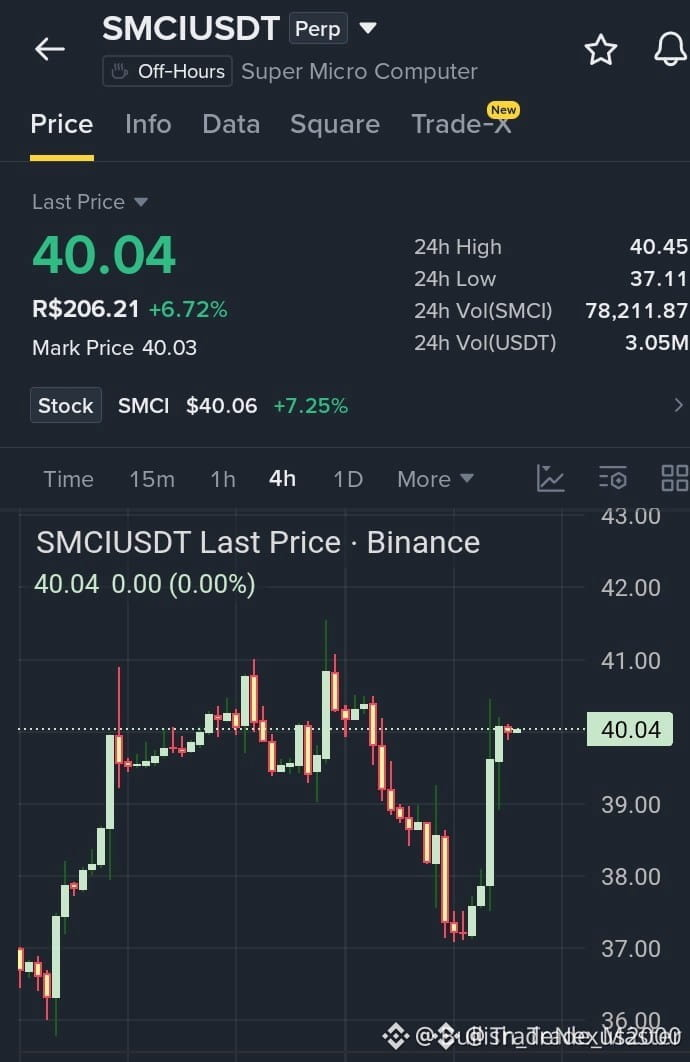
254
⚡ $SMCI IGNITES EXPLOSIVE MOMENTUM AS BUYERS ABSORB HEAVY SELLER LIQUIDITY! 💥
The order book on $SMCI is flashing pure aggression as persistent buyers sweep overhead resistance and trap late shorts. 📊 Order flow shows steady accumulation on every minor dip, signaling a sharp conviction shift in market structure.
When a dominant leader like $SMCI starts expanding with real volume, secondary setups like $LAB and $LSK often catch the spillover liquidity. ⚡ Smart capital is actively positioning before the next leg higher unfolds.
💬 Are you riding the momentum wave on $SMCI right now, or waiting for a key level retest? 👇
⚠️ Not financial advice. Always manage your risk. 🛡️
🏷️ #SMCI #LAB #LSK #Bullish #Crypto
🔥 ⚡
⚡ $SMCI IGNITES EXPLOSIVE MOMENTUM AS BUYERS ABSORB HEAVY SELLER LIQUIDITY! 💥
The order book on $SMCI is flashing pure aggression as persistent buyers sweep overhead resistance and trap late shorts. 📊 Order flow shows steady accumulation on every minor dip, signaling a sharp conviction shift in market structure.
When a dominant leader like $SMCI starts expanding with real volume, secondary setups like $LAB and $LSK often catch the spillover liquidity. ⚡ Smart capital is actively positioning before the next leg higher unfolds.
💬 Are you riding the momentum wave on $SMCI right now, or waiting for a key level retest? 👇
⚠️ Not financial advice. Always manage your risk. 🛡️
🏷️ #SMCI #LAB #LSK #Bullish #Crypto
🔥 ⚡
The order book on $SMCI is flashing pure aggression as persistent buyers sweep overhead resistance and trap late shorts. 📊 Order flow shows steady accumulation on every minor dip, signaling a sharp conviction shift in market structure.
When a dominant leader like $SMCI starts expanding with real volume, secondary setups like $LAB and $LSK often catch the spillover liquidity. ⚡ Smart capital is actively positioning before the next leg higher unfolds.
💬 Are you riding the momentum wave on $SMCI right now, or waiting for a key level retest? 👇
⚠️ Not financial advice. Always manage your risk. 🛡️
🏷️ #SMCI #LAB #LSK #Bullish #Crypto
🔥 ⚡

42
·
--
$SMCI 24 hours rose 7.47% to 39.99, and the funding rate has returned to zero. At the political level, tariff expectations have been swinging back and forth. AI server stocks, as hard-tech assets, are being influenced by policy shifts. This surge reflects investors’ bets on supply-chain localization under trade barriers.
The flat funding rate indicates that the longs didn’t chase higher and the shorts didn’t add positions— the market is waiting for the policy to be clearly signaled. Looking at it from a single signal, the gains are driven more by sentiment than by position buildup; if expectations fail to materialize, any pullback could be quick.
Trading tag: #TradFi #链上美股 #SMCI
Where do you think this outlook is most likely to be wrong?
$SMCI 24 hours rose 7.47% to 39.99, and the funding rate has returned to zero. At the political level, tariff expectations have been swinging back and forth. AI server stocks, as hard-tech assets, are being influenced by policy shifts. This surge reflects investors’ bets on supply-chain localization under trade barriers.
The flat funding rate indicates that the longs didn’t chase higher and the shorts didn’t add positions— the market is waiting for the policy to be clearly signaled. Looking at it from a single signal, the gains are driven more by sentiment than by position buildup; if expectations fail to materialize, any pullback could be quick.
Trading tag: #TradFi #链上美股 #SMCI
Where do you think this outlook is most likely to be wrong?
The flat funding rate indicates that the longs didn’t chase higher and the shorts didn’t add positions— the market is waiting for the policy to be clearly signaled. Looking at it from a single signal, the gains are driven more by sentiment than by position buildup; if expectations fail to materialize, any pullback could be quick.
Trading tag: #TradFi #链上美股 #SMCI
Where do you think this outlook is most likely to be wrong?
93
·
--
$SMCI’s price rebounded 7.47% over the past 24 hours, but the contract funding rate has stayed at 0—no one has paid the other side. This move doesn’t look like a leveraged long pushing higher; it’s more likely driven by spot buying based on policy expectations, or short covering.
With prices rising and funding remaining neutral, it suggests no buildup in positions and a relatively clean/liquid funding environment. From a political angle, the market may be betting on a turnaround for hardware stocks like SMCI under certain technology regulatory or tariff policies. The strongest counterargument is that policy has only amounted to verbal “good news,” without any concrete procurement or subsidies.
If the policy rollout falls short of expectations, an upside move that lacks funding support is likely to give back gains.
Trading tag: #TradFi #链上美股 #SMCI
Where do you think this set of judgments is most likely to be wrong?
$SMCI ’s price rebounded 7.47% over the past 24 hours, but the contract funding rate has stayed at 0—no one has paid the other side. This move doesn’t look like a leveraged long pushing higher; it’s more likely driven by spot buying based on policy expectations, or short covering.
With prices rising and funding remaining neutral, it suggests no buildup in positions and a relatively clean/liquid funding environment. From a political angle, the market may be betting on a turnaround for hardware stocks like SMCI under certain technology regulatory or tariff policies. The strongest counterargument is that policy has only amounted to verbal “good news,” without any concrete procurement or subsidies.
If the policy rollout falls short of expectations, an upside move that lacks funding support is likely to give back gains.
Trading tag: #TradFi #链上美股 #SMCI
Where do you think this set of judgments is most likely to be wrong?
With prices rising and funding remaining neutral, it suggests no buildup in positions and a relatively clean/liquid funding environment. From a political angle, the market may be betting on a turnaround for hardware stocks like SMCI under certain technology regulatory or tariff policies. The strongest counterargument is that policy has only amounted to verbal “good news,” without any concrete procurement or subsidies.
If the policy rollout falls short of expectations, an upside move that lacks funding support is likely to give back gains.
Trading tag: #TradFi #链上美股 #SMCI
Where do you think this set of judgments is most likely to be wrong?
103
·
--
$SMCI rose 7.471% over the past 24 hours to $39.99, but open interest is as high as 39,295 contracts. From a political perspective, this kind of structure—high open interest alongside a price rebound—usually suggests that a large number of shorts have been forced to close or hedge due to political-risk premia. The funding rate going to zero indicates a temporary balance between longs and shorts, but open interest has not fallen significantly, implying that market participants are betting on an even larger political event coming to fruition.
My view is that the market is pricing in policy expectations in advance. High open interest is a double-edged sword: if the event fails to meet expectations, these positions will quickly be squeezed in the opposite direction.
Trading tag: #TradFi #链上美股 #SMCI
Where do you think this assessment is most likely to be wrong?
$SMCI rose 7.471% over the past 24 hours to $39.99, but open interest is as high as 39,295 contracts. From a political perspective, this kind of structure—high open interest alongside a price rebound—usually suggests that a large number of shorts have been forced to close or hedge due to political-risk premia. The funding rate going to zero indicates a temporary balance between longs and shorts, but open interest has not fallen significantly, implying that market participants are betting on an even larger political event coming to fruition.
My view is that the market is pricing in policy expectations in advance. High open interest is a double-edged sword: if the event fails to meet expectations, these positions will quickly be squeezed in the opposite direction.
Trading tag: #TradFi #链上美股 #SMCI
Where do you think this assessment is most likely to be wrong?
My view is that the market is pricing in policy expectations in advance. High open interest is a double-edged sword: if the event fails to meet expectations, these positions will quickly be squeezed in the opposite direction.
Trading tag: #TradFi #链上美股 #SMCI
Where do you think this assessment is most likely to be wrong?
87
·
--
$SMCI 24 hours, it surged 4.456%, and the price is above 39.85, yet on-chain futures’ funding rate hasn’t moved at all, stuck at 0.00000000. The old dog took one look and understood—this rally is a bit dry; it’s pushed up purely by spot buy orders, and leverage positions just haven’t caught up.
Why are on-chain U.S. stock bull-market signals so weak? The core is that $SMCI is rising, but it hasn’t received confirmation from the derivatives market’s resonance. A funding rate of zero means there’s no paid relationship between longs and shorts: long positions have extremely low cost basis. That neither indicates longs are overcrowded (which would push funding rates higher) nor that shorts are aggressively building (which would suppress funding rates). In plain terms, derivatives traders are watching from the sidelines.
Trading volume is 3.45 million, open interest is a little over 40,000. Putting those numbers on a stock whose price is close to $40, liquidity isn’t that deep—but the key issue is that there’s no incremental leveraged capital rushing in. The topic mentioned on-chain tickers like COIN and MSTR that tend to track BTC moves, but $SMCI’s current data shows it’s only moving in its own price wave, not catching a ride on the broader crypto market’s overall sentiment. If the entire on-chain U.S. stock sector truly had a real resonance, the derivatives funding rates of the leading ticker would usually react first—rather than looking like a stagnant pond right now.
My view is that $SMCI’s current rise lacks derivatives-market confirmation, so its sustainability is in doubt. Some people say on-chain U.S. stocks are running an independent trend; I disagree. The spot surge hasn’t attracted any hedging or speculative leveraged positions to anchor the move. At this level, I won’t chase. I’ll keep watching, waiting for a clear funding-rate change: either the rate turns positive and keeps rising—signaling longs are stepping in and the move could accelerate; or the price pulls back while the funding rate stays at zero, which would confirm it was just retail spot buying pressure with limited follow-through.
Where is this judgment most likely to be wrong? If over the next few cycles $SMCI’s funding rate suddenly jumps to 0.01% or above, and open interest expands significantly at the same time, then my “lack of resonance” view would be invalidated. It would mean new, larger-scale leveraged capital has recognized the current price and started building positions. Until that signal appears, I’ll choose to keep my “ammo” for a more certain opportunity.
Trading tag: #BinanceFutures #TradFi #USDⓈM #SMCI #SMCIUSDT $SMCI
$SMCI 24 hours, it surged 4.456%, and the price is above 39.85, yet on-chain futures’ funding rate hasn’t moved at all, stuck at 0.00000000. The old dog took one look and understood—this rally is a bit dry; it’s pushed up purely by spot buy orders, and leverage positions just haven’t caught up.
Why are on-chain U.S. stock bull-market signals so weak? The core is that $SMCI is rising, but it hasn’t received confirmation from the derivatives market’s resonance. A funding rate of zero means there’s no paid relationship between longs and shorts: long positions have extremely low cost basis. That neither indicates longs are overcrowded (which would push funding rates higher) nor that shorts are aggressively building (which would suppress funding rates). In plain terms, derivatives traders are watching from the sidelines.
Trading volume is 3.45 million, open interest is a little over 40,000. Putting those numbers on a stock whose price is close to $40, liquidity isn’t that deep—but the key issue is that there’s no incremental leveraged capital rushing in. The topic mentioned on-chain tickers like COIN and MSTR that tend to track BTC moves, but $SMCI ’s current data shows it’s only moving in its own price wave, not catching a ride on the broader crypto market’s overall sentiment. If the entire on-chain U.S. stock sector truly had a real resonance, the derivatives funding rates of the leading ticker would usually react first—rather than looking like a stagnant pond right now.
My view is that $SMCI ’s current rise lacks derivatives-market confirmation, so its sustainability is in doubt. Some people say on-chain U.S. stocks are running an independent trend; I disagree. The spot surge hasn’t attracted any hedging or speculative leveraged positions to anchor the move. At this level, I won’t chase. I’ll keep watching, waiting for a clear funding-rate change: either the rate turns positive and keeps rising—signaling longs are stepping in and the move could accelerate; or the price pulls back while the funding rate stays at zero, which would confirm it was just retail spot buying pressure with limited follow-through.
Where is this judgment most likely to be wrong? If over the next few cycles $SMCI ’s funding rate suddenly jumps to 0.01% or above, and open interest expands significantly at the same time, then my “lack of resonance” view would be invalidated. It would mean new, larger-scale leveraged capital has recognized the current price and started building positions. Until that signal appears, I’ll choose to keep my “ammo” for a more certain opportunity.
Trading tag: #BinanceFutures #TradFi #USDⓈM #SMCI #SMCIUSDT $SMCI
Why are on-chain U.S. stock bull-market signals so weak? The core is that $SMCI is rising, but it hasn’t received confirmation from the derivatives market’s resonance. A funding rate of zero means there’s no paid relationship between longs and shorts: long positions have extremely low cost basis. That neither indicates longs are overcrowded (which would push funding rates higher) nor that shorts are aggressively building (which would suppress funding rates). In plain terms, derivatives traders are watching from the sidelines.
Trading volume is 3.45 million, open interest is a little over 40,000. Putting those numbers on a stock whose price is close to $40, liquidity isn’t that deep—but the key issue is that there’s no incremental leveraged capital rushing in. The topic mentioned on-chain tickers like COIN and MSTR that tend to track BTC moves, but $SMCI ’s current data shows it’s only moving in its own price wave, not catching a ride on the broader crypto market’s overall sentiment. If the entire on-chain U.S. stock sector truly had a real resonance, the derivatives funding rates of the leading ticker would usually react first—rather than looking like a stagnant pond right now.
My view is that $SMCI ’s current rise lacks derivatives-market confirmation, so its sustainability is in doubt. Some people say on-chain U.S. stocks are running an independent trend; I disagree. The spot surge hasn’t attracted any hedging or speculative leveraged positions to anchor the move. At this level, I won’t chase. I’ll keep watching, waiting for a clear funding-rate change: either the rate turns positive and keeps rising—signaling longs are stepping in and the move could accelerate; or the price pulls back while the funding rate stays at zero, which would confirm it was just retail spot buying pressure with limited follow-through.
Where is this judgment most likely to be wrong? If over the next few cycles $SMCI ’s funding rate suddenly jumps to 0.01% or above, and open interest expands significantly at the same time, then my “lack of resonance” view would be invalidated. It would mean new, larger-scale leveraged capital has recognized the current price and started building positions. Until that signal appears, I’ll choose to keep my “ammo” for a more certain opportunity.
Trading tag: #BinanceFutures #TradFi #USDⓈM #SMCI #SMCIUSDT $SMCI
11
Log in to explore more content
Join global crypto users on Binance Square
⚡️ Get latest and useful information about crypto.
💬 Trusted by the world’s largest crypto exchange.
👍 Discover real insights from verified creators.
Email / Phone number
Trending Topics
1
#FedProposesPaymentStablecoinRules
0 views
2 Discussing
2
#ChinaMayLetAlibabaByteDanceBuyNvidiaChips
1,734 views
126 Discussing
3
#USChinaRelease$30BTariffCutProductLists
143 views
13 Discussing
4
#SKoreaFSCConsidersVirtualAssetMarketMaker
2,959 views
133 Discussing
5
#ChinaIndustrialProfitGrowthSlowsFourthMonth
3,703 views
151 Discussing
6
#BitwiseFilesFinalNEARSpotETFProspectus
112,420 views
1,670 Discussing
7
#BitgetHackerMoves$83MStolenXRP
38,566 views
176 Discussing
8
#SOLSpotETFWeeklyInflow$188M
24,527 views
139 Discussing
9
#DogecoinETFsPostBiggestWeekSinceLaunch
65,533 views
1,095 Discussing
10
#StrategyStriveAdd2305BitcoinThisWeek
163,409 views
2,356 Discussing