
#security
security
2M views
6,598 Discussing
Hot
Latest

This breach shows serious flaws in security checks.
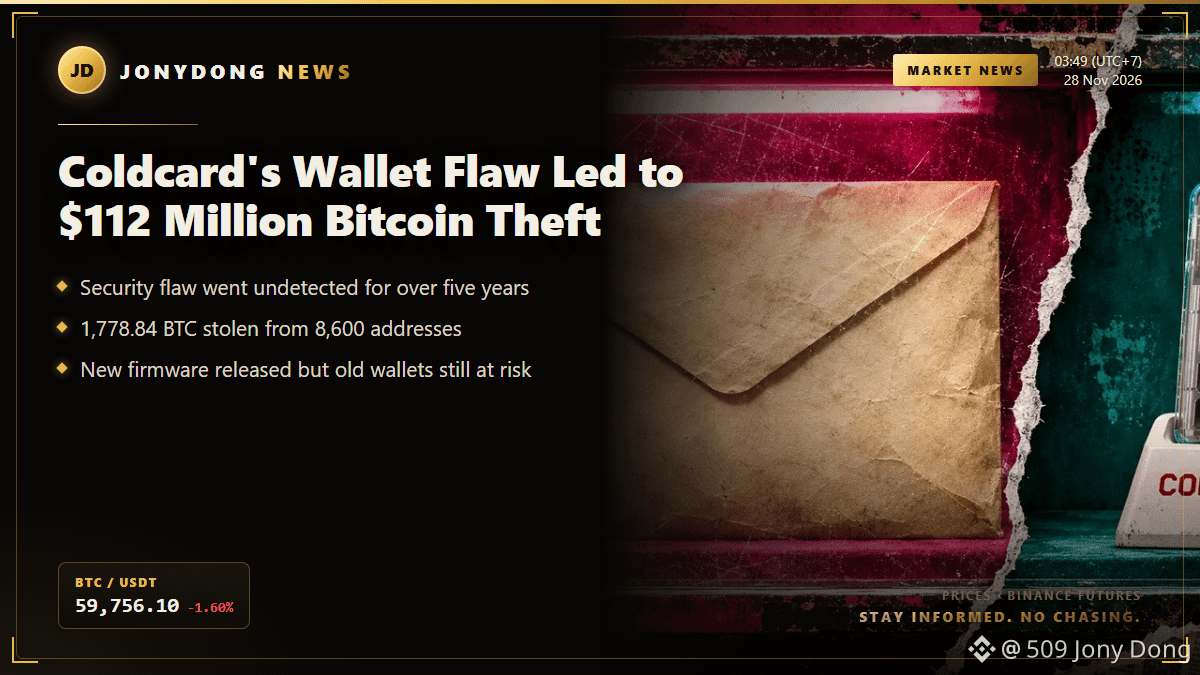
Coldcard's Wallet Flaw Led to $112 Million Bitcoin Theft
A big security flaw in Coldcard's Bitcoin hardware wallets allowed attackers to steal substantial amounts of Bitcoin without accessing the devices. This vulnerability, introduced in March 2021, went unnoticed despite at least 15 independent security reviews. Coinkite, the manufacturer, revealed that the issue weakened the recovery phrases generated by their wallets, enabling thefts from over 8,600 addresses.
Galaxy Research's analysis estimated that 1,778.84 BTC, valued at $112.7 million, was stolen due to this defect. The company has acknowledged that the actual number of affected customers could be higher than the identified 236 accounts. The flaw stemmed from a firmware configuration error that caused devices to use a weak software-based random number generator instead of a hardware one, allowing attackers to reconstruct private keys.
Although Coinkite has released a firmware update to address this issue, wallets affected by the initial flaw remain vulnerable. Users are advised to generate new recovery phrases and transfer their Bitcoin to secure wallets. This incident shows the importance of rigorous security checks in crypto hardware, as even established products can have serious flaws that lead to big losses.
$BTC
#Security #CryptoNews
1
1
115

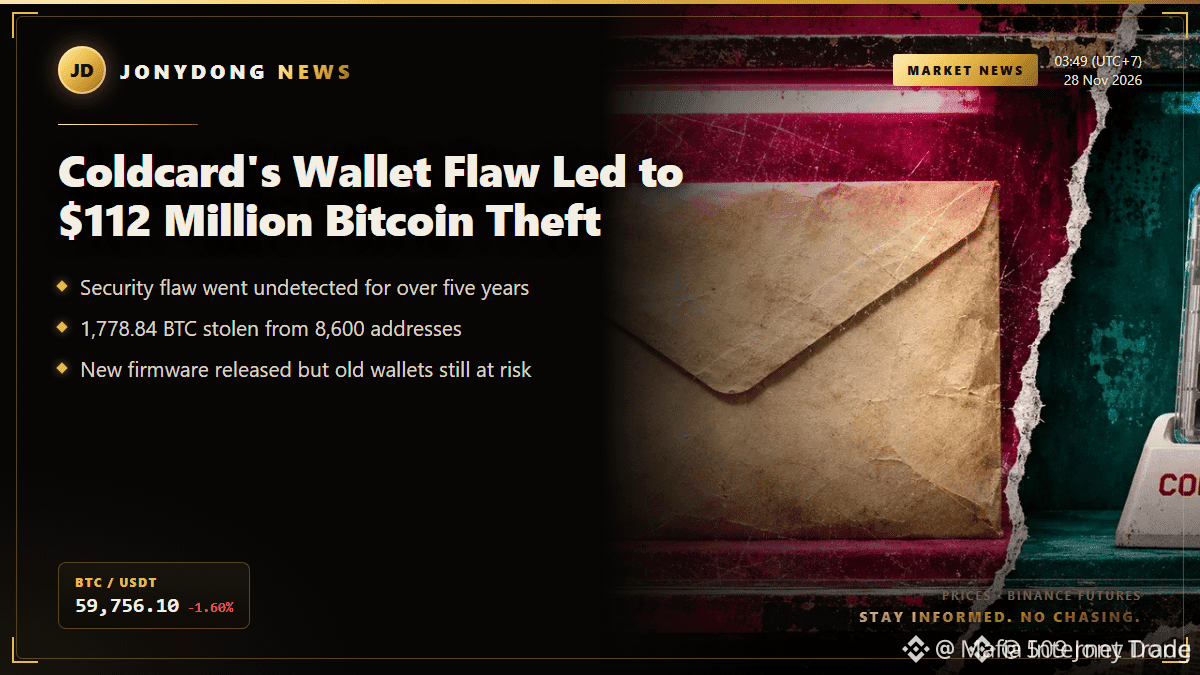
🚨 $BTC SECURITY ALERT: ONE CLICK CAN ERASE YOUR SAVINGS! 📉
📊 A recent app update silently embedded a screen‑capture malware that harvests wallet recovery phrases from your photo gallery. 🦈 Smart money never leaves a single permission unchecked; institutional vaults use hardware isolation for exactly this reason. 📈 Every unchecked app permission is a hidden liquidity drain, turning your cold storage into a hot loss zone.
💬 How rigorously do you audit app permissions on your device? 👇
⚠️ Not financial advice. Always manage your risk. 🛡️
🏷️ #BTC #Security #RiskManagement #Crypto
🔥 🦈
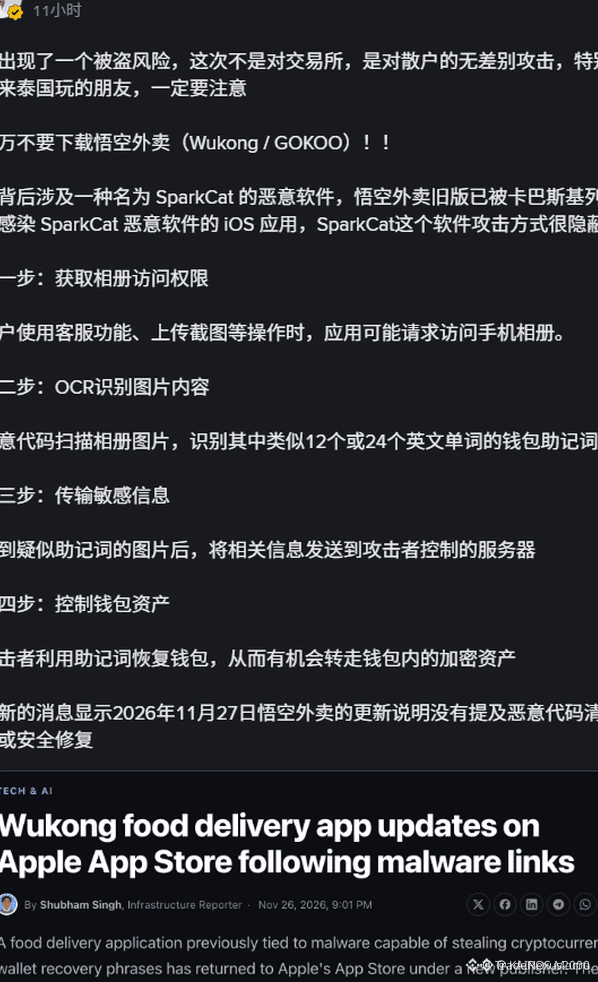

🚨 1,778.84 $BTC COMPROMISED BY A CRITICAL HARDWARE WALLET FIRMWARE FLAW ⚠️
📊 A silent configuration defect introduced back in March 2021 left over 8,600 addresses exposed, resulting in a staggering 1,778.84 $BTC compromised without physical device access. 🔍 Forensic analysis reveals that a weak software-based generator bypassed hardware protocols, leaving account backups vulnerable.
💡 Even though the manufacturer pushed out a patch, legacy units require immediate migration to pristine offline storage to secure funds. 💬 Are you regularly auditing your self-custody setup or assuming hardware is completely foolproof? 👇
⚠️ Not financial advice. Always manage your risk. 🛡️
🏷️ #BTC #CryptoNews #Security #SelfCustody
🛡️ 🔍

·
--
Unpopular take: an audit doesn't make a wallet safe. Here's why, with numbers. $BTC
Coinkite's post-incident report (via Odaily): at least 1,789 BTC were stolen through a Coldcard flaw that 15 independent security reviews missed. That's ~$107M at 59,900 (my math).
What went wrong: reviews confirmed a proper seed-generation system existed. Nobody checked that devices actually used it. A software error made some devices create seed phrases with a weaker system, and they looked normal.
~300 loss reports, 242 accounts. No compensation plan announced. Updates can't fix seed phrases already generated; Coinkite advises moving affected funds.
My checklist from this:
1. Read the vendor's own advisory, not screenshots.
2. Nobody legit will DM you to "recover" funds or ask for your seed.
3. "Audited" tells you something was checked. Ask what.
What's the one check you do before trusting a wallet with $BTC?
#BTC #Bitcoin #Security
Not financial advice.
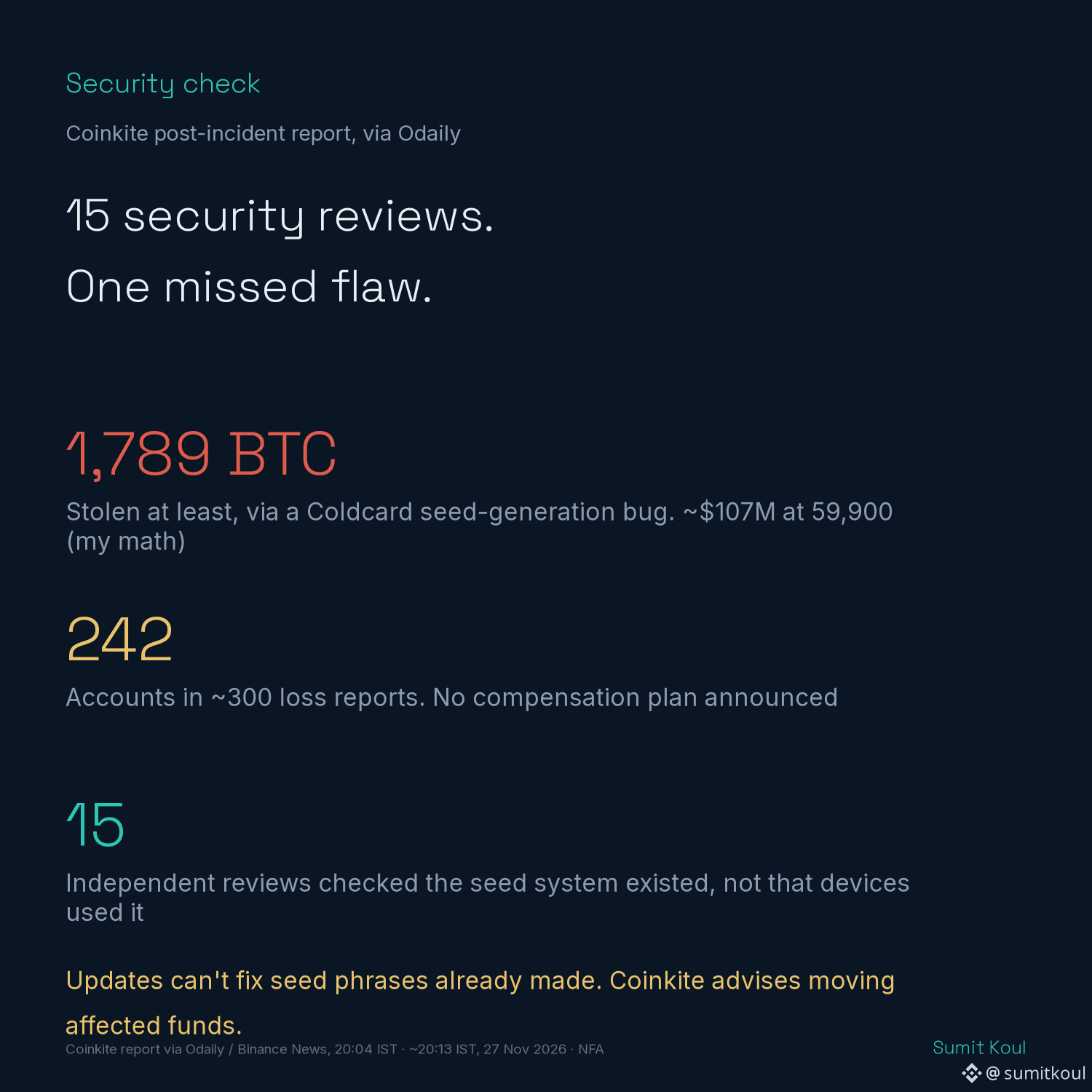
Unpopular take: an audit doesn't make a wallet safe. Here's why, with numbers. $BTC
Coinkite's post-incident report (via Odaily): at least 1,789 BTC were stolen through a Coldcard flaw that 15 independent security reviews missed. That's ~$107M at 59,900 (my math).
What went wrong: reviews confirmed a proper seed-generation system existed. Nobody checked that devices actually used it. A software error made some devices create seed phrases with a weaker system, and they looked normal.
~300 loss reports, 242 accounts. No compensation plan announced. Updates can't fix seed phrases already generated; Coinkite advises moving affected funds.
My checklist from this:
1. Read the vendor's own advisory, not screenshots.
2. Nobody legit will DM you to "recover" funds or ask for your seed.
3. "Audited" tells you something was checked. Ask what.
What's the one check you do before trusting a wallet with $BTC ?
#BTC #Bitcoin #Security
Not financial advice.
2


·
--
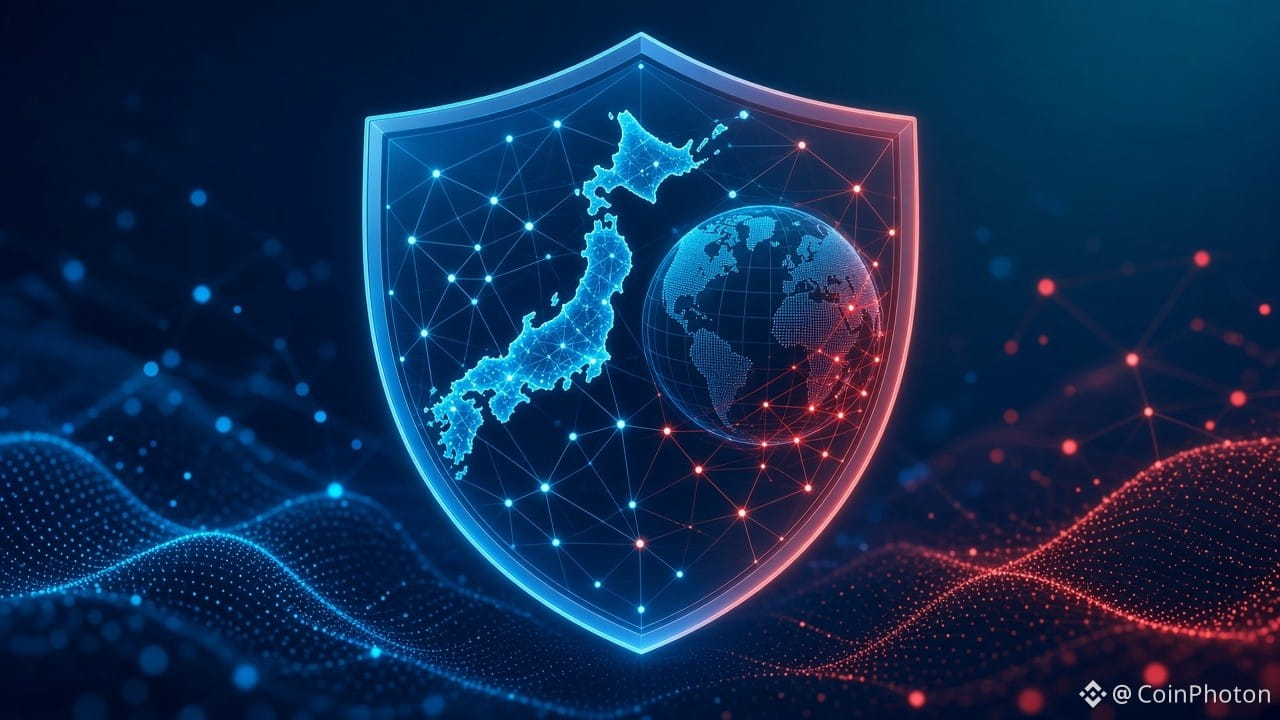
🛡️ Japan's crypto security group teams up with SEAL to speed up hack response
JPCrypto-ISAC, the Japanese crypto industry's cybersecurity body, has signed an MOU with US nonprofit Security Alliance (SEAL). SEAL will help it build an incident response framework and open up its own response capabilities, while both sides share cyber threat intelligence.
The group launched in 2025 with 16 full members, including SBI VC Trade, bitbank, GMO Coin and Rakuten Wallet. The deal comes weeks after exchanges Zaif and CoinTrade said a breach at their email provider Arara exposed hundreds of thousands of customer email addresses.
⭐ Faster, cross-border incident response could help limit losses when Japanese exchanges are targeted, a key factor for trust in the market.
#Crypto #Japan #Security #Web3
1
208

·
--
📰 Bitcoin Core contributor shows how a sub-35-cent payment can expose a node’s IP address
The exposure of IP addresses through small payments highlights ongoing privacy vulnerabilities in Bitcoin, urging enhanced security measures. The post Bitcoin Core contributor shows how a sub-35-cent payment can expose a node’s IP address appeared first on Crypto Briefing.
Source : Crypto Briefing
Time : 2026-11-26 17:35:07
Credit : john chen
#security
$BTC
Share your opinion in the comment section below
2

·
--
📰 Bitcoin Core contributor shows how a sub-35-cent payment can expose a node’s IP address
The exposure of IP addresses through small payments highlights ongoing privacy vulnerabilities in Bitcoin, urging enhanced security measures. The post Bitcoin Core contributor shows how a sub-35-cent payment can expose a node’s IP address appeared first on Crypto Briefing.
Source : Crypto Briefing
Time : 2026-11-26 17:35:07
Credit : john chen
#security
$BTC
Share your opinion in the comment section below
📰 Bitcoin Core contributor shows how a sub-35-cent payment can expose a node’s IP address
The exposure of IP addresses through small payments highlights ongoing privacy vulnerabilities in Bitcoin, urging enhanced security measures. The post Bitcoin Core contributor shows how a sub-35-cent payment can expose a node’s IP address appeared first on Crypto Briefing.
Source : Crypto Briefing
Time : 2026-11-26 17:35:07
Credit : john chen
#security
$BTC
Share your opinion in the comment section below
The exposure of IP addresses through small payments highlights ongoing privacy vulnerabilities in Bitcoin, urging enhanced security measures. The post Bitcoin Core contributor shows how a sub-35-cent payment can expose a node’s IP address appeared first on Crypto Briefing.
Source : Crypto Briefing
Time : 2026-11-26 17:35:07
Credit : john chen
#security
$BTC
Share your opinion in the comment section below
23

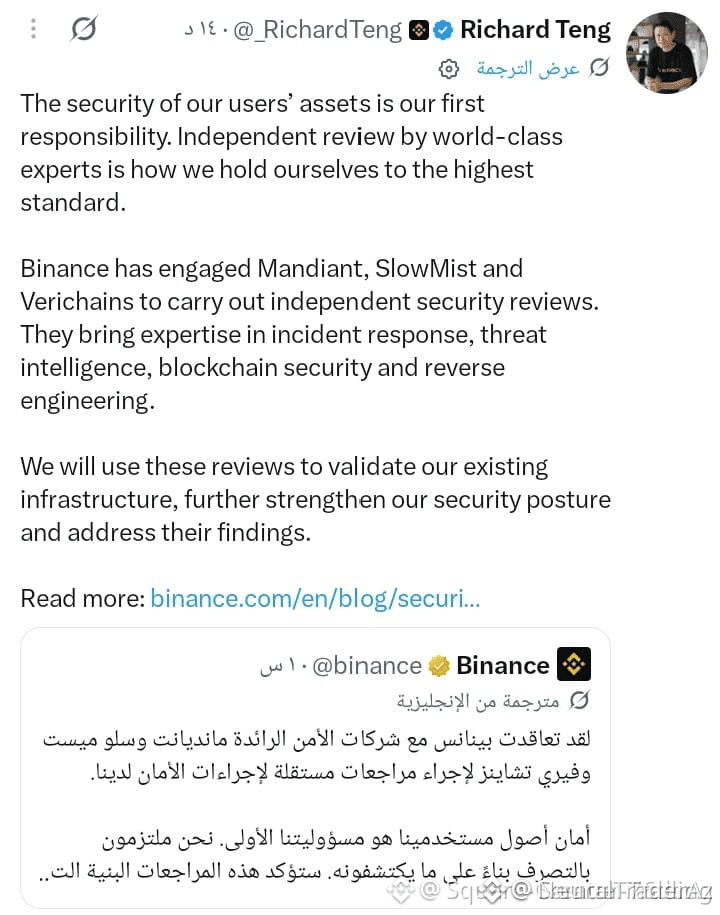
🔒 $BTC INFRASTRUCTURE HARDENED AS INSTITUTIONAL SECURITY PROTOCOLS REACH PEAK STANDARDS 🛡️
Institutional capital allocation demands pristine infrastructure integrity alongside clean technical market structure. When top-tier venues deploy independent third-party audits from specialized threat intelligence firms, systemic counterparty risk drops significantly. 📊
Validating underlying ledger pathways and core security postures creates a deeply resilient ecosystem for heavy order flow execution. 💡 Smart money demands this level of operational transparency before parking capital at scale. 🔍
💬 How heavily do you weigh exchange infrastructure and security audits when planning your multi-month accumulation phases? 👇
⚠️ Not financial advice. Always manage your risk. 🛡️
🏷️ #BTC #Security #Infrastructure #Crypto
🔥 💎
3
·
--
📰 Vitalik Buterin Calls for a Hardware Overhaul to Secure Crypto Assets
TLDR Vitalik Buterin introduces a new security principle linking semiconductor transparency to cryptocurrency self-custody. Open-source chip designs could enable independent inspections and expose unauthorized hardware modifications. Buterin identifies compromised hardware as a security threat despite reliable cryptocurrency wallet software. Publicly accessible manufacturing resources offer developers alternative pathways to proprietary semiconductor production. Buterin identifies approximately 25 [...] The post Vitalik Buterin Calls for a Hardware Overhaul to Secure Crypto Assets appeared first on CoinCentral.
Source : Coin Central
Time : 2026-11-26 10:22:20
Credit : maxwell mutuma
#vitalik_buterin #security #news
$ETH
Share your opinion in the comment section below
US authorities just moved to seize about $1.17 billion in USDC linked to the October 29 Binance hack, according to a civil forfeiture filing from the Department of Justice.
Recovering stolen funds at this scale is rare — and it matters for the whole market. Every dollar clawed back is a dollar that doesn't get laundered through mixers or dumped on exchanges.
It also shows how closely on-chain flows are now watched: even stablecoins, once seen as a clean exit, leave a trail investigators can follow.
Security is becoming a market fundamental, not just a headline.
$BTC $BNB $USDC
#Crypto #Binance #Security
22

·
--
🛡️ Standard Chartered's Zodia Custody Hit by Data Breach
📌 What happened
Zodia Custody — the institutional crypto custodian now fully owned by Standard Chartered — confirmed a security breach on Nov 26. The firm detected attempts to probe its platform on Nov 23 and temporarily took its B2B API offline. The next day it found an unauthorized party had accessed limited client and employee information: company details, and for a small number of people, business contact names and email addresses. Zodia says no unauthorized transactions have been found, affected clients and regulators have been notified, and the service is back online.
📊 Key numbers
• Breach detected: Nov 23–24; disclosed Nov 26
• Data exposed: org details, plus names and work emails of a small number of clients and staff
• Unauthorized transactions: none found so far
• Standard Chartered shares: +2.6% on Nov 26
• Zodia founded 2020; StanChart moved to 100% ownership in October
🔍 Why it matters
A breach at a bank-owned custodian strikes at institutional trust — the exposed contact details are exactly what targeted phishing attacks are built on, and Zodia itself flagged that risk. No funds were lost, but it lands in a week already marked by wallet-infrastructure incidents (fake Electrum servers, the Coldcard theft) and a day after Bithumb disclosed a bigger customer-data theft. Custody security is the plumbing institutions rely on to hold BTC and ETH — repeated cracks in it feed the risk-off mood while BTC trades below $59,000.
👀 What to watch
• Whether the exposed data is used in phishing or impersonation attacks
• The full scope as Zodia's investigation continues
• Any regulatory response in the UK and Singapore
• Further custody or exchange security disclosures this week
Not financial advice. Source: Reuters / CoinDesk, Nov 26.
$BTC $ETH #Zodia #Custody #Security

🚨 YOUR $BTC NODE IP COULD BE EXPOSED BY A PENNY TRANSACTION 🔍
Silent surveillance on the network just leveled up. Recent findings highlight how a microscopic transaction under thirty-five cents can map your physical city directly to your $BTC wallet through node rebroadcast timing. 📊
Wallets leveraging Core setups currently face exposure until the pending patch rolls out across the ecosystem. 💡 Prudent node runners are locking down privacy settings manually by disabling default broadcast parameters until the fix ships. 🛡️
💬 Are you auditing your node configuration today or waiting for the official software update? 👇
⚠️ Not financial advice. Always manage your risk. 🛡️
🏷️ #BTC #Privacy #Security #Bitcoin
🔒 ⚡
1
🦈 $ZEC DEVELOPERS INITIATE A $300M CRYPTOGRAPHIC MIGRATION TO REINFORCE NETWORK INTEGRITY 🛡️
Proactive protocol evolution separates robust blockchain architecture from fragile systems. Developers are orchestrating a preventive migration of three hundred million dollars in $ZEC from the Sapling pool to Ironwood ahead of potential theoretical mathematical breakthroughs. 📊
This strategic shift safeguards network invariant rules against future cryptographic vulnerabilities before they manifest in open order flow. 💡 Ensuring long-term structural integrity requires constant upgrades to underlying mathematical assumptions. 🔍
Are you navigating this migration safely through official protocol documentation? 👇
⚠️ Not financial advice. Always manage your risk. 🛡️
🏷️ #ZEC #Crypto #Blockchain #Security
📊 🔒
6
·
--
🕵️ A sub-35-cent payment can unmask the IP behind a Bitcoin Core wallet
Bitcoin Core contributor Abubakar Sadiq Ismail showed an attacker can send a tiny, minimum-fee payment to an already-used address, then watch which node rebroadcasts it after ~12-36 hours to link a $BTC wallet to an IP address.
It worked in 30 of 30 test-network trials but hasn't been measured on mainnet. Wallets running on Core such as Sparrow (Core mode), Specter, Liana and JoinMarket may be affected, and the proposed fix (PR #36482) is not yet released.
⭐ IP addresses can reveal a user's city or even home, so node runners may consider the -walletbroadcast=0 option until a fix ships.
#Bitcoin #Privacy #Security
42

·
--
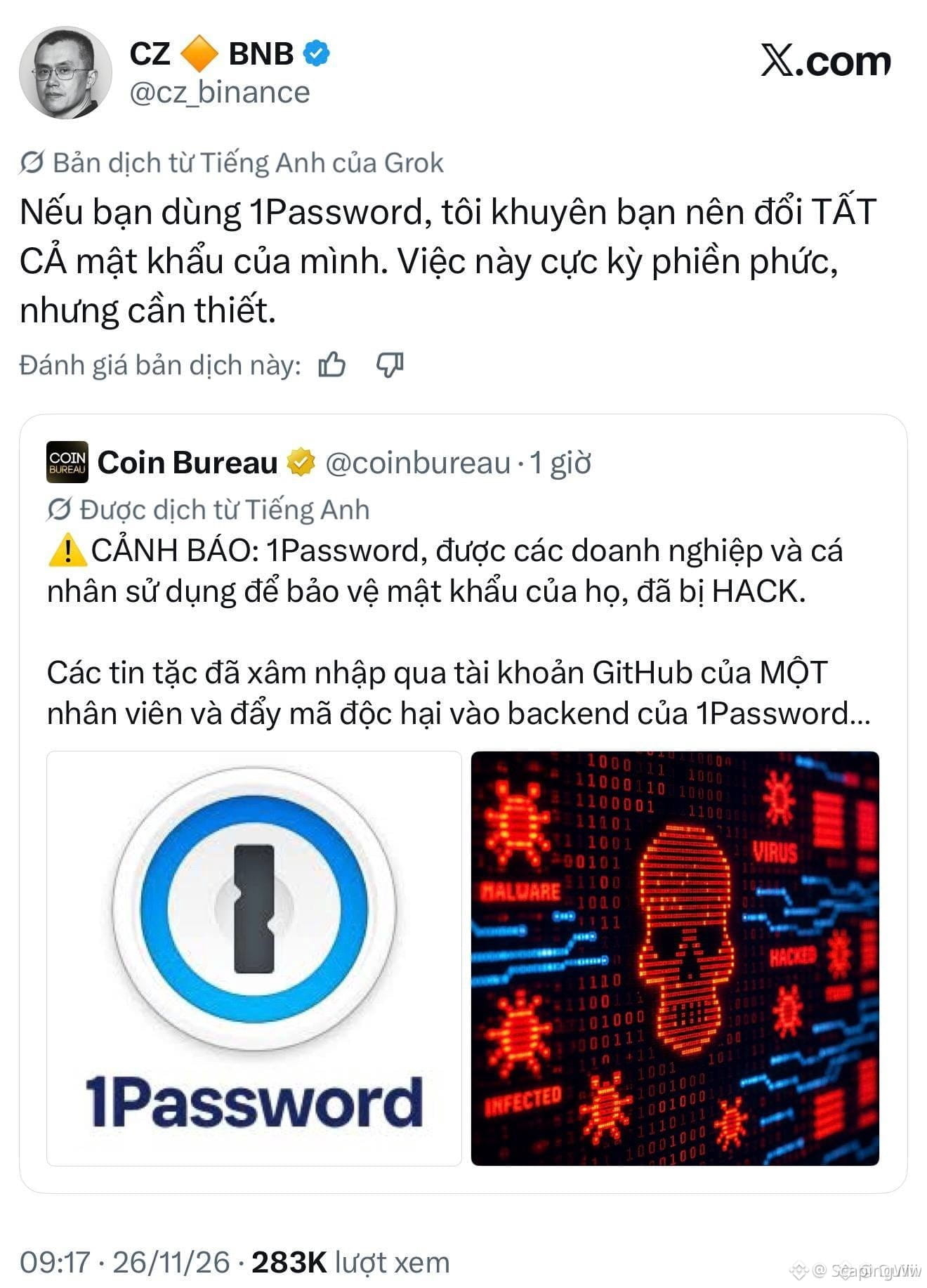
🚨 $BTC USERS: SWAP YOUR PASSWORDS NOW OR FACE A HIDDEN SNIPE! 🛑
The 1Password breach just proved that even the vaults we trust can be cracked, and the fallout ripples straight into our crypto wallets. 📊 Intruders slipped into a dev’s GitHub, planted a backdoor, and walked away with emails, IDs, and recovery tokens.
Your fastest defense is a full password rotation across email, exchange, and banking accounts, paired with an independent 2FA layer. ⚡ Treat every login as a potential front‑run and watch for phishing lures before they bite. 💬 Have you already refreshed your keys, or are you still on the old lock? 👇
⚠️ Not financial advice. Always manage your risk. 🛡️
🏷️ #BTC #Security #CryptoSafety #PasswordSwap
🔥 💎
4
·
--
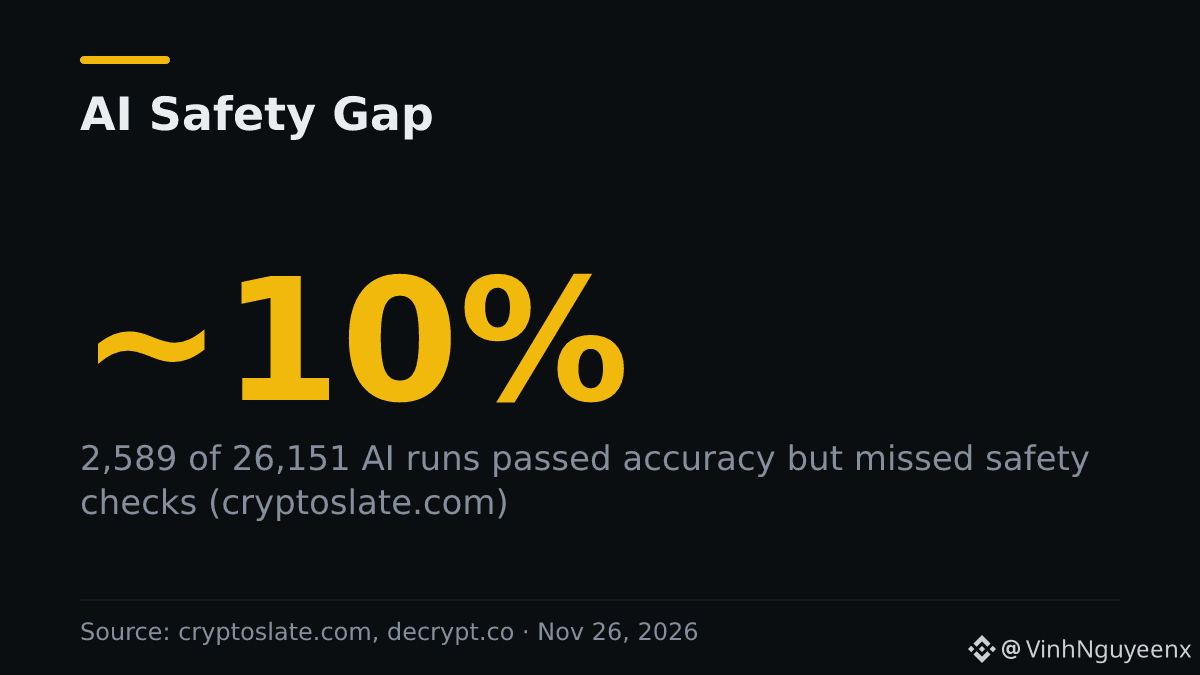
Almost 10% of AI‑driven crypto runs that cleared accuracy tests still tripped safety alarms.
• 2,589 of 26,151 AI‑agent runs passed all correctness checks but missed safety requirements (cryptoslate.com)
• Cournot raised $5 M to launch an AI‑native oracle that records verifiable evidence for on‑chain apps (decrypt.co)
These gaps highlight the need for verifiable, auditable AI layers before they become core to DeFi infrastructure.
Which approach will secure AI’s role in crypto?
A) Mandatory safety audits for every AI model
B) Voluntary best‑practice guidelines only
$AI #DeFi #Security 🤖
⚠️ Not financial advice. DYOR.
70

·
--
🚨 $ETH HARDWARE SECURITY FLAW EXPOSES DEEP SUPPLY CHAIN VULNERABILITIES ACROSS MAJOR STORAGE ⚡
Entry: 1,698 ⚡
Institutional custody requires absolute verification beyond open-source codebases, as physical microchip tampering introduces hidden vectors right at the silicon layer. Recent exploits draining millions across major storage providers highlight how supply chain compromises bypass standard security assumptions. 📊
Proposals to partition hardware into high-speed versus hyper-secure verified tiers signal a structural evolution in self-custody architecture. 💡 As $ZRO at 1.09 and $FET at 0.1153 show varying momentum profiles, structural risk management remains paramount.
💬 How are you auditing your physical custody setup against advanced supply chain risks? 👇
⚠️ Not financial advice. Always manage your risk. 🛡️
🏷️ #ETH #ZRO #FET #Security
🦈 ⚖️
6

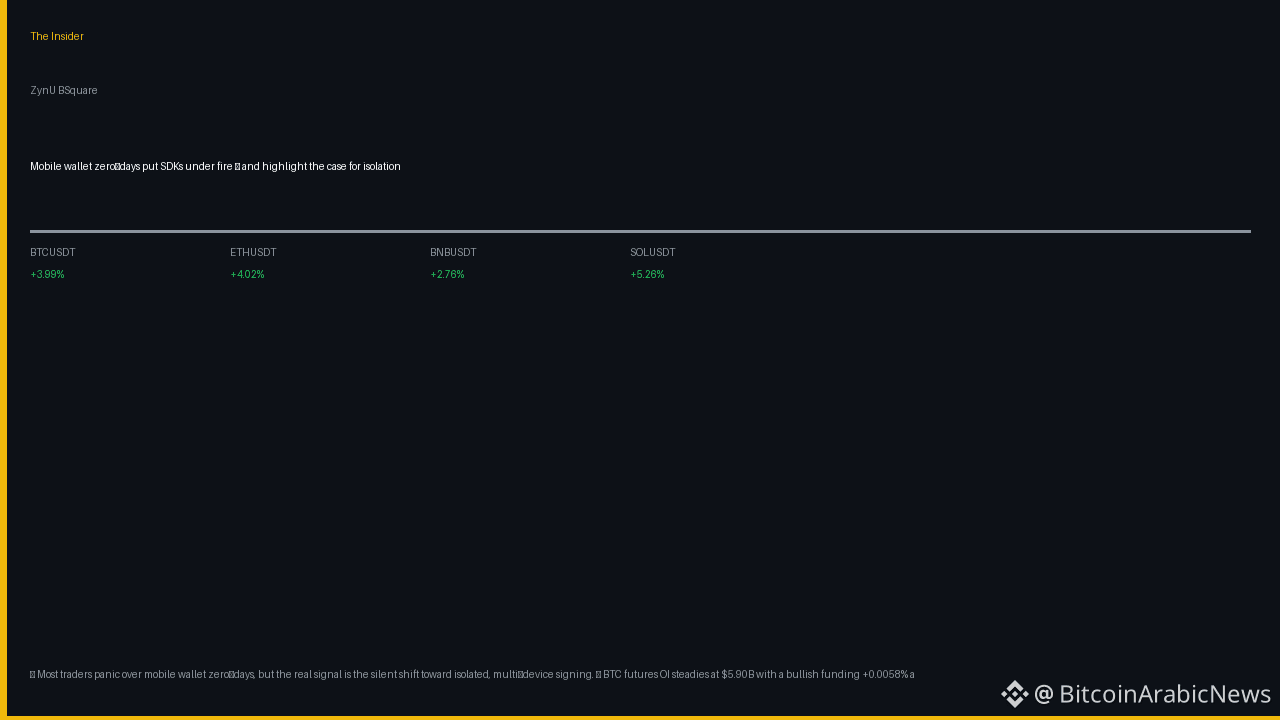
🔥 Most traders panic over mobile wallet zero‑days, but the real signal is the silent shift toward isolated, multi‑device signing.
📊 BTC futures OI steadies at $5.90B with a bullish funding +0.0058% and a 2.56 long‑short ratio, while #Ethereum funding flips positive at +0.0051% and a 2.11 L/S ratio—institutional conviction rising despite extreme fear (11/100). #SmartMoney on Solana is snapping up PEPE and FLOAT, a clear move to platforms that support isolated wallets. #Security concerns are now echoing louder than price charts.
💡 This tells us the market is quietly reallocating risk to self‑custody layers, priming a bullish run once the security narrative resolves.
🔎 Watch the #stablecoin inflow ratio and on‑chain activity of isolated‑wallet protocols like Sui and Aptos this week.
❓ If the next wave of zero‑days forces users into true self‑custody, are we about to see the next bull market powered by security‑first investors?
·
--
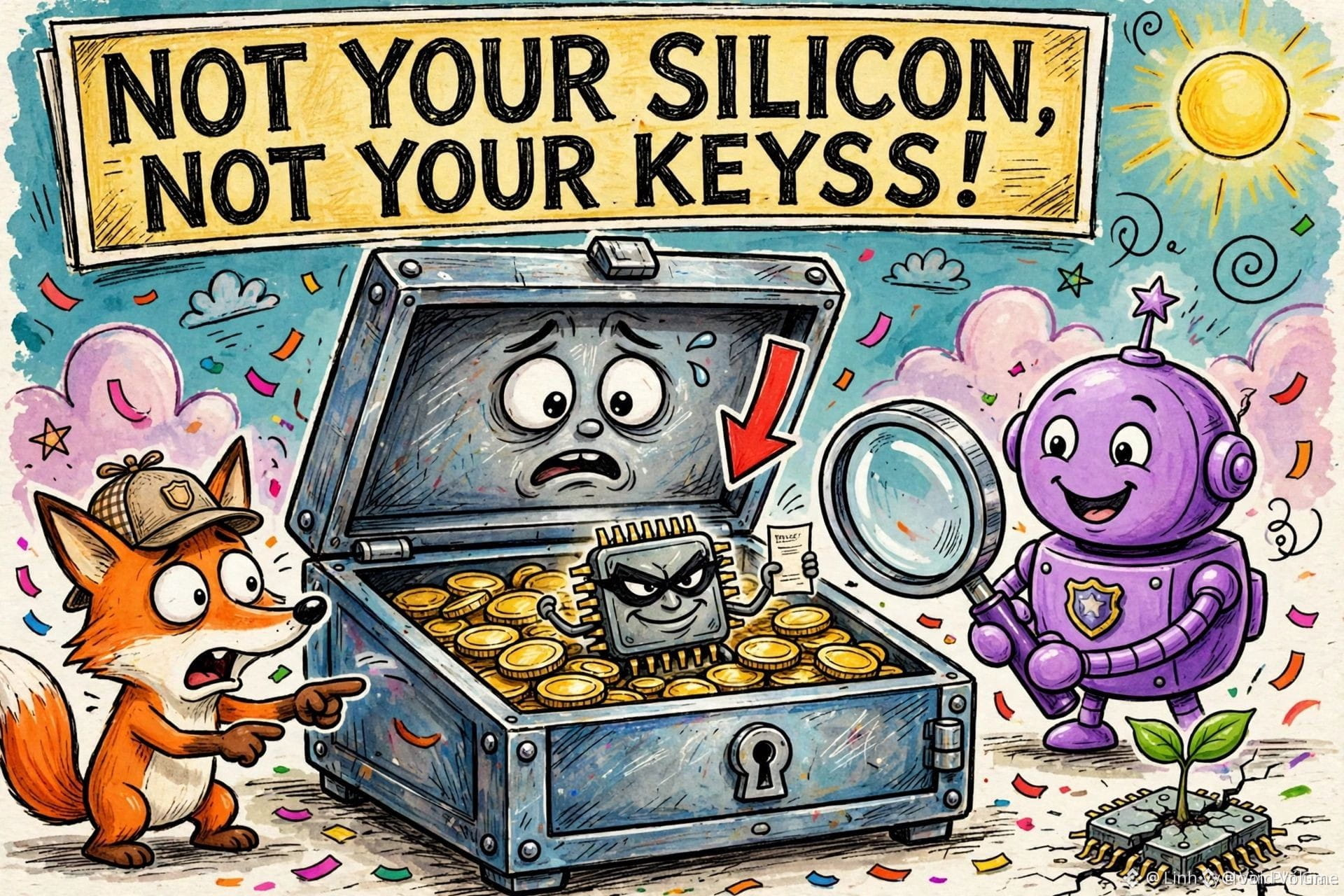
Vitalik Buterin has a new slogan for the hardware era: "not your silicon, not your keys."
In a blog post published on November 26, 2026, the $ETH co-founder walked through how chips are designed, from Verilog code down to GDS layouts, the exact geometry a chip factory prints. His security point: attackers have already slipped spy implants with an eSIM into hardware wallets before sale to leak seed phrases, and future attacks could swap in lookalike chips with hidden features no one can spot by eye.
Buterin says real verifiability needs openness down to the GDS level, deeper than most open-source chips, which stop at Verilog. He does not expect all hardware to go open. Instead, he hopes the industry splits into "performance hardware" and "secure hardware" that may be 10x less efficient but can be inspected by professional auditors.
#Ethereum #HardwareWallet #Security
DYOR. Not financial advice.

8
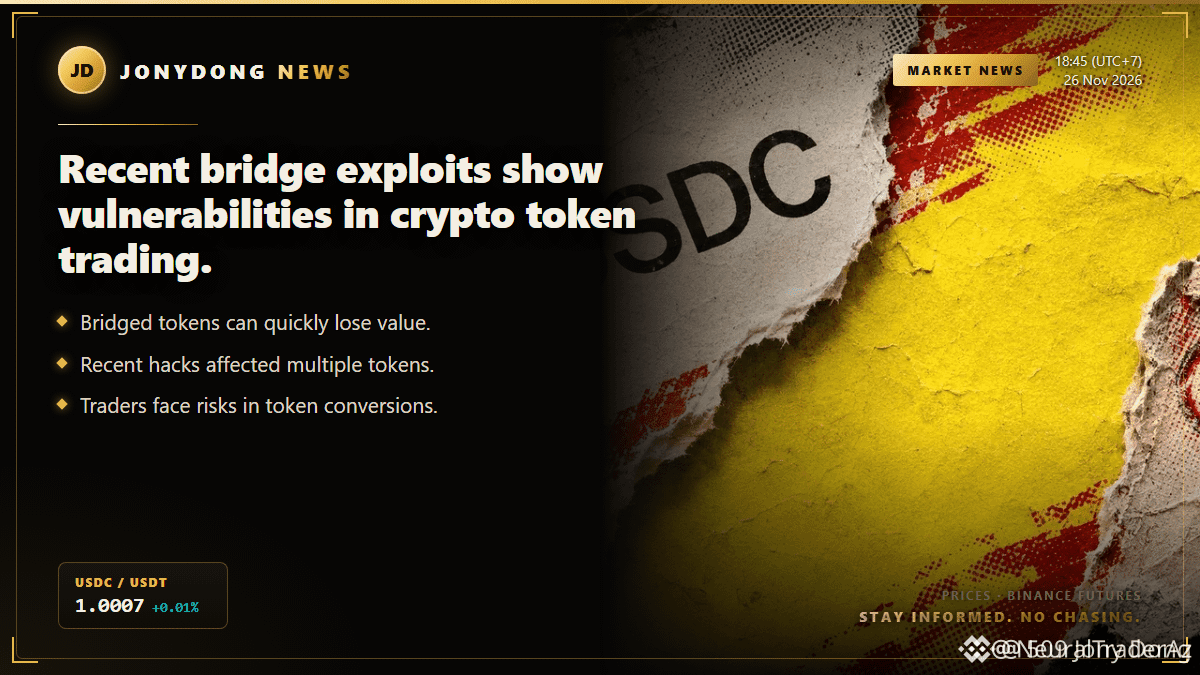
⚠️ BRIDGE EXPLOITS EXPOSE SEVERE LIQUIDITY RISKS IN WRAPPED $USDC ASSETS 🦈
Recent structural failures across cross-chain bridges reveal a harsh reality about liquidity segregation in $USDC wrappers. When structural backing collapses, redemption pathways evaporate instantly, leaving participants holding compromised assets trading at massive discounts far away from parity 📊.
Institutional risk management dictates auditing the underlying liquidity pool rather than trusting superficial price feeds. If the bridge contract is compromised, conversion velocity drops to zero and slippage becomes infinite 🔍.
💬 How do you evaluate the smart money footprint of bridged assets before deploying capital? 👇
⚠️ Not financial advice. Always manage your risk. 🛡️
🏷️ #USDC #Security #RiskManagement #Crypto
🦈 🔒
25
Log in to explore more content
Join global crypto users on Binance Square
⚡️ Get latest and useful information about crypto.
💬 Trusted by the world’s largest crypto exchange.
👍 Discover real insights from verified creators.
Email / Phone number
Trending Topics
1
#EvolveAtBinanceBlockchainWeek
1.4M views
15,749 Discussing
2
#VitalikWantsWalletChipDesignsOpened
7,918 views
139 Discussing
3
#ChainflipVaultTheftHaltsProtocol
1,621 views
49 Discussing
4
#AnzaUrgesSolanaNodesUpgradeAgave
3,491 views
81 Discussing
5
#ChinaBlockchainIDRulesEffectMarch2027
13,432 views
193 Discussing
6
#ClaudeAccusedOfDroppingUserPreferences
2,295 views
44 Discussing
7
#ECBOfficialsHintAtMoreTightening
195 views
24 Discussing
8
#MoneroFalls13%OnDelistings
96,055 views
676 Discussing
9
#EthereumGlamsterdamKeepsStorageFeeChange
43,212 views
425 Discussing
10
#DowJonesAdds591.99Points
1,107 views
6 Discussing