
CoinPhoton
7.8k Posts

CoinPhoton
 Square Verified+
Creator of the Year

Level 2 Creator
Open Trade
Occasional Trader
7.5 Years
15 Following
146.3K+ Followers
146.6K+ Liked
2 Badges
Posts
Portfolio
All
Quotes
Videos
Live
UPDATE: The purported white-hat hackers behind the Liquid Network incident have returned 3,400 BTC, or about 85% of the funds, to the Federation wallet following onchain negotiations with Blockstream.
The group appears to have retained roughly 598 BTC, worth about $47 million, as an apparent bounty.
The development marks a major recovery after around 4,000 BTC was initially withdrawn from Liquid’s federation wallet, forcing the Bitcoin sidechain to pause operations.
The group appears to have retained roughly 598 BTC, worth about $47 million, as an apparent bounty.
The development marks a major recovery after around 4,000 BTC was initially withdrawn from Liquid’s federation wallet, forcing the Bitcoin sidechain to pause operations.
Verified
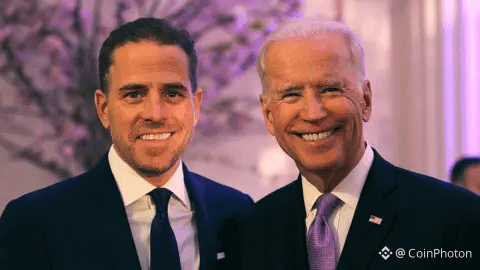
Hunter Biden, son of former US President Joe Biden, said he plans to launch a memecoin called LAPTOP, referencing the laptop that became a major political controversy ahead of the 2020 US election.
The $LAPTOP token is expected to launch on Wednesday with a total supply of 1 billion tokens. According to The Wall Street Journal, about 20% of the supply will be distributed to Substack subscribers, mailing-list members and investors in Donald Trump’s TRUMP memecoin.
The founders are reportedly set to hold 30% of the supply, with up to 30% of the tokens potentially burned based on certain milestones, including a Democratic presidential victory in 2028, Bitcoin reaching a new all-time high, or LAPTOP’s fully diluted valuation surpassing TRUMP’s.
The launch comes as Hunter Biden has become increasingly outspoken on crypto, while also criticizing the Trump family’s involvement in the industry through World Liberty Financial.
If launched as planned, LAPTOP could further highlight the growing intersection between US politics and memecoins, as lawmakers prepare for a Sept. 15 cloture vote on the CLARITY Act.
The $LAPTOP token is expected to launch on Wednesday with a total supply of 1 billion tokens. According to The Wall Street Journal, about 20% of the supply will be distributed to Substack subscribers, mailing-list members and investors in Donald Trump’s TRUMP memecoin.
The founders are reportedly set to hold 30% of the supply, with up to 30% of the tokens potentially burned based on certain milestones, including a Democratic presidential victory in 2028, Bitcoin reaching a new all-time high, or LAPTOP’s fully diluted valuation surpassing TRUMP’s.
The launch comes as Hunter Biden has become increasingly outspoken on crypto, while also criticizing the Trump family’s involvement in the industry through World Liberty Financial.
If launched as planned, LAPTOP could further highlight the growing intersection between US politics and memecoins, as lawmakers prepare for a Sept. 15 cloture vote on the CLARITY Act.
Verified
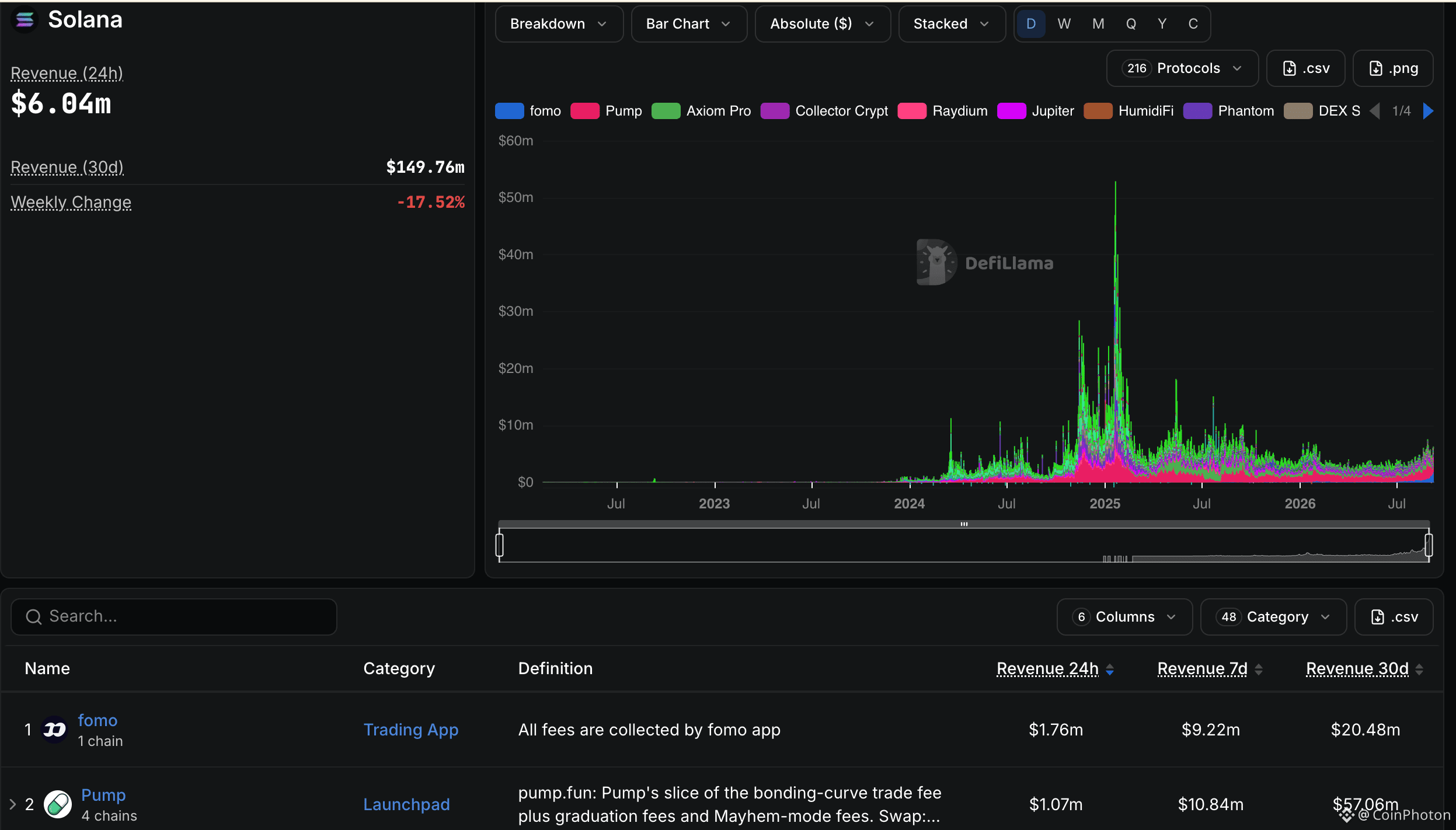
Fomo generated $1.76 million in daily revenue on Friday, surpassing memecoin launchpad Pump.fun, which recorded about $1.1 million, according to DefiLlama.
Pump.fun still leads over longer timeframes, generating more than $57 million over the past 30 days, compared with $17.6 million for Fomo.
Fomo is a social trading platform that combines crypto trading with a social-media-style feed, allowing users to view the trades of other users.
In June, Fomo raised $75 million in a Series B round led by Index Ventures, valuing the company at $550 million. The platform said more than 68,000 users made their first crypto purchase through Apple Pay, representing about $25 million in transaction volume.
Fomo has also expanded beyond spot trading, launching Hyperliquid-powered perpetual futures for users outside the US and paying more than $2 million in referral rewards. $PUMP $HYPE
Pump.fun still leads over longer timeframes, generating more than $57 million over the past 30 days, compared with $17.6 million for Fomo.
Fomo is a social trading platform that combines crypto trading with a social-media-style feed, allowing users to view the trades of other users.
In June, Fomo raised $75 million in a Series B round led by Index Ventures, valuing the company at $550 million. The platform said more than 68,000 users made their first crypto purchase through Apple Pay, representing about $25 million in transaction volume.
Fomo has also expanded beyond spot trading, launching Hyperliquid-powered perpetual futures for users outside the US and paying more than $2 million in referral rewards. $PUMP $HYPE
Bitcoin slipped nearly 2% below $80,000 on Monday, giving back its weekend gains as thin holiday liquidity amplified short-term volatility.
The pullback came after BTC posted its highest weekly close since early May, while traders remained cautious ahead of key US inflation data due later this week. QCP Capital said volatility has compressed as the market waits for a clearer macro catalyst, with the inflation prints likely to shape expectations for the Federal Reserve’s next rate decision.
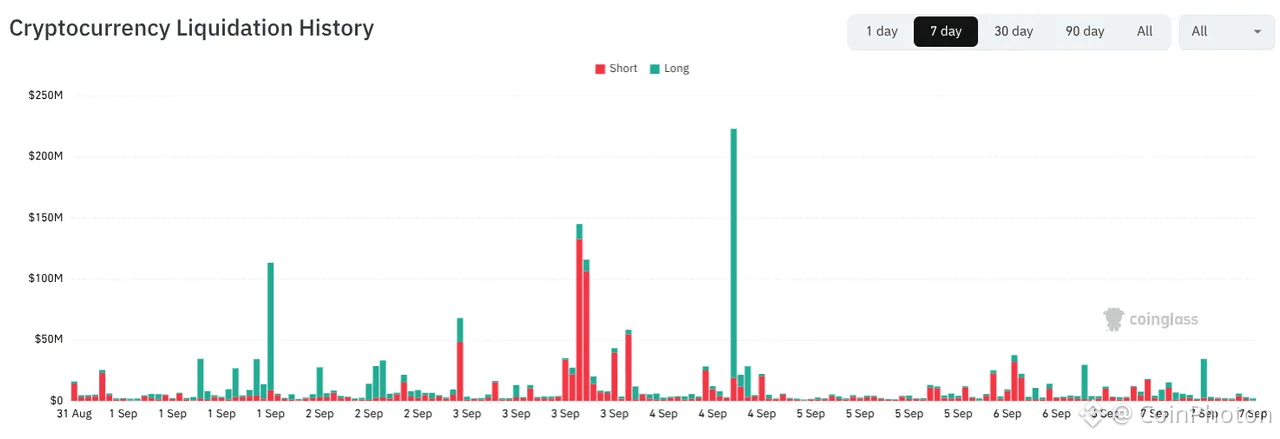
CoinGlass data showed roughly $178 million in crypto liquidations over the past 24 hours, split fairly evenly between long and short positions. Key short-term liquidity zones were clustered around $80,500 and $78,800.
Despite the decline, analysts highlighted Bitcoin’s relative resilience, with BTC still holding most of its roughly 25% gain from earlier last month and trading in a narrow range since mid-August.
Attention also remains on US spot Bitcoin ETFs after the funds recorded about $730 million in net inflows on Thursday, their strongest single-day inflow since January. $BTC
The pullback came after BTC posted its highest weekly close since early May, while traders remained cautious ahead of key US inflation data due later this week. QCP Capital said volatility has compressed as the market waits for a clearer macro catalyst, with the inflation prints likely to shape expectations for the Federal Reserve’s next rate decision.
CoinGlass data showed roughly $178 million in crypto liquidations over the past 24 hours, split fairly evenly between long and short positions. Key short-term liquidity zones were clustered around $80,500 and $78,800.
Despite the decline, analysts highlighted Bitcoin’s relative resilience, with BTC still holding most of its roughly 25% gain from earlier last month and trading in a narrow range since mid-August.
Attention also remains on US spot Bitcoin ETFs after the funds recorded about $730 million in net inflows on Thursday, their strongest single-day inflow since January. $BTC
The UK’s Financial Conduct Authority (FCA) is reportedly considering whether to lift its ban on retail access to prediction markets, a restriction that has been in place since 2019.
According to The Times, the FCA has contacted prediction market operators as part of discussions over whether platforms such as Polymarket and Kalshi could eventually be opened to UK retail investors.
Prediction markets currently fall under the FCA’s ban on binary options, because many event contracts settle on yes-or-no outcomes tied to politics, sports, weather and other events. When the ban was introduced, the FCA argued that binary options functioned more like gambling products than conventional financial instruments.
The review comes as prediction markets continue to grow rapidly. Bernstein Research has estimated that industry trading volume could reach about $240 billion in 2026 and potentially $1 trillion by 2030.
If the FCA reverses the ban, UK-based platforms could still face regulatory questions similar to those seen in the US, where Kalshi and Polymarket have been involved in disputes with state gaming regulators over event contracts, particularly those linked to sports.
According to The Times, the FCA has contacted prediction market operators as part of discussions over whether platforms such as Polymarket and Kalshi could eventually be opened to UK retail investors.
Prediction markets currently fall under the FCA’s ban on binary options, because many event contracts settle on yes-or-no outcomes tied to politics, sports, weather and other events. When the ban was introduced, the FCA argued that binary options functioned more like gambling products than conventional financial instruments.
The review comes as prediction markets continue to grow rapidly. Bernstein Research has estimated that industry trading volume could reach about $240 billion in 2026 and potentially $1 trillion by 2030.
If the FCA reverses the ban, UK-based platforms could still face regulatory questions similar to those seen in the US, where Kalshi and Polymarket have been involved in disputes with state gaming regulators over event contracts, particularly those linked to sports.
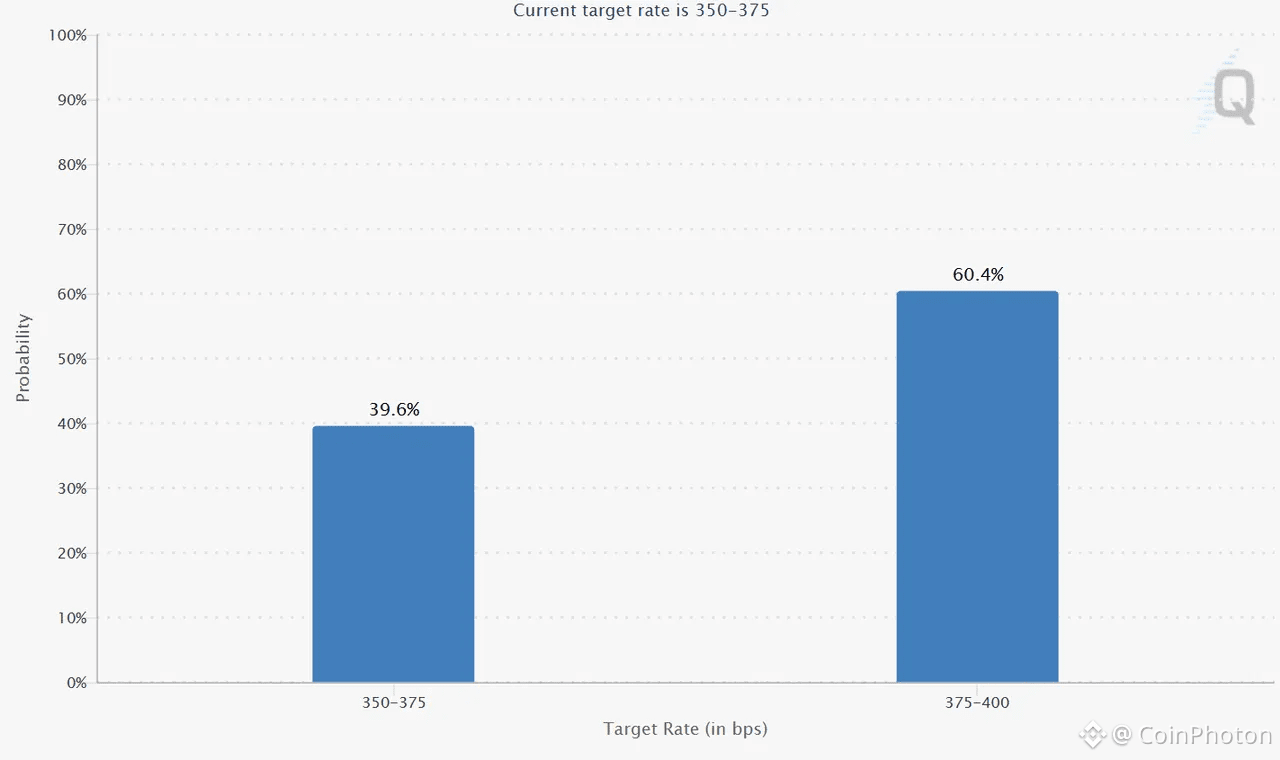
Crypto fund flows are becoming increasingly sensitive to expectations around US interest rates, with CoinShares arguing that Federal Reserve policy remains the main obstacle preventing Bitcoin from decisively breaking above $80,000.
CoinShares head of research James Butterfill said Bitcoin is “trading like gold again,” but the Fed is still setting the ceiling. Around $100 million exited digital asset investment products after Fed Chair Kevin Warsh struck a hawkish tone at Jackson Hole, pushing markets to price in a higher probability of a September rate hike.
Flows then reversed sharply, reaching roughly $1 billion by Sept. 4, after Fed Governor Christopher Waller signaled he could support keeping rates unchanged if inflation continued to cool.
CoinShares said investors are not abandoning crypto, but repositioning based on the expected path of interest rates.
The backdrop is also being supported by the US Treasury’s plan to double certain long-dated bond buybacks from $2 billion to $4 billion per operation, which could improve liquidity conditions. Standard Chartered has cited the improving liquidity backdrop in forecasting that Bitcoin could reach $100,000 before year-end.
$BTC
CoinShares head of research James Butterfill said Bitcoin is “trading like gold again,” but the Fed is still setting the ceiling. Around $100 million exited digital asset investment products after Fed Chair Kevin Warsh struck a hawkish tone at Jackson Hole, pushing markets to price in a higher probability of a September rate hike.
Flows then reversed sharply, reaching roughly $1 billion by Sept. 4, after Fed Governor Christopher Waller signaled he could support keeping rates unchanged if inflation continued to cool.
CoinShares said investors are not abandoning crypto, but repositioning based on the expected path of interest rates.
The backdrop is also being supported by the US Treasury’s plan to double certain long-dated bond buybacks from $2 billion to $4 billion per operation, which could improve liquidity conditions. Standard Chartered has cited the improving liquidity backdrop in forecasting that Bitcoin could reach $100,000 before year-end.
$BTC
Partly True
Uniswap generated $66.79 million in protocol fees over the past week, surpassing Circle to become the second-highest fee-generating crypto protocol, behind only Tether.
The surge has been driven largely by rising activity on Robinhood’s new Ethereum Layer 2 network, where Uniswap has become a major trading venue. The same wave of activity has also benefited other platforms in the ecosystem, including Pons. $UNI
The surge has been driven largely by rising activity on Robinhood’s new Ethereum Layer 2 network, where Uniswap has become a major trading venue. The same wave of activity has also benefited other platforms in the ecosystem, including Pons. $UNI
The Ethereum Foundation has identified two “must-ship” proposals for the Hegotá upgrade, making censorship resistance and more flexible account authentication the upgrade’s top priorities.
The two proposals are EIP-7805, or FOCIL, and EIP-8141, or Frame Transactions. FOCIL is designed to reduce reliance on centralized block builders by giving users another path for eligible transactions to be included, strengthening Ethereum’s resistance to censorship.
Frame Transactions would introduce native account abstraction and create a path toward post-quantum authentication. Together with related proposals, it could also provide protocol-level foundations for privacy applications.
The Ethereum Foundation reviewed 62 EIPs with input from around 60 researchers and engineers. Beyond the two must-ship proposals, 15 were placed in A-tier, eight remain candidates, seven were placed below the line but not fully rejected, and 28 were declined.
The “must-ship” label means FOCIL and Frame Transactions effectively define Hegotá’s scope. If either proposal faces delays, the Foundation said it would rather adjust the upgrade schedule than remove them.
Client teams could begin implementing Hegotá in late 2026 after the preceding Glamsterdam upgrade, which is focused on scalability and strengthening Ethereum’s base layer. $ETH
The two proposals are EIP-7805, or FOCIL, and EIP-8141, or Frame Transactions. FOCIL is designed to reduce reliance on centralized block builders by giving users another path for eligible transactions to be included, strengthening Ethereum’s resistance to censorship.
Frame Transactions would introduce native account abstraction and create a path toward post-quantum authentication. Together with related proposals, it could also provide protocol-level foundations for privacy applications.
The Ethereum Foundation reviewed 62 EIPs with input from around 60 researchers and engineers. Beyond the two must-ship proposals, 15 were placed in A-tier, eight remain candidates, seven were placed below the line but not fully rejected, and 28 were declined.
The “must-ship” label means FOCIL and Frame Transactions effectively define Hegotá’s scope. If either proposal faces delays, the Foundation said it would rather adjust the upgrade schedule than remove them.
Client teams could begin implementing Hegotá in late 2026 after the preceding Glamsterdam upgrade, which is focused on scalability and strengthening Ethereum’s base layer. $ETH
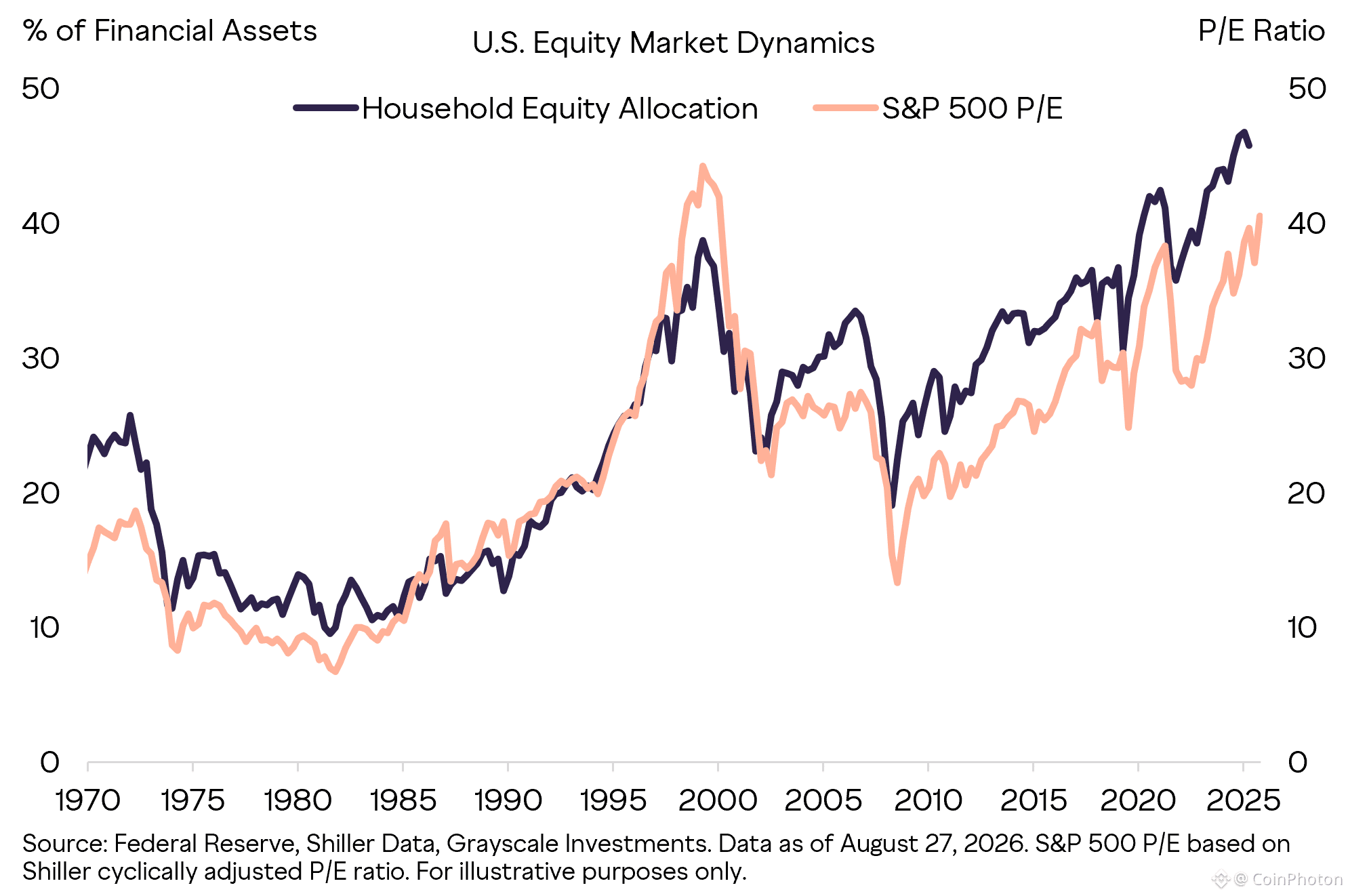
According to Grayscale, US household portfolios are more concentrated in stocks than ever, with corporate equities now accounting for roughly 46% of household financial assets.
Valuations are also stretched. Long-term S&P 500 earnings growth expectations have historically clustered around 10% to 15%, but have recently risen above 25%, suggesting that a large amount of optimism is already priced into the market. Strong AI investment could support current valuations, but the room for disappointment has narrowed.
Crypto presents a different setup. After a prolonged bear market reset valuations, leverage and investor positioning, the asset class may now be entering a new recovery cycle from a much lower base.
While US equities may require unusually strong revenue growth or margin expansion to justify current prices, crypto offers exposure to an emerging cycle where fundamentals are improving and valuations remain comparatively depressed.
Valuations are also stretched. Long-term S&P 500 earnings growth expectations have historically clustered around 10% to 15%, but have recently risen above 25%, suggesting that a large amount of optimism is already priced into the market. Strong AI investment could support current valuations, but the room for disappointment has narrowed.
Crypto presents a different setup. After a prolonged bear market reset valuations, leverage and investor positioning, the asset class may now be entering a new recovery cycle from a much lower base.
While US equities may require unusually strong revenue growth or margin expansion to justify current prices, crypto offers exposure to an emerging cycle where fundamentals are improving and valuations remain comparatively depressed.
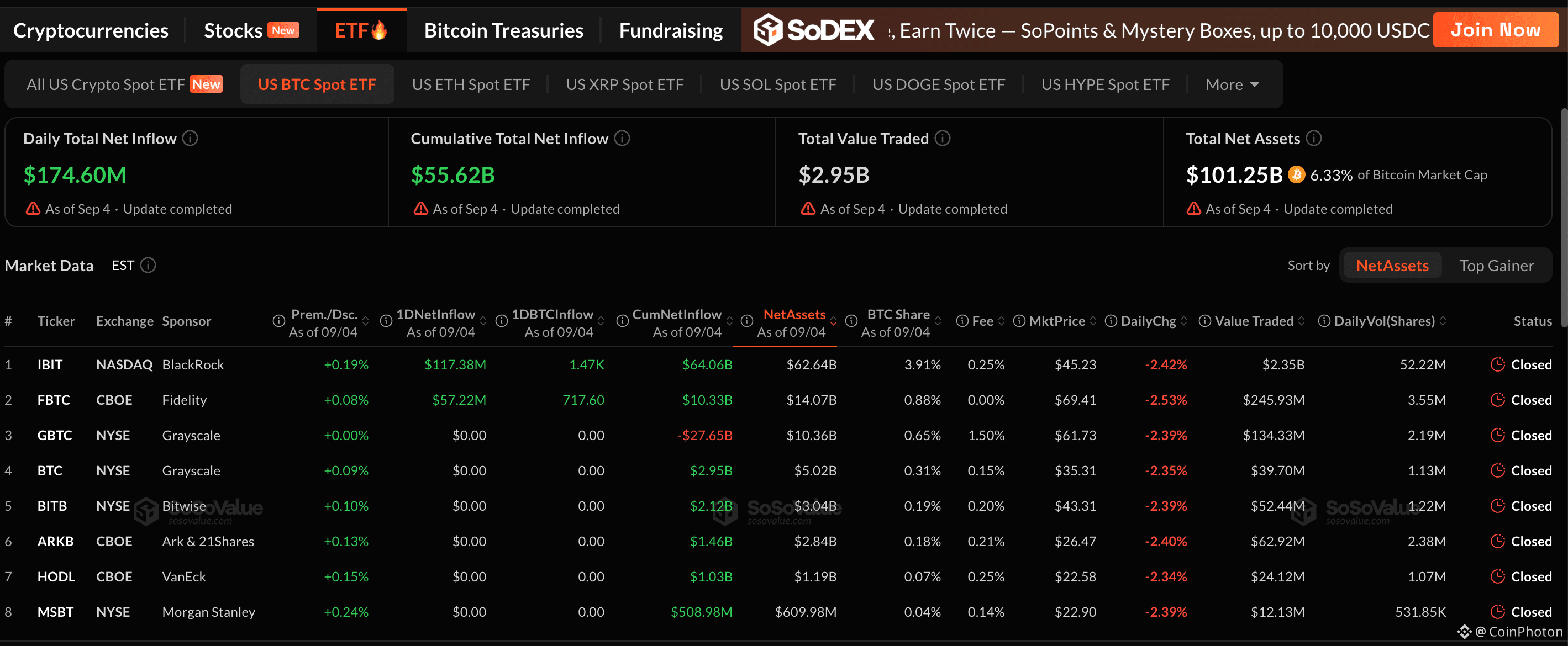
From Aug. 31 to Sept. 4, U.S. spot crypto ETFs recorded broad net inflows across major assets.
Bitcoin spot ETFs led with $987 million in net inflows, extending their positive streak to three consecutive weeks. Ethereum spot ETFs also posted a third straight week of inflows, attracting $218 million.
Solana spot ETFs recorded $6.18 million in net inflows, marking an impressive 10 consecutive weeks of positive flows.
Meanwhile, $XRP
spot ETFs attracted $18.96 million, while $HYPE
spot ETFs recorded $12.27 million in net inflows over the same period. $BTC
Bitcoin spot ETFs led with $987 million in net inflows, extending their positive streak to three consecutive weeks. Ethereum spot ETFs also posted a third straight week of inflows, attracting $218 million.
Solana spot ETFs recorded $6.18 million in net inflows, marking an impressive 10 consecutive weeks of positive flows.
Meanwhile, $XRP
spot ETFs attracted $18.96 million, while $HYPE
spot ETFs recorded $12.27 million in net inflows over the same period. $BTC
Binance founder Changpeng Zhao (CZ) said Bitcoin could eventually overtake gold in total market value, arguing that the current gap is only about tenfold and could close within a future market cycle if governments increasingly adopt BTC as a reserve asset.
Speaking at Bitcoin Asia, CZ said gold’s biggest advantage is not the metal itself but the mature custody, valuation and reserve infrastructure that governments have built around it over decades. He expects similar infrastructure around Bitcoin to develop gradually.
Bitcoin’s market cap is currently around $1.6 trillion. Matching the World Gold Council’s roughly $14 trillion estimate for investable gold would imply a Bitcoin price of about $697,000.
If Bitcoin were instead valued against the entire above-ground gold stock, estimated at roughly $31 trillion, the implied BTC price would rise to around $1.54 million.
CZ said the main assumption behind such a scenario is continued sovereign adoption of Bitcoin, while noting that a competing digital asset overtaking BTC remains a risk, though he currently sees that as unlikely.
Speaking at Bitcoin Asia, CZ said gold’s biggest advantage is not the metal itself but the mature custody, valuation and reserve infrastructure that governments have built around it over decades. He expects similar infrastructure around Bitcoin to develop gradually.
Bitcoin’s market cap is currently around $1.6 trillion. Matching the World Gold Council’s roughly $14 trillion estimate for investable gold would imply a Bitcoin price of about $697,000.
If Bitcoin were instead valued against the entire above-ground gold stock, estimated at roughly $31 trillion, the implied BTC price would rise to around $1.54 million.
CZ said the main assumption behind such a scenario is continued sovereign adoption of Bitcoin, while noting that a competing digital asset overtaking BTC remains a risk, though he currently sees that as unlikely.

FinCEN said it identified about $12.7 billion in crypto transactions linked to suspected overseas scam centers, based on an analysis of more than 33,000 reports filed between September 2023 and December 2025.
The scams included pig-butchering schemes, romance scams and fake crypto investment schemes, where victims were lured with promises of unusually high returns.
FinCEN said many of the operations were run by transnational criminal organizations based in scam compounds across Southeast Asia.
Authorities in the region have been moving to tighten enforcement. Myanmar approved legislation in July that can impose life imprisonment in cases involving violence, torture or forced participation in scam operations, while Cambodian lawmakers have also proposed tougher penalties for scam-center operators.
The scams included pig-butchering schemes, romance scams and fake crypto investment schemes, where victims were lured with promises of unusually high returns.
FinCEN said many of the operations were run by transnational criminal organizations based in scam compounds across Southeast Asia.
Authorities in the region have been moving to tighten enforcement. Myanmar approved legislation in July that can impose life imprisonment in cases involving violence, torture or forced participation in scam operations, while Cambodian lawmakers have also proposed tougher penalties for scam-center operators.
Orionx, a Chilean crypto exchange backed by Tether, is shutting down after uncovering a more than $7 million shortfall tied to asset custody.
The exchange said a forensic audit found that custodial assets had been transferred to wallets outside its control. Withdrawals have been temporarily suspended as Orionx begins a permanent wind-down and focuses on recovering customer funds.
The discrepancy was discovered after Orionx found that balances recorded in its systems exceeded the actual assets held in custody for Bitcoin, Ether, XRP and Polygon.
According to local reports, the company’s criminal complaint alleges that some of the transfers occurred between 2018 and 2021. Orionx has filed a complaint against former executives and co-founders Roberto Zibert and Joaquín Díaz, both of whom have denied wrongdoing.
The shutdown comes just 15 months after Tether led Orionx’s Series A funding round in June 2025, as part of its expansion push in Latin America.
The exchange said a forensic audit found that custodial assets had been transferred to wallets outside its control. Withdrawals have been temporarily suspended as Orionx begins a permanent wind-down and focuses on recovering customer funds.
The discrepancy was discovered after Orionx found that balances recorded in its systems exceeded the actual assets held in custody for Bitcoin, Ether, XRP and Polygon.
According to local reports, the company’s criminal complaint alleges that some of the transfers occurred between 2018 and 2021. Orionx has filed a complaint against former executives and co-founders Roberto Zibert and Joaquín Díaz, both of whom have denied wrongdoing.
The shutdown comes just 15 months after Tether led Orionx’s Series A funding round in June 2025, as part of its expansion push in Latin America.
Verified
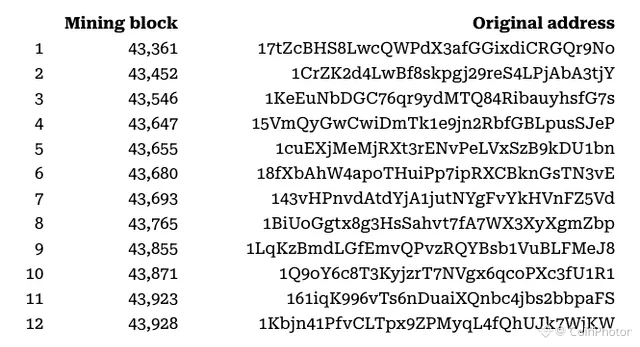
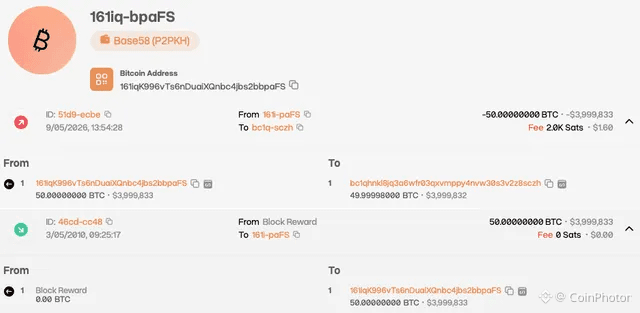
A dozen long-dormant Bitcoin addresses from the Satoshi era moved a combined 600 BTC, worth about $48 million, after more than 16 years of inactivity.
The coins came from 12 mining rewards earned in March 2010, when each Bitcoin block still paid a 50 BTC subsidy. Their movement sparked speculation about a possible connection to Bitcoin creator Satoshi Nakamoto.
However, Whale Alert said its research found no link between any of the 12 blocks and Satoshi. The analytics firm said all of the coins originated from blocks mined by other early miners.
The transfers are notable because they date back to a period when Satoshi was still actively involved in Bitcoin, but Whale Alert stressed that “Satoshi-era” coins do not necessarily mean Satoshi-owned coins.
One of the 12 rewards was moved several blocks before the others, a pattern Whale Alert said could indicate a test transaction before the remaining transfers were made. $BTC
The coins came from 12 mining rewards earned in March 2010, when each Bitcoin block still paid a 50 BTC subsidy. Their movement sparked speculation about a possible connection to Bitcoin creator Satoshi Nakamoto.
However, Whale Alert said its research found no link between any of the 12 blocks and Satoshi. The analytics firm said all of the coins originated from blocks mined by other early miners.
The transfers are notable because they date back to a period when Satoshi was still actively involved in Bitcoin, but Whale Alert stressed that “Satoshi-era” coins do not necessarily mean Satoshi-owned coins.
One of the 12 rewards was moved several blocks before the others, a pattern Whale Alert said could indicate a test transaction before the remaining transfers were made. $BTC
Verified
Bloomberg Intelligence analyst James Seyffart identified 30 firms with disclosed holdings in U.S. Hyperliquid ETFs, with combined positions worth about $74.9 million as of June 30.
Brazil-based Wealth High Governance Asset Management led the list with nearly $24 million in 21Shares’ THYP fund. OLP Capital Management followed with $10.5 million, while UBS held $7.5 million, Bank of Montreal $6.7 million, and Jane Street $4.4 million.
The top five holders controlled about $53 million, or 70.8% of the total disclosed exposure. Other names included Brevan Howard, Discovery Capital, Balyasny and Boothbay.
The three U.S. Hyperliquid ETFs — 21Shares’ THYP, Bitwise’s BHYP and Grayscale’s HYPG — had attracted $356.6 million in net inflows since launch through Sept. 4 and held about $480.9 million in net assets.
The 13F data only reflects positions as of June 30 and does not capture later trades, while some bank holdings may represent client assets rather than proprietary positions. $HYPE
Brazil-based Wealth High Governance Asset Management led the list with nearly $24 million in 21Shares’ THYP fund. OLP Capital Management followed with $10.5 million, while UBS held $7.5 million, Bank of Montreal $6.7 million, and Jane Street $4.4 million.
The top five holders controlled about $53 million, or 70.8% of the total disclosed exposure. Other names included Brevan Howard, Discovery Capital, Balyasny and Boothbay.
The three U.S. Hyperliquid ETFs — 21Shares’ THYP, Bitwise’s BHYP and Grayscale’s HYPG — had attracted $356.6 million in net inflows since launch through Sept. 4 and held about $480.9 million in net assets.
The 13F data only reflects positions as of June 30 and does not capture later trades, while some bank holdings may represent client assets rather than proprietary positions. $HYPE
Router Protocol, a cross-chain infrastructure project backed by Coinbase Ventures, will shut down all operations by Sept. 30 after failing to find a sustainable business model.
The team said it spent the past year pursuing commercialization, technology licensing and potential acquisition deals, but none produced enough revenue to sustain operations. Router cited capital shifting from crypto toward AI, falling bridge fees and declining demand for cross-chain infrastructure as key pressures.
As part of the shutdown, Router will permanently burn 303.3 million ROUTE tokens, representing roughly 30% of the token’s nearly 1 billion maximum supply. The project will also coordinate with centralized exchanges to delist ROUTE, with timelines varying by platform.
Router raised $4.1 million in 2021 from investors including Coinbase Ventures and Polygon and launched its own Layer 1, Router Chain, in 2024. The standalone blockchain began winding down in 2025 due to infrastructure costs, validator inflation and security risks.
Router’s closure adds to mounting pressure on crypto infrastructure businesses, following shutdowns or wind-downs by projects including Syndicate Labs and Botanix in 2026.
The team said it spent the past year pursuing commercialization, technology licensing and potential acquisition deals, but none produced enough revenue to sustain operations. Router cited capital shifting from crypto toward AI, falling bridge fees and declining demand for cross-chain infrastructure as key pressures.
As part of the shutdown, Router will permanently burn 303.3 million ROUTE tokens, representing roughly 30% of the token’s nearly 1 billion maximum supply. The project will also coordinate with centralized exchanges to delist ROUTE, with timelines varying by platform.
Router raised $4.1 million in 2021 from investors including Coinbase Ventures and Polygon and launched its own Layer 1, Router Chain, in 2024. The standalone blockchain began winding down in 2025 due to infrastructure costs, validator inflation and security risks.
Router’s closure adds to mounting pressure on crypto infrastructure businesses, following shutdowns or wind-downs by projects including Syndicate Labs and Botanix in 2026.
Verified
Aptos is closing in on a major milestone, with the network having processed about 4.91 billion transactions since launch, according to Chainspect data.
At its current pace of roughly 6.5 million transactions per day, Aptos could surpass the 5 billion transaction mark in the near future.
The milestone would underscore the network’s growing onchain activity and transaction throughput as Aptos continues expanding its ecosystem. $APT
At its current pace of roughly 6.5 million transactions per day, Aptos could surpass the 5 billion transaction mark in the near future.
The milestone would underscore the network’s growing onchain activity and transaction throughput as Aptos continues expanding its ecosystem. $APT
Verified
Arthur Hayes appears to be turning bullish on Uniswap.
According to OnchainLens data, Hayes spent about $1.73 million to purchase roughly 244,400 $UNI
, adding a sizable Uniswap position to his portfolio.
The purchase comes as Uniswap is seeing a major boost from activity on Robinhood Chain, where trading volumes have surged and Uniswap has captured the vast majority of DEX activity.
The timing also follows a sharp increase in UNI burns driven by Robinhood Chain usage, strengthening the narrative that higher trading activity could translate into greater value accrual for the UNI ecosystem.
According to OnchainLens data, Hayes spent about $1.73 million to purchase roughly 244,400 $UNI
, adding a sizable Uniswap position to his portfolio.
The purchase comes as Uniswap is seeing a major boost from activity on Robinhood Chain, where trading volumes have surged and Uniswap has captured the vast majority of DEX activity.
The timing also follows a sharp increase in UNI burns driven by Robinhood Chain usage, strengthening the narrative that higher trading activity could translate into greater value accrual for the UNI ecosystem.
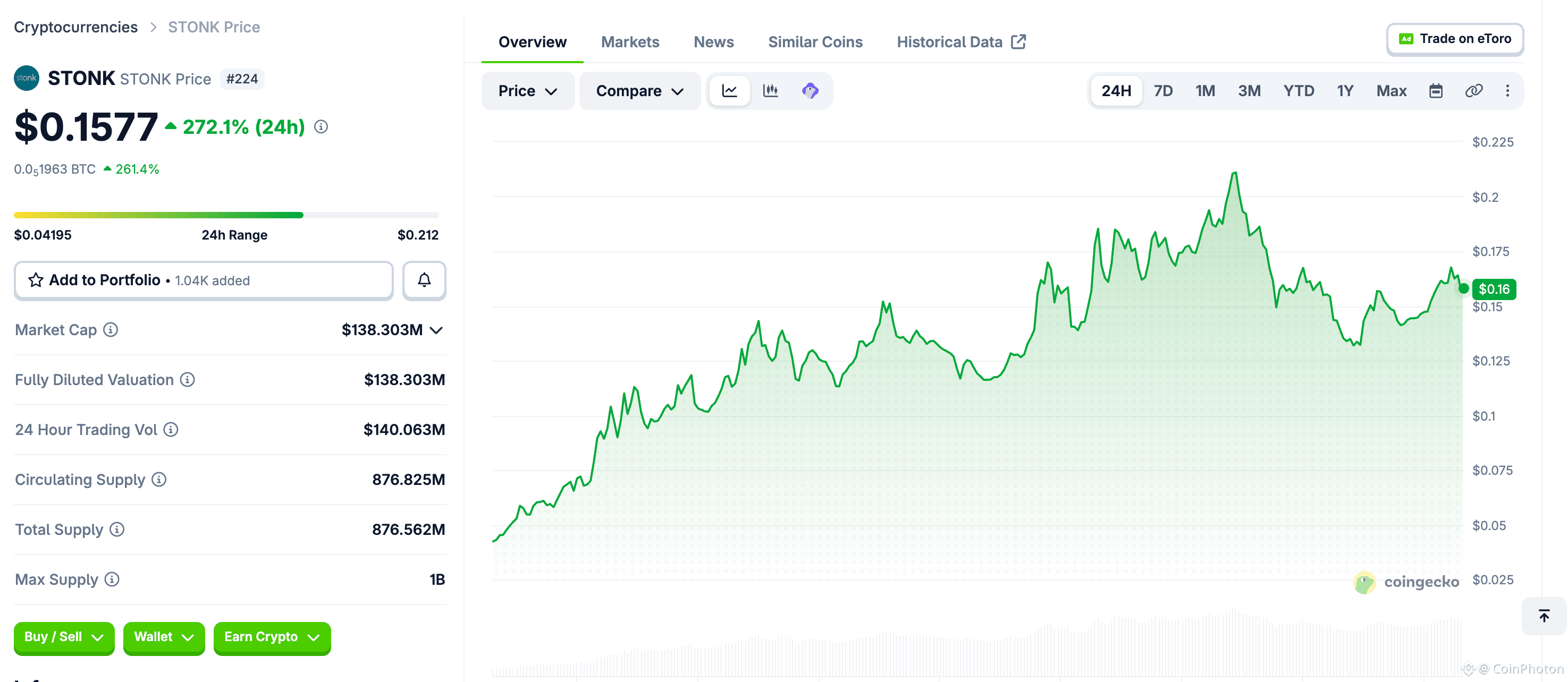
STONK, the token linked to Solana launchpad StonkFun, surged more than 270% in 24 hours on Sunday after the platform announced an integration with Raydium’s LaunchLab.
STONK traded near $0.16, with a market cap of about $140 million and roughly $135 million in daily volume. The token earlier hit a new all-time high of $0.212 before pulling back.
StonkFun allows users to launch tokens paired with assets including tokenized stocks, ETFs, cryptocurrencies, currencies and commodities. Its own STONK token is paired with SPYx, a tokenized product designed to track the S&P 500 through the SPDR S&P 500 ETF.
The LaunchLab integration is intended to lower deployment costs, reduce sniper risk and improve liquidity after token launches. The move also coincided with broader gains across the Solana ecosystem, with Raydium’s RAY up about 46% and Jupiter’s JUP up around 21% over 24 hours.
StonkFun also operates a fee-funded buyback-and-burn program, with 78 tokens reportedly purchased and burned so far.
STONK traded near $0.16, with a market cap of about $140 million and roughly $135 million in daily volume. The token earlier hit a new all-time high of $0.212 before pulling back.
StonkFun allows users to launch tokens paired with assets including tokenized stocks, ETFs, cryptocurrencies, currencies and commodities. Its own STONK token is paired with SPYx, a tokenized product designed to track the S&P 500 through the SPDR S&P 500 ETF.
The LaunchLab integration is intended to lower deployment costs, reduce sniper risk and improve liquidity after token launches. The move also coincided with broader gains across the Solana ecosystem, with Raydium’s RAY up about 46% and Jupiter’s JUP up around 21% over 24 hours.
StonkFun also operates a fee-funded buyback-and-burn program, with 78 tokens reportedly purchased and burned so far.
Liquid Network said purported white-hat hackers withdrew about 4,000 BTC, worth roughly $320 million, from its federation wallet, forcing the Bitcoin sidechain to pause operations.
The withdrawal represented around 95% of Liquid’s reported bitcoin reserves, which stood at approximately 4,200 $BTC
before the incident.
Liquid said the funds were withdrawn through the SideSwap Peg-out Authorization Key (PAK), but maintained that the key itself had not been compromised. An onchain message linked to the transaction stated: “we are whitehats. contact us on chain.”
Blockstream, Liquid’s technology provider, is attempting to contact those responsible through an onchain signed message. The network has also notified exchanges, many of which have suspended LBTC deposits and withdrawals.
Liquid temporarily disabled bridge nodes, effectively pausing the sidechain until the issue is resolved. Other assets issued on Liquid, including USDT, DePix and real-world assets, were said to be unaffected.
The withdrawal represented around 95% of Liquid’s reported bitcoin reserves, which stood at approximately 4,200 $BTC
before the incident.
Liquid said the funds were withdrawn through the SideSwap Peg-out Authorization Key (PAK), but maintained that the key itself had not been compromised. An onchain message linked to the transaction stated: “we are whitehats. contact us on chain.”
Blockstream, Liquid’s technology provider, is attempting to contact those responsible through an onchain signed message. The network has also notified exchanges, many of which have suspended LBTC deposits and withdrawals.
Liquid temporarily disabled bridge nodes, effectively pausing the sidechain until the issue is resolved. Other assets issued on Liquid, including USDT, DePix and real-world assets, were said to be unaffected.
Log in to explore more content