

#psicologiadeltrading
psicologiadeltrading
122,320 views
81 Discussing
Hot
Latest

·
--
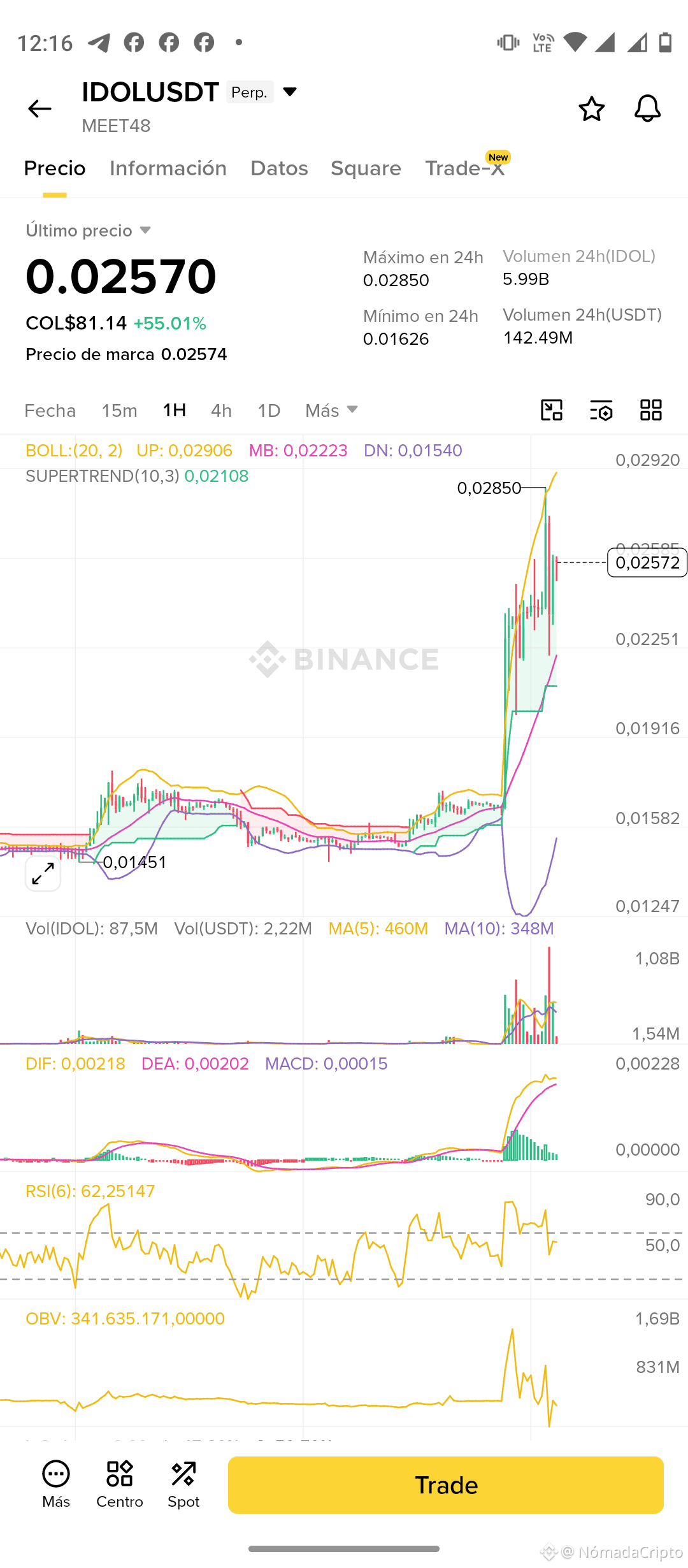
#IDOL $IDOL has just captured the attention of thousands of traders after recording a strong surge and becoming one of the most active assets on the move right now. However, beyond the percentage gain, this kind of chart offers a lesson that many discover too late: no trader develops judgment by watching the market from the outside.
Every trending asset represents an opportunity to train. Some will decide to trade, others will only analyze the move, but both can learn if, afterward, they ask the right questions: what signals did I overlook? what made me trust or doubt? did I follow my plan or react to the emotion of the moment?
In the community comments, very interesting ideas have appeared. Some talk about "listening to what the chart whispers," others mention possible market traps, and several admit they still feel uncertainty when facing such fast moves. All of those experiences are part of the learning process. The difference is turning every trade—win or loss—into useful information for the next one.
A trader doesn’t improve because an asset rises 50%. They improve when they use moves like IDOL’s to test their methodology, review their decisions, and strengthen their discipline. Practice doesn’t guarantee immediate results, but it does build the judgment that over time makes the difference between reacting to the market and understanding it.
Now it’s your turn. If you were analyzing $IDOL right now, what lesson would you like to put to the test: your entry strategy, your risk management, or your patience to wait for a confirmation? Share your answer in the comments, and let’s talk about how to train better as traders.
#NomadaCripto #TradingDeFuturos #PriceAction #PsicologiaDelTrading
$IDOL
{future}(IDOLUSDT)
#IDOL $IDOL has just captured the attention of thousands of traders after recording a strong surge and becoming one of the most active assets on the move right now. However, beyond the percentage gain, this kind of chart offers a lesson that many discover too late: no trader develops judgment by watching the market from the outside.
Every trending asset represents an opportunity to train. Some will decide to trade, others will only analyze the move, but both can learn if, afterward, they ask the right questions: what signals did I overlook? what made me trust or doubt? did I follow my plan or react to the emotion of the moment?
In the community comments, very interesting ideas have appeared. Some talk about "listening to what the chart whispers," others mention possible market traps, and several admit they still feel uncertainty when facing such fast moves. All of those experiences are part of the learning process. The difference is turning every trade—win or loss—into useful information for the next one.
A trader doesn’t improve because an asset rises 50%. They improve when they use moves like IDOL’s to test their methodology, review their decisions, and strengthen their discipline. Practice doesn’t guarantee immediate results, but it does build the judgment that over time makes the difference between reacting to the market and understanding it.
Now it’s your turn. If you were analyzing $IDOL right now, what lesson would you like to put to the test: your entry strategy, your risk management, or your patience to wait for a confirmation? Share your answer in the comments, and let’s talk about how to train better as traders.
#NomadaCripto #TradingDeFuturos #PriceAction #PsicologiaDelTrading
$IDOL
Every trending asset represents an opportunity to train. Some will decide to trade, others will only analyze the move, but both can learn if, afterward, they ask the right questions: what signals did I overlook? what made me trust or doubt? did I follow my plan or react to the emotion of the moment?
In the community comments, very interesting ideas have appeared. Some talk about "listening to what the chart whispers," others mention possible market traps, and several admit they still feel uncertainty when facing such fast moves. All of those experiences are part of the learning process. The difference is turning every trade—win or loss—into useful information for the next one.
A trader doesn’t improve because an asset rises 50%. They improve when they use moves like IDOL’s to test their methodology, review their decisions, and strengthen their discipline. Practice doesn’t guarantee immediate results, but it does build the judgment that over time makes the difference between reacting to the market and understanding it.
Now it’s your turn. If you were analyzing $IDOL right now, what lesson would you like to put to the test: your entry strategy, your risk management, or your patience to wait for a confirmation? Share your answer in the comments, and let’s talk about how to train better as traders.
#NomadaCripto #TradingDeFuturos #PriceAction #PsicologiaDelTrading
$IDOL
2
779
·
--
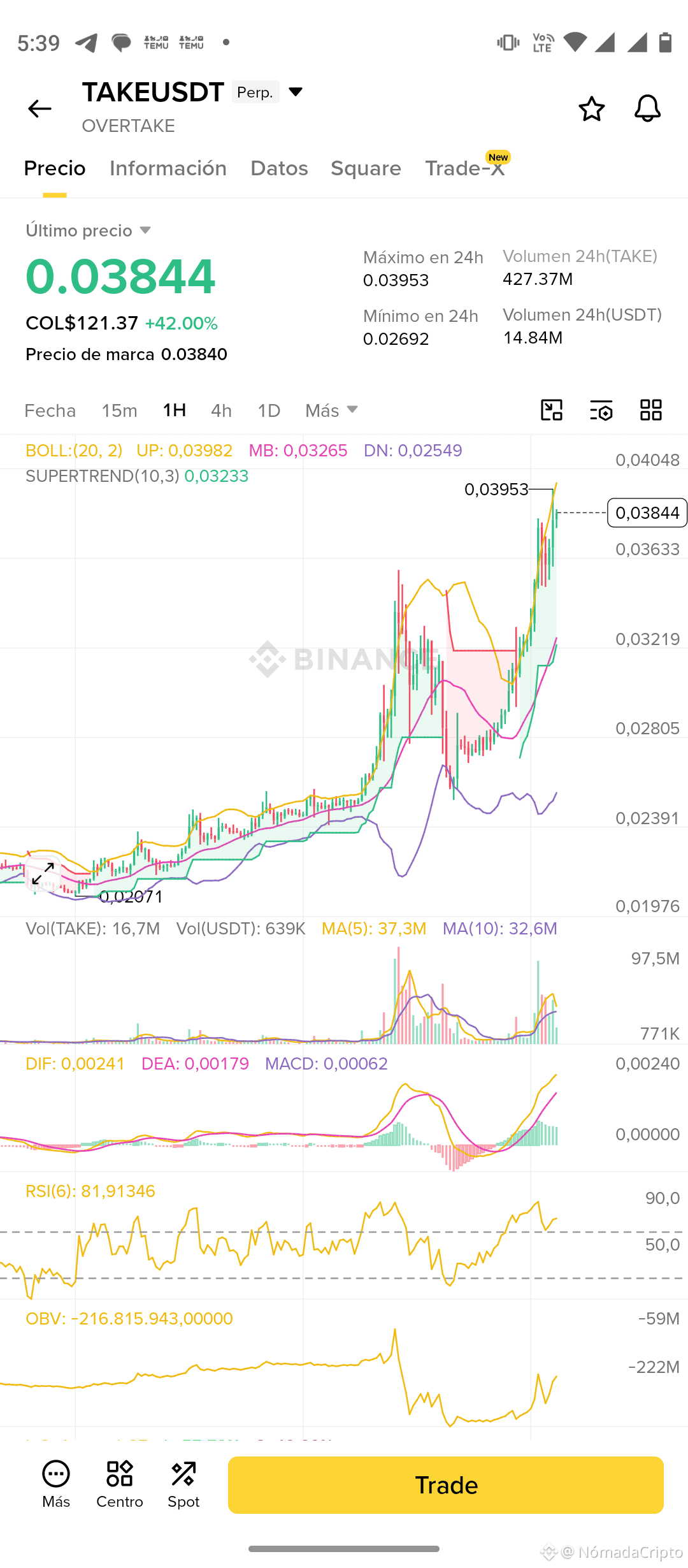
#TAKE $TAKE regains prominence with a strong push and an increase in market attention. When an asset enters FOMO, it’s easy to think that the only important decision is whether to get in or stay out. However, traders who remain over time usually ask another question: does this move fit my method, or is it just driven by my emotions.
Over the years, I’ve learned that a method isn’t about finding the perfect strategy. A method is a process for filtering opportunities. Before opening a trade, my job is to look for assets that meet specific conditions built through practice, statistics, and experience. If TAKE meets them, I analyze it. If it doesn’t, I keep looking. Patience is also part of the analysis.
Many believe that success lies in finding the right asset. I think it’s about making consistent decisions again and again. Each trade leaves valuable information: it confirms an idea, corrects a mistake, or strengthens a rule of the method. That’s why even a trending asset can become excellent training for developing judgment.
The market changes every day, but the principles of a disciplined trader remain. Don’t trade because an asset is in fashion; trade when your process gives you reasons to do so. In the end, consistency doesn’t come from an extraordinary trade, but from hundreds of well-executed decisions.
Now I want to know your experience. When an asset like $TAKE begins to accelerate, what do you check first before thinking about opening a trade? Share your answer in the comments. Many of the best ideas are born when traders compare their analysis processes.
#NomadaCripto #TAKE #TradingDeFuturos #PsicologiaDelTrading
$TAKE
{future}(TAKEUSDT)
#TAKE $TAKE regains prominence with a strong push and an increase in market attention. When an asset enters FOMO, it’s easy to think that the only important decision is whether to get in or stay out. However, traders who remain over time usually ask another question: does this move fit my method, or is it just driven by my emotions.
Over the years, I’ve learned that a method isn’t about finding the perfect strategy. A method is a process for filtering opportunities. Before opening a trade, my job is to look for assets that meet specific conditions built through practice, statistics, and experience. If TAKE meets them, I analyze it. If it doesn’t, I keep looking. Patience is also part of the analysis.
Many believe that success lies in finding the right asset. I think it’s about making consistent decisions again and again. Each trade leaves valuable information: it confirms an idea, corrects a mistake, or strengthens a rule of the method. That’s why even a trending asset can become excellent training for developing judgment.
The market changes every day, but the principles of a disciplined trader remain. Don’t trade because an asset is in fashion; trade when your process gives you reasons to do so. In the end, consistency doesn’t come from an extraordinary trade, but from hundreds of well-executed decisions.
Now I want to know your experience. When an asset like $TAKE begins to accelerate, what do you check first before thinking about opening a trade? Share your answer in the comments. Many of the best ideas are born when traders compare their analysis processes.
#NomadaCripto #TAKE #TradingDeFuturos #PsicologiaDelTrading
$TAKE
Over the years, I’ve learned that a method isn’t about finding the perfect strategy. A method is a process for filtering opportunities. Before opening a trade, my job is to look for assets that meet specific conditions built through practice, statistics, and experience. If TAKE meets them, I analyze it. If it doesn’t, I keep looking. Patience is also part of the analysis.
Many believe that success lies in finding the right asset. I think it’s about making consistent decisions again and again. Each trade leaves valuable information: it confirms an idea, corrects a mistake, or strengthens a rule of the method. That’s why even a trending asset can become excellent training for developing judgment.
The market changes every day, but the principles of a disciplined trader remain. Don’t trade because an asset is in fashion; trade when your process gives you reasons to do so. In the end, consistency doesn’t come from an extraordinary trade, but from hundreds of well-executed decisions.
Now I want to know your experience. When an asset like $TAKE begins to accelerate, what do you check first before thinking about opening a trade? Share your answer in the comments. Many of the best ideas are born when traders compare their analysis processes.
#NomadaCripto #TAKE #TradingDeFuturos #PsicologiaDelTrading
$TAKE
1
450

·
--
🧠 The worst enemy of a trader isn't the market; it's their mind.
Many dive into trading looking for the "magic strategy" or the perfect indicator to predict the next move of $BTC o $XRP. The reality is different: you can have the best system in the world, but if you don't master your psychology, the market will take your money. 💸
As a scalper, I've learned that real success boils down to three pillars that most ignore in their quest for quick profits:
📉 Accepting Losses: Losing is part of the game. The real issue isn't hitting a stop loss; it's not respecting it, overtrading out of revenge, and risking more than you should.
🚀 Controlling Euphoria: A winning streak can be more dangerous than a losing one. It makes you feel invincible, you irresponsibly ramp up your risk, and end up giving it all back in one trade.
🛡️ Strict Risk Management: Don't focus on how much you'll make; instead, focus on how much you're willing to lose per trade. Keeping your risk low and under control is the only way to give yourself the mental peace to execute your plan with a cool head.
Professional trading isn't a game of chance or emotions; it's a business of statistics, discipline, and emotional control. If you protect your capital, your mind will stay calm. 📊
🤔 How do you handle the psychological side when the market gets tough? I look forward to your comments!
#PsicologiaDelTrading
🧠 The worst enemy of a trader isn't the market; it's their mind.
Many dive into trading looking for the "magic strategy" or the perfect indicator to predict the next move of $BTC o $XRP. The reality is different: you can have the best system in the world, but if you don't master your psychology, the market will take your money. 💸
As a scalper, I've learned that real success boils down to three pillars that most ignore in their quest for quick profits:
📉 Accepting Losses: Losing is part of the game. The real issue isn't hitting a stop loss; it's not respecting it, overtrading out of revenge, and risking more than you should.
🚀 Controlling Euphoria: A winning streak can be more dangerous than a losing one. It makes you feel invincible, you irresponsibly ramp up your risk, and end up giving it all back in one trade.
🛡️ Strict Risk Management: Don't focus on how much you'll make; instead, focus on how much you're willing to lose per trade. Keeping your risk low and under control is the only way to give yourself the mental peace to execute your plan with a cool head.
Professional trading isn't a game of chance or emotions; it's a business of statistics, discipline, and emotional control. If you protect your capital, your mind will stay calm. 📊
🤔 How do you handle the psychological side when the market gets tough? I look forward to your comments!
#PsicologiaDelTrading
Many dive into trading looking for the "magic strategy" or the perfect indicator to predict the next move of $BTC o $XRP. The reality is different: you can have the best system in the world, but if you don't master your psychology, the market will take your money. 💸
As a scalper, I've learned that real success boils down to three pillars that most ignore in their quest for quick profits:
📉 Accepting Losses: Losing is part of the game. The real issue isn't hitting a stop loss; it's not respecting it, overtrading out of revenge, and risking more than you should.
🚀 Controlling Euphoria: A winning streak can be more dangerous than a losing one. It makes you feel invincible, you irresponsibly ramp up your risk, and end up giving it all back in one trade.
🛡️ Strict Risk Management: Don't focus on how much you'll make; instead, focus on how much you're willing to lose per trade. Keeping your risk low and under control is the only way to give yourself the mental peace to execute your plan with a cool head.
Professional trading isn't a game of chance or emotions; it's a business of statistics, discipline, and emotional control. If you protect your capital, your mind will stay calm. 📊
🤔 How do you handle the psychological side when the market gets tough? I look forward to your comments!
#PsicologiaDelTrading
156

🔥🔥🔥 THE TRUTH ABOUT FUTURES THAT NOBODY TELLS YOU
You don't need to win 100% of the time. What you really need is to protect your capital when you mess up, control your emotions, and trade with the coldness of the big market whales. Knowledge is your best asset! 🧠✨🚀
Claim the Red Envelope 🎁🧧🎁.
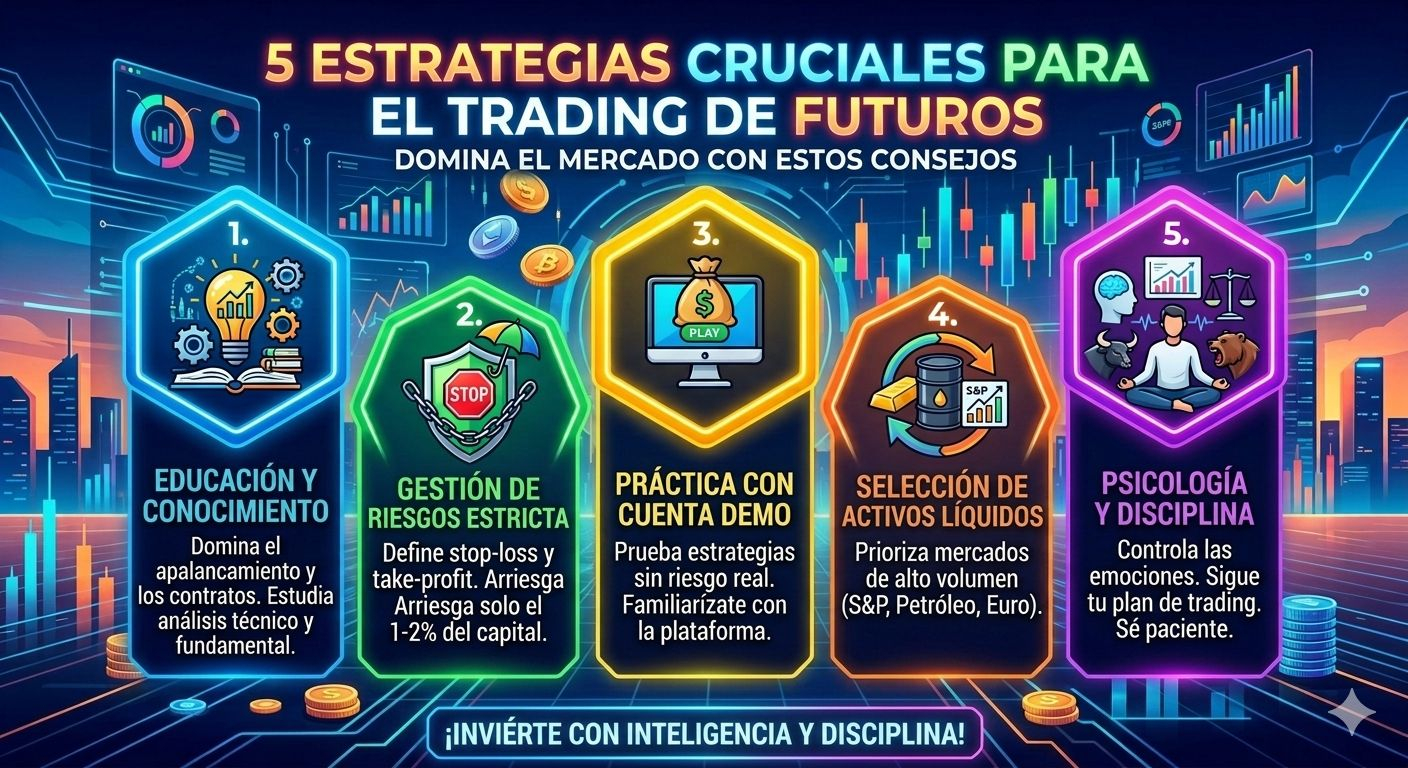
Ready to dominate the most powerful financial market? Futures trading isn't about luck; it's a pure strategy science. If you want to stop being a mere spectator and transform into a consistently profitable trader, you need to master these 5 golden rules that I’ve left in the image. Always remember: Discipline pays, improvisation costs dearly. 💡📈👇
Let me know in the comments: Which of these 5 strategies do you struggle with the most in your day-to-day? I'm all ears!
#TradingDeFuturos #EducacionFinanciera #PsicologiaDelTrading #FuturosFinancieros #TraderMindset
🔥🔥🔥 THE TRUTH ABOUT FUTURES THAT NOBODY TELLS YOU
You don't need to win 100% of the time. What you really need is to protect your capital when you mess up, control your emotions, and trade with the coldness of the big market whales. Knowledge is your best asset! 🧠✨🚀
Claim the Red Envelope 🎁🧧🎁.
Ready to dominate the most powerful financial market? Futures trading isn't about luck; it's a pure strategy science. If you want to stop being a mere spectator and transform into a consistently profitable trader, you need to master these 5 golden rules that I’ve left in the image. Always remember: Discipline pays, improvisation costs dearly. 💡📈👇
Let me know in the comments: Which of these 5 strategies do you struggle with the most in your day-to-day? I'm all ears!
#TradingDeFuturos #EducacionFinanciera #PsicologiaDelTrading #FuturosFinancieros #TraderMindset
You don't need to win 100% of the time. What you really need is to protect your capital when you mess up, control your emotions, and trade with the coldness of the big market whales. Knowledge is your best asset! 🧠✨🚀
Claim the Red Envelope 🎁🧧🎁.
Ready to dominate the most powerful financial market? Futures trading isn't about luck; it's a pure strategy science. If you want to stop being a mere spectator and transform into a consistently profitable trader, you need to master these 5 golden rules that I’ve left in the image. Always remember: Discipline pays, improvisation costs dearly. 💡📈👇
Let me know in the comments: Which of these 5 strategies do you struggle with the most in your day-to-day? I'm all ears!
#TradingDeFuturos #EducacionFinanciera #PsicologiaDelTrading #FuturosFinancieros #TraderMindset

👀🎁🧧
From Alexis Ventura
1
37

The $10,000 mistake that changed how I trade🚨
Buy green and sell red? We’ve all been there.
In the last bull market, I made the worst beginner mistake: FOMO. I saw a coin jump 80% in one day, put all my capital in without researching, and within a few hours the market corrected by 40%. I panicked and sold at a loss.
Lesson: The market rewards patience, not emotions. If you didn’t get in on time, wait for the next opportunity. Liquidity comes and goes, but you must protect your capital.
The $10,000 mistake that changed how I trade
🚨
Buy green and sell red? We’ve all been there.
In the last bull market, I made the worst beginner mistake: FOMO. I saw a coin jump 80% in one day, put all my capital in without researching, and within a few hours the market corrected by 40%. I panicked and sold at a loss.
Lesson: The market rewards patience, not emotions. If you didn’t get in on time, wait for the next opportunity. Liquidity comes and goes, but you must protect your capital.
Buy green and sell red? We’ve all been there.
In the last bull market, I made the worst beginner mistake: FOMO. I saw a coin jump 80% in one day, put all my capital in without researching, and within a few hours the market corrected by 40%. I panicked and sold at a loss.
Lesson: The market rewards patience, not emotions. If you didn’t get in on time, wait for the next opportunity. Liquidity comes and goes, but you must protect your capital.
1
1
642
🚨 The $100 mistake: Why patience beats FOMO? 🚨
Yesterday I saw a friend desperate to buy a memecoin that was up 80% in minutes. He put in $100 purely out of fear of missing out (FOMO). The result? Two hours later, the market corrected and his account showed $35.
The real secret in crypto isn’t chasing huge green candles. It’s consistency. If instead of hunting for a “lucky break” you analyze solid projects like $BTC or $ETH during the red days, your perspective changes completely.
Learn to master your emotions before the market masters your wallet.
What’s been your biggest lesson the hard way? 👇
#PsicologiaDelTrading #CryptoAprende #Bitcoin
🚨 The $100 mistake: Why patience beats FOMO? 🚨
Yesterday I saw a friend desperate to buy a memecoin that was up 80% in minutes. He put in $100 purely out of fear of missing out (FOMO). The result? Two hours later, the market corrected and his account showed $35.
The real secret in crypto isn’t chasing huge green candles. It’s consistency. If instead of hunting for a “lucky break” you analyze solid projects like $BTC or $ETH during the red days, your perspective changes completely.
Learn to master your emotions before the market masters your wallet.
What’s been your biggest lesson the hard way? 👇
#PsicologiaDelTrading #CryptoAprende #Bitcoin
Yesterday I saw a friend desperate to buy a memecoin that was up 80% in minutes. He put in $100 purely out of fear of missing out (FOMO). The result? Two hours later, the market corrected and his account showed $35.
The real secret in crypto isn’t chasing huge green candles. It’s consistency. If instead of hunting for a “lucky break” you analyze solid projects like $BTC or $ETH during the red days, your perspective changes completely.
Learn to master your emotions before the market masters your wallet.
What’s been your biggest lesson the hard way? 👇
#PsicologiaDelTrading #CryptoAprende #Bitcoin
1
117

Are you making money or just getting lucky? 🧠 Your worst enemy in the portfolio is yourself
In the crypto world, we spend hours staring at charts, analyzing technical indicators, and reading news. However, 90% of success in trading and investing doesn’t depend on the market, but on how you react to it.
Today, I want to share the 3 psychological errors that destroy accounts the most, and that we all, at some point, have made:
1️⃣ The FOMO Effect (Fear of Missing Out): You see a coin spike 40% in a day, you feel like you’re missing the opportunity of a lifetime, and you buy at the top. What’s the result? The market corrects and you get trapped. Golden rule: If it has already pumped too much, it’s too late. The train always comes back around.
2️⃣ Marrying a Coin: It's great to research a project, but becoming a "blind fan" stops you from seeing the warning signs. No cryptocurrency is your friend; they are tools to generate returns. If the fundamentals change, your strategy should change too.
3️⃣ Not Accepting a Small Loss: Watching your trade go red and not closing it "hoping it will recover" is the fastest way to liquidate an account. The Stop-Loss isn’t your enemy; it’s the safety belt that keeps you alive to trade tomorrow.
The difference between a gambler and a real investor is discipline. The market has no emotions, don’t let yours control your money.
💬 Which of these three mistakes cost you the most when you started? Or are you struggling with another one right now? I’ll read your comments.
#CryptoEducacion #PsicologiaDelTrading #Binance #tradingtips
Are you making money or just getting lucky? 🧠 Your worst enemy in the portfolio is yourself
In the crypto world, we spend hours staring at charts, analyzing technical indicators, and reading news. However, 90% of success in trading and investing doesn’t depend on the market, but on how you react to it.
Today, I want to share the 3 psychological errors that destroy accounts the most, and that we all, at some point, have made:
1️⃣ The FOMO Effect (Fear of Missing Out): You see a coin spike 40% in a day, you feel like you’re missing the opportunity of a lifetime, and you buy at the top. What’s the result? The market corrects and you get trapped. Golden rule: If it has already pumped too much, it’s too late. The train always comes back around.
2️⃣ Marrying a Coin: It's great to research a project, but becoming a "blind fan" stops you from seeing the warning signs. No cryptocurrency is your friend; they are tools to generate returns. If the fundamentals change, your strategy should change too.
3️⃣ Not Accepting a Small Loss: Watching your trade go red and not closing it "hoping it will recover" is the fastest way to liquidate an account. The Stop-Loss isn’t your enemy; it’s the safety belt that keeps you alive to trade tomorrow.
The difference between a gambler and a real investor is discipline. The market has no emotions, don’t let yours control your money.
💬 Which of these three mistakes cost you the most when you started? Or are you struggling with another one right now? I’ll read your comments.
#CryptoEducacion #PsicologiaDelTrading #Binance #tradingtips
In the crypto world, we spend hours staring at charts, analyzing technical indicators, and reading news. However, 90% of success in trading and investing doesn’t depend on the market, but on how you react to it.
Today, I want to share the 3 psychological errors that destroy accounts the most, and that we all, at some point, have made:
1️⃣ The FOMO Effect (Fear of Missing Out): You see a coin spike 40% in a day, you feel like you’re missing the opportunity of a lifetime, and you buy at the top. What’s the result? The market corrects and you get trapped. Golden rule: If it has already pumped too much, it’s too late. The train always comes back around.
2️⃣ Marrying a Coin: It's great to research a project, but becoming a "blind fan" stops you from seeing the warning signs. No cryptocurrency is your friend; they are tools to generate returns. If the fundamentals change, your strategy should change too.
3️⃣ Not Accepting a Small Loss: Watching your trade go red and not closing it "hoping it will recover" is the fastest way to liquidate an account. The Stop-Loss isn’t your enemy; it’s the safety belt that keeps you alive to trade tomorrow.
The difference between a gambler and a real investor is discipline. The market has no emotions, don’t let yours control your money.
💬 Which of these three mistakes cost you the most when you started? Or are you struggling with another one right now? I’ll read your comments.
#CryptoEducacion #PsicologiaDelTrading #Binance #tradingtips
78
Why psychology defines the true investor
?The crypto ecosystem is characterized by dizzying speed. In a matter of hours, markets can shift from absolute euphoria to widespread panic. In this scenario, most new users make the mistake of focusing all their attention on technical tools: indicators, candlesticks, and moving averages. While technical analysis is fundamental, there is a silent factor that determines long-term success: emotional management.
The real challenge in trading and investing is not predicting the next price move, but controlling impulses of greed and fear (FUD and FOMO). The strongest profiles in the market are not those that trade constantly in search of quick profit, but those who have developed a clear strategy and possess the digital discipline to follow it, even when the environment seems chaotic. Patience is not simply waiting with arms crossed; it’s maintaining conviction in your prior research while the external noise tries to make you change your mind. In the end, capital usually moves from impatient hands to strategic ones.
Why psychology defines the true investor ?
The crypto ecosystem is characterized by dizzying speed. In a matter of hours, markets can shift from absolute euphoria to widespread panic. In this scenario, most new users make the mistake of focusing all their attention on technical tools: indicators, candlesticks, and moving averages. While technical analysis is fundamental, there is a silent factor that determines long-term success: emotional management.
The real challenge in trading and investing is not predicting the next price move, but controlling impulses of greed and fear (FUD and FOMO). The strongest profiles in the market are not those that trade constantly in search of quick profit, but those who have developed a clear strategy and possess the digital discipline to follow it, even when the environment seems chaotic. Patience is not simply waiting with arms crossed; it’s maintaining conviction in your prior research while the external noise tries to make you change your mind. In the end, capital usually moves from impatient hands to strategic ones.
The real challenge in trading and investing is not predicting the next price move, but controlling impulses of greed and fear (FUD and FOMO). The strongest profiles in the market are not those that trade constantly in search of quick profit, but those who have developed a clear strategy and possess the digital discipline to follow it, even when the environment seems chaotic. Patience is not simply waiting with arms crossed; it’s maintaining conviction in your prior research while the external noise tries to make you change your mind. In the end, capital usually moves from impatient hands to strategic ones.
69

·
--

Article
🧠 TRADER PSYCHOLOGY PART 2💥 YOUR EMOTIONS ARE YOUR WORST ENEMY (AND YOUR BEST ALLY)
In the first part of this series (you can find it on my profile), we looked at the most common psychological mistakes: FOMO (fear of missing out), FUD (fear, uncertainty, and doubt), and revenge trading.
Now let’s go deeper into how to master your emotions and turn psychology to your advantage.
👇 Reply with 🧠 if you’ve already worked on your trading psychology, or with 👀 if you want to learn
📌 ERROR 1: EXCESS CONFIDENCE AFTER SEVERAL WINS
🧠 TRADER PSYCHOLOGY PART 2
💥 YOUR EMOTIONS ARE YOUR WORST ENEMY (AND YOUR BEST ALLY)
In the first part of this series (you can find it on my profile), we looked at the most common psychological mistakes: FOMO (fear of missing out), FUD (fear, uncertainty, and doubt), and revenge trading.
Now let’s go deeper into how to master your emotions and turn psychology to your advantage.
👇 Reply with 🧠 if you’ve already worked on your trading psychology, or with 👀 if you want to learn
📌 ERROR 1: EXCESS CONFIDENCE AFTER SEVERAL WINS
In the first part of this series (you can find it on my profile), we looked at the most common psychological mistakes: FOMO (fear of missing out), FUD (fear, uncertainty, and doubt), and revenge trading.
Now let’s go deeper into how to master your emotions and turn psychology to your advantage.
👇 Reply with 🧠 if you’ve already worked on your trading psychology, or with 👀 if you want to learn
📌 ERROR 1: EXCESS CONFIDENCE AFTER SEVERAL WINS
1
90
·
--
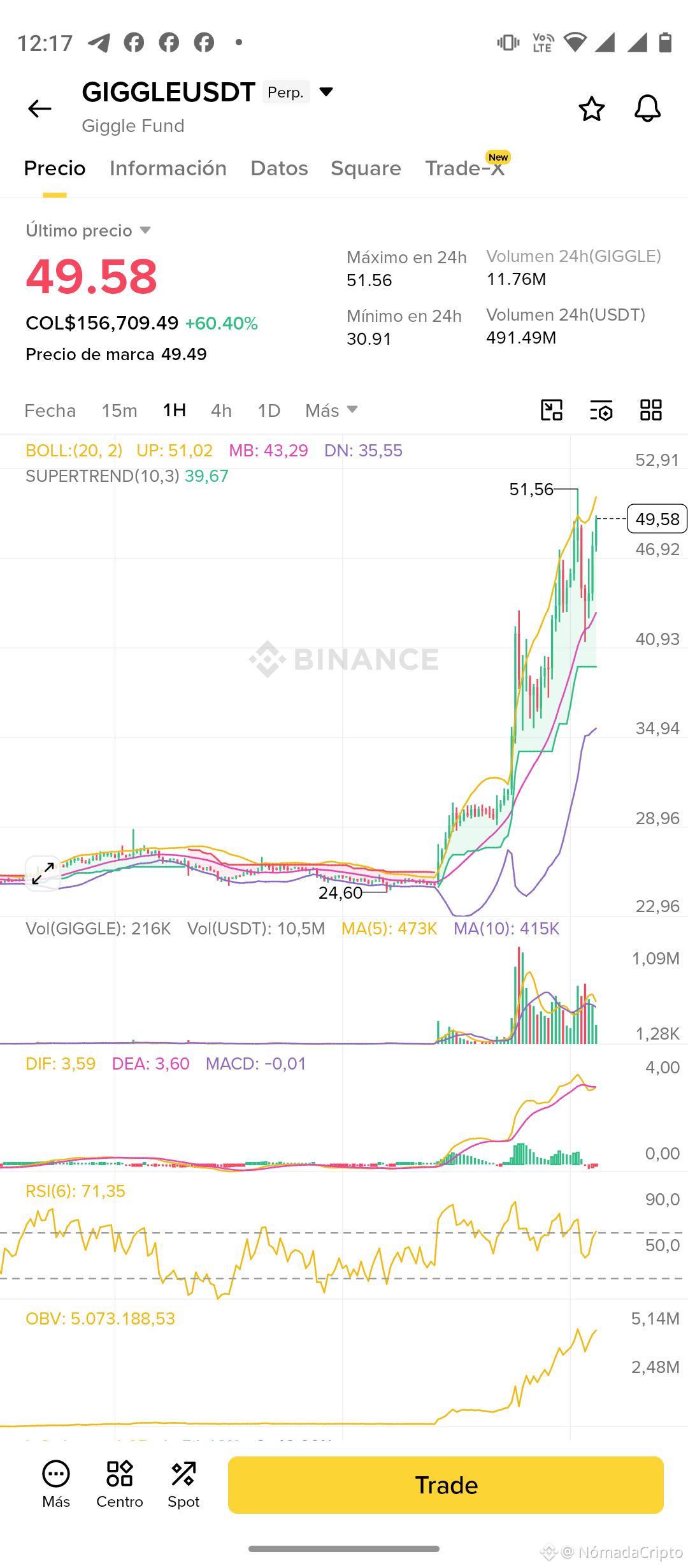
#giggle $GIGGLE
Thousands of traders start looking at an asset once it has already covered most of its move. It’s not because the chart has suddenly changed, but because emotions begin to replace analysis.
When an asset like $GIGGLE captures the market’s attention, two very different profiles emerge. The first chases the price out of fear of missing out. The second pauses for a few minutes to ask whether the opportunity they see today really fits into their trading plan.
The difference between them isn’t always in the result of a trade, but in the consistency they build over time. Explosive moves can continue or run out, but a decision made on impulse rarely becomes a good habit.
That’s why, whenever an asset enters a trend, I try to spend more time analyzing the context than reacting to the speed of the price. Patience is also part of a strategy.
Now I want to hear your opinion. When you see an asset blast off like GIGGLE, do you prefer to trade it right away or wait for a better opportunity? Tell me in the comments.
#NomadaCripto #FOMO #PriceAction #PsicologiaDelTrading
$GIGGLE
{future}(GIGGLEUSDT)
#giggle $GIGGLE
Thousands of traders start looking at an asset once it has already covered most of its move. It’s not because the chart has suddenly changed, but because emotions begin to replace analysis.
When an asset like $GIGGLE captures the market’s attention, two very different profiles emerge. The first chases the price out of fear of missing out. The second pauses for a few minutes to ask whether the opportunity they see today really fits into their trading plan.
The difference between them isn’t always in the result of a trade, but in the consistency they build over time. Explosive moves can continue or run out, but a decision made on impulse rarely becomes a good habit.
That’s why, whenever an asset enters a trend, I try to spend more time analyzing the context than reacting to the speed of the price. Patience is also part of a strategy.
Now I want to hear your opinion. When you see an asset blast off like GIGGLE, do you prefer to trade it right away or wait for a better opportunity? Tell me in the comments.
#NomadaCripto #FOMO #PriceAction #PsicologiaDelTrading
$GIGGLE
Thousands of traders start looking at an asset once it has already covered most of its move. It’s not because the chart has suddenly changed, but because emotions begin to replace analysis.
When an asset like $GIGGLE captures the market’s attention, two very different profiles emerge. The first chases the price out of fear of missing out. The second pauses for a few minutes to ask whether the opportunity they see today really fits into their trading plan.
The difference between them isn’t always in the result of a trade, but in the consistency they build over time. Explosive moves can continue or run out, but a decision made on impulse rarely becomes a good habit.
That’s why, whenever an asset enters a trend, I try to spend more time analyzing the context than reacting to the speed of the price. Patience is also part of a strategy.
Now I want to hear your opinion. When you see an asset blast off like GIGGLE, do you prefer to trade it right away or wait for a better opportunity? Tell me in the comments.
#NomadaCripto #FOMO #PriceAction #PsicologiaDelTrading
$GIGGLE
6
4
2.9k

·
--
Article
The day I lost 40% of my account in 20 minutes, I understood something no course taught meIt wasn’t the market that destroyed me that night. It was me.
I’m going to tell you something that almost nobody admits in this space.
I had a perfect setup. Flawless technical analysis. A calculated entry.
And still, I lost.
No, because the trade was wrong. I lost because when the price moved against me, I didn’t close the position. I doubled down.
"It’s going to come back," I told myself.
It didn’t come back.
That night I understood the difference between knowing trading and knowing how to survive trading. Those are two completely different skills.
You can memorize every candlestick pattern, every indicator, every strategy from the books. But if you can’t control what’s going on in your head when the price moves against you, none of that matters.
The day I lost 40% of my account in 20 minutes, I understood something no course taught me
It wasn’t the market that destroyed me that night. It was me.
I’m going to tell you something that almost nobody admits in this space.
I had a perfect setup. Flawless technical analysis. A calculated entry.
And still, I lost.
No, because the trade was wrong. I lost because when the price moved against me, I didn’t close the position. I doubled down.
"It’s going to come back," I told myself.
It didn’t come back.
That night I understood the difference between knowing trading and knowing how to survive trading. Those are two completely different skills.
You can memorize every candlestick pattern, every indicator, every strategy from the books. But if you can’t control what’s going on in your head when the price moves against you, none of that matters.
I’m going to tell you something that almost nobody admits in this space.
I had a perfect setup. Flawless technical analysis. A calculated entry.
And still, I lost.
No, because the trade was wrong. I lost because when the price moved against me, I didn’t close the position. I doubled down.
"It’s going to come back," I told myself.
It didn’t come back.
That night I understood the difference between knowing trading and knowing how to survive trading. Those are two completely different skills.
You can memorize every candlestick pattern, every indicator, every strategy from the books. But if you can’t control what’s going on in your head when the price moves against you, none of that matters.
1
5
1.1k

·
--

Article
THE INVISIBLE ENEMY: Loss Aversion and When to Accept That the Market Has Beaten YouThere’s a psychological phenomenon that wrecks more futures accounts than any bad technical streak: Loss Aversion.
What is Loss Aversion?
Psychologically, the pain of losing 1,000 USDT is twice as intense as the joy of gaining that same 1,000 USDT. As humans, we viscerally hate to lose.
In trading, this bias manifests as classic self-sabotage:
⭕ Moving the Stop-Loss: You see the price creeping toward your loss limit and push it back, thinking: "It’s gonna bounce back, I don’t want to take this hit today."
THE INVISIBLE ENEMY: Loss Aversion and When to Accept That the Market Has Beaten You
There’s a psychological phenomenon that wrecks more futures accounts than any bad technical streak: Loss Aversion.
What is Loss Aversion?
Psychologically, the pain of losing 1,000 USDT is twice as intense as the joy of gaining that same 1,000 USDT. As humans, we viscerally hate to lose.
In trading, this bias manifests as classic self-sabotage:
⭕ Moving the Stop-Loss: You see the price creeping toward your loss limit and push it back, thinking: "It’s gonna bounce back, I don’t want to take this hit today."
What is Loss Aversion?
Psychologically, the pain of losing 1,000 USDT is twice as intense as the joy of gaining that same 1,000 USDT. As humans, we viscerally hate to lose.
In trading, this bias manifests as classic self-sabotage:
⭕ Moving the Stop-Loss: You see the price creeping toward your loss limit and push it back, thinking: "It’s gonna bounce back, I don’t want to take this hit today."
1
256
·
--

Article
THE TYRANNY OF "NOW": The Hyperbolic Discounting Bias in TradingThe crypto market is the perfect stage for massive psychological self-sabotage, and today we're going to highlight a psychological bias that makes you prefer to burn your account today rather than becoming rich tomorrow: Hyperbolic Discounting.
This cognitive bias is a factory defect in our brains. When faced with two similar rewards, humans have an irrational tendency to prefer a smaller gain that happens RIGHT NOW over a much larger reward in the future. We prefer the immediate dopamine hit, even though it's mathematically a terrible decision.
THE TYRANNY OF "NOW": The Hyperbolic Discounting Bias in Trading
The crypto market is the perfect stage for massive psychological self-sabotage, and today we're going to highlight a psychological bias that makes you prefer to burn your account today rather than becoming rich tomorrow: Hyperbolic Discounting.
This cognitive bias is a factory defect in our brains. When faced with two similar rewards, humans have an irrational tendency to prefer a smaller gain that happens RIGHT NOW over a much larger reward in the future. We prefer the immediate dopamine hit, even though it's mathematically a terrible decision.
This cognitive bias is a factory defect in our brains. When faced with two similar rewards, humans have an irrational tendency to prefer a smaller gain that happens RIGHT NOW over a much larger reward in the future. We prefer the immediate dopamine hit, even though it's mathematically a terrible decision.
1
266
·
--

Article
🧠 HOW TO MANAGE STRESS AND ANXIETY IN TRADING?💥 MOST LOSSES ARE NOT DUE TO THE MARKET
It's all about decisions driven by fear, anxiety, or desperation 😡🤯😱
Emotional trading is the number one enemy of your portfolio
👇 Respond with 🧠 if you've ever traded with anxiety or with ❤️ if you keep your cool
📌 ALERT SIGNAL 1 CHECK THE PRICE EVERY 5 MINUTES
If you can't put down your phone or step away from the screen, you're anxious
Anxiety makes you trade impulsively, not analytically
When the market dips, you check every minute and fear escalates
🧠 HOW TO MANAGE STRESS AND ANXIETY IN TRADING?
💥 MOST LOSSES ARE NOT DUE TO THE MARKET
It's all about decisions driven by fear, anxiety, or desperation 😡🤯😱
Emotional trading is the number one enemy of your portfolio
👇 Respond with 🧠 if you've ever traded with anxiety or with ❤️ if you keep your cool
📌 ALERT SIGNAL 1 CHECK THE PRICE EVERY 5 MINUTES
If you can't put down your phone or step away from the screen, you're anxious
Anxiety makes you trade impulsively, not analytically
When the market dips, you check every minute and fear escalates
It's all about decisions driven by fear, anxiety, or desperation 😡🤯😱
Emotional trading is the number one enemy of your portfolio
👇 Respond with 🧠 if you've ever traded with anxiety or with ❤️ if you keep your cool
📌 ALERT SIGNAL 1 CHECK THE PRICE EVERY 5 MINUTES
If you can't put down your phone or step away from the screen, you're anxious
Anxiety makes you trade impulsively, not analytically
When the market dips, you check every minute and fear escalates
1
101

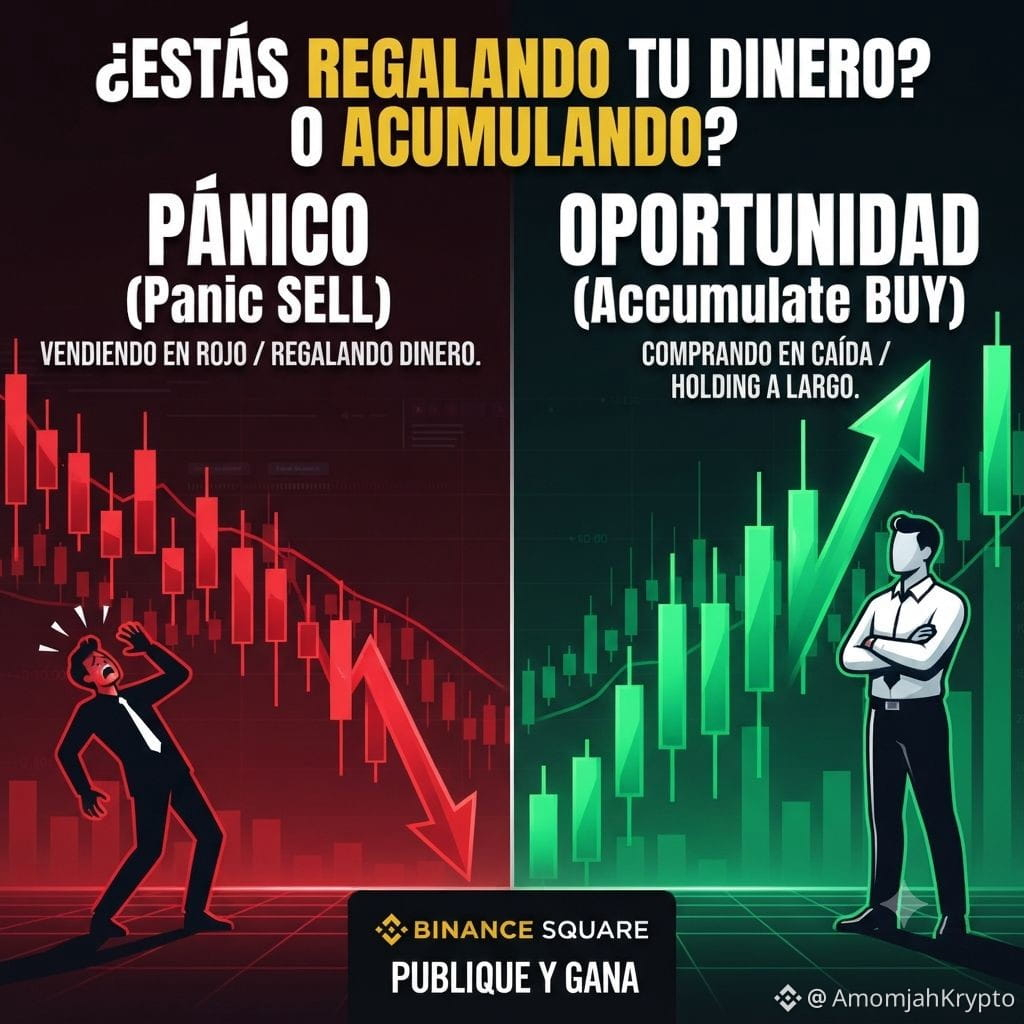
🚨 THE GAME CHANGED: Are you accumulating or are you giving away your money?
Many look at green candles with euphoria and red ones with panic... but true holders and sharks operate in silence. 🛑
Market psychology is simple: 90% buy when there’s euphoria and sell when there’s fear. Which side are you on today?
📊 Three golden rules to survive and win in this cycle:
Don’t chase the price: Patience pays much more than anxiety.
Manage risk: Leverage without a strategy is a direct ticket to liquidation.
Learn every day: Knowledge in crypto is your best shield against volatility.
💬 Let’s debate, my people: What’s that altcoin in your portfolio that you’d bet the farm on this month? I want to read your thoughts in the comments! 👇
🔥 Hit “Repost” 🔁 if you’re building for the long term and follow me so you don’t miss the move.
{future}(BNBUSDT)
{future}(BTCUSDT)
{future}(ETHUSDT)
$BNB $BTC $ETH
#BinanceSquare
#CryptoTrading
#PsicologiaDelTrading
#HODL
#Binance
🚨 THE GAME CHANGED: Are you accumulating or are you giving away your money?
Many look at green candles with euphoria and red ones with panic... but true holders and sharks operate in silence. 🛑
Market psychology is simple: 90% buy when there’s euphoria and sell when there’s fear. Which side are you on today?
📊 Three golden rules to survive and win in this cycle:
Don’t chase the price: Patience pays much more than anxiety.
Manage risk: Leverage without a strategy is a direct ticket to liquidation.
Learn every day: Knowledge in crypto is your best shield against volatility.
💬 Let’s debate, my people: What’s that altcoin in your portfolio that you’d bet the farm on this month? I want to read your thoughts in the comments! 👇
🔥 Hit “Repost” 🔁 if you’re building for the long term and follow me so you don’t miss the move.
$BNB $BTC $ETH
#BinanceSquare
#CryptoTrading
#PsicologiaDelTrading
#HODL
#Binance
Many look at green candles with euphoria and red ones with panic... but true holders and sharks operate in silence. 🛑
Market psychology is simple: 90% buy when there’s euphoria and sell when there’s fear. Which side are you on today?
📊 Three golden rules to survive and win in this cycle:
Don’t chase the price: Patience pays much more than anxiety.
Manage risk: Leverage without a strategy is a direct ticket to liquidation.
Learn every day: Knowledge in crypto is your best shield against volatility.
💬 Let’s debate, my people: What’s that altcoin in your portfolio that you’d bet the farm on this month? I want to read your thoughts in the comments! 👇
🔥 Hit “Repost” 🔁 if you’re building for the long term and follow me so you don’t miss the move.
$BNB $BTC $ETH
#BinanceSquare
#CryptoTrading
#PsicologiaDelTrading
#HODL
#Binance
127
·
--
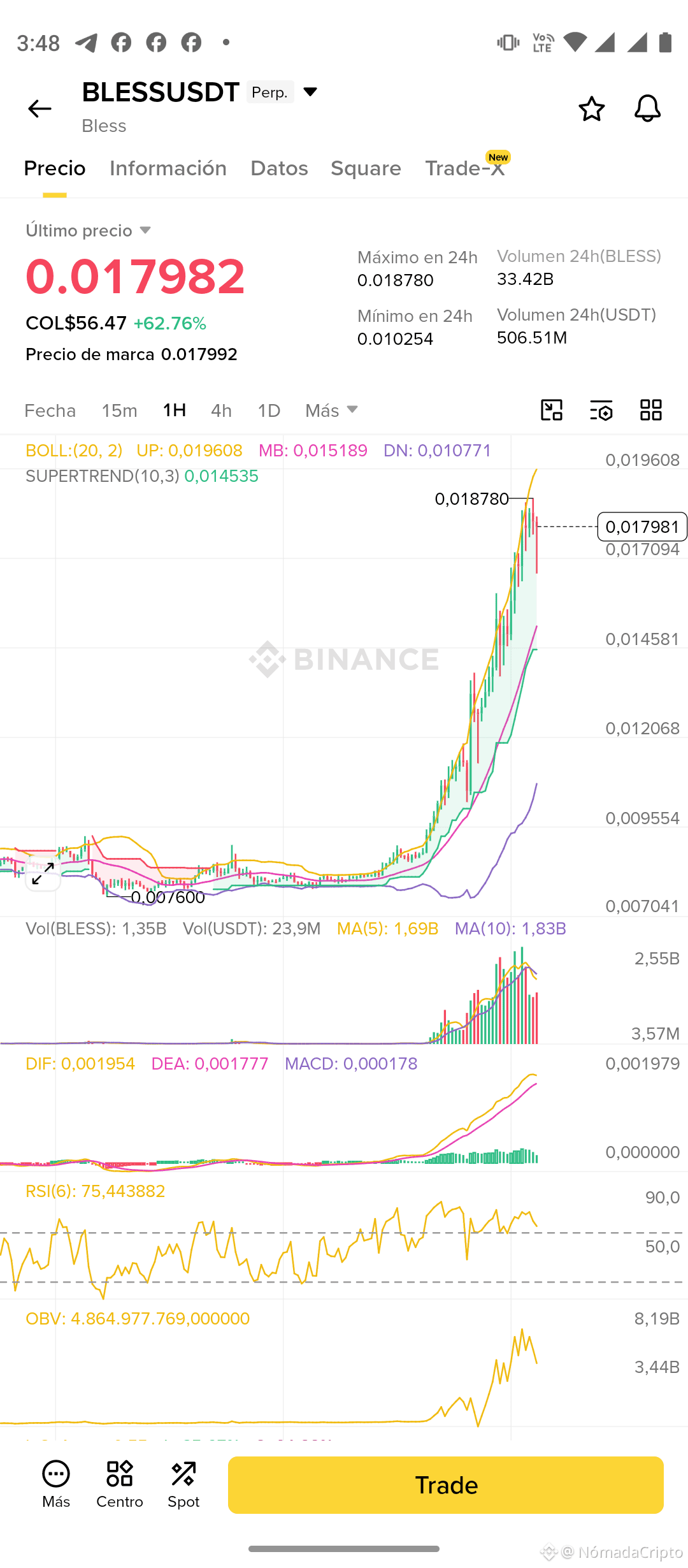
#BLESS $BLESS
return to position yourself among the assets that are attracting the most attention in the market. When a chart accelerates strongly, emotion usually asks a silent question: "What if this time I still don’t enter, and the price keeps rising?" However, the most consistent traders learn that not every opportunity consists of opening a trade; often, the best opportunity is to strengthen your judgment.
Over the years, I understood that my job is not to chase candles, but to find assets that meet the conditions of a method. That’s why I don’t try to trade everything that moves. First, I observe whether the market fits into a process I’ve built through practice, statistics, and experience. If it doesn’t meet those conditions, I simply keep looking. Patience is also part of a strategy.
Moves like the one at $BLESS are an excellent training lab. They let you review whether your analysis changed due to an objective signal or because you fear being left out. That difference may seem small, but over time it separates the trader who improvises from the one who builds a solid process.
The market will always present new opportunities, but every decision you make today can teach you something for the next one. It’s not about getting every trade right; it’s about making each one strengthen your judgment. A trader evolves when they stop chasing the price and start trusting their methodology.
Now I want to hear about your experience. When an asset like BLESS falls into FOMO, what do you do first: wait for confirmation, review your trading plan, or get carried away by the moment’s momentum? Share your answer in the comments. Many of the best lessons come from the community’s experiences.
#NomadaCripto #TradingDeFuturos #PsicologiaDelTrading #PriceAction $BLESS
{future}(BLESSUSDT)
#BLESS $BLESS
return to position yourself among the assets that are attracting the most attention in the market. When a chart accelerates strongly, emotion usually asks a silent question: "What if this time I still don’t enter, and the price keeps rising?" However, the most consistent traders learn that not every opportunity consists of opening a trade; often, the best opportunity is to strengthen your judgment.
Over the years, I understood that my job is not to chase candles, but to find assets that meet the conditions of a method. That’s why I don’t try to trade everything that moves. First, I observe whether the market fits into a process I’ve built through practice, statistics, and experience. If it doesn’t meet those conditions, I simply keep looking. Patience is also part of a strategy.
Moves like the one at $BLESS are an excellent training lab. They let you review whether your analysis changed due to an objective signal or because you fear being left out. That difference may seem small, but over time it separates the trader who improvises from the one who builds a solid process.
The market will always present new opportunities, but every decision you make today can teach you something for the next one. It’s not about getting every trade right; it’s about making each one strengthen your judgment. A trader evolves when they stop chasing the price and start trusting their methodology.
Now I want to hear about your experience. When an asset like BLESS falls into FOMO, what do you do first: wait for confirmation, review your trading plan, or get carried away by the moment’s momentum? Share your answer in the comments. Many of the best lessons come from the community’s experiences.
#NomadaCripto #TradingDeFuturos #PsicologiaDelTrading #PriceAction $BLESS
return to position yourself among the assets that are attracting the most attention in the market. When a chart accelerates strongly, emotion usually asks a silent question: "What if this time I still don’t enter, and the price keeps rising?" However, the most consistent traders learn that not every opportunity consists of opening a trade; often, the best opportunity is to strengthen your judgment.
Over the years, I understood that my job is not to chase candles, but to find assets that meet the conditions of a method. That’s why I don’t try to trade everything that moves. First, I observe whether the market fits into a process I’ve built through practice, statistics, and experience. If it doesn’t meet those conditions, I simply keep looking. Patience is also part of a strategy.
Moves like the one at $BLESS are an excellent training lab. They let you review whether your analysis changed due to an objective signal or because you fear being left out. That difference may seem small, but over time it separates the trader who improvises from the one who builds a solid process.
The market will always present new opportunities, but every decision you make today can teach you something for the next one. It’s not about getting every trade right; it’s about making each one strengthen your judgment. A trader evolves when they stop chasing the price and start trusting their methodology.
Now I want to hear about your experience. When an asset like BLESS falls into FOMO, what do you do first: wait for confirmation, review your trading plan, or get carried away by the moment’s momentum? Share your answer in the comments. Many of the best lessons come from the community’s experiences.
#NomadaCripto #TradingDeFuturos #PsicologiaDelTrading #PriceAction $BLESS
3
4
2.4k
·
--
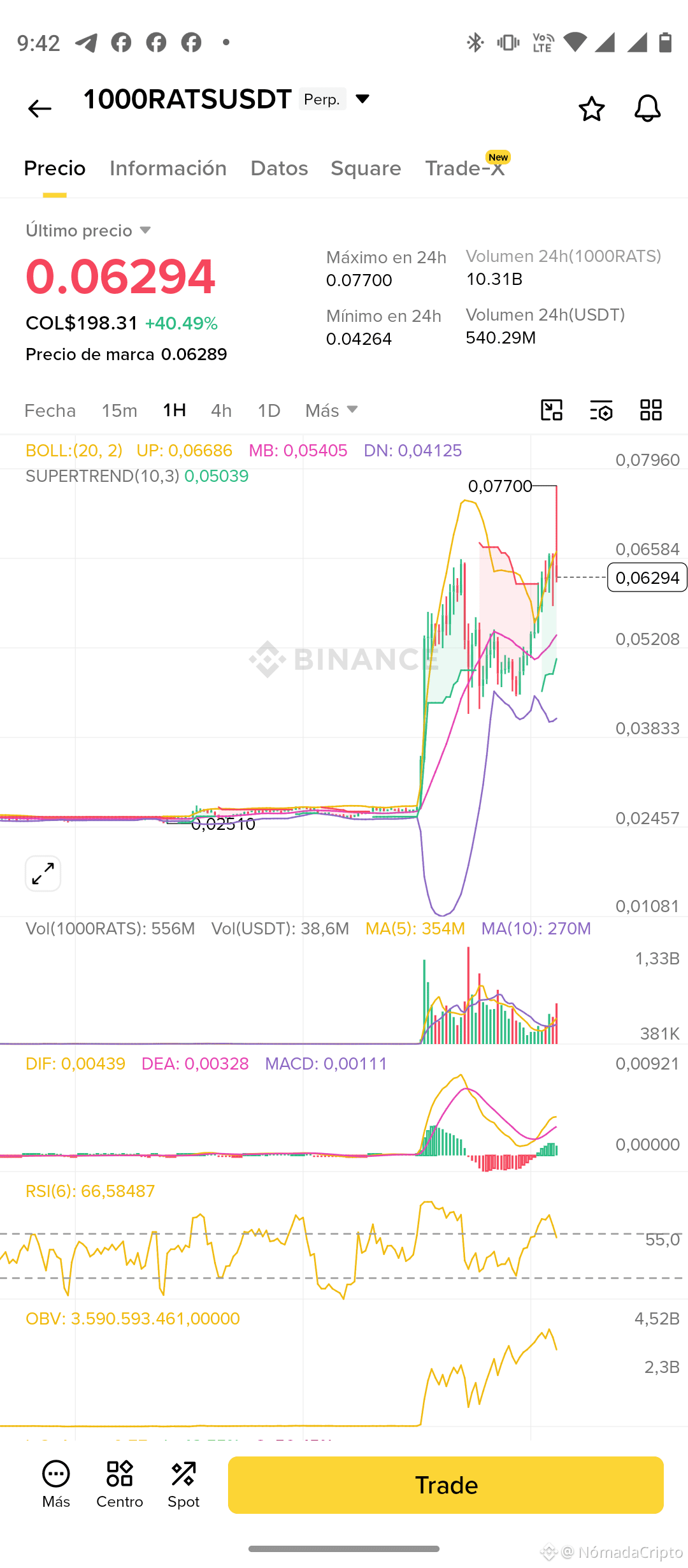
#1000RATS $1000RATS
it grabs the market’s attention with a strong move, and as happens with all FOMO assets, emotions start moving as fast as the price. Some people only see an opportunity to make money; others take advantage of the moment to strengthen their experience as traders.
Over time I’ve understood that the market always offers new charts, but it doesn’t always offer new learning. That depends on each person. You can analyze 1000RATS and just move on to the next asset, or you can use this move to test your methodology and find out whether you’re truly improving as a trader.
Each trade leaves information. If you followed your plan, you learned. If you detected a mistake, you learned. If you confirmed that an idea works after several attempts, you learned too. Practice isn’t about opening more trades, but about turning each one into a piece of data that strengthens your judgment.
That’s why, when an asset enters FOMO, my focus isn’t only on the percentage it has risen. I’m much more interested in understanding what that move can teach me and how I can use that experience to make better decisions in the future. In the end, a solid method is built with observation, discipline, and the ability to learn from every result.
Now I want to know your experience. If today you were to analyze $1000RATS , what would you test in your methodology: the entry, risk management, patience, or the exit? Share your answer in the comments. Many of the best ideas for continuing to learn come from the experiences of this community.
#Nomadacripto #TradingDeFuturos #PsicologiaDelTrading #AprenderTrading
$1000RATS
{future}(1000RATSUSDT)
#1000RATS $1000RATS
it grabs the market’s attention with a strong move, and as happens with all FOMO assets, emotions start moving as fast as the price. Some people only see an opportunity to make money; others take advantage of the moment to strengthen their experience as traders.
Over time I’ve understood that the market always offers new charts, but it doesn’t always offer new learning. That depends on each person. You can analyze 1000RATS and just move on to the next asset, or you can use this move to test your methodology and find out whether you’re truly improving as a trader.
Each trade leaves information. If you followed your plan, you learned. If you detected a mistake, you learned. If you confirmed that an idea works after several attempts, you learned too. Practice isn’t about opening more trades, but about turning each one into a piece of data that strengthens your judgment.
That’s why, when an asset enters FOMO, my focus isn’t only on the percentage it has risen. I’m much more interested in understanding what that move can teach me and how I can use that experience to make better decisions in the future. In the end, a solid method is built with observation, discipline, and the ability to learn from every result.
Now I want to know your experience. If today you were to analyze $1000RATS , what would you test in your methodology: the entry, risk management, patience, or the exit? Share your answer in the comments. Many of the best ideas for continuing to learn come from the experiences of this community.
#Nomadacripto #TradingDeFuturos #PsicologiaDelTrading #AprenderTrading
$1000RATS
it grabs the market’s attention with a strong move, and as happens with all FOMO assets, emotions start moving as fast as the price. Some people only see an opportunity to make money; others take advantage of the moment to strengthen their experience as traders.
Over time I’ve understood that the market always offers new charts, but it doesn’t always offer new learning. That depends on each person. You can analyze 1000RATS and just move on to the next asset, or you can use this move to test your methodology and find out whether you’re truly improving as a trader.
Each trade leaves information. If you followed your plan, you learned. If you detected a mistake, you learned. If you confirmed that an idea works after several attempts, you learned too. Practice isn’t about opening more trades, but about turning each one into a piece of data that strengthens your judgment.
That’s why, when an asset enters FOMO, my focus isn’t only on the percentage it has risen. I’m much more interested in understanding what that move can teach me and how I can use that experience to make better decisions in the future. In the end, a solid method is built with observation, discipline, and the ability to learn from every result.
Now I want to know your experience. If today you were to analyze $1000RATS , what would you test in your methodology: the entry, risk management, patience, or the exit? Share your answer in the comments. Many of the best ideas for continuing to learn come from the experiences of this community.
#Nomadacripto #TradingDeFuturos #PsicologiaDelTrading #AprenderTrading
$1000RATS
2
4
2.5k

·
--
My personal checklist in a volatile market
Before I trade, I ask myself these questions:
Am I acting out of fear or greed? If yes, I wait.
Do I have a written plan with stop-loss and targets? Without a plan, it's just a gamble for me.
Can I accept a small loss without wanting to take revenge? Revenge has cost me a lot.
Did I sleep well? When I'm tired, I make bad decisions.
Have I tried this before on demo? I don't debut anything new in real trades.
Can I walk away from the screen after placing an order? If not, it’s an addiction for me.
I only share what works for me. This is not financial advice. Trading involves the risk of total capital loss.
#TradingCommunity
{future}(ETHUSDT)
l #PsicologiaDelTrading
My personal checklist in a volatile market
Before I trade, I ask myself these questions:
Am I acting out of fear or greed? If yes, I wait.
Do I have a written plan with stop-loss and targets? Without a plan, it's just a gamble for me.
Can I accept a small loss without wanting to take revenge? Revenge has cost me a lot.
Did I sleep well? When I'm tired, I make bad decisions.
Have I tried this before on demo? I don't debut anything new in real trades.
Can I walk away from the screen after placing an order? If not, it’s an addiction for me.
I only share what works for me. This is not financial advice. Trading involves the risk of total capital loss.
#TradingCommunity
l #PsicologiaDelTrading
Before I trade, I ask myself these questions:
Am I acting out of fear or greed? If yes, I wait.
Do I have a written plan with stop-loss and targets? Without a plan, it's just a gamble for me.
Can I accept a small loss without wanting to take revenge? Revenge has cost me a lot.
Did I sleep well? When I'm tired, I make bad decisions.
Have I tried this before on demo? I don't debut anything new in real trades.
Can I walk away from the screen after placing an order? If not, it’s an addiction for me.
I only share what works for me. This is not financial advice. Trading involves the risk of total capital loss.
#TradingCommunity
l #PsicologiaDelTrading
333
·
--
Bullish
THE ONLY CHART THAT ALWAYS GOES UP (AND IT'S NOT BTC) 📈
Many get lost in the noise of the charts searching for the formula to wealth, but they forget that in this digital universe, energy is neither created nor destroyed, it only transforms into community.
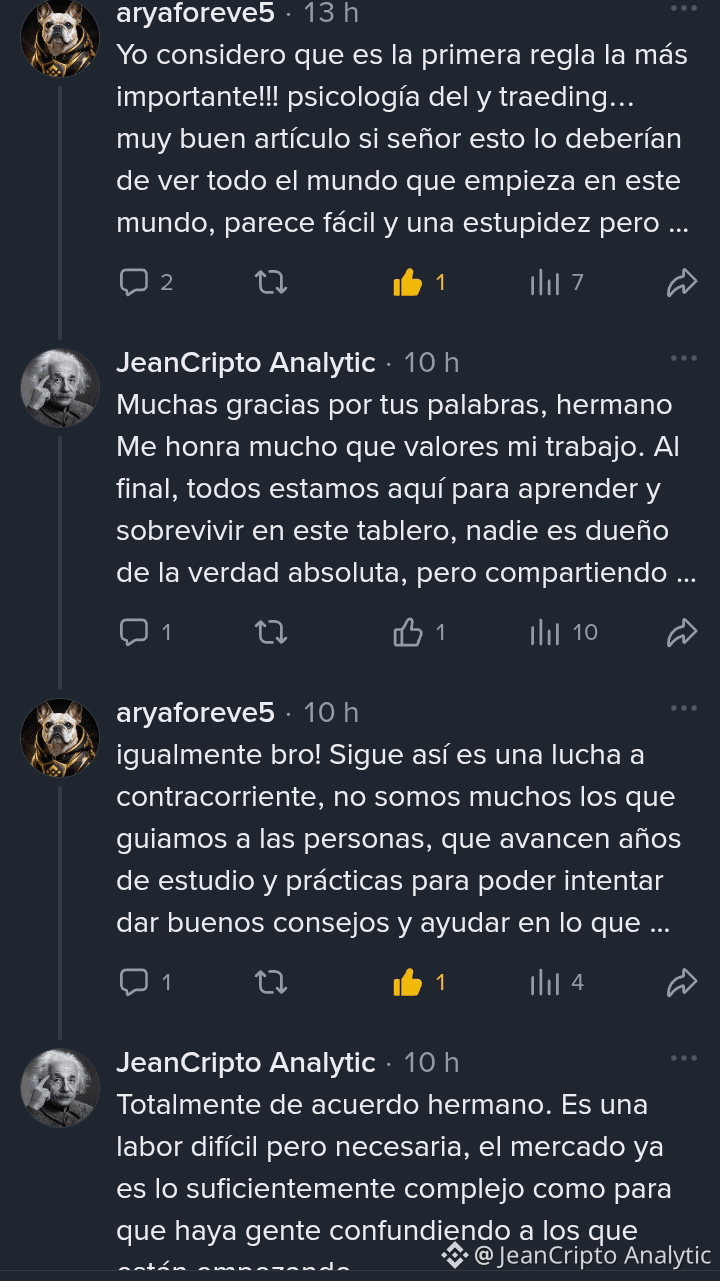
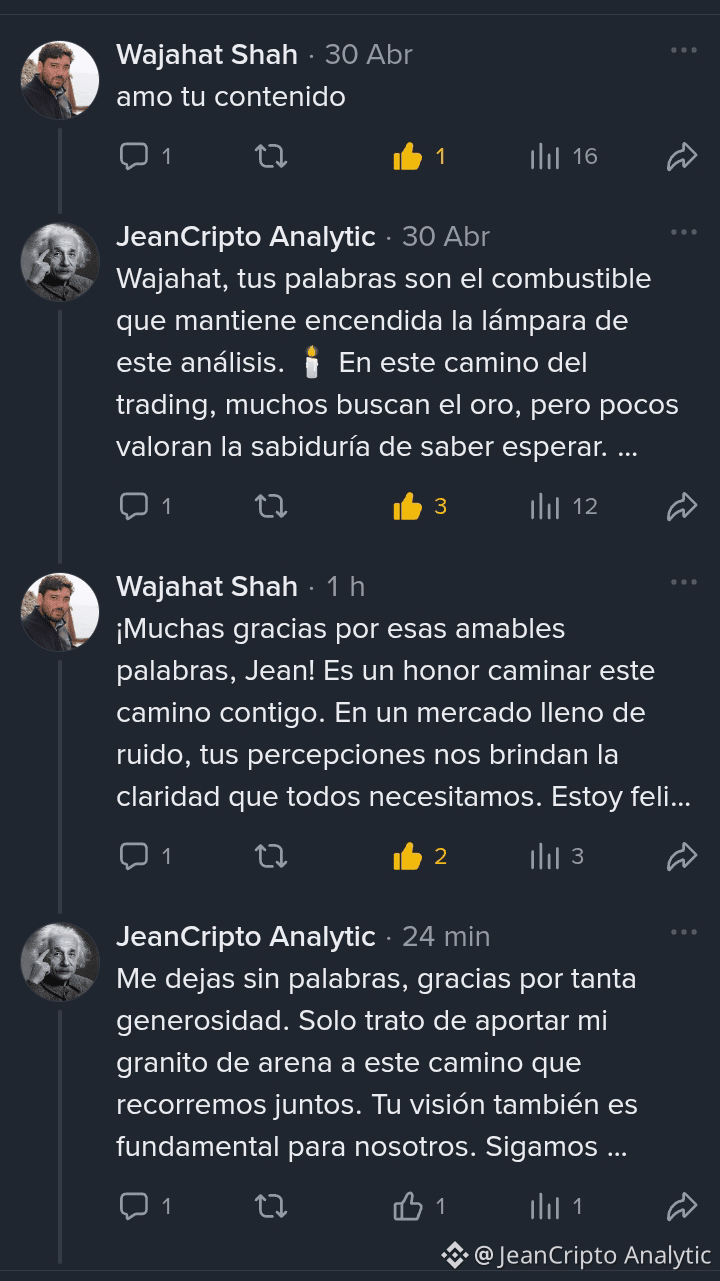
Family Today, I'm stopping to look at the price and focusing on the people. Figures like Wajahat Shah and Aryaforeve5 are proof that true liquidity is humility. They are not just followers; they are minds vibrating on the same frequency of analysis and respect.
Einstein said there is a driving force more powerful than steam and electricity, and that is will. The will to grow together is what truly breaks the algorithm. Thank you for being the beacon when the market gets dark. 🧠✨
God doesn’t play dice with the price, but whales play with those who believe in luck... and success rewards those who know how to be grateful. So thank you for the support, brothers 🫂
#BinanceSquare #TradingSignals #PsicologiaDelTrading #ComunidadCripto #EstrategiaTrading
🤝 Minds that add value:
[wajahat shah](https://app.binance.com/uni-qr/cpro/Wajahatshah75?l=es-LA&r=GQSN05Z0&uc=app_square_share_link&us=copylink)
[aryaforeve5](https://app.binance.com/uni-qr/cpro/ARYACRYPTOS?l=es-LA&r=UAYF1Z6F&uc=app_square_share_link&us=copylink)
THE ONLY CHART THAT ALWAYS GOES UP (AND IT'S NOT BTC) 📈
Many get lost in the noise of the charts searching for the formula to wealth, but they forget that in this digital universe, energy is neither created nor destroyed, it only transforms into community.
Family Today, I'm stopping to look at the price and focusing on the people. Figures like Wajahat Shah and Aryaforeve5 are proof that true liquidity is humility. They are not just followers; they are minds vibrating on the same frequency of analysis and respect.
Einstein said there is a driving force more powerful than steam and electricity, and that is will. The will to grow together is what truly breaks the algorithm. Thank you for being the beacon when the market gets dark. 🧠✨
God doesn’t play dice with the price, but whales play with those who believe in luck... and success rewards those who know how to be grateful. So thank you for the support, brothers 🫂
#BinanceSquare #TradingSignals #PsicologiaDelTrading #ComunidadCripto #EstrategiaTrading
🤝 Minds that add value:
wajahat shah
aryaforeve5
Many get lost in the noise of the charts searching for the formula to wealth, but they forget that in this digital universe, energy is neither created nor destroyed, it only transforms into community.
Family Today, I'm stopping to look at the price and focusing on the people. Figures like Wajahat Shah and Aryaforeve5 are proof that true liquidity is humility. They are not just followers; they are minds vibrating on the same frequency of analysis and respect.
Einstein said there is a driving force more powerful than steam and electricity, and that is will. The will to grow together is what truly breaks the algorithm. Thank you for being the beacon when the market gets dark. 🧠✨
God doesn’t play dice with the price, but whales play with those who believe in luck... and success rewards those who know how to be grateful. So thank you for the support, brothers 🫂
#BinanceSquare #TradingSignals #PsicologiaDelTrading #ComunidadCripto #EstrategiaTrading
🤝 Minds that add value:
wajahat shah
aryaforeve5
8
4
1.3k
·
--
🎓 Trading Mentorship
Session #002
Why do some traders make money with a bad entry, while others lose with a perfect one?
One of the biggest surprises in trading is discovering that the entry point does not always determine the outcome of a trade.
I’ve seen traders enter at an unfavorable price and still end up making profits thanks to good management. I’ve also seen trades with almost perfect entries turn into losses because the trader didn’t have a plan to manage the position.
The difference is rarely in the buy or sell button. The difference lies in the decisions you make afterward.
Before opening a trade, ask yourself:
Where will I accept that my analysis was wrong?
At what point will I lock in profits?
What will I do if the market stays sideways for several hours—or even days?
If you don’t have clear answers, you’re probably not executing a plan; you’re reacting to your emotions.
In my personalized coaching sessions, this is one of the first things we work on. We analyze real trades, identify the most recurring mistakes, and build a method adapted to each trader’s way of operating. The goal isn’t to copy a strategy—it’s to learn how to make better decisions with judgment and discipline.
Many believe they need a better indicator. In reality, what they need is a process that allows them to act with confidence and consistency.
Question for the community: What costs you more: finding a good entry or managing a trade correctly after you’ve entered?
#Nomadacripto #TradingDeFuturos #PsicologiaDelTrading #GestionDelRiesgo #EducacionFinanciera
🎓 Trading Mentorship
Session #002
Why do some traders make money with a bad entry, while others lose with a perfect one?
One of the biggest surprises in trading is discovering that the entry point does not always determine the outcome of a trade.
I’ve seen traders enter at an unfavorable price and still end up making profits thanks to good management. I’ve also seen trades with almost perfect entries turn into losses because the trader didn’t have a plan to manage the position.
The difference is rarely in the buy or sell button. The difference lies in the decisions you make afterward.
Before opening a trade, ask yourself:
Where will I accept that my analysis was wrong?
At what point will I lock in profits?
What will I do if the market stays sideways for several hours—or even days?
If you don’t have clear answers, you’re probably not executing a plan; you’re reacting to your emotions.
In my personalized coaching sessions, this is one of the first things we work on. We analyze real trades, identify the most recurring mistakes, and build a method adapted to each trader’s way of operating. The goal isn’t to copy a strategy—it’s to learn how to make better decisions with judgment and discipline.
Many believe they need a better indicator. In reality, what they need is a process that allows them to act with confidence and consistency.
Question for the community: What costs you more: finding a good entry or managing a trade correctly after you’ve entered?
#Nomadacripto #TradingDeFuturos #PsicologiaDelTrading #GestionDelRiesgo #EducacionFinanciera
Session #002
Why do some traders make money with a bad entry, while others lose with a perfect one?
One of the biggest surprises in trading is discovering that the entry point does not always determine the outcome of a trade.
I’ve seen traders enter at an unfavorable price and still end up making profits thanks to good management. I’ve also seen trades with almost perfect entries turn into losses because the trader didn’t have a plan to manage the position.
The difference is rarely in the buy or sell button. The difference lies in the decisions you make afterward.
Before opening a trade, ask yourself:
Where will I accept that my analysis was wrong?
At what point will I lock in profits?
What will I do if the market stays sideways for several hours—or even days?
If you don’t have clear answers, you’re probably not executing a plan; you’re reacting to your emotions.
In my personalized coaching sessions, this is one of the first things we work on. We analyze real trades, identify the most recurring mistakes, and build a method adapted to each trader’s way of operating. The goal isn’t to copy a strategy—it’s to learn how to make better decisions with judgment and discipline.
Many believe they need a better indicator. In reality, what they need is a process that allows them to act with confidence and consistency.
Question for the community: What costs you more: finding a good entry or managing a trade correctly after you’ve entered?
#Nomadacripto #TradingDeFuturos #PsicologiaDelTrading #GestionDelRiesgo #EducacionFinanciera
1
638
Log in to explore more content
Join global crypto users on Binance Square
⚡️ Get latest and useful information about crypto.
💬 Trusted by the world’s largest crypto exchange.
👍 Discover real insights from verified creators.
Email / Phone number
Trending Topics
1
#FedProposesPaymentStablecoinRules
652 views
40 Discussing
2
#ChinaMayLetAlibabaByteDanceBuyNvidiaChips
2,996 views
151 Discussing
3
#USChinaRelease$30BTariffCutProductLists
265 views
20 Discussing
4
#SKoreaFSCConsidersVirtualAssetMarketMaker
4,024 views
154 Discussing
5
#ChinaIndustrialProfitGrowthSlowsFourthMonth
4,955 views
172 Discussing
6
#BitwiseFilesFinalNEARSpotETFProspectus
115,620 views
1,690 Discussing
7
#BitgetHackerMoves$83MStolenXRP
39,388 views
177 Discussing
8
#SOLSpotETFWeeklyInflow$188M
24,868 views
139 Discussing
9
#DogecoinETFsPostBiggestWeekSinceLaunch
66,892 views
1,104 Discussing
10
#StrategyStriveAdd2305BitcoinThisWeek
166,025 views
2,371 Discussing