
#petrodollar
petrodollar
20,098 views
239 Discussing
Hot
Latest

The "Crypto Game": Bypassing the Petrodollar
The most novel dimension of your article should explore how cryptocurrency transformed from a speculative asset into a national security lifeline for Iran, and a prime target for U.S. warfare.
For years, U.S. sanctions worked because they weaponized the SWIFT network—the global banking system that routes U.S. dollars. If a country cannot access SWIFT, it cannot trade. To survive, Iran built a highly sophisticated, state-controlled crypto-fueled war economy that reached an estimated value of over $7.7 billion.
• Sanctions Evasion Ecosystem: Instead of relying on traditional banks, the Islamic Revolutionary Guard Corps (IRGC) co-opted massive domestic digital asset exchanges like Nobitex, Bitpin, and Ramzinex. These platforms acted as parallel, decentralized clearinghouses, processing billions of dollars in inflows to fund military logistics and proxy operations out of reach of Westerln banks.
• The Hormuz Toll Booth: During the height of the Strait of Hormuz blockade, Iran did something unprecedented: it bypassed fiat currency entirely and began demanding that passing oil tankers pay transit tolls directly in cryptocurrency or digital assets.
• The U.S. Financial Counter-Strike: The U.S. Treasury’s Office of Foreign Assets Control (OFAC) recognized that bombs couldn't stop digital wallets. Under its "Economic Fury" campaign, the U.S. launched an aggressive digital asset offensive. Instead of just freezing bank accounts, the U.S. targeted the node infrastructure of Iranian crypto networks, successfully identifying and seizing nearly $500 million in regime-linked cryptocurrency assets.
#USIranTradeTankerStrikesEscalate
#USCrypto
#CryptoNewss
#Petrodollar
The most novel dimension of your article should explore how cryptocurrency transformed from a speculative asset into a national security lifeline for Iran, and a prime target for U.S. warfare.
For years, U.S. sanctions worked because they weaponized the SWIFT network—the global banking system that routes U.S. dollars. If a country cannot access SWIFT, it cannot trade. To survive, Iran built a highly sophisticated, state-controlled crypto-fueled war economy that reached an estimated value of over $7.7 billion.
• Sanctions Evasion Ecosystem: Instead of relying on traditional banks, the Islamic Revolutionary Guard Corps (IRGC) co-opted massive domestic digital asset exchanges like Nobitex, Bitpin, and Ramzinex. These platforms acted as parallel, decentralized clearinghouses, processing billions of dollars in inflows to fund military logistics and proxy operations out of reach of Westerln banks.
• The Hormuz Toll Booth: During the height of the Strait of Hormuz blockade, Iran did something unprecedented: it bypassed fiat currency entirely and began demanding that passing oil tankers pay transit tolls directly in cryptocurrency or digital assets.
• The U.S. Financial Counter-Strike: The U.S. Treasury’s Office of Foreign Assets Control (OFAC) recognized that bombs couldn't stop digital wallets. Under its "Economic Fury" campaign, the U.S. launched an aggressive digital asset offensive. Instead of just freezing bank accounts, the U.S. targeted the node infrastructure of Iranian crypto networks, successfully identifying and seizing nearly $500 million in regime-linked cryptocurrency assets.
#USIranTradeTankerStrikesEscalate
#USCrypto
#CryptoNewss
#Petrodollar


🚨 THE PETRODOLLAR IS BREAKING IN REAL TIME.
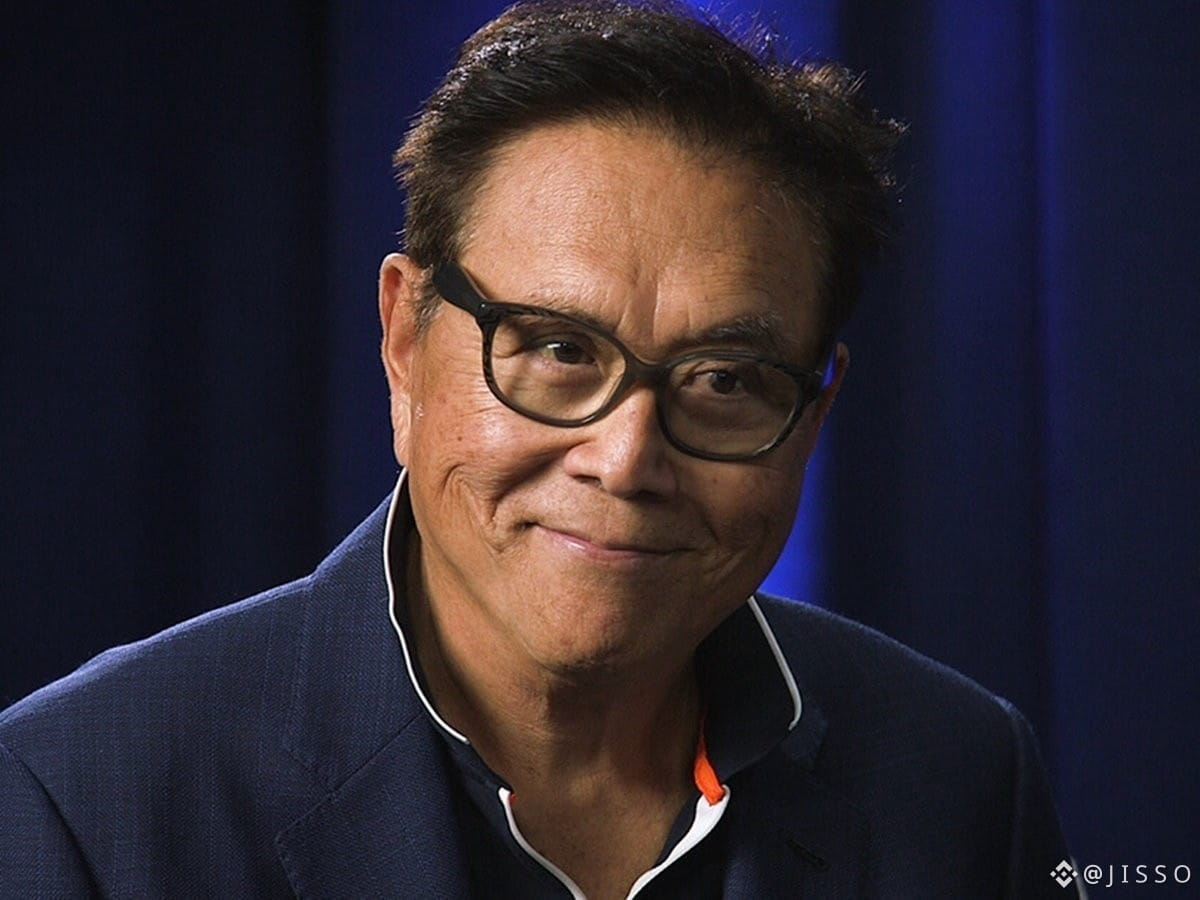
Robert Kiyosaki calls Iran accepting Chinese Yuan for oil the biggest news in financial history — the beginning of the end for the US Dollar
Hedge: Gold, Silver & $BTC
#Petrodollar #USDollar #RobertKiyosaki #Bitcoin #Gold
Robert Kiyosaki calls Iran accepting Chinese Yuan for oil the biggest news in financial history — the beginning of the end for the US Dollar
Hedge: Gold, Silver & $BTC
#Petrodollar #USDollar #RobertKiyosaki #Bitcoin #Gold

STRUCTURAL PETRODOLLAR FRACTURES SIGNAL LONG-TERM LIQUIDITY RE-ALLOCATION TOWARD HARD ASSETS LIKE $BTC 🏦 🚨
The regional security alignment surrounding the Mecca Agreement signals a structural friction point for the traditional Petrodollar framework. As sovereign oil producers explore diversified security networks, the historical loop of pricing energy strictly in fiat and cycling revenue back into foreign treasuries faces long-term structural erosion. 🔍
While fiat dominance persists in the immediate term, institutional smart money tracks these multi-year macro shifts carefully. 📊 As sovereign reserve allocators gradually reassess systemic concentration risks, hard cap non-sovereign settlement layers stand to capture structural macro flow over the coming decade. 🌊
How do you see institutional capital hedging against the long-term decay of the petrodollar standard? 👇
⚠️ Not financial advice. Always manage your risk. 🛡️
🏷️ #BTC #Petrodollar #MacroStrategy #Liquidity #Crypto
🎯 🦈
The regional security alignment surrounding the Mecca Agreement signals a structural friction point for the traditional Petrodollar framework. As sovereign oil producers explore diversified security networks, the historical loop of pricing energy strictly in fiat and cycling revenue back into foreign treasuries faces long-term structural erosion. 🔍
While fiat dominance persists in the immediate term, institutional smart money tracks these multi-year macro shifts carefully. 📊 As sovereign reserve allocators gradually reassess systemic concentration risks, hard cap non-sovereign settlement layers stand to capture structural macro flow over the coming decade. 🌊
How do you see institutional capital hedging against the long-term decay of the petrodollar standard? 👇
⚠️ Not financial advice. Always manage your risk. 🛡️
🏷️ #BTC #Petrodollar #MacroStrategy #Liquidity #Crypto
🎯 🦈

🚨 MECCA AGREEMENT CRACKS THE PETRODOLLAR AS $BTC STANDS READY FOR MACRO REPRICING 💥
The Middle East security framework is shifting as Saudi Arabia, Turkey, and Pakistan push the Mecca Agreement, with Iran potentially joining the fold. 📜 This quiet realignment chips directly at the decades-old Petrodollar pact that forced global energy settlement into greenbacks. 🌊
While dollar dominance will not crumble overnight, institutional capital is already eyeing the slow-burn erosion of U.S. Treasury demand. 💡 When sovereign oil reserves begin diversifying away from single-fiat security, hard cap assets like $BTC become the ultimate non-sovereign reserve hedge. 🏦
💬 Will sovereign wealth funds begin secretly allocating to hard digital assets before the Petrodollar shift accelerates? 👇
⚠️ Not financial advice. Always manage your risk. 🛡️
🏷️ #BTC #Petrodollar #Macro #Bitcoin #Crypto
🔥 💎
The Middle East security framework is shifting as Saudi Arabia, Turkey, and Pakistan push the Mecca Agreement, with Iran potentially joining the fold. 📜 This quiet realignment chips directly at the decades-old Petrodollar pact that forced global energy settlement into greenbacks. 🌊
While dollar dominance will not crumble overnight, institutional capital is already eyeing the slow-burn erosion of U.S. Treasury demand. 💡 When sovereign oil reserves begin diversifying away from single-fiat security, hard cap assets like $BTC become the ultimate non-sovereign reserve hedge. 🏦
💬 Will sovereign wealth funds begin secretly allocating to hard digital assets before the Petrodollar shift accelerates? 👇
⚠️ Not financial advice. Always manage your risk. 🛡️
🏷️ #BTC #Petrodollar #Macro #Bitcoin #Crypto
🔥 💎

🚨 PETRODOLLAR SHIFT: $BTC SMART MONEY ACCUMULATION ACCELERATING 🦈 💥
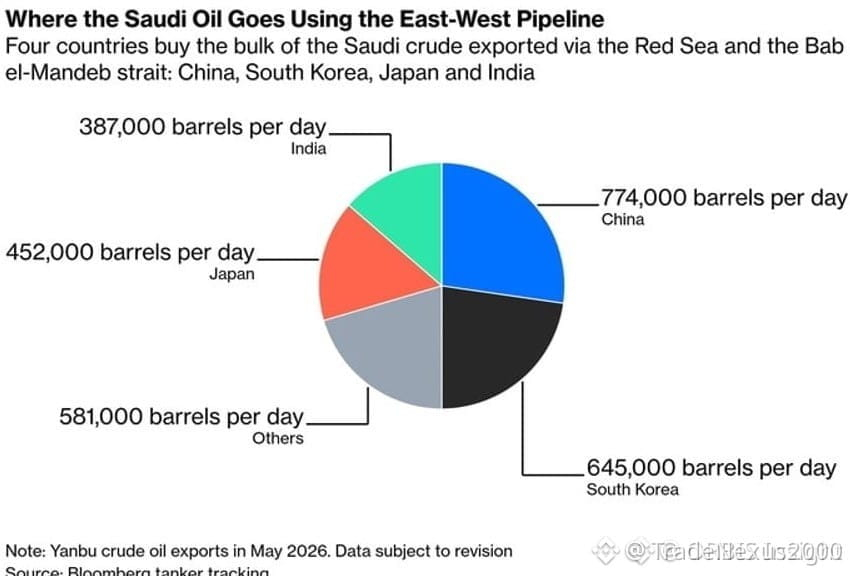
🗺️ Saudi’s East-West pipeline data from Bloomberg signals a quiet redrawing of global financial corridors. As petrodollar dominance erodes, institutional capital has no choice but to seek non-sovereign stores of value. 📊 This isn’t a 5m chart play—it’s a generational liquidity rotation.
🦈 Smart money has been stacking $BTC through quiet OTC and futures basis trades for months. The macro thesis is simple: when the world’s reserve currency anchor shifts, hard assets benefit disproportionately. 📈 History shows those who front-run structural transitions compound exponentially.
💬 Are you positioned for the petrodollar’s twilight, or waiting for confirmation at all-time highs? 👇
⚠️ Not financial advice. Always manage your risk. 🛡️
🏷️ #BTC #Macro #Accumulation #Crypto #Petrodollar
🦈 🌕
🗺️ Saudi’s East-West pipeline data from Bloomberg signals a quiet redrawing of global financial corridors. As petrodollar dominance erodes, institutional capital has no choice but to seek non-sovereign stores of value. 📊 This isn’t a 5m chart play—it’s a generational liquidity rotation.
🦈 Smart money has been stacking $BTC through quiet OTC and futures basis trades for months. The macro thesis is simple: when the world’s reserve currency anchor shifts, hard assets benefit disproportionately. 📈 History shows those who front-run structural transitions compound exponentially.
💬 Are you positioned for the petrodollar’s twilight, or waiting for confirmation at all-time highs? 👇
⚠️ Not financial advice. Always manage your risk. 🛡️
🏷️ #BTC #Macro #Accumulation #Crypto #Petrodollar
🦈 🌕

UAE has issued an ultimatum to the US provide dollar backstops or face oil trades in Yuan. 🇨🇳
A rift with the Emirates isn't just geopolitics; it’s the funeral of the petrodollar.
If the Fed doesn't open swap lines, the world will watch a major oil hub pivot to ¥.
The US is trapped: either bail out an ally or watch China hijack the energy market.
This is a historic shift that marks the beginning of the end for dollar hegemony. Buckle up; the global financial architecture is crumbling before our eyes.
$CL
$XAU
$PAXG
#Petrodollar #UAE #Yuan #USD
A rift with the Emirates isn't just geopolitics; it’s the funeral of the petrodollar.
If the Fed doesn't open swap lines, the world will watch a major oil hub pivot to ¥.
The US is trapped: either bail out an ally or watch China hijack the energy market.
This is a historic shift that marks the beginning of the end for dollar hegemony. Buckle up; the global financial architecture is crumbling before our eyes.
$CL
$XAU
$PAXG
#Petrodollar #UAE #Yuan #USD
Log in to explore more content