
#usirantradetankerstrikesescalate
usirantradetankerstrikesescalate
Hot
Latest

#usirantradetankerstrikesescalate
🇮🇷
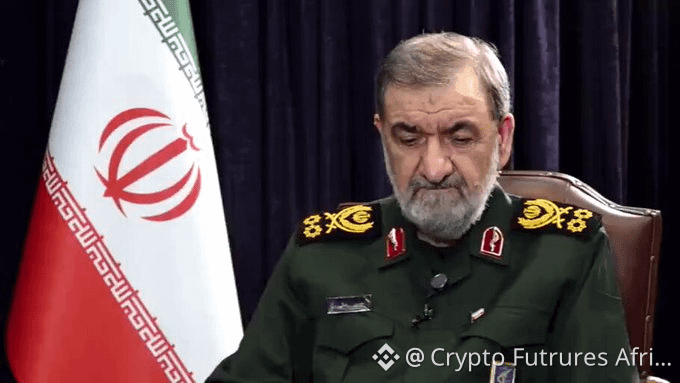
BREAKING: Major claim by Iran
!
For the first time since the 12-day war,
Iran tested a specialized anti-ship missile against a US
vessel.
Rezaei claims the
strike
was so significant that CENTCOM could not deny it.
🇮🇷
Iran has cited this as proof of its military might.
$SOPH
$IOST
$AKE
🇮🇷
BREAKING: Major claim by Iran
!
For the first time since the 12-day war,
Iran tested a specialized anti-ship missile against a US
vessel.
Rezaei claims the
strike
was so significant that CENTCOM could not deny it.
🇮🇷
Iran has cited this as proof of its military might.
$SOPH
$IOST
$AKE
ANEY_SANI:
Thanks for the breaking update bro! You are always fast with news. Following you for more updates, let's connect bro!


Verified
#usirantradetankerstrikesescalate
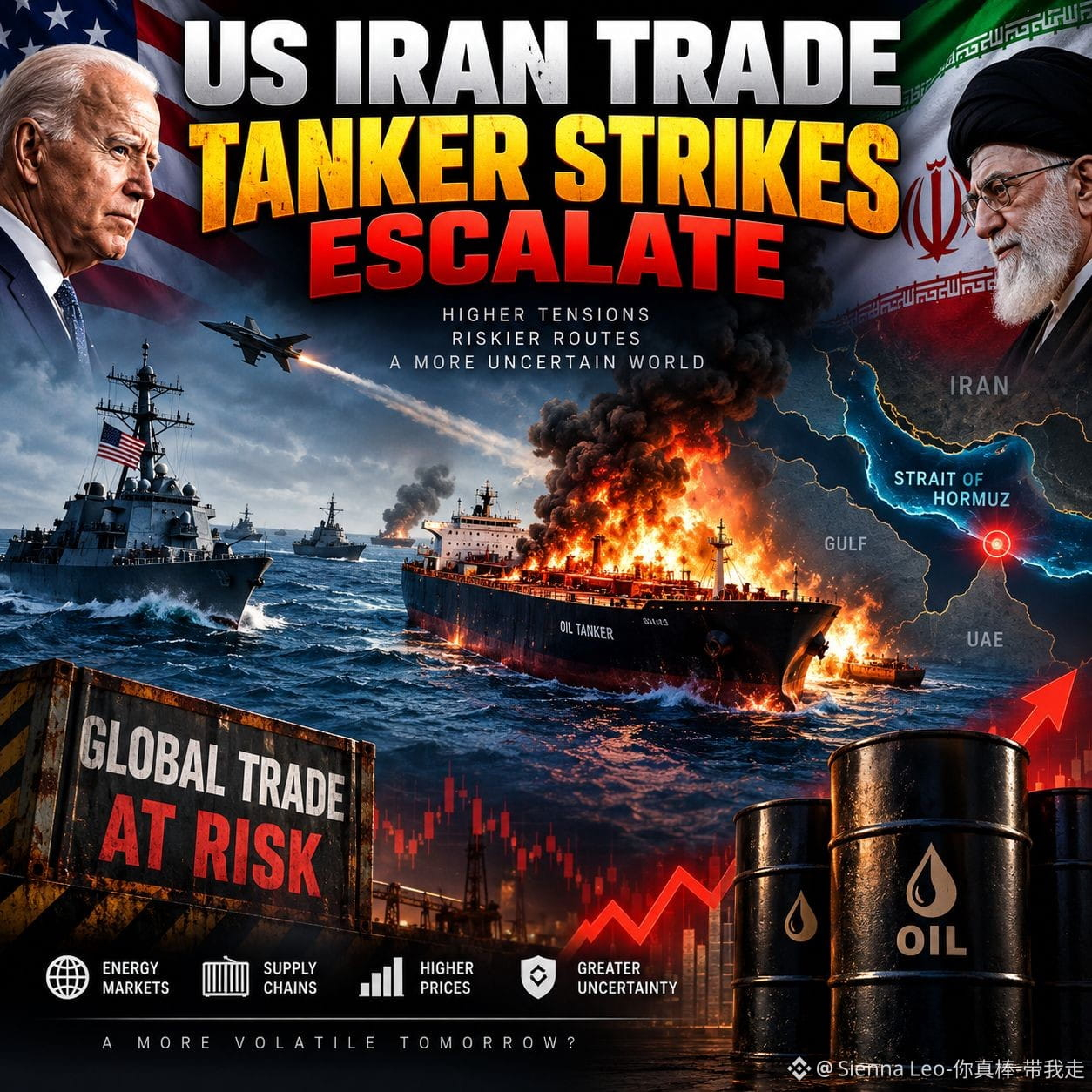
🔥 US Iran Trade Tanker Strikes Escalate 🔥
The part I keep watching is not just the strikes. It is what happens when a military conflict starts interfering with the routes that move energy around the world.
The U.S. struck three Iranian oil tankers after Iran launched missiles toward two U.S. Navy ships. Iran then retaliated against shipping, pushing the confrontation further into the maritime economy.
That matters far beyond Washington and Tehran. The Strait of Hormuz is a critical energy corridor, and shipping through it has fallen sharply as operators face rising security risks.
Markets are already reacting. Brent crude moved toward six-week highs as traders priced in greater supply disruption risk.
The overlooked lesson is simple: markets do not need oil production to stop completely. Sometimes the fear of disrupted transportation is enough to change prices, inflation expectations, and risk appetite.
When trade routes become part of the battlefield, the economic impact can travel much faster than the missiles.
The real question now is not only who strikes next, but how long global shipping can operate under this level of uncertainty.
Disclaimer: This post is for educational purposes only and is not financial advice.
#Iran #Oil #GrowWithSAC $IOST $SOLV $SOPH
#USIranTradeTankerStrikesEscalate
🔥 US Iran Trade Tanker Strikes Escalate 🔥
The part I keep watching is not just the strikes. It is what happens when a military conflict starts interfering with the routes that move energy around the world.
The U.S. struck three Iranian oil tankers after Iran launched missiles toward two U.S. Navy ships. Iran then retaliated against shipping, pushing the confrontation further into the maritime economy.
That matters far beyond Washington and Tehran. The Strait of Hormuz is a critical energy corridor, and shipping through it has fallen sharply as operators face rising security risks.
Markets are already reacting. Brent crude moved toward six-week highs as traders priced in greater supply disruption risk.
The overlooked lesson is simple: markets do not need oil production to stop completely. Sometimes the fear of disrupted transportation is enough to change prices, inflation expectations, and risk appetite.
When trade routes become part of the battlefield, the economic impact can travel much faster than the missiles.
The real question now is not only who strikes next, but how long global shipping can operate under this level of uncertainty.
Disclaimer: This post is for educational purposes only and is not financial advice.
#Iran #Oil #GrowWithSAC $IOST $SOLV $SOPH
#USIranTradeTankerStrikesEscalate
ALI KHRAIS:
clim gift

#usirantradetankerstrikesescalate
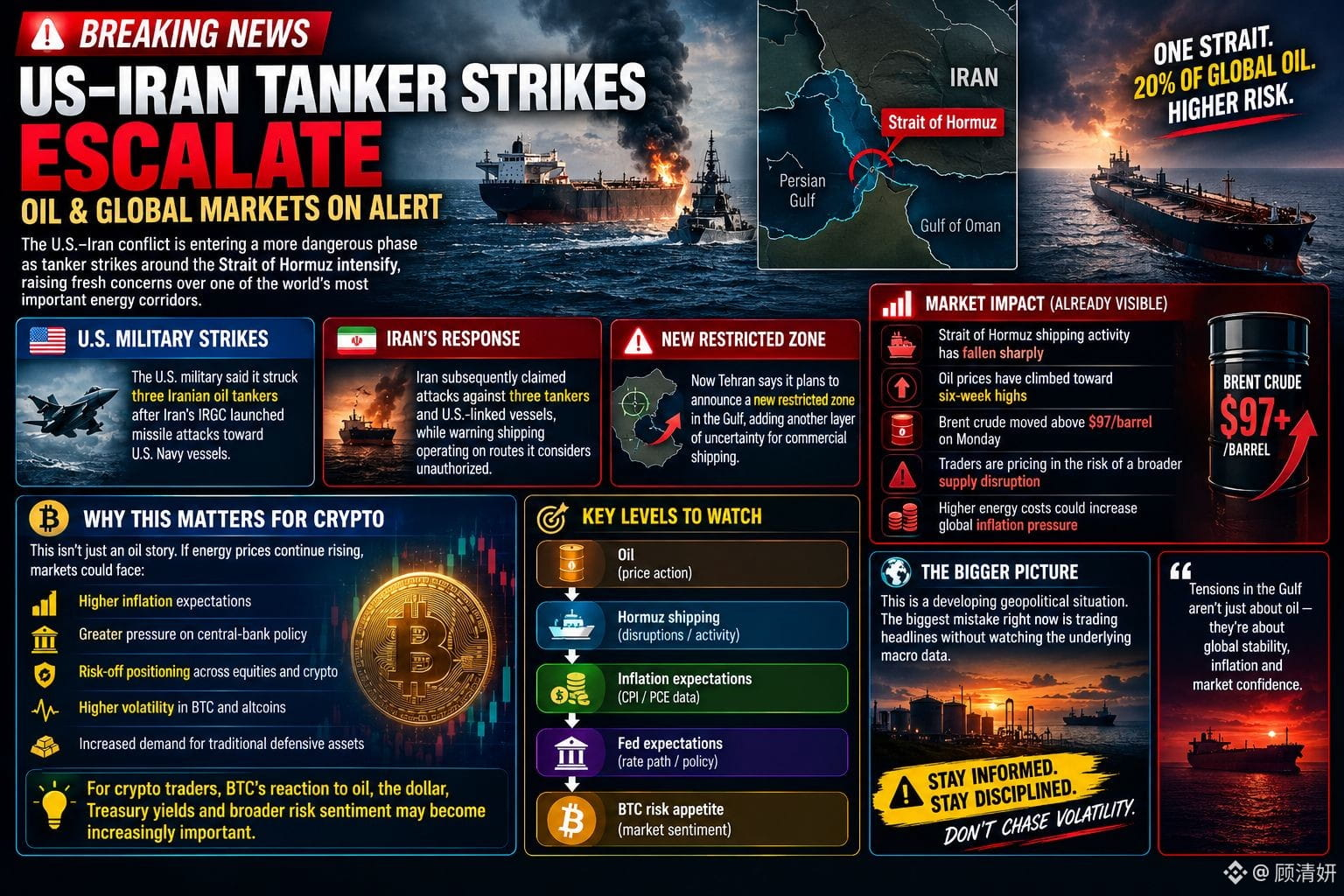
🚨 US–IRAN TANKER STRIKES ESCALATE — OIL & GLOBAL MARKETS ON ALERT
The U.S.–Iran conflict is entering a more dangerous phase as tanker strikes around the Strait of Hormuz intensify, raising fresh concerns over one of the world’s most important energy corridors.
🇺🇸 The U.S. military said it struck three Iranian oil tankers after Iran’s IRGC launched missile attacks toward U.S. Navy vessels.
🇮🇷 Iran subsequently claimed attacks against three tankers and U.S.-linked vessels, while warning shipping operating on routes it considers unauthorized.
Now Tehran says it plans to announce a new restricted zone in the Gulf, adding another layer of uncertainty for commercial shipping.
📉 The market impact is already visible:
• Strait of Hormuz shipping activity has fallen sharply
• Oil prices have climbed toward six-week highs
• Brent crude moved above $97/barrel on Monday
• Traders are increasingly pricing in the risk of a broader supply disruption
• Higher energy costs could increase global inflation pressure
🔥 WHY THIS MATTERS FOR CRYPTO
This isn't just an oil story.
If energy prices continue rising, markets could face:
➡️ Higher inflation expectations
➡️ Greater pressure on central-bank policy
➡️ Risk-off positioning across equities and crypto
➡️ Higher volatility in BTC and altcoins
➡️ Increased demand for traditional defensive assets
For crypto traders, BTC's reaction to oil, the dollar, Treasury yields and broader risk sentiment may become increasingly important.
⚠️ Key levels to watch next:
Oil → Hormuz shipping → Inflation expectations → Fed expectations → BTC risk appetite
This is a developing geopolitical situation. The biggest mistake right now is trading headlines without watching the underlying macro data.
Stay informed. Stay disciplined. Don't chase volatility.
$SOPH $ACE $INJ
🚨 US–IRAN TANKER STRIKES ESCALATE — OIL & GLOBAL MARKETS ON ALERT
The U.S.–Iran conflict is entering a more dangerous phase as tanker strikes around the Strait of Hormuz intensify, raising fresh concerns over one of the world’s most important energy corridors.
🇺🇸 The U.S. military said it struck three Iranian oil tankers after Iran’s IRGC launched missile attacks toward U.S. Navy vessels.
🇮🇷 Iran subsequently claimed attacks against three tankers and U.S.-linked vessels, while warning shipping operating on routes it considers unauthorized.
Now Tehran says it plans to announce a new restricted zone in the Gulf, adding another layer of uncertainty for commercial shipping.
📉 The market impact is already visible:
• Strait of Hormuz shipping activity has fallen sharply
• Oil prices have climbed toward six-week highs
• Brent crude moved above $97/barrel on Monday
• Traders are increasingly pricing in the risk of a broader supply disruption
• Higher energy costs could increase global inflation pressure
🔥 WHY THIS MATTERS FOR CRYPTO
This isn't just an oil story.
If energy prices continue rising, markets could face:
➡️ Higher inflation expectations
➡️ Greater pressure on central-bank policy
➡️ Risk-off positioning across equities and crypto
➡️ Higher volatility in BTC and altcoins
➡️ Increased demand for traditional defensive assets
For crypto traders, BTC's reaction to oil, the dollar, Treasury yields and broader risk sentiment may become increasingly important.
⚠️ Key levels to watch next:
Oil → Hormuz shipping → Inflation expectations → Fed expectations → BTC risk appetite
This is a developing geopolitical situation. The biggest mistake right now is trading headlines without watching the underlying macro data.
Stay informed. Stay disciplined. Don't chase volatility.
$SOPH $ACE $INJ
The _Trading _Geek:
🔥 Nice post! I Suggest You To Join our "CHAT ROOM" pinned at the top of my "profile" for "crypto signals" & "trading setups"! 📈🎯 We also give "Red Packet Rewards" to "Chat Room members"! 🎁🧧 Tap my "profile" and join now! 🚀📌
Hope To See You There👇
Click Here To Join "CHAT ROOM"
Verified
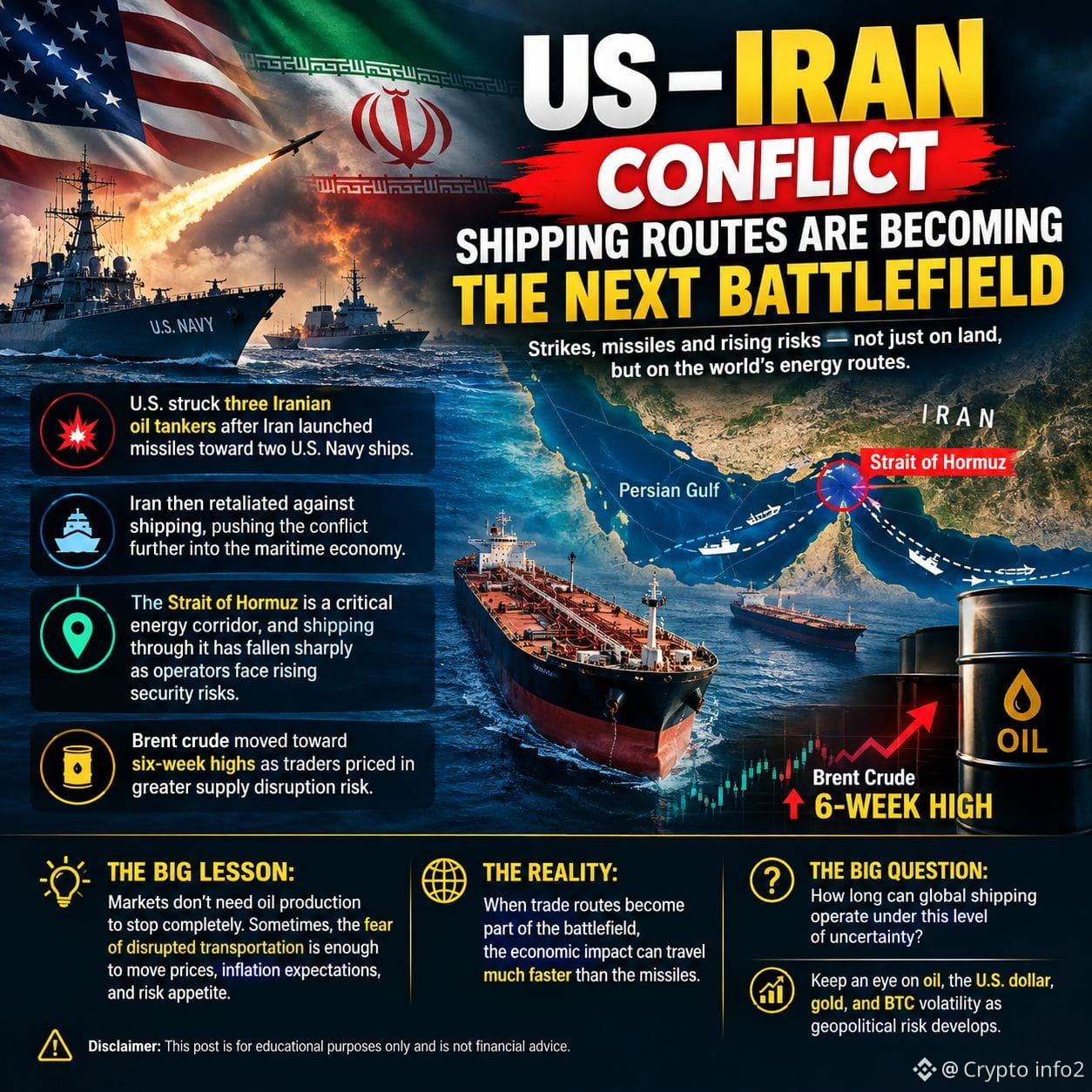
#usirantradetankerstrikesescalate 🔥 US–Iran Conflict: Shipping Routes Are Becoming the Next Battlefield 🚢⚠️
The part I’m watching closely isn’t just the strikes.
It’s what happens when a military conflict starts interfering with the routes that move energy around the world.
🇺🇸 The U.S. struck three Iranian oil tankers after Iran launched missiles toward two U.S. Navy ships. Iran then retaliated against shipping, pushing the confrontation deeper into the maritime economy.
And that matters far beyond Washington and Tehran.
🌍 The Strait of Hormuz is a critical global energy corridor.
With shipping activity falling sharply amid rising security risks, markets are starting to price in the possibility of supply disruptions.
🛢️ Brent crude has moved toward six-week highs as traders assess the risk.
But here’s the important lesson:
Markets don’t need oil production to completely stop.
Sometimes, the fear of transportation disruption alone is enough to move oil prices, inflation expectations, bonds, equities — and even crypto risk appetite.
When trade routes become part of the battlefield, the economic shock can travel much faster than the missiles.
👀 The big question now:
How long can global shipping operate under this level of uncertainty?
Crypto traders should keep an eye on oil, the U.S. dollar, gold, and BTC volatility as geopolitical risk develops.
⚠️ Disclaimer: This post is for educational purposes only and is not financial advice.
#Bitcoin #BTC #Crypto #Geopolitics
CLICK TO BELOW TRADE👇
$CL $BZ $BTC
The part I’m watching closely isn’t just the strikes.
It’s what happens when a military conflict starts interfering with the routes that move energy around the world.
🇺🇸 The U.S. struck three Iranian oil tankers after Iran launched missiles toward two U.S. Navy ships. Iran then retaliated against shipping, pushing the confrontation deeper into the maritime economy.
And that matters far beyond Washington and Tehran.
🌍 The Strait of Hormuz is a critical global energy corridor.
With shipping activity falling sharply amid rising security risks, markets are starting to price in the possibility of supply disruptions.
🛢️ Brent crude has moved toward six-week highs as traders assess the risk.
But here’s the important lesson:
Markets don’t need oil production to completely stop.
Sometimes, the fear of transportation disruption alone is enough to move oil prices, inflation expectations, bonds, equities — and even crypto risk appetite.
When trade routes become part of the battlefield, the economic shock can travel much faster than the missiles.
👀 The big question now:
How long can global shipping operate under this level of uncertainty?
Crypto traders should keep an eye on oil, the U.S. dollar, gold, and BTC volatility as geopolitical risk develops.
⚠️ Disclaimer: This post is for educational purposes only and is not financial advice.
#Bitcoin #BTC #Crypto #Geopolitics
CLICK TO BELOW TRADE👇
$CL $BZ $BTC
#usirantradetankerstrikesescalate
BREAKING | 🇺🇸
🇮🇷
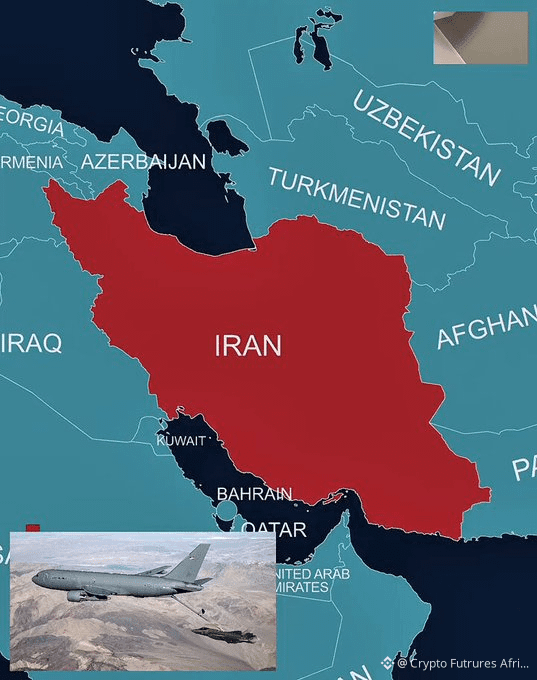
‼️‼️ The United States is maintaining an extraordinary aerial-refueling presence across the CENTCOM and EUCOM theaters, underscoring the scale and endurance of American air operations as the confrontation with Iran
continues.
Open-source monitoring counted roughly 195 KC-135 and KC-46 tankers across the two commands as of September 7, nine more than during the previous count on August 19. The force reportedly includes 166 KC-135s and 29 newer KC-46A Pegasus aircraft, with the largest concentration in Israel, followed by deployments in Saudi Arabia, Qatar and the UAE. Significant numbers also remain distributed across European bases, although the overall European presence has declined somewhat during the latest rotations.
The size of the tanker force is strategically important because sustained long-range air operations depend heavily on aerial refueling, especially across the enormous distances linking Europe, the Gulf and the wider Middle East. Maintaining such a large support fleet gives Washington far greater operational flexibility during an extended confrontation, but it also illustrates how resource-intensive the Iran campaign has become and how much U.S. airpower is currently committed across multiple theaters.
$SOPH
$IOST
$AKE
BREAKING | 🇺🇸
🇮🇷
‼️‼️ The United States is maintaining an extraordinary aerial-refueling presence across the CENTCOM and EUCOM theaters, underscoring the scale and endurance of American air operations as the confrontation with Iran
continues.
Open-source monitoring counted roughly 195 KC-135 and KC-46 tankers across the two commands as of September 7, nine more than during the previous count on August 19. The force reportedly includes 166 KC-135s and 29 newer KC-46A Pegasus aircraft, with the largest concentration in Israel, followed by deployments in Saudi Arabia, Qatar and the UAE. Significant numbers also remain distributed across European bases, although the overall European presence has declined somewhat during the latest rotations.
The size of the tanker force is strategically important because sustained long-range air operations depend heavily on aerial refueling, especially across the enormous distances linking Europe, the Gulf and the wider Middle East. Maintaining such a large support fleet gives Washington far greater operational flexibility during an extended confrontation, but it also illustrates how resource-intensive the Iran campaign has become and how much U.S. airpower is currently committed across multiple theaters.
$SOPH
$IOST
$AKE

#usirantradetankerstrikesescalate
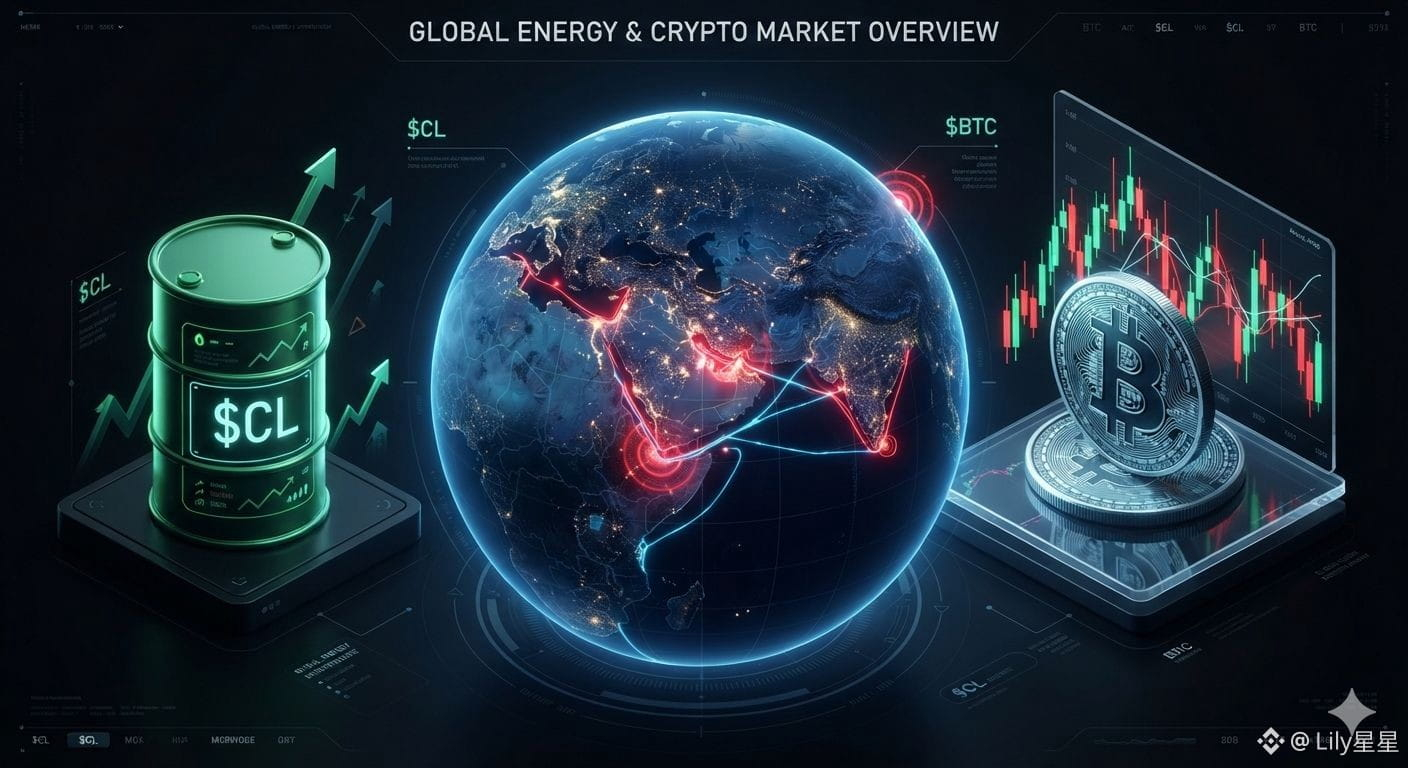
🚨 **ALERT: U.S.–Iran Standoff Hits Critical Waters!** 🚨
This isn't just news—it’s an economic shift. Strikes targeting commercial tankers are raising the stakes fast.
Why are markets everywhere on high alert?
🛢️ **Crude Oil on the Line:** Threatening key maritime chokepoints immediately prices in geopolitical risk, threatening global energy supply.
🚢 **Trade Squeeze:** Higher marine insurance, delayed shipments, and massive rerouting mean costs trickle down to global markets.
💵 **USD Safe-Haven Demand:** As uncertainty rises, investors rush toward traditional safety, boosting the U.S. Dollar.
₿ **Crypto Volatility Ahead:** Bitcoin faces short-term pressure from risk-off selling, but long-term interest in alternative systems could ignite later.
👀 **The Bottom Line:**
It’s not just a single strike—it’s the risk of rapid escalation. If vital trade corridors freeze, prepare for:
• Energy price spikes
• Supply chain disruption
• Currency & stock volatility
• Violent crypto swings
Are we heading toward a broader regional conflict, or will diplomatic efforts cool the waters? What’s your move? 👇
#GlobalMarkets #Geopolitics
$BTC
$CL
🚨 **ALERT: U.S.–Iran Standoff Hits Critical Waters!** 🚨
This isn't just news—it’s an economic shift. Strikes targeting commercial tankers are raising the stakes fast.
Why are markets everywhere on high alert?
🛢️ **Crude Oil on the Line:** Threatening key maritime chokepoints immediately prices in geopolitical risk, threatening global energy supply.
🚢 **Trade Squeeze:** Higher marine insurance, delayed shipments, and massive rerouting mean costs trickle down to global markets.
💵 **USD Safe-Haven Demand:** As uncertainty rises, investors rush toward traditional safety, boosting the U.S. Dollar.
₿ **Crypto Volatility Ahead:** Bitcoin faces short-term pressure from risk-off selling, but long-term interest in alternative systems could ignite later.
👀 **The Bottom Line:**
It’s not just a single strike—it’s the risk of rapid escalation. If vital trade corridors freeze, prepare for:
• Energy price spikes
• Supply chain disruption
• Currency & stock volatility
• Violent crypto swings
Are we heading toward a broader regional conflict, or will diplomatic efforts cool the waters? What’s your move? 👇
#GlobalMarkets #Geopolitics
$BTC
$CL

U.S. and Iran trade tanker strikes as tensions escalate.
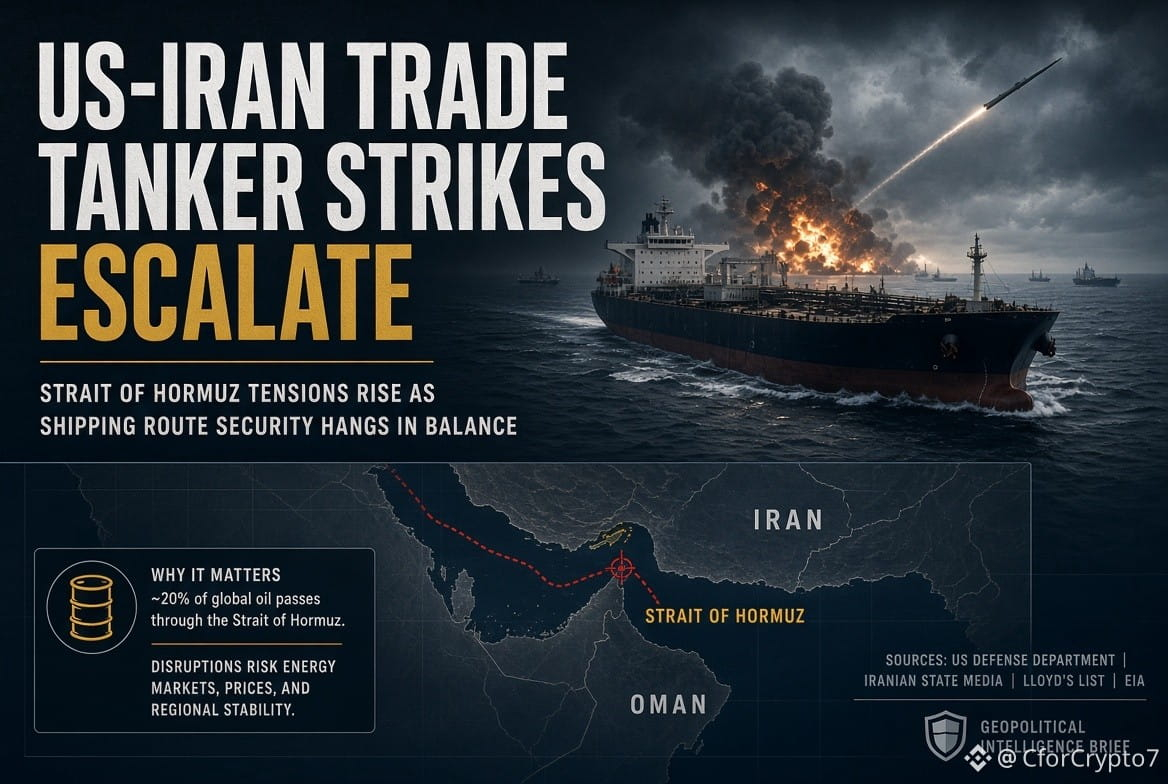
The U.S. military hits three Iranian oil tankers over the weekend. Officials say two are disabled and one is destroyed.
The strikes follow Iranian ballistic missile attacks on two U.S. Navy ships.
Iran claims it targeted tankers using unauthorized routes through the Strait of Hormuz. Both sides accuse each other of escalating the conflict.
Shipping traffic in the vital waterway remains disrupted.
Oil markets react to the renewed attacks. Diplomats watch for further moves as the six-month confrontation continues.
$XAU
$PAXG
$BZ
#usirantradetankerstrikesescalate
The U.S. military hits three Iranian oil tankers over the weekend. Officials say two are disabled and one is destroyed.
The strikes follow Iranian ballistic missile attacks on two U.S. Navy ships.
Iran claims it targeted tankers using unauthorized routes through the Strait of Hormuz. Both sides accuse each other of escalating the conflict.
Shipping traffic in the vital waterway remains disrupted.
Oil markets react to the renewed attacks. Diplomats watch for further moves as the six-month confrontation continues.
$XAU
$PAXG
$BZ
#usirantradetankerstrikesescalate

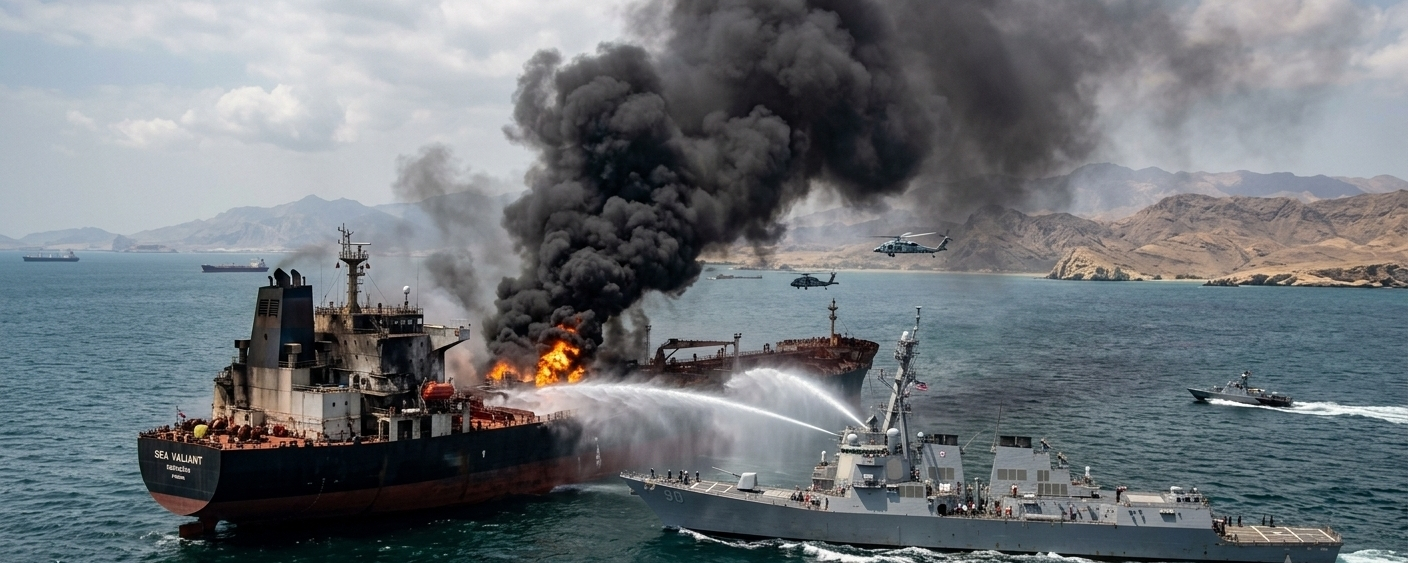

#usirantradetankerstrikesescalate
🚨 U.S. 🇺🇸 vs IRAN 🇮🇷: MARKETS ARE WATCHING! 🌍🔥
Geopolitical tensions are rising, and any further escalation could hit global markets hard.
Here’s what traders should watch 👇
🛢️ Oil: Shipping disruptions → supply fears → higher oil prices
🚢 Global Trade: Higher insurance + rerouting → rising costs
💵 USD: Risk-off flows could strengthen the dollar
₿ Bitcoin: Expect volatility as traders de-risk
But the BIGGEST risk is escalation. 👀
If energy routes are disrupted, markets could see:
📈 Oil spike
🚢 Shipping disruption
💵 Dollar strength
📉 Risk assets under pressure
₿ Violent crypto swings
The question isn’t just “What happened?”
It’s “What happens next?” 🔥
🇺🇸🇮🇷 De-escalation or bigger crisis?
$BTC | $CL
#BTC #GlobalMarkets #Geopolitics #BinanceSquare
🚨 U.S. 🇺🇸 vs IRAN 🇮🇷: MARKETS ARE WATCHING! 🌍🔥
Geopolitical tensions are rising, and any further escalation could hit global markets hard.
Here’s what traders should watch 👇
🛢️ Oil: Shipping disruptions → supply fears → higher oil prices
🚢 Global Trade: Higher insurance + rerouting → rising costs
💵 USD: Risk-off flows could strengthen the dollar
₿ Bitcoin: Expect volatility as traders de-risk
But the BIGGEST risk is escalation. 👀
If energy routes are disrupted, markets could see:
📈 Oil spike
🚢 Shipping disruption
💵 Dollar strength
📉 Risk assets under pressure
₿ Violent crypto swings
The question isn’t just “What happened?”
It’s “What happens next?” 🔥
🇺🇸🇮🇷 De-escalation or bigger crisis?
$BTC | $CL
#BTC #GlobalMarkets #Geopolitics #BinanceSquare
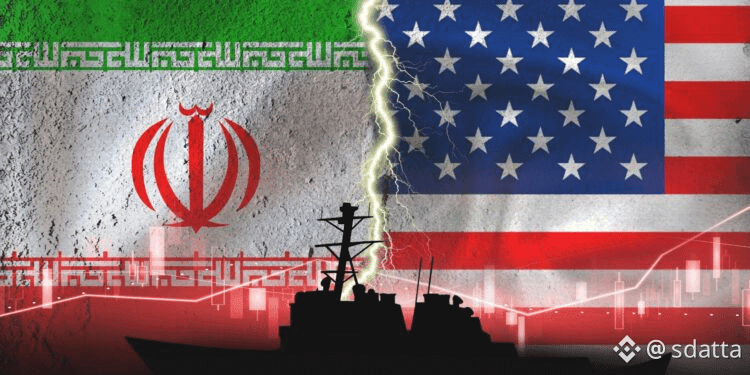

#usirantradetankerstrikesescalate The escalation of attacks involving tankers connected to US-Iran trade is increasing uncertainty across global markets. Any disruption to major maritime routes could affect oil prices, shipping costs, insurance, and supply chains, potentially increasing market volatility. Investors are closely watching developments for signs of broader economic and financial consequences. During periods of uncertainty, reliable information and careful risk management remain essential.
$AAPL.US $HEI
$AAPL.US $HEI
HEI+1.18%
AAPLUS-0.25%

#USIranTradeTankerStrikesEscalate
🚨 US Iran tensions are entering a dangerous new phase.
The U.S. struck three Iranian oil tankers, while Iran claimed retaliatory attacks on vessels around the Strait of Hormuz.
The bigger concern isn’t just the strikes.
It’s what prolonged disruption could do to global oil supply, shipping and inflation.
Markets are already reacting.
DYOR. NFA.
#USIran #Iran #Oil #Geopolitics #StraitOfHormuz
🚨 US Iran tensions are entering a dangerous new phase.
The U.S. struck three Iranian oil tankers, while Iran claimed retaliatory attacks on vessels around the Strait of Hormuz.
The bigger concern isn’t just the strikes.
It’s what prolonged disruption could do to global oil supply, shipping and inflation.
Markets are already reacting.
DYOR. NFA.
#USIran #Iran #Oil #Geopolitics #StraitOfHormuz

#usirantradetankerstrikesescalate
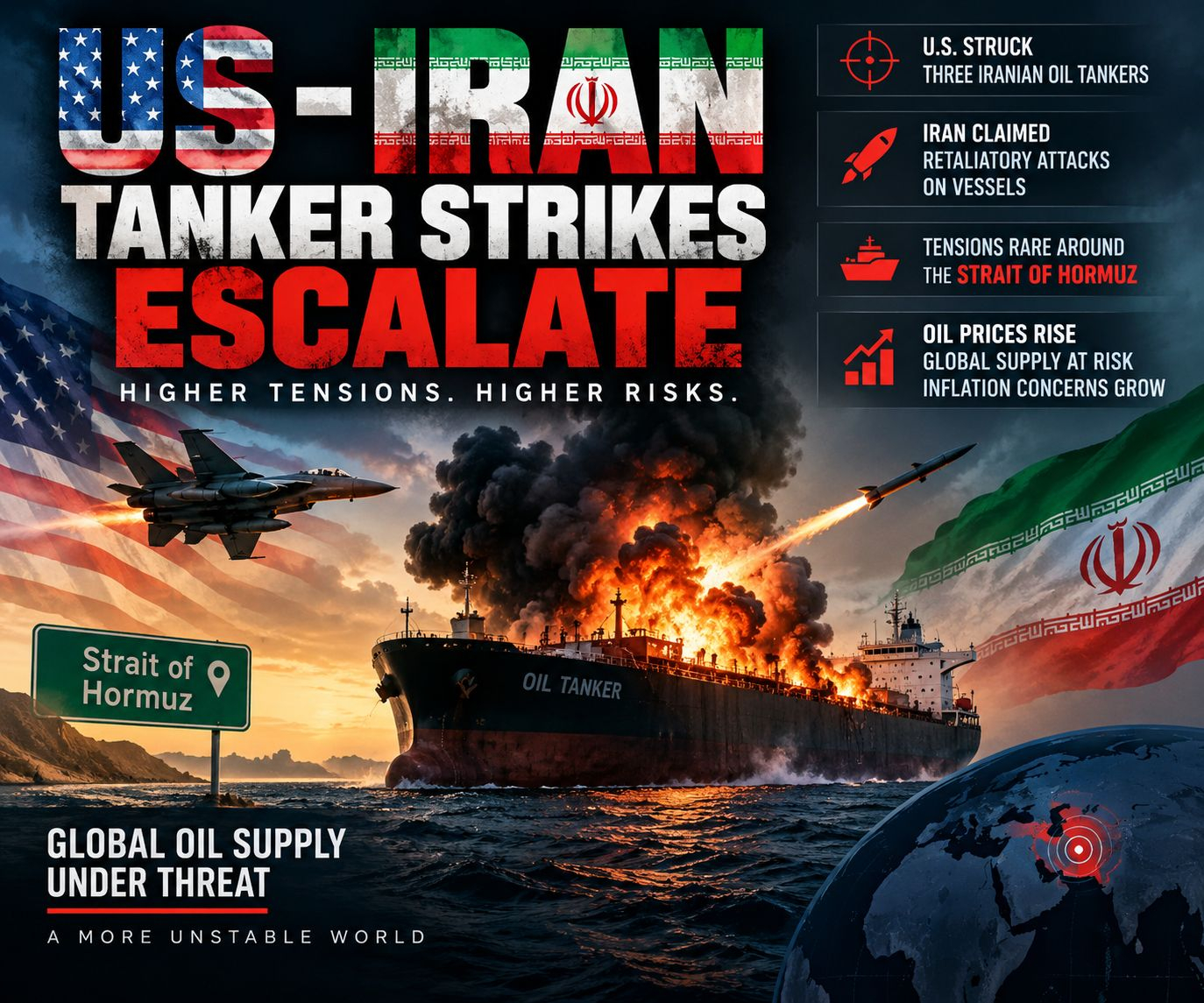
🚨 #usirantradetankerstrikesescalate
COMMERCIAL TANKERS TARGETED. US-IRAN TENSIONS SPIKE.
LATEST ANALYSIS:
**Oil** → $95+ and climbing. Supply disruption risk
**Trade** → Hormuz route = 20% of world oil at risk
**Markets** → Risk-off mode activated
MARKET IMPACT:
1. **Inflation** → Back in play if oil hits $100
2. **Dollar** → Safe haven bid
3. **Crypto** → Volatility + Hedge narrative
HOT COINS TO WATCH:
$BTC - Digital gold hedge
$ETH - Volatility trades
$BNB - Volume spike on exchanges
$XAU - Gold proxy coins
$SOL - High beta if risk cools
KEY LEVELS: WTI $95 | Brent $98 | BTC $77K support
Geopolitics just hit the charts.
Hedged or exposed? 👇
#USIran #Oil #BTC #Crypto #USIranTradeTankerStrikesEscalate #IMFSaysElSalvadorBTCNoPublicFunds #Geopolitics #Markets #trading
🚨 #usirantradetankerstrikesescalate
COMMERCIAL TANKERS TARGETED. US-IRAN TENSIONS SPIKE.
LATEST ANALYSIS:
**Oil** → $95+ and climbing. Supply disruption risk
**Trade** → Hormuz route = 20% of world oil at risk
**Markets** → Risk-off mode activated
MARKET IMPACT:
1. **Inflation** → Back in play if oil hits $100
2. **Dollar** → Safe haven bid
3. **Crypto** → Volatility + Hedge narrative
HOT COINS TO WATCH:
$BTC - Digital gold hedge
$ETH - Volatility trades
$BNB - Volume spike on exchanges
$XAU - Gold proxy coins
$SOL - High beta if risk cools
KEY LEVELS: WTI $95 | Brent $98 | BTC $77K support
Geopolitics just hit the charts.
Hedged or exposed? 👇
#USIran #Oil #BTC #Crypto #USIranTradeTankerStrikesEscalate #IMFSaysElSalvadorBTCNoPublicFunds #Geopolitics #Markets #trading

#USIranTradeTankerStrikesEscalate
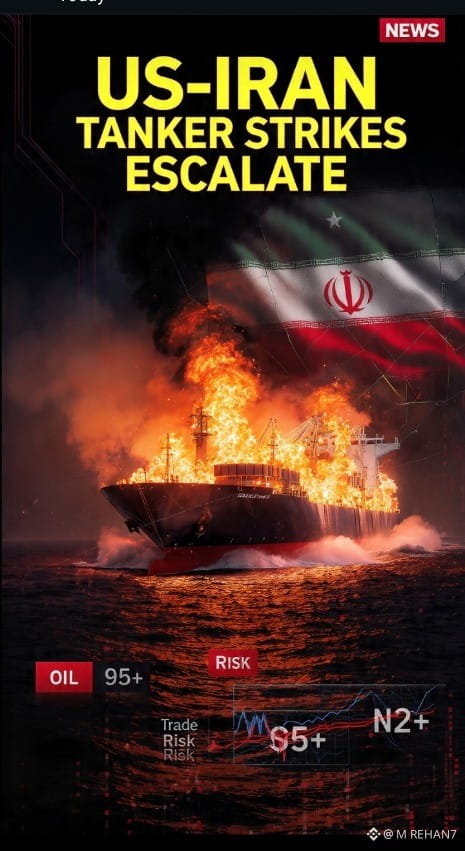
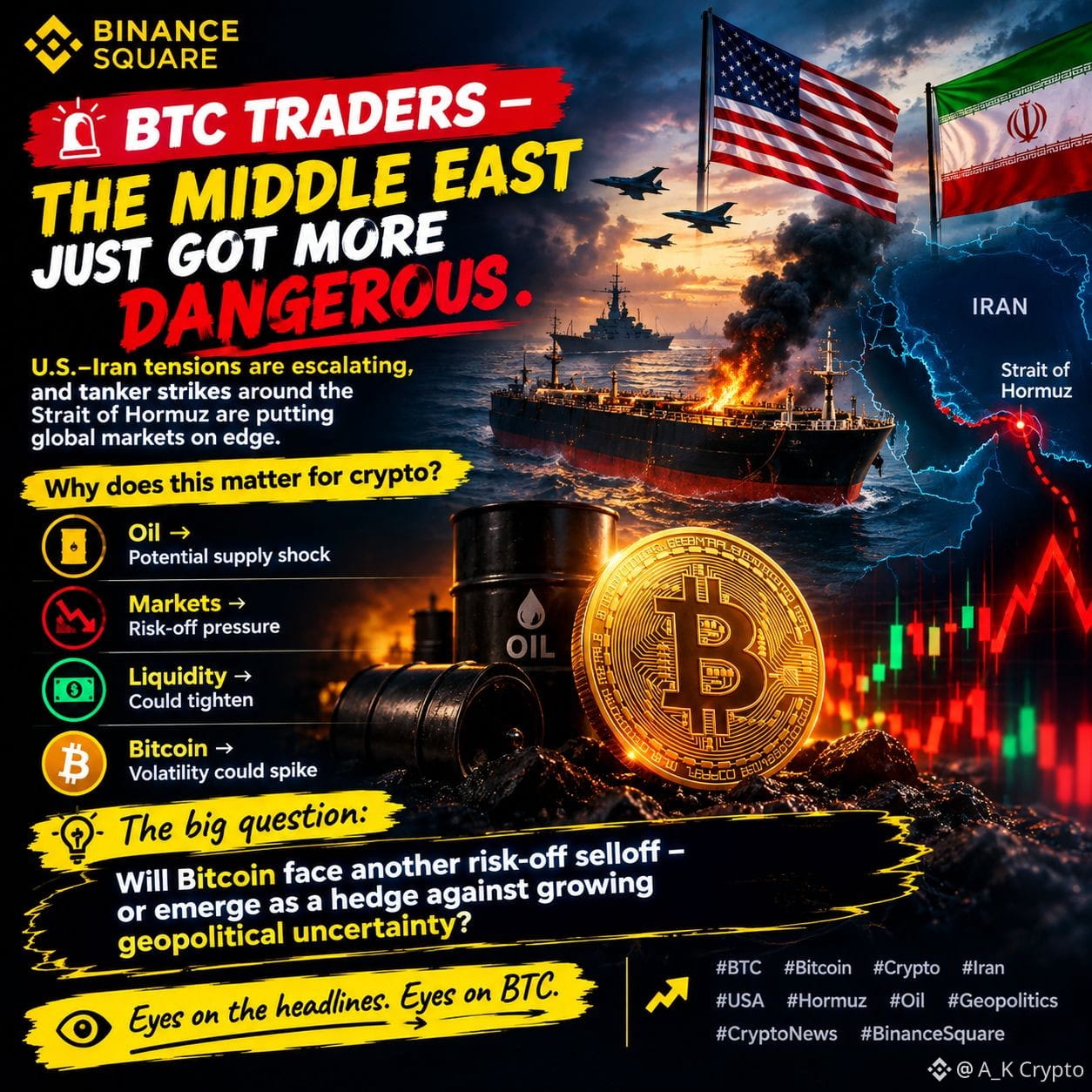
🚨 $BTC TRADERS — THE MIDDLE EAST JUST GOT MORE DANGEROUS.
🇺🇸🇮🇷 U.S.–Iran tensions are escalating, and tanker strikes around the Strait of Hormuz are putting global markets on edge.
This isn’t just a geopolitical headline. 👇
🛢️ Oil → Potential supply shock
📉 Markets → Risk-off pressure
💵 Liquidity → Could tighten
$BTC → Volatility could spike
If disruption around Hormuz continues, the impact could spread far beyond oil.
🔥 The big question:
Will $BTC face another risk-off selloff—or emerge as a hedge against growing geopolitical uncertainty?
Eyes on the headlines. Eyes on BTC. 👀
#BTC #Bitcoin #Crypto #Iran #USA #Hormuz #Oil #Geopolitics #CryptoNews #BinanceSquare
🚨 $BTC TRADERS — THE MIDDLE EAST JUST GOT MORE DANGEROUS.
🇺🇸🇮🇷 U.S.–Iran tensions are escalating, and tanker strikes around the Strait of Hormuz are putting global markets on edge.
This isn’t just a geopolitical headline. 👇
🛢️ Oil → Potential supply shock
📉 Markets → Risk-off pressure
💵 Liquidity → Could tighten
$BTC → Volatility could spike
If disruption around Hormuz continues, the impact could spread far beyond oil.
🔥 The big question:
Will $BTC face another risk-off selloff—or emerge as a hedge against growing geopolitical uncertainty?
Eyes on the headlines. Eyes on BTC. 👀
#BTC #Bitcoin #Crypto #Iran #USA #Hormuz #Oil #Geopolitics #CryptoNews #BinanceSquare

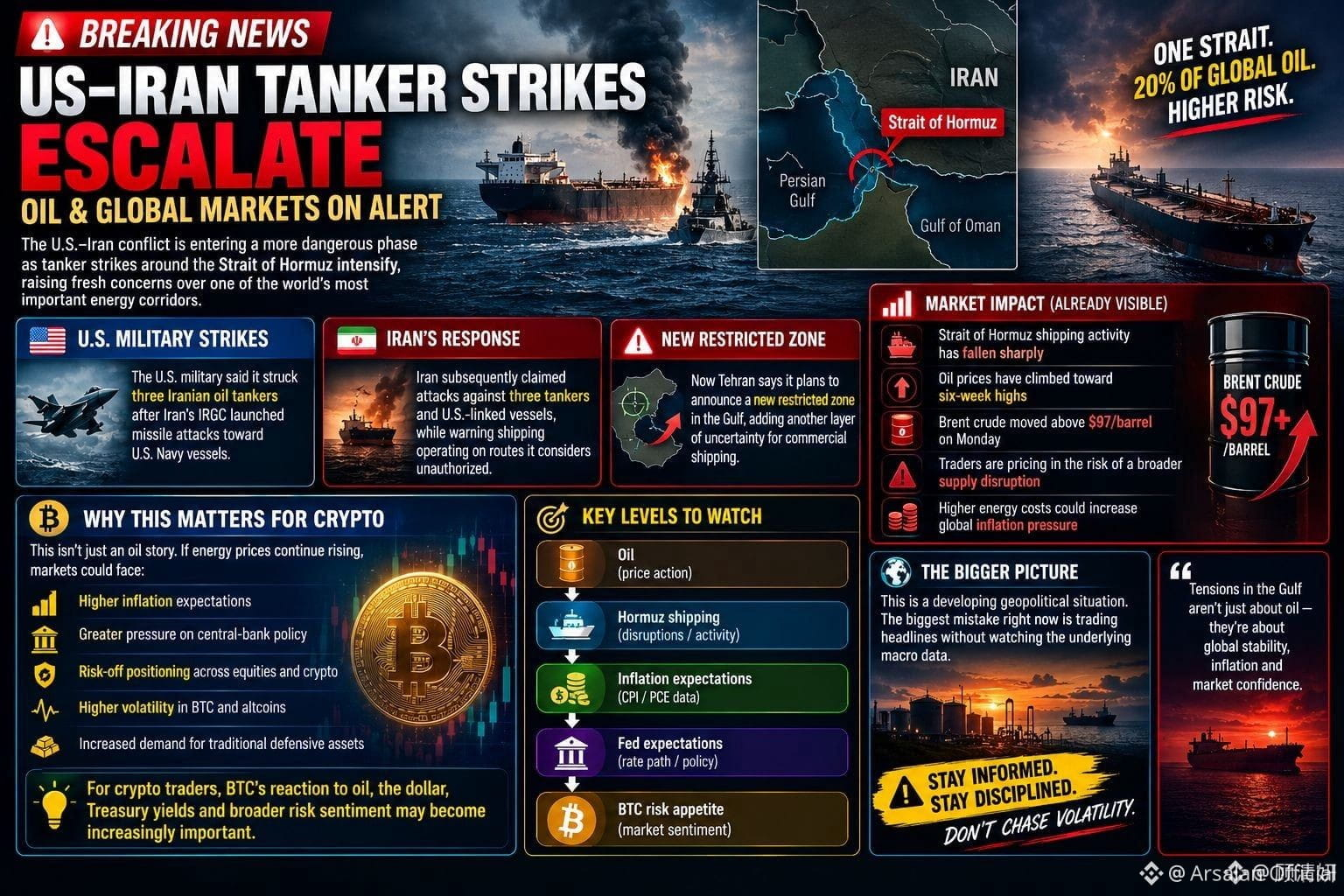
#USIranTradeTankerStrikesEscalate 🚨 **🇺🇸🇮🇷🛢️**
The U.S. and Iran are escalating a **tanker-for-tanker confrontation around the Strait of Hormuz**. U.S. forces recently struck three Iranian oil tankers, while Iran says it retaliated against tankers and U.S.-linked vessels. ([AP News][1])
⚠️ **Why markets care:** Shipping traffic through Hormuz has fallen sharply, while Brent crude has climbed toward **$100 a barrel** as traders price in the risk of further supply disruptions. ([Reuters][2])
**🔥 Key takeaway:** If tanker attacks continue, the conflict could become an even bigger threat to **global oil supplies, shipping costs and inflation.**
#USIran #IranWar #StraitOfHormuz #Oil #CrudeOil #TankerWar #Geopolitics #Markets #BreakingNews
[1]: $BTC
$CL
$BZ
The U.S. and Iran are escalating a **tanker-for-tanker confrontation around the Strait of Hormuz**. U.S. forces recently struck three Iranian oil tankers, while Iran says it retaliated against tankers and U.S.-linked vessels. ([AP News][1])
⚠️ **Why markets care:** Shipping traffic through Hormuz has fallen sharply, while Brent crude has climbed toward **$100 a barrel** as traders price in the risk of further supply disruptions. ([Reuters][2])
**🔥 Key takeaway:** If tanker attacks continue, the conflict could become an even bigger threat to **global oil supplies, shipping costs and inflation.**
#USIran #IranWar #StraitOfHormuz #Oil #CrudeOil #TankerWar #Geopolitics #Markets #BreakingNews
[1]: $BTC
$CL
$BZ
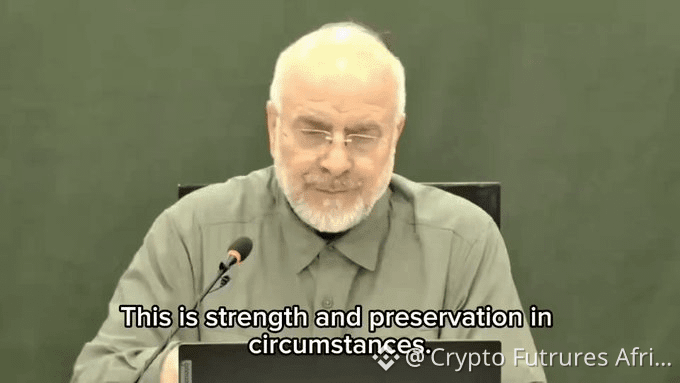
#usirantradetankerstrikesescalate
🇮🇷
🇺🇸 Iranian Parliament Speaker Ghalibaf announced that from now on Iran will strike US
assets more stronger:
“The Americans must have understood that the era of "proportional responses" is over.
Our strikes on the aggressors’ bases in recent operations were only the beginning.
If they have not understood this by now, they must do so before it is too late: the rules of the game have changed.
From now on, any aggression against Iran's interests will receive a faster, heavier, and more painful response.”
$SOPH
$IOST
$AKE
🇮🇷
🇺🇸 Iranian Parliament Speaker Ghalibaf announced that from now on Iran will strike US
assets more stronger:
“The Americans must have understood that the era of "proportional responses" is over.
Our strikes on the aggressors’ bases in recent operations were only the beginning.
If they have not understood this by now, they must do so before it is too late: the rules of the game have changed.
From now on, any aggression against Iran's interests will receive a faster, heavier, and more painful response.”
$SOPH
$IOST
$AKE
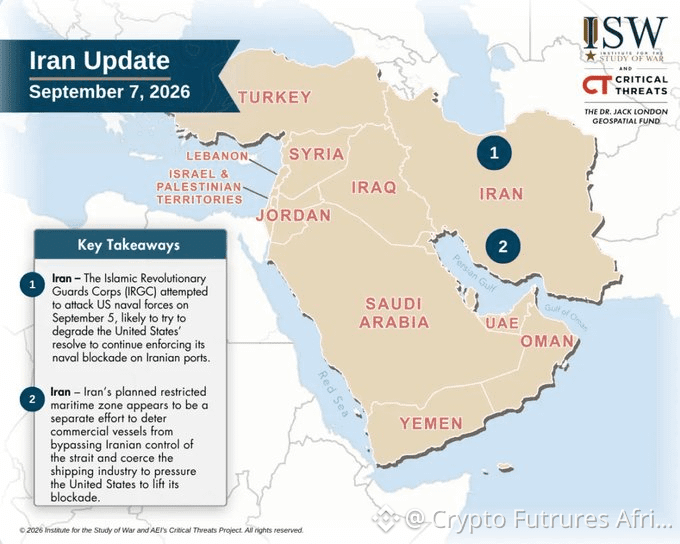
#usirantradetankerstrikesescalate
MORE ⬇️🧵 (1/3)
-
Iran likely calculates that raising the military and political costs of enforcing the blockade will weaken US willingness to sustain it and ultimately pressure the United States to end the blockade, thereby improving Iran
’s ability to assert its claimed control over the strait and reduce economic pressure on the regime.
- The IRGC may have also conducted the attack to deter US forces from facilitating the transit of commercial vessels through the strait amid indications that Iran may be facing constraints in its maritime surveillance, targeting, and mine-laying capabilities.
- US forces have helped commercial vessels transit the southern route of the strait, which has increased traffic through the strait and undermined Iran’s effort to compel vessels to use its illegal traffic separation scheme.
- Recent US strikes have degraded Iranian coastal radars and surveillance equipment, mine-laying capabilities, and other systems that the IRGC has relied on to monitor and threaten commercial shipping.
- Iran has consequently adopted less effective methods, including using fast attack craft to visually identify vessels and shore-based rocket launchers to deploy mines, in its efforts to control shipping in the strait.
- Iran may have directly threatened US naval forces to deter them from supporting efforts to restore freedom of navigation in the Strait of Hormuz that undermine Iran’s claimed control of the strait.
$SOPH
$IOST
$AKE
MORE ⬇️🧵 (1/3)
-
Iran likely calculates that raising the military and political costs of enforcing the blockade will weaken US willingness to sustain it and ultimately pressure the United States to end the blockade, thereby improving Iran
’s ability to assert its claimed control over the strait and reduce economic pressure on the regime.
- The IRGC may have also conducted the attack to deter US forces from facilitating the transit of commercial vessels through the strait amid indications that Iran may be facing constraints in its maritime surveillance, targeting, and mine-laying capabilities.
- US forces have helped commercial vessels transit the southern route of the strait, which has increased traffic through the strait and undermined Iran’s effort to compel vessels to use its illegal traffic separation scheme.
- Recent US strikes have degraded Iranian coastal radars and surveillance equipment, mine-laying capabilities, and other systems that the IRGC has relied on to monitor and threaten commercial shipping.
- Iran has consequently adopted less effective methods, including using fast attack craft to visually identify vessels and shore-based rocket launchers to deploy mines, in its efforts to control shipping in the strait.
- Iran may have directly threatened US naval forces to deter them from supporting efforts to restore freedom of navigation in the Strait of Hormuz that undermine Iran’s claimed control of the strait.
$SOPH
$IOST
$AKE

#USIranTradeTankerStrikesEscalate
US-Iran Tensions Escalating in the Strait of Hormuz
Geopolitical friction surrounding US-Iran relations continues to intensify following recent tanker activity and trade policy updates. Statements regarding maritime routes and energy supply lines have fueled global market volatility, prompting traders to prepare for supply chain disruptions in energy commodities and safe-haven assets.
Top Assets to Watch
WTI Crude Oil ($CL )
Price: ~$87.03 / barrel
Bullish Hint: Escalating maritime threats in key shipping lanes often lead to immediate supply risk premiums. Watch for a sustained breakout above current resistance levels.
Brent Crude Oil ($BZ )
Price: ~$89.75 / barrel
Bullish Hint: As the global benchmark for sea-borne crude, any escalating tanker friction directly drives international buyers to price in higher logistics and insurance costs.
PAX Gold ($PAXG )
Price: ~$2,646 - $4,370 range
Bullish Hint: Gold-backed digital assets remain a premier hedge during geopolitical uncertainty, benefiting from flight-to-safety capital flows as market risk aversion spikes.
#BinanceSquare
US-Iran Tensions Escalating in the Strait of Hormuz
Geopolitical friction surrounding US-Iran relations continues to intensify following recent tanker activity and trade policy updates. Statements regarding maritime routes and energy supply lines have fueled global market volatility, prompting traders to prepare for supply chain disruptions in energy commodities and safe-haven assets.
Top Assets to Watch
WTI Crude Oil ($CL )
Price: ~$87.03 / barrel
Bullish Hint: Escalating maritime threats in key shipping lanes often lead to immediate supply risk premiums. Watch for a sustained breakout above current resistance levels.
Brent Crude Oil ($BZ )
Price: ~$89.75 / barrel
Bullish Hint: As the global benchmark for sea-borne crude, any escalating tanker friction directly drives international buyers to price in higher logistics and insurance costs.
PAX Gold ($PAXG )
Price: ~$2,646 - $4,370 range
Bullish Hint: Gold-backed digital assets remain a premier hedge during geopolitical uncertainty, benefiting from flight-to-safety capital flows as market risk aversion spikes.
#BinanceSquare
#usirantradetankerstrikesescalate
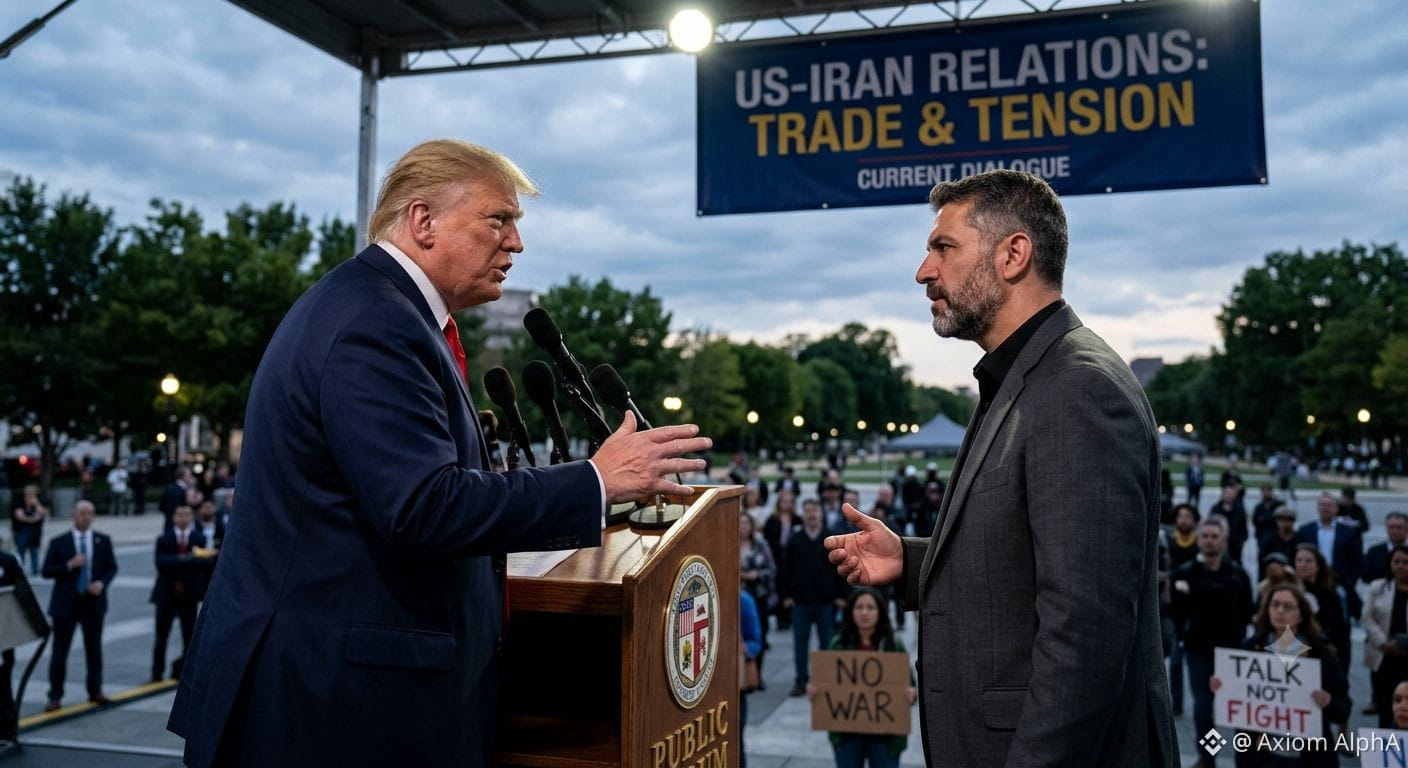
🚨🇸🇦🇴🇲 DEADLY IRANIAN STRIKE ROCKS SAUDI OIL TANKER
...
Oman has revealed that its navy rescued 16 crew members from a Saudi-flagged oil
tanker after the vessel was attacked by Iran in the Strait of Hormuz.
$IOST
$SOPH
$AKE
🚨🇸🇦🇴🇲 DEADLY IRANIAN STRIKE ROCKS SAUDI OIL TANKER
...
Oman has revealed that its navy rescued 16 crew members from a Saudi-flagged oil
tanker after the vessel was attacked by Iran in the Strait of Hormuz.
$IOST
$SOPH
$AKE

#USIranTradeTankerStrikesEscalate
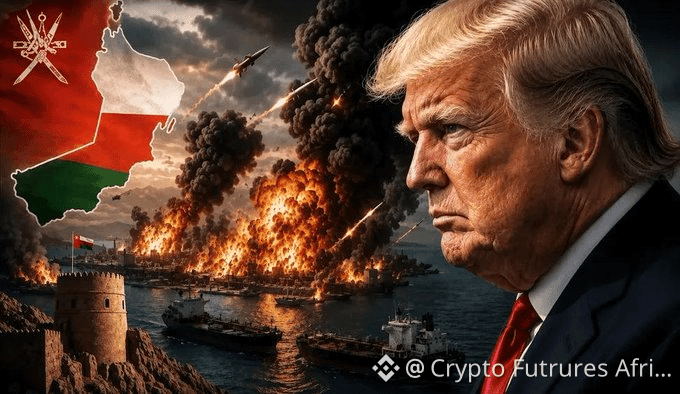
The Strait of Fire: When Trade Becomes a Target 🎯
The world's most vital oil artery is burning again.
Over the weekend, the US and Iran traded direct strikes on tankers in the Strait of Hormuz — the narrow passage that carries 20% of the world's oil. The US confirmed it struck three Iranian oil tankers, including one near Iran's key export hub at Kharg Island, after Iran's IRGC fired ballistic missiles at US warships.
Iran retaliated, hitting US-linked vessels for taking what it called an "unauthorised route" through the Strait.
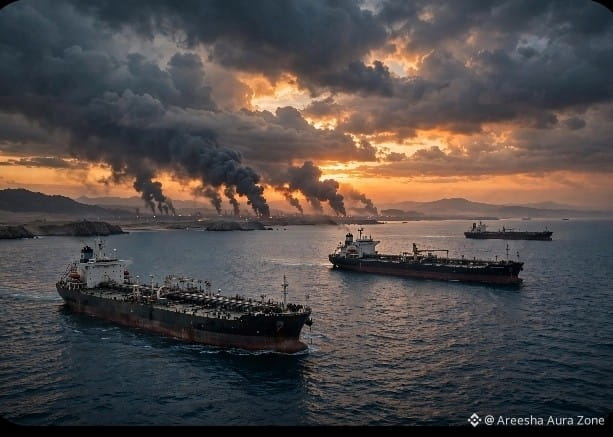
The result? Tanker traffic near standstill, oil prices at six-week highs, and global trade holding its breath.
This is no longer just a regional conflict. It's a shipping war, an energy war, and a warning to every economy.
Peace deal broken. Trade routes weaponized. The world watches the Hormuz.
#USIran #TankerWars #HormuzStrait $BTC
$CATI
The Strait of Fire: When Trade Becomes a Target 🎯
The world's most vital oil artery is burning again.
Over the weekend, the US and Iran traded direct strikes on tankers in the Strait of Hormuz — the narrow passage that carries 20% of the world's oil. The US confirmed it struck three Iranian oil tankers, including one near Iran's key export hub at Kharg Island, after Iran's IRGC fired ballistic missiles at US warships.
Iran retaliated, hitting US-linked vessels for taking what it called an "unauthorised route" through the Strait.
The result? Tanker traffic near standstill, oil prices at six-week highs, and global trade holding its breath.
This is no longer just a regional conflict. It's a shipping war, an energy war, and a warning to every economy.
Peace deal broken. Trade routes weaponized. The world watches the Hormuz.
#USIran #TankerWars #HormuzStrait $BTC
$CATI
#usirantradetankerstrikesescalate
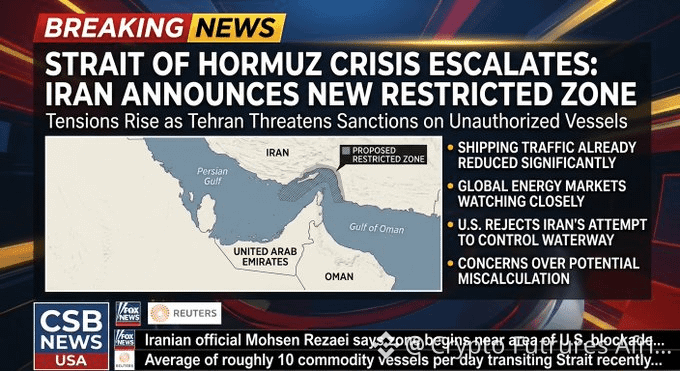
BREAKING | STRAIT OF HORMUZ CRISIS ESCALATES AS IRAN ANNOUNCES NEW RESTRICTED ZONE
Tensions are rapidly rising around the Strait of Hormuz as Iran announces plans for a new maritime “restricted zone” and threatens sanctions against vessels that enter without authorization.
According to Fox News, the move is adding another dangerous layer to the confrontation between Washington and Tehran.
Iranian Supreme National Security Council Secretary Mohsen Rezaei said the proposed zone would begin near the area of the U.S. blockade and extend into parts of the Persian Gulf.
Rezaei warned that vessels entering the zone could be placed on an Iranian sanctions list. Iran has also indicated that it plans to unveil maps for a new shipping corridor through the Strait.
THE STRAIT OF HORMUZ IS A GLOBAL ECONOMIC LIFELINE.
Before the current conflict, roughly one-fifth of global oil and LNG shipments passed through the strategic waterway.
But shipping traffic has already fallen dramatically. Reuters reports that an average of only about 10 commodity vessels per day transited the Strait over the past 10 days—the lowest level since May.
That means the stakes go far beyond Iran and the United States.
Global energy markets are watching.
Oil and fuel prices are under pressure.
Commercial shipping faces growing uncertainty.
U.S. forces remain focused on maintaining freedom of navigation.
Iran is threatening new restrictions and sanctions.
The United States has rejected Iran’s attempt to control access to the strategic waterway, while Tehran insists that future freedom of passage depends on an end to U.S. and Israeli attacks.
ONE OF THE WORLD’S MOST IMPORTANT SHIPPING LANES IS NOW AT THE CENTER OF A MAJOR U.S.-IRAN SHOWDOWN.
Any miscalculation involving a commercial vessel, military ship or missile could trigger an even wider regional and economic crisis.
WASHINGTON IS WATCHING.
TEHRAN IS ESCALATING ITS WARNINGS.
THE WORLD IS WATCHING THE STRAIT OF HORMUZ.
$IOST
$SOPH
$AKE
BREAKING | STRAIT OF HORMUZ CRISIS ESCALATES AS IRAN ANNOUNCES NEW RESTRICTED ZONE
Tensions are rapidly rising around the Strait of Hormuz as Iran announces plans for a new maritime “restricted zone” and threatens sanctions against vessels that enter without authorization.
According to Fox News, the move is adding another dangerous layer to the confrontation between Washington and Tehran.
Iranian Supreme National Security Council Secretary Mohsen Rezaei said the proposed zone would begin near the area of the U.S. blockade and extend into parts of the Persian Gulf.
Rezaei warned that vessels entering the zone could be placed on an Iranian sanctions list. Iran has also indicated that it plans to unveil maps for a new shipping corridor through the Strait.
THE STRAIT OF HORMUZ IS A GLOBAL ECONOMIC LIFELINE.
Before the current conflict, roughly one-fifth of global oil and LNG shipments passed through the strategic waterway.
But shipping traffic has already fallen dramatically. Reuters reports that an average of only about 10 commodity vessels per day transited the Strait over the past 10 days—the lowest level since May.
That means the stakes go far beyond Iran and the United States.
Global energy markets are watching.
Oil and fuel prices are under pressure.
Commercial shipping faces growing uncertainty.
U.S. forces remain focused on maintaining freedom of navigation.
Iran is threatening new restrictions and sanctions.
The United States has rejected Iran’s attempt to control access to the strategic waterway, while Tehran insists that future freedom of passage depends on an end to U.S. and Israeli attacks.
ONE OF THE WORLD’S MOST IMPORTANT SHIPPING LANES IS NOW AT THE CENTER OF A MAJOR U.S.-IRAN SHOWDOWN.
Any miscalculation involving a commercial vessel, military ship or missile could trigger an even wider regional and economic crisis.
WASHINGTON IS WATCHING.
TEHRAN IS ESCALATING ITS WARNINGS.
THE WORLD IS WATCHING THE STRAIT OF HORMUZ.
$IOST
$SOPH
$AKE
Log in to explore more content