Binance Square
#macroinsights

macroinsights

544,378 views
1,474 Discussing
meligamble
·
--
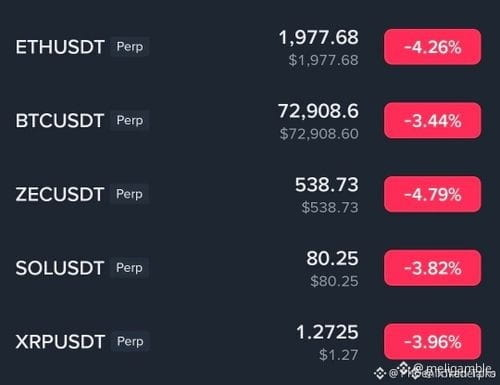
everyone thinks $btc dumps are always “crypto problems,” but actually this $63k loss was a clean macro warning. pain for traders is simple: you buy the chart, then geopolitics nukes your entry. one headline, oil rips, stocks sell off, and suddenly your $ETH or $SOL setup looks way uglier than it did 10 minutes ago. case study: fresh u.s. strikes on iran pushed retaliation fears higher, oil climbed toward $80, and risk assets got hit across the board. $BTC didn’t drop because of some on-chain drama or exchange mess. it got dragged by the same risk-off wave hitting u.s. stocks. ngl, this is the trap. people stare at crypto-only signals while macro is moving the whole table. even with that pressure, blackrock’s larry fink is still saying bitcoin looks resilient and expects a stronger crypto market over the next 12 months. so is this just a macro shakeout before continuation, or the start of traders pricing in a bigger risk-off move? #Bitcoin #CryptoTrading #MacroInsights
everyone thinks $btc dumps are always “crypto problems,” but actually this $63k loss was a clean macro warning.

pain for traders is simple: you buy the chart, then geopolitics nukes your entry. one headline, oil rips, stocks sell off, and suddenly your $ETH or $SOL setup looks way uglier than it did 10 minutes ago.

case study: fresh u.s. strikes on iran pushed retaliation fears higher, oil climbed toward $80, and risk assets got hit across the board. $BTC didn’t drop because of some on-chain drama or exchange mess. it got dragged by the same risk-off wave hitting u.s. stocks.

ngl, this is the trap. people stare at crypto-only signals while macro is moving the whole table. even with that pressure, blackrock’s larry fink is still saying bitcoin looks resilient and expects a stronger crypto market over the next 12 months.

so is this just a macro shakeout before continuation, or the start of traders pricing in a bigger risk-off move?

#Bitcoin #CryptoTrading #MacroInsights
Here's what happened when geopolitics hit the tape: $BTC slipped under $63K while oil pushed toward $80. This is the kind of move that catches traders in the worst spot, especially if they were positioned for a clean breakout and not watching macro risk. Crypto can look isolated until missiles, oil, and equities all start moving together. The case study is simple: fresh U.S. strikes on Iran, rising retaliation fears, oil climbing near $80, and risk assets selling off alongside U.S. stocks. $BTC did not drop because of a crypto-native failure. It dropped because global markets went into “reduce risk first, ask questions later” mode. We’ve seen this movie before. During past geopolitical shocks, Bitcoin often trades like a high-beta risk asset at first, while $ETH and $SOL usually feel even more pressure because liquidity exits the risk curve. But the interesting part is what comes after the first wave of fear. BlackRock’s Larry Fink still expects a stronger crypto market over the next 12 months, pointing to Bitcoin’s resilience under macro stress. That’s the real comparison: short-term panic versus long-term institutional conviction. Do you think this was just a macro shakeout, or the start of a deeper risk-off move? #Bitcoin #CryptoMarket #MacroInsights
Here's what happened when geopolitics hit the tape: $BTC slipped under $63K while oil pushed toward $80.

This is the kind of move that catches traders in the worst spot, especially if they were positioned for a clean breakout and not watching macro risk. Crypto can look isolated until missiles, oil, and equities all start moving together.

The case study is simple: fresh U.S. strikes on Iran, rising retaliation fears, oil climbing near $80, and risk assets selling off alongside U.S. stocks. $BTC did not drop because of a crypto-native failure. It dropped because global markets went into “reduce risk first, ask questions later” mode.

We’ve seen this movie before. During past geopolitical shocks, Bitcoin often trades like a high-beta risk asset at first, while $ETH and $SOL usually feel even more pressure because liquidity exits the risk curve. But the interesting part is what comes after the first wave of fear.

BlackRock’s Larry Fink still expects a stronger crypto market over the next 12 months, pointing to Bitcoin’s resilience under macro stress. That’s the real comparison: short-term panic versus long-term institutional conviction.

Do you think this was just a macro shakeout, or the start of a deeper risk-off move?

#Bitcoin #CryptoMarket #MacroInsights
·
--
Bullish
German unemployment unexpectedly falls in May, but the recovery signal remains fragile 📌 Germany’s labor market delivered a better-than-expected reading in May, with seasonally adjusted unemployment falling by 12,000, in sharp contrast to the Reuters poll forecast for a 10,000 increase. The unemployment rate also edged down to 6.3%, suggesting short-term pressure has eased after a weak start to the year. 💡 The unadjusted number of unemployed people fell to 2.95 million, down 58,000 from the previous month and below the 3 million mark for the first time after four consecutive months above that level. This is notable because Germany remains the largest economy in the Eurozone, so labor market shifts can influence expectations for consumption, fiscal pressure, and regional monetary policy. ⚠️ Still, this data is not enough to confirm a sustainable turnaround. Germany’s labor agency said the decline was largely a one-off effect following weak April figures, while Chair Andrea Nahles also noted that the spring recovery has not gained real momentum. 🔎 The key point to watch is that job vacancies stood at 643,000, up 8,000 from a year earlier, but German companies remain cautious amid geopolitical risks and a sluggish economic outlook. That means hiring momentum may stay limited in the coming months. 📉 For financial markets, the better-than-expected data may offer mild short-term support for Germany and the wider Eurozone, but it is unlikely to change expectations for ECB easing. If growth and employment indicators remain weak, rate-cut expectations will likely stay central for the euro and German bond yields. #MacroInsights
German unemployment unexpectedly falls in May, but the recovery signal remains fragile

📌 Germany’s labor market delivered a better-than-expected reading in May, with seasonally adjusted unemployment falling by 12,000, in sharp contrast to the Reuters poll forecast for a 10,000 increase. The unemployment rate also edged down to 6.3%, suggesting short-term pressure has eased after a weak start to the year.

💡 The unadjusted number of unemployed people fell to 2.95 million, down 58,000 from the previous month and below the 3 million mark for the first time after four consecutive months above that level. This is notable because Germany remains the largest economy in the Eurozone, so labor market shifts can influence expectations for consumption, fiscal pressure, and regional monetary policy.

⚠️ Still, this data is not enough to confirm a sustainable turnaround. Germany’s labor agency said the decline was largely a one-off effect following weak April figures, while Chair Andrea Nahles also noted that the spring recovery has not gained real momentum.

🔎 The key point to watch is that job vacancies stood at 643,000, up 8,000 from a year earlier, but German companies remain cautious amid geopolitical risks and a sluggish economic outlook. That means hiring momentum may stay limited in the coming months.

📉 For financial markets, the better-than-expected data may offer mild short-term support for Germany and the wider Eurozone, but it is unlikely to change expectations for ECB easing. If growth and employment indicators remain weak, rate-cut expectations will likely stay central for the euro and German bond yields.

#MacroInsights

·
--
Bullish
UK labor market turns defensive as companies shift toward temporary hiring 📌 The UK labor market is showing clearer signs of caution as companies increase temporary hiring while delaying permanent recruitment plans. This is no longer just a labor shortage story, but a reflection of defensive business sentiment amid high costs and macro uncertainty. 📉 REC/KPMG data showed the permanent staff placement index falling to 44.1 from 47.5, marking the sharpest decline in 10 months. In contrast, temporary hiring rose to 52.2 from 50.4, suggesting that companies still need workers but are avoiding long-term fixed costs. ⚠️ Pressure is coming from several directions at once, including weak economic confidence, high operating costs, new labor regulations, and Middle East instability bringing energy risks back into focus. In this environment, temporary contracts allow companies to fill staffing gaps while keeping flexibility. 🔎 The broader labor picture is also softening, with the UK unemployment rate rising to 5% and the number of young people not in work or education exceeding 1 million. Starting salaries and temporary pay increased only slightly, showing that wage pressure is cooling while labor demand is also weakening. 💡 The key point is that hiring demand has not disappeared, but it is becoming more uneven across sectors. Healthcare, nursing, and care services still show demand for permanent staff, while sectors more exposed to consumer spending and costs are turning more defensive. ✅ This is an early signal that UK companies are prioritizing safety over expansion. If geopolitical uncertainty and energy costs remain elevated, temporary hiring may continue to act as a buffer for the labor market in the coming months. #MacroInsights $HOME $TON $BTC
UK labor market turns defensive as companies shift toward temporary hiring

📌 The UK labor market is showing clearer signs of caution as companies increase temporary hiring while delaying permanent recruitment plans. This is no longer just a labor shortage story, but a reflection of defensive business sentiment amid high costs and macro uncertainty.

📉 REC/KPMG data showed the permanent staff placement index falling to 44.1 from 47.5, marking the sharpest decline in 10 months. In contrast, temporary hiring rose to 52.2 from 50.4, suggesting that companies still need workers but are avoiding long-term fixed costs.

⚠️ Pressure is coming from several directions at once, including weak economic confidence, high operating costs, new labor regulations, and Middle East instability bringing energy risks back into focus. In this environment, temporary contracts allow companies to fill staffing gaps while keeping flexibility.

🔎 The broader labor picture is also softening, with the UK unemployment rate rising to 5% and the number of young people not in work or education exceeding 1 million. Starting salaries and temporary pay increased only slightly, showing that wage pressure is cooling while labor demand is also weakening.

💡 The key point is that hiring demand has not disappeared, but it is becoming more uneven across sectors. Healthcare, nursing, and care services still show demand for permanent staff, while sectors more exposed to consumer spending and costs are turning more defensive.

✅ This is an early signal that UK companies are prioritizing safety over expansion. If geopolitical uncertainty and energy costs remain elevated, temporary hiring may continue to act as a buffer for the labor market in the coming months.

#MacroInsights $HOME $TON $BTC

·
--
Bullish
U.S. manufacturing rises to a 4-year high, but price pressure and supply-chain stress remain key risks 📌 The U.S. Manufacturing PMI rose to 54.0 in May from 52.7, marking the 5th straight month of expansion and the highest level since May 2022. This points to a clearer recovery in the manufacturing sector, supported by stronger domestic demand and improved inventory building. 💡 The main drivers came from New Orders rising to 56.8 and Production reaching 54.3, showing that businesses are still maintaining a positive production pace. The fact that all 6 largest industry groups expanded also gives this report broader strength, rather than relying on only a few isolated sectors. ⚠️ The key point to watch is Supplier Deliveries holding high at 60.6, signaling that delivery times continued to slow for the 6th consecutive month. This suggests supply chains are not fully stable yet, especially as companies appear to be front-loading orders ahead of shortage risks and pricing volatility. ⏱️ Cost pressure also remains sticky, with Prices Paid still very high at 82.1 despite easing slightly from the previous month. If input costs stay elevated, inflation risks from the manufacturing sector could make markets more cautious about expectations for an early Fed policy easing. 🔎 Overall, this data is positive for U.S. growth and may support short-term risk-on sentiment. However, the downside is tighter supply chains, higher raw material costs, and manufacturing employment still below the expansion threshold, leaving the overall picture not fully one-sided. #MacroInsights $BNB

U.S. manufacturing rises to a 4-year high, but price pressure and supply-chain stress remain key risks

📌 The U.S. Manufacturing PMI rose to 54.0 in May from 52.7, marking the 5th straight month of expansion and the highest level since May 2022. This points to a clearer recovery in the manufacturing sector, supported by stronger domestic demand and improved inventory building.

💡 The main drivers came from New Orders rising to 56.8 and Production reaching 54.3, showing that businesses are still maintaining a positive production pace. The fact that all 6 largest industry groups expanded also gives this report broader strength, rather than relying on only a few isolated sectors.

⚠️ The key point to watch is Supplier Deliveries holding high at 60.6, signaling that delivery times continued to slow for the 6th consecutive month. This suggests supply chains are not fully stable yet, especially as companies appear to be front-loading orders ahead of shortage risks and pricing volatility.

⏱️ Cost pressure also remains sticky, with Prices Paid still very high at 82.1 despite easing slightly from the previous month. If input costs stay elevated, inflation risks from the manufacturing sector could make markets more cautious about expectations for an early Fed policy easing.

🔎 Overall, this data is positive for U.S. growth and may support short-term risk-on sentiment. However, the downside is tighter supply chains, higher raw material costs, and manufacturing employment still below the expansion threshold, leaving the overall picture not fully one-sided.

#MacroInsights $BNB

·
--
Bullish
U.S. consumers are starting to change their spending habits as the gasoline shock moves from the pump into household budgets 📌 U.S. consumers have not stopped spending, but a more defensive mindset is becoming clearer in everyday decisions. Pressure from gasoline prices around $4/gallon is pushing many households to buy less, choose cheaper places, and cut back on non-essential items. ⛽ One notable signal is the change in fueling behavior. Sam’s Club customers are buying less than 10 gallons per visit on average for the first time since 2022, while more drivers are shifting to Costco, Sam’s Club, or BJ’s to save money. Convenience store data also shows pump transactions down nearly 10%, while in-store sales fell 10.4%. 🛒 The pressure is no longer limited to energy. Sales of non-food items dropped 6%, with housewares, clothing, footwear, and sports equipment down around 5–7%. Shoppers are sticking more closely to shopping lists, cutting convenience items and decorative purchases, and prioritizing products with clearer practical value. 📉 For markets, this is an unfavorable signal for consumer discretionary names, restaurants, premium goods, and retailers that rely heavily on store traffic. In contrast, value-focused chains such as Walmart, Costco, Dollar General, and BJ’s may benefit relatively as consumers look for cheaper options. ⚠️ The key point is that geopolitical stress around Iran is now reaching U.S. consumer behavior through energy prices. If gasoline prices stay elevated after tax refund support fades, pressure on retail sales, consumer confidence, and risk assets could become clearer in the coming weeks. #MacroInsights $BTC $ETH $BNB

U.S. consumers are starting to change their spending habits as the gasoline shock moves from the pump into household budgets

📌 U.S. consumers have not stopped spending, but a more defensive mindset is becoming clearer in everyday decisions. Pressure from gasoline prices around $4/gallon is pushing many households to buy less, choose cheaper places, and cut back on non-essential items.

⛽ One notable signal is the change in fueling behavior. Sam’s Club customers are buying less than 10 gallons per visit on average for the first time since 2022, while more drivers are shifting to Costco, Sam’s Club, or BJ’s to save money. Convenience store data also shows pump transactions down nearly 10%, while in-store sales fell 10.4%.

🛒 The pressure is no longer limited to energy. Sales of non-food items dropped 6%, with housewares, clothing, footwear, and sports equipment down around 5–7%. Shoppers are sticking more closely to shopping lists, cutting convenience items and decorative purchases, and prioritizing products with clearer practical value.

📉 For markets, this is an unfavorable signal for consumer discretionary names, restaurants, premium goods, and retailers that rely heavily on store traffic. In contrast, value-focused chains such as Walmart, Costco, Dollar General, and BJ’s may benefit relatively as consumers look for cheaper options.

⚠️ The key point is that geopolitical stress around Iran is now reaching U.S. consumer behavior through energy prices. If gasoline prices stay elevated after tax refund support fades, pressure on retail sales, consumer confidence, and risk assets could become clearer in the coming weeks.

#MacroInsights $BTC $ETH $BNB
·
--
Bullish
Verified
Ultra-wealthy capital starts reducing USD dependence as U.S.-centric portfolio risks draw closer scrutiny 📌 UBS Global Family Office Report 2026 shows that global family offices are reassessing their dependence on USD, as rising U.S. public debt, persistent geopolitical tensions, and weakening confidence in the dollar’s reserve-currency role reshape portfolio thinking. 💡 The key point is that around two-thirds of surveyed family offices expect confidence in USD as a reserve currency to weaken this year, while nearly half say they are overexposed to USD across multiple asset classes. 🔎 Around one-third have already cut or plan to cut allocations to USD-denominated assets, suggesting this is not just a sentiment shift but is gradually turning into real capital allocation decisions. ⚠️ Capital flows are being redirected toward emerging market equities, infrastructure, Asia-Pacific, and Western Europe, while real estate is receiving lower priority. This reflects how ultra-wealthy investors are seeking portfolios that rely less heavily on the U.S. asset axis. ✅ The near-term impact on USD may remain limited if the Fed keeps a hawkish stance or geopolitical tensions cool down. However, from a market psychology perspective, this survey reinforces the diversification-away-from-USD narrative, indirectly supporting gold, several major non-USD currencies, and emerging market assets. #MacroInsights $TON $HYPE $XAUT
Ultra-wealthy capital starts reducing USD dependence as U.S.-centric portfolio risks draw closer scrutiny

📌 UBS Global Family Office Report 2026 shows that global family offices are reassessing their dependence on USD, as rising U.S. public debt, persistent geopolitical tensions, and weakening confidence in the dollar’s reserve-currency role reshape portfolio thinking.

💡 The key point is that around two-thirds of surveyed family offices expect confidence in USD as a reserve currency to weaken this year, while nearly half say they are overexposed to USD across multiple asset classes.

🔎 Around one-third have already cut or plan to cut allocations to USD-denominated assets, suggesting this is not just a sentiment shift but is gradually turning into real capital allocation decisions.

⚠️ Capital flows are being redirected toward emerging market equities, infrastructure, Asia-Pacific, and Western Europe, while real estate is receiving lower priority. This reflects how ultra-wealthy investors are seeking portfolios that rely less heavily on the U.S. asset axis.

✅ The near-term impact on USD may remain limited if the Fed keeps a hawkish stance or geopolitical tensions cool down. However, from a market psychology perspective, this survey reinforces the diversification-away-from-USD narrative, indirectly supporting gold, several major non-USD currencies, and emerging market assets.

#MacroInsights $TON $HYPE $XAUT
Article
Are the Ultra-Rich fleeing the Dollar? The UBS report that confirms the narrativeThe latest UBS Global Family Office report for 2026 has just dropped, and the verdict is clear: the world's wealthiest (Family Offices) are seriously reevaluating their dependence on the USD. What's behind this? The explosion of US public debt, geopolitical instability, and a widespread loss of confidence in the dollar's status as the world's reserve currency. Here's what to keep in mind about this major macroeconomic pivot: 📉 The Dollar is losing its shine Loss of confidence: Nearly two-thirds (66%) of Family Offices anticipate a weakening trust in the USD as a reserve currency this year.

Are the Ultra-Rich fleeing the Dollar? The UBS report that confirms the narrative

The latest UBS Global Family Office report for 2026 has just dropped, and the verdict is clear: the world's wealthiest (Family Offices) are seriously reevaluating their dependence on the USD. What's behind this? The explosion of US public debt, geopolitical instability, and a widespread loss of confidence in the dollar's status as the world's reserve currency.
Here's what to keep in mind about this major macroeconomic pivot:
📉 The Dollar is losing its shine
Loss of confidence: Nearly two-thirds (66%) of Family Offices anticipate a weakening trust in the USD as a reserve currency this year.
·
--
Bullish
US jobless claims rose above expectations, signaling mild labor-market cooling without changing the broader employment picture. 📌 The latest data showed initial jobless claims rising to 225,000 for the week ending May 30, above the 213,000–215,000 forecast range and up 13,000 from the prior week’s revised level. 🔎 This was the highest reading since early February 2026, but it is not yet a strongly negative signal because the absolute level remains low by historical standards. The 4-week average rose only modestly to 214,750, suggesting the move may still be partly distorted by seasonal effects around the Memorial Day holiday. 💡 The balancing point is continuing claims, which slipped slightly to 1.777 million, while the insured unemployment rate stayed at 1.2%. This suggests the US labor market is slowing, but there is still no clear sign of broad-based layoffs or serious deterioration. ⏱️ For financial markets, the data leans mildly dovish for the Fed, offering moderate support to bonds and gold while adding slight pressure on the US dollar. However, the impact remains limited as investors still need confirmation from the May NFP report. ⚠️ Overall, this is more of a light warning signal than a red flag. If NFP also comes in weak, expectations for a softer Fed stance could rise; if job growth remains stable, markets may treat this claims increase as short-term seasonal noise. #MacroInsights $BTC $BNB $XRP
US jobless claims rose above expectations, signaling mild labor-market cooling without changing the broader employment picture.

📌 The latest data showed initial jobless claims rising to 225,000 for the week ending May 30, above the 213,000–215,000 forecast range and up 13,000 from the prior week’s revised level.

🔎 This was the highest reading since early February 2026, but it is not yet a strongly negative signal because the absolute level remains low by historical standards. The 4-week average rose only modestly to 214,750, suggesting the move may still be partly distorted by seasonal effects around the Memorial Day holiday.

💡 The balancing point is continuing claims, which slipped slightly to 1.777 million, while the insured unemployment rate stayed at 1.2%. This suggests the US labor market is slowing, but there is still no clear sign of broad-based layoffs or serious deterioration.

⏱️ For financial markets, the data leans mildly dovish for the Fed, offering moderate support to bonds and gold while adding slight pressure on the US dollar. However, the impact remains limited as investors still need confirmation from the May NFP report.

⚠️ Overall, this is more of a light warning signal than a red flag. If NFP also comes in weak, expectations for a softer Fed stance could rise; if job growth remains stable, markets may treat this claims increase as short-term seasonal noise.

#MacroInsights $BTC $BNB $XRP
Vitalik Buterin, co-founder of Ethereum, reiterated the neutrality of the Ethereum Foundation in response to criticisms regarding the foundation holding a relatively small amount of $ETH — less than 1% of the total supply. Buterin clarified that this decision is intentional and aims to enhance decentralization and strengthen the network's resilience in the long run. Unlike many institutions tied to other protocols, which typically hold between 10% to 50% of the total tokens, Buterin emphasized that the Ethereum Foundation focuses on supporting the community and ecosystem rather than chasing financial gains. This approach builds trust between developers and users, reinforcing Ethereum's commitment to providing a fair and balanced environment within the evolving crypto space. #Ethereum #MacroInsights #AltcoinSeason
Vitalik Buterin, co-founder of Ethereum, reiterated the neutrality of the Ethereum Foundation in response to criticisms regarding the foundation holding a relatively small amount of $ETH — less than 1% of the total supply.

Buterin clarified that this decision is intentional and aims to enhance decentralization and strengthen the network's resilience in the long run.

Unlike many institutions tied to other protocols, which typically hold between 10% to 50% of the total tokens, Buterin emphasized that the Ethereum Foundation focuses on supporting the community and ecosystem rather than chasing financial gains.

This approach builds trust between developers and users, reinforcing Ethereum's commitment to providing a fair and balanced environment within the evolving crypto space.

#Ethereum
#MacroInsights
#AltcoinSeason
$XLM  has entered a high-velocity vertical expansion, completely snapping out of its multi-day accumulation base with a massive impulsive surge. Price is currently pushing aggressively higher near the $0.1686 mark, showing immense buying momentum as it approaches key historical overhead supply. {spot}(XLMUSDT)  The critical area to watch on any immediate profit-taking pullback is the newly formed resistance-turned-support zone near the $0.1480 – $0.1460 region. This block represents a key structural validation point, and buyers must comfortably protect this area during a retest to confirm a solid higher low and sustain the broader bullish expansion. If the immediate upward momentum continues and successfully breaks through the overhead psychological liquidity pool around $0.1700, it opens the path for a much larger macro extension leg. Conversely, a sharp reversal and clean close back below $0.1450 would signal localized exhaustion, potentially forcing price back into a deeper consolidation range. #XLM  #crypto  #MacroInsights
$XLM has entered a high-velocity vertical expansion, completely snapping out of its multi-day accumulation base with a massive impulsive surge. Price is currently pushing aggressively higher near the $0.1686 mark, showing immense buying momentum as it approaches key historical overhead supply.
The critical area to watch on any immediate profit-taking pullback is the newly formed resistance-turned-support zone near the $0.1480 – $0.1460 region. This block represents a key structural validation point, and buyers must comfortably protect this area during a retest to confirm a solid higher low and sustain the broader bullish expansion.

If the immediate upward momentum continues and successfully breaks through the overhead psychological liquidity pool around $0.1700, it opens the path for a much larger macro extension leg. Conversely, a sharp reversal and clean close back below $0.1450 would signal localized exhaustion, potentially forcing price back into a deeper consolidation range.

#XLM #crypto #MacroInsights
MACD Turns Bullish, Eyes on $80K: Could a $1B Options Cluster Drive BTC Upward? Indeed, the $1.21 billion cluster of options could serve as a strong draw pulling Bitcoin's price upward. That said, whether it can actually carry BTC all the way to $80K hinges largely on the cryptocurrency clearing several nearby resistance zones and continuing to benefit from favorable macroeconomic conditions. This bullish scenario stems from a mix of encouraging technical signals combined with the mechanics of the options market. Why This $1B Cluster Matters On the Deribit platform, the $80K strike level shows the heaviest buildup of open interest — surpassing $1.21 billion in value. This concentration could shape price movement in two key ways: • Gamma-Driven Buying: Market makers who wrote these $80K calls may need to adjust their hedges. As Bitcoin's price approaches this strike, they could be compelled to purchase spot BTC to stay delta-neutral, adding further upward momentum. • A Psychological Draw: Heavy open interest clusters often function as target zones that traders watch closely. Institutional players and derivatives traders may treat this level as a benchmark, fueling additional buying as optimism builds. Obstacles Standing in the Way Even with this promising backdrop, Bitcoin — currently hovering around $64,000 — needs to clear three critical resistance points before the options cluster becomes relevant: $65,434 — the 50-day moving average $67,292 — resistance from the mid-June swing high $71,147 — the 200-day moving average, which would signal stronger confirmation of a sustained uptrend Beyond these technical levels, genuine spot buying needs to pick up. The recent rally has largely been fueled by traders closing short positions rather than fresh buying interest. For this momentum to hold, a broader economic trigger — like central banks signaling a more accommodative rate stance — will likely be necessary. #BTC Price Analysis #Crypto #MacroInsights
MACD Turns Bullish, Eyes on $80K: Could a $1B Options Cluster Drive BTC Upward?

Indeed, the $1.21 billion cluster of options could serve as a strong draw pulling Bitcoin's price upward. That said, whether it can actually carry BTC all the way to $80K hinges largely on the cryptocurrency clearing several nearby resistance zones and continuing to benefit from favorable macroeconomic conditions.
This bullish scenario stems from a mix of encouraging technical signals combined with the mechanics of the options market.
Why This $1B Cluster Matters
On the Deribit platform, the $80K strike level shows the heaviest buildup of open interest — surpassing $1.21 billion in value. This concentration could shape price movement in two key ways:
• Gamma-Driven Buying: Market makers who wrote these $80K calls may need to adjust their hedges. As Bitcoin's price approaches this strike, they could be compelled to purchase spot BTC to stay delta-neutral, adding further upward momentum.
• A Psychological Draw: Heavy open interest clusters often function as target zones that traders watch closely. Institutional players and derivatives traders may treat this level as a benchmark, fueling additional buying as optimism builds.
Obstacles Standing in the Way
Even with this promising backdrop, Bitcoin — currently hovering around $64,000 — needs to clear three critical resistance points before the options cluster becomes relevant:
$65,434 — the 50-day moving average
$67,292 — resistance from the mid-June swing high
$71,147 — the 200-day moving average, which would signal stronger confirmation of a sustained uptrend
Beyond these technical levels, genuine spot buying needs to pick up. The recent rally has largely been fueled by traders closing short positions rather than fresh buying interest. For this momentum to hold, a broader economic trigger — like central banks signaling a more accommodative rate stance — will likely be necessary.
#BTC Price Analysis #Crypto #MacroInsights
Verified
Privacy Went Mainstream In 2026 🔓 A category dismissed as niche for years is suddenly back in the center of the conversation. Renewed attention on $ZEC tracked a privacy category pulling mainstream interest it had not seen in years. The long-standing demand around $XMR showed appetite for private transactions never faded, even as regulators tightened the screws on blanket anonymity. Midnight approaches that same demand from the compliant side. It is a Layer 1 for programmable privacy where a user proves a statement is true, like being over 18 or holding sufficient funds, while the data behind it stays private. Selective disclosure is the version of privacy a regulator can live with, and the compliant end of the category is the part institutions are watching most closely. #Privacy #MacroInsights
Privacy Went Mainstream In 2026 🔓

A category dismissed as niche for years is suddenly back in the center of the conversation.

Renewed attention on $ZEC tracked a privacy category pulling mainstream interest it had not seen in years.

The long-standing demand around $XMR showed appetite for private transactions never faded, even as regulators tightened the screws on blanket anonymity.

Midnight approaches that same demand from the compliant side. It is a Layer 1 for programmable privacy where a user proves a statement is true, like being over 18 or holding sufficient funds, while the data behind it stays private.

Selective disclosure is the version of privacy a regulator can live with, and the compliant end of the category is the part institutions are watching most closely.

#Privacy #MacroInsights
🚨 JUST IN: New Hampshire has rejected a $100M state-backed Bitcoin bond proposal. The decision delays what could have become the first state-backed BTC bond initiative in the U.S. While it's a short-term setback, the proposal could return as state-level interest in Bitcoin continues to evolve. Crypto adoption rarely follows a straight path—but policy shifts remain a key catalyst. Will more U.S. states eventually embrace Bitcoin-backed initiatives? 👀 #Bitcoin #BTC #Crypto #MacroInsights #Markets $TAC $US
🚨 JUST IN: New Hampshire has rejected a $100M state-backed Bitcoin bond proposal.
The decision delays what could have become the first state-backed BTC bond initiative in the U.S.
While it's a short-term setback, the proposal could return as state-level interest in Bitcoin continues to evolve.
Crypto adoption rarely follows a straight path—but policy shifts remain a key catalyst.
Will more U.S. states eventually embrace Bitcoin-backed initiatives? 👀
#Bitcoin #BTC #Crypto #MacroInsights #Markets
$TAC $US
Dell shares rise 3.5%, and signals from the AI server supply chain are getting clearer. Wistron and Wintime have both delivered record-high second-half revenue performance, not just a single-company story, but the entire ODM chain moving forward, driven by accelerating compute demand. Two points worth noting: First, the business sentiment on the hardware side is still being realized beyond expectations. Concerns from institutions that AI capital expenditures have peaked have so far been contradicted, at least for now, by the earnings report data. Second, market funds are shifting back from “AI told as a story” to “AI with real shipments.” Server-related links that can be seen in orders—such as servers, thermal management, and power supplies—have once again become the anchor for traditional capital. The mapping to the crypto market is also quite direct—when the NVIDIA-linked chain keeps strengthening, risk appetite is unlikely to go out easily. The macro liquidity narrative for BTC still has support. Watching the AI hardware segment in the Nasdaq may offer more meaningful reference than focusing solely on Fed commentary. #AI #MacroInsights
Dell shares rise 3.5%, and signals from the AI server supply chain are getting clearer.

Wistron and Wintime have both delivered record-high second-half revenue performance, not just a single-company story, but the entire ODM chain moving forward, driven by accelerating compute demand.

Two points worth noting:
First, the business sentiment on the hardware side is still being realized beyond expectations. Concerns from institutions that AI capital expenditures have peaked have so far been contradicted, at least for now, by the earnings report data.
Second, market funds are shifting back from “AI told as a story” to “AI with real shipments.” Server-related links that can be seen in orders—such as servers, thermal management, and power supplies—have once again become the anchor for traditional capital.

The mapping to the crypto market is also quite direct—when the NVIDIA-linked chain keeps strengthening, risk appetite is unlikely to go out easily. The macro liquidity narrative for BTC still has support. Watching the AI hardware segment in the Nasdaq may offer more meaningful reference than focusing solely on Fed commentary.

#AI #MacroInsights
NVDA-1.95%
DELL-0.56%
DELLUS-1.35%
🚨 JUST IN: Trump says Iran has reached out and is eager to make a deal, despite recent regional tensions. Markets are closely watching for signs of de-escalation, as any diplomatic progress could ease geopolitical risk. 📊 Lower uncertainty often supports risk assets, including Bitcoin and the broader crypto market. For now, traders should stay focused on headlines, as sentiment could shift quickly. Could easing tensions become the next catalyst for Bitcoin? 👀 #Bitcoin #BTC #Crypto #MacroInsights #Markets $POWER
🚨 JUST IN: Trump says Iran has reached out and is eager to make a deal, despite recent regional tensions.
Markets are closely watching for signs of de-escalation, as any diplomatic progress could ease geopolitical risk.
📊 Lower uncertainty often supports risk assets, including Bitcoin and the broader crypto market.
For now, traders should stay focused on headlines, as sentiment could shift quickly.
Could easing tensions become the next catalyst for Bitcoin? 👀
#Bitcoin #BTC #Crypto #MacroInsights #Markets

$POWER
**FOMC: The name that makes every “shark” wary. 🚨** Don’t just look at chart $BTC and forget the “headquarters” of global liquidity. The FOMC isn’t just an interest-rate meeting; it’s a filter that wipes out inexperienced traders (“non-hands”) before the big trend even begins. **Why pros always need to scrutinize the FOMC?** 1️⃣ **The Liquidity Trap:** When the FED signals “Hawkish,” cheap money pulls back. That’s when high-leverage Long positions get liquidated en masse. We call it the classic “Sweep the lows” move to grab liquidity before a strong dump. 2️⃣ **Order Block Rejection:** Key supply/demand zones on the Weekly/Monthly timeframe often react very sharply to rate news. Don’t catch a falling knife when the FVG (Fair Value Gap) hasn’t been fully filled yet after the announcement. 3️⃣ **Risk-On vs Risk-Off:** $BTC is no longer running independently. When the DXY (Dollar Index) pulls back, it’s a signal that the Big Boys are shifting capital flows. Track the FED’s dot-plot closely to gauge where the smart money (Smart Money) is heading. **Strategy for scalp crews:** Don’t try to guess tops/bottoms while the news is dropping. Once the market has swept, wait for structure (Market Structure) to confirm, look for entries at solid Order Block zones, and watch how price reacts at old FVGs. **Question for the crew:** Are you expecting the FED to keep rates unchanged or cut them in the next cycle? This will determine whether we accumulate positions or “carry money out to play.” 👇 #CryptoTrading #FOMC #BTC #MacroInsights #TheScalpWhisperer
**FOMC: The name that makes every “shark” wary. 🚨**

Don’t just look at chart $BTC and forget the “headquarters” of global liquidity. The FOMC isn’t just an interest-rate meeting; it’s a filter that wipes out inexperienced traders (“non-hands”) before the big trend even begins.

**Why pros always need to scrutinize the FOMC?**

1️⃣ **The Liquidity Trap:** When the FED signals “Hawkish,” cheap money pulls back. That’s when high-leverage Long positions get liquidated en masse. We call it the classic “Sweep the lows” move to grab liquidity before a strong dump.

2️⃣ **Order Block Rejection:** Key supply/demand zones on the Weekly/Monthly timeframe often react very sharply to rate news. Don’t catch a falling knife when the FVG (Fair Value Gap) hasn’t been fully filled yet after the announcement.

3️⃣ **Risk-On vs Risk-Off:** $BTC is no longer running independently. When the DXY (Dollar Index) pulls back, it’s a signal that the Big Boys are shifting capital flows. Track the FED’s dot-plot closely to gauge where the smart money (Smart Money) is heading.

**Strategy for scalp crews:**
Don’t try to guess tops/bottoms while the news is dropping. Once the market has swept, wait for structure (Market Structure) to confirm, look for entries at solid Order Block zones, and watch how price reacts at old FVGs.

**Question for the crew:** Are you expecting the FED to keep rates unchanged or cut them in the next cycle? This will determine whether we accumulate positions or “carry money out to play.” 👇

#CryptoTrading #FOMC #BTC #MacroInsights #TheScalpWhisperer
Bloomberg highlights that persistent overestimation of Fed rate hikes could spark market volatility amid potential cuts 📊 Such macro shifts often ripple into risk‑on assets, with Bitcoin ($BTC) historically reacting to interest‑rate expectations 🌐 Analysts note a projected US inflation peak in May 2026, which may influence dollar strength and Bitcoin’s store‑of‑value narrative 💡 Despite external pressures, Bitcoin’s hash rate continues to rise, underscoring network resilience and miner confidence ⚡ Understanding the link between monetary policy, inflation data, and crypto can help navigate broader market dynamics 🧠 Always DYOR before forming any conclusions 🔍 #CryptoNews #Bitcoin #MacroInsights #InvestSmart #GAMERXERO
Bloomberg highlights that persistent overestimation of Fed rate hikes could spark market volatility amid potential cuts 📊
Such macro shifts often ripple into risk‑on assets, with Bitcoin ($BTC ) historically reacting to interest‑rate expectations 🌐
Analysts note a projected US inflation peak in May 2026, which may influence dollar strength and Bitcoin’s store‑of‑value narrative 💡
Despite external pressures, Bitcoin’s hash rate continues to rise, underscoring network resilience and miner confidence ⚡
Understanding the link between monetary policy, inflation data, and crypto can help navigate broader market dynamics 🧠
Always DYOR before forming any conclusions 🔍
#CryptoNews #Bitcoin #MacroInsights #InvestSmart #GAMERXERO
$XCN  is experiencing a sharp expansion in price after a long period of dormant trading activity. The asset is currently hovering around the $0.006876 level as it attempts to stabilize after a rapid vertical ascent. The most critical area for traders to watch is the newly formed support zone between $0.005800 – $0.006500. This range is vital because it marks the origin of the recent breakout and must hold to confirm that the current move has real staying power. If the $0.005800 – $0.006500 zone remains intact then we could see another push toward the $0.007500 – $0.008000 overhead resistance levels. If price fails to find buyers in this range then a full retracement back toward the $0.004800 – $0.005200 accumulation floor is the likely outcome. Market structure has shifted aggressively from a flat baseline to a high volatility environment in a very short window. It is wise to remain patient here as the rapid nature of the move often leads to sharp pullbacks before a sustainable trend is established. #xcn  #MacroInsights  #altcoinseason
$XCN is experiencing a sharp expansion in price after a long period of dormant trading activity. The asset is currently hovering around the $0.006876 level as it attempts to stabilize after a rapid vertical ascent.
The most critical area for traders to watch is the newly formed support zone between $0.005800 – $0.006500. This range is vital because it marks the origin of the recent breakout and must hold to confirm that the current move has real staying power.

If the $0.005800 – $0.006500 zone remains intact then we could see another push toward the $0.007500 – $0.008000 overhead resistance levels. If price fails to find buyers in this range then a full retracement back toward the $0.004800 – $0.005200 accumulation floor is the likely outcome.

Market structure has shifted aggressively from a flat baseline to a high volatility environment in a very short window. It is wise to remain patient here as the rapid nature of the move often leads to sharp pullbacks before a sustainable trend is established.

#xcn #MacroInsights #altcoinseason
Log in to explore more content
Join global crypto users on Binance Square
⚡️ Get latest and useful information about crypto.
💬 Trusted by the world’s largest crypto exchange.
👍 Discover real insights from verified creators.
Email / Phone number