

#israelstrikeslebanonkillshezbollahcommander
israelstrikeslebanonkillshezbollahcommander
202,281 views
1,407 Discussing
Hot
Latest

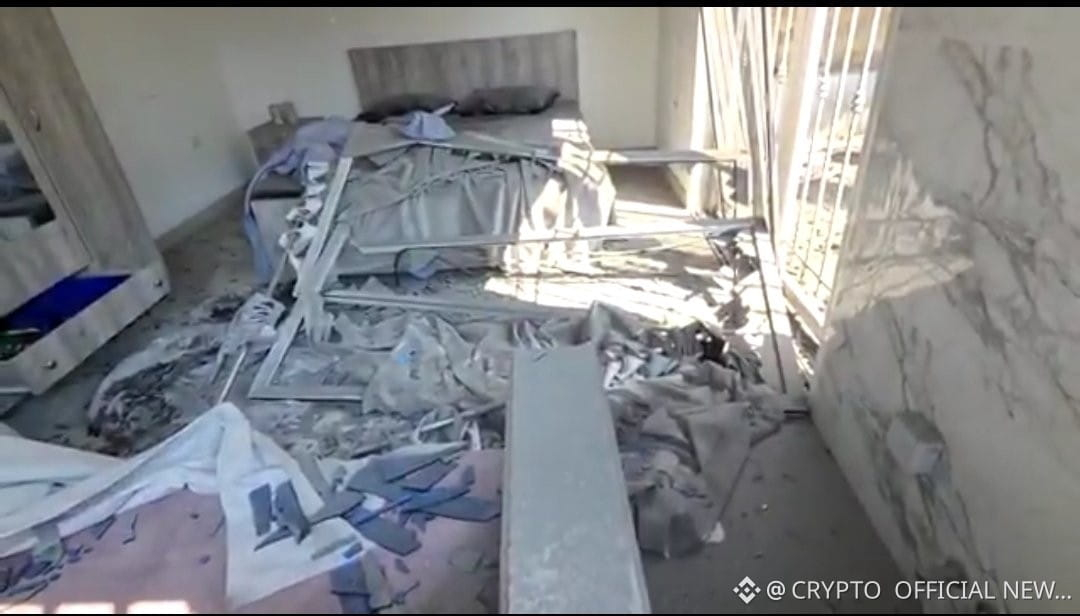
#IsraelStrikesLebanonKillsHezbollahCommander In response to a Hezbollah attack that seriously wounded 3 IDF soldiers, an Israeli strike in Lebanon eliminated Radwan Force commander Ali Samir al-Haj Hassan. The IDF noted Hassan's family was hit but stressed they were not the target, accusing him of using human shields.$BTC
{future}(BTCUSDT)
$ETH
{future}(ETHUSDT)
#IsraelStrikesLebanonKillsHezbollahCommander In response to a Hezbollah attack that seriously wounded 3 IDF soldiers, an Israeli strike in Lebanon eliminated Radwan Force commander Ali Samir al-Haj Hassan. The IDF noted Hassan's family was hit but stressed they were not the target, accusing him of using human shields.$BTC
$ETH
$ETH
1
39

·
--
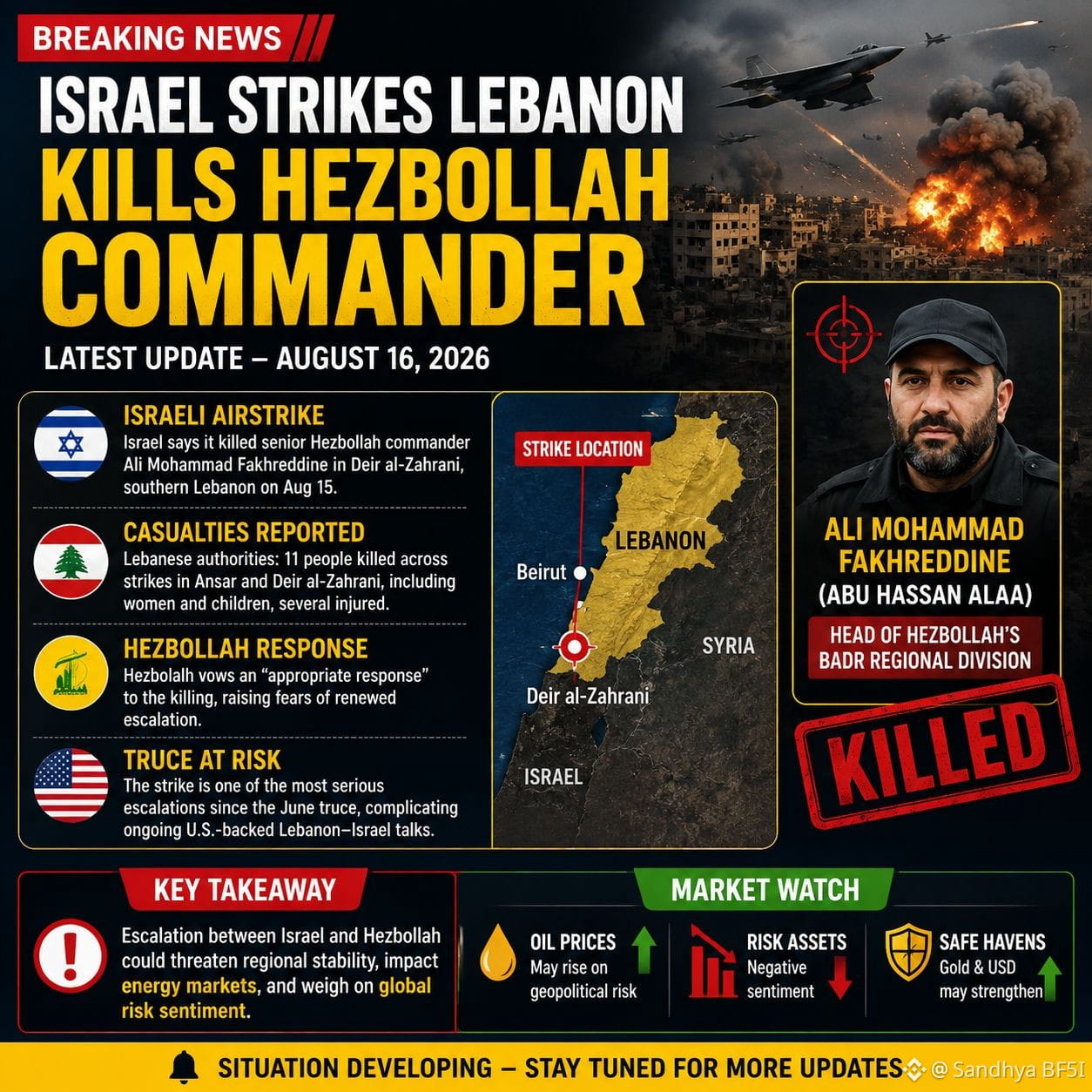
#IsraelStrikesLebanonKillsHezbollahCommander Israel says an airstrike in southern Lebanon killed Ali Mohammad Fakhreddine (Abu Hassan Alaa), described by the Israeli military as the head of Hezbollah’s Badr regional division. The strike took place in Deir al-Zahrani on August 15. �
Arab News +1
🇮🇱 Israel says the strike was retaliation for a Hezbollah drone attack that wounded 3 Israeli soldiers.
🇱🇧 Lebanese authorities reported 11 people killed across strikes in Ansar and Deir al-Zahrani, including women and children, with additional injuries.
⚠️ Hezbollah has vowed an appropriate response, raising fears of renewed escalation despite the June truce framework. �
ABC News +1
🛢️ Market watch: Further escalation could increase geopolitical risk and put upward pressure on oil prices while weighing on broader risk sentiment.
Bottom line: The killing marks one of the most serious escalations since the June truce and could complicate ongoing U.S.-backed Lebanon–Israel negotiations. �#IsraelStrikesLebanonKillsHezbollahCommander #USToPressNationsToPickUSOrChinaAICoalition #SP500TopsRecord7800 #SECReviewsSix3xLeveragedCommodityETFs $ETH $SUI $SOL
#IsraelStrikesLebanonKillsHezbollahCommander Israel says an airstrike in southern Lebanon killed Ali Mohammad Fakhreddine (Abu Hassan Alaa), described by the Israeli military as the head of Hezbollah’s Badr regional division. The strike took place in Deir al-Zahrani on August 15. �
Arab News +1
🇮🇱 Israel says the strike was retaliation for a Hezbollah drone attack that wounded 3 Israeli soldiers.
🇱🇧 Lebanese authorities reported 11 people killed across strikes in Ansar and Deir al-Zahrani, including women and children, with additional injuries.
⚠️ Hezbollah has vowed an appropriate response, raising fears of renewed escalation despite the June truce framework. �
ABC News +1
🛢️ Market watch: Further escalation could increase geopolitical risk and put upward pressure on oil prices while weighing on broader risk sentiment.
Bottom line: The killing marks one of the most serious escalations since the June truce and could complicate ongoing U.S.-backed Lebanon–Israel negotiations. �#IsraelStrikesLebanonKillsHezbollahCommander #USToPressNationsToPickUSOrChinaAICoalition #SP500TopsRecord7800 #SECReviewsSix3xLeveragedCommodityETFs $ETH $SUI $SOL
Arab News +1
🇮🇱 Israel says the strike was retaliation for a Hezbollah drone attack that wounded 3 Israeli soldiers.
🇱🇧 Lebanese authorities reported 11 people killed across strikes in Ansar and Deir al-Zahrani, including women and children, with additional injuries.
⚠️ Hezbollah has vowed an appropriate response, raising fears of renewed escalation despite the June truce framework. �
ABC News +1
🛢️ Market watch: Further escalation could increase geopolitical risk and put upward pressure on oil prices while weighing on broader risk sentiment.
Bottom line: The killing marks one of the most serious escalations since the June truce and could complicate ongoing U.S.-backed Lebanon–Israel negotiations. �#IsraelStrikesLebanonKillsHezbollahCommander #USToPressNationsToPickUSOrChinaAICoalition #SP500TopsRecord7800 #SECReviewsSix3xLeveragedCommodityETFs $ETH $SUI $SOL
112
The Israeli military has killed multiple senior Hezbollah commanders during intense airstrike in southern Lebanon.
🔴Casualties & Collateral damage
The airstrike marked the deadliest day of violence in Lebanon since the mid-summer truce framework was adjusted.
✍🏼Death Toll: At least 11 people killed and more than 19 others wounded across the affected southern municipalities.
✍🏼Civilian Impact: The strike in Ansar hit a residential area on the towns outskirts, killing an entire family.
Lebanon health ministry confirmed the dead included three children and two women.
✍🏼IDF statement: The Israeli military acknowledged the presence of the commander's family inside the Radwan military headquarters, stating they were "not the target of strikes "
📉Impact on the ceasefire framework
The direct assassination have pushed the June border truces to a near total breaking point.
🔴Political Gridlock: The attack occurred despite ongoing diplomatic talks regarding a U.S backed framework agreement 🤝🏼 meant to oversee a gradual Israeli withdrawal linked to the disarmament of Hezbollah.
#IsraelStrikesLebanonKillsHezbollahCommander
$BTC
{spot}(BTCUSDT)
$SOL
{spot}(SOLUSDT)
$BNB
{spot}(BNBUSDT)
The Israeli military has killed multiple senior Hezbollah commanders during intense airstrike in southern Lebanon.
🔴Casualties & Collateral damage
The airstrike marked the deadliest day of violence in Lebanon since the mid-summer truce framework was adjusted.
✍🏼Death Toll: At least 11 people killed and more than 19 others wounded across the affected southern municipalities.
✍🏼Civilian Impact: The strike in Ansar hit a residential area on the towns outskirts, killing an entire family.
Lebanon health ministry confirmed the dead included three children and two women.
✍🏼IDF statement: The Israeli military acknowledged the presence of the commander's family inside the Radwan military headquarters, stating they were "not the target of strikes "
📉Impact on the ceasefire framework
The direct assassination have pushed the June border truces to a near total breaking point.
🔴Political Gridlock: The attack occurred despite ongoing diplomatic talks regarding a U.S backed framework agreement 🤝🏼 meant to oversee a gradual Israeli withdrawal linked to the disarmament of Hezbollah.
#IsraelStrikesLebanonKillsHezbollahCommander
$BTC
$SOL
$BNB
🔴Casualties & Collateral damage
The airstrike marked the deadliest day of violence in Lebanon since the mid-summer truce framework was adjusted.
✍🏼Death Toll: At least 11 people killed and more than 19 others wounded across the affected southern municipalities.
✍🏼Civilian Impact: The strike in Ansar hit a residential area on the towns outskirts, killing an entire family.
Lebanon health ministry confirmed the dead included three children and two women.
✍🏼IDF statement: The Israeli military acknowledged the presence of the commander's family inside the Radwan military headquarters, stating they were "not the target of strikes "
📉Impact on the ceasefire framework
The direct assassination have pushed the June border truces to a near total breaking point.
🔴Political Gridlock: The attack occurred despite ongoing diplomatic talks regarding a U.S backed framework agreement 🤝🏼 meant to oversee a gradual Israeli withdrawal linked to the disarmament of Hezbollah.
#IsraelStrikesLebanonKillsHezbollahCommander
$BTC
$SOL
$BNB
1
56

·
--
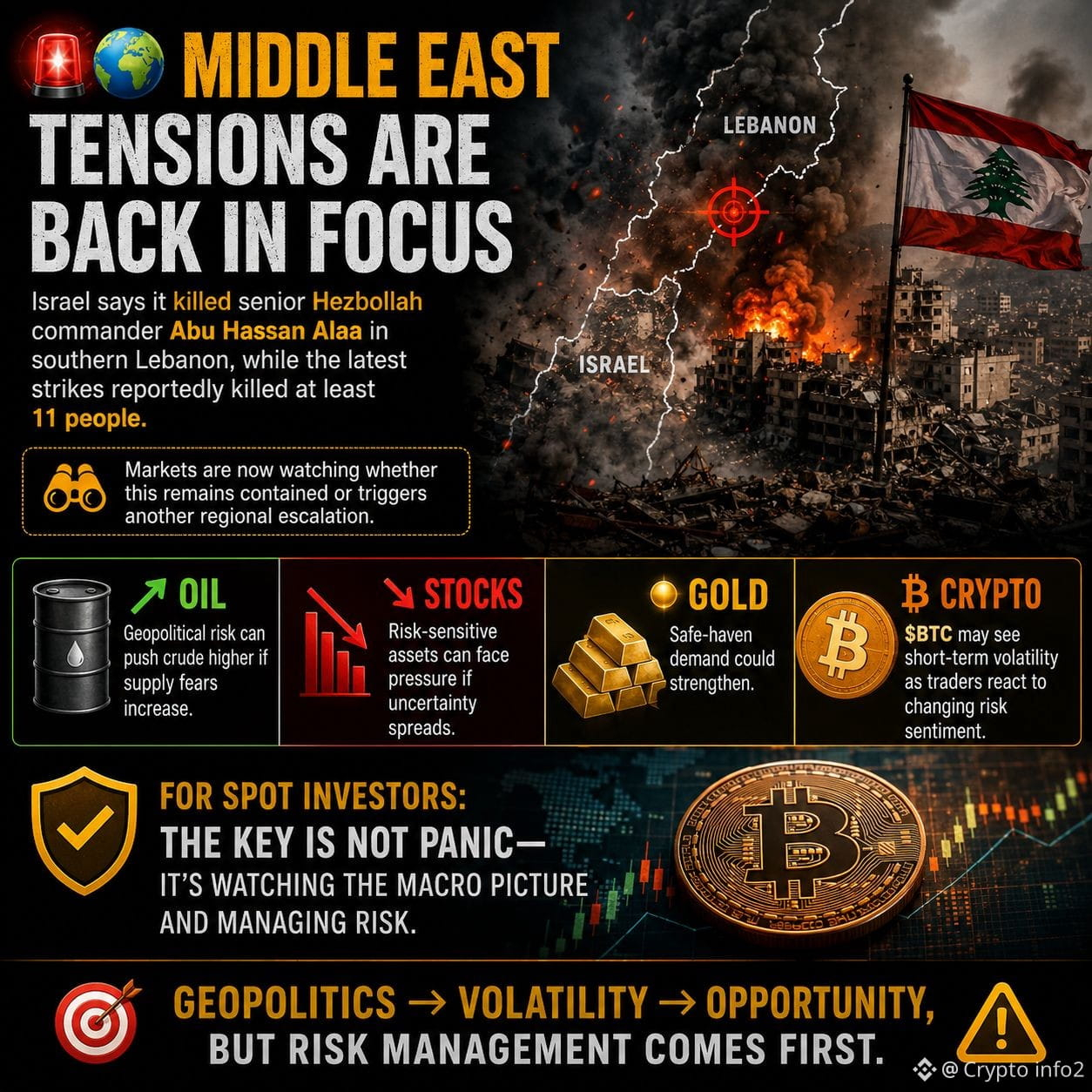
#israelstrikeslebanonkillshezbollahcommander 🚨🌍 MIDDLE EAST TENSIONS BACK IN FOCUS
Israel says it killed senior Hezbollah commander Abu Hassan Alaa in southern Lebanon. Separately, Israeli strikes on August 15 reportedly killed at least 11 people, including children—the deadliest escalation since the June truce.
Markets are now watching closely: does this remain contained, or trigger another regional escalation?
📈 Oil: Geopolitical risk could push crude higher if supply fears grow.
📉 Stocks: Risk-sensitive assets may face pressure if uncertainty spreads.
🟡 Gold: Safe-haven demand could strengthen.
₿ Crypto: $BTC may see short-term volatility as risk sentiment shifts.
⚠️ For spot investors: Don’t panic. Watch the macro picture, protect capital, and avoid emotional trades.
🔥 Geopolitics → Volatility → Opportunity, but risk management comes first.
#Bitcoin #BTC #Crypto #Gold
CLICK TO BELOW TRADE👇
$BTC $XAU
{future}(XAUUSDT)
{future}(BTCUSDT)
#israelstrikeslebanonkillshezbollahcommander 🚨🌍 MIDDLE EAST TENSIONS BACK IN FOCUS
Israel says it killed senior Hezbollah commander Abu Hassan Alaa in southern Lebanon. Separately, Israeli strikes on August 15 reportedly killed at least 11 people, including children—the deadliest escalation since the June truce.
Markets are now watching closely: does this remain contained, or trigger another regional escalation?
📈 Oil: Geopolitical risk could push crude higher if supply fears grow.
📉 Stocks: Risk-sensitive assets may face pressure if uncertainty spreads.
🟡 Gold: Safe-haven demand could strengthen.
₿ Crypto: $BTC may see short-term volatility as risk sentiment shifts.
⚠️ For spot investors: Don’t panic. Watch the macro picture, protect capital, and avoid emotional trades.
🔥 Geopolitics → Volatility → Opportunity, but risk management comes first.
#Bitcoin #BTC #Crypto #Gold
CLICK TO BELOW TRADE👇
$BTC $XAU
Israel says it killed senior Hezbollah commander Abu Hassan Alaa in southern Lebanon. Separately, Israeli strikes on August 15 reportedly killed at least 11 people, including children—the deadliest escalation since the June truce.
Markets are now watching closely: does this remain contained, or trigger another regional escalation?
📈 Oil: Geopolitical risk could push crude higher if supply fears grow.
📉 Stocks: Risk-sensitive assets may face pressure if uncertainty spreads.
🟡 Gold: Safe-haven demand could strengthen.
₿ Crypto: $BTC may see short-term volatility as risk sentiment shifts.
⚠️ For spot investors: Don’t panic. Watch the macro picture, protect capital, and avoid emotional trades.
🔥 Geopolitics → Volatility → Opportunity, but risk management comes first.
#Bitcoin #BTC #Crypto #Gold
CLICK TO BELOW TRADE👇
$BTC $XAU
1
143

#IsraelStrikesLebanonKillsHezbollahCommander
📊| GEOPOLITICAL POWDER KEG
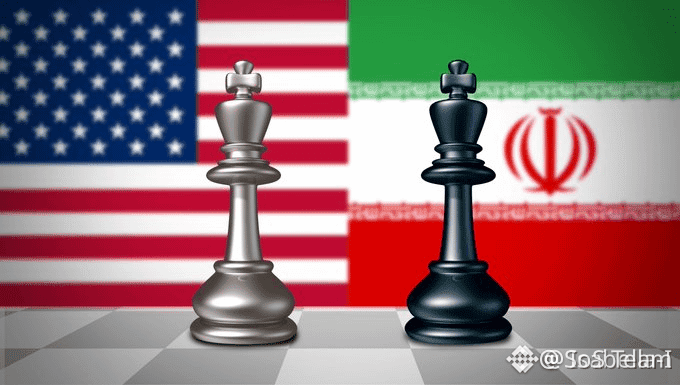
Global instability is accelerating. An Israeli strike targeting a key Hezbollah commander in Lebanon, combined with imminent US sanctions against Iran, is keeping markets on high alert.
The Israel Defense Forces confirmed the death of Ali Samir Al-Haj Hassan, commander of the Hezbollah elite Radwan Force unit, in an airstrike in Ansar city in southern Lebanon.
The strike was a response to a Hezbollah attack on Israeli forces in the “security zone.”
With Iran promoting the Strait of Hormuz as a strategic ace, we’re facing a surge in severe volatility. Iran has already signaled it will keep control of the strait under any circumstances, with the expectation that US-Iran peace talks may not materialize—keeping a geopolitical risk premium in the market.
🛢️ THE OIL EQUATION:
Brent is currently hovering near the US$89 mark [citation:3]. The real question is: are we setting the stage for a dramatic break toward $100, or are we simply entering a zone of extreme, unpredictable swings?
With the US threatening “never-before-seen” sanctions against Iran and traffic in the Strait of Hormuz slowing dramatically—only five cargo ships crossed on Saturday and none on Sunday, versus 31 at the end of the previous weekend—the trend points toward higher energy prices. The threat of supply disruptions through the strait, which moves about a fifth of global oil, is keeping markets on edge.
⚠️ Monitor Energy Corridors: Keep a close watch on developments in the Strait of Hormuz. The energy sector and traditional safe-haven assets are ideal candidates for sudden, aggressive spikes.
#Geopolitics #OilMarket #RiskManagement
$BZ
{future}(BZUSDT)
$CL
{future}(CLUSDT)
$H
{future}(HUSDT)
#IsraelStrikesLebanonKillsHezbollahCommander
📊| GEOPOLITICAL POWDER KEG
Global instability is accelerating. An Israeli strike targeting a key Hezbollah commander in Lebanon, combined with imminent US sanctions against Iran, is keeping markets on high alert.
The Israel Defense Forces confirmed the death of Ali Samir Al-Haj Hassan, commander of the Hezbollah elite Radwan Force unit, in an airstrike in Ansar city in southern Lebanon.
The strike was a response to a Hezbollah attack on Israeli forces in the “security zone.”
With Iran promoting the Strait of Hormuz as a strategic ace, we’re facing a surge in severe volatility. Iran has already signaled it will keep control of the strait under any circumstances, with the expectation that US-Iran peace talks may not materialize—keeping a geopolitical risk premium in the market.
🛢️ THE OIL EQUATION:
Brent is currently hovering near the US$89 mark [citation:3]. The real question is: are we setting the stage for a dramatic break toward $100, or are we simply entering a zone of extreme, unpredictable swings?
With the US threatening “never-before-seen” sanctions against Iran and traffic in the Strait of Hormuz slowing dramatically—only five cargo ships crossed on Saturday and none on Sunday, versus 31 at the end of the previous weekend—the trend points toward higher energy prices. The threat of supply disruptions through the strait, which moves about a fifth of global oil, is keeping markets on edge.
⚠️ Monitor Energy Corridors: Keep a close watch on developments in the Strait of Hormuz. The energy sector and traditional safe-haven assets are ideal candidates for sudden, aggressive spikes.
#Geopolitics #OilMarket #RiskManagement
$BZ
$CL
$H
📊| GEOPOLITICAL POWDER KEG
Global instability is accelerating. An Israeli strike targeting a key Hezbollah commander in Lebanon, combined with imminent US sanctions against Iran, is keeping markets on high alert.
The Israel Defense Forces confirmed the death of Ali Samir Al-Haj Hassan, commander of the Hezbollah elite Radwan Force unit, in an airstrike in Ansar city in southern Lebanon.
The strike was a response to a Hezbollah attack on Israeli forces in the “security zone.”
With Iran promoting the Strait of Hormuz as a strategic ace, we’re facing a surge in severe volatility. Iran has already signaled it will keep control of the strait under any circumstances, with the expectation that US-Iran peace talks may not materialize—keeping a geopolitical risk premium in the market.
🛢️ THE OIL EQUATION:
Brent is currently hovering near the US$89 mark [citation:3]. The real question is: are we setting the stage for a dramatic break toward $100, or are we simply entering a zone of extreme, unpredictable swings?
With the US threatening “never-before-seen” sanctions against Iran and traffic in the Strait of Hormuz slowing dramatically—only five cargo ships crossed on Saturday and none on Sunday, versus 31 at the end of the previous weekend—the trend points toward higher energy prices. The threat of supply disruptions through the strait, which moves about a fifth of global oil, is keeping markets on edge.
⚠️ Monitor Energy Corridors: Keep a close watch on developments in the Strait of Hormuz. The energy sector and traditional safe-haven assets are ideal candidates for sudden, aggressive spikes.
#Geopolitics #OilMarket #RiskManagement
$BZ
$CL
$H
2
454

#israelstrikeslebanonkillshezbollahcommander
Is geopolitics heating up again? 🔥 Israel has launched strikes on Lebanon and killed a prominent Hezbollah commander, just as the United States prepares to impose new sanctions on Iran! In addition, Iran is describing the Strait of Hormuz as "a gift bestowed by God." It looks like the perfect recipe for market turbulence! 💸
Crude oil futures are hovering below $89. Are we heading toward $100, or is it just another week full of volatility? No one knows!
What should traders do?
1️⃣ Monitor oil: Track Brent crude and the Strait of Hormuz. Energy sector stocks and safe-haven assets could jump! 🛢️
2️⃣ Reduce risk: Geopolitical news can trigger sudden, fast pullbacks. Keep a tight stop-loss and don’t overleverage! ⚠️
This is not financial advice!
Please stay tuned
#Geopolitics #OilMarket #RiskManagement
$CL
{future}(CLUSDT)
$BZ
{future}(BZUSDT)
$NATGAS
{future}(NATGASUSDT)
#israelstrikeslebanonkillshezbollahcommander
Is geopolitics heating up again? 🔥 Israel has launched strikes on Lebanon and killed a prominent Hezbollah commander, just as the United States prepares to impose new sanctions on Iran! In addition, Iran is describing the Strait of Hormuz as "a gift bestowed by God." It looks like the perfect recipe for market turbulence! 💸
Crude oil futures are hovering below $89. Are we heading toward $100, or is it just another week full of volatility? No one knows!
What should traders do?
1️⃣ Monitor oil: Track Brent crude and the Strait of Hormuz. Energy sector stocks and safe-haven assets could jump! 🛢️
2️⃣ Reduce risk: Geopolitical news can trigger sudden, fast pullbacks. Keep a tight stop-loss and don’t overleverage! ⚠️
This is not financial advice!
Please stay tuned
#Geopolitics #OilMarket #RiskManagement
$CL
$BZ
$NATGAS
Is geopolitics heating up again? 🔥 Israel has launched strikes on Lebanon and killed a prominent Hezbollah commander, just as the United States prepares to impose new sanctions on Iran! In addition, Iran is describing the Strait of Hormuz as "a gift bestowed by God." It looks like the perfect recipe for market turbulence! 💸
Crude oil futures are hovering below $89. Are we heading toward $100, or is it just another week full of volatility? No one knows!
What should traders do?
1️⃣ Monitor oil: Track Brent crude and the Strait of Hormuz. Energy sector stocks and safe-haven assets could jump! 🛢️
2️⃣ Reduce risk: Geopolitical news can trigger sudden, fast pullbacks. Keep a tight stop-loss and don’t overleverage! ⚠️
This is not financial advice!
Please stay tuned
#Geopolitics #OilMarket #RiskManagement
$CL
$BZ
$NATGAS
1
147

#IsraelStrikesLebanonKillsHezbollahCommander The trending hashtag **#IsraelStrikesLebanonKillsHezbollahCommander** follows a series of lethal Israeli airstrikes across southern Lebanon, marking the deadliest escalation between the Israel Defense Forces (IDF) and Hezbollah since June.
---
### Key Details of the Escalation
* **Targeted Commanders:** The IDF reported killing senior Hezbollah commanders in targeted strikes in southern Lebanon, including **Ali Mohammad Fakhreddine** (known as *Abu Hassan Alaa*) in Deir Al-Zahrani and Radwan Force commander **Ali Samir Al-Haj Hassan** in Ansar.
* **Casualties & Damage:** Lebanese health officials and state media reported 11 total fatalities from the strikes, including women and children when a residential home was hit in Ansar. The IDF stated that civilian casualties were unintentional and accused commanders of using civilian locations as shields.
* **The Immediate Trigger:** Prime Minister Benjamin Netanyahu stated the airstrikes were direct retaliation for a Hezbollah drone strike that wounded three Israeli soldiers.
---
### Broader Diplomatic & Regional Context
| Context Layer | Impact & Current Status |
| --- | --- |
| **Fragile Ceasefire** | Threatens the U.S.-brokered framework established earlier in the summer aimed at disarming non-state groups and establishing security buffer zones. |
| **Upcoming Peace Talks** | Strikes occurred just ahead of scheduled direct U.S.-sponsored negotiations in Rome. KRG and Lebanese leadership warned the strikes derail talks, while Israeli officials claimed it forces a serious negotiation baseline. |
| **U.S.-Iran Pressures** | Coincides with expiring U.S.-Iran diplomatic windows over regional maritime security and upcoming U.S. economic sanctions. |
---
> **Official Reactions:** Hezbollah declared the attacks "will be met with an appropriate response," urging Lebanese authorities to halt direct negotiations, while Israeli military officials signaled readiness for further actions if threatened.$TUT
{spot}(TUTUSDT)
$GPS
{spot}(GPSUSDT)
$ACE
{spot}(ACEUSDT)
#IsraelStrikesLebanonKillsHezbollahCommander The trending hashtag **#IsraelStrikesLebanonKillsHezbollahCommander** follows a series of lethal Israeli airstrikes across southern Lebanon, marking the deadliest escalation between the Israel Defense Forces (IDF) and Hezbollah since June.
---
### Key Details of the Escalation
* **Targeted Commanders:** The IDF reported killing senior Hezbollah commanders in targeted strikes in southern Lebanon, including **Ali Mohammad Fakhreddine** (known as *Abu Hassan Alaa*) in Deir Al-Zahrani and Radwan Force commander **Ali Samir Al-Haj Hassan** in Ansar.
* **Casualties & Damage:** Lebanese health officials and state media reported 11 total fatalities from the strikes, including women and children when a residential home was hit in Ansar. The IDF stated that civilian casualties were unintentional and accused commanders of using civilian locations as shields.
* **The Immediate Trigger:** Prime Minister Benjamin Netanyahu stated the airstrikes were direct retaliation for a Hezbollah drone strike that wounded three Israeli soldiers.
---
### Broader Diplomatic & Regional Context
| Context Layer | Impact & Current Status |
| --- | --- |
| **Fragile Ceasefire** | Threatens the U.S.-brokered framework established earlier in the summer aimed at disarming non-state groups and establishing security buffer zones. |
| **Upcoming Peace Talks** | Strikes occurred just ahead of scheduled direct U.S.-sponsored negotiations in Rome. KRG and Lebanese leadership warned the strikes derail talks, while Israeli officials claimed it forces a serious negotiation baseline. |
| **U.S.-Iran Pressures** | Coincides with expiring U.S.-Iran diplomatic windows over regional maritime security and upcoming U.S. economic sanctions. |
---
> **Official Reactions:** Hezbollah declared the attacks "will be met with an appropriate response," urging Lebanese authorities to halt direct negotiations, while Israeli military officials signaled readiness for further actions if threatened.$TUT
$GPS
$ACE
---
### Key Details of the Escalation
* **Targeted Commanders:** The IDF reported killing senior Hezbollah commanders in targeted strikes in southern Lebanon, including **Ali Mohammad Fakhreddine** (known as *Abu Hassan Alaa*) in Deir Al-Zahrani and Radwan Force commander **Ali Samir Al-Haj Hassan** in Ansar.
* **Casualties & Damage:** Lebanese health officials and state media reported 11 total fatalities from the strikes, including women and children when a residential home was hit in Ansar. The IDF stated that civilian casualties were unintentional and accused commanders of using civilian locations as shields.
* **The Immediate Trigger:** Prime Minister Benjamin Netanyahu stated the airstrikes were direct retaliation for a Hezbollah drone strike that wounded three Israeli soldiers.
---
### Broader Diplomatic & Regional Context
| Context Layer | Impact & Current Status |
| --- | --- |
| **Fragile Ceasefire** | Threatens the U.S.-brokered framework established earlier in the summer aimed at disarming non-state groups and establishing security buffer zones. |
| **Upcoming Peace Talks** | Strikes occurred just ahead of scheduled direct U.S.-sponsored negotiations in Rome. KRG and Lebanese leadership warned the strikes derail talks, while Israeli officials claimed it forces a serious negotiation baseline. |
| **U.S.-Iran Pressures** | Coincides with expiring U.S.-Iran diplomatic windows over regional maritime security and upcoming U.S. economic sanctions. |
---
> **Official Reactions:** Hezbollah declared the attacks "will be met with an appropriate response," urging Lebanese authorities to halt direct negotiations, while Israeli military officials signaled readiness for further actions if threatened.$TUT
$GPS
$ACE
1
430

🚨🌍 Middle East Tensions Are Back in Focus
Israel says it killed senior Hezbollah commander Abu Hassan Alaa in southern Lebanon, while the latest strikes reportedly killed at least 11 people.
Markets are now watching whether this remains contained or triggers another regional escalation.
📈 Oil: geopolitical risk can push crude higher if supply fears increase.
📉 Stocks: risk-sensitive assets can face pressure if uncertainty spreads.
🟡 Gold: safe-haven demand could strengthen.
₿ Crypto: $BTC may see short-term volatility as traders react to changing risk sentiment.
For spot investors, the key is not panic—it’s watching the macro picture and managing risk.
#israelstrikeslebanonkillshezbollahcommander
🚨🌍 Middle East Tensions Are Back in Focus
Israel says it killed senior Hezbollah commander Abu Hassan Alaa in southern Lebanon, while the latest strikes reportedly killed at least 11 people.
Markets are now watching whether this remains contained or triggers another regional escalation.
📈 Oil: geopolitical risk can push crude higher if supply fears increase.
📉 Stocks: risk-sensitive assets can face pressure if uncertainty spreads.
🟡 Gold: safe-haven demand could strengthen.
₿ Crypto: $BTC may see short-term volatility as traders react to changing risk sentiment.
For spot investors, the key is not panic—it’s watching the macro picture and managing risk.
#israelstrikeslebanonkillshezbollahcommander
Israel says it killed senior Hezbollah commander Abu Hassan Alaa in southern Lebanon, while the latest strikes reportedly killed at least 11 people.
Markets are now watching whether this remains contained or triggers another regional escalation.
📈 Oil: geopolitical risk can push crude higher if supply fears increase.
📉 Stocks: risk-sensitive assets can face pressure if uncertainty spreads.
🟡 Gold: safe-haven demand could strengthen.
₿ Crypto: $BTC may see short-term volatility as traders react to changing risk sentiment.
For spot investors, the key is not panic—it’s watching the macro picture and managing risk.
#israelstrikeslebanonkillshezbollahcommander
1.8k

·
--
#IsraelStrikesLebanonKillsHezbollahCommander
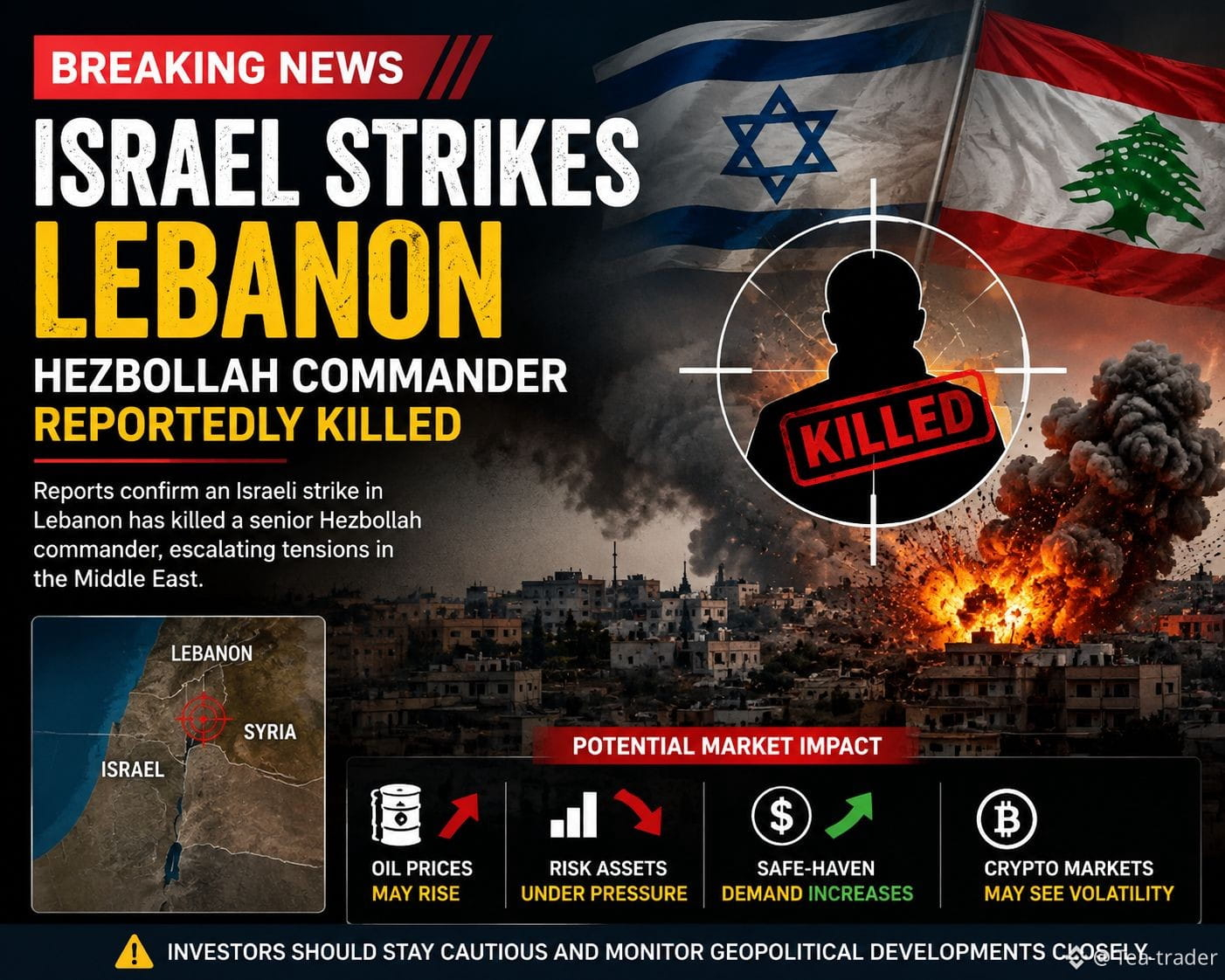
🚨 Israel Strikes Lebanon, Hezbollah Commander Reportedly Killed
Tensions in the region are rising again after reports that an Israeli strike in Lebanon killed a senior Hezbollah commander. The development could further increase geopolitical risks across the Middle East and add fresh uncertainty to global markets.
Investors will be watching closely for any signs of escalation and its potential impact on oil, currencies, and risk assets.
#Israel #Lebanon #Hezbollah #MiddleEast #Geopolitics #BreakingNews #GlobalMarkets #Oil #crypto
#IsraelStrikesLebanonKillsHezbollahCommander
🚨 Israel Strikes Lebanon, Hezbollah Commander Reportedly Killed
Tensions in the region are rising again after reports that an Israeli strike in Lebanon killed a senior Hezbollah commander. The development could further increase geopolitical risks across the Middle East and add fresh uncertainty to global markets.
Investors will be watching closely for any signs of escalation and its potential impact on oil, currencies, and risk assets.
#Israel #Lebanon #Hezbollah #MiddleEast #Geopolitics #BreakingNews #GlobalMarkets #Oil #crypto
🚨 Israel Strikes Lebanon, Hezbollah Commander Reportedly Killed
Tensions in the region are rising again after reports that an Israeli strike in Lebanon killed a senior Hezbollah commander. The development could further increase geopolitical risks across the Middle East and add fresh uncertainty to global markets.
Investors will be watching closely for any signs of escalation and its potential impact on oil, currencies, and risk assets.
#Israel #Lebanon #Hezbollah #MiddleEast #Geopolitics #BreakingNews #GlobalMarkets #Oil #crypto
78

Article
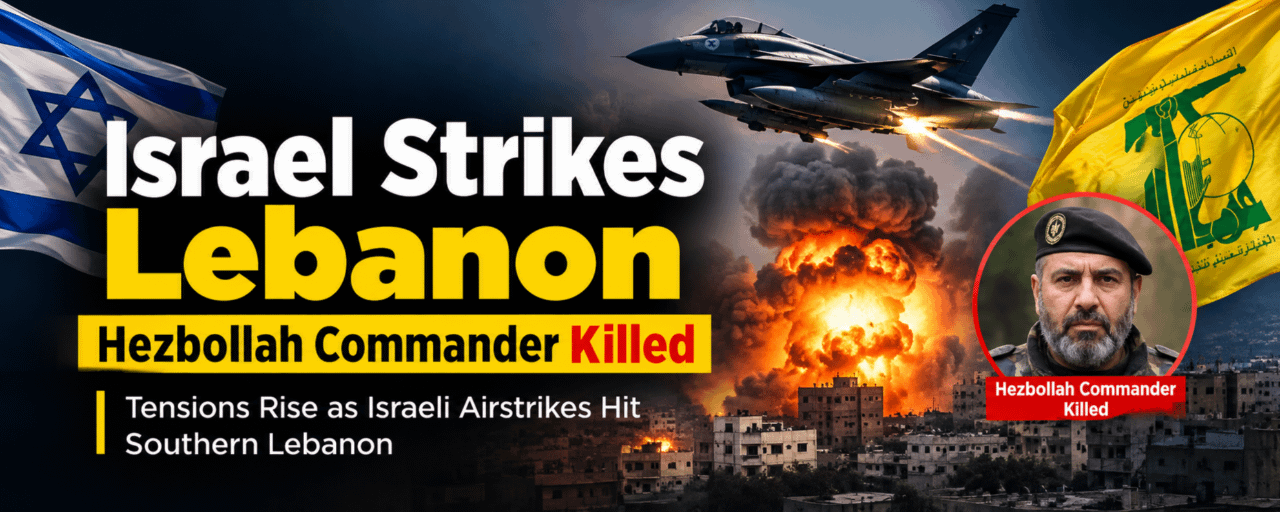
Israel Strikes Southern Lebanon, Hezbollah Commander Killed Amid Rising Tensions#israelstrikeslebanonkillshezbollahcommander
Tensions between Israel and Hezbollah have risen again after Israeli airstrikes hit southern Lebanon, with Israel saying a senior Hezbollah commander was killed in one of the attacks.
The Israeli military said the strike on Deir al-Zahrani killed Ali Mohammad Fakhreddine, also known as Abu Hassan Alaa, who was described as a senior commander of Hezbollah’s Badr division. Israel said the operation was carried out in response to a Hezbollah drone attack that seriously wounded three Israeli soldiers.
The strikes have also caused civilian casualties. Lebanon's Health Ministry reported that the wider Israeli strikes in southern Lebanon killed at least 11 people and wounded 19, making the attacks among the deadliest since the June ceasefire between Israel and Hezbollah.
Lebanese officials have condemned the attacks, warning that continued military action could undermine efforts to stabilize the border and advance negotiations. Israel, meanwhile, has maintained that its strikes are aimed at Hezbollah military activity and preventing further attacks against Israeli troops and communities.
The latest escalation highlights how fragile the current truce remains. Any further Hezbollah attacks or Israeli retaliatory strikes could increase fears of a broader confrontation and make diplomatic efforts even more difficult.
Key Takeaways
🇮🇱 Israel says it killed senior Hezbollah commander Abu Hassan Alaa.🇱🇧 At least 11 people were killed in the latest southern Lebanon strikes.⚠️ The strikes followed a Hezbollah drone attack that wounded three Israeli soldiers.🕊️ The escalation puts additional pressure on the fragile Israel-Hezbollah truce.🌍 Further fighting could increase regional instability and complicate ongoing negotiations.
Disclaimer: This article summarizes publicly reported claims from Israeli and Lebanese sources. Details surrounding the strikes and casualties may continue to change as investigations and reporting develop.
$MEGA $AIGENSYN $GENIUS
Israel Strikes Southern Lebanon, Hezbollah Commander Killed Amid Rising Tensions
#israelstrikeslebanonkillshezbollahcommander
Tensions between Israel and Hezbollah have risen again after Israeli airstrikes hit southern Lebanon, with Israel saying a senior Hezbollah commander was killed in one of the attacks.
The Israeli military said the strike on Deir al-Zahrani killed Ali Mohammad Fakhreddine, also known as Abu Hassan Alaa, who was described as a senior commander of Hezbollah’s Badr division. Israel said the operation was carried out in response to a Hezbollah drone attack that seriously wounded three Israeli soldiers.
The strikes have also caused civilian casualties. Lebanon's Health Ministry reported that the wider Israeli strikes in southern Lebanon killed at least 11 people and wounded 19, making the attacks among the deadliest since the June ceasefire between Israel and Hezbollah.
Lebanese officials have condemned the attacks, warning that continued military action could undermine efforts to stabilize the border and advance negotiations. Israel, meanwhile, has maintained that its strikes are aimed at Hezbollah military activity and preventing further attacks against Israeli troops and communities.
The latest escalation highlights how fragile the current truce remains. Any further Hezbollah attacks or Israeli retaliatory strikes could increase fears of a broader confrontation and make diplomatic efforts even more difficult.
Key Takeaways
🇮🇱 Israel says it killed senior Hezbollah commander Abu Hassan Alaa.🇱🇧 At least 11 people were killed in the latest southern Lebanon strikes.⚠️ The strikes followed a Hezbollah drone attack that wounded three Israeli soldiers.🕊️ The escalation puts additional pressure on the fragile Israel-Hezbollah truce.🌍 Further fighting could increase regional instability and complicate ongoing negotiations.
Disclaimer: This article summarizes publicly reported claims from Israeli and Lebanese sources. Details surrounding the strikes and casualties may continue to change as investigations and reporting develop.
$MEGA $AIGENSYN $GENIUS
Tensions between Israel and Hezbollah have risen again after Israeli airstrikes hit southern Lebanon, with Israel saying a senior Hezbollah commander was killed in one of the attacks.
The Israeli military said the strike on Deir al-Zahrani killed Ali Mohammad Fakhreddine, also known as Abu Hassan Alaa, who was described as a senior commander of Hezbollah’s Badr division. Israel said the operation was carried out in response to a Hezbollah drone attack that seriously wounded three Israeli soldiers.
The strikes have also caused civilian casualties. Lebanon's Health Ministry reported that the wider Israeli strikes in southern Lebanon killed at least 11 people and wounded 19, making the attacks among the deadliest since the June ceasefire between Israel and Hezbollah.
Lebanese officials have condemned the attacks, warning that continued military action could undermine efforts to stabilize the border and advance negotiations. Israel, meanwhile, has maintained that its strikes are aimed at Hezbollah military activity and preventing further attacks against Israeli troops and communities.
The latest escalation highlights how fragile the current truce remains. Any further Hezbollah attacks or Israeli retaliatory strikes could increase fears of a broader confrontation and make diplomatic efforts even more difficult.
Key Takeaways
🇮🇱 Israel says it killed senior Hezbollah commander Abu Hassan Alaa.🇱🇧 At least 11 people were killed in the latest southern Lebanon strikes.⚠️ The strikes followed a Hezbollah drone attack that wounded three Israeli soldiers.🕊️ The escalation puts additional pressure on the fragile Israel-Hezbollah truce.🌍 Further fighting could increase regional instability and complicate ongoing negotiations.
Disclaimer: This article summarizes publicly reported claims from Israeli and Lebanese sources. Details surrounding the strikes and casualties may continue to change as investigations and reporting develop.
$MEGA $AIGENSYN $GENIUS
131
·
--
Bullish
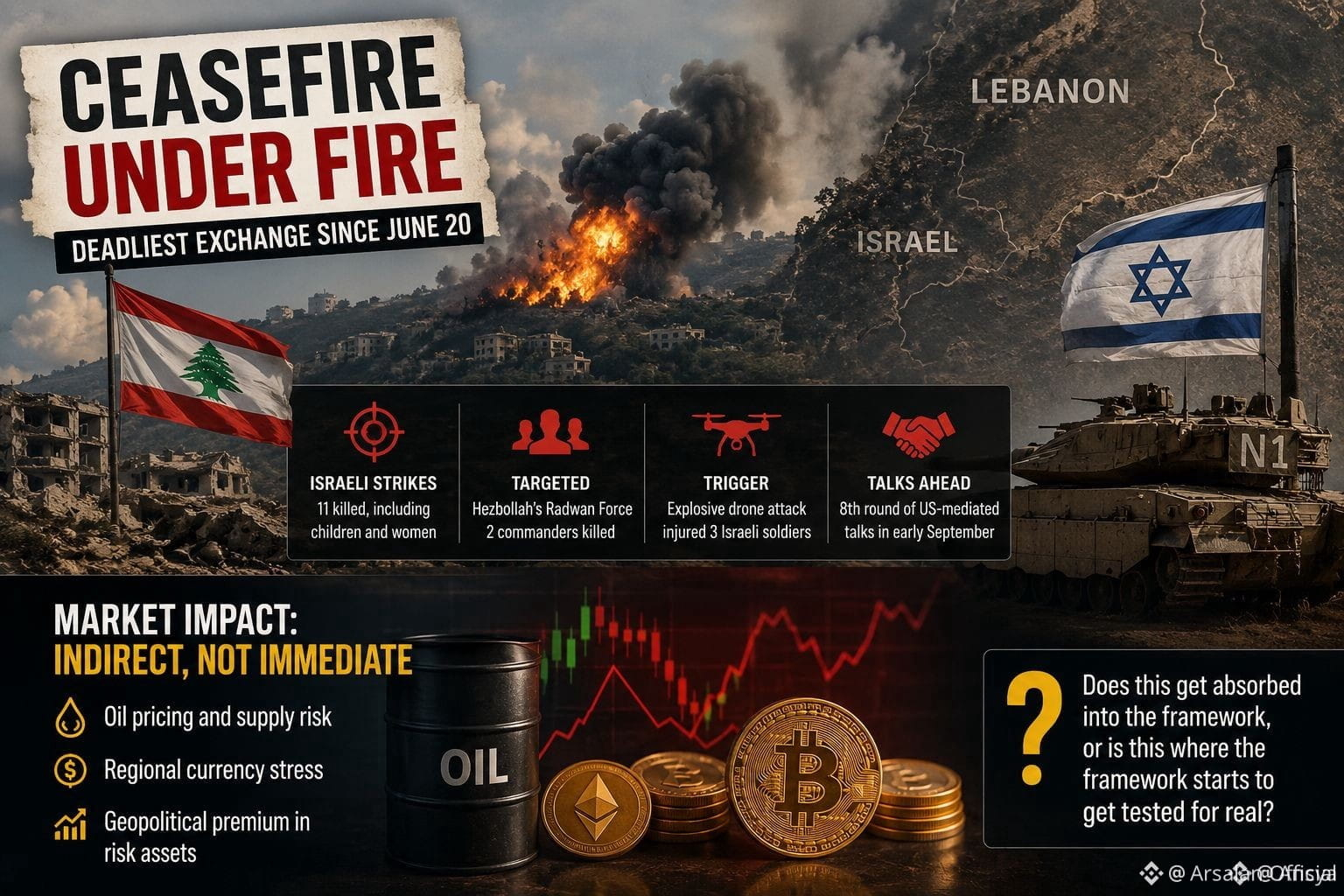
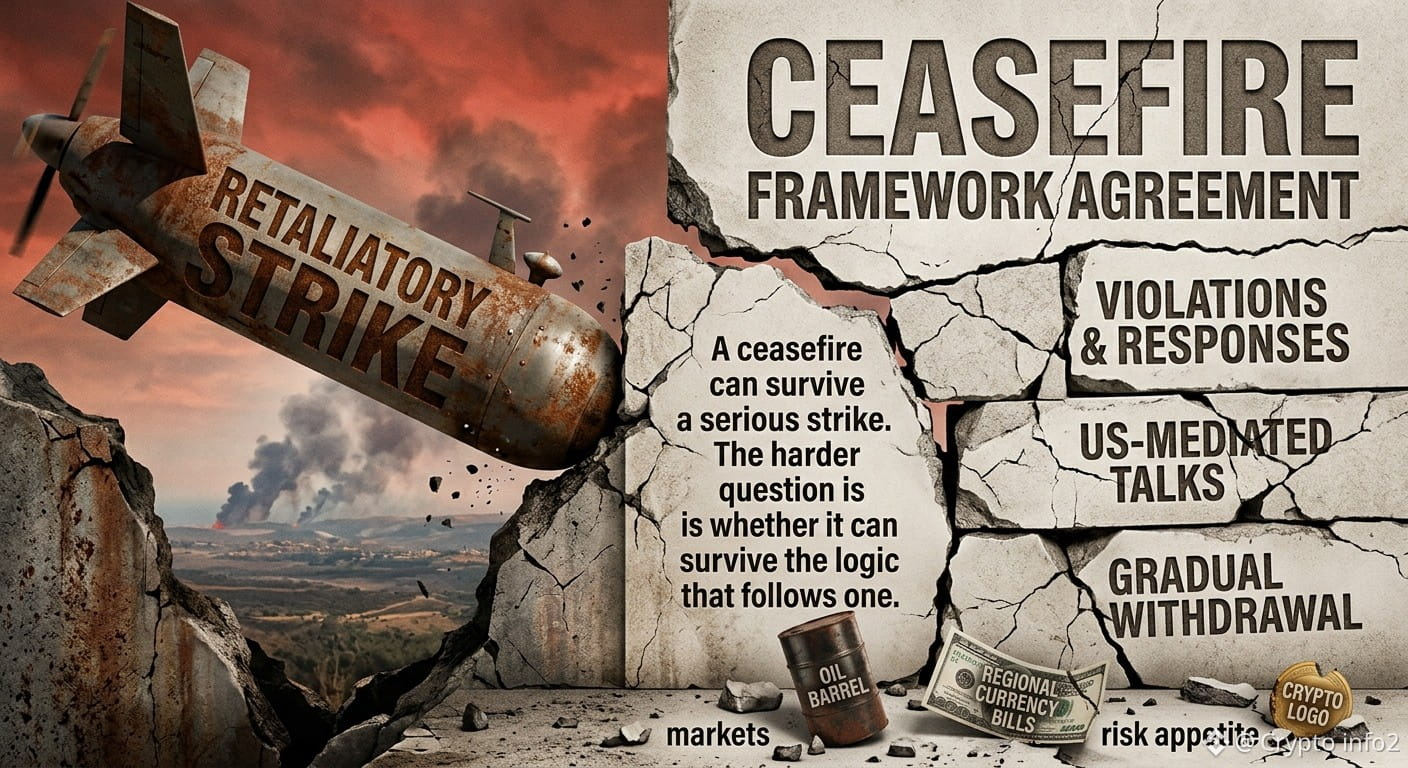
#israelstrikeslebanonkillshezbollahcommander When Does a Ceasefire Stop Being a Framework?
A ceasefire can survive a serious strike. The harder question is whether it can survive the logic that follows one.
Saturday’s Israeli strikes across southern Lebanon, which Lebanese authorities say killed 11 people, mark the deadliest exchange since the June 20 truce. Israel says it was responding to an explosive drone attack that seriously wounded three soldiers and targeted Hezbollah’s Radwan Force.
On paper, the diplomatic framework is still alive. US-mediated talks are expected to resume in early September, with a gradual Israeli withdrawal from Lebanese territory still on the table.
But this is where the real test begins.
If each violation produces a military response, and each response becomes justification for another, the ceasefire can remain technically intact while becoming increasingly hollow in practice.
For markets, the direct crypto impact is likely limited. The bigger transmission channel is risk appetite: oil, regional currencies, geopolitical premiums and the broader US-Iran backdrop.
The question isn't simply whether the ceasefire holds.
It's whether both sides still have enough incentive to keep operating inside the framework when escalation starts becoming the easier option.
#Lebanon #Israel #Hezbollah #Geopolitics
CLICK TO BELOW TRADE👇
$GPS $ACE $TUT
{future}(TUTUSDT)
{future}(ACEUSDT)
{future}(GPSUSDT)
#israelstrikeslebanonkillshezbollahcommander When Does a Ceasefire Stop Being a Framework?
A ceasefire can survive a serious strike. The harder question is whether it can survive the logic that follows one.
Saturday’s Israeli strikes across southern Lebanon, which Lebanese authorities say killed 11 people, mark the deadliest exchange since the June 20 truce. Israel says it was responding to an explosive drone attack that seriously wounded three soldiers and targeted Hezbollah’s Radwan Force.
On paper, the diplomatic framework is still alive. US-mediated talks are expected to resume in early September, with a gradual Israeli withdrawal from Lebanese territory still on the table.
But this is where the real test begins.
If each violation produces a military response, and each response becomes justification for another, the ceasefire can remain technically intact while becoming increasingly hollow in practice.
For markets, the direct crypto impact is likely limited. The bigger transmission channel is risk appetite: oil, regional currencies, geopolitical premiums and the broader US-Iran backdrop.
The question isn't simply whether the ceasefire holds.
It's whether both sides still have enough incentive to keep operating inside the framework when escalation starts becoming the easier option.
#Lebanon #Israel #Hezbollah #Geopolitics
CLICK TO BELOW TRADE👇
$GPS $ACE $TUT
A ceasefire can survive a serious strike. The harder question is whether it can survive the logic that follows one.
Saturday’s Israeli strikes across southern Lebanon, which Lebanese authorities say killed 11 people, mark the deadliest exchange since the June 20 truce. Israel says it was responding to an explosive drone attack that seriously wounded three soldiers and targeted Hezbollah’s Radwan Force.
On paper, the diplomatic framework is still alive. US-mediated talks are expected to resume in early September, with a gradual Israeli withdrawal from Lebanese territory still on the table.
But this is where the real test begins.
If each violation produces a military response, and each response becomes justification for another, the ceasefire can remain technically intact while becoming increasingly hollow in practice.
For markets, the direct crypto impact is likely limited. The bigger transmission channel is risk appetite: oil, regional currencies, geopolitical premiums and the broader US-Iran backdrop.
The question isn't simply whether the ceasefire holds.
It's whether both sides still have enough incentive to keep operating inside the framework when escalation starts becoming the easier option.
#Lebanon #Israel #Hezbollah #Geopolitics
CLICK TO BELOW TRADE👇
$GPS $ACE $TUT
4
5k

·
--
#IsraelStrikesLebanonKillsHezbollahCommander
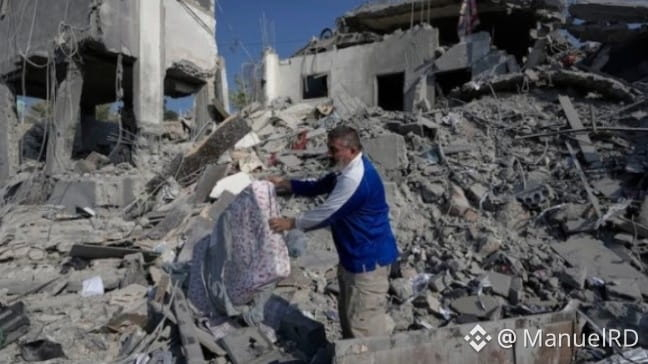
Israel attacks Lebanon as the United States prepares new measures against Iran.
Lebanon endured its bloodiest day of fighting in months, increasing pressure on the stalled negotiations between the United States and Iran, while Washington prepares new economic measures.
The Israel Defense Forces announced on Sunday the death of Abu Hassan Alaa, a senior Hezbollah commander, in southern Lebanon the day before.
$NVDAB
{spot}(NVDABUSDT)
$AAPLB
{spot}(AAPLBUSDT)
$GOOGL.US
{stock_us}(GOOGL.US)
#IsraelStrikesLebanonKillsHezbollahCommander
Israel attacks Lebanon as the United States prepares new measures against Iran.
Lebanon endured its bloodiest day of fighting in months, increasing pressure on the stalled negotiations between the United States and Iran, while Washington prepares new economic measures.
The Israel Defense Forces announced on Sunday the death of Abu Hassan Alaa, a senior Hezbollah commander, in southern Lebanon the day before.
$NVDAB
$AAPLB
$GOOGL.US
Israel attacks Lebanon as the United States prepares new measures against Iran.
Lebanon endured its bloodiest day of fighting in months, increasing pressure on the stalled negotiations between the United States and Iran, while Washington prepares new economic measures.
The Israel Defense Forces announced on Sunday the death of Abu Hassan Alaa, a senior Hezbollah commander, in southern Lebanon the day before.
$NVDAB
$AAPLB
$GOOGL.US
1
1
116

#IsraelStrikesLebanonKillsHezbollahCommander https://app.binance.com/uni-qr/chas/IsraelStrikesLebanonKillsHezbollahCommander?l=en-AF&uc=app_square_share_link&us=copylink
#IsraelStrikesLebanonKillsHezbollahCommander https://app.binance.com/uni-qr/chas/IsraelStrikesLebanonKillsHezbollahCommander?l=en-AF&uc=app_square_share_link&us=copylink
1
1
79

·
--
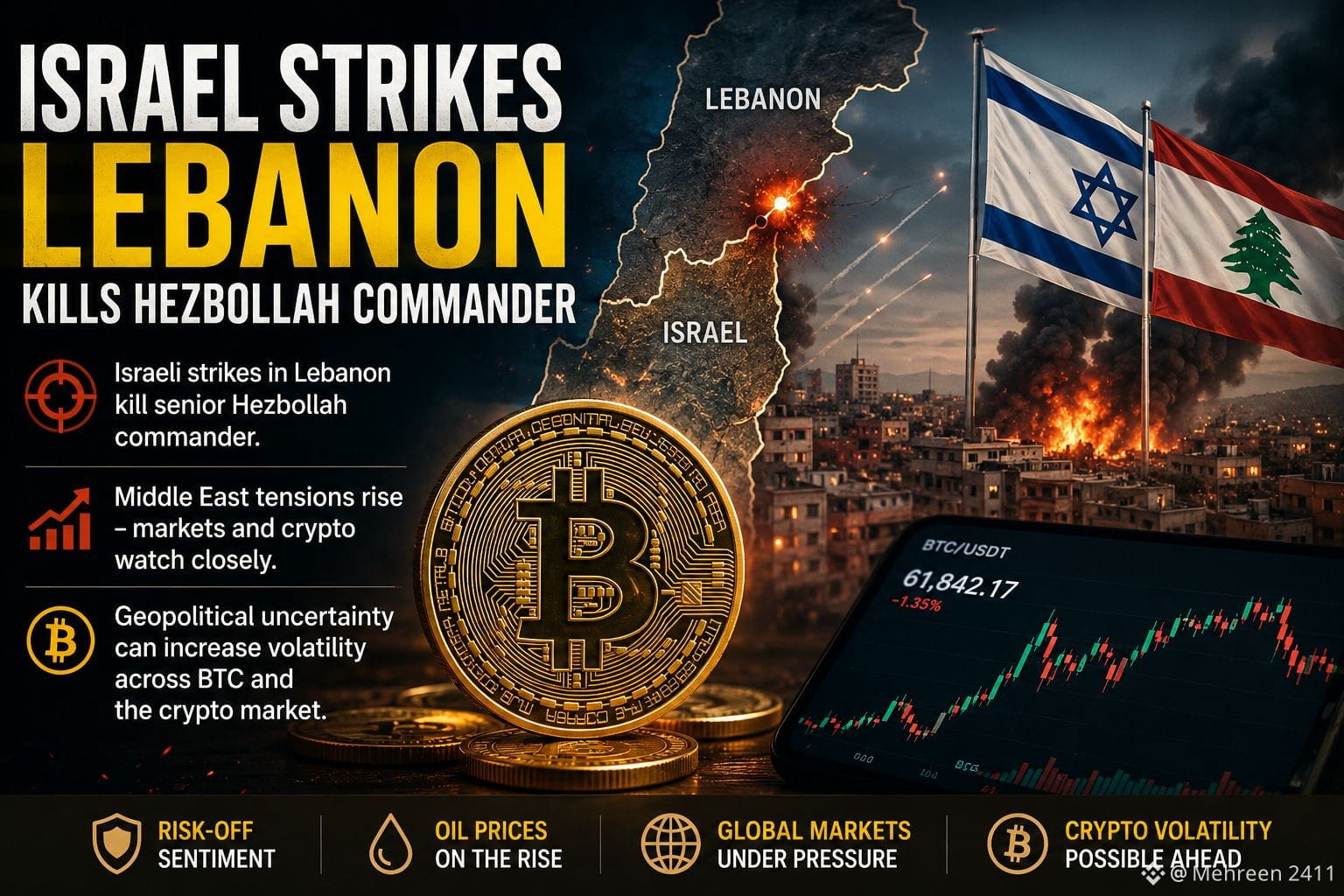
#IsraelStrikesLebanonKillsHezbollahCommander Middle East Tensions Rise — Why Crypto Traders Are Watching
Israel carried out strikes in southern Lebanon that killed a senior Hezbollah commander, according to Israeli officials. The attacks come amid renewed tensions despite a fragile ceasefire framework.
For crypto markets, geopolitical escalation can quickly increase risk-off sentiment, with investors watching oil, the U.S. dollar and broader global markets for signs of stress. Brent crude was already reported higher amid the latest tensions.
If tensions expand across the region, volatility could rise across BTC and the wider crypto market as traders reassess risk.
#BTC #cryptouniverseofficial #Geopolitics
#IsraelStrikesLebanonKillsHezbollahCommander Middle East Tensions Rise — Why Crypto Traders Are Watching
Israel carried out strikes in southern Lebanon that killed a senior Hezbollah commander, according to Israeli officials. The attacks come amid renewed tensions despite a fragile ceasefire framework.
For crypto markets, geopolitical escalation can quickly increase risk-off sentiment, with investors watching oil, the U.S. dollar and broader global markets for signs of stress. Brent crude was already reported higher amid the latest tensions.
If tensions expand across the region, volatility could rise across BTC and the wider crypto market as traders reassess risk.
#BTC #cryptouniverseofficial #Geopolitics
Israel carried out strikes in southern Lebanon that killed a senior Hezbollah commander, according to Israeli officials. The attacks come amid renewed tensions despite a fragile ceasefire framework.
For crypto markets, geopolitical escalation can quickly increase risk-off sentiment, with investors watching oil, the U.S. dollar and broader global markets for signs of stress. Brent crude was already reported higher amid the latest tensions.
If tensions expand across the region, volatility could rise across BTC and the wider crypto market as traders reassess risk.
#BTC #cryptouniverseofficial #Geopolitics
81

·
--
Why is nobody talking about how fast crypto traders turned a real geopolitical escalation into just another candle?
The pain is simple: people either panic-sell $BTC into the first red wick or FOMO into $USDT “safety” after the move already happened. Both are emotional trades, not strategy.
The Israel-Lebanon strike headlines are a clean case study in how crypto reacts to macro shock. First comes the risk-off impulse: liquidity hides, leverage gets flushed, and traders pretend they saw it coming. Then the market starts pricing the second-order question: does this stay regional, or does it spill into oil, rates, and dollar strength?
My hot take: crypto is not ignoring geopolitics, it is filtering it through liquidity. With Fear & Greed sitting in fear territory, $BTC does not need a massive war narrative to move sharply. It just needs thin order books, crowded leverage, and one headline that forces everyone to de-risk at the same time.
That is why the mainstream “bad news equals dump” take is too lazy. The better read is whether buyers defend key levels after the fear spike. If they do, the headline becomes a stress test. If they do not, it becomes the excuse for a deeper reset.
Where do you think risk assets go from here as #IsraelStrikesLebanonKillsHezbollahCommander, #BitcoinHoldsNear, and #CMESeptemberHikeOddsFallTo30 all hit the same market narrative?
Why is nobody talking about how fast crypto traders turned a real geopolitical escalation into just another candle?
The pain is simple: people either panic-sell $BTC into the first red wick or FOMO into $USDT “safety” after the move already happened. Both are emotional trades, not strategy.
The Israel-Lebanon strike headlines are a clean case study in how crypto reacts to macro shock. First comes the risk-off impulse: liquidity hides, leverage gets flushed, and traders pretend they saw it coming. Then the market starts pricing the second-order question: does this stay regional, or does it spill into oil, rates, and dollar strength?
My hot take: crypto is not ignoring geopolitics, it is filtering it through liquidity. With Fear & Greed sitting in fear territory, $BTC does not need a massive war narrative to move sharply. It just needs thin order books, crowded leverage, and one headline that forces everyone to de-risk at the same time.
That is why the mainstream “bad news equals dump” take is too lazy. The better read is whether buyers defend key levels after the fear spike. If they do, the headline becomes a stress test. If they do not, it becomes the excuse for a deeper reset.
Where do you think risk assets go from here as #IsraelStrikesLebanonKillsHezbollahCommander, #BitcoinHoldsNear, and #CMESeptemberHikeOddsFallTo30 all hit the same market narrative?
The pain is simple: people either panic-sell $BTC into the first red wick or FOMO into $USDT “safety” after the move already happened. Both are emotional trades, not strategy.
The Israel-Lebanon strike headlines are a clean case study in how crypto reacts to macro shock. First comes the risk-off impulse: liquidity hides, leverage gets flushed, and traders pretend they saw it coming. Then the market starts pricing the second-order question: does this stay regional, or does it spill into oil, rates, and dollar strength?
My hot take: crypto is not ignoring geopolitics, it is filtering it through liquidity. With Fear & Greed sitting in fear territory, $BTC does not need a massive war narrative to move sharply. It just needs thin order books, crowded leverage, and one headline that forces everyone to de-risk at the same time.
That is why the mainstream “bad news equals dump” take is too lazy. The better read is whether buyers defend key levels after the fear spike. If they do, the headline becomes a stress test. If they do not, it becomes the excuse for a deeper reset.
Where do you think risk assets go from here as #IsraelStrikesLebanonKillsHezbollahCommander, #BitcoinHoldsNear, and #CMESeptemberHikeOddsFallTo30 all hit the same market narrative?
47

·
--
#IsraelStrikesLebanonKillsHezbollahCommander Israel Strikes Lebanon — Rising Tensions
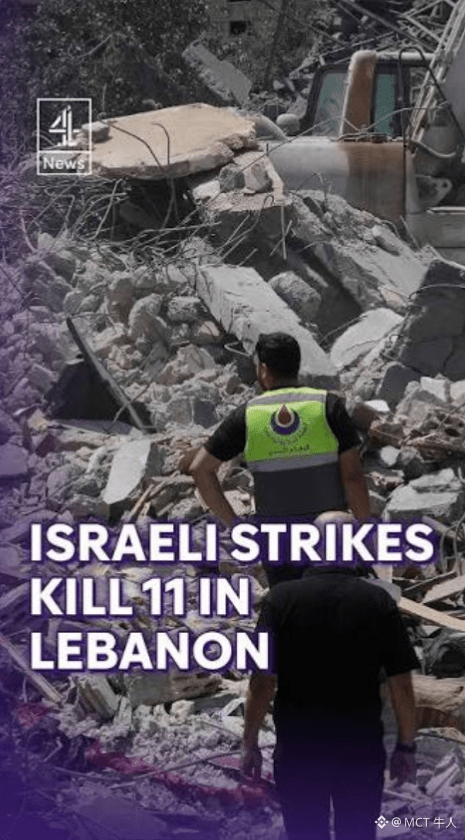
Israel carried out airstrikes in southern Lebanon, killing a senior Hezbollah commander, according to Israeli officials. Lebanese authorities reported that civilians were also among those killed, with the strikes marking one of the deadliest escalations since the June truce. The latest attacks are raising fresh concerns about renewed fighting and further regional instability.
#IsraelStrikesLebanonKillsHezbollahCommander Israel Strikes Lebanon — Rising Tensions
Israel carried out airstrikes in southern Lebanon, killing a senior Hezbollah commander, according to Israeli officials. Lebanese authorities reported that civilians were also among those killed, with the strikes marking one of the deadliest escalations since the June truce. The latest attacks are raising fresh concerns about renewed fighting and further regional instability.
Israel carried out airstrikes in southern Lebanon, killing a senior Hezbollah commander, according to Israeli officials. Lebanese authorities reported that civilians were also among those killed, with the strikes marking one of the deadliest escalations since the June truce. The latest attacks are raising fresh concerns about renewed fighting and further regional instability.
1
2
110

·
--
Bullish
#israelstrikeslebanonkillshezbollahcommander
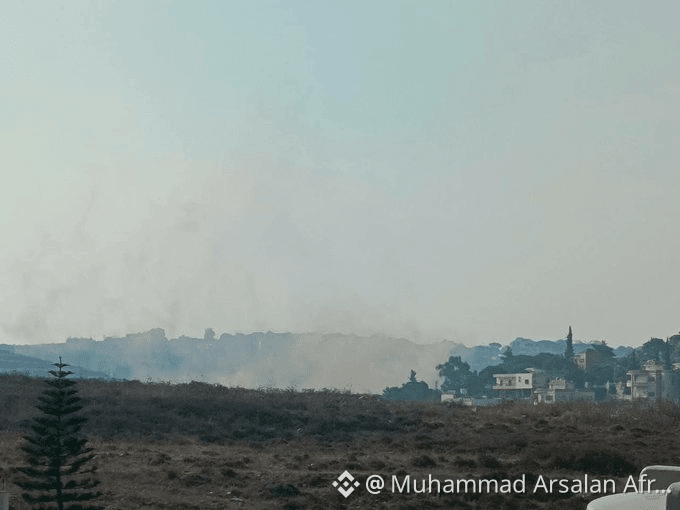
BREAKING | Israeli occupation forces target the outskirts of Mayfadoun, in southern Lebanon.
$RAY
{spot}(RAYUSDT)
$RED
{future}(REDUSDT)
$RSR
{future}(RSRUSDT)
#israelstrikeslebanonkillshezbollahcommander
BREAKING | Israeli occupation forces target the outskirts of Mayfadoun, in southern Lebanon.
$RAY
$RED
$RSR
BREAKING | Israeli occupation forces target the outskirts of Mayfadoun, in southern Lebanon.
$RAY
$RED
$RSR
217

·
--
#israelstrikeslebanonkillshezbollahcommander
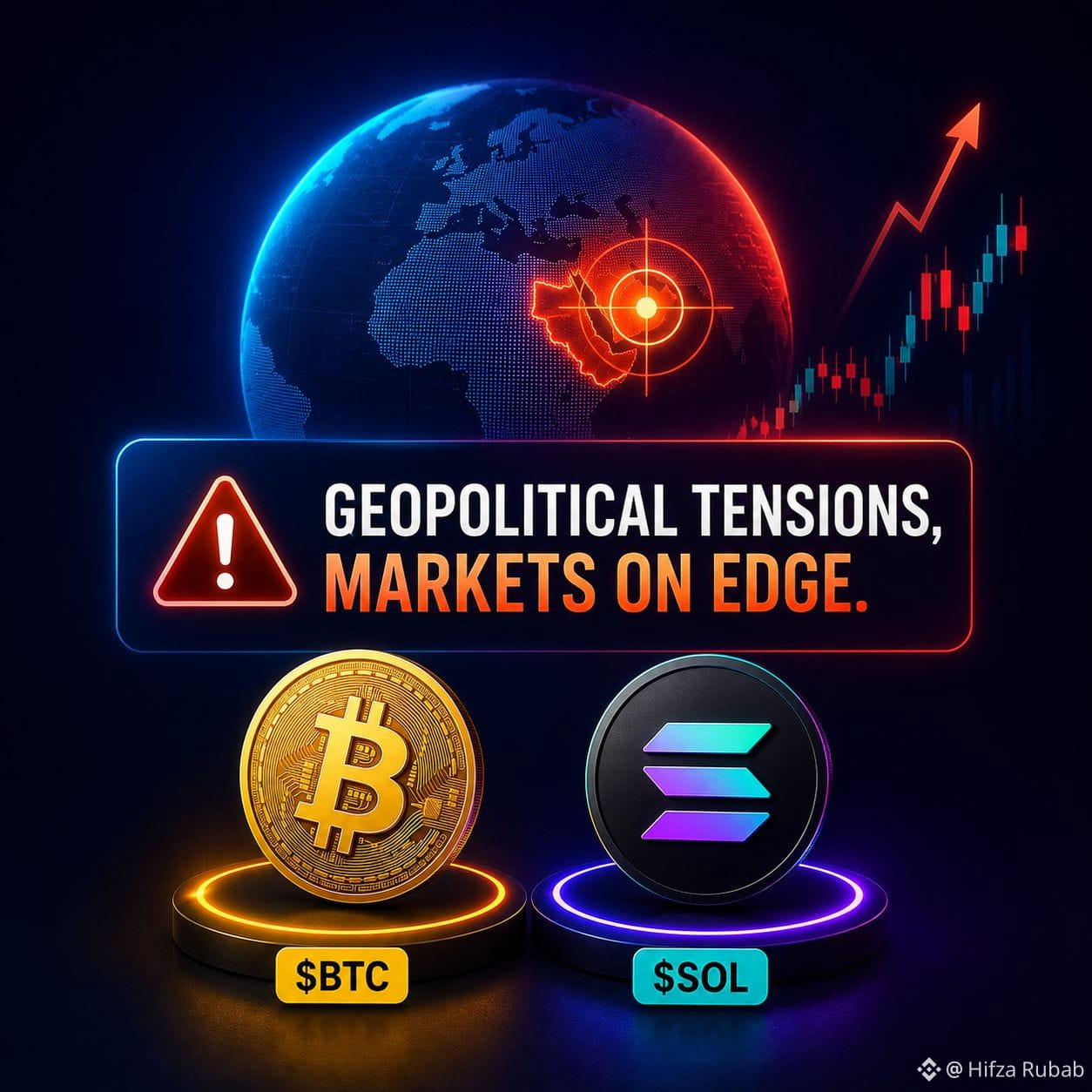
🚨 MIDDLE EAST GEOPOLITICAL ESCALATION! ⚠️💥
Fresh airstrikes in southern Lebanon target a key headquarters, resulting in the loss of a senior commander following cross-border clashes. Border tensions remain high as operations continue to escalate.
💡 Market Impact:
Geopolitical shocks often trigger short-term market volatility and safe-haven flows! Keep a close eye on price action and manage risks strictly. 📉📈
How are you positioning your portfolio? 💬👇
🔗 Tap tags to trade market volatility:
$BTC $SOL
#CardanoSplitsDijkstraUpgradeIntoTwoPhases
#IsraelStrikesLebanonKillsHezbollahCommander
#CMESeptemberHikeOddsFallTo30.6%
#USToPressNationsToPickUSOrChinaAICoalition
{spot}(SOLUSDT)
{spot}(BTCUSDT)
#israelstrikeslebanonkillshezbollahcommander
🚨 MIDDLE EAST GEOPOLITICAL ESCALATION! ⚠️💥
Fresh airstrikes in southern Lebanon target a key headquarters, resulting in the loss of a senior commander following cross-border clashes. Border tensions remain high as operations continue to escalate.
💡 Market Impact:
Geopolitical shocks often trigger short-term market volatility and safe-haven flows! Keep a close eye on price action and manage risks strictly. 📉📈
How are you positioning your portfolio? 💬👇
🔗 Tap tags to trade market volatility:
$BTC $SOL
#CardanoSplitsDijkstraUpgradeIntoTwoPhases
#IsraelStrikesLebanonKillsHezbollahCommander
#CMESeptemberHikeOddsFallTo30.6%
#USToPressNationsToPickUSOrChinaAICoalition
🚨 MIDDLE EAST GEOPOLITICAL ESCALATION! ⚠️💥
Fresh airstrikes in southern Lebanon target a key headquarters, resulting in the loss of a senior commander following cross-border clashes. Border tensions remain high as operations continue to escalate.
💡 Market Impact:
Geopolitical shocks often trigger short-term market volatility and safe-haven flows! Keep a close eye on price action and manage risks strictly. 📉📈
How are you positioning your portfolio? 💬👇
🔗 Tap tags to trade market volatility:
$BTC $SOL
#CardanoSplitsDijkstraUpgradeIntoTwoPhases
#IsraelStrikesLebanonKillsHezbollahCommander
#CMESeptemberHikeOddsFallTo30.6%
#USToPressNationsToPickUSOrChinaAICoalition
11
11
7.5k

·
--
Bullish
#IsraelStrikesLebanonKillsHezbollahCommander
Deadliest Strikes Since June's Ceasefire Kill 11 in Southern Lebanon
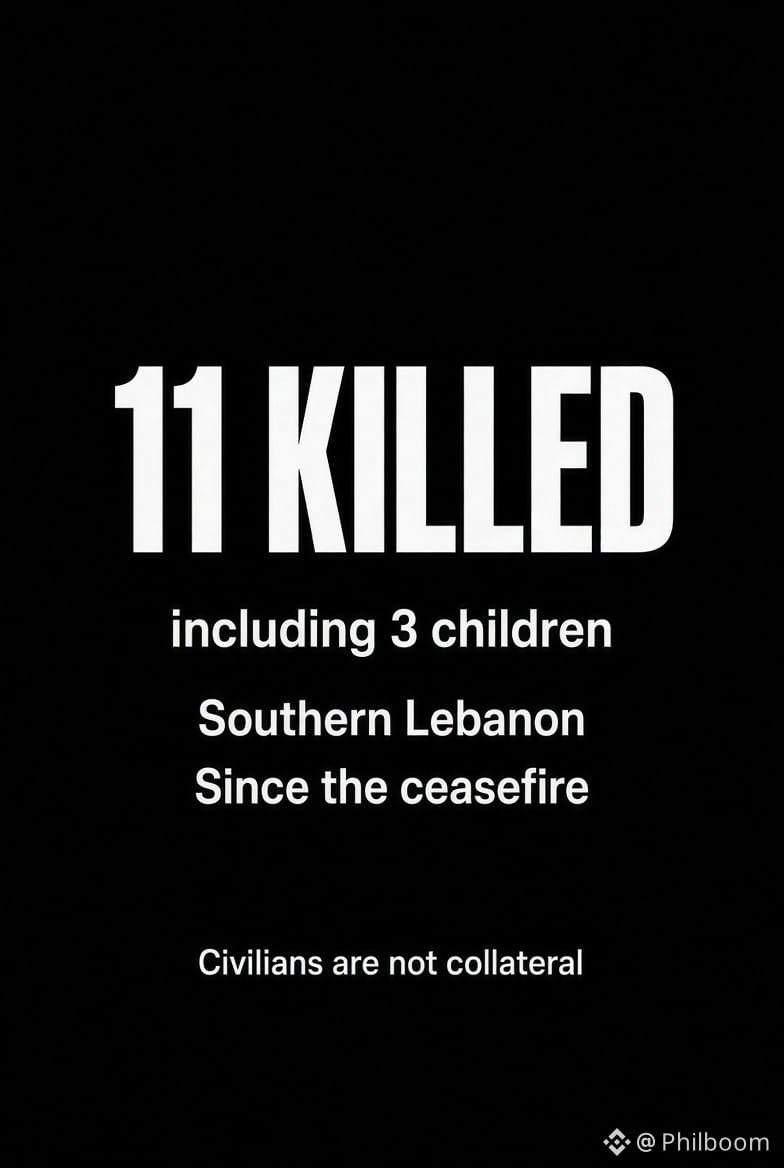
Reuters confirmed at least 11 people were killed in Israeli strikes across southern Lebanon on Saturday, August 15, the deadliest attacks since the ceasefire agreement reached in June. Seven people died when Israeli warplanes struck a house in the village of Ansar, three of them children and two women, according to Lebanon's National News Agency. Four more were killed in a separate strike on Deir El Zahrani. Nineteen people were wounded.
The Israeli military said the strikes responded to a Hezbollah attack that seriously wounded three Israeli soldiers, and identified two men killed as Radwan Force commander Ali Samir Al-Haj Hassan and Badr unit commander Abu Hassan Alaa. Netanyahu's office acknowledged civilians were killed but accused Hezbollah of using human shields. Lebanon's President Joseph Aoun said a "whole family" died in Ansar. The UN's humanitarian coordinator for Lebanon, Imran Riza, condemned the strike directly, stating that international humanitarian law requires civilians be protected at all times. This is, first and foremost, a severe human toll that warrants being stated plainly.
The market response has been comparatively measured so far, consistent with the pattern we have documented throughout this conflict, oil and crypto react most sharply to threats against the Strait of Hormuz and broader regional escalation involving Iran directly, rather than individual strikes within the Lebanon front specifically. Whether this breach of the June ceasefire draws a wider Hezbollah or Iranian response remains the genuine determinant of any broader economic impact, not this strike in isolation.
$BTC
{spot}(BTCUSDT)
#IsraelStrikesLebanonKillsHezbollahCommander
Deadliest Strikes Since June's Ceasefire Kill 11 in Southern Lebanon
Reuters confirmed at least 11 people were killed in Israeli strikes across southern Lebanon on Saturday, August 15, the deadliest attacks since the ceasefire agreement reached in June. Seven people died when Israeli warplanes struck a house in the village of Ansar, three of them children and two women, according to Lebanon's National News Agency. Four more were killed in a separate strike on Deir El Zahrani. Nineteen people were wounded.
The Israeli military said the strikes responded to a Hezbollah attack that seriously wounded three Israeli soldiers, and identified two men killed as Radwan Force commander Ali Samir Al-Haj Hassan and Badr unit commander Abu Hassan Alaa. Netanyahu's office acknowledged civilians were killed but accused Hezbollah of using human shields. Lebanon's President Joseph Aoun said a "whole family" died in Ansar. The UN's humanitarian coordinator for Lebanon, Imran Riza, condemned the strike directly, stating that international humanitarian law requires civilians be protected at all times. This is, first and foremost, a severe human toll that warrants being stated plainly.
The market response has been comparatively measured so far, consistent with the pattern we have documented throughout this conflict, oil and crypto react most sharply to threats against the Strait of Hormuz and broader regional escalation involving Iran directly, rather than individual strikes within the Lebanon front specifically. Whether this breach of the June ceasefire draws a wider Hezbollah or Iranian response remains the genuine determinant of any broader economic impact, not this strike in isolation.
$BTC
Deadliest Strikes Since June's Ceasefire Kill 11 in Southern Lebanon
Reuters confirmed at least 11 people were killed in Israeli strikes across southern Lebanon on Saturday, August 15, the deadliest attacks since the ceasefire agreement reached in June. Seven people died when Israeli warplanes struck a house in the village of Ansar, three of them children and two women, according to Lebanon's National News Agency. Four more were killed in a separate strike on Deir El Zahrani. Nineteen people were wounded.
The Israeli military said the strikes responded to a Hezbollah attack that seriously wounded three Israeli soldiers, and identified two men killed as Radwan Force commander Ali Samir Al-Haj Hassan and Badr unit commander Abu Hassan Alaa. Netanyahu's office acknowledged civilians were killed but accused Hezbollah of using human shields. Lebanon's President Joseph Aoun said a "whole family" died in Ansar. The UN's humanitarian coordinator for Lebanon, Imran Riza, condemned the strike directly, stating that international humanitarian law requires civilians be protected at all times. This is, first and foremost, a severe human toll that warrants being stated plainly.
The market response has been comparatively measured so far, consistent with the pattern we have documented throughout this conflict, oil and crypto react most sharply to threats against the Strait of Hormuz and broader regional escalation involving Iran directly, rather than individual strikes within the Lebanon front specifically. Whether this breach of the June ceasefire draws a wider Hezbollah or Iranian response remains the genuine determinant of any broader economic impact, not this strike in isolation.
$BTC
1
1
129

·
--
Bearish
#IsraelStrikesLebanonKillsHezbollahCommander
Escalation in Lebanon
Israel has carried out fresh airstrikes in southern Lebanon, saying the operation targeted Hezbollah positions and killed a senior Hezbollah commander. The Israeli military said the strikes came in response to a Hezbollah drone attack that wounded three Israeli soldiers.
The situation is especially concerning because the strikes come despite the fragile truce that had reduced fighting between Israel and Hezbollah. Lebanese authorities reported that civilians were also among those killed, with reports putting the total deaths from the latest strikes at 11, including three children.
Israel says its strikes are aimed at preventing Hezbollah from rebuilding military infrastructure and threatening northern Israel. Hezbollah, meanwhile, continues to reject disarmament demands while Israel has linked its withdrawal from southern Lebanon to Hezbollah giving up its weapons.
The biggest concern now is what comes next. Any Hezbollah retaliation could trigger another cycle of attacks, putting more civilians at risk and making diplomatic efforts even harder.
With tensions already high across the region, the latest escalation shows how fragile the current ceasefire framework remains. The priority should be preventing further loss of civilian life and stopping the situation from developing into another full-scale conflict.
#IsraelStrikesLebanonKillsHezbollahCommander #Lebanon #Israel #Hezbollah #MiddleEast #BreakingNews #Geopolitics
#IsraelStrikesLebanonKillsHezbollahCommander
Escalation in Lebanon
Israel has carried out fresh airstrikes in southern Lebanon, saying the operation targeted Hezbollah positions and killed a senior Hezbollah commander. The Israeli military said the strikes came in response to a Hezbollah drone attack that wounded three Israeli soldiers.
The situation is especially concerning because the strikes come despite the fragile truce that had reduced fighting between Israel and Hezbollah. Lebanese authorities reported that civilians were also among those killed, with reports putting the total deaths from the latest strikes at 11, including three children.
Israel says its strikes are aimed at preventing Hezbollah from rebuilding military infrastructure and threatening northern Israel. Hezbollah, meanwhile, continues to reject disarmament demands while Israel has linked its withdrawal from southern Lebanon to Hezbollah giving up its weapons.
The biggest concern now is what comes next. Any Hezbollah retaliation could trigger another cycle of attacks, putting more civilians at risk and making diplomatic efforts even harder.
With tensions already high across the region, the latest escalation shows how fragile the current ceasefire framework remains. The priority should be preventing further loss of civilian life and stopping the situation from developing into another full-scale conflict.
#IsraelStrikesLebanonKillsHezbollahCommander #Lebanon #Israel #Hezbollah #MiddleEast #BreakingNews #Geopolitics
Escalation in Lebanon
Israel has carried out fresh airstrikes in southern Lebanon, saying the operation targeted Hezbollah positions and killed a senior Hezbollah commander. The Israeli military said the strikes came in response to a Hezbollah drone attack that wounded three Israeli soldiers.
The situation is especially concerning because the strikes come despite the fragile truce that had reduced fighting between Israel and Hezbollah. Lebanese authorities reported that civilians were also among those killed, with reports putting the total deaths from the latest strikes at 11, including three children.
Israel says its strikes are aimed at preventing Hezbollah from rebuilding military infrastructure and threatening northern Israel. Hezbollah, meanwhile, continues to reject disarmament demands while Israel has linked its withdrawal from southern Lebanon to Hezbollah giving up its weapons.
The biggest concern now is what comes next. Any Hezbollah retaliation could trigger another cycle of attacks, putting more civilians at risk and making diplomatic efforts even harder.
With tensions already high across the region, the latest escalation shows how fragile the current ceasefire framework remains. The priority should be preventing further loss of civilian life and stopping the situation from developing into another full-scale conflict.
#IsraelStrikesLebanonKillsHezbollahCommander #Lebanon #Israel #Hezbollah #MiddleEast #BreakingNews #Geopolitics
1
1
94
Log in to explore more content
Join global crypto users on Binance Square
⚡️ Get latest and useful information about crypto.
💬 Trusted by the world’s largest crypto exchange.
👍 Discover real insights from verified creators.
Email / Phone number
Trending Topics
1
#Nikkei225Jumps2.5%ToThreeMonthHigh
15,705 views
336 Discussing
2
#DriftHackVictimsBeginClaims
93,671 views
1,018 Discussing
3
#SolanaTokenizedStockVolumeTops$4.4BInSeptember
8,834 views
98 Discussing
4
#BitcoinSpotETFsDraw$6.34BInflowsInQ3
31,006 views
213 Discussing
5
#EthereumValidatorExitQueueJumps392%
236,321 views
2,031 Discussing
6
#IMFApprovesElSalvador$138MWithBitcoinWaiver
21,965 views
124 Discussing
7
#SECHaltsCryptoETFReviewsAmidFundingLapse
356,313 views
2,709 Discussing
8
#ZcashETFPostsFirstWeeklyOutflow$93.6M
107,848 views
286 Discussing
9
#GreekPoliceBustCryptoScamRingArrest17
486,787 views
3,260 Discussing
10
#BitcoinRejectedAt$87K
246,563 views
369 Discussing