

#goldretracedtoaround$4500
goldretracedtoaround$4500
64,131 views
362 Discussing
Hot
Latest

🚨💰 *Gold Fever Hits the Charts!* 💰🚨 #XAUUSDT is glimmering under the crypto spotlight today, trading at $4560.76 with a slight dip of -1.041%. Don’t be fooled by the red—this shiny player is brewing something BIG! 📉📈
🔥 *Technical Analysis Alert!* 🔥 We're sitting near a key support zone around $4500, and the Relative Strength Index (RSI) is flirting with oversold levels—hello, potential bounce! Momentum traders, keep your eyes peeled for a breakout above $4600, which could spark a rocket-fueled move 🚀. Volume trends suggest buyers are silently loading up as the charts hint at a classic "consolidation squeeze" 📊.
On the *fundamental side*, #XAUUSDT is captivating attention as inflation jitters and global uncertainty drive traders toward this digital gold. With rising institutional interest and a surge in crypto adoption, it's no surprise that this future-only coin is becoming a hedge-star 🌟. Whether you're a scalper or a swing trader, the action here is undeniable.
Let’s see if the golden trend prevails or if it takes one more dip before liftoff! 🌕 Who’s ready to ride the wave to the next golden opportunity? 💎✨💼 #CryptoAnalysis #TradingSignals #BinanceSquare
🚨💰 *Gold Fever Hits the Charts!* 💰🚨 #XAUUSDT is glimmering under the crypto spotlight today, trading at $4560.76 with a slight dip of -1.041%. Don’t be fooled by the red—this shiny player is brewing something BIG! 📉📈
🔥 *Technical Analysis Alert!* 🔥 We're sitting near a key support zone around $4500, and the Relative Strength Index (RSI) is flirting with oversold levels—hello, potential bounce! Momentum traders, keep your eyes peeled for a breakout above $4600, which could spark a rocket-fueled move 🚀. Volume trends suggest buyers are silently loading up as the charts hint at a classic "consolidation squeeze" 📊.
On the *fundamental side*, #XAUUSDT is captivating attention as inflation jitters and global uncertainty drive traders toward this digital gold. With rising institutional interest and a surge in crypto adoption, it's no surprise that this future-only coin is becoming a hedge-star 🌟. Whether you're a scalper or a swing trader, the action here is undeniable.
Let’s see if the golden trend prevails or if it takes one more dip before liftoff! 🌕 Who’s ready to ride the wave to the next golden opportunity? 💎✨💼 #CryptoAnalysis #TradingSignals #BinanceSquare
🔥 *Technical Analysis Alert!* 🔥 We're sitting near a key support zone around $4500, and the Relative Strength Index (RSI) is flirting with oversold levels—hello, potential bounce! Momentum traders, keep your eyes peeled for a breakout above $4600, which could spark a rocket-fueled move 🚀. Volume trends suggest buyers are silently loading up as the charts hint at a classic "consolidation squeeze" 📊.
On the *fundamental side*, #XAUUSDT is captivating attention as inflation jitters and global uncertainty drive traders toward this digital gold. With rising institutional interest and a surge in crypto adoption, it's no surprise that this future-only coin is becoming a hedge-star 🌟. Whether you're a scalper or a swing trader, the action here is undeniable.
Let’s see if the golden trend prevails or if it takes one more dip before liftoff! 🌕 Who’s ready to ride the wave to the next golden opportunity? 💎✨💼 #CryptoAnalysis #TradingSignals #BinanceSquare
84

·
--
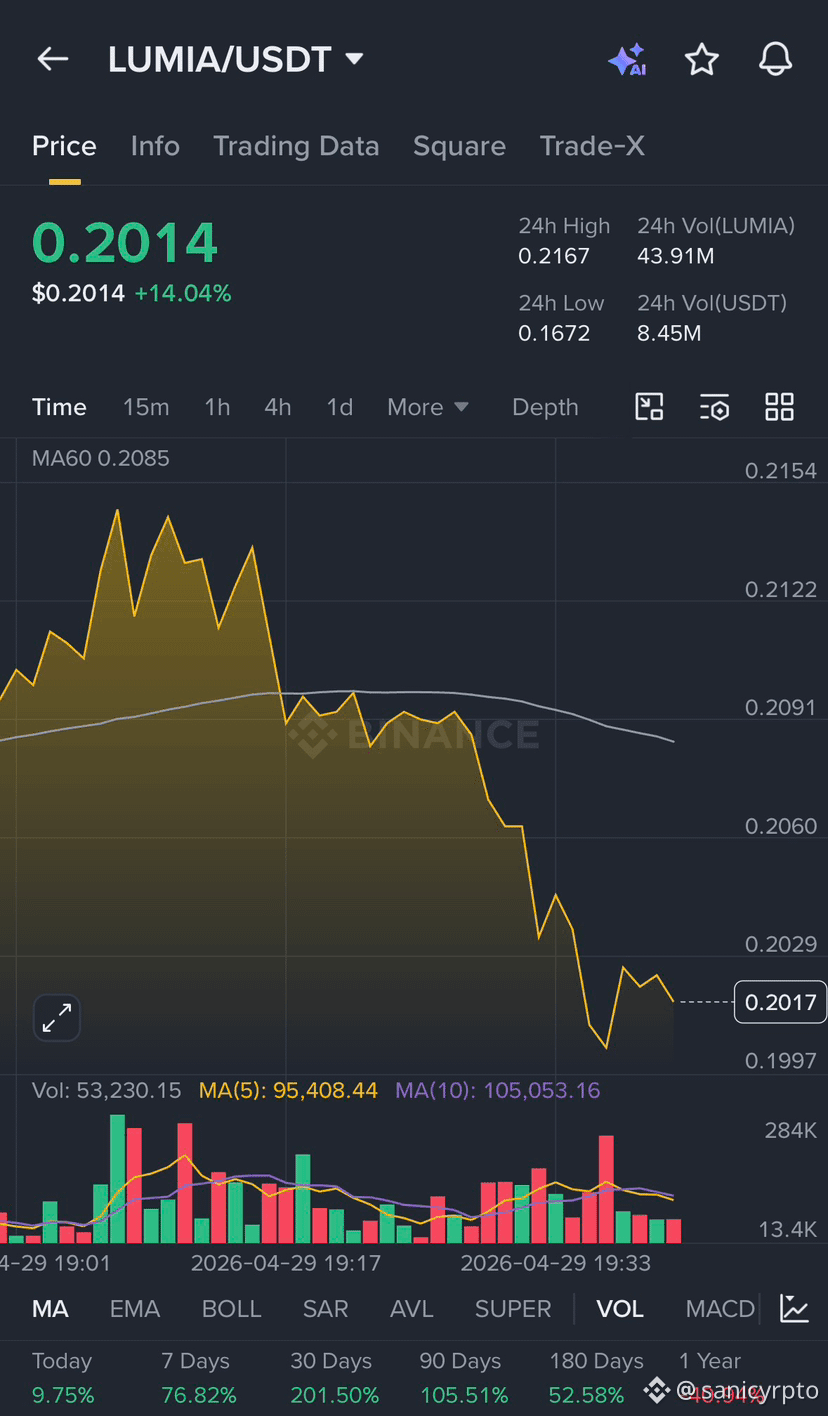
$LUMIA /USDT futures show high volatility ⚡ with quick price swings driven by market sentiment 📊. Watch key support/resistance levels for breakout opportunities 🚀. Always use proper risk management ⚠️ due to leverage and uncertainty.
{future}(LUMIAUSDT)
#BTCDropsBelow$77K #BhutanTransfers102BTC #AftermathFinanceBreach #PolymarketDeniesDataBreach #GoldRetracedToAround$4500
$LUMIA /USDT futures show high volatility ⚡ with quick price swings driven by market sentiment 📊. Watch key support/resistance levels for breakout opportunities 🚀. Always use proper risk management ⚠️ due to leverage and uncertainty.
#BTCDropsBelow$77K #BhutanTransfers102BTC #AftermathFinanceBreach #PolymarketDeniesDataBreach #GoldRetracedToAround$4500
#BTCDropsBelow$77K #BhutanTransfers102BTC #AftermathFinanceBreach #PolymarketDeniesDataBreach #GoldRetracedToAround$4500
147
·
--
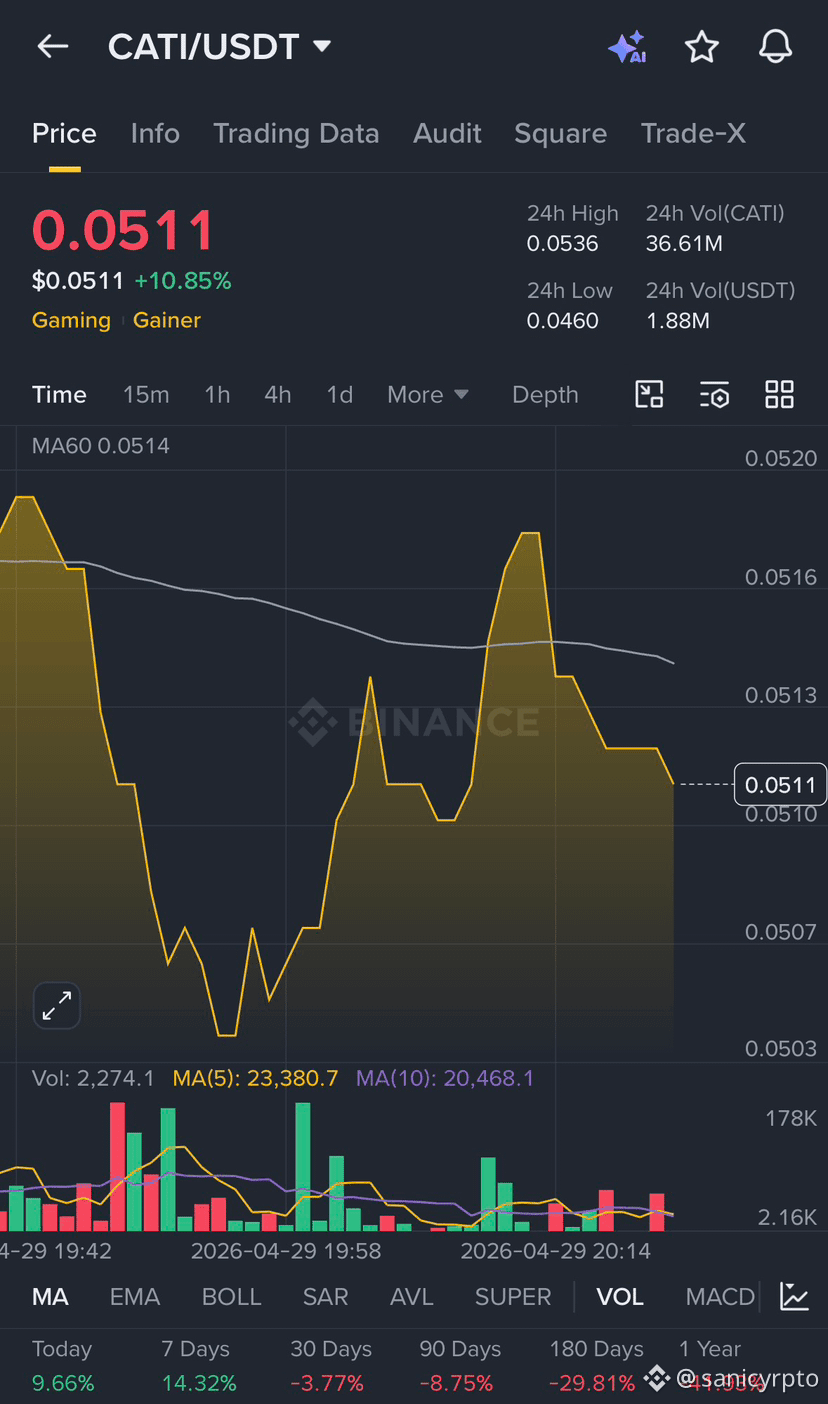
$CATI /USDT futures appear volatile ⚡, with price action largely driven by market sentiment and trading volume 📊. Key support and resistance levels are crucial—breakouts may signal short-term momentum opportunities 🚀. Strong risk management ⚠️ is essential due to leverage and rapid market shifts.
{future}(CATIUSDT)
#BTCDropsBelow$77K #BhutanTransfers102BTC #AftermathFinanceBreach #PolymarketDeniesDataBreach #GoldRetracedToAround$4500
$CATI /USDT futures appear volatile ⚡, with price action largely driven by market sentiment and trading volume 📊. Key support and resistance levels are crucial—breakouts may signal short-term momentum opportunities 🚀. Strong risk management ⚠️ is essential due to leverage and rapid market shifts.
#BTCDropsBelow$77K #BhutanTransfers102BTC #AftermathFinanceBreach #PolymarketDeniesDataBreach #GoldRetracedToAround$4500
#BTCDropsBelow$77K #BhutanTransfers102BTC #AftermathFinanceBreach #PolymarketDeniesDataBreach #GoldRetracedToAround$4500
1
92

Fed Decision NightFed Decision Night: Powell’s Final Word and Market Outlook
$BTC $XAUT
Global markets are closely watching the upcoming Federal Reserve decision, with investors focused not only on interest rates but also on Chair Jerome Powell’s tone during the post-meeting statement. With rates expected to remain around the 3.50% range, attention is shifting toward guidance on inflation, liquidity, and the timing of any future policy changes.
Why This Fed Meeting Matters
This decision could shape short-term momentum across risk assets, especially crypto and gold. Markets often react more to Powell’s comments than the rate decision itself, making his “final word” a major volatility catalyst.
Bitcoin Watching for Direction
Bitcoin has remained relatively steady ahead of the announcement, reflecting cautious positioning. If Powell sounds dovish and hints at easing ahead, risk assets like BTC could see bullish momentum return.
Bullish scenario for crypto:
Signals of future rate cuts
Softer inflation concerns
Increased liquidity optimism
Risk-on sentiment returns
Under this setup, Bitcoin could attempt another breakout while altcoins may follow.
Gold and Safe Haven Reaction
Gold-backed assets like XAUT are also in focus. If Powell remains hawkish and stresses inflation risks, investors may rotate back toward safe-haven assets.
A stronger dollar and higher-for-longer policy stance could pressure crypto while supporting defensive positioning.
What Traders Are Watching
Markets are focused on three key questions:
1. Will rates stay unchanged?
Most expect no surprise here.
2. What will Powell say about cuts?
This may be the true market mover.
3. How will BTC react?
Bitcoin often acts as a sentiment indicator after major macro events.
Market Outlook
Dovish Fed: Bullish for BTC and risk assets
Hawkish Fed: Possible volatility and pullback risk
Neutral tone: Sideways consolidation may continue
Final Thoughts
Fed decision night could become a turning point for both traditional and crypto markets. Whether Powell delivers a cautious warning or opens the door to easing, traders are preparing for potential volatility.
For Bitcoin and broader digital assets, tonight may be less about the rate decision — and more about Powell’s final word.
#BTCDropsBelow$77K #BhutanTransfers102BTC #AftermathFinanceBreach #PolymarketDeniesDataBreach #GoldRetracedToAround$4500
Fed Decision Night
Fed Decision Night: Powell’s Final Word and Market Outlook
$BTC $XAUT
Global markets are closely watching the upcoming Federal Reserve decision, with investors focused not only on interest rates but also on Chair Jerome Powell’s tone during the post-meeting statement. With rates expected to remain around the 3.50% range, attention is shifting toward guidance on inflation, liquidity, and the timing of any future policy changes.
Why This Fed Meeting Matters
This decision could shape short-term momentum across risk assets, especially crypto and gold. Markets often react more to Powell’s comments than the rate decision itself, making his “final word” a major volatility catalyst.
Bitcoin Watching for Direction
Bitcoin has remained relatively steady ahead of the announcement, reflecting cautious positioning. If Powell sounds dovish and hints at easing ahead, risk assets like BTC could see bullish momentum return.
Bullish scenario for crypto:
Signals of future rate cuts
Softer inflation concerns
Increased liquidity optimism
Risk-on sentiment returns
Under this setup, Bitcoin could attempt another breakout while altcoins may follow.
Gold and Safe Haven Reaction
Gold-backed assets like XAUT are also in focus. If Powell remains hawkish and stresses inflation risks, investors may rotate back toward safe-haven assets.
A stronger dollar and higher-for-longer policy stance could pressure crypto while supporting defensive positioning.
What Traders Are Watching
Markets are focused on three key questions:
1. Will rates stay unchanged?
Most expect no surprise here.
2. What will Powell say about cuts?
This may be the true market mover.
3. How will BTC react?
Bitcoin often acts as a sentiment indicator after major macro events.
Market Outlook
Dovish Fed: Bullish for BTC and risk assets
Hawkish Fed: Possible volatility and pullback risk
Neutral tone: Sideways consolidation may continue
Final Thoughts
Fed decision night could become a turning point for both traditional and crypto markets. Whether Powell delivers a cautious warning or opens the door to easing, traders are preparing for potential volatility.
For Bitcoin and broader digital assets, tonight may be less about the rate decision — and more about Powell’s final word.
#BTCDropsBelow$77K #BhutanTransfers102BTC #AftermathFinanceBreach #PolymarketDeniesDataBreach #GoldRetracedToAround$4500
$BTC $XAUT
Global markets are closely watching the upcoming Federal Reserve decision, with investors focused not only on interest rates but also on Chair Jerome Powell’s tone during the post-meeting statement. With rates expected to remain around the 3.50% range, attention is shifting toward guidance on inflation, liquidity, and the timing of any future policy changes.
Why This Fed Meeting Matters
This decision could shape short-term momentum across risk assets, especially crypto and gold. Markets often react more to Powell’s comments than the rate decision itself, making his “final word” a major volatility catalyst.
Bitcoin Watching for Direction
Bitcoin has remained relatively steady ahead of the announcement, reflecting cautious positioning. If Powell sounds dovish and hints at easing ahead, risk assets like BTC could see bullish momentum return.
Bullish scenario for crypto:
Signals of future rate cuts
Softer inflation concerns
Increased liquidity optimism
Risk-on sentiment returns
Under this setup, Bitcoin could attempt another breakout while altcoins may follow.
Gold and Safe Haven Reaction
Gold-backed assets like XAUT are also in focus. If Powell remains hawkish and stresses inflation risks, investors may rotate back toward safe-haven assets.
A stronger dollar and higher-for-longer policy stance could pressure crypto while supporting defensive positioning.
What Traders Are Watching
Markets are focused on three key questions:
1. Will rates stay unchanged?
Most expect no surprise here.
2. What will Powell say about cuts?
This may be the true market mover.
3. How will BTC react?
Bitcoin often acts as a sentiment indicator after major macro events.
Market Outlook
Dovish Fed: Bullish for BTC and risk assets
Hawkish Fed: Possible volatility and pullback risk
Neutral tone: Sideways consolidation may continue
Final Thoughts
Fed decision night could become a turning point for both traditional and crypto markets. Whether Powell delivers a cautious warning or opens the door to easing, traders are preparing for potential volatility.
For Bitcoin and broader digital assets, tonight may be less about the rate decision — and more about Powell’s final word.
#BTCDropsBelow$77K #BhutanTransfers102BTC #AftermathFinanceBreach #PolymarketDeniesDataBreach #GoldRetracedToAround$4500
115

·
--

Article
How I Turned $100 Into $5,000 (Real Strategy)Most people think turning $100 into $5,000 in crypto is luck, hype, or some hidden insider trick. The truth is less glamorous—but far more repeatable. It comes down to discipline, understanding market psychology, and following a structured strategy instead of chasing emotions.
This isn’t a “get rich quick” story. It’s a “play smart and survive long enough to win” approach.
1. Starting With the Right Mindset
When I started with $100, I didn’t treat it like lottery money. I treated it like capital. That mindset shift matters.
Instead of thinking:
“How fast can I 10x this?”
I focused on:
“How can I avoid losing this first?”
Most beginners lose because they rush. They enter trades based on hype, social media noise, or fear of missing out. I did the opposite—I waited.
2. Choosing the Right Market Conditions
One of the biggest mistakes is trading in random conditions. Not every day is a trading day.
I focused on:
Clear trends (either strong uptrend or strong recovery phases)
High-volume coins listed on major exchanges like Binance
Avoiding dead or low-liquidity projects
The real growth started when the market showed momentum, not when it was quiet.
3. The Core Strategy (Simple but Powerful)
A. Small Cap + Narrative Play
I didn’t just buy random coins. I looked for:
Coins linked to trending narratives (AI, DeFi, Layer 2, meme cycles)
Projects with increasing volume and community attention
Listings or updates that could act as catalysts
Timing + narrative = explosive moves.
B. Scaling In, Not Going All-In
Instead of putting the full $100 into one trade:
I divided it into smaller entries
Entered positions gradually
Added more only when the trade confirmed my direction
This reduced risk and improved entry quality.
C. Taking Profits Early
Most people lose profits because they get greedy.
My rule:
Take partial profit at 20–30%
Let the rest run
This way:
I secured gains
Still stayed in the trade for bigger upside
4. Compounding: The Real Secret
The jump from $100 to $5,000 didn’t happen in one trade.
It looked more like this:
$100 → $150
$150 → $300
$300 → $700
$700 → $1,500
$1,500 → $5,000
Each step built on the last.
Compounding works only if:
You don’t blow your account
You protect your capital
5. Risk Management (Non-Negotiable)
This is where most people fail.
My rules were strict:
Never risk more than 5–10% per trade
Always set a stop loss
Avoid revenge trading after a loss
Losses are part of the game. Blowing your account is not.
6. Avoiding Emotional Traps
Crypto markets are driven by psychology:
Fear makes people sell bottoms
Greed makes people hold tops
I trained myself to:
Buy when things look boring but strong
Sell when things feel “too good”
If a trade feels obvious, it’s usually late.
7. Following Exchange Rules (Binance-Aligned Approach)
To stay consistent and safe:
I avoided pump-and-dump schemes
Didn’t rely on insider or manipulated signals
Focused on transparent, high-liquidity markets
Used proper risk disclosures and avoided over-leverage
This keeps your strategy sustainable and aligned with platform policies.
8. What Didn’t Work
To be real—there were mistakes:
Chasing green candles
Holding losers too long
Entering trades without confirmation
But each mistake refined the strategy.
Final Thoughts
Turning $100 into $5,000 isn’t magic. It’s:
Patience over impulse
Strategy over hype
Discipline over emotion
Most people are looking for the next big coin.
The real edge is becoming the kind of trader who can consistently grow capital, no matter the market.
If you focus on protecting your money first, growth becomes a natural outcome.
$BTC $XRP
#GoldRetracedToAround$4500 #ArthurHayes’LatestSpeech
How I Turned $100 Into $5,000 (Real Strategy)
Most people think turning $100 into $5,000 in crypto is luck, hype, or some hidden insider trick. The truth is less glamorous—but far more repeatable. It comes down to discipline, understanding market psychology, and following a structured strategy instead of chasing emotions.
This isn’t a “get rich quick” story. It’s a “play smart and survive long enough to win” approach.
1. Starting With the Right Mindset
When I started with $100, I didn’t treat it like lottery money. I treated it like capital. That mindset shift matters.
Instead of thinking:
“How fast can I 10x this?”
I focused on:
“How can I avoid losing this first?”
Most beginners lose because they rush. They enter trades based on hype, social media noise, or fear of missing out. I did the opposite—I waited.
2. Choosing the Right Market Conditions
One of the biggest mistakes is trading in random conditions. Not every day is a trading day.
I focused on:
Clear trends (either strong uptrend or strong recovery phases)
High-volume coins listed on major exchanges like Binance
Avoiding dead or low-liquidity projects
The real growth started when the market showed momentum, not when it was quiet.
3. The Core Strategy (Simple but Powerful)
A. Small Cap + Narrative Play
I didn’t just buy random coins. I looked for:
Coins linked to trending narratives (AI, DeFi, Layer 2, meme cycles)
Projects with increasing volume and community attention
Listings or updates that could act as catalysts
Timing + narrative = explosive moves.
B. Scaling In, Not Going All-In
Instead of putting the full $100 into one trade:
I divided it into smaller entries
Entered positions gradually
Added more only when the trade confirmed my direction
This reduced risk and improved entry quality.
C. Taking Profits Early
Most people lose profits because they get greedy.
My rule:
Take partial profit at 20–30%
Let the rest run
This way:
I secured gains
Still stayed in the trade for bigger upside
4. Compounding: The Real Secret
The jump from $100 to $5,000 didn’t happen in one trade.
It looked more like this:
$100 → $150
$150 → $300
$300 → $700
$700 → $1,500
$1,500 → $5,000
Each step built on the last.
Compounding works only if:
You don’t blow your account
You protect your capital
5. Risk Management (Non-Negotiable)
This is where most people fail.
My rules were strict:
Never risk more than 5–10% per trade
Always set a stop loss
Avoid revenge trading after a loss
Losses are part of the game. Blowing your account is not.
6. Avoiding Emotional Traps
Crypto markets are driven by psychology:
Fear makes people sell bottoms
Greed makes people hold tops
I trained myself to:
Buy when things look boring but strong
Sell when things feel “too good”
If a trade feels obvious, it’s usually late.
7. Following Exchange Rules (Binance-Aligned Approach)
To stay consistent and safe:
I avoided pump-and-dump schemes
Didn’t rely on insider or manipulated signals
Focused on transparent, high-liquidity markets
Used proper risk disclosures and avoided over-leverage
This keeps your strategy sustainable and aligned with platform policies.
8. What Didn’t Work
To be real—there were mistakes:
Chasing green candles
Holding losers too long
Entering trades without confirmation
But each mistake refined the strategy.
Final Thoughts
Turning $100 into $5,000 isn’t magic. It’s:
Patience over impulse
Strategy over hype
Discipline over emotion
Most people are looking for the next big coin.
The real edge is becoming the kind of trader who can consistently grow capital, no matter the market.
If you focus on protecting your money first, growth becomes a natural outcome.
$BTC $XRP
#GoldRetracedToAround$4500 #ArthurHayes’LatestSpeech
This isn’t a “get rich quick” story. It’s a “play smart and survive long enough to win” approach.
1. Starting With the Right Mindset
When I started with $100, I didn’t treat it like lottery money. I treated it like capital. That mindset shift matters.
Instead of thinking:
“How fast can I 10x this?”
I focused on:
“How can I avoid losing this first?”
Most beginners lose because they rush. They enter trades based on hype, social media noise, or fear of missing out. I did the opposite—I waited.
2. Choosing the Right Market Conditions
One of the biggest mistakes is trading in random conditions. Not every day is a trading day.
I focused on:
Clear trends (either strong uptrend or strong recovery phases)
High-volume coins listed on major exchanges like Binance
Avoiding dead or low-liquidity projects
The real growth started when the market showed momentum, not when it was quiet.
3. The Core Strategy (Simple but Powerful)
A. Small Cap + Narrative Play
I didn’t just buy random coins. I looked for:
Coins linked to trending narratives (AI, DeFi, Layer 2, meme cycles)
Projects with increasing volume and community attention
Listings or updates that could act as catalysts
Timing + narrative = explosive moves.
B. Scaling In, Not Going All-In
Instead of putting the full $100 into one trade:
I divided it into smaller entries
Entered positions gradually
Added more only when the trade confirmed my direction
This reduced risk and improved entry quality.
C. Taking Profits Early
Most people lose profits because they get greedy.
My rule:
Take partial profit at 20–30%
Let the rest run
This way:
I secured gains
Still stayed in the trade for bigger upside
4. Compounding: The Real Secret
The jump from $100 to $5,000 didn’t happen in one trade.
It looked more like this:
$100 → $150
$150 → $300
$300 → $700
$700 → $1,500
$1,500 → $5,000
Each step built on the last.
Compounding works only if:
You don’t blow your account
You protect your capital
5. Risk Management (Non-Negotiable)
This is where most people fail.
My rules were strict:
Never risk more than 5–10% per trade
Always set a stop loss
Avoid revenge trading after a loss
Losses are part of the game. Blowing your account is not.
6. Avoiding Emotional Traps
Crypto markets are driven by psychology:
Fear makes people sell bottoms
Greed makes people hold tops
I trained myself to:
Buy when things look boring but strong
Sell when things feel “too good”
If a trade feels obvious, it’s usually late.
7. Following Exchange Rules (Binance-Aligned Approach)
To stay consistent and safe:
I avoided pump-and-dump schemes
Didn’t rely on insider or manipulated signals
Focused on transparent, high-liquidity markets
Used proper risk disclosures and avoided over-leverage
This keeps your strategy sustainable and aligned with platform policies.
8. What Didn’t Work
To be real—there were mistakes:
Chasing green candles
Holding losers too long
Entering trades without confirmation
But each mistake refined the strategy.
Final Thoughts
Turning $100 into $5,000 isn’t magic. It’s:
Patience over impulse
Strategy over hype
Discipline over emotion
Most people are looking for the next big coin.
The real edge is becoming the kind of trader who can consistently grow capital, no matter the market.
If you focus on protecting your money first, growth becomes a natural outcome.
$BTC $XRP
#GoldRetracedToAround$4500 #ArthurHayes’LatestSpeech
72

🚀 AI/USDT Explosive Move — What’s Next?$AI /USDT just delivered a massive breakout, pumping over +50% and hitting a high near 0.0316. This kind of vertical move signals strong momentum + heavy buying pressure, but also raises the question: is this just the beginning or a short-term peak?#BTCDropsBelow$77K
📊 Market Structure Breakdown
Impulse Move: Price surged from ~0.0175 → 0.0316
Current Zone: Consolidating around 0.0270
Trend: Bullish, but entering short-term cooling phase#BinanceLaunchesGoldvs.BTCTradingCompetition
🔍 Indicators Insight
OBV: Strong rise → confirms real buying volume 📈
MACD: Momentum slowing slightly (histogram fading)
Price Action: Forming a tight consolidation range#GoldRetracedToAround$4500
🎯 Key Levels to Watch
🟢 Support Zones:
0.0255 — Immediate support
0.0230 — Strong demand zone
🔴 Resistance Zones:
0.0295 — Short-term resistance
0.0316 — Breakout confirmation level#ArthurHayes’LatestSpeech
📈 Trade Setup Ideas
Bullish Scenario 🐂
Break above 0.0316
Targets: 0.035 → 0.040
Momentum continuation likely
Bearish Scenario 🐻
Lose 0.0255 support
Pullback toward 0.0230
Healthy correction before next leg
⚡ Strategy Tip
After such a strong pump, avoid chasing. Look for:
Pullbacks to support
Breakout + retest confirmations
🧠 Final Thoughts
$AI /USDT is showing strong speculative interest and momentum. If volume stays high, this could be the start of a bigger trend, not just a single pump.#AI @BinanceAIProduct
🚀 AI/USDT Explosive Move — What’s Next?
$AI /USDT just delivered a massive breakout, pumping over +50% and hitting a high near 0.0316. This kind of vertical move signals strong momentum + heavy buying pressure, but also raises the question: is this just the beginning or a short-term peak?#BTCDropsBelow$77K
📊 Market Structure Breakdown
Impulse Move: Price surged from ~0.0175 → 0.0316
Current Zone: Consolidating around 0.0270
Trend: Bullish, but entering short-term cooling phase#BinanceLaunchesGoldvs.BTCTradingCompetition
🔍 Indicators Insight
OBV: Strong rise → confirms real buying volume 📈
MACD: Momentum slowing slightly (histogram fading)
Price Action: Forming a tight consolidation range#GoldRetracedToAround$4500
🎯 Key Levels to Watch
🟢 Support Zones:
0.0255 — Immediate support
0.0230 — Strong demand zone
🔴 Resistance Zones:
0.0295 — Short-term resistance
0.0316 — Breakout confirmation level#ArthurHayes’LatestSpeech
📈 Trade Setup Ideas
Bullish Scenario 🐂
Break above 0.0316
Targets: 0.035 → 0.040
Momentum continuation likely
Bearish Scenario 🐻
Lose 0.0255 support
Pullback toward 0.0230
Healthy correction before next leg
⚡ Strategy Tip
After such a strong pump, avoid chasing. Look for:
Pullbacks to support
Breakout + retest confirmations
🧠 Final Thoughts
$AI /USDT is showing strong speculative interest and momentum. If volume stays high, this could be the start of a bigger trend, not just a single pump.#AI @BinanceAIProduct
📊 Market Structure Breakdown
Impulse Move: Price surged from ~0.0175 → 0.0316
Current Zone: Consolidating around 0.0270
Trend: Bullish, but entering short-term cooling phase#BinanceLaunchesGoldvs.BTCTradingCompetition
🔍 Indicators Insight
OBV: Strong rise → confirms real buying volume 📈
MACD: Momentum slowing slightly (histogram fading)
Price Action: Forming a tight consolidation range#GoldRetracedToAround$4500
🎯 Key Levels to Watch
🟢 Support Zones:
0.0255 — Immediate support
0.0230 — Strong demand zone
🔴 Resistance Zones:
0.0295 — Short-term resistance
0.0316 — Breakout confirmation level#ArthurHayes’LatestSpeech
📈 Trade Setup Ideas
Bullish Scenario 🐂
Break above 0.0316
Targets: 0.035 → 0.040
Momentum continuation likely
Bearish Scenario 🐻
Lose 0.0255 support
Pullback toward 0.0230
Healthy correction before next leg
⚡ Strategy Tip
After such a strong pump, avoid chasing. Look for:
Pullbacks to support
Breakout + retest confirmations
🧠 Final Thoughts
$AI /USDT is showing strong speculative interest and momentum. If volume stays high, this could be the start of a bigger trend, not just a single pump.#AI @BinanceAIProduct
107

#GoldRetracedToAround$4500 The claim that gold retraced to around $4,500 needs a reality check—because that price doesn’t line up with how gold is actually quoted.
🟡 What’s going on with gold prices
The global benchmark for gold (Gold) is usually priced per troy ounce in USD
In that standard:
Gold trades roughly in the $2,200–$2,500/oz range (not $4,500)
🤔 So where does “$4,500” come from?
There are a few possible explanations:
1) Different unit (very likely)
If someone is quoting:
per 10 grams (common in India)
or per tola (≈11.66g)
➡️ The number can look much higher when converted improperly
2) Currency confusion
In India, gold is often quoted in ₹ (INR):
₹70,000–₹75,000 per 10g ≈ $840–$900
➡️ Misreporting conversions can inflate figures
3) Futures / leveraged products
Some derivatives or synthetic contracts can display scaled prices that don’t reflect spot gold directly
4) Outlier / misinformation
A $4,500/oz gold price would imply:
A massive global financial shock
Far beyond current market reality
📉 What “retraced” likely means
If the statement is trying to describe market movement:
Gold may have:
Pulled back from a recent high
Due to:
Stronger US dollar
Rising bond yields
Profit-taking after a rally
🧠 Bottom line
$4,500 is not a valid spot gold price in USD/oz
It’s almost certainly:
A unit mix-up
Or misinterpreted data
If you want, tell me where you saw that number—I can decode exactly what it represents (₹, futures contract, or something else).
#GoldRetracedToAround$4500 The claim that gold retraced to around $4,500 needs a reality check—because that price doesn’t line up with how gold is actually quoted.
🟡 What’s going on with gold prices
The global benchmark for gold (Gold) is usually priced per troy ounce in USD
In that standard:
Gold trades roughly in the $2,200–$2,500/oz range (not $4,500)
🤔 So where does “$4,500” come from?
There are a few possible explanations:
1) Different unit (very likely)
If someone is quoting:
per 10 grams (common in India)
or per tola (≈11.66g)
➡️ The number can look much higher when converted improperly
2) Currency confusion
In India, gold is often quoted in ₹ (INR):
₹70,000–₹75,000 per 10g ≈ $840–$900
➡️ Misreporting conversions can inflate figures
3) Futures / leveraged products
Some derivatives or synthetic contracts can display scaled prices that don’t reflect spot gold directly
4) Outlier / misinformation
A $4,500/oz gold price would imply:
A massive global financial shock
Far beyond current market reality
📉 What “retraced” likely means
If the statement is trying to describe market movement:
Gold may have:
Pulled back from a recent high
Due to:
Stronger US dollar
Rising bond yields
Profit-taking after a rally
🧠 Bottom line
$4,500 is not a valid spot gold price in USD/oz
It’s almost certainly:
A unit mix-up
Or misinterpreted data
If you want, tell me where you saw that number—I can decode exactly what it represents (₹, futures contract, or something else).
🟡 What’s going on with gold prices
The global benchmark for gold (Gold) is usually priced per troy ounce in USD
In that standard:
Gold trades roughly in the $2,200–$2,500/oz range (not $4,500)
🤔 So where does “$4,500” come from?
There are a few possible explanations:
1) Different unit (very likely)
If someone is quoting:
per 10 grams (common in India)
or per tola (≈11.66g)
➡️ The number can look much higher when converted improperly
2) Currency confusion
In India, gold is often quoted in ₹ (INR):
₹70,000–₹75,000 per 10g ≈ $840–$900
➡️ Misreporting conversions can inflate figures
3) Futures / leveraged products
Some derivatives or synthetic contracts can display scaled prices that don’t reflect spot gold directly
4) Outlier / misinformation
A $4,500/oz gold price would imply:
A massive global financial shock
Far beyond current market reality
📉 What “retraced” likely means
If the statement is trying to describe market movement:
Gold may have:
Pulled back from a recent high
Due to:
Stronger US dollar
Rising bond yields
Profit-taking after a rally
🧠 Bottom line
$4,500 is not a valid spot gold price in USD/oz
It’s almost certainly:
A unit mix-up
Or misinterpreted data
If you want, tell me where you saw that number—I can decode exactly what it represents (₹, futures contract, or something else).
164

·
--
BTC 160K Incoming? Iran–US Tension, Gold Crash & Altcoins Ready!”
“Is Bitcoin Heading$BTC Will Bitcoin hit 160,000+ USDT?
$ETH Considering the current global situation,including tensions like the Iran–US conflict, BTC may not decline too much. If Bitcoin gets a stable environment and positive market conditions, it could reach 160K by 2026.
At the same time, gold prices might decrease due to lower demand.
What’s your opinion on this?
#BTC #GoldUpdate $ALT #AftermathFinanceBreach #GoldRetracedToAround$4500 #BitMineIncreasesEthereumStaking #BinanceLaunchesGoldvs.BTCTradingCompetition #BhutanTransfers102BTC
BTC 160K Incoming? Iran–US Tension, Gold Crash & Altcoins Ready!” “Is Bitcoin Heading
$BTC Will Bitcoin hit 160,000+ USDT?
$ETH Considering the current global situation,including tensions like the Iran–US conflict, BTC may not decline too much. If Bitcoin gets a stable environment and positive market conditions, it could reach 160K by 2026.
At the same time, gold prices might decrease due to lower demand.
What’s your opinion on this?
#BTC #GoldUpdate $ALT #AftermathFinanceBreach #GoldRetracedToAround$4500 #BitMineIncreasesEthereumStaking #BinanceLaunchesGoldvs.BTCTradingCompetition #BhutanTransfers102BTC
$ETH Considering the current global situation,including tensions like the Iran–US conflict, BTC may not decline too much. If Bitcoin gets a stable environment and positive market conditions, it could reach 160K by 2026.
At the same time, gold prices might decrease due to lower demand.
What’s your opinion on this?
#BTC #GoldUpdate $ALT #AftermathFinanceBreach #GoldRetracedToAround$4500 #BitMineIncreasesEthereumStaking #BinanceLaunchesGoldvs.BTCTradingCompetition #BhutanTransfers102BTC
11
339

·
--
#BTCDropsBelow$77K — What’s Happening with Bitcoin?$Bitcoin (BTC) price is surprising the market again after dropping below the psychological level of $77,000. This movement has triggered concerns among investors, especially following a period of consolidation that appeared fairly stable.
What’s Causing This Drop?
Several key factors driving the BTC price drop:
1. Macroeconomic Pressure
Global interest rate policies remain tight, causing riskier assets like crypto to lose their appeal. Investors are tending to shift towards safer instruments.
2. Profit Taking
#BTCDropsBelow$77K — What’s Happening with Bitcoin?
$Bitcoin (BTC) price is surprising the market again after dropping below the psychological level of $77,000. This movement has triggered concerns among investors, especially following a period of consolidation that appeared fairly stable.
What’s Causing This Drop?
Several key factors driving the BTC price drop:
1. Macroeconomic Pressure
Global interest rate policies remain tight, causing riskier assets like crypto to lose their appeal. Investors are tending to shift towards safer instruments.
2. Profit Taking
What’s Causing This Drop?
Several key factors driving the BTC price drop:
1. Macroeconomic Pressure
Global interest rate policies remain tight, causing riskier assets like crypto to lose their appeal. Investors are tending to shift towards safer instruments.
2. Profit Taking
1
1
103

·
--
Article
RUNE: Bullish#GoldRetracedToAround$4500
$RUNE (RUNE)
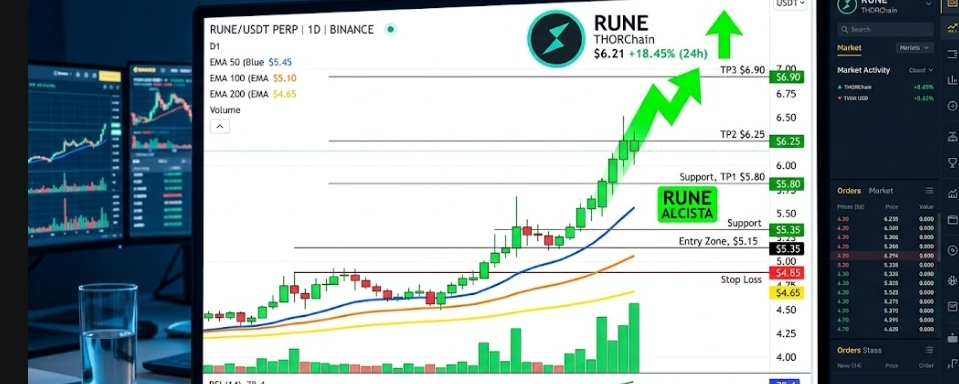
RUNE shows a strong bullish trend on daily timeframes. The price remains trading above the 50 and 100 period EMAs, which act as crucial dynamic supports, while the 200 EMA confirms the macro recovery structure.
Ideal Entry Zone: $5.15 - $5.35 (support retest).
TP1: $5.80
TP2: $6.25
TP3: $6.90
Stop Loss: $4.85 (below the last structural low).
RUNE: Bullish
#GoldRetracedToAround$4500
$RUNE (RUNE)
RUNE shows a strong bullish trend on daily timeframes. The price remains trading above the 50 and 100 period EMAs, which act as crucial dynamic supports, while the 200 EMA confirms the macro recovery structure.
Ideal Entry Zone: $5.15 - $5.35 (support retest).
TP1: $5.80
TP2: $6.25
TP3: $6.90
Stop Loss: $4.85 (below the last structural low).
$RUNE (RUNE)
RUNE shows a strong bullish trend on daily timeframes. The price remains trading above the 50 and 100 period EMAs, which act as crucial dynamic supports, while the 200 EMA confirms the macro recovery structure.
Ideal Entry Zone: $5.15 - $5.35 (support retest).
TP1: $5.80
TP2: $6.25
TP3: $6.90
Stop Loss: $4.85 (below the last structural low).
1
65


·
--
Article
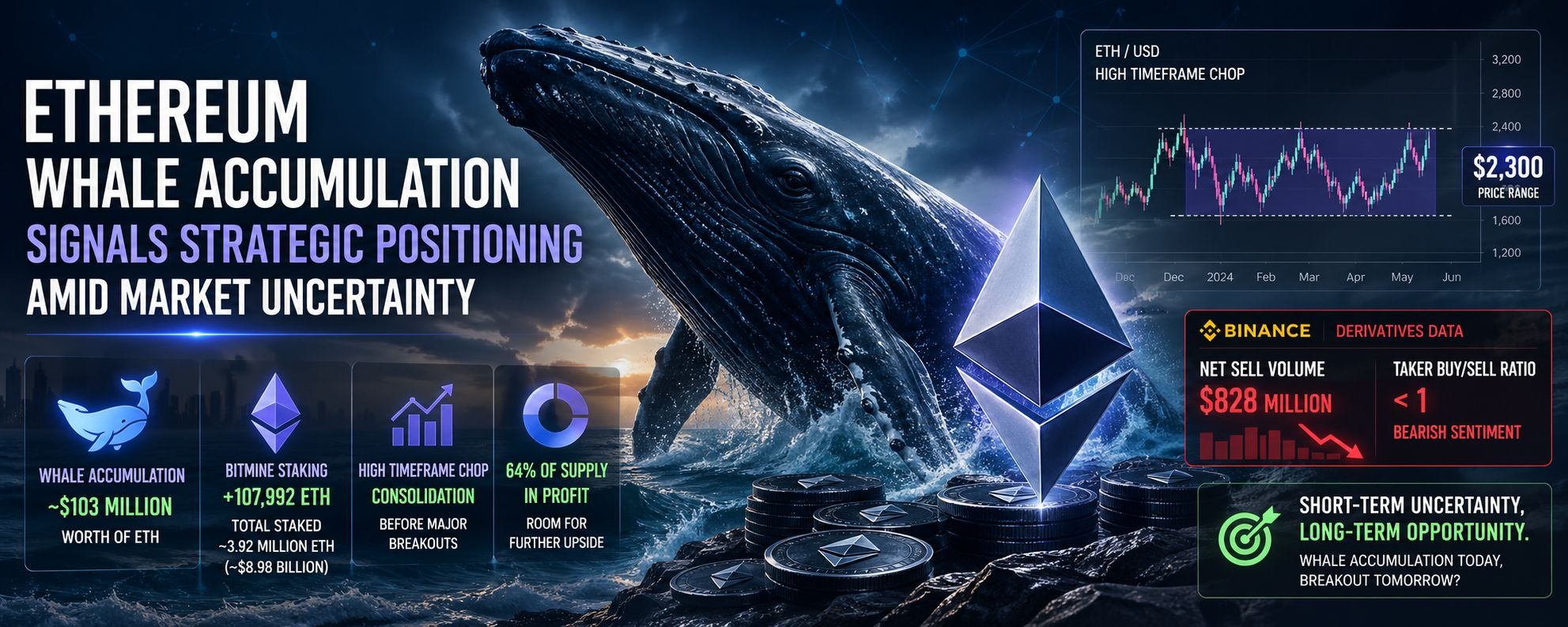
Ethereum Whale Accumulation Signals Strategic Positioning Amid Market UncertaintyRecent on-chain activity around Ethereum is drawing significant attention as newly identified whale wallets accumulated approximately $103 million worth of ETH. This surge in “smart money” flows mirrors historical accumulation phases often associated with institutional players preparing for larger market moves. Notably, entities linked to Bitmine have also expanded their holdings, staking an additional 107,992 ETH and bringing their total staked position to nearly 3.92 million ETH valued at roughly $8.98 billion. This level of commitment suggests strong long-term conviction despite short-term volatility.
From a technical perspective, ETH appears to be forming a “high timeframe chop” pattern—a consolidation phase historically observed in major assets like Google, Netflix, and Nike before significant breakout rallies. Currently trading near the $2,300 range, Ethereum has around 64% of its circulating supply in profit. This is relatively moderate compared to previous cycle peaks, leaving room for further upside if demand strengthens.
However, derivatives data introduces a layer of caution. On Binance, net sell volume reached $828 million, with taker buy/sell ratios falling below 1—an indication of short-term bearish sentiment and potential distribution. This divergence between spot accumulation and derivatives pressure highlights a key dynamic: while retail and short-term traders may be cautious, larger players appear to be positioning ahead of a possible medium-term expansion.
In summary, Ethereum’s current market structure reflects a classic tension between short-term uncertainty and long-term optimism. If historical patterns hold, this phase of consolidation backed by whale accumulation—could act as the foundation for the next major upward move.
#GoldRetracedToAround$4500 #BinanceLaunchesGoldvs.BTCTradingCompetition #BitMineIncreasesEthereumStaking $ETH
{future}(ETHUSDT)
$AI
{spot}(AIUSDT)
Ethereum Whale Accumulation Signals Strategic Positioning Amid Market Uncertainty
Recent on-chain activity around Ethereum is drawing significant attention as newly identified whale wallets accumulated approximately $103 million worth of ETH. This surge in “smart money” flows mirrors historical accumulation phases often associated with institutional players preparing for larger market moves. Notably, entities linked to Bitmine have also expanded their holdings, staking an additional 107,992 ETH and bringing their total staked position to nearly 3.92 million ETH valued at roughly $8.98 billion. This level of commitment suggests strong long-term conviction despite short-term volatility.
From a technical perspective, ETH appears to be forming a “high timeframe chop” pattern—a consolidation phase historically observed in major assets like Google, Netflix, and Nike before significant breakout rallies. Currently trading near the $2,300 range, Ethereum has around 64% of its circulating supply in profit. This is relatively moderate compared to previous cycle peaks, leaving room for further upside if demand strengthens.
However, derivatives data introduces a layer of caution. On Binance, net sell volume reached $828 million, with taker buy/sell ratios falling below 1—an indication of short-term bearish sentiment and potential distribution. This divergence between spot accumulation and derivatives pressure highlights a key dynamic: while retail and short-term traders may be cautious, larger players appear to be positioning ahead of a possible medium-term expansion.
In summary, Ethereum’s current market structure reflects a classic tension between short-term uncertainty and long-term optimism. If historical patterns hold, this phase of consolidation backed by whale accumulation—could act as the foundation for the next major upward move.
#GoldRetracedToAround$4500 #BinanceLaunchesGoldvs.BTCTradingCompetition #BitMineIncreasesEthereumStaking $ETH
$AI
From a technical perspective, ETH appears to be forming a “high timeframe chop” pattern—a consolidation phase historically observed in major assets like Google, Netflix, and Nike before significant breakout rallies. Currently trading near the $2,300 range, Ethereum has around 64% of its circulating supply in profit. This is relatively moderate compared to previous cycle peaks, leaving room for further upside if demand strengthens.
However, derivatives data introduces a layer of caution. On Binance, net sell volume reached $828 million, with taker buy/sell ratios falling below 1—an indication of short-term bearish sentiment and potential distribution. This divergence between spot accumulation and derivatives pressure highlights a key dynamic: while retail and short-term traders may be cautious, larger players appear to be positioning ahead of a possible medium-term expansion.
In summary, Ethereum’s current market structure reflects a classic tension between short-term uncertainty and long-term optimism. If historical patterns hold, this phase of consolidation backed by whale accumulation—could act as the foundation for the next major upward move.
#GoldRetracedToAround$4500 #BinanceLaunchesGoldvs.BTCTradingCompetition #BitMineIncreasesEthereumStaking $ETH
$AI
139

·
--
Bearish
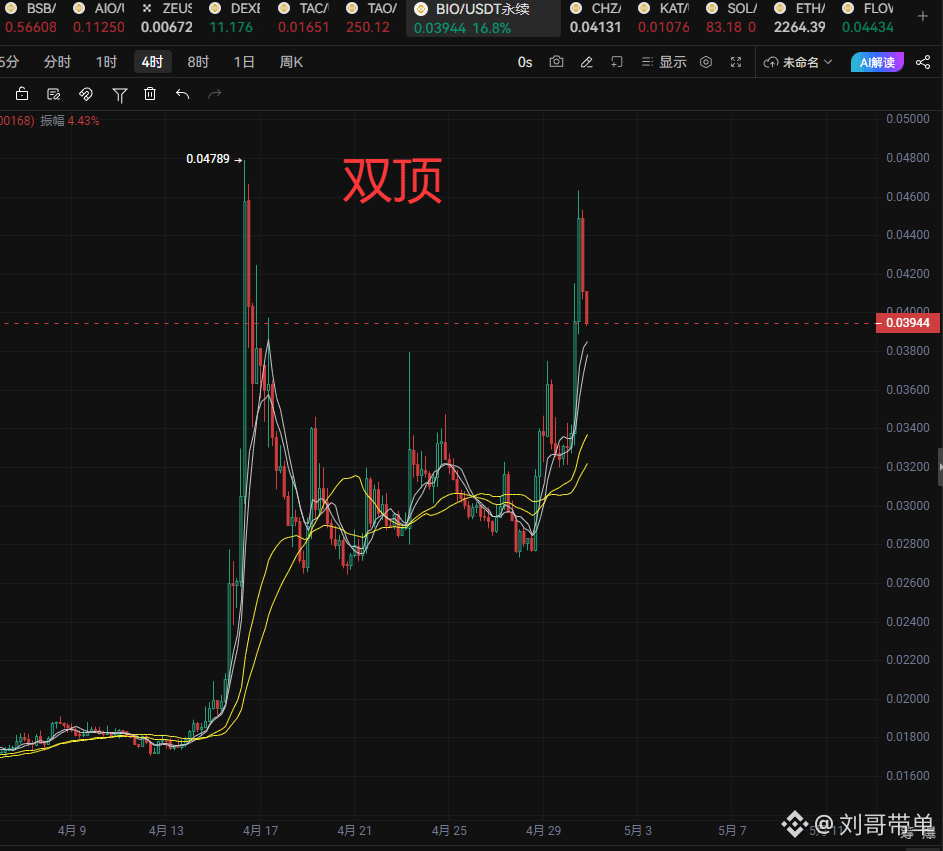
$BIO Thanks to the project team for the little gifts, I'm already on my way to find a music teacher.
Looking at the candlestick chart, we've formed a double top. Since we haven't broken through the previous high resistance level, there will be some selling pressure.
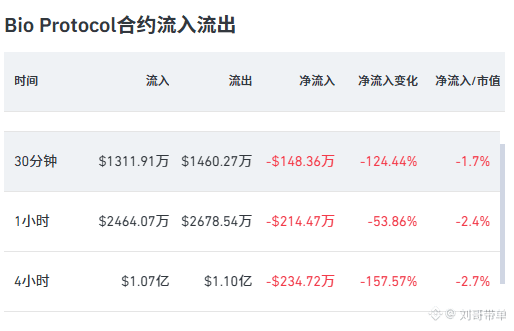
On-chain funds are continuously flowing out, and from what the smart money indicates, we're nearing the whale's average long and short positions, with no signs of market support, and it's still trending down. This is a signal that the market makers are cleaning up!
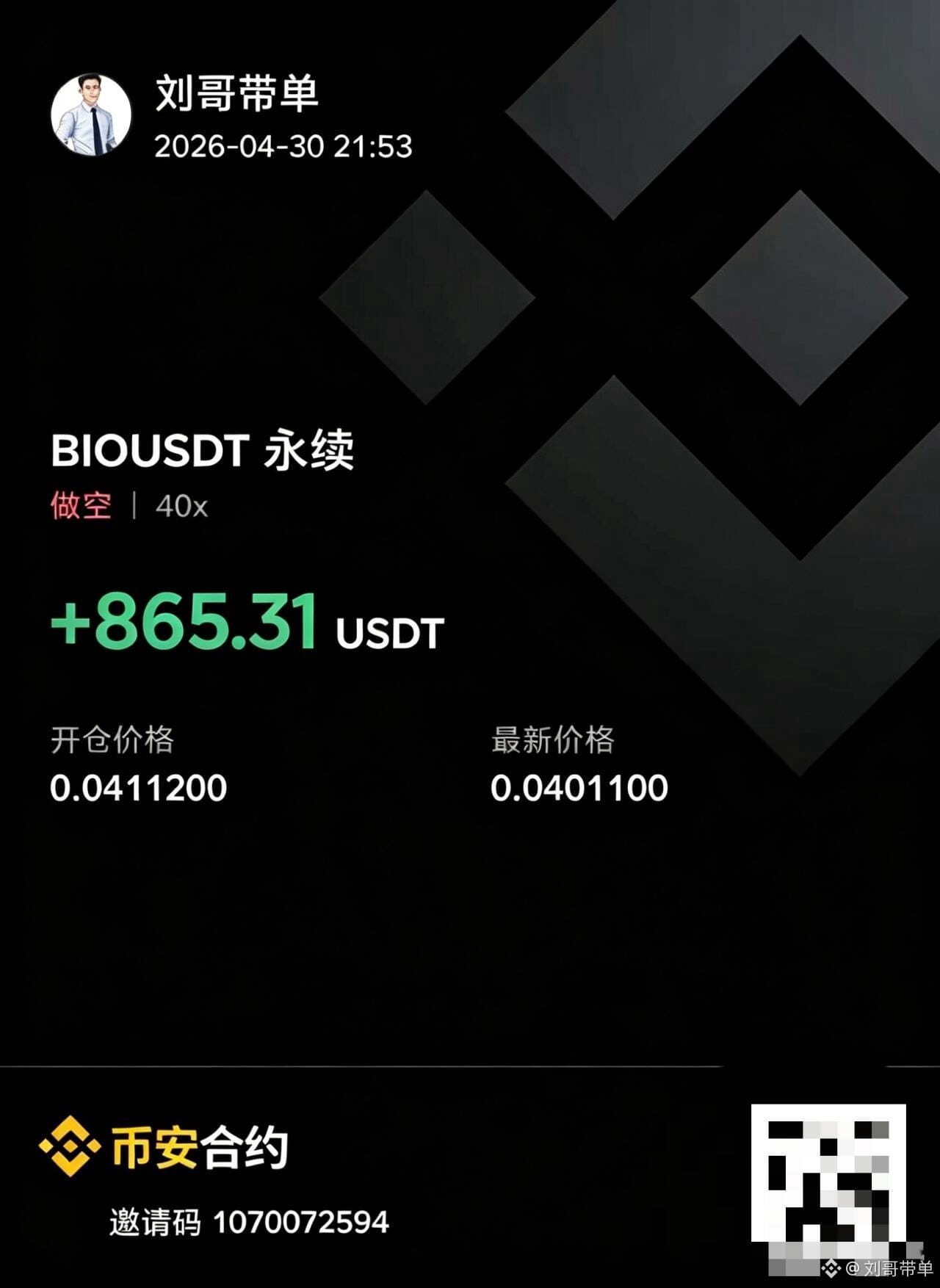
Quickly enter a short position; the strategy has been laid out, it's up to you now. Liu Ge will be waiting here, but the market won't!
In this market, we only play it safe; the sister only looks for the prettiest options. If someone is stubbornly resisting the market, Liu Ge is willing to be your safe harbor $AKE $SKYAI #FedRatesUnchanged #GoldRetracedToAround$4500
$BIO Thanks to the project team for the little gifts, I'm already on my way to find a music teacher.
Looking at the candlestick chart, we've formed a double top. Since we haven't broken through the previous high resistance level, there will be some selling pressure.
On-chain funds are continuously flowing out, and from what the smart money indicates, we're nearing the whale's average long and short positions, with no signs of market support, and it's still trending down. This is a signal that the market makers are cleaning up!
Quickly enter a short position; the strategy has been laid out, it's up to you now. Liu Ge will be waiting here, but the market won't!
In this market, we only play it safe; the sister only looks for the prettiest options. If someone is stubbornly resisting the market, Liu Ge is willing to be your safe harbor $AKE $SKYAI #FedRatesUnchanged #GoldRetracedToAround$4500
Looking at the candlestick chart, we've formed a double top. Since we haven't broken through the previous high resistance level, there will be some selling pressure.
On-chain funds are continuously flowing out, and from what the smart money indicates, we're nearing the whale's average long and short positions, with no signs of market support, and it's still trending down. This is a signal that the market makers are cleaning up!
Quickly enter a short position; the strategy has been laid out, it's up to you now. Liu Ge will be waiting here, but the market won't!
In this market, we only play it safe; the sister only looks for the prettiest options. If someone is stubbornly resisting the market, Liu Ge is willing to be your safe harbor $AKE $SKYAI #FedRatesUnchanged #GoldRetracedToAround$4500
409

$HIGH
{spot}(HIGHUSDT)
(Highstreet) Analysis
HIGH is the native token of Highstreet, a metaverse-based shopping and gaming project combining virtual reality, NFTs, and real-world brands. It aims to build a digital economy where users can earn, trade, and shop inside immersive worlds. In 2026, the token is still under pressure, showing bearish sentiment with weak short-term momentum and declining trading strength. Technical data shows recent downtrend pressure with RSI in a neutral zone, meaning neither strong buying nor oversold conditions yet. Price action suggests consolidation after long-term weakness from previous highs. However, long-term vision still depends on metaverse adoption and Web3 gaming growth. If adoption increases, HIGH could benefit from renewed interest in virtual commerce ecosystems. For now, market sentiment remains cautious with volatility expected. Investors are watching for ecosystem updates and partnerships as key catalysts. Overall trend is sideways-to-bearish in short term but speculative upside exists in long-term narrative cycles.
HIGH PRICE MOVEMENT (Simplified)
$0.20 | █
$0.18 | ████
$0.16 | ██████
$0.14 | █████
$0.12 | ██████
$0.10 | ████
$0.08 | ███
$0.06 | █
----------------
Time ➝ (Recent → Past)
#FedRatesUnchanged #AftermathFinanceBreach #PolymarketDeniesDataBreach #GoldRetracedToAround$4500
$HIGH
(Highstreet) Analysis
HIGH is the native token of Highstreet, a metaverse-based shopping and gaming project combining virtual reality, NFTs, and real-world brands. It aims to build a digital economy where users can earn, trade, and shop inside immersive worlds. In 2026, the token is still under pressure, showing bearish sentiment with weak short-term momentum and declining trading strength. Technical data shows recent downtrend pressure with RSI in a neutral zone, meaning neither strong buying nor oversold conditions yet. Price action suggests consolidation after long-term weakness from previous highs. However, long-term vision still depends on metaverse adoption and Web3 gaming growth. If adoption increases, HIGH could benefit from renewed interest in virtual commerce ecosystems. For now, market sentiment remains cautious with volatility expected. Investors are watching for ecosystem updates and partnerships as key catalysts. Overall trend is sideways-to-bearish in short term but speculative upside exists in long-term narrative cycles.
HIGH PRICE MOVEMENT (Simplified)
$0.20 | █
$0.18 | ████
$0.16 | ██████
$0.14 | █████
$0.12 | ██████
$0.10 | ████
$0.08 | ███
$0.06 | █
----------------
Time ➝ (Recent → Past)
#FedRatesUnchanged #AftermathFinanceBreach #PolymarketDeniesDataBreach #GoldRetracedToAround$4500
(Highstreet) Analysis
HIGH is the native token of Highstreet, a metaverse-based shopping and gaming project combining virtual reality, NFTs, and real-world brands. It aims to build a digital economy where users can earn, trade, and shop inside immersive worlds. In 2026, the token is still under pressure, showing bearish sentiment with weak short-term momentum and declining trading strength. Technical data shows recent downtrend pressure with RSI in a neutral zone, meaning neither strong buying nor oversold conditions yet. Price action suggests consolidation after long-term weakness from previous highs. However, long-term vision still depends on metaverse adoption and Web3 gaming growth. If adoption increases, HIGH could benefit from renewed interest in virtual commerce ecosystems. For now, market sentiment remains cautious with volatility expected. Investors are watching for ecosystem updates and partnerships as key catalysts. Overall trend is sideways-to-bearish in short term but speculative upside exists in long-term narrative cycles.
HIGH PRICE MOVEMENT (Simplified)
$0.20 | █
$0.18 | ████
$0.16 | ██████
$0.14 | █████
$0.12 | ██████
$0.10 | ████
$0.08 | ███
$0.06 | █
----------------
Time ➝ (Recent → Past)
#FedRatesUnchanged #AftermathFinanceBreach #PolymarketDeniesDataBreach #GoldRetracedToAround$4500
223

Crypto Market Update – April 30, 2026🚀$BTC $ETH $SOL
📊 Market Overview
Crypto market showing recovery + consolidation phase
Total market cap ≈ $2.7 Trillion (+10% this month) �
Crowdfund Insider
Volatility still high due to macroeconomic factors
🟡 Bitcoin (BTC)
Current price: ~$76K – $77K �
Fortune +1
Strong monthly gain (~12–16%) �
MarketWatch +1
Facing key resistance at $80K
Break above $80K = possible massive short squeeze ($1.2B) �
The Economic Times
👉 Trend: Bullish but consolidating
🔵 Ethereum (ETH)
Trading near ~$2,300 �
Fortune +1
Monthly growth ~14% �
Crowdfund Insider
Strong institutional demand + DeFi activity
👉 Trend: Steady growth
🟢 Altcoins
XRP, SOL showing moderate gains
Some altcoins outperforming BTC
Smart money shifting into high-utility projects
👉 Trend: Mixed but opportunity-driven
🏦 Institutional Activity
Bitcoin ETFs saw $1.7B inflows �
Crowdfund Insider
Big players accumulating BTC
Corporate buying increasing
👉 Signal: Long-term bullish confidence
⚠️ Market Risks
Low retail participation (weak volume) �
MarketWatch
Fed interest rate decisions impacting market
Geopolitical uncertainty
👉 Market mood: Cautious optimism
🔥 Key Takeaway
✔ Market recovering but not fully bullish yet
✔ BTC needs breakout above $80K
✔ Institutions buying — retail still slow
✔ Short-term volatility, long-term bullish
📌 Conclusion
Crypto market is in a transition phase — smart investors are accumulating while waiting for the next big breakout.
#FedRatesUnchanged #AftermathFinanceBreach #PolymarketDeniesDataBreach #GoldRetracedToAround$4500 #LayerZeroBacksDeFiUnitedWithOver10000ETH
{spot}(XRPUSDT)
{spot}(SOLUSDT)
Crypto Market Update – April 30, 2026
🚀$BTC $ETH $SOL
📊 Market Overview
Crypto market showing recovery + consolidation phase
Total market cap ≈ $2.7 Trillion (+10% this month) �
Crowdfund Insider
Volatility still high due to macroeconomic factors
🟡 Bitcoin (BTC)
Current price: ~$76K – $77K �
Fortune +1
Strong monthly gain (~12–16%) �
MarketWatch +1
Facing key resistance at $80K
Break above $80K = possible massive short squeeze ($1.2B) �
The Economic Times
👉 Trend: Bullish but consolidating
🔵 Ethereum (ETH)
Trading near ~$2,300 �
Fortune +1
Monthly growth ~14% �
Crowdfund Insider
Strong institutional demand + DeFi activity
👉 Trend: Steady growth
🟢 Altcoins
XRP, SOL showing moderate gains
Some altcoins outperforming BTC
Smart money shifting into high-utility projects
👉 Trend: Mixed but opportunity-driven
🏦 Institutional Activity
Bitcoin ETFs saw $1.7B inflows �
Crowdfund Insider
Big players accumulating BTC
Corporate buying increasing
👉 Signal: Long-term bullish confidence
⚠️ Market Risks
Low retail participation (weak volume) �
MarketWatch
Fed interest rate decisions impacting market
Geopolitical uncertainty
👉 Market mood: Cautious optimism
🔥 Key Takeaway
✔ Market recovering but not fully bullish yet
✔ BTC needs breakout above $80K
✔ Institutions buying — retail still slow
✔ Short-term volatility, long-term bullish
📌 Conclusion
Crypto market is in a transition phase — smart investors are accumulating while waiting for the next big breakout.
#FedRatesUnchanged #AftermathFinanceBreach #PolymarketDeniesDataBreach #GoldRetracedToAround$4500 #LayerZeroBacksDeFiUnitedWithOver10000ETH
📊 Market Overview
Crypto market showing recovery + consolidation phase
Total market cap ≈ $2.7 Trillion (+10% this month) �
Crowdfund Insider
Volatility still high due to macroeconomic factors
🟡 Bitcoin (BTC)
Current price: ~$76K – $77K �
Fortune +1
Strong monthly gain (~12–16%) �
MarketWatch +1
Facing key resistance at $80K
Break above $80K = possible massive short squeeze ($1.2B) �
The Economic Times
👉 Trend: Bullish but consolidating
🔵 Ethereum (ETH)
Trading near ~$2,300 �
Fortune +1
Monthly growth ~14% �
Crowdfund Insider
Strong institutional demand + DeFi activity
👉 Trend: Steady growth
🟢 Altcoins
XRP, SOL showing moderate gains
Some altcoins outperforming BTC
Smart money shifting into high-utility projects
👉 Trend: Mixed but opportunity-driven
🏦 Institutional Activity
Bitcoin ETFs saw $1.7B inflows �
Crowdfund Insider
Big players accumulating BTC
Corporate buying increasing
👉 Signal: Long-term bullish confidence
⚠️ Market Risks
Low retail participation (weak volume) �
MarketWatch
Fed interest rate decisions impacting market
Geopolitical uncertainty
👉 Market mood: Cautious optimism
🔥 Key Takeaway
✔ Market recovering but not fully bullish yet
✔ BTC needs breakout above $80K
✔ Institutions buying — retail still slow
✔ Short-term volatility, long-term bullish
📌 Conclusion
Crypto market is in a transition phase — smart investors are accumulating while waiting for the next big breakout.
#FedRatesUnchanged #AftermathFinanceBreach #PolymarketDeniesDataBreach #GoldRetracedToAround$4500 #LayerZeroBacksDeFiUnitedWithOver10000ETH
78

·
--
Ethereum’s Next Big Move: Why Investors Are Closely Watching ETH Right Now#eth @Ethereum_official has been showing something really interesting lately. While most people are focused only on Bitcoin, smart investors are quietly watching Ethereum because it’s starting to look like one of the strongest long-term opportunities in the crypto market right now.
At the moment, ETH is moving through an important phase. The price has been holding strong even during market uncertainty, and that usually tells us one thing: serious investors are accumulating, not panicking.
What makes Ethereum different from many other cryptocurrencies is that it’s not just a coin people trade for quick profit. It’s the backbone of thousands of blockchain projects. From DeFi platforms to NFTs, AI integrations, and smart contracts — Ethereum powers a huge part of the crypto world. Every year, its ecosystem keeps growing stronger.
Right now, Ethereum is trading near a major resistance zone. If buyers manage to push the price higher and break that level, we could see a massive bullish rally in the coming months. Many traders believe this could be the beginning of another strong cycle for ETH.
Here’s how the current market situation looks:
Strong investor confidence
↓
More accumulation happening
↓
ETH holds key support zones
↓
Buying pressure increases
↓
Potential breakout ahead
And if the breakout happens:
Resistance breaks
↓
More investors enter market
↓
FOMO starts building
↓
ETH pushes toward new highs
The reason many long-term investors still believe in Ethereum is simple: technology + adoption + demand.
Big companies are exploring blockchain technology. Developers continue building on Ethereum every single day. Institutional money is slowly entering crypto again. These are the kinds of signs smart investors watch before major market expansions happen.
Of course, every investment has risks. Crypto markets move fast and corrections can happen anytime. But history has shown that strong projects survive difficult phases and reward patient investors over time.
A lot of people wait until prices explode before they start paying attention. By then, the biggest opportunities are often already gone. Smart investing usually happens during uncertainty — when others are still afraid to move.
Right now, Ethereum feels like it’s standing at the edge of something big. If momentum continues and the market stays strong, the next few months could become very important for ETH holders.
Sometimes the biggest opportunities come when people hesitate the most.
#ETH #Ethereum #ETHETFsApproved
#GoldRetracedToAround$4500
Ethereum’s Next Big Move: Why Investors Are Closely Watching ETH Right Now
#eth @Ethereum has been showing something really interesting lately. While most people are focused only on Bitcoin, smart investors are quietly watching Ethereum because it’s starting to look like one of the strongest long-term opportunities in the crypto market right now.
At the moment, ETH is moving through an important phase. The price has been holding strong even during market uncertainty, and that usually tells us one thing: serious investors are accumulating, not panicking.
What makes Ethereum different from many other cryptocurrencies is that it’s not just a coin people trade for quick profit. It’s the backbone of thousands of blockchain projects. From DeFi platforms to NFTs, AI integrations, and smart contracts — Ethereum powers a huge part of the crypto world. Every year, its ecosystem keeps growing stronger.
Right now, Ethereum is trading near a major resistance zone. If buyers manage to push the price higher and break that level, we could see a massive bullish rally in the coming months. Many traders believe this could be the beginning of another strong cycle for ETH.
Here’s how the current market situation looks:
Strong investor confidence
↓
More accumulation happening
↓
ETH holds key support zones
↓
Buying pressure increases
↓
Potential breakout ahead
And if the breakout happens:
Resistance breaks
↓
More investors enter market
↓
FOMO starts building
↓
ETH pushes toward new highs
The reason many long-term investors still believe in Ethereum is simple: technology + adoption + demand.
Big companies are exploring blockchain technology. Developers continue building on Ethereum every single day. Institutional money is slowly entering crypto again. These are the kinds of signs smart investors watch before major market expansions happen.
Of course, every investment has risks. Crypto markets move fast and corrections can happen anytime. But history has shown that strong projects survive difficult phases and reward patient investors over time.
A lot of people wait until prices explode before they start paying attention. By then, the biggest opportunities are often already gone. Smart investing usually happens during uncertainty — when others are still afraid to move.
Right now, Ethereum feels like it’s standing at the edge of something big. If momentum continues and the market stays strong, the next few months could become very important for ETH holders.
Sometimes the biggest opportunities come when people hesitate the most.
#ETH #Ethereum #ETHETFsApproved
#GoldRetracedToAround$4500
At the moment, ETH is moving through an important phase. The price has been holding strong even during market uncertainty, and that usually tells us one thing: serious investors are accumulating, not panicking.
What makes Ethereum different from many other cryptocurrencies is that it’s not just a coin people trade for quick profit. It’s the backbone of thousands of blockchain projects. From DeFi platforms to NFTs, AI integrations, and smart contracts — Ethereum powers a huge part of the crypto world. Every year, its ecosystem keeps growing stronger.
Right now, Ethereum is trading near a major resistance zone. If buyers manage to push the price higher and break that level, we could see a massive bullish rally in the coming months. Many traders believe this could be the beginning of another strong cycle for ETH.
Here’s how the current market situation looks:
Strong investor confidence
↓
More accumulation happening
↓
ETH holds key support zones
↓
Buying pressure increases
↓
Potential breakout ahead
And if the breakout happens:
Resistance breaks
↓
More investors enter market
↓
FOMO starts building
↓
ETH pushes toward new highs
The reason many long-term investors still believe in Ethereum is simple: technology + adoption + demand.
Big companies are exploring blockchain technology. Developers continue building on Ethereum every single day. Institutional money is slowly entering crypto again. These are the kinds of signs smart investors watch before major market expansions happen.
Of course, every investment has risks. Crypto markets move fast and corrections can happen anytime. But history has shown that strong projects survive difficult phases and reward patient investors over time.
A lot of people wait until prices explode before they start paying attention. By then, the biggest opportunities are often already gone. Smart investing usually happens during uncertainty — when others are still afraid to move.
Right now, Ethereum feels like it’s standing at the edge of something big. If momentum continues and the market stays strong, the next few months could become very important for ETH holders.
Sometimes the biggest opportunities come when people hesitate the most.
#ETH #Ethereum #ETHETFsApproved
#GoldRetracedToAround$4500
96

Share your feedback about new token #FedRatesUnchanged #AftermathFinanceBreach #PolymarketDeniesDataBreach #GoldRetracedToAround$4500 #LayerZeroBacksDeFiUnitedWithOver10000ETH
Share your feedback about new token #FedRatesUnchanged #AftermathFinanceBreach #PolymarketDeniesDataBreach #GoldRetracedToAround$4500 #LayerZeroBacksDeFiUnitedWithOver10000ETH
84

Jack Mallers' Twenty One Capital surges after majority holder Tether proposes 3-way mergerTether has moved to combine bitcoin treasury, mining, and financial services under one roof.
If completed, these transactions would position XXI to become the premier listed Bitcoin company in the world: a public company that combines Bitcoin treasury, mining, financial services, lending, capital markets, and strategic consolidation into one integrated platform," according to the press release.
Led by Raphael Zagury, Elektron Energy manages approximately 5% of the current bitcoin network's computing power with all-in production costs below $60,000 per bitcoin.
No terms of timelines were disclosed for the merger
Tether also proposed that Zagury serve as President of the combined entity, pairing his mining and capital markets experience with Mallers' product and consumer bitcoin leadership.
XXI went public in December of last year through a SPAC merger with Cantor Equity Partners. The company entered the market as a bitcoin treasury firm with 43,514 BTC and is backed by Tether, Bitfinex and Strike CEO Jack Mallers. At the time, it said it would focus on “capital-efficient bitcoin accumulation.”
If the new merger takes place, the company will expand on this previous treasury commitment into other parts of bitcoin services, the press release said.
The combined transactions would move XXI beyond treasury exposure alone and toward a platform with operating businesses, recurring revenue opportunities, and long-term Bitcoin accumulation capabilities," the statement added.
#GoldRetracedToAround$4500
#PolymarketDeniesDataBreach #AftermathFinanceBreach
#FedRatesUnchanged #LayerZeroBacksDeFiUnitedWithOver10000ETH
Jack Mallers' Twenty One Capital surges after majority holder Tether proposes 3-way merger
Tether has moved to combine bitcoin treasury, mining, and financial services under one roof.
If completed, these transactions would position XXI to become the premier listed Bitcoin company in the world: a public company that combines Bitcoin treasury, mining, financial services, lending, capital markets, and strategic consolidation into one integrated platform," according to the press release.
Led by Raphael Zagury, Elektron Energy manages approximately 5% of the current bitcoin network's computing power with all-in production costs below $60,000 per bitcoin.
No terms of timelines were disclosed for the merger
Tether also proposed that Zagury serve as President of the combined entity, pairing his mining and capital markets experience with Mallers' product and consumer bitcoin leadership.
XXI went public in December of last year through a SPAC merger with Cantor Equity Partners. The company entered the market as a bitcoin treasury firm with 43,514 BTC and is backed by Tether, Bitfinex and Strike CEO Jack Mallers. At the time, it said it would focus on “capital-efficient bitcoin accumulation.”
If the new merger takes place, the company will expand on this previous treasury commitment into other parts of bitcoin services, the press release said.
The combined transactions would move XXI beyond treasury exposure alone and toward a platform with operating businesses, recurring revenue opportunities, and long-term Bitcoin accumulation capabilities," the statement added.
#GoldRetracedToAround$4500
#PolymarketDeniesDataBreach #AftermathFinanceBreach
#FedRatesUnchanged #LayerZeroBacksDeFiUnitedWithOver10000ETH
If completed, these transactions would position XXI to become the premier listed Bitcoin company in the world: a public company that combines Bitcoin treasury, mining, financial services, lending, capital markets, and strategic consolidation into one integrated platform," according to the press release.
Led by Raphael Zagury, Elektron Energy manages approximately 5% of the current bitcoin network's computing power with all-in production costs below $60,000 per bitcoin.
No terms of timelines were disclosed for the merger
Tether also proposed that Zagury serve as President of the combined entity, pairing his mining and capital markets experience with Mallers' product and consumer bitcoin leadership.
XXI went public in December of last year through a SPAC merger with Cantor Equity Partners. The company entered the market as a bitcoin treasury firm with 43,514 BTC and is backed by Tether, Bitfinex and Strike CEO Jack Mallers. At the time, it said it would focus on “capital-efficient bitcoin accumulation.”
If the new merger takes place, the company will expand on this previous treasury commitment into other parts of bitcoin services, the press release said.
The combined transactions would move XXI beyond treasury exposure alone and toward a platform with operating businesses, recurring revenue opportunities, and long-term Bitcoin accumulation capabilities," the statement added.
#GoldRetracedToAround$4500
#PolymarketDeniesDataBreach #AftermathFinanceBreach
#FedRatesUnchanged #LayerZeroBacksDeFiUnitedWithOver10000ETH
71

"Bitcoin Slides Toward $75K as ETH, SOL, XRP Fall with Oil at Four-Year High"🚨 Market Alert – Crypto Under Pressure
Crypto market today faced a broad sell-off as macro tension increased.
$BTC is sliding toward the $75K zone, while $ETH, $SOL , and $XRP are also moving lower 📉
📊 Current move:
Bitcoin ↓ around 2%
Ethereum ↓ around 3%+
The main reason?
🛢️ Oil prices surged sharply, with Brent crude jumping to a 4-year high near $126/barrel amid rising geopolitical tension. �
AiCoin
This kind of macro pressure usually weakens risk assets — and crypto is reacting the same way.
⚠️ When oil rises aggressively, markets often shift to “risk-off” mode, which puts pressure on BTC and altcoins.
What to watch now 👇
$75K is a key support for BTC
Continued tension = more downside risk
Relief in macro = possible bounce
💡 Right now, this is not a random dump — it’s macro-driven movement.
Stay careful, manage risk, and don’t overtrade in this volatility
#FedRatesUnchanged #AftermathFinanceBreach #PolymarketDeniesDataBreach #GoldRetracedToAround$4500 #LayerZeroBacksDeFiUnitedWithOver10000ETH
"Bitcoin Slides Toward $75K as ETH, SOL, XRP Fall with Oil at Four-Year High"
🚨 Market Alert – Crypto Under Pressure
Crypto market today faced a broad sell-off as macro tension increased.
$BTC is sliding toward the $75K zone, while $ETH, $SOL , and $XRP are also moving lower 📉
📊 Current move:
Bitcoin ↓ around 2%
Ethereum ↓ around 3%+
The main reason?
🛢️ Oil prices surged sharply, with Brent crude jumping to a 4-year high near $126/barrel amid rising geopolitical tension. �
AiCoin
This kind of macro pressure usually weakens risk assets — and crypto is reacting the same way.
⚠️ When oil rises aggressively, markets often shift to “risk-off” mode, which puts pressure on BTC and altcoins.
What to watch now 👇
$75K is a key support for BTC
Continued tension = more downside risk
Relief in macro = possible bounce
💡 Right now, this is not a random dump — it’s macro-driven movement.
Stay careful, manage risk, and don’t overtrade in this volatility
#FedRatesUnchanged #AftermathFinanceBreach #PolymarketDeniesDataBreach #GoldRetracedToAround$4500 #LayerZeroBacksDeFiUnitedWithOver10000ETH
Crypto market today faced a broad sell-off as macro tension increased.
$BTC is sliding toward the $75K zone, while $ETH, $SOL , and $XRP are also moving lower 📉
📊 Current move:
Bitcoin ↓ around 2%
Ethereum ↓ around 3%+
The main reason?
🛢️ Oil prices surged sharply, with Brent crude jumping to a 4-year high near $126/barrel amid rising geopolitical tension. �
AiCoin
This kind of macro pressure usually weakens risk assets — and crypto is reacting the same way.
⚠️ When oil rises aggressively, markets often shift to “risk-off” mode, which puts pressure on BTC and altcoins.
What to watch now 👇
$75K is a key support for BTC
Continued tension = more downside risk
Relief in macro = possible bounce
💡 Right now, this is not a random dump — it’s macro-driven movement.
Stay careful, manage risk, and don’t overtrade in this volatility
#FedRatesUnchanged #AftermathFinanceBreach #PolymarketDeniesDataBreach #GoldRetracedToAround$4500 #LayerZeroBacksDeFiUnitedWithOver10000ETH
1
115


Article
Emerging altcoins I'm watching in April 2026 (no hype)After several weeks of scanning the market, here’s my personal and honest take on some emerging altcoins that have interesting narratives right now:
1. Bittensor (TAO)
One of the most solid AI projects out there. They're progressing in decentralized training of language models. It's high risk, but if the AI narrative remains strong, there’s real potential.
2. Hyperliquid (HYPE) - A decentralized perpetuals platform that’s gaining quick traction. It combines speed and a user experience similar to centralized exchanges. I'm intrigued by how the volume is growing.
Emerging altcoins I'm watching in April 2026 (no hype)
After several weeks of scanning the market, here’s my personal and honest take on some emerging altcoins that have interesting narratives right now:
1. Bittensor (TAO)
One of the most solid AI projects out there. They're progressing in decentralized training of language models. It's high risk, but if the AI narrative remains strong, there’s real potential.
2. Hyperliquid (HYPE) - A decentralized perpetuals platform that’s gaining quick traction. It combines speed and a user experience similar to centralized exchanges. I'm intrigued by how the volume is growing.
1. Bittensor (TAO)
One of the most solid AI projects out there. They're progressing in decentralized training of language models. It's high risk, but if the AI narrative remains strong, there’s real potential.
2. Hyperliquid (HYPE) - A decentralized perpetuals platform that’s gaining quick traction. It combines speed and a user experience similar to centralized exchanges. I'm intrigued by how the volume is growing.
1
219

·
--
Bullish
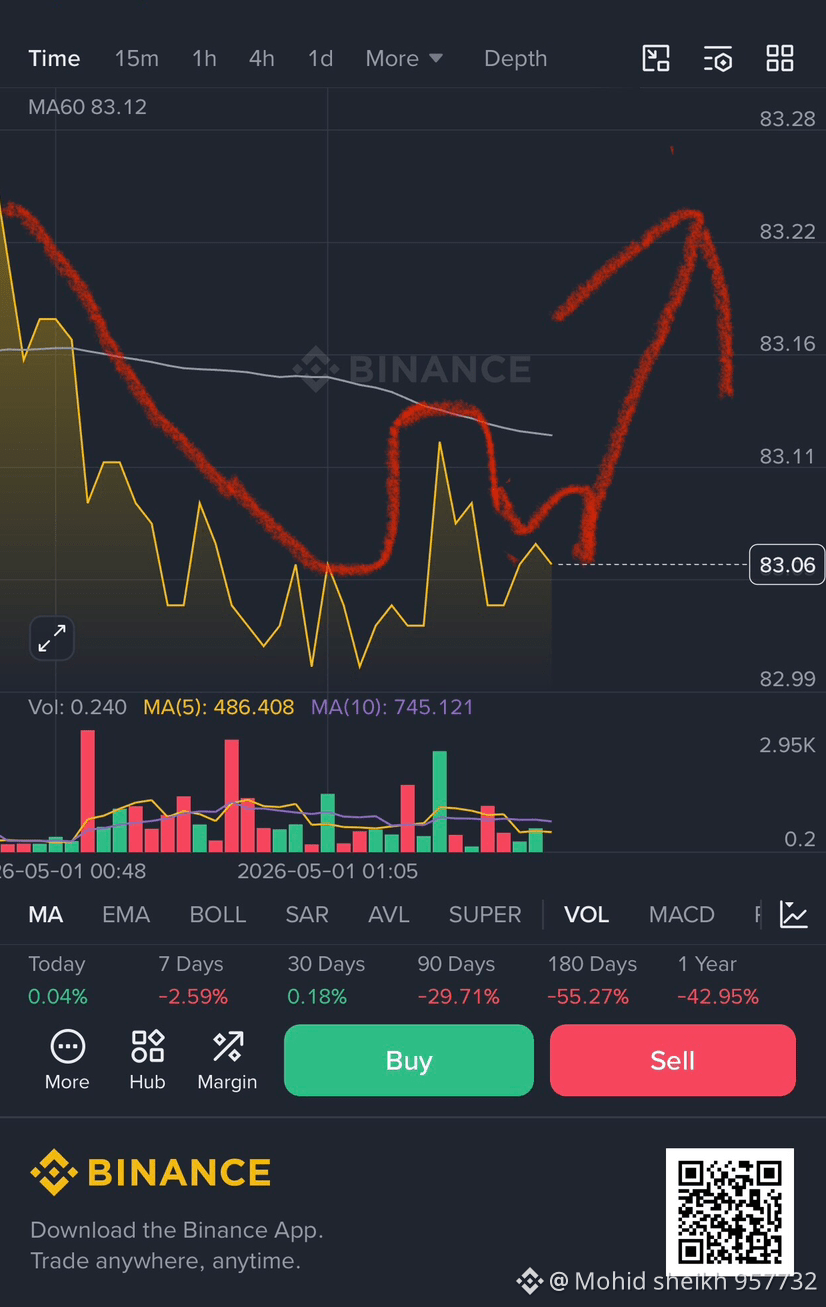
$SOL looks ready for a strong move 🚀
Buyers are defending support while volume keeps growing.
If momentum continues, SOL could push toward new highs soon 👀 #SOL
$SOL continues to show why it remains one of the strongest ecosystems in crypto.
Network activity is rising, developers keep building, and liquidity is flowing back into the market.
The recent price structure looks extremely bullish with strong support holding after every pullback. Smart money appears to be accumulating while sentiment across the ecosystem keeps improving.
If Bitcoin stays stable, SOL has the potential to outperform many large-cap coins in the coming weeks. The combination of fast transactions, growing adoption, meme coin activity, and expanding DeFi volume makes Solana one of the most watched chains of 2026.
Momentum is building quietly — and historically, that’s when SOL moves the hardest 🚀
#SOL #Solana #Crypto #bulish
#ArthurHayes’LatestSpeech #BitMineIncreasesEthereumStaking #GoldRetracedToAround$4500 $
$SOL
{spot}(SOLUSDT)
$SOL looks ready for a strong move 🚀
Buyers are defending support while volume keeps growing.
If momentum continues, SOL could push toward new highs soon 👀 #SOL
$SOL continues to show why it remains one of the strongest ecosystems in crypto.
Network activity is rising, developers keep building, and liquidity is flowing back into the market.
The recent price structure looks extremely bullish with strong support holding after every pullback. Smart money appears to be accumulating while sentiment across the ecosystem keeps improving.
If Bitcoin stays stable, SOL has the potential to outperform many large-cap coins in the coming weeks. The combination of fast transactions, growing adoption, meme coin activity, and expanding DeFi volume makes Solana one of the most watched chains of 2026.
Momentum is building quietly — and historically, that’s when SOL moves the hardest 🚀
#SOL #Solana #Crypto #bulish
#ArthurHayes’LatestSpeech #BitMineIncreasesEthereumStaking #GoldRetracedToAround$4500 $
$SOL
Buyers are defending support while volume keeps growing.
If momentum continues, SOL could push toward new highs soon 👀 #SOL
$SOL continues to show why it remains one of the strongest ecosystems in crypto.
Network activity is rising, developers keep building, and liquidity is flowing back into the market.
The recent price structure looks extremely bullish with strong support holding after every pullback. Smart money appears to be accumulating while sentiment across the ecosystem keeps improving.
If Bitcoin stays stable, SOL has the potential to outperform many large-cap coins in the coming weeks. The combination of fast transactions, growing adoption, meme coin activity, and expanding DeFi volume makes Solana one of the most watched chains of 2026.
Momentum is building quietly — and historically, that’s when SOL moves the hardest 🚀
#SOL #Solana #Crypto #bulish
#ArthurHayes’LatestSpeech #BitMineIncreasesEthereumStaking #GoldRetracedToAround$4500 $
$SOL
1
52
Log in to explore more content
Join global crypto users on Binance Square
⚡️ Get latest and useful information about crypto.
💬 Trusted by the world’s largest crypto exchange.
👍 Discover real insights from verified creators.
Email / Phone number
Trending Topics
1
#TrumpRejectsAIRulesForVoluntaryAudits
900 views
112 Discussing
2
#BitgetHotWalletBreachTiedToThirdPartySecurityFlaw
371 views
87 Discussing
3
#OpenAIUnveilsAlwaysOnAgentDots
1,532 views
135 Discussing
4
#ChainlinkLaunchesBankSWIFTLedgerFramework
3,117 views
122 Discussing
5
#EarningsSeason
442,347 views
3,341 Discussing
6
#SECChairWantsStockMarketsOnChain
6,495 views
192 Discussing
7
#MulticoinInvestsInGrass
3,918 views
134 Discussing
8
#CEARenamesToBNBStandardUnderBNC
5,035 views
135 Discussing
9
#BitwiseLaunchesFirstSpotNEARETF
60,279 views
767 Discussing
10
#USJobOpeningsFallToFiveMonthLow
64,182 views
601 Discussing