

#electrum
electrum
8,967 views
65 Discussing
Hot
Latest

·
--
Electrum 4.8.3 patches a high-severity malicious-server fee-bump trap disclosed on October 24, 2026.
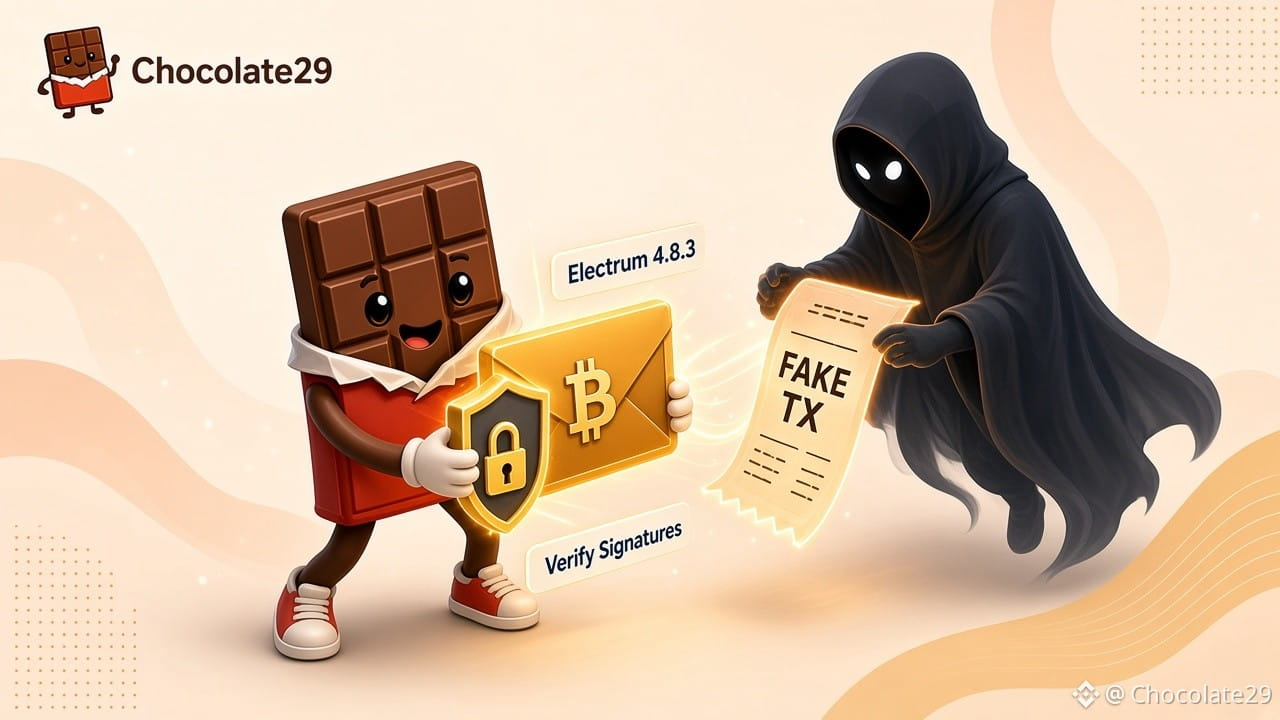
On October 24, 2026, Electrum released 4.8.3 (advisory GHSA-6jp4-8v48-cc5v). A malicious Electrum server can swallow a just-broadcast $BTC tx and show a conflicting fake unconfirmed payment to the attacker — older clients did not check those invalid signatures. If the user RBF fee-bumps the fake tx, they sign a real payment to the attacker. Some servers were already exploiting this; two users reported it and one lost funds. Attackers also ground the last four characters of the destination address to look similar.
Upgrade to 4.8.3 or newer — all older versions are affected. The fix verifies signatures on wallet-owned inputs for mempool txs before adding them to history. Download only from electrum.org and verify signatures. Until upgraded, check the full destination address and amount before any fee bump. Trusted or self-run server users are less exposed; incoming unconfirmed txs are still not fully validated.
#Bitcoin #Electrum #CryptoSecurity #Wallet
DYOR. Not financial advice.
33


·
--
Bullish
#ElectrumWalletBugLetRogueServersStealFunds
⚠️ Urgent Security Alert for Electrum Wallet Users!
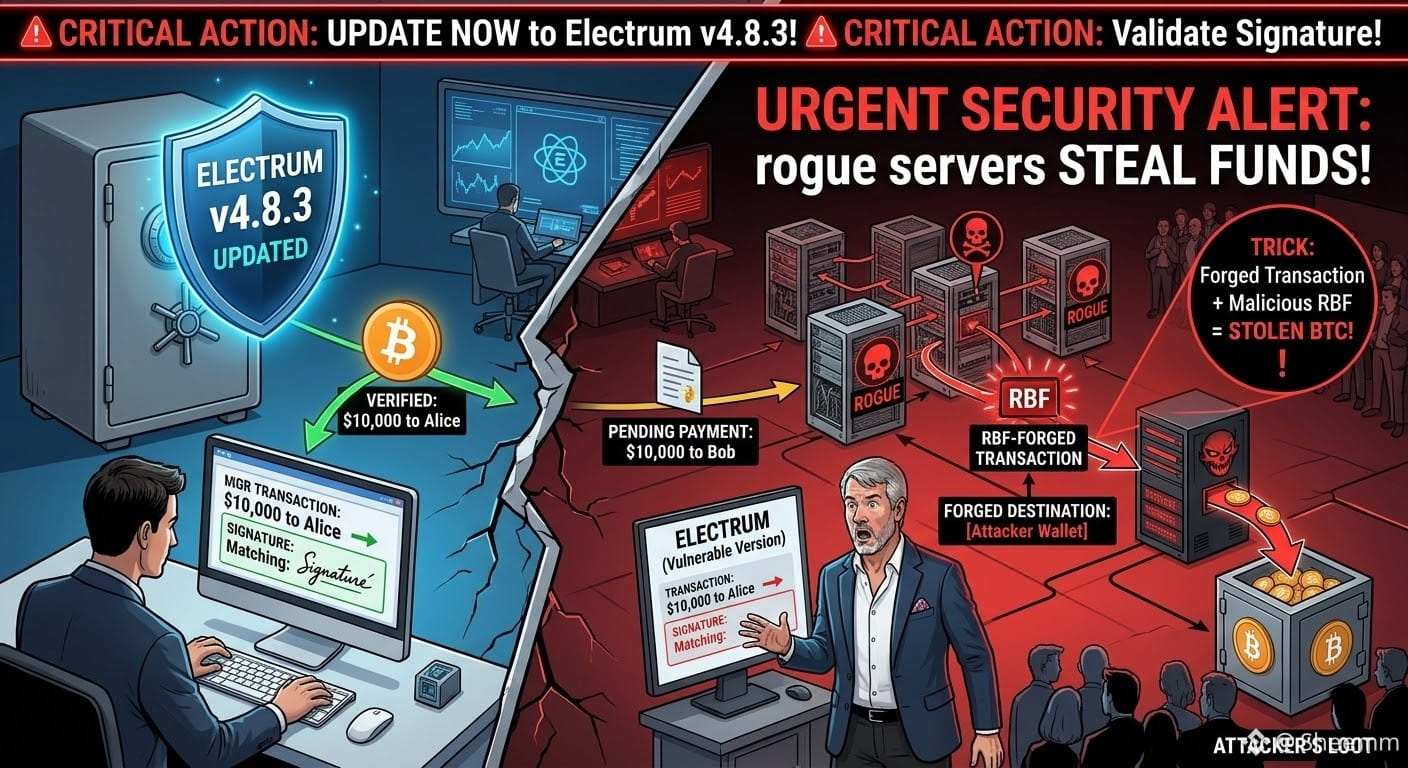
A severe vulnerability in older Electrum versions allows rogue servers to exploit Replace-by-Fee (RBF) features. When users try to speed up a pending payment, malicious nodes can substitute forged transactions, tricking victims into authorizing payments to attackers.
⚡️ Action Required:
Update your app to v4.8.3 immediately! The patch adds critical signature validation to unconfirmed transactions. Double-check recipient addresses before broadcasting transactions!
$BNB
{future}(BNBUSDT)
#ElectrumWalletBugLetRogueServersStealFunds #CryptoSecurity #Electrum
#ElectrumWalletBugLetRogueServersStealFunds
⚠️ Urgent Security Alert for Electrum Wallet Users!
A severe vulnerability in older Electrum versions allows rogue servers to exploit Replace-by-Fee (RBF) features. When users try to speed up a pending payment, malicious nodes can substitute forged transactions, tricking victims into authorizing payments to attackers.
⚡️ Action Required:
Update your app to v4.8.3 immediately! The patch adds critical signature validation to unconfirmed transactions. Double-check recipient addresses before broadcasting transactions!
$BNB
#ElectrumWalletBugLetRogueServersStealFunds #CryptoSecurity #Electrum
2
594

·
--
🚨 Bitcoin Security Alert: Electrum Fixes a Critical Wallet Vulnerability!
A recent Electrum wallet vulnerability is a serious reminder that crypto security goes beyond protecting private keys.
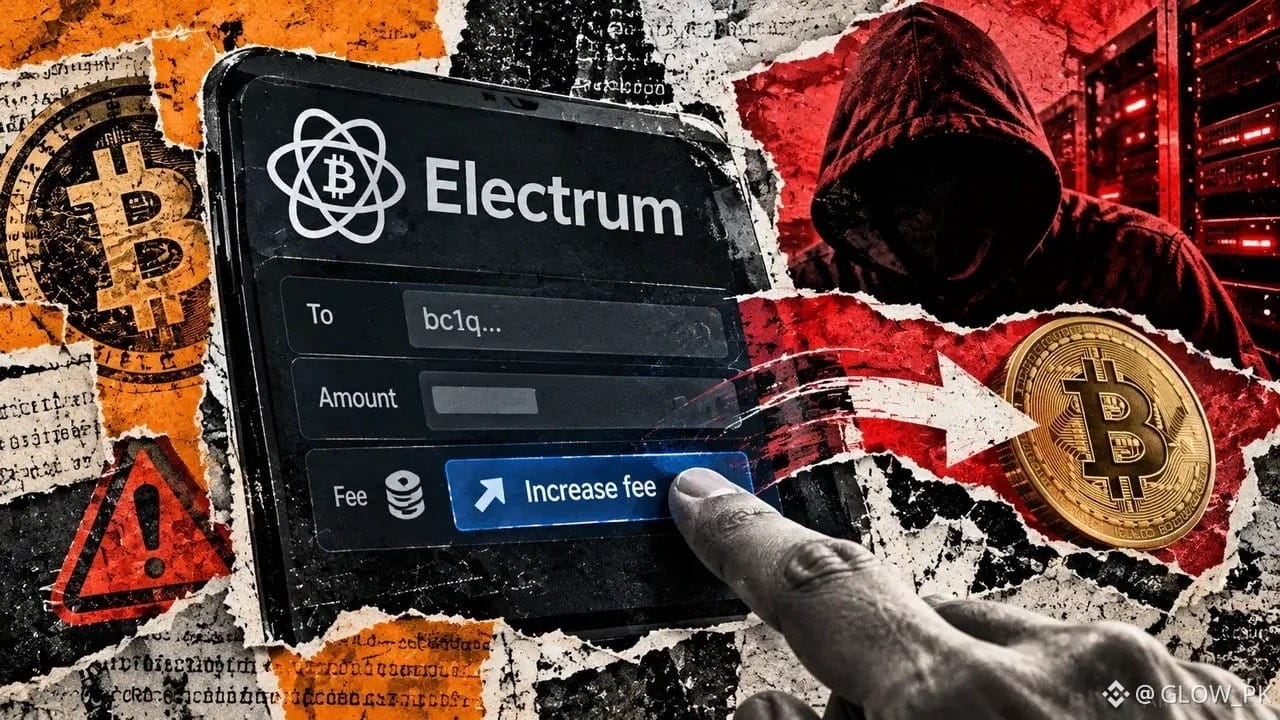
Attackers exploited a flaw that allowed malicious servers to redirect Bitcoin payments when users manually increased transaction fees. At least one user reportedly lost funds.
Electrum has addressed the issue in version 4.8.3, which verifies signatures on wallet-owned inputs to prevent this type of manipulation.
💡 My takeaway: Never assume your funds are completely safe just because your private keys remain secure. Wallet software, transaction verification, and timely updates matter just as much.
If you're using Electrum, update to version 4.8.3 and verify your transactions carefully before confirming them.
In crypto, one small security mistake can cost you real money. Protect your assets before something goes wrong. 🔐
$BULLA $ARIA $DOOD
#Bitcoin #BTC #CryptoSecurity #Electrum #CryptoNews
4
503

·
--
Bullish
#ElectrumWalletBugLetRogueServersStealFunds
🚨 URGENT SECURITY ALERT: #ElectrumWalletBug 🚨
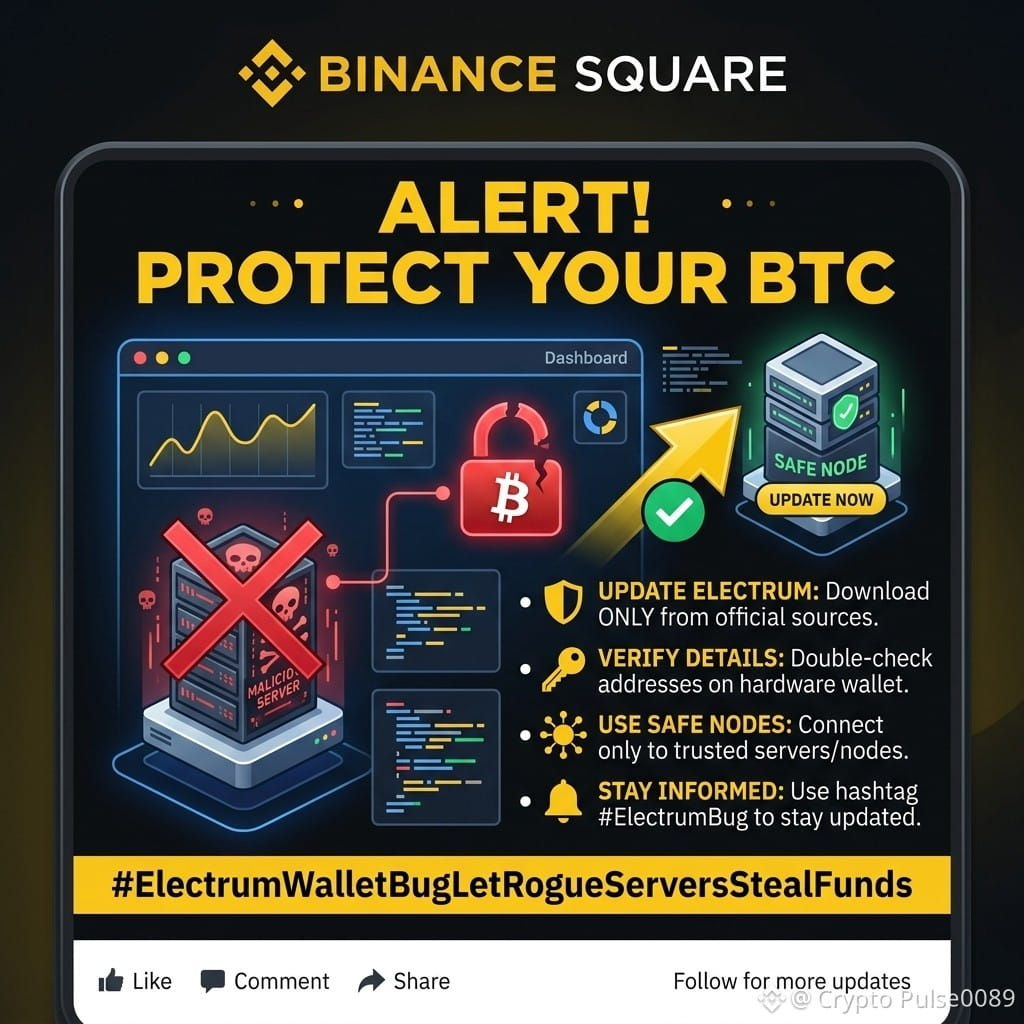
A critical security flaw associated with #ElectrumWalletBugLetRogueServersStealFunds has been highlighted. Malicious or rogue Electrum servers can exploit communication vulnerabilities to manipulate transaction prompts and potentially drain user funds!
If you are using the Electrum Bitcoin wallet, protect your assets by following these steps immediately:
⚠️ WHAT YOU NEED TO DO NOW:
Update Your Wallet: Ensure you are using the latest official version of Electrum downloaded strictly from the official site (electrum.org).
Avoid Unknown Servers: Do not connect to unverified public servers.
Run Your Own Node/Server: If possible, connect Electrum to your own private backend (like Electrum Personal Server or ElectrumX).
Verify on Hardware: Always double-check recipient addresses on your hardware wallet screen before confirming any transaction.
Spread Awareness: Share this alert to protect the community!
🛡️ Stay safe, stay secure, and double-check your connections!
#CryptoSecurity #Bitcoin #Electrum #BTC #CryptoSafety #WalletSecurity
$AMZNB $TSLAB $SQQQB
43

Vulnerabilities are everywhere😧
A vulnerability in the #Electrum #Bitcoin wallet allowed rogue servers to steal funds when users tried to speed up stuck payments.😕
Older versions accepted certain pending transactions from public servers without fully verifying signatures. Attackers could insert look-alike transactions, and when users applied a fee bump (Replace-by-Fee), they risked signing a payment to the attacker instead. The issue was confirmed in at least two real cases.
Electrum has released version 4.8.3 to close the flaw. Users should update promptly and avoid relying on untrusted servers for critical operations.
Security risks and weaknesses permeate every aspect of the ecosystem.
Check This Related Information:-
[Is Cybersecurity About to Outshine AI? Here’s Why You Shouldn’t Ignore These Two Tokens!](https://app.binance.com/uni-qr/cart/381137141755585?r=S4DH99WR&l=en&uco=5ewrZ5HoRZsxouAWxbreNw&uc=app_square_share_link&us=copylink)
@Binance_News @KathalVahini #BTC #Security #CoinVahini $BTC
Vulnerabilities are everywhere😧
A vulnerability in the #Electrum #Bitcoin wallet allowed rogue servers to steal funds when users tried to speed up stuck payments.😕
Older versions accepted certain pending transactions from public servers without fully verifying signatures. Attackers could insert look-alike transactions, and when users applied a fee bump (Replace-by-Fee), they risked signing a payment to the attacker instead. The issue was confirmed in at least two real cases.
Electrum has released version 4.8.3 to close the flaw. Users should update promptly and avoid relying on untrusted servers for critical operations.
Security risks and weaknesses permeate every aspect of the ecosystem.
Check This Related Information:-
Is Cybersecurity About to Outshine AI? Here’s Why You Shouldn’t Ignore These Two Tokens!
@Binance News @Kathals Info Bits #BTC #Security #CoinVahini $BTC
1
1

🚨 BITCOIN WALLET WARNING: A SECURITY FLAW WAS EXPLOITED IN THE WILD
A routine transaction fee increase could become a costly mistake.
On October 24, the Electrum development team publicly disclosed a high-severity vulnerability affecting versions before 4.8.3. The issue involved malicious servers manipulating how certain unconfirmed Bitcoin transactions appeared in a wallet.
According to the developers, attackers could replace a pending payment with a fraudulent transaction. If a user then increased the fee on that transaction, they could accidentally authorize a payment to the attacker.
⚠️ What should Bitcoin users do?
🔹 Update Electrum: Version 4.8.3 contains the fix.
🔹 Verify every detail: Before signing or increasing a transaction fee, check the full recipient address and amount.
🔹 Download safely: Get wallet software only from the official website and verify its signatures when possible.
🔹 Stay alert: A transaction displayed as pending is not the same as a confirmed transaction.
The developers reported two user cases, including one involving lost funds. They also stated that some servers were carrying out the attack.
This is a specific Electrum vulnerability—not evidence that Bitcoin’s entire network has been compromised.
🔐 Remember: Self-custody gives you control over your crypto, but wallet security still requires attention.
💬 Question for the community: What matters most when protecting crypto?
A) Hardware wallets
B) Regular software updates
C) Checking every transaction manually
Comment A, B, or C. Share this with a Bitcoin holder who may need the reminder.
#Bitcoin #BTC #CryptoSecurity #Electrum #CryptoNews
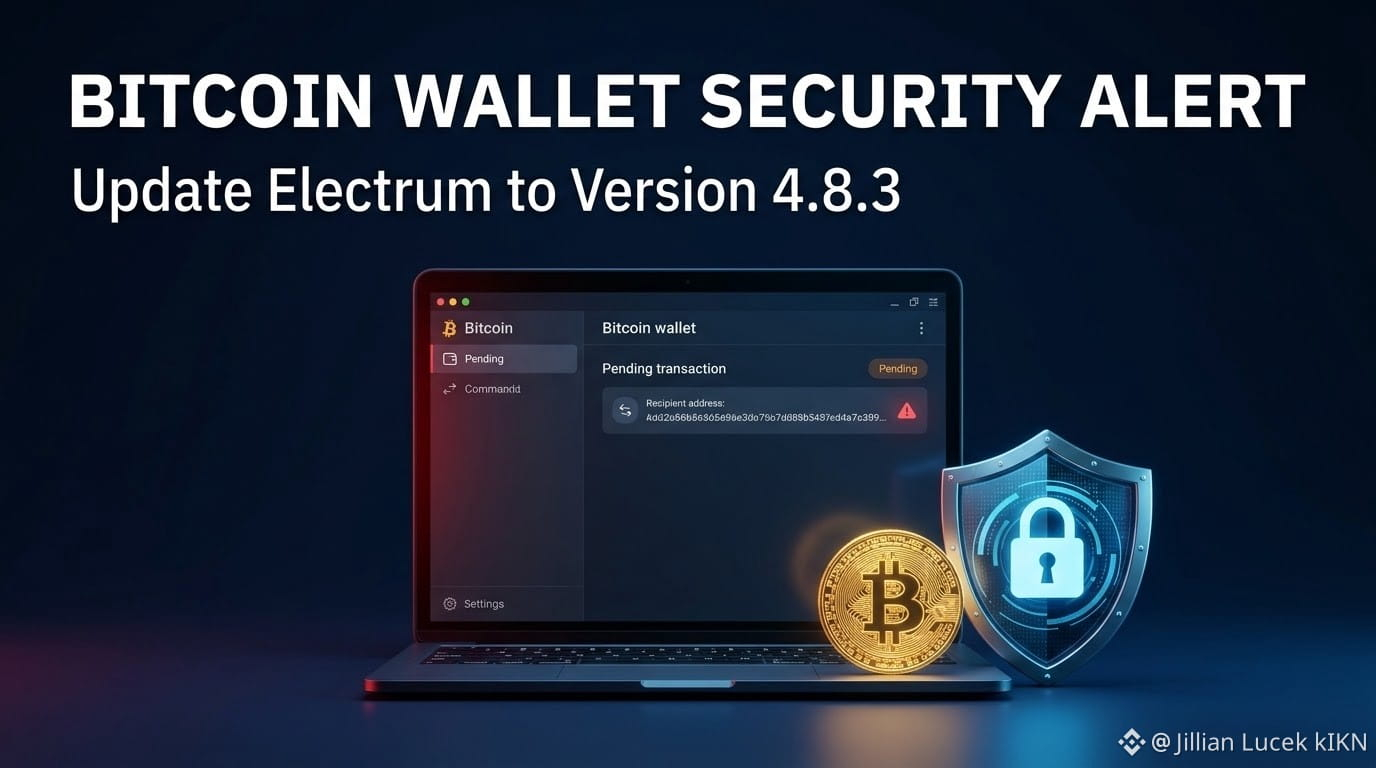
98

Article
Electrum Wallet Flaw Is Being Exploited: Update to 4.8.3 and Check These Details Before You SignA fee-bump trick can make older versions sign a payment to an attacker. Here's who's at risk, what to do right now, and what Electrum says is safe.
🚨 If you use Electrum, this one is worth five minutes today. A flaw in older versions is already being used to steal Bitcoin.
Electrum released version 4.8.3 on October 24 and called it a critical security fix. Every version before 4.8.3 is affected.
🔍 Here's how the attack works.
When you bump a transaction fee using Replace-by-Fee, a malicious server can intercept your transaction and show a fake one in your wallet history that sends $BTC to the attacker's address. Your wallet can then sign it as part of the fee increase. Electrum has confirmed two incident reports, including one where user lost funds. The fake addresses even matched the last four characters of the real recipient, so a quick glance won't catch them.
✅ Who's at risk, and who isn't.
If you're on a version before 4.8.3 and connect through servers you don't control, you're exposed. Electrum says clients connected to trusted servers, such as your own, aren't affected by this attack.
🛠️ What to do right now
Update to 4.8.3 or later and download it only from electrum.org. Check the GPG signature before installing.If you can't update yet, check the full destination address and amount every time you sign, including fee increases.Don't rely on the last four characters of an address. Compare the whole thing.
⚠️ One more note: 4.8.3 adds signature checks for unconfirmed transactions, but it doesn't turn Electrum into a full Bitcoin node.
🟢 Bullish scenario
Users update quickly, the fix closes the hole, and the incident ends with two reports and a patched wallet.
🔴 Risk scenario
Many people stay on old versions, attackers keep running malicious servers, and more fee-bump thefts follow.
👀 Three things to watch
1️⃣ Update adoption: how fast do users move to 4.8.3?
2️⃣ New incident reports: do more thefts surface beyond the two confirmed?
3️⃣ Other wallets: do similar wallets add the same checks?
💡 The key takeaway
The fix is out and the defense is simple: update and check the full address before you sign. A fee bump looks routine, which is exactly why it's dangerous.
That is the part worth watching.
This post is for informational and educational purposes only and is not financial advice. Crypto markets are volatile. Always conduct your own research before making financial decisions.
#BinanceSquare #Bitcoin #Electrum #CryptoSecurity #BTC
{spot}(BTCUSDT)
Electrum Wallet Flaw Is Being Exploited: Update to 4.8.3 and Check These Details Before You Sign
A fee-bump trick can make older versions sign a payment to an attacker. Here's who's at risk, what to do right now, and what Electrum says is safe.
🚨 If you use Electrum, this one is worth five minutes today. A flaw in older versions is already being used to steal Bitcoin.
Electrum released version 4.8.3 on October 24 and called it a critical security fix. Every version before 4.8.3 is affected.
🔍 Here's how the attack works.
When you bump a transaction fee using Replace-by-Fee, a malicious server can intercept your transaction and show a fake one in your wallet history that sends $BTC to the attacker's address. Your wallet can then sign it as part of the fee increase. Electrum has confirmed two incident reports, including one where user lost funds. The fake addresses even matched the last four characters of the real recipient, so a quick glance won't catch them.
✅ Who's at risk, and who isn't.
If you're on a version before 4.8.3 and connect through servers you don't control, you're exposed. Electrum says clients connected to trusted servers, such as your own, aren't affected by this attack.
🛠️ What to do right now
Update to 4.8.3 or later and download it only from electrum.org. Check the GPG signature before installing.If you can't update yet, check the full destination address and amount every time you sign, including fee increases.Don't rely on the last four characters of an address. Compare the whole thing.
⚠️ One more note: 4.8.3 adds signature checks for unconfirmed transactions, but it doesn't turn Electrum into a full Bitcoin node.
🟢 Bullish scenario
Users update quickly, the fix closes the hole, and the incident ends with two reports and a patched wallet.
🔴 Risk scenario
Many people stay on old versions, attackers keep running malicious servers, and more fee-bump thefts follow.
👀 Three things to watch
1️⃣ Update adoption: how fast do users move to 4.8.3?
2️⃣ New incident reports: do more thefts surface beyond the two confirmed?
3️⃣ Other wallets: do similar wallets add the same checks?
💡 The key takeaway
The fix is out and the defense is simple: update and check the full address before you sign. A fee bump looks routine, which is exactly why it's dangerous.
That is the part worth watching.
This post is for informational and educational purposes only and is not financial advice. Crypto markets are volatile. Always conduct your own research before making financial decisions.
#BinanceSquare #Bitcoin #Electrum #CryptoSecurity #BTC
1
1
133

·
--
Bullish
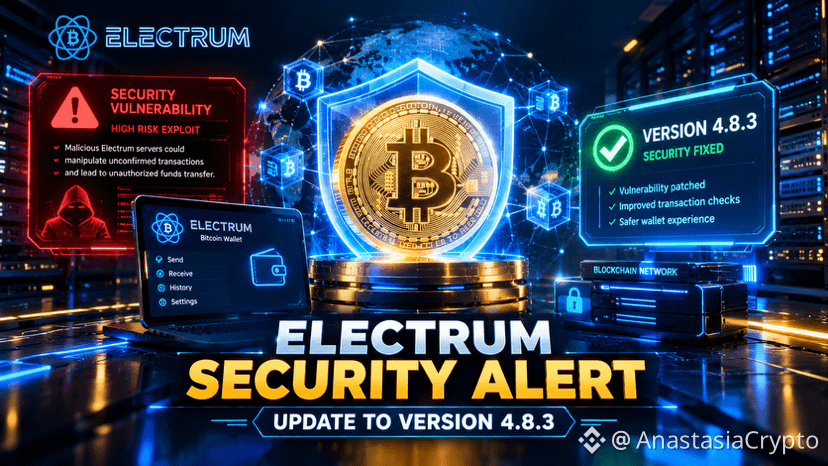
#electrumfixeshighriskexploitinversionsbefore4.8.3 🚨 BITCOIN WALLET SECURITY ALERT: ELECTRUM FIXES HIGH-RISK EXPLOIT! 🔐
Bitcoin users, this is an important security update you should not ignore.
Electrum has released version 4.8.3 to fix a high-severity vulnerability affecting earlier versions of its Bitcoin wallet. Even more concerning, the developers report that the weakness has been exploited in the wild. ⚠️
🔎 What happened?
The vulnerability involved malicious Electrum servers that could manipulate how an unconfirmed Bitcoin transaction appeared in a user’s wallet.
If a user then tried to increase the transaction fee using Replace-by-Fee (RBF), they could unknowingly authorize a transaction sending funds to an attacker’s address.
📌 What you need to know:
🔹 Affected versions: Electrum versions earlier than 4.8.3.
🔹 The fix: Electrum 4.8.3 includes security checks designed to prevent this attack.
🔹 Reported incidents: Electrum disclosed two user reports, including one case involving a loss of funds.
🔹 Recommended action: Update to version 4.8.3 through Electrum’s official website, electrum.org.
🔹 Extra precaution: Always verify the recipient address and transaction amount before signing a transaction, especially when increasing fees.
💡 My takeaway:
Crypto security is not just about protecting your private keys. Wallet software, transaction verification, and the servers you trust also matter.
Even experienced Bitcoin users should never approve a transaction without checking its destination.
💬 Question for the community:
Do you think wallet security should be a bigger priority for crypto users than price predictions and market trends?
Share your thoughts below. 👇
#Bitcoin #BTC #CryptoSecurity #Electrum
$BTC $ETH $ZEC
{future}(ZECUSDT)
{future}(ETHUSDT)
{future}(BTCUSDT)
#electrumfixeshighriskexploitinversionsbefore4.8.3 🚨 BITCOIN WALLET SECURITY ALERT: ELECTRUM FIXES HIGH-RISK EXPLOIT! 🔐
Bitcoin users, this is an important security update you should not ignore.
Electrum has released version 4.8.3 to fix a high-severity vulnerability affecting earlier versions of its Bitcoin wallet. Even more concerning, the developers report that the weakness has been exploited in the wild. ⚠️
🔎 What happened?
The vulnerability involved malicious Electrum servers that could manipulate how an unconfirmed Bitcoin transaction appeared in a user’s wallet.
If a user then tried to increase the transaction fee using Replace-by-Fee (RBF), they could unknowingly authorize a transaction sending funds to an attacker’s address.
📌 What you need to know:
🔹 Affected versions: Electrum versions earlier than 4.8.3.
🔹 The fix: Electrum 4.8.3 includes security checks designed to prevent this attack.
🔹 Reported incidents: Electrum disclosed two user reports, including one case involving a loss of funds.
🔹 Recommended action: Update to version 4.8.3 through Electrum’s official website, electrum.org.
🔹 Extra precaution: Always verify the recipient address and transaction amount before signing a transaction, especially when increasing fees.
💡 My takeaway:
Crypto security is not just about protecting your private keys. Wallet software, transaction verification, and the servers you trust also matter.
Even experienced Bitcoin users should never approve a transaction without checking its destination.
💬 Question for the community:
Do you think wallet security should be a bigger priority for crypto users than price predictions and market trends?
Share your thoughts below. 👇
#Bitcoin #BTC #CryptoSecurity #Electrum
$BTC $ETH $ZEC
1
715

·
--
⚡ $BTC ELECTRUM PATCH ALERT: CRITICAL FIX DEPLOYED! 🟢
📌 Electrum 4.8.3 drops today, sealing a high‑severity vulnerability that could have been a gateway for attackers. Windows Defender may flash a ZXing.dll warning, but the team confirms it’s a false positive. ⚡ The upgrade wipes the risk slate clean, giving users a fresh security footing.
📊 Smart‑money eyes stay steady as the patch removes a lingering fear factor; expect muted volatility while wallets sync. The real play is watching whether the upgrade triggers a short‑term sell‑off from risk‑averse holders or fuels a confidence‑boosted bounce. 💬 How are you positioning your $BTC exposure after the Electrum fix? 👇
⚠️ Not financial advice. Always manage your risk. 🛡️
🏷️ #BTC #SecurityUpdate #Electrum #Crypto
🛡️ 🔥
13

⚠️ $BTC USERS MUST UPGRADE ELECTRUM NOW! 🚨
📌 Electrum 4.8.3 lands with a critical security patch, neutralizing a vulnerability that could have been exploited by opportunistic actors. 🦈 Windows Defender may flash a false‑positive alert on ZXing.dll, but the wallet team confirms it’s benign—upgrade to stay ahead of the smart‑money safety net. 📊 The timing aligns with heightened network activity, suggesting institutions are tightening their risk buffers across the ecosystem.
💬 Are you already running the latest build, or waiting for the official disclosure? 👇
⚠️ Not financial advice. Always manage your risk. 🛡️
🏷️ #BTC #Security #Electrum #Crypto
🛡️ 🔥
2

·
--
That “transfer you just sent” in your wallet history might not have been sent by you at all.
On October 24, veteran Bitcoin desktop wallet Electrum released version 4.8.3, fixing a severe vulnerability that had been exploited in the wild. When versions earlier than 4.8.3 connected to a malicious server, the server could replace a transaction you’d just broadcast with a conflicting fake one. The last four characters of the recipient address were identical to those of your real recipient. If users saw the transaction taking too long to confirm and clicked “Increase fee” (RBF), the wallet would re-sign the fake transaction, sending the coins straight to the attacker. Users have already reported losing funds.
From an engineer’s perspective:
· Lightweight wallets don’t store the entire blockchain themselves. The server “tells” them what the transaction history and unconfirmed transactions are;
· Older versions didn’t verify the signatures on unconfirmed transactions, displaying whatever the server provided;
· RBF re-signs an “existing transaction.” If that transaction is fake to begin with, the signed transaction is exactly what the attacker wants;
· The fix in 4.8.3 is to add that missing step: verify unconfirmed transactions before trusting them.
Four tips for everyday users:
1) If you use Electrum, upgrade to 4.8.3. Download it only from the official website and verify the signature;
2) Check the entire address. “The first and last four characters” aren’t enough to protect you from a targeted attack;
3) If a transaction gets stuck, check its actual status on a block explorer. Don’t rely only on what your wallet shows;
4) If you’re handling a large amount of funds, run your own node. With data shown to you by a public server, it ultimately gets to decide what you see.
I don’t usually pry too much into pretty girls’ “histories,” but I verify every single entry in my wallet’s transaction history 😏
#链上安全 #比特币钱包 #Electrum
必备小神器888:
轻钱包连公共服务器等于把广播权交人,别只对末四位,升4.8.3并核对全地址。
1
1
1.6k

·
--
Tried to speed up a transfer, ended up sending it to hackers: Electrum patches a vulnerabilityFor convenience, lightweight wallet users may connect to the wrong server and click “Increase fee”—and their $BTC could end up in someone else’s address.
The team behind veteran Bitcoin wallet Electrum has disclosed that malicious servers can swallow a transaction you’ve just broadcast, then insert a fake unconfirmed transaction. The output address is tweaked to match the last four characters of the original, and the signature isn’t checked at the time. You think you’re simply speeding things up with RBF, but one click means you’ve effectively signed a transaction sending funds to the attacker. There were two user reports in October, and one person did lose coins. The team says servers doing this are already active in the wild. The amount stolen has not been disclosed.
Tried to speed up a transfer, ended up sending it to hackers: Electrum patches a vulnerability
For convenience, lightweight wallet users may connect to the wrong server and click “Increase fee”—and their $BTC could end up in someone else’s address.
The team behind veteran Bitcoin wallet Electrum has disclosed that malicious servers can swallow a transaction you’ve just broadcast, then insert a fake unconfirmed transaction. The output address is tweaked to match the last four characters of the original, and the signature isn’t checked at the time. You think you’re simply speeding things up with RBF, but one click means you’ve effectively signed a transaction sending funds to the attacker. There were two user reports in October, and one person did lose coins. The team says servers doing this are already active in the wild. The amount stolen has not been disclosed.
The team behind veteran Bitcoin wallet Electrum has disclosed that malicious servers can swallow a transaction you’ve just broadcast, then insert a fake unconfirmed transaction. The output address is tweaked to match the last four characters of the original, and the signature isn’t checked at the time. You think you’re simply speeding things up with RBF, but one click means you’ve effectively signed a transaction sending funds to the attacker. There were two user reports in October, and one person did lose coins. The team says servers doing this are already active in the wild. The amount stolen has not been disclosed.
109

·
--
Article
The patch has been out for two days—but could you still lose funds by bumping the fee before upgrading to 4.8.3?The official 4.8.3 patch was released on October 24. Electrum users on older versions who use RBF to increase the fee may still hand attackers a valid signature.
The attack works like this: a malicious server swallows a legitimate transaction just after it’s broadcast, then slips in a fake conflicting transaction with an invalid signature. The fake transaction is all that appears in the user’s local history. Thinking their transaction is stuck, the user bumps the fee—effectively providing a valid signature for the fake recipient address, allowing the attacker to steal the coins. The official advisory confirms that servers are already doing this in the wild; of two user reports, at least one involved a theft after using bump_fee. The mitigation is straightforward: upgrade to 4.8.3. Until then, check the full recipient address and amount every time you sign, including when bumping the fee—don’t just look at the last few digits. Users running their own or a trusted server are not affected. Only download from electrum.org, and verify the GPG signature.
The patch has been out for two days—but could you still lose funds by bumping the fee before upgrading to 4.8.3?
The official 4.8.3 patch was released on October 24. Electrum users on older versions who use RBF to increase the fee may still hand attackers a valid signature.
The attack works like this: a malicious server swallows a legitimate transaction just after it’s broadcast, then slips in a fake conflicting transaction with an invalid signature. The fake transaction is all that appears in the user’s local history. Thinking their transaction is stuck, the user bumps the fee—effectively providing a valid signature for the fake recipient address, allowing the attacker to steal the coins. The official advisory confirms that servers are already doing this in the wild; of two user reports, at least one involved a theft after using bump_fee. The mitigation is straightforward: upgrade to 4.8.3. Until then, check the full recipient address and amount every time you sign, including when bumping the fee—don’t just look at the last few digits. Users running their own or a trusted server are not affected. Only download from electrum.org, and verify the GPG signature.
The attack works like this: a malicious server swallows a legitimate transaction just after it’s broadcast, then slips in a fake conflicting transaction with an invalid signature. The fake transaction is all that appears in the user’s local history. Thinking their transaction is stuck, the user bumps the fee—effectively providing a valid signature for the fake recipient address, allowing the attacker to steal the coins. The official advisory confirms that servers are already doing this in the wild; of two user reports, at least one involved a theft after using bump_fee. The mitigation is straightforward: upgrade to 4.8.3. Until then, check the full recipient address and amount every time you sign, including when bumping the fee—don’t just look at the last few digits. Users running their own or a trusted server are not affected. Only download from electrum.org, and verify the GPG signature.
89

·
--
🎯 Vulnerability in an old wallet: one click to RBF and your coins are gone
📰 Electrum vulnerability: A malicious server can fake an unconfirmed transaction. When you click to increase the fee, you’re actually signing a payment to the attacker. Users have already lost coins; fixed in 4.8.3.
💬 A veteran wallet fell victim to its own trust model. The sneakiest part? The last four digits of the fake address were manipulated too—you really can’t spot it with the naked eye. Go upgrade now!
🏷️ #Electrum #钱包安全 #RBF #Bitcoin

I just came across CoinDesk’s report today and it gave me a real scare: details have finally been released about the vulnerability in Electrum, the old Bitcoin wallet, version 4.8.3—and it turns out thieves don’t need to crack your private key. All they need is for you to click “Accelerate.”
Here’s how the scam works: a malicious server swaps out your unconfirmed transaction for a fake one. The fake transaction has zero fees, so it looks like it’s just stuck. When you click to accelerate it, your wallet signs the fake transaction as if it were real, and your coins go straight into the hacker’s pocket. Even sneakier, the last four characters of the hacker’s address are exactly the same as those of the real address, so you won’t notice at a glance.
There have already been two reports in October: the one on the 11th didn’t result in any lost coins, but the one on the 18th did. The amount hasn’t been disclosed. If you haven’t upgraded to 4.8.3 yet and you’re still connecting to unfamiliar servers, this is your wake-up call.
Pick one in the comments: A) Updated ages ago, not worried at all; B) Just found out, updating right now—which boat are you in, or are you already in a hole?
$BTC $ETH $SOL #Electrum #比特币 #WalletSecurity

4

·
--
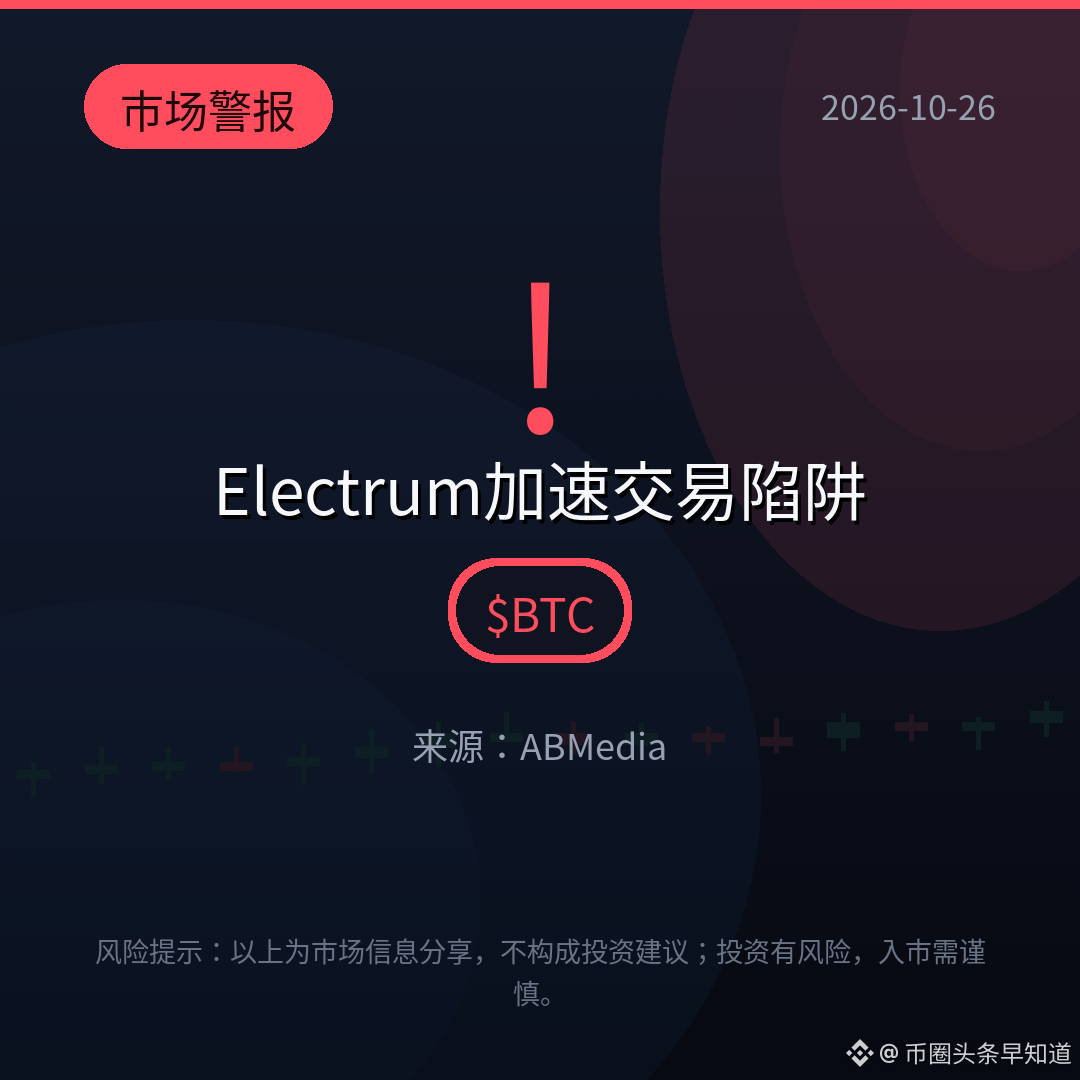
【Market Flash】Clicking to speed up a transaction could put your bitcoin in a hacker’s pocket. Electrum announced on October 24 that malicious servers hold back real transactions and replace them with fake ones that pay the attacker. Older versions don’t verify unconfirmed signatures and only display the fake transaction. When you use RBF to increase the fee, the fake transaction gets signed as if it were real. Someone was affected on October 18; the issue has been fixed in version 4.8.3. Upgrade first, then verify the address.
Do you still use the default server to transfer coins?
$BTC $ETH $SOL
#比特币 #Electrum #WalletSecurity
(Source: ABMedia)
⚠️Risk warning: The above is shared for market information only and does not constitute investment advice. Investing involves risks; please exercise caution.
Do you still use the default server to transfer coins?
$BTC $ETH $SOL
#比特币 #Electrum #WalletSecurity
(Source: ABMedia)
⚠️Risk warning: The above is shared for market information only and does not constitute investment advice. Investing involves risks; please exercise caution.
277

·
--
The nastiest thing about this Electrum vulnerability is that it exploits your caution
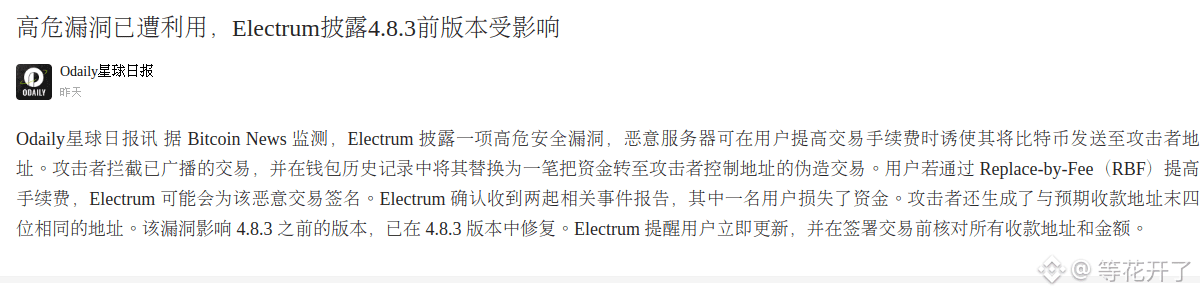
On October 24, Electrum announced a high-severity vulnerability affecting all versions before 4.8.3. The team says servers have already used this attack in the wild. They’ve confirmed two reports, and one person lost money.
The attack is simple: you broadcast a transaction, but a malicious server doesn’t relay it—it swallows it. Then it slips a fake transaction into your wallet history, using the same inputs to send almost all your funds to the attacker’s address, with the fee displayed as zero.
Your transaction is stuck, and the fee is zero. What’s the natural response? Manually bump the fee—in other words, use RBF.
That’s when Electrum signs the fake transaction, and your money goes straight into the attacker’s pocket.
Even more devious: the last four characters of the attacker’s address match those of the address you originally intended to send to.
This is a reminder to everyone managing their own funds:
1. Don’t verify an address by checking just the first or last few characters. Check the entire address, and scan a QR code instead of typing it whenever possible.
2. If a transaction is stuck, don’t use RBF directly in your wallet. Look up the txid on mempool.space to check its real status, and make sure the transaction is actually on-chain before taking action.
Updating to 4.8.3 is the bare minimum, not the whole solution.
Wallet security isn’t just about installing an update—it’s about not cutting corners at every step 👀
$BTC #Electrum #钱包安全 #BTC
64

·
--
I added a fee when transferring Bitcoin to make it arrive faster, but the money went straight to a hacker.
Electrum is one of the oldest Bitcoin wallets around. This time, the problem wasn’t that anyone stole a private key—it was a “speed up” button that got people into trouble.
It’s a lightweight wallet: it doesn’t store the entire blockchain itself, but checks transactions by connecting to public servers. That’s where the problem was. Older versions didn’t verify signatures on unconfirmed transactions, so they trusted whatever the server showed them.
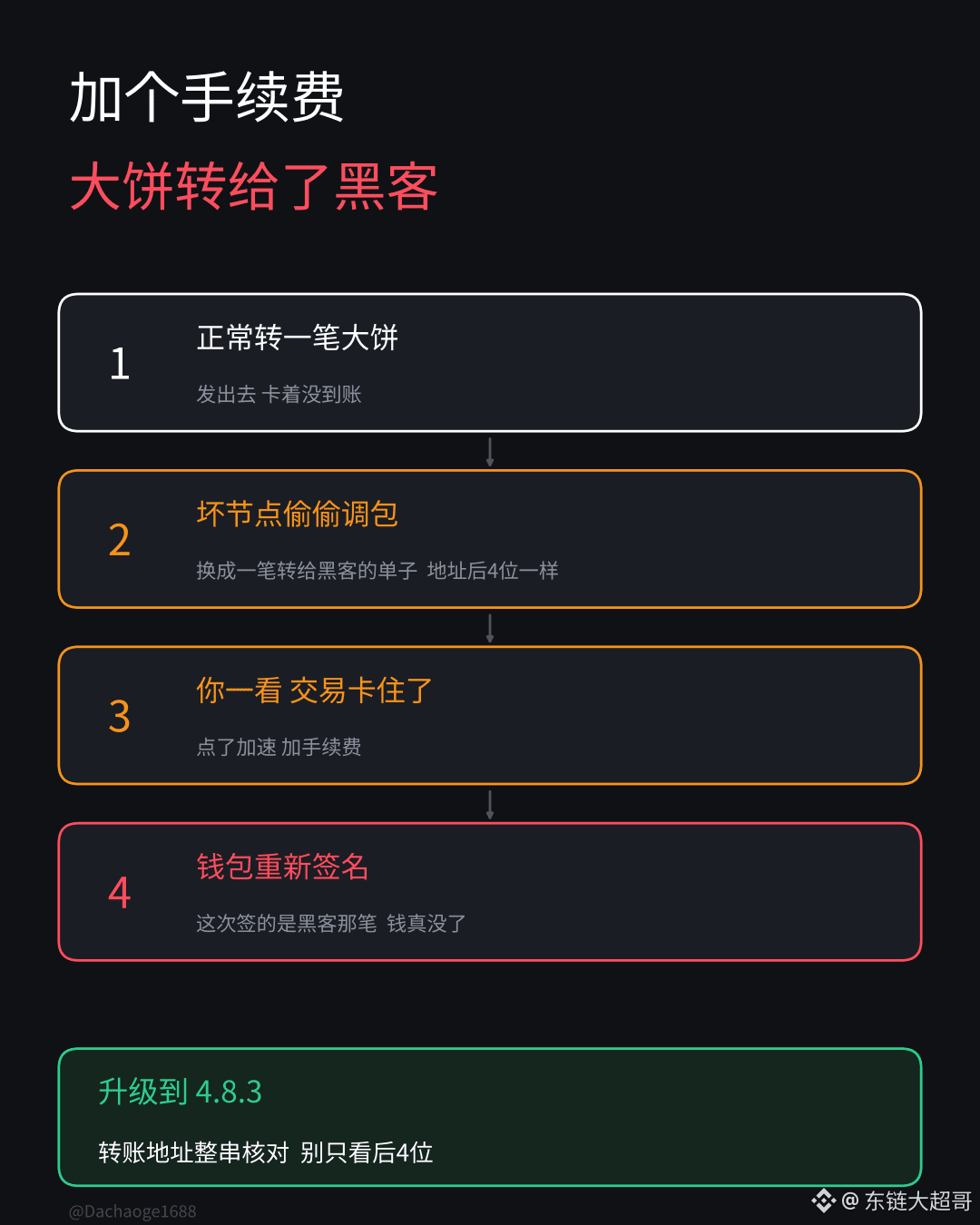
The hacker set up a malicious server and secretly swapped the transaction when you made a transfer. They held back your real transaction instead of broadcasting it, and the wallet displayed a fake transaction sending the funds to them. The last four characters of the recipient address matched the one you intended to send to, and they deliberately set the fee to zero to make it look stuck.
When you saw the transaction was stuck, you clicked “Speed up” and added a fee. The wallet signed it again—and this time, it signed the hacker’s transaction. The money was really gone.
Someone reported a transaction swap on October 11. On the 18th, it was confirmed that someone had lost their money after adding a fee. The official fix, version 4.8.3, wasn’t released until the 24th—nearly two weeks later.
If you use Electrum, upgrade to 4.8.3 right away, and only download it from the official website. Check the entire recipient address when sending funds; don’t just look at the last few characters.
This incident hasn’t had much impact on Bitcoin’s price, which is around 79,500 now. The official amount stolen hasn’t been announced either, and so far only one victim has been confirmed. But it shows one thing: the older a wallet is, the less you should assume it’s safe by default. #Electrum $BTC Wallet vulnerability leads to stolen funds
185

·
--
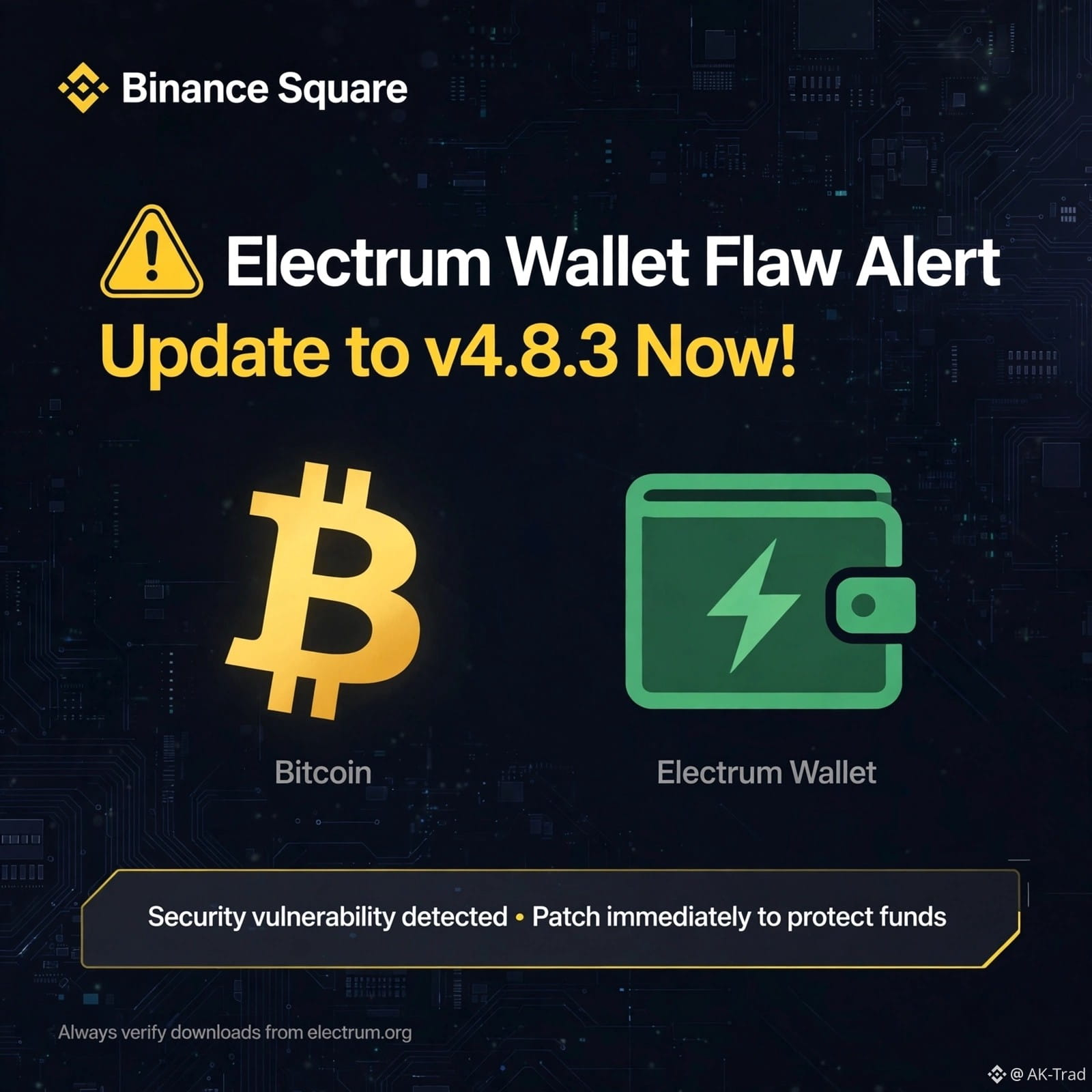
⚠️ BREAKING: Electrum Wallet Bug - BTC Stolen!
A major flaw has been found in the Electrum wallet!
Hackers are stealing users’ funds by showing fake Bitcoin payments when users increase the fee using Replace-by-Fee.
🔴 At least 1 confirmed theft has occurred
✅ Fix: Version 4.8.3 was released on October 24
⚠️ Older versions may still be vulnerable to hacking
SOLUTION: Immediately update to v4.8.3 from electrum.org and double-check the address before signing!
Which wallet do you use? Is it safe?
#BTC☀️ #Bitcoin❗ #Electrum #SecurityAlert #CryptoNews
BTC $80,179.01
67
·
--

Article
Zero-fee fake transaction matches the last four digits, but bumping the fee signs your coins over to a hackerI tried to speed up confirmation by increasing the fee, but ended up signing my coins over to a hacker.
Electrum has disclosed that versions earlier than 4.8.3 can be tricked by malicious servers into intercepting a transaction you just broadcast and inserting a conflicting transaction to an attacker-controlled address into your wallet history. If you bump the fee using RBF, the older version may sign the fake transaction as a genuine transfer. Even worse, the last four digits of the recipient address are often altered to match those of the intended recipient. The zero-fee fake transaction is deliberately left pending to lure you into bumping the fee yourself.
The timeline is clear: on October 11, someone first discovered that transaction history had been swapped out, while the funds were still safe; on October 18, a second incident confirmed that funds were stolen after a fee bump, though the amount has not been disclosed. Patch 4.8.3 wasn’t released until October 24. The team says some servers are already being exploited in the wild. Self-hosted servers and users who connect only to trusted nodes are unaffected. Until you upgrade, verify the full recipient address and amount before signing any transaction, including fee bumps. Only download the installer from the official website, and verify it with GPG.
Zero-fee fake transaction matches the last four digits, but bumping the fee signs your coins over to a hacker
I tried to speed up confirmation by increasing the fee, but ended up signing my coins over to a hacker.
Electrum has disclosed that versions earlier than 4.8.3 can be tricked by malicious servers into intercepting a transaction you just broadcast and inserting a conflicting transaction to an attacker-controlled address into your wallet history. If you bump the fee using RBF, the older version may sign the fake transaction as a genuine transfer. Even worse, the last four digits of the recipient address are often altered to match those of the intended recipient. The zero-fee fake transaction is deliberately left pending to lure you into bumping the fee yourself.
The timeline is clear: on October 11, someone first discovered that transaction history had been swapped out, while the funds were still safe; on October 18, a second incident confirmed that funds were stolen after a fee bump, though the amount has not been disclosed. Patch 4.8.3 wasn’t released until October 24. The team says some servers are already being exploited in the wild. Self-hosted servers and users who connect only to trusted nodes are unaffected. Until you upgrade, verify the full recipient address and amount before signing any transaction, including fee bumps. Only download the installer from the official website, and verify it with GPG.
76
Log in to explore more content
Join global crypto users on Binance Square
⚡️ Get latest and useful information about crypto.
💬 Trusted by the world’s largest crypto exchange.
👍 Discover real insights from verified creators.
Email / Phone number
Trending Topics
1
#BinancePick
2.8M views
146,131 Discussing
2
#EarningsSeason
5.1M views
24,994 Discussing
3
#AnthropicTTMRevenueGrewAbout1200%
32 views
20 Discussing
4
#AnthropicS1ExpectedToday
926 views
47 Discussing
5
#SouthKoreaReportedlyWeighsFourthCryptoTaxDelay
9,002 views
223 Discussing
6
#FranklinTempletonFilesForTwoDividendToBitcoinETFs
15,225 views
337 Discussing
7
#StrategyMSTRSurpassesNasdaqInMarketCap
12,644 views
275 Discussing
8
#CanadaProposesStablecoinRedemptionWithin3BusinessDays
542 views
29 Discussing
9
#ElectrumWalletBugLetRogueServersStealFunds
17,497 views
389 Discussing
10
#ArgentineCourtDismissesLIBRACaseAgainstMilei
27,841 views
462 Discussing