

#defi
defi
56.6M views
296,424 Discussing
Hot
Latest

·
--
Bullish
#secsaystokenbuybacksnotautosecurities
⚖️ Regulatory Shift: SEC Clarifies Token Buyback Programs Do Not Automatically Trigger Securities Classification 🚀
A massive win for decentralized finance and protocol economics! The SEC’s Division of Corporation Finance has issued updated guidance, clarifying that executing token buybacks, network upgrades, and ongoing maintenance on functional blockchains does not automatically transform a crypto token into a security under the Howey test.
This update removes a major cloud of legal ambiguity for revenue-generating decentralized protocols that actively purchase and burn their native tokens.
💡 Key Highlights:
🔄 Live Networks vs. Pre-Launch Projects: The SEC explicitly noted that for an operational, functional network, routine buybacks do not automatically equate to "essential managerial efforts" that yield expectation. However, for unlaunched or non-functional projects, marketing a buyback as a source of guaranteed yield can still trigger securities scrutiny.
🛠️ Ongoing Protocol Development Cleared: Protocol upgrades, security enhancements, and routine network optimizations are classified as maintenance rather than managerial dependence under Howey.
📈 Record Buyback Momentum: The clarification follows a massive surge in token buybacks—reaching over $638 million through late 2026—led by protocols like Hyperliquid and Pump.fun.
How big is this regulatory update for DeFi revenue distribution models? Let us know your thoughts in the comments! 👇
#CircleMints500MUSDCOnSolana #defi #StrategyStriveAdd2305BitcoinThisWeek
#secsaystokenbuybacksnotautosecurities
⚖️ Regulatory Shift: SEC Clarifies Token Buyback Programs Do Not Automatically Trigger Securities Classification 🚀
A massive win for decentralized finance and protocol economics! The SEC’s Division of Corporation Finance has issued updated guidance, clarifying that executing token buybacks, network upgrades, and ongoing maintenance on functional blockchains does not automatically transform a crypto token into a security under the Howey test.
This update removes a major cloud of legal ambiguity for revenue-generating decentralized protocols that actively purchase and burn their native tokens.
💡 Key Highlights:
🔄 Live Networks vs. Pre-Launch Projects: The SEC explicitly noted that for an operational, functional network, routine buybacks do not automatically equate to "essential managerial efforts" that yield expectation. However, for unlaunched or non-functional projects, marketing a buyback as a source of guaranteed yield can still trigger securities scrutiny.
🛠️ Ongoing Protocol Development Cleared: Protocol upgrades, security enhancements, and routine network optimizations are classified as maintenance rather than managerial dependence under Howey.
📈 Record Buyback Momentum: The clarification follows a massive surge in token buybacks—reaching over $638 million through late 2026—led by protocols like Hyperliquid and Pump.fun.
How big is this regulatory update for DeFi revenue distribution models? Let us know your thoughts in the comments! 👇
#CircleMints500MUSDCOnSolana #defi #StrategyStriveAdd2305BitcoinThisWeek
⚖️ Regulatory Shift: SEC Clarifies Token Buyback Programs Do Not Automatically Trigger Securities Classification 🚀
A massive win for decentralized finance and protocol economics! The SEC’s Division of Corporation Finance has issued updated guidance, clarifying that executing token buybacks, network upgrades, and ongoing maintenance on functional blockchains does not automatically transform a crypto token into a security under the Howey test.
This update removes a major cloud of legal ambiguity for revenue-generating decentralized protocols that actively purchase and burn their native tokens.
💡 Key Highlights:
🔄 Live Networks vs. Pre-Launch Projects: The SEC explicitly noted that for an operational, functional network, routine buybacks do not automatically equate to "essential managerial efforts" that yield expectation. However, for unlaunched or non-functional projects, marketing a buyback as a source of guaranteed yield can still trigger securities scrutiny.
🛠️ Ongoing Protocol Development Cleared: Protocol upgrades, security enhancements, and routine network optimizations are classified as maintenance rather than managerial dependence under Howey.
📈 Record Buyback Momentum: The clarification follows a massive surge in token buybacks—reaching over $638 million through late 2026—led by protocols like Hyperliquid and Pump.fun.
How big is this regulatory update for DeFi revenue distribution models? Let us know your thoughts in the comments! 👇
#CircleMints500MUSDCOnSolana #defi #StrategyStriveAdd2305BitcoinThisWeek

Waneta Jacka jtuR:
100 US
1
6
1.1k

·
--
DeFi's greatest feature is also its hidden fault line: composability.
Every protocol is a lego block. A lending market plugs into a stablecoin, which plugs into a liquid staking token, which plugs into a derivatives layer. This is what makes on-chain finance move faster than any industry in history — innovation compounds because permissionless integration compounds.
But stacked legos are stacked risks.
Every integration multiplies surface area. When you deposit into a lending protocol, you don't just hold that protocol — you hold every dependency beneath it: the oracle pricing your collateral, the DEX liquidity feeding that oracle, the liquid staking token backing your deposit, the bridge that moved it. One failure anywhere upstream propagates instantly. There is no circuit breaker between legos.
Traditional finance solved this with layers of isolation — SPVs, bankruptcy remoteness, settlement finality. DeFi's isolation layer is still under construction: risk isolation modules, compartmentalized vaults, kill switches that contain damage without freezing everything.
The uncomfortable truth: in stress events, composability doesn't just transmit innovation — it transmits contagion. Crypto cascades are vertical precisely because everything is connected to everything.
So audit your dependencies, not just your positions. You don't hold a yield number. You hold an entire stack's risk, priced as one APY.
The same property that makes DeFi brilliant makes it fragile. Respect both sides.
$ETH $BNB $SOL
#DeFi #CryptoInsight #Web3 #Blockchain #CryptoRisk
DeFi's greatest feature is also its hidden fault line: composability.
Every protocol is a lego block. A lending market plugs into a stablecoin, which plugs into a liquid staking token, which plugs into a derivatives layer. This is what makes on-chain finance move faster than any industry in history — innovation compounds because permissionless integration compounds.
But stacked legos are stacked risks.
Every integration multiplies surface area. When you deposit into a lending protocol, you don't just hold that protocol — you hold every dependency beneath it: the oracle pricing your collateral, the DEX liquidity feeding that oracle, the liquid staking token backing your deposit, the bridge that moved it. One failure anywhere upstream propagates instantly. There is no circuit breaker between legos.
Traditional finance solved this with layers of isolation — SPVs, bankruptcy remoteness, settlement finality. DeFi's isolation layer is still under construction: risk isolation modules, compartmentalized vaults, kill switches that contain damage without freezing everything.
The uncomfortable truth: in stress events, composability doesn't just transmit innovation — it transmits contagion. Crypto cascades are vertical precisely because everything is connected to everything.
So audit your dependencies, not just your positions. You don't hold a yield number. You hold an entire stack's risk, priced as one APY.
The same property that makes DeFi brilliant makes it fragile. Respect both sides.
$ETH $BNB $SOL
#DeFi #CryptoInsight #Web3 #Blockchain #CryptoRisk
Every protocol is a lego block. A lending market plugs into a stablecoin, which plugs into a liquid staking token, which plugs into a derivatives layer. This is what makes on-chain finance move faster than any industry in history — innovation compounds because permissionless integration compounds.
But stacked legos are stacked risks.
Every integration multiplies surface area. When you deposit into a lending protocol, you don't just hold that protocol — you hold every dependency beneath it: the oracle pricing your collateral, the DEX liquidity feeding that oracle, the liquid staking token backing your deposit, the bridge that moved it. One failure anywhere upstream propagates instantly. There is no circuit breaker between legos.
Traditional finance solved this with layers of isolation — SPVs, bankruptcy remoteness, settlement finality. DeFi's isolation layer is still under construction: risk isolation modules, compartmentalized vaults, kill switches that contain damage without freezing everything.
The uncomfortable truth: in stress events, composability doesn't just transmit innovation — it transmits contagion. Crypto cascades are vertical precisely because everything is connected to everything.
So audit your dependencies, not just your positions. You don't hold a yield number. You hold an entire stack's risk, priced as one APY.
The same property that makes DeFi brilliant makes it fragile. Respect both sides.
$ETH $BNB $SOL
#DeFi #CryptoInsight #Web3 #Blockchain #CryptoRisk
80

·
--
Bullish
$RUNE is suddenly at the center of a much bigger crypto story.
After the $387.5M Bitget security incident, stolen assets were traced moving through multiple networks, including THORChain. Bitget has publicly asked THORChain to block addresses linked to the stolen funds.
But here’s the interesting part: THORChain also reported $200M+ trading volume and about $382K revenue on September 25.
Security vs. decentralization — where should the line be? 👀
#RUNE #THORChain #Crypto #DeFi
{spot}(RUNEUSDT)
$RUNE is suddenly at the center of a much bigger crypto story.
After the $387.5M Bitget security incident, stolen assets were traced moving through multiple networks, including THORChain. Bitget has publicly asked THORChain to block addresses linked to the stolen funds.
But here’s the interesting part: THORChain also reported $200M+ trading volume and about $382K revenue on September 25.
Security vs. decentralization — where should the line be? 👀
#RUNE #THORChain #Crypto #DeFi
After the $387.5M Bitget security incident, stolen assets were traced moving through multiple networks, including THORChain. Bitget has publicly asked THORChain to block addresses linked to the stolen funds.
But here’s the interesting part: THORChain also reported $200M+ trading volume and about $382K revenue on September 25.
Security vs. decentralization — where should the line be? 👀
#RUNE #THORChain #Crypto #DeFi

22

·
--
Bullish
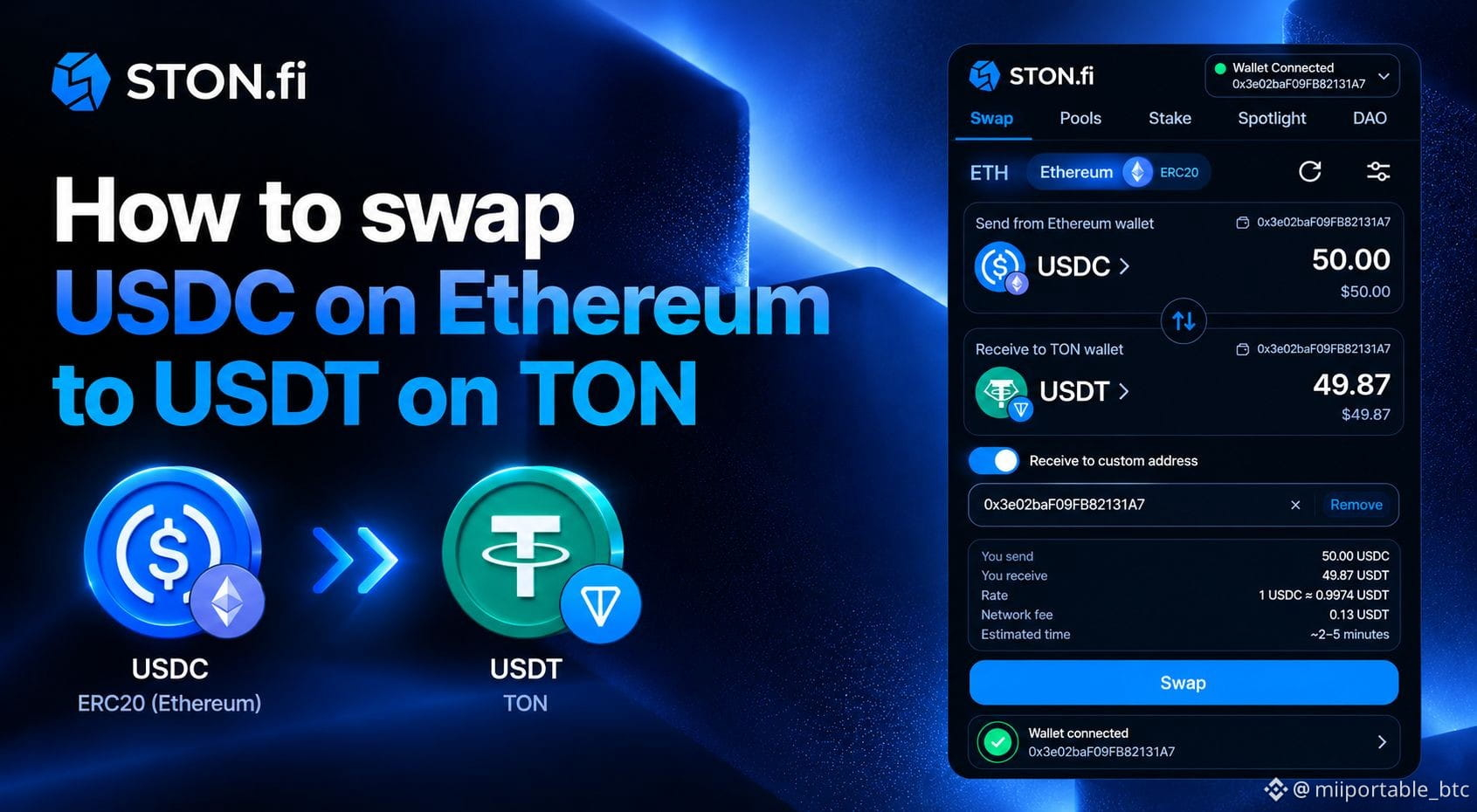
Do two different stablecoins convert at an exact 1-to-1 rate just because they're both pegged to a dollar? A real cross-chain quote on STON.fi shows the answer is no.
Testing a route that changes both network and asset at once, USDC on Ethereum into USDT on TON: 50 USDC sent, 49.87 USDT received, at a quoted rate of 1 USDC to approximately 0.9974 USDT. That's a small but real gap,
reflecting actual market conditions between the two stablecoins rather than a guaranteed fixed peg match. Network fee came to 0.13 USDT, and estimated settlement time showed a 2 to 5 minute window, wider than a same-network quote tested separately, consistent with this route handling both a cross-chain move and an asset conversion together.
The more important detail here is what this route avoids. The alternative approach, bridging USDC onto TON first and then performing a separate swap into USDT afterward, means holding an intermediate bridged asset you likely never wanted, plus a second transaction, a second fee, and a second wait. A single coordinated swap collapses both steps, network change and asset conversion, into one transaction with one quote to review upfront.
$TON continues to be worth watching for cross-chain infrastructure that handles multi-variable swaps like this cleanly, since the more steps a route eliminates, the fewer places a user's transaction can go wrong along the way.
Ston.fi: https://ston.fi/
Cross-chain: https://app.ston.fi/swap
@stonfi @ton_blockchain #TON #defi #Omniston
Do two different stablecoins convert at an exact 1-to-1 rate just because they're both pegged to a dollar? A real cross-chain quote on STON.fi shows the answer is no.
Testing a route that changes both network and asset at once, USDC on Ethereum into USDT on TON: 50 USDC sent, 49.87 USDT received, at a quoted rate of 1 USDC to approximately 0.9974 USDT. That's a small but real gap,
reflecting actual market conditions between the two stablecoins rather than a guaranteed fixed peg match. Network fee came to 0.13 USDT, and estimated settlement time showed a 2 to 5 minute window, wider than a same-network quote tested separately, consistent with this route handling both a cross-chain move and an asset conversion together.
The more important detail here is what this route avoids. The alternative approach, bridging USDC onto TON first and then performing a separate swap into USDT afterward, means holding an intermediate bridged asset you likely never wanted, plus a second transaction, a second fee, and a second wait. A single coordinated swap collapses both steps, network change and asset conversion, into one transaction with one quote to review upfront.
$TON continues to be worth watching for cross-chain infrastructure that handles multi-variable swaps like this cleanly, since the more steps a route eliminates, the fewer places a user's transaction can go wrong along the way.
Ston.fi: https://ston.fi/
Cross-chain: https://app.ston.fi/swap
@STONfi DEX @Ton Network #TON #defi #Omniston
Testing a route that changes both network and asset at once, USDC on Ethereum into USDT on TON: 50 USDC sent, 49.87 USDT received, at a quoted rate of 1 USDC to approximately 0.9974 USDT. That's a small but real gap,
reflecting actual market conditions between the two stablecoins rather than a guaranteed fixed peg match. Network fee came to 0.13 USDT, and estimated settlement time showed a 2 to 5 minute window, wider than a same-network quote tested separately, consistent with this route handling both a cross-chain move and an asset conversion together.
The more important detail here is what this route avoids. The alternative approach, bridging USDC onto TON first and then performing a separate swap into USDT afterward, means holding an intermediate bridged asset you likely never wanted, plus a second transaction, a second fee, and a second wait. A single coordinated swap collapses both steps, network change and asset conversion, into one transaction with one quote to review upfront.
$TON continues to be worth watching for cross-chain infrastructure that handles multi-variable swaps like this cleanly, since the more steps a route eliminates, the fewer places a user's transaction can go wrong along the way.
Ston.fi: https://ston.fi/
Cross-chain: https://app.ston.fi/swap
@STONfi DEX @Ton Network #TON #defi #Omniston
1
79
Article
DeFi 3.0: When Real-World Assets Become Programmable On-ChainDeFi has already gone through two major phases.
DeFi 1.0 built the primitives: decentralized trading, lending, borrowing and liquidity.
DeFi 2.0 made those primitives composable: protocols could interact with one another, allowing users to build increasingly complex financial strategies from on-chain building blocks.
The next phase could be different.
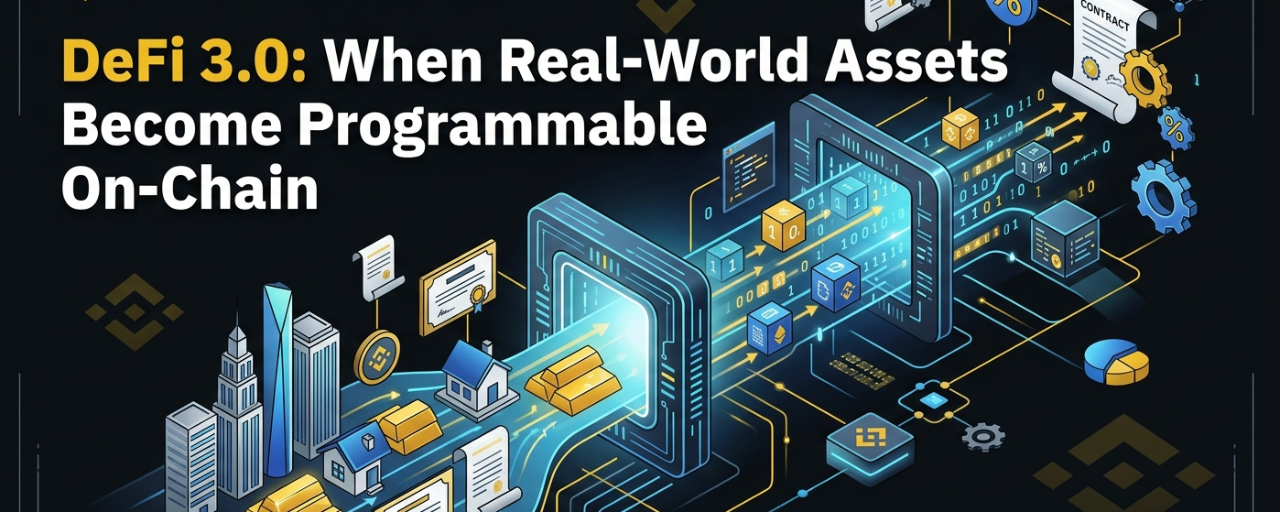
Instead of creating entirely new financial assets on-chain, blockchain infrastructure is increasingly being used to bring existing real-world assets, equities, bonds, money-market funds, commodities and other financial instruments, into programmable environments.
That is the idea behind what we can call DeFi 3.0.
The important shift isn't simply putting a traditional asset on a blockchain.
It is making that asset usable after it arrives.
From Crypto-Native Assets to Real-World Assets
Early DeFi largely operated within a crypto-native economy.
Users supplied crypto to lending protocols, traded tokens through decentralized exchanges and used digital assets as collateral. The advantage was composability: different protocols could interact without requiring the traditional financial infrastructure connecting them.
Tokenization introduces a much larger universe of assets.
Equities alone represent a global market measured in the hundreds of trillions of dollars. Bonds, money-market funds, commodities, private credit and real estate add further pools of value.
Binance Research estimates that the principal asset categories addressable by tokenization exceed US$300 trillion globally. Yet only about US$34.18 billion of RWA AUM was on-chain as of September 15, 2026. That implies an overall Programmable Asset Ratio of approximately 0.01%.
That gap is the opportunity.
But it also reveals an important problem.
Tokenizing an asset does not automatically make it useful.
The Difference Between Tokenization and Activation
Imagine two tokenized equities.
In the first scenario, the token simply tracks or represents an equity and sits in a wallet.
In the second, that same asset can participate in liquidity pools, lending markets, collateral systems and other programmable financial applications.
Both are tokenized. Only the second is being actively used as financial infrastructure.
This is the distinction Binance Research is now emphasizing through its RWA Activation Era framework. The research separates two questions:
How much of the underlying market has become programmable?
And:
How much of the tokenized capital is actually being used on-chain?
That distinction is captured through two metrics: Programmable Asset Ratio (PAR) and Capital Activation Rate (CAR).
What Is the Programmable Asset Ratio?
The Programmable Asset Ratio, or PAR, measures tokenized asset value against the corresponding underlying market.
In simplified terms:
PAR = programmable on-chain asset value ÷ underlying asset market value
It answers a basic adoption question:
How much of the potential market has actually moved on-chain?
For equities, the current gap is enormous.
Binance Research estimates that tokenized equities reached approximately US$4.43 billion as of September 15, 2026, compared with a reference listed-equity market of approximately US$151.9 trillion.
That puts equity PAR at only around 0.0029%, despite tokenized equities growing 390.4% year-to-date.
That combination is significant.
The percentage growth can look enormous because the starting base is still tiny.
So the story isn't that tokenized equities have already replaced traditional equities.
It is that a potentially enormous market has barely begun moving onto programmable rails.
What Is the Capital Activation Rate?
PAR tells us about penetration.
CAR tells us about use.
The Capital Activation Rate measures how much of the qualifying tokenized asset supply is deployed in verified on-chain financial applications such as liquidity pools, lending and collateral markets.
In simplified terms:
CAR = qualifying capital deployed in on-chain applications ÷ qualifying tokenized asset value
Binance Research estimates overall CAR at approximately 12%, meaning roughly $12 of every $100 in tracked tokenized asset value is currently deployed in on-chain financial applications. Equities provide an especially interesting example.
Their CAR increased from 1.95% to 7.54% year-to-date.
That means the development of tokenized equities isn't only about issuing more tokens. A growing portion is beginning to participate in financial applications after issuance.
That is the real DeFi 3.0 signal.
Why Equities Could Change DeFi
Crypto-native assets created the first generation of decentralized financial markets.
But tokenized equities introduce something different: an on-chain representation of assets whose economic value is connected to established companies and traditional capital markets. That doesn't eliminate volatility or investment risk. A tokenized equity can still fall substantially in value. But it changes the asset base available to programmable finance.
Instead of asking:
“What new token can we create?”
The question becomes:
“What can we do with the world's existing financial assets once they become programmable?”
That is a much broader design space.
An equity could potentially serve as an asset for trading, liquidity provision or collateral, subject to the legal structure, product design and applicable restrictions. The same conceptual framework can extend to bonds, money-market funds, commodities and private credit.
DeFi 3.0 Is About Composability of Assets
The defining feature of DeFi has always been composability.
One protocol can interact with another. One financial primitive can become the building block for another.
DeFi 3.0 extends that idea one level higher.
Instead of only making protocols composable, the goal becomes making a much broader range of assets usable within programmable financial systems.
That creates a potential chain:
Real-world asset → Tokenization → Liquidity → Lending → Collateral → Financial applications
The blockchain isn't merely acting as a digital wrapper. It becomes a programmable layer through which the asset can interact with other financial infrastructure.
Why Binance Is Relevant to This Transition
This is where Binance's broader product expansion intersects with the RWA thesis.
Binance has expanded beyond crypto-native spot markets into areas including tokenized securities, direct U.S. stocks, stock options and other financial products.
Its bStocks product brings selected tokenized U.S. securities onto blockchain infrastructure, while Binance's Direct Stocks product provides eligible users access to thousands of U.S.-listed stocks and ETFs through a securities-trading structure.
The significance isn't simply that another asset class has been added to a crypto platform.
It is the possibility of connecting traditional assets, crypto liquidity and programmable financial infrastructure within the same ecosystem.
Binance Research's PAR and CAR framework gives this development a way to be measured.
Rather than asking only how many tokenized assets exist, the framework asks whether those assets are actually becoming part of an active financial economy.
The Next Metric Isn't Just AUM
Assets under management is useful, but it doesn't tell the whole story.
Suppose two ecosystems each have $10 billion of tokenized assets.
In Ecosystem A, almost everything simply sits in wallets.
In Ecosystem B, a substantial portion is being used in liquidity pools, lending and collateral markets.
They have identical AUM.
But they represent very different levels of financial activity. That's why PAR and CAR are complementary.
PAR measures how much of the potential market has become programmable.
CAR measures how much of that programmable capital is actually being activated.
And the most interesting scenario is when both increase together. More assets move on-chain, while existing tokenized assets become increasingly useful.
What Could DeFi 3.0 Look Like?
If this model develops, the boundaries between crypto and traditional finance could become increasingly difficult to draw.
A user could potentially hold crypto alongside tokenized equities and other real-world assets, use those assets within supported financial applications and interact with them through programmable infrastructure.
The important word is potentially.
Regulation, custody, settlement, liquidity and product restrictions still matter. Tokenization does not magically remove the legal and financial infrastructure surrounding an asset.
But blockchain can provide a common programmable environment in which different forms of value can interact. That could eventually change how financial products are designed.
The Real DeFi 3.0 Opportunity
The first DeFi era proved that financial primitives could operate on blockchain.
The second demonstrated that those primitives could become composable.
The emerging third phase could bring a much larger asset universe into the system.
DeFi 1.0 built decentralized financial primitives.
DeFi 2.0 connected those primitives.
DeFi 3.0 could make real-world assets programmable and usable within those financial networks.
That is why the next stage of tokenization shouldn't be measured solely by how much value gets issued on-chain.
The bigger question is what happens after issuance.
If PAR measures the migration of assets onto programmable rails, CAR measures whether those assets actually become part of a functioning on-chain economy.
And if both numbers continue to rise, tokenization may stop being simply about putting traditional assets on blockchain. It could become about rebuilding how those assets move, interact and create financial utility.
That is the deeper idea behind the RWA Activation Era and potentially the foundation of DeFi 3.0.
#Binance #defi #RWA #Tokenization #Web3
DeFi 3.0: When Real-World Assets Become Programmable On-Chain
DeFi has already gone through two major phases.
DeFi 1.0 built the primitives: decentralized trading, lending, borrowing and liquidity.
DeFi 2.0 made those primitives composable: protocols could interact with one another, allowing users to build increasingly complex financial strategies from on-chain building blocks.
The next phase could be different.
Instead of creating entirely new financial assets on-chain, blockchain infrastructure is increasingly being used to bring existing real-world assets, equities, bonds, money-market funds, commodities and other financial instruments, into programmable environments.
That is the idea behind what we can call DeFi 3.0.
The important shift isn't simply putting a traditional asset on a blockchain.
It is making that asset usable after it arrives.
From Crypto-Native Assets to Real-World Assets
Early DeFi largely operated within a crypto-native economy.
Users supplied crypto to lending protocols, traded tokens through decentralized exchanges and used digital assets as collateral. The advantage was composability: different protocols could interact without requiring the traditional financial infrastructure connecting them.
Tokenization introduces a much larger universe of assets.
Equities alone represent a global market measured in the hundreds of trillions of dollars. Bonds, money-market funds, commodities, private credit and real estate add further pools of value.
Binance Research estimates that the principal asset categories addressable by tokenization exceed US$300 trillion globally. Yet only about US$34.18 billion of RWA AUM was on-chain as of September 15, 2026. That implies an overall Programmable Asset Ratio of approximately 0.01%.
That gap is the opportunity.
But it also reveals an important problem.
Tokenizing an asset does not automatically make it useful.
The Difference Between Tokenization and Activation
Imagine two tokenized equities.
In the first scenario, the token simply tracks or represents an equity and sits in a wallet.
In the second, that same asset can participate in liquidity pools, lending markets, collateral systems and other programmable financial applications.
Both are tokenized. Only the second is being actively used as financial infrastructure.
This is the distinction Binance Research is now emphasizing through its RWA Activation Era framework. The research separates two questions:
How much of the underlying market has become programmable?
And:
How much of the tokenized capital is actually being used on-chain?
That distinction is captured through two metrics: Programmable Asset Ratio (PAR) and Capital Activation Rate (CAR).
What Is the Programmable Asset Ratio?
The Programmable Asset Ratio, or PAR, measures tokenized asset value against the corresponding underlying market.
In simplified terms:
PAR = programmable on-chain asset value ÷ underlying asset market value
It answers a basic adoption question:
How much of the potential market has actually moved on-chain?
For equities, the current gap is enormous.
Binance Research estimates that tokenized equities reached approximately US$4.43 billion as of September 15, 2026, compared with a reference listed-equity market of approximately US$151.9 trillion.
That puts equity PAR at only around 0.0029%, despite tokenized equities growing 390.4% year-to-date.
That combination is significant.
The percentage growth can look enormous because the starting base is still tiny.
So the story isn't that tokenized equities have already replaced traditional equities.
It is that a potentially enormous market has barely begun moving onto programmable rails.
What Is the Capital Activation Rate?
PAR tells us about penetration.
CAR tells us about use.
The Capital Activation Rate measures how much of the qualifying tokenized asset supply is deployed in verified on-chain financial applications such as liquidity pools, lending and collateral markets.
In simplified terms:
CAR = qualifying capital deployed in on-chain applications ÷ qualifying tokenized asset value
Binance Research estimates overall CAR at approximately 12%, meaning roughly $12 of every $100 in tracked tokenized asset value is currently deployed in on-chain financial applications. Equities provide an especially interesting example.
Their CAR increased from 1.95% to 7.54% year-to-date.
That means the development of tokenized equities isn't only about issuing more tokens. A growing portion is beginning to participate in financial applications after issuance.
That is the real DeFi 3.0 signal.
Why Equities Could Change DeFi
Crypto-native assets created the first generation of decentralized financial markets.
But tokenized equities introduce something different: an on-chain representation of assets whose economic value is connected to established companies and traditional capital markets. That doesn't eliminate volatility or investment risk. A tokenized equity can still fall substantially in value. But it changes the asset base available to programmable finance.
Instead of asking:
“What new token can we create?”
The question becomes:
“What can we do with the world's existing financial assets once they become programmable?”
That is a much broader design space.
An equity could potentially serve as an asset for trading, liquidity provision or collateral, subject to the legal structure, product design and applicable restrictions. The same conceptual framework can extend to bonds, money-market funds, commodities and private credit.
DeFi 3.0 Is About Composability of Assets
The defining feature of DeFi has always been composability.
One protocol can interact with another. One financial primitive can become the building block for another.
DeFi 3.0 extends that idea one level higher.
Instead of only making protocols composable, the goal becomes making a much broader range of assets usable within programmable financial systems.
That creates a potential chain:
Real-world asset → Tokenization → Liquidity → Lending → Collateral → Financial applications
The blockchain isn't merely acting as a digital wrapper. It becomes a programmable layer through which the asset can interact with other financial infrastructure.
Why Binance Is Relevant to This Transition
This is where Binance's broader product expansion intersects with the RWA thesis.
Binance has expanded beyond crypto-native spot markets into areas including tokenized securities, direct U.S. stocks, stock options and other financial products.
Its bStocks product brings selected tokenized U.S. securities onto blockchain infrastructure, while Binance's Direct Stocks product provides eligible users access to thousands of U.S.-listed stocks and ETFs through a securities-trading structure.
The significance isn't simply that another asset class has been added to a crypto platform.
It is the possibility of connecting traditional assets, crypto liquidity and programmable financial infrastructure within the same ecosystem.
Binance Research's PAR and CAR framework gives this development a way to be measured.
Rather than asking only how many tokenized assets exist, the framework asks whether those assets are actually becoming part of an active financial economy.
The Next Metric Isn't Just AUM
Assets under management is useful, but it doesn't tell the whole story.
Suppose two ecosystems each have $10 billion of tokenized assets.
In Ecosystem A, almost everything simply sits in wallets.
In Ecosystem B, a substantial portion is being used in liquidity pools, lending and collateral markets.
They have identical AUM.
But they represent very different levels of financial activity. That's why PAR and CAR are complementary.
PAR measures how much of the potential market has become programmable.
CAR measures how much of that programmable capital is actually being activated.
And the most interesting scenario is when both increase together. More assets move on-chain, while existing tokenized assets become increasingly useful.
What Could DeFi 3.0 Look Like?
If this model develops, the boundaries between crypto and traditional finance could become increasingly difficult to draw.
A user could potentially hold crypto alongside tokenized equities and other real-world assets, use those assets within supported financial applications and interact with them through programmable infrastructure.
The important word is potentially.
Regulation, custody, settlement, liquidity and product restrictions still matter. Tokenization does not magically remove the legal and financial infrastructure surrounding an asset.
But blockchain can provide a common programmable environment in which different forms of value can interact. That could eventually change how financial products are designed.
The Real DeFi 3.0 Opportunity
The first DeFi era proved that financial primitives could operate on blockchain.
The second demonstrated that those primitives could become composable.
The emerging third phase could bring a much larger asset universe into the system.
DeFi 1.0 built decentralized financial primitives.
DeFi 2.0 connected those primitives.
DeFi 3.0 could make real-world assets programmable and usable within those financial networks.
That is why the next stage of tokenization shouldn't be measured solely by how much value gets issued on-chain.
The bigger question is what happens after issuance.
If PAR measures the migration of assets onto programmable rails, CAR measures whether those assets actually become part of a functioning on-chain economy.
And if both numbers continue to rise, tokenization may stop being simply about putting traditional assets on blockchain. It could become about rebuilding how those assets move, interact and create financial utility.
That is the deeper idea behind the RWA Activation Era and potentially the foundation of DeFi 3.0.
#Binance #defi #RWA #Tokenization #Web3
DeFi 1.0 built the primitives: decentralized trading, lending, borrowing and liquidity.
DeFi 2.0 made those primitives composable: protocols could interact with one another, allowing users to build increasingly complex financial strategies from on-chain building blocks.
The next phase could be different.
Instead of creating entirely new financial assets on-chain, blockchain infrastructure is increasingly being used to bring existing real-world assets, equities, bonds, money-market funds, commodities and other financial instruments, into programmable environments.
That is the idea behind what we can call DeFi 3.0.
The important shift isn't simply putting a traditional asset on a blockchain.
It is making that asset usable after it arrives.
From Crypto-Native Assets to Real-World Assets
Early DeFi largely operated within a crypto-native economy.
Users supplied crypto to lending protocols, traded tokens through decentralized exchanges and used digital assets as collateral. The advantage was composability: different protocols could interact without requiring the traditional financial infrastructure connecting them.
Tokenization introduces a much larger universe of assets.
Equities alone represent a global market measured in the hundreds of trillions of dollars. Bonds, money-market funds, commodities, private credit and real estate add further pools of value.
Binance Research estimates that the principal asset categories addressable by tokenization exceed US$300 trillion globally. Yet only about US$34.18 billion of RWA AUM was on-chain as of September 15, 2026. That implies an overall Programmable Asset Ratio of approximately 0.01%.
That gap is the opportunity.
But it also reveals an important problem.
Tokenizing an asset does not automatically make it useful.
The Difference Between Tokenization and Activation
Imagine two tokenized equities.
In the first scenario, the token simply tracks or represents an equity and sits in a wallet.
In the second, that same asset can participate in liquidity pools, lending markets, collateral systems and other programmable financial applications.
Both are tokenized. Only the second is being actively used as financial infrastructure.
This is the distinction Binance Research is now emphasizing through its RWA Activation Era framework. The research separates two questions:
How much of the underlying market has become programmable?
And:
How much of the tokenized capital is actually being used on-chain?
That distinction is captured through two metrics: Programmable Asset Ratio (PAR) and Capital Activation Rate (CAR).
What Is the Programmable Asset Ratio?
The Programmable Asset Ratio, or PAR, measures tokenized asset value against the corresponding underlying market.
In simplified terms:
PAR = programmable on-chain asset value ÷ underlying asset market value
It answers a basic adoption question:
How much of the potential market has actually moved on-chain?
For equities, the current gap is enormous.
Binance Research estimates that tokenized equities reached approximately US$4.43 billion as of September 15, 2026, compared with a reference listed-equity market of approximately US$151.9 trillion.
That puts equity PAR at only around 0.0029%, despite tokenized equities growing 390.4% year-to-date.
That combination is significant.
The percentage growth can look enormous because the starting base is still tiny.
So the story isn't that tokenized equities have already replaced traditional equities.
It is that a potentially enormous market has barely begun moving onto programmable rails.
What Is the Capital Activation Rate?
PAR tells us about penetration.
CAR tells us about use.
The Capital Activation Rate measures how much of the qualifying tokenized asset supply is deployed in verified on-chain financial applications such as liquidity pools, lending and collateral markets.
In simplified terms:
CAR = qualifying capital deployed in on-chain applications ÷ qualifying tokenized asset value
Binance Research estimates overall CAR at approximately 12%, meaning roughly $12 of every $100 in tracked tokenized asset value is currently deployed in on-chain financial applications. Equities provide an especially interesting example.
Their CAR increased from 1.95% to 7.54% year-to-date.
That means the development of tokenized equities isn't only about issuing more tokens. A growing portion is beginning to participate in financial applications after issuance.
That is the real DeFi 3.0 signal.
Why Equities Could Change DeFi
Crypto-native assets created the first generation of decentralized financial markets.
But tokenized equities introduce something different: an on-chain representation of assets whose economic value is connected to established companies and traditional capital markets. That doesn't eliminate volatility or investment risk. A tokenized equity can still fall substantially in value. But it changes the asset base available to programmable finance.
Instead of asking:
“What new token can we create?”
The question becomes:
“What can we do with the world's existing financial assets once they become programmable?”
That is a much broader design space.
An equity could potentially serve as an asset for trading, liquidity provision or collateral, subject to the legal structure, product design and applicable restrictions. The same conceptual framework can extend to bonds, money-market funds, commodities and private credit.
DeFi 3.0 Is About Composability of Assets
The defining feature of DeFi has always been composability.
One protocol can interact with another. One financial primitive can become the building block for another.
DeFi 3.0 extends that idea one level higher.
Instead of only making protocols composable, the goal becomes making a much broader range of assets usable within programmable financial systems.
That creates a potential chain:
Real-world asset → Tokenization → Liquidity → Lending → Collateral → Financial applications
The blockchain isn't merely acting as a digital wrapper. It becomes a programmable layer through which the asset can interact with other financial infrastructure.
Why Binance Is Relevant to This Transition
This is where Binance's broader product expansion intersects with the RWA thesis.
Binance has expanded beyond crypto-native spot markets into areas including tokenized securities, direct U.S. stocks, stock options and other financial products.
Its bStocks product brings selected tokenized U.S. securities onto blockchain infrastructure, while Binance's Direct Stocks product provides eligible users access to thousands of U.S.-listed stocks and ETFs through a securities-trading structure.
The significance isn't simply that another asset class has been added to a crypto platform.
It is the possibility of connecting traditional assets, crypto liquidity and programmable financial infrastructure within the same ecosystem.
Binance Research's PAR and CAR framework gives this development a way to be measured.
Rather than asking only how many tokenized assets exist, the framework asks whether those assets are actually becoming part of an active financial economy.
The Next Metric Isn't Just AUM
Assets under management is useful, but it doesn't tell the whole story.
Suppose two ecosystems each have $10 billion of tokenized assets.
In Ecosystem A, almost everything simply sits in wallets.
In Ecosystem B, a substantial portion is being used in liquidity pools, lending and collateral markets.
They have identical AUM.
But they represent very different levels of financial activity. That's why PAR and CAR are complementary.
PAR measures how much of the potential market has become programmable.
CAR measures how much of that programmable capital is actually being activated.
And the most interesting scenario is when both increase together. More assets move on-chain, while existing tokenized assets become increasingly useful.
What Could DeFi 3.0 Look Like?
If this model develops, the boundaries between crypto and traditional finance could become increasingly difficult to draw.
A user could potentially hold crypto alongside tokenized equities and other real-world assets, use those assets within supported financial applications and interact with them through programmable infrastructure.
The important word is potentially.
Regulation, custody, settlement, liquidity and product restrictions still matter. Tokenization does not magically remove the legal and financial infrastructure surrounding an asset.
But blockchain can provide a common programmable environment in which different forms of value can interact. That could eventually change how financial products are designed.
The Real DeFi 3.0 Opportunity
The first DeFi era proved that financial primitives could operate on blockchain.
The second demonstrated that those primitives could become composable.
The emerging third phase could bring a much larger asset universe into the system.
DeFi 1.0 built decentralized financial primitives.
DeFi 2.0 connected those primitives.
DeFi 3.0 could make real-world assets programmable and usable within those financial networks.
That is why the next stage of tokenization shouldn't be measured solely by how much value gets issued on-chain.
The bigger question is what happens after issuance.
If PAR measures the migration of assets onto programmable rails, CAR measures whether those assets actually become part of a functioning on-chain economy.
And if both numbers continue to rise, tokenization may stop being simply about putting traditional assets on blockchain. It could become about rebuilding how those assets move, interact and create financial utility.
That is the deeper idea behind the RWA Activation Era and potentially the foundation of DeFi 3.0.
#Binance #defi #RWA #Tokenization #Web3
2
65

·
--
🚨 DYORSWAP COMPENSATES 40% FOR $ETH BRIDGES AS EXPLOIT RECOVERY ADVANCES! 🔍
DYORSWAP has finalized its review of exploit-affected capital, unlocking a flat 40% payout for addresses bridging under 5 $ETH regardless of trading execution. ⚖️ Smart money protocol risk management is actively filtering out fraudulent operations and phishing vectors on larger bridging tiers above 5 $ETH .
🔍 Institutional integrity demands strict verification to prevent malicious actors from extracting liquidity meant for legitimate protocol participants. Make sure to double-check official distribution channels, as legitimate teams will never demand fund transfers or transaction signatures for claims. 💬 How will this capital redistribution affect on-chain liquidity confidence across decentralized bridges? 👇
⚠️ Not financial advice. Always manage your risk. 🛡️
🏷️ #ETH #Ethereum #DeFi #Crypto #Security
🛡️ ⚖️
🚨 DYORSWAP COMPENSATES 40% FOR $ETH BRIDGES AS EXPLOIT RECOVERY ADVANCES! 🔍
DYORSWAP has finalized its review of exploit-affected capital, unlocking a flat 40% payout for addresses bridging under 5 $ETH regardless of trading execution. ⚖️ Smart money protocol risk management is actively filtering out fraudulent operations and phishing vectors on larger bridging tiers above 5 $ETH .
🔍 Institutional integrity demands strict verification to prevent malicious actors from extracting liquidity meant for legitimate protocol participants. Make sure to double-check official distribution channels, as legitimate teams will never demand fund transfers or transaction signatures for claims. 💬 How will this capital redistribution affect on-chain liquidity confidence across decentralized bridges? 👇
⚠️ Not financial advice. Always manage your risk. 🛡️
🏷️ #ETH #Ethereum #DeFi #Crypto #Security
🛡️ ⚖️
DYORSWAP has finalized its review of exploit-affected capital, unlocking a flat 40% payout for addresses bridging under 5 $ETH regardless of trading execution. ⚖️ Smart money protocol risk management is actively filtering out fraudulent operations and phishing vectors on larger bridging tiers above 5 $ETH .
🔍 Institutional integrity demands strict verification to prevent malicious actors from extracting liquidity meant for legitimate protocol participants. Make sure to double-check official distribution channels, as legitimate teams will never demand fund transfers or transaction signatures for claims. 💬 How will this capital redistribution affect on-chain liquidity confidence across decentralized bridges? 👇
⚠️ Not financial advice. Always manage your risk. 🛡️
🏷️ #ETH #Ethereum #DeFi #Crypto #Security
🛡️ ⚖️

·
--
Yearn Finance automates the grind of yield farming so you don't have to chase APYs across dozens of protocols manually. Think of it as a robo-advisor for DeFi: you deposit assets into a Vault, and Yearn's strategies — built by developers and voted on by YFI holders — automatically allocate capital to the highest-yielding opportunities across lending markets, liquidity pools, and incentive programs. The protocol compounds rewards, rebalances positions, and harvests yields continuously, all without you lifting a finger.
As of today, Yearn manages over $300M in TVL across Ethereum, Arbitrum, Optimism, and other chains. The native token, YFI, governs the protocol — holders vote on strategy parameters, fee structures, and new Vault deployments. Vault APYs vary wildly by asset and market conditions; stablecoin Vaults often target 5–15% while more aggressive strategies can spike higher during incentive seasons.
One risk to watch: smart contract composability. Yearn Vaults interact with multiple external protocols — Aave, Curve, Convex, and others — creating layered dependency. A bug or exploit in any underlying layer can cascade into Yearn positions. The team runs extensive audits and maintains an active bug bounty, but no code is immune.
What's your experience with Yearn Vaults — set-and-forget convenience or do you prefer managing positions yourself?
#HODL #Altseason #DeFi #DeFiProtocol
Yearn Finance automates the grind of yield farming so you don't have to chase APYs across dozens of protocols manually. Think of it as a robo-advisor for DeFi: you deposit assets into a Vault, and Yearn's strategies — built by developers and voted on by YFI holders — automatically allocate capital to the highest-yielding opportunities across lending markets, liquidity pools, and incentive programs. The protocol compounds rewards, rebalances positions, and harvests yields continuously, all without you lifting a finger.
As of today, Yearn manages over $300M in TVL across Ethereum, Arbitrum, Optimism, and other chains. The native token, YFI, governs the protocol — holders vote on strategy parameters, fee structures, and new Vault deployments. Vault APYs vary wildly by asset and market conditions; stablecoin Vaults often target 5–15% while more aggressive strategies can spike higher during incentive seasons.
One risk to watch: smart contract composability. Yearn Vaults interact with multiple external protocols — Aave, Curve, Convex, and others — creating layered dependency. A bug or exploit in any underlying layer can cascade into Yearn positions. The team runs extensive audits and maintains an active bug bounty, but no code is immune.
What's your experience with Yearn Vaults — set-and-forget convenience or do you prefer managing positions yourself?
#HODL #Altseason #DeFi #DeFiProtocol
As of today, Yearn manages over $300M in TVL across Ethereum, Arbitrum, Optimism, and other chains. The native token, YFI, governs the protocol — holders vote on strategy parameters, fee structures, and new Vault deployments. Vault APYs vary wildly by asset and market conditions; stablecoin Vaults often target 5–15% while more aggressive strategies can spike higher during incentive seasons.
One risk to watch: smart contract composability. Yearn Vaults interact with multiple external protocols — Aave, Curve, Convex, and others — creating layered dependency. A bug or exploit in any underlying layer can cascade into Yearn positions. The team runs extensive audits and maintains an active bug bounty, but no code is immune.
What's your experience with Yearn Vaults — set-and-forget convenience or do you prefer managing positions yourself?
#HODL #Altseason #DeFi #DeFiProtocol
65
·
--
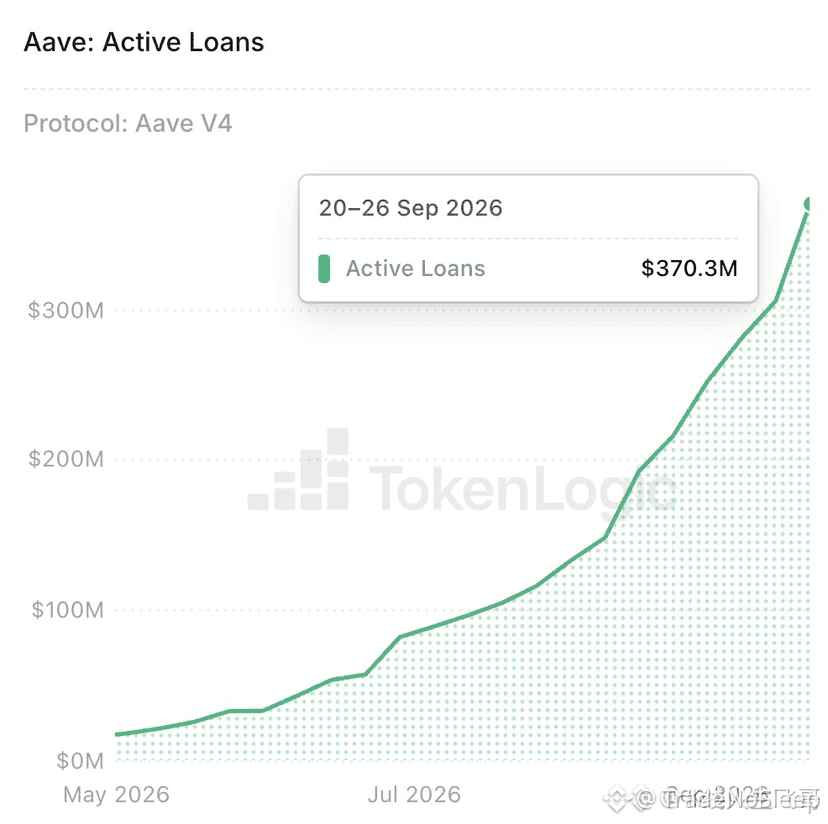
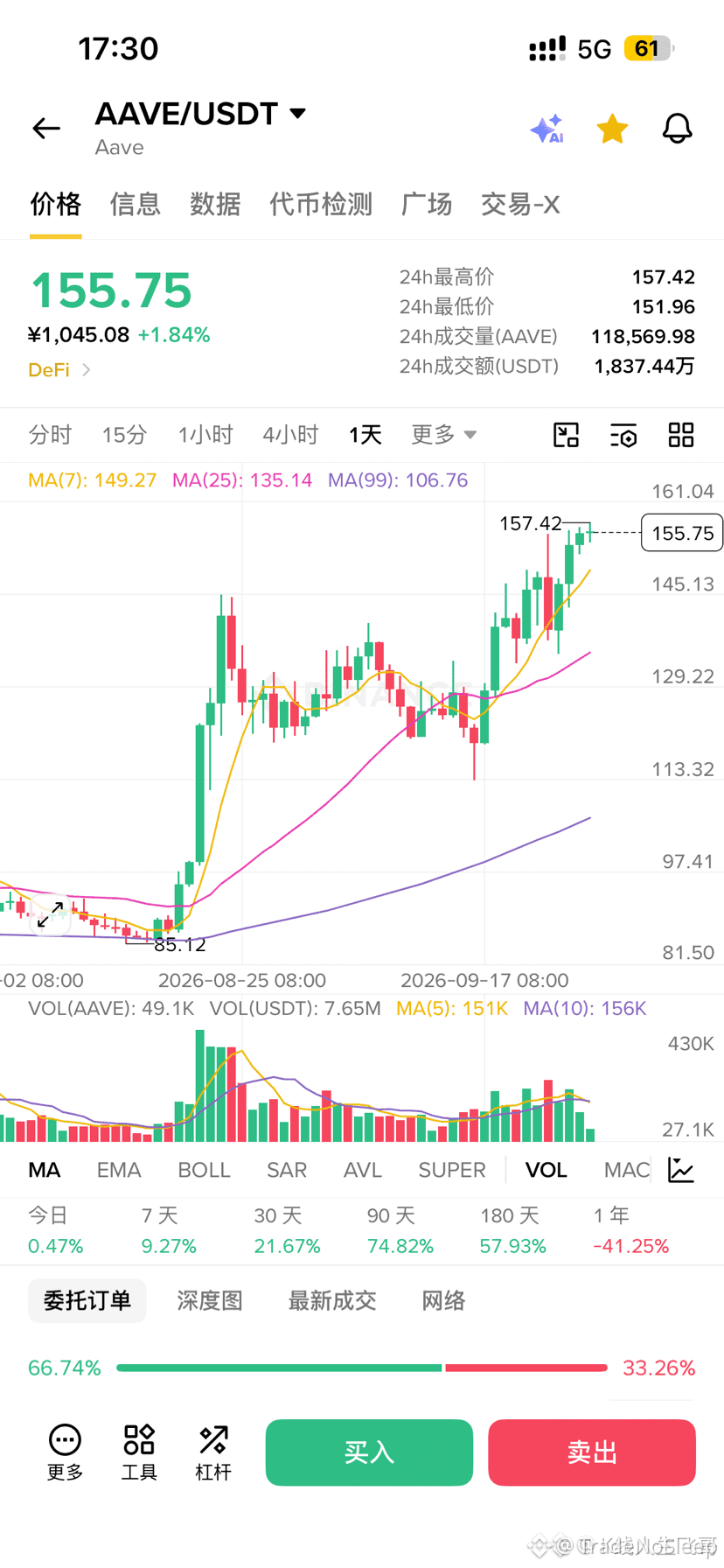
🦈 $AAVE V4 LOAN VELOCITY SURGES TO $370M AS INSTITUTIONAL DEMAND ACCELERATES 📊
Smart money isn't just depositing capital into $AAVE V4; they are actively putting it to work. Active loans have scaled to $370M against $1.28B in deposits, driving a solid 29% utilization rate following the migration of protocols like ether_fi Cash. 📊
This pivot from passive liquidity storage to organic credit demand signals underlying fundamental expansion rather than speculative bloat. 💡 As loan velocity accelerates, institutional capital efficiency is laying the groundwork for sustained structural outperformance in spot price. 🔍
🤔 Will this expanding credit utilization spark the next major expansion leg for $AAVE , or are you waiting for a key structural retest before taking exposure? 👇
⚠️ Not financial advice. Always manage your risk. 🛡️
🏷️ #AAVE #DeFi #MarketStructure #Crypto
🦈 🎯
🦈 $AAVE V4 LOAN VELOCITY SURGES TO $370M AS INSTITUTIONAL DEMAND ACCELERATES 📊
Smart money isn't just depositing capital into $AAVE V4; they are actively putting it to work. Active loans have scaled to $370M against $1.28B in deposits, driving a solid 29% utilization rate following the migration of protocols like ether_fi Cash. 📊
This pivot from passive liquidity storage to organic credit demand signals underlying fundamental expansion rather than speculative bloat. 💡 As loan velocity accelerates, institutional capital efficiency is laying the groundwork for sustained structural outperformance in spot price. 🔍
🤔 Will this expanding credit utilization spark the next major expansion leg for $AAVE , or are you waiting for a key structural retest before taking exposure? 👇
⚠️ Not financial advice. Always manage your risk. 🛡️
🏷️ #AAVE #DeFi #MarketStructure #Crypto
🦈 🎯
Smart money isn't just depositing capital into $AAVE V4; they are actively putting it to work. Active loans have scaled to $370M against $1.28B in deposits, driving a solid 29% utilization rate following the migration of protocols like ether_fi Cash. 📊
This pivot from passive liquidity storage to organic credit demand signals underlying fundamental expansion rather than speculative bloat. 💡 As loan velocity accelerates, institutional capital efficiency is laying the groundwork for sustained structural outperformance in spot price. 🔍
🤔 Will this expanding credit utilization spark the next major expansion leg for $AAVE , or are you waiting for a key structural retest before taking exposure? 👇
⚠️ Not financial advice. Always manage your risk. 🛡️
🏷️ #AAVE #DeFi #MarketStructure #Crypto
🦈 🎯
2
·
--
🚨 $HYPE RESTRUCTURES RISK ARCHITECTURE BY SLASHING FUNDING CAPS AND EXPANDING CONTRACT LIMITS! ⚡
Hyperliquid is refining its protocol parameters, drastically reducing the hourly funding rate ceiling from 4% to 0.5% in the upcoming upgrade. 🏦 This operational adjustment protects leveraged order flow against extreme tail-risk volatility spikes while aligning execution costs with traditional institutional perps.
Concurrently, developer scaling parameters for HIP-4 outcome contracts are doubling—expanding active deployment caps from 100 to 200 per builder, with daily limits reaching 1,000. 🔍 By removing infrastructure friction and tightening systemic risk parameters, smart money receives a significantly cleaner environment for structured position building.
💡 The structural pivot signals a clear shift from raw volatility to capital efficiency. 💬 How will this funding cap adjustment impact your high-leverage order flow strategies during peak liquidity sweeps? 👇
⚠️ Not financial advice. Always manage your risk. 🛡️
🏷️ #HYPE #DeFi #MarketStructure #Crypto
🎯 🦈
🚨 $HYPE RESTRUCTURES RISK ARCHITECTURE BY SLASHING FUNDING CAPS AND EXPANDING CONTRACT LIMITS! ⚡
Hyperliquid is refining its protocol parameters, drastically reducing the hourly funding rate ceiling from 4% to 0.5% in the upcoming upgrade. 🏦 This operational adjustment protects leveraged order flow against extreme tail-risk volatility spikes while aligning execution costs with traditional institutional perps.
Concurrently, developer scaling parameters for HIP-4 outcome contracts are doubling—expanding active deployment caps from 100 to 200 per builder, with daily limits reaching 1,000. 🔍 By removing infrastructure friction and tightening systemic risk parameters, smart money receives a significantly cleaner environment for structured position building.
💡 The structural pivot signals a clear shift from raw volatility to capital efficiency. 💬 How will this funding cap adjustment impact your high-leverage order flow strategies during peak liquidity sweeps? 👇
⚠️ Not financial advice. Always manage your risk. 🛡️
🏷️ #HYPE #DeFi #MarketStructure #Crypto
🎯 🦈
Hyperliquid is refining its protocol parameters, drastically reducing the hourly funding rate ceiling from 4% to 0.5% in the upcoming upgrade. 🏦 This operational adjustment protects leveraged order flow against extreme tail-risk volatility spikes while aligning execution costs with traditional institutional perps.
Concurrently, developer scaling parameters for HIP-4 outcome contracts are doubling—expanding active deployment caps from 100 to 200 per builder, with daily limits reaching 1,000. 🔍 By removing infrastructure friction and tightening systemic risk parameters, smart money receives a significantly cleaner environment for structured position building.
💡 The structural pivot signals a clear shift from raw volatility to capital efficiency. 💬 How will this funding cap adjustment impact your high-leverage order flow strategies during peak liquidity sweeps? 👇
⚠️ Not financial advice. Always manage your risk. 🛡️
🏷️ #HYPE #DeFi #MarketStructure #Crypto
🎯 🦈
45

·
--
The battle for Layer-2 liquidity is quietly triggering the biggest DEX volume shift of the year. While $BTC holds its range and $BNB provides a rock-solid foundation, smart money isn’t standing still—it is moving aggressively on-chain.
Capital is flowing rapidly into L2 ecosystems like Base and Arbitrum, where deep DEX liquidity pools offer real fee-driven yield instead of inflationary emissions. Minimal gas costs allow traders and liquidity providers to rebalance dynamically, dragging trading volume away from legacy mainnet protocols. However, with liquidity split across so many chains, capturing sustainable yield requires active management rather than passive farming.
Where are you hunting for yield in this market: L2 liquidity pools, stablecoin vaults, or staying strictly in spot?
#DeFi #Web3
The battle for Layer-2 liquidity is quietly triggering the biggest DEX volume shift of the year. While $BTC holds its range and $BNB provides a rock-solid foundation, smart money isn’t standing still—it is moving aggressively on-chain.
Capital is flowing rapidly into L2 ecosystems like Base and Arbitrum, where deep DEX liquidity pools offer real fee-driven yield instead of inflationary emissions. Minimal gas costs allow traders and liquidity providers to rebalance dynamically, dragging trading volume away from legacy mainnet protocols. However, with liquidity split across so many chains, capturing sustainable yield requires active management rather than passive farming.
Where are you hunting for yield in this market: L2 liquidity pools, stablecoin vaults, or staying strictly in spot?
#DeFi #Web3
Capital is flowing rapidly into L2 ecosystems like Base and Arbitrum, where deep DEX liquidity pools offer real fee-driven yield instead of inflationary emissions. Minimal gas costs allow traders and liquidity providers to rebalance dynamically, dragging trading volume away from legacy mainnet protocols. However, with liquidity split across so many chains, capturing sustainable yield requires active management rather than passive farming.
Where are you hunting for yield in this market: L2 liquidity pools, stablecoin vaults, or staying strictly in spot?
#DeFi #Web3
62

·
--
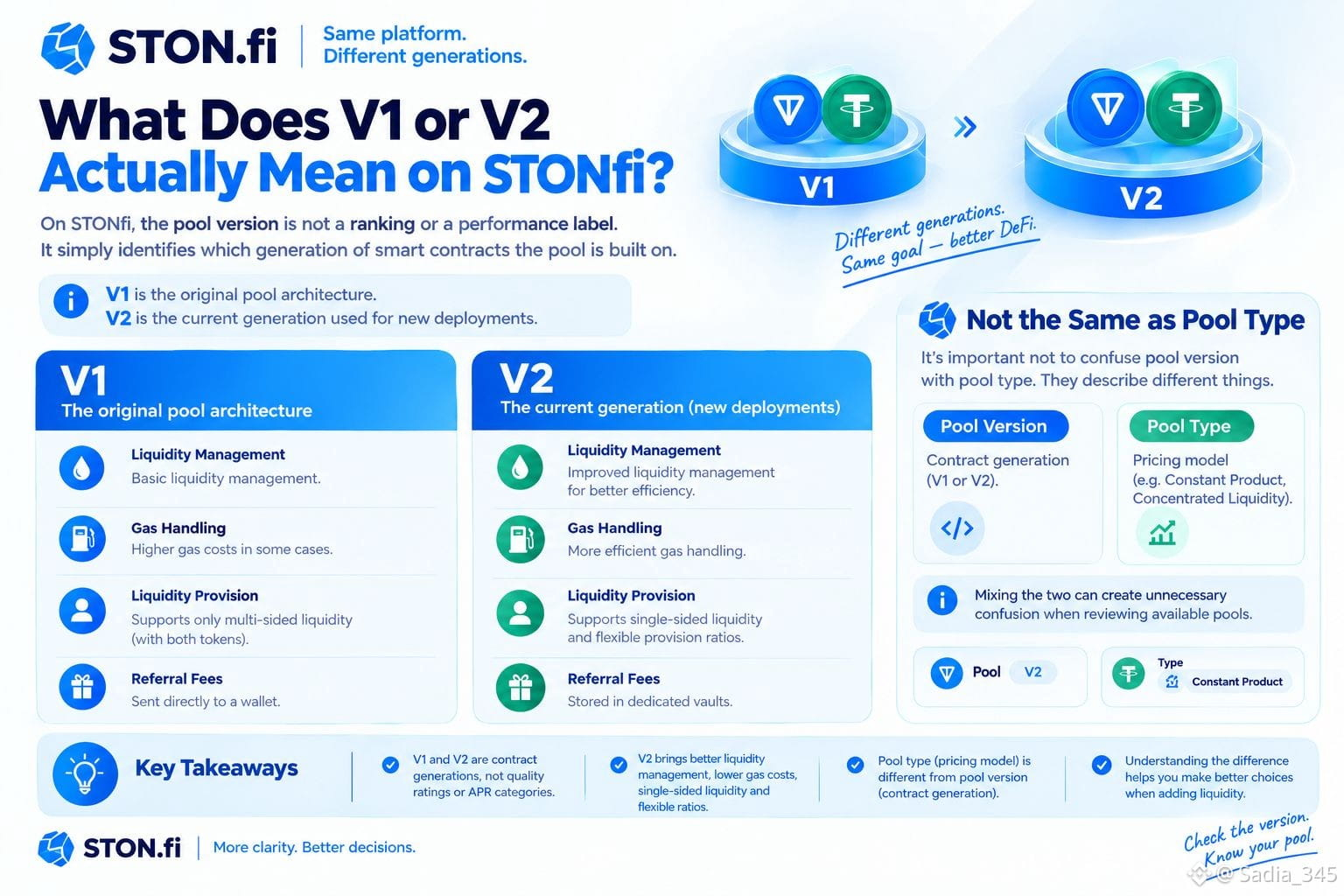
What does V1 or V2 actually mean on STONfi?
On STONfi, the pool version is not a ranking or a performance label. It simply identifies which generation of smart contracts the pool is built on.
• V1 is the original pool architecture
• V2 is the current generation used for new deployments
The differences are practical. V2 improves liquidity management and gas efficiency. It also supports single-sided liquidity and more flexible provision ratios. Referral fees are handled differently as well V2 stores them in dedicated vaults, while V1 sends them directly to a wallet.
It is also important not to confuse pool version with pool type. Version refers to the contract generation. Pool type refers to the pricing model. They describe different things.
Knowing this distinction makes it easier to understand what a pool is actually using when you review liquidity options.
Do you usually check the pool version before adding liquidity?
#STON.fi #defi $GRAM
What does V1 or V2 actually mean on STONfi?
On STONfi, the pool version is not a ranking or a performance label. It simply identifies which generation of smart contracts the pool is built on.
• V1 is the original pool architecture
• V2 is the current generation used for new deployments
The differences are practical. V2 improves liquidity management and gas efficiency. It also supports single-sided liquidity and more flexible provision ratios. Referral fees are handled differently as well V2 stores them in dedicated vaults, while V1 sends them directly to a wallet.
It is also important not to confuse pool version with pool type. Version refers to the contract generation. Pool type refers to the pricing model. They describe different things.
Knowing this distinction makes it easier to understand what a pool is actually using when you review liquidity options.
Do you usually check the pool version before adding liquidity?
#STON.fi #defi $GRAM
On STONfi, the pool version is not a ranking or a performance label. It simply identifies which generation of smart contracts the pool is built on.
• V1 is the original pool architecture
• V2 is the current generation used for new deployments
The differences are practical. V2 improves liquidity management and gas efficiency. It also supports single-sided liquidity and more flexible provision ratios. Referral fees are handled differently as well V2 stores them in dedicated vaults, while V1 sends them directly to a wallet.
It is also important not to confuse pool version with pool type. Version refers to the contract generation. Pool type refers to the pricing model. They describe different things.
Knowing this distinction makes it easier to understand what a pool is actually using when you review liquidity options.
Do you usually check the pool version before adding liquidity?
#STON.fi #defi $GRAM
1
251

Over $721 million was stolen from DeFi protocols in H1 2026 that had a completed security audit. Not "no audit." Not "sketchy anonymous team." Audited. The badge everyone tells you to check for before depositing.
A study covering 135 DeFi hacks this year found 67.6% happened outside the actual scope of what got audited. "Audited" almost never means "the whole protocol, forever." It means "this specific code, at this specific version, on this specific date." Add a feature next month, integrate a new bridge, tweak the liquidation logic — and you're now running unaudited code with an audited badge still on your website.
The Euler Finance case is the cleanest example: the exploit succeeded not because of a coding bug, but because of economic logic in the donation and liquidation mechanics. No line-by-line code review catches that. The code was correct. The design assumption was wrong.
Meanwhile $1.3B has been drained from DeFi in 2026 so far, and Chainalysis attributes roughly 76% of hack losses this year to state-backed groups, mostly Lazarus — not random script kiddies. These aren't people probing for typos in Solidity. They're well-funded teams studying validator infrastructure, RPC endpoints, and governance mechanisms, the stuff audits don't even look at.
"Audited" is a marketing word doing the job of a security guarantee it was never built for. Not saying skip protocols with audits. Saying: an audit tells you less than the badge implies, and knowing that is worth more than the badge itself.
Next time a project leads with "audited by [firm]" — do you know what that audit actually covered, or are you just trusting the checkmark?
#DeFi #Security #CryptoHacks #SmartContracts
Over $721 million was stolen from DeFi protocols in H1 2026 that had a completed security audit. Not "no audit." Not "sketchy anonymous team." Audited. The badge everyone tells you to check for before depositing.
A study covering 135 DeFi hacks this year found 67.6% happened outside the actual scope of what got audited. "Audited" almost never means "the whole protocol, forever." It means "this specific code, at this specific version, on this specific date." Add a feature next month, integrate a new bridge, tweak the liquidation logic — and you're now running unaudited code with an audited badge still on your website.
The Euler Finance case is the cleanest example: the exploit succeeded not because of a coding bug, but because of economic logic in the donation and liquidation mechanics. No line-by-line code review catches that. The code was correct. The design assumption was wrong.
Meanwhile $1.3B has been drained from DeFi in 2026 so far, and Chainalysis attributes roughly 76% of hack losses this year to state-backed groups, mostly Lazarus — not random script kiddies. These aren't people probing for typos in Solidity. They're well-funded teams studying validator infrastructure, RPC endpoints, and governance mechanisms, the stuff audits don't even look at.
"Audited" is a marketing word doing the job of a security guarantee it was never built for. Not saying skip protocols with audits. Saying: an audit tells you less than the badge implies, and knowing that is worth more than the badge itself.
Next time a project leads with "audited by [firm]" — do you know what that audit actually covered, or are you just trusting the checkmark?
#DeFi #Security #CryptoHacks #SmartContracts
A study covering 135 DeFi hacks this year found 67.6% happened outside the actual scope of what got audited. "Audited" almost never means "the whole protocol, forever." It means "this specific code, at this specific version, on this specific date." Add a feature next month, integrate a new bridge, tweak the liquidation logic — and you're now running unaudited code with an audited badge still on your website.
The Euler Finance case is the cleanest example: the exploit succeeded not because of a coding bug, but because of economic logic in the donation and liquidation mechanics. No line-by-line code review catches that. The code was correct. The design assumption was wrong.
Meanwhile $1.3B has been drained from DeFi in 2026 so far, and Chainalysis attributes roughly 76% of hack losses this year to state-backed groups, mostly Lazarus — not random script kiddies. These aren't people probing for typos in Solidity. They're well-funded teams studying validator infrastructure, RPC endpoints, and governance mechanisms, the stuff audits don't even look at.
"Audited" is a marketing word doing the job of a security guarantee it was never built for. Not saying skip protocols with audits. Saying: an audit tells you less than the badge implies, and knowing that is worth more than the badge itself.
Next time a project leads with "audited by [firm]" — do you know what that audit actually covered, or are you just trusting the checkmark?
#DeFi #Security #CryptoHacks #SmartContracts
1
50

·
--
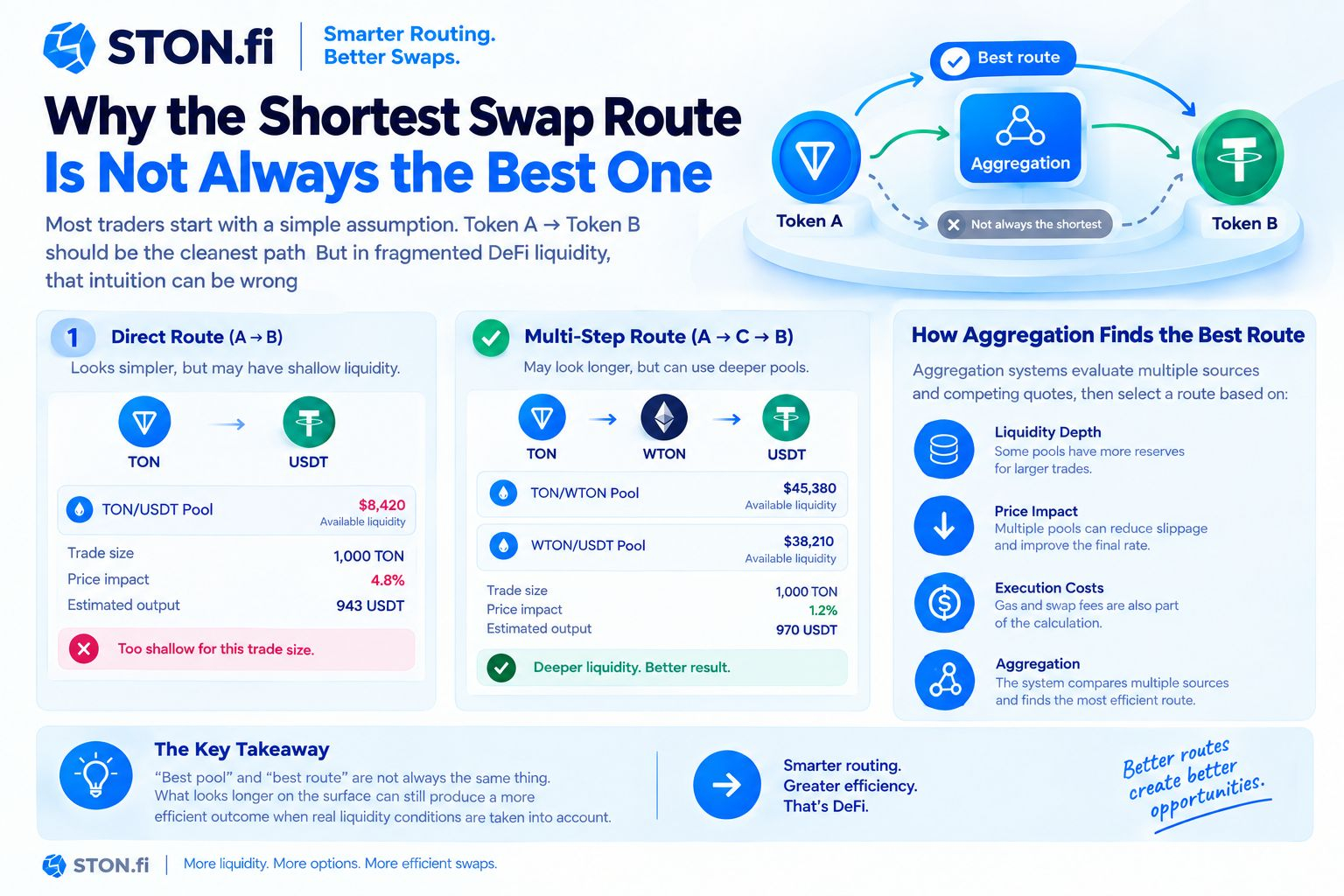
Why the shortest swap route is not always the best one
Most traders start with a simple assumption: Token A → Token B should be the cleanest path. But in fragmented DeFi liquidity, that intuition can be wrong.
A direct pool may exist and still be too shallow for the size of the trade. Another pool may offer deeper reserves. In those cases, a route that takes an extra step can produce a better final result because it reduces price impact or accesses better liquidity.
Aggregation systems are designed for this situation. They evaluate available liquidity and competing quotes across multiple sources, then select a route based on trade size, depth, and execution cost not just the number of hops.
This is why “best pool” and “best route” are not always the same thing. What looks longer on the surface can still be the more efficient option once real liquidity conditions are considered.
Curious how others approach this do you usually stick to direct routes or let aggregation decide?
#defi #STONfi $GRAM
Why the shortest swap route is not always the best one
Most traders start with a simple assumption: Token A → Token B should be the cleanest path. But in fragmented DeFi liquidity, that intuition can be wrong.
A direct pool may exist and still be too shallow for the size of the trade. Another pool may offer deeper reserves. In those cases, a route that takes an extra step can produce a better final result because it reduces price impact or accesses better liquidity.
Aggregation systems are designed for this situation. They evaluate available liquidity and competing quotes across multiple sources, then select a route based on trade size, depth, and execution cost not just the number of hops.
This is why “best pool” and “best route” are not always the same thing. What looks longer on the surface can still be the more efficient option once real liquidity conditions are considered.
Curious how others approach this do you usually stick to direct routes or let aggregation decide?
#defi #STONfi $GRAM
Most traders start with a simple assumption: Token A → Token B should be the cleanest path. But in fragmented DeFi liquidity, that intuition can be wrong.
A direct pool may exist and still be too shallow for the size of the trade. Another pool may offer deeper reserves. In those cases, a route that takes an extra step can produce a better final result because it reduces price impact or accesses better liquidity.
Aggregation systems are designed for this situation. They evaluate available liquidity and competing quotes across multiple sources, then select a route based on trade size, depth, and execution cost not just the number of hops.
This is why “best pool” and “best route” are not always the same thing. What looks longer on the surface can still be the more efficient option once real liquidity conditions are considered.
Curious how others approach this do you usually stick to direct routes or let aggregation decide?
#defi #STONfi $GRAM
1
272

·
--
Verified
$ENA HAS A NEW FUNDING ENGINE TO PROVE NOT A FREE PASS FOR THE TOKEN
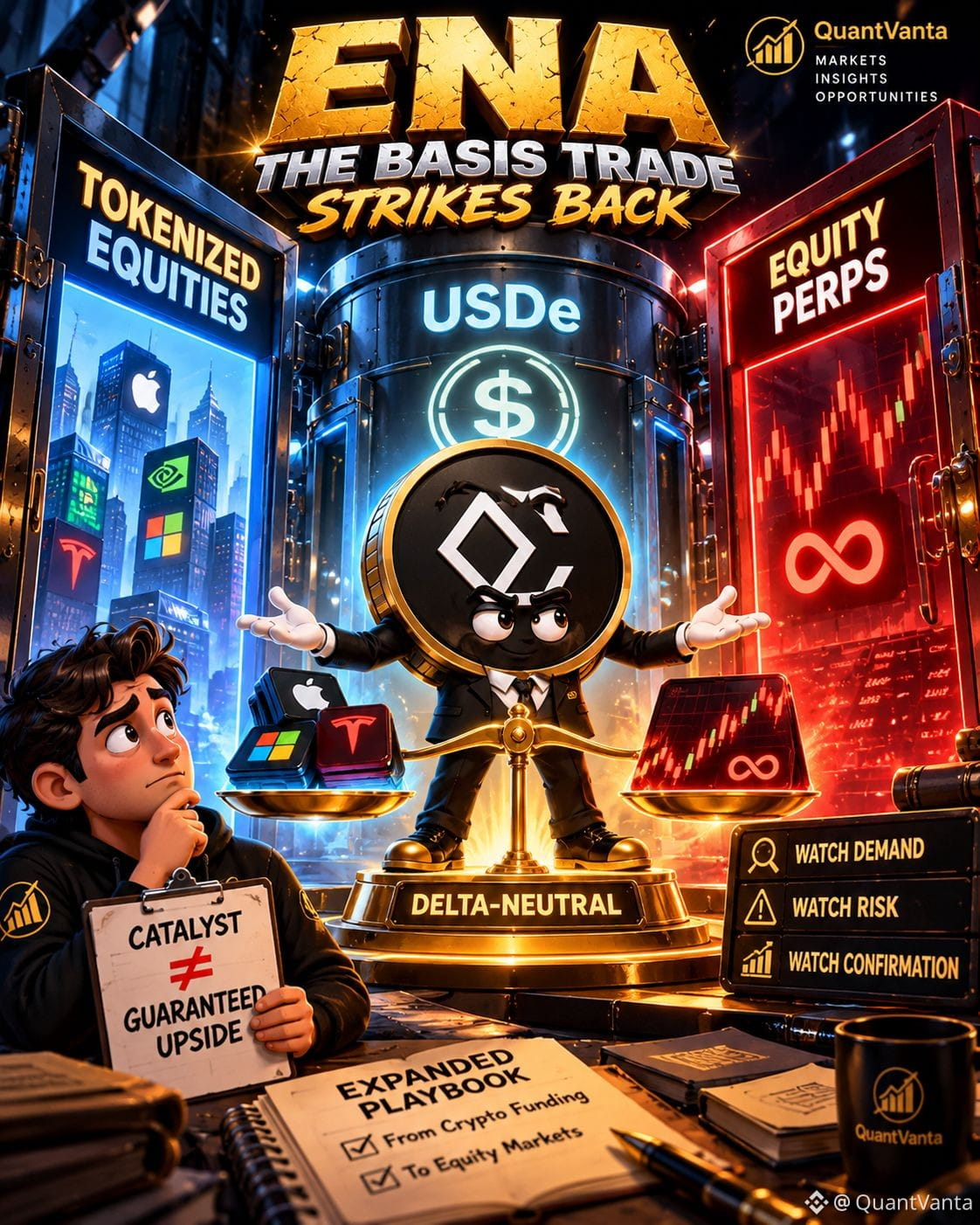
Ethena has started extending the basis-trade strategy behind USDe into tokenized equities through Binance.
The structure is important: tokenized equity exposure sits on one side, while equity perpetuals are used as the hedge. The goal is to capture funding/basis rather than simply bet on stocks going up.
That gives USDe a potentially broader source of funding than crypto markets alone.
But here’s the part I’m watching:
A bigger addressable market does NOT automatically mean stronger ENA demand.
For $ENA, the real confirmation is whether this expansion translates into durable protocol growth, revenue and ultimately stronger token economics.
📊 RISK MAP
🟢 Bull case: execution + USDe growth + sustainable revenue
🟡 Confirmation: continued ENA demand after the initial news reaction
🔴 Invalidation: weak adoption, declining economics, or fading momentum after the catalyst
My read:
The announcement changes the fundamental story around Ethena more than a normal short term price spike does.
But markets often price the headline first and the actual results later.
So I’m watching adoption, not just the candle.
Is this a genuine expansion of Ethena’s business model or just another catalyst traders will fade?
$ENA
{future}(ENAUSDT)
#ENA #ethena #defi
$ENA HAS A NEW FUNDING ENGINE TO PROVE NOT A FREE PASS FOR THE TOKEN
Ethena has started extending the basis-trade strategy behind USDe into tokenized equities through Binance.
The structure is important: tokenized equity exposure sits on one side, while equity perpetuals are used as the hedge. The goal is to capture funding/basis rather than simply bet on stocks going up.
That gives USDe a potentially broader source of funding than crypto markets alone.
But here’s the part I’m watching:
A bigger addressable market does NOT automatically mean stronger ENA demand.
For $ENA , the real confirmation is whether this expansion translates into durable protocol growth, revenue and ultimately stronger token economics.
📊 RISK MAP
🟢 Bull case: execution + USDe growth + sustainable revenue
🟡 Confirmation: continued ENA demand after the initial news reaction
🔴 Invalidation: weak adoption, declining economics, or fading momentum after the catalyst
My read:
The announcement changes the fundamental story around Ethena more than a normal short term price spike does.
But markets often price the headline first and the actual results later.
So I’m watching adoption, not just the candle.
Is this a genuine expansion of Ethena’s business model or just another catalyst traders will fade?
$ENA
#ENA #ethena #defi
Ethena has started extending the basis-trade strategy behind USDe into tokenized equities through Binance.
The structure is important: tokenized equity exposure sits on one side, while equity perpetuals are used as the hedge. The goal is to capture funding/basis rather than simply bet on stocks going up.
That gives USDe a potentially broader source of funding than crypto markets alone.
But here’s the part I’m watching:
A bigger addressable market does NOT automatically mean stronger ENA demand.
For $ENA , the real confirmation is whether this expansion translates into durable protocol growth, revenue and ultimately stronger token economics.
📊 RISK MAP
🟢 Bull case: execution + USDe growth + sustainable revenue
🟡 Confirmation: continued ENA demand after the initial news reaction
🔴 Invalidation: weak adoption, declining economics, or fading momentum after the catalyst
My read:
The announcement changes the fundamental story around Ethena more than a normal short term price spike does.
But markets often price the headline first and the actual results later.
So I’m watching adoption, not just the candle.
Is this a genuine expansion of Ethena’s business model or just another catalyst traders will fade?
$ENA
#ENA #ethena #defi
1
269

·
--
Article
Cross chain shouldn’t feel like a technical obstacle courseCross-chain shouldn’t feel like a technical obstacle course.
Bridge here.
Swap there.
Wait for confirmations.
Manage wrapped assets.
Hope nothing goes wrong.
@ston_fi is taking a different approach with Omniston.
Instead of making users think about the infrastructure, the goal is simple:
Choose what you have → choose what you want → let the execution happen.
The interesting part isn’t just moving assets between chains.
It’s the architecture underneath:
• Native assets instead of wrapped representations
• Resolver-based liquidity instead of one giant liquidity pool
• RFQs competing for execution
• Atomic settlement through HTLCs
• Non-custodial execution
That changes the way I think about cross-chain DeFi.
The future probably isn’t users becoming experts in bridges.
It’s infrastructure becoming good enough that users don’t need to think about bridges at all.
One interface.
Multiple chains.
One seamless execution layer.
That’s the direction @ston_fi is pushing with Omniston
#STONfi #ton #Defi
Cross chain shouldn’t feel like a technical obstacle course
Cross-chain shouldn’t feel like a technical obstacle course.
Bridge here.
Swap there.
Wait for confirmations.
Manage wrapped assets.
Hope nothing goes wrong.
@ston_fi is taking a different approach with Omniston.
Instead of making users think about the infrastructure, the goal is simple:
Choose what you have → choose what you want → let the execution happen.
The interesting part isn’t just moving assets between chains.
It’s the architecture underneath:
• Native assets instead of wrapped representations
• Resolver-based liquidity instead of one giant liquidity pool
• RFQs competing for execution
• Atomic settlement through HTLCs
• Non-custodial execution
That changes the way I think about cross-chain DeFi.
The future probably isn’t users becoming experts in bridges.
It’s infrastructure becoming good enough that users don’t need to think about bridges at all.
One interface.
Multiple chains.
One seamless execution layer.
That’s the direction @ston_fi is pushing with Omniston
#STONfi #ton #Defi
Bridge here.
Swap there.
Wait for confirmations.
Manage wrapped assets.
Hope nothing goes wrong.
@ston_fi is taking a different approach with Omniston.
Instead of making users think about the infrastructure, the goal is simple:
Choose what you have → choose what you want → let the execution happen.
The interesting part isn’t just moving assets between chains.
It’s the architecture underneath:
• Native assets instead of wrapped representations
• Resolver-based liquidity instead of one giant liquidity pool
• RFQs competing for execution
• Atomic settlement through HTLCs
• Non-custodial execution
That changes the way I think about cross-chain DeFi.
The future probably isn’t users becoming experts in bridges.
It’s infrastructure becoming good enough that users don’t need to think about bridges at all.
One interface.
Multiple chains.
One seamless execution layer.
That’s the direction @ston_fi is pushing with Omniston
#STONfi #ton #Defi
30

"I think Aave might do something big this time, because AAVE movement is going up."
AAVE / USDT - MARKET MOMENTUM
Price: $155.85 USDT (+1.18%)
Updated: 09/27 12:58 | AAVE/USDT - 1D Chart Upward Trend
MARKET DATA:
- 24H High: 157.39
- 24H Low: 151.96
- 24H Volume: 259.26M
- Market Cap: 2.41B
- All Time High: 666.86
Chart Insight:
AAVE showing consistent upward movement with higher highs. Momentum remains positive today.
#AAVE
#AaveProtocol
#DeFi
#CryptoUpdate
---
Educational purposes only • Not financial advice • For informational purposes only
"I think Aave might do something big this time, because AAVE movement is going up."
AAVE / USDT - MARKET MOMENTUM
Price: $155.85 USDT (+1.18%)
Updated: 09/27 12:58 | AAVE/USDT - 1D Chart Upward Trend
MARKET DATA:
- 24H High: 157.39
- 24H Low: 151.96
- 24H Volume: 259.26M
- Market Cap: 2.41B
- All Time High: 666.86
Chart Insight:
AAVE showing consistent upward movement with higher highs. Momentum remains positive today.
#AAVE
#AaveProtocol
#DeFi
#CryptoUpdate
---
Educational purposes only • Not financial advice • For informational purposes only
AAVE / USDT - MARKET MOMENTUM
Price: $155.85 USDT (+1.18%)
Updated: 09/27 12:58 | AAVE/USDT - 1D Chart Upward Trend
MARKET DATA:
- 24H High: 157.39
- 24H Low: 151.96
- 24H Volume: 259.26M
- Market Cap: 2.41B
- All Time High: 666.86
Chart Insight:
AAVE showing consistent upward movement with higher highs. Momentum remains positive today.
#AAVE
#AaveProtocol
#DeFi
#CryptoUpdate
---
Educational purposes only • Not financial advice • For informational purposes only
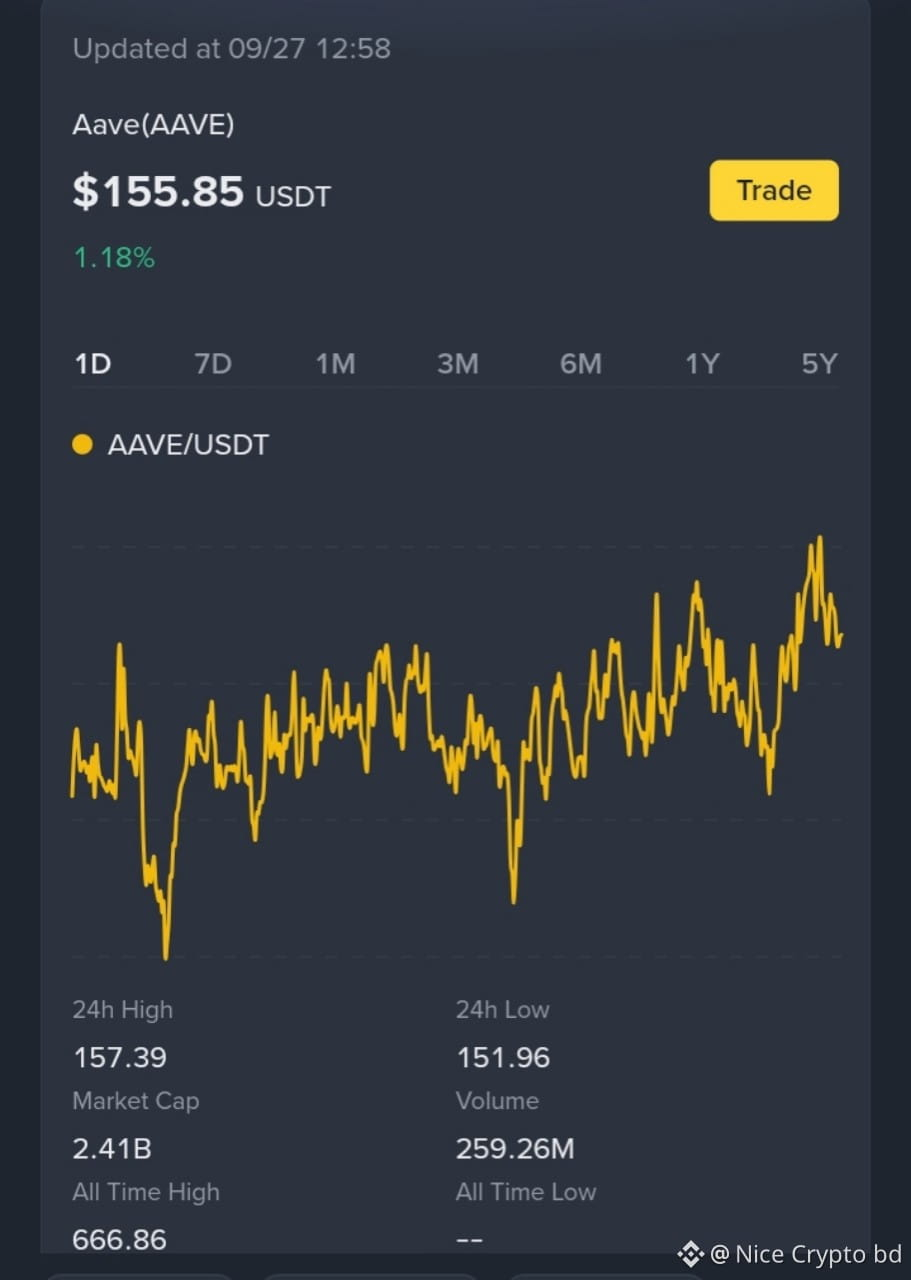
1
91

·
--
Ever wondered what happens behind a swap on STON.fi?
It starts with an AMM (Automated Market Maker).
Instead of a traditional order book, STON.fi uses liquidity pools.
Example:
TON + USDT → TON/USDT pool
Liquidity providers deposit tokens into the pool.
When users swap through that pool, fees are generated and distributed proportionally to liquidity providers.
So the basic mechanism is:
Liquidity → Pool → Swap → Fees
That’s the simple idea behind how STON.fi facilitates decentralized swaps.
Next topic: What exactly is a liquidity pool?
#STONfi #TON #defi #Web3
Ever wondered what happens behind a swap on STON.fi?
It starts with an AMM (Automated Market Maker).
Instead of a traditional order book, STON.fi uses liquidity pools.
Example:
TON + USDT → TON/USDT pool
Liquidity providers deposit tokens into the pool.
When users swap through that pool, fees are generated and distributed proportionally to liquidity providers.
So the basic mechanism is:
Liquidity → Pool → Swap → Fees
That’s the simple idea behind how STON.fi facilitates decentralized swaps.
Next topic: What exactly is a liquidity pool?
#STONfi #TON #defi #Web3
It starts with an AMM (Automated Market Maker).
Instead of a traditional order book, STON.fi uses liquidity pools.
Example:
TON + USDT → TON/USDT pool
Liquidity providers deposit tokens into the pool.
When users swap through that pool, fees are generated and distributed proportionally to liquidity providers.
So the basic mechanism is:
Liquidity → Pool → Swap → Fees
That’s the simple idea behind how STON.fi facilitates decentralized swaps.
Next topic: What exactly is a liquidity pool?
#STONfi #TON #defi #Web3
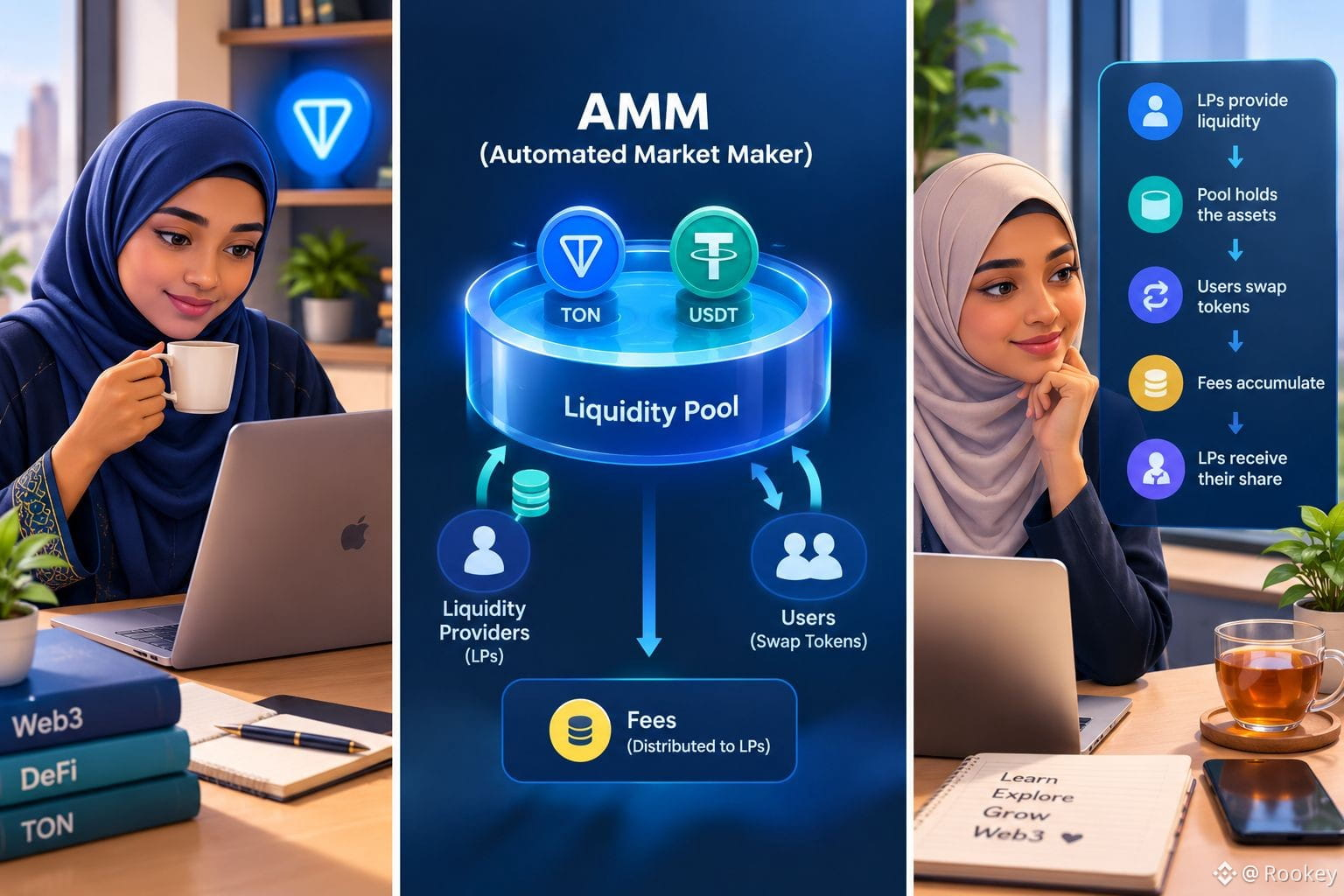
81

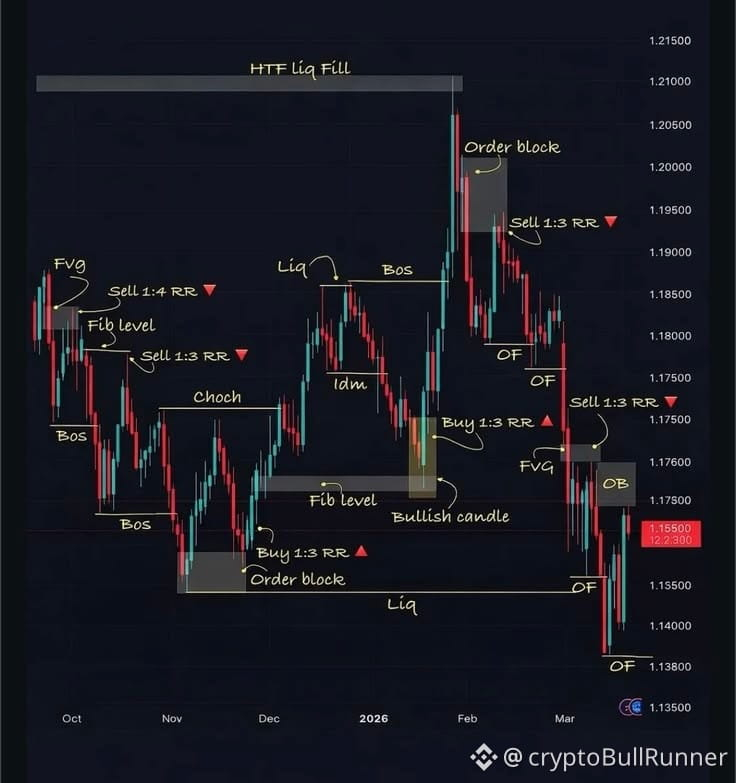

·
--
The SEC is opening the door for AMM-based tokenized stocks, and the XRP Ledger ($XRP) is already primed for the shift.
XRPL’s XLS-65 and XLS-66 lending proposals are currently in validator voting. While they require a sustained 80% consensus to launch on Mainnet, this advanced tech positions XRPL as a key frontrunner for real-world asset (RWA) tokenization.
Is XRPL ready to lead the next institutional DeFi wave?
#XRP #DeFi #RWA
The SEC is opening the door for AMM-based tokenized stocks, and the XRP Ledger ($XRP ) is already primed for the shift.
XRPL’s XLS-65 and XLS-66 lending proposals are currently in validator voting. While they require a sustained 80% consensus to launch on Mainnet, this advanced tech positions XRPL as a key frontrunner for real-world asset (RWA) tokenization.
Is XRPL ready to lead the next institutional DeFi wave?
#XRP #DeFi #RWA
XRPL’s XLS-65 and XLS-66 lending proposals are currently in validator voting. While they require a sustained 80% consensus to launch on Mainnet, this advanced tech positions XRPL as a key frontrunner for real-world asset (RWA) tokenization.
Is XRPL ready to lead the next institutional DeFi wave?
#XRP #DeFi #RWA
123
Log in to explore more content
Join global crypto users on Binance Square
⚡️ Get latest and useful information about crypto.
💬 Trusted by the world’s largest crypto exchange.
👍 Discover real insights from verified creators.
Email / Phone number
Trending Topics
1
#BitwiseFilesFinalNEARSpotETFProspectus
29,956 views
860 Discussing
2
#BitgetHackerMoves$83MStolenXRP
19,251 views
119 Discussing
3
#SOLSpotETFWeeklyInflow$188M
10,592 views
91 Discussing
4
#DogecoinETFsPostBiggestWeekSinceLaunch
24,428 views
696 Discussing
5
#StrategyStriveAdd2305BitcoinThisWeek
90,216 views
1,804 Discussing
6
#TrumpRejectsIranHormuzReopening
83,385 views
1,391 Discussing
7
#CircleTetherFreezeBitgetHackerWallet
84,015 views
1,330 Discussing
8
#SECSaysTokenBuybacksNotAutoSecurities
50,981 views
785 Discussing
9
#ChinaUSAgreeOn$30BTariffCut
4,172 views
42 Discussing
10
#CoinMarketCapCompletesCoinglassAcquisition
59,963 views
898 Discussing