
#defi
defi
56.3M views
292,297 Discussing
Hot
Latest


·
--
$ARB Arbitrum's 7-day liquidity collapse: rTokens surge as Bitget Wallet adds Reality's 1.2B tokenized stocks
14:30 UTC, Sept 15. The Arbitrum sequencer's inbound queue hit 1,248 pending transactions, double the usual threshold, while Bitget Wallet's Reality rToken integration deployed its first batch of 10 tokenized U.S. stocks.
$ARB #ARB #DeFi #CryptoNews
$ARB Arbitrum's 7-day liquidity collapse: rTokens surge as Bitget Wallet adds Reality's 1.2B tokenized stocks
14:30 UTC, Sept 15. The Arbitrum sequencer's inbound queue hit 1,248 pending transactions, double the usual threshold, while Bitget Wallet's Reality rToken integration deployed its first batch of 10 tokenized U.S. stocks.
$ARB #ARB #DeFi #CryptoNews
14:30 UTC, Sept 15. The Arbitrum sequencer's inbound queue hit 1,248 pending transactions, double the usual threshold, while Bitget Wallet's Reality rToken integration deployed its first batch of 10 tokenized U.S. stocks.
$ARB #ARB #DeFi #CryptoNews
Kato Crypto:
those two lines are not really the same story 👀 a sequencer queue is a throughput reading and a tokenized stock listing is a distribution one, so folding them into a single liquidity headline makes both harder to verify 🙌
1
340
·
--
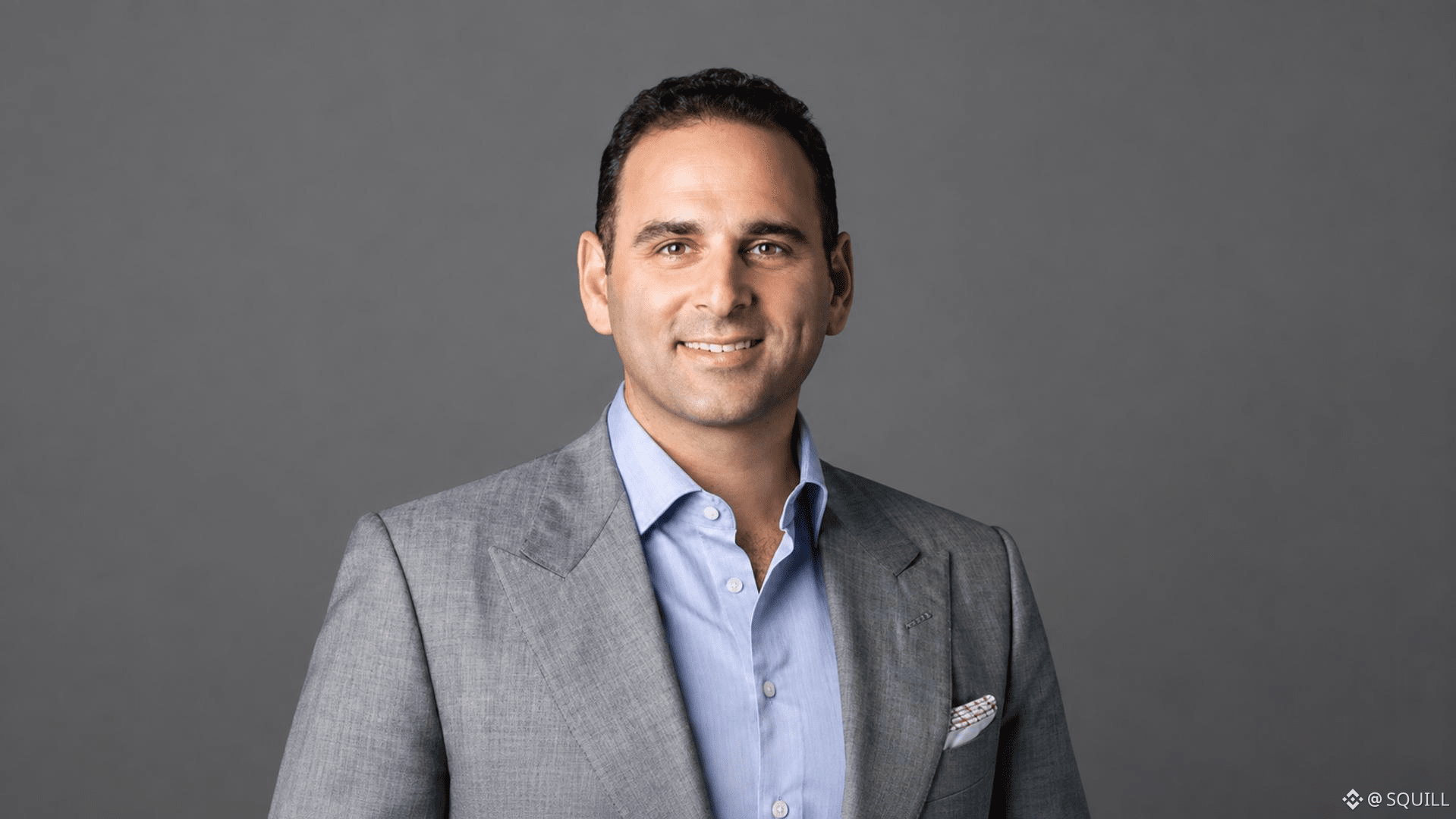
$SOL Kamino Names Michael Weisz CEO, Shifts to Tokenized Asset Lending
Traders holding positions in Solana-based DeFi protocols should note a significant strategic pivot by Kamino, one of the network's prominent lending platforms.
Live: $SOL 98.3 (-4.77% 24h) · 2.96B USDT 24h vol
$SOL #SOL #DeFi #CryptoNews
$SOL Kamino Names Michael Weisz CEO, Shifts to Tokenized Asset Lending
Traders holding positions in Solana-based DeFi protocols should note a significant strategic pivot by Kamino, one of the network's prominent lending platforms.
Live: $SOL 98.3 (-4.77% 24h) · 2.96B USDT 24h vol
$SOL #SOL #DeFi #CryptoNews
Traders holding positions in Solana-based DeFi protocols should note a significant strategic pivot by Kamino, one of the network's prominent lending platforms.
Live: $SOL 98.3 (-4.77% 24h) · 2.96B USDT 24h vol
$SOL #SOL #DeFi #CryptoNews
71

·
--
Article
Kamino’s New CEO: Wall Street Meets Solana, Tokenized Assets, and Meme‑Grade Drama---
GM fam, while the rest of the crypto world was still trying to figure out how to make a meme coin that actually pays dividends, Kamino just handed the keys to a Wall Street legend. Michael Weisz, the co‑founder of Yieldstreet, is stepping into the DeFi lender’s New York HQ, and it’s about to get a whole lot more “institutional” and a lot more meme‑worthy.
The Alpha
Kamino, the Solana‑based DeFi lending platform that’s been quietly building a vault of high‑yield, low‑risk loans, has just announced that Michael Weisz will be its new CEO. Weisz, who helped pioneer tokenized real‑world assets on Yieldstreet, brings a decade of institutional know‑how and a knack for turning complex financial products into something that even your grandma can understand. With this move, Kamino is positioning itself to bridge the gap between traditional finance and the fast‑moving world of tokenized assets on Solana. #DeFi #Tokenization #Solana
The Punchline Insight
So what does this mean for the average meme lord? Basically, Kamino is about to start offering you a way to earn yield on tokenized real‑world assets—think real estate, fine art, or even a slice of a private equity fund—without ever having to leave the blockchain. It’s the same concept that made Yieldstreet a darling of the institutional crowd, now wrapped in Solana’s blazing speed and Kamino’s user‑friendly interface. If you’ve been waiting for a way to put your crypto to work in a way that feels like a real investment, this is the bridge you’ve been looking for.
Engagement Bait
So, fam, if you’re ready to swap your meme coins for some real‑world yield, drop a comment: what tokenized asset would you want to see on Kamino next? Or challenge: can you explain tokenization in one meme? Let’s see who can meme‑prove the concept!
Kamino’s New CEO: Wall Street Meets Solana, Tokenized Assets, and Meme‑Grade Drama
---
GM fam, while the rest of the crypto world was still trying to figure out how to make a meme coin that actually pays dividends, Kamino just handed the keys to a Wall Street legend. Michael Weisz, the co‑founder of Yieldstreet, is stepping into the DeFi lender’s New York HQ, and it’s about to get a whole lot more “institutional” and a lot more meme‑worthy.
The Alpha
Kamino, the Solana‑based DeFi lending platform that’s been quietly building a vault of high‑yield, low‑risk loans, has just announced that Michael Weisz will be its new CEO. Weisz, who helped pioneer tokenized real‑world assets on Yieldstreet, brings a decade of institutional know‑how and a knack for turning complex financial products into something that even your grandma can understand. With this move, Kamino is positioning itself to bridge the gap between traditional finance and the fast‑moving world of tokenized assets on Solana. #DeFi #Tokenization #Solana
The Punchline Insight
So what does this mean for the average meme lord? Basically, Kamino is about to start offering you a way to earn yield on tokenized real‑world assets—think real estate, fine art, or even a slice of a private equity fund—without ever having to leave the blockchain. It’s the same concept that made Yieldstreet a darling of the institutional crowd, now wrapped in Solana’s blazing speed and Kamino’s user‑friendly interface. If you’ve been waiting for a way to put your crypto to work in a way that feels like a real investment, this is the bridge you’ve been looking for.
Engagement Bait
So, fam, if you’re ready to swap your meme coins for some real‑world yield, drop a comment: what tokenized asset would you want to see on Kamino next? Or challenge: can you explain tokenization in one meme? Let’s see who can meme‑prove the concept!
GM fam, while the rest of the crypto world was still trying to figure out how to make a meme coin that actually pays dividends, Kamino just handed the keys to a Wall Street legend. Michael Weisz, the co‑founder of Yieldstreet, is stepping into the DeFi lender’s New York HQ, and it’s about to get a whole lot more “institutional” and a lot more meme‑worthy.
The Alpha
Kamino, the Solana‑based DeFi lending platform that’s been quietly building a vault of high‑yield, low‑risk loans, has just announced that Michael Weisz will be its new CEO. Weisz, who helped pioneer tokenized real‑world assets on Yieldstreet, brings a decade of institutional know‑how and a knack for turning complex financial products into something that even your grandma can understand. With this move, Kamino is positioning itself to bridge the gap between traditional finance and the fast‑moving world of tokenized assets on Solana. #DeFi #Tokenization #Solana
The Punchline Insight
So what does this mean for the average meme lord? Basically, Kamino is about to start offering you a way to earn yield on tokenized real‑world assets—think real estate, fine art, or even a slice of a private equity fund—without ever having to leave the blockchain. It’s the same concept that made Yieldstreet a darling of the institutional crowd, now wrapped in Solana’s blazing speed and Kamino’s user‑friendly interface. If you’ve been waiting for a way to put your crypto to work in a way that feels like a real investment, this is the bridge you’ve been looking for.
Engagement Bait
So, fam, if you’re ready to swap your meme coins for some real‑world yield, drop a comment: what tokenized asset would you want to see on Kamino next? Or challenge: can you explain tokenization in one meme? Let’s see who can meme‑prove the concept!
24

DeFi Milestone: Is Balancer Facing the End of the Road? 🚨
One of DeFi’s pioneer liquidity protocols, Balancer, is reportedly evaluating a potential protocol wind-down after a recent organizational restructuring failed to revive protocol revenue.
Here are the key takeaways:
• Revenue Shortfall: Recent structural changes failed to generate the sustained trading volume and fee growth needed for long-term protocol sustainability.
• Wind-Down Discussions: Governance conversations are increasingly focusing on an orderly sunsetting of operations to protect user liquidity and remaining resources.
• Industry Reality Check: The development underscores the fierce competition and shifting market dynamics facing early-generation automated market makers in today's market.
Is this a sign of broader consolidation coming to legacy DeFi protocols? Share your perspective in the comments below! 💬
#DeFi #CryptoNews #Balancer #Binance
Risk Disclaimer: This content is for informational purposes only and does not constitute financial advice. Digital asset trading involves significant market risk. Always conduct your own independent research before making any investment decisions.
DeFi Milestone: Is Balancer Facing the End of the Road? 🚨
One of DeFi’s pioneer liquidity protocols, Balancer, is reportedly evaluating a potential protocol wind-down after a recent organizational restructuring failed to revive protocol revenue.
Here are the key takeaways:
• Revenue Shortfall: Recent structural changes failed to generate the sustained trading volume and fee growth needed for long-term protocol sustainability.
• Wind-Down Discussions: Governance conversations are increasingly focusing on an orderly sunsetting of operations to protect user liquidity and remaining resources.
• Industry Reality Check: The development underscores the fierce competition and shifting market dynamics facing early-generation automated market makers in today's market.
Is this a sign of broader consolidation coming to legacy DeFi protocols? Share your perspective in the comments below! 💬
#DeFi #CryptoNews #Balancer #Binance
Risk Disclaimer: This content is for informational purposes only and does not constitute financial advice. Digital asset trading involves significant market risk. Always conduct your own independent research before making any investment decisions.
One of DeFi’s pioneer liquidity protocols, Balancer, is reportedly evaluating a potential protocol wind-down after a recent organizational restructuring failed to revive protocol revenue.
Here are the key takeaways:
• Revenue Shortfall: Recent structural changes failed to generate the sustained trading volume and fee growth needed for long-term protocol sustainability.
• Wind-Down Discussions: Governance conversations are increasingly focusing on an orderly sunsetting of operations to protect user liquidity and remaining resources.
• Industry Reality Check: The development underscores the fierce competition and shifting market dynamics facing early-generation automated market makers in today's market.
Is this a sign of broader consolidation coming to legacy DeFi protocols? Share your perspective in the comments below! 💬
#DeFi #CryptoNews #Balancer #Binance
Risk Disclaimer: This content is for informational purposes only and does not constitute financial advice. Digital asset trading involves significant market risk. Always conduct your own independent research before making any investment decisions.
25

·
--
We need to count words. Let's aim for ~170 words.
Write in warning tone, serious but not panic. Provide 3 actionable steps (like: 1. Create a dedicated wallet, 2. Limit permissions, 3. Regularly audit contracts). Provide steps clearly.
End with required line exactly.
Add final line with hashtags separated by spaces? The spec: "Final line: #DeFi #NFT #CryptoSecurity #StaySafe". Probably exactly that line with spaces between hashtags. We'll put that as final line.
Make sure total words count includes everything. Let's draft and count.
Draft:
"Warning: Every DeFi interaction carries risk. Using your main wallet for lending, swapping, or minting NFTs exposes your entire portfolio to a single malicious contract or phishing link. A compromised approval can drain funds instantly, and recovery is rarely possible.
Step 1 – Create a dedicated wallet solely for DeFi activity. Keep it funded only with the amount you are willing to risk.
Step 2 – Approve tokens and contracts only on that wallet. Revoke unused allowances regularly using a trusted revocation tool.
Step 3 – Before confirming any transaction, verify the contract address on a block explorer and read community audits. Never sign blind.
Treat this wallet like a sandbox: isolate, monitor, and limit exposure. Your primary holdings stay safe while you explore new protocols.
Share this
We need to count words. Let's aim for ~170 words.
Write in warning tone, serious but not panic. Provide 3 actionable steps (like: 1. Create a dedicated wallet, 2. Limit permissions, 3. Regularly audit contracts). Provide steps clearly.
End with required line exactly.
Add final line with hashtags separated by spaces? The spec: "Final line: #DeFi #NFT #CryptoSecurity #StaySafe". Probably exactly that line with spaces between hashtags. We'll put that as final line.
Make sure total words count includes everything. Let's draft and count.
Draft:
"Warning: Every DeFi interaction carries risk. Using your main wallet for lending, swapping, or minting NFTs exposes your entire portfolio to a single malicious contract or phishing link. A compromised approval can drain funds instantly, and recovery is rarely possible.
Step 1 – Create a dedicated wallet solely for DeFi activity. Keep it funded only with the amount you are willing to risk.
Step 2 – Approve tokens and contracts only on that wallet. Revoke unused allowances regularly using a trusted revocation tool.
Step 3 – Before confirming any transaction, verify the contract address on a block explorer and read community audits. Never sign blind.
Treat this wallet like a sandbox: isolate, monitor, and limit exposure. Your primary holdings stay safe while you explore new protocols.
Share this
Write in warning tone, serious but not panic. Provide 3 actionable steps (like: 1. Create a dedicated wallet, 2. Limit permissions, 3. Regularly audit contracts). Provide steps clearly.
End with required line exactly.
Add final line with hashtags separated by spaces? The spec: "Final line: #DeFi #NFT #CryptoSecurity #StaySafe". Probably exactly that line with spaces between hashtags. We'll put that as final line.
Make sure total words count includes everything. Let's draft and count.
Draft:
"Warning: Every DeFi interaction carries risk. Using your main wallet for lending, swapping, or minting NFTs exposes your entire portfolio to a single malicious contract or phishing link. A compromised approval can drain funds instantly, and recovery is rarely possible.
Step 1 – Create a dedicated wallet solely for DeFi activity. Keep it funded only with the amount you are willing to risk.
Step 2 – Approve tokens and contracts only on that wallet. Revoke unused allowances regularly using a trusted revocation tool.
Step 3 – Before confirming any transaction, verify the contract address on a block explorer and read community audits. Never sign blind.
Treat this wallet like a sandbox: isolate, monitor, and limit exposure. Your primary holdings stay safe while you explore new protocols.
Share this
24

·
--
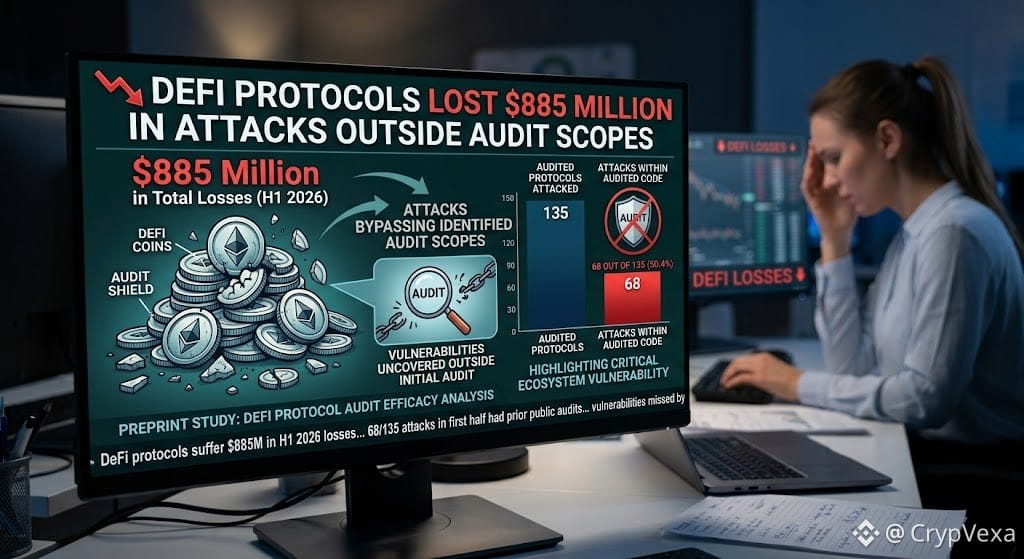
🚨 DeFi Attacks Expose $885M Security Gap
📉 A recent preprint study found that DeFi protocols lost around $885M in attacks during the first half of 2026 that occurred outside identified audit scopes.
🔍 Researchers reviewed 135 reported incidents, with 68 protocols having undergone public audits before the attacks.
⚠️ The findings highlight an important issue: being audited does not automatically mean a DeFi protocol is fully protected. Vulnerabilities can exist in areas that audits did not cover.
🛡️ Stronger audit coverage, continuous monitoring, testing, and better security practices could be critical as DeFi grows.
👀 Is the DeFi industry relying too heavily on audits instead of continuous security?
#DeFi #CryptoSecurity #Blockchain #CryptoNews
🚨 DeFi Attacks Expose $885M Security Gap
📉 A recent preprint study found that DeFi protocols lost around $885M in attacks during the first half of 2026 that occurred outside identified audit scopes.
🔍 Researchers reviewed 135 reported incidents, with 68 protocols having undergone public audits before the attacks.
⚠️ The findings highlight an important issue: being audited does not automatically mean a DeFi protocol is fully protected. Vulnerabilities can exist in areas that audits did not cover.
🛡️ Stronger audit coverage, continuous monitoring, testing, and better security practices could be critical as DeFi grows.
👀 Is the DeFi industry relying too heavily on audits instead of continuous security?
#DeFi #CryptoSecurity #Blockchain #CryptoNews
📉 A recent preprint study found that DeFi protocols lost around $885M in attacks during the first half of 2026 that occurred outside identified audit scopes.
🔍 Researchers reviewed 135 reported incidents, with 68 protocols having undergone public audits before the attacks.
⚠️ The findings highlight an important issue: being audited does not automatically mean a DeFi protocol is fully protected. Vulnerabilities can exist in areas that audits did not cover.
🛡️ Stronger audit coverage, continuous monitoring, testing, and better security practices could be critical as DeFi grows.
👀 Is the DeFi industry relying too heavily on audits instead of continuous security?
#DeFi #CryptoSecurity #Blockchain #CryptoNews
1
44

·
--
DeFi's first composability wave was about Lego blocks — stacking protocols to engineer Frankenstein yields. The second wave is different. It's institutional-grade structured products being natively built on-chain.
We're seeing auto-rebalancing yield vaults, tokenized structured notes with on-chain settlement, and options strategies that execute without traditional counterparty risk. The primitives haven't changed — lending, AMMs, derivatives — but the product layer is maturing from yield farming into genuine portfolio construction.
The critical shift is composability without catastrophic dependency risk. First-wave stacks suffered from domino effects: one exploited protocol brought down the entire tower. Second-wave products isolate risk through overcollateralization, automated circuit breakers, and modular settlement layers. You get the upside of composability with bounded downside.
This matters because real institutional capital — pensions, treasuries, family offices — cannot touch instruments with tail risk of total loss overnight. They need defined risk profiles, auditable settlement, and clear obligations. DeFi is finally building products to that specification.
The gap between DeFi yield and TradFi yield is closing. But the real unlock is products that TradFi structurally cannot offer: composable, transparent, 24/7 settled, and globally accessible from day one.
$ETH $SOL $BNB
#DeFi #CryptoMarkets #Web3 #InstitutionalCrypto
DeFi's first composability wave was about Lego blocks — stacking protocols to engineer Frankenstein yields. The second wave is different. It's institutional-grade structured products being natively built on-chain.
We're seeing auto-rebalancing yield vaults, tokenized structured notes with on-chain settlement, and options strategies that execute without traditional counterparty risk. The primitives haven't changed — lending, AMMs, derivatives — but the product layer is maturing from yield farming into genuine portfolio construction.
The critical shift is composability without catastrophic dependency risk. First-wave stacks suffered from domino effects: one exploited protocol brought down the entire tower. Second-wave products isolate risk through overcollateralization, automated circuit breakers, and modular settlement layers. You get the upside of composability with bounded downside.
This matters because real institutional capital — pensions, treasuries, family offices — cannot touch instruments with tail risk of total loss overnight. They need defined risk profiles, auditable settlement, and clear obligations. DeFi is finally building products to that specification.
The gap between DeFi yield and TradFi yield is closing. But the real unlock is products that TradFi structurally cannot offer: composable, transparent, 24/7 settled, and globally accessible from day one.
$ETH $SOL $BNB
#DeFi #CryptoMarkets #Web3 #InstitutionalCrypto
We're seeing auto-rebalancing yield vaults, tokenized structured notes with on-chain settlement, and options strategies that execute without traditional counterparty risk. The primitives haven't changed — lending, AMMs, derivatives — but the product layer is maturing from yield farming into genuine portfolio construction.
The critical shift is composability without catastrophic dependency risk. First-wave stacks suffered from domino effects: one exploited protocol brought down the entire tower. Second-wave products isolate risk through overcollateralization, automated circuit breakers, and modular settlement layers. You get the upside of composability with bounded downside.
This matters because real institutional capital — pensions, treasuries, family offices — cannot touch instruments with tail risk of total loss overnight. They need defined risk profiles, auditable settlement, and clear obligations. DeFi is finally building products to that specification.
The gap between DeFi yield and TradFi yield is closing. But the real unlock is products that TradFi structurally cannot offer: composable, transparent, 24/7 settled, and globally accessible from day one.
$ETH $SOL $BNB
#DeFi #CryptoMarkets #Web3 #InstitutionalCrypto
1
85

📊 $DEFI Update
Today's Clarity Act vote is the big catalyst — a "yes" could open the floodgates for institutional DeFi capital. 🌊
But a red flag: DeFi provisions in the latest bill draft got scaled back, worrying industry critics. ⚠️
#defi i #CLARITYAct #TVL
📊 $DEFI Update
Today's Clarity Act vote is the big catalyst — a "yes" could open the floodgates for institutional DeFi capital. 🌊
But a red flag: DeFi provisions in the latest bill draft got scaled back, worrying industry critics. ⚠️
#defi i #CLARITYAct #TVL
Today's Clarity Act vote is the big catalyst — a "yes" could open the floodgates for institutional DeFi capital. 🌊
But a red flag: DeFi provisions in the latest bill draft got scaled back, worrying industry critics. ⚠️
#defi i #CLARITYAct #TVL
14

$KNC — Kyber Network remains connected to decentralized liquidity, giving it exposure to renewed DEX-sector activity.
{spot}(KNCUSDT)
$BNT — Bancor remains an established DeFi liquidity project, with volume important when the sector begins moving again.
{spot}(BNTUSDT)
$REN — Ren remains a speculative infrastructure trade where liquidity can strongly influence short-term price action.
#KNC #BNT #REN #DeFi #CryptoTrading
$KNC — Kyber Network remains connected to decentralized liquidity, giving it exposure to renewed DEX-sector activity.
$BNT — Bancor remains an established DeFi liquidity project, with volume important when the sector begins moving again.
$REN — Ren remains a speculative infrastructure trade where liquidity can strongly influence short-term price action.
#KNC #BNT #REN #DeFi #CryptoTrading
$BNT — Bancor remains an established DeFi liquidity project, with volume important when the sector begins moving again.
$REN — Ren remains a speculative infrastructure trade where liquidity can strongly influence short-term price action.
#KNC #BNT #REN #DeFi #CryptoTrading

48

·
--
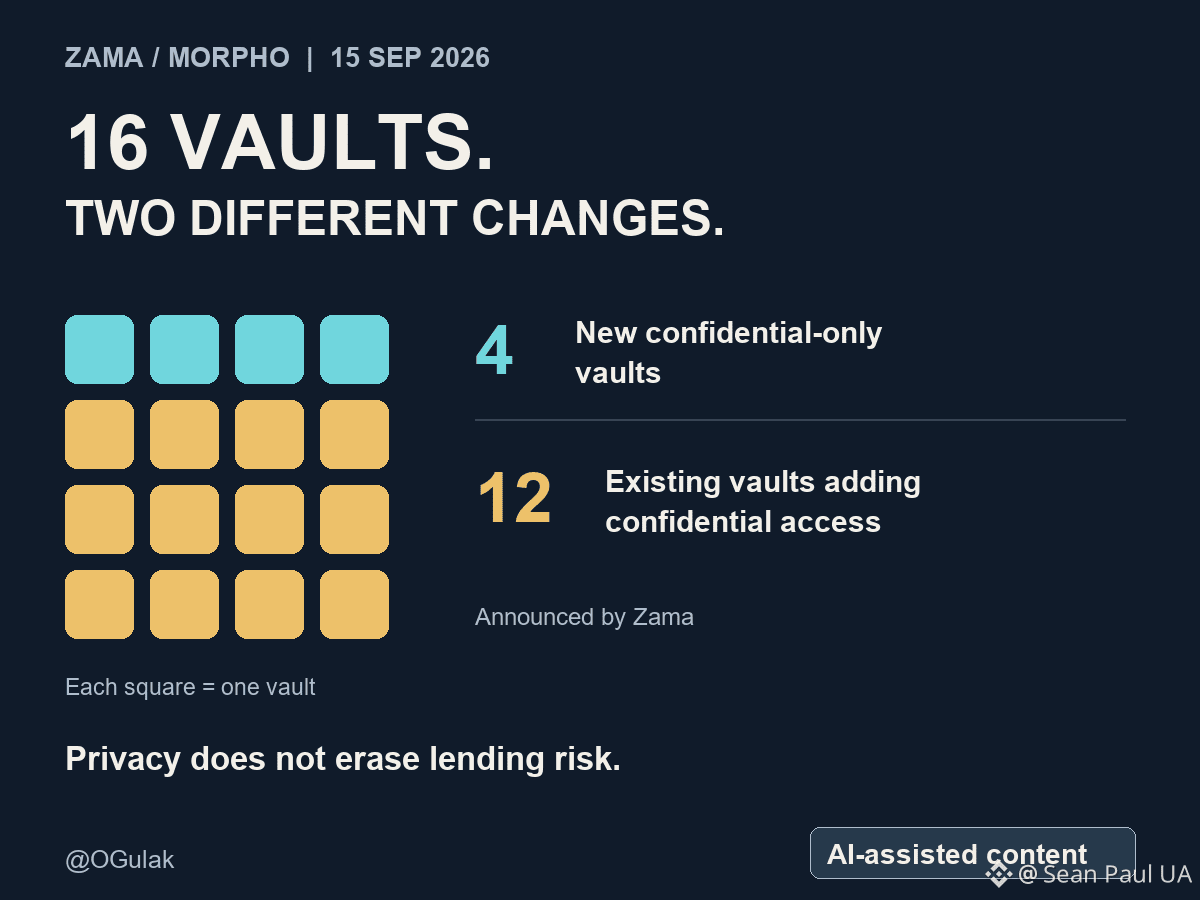
Sixteen vaults doesn't mean sixteen new strategies. That's the detail I noticed in Zama's announcement today.
On September 15, Zama announced confidential access to 16 Morpho vaults: four new confidential-only products and 12 existing vaults adding confidential deposits.
The distinction matters. For those 12, the new feature is how users access the strategy. Zama says its confidentiality layer keeps amounts and balances encrypted while preserving public verifiability.
My read: protecting position size may remove one barrier for institutions. It doesn't remove smart-contract, lending or liquidity risk. Morpho's documentation warns that a shortage of liquidity can delay withdrawals.
I'd judge this launch by sustained use and how clearly those risks are explained, rather than the vault count alone. More product choice isn't evidence of more demand, and it isn't a price forecast for ZAMA or MORPHO.
Would private balances change your view of DeFi, or is reliable access to funds the bigger issue? Why?
#DeFi #Privacy
I may earn commissions from trades made through this post.
Sixteen vaults doesn't mean sixteen new strategies. That's the detail I noticed in Zama's announcement today.
On September 15, Zama announced confidential access to 16 Morpho vaults: four new confidential-only products and 12 existing vaults adding confidential deposits.
The distinction matters. For those 12, the new feature is how users access the strategy. Zama says its confidentiality layer keeps amounts and balances encrypted while preserving public verifiability.
My read: protecting position size may remove one barrier for institutions. It doesn't remove smart-contract, lending or liquidity risk. Morpho's documentation warns that a shortage of liquidity can delay withdrawals.
I'd judge this launch by sustained use and how clearly those risks are explained, rather than the vault count alone. More product choice isn't evidence of more demand, and it isn't a price forecast for ZAMA or MORPHO.
Would private balances change your view of DeFi, or is reliable access to funds the bigger issue? Why?
#DeFi #Privacy
I may earn commissions from trades made through this post.
On September 15, Zama announced confidential access to 16 Morpho vaults: four new confidential-only products and 12 existing vaults adding confidential deposits.
The distinction matters. For those 12, the new feature is how users access the strategy. Zama says its confidentiality layer keeps amounts and balances encrypted while preserving public verifiability.
My read: protecting position size may remove one barrier for institutions. It doesn't remove smart-contract, lending or liquidity risk. Morpho's documentation warns that a shortage of liquidity can delay withdrawals.
I'd judge this launch by sustained use and how clearly those risks are explained, rather than the vault count alone. More product choice isn't evidence of more demand, and it isn't a price forecast for ZAMA or MORPHO.
Would private balances change your view of DeFi, or is reliable access to funds the bigger issue? Why?
#DeFi #Privacy
I may earn commissions from trades made through this post.
1
109
·
--
Article
Solana Treasury Firm DeFi Dev Corp Rolls Out $300M CHAD to Buy More SOLIn a move that could reshape the Solana ecosystem, DeFi Development Corp (DDC) just added 55,491 $SOL to its treasury and launched a $300 million CHAD at-the-market program for its preferred stock—fueling a three‑week sprint of capital‑market activity that’s catching everyone’s eye.
## The Concept: What Is a CHAD Program and Why It Matters
A CHAD (Capital‑Market At‑Market Deal) is a way for companies to raise cash quickly by selling shares directly to the market at a fixed price, rather than waiting for a full public offering. Think of it as a “cash‑in‑a‑box” that lets the company grab liquidity fast, while investors get a chance to buy shares at a predictable price. For a DeFi firm like DDC, this means more capital to build protocols, pay developers, and, importantly, buy back $SOL to support the token’s price.
#DeFi #Solana
## Real‑World Example: DDC’s $300M CHAD in Action
Over the past three weeks, DDC has been a whirlwind of activity: announcing a new treasury strategy, adding a hefty $SOL stash, and now, with the CHAD, injecting fresh capital. The $300 million raised will be split between buying more $SOL and funding the development of next‑gen DeFi tools on Solana. By buying back $SOL, DDC can help tighten the supply curve, potentially boosting the token’s value—an attractive move for both the company and its community.
## Takeaway: How You Can Leverage This Momentum
1. **Watch the Treasury Moves** – DDC’s $SOL purchases can signal confidence in the token’s future.
2. **Consider DDC’s Preferred Stock** – If you’re a long‑term holder, the CHAD may offer a stable entry point.
3. **Stay Informed on Solana’s Ecosystem** – More capital means more projects, more liquidity, and a healthier network.
#BinanceSquare
What do you think—will DDC’s fresh capital and $SOL buy‑back push Solana’s price higher, or is it just a short‑term hype? Let us know in the comments!
Solana Treasury Firm DeFi Dev Corp Rolls Out $300M CHAD to Buy More SOL
In a move that could reshape the Solana ecosystem, DeFi Development Corp (DDC) just added 55,491 $SOL to its treasury and launched a $300 million CHAD at-the-market program for its preferred stock—fueling a three‑week sprint of capital‑market activity that’s catching everyone’s eye.
## The Concept: What Is a CHAD Program and Why It Matters
A CHAD (Capital‑Market At‑Market Deal) is a way for companies to raise cash quickly by selling shares directly to the market at a fixed price, rather than waiting for a full public offering. Think of it as a “cash‑in‑a‑box” that lets the company grab liquidity fast, while investors get a chance to buy shares at a predictable price. For a DeFi firm like DDC, this means more capital to build protocols, pay developers, and, importantly, buy back $SOL to support the token’s price.
#DeFi #Solana
## Real‑World Example: DDC’s $300M CHAD in Action
Over the past three weeks, DDC has been a whirlwind of activity: announcing a new treasury strategy, adding a hefty $SOL stash, and now, with the CHAD, injecting fresh capital. The $300 million raised will be split between buying more $SOL and funding the development of next‑gen DeFi tools on Solana. By buying back $SOL , DDC can help tighten the supply curve, potentially boosting the token’s value—an attractive move for both the company and its community.
## Takeaway: How You Can Leverage This Momentum
1. **Watch the Treasury Moves** – DDC’s $SOL purchases can signal confidence in the token’s future.
2. **Consider DDC’s Preferred Stock** – If you’re a long‑term holder, the CHAD may offer a stable entry point.
3. **Stay Informed on Solana’s Ecosystem** – More capital means more projects, more liquidity, and a healthier network.
#BinanceSquare
What do you think—will DDC’s fresh capital and $SOL buy‑back push Solana’s price higher, or is it just a short‑term hype? Let us know in the comments!
## The Concept: What Is a CHAD Program and Why It Matters
A CHAD (Capital‑Market At‑Market Deal) is a way for companies to raise cash quickly by selling shares directly to the market at a fixed price, rather than waiting for a full public offering. Think of it as a “cash‑in‑a‑box” that lets the company grab liquidity fast, while investors get a chance to buy shares at a predictable price. For a DeFi firm like DDC, this means more capital to build protocols, pay developers, and, importantly, buy back $SOL to support the token’s price.
#DeFi #Solana
## Real‑World Example: DDC’s $300M CHAD in Action
Over the past three weeks, DDC has been a whirlwind of activity: announcing a new treasury strategy, adding a hefty $SOL stash, and now, with the CHAD, injecting fresh capital. The $300 million raised will be split between buying more $SOL and funding the development of next‑gen DeFi tools on Solana. By buying back $SOL , DDC can help tighten the supply curve, potentially boosting the token’s value—an attractive move for both the company and its community.
## Takeaway: How You Can Leverage This Momentum
1. **Watch the Treasury Moves** – DDC’s $SOL purchases can signal confidence in the token’s future.
2. **Consider DDC’s Preferred Stock** – If you’re a long‑term holder, the CHAD may offer a stable entry point.
3. **Stay Informed on Solana’s Ecosystem** – More capital means more projects, more liquidity, and a healthier network.
#BinanceSquare
What do you think—will DDC’s fresh capital and $SOL buy‑back push Solana’s price higher, or is it just a short‑term hype? Let us know in the comments!
10

·
--
Bullish
#USDCOnChainVolumeTops$100Trillion #USDC
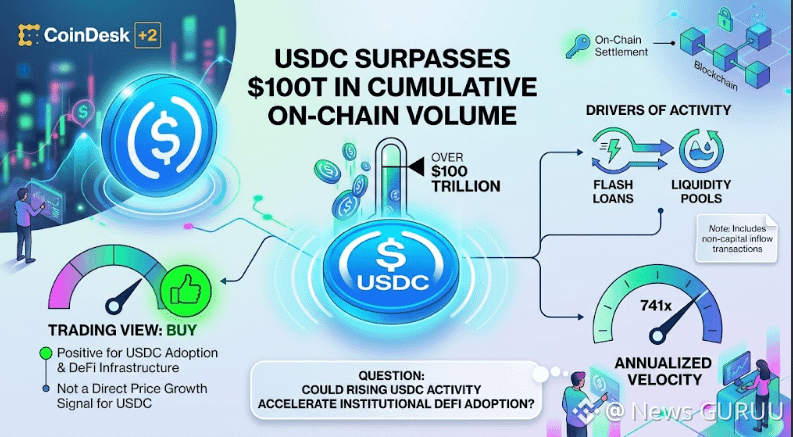
🚨 USDC Surpasses $100T in Cumulative On-Chain Volume
USDC has reportedly crossed $100T in lifetime on-chain transaction volume, highlighting its growing role in DeFi and digital-asset settlement. 🔐
However, much of this activity comes from flash loans and liquidity-pool operations, so it should not be treated as $100T of new capital inflows.
Trading View: BUY 🟢
Positive for USDC adoption and DeFi infrastructure, but not a direct price-growth signal for USDC.
Question: Could rising USDC activity accelerate institutional DeFi adoption? CLICK ON THE BELOW YELLOW COIN TAG TO GO TO DESIRED TRADING PAGE TO GET BENEFIT TRADE"$USDC
#defi
{spot}(USDCUSDT)
#USDCOnChainVolumeTops$100Trillion #USDC
🚨 USDC Surpasses $100T in Cumulative On-Chain Volume
USDC has reportedly crossed $100T in lifetime on-chain transaction volume, highlighting its growing role in DeFi and digital-asset settlement. 🔐
However, much of this activity comes from flash loans and liquidity-pool operations, so it should not be treated as $100T of new capital inflows.
Trading View: BUY 🟢
Positive for USDC adoption and DeFi infrastructure, but not a direct price-growth signal for USDC.
Question: Could rising USDC activity accelerate institutional DeFi adoption? CLICK ON THE BELOW YELLOW COIN TAG TO GO TO DESIRED TRADING PAGE TO GET BENEFIT TRADE"$USDC
#defi
🚨 USDC Surpasses $100T in Cumulative On-Chain Volume
USDC has reportedly crossed $100T in lifetime on-chain transaction volume, highlighting its growing role in DeFi and digital-asset settlement. 🔐
However, much of this activity comes from flash loans and liquidity-pool operations, so it should not be treated as $100T of new capital inflows.
Trading View: BUY 🟢
Positive for USDC adoption and DeFi infrastructure, but not a direct price-growth signal for USDC.
Question: Could rising USDC activity accelerate institutional DeFi adoption? CLICK ON THE BELOW YELLOW COIN TAG TO GO TO DESIRED TRADING PAGE TO GET BENEFIT TRADE"$USDC
#defi
ABO3ZAM:
هذا الرقم يعكس عمق السيولة التشغيلية وليس بالضرورة تدفقات استثمارية مباشرة. كمضاربين، نراقب تمركز الزخم في التمويل اللامركزي، لكن تذكر أن العملات المستقرة أداة تحوط وليست أصلاً للمضاربة السعرية. التزم بإدارة المخاطر الصارمة، ولا تنجرف وراء العناوين الرنانة عند مناطق الرفض السعري.
4
1
61

·
--
Bullish
Aave Is Still One of DeFi’s Strongest Lending Bets
DeFi is not only about trading.
It is also about liquidity, borrowing, lending, collateral, and yield.
That is where Aave remains important.
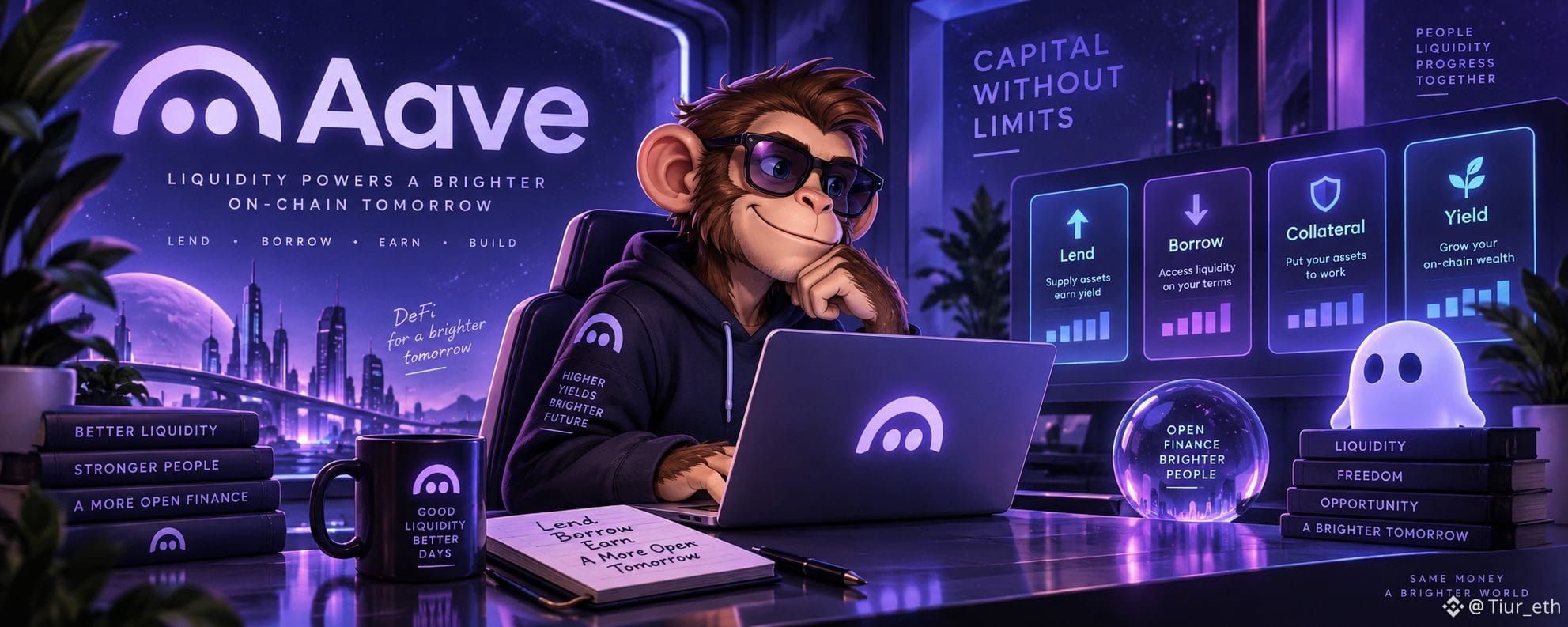
#AAVE is a decentralized non-custodial liquidity protocol where users can supply assets or borrow against collateral.
$AAVE sits inside one of the clearest #defi use cases: open money markets.
This matters because crypto needs financial products that actually work onchain.
Users want to earn.
Borrowers want liquidity.
Builders need deep markets.
Of course, risks remain. DeFi lending depends on risk management, liquidity, collateral quality, and market conditions.
But the thesis is clear.
If onchain finance keeps growing, lending protocols will stay important.
And Aave is still one of the strongest names in that category.
Aave Is Still One of DeFi’s Strongest Lending Bets
DeFi is not only about trading.
It is also about liquidity, borrowing, lending, collateral, and yield.
That is where Aave remains important.
#AAVE is a decentralized non-custodial liquidity protocol where users can supply assets or borrow against collateral.
$AAVE sits inside one of the clearest #defi use cases: open money markets.
This matters because crypto needs financial products that actually work onchain.
Users want to earn.
Borrowers want liquidity.
Builders need deep markets.
Of course, risks remain. DeFi lending depends on risk management, liquidity, collateral quality, and market conditions.
But the thesis is clear.
If onchain finance keeps growing, lending protocols will stay important.
And Aave is still one of the strongest names in that category.
DeFi is not only about trading.
It is also about liquidity, borrowing, lending, collateral, and yield.
That is where Aave remains important.
#AAVE is a decentralized non-custodial liquidity protocol where users can supply assets or borrow against collateral.
$AAVE sits inside one of the clearest #defi use cases: open money markets.
This matters because crypto needs financial products that actually work onchain.
Users want to earn.
Borrowers want liquidity.
Builders need deep markets.
Of course, risks remain. DeFi lending depends on risk management, liquidity, collateral quality, and market conditions.
But the thesis is clear.
If onchain finance keeps growing, lending protocols will stay important.
And Aave is still one of the strongest names in that category.
1
128

{spot}(UNIUSDT)
$UNI Bulls Are Waking Up 👀🦄
UNI is showing a strong recovery setup on the 4H timeframe. Price is trading around $6.63, above the 7, 25 and 99 MA levels, keeping the short-term structure bullish. RSI near 66 confirms healthy momentum, although buyers should watch for overheating near resistance.
The key zone now is $6.80–$6.86. A strong 4H close above this area could push UNI toward $7.20, with the previous swing high around $7.48 becoming the bigger target.
If rejection appears, $6.31 is the first support to watch, while $6.07–$6.20 is the stronger demand area.
Fundamentally, Uniswap is also gaining attention as monthly trading volume recently exceeded $70B, while its fee-and-burn model strengthens the $UNI value-capture story.
Bullish above $6.86. Patience below it.
#UNI #Uniswap #DeFi #Crypto
$UNI Bulls Are Waking Up 👀🦄
UNI is showing a strong recovery setup on the 4H timeframe. Price is trading around $6.63, above the 7, 25 and 99 MA levels, keeping the short-term structure bullish. RSI near 66 confirms healthy momentum, although buyers should watch for overheating near resistance.
The key zone now is $6.80–$6.86. A strong 4H close above this area could push UNI toward $7.20, with the previous swing high around $7.48 becoming the bigger target.
If rejection appears, $6.31 is the first support to watch, while $6.07–$6.20 is the stronger demand area.
Fundamentally, Uniswap is also gaining attention as monthly trading volume recently exceeded $70B, while its fee-and-burn model strengthens the $UNI value-capture story.
Bullish above $6.86. Patience below it.
#UNI #Uniswap #DeFi #Crypto
UNI is showing a strong recovery setup on the 4H timeframe. Price is trading around $6.63, above the 7, 25 and 99 MA levels, keeping the short-term structure bullish. RSI near 66 confirms healthy momentum, although buyers should watch for overheating near resistance.
The key zone now is $6.80–$6.86. A strong 4H close above this area could push UNI toward $7.20, with the previous swing high around $7.48 becoming the bigger target.
If rejection appears, $6.31 is the first support to watch, while $6.07–$6.20 is the stronger demand area.
Fundamentally, Uniswap is also gaining attention as monthly trading volume recently exceeded $70B, while its fee-and-burn model strengthens the $UNI value-capture story.
Bullish above $6.86. Patience below it.
#UNI #Uniswap #DeFi #Crypto

52

·
--
🛡️ DeFi Resilience Upgrade: $AAVE Proposes "Umbrella" Bad Debt Shield! 🌐
Decentralized lending is strengthening its core safety nets! TokenLogic has officially submitted a landmark governance proposal introducing "Umbrella" protection for Aave V4’s flagship WETH, $USDC , and USDT pools. This new risk framework ensures the DAO directly absorbs initial systemic bad debt, with voluntary backstop insurers covering residual risk.
On-chain liquidity metrics show immediate positive sentiment following the news, as institutional traders increasingly prioritize smart contract safety alongside yield. As lending protocols mature into institutional-grade infrastructure, structural risk mitigation continues to set leaders apart from high-risk platforms.
Could this capital safety upgrade fuel the next major rally for $AAVE and broader DeFi blue-chips? Let us know what you think in the comments! 💬👇
#defi #AAVE #CryptoSafety #Ethereum #BinanceSquare
{future}(AAVEUSDT)
🛡️ DeFi Resilience Upgrade: $AAVE Proposes "Umbrella" Bad Debt Shield! 🌐
Decentralized lending is strengthening its core safety nets! TokenLogic has officially submitted a landmark governance proposal introducing "Umbrella" protection for Aave V4’s flagship WETH, $USDC , and USDT pools. This new risk framework ensures the DAO directly absorbs initial systemic bad debt, with voluntary backstop insurers covering residual risk.
On-chain liquidity metrics show immediate positive sentiment following the news, as institutional traders increasingly prioritize smart contract safety alongside yield. As lending protocols mature into institutional-grade infrastructure, structural risk mitigation continues to set leaders apart from high-risk platforms.
Could this capital safety upgrade fuel the next major rally for $AAVE and broader DeFi blue-chips? Let us know what you think in the comments! 💬👇
#defi #AAVE #CryptoSafety #Ethereum #BinanceSquare
Decentralized lending is strengthening its core safety nets! TokenLogic has officially submitted a landmark governance proposal introducing "Umbrella" protection for Aave V4’s flagship WETH, $USDC , and USDT pools. This new risk framework ensures the DAO directly absorbs initial systemic bad debt, with voluntary backstop insurers covering residual risk.
On-chain liquidity metrics show immediate positive sentiment following the news, as institutional traders increasingly prioritize smart contract safety alongside yield. As lending protocols mature into institutional-grade infrastructure, structural risk mitigation continues to set leaders apart from high-risk platforms.
Could this capital safety upgrade fuel the next major rally for $AAVE and broader DeFi blue-chips? Let us know what you think in the comments! 💬👇
#defi #AAVE #CryptoSafety #Ethereum #BinanceSquare
13

🚨 $UNI SAFETY ALERT: ONLY 19% HOOKS ARE CLEAN, 54% MALICIOUS! 🦈
📊 The latest BlockBeats dive into 84k Uniswap v4 Hooks shows a stark split: 19.4% safe, 54.2% outright malicious, 26.4% flagged as suspect. 🧩 This tells a story of hidden order‑flow traps where malicious code can slip through as long as the quote looks optimal.
🔍 Hayden Adams’ reminder to “not route to malicious Hooks” is a rallying cry for developers to lean on the Uniswap API—unlocking cleaner pricing, fee‑free liquidity access, and cross‑chain aggregation. 💡 Are you vetting your routing paths or leaving your capital exposed to silent siphons? 👇
⚠️ Not financial advice. Always manage your risk. 🛡️
🏷️ #UNI #HookSafety #DeFi #Crypto
🔥 💎
🚨 $UNI SAFETY ALERT: ONLY 19% HOOKS ARE CLEAN, 54% MALICIOUS! 🦈
📊 The latest BlockBeats dive into 84k Uniswap v4 Hooks shows a stark split: 19.4% safe, 54.2% outright malicious, 26.4% flagged as suspect. 🧩 This tells a story of hidden order‑flow traps where malicious code can slip through as long as the quote looks optimal.
🔍 Hayden Adams’ reminder to “not route to malicious Hooks” is a rallying cry for developers to lean on the Uniswap API—unlocking cleaner pricing, fee‑free liquidity access, and cross‑chain aggregation. 💡 Are you vetting your routing paths or leaving your capital exposed to silent siphons? 👇
⚠️ Not financial advice. Always manage your risk. 🛡️
🏷️ #UNI #HookSafety #DeFi #Crypto
🔥 💎
📊 The latest BlockBeats dive into 84k Uniswap v4 Hooks shows a stark split: 19.4% safe, 54.2% outright malicious, 26.4% flagged as suspect. 🧩 This tells a story of hidden order‑flow traps where malicious code can slip through as long as the quote looks optimal.
🔍 Hayden Adams’ reminder to “not route to malicious Hooks” is a rallying cry for developers to lean on the Uniswap API—unlocking cleaner pricing, fee‑free liquidity access, and cross‑chain aggregation. 💡 Are you vetting your routing paths or leaving your capital exposed to silent siphons? 👇
⚠️ Not financial advice. Always manage your risk. 🛡️
🏷️ #UNI #HookSafety #DeFi #Crypto
🔥 💎
25
$ETHFI — Ether.fi remains tied to Ethereum staking and DeFi activity, with momentum depending on broader ETH strength.
{spot}(ETHFIUSDT)
$EIGEN — EigenLayer’s ecosystem keeps EIGEN relevant as traders track restaking and Ethereum infrastructure narratives.
{spot}(EIGENUSDT)
$SAFE — Safe remains an important infrastructure token for wallet and account-abstraction discussions, with liquidity worth monitoring.
{future}(SAFEUSDT)
#ETHFI #EIGEN #SAFE #DeFi #CryptoMarket
$ETHFI — Ether.fi remains tied to Ethereum staking and DeFi activity, with momentum depending on broader ETH strength.
$EIGEN — EigenLayer’s ecosystem keeps EIGEN relevant as traders track restaking and Ethereum infrastructure narratives.
$SAFE — Safe remains an important infrastructure token for wallet and account-abstraction discussions, with liquidity worth monitoring.
#ETHFI #EIGEN #SAFE #DeFi #CryptoMarket
$EIGEN — EigenLayer’s ecosystem keeps EIGEN relevant as traders track restaking and Ethereum infrastructure narratives.
$SAFE — Safe remains an important infrastructure token for wallet and account-abstraction discussions, with liquidity worth monitoring.
#ETHFI #EIGEN #SAFE #DeFi #CryptoMarket

140
$GMX -- GMX remains one of the better-known decentralized derivatives tokens, keeping it active during high-volatility sessions.
{spot}(GMXUSDT)
$CAKE — PancakeSwap continues to benefit from BNB Chain activity, while traders watch volume for a possible momentum shift.
{spot}(CAKEUSDT)
$1INCH — 1inch remains linked to DEX liquidity and routing activity, giving traders another DeFi asset to monitor.
{spot}(1INCHUSDT)
#GMX #CAKE #1INCH #DeFi #Trading
$GMX -- GMX remains one of the better-known decentralized derivatives tokens, keeping it active during high-volatility sessions.
$CAKE — PancakeSwap continues to benefit from BNB Chain activity, while traders watch volume for a possible momentum shift.
$1INCH — 1inch remains linked to DEX liquidity and routing activity, giving traders another DeFi asset to monitor.
#GMX #CAKE #1INCH #DeFi #Trading
$CAKE — PancakeSwap continues to benefit from BNB Chain activity, while traders watch volume for a possible momentum shift.
$1INCH — 1inch remains linked to DEX liquidity and routing activity, giving traders another DeFi asset to monitor.
#GMX #CAKE #1INCH #DeFi #Trading

87
$PENDLE — Pendle remains a major yield-focused token, and rising DeFi activity could increase attention toward its price action.
{spot}(PENDLEUSDT)
$LDO — Lido remains one of the key Ethereum staking plays, keeping LDO relevant during periods of stronger ETH activity.
{spot}(LDOUSDT)
$CRV — Curve remains closely tied to DeFi liquidity, making volume changes important for traders looking for momentum.
{spot}(CRVUSDT)
#PENDLE #LDO #CRV #DeFi #CryptoMarket
$PENDLE — Pendle remains a major yield-focused token, and rising DeFi activity could increase attention toward its price action.
$LDO — Lido remains one of the key Ethereum staking plays, keeping LDO relevant during periods of stronger ETH activity.
$CRV — Curve remains closely tied to DeFi liquidity, making volume changes important for traders looking for momentum.
#PENDLE #LDO #CRV #DeFi #CryptoMarket
$LDO — Lido remains one of the key Ethereum staking plays, keeping LDO relevant during periods of stronger ETH activity.
$CRV — Curve remains closely tied to DeFi liquidity, making volume changes important for traders looking for momentum.
#PENDLE #LDO #CRV #DeFi #CryptoMarket

75
$ATOM — Cosmos is showing renewed attention as traders watch whether buyers can push price beyond its current resistance.
{spot}(ATOMUSDT)
$UNI — Uniswap remains closely linked to DeFi activity, keeping UNI relevant whenever decentralized-exchange volumes rise.
{spot}(UNIUSDT)
$AAVE — Aave continues to attract traders as DeFi sentiment improves, with momentum depending heavily on market-wide direction.
{spot}(AAVEUSDT)
#ATOM #UNI #AAVE #DeFi #CryptoTrading
$ATOM — Cosmos is showing renewed attention as traders watch whether buyers can push price beyond its current resistance.
$UNI — Uniswap remains closely linked to DeFi activity, keeping UNI relevant whenever decentralized-exchange volumes rise.
$AAVE — Aave continues to attract traders as DeFi sentiment improves, with momentum depending heavily on market-wide direction.
#ATOM #UNI #AAVE #DeFi #CryptoTrading
$UNI — Uniswap remains closely linked to DeFi activity, keeping UNI relevant whenever decentralized-exchange volumes rise.
$AAVE — Aave continues to attract traders as DeFi sentiment improves, with momentum depending heavily on market-wide direction.
#ATOM #UNI #AAVE #DeFi #CryptoTrading

35
Log in to explore more content
Join global crypto users on Binance Square
⚡️ Get latest and useful information about crypto.
💬 Trusted by the world’s largest crypto exchange.
👍 Discover real insights from verified creators.
Email / Phone number
Trending Topics
1
#FedRateWatch
480,197 views
2,454 Discussing
2
#BitcoinSlidesTo$76000
14,607 views
103 Discussing
3
#BitcoinReboundsTo$79K
59,215 views
394 Discussing
4
#StrategyMarketCapPassesFord
27,438 views
567 Discussing
5
#ClarityActOddsHalveOnPolymarket
36,652 views
457 Discussing
6
#US30YTreasuryYieldTops5.40%
24,700 views
323 Discussing
7
#BessentEndorsesFinalClarityActDraft
47,927 views
690 Discussing
8
#ZamaOpens16ConfidentialMorphoVaults
16,254 views
327 Discussing
9
#USDCOnChainVolumeTops$100Trillion
2,464 views
48 Discussing
10
#BitcoinSpotETFsNetInflow$160M
3,358 views
101 Discussing