
#defi
defi
56.2M views
292,072 Discussing
Hot
Latest

·
--

Article
DeFi Solved Decentralized Money. Here's How Privana Solves Privacy.Crypto has made huge strides in decentralizing money — moving value without banks, borders, or permission. But beyond the basics, decentralized finance (#DeFI ) has its own set of challenges, frustrating many users and generally discouraging wider adoption.
Let me lay out the darkness in bare terms first. Then I'll show you the fix.
DeFi's dark side
#MEV , or maximal extractable value, has been a long-standing pain point in DeFi. In simple terms, it is an invisible tax that even veteran users struggle to escape, while inexperienced users exploring DeFi are easy prey. Some may oversimplify this as bad, but we must remember that the bots that can hurt us are the same ones that also keep DeFi functional. For example, bots get MEV incentives to liquidate bad debt and prevent insolvency of the protocol, or arbitrage bots constantly check and correct pricing across DEXs to prevent fragmented liquidity.
There are some common MEV exploits that every DeFi user needs to know and be wary of.
Sandwich attack - Bots identify a user awaiting a swap, buy the token, push the price up, execute the user’s trade at a lower price, and immediately sell. The user gets fewer tokens out of the deal, but the bot profits.Front-running - Bots identify a pending transaction, copy and submit the same trade with higher gas fees. The bot profits from this queue-jumping as the user misses out on the opportunity of a quick transaction at lower gas fees.Back-running - Bots identify a large trade and immediately execute transactions to take advantage of the favourable arbitrage of the aforementioned trade.
Protection against MEV is possible but optional in the current DeFi scenario. So, if you do not know how to sidestep the MEV minefield, the bots will profit at your expense. Public mempools and an utter lack of #privacy compound the problems in this space. Take the case of Base chain. It has significantly increased its throughput by being faster and cheaper, but bots consume the gas and profits, making it worse for users. Even if you don't use a decentralized exchange (DEX), you still bear the brunt due to higher fees and congested blocks.
Solution: private DeFi
A few protocols have dedicated themselves to solving the blockchain privacy paradox and making web3 a reality. #Oasis has been a pioneer in this regard, aiming for a smart blend of confidentiality and transparency by building an infrastructure that promotes privacy by design. With the confidential smart contract engine in Sapphire and the runtime off-chain logic (ROFL) framework, the protocol is primed to offer an alternative to traditional DeFi through a new application — Privana.
Privana combines Sapphire's production-ready confidential EVM setup and secure enclaves of the trusted execution environments (TEEs) with encrypted mempools, liquefaction, and key encumbrance. It is a consumer-facing, user-friendly private DeFi solution.
Let's look at some details of what Privana brings to the table from a user's point of view, which I think closes the gap that most DEXs leave open.
Unpacking Privana
Privana is not your traditional DEX but a DeFi application that offers private #Swaps , automated yields, and zero MEV for multi-chain operations on Ethereum, Base, and HyperEVM.
The USPs of Privana make it immediately worthy of attention - it is privacy-first, it integrates automation, it enables self-custody, and it is available multi-chain, not just limited to Oasis users.
Privacy-first — Your transactions are TEE-protected, which means they are secure and encrypted without exception. As the transactions never get in the public mempool, the bots cannot identify the trades and therefore cannot target them.Automation — Auto-mode does the execution for you once you set the rules. It involves 3 simple steps.
You send your tokens to the Privana vault, which is a secure enclave.You choose and save your preferences, such as swap conditions, yield settings, and app permissions.Once you approve, you do not need any more manual intervention that usually accompanies actions like swaps, yield allocation, and rebalancing. Since all these activities now run privately in the background, bots never get a chance to target them.
Self-custody — Key encumbrance is a crucial point of difference from others who offer self-custody. Here, your keys are non-extractable, so they cannot be moved outside the TEE protection or be accessed in any way. The policies are user-defined and managed only by you, which means that not even Privana developers can affect anything in the backend.Multi-chain — A recurring complaint among DeFi users is that either they are restricted to a single chain activity or must learn to move tokens across chains manually. This leads to inherent and sometimes unavoidable risks of cross-chain swapping with bridges. The proposed solution envisions a single interface with no bridges or wallet-switching, which makes the user experience easier and seamless.
Here's a quick overview of Privana’s capabilities and what other major protocols offer currently.
Why it matters
Let me make this clear: Privana makes no claim to be the first or only solution to address the long-standing DeFi pain points. Building on the previous graphic, let's compare Privana with some leading DeFi privacy tools like Flashbots, Near Intents, CoW Swap, and Railgun, where everyone offers MEV protection as a common denominator and needs a low- to medium-level of user proficiency.
MEV exploit risk is the bane of every DEX or DEX-like solution. Privana circumvents the problem of public mempools, where on-chain and public transactions are exposed to undercutting by malicious bots, by using encrypted mempools. Also, the problem of the full swap intent being revealed to the operators persists even when the transactions are hidden from the network. A centralized exchange (CEX) offers some respite with internal books, but the lack of self-custody is a huge potential problem there.
DEXes and CEXes only offer partial solutions with trade-offs. MEV protection does not preclude on-chain full transparency. Private swaps do not combine with self-custody and automation. As a result, you can either get cross-chain swaps or privacy-focused swaps, but not both at the same time. This is where Privana comes in. It is designed to be private by default and automated without giving up control, addressing exactly the points that users would like to have but usually miss out on from the prevailing solutions.
What more to expect
Privana's roadmap lays the groundwork for what to expect from this private DeFi solution.
As part of the new strategic direction at Oasis, this flagship dApps uses the protocol's underlying technology and architecture. Here is a first look at the Privana UI. With the closed beta expected soon, you can also enjoy some incentives as an early joiner, such as zero fees for 90 days, Founding Member status, and priority queue at launch.
What then is your take on Privana and private DeFi? What features excite you, and what others would you add to your wish list? Let's discuss in the comments.
DeFi Solved Decentralized Money. Here's How Privana Solves Privacy.
Crypto has made huge strides in decentralizing money — moving value without banks, borders, or permission. But beyond the basics, decentralized finance (#DeFI ) has its own set of challenges, frustrating many users and generally discouraging wider adoption.
Let me lay out the darkness in bare terms first. Then I'll show you the fix.
DeFi's dark side
#MEV , or maximal extractable value, has been a long-standing pain point in DeFi. In simple terms, it is an invisible tax that even veteran users struggle to escape, while inexperienced users exploring DeFi are easy prey. Some may oversimplify this as bad, but we must remember that the bots that can hurt us are the same ones that also keep DeFi functional. For example, bots get MEV incentives to liquidate bad debt and prevent insolvency of the protocol, or arbitrage bots constantly check and correct pricing across DEXs to prevent fragmented liquidity.
There are some common MEV exploits that every DeFi user needs to know and be wary of.
Sandwich attack - Bots identify a user awaiting a swap, buy the token, push the price up, execute the user’s trade at a lower price, and immediately sell. The user gets fewer tokens out of the deal, but the bot profits.Front-running - Bots identify a pending transaction, copy and submit the same trade with higher gas fees. The bot profits from this queue-jumping as the user misses out on the opportunity of a quick transaction at lower gas fees.Back-running - Bots identify a large trade and immediately execute transactions to take advantage of the favourable arbitrage of the aforementioned trade.
Protection against MEV is possible but optional in the current DeFi scenario. So, if you do not know how to sidestep the MEV minefield, the bots will profit at your expense. Public mempools and an utter lack of #privacy compound the problems in this space. Take the case of Base chain. It has significantly increased its throughput by being faster and cheaper, but bots consume the gas and profits, making it worse for users. Even if you don't use a decentralized exchange (DEX), you still bear the brunt due to higher fees and congested blocks.
Solution: private DeFi
A few protocols have dedicated themselves to solving the blockchain privacy paradox and making web3 a reality. #Oasis has been a pioneer in this regard, aiming for a smart blend of confidentiality and transparency by building an infrastructure that promotes privacy by design. With the confidential smart contract engine in Sapphire and the runtime off-chain logic (ROFL) framework, the protocol is primed to offer an alternative to traditional DeFi through a new application — Privana.
Privana combines Sapphire's production-ready confidential EVM setup and secure enclaves of the trusted execution environments (TEEs) with encrypted mempools, liquefaction, and key encumbrance. It is a consumer-facing, user-friendly private DeFi solution.
Let's look at some details of what Privana brings to the table from a user's point of view, which I think closes the gap that most DEXs leave open.
Unpacking Privana
Privana is not your traditional DEX but a DeFi application that offers private #Swaps , automated yields, and zero MEV for multi-chain operations on Ethereum, Base, and HyperEVM.
The USPs of Privana make it immediately worthy of attention - it is privacy-first, it integrates automation, it enables self-custody, and it is available multi-chain, not just limited to Oasis users.
Privacy-first — Your transactions are TEE-protected, which means they are secure and encrypted without exception. As the transactions never get in the public mempool, the bots cannot identify the trades and therefore cannot target them.Automation — Auto-mode does the execution for you once you set the rules. It involves 3 simple steps.
You send your tokens to the Privana vault, which is a secure enclave.You choose and save your preferences, such as swap conditions, yield settings, and app permissions.Once you approve, you do not need any more manual intervention that usually accompanies actions like swaps, yield allocation, and rebalancing. Since all these activities now run privately in the background, bots never get a chance to target them.
Self-custody — Key encumbrance is a crucial point of difference from others who offer self-custody. Here, your keys are non-extractable, so they cannot be moved outside the TEE protection or be accessed in any way. The policies are user-defined and managed only by you, which means that not even Privana developers can affect anything in the backend.Multi-chain — A recurring complaint among DeFi users is that either they are restricted to a single chain activity or must learn to move tokens across chains manually. This leads to inherent and sometimes unavoidable risks of cross-chain swapping with bridges. The proposed solution envisions a single interface with no bridges or wallet-switching, which makes the user experience easier and seamless.
Here's a quick overview of Privana’s capabilities and what other major protocols offer currently.
Why it matters
Let me make this clear: Privana makes no claim to be the first or only solution to address the long-standing DeFi pain points. Building on the previous graphic, let's compare Privana with some leading DeFi privacy tools like Flashbots, Near Intents, CoW Swap, and Railgun, where everyone offers MEV protection as a common denominator and needs a low- to medium-level of user proficiency.
MEV exploit risk is the bane of every DEX or DEX-like solution. Privana circumvents the problem of public mempools, where on-chain and public transactions are exposed to undercutting by malicious bots, by using encrypted mempools. Also, the problem of the full swap intent being revealed to the operators persists even when the transactions are hidden from the network. A centralized exchange (CEX) offers some respite with internal books, but the lack of self-custody is a huge potential problem there.
DEXes and CEXes only offer partial solutions with trade-offs. MEV protection does not preclude on-chain full transparency. Private swaps do not combine with self-custody and automation. As a result, you can either get cross-chain swaps or privacy-focused swaps, but not both at the same time. This is where Privana comes in. It is designed to be private by default and automated without giving up control, addressing exactly the points that users would like to have but usually miss out on from the prevailing solutions.
What more to expect
Privana's roadmap lays the groundwork for what to expect from this private DeFi solution.
As part of the new strategic direction at Oasis, this flagship dApps uses the protocol's underlying technology and architecture. Here is a first look at the Privana UI. With the closed beta expected soon, you can also enjoy some incentives as an early joiner, such as zero fees for 90 days, Founding Member status, and priority queue at launch.
What then is your take on Privana and private DeFi? What features excite you, and what others would you add to your wish list? Let's discuss in the comments.
Let me lay out the darkness in bare terms first. Then I'll show you the fix.
DeFi's dark side
#MEV , or maximal extractable value, has been a long-standing pain point in DeFi. In simple terms, it is an invisible tax that even veteran users struggle to escape, while inexperienced users exploring DeFi are easy prey. Some may oversimplify this as bad, but we must remember that the bots that can hurt us are the same ones that also keep DeFi functional. For example, bots get MEV incentives to liquidate bad debt and prevent insolvency of the protocol, or arbitrage bots constantly check and correct pricing across DEXs to prevent fragmented liquidity.
There are some common MEV exploits that every DeFi user needs to know and be wary of.
Sandwich attack - Bots identify a user awaiting a swap, buy the token, push the price up, execute the user’s trade at a lower price, and immediately sell. The user gets fewer tokens out of the deal, but the bot profits.Front-running - Bots identify a pending transaction, copy and submit the same trade with higher gas fees. The bot profits from this queue-jumping as the user misses out on the opportunity of a quick transaction at lower gas fees.Back-running - Bots identify a large trade and immediately execute transactions to take advantage of the favourable arbitrage of the aforementioned trade.
Protection against MEV is possible but optional in the current DeFi scenario. So, if you do not know how to sidestep the MEV minefield, the bots will profit at your expense. Public mempools and an utter lack of #privacy compound the problems in this space. Take the case of Base chain. It has significantly increased its throughput by being faster and cheaper, but bots consume the gas and profits, making it worse for users. Even if you don't use a decentralized exchange (DEX), you still bear the brunt due to higher fees and congested blocks.
Solution: private DeFi
A few protocols have dedicated themselves to solving the blockchain privacy paradox and making web3 a reality. #Oasis has been a pioneer in this regard, aiming for a smart blend of confidentiality and transparency by building an infrastructure that promotes privacy by design. With the confidential smart contract engine in Sapphire and the runtime off-chain logic (ROFL) framework, the protocol is primed to offer an alternative to traditional DeFi through a new application — Privana.
Privana combines Sapphire's production-ready confidential EVM setup and secure enclaves of the trusted execution environments (TEEs) with encrypted mempools, liquefaction, and key encumbrance. It is a consumer-facing, user-friendly private DeFi solution.
Let's look at some details of what Privana brings to the table from a user's point of view, which I think closes the gap that most DEXs leave open.
Unpacking Privana
Privana is not your traditional DEX but a DeFi application that offers private #Swaps , automated yields, and zero MEV for multi-chain operations on Ethereum, Base, and HyperEVM.
The USPs of Privana make it immediately worthy of attention - it is privacy-first, it integrates automation, it enables self-custody, and it is available multi-chain, not just limited to Oasis users.
Privacy-first — Your transactions are TEE-protected, which means they are secure and encrypted without exception. As the transactions never get in the public mempool, the bots cannot identify the trades and therefore cannot target them.Automation — Auto-mode does the execution for you once you set the rules. It involves 3 simple steps.
You send your tokens to the Privana vault, which is a secure enclave.You choose and save your preferences, such as swap conditions, yield settings, and app permissions.Once you approve, you do not need any more manual intervention that usually accompanies actions like swaps, yield allocation, and rebalancing. Since all these activities now run privately in the background, bots never get a chance to target them.
Self-custody — Key encumbrance is a crucial point of difference from others who offer self-custody. Here, your keys are non-extractable, so they cannot be moved outside the TEE protection or be accessed in any way. The policies are user-defined and managed only by you, which means that not even Privana developers can affect anything in the backend.Multi-chain — A recurring complaint among DeFi users is that either they are restricted to a single chain activity or must learn to move tokens across chains manually. This leads to inherent and sometimes unavoidable risks of cross-chain swapping with bridges. The proposed solution envisions a single interface with no bridges or wallet-switching, which makes the user experience easier and seamless.
Here's a quick overview of Privana’s capabilities and what other major protocols offer currently.
Why it matters
Let me make this clear: Privana makes no claim to be the first or only solution to address the long-standing DeFi pain points. Building on the previous graphic, let's compare Privana with some leading DeFi privacy tools like Flashbots, Near Intents, CoW Swap, and Railgun, where everyone offers MEV protection as a common denominator and needs a low- to medium-level of user proficiency.
MEV exploit risk is the bane of every DEX or DEX-like solution. Privana circumvents the problem of public mempools, where on-chain and public transactions are exposed to undercutting by malicious bots, by using encrypted mempools. Also, the problem of the full swap intent being revealed to the operators persists even when the transactions are hidden from the network. A centralized exchange (CEX) offers some respite with internal books, but the lack of self-custody is a huge potential problem there.
DEXes and CEXes only offer partial solutions with trade-offs. MEV protection does not preclude on-chain full transparency. Private swaps do not combine with self-custody and automation. As a result, you can either get cross-chain swaps or privacy-focused swaps, but not both at the same time. This is where Privana comes in. It is designed to be private by default and automated without giving up control, addressing exactly the points that users would like to have but usually miss out on from the prevailing solutions.
What more to expect
Privana's roadmap lays the groundwork for what to expect from this private DeFi solution.
As part of the new strategic direction at Oasis, this flagship dApps uses the protocol's underlying technology and architecture. Here is a first look at the Privana UI. With the closed beta expected soon, you can also enjoy some incentives as an early joiner, such as zero fees for 90 days, Founding Member status, and priority queue at launch.
What then is your take on Privana and private DeFi? What features excite you, and what others would you add to your wish list? Let's discuss in the comments.
230

🚨 $BAL PROPOSES FULL PROTOCOL SHUTDOWN WITH $9M TREASURY PAYOUT TO HOLDERS! 🏦
DeFi pioneer $BAL is preparing for an orderly wind-down, with a Snapshot vote set for September 25 to liquidate protocol operations. 📊 The DAO treasury holds over $9 million in assets, which will be distributed proportionally to token holders who burn their $BAL .
Pausable pools flip to withdrawal-only on October 30 as protocol expansion freezes permanently. 🛡️ Smart capital is already calculating the arbitrage math on the treasury payout versus circulating valuation.
💬 Will you hold $BAL to claim the treasury liquidation, or dump on the governance news? 👇
⚠️ Not financial advice. Always manage your risk. 🛡️
🏷️ #BAL #DeFi #Crypto #Altcoins
⚖️ 📥
🚨 $BAL PROPOSES FULL PROTOCOL SHUTDOWN WITH $9M TREASURY PAYOUT TO HOLDERS! 🏦
DeFi pioneer $BAL is preparing for an orderly wind-down, with a Snapshot vote set for September 25 to liquidate protocol operations. 📊 The DAO treasury holds over $9 million in assets, which will be distributed proportionally to token holders who burn their $BAL .
Pausable pools flip to withdrawal-only on October 30 as protocol expansion freezes permanently. 🛡️ Smart capital is already calculating the arbitrage math on the treasury payout versus circulating valuation.
💬 Will you hold $BAL to claim the treasury liquidation, or dump on the governance news? 👇
⚠️ Not financial advice. Always manage your risk. 🛡️
🏷️ #BAL #DeFi #Crypto #Altcoins
⚖️ 📥
DeFi pioneer $BAL is preparing for an orderly wind-down, with a Snapshot vote set for September 25 to liquidate protocol operations. 📊 The DAO treasury holds over $9 million in assets, which will be distributed proportionally to token holders who burn their $BAL .
Pausable pools flip to withdrawal-only on October 30 as protocol expansion freezes permanently. 🛡️ Smart capital is already calculating the arbitrage math on the treasury payout versus circulating valuation.
💬 Will you hold $BAL to claim the treasury liquidation, or dump on the governance news? 👇
⚠️ Not financial advice. Always manage your risk. 🛡️
🏷️ #BAL #DeFi #Crypto #Altcoins
⚖️ 📥
6

🚨 PROPOSED $BAL WIND-DOWN PLAN UNVEILS PROTOCOL DISSOLUTION AND TREASURY LIQUIDATION ⚠️
Institutional governance shifts into finality as $BAL evaluates a complete protocol wind-down proposal ahead of the late September Snapshot vote. 📊 If approved, pausable pools transition to withdrawal-only mode by late October, effectively halting active liquidity expansion and zeroing protocol fees.
With treasury reserves estimated around $9 million, the DAO outlines a long-term liquidation framework distributing assets directly to $BAL holders via token burn mechanisms spanning into 2027. ⚖️ Smart money is already assessing whether the current market cap accurately reflects the net redeemable asset value post-exit budget.
💬 Will you hold $BAL for the treasury asset redemption or exit ahead of the governance vote? 👇
⚠️ Not financial advice. Always manage your risk. 🛡️
🏷️ #BAL #DeFi #Governance #Crypto
⚖️ 📌
🚨 PROPOSED $BAL WIND-DOWN PLAN UNVEILS PROTOCOL DISSOLUTION AND TREASURY LIQUIDATION ⚠️
Institutional governance shifts into finality as $BAL evaluates a complete protocol wind-down proposal ahead of the late September Snapshot vote. 📊 If approved, pausable pools transition to withdrawal-only mode by late October, effectively halting active liquidity expansion and zeroing protocol fees.
With treasury reserves estimated around $9 million, the DAO outlines a long-term liquidation framework distributing assets directly to $BAL holders via token burn mechanisms spanning into 2027. ⚖️ Smart money is already assessing whether the current market cap accurately reflects the net redeemable asset value post-exit budget.
💬 Will you hold $BAL for the treasury asset redemption or exit ahead of the governance vote? 👇
⚠️ Not financial advice. Always manage your risk. 🛡️
🏷️ #BAL #DeFi #Governance #Crypto
⚖️ 📌
Institutional governance shifts into finality as $BAL evaluates a complete protocol wind-down proposal ahead of the late September Snapshot vote. 📊 If approved, pausable pools transition to withdrawal-only mode by late October, effectively halting active liquidity expansion and zeroing protocol fees.
With treasury reserves estimated around $9 million, the DAO outlines a long-term liquidation framework distributing assets directly to $BAL holders via token burn mechanisms spanning into 2027. ⚖️ Smart money is already assessing whether the current market cap accurately reflects the net redeemable asset value post-exit budget.
💬 Will you hold $BAL for the treasury asset redemption or exit ahead of the governance vote? 👇
⚠️ Not financial advice. Always manage your risk. 🛡️
🏷️ #BAL #DeFi #Governance #Crypto
⚖️ 📌
6

·
--
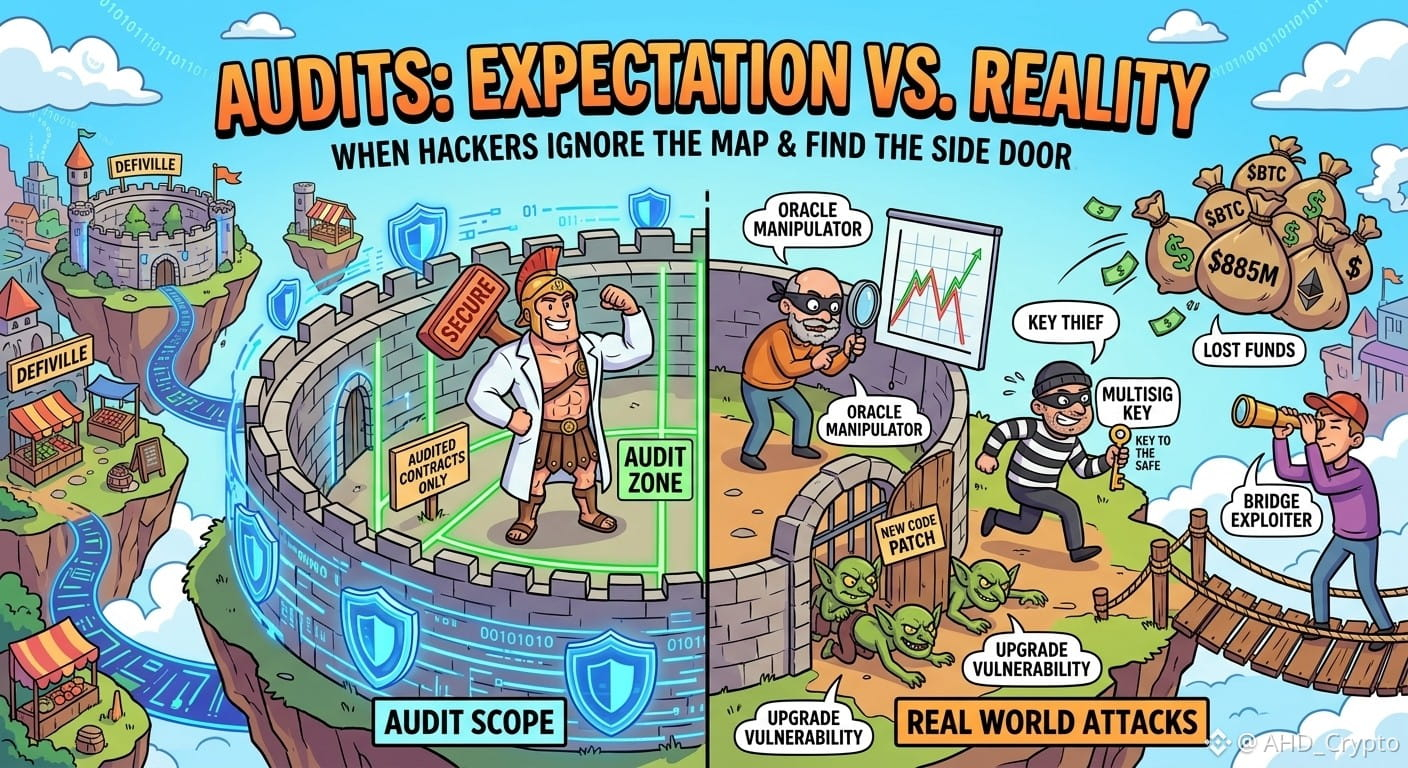
Audited ≠ Bulletproof: Why $885M Was Lost Outside DeFi Audit Scopes 🚨
A common misconception in Web3 is that an "Audited" tag equals 100% security. Recent industry data reveals a harsh truth: audited $DEFI protocols lost over $885 million to security breaches—and the vast majority of these exploits occurred completely outside their audit scopes.
Here is what every investor, trader, and yield farmer needs to understand to stay safe in $BTC,$ETH, and altcoin ecosystems.
{future}(ETHUSDT)
{future}(BTCUSDT)
🔍 The "Scope Gap" Explained
When a project hires a security firm, the audit only covers specific lines of code, specific contract versions, and defined parameters at a single point in time.
Hackers aren't wasting time attacking heavily audited smart contract cores. Instead, they target the un-audited "edges":
Integration Layers: Connecting to external lending pools, bridges, or liquidity venues without auditing the interaction logic.
Admin & Multisig Keys: Compromising private keys or off-chain verifiers holding protocol authority (e.g., major exploits involving $SOL and $ETH-based protocols).
{future}(SOLUSDT)
Oracle Dependencies & Relayers: Manipulating price feeds or off-chain RPC nodes that feed data into audited contracts.
Post-Audit Code Updates: Upgrading a contract after the initial audit without getting the new deployment re-certified.
⚠️ What This Means for Users & Traders
An audit badge is a baseline requirement, not a total safety guarantee. When evaluating a protocol before depositing funds:
Check the Scope: Read the audit report summary. Does it cover the entire protocol or just a single $BNB or$ETH smart contract?
Watch the Multisig: Who holds the keys? If 3 out of 5 signers get phished, the audit won't save your funds.
Monitor Upgrades: Check if the team frequently pushes un-audited proxy updates or governance changes.
#writetoearn #defi #CryptoSecurity #Write2Earn #Web3
Audited ≠ Bulletproof: Why $885M Was Lost Outside DeFi Audit Scopes 🚨
A common misconception in Web3 is that an "Audited" tag equals 100% security. Recent industry data reveals a harsh truth: audited $DEFI protocols lost over $885 million to security breaches—and the vast majority of these exploits occurred completely outside their audit scopes.
Here is what every investor, trader, and yield farmer needs to understand to stay safe in $BTC,$ETH, and altcoin ecosystems.
🔍 The "Scope Gap" Explained
When a project hires a security firm, the audit only covers specific lines of code, specific contract versions, and defined parameters at a single point in time.
Hackers aren't wasting time attacking heavily audited smart contract cores. Instead, they target the un-audited "edges":
Integration Layers: Connecting to external lending pools, bridges, or liquidity venues without auditing the interaction logic.
Admin & Multisig Keys: Compromising private keys or off-chain verifiers holding protocol authority (e.g., major exploits involving $SOL and $ETH-based protocols).
Oracle Dependencies & Relayers: Manipulating price feeds or off-chain RPC nodes that feed data into audited contracts.
Post-Audit Code Updates: Upgrading a contract after the initial audit without getting the new deployment re-certified.
⚠️ What This Means for Users & Traders
An audit badge is a baseline requirement, not a total safety guarantee. When evaluating a protocol before depositing funds:
Check the Scope: Read the audit report summary. Does it cover the entire protocol or just a single $BNB or$ETH smart contract?
Watch the Multisig: Who holds the keys? If 3 out of 5 signers get phished, the audit won't save your funds.
Monitor Upgrades: Check if the team frequently pushes un-audited proxy updates or governance changes.
#writetoearn #defi #CryptoSecurity #Write2Earn #Web3
A common misconception in Web3 is that an "Audited" tag equals 100% security. Recent industry data reveals a harsh truth: audited $DEFI protocols lost over $885 million to security breaches—and the vast majority of these exploits occurred completely outside their audit scopes.
Here is what every investor, trader, and yield farmer needs to understand to stay safe in $BTC,$ETH, and altcoin ecosystems.
🔍 The "Scope Gap" Explained
When a project hires a security firm, the audit only covers specific lines of code, specific contract versions, and defined parameters at a single point in time.
Hackers aren't wasting time attacking heavily audited smart contract cores. Instead, they target the un-audited "edges":
Integration Layers: Connecting to external lending pools, bridges, or liquidity venues without auditing the interaction logic.
Admin & Multisig Keys: Compromising private keys or off-chain verifiers holding protocol authority (e.g., major exploits involving $SOL and $ETH-based protocols).
Oracle Dependencies & Relayers: Manipulating price feeds or off-chain RPC nodes that feed data into audited contracts.
Post-Audit Code Updates: Upgrading a contract after the initial audit without getting the new deployment re-certified.
⚠️ What This Means for Users & Traders
An audit badge is a baseline requirement, not a total safety guarantee. When evaluating a protocol before depositing funds:
Check the Scope: Read the audit report summary. Does it cover the entire protocol or just a single $BNB or$ETH smart contract?
Watch the Multisig: Who holds the keys? If 3 out of 5 signers get phished, the audit won't save your funds.
Monitor Upgrades: Check if the team frequently pushes un-audited proxy updates or governance changes.
#writetoearn #defi #CryptoSecurity #Write2Earn #Web3
55

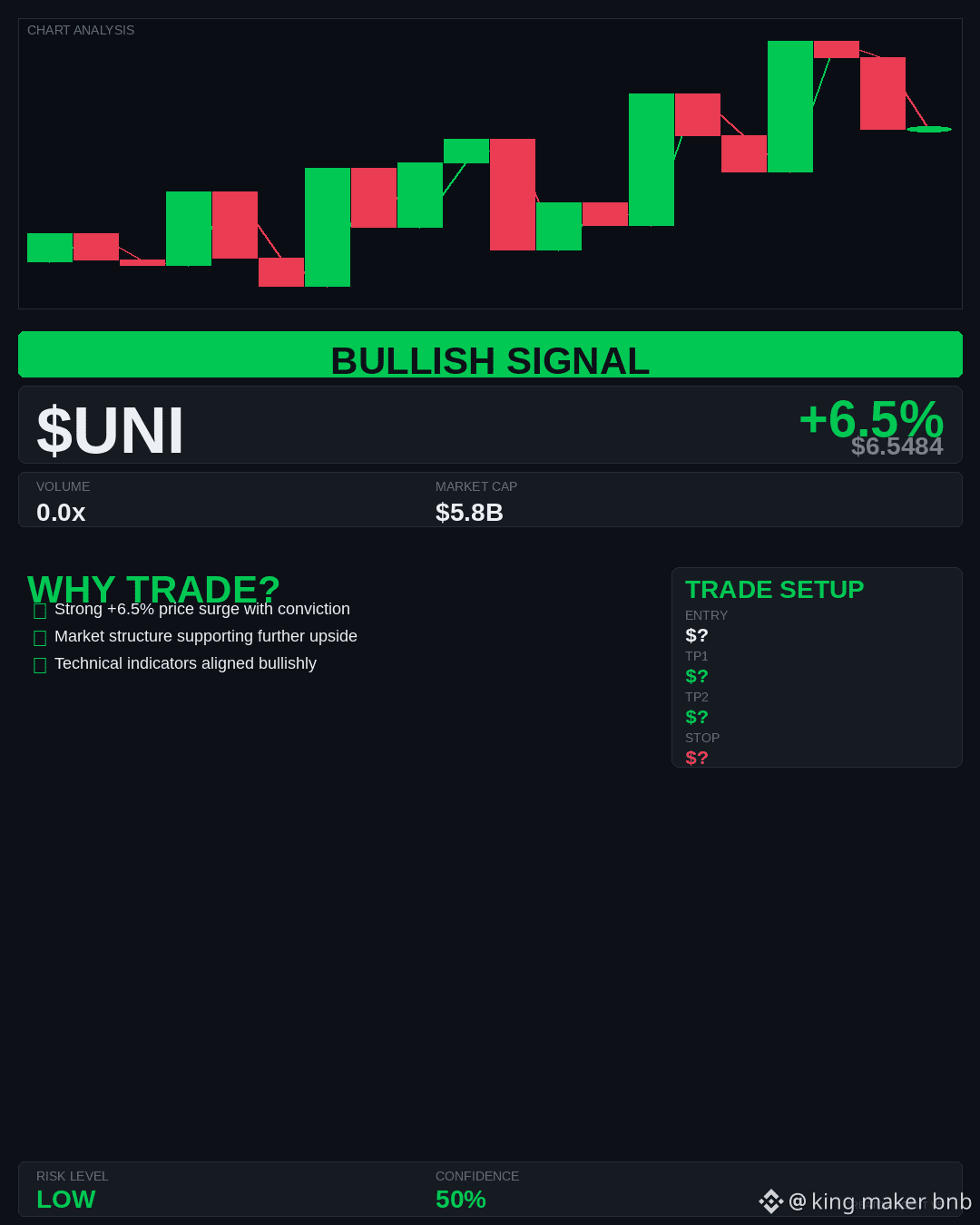
$UNI finally pushing hard, up +6.5% and catching eyes. 🔥
DeFi sector looking primed, this could be the start of something bigger.
I'm eyeing an entry around $6.45-$6.55 on a retest. Targets are $6.75 and then $7.00. Cut it if $UNI breaks below $6.30. This move has conviction with strong momentum and the DeFi narrative is gaining serious Binance Square attention. Plus, KOLs are holding a decent chunk. Just remember volume is thin, so slippage can be real. Watch that volume closely though, sustainability is everything here.
#UNI #Write2Earn #DeFi #CryptoTrading
$UNI finally pushing hard, up +6.5% and catching eyes. 🔥
DeFi sector looking primed, this could be the start of something bigger.
I'm eyeing an entry around $6.45-$6.55 on a retest. Targets are $6.75 and then $7.00. Cut it if $UNI breaks below $6.30. This move has conviction with strong momentum and the DeFi narrative is gaining serious Binance Square attention. Plus, KOLs are holding a decent chunk. Just remember volume is thin, so slippage can be real. Watch that volume closely though, sustainability is everything here.
#UNI #Write2Earn #DeFi #CryptoTrading
DeFi sector looking primed, this could be the start of something bigger.
I'm eyeing an entry around $6.45-$6.55 on a retest. Targets are $6.75 and then $7.00. Cut it if $UNI breaks below $6.30. This move has conviction with strong momentum and the DeFi narrative is gaining serious Binance Square attention. Plus, KOLs are holding a decent chunk. Just remember volume is thin, so slippage can be real. Watch that volume closely though, sustainability is everything here.
#UNI #Write2Earn #DeFi #CryptoTrading
1
63

·
--
$PYTH
{future}(PYTHUSDT)
PYTH is a decentralized oracle network designed to provide market data to blockchain applications.
Reliable data is essential for DeFi protocols, trading platforms, and other on-chain applications. This makes oracle infrastructure an important part of the wider blockchain ecosystem.
#PYTH #Oracle #Solana #DeFi #BinanceSquare
$PYTH
PYTH is a decentralized oracle network designed to provide market data to blockchain applications.
Reliable data is essential for DeFi protocols, trading platforms, and other on-chain applications. This makes oracle infrastructure an important part of the wider blockchain ecosystem.
#PYTH #Oracle #Solana #DeFi #BinanceSquare
PYTH is a decentralized oracle network designed to provide market data to blockchain applications.
Reliable data is essential for DeFi protocols, trading platforms, and other on-chain applications. This makes oracle infrastructure an important part of the wider blockchain ecosystem.
#PYTH #Oracle #Solana #DeFi #BinanceSquare
39
·
--
$INJ
{future}(INJUSDT)
Injective is a blockchain focused heavily on decentralized finance and financial applications. Its infrastructure is designed for developers building trading and financial products on-chain.
As decentralized markets continue evolving, infrastructure designed specifically for financial applications could remain an important crypto narrative.
#INJ #Injective #DeFi #BinanceSquare
$INJ
Injective is a blockchain focused heavily on decentralized finance and financial applications. Its infrastructure is designed for developers building trading and financial products on-chain.
As decentralized markets continue evolving, infrastructure designed specifically for financial applications could remain an important crypto narrative.
#INJ #Injective #DeFi #BinanceSquare
Injective is a blockchain focused heavily on decentralized finance and financial applications. Its infrastructure is designed for developers building trading and financial products on-chain.
As decentralized markets continue evolving, infrastructure designed specifically for financial applications could remain an important crypto narrative.
#INJ #Injective #DeFi #BinanceSquare
70
·
--
$AAVE
{future}(AAVEUSDT)
AAVE is one of the best-known names in decentralized lending. The protocol allows users to interact with crypto lending markets without relying on a traditional bank.
Its long-standing position in DeFi makes AAVE an important project to monitor whenever lending, liquidity, and decentralized finance become major market narratives.
#AAVE #DeFi #Crypto #BinanceSquare
$AAVE
AAVE is one of the best-known names in decentralized lending. The protocol allows users to interact with crypto lending markets without relying on a traditional bank.
Its long-standing position in DeFi makes AAVE an important project to monitor whenever lending, liquidity, and decentralized finance become major market narratives.
#AAVE #DeFi #Crypto #BinanceSquare
AAVE is one of the best-known names in decentralized lending. The protocol allows users to interact with crypto lending markets without relying on a traditional bank.
Its long-standing position in DeFi makes AAVE an important project to monitor whenever lending, liquidity, and decentralized finance become major market narratives.
#AAVE #DeFi #Crypto #BinanceSquare
49

·
--
DeFi's Yield Evolution: From Emissions to Revenue
The first era of DeFi was built on a lie we all agreed to believe. Protocols printed governance tokens, distributed them to liquidity providers, and called it "yield." It wasn't yield — it was dilution dressed up as income. The protocol was paying you in its own increasingly worthless tokens to compensate for the fact that the economics didn't actually work yet.
That era is ending, and the replacement is far more interesting.
Real yield changes everything. When a protocol distributes actual fee revenue to token stakers, the math has to close. You can't inflate your way to sustainability. Protocols either generate genuine economic activity or they don't. The market can now distinguish between a protocol earning $50M in fees and one distributing $50M in printed tokens.
This separation creates a new valuation framework. Fee-to-FDV becomes the P/E ratio of crypto. Protocols with real revenue trade at premiums. Protocols surviving on emissions trade at discounts. The market is finally pricing what matters — productive capacity, not narrative potential.
The implications compound. Institutional allocators who couldn't justify exposure to "yield farming" can underwrite fee-sharing models. Treasury allocations shift from speculative bets to income-generating positions. The entire risk-adjusted return calculation changes when yield comes from economic activity rather than token emission.
$ETH $SOL $BNB
#DeFi #RealYield #CryptoMarkets #OnchainEconomy
DeFi's Yield Evolution: From Emissions to Revenue
The first era of DeFi was built on a lie we all agreed to believe. Protocols printed governance tokens, distributed them to liquidity providers, and called it "yield." It wasn't yield — it was dilution dressed up as income. The protocol was paying you in its own increasingly worthless tokens to compensate for the fact that the economics didn't actually work yet.
That era is ending, and the replacement is far more interesting.
Real yield changes everything. When a protocol distributes actual fee revenue to token stakers, the math has to close. You can't inflate your way to sustainability. Protocols either generate genuine economic activity or they don't. The market can now distinguish between a protocol earning $50M in fees and one distributing $50M in printed tokens.
This separation creates a new valuation framework. Fee-to-FDV becomes the P/E ratio of crypto. Protocols with real revenue trade at premiums. Protocols surviving on emissions trade at discounts. The market is finally pricing what matters — productive capacity, not narrative potential.
The implications compound. Institutional allocators who couldn't justify exposure to "yield farming" can underwrite fee-sharing models. Treasury allocations shift from speculative bets to income-generating positions. The entire risk-adjusted return calculation changes when yield comes from economic activity rather than token emission.
$ETH $SOL $BNB
#DeFi #RealYield #CryptoMarkets #OnchainEconomy
The first era of DeFi was built on a lie we all agreed to believe. Protocols printed governance tokens, distributed them to liquidity providers, and called it "yield." It wasn't yield — it was dilution dressed up as income. The protocol was paying you in its own increasingly worthless tokens to compensate for the fact that the economics didn't actually work yet.
That era is ending, and the replacement is far more interesting.
Real yield changes everything. When a protocol distributes actual fee revenue to token stakers, the math has to close. You can't inflate your way to sustainability. Protocols either generate genuine economic activity or they don't. The market can now distinguish between a protocol earning $50M in fees and one distributing $50M in printed tokens.
This separation creates a new valuation framework. Fee-to-FDV becomes the P/E ratio of crypto. Protocols with real revenue trade at premiums. Protocols surviving on emissions trade at discounts. The market is finally pricing what matters — productive capacity, not narrative potential.
The implications compound. Institutional allocators who couldn't justify exposure to "yield farming" can underwrite fee-sharing models. Treasury allocations shift from speculative bets to income-generating positions. The entire risk-adjusted return calculation changes when yield comes from economic activity rather than token emission.
$ETH $SOL $BNB
#DeFi #RealYield #CryptoMarkets #OnchainEconomy
121
·
--
$MORPHO
{future}(MORPHOUSDT)
Morpho is a DeFi lending protocol designed to improve how lending markets operate. Its technology focuses on creating efficient lending and borrowing infrastructure for blockchain users.
DeFi lending remains an important part of the crypto ecosystem, and projects improving capital efficiency can attract strong community interest.
#MORPHO #DeFi #Crypto #BinanceSquare
$MORPHO
Morpho is a DeFi lending protocol designed to improve how lending markets operate. Its technology focuses on creating efficient lending and borrowing infrastructure for blockchain users.
DeFi lending remains an important part of the crypto ecosystem, and projects improving capital efficiency can attract strong community interest.
#MORPHO #DeFi #Crypto #BinanceSquare
Morpho is a DeFi lending protocol designed to improve how lending markets operate. Its technology focuses on creating efficient lending and borrowing infrastructure for blockchain users.
DeFi lending remains an important part of the crypto ecosystem, and projects improving capital efficiency can attract strong community interest.
#MORPHO #DeFi #Crypto #BinanceSquare
77
·
--
$ENA
{future}(ENAUSDT)
ENA is one of the notable projects in the Ethereum-based DeFi sector. Its ecosystem focuses on creating new ways to use digital dollars and blockchain-based financial products.
The project gets attention because stablecoin infrastructure remains an important part of crypto. ENA is worth watching as the DeFi and digital-dollar narratives continue developing.
#ENA #DeFi #Ethereum #BinanceSquare
$ENA
ENA is one of the notable projects in the Ethereum-based DeFi sector. Its ecosystem focuses on creating new ways to use digital dollars and blockchain-based financial products.
The project gets attention because stablecoin infrastructure remains an important part of crypto. ENA is worth watching as the DeFi and digital-dollar narratives continue developing.
#ENA #DeFi #Ethereum #BinanceSquare
ENA is one of the notable projects in the Ethereum-based DeFi sector. Its ecosystem focuses on creating new ways to use digital dollars and blockchain-based financial products.
The project gets attention because stablecoin infrastructure remains an important part of crypto. ENA is worth watching as the DeFi and digital-dollar narratives continue developing.
#ENA #DeFi #Ethereum #BinanceSquare
181

$BNB 🔒 🤖Protocol Security & Smart Contract Audits: What You Need to Know! ⚠️
Security is everything in Web3. Recently, DeFi protocol Term Finance suffered an $8.5M exploit via governance manipulation. While code audits are essential for finding vulnerabilities, it's important to understand what they actually protect against—and what they might leave exposed.
Always check protocol safety, DYOR, and understand the risks before interacting with new smart contracts!
💡 Quick Tip: Never invest all your capital into unproven protocols. Stick to security best practices and verified platforms.
Have you ever checked a protocol's audit report before using it? Let me know your thoughts below! 👇
#CryptoSecurityAlert #DeFi #BinanceSquareFamily
{spot}(BNBUSDT)
#Write2Earn
$BNB 🔒 🤖Protocol Security & Smart Contract Audits: What You Need to Know! ⚠️
Security is everything in Web3. Recently, DeFi protocol Term Finance suffered an $8.5M exploit via governance manipulation. While code audits are essential for finding vulnerabilities, it's important to understand what they actually protect against—and what they might leave exposed.
Always check protocol safety, DYOR, and understand the risks before interacting with new smart contracts!
💡 Quick Tip: Never invest all your capital into unproven protocols. Stick to security best practices and verified platforms.
Have you ever checked a protocol's audit report before using it? Let me know your thoughts below! 👇
#CryptoSecurityAlert #DeFi #BinanceSquareFamily
#Write2Earn
Security is everything in Web3. Recently, DeFi protocol Term Finance suffered an $8.5M exploit via governance manipulation. While code audits are essential for finding vulnerabilities, it's important to understand what they actually protect against—and what they might leave exposed.
Always check protocol safety, DYOR, and understand the risks before interacting with new smart contracts!
💡 Quick Tip: Never invest all your capital into unproven protocols. Stick to security best practices and verified platforms.
Have you ever checked a protocol's audit report before using it? Let me know your thoughts below! 👇
#CryptoSecurityAlert #DeFi #BinanceSquareFamily
#Write2Earn
64




·
--
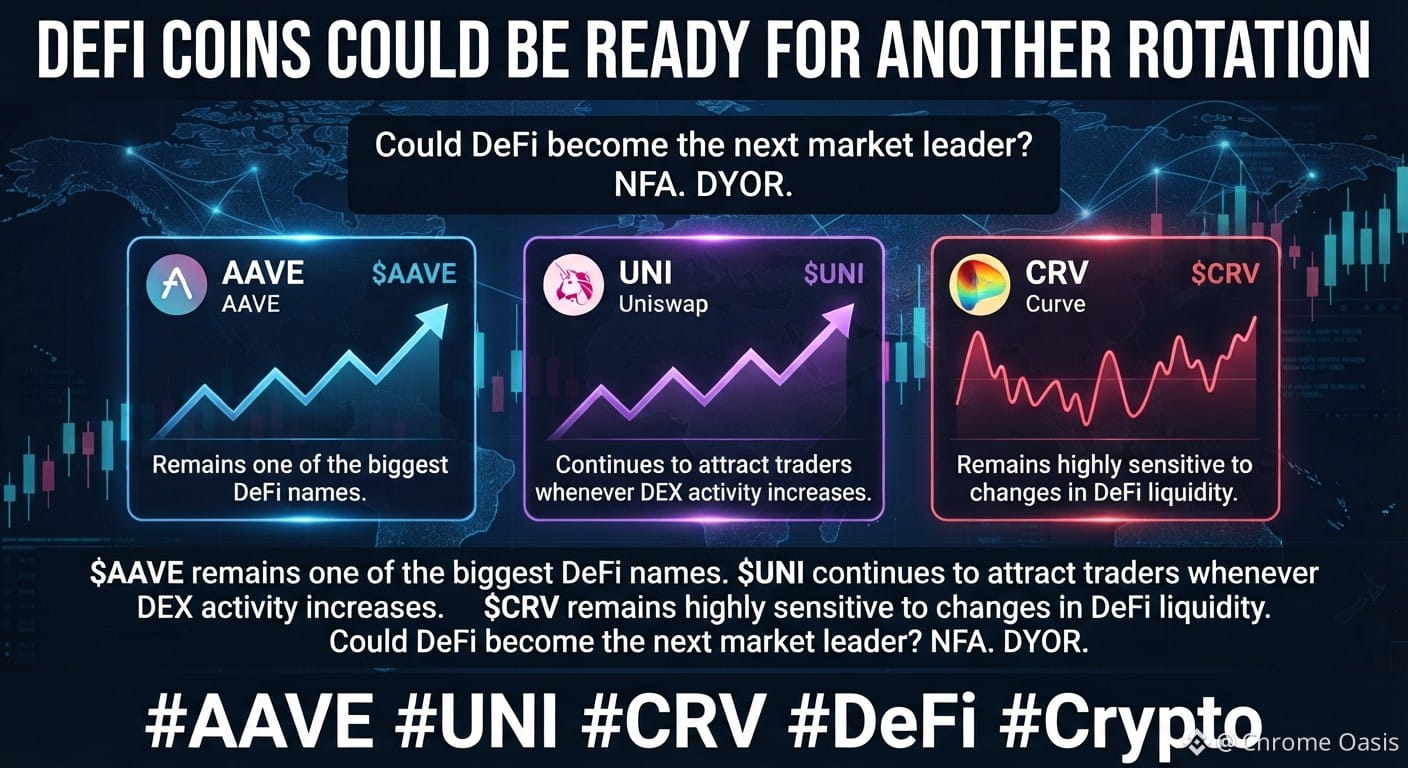
The most misunderstood dynamic in crypto isn't about which chain has the best tech. It's about liquidity gravity — the principle that capital doesn't just fragment across chains, it orbits the deepest pools.
When a DEX on one chain offers $50M in concentrated liquidity, it doesn't just attract traders. It attracts market makers who provide more liquidity, which attracts arbitrageurs who tighten spreads, which attracts yield farmers who deploy capital, which attracts protocols building on top. The gravity well compounds.
This is why cross-chain bridges keep failing to solve fragmentation. Moving tokens across chains is solved. Moving depth across chains is not. A $100M bridge transfer doesn't create $100M of liquid market depth on the destination — it creates a temporary imbalance that flows back to the gravity well.
The implication for investors is counterintuitive: chains with the deepest existing liquidity have an unfair advantage that compounds over time. New chains launching with incentives are renting liquidity. Chains where liquidity organically deepened are owning it.
Watch where market makers actually deploy capital — not where incentivized programs temporarily pull it. The difference between rented and owned liquidity is the difference between a launchpad and a home.
$ETH $SOL $BNB
#CrossChain #DeFi #Liquidity #CryptoMarkets #Web3
The most misunderstood dynamic in crypto isn't about which chain has the best tech. It's about liquidity gravity — the principle that capital doesn't just fragment across chains, it orbits the deepest pools.
When a DEX on one chain offers $50M in concentrated liquidity, it doesn't just attract traders. It attracts market makers who provide more liquidity, which attracts arbitrageurs who tighten spreads, which attracts yield farmers who deploy capital, which attracts protocols building on top. The gravity well compounds.
This is why cross-chain bridges keep failing to solve fragmentation. Moving tokens across chains is solved. Moving depth across chains is not. A $100M bridge transfer doesn't create $100M of liquid market depth on the destination — it creates a temporary imbalance that flows back to the gravity well.
The implication for investors is counterintuitive: chains with the deepest existing liquidity have an unfair advantage that compounds over time. New chains launching with incentives are renting liquidity. Chains where liquidity organically deepened are owning it.
Watch where market makers actually deploy capital — not where incentivized programs temporarily pull it. The difference between rented and owned liquidity is the difference between a launchpad and a home.
$ETH $SOL $BNB
#CrossChain #DeFi #Liquidity #CryptoMarkets #Web3
When a DEX on one chain offers $50M in concentrated liquidity, it doesn't just attract traders. It attracts market makers who provide more liquidity, which attracts arbitrageurs who tighten spreads, which attracts yield farmers who deploy capital, which attracts protocols building on top. The gravity well compounds.
This is why cross-chain bridges keep failing to solve fragmentation. Moving tokens across chains is solved. Moving depth across chains is not. A $100M bridge transfer doesn't create $100M of liquid market depth on the destination — it creates a temporary imbalance that flows back to the gravity well.
The implication for investors is counterintuitive: chains with the deepest existing liquidity have an unfair advantage that compounds over time. New chains launching with incentives are renting liquidity. Chains where liquidity organically deepened are owning it.
Watch where market makers actually deploy capital — not where incentivized programs temporarily pull it. The difference between rented and owned liquidity is the difference between a launchpad and a home.
$ETH $SOL $BNB
#CrossChain #DeFi #Liquidity #CryptoMarkets #Web3
66

Standard Chartered calling Sky the 'DeFi federal bank' is a massive institutional nod. Predicting a 5x move by 2028 shows traditional finance is finally grasping the scale of decentralized credit models. $SKY #DeFi #StandardChartered #CryptoAnalysis
Standard Chartered calling Sky the 'DeFi federal bank' is a massive institutional nod. Predicting a 5x move by 2028 shows traditional finance is finally grasping the scale of decentralized credit models. $SKY #DeFi #StandardChartered #CryptoAnalysis
58

·
--
Why DeFi traders keep their eyes locked on $INJ 📉📈
High-speed order books, zero gas fees on transactions, and native burn auctions make Injective one of the most mechanically sound financial blockchains built for derivatives and spot markets.
When on-chain perpetual trading volumes spike, dedicated financial chains gain massive traction.
Have you tested on-chain trading on $INJ ? Tell me your experience below! 🪙
#injective #DeFi #tradingStrategy
Why DeFi traders keep their eyes locked on $INJ 📉📈
High-speed order books, zero gas fees on transactions, and native burn auctions make Injective one of the most mechanically sound financial blockchains built for derivatives and spot markets.
When on-chain perpetual trading volumes spike, dedicated financial chains gain massive traction.
Have you tested on-chain trading on $INJ ? Tell me your experience below! 🪙
#injective #DeFi #tradingStrategy
High-speed order books, zero gas fees on transactions, and native burn auctions make Injective one of the most mechanically sound financial blockchains built for derivatives and spot markets.
When on-chain perpetual trading volumes spike, dedicated financial chains gain massive traction.
Have you tested on-chain trading on $INJ ? Tell me your experience below! 🪙
#injective #DeFi #tradingStrategy
30

$WOO — WOO Network remains an active trading-focused token, with liquidity and exchange activity central to its narrative.
{spot}(WOOUSDT)
$SUSHI — SushiSwap remains a recognizable DeFi token, with traders watching whether renewed DEX activity can bring stronger momentum.
{spot}(SUSHIUSDT)
$BAL — Balancer remains an established DeFi protocol token, with liquidity conditions influencing its trading setup.
#WOO #SUSHI #BAL #DeFi #Trading
$WOO — WOO Network remains an active trading-focused token, with liquidity and exchange activity central to its narrative.
$SUSHI — SushiSwap remains a recognizable DeFi token, with traders watching whether renewed DEX activity can bring stronger momentum.
$BAL — Balancer remains an established DeFi protocol token, with liquidity conditions influencing its trading setup.
#WOO #SUSHI #BAL #DeFi #Trading
$SUSHI — SushiSwap remains a recognizable DeFi token, with traders watching whether renewed DEX activity can bring stronger momentum.
$BAL — Balancer remains an established DeFi protocol token, with liquidity conditions influencing its trading setup.
#WOO #SUSHI #BAL #DeFi #Trading

50
Log in to explore more content
Join global crypto users on Binance Square
⚡️ Get latest and useful information about crypto.
💬 Trusted by the world’s largest crypto exchange.
👍 Discover real insights from verified creators.
Email / Phone number
Trending Topics
1
#BitcoinReboundsTo$79K
7,260 views
84 Discussing
2
#GrayscalePutsXRPAt26.11%InAdvisorPortfolio
0 views
3 Discussing
3
#PhiladelphiaSemiconductorIndexFalls5.9%
0 views
2 Discussing
4
#SECChairUrgesCongressToAdvanceClarityAct
1 views
6 Discussing
5
#FedHikeOddsRiseTo89%
70,091 views
995 Discussing
6
#RLUSDSupplyHitsRecord$2.442B
4,601 views
60 Discussing
7
#AvalancheIntegratesIntoUAEPassDigitalVault
68,761 views
972 Discussing
8
#UKSeeksViewsOnTokenizingGold
55,310 views
734 Discussing
9
#AnthropicCEOCallsForAISlowdown
229,088 views
3,258 Discussing
10
#RevolutDataLeakReportedlyPostedAttackersThreatenDailyReleases
4,274 views
86 Discussing