

#currencywar
currencywar
10,631 views
23 Discussing
Hot
Latest
·
--
Bearish
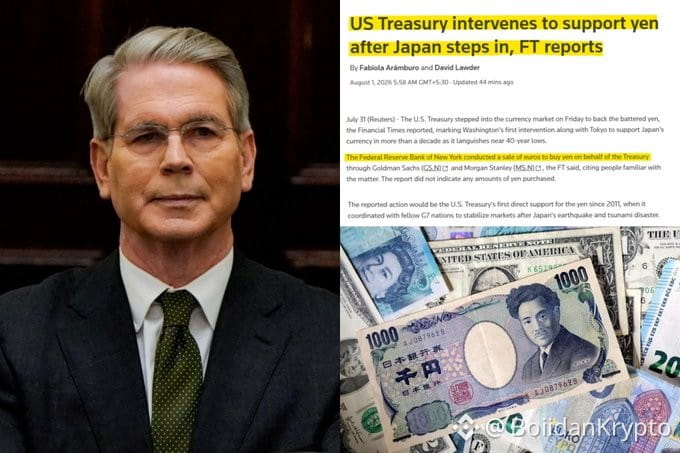
🚨 MARKET BOMBSHELL: The US Treasury just pulled the trigger on a MASSIVE euro-to-yen swap Friday, per FT – and this isn’t your average FX move.
The New York Fed, acting as the Treasury’s hitman, executed the sales through Goldman Sachs & Morgan Stanley – because who else would handle a covert currency strike?
Here’s the kicker: They drained euro reserves, NOT dollars. That’s a strategic middle-finger to the EUR while quietly propping up the JPY.
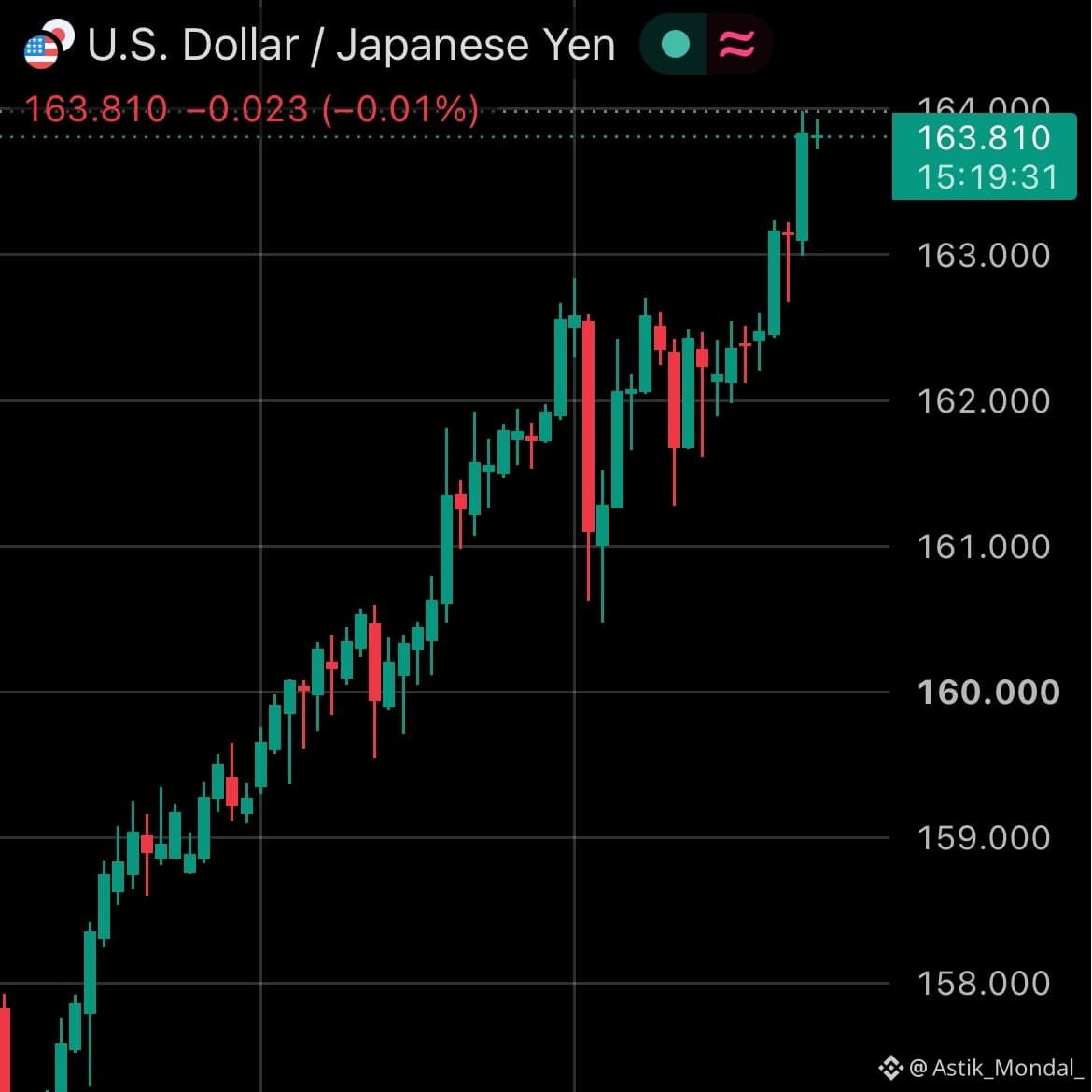
Why this is HUGE: This marks the first joint US-Japan intervention in nearly 30 YEARS – not since the 1990s have they teamed up like this. And they did it because the yen hit its weakest level against the dollar since 1986 – yes, Reagan was in office.
🤯 My take: This isn’t about saving Japan – it’s about sending a signal to global markets that the US won’t let the dollar get too strong or too weak. But here’s the real question: Is this a desperate band-aid or the start of a currency war?
👇 Drop your hot take:
Is the US secretly dumping euros to weaken Europe’s hand?
Or is this just a coordinated panic move before the next Fed rate decision?
And who really loses here – the Eurozone, Japan, or your portfolio?
Don’t just like – COMMENT your side. If you think this is bullish for USD, fight me. If you think it’s bearish, prove it.
#CurrencyWar #FedIntervention #YenSurge
$NVDA
{future}(NVDAUSDT)
$SPCX
{future}(SPCXUSDT)
$BTC
{future}(BTCUSDT)
🚨 MARKET BOMBSHELL: The US Treasury just pulled the trigger on a MASSIVE euro-to-yen swap Friday, per FT – and this isn’t your average FX move.
The New York Fed, acting as the Treasury’s hitman, executed the sales through Goldman Sachs & Morgan Stanley – because who else would handle a covert currency strike?
Here’s the kicker: They drained euro reserves, NOT dollars. That’s a strategic middle-finger to the EUR while quietly propping up the JPY.
Why this is HUGE: This marks the first joint US-Japan intervention in nearly 30 YEARS – not since the 1990s have they teamed up like this. And they did it because the yen hit its weakest level against the dollar since 1986 – yes, Reagan was in office.
🤯 My take: This isn’t about saving Japan – it’s about sending a signal to global markets that the US won’t let the dollar get too strong or too weak. But here’s the real question: Is this a desperate band-aid or the start of a currency war?
👇 Drop your hot take:
Is the US secretly dumping euros to weaken Europe’s hand?
Or is this just a coordinated panic move before the next Fed rate decision?
And who really loses here – the Eurozone, Japan, or your portfolio?
Don’t just like – COMMENT your side. If you think this is bullish for USD, fight me. If you think it’s bearish, prove it.
#CurrencyWar #FedIntervention #YenSurge
$NVDA
$SPCX
$BTC
The New York Fed, acting as the Treasury’s hitman, executed the sales through Goldman Sachs & Morgan Stanley – because who else would handle a covert currency strike?
Here’s the kicker: They drained euro reserves, NOT dollars. That’s a strategic middle-finger to the EUR while quietly propping up the JPY.
Why this is HUGE: This marks the first joint US-Japan intervention in nearly 30 YEARS – not since the 1990s have they teamed up like this. And they did it because the yen hit its weakest level against the dollar since 1986 – yes, Reagan was in office.
🤯 My take: This isn’t about saving Japan – it’s about sending a signal to global markets that the US won’t let the dollar get too strong or too weak. But here’s the real question: Is this a desperate band-aid or the start of a currency war?
👇 Drop your hot take:
Is the US secretly dumping euros to weaken Europe’s hand?
Or is this just a coordinated panic move before the next Fed rate decision?
And who really loses here – the Eurozone, Japan, or your portfolio?
Don’t just like – COMMENT your side. If you think this is bullish for USD, fight me. If you think it’s bearish, prove it.
#CurrencyWar #FedIntervention #YenSurge
$NVDA
$SPCX
$BTC
102

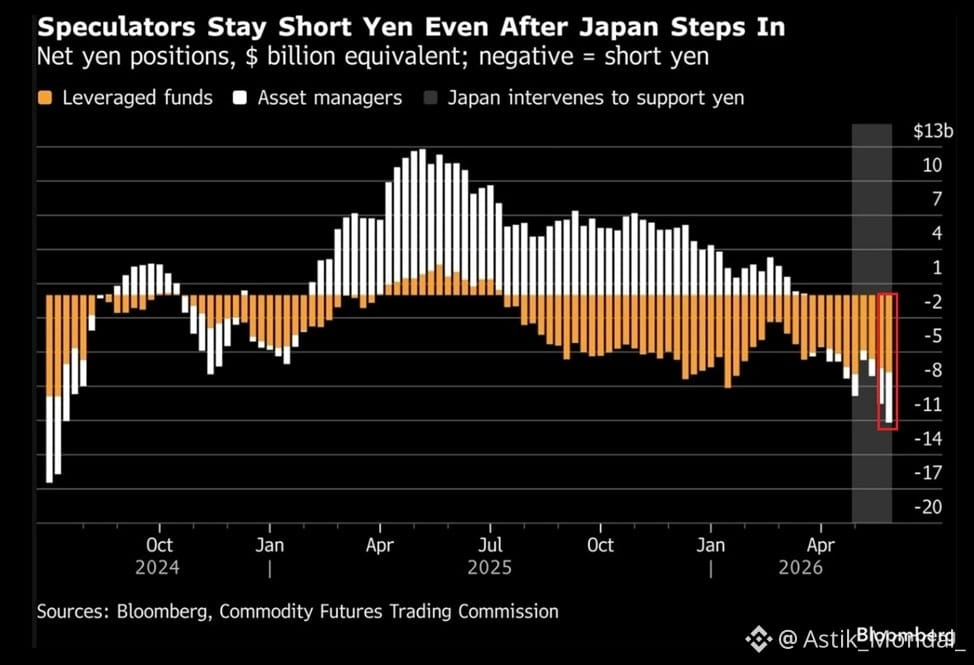
Hedge funds are shorting the Japanese Yen at the highest level since 2024. Japan just spent a record $74 billion defending its currency. The speculators are winning.
$74 billion spent by the Japanese government to stop the Yen from falling.
The Yen fell anyway.
From 155 to 160 per US Dollar. Despite the largest currency intervention effort Japan has mounted in recent memory.
And now short positions are sitting at negative $11 billion. Three consecutive weeks of increasing bets against the Yen. $5 billion in fresh short exposure added while Japan was actively fighting back.
This is one of the most lopsided battles in currency markets right now.
Japan is spending real money. Institutional traders are spending leverage. And the leverage is winning because the fundamental problem has not been solved.
The interest rate gap between Japan and the US is the entire story.
The Fed cannot cut into 5% inflation. US rates stay high. Japan's BOJ is trapped because Tokyo inflation just hit a 4 year low and rate hikes would crush a fragile economy.
That gap makes the Yen carry trade one of the most attractive structural short positions on earth. Borrow cheap in Yen. Invest in higher yielding Dollar assets. Profit from the rate difference and the currency move simultaneously.
No amount of intervention changes that math without changing the rates themselves.
And neither central bank can move right now.
The BOJ is boxed in. The Fed is boxed in. And institutional money is piling into that box from the outside.
160 is not a ceiling. It is a checkpoint.
The next stop if this holds could make $74 billion feel like a down payment.
#Japan #Yen #CurrencyWar #ForexTrading #MacroEconomics
Hedge funds are shorting the Japanese Yen at the highest level since 2024. Japan just spent a record $74 billion defending its currency. The speculators are winning.
$74 billion spent by the Japanese government to stop the Yen from falling.
The Yen fell anyway.
From 155 to 160 per US Dollar. Despite the largest currency intervention effort Japan has mounted in recent memory.
And now short positions are sitting at negative $11 billion. Three consecutive weeks of increasing bets against the Yen. $5 billion in fresh short exposure added while Japan was actively fighting back.
This is one of the most lopsided battles in currency markets right now.
Japan is spending real money. Institutional traders are spending leverage. And the leverage is winning because the fundamental problem has not been solved.
The interest rate gap between Japan and the US is the entire story.
The Fed cannot cut into 5% inflation. US rates stay high. Japan's BOJ is trapped because Tokyo inflation just hit a 4 year low and rate hikes would crush a fragile economy.
That gap makes the Yen carry trade one of the most attractive structural short positions on earth. Borrow cheap in Yen. Invest in higher yielding Dollar assets. Profit from the rate difference and the currency move simultaneously.
No amount of intervention changes that math without changing the rates themselves.
And neither central bank can move right now.
The BOJ is boxed in. The Fed is boxed in. And institutional money is piling into that box from the outside.
160 is not a ceiling. It is a checkpoint.
The next stop if this holds could make $74 billion feel like a down payment.
#Japan #Yen #CurrencyWar #ForexTrading #MacroEconomics
$74 billion spent by the Japanese government to stop the Yen from falling.
The Yen fell anyway.
From 155 to 160 per US Dollar. Despite the largest currency intervention effort Japan has mounted in recent memory.
And now short positions are sitting at negative $11 billion. Three consecutive weeks of increasing bets against the Yen. $5 billion in fresh short exposure added while Japan was actively fighting back.
This is one of the most lopsided battles in currency markets right now.
Japan is spending real money. Institutional traders are spending leverage. And the leverage is winning because the fundamental problem has not been solved.
The interest rate gap between Japan and the US is the entire story.
The Fed cannot cut into 5% inflation. US rates stay high. Japan's BOJ is trapped because Tokyo inflation just hit a 4 year low and rate hikes would crush a fragile economy.
That gap makes the Yen carry trade one of the most attractive structural short positions on earth. Borrow cheap in Yen. Invest in higher yielding Dollar assets. Profit from the rate difference and the currency move simultaneously.
No amount of intervention changes that math without changing the rates themselves.
And neither central bank can move right now.
The BOJ is boxed in. The Fed is boxed in. And institutional money is piling into that box from the outside.
160 is not a ceiling. It is a checkpoint.
The next stop if this holds could make $74 billion feel like a down payment.
#Japan #Yen #CurrencyWar #ForexTrading #MacroEconomics
160
The US and Japan just conducted a secret joint currency intervention selling euros to support the yen. The ECB found out after it was already done. The first joint intervention in nearly 30 years just happened without telling Europe.
This is one of the most significant breakdowns in Western central bank coordination in decades.
The G7 monetary framework has operated on a principle of coordination since the Plaza Accord in 1985. Major currency interventions are discussed. Allies are informed. The system functions on trust and communication between the world's leading central banks.
The US just sold euros to support the yen without telling the ECB.
Not a delayed notification. Not a brief advance warning. The ECB found out after it was already executed.
Some ECB officials are calling it an unprecedented break from decades of established practice. That is not diplomatic irritation. That is a signal that the rules governing Western monetary cooperation are being rewritten unilaterally.
Think about what this means in the broader context.
The Yen just hit a 40 year low. Japan spent $74 billion in intervention and failed. Speculative short positions reached negative $11 billion with three consecutive weeks of increases. The interest rate gap between the US and Japan is the structural driver and nothing changed it.
So the US stepped in. Secretly. Using euros. Without asking Brussels.
The ECB manages the currency of 20 nations. Having hundreds of billions of euros sold in a coordinated intervention without prior knowledge affects their monetary policy, their inflation targets, and their relationships with their own member states.
90 central banks are already moving away from the US Dollar. Gold overtook Treasuries as the top reserve asset. And now the US just conducted a secret currency operation that blindsided its closest monetary allies.
The global financial order is not just fragmenting geopolitically.
It is fragmenting institutionally.
#ECB #Yen #Japan #CurrencyWar #CentralBanks
The US and Japan just conducted a secret joint currency intervention selling euros to support the yen. The ECB found out after it was already done. The first joint intervention in nearly 30 years just happened without telling Europe.
This is one of the most significant breakdowns in Western central bank coordination in decades.
The G7 monetary framework has operated on a principle of coordination since the Plaza Accord in 1985. Major currency interventions are discussed. Allies are informed. The system functions on trust and communication between the world's leading central banks.
The US just sold euros to support the yen without telling the ECB.
Not a delayed notification. Not a brief advance warning. The ECB found out after it was already executed.
Some ECB officials are calling it an unprecedented break from decades of established practice. That is not diplomatic irritation. That is a signal that the rules governing Western monetary cooperation are being rewritten unilaterally.
Think about what this means in the broader context.
The Yen just hit a 40 year low. Japan spent $74 billion in intervention and failed. Speculative short positions reached negative $11 billion with three consecutive weeks of increases. The interest rate gap between the US and Japan is the structural driver and nothing changed it.
So the US stepped in. Secretly. Using euros. Without asking Brussels.
The ECB manages the currency of 20 nations. Having hundreds of billions of euros sold in a coordinated intervention without prior knowledge affects their monetary policy, their inflation targets, and their relationships with their own member states.
90 central banks are already moving away from the US Dollar. Gold overtook Treasuries as the top reserve asset. And now the US just conducted a secret currency operation that blindsided its closest monetary allies.
The global financial order is not just fragmenting geopolitically.
It is fragmenting institutionally.
#ECB #Yen #Japan #CurrencyWar #CentralBanks
This is one of the most significant breakdowns in Western central bank coordination in decades.
The G7 monetary framework has operated on a principle of coordination since the Plaza Accord in 1985. Major currency interventions are discussed. Allies are informed. The system functions on trust and communication between the world's leading central banks.
The US just sold euros to support the yen without telling the ECB.
Not a delayed notification. Not a brief advance warning. The ECB found out after it was already executed.
Some ECB officials are calling it an unprecedented break from decades of established practice. That is not diplomatic irritation. That is a signal that the rules governing Western monetary cooperation are being rewritten unilaterally.
Think about what this means in the broader context.
The Yen just hit a 40 year low. Japan spent $74 billion in intervention and failed. Speculative short positions reached negative $11 billion with three consecutive weeks of increases. The interest rate gap between the US and Japan is the structural driver and nothing changed it.
So the US stepped in. Secretly. Using euros. Without asking Brussels.
The ECB manages the currency of 20 nations. Having hundreds of billions of euros sold in a coordinated intervention without prior knowledge affects their monetary policy, their inflation targets, and their relationships with their own member states.
90 central banks are already moving away from the US Dollar. Gold overtook Treasuries as the top reserve asset. And now the US just conducted a secret currency operation that blindsided its closest monetary allies.
The global financial order is not just fragmenting geopolitically.
It is fragmenting institutionally.
#ECB #Yen #Japan #CurrencyWar #CentralBanks

2
53
The Japanese Yen just fell to its weakest level against the US Dollar in 40 years. Japan spent $74 billion defending its currency. The speculators won.
40 years.
Not a monthly low. Not a yearly low.
The weakest Yen since 1985. Ronald Reagan was president. Japan was in the middle of its economic miracle. The Plaza Accord had not yet been signed.
That is how far back you have to go to find a weaker Yen.
Japan's Ministry of Finance deployed a record $74 billion in intervention to stop this exact outcome. Hedge funds and asset managers built negative $11 billion in Yen short positions and held them through every intervention attempt.
The fundamental problem never changed.
The Fed cannot cut into 5% US inflation. Japanese rates stay near zero because Tokyo inflation just hit a 4 year low and a rate hike would crush an already fragile economy. That interest rate gap is the entire trade.
Borrow cheap Yen. Invest in higher yielding Dollar assets. Profit from both the rate difference and the currency move. It is the oldest carry trade in global finance and it is working with brutal efficiency right now.
$74 billion could not close the gap between zero percent and five percent.
Nothing can except the rates themselves converging.
And neither central bank can move in the direction that would fix this.
The BOJ is trapped. The Fed is trapped. And 40 years of Yen weakness just became the new reality while the world was watching everything else.
Geopolitical risk just hit a 65 year high. 90 central banks are moving away from the Dollar. Gold overtook Treasuries as the top reserve asset.
And Japan just quietly hit a 4 decade currency low that nobody is talking about loudly enough.
#Yen #Japan #ForexTrading #CurrencyWar #MacroEconomics
The Japanese Yen just fell to its weakest level against the US Dollar in 40 years. Japan spent $74 billion defending its currency. The speculators won.
40 years.
Not a monthly low. Not a yearly low.
The weakest Yen since 1985. Ronald Reagan was president. Japan was in the middle of its economic miracle. The Plaza Accord had not yet been signed.
That is how far back you have to go to find a weaker Yen.
Japan's Ministry of Finance deployed a record $74 billion in intervention to stop this exact outcome. Hedge funds and asset managers built negative $11 billion in Yen short positions and held them through every intervention attempt.
The fundamental problem never changed.
The Fed cannot cut into 5% US inflation. Japanese rates stay near zero because Tokyo inflation just hit a 4 year low and a rate hike would crush an already fragile economy. That interest rate gap is the entire trade.
Borrow cheap Yen. Invest in higher yielding Dollar assets. Profit from both the rate difference and the currency move. It is the oldest carry trade in global finance and it is working with brutal efficiency right now.
$74 billion could not close the gap between zero percent and five percent.
Nothing can except the rates themselves converging.
And neither central bank can move in the direction that would fix this.
The BOJ is trapped. The Fed is trapped. And 40 years of Yen weakness just became the new reality while the world was watching everything else.
Geopolitical risk just hit a 65 year high. 90 central banks are moving away from the Dollar. Gold overtook Treasuries as the top reserve asset.
And Japan just quietly hit a 4 decade currency low that nobody is talking about loudly enough.
#Yen #Japan #ForexTrading #CurrencyWar #MacroEconomics
40 years.
Not a monthly low. Not a yearly low.
The weakest Yen since 1985. Ronald Reagan was president. Japan was in the middle of its economic miracle. The Plaza Accord had not yet been signed.
That is how far back you have to go to find a weaker Yen.
Japan's Ministry of Finance deployed a record $74 billion in intervention to stop this exact outcome. Hedge funds and asset managers built negative $11 billion in Yen short positions and held them through every intervention attempt.
The fundamental problem never changed.
The Fed cannot cut into 5% US inflation. Japanese rates stay near zero because Tokyo inflation just hit a 4 year low and a rate hike would crush an already fragile economy. That interest rate gap is the entire trade.
Borrow cheap Yen. Invest in higher yielding Dollar assets. Profit from both the rate difference and the currency move. It is the oldest carry trade in global finance and it is working with brutal efficiency right now.
$74 billion could not close the gap between zero percent and five percent.
Nothing can except the rates themselves converging.
And neither central bank can move in the direction that would fix this.
The BOJ is trapped. The Fed is trapped. And 40 years of Yen weakness just became the new reality while the world was watching everything else.
Geopolitical risk just hit a 65 year high. 90 central banks are moving away from the Dollar. Gold overtook Treasuries as the top reserve asset.
And Japan just quietly hit a 4 decade currency low that nobody is talking about loudly enough.
#Yen #Japan #ForexTrading #CurrencyWar #MacroEconomics

9
Log in to explore more content
Join global crypto users on Binance Square
⚡️ Get latest and useful information about crypto.
💬 Trusted by the world’s largest crypto exchange.
👍 Discover real insights from verified creators.
Email / Phone number
Trending Topics
1
#TrumpRejectsAIRulesForVoluntaryAudits
501 views
68 Discussing
2
#BitgetHotWalletBreachTiedToThirdPartySecurityFlaw
264 views
46 Discussing
3
#OpenAIUnveilsAlwaysOnAgentDots
1,351 views
101 Discussing
4
#ChainlinkLaunchesBankSWIFTLedgerFramework
2,922 views
100 Discussing
5
#EarningsSeason
439,249 views
3,311 Discussing
6
#SECChairWantsStockMarketsOnChain
6,226 views
180 Discussing
7
#MulticoinInvestsInGrass
3,679 views
125 Discussing
8
#CEARenamesToBNBStandardUnderBNC
4,708 views
133 Discussing
9
#BitwiseLaunchesFirstSpotNEARETF
59,217 views
761 Discussing
10
#USJobOpeningsFallToFiveMonthLow
63,039 views
592 Discussing