

#cryptoeducational
cryptoeducational
766 views
23 Discussing
Hot
Latest

Demystifying Crypto Liquidity: How Order Books, Slippage, and Market Depth Shape Every TradeIn financial markets, liquidity is the invisible engine driving every transaction. Whether you are executing a micro-transaction or rebalancing a multi-million-dollar portfolio, liquidity dictates how easily, quickly, and cost-effectively an asset can be converted into cash or another asset without triggering unpredictable price swings. In the fast-moving cryptocurrency market, understanding liquidity is not merely an academic exercise—it is a foundational skill that directly influences execution quality, operational costs, and risk management.
While beginners often focus exclusively on candlestick patterns and social media trends, intermediate traders recognize that price movement is fundamentally an outcome of liquidity mechanics. An asset can display a textbook bullish structure, but if market liquidity is thin, executing a trade at your intended price becomes difficult or impossibly expensive. This comprehensive guide breaks down how liquidity operates in crypto, why order books and market depth matter, how centralized and decentralized liquidity models differ, and how to execute trades efficiently while avoiding costly illiquidity traps.
---
### The Core Pillars of Crypto Liquidity
To evaluate liquidity accurately, traders must look beyond basic 24-hour trading volume, which can easily be distorted by high-frequency noise or wash trading. True market liquidity relies on three interconnected elements:
#### 1. The Bid-Ask Spread
The bid represents the highest price a buyer is willing to pay, while the ask (or offer) is the lowest price a seller is willing to accept. The gap between these two figures is the bid-ask spread. In highly liquid markets, such as major assets like Bitcoin or Ethereum paired against major fiat currencies or top stablecoins, the spread is paper-thin—frequently measuring a fraction of a basis point. In contrast, low-liquidity altcoins often exhibit wide spreads, forcing buyers to pay a steep premium or sellers to accept a noticeable discount compared to the nominal market price.
#### 2. Order Book Depth
An order book displays all active, unfilled limit orders placed by market participants across various price levels. Depth refers to the total volume of buy and sell orders residing on both sides of the order book. High order book depth implies that significant trade volume can be absorbed near the current market price without pushing the value sharply up or down.
#### 3. Slippage and Price Impact
Slippage occurs when a trade executes at a price different from the expected or quoted price at the time of order submission. Market orders buy or sell instantly against existing limit orders. If the size of your market order exceeds the volume available at the best bid or ask, the order sweeps through successive price levels in the book. The larger the order relative to available depth, the severe the price impact and execution slippage.
---
### Centralized vs. Decentralized Liquidity Models
Cryptocurrency trading relies on two primary market structures, each using distinct liquidity mechanisms.
#### Centralized Limit Order Books (CLOB)
Centralized exchanges rely on traditional limit order books matched by automated matching engines. Professional market makers play a critical role in this environment by continuously placing buy and sell limit orders around the current price. They earn profits from the bid-ask spread while supplying constant liquidity to the exchange. High-speed arbitrage algorithms ensure that prices across various centralized exchanges stay tightly synchronized.
#### Automated Market Makers (AMM) on Decentralized Exchanges
Decentralized exchanges operate without order books. Instead, they utilize smart contract liquidity pools governed by deterministic mathematical formulas, most commonly the Constant Product Formula ($x \times y = k$). Liquidity providers (LPs) deposit token pairs into a smart contract, enabling users to trade directly against the pool's reserves.
In an AMM pool, price impact is determined by trade size relative to overall pool reserves. Larger pools absorb transactions with minimal price movement, whereas smaller pools suffer heavy price slippage on mid-to-large orders. Furthermore, decentralized liquidity introduces additional variable execution costs, such as network gas fees and potential exposure to Maximum Extractable Value (MEV) bots that attempt to front-run incoming trades.
---
### Practical Scenario: The Real Cost of Neglecting Depth
To understand how liquidity impacts performance, consider a practical trade scenario involving two different assets under identical market conditions. A trader wants to liquidate $50,000 worth of holdings using a instant market order.
* **High-Liquidity Asset:** The order book shows $500,000 worth of resting buy limit orders within 0.2% of the top bid. The $50,000 sell order fills instantly against the top price levels. The execution price matches the trader's target almost perfectly, incurring virtually zero slippage penalty.
* **Low-Liquidity Asset:** The order book shows only $3,000 resting at the top bid, with remaining buy orders scattered sparsely across price levels down to 15% below the market price. When the trader submits the $50,000 market sell, the first $3,000 fills at the market rate, but the remaining $47,000 sweeps down through the thin order book. The final blended execution price turns out to be 10% lower than expected. The trader incurs a $5,000 penalty purely due to inadequate market depth.
---
### Measuring Liquidity: Key Metrics to Watch
Intermediate market participants use quantitative metrics to evaluate liquidity before taking positions:
1. **Depth (+2% / -2% Order Depth):** This metric tracks the cumulative dollar value of limit orders placed within 2% above and below the current market price. Higher numbers indicate greater structural resistance against market shocks.
2. **Volume-to-Market-Cap Ratio:** Dividing 24-hour trading volume by total market capitalization offers insight into trading velocity. A healthy ratio suggests continuous token turnover, whereas extremely low ratios hint at stagnant liquidity.
3. **Spread Percentage:** Calculated as `(Ask Price - Bid Price) / Ask Price * 100`. A persistent spread below 0.1% signals deep liquidity, while spreads above 1.0% indicate wide pricing inefficiency.
---
### Risks, Illiquidity Traps, and Limitations
Navigating crypto markets requires acknowledging that liquidity is dynamic rather than constant. Traders face several structural liquidity risks:
* **Phantom Liquidity:** High-frequency automated market makers supply significant limit order volume during calm periods. However, during rapid macro announcements or market panics, these algorithmic systems automatically withdraw their orders within milliseconds to avoid risk. This causes order depth to evaporate instantly, triggering rapid flash crashes.
* **Liquidity Fragmentation:** Because crypto trading is spread across dozens of centralized exchanges and hundreds of decentralized protocols, global liquidity is highly fragmented. An asset might appear liquid across aggregate tracking sites, yet lack depth on any single exchange platform.
* **Smart Contract & Pool Depletion Risks:** In decentralized finance, sudden liquidity withdrawals by large liquidity providers can drain pools rapidly. In extreme cases, complete liquidity removal (rug pulls) leaves token holders unable to exchange their assets at any price.
---
### Execution Strategies for Practical Risk Management
To protect capital and optimize trade execution, practical traders employ structured order strategies:
* **Utilize Limit and Post-Only Orders:** Prefer limit orders over market orders when speed of execution is not critical. Setting "Post-Only" parameters guarantees your order acts as a maker order, adding liquidity to the book while reducing taker fees.
* **Implement Algorithmic Orders (TWAP/VWAP):** When rebalancing larger positions, use Time-Weighted Average Price (TWAP) or Volume-Weighted Average Price (VWAP) algorithms. These systems break large transactions into smaller micro-orders executed over a specified time window, significantly reducing price impact.
* **Cross-Check Venue Depth:** Before trading sizable amounts of altcoins, inspect the distribution of market depth across venues or utilize routing aggregators to split orders across multiple liquidity sources simultaneously.
---
### Conclusion
Liquidity is much more than a simple trading statistic; it is the fundamental infrastructure governing price stability, execution costs, and capital safety in crypto markets. By moving beyond plain chart patterns and analyzing bid-ask spreads, order book depth, and liquidity architectures, market participants can execute transactions with significantly better precision and avoid unnecessary trading friction.
#CryptoEducational #TradingTips #MarketLiquidity
Demystifying Crypto Liquidity: How Order Books, Slippage, and Market Depth Shape Every Trade
In financial markets, liquidity is the invisible engine driving every transaction. Whether you are executing a micro-transaction or rebalancing a multi-million-dollar portfolio, liquidity dictates how easily, quickly, and cost-effectively an asset can be converted into cash or another asset without triggering unpredictable price swings. In the fast-moving cryptocurrency market, understanding liquidity is not merely an academic exercise—it is a foundational skill that directly influences execution quality, operational costs, and risk management.
While beginners often focus exclusively on candlestick patterns and social media trends, intermediate traders recognize that price movement is fundamentally an outcome of liquidity mechanics. An asset can display a textbook bullish structure, but if market liquidity is thin, executing a trade at your intended price becomes difficult or impossibly expensive. This comprehensive guide breaks down how liquidity operates in crypto, why order books and market depth matter, how centralized and decentralized liquidity models differ, and how to execute trades efficiently while avoiding costly illiquidity traps.
---
### The Core Pillars of Crypto Liquidity
To evaluate liquidity accurately, traders must look beyond basic 24-hour trading volume, which can easily be distorted by high-frequency noise or wash trading. True market liquidity relies on three interconnected elements:
#### 1. The Bid-Ask Spread
The bid represents the highest price a buyer is willing to pay, while the ask (or offer) is the lowest price a seller is willing to accept. The gap between these two figures is the bid-ask spread. In highly liquid markets, such as major assets like Bitcoin or Ethereum paired against major fiat currencies or top stablecoins, the spread is paper-thin—frequently measuring a fraction of a basis point. In contrast, low-liquidity altcoins often exhibit wide spreads, forcing buyers to pay a steep premium or sellers to accept a noticeable discount compared to the nominal market price.
#### 2. Order Book Depth
An order book displays all active, unfilled limit orders placed by market participants across various price levels. Depth refers to the total volume of buy and sell orders residing on both sides of the order book. High order book depth implies that significant trade volume can be absorbed near the current market price without pushing the value sharply up or down.
#### 3. Slippage and Price Impact
Slippage occurs when a trade executes at a price different from the expected or quoted price at the time of order submission. Market orders buy or sell instantly against existing limit orders. If the size of your market order exceeds the volume available at the best bid or ask, the order sweeps through successive price levels in the book. The larger the order relative to available depth, the severe the price impact and execution slippage.
---
### Centralized vs. Decentralized Liquidity Models
Cryptocurrency trading relies on two primary market structures, each using distinct liquidity mechanisms.
#### Centralized Limit Order Books (CLOB)
Centralized exchanges rely on traditional limit order books matched by automated matching engines. Professional market makers play a critical role in this environment by continuously placing buy and sell limit orders around the current price. They earn profits from the bid-ask spread while supplying constant liquidity to the exchange. High-speed arbitrage algorithms ensure that prices across various centralized exchanges stay tightly synchronized.
#### Automated Market Makers (AMM) on Decentralized Exchanges
Decentralized exchanges operate without order books. Instead, they utilize smart contract liquidity pools governed by deterministic mathematical formulas, most commonly the Constant Product Formula ($x \times y = k$). Liquidity providers (LPs) deposit token pairs into a smart contract, enabling users to trade directly against the pool's reserves.
In an AMM pool, price impact is determined by trade size relative to overall pool reserves. Larger pools absorb transactions with minimal price movement, whereas smaller pools suffer heavy price slippage on mid-to-large orders. Furthermore, decentralized liquidity introduces additional variable execution costs, such as network gas fees and potential exposure to Maximum Extractable Value (MEV) bots that attempt to front-run incoming trades.
---
### Practical Scenario: The Real Cost of Neglecting Depth
To understand how liquidity impacts performance, consider a practical trade scenario involving two different assets under identical market conditions. A trader wants to liquidate $50,000 worth of holdings using a instant market order.
* **High-Liquidity Asset:** The order book shows $500,000 worth of resting buy limit orders within 0.2% of the top bid. The $50,000 sell order fills instantly against the top price levels. The execution price matches the trader's target almost perfectly, incurring virtually zero slippage penalty.
* **Low-Liquidity Asset:** The order book shows only $3,000 resting at the top bid, with remaining buy orders scattered sparsely across price levels down to 15% below the market price. When the trader submits the $50,000 market sell, the first $3,000 fills at the market rate, but the remaining $47,000 sweeps down through the thin order book. The final blended execution price turns out to be 10% lower than expected. The trader incurs a $5,000 penalty purely due to inadequate market depth.
---
### Measuring Liquidity: Key Metrics to Watch
Intermediate market participants use quantitative metrics to evaluate liquidity before taking positions:
1. **Depth (+2% / -2% Order Depth):** This metric tracks the cumulative dollar value of limit orders placed within 2% above and below the current market price. Higher numbers indicate greater structural resistance against market shocks.
2. **Volume-to-Market-Cap Ratio:** Dividing 24-hour trading volume by total market capitalization offers insight into trading velocity. A healthy ratio suggests continuous token turnover, whereas extremely low ratios hint at stagnant liquidity.
3. **Spread Percentage:** Calculated as `(Ask Price - Bid Price) / Ask Price * 100`. A persistent spread below 0.1% signals deep liquidity, while spreads above 1.0% indicate wide pricing inefficiency.
---
### Risks, Illiquidity Traps, and Limitations
Navigating crypto markets requires acknowledging that liquidity is dynamic rather than constant. Traders face several structural liquidity risks:
* **Phantom Liquidity:** High-frequency automated market makers supply significant limit order volume during calm periods. However, during rapid macro announcements or market panics, these algorithmic systems automatically withdraw their orders within milliseconds to avoid risk. This causes order depth to evaporate instantly, triggering rapid flash crashes.
* **Liquidity Fragmentation:** Because crypto trading is spread across dozens of centralized exchanges and hundreds of decentralized protocols, global liquidity is highly fragmented. An asset might appear liquid across aggregate tracking sites, yet lack depth on any single exchange platform.
* **Smart Contract & Pool Depletion Risks:** In decentralized finance, sudden liquidity withdrawals by large liquidity providers can drain pools rapidly. In extreme cases, complete liquidity removal (rug pulls) leaves token holders unable to exchange their assets at any price.
---
### Execution Strategies for Practical Risk Management
To protect capital and optimize trade execution, practical traders employ structured order strategies:
* **Utilize Limit and Post-Only Orders:** Prefer limit orders over market orders when speed of execution is not critical. Setting "Post-Only" parameters guarantees your order acts as a maker order, adding liquidity to the book while reducing taker fees.
* **Implement Algorithmic Orders (TWAP/VWAP):** When rebalancing larger positions, use Time-Weighted Average Price (TWAP) or Volume-Weighted Average Price (VWAP) algorithms. These systems break large transactions into smaller micro-orders executed over a specified time window, significantly reducing price impact.
* **Cross-Check Venue Depth:** Before trading sizable amounts of altcoins, inspect the distribution of market depth across venues or utilize routing aggregators to split orders across multiple liquidity sources simultaneously.
---
### Conclusion
Liquidity is much more than a simple trading statistic; it is the fundamental infrastructure governing price stability, execution costs, and capital safety in crypto markets. By moving beyond plain chart patterns and analyzing bid-ask spreads, order book depth, and liquidity architectures, market participants can execute transactions with significantly better precision and avoid unnecessary trading friction.
#CryptoEducational #TradingTips #MarketLiquidity
While beginners often focus exclusively on candlestick patterns and social media trends, intermediate traders recognize that price movement is fundamentally an outcome of liquidity mechanics. An asset can display a textbook bullish structure, but if market liquidity is thin, executing a trade at your intended price becomes difficult or impossibly expensive. This comprehensive guide breaks down how liquidity operates in crypto, why order books and market depth matter, how centralized and decentralized liquidity models differ, and how to execute trades efficiently while avoiding costly illiquidity traps.
---
### The Core Pillars of Crypto Liquidity
To evaluate liquidity accurately, traders must look beyond basic 24-hour trading volume, which can easily be distorted by high-frequency noise or wash trading. True market liquidity relies on three interconnected elements:
#### 1. The Bid-Ask Spread
The bid represents the highest price a buyer is willing to pay, while the ask (or offer) is the lowest price a seller is willing to accept. The gap between these two figures is the bid-ask spread. In highly liquid markets, such as major assets like Bitcoin or Ethereum paired against major fiat currencies or top stablecoins, the spread is paper-thin—frequently measuring a fraction of a basis point. In contrast, low-liquidity altcoins often exhibit wide spreads, forcing buyers to pay a steep premium or sellers to accept a noticeable discount compared to the nominal market price.
#### 2. Order Book Depth
An order book displays all active, unfilled limit orders placed by market participants across various price levels. Depth refers to the total volume of buy and sell orders residing on both sides of the order book. High order book depth implies that significant trade volume can be absorbed near the current market price without pushing the value sharply up or down.
#### 3. Slippage and Price Impact
Slippage occurs when a trade executes at a price different from the expected or quoted price at the time of order submission. Market orders buy or sell instantly against existing limit orders. If the size of your market order exceeds the volume available at the best bid or ask, the order sweeps through successive price levels in the book. The larger the order relative to available depth, the severe the price impact and execution slippage.
---
### Centralized vs. Decentralized Liquidity Models
Cryptocurrency trading relies on two primary market structures, each using distinct liquidity mechanisms.
#### Centralized Limit Order Books (CLOB)
Centralized exchanges rely on traditional limit order books matched by automated matching engines. Professional market makers play a critical role in this environment by continuously placing buy and sell limit orders around the current price. They earn profits from the bid-ask spread while supplying constant liquidity to the exchange. High-speed arbitrage algorithms ensure that prices across various centralized exchanges stay tightly synchronized.
#### Automated Market Makers (AMM) on Decentralized Exchanges
Decentralized exchanges operate without order books. Instead, they utilize smart contract liquidity pools governed by deterministic mathematical formulas, most commonly the Constant Product Formula ($x \times y = k$). Liquidity providers (LPs) deposit token pairs into a smart contract, enabling users to trade directly against the pool's reserves.
In an AMM pool, price impact is determined by trade size relative to overall pool reserves. Larger pools absorb transactions with minimal price movement, whereas smaller pools suffer heavy price slippage on mid-to-large orders. Furthermore, decentralized liquidity introduces additional variable execution costs, such as network gas fees and potential exposure to Maximum Extractable Value (MEV) bots that attempt to front-run incoming trades.
---
### Practical Scenario: The Real Cost of Neglecting Depth
To understand how liquidity impacts performance, consider a practical trade scenario involving two different assets under identical market conditions. A trader wants to liquidate $50,000 worth of holdings using a instant market order.
* **High-Liquidity Asset:** The order book shows $500,000 worth of resting buy limit orders within 0.2% of the top bid. The $50,000 sell order fills instantly against the top price levels. The execution price matches the trader's target almost perfectly, incurring virtually zero slippage penalty.
* **Low-Liquidity Asset:** The order book shows only $3,000 resting at the top bid, with remaining buy orders scattered sparsely across price levels down to 15% below the market price. When the trader submits the $50,000 market sell, the first $3,000 fills at the market rate, but the remaining $47,000 sweeps down through the thin order book. The final blended execution price turns out to be 10% lower than expected. The trader incurs a $5,000 penalty purely due to inadequate market depth.
---
### Measuring Liquidity: Key Metrics to Watch
Intermediate market participants use quantitative metrics to evaluate liquidity before taking positions:
1. **Depth (+2% / -2% Order Depth):** This metric tracks the cumulative dollar value of limit orders placed within 2% above and below the current market price. Higher numbers indicate greater structural resistance against market shocks.
2. **Volume-to-Market-Cap Ratio:** Dividing 24-hour trading volume by total market capitalization offers insight into trading velocity. A healthy ratio suggests continuous token turnover, whereas extremely low ratios hint at stagnant liquidity.
3. **Spread Percentage:** Calculated as `(Ask Price - Bid Price) / Ask Price * 100`. A persistent spread below 0.1% signals deep liquidity, while spreads above 1.0% indicate wide pricing inefficiency.
---
### Risks, Illiquidity Traps, and Limitations
Navigating crypto markets requires acknowledging that liquidity is dynamic rather than constant. Traders face several structural liquidity risks:
* **Phantom Liquidity:** High-frequency automated market makers supply significant limit order volume during calm periods. However, during rapid macro announcements or market panics, these algorithmic systems automatically withdraw their orders within milliseconds to avoid risk. This causes order depth to evaporate instantly, triggering rapid flash crashes.
* **Liquidity Fragmentation:** Because crypto trading is spread across dozens of centralized exchanges and hundreds of decentralized protocols, global liquidity is highly fragmented. An asset might appear liquid across aggregate tracking sites, yet lack depth on any single exchange platform.
* **Smart Contract & Pool Depletion Risks:** In decentralized finance, sudden liquidity withdrawals by large liquidity providers can drain pools rapidly. In extreme cases, complete liquidity removal (rug pulls) leaves token holders unable to exchange their assets at any price.
---
### Execution Strategies for Practical Risk Management
To protect capital and optimize trade execution, practical traders employ structured order strategies:
* **Utilize Limit and Post-Only Orders:** Prefer limit orders over market orders when speed of execution is not critical. Setting "Post-Only" parameters guarantees your order acts as a maker order, adding liquidity to the book while reducing taker fees.
* **Implement Algorithmic Orders (TWAP/VWAP):** When rebalancing larger positions, use Time-Weighted Average Price (TWAP) or Volume-Weighted Average Price (VWAP) algorithms. These systems break large transactions into smaller micro-orders executed over a specified time window, significantly reducing price impact.
* **Cross-Check Venue Depth:** Before trading sizable amounts of altcoins, inspect the distribution of market depth across venues or utilize routing aggregators to split orders across multiple liquidity sources simultaneously.
---
### Conclusion
Liquidity is much more than a simple trading statistic; it is the fundamental infrastructure governing price stability, execution costs, and capital safety in crypto markets. By moving beyond plain chart patterns and analyzing bid-ask spreads, order book depth, and liquidity architectures, market participants can execute transactions with significantly better precision and avoid unnecessary trading friction.
#CryptoEducational #TradingTips #MarketLiquidity
1
119

Title: 🚀 Essential Crypto Trading Strategies for Beginners in 2026 $BTC $ETH $SOL
Navigating the crypto market can be challenging, but following a few disciplined strategies can significantly improve your trading journey. Whether you are a beginner or looking to refine your skills, keep these core rules in mind:
1️⃣ Always Do Your Own Research (DYOR): Never invest based solely on hype or social media trends. Analyze the project's utility, team, and whitepaper before putting your hard-earned money into it.
2️⃣ Practice Strict Risk Management: Only invest capital that you can afford to lose. The crypto market is highly volatile, and prices can shift rapidly within minutes.
3️⃣ Master the Art of Dollar-Cost Averaging (DCA): Instead of investing all your funds at once, divide your capital and invest smaller amounts at regular intervals. This helps reduce the impact of short-term market volatility.
4️⃣ Avoid Emotional Trading (FOMO & FUD): Fear of Missing Out (FOMO) and Fear, Uncertainty, and Doubt (FUD) are a trader's biggest enemies. Stick to your trading plan and keep emotions out of your decisions.
What is your number one rule when trading crypto? Let's discuss in the comments below! 👇
#CryptoTrading #BinanceSquare #TradingTips #DYOR #CryptoEducational
Bangladesh থেকে কে কে ক্রিপ্টো ট্রেড করো? কমেন্টে জানাও 👇
Title: 🚀 Essential Crypto Trading Strategies for Beginners in 2026 $BTC $ETH $SOL
Navigating the crypto market can be challenging, but following a few disciplined strategies can significantly improve your trading journey. Whether you are a beginner or looking to refine your skills, keep these core rules in mind:
1️⃣ Always Do Your Own Research (DYOR): Never invest based solely on hype or social media trends. Analyze the project's utility, team, and whitepaper before putting your hard-earned money into it.
2️⃣ Practice Strict Risk Management: Only invest capital that you can afford to lose. The crypto market is highly volatile, and prices can shift rapidly within minutes.
3️⃣ Master the Art of Dollar-Cost Averaging (DCA): Instead of investing all your funds at once, divide your capital and invest smaller amounts at regular intervals. This helps reduce the impact of short-term market volatility.
4️⃣ Avoid Emotional Trading (FOMO & FUD): Fear of Missing Out (FOMO) and Fear, Uncertainty, and Doubt (FUD) are a trader's biggest enemies. Stick to your trading plan and keep emotions out of your decisions.
What is your number one rule when trading crypto? Let's discuss in the comments below! 👇
#CryptoTrading #BinanceSquare #TradingTips #DYOR #CryptoEducational
Bangladesh থেকে কে কে ক্রিপ্টো ট্রেড করো? কমেন্টে জানাও 👇
Navigating the crypto market can be challenging, but following a few disciplined strategies can significantly improve your trading journey. Whether you are a beginner or looking to refine your skills, keep these core rules in mind:
1️⃣ Always Do Your Own Research (DYOR): Never invest based solely on hype or social media trends. Analyze the project's utility, team, and whitepaper before putting your hard-earned money into it.
2️⃣ Practice Strict Risk Management: Only invest capital that you can afford to lose. The crypto market is highly volatile, and prices can shift rapidly within minutes.
3️⃣ Master the Art of Dollar-Cost Averaging (DCA): Instead of investing all your funds at once, divide your capital and invest smaller amounts at regular intervals. This helps reduce the impact of short-term market volatility.
4️⃣ Avoid Emotional Trading (FOMO & FUD): Fear of Missing Out (FOMO) and Fear, Uncertainty, and Doubt (FUD) are a trader's biggest enemies. Stick to your trading plan and keep emotions out of your decisions.
What is your number one rule when trading crypto? Let's discuss in the comments below! 👇
#CryptoTrading #BinanceSquare #TradingTips #DYOR #CryptoEducational
Bangladesh থেকে কে কে ক্রিপ্টো ট্রেড করো? কমেন্টে জানাও 👇
72

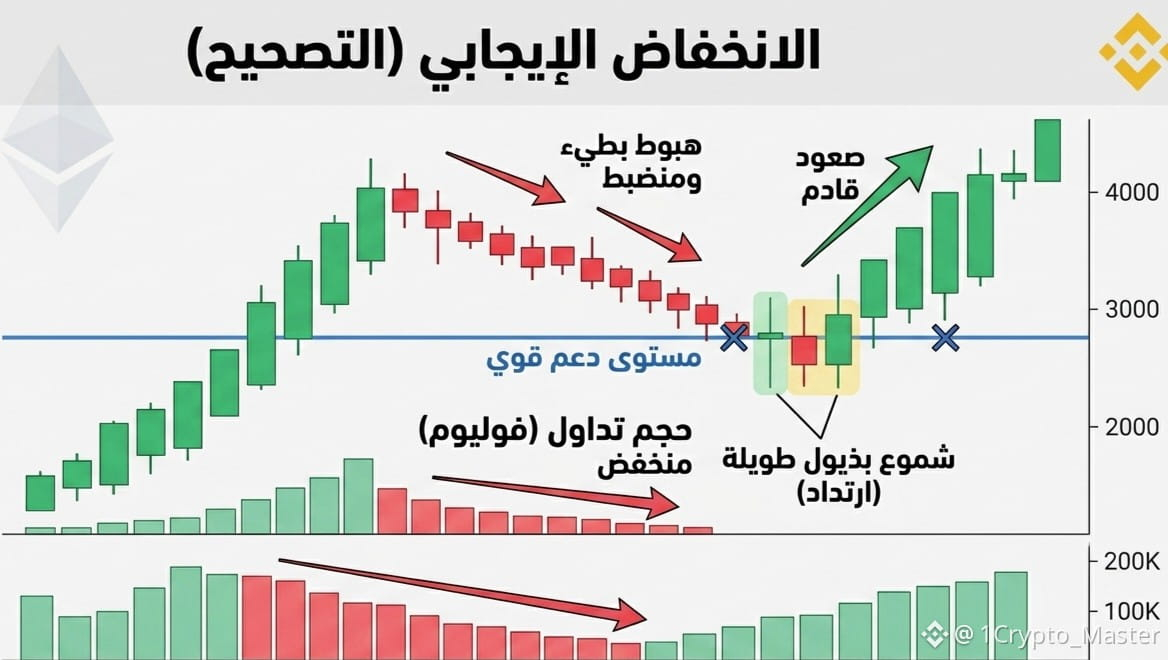
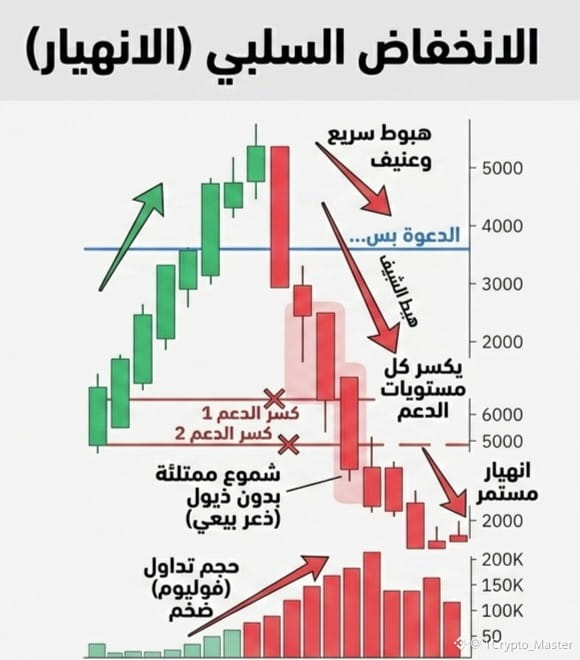
The difference between a dip followed by a rise and a dip followed by a crash.
⬅️ First: the positive dip followed by a rise:
Imagine the price is taking a warrior's break to gather strength for a rally.
The drop is slow: you’ll find the bearish candlesticks are small and take days to drop a bit—such a boring decline.
Stability at support: when the price hits a previous support zone, it halts immediately and starts moving sideways, with long wicks on the lower side of the candles indicating buyers absorbing the sell-off.
Trading volume: during the dip, trading volume is very weak, meaning that whales and big investors aren't selling; they’re letting the price drop to buy back in lower.
⬅️ Second: the negative dip followed by a crash:
The drop is fast and violent: big, consecutive red candles plummet vertically without any pause.
The price doesn’t respect any support zones, breaking the first, second, and third supports with ease. If it tries to bounce back up, it quickly fails and continues its descent.
Trading volume is huge in red, which is a dangerous indicator that whales and institutions are exiting the coin and selling in massive quantities—it's a liquidity exodus.
💡 In short, the positive dip is a slow drop without massive sell liquidity that ends in stability and consolidation. Whereas the negative dip is a fast and violent drop with scary sell liquidity that breaks through all defensive lines.
#Binance #TechnicalAnalysis #CryptoEducational
$BTC $BNB $ETH
The difference between a dip followed by a rise and a dip followed by a crash.
⬅️ First: the positive dip followed by a rise:
Imagine the price is taking a warrior's break to gather strength for a rally.
The drop is slow: you’ll find the bearish candlesticks are small and take days to drop a bit—such a boring decline.
Stability at support: when the price hits a previous support zone, it halts immediately and starts moving sideways, with long wicks on the lower side of the candles indicating buyers absorbing the sell-off.
Trading volume: during the dip, trading volume is very weak, meaning that whales and big investors aren't selling; they’re letting the price drop to buy back in lower.
⬅️ Second: the negative dip followed by a crash:
The drop is fast and violent: big, consecutive red candles plummet vertically without any pause.
The price doesn’t respect any support zones, breaking the first, second, and third supports with ease. If it tries to bounce back up, it quickly fails and continues its descent.
Trading volume is huge in red, which is a dangerous indicator that whales and institutions are exiting the coin and selling in massive quantities—it's a liquidity exodus.
💡 In short, the positive dip is a slow drop without massive sell liquidity that ends in stability and consolidation. Whereas the negative dip is a fast and violent drop with scary sell liquidity that breaks through all defensive lines.
#Binance #TechnicalAnalysis #CryptoEducational
$BTC $BNB $ETH
⬅️ First: the positive dip followed by a rise:
Imagine the price is taking a warrior's break to gather strength for a rally.
The drop is slow: you’ll find the bearish candlesticks are small and take days to drop a bit—such a boring decline.
Stability at support: when the price hits a previous support zone, it halts immediately and starts moving sideways, with long wicks on the lower side of the candles indicating buyers absorbing the sell-off.
Trading volume: during the dip, trading volume is very weak, meaning that whales and big investors aren't selling; they’re letting the price drop to buy back in lower.
⬅️ Second: the negative dip followed by a crash:
The drop is fast and violent: big, consecutive red candles plummet vertically without any pause.
The price doesn’t respect any support zones, breaking the first, second, and third supports with ease. If it tries to bounce back up, it quickly fails and continues its descent.
Trading volume is huge in red, which is a dangerous indicator that whales and institutions are exiting the coin and selling in massive quantities—it's a liquidity exodus.
💡 In short, the positive dip is a slow drop without massive sell liquidity that ends in stability and consolidation. Whereas the negative dip is a fast and violent drop with scary sell liquidity that breaks through all defensive lines.
#Binance #TechnicalAnalysis #CryptoEducational
$BTC $BNB $ETH
1
3
200

·
--
📌 5 Common Mistakes Every New Crypto Trader Should Avoid! 🚨
The cryptocurrency market is full of opportunities, but it can also be tricky for beginners. Due to a lack of proper strategy, many new traders face losses early on. Today, let's look at 5 common mistakes you should avoid to stay profitable in the game:
1. FOMO (Fear of Missing Out):
When a coin's price pumps rapidly, many jump in out of hype, buying at the very top. When the market corrects, they get stuck. Always analyze carefully before entering a trade—never buy based on emotions.
2. Not Using a Stop-Loss:
In trading, protecting your capital is more important than making huge profits. Skipping a stop-loss can wipe out a major part of your balance if the market crashes unexpectedly.
3. Ignoring DCA (Dollar-Cost Averaging):
Never invest all your funds at a single price point. Instead, divide your capital and buy in smaller portions at different price levels. DCA significantly reduces your average entry cost and risk.
4. Trading on Rumors & Hype:
Don't buy a coin just because it's trending on social media or because someone recommended it. Always DYOR (Do Your Own Research) and look at the project's fundamentals.
5. Putting All Eggs in One Basket:
Diversification is key. Don't put your entire portfolio into just one or two coins. Spread your investment across a few solid, high-utility projects to minimize risk.
What about you? Which of these mistakes did you make when you first started? Drop your thoughts in the comments below! 👇
#CryptoTrading #BinanceSquare #TradingTips #DYOR #CryptoEducational
📌 5 Common Mistakes Every New Crypto Trader Should Avoid! 🚨
The cryptocurrency market is full of opportunities, but it can also be tricky for beginners. Due to a lack of proper strategy, many new traders face losses early on. Today, let's look at 5 common mistakes you should avoid to stay profitable in the game:
1. FOMO (Fear of Missing Out):
When a coin's price pumps rapidly, many jump in out of hype, buying at the very top. When the market corrects, they get stuck. Always analyze carefully before entering a trade—never buy based on emotions.
2. Not Using a Stop-Loss:
In trading, protecting your capital is more important than making huge profits. Skipping a stop-loss can wipe out a major part of your balance if the market crashes unexpectedly.
3. Ignoring DCA (Dollar-Cost Averaging):
Never invest all your funds at a single price point. Instead, divide your capital and buy in smaller portions at different price levels. DCA significantly reduces your average entry cost and risk.
4. Trading on Rumors & Hype:
Don't buy a coin just because it's trending on social media or because someone recommended it. Always DYOR (Do Your Own Research) and look at the project's fundamentals.
5. Putting All Eggs in One Basket:
Diversification is key. Don't put your entire portfolio into just one or two coins. Spread your investment across a few solid, high-utility projects to minimize risk.
What about you? Which of these mistakes did you make when you first started? Drop your thoughts in the comments below! 👇
#CryptoTrading #BinanceSquare #TradingTips #DYOR #CryptoEducational
The cryptocurrency market is full of opportunities, but it can also be tricky for beginners. Due to a lack of proper strategy, many new traders face losses early on. Today, let's look at 5 common mistakes you should avoid to stay profitable in the game:
1. FOMO (Fear of Missing Out):
When a coin's price pumps rapidly, many jump in out of hype, buying at the very top. When the market corrects, they get stuck. Always analyze carefully before entering a trade—never buy based on emotions.
2. Not Using a Stop-Loss:
In trading, protecting your capital is more important than making huge profits. Skipping a stop-loss can wipe out a major part of your balance if the market crashes unexpectedly.
3. Ignoring DCA (Dollar-Cost Averaging):
Never invest all your funds at a single price point. Instead, divide your capital and buy in smaller portions at different price levels. DCA significantly reduces your average entry cost and risk.
4. Trading on Rumors & Hype:
Don't buy a coin just because it's trending on social media or because someone recommended it. Always DYOR (Do Your Own Research) and look at the project's fundamentals.
5. Putting All Eggs in One Basket:
Diversification is key. Don't put your entire portfolio into just one or two coins. Spread your investment across a few solid, high-utility projects to minimize risk.
What about you? Which of these mistakes did you make when you first started? Drop your thoughts in the comments below! 👇
#CryptoTrading #BinanceSquare #TradingTips #DYOR #CryptoEducational
87

·
--
Where to start in crypto when you’re a beginner? (Spoiler: It’s not risking everything on a 20x) 🚀
Many people enter the trading world looking to multiply their money overnight, but the reality is that the market rewards patience and knowledge—not luck.
If you’re building your foundation from scratch, I recommend following these steps before risking real capital:
1. Master the essential theory: Understand the difference between the Spot and Futures markets, and learn how the order book works.
2. Train your technical eye: Get familiar with Japanese candlesticks, trends, and the key support and resistance zones.
3. Prioritize risk management: Learn to protect your capital before thinking about profits. A good trader survives to trade tomorrow.
💡 The real competitive advantage: Educating yourself step by step and using simulation tools to practice without stress will save you a lot of headaches (and money) in the future.
What concept cost you the most to understand when you first started with cryptocurrencies? I’m reading you in the comments! 👇
#BinanceSquare #EducaciónCripto #tradingprincipiantes #cryptoeducational
Where to start in crypto when you’re a beginner? (Spoiler: It’s not risking everything on a 20x) 🚀
Many people enter the trading world looking to multiply their money overnight, but the reality is that the market rewards patience and knowledge—not luck.
If you’re building your foundation from scratch, I recommend following these steps before risking real capital:
1. Master the essential theory: Understand the difference between the Spot and Futures markets, and learn how the order book works.
2. Train your technical eye: Get familiar with Japanese candlesticks, trends, and the key support and resistance zones.
3. Prioritize risk management: Learn to protect your capital before thinking about profits. A good trader survives to trade tomorrow.
💡 The real competitive advantage: Educating yourself step by step and using simulation tools to practice without stress will save you a lot of headaches (and money) in the future.
What concept cost you the most to understand when you first started with cryptocurrencies? I’m reading you in the comments! 👇
#BinanceSquare #EducaciónCripto #tradingprincipiantes #cryptoeducational
Many people enter the trading world looking to multiply their money overnight, but the reality is that the market rewards patience and knowledge—not luck.
If you’re building your foundation from scratch, I recommend following these steps before risking real capital:
1. Master the essential theory: Understand the difference between the Spot and Futures markets, and learn how the order book works.
2. Train your technical eye: Get familiar with Japanese candlesticks, trends, and the key support and resistance zones.
3. Prioritize risk management: Learn to protect your capital before thinking about profits. A good trader survives to trade tomorrow.
💡 The real competitive advantage: Educating yourself step by step and using simulation tools to practice without stress will save you a lot of headaches (and money) in the future.
What concept cost you the most to understand when you first started with cryptocurrencies? I’m reading you in the comments! 👇
#BinanceSquare #EducaciónCripto #tradingprincipiantes #cryptoeducational
278

Before chasing profit, learn to recognize the risk.
Crypto can offer opportunities—but smart decisions start with understanding what can go wrong.
Research before you invest.
Understand the risks.
Watch the fees.
Protect your assets.
Smart Money Starts With Smart Decisions.
#Crypto #Cryptocurrency #cryptoeducational #RiskManagement #Investing #FinancialEducation #MoneyMindset #SmartMoney #Bitcoin #Blockchain #trading #CryptoTips
Before chasing profit, learn to recognize the risk.
Crypto can offer opportunities—but smart decisions start with understanding what can go wrong.
Research before you invest.
Understand the risks.
Watch the fees.
Protect your assets.
Smart Money Starts With Smart Decisions.
#Crypto #Cryptocurrency #cryptoeducational #RiskManagement #Investing #FinancialEducation #MoneyMindset #SmartMoney #Bitcoin #Blockchain #trading #CryptoTips
Crypto can offer opportunities—but smart decisions start with understanding what can go wrong.
Research before you invest.
Understand the risks.
Watch the fees.
Protect your assets.
Smart Money Starts With Smart Decisions.
#Crypto #Cryptocurrency #cryptoeducational #RiskManagement #Investing #FinancialEducation #MoneyMindset #SmartMoney #Bitcoin #Blockchain #trading #CryptoTips

1
73

Risk management#cryptoeducational
Risk management is more important than finding the perfect trade. Never risk more than you can afford to lose, and always use a stop loss. Consistency beats chasing quick profits. #TradingTips #CryptoEducation
Risk management
#cryptoeducational
Risk management is more important than finding the perfect trade. Never risk more than you can afford to lose, and always use a stop loss. Consistency beats chasing quick profits. #TradingTips #CryptoEducation
Risk management is more important than finding the perfect trade. Never risk more than you can afford to lose, and always use a stop loss. Consistency beats chasing quick profits. #TradingTips #CryptoEducation
72

·
--
Bullish
$Crypto for Beginners 2026 | What I Learned as a New User:
Hey everyone! 👋
I’m new to crypto too. Just 1 month ago I knew nothing. So I thought I’ll share what I learned in simple words 😊
What is Crypto?
Crypto is digital money. Like Easypaisa or JazzCash, but it works without a bank.
3 Things Every Beginner Must Know:
1. Bitcoin - BTC
The king of crypto. Most famous and most expensive coin.
2. USTD
1 USDT = 1 US Dollar. Price doesn’t go up/down. That’s why people keep money safe in USDT.
3. Exchange / Wallet
Just like we keep money in a bank, we keep crypto in apps like Binance.
2 Biggest Mistakes New People Make:
1. Investing big money without learning first
2. Sharing password/OTP with strangers
My Request to all Begginers: Learn first, then start small.
What confused you the most when you started crypto? Comment below 👇
#Binance #USDT🔥🔥🔥 #cryptoeducational #LearnAndEarn #Begginners
$Crypto for Beginners 2026 | What I Learned as a New User:
Hey everyone! 👋
I’m new to crypto too. Just 1 month ago I knew nothing. So I thought I’ll share what I learned in simple words 😊
What is Crypto?
Crypto is digital money. Like Easypaisa or JazzCash, but it works without a bank.
3 Things Every Beginner Must Know:
1. Bitcoin - BTC
The king of crypto. Most famous and most expensive coin.
2. USTD
1 USDT = 1 US Dollar. Price doesn’t go up/down. That’s why people keep money safe in USDT.
3. Exchange / Wallet
Just like we keep money in a bank, we keep crypto in apps like Binance.
2 Biggest Mistakes New People Make:
1. Investing big money without learning first
2. Sharing password/OTP with strangers
My Request to all Begginers: Learn first, then start small.
What confused you the most when you started crypto? Comment below 👇
#Binance #USDT🔥🔥🔥 #cryptoeducational #LearnAndEarn #Begginners
Hey everyone! 👋
I’m new to crypto too. Just 1 month ago I knew nothing. So I thought I’ll share what I learned in simple words 😊
What is Crypto?
Crypto is digital money. Like Easypaisa or JazzCash, but it works without a bank.
3 Things Every Beginner Must Know:
1. Bitcoin - BTC
The king of crypto. Most famous and most expensive coin.
2. USTD
1 USDT = 1 US Dollar. Price doesn’t go up/down. That’s why people keep money safe in USDT.
3. Exchange / Wallet
Just like we keep money in a bank, we keep crypto in apps like Binance.
2 Biggest Mistakes New People Make:
1. Investing big money without learning first
2. Sharing password/OTP with strangers
My Request to all Begginers: Learn first, then start small.
What confused you the most when you started crypto? Comment below 👇
#Binance #USDT🔥🔥🔥 #cryptoeducational #LearnAndEarn #Begginners
1
98
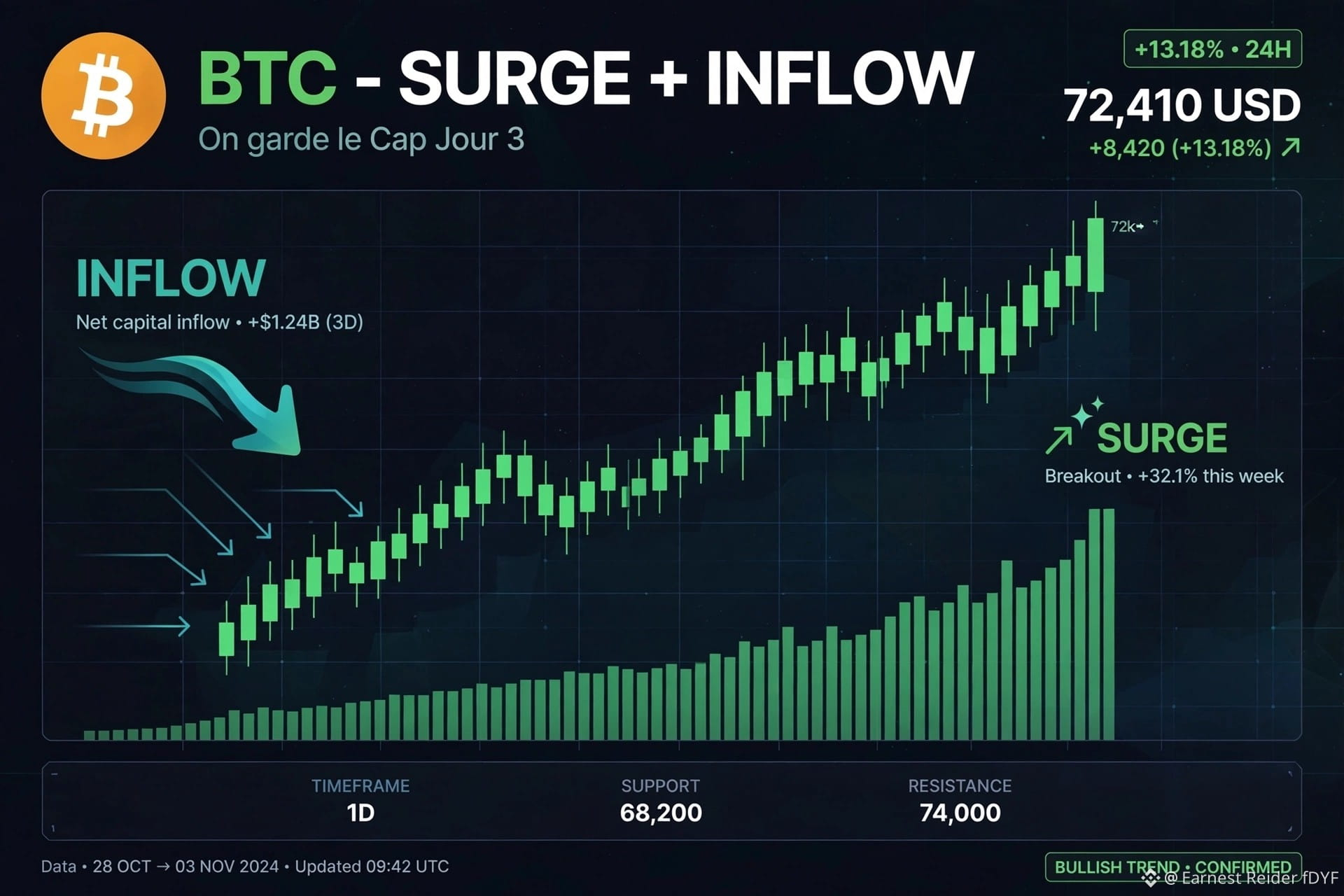
$BTC keeps the Cap Day 3 : From SURGE to INFLOW 🚀
Yesterday WOTD = SURGE confirmed (+8.94% on BTC that day)
Today WOTD = INFLOW confirmed in 2 attempts!
Lesson of the day:
SURGE is the price that explodes
INFLOW is the real money that ENTERS to push the price
Without INFLOW, SURGE quickly fizzles out
With INFLOW + Volume, that's the start of the real rally
My BTC / USDT analysis
{spot}(BTCUSDT)
this morning on the candlestick chart:
Price consolidates but INFLOW is positive. The fuel arrives before the rocket.
My live strategy:
I stay in Soft Staking BNB every night, 0 risk, and I wait for INFLOW + Volume confirmation for the next move. I linked my real trade to this post.
And you, do you see INFLOW continuing this week on BTC?
#USDT。 #WOTD #cryptoeducational
$BTC keeps the Cap Day 3 : From SURGE to INFLOW 🚀
Yesterday WOTD = SURGE confirmed (+8.94% on BTC that day)
Today WOTD = INFLOW confirmed in 2 attempts!
Lesson of the day:
SURGE is the price that explodes
INFLOW is the real money that ENTERS to push the price
Without INFLOW, SURGE quickly fizzles out
With INFLOW + Volume, that's the start of the real rally
My BTC / USDT analysis
this morning on the candlestick chart:
Price consolidates but INFLOW is positive. The fuel arrives before the rocket.
My live strategy:
I stay in Soft Staking BNB every night, 0 risk, and I wait for INFLOW + Volume confirmation for the next move. I linked my real trade to this post.
And you, do you see INFLOW continuing this week on BTC?
#USDT。 #WOTD #cryptoeducational
Yesterday WOTD = SURGE confirmed (+8.94% on BTC that day)
Today WOTD = INFLOW confirmed in 2 attempts!
Lesson of the day:
SURGE is the price that explodes
INFLOW is the real money that ENTERS to push the price
Without INFLOW, SURGE quickly fizzles out
With INFLOW + Volume, that's the start of the real rally
My BTC / USDT analysis
this morning on the candlestick chart:
Price consolidates but INFLOW is positive. The fuel arrives before the rocket.
My live strategy:
I stay in Soft Staking BNB every night, 0 risk, and I wait for INFLOW + Volume confirmation for the next move. I linked my real trade to this post.
And you, do you see INFLOW continuing this week on BTC?
#USDT。 #WOTD #cryptoeducational
2
1
268
·
--
High-Engagement Binance Square Post
🚨 Honest Truth About Crypto Trading (Most People Ignore This!): 📉❌
Having 500 followers is a great start, but getting 10-20 views hurts! The algorithm doesn't care about follower count—it cares about engagement. If people aren't commenting, it stops showing your posts.
Let's change that right now. 👇
Here is a quick rule to turn things around: Stop just sharing charts. Start asking questions. People love giving their opinions in the comments!
👉 Quick question for everyone reading this right now:
What is the absolute biggest mistake you've made as a beginner in crypto? Was it FOMO buying, bad leverage, or holding too long?
Drop your honest story in the comments below! Let’s learn from each other. 💬🔥
Hit that Like ❤️ and Share if you agree that community learning is the best strategy! 🚀
#BinanceSquare #cryptoeducational #TradingCommunity #Write2Earn
High-Engagement Binance Square Post
🚨 Honest Truth About Crypto Trading (Most People Ignore This!): 📉❌
Having 500 followers is a great start, but getting 10-20 views hurts! The algorithm doesn't care about follower count—it cares about engagement. If people aren't commenting, it stops showing your posts.
Let's change that right now. 👇
Here is a quick rule to turn things around: Stop just sharing charts. Start asking questions. People love giving their opinions in the comments!
👉 Quick question for everyone reading this right now:
What is the absolute biggest mistake you've made as a beginner in crypto? Was it FOMO buying, bad leverage, or holding too long?
Drop your honest story in the comments below! Let’s learn from each other. 💬🔥
Hit that Like ❤️ and Share if you agree that community learning is the best strategy! 🚀
#BinanceSquare #cryptoeducational #TradingCommunity #Write2Earn
🚨 Honest Truth About Crypto Trading (Most People Ignore This!): 📉❌
Having 500 followers is a great start, but getting 10-20 views hurts! The algorithm doesn't care about follower count—it cares about engagement. If people aren't commenting, it stops showing your posts.
Let's change that right now. 👇
Here is a quick rule to turn things around: Stop just sharing charts. Start asking questions. People love giving their opinions in the comments!
👉 Quick question for everyone reading this right now:
What is the absolute biggest mistake you've made as a beginner in crypto? Was it FOMO buying, bad leverage, or holding too long?
Drop your honest story in the comments below! Let’s learn from each other. 💬🔥
Hit that Like ❤️ and Share if you agree that community learning is the best strategy! 🚀
#BinanceSquare #cryptoeducational #TradingCommunity #Write2Earn
11

Bitcoin Dominance: The Signal Most Altcoin Investors Miss
Bitcoin is stable... so why are many altcoins still losing momentum?
The answer isn't always Bitcoin's price. Sometimes, the real story is Bitcoin Dominance (BTC.D).
Bitcoin Dominance shows how much of the total cryptocurrency market belongs to Bitcoin. If BTC Dominance is 55%, it means Bitcoin represents 55% of the entire crypto market's value.
Why does this matter?
Because understanding where money is flowing can help you better understand the market—not predict it.
📈 When Bitcoin Dominance rises, more capital often flows into Bitcoin. During these periods, many altcoins may struggle to keep pace, even if the overall crypto market appears healthy.
📉 When Bitcoin Dominance falls while the total crypto market continues to grow, investors often rotate into altcoins. This phase is commonly known as Altcoin Season.
A good historical example was the 2020–2021 bull market, when Bitcoin Dominance declined while Ethereum and many other altcoins gained market share, showing how capital rotated across the broader crypto market.
Important: Bitcoin Dominance is only one piece of the puzzle. Always combine it with price action, trading volume, market sentiment, and your own research before making investment decisions.
🔑 Key Takeaways
✅ Bitcoin Dominance shows where capital is concentrated across the crypto market.
✅ Rising dominance often favors Bitcoin over most altcoins.
✅ Use Bitcoin Dominance as a guide—not as a crystal ball.
What's your view?
Do you check Bitcoin Dominance before buying altcoins, or do you rely on other indicators?
Share your approach in the comments. I'd love to hear your perspective. 👇
If this breakdown helped, follow for simple, fact-based crypto education with no hype—just clear insights.
#Bitcoin❗ #BitcoinDominance #cryptoeducational #Altcoins #MarketAnalysis
Bitcoin Dominance: The Signal Most Altcoin Investors Miss
Bitcoin is stable... so why are many altcoins still losing momentum?
The answer isn't always Bitcoin's price. Sometimes, the real story is Bitcoin Dominance (BTC.D).
Bitcoin Dominance shows how much of the total cryptocurrency market belongs to Bitcoin. If BTC Dominance is 55%, it means Bitcoin represents 55% of the entire crypto market's value.
Why does this matter?
Because understanding where money is flowing can help you better understand the market—not predict it.
📈 When Bitcoin Dominance rises, more capital often flows into Bitcoin. During these periods, many altcoins may struggle to keep pace, even if the overall crypto market appears healthy.
📉 When Bitcoin Dominance falls while the total crypto market continues to grow, investors often rotate into altcoins. This phase is commonly known as Altcoin Season.
A good historical example was the 2020–2021 bull market, when Bitcoin Dominance declined while Ethereum and many other altcoins gained market share, showing how capital rotated across the broader crypto market.
Important: Bitcoin Dominance is only one piece of the puzzle. Always combine it with price action, trading volume, market sentiment, and your own research before making investment decisions.
🔑 Key Takeaways
✅ Bitcoin Dominance shows where capital is concentrated across the crypto market.
✅ Rising dominance often favors Bitcoin over most altcoins.
✅ Use Bitcoin Dominance as a guide—not as a crystal ball.
What's your view?
Do you check Bitcoin Dominance before buying altcoins, or do you rely on other indicators?
Share your approach in the comments. I'd love to hear your perspective. 👇
If this breakdown helped, follow for simple, fact-based crypto education with no hype—just clear insights.
#Bitcoin❗ #BitcoinDominance #cryptoeducational #Altcoins #MarketAnalysis
Bitcoin is stable... so why are many altcoins still losing momentum?
The answer isn't always Bitcoin's price. Sometimes, the real story is Bitcoin Dominance (BTC.D).
Bitcoin Dominance shows how much of the total cryptocurrency market belongs to Bitcoin. If BTC Dominance is 55%, it means Bitcoin represents 55% of the entire crypto market's value.
Why does this matter?
Because understanding where money is flowing can help you better understand the market—not predict it.
📈 When Bitcoin Dominance rises, more capital often flows into Bitcoin. During these periods, many altcoins may struggle to keep pace, even if the overall crypto market appears healthy.
📉 When Bitcoin Dominance falls while the total crypto market continues to grow, investors often rotate into altcoins. This phase is commonly known as Altcoin Season.
A good historical example was the 2020–2021 bull market, when Bitcoin Dominance declined while Ethereum and many other altcoins gained market share, showing how capital rotated across the broader crypto market.
Important: Bitcoin Dominance is only one piece of the puzzle. Always combine it with price action, trading volume, market sentiment, and your own research before making investment decisions.
🔑 Key Takeaways
✅ Bitcoin Dominance shows where capital is concentrated across the crypto market.
✅ Rising dominance often favors Bitcoin over most altcoins.
✅ Use Bitcoin Dominance as a guide—not as a crystal ball.
What's your view?
Do you check Bitcoin Dominance before buying altcoins, or do you rely on other indicators?
Share your approach in the comments. I'd love to hear your perspective. 👇
If this breakdown helped, follow for simple, fact-based crypto education with no hype—just clear insights.
#Bitcoin❗ #BitcoinDominance #cryptoeducational #Altcoins #MarketAnalysis

1
96

·
--
$IO .NET: The Decentralized AI Revolution
{spot}(IOUSDT)
👉 “IO.NET — Powering AI with Decentralized Cloud Computing”
IO.NET is redefining how AI models access computing power. Instead of relying on centralized servers, it connects thousands of GPUs worldwide through a decentralized network.For beginners: think of it as “Airbnb for GPUs” — anyone can rent or provide computing power.
For experienced traders: IO token fuels the ecosystem, rewarding providers and enabling scalable AI workloads.💡 Reliable insight: IO.NET bridges AI + blockchain, a sector projected to grow exponentially. Watch for partnerships and adoption metrics — they often precede major price movements.
IO.NET isn’t just another crypto — it’s the backbone of decentralized AI infrastructure. Smart investors are already exploring its potential. Plan your strategy now on Binance 🚀
#cryptoeducational #BinanceAffiliate #ionet #AIBlockchain #DecentralizedComputing
$IO .NET: The Decentralized AI Revolution
👉 “IO.NET — Powering AI with Decentralized Cloud Computing”
IO.NET is redefining how AI models access computing power. Instead of relying on centralized servers, it connects thousands of GPUs worldwide through a decentralized network.For beginners: think of it as “Airbnb for GPUs” — anyone can rent or provide computing power.
For experienced traders: IO token fuels the ecosystem, rewarding providers and enabling scalable AI workloads.💡 Reliable insight: IO.NET bridges AI + blockchain, a sector projected to grow exponentially. Watch for partnerships and adoption metrics — they often precede major price movements.
IO.NET isn’t just another crypto — it’s the backbone of decentralized AI infrastructure. Smart investors are already exploring its potential. Plan your strategy now on Binance 🚀
#cryptoeducational #BinanceAffiliate #ionet #AIBlockchain #DecentralizedComputing
👉 “IO.NET — Powering AI with Decentralized Cloud Computing”
IO.NET is redefining how AI models access computing power. Instead of relying on centralized servers, it connects thousands of GPUs worldwide through a decentralized network.For beginners: think of it as “Airbnb for GPUs” — anyone can rent or provide computing power.
For experienced traders: IO token fuels the ecosystem, rewarding providers and enabling scalable AI workloads.💡 Reliable insight: IO.NET bridges AI + blockchain, a sector projected to grow exponentially. Watch for partnerships and adoption metrics — they often precede major price movements.
IO.NET isn’t just another crypto — it’s the backbone of decentralized AI infrastructure. Smart investors are already exploring its potential. Plan your strategy now on Binance 🚀
#cryptoeducational #BinanceAffiliate #ionet #AIBlockchain #DecentralizedComputing

1
135

·
--
Article
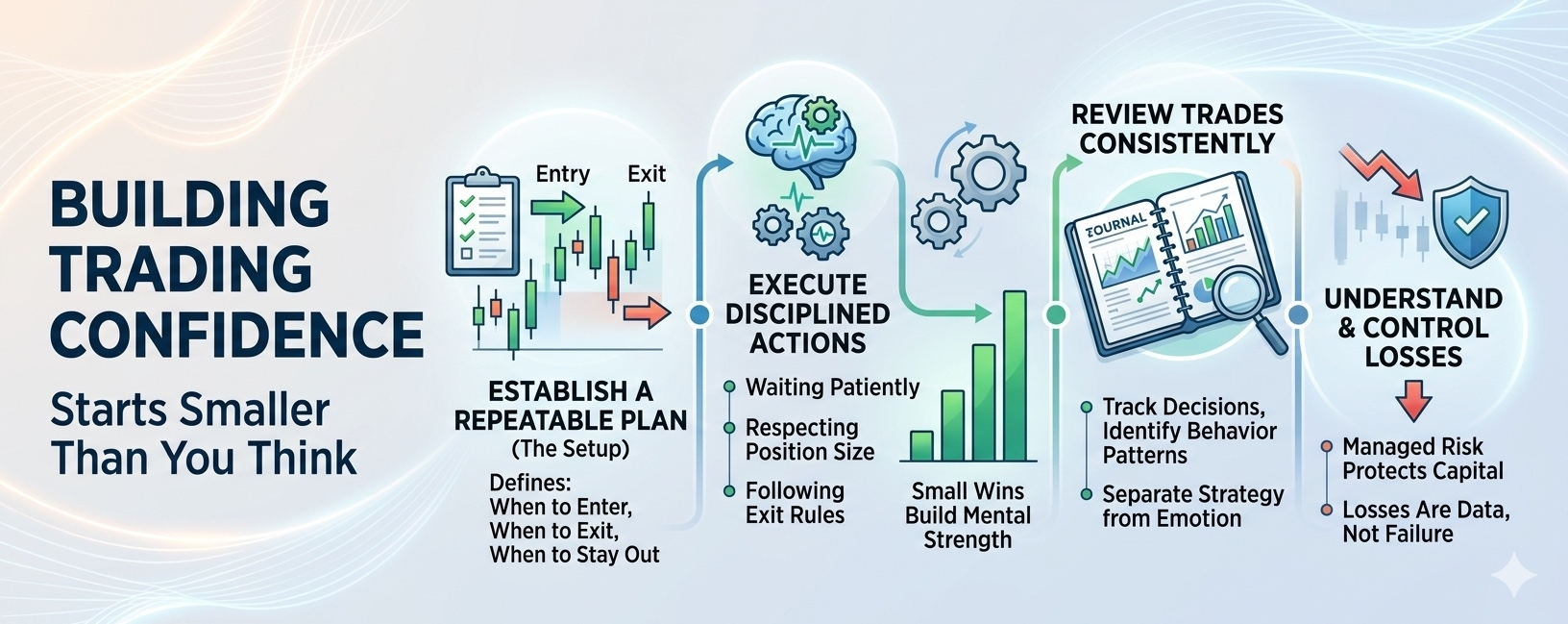
🧭 Confidence in Trading Starts Smaller Than You ThinkConfidence in trading is often misunderstood. Many assume it comes after a series of big wins or a breakthrough moment in the market. In reality, it develops quietly—built through discipline, repetition, and trust in a structured process.
It begins with something simple: executing a trade exactly as planned.
📊 The Foundation: A Repeatable Plan
Confidence cannot exist without structure. A repeatable trading plan defines:
When to enterWhen to exitWhen to stay out
This is often referred to as a setup—a specific market condition that aligns with your strategy.
When you consistently follow a defined setup:
Losses become acceptable because they were plannedWins become meaningful because they validate your system
Without a plan, outcomes feel random. With a plan, every result becomes data.
🧠 Small Wins Build Mental Strength
Early confidence doesn’t come from large profits. It comes from small, disciplined actions:
Waiting patiently instead of forcing tradesRespecting position sizeFollowing exit rules without hesitation
These actions train the mind to stay stable under pressure.
Markets are unpredictable. Emotional control is not.
Over time, discipline creates familiarity—and familiarity reduces fear.
⏳ Reviewing Trades Creates Clarity
One of the biggest differences between average and professional traders is review.
A trading journal helps you:
Track decisions, not just outcomesIdentify patterns in behaviorSeparate strategy from emotion
When you review trades consistently, you stop relying on memory and start relying on evidence.
Confidence becomes stronger when it is backed by proof.
📉 The Role of Losses
Losses are not the opposite of confidence—they are part of it.
A controlled loss means:
Your risk management is workingYour system is being followedYour capital is protected
Traders who manage losses well develop long-term confidence because they know no single trade can damage their account.
Consistency matters more than correctness.
🚀 When Confidence Starts to Show
As confidence develops:
You hesitate lessYou trust your entriesYou size positions more accuratelyYou stop chasing the market
Most importantly, you stop needing to be right all the time.
Confidence is not about predicting the market—it’s about executing your strategy without doubt.
🎯 How Do You Know You’re Becoming a Confident Trader?
You’ll notice subtle changes:
You follow your plan even after a lossYou don’t feel urgency to trade constantlyYou focus on process instead of profitYou review mistakes without frustration
Confidence isn’t loud. It’s steady.
It’s the ability to operate calmly in an environment designed to create stress.
📌 Final Thought
Confidence in trading is built—not found.
It grows through:
RepetitionStructureReflection
Each disciplined decision adds another layer of trust in your process.
Over time, that trust becomes your edge.
#TradingPsychology #RiskManagement #TradingDiscipline #CryptoEducational #ArifAlpha
🧭 Confidence in Trading Starts Smaller Than You Think
Confidence in trading is often misunderstood. Many assume it comes after a series of big wins or a breakthrough moment in the market. In reality, it develops quietly—built through discipline, repetition, and trust in a structured process.
It begins with something simple: executing a trade exactly as planned.
📊 The Foundation: A Repeatable Plan
Confidence cannot exist without structure. A repeatable trading plan defines:
When to enterWhen to exitWhen to stay out
This is often referred to as a setup—a specific market condition that aligns with your strategy.
When you consistently follow a defined setup:
Losses become acceptable because they were plannedWins become meaningful because they validate your system
Without a plan, outcomes feel random. With a plan, every result becomes data.
🧠 Small Wins Build Mental Strength
Early confidence doesn’t come from large profits. It comes from small, disciplined actions:
Waiting patiently instead of forcing tradesRespecting position sizeFollowing exit rules without hesitation
These actions train the mind to stay stable under pressure.
Markets are unpredictable. Emotional control is not.
Over time, discipline creates familiarity—and familiarity reduces fear.
⏳ Reviewing Trades Creates Clarity
One of the biggest differences between average and professional traders is review.
A trading journal helps you:
Track decisions, not just outcomesIdentify patterns in behaviorSeparate strategy from emotion
When you review trades consistently, you stop relying on memory and start relying on evidence.
Confidence becomes stronger when it is backed by proof.
📉 The Role of Losses
Losses are not the opposite of confidence—they are part of it.
A controlled loss means:
Your risk management is workingYour system is being followedYour capital is protected
Traders who manage losses well develop long-term confidence because they know no single trade can damage their account.
Consistency matters more than correctness.
🚀 When Confidence Starts to Show
As confidence develops:
You hesitate lessYou trust your entriesYou size positions more accuratelyYou stop chasing the market
Most importantly, you stop needing to be right all the time.
Confidence is not about predicting the market—it’s about executing your strategy without doubt.
🎯 How Do You Know You’re Becoming a Confident Trader?
You’ll notice subtle changes:
You follow your plan even after a lossYou don’t feel urgency to trade constantlyYou focus on process instead of profitYou review mistakes without frustration
Confidence isn’t loud. It’s steady.
It’s the ability to operate calmly in an environment designed to create stress.
📌 Final Thought
Confidence in trading is built—not found.
It grows through:
RepetitionStructureReflection
Each disciplined decision adds another layer of trust in your process.
Over time, that trust becomes your edge.
#TradingPsychology #RiskManagement #TradingDiscipline #CryptoEducational #ArifAlpha
It begins with something simple: executing a trade exactly as planned.
📊 The Foundation: A Repeatable Plan
Confidence cannot exist without structure. A repeatable trading plan defines:
When to enterWhen to exitWhen to stay out
This is often referred to as a setup—a specific market condition that aligns with your strategy.
When you consistently follow a defined setup:
Losses become acceptable because they were plannedWins become meaningful because they validate your system
Without a plan, outcomes feel random. With a plan, every result becomes data.
🧠 Small Wins Build Mental Strength
Early confidence doesn’t come from large profits. It comes from small, disciplined actions:
Waiting patiently instead of forcing tradesRespecting position sizeFollowing exit rules without hesitation
These actions train the mind to stay stable under pressure.
Markets are unpredictable. Emotional control is not.
Over time, discipline creates familiarity—and familiarity reduces fear.
⏳ Reviewing Trades Creates Clarity
One of the biggest differences between average and professional traders is review.
A trading journal helps you:
Track decisions, not just outcomesIdentify patterns in behaviorSeparate strategy from emotion
When you review trades consistently, you stop relying on memory and start relying on evidence.
Confidence becomes stronger when it is backed by proof.
📉 The Role of Losses
Losses are not the opposite of confidence—they are part of it.
A controlled loss means:
Your risk management is workingYour system is being followedYour capital is protected
Traders who manage losses well develop long-term confidence because they know no single trade can damage their account.
Consistency matters more than correctness.
🚀 When Confidence Starts to Show
As confidence develops:
You hesitate lessYou trust your entriesYou size positions more accuratelyYou stop chasing the market
Most importantly, you stop needing to be right all the time.
Confidence is not about predicting the market—it’s about executing your strategy without doubt.
🎯 How Do You Know You’re Becoming a Confident Trader?
You’ll notice subtle changes:
You follow your plan even after a lossYou don’t feel urgency to trade constantlyYou focus on process instead of profitYou review mistakes without frustration
Confidence isn’t loud. It’s steady.
It’s the ability to operate calmly in an environment designed to create stress.
📌 Final Thought
Confidence in trading is built—not found.
It grows through:
RepetitionStructureReflection
Each disciplined decision adds another layer of trust in your process.
Over time, that trust becomes your edge.
#TradingPsychology #RiskManagement #TradingDiscipline #CryptoEducational #ArifAlpha
138

·
--
Bullish
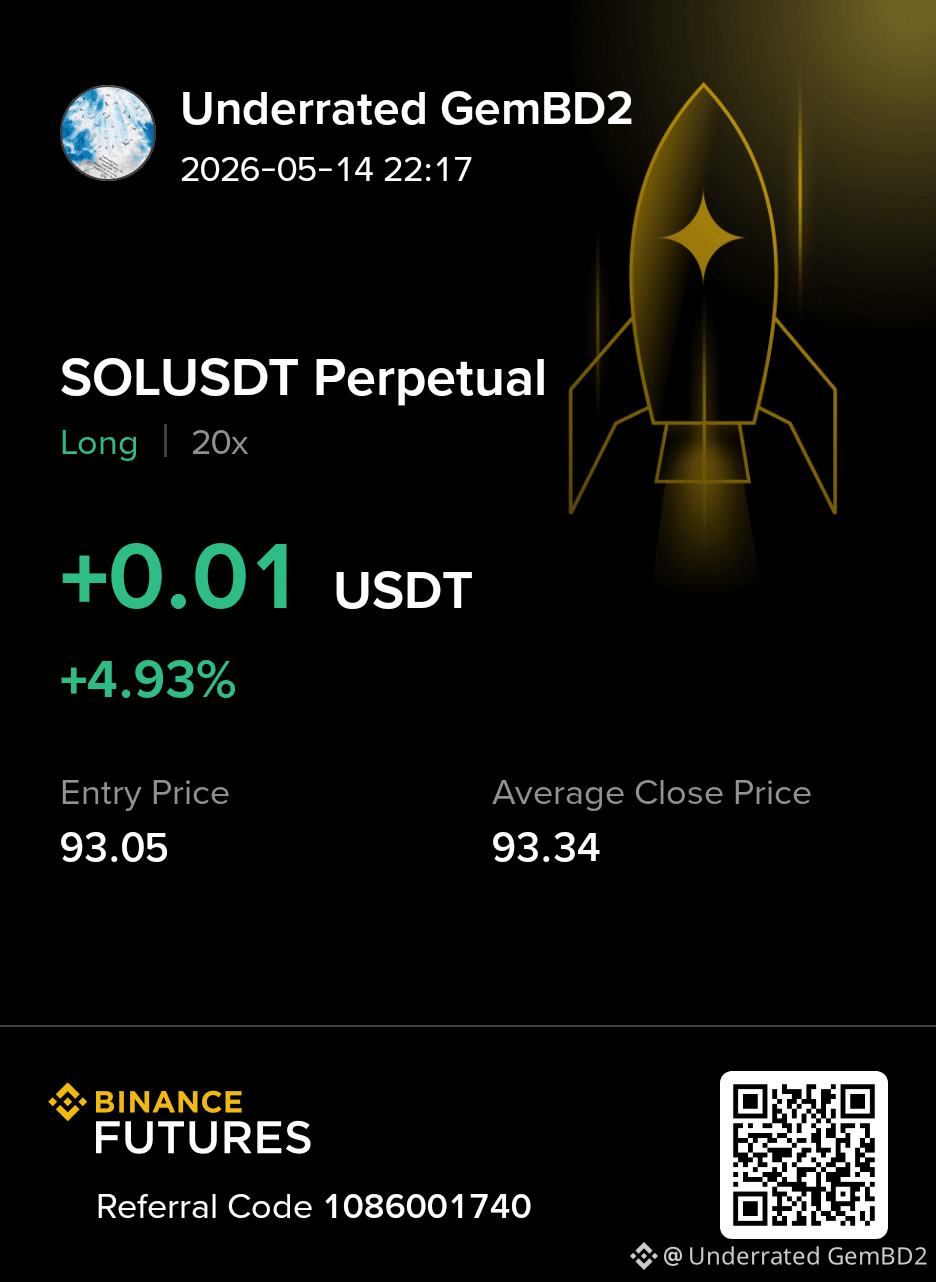
$SOL/USDT is Back in Bullish Track! Small Steps to Big Dreams 🚀📈
The crypto market is highly volatile right now, but the SOL/USDT pair is showing strong bullish momentum once again! 🔥
As you can see from my Binance Futures PNL analysis, my profit amount is very small (Cumulative PNL +5.14%). However, my primary focus right now is not just profit, but mastering the market mechanics and refining my trading strategy. 📊💡 Every small win counts. I believe that with continuous learning, proper risk management, and patience, I will reach my goal of becoming a professional trader one day. 💪🎯
⚠️ An Important Risk Warning:
The current market condition is extremely volatile and unpredictable. Please do not follow anyone blindly. Always Do Your Own Research (DYOR) and analyze thoroughly before taking any positions. Trading without proper knowledge and analysis can lead to heavy losses! 🛑📉
Let's learn together, trade safely, and grow step by step! 🤝✨
#Solana #SOLUSDT💰 #BinanceFutures #CryptoTrading #LearnAndEarn #TradingJourney #DYOR #RiskManagement #CryptoEducational
$SOL/USDT is Back in Bullish Track! Small Steps to Big Dreams 🚀📈
The crypto market is highly volatile right now, but the SOL/USDT pair is showing strong bullish momentum once again! 🔥
As you can see from my Binance Futures PNL analysis, my profit amount is very small (Cumulative PNL +5.14%). However, my primary focus right now is not just profit, but mastering the market mechanics and refining my trading strategy. 📊💡 Every small win counts. I believe that with continuous learning, proper risk management, and patience, I will reach my goal of becoming a professional trader one day. 💪🎯
⚠️ An Important Risk Warning:
The current market condition is extremely volatile and unpredictable. Please do not follow anyone blindly. Always Do Your Own Research (DYOR) and analyze thoroughly before taking any positions. Trading without proper knowledge and analysis can lead to heavy losses! 🛑📉
Let's learn together, trade safely, and grow step by step! 🤝✨
#Solana #SOLUSDT💰 #BinanceFutures #CryptoTrading #LearnAndEarn #TradingJourney #DYOR #RiskManagement #CryptoEducational
The crypto market is highly volatile right now, but the SOL/USDT pair is showing strong bullish momentum once again! 🔥
As you can see from my Binance Futures PNL analysis, my profit amount is very small (Cumulative PNL +5.14%). However, my primary focus right now is not just profit, but mastering the market mechanics and refining my trading strategy. 📊💡 Every small win counts. I believe that with continuous learning, proper risk management, and patience, I will reach my goal of becoming a professional trader one day. 💪🎯
⚠️ An Important Risk Warning:
The current market condition is extremely volatile and unpredictable. Please do not follow anyone blindly. Always Do Your Own Research (DYOR) and analyze thoroughly before taking any positions. Trading without proper knowledge and analysis can lead to heavy losses! 🛑📉
Let's learn together, trade safely, and grow step by step! 🤝✨
#Solana #SOLUSDT💰 #BinanceFutures #CryptoTrading #LearnAndEarn #TradingJourney #DYOR #RiskManagement #CryptoEducational
230

🧠 Crypto Quiz Challenge: Test Your Bitcoin Knowledge! 🔥
Q1. What is the maximum supply of Bitcoin?
A) 10 Million BTC
B) 21 Million BTC
C) 50 Million BTC
D) Unlimited BTC
👇 Comment your answer!
Q2. Who created Bitcoin?
A) Vitalik Buterin
B) Changpeng Zhao
C) Satoshi Nakamoto
D) Elon Musk
👇 What's your answer?
Q3. What does "HODL" mean in crypto?
A) Sell quickly
B) Hold for the long term
C) Start mining
D) Stop trading
Challenge:
Got 3/3 correct? You are on your way to becoming a Crypto Pro!
Follow for daily Crypto MCQs, facts & market knowledge 🚀
#bitcoin #CryptoQuizChallenge #BinanceSquareBTC #cryptoeducational #BTC
🧠 Crypto Quiz Challenge: Test Your Bitcoin Knowledge! 🔥
Q1. What is the maximum supply of Bitcoin?
A) 10 Million BTC
B) 21 Million BTC
C) 50 Million BTC
D) Unlimited BTC
👇 Comment your answer!
Q2. Who created Bitcoin?
A) Vitalik Buterin
B) Changpeng Zhao
C) Satoshi Nakamoto
D) Elon Musk
👇 What's your answer?
Q3. What does "HODL" mean in crypto?
A) Sell quickly
B) Hold for the long term
C) Start mining
D) Stop trading
Challenge:
Got 3/3 correct? You are on your way to becoming a Crypto Pro!
Follow for daily Crypto MCQs, facts & market knowledge 🚀
#bitcoin #CryptoQuizChallenge #BinanceSquareBTC #cryptoeducational #BTC
Q1. What is the maximum supply of Bitcoin?
A) 10 Million BTC
B) 21 Million BTC
C) 50 Million BTC
D) Unlimited BTC
👇 Comment your answer!
Q2. Who created Bitcoin?
A) Vitalik Buterin
B) Changpeng Zhao
C) Satoshi Nakamoto
D) Elon Musk
👇 What's your answer?
Q3. What does "HODL" mean in crypto?
A) Sell quickly
B) Hold for the long term
C) Start mining
D) Stop trading
Challenge:
Got 3/3 correct? You are on your way to becoming a Crypto Pro!
Follow for daily Crypto MCQs, facts & market knowledge 🚀
#bitcoin #CryptoQuizChallenge #BinanceSquareBTC #cryptoeducational #BTC

1
95
Log in to explore more content
Join global crypto users on Binance Square
⚡️ Get latest and useful information about crypto.
💬 Trusted by the world’s largest crypto exchange.
👍 Discover real insights from verified creators.
Email / Phone number
Trending Topics
1
#QNTRises39%
45,808 views
1,144 Discussing
2
#EthereumBreaksAbove$2700
4,121 views
115 Discussing
3
#BitgetBreachForgedRequestsNotStolenKeys
44,748 views
915 Discussing
4
#BitcoinSpotETFsTurnNetPositiveYTD
28,073 views
697 Discussing
5
#GrayscaleZcashETFHits$1BNetAssets
3,437 views
55 Discussing
6
#BitcoinSpotETFsNetInflow$191M
9,603 views
191 Discussing
7
#CFTCUpdatesGuidanceOnTokenizedAssets
69,556 views
1,643 Discussing
8
#BitgetSays$352MAffectedInHack
22,202 views
98 Discussing
9
#NYAndPolymarketSueEachOther
9,091 views
266 Discussing
10
#BinanceWillListHyperliquid(HYPE)
317,804 views
4,203 Discussing