
#aiinfrastructure
aiinfrastructure
152,808 views
1,121 Discussing
Hot
Latest


·
--
Bullish
AI STOCKS
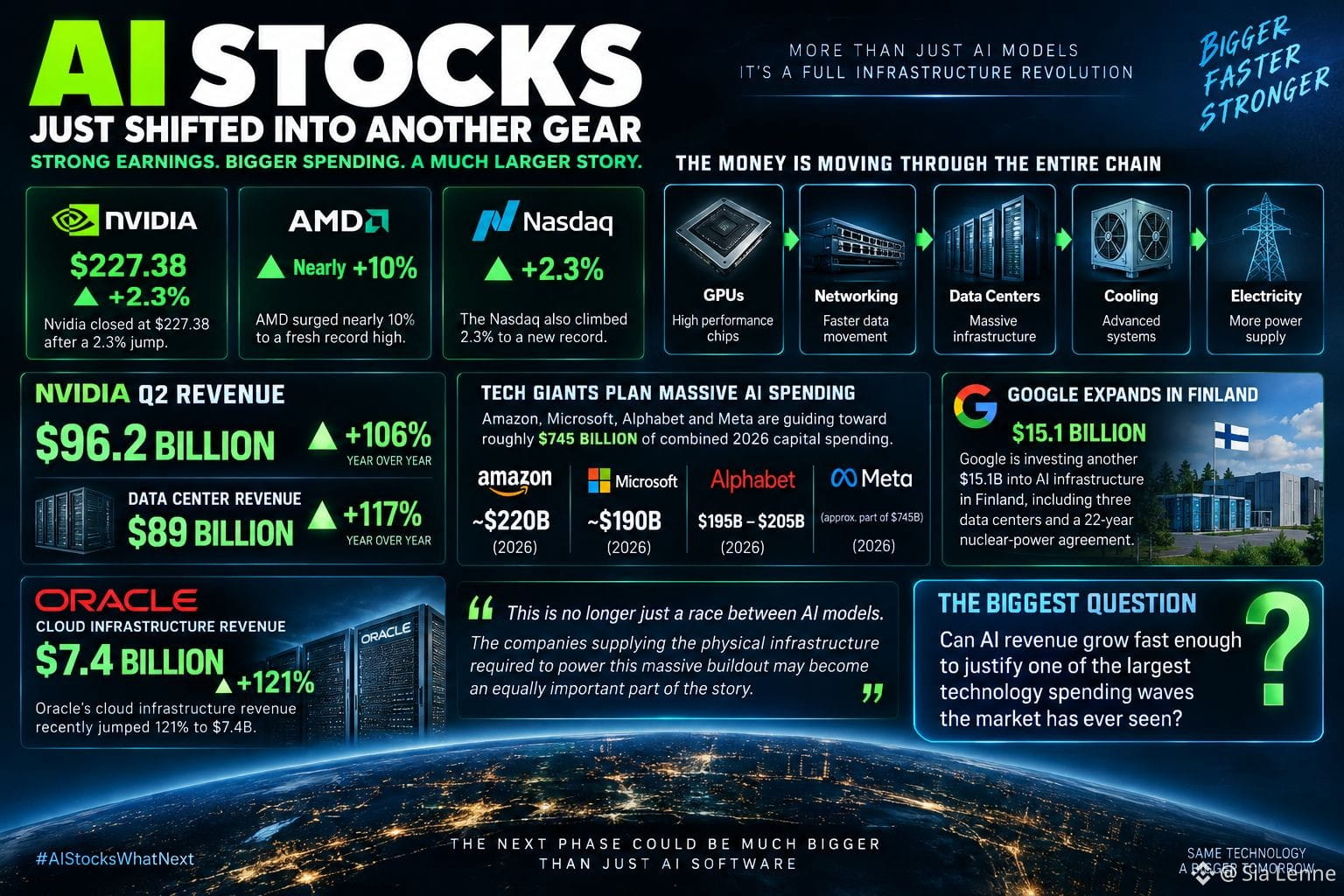
AI just shifted into another gear.
NVIDIA +2.3%
AMD nearly +10%
Nasdaq +2.3%
But the bigger story is AI infrastructure spending.
GPUs → Networking → Data Centers → Cooling → Power
With tech giants committing hundreds of billions to AI infrastructure, the next phase could extend far beyond AI software.
The key question:
Can AI revenue grow fast enough to justify this massive spending wave?
#AIStocks #AIInfrastructure #NVIDIA
$FLORK $RHEA $4Stock
{alpha}(560xd270d4e1ec6e6e0d28c0ecb8be966ec75997ffff)
{alpha}(560x4c067de26475e1cefee8b8d1f6e2266b33a2372e)
{alpha}(560xf40592daacb3e5abf358789f5688c0b4f64d7777)
AI STOCKS
AI just shifted into another gear.
NVIDIA +2.3%
AMD nearly +10%
Nasdaq +2.3%
But the bigger story is AI infrastructure spending.
GPUs → Networking → Data Centers → Cooling → Power
With tech giants committing hundreds of billions to AI infrastructure, the next phase could extend far beyond AI software.
The key question:
Can AI revenue grow fast enough to justify this massive spending wave?
#AIStocks #AIInfrastructure #NVIDIA
$FLORK $RHEA $4Stock
AI just shifted into another gear.
NVIDIA +2.3%
AMD nearly +10%
Nasdaq +2.3%
But the bigger story is AI infrastructure spending.
GPUs → Networking → Data Centers → Cooling → Power
With tech giants committing hundreds of billions to AI infrastructure, the next phase could extend far beyond AI software.
The key question:
Can AI revenue grow fast enough to justify this massive spending wave?
#AIStocks #AIInfrastructure #NVIDIA
$FLORK $RHEA $4Stock
225

·
--
#aistockswhatnext
AI stocks have already captured most of the spotlight. Nvidia, AMD and the biggest AI platforms are obvious parts of the trade.
But what happens when investors start looking one layer deeper? 👀
AI doesn’t run on GPUs alone.
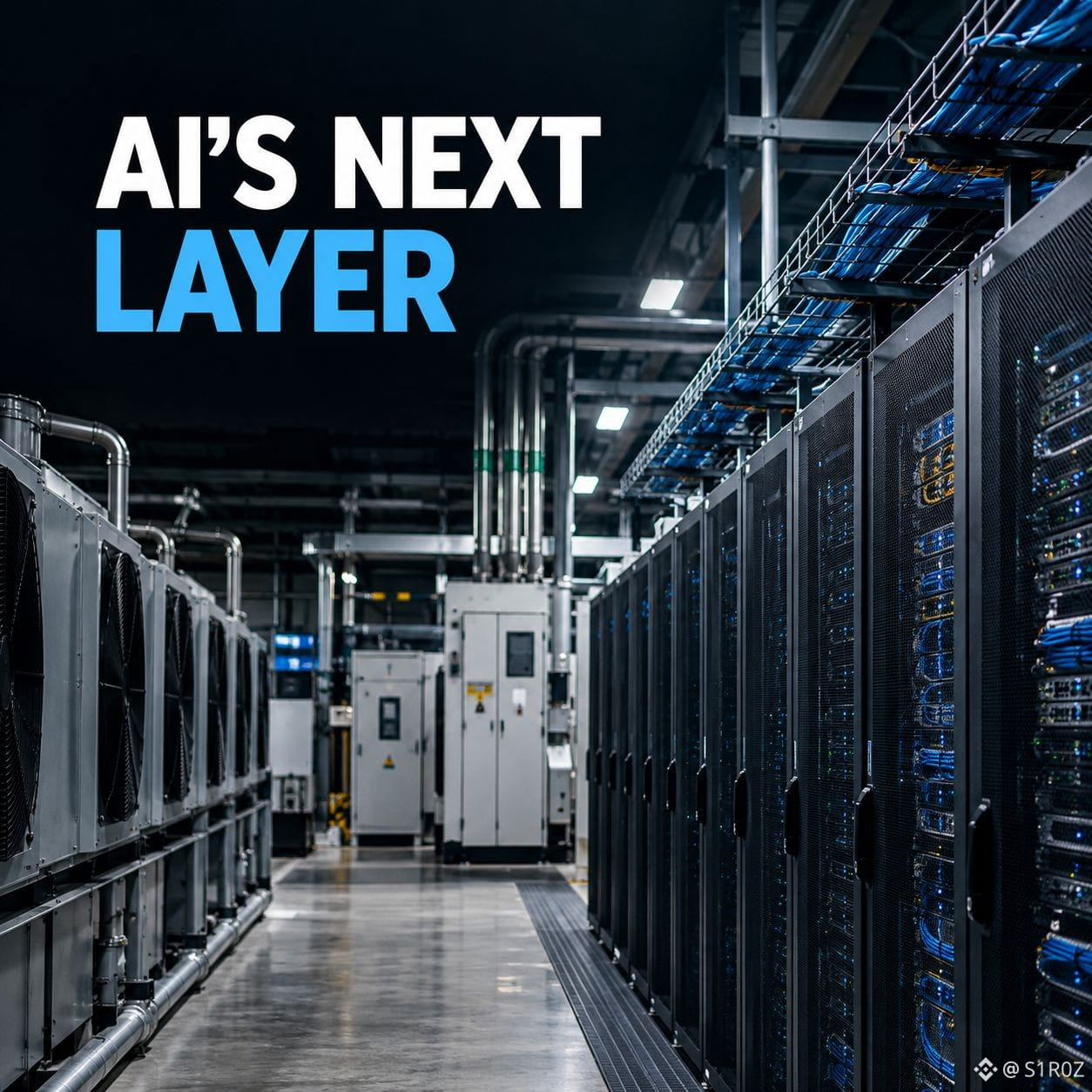
It needs data centers, power, networking, cooling, storage and cybersecurity to keep scaling. And that infrastructure is becoming a major part of the AI buildout.
What caught my attention is that the next opportunity may not necessarily be another headline AI chip winner. It could be the companies solving the physical bottlenecks behind AI growth.
We’re already seeing investors focus more on areas like power and cooling as AI data-center demand expands.
For me, the bigger question is:
Are the next AI winners the companies building the infrastructure behind the AI winners?
$NVDA
{future}(NVDAUSDT)
$AMD
{future}(AMDUSDT)
$GOOGL
{future}(GOOGLUSDT)
#AIStocksWhatNext #AIInfrastructure
#aistockswhatnext
AI stocks have already captured most of the spotlight. Nvidia, AMD and the biggest AI platforms are obvious parts of the trade.
But what happens when investors start looking one layer deeper? 👀
AI doesn’t run on GPUs alone.
It needs data centers, power, networking, cooling, storage and cybersecurity to keep scaling. And that infrastructure is becoming a major part of the AI buildout.
What caught my attention is that the next opportunity may not necessarily be another headline AI chip winner. It could be the companies solving the physical bottlenecks behind AI growth.
We’re already seeing investors focus more on areas like power and cooling as AI data-center demand expands.
For me, the bigger question is:
Are the next AI winners the companies building the infrastructure behind the AI winners?
$NVDA
$AMD
$GOOGL
#AIStocksWhatNext #AIInfrastructure
AI stocks have already captured most of the spotlight. Nvidia, AMD and the biggest AI platforms are obvious parts of the trade.
But what happens when investors start looking one layer deeper? 👀
AI doesn’t run on GPUs alone.
It needs data centers, power, networking, cooling, storage and cybersecurity to keep scaling. And that infrastructure is becoming a major part of the AI buildout.
What caught my attention is that the next opportunity may not necessarily be another headline AI chip winner. It could be the companies solving the physical bottlenecks behind AI growth.
We’re already seeing investors focus more on areas like power and cooling as AI data-center demand expands.
For me, the bigger question is:
Are the next AI winners the companies building the infrastructure behind the AI winners?
$NVDA
$AMD
$GOOGL
#AIStocksWhatNext #AIInfrastructure
1
129

#NvidiaToBuyAnother$1.5BSBEnergySharesPreIPO
⚡ NVIDIA JUST DOUBLED DOWN ON THE AI POWER BET 🚀
Chips may power the AI revolution,
but behind every chip is a hungry machine called infrastructure.
NVIDIA is committing another $1.5 billion to SB Energy ahead of its planned U.S. IPO, bringing its total investment commitment to $3 billion. The new shares are non-voting Class N stock, with the transaction priced at 90% of the IPO price.
SB Energy is building the physical layer behind AI, with 8.8 GW of data-center capacity contracted or under construction across projects including Texas and Ohio.
My Take: The important signal is not simply NVIDIA buying another stake. It is where NVIDIA is putting capital: beyond GPUs and into the power and data-center infrastructure required to deploy them at scale.
But there is another side. SB Energy reported a $3.21 billion net loss on $138.7 million of revenue for the first half of 2026, while its IPO has faced growing market caution and delays.
That makes NVIDIA's move more than a headline. It shows how deeply AI hardware demand is becoming connected to electricity, land, financing and physical computing capacity.
When AI becomes an infrastructure race, the biggest opportunity may not always sit where the algorithms are built.
❓ Is AI infrastructure becoming the next major capital battlefield?
Disclaimer: Informational content only, not financial advice. Future performance is uncertain.
#ArtificialIntelligence #AIInfrastructure #GrowWithSAC $FORM $PHA $MUBARAK
#NvidiaToBuyAnother$1.5BSBEnergySharesPreIPO
⚡ NVIDIA JUST DOUBLED DOWN ON THE AI POWER BET 🚀
Chips may power the AI revolution,
but behind every chip is a hungry machine called infrastructure.
NVIDIA is committing another $1.5 billion to SB Energy ahead of its planned U.S. IPO, bringing its total investment commitment to $3 billion. The new shares are non-voting Class N stock, with the transaction priced at 90% of the IPO price.
SB Energy is building the physical layer behind AI, with 8.8 GW of data-center capacity contracted or under construction across projects including Texas and Ohio.
My Take: The important signal is not simply NVIDIA buying another stake. It is where NVIDIA is putting capital: beyond GPUs and into the power and data-center infrastructure required to deploy them at scale.
But there is another side. SB Energy reported a $3.21 billion net loss on $138.7 million of revenue for the first half of 2026, while its IPO has faced growing market caution and delays.
That makes NVIDIA's move more than a headline. It shows how deeply AI hardware demand is becoming connected to electricity, land, financing and physical computing capacity.
When AI becomes an infrastructure race, the biggest opportunity may not always sit where the algorithms are built.
❓ Is AI infrastructure becoming the next major capital battlefield?
Disclaimer: Informational content only, not financial advice. Future performance is uncertain.
#ArtificialIntelligence #AIInfrastructure #GrowWithSAC $FORM $PHA $MUBARAK
⚡ NVIDIA JUST DOUBLED DOWN ON THE AI POWER BET 🚀
Chips may power the AI revolution,
but behind every chip is a hungry machine called infrastructure.
NVIDIA is committing another $1.5 billion to SB Energy ahead of its planned U.S. IPO, bringing its total investment commitment to $3 billion. The new shares are non-voting Class N stock, with the transaction priced at 90% of the IPO price.
SB Energy is building the physical layer behind AI, with 8.8 GW of data-center capacity contracted or under construction across projects including Texas and Ohio.
My Take: The important signal is not simply NVIDIA buying another stake. It is where NVIDIA is putting capital: beyond GPUs and into the power and data-center infrastructure required to deploy them at scale.
But there is another side. SB Energy reported a $3.21 billion net loss on $138.7 million of revenue for the first half of 2026, while its IPO has faced growing market caution and delays.
That makes NVIDIA's move more than a headline. It shows how deeply AI hardware demand is becoming connected to electricity, land, financing and physical computing capacity.
When AI becomes an infrastructure race, the biggest opportunity may not always sit where the algorithms are built.
❓ Is AI infrastructure becoming the next major capital battlefield?
Disclaimer: Informational content only, not financial advice. Future performance is uncertain.
#ArtificialIntelligence #AIInfrastructure #GrowWithSAC $FORM $PHA $MUBARAK

109

·
--
🚨 DEEPSEEK CUTS API COSTS BY 50% AS AI SECTOR MOMENTUM ACCELERATES $AI 💥
AI infrastructure cost efficiency just got a major boost as DeepSeek locks in full-day off-peak billing for adjusted workdays and weekends. Cutting token input costs down from 2 yuan to 1 yuan and output rates to 4 yuan gives developers a massive 50% discount during peak build windows. 📊
Smart money tracks compute efficiency closely because lower overhead directly accelerates developer adoption and model deployment velocity across decentralized AI protocols. 💡 When compute costs drop by half, builder activity expands exponentially, driving long-term value back to infrastructure networks. ⚡
💬 Will this aggressive pricing pressure force competing AI protocols to slash their compute fees next? 👇
⚠️ Not financial advice. Always manage your risk. 🛡️
🏷️ #AI #AIInfrastructure #Altcoins #Crypto
⚡ 🎯
🚨 DEEPSEEK CUTS API COSTS BY 50% AS AI SECTOR MOMENTUM ACCELERATES $AI 💥
AI infrastructure cost efficiency just got a major boost as DeepSeek locks in full-day off-peak billing for adjusted workdays and weekends. Cutting token input costs down from 2 yuan to 1 yuan and output rates to 4 yuan gives developers a massive 50% discount during peak build windows. 📊
Smart money tracks compute efficiency closely because lower overhead directly accelerates developer adoption and model deployment velocity across decentralized AI protocols. 💡 When compute costs drop by half, builder activity expands exponentially, driving long-term value back to infrastructure networks. ⚡
💬 Will this aggressive pricing pressure force competing AI protocols to slash their compute fees next? 👇
⚠️ Not financial advice. Always manage your risk. 🛡️
🏷️ #AI #AIInfrastructure #Altcoins #Crypto
⚡ 🎯
AI infrastructure cost efficiency just got a major boost as DeepSeek locks in full-day off-peak billing for adjusted workdays and weekends. Cutting token input costs down from 2 yuan to 1 yuan and output rates to 4 yuan gives developers a massive 50% discount during peak build windows. 📊
Smart money tracks compute efficiency closely because lower overhead directly accelerates developer adoption and model deployment velocity across decentralized AI protocols. 💡 When compute costs drop by half, builder activity expands exponentially, driving long-term value back to infrastructure networks. ⚡
💬 Will this aggressive pricing pressure force competing AI protocols to slash their compute fees next? 👇
⚠️ Not financial advice. Always manage your risk. 🛡️
🏷️ #AI #AIInfrastructure #Altcoins #Crypto
⚡ 🎯
1
129

🚀 $AI SURGES AS RUNWAY DOUBLES ARR, SMART MONEY EYES AI INFRA 💥
Runway's ARR sprinted past $200 M, a 2× jump in five months, while NRR topped 300%—a clear institutional appetite for AI‑powered video pipelines. 🦈 Enterprise giants like Amazon and Microsoft are already on board, turning the platform into a high‑velocity liquidity pool.
That macro tailwind is spilling into $AI , where smart‑money inflows are tracking AI infrastructure earnings beats. 📊 Expect the token to test the next resistance band as order‑block accumulation intensifies. ⚡
💬 Are you loading up on $AI ahead of the next institutional push?
⚠️ Not financial advice. Always manage your risk. 🛡️
🏷️ #AI #SmartMoney #Crypto #AIInfrastructure
🚀 🔥
🚀 $AI SURGES AS RUNWAY DOUBLES ARR, SMART MONEY EYES AI INFRA 💥
Runway's ARR sprinted past $200 M, a 2× jump in five months, while NRR topped 300%—a clear institutional appetite for AI‑powered video pipelines. 🦈 Enterprise giants like Amazon and Microsoft are already on board, turning the platform into a high‑velocity liquidity pool.
That macro tailwind is spilling into $AI , where smart‑money inflows are tracking AI infrastructure earnings beats. 📊 Expect the token to test the next resistance band as order‑block accumulation intensifies. ⚡
💬 Are you loading up on $AI ahead of the next institutional push?
⚠️ Not financial advice. Always manage your risk. 🛡️
🏷️ #AI #SmartMoney #Crypto #AIInfrastructure
🚀 🔥
Runway's ARR sprinted past $200 M, a 2× jump in five months, while NRR topped 300%—a clear institutional appetite for AI‑powered video pipelines. 🦈 Enterprise giants like Amazon and Microsoft are already on board, turning the platform into a high‑velocity liquidity pool.
That macro tailwind is spilling into $AI , where smart‑money inflows are tracking AI infrastructure earnings beats. 📊 Expect the token to test the next resistance band as order‑block accumulation intensifies. ⚡
💬 Are you loading up on $AI ahead of the next institutional push?
⚠️ Not financial advice. Always manage your risk. 🛡️
🏷️ #AI #SmartMoney #Crypto #AIInfrastructure
🚀 🔥
77

·
--
Robinhood brings AI infrastructure into a more familiar retail entry point2026-09-21
This isn’t a sudden development today, but a transaction disclosed by Robinhood on September 17 is still worth examining through the lens of “distribution methods”: Robinhood Ventures Fund I participated in Crusoe’s financing. The official description also notes that RVI is a closed-end fund, with a portfolio primarily made up of private companies, and designed for retail investors.
At first glance, this appears to be a way of packaging private exposure to AI infrastructure into a product form that’s easier to access. What users actually need to differentiate, however, are three things: the financing valuation of the underlying company, the fund’s own market price, and the liquidity at the time of trading. They do not automatically become the same risk just because the entry point is unified.
Robinhood brings AI infrastructure into a more familiar retail entry point
2026-09-21
This isn’t a sudden development today, but a transaction disclosed by Robinhood on September 17 is still worth examining through the lens of “distribution methods”: Robinhood Ventures Fund I participated in Crusoe’s financing. The official description also notes that RVI is a closed-end fund, with a portfolio primarily made up of private companies, and designed for retail investors.
At first glance, this appears to be a way of packaging private exposure to AI infrastructure into a product form that’s easier to access. What users actually need to differentiate, however, are three things: the financing valuation of the underlying company, the fund’s own market price, and the liquidity at the time of trading. They do not automatically become the same risk just because the entry point is unified.
This isn’t a sudden development today, but a transaction disclosed by Robinhood on September 17 is still worth examining through the lens of “distribution methods”: Robinhood Ventures Fund I participated in Crusoe’s financing. The official description also notes that RVI is a closed-end fund, with a portfolio primarily made up of private companies, and designed for retail investors.
At first glance, this appears to be a way of packaging private exposure to AI infrastructure into a product form that’s easier to access. What users actually need to differentiate, however, are three things: the financing valuation of the underlying company, the fund’s own market price, and the liquidity at the time of trading. They do not automatically become the same risk just because the entry point is unified.
70
·
--
Robinhood brings AI infrastructure investment to public financial channels2026-09-18
According to disclosures from Robinhood Newsroom, Robinhood Ventures Fund I participated in a funding round for Crusoe. Crusoe’s business narrative centers on energy, AI optimization for data centers, and cloud platforms.
The industry significance of this message is not that yet another investment target has appeared, but that financial platforms are connecting “mass-market asset entry points” with AI infrastructure. For users, making the entry simpler doesn’t mean the underlying risks are simpler too: valuation basis, exit routes, liquidity, and information disclosure still need to be understood separately. This article is for industry observation only and does not constitute investment advice.
Robinhood brings AI infrastructure investment to public financial channels
2026-09-18
According to disclosures from Robinhood Newsroom, Robinhood Ventures Fund I participated in a funding round for Crusoe. Crusoe’s business narrative centers on energy, AI optimization for data centers, and cloud platforms.
The industry significance of this message is not that yet another investment target has appeared, but that financial platforms are connecting “mass-market asset entry points” with AI infrastructure. For users, making the entry simpler doesn’t mean the underlying risks are simpler too: valuation basis, exit routes, liquidity, and information disclosure still need to be understood separately. This article is for industry observation only and does not constitute investment advice.
According to disclosures from Robinhood Newsroom, Robinhood Ventures Fund I participated in a funding round for Crusoe. Crusoe’s business narrative centers on energy, AI optimization for data centers, and cloud platforms.
The industry significance of this message is not that yet another investment target has appeared, but that financial platforms are connecting “mass-market asset entry points” with AI infrastructure. For users, making the entry simpler doesn’t mean the underlying risks are simpler too: valuation basis, exit routes, liquidity, and information disclosure still need to be understood separately. This article is for industry observation only and does not constitute investment advice.
87

·
--
Bullish
Crux AI arranges $22 billion loan to buy Google TPUs, backed by chips and customer contracts
📌 Crux AI, the AI cloud joint venture between Blackstone and Alphabet/Google, is arranging about $22 billion in financing from a group of 10 banks to purchase Google-made TPUs.
💡 The loan is backed by the value of the TPU inventory and Crux AI’s customer contracts. The structure shows AI credit expanding beyond data center financing toward direct funding of compute hardware and the cash flows generated by those assets.
🔎 The deal also includes a 1 billion revolving credit facility, while the banking group is seeking additional lenders and could later refinance part of the debt through the investment-grade bond market.
⚠️ Bloomberg cited people familiar with the matter, and no official closing announcement has been made by Crux AI, Blackstone, or Alphabet. If completed, the financing would support the expansion of TPUs beyond Google Cloud and reinforce the growing use of AI chips as collateral.
#AIInfrastructure $SAGA
Crux AI arranges $22 billion loan to buy Google TPUs, backed by chips and customer contracts
📌 Crux AI, the AI cloud joint venture between Blackstone and Alphabet/Google, is arranging about $22 billion in financing from a group of 10 banks to purchase Google-made TPUs.
💡 The loan is backed by the value of the TPU inventory and Crux AI’s customer contracts. The structure shows AI credit expanding beyond data center financing toward direct funding of compute hardware and the cash flows generated by those assets.
🔎 The deal also includes a 1 billion revolving credit facility, while the banking group is seeking additional lenders and could later refinance part of the debt through the investment-grade bond market.
⚠️ Bloomberg cited people familiar with the matter, and no official closing announcement has been made by Crux AI, Blackstone, or Alphabet. If completed, the financing would support the expansion of TPUs beyond Google Cloud and reinforce the growing use of AI chips as collateral.
#AIInfrastructure $SAGA
📌 Crux AI, the AI cloud joint venture between Blackstone and Alphabet/Google, is arranging about $22 billion in financing from a group of 10 banks to purchase Google-made TPUs.
💡 The loan is backed by the value of the TPU inventory and Crux AI’s customer contracts. The structure shows AI credit expanding beyond data center financing toward direct funding of compute hardware and the cash flows generated by those assets.
🔎 The deal also includes a 1 billion revolving credit facility, while the banking group is seeking additional lenders and could later refinance part of the debt through the investment-grade bond market.
⚠️ Bloomberg cited people familiar with the matter, and no official closing announcement has been made by Crux AI, Blackstone, or Alphabet. If completed, the financing would support the expansion of TPUs beyond Google Cloud and reinforce the growing use of AI chips as collateral.
#AIInfrastructure $SAGA

149

·
--
AI CHIP RACE JUST GOT BIGGER: SK HYNIX IS IN TALKS WITH INTEL FOR U.S. MEMORY PRODUCTION#SKHynixInTalksToMakeMemoryChipsInUS .SK hynix is reportedly in discussions with Intel about producing memory chips in the United States for the first time. One option under discussion involves using part of Intel’s planned Ohio manufacturing complex; another could involve a broader partnership with major cloud companies.
This matters because the AI boom is creating intense demand for advanced memory. SK hynix has already warned that memory demand could exceed available capacity for years, while manufacturers are dealing with tighter DRAM supply.
SK hynix is also expanding its existing U.S. footprint: it recently broke ground on an Indiana AI-memory facility focused on next-generation HBM and advanced packaging, with U.S. supply targeted from 2029.
🔮 MARKET INTERPRETATION — SPECULATION
This is bigger than one factory.
If an SK hynix–Intel agreement materializes, it could strengthen the U.S. AI semiconductor supply chain and reinforce the broader AI infrastructure narrative.
🔥 Potential catalyst: exploding AI/HBM demand + more U.S. chip production.
⚠️ Key risks: Talks may not result in a final agreement, U.S. manufacturing costs are higher, and advanced-memory technology carries geopolitical sensitivity.
For crypto traders, I’d watch whether the headline creates fresh attention around the AI + decentralized computing + infrastructure narrative—but it does not guarantee any AI-related token will pump.
👀 Could AI infrastructure become crypto’s next major rotation narrative?
#SKHynixInTalksToMakeMemoryChipsInUS #Aİ #Semiconductors #AIInfrastructure
$SYN
{spot}(SYNUSDT)
$AKE
{future}(AKEUSDT)
AI CHIP RACE JUST GOT BIGGER: SK HYNIX IS IN TALKS WITH INTEL FOR U.S. MEMORY PRODUCTION
#SKHynixInTalksToMakeMemoryChipsInUS .SK hynix is reportedly in discussions with Intel about producing memory chips in the United States for the first time. One option under discussion involves using part of Intel’s planned Ohio manufacturing complex; another could involve a broader partnership with major cloud companies.
This matters because the AI boom is creating intense demand for advanced memory. SK hynix has already warned that memory demand could exceed available capacity for years, while manufacturers are dealing with tighter DRAM supply.
SK hynix is also expanding its existing U.S. footprint: it recently broke ground on an Indiana AI-memory facility focused on next-generation HBM and advanced packaging, with U.S. supply targeted from 2029.
🔮 MARKET INTERPRETATION — SPECULATION
This is bigger than one factory.
If an SK hynix–Intel agreement materializes, it could strengthen the U.S. AI semiconductor supply chain and reinforce the broader AI infrastructure narrative.
🔥 Potential catalyst: exploding AI/HBM demand + more U.S. chip production.
⚠️ Key risks: Talks may not result in a final agreement, U.S. manufacturing costs are higher, and advanced-memory technology carries geopolitical sensitivity.
For crypto traders, I’d watch whether the headline creates fresh attention around the AI + decentralized computing + infrastructure narrative—but it does not guarantee any AI-related token will pump.
👀 Could AI infrastructure become crypto’s next major rotation narrative?
#SKHynixInTalksToMakeMemoryChipsInUS #Aİ #Semiconductors #AIInfrastructure
$SYN
$AKE
This matters because the AI boom is creating intense demand for advanced memory. SK hynix has already warned that memory demand could exceed available capacity for years, while manufacturers are dealing with tighter DRAM supply.
SK hynix is also expanding its existing U.S. footprint: it recently broke ground on an Indiana AI-memory facility focused on next-generation HBM and advanced packaging, with U.S. supply targeted from 2029.
🔮 MARKET INTERPRETATION — SPECULATION
This is bigger than one factory.
If an SK hynix–Intel agreement materializes, it could strengthen the U.S. AI semiconductor supply chain and reinforce the broader AI infrastructure narrative.
🔥 Potential catalyst: exploding AI/HBM demand + more U.S. chip production.
⚠️ Key risks: Talks may not result in a final agreement, U.S. manufacturing costs are higher, and advanced-memory technology carries geopolitical sensitivity.
For crypto traders, I’d watch whether the headline creates fresh attention around the AI + decentralized computing + infrastructure narrative—but it does not guarantee any AI-related token will pump.
👀 Could AI infrastructure become crypto’s next major rotation narrative?
#SKHynixInTalksToMakeMemoryChipsInUS #Aİ #Semiconductors #AIInfrastructure
$SYN
$AKE
190
🦈 $AI NEWS FLASH: SYSTEM ONE MODEL REDEFINES EXECUTION SPEED
$AI is not just another narrative pulse — it is becoming the infrastructure layer where fast, deterministic decisions get priced in. 📊 Jev’s parallel scoring and confidence output looks like a clean liquidity sweep: less noise, more executable judgment for alerts, routing, and service workflows.
If capital follows efficiency, the next leg may be about systems that act, not just chat. 💬 Does $AI deserve a structural premium, or is this still a pre-breakout accumulation zone?
⚠️ Not financial advice. Always manage your risk. 🛡️
🏷️ #AI #SystemOne #AIInfrastructure #Crypto
🎯
🦈 $AI NEWS FLASH: SYSTEM ONE MODEL REDEFINES EXECUTION SPEED
$AI is not just another narrative pulse — it is becoming the infrastructure layer where fast, deterministic decisions get priced in. 📊 Jev’s parallel scoring and confidence output looks like a clean liquidity sweep: less noise, more executable judgment for alerts, routing, and service workflows.
If capital follows efficiency, the next leg may be about systems that act, not just chat. 💬 Does $AI deserve a structural premium, or is this still a pre-breakout accumulation zone?
⚠️ Not financial advice. Always manage your risk. 🛡️
🏷️ #AI #SystemOne #AIInfrastructure #Crypto
🎯
$AI is not just another narrative pulse — it is becoming the infrastructure layer where fast, deterministic decisions get priced in. 📊 Jev’s parallel scoring and confidence output looks like a clean liquidity sweep: less noise, more executable judgment for alerts, routing, and service workflows.
If capital follows efficiency, the next leg may be about systems that act, not just chat. 💬 Does $AI deserve a structural premium, or is this still a pre-breakout accumulation zone?
⚠️ Not financial advice. Always manage your risk. 🛡️
🏷️ #AI #SystemOne #AIInfrastructure #Crypto
🎯
54

·
--
🚀 $AI CLOUD DRIVE UNVEILS INDEPENDENT ADRIVE LAUNCH – SMART AGENT SYNERGY! 🦈
📊 Volcano Engine’s ADrive creates a unified file vault where human‑crafted reports and autonomous Agent outputs coexist, enabling seamless hand‑offs without latency. The CLI now supports upload, download, and MCP‑driven sync, turning the cloud into a live order‑block for AI workloads. ⚡ This mirrors institutional liquidity pools: agents pull from the same depth, then replenish it, sharpening execution efficiency.
🦈 Tencent’s “Coming Soon” preview hints at a parallel battle for the same data‑flow frontier, but ADrive’s live trial already stakes a claim on top‑tier exchange‑grade reliability. 📌 Will developers pivot to this shared drive to accelerate multi‑agent pipelines? 💬
⚠️ Not financial advice. Always manage your risk. 🛡️
🏷️ #AI #CloudCompute #AgentTech #AIInfrastructure
🦈 🚀
🚀 $AI CLOUD DRIVE UNVEILS INDEPENDENT ADRIVE LAUNCH – SMART AGENT SYNERGY! 🦈
📊 Volcano Engine’s ADrive creates a unified file vault where human‑crafted reports and autonomous Agent outputs coexist, enabling seamless hand‑offs without latency. The CLI now supports upload, download, and MCP‑driven sync, turning the cloud into a live order‑block for AI workloads. ⚡ This mirrors institutional liquidity pools: agents pull from the same depth, then replenish it, sharpening execution efficiency.
🦈 Tencent’s “Coming Soon” preview hints at a parallel battle for the same data‑flow frontier, but ADrive’s live trial already stakes a claim on top‑tier exchange‑grade reliability. 📌 Will developers pivot to this shared drive to accelerate multi‑agent pipelines? 💬
⚠️ Not financial advice. Always manage your risk. 🛡️
🏷️ #AI #CloudCompute #AgentTech #AIInfrastructure
🦈 🚀
📊 Volcano Engine’s ADrive creates a unified file vault where human‑crafted reports and autonomous Agent outputs coexist, enabling seamless hand‑offs without latency. The CLI now supports upload, download, and MCP‑driven sync, turning the cloud into a live order‑block for AI workloads. ⚡ This mirrors institutional liquidity pools: agents pull from the same depth, then replenish it, sharpening execution efficiency.
🦈 Tencent’s “Coming Soon” preview hints at a parallel battle for the same data‑flow frontier, but ADrive’s live trial already stakes a claim on top‑tier exchange‑grade reliability. 📌 Will developers pivot to this shared drive to accelerate multi‑agent pipelines? 💬
⚠️ Not financial advice. Always manage your risk. 🛡️
🏷️ #AI #CloudCompute #AgentTech #AIInfrastructure
🦈 🚀
14

The Minister of the Ministry of Climate, Energy and Environment of South Korea has officially announced a new grid expansion plan. The plan aims to cut the number of new transmission towers by up to 40% and increase the deployment of underground cables. This initiative is intended to accelerate the modernization upgrade of the national power grid to meet the surging electricity demand from semiconductor manufacturing facilities and rapidly growing AI data centers.
From a fundamentals and industry-cycle perspective, this infrastructure reform is highly significant. With the expansion of AI computing power clusters and the production capacity of high-end chips, power constraints have become a core bottleneck restricting the development of advanced technology. By optimizing transmission models and promoting the construction of underground utility corridors, the South Korean government not only reduces resistance in terms of land acquisition and construction on the ground, but also structurally ensures the stability of energy supply to the computing power and semiconductor supply chains, removing concerns over the risks of expansion in the tech industry.
In traditional financial markets, this clear infrastructure-upgrade signal strengthens the long-term valuation logic for semiconductors and AI hardware sectors. As power infrastructure serves as the underlying support for new quality productive forces, its implementation certainty helps reinforce profit expectations for technology stocks, lifts the capital expenditure cycle in related industries, and provides fundamental support for risk assets overall.
For the crypto market, AI concept coins and the computing-infrastructure track are set to directly benefit from the positive global power-expansion narrative. Based on market price action, demand from technology-driven capital for positioning in AI and DePIN sectors has continued to rise. As the underlying energy bottlenecks gradually ease, overall market risk appetite remains elevated. $BTC and other altcoins with strong fundamentals are expected to sustain their strong upward chart patterns under the spillover effect of computing-power prosperity.📈
#AIInfrastructure #Semiconductors #CryptoMacro
The Minister of the Ministry of Climate, Energy and Environment of South Korea has officially announced a new grid expansion plan. The plan aims to cut the number of new transmission towers by up to 40% and increase the deployment of underground cables. This initiative is intended to accelerate the modernization upgrade of the national power grid to meet the surging electricity demand from semiconductor manufacturing facilities and rapidly growing AI data centers.
From a fundamentals and industry-cycle perspective, this infrastructure reform is highly significant. With the expansion of AI computing power clusters and the production capacity of high-end chips, power constraints have become a core bottleneck restricting the development of advanced technology. By optimizing transmission models and promoting the construction of underground utility corridors, the South Korean government not only reduces resistance in terms of land acquisition and construction on the ground, but also structurally ensures the stability of energy supply to the computing power and semiconductor supply chains, removing concerns over the risks of expansion in the tech industry.
In traditional financial markets, this clear infrastructure-upgrade signal strengthens the long-term valuation logic for semiconductors and AI hardware sectors. As power infrastructure serves as the underlying support for new quality productive forces, its implementation certainty helps reinforce profit expectations for technology stocks, lifts the capital expenditure cycle in related industries, and provides fundamental support for risk assets overall.
For the crypto market, AI concept coins and the computing-infrastructure track are set to directly benefit from the positive global power-expansion narrative. Based on market price action, demand from technology-driven capital for positioning in AI and DePIN sectors has continued to rise. As the underlying energy bottlenecks gradually ease, overall market risk appetite remains elevated. $BTC and other altcoins with strong fundamentals are expected to sustain their strong upward chart patterns under the spillover effect of computing-power prosperity.📈
#AIInfrastructure #Semiconductors #CryptoMacro
From a fundamentals and industry-cycle perspective, this infrastructure reform is highly significant. With the expansion of AI computing power clusters and the production capacity of high-end chips, power constraints have become a core bottleneck restricting the development of advanced technology. By optimizing transmission models and promoting the construction of underground utility corridors, the South Korean government not only reduces resistance in terms of land acquisition and construction on the ground, but also structurally ensures the stability of energy supply to the computing power and semiconductor supply chains, removing concerns over the risks of expansion in the tech industry.
In traditional financial markets, this clear infrastructure-upgrade signal strengthens the long-term valuation logic for semiconductors and AI hardware sectors. As power infrastructure serves as the underlying support for new quality productive forces, its implementation certainty helps reinforce profit expectations for technology stocks, lifts the capital expenditure cycle in related industries, and provides fundamental support for risk assets overall.
For the crypto market, AI concept coins and the computing-infrastructure track are set to directly benefit from the positive global power-expansion narrative. Based on market price action, demand from technology-driven capital for positioning in AI and DePIN sectors has continued to rise. As the underlying energy bottlenecks gradually ease, overall market risk appetite remains elevated. $BTC and other altcoins with strong fundamentals are expected to sustain their strong upward chart patterns under the spillover effect of computing-power prosperity.📈
#AIInfrastructure #Semiconductors #CryptoMacro
42

🚨 $AI TAX SUSPENSION TRIGGERS WHALE REEVALUATION OF AI INFRA! 💥
📊 State after state is pulling the plug on massive tax breaks for data centers, slashing incentives that once lured the tech titans. Ohio alone faces a $1.6 B revenue hole, an 11‑fold jump from original forecasts, prompting a freeze on new exemptions. 🦈 Smart money is already scanning the fallout, eyeing where the next wave of AI‑fuelled demand will reroute.
⚡ With New Jersey scrapping $250 M in credits and Virginia adding an electricity excise, the cost‑of‑scale equation for AI farms is shifting fast. Expect liquidity sweeps as projects renegotiate terms or migrate to friendlier jurisdictions. 📈 How will this policy shock ripple through AI‑centric tokens and related infrastructure plays? 💬
⚠️ Not financial advice. Always manage your risk. 🛡️
🏷️ #AI #AIInfrastructure #TaxPolicy #Crypto
🔥 💎
🚨 $AI TAX SUSPENSION TRIGGERS WHALE REEVALUATION OF AI INFRA! 💥
📊 State after state is pulling the plug on massive tax breaks for data centers, slashing incentives that once lured the tech titans. Ohio alone faces a $1.6 B revenue hole, an 11‑fold jump from original forecasts, prompting a freeze on new exemptions. 🦈 Smart money is already scanning the fallout, eyeing where the next wave of AI‑fuelled demand will reroute.
⚡ With New Jersey scrapping $250 M in credits and Virginia adding an electricity excise, the cost‑of‑scale equation for AI farms is shifting fast. Expect liquidity sweeps as projects renegotiate terms or migrate to friendlier jurisdictions. 📈 How will this policy shock ripple through AI‑centric tokens and related infrastructure plays? 💬
⚠️ Not financial advice. Always manage your risk. 🛡️
🏷️ #AI #AIInfrastructure #TaxPolicy #Crypto
🔥 💎
📊 State after state is pulling the plug on massive tax breaks for data centers, slashing incentives that once lured the tech titans. Ohio alone faces a $1.6 B revenue hole, an 11‑fold jump from original forecasts, prompting a freeze on new exemptions. 🦈 Smart money is already scanning the fallout, eyeing where the next wave of AI‑fuelled demand will reroute.
⚡ With New Jersey scrapping $250 M in credits and Virginia adding an electricity excise, the cost‑of‑scale equation for AI farms is shifting fast. Expect liquidity sweeps as projects renegotiate terms or migrate to friendlier jurisdictions. 📈 How will this policy shock ripple through AI‑centric tokens and related infrastructure plays? 💬
⚠️ Not financial advice. Always manage your risk. 🛡️
🏷️ #AI #AIInfrastructure #TaxPolicy #Crypto
🔥 💎
32
🚨 ORACLE UNLEASHES $95B AI CAPEX WAVE AS $DELL EXPLODES TO ALL-TIME HIGHS! ⚡
Oracle just locked in a massive $95 billion AI capex directive, putting $DELL squarely in the primary liquidity path for server infrastructure. Q2 AI server revenue surged 100% year-over-year to $16.4 billion with order backlog hitting a staggering $95 billion. 📊
This multi-year buildout confirms institutional capital is relentlessly chasing physical AI compute bottlenecks. Supply chain moats and liquid cooling demand are driving Dell straight through ATHs with serious volume. 💡
As cloud titans accelerate hardware deployment, smart money continues front-running the broader tech infrastructure cycle. 💬 Are you playing the physical hardware supply chain or waiting for crypto AI proxies to catch up? 👇
⚠️ Not financial advice. Always manage your risk. 🛡️
🏷️ #DELL #AIInfrastructure #TechRally #Breakout
⚡ 💎
🚨 ORACLE UNLEASHES $95B AI CAPEX WAVE AS $DELL EXPLODES TO ALL-TIME HIGHS! ⚡
Oracle just locked in a massive $95 billion AI capex directive, putting $DELL squarely in the primary liquidity path for server infrastructure. Q2 AI server revenue surged 100% year-over-year to $16.4 billion with order backlog hitting a staggering $95 billion. 📊
This multi-year buildout confirms institutional capital is relentlessly chasing physical AI compute bottlenecks. Supply chain moats and liquid cooling demand are driving Dell straight through ATHs with serious volume. 💡
As cloud titans accelerate hardware deployment, smart money continues front-running the broader tech infrastructure cycle. 💬 Are you playing the physical hardware supply chain or waiting for crypto AI proxies to catch up? 👇
⚠️ Not financial advice. Always manage your risk. 🛡️
🏷️ #DELL #AIInfrastructure #TechRally #Breakout
⚡ 💎
Oracle just locked in a massive $95 billion AI capex directive, putting $DELL squarely in the primary liquidity path for server infrastructure. Q2 AI server revenue surged 100% year-over-year to $16.4 billion with order backlog hitting a staggering $95 billion. 📊
This multi-year buildout confirms institutional capital is relentlessly chasing physical AI compute bottlenecks. Supply chain moats and liquid cooling demand are driving Dell straight through ATHs with serious volume. 💡
As cloud titans accelerate hardware deployment, smart money continues front-running the broader tech infrastructure cycle. 💬 Are you playing the physical hardware supply chain or waiting for crypto AI proxies to catch up? 👇
⚠️ Not financial advice. Always manage your risk. 🛡️
🏷️ #DELL #AIInfrastructure #TechRally #Breakout
⚡ 💎
123

Article
tital AI Networking Stocks Surge Is AI Infrastructure Heating Up?⚡ AI Networking Stocks Jump 📈
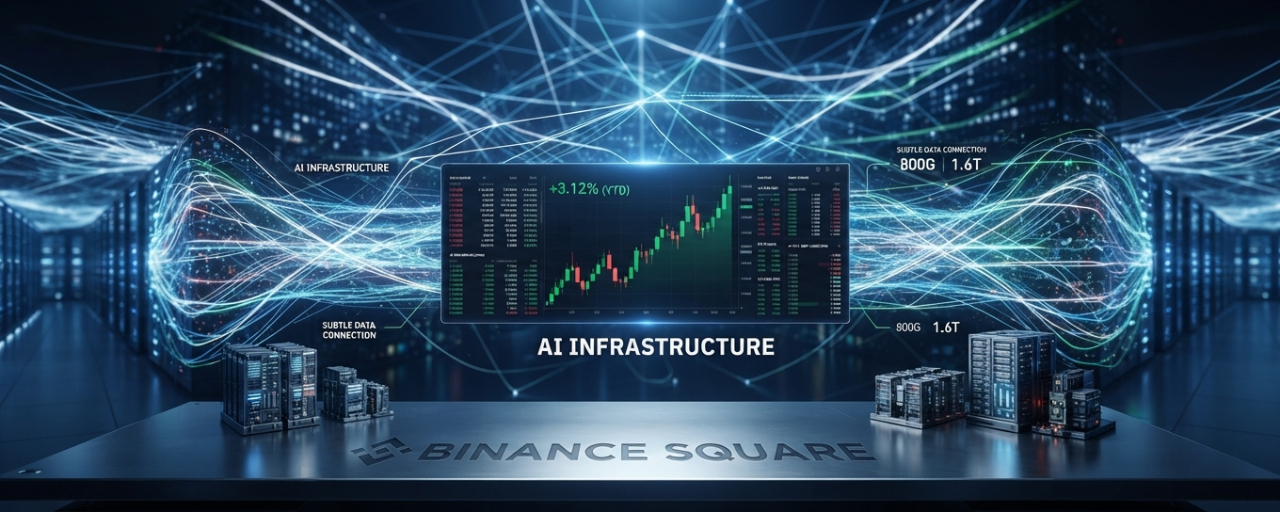
Coherent and Marvell climbed over 3% as AI infrastructure demand grabs attention. 👀
AI needs faster data connections.
Can that demand drive stronger earnings?
#Aİ #AIInfrastructure #TechStocks #Stocks #Markets
tital AI Networking Stocks Surge Is AI Infrastructure Heating Up?
⚡ AI Networking Stocks Jump 📈
Coherent and Marvell climbed over 3% as AI infrastructure demand grabs attention. 👀
AI needs faster data connections.
Can that demand drive stronger earnings?
#Aİ #AIInfrastructure #TechStocks #Stocks #Markets
Coherent and Marvell climbed over 3% as AI infrastructure demand grabs attention. 👀
AI needs faster data connections.
Can that demand drive stronger earnings?
#Aİ #AIInfrastructure #TechStocks #Stocks #Markets
62

#opticalcommsstocksrallyover3%
The backbone of the AI revolution isn’t just silicon—it’s glass. 🌐
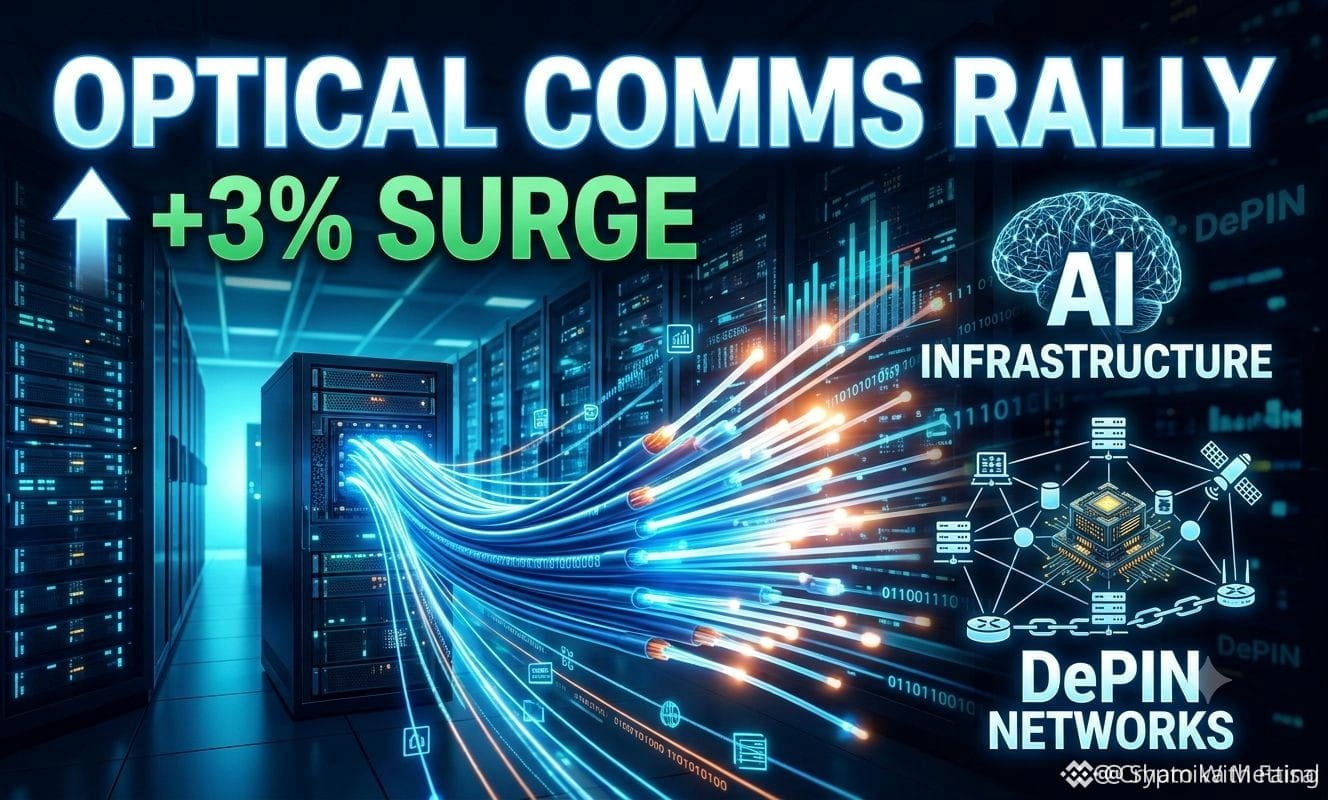
Optical communication stocks like Corning, Coherent, and Ciena recently rallied over 3%, signaling a major shift in the infrastructure space. This surge is being driven by a massive wave of AI data center investments and recent institutional forecast upgrades for high-speed optical modules. To handle massive AI compute loads, networks are requiring bandwidth that only fiber can provide.
For the crypto market, this traditional hardware rally validates a core thesis: the physical infrastructure layer is critical. It directly mirrors the momentum we are tracking in DePIN (Decentralized Physical Infrastructure Networks), as both Web2 and Web3 sectors race to lay the hardware foundations for decentralized AI.
How are you positioning yourself for the AI infrastructure boom?
👇 Let me know in the poll below!
#DePIN #AIInfrastructure #CryptoMacro
$NEAR
{future}(NEARUSDT)
$TAO
{future}(TAOUSDT)
$RENDER
{future}(RENDERUSDT)
#opticalcommsstocksrallyover3%
The backbone of the AI revolution isn’t just silicon—it’s glass. 🌐
Optical communication stocks like Corning, Coherent, and Ciena recently rallied over 3%, signaling a major shift in the infrastructure space. This surge is being driven by a massive wave of AI data center investments and recent institutional forecast upgrades for high-speed optical modules. To handle massive AI compute loads, networks are requiring bandwidth that only fiber can provide.
For the crypto market, this traditional hardware rally validates a core thesis: the physical infrastructure layer is critical. It directly mirrors the momentum we are tracking in DePIN (Decentralized Physical Infrastructure Networks), as both Web2 and Web3 sectors race to lay the hardware foundations for decentralized AI.
How are you positioning yourself for the AI infrastructure boom?
👇 Let me know in the poll below!
#DePIN #AIInfrastructure #CryptoMacro
$NEAR
$TAO
$RENDER
The backbone of the AI revolution isn’t just silicon—it’s glass. 🌐
Optical communication stocks like Corning, Coherent, and Ciena recently rallied over 3%, signaling a major shift in the infrastructure space. This surge is being driven by a massive wave of AI data center investments and recent institutional forecast upgrades for high-speed optical modules. To handle massive AI compute loads, networks are requiring bandwidth that only fiber can provide.
For the crypto market, this traditional hardware rally validates a core thesis: the physical infrastructure layer is critical. It directly mirrors the momentum we are tracking in DePIN (Decentralized Physical Infrastructure Networks), as both Web2 and Web3 sectors race to lay the hardware foundations for decentralized AI.
How are you positioning yourself for the AI infrastructure boom?
👇 Let me know in the poll below!
#DePIN #AIInfrastructure #CryptoMacro
$NEAR
$TAO
$RENDER

250

·
--
Bullish
Verified
#opticalcommsstocksrallyover3%
Coherent and Marvell gained over 3%, putting AI’s networking needs back in focus.
Both stocks rose more than 3% in early U.S. trading on September 11, as optical communications and memory shares joined a broader market advance. These were opening-session moves.
The underlying connection is straightforward: larger AI systems need to move more data between servers and data centers. Optical links help deliver the bandwidth those systems need while managing power consumption and delays. Marvell’s portfolio includes technology supporting 800G and 1.6T connections.
My view: the networking opportunity is compelling, but suppliers still need to turn demand into profitable shipments.
I’m watching whether faster products bring repeat orders, stronger margins and better cash generation. Revenue growth becomes more convincing when companies can deliver reliably without expansion costs absorbing most of the benefit.
There’s also a timing risk. Suppliers may add capacity before customers are ready to deploy it. If projects slip, inventory and costs can build even while the longer-term demand story remains intact.
My confidence would improve with consistent deliveries and earnings upgrades. It would weaken if inventories rise faster than sales or customer spending slows.
When assessing optical stocks, what carries the most weight for you: orders, margins or valuation?
#AIInfrastructure #TechStocks
$LSK $LAB $龙虾
{future}(龙虾USDT)
{future}(LABUSDT)
{future}(LSKUSDT)
#opticalcommsstocksrallyover3%
Coherent and Marvell gained over 3%, putting AI’s networking needs back in focus.
Both stocks rose more than 3% in early U.S. trading on September 11, as optical communications and memory shares joined a broader market advance. These were opening-session moves.
The underlying connection is straightforward: larger AI systems need to move more data between servers and data centers. Optical links help deliver the bandwidth those systems need while managing power consumption and delays. Marvell’s portfolio includes technology supporting 800G and 1.6T connections.
My view: the networking opportunity is compelling, but suppliers still need to turn demand into profitable shipments.
I’m watching whether faster products bring repeat orders, stronger margins and better cash generation. Revenue growth becomes more convincing when companies can deliver reliably without expansion costs absorbing most of the benefit.
There’s also a timing risk. Suppliers may add capacity before customers are ready to deploy it. If projects slip, inventory and costs can build even while the longer-term demand story remains intact.
My confidence would improve with consistent deliveries and earnings upgrades. It would weaken if inventories rise faster than sales or customer spending slows.
When assessing optical stocks, what carries the most weight for you: orders, margins or valuation?
#AIInfrastructure #TechStocks
$LSK $LAB $龙虾
Coherent and Marvell gained over 3%, putting AI’s networking needs back in focus.
Both stocks rose more than 3% in early U.S. trading on September 11, as optical communications and memory shares joined a broader market advance. These were opening-session moves.
The underlying connection is straightforward: larger AI systems need to move more data between servers and data centers. Optical links help deliver the bandwidth those systems need while managing power consumption and delays. Marvell’s portfolio includes technology supporting 800G and 1.6T connections.
My view: the networking opportunity is compelling, but suppliers still need to turn demand into profitable shipments.
I’m watching whether faster products bring repeat orders, stronger margins and better cash generation. Revenue growth becomes more convincing when companies can deliver reliably without expansion costs absorbing most of the benefit.
There’s also a timing risk. Suppliers may add capacity before customers are ready to deploy it. If projects slip, inventory and costs can build even while the longer-term demand story remains intact.
My confidence would improve with consistent deliveries and earnings upgrades. It would weaken if inventories rise faster than sales or customer spending slows.
When assessing optical stocks, what carries the most weight for you: orders, margins or valuation?
#AIInfrastructure #TechStocks
$LSK $LAB $龙虾

2
1
3.7k

#opticalcommsstocksrallyover3%
The nerve of the AI revolution isn’t just silicon—it’s glass. 🌐
Shares of optical communications companies like Corning, Coherent, and Ciena rose by more than 3% recently, signaling a major shift in the infrastructure sector. This increase is attributed to a massive wave of AI data center investments and recent institutional guidance updates for high-speed optical networking units. To handle the immense AI computing workloads, networks need bandwidth that only fiber can provide.
For the cryptocurrency market, this traditional surge in hardware reinforces a central thesis: the physical infrastructure layer is critically important. It directly reflects the momentum we’re tracking in DePIN (Decentralized Physical Infrastructure Networks), as both Web2 and Web3 race to lay the hardware foundations for decentralized AI.
How are you positioning yourself to benefit from the AI infrastructure boom?
👇 Let me know by voting below!
Please follow up
#DePIN #AIInfrastructure #CryptoMacro
$NEAR
{future}(NEARUSDT)
#opticalcommsstocksrallyover3%
The nerve of the AI revolution isn’t just silicon—it’s glass. 🌐
Shares of optical communications companies like Corning, Coherent, and Ciena rose by more than 3% recently, signaling a major shift in the infrastructure sector. This increase is attributed to a massive wave of AI data center investments and recent institutional guidance updates for high-speed optical networking units. To handle the immense AI computing workloads, networks need bandwidth that only fiber can provide.
For the cryptocurrency market, this traditional surge in hardware reinforces a central thesis: the physical infrastructure layer is critically important. It directly reflects the momentum we’re tracking in DePIN (Decentralized Physical Infrastructure Networks), as both Web2 and Web3 race to lay the hardware foundations for decentralized AI.
How are you positioning yourself to benefit from the AI infrastructure boom?
👇 Let me know by voting below!
Please follow up
#DePIN #AIInfrastructure #CryptoMacro
$NEAR
The nerve of the AI revolution isn’t just silicon—it’s glass. 🌐
Shares of optical communications companies like Corning, Coherent, and Ciena rose by more than 3% recently, signaling a major shift in the infrastructure sector. This increase is attributed to a massive wave of AI data center investments and recent institutional guidance updates for high-speed optical networking units. To handle the immense AI computing workloads, networks need bandwidth that only fiber can provide.
For the cryptocurrency market, this traditional surge in hardware reinforces a central thesis: the physical infrastructure layer is critically important. It directly reflects the momentum we’re tracking in DePIN (Decentralized Physical Infrastructure Networks), as both Web2 and Web3 race to lay the hardware foundations for decentralized AI.
How are you positioning yourself to benefit from the AI infrastructure boom?
👇 Let me know by voting below!
Please follow up
#DePIN #AIInfrastructure #CryptoMacro
$NEAR
2
110
🚨 $MSFT UNVEILS 38GW DATA CENTER EXPANSION BY 2032 🦈
📊 Microsoft’s roadmap to triple capacity to 38 GW signals a decisive smart‑money move to lock down AI‑fuelled liquidity. 📌 The blend of owned and leased sites sidesteps “neocloud” competitors, ensuring a tighter control over the supply chain that institutional clients crave. ⚡ With $145 B capex already deployed, the firm is primed to absorb the surge in cloud demand that forced earlier subscription caps in key regions.
💡 As AI workloads race toward saturation, this capacity lift could re‑price the cloud‑compute premium across the ecosystem. 🤔 How will this reshape the competitive balance for AI‑heavy enterprises? 👇
⚠️ Not financial advice. Always manage your risk. 🛡️
🏷️ #MSFT #AIInfrastructure #DataCenter #TechGrowth
🦈 ⚡
🚨 $MSFT UNVEILS 38GW DATA CENTER EXPANSION BY 2032 🦈
📊 Microsoft’s roadmap to triple capacity to 38 GW signals a decisive smart‑money move to lock down AI‑fuelled liquidity. 📌 The blend of owned and leased sites sidesteps “neocloud” competitors, ensuring a tighter control over the supply chain that institutional clients crave. ⚡ With $145 B capex already deployed, the firm is primed to absorb the surge in cloud demand that forced earlier subscription caps in key regions.
💡 As AI workloads race toward saturation, this capacity lift could re‑price the cloud‑compute premium across the ecosystem. 🤔 How will this reshape the competitive balance for AI‑heavy enterprises? 👇
⚠️ Not financial advice. Always manage your risk. 🛡️
🏷️ #MSFT #AIInfrastructure #DataCenter #TechGrowth
🦈 ⚡
📊 Microsoft’s roadmap to triple capacity to 38 GW signals a decisive smart‑money move to lock down AI‑fuelled liquidity. 📌 The blend of owned and leased sites sidesteps “neocloud” competitors, ensuring a tighter control over the supply chain that institutional clients crave. ⚡ With $145 B capex already deployed, the firm is primed to absorb the surge in cloud demand that forced earlier subscription caps in key regions.
💡 As AI workloads race toward saturation, this capacity lift could re‑price the cloud‑compute premium across the ecosystem. 🤔 How will this reshape the competitive balance for AI‑heavy enterprises? 👇
⚠️ Not financial advice. Always manage your risk. 🛡️
🏷️ #MSFT #AIInfrastructure #DataCenter #TechGrowth
🦈 ⚡
33
🚀 $SPCX REDEFINES AI DATA CENTER BUILDING FROM ROCKET TO STEADY 🌊
📊 SpaceX's pivot to a measured data‑center rollout signals a shift from pure velocity to operational efficiency. The rocket‑engineer crew now treats AI infrastructure like a liquidity pool, ensuring capacity is filled without over‑exposure.
💡 For crypto, the slowdown throttles centralized AI demand, opening a niche for decentralized compute layers that can capture the residual liquidity. Expect a subtle reallocation of capital toward projects promising sustainable on‑chain AI services. 🌊
💬 How will this strategic pause reshape the funding flow to decentralized AI protocols? 👇
⚠️ Not financial advice. Always manage your risk. 🛡️
🏷️ #SPCX #AIInfrastructure #CryptoLiquidity #DecentralizedCompute
🚀 ⚡
🚀 $SPCX REDEFINES AI DATA CENTER BUILDING FROM ROCKET TO STEADY 🌊
📊 SpaceX's pivot to a measured data‑center rollout signals a shift from pure velocity to operational efficiency. The rocket‑engineer crew now treats AI infrastructure like a liquidity pool, ensuring capacity is filled without over‑exposure.
💡 For crypto, the slowdown throttles centralized AI demand, opening a niche for decentralized compute layers that can capture the residual liquidity. Expect a subtle reallocation of capital toward projects promising sustainable on‑chain AI services. 🌊
💬 How will this strategic pause reshape the funding flow to decentralized AI protocols? 👇
⚠️ Not financial advice. Always manage your risk. 🛡️
🏷️ #SPCX #AIInfrastructure #CryptoLiquidity #DecentralizedCompute
🚀 ⚡
📊 SpaceX's pivot to a measured data‑center rollout signals a shift from pure velocity to operational efficiency. The rocket‑engineer crew now treats AI infrastructure like a liquidity pool, ensuring capacity is filled without over‑exposure.
💡 For crypto, the slowdown throttles centralized AI demand, opening a niche for decentralized compute layers that can capture the residual liquidity. Expect a subtle reallocation of capital toward projects promising sustainable on‑chain AI services. 🌊
💬 How will this strategic pause reshape the funding flow to decentralized AI protocols? 👇
⚠️ Not financial advice. Always manage your risk. 🛡️
🏷️ #SPCX #AIInfrastructure #CryptoLiquidity #DecentralizedCompute
🚀 ⚡

118
Log in to explore more content
Join global crypto users on Binance Square
⚡️ Get latest and useful information about crypto.
💬 Trusted by the world’s largest crypto exchange.
👍 Discover real insights from verified creators.
Email / Phone number
Trending Topics
1
#AIStocksWhatNext
432,002 views
3,281 Discussing
2
#BitcoinTops$87KAtEightMonthHigh
0 views
4 Discussing
3
#BitwiseNEARStakingETPAssetsTop$100M
3,325 views
38 Discussing
4
#BitcoinBreaksAboveMayHighNears$86K
19,696 views
220 Discussing
5
#DogecoinRises15%
61,259 views
1,113 Discussing
6
#$14BBitcoinOptionsExpireFriday
5,428 views
102 Discussing
7
#BNBMarketCapPassesBNYMellon
38,122 views
812 Discussing
8
#CryptoMarketCapReclaims$3Trillion
7,570 views
87 Discussing
9
#MuseOvertakesChatGPTAsTopFreeIOSApp
22,014 views
600 Discussing
10
#TokenizedStockPlatformsCouldLaunchNextQuarter
34,146 views
653 Discussing