
Crypto Pulse Media
1.9k Publicações
Crypto Pulse Media
Denunciar
Bloquear Utilizador
Real-Time Crypto Market Intelligence Bitcoin • Altcoins • Web3 • Blockchain Global Coverage | Data-Driven Insights Crypto Pulse Media – Stay Ahead of the Market
834 A seguir
523 Seguidores
609 Gostaram
Publicações
Artigo
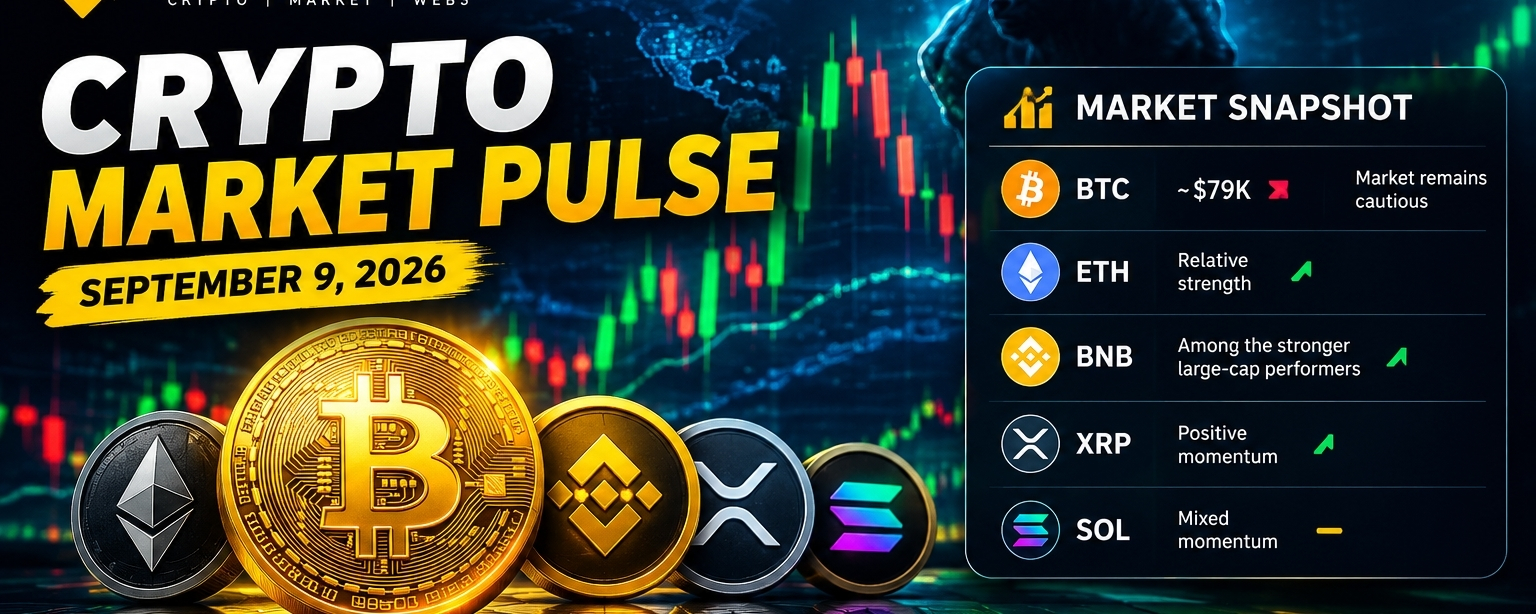
O Bitcoin está demonstrando resiliência após a recente volatilidade, com o BTC sendo negociado por volta da **faixa de US$ 79 mil** hoje🚨 **PULSO DO MERCADO DE CRIPTOS — 9 DE SETEMBRO DE 2026**
📈 **Resumo do Mercado**
• **BTC:** perto de US$ 79 mil — o mercado segue cauteloso
• **ETH:** mostrando força relativa
• **BNB:** entre os desempenhos mais fortes de grandes empresas
• **XRP:** também apresentando momento positivo
• **SOL:** negociando com momento misto
🔥 **O que está impulsionando o mercado?**
Os mercados globais estão atentos ao aumento das tensões geopolíticas e aos preços mais altos do petróleo, enquanto os investidores também se preparam para a próxima **decisão do Federal Reserve dos EUA** e os dados de inflação que estão por vir.
O Bitcoin está demonstrando resiliência após a recente volatilidade, com o BTC sendo negociado por volta da **faixa de US$ 79 mil** hoje
🚨 **PULSO DO MERCADO DE CRIPTOS — 9 DE SETEMBRO DE 2026**
📈 **Resumo do Mercado**
• **BTC:** perto de US$ 79 mil — o mercado segue cauteloso
• **ETH:** mostrando força relativa
• **BNB:** entre os desempenhos mais fortes de grandes empresas
• **XRP:** também apresentando momento positivo
• **SOL:** negociando com momento misto
🔥 **O que está impulsionando o mercado?**
Os mercados globais estão atentos ao aumento das tensões geopolíticas e aos preços mais altos do petróleo, enquanto os investidores também se preparam para a próxima **decisão do Federal Reserve dos EUA** e os dados de inflação que estão por vir.
📈 **Resumo do Mercado**
• **BTC:** perto de US$ 79 mil — o mercado segue cauteloso
• **ETH:** mostrando força relativa
• **BNB:** entre os desempenhos mais fortes de grandes empresas
• **XRP:** também apresentando momento positivo
• **SOL:** negociando com momento misto
🔥 **O que está impulsionando o mercado?**
Os mercados globais estão atentos ao aumento das tensões geopolíticas e aos preços mais altos do petróleo, enquanto os investidores também se preparam para a próxima **decisão do Federal Reserve dos EUA** e os dados de inflação que estão por vir.
2
296
Artigo
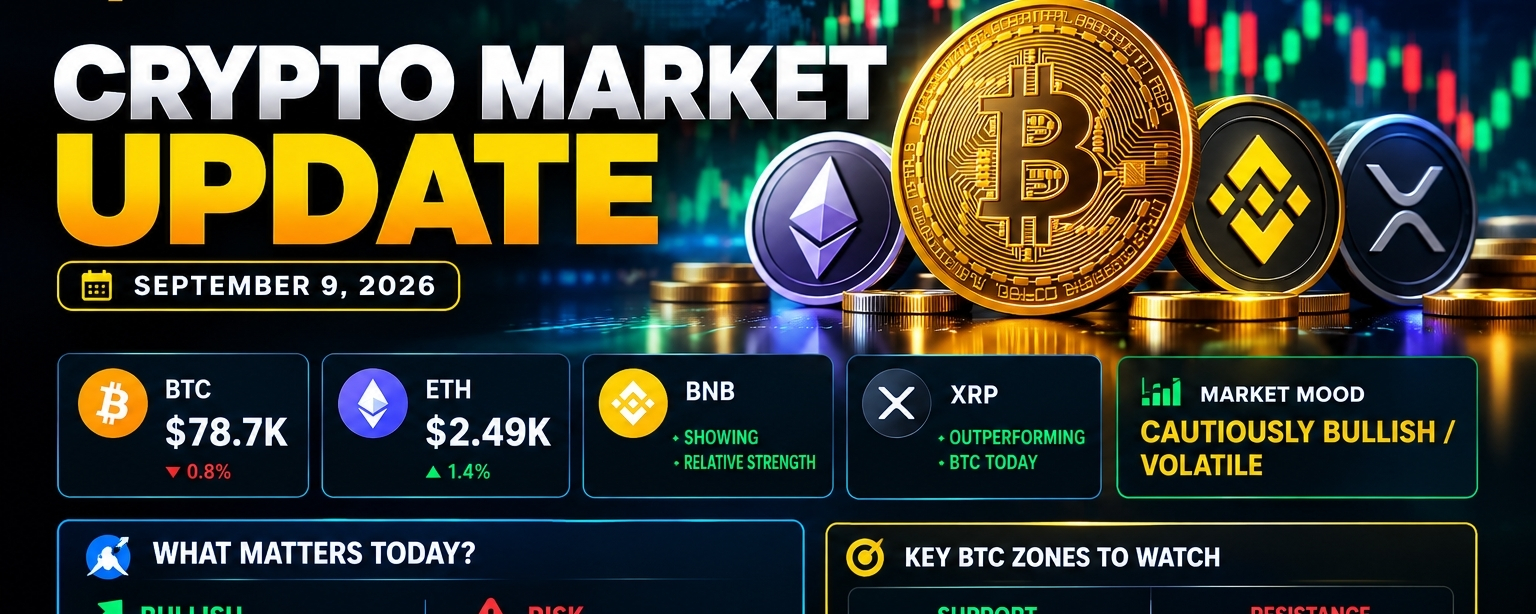
O Bitcoin está sendo negociado em torno de **US$ 78,5 mil–US$ 78,8 mil**, permanecendo abaixo da máxima recente de US$ 82 mil+, enquanto os traders continuam c🚨 **ATUALIZAÇÃO DO MERCADO DE CRIPTOS — 9 DE SETEMBRO DE 2026**
🔹 **BTC:** ~$78,7 mil
🔹 **ETH:** ~$2,49 mil
🔹 **BNB:** mostrando força relativa
🔹 **XRP:** também superando o BTC hoje
🔹 **Sentimento do mercado:** Cautelosamente otimista / volátil
📌 **O que importa hoje?**
O mercado de cripto está sendo puxado em duas direções:
➡️ **Otimista:** O Bitcoin segue bem acima dos níveis que sustentaram sua alta recente, enquanto os fluxos de ETFs institucionais de BTC têm mostrado forte demanda recentemente. ([The Wall Street Journal][2])
➡️ **Risco:** Preços mais altos do petróleo e novas tensões geopolíticas estão elevando as preocupações com a inflação, o que pode pressionar os ativos de risco se o mercado estiver esperando uma política monetária mais apertada.
O Bitcoin está sendo negociado em torno de **US$ 78,5 mil–US$ 78,8 mil**, permanecendo abaixo da máxima recente de US$ 82 mil+, enquanto os traders continuam c
🚨 **ATUALIZAÇÃO DO MERCADO DE CRIPTOS — 9 DE SETEMBRO DE 2026**
🔹 **BTC:** ~$78,7 mil
🔹 **ETH:** ~$2,49 mil
🔹 **BNB:** mostrando força relativa
🔹 **XRP:** também superando o BTC hoje
🔹 **Sentimento do mercado:** Cautelosamente otimista / volátil
📌 **O que importa hoje?**
O mercado de cripto está sendo puxado em duas direções:
➡️ **Otimista:** O Bitcoin segue bem acima dos níveis que sustentaram sua alta recente, enquanto os fluxos de ETFs institucionais de BTC têm mostrado forte demanda recentemente. ([The Wall Street Journal][2])
➡️ **Risco:** Preços mais altos do petróleo e novas tensões geopolíticas estão elevando as preocupações com a inflação, o que pode pressionar os ativos de risco se o mercado estiver esperando uma política monetária mais apertada.
🔹 **BTC:** ~$78,7 mil
🔹 **ETH:** ~$2,49 mil
🔹 **BNB:** mostrando força relativa
🔹 **XRP:** também superando o BTC hoje
🔹 **Sentimento do mercado:** Cautelosamente otimista / volátil
📌 **O que importa hoje?**
O mercado de cripto está sendo puxado em duas direções:
➡️ **Otimista:** O Bitcoin segue bem acima dos níveis que sustentaram sua alta recente, enquanto os fluxos de ETFs institucionais de BTC têm mostrado forte demanda recentemente. ([The Wall Street Journal][2])
➡️ **Risco:** Preços mais altos do petróleo e novas tensões geopolíticas estão elevando as preocupações com a inflação, o que pode pressionar os ativos de risco se o mercado estiver esperando uma política monetária mais apertada.
272
Artigo
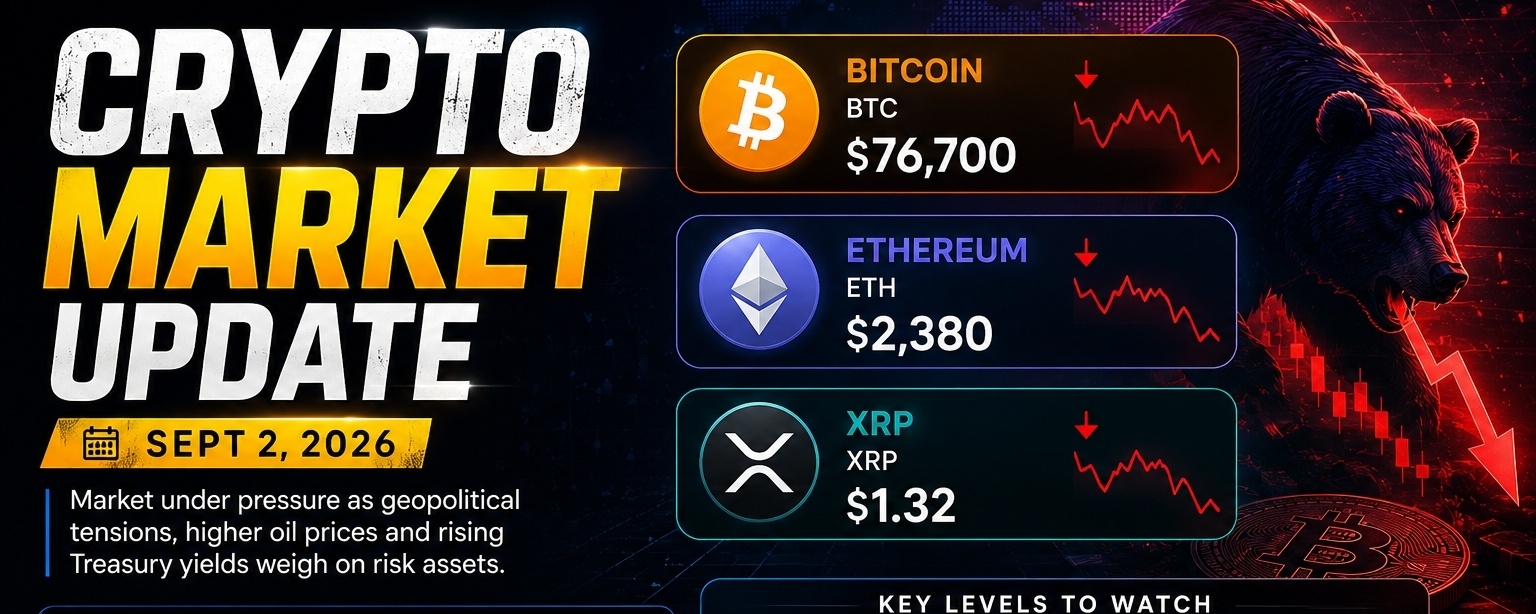
O Bitcoin está enfrentando uma nova pressão de venda após a forte alta de agosto.BTC: ~US$ 76,7 mil
🔷 ETH: ~US$ 2,38 mil
💵 XRP: ~US$ 1,32
O mercado está reagindo a tensões geopolíticas renovadas, preços do petróleo mais altos e aumento das taxas dos Treasuries. Os ativos de risco estão sob pressão enquanto os traders reavaliam as expectativas para as taxas de juros.
📌 Níveis-chave para observar:
• BTC: zona de suporte de US$ 76 mil–US$ 77 mil
• $79 mil–$80 mil continua sendo uma grande zona de resistência
• ETH precisa recuperar US$ 2,4 mil+ para um impulso mais forte
A volatilidade de setembro chegou. Fique paciente, gerencie o risco e acompanhe os dados macro. 👀
#Bitcoin #BTC #Ethereum #ETH #Crypto #CryptoMarket #Altcoins #Web3
O Bitcoin está enfrentando uma nova pressão de venda após a forte alta de agosto.
BTC: ~US$ 76,7 mil
🔷 ETH: ~US$ 2,38 mil
💵 XRP: ~US$ 1,32
O mercado está reagindo a tensões geopolíticas renovadas, preços do petróleo mais altos e aumento das taxas dos Treasuries. Os ativos de risco estão sob pressão enquanto os traders reavaliam as expectativas para as taxas de juros.
📌 Níveis-chave para observar:
• BTC: zona de suporte de US$ 76 mil–US$ 77 mil
• $79 mil–$80 mil continua sendo uma grande zona de resistência
• ETH precisa recuperar US$ 2,4 mil+ para um impulso mais forte
A volatilidade de setembro chegou. Fique paciente, gerencie o risco e acompanhe os dados macro. 👀
#Bitcoin #BTC #Ethereum #ETH #Crypto #CryptoMarket #Altcoins #Web3
🔷 ETH: ~US$ 2,38 mil
💵 XRP: ~US$ 1,32
O mercado está reagindo a tensões geopolíticas renovadas, preços do petróleo mais altos e aumento das taxas dos Treasuries. Os ativos de risco estão sob pressão enquanto os traders reavaliam as expectativas para as taxas de juros.
📌 Níveis-chave para observar:
• BTC: zona de suporte de US$ 76 mil–US$ 77 mil
• $79 mil–$80 mil continua sendo uma grande zona de resistência
• ETH precisa recuperar US$ 2,4 mil+ para um impulso mais forte
A volatilidade de setembro chegou. Fique paciente, gerencie o risco e acompanhe os dados macro. 👀
#Bitcoin #BTC #Ethereum #ETH #Crypto #CryptoMarket #Altcoins #Web3
1
58
Artigo
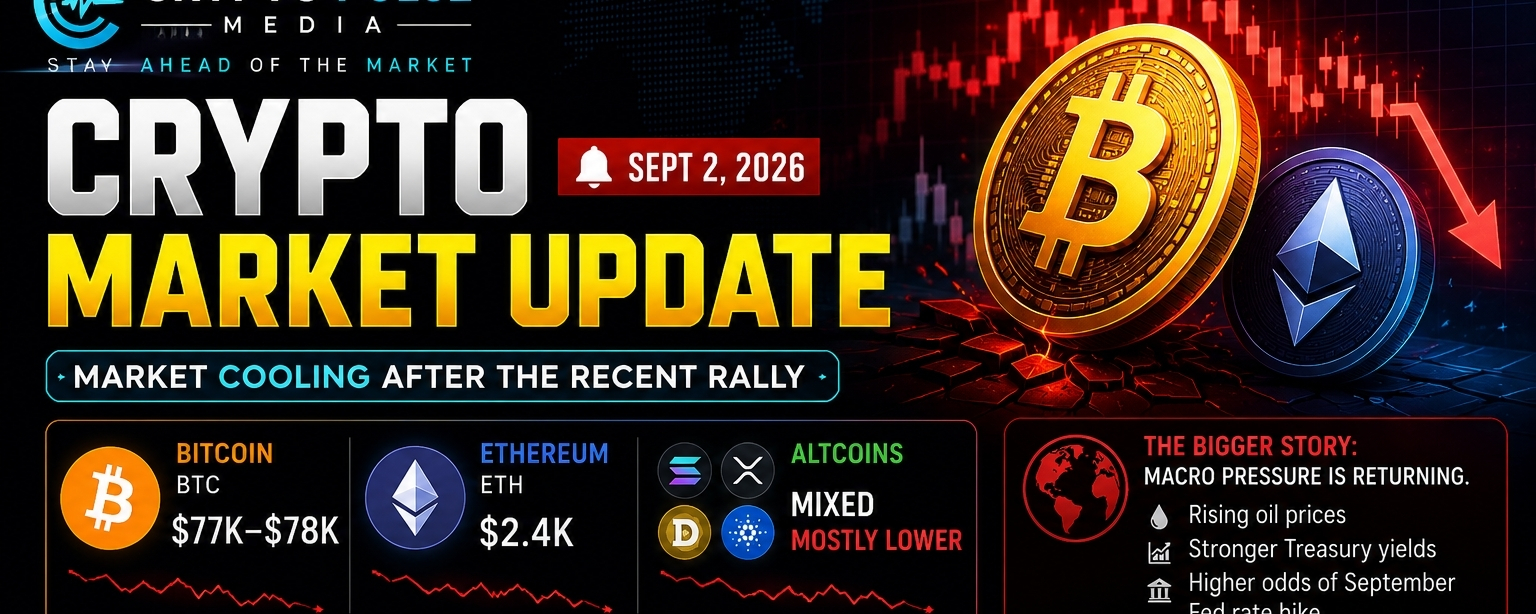
As condições atuais do mercado estão mostrando alguma fraqueza após a recente alta. O Bitcoin está sendo negociado arounO risco macro também voltou ao foco: preços do petróleo em alta, rendimentos do Tesouro mais fortes e expectativas crescentes de um aumento da taxa do Fed em setembro estão pressionando ativos de risco, incluindo cripto. ([Reuters][2])
🚨 ATUALIZAÇÃO DO MERCADO DE CRIPTO — 2 DE SETEMBRO DE 2026
O Bitcoin está esfriando perto da faixa de US$77K–US$78K após sua recente alta. Ethereum está se mantendo em torno de US$2,4K, enquanto várias grandes altcoins estão registrando recuos mais profundos.
🌍 A história maior: a pressão macro está voltando.
• BTC: ~US$77K–US$78K
• ETH: ~US$2,4K
• Altcoins: Misto → majoritariamente em queda
As condições atuais do mercado estão mostrando alguma fraqueza após a recente alta. O Bitcoin está sendo negociado aroun
O risco macro também voltou ao foco: preços do petróleo em alta, rendimentos do Tesouro mais fortes e expectativas crescentes de um aumento da taxa do Fed em setembro estão pressionando ativos de risco, incluindo cripto. ([Reuters][2])
🚨 ATUALIZAÇÃO DO MERCADO DE CRIPTO — 2 DE SETEMBRO DE 2026
O Bitcoin está esfriando perto da faixa de US$77K–US$78K após sua recente alta. Ethereum está se mantendo em torno de US$2,4K, enquanto várias grandes altcoins estão registrando recuos mais profundos.
🌍 A história maior: a pressão macro está voltando.
• BTC: ~US$77K–US$78K
• ETH: ~US$2,4K
• Altcoins: Misto → majoritariamente em queda
🚨 ATUALIZAÇÃO DO MERCADO DE CRIPTO — 2 DE SETEMBRO DE 2026
O Bitcoin está esfriando perto da faixa de US$77K–US$78K após sua recente alta. Ethereum está se mantendo em torno de US$2,4K, enquanto várias grandes altcoins estão registrando recuos mais profundos.
🌍 A história maior: a pressão macro está voltando.
• BTC: ~US$77K–US$78K
• ETH: ~US$2,4K
• Altcoins: Misto → majoritariamente em queda
82
Artigo
O mercado de hoje está mostrando fraqueza: o Bitcoin está em torno de **US$ 77K–$78K**, enquanto o Ethereum está em torno de **$2.4O Bitcoin está enfrentando uma pressão de venda renovada enquanto a BTC luta para manter a região de US$ 78K.
📉 BTC: ~$77K–$78K
📉 ETH: ~$2.4K
📉 SOL: ~$99
📉 XRP: ~$1.35
A história maior: ativos de risco estão sofrendo pressão enquanto os mercados reavaliam o caminho das taxas de juros dos EUA.
Setembro historicamente tem sido um mês difícil para o Bitcoin, então a volatilidade pode continuar elevada.
👀 Pontos-chave para observar:
• BTC retomando US$ 80K
• ETH segurando a faixa de US$ 2,4K
• Expectativas para as taxas dos EUA
• Fluxos institucionais de cripto
• Força das altcoins vs. BTC
O mercado de hoje está mostrando fraqueza: o Bitcoin está em torno de **US$ 77K–$78K**, enquanto o Ethereum está em torno de **$2.4
O Bitcoin está enfrentando uma pressão de venda renovada enquanto a BTC luta para manter a região de US$ 78K.
📉 BTC: ~$77K–$78K
📉 ETH: ~$2.4K
📉 SOL: ~$99
📉 XRP: ~$1.35
A história maior: ativos de risco estão sofrendo pressão enquanto os mercados reavaliam o caminho das taxas de juros dos EUA.
Setembro historicamente tem sido um mês difícil para o Bitcoin, então a volatilidade pode continuar elevada.
👀 Pontos-chave para observar:
• BTC retomando US$ 80K
• ETH segurando a faixa de US$ 2,4K
• Expectativas para as taxas dos EUA
• Fluxos institucionais de cripto
• Força das altcoins vs. BTC
📉 BTC: ~$77K–$78K
📉 ETH: ~$2.4K
📉 SOL: ~$99
📉 XRP: ~$1.35
A história maior: ativos de risco estão sofrendo pressão enquanto os mercados reavaliam o caminho das taxas de juros dos EUA.
Setembro historicamente tem sido um mês difícil para o Bitcoin, então a volatilidade pode continuar elevada.
👀 Pontos-chave para observar:
• BTC retomando US$ 80K
• ETH segurando a faixa de US$ 2,4K
• Expectativas para as taxas dos EUA
• Fluxos institucionais de cripto
• Força das altcoins vs. BTC
85
Artigo
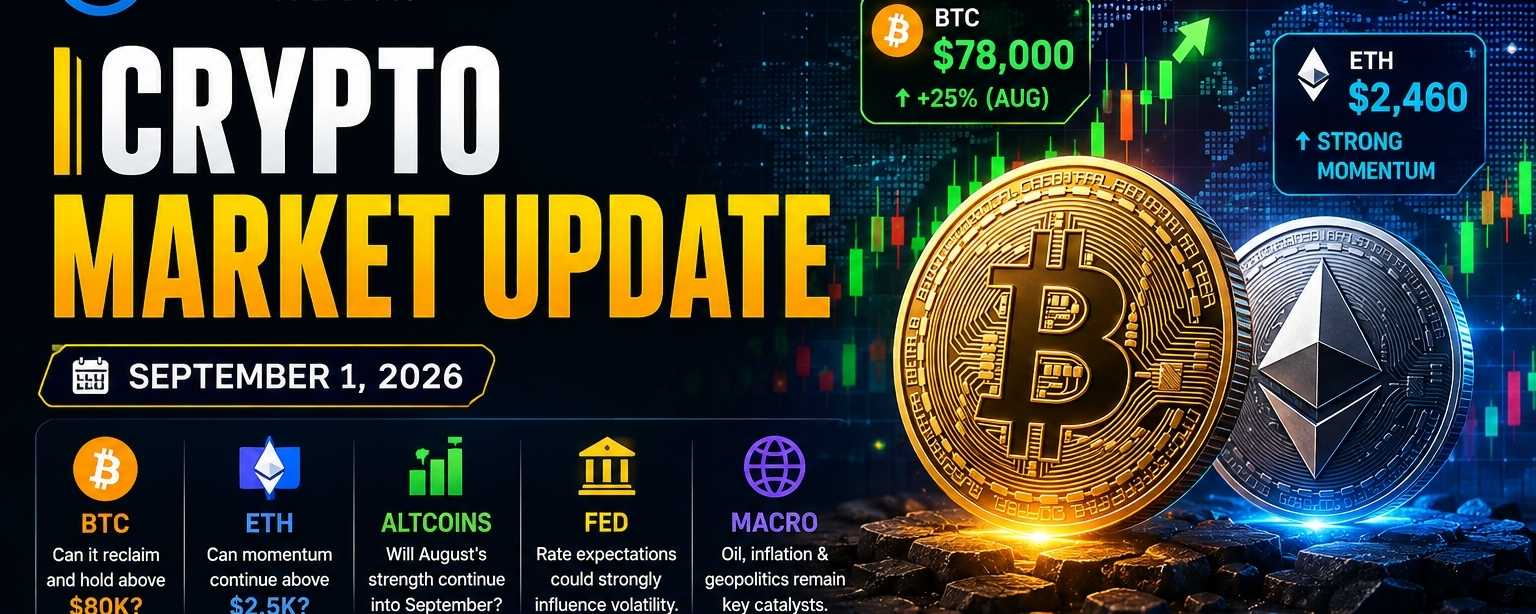
O Bitcoin está em torno de **US$ 78 mil** após uma forte alta de agosto. O BTC ganhou cerca de **25% em agosto**thereum está sendo negociado em torno de **US$ 2,45 mil–US$ 2,46 mil**, enquanto o ETH também registrou uma forte recuperação mensal. ([Fortune][2])
Mas setembro começa com um novo desafio: **preços mais altos do petróleo, preocupações com a inflação e expectativas crescentes de um aumento da taxa pelo Federal Reserve** estão pressionando os ativos de risco. As expectativas atuais do mercado colocam a probabilidade de um aumento em setembro em torno de **65–66%**.
**O que os traders devem observar 👀**
* 🟠 BTC: Conseguirá recuperar e manter acima de **US$ 80 mil**?
* 🔵 ETH: O momento consegue continuar acima de **US$ 2,5 mil**?
O Bitcoin está em torno de **US$ 78 mil** após uma forte alta de agosto. O BTC ganhou cerca de **25% em agosto**
thereum está sendo negociado em torno de **US$ 2,45 mil–US$ 2,46 mil**, enquanto o ETH também registrou uma forte recuperação mensal. ([Fortune][2])
Mas setembro começa com um novo desafio: **preços mais altos do petróleo, preocupações com a inflação e expectativas crescentes de um aumento da taxa pelo Federal Reserve** estão pressionando os ativos de risco. As expectativas atuais do mercado colocam a probabilidade de um aumento em setembro em torno de **65–66%**.
**O que os traders devem observar 👀**
* 🟠 BTC: Conseguirá recuperar e manter acima de **US$ 80 mil**?
* 🔵 ETH: O momento consegue continuar acima de **US$ 2,5 mil**?
Mas setembro começa com um novo desafio: **preços mais altos do petróleo, preocupações com a inflação e expectativas crescentes de um aumento da taxa pelo Federal Reserve** estão pressionando os ativos de risco. As expectativas atuais do mercado colocam a probabilidade de um aumento em setembro em torno de **65–66%**.
**O que os traders devem observar 👀**
* 🟠 BTC: Conseguirá recuperar e manter acima de **US$ 80 mil**?
* 🔵 ETH: O momento consegue continuar acima de **US$ 2,5 mil**?
17
Artigo
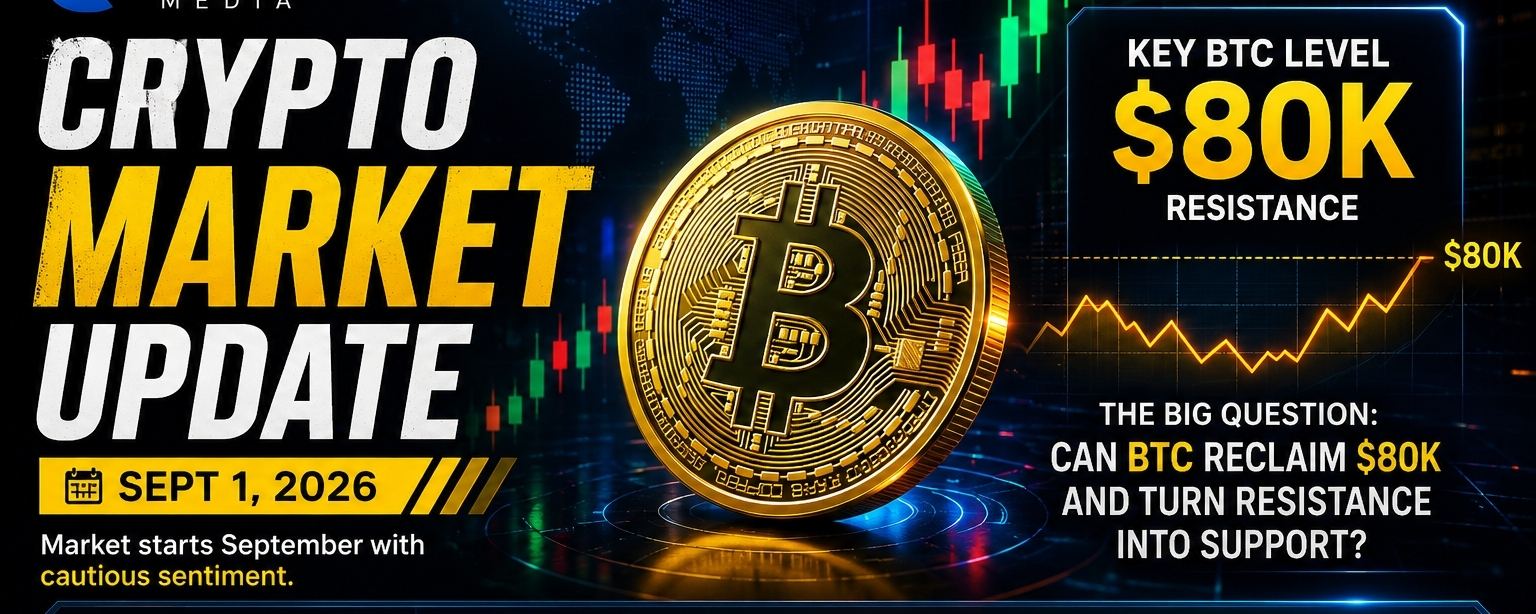
Os dados atuais mostram o BTC em torno de **$78K**, com o ETH em torno de **$2.45K**. O Bitcoin está mantendo-se abaixo do nível-chave ATUALIZAÇÃO DO MERCADO CRIPTO — 1 SET 2026
O Bitcoin está pairando na zona de US$ 78K enquanto o mercado começa setembro com um sentimento cauteloso.
📉 BTC: ~$78K
⚡ ETH: ~$2.45K
🎯 Principal nível do BTC: $80K
🌍 Expectativas macro + do Fed continuam sendo grandes catalisadores
A grande pergunta: o BTC consegue recuperar US$ 80K e transformar a resistência em suporte?
Setembro pode trazer uma volatilidade considerável. Fique atento. 👀
#Bitcoin #BTC #Ethereum #ETH #Crypto #CryptoMarket #Altcoins
Os dados atuais mostram o BTC em torno de **$78K**, com o ETH em torno de **$2.45K**. O Bitcoin está mantendo-se abaixo do nível-chave
ATUALIZAÇÃO DO MERCADO CRIPTO — 1 SET 2026
O Bitcoin está pairando na zona de US$ 78K enquanto o mercado começa setembro com um sentimento cauteloso.
📉 BTC: ~$78K
⚡ ETH: ~$2.45K
🎯 Principal nível do BTC: $80K
🌍 Expectativas macro + do Fed continuam sendo grandes catalisadores
A grande pergunta: o BTC consegue recuperar US$ 80K e transformar a resistência em suporte?
Setembro pode trazer uma volatilidade considerável. Fique atento. 👀
#Bitcoin #BTC #Ethereum #ETH #Crypto #CryptoMarket #Altcoins
O Bitcoin está pairando na zona de US$ 78K enquanto o mercado começa setembro com um sentimento cauteloso.
📉 BTC: ~$78K
⚡ ETH: ~$2.45K
🎯 Principal nível do BTC: $80K
🌍 Expectativas macro + do Fed continuam sendo grandes catalisadores
A grande pergunta: o BTC consegue recuperar US$ 80K e transformar a resistência em suporte?
Setembro pode trazer uma volatilidade considerável. Fique atento. 👀
#Bitcoin #BTC #Ethereum #ETH #Crypto #CryptoMarket #Altcoins
4
Artigo
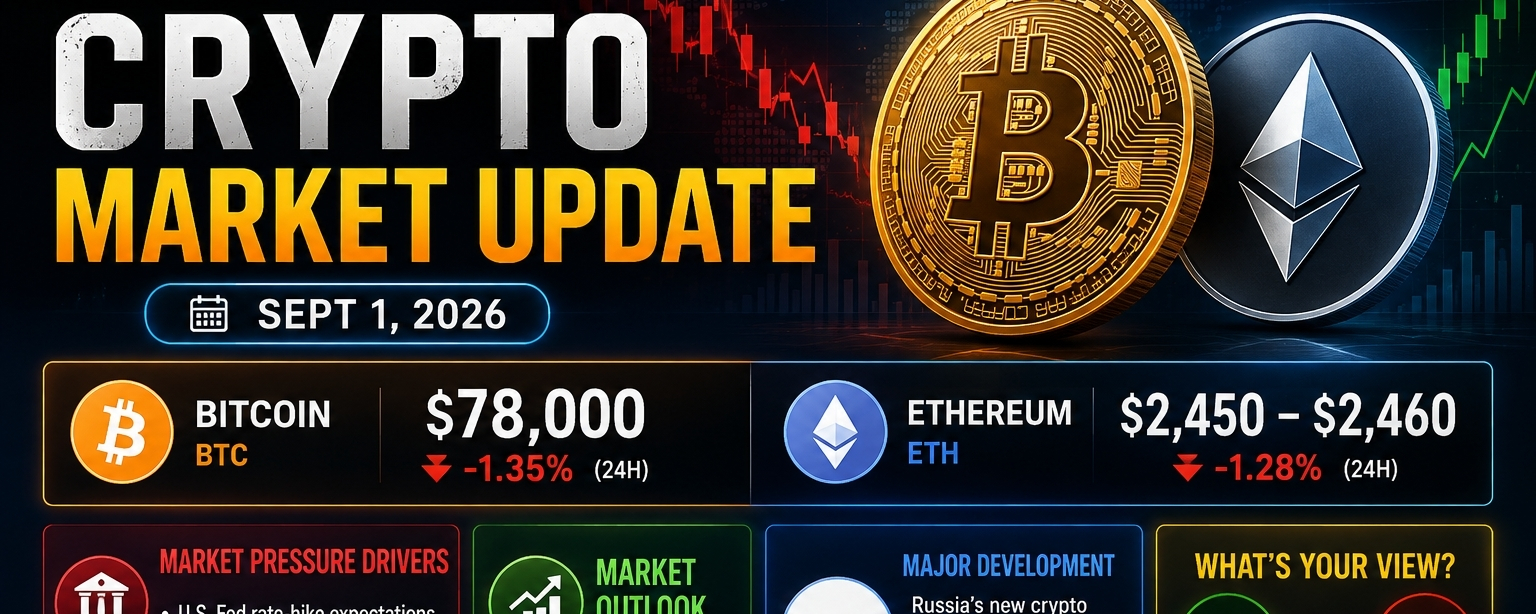
O Bitcoin está sendo negociado perto da área de **US$ 78K**, enquanto o Ethereum está em torno de **US$ 2,45K–$2,46K**. O mercadoUm grande desenvolvimento hoje: **entram em vigor as novas regras cripto da Rússia**, permitindo que BTC, ETH e USDT tenham um papel em seu mercado regulamentado de ativos digitais.
🚨 ATUALIZAÇÃO DO MERCADO CRIPTO | 1º DE SETEMBRO
O Bitcoin está se mantendo perto da faixa de US$ 78K, enquanto o Ethereum é negociado por volta de US$ 2,45K–US$ 2,46K.
📉 A pressão no mercado está aumentando enquanto os traders observam:
• Expectativas de alta da taxa do Fed dos EUA
• Inflação e preços do petróleo
• Tensões geopolíticas
• Principais dados econômicos pela frente
🇷🇺 Enquanto isso, a nova estrutura cripto da Rússia já entrou em vigor, trazendo BTC, ETH e USDT ainda mais para seu mercado regulamentado de ativos digitais.
O Bitcoin está sendo negociado perto da área de **US$ 78K**, enquanto o Ethereum está em torno de **US$ 2,45K–$2,46K**. O mercado
Um grande desenvolvimento hoje: **entram em vigor as novas regras cripto da Rússia**, permitindo que BTC, ETH e USDT tenham um papel em seu mercado regulamentado de ativos digitais.
🚨 ATUALIZAÇÃO DO MERCADO CRIPTO | 1º DE SETEMBRO
O Bitcoin está se mantendo perto da faixa de US$ 78K, enquanto o Ethereum é negociado por volta de US$ 2,45K–US$ 2,46K.
📉 A pressão no mercado está aumentando enquanto os traders observam:
• Expectativas de alta da taxa do Fed dos EUA
• Inflação e preços do petróleo
• Tensões geopolíticas
• Principais dados econômicos pela frente
🇷🇺 Enquanto isso, a nova estrutura cripto da Rússia já entrou em vigor, trazendo BTC, ETH e USDT ainda mais para seu mercado regulamentado de ativos digitais.
🚨 ATUALIZAÇÃO DO MERCADO CRIPTO | 1º DE SETEMBRO
O Bitcoin está se mantendo perto da faixa de US$ 78K, enquanto o Ethereum é negociado por volta de US$ 2,45K–US$ 2,46K.
📉 A pressão no mercado está aumentando enquanto os traders observam:
• Expectativas de alta da taxa do Fed dos EUA
• Inflação e preços do petróleo
• Tensões geopolíticas
• Principais dados econômicos pela frente
🇷🇺 Enquanto isso, a nova estrutura cripto da Rússia já entrou em vigor, trazendo BTC, ETH e USDT ainda mais para seu mercado regulamentado de ativos digitais.
5
Artigo
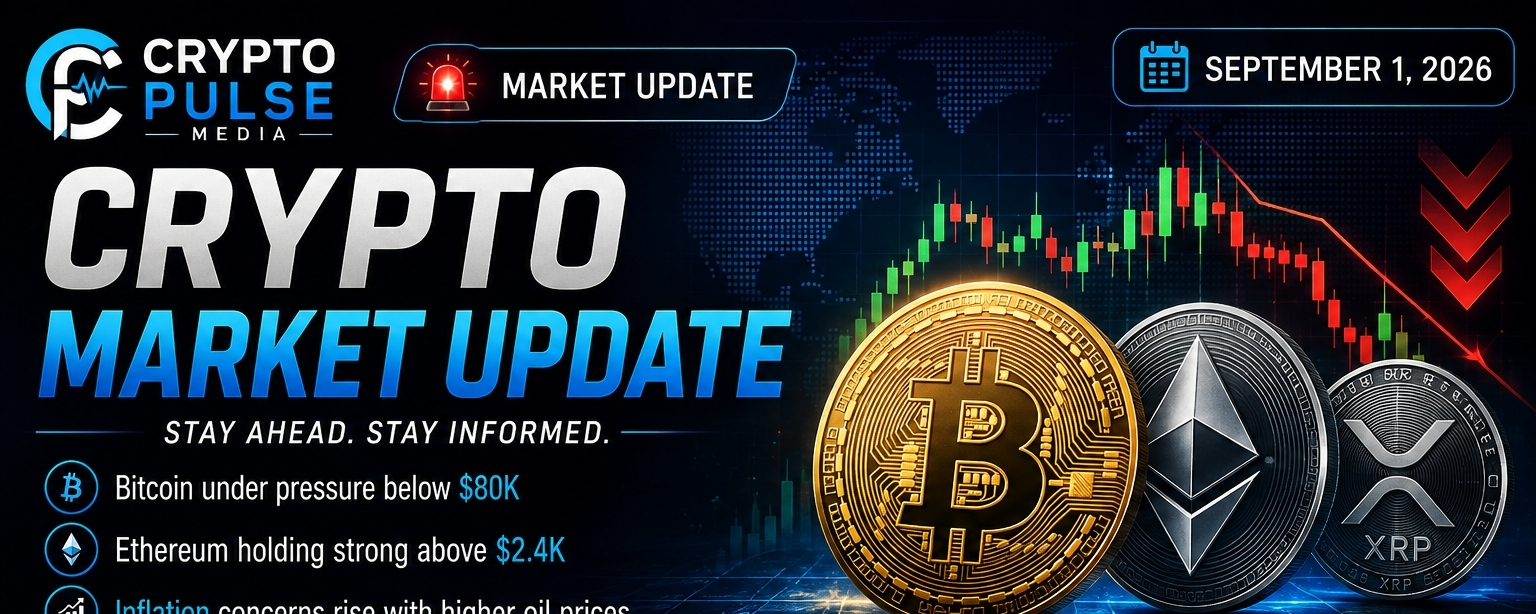
O Bitcoin está começando setembro sob pressão, com a incerteza macroeconômica pesando sobre os ativos de risco.₿ **BTC:** por volta de US$ 78 mil
🔷 **ETH:** por volta de US$ 2,45 mil
💵 **XRP:** por volta de US$ 1,38
📉 **O que está movimentando o mercado?**
• O Bitcoin permanece abaixo do importante nível psicológico de US$ 80 mil.
• O Ethereum está acima de US$ 2,4 mil após uma forte recuperação mensal.
• Os preços do petróleo em alta estão elevando as preocupações com a inflação.
• Os mercados estão cada vez mais atentos à possibilidade de um aumento da taxa de juros dos EUA este mês.
• Operadores de criptomoedas estão aguardando mais sinais macroeconômicos antes de fazer movimentos mais agressivos.
🌍 **Um grande avanço regulatório:** o novo arcabouço cripto da Rússia entra em vigor hoje, permitindo acesso regulamentado a BTC, ETH e USDT sob condições rigorosas.
O Bitcoin está começando setembro sob pressão, com a incerteza macroeconômica pesando sobre os ativos de risco.
₿ **BTC:** por volta de US$ 78 mil
🔷 **ETH:** por volta de US$ 2,45 mil
💵 **XRP:** por volta de US$ 1,38
📉 **O que está movimentando o mercado?**
• O Bitcoin permanece abaixo do importante nível psicológico de US$ 80 mil.
• O Ethereum está acima de US$ 2,4 mil após uma forte recuperação mensal.
• Os preços do petróleo em alta estão elevando as preocupações com a inflação.
• Os mercados estão cada vez mais atentos à possibilidade de um aumento da taxa de juros dos EUA este mês.
• Operadores de criptomoedas estão aguardando mais sinais macroeconômicos antes de fazer movimentos mais agressivos.
🌍 **Um grande avanço regulatório:** o novo arcabouço cripto da Rússia entra em vigor hoje, permitindo acesso regulamentado a BTC, ETH e USDT sob condições rigorosas.
🔷 **ETH:** por volta de US$ 2,45 mil
💵 **XRP:** por volta de US$ 1,38
📉 **O que está movimentando o mercado?**
• O Bitcoin permanece abaixo do importante nível psicológico de US$ 80 mil.
• O Ethereum está acima de US$ 2,4 mil após uma forte recuperação mensal.
• Os preços do petróleo em alta estão elevando as preocupações com a inflação.
• Os mercados estão cada vez mais atentos à possibilidade de um aumento da taxa de juros dos EUA este mês.
• Operadores de criptomoedas estão aguardando mais sinais macroeconômicos antes de fazer movimentos mais agressivos.
🌍 **Um grande avanço regulatório:** o novo arcabouço cripto da Rússia entra em vigor hoje, permitindo acesso regulamentado a BTC, ETH e USDT sob condições rigorosas.
15
Artigo
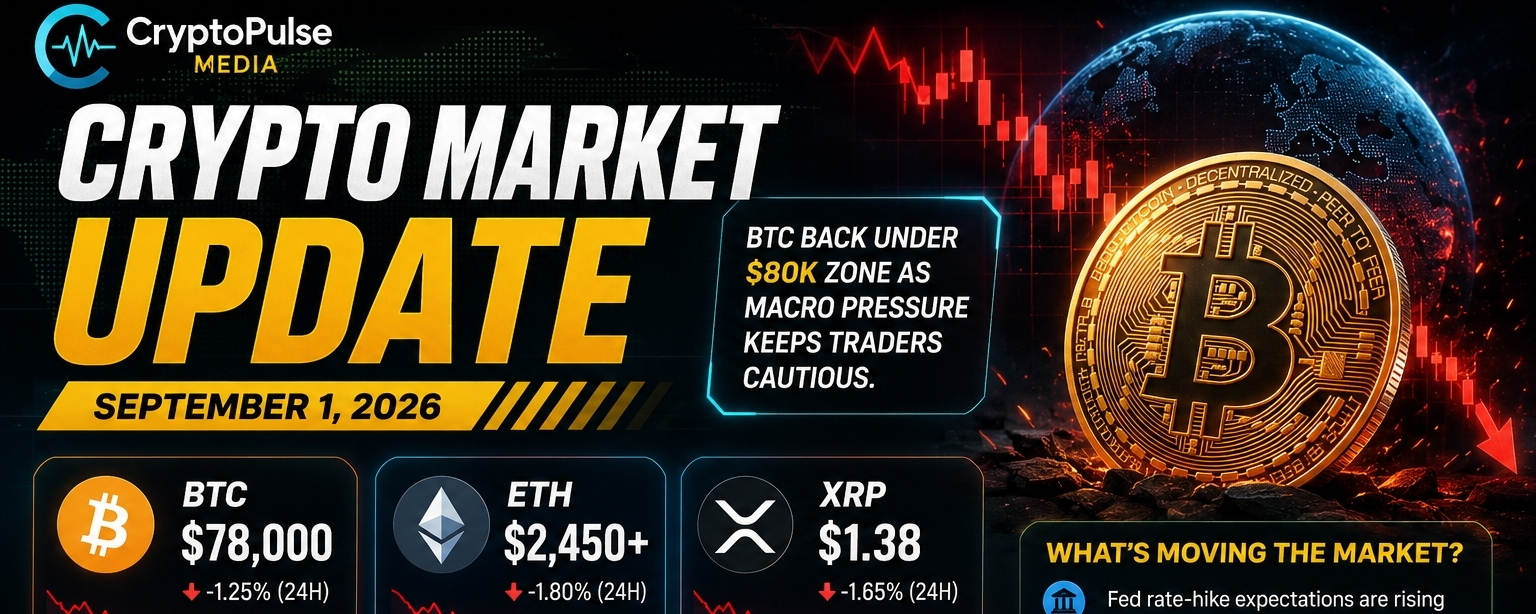
Bitcoin está sendo negociado por volta de **US$ 78 mil**, enquanto o Ethereum está em torno de **US$ 2,45 mil–US$ 2,46 mil**. O BTC continua abaixo de thA história maior de hoje são as **expectativas sobre as taxas de juros**. Os mercados estão cada vez mais precificando uma possível alta da taxa do Fed dos EUA ainda este mês, enquanto a alta dos preços do petróleo e as tensões geopolíticas estão aumentando as preocupações com a inflação.
Ao mesmo tempo, **entra em vigor hoje o novo marco regulatório de cripto da Rússia**, com Bitcoin, Ethereum e USDT recebendo um papel definido dentro da nova estrutura.
🚨 ATUALIZAÇÃO DO MERCADO DE CRIPTO | 1 DE SETEMBRO DE 2026
Bitcoin voltou a ficar abaixo da faixa de US$ 80 mil, sendo negociado perto de US$ 78 mil, enquanto a pressão macro mantém os traders de cripto cautelosos.
Bitcoin está sendo negociado por volta de **US$ 78 mil**, enquanto o Ethereum está em torno de **US$ 2,45 mil–US$ 2,46 mil**. O BTC continua abaixo de th
A história maior de hoje são as **expectativas sobre as taxas de juros**. Os mercados estão cada vez mais precificando uma possível alta da taxa do Fed dos EUA ainda este mês, enquanto a alta dos preços do petróleo e as tensões geopolíticas estão aumentando as preocupações com a inflação.
Ao mesmo tempo, **entra em vigor hoje o novo marco regulatório de cripto da Rússia**, com Bitcoin, Ethereum e USDT recebendo um papel definido dentro da nova estrutura.
🚨 ATUALIZAÇÃO DO MERCADO DE CRIPTO | 1 DE SETEMBRO DE 2026
Bitcoin voltou a ficar abaixo da faixa de US$ 80 mil, sendo negociado perto de US$ 78 mil, enquanto a pressão macro mantém os traders de cripto cautelosos.
Ao mesmo tempo, **entra em vigor hoje o novo marco regulatório de cripto da Rússia**, com Bitcoin, Ethereum e USDT recebendo um papel definido dentro da nova estrutura.
🚨 ATUALIZAÇÃO DO MERCADO DE CRIPTO | 1 DE SETEMBRO DE 2026
Bitcoin voltou a ficar abaixo da faixa de US$ 80 mil, sendo negociado perto de US$ 78 mil, enquanto a pressão macro mantém os traders de cripto cautelosos.
46
Artigo
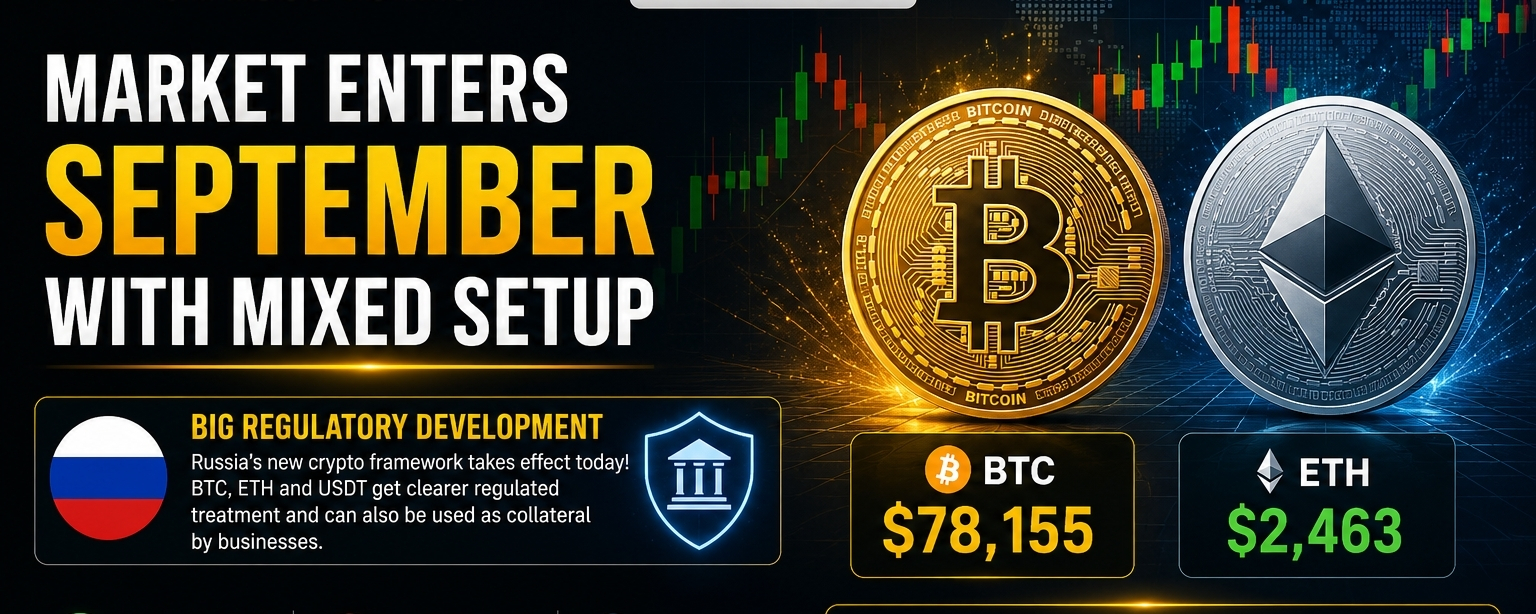
O Bitcoin está começando setembro em torno de **US$ 78K**, enquanto o Ethereum está sendo negociado perto de **US$ 2,46K**. O BTC está começando**Grande desenvolvimento regulatório:** o novo marco regulatório de cripto da Rússia entra em vigor hoje, com **BTC, ETH e USDT** recebendo um tratamento de mercado regulamentado mais claro. O BTC, ETH e USDT também podem ser usados como garantia por empresas no novo marco.
📈 **Acompanhe o Mercado**
* ₿ BTC: ~US$78,155
* Ξ ETH: ~$2,463
* 🔥 O ETH ganhou força significativamente no último mês
* ⚠️ Preocupações com inflação continuam sendo um risco importante para o mercado
* 👀 Setembro pode trazer volatilidade mais alta
**Resumo CryptoPulse:**
O mercado está entrando em setembro com uma configuração mista — o Bitcoin precisa defender a faixa de US$ 78K enquanto o Ethereum continua atraindo a atenção. Desenvolvimentos regulatórios também podem se tornar um catalisador importante para o mercado.
O Bitcoin está começando setembro em torno de **US$ 78K**, enquanto o Ethereum está sendo negociado perto de **US$ 2,46K**. O BTC está começando
**Grande desenvolvimento regulatório:** o novo marco regulatório de cripto da Rússia entra em vigor hoje, com **BTC, ETH e USDT** recebendo um tratamento de mercado regulamentado mais claro. O BTC, ETH e USDT também podem ser usados como garantia por empresas no novo marco.
📈 **Acompanhe o Mercado**
* ₿ BTC: ~US$78,155
* Ξ ETH: ~$2,463
* 🔥 O ETH ganhou força significativamente no último mês
* ⚠️ Preocupações com inflação continuam sendo um risco importante para o mercado
* 👀 Setembro pode trazer volatilidade mais alta
**Resumo CryptoPulse:**
O mercado está entrando em setembro com uma configuração mista — o Bitcoin precisa defender a faixa de US$ 78K enquanto o Ethereum continua atraindo a atenção. Desenvolvimentos regulatórios também podem se tornar um catalisador importante para o mercado.
📈 **Acompanhe o Mercado**
* ₿ BTC: ~US$78,155
* Ξ ETH: ~$2,463
* 🔥 O ETH ganhou força significativamente no último mês
* ⚠️ Preocupações com inflação continuam sendo um risco importante para o mercado
* 👀 Setembro pode trazer volatilidade mais alta
**Resumo CryptoPulse:**
O mercado está entrando em setembro com uma configuração mista — o Bitcoin precisa defender a faixa de US$ 78K enquanto o Ethereum continua atraindo a atenção. Desenvolvimentos regulatórios também podem se tornar um catalisador importante para o mercado.
4
Artigo
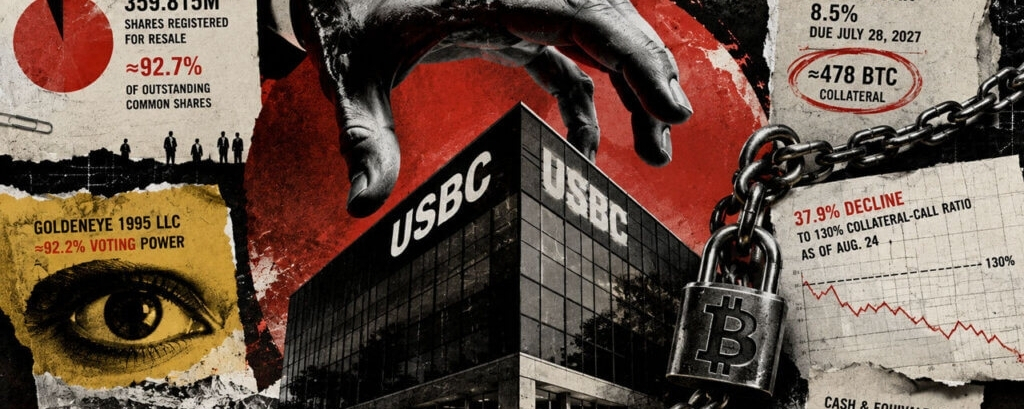
Empresa de tesouraria em Bitcoin registra 93% das ações para revenda e coloca um terço de seu cripto em opçãoAs ações já foram emitidas e nunca podem ser vendidas, enquanto permanecem os riscos de empréstimo, tesouraria e caixa.
A SBC registrou um bloco de ações já emitidas equivalente a quase todo o seu capital comum em circulação para possível revenda, criando um potencial excesso de oferta no mercado em paralelo a um balanço patrimonial que depende fortemente do Bitcoin.
O prospecto preliminar emendado da empresa em 27 de agosto abrange até 359.815.000 ações detidas por acionistas vendedores. Isso equivale a cerca de 92,7% das 388.144.429 ações ordinárias em circulação em 24 de agosto. A USBC não receberia nenhum produto de qualquer venda ou outra alienação por parte desses detentores.
Empresa de tesouraria em Bitcoin registra 93% das ações para revenda e coloca um terço de seu cripto em opção
As ações já foram emitidas e nunca podem ser vendidas, enquanto permanecem os riscos de empréstimo, tesouraria e caixa.
A SBC registrou um bloco de ações já emitidas equivalente a quase todo o seu capital comum em circulação para possível revenda, criando um potencial excesso de oferta no mercado em paralelo a um balanço patrimonial que depende fortemente do Bitcoin.
O prospecto preliminar emendado da empresa em 27 de agosto abrange até 359.815.000 ações detidas por acionistas vendedores. Isso equivale a cerca de 92,7% das 388.144.429 ações ordinárias em circulação em 24 de agosto. A USBC não receberia nenhum produto de qualquer venda ou outra alienação por parte desses detentores.
A SBC registrou um bloco de ações já emitidas equivalente a quase todo o seu capital comum em circulação para possível revenda, criando um potencial excesso de oferta no mercado em paralelo a um balanço patrimonial que depende fortemente do Bitcoin.
O prospecto preliminar emendado da empresa em 27 de agosto abrange até 359.815.000 ações detidas por acionistas vendedores. Isso equivale a cerca de 92,7% das 388.144.429 ações ordinárias em circulação em 24 de agosto. A USBC não receberia nenhum produto de qualquer venda ou outra alienação por parte desses detentores.
21
Artigo
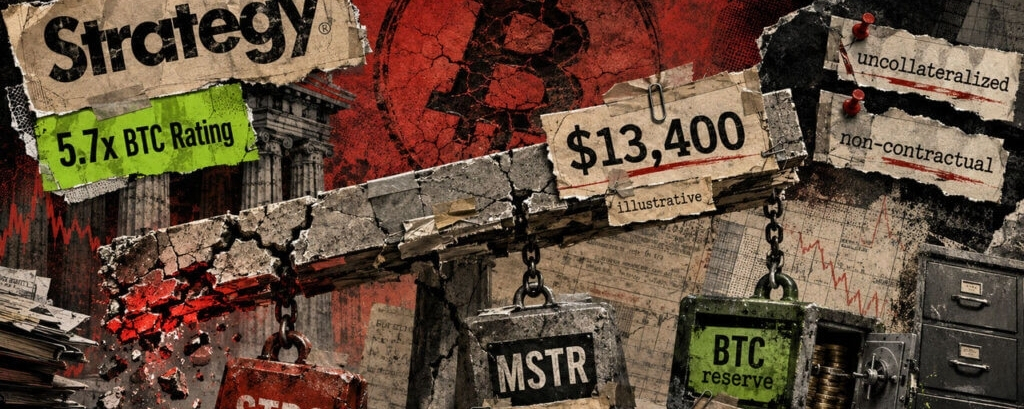
O “piso de Bitcoin” de US$ 13.400 de Michael Saylor expõe a ordem exata das perdas dentro do endividamento da StrategyA razão arquivada varia com o caixa e as reivindicações, enquanto a diluição da MSTR e a prioridade legal moldam perdas reais.
trategy, a empresa de tesouraria de Bitcoin, está divulgando um “BTC Floor” de cerca de US$ 13.400 para a STRC, seu estoque preferencial perpétuo cumulativo de taxa variável. Com o Bitcoin perto de US$ 78.000, o rótulo soa como um amortecedor gigantesco. A minuta arquivada junto à SEC define algo mais restrito: o preço do Bitcoin em que a razão ilustrativa de cobertura da STRC da Strategy atinge 1,0x.
A métrica não faz nenhuma afirmação sobre o Bitcoin da Strategy e não carrega nenhum significado de solvência ou recuperação. A STRC fechou a US$ 97,33 em 28 de agosto, oferecendo aos detentores um rendimento efetivo simples de 12,33% no dividendo anualizado atual de US$ 12. O dashboard arquivado usou um preço de 21 de agosto de US$ 96,18 e listou um rendimento de 12,48%, um notional de US$ 9,972 bilhões, 59 pontos-base de BTC Credit, 4,68% de BTC Risk e um ARR do BTC Floor de -14,61%.
O “piso de Bitcoin” de US$ 13.400 de Michael Saylor expõe a ordem exata das perdas dentro do endividamento da Strategy
A razão arquivada varia com o caixa e as reivindicações, enquanto a diluição da MSTR e a prioridade legal moldam perdas reais.
trategy, a empresa de tesouraria de Bitcoin, está divulgando um “BTC Floor” de cerca de US$ 13.400 para a STRC, seu estoque preferencial perpétuo cumulativo de taxa variável. Com o Bitcoin perto de US$ 78.000, o rótulo soa como um amortecedor gigantesco. A minuta arquivada junto à SEC define algo mais restrito: o preço do Bitcoin em que a razão ilustrativa de cobertura da STRC da Strategy atinge 1,0x.
A métrica não faz nenhuma afirmação sobre o Bitcoin da Strategy e não carrega nenhum significado de solvência ou recuperação. A STRC fechou a US$ 97,33 em 28 de agosto, oferecendo aos detentores um rendimento efetivo simples de 12,33% no dividendo anualizado atual de US$ 12. O dashboard arquivado usou um preço de 21 de agosto de US$ 96,18 e listou um rendimento de 12,48%, um notional de US$ 9,972 bilhões, 59 pontos-base de BTC Credit, 4,68% de BTC Risk e um ARR do BTC Floor de -14,61%.
trategy, a empresa de tesouraria de Bitcoin, está divulgando um “BTC Floor” de cerca de US$ 13.400 para a STRC, seu estoque preferencial perpétuo cumulativo de taxa variável. Com o Bitcoin perto de US$ 78.000, o rótulo soa como um amortecedor gigantesco. A minuta arquivada junto à SEC define algo mais restrito: o preço do Bitcoin em que a razão ilustrativa de cobertura da STRC da Strategy atinge 1,0x.
A métrica não faz nenhuma afirmação sobre o Bitcoin da Strategy e não carrega nenhum significado de solvência ou recuperação. A STRC fechou a US$ 97,33 em 28 de agosto, oferecendo aos detentores um rendimento efetivo simples de 12,33% no dividendo anualizado atual de US$ 12. O dashboard arquivado usou um preço de 21 de agosto de US$ 96,18 e listou um rendimento de 12,48%, um notional de US$ 9,972 bilhões, 59 pontos-base de BTC Credit, 4,68% de BTC Risk e um ARR do BTC Floor de -14,61%.
28
Artigo
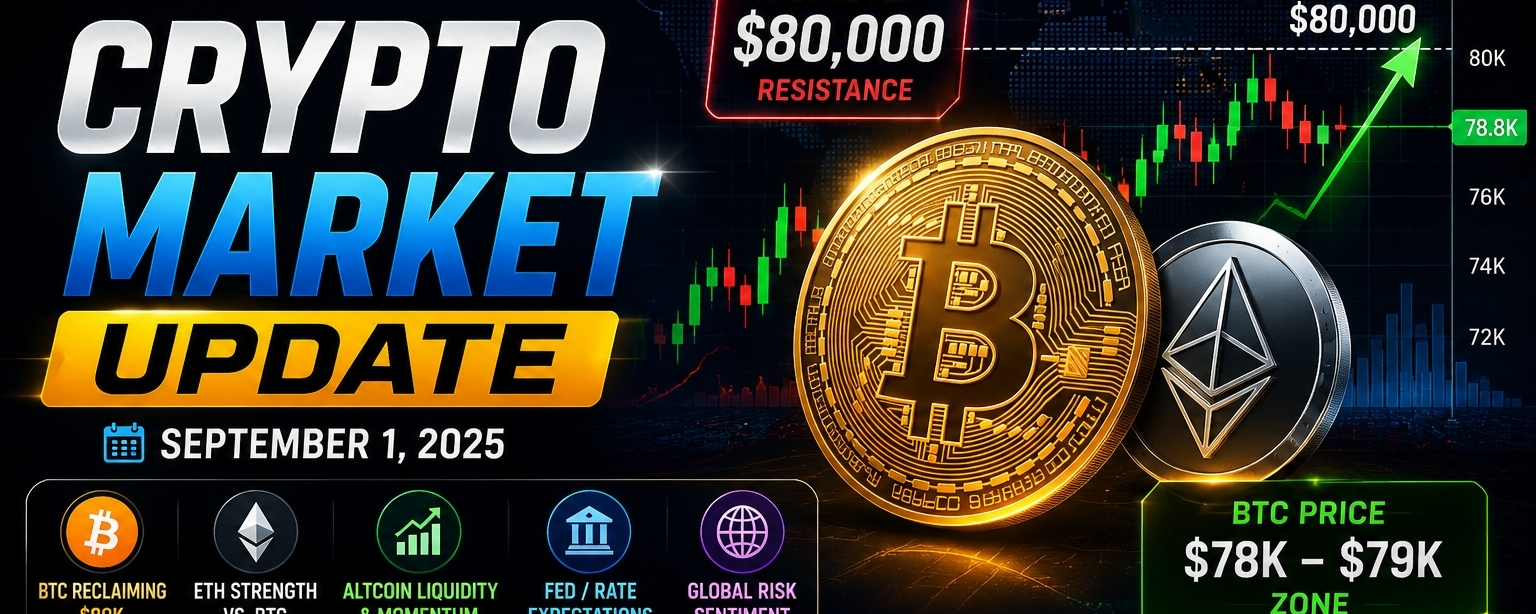
Cenário de mercado de hoje: o Bitcoin está sendo negociado por volta da faixa de **US$ 78 mil–US$ 79 mil**, enquanto o mercado observaO Bitcoin está entrando em setembro com traders observando de perto um nível: **US$ 80.000**. 👀
O BTC está flutuando na faixa dos **US$ 78 mil–US$ 79 mil**, enquanto a pressão macro está aumentando conforme os rendimentos dos títulos globais e os preços do petróleo sobem.
📌 Pontos-chave para observar:
• BTC recuperando os **US$ 80 mil**
• Força do ETH vs. BTC
• Liquidez e momentum de altcoins
• Expectativas do Fed/taxas de juros
• Sentimento global de risco
Setembro pode trazer **alta volatilidade**. Não corra atrás de candles verdes—observe a ação do preço, o volume e a estrutura do mercado.
O próximo grande movimento pode começar com o Bitcoin. ⚡️
Cenário de mercado de hoje: o Bitcoin está sendo negociado por volta da faixa de **US$ 78 mil–US$ 79 mil**, enquanto o mercado observa
O Bitcoin está entrando em setembro com traders observando de perto um nível: **US$ 80.000**. 👀
O BTC está flutuando na faixa dos **US$ 78 mil–US$ 79 mil**, enquanto a pressão macro está aumentando conforme os rendimentos dos títulos globais e os preços do petróleo sobem.
📌 Pontos-chave para observar:
• BTC recuperando os **US$ 80 mil**
• Força do ETH vs. BTC
• Liquidez e momentum de altcoins
• Expectativas do Fed/taxas de juros
• Sentimento global de risco
Setembro pode trazer **alta volatilidade**. Não corra atrás de candles verdes—observe a ação do preço, o volume e a estrutura do mercado.
O próximo grande movimento pode começar com o Bitcoin. ⚡️
O BTC está flutuando na faixa dos **US$ 78 mil–US$ 79 mil**, enquanto a pressão macro está aumentando conforme os rendimentos dos títulos globais e os preços do petróleo sobem.
📌 Pontos-chave para observar:
• BTC recuperando os **US$ 80 mil**
• Força do ETH vs. BTC
• Liquidez e momentum de altcoins
• Expectativas do Fed/taxas de juros
• Sentimento global de risco
Setembro pode trazer **alta volatilidade**. Não corra atrás de candles verdes—observe a ação do preço, o volume e a estrutura do mercado.
O próximo grande movimento pode começar com o Bitcoin. ⚡️
63
Artigo
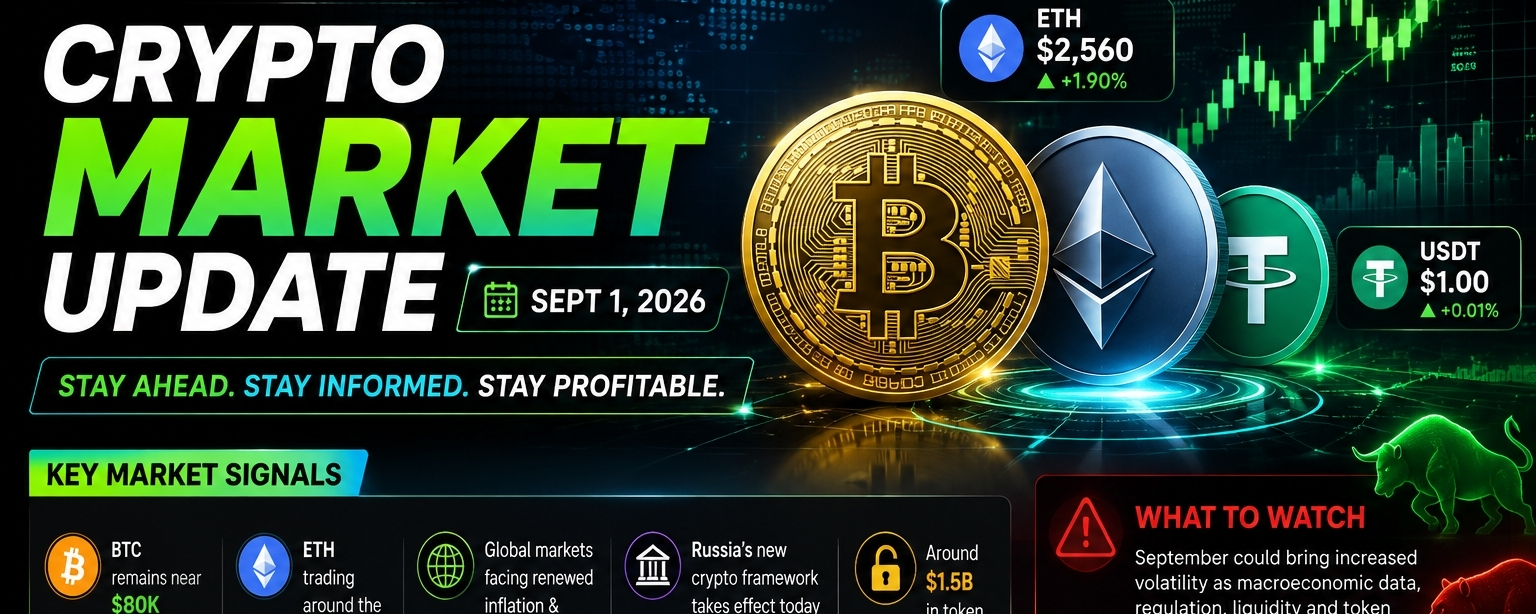
O Bitcoin está começando setembro na zona de US$ 78K–US$ 80K, mantendo os traders focados em saber se o BTC consegue📊 PRINCIPAIS SINAIS DO MERCADO:
• O BTC continua perto do nível psicológico de US$ 80K
• O ETH está sendo negociado na faixa de meados de US$ 2K
• Os mercados globais enfrentam uma inflação renovada e pressão geopolítica
• O novo quadro regulatório de cripto da Rússia entra em vigor hoje, com BTC, ETH e USDT recebendo um papel central
• Cerca de US$ 1,5 bi em desbloqueios de tokens são esperados durante a primeira semana de setembro
⚠️ O QUE ASSISTIR:
Setembro pode trazer maior volatilidade à medida que dados macroeconômicos, regulação, liquidez e eventos de oferta de tokens se chocam.
O Bitcoin está começando setembro na zona de US$ 78K–US$ 80K, mantendo os traders focados em saber se o BTC consegue
📊 PRINCIPAIS SINAIS DO MERCADO:
• O BTC continua perto do nível psicológico de US$ 80K
• O ETH está sendo negociado na faixa de meados de US$ 2K
• Os mercados globais enfrentam uma inflação renovada e pressão geopolítica
• O novo quadro regulatório de cripto da Rússia entra em vigor hoje, com BTC, ETH e USDT recebendo um papel central
• Cerca de US$ 1,5 bi em desbloqueios de tokens são esperados durante a primeira semana de setembro
⚠️ O QUE ASSISTIR:
Setembro pode trazer maior volatilidade à medida que dados macroeconômicos, regulação, liquidez e eventos de oferta de tokens se chocam.
• O BTC continua perto do nível psicológico de US$ 80K
• O ETH está sendo negociado na faixa de meados de US$ 2K
• Os mercados globais enfrentam uma inflação renovada e pressão geopolítica
• O novo quadro regulatório de cripto da Rússia entra em vigor hoje, com BTC, ETH e USDT recebendo um papel central
• Cerca de US$ 1,5 bi em desbloqueios de tokens são esperados durante a primeira semana de setembro
⚠️ O QUE ASSISTIR:
Setembro pode trazer maior volatilidade à medida que dados macroeconômicos, regulação, liquidez e eventos de oferta de tokens se chocam.
41
Artigo
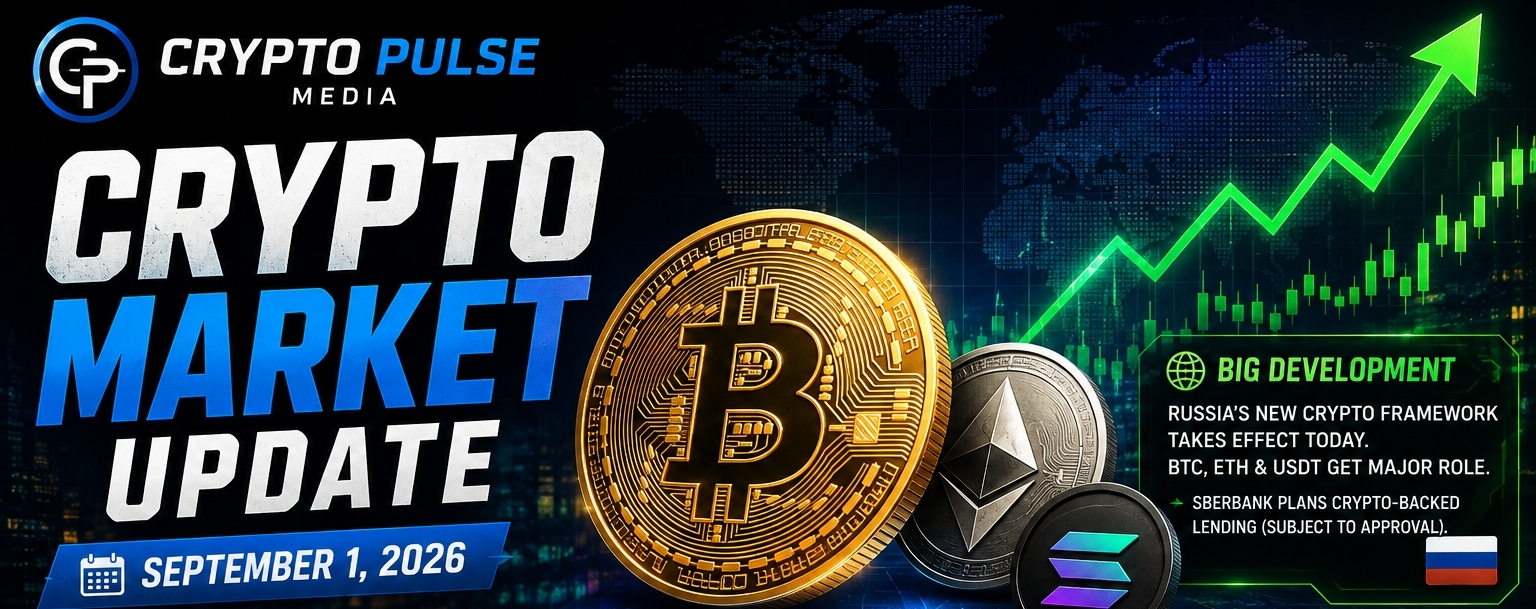
O Bitcoin está entrando em setembro com forte impulso após uma grande alta em agosto, mas o mercado agora📊 Panorama do mercado:
₿ BTC: zona de ~US$ 78K–US$ 80K
◆ ETH: mostrando força renovada
◎ SOL: segue entre as altcoins de grande porte mais fortes
📈 BTC ganhou cerca de 24% durante agosto
🔥 GRANDE DESENVOLVIMENTO:
O novo marco regulatório das criptomoedas da Rússia entra em vigor hoje, com BTC, ETH e USDT desempenhando um papel importante no mercado regulado. O Sberbank também planeja oferecer empréstimos lastreados em cripto, sujeito à aprovação regulatória.
⚠️ Enquanto isso, os mercados globais lidam com a alta dos rendimentos dos títulos, o petróleo acima de US$ 91 e preocupações renovadas com inflação/alta de juros. Isso pode manter a volatilidade elevada em ativos de risco, incluindo cripto.
O Bitcoin está entrando em setembro com forte impulso após uma grande alta em agosto, mas o mercado agora
📊 Panorama do mercado:
₿ BTC: zona de ~US$ 78K–US$ 80K
◆ ETH: mostrando força renovada
◎ SOL: segue entre as altcoins de grande porte mais fortes
📈 BTC ganhou cerca de 24% durante agosto
🔥 GRANDE DESENVOLVIMENTO:
O novo marco regulatório das criptomoedas da Rússia entra em vigor hoje, com BTC, ETH e USDT desempenhando um papel importante no mercado regulado. O Sberbank também planeja oferecer empréstimos lastreados em cripto, sujeito à aprovação regulatória.
⚠️ Enquanto isso, os mercados globais lidam com a alta dos rendimentos dos títulos, o petróleo acima de US$ 91 e preocupações renovadas com inflação/alta de juros. Isso pode manter a volatilidade elevada em ativos de risco, incluindo cripto.
₿ BTC: zona de ~US$ 78K–US$ 80K
◆ ETH: mostrando força renovada
◎ SOL: segue entre as altcoins de grande porte mais fortes
📈 BTC ganhou cerca de 24% durante agosto
🔥 GRANDE DESENVOLVIMENTO:
O novo marco regulatório das criptomoedas da Rússia entra em vigor hoje, com BTC, ETH e USDT desempenhando um papel importante no mercado regulado. O Sberbank também planeja oferecer empréstimos lastreados em cripto, sujeito à aprovação regulatória.
⚠️ Enquanto isso, os mercados globais lidam com a alta dos rendimentos dos títulos, o petróleo acima de US$ 91 e preocupações renovadas com inflação/alta de juros. Isso pode manter a volatilidade elevada em ativos de risco, incluindo cripto.
72
Artigo
Vamos transformar isso em uma **série diária original do Binance Square** para a CryptoPulse Media—com base em o### 📊 CryptoPulse Media — Atualização diária do mercado
**1 de setembro de 2026**
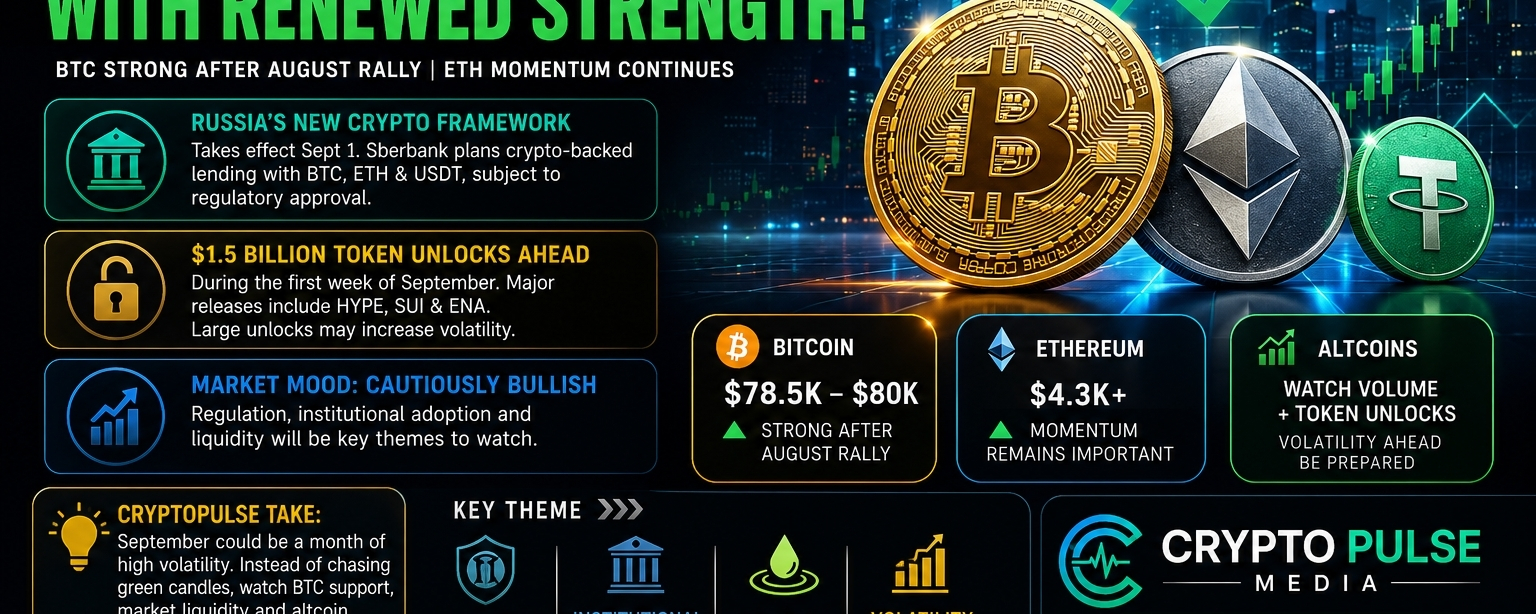
O Bitcoin está começando setembro com força renovada após uma forte alta em agosto. Dados recentes do mercado mostram o BTC em torno de **US$ 78,5K–US$ 80K**, enquanto o Ethereum também apresenta momentum positivo.
Um grande desenvolvimento a observar hoje é o **novo quadro de criptografia da Rússia**, que entra em vigor em 1º de setembro. O Sberbank está planejando concessão de crédito com lastro em cripto envolvendo **BTC, ETH e USDT**, sujeita à aprovação regulatória.
Enquanto isso, os traders devem ficar de olho no mercado de altcoins. Cerca de **US$ 1,5 bilhão em desbloqueios de tokens** são esperados durante a primeira semana de setembro, com grandes liberações incluindo HYPE, SUI e ENA. Desbloqueios de grande porte podem aumentar a pressão de venda no curto prazo e a volatilidade.
Vamos transformar isso em uma **série diária original do Binance Square** para a CryptoPulse Media—com base em o
### 📊 CryptoPulse Media — Atualização diária do mercado
**1 de setembro de 2026**
O Bitcoin está começando setembro com força renovada após uma forte alta em agosto. Dados recentes do mercado mostram o BTC em torno de **US$ 78,5K–US$ 80K**, enquanto o Ethereum também apresenta momentum positivo.
Um grande desenvolvimento a observar hoje é o **novo quadro de criptografia da Rússia**, que entra em vigor em 1º de setembro. O Sberbank está planejando concessão de crédito com lastro em cripto envolvendo **BTC, ETH e USDT**, sujeita à aprovação regulatória.
Enquanto isso, os traders devem ficar de olho no mercado de altcoins. Cerca de **US$ 1,5 bilhão em desbloqueios de tokens** são esperados durante a primeira semana de setembro, com grandes liberações incluindo HYPE, SUI e ENA. Desbloqueios de grande porte podem aumentar a pressão de venda no curto prazo e a volatilidade.
**1 de setembro de 2026**
O Bitcoin está começando setembro com força renovada após uma forte alta em agosto. Dados recentes do mercado mostram o BTC em torno de **US$ 78,5K–US$ 80K**, enquanto o Ethereum também apresenta momentum positivo.
Um grande desenvolvimento a observar hoje é o **novo quadro de criptografia da Rússia**, que entra em vigor em 1º de setembro. O Sberbank está planejando concessão de crédito com lastro em cripto envolvendo **BTC, ETH e USDT**, sujeita à aprovação regulatória.
Enquanto isso, os traders devem ficar de olho no mercado de altcoins. Cerca de **US$ 1,5 bilhão em desbloqueios de tokens** são esperados durante a primeira semana de setembro, com grandes liberações incluindo HYPE, SUI e ENA. Desbloqueios de grande porte podem aumentar a pressão de venda no curto prazo e a volatilidade.
92

Artigo
O consenso do XRPL congela após remover apenas 12% dos nós centrais — mas um ajuste simples triplica o XRP defCom 60% de participação, dois links aleatórios elevaram os limiares simulados de falha de quorum de 11% para 38% e de 12% para 33%.
um novo estudo do XRP Ledger diz que duas ou três conexões ponto a ponto extras por nó participante podem aumentar de forma acentuada o número de nós que um ataque direcionado precisa remover para interromper o consenso modelado.
O consenso do XRPL depende de validadores confiáveis suficientes recebendo as mensagens um do outro. Uma rede ponto a ponto separada transporta essas mensagens entre servidores; portanto, rotas extras poderiam manter o tráfego de validadores em movimento se um ataque remover os hubs mais movimentados da rede.
O consenso do XRPL congela após remover apenas 12% dos nós centrais — mas um ajuste simples triplica o XRP def
Com 60% de participação, dois links aleatórios elevaram os limiares simulados de falha de quorum de 11% para 38% e de 12% para 33%.
um novo estudo do XRP Ledger diz que duas ou três conexões ponto a ponto extras por nó participante podem aumentar de forma acentuada o número de nós que um ataque direcionado precisa remover para interromper o consenso modelado.
O consenso do XRPL depende de validadores confiáveis suficientes recebendo as mensagens um do outro. Uma rede ponto a ponto separada transporta essas mensagens entre servidores; portanto, rotas extras poderiam manter o tráfego de validadores em movimento se um ataque remover os hubs mais movimentados da rede.
um novo estudo do XRP Ledger diz que duas ou três conexões ponto a ponto extras por nó participante podem aumentar de forma acentuada o número de nós que um ataque direcionado precisa remover para interromper o consenso modelado.
O consenso do XRPL depende de validadores confiáveis suficientes recebendo as mensagens um do outro. Uma rede ponto a ponto separada transporta essas mensagens entre servidores; portanto, rotas extras poderiam manter o tráfego de validadores em movimento se um ataque remover os hubs mais movimentados da rede.
93
Artigo
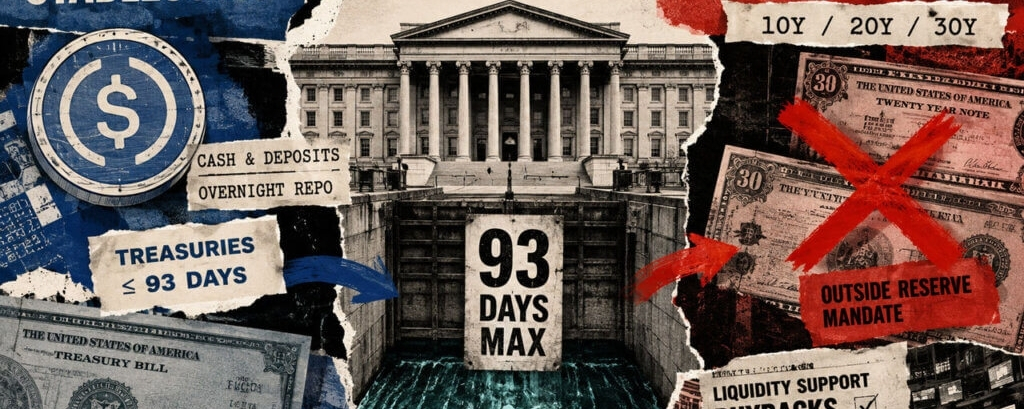
O Tesouro dos EUA recorre a stablecoins para financiar dívida de curto prazo, mas elas não conseguem resolver seu problema de US$ 28B em títulos longosGENIUS (reserves) para em 93 dias, enquanto o Tesouro expande recompras de liquidez em dívidas de 10 a 30 anos.
a demanda por stablecoins está se tornando relevante no mercado de dívida do governo dos EUA, mas a maturidade dessa demanda importa mais do que o total divulgado.
Washington agora tem duas histórias do mercado de dívida em andamento ao mesmo tempo. A estrutura federal de pagamentos permitidos direciona reservas de stablecoins para instrumentos semelhantes a caixa e para Títulos do Tesouro com no máximo 93 dias restantes. Mais adiante na curva, o Departamento do Tesouro disse em 19 de agosto que, a partir de 9 de setembro, ao menos dobraria o tamanho máximo das recompra de suporte de liquidez nos setores nominais de 10 a 20 anos e de 20 a 30 anos.
O Tesouro dos EUA recorre a stablecoins para financiar dívida de curto prazo, mas elas não conseguem resolver seu problema de US$ 28B em títulos longos
GENIUS (reserves) para em 93 dias, enquanto o Tesouro expande recompras de liquidez em dívidas de 10 a 30 anos.
a demanda por stablecoins está se tornando relevante no mercado de dívida do governo dos EUA, mas a maturidade dessa demanda importa mais do que o total divulgado.
Washington agora tem duas histórias do mercado de dívida em andamento ao mesmo tempo. A estrutura federal de pagamentos permitidos direciona reservas de stablecoins para instrumentos semelhantes a caixa e para Títulos do Tesouro com no máximo 93 dias restantes. Mais adiante na curva, o Departamento do Tesouro disse em 19 de agosto que, a partir de 9 de setembro, ao menos dobraria o tamanho máximo das recompra de suporte de liquidez nos setores nominais de 10 a 20 anos e de 20 a 30 anos.
a demanda por stablecoins está se tornando relevante no mercado de dívida do governo dos EUA, mas a maturidade dessa demanda importa mais do que o total divulgado.
Washington agora tem duas histórias do mercado de dívida em andamento ao mesmo tempo. A estrutura federal de pagamentos permitidos direciona reservas de stablecoins para instrumentos semelhantes a caixa e para Títulos do Tesouro com no máximo 93 dias restantes. Mais adiante na curva, o Departamento do Tesouro disse em 19 de agosto que, a partir de 9 de setembro, ao menos dobraria o tamanho máximo das recompra de suporte de liquidez nos setores nominais de 10 a 20 anos e de 20 a 30 anos.
5

Artigo
Notícias
BitGo e NYDIG puxam em extremidades opostas de uma corda em torno do Bitcoin, contrastando dificuldades de receita com aO acordo da BitGo com a NYDIG coloca aproximadamente US$ 42,5 milhões antecipadamente contra a alegada pegada de 3+ GW de energia e computação da NYDIG, com a lucratividade não comprovada em nenhum dos lados.
O acordo da NYDIG da ItGo transfere seu negócio institucional de negociação para o provedor de infraestrutura de custódia e negociação de ativos digitais, enquanto a NYDIG afirma que está concentrando recursos em energia, mineração de Bitcoin e data centers de computação de alto desempenho.
Os termos de encerramento divulgados pela BitGo estabelecem aproximadamente US$ 42,5 milhões de contraprestação antecipadamente. A BitGo está adicionando uma equipe institucional, relacionamentos com clientes e produtos financeiros em torno de sua plataforma de custódia e liquidação. A NYDIG está direcionando atenção para uma pegada de energia e computação descrita pela empresa que excede 3 GW.
Notícias BitGo e NYDIG puxam em extremidades opostas de uma corda em torno do Bitcoin, contrastando dificuldades de receita com a
O acordo da BitGo com a NYDIG coloca aproximadamente US$ 42,5 milhões antecipadamente contra a alegada pegada de 3+ GW de energia e computação da NYDIG, com a lucratividade não comprovada em nenhum dos lados.
O acordo da NYDIG da ItGo transfere seu negócio institucional de negociação para o provedor de infraestrutura de custódia e negociação de ativos digitais, enquanto a NYDIG afirma que está concentrando recursos em energia, mineração de Bitcoin e data centers de computação de alto desempenho.
Os termos de encerramento divulgados pela BitGo estabelecem aproximadamente US$ 42,5 milhões de contraprestação antecipadamente. A BitGo está adicionando uma equipe institucional, relacionamentos com clientes e produtos financeiros em torno de sua plataforma de custódia e liquidação. A NYDIG está direcionando atenção para uma pegada de energia e computação descrita pela empresa que excede 3 GW.
O acordo da NYDIG da ItGo transfere seu negócio institucional de negociação para o provedor de infraestrutura de custódia e negociação de ativos digitais, enquanto a NYDIG afirma que está concentrando recursos em energia, mineração de Bitcoin e data centers de computação de alto desempenho.
Os termos de encerramento divulgados pela BitGo estabelecem aproximadamente US$ 42,5 milhões de contraprestação antecipadamente. A BitGo está adicionando uma equipe institucional, relacionamentos com clientes e produtos financeiros em torno de sua plataforma de custódia e liquidação. A NYDIG está direcionando atenção para uma pegada de energia e computação descrita pela empresa que excede 3 GW.
23
Inicia sessão para explorar mais conteúdos
Junta-te a utilizadores de criptomoedas de todo o mundo na Binance Square
⚡️ Obtém informações úteis e recentes sobre criptomoedas.
💬 Com a confiança da maior exchange de criptomoedas do mundo.
👍 Descobre perspetivas reais de criadores verificados.
E-mail/Número de telefone