

Trading-squad
826 Publications

Trading-squad
Signaler
Bloquer l’utilisateur
Crypto trader focused on fundamentals. Daily market updates, chart breakdowns & smart risk management.
24 Suivis
257 Abonnés
1.2K+ J’aime
Publications
Portefeuille
Tous
Citations
Vidéos
Beginner traders when coming to this $BTC industry 😂😂👍
Beginner traders when coming to this $BTC industry 😂😂👍

67
i have $3100 $USDT
which coin can help me to buy my first iPhone 18 Pro Max in a Month?
My preference is $SUI
What do you think? 👇🏻
#CommunityFirst
i have $3100 $USDT
which coin can help me to buy my first iPhone 18 Pro Max in a Month?
My preference is $SUI
What do you think? 👇🏻
#CommunityFirst
which coin can help me to buy my first iPhone 18 Pro Max in a Month?
My preference is $SUI
What do you think? 👇🏻
#CommunityFirst
SOL
0%
SUI
0%
XRP
0%
ZEC
0%
0 Votes • Vote fermé
46
🔥 WHICH COIN IS YOUR BIGGEST HOLDING? 🪙
Tell the community which cryptocurrency makes up the largest part of your portfolio! 👀📊
💬 VOTE NOW + COMMENT YOUR HOLDING! 🚀
#CommunityFirst
$BTC $SOL $ETH
🔥 WHICH COIN IS YOUR BIGGEST HOLDING? 🪙
Tell the community which cryptocurrency makes up the largest part of your portfolio! 👀📊
💬 VOTE NOW + COMMENT YOUR HOLDING! 🚀
#CommunityFirst
$BTC $SOL $ETH
Tell the community which cryptocurrency makes up the largest part of your portfolio! 👀📊
💬 VOTE NOW + COMMENT YOUR HOLDING! 🚀
#CommunityFirst
$BTC $SOL $ETH
🔘 🟠 Bitcoin ($BTC)
25%
🔘 🔵 Ethereum ($ETH)
25%
🔘 🟡 BNB ($BNB)
0%
🔘 ⚡ Solana ($SOL)
50%
4 Votes • Vote fermé
186
📊 POLL TIME!
💰 HOW MUCH HAVE YOU INVESTED IN CRYPTO?
💬 VOTE NOW + SHARE YOUR INVESTMENT RANGE IN THE COMMENTS! 🔥
#CommunityPoll
📊 POLL TIME!
💰 HOW MUCH HAVE YOU INVESTED IN CRYPTO?
💬 VOTE NOW + SHARE YOUR INVESTMENT RANGE IN THE COMMENTS! 🔥
#CommunityPoll
💰 HOW MUCH HAVE YOU INVESTED IN CRYPTO?
💬 VOTE NOW + SHARE YOUR INVESTMENT RANGE IN THE COMMENTS! 🔥
#CommunityPoll
🔘 💵 $0–$100
0%
🔘 💎 $100–$500
0%
🔘 🚀 $500–$1,000
0%
🔘 🐋 $1,000+
0%
0 Votes • Vote fermé
47
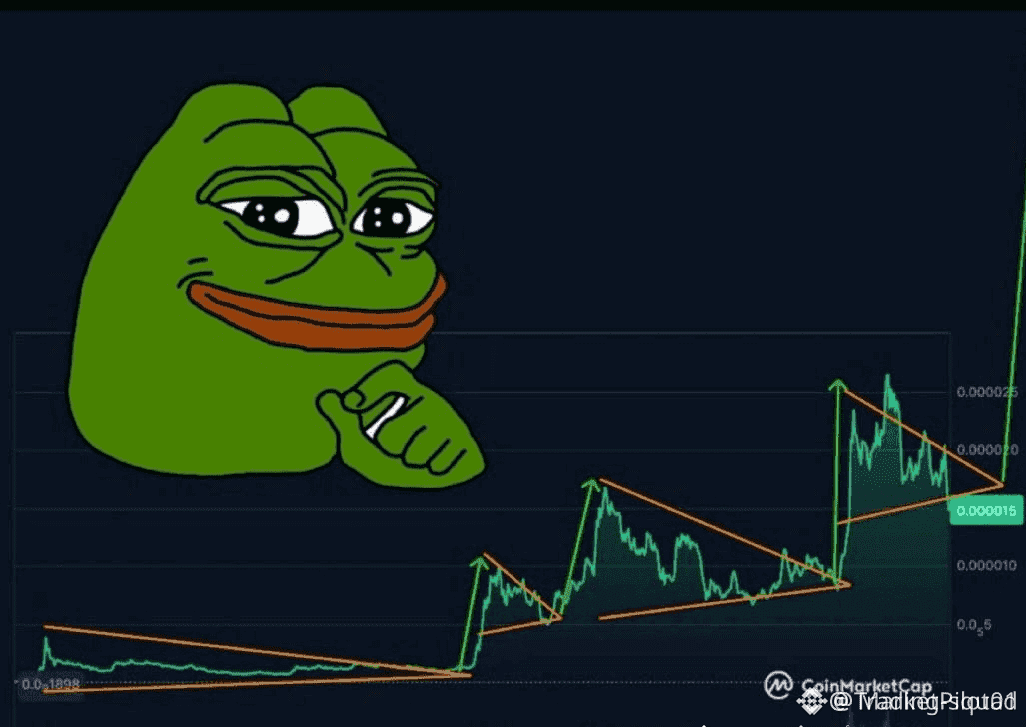
🐸💥 I followed my own advice and went for $PEPE!
💰 $4,000 invested
🪙 1 BILLION $PEPE tokens
🎯 The big question: could PEPE ever reach $1 by 2030? 🚀
At $1, my 1 billion tokens would be worth $1 BILLION. 🤯💸
Of course, $1 PEPE would require an enormous market capitalization. With roughly 414 trillion PEPE currently circulating, that price would imply about $414 trillion in market cap—far beyond today’s roughly $2B level.
So is this a bold risk, a crazy dream, or a future win? 👀🐸
Only time will tell.
$POWER ⚡
Paradise 🌴🚀
🐸💥 I followed my own advice and went for $PEPE !
💰 $4,000 invested
🪙 1 BILLION $PEPE tokens
🎯 The big question: could PEPE ever reach $1 by 2030? 🚀
At $1, my 1 billion tokens would be worth $1 BILLION. 🤯💸
Of course, $1 PEPE would require an enormous market capitalization. With roughly 414 trillion PEPE currently circulating, that price would imply about $414 trillion in market cap—far beyond today’s roughly $2B level.
So is this a bold risk, a crazy dream, or a future win? 👀🐸
Only time will tell.
$POWER ⚡
Paradise 🌴🚀
💰 $4,000 invested
🪙 1 BILLION $PEPE tokens
🎯 The big question: could PEPE ever reach $1 by 2030? 🚀
At $1, my 1 billion tokens would be worth $1 BILLION. 🤯💸
Of course, $1 PEPE would require an enormous market capitalization. With roughly 414 trillion PEPE currently circulating, that price would imply about $414 trillion in market cap—far beyond today’s roughly $2B level.
So is this a bold risk, a crazy dream, or a future win? 👀🐸
Only time will tell.
$POWER ⚡
Paradise 🌴🚀
59
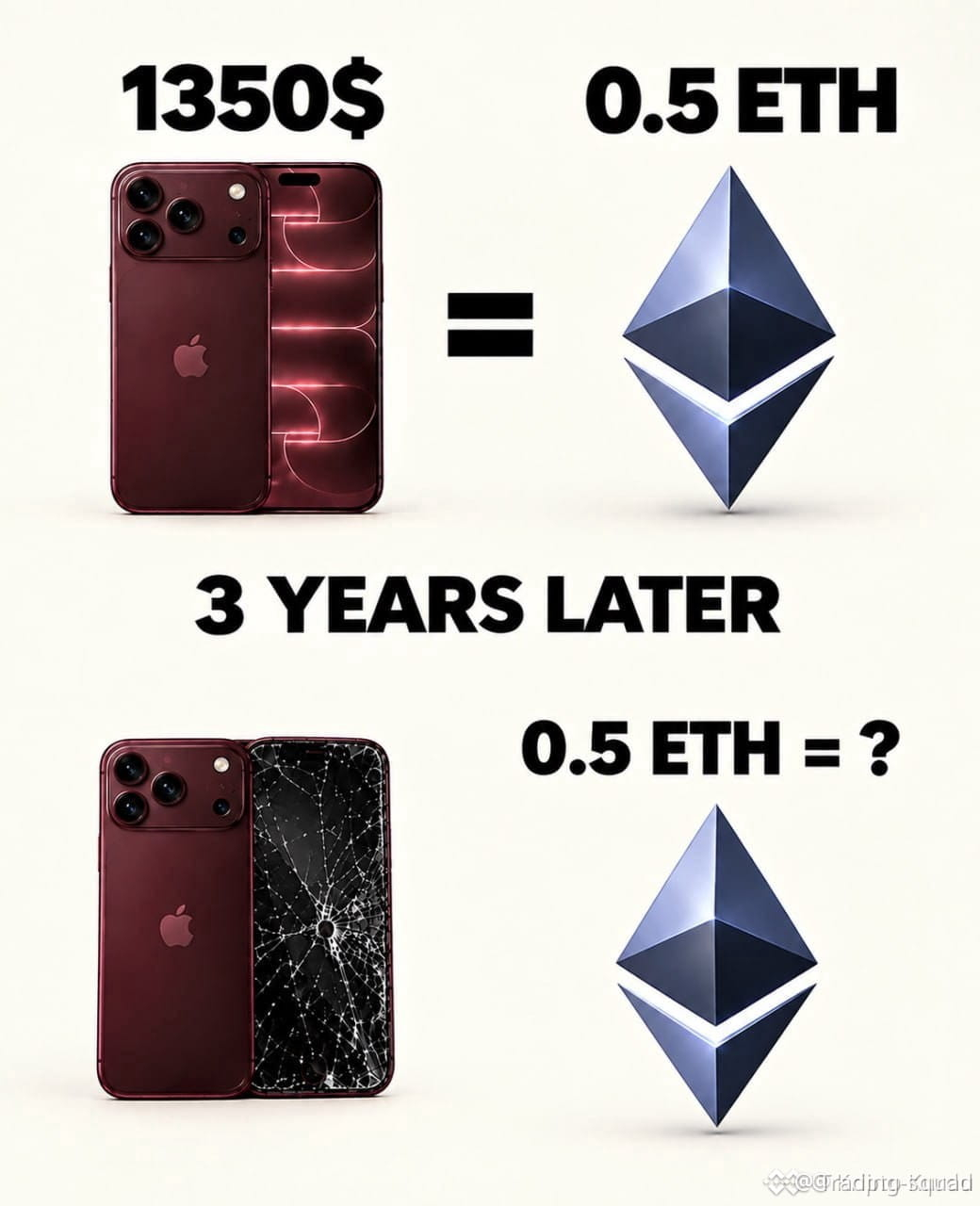
Right now, instead of buying an iPhone, you can buy 0.5 $ETH
{spot}(ETHUSDT)
In three years, this phone will be completely worthless. So, how many dollars will 0.5 #Ethereum be worth?
$AAPL.US
Right now, instead of buying an iPhone, you can buy 0.5 $ETH
In three years, this phone will be completely worthless. So, how many dollars will 0.5 #Ethereum be worth?
$AAPL.US
In three years, this phone will be completely worthless. So, how many dollars will 0.5 #Ethereum be worth?
$AAPL.US
ETH-0,57%
AAPLUS-2,23%
80
📊 POLL TIME!
What’s your prediction for Bitcoin's next big move?
💬 VOTE + DROP YOUR BTC TARGET PRICE! 🔥
Don't just vote — defend your prediction! 👇
📌 What’s your entry zone? What catalyst could drive the next move? Let's see your analysis in the comments! 👀📈
⚠️ Not financial advice. Manage risk. DYOR.
#btc70k $BTC
{spot}(BTCUSDT)
📊 POLL TIME!
What’s your prediction for Bitcoin's next big move?
💬 VOTE + DROP YOUR BTC TARGET PRICE! 🔥
Don't just vote — defend your prediction! 👇
📌 What’s your entry zone? What catalyst could drive the next move? Let's see your analysis in the comments! 👀📈
⚠️ Not financial advice. Manage risk. DYOR.
#btc70k $BTC
What’s your prediction for Bitcoin's next big move?
💬 VOTE + DROP YOUR BTC TARGET PRICE! 🔥
Don't just vote — defend your prediction! 👇
📌 What’s your entry zone? What catalyst could drive the next move? Let's see your analysis in the comments! 👀📈
⚠️ Not financial advice. Manage risk. DYOR.
#btc70k $BTC
🔘 🚀 BULLISH — $90K+
39%
🔘 🔥 STRONG BREAKOUT — $100K+
15%
🔘📉 BEARISH — Correction
46%
🔘 SIDEWAYS—BTC consolidate
0%
26 Votes • Vote fermé
276
What if you throw $10 into $PEPE and just forget about it for a while ...
At around $0.000004 right now, $10 gets you roughly 2.5M PEPE
Now the fun part 😂
$0.0001 = ~$250
$0.001 = ~$2,500
$0.01 = ~$25,000
$0.10 = ~$250,000
Sounds crazy but the math is not the easy part 😭 the real question is whether PEPE could ever reach those prices because the supply is massive and every higher price would require a much bigger market cap
I'm not saying PEPE is going there
Just showing what a small $10 position would look like at different prices
Would you actually hold 2.5M PEPE for years or would you sell the first time it pumps? 🐸
#pepe⚡ $PEPE
What if you throw $10 into $PEPE and just forget about it for a while ...
At around $0.000004 right now, $10 gets you roughly 2.5M PEPE
Now the fun part 😂
$0.0001 = ~$250
$0.001 = ~$2,500
$0.01 = ~$25,000
$0.10 = ~$250,000
Sounds crazy but the math is not the easy part 😭 the real question is whether PEPE could ever reach those prices because the supply is massive and every higher price would require a much bigger market cap
I'm not saying PEPE is going there
Just showing what a small $10 position would look like at different prices
Would you actually hold 2.5M PEPE for years or would you sell the first time it pumps? 🐸
#pepe⚡ $PEPE
At around $0.000004 right now, $10 gets you roughly 2.5M PEPE
Now the fun part 😂
$0.0001 = ~$250
$0.001 = ~$2,500
$0.01 = ~$25,000
$0.10 = ~$250,000
Sounds crazy but the math is not the easy part 😭 the real question is whether PEPE could ever reach those prices because the supply is massive and every higher price would require a much bigger market cap
I'm not saying PEPE is going there
Just showing what a small $10 position would look like at different prices
Would you actually hold 2.5M PEPE for years or would you sell the first time it pumps? 🐸
#pepe⚡ $PEPE

60
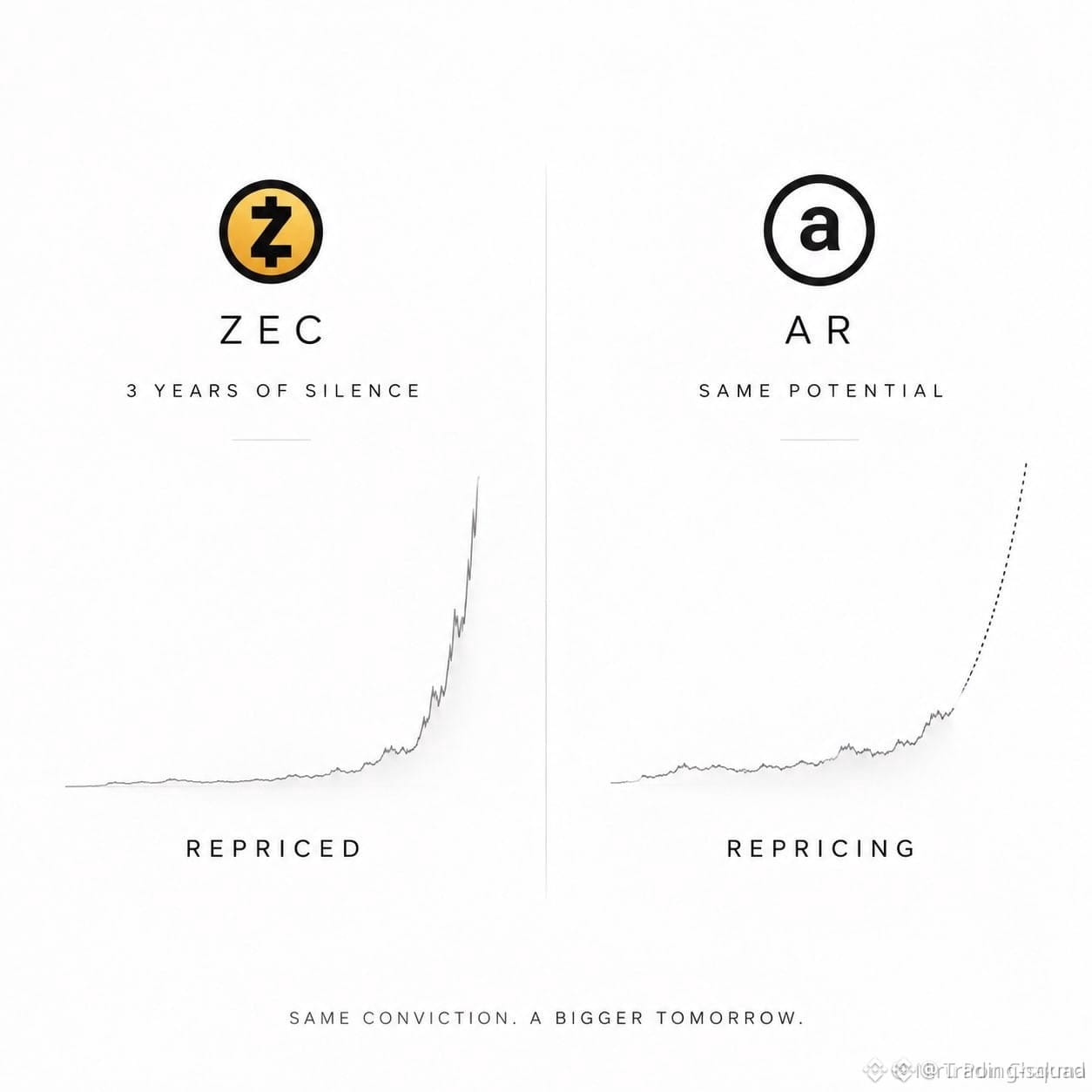
$AR A kind reminder: Arweave has everything it needs to revisit — and potentially surpass — its 2024 high of $49.55.
If you’re already locked in, congrats. 🎉
$AR $ZEC
$AR A kind reminder: Arweave has everything it needs to revisit — and potentially surpass — its 2024 high of $49.55.
If you’re already locked in, congrats. 🎉
$AR $ZEC
If you’re already locked in, congrats. 🎉
$AR $ZEC
28
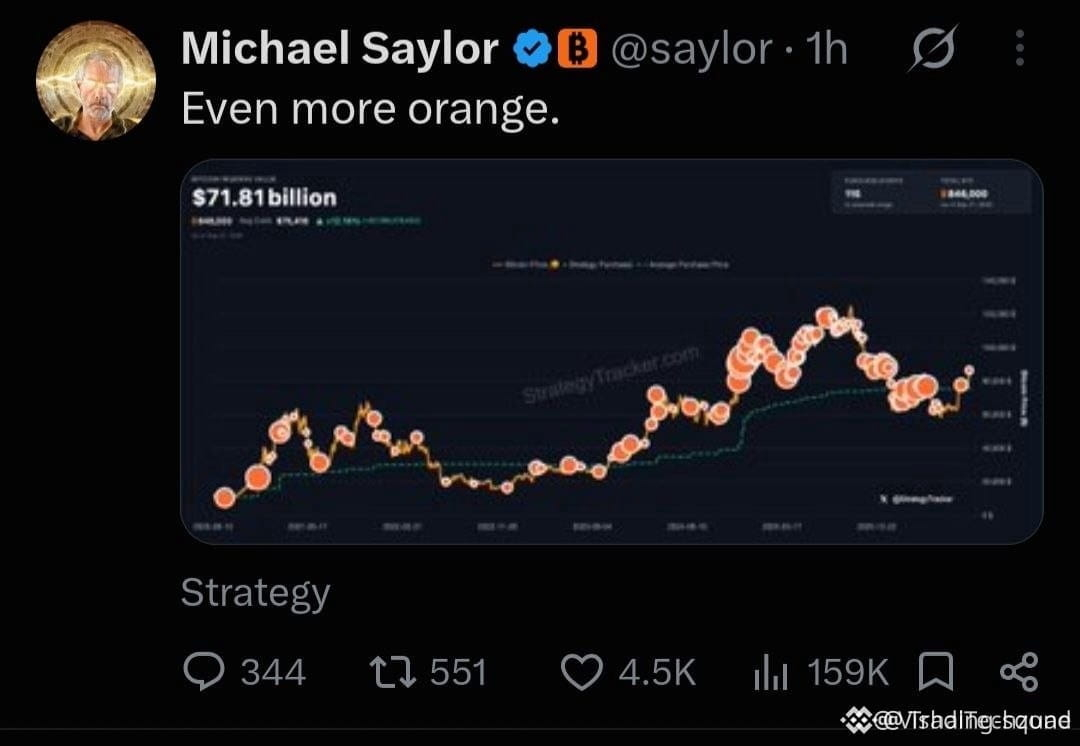
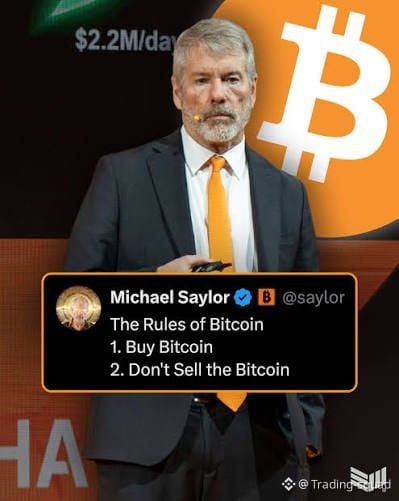
🟠 Saylor Drops "A Little More Orange": Is Strategy Buying More Bitcoin?
#SaylorHintsStrategyBitcoinBuy
What happened
On Sunday, Sept 20, Michael Saylor posted Strategy's Bitcoin acquisition chart on X with the caption "A little more orange."
These orange-dot posts have often been followed by a purchase disclosure on Monday, so the hashtag now has 2.2M views and 12K+ people discussing it.
Where Strategy stands
Holdings: 845,050 BTC (over 4% of the 21M supply)
Total cost: about $63.7B, at an average of about $75,412 per BTC
Last confirmed buy: 4,603 BTC (about $369.7M) at about $80,318, on Aug 31
Holdings were unchanged in the most recent weekly filing (Sept 14)
The position is back in profit, roughly $4B unrealized gain, after sitting underwater earlier this year
The macro backdrop
The hint came in the same week as a Fed rate hike and a setback for crypto legislation in Congress. Neither seems to have changed Strategy's signaling pattern.
Hint ≠ confirmation ⚠️
A post is not a purchase. The only confirmation is Strategy's official disclosure (8-K filing). Until then, treat it as speculation.
What to watch after the filing
Size: is it a large buy or a small top-up?
Price paid, compared with the $75.4K average cost
Funding: cash, share sales, or preferred stock (STRC)? Financing matters as much as the headline
MSTR and BTC reaction: does the market still react, or is accumulation now "priced in"?
Community takes
🐂 Bullish: it signals continued institutional conviction
🧊 Skeptical: routine reposts are noise until the on-chain and filing data show up
❓ Long-term: how long can one company keep buying at this scale, and could selling ever become part of the strategy?
Saylor's orange dots create attention, but the filings tell the real story. Wait for the official announcement before trading on the headline.
Do you think the market still reacts to Strategy's buys, or is it routine now? 👇
⚠️ Not financial advice. Do your own research.
#MichaelSaylor #MSTR #BinanceSquare $BTC
#SaylorHintsStrategyBitcoinBuy
🟠 Saylor Drops "A Little More Orange": Is Strategy Buying More Bitcoin?
#SaylorHintsStrategyBitcoinBuy
What happened
On Sunday, Sept 20, Michael Saylor posted Strategy's Bitcoin acquisition chart on X with the caption "A little more orange."
These orange-dot posts have often been followed by a purchase disclosure on Monday, so the hashtag now has 2.2M views and 12K+ people discussing it.
Where Strategy stands
Holdings: 845,050 BTC (over 4% of the 21M supply)
Total cost: about $63.7B, at an average of about $75,412 per BTC
Last confirmed buy: 4,603 BTC (about $369.7M) at about $80,318, on Aug 31
Holdings were unchanged in the most recent weekly filing (Sept 14)
The position is back in profit, roughly $4B unrealized gain, after sitting underwater earlier this year
The macro backdrop
The hint came in the same week as a Fed rate hike and a setback for crypto legislation in Congress. Neither seems to have changed Strategy's signaling pattern.
Hint ≠ confirmation ⚠️
A post is not a purchase. The only confirmation is Strategy's official disclosure (8-K filing). Until then, treat it as speculation.
What to watch after the filing
Size: is it a large buy or a small top-up?
Price paid, compared with the $75.4K average cost
Funding: cash, share sales, or preferred stock (STRC)? Financing matters as much as the headline
MSTR and BTC reaction: does the market still react, or is accumulation now "priced in"?
Community takes
🐂 Bullish: it signals continued institutional conviction
🧊 Skeptical: routine reposts are noise until the on-chain and filing data show up
❓ Long-term: how long can one company keep buying at this scale, and could selling ever become part of the strategy?
Saylor's orange dots create attention, but the filings tell the real story. Wait for the official announcement before trading on the headline.
Do you think the market still reacts to Strategy's buys, or is it routine now? 👇
⚠️ Not financial advice. Do your own research.
#MichaelSaylor #MSTR #BinanceSquare $BTC
#SaylorHintsStrategyBitcoinBuy
#SaylorHintsStrategyBitcoinBuy
What happened
On Sunday, Sept 20, Michael Saylor posted Strategy's Bitcoin acquisition chart on X with the caption "A little more orange."
These orange-dot posts have often been followed by a purchase disclosure on Monday, so the hashtag now has 2.2M views and 12K+ people discussing it.
Where Strategy stands
Holdings: 845,050 BTC (over 4% of the 21M supply)
Total cost: about $63.7B, at an average of about $75,412 per BTC
Last confirmed buy: 4,603 BTC (about $369.7M) at about $80,318, on Aug 31
Holdings were unchanged in the most recent weekly filing (Sept 14)
The position is back in profit, roughly $4B unrealized gain, after sitting underwater earlier this year
The macro backdrop
The hint came in the same week as a Fed rate hike and a setback for crypto legislation in Congress. Neither seems to have changed Strategy's signaling pattern.
Hint ≠ confirmation ⚠️
A post is not a purchase. The only confirmation is Strategy's official disclosure (8-K filing). Until then, treat it as speculation.
What to watch after the filing
Size: is it a large buy or a small top-up?
Price paid, compared with the $75.4K average cost
Funding: cash, share sales, or preferred stock (STRC)? Financing matters as much as the headline
MSTR and BTC reaction: does the market still react, or is accumulation now "priced in"?
Community takes
🐂 Bullish: it signals continued institutional conviction
🧊 Skeptical: routine reposts are noise until the on-chain and filing data show up
❓ Long-term: how long can one company keep buying at this scale, and could selling ever become part of the strategy?
Saylor's orange dots create attention, but the filings tell the real story. Wait for the official announcement before trading on the headline.
Do you think the market still reacts to Strategy's buys, or is it routine now? 👇
⚠️ Not financial advice. Do your own research.
#MichaelSaylor #MSTR #BinanceSquare $BTC
#SaylorHintsStrategyBitcoinBuy

135


🔥 4 POPULAR COINS — WHO TAKES THE SPOTLIGHT NEXT? 🚨
The market is heating up, and these crypto giants are on traders’ radar. 👀📊
🟠 $BTC — The market leader
🔵 $ETH — Major ecosystem player
🟣 $BNB — Strong exchange ecosystem
⚡ $SOL — Fast-moving ecosystem
Which one are you watching most closely right now? 👇
💬 VOTE + DROP YOUR PRICE TARGET!
🔥 And tell us what catalyst you think could drive the next big move.
Let’s hear your call! 👀📈
⚠️ Crypto is volatile. Manage risk. DYOR.
#PollTime #Community
📊 POLL TIME!
🔥 4 POPULAR COINS — WHO TAKES THE SPOTLIGHT NEXT? 🚨
The market is heating up, and these crypto giants are on traders’ radar. 👀📊
🟠 $BTC — The market leader
🔵 $ETH — Major ecosystem player
🟣 $BNB — Strong exchange ecosystem
⚡ $SOL — Fast-moving ecosystem
Which one are you watching most closely right now? 👇
💬 VOTE + DROP YOUR PRICE TARGET!
🔥 And tell us what catalyst you think could drive the next big move.
Let’s hear your call! 👀📈
⚠️ Crypto is volatile. Manage risk. DYOR.
#PollTime #Community
📊 POLL TIME!
The market is heating up, and these crypto giants are on traders’ radar. 👀📊
🟠 $BTC — The market leader
🔵 $ETH — Major ecosystem player
🟣 $BNB — Strong exchange ecosystem
⚡ $SOL — Fast-moving ecosystem
Which one are you watching most closely right now? 👇
💬 VOTE + DROP YOUR PRICE TARGET!
🔥 And tell us what catalyst you think could drive the next big move.
Let’s hear your call! 👀📈
⚠️ Crypto is volatile. Manage risk. DYOR.
#PollTime #Community
📊 POLL TIME!
🔘 $BTC
41%
🔘 $ETH
13%
🔘 $BNB
12%
🔘 $SOL
34%
32 Votes • Vote fermé
471
Article
The Layers Nobody Sees: What Actually Runs CryptoEveryone talks about coins and price charts. Almost nobody talks about the plumbing that keeps the whole system running. Here's a tour of it.
When people say "crypto infrastructure," they usually mean the unglamorous machinery underneath every trade, wallet, and smart contract — the stuff that doesn't trend on social media but breaks everything if it fails. It's less "digital gold" and more "digital utilities": nodes, validators, custody systems, oracles, and bridges. Here's a walk through the stack.
1. The base layer: nodes and consensus
Every blockchain is really just a network of computers (nodes) agreeing on a shared ledger. Some run full nodes that store the entire history; others run light clients that trust summaries from full nodes. On top of that sits consensus — proof-of-work for Bitcoin, proof-of-stake for Ethereum and most newer chains — which is the mechanism that decides whose version of the ledger is "true" when there's disagreement.
Why it matters
Node infrastructure is centralizing in practice even on "decentralized" chains — a handful of providers run a large share of validators and RPC endpoints. That's an ongoing tension in the space between decentralization in theory and convenience in practice.
2. Scaling layers: rollups and L2s
Base layers like Ethereum are slow and expensive by design — that's the tradeoff for security. Layer-2 networks (rollups like Arbitrum, Optimism, Base) batch thousands of transactions off-chain and post compressed proofs back to the base layer. This is where most retail activity now actually happens, even though the base chain gets the headlines.
3. Oracles: getting real-world data on-chain
Smart contracts can't natively "see" the outside world — they don't know a stock price, a weather event, or a sports score. Oracle networks like Chainlink solve this by feeding external data on-chain in a way multiple parties can verify. Every lending protocol, derivative, and stablecoin depends on oracles being accurate and fast, which makes them a favorite target for exploits.
4. Bridges: moving value between chains
No single blockchain does everything well, so assets need to move between them. Bridges lock a token on one chain and mint a representative version on another. They're also historically the single most exploited category of crypto infrastructure — billions of dollars have been drained through bridge hacks because they concentrate trust in a small set of contracts or validators.
5. Custody: who actually holds the keys
Underneath everything is a simple question: who controls the private keys? Self-custody (your own wallet) gives full control and full responsibility. Custodial services (exchanges, institutional custodians like Coinbase Custody or Fireblocks) trade some of that control for convenience, insurance, and recovery options. Most infrastructure failures in crypto's history — from exchange collapses to lost wallets — trace back to custody problems, not blockchain problems.
The pattern worth noticing
Almost every major crypto failure — hacks, collapses, outages — happened at an infrastructure layer, not at the "blockchain is broken" layer. The base protocols have proven remarkably resilient; the surrounding scaffolding is where the risk concentrates.
The takeaway
Crypto infrastructure is m
aturing the way internet infrastructure did in the 2000s — quietly, unevenly, and mostly invisible until something breaks. The next phase of the industry probably won't be won by whoever has the flashiest token, but by whoever builds the boring, reliable plumbing everyone else depends on.
Written as a general overview — not financial advice.
#CryptoInfrastructur #CryptocurrencyWealth $BTC $PAXG
The Layers Nobody Sees: What Actually Runs Crypto
Everyone talks about coins and price charts. Almost nobody talks about the plumbing that keeps the whole system running. Here's a tour of it.
When people say "crypto infrastructure," they usually mean the unglamorous machinery underneath every trade, wallet, and smart contract — the stuff that doesn't trend on social media but breaks everything if it fails. It's less "digital gold" and more "digital utilities": nodes, validators, custody systems, oracles, and bridges. Here's a walk through the stack.
1. The base layer: nodes and consensus
Every blockchain is really just a network of computers (nodes) agreeing on a shared ledger. Some run full nodes that store the entire history; others run light clients that trust summaries from full nodes. On top of that sits consensus — proof-of-work for Bitcoin, proof-of-stake for Ethereum and most newer chains — which is the mechanism that decides whose version of the ledger is "true" when there's disagreement.
Why it matters
Node infrastructure is centralizing in practice even on "decentralized" chains — a handful of providers run a large share of validators and RPC endpoints. That's an ongoing tension in the space between decentralization in theory and convenience in practice.
2. Scaling layers: rollups and L2s
Base layers like Ethereum are slow and expensive by design — that's the tradeoff for security. Layer-2 networks (rollups like Arbitrum, Optimism, Base) batch thousands of transactions off-chain and post compressed proofs back to the base layer. This is where most retail activity now actually happens, even though the base chain gets the headlines.
3. Oracles: getting real-world data on-chain
Smart contracts can't natively "see" the outside world — they don't know a stock price, a weather event, or a sports score. Oracle networks like Chainlink solve this by feeding external data on-chain in a way multiple parties can verify. Every lending protocol, derivative, and stablecoin depends on oracles being accurate and fast, which makes them a favorite target for exploits.
4. Bridges: moving value between chains
No single blockchain does everything well, so assets need to move between them. Bridges lock a token on one chain and mint a representative version on another. They're also historically the single most exploited category of crypto infrastructure — billions of dollars have been drained through bridge hacks because they concentrate trust in a small set of contracts or validators.
5. Custody: who actually holds the keys
Underneath everything is a simple question: who controls the private keys? Self-custody (your own wallet) gives full control and full responsibility. Custodial services (exchanges, institutional custodians like Coinbase Custody or Fireblocks) trade some of that control for convenience, insurance, and recovery options. Most infrastructure failures in crypto's history — from exchange collapses to lost wallets — trace back to custody problems, not blockchain problems.
The pattern worth noticing
Almost every major crypto failure — hacks, collapses, outages — happened at an infrastructure layer, not at the "blockchain is broken" layer. The base protocols have proven remarkably resilient; the surrounding scaffolding is where the risk concentrates.
The takeaway
Crypto infrastructure is m
aturing the way internet infrastructure did in the 2000s — quietly, unevenly, and mostly invisible until something breaks. The next phase of the industry probably won't be won by whoever has the flashiest token, but by whoever builds the boring, reliable plumbing everyone else depends on.
Written as a general overview — not financial advice.
#CryptoInfrastructur #CryptocurrencyWealth $BTC $PAXG
When people say "crypto infrastructure," they usually mean the unglamorous machinery underneath every trade, wallet, and smart contract — the stuff that doesn't trend on social media but breaks everything if it fails. It's less "digital gold" and more "digital utilities": nodes, validators, custody systems, oracles, and bridges. Here's a walk through the stack.
1. The base layer: nodes and consensus
Every blockchain is really just a network of computers (nodes) agreeing on a shared ledger. Some run full nodes that store the entire history; others run light clients that trust summaries from full nodes. On top of that sits consensus — proof-of-work for Bitcoin, proof-of-stake for Ethereum and most newer chains — which is the mechanism that decides whose version of the ledger is "true" when there's disagreement.
Why it matters
Node infrastructure is centralizing in practice even on "decentralized" chains — a handful of providers run a large share of validators and RPC endpoints. That's an ongoing tension in the space between decentralization in theory and convenience in practice.
2. Scaling layers: rollups and L2s
Base layers like Ethereum are slow and expensive by design — that's the tradeoff for security. Layer-2 networks (rollups like Arbitrum, Optimism, Base) batch thousands of transactions off-chain and post compressed proofs back to the base layer. This is where most retail activity now actually happens, even though the base chain gets the headlines.
3. Oracles: getting real-world data on-chain
Smart contracts can't natively "see" the outside world — they don't know a stock price, a weather event, or a sports score. Oracle networks like Chainlink solve this by feeding external data on-chain in a way multiple parties can verify. Every lending protocol, derivative, and stablecoin depends on oracles being accurate and fast, which makes them a favorite target for exploits.
4. Bridges: moving value between chains
No single blockchain does everything well, so assets need to move between them. Bridges lock a token on one chain and mint a representative version on another. They're also historically the single most exploited category of crypto infrastructure — billions of dollars have been drained through bridge hacks because they concentrate trust in a small set of contracts or validators.
5. Custody: who actually holds the keys
Underneath everything is a simple question: who controls the private keys? Self-custody (your own wallet) gives full control and full responsibility. Custodial services (exchanges, institutional custodians like Coinbase Custody or Fireblocks) trade some of that control for convenience, insurance, and recovery options. Most infrastructure failures in crypto's history — from exchange collapses to lost wallets — trace back to custody problems, not blockchain problems.
The pattern worth noticing
Almost every major crypto failure — hacks, collapses, outages — happened at an infrastructure layer, not at the "blockchain is broken" layer. The base protocols have proven remarkably resilient; the surrounding scaffolding is where the risk concentrates.
The takeaway
Crypto infrastructure is m
aturing the way internet infrastructure did in the 2000s — quietly, unevenly, and mostly invisible until something breaks. The next phase of the industry probably won't be won by whoever has the flashiest token, but by whoever builds the boring, reliable plumbing everyone else depends on.
Written as a general overview — not financial advice.
#CryptoInfrastructur #CryptocurrencyWealth $BTC $PAXG
109
Bullish 🚀
67%
Bearish 🐻
33%
Neutral / sideways
0%
I don't really follow it
0%
6 Votes • Vote fermé
130
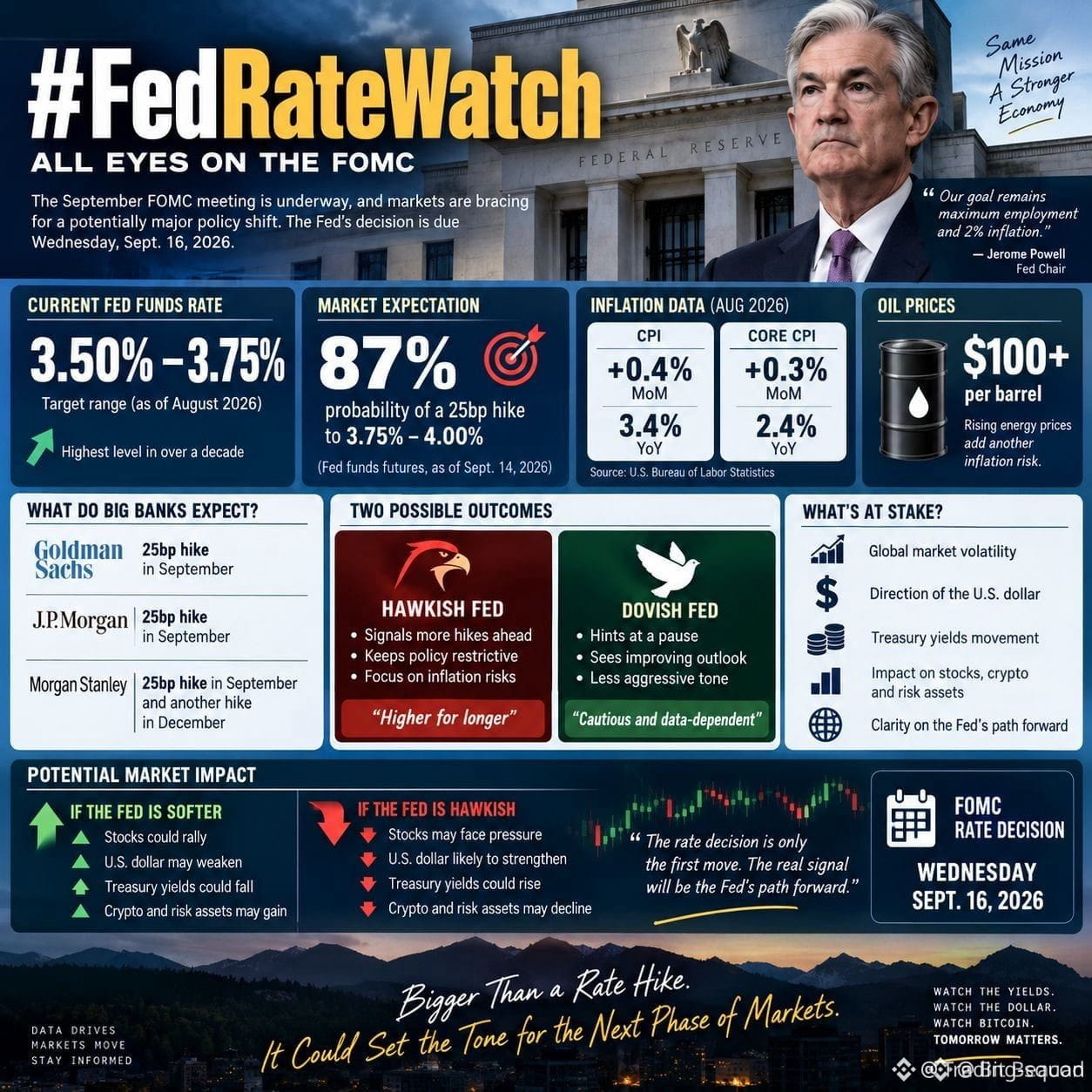
#FedRateWatch 📈
Today's the day. The FOMC decision drops at 2:00 PM ET — the first potential rate hike since 2023.
Where things stand heading in:
• Current range: 3.50%–3.75% (held steady since December)
• Market odds: ~80-88% pricing in a 25bp hike
• Why: inflation stuck near 3.4%, energy costs elevated from the Iran conflict, resilient labor market
• Watch for: the updated dot plot + Chair Warsh's press conference at 2:30 PM ET
Goldman Sachs says hold. JPMorgan says hike. We'll know soon enough.
What's your call — hike or hold? 👇
$BTC $XAU
#FedRateWatch 📈
Today's the day. The FOMC decision drops at 2:00 PM ET — the first potential rate hike since 2023.
Where things stand heading in:
• Current range: 3.50%–3.75% (held steady since December)
• Market odds: ~80-88% pricing in a 25bp hike
• Why: inflation stuck near 3.4%, energy costs elevated from the Iran conflict, resilient labor market
• Watch for: the updated dot plot + Chair Warsh's press conference at 2:30 PM ET
Goldman Sachs says hold. JPMorgan says hike. We'll know soon enough.
What's your call — hike or hold? 👇
$BTC $XAU
Today's the day. The FOMC decision drops at 2:00 PM ET — the first potential rate hike since 2023.
Where things stand heading in:
• Current range: 3.50%–3.75% (held steady since December)
• Market odds: ~80-88% pricing in a 25bp hike
• Why: inflation stuck near 3.4%, energy costs elevated from the Iran conflict, resilient labor market
• Watch for: the updated dot plot + Chair Warsh's press conference at 2:30 PM ET
Goldman Sachs says hold. JPMorgan says hike. We'll know soon enough.
What's your call — hike or hold? 👇
$BTC $XAU
87
Fed Rate Watch: Decision Day, September 16, 2026
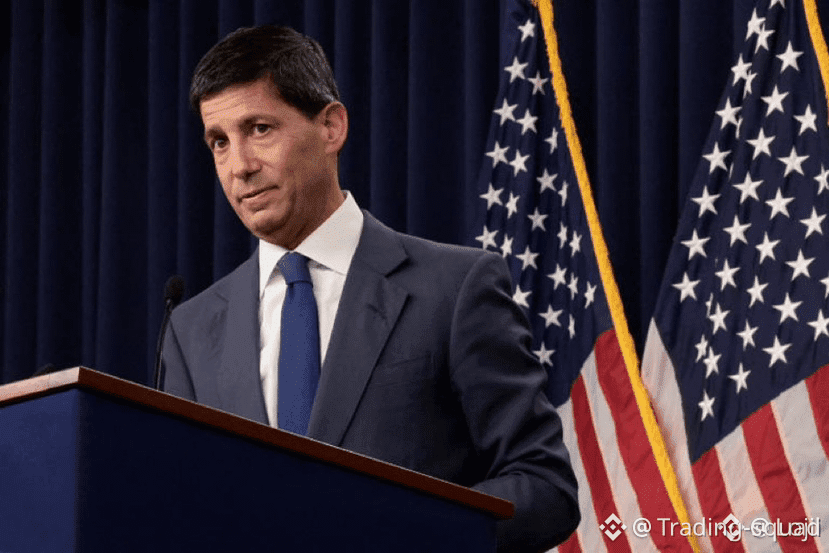
All eyes are on the Federal Reserve today. The FOMC wraps up its two-day meeting this afternoon with a policy statement at 2:00 PM ET, followed by Chair Warsh's press conference at 2:30 PM ET.
This meeting also comes with an updated Summary of Economic Projections and the closely watched "dot plot."
The setup:
The Fed has held its target range at 3.50%–3.75% since December 2025, following three rate cuts in late 2025.
At the July 29 meeting, the FOMC voted 9–3 to hold — the first time since 2016 that three officials dissented in the same hawkish direction, pushing for a hike.
Inflation data since then has been mixed: headline CPI actually cooled to 3.4% in July, but Chair Warsh struck a hawkish tone at Jackson Hole in late August, citing 12-month PCE inflation near 3.7%.
Markets have shifted meaningfully: prediction markets moved from expecting a hold to pricing in a roughly 25-basis-point hike as the most likely outcome heading into today — which would be the Fed's first rate increase since 2023.
What to watch for:
Whether the Fed actually pulls the trigger on a hike, or holds again
The size of any dissent within the committee
Updated 2026–2027 rate projections in the dot plot
How Warsh frames the balance between still-elevated inflation and geopolitical/energy-driven uncertainty
Decision drops at 2 PM ET — markets are bracing for volatility either way.
#FedRateWatch $BTC $XAU
Fed Rate Watch: Decision Day, September 16, 2026
All eyes are on the Federal Reserve today. The FOMC wraps up its two-day meeting this afternoon with a policy statement at 2:00 PM ET, followed by Chair Warsh's press conference at 2:30 PM ET.
This meeting also comes with an updated Summary of Economic Projections and the closely watched "dot plot."
The setup:
The Fed has held its target range at 3.50%–3.75% since December 2025, following three rate cuts in late 2025.
At the July 29 meeting, the FOMC voted 9–3 to hold — the first time since 2016 that three officials dissented in the same hawkish direction, pushing for a hike.
Inflation data since then has been mixed: headline CPI actually cooled to 3.4% in July, but Chair Warsh struck a hawkish tone at Jackson Hole in late August, citing 12-month PCE inflation near 3.7%.
Markets have shifted meaningfully: prediction markets moved from expecting a hold to pricing in a roughly 25-basis-point hike as the most likely outcome heading into today — which would be the Fed's first rate increase since 2023.
What to watch for:
Whether the Fed actually pulls the trigger on a hike, or holds again
The size of any dissent within the committee
Updated 2026–2027 rate projections in the dot plot
How Warsh frames the balance between still-elevated inflation and geopolitical/energy-driven uncertainty
Decision drops at 2 PM ET — markets are bracing for volatility either way.
#FedRateWatch $BTC $XAU
All eyes are on the Federal Reserve today. The FOMC wraps up its two-day meeting this afternoon with a policy statement at 2:00 PM ET, followed by Chair Warsh's press conference at 2:30 PM ET.
This meeting also comes with an updated Summary of Economic Projections and the closely watched "dot plot."
The setup:
The Fed has held its target range at 3.50%–3.75% since December 2025, following three rate cuts in late 2025.
At the July 29 meeting, the FOMC voted 9–3 to hold — the first time since 2016 that three officials dissented in the same hawkish direction, pushing for a hike.
Inflation data since then has been mixed: headline CPI actually cooled to 3.4% in July, but Chair Warsh struck a hawkish tone at Jackson Hole in late August, citing 12-month PCE inflation near 3.7%.
Markets have shifted meaningfully: prediction markets moved from expecting a hold to pricing in a roughly 25-basis-point hike as the most likely outcome heading into today — which would be the Fed's first rate increase since 2023.
What to watch for:
Whether the Fed actually pulls the trigger on a hike, or holds again
The size of any dissent within the committee
Updated 2026–2027 rate projections in the dot plot
How Warsh frames the balance between still-elevated inflation and geopolitical/energy-driven uncertainty
Decision drops at 2 PM ET — markets are bracing for volatility either way.
#FedRateWatch $BTC $XAU
83
📊 FOMC News — What's your take?
Where do you think the Fed moves at the next meeting?
Want a few variations — one framed around market reaction instead of rate direction, or one with a "how surprised were you" angle?
#FOMC $XAU $BTC
📊 FOMC News — What's your take?
Where do you think the Fed moves at the next meeting?
Want a few variations — one framed around market reaction instead of rate direction, or one with a "how surprised were you" angle?
#FOMC $XAU $BTC
Where do you think the Fed moves at the next meeting?
Want a few variations — one framed around market reaction instead of rate direction, or one with a "how surprised were you" angle?
#FOMC $XAU $BTC
🔴 Cut rates
25%
🟢 Hold steady
33%
🔵 Raise rates
25%
🤷No idea,just here volatility
17%
12 Votes • Vote fermé
1
702
🏦 Fed Decision Day is Tomorrow
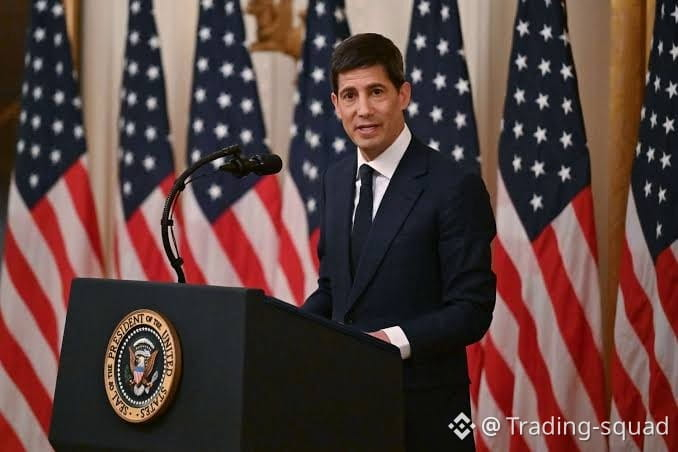
The FOMC wraps up its two-day meeting tomorrow, Wednesday, September 16, with the rate decision due at 2:00 PM ET, followed by Chair Warsh's press conference at 2:30 PM ET. (fedratecalc.com)
Where things stand:
Current target range: 3.5%–3.75%, held at the July meeting by a 9–3 vote (fedratecalc.com)
Markets are pricing roughly an 85% chance of a 25bp hike to 3.75–4.00% — what would be the first hike of 2026 (thriveinmarkets.com)
This is also a Summary of Economic Projections (SEP) meeting, so the "dot plot" of future rate forecasts drops alongside the statement
Sticky inflation above the Fed's 2% goal, plus hawkish signals from Chair Warsh at Jackson Hole, pushed hike odds up sharply from around 36% in late August to above 50% (atfxcapital.com)
Why it matters: A hawkish surprise could jolt stocks, Treasury yields, the dollar, and crypto. Watch the dot plot as closely as the headline number — it'll shape rate expectations into 2027.
#FedHikeOddsRiseTo89% #FedMeeting
$XAU $BTC
{spot}(BTCUSDT)
{future}(XAUUSDT)
🏦 Fed Decision Day is Tomorrow
The FOMC wraps up its two-day meeting tomorrow, Wednesday, September 16, with the rate decision due at 2:00 PM ET, followed by Chair Warsh's press conference at 2:30 PM ET. (fedratecalc.com)
Where things stand:
Current target range: 3.5%–3.75%, held at the July meeting by a 9–3 vote (fedratecalc.com)
Markets are pricing roughly an 85% chance of a 25bp hike to 3.75–4.00% — what would be the first hike of 2026 (thriveinmarkets.com)
This is also a Summary of Economic Projections (SEP) meeting, so the "dot plot" of future rate forecasts drops alongside the statement
Sticky inflation above the Fed's 2% goal, plus hawkish signals from Chair Warsh at Jackson Hole, pushed hike odds up sharply from around 36% in late August to above 50% (atfxcapital.com)
Why it matters: A hawkish surprise could jolt stocks, Treasury yields, the dollar, and crypto. Watch the dot plot as closely as the headline number — it'll shape rate expectations into 2027.
#FedHikeOddsRiseTo89% #FedMeeting
$XAU $BTC
The FOMC wraps up its two-day meeting tomorrow, Wednesday, September 16, with the rate decision due at 2:00 PM ET, followed by Chair Warsh's press conference at 2:30 PM ET. (fedratecalc.com)
Where things stand:
Current target range: 3.5%–3.75%, held at the July meeting by a 9–3 vote (fedratecalc.com)
Markets are pricing roughly an 85% chance of a 25bp hike to 3.75–4.00% — what would be the first hike of 2026 (thriveinmarkets.com)
This is also a Summary of Economic Projections (SEP) meeting, so the "dot plot" of future rate forecasts drops alongside the statement
Sticky inflation above the Fed's 2% goal, plus hawkish signals from Chair Warsh at Jackson Hole, pushed hike odds up sharply from around 36% in late August to above 50% (atfxcapital.com)
Why it matters: A hawkish surprise could jolt stocks, Treasury yields, the dollar, and crypto. Watch the dot plot as closely as the headline number — it'll shape rate expectations into 2027.
#FedHikeOddsRiseTo89% #FedMeeting
$XAU $BTC
1
127
Connectez-vous pour découvrir plus de contenu
Rejoignez la communauté mondiale des adeptes de cryptomonnaies sur Binance Square
⚡️ Suviez les dernières informations importantes sur les cryptomonnaies.
💬 Jugé digne de confiance par la plus grande plateforme d’échange de cryptomonnaies au monde.
👍 Découvrez les connaissances que partagent les créateurs vérifiés.
Adresse e-mail/Nº de téléphone