
tradekor
263 Publications

tradekor
Signaler
Bloquer l’utilisateur
4 years trading experience in smc, ict, price action, chart pattern, candle patterns, vsa and professional full stack developer for last 14 years.
0 Suivis
122 Abonnés
65 J’aime
Publications
·
--
Bitcoin Cash a bondi de 20 à 30 % et Uniswap s’est rapproché de 10 $ après que le groupe CME a annoncé qu’il ajoutait les deux à son offre de contrats à terme réglementés.
L’actualité : le groupe CME a confirmé qu’il lancera des contrats à terme sur Bitcoin Cash et Uniswap (contrats standards et micro) le 19 octobre, sous réserve d’un examen réglementaire — la première fois que CME ajoute une cryptomonnaie issue d’un « payments-fork » et un token de gouvernance purement DeFi à une gamme de produits dérivés qui couvre déjà BTC, ETH, XRP, SOL, ADA, LINK, XLM, AVAX et SUI. CME cite une forte demande de la part de clients pour des outils de gestion du risque de niveau institutionnel sur des altcoins très liquides ; ses contrats à terme et options crypto affichent déjà en moyenne 8,3 Md$ de volume notionnel quotidien. L’évolution exacte de BCH varie selon les sources et l’heure du relevé (les estimations vont de +19 % à +30 %, autour de 320 à 350 $), tandis que la hausse de UNI a été plus modeste — une partie pouvant être amplifiée par une autre actualité distincte, publiée le même jour, concernant l’inscription Robinhood Chain, et pas uniquement par CME.
Le point à surveiller : une inscription de futures n’est pas une approbation ETF ni une validation des fondamentaux du token — cela signifie simplement que les institutions obtiennent une manière réglementée de prendre une exposition directionnelle ou de se couvrir. Ces mouvements de type « pump suite à une inscription CME » ont déjà montré qu’ils rendaient une partie de la hausse initiale une fois que les achats motivés par l’annonce se sont calmés.
Notre lecture : la partie la plus intéressante sur le plan structurel n’est pas le mouvement de prix, mais le fait que CME a, pour la première fois, validé un token de gouvernance purement DeFi (UNI) comme infrastructure traduisible — une véritable porte qui s’ouvre sur la manière dont les institutions peuvent accéder à l’exposition DeFi sans toucher directement au protocole.
Une inscription institutionnelle sur le marché des futures change-t-elle votre perception de la légitimité à long terme d’un token, ou s’agit-il seulement d’un « pump » d’annonce de courte durée ?
Ce n’est pas un conseil financier. Faites votre propre recherche (DYOR).
$BCH $UNI #CryptoNews #CME #DeFi
Bitcoin Cash a bondi de 20 à 30 % et Uniswap s’est rapproché de 10 $ après que le groupe CME a annoncé qu’il ajoutait les deux à son offre de contrats à terme réglementés.
L’actualité : le groupe CME a confirmé qu’il lancera des contrats à terme sur Bitcoin Cash et Uniswap (contrats standards et micro) le 19 octobre, sous réserve d’un examen réglementaire — la première fois que CME ajoute une cryptomonnaie issue d’un « payments-fork » et un token de gouvernance purement DeFi à une gamme de produits dérivés qui couvre déjà BTC, ETH, XRP, SOL, ADA, LINK, XLM, AVAX et SUI. CME cite une forte demande de la part de clients pour des outils de gestion du risque de niveau institutionnel sur des altcoins très liquides ; ses contrats à terme et options crypto affichent déjà en moyenne 8,3 Md$ de volume notionnel quotidien. L’évolution exacte de BCH varie selon les sources et l’heure du relevé (les estimations vont de +19 % à +30 %, autour de 320 à 350 $), tandis que la hausse de UNI a été plus modeste — une partie pouvant être amplifiée par une autre actualité distincte, publiée le même jour, concernant l’inscription Robinhood Chain, et pas uniquement par CME.
Le point à surveiller : une inscription de futures n’est pas une approbation ETF ni une validation des fondamentaux du token — cela signifie simplement que les institutions obtiennent une manière réglementée de prendre une exposition directionnelle ou de se couvrir. Ces mouvements de type « pump suite à une inscription CME » ont déjà montré qu’ils rendaient une partie de la hausse initiale une fois que les achats motivés par l’annonce se sont calmés.
Notre lecture : la partie la plus intéressante sur le plan structurel n’est pas le mouvement de prix, mais le fait que CME a, pour la première fois, validé un token de gouvernance purement DeFi (UNI) comme infrastructure traduisible — une véritable porte qui s’ouvre sur la manière dont les institutions peuvent accéder à l’exposition DeFi sans toucher directement au protocole.
Une inscription institutionnelle sur le marché des futures change-t-elle votre perception de la légitimité à long terme d’un token, ou s’agit-il seulement d’un « pump » d’annonce de courte durée ?
Ce n’est pas un conseil financier. Faites votre propre recherche (DYOR).
$BCH $UNI #CryptoNews #CME #DeFi
L’actualité : le groupe CME a confirmé qu’il lancera des contrats à terme sur Bitcoin Cash et Uniswap (contrats standards et micro) le 19 octobre, sous réserve d’un examen réglementaire — la première fois que CME ajoute une cryptomonnaie issue d’un « payments-fork » et un token de gouvernance purement DeFi à une gamme de produits dérivés qui couvre déjà BTC, ETH, XRP, SOL, ADA, LINK, XLM, AVAX et SUI. CME cite une forte demande de la part de clients pour des outils de gestion du risque de niveau institutionnel sur des altcoins très liquides ; ses contrats à terme et options crypto affichent déjà en moyenne 8,3 Md$ de volume notionnel quotidien. L’évolution exacte de BCH varie selon les sources et l’heure du relevé (les estimations vont de +19 % à +30 %, autour de 320 à 350 $), tandis que la hausse de UNI a été plus modeste — une partie pouvant être amplifiée par une autre actualité distincte, publiée le même jour, concernant l’inscription Robinhood Chain, et pas uniquement par CME.
Le point à surveiller : une inscription de futures n’est pas une approbation ETF ni une validation des fondamentaux du token — cela signifie simplement que les institutions obtiennent une manière réglementée de prendre une exposition directionnelle ou de se couvrir. Ces mouvements de type « pump suite à une inscription CME » ont déjà montré qu’ils rendaient une partie de la hausse initiale une fois que les achats motivés par l’annonce se sont calmés.
Notre lecture : la partie la plus intéressante sur le plan structurel n’est pas le mouvement de prix, mais le fait que CME a, pour la première fois, validé un token de gouvernance purement DeFi (UNI) comme infrastructure traduisible — une véritable porte qui s’ouvre sur la manière dont les institutions peuvent accéder à l’exposition DeFi sans toucher directement au protocole.
Une inscription institutionnelle sur le marché des futures change-t-elle votre perception de la légitimité à long terme d’un token, ou s’agit-il seulement d’un « pump » d’annonce de courte durée ?
Ce n’est pas un conseil financier. Faites votre propre recherche (DYOR).
$BCH $UNI #CryptoNews #CME #DeFi
97
·
--
Le bouton de trading du cashtag de X vient de passer en ligne pour les utilisateurs américains sur 5 partenaires d'échange -- appuyez sur $BTC in n'importe quel post et vous n'êtes qu'à un clic d'un ordre sur Coinbase, Kraken ou Gemini.
La nouvelle : le programme de partenariat des cashtags de X, annoncé pour la première fois le 15 septembre, est officiellement passé en ligne le 22 septembre. En touchant un cashtag pris en charge comme $BTC, $ETH, ou $SOL now affiche un graphique de prix en direct ainsi que des posts associés, avec un bouton « Trade » qui redirige vers l'un des cinq partenaires de lancement -- Coinbase, Kraken, Gemini, Interactive Brokers et Moomoo. Le segment crypto de Gemini couvre spécifiquement BTC, ETH, SOL, HYPE et ZEC ; Kraken indique que son intégration atteint environ 2 500 actifs négociables. X lui-même n'exécute rien -- les plateformes partenaires gèrent la connexion, le KYC, le financement et l'ordre. C'est réservé aux États-Unis et aux mobiles uniquement au lancement.
Le point à retenir : il s'agit d'un entonnoir de distribution, pas d'un nouveau lieu de trading -- vous devez toujours vous connecter (ou vous inscrire) et passer le KYC sur le partenaire sur lequel vous atterrissez, donc la formulation « un clic » minore la friction réelle pour un nouvel utilisateur, même si, pour quelqu'un déjà client, c'est plus rapide.
Notre lecture : la vraie histoire n'est pas le bouton, c'est la portée -- intégrer une délégation de trading directement dans le plus grand fil de discussion crypto en temps réel au monde est un choix de distribution que la plupart des bourses paieraient très cher.
Un bouton « tweet vers le trading » changerait-il votre manière d'agir de façon impulsive sur un mouvement de prix, ou l'étape KYC, entre-temps, vous ralentit-elle suffisamment ?
Ce n'est pas un conseil financier. Faites vos propres recherches (DYOR).
$BTC $ETH $SOL #CryptoNews #Trading #X
Le bouton de trading du cashtag de X vient de passer en ligne pour les utilisateurs américains sur 5 partenaires d'échange -- appuyez sur $BTC in n'importe quel post et vous n'êtes qu'à un clic d'un ordre sur Coinbase, Kraken ou Gemini.
La nouvelle : le programme de partenariat des cashtags de X, annoncé pour la première fois le 15 septembre, est officiellement passé en ligne le 22 septembre. En touchant un cashtag pris en charge comme $BTC , $ETH , ou $SOL now affiche un graphique de prix en direct ainsi que des posts associés, avec un bouton « Trade » qui redirige vers l'un des cinq partenaires de lancement -- Coinbase, Kraken, Gemini, Interactive Brokers et Moomoo. Le segment crypto de Gemini couvre spécifiquement BTC, ETH, SOL, HYPE et ZEC ; Kraken indique que son intégration atteint environ 2 500 actifs négociables. X lui-même n'exécute rien -- les plateformes partenaires gèrent la connexion, le KYC, le financement et l'ordre. C'est réservé aux États-Unis et aux mobiles uniquement au lancement.
Le point à retenir : il s'agit d'un entonnoir de distribution, pas d'un nouveau lieu de trading -- vous devez toujours vous connecter (ou vous inscrire) et passer le KYC sur le partenaire sur lequel vous atterrissez, donc la formulation « un clic » minore la friction réelle pour un nouvel utilisateur, même si, pour quelqu'un déjà client, c'est plus rapide.
Notre lecture : la vraie histoire n'est pas le bouton, c'est la portée -- intégrer une délégation de trading directement dans le plus grand fil de discussion crypto en temps réel au monde est un choix de distribution que la plupart des bourses paieraient très cher.
Un bouton « tweet vers le trading » changerait-il votre manière d'agir de façon impulsive sur un mouvement de prix, ou l'étape KYC, entre-temps, vous ralentit-elle suffisamment ?
Ce n'est pas un conseil financier. Faites vos propres recherches (DYOR).
$BTC $ETH $SOL #CryptoNews #Trading #X
La nouvelle : le programme de partenariat des cashtags de X, annoncé pour la première fois le 15 septembre, est officiellement passé en ligne le 22 septembre. En touchant un cashtag pris en charge comme $BTC , $ETH , ou $SOL now affiche un graphique de prix en direct ainsi que des posts associés, avec un bouton « Trade » qui redirige vers l'un des cinq partenaires de lancement -- Coinbase, Kraken, Gemini, Interactive Brokers et Moomoo. Le segment crypto de Gemini couvre spécifiquement BTC, ETH, SOL, HYPE et ZEC ; Kraken indique que son intégration atteint environ 2 500 actifs négociables. X lui-même n'exécute rien -- les plateformes partenaires gèrent la connexion, le KYC, le financement et l'ordre. C'est réservé aux États-Unis et aux mobiles uniquement au lancement.
Le point à retenir : il s'agit d'un entonnoir de distribution, pas d'un nouveau lieu de trading -- vous devez toujours vous connecter (ou vous inscrire) et passer le KYC sur le partenaire sur lequel vous atterrissez, donc la formulation « un clic » minore la friction réelle pour un nouvel utilisateur, même si, pour quelqu'un déjà client, c'est plus rapide.
Notre lecture : la vraie histoire n'est pas le bouton, c'est la portée -- intégrer une délégation de trading directement dans le plus grand fil de discussion crypto en temps réel au monde est un choix de distribution que la plupart des bourses paieraient très cher.
Un bouton « tweet vers le trading » changerait-il votre manière d'agir de façon impulsive sur un mouvement de prix, ou l'étape KYC, entre-temps, vous ralentit-elle suffisamment ?
Ce n'est pas un conseil financier. Faites vos propres recherches (DYOR).
$BTC $ETH $SOL #CryptoNews #Trading #X
79
·
--
Article
Top 6 des histoires crypto : 21 septembre6 récits ont dépassé le seuil pour le 21 septembre — un lundi actif après le week-end calme de la semaine dernière.
1. Le Bitcoin a bondi jusqu’à un plus haut sur huit mois, culminant près de 85 200 $ (+5,1 % sur la journée), alors que le Brent reculait pour la quatrième séance consécutive — sa plus longue série de baisses en trois mois, tombant à ~102 $ depuis un pic de mi-septembre proche de 108 $. La chute du pétrole a atténué les craintes d’inflation et déclenché un squeeze short : 648 M$ de positions BTC baissières ont été liquidées, dont 262 M$ effacés en une seule heure lorsque le prix s’est approché de 84 000 $. Les actions liées aux cryptos ont bougé dans le même sens, et Coinbase a enregistré une nouvelle série de relèvements d’objectifs de prix à Wall Street (Goldman à 219 $, Morgan Stanley démarrant à 250 $) en plus de la hausse.
Top 6 des histoires crypto : 21 septembre
6 récits ont dépassé le seuil pour le 21 septembre — un lundi actif après le week-end calme de la semaine dernière.
1. Le Bitcoin a bondi jusqu’à un plus haut sur huit mois, culminant près de 85 200 $ (+5,1 % sur la journée), alors que le Brent reculait pour la quatrième séance consécutive — sa plus longue série de baisses en trois mois, tombant à ~102 $ depuis un pic de mi-septembre proche de 108 $. La chute du pétrole a atténué les craintes d’inflation et déclenché un squeeze short : 648 M$ de positions BTC baissières ont été liquidées, dont 262 M$ effacés en une seule heure lorsque le prix s’est approché de 84 000 $. Les actions liées aux cryptos ont bougé dans le même sens, et Coinbase a enregistré une nouvelle série de relèvements d’objectifs de prix à Wall Street (Goldman à 219 $, Morgan Stanley démarrant à 250 $) en plus de la hausse.
1. Le Bitcoin a bondi jusqu’à un plus haut sur huit mois, culminant près de 85 200 $ (+5,1 % sur la journée), alors que le Brent reculait pour la quatrième séance consécutive — sa plus longue série de baisses en trois mois, tombant à ~102 $ depuis un pic de mi-septembre proche de 108 $. La chute du pétrole a atténué les craintes d’inflation et déclenché un squeeze short : 648 M$ de positions BTC baissières ont été liquidées, dont 262 M$ effacés en une seule heure lorsque le prix s’est approché de 84 000 $. Les actions liées aux cryptos ont bougé dans le même sens, et Coinbase a enregistré une nouvelle série de relèvements d’objectifs de prix à Wall Street (Goldman à 219 $, Morgan Stanley démarrant à 250 $) en plus de la hausse.
132
·
--
Polymarket a été confrontée à une tentative de fraude par carte volée de 10 M$ — et son PDG aurait prétendument demandé au personnel de continuer à croître et de voir avec les régulateurs plus tard.
Les faits : une enquête du Wall Street Journal (publiée du 20 au 21 septembre) a révélé qu’à partir de février 2026, des fraudeurs liés à des cartes de débit volées ont relié des milliers de comptes Polymarket US nouvellement créés, dans le but de transférer au moins 10 M$ de gains vers des cartes “propres”. À un moment, le prestataire de paiement Checkout.com a rejeté plus de 80 % des dépôts de Polymarket US comme frauduleux, contre une norme d’environ 1 % dans le secteur — avec, derrière une grande partie des opérations, environ sept utilisateurs, dont un seul tentant près de 4 000 dépôts distincts. Lorsque la conformité l’a signalé, le PDG Shayne Coplan aurait, selon les informations, demandé au personnel de prioriser la croissance et de gérer d’éventuelles amendes plus tard. Les conséquences : le directeur de la conformité Andrew Clifford a démissionné en avril après avoir déposé un rapport détaillé ; le PDG de Polymarket US, Justin Hertzberg, a été licencié, de même que les responsables de la réglementation US et de la lutte contre le blanchiment d’argent (AML) ; et la CFTC enquête désormais, avec une ordonnance de préservation des preuves.
Le point clé : cette affaire n’est pas encore réglée. Une enquête interne Sullivan & Cromwell aurait conclu que Polymarket s’était conformée aux réglementations applicables, ce qui crée une tension réelle avec la présentation selon laquelle l’entreprise aurait privilégié la croissance plutôt que la conformité. Prenez donc la citation du PDG et le verdict “conformité” comme des allégations concurrentes dans une enquête CFTC en cours, et non comme un résultat confirmé dans un sens ou dans l’autre.
Notre lecture : quoi que la CFTC finisse par conclure, le simple fait de voir partir des dirigeants — démission d’un CCO, licenciement d’un PDG et départ de responsables AML — indique que le conseil d’administration de Polymarket ne pensait pas que la réponse initiale était suffisante.
Le nettoyage de la plateforme après le scandale (nouveau CFO, conformité renforcée) change-t-il la manière dont vous lui faites confiance pour la suite, ou la réponse initiale compte-t-elle davantage ?
Ce n’est pas un conseil financier. Faites vos propres recherches (DYOR).
$POL #CryptoNews #Polymarket #Regulation
Polymarket a été confrontée à une tentative de fraude par carte volée de 10 M$ — et son PDG aurait prétendument demandé au personnel de continuer à croître et de voir avec les régulateurs plus tard.
Les faits : une enquête du Wall Street Journal (publiée du 20 au 21 septembre) a révélé qu’à partir de février 2026, des fraudeurs liés à des cartes de débit volées ont relié des milliers de comptes Polymarket US nouvellement créés, dans le but de transférer au moins 10 M$ de gains vers des cartes “propres”. À un moment, le prestataire de paiement Checkout.com a rejeté plus de 80 % des dépôts de Polymarket US comme frauduleux, contre une norme d’environ 1 % dans le secteur — avec, derrière une grande partie des opérations, environ sept utilisateurs, dont un seul tentant près de 4 000 dépôts distincts. Lorsque la conformité l’a signalé, le PDG Shayne Coplan aurait, selon les informations, demandé au personnel de prioriser la croissance et de gérer d’éventuelles amendes plus tard. Les conséquences : le directeur de la conformité Andrew Clifford a démissionné en avril après avoir déposé un rapport détaillé ; le PDG de Polymarket US, Justin Hertzberg, a été licencié, de même que les responsables de la réglementation US et de la lutte contre le blanchiment d’argent (AML) ; et la CFTC enquête désormais, avec une ordonnance de préservation des preuves.
Le point clé : cette affaire n’est pas encore réglée. Une enquête interne Sullivan & Cromwell aurait conclu que Polymarket s’était conformée aux réglementations applicables, ce qui crée une tension réelle avec la présentation selon laquelle l’entreprise aurait privilégié la croissance plutôt que la conformité. Prenez donc la citation du PDG et le verdict “conformité” comme des allégations concurrentes dans une enquête CFTC en cours, et non comme un résultat confirmé dans un sens ou dans l’autre.
Notre lecture : quoi que la CFTC finisse par conclure, le simple fait de voir partir des dirigeants — démission d’un CCO, licenciement d’un PDG et départ de responsables AML — indique que le conseil d’administration de Polymarket ne pensait pas que la réponse initiale était suffisante.
Le nettoyage de la plateforme après le scandale (nouveau CFO, conformité renforcée) change-t-il la manière dont vous lui faites confiance pour la suite, ou la réponse initiale compte-t-elle davantage ?
Ce n’est pas un conseil financier. Faites vos propres recherches (DYOR).
$POL #CryptoNews #Polymarket #Regulation
Les faits : une enquête du Wall Street Journal (publiée du 20 au 21 septembre) a révélé qu’à partir de février 2026, des fraudeurs liés à des cartes de débit volées ont relié des milliers de comptes Polymarket US nouvellement créés, dans le but de transférer au moins 10 M$ de gains vers des cartes “propres”. À un moment, le prestataire de paiement Checkout.com a rejeté plus de 80 % des dépôts de Polymarket US comme frauduleux, contre une norme d’environ 1 % dans le secteur — avec, derrière une grande partie des opérations, environ sept utilisateurs, dont un seul tentant près de 4 000 dépôts distincts. Lorsque la conformité l’a signalé, le PDG Shayne Coplan aurait, selon les informations, demandé au personnel de prioriser la croissance et de gérer d’éventuelles amendes plus tard. Les conséquences : le directeur de la conformité Andrew Clifford a démissionné en avril après avoir déposé un rapport détaillé ; le PDG de Polymarket US, Justin Hertzberg, a été licencié, de même que les responsables de la réglementation US et de la lutte contre le blanchiment d’argent (AML) ; et la CFTC enquête désormais, avec une ordonnance de préservation des preuves.
Le point clé : cette affaire n’est pas encore réglée. Une enquête interne Sullivan & Cromwell aurait conclu que Polymarket s’était conformée aux réglementations applicables, ce qui crée une tension réelle avec la présentation selon laquelle l’entreprise aurait privilégié la croissance plutôt que la conformité. Prenez donc la citation du PDG et le verdict “conformité” comme des allégations concurrentes dans une enquête CFTC en cours, et non comme un résultat confirmé dans un sens ou dans l’autre.
Notre lecture : quoi que la CFTC finisse par conclure, le simple fait de voir partir des dirigeants — démission d’un CCO, licenciement d’un PDG et départ de responsables AML — indique que le conseil d’administration de Polymarket ne pensait pas que la réponse initiale était suffisante.
Le nettoyage de la plateforme après le scandale (nouveau CFO, conformité renforcée) change-t-il la manière dont vous lui faites confiance pour la suite, ou la réponse initiale compte-t-elle davantage ?
Ce n’est pas un conseil financier. Faites vos propres recherches (DYOR).
$POL #CryptoNews #Polymarket #Regulation
140
·
--
Article
Top 5 des histoires crypto : 20 septembre5 histoires ont dépassé le seuil fixé pour le 20 septembre : un week-end calme, honnêtement décrit plutôt qu’embelli.
1. Des missiles et drones houthis ont frappé près de l’aéroport de Riyad et une installation de Saudi Aramco à Yanbu, le 19 septembre. Cela a déclenché un bref soubresaut « risk-off » mené par les altcoins : la capitalisation totale du marché crypto a reculé d’environ 3,5 à 4 % sur le week-end, principalement tiré par les altcoins (Solana et Zcash ont tous deux chuté de quelques points en pourcentage, dans le milieu de l’ordre des chiffres), plutôt que par Bitcoin, qui a glissé de moins de 1 % et est resté dans le vert sur la semaine. D’ici dimanche soir, le mouvement s’était déjà largement résorbé : le BTC était de retour près de 81 000 $ et la capitalisation totale n’était inférieure que de manière marginale, d’un jour sur l’autre. À lire comme un faux mouvement auquel le marché a haussé les épaules, et non comme une chute qui s’est installée.
Top 5 des histoires crypto : 20 septembre
5 histoires ont dépassé le seuil fixé pour le 20 septembre : un week-end calme, honnêtement décrit plutôt qu’embelli.
1. Des missiles et drones houthis ont frappé près de l’aéroport de Riyad et une installation de Saudi Aramco à Yanbu, le 19 septembre. Cela a déclenché un bref soubresaut « risk-off » mené par les altcoins : la capitalisation totale du marché crypto a reculé d’environ 3,5 à 4 % sur le week-end, principalement tiré par les altcoins (Solana et Zcash ont tous deux chuté de quelques points en pourcentage, dans le milieu de l’ordre des chiffres), plutôt que par Bitcoin, qui a glissé de moins de 1 % et est resté dans le vert sur la semaine. D’ici dimanche soir, le mouvement s’était déjà largement résorbé : le BTC était de retour près de 81 000 $ et la capitalisation totale n’était inférieure que de manière marginale, d’un jour sur l’autre. À lire comme un faux mouvement auquel le marché a haussé les épaules, et non comme une chute qui s’est installée.
1. Des missiles et drones houthis ont frappé près de l’aéroport de Riyad et une installation de Saudi Aramco à Yanbu, le 19 septembre. Cela a déclenché un bref soubresaut « risk-off » mené par les altcoins : la capitalisation totale du marché crypto a reculé d’environ 3,5 à 4 % sur le week-end, principalement tiré par les altcoins (Solana et Zcash ont tous deux chuté de quelques points en pourcentage, dans le milieu de l’ordre des chiffres), plutôt que par Bitcoin, qui a glissé de moins de 1 % et est resté dans le vert sur la semaine. D’ici dimanche soir, le mouvement s’était déjà largement résorbé : le BTC était de retour près de 81 000 $ et la capitalisation totale n’était inférieure que de manière marginale, d’un jour sur l’autre. À lire comme un faux mouvement auquel le marché a haussé les épaules, et non comme une chute qui s’est installée.
149
·
--
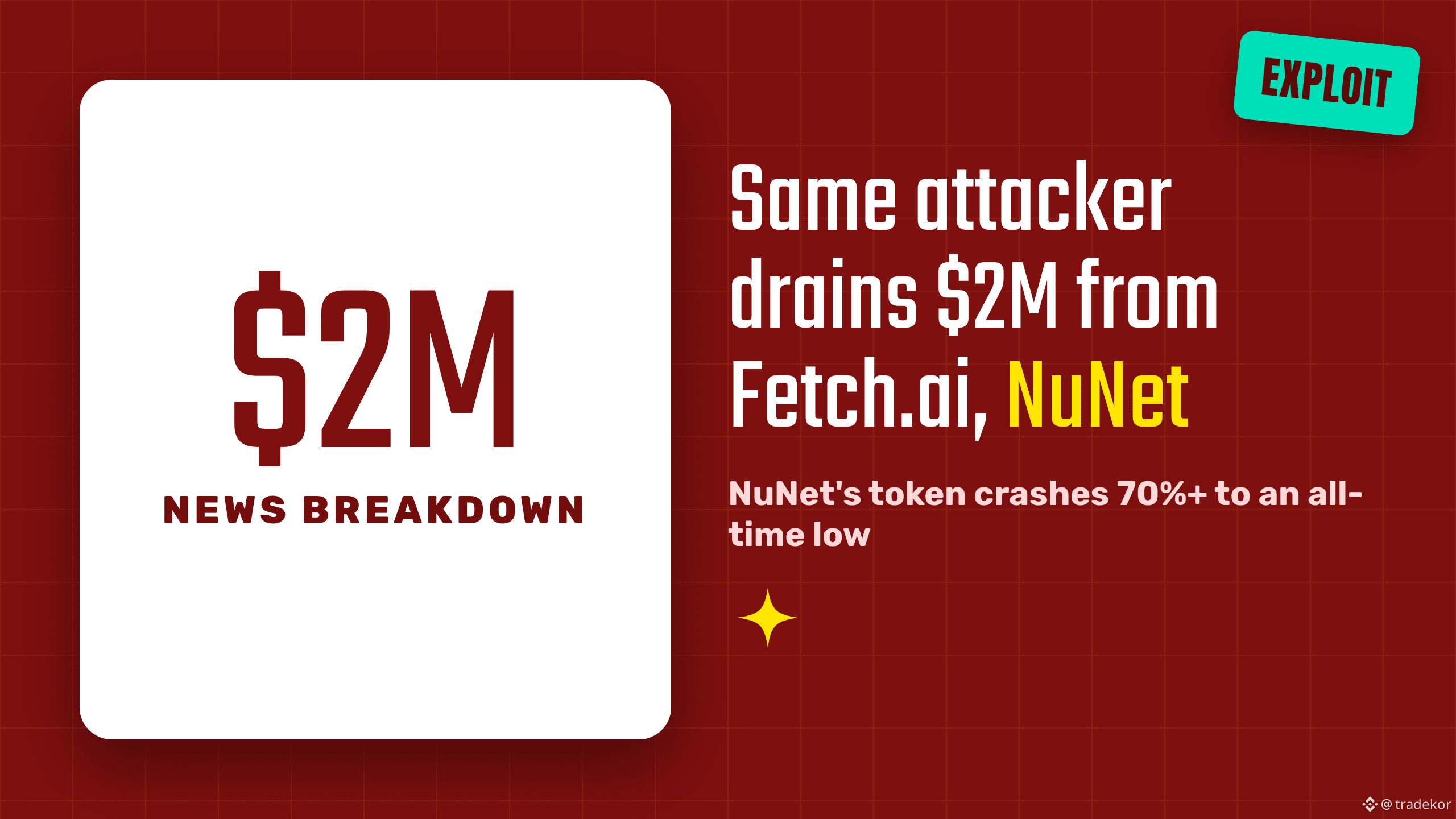
Le même attaquant a vidé aujourd’hui 2 M$ combinés provenant de Fetch.ai et de NuNet, faisant chuter le token de NuNet de plus de 70% jusqu’à un plus bas historique.
La nouvelle : la société de sécurité Blockaid a rapporté que l’exploiteur a dérobé environ 1,56 M$ en FET depuis le TokenConversionManagerV3 de Fetch.ai sur Ethereum en utilisant une signature d’autorisation de conversion valide pour appeler la fonction conversionIn du contrat — libérant l’inventaire restant de FET du convertisseur en un seul appel. Le même groupe d’adresses a ensuite frappé environ 452 K$ de NTX à partir du déployeur de NuNet. Le FET lui-même n’a que légèrement baissé (~5%), mais le token NTX de NuNet s’est effondré de plus de 70% et a atteint un nouveau plus bas historique. Les pertes des piratages DeFi de septembre dépassent désormais 333 M$ sur 18 incidents distincts, selon DefiLlama.
Le point clé : une "signature valide" détournée, plutôt qu’une clé volée ou un bug de réentrance classique, indique une faille de logique d’autorisation dans le contrat de conversion lui-même — le genre de bug qui passe un audit superficiel si les réviseurs ne testent pas sous tension qui est autorisé à appeler une fonction et dans quelles conditions.
Notre lecture : la réaction timide du FET face au crash de 70% du NTX montre à quel point un hack n’atterrit pas de la même façon selon la liquidité et la capitalisation boursière — le mécanisme d’exploitation était identique, mais les dégâts n’ont pas été les mêmes.
Une faille de logique d’autorisation comme celle-ci change-t-elle la quantité de confiance que vous accordez à cette infrastructure "audité" de token d’IA, ou est-ce simplement le coût d’un secteur en mouvement rapide ?
Ce n’est pas un conseil financier. Faites vos recherches. DYOR.
$FET #CryptoNews #DeFi #Security
Le même attaquant a vidé aujourd’hui 2 M$ combinés provenant de Fetch.ai et de NuNet, faisant chuter le token de NuNet de plus de 70% jusqu’à un plus bas historique.
La nouvelle : la société de sécurité Blockaid a rapporté que l’exploiteur a dérobé environ 1,56 M$ en FET depuis le TokenConversionManagerV3 de Fetch.ai sur Ethereum en utilisant une signature d’autorisation de conversion valide pour appeler la fonction conversionIn du contrat — libérant l’inventaire restant de FET du convertisseur en un seul appel. Le même groupe d’adresses a ensuite frappé environ 452 K$ de NTX à partir du déployeur de NuNet. Le FET lui-même n’a que légèrement baissé (~5%), mais le token NTX de NuNet s’est effondré de plus de 70% et a atteint un nouveau plus bas historique. Les pertes des piratages DeFi de septembre dépassent désormais 333 M$ sur 18 incidents distincts, selon DefiLlama.
Le point clé : une "signature valide" détournée, plutôt qu’une clé volée ou un bug de réentrance classique, indique une faille de logique d’autorisation dans le contrat de conversion lui-même — le genre de bug qui passe un audit superficiel si les réviseurs ne testent pas sous tension qui est autorisé à appeler une fonction et dans quelles conditions.
Notre lecture : la réaction timide du FET face au crash de 70% du NTX montre à quel point un hack n’atterrit pas de la même façon selon la liquidité et la capitalisation boursière — le mécanisme d’exploitation était identique, mais les dégâts n’ont pas été les mêmes.
Une faille de logique d’autorisation comme celle-ci change-t-elle la quantité de confiance que vous accordez à cette infrastructure "audité" de token d’IA, ou est-ce simplement le coût d’un secteur en mouvement rapide ?
Ce n’est pas un conseil financier. Faites vos recherches. DYOR.
$FET #CryptoNews #DeFi #Security
La nouvelle : la société de sécurité Blockaid a rapporté que l’exploiteur a dérobé environ 1,56 M$ en FET depuis le TokenConversionManagerV3 de Fetch.ai sur Ethereum en utilisant une signature d’autorisation de conversion valide pour appeler la fonction conversionIn du contrat — libérant l’inventaire restant de FET du convertisseur en un seul appel. Le même groupe d’adresses a ensuite frappé environ 452 K$ de NTX à partir du déployeur de NuNet. Le FET lui-même n’a que légèrement baissé (~5%), mais le token NTX de NuNet s’est effondré de plus de 70% et a atteint un nouveau plus bas historique. Les pertes des piratages DeFi de septembre dépassent désormais 333 M$ sur 18 incidents distincts, selon DefiLlama.
Le point clé : une "signature valide" détournée, plutôt qu’une clé volée ou un bug de réentrance classique, indique une faille de logique d’autorisation dans le contrat de conversion lui-même — le genre de bug qui passe un audit superficiel si les réviseurs ne testent pas sous tension qui est autorisé à appeler une fonction et dans quelles conditions.
Notre lecture : la réaction timide du FET face au crash de 70% du NTX montre à quel point un hack n’atterrit pas de la même façon selon la liquidité et la capitalisation boursière — le mécanisme d’exploitation était identique, mais les dégâts n’ont pas été les mêmes.
Une faille de logique d’autorisation comme celle-ci change-t-elle la quantité de confiance que vous accordez à cette infrastructure "audité" de token d’IA, ou est-ce simplement le coût d’un secteur en mouvement rapide ?
Ce n’est pas un conseil financier. Faites vos recherches. DYOR.
$FET #CryptoNews #DeFi #Security
482
·
--
Article
Top 6 des histoires crypto : 19 septembre6 histoires ont fait passer le cap pour le 19 septembre — un week-end plus calme, mais de vrais lancements de produits et quelques mouvements de prix remarquables l’ont empêché d’être vide.
1. Hyperliquid a lancé l’emprunt et le prêt manuels, permettant aux traders de déposer du HYPE ou du Bitcoin comme collatéral pour emprunter des USDC/USDT — son premier pas direct vers le crédit on-chain. 269 M$ ont été empruntés dès le premier jour, et le HYPE a atteint un nouveau plus haut historique au-dessus de 90$ le même jour, bien qu’aucune source n’ait pu confirmer un lien de causalité direct entre le lancement de la fonctionnalité et la hausse du cours.
Top 6 des histoires crypto : 19 septembre
6 histoires ont fait passer le cap pour le 19 septembre — un week-end plus calme, mais de vrais lancements de produits et quelques mouvements de prix remarquables l’ont empêché d’être vide.
1. Hyperliquid a lancé l’emprunt et le prêt manuels, permettant aux traders de déposer du HYPE ou du Bitcoin comme collatéral pour emprunter des USDC/USDT — son premier pas direct vers le crédit on-chain. 269 M$ ont été empruntés dès le premier jour, et le HYPE a atteint un nouveau plus haut historique au-dessus de 90$ le même jour, bien qu’aucune source n’ait pu confirmer un lien de causalité direct entre le lancement de la fonctionnalité et la hausse du cours.
1. Hyperliquid a lancé l’emprunt et le prêt manuels, permettant aux traders de déposer du HYPE ou du Bitcoin comme collatéral pour emprunter des USDC/USDT — son premier pas direct vers le crédit on-chain. 269 M$ ont été empruntés dès le premier jour, et le HYPE a atteint un nouveau plus haut historique au-dessus de 90$ le même jour, bien qu’aucune source n’ait pu confirmer un lien de causalité direct entre le lancement de la fonctionnalité et la hausse du cours.
151
·
--
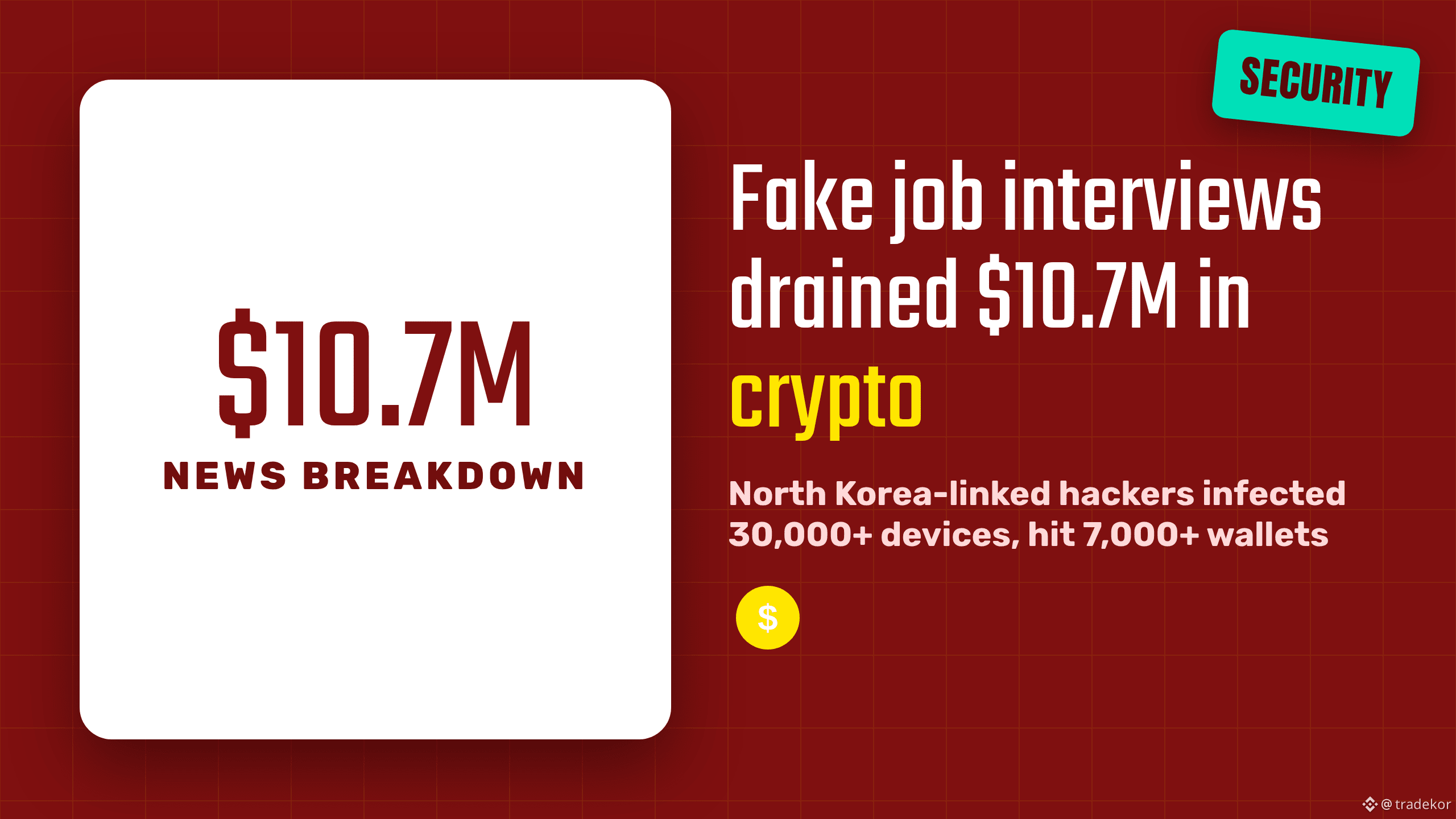
Des pirates liés à la Corée du Nord ont infecté plus de 30 000 appareils et vidé 10,7 M$ de plus de 7 000 portefeuilles crypto — en utilisant de fausses entretiens d’embauche comme méthode de diffusion.
Les faits : une alerte conjointe de sept organismes gouvernementaux (le NPA et le National Cybersecurity Office du Japon, le FBI, le Cyber Crime Center du ministère américain de la Défense, l’ASD d’Australie et la BND/BfV d’Allemagne) révèle qu’un groupe lié à la Corée du Nord, suivi sous le nom de « WaterPlum » (alias « Contagious Interview »), a infecté des appareils dans plus de 100 pays entre décembre 2025 et juillet 2026. Le groupe se fait passer pour des recruteurs de sociétés de crypto, d’IA et de NFT sur les sites d’offres d’emploi et les réseaux sociaux, attirant les développeurs vers de faux entretiens techniques et des tests de code qui livrent discrètement des logiciels malveillants. Les enquêteurs indiquent que le groupe opère sous l’égide de la « 313 General Bureau of the Munitions Industry Department » de la Corée du Nord, et que la police japonaise a, de son côté, démantelé une « laptop farm » (ferme de laptops) qui permettait à des travailleurs informatiques nord-coréens à l’étranger de se faire passer pour des embauches locales.
Le point clé : ce n’est pas une exploitation de smart-contract ni une attaque contre une plateforme d’échange — c’est de l’ingénierie sociale visant directement des développeurs individuels, ce qui signifie qu’aucun audit de protocole ou aucune équipe de sécurité d’un exchange ne peut l’empêcher. La cible est toute personne disposant d’un portefeuille (wallet) sur la même machine qu’elle utilise pour ses candidatures.
Notre lecture : 10,7 M$ est un chiffre modeste au regard des standards des piratages crypto, mais la méthode — des entonnoirs de recrutement factices atteignant des milliers de développeurs légitimes — est l’élément le plus important à retenir, plutôt que le montant en dollars.
Si vous êtes développeur et que vous avez récemment passé un « test de code » pour un recruteur crypto, est-ce que cela vous ferait vérifier votre machine ?
Ce n’est pas un conseil financier. Faites vos propres recherches (DYOR).
$BTC #CryptoNews #Security #NorthKorea
Des pirates liés à la Corée du Nord ont infecté plus de 30 000 appareils et vidé 10,7 M$ de plus de 7 000 portefeuilles crypto — en utilisant de fausses entretiens d’embauche comme méthode de diffusion.
Les faits : une alerte conjointe de sept organismes gouvernementaux (le NPA et le National Cybersecurity Office du Japon, le FBI, le Cyber Crime Center du ministère américain de la Défense, l’ASD d’Australie et la BND/BfV d’Allemagne) révèle qu’un groupe lié à la Corée du Nord, suivi sous le nom de « WaterPlum » (alias « Contagious Interview »), a infecté des appareils dans plus de 100 pays entre décembre 2025 et juillet 2026. Le groupe se fait passer pour des recruteurs de sociétés de crypto, d’IA et de NFT sur les sites d’offres d’emploi et les réseaux sociaux, attirant les développeurs vers de faux entretiens techniques et des tests de code qui livrent discrètement des logiciels malveillants. Les enquêteurs indiquent que le groupe opère sous l’égide de la « 313 General Bureau of the Munitions Industry Department » de la Corée du Nord, et que la police japonaise a, de son côté, démantelé une « laptop farm » (ferme de laptops) qui permettait à des travailleurs informatiques nord-coréens à l’étranger de se faire passer pour des embauches locales.
Le point clé : ce n’est pas une exploitation de smart-contract ni une attaque contre une plateforme d’échange — c’est de l’ingénierie sociale visant directement des développeurs individuels, ce qui signifie qu’aucun audit de protocole ou aucune équipe de sécurité d’un exchange ne peut l’empêcher. La cible est toute personne disposant d’un portefeuille (wallet) sur la même machine qu’elle utilise pour ses candidatures.
Notre lecture : 10,7 M$ est un chiffre modeste au regard des standards des piratages crypto, mais la méthode — des entonnoirs de recrutement factices atteignant des milliers de développeurs légitimes — est l’élément le plus important à retenir, plutôt que le montant en dollars.
Si vous êtes développeur et que vous avez récemment passé un « test de code » pour un recruteur crypto, est-ce que cela vous ferait vérifier votre machine ?
Ce n’est pas un conseil financier. Faites vos propres recherches (DYOR).
$BTC #CryptoNews #Security #NorthKorea
Les faits : une alerte conjointe de sept organismes gouvernementaux (le NPA et le National Cybersecurity Office du Japon, le FBI, le Cyber Crime Center du ministère américain de la Défense, l’ASD d’Australie et la BND/BfV d’Allemagne) révèle qu’un groupe lié à la Corée du Nord, suivi sous le nom de « WaterPlum » (alias « Contagious Interview »), a infecté des appareils dans plus de 100 pays entre décembre 2025 et juillet 2026. Le groupe se fait passer pour des recruteurs de sociétés de crypto, d’IA et de NFT sur les sites d’offres d’emploi et les réseaux sociaux, attirant les développeurs vers de faux entretiens techniques et des tests de code qui livrent discrètement des logiciels malveillants. Les enquêteurs indiquent que le groupe opère sous l’égide de la « 313 General Bureau of the Munitions Industry Department » de la Corée du Nord, et que la police japonaise a, de son côté, démantelé une « laptop farm » (ferme de laptops) qui permettait à des travailleurs informatiques nord-coréens à l’étranger de se faire passer pour des embauches locales.
Le point clé : ce n’est pas une exploitation de smart-contract ni une attaque contre une plateforme d’échange — c’est de l’ingénierie sociale visant directement des développeurs individuels, ce qui signifie qu’aucun audit de protocole ou aucune équipe de sécurité d’un exchange ne peut l’empêcher. La cible est toute personne disposant d’un portefeuille (wallet) sur la même machine qu’elle utilise pour ses candidatures.
Notre lecture : 10,7 M$ est un chiffre modeste au regard des standards des piratages crypto, mais la méthode — des entonnoirs de recrutement factices atteignant des milliers de développeurs légitimes — est l’élément le plus important à retenir, plutôt que le montant en dollars.
Si vous êtes développeur et que vous avez récemment passé un « test de code » pour un recruteur crypto, est-ce que cela vous ferait vérifier votre machine ?
Ce n’est pas un conseil financier. Faites vos propres recherches (DYOR).
$BTC #CryptoNews #Security #NorthKorea
·
--
Article
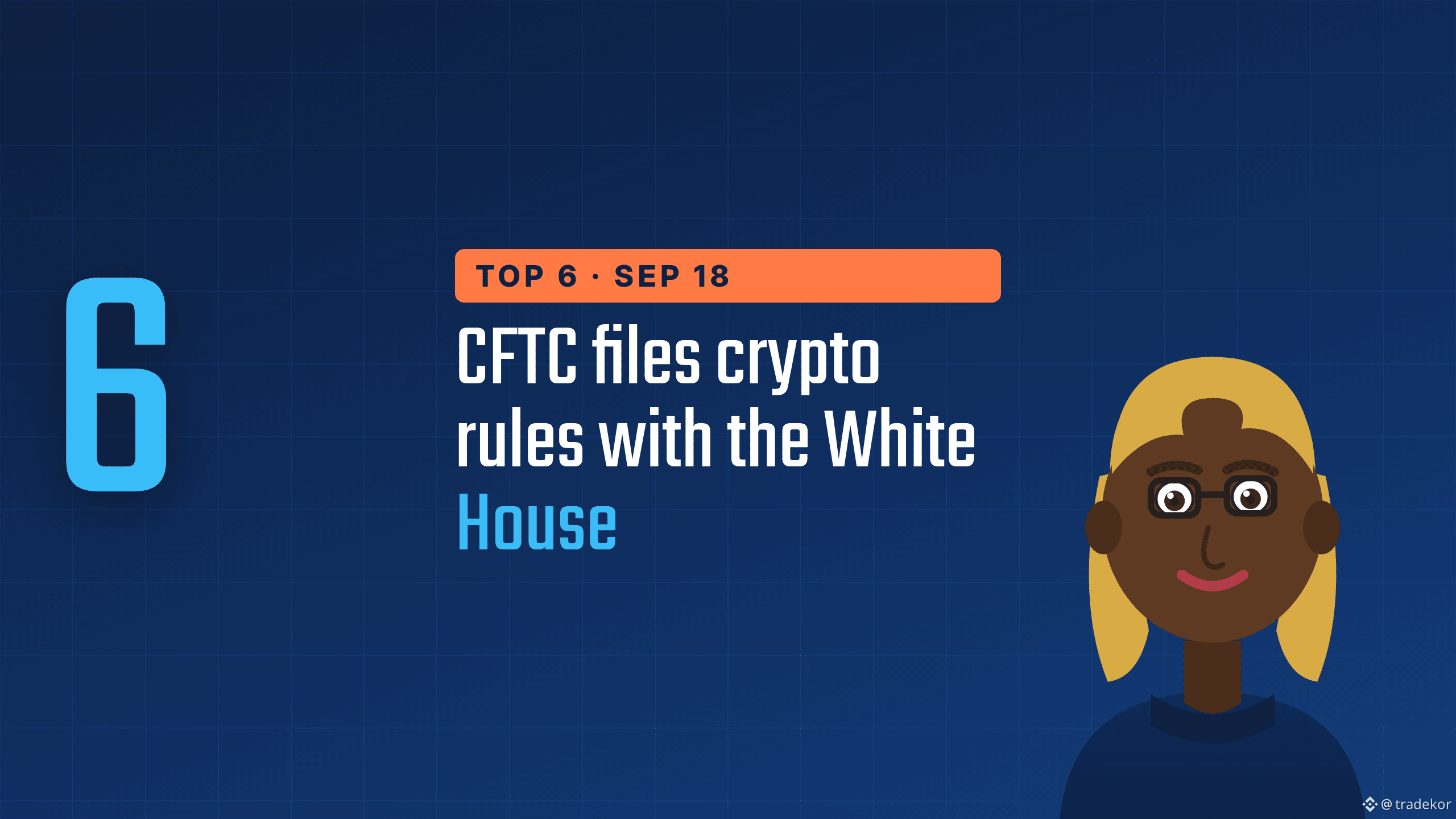
Top 6 des actualités crypto : 18 septembre6 histoires ont permis de franchir la barre fixée pour le 18 septembre -- des régulateurs, une acquisition et un incident de sécurité ont tous évolué le même jour.
1. Deux jours après que le Sénat a rejeté le projet de loi CLARITY, la CFTC a soumis sa propre procédure d’élaboration de règles sur la crypto ("Regulation of Crypto Asset Transactions and Crypto Asset Markets") à la Maison-Blanche pour examen -- en invoquant l’autorité existante de Dodd-Frank afin de couvrir le trading au comptant, la garde, la compensation et l’enregistrement des plateformes de négociation sans attendre le Congrès. Le dossier est à l’étape préalable à la règle : son contenu est confidentiel pendant l’examen, et le processus exige deux périodes de commentaires et deux examens de l’OIRA avant toute règle contraignante, qui, en réalité, ne prendrait pas effet avant la fin de 2027.
Top 6 des actualités crypto : 18 septembre
6 histoires ont permis de franchir la barre fixée pour le 18 septembre -- des régulateurs, une acquisition et un incident de sécurité ont tous évolué le même jour.
1. Deux jours après que le Sénat a rejeté le projet de loi CLARITY, la CFTC a soumis sa propre procédure d’élaboration de règles sur la crypto ("Regulation of Crypto Asset Transactions and Crypto Asset Markets") à la Maison-Blanche pour examen -- en invoquant l’autorité existante de Dodd-Frank afin de couvrir le trading au comptant, la garde, la compensation et l’enregistrement des plateformes de négociation sans attendre le Congrès. Le dossier est à l’étape préalable à la règle : son contenu est confidentiel pendant l’examen, et le processus exige deux périodes de commentaires et deux examens de l’OIRA avant toute règle contraignante, qui, en réalité, ne prendrait pas effet avant la fin de 2027.
1. Deux jours après que le Sénat a rejeté le projet de loi CLARITY, la CFTC a soumis sa propre procédure d’élaboration de règles sur la crypto ("Regulation of Crypto Asset Transactions and Crypto Asset Markets") à la Maison-Blanche pour examen -- en invoquant l’autorité existante de Dodd-Frank afin de couvrir le trading au comptant, la garde, la compensation et l’enregistrement des plateformes de négociation sans attendre le Congrès. Le dossier est à l’étape préalable à la règle : son contenu est confidentiel pendant l’examen, et le processus exige deux périodes de commentaires et deux examens de l’OIRA avant toute règle contraignante, qui, en réalité, ne prendrait pas effet avant la fin de 2027.
96
·
--
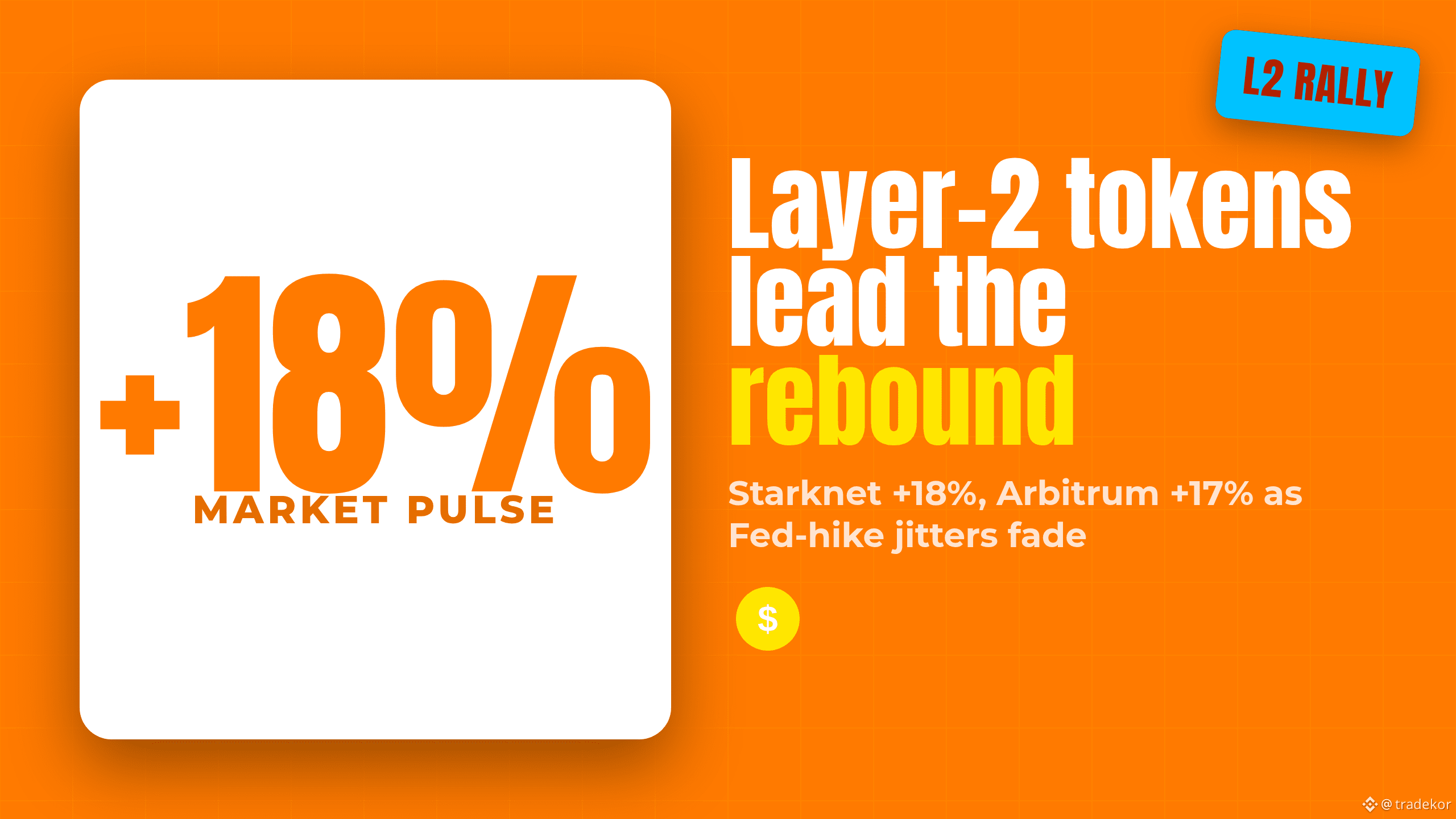
Les tokens de niveau 2 se déchaînent aujourd’hui — Starknet +18 %, Arbitrum +17 % — alors que la crypto secoue les “jitters” liés aux annonces de la Fed de cette semaine et se tourne vivement vers le risque.
L’actualité : le BTC est repassé au-dessus de 78 000 $ (+2 % sur la journée), tandis que Starknet a atteint son plus haut niveau depuis juin et qu’Arbitrum a touché son niveau le plus élevé depuis janvier. L’indice DeFi Select de CoinDesk grimpe de 8,3 % et 98 des 100 composants de l’indice CoinDesk 100 sont en hausse. Le déclencheur est macro, pas crypto-natif : le rendement des Treasuries à 10 ans est repassé sous 5 % et le Brent est tombé sous 103 $, ce qui a atténué l’inquiétude liée à l’inflation qui a suivi la hausse des taux de la Fed mardi. Il s’agit d’une histoire de rotation sectorielle : la DeFi et les tokens de Layer-2 prennent le relais de la rotation “privacy-coin” et “valeur refuge” qui avait porté les gains la veille.
Le bémol : il s’agit d’un déclencheur macro vieux de deux jours qui apparaît dans les prix des tokens, et non d’une nouvelle actualité fondamentale concernant, à elles seules, Starknet ou Arbitrum. Aucune des deux chaînes n’a publié aujourd’hui quelque chose qui explique un mouvement sur une seule journée de 18 % ou 17 %. Ces rotations, très déclenchées par la macro, peuvent s’inverser tout aussi vite si les rendements ou le pétrole remontent avant les données de la semaine prochaine.
Notre lecture : un “risk-on” large sur 98 des 100 principaux tokens est un signal réel sur le sentiment, mais courir après un mouvement déjà de +17 % ou plus uniquement grâce au soulagement macro n’est pas le même pari que d’acheter une crypto pour ses seuls mérites.
Est-ce le début d’une vraie rotation d’altseason, ou simplement un rebond d’une semaine qui s’estompe dès que le prochain titre macro tombe ?
Ce n’est pas un conseil financier. Faites vos recherches (DYOR).
$ARB $STRK $BTC #CryptoNews #MarketPulse #DeFi
Les tokens de niveau 2 se déchaînent aujourd’hui — Starknet +18 %, Arbitrum +17 % — alors que la crypto secoue les “jitters” liés aux annonces de la Fed de cette semaine et se tourne vivement vers le risque.
L’actualité : le BTC est repassé au-dessus de 78 000 $ (+2 % sur la journée), tandis que Starknet a atteint son plus haut niveau depuis juin et qu’Arbitrum a touché son niveau le plus élevé depuis janvier. L’indice DeFi Select de CoinDesk grimpe de 8,3 % et 98 des 100 composants de l’indice CoinDesk 100 sont en hausse. Le déclencheur est macro, pas crypto-natif : le rendement des Treasuries à 10 ans est repassé sous 5 % et le Brent est tombé sous 103 $, ce qui a atténué l’inquiétude liée à l’inflation qui a suivi la hausse des taux de la Fed mardi. Il s’agit d’une histoire de rotation sectorielle : la DeFi et les tokens de Layer-2 prennent le relais de la rotation “privacy-coin” et “valeur refuge” qui avait porté les gains la veille.
Le bémol : il s’agit d’un déclencheur macro vieux de deux jours qui apparaît dans les prix des tokens, et non d’une nouvelle actualité fondamentale concernant, à elles seules, Starknet ou Arbitrum. Aucune des deux chaînes n’a publié aujourd’hui quelque chose qui explique un mouvement sur une seule journée de 18 % ou 17 %. Ces rotations, très déclenchées par la macro, peuvent s’inverser tout aussi vite si les rendements ou le pétrole remontent avant les données de la semaine prochaine.
Notre lecture : un “risk-on” large sur 98 des 100 principaux tokens est un signal réel sur le sentiment, mais courir après un mouvement déjà de +17 % ou plus uniquement grâce au soulagement macro n’est pas le même pari que d’acheter une crypto pour ses seuls mérites.
Est-ce le début d’une vraie rotation d’altseason, ou simplement un rebond d’une semaine qui s’estompe dès que le prochain titre macro tombe ?
Ce n’est pas un conseil financier. Faites vos recherches (DYOR).
$ARB $STRK $BTC #CryptoNews #MarketPulse #DeFi
L’actualité : le BTC est repassé au-dessus de 78 000 $ (+2 % sur la journée), tandis que Starknet a atteint son plus haut niveau depuis juin et qu’Arbitrum a touché son niveau le plus élevé depuis janvier. L’indice DeFi Select de CoinDesk grimpe de 8,3 % et 98 des 100 composants de l’indice CoinDesk 100 sont en hausse. Le déclencheur est macro, pas crypto-natif : le rendement des Treasuries à 10 ans est repassé sous 5 % et le Brent est tombé sous 103 $, ce qui a atténué l’inquiétude liée à l’inflation qui a suivi la hausse des taux de la Fed mardi. Il s’agit d’une histoire de rotation sectorielle : la DeFi et les tokens de Layer-2 prennent le relais de la rotation “privacy-coin” et “valeur refuge” qui avait porté les gains la veille.
Le bémol : il s’agit d’un déclencheur macro vieux de deux jours qui apparaît dans les prix des tokens, et non d’une nouvelle actualité fondamentale concernant, à elles seules, Starknet ou Arbitrum. Aucune des deux chaînes n’a publié aujourd’hui quelque chose qui explique un mouvement sur une seule journée de 18 % ou 17 %. Ces rotations, très déclenchées par la macro, peuvent s’inverser tout aussi vite si les rendements ou le pétrole remontent avant les données de la semaine prochaine.
Notre lecture : un “risk-on” large sur 98 des 100 principaux tokens est un signal réel sur le sentiment, mais courir après un mouvement déjà de +17 % ou plus uniquement grâce au soulagement macro n’est pas le même pari que d’acheter une crypto pour ses seuls mérites.
Est-ce le début d’une vraie rotation d’altseason, ou simplement un rebond d’une semaine qui s’estompe dès que le prochain titre macro tombe ?
Ce n’est pas un conseil financier. Faites vos recherches (DYOR).
$ARB $STRK $BTC #CryptoNews #MarketPulse #DeFi
1
265
·
--
Article
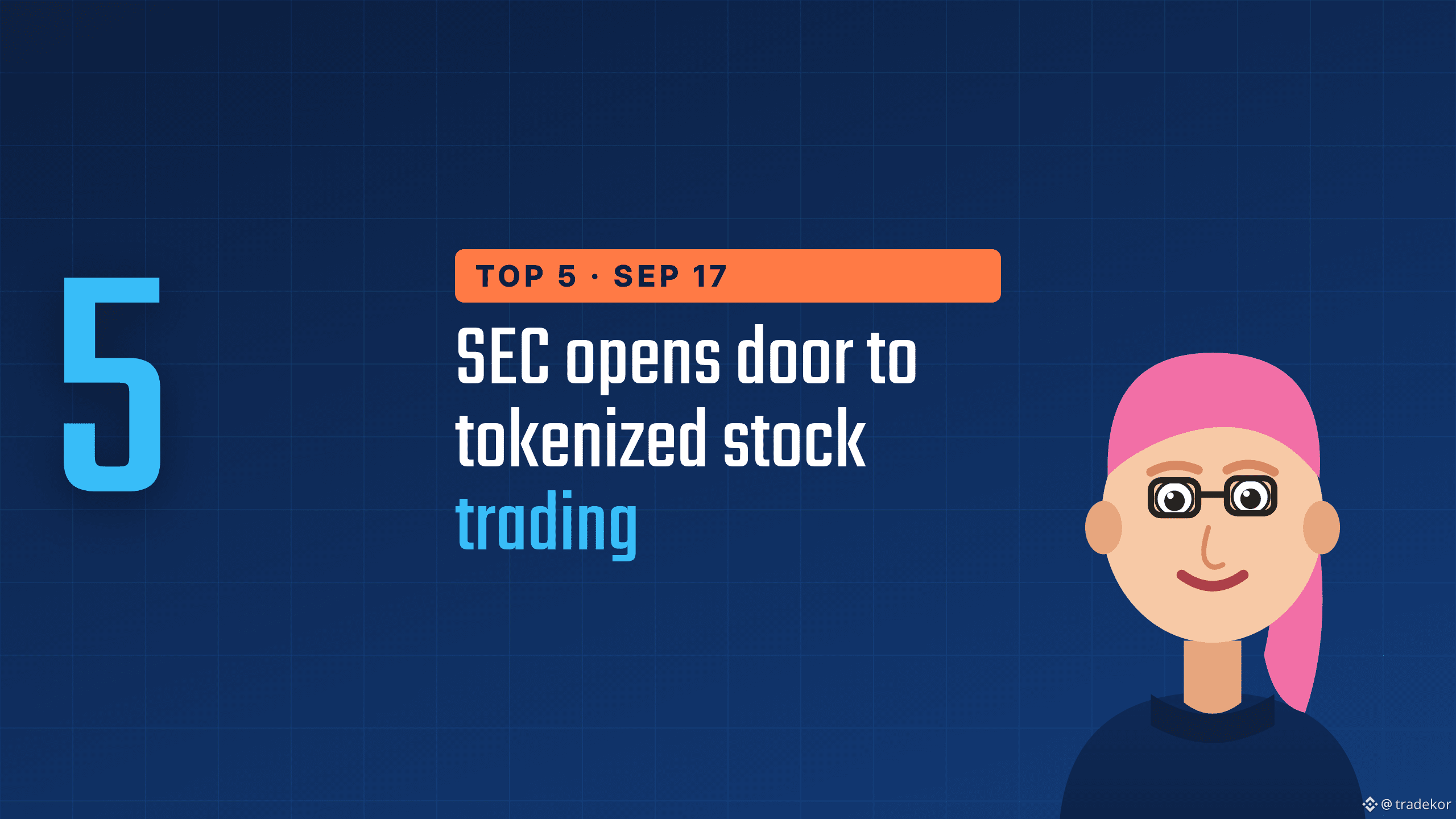
Top 5 des histoires crypto : 17 septembre5 histoires effacent la barre pour le 17 septembre — une journée très réglementée, avec la SEC et la CFTC qui ont toutes deux fait bouger des pièces le même après-midi.
1. Environ une heure avant sa propre table ronde de négociation sur 24 heures (BlackRock, Nasdaq, NYSE, Citadel Securities, Robinhood et bien d’autres intervenants), la SEC a publié une « Innovation Exemption » sur 5 ans, permettant aux « Tokenized Securities Venues » apprivoisés de négocier des actions américaines tokenisées sur des blockchains publiques via des AMM autorisées et des pools de liquidité — sans s’enregistrer en tant qu’échange. Les conditions comprennent des plafonds de volume et de symboles, des droits équivalents à ceux des actionnaires, des smart contracts auditablement vérifiables et des arrêts de cotation synchronisés ; les tokens de suivi de prix synthétiques ne sont pas admissibles, et les émetteurs peuvent opter pour ne pas participer. Aucune date de démarrage pour une négociation 24/7 n’a été fixée — il s’agit d’un cadre pilote conditionnel, pas d’un règlement final, et la SEC sollicite des commentaires du public.
Top 5 des histoires crypto : 17 septembre
5 histoires effacent la barre pour le 17 septembre — une journée très réglementée, avec la SEC et la CFTC qui ont toutes deux fait bouger des pièces le même après-midi.
1. Environ une heure avant sa propre table ronde de négociation sur 24 heures (BlackRock, Nasdaq, NYSE, Citadel Securities, Robinhood et bien d’autres intervenants), la SEC a publié une « Innovation Exemption » sur 5 ans, permettant aux « Tokenized Securities Venues » apprivoisés de négocier des actions américaines tokenisées sur des blockchains publiques via des AMM autorisées et des pools de liquidité — sans s’enregistrer en tant qu’échange. Les conditions comprennent des plafonds de volume et de symboles, des droits équivalents à ceux des actionnaires, des smart contracts auditablement vérifiables et des arrêts de cotation synchronisés ; les tokens de suivi de prix synthétiques ne sont pas admissibles, et les émetteurs peuvent opter pour ne pas participer. Aucune date de démarrage pour une négociation 24/7 n’a été fixée — il s’agit d’un cadre pilote conditionnel, pas d’un règlement final, et la SEC sollicite des commentaires du public.
1. Environ une heure avant sa propre table ronde de négociation sur 24 heures (BlackRock, Nasdaq, NYSE, Citadel Securities, Robinhood et bien d’autres intervenants), la SEC a publié une « Innovation Exemption » sur 5 ans, permettant aux « Tokenized Securities Venues » apprivoisés de négocier des actions américaines tokenisées sur des blockchains publiques via des AMM autorisées et des pools de liquidité — sans s’enregistrer en tant qu’échange. Les conditions comprennent des plafonds de volume et de symboles, des droits équivalents à ceux des actionnaires, des smart contracts auditablement vérifiables et des arrêts de cotation synchronisés ; les tokens de suivi de prix synthétiques ne sont pas admissibles, et les émetteurs peuvent opter pour ne pas participer. Aucune date de démarrage pour une négociation 24/7 n’a été fixée — il s’agit d’un cadre pilote conditionnel, pas d’un règlement final, et la SEC sollicite des commentaires du public.
330
·
--
Article
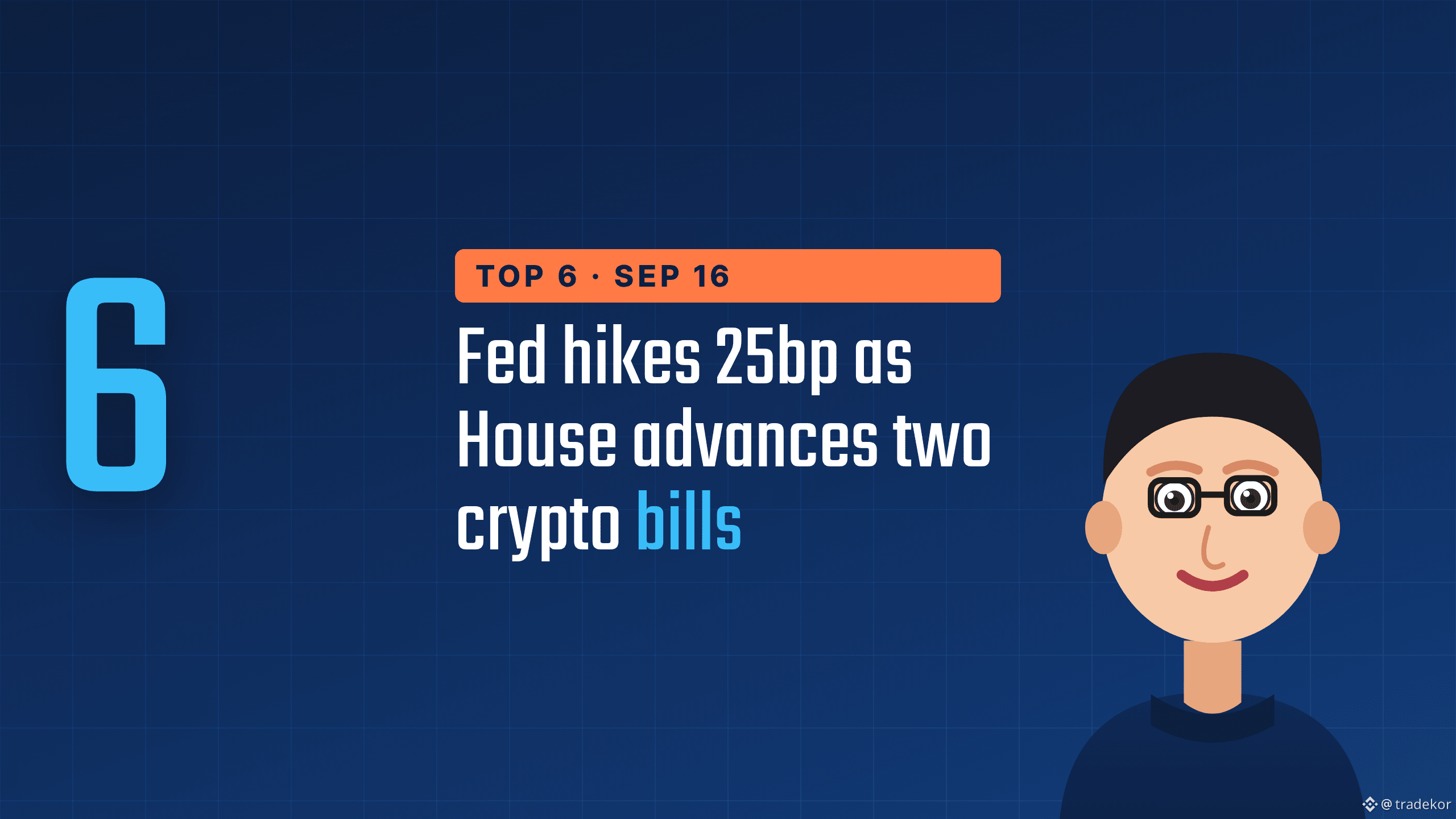
Top 6 des histoires crypto : 16 septembre6 histoires ont franchi la barre pour le 16 septembre : une journée vraiment active, avec une décision en direct de la Fed et deux votes distincts de commissions de la Chambre arrivant à quelques heures d’intervalle.
1. La Fed a relevé ses taux de 25 pb à 3,75 %-4,00 %, son premier relèvement depuis 2023, lors d’un vote unanime de 12 voix à 0. Le nouveau président Kevin Warsh a déclaré que l’inflation est restée « trop élevée trop longtemps », et les propres projections de la Fed indiquent qu’il reste une hausse à effectuer avant la fin de l’année. La réaction du Bitcoin a été mesurée : échanges dans une fourchette de 75 000 à 76 500 $ au moment de l’annonce, car le mouvement avait déjà été intégré après le choc plus important de la semaine provoqué par le projet de loi CLARITY.
Top 6 des histoires crypto : 16 septembre
6 histoires ont franchi la barre pour le 16 septembre : une journée vraiment active, avec une décision en direct de la Fed et deux votes distincts de commissions de la Chambre arrivant à quelques heures d’intervalle.
1. La Fed a relevé ses taux de 25 pb à 3,75 %-4,00 %, son premier relèvement depuis 2023, lors d’un vote unanime de 12 voix à 0. Le nouveau président Kevin Warsh a déclaré que l’inflation est restée « trop élevée trop longtemps », et les propres projections de la Fed indiquent qu’il reste une hausse à effectuer avant la fin de l’année. La réaction du Bitcoin a été mesurée : échanges dans une fourchette de 75 000 à 76 500 $ au moment de l’annonce, car le mouvement avait déjà été intégré après le choc plus important de la semaine provoqué par le projet de loi CLARITY.
1. La Fed a relevé ses taux de 25 pb à 3,75 %-4,00 %, son premier relèvement depuis 2023, lors d’un vote unanime de 12 voix à 0. Le nouveau président Kevin Warsh a déclaré que l’inflation est restée « trop élevée trop longtemps », et les propres projections de la Fed indiquent qu’il reste une hausse à effectuer avant la fin de l’année. La réaction du Bitcoin a été mesurée : échanges dans une fourchette de 75 000 à 76 500 $ au moment de l’annonce, car le mouvement avait déjà été intégré après le choc plus important de la semaine provoqué par le projet de loi CLARITY.
141
·
--
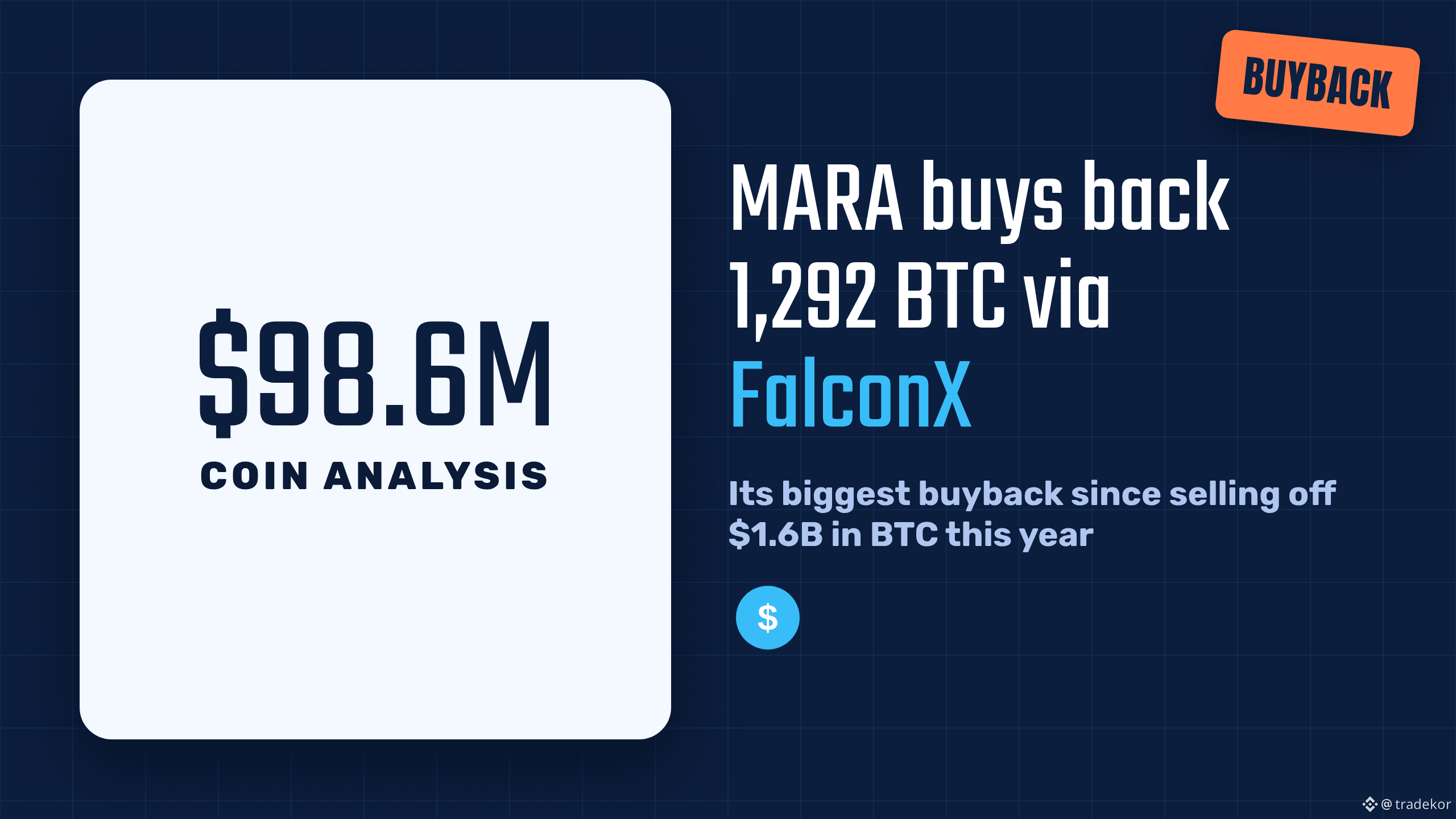
MARA Holdings vient d’acheter 1 292 BTC (~98,6 M$) via FalconX — son plus gros rachat de bitcoin depuis la vente d’environ 1,6 Md$ de BTC plus tôt cette année.
L’info : la société d’analytique on-chain Lookonchain a signalé l’achat OTC avant toute déclaration officielle de l’entreprise. C’est le deuxième rachat de 2026 : MARA a discrètement racheté 1 000 BTC via le même canal FalconX en juin — et cela tombe juste au moment où le bitcoin se négocie au milieu des 75 000 $, en baisse par rapport aux alentours de 80 000 $ il y a quelques jours, le marché digérant encore l’échec du vote de lundi sur la loi CLARITY et la décision de la Fed d’aujourd’hui.
Le point à retenir : ce rachat ne change pas pour autant la vue d’ensemble. Au début de 2026, MARA a fortement réduit ses réserves — des estimations indiquent environ 20 000 à 23 000 BTC vendus pour quelque 1,5 à 1,6 Md$ — afin de financer une inflexion vers l’IA et les infrastructures de calcul haute performance. Un achat OTC de 98,6 M$ auprès d’un seul mineur n’est qu’un indicateur de sentiment, pas la preuve que la société a inversé cette stratégie.
Notre analyse : le fait qu’un grand mineur coté traite cette baisse comme une opportunité d’achat mérite d’être noté, mais c’est une décision de trésorerie propre à une seule entreprise, pas un signal valable pour l’ensemble du marché — mettez-le en perspective avec votre lecture de la décision de la Fed d’aujourd’hui avant d’en tirer des conclusions.
Le rachat de bitcoins par un mineur sur ses propres positions après des mois de ventes change-t-il la façon dont vous lisez cette baisse, ou ce n’est que du bruit ?
Ce n’est pas un conseil financier. Faites vos propres recherches (DYOR).
$BTC #CryptoNews #Bitcoin #MARA
MARA Holdings vient d’acheter 1 292 BTC (~98,6 M$) via FalconX — son plus gros rachat de bitcoin depuis la vente d’environ 1,6 Md$ de BTC plus tôt cette année.
L’info : la société d’analytique on-chain Lookonchain a signalé l’achat OTC avant toute déclaration officielle de l’entreprise. C’est le deuxième rachat de 2026 : MARA a discrètement racheté 1 000 BTC via le même canal FalconX en juin — et cela tombe juste au moment où le bitcoin se négocie au milieu des 75 000 $, en baisse par rapport aux alentours de 80 000 $ il y a quelques jours, le marché digérant encore l’échec du vote de lundi sur la loi CLARITY et la décision de la Fed d’aujourd’hui.
Le point à retenir : ce rachat ne change pas pour autant la vue d’ensemble. Au début de 2026, MARA a fortement réduit ses réserves — des estimations indiquent environ 20 000 à 23 000 BTC vendus pour quelque 1,5 à 1,6 Md$ — afin de financer une inflexion vers l’IA et les infrastructures de calcul haute performance. Un achat OTC de 98,6 M$ auprès d’un seul mineur n’est qu’un indicateur de sentiment, pas la preuve que la société a inversé cette stratégie.
Notre analyse : le fait qu’un grand mineur coté traite cette baisse comme une opportunité d’achat mérite d’être noté, mais c’est une décision de trésorerie propre à une seule entreprise, pas un signal valable pour l’ensemble du marché — mettez-le en perspective avec votre lecture de la décision de la Fed d’aujourd’hui avant d’en tirer des conclusions.
Le rachat de bitcoins par un mineur sur ses propres positions après des mois de ventes change-t-il la façon dont vous lisez cette baisse, ou ce n’est que du bruit ?
Ce n’est pas un conseil financier. Faites vos propres recherches (DYOR).
$BTC #CryptoNews #Bitcoin #MARA
L’info : la société d’analytique on-chain Lookonchain a signalé l’achat OTC avant toute déclaration officielle de l’entreprise. C’est le deuxième rachat de 2026 : MARA a discrètement racheté 1 000 BTC via le même canal FalconX en juin — et cela tombe juste au moment où le bitcoin se négocie au milieu des 75 000 $, en baisse par rapport aux alentours de 80 000 $ il y a quelques jours, le marché digérant encore l’échec du vote de lundi sur la loi CLARITY et la décision de la Fed d’aujourd’hui.
Le point à retenir : ce rachat ne change pas pour autant la vue d’ensemble. Au début de 2026, MARA a fortement réduit ses réserves — des estimations indiquent environ 20 000 à 23 000 BTC vendus pour quelque 1,5 à 1,6 Md$ — afin de financer une inflexion vers l’IA et les infrastructures de calcul haute performance. Un achat OTC de 98,6 M$ auprès d’un seul mineur n’est qu’un indicateur de sentiment, pas la preuve que la société a inversé cette stratégie.
Notre analyse : le fait qu’un grand mineur coté traite cette baisse comme une opportunité d’achat mérite d’être noté, mais c’est une décision de trésorerie propre à une seule entreprise, pas un signal valable pour l’ensemble du marché — mettez-le en perspective avec votre lecture de la décision de la Fed d’aujourd’hui avant d’en tirer des conclusions.
Le rachat de bitcoins par un mineur sur ses propres positions après des mois de ventes change-t-il la façon dont vous lisez cette baisse, ou ce n’est que du bruit ?
Ce n’est pas un conseil financier. Faites vos propres recherches (DYOR).
$BTC #CryptoNews #Bitcoin #MARA
1
125
·
--
Article
Top 4 des histoires crypto : 15 septembre4 histoires ont franchi la barre pour le 15 septembre — une journée plus calme, après un seul grand coup législatif.
1. Le vote de clôture décisif de la CLARITY Act au Sénat a échoué, 49-50, avec onze voix de moins que les 60 nécessaires pour ouvrir le débat en séance. Tous les démocrates ont voté non, rejoints par les républicains Collins, Hawley et Moran ; le sénateur Tillis a, séparément, déposé une motion visant à permettre une réexamination, de sorte que le projet de loi n’est pas encore mort sur le papier, mais le résultat met pratiquement fin, pour 2026, à la législation du Sénat sur la structure du marché. Les discussions auraient buté sur une disposition d’éthique contestée, qui limiterait les élus à tirer profit de leurs activités liées à la crypto. Le bitcoin a glissé, passant d’environ 78 000 $ vers la fourchette milieu de 75 000 $–76 000 $, et les actions liées aux cryptos ont fortement chuté (Coinbase -6,7 %, Circle -8 %, Bullish -4,6 %). Les probabilités issues des marchés prédictifs que la loi soit adoptée en 2026 se sont effondrées, de ~30 % à ~14 %.
Top 4 des histoires crypto : 15 septembre
4 histoires ont franchi la barre pour le 15 septembre — une journée plus calme, après un seul grand coup législatif.
1. Le vote de clôture décisif de la CLARITY Act au Sénat a échoué, 49-50, avec onze voix de moins que les 60 nécessaires pour ouvrir le débat en séance. Tous les démocrates ont voté non, rejoints par les républicains Collins, Hawley et Moran ; le sénateur Tillis a, séparément, déposé une motion visant à permettre une réexamination, de sorte que le projet de loi n’est pas encore mort sur le papier, mais le résultat met pratiquement fin, pour 2026, à la législation du Sénat sur la structure du marché. Les discussions auraient buté sur une disposition d’éthique contestée, qui limiterait les élus à tirer profit de leurs activités liées à la crypto. Le bitcoin a glissé, passant d’environ 78 000 $ vers la fourchette milieu de 75 000 $–76 000 $, et les actions liées aux cryptos ont fortement chuté (Coinbase -6,7 %, Circle -8 %, Bullish -4,6 %). Les probabilités issues des marchés prédictifs que la loi soit adoptée en 2026 se sont effondrées, de ~30 % à ~14 %.
1. Le vote de clôture décisif de la CLARITY Act au Sénat a échoué, 49-50, avec onze voix de moins que les 60 nécessaires pour ouvrir le débat en séance. Tous les démocrates ont voté non, rejoints par les républicains Collins, Hawley et Moran ; le sénateur Tillis a, séparément, déposé une motion visant à permettre une réexamination, de sorte que le projet de loi n’est pas encore mort sur le papier, mais le résultat met pratiquement fin, pour 2026, à la législation du Sénat sur la structure du marché. Les discussions auraient buté sur une disposition d’éthique contestée, qui limiterait les élus à tirer profit de leurs activités liées à la crypto. Le bitcoin a glissé, passant d’environ 78 000 $ vers la fourchette milieu de 75 000 $–76 000 $, et les actions liées aux cryptos ont fortement chuté (Coinbase -6,7 %, Circle -8 %, Bullish -4,6 %). Les probabilités issues des marchés prédictifs que la loi soit adoptée en 2026 se sont effondrées, de ~30 % à ~14 %.
85
·
--
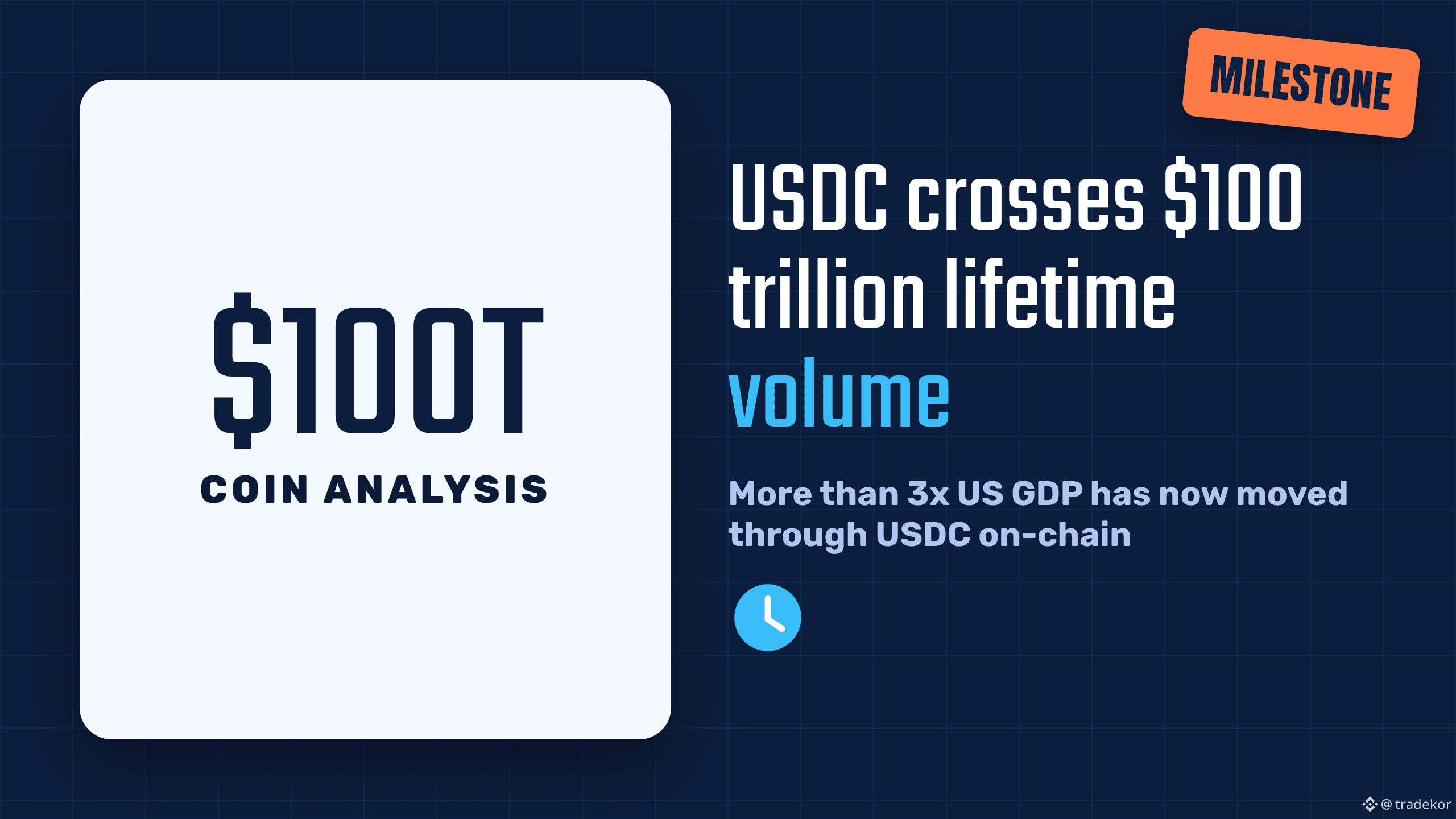
USDC vient de franchir 100 000 milliards de dollars de volume total de transactions en chaîne — plus de 3 fois le PIB total des États-Unis, via un seul stablecoin.
La courbe s’est fortement accélérée : USDC a atteint 80 000 milliards de dollars de volume cumulé dès avril, 90 000 milliards en juillet, et 100 000 milliards à présent, à la mi-septembre. À elle seule, la période T2 2026 a représenté 14,8T de volume en chaîne, en hausse de 151 % d’une année sur l’autre, après un chiffre encore plus élevé de 21,5T au T1. Circle indique qu’USDC représente désormais environ 77 % de toute l’activité des stablecoins à l’échelle du marché.
L’élément à prendre en compte : le volume cumulé n’est pas la même chose que l’offre en circulation ni que « l’argent dans le système » — une grande partie de ces 100T correspond aux mêmes dollars qui circulent à de multiples reprises (trading, transferts de fonds, boucles DeFi), et pas à 100T d’activité économique distincte. C’est une mesure réelle de la quantité de rails USDC devenue, et non un chiffre de valorisation.
Notre lecture : quel que soit le rabais que vous appliquez aux transferts répétés, la trajectoire elle-même raconte l’histoire — USDC est passé de 80T à 100T de volume total en environ cinq mois, et s’impose de plus en plus comme couche de règlement de prédilection sur Ethereum pour tout, du trading aux paiements transfrontaliers.
Un stablecoin qui réalise 3x le PIB des États-Unis en volume on-chain change-t-il votre façon de voir qui a réellement gagné la course au « dollar numérique » ?
Ce n’est pas un conseil financier. Faites vos propres recherches (DYOR).
$ETH #CryptoNews #Stablecoins #USDC
USDC vient de franchir 100 000 milliards de dollars de volume total de transactions en chaîne — plus de 3 fois le PIB total des États-Unis, via un seul stablecoin.
La courbe s’est fortement accélérée : USDC a atteint 80 000 milliards de dollars de volume cumulé dès avril, 90 000 milliards en juillet, et 100 000 milliards à présent, à la mi-septembre. À elle seule, la période T2 2026 a représenté 14,8T de volume en chaîne, en hausse de 151 % d’une année sur l’autre, après un chiffre encore plus élevé de 21,5T au T1. Circle indique qu’USDC représente désormais environ 77 % de toute l’activité des stablecoins à l’échelle du marché.
L’élément à prendre en compte : le volume cumulé n’est pas la même chose que l’offre en circulation ni que « l’argent dans le système » — une grande partie de ces 100T correspond aux mêmes dollars qui circulent à de multiples reprises (trading, transferts de fonds, boucles DeFi), et pas à 100T d’activité économique distincte. C’est une mesure réelle de la quantité de rails USDC devenue, et non un chiffre de valorisation.
Notre lecture : quel que soit le rabais que vous appliquez aux transferts répétés, la trajectoire elle-même raconte l’histoire — USDC est passé de 80T à 100T de volume total en environ cinq mois, et s’impose de plus en plus comme couche de règlement de prédilection sur Ethereum pour tout, du trading aux paiements transfrontaliers.
Un stablecoin qui réalise 3x le PIB des États-Unis en volume on-chain change-t-il votre façon de voir qui a réellement gagné la course au « dollar numérique » ?
Ce n’est pas un conseil financier. Faites vos propres recherches (DYOR).
$ETH #CryptoNews #Stablecoins #USDC
La courbe s’est fortement accélérée : USDC a atteint 80 000 milliards de dollars de volume cumulé dès avril, 90 000 milliards en juillet, et 100 000 milliards à présent, à la mi-septembre. À elle seule, la période T2 2026 a représenté 14,8T de volume en chaîne, en hausse de 151 % d’une année sur l’autre, après un chiffre encore plus élevé de 21,5T au T1. Circle indique qu’USDC représente désormais environ 77 % de toute l’activité des stablecoins à l’échelle du marché.
L’élément à prendre en compte : le volume cumulé n’est pas la même chose que l’offre en circulation ni que « l’argent dans le système » — une grande partie de ces 100T correspond aux mêmes dollars qui circulent à de multiples reprises (trading, transferts de fonds, boucles DeFi), et pas à 100T d’activité économique distincte. C’est une mesure réelle de la quantité de rails USDC devenue, et non un chiffre de valorisation.
Notre lecture : quel que soit le rabais que vous appliquez aux transferts répétés, la trajectoire elle-même raconte l’histoire — USDC est passé de 80T à 100T de volume total en environ cinq mois, et s’impose de plus en plus comme couche de règlement de prédilection sur Ethereum pour tout, du trading aux paiements transfrontaliers.
Un stablecoin qui réalise 3x le PIB des États-Unis en volume on-chain change-t-il votre façon de voir qui a réellement gagné la course au « dollar numérique » ?
Ce n’est pas un conseil financier. Faites vos propres recherches (DYOR).
$ETH #CryptoNews #Stablecoins #USDC
81
·
--
Article
Top 6 des histoires crypto : 14 septembre6 histoires ont dépassé le seuil pour le 14 septembre — une journée active, portée par un choc d’approvisionnement au Moyen-Orient et par un vote décisif attendu demain.
Ce matin, notre publication a déjà couvert la brève divergence des cryptos par rapport à la baisse des valeurs liées à l’IA. À la clôture, cette divergence n’a pas tenu.
1. L’histoire du pipeline saoudien a continué d’évoluer : des frappes par drones ont forcé un deuxième arrêt en 2026 du pipeline Est-Ouest (environ 4 à 5 % de l’offre mondiale de pétrole) et les équipes de réparation indiquent que l’activité restera interrompue pendant des semaines, pas des jours. Le Brent est monté vers 107-109 $. Le Bitcoin, qui était encore en hausse le jour où nous avons publié ce matin, a effacé ces gains au fur et à mesure que la séance avançait et a clôturé en baisse d’environ 0,8 % près de 76 600 $ — rappel que la divergence du matin par rapport aux actions est un point de données, pas une tendance, surtout avec la Fed et un projet de loi majeur sur les cryptos qui arrivent tous deux cette semaine.
Top 6 des histoires crypto : 14 septembre
6 histoires ont dépassé le seuil pour le 14 septembre — une journée active, portée par un choc d’approvisionnement au Moyen-Orient et par un vote décisif attendu demain.
Ce matin, notre publication a déjà couvert la brève divergence des cryptos par rapport à la baisse des valeurs liées à l’IA. À la clôture, cette divergence n’a pas tenu.
1. L’histoire du pipeline saoudien a continué d’évoluer : des frappes par drones ont forcé un deuxième arrêt en 2026 du pipeline Est-Ouest (environ 4 à 5 % de l’offre mondiale de pétrole) et les équipes de réparation indiquent que l’activité restera interrompue pendant des semaines, pas des jours. Le Brent est monté vers 107-109 $. Le Bitcoin, qui était encore en hausse le jour où nous avons publié ce matin, a effacé ces gains au fur et à mesure que la séance avançait et a clôturé en baisse d’environ 0,8 % près de 76 600 $ — rappel que la divergence du matin par rapport aux actions est un point de données, pas une tendance, surtout avec la Fed et un projet de loi majeur sur les cryptos qui arrivent tous deux cette semaine.
Ce matin, notre publication a déjà couvert la brève divergence des cryptos par rapport à la baisse des valeurs liées à l’IA. À la clôture, cette divergence n’a pas tenu.
1. L’histoire du pipeline saoudien a continué d’évoluer : des frappes par drones ont forcé un deuxième arrêt en 2026 du pipeline Est-Ouest (environ 4 à 5 % de l’offre mondiale de pétrole) et les équipes de réparation indiquent que l’activité restera interrompue pendant des semaines, pas des jours. Le Brent est monté vers 107-109 $. Le Bitcoin, qui était encore en hausse le jour où nous avons publié ce matin, a effacé ces gains au fur et à mesure que la séance avançait et a clôturé en baisse d’environ 0,8 % près de 76 600 $ — rappel que la divergence du matin par rapport aux actions est un point de données, pas une tendance, surtout avec la Fed et un projet de loi majeur sur les cryptos qui arrivent tous deux cette semaine.
116
·
--
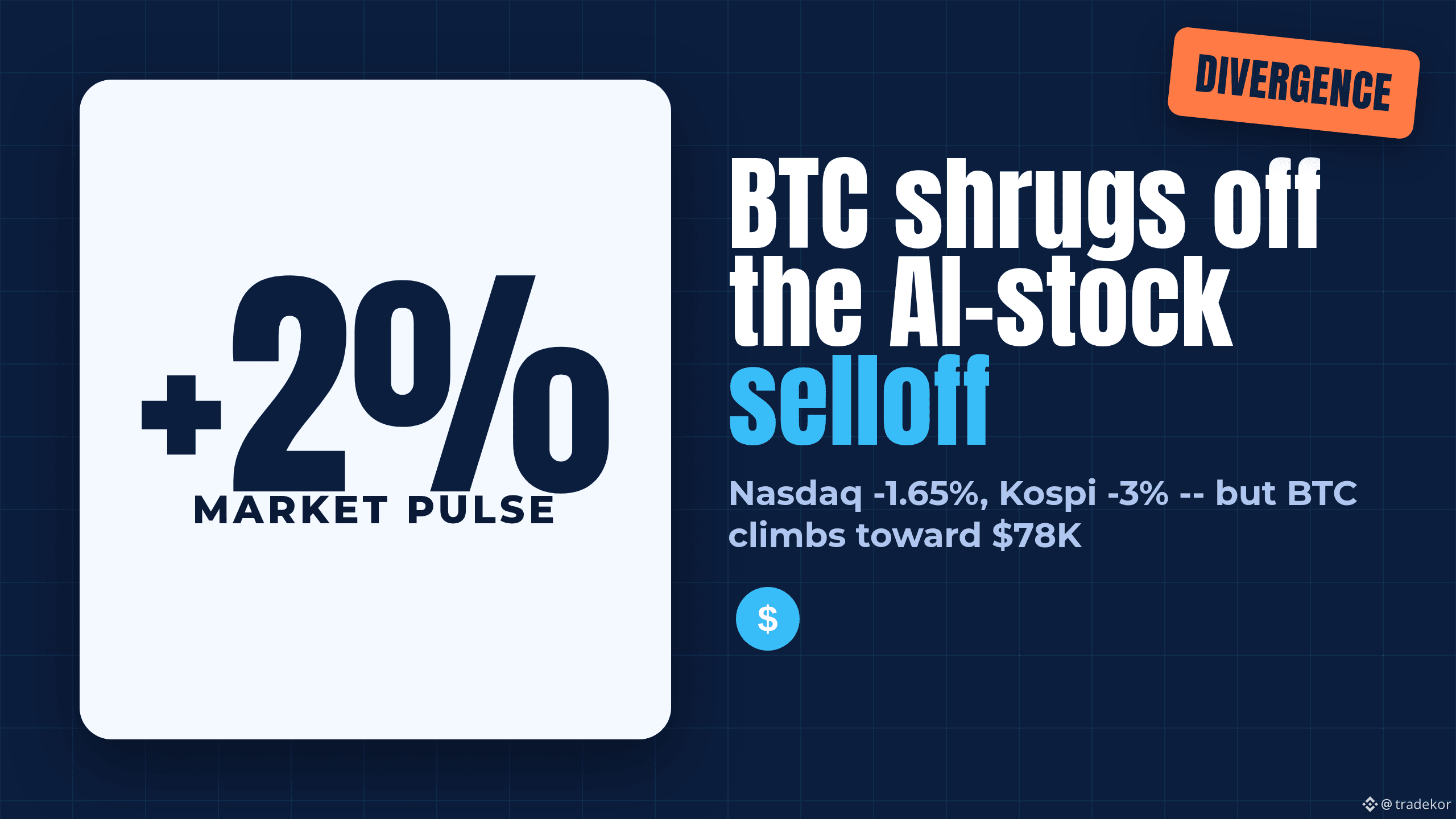
Le BTC a grimpé d’environ 2% aujourd’hui tandis que le Nasdaq chutait de 1,65% et que le Kospi de Corée du Sud reculait de 3% — une divergence réelle, pas une simple erreur d’arrondi.
L’actualité : les valeurs liées à l’IA ont fortement reculé après que le PDG d’Anthropic a appelé publiquement à ralentir le rythme du développement de l’IA de pointe pour des raisons de sécurité, appel rapidement repris par les dirigeants d’OpenAI et de xAI. Les contrats à terme du Nasdaq 100 ont baissé d’environ 1,65%, le Kospi sud-coréen a reculé de 3% (SK Hynix -6%) et les fabricants de puces / fournisseurs de néocloud ont chuté de 5 à 6% sur l’ensemble du secteur. Dans le même temps, le pétrole a bondi d’environ 4% à la suite d’une fermeture d’un pipeline en Arabie saoudite, et les chances de hausse des taux de la Fed pour la réunion de cette semaine ont encore progressé. Malgré l’arrivée simultanée de ces trois pressions le même jour, le BTC a gagné environ 1 à 2% vers ~77 800–78 000 $ et l’ETH a ajouté environ 1% à 2 500 $.
Le bémol : un seul jour de découplage ne rend pas la crypto immunisée contre l’aversion au risque — le BTC s’est échangé en quasi-synchronisation avec les valeurs tech à de nombreuses reprises cette année, et un actif sensible aux taux qui “fait semblant” d’ignorer une baisse des actions pendant une journée n’est qu’un point de données, pas l’indication d’un nouveau régime. Une partie de ce qui soutient la crypto ici, plus précisément, vient de l’optimisme autour d’une législation en attente sur la structure du marché, qui constitue son propre catalyseur distinct, superposé à l’histoire des valeurs liées à l’IA, et qui ne prouve pas que la crypto s’est structurellement détachée des actions.
Notre lecture : la divergence d’aujourd’hui est réelle et mérite d’être notée, mais le vrai test est de savoir si le BTC continue de tenir s’il est vrai que le repli des valeurs IA s’étend sur la semaine, surtout en amont de la décision de la Fed de vendredi.
Aujourd’hui a-t-il modifié votre point de vue sur le fait que le BTC se découple des valeurs tech, ou est-il encore trop tôt pour conclure?
Ceci n’est pas un conseil financier. Faites vos recherches. DYOR.
$BTC $ETH #CryptoNews #MarketPulse #Bitcoin
Le BTC a grimpé d’environ 2% aujourd’hui tandis que le Nasdaq chutait de 1,65% et que le Kospi de Corée du Sud reculait de 3% — une divergence réelle, pas une simple erreur d’arrondi.
L’actualité : les valeurs liées à l’IA ont fortement reculé après que le PDG d’Anthropic a appelé publiquement à ralentir le rythme du développement de l’IA de pointe pour des raisons de sécurité, appel rapidement repris par les dirigeants d’OpenAI et de xAI. Les contrats à terme du Nasdaq 100 ont baissé d’environ 1,65%, le Kospi sud-coréen a reculé de 3% (SK Hynix -6%) et les fabricants de puces / fournisseurs de néocloud ont chuté de 5 à 6% sur l’ensemble du secteur. Dans le même temps, le pétrole a bondi d’environ 4% à la suite d’une fermeture d’un pipeline en Arabie saoudite, et les chances de hausse des taux de la Fed pour la réunion de cette semaine ont encore progressé. Malgré l’arrivée simultanée de ces trois pressions le même jour, le BTC a gagné environ 1 à 2% vers ~77 800–78 000 $ et l’ETH a ajouté environ 1% à 2 500 $.
Le bémol : un seul jour de découplage ne rend pas la crypto immunisée contre l’aversion au risque — le BTC s’est échangé en quasi-synchronisation avec les valeurs tech à de nombreuses reprises cette année, et un actif sensible aux taux qui “fait semblant” d’ignorer une baisse des actions pendant une journée n’est qu’un point de données, pas l’indication d’un nouveau régime. Une partie de ce qui soutient la crypto ici, plus précisément, vient de l’optimisme autour d’une législation en attente sur la structure du marché, qui constitue son propre catalyseur distinct, superposé à l’histoire des valeurs liées à l’IA, et qui ne prouve pas que la crypto s’est structurellement détachée des actions.
Notre lecture : la divergence d’aujourd’hui est réelle et mérite d’être notée, mais le vrai test est de savoir si le BTC continue de tenir s’il est vrai que le repli des valeurs IA s’étend sur la semaine, surtout en amont de la décision de la Fed de vendredi.
Aujourd’hui a-t-il modifié votre point de vue sur le fait que le BTC se découple des valeurs tech, ou est-il encore trop tôt pour conclure?
Ceci n’est pas un conseil financier. Faites vos recherches. DYOR.
$BTC $ETH #CryptoNews #MarketPulse #Bitcoin
L’actualité : les valeurs liées à l’IA ont fortement reculé après que le PDG d’Anthropic a appelé publiquement à ralentir le rythme du développement de l’IA de pointe pour des raisons de sécurité, appel rapidement repris par les dirigeants d’OpenAI et de xAI. Les contrats à terme du Nasdaq 100 ont baissé d’environ 1,65%, le Kospi sud-coréen a reculé de 3% (SK Hynix -6%) et les fabricants de puces / fournisseurs de néocloud ont chuté de 5 à 6% sur l’ensemble du secteur. Dans le même temps, le pétrole a bondi d’environ 4% à la suite d’une fermeture d’un pipeline en Arabie saoudite, et les chances de hausse des taux de la Fed pour la réunion de cette semaine ont encore progressé. Malgré l’arrivée simultanée de ces trois pressions le même jour, le BTC a gagné environ 1 à 2% vers ~77 800–78 000 $ et l’ETH a ajouté environ 1% à 2 500 $.
Le bémol : un seul jour de découplage ne rend pas la crypto immunisée contre l’aversion au risque — le BTC s’est échangé en quasi-synchronisation avec les valeurs tech à de nombreuses reprises cette année, et un actif sensible aux taux qui “fait semblant” d’ignorer une baisse des actions pendant une journée n’est qu’un point de données, pas l’indication d’un nouveau régime. Une partie de ce qui soutient la crypto ici, plus précisément, vient de l’optimisme autour d’une législation en attente sur la structure du marché, qui constitue son propre catalyseur distinct, superposé à l’histoire des valeurs liées à l’IA, et qui ne prouve pas que la crypto s’est structurellement détachée des actions.
Notre lecture : la divergence d’aujourd’hui est réelle et mérite d’être notée, mais le vrai test est de savoir si le BTC continue de tenir s’il est vrai que le repli des valeurs IA s’étend sur la semaine, surtout en amont de la décision de la Fed de vendredi.
Aujourd’hui a-t-il modifié votre point de vue sur le fait que le BTC se découple des valeurs tech, ou est-il encore trop tôt pour conclure?
Ceci n’est pas un conseil financier. Faites vos recherches. DYOR.
$BTC $ETH #CryptoNews #MarketPulse #Bitcoin
1
266
·
--
Les clients du propre trésor de Ripple déplacent déjà 13 billions de dollars par an, et l’entreprise veut faire passer ce flux via sa cryptomonnaie stable.
La nouvelle : le P-DG (SVP) des stablecoins de Ripple, Jack McDonald, a déclaré que les quelque 1 200 clients « corporate treasurer » (trésoriers d’entreprise) et directeurs financiers (CFO) de Ripple Treasury traitent déjà environ 13 billions de dollars par an dans des transferts transfrontaliers, inter-filiales et domestiques — et que Ripple veut désormais une part significative de ces transferts en utilisant le RLUSD plutôt que des canaux traditionnels. L’offre en circulation du RLUSD a augmenté de plus de 50 % en un mois pour atteindre 2,4 Md$, tandis que l’activité quotidienne on-chain a à peu près triplé depuis janvier, pour atteindre environ 750 M$. Cela s’appuie sur l’acquisition de GTreasury (1 Md$) de Ripple et sur un tableau de bord « Unified Treasury » (Trésorerie unifiée) lancé en avril, permettant aux CFO de gérer le RLUSD, l’XRP et le volet fiduciaire côte à côte, ainsi que sur une démarche vers une double émission conforme à la MiCA en Europe.
Le point de vigilance : le chiffre de 13 T et les pourcentages de croissance sont des données revendiquées par Ripple dans le cadre d’une interview de l’entreprise, et non des données de marché auditées indépendamment — à traiter comme une estimation des possibilités (opportunity sizing) de l’entreprise, et non comme une métrique externe vérifiée. Faire en sorte que de grands trésoriers d’entreprise déplacent réellement un volume significatif vers une cryptomonnaie stable est un cycle de vente bien plus lent et plus prudent que l’adoption nativement « crypto », et « 13 T de flux adressable » ne dit rien, pour l’instant, sur la part effectivement convertie.
Notre lecture : les chiffres de croissance du RLUSD (plus de 50 % de croissance de l’offre, et triplement du volume on-chain) sont réels et vérifiables même si le cadre « 13 T d’opportunité » relève du discours de Ripple — l’acquisition de GTreasury et le tableau de bord Unified Treasury constituent une infrastructure de distribution concrète, et pas seulement du marketing.
Les 13 T de flux de trésorerie existants constituent-ils une véritable rampe de croissance pour le RLUSD, ou bien s’agit-il surtout d’un grand chiffre utilisé par Ripple pour cadrer une conversion réaliste beaucoup plus faible ?
Pas de conseil financier. Faites votre propre recherche (DYOR).
$XRP #CryptoNews #Ripple #Stablecoins
Les clients du propre trésor de Ripple déplacent déjà 13 billions de dollars par an, et l’entreprise veut faire passer ce flux via sa cryptomonnaie stable.
La nouvelle : le P-DG (SVP) des stablecoins de Ripple, Jack McDonald, a déclaré que les quelque 1 200 clients « corporate treasurer » (trésoriers d’entreprise) et directeurs financiers (CFO) de Ripple Treasury traitent déjà environ 13 billions de dollars par an dans des transferts transfrontaliers, inter-filiales et domestiques — et que Ripple veut désormais une part significative de ces transferts en utilisant le RLUSD plutôt que des canaux traditionnels. L’offre en circulation du RLUSD a augmenté de plus de 50 % en un mois pour atteindre 2,4 Md$, tandis que l’activité quotidienne on-chain a à peu près triplé depuis janvier, pour atteindre environ 750 M$. Cela s’appuie sur l’acquisition de GTreasury (1 Md$) de Ripple et sur un tableau de bord « Unified Treasury » (Trésorerie unifiée) lancé en avril, permettant aux CFO de gérer le RLUSD, l’XRP et le volet fiduciaire côte à côte, ainsi que sur une démarche vers une double émission conforme à la MiCA en Europe.
Le point de vigilance : le chiffre de 13 T et les pourcentages de croissance sont des données revendiquées par Ripple dans le cadre d’une interview de l’entreprise, et non des données de marché auditées indépendamment — à traiter comme une estimation des possibilités (opportunity sizing) de l’entreprise, et non comme une métrique externe vérifiée. Faire en sorte que de grands trésoriers d’entreprise déplacent réellement un volume significatif vers une cryptomonnaie stable est un cycle de vente bien plus lent et plus prudent que l’adoption nativement « crypto », et « 13 T de flux adressable » ne dit rien, pour l’instant, sur la part effectivement convertie.
Notre lecture : les chiffres de croissance du RLUSD (plus de 50 % de croissance de l’offre, et triplement du volume on-chain) sont réels et vérifiables même si le cadre « 13 T d’opportunité » relève du discours de Ripple — l’acquisition de GTreasury et le tableau de bord Unified Treasury constituent une infrastructure de distribution concrète, et pas seulement du marketing.
Les 13 T de flux de trésorerie existants constituent-ils une véritable rampe de croissance pour le RLUSD, ou bien s’agit-il surtout d’un grand chiffre utilisé par Ripple pour cadrer une conversion réaliste beaucoup plus faible ?
Pas de conseil financier. Faites votre propre recherche (DYOR).
$XRP #CryptoNews #Ripple #Stablecoins
La nouvelle : le P-DG (SVP) des stablecoins de Ripple, Jack McDonald, a déclaré que les quelque 1 200 clients « corporate treasurer » (trésoriers d’entreprise) et directeurs financiers (CFO) de Ripple Treasury traitent déjà environ 13 billions de dollars par an dans des transferts transfrontaliers, inter-filiales et domestiques — et que Ripple veut désormais une part significative de ces transferts en utilisant le RLUSD plutôt que des canaux traditionnels. L’offre en circulation du RLUSD a augmenté de plus de 50 % en un mois pour atteindre 2,4 Md$, tandis que l’activité quotidienne on-chain a à peu près triplé depuis janvier, pour atteindre environ 750 M$. Cela s’appuie sur l’acquisition de GTreasury (1 Md$) de Ripple et sur un tableau de bord « Unified Treasury » (Trésorerie unifiée) lancé en avril, permettant aux CFO de gérer le RLUSD, l’XRP et le volet fiduciaire côte à côte, ainsi que sur une démarche vers une double émission conforme à la MiCA en Europe.
Le point de vigilance : le chiffre de 13 T et les pourcentages de croissance sont des données revendiquées par Ripple dans le cadre d’une interview de l’entreprise, et non des données de marché auditées indépendamment — à traiter comme une estimation des possibilités (opportunity sizing) de l’entreprise, et non comme une métrique externe vérifiée. Faire en sorte que de grands trésoriers d’entreprise déplacent réellement un volume significatif vers une cryptomonnaie stable est un cycle de vente bien plus lent et plus prudent que l’adoption nativement « crypto », et « 13 T de flux adressable » ne dit rien, pour l’instant, sur la part effectivement convertie.
Notre lecture : les chiffres de croissance du RLUSD (plus de 50 % de croissance de l’offre, et triplement du volume on-chain) sont réels et vérifiables même si le cadre « 13 T d’opportunité » relève du discours de Ripple — l’acquisition de GTreasury et le tableau de bord Unified Treasury constituent une infrastructure de distribution concrète, et pas seulement du marketing.
Les 13 T de flux de trésorerie existants constituent-ils une véritable rampe de croissance pour le RLUSD, ou bien s’agit-il surtout d’un grand chiffre utilisé par Ripple pour cadrer une conversion réaliste beaucoup plus faible ?
Pas de conseil financier. Faites votre propre recherche (DYOR).
$XRP #CryptoNews #Ripple #Stablecoins
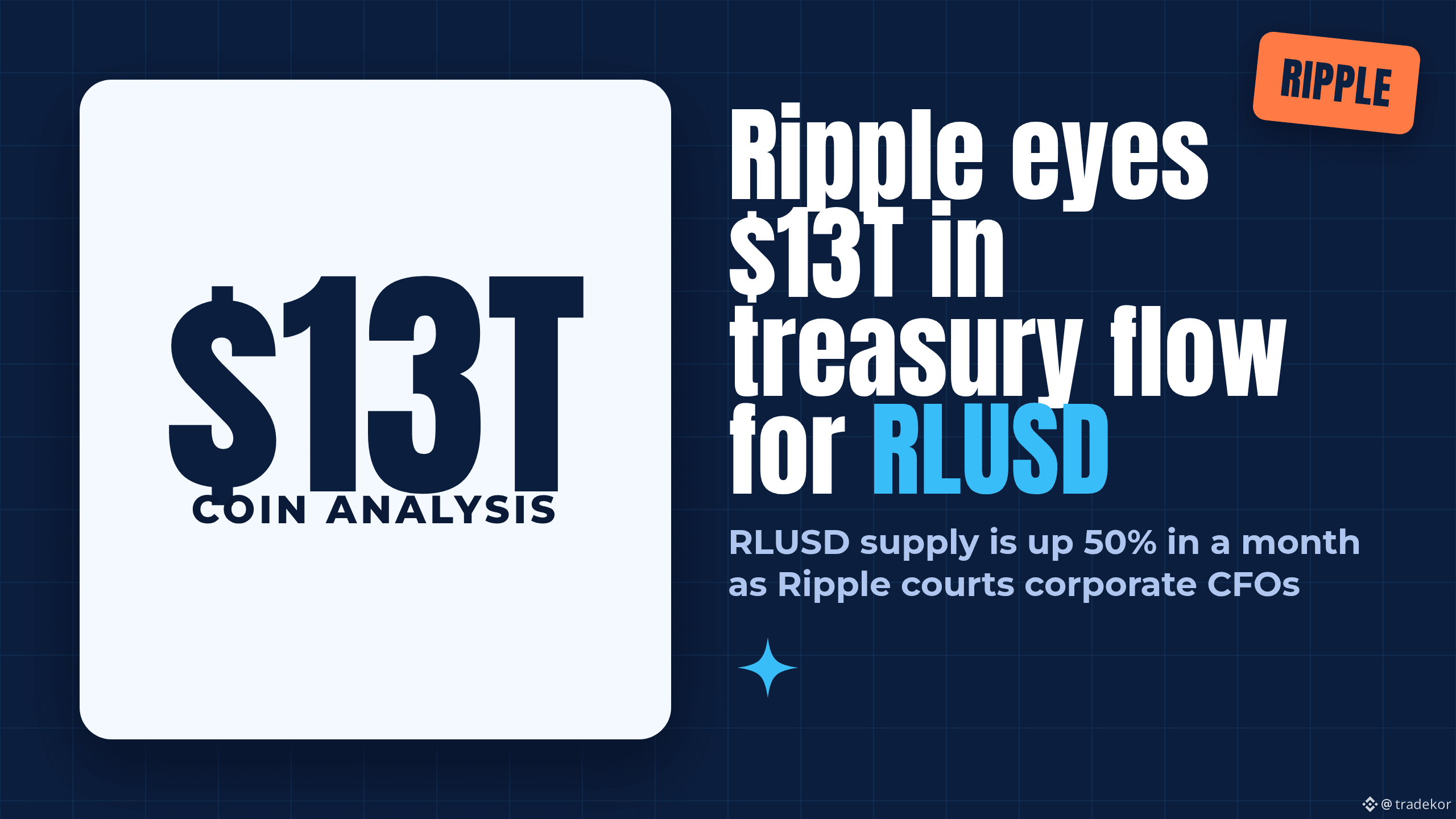
425
·
--
Article
Les 6 principales histoires crypto du jour — 12 septembre 20266 histoires ont franchi la barre fixée pour le 12 septembre.
Revolut a remis des passeports de clients et des historiques de transactions Bitcoin à un e-mail gouvernemental usurpé, et l’Ethereum a atteint un plus haut de 7 mois tout en se découplant des flux de l’ETF Bitcoin.
1. Revolut a révélé qu’un e-mail frauduleux -- envoyé depuis un domaine authentique d’agence gouvernementale et réussissant les contrôles d’authentification SPF, DKIM et DMARC -- a trompé l’entreprise en lui faisant remettre des passeports de clients, des selfies de vérification, des adresses, des IBAN et des historiques complets de transactions Bitcoin avant que quiconque ne se rende compte que la demande n’était pas réelle. Le jeu de données ciblé et limité suggère que les attaquants ont délibérément choisi des comptes fortunés ; les fonds des clients n’ont pas été touchés, mais Revolut a informé les utilisateurs concernés, les forces de l’ordre et les régulateurs.
Les 6 principales histoires crypto du jour — 12 septembre 2026
6 histoires ont franchi la barre fixée pour le 12 septembre.
Revolut a remis des passeports de clients et des historiques de transactions Bitcoin à un e-mail gouvernemental usurpé, et l’Ethereum a atteint un plus haut de 7 mois tout en se découplant des flux de l’ETF Bitcoin.
1. Revolut a révélé qu’un e-mail frauduleux -- envoyé depuis un domaine authentique d’agence gouvernementale et réussissant les contrôles d’authentification SPF, DKIM et DMARC -- a trompé l’entreprise en lui faisant remettre des passeports de clients, des selfies de vérification, des adresses, des IBAN et des historiques complets de transactions Bitcoin avant que quiconque ne se rende compte que la demande n’était pas réelle. Le jeu de données ciblé et limité suggère que les attaquants ont délibérément choisi des comptes fortunés ; les fonds des clients n’ont pas été touchés, mais Revolut a informé les utilisateurs concernés, les forces de l’ordre et les régulateurs.
Revolut a remis des passeports de clients et des historiques de transactions Bitcoin à un e-mail gouvernemental usurpé, et l’Ethereum a atteint un plus haut de 7 mois tout en se découplant des flux de l’ETF Bitcoin.
1. Revolut a révélé qu’un e-mail frauduleux -- envoyé depuis un domaine authentique d’agence gouvernementale et réussissant les contrôles d’authentification SPF, DKIM et DMARC -- a trompé l’entreprise en lui faisant remettre des passeports de clients, des selfies de vérification, des adresses, des IBAN et des historiques complets de transactions Bitcoin avant que quiconque ne se rende compte que la demande n’était pas réelle. Le jeu de données ciblé et limité suggère que les attaquants ont délibérément choisi des comptes fortunés ; les fonds des clients n’ont pas été touchés, mais Revolut a informé les utilisateurs concernés, les forces de l’ordre et les régulateurs.
77
·
--
Des chercheurs viennent de réduire l’estimation du coût du calcul quantique pour attaquer le chiffrement de Bitcoin et d’Ethereum de plus de 50% — et aucune machine sur Terre ne peut encore le faire.
La nouvelle : un effort collaboratif (100+ contributeurs, dont des équipes de la Ethereum Foundation, Theta Labs et StarkWare) a conçu un nouveau circuit quantique nécessitant 1 151 qubits logiques et environ 1,3 million de portes de Toffoli pour réaliser l’étape arithmétique centrale permettant de briser la cryptographie par courbes elliptiques (secp256k1) qui sécurise les clés privées de Bitcoin et d’Ethereum. Le score de ressources combiné s’élève à environ 1,5 milliard — plus de 50% de moins que le repère d’environ 3 milliards publié par Google Quantum AI en mars, et une baisse de 86% par rapport à la position de départ d’un défi de recherche ouvert lancé il y a seulement deux mois.
Le hic : le matériel quantique d’aujourd’hui ne dispose que d’environ 1 000 à 1 200 qubits physiques et les nombres de qubits logiques sont dans les dizaines ou les centaines tout au plus — loin de permettre de faire cela. Il s’agit d’un repère pour une attaque théorique future, pas d’une menace en temps réel, et la remédiation (mises à niveau des protocoles, migrations des portefeuilles vers des signatures résistantes au quantique) a plusieurs années d’avance avant que le matériel puisse plausiblement rattraper. Les progrès comme celui-ci ont tendance à survenir par à-coups irréguliers, plutôt que de suivre un compte à rebours régulier.
Pourquoi cela reste important : environ 7 millions de BTC se trouvent dans des adresses où la clé publique est déjà exposée on-chain — ce sont les pièces les plus à risque dès que le « Q-Day » arrivera éventuellement, et la migration de l’ensemble du secteur vers des portefeuilles résistants au quantique prendra des années à se déployer, même une fois la technologie disponible. Une recherche comme celle-ci doit précisément alimenter la planification de cette migration, et non constituer une percée matérielle soudaine que personne n’avait anticipée.
Une réduction de plus de 50% du coût théorique de l’attaque change-t-elle votre avis sur le caractère urgent de la migration vers des portefeuilles résistants au quantique ?
Ce n’est pas un conseil financier. Faites vos propres recherches (DYOR).
$BTC $ETH #CryptoNews #Quantum #Sécurité
Des chercheurs viennent de réduire l’estimation du coût du calcul quantique pour attaquer le chiffrement de Bitcoin et d’Ethereum de plus de 50% — et aucune machine sur Terre ne peut encore le faire.
La nouvelle : un effort collaboratif (100+ contributeurs, dont des équipes de la Ethereum Foundation, Theta Labs et StarkWare) a conçu un nouveau circuit quantique nécessitant 1 151 qubits logiques et environ 1,3 million de portes de Toffoli pour réaliser l’étape arithmétique centrale permettant de briser la cryptographie par courbes elliptiques (secp256k1) qui sécurise les clés privées de Bitcoin et d’Ethereum. Le score de ressources combiné s’élève à environ 1,5 milliard — plus de 50% de moins que le repère d’environ 3 milliards publié par Google Quantum AI en mars, et une baisse de 86% par rapport à la position de départ d’un défi de recherche ouvert lancé il y a seulement deux mois.
Le hic : le matériel quantique d’aujourd’hui ne dispose que d’environ 1 000 à 1 200 qubits physiques et les nombres de qubits logiques sont dans les dizaines ou les centaines tout au plus — loin de permettre de faire cela. Il s’agit d’un repère pour une attaque théorique future, pas d’une menace en temps réel, et la remédiation (mises à niveau des protocoles, migrations des portefeuilles vers des signatures résistantes au quantique) a plusieurs années d’avance avant que le matériel puisse plausiblement rattraper. Les progrès comme celui-ci ont tendance à survenir par à-coups irréguliers, plutôt que de suivre un compte à rebours régulier.
Pourquoi cela reste important : environ 7 millions de BTC se trouvent dans des adresses où la clé publique est déjà exposée on-chain — ce sont les pièces les plus à risque dès que le « Q-Day » arrivera éventuellement, et la migration de l’ensemble du secteur vers des portefeuilles résistants au quantique prendra des années à se déployer, même une fois la technologie disponible. Une recherche comme celle-ci doit précisément alimenter la planification de cette migration, et non constituer une percée matérielle soudaine que personne n’avait anticipée.
Une réduction de plus de 50% du coût théorique de l’attaque change-t-elle votre avis sur le caractère urgent de la migration vers des portefeuilles résistants au quantique ?
Ce n’est pas un conseil financier. Faites vos propres recherches (DYOR).
$BTC $ETH #CryptoNews #Quantum #Sécurité
La nouvelle : un effort collaboratif (100+ contributeurs, dont des équipes de la Ethereum Foundation, Theta Labs et StarkWare) a conçu un nouveau circuit quantique nécessitant 1 151 qubits logiques et environ 1,3 million de portes de Toffoli pour réaliser l’étape arithmétique centrale permettant de briser la cryptographie par courbes elliptiques (secp256k1) qui sécurise les clés privées de Bitcoin et d’Ethereum. Le score de ressources combiné s’élève à environ 1,5 milliard — plus de 50% de moins que le repère d’environ 3 milliards publié par Google Quantum AI en mars, et une baisse de 86% par rapport à la position de départ d’un défi de recherche ouvert lancé il y a seulement deux mois.
Le hic : le matériel quantique d’aujourd’hui ne dispose que d’environ 1 000 à 1 200 qubits physiques et les nombres de qubits logiques sont dans les dizaines ou les centaines tout au plus — loin de permettre de faire cela. Il s’agit d’un repère pour une attaque théorique future, pas d’une menace en temps réel, et la remédiation (mises à niveau des protocoles, migrations des portefeuilles vers des signatures résistantes au quantique) a plusieurs années d’avance avant que le matériel puisse plausiblement rattraper. Les progrès comme celui-ci ont tendance à survenir par à-coups irréguliers, plutôt que de suivre un compte à rebours régulier.
Pourquoi cela reste important : environ 7 millions de BTC se trouvent dans des adresses où la clé publique est déjà exposée on-chain — ce sont les pièces les plus à risque dès que le « Q-Day » arrivera éventuellement, et la migration de l’ensemble du secteur vers des portefeuilles résistants au quantique prendra des années à se déployer, même une fois la technologie disponible. Une recherche comme celle-ci doit précisément alimenter la planification de cette migration, et non constituer une percée matérielle soudaine que personne n’avait anticipée.
Une réduction de plus de 50% du coût théorique de l’attaque change-t-elle votre avis sur le caractère urgent de la migration vers des portefeuilles résistants au quantique ?
Ce n’est pas un conseil financier. Faites vos propres recherches (DYOR).
$BTC $ETH #CryptoNews #Quantum #Sécurité
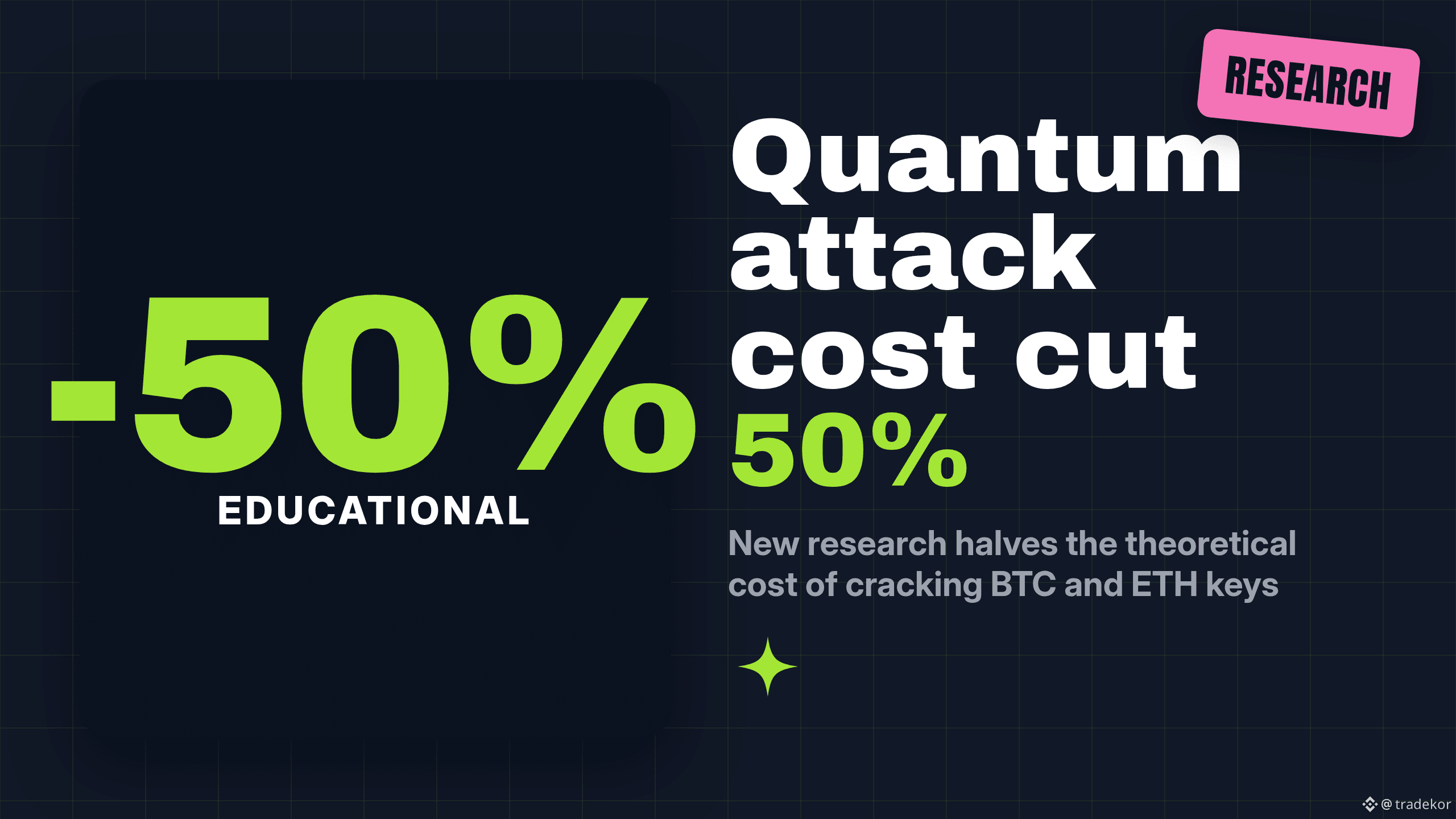
65
Connectez-vous pour découvrir plus de contenu
Rejoignez la communauté mondiale des adeptes de cryptomonnaies sur Binance Square
⚡️ Suviez les dernières informations importantes sur les cryptomonnaies.
💬 Jugé digne de confiance par la plus grande plateforme d’échange de cryptomonnaies au monde.
👍 Découvrez les connaissances que partagent les créateurs vérifiés.
Adresse e-mail/Nº de téléphone
Sujets d’actualité
AIStocksWhatNext
685,829 vues
5,085 mentions
Partagez et gagnez une récompense de trafic dans notre campagne de hashtag tendance
✨Sujet : Quelles autres opportunités d’investissement restent-elles alors que les actions liées à l’IA continuent de grimper ?
👉Comment participer :
Publiez une courte publication ou un article avec le hashtag #AIStocksWhatNext
Partagez si vous êtes plutôt haussier ou baissier, et publiez vos avoirs en actions IA ou votre transaction — utiliser le widget de trading peut améliorer votre éligibilité.
Vous pouvez aussi renforcer votre publication en partageant des données ou des graphiques, et en évitant les images générées par l’IA.
✍️Créez du contenu à partir des angles ci-dessous :
- Nvidia affirme que les ventes de puces vont doubler l’an prochain, et que les principaux acteurs de l’IA continuent d’enregistrer des revenus records ; les dépenses en calcul qui soutiennent tout cela sont tout aussi impressionnantes. La demande en IA décolle-t-elle vraiment ? Et combien de temps cela peut-il durer ? Les actions IA montent partout. Est-ce une vraie cassure, ou juste un rebond à court terme ?
- Des leaders de l’industrie appellent à ralentir le développement de l’IA, tandis que Trump prévoit de construire une « Force IA », affirmant que l’IA pourrait représenter 25 % du PIB américain à l’avenir. De quel côté êtes-vous ? Le soutien au niveau des États sera-t-il un gain de long terme pour les actions IA ?
- Achetez-vous des actions liées à l’IA ? Partagez votre transaction/position liée à l’IA avec notre widget de partage de trading.
⏰Période de la campagne :
- 2026-09-22 7:00 - 2026-09-24 4:00 UTC
🎁Récompense :
- Les publications qualifiées qui respectent les consignes ci-dessus et contiennent plus de 100 mots seront examinées et pourront recevoir un boost aléatoire de trafic de 500 à 3 000 vues. Vous recevrez une notification de la part de votre secrétaire de flux si votre publication est sélectionnée.
- Ayez une chance de voir votre article mis en avant sur Binance Square Official
Vous cherchez des idées pour votre publication ? Visitez la page du sujet #AIStocksWhatNext ou la page Square Guide on How to Post for Better Reach.
Binance Square Official
·499 mentions J’aime
·1.4M vues
21SharesLaunchesEuropesFirstZcashETP
16,198 vues
547 mentions
CardanoJoinsX402PaymentStandard
11,569 vues
414 mentions