

succesfulldolphin
12 Publications
succesfulldolphin
Signaler
Bloquer l’utilisateur
8 Suivis
23 Abonnés
21 J’aime
Publications
#TrendTradingStrategy
#DFUSDT
Stop-loss is a type of trading order used to limit losses when trading in financial markets. It automatically closes a position when the price reaches a pre-set loss level.
Read more:
A stop-loss, or "stop loss", is a protective order that traders set a price for a position to automatically close if the asset starts to move in an unfavorable direction. This allows them to take accessories into account and avoid large losses if the market goes against expectations.
How it works:
1. Setting:
The trader pre-determines the price level at which the position should be closed.
2. Activation:
When the active price reaches the set stop-loss level, the exchange automatically executes a sell order (if the position is long) or buy order (if the position is short).
3. Limiting the loss:
In this way, the trader exits the position without incurring only up to the set stop-loss level.
Importance of Stop Loss:
Risk Management: Stop Loss is a key factor for risk management in trading, which confirms notification and capital protection.
Emotional Control: Stop Loss helps to avoid making impulsive decisions caused by authentications and change the trading strategy in advance.
Automation: Stop Loss Allows you to automate the process of exiting a losing position, which is especially useful when trading in volatile markets or when a trader is absent.
In conclusion: Stop Loss is an indispensable tool for any trader who strives for profitable and safe trading.
{future}(DFUSDT)
#TrendTradingStrategy
#DFUSDT
Stop-loss is a type of trading order used to limit losses when trading in financial markets. It automatically closes a position when the price reaches a pre-set loss level.
Read more:
A stop-loss, or "stop loss", is a protective order that traders set a price for a position to automatically close if the asset starts to move in an unfavorable direction. This allows them to take accessories into account and avoid large losses if the market goes against expectations.
How it works:
1. Setting:
The trader pre-determines the price level at which the position should be closed.
2. Activation:
When the active price reaches the set stop-loss level, the exchange automatically executes a sell order (if the position is long) or buy order (if the position is short).
3. Limiting the loss:
In this way, the trader exits the position without incurring only up to the set stop-loss level.
Importance of Stop Loss:
Risk Management: Stop Loss is a key factor for risk management in trading, which confirms notification and capital protection.
Emotional Control: Stop Loss helps to avoid making impulsive decisions caused by authentications and change the trading strategy in advance.
Automation: Stop Loss Allows you to automate the process of exiting a losing position, which is especially useful when trading in volatile markets or when a trader is absent.
In conclusion: Stop Loss is an indispensable tool for any trader who strives for profitable and safe trading.
#DFUSDT
Stop-loss is a type of trading order used to limit losses when trading in financial markets. It automatically closes a position when the price reaches a pre-set loss level.
Read more:
A stop-loss, or "stop loss", is a protective order that traders set a price for a position to automatically close if the asset starts to move in an unfavorable direction. This allows them to take accessories into account and avoid large losses if the market goes against expectations.
How it works:
1. Setting:
The trader pre-determines the price level at which the position should be closed.
2. Activation:
When the active price reaches the set stop-loss level, the exchange automatically executes a sell order (if the position is long) or buy order (if the position is short).
3. Limiting the loss:
In this way, the trader exits the position without incurring only up to the set stop-loss level.
Importance of Stop Loss:
Risk Management: Stop Loss is a key factor for risk management in trading, which confirms notification and capital protection.
Emotional Control: Stop Loss helps to avoid making impulsive decisions caused by authentications and change the trading strategy in advance.
Automation: Stop Loss Allows you to automate the process of exiting a losing position, which is especially useful when trading in volatile markets or when a trader is absent.
In conclusion: Stop Loss is an indispensable tool for any trader who strives for profitable and safe trading.
1
488
#DayTradingStrategy #BTC
Bitcoin futures allow you to indirectly invest in other cryptocurrencies. This is done by using Bitcoin futures to make a profit, and then using that profit to buy other coins.
How it works:
1. Trading Bitcoin futures:
You enter into a Bitcoin futures contract by predicting its future price.
2. Profit or loss:
Depending on whether you predicted the price movement correctly, you make a profit or suffer a loss.
3. Buying other coins:
You can use the profit (or loss) you make to buy other cryptocurrencies on the spot market.
Important to remember:
Bitcoin futures, like any other futures, come with high risks due to the use of leverage and market volatility.
Successful futures trading requires a deep understanding of the market and the ability to manage risk.
Before trading futures, it is recommended to thoroughly research both the instrument itself and the cryptocurrency market.
Alternative approaches:
There are also futures on other cryptocurrencies, but they are less common than Bitcoin.
You can use decentralized cryptocurrency exchanges (DEX) to trade futures on various tokens without relying on centralized platforms.
In summary, while Bitcoin futures are not a direct instrument for buying other coins, they can be used as part of a strategy for investing in a wide range of cryptocurrencies.
{future}(DFUSDT)
#DayTradingStrategy #BTC
Bitcoin futures allow you to indirectly invest in other cryptocurrencies. This is done by using Bitcoin futures to make a profit, and then using that profit to buy other coins.
How it works:
1. Trading Bitcoin futures:
You enter into a Bitcoin futures contract by predicting its future price.
2. Profit or loss:
Depending on whether you predicted the price movement correctly, you make a profit or suffer a loss.
3. Buying other coins:
You can use the profit (or loss) you make to buy other cryptocurrencies on the spot market.
Important to remember:
Bitcoin futures, like any other futures, come with high risks due to the use of leverage and market volatility.
Successful futures trading requires a deep understanding of the market and the ability to manage risk.
Before trading futures, it is recommended to thoroughly research both the instrument itself and the cryptocurrency market.
Alternative approaches:
There are also futures on other cryptocurrencies, but they are less common than Bitcoin.
You can use decentralized cryptocurrency exchanges (DEX) to trade futures on various tokens without relying on centralized platforms.
In summary, while Bitcoin futures are not a direct instrument for buying other coins, they can be used as part of a strategy for investing in a wide range of cryptocurrencies.
Bitcoin futures allow you to indirectly invest in other cryptocurrencies. This is done by using Bitcoin futures to make a profit, and then using that profit to buy other coins.
How it works:
1. Trading Bitcoin futures:
You enter into a Bitcoin futures contract by predicting its future price.
2. Profit or loss:
Depending on whether you predicted the price movement correctly, you make a profit or suffer a loss.
3. Buying other coins:
You can use the profit (or loss) you make to buy other cryptocurrencies on the spot market.
Important to remember:
Bitcoin futures, like any other futures, come with high risks due to the use of leverage and market volatility.
Successful futures trading requires a deep understanding of the market and the ability to manage risk.
Before trading futures, it is recommended to thoroughly research both the instrument itself and the cryptocurrency market.
Alternative approaches:
There are also futures on other cryptocurrencies, but they are less common than Bitcoin.
You can use decentralized cryptocurrency exchanges (DEX) to trade futures on various tokens without relying on centralized platforms.
In summary, while Bitcoin futures are not a direct instrument for buying other coins, they can be used as part of a strategy for investing in a wide range of cryptocurrencies.
8
#HODLTradingStrategy $
The HODL strategy (from English Hold On for Dear Life - "Hold on to it like it's your life") in cryptocurrency trading is a long-term strategy in which an investor buys a cryptocurrency and holds it for a long time, despite price fluctuations and market volatility. This approach involves believing in the potential of the cryptocurrency and its long-term growth, ignoring short-term drops.
More details:
The essence of HODL:
Buying and holding cryptocurrency for a long time (from several months to several years).
Goal:
Making a profit from the long-term growth of the cryptocurrency value.
Feature:
HODL involves ignoring short-term market fluctuations, including price drops.
Origin:
The term HODL comes from a typo in the word "holding" in one of the online forums.
Advantages:
Eliminates the need to constantly monitor the market and make decisions about selling.
Reducing the risks associated with short-term volatility.
Potentially high profits with long-term growth in the value of the cryptocurrency.
Disadvantages:
The need for a long period of holding the asset.
Risk of significant losses in case of a fall in the price of the cryptocurrency.
Missed opportunity to trade more frequently and profit from short-term fluctuations.
Overall, HODL is a strategy suitable for investors who believe in the long-term potential of cryptocurrencies and are willing to wait patiently for their investments to grow in value.
{future}(BTCUSDT)
$BTC
#HODLTradingStrategy $
The HODL strategy (from English Hold On for Dear Life - "Hold on to it like it's your life") in cryptocurrency trading is a long-term strategy in which an investor buys a cryptocurrency and holds it for a long time, despite price fluctuations and market volatility. This approach involves believing in the potential of the cryptocurrency and its long-term growth, ignoring short-term drops.
More details:
The essence of HODL:
Buying and holding cryptocurrency for a long time (from several months to several years).
Goal:
Making a profit from the long-term growth of the cryptocurrency value.
Feature:
HODL involves ignoring short-term market fluctuations, including price drops.
Origin:
The term HODL comes from a typo in the word "holding" in one of the online forums.
Advantages:
Eliminates the need to constantly monitor the market and make decisions about selling.
Reducing the risks associated with short-term volatility.
Potentially high profits with long-term growth in the value of the cryptocurrency.
Disadvantages:
The need for a long period of holding the asset.
Risk of significant losses in case of a fall in the price of the cryptocurrency.
Missed opportunity to trade more frequently and profit from short-term fluctuations.
Overall, HODL is a strategy suitable for investors who believe in the long-term potential of cryptocurrencies and are willing to wait patiently for their investments to grow in value.
$BTC
The HODL strategy (from English Hold On for Dear Life - "Hold on to it like it's your life") in cryptocurrency trading is a long-term strategy in which an investor buys a cryptocurrency and holds it for a long time, despite price fluctuations and market volatility. This approach involves believing in the potential of the cryptocurrency and its long-term growth, ignoring short-term drops.
More details:
The essence of HODL:
Buying and holding cryptocurrency for a long time (from several months to several years).
Goal:
Making a profit from the long-term growth of the cryptocurrency value.
Feature:
HODL involves ignoring short-term market fluctuations, including price drops.
Origin:
The term HODL comes from a typo in the word "holding" in one of the online forums.
Advantages:
Eliminates the need to constantly monitor the market and make decisions about selling.
Reducing the risks associated with short-term volatility.
Potentially high profits with long-term growth in the value of the cryptocurrency.
Disadvantages:
The need for a long period of holding the asset.
Risk of significant losses in case of a fall in the price of the cryptocurrency.
Missed opportunity to trade more frequently and profit from short-term fluctuations.
Overall, HODL is a strategy suitable for investors who believe in the long-term potential of cryptocurrencies and are willing to wait patiently for their investments to grow in value.
$BTC
69
#DayTradingStrategy
Solana – це високошвидкісний однорівневий блокчейн, який наразі підтримує пікову пропускну здатність на рівні 65 тис. транзакцій за секунду і час блоку 400 мс, використовуючи систему позначок часу мережі під назвою Proof-of-History (PoH).
Основна технічна команда походить від Qualcomm, виробника мікросхем, що входить до списку Fortune 500, де її учасники керували такими проєктами як Firefox OS і операційна система BREW.
#DayTradingStrategy
Solana – це високошвидкісний однорівневий блокчейн, який наразі підтримує пікову пропускну здатність на рівні 65 тис. транзакцій за секунду і час блоку 400 мс, використовуючи систему позначок часу мережі під назвою Proof-of-History (PoH).
Основна технічна команда походить від Qualcomm, виробника мікросхем, що входить до списку Fortune 500, де її учасники керували такими проєктами як Firefox OS і операційна система BREW.
Solana – це високошвидкісний однорівневий блокчейн, який наразі підтримує пікову пропускну здатність на рівні 65 тис. транзакцій за секунду і час блоку 400 мс, використовуючи систему позначок часу мережі під назвою Proof-of-History (PoH).
Основна технічна команда походить від Qualcomm, виробника мікросхем, що входить до списку Fortune 500, де її учасники керували такими проєктами як Firefox OS і операційна система BREW.
1
216
#SpotVSFuturesStrategy
In trading, "buy or sell" is the main question that a trader decides based on his market analysis and expectations regarding the change in the asset price. Buying (long) is justified if the trader expects the price to rise, and selling (short) is justified if he expects the price to fall.
In more detail:
Buying (long):
A trader buys an asset in the hope that its value will increase, and he will be able to sell it for more, making a profit. This is the main strategy for those who believe in market growth.
Selling (short):
A trader sells an asset that he does not have, borrowing it from a broker, with the aim of buying it back later at a lower price. If the price actually falls, the trader makes a profit from the difference between the selling price and the buying price. This strategy is risky, but allows you to earn money on a falling market.
To decide whether to buy or sell, a trader uses various methods of analysis:
Technical analysis:
Studying price charts and trading volumes to identify patterns and determine future price movements.
Fundamental Analysis:
Analysis of economic, financial and other factors that affect the value of an asset.
Mathematical Models:
Using mathematical models to predict prices.
Sentiment Analysis:
Assessing the mood of market participants.
Important to remember:
Trading involves risk and there is no guarantee of profit.
It is important to thoroughly research the market and assets before making trading decisions.
It is important to manage risks properly and not invest more than you can afford to lose.
Emotional factors can negatively affect decisions, so it is important to keep a cool head.
{future}(LOKAUSDT)
#SpotVSFuturesStrategy
In trading, "buy or sell" is the main question that a trader decides based on his market analysis and expectations regarding the change in the asset price. Buying (long) is justified if the trader expects the price to rise, and selling (short) is justified if he expects the price to fall.
In more detail:
Buying (long):
A trader buys an asset in the hope that its value will increase, and he will be able to sell it for more, making a profit. This is the main strategy for those who believe in market growth.
Selling (short):
A trader sells an asset that he does not have, borrowing it from a broker, with the aim of buying it back later at a lower price. If the price actually falls, the trader makes a profit from the difference between the selling price and the buying price. This strategy is risky, but allows you to earn money on a falling market.
To decide whether to buy or sell, a trader uses various methods of analysis:
Technical analysis:
Studying price charts and trading volumes to identify patterns and determine future price movements.
Fundamental Analysis:
Analysis of economic, financial and other factors that affect the value of an asset.
Mathematical Models:
Using mathematical models to predict prices.
Sentiment Analysis:
Assessing the mood of market participants.
Important to remember:
Trading involves risk and there is no guarantee of profit.
It is important to thoroughly research the market and assets before making trading decisions.
It is important to manage risks properly and not invest more than you can afford to lose.
Emotional factors can negatively affect decisions, so it is important to keep a cool head.
In trading, "buy or sell" is the main question that a trader decides based on his market analysis and expectations regarding the change in the asset price. Buying (long) is justified if the trader expects the price to rise, and selling (short) is justified if he expects the price to fall.
In more detail:
Buying (long):
A trader buys an asset in the hope that its value will increase, and he will be able to sell it for more, making a profit. This is the main strategy for those who believe in market growth.
Selling (short):
A trader sells an asset that he does not have, borrowing it from a broker, with the aim of buying it back later at a lower price. If the price actually falls, the trader makes a profit from the difference between the selling price and the buying price. This strategy is risky, but allows you to earn money on a falling market.
To decide whether to buy or sell, a trader uses various methods of analysis:
Technical analysis:
Studying price charts and trading volumes to identify patterns and determine future price movements.
Fundamental Analysis:
Analysis of economic, financial and other factors that affect the value of an asset.
Mathematical Models:
Using mathematical models to predict prices.
Sentiment Analysis:
Assessing the mood of market participants.
Important to remember:
Trading involves risk and there is no guarantee of profit.
It is important to thoroughly research the market and assets before making trading decisions.
It is important to manage risks properly and not invest more than you can afford to lose.
Emotional factors can negatively affect decisions, so it is important to keep a cool head.
1
42
#DayTradingStrategy
Advantages of Day Trading:
Quick Returns:
Traders can quickly profit from short-term price movements.
Risk Control:
Not having open positions overnight reduces the risk of sudden losses due to news or other factors affecting the market.
Flexible Hours:
Day traders can set their own working hours, allowing them to tailor trading to their needs.
Disadvantages of Day Trading:
High Stress:
Day trading requires constant attention and quick decision making.
Need for constant market monitoring:
The trader must closely monitor price changes throughout the day.
Risk of Significant Losses:
Rapid price changes can lead to large losses, especially for inexperienced traders.
Need for Good Market Knowledge:
Successful day trading requires a deep understanding of the market and the ability to analyze charts.
#DayTradingStrategy
Advantages of Day Trading:
Quick Returns:
Traders can quickly profit from short-term price movements.
Risk Control:
Not having open positions overnight reduces the risk of sudden losses due to news or other factors affecting the market.
Flexible Hours:
Day traders can set their own working hours, allowing them to tailor trading to their needs.
Disadvantages of Day Trading:
High Stress:
Day trading requires constant attention and quick decision making.
Need for constant market monitoring:
The trader must closely monitor price changes throughout the day.
Risk of Significant Losses:
Rapid price changes can lead to large losses, especially for inexperienced traders.
Need for Good Market Knowledge:
Successful day trading requires a deep understanding of the market and the ability to analyze charts.
Advantages of Day Trading:
Quick Returns:
Traders can quickly profit from short-term price movements.
Risk Control:
Not having open positions overnight reduces the risk of sudden losses due to news or other factors affecting the market.
Flexible Hours:
Day traders can set their own working hours, allowing them to tailor trading to their needs.
Disadvantages of Day Trading:
High Stress:
Day trading requires constant attention and quick decision making.
Need for constant market monitoring:
The trader must closely monitor price changes throughout the day.
Risk of Significant Losses:
Rapid price changes can lead to large losses, especially for inexperienced traders.
Need for Good Market Knowledge:
Successful day trading requires a deep understanding of the market and the ability to analyze charts.
119
#BinanceAlpha
What is Binance Alpha?
Binance Alpha is a place where investors can learn about promising crypto projects in the early stages of development.
How are projects selected?
Tokens listed on Binance Alpha are selected based on Binance's expert insights and advanced analytics. When selecting, a strong interest in strength, popularity of the project and relevance to key market trends are ensured.
Why is it important?
Binance Alpha gives members the opportunity to learn about new projects that could potentially be added to Binance, and to deny early access to these projects.
How to bark?
Binance Alpha helps cryptocurrencies stay abreast of new trends in the crypto space and make informed investment decisions.
Where do you know?
Binance Alpha is listed in the Binance Wallet.
What are Binance Alpha Points?
This is a system for assessing the activity of traders in the Binance Alpha ecosystem and the Binance Wallet, which means their participation in campaigns such as TGE (token generation units) and airdrops.
How can you get better at it?
Binance Alpha Points are awarded daily based on your asset balance and purchases of Alpha tokens on the Binance Exchange and Binance Wallet.
{alpha}(560x783c3f003f172c6ac5ac700218a357d2d66ee2a2)
#BinanceAlpha
What is Binance Alpha?
Binance Alpha is a place where investors can learn about promising crypto projects in the early stages of development.
How are projects selected?
Tokens listed on Binance Alpha are selected based on Binance's expert insights and advanced analytics. When selecting, a strong interest in strength, popularity of the project and relevance to key market trends are ensured.
Why is it important?
Binance Alpha gives members the opportunity to learn about new projects that could potentially be added to Binance, and to deny early access to these projects.
How to bark?
Binance Alpha helps cryptocurrencies stay abreast of new trends in the crypto space and make informed investment decisions.
Where do you know?
Binance Alpha is listed in the Binance Wallet.
What are Binance Alpha Points?
This is a system for assessing the activity of traders in the Binance Alpha ecosystem and the Binance Wallet, which means their participation in campaigns such as TGE (token generation units) and airdrops.
How can you get better at it?
Binance Alpha Points are awarded daily based on your asset balance and purchases of Alpha tokens on the Binance Exchange and Binance Wallet.
What is Binance Alpha?
Binance Alpha is a place where investors can learn about promising crypto projects in the early stages of development.
How are projects selected?
Tokens listed on Binance Alpha are selected based on Binance's expert insights and advanced analytics. When selecting, a strong interest in strength, popularity of the project and relevance to key market trends are ensured.
Why is it important?
Binance Alpha gives members the opportunity to learn about new projects that could potentially be added to Binance, and to deny early access to these projects.
How to bark?
Binance Alpha helps cryptocurrencies stay abreast of new trends in the crypto space and make informed investment decisions.
Where do you know?
Binance Alpha is listed in the Binance Wallet.
What are Binance Alpha Points?
This is a system for assessing the activity of traders in the Binance Alpha ecosystem and the Binance Wallet, which means their participation in campaigns such as TGE (token generation units) and airdrops.
How can you get better at it?
Binance Alpha Points are awarded daily based on your asset balance and purchases of Alpha tokens on the Binance Exchange and Binance Wallet.
63
#SpotVSFuturesStrategy
In short:
Spot: Buy and hold, expecting the price to rise.
Futures: You can make money on price fluctuations, but there is a risk of large losses. Which type of trading should you choose? For beginners: It is recommended to start with spot trading to get familiar with the market.
#SpotVSFuturesStrategy
In short:
Spot: Buy and hold, expecting the price to rise.
Futures: You can make money on price fluctuations, but there is a risk of large losses. Which type of trading should you choose? For beginners: It is recommended to start with spot trading to get familiar with the market.
In short:
Spot: Buy and hold, expecting the price to rise.
Futures: You can make money on price fluctuations, but there is a risk of large losses. Which type of trading should you choose? For beginners: It is recommended to start with spot trading to get familiar with the market.
44
You can start trading with as little as $5-10— and while that may sound crazy, it’s not a scam, it’s a strategy. Platforms like Binance Futures allow you to trade with as little capital as possible.
#BinanceFutureTrading
#binancewriting #xrp #bnb #pengu
You can start trading with as little as $5-10— and while that may sound crazy, it’s not a scam, it’s a strategy. Platforms like Binance Futures allow you to trade with as little capital as possible.
#BinanceFutureTrading
#binancewriting #xrp #bnb #pengu
#BinanceFutureTrading
#binancewriting #xrp #bnb #pengu
243
·
--
Haussier
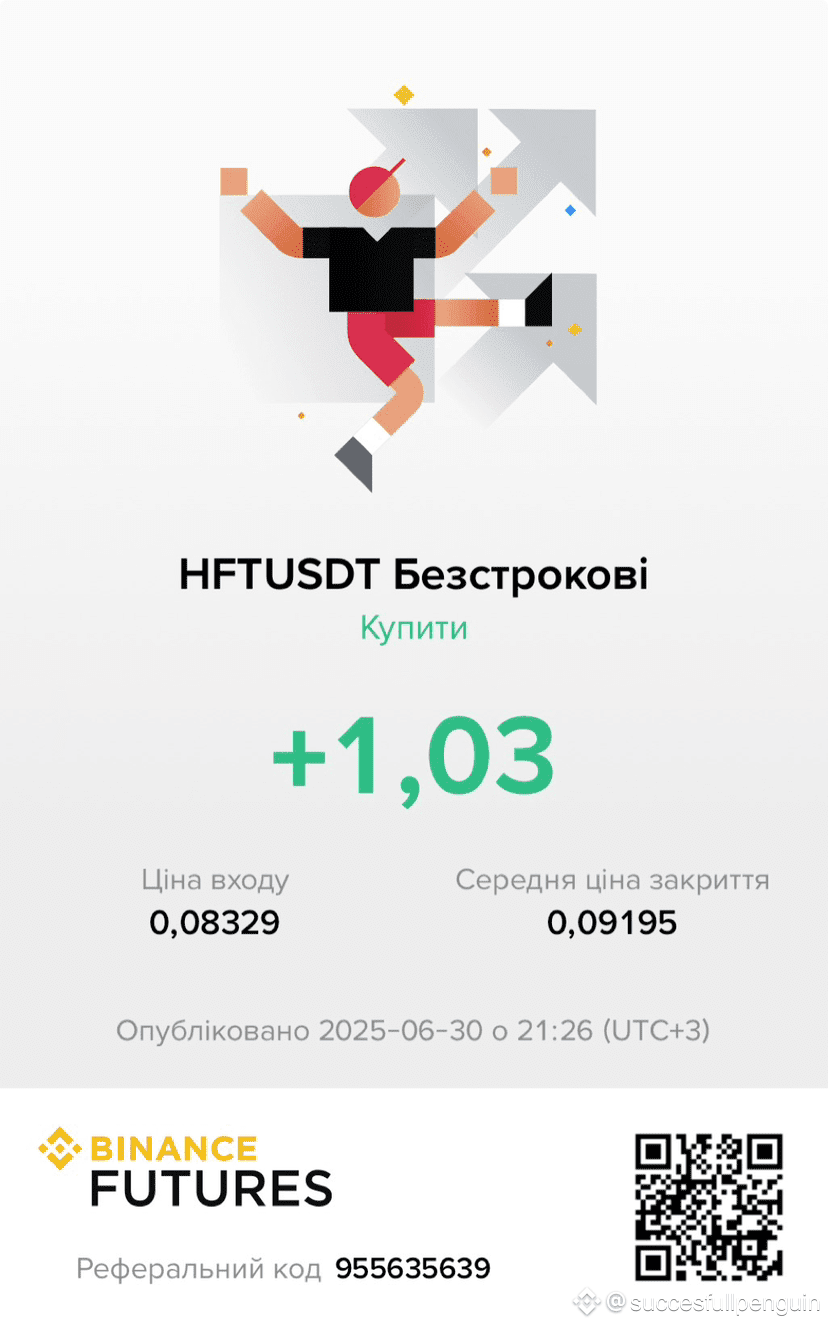
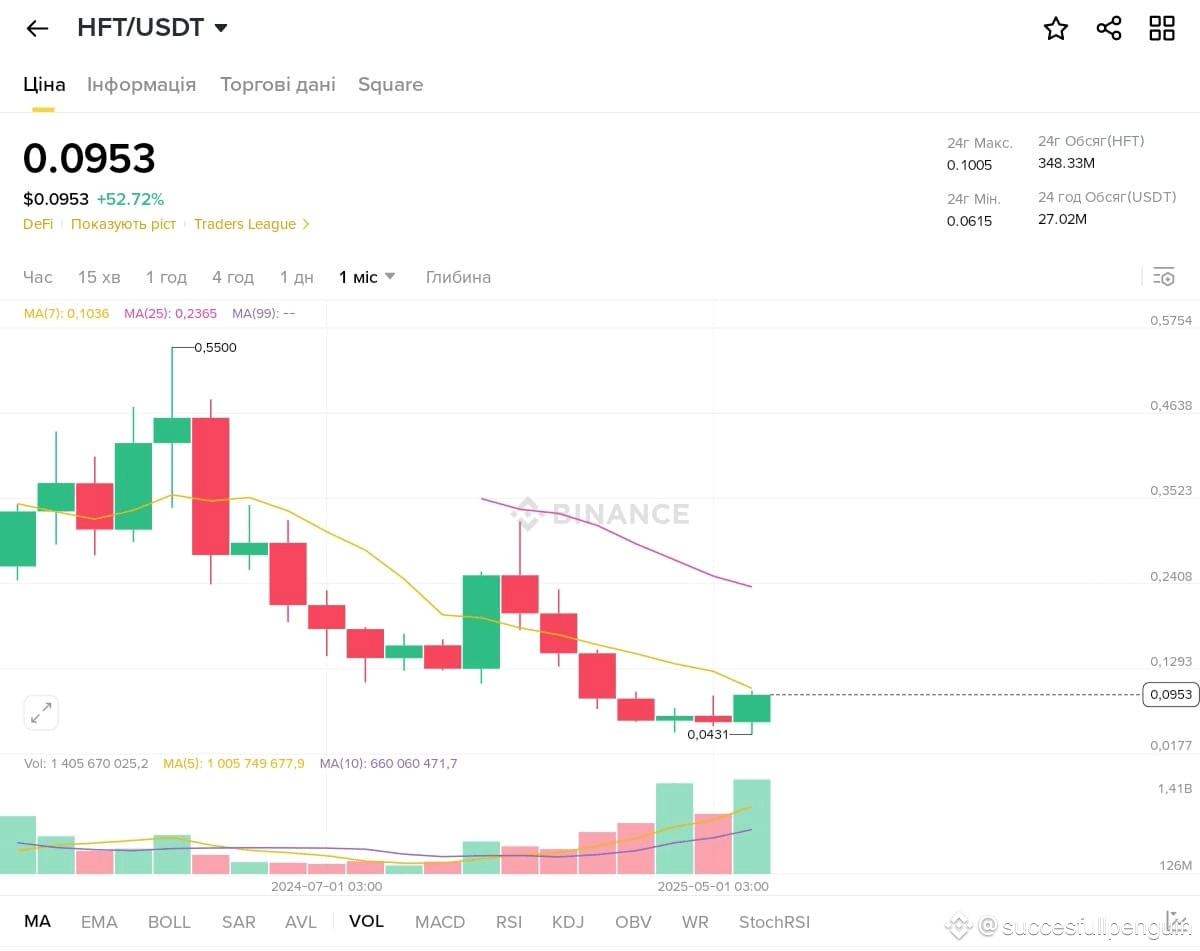
#HFT #HFT/USDT will do +100% ? 🤔
{future}(HFTUSDT)
#HFT #HFT/USDT will do +100% ? 🤔
1
1
10
650
Connectez-vous pour découvrir plus de contenu
Rejoignez la communauté mondiale des adeptes de cryptomonnaies sur Binance Square
⚡️ Suviez les dernières informations importantes sur les cryptomonnaies.
💬 Jugé digne de confiance par la plus grande plateforme d’échange de cryptomonnaies au monde.
👍 Découvrez les connaissances que partagent les créateurs vérifiés.
Adresse e-mail/Nº de téléphone