

Mike_Block
36.3k Publications

Mike_Block
 Compte Square Vérifié+
Signaler
Bloquer l’utilisateur
I'M CRYPTO TRADER CONTENT CREATOR I| VERIFIED KOL
Trade occasionnellement
2.5 an(s)
8 Suivis
55.1K+ Abonnés
62.8K+ J’aime
Publications
Tous
Direct
·
--
Haussier
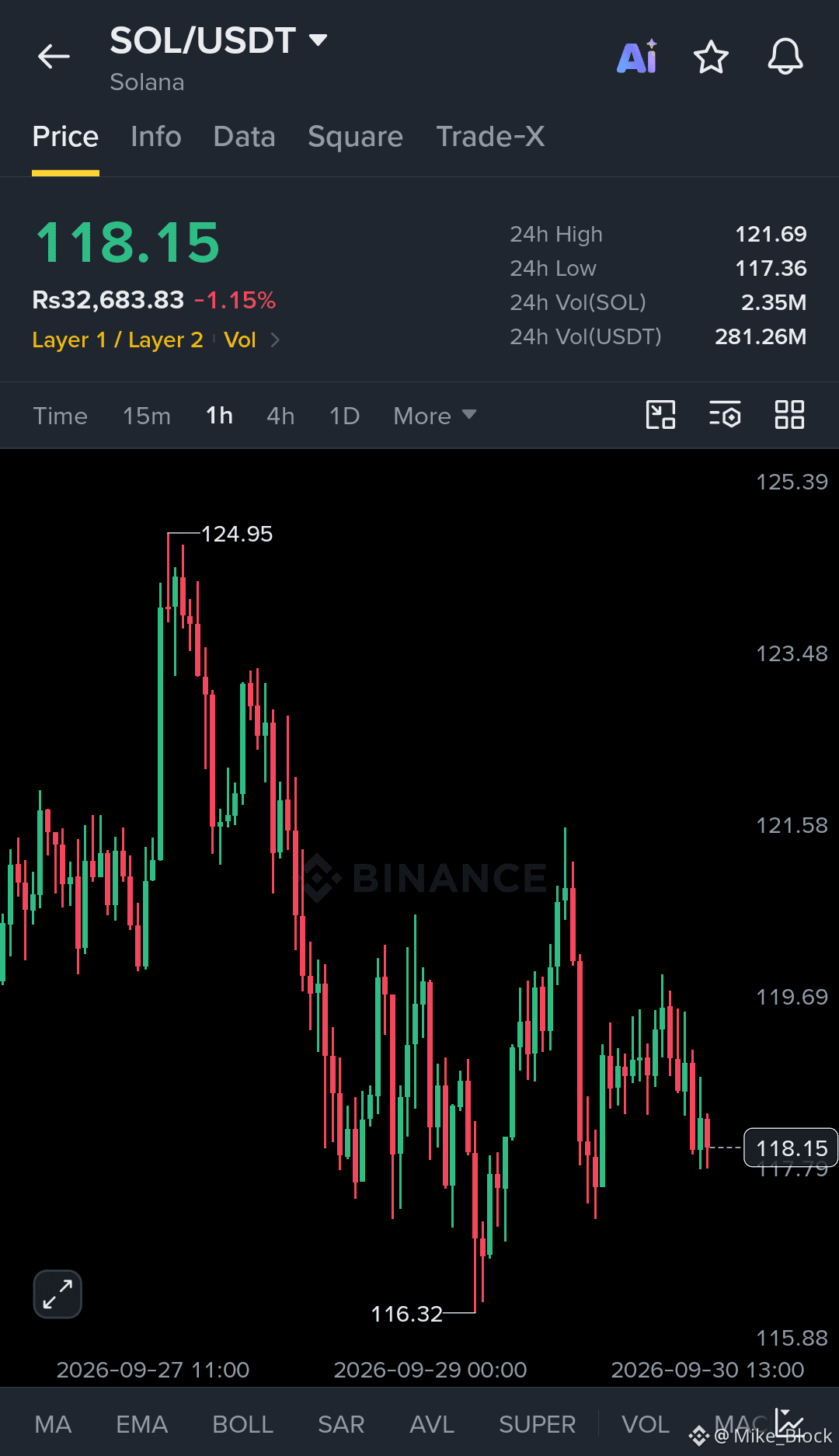
I’ve been watching $SOL closely, and one thing stands out to me on this 1H chart: buyers are defending the lower area, but the trend hasn’t turned bullish yet.
SOL is around 118.15 after falling from the 124.95 high. Since then, the chart has been making lower highs, so I’m still being careful here.
The area I’m watching most is 117.36–117.79. If buyers continue holding this zone, I’ll want to see SOL reclaim 119.69 first.
Above that, 121.58–121.69 becomes the next area I’m watching.
But if 117.36 breaks clearly, I’d keep an eye on the previous 116.32 low.
For now, I’m not rushing into a trade. I’d rather see the chart confirm its direction first than force an entry in this choppy range.
Crypto markets are volatile; do your own research and manage your risk.
$SOL
{future}(SOLUSDT)
#solana #EarningsSeason #TrumpRejectsAIRulesForVoluntaryAudits
I’ve been watching $SOL closely, and one thing stands out to me on this 1H chart: buyers are defending the lower area, but the trend hasn’t turned bullish yet.
SOL is around 118.15 after falling from the 124.95 high. Since then, the chart has been making lower highs, so I’m still being careful here.
The area I’m watching most is 117.36–117.79. If buyers continue holding this zone, I’ll want to see SOL reclaim 119.69 first.
Above that, 121.58–121.69 becomes the next area I’m watching.
But if 117.36 breaks clearly, I’d keep an eye on the previous 116.32 low.
For now, I’m not rushing into a trade. I’d rather see the chart confirm its direction first than force an entry in this choppy range.
Crypto markets are volatile; do your own research and manage your risk.
$SOL
#solana #EarningsSeason #TrumpRejectsAIRulesForVoluntaryAudits
SOL is around 118.15 after falling from the 124.95 high. Since then, the chart has been making lower highs, so I’m still being careful here.
The area I’m watching most is 117.36–117.79. If buyers continue holding this zone, I’ll want to see SOL reclaim 119.69 first.
Above that, 121.58–121.69 becomes the next area I’m watching.
But if 117.36 breaks clearly, I’d keep an eye on the previous 116.32 low.
For now, I’m not rushing into a trade. I’d rather see the chart confirm its direction first than force an entry in this choppy range.
Crypto markets are volatile; do your own research and manage your risk.
$SOL
#solana #EarningsSeason #TrumpRejectsAIRulesForVoluntaryAudits
1
2
1.7k
·
--
Haussier
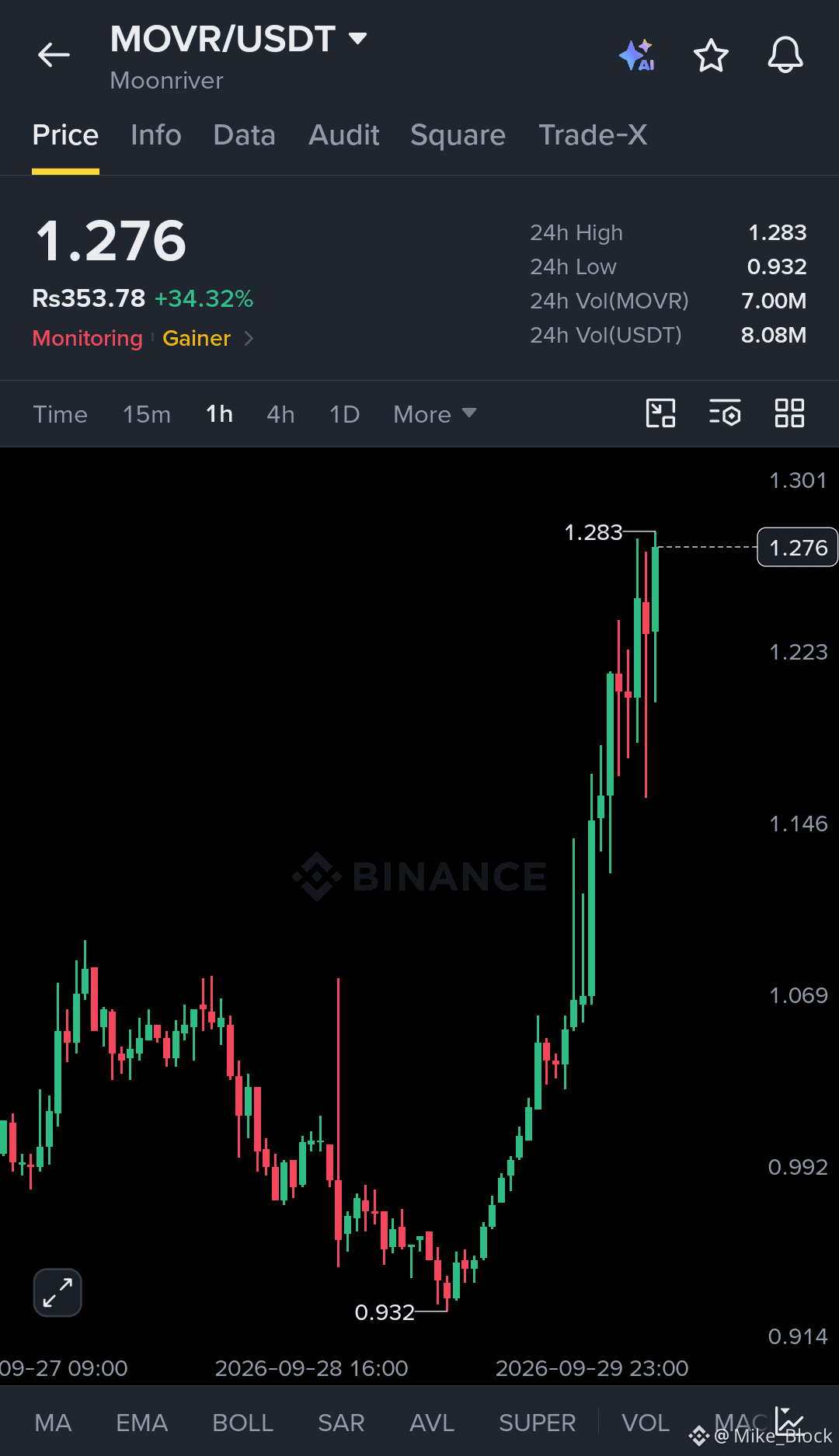
I’ve been watching $MOVR closely, and this move really caught my attention.
Price has pushed strongly from around 0.932 and reached 1.283, showing clear buying strength on the 1H chart. Right now, MOVR is sitting around 1.276, just below that recent high.
The level I’m watching most is 1.283. If price breaks above it and actually holds, 1.301 becomes the next visible level on this chart.
But I wouldn’t rush into the move here. After such a fast rally, a pullback toward 1.223 or even 1.146 could happen before another attempt higher.
For me, the better approach is simple: watch the reaction around 1.283 and wait for confirmation instead of chasing the candle.
Crypto markets are volatile; do your own research and manage your risk.
$MOVR
{future}(MOVRUSDT)
#BitgetHackerFailsToMoveStolenFunds #USJobOpeningsFallToFiveMonthLow #movr
I’ve been watching $MOVR closely, and this move really caught my attention.
Price has pushed strongly from around 0.932 and reached 1.283, showing clear buying strength on the 1H chart. Right now, MOVR is sitting around 1.276, just below that recent high.
The level I’m watching most is 1.283. If price breaks above it and actually holds, 1.301 becomes the next visible level on this chart.
But I wouldn’t rush into the move here. After such a fast rally, a pullback toward 1.223 or even 1.146 could happen before another attempt higher.
For me, the better approach is simple: watch the reaction around 1.283 and wait for confirmation instead of chasing the candle.
Crypto markets are volatile; do your own research and manage your risk.
$MOVR
#BitgetHackerFailsToMoveStolenFunds #USJobOpeningsFallToFiveMonthLow #movr
Price has pushed strongly from around 0.932 and reached 1.283, showing clear buying strength on the 1H chart. Right now, MOVR is sitting around 1.276, just below that recent high.
The level I’m watching most is 1.283. If price breaks above it and actually holds, 1.301 becomes the next visible level on this chart.
But I wouldn’t rush into the move here. After such a fast rally, a pullback toward 1.223 or even 1.146 could happen before another attempt higher.
For me, the better approach is simple: watch the reaction around 1.283 and wait for confirmation instead of chasing the candle.
Crypto markets are volatile; do your own research and manage your risk.
$MOVR
#BitgetHackerFailsToMoveStolenFunds #USJobOpeningsFallToFiveMonthLow #movr
2
2
930
·
--
Haussier
$XAUT USDT is at an interesting level
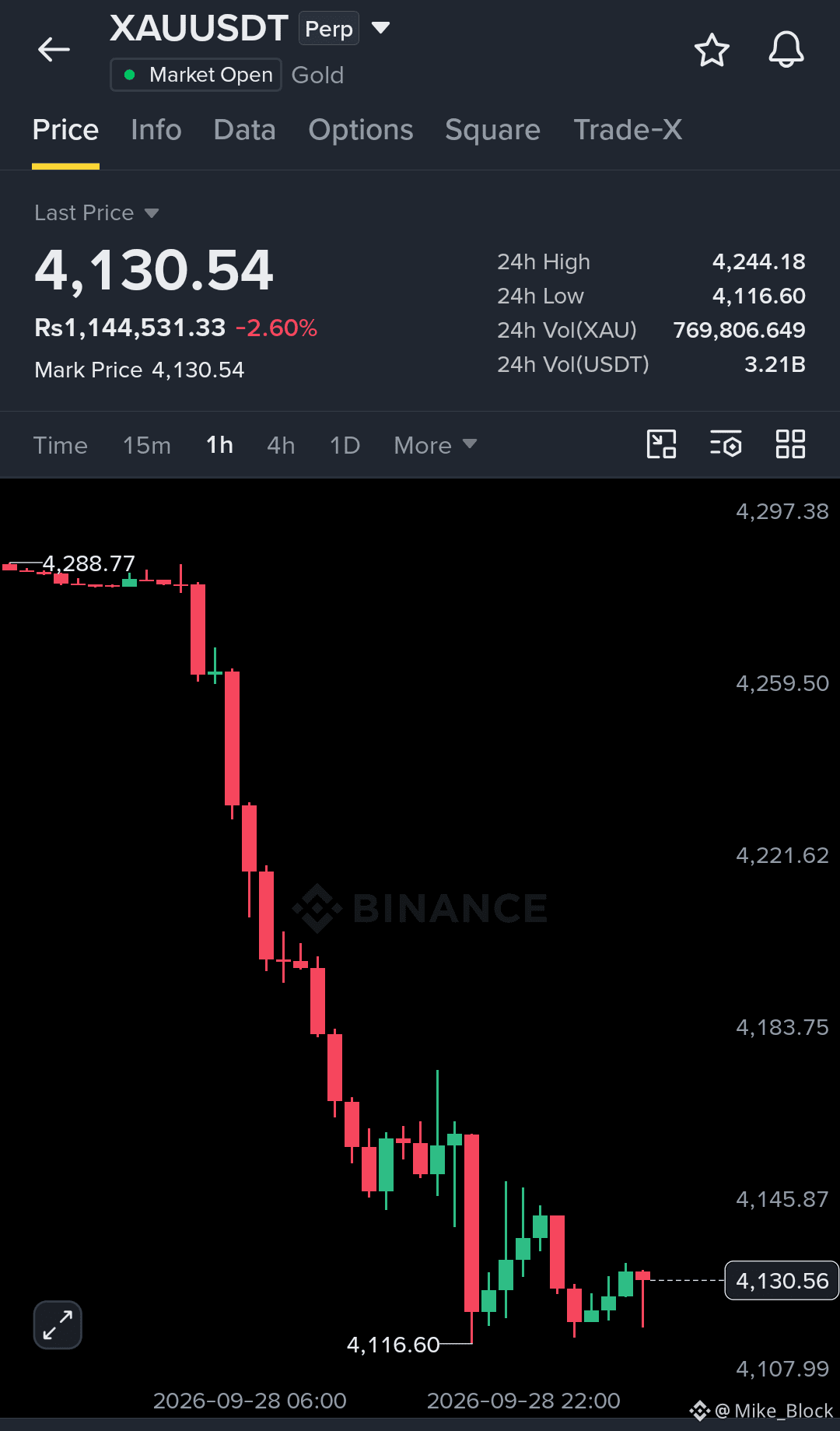
I’ve been watching this chart closely, and what caught my attention is how hard XAUUSDT sold off on the 1H timeframe.
Price came down from around 4,288 and eventually touched 4,116.60. After that drop, I can see some buyers trying to stabilize the price around 4,130, but the overall structure is still bearish.
For me, 4,116.60 is the key level now.
If sellers break and hold below it, the downside could continue. But if buyers manage to reclaim 4,145.87, I’ll start watching for a recovery toward 4,183.75.
I’m not forcing an entry here because price is sitting close to support after a strong move down. I’d rather wait for confirmation than chase the candle.
No clear setup right now. Patience is part of trading.
Crypto markets are volatile; do your own research and manage your risk.
$XAUT
{future}(XAUTUSDT)
#BitgetDetailsSecurityIncidentTimeline #KospiFalls2.7%SamsungSKHynixDropOver5% #XAUTrends
$XAUT USDT is at an interesting level
I’ve been watching this chart closely, and what caught my attention is how hard XAUUSDT sold off on the 1H timeframe.
Price came down from around 4,288 and eventually touched 4,116.60. After that drop, I can see some buyers trying to stabilize the price around 4,130, but the overall structure is still bearish.
For me, 4,116.60 is the key level now.
If sellers break and hold below it, the downside could continue. But if buyers manage to reclaim 4,145.87, I’ll start watching for a recovery toward 4,183.75.
I’m not forcing an entry here because price is sitting close to support after a strong move down. I’d rather wait for confirmation than chase the candle.
No clear setup right now. Patience is part of trading.
Crypto markets are volatile; do your own research and manage your risk.
$XAUT
#BitgetDetailsSecurityIncidentTimeline #KospiFalls2.7%SamsungSKHynixDropOver5% #XAUTrends
I’ve been watching this chart closely, and what caught my attention is how hard XAUUSDT sold off on the 1H timeframe.
Price came down from around 4,288 and eventually touched 4,116.60. After that drop, I can see some buyers trying to stabilize the price around 4,130, but the overall structure is still bearish.
For me, 4,116.60 is the key level now.
If sellers break and hold below it, the downside could continue. But if buyers manage to reclaim 4,145.87, I’ll start watching for a recovery toward 4,183.75.
I’m not forcing an entry here because price is sitting close to support after a strong move down. I’d rather wait for confirmation than chase the candle.
No clear setup right now. Patience is part of trading.
Crypto markets are volatile; do your own research and manage your risk.
$XAUT
#BitgetDetailsSecurityIncidentTimeline #KospiFalls2.7%SamsungSKHynixDropOver5% #XAUTrends
1
456
·
--
Haussier
$ZEC USDT Chart Analysis!
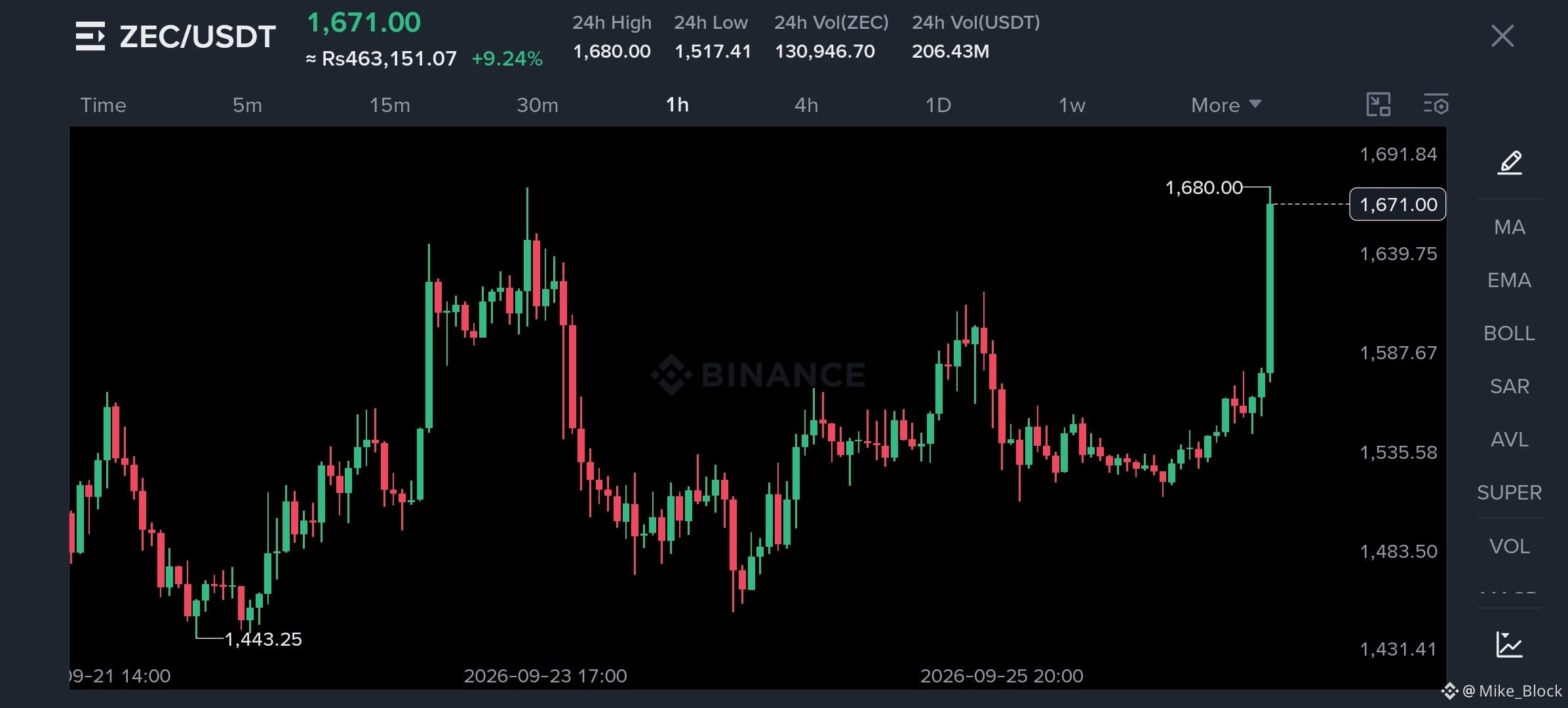
I’ve been watching this chart closely, and the main thing that stands out is the strong 1H breakout.
Visible data
Pair: ZEC/USDT
Price: 1,671
24H High: 1,680
24H Low: 1,517.41
24H Volume: 130,946.70 ZEC / 206.43M USDT
Timeframe: 1H
Trend: Strong short-term bullish momentum
Visible support: around 1,535–1,550, then 1,483
Visible resistance: 1,680, with the chart scale showing ~1,691.84 above it
Candle structure: A very large bullish 1H candle pushed price from the mid-1,500s toward 1,680.
Indicators: RSI, MACD, EMA and other indicators are not displayed in the screenshot, so Data could not be verified for those.
Trading setup
No clear setup right now.
The breakout candle is already heavily extended and price is sitting close to the visible 1,680 resistance. Chasing the current candle would give poor confirmation. I would want to see either a clean retest and hold around the breakout area or another confirmed move above resistance before considering an entry.
Humanized Bybit post
I’ve been watching this chart closely, and ZEC just made a move that caught my attention.
On the 1H chart, ZEC pushed strongly from the mid 1,500s and reached 1,680, while the current price is around 1,671.
What I like about the chart is the clear momentum. But I’m not rushing into the move because price is already sitting near resistance after a very large bullish candle.
For me, the important area now is the breakout zone. If buyers can hold above it and confirm the breakout, the structure could stay bullish. If price gets rejected hard from 1,680, I’d rather wait for a healthier pullback.
I’m watching confirmation instead of chasing the candle.
Crypto markets are volatile; do your own research and manage your risk.
$ZEC
{future}(ZECUSDT)
#ZECUSDT #SECSaysBuybacksUpgradesDontMakeTokenSecurity #SECCommissionerPeirceToLeaveOct2 #StrategyProposesDailyDividendsForPreferreds
$ZEC USDT Chart Analysis!
I’ve been watching this chart closely, and the main thing that stands out is the strong 1H breakout.
Visible data
Pair: ZEC/USDT
Price: 1,671
24H High: 1,680
24H Low: 1,517.41
24H Volume: 130,946.70 ZEC / 206.43M USDT
Timeframe: 1H
Trend: Strong short-term bullish momentum
Visible support: around 1,535–1,550, then 1,483
Visible resistance: 1,680, with the chart scale showing ~1,691.84 above it
Candle structure: A very large bullish 1H candle pushed price from the mid-1,500s toward 1,680.
Indicators: RSI, MACD, EMA and other indicators are not displayed in the screenshot, so Data could not be verified for those.
Trading setup
No clear setup right now.
The breakout candle is already heavily extended and price is sitting close to the visible 1,680 resistance. Chasing the current candle would give poor confirmation. I would want to see either a clean retest and hold around the breakout area or another confirmed move above resistance before considering an entry.
Humanized Bybit post
I’ve been watching this chart closely, and ZEC just made a move that caught my attention.
On the 1H chart, ZEC pushed strongly from the mid 1,500s and reached 1,680, while the current price is around 1,671.
What I like about the chart is the clear momentum. But I’m not rushing into the move because price is already sitting near resistance after a very large bullish candle.
For me, the important area now is the breakout zone. If buyers can hold above it and confirm the breakout, the structure could stay bullish. If price gets rejected hard from 1,680, I’d rather wait for a healthier pullback.
I’m watching confirmation instead of chasing the candle.
Crypto markets are volatile; do your own research and manage your risk.
$ZEC
#ZECUSDT #SECSaysBuybacksUpgradesDontMakeTokenSecurity #SECCommissionerPeirceToLeaveOct2 #StrategyProposesDailyDividendsForPreferreds
I’ve been watching this chart closely, and the main thing that stands out is the strong 1H breakout.
Visible data
Pair: ZEC/USDT
Price: 1,671
24H High: 1,680
24H Low: 1,517.41
24H Volume: 130,946.70 ZEC / 206.43M USDT
Timeframe: 1H
Trend: Strong short-term bullish momentum
Visible support: around 1,535–1,550, then 1,483
Visible resistance: 1,680, with the chart scale showing ~1,691.84 above it
Candle structure: A very large bullish 1H candle pushed price from the mid-1,500s toward 1,680.
Indicators: RSI, MACD, EMA and other indicators are not displayed in the screenshot, so Data could not be verified for those.
Trading setup
No clear setup right now.
The breakout candle is already heavily extended and price is sitting close to the visible 1,680 resistance. Chasing the current candle would give poor confirmation. I would want to see either a clean retest and hold around the breakout area or another confirmed move above resistance before considering an entry.
Humanized Bybit post
I’ve been watching this chart closely, and ZEC just made a move that caught my attention.
On the 1H chart, ZEC pushed strongly from the mid 1,500s and reached 1,680, while the current price is around 1,671.
What I like about the chart is the clear momentum. But I’m not rushing into the move because price is already sitting near resistance after a very large bullish candle.
For me, the important area now is the breakout zone. If buyers can hold above it and confirm the breakout, the structure could stay bullish. If price gets rejected hard from 1,680, I’d rather wait for a healthier pullback.
I’m watching confirmation instead of chasing the candle.
Crypto markets are volatile; do your own research and manage your risk.
$ZEC
#ZECUSDT #SECSaysBuybacksUpgradesDontMakeTokenSecurity #SECCommissionerPeirceToLeaveOct2 #StrategyProposesDailyDividendsForPreferreds
1
893
·
--
Haussier
$BTC is getting interesting
I’ve been watching this BTC chart closely, and honestly, I’m not in a rush to take a trade here.
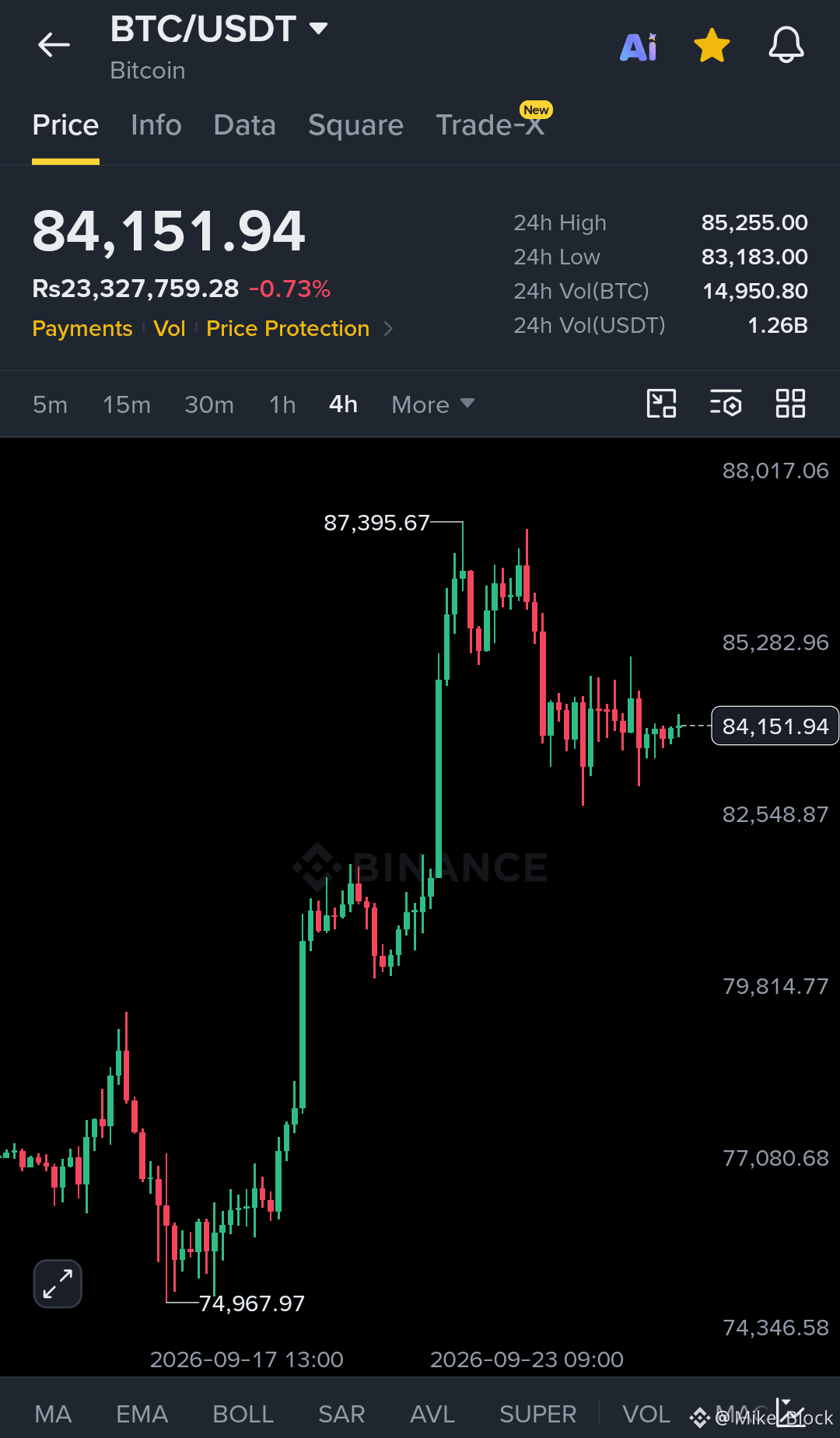
BTC is sitting around $84,152 on the 4H chart after making a strong move up toward $87,396. Since then, price has pulled back and started moving sideways around the $84K area.
What I’m watching now is pretty simple.
Resistance: $85,250–$85,300
Next level: $87,395
Support: $83,180–$82,550
If BTC can break and hold above $85.3K, I’ll start looking for stronger bullish confirmation. If price drops toward $83K–$82.5K and shows a clear reaction, that area could become important too.
For now, I’m just watching the candles and waiting for the market to show its hand. No need to force an entry when the setup isn’t clear.
Crypto markets are volatile; do your own research and manage your risk.
$BTC
{future}(BTCUSDT)
#SECSaysBuybacksUpgradesDontMakeTokenSecurity #SECCommissionerPeirceToLeaveOct2
#bitcoin #BTC
$BTC is getting interesting
I’ve been watching this BTC chart closely, and honestly, I’m not in a rush to take a trade here.
BTC is sitting around $84,152 on the 4H chart after making a strong move up toward $87,396. Since then, price has pulled back and started moving sideways around the $84K area.
What I’m watching now is pretty simple.
Resistance: $85,250–$85,300
Next level: $87,395
Support: $83,180–$82,550
If BTC can break and hold above $85.3K, I’ll start looking for stronger bullish confirmation. If price drops toward $83K–$82.5K and shows a clear reaction, that area could become important too.
For now, I’m just watching the candles and waiting for the market to show its hand. No need to force an entry when the setup isn’t clear.
Crypto markets are volatile; do your own research and manage your risk.
$BTC
#SECSaysBuybacksUpgradesDontMakeTokenSecurity #SECCommissionerPeirceToLeaveOct2
#bitcoin #BTC
I’ve been watching this BTC chart closely, and honestly, I’m not in a rush to take a trade here.
BTC is sitting around $84,152 on the 4H chart after making a strong move up toward $87,396. Since then, price has pulled back and started moving sideways around the $84K area.
What I’m watching now is pretty simple.
Resistance: $85,250–$85,300
Next level: $87,395
Support: $83,180–$82,550
If BTC can break and hold above $85.3K, I’ll start looking for stronger bullish confirmation. If price drops toward $83K–$82.5K and shows a clear reaction, that area could become important too.
For now, I’m just watching the candles and waiting for the market to show its hand. No need to force an entry when the setup isn’t clear.
Crypto markets are volatile; do your own research and manage your risk.
$BTC
#SECSaysBuybacksUpgradesDontMakeTokenSecurity #SECCommissionerPeirceToLeaveOct2
#bitcoin #BTC
329
·
--
Haussier
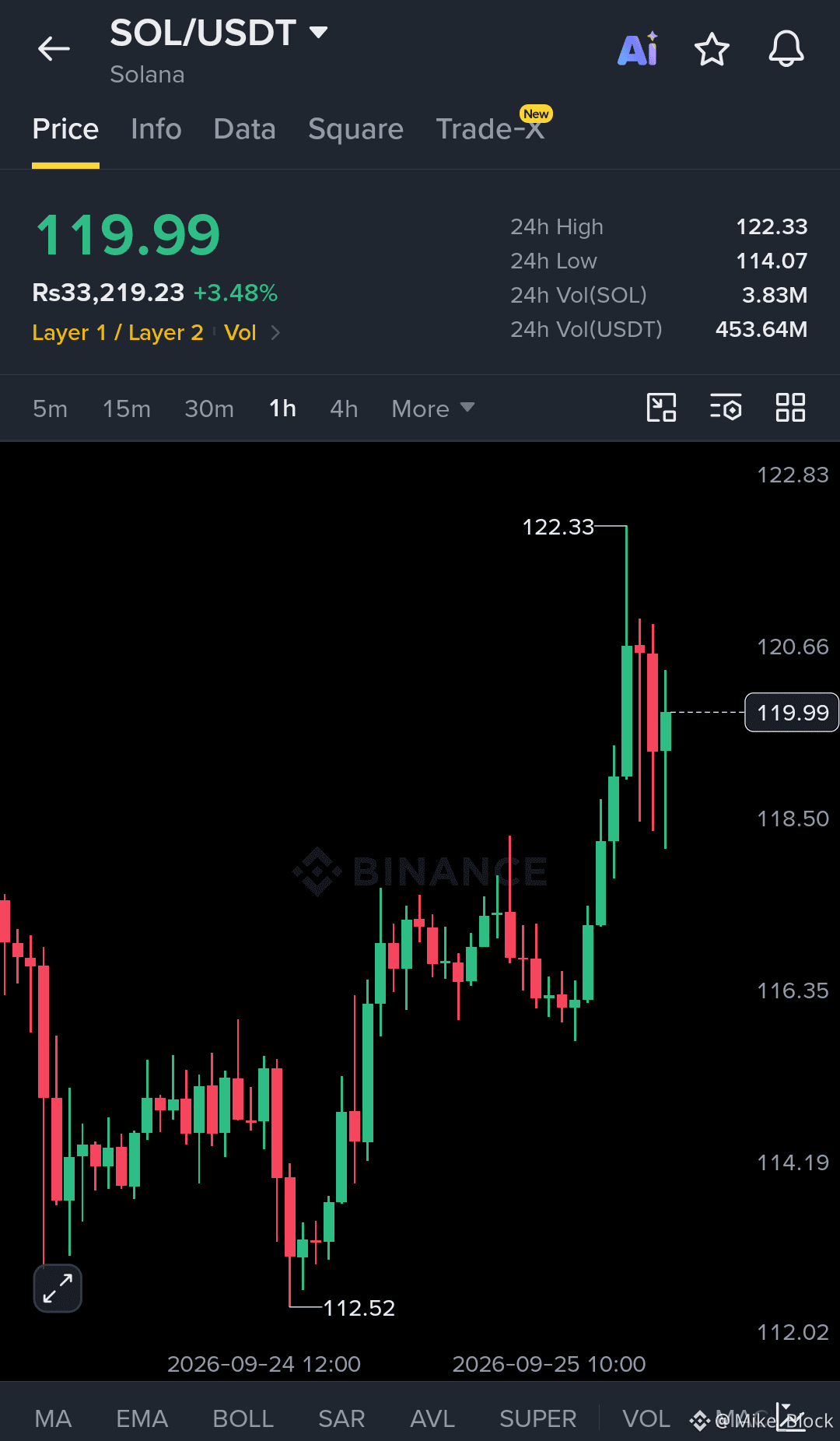
I’ve been watching $SOL closely, and what caught my attention is how strongly it bounced from the $112.52 area.
On the 1H chart, SOL is now around $119.99, after pushing up toward $122.33. The move looks strong, but I can also see some rejection near that high, so I wouldn’t rush into a trade here.
The levels I’m watching are simple:
Support: $118.50 → $116.35
Resistance: $120.66 → $122.33
If SOL can break and hold above $122.33, I’d want to see confirmation before looking for another move higher. If it gets rejected again, I’ll be watching how price reacts around $118.50.
I also checked the chart for RSI, MACD and EMA, but those indicators aren’t visible here, so I won’t make up any readings.
For me, the next candle is more important than chasing the current move. I want confirmation first.
Crypto markets are volatile; do your own research and manage your risk.
$SOL
{future}(SOLUSDT)
#BinanceWillListHyperliquid(HYPE) #CFTCUpdatesGuidanceOnTokenizedAssets #solana #sol
I’ve been watching $SOL closely, and what caught my attention is how strongly it bounced from the $112.52 area.
On the 1H chart, SOL is now around $119.99, after pushing up toward $122.33. The move looks strong, but I can also see some rejection near that high, so I wouldn’t rush into a trade here.
The levels I’m watching are simple:
Support: $118.50 → $116.35
Resistance: $120.66 → $122.33
If SOL can break and hold above $122.33, I’d want to see confirmation before looking for another move higher. If it gets rejected again, I’ll be watching how price reacts around $118.50.
I also checked the chart for RSI, MACD and EMA, but those indicators aren’t visible here, so I won’t make up any readings.
For me, the next candle is more important than chasing the current move. I want confirmation first.
Crypto markets are volatile; do your own research and manage your risk.
$SOL
#BinanceWillListHyperliquid(HYPE) #CFTCUpdatesGuidanceOnTokenizedAssets #solana #sol
On the 1H chart, SOL is now around $119.99, after pushing up toward $122.33. The move looks strong, but I can also see some rejection near that high, so I wouldn’t rush into a trade here.
The levels I’m watching are simple:
Support: $118.50 → $116.35
Resistance: $120.66 → $122.33
If SOL can break and hold above $122.33, I’d want to see confirmation before looking for another move higher. If it gets rejected again, I’ll be watching how price reacts around $118.50.
I also checked the chart for RSI, MACD and EMA, but those indicators aren’t visible here, so I won’t make up any readings.
For me, the next candle is more important than chasing the current move. I want confirmation first.
Crypto markets are volatile; do your own research and manage your risk.
$SOL
#BinanceWillListHyperliquid(HYPE) #CFTCUpdatesGuidanceOnTokenizedAssets #solana #sol
1
722
·
--
Haussier
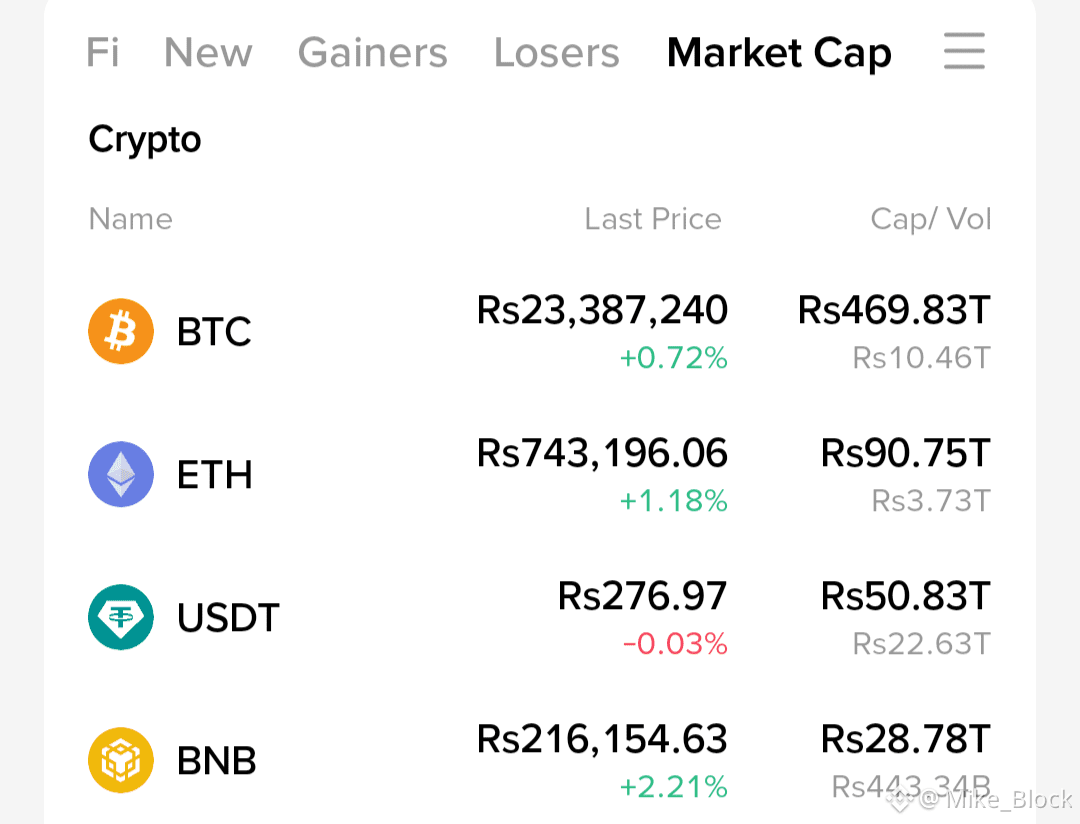
I’ve been watching BTC closely, and what caught my attention is that Bitcoin is still holding a strong position in the market. The screenshot shows BTC around Rs23.38M, with a small positive move.
In my view, the important thing right now is how BTC handles the next resistance area. The market is moving, but I don’t want to chase every green candle. I’d rather see confirmation before making any decision.
Crypto markets are volatile; do your own research and manage your risk.
I’ve been keeping an eye on ETH, and it’s interesting to see Ethereum moving higher in the screenshot. ETH is around Rs743K with a positive move.
What I noticed is that ETH is showing stronger momentum than some other major coins in this snapshot. Still, I’d wait for confirmation instead of assuming the move will continue.
I’m watching the reaction around the important support and resistance areas.
Crypto markets are volatile; do your own research and manage your risk.
USDT as well, and this one is a little different from the others. The screenshot shows USDT around Rs277 with almost no major movement.
That makes sense because USDT is designed to stay close to the US dollar. I wouldn’t treat it like BTC or ETH for a normal directional trading setup.
For me, the main thing here is stability rather than chasing a price move.
Crypto markets are volatile; do your own research and manage your risk.
BNB closely, and this is one of the coins that caught my attention in the screenshot. BNB is showing around Rs216K with a positive move of more than 2%.
In my search, I usually pay attention when a major coin starts moving with noticeable momentum. But I still don’t want to jump in just because the candle is green.
I’d like to see whether buyers can maintain this momentum and whether the next resistance area gets broken with confirmation.
Crypto markets are volatile; do your own research and manage your risk.
🤯
#US10YTreasuryYieldHits19YearHigh #USWeighsPromotingDollarStablecoinsAbroad
$BTC $ETH $BNB
I’ve been watching BTC closely, and what caught my attention is that Bitcoin is still holding a strong position in the market. The screenshot shows BTC around Rs23.38M, with a small positive move.
In my view, the important thing right now is how BTC handles the next resistance area. The market is moving, but I don’t want to chase every green candle. I’d rather see confirmation before making any decision.
Crypto markets are volatile; do your own research and manage your risk.
I’ve been keeping an eye on ETH, and it’s interesting to see Ethereum moving higher in the screenshot. ETH is around Rs743K with a positive move.
What I noticed is that ETH is showing stronger momentum than some other major coins in this snapshot. Still, I’d wait for confirmation instead of assuming the move will continue.
I’m watching the reaction around the important support and resistance areas.
Crypto markets are volatile; do your own research and manage your risk.
USDT as well, and this one is a little different from the others. The screenshot shows USDT around Rs277 with almost no major movement.
That makes sense because USDT is designed to stay close to the US dollar. I wouldn’t treat it like BTC or ETH for a normal directional trading setup.
For me, the main thing here is stability rather than chasing a price move.
Crypto markets are volatile; do your own research and manage your risk.
BNB closely, and this is one of the coins that caught my attention in the screenshot. BNB is showing around Rs216K with a positive move of more than 2%.
In my search, I usually pay attention when a major coin starts moving with noticeable momentum. But I still don’t want to jump in just because the candle is green.
I’d like to see whether buyers can maintain this momentum and whether the next resistance area gets broken with confirmation.
Crypto markets are volatile; do your own research and manage your risk.
🤯
#US10YTreasuryYieldHits19YearHigh #USWeighsPromotingDollarStablecoinsAbroad
$BTC $ETH $BNB
In my view, the important thing right now is how BTC handles the next resistance area. The market is moving, but I don’t want to chase every green candle. I’d rather see confirmation before making any decision.
Crypto markets are volatile; do your own research and manage your risk.
I’ve been keeping an eye on ETH, and it’s interesting to see Ethereum moving higher in the screenshot. ETH is around Rs743K with a positive move.
What I noticed is that ETH is showing stronger momentum than some other major coins in this snapshot. Still, I’d wait for confirmation instead of assuming the move will continue.
I’m watching the reaction around the important support and resistance areas.
Crypto markets are volatile; do your own research and manage your risk.
USDT as well, and this one is a little different from the others. The screenshot shows USDT around Rs277 with almost no major movement.
That makes sense because USDT is designed to stay close to the US dollar. I wouldn’t treat it like BTC or ETH for a normal directional trading setup.
For me, the main thing here is stability rather than chasing a price move.
Crypto markets are volatile; do your own research and manage your risk.
BNB closely, and this is one of the coins that caught my attention in the screenshot. BNB is showing around Rs216K with a positive move of more than 2%.
In my search, I usually pay attention when a major coin starts moving with noticeable momentum. But I still don’t want to jump in just because the candle is green.
I’d like to see whether buyers can maintain this momentum and whether the next resistance area gets broken with confirmation.
Crypto markets are volatile; do your own research and manage your risk.
🤯
#US10YTreasuryYieldHits19YearHigh #USWeighsPromotingDollarStablecoinsAbroad
$BTC $ETH $BNB
320
·
--
Haussier
$BROCCOLI714 showing some serious momentum
I’ve been watching this chart closely, and BROCCOLI714 has definitely caught my attention.
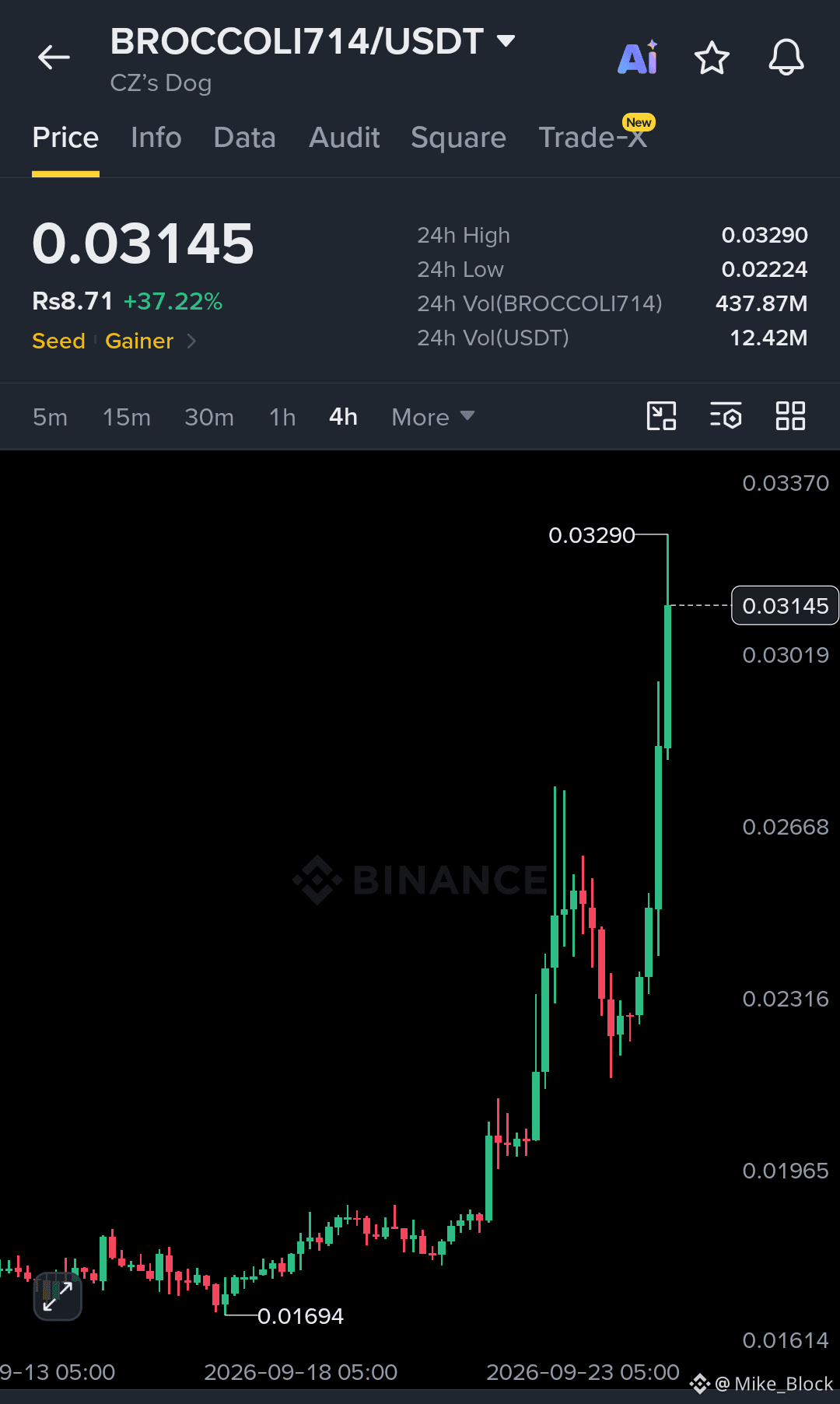
The 4H structure is looking strong after that sharp move from around $0.023 toward the $0.03290 high. Buyers clearly stepped in, but I don’t want to chase that big green candle here.
I’m more interested in a pullback and a clean reaction around the $0.0275–$0.0290 zone.
Entry Zone: $0.0275–$0.0290
TP1: $0.0305
TP2: $0.0329
TP3: $0.0350
Stop Loss: $0.0258
What I like is the higher-high and higher-low structure on the 4H chart. What I’m watching now is whether buyers can hold the breakout area and push back toward the recent high.
If price loses the support zone with strong selling pressure, I would stay cautious instead of forcing the trade.
Crypto markets are volatile; do your own research and manage your risk.
#US10YTreasuryYieldHits19YearHigh #USWeighsPromotingDollarStablecoinsAbroad #US30YearYieldHighestSince2004
$BROCCOLI714
{future}(BROCCOLI714USDT)
$BROCCOLI714 showing some serious momentum
I’ve been watching this chart closely, and BROCCOLI714 has definitely caught my attention.
The 4H structure is looking strong after that sharp move from around $0.023 toward the $0.03290 high. Buyers clearly stepped in, but I don’t want to chase that big green candle here.
I’m more interested in a pullback and a clean reaction around the $0.0275–$0.0290 zone.
Entry Zone: $0.0275–$0.0290
TP1: $0.0305
TP2: $0.0329
TP3: $0.0350
Stop Loss: $0.0258
What I like is the higher-high and higher-low structure on the 4H chart. What I’m watching now is whether buyers can hold the breakout area and push back toward the recent high.
If price loses the support zone with strong selling pressure, I would stay cautious instead of forcing the trade.
Crypto markets are volatile; do your own research and manage your risk.
#US10YTreasuryYieldHits19YearHigh #USWeighsPromotingDollarStablecoinsAbroad #US30YearYieldHighestSince2004
$BROCCOLI714
I’ve been watching this chart closely, and BROCCOLI714 has definitely caught my attention.
The 4H structure is looking strong after that sharp move from around $0.023 toward the $0.03290 high. Buyers clearly stepped in, but I don’t want to chase that big green candle here.
I’m more interested in a pullback and a clean reaction around the $0.0275–$0.0290 zone.
Entry Zone: $0.0275–$0.0290
TP1: $0.0305
TP2: $0.0329
TP3: $0.0350
Stop Loss: $0.0258
What I like is the higher-high and higher-low structure on the 4H chart. What I’m watching now is whether buyers can hold the breakout area and push back toward the recent high.
If price loses the support zone with strong selling pressure, I would stay cautious instead of forcing the trade.
Crypto markets are volatile; do your own research and manage your risk.
#US10YTreasuryYieldHits19YearHigh #USWeighsPromotingDollarStablecoinsAbroad #US30YearYieldHighestSince2004
$BROCCOLI714
441
·
--
Haussier
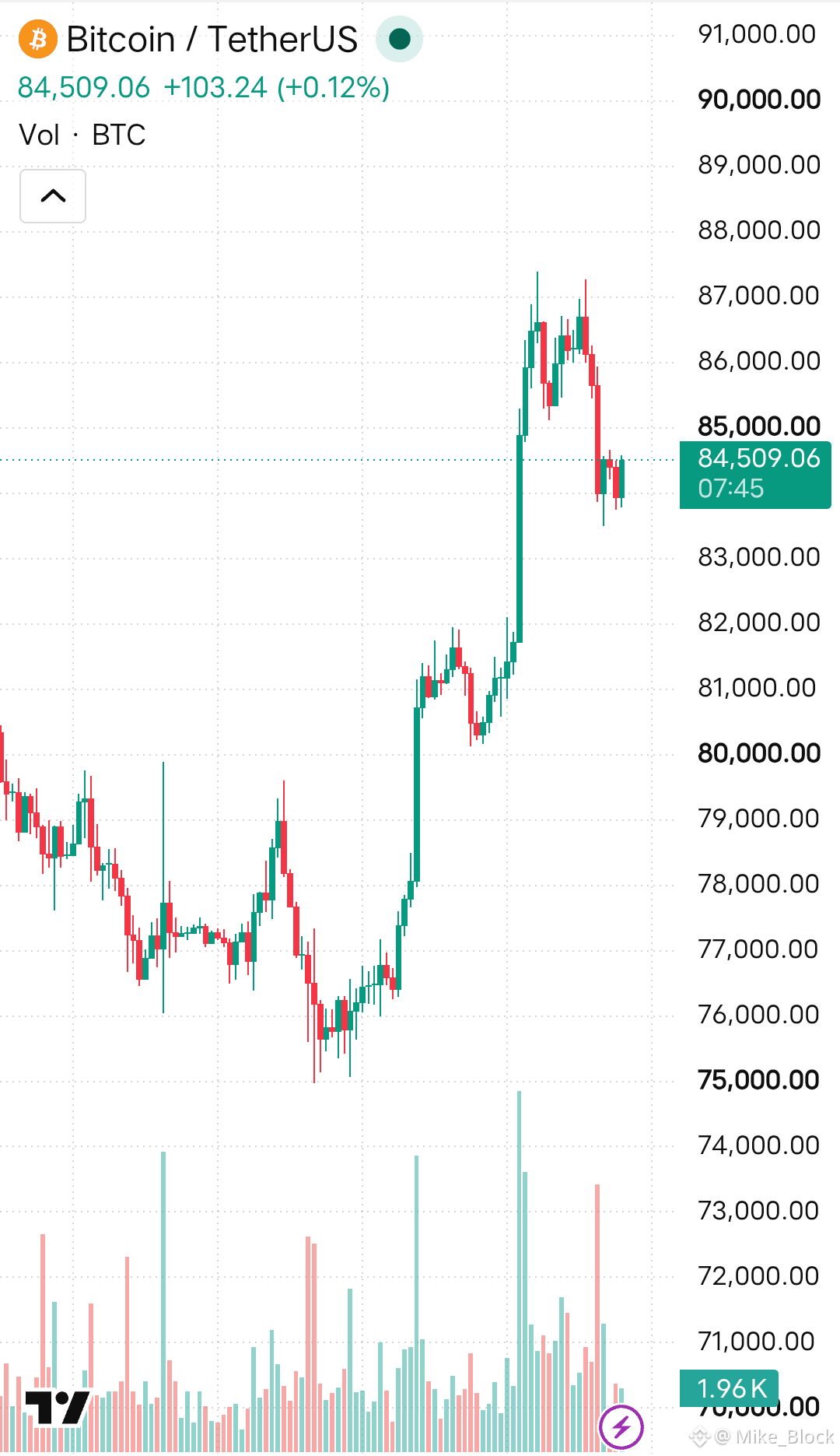
I’ve been watching this $BTC chart closely, and the move from the $80K area toward $87K really caught my attention. Right now, BTC is pulling back after a strong breakout, so I’m watching the $84K zone carefully for the next move.
🔥 BTC Trade Setup
Entry Level: $84,000 – $84,600
TP1: $85,500
TP2: $86,300
TP3: $87,000
Stop Loss: $83,400
The key for me is how BTC reacts around the $84K support area. If buyers step in and price starts reclaiming $85K with strength, the higher targets could come into focus. If $84K breaks decisively, I would avoid forcing the setup and wait for a new confirmation.
Pro Tip: Don’t chase a green candle. Let price confirm the level first and manage risk on every trade.
⚠️ Disclaimer: This is my personal chart analysis, not financial advice. Crypto is highly volatile. Do your own research and never risk more than you can afford to lose.
$BTC
{future}(BTCUSDT)
#bitcoin #21SharesLaunchesEuropesFirstZcashETP #DollarIndexReclaims101 #CardanoJoinsX402PaymentStandard
I’ve been watching this $BTC chart closely, and the move from the $80K area toward $87K really caught my attention. Right now, BTC is pulling back after a strong breakout, so I’m watching the $84K zone carefully for the next move.
🔥 BTC Trade Setup
Entry Level: $84,000 – $84,600
TP1: $85,500
TP2: $86,300
TP3: $87,000
Stop Loss: $83,400
The key for me is how BTC reacts around the $84K support area. If buyers step in and price starts reclaiming $85K with strength, the higher targets could come into focus. If $84K breaks decisively, I would avoid forcing the setup and wait for a new confirmation.
Pro Tip: Don’t chase a green candle. Let price confirm the level first and manage risk on every trade.
⚠️ Disclaimer: This is my personal chart analysis, not financial advice. Crypto is highly volatile. Do your own research and never risk more than you can afford to lose.
$BTC
#bitcoin #21SharesLaunchesEuropesFirstZcashETP #DollarIndexReclaims101 #CardanoJoinsX402PaymentStandard
🔥 BTC Trade Setup
Entry Level: $84,000 – $84,600
TP1: $85,500
TP2: $86,300
TP3: $87,000
Stop Loss: $83,400
The key for me is how BTC reacts around the $84K support area. If buyers step in and price starts reclaiming $85K with strength, the higher targets could come into focus. If $84K breaks decisively, I would avoid forcing the setup and wait for a new confirmation.
Pro Tip: Don’t chase a green candle. Let price confirm the level first and manage risk on every trade.
⚠️ Disclaimer: This is my personal chart analysis, not financial advice. Crypto is highly volatile. Do your own research and never risk more than you can afford to lose.
$BTC
#bitcoin #21SharesLaunchesEuropesFirstZcashETP #DollarIndexReclaims101 #CardanoJoinsX402PaymentStandard
873
·
--
Haussier
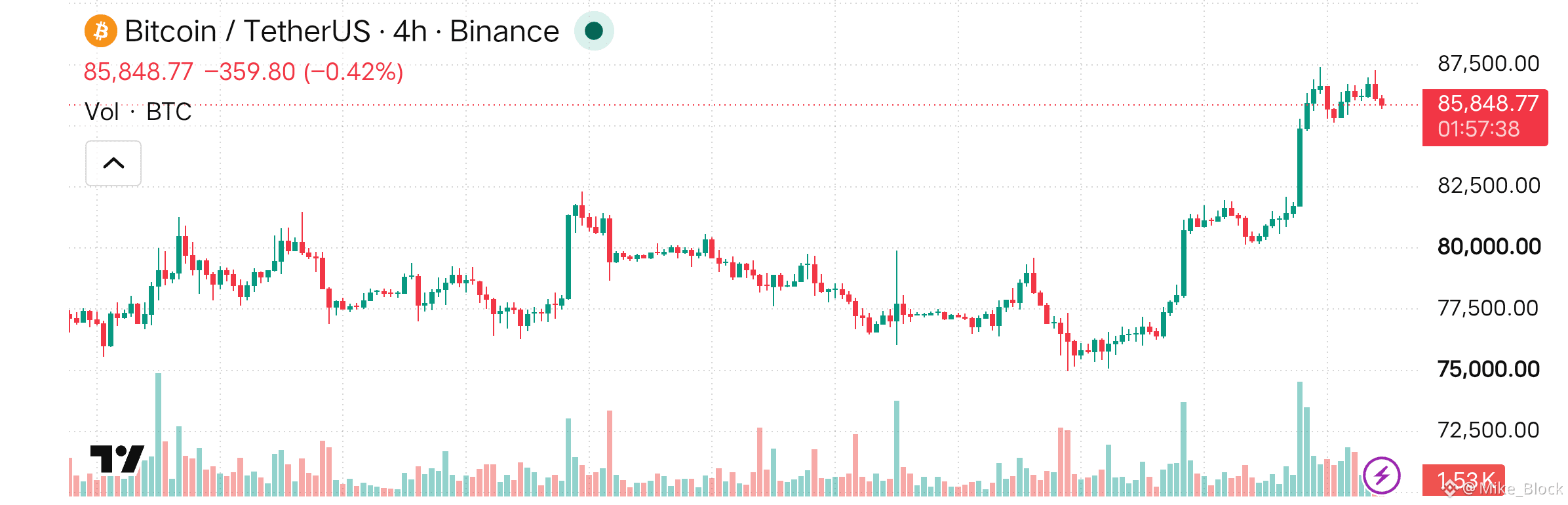
🔥 I’ve been watching $BTC closely, and this 4H chart is getting interesting. Bitcoin pushed hard from the $80K area and is now consolidating near $86K after testing the $87K+ zone. I’m watching for a clean hold rather than chasing the move.
BTC USDT 4H Setup
Entry Zone: $85,200 – $85,900
TP1: $86,800
TP2: $87,500
TP3: $89,000
Stop Loss: $84,400
The key for me is the $85K area. If buyers keep defending it and BTC breaks above the recent $87K resistance with strong volume, continuation toward the higher targets becomes technically possible.
If $84.4K breaks decisively, I’d treat this setup as invalid rather than forcing the trade.
Pro Tip: Don’t chase a breakout candle. I’d rather see confirmation and a retest before entering.
⚠️ Disclaimer: This is a technical chart setup for educational purposes, not financial advice. Crypto is highly volatile—manage risk and never trade more than you can afford to lose.
$BTC
{future}(BTCUSDT)
#BTC #BitcoinDunyamiz
🔥 I’ve been watching $BTC closely, and this 4H chart is getting interesting. Bitcoin pushed hard from the $80K area and is now consolidating near $86K after testing the $87K+ zone. I’m watching for a clean hold rather than chasing the move.
BTC USDT 4H Setup
Entry Zone: $85,200 – $85,900
TP1: $86,800
TP2: $87,500
TP3: $89,000
Stop Loss: $84,400
The key for me is the $85K area. If buyers keep defending it and BTC breaks above the recent $87K resistance with strong volume, continuation toward the higher targets becomes technically possible.
If $84.4K breaks decisively, I’d treat this setup as invalid rather than forcing the trade.
Pro Tip: Don’t chase a breakout candle. I’d rather see confirmation and a retest before entering.
⚠️ Disclaimer: This is a technical chart setup for educational purposes, not financial advice. Crypto is highly volatile—manage risk and never trade more than you can afford to lose.
$BTC
#BTC #BitcoinDunyamiz
BTC USDT 4H Setup
Entry Zone: $85,200 – $85,900
TP1: $86,800
TP2: $87,500
TP3: $89,000
Stop Loss: $84,400
The key for me is the $85K area. If buyers keep defending it and BTC breaks above the recent $87K resistance with strong volume, continuation toward the higher targets becomes technically possible.
If $84.4K breaks decisively, I’d treat this setup as invalid rather than forcing the trade.
Pro Tip: Don’t chase a breakout candle. I’d rather see confirmation and a retest before entering.
⚠️ Disclaimer: This is a technical chart setup for educational purposes, not financial advice. Crypto is highly volatile—manage risk and never trade more than you can afford to lose.
$BTC
#BTC #BitcoinDunyamiz
280
·
--
Haussier
Vérifié
I’ve been watching AI stocks closely, and one thing stands out to me: this rally is being supported by real spending, not just headlines.
Nvidia just reported $96.2B quarterly revenue, up 106% year over year, while Data Center revenue reached $89B, up 117%. Jensen Huang has also said Nvidia’s chip sales could roughly double in 2027, showing how aggressive the next phase of AI infrastructure could become.
The spending behind this is massive. Reuters reported that Microsoft, Alphabet, Amazon, Meta and Oracle could collectively spend more on AI-related infrastructure than they generate in free cash flow by 2027. Amazon has raised 2026 capital spending expectations to about $220B, while Alphabet lifted its forecast to $195B–$205B and Meta expects $125B–$145B.
At the same time, the market is heating up again. On September 21, the Nasdaq closed at a record high, AMD reached a $1T market cap, and Meta jumped more than 11% after its new AI assistant gained strong early adoption.
So my view is cautiously bullish on the AI theme, but not blindly bullish on every AI stock. Demand looks real. The bigger question is how long spending can keep growing faster than the returns.
And then there is policy. President Trump has announced an “AI Force” and has said AI could eventually represent up to 25% of U.S. GDP. That is a political claim and future projection, not a current economic measurement.
I’m watching NVDA, AMD and META closely. For me, the next phase is about revenue, margins, power capacity and actual AI monetization not hype alone.
#AIStocksWhatNext
I’ve been watching AI stocks closely, and one thing stands out to me: this rally is being supported by real spending, not just headlines.
Nvidia just reported $96.2B quarterly revenue, up 106% year over year, while Data Center revenue reached $89B, up 117%. Jensen Huang has also said Nvidia’s chip sales could roughly double in 2027, showing how aggressive the next phase of AI infrastructure could become.
The spending behind this is massive. Reuters reported that Microsoft, Alphabet, Amazon, Meta and Oracle could collectively spend more on AI-related infrastructure than they generate in free cash flow by 2027. Amazon has raised 2026 capital spending expectations to about $220B, while Alphabet lifted its forecast to $195B–$205B and Meta expects $125B–$145B.
At the same time, the market is heating up again. On September 21, the Nasdaq closed at a record high, AMD reached a $1T market cap, and Meta jumped more than 11% after its new AI assistant gained strong early adoption.
So my view is cautiously bullish on the AI theme, but not blindly bullish on every AI stock. Demand looks real. The bigger question is how long spending can keep growing faster than the returns.
And then there is policy. President Trump has announced an “AI Force” and has said AI could eventually represent up to 25% of U.S. GDP. That is a political claim and future projection, not a current economic measurement.
I’m watching NVDA, AMD and META closely. For me, the next phase is about revenue, margins, power capacity and actual AI monetization not hype alone.
#AIStocksWhatNext
Nvidia just reported $96.2B quarterly revenue, up 106% year over year, while Data Center revenue reached $89B, up 117%. Jensen Huang has also said Nvidia’s chip sales could roughly double in 2027, showing how aggressive the next phase of AI infrastructure could become.
The spending behind this is massive. Reuters reported that Microsoft, Alphabet, Amazon, Meta and Oracle could collectively spend more on AI-related infrastructure than they generate in free cash flow by 2027. Amazon has raised 2026 capital spending expectations to about $220B, while Alphabet lifted its forecast to $195B–$205B and Meta expects $125B–$145B.
At the same time, the market is heating up again. On September 21, the Nasdaq closed at a record high, AMD reached a $1T market cap, and Meta jumped more than 11% after its new AI assistant gained strong early adoption.
So my view is cautiously bullish on the AI theme, but not blindly bullish on every AI stock. Demand looks real. The bigger question is how long spending can keep growing faster than the returns.
And then there is policy. President Trump has announced an “AI Force” and has said AI could eventually represent up to 25% of U.S. GDP. That is a political claim and future projection, not a current economic measurement.
I’m watching NVDA, AMD and META closely. For me, the next phase is about revenue, margins, power capacity and actual AI monetization not hype alone.
#AIStocksWhatNext

586
·
--
Haussier
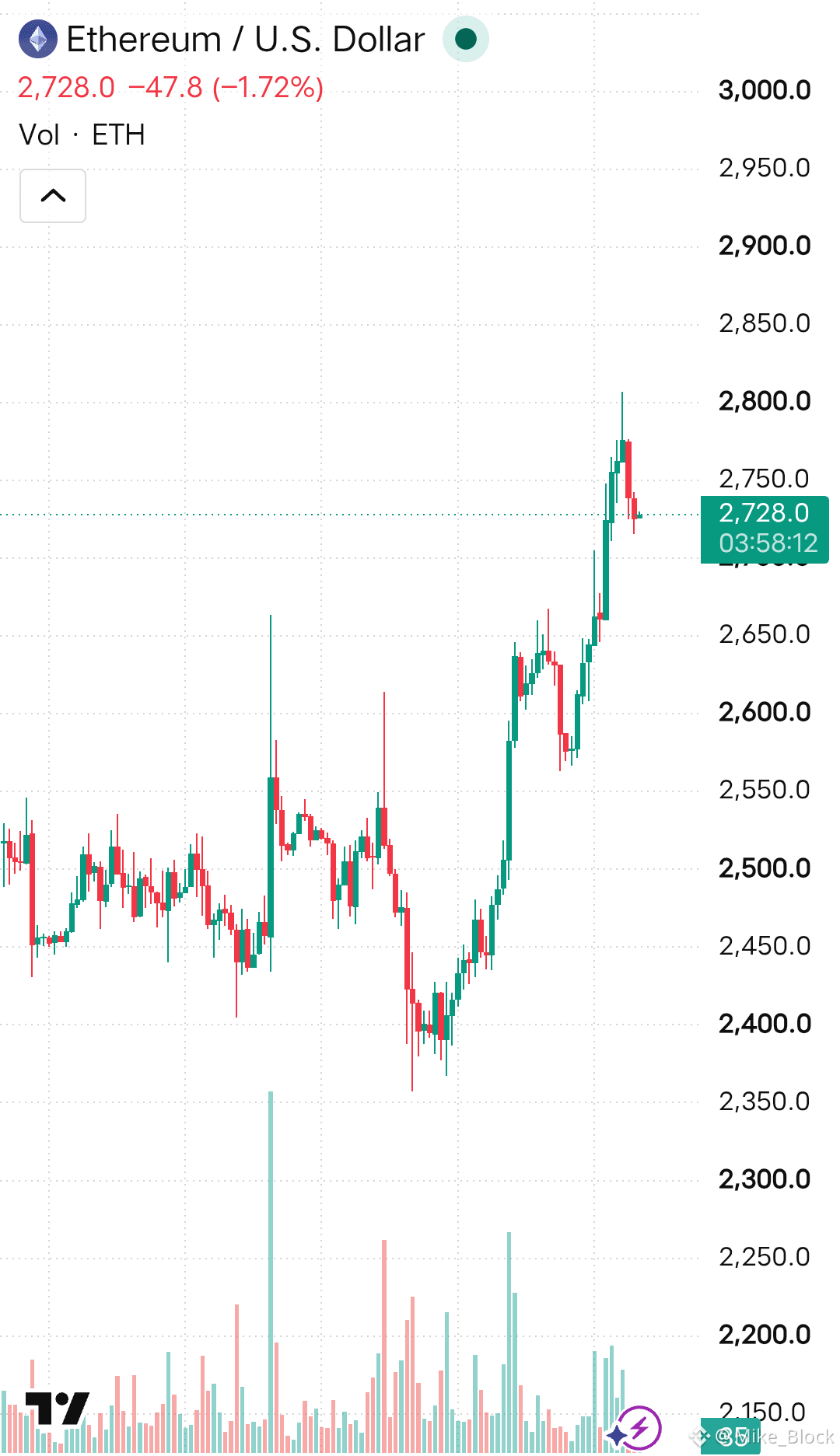
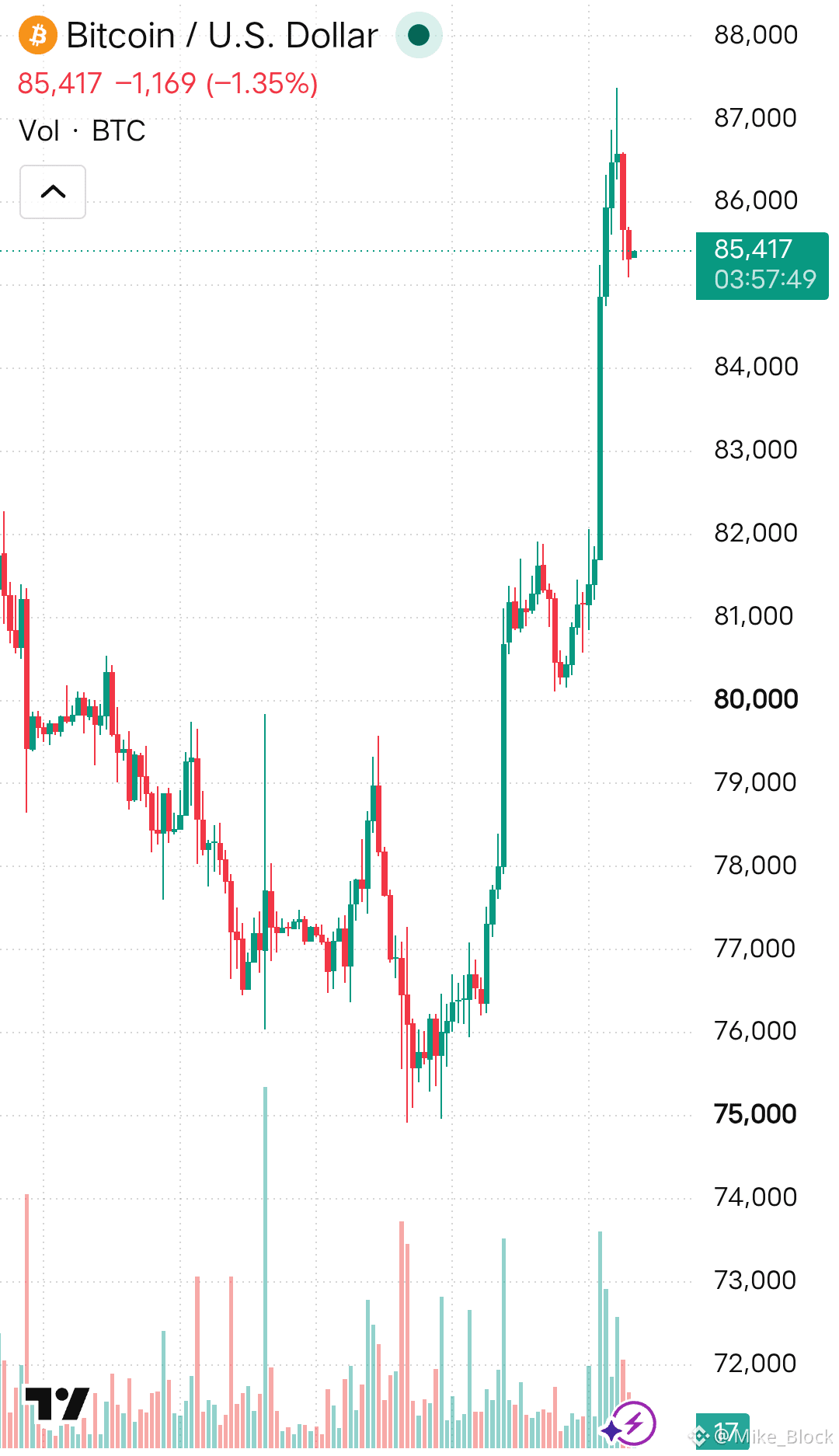
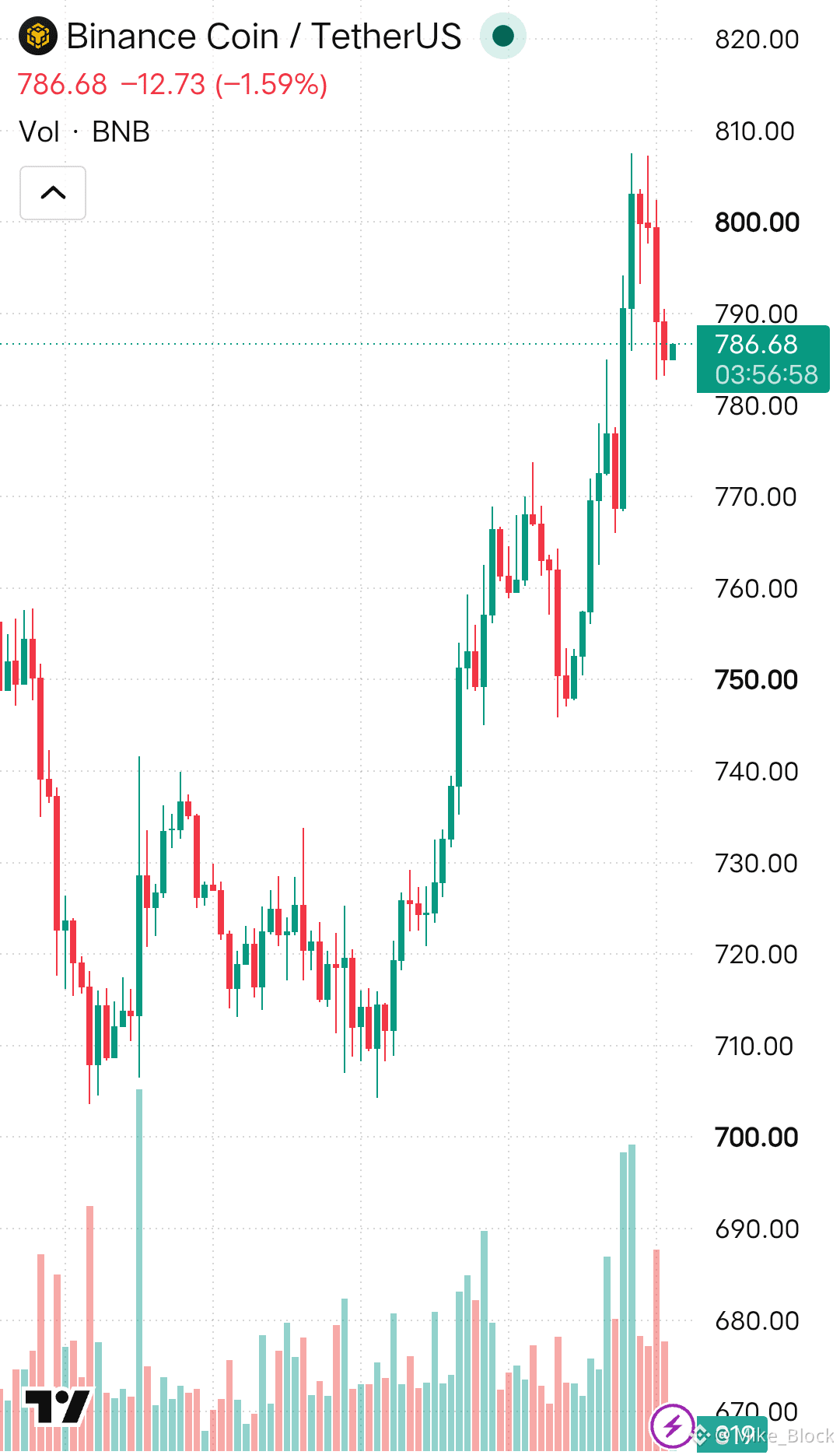
I’ve been watching BNB, BTC and ETH closely, and what caught my attention is how all three are moving with positive momentum. The screenshot shows BNB around 785.53, BTC near 85,396, and ETH around 2,728. Current market data also shows all three trading higher today, although prices are moving quickly.
Three Coins I’m Watching 🔥
BNB
Entry: 780 – 788
TP1: 800
TP2: 815
TP3: 830
Stop Loss: 765
BTC
Entry: 84,800 – 85,500
TP1: 86,500
TP2: 88,000
TP3: 90,000
Stop Loss: 83,500
ETH
Entry: 2,680 – 2,740
TP1: 2,800
TP2: 2,900
TP3: 3,000
Stop Loss: 2,600
What I like about this setup is the broader market strength — BTC is leading the move, while ETH and BNB are also showing positive momentum. Recent market reporting noted that BTC, ETH and BNB were among major assets reaching fresh multi-month highs during the rally.
I’m not looking to chase green candles here. I’d rather wait for price to respect the entry zones and then manage the trade step by step.
Disclaimer: These are technical levels based on the provided chart and current market context, not financial advice. Crypto can move sharply in either direction. Always manage risk and do your own research before trading.
#bitcoin #Ethereum #bnb #NEARRisesNearly80%InAWeek #MultiversXPlansHardForkRecovery
$BNB
{future}(BNBUSDT)
$BTC
{future}(BTCUSDT)
$ETH
{future}(ETHUSDT)
I’ve been watching BNB, BTC and ETH closely, and what caught my attention is how all three are moving with positive momentum. The screenshot shows BNB around 785.53, BTC near 85,396, and ETH around 2,728. Current market data also shows all three trading higher today, although prices are moving quickly.
Three Coins I’m Watching 🔥
BNB
Entry: 780 – 788
TP1: 800
TP2: 815
TP3: 830
Stop Loss: 765
BTC
Entry: 84,800 – 85,500
TP1: 86,500
TP2: 88,000
TP3: 90,000
Stop Loss: 83,500
ETH
Entry: 2,680 – 2,740
TP1: 2,800
TP2: 2,900
TP3: 3,000
Stop Loss: 2,600
What I like about this setup is the broader market strength — BTC is leading the move, while ETH and BNB are also showing positive momentum. Recent market reporting noted that BTC, ETH and BNB were among major assets reaching fresh multi-month highs during the rally.
I’m not looking to chase green candles here. I’d rather wait for price to respect the entry zones and then manage the trade step by step.
Disclaimer: These are technical levels based on the provided chart and current market context, not financial advice. Crypto can move sharply in either direction. Always manage risk and do your own research before trading.
#bitcoin #Ethereum #bnb #NEARRisesNearly80%InAWeek #MultiversXPlansHardForkRecovery
$BNB
$BTC
$ETH
Three Coins I’m Watching 🔥
BNB
Entry: 780 – 788
TP1: 800
TP2: 815
TP3: 830
Stop Loss: 765
BTC
Entry: 84,800 – 85,500
TP1: 86,500
TP2: 88,000
TP3: 90,000
Stop Loss: 83,500
ETH
Entry: 2,680 – 2,740
TP1: 2,800
TP2: 2,900
TP3: 3,000
Stop Loss: 2,600
What I like about this setup is the broader market strength — BTC is leading the move, while ETH and BNB are also showing positive momentum. Recent market reporting noted that BTC, ETH and BNB were among major assets reaching fresh multi-month highs during the rally.
I’m not looking to chase green candles here. I’d rather wait for price to respect the entry zones and then manage the trade step by step.
Disclaimer: These are technical levels based on the provided chart and current market context, not financial advice. Crypto can move sharply in either direction. Always manage risk and do your own research before trading.
#bitcoin #Ethereum #bnb #NEARRisesNearly80%InAWeek #MultiversXPlansHardForkRecovery
$BNB
$BTC
$ETH
237
·
--
Haussier
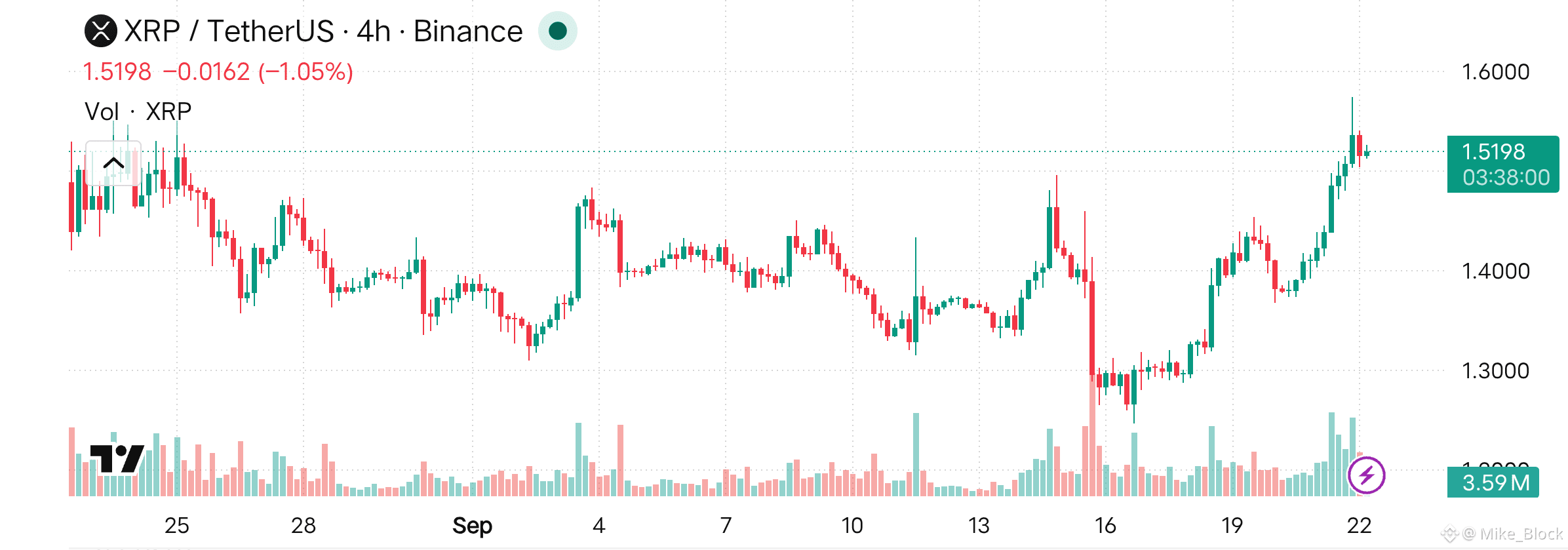
I’ve been watching $XRP closely, and this 4H chart is getting interesting. Price has pushed strongly from the $1.40 area and is now testing around $1.52, but I’m watching for confirmation before chasing the move.
XRP 4H Trade Setup
Entry Zone: $1.49 – $1.52
TP1: $1.55
TP2: $1.58
TP3: $1.62
Stop Loss: $1.46
The key level for me is $1.49–$1.50. If XRP holds this area after the breakout, momentum could continue toward the targets. A strong 4H close below the entry zone would weaken the setup.
Pro Tip: Don’t chase a vertical candle. A clean retest with volume confirmation can offer a better entry.
Disclaimer: This is a technical chart setup, not financial advice. Crypto is highly volatile. Manage your risk and never trade more than you can afford to lose.
$XRP
{future}(XRPUSDT)
#xrp #XRPRealityCheck #ZetaChainVotesToMigrateZETAToSolana #ECBStartsBlockchainEuroSettlement
I’ve been watching $XRP closely, and this 4H chart is getting interesting. Price has pushed strongly from the $1.40 area and is now testing around $1.52, but I’m watching for confirmation before chasing the move.
XRP 4H Trade Setup
Entry Zone: $1.49 – $1.52
TP1: $1.55
TP2: $1.58
TP3: $1.62
Stop Loss: $1.46
The key level for me is $1.49–$1.50. If XRP holds this area after the breakout, momentum could continue toward the targets. A strong 4H close below the entry zone would weaken the setup.
Pro Tip: Don’t chase a vertical candle. A clean retest with volume confirmation can offer a better entry.
Disclaimer: This is a technical chart setup, not financial advice. Crypto is highly volatile. Manage your risk and never trade more than you can afford to lose.
$XRP
#xrp #XRPRealityCheck #ZetaChainVotesToMigrateZETAToSolana #ECBStartsBlockchainEuroSettlement
XRP 4H Trade Setup
Entry Zone: $1.49 – $1.52
TP1: $1.55
TP2: $1.58
TP3: $1.62
Stop Loss: $1.46
The key level for me is $1.49–$1.50. If XRP holds this area after the breakout, momentum could continue toward the targets. A strong 4H close below the entry zone would weaken the setup.
Pro Tip: Don’t chase a vertical candle. A clean retest with volume confirmation can offer a better entry.
Disclaimer: This is a technical chart setup, not financial advice. Crypto is highly volatile. Manage your risk and never trade more than you can afford to lose.
$XRP
#xrp #XRPRealityCheck #ZetaChainVotesToMigrateZETAToSolana #ECBStartsBlockchainEuroSettlement
570
·
--
Haussier
$ZEC is moving fast and I’m watching the next pullback
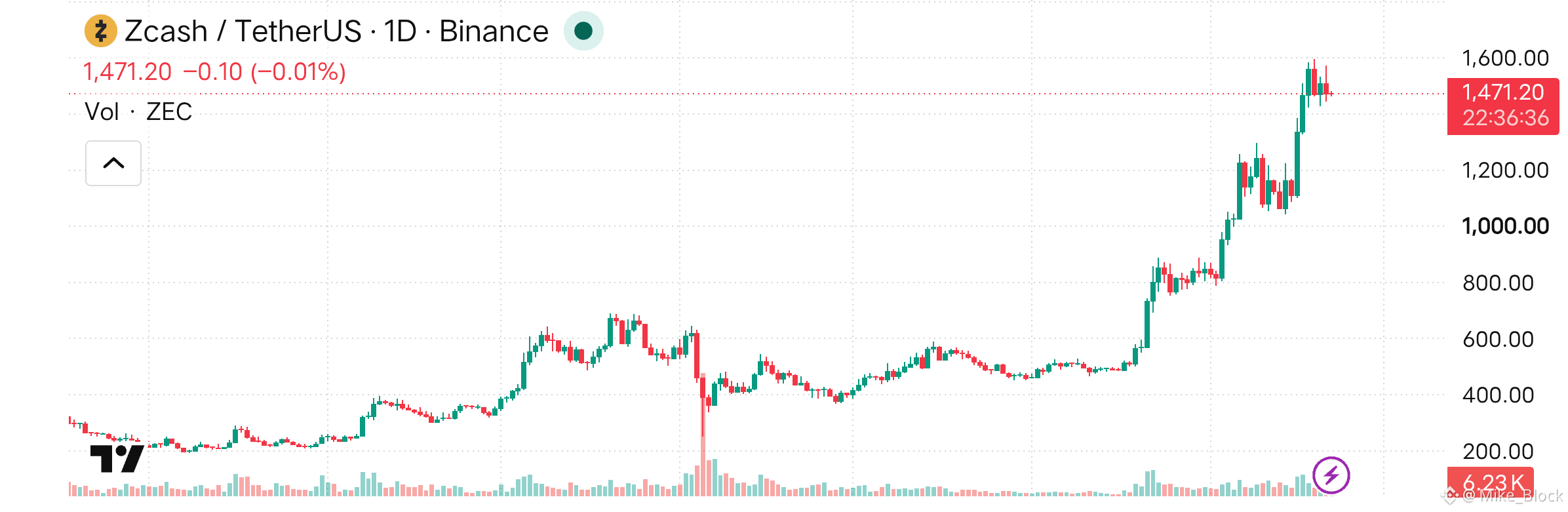
I’ve been watching ZEC closely, and this chart is showing a very strong breakout trend. Price has pushed from the lower range into the 1,400+ area with strong momentum, but after such a sharp move I would rather watch for a controlled entry than chase the candle.
Trade Setup
🟢 Entry Zone: $1,400 – $1,450
🎯 TP1: $1,550
🎯 TP2: $1,650
🎯 TP3: $1,800
🛑 Stop Loss: $1,320
The key thing I’m watching is whether ZEC can hold the recent breakout area after a pullback. If buyers keep defending that zone, momentum could continue. If price loses the stop area with strong selling pressure, the setup is invalidated.
Pro Tip: Don’t chase a vertical candle. Wait for confirmation or a cleaner retest.
⚠️ Disclaimer: This is a technical chart setup for educational purposes, not financial advice. Crypto is highly volatile. Manage risk and never trade with money you cannot afford to lose.
$ZEC
{future}(ZECUSDT)
#zec #SouthAfricaProposesCryptoExchangeControls #ECBStartsBlockchainEuroSettlement #ZetaChainVotesToMigrateZETAToSolana
$ZEC is moving fast and I’m watching the next pullback
I’ve been watching ZEC closely, and this chart is showing a very strong breakout trend. Price has pushed from the lower range into the 1,400+ area with strong momentum, but after such a sharp move I would rather watch for a controlled entry than chase the candle.
Trade Setup
🟢 Entry Zone: $1,400 – $1,450
🎯 TP1: $1,550
🎯 TP2: $1,650
🎯 TP3: $1,800
🛑 Stop Loss: $1,320
The key thing I’m watching is whether ZEC can hold the recent breakout area after a pullback. If buyers keep defending that zone, momentum could continue. If price loses the stop area with strong selling pressure, the setup is invalidated.
Pro Tip: Don’t chase a vertical candle. Wait for confirmation or a cleaner retest.
⚠️ Disclaimer: This is a technical chart setup for educational purposes, not financial advice. Crypto is highly volatile. Manage risk and never trade with money you cannot afford to lose.
$ZEC
#zec #SouthAfricaProposesCryptoExchangeControls #ECBStartsBlockchainEuroSettlement #ZetaChainVotesToMigrateZETAToSolana
I’ve been watching ZEC closely, and this chart is showing a very strong breakout trend. Price has pushed from the lower range into the 1,400+ area with strong momentum, but after such a sharp move I would rather watch for a controlled entry than chase the candle.
Trade Setup
🟢 Entry Zone: $1,400 – $1,450
🎯 TP1: $1,550
🎯 TP2: $1,650
🎯 TP3: $1,800
🛑 Stop Loss: $1,320
The key thing I’m watching is whether ZEC can hold the recent breakout area after a pullback. If buyers keep defending that zone, momentum could continue. If price loses the stop area with strong selling pressure, the setup is invalidated.
Pro Tip: Don’t chase a vertical candle. Wait for confirmation or a cleaner retest.
⚠️ Disclaimer: This is a technical chart setup for educational purposes, not financial advice. Crypto is highly volatile. Manage risk and never trade with money you cannot afford to lose.
$ZEC
#zec #SouthAfricaProposesCryptoExchangeControls #ECBStartsBlockchainEuroSettlement #ZetaChainVotesToMigrateZETAToSolana
612
·
--
Haussier
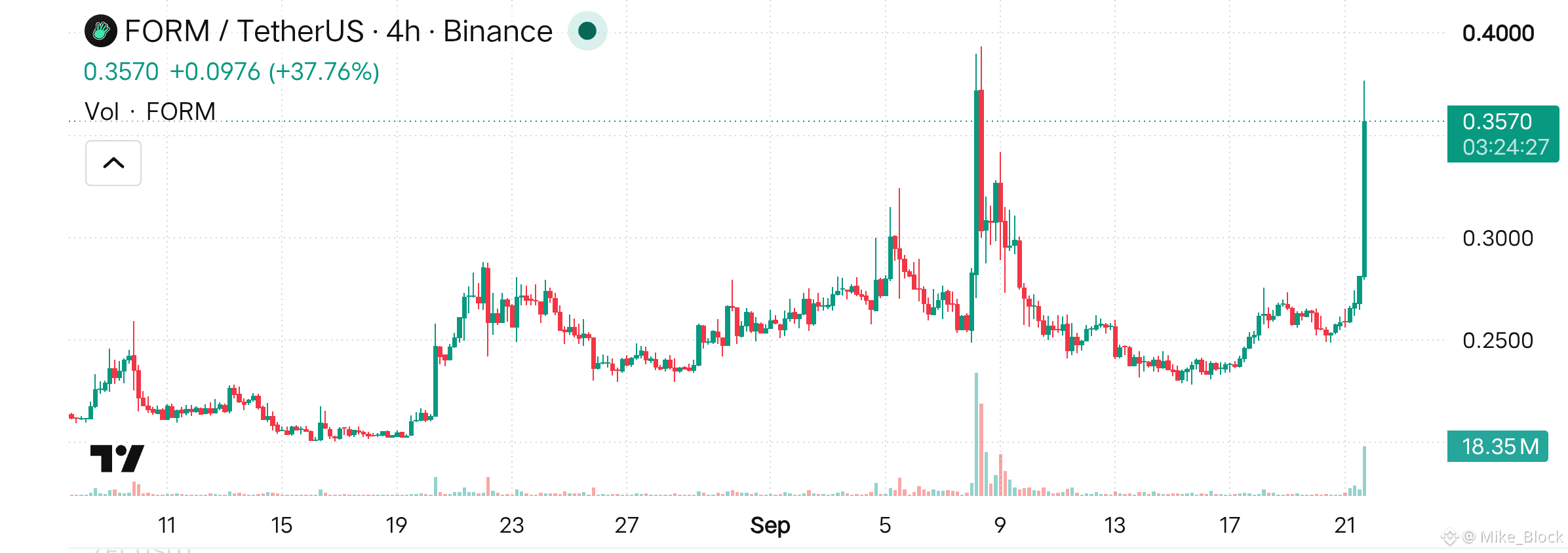
I have been watching $FORM closely, and this breakout immediately caught my attention. 🔥
FORM has pushed hard from the $0.27 area and is now trading around $0.357, with a strong volume spike behind the move. The key now is not to chase the candle blindly I’m watching how price reacts around the breakout zone.
FORM/USDT 4H Setup
🟢 Entry Zone: $0.345 – $0.355
🎯 TP1: $0.380
🎯 TP2: $0.400
🎯 TP3: $0.430
🛑 Stop Loss: $0.325
If FORM holds above the breakout area, another expansion could develop. But after such a sharp move, a pullback or consolidation would also be completely normal.
Pro Tip: I would watch volume and the $0.34–$0.35 area closely. Losing that zone could weaken the setup.
⚠️ Disclaimer: This is a technical-analysis setup, not financial advice. Crypto is highly volatile. Always manage risk and never trade more than you can afford to lose.
$FORM
{future}(FORMUSDT)
#FORM #CanaryFilesSecondAmendmentForStakedSEIETF #SolanaCutsTargetSlotTimeTo250ms
I have been watching $FORM closely, and this breakout immediately caught my attention. 🔥
FORM has pushed hard from the $0.27 area and is now trading around $0.357, with a strong volume spike behind the move. The key now is not to chase the candle blindly I’m watching how price reacts around the breakout zone.
FORM/USDT 4H Setup
🟢 Entry Zone: $0.345 – $0.355
🎯 TP1: $0.380
🎯 TP2: $0.400
🎯 TP3: $0.430
🛑 Stop Loss: $0.325
If FORM holds above the breakout area, another expansion could develop. But after such a sharp move, a pullback or consolidation would also be completely normal.
Pro Tip: I would watch volume and the $0.34–$0.35 area closely. Losing that zone could weaken the setup.
⚠️ Disclaimer: This is a technical-analysis setup, not financial advice. Crypto is highly volatile. Always manage risk and never trade more than you can afford to lose.
$FORM
#FORM #CanaryFilesSecondAmendmentForStakedSEIETF #SolanaCutsTargetSlotTimeTo250ms
FORM has pushed hard from the $0.27 area and is now trading around $0.357, with a strong volume spike behind the move. The key now is not to chase the candle blindly I’m watching how price reacts around the breakout zone.
FORM/USDT 4H Setup
🟢 Entry Zone: $0.345 – $0.355
🎯 TP1: $0.380
🎯 TP2: $0.400
🎯 TP3: $0.430
🛑 Stop Loss: $0.325
If FORM holds above the breakout area, another expansion could develop. But after such a sharp move, a pullback or consolidation would also be completely normal.
Pro Tip: I would watch volume and the $0.34–$0.35 area closely. Losing that zone could weaken the setup.
⚠️ Disclaimer: This is a technical-analysis setup, not financial advice. Crypto is highly volatile. Always manage risk and never trade more than you can afford to lose.
$FORM
#FORM #CanaryFilesSecondAmendmentForStakedSEIETF #SolanaCutsTargetSlotTimeTo250ms
769
·
--
Haussier
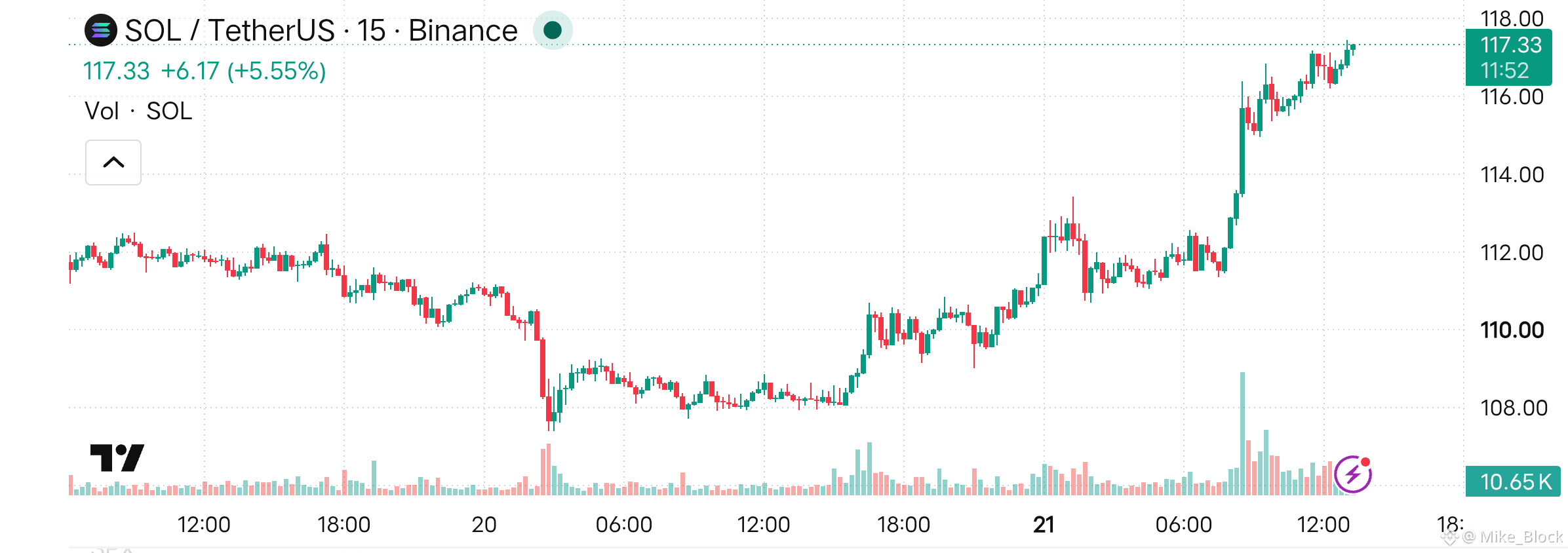
I’ve been watching $SOL closely, and this move is getting interesting. 🔥
SOL has pushed strongly from the $112 area and is now trading around $117.33, showing clear bullish momentum. But after such a sharp move, I’d rather watch for a controlled entry than chase the candle.
SOL Long Setup
🟢 Entry: $116.50 – $117.00
🎯 TP1: $118.00
🎯 TP2: $119.20
🎯 TP3: $120.50
🛑 Stop Loss: $115.50
The key for me is the $116–117 zone. If SOL holds this area and buyers continue defending the breakout, the next psychological levels could come into focus.
If price loses $115.50 with strong selling pressure, I would treat the setup as invalid rather than forcing the trade.
Pro tip: Don’t chase a vertical candle. Let SOL come toward the entry zone and watch volume + price reaction.
⚠️ Disclaimer: This is a chart-based trading idea, not financial advice. Crypto is highly volatile. Do your own research and manage your risk before entering any trade.
$SOL
{future}(SOLUSDT)
#sol #BOJRaisesRatesTo31YearHigh #SaylorHintsStrategyBitcoinBuy #BuffettStepsDownAsBerkshireChairman
I’ve been watching $SOL closely, and this move is getting interesting. 🔥
SOL has pushed strongly from the $112 area and is now trading around $117.33, showing clear bullish momentum. But after such a sharp move, I’d rather watch for a controlled entry than chase the candle.
SOL Long Setup
🟢 Entry: $116.50 – $117.00
🎯 TP1: $118.00
🎯 TP2: $119.20
🎯 TP3: $120.50
🛑 Stop Loss: $115.50
The key for me is the $116–117 zone. If SOL holds this area and buyers continue defending the breakout, the next psychological levels could come into focus.
If price loses $115.50 with strong selling pressure, I would treat the setup as invalid rather than forcing the trade.
Pro tip: Don’t chase a vertical candle. Let SOL come toward the entry zone and watch volume + price reaction.
⚠️ Disclaimer: This is a chart-based trading idea, not financial advice. Crypto is highly volatile. Do your own research and manage your risk before entering any trade.
$SOL
#sol #BOJRaisesRatesTo31YearHigh #SaylorHintsStrategyBitcoinBuy #BuffettStepsDownAsBerkshireChairman
SOL has pushed strongly from the $112 area and is now trading around $117.33, showing clear bullish momentum. But after such a sharp move, I’d rather watch for a controlled entry than chase the candle.
SOL Long Setup
🟢 Entry: $116.50 – $117.00
🎯 TP1: $118.00
🎯 TP2: $119.20
🎯 TP3: $120.50
🛑 Stop Loss: $115.50
The key for me is the $116–117 zone. If SOL holds this area and buyers continue defending the breakout, the next psychological levels could come into focus.
If price loses $115.50 with strong selling pressure, I would treat the setup as invalid rather than forcing the trade.
Pro tip: Don’t chase a vertical candle. Let SOL come toward the entry zone and watch volume + price reaction.
⚠️ Disclaimer: This is a chart-based trading idea, not financial advice. Crypto is highly volatile. Do your own research and manage your risk before entering any trade.
$SOL
#sol #BOJRaisesRatesTo31YearHigh #SaylorHintsStrategyBitcoinBuy #BuffettStepsDownAsBerkshireChairman
2
2.5k
·
--
Haussier
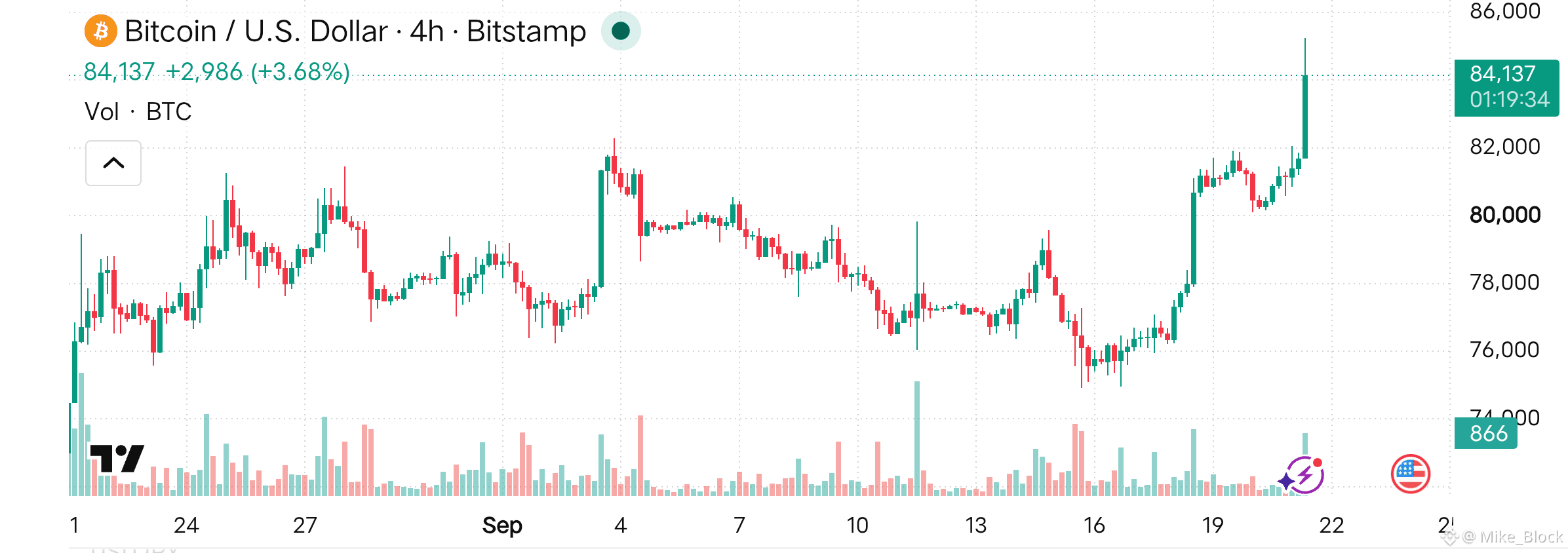
I’ve been watching this $BTC chart closely, and the breakout above the $82K area is the part that caught my attention. Price is now around $84.1K, with strong momentum and a clear push through the recent range.
BTC 4H Trade Setup
Entry Zone: $82,800 – $83,800
TP1: $85,000
TP2: $86,000
TP3: $88,000
Stop Loss: $81,500
The key thing I’m watching is whether BTC can hold above the $82K breakout area on a 4H basis. If that zone turns into support, momentum could continue toward the higher targets. If price falls back below it with strong selling volume, I would treat the breakout with caution.
Pro Tip: I wouldn’t chase a huge green candle. I’d rather watch for a retest and confirmation around the entry zone.
Disclaimer: This is a technical chart setup, not financial advice. Crypto is highly volatile. Manage risk and never trade more than you can afford to lose.
$BTC
{future}(BTCUSDT)
#BTC #BitcoinDunyamiz #XRPExchangeReservesHitSevenYearLow #BuffettStepsDownAsBerkshireChairman
I’ve been watching this $BTC chart closely, and the breakout above the $82K area is the part that caught my attention. Price is now around $84.1K, with strong momentum and a clear push through the recent range.
BTC 4H Trade Setup
Entry Zone: $82,800 – $83,800
TP1: $85,000
TP2: $86,000
TP3: $88,000
Stop Loss: $81,500
The key thing I’m watching is whether BTC can hold above the $82K breakout area on a 4H basis. If that zone turns into support, momentum could continue toward the higher targets. If price falls back below it with strong selling volume, I would treat the breakout with caution.
Pro Tip: I wouldn’t chase a huge green candle. I’d rather watch for a retest and confirmation around the entry zone.
Disclaimer: This is a technical chart setup, not financial advice. Crypto is highly volatile. Manage risk and never trade more than you can afford to lose.
$BTC
#BTC #BitcoinDunyamiz #XRPExchangeReservesHitSevenYearLow #BuffettStepsDownAsBerkshireChairman
BTC 4H Trade Setup
Entry Zone: $82,800 – $83,800
TP1: $85,000
TP2: $86,000
TP3: $88,000
Stop Loss: $81,500
The key thing I’m watching is whether BTC can hold above the $82K breakout area on a 4H basis. If that zone turns into support, momentum could continue toward the higher targets. If price falls back below it with strong selling volume, I would treat the breakout with caution.
Pro Tip: I wouldn’t chase a huge green candle. I’d rather watch for a retest and confirmation around the entry zone.
Disclaimer: This is a technical chart setup, not financial advice. Crypto is highly volatile. Manage risk and never trade more than you can afford to lose.
$BTC
#BTC #BitcoinDunyamiz #XRPExchangeReservesHitSevenYearLow #BuffettStepsDownAsBerkshireChairman
3
1.6k
·
--
Haussier
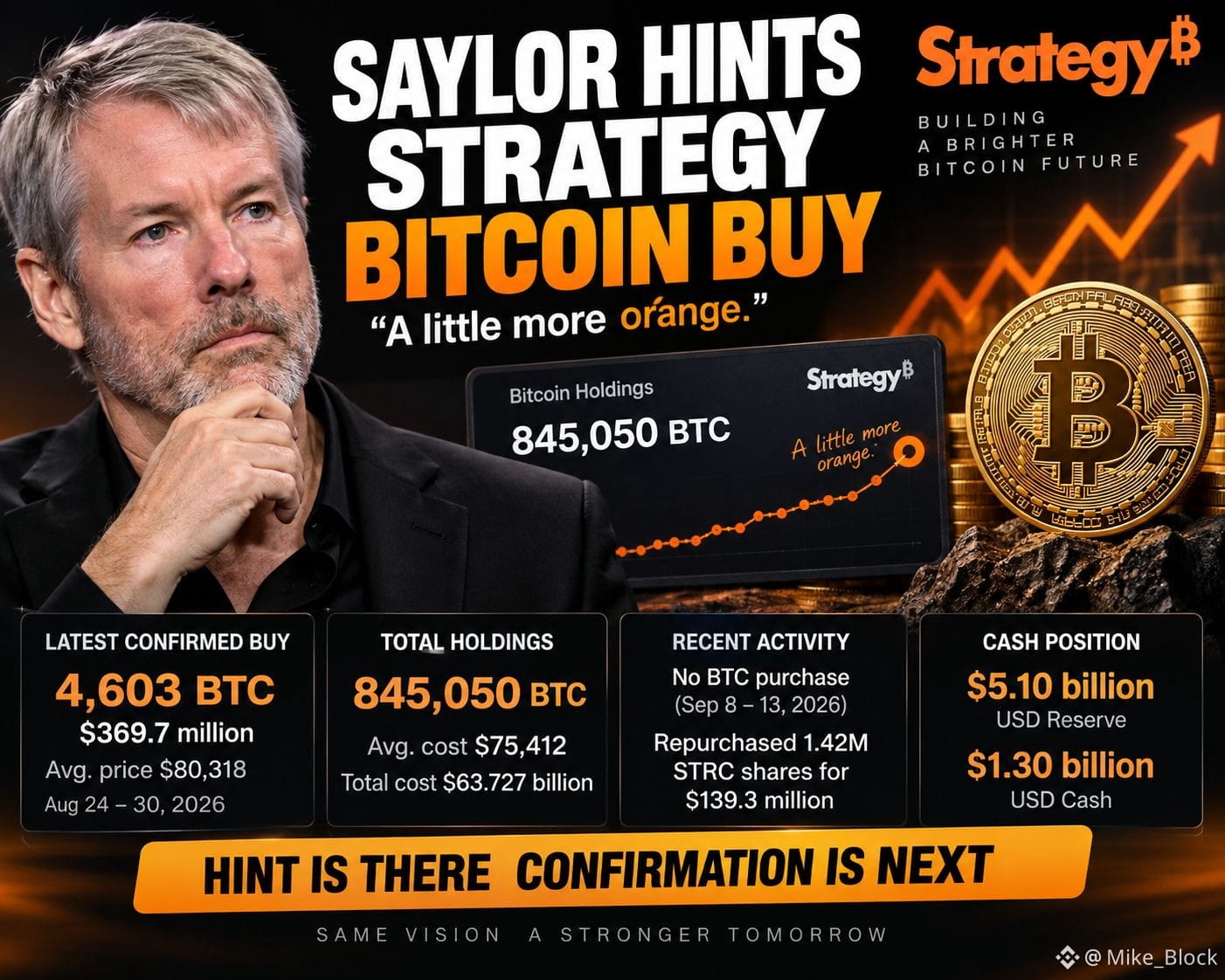
I have been watching #SaylorHintsStrategyBitcoinBuy closely, and something interesting is starting to develop.
Michael Saylor recently shared Strategy’s Bitcoin accumulation chart with the words “A little more orange.” That caught my attention because the orange marks on the chart represent Bitcoin purchases.
But there is an important detail here: this is still a hint, not official confirmation of a new BTC purchase.
The latest confirmed numbers show Strategy holding around 845,050 BTC, with an average purchase price near $75,412 per Bitcoin. Its most recently confirmed buy was 4,603 BTC for roughly $369.7 million, at an average price of about $80,318.
What makes this more interesting is that Strategy had recently paused Bitcoin purchases while allocating capital toward its preferred shares and maintaining a large cash reserve.
So right now, I see this as a signal worth watching rather than confirmed news.
If the next disclosure shows another BTC purchase, Saylor’s “little more orange” comment will make much more sense.
#strategy #MichaelSaylor #SaylorHintsStrategyBitcoinBuy #Crypto
$BTC
{future}(BTCUSDT)
I have been watching #SaylorHintsStrategyBitcoinBuy closely, and something interesting is starting to develop.
Michael Saylor recently shared Strategy’s Bitcoin accumulation chart with the words “A little more orange.” That caught my attention because the orange marks on the chart represent Bitcoin purchases.
But there is an important detail here: this is still a hint, not official confirmation of a new BTC purchase.
The latest confirmed numbers show Strategy holding around 845,050 BTC, with an average purchase price near $75,412 per Bitcoin. Its most recently confirmed buy was 4,603 BTC for roughly $369.7 million, at an average price of about $80,318.
What makes this more interesting is that Strategy had recently paused Bitcoin purchases while allocating capital toward its preferred shares and maintaining a large cash reserve.
So right now, I see this as a signal worth watching rather than confirmed news.
If the next disclosure shows another BTC purchase, Saylor’s “little more orange” comment will make much more sense.
#strategy #MichaelSaylor #SaylorHintsStrategyBitcoinBuy #Crypto
$BTC
Michael Saylor recently shared Strategy’s Bitcoin accumulation chart with the words “A little more orange.” That caught my attention because the orange marks on the chart represent Bitcoin purchases.
But there is an important detail here: this is still a hint, not official confirmation of a new BTC purchase.
The latest confirmed numbers show Strategy holding around 845,050 BTC, with an average purchase price near $75,412 per Bitcoin. Its most recently confirmed buy was 4,603 BTC for roughly $369.7 million, at an average price of about $80,318.
What makes this more interesting is that Strategy had recently paused Bitcoin purchases while allocating capital toward its preferred shares and maintaining a large cash reserve.
So right now, I see this as a signal worth watching rather than confirmed news.
If the next disclosure shows another BTC purchase, Saylor’s “little more orange” comment will make much more sense.
#strategy #MichaelSaylor #SaylorHintsStrategyBitcoinBuy #Crypto
$BTC
2
3
533
·
--
Haussier
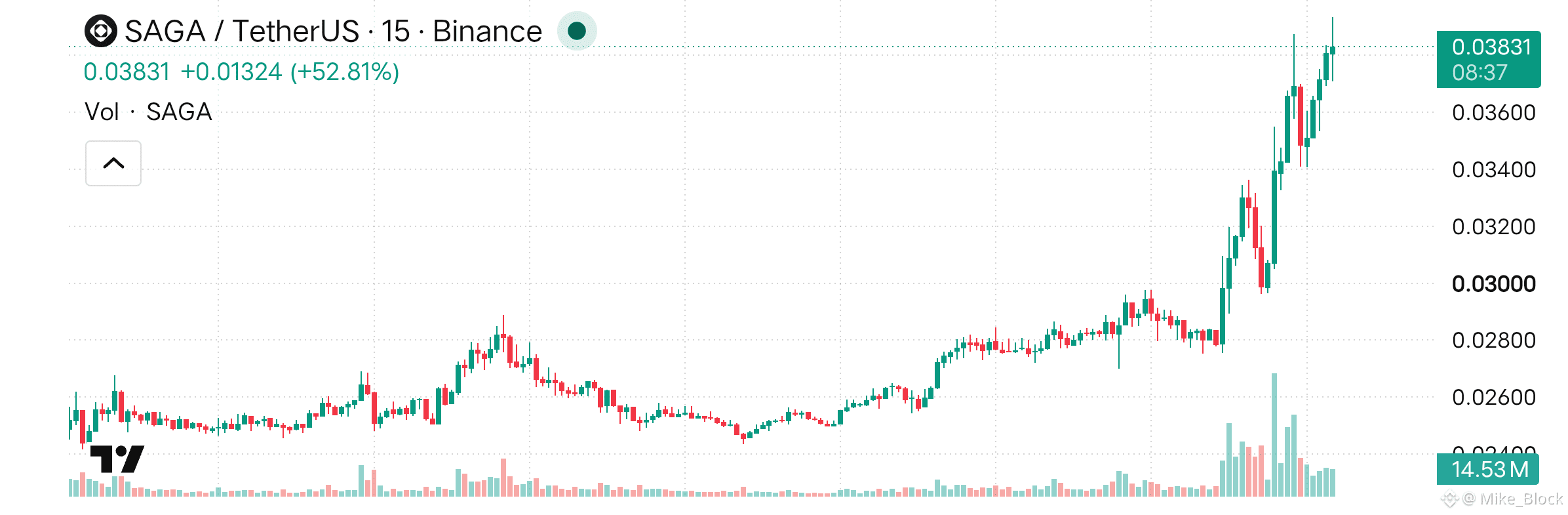
I’ve been watching $SAGA closely, and this move is getting serious. 🔥
SAGA has broken out with strong momentum and volume. After such a sharp push, I would avoid chasing the candle and instead watch for a controlled pullback before considering an entry.
Entry Zone
$0.0368 – $0.0376
TP1
$0.0395
TP2
$0.0415
TP3
$0.0440
Stop Loss
$0.0347
Pro Tip
The move is already extended, so patience matters here. If SAGA holds the entry zone with volume, momentum could continue. If it loses the stop-loss area, the setup is invalidated.
Disclaimer: This is a technical-analysis setup for educational purposes, not financial advice. Crypto is highly volatile manage risk and never trade more than you can afford to lose.
$SAGA
{future}(SAGAUSDT)
#VietnamPlansFirstCryptoLicensesIn2026 #HKCompletesFirstHKDStablecoinUseCase #BTCBreaks80K #XRPExchangeReservesHitSevenYearLow
I’ve been watching $SAGA closely, and this move is getting serious. 🔥
SAGA has broken out with strong momentum and volume. After such a sharp push, I would avoid chasing the candle and instead watch for a controlled pullback before considering an entry.
Entry Zone
$0.0368 – $0.0376
TP1
$0.0395
TP2
$0.0415
TP3
$0.0440
Stop Loss
$0.0347
Pro Tip
The move is already extended, so patience matters here. If SAGA holds the entry zone with volume, momentum could continue. If it loses the stop-loss area, the setup is invalidated.
Disclaimer: This is a technical-analysis setup for educational purposes, not financial advice. Crypto is highly volatile manage risk and never trade more than you can afford to lose.
$SAGA
#VietnamPlansFirstCryptoLicensesIn2026 #HKCompletesFirstHKDStablecoinUseCase #BTCBreaks80K #XRPExchangeReservesHitSevenYearLow
SAGA has broken out with strong momentum and volume. After such a sharp push, I would avoid chasing the candle and instead watch for a controlled pullback before considering an entry.
Entry Zone
$0.0368 – $0.0376
TP1
$0.0395
TP2
$0.0415
TP3
$0.0440
Stop Loss
$0.0347
Pro Tip
The move is already extended, so patience matters here. If SAGA holds the entry zone with volume, momentum could continue. If it loses the stop-loss area, the setup is invalidated.
Disclaimer: This is a technical-analysis setup for educational purposes, not financial advice. Crypto is highly volatile manage risk and never trade more than you can afford to lose.
$SAGA
#VietnamPlansFirstCryptoLicensesIn2026 #HKCompletesFirstHKDStablecoinUseCase #BTCBreaks80K #XRPExchangeReservesHitSevenYearLow
1
576
·
--
Haussier
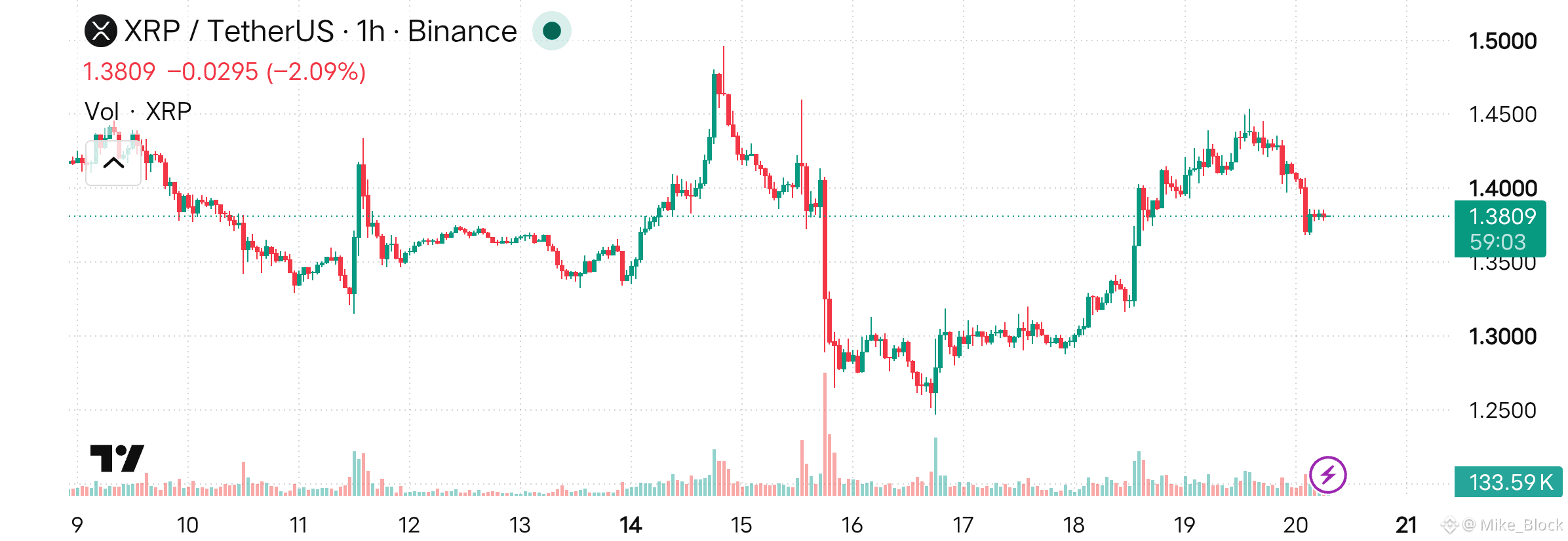
$XRP Setup I’m Watching Closely 👀
I have been watching XRP on the 1H chart, and what caught my attention is the strong move from the $1.30 area followed by a pullback from around $1.44. Right now, I’m watching whether the $1.36–$1.38 zone can hold as support.
If buyers step back in here, the next resistance areas could become interesting.
Entry Zone
$1.365 – $1.385
TP1
$1.410
TP2
$1.440
TP3
$1.480
Stop Loss
$1.345
Pro Tip
I would watch the 1H candles around the entry zone. A strong rejection with improving volume would make the setup more interesting, while a clean break below support could invalidate it.
Disclaimer: This is a chart-based setup for educational purposes, not financial advice. Crypto is highly volatile. Always manage risk and do your own research.
$XRP
{future}(XRPUSDT)
#BTCBreaks80K #VietnamPlansFirstCryptoLicensesIn2026 #BitcoinMarketCapTopsTesla #xrp
$XRP Setup I’m Watching Closely 👀
I have been watching XRP on the 1H chart, and what caught my attention is the strong move from the $1.30 area followed by a pullback from around $1.44. Right now, I’m watching whether the $1.36–$1.38 zone can hold as support.
If buyers step back in here, the next resistance areas could become interesting.
Entry Zone
$1.365 – $1.385
TP1
$1.410
TP2
$1.440
TP3
$1.480
Stop Loss
$1.345
Pro Tip
I would watch the 1H candles around the entry zone. A strong rejection with improving volume would make the setup more interesting, while a clean break below support could invalidate it.
Disclaimer: This is a chart-based setup for educational purposes, not financial advice. Crypto is highly volatile. Always manage risk and do your own research.
$XRP
#BTCBreaks80K #VietnamPlansFirstCryptoLicensesIn2026 #BitcoinMarketCapTopsTesla #xrp
I have been watching XRP on the 1H chart, and what caught my attention is the strong move from the $1.30 area followed by a pullback from around $1.44. Right now, I’m watching whether the $1.36–$1.38 zone can hold as support.
If buyers step back in here, the next resistance areas could become interesting.
Entry Zone
$1.365 – $1.385
TP1
$1.410
TP2
$1.440
TP3
$1.480
Stop Loss
$1.345
Pro Tip
I would watch the 1H candles around the entry zone. A strong rejection with improving volume would make the setup more interesting, while a clean break below support could invalidate it.
Disclaimer: This is a chart-based setup for educational purposes, not financial advice. Crypto is highly volatile. Always manage risk and do your own research.
$XRP
#BTCBreaks80K #VietnamPlansFirstCryptoLicensesIn2026 #BitcoinMarketCapTopsTesla #xrp
2
602
Connectez-vous pour découvrir plus de contenu
Rejoignez la communauté mondiale des adeptes de cryptomonnaies sur Binance Square
⚡️ Suviez les dernières informations importantes sur les cryptomonnaies.
💬 Jugé digne de confiance par la plus grande plateforme d’échange de cryptomonnaies au monde.
👍 Découvrez les connaissances que partagent les créateurs vérifiés.
Adresse e-mail/Nº de téléphone