
胖鸟
2.3k Posts

胖鸟
Report
Block User
不喜欢卷
152 Following
1.3K+ Followers
3.4K+ Liked
Posts
All
Quotes
·
--
$UNI I faintly remember the UNI token airdrop back in 20 years ago—that was the first time I got a big stack of tokens on-chain. Back then, I even lost the seed phrases for a few wallets. In the blink of an eye, so many years have passed; it really makes you sigh
{spot}(UNIUSDT)
$UNI I faintly remember the UNI token airdrop back in 20 years ago—that was the first time I got a big stack of tokens on-chain. Back then, I even lost the seed phrases for a few wallets. In the blink of an eye, so many years have passed; it really makes you sigh


12
1
6
12.9k
·
--
These skin-swap projects like $APM , it’s better to stay away in the future.
These skin-swap projects like $APM , it’s better to stay away in the future.
3
1
1.5k
·
--
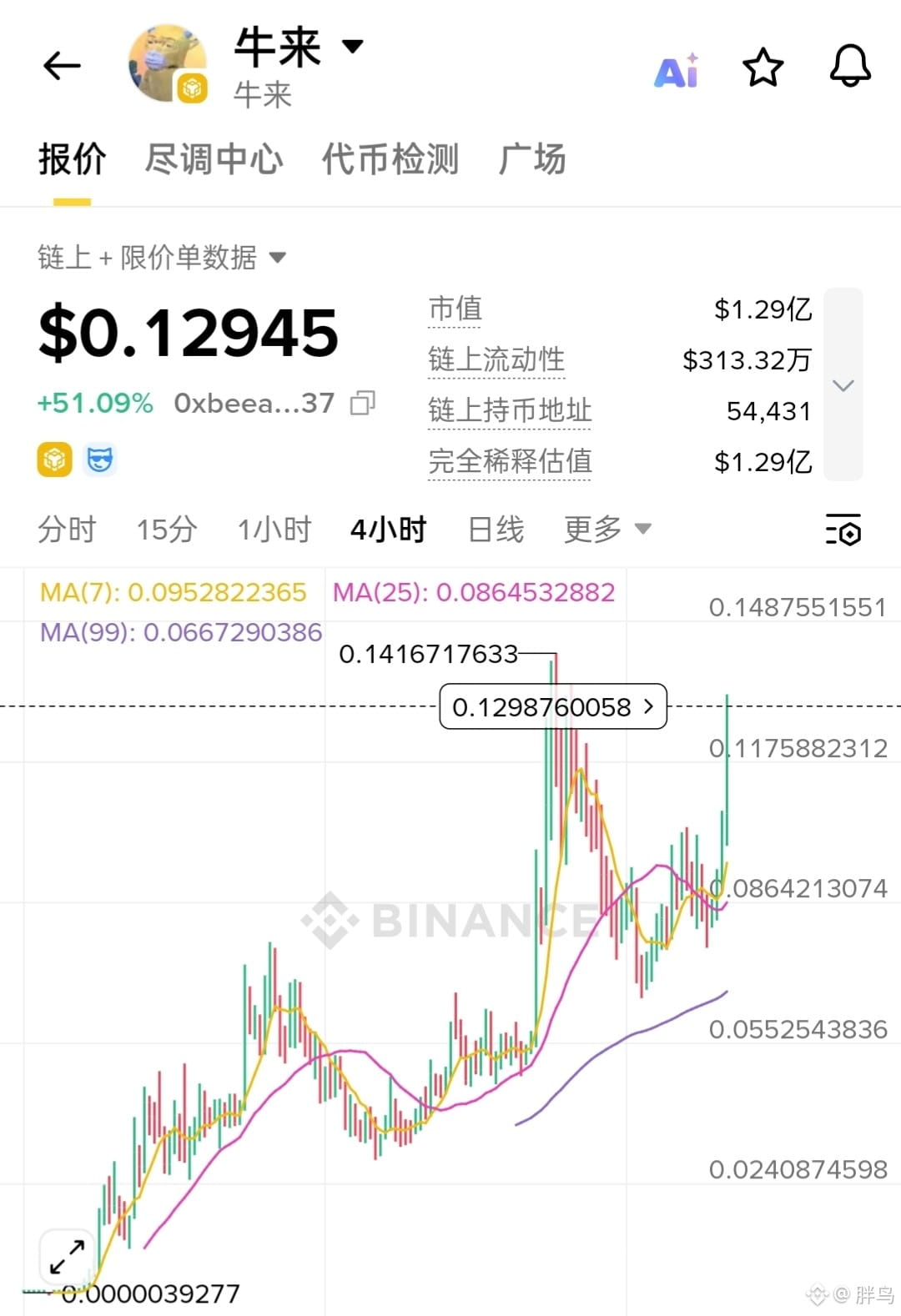
$牛来 is truly rekindling the glory of BSC; who would have thought a meme like this could break a hundred million?
$牛来 is truly rekindling the glory of BSC; who would have thought a meme like this could break a hundred million?
1.3k
·
--
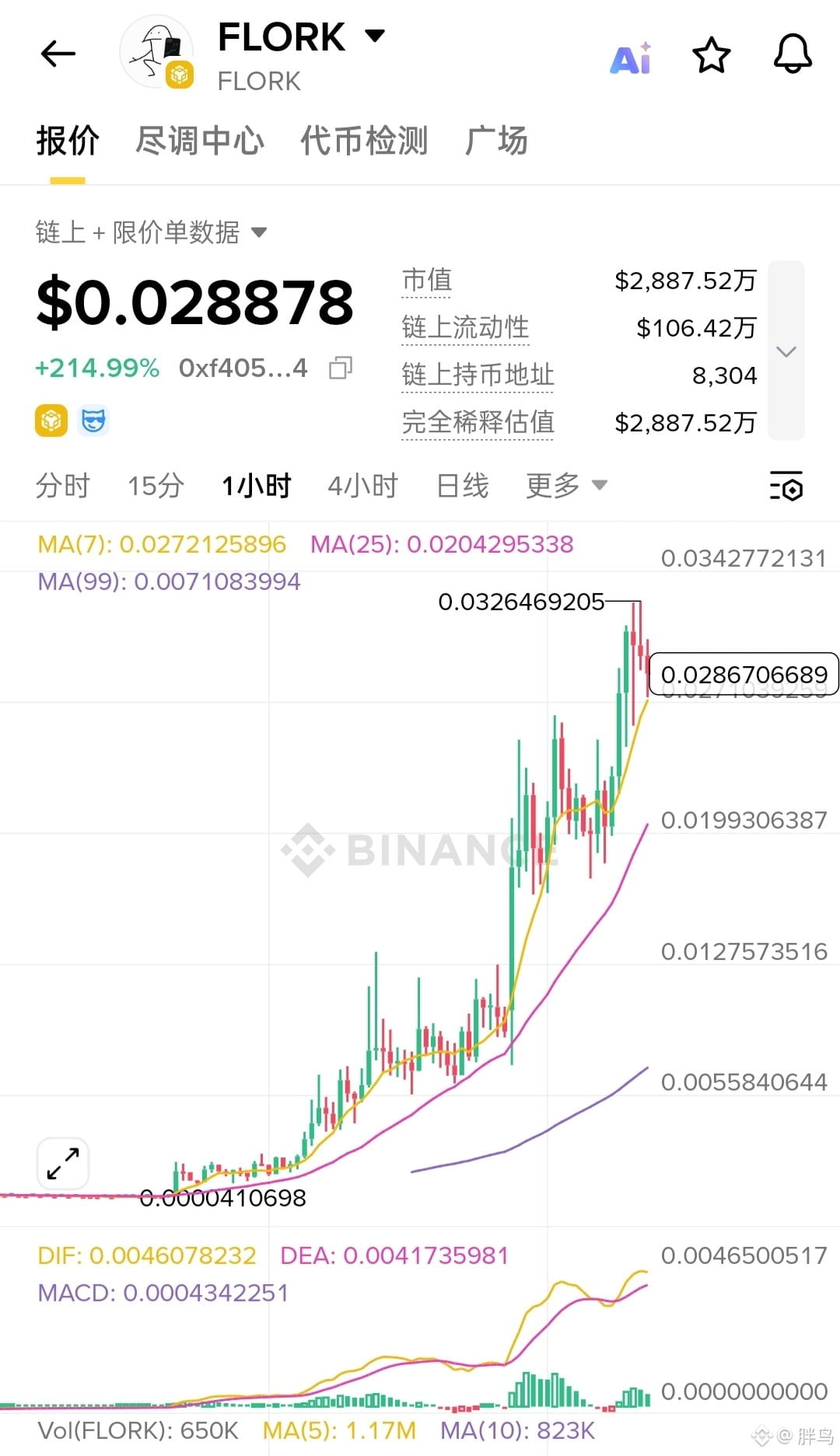
$FLORK Is this another Pal story? The meme battle is getting more fun and more fun
$FLORK Is this another Pal story? The meme battle is getting more fun and more fun

2
630
·
--
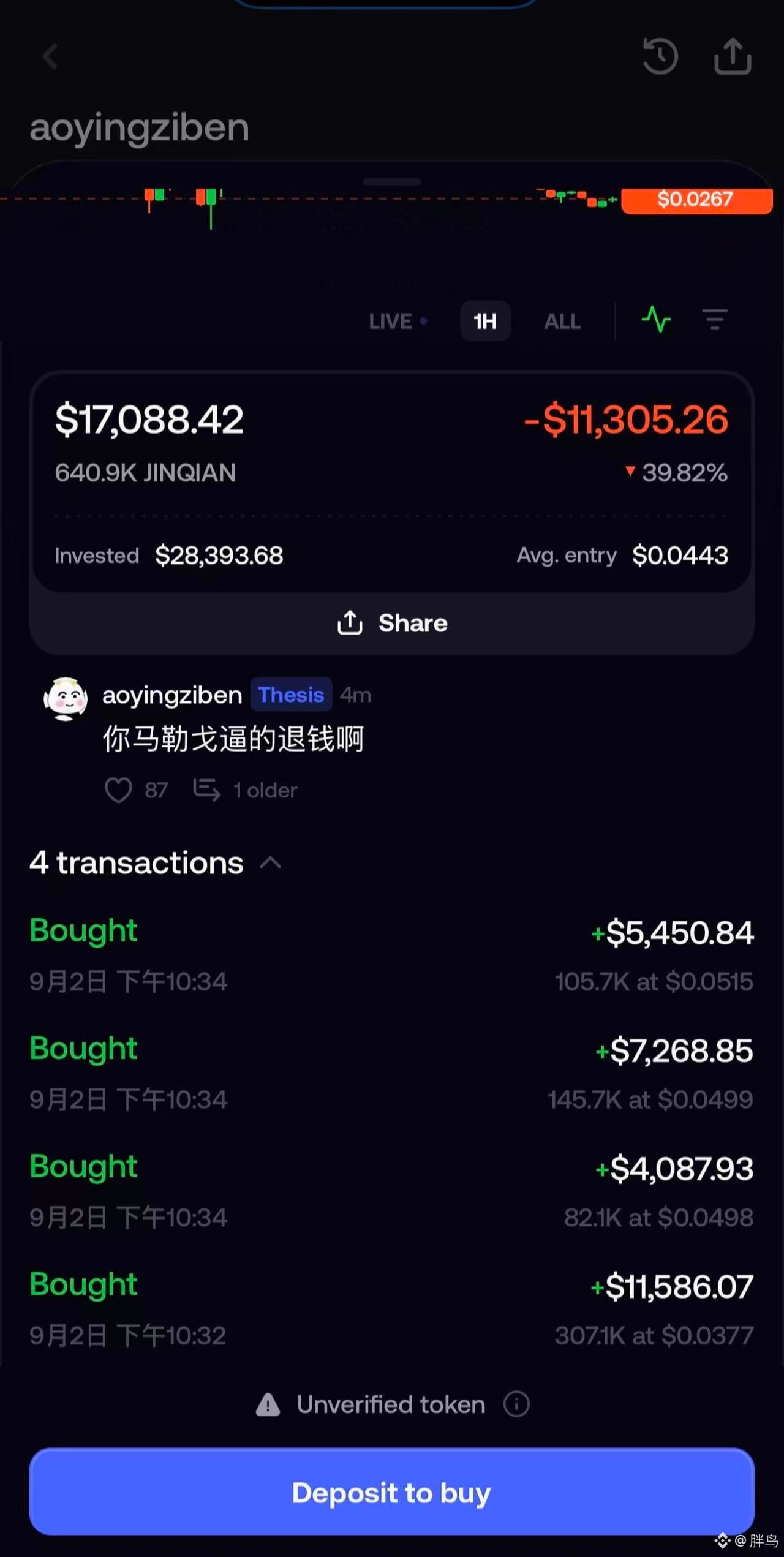
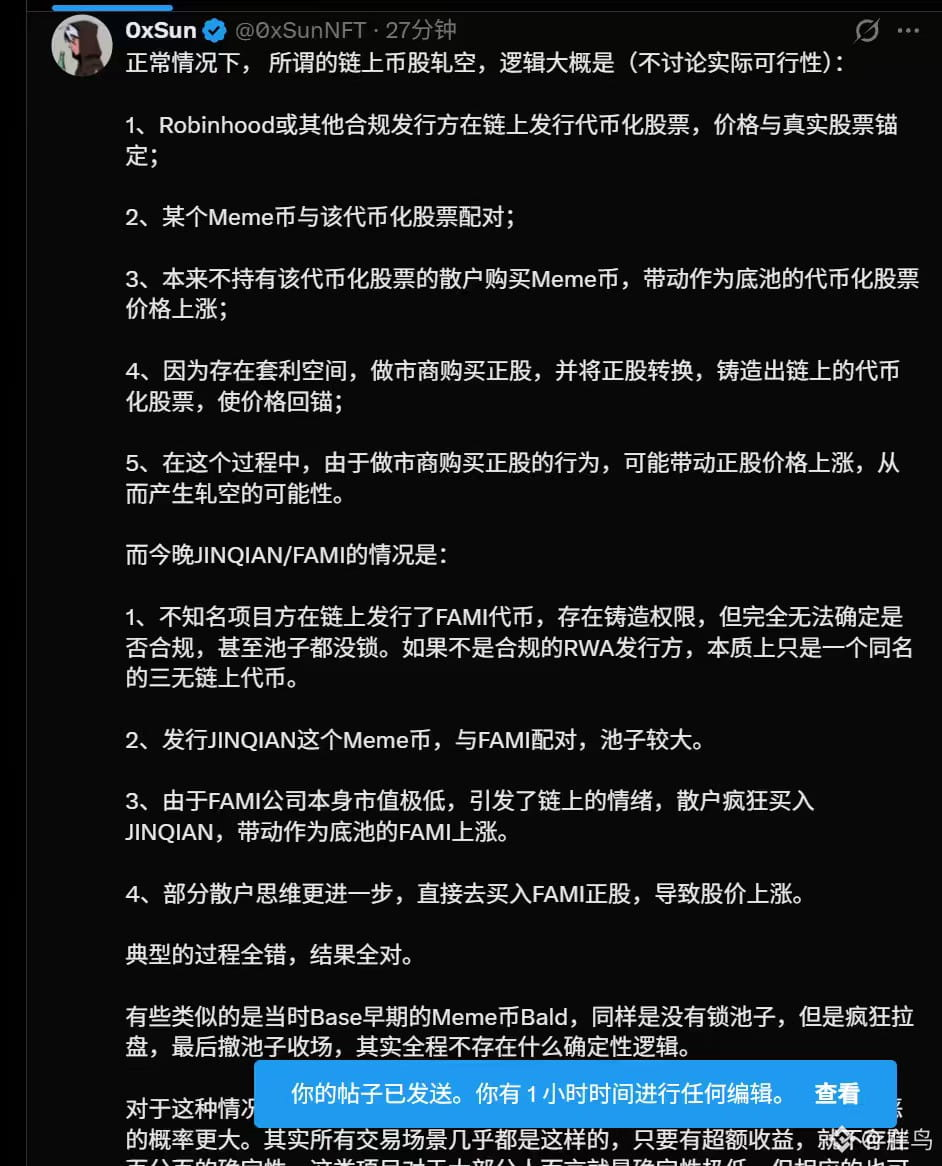
Recently the Robinhood chain has been too exciting. We were promised a meme bull market—why am I the one losing money?
Recently the Robinhood chain has been too exciting. We were promised a meme bull market—why am I the one losing money?
3
660
·
--
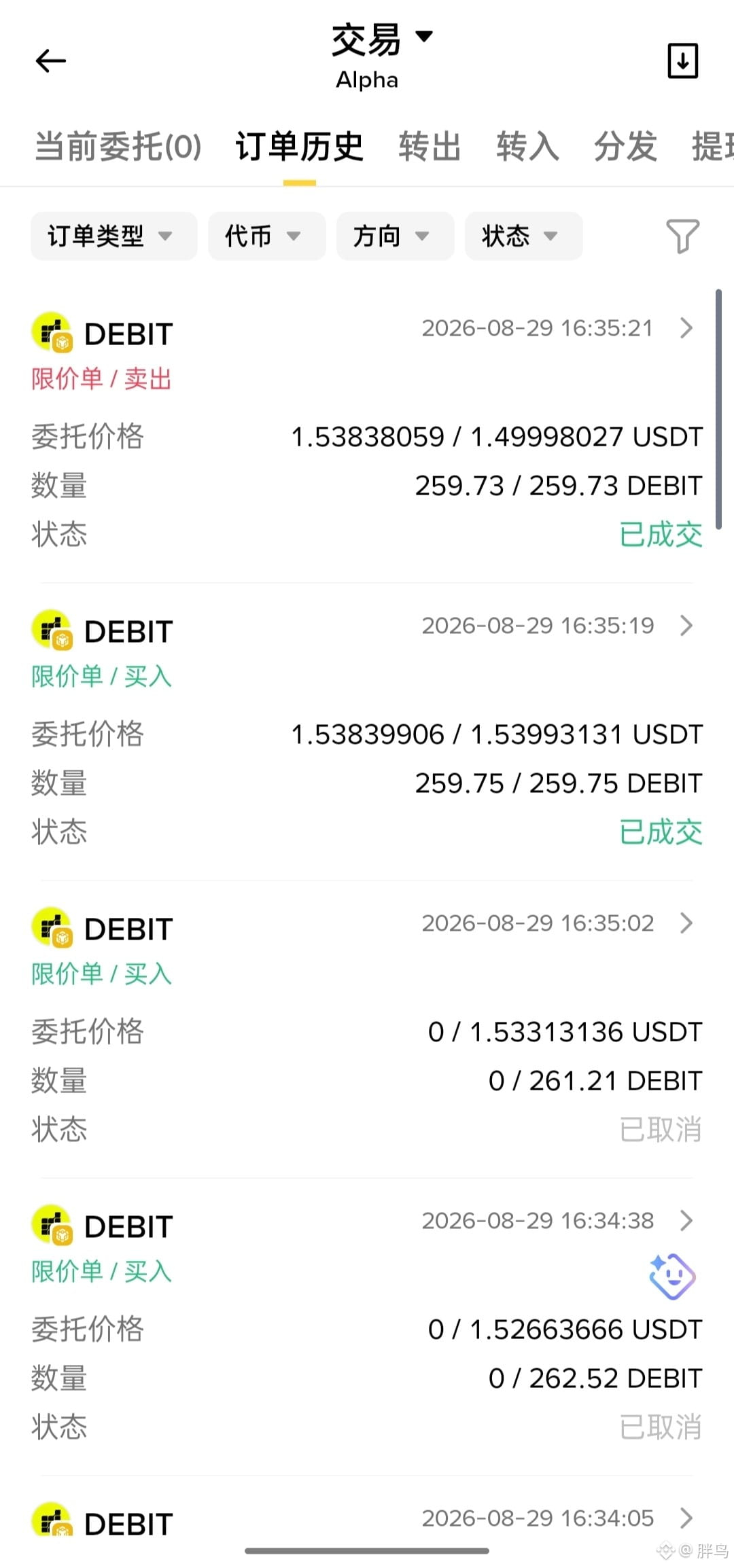
Just tested the 4x coin $DEBIT , went with the trend for 10 trades and made 10 dollars profit. The volatility looks a bit high, but right now following the trend is still pretty easy to do.
Just tested the 4x coin $DEBIT , went with the trend for 10 trades and made 10 dollars profit. The volatility looks a bit high, but right now following the trend is still pretty easy to do.
1
866
·
--
Today $GRVT 4x points have disappeared. Everyone is using which one as a replacement—please recommend it.
How many brothers are still playing #ALPHA trading contest $KGEN ?
I just clicked in to take a look—everyone starts with rolls worth 400k+ 🤫
Today $GRVT 4x points have disappeared. Everyone is using which one as a replacement—please recommend it.
How many brothers are still playing #ALPHA trading contest $KGEN ?
I just clicked in to take a look—everyone starts with rolls worth 400k+ 🤫
How many brothers are still playing #ALPHA trading contest $KGEN ?
I just clicked in to take a look—everyone starts with rolls worth 400k+ 🤫

2
1.1k
·
--
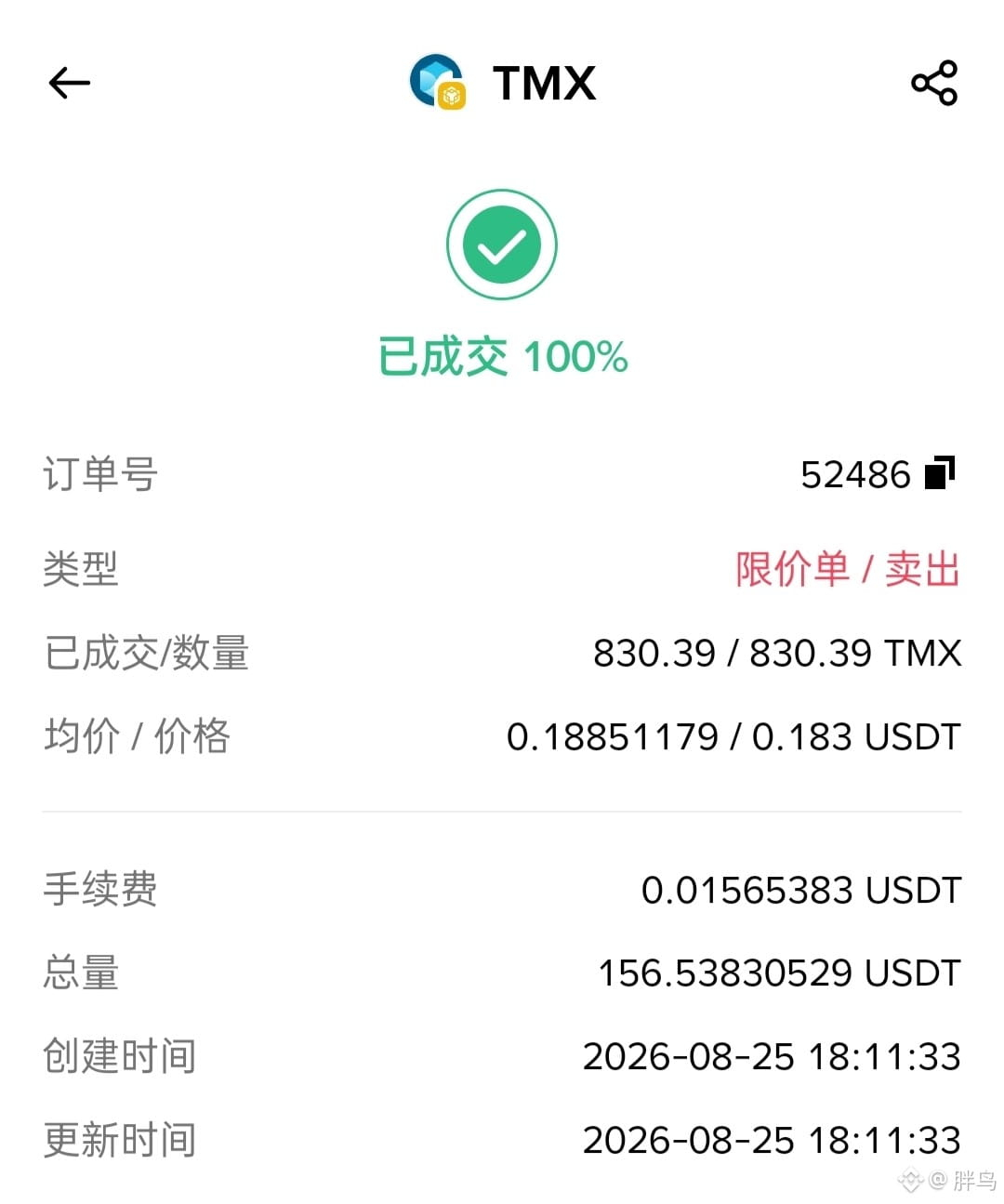
#ALPHA It's been a long time since I’ve had such big fur, $TMX perfectly avoided the top. Hope today’s airdrop keeps delivering too
#ALPHA It's been a long time since I’ve had such big fur, $TMX perfectly avoided the top. Hope today’s airdrop keeps delivering too
902
·
--
I don’t know whether tomorrow’s #ALPHA $tmx air drop can be “eat on” 😂—it’s already down to level 16+1 now
I don’t know whether tomorrow’s #ALPHA $tmx air drop can be “eat on” 😂—it’s already down to level 16+1 now

2
1
417
·
--
Recently, ETH has returned to the center of market attention, and many discussions have come back to familiar topics—how much more can it rise? Where is the next target? When should you take profit?
During this round of rally, I’ve been thinking about a slightly different question: if someone truly believes ETH still has room to grow in the future, then before the run-up is fully realized, how should the value of assets during this period be handled?
Everyone is thinking about how to improve capital efficiency, but they’re overlooking one point: the future value generated by an asset can actually be broken down.
And this is what I’ve found interesting about @termmax recently—it’s not merely building a lending protocol; it’s trying to split the future value of an asset across different dimensions.
The core design of TermMax is to recombine fixed income, interest portions, and collateral positions through three components: FT, XT, and GT.
Among them, FT is similar to a zero-coupon bond in traditional finance. Through the relationship of 1 FT + 1 XT = 1 Debt Token, TermMax splits a piece of debt into a fixed part and a variable part. You can continue holding the asset while rearranging future cash flows.
At the same time, the Gearing Token wraps the collateral and the debt position into an NFT—turning a complex leveraged position into a manageable whole, and making the position itself a manageable financial object. Of course, this direction also has a real-world issue: the market may not necessarily accept it.
It makes a clear distinction from past DeFi. But as the market gradually matures, competition may not be only about who can go up more.
From this perspective, what #termmax is exploring isn’t a simple yield product. Instead, it’s whether, when an asset needs to be held long-term, time itself can also become a kind of value that can be managed.
Recently, ETH has returned to the center of market attention, and many discussions have come back to familiar topics—how much more can it rise? Where is the next target? When should you take profit?
During this round of rally, I’ve been thinking about a slightly different question: if someone truly believes ETH still has room to grow in the future, then before the run-up is fully realized, how should the value of assets during this period be handled?
Everyone is thinking about how to improve capital efficiency, but they’re overlooking one point: the future value generated by an asset can actually be broken down.
And this is what I’ve found interesting about @TermMax recently—it’s not merely building a lending protocol; it’s trying to split the future value of an asset across different dimensions.
The core design of TermMax is to recombine fixed income, interest portions, and collateral positions through three components: FT, XT, and GT.
Among them, FT is similar to a zero-coupon bond in traditional finance. Through the relationship of 1 FT + 1 XT = 1 Debt Token, TermMax splits a piece of debt into a fixed part and a variable part. You can continue holding the asset while rearranging future cash flows.
At the same time, the Gearing Token wraps the collateral and the debt position into an NFT—turning a complex leveraged position into a manageable whole, and making the position itself a manageable financial object. Of course, this direction also has a real-world issue: the market may not necessarily accept it.
It makes a clear distinction from past DeFi. But as the market gradually matures, competition may not be only about who can go up more.
From this perspective, what #termmax is exploring isn’t a simple yield product. Instead, it’s whether, when an asset needs to be held long-term, time itself can also become a kind of value that can be managed.
During this round of rally, I’ve been thinking about a slightly different question: if someone truly believes ETH still has room to grow in the future, then before the run-up is fully realized, how should the value of assets during this period be handled?
Everyone is thinking about how to improve capital efficiency, but they’re overlooking one point: the future value generated by an asset can actually be broken down.
And this is what I’ve found interesting about @TermMax recently—it’s not merely building a lending protocol; it’s trying to split the future value of an asset across different dimensions.
The core design of TermMax is to recombine fixed income, interest portions, and collateral positions through three components: FT, XT, and GT.
Among them, FT is similar to a zero-coupon bond in traditional finance. Through the relationship of 1 FT + 1 XT = 1 Debt Token, TermMax splits a piece of debt into a fixed part and a variable part. You can continue holding the asset while rearranging future cash flows.
At the same time, the Gearing Token wraps the collateral and the debt position into an NFT—turning a complex leveraged position into a manageable whole, and making the position itself a manageable financial object. Of course, this direction also has a real-world issue: the market may not necessarily accept it.
It makes a clear distinction from past DeFi. But as the market gradually matures, competition may not be only about who can go up more.
From this perspective, what #termmax is exploring isn’t a simple yield product. Instead, it’s whether, when an asset needs to be held long-term, time itself can also become a kind of value that can be managed.
406
·
--
The blockchain space has never lacked projects that create hype concepts, but what truly makes large funds dare to sink real money is always a competition of the chip (token allocation) structure, cross-chain ecosystem penetration strength, and the implementability certainty of the long-term roadmap.
This time, we break down the recent @termmax project’s token allocation distribution, its expansion across multiple chains, and the endgame evolution roadmap 👇
First, let’s look at a token allocation issue that’s easiest to overlook right before a project goes live
👉 Fixed zero inflation: The $TMX total supply is permanently capped at 1 billion tokens. The initial circulating supply is about 20% (200 million tokens). Among them, 28% for investors and 15% for the team are all set up with a 12-month lock-up period; thereafter, they are linearly released over 24 to 30 months.
This means that within the first year after the TGE, there is no scenario in which institutions and the team have massive sell-off pressure in the secondary market—at least they don’t choose to release large amounts of liquid tokens in the short term, leaving the market with a longer absorption window.
👉 Full-chain ecosystem matrix
TermMax hasn’t limited the battleground to a single mainnet. Instead, it has directly spread fixed lending and the leverage market across a multi-chain ecosystem. Combined with a dual-oracle system and deep code audits through ABDK, LSTs, LRTs, and native assets across various emerging ecosystems can all be integrated with predictable fixed-rate leverage in a one-click manner.
👉 Trillion-level interest rate swaps (IRS) and real assets (RWA) as real-world backing
Looking at its 2026–2027 development plan, TermMax’s endgame ambition is very clear:
Something big is happening in 2026 Q3! Launch TGE, list on mainstream CEXs, start distribution of profits from the staking pool, and distribute token air drops to early supporters. In addition, launch on-chain interest rate swap functionality and fully connect the RWA asset chain—bringing the largest interest rate swaps and credit asset markets from traditional finance directly on-chain.
From a clean token release structure, to a multi-chain footprint spanning Berachain and BTC L2, to a long-term roadmap targeting RWA and interest rate swaps—$TMX demonstrates substantial architectural depth right ahead of the TGE. As the Q3 key milestones draw near, the core target that builds this on-chain fixed-income foundation is worth closely watching.
#termmax
The blockchain space has never lacked projects that create hype concepts, but what truly makes large funds dare to sink real money is always a competition of the chip (token allocation) structure, cross-chain ecosystem penetration strength, and the implementability certainty of the long-term roadmap.
This time, we break down the recent @TermMax project’s token allocation distribution, its expansion across multiple chains, and the endgame evolution roadmap 👇
First, let’s look at a token allocation issue that’s easiest to overlook right before a project goes live
👉 Fixed zero inflation: The $TMX total supply is permanently capped at 1 billion tokens. The initial circulating supply is about 20% (200 million tokens). Among them, 28% for investors and 15% for the team are all set up with a 12-month lock-up period; thereafter, they are linearly released over 24 to 30 months.
This means that within the first year after the TGE, there is no scenario in which institutions and the team have massive sell-off pressure in the secondary market—at least they don’t choose to release large amounts of liquid tokens in the short term, leaving the market with a longer absorption window.
👉 Full-chain ecosystem matrix
TermMax hasn’t limited the battleground to a single mainnet. Instead, it has directly spread fixed lending and the leverage market across a multi-chain ecosystem. Combined with a dual-oracle system and deep code audits through ABDK, LSTs, LRTs, and native assets across various emerging ecosystems can all be integrated with predictable fixed-rate leverage in a one-click manner.
👉 Trillion-level interest rate swaps (IRS) and real assets (RWA) as real-world backing
Looking at its 2026–2027 development plan, TermMax’s endgame ambition is very clear:
Something big is happening in 2026 Q3! Launch TGE, list on mainstream CEXs, start distribution of profits from the staking pool, and distribute token air drops to early supporters. In addition, launch on-chain interest rate swap functionality and fully connect the RWA asset chain—bringing the largest interest rate swaps and credit asset markets from traditional finance directly on-chain.
From a clean token release structure, to a multi-chain footprint spanning Berachain and BTC L2, to a long-term roadmap targeting RWA and interest rate swaps—$TMX demonstrates substantial architectural depth right ahead of the TGE. As the Q3 key milestones draw near, the core target that builds this on-chain fixed-income foundation is worth closely watching.
#termmax
This time, we break down the recent @TermMax project’s token allocation distribution, its expansion across multiple chains, and the endgame evolution roadmap 👇
First, let’s look at a token allocation issue that’s easiest to overlook right before a project goes live
👉 Fixed zero inflation: The $TMX total supply is permanently capped at 1 billion tokens. The initial circulating supply is about 20% (200 million tokens). Among them, 28% for investors and 15% for the team are all set up with a 12-month lock-up period; thereafter, they are linearly released over 24 to 30 months.
This means that within the first year after the TGE, there is no scenario in which institutions and the team have massive sell-off pressure in the secondary market—at least they don’t choose to release large amounts of liquid tokens in the short term, leaving the market with a longer absorption window.
👉 Full-chain ecosystem matrix
TermMax hasn’t limited the battleground to a single mainnet. Instead, it has directly spread fixed lending and the leverage market across a multi-chain ecosystem. Combined with a dual-oracle system and deep code audits through ABDK, LSTs, LRTs, and native assets across various emerging ecosystems can all be integrated with predictable fixed-rate leverage in a one-click manner.
👉 Trillion-level interest rate swaps (IRS) and real assets (RWA) as real-world backing
Looking at its 2026–2027 development plan, TermMax’s endgame ambition is very clear:
Something big is happening in 2026 Q3! Launch TGE, list on mainstream CEXs, start distribution of profits from the staking pool, and distribute token air drops to early supporters. In addition, launch on-chain interest rate swap functionality and fully connect the RWA asset chain—bringing the largest interest rate swaps and credit asset markets from traditional finance directly on-chain.
From a clean token release structure, to a multi-chain footprint spanning Berachain and BTC L2, to a long-term roadmap targeting RWA and interest rate swaps—$TMX demonstrates substantial architectural depth right ahead of the TGE. As the Q3 key milestones draw near, the core target that builds this on-chain fixed-income foundation is worth closely watching.
#termmax
256
·
--
Partly True
Why is @termmax , set to undergo a TGE soon, quietly being heavily accumulated by major institutions like Keyrock, Edge Capital, and market makers?
Many people think it’s just another fixed-interest lending product. But after a close experience, I found that what it really does is to squeeze on-chain fragmented liquidity and capital efficiency to the absolute extreme.
Let’s bring out the magnifying glass and dig deeper into three highly penetrating aspects of it.
In traditional market making, the most painful part is that funds get scattered and locked into separate term pools. I’m sure everyone has experienced liquidity shortages—losses happen all too often. TermMax addresses this issue by introducing a virtual liquidity aggregation mechanism.
In other words, before the market maker’s funds are actually lent out, they can be distributed across multiple order depths at the same time—almost like teleportation. As long as any match results in a trade, the system automatically synchronizes settlement, instantly pulling the liquidity depth to full. This effectively fixes the “dead depth” problem that occurs when fixed-term lending pools are increased.
If there’s one feature that stands out the most, it’s its native cross-chain capability with LayerZero OFT. TMX doesn’t confine itself to a single Ethereum chain; instead, it is natively integrated with the LayerZero OFT standard. Whether it’s BNB Chain, Arbitrum, Base, or Berachain, asset and liability positions can be natively and seamlessly transferred cross-chain—making cross-chain interest-rate spread arbitrage extremely smooth.
And it also has a 100% EU MiCA-compliant license. TermMax is one of the very few DeFi protocols that fully disclosed the MiCA Title II whitepaper before the TGE and obtained an official legal opinion. This is relatively rare.
From 830,000+ registered wallets and $64 million in TVL, to launching the TGE in Q3 and distributing early airdrops, TermMax is pushing fixed-rate on-chain lending toward genuine compliance and full-chain integration. This Q3 TGE train is definitely worth adding to the key watchlist.
#termmax
Why is @TermMax , set to undergo a TGE soon, quietly being heavily accumulated by major institutions like Keyrock, Edge Capital, and market makers?
Many people think it’s just another fixed-interest lending product. But after a close experience, I found that what it really does is to squeeze on-chain fragmented liquidity and capital efficiency to the absolute extreme.
Let’s bring out the magnifying glass and dig deeper into three highly penetrating aspects of it.
In traditional market making, the most painful part is that funds get scattered and locked into separate term pools. I’m sure everyone has experienced liquidity shortages—losses happen all too often. TermMax addresses this issue by introducing a virtual liquidity aggregation mechanism.
In other words, before the market maker’s funds are actually lent out, they can be distributed across multiple order depths at the same time—almost like teleportation. As long as any match results in a trade, the system automatically synchronizes settlement, instantly pulling the liquidity depth to full. This effectively fixes the “dead depth” problem that occurs when fixed-term lending pools are increased.
If there’s one feature that stands out the most, it’s its native cross-chain capability with LayerZero OFT. TMX doesn’t confine itself to a single Ethereum chain; instead, it is natively integrated with the LayerZero OFT standard. Whether it’s BNB Chain, Arbitrum, Base, or Berachain, asset and liability positions can be natively and seamlessly transferred cross-chain—making cross-chain interest-rate spread arbitrage extremely smooth.
And it also has a 100% EU MiCA-compliant license. TermMax is one of the very few DeFi protocols that fully disclosed the MiCA Title II whitepaper before the TGE and obtained an official legal opinion. This is relatively rare.
From 830,000+ registered wallets and $64 million in TVL, to launching the TGE in Q3 and distributing early airdrops, TermMax is pushing fixed-rate on-chain lending toward genuine compliance and full-chain integration. This Q3 TGE train is definitely worth adding to the key watchlist.
#termmax
Many people think it’s just another fixed-interest lending product. But after a close experience, I found that what it really does is to squeeze on-chain fragmented liquidity and capital efficiency to the absolute extreme.
Let’s bring out the magnifying glass and dig deeper into three highly penetrating aspects of it.
In traditional market making, the most painful part is that funds get scattered and locked into separate term pools. I’m sure everyone has experienced liquidity shortages—losses happen all too often. TermMax addresses this issue by introducing a virtual liquidity aggregation mechanism.
In other words, before the market maker’s funds are actually lent out, they can be distributed across multiple order depths at the same time—almost like teleportation. As long as any match results in a trade, the system automatically synchronizes settlement, instantly pulling the liquidity depth to full. This effectively fixes the “dead depth” problem that occurs when fixed-term lending pools are increased.
If there’s one feature that stands out the most, it’s its native cross-chain capability with LayerZero OFT. TMX doesn’t confine itself to a single Ethereum chain; instead, it is natively integrated with the LayerZero OFT standard. Whether it’s BNB Chain, Arbitrum, Base, or Berachain, asset and liability positions can be natively and seamlessly transferred cross-chain—making cross-chain interest-rate spread arbitrage extremely smooth.
And it also has a 100% EU MiCA-compliant license. TermMax is one of the very few DeFi protocols that fully disclosed the MiCA Title II whitepaper before the TGE and obtained an official legal opinion. This is relatively rare.
From 830,000+ registered wallets and $64 million in TVL, to launching the TGE in Q3 and distributing early airdrops, TermMax is pushing fixed-rate on-chain lending toward genuine compliance and full-chain integration. This Q3 TGE train is definitely worth adding to the key watchlist.
#termmax
313
·
--
Verified
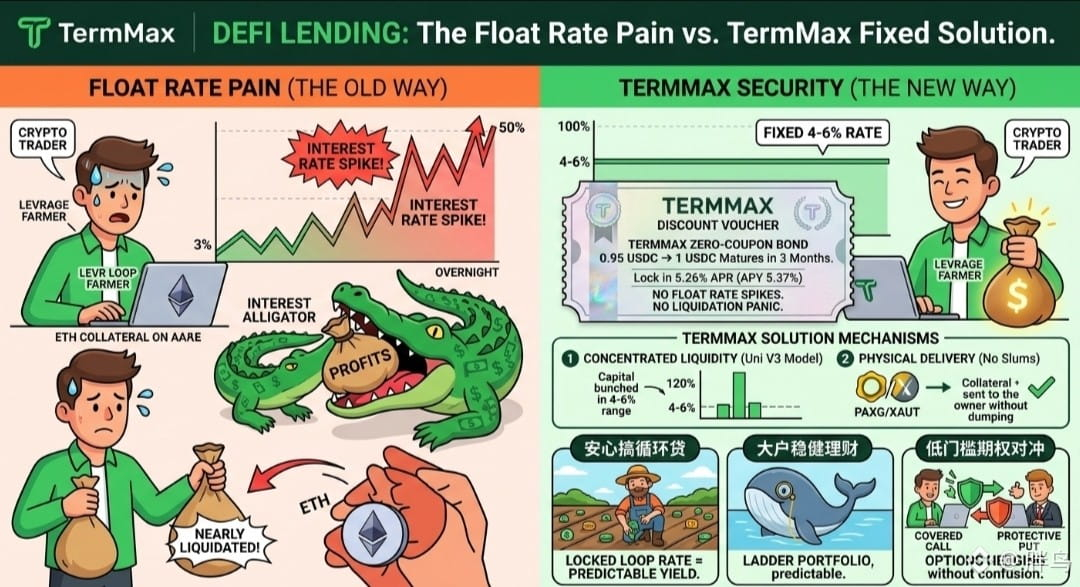
Floating-rate lending is truly the biggest pain point for DeFi players when it comes to leveraged arbitrage.
Recently, I used ETH as collateral, borrowed stablecoins at a 3% interest rate to do arbitrage. Then in the middle of the night, the market swung violently. The pool got drained—the borrowed funds ran out—and the borrowing rate instantly jumped to 50%. I woke up to find that all the arbitrage profits I worked so hard for had gone to interest, and I was almost liquidated.
This is the uncontrollable interest in floating-rate borrowing. Next, let’s talk about the @termmax that has been a recent key focus—and how it brings Uniswap V3’s concentrated liquidity mechanism into lending, building an underlying architecture for deterministic fixed rates + leveraged derivative products.🧵
Don’t be fooled by terms like zero-coupon bonds—they sound sophisticated, but the lending logic is basically like buying discounted exchange vouchers on-chain.
👉 Buy a 1 USDC exchange voucher that expires in 3 months for 0.95 USDC. At maturity, the system redeems it 1:1 for 1 USDC. You net a 0.05 USDC price difference. The moment you buy, the yield is locked in—no matter how chaotic the market becomes afterward, you won’t lose even a single cent of profit.
You might wonder: why weren’t fixed-rate products used before? Does TermMax actually work?
People didn’t use fixed-rate lending in the past because liquidity was too fragmented—too many pools, and not much money in each. Borrowing large amounts would cause high slippage.
TermMax borrows the concentrated liquidity approach from Uniswap V3: you can customize the order-rate range. For example, I only lend funds at an annualized rate of 4%–6%, so the liquidity doesn’t scatter everywhere.
👉 No forced liquidation via brutal sell-offs
Lending is most afraid of black swans. But with the TermMax protocol, the collateral is passed to the savers exactly as-is—no need to dump assets on the secondary market to liquidate. It avoids liquidity crises at the root.
With this kind of mechanism, you can create many different new things, such as:
👉 Comfortable looped lending: use interest-bearing collateral assets to borrow stablecoins and further amplify returns.
👉 Steady wealth management for big players: like buying government bonds—pick a maturity date, buy the voucher at a discount, and the predictability of returns is extremely high.
*👉 Low-barrier option hedging: by combining the maturity date with the in-kind settlement mechanism, advanced traders don’t need to use complicated, hard-to-understand options exchanges; they can directly build covered call + hedging combinations on their lending positions.
Today, as DeFi has developed, what on-chain players and institutions want isn’t just higher annualized returns—it’s also determinism and safety.
#termmax
Floating-rate lending is truly the biggest pain point for DeFi players when it comes to leveraged arbitrage.
Recently, I used ETH as collateral, borrowed stablecoins at a 3% interest rate to do arbitrage. Then in the middle of the night, the market swung violently. The pool got drained—the borrowed funds ran out—and the borrowing rate instantly jumped to 50%. I woke up to find that all the arbitrage profits I worked so hard for had gone to interest, and I was almost liquidated.
This is the uncontrollable interest in floating-rate borrowing. Next, let’s talk about the @TermMax that has been a recent key focus—and how it brings Uniswap V3’s concentrated liquidity mechanism into lending, building an underlying architecture for deterministic fixed rates + leveraged derivative products.🧵
Don’t be fooled by terms like zero-coupon bonds—they sound sophisticated, but the lending logic is basically like buying discounted exchange vouchers on-chain.
👉 Buy a 1 USDC exchange voucher that expires in 3 months for 0.95 USDC. At maturity, the system redeems it 1:1 for 1 USDC. You net a 0.05 USDC price difference. The moment you buy, the yield is locked in—no matter how chaotic the market becomes afterward, you won’t lose even a single cent of profit.
You might wonder: why weren’t fixed-rate products used before? Does TermMax actually work?
People didn’t use fixed-rate lending in the past because liquidity was too fragmented—too many pools, and not much money in each. Borrowing large amounts would cause high slippage.
TermMax borrows the concentrated liquidity approach from Uniswap V3: you can customize the order-rate range. For example, I only lend funds at an annualized rate of 4%–6%, so the liquidity doesn’t scatter everywhere.
👉 No forced liquidation via brutal sell-offs
Lending is most afraid of black swans. But with the TermMax protocol, the collateral is passed to the savers exactly as-is—no need to dump assets on the secondary market to liquidate. It avoids liquidity crises at the root.
With this kind of mechanism, you can create many different new things, such as:
👉 Comfortable looped lending: use interest-bearing collateral assets to borrow stablecoins and further amplify returns.
👉 Steady wealth management for big players: like buying government bonds—pick a maturity date, buy the voucher at a discount, and the predictability of returns is extremely high.
*👉 Low-barrier option hedging: by combining the maturity date with the in-kind settlement mechanism, advanced traders don’t need to use complicated, hard-to-understand options exchanges; they can directly build covered call + hedging combinations on their lending positions.
Today, as DeFi has developed, what on-chain players and institutions want isn’t just higher annualized returns—it’s also determinism and safety.
#termmax
Recently, I used ETH as collateral, borrowed stablecoins at a 3% interest rate to do arbitrage. Then in the middle of the night, the market swung violently. The pool got drained—the borrowed funds ran out—and the borrowing rate instantly jumped to 50%. I woke up to find that all the arbitrage profits I worked so hard for had gone to interest, and I was almost liquidated.
This is the uncontrollable interest in floating-rate borrowing. Next, let’s talk about the @TermMax that has been a recent key focus—and how it brings Uniswap V3’s concentrated liquidity mechanism into lending, building an underlying architecture for deterministic fixed rates + leveraged derivative products.🧵
Don’t be fooled by terms like zero-coupon bonds—they sound sophisticated, but the lending logic is basically like buying discounted exchange vouchers on-chain.
👉 Buy a 1 USDC exchange voucher that expires in 3 months for 0.95 USDC. At maturity, the system redeems it 1:1 for 1 USDC. You net a 0.05 USDC price difference. The moment you buy, the yield is locked in—no matter how chaotic the market becomes afterward, you won’t lose even a single cent of profit.
You might wonder: why weren’t fixed-rate products used before? Does TermMax actually work?
People didn’t use fixed-rate lending in the past because liquidity was too fragmented—too many pools, and not much money in each. Borrowing large amounts would cause high slippage.
TermMax borrows the concentrated liquidity approach from Uniswap V3: you can customize the order-rate range. For example, I only lend funds at an annualized rate of 4%–6%, so the liquidity doesn’t scatter everywhere.
👉 No forced liquidation via brutal sell-offs
Lending is most afraid of black swans. But with the TermMax protocol, the collateral is passed to the savers exactly as-is—no need to dump assets on the secondary market to liquidate. It avoids liquidity crises at the root.
With this kind of mechanism, you can create many different new things, such as:
👉 Comfortable looped lending: use interest-bearing collateral assets to borrow stablecoins and further amplify returns.
👉 Steady wealth management for big players: like buying government bonds—pick a maturity date, buy the voucher at a discount, and the predictability of returns is extremely high.
*👉 Low-barrier option hedging: by combining the maturity date with the in-kind settlement mechanism, advanced traders don’t need to use complicated, hard-to-understand options exchanges; they can directly build covered call + hedging combinations on their lending positions.
Today, as DeFi has developed, what on-chain players and institutions want isn’t just higher annualized returns—it’s also determinism and safety.
#termmax
322
·
--
Recently, I’ve noticed that quite a few RWA projects have started trying to move traditional assets like stocks and bonds onto the blockchain.
But I’ve always felt there’s a pretty contradictory problem here.
The biggest feature of blockchain is transparency, yet financial markets often don’t want all information to be publicly available.
When I first saw @Dusk_Foundation , I thought it was likely a privacy chain emphasizing the hiding of trading information—but later I realized that understanding was a bit too simple.
What finance really needs doesn’t seem to be total hiding. If all data is completely invisible, how would institutions prove that assets are compliant? How would regulators confirm that the rules are being enforced?
This is where Dusk is especially interesting. It doesn’t interpret privacy as “don’t show anything to anyone.” Instead, it uses Phoenix to protect transaction details with zero-knowledge proofs, so users don’t need to expose all information while still being able to complete verification. At the same time, through selective disclosure, certain information can be confirmed in specific situations.
This way of thinking is actually quite similar to real-world finance.
Banks don’t publicly disclose all customer information, but when necessary they have to accept audits.
Institutions don’t disclose all trading strategies, but the market needs to confirm that trades follow the rules.
Privacy isn’t a rejection of transparency—it’s deciding the scope in which transparency occurs.
That said, I think there’s also a question worth watching here.
Selective disclosure sounds ideal, but in practice it isn’t that simple.
Who decides what information can be seen?
How is the scope of disclosure controlled?
If compliance requirements keep increasing in the future, will the space for privacy keep shrinking?
These are all things Dusk will need to prove going forward.
#dusk $DUSK
Recently, I’ve noticed that quite a few RWA projects have started trying to move traditional assets like stocks and bonds onto the blockchain.
But I’ve always felt there’s a pretty contradictory problem here.
The biggest feature of blockchain is transparency, yet financial markets often don’t want all information to be publicly available.
When I first saw @Dusk , I thought it was likely a privacy chain emphasizing the hiding of trading information—but later I realized that understanding was a bit too simple.
What finance really needs doesn’t seem to be total hiding. If all data is completely invisible, how would institutions prove that assets are compliant? How would regulators confirm that the rules are being enforced?
This is where Dusk is especially interesting. It doesn’t interpret privacy as “don’t show anything to anyone.” Instead, it uses Phoenix to protect transaction details with zero-knowledge proofs, so users don’t need to expose all information while still being able to complete verification. At the same time, through selective disclosure, certain information can be confirmed in specific situations.
This way of thinking is actually quite similar to real-world finance.
Banks don’t publicly disclose all customer information, but when necessary they have to accept audits.
Institutions don’t disclose all trading strategies, but the market needs to confirm that trades follow the rules.
Privacy isn’t a rejection of transparency—it’s deciding the scope in which transparency occurs.
That said, I think there’s also a question worth watching here.
Selective disclosure sounds ideal, but in practice it isn’t that simple.
Who decides what information can be seen?
How is the scope of disclosure controlled?
If compliance requirements keep increasing in the future, will the space for privacy keep shrinking?
These are all things Dusk will need to prove going forward.
#dusk $DUSK
But I’ve always felt there’s a pretty contradictory problem here.
The biggest feature of blockchain is transparency, yet financial markets often don’t want all information to be publicly available.
When I first saw @Dusk , I thought it was likely a privacy chain emphasizing the hiding of trading information—but later I realized that understanding was a bit too simple.
What finance really needs doesn’t seem to be total hiding. If all data is completely invisible, how would institutions prove that assets are compliant? How would regulators confirm that the rules are being enforced?
This is where Dusk is especially interesting. It doesn’t interpret privacy as “don’t show anything to anyone.” Instead, it uses Phoenix to protect transaction details with zero-knowledge proofs, so users don’t need to expose all information while still being able to complete verification. At the same time, through selective disclosure, certain information can be confirmed in specific situations.
This way of thinking is actually quite similar to real-world finance.
Banks don’t publicly disclose all customer information, but when necessary they have to accept audits.
Institutions don’t disclose all trading strategies, but the market needs to confirm that trades follow the rules.
Privacy isn’t a rejection of transparency—it’s deciding the scope in which transparency occurs.
That said, I think there’s also a question worth watching here.
Selective disclosure sounds ideal, but in practice it isn’t that simple.
Who decides what information can be seen?
How is the scope of disclosure controlled?
If compliance requirements keep increasing in the future, will the space for privacy keep shrinking?
These are all things Dusk will need to prove going forward.
#dusk $DUSK
1
180
·
--
Bullish
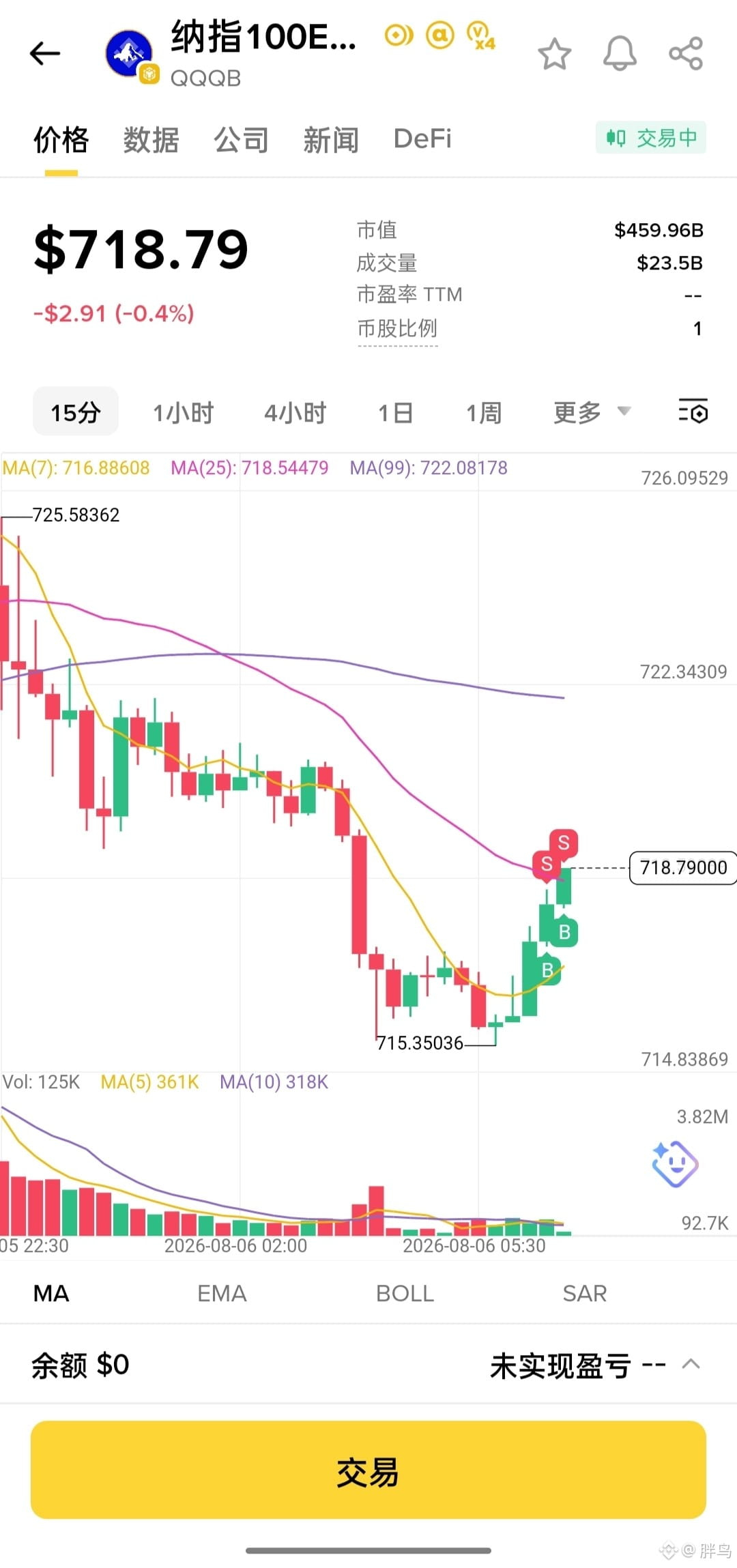
Recently, I successfully got into the wallet too—$QQQB
I’ve been playing in the wallet for 3/4 days. My current average wear is 0.8 per ten thousand, so I’d say I’ve finally escaped the suffering. It’s just that the time is a bit eerie
After I stopped playing the transaction race with #ALPHA🔥 , I feel like I’ve ascended as a person 😆#BsB
Recently, I successfully got into the wallet too—$QQQB
I’ve been playing in the wallet for 3/4 days. My current average wear is 0.8 per ten thousand, so I’d say I’ve finally escaped the suffering. It’s just that the time is a bit eerie
After I stopped playing the transaction race with #ALPHA🔥 , I feel like I’ve ascended as a person 😆#BsB
I’ve been playing in the wallet for 3/4 days. My current average wear is 0.8 per ten thousand, so I’d say I’ve finally escaped the suffering. It’s just that the time is a bit eerie
After I stopped playing the transaction race with #ALPHA🔥 , I feel like I’ve ascended as a person 😆#BsB
5
1
722
·
--
During this period, I joined quite a few on-chain projects. Among so many, how do you pick a good one? Not worrying about fund safety is a key point. So when I first saw @babylonlabs_io , I was immediately drawn in by its unique mechanism.
As for Babylon, I actually have a fairly straightforward understanding. If it wants external assets to participate in the security of other networks, then the core question must be whether enough assets are staked. After all, in many PoS networks, security strength is often directly related to the size of the staked amount.
But after getting deeper involved, I found that this understanding is missing a layer. Sometimes, the mere existence of assets doesn’t truly mean that security is actually happening.
That sounds a bit convoluted. If a network just sees a large amount of assets locked and concludes that it therefore gains security, that’s not enough. You also need to check whether those assets actually participate in the network’s operations according to the rules. Have these security assurances been correctly carried out? How do other chains confirm that this security is real?
Following this line of thought, I think the most interesting aspect of Babylon isn’t that it brings in more staked capital. It’s that it tries to establish a process for generating security proofs.
In Babylon, it’s more focused on whether value can be converted into a trustworthy security outcome. That’s why the Checkpoint mechanism is designed. Babylon isn’t dealing with consensus inside a single chain—it’s about letting external networks recognize the result of that consensus.
Hmm... this is completely different from an asset bridge. A bridge solves asset movement, while #baby wants to solve trust movement.
That’s quite interesting. If you dig deeper, it essentially changes the definition of security. It makes the security result itself something that can be verified and used.
But there’s also a problem here. If, in the future, many chains depend on Babylon to provide security proofs, then $BABY ’s own proof mechanism will become a new trust entry point. Once that entry point can’t be sufficiently understood and monitored by participants, a system originally intended to reduce trust costs may end up creating new dependencies.
So, from my perspective, what’s truly interesting isn’t simply bringing more assets into blockchain security. It’s that it’s rethinking how security should be proven. What Babylon wants to do is turn this kind of trust into verifiable, connectable infrastructure.
During this period, I joined quite a few on-chain projects. Among so many, how do you pick a good one? Not worrying about fund safety is a key point. So when I first saw @BabylonLabs_io , I was immediately drawn in by its unique mechanism.
As for Babylon, I actually have a fairly straightforward understanding. If it wants external assets to participate in the security of other networks, then the core question must be whether enough assets are staked. After all, in many PoS networks, security strength is often directly related to the size of the staked amount.
But after getting deeper involved, I found that this understanding is missing a layer. Sometimes, the mere existence of assets doesn’t truly mean that security is actually happening.
That sounds a bit convoluted. If a network just sees a large amount of assets locked and concludes that it therefore gains security, that’s not enough. You also need to check whether those assets actually participate in the network’s operations according to the rules. Have these security assurances been correctly carried out? How do other chains confirm that this security is real?
Following this line of thought, I think the most interesting aspect of Babylon isn’t that it brings in more staked capital. It’s that it tries to establish a process for generating security proofs.
In Babylon, it’s more focused on whether value can be converted into a trustworthy security outcome. That’s why the Checkpoint mechanism is designed. Babylon isn’t dealing with consensus inside a single chain—it’s about letting external networks recognize the result of that consensus.
Hmm... this is completely different from an asset bridge. A bridge solves asset movement, while #baby wants to solve trust movement.
That’s quite interesting. If you dig deeper, it essentially changes the definition of security. It makes the security result itself something that can be verified and used.
But there’s also a problem here. If, in the future, many chains depend on Babylon to provide security proofs, then $BABY ’s own proof mechanism will become a new trust entry point. Once that entry point can’t be sufficiently understood and monitored by participants, a system originally intended to reduce trust costs may end up creating new dependencies.
So, from my perspective, what’s truly interesting isn’t simply bringing more assets into blockchain security. It’s that it’s rethinking how security should be proven. What Babylon wants to do is turn this kind of trust into verifiable, connectable infrastructure.
As for Babylon, I actually have a fairly straightforward understanding. If it wants external assets to participate in the security of other networks, then the core question must be whether enough assets are staked. After all, in many PoS networks, security strength is often directly related to the size of the staked amount.
But after getting deeper involved, I found that this understanding is missing a layer. Sometimes, the mere existence of assets doesn’t truly mean that security is actually happening.
That sounds a bit convoluted. If a network just sees a large amount of assets locked and concludes that it therefore gains security, that’s not enough. You also need to check whether those assets actually participate in the network’s operations according to the rules. Have these security assurances been correctly carried out? How do other chains confirm that this security is real?
Following this line of thought, I think the most interesting aspect of Babylon isn’t that it brings in more staked capital. It’s that it tries to establish a process for generating security proofs.
In Babylon, it’s more focused on whether value can be converted into a trustworthy security outcome. That’s why the Checkpoint mechanism is designed. Babylon isn’t dealing with consensus inside a single chain—it’s about letting external networks recognize the result of that consensus.
Hmm... this is completely different from an asset bridge. A bridge solves asset movement, while #baby wants to solve trust movement.
That’s quite interesting. If you dig deeper, it essentially changes the definition of security. It makes the security result itself something that can be verified and used.
But there’s also a problem here. If, in the future, many chains depend on Babylon to provide security proofs, then $BABY ’s own proof mechanism will become a new trust entry point. Once that entry point can’t be sufficiently understood and monitored by participants, a system originally intended to reduce trust costs may end up creating new dependencies.
So, from my perspective, what’s truly interesting isn’t simply bringing more assets into blockchain security. It’s that it’s rethinking how security should be proven. What Babylon wants to do is turn this kind of trust into verifiable, connectable infrastructure.
1
272
·
--
Has it always been like this—am I right? When I first saw @babylonlabs_io , I naturally understood it as a larger Staking system: all along, the more you stake, the more validators there are, and the higher the network security.
Later, I actually went and ran the staking flow designed by Babylon firsthand, and I found that this understanding was a bit superficial. If the goal is simply to increase the security capital, then there’s no real need to design different roles like Delegator and Finality Provider.
I feel that what Babylon is trying to solve may not be whether there are enough assets, but rather, once these assets enter the system, how they can become security that other networks can recognize.
This distinction is quite important. In a single PoS network, stakers, validators, and the security execution actors are usually tightly coupled. But there’s a gap: when security starts to flow across networks, this pattern runs into problems.
Professional people do professional jobs. Those who provide funding may not necessarily be suited to operate validator infrastructure. And they may not necessarily want to retrain an entire validation system. So what Babylon is doing is not simply increasing the number of validators, but splitting the security process: Delegators provide economic support, Finality Providers participate in making security confirmations, and Consumer Chains use the final security outcome.
With all responsibilities clearly assigned, following this line of thought, I think Babylon is truly aiming to transform security resources from capital into a trusted network capability.
In the past, many blockchain problems were like every city building its own power grid from scratch. It works, but the costs are genuinely high—and that’s what Babylon wants to explore.
Hmm.. there’s also a question here. After roles are separated, the system becomes more flexible, but the boundaries of responsibility become more complex. If there’s a security issue, who should be held accountable—staked capital, or the nodes executing security? And if participants care more about returns than maintaining the network long-term, will economic incentives still remain effective? These are the areas Babylon needs to verify next.
Babylon is also trying to see whether security can be split, composed, and provided as a capability to other networks. If this model holds, then in the future, the way blockchains build security may change.
#baby $BABY
Has it always been like this—am I right? When I first saw @BabylonLabs_io , I naturally understood it as a larger Staking system: all along, the more you stake, the more validators there are, and the higher the network security.
Later, I actually went and ran the staking flow designed by Babylon firsthand, and I found that this understanding was a bit superficial. If the goal is simply to increase the security capital, then there’s no real need to design different roles like Delegator and Finality Provider.
I feel that what Babylon is trying to solve may not be whether there are enough assets, but rather, once these assets enter the system, how they can become security that other networks can recognize.
This distinction is quite important. In a single PoS network, stakers, validators, and the security execution actors are usually tightly coupled. But there’s a gap: when security starts to flow across networks, this pattern runs into problems.
Professional people do professional jobs. Those who provide funding may not necessarily be suited to operate validator infrastructure. And they may not necessarily want to retrain an entire validation system. So what Babylon is doing is not simply increasing the number of validators, but splitting the security process: Delegators provide economic support, Finality Providers participate in making security confirmations, and Consumer Chains use the final security outcome.
With all responsibilities clearly assigned, following this line of thought, I think Babylon is truly aiming to transform security resources from capital into a trusted network capability.
In the past, many blockchain problems were like every city building its own power grid from scratch. It works, but the costs are genuinely high—and that’s what Babylon wants to explore.
Hmm.. there’s also a question here. After roles are separated, the system becomes more flexible, but the boundaries of responsibility become more complex. If there’s a security issue, who should be held accountable—staked capital, or the nodes executing security? And if participants care more about returns than maintaining the network long-term, will economic incentives still remain effective? These are the areas Babylon needs to verify next.
Babylon is also trying to see whether security can be split, composed, and provided as a capability to other networks. If this model holds, then in the future, the way blockchains build security may change.
#baby $BABY
Later, I actually went and ran the staking flow designed by Babylon firsthand, and I found that this understanding was a bit superficial. If the goal is simply to increase the security capital, then there’s no real need to design different roles like Delegator and Finality Provider.
I feel that what Babylon is trying to solve may not be whether there are enough assets, but rather, once these assets enter the system, how they can become security that other networks can recognize.
This distinction is quite important. In a single PoS network, stakers, validators, and the security execution actors are usually tightly coupled. But there’s a gap: when security starts to flow across networks, this pattern runs into problems.
Professional people do professional jobs. Those who provide funding may not necessarily be suited to operate validator infrastructure. And they may not necessarily want to retrain an entire validation system. So what Babylon is doing is not simply increasing the number of validators, but splitting the security process: Delegators provide economic support, Finality Providers participate in making security confirmations, and Consumer Chains use the final security outcome.
With all responsibilities clearly assigned, following this line of thought, I think Babylon is truly aiming to transform security resources from capital into a trusted network capability.
In the past, many blockchain problems were like every city building its own power grid from scratch. It works, but the costs are genuinely high—and that’s what Babylon wants to explore.
Hmm.. there’s also a question here. After roles are separated, the system becomes more flexible, but the boundaries of responsibility become more complex. If there’s a security issue, who should be held accountable—staked capital, or the nodes executing security? And if participants care more about returns than maintaining the network long-term, will economic incentives still remain effective? These are the areas Babylon needs to verify next.
Babylon is also trying to see whether security can be split, composed, and provided as a capability to other networks. If this model holds, then in the future, the way blockchains build security may change.
#baby $BABY
258
·
--
New projects are emerging one after another, and the variety is getting more and more diverse. Before today, I had never understood why @babylonlabs_io chose to protect finality rather than redesign a whole new consensus.
Because the hardest problem to solve in blockchain is never about producing blocks—most networks can generate blocks quickly. What is truly difficult is: when two states conflict, how does the network determine which result becomes finally irreversible. Traditional PoS networks usually rely on their own validator set, using staked assets to maintain finality. But for new networks, the number of validators, the staking scale, and economic security all require long-term accumulation.
Hmm.. What’s interesting is that Babylon didn’t choose to copy Bitcoin’s or Ethereum’s consensus. Instead, it chooses to enter from Finality. In Babylon’s design, the PoS chain still runs its own consensus, and validators are still responsible for generating blocks. What Babylon does is to submit key states via Checkpoints to the Bitcoin network, letting Bitcoin provide additional time ordering and guarantees of immutability.
Most, most, most importantly, Babylon isn’t replacing the original security. Instead, it adds an extra layer of economic security at the final confirmation stage. This also makes me realize that what Babylon truly changes isn’t who produces blocks. So I think Finality Providers are not just simple nodes—they bear the responsibility for finality confirmation.
I feel that what Babylon is really focused on is how a network can achieve stronger state determinism. And this actually solves a longstanding problem for PoS networks: many new chains aren’t unable to run, but in the early stages it’s hard to establish sufficiently strong finality guarantees.
Babylon provides a new path. Looking back now, I think the most valuable aspect of Babylon isn’t that BTC gains another use case.
Babylon is trying to prove that security can be modularized—that a network can have its own execution logic, while borrowing a stronger foundation of finality.
If in the future more and more chains adopt this model, blockchain security may no longer be something that each chain has to rebuild from scratch. Instead, it will gradually become a composable piece of infrastructure.
#baby $BABY
New projects are emerging one after another, and the variety is getting more and more diverse. Before today, I had never understood why @BabylonLabs_io chose to protect finality rather than redesign a whole new consensus.
Because the hardest problem to solve in blockchain is never about producing blocks—most networks can generate blocks quickly. What is truly difficult is: when two states conflict, how does the network determine which result becomes finally irreversible. Traditional PoS networks usually rely on their own validator set, using staked assets to maintain finality. But for new networks, the number of validators, the staking scale, and economic security all require long-term accumulation.
Hmm.. What’s interesting is that Babylon didn’t choose to copy Bitcoin’s or Ethereum’s consensus. Instead, it chooses to enter from Finality. In Babylon’s design, the PoS chain still runs its own consensus, and validators are still responsible for generating blocks. What Babylon does is to submit key states via Checkpoints to the Bitcoin network, letting Bitcoin provide additional time ordering and guarantees of immutability.
Most, most, most importantly, Babylon isn’t replacing the original security. Instead, it adds an extra layer of economic security at the final confirmation stage. This also makes me realize that what Babylon truly changes isn’t who produces blocks. So I think Finality Providers are not just simple nodes—they bear the responsibility for finality confirmation.
I feel that what Babylon is really focused on is how a network can achieve stronger state determinism. And this actually solves a longstanding problem for PoS networks: many new chains aren’t unable to run, but in the early stages it’s hard to establish sufficiently strong finality guarantees.
Babylon provides a new path. Looking back now, I think the most valuable aspect of Babylon isn’t that BTC gains another use case.
Babylon is trying to prove that security can be modularized—that a network can have its own execution logic, while borrowing a stronger foundation of finality.
If in the future more and more chains adopt this model, blockchain security may no longer be something that each chain has to rebuild from scratch. Instead, it will gradually become a composable piece of infrastructure.
#baby $BABY
Because the hardest problem to solve in blockchain is never about producing blocks—most networks can generate blocks quickly. What is truly difficult is: when two states conflict, how does the network determine which result becomes finally irreversible. Traditional PoS networks usually rely on their own validator set, using staked assets to maintain finality. But for new networks, the number of validators, the staking scale, and economic security all require long-term accumulation.
Hmm.. What’s interesting is that Babylon didn’t choose to copy Bitcoin’s or Ethereum’s consensus. Instead, it chooses to enter from Finality. In Babylon’s design, the PoS chain still runs its own consensus, and validators are still responsible for generating blocks. What Babylon does is to submit key states via Checkpoints to the Bitcoin network, letting Bitcoin provide additional time ordering and guarantees of immutability.
Most, most, most importantly, Babylon isn’t replacing the original security. Instead, it adds an extra layer of economic security at the final confirmation stage. This also makes me realize that what Babylon truly changes isn’t who produces blocks. So I think Finality Providers are not just simple nodes—they bear the responsibility for finality confirmation.
I feel that what Babylon is really focused on is how a network can achieve stronger state determinism. And this actually solves a longstanding problem for PoS networks: many new chains aren’t unable to run, but in the early stages it’s hard to establish sufficiently strong finality guarantees.
Babylon provides a new path. Looking back now, I think the most valuable aspect of Babylon isn’t that BTC gains another use case.
Babylon is trying to prove that security can be modularized—that a network can have its own execution logic, while borrowing a stronger foundation of finality.
If in the future more and more chains adopt this model, blockchain security may no longer be something that each chain has to rebuild from scratch. Instead, it will gradually become a composable piece of infrastructure.
#baby $BABY
295
·
--
The first time I saw @babylonlabs_io , I naturally classified it as a Staking protocol. This logic isn’t that different from the staking models in many PoS networks in the past.
But later, when I looked at the entire architecture of #baby again, I realized that this understanding may be too simple. If it were only trying to build a Staking product, there would be no need to design such complex role relationships. From Delegators to Finality Providers, and then to Consumer Chains and Checkpoints, the effort Babylon puts into this isn’t mainly about how to keep assets locked up—it’s about another, harder problem.
How can one network confirm that the security provided by another network is real and actually valid?
This question made me go quiet for a moment, because many systems assume security can only come from themselves. A chain maintains its own validators, runs its own consensus, and then trusts its own state. But as more and more networks in the future need to share security, the truly difficult part won’t be whether there’s capital—it will be how that capital gets converted into security proofs that other networks can accept.
In other words, staking is just the beginning. What really matters is who proves that security has occurred. Looking back at $BABY , the most interesting thing about it is that it doesn’t simply copy the structure of traditional PoS. Instead, it separates the responsibilities carried out by different roles. Delegators provide economic support, Finality Providers are responsible for participating in state confirmation, and Consumer Chains use those confirmation results to obtain additional security. Capital, security execution, and state verification are no longer tied to a single role.
This made me think about a lot of infrastructure problems. Often, what a system lacks isn’t resources—it’s that the resources can’t be trusted to each other. Without a way to prove that this portion of security is truly effective, these resources can’t really flow.
What Babylon is doing, at its core, is building this connection.
A Checkpoint isn’t just a simple record of some state—it provides a verifiable consensus result between different networks. It doesn’t solve the data transfer problem; it solves the problem of how a security state can be recognized and accepted by another system.
So looking back now, I think the most valuable part of Babylon may not be that it created a new Staking market.
The first time I saw @BabylonLabs_io , I naturally classified it as a Staking protocol. This logic isn’t that different from the staking models in many PoS networks in the past.
But later, when I looked at the entire architecture of #baby again, I realized that this understanding may be too simple. If it were only trying to build a Staking product, there would be no need to design such complex role relationships. From Delegators to Finality Providers, and then to Consumer Chains and Checkpoints, the effort Babylon puts into this isn’t mainly about how to keep assets locked up—it’s about another, harder problem.
How can one network confirm that the security provided by another network is real and actually valid?
This question made me go quiet for a moment, because many systems assume security can only come from themselves. A chain maintains its own validators, runs its own consensus, and then trusts its own state. But as more and more networks in the future need to share security, the truly difficult part won’t be whether there’s capital—it will be how that capital gets converted into security proofs that other networks can accept.
In other words, staking is just the beginning. What really matters is who proves that security has occurred. Looking back at $BABY , the most interesting thing about it is that it doesn’t simply copy the structure of traditional PoS. Instead, it separates the responsibilities carried out by different roles. Delegators provide economic support, Finality Providers are responsible for participating in state confirmation, and Consumer Chains use those confirmation results to obtain additional security. Capital, security execution, and state verification are no longer tied to a single role.
This made me think about a lot of infrastructure problems. Often, what a system lacks isn’t resources—it’s that the resources can’t be trusted to each other. Without a way to prove that this portion of security is truly effective, these resources can’t really flow.
What Babylon is doing, at its core, is building this connection.
A Checkpoint isn’t just a simple record of some state—it provides a verifiable consensus result between different networks. It doesn’t solve the data transfer problem; it solves the problem of how a security state can be recognized and accepted by another system.
So looking back now, I think the most valuable part of Babylon may not be that it created a new Staking market.
But later, when I looked at the entire architecture of #baby again, I realized that this understanding may be too simple. If it were only trying to build a Staking product, there would be no need to design such complex role relationships. From Delegators to Finality Providers, and then to Consumer Chains and Checkpoints, the effort Babylon puts into this isn’t mainly about how to keep assets locked up—it’s about another, harder problem.
How can one network confirm that the security provided by another network is real and actually valid?
This question made me go quiet for a moment, because many systems assume security can only come from themselves. A chain maintains its own validators, runs its own consensus, and then trusts its own state. But as more and more networks in the future need to share security, the truly difficult part won’t be whether there’s capital—it will be how that capital gets converted into security proofs that other networks can accept.
In other words, staking is just the beginning. What really matters is who proves that security has occurred. Looking back at $BABY , the most interesting thing about it is that it doesn’t simply copy the structure of traditional PoS. Instead, it separates the responsibilities carried out by different roles. Delegators provide economic support, Finality Providers are responsible for participating in state confirmation, and Consumer Chains use those confirmation results to obtain additional security. Capital, security execution, and state verification are no longer tied to a single role.
This made me think about a lot of infrastructure problems. Often, what a system lacks isn’t resources—it’s that the resources can’t be trusted to each other. Without a way to prove that this portion of security is truly effective, these resources can’t really flow.
What Babylon is doing, at its core, is building this connection.
A Checkpoint isn’t just a simple record of some state—it provides a verifiable consensus result between different networks. It doesn’t solve the data transfer problem; it solves the problem of how a security state can be recognized and accepted by another system.
So looking back now, I think the most valuable part of Babylon may not be that it created a new Staking market.
275
·
--
Recently, when chatting with a friend about the internet, I suddenly realized that @babylonlabs_io actually has a lot in common with this. Let me ask everyone a question: if we go back to the early days of the internet, when a startup team wants to build a website, what is the first problem that needs to be solved?
The most realistic answer is to solve the servers. Back then, many companies needed to buy their own servers and maintain their own data centers because the underlying infrastructure hadn’t been abstracted yet. It wasn’t until cloud computing emerged that developers no longer had to build the lower-level infrastructure from scratch.
This point is somewhat similar to blockchain today. With many new PoS networks launching, besides building the application itself, there’s also the question of where security will come from.
In the past, most chains built their validator systems through their own token economics, incentivizing participants to stake assets to maintain the network. But for early-stage projects, this is not easy. When a network doesn’t have enough value, it’s hard to attract validators; when it lacks enough security, it’s hard to attract users and the broader ecosystem. In fact, this problem is a bit like the early days of the internet.
Baby uses a shared security model, so that new PoS networks don’t have to build their own security system entirely from scratch, but can tap into the security capabilities provided by #baby .
And in this process, $BABY connects the new networks that need security with the participants who are willing to provide it. Through mechanisms like the Finality Provider, it enables these security providers to participate in the confirmation process across different networks, while the connected networks don’t have to rely entirely on establishing their own validator system to build security.
This makes me feel that Babylon isn’t just adding more security resources—it’s changing how security resources are used. In the past, each chain was like an early internet application that had to solve the underlying problems itself. But if more and more chains appear in the future, security may not keep following the same pattern of each chain rebuilding a full security stack from scratch.
Of course, whether this direction can truly work still needs to be validated by time. Because unlike computing resources, security involves consensus, economic incentives, and long-term participant behavior—issues that are far more complex than cloud computing.
Perhaps in the future, blockchain infrastructure won’t just compete on performance and ecosystem scale, but also on who can make security as easy to obtain and use as computing resources.
Recently, when chatting with a friend about the internet, I suddenly realized that @BabylonLabs_io actually has a lot in common with this. Let me ask everyone a question: if we go back to the early days of the internet, when a startup team wants to build a website, what is the first problem that needs to be solved?
The most realistic answer is to solve the servers. Back then, many companies needed to buy their own servers and maintain their own data centers because the underlying infrastructure hadn’t been abstracted yet. It wasn’t until cloud computing emerged that developers no longer had to build the lower-level infrastructure from scratch.
This point is somewhat similar to blockchain today. With many new PoS networks launching, besides building the application itself, there’s also the question of where security will come from.
In the past, most chains built their validator systems through their own token economics, incentivizing participants to stake assets to maintain the network. But for early-stage projects, this is not easy. When a network doesn’t have enough value, it’s hard to attract validators; when it lacks enough security, it’s hard to attract users and the broader ecosystem. In fact, this problem is a bit like the early days of the internet.
Baby uses a shared security model, so that new PoS networks don’t have to build their own security system entirely from scratch, but can tap into the security capabilities provided by #baby .
And in this process, $BABY connects the new networks that need security with the participants who are willing to provide it. Through mechanisms like the Finality Provider, it enables these security providers to participate in the confirmation process across different networks, while the connected networks don’t have to rely entirely on establishing their own validator system to build security.
This makes me feel that Babylon isn’t just adding more security resources—it’s changing how security resources are used. In the past, each chain was like an early internet application that had to solve the underlying problems itself. But if more and more chains appear in the future, security may not keep following the same pattern of each chain rebuilding a full security stack from scratch.
Of course, whether this direction can truly work still needs to be validated by time. Because unlike computing resources, security involves consensus, economic incentives, and long-term participant behavior—issues that are far more complex than cloud computing.
Perhaps in the future, blockchain infrastructure won’t just compete on performance and ecosystem scale, but also on who can make security as easy to obtain and use as computing resources.
The most realistic answer is to solve the servers. Back then, many companies needed to buy their own servers and maintain their own data centers because the underlying infrastructure hadn’t been abstracted yet. It wasn’t until cloud computing emerged that developers no longer had to build the lower-level infrastructure from scratch.
This point is somewhat similar to blockchain today. With many new PoS networks launching, besides building the application itself, there’s also the question of where security will come from.
In the past, most chains built their validator systems through their own token economics, incentivizing participants to stake assets to maintain the network. But for early-stage projects, this is not easy. When a network doesn’t have enough value, it’s hard to attract validators; when it lacks enough security, it’s hard to attract users and the broader ecosystem. In fact, this problem is a bit like the early days of the internet.
Baby uses a shared security model, so that new PoS networks don’t have to build their own security system entirely from scratch, but can tap into the security capabilities provided by #baby .
And in this process, $BABY connects the new networks that need security with the participants who are willing to provide it. Through mechanisms like the Finality Provider, it enables these security providers to participate in the confirmation process across different networks, while the connected networks don’t have to rely entirely on establishing their own validator system to build security.
This makes me feel that Babylon isn’t just adding more security resources—it’s changing how security resources are used. In the past, each chain was like an early internet application that had to solve the underlying problems itself. But if more and more chains appear in the future, security may not keep following the same pattern of each chain rebuilding a full security stack from scratch.
Of course, whether this direction can truly work still needs to be validated by time. Because unlike computing resources, security involves consensus, economic incentives, and long-term participant behavior—issues that are far more complex than cloud computing.
Perhaps in the future, blockchain infrastructure won’t just compete on performance and ecosystem scale, but also on who can make security as easy to obtain and use as computing resources.
1
277
Log in to explore more content
Join global crypto users on Binance Square
⚡️ Get latest and useful information about crypto.
💬 Trusted by the world’s largest crypto exchange.
👍 Discover real insights from verified creators.
Email / Phone number
Trending Topics
BOJRaisesRatesTo31YearHigh
2,298 views
130 Discussing
🚨BOJ's Strange Rate Hike...
#bojraisesratesto31yearhigh
Japan just raised rates to a 31-year high. The yen still weakened.
That sounds contradictory — until you look at the carry trade.
The BOJ raised its policy rate 25 bps to 1.25%, the highest since 1995, in a 7–2 vote. It was also the second hike in only three months.
Yet USD/JPY jumped as high as 158.05 after the decision.
Why?
Markets focused on the two dissenting BOJ policymakers and judged the guidance less hawkish than expected.
That matters far beyond Japan.
The yen has been one of the world's major funding currencies for the carry trade — borrow cheaply in yen, deploy into higher-yielding assets elsewhere.
So the real chain is:
BOJ tightening → yen funding gets more expensive
but:
yen weakens → carry positions don't automatically get forced out
And Bitcoin's reaction makes the picture even more interesting.
BTC rebounded sharply after the BOJ decision, reaching around $81K according to Reuters.
So today's signal isn't simply:
“BOJ hikes = BTC bearish.”
The bigger question is whether Japan's tightening eventually produces a sustained yen appreciation strong enough to force a larger carry-trade unwind.
For now, the rate moved.
The yen didn't follow.
That's the part worth watching.
$BTC $XRP
#BTCBreaks80K #BTC #BinanceSquare #Write2Earn
Stink meaner
·1 Likes
·146 views
HKCompletesFirstHKDStablecoinUseCase
22,375 views
554 Discussing
VietnamPlansFirstCryptoLicensesIn2026
16,104 views
368 Discussing