
铺盖卷
683 Posts

铺盖卷
382 Following
276 Followers
539 Liked
Posts
All
Quotes
See translation
#termmax @TermMax
In the past two days, $ETH $牛来 and other market conditions have been hot. Some people profit, while others lose money. Earning profits is hard, and protecting your funds is even harder. I wonder: if I had 200K U, how could I use it to compound steadily?
Today, let’s simulate #TermMax .
First, let’s clarify a misconception: fixed-rate interest is not TermMax’s exclusive advantage. Many people think Fixed‑rate Lending is a proprietary innovation of TermMax, but that’s not the case. As early as before, Notional had already implemented fixed‑rate lending on-chain, and the fixed‑rate lending track already has early movers.
What truly widens the gap for TermMax is the full product set and underlying architecture.
For example, in the V2 version, Atomic Order and Order Aggregator provide two order mechanisms specifically designed to address pain points commonly seen in traditional fixed‑rate markets: wasted capital, slow matching, and fragmented liquidity.
Atomic Order (atomic orders) allows a single piece of liquidity to submit limit orders to FT markets with multiple different maturity dates at the same time. If any one matching succeeds, all the others are automatically canceled, greatly improving the probability of execution. Order Aggregator, as an on-chain order aggregator and intelligent router, scans the whole market’s quotes and automatically matches the best-rate execution path for the user.
With the Composable Base Yield mechanism, idle funds waiting for matching don’t earn zero—they can generate returns from the base yield of an external yield pool. On top of that, the custodial Vault provides ordinary users with a one-click entry to fixed‑income strategies, which are managed by the Curator to lower the barrier for complex interest-rate trading.
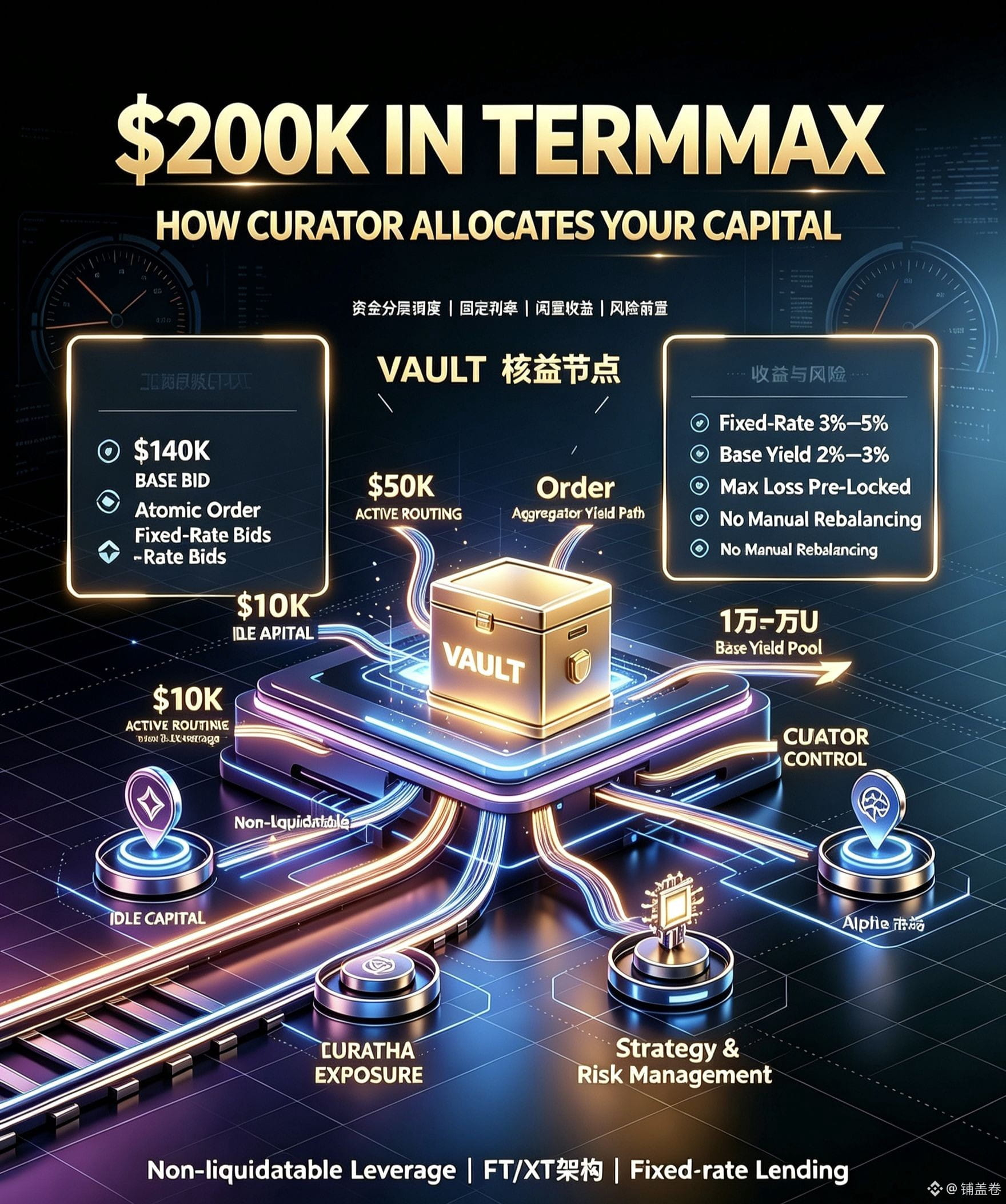
Back to the main point: if 200K U is deposited into Curator-managed TermMax, the funds will be allocated in layers.
About 140K is allocated to the core position—entering Atomic Order multi-maturity limit orders—and waiting for the market to match and lock in a fixed annualized rate of around 3%‑5%. During the waiting period for execution, this capital is not idle; it automatically earns roughly 2%‑3% floating base yield from the external yield pool.
The remaining 50K is dynamically routed by the Order Aggregator. It goes to whichever maturity market has the higher short-term rate to capture opportunities from the market’s cyclical spread.
Finally, the last 10K, a smaller portion, can be allocated to an Alpha market strategy without liquidation leverage to pursue higher returns. The maximum loss is capped at opening time, locked by the option premium.
All the way through, users don’t need to place orders themselves, adjust durations, or switch markets. Everything is handled by Curator’s dynamic rebalancing.
#TermMax #DeFi
Only mechanism-level educational information; returns are just examples and do not constitute investment advice
In the past two days, $ETH $牛来 and other market conditions have been hot. Some people profit, while others lose money. Earning profits is hard, and protecting your funds is even harder. I wonder: if I had 200K U, how could I use it to compound steadily?
Today, let’s simulate #TermMax .
First, let’s clarify a misconception: fixed-rate interest is not TermMax’s exclusive advantage. Many people think Fixed‑rate Lending is a proprietary innovation of TermMax, but that’s not the case. As early as before, Notional had already implemented fixed‑rate lending on-chain, and the fixed‑rate lending track already has early movers.
What truly widens the gap for TermMax is the full product set and underlying architecture.
For example, in the V2 version, Atomic Order and Order Aggregator provide two order mechanisms specifically designed to address pain points commonly seen in traditional fixed‑rate markets: wasted capital, slow matching, and fragmented liquidity.
Atomic Order (atomic orders) allows a single piece of liquidity to submit limit orders to FT markets with multiple different maturity dates at the same time. If any one matching succeeds, all the others are automatically canceled, greatly improving the probability of execution. Order Aggregator, as an on-chain order aggregator and intelligent router, scans the whole market’s quotes and automatically matches the best-rate execution path for the user.
With the Composable Base Yield mechanism, idle funds waiting for matching don’t earn zero—they can generate returns from the base yield of an external yield pool. On top of that, the custodial Vault provides ordinary users with a one-click entry to fixed‑income strategies, which are managed by the Curator to lower the barrier for complex interest-rate trading.
Back to the main point: if 200K U is deposited into Curator-managed TermMax, the funds will be allocated in layers.
About 140K is allocated to the core position—entering Atomic Order multi-maturity limit orders—and waiting for the market to match and lock in a fixed annualized rate of around 3%‑5%. During the waiting period for execution, this capital is not idle; it automatically earns roughly 2%‑3% floating base yield from the external yield pool.
The remaining 50K is dynamically routed by the Order Aggregator. It goes to whichever maturity market has the higher short-term rate to capture opportunities from the market’s cyclical spread.
Finally, the last 10K, a smaller portion, can be allocated to an Alpha market strategy without liquidation leverage to pursue higher returns. The maximum loss is capped at opening time, locked by the option premium.
All the way through, users don’t need to place orders themselves, adjust durations, or switch markets. Everything is handled by Curator’s dynamic rebalancing.
#TermMax #DeFi
Only mechanism-level educational information; returns are just examples and do not constitute investment advice
Verified
#termmax @TermMax
Last night $BTC and $ETH surged hard. Because of leveraged liquidations, it exceeded 1 billion. Sigh… even the funds from rolling out the carpet contributed a bit to the base.
We’re just learning TermMax, so let’s take a look at TermMax’s ace card: Non-liquidatable Leverage — how attractive is “no-liquidation leverage” really?
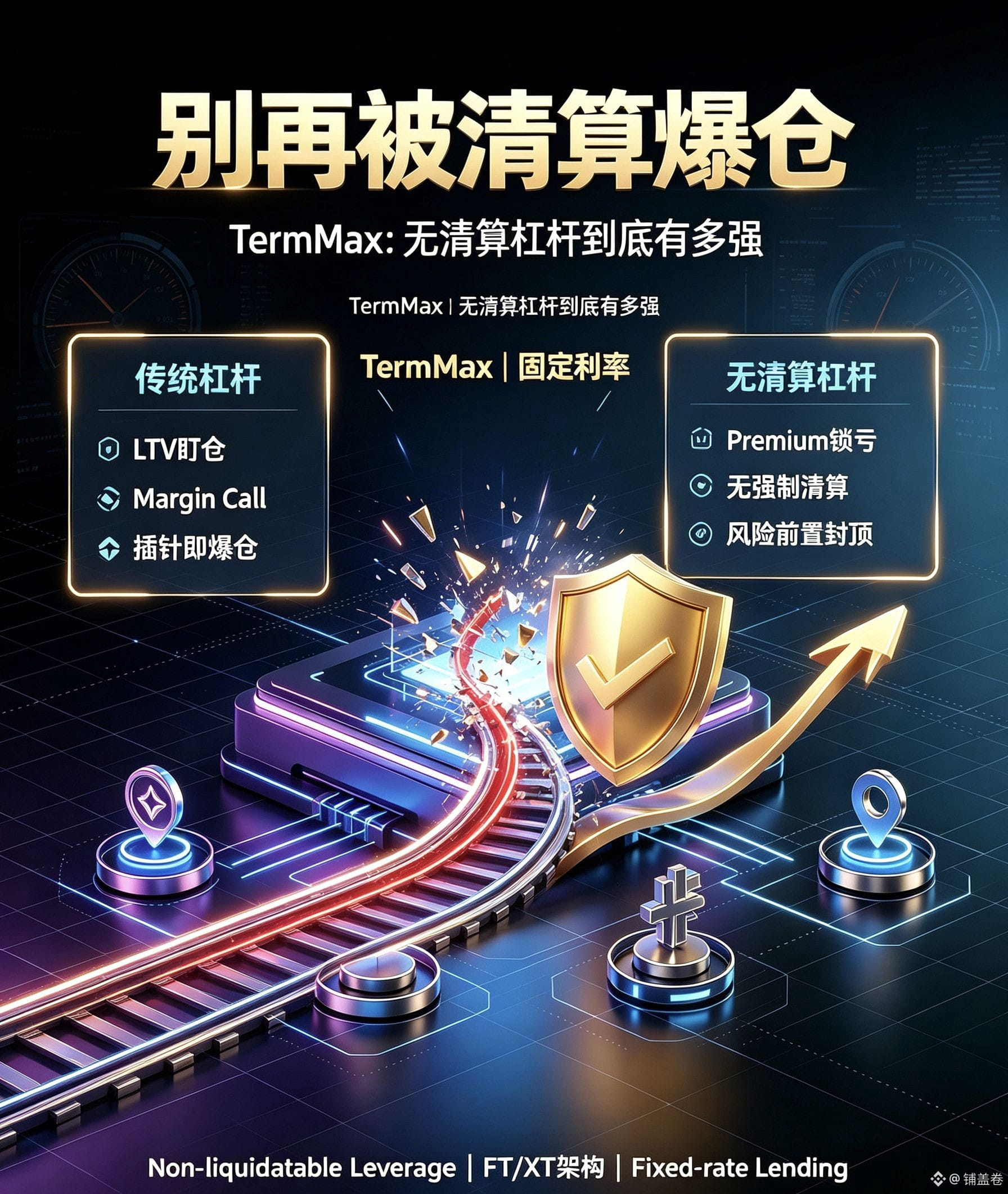
For people who play with leverage in the crypto market, the biggest nightmare is always being liquidated due to a needle-like spike (price wicks) and getting forced liquidated. Even if you got the direction right, you can still be swept out by short-term volatility—that’s the common problem with all traditional perps and DeFi leverage.
And TermMax’s biggest killer move is its proprietary Non-liquidatable Leverage (no-liquidation leverage) mechanism, which completely overturns the logic of traditional leverage.
Traditional leverage relies on the LTV margin mechanism. When the market fluctuates even slightly more sharply, it triggers a Margin Call liquidation—making the risk totally uncontrollable.
But TermMax Alpha’s non-liquidation leverage takes a totally different route!
It’s built on the project’s underlying interest-splitting architecture using FT (Fixed-rate Token) and XT (Yield Token). Opening positions are done using a Premium option-premium model.
Put simply in plain terms:
When you open a position, you pay a single fixed premium up front. That premium is the maximum loss limit you can ever incur.
No matter how the market crashes, spikes (“needle” wicks), or ranges sideways, there is no liquidation, no liquidation event, and no margin top-ups.
Traditional leverage: amplified gains, infinitely amplified risk.
TermMax leverage: normal amplified gains, and losses are directly locked and capped.
At the same time, it’s paired with the project’s core Fixed-rate Lending (fixed-rate lending). The opening interest rate is locked in advance—no floating-rate interest “critical hits” from sudden interest spikes.
Within the entire BNB Chain ecosystem, this kind of innovative mechanism—“interest is certain + loss is backed by a safety net + zero liquidation risk”—is extremely rare.
No more burning the midnight oil watching the chart to guard against needle spikes. No more fear of a black-swan sweep. This is TermMax’s hardest-core product moat.
The mechanism is strongly innovative, but there are still option time decay and market volatility risk. Study it rationally; don’t chase it blindly at high prices.
#TermMax #无清算杠杆
This is for general information only and does not constitute investment advice. Crypto market risk is extremely high—please make sure to DYOR (do your own research).
Last night $BTC and $ETH surged hard. Because of leveraged liquidations, it exceeded 1 billion. Sigh… even the funds from rolling out the carpet contributed a bit to the base.
We’re just learning TermMax, so let’s take a look at TermMax’s ace card: Non-liquidatable Leverage — how attractive is “no-liquidation leverage” really?
For people who play with leverage in the crypto market, the biggest nightmare is always being liquidated due to a needle-like spike (price wicks) and getting forced liquidated. Even if you got the direction right, you can still be swept out by short-term volatility—that’s the common problem with all traditional perps and DeFi leverage.
And TermMax’s biggest killer move is its proprietary Non-liquidatable Leverage (no-liquidation leverage) mechanism, which completely overturns the logic of traditional leverage.
Traditional leverage relies on the LTV margin mechanism. When the market fluctuates even slightly more sharply, it triggers a Margin Call liquidation—making the risk totally uncontrollable.
But TermMax Alpha’s non-liquidation leverage takes a totally different route!
It’s built on the project’s underlying interest-splitting architecture using FT (Fixed-rate Token) and XT (Yield Token). Opening positions are done using a Premium option-premium model.
Put simply in plain terms:
When you open a position, you pay a single fixed premium up front. That premium is the maximum loss limit you can ever incur.
No matter how the market crashes, spikes (“needle” wicks), or ranges sideways, there is no liquidation, no liquidation event, and no margin top-ups.
Traditional leverage: amplified gains, infinitely amplified risk.
TermMax leverage: normal amplified gains, and losses are directly locked and capped.
At the same time, it’s paired with the project’s core Fixed-rate Lending (fixed-rate lending). The opening interest rate is locked in advance—no floating-rate interest “critical hits” from sudden interest spikes.
Within the entire BNB Chain ecosystem, this kind of innovative mechanism—“interest is certain + loss is backed by a safety net + zero liquidation risk”—is extremely rare.
No more burning the midnight oil watching the chart to guard against needle spikes. No more fear of a black-swan sweep. This is TermMax’s hardest-core product moat.
The mechanism is strongly innovative, but there are still option time decay and market volatility risk. Study it rationally; don’t chase it blindly at high prices.
#TermMax #无清算杠杆
This is for general information only and does not constitute investment advice. Crypto market risk is extremely high—please make sure to DYOR (do your own research).
#termmax @TermMax
Bid farewell to the gambling-like market! TermMax redefines the DeFi stable narrative with fixed interest rates
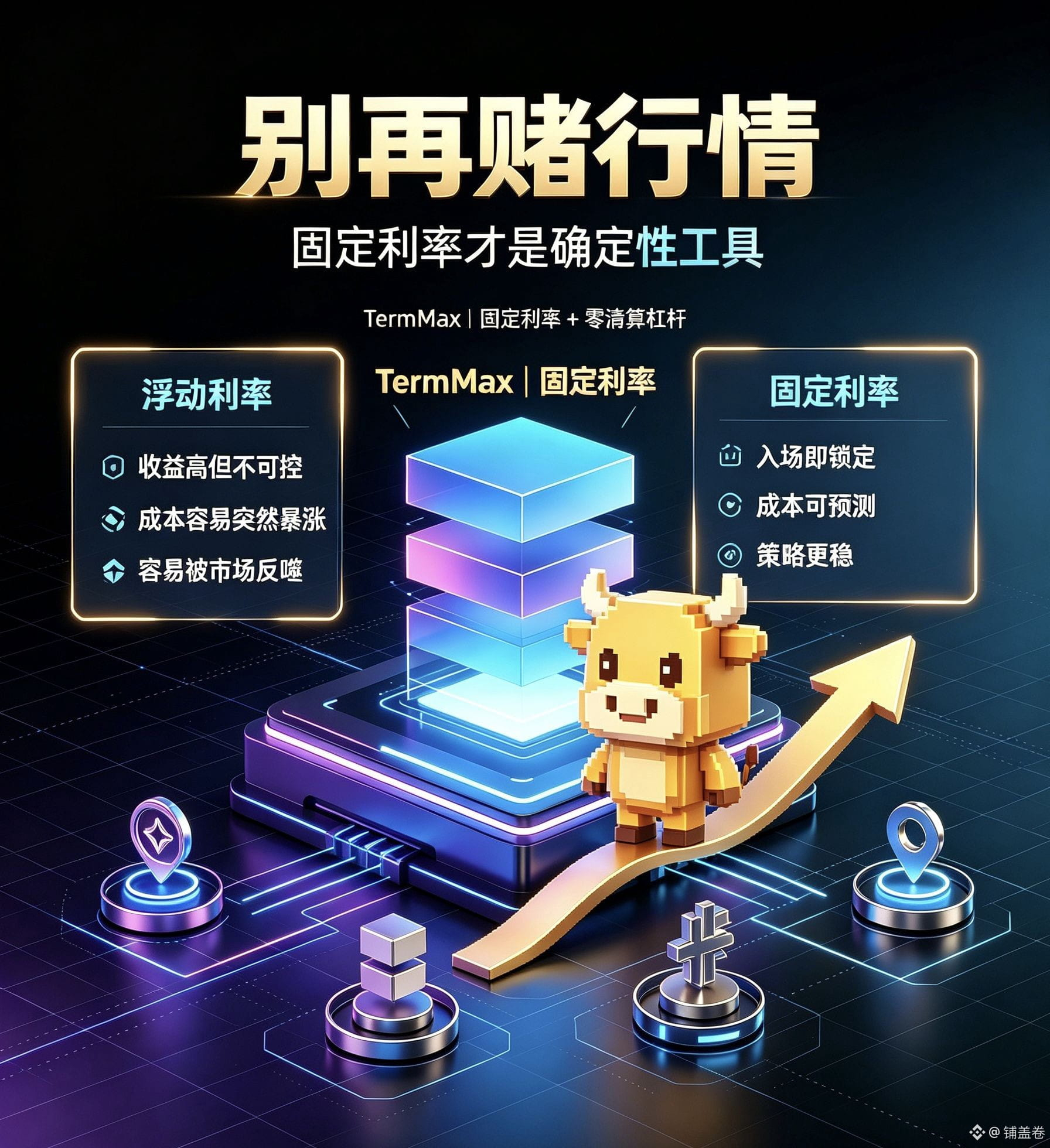
In everyday life, when we save or take out loans, we like to lock in interest rates—locking in mortgage monthly payments when buying a home, or locking in deposit returns with fixed-term savings. What we fear most is that later costs get out of control. But in the crypto market, most DeFi lending uses floating interest rates, relying entirely on market volatility—this is also the core reason why many users’ strategies end up losing. Especially for institutions and whales, floating rates mean that both costs and returns are beyond their control.
Today’s market hotspots and narratives rotate extremely fast; countless breakout themes come and go in an instant. A market driven by emotion-based speculation can hardly last. What truly survives bull and bear cycles is always the underlying product that solves the industry’s real pain points—and TermMax is a prime example of a pragmatic infrastructure project.
Traditional floating-rate lending has clear pros and cons: its advantage is that when the market is hot, capital utilization is high and short-term interest income can be attractive; but its fatal flaw is that interest rates can spike and crash without rules, making borrowing costs completely unpredictable. When the market suddenly moves, it’s easy for costs to backfire and for strategies to get trapped.
TermMax’s fixed-rate lending perfectly addresses this shortcoming. The advantages of fixed rates are highlighted to the extreme: entering the market means locking in the payout over the cycle and the borrowing cost, unaffected by market fluctuations—ideal for steady, medium-to-long-term strategies. The only shortcoming is that in an extreme bull market, it can’t capture the upside of interest rates soaring. In exchange, it delivers much stronger certainty and safety.
In addition, the project’s innovative zero-liquidation leverage mechanism further reduces DeFi trading risk. Built on mature FT/XT token structures, it separates收益 and interest-rate risk, bringing the bond-term structure of traditional finance on-chain.
In a market full of emotion-driven speculation, TermMax gives up short-term hype and focuses deeply on DeFi’s core necessities. Compared with chasing fleeting narrative hotspots, this kind of innovative mechanism that solves real pain points is the core logic behind the crypto market’s long-term development.
This article is for general project introduction only and does not constitute investment advice. The market is risky—invest with caution
Finally, the TermMax creator task for this round still has 3 days left. TGE is also getting closer—let’s all work hard. Join in together.@TermMax
Bid farewell to the gambling-like market! TermMax redefines the DeFi stable narrative with fixed interest rates
In everyday life, when we save or take out loans, we like to lock in interest rates—locking in mortgage monthly payments when buying a home, or locking in deposit returns with fixed-term savings. What we fear most is that later costs get out of control. But in the crypto market, most DeFi lending uses floating interest rates, relying entirely on market volatility—this is also the core reason why many users’ strategies end up losing. Especially for institutions and whales, floating rates mean that both costs and returns are beyond their control.
Today’s market hotspots and narratives rotate extremely fast; countless breakout themes come and go in an instant. A market driven by emotion-based speculation can hardly last. What truly survives bull and bear cycles is always the underlying product that solves the industry’s real pain points—and TermMax is a prime example of a pragmatic infrastructure project.
Traditional floating-rate lending has clear pros and cons: its advantage is that when the market is hot, capital utilization is high and short-term interest income can be attractive; but its fatal flaw is that interest rates can spike and crash without rules, making borrowing costs completely unpredictable. When the market suddenly moves, it’s easy for costs to backfire and for strategies to get trapped.
TermMax’s fixed-rate lending perfectly addresses this shortcoming. The advantages of fixed rates are highlighted to the extreme: entering the market means locking in the payout over the cycle and the borrowing cost, unaffected by market fluctuations—ideal for steady, medium-to-long-term strategies. The only shortcoming is that in an extreme bull market, it can’t capture the upside of interest rates soaring. In exchange, it delivers much stronger certainty and safety.
In addition, the project’s innovative zero-liquidation leverage mechanism further reduces DeFi trading risk. Built on mature FT/XT token structures, it separates收益 and interest-rate risk, bringing the bond-term structure of traditional finance on-chain.
In a market full of emotion-driven speculation, TermMax gives up short-term hype and focuses deeply on DeFi’s core necessities. Compared with chasing fleeting narrative hotspots, this kind of innovative mechanism that solves real pain points is the core logic behind the crypto market’s long-term development.
This article is for general project introduction only and does not constitute investment advice. The market is risky—invest with caution
Finally, the TermMax creator task for this round still has 3 days left. TGE is also getting closer—let’s all work hard. Join in together.@TermMax
#termmax @TermMax
Today, to ride the buzz of 《牛来》, let’s talk about TermMax. Beyond the noise, you can see the certainty
Recently, 《牛来》 has been all over the internet, and Pu Gaijuan went to join the excitement as well—a phenomenon-level frenzy where nobody expected the opening, yet it flipped the script thanks to grassroots momentum.
However, just because Niu Lai is hot today doesn’t mean Yang Lai will be hot tomorrow. I believe the market has never lacked short-term hype and emotional speculation, but once the excitement fades, what truly endures is always the solid underlying logic.
By contrast, after reading the whitepaper, you can clearly see TermMax’s positioning. It doesn’t take the memecoin-style emotional route. Instead, it targets long-term DeFi pain points, focusing on a fixed interest rate plus no liquidation leverage—locking in risk in advance and breaking away from the old model of floating borrowing rates and liquidation risk that can blow up leverage at any time.
With a constant token supply and zero inflation, its returns come from real protocol business fees—not from issuing new tokens to manufacture bubbles. In a jittery market, this economic model looks especially pragmatic.
Many people chase fleeting hotspots, like following the crowd to check in at 《牛来》 just to get a short-lived emotional release. But for long-term survival in crypto, what’s needed is controllable tools. TermMax provides a financial solution that quantifies risk; it’s not a get-rich overnight opportunity.
Hype will eventually dissipate. Only deployed mechanisms and genuine demand will sustain life. In bull markets, everyone has expectations. Rather than betting on emotions, it’s better to seek opportunities with certainty.
My personal view:
Fixed-income has always been the largest market in traditional finance. The on-chain fixed-rate segment has long-term demand, but the barrier for ordinary users is relatively high. Alpha with zero liquidation leverage is a differentiated derivatives approach, and TermMax’s future development is worth continued observation.
This article is for project education only and does not constitute investment advice. Crypto markets are extremely risky—please make sure to DYOR.
Do you think fixed-rate DeFi will become the next trend? Let’s discuss in the comments.
Today, to ride the buzz of 《牛来》, let’s talk about TermMax. Beyond the noise, you can see the certainty
Recently, 《牛来》 has been all over the internet, and Pu Gaijuan went to join the excitement as well—a phenomenon-level frenzy where nobody expected the opening, yet it flipped the script thanks to grassroots momentum.
However, just because Niu Lai is hot today doesn’t mean Yang Lai will be hot tomorrow. I believe the market has never lacked short-term hype and emotional speculation, but once the excitement fades, what truly endures is always the solid underlying logic.
By contrast, after reading the whitepaper, you can clearly see TermMax’s positioning. It doesn’t take the memecoin-style emotional route. Instead, it targets long-term DeFi pain points, focusing on a fixed interest rate plus no liquidation leverage—locking in risk in advance and breaking away from the old model of floating borrowing rates and liquidation risk that can blow up leverage at any time.
With a constant token supply and zero inflation, its returns come from real protocol business fees—not from issuing new tokens to manufacture bubbles. In a jittery market, this economic model looks especially pragmatic.
Many people chase fleeting hotspots, like following the crowd to check in at 《牛来》 just to get a short-lived emotional release. But for long-term survival in crypto, what’s needed is controllable tools. TermMax provides a financial solution that quantifies risk; it’s not a get-rich overnight opportunity.
Hype will eventually dissipate. Only deployed mechanisms and genuine demand will sustain life. In bull markets, everyone has expectations. Rather than betting on emotions, it’s better to seek opportunities with certainty.
My personal view:
Fixed-income has always been the largest market in traditional finance. The on-chain fixed-rate segment has long-term demand, but the barrier for ordinary users is relatively high. Alpha with zero liquidation leverage is a differentiated derivatives approach, and TermMax’s future development is worth continued observation.
This article is for project education only and does not constitute investment advice. Crypto markets are extremely risky—please make sure to DYOR.
Do you think fixed-rate DeFi will become the next trend? Let’s discuss in the comments.
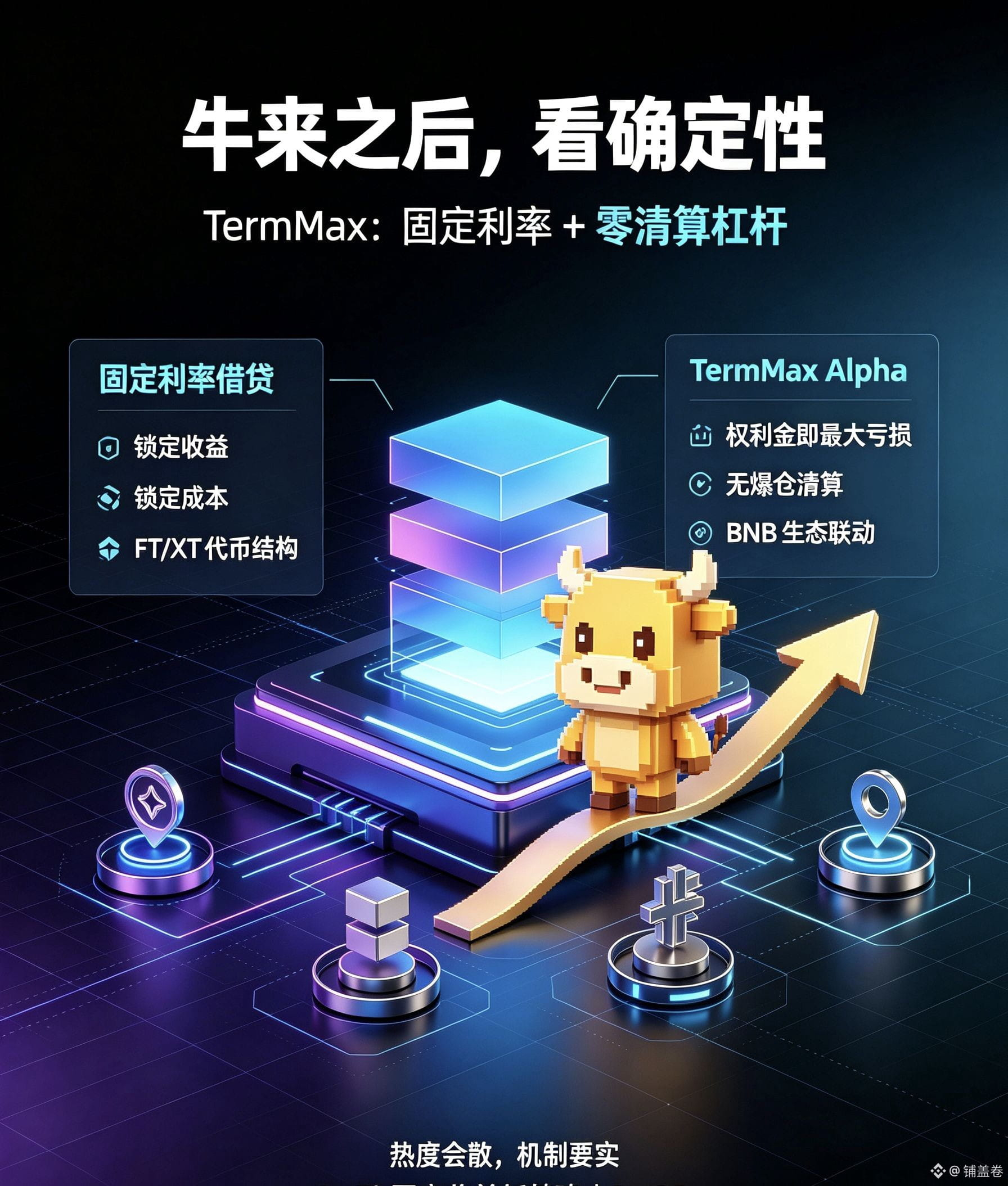
#termmax @TermMax
Do you remember the TermMax签到 task in our Binance wallet?
This project has also been getting more and more popular lately. This round, Binance has launched multiple tasks—everyone can jump in.
Let’s first take a look at TermMax: how much potential does Fixed-Rate DeFi + Zero-Clearing Leverage have?
TermMax’s heat has been steadily rising. Today, I’ll briefly talk about this DeFi protocol on the BNB Chain that has some unique features.
Unlike mainstream floating-rate lending like Aave, TermMax focuses on fixed-rate lending. With an FT/XT yield-splitting mechanism, deposits can be locked to the maturity yield. Borrowers can also lock their borrowing cost in advance, addressing the pain point of wildly fluctuating interest rates in traditional DeFi lending—making it well-suited for medium- to long-term yield strategies.
In addition, its flagship product, TermMax Alpha, is deployed on the BNB Chain. Its biggest highlight is an option-style zero-clearing leverage. When opening a position, you only pay a single option premium—this fee is the maximum loss. Even if the market becomes extremely volatile, it will not trigger liquidation and clearing. At the same time, you can trade Binance Alpha early tokens, filling the gap in scenarios where new coins lack contract-based trading opportunities.
The project has institutional investors such as Cumberland and HashKey. It has multi-chain deployments. As of now, $TMX has not yet had its TGE, and an XP points campaign is currently underway.
Overall, the track direction looks promising. However, the user threshold for fixed-rate products is relatively high, and there are also uncertainties in the derivatives mechanism.
This article is for project education only and does not constitute investment advice. The crypto market has extremely high risk—please DYOR.
Do you think zero-clearing leverage will become a new direction for derivatives? Feel free to discuss.
Do you remember the TermMax签到 task in our Binance wallet?
This project has also been getting more and more popular lately. This round, Binance has launched multiple tasks—everyone can jump in.
Let’s first take a look at TermMax: how much potential does Fixed-Rate DeFi + Zero-Clearing Leverage have?
TermMax’s heat has been steadily rising. Today, I’ll briefly talk about this DeFi protocol on the BNB Chain that has some unique features.
Unlike mainstream floating-rate lending like Aave, TermMax focuses on fixed-rate lending. With an FT/XT yield-splitting mechanism, deposits can be locked to the maturity yield. Borrowers can also lock their borrowing cost in advance, addressing the pain point of wildly fluctuating interest rates in traditional DeFi lending—making it well-suited for medium- to long-term yield strategies.
In addition, its flagship product, TermMax Alpha, is deployed on the BNB Chain. Its biggest highlight is an option-style zero-clearing leverage. When opening a position, you only pay a single option premium—this fee is the maximum loss. Even if the market becomes extremely volatile, it will not trigger liquidation and clearing. At the same time, you can trade Binance Alpha early tokens, filling the gap in scenarios where new coins lack contract-based trading opportunities.
The project has institutional investors such as Cumberland and HashKey. It has multi-chain deployments. As of now, $TMX has not yet had its TGE, and an XP points campaign is currently underway.
Overall, the track direction looks promising. However, the user threshold for fixed-rate products is relatively high, and there are also uncertainties in the derivatives mechanism.
This article is for project education only and does not constitute investment advice. The crypto market has extremely high risk—please DYOR.
Do you think zero-clearing leverage will become a new direction for derivatives? Feel free to discuss.
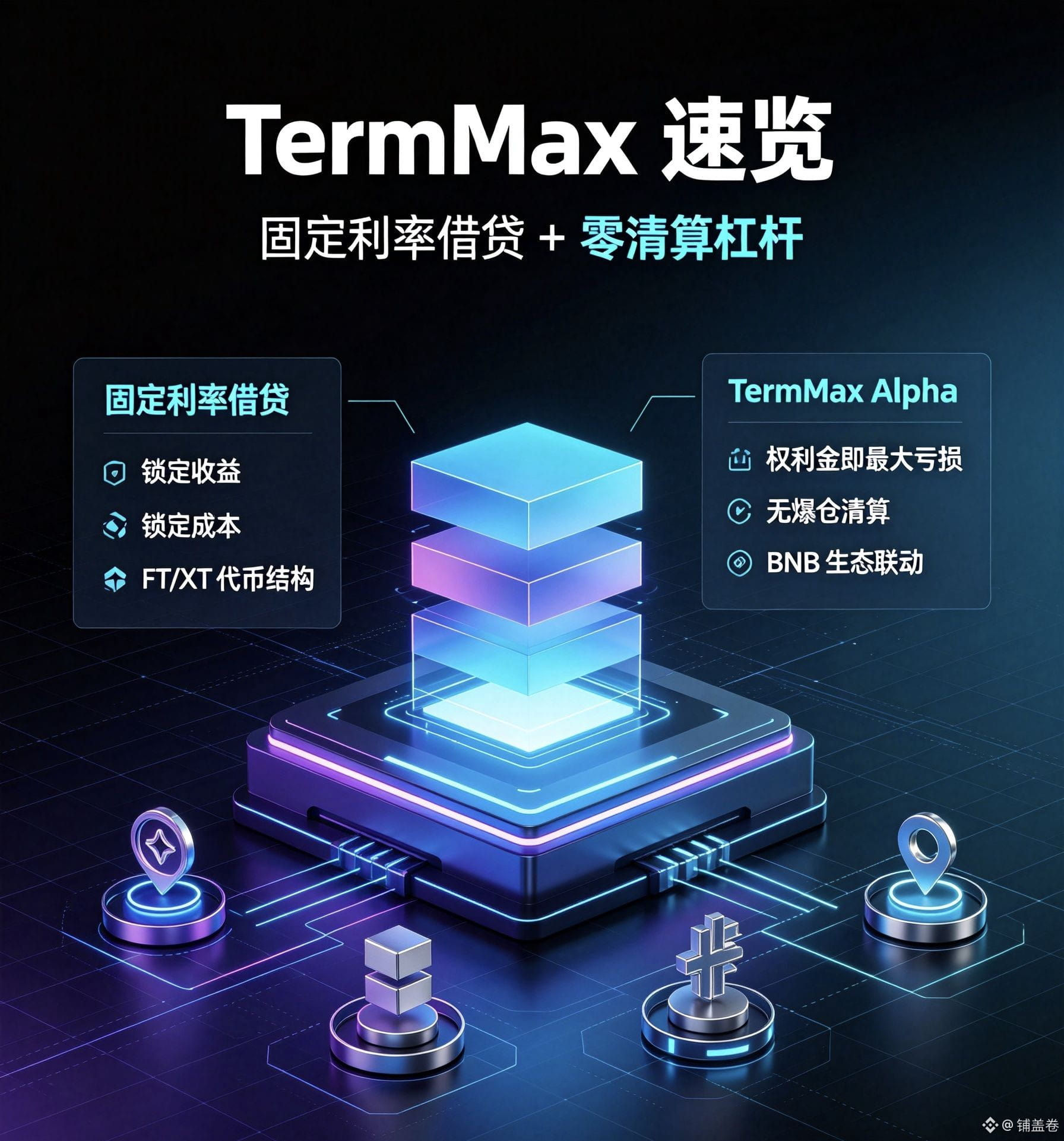
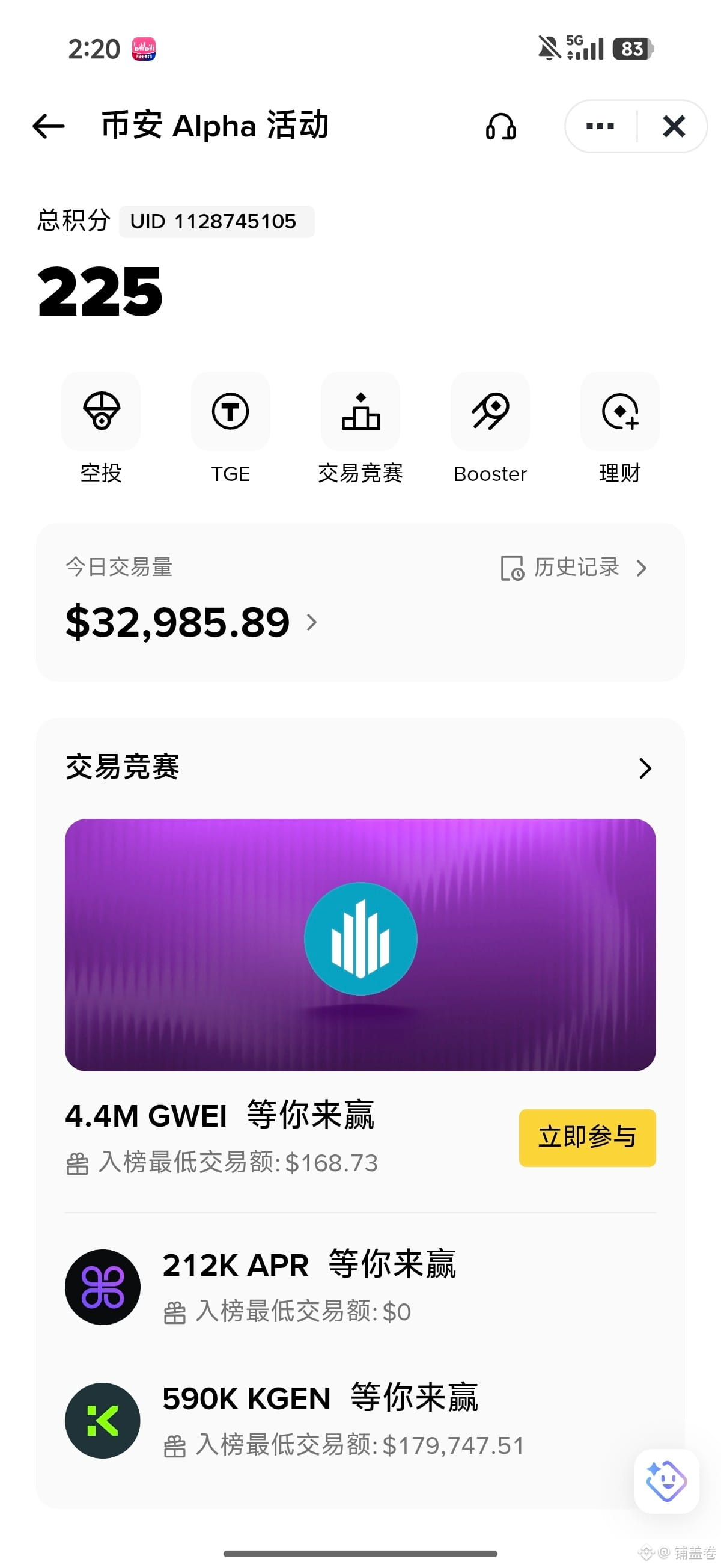
What do I do? It feels like Alpha is about to quit too.
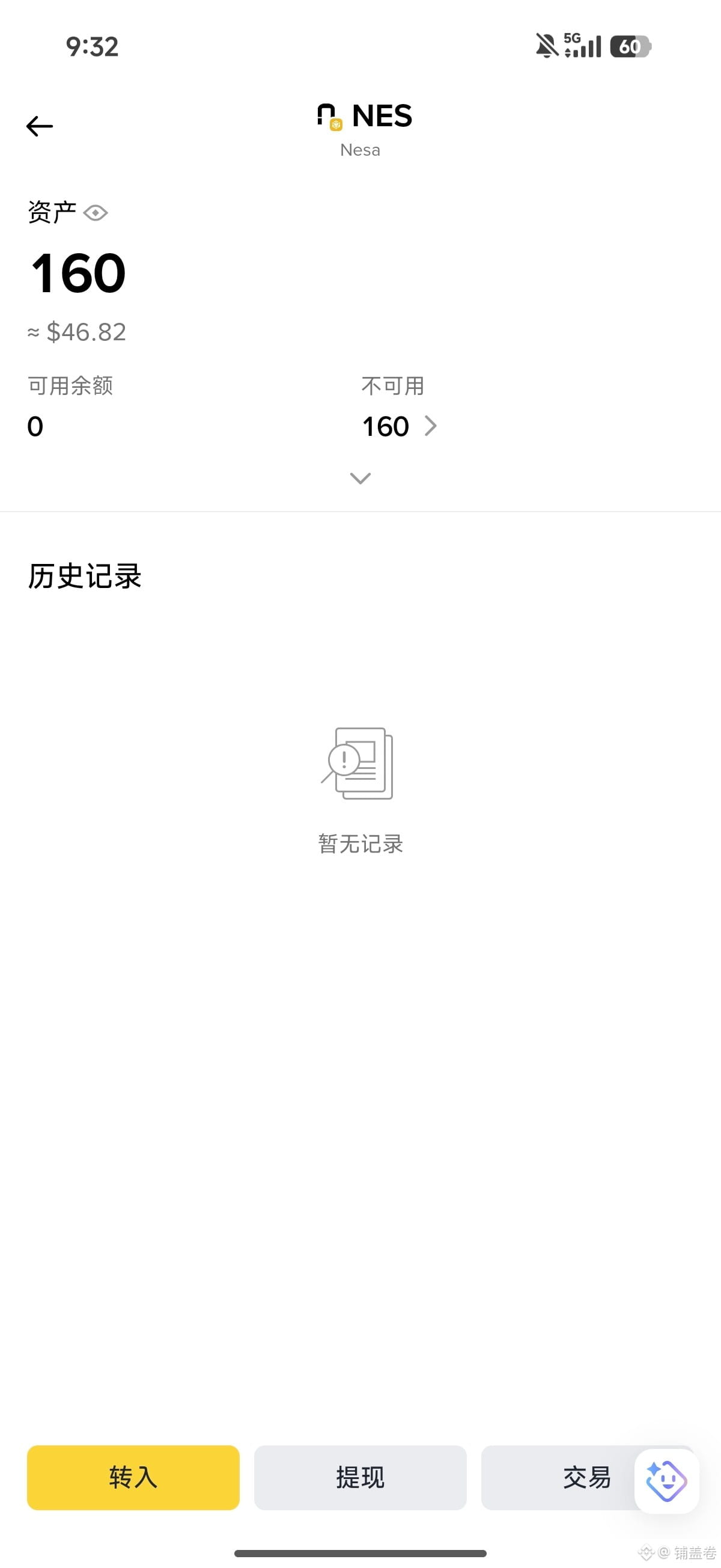
Is today's airdrop really valued this high? Let's get in on the gains.
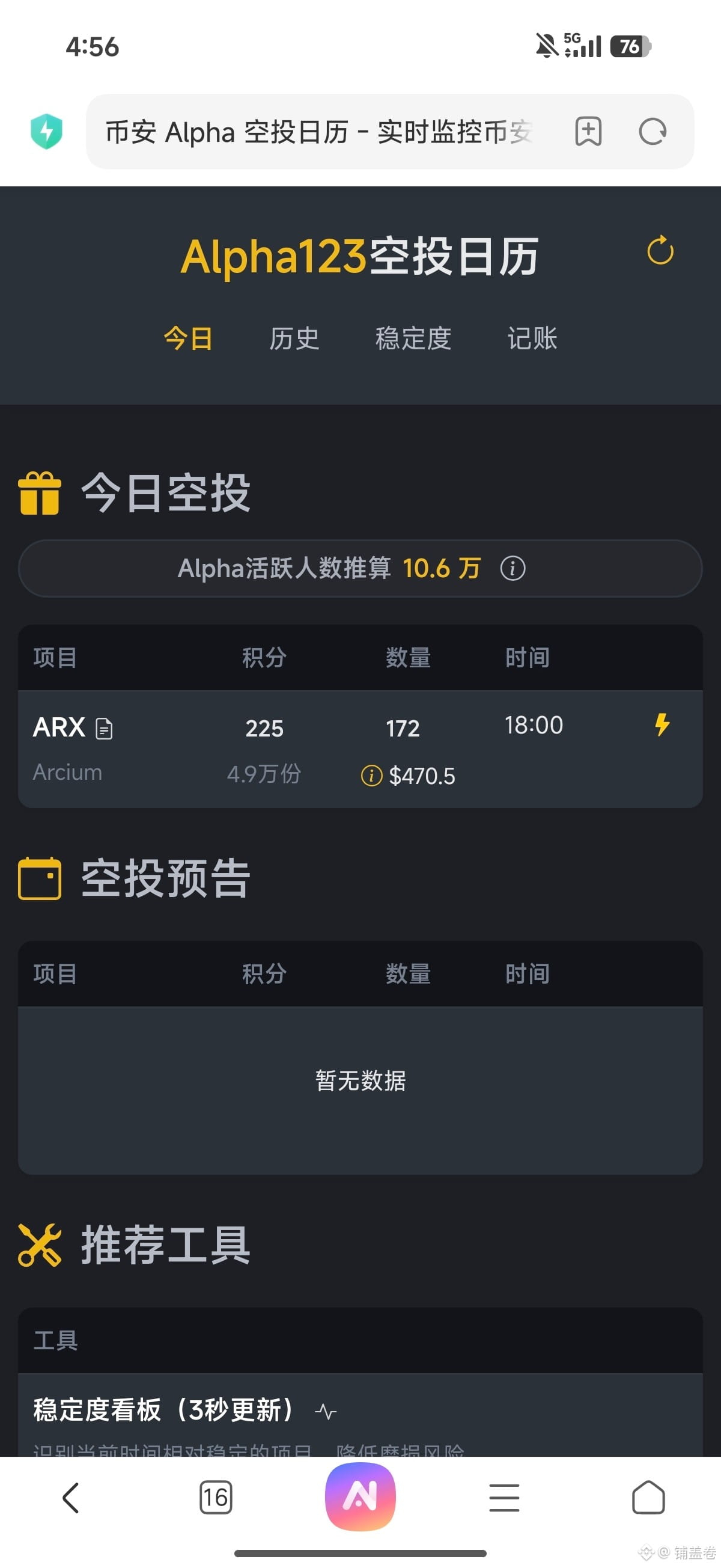
Is there a chance to scoop up today's airdrop at 256?
Hey folks, have you guys been buying into the US stocks? How's it feeling?
#genius $GENIUS
Today I gotta vent a bit because I'm feeling kinda drained.
Genius (Shuttle Labs) Whitepaper Overview (2026, Cross-Chain Trading Terminal)
Project Positioning: Creating a "CEX-level experience for a non-custodial cross-chain terminal," featuring the Genius Bridge Protocol (GBP) + Genius Terminal, aiming to make on-chain trading as simple as a centralized exchange.
1. Core Selling Points (Directly from the Whitepaper)
- Non-Custodial Cross-Chain Intent Bridge (GBP): Utilizing Lit Protocol as a distributed solver, no need for users to manage private keys/gas/multiple addresses, one-click cross-chain.
- CEX-level UX: Hiding the on-chain complexity, trades are "invisible on-chain," speed and experience benchmarked against CEX.
- AI + Privacy: Ghost Mode privacy layer, separating execution from the main address; AI optimizing routing and settlement.
- Token $GENIUS : Issuance before April 2026, team/investors locked for ≥1 year; GP points can be exchanged for airdrops.
- Ecological Roadmap: PropAMM (GeniusFi) on BNB Chain, binary options, future coverage of stocks/commodities.
2. Whitepaper Critiques (Sharp Comments)
1. Tech is Vague, Implementation is Unclear: The core "AI-driven, decentralized solver" lacks code, audits, or testnet data, just recycled industry jargon.
2. Rebranding Red Flags, Low Credibility: Formerly Onfable→Shuttle→Genius, multiple name changes to wipe history, a classic "pump and dump" scheme.
3. Tokenomics is Obscure: Total supply, distribution, unlocking rules are vague, only stressing "locked for 1 year," avoiding core distribution details.
4. Overstated Comparisons, Serious Hype: Claims of CEX-like experience while dodging discussions on decentralized liquidity depth, slippage, and security risks; “covering traditional finance” is pure fantasy.
5. More Marketing than Action: Airdrops + points for new users, "refund feature" as a stopgap, fundamentally a short-term project relying on marketing hype.
3. One-Line Summary
A cross-chain money grab disguised with "CEX experience, AI, and privacy"; no solid tech, a team with a rebranding history, and opaque economics—proceed with caution!
Today I gotta vent a bit because I'm feeling kinda drained.
Genius (Shuttle Labs) Whitepaper Overview (2026, Cross-Chain Trading Terminal)
Project Positioning: Creating a "CEX-level experience for a non-custodial cross-chain terminal," featuring the Genius Bridge Protocol (GBP) + Genius Terminal, aiming to make on-chain trading as simple as a centralized exchange.
1. Core Selling Points (Directly from the Whitepaper)
- Non-Custodial Cross-Chain Intent Bridge (GBP): Utilizing Lit Protocol as a distributed solver, no need for users to manage private keys/gas/multiple addresses, one-click cross-chain.
- CEX-level UX: Hiding the on-chain complexity, trades are "invisible on-chain," speed and experience benchmarked against CEX.
- AI + Privacy: Ghost Mode privacy layer, separating execution from the main address; AI optimizing routing and settlement.
- Token $GENIUS : Issuance before April 2026, team/investors locked for ≥1 year; GP points can be exchanged for airdrops.
- Ecological Roadmap: PropAMM (GeniusFi) on BNB Chain, binary options, future coverage of stocks/commodities.
2. Whitepaper Critiques (Sharp Comments)
1. Tech is Vague, Implementation is Unclear: The core "AI-driven, decentralized solver" lacks code, audits, or testnet data, just recycled industry jargon.
2. Rebranding Red Flags, Low Credibility: Formerly Onfable→Shuttle→Genius, multiple name changes to wipe history, a classic "pump and dump" scheme.
3. Tokenomics is Obscure: Total supply, distribution, unlocking rules are vague, only stressing "locked for 1 year," avoiding core distribution details.
4. Overstated Comparisons, Serious Hype: Claims of CEX-like experience while dodging discussions on decentralized liquidity depth, slippage, and security risks; “covering traditional finance” is pure fantasy.
5. More Marketing than Action: Airdrops + points for new users, "refund feature" as a stopgap, fundamentally a short-term project relying on marketing hype.
3. One-Line Summary
A cross-chain money grab disguised with "CEX experience, AI, and privacy"; no solid tech, a team with a rebranding history, and opaque economics—proceed with caution!
#genius $GENIUS
GENIUS Project Core Advantages and Highlights
Investment banking executives burning the midnight oil, still missing the black swan market; everyday traders stuck on information islands, getting wrecked by delayed feeds and inefficient settlements—this is the harsh reality of digital trading today. The overwhelming majority of tools are just low-efficiency placebos for retail traders. But GENIUS cuts through the industry's veil, completely reconstructing trading decision logic.
Its killer feature is the golden combination of CEX-level speed and DEX-level security, with outstanding privacy protection for large trades. Non-custodial cross-chain terminals achieve millisecond-level ultra-fast settlements, aggregating liquidity from over a hundred DEXs, balancing the efficiency of centralized platforms with the asset security of decentralized ones. It perfectly addresses the industry’s common issues of 'speed equals insecurity, security equals inefficiency.'
Hardcore strength speaks through data: peak weekly trading volume exceeded $200 million, with tens of thousands of active wallets deeply participating, pushing cumulative trading volume past $18 billion—genuine market recognition. The underlying technology features a bionic active cognition engine, ditching the shortcomings of typical AI's passive responses, equipped with complete decision-making abilities that include autonomous perception, reasoning, forecasting, and error correction. In complex market conditions, it locks in risks and seizes opportunities ahead of time, not as an afterthought.
Setting aside fluff concepts, GENIUS truly addresses the industry's essential needs: turning professional-grade predictive decision-making into a trading weapon accessible to the average person. Backed by YZi Labs’ tens of millions in investment and CZ’s strategic endorsement, with Halborn's security audit ensuring safety, it doesn’t rely on hype but instead breaks through industry pain points with hardcore technology, redefining the foundational standards of smart trading through extreme efficiency, privacy protection, and foresight. That's its irreplaceable core competitiveness.
GENIUS Project Core Advantages and Highlights
Investment banking executives burning the midnight oil, still missing the black swan market; everyday traders stuck on information islands, getting wrecked by delayed feeds and inefficient settlements—this is the harsh reality of digital trading today. The overwhelming majority of tools are just low-efficiency placebos for retail traders. But GENIUS cuts through the industry's veil, completely reconstructing trading decision logic.
Its killer feature is the golden combination of CEX-level speed and DEX-level security, with outstanding privacy protection for large trades. Non-custodial cross-chain terminals achieve millisecond-level ultra-fast settlements, aggregating liquidity from over a hundred DEXs, balancing the efficiency of centralized platforms with the asset security of decentralized ones. It perfectly addresses the industry’s common issues of 'speed equals insecurity, security equals inefficiency.'
Hardcore strength speaks through data: peak weekly trading volume exceeded $200 million, with tens of thousands of active wallets deeply participating, pushing cumulative trading volume past $18 billion—genuine market recognition. The underlying technology features a bionic active cognition engine, ditching the shortcomings of typical AI's passive responses, equipped with complete decision-making abilities that include autonomous perception, reasoning, forecasting, and error correction. In complex market conditions, it locks in risks and seizes opportunities ahead of time, not as an afterthought.
Setting aside fluff concepts, GENIUS truly addresses the industry's essential needs: turning professional-grade predictive decision-making into a trading weapon accessible to the average person. Backed by YZi Labs’ tens of millions in investment and CZ’s strategic endorsement, with Halborn's security audit ensuring safety, it doesn’t rely on hype but instead breaks through industry pain points with hardcore technology, redefining the foundational standards of smart trading through extreme efficiency, privacy protection, and foresight. That's its irreplaceable core competitiveness.
#genius $GENIUS
The new round of creator tasks is here, and this time it's about the GENIUS project.
To be honest, just the name alone is impressive—Genius. Haha, let’s dive into this project and get to know it better.
Many folks see GENIUS merely as another on-chain aggregation tool, but they’re seriously underestimating the true scope of this Binance Labs-backed project. Its ultimate goal is to break the major limitations of current DeFi and create a new generation of on-chain trading operating systems that balance security, privacy, and top-notch user experience.
Right now, the biggest pain point for most on-chain trading is the fragmentation and being left out to dry. The transparency of public chains exposes all transaction activities and fund movements, making large trades an easy target for bots to snipe, and allowing whales to follow and harvest profits. Plus, the multi-chain and multi-DEX chaos makes it cumbersome for users to operate, leading to high losses, never quite matching the smooth experience of centralized exchanges.
GENIUS has precisely tapped into this industry gap, achieving a dual breakthrough. On one hand, it brings the convenience of CEX, aggregating over a dozen major public chains and hundreds of DEXs, integrating all categories of trading like spot, perpetuals, and wealth management, intelligently matching the optimal liquidity path without needing cross-chain switches or repeated actions—delivering trading speed and experience at a centralized platform level.
On the other hand, it maintains the core security baseline of DEXs, innovating with a ghost order privacy mechanism that splits trading behaviors through technology, completely eliminating the issues of sniping and follow trading, thus patching the biggest security loophole in on-chain trading.
In short, GENIUS isn’t just a trading tool; it’s a new DeFi infrastructure tailored for average retail investors and institutional whales. It solves the industry dilemma of centralized insecurity and decentralized usability struggles, which is fundamentally why it’s attracting top-tier capital and becoming a core dark horse in this round of on-chain trading.
The new round of creator tasks is here, and this time it's about the GENIUS project.
To be honest, just the name alone is impressive—Genius. Haha, let’s dive into this project and get to know it better.
Many folks see GENIUS merely as another on-chain aggregation tool, but they’re seriously underestimating the true scope of this Binance Labs-backed project. Its ultimate goal is to break the major limitations of current DeFi and create a new generation of on-chain trading operating systems that balance security, privacy, and top-notch user experience.
Right now, the biggest pain point for most on-chain trading is the fragmentation and being left out to dry. The transparency of public chains exposes all transaction activities and fund movements, making large trades an easy target for bots to snipe, and allowing whales to follow and harvest profits. Plus, the multi-chain and multi-DEX chaos makes it cumbersome for users to operate, leading to high losses, never quite matching the smooth experience of centralized exchanges.
GENIUS has precisely tapped into this industry gap, achieving a dual breakthrough. On one hand, it brings the convenience of CEX, aggregating over a dozen major public chains and hundreds of DEXs, integrating all categories of trading like spot, perpetuals, and wealth management, intelligently matching the optimal liquidity path without needing cross-chain switches or repeated actions—delivering trading speed and experience at a centralized platform level.
On the other hand, it maintains the core security baseline of DEXs, innovating with a ghost order privacy mechanism that splits trading behaviors through technology, completely eliminating the issues of sniping and follow trading, thus patching the biggest security loophole in on-chain trading.
In short, GENIUS isn’t just a trading tool; it’s a new DeFi infrastructure tailored for average retail investors and institutional whales. It solves the industry dilemma of centralized insecurity and decentralized usability struggles, which is fundamentally why it’s attracting top-tier capital and becoming a core dark horse in this round of on-chain trading.
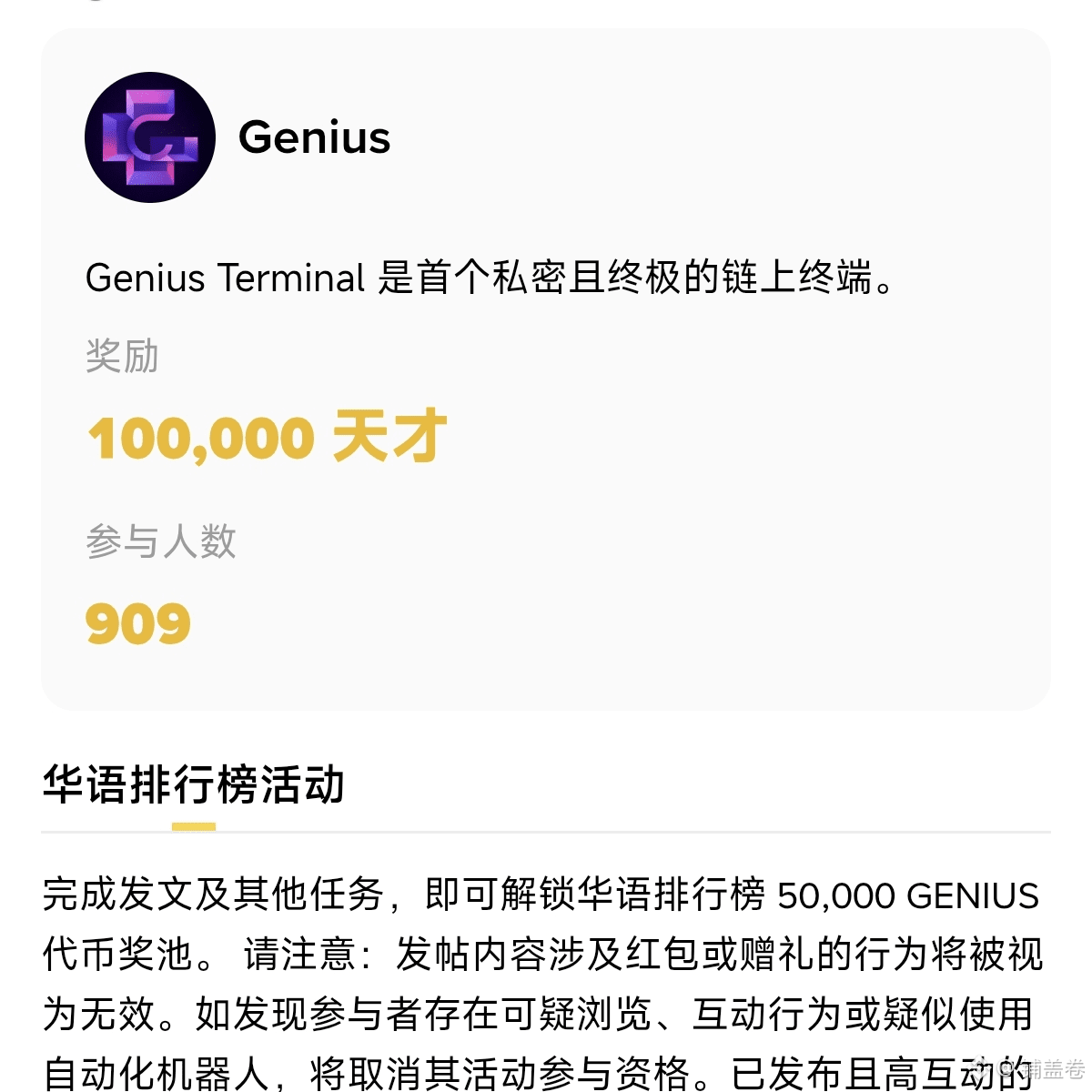
Hey fam, are we getting an airdrop today? It's perfect timing for a pullback.

@Pixels #pixel $PIXEL
Recently, I jumped into the TGE and let me tell you, navigating through all the activities ain't easy. Big gains fly, small gains stick around, but squeezing profits is tough.
So, I’ve been messing around with Pixels, flipping through its whitepaper. Fun is the name of the game, and that’s the real deal for Web3 gaming. I figured this out after a long night diving into the Pixels whitepaper.
Pixels is set to become a top player in Web3 because it prioritizes fun over just pumping coins. This approach is actually the biggest advantage for the project's long-term growth.
Instead of piling on complex chain game concepts, it uses a classic pixel art style combined with a chill farming and exploration gameplay, reminiscent of Stardew Valley, which is all about relaxation. Planting, chopping wood, cooking, crafting furniture—it's super easy for newbies to get started; daily quests, seasonal events, and multiplayer social features keep casual players engaged every day. No pressure to spend big, no unnecessary competition; it’s all about having a good time to keep players around. After all, who wouldn't be attracted to a laid-back community?
“Fun first” directly leads to three major advantages:
1. User base expands, with DAU surpassing a million. It doesn’t rely on speculative hype to draw people in, but instead attracts both in and out of the crypto space with game quality, creating a large, stable ecosystem, steering clear of those “meme coin” short-lived traps.
2. More sustainable economy. Players remain active due to enjoyment, naturally generating real demand for resources, tokens, and NFTs. The RORS engine ensures every token has value backing, avoiding inflation crashes.
3. Strong community engagement. Players chat about gameplay, showcase their farms, and team up for activities, creating a positive atmosphere that spreads organically, making the project increasingly stable.
Web3 gaming is ultimately about the games. Pixels proves that focusing on fun first, then talking about on-chain assets, is the way to go for longevity.
📊 Cast your vote: What do you value most in Pixels? Let’s hear from everyone.
Recently, I jumped into the TGE and let me tell you, navigating through all the activities ain't easy. Big gains fly, small gains stick around, but squeezing profits is tough.
So, I’ve been messing around with Pixels, flipping through its whitepaper. Fun is the name of the game, and that’s the real deal for Web3 gaming. I figured this out after a long night diving into the Pixels whitepaper.
Pixels is set to become a top player in Web3 because it prioritizes fun over just pumping coins. This approach is actually the biggest advantage for the project's long-term growth.
Instead of piling on complex chain game concepts, it uses a classic pixel art style combined with a chill farming and exploration gameplay, reminiscent of Stardew Valley, which is all about relaxation. Planting, chopping wood, cooking, crafting furniture—it's super easy for newbies to get started; daily quests, seasonal events, and multiplayer social features keep casual players engaged every day. No pressure to spend big, no unnecessary competition; it’s all about having a good time to keep players around. After all, who wouldn't be attracted to a laid-back community?
“Fun first” directly leads to three major advantages:
1. User base expands, with DAU surpassing a million. It doesn’t rely on speculative hype to draw people in, but instead attracts both in and out of the crypto space with game quality, creating a large, stable ecosystem, steering clear of those “meme coin” short-lived traps.
2. More sustainable economy. Players remain active due to enjoyment, naturally generating real demand for resources, tokens, and NFTs. The RORS engine ensures every token has value backing, avoiding inflation crashes.
3. Strong community engagement. Players chat about gameplay, showcase their farms, and team up for activities, creating a positive atmosphere that spreads organically, making the project increasingly stable.
Web3 gaming is ultimately about the games. Pixels proves that focusing on fun first, then talking about on-chain assets, is the way to go for longevity.
📊 Cast your vote: What do you value most in Pixels? Let’s hear from everyone.
休闲好玩,佛系体验
50%
边玩边赚,收益稳定
50%
社交互动,多人乐趣
0%
资产所有权,NFT收藏
0%
2 votes • Voting closed

This afternoon at 17:00 OPG is going public, 226 points, the score is really low. Everyone, let's go for it.
#OPG
#OPG
Log in to explore more content