

Cipher_168
2.1k Posts

Cipher_168
Report
Block User
Bitcoin believer | Web3 explorer | Sharing valuable crypto insights daily. Research first, hype never | Bitcoin | DeFi | Cipher_168
761 Following
18.1K+ Followers
2.4K+ Liked
Posts
All
Quotes
Videos
Live
·
--
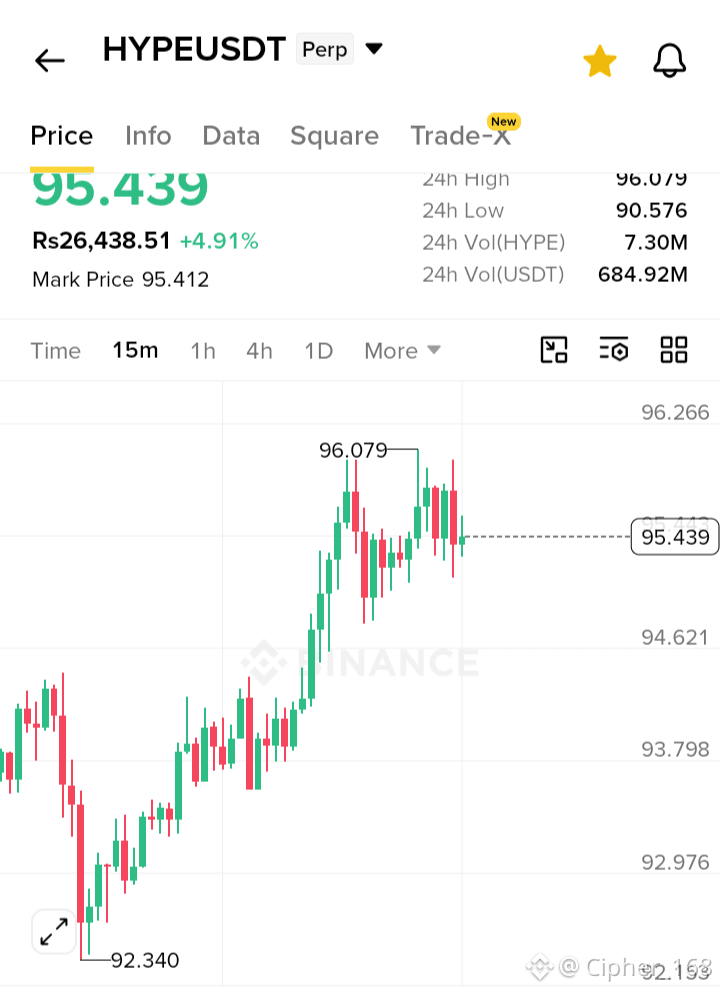
🟢 $HYPE /USDT | 15M Technical Setup
HYPE has been moving strongly upward and is currently consolidating below the recent 96.079 high.
A confirmed breakout above this resistance could open the way toward the following levels:
📍 Entry: 96.15 – 96.35
🎯 TP1: 97.20
🎯 TP2: 98.20
🎯 TP3: 99.50
🛑 SL: 95.10
⚠️ Wait for confirmation — no guaranteed outcome.
This is a chart-based technical setup for educational purposes, not financial advice. DYOR and manage risk carefully, especially when using leverage.
#HYPEUSDT #HYPE #Hyperliquid #TechnicalAnalysis #CryptoTrading
🟢 $HYPE /USDT | 15M Technical Setup
HYPE has been moving strongly upward and is currently consolidating below the recent 96.079 high.
A confirmed breakout above this resistance could open the way toward the following levels:
📍 Entry: 96.15 – 96.35
🎯 TP1: 97.20
🎯 TP2: 98.20
🎯 TP3: 99.50
🛑 SL: 95.10
⚠️ Wait for confirmation — no guaranteed outcome.
This is a chart-based technical setup for educational purposes, not financial advice. DYOR and manage risk carefully, especially when using leverage.
#HYPEUSDT #HYPE #Hyperliquid #TechnicalAnalysis #CryptoTrading
HYPE has been moving strongly upward and is currently consolidating below the recent 96.079 high.
A confirmed breakout above this resistance could open the way toward the following levels:
📍 Entry: 96.15 – 96.35
🎯 TP1: 97.20
🎯 TP2: 98.20
🎯 TP3: 99.50
🛑 SL: 95.10
⚠️ Wait for confirmation — no guaranteed outcome.
This is a chart-based technical setup for educational purposes, not financial advice. DYOR and manage risk carefully, especially when using leverage.
#HYPEUSDT #HYPE #Hyperliquid #TechnicalAnalysis #CryptoTrading
127
·
--
Bearish
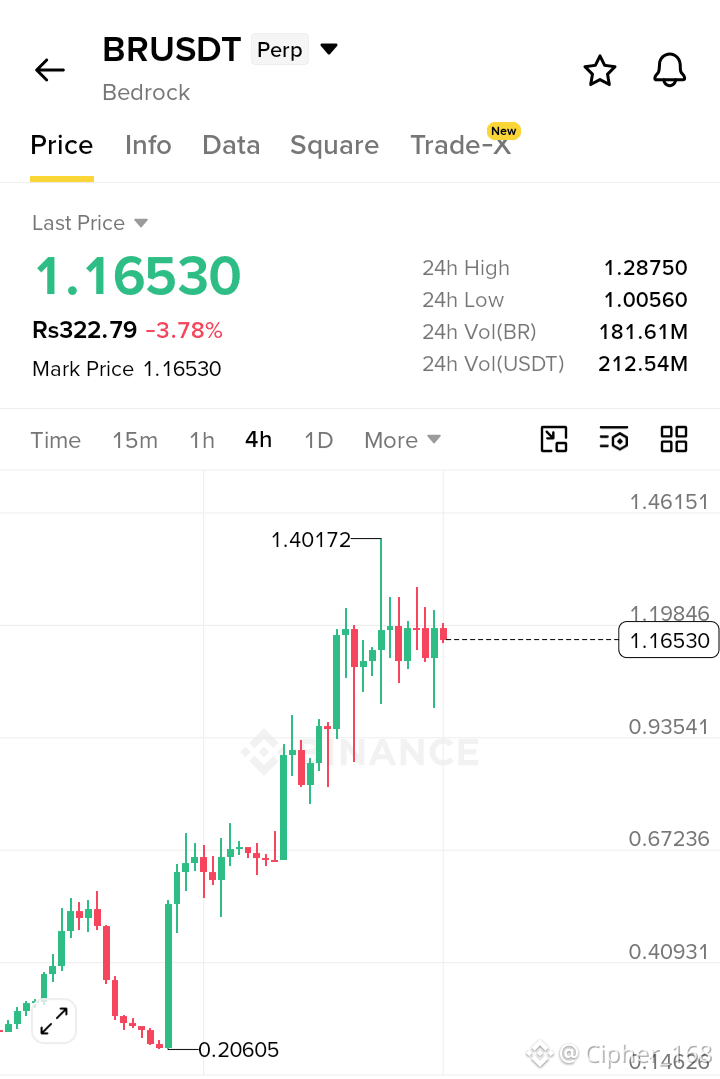
🔴 $BR /USDT | 4H Technical Analysis
Possible Short Setup — For Educational Purposes
BRUSDT is currently consolidating after a strong upward move. Price is showing repeated rejection around the 1.175–1.195 area.
📌 Potential Short Entry: 1.175 – 1.195
🎯 TP1: 1.120
🎯 TP2: 1.060
🎯 TP3: 1.010
🛑 Invalidation / SL: 1.225
Setup idea:
If price reaches the entry zone and shows bearish rejection/confirmation, the above levels can be monitored as potential downside targets.
⚠️ This is not a guaranteed signal or financial advice.
Do your own research (DYOR), manage risk carefully, and consider market volatility before trading.
#BRUSDT #Bedrock #TechnicalAnalysis #CryptoAnalysis #BinanceSquare
🔴 $BR /USDT | 4H Technical Analysis
Possible Short Setup — For Educational Purposes
BRUSDT is currently consolidating after a strong upward move. Price is showing repeated rejection around the 1.175–1.195 area.
📌 Potential Short Entry: 1.175 – 1.195
🎯 TP1: 1.120
🎯 TP2: 1.060
🎯 TP3: 1.010
🛑 Invalidation / SL: 1.225
Setup idea:
If price reaches the entry zone and shows bearish rejection/confirmation, the above levels can be monitored as potential downside targets.
⚠️ This is not a guaranteed signal or financial advice.
Do your own research (DYOR), manage risk carefully, and consider market volatility before trading.
#BRUSDT #Bedrock #TechnicalAnalysis #CryptoAnalysis #BinanceSquare
Possible Short Setup — For Educational Purposes
BRUSDT is currently consolidating after a strong upward move. Price is showing repeated rejection around the 1.175–1.195 area.
📌 Potential Short Entry: 1.175 – 1.195
🎯 TP1: 1.120
🎯 TP2: 1.060
🎯 TP3: 1.010
🛑 Invalidation / SL: 1.225
Setup idea:
If price reaches the entry zone and shows bearish rejection/confirmation, the above levels can be monitored as potential downside targets.
⚠️ This is not a guaranteed signal or financial advice.
Do your own research (DYOR), manage risk carefully, and consider market volatility before trading.
#BRUSDT #Bedrock #TechnicalAnalysis #CryptoAnalysis #BinanceSquare
578
·
--
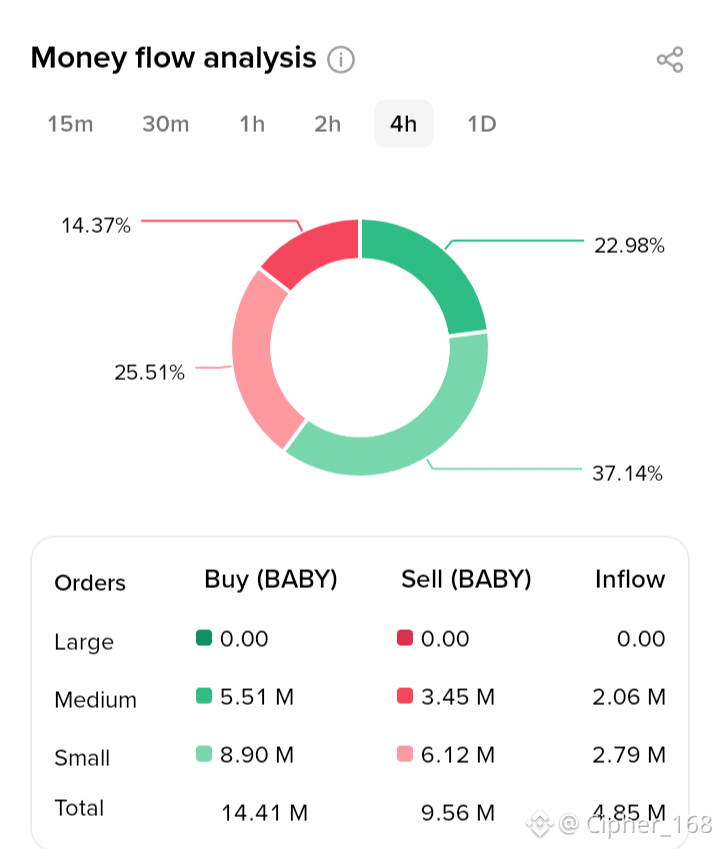
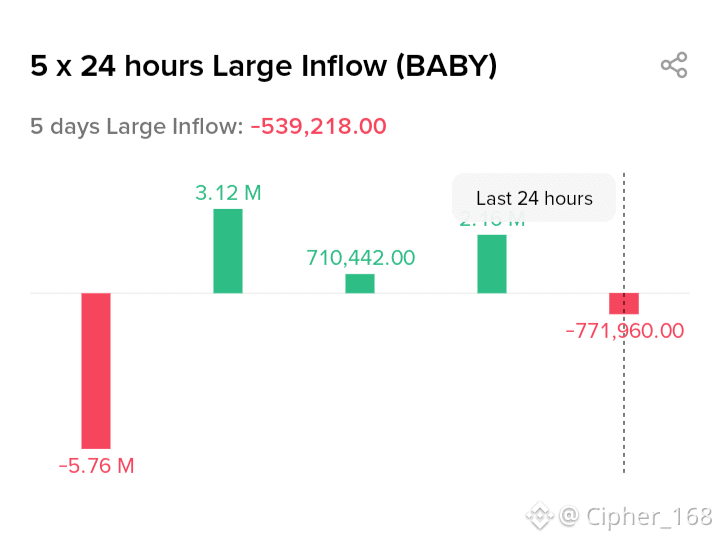
Something I've learned from watching $BABY flows is that buying pressure and smart-money movement don't always tell the same story at the same time.
The shorter timeframe can look constructive while larger capital is still adjusting its positions. That doesn't automatically make one signal right and the other wrong—it simply shows that different participants operate on different time horizons.
That's why I find it useful to follow both instead of reacting to a single metric. Watching how order flow around @BabylonLabs_io develops over multiple sessions often provides more context than any one snapshot.
Markets tend to reward patience more than quick conclusions. I'll be watching to see whether today's buying interest develops into sustained momentum.
Which metric do you think deserves more weight when evaluating a token's trend: short-term order flow or multi-day capital movement?
@babylonlabs_io $BABY #BABY #Bitcoin #Crypto #OnChain
Something I've learned from watching $BABY flows is that buying pressure and smart-money movement don't always tell the same story at the same time.
The shorter timeframe can look constructive while larger capital is still adjusting its positions. That doesn't automatically make one signal right and the other wrong—it simply shows that different participants operate on different time horizons.
That's why I find it useful to follow both instead of reacting to a single metric. Watching how order flow around @BabylonLabs_io develops over multiple sessions often provides more context than any one snapshot.
Markets tend to reward patience more than quick conclusions. I'll be watching to see whether today's buying interest develops into sustained momentum.
Which metric do you think deserves more weight when evaluating a token's trend: short-term order flow or multi-day capital movement?
@BabylonLabs_io $BABY #BABY #Bitcoin #Crypto #OnChain
The shorter timeframe can look constructive while larger capital is still adjusting its positions. That doesn't automatically make one signal right and the other wrong—it simply shows that different participants operate on different time horizons.
That's why I find it useful to follow both instead of reacting to a single metric. Watching how order flow around @BabylonLabs_io develops over multiple sessions often provides more context than any one snapshot.
Markets tend to reward patience more than quick conclusions. I'll be watching to see whether today's buying interest develops into sustained momentum.
Which metric do you think deserves more weight when evaluating a token's trend: short-term order flow or multi-day capital movement?
@BabylonLabs_io $BABY #BABY #Bitcoin #Crypto #OnChain
1
1
165
·
--
I've been watching $BABY order flow today, and one thing stands out. Short-term buying activity looks stronger, while the larger 5-day capital flow suggests bigger players are still repositioning rather than moving in one direction.
It reminds me that a single timeframe rarely tells the full story. Looking at both short-term momentum and broader capital movement gives a much clearer picture of what's happening around @babylonlabs_io
Instead of reacting to one chart, I'm more interested in whether buying pressure can stay consistent over the next few sessions. That's usually where stronger trends begin to take shape.
What do you think is the more reliable signal—short-term order flow or large wallet activity?
@babylonlabs_io $BABY #Crypto #OnChain
I've been watching $BABY order flow today, and one thing stands out. Short-term buying activity looks stronger, while the larger 5-day capital flow suggests bigger players are still repositioning rather than moving in one direction.
It reminds me that a single timeframe rarely tells the full story. Looking at both short-term momentum and broader capital movement gives a much clearer picture of what's happening around @BabylonLabs_io
Instead of reacting to one chart, I'm more interested in whether buying pressure can stay consistent over the next few sessions. That's usually where stronger trends begin to take shape.
What do you think is the more reliable signal—short-term order flow or large wallet activity?
@BabylonLabs_io $BABY #Crypto #OnChain
It reminds me that a single timeframe rarely tells the full story. Looking at both short-term momentum and broader capital movement gives a much clearer picture of what's happening around @BabylonLabs_io
Instead of reacting to one chart, I'm more interested in whether buying pressure can stay consistent over the next few sessions. That's usually where stronger trends begin to take shape.
What do you think is the more reliable signal—short-term order flow or large wallet activity?
@BabylonLabs_io $BABY #Crypto #OnChain
3
1
117
·
--
@babylonlabs_io Zooming out from the daily updates, what TBV represents long-term feels a lot bigger than just one isolated feature. It's an attempt to make Bitcoin a genuine first-class citizen in DeFi without stripping away the exact properties that made Bitcoin valuable to begin with.
Every wrapped-token or bridge-based solution before this one asked BTC holders to give something up in exchange for access to yield or lending. TBV is the first serious approach I've come across that doesn't force that trade-off on anyone.
If it scales the way the current roadmap suggests it will, this could quietly become the default way Bitcoin interacts with onchain finance over the next few years, rather than staying a niche alternative.
That's admittedly a fairly big claim to make this early, so I'll keep tracking how the actual mainnet numbers and adoption curves play out over time before getting too confident.
Either way, it's rare to see a protocol try to solve custody and composability at the same time instead of picking one and ignoring the other.
Long-term believer in what @babylonlabs_io is building here. #baby $BABY
What will drive TBV adoption most?
@BabylonLabs_io Zooming out from the daily updates, what TBV represents long-term feels a lot bigger than just one isolated feature. It's an attempt to make Bitcoin a genuine first-class citizen in DeFi without stripping away the exact properties that made Bitcoin valuable to begin with.
Every wrapped-token or bridge-based solution before this one asked BTC holders to give something up in exchange for access to yield or lending. TBV is the first serious approach I've come across that doesn't force that trade-off on anyone.
If it scales the way the current roadmap suggests it will, this could quietly become the default way Bitcoin interacts with onchain finance over the next few years, rather than staying a niche alternative.
That's admittedly a fairly big claim to make this early, so I'll keep tracking how the actual mainnet numbers and adoption curves play out over time before getting too confident.
Either way, it's rare to see a protocol try to solve custody and composability at the same time instead of picking one and ignoring the other.
Long-term believer in what @BabylonLabs_io is building here. #baby $BABY
What will drive TBV adoption most?
Every wrapped-token or bridge-based solution before this one asked BTC holders to give something up in exchange for access to yield or lending. TBV is the first serious approach I've come across that doesn't force that trade-off on anyone.
If it scales the way the current roadmap suggests it will, this could quietly become the default way Bitcoin interacts with onchain finance over the next few years, rather than staying a niche alternative.
That's admittedly a fairly big claim to make this early, so I'll keep tracking how the actual mainnet numbers and adoption curves play out over time before getting too confident.
Either way, it's rare to see a protocol try to solve custody and composability at the same time instead of picking one and ignoring the other.
Long-term believer in what @BabylonLabs_io is building here. #baby $BABY
What will drive TBV adoption most?
👥 Users
100%
🏦 Institutions
0%
🌍 Ecosystem
0%
📢 Community
0%
1 votes • Voting closed
1
1
89
·
--
Borrowing against Bitcoin used to mean choosing between two bad options: sell your BTC outright, or hand it over to a centralized lender and just hope they don't rehypothecate it behind the scenes. TBV finally offers a third path that actually respects self-custody the whole way through.
You lock your BTC in a vault, borrow stablecoins against that locked position, and your keys never leave your control at any point in the process. Once the loan is repaid, the vault simply releases your collateral back to you automatically.
There's no wrapping the coin into a synthetic token, no bridging it across to another chain, and no custodian sitting in the middle holding your coins hostage while charging fees for the privilege.
It's the kind of real, tangible utility that makes the phrase "Bitcoin DeFi" actually mean something concrete, instead of just being another marketing buzzword slapped onto a slide deck.
I've tested plenty of lending products that quietly ask for more trust than they advertise upfront. This is the first one where the custody guarantee actually holds up under scrutiny.
@BabylonLabs_io is connecting BTC to real lending markets without ever breaking self-custody. #baby $BABY
What matters most to you in Bitcoin lending?
Borrowing against Bitcoin used to mean choosing between two bad options: sell your BTC outright, or hand it over to a centralized lender and just hope they don't rehypothecate it behind the scenes. TBV finally offers a third path that actually respects self-custody the whole way through.
You lock your BTC in a vault, borrow stablecoins against that locked position, and your keys never leave your control at any point in the process. Once the loan is repaid, the vault simply releases your collateral back to you automatically.
There's no wrapping the coin into a synthetic token, no bridging it across to another chain, and no custodian sitting in the middle holding your coins hostage while charging fees for the privilege.
It's the kind of real, tangible utility that makes the phrase "Bitcoin DeFi" actually mean something concrete, instead of just being another marketing buzzword slapped onto a slide deck.
I've tested plenty of lending products that quietly ask for more trust than they advertise upfront. This is the first one where the custody guarantee actually holds up under scrutiny.
@BabylonLabs_io is connecting BTC to real lending markets without ever breaking self-custody. #baby $BABY
What matters most to you in Bitcoin lending?
You lock your BTC in a vault, borrow stablecoins against that locked position, and your keys never leave your control at any point in the process. Once the loan is repaid, the vault simply releases your collateral back to you automatically.
There's no wrapping the coin into a synthetic token, no bridging it across to another chain, and no custodian sitting in the middle holding your coins hostage while charging fees for the privilege.
It's the kind of real, tangible utility that makes the phrase "Bitcoin DeFi" actually mean something concrete, instead of just being another marketing buzzword slapped onto a slide deck.
I've tested plenty of lending products that quietly ask for more trust than they advertise upfront. This is the first one where the custody guarantee actually holds up under scrutiny.
@BabylonLabs_io is connecting BTC to real lending markets without ever breaking self-custody. #baby $BABY
What matters most to you in Bitcoin lending?
Never losing custody
0%
Lowest borrowing fees
0%
Fastest execution
0%
Protocol track record/security
0%
0 votes • Voting closed
4
3
150
·
--
I try not to post hype without acknowledging the downside, so here's the honest version of my TBV take. It's a genuinely new cryptographic construct, and new constructs deserve scrutiny, not blind trust.
Wherever TBV connects into lending protocols, there's smart contract risk on that connection point. That's just true of any DeFi integration, no matter how well designed.
What I appreciate is that Babylon isn't hiding this. The risk is spoken about openly instead of buried in a whitepaper nobody reads.
That transparency is honestly more reassuring to me than a project claiming zero risk ever could be.
Keeping an eye on how @babylonlabs_io 's audits and mainnet rollout progress.
#baby $BABY
I try not to post hype without acknowledging the downside, so here's the honest version of my TBV take. It's a genuinely new cryptographic construct, and new constructs deserve scrutiny, not blind trust.
Wherever TBV connects into lending protocols, there's smart contract risk on that connection point. That's just true of any DeFi integration, no matter how well designed.
What I appreciate is that Babylon isn't hiding this. The risk is spoken about openly instead of buried in a whitepaper nobody reads.
That transparency is honestly more reassuring to me than a project claiming zero risk ever could be.
Keeping an eye on how @BabylonLabs_io 's audits and mainnet rollout progress.
#baby $BABY
Wherever TBV connects into lending protocols, there's smart contract risk on that connection point. That's just true of any DeFi integration, no matter how well designed.
What I appreciate is that Babylon isn't hiding this. The risk is spoken about openly instead of buried in a whitepaper nobody reads.
That transparency is honestly more reassuring to me than a project claiming zero risk ever could be.
Keeping an eye on how @BabylonLabs_io 's audits and mainnet rollout progress.
#baby $BABY
2
104
·
--
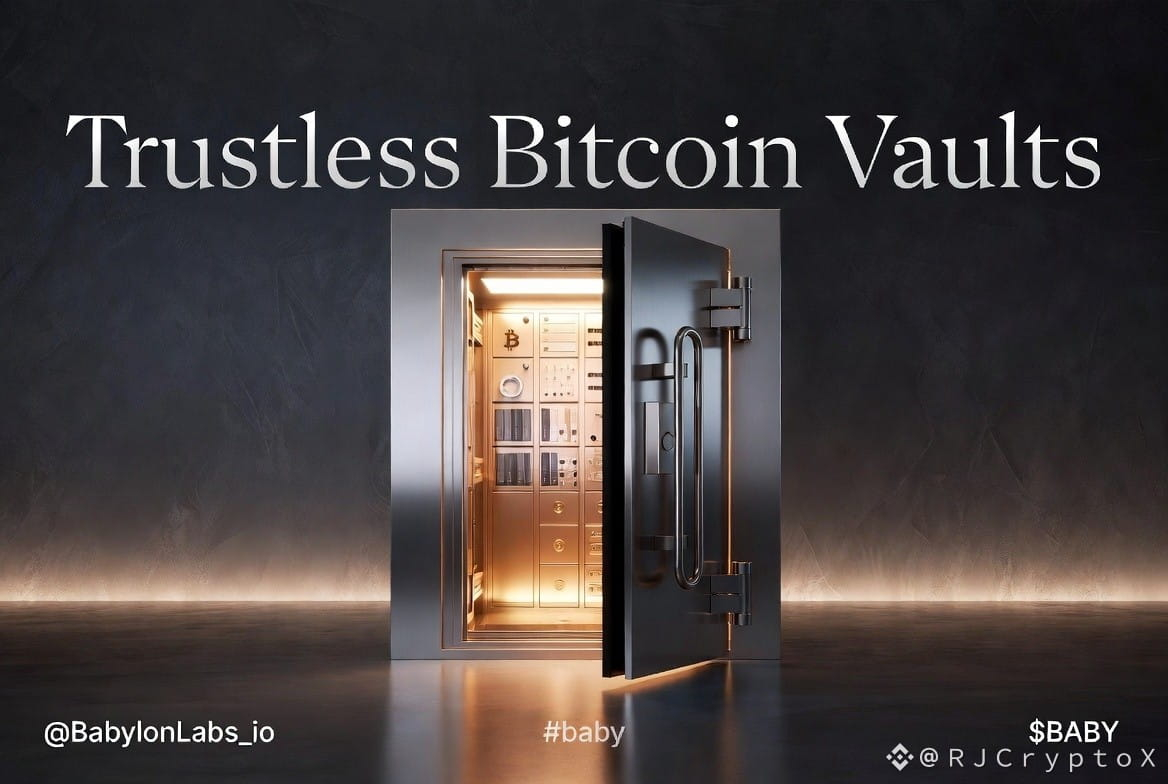
I've lost count of how many bridge hacks I've read post-mortems on. Billions gone because someone had to trust a middleman holding the real asset. That's the exact problem Babylon's Trustless Bitcoin Vaults are built to remove.
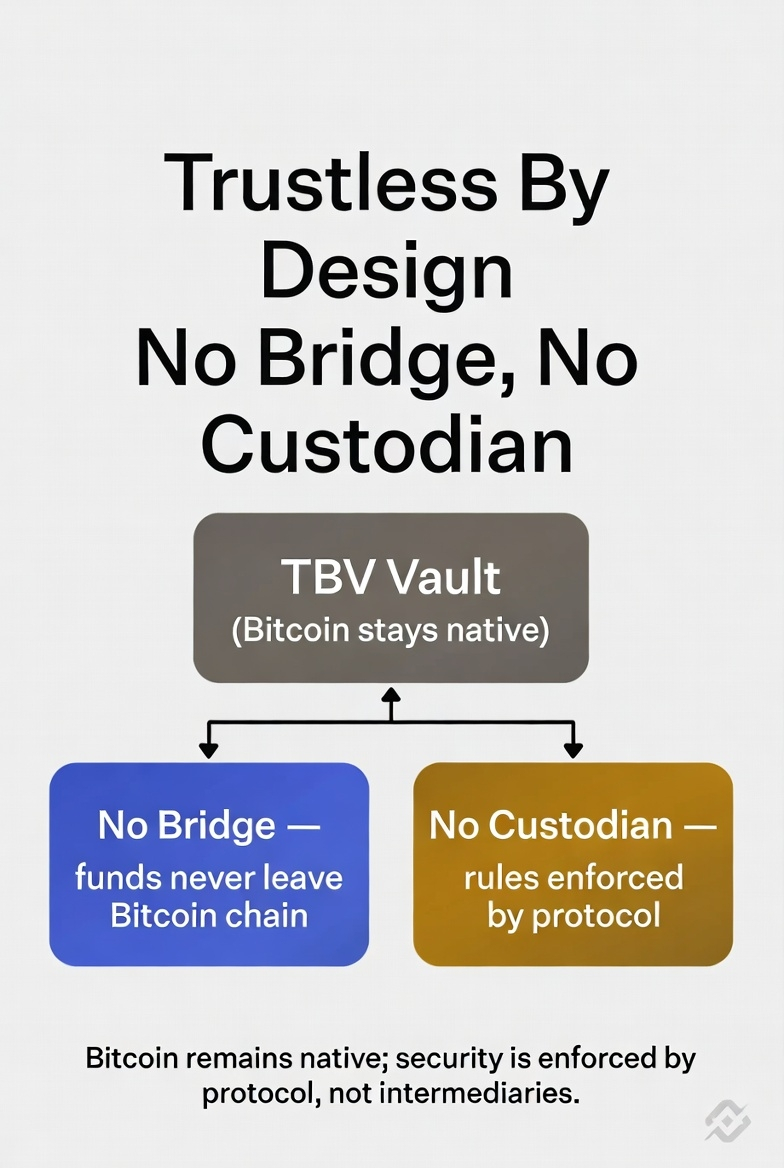
With TBV, your BTC never leaves the Bitcoin chain. It sits in a vault governed by rules baked into the protocol, not by a company that can get hacked, rug, or freeze withdrawals.
That's a different risk model entirely. You're not trusting a bridge operator's uptime or honesty — you're trusting math and consensus.
For an asset like Bitcoin, where the whole point is minimizing trust, this actually fits the ethos instead of fighting it.
@babylonlabs_io is quietly solving one of DeFi's oldest weak points. $BABY
{future}(BABYUSDT)
#baby #TrustlessBitcoin #SelfCustodialFinance #BitcoinSecurity
I've lost count of how many bridge hacks I've read post-mortems on. Billions gone because someone had to trust a middleman holding the real asset. That's the exact problem Babylon's Trustless Bitcoin Vaults are built to remove.
With TBV, your BTC never leaves the Bitcoin chain. It sits in a vault governed by rules baked into the protocol, not by a company that can get hacked, rug, or freeze withdrawals.
That's a different risk model entirely. You're not trusting a bridge operator's uptime or honesty — you're trusting math and consensus.
For an asset like Bitcoin, where the whole point is minimizing trust, this actually fits the ethos instead of fighting it.
@BabylonLabs_io is quietly solving one of DeFi's oldest weak points. $BABY
#baby #TrustlessBitcoin #SelfCustodialFinance #BitcoinSecurity
With TBV, your BTC never leaves the Bitcoin chain. It sits in a vault governed by rules baked into the protocol, not by a company that can get hacked, rug, or freeze withdrawals.
That's a different risk model entirely. You're not trusting a bridge operator's uptime or honesty — you're trusting math and consensus.
For an asset like Bitcoin, where the whole point is minimizing trust, this actually fits the ethos instead of fighting it.
@BabylonLabs_io is quietly solving one of DeFi's oldest weak points. $BABY
#baby #TrustlessBitcoin #SelfCustodialFinance #BitcoinSecurity
113
·
--
One candle just erased three days of gains — and now price is trying to claw its way back. The next hour decides who's trapped.
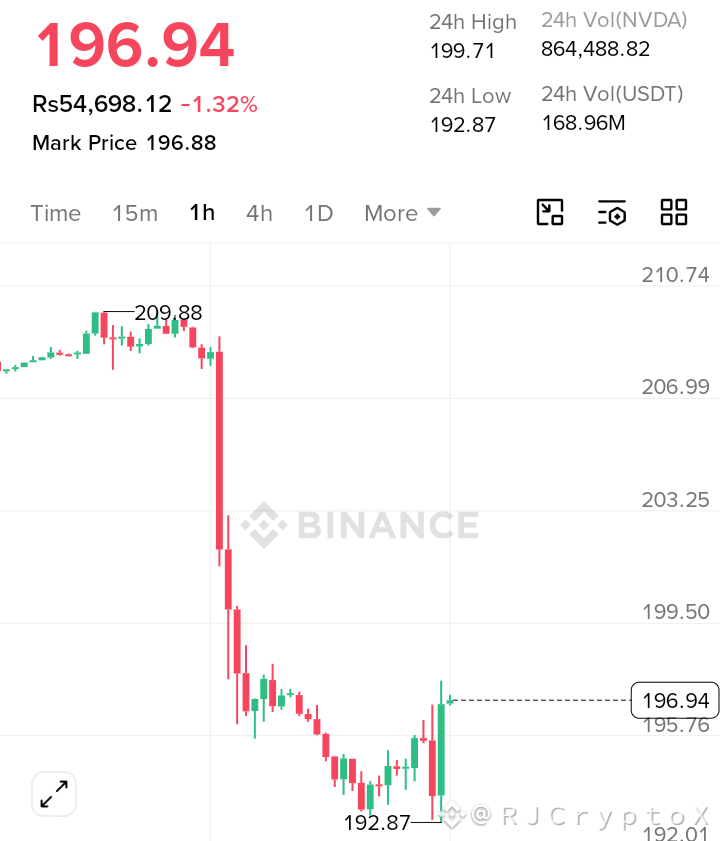
NVDA/USDT was in a clean short-term uptrend, grinding up to 209.88 with steady green candles. Then structure broke hard — a single large bearish candle sliced straight through the trend, triggering a Break of Structure to the downside and confirming the shift from bullish to bearish momentum.
Price didn't stop there. It continued lower in a controlled sell-off down to 192.87, which now stands out as a clear liquidity sweep — a sharp wick-driven low where sellers likely got their fill before buyers stepped back in.
From that low, we're seeing the first signs of a Change of Character: higher lows forming, green candles taking control, and price reclaiming back to 196.94. This is a reaction, not yet a confirmed reversal. The zone between 199.50 and 203.25 is the real test — that's the area price broke down from, so it now acts as a supply zone / order block. How price behaves there tells us if this is a genuine reversal or just a corrective bounce inside a bigger downtrend.
Risk here is real: the drop from 209 to 192 was sharp and impulsive, and impulsive moves often get one more retest before any real reversal plays out. Chasing longs without confirmation above resistance is the trap.
**Trading Signal**
📍 Entry:
196.50–197.50
🎯 TP-1:
199.50
🎯 TP-2:
203.25
🎯 TP-3:
206.99
🎯 TP-4:
209.88
🛑 Stop Loss:
192.87
This setup only holds validity if price confirms strength above 199.50 with a clean break and hold. Failure to reclaim that level increases odds of a retest toward the 192.87 low.
**Risk Disclaimer**
Always use proper risk management. Markets are volatile and no setup is guaranteed.
#NVDAUSDT #SmartMoney
{future}(NVDAUSDT)
One candle just erased three days of gains — and now price is trying to claw its way back. The next hour decides who's trapped.
NVDA/USDT was in a clean short-term uptrend, grinding up to 209.88 with steady green candles. Then structure broke hard — a single large bearish candle sliced straight through the trend, triggering a Break of Structure to the downside and confirming the shift from bullish to bearish momentum.
Price didn't stop there. It continued lower in a controlled sell-off down to 192.87, which now stands out as a clear liquidity sweep — a sharp wick-driven low where sellers likely got their fill before buyers stepped back in.
From that low, we're seeing the first signs of a Change of Character: higher lows forming, green candles taking control, and price reclaiming back to 196.94. This is a reaction, not yet a confirmed reversal. The zone between 199.50 and 203.25 is the real test — that's the area price broke down from, so it now acts as a supply zone / order block. How price behaves there tells us if this is a genuine reversal or just a corrective bounce inside a bigger downtrend.
Risk here is real: the drop from 209 to 192 was sharp and impulsive, and impulsive moves often get one more retest before any real reversal plays out. Chasing longs without confirmation above resistance is the trap.
**Trading Signal**
📍 Entry:
196.50–197.50
🎯 TP-1:
199.50
🎯 TP-2:
203.25
🎯 TP-3:
206.99
🎯 TP-4:
209.88
🛑 Stop Loss:
192.87
This setup only holds validity if price confirms strength above 199.50 with a clean break and hold. Failure to reclaim that level increases odds of a retest toward the 192.87 low.
**Risk Disclaimer**
Always use proper risk management. Markets are volatile and no setup is guaranteed.
#NVDAUSDT #SmartMoney
NVDA/USDT was in a clean short-term uptrend, grinding up to 209.88 with steady green candles. Then structure broke hard — a single large bearish candle sliced straight through the trend, triggering a Break of Structure to the downside and confirming the shift from bullish to bearish momentum.
Price didn't stop there. It continued lower in a controlled sell-off down to 192.87, which now stands out as a clear liquidity sweep — a sharp wick-driven low where sellers likely got their fill before buyers stepped back in.
From that low, we're seeing the first signs of a Change of Character: higher lows forming, green candles taking control, and price reclaiming back to 196.94. This is a reaction, not yet a confirmed reversal. The zone between 199.50 and 203.25 is the real test — that's the area price broke down from, so it now acts as a supply zone / order block. How price behaves there tells us if this is a genuine reversal or just a corrective bounce inside a bigger downtrend.
Risk here is real: the drop from 209 to 192 was sharp and impulsive, and impulsive moves often get one more retest before any real reversal plays out. Chasing longs without confirmation above resistance is the trap.
**Trading Signal**
📍 Entry:
196.50–197.50
🎯 TP-1:
199.50
🎯 TP-2:
203.25
🎯 TP-3:
206.99
🎯 TP-4:
209.88
🛑 Stop Loss:
192.87
This setup only holds validity if price confirms strength above 199.50 with a clean break and hold. Failure to reclaim that level increases odds of a retest toward the 192.87 low.
**Risk Disclaimer**
Always use proper risk management. Markets are volatile and no setup is guaranteed.
#NVDAUSDT #SmartMoney
123
·
--
supper
supper


BabylonLabs_io
·
--
Native Bitcoin-backed borrowing is live on Public Testnet with Aave v4.
> https://btc-vaults.testnet.babylonlabs.io/ <
Powered by Babylon Trustless Bitcoin Vaults(TBV), users can post Bitcoin as collateral and borrow without giving up custody, wrapping, or bridging.
This is the latest step in building native Bitcoin-backed credit markets.
> https://btc-vaults.testnet.babylonlabs.io/ <
Powered by Babylon Trustless Bitcoin Vaults(TBV), users can post Bitcoin as collateral and borrow without giving up custody, wrapping, or bridging.
This is the latest step in building native Bitcoin-backed credit markets.
67
·
--
Bullish
Long $VANRY Now..
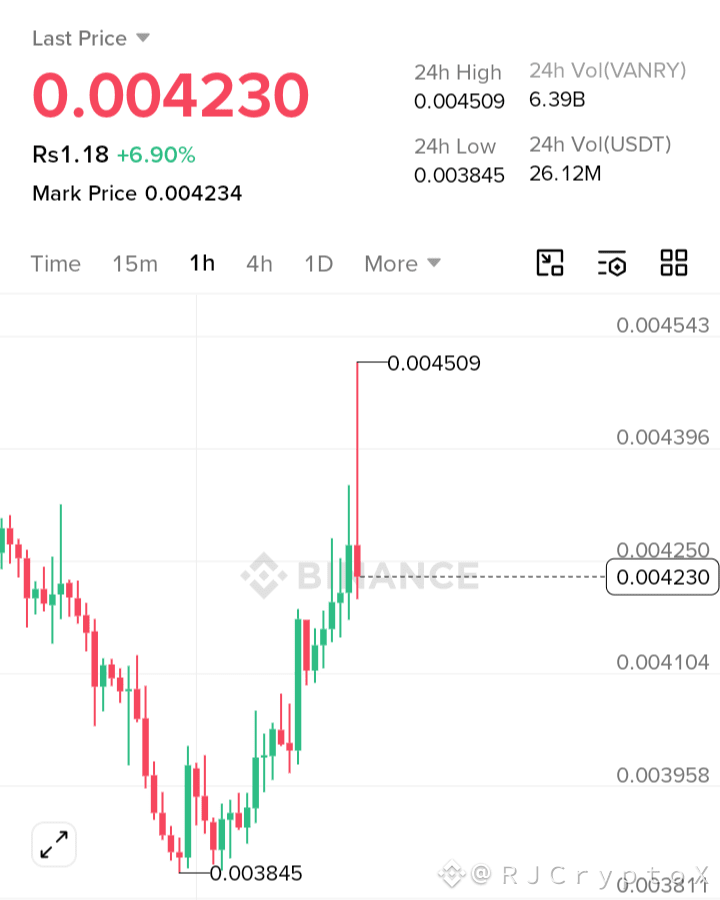
The trend is bullish but price has just been rejected from 0.004509, so it's safer to wait for confirmation.
LONG (Buy)
Entry: 0.00420–0.00425
Stop Loss: 0.00408
TP1: 0.00450
TP2: 0.00470
Click and trade $VANRY 👇
{future}(VANRYUSDT)
Long $VANRY Now..
The trend is bullish but price has just been rejected from 0.004509, so it's safer to wait for confirmation.
LONG (Buy)
Entry: 0.00420–0.00425
Stop Loss: 0.00408
TP1: 0.00450
TP2: 0.00470
Click and trade $VANRY 👇
The trend is bullish but price has just been rejected from 0.004509, so it's safer to wait for confirmation.
LONG (Buy)
Entry: 0.00420–0.00425
Stop Loss: 0.00408
TP1: 0.00450
TP2: 0.00470
Click and trade $VANRY 👇
165
·
--
Verified
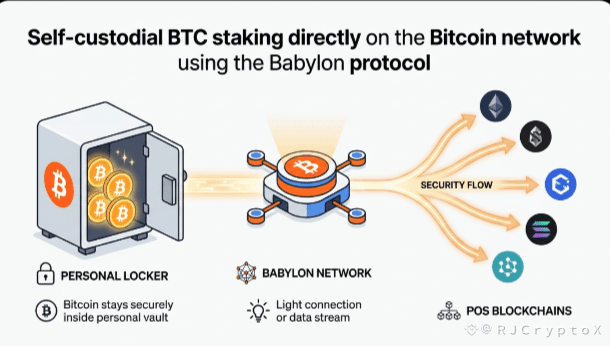
Security means very little if the user experience makes people give up halfway through the process. That's usually where "trustless" Bitcoin products quietly fall apart in practice, so I looked into how usable TBV actually is for an everyday holder.
Peg-in deposit times have reportedly been cut down to around three hours, which is a massive improvement compared to what earlier trustless Bitcoin bridging attempts required from users just to get started.
On-chain transaction fees have also dropped significantly during this same period, making smaller deposits and everyday use far more realistic instead of only being worthwhile for whales with huge positions.
That's genuinely the difference between a protocol that only works well inside a whitepaper and one that people will actually use on a regular, daily basis without getting frustrated.
Trustless design and decent UX rarely show up together in the same product in this space, so seeing both prioritized at once really stood out to me.
@BabylonLabs_io seems genuinely focused on real adoption, not just theoretical elegance. #TrustlessInfrastructure #baby #OnchainEfficiency #TrustlessBTC
$BABY
{future}(BABYUSDT)
$BTC
{future}(BTCUSDT)
Security means very little if the user experience makes people give up halfway through the process. That's usually where "trustless" Bitcoin products quietly fall apart in practice, so I looked into how usable TBV actually is for an everyday holder.
Peg-in deposit times have reportedly been cut down to around three hours, which is a massive improvement compared to what earlier trustless Bitcoin bridging attempts required from users just to get started.
On-chain transaction fees have also dropped significantly during this same period, making smaller deposits and everyday use far more realistic instead of only being worthwhile for whales with huge positions.
That's genuinely the difference between a protocol that only works well inside a whitepaper and one that people will actually use on a regular, daily basis without getting frustrated.
Trustless design and decent UX rarely show up together in the same product in this space, so seeing both prioritized at once really stood out to me.
@BabylonLabs_io seems genuinely focused on real adoption, not just theoretical elegance. #TrustlessInfrastructure #baby #OnchainEfficiency #TrustlessBTC
$BABY
$BTC
Peg-in deposit times have reportedly been cut down to around three hours, which is a massive improvement compared to what earlier trustless Bitcoin bridging attempts required from users just to get started.
On-chain transaction fees have also dropped significantly during this same period, making smaller deposits and everyday use far more realistic instead of only being worthwhile for whales with huge positions.
That's genuinely the difference between a protocol that only works well inside a whitepaper and one that people will actually use on a regular, daily basis without getting frustrated.
Trustless design and decent UX rarely show up together in the same product in this space, so seeing both prioritized at once really stood out to me.
@BabylonLabs_io seems genuinely focused on real adoption, not just theoretical elegance. #TrustlessInfrastructure #baby #OnchainEfficiency #TrustlessBTC
$BABY
$BTC
5
3
167
·
--
Bullish
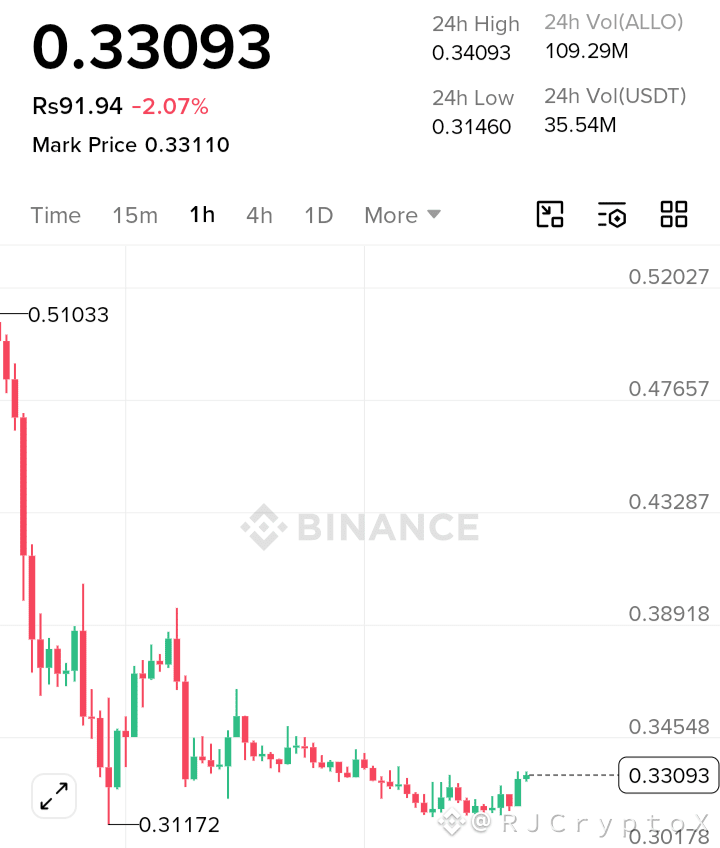
$ALLO Come on guys.. don't miss this one for long!!!
Place trade here 👇👇👇
{future}(ALLOUSDT)
Target TP- 0.38716
SL - 0.3185
#ALLO
$ALLO Come on guys.. don't miss this one for long!!!
Place trade here 👇👇👇
Target TP- 0.38716
SL - 0.3185
#ALLO
Place trade here 👇👇👇
Target TP- 0.38716
SL - 0.3185
#ALLO
233
·
--
Bearish
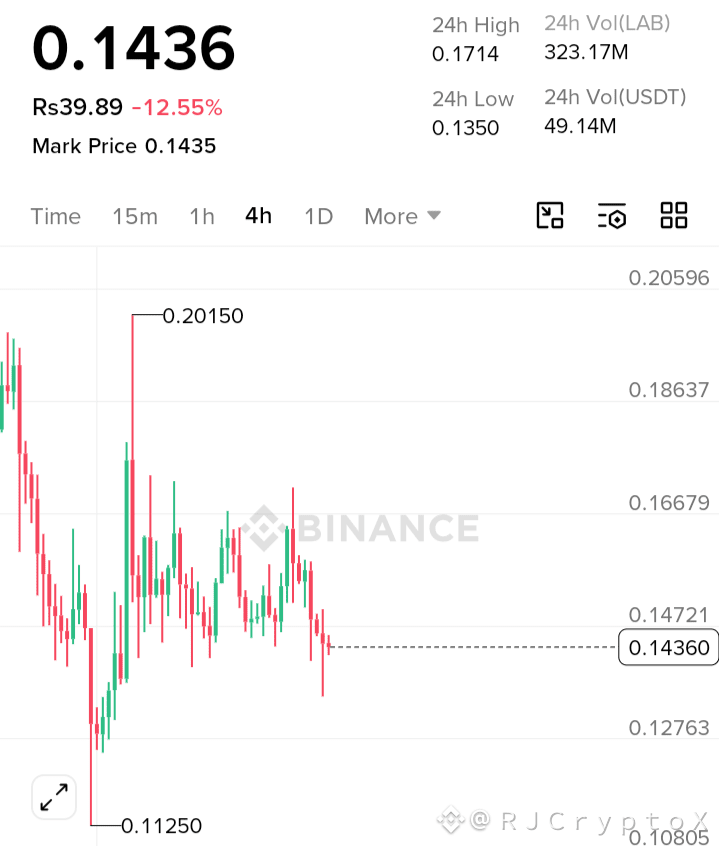
Are you ready guys..
I brought a quick short entry..
No FLUFF.. ($LAB )
Enter Trade right away here 👇👇👇
{future}(LABUSDT)
Target TP-0.1367
SL-0.1471
#Labs
who got this quick short? Write in the comment👇 Your response is valuable for me..
Are you ready guys..
I brought a quick short entry..
No FLUFF.. ($LAB )
Enter Trade right away here 👇👇👇
Target TP-0.1367
SL-0.1471
#Labs
who got this quick short? Write in the comment👇 Your response is valuable for me..
I brought a quick short entry..
No FLUFF.. ($LAB )
Enter Trade right away here 👇👇👇
Target TP-0.1367
SL-0.1471
#Labs
who got this quick short? Write in the comment👇 Your response is valuable for me..
307
·
--
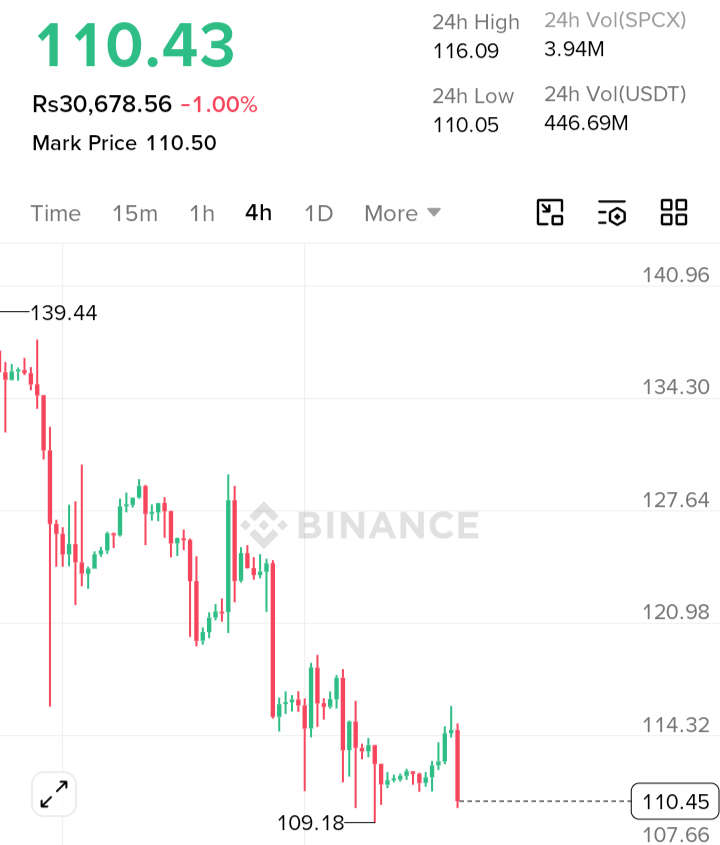
Come on guys.. It's time to jump in fast for short..
Right away here 👇👇👇
$SPCX
{future}(SPCXUSDT)
It's continuation pattern..
Target TP-109
SL 113
#spxc
Come on guys.. It's time to jump in fast for short..
Right away here 👇👇👇
$SPCX
It's continuation pattern..
Target TP-109
SL 113
#spxc
Right away here 👇👇👇
$SPCX
It's continuation pattern..
Target TP-109
SL 113
#spxc
234
·
--
Bearish
This coin just did something most traders won't survive watching...
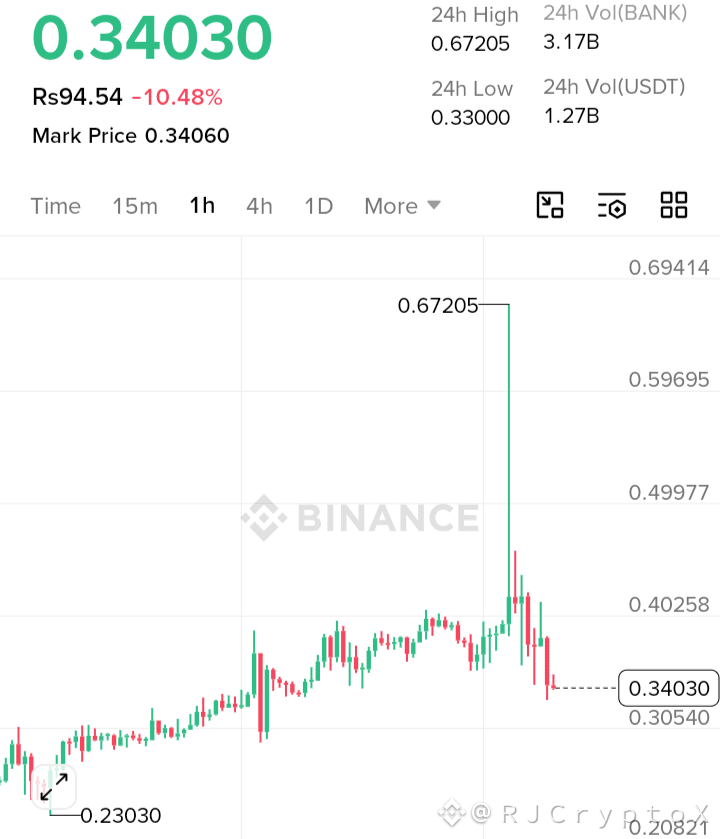
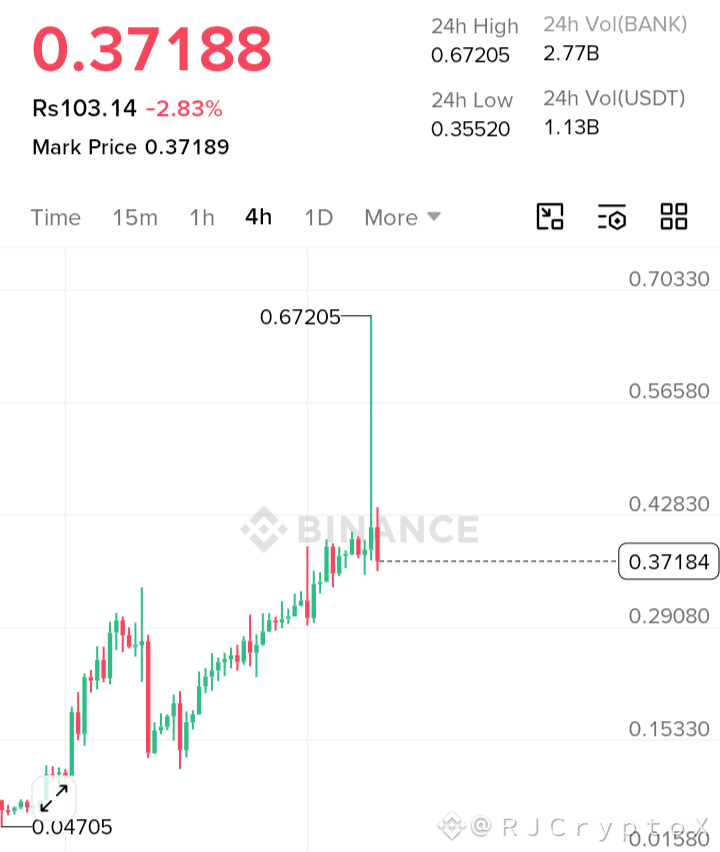
Price ripped from 0.04705 all the way to 0.67205 in one aggressive push, then got rejected almost instantly with a heavy bearish candle slicing right back through the move. That's not a normal pullback — that's a liquidity sweep at the highs followed by an immediate change of character.
The broader structure from the base near 0.047 is clearly bullish, built through a steady sequence of higher highs and higher lows on the 4h. But the spike to 0.67205 looks like a stop-hunt above prior structure rather than organic continuation — price gave it right back with one large red candle, which is a textbook liquidity grab and reversal signature.
Right now price is consolidating between roughly 0.355 and 0.43, sitting just above the 24h low (0.35520). This zone is acting as a decision point: either buyers defend it and build a base for the next leg, or it breaks and the sweep turns into full distribution.
There's no confirmed bullish CHoCH yet on the lower timeframe — no clean higher low has printed since the dump, and no break of the down-move structure has been established. Chasing a long here means buying into unconfirmed support after a violent rejection, and chasing a short means selling after the move already happened. Both carry real risk right now.
No Trade – Waiting for Confirmation.
A clean reclaim and hold above 0.42830 with a higher low, or a confirmed break below 0.35520 with retest, would be the trigger to reassess. Until then, this is a wait-and-watch zone.
Always use proper risk management. Markets are volatile and no setup is guaranteed.
#BANKUSDT #SmartMoney
{future}(BANKUSDT)
This coin just did something most traders won't survive watching...
Price ripped from 0.04705 all the way to 0.67205 in one aggressive push, then got rejected almost instantly with a heavy bearish candle slicing right back through the move. That's not a normal pullback — that's a liquidity sweep at the highs followed by an immediate change of character.
The broader structure from the base near 0.047 is clearly bullish, built through a steady sequence of higher highs and higher lows on the 4h. But the spike to 0.67205 looks like a stop-hunt above prior structure rather than organic continuation — price gave it right back with one large red candle, which is a textbook liquidity grab and reversal signature.
Right now price is consolidating between roughly 0.355 and 0.43, sitting just above the 24h low (0.35520). This zone is acting as a decision point: either buyers defend it and build a base for the next leg, or it breaks and the sweep turns into full distribution.
There's no confirmed bullish CHoCH yet on the lower timeframe — no clean higher low has printed since the dump, and no break of the down-move structure has been established. Chasing a long here means buying into unconfirmed support after a violent rejection, and chasing a short means selling after the move already happened. Both carry real risk right now.
No Trade – Waiting for Confirmation.
A clean reclaim and hold above 0.42830 with a higher low, or a confirmed break below 0.35520 with retest, would be the trigger to reassess. Until then, this is a wait-and-watch zone.
Always use proper risk management. Markets are volatile and no setup is guaranteed.
#BANKUSDT #SmartMoney
Price ripped from 0.04705 all the way to 0.67205 in one aggressive push, then got rejected almost instantly with a heavy bearish candle slicing right back through the move. That's not a normal pullback — that's a liquidity sweep at the highs followed by an immediate change of character.
The broader structure from the base near 0.047 is clearly bullish, built through a steady sequence of higher highs and higher lows on the 4h. But the spike to 0.67205 looks like a stop-hunt above prior structure rather than organic continuation — price gave it right back with one large red candle, which is a textbook liquidity grab and reversal signature.
Right now price is consolidating between roughly 0.355 and 0.43, sitting just above the 24h low (0.35520). This zone is acting as a decision point: either buyers defend it and build a base for the next leg, or it breaks and the sweep turns into full distribution.
There's no confirmed bullish CHoCH yet on the lower timeframe — no clean higher low has printed since the dump, and no break of the down-move structure has been established. Chasing a long here means buying into unconfirmed support after a violent rejection, and chasing a short means selling after the move already happened. Both carry real risk right now.
No Trade – Waiting for Confirmation.
A clean reclaim and hold above 0.42830 with a higher low, or a confirmed break below 0.35520 with retest, would be the trigger to reassess. Until then, this is a wait-and-watch zone.
Always use proper risk management. Markets are volatile and no setup is guaranteed.
#BANKUSDT #SmartMoney
208
·
--
Bullish
$PSG is back in the spotlight! Fan tokens are gaining interest again, and traders are watching for the next breakout opportunity. Momentum could increase if buying pressure continues.
{spot}(PSGUSDT)
💬 Do you think PSG can surprise the market? Vote with your comment!
$PSG is back in the spotlight! Fan tokens are gaining interest again, and traders are watching for the next breakout opportunity. Momentum could increase if buying pressure continues.
💬 Do you think PSG can surprise the market? Vote with your comment!
💬 Do you think PSG can surprise the market? Vote with your comment!

182
·
--
The more I explored Babylon, the more I realized that "trustless" isn't really about removing trust—it's about reducing the amount of trust you place in any single party.
With Babylon ($BABY ) and @babylonlabs_io , your Bitcoin remains on the Bitcoin network instead of being handed over to a custodian. That alone changes how many people think about security.
But every decentralized protocol still relies on different participants following the rules correctly. Validators, networks, and automated mechanisms all have their own responsibilities. The real innovation isn't pretending trust no longer exists—it's distributing responsibility so no single actor controls everything.
That's what caught my attention.
Instead of asking,
"Can I trust this protocol?"
I now ask,
"Which parts are secured by code, and which parts still depend on people?"
For me, that's a much smarter way to evaluate any crypto project. #baby
What's the first thing you check before trusting a blockchain protocol?
The more I explored Babylon, the more I realized that "trustless" isn't really about removing trust—it's about reducing the amount of trust you place in any single party.
With Babylon ($BABY ) and @BabylonLabs_io , your Bitcoin remains on the Bitcoin network instead of being handed over to a custodian. That alone changes how many people think about security.
But every decentralized protocol still relies on different participants following the rules correctly. Validators, networks, and automated mechanisms all have their own responsibilities. The real innovation isn't pretending trust no longer exists—it's distributing responsibility so no single actor controls everything.
That's what caught my attention.
Instead of asking,
"Can I trust this protocol?"
I now ask,
"Which parts are secured by code, and which parts still depend on people?"
For me, that's a much smarter way to evaluate any crypto project. #baby
What's the first thing you check before trusting a blockchain protocol?
With Babylon ($BABY ) and @BabylonLabs_io , your Bitcoin remains on the Bitcoin network instead of being handed over to a custodian. That alone changes how many people think about security.
But every decentralized protocol still relies on different participants following the rules correctly. Validators, networks, and automated mechanisms all have their own responsibilities. The real innovation isn't pretending trust no longer exists—it's distributing responsibility so no single actor controls everything.
That's what caught my attention.
Instead of asking,
"Can I trust this protocol?"
I now ask,
"Which parts are secured by code, and which parts still depend on people?"
For me, that's a much smarter way to evaluate any crypto project. #baby
What's the first thing you check before trusting a blockchain protocol?
🟢 Security Model
100%
🔒 Decentralization
0%
⚡ Real Utility
0%
1 votes • Voting closed
6
4
137
·
--
Self-custody + aligned incentives feels much stronger than chasing temporary BTC yield.
Self-custody + aligned incentives feels much stronger than chasing temporary BTC yield.

Neha g
·
--
@BabylonLabs_io #baby $BABY
Been staring at @BabylonLabs_io Babylon’s numbers for months and the 50k+ BTC locked still feels off to me. Everyone just screenshots the TVL and moves on like it’s another farming flex.
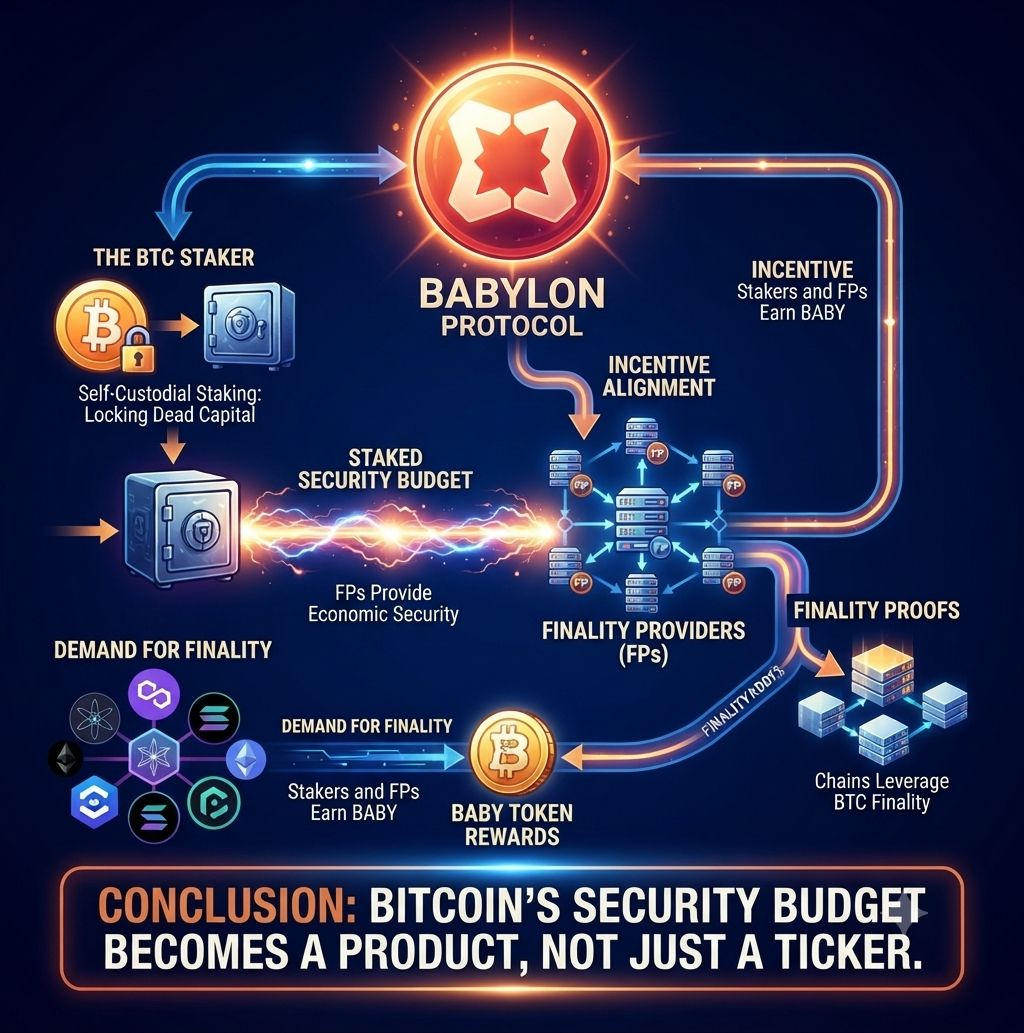
What I keep coming back to is the incentive design. BTC stakers get paid in BABY. So the protocol is basically taking the biggest pile of idle capital in crypto and using it to drip its own token into the market.
That quietly forces pure Bitcoin holders and the Finality Providers to stay in the same boat. It’s not passive staking. It’s turning Bitcoin’s security into something other chains can actually buy.
Wrapped BTC products can vanish overnight. This self-custodial setup makes the capital stickier.
Chains that need real finality will keep showing up because the trust assumptions are different. That kind of demand doesn’t disappear the second the narrative shifts.
I’ve watched enough “BTC yield” experiments flop to know most of them were temporary. This one feels closer to infrastructure.
Market still prices $BABY like a speculative ticker while the real story is Bitcoin’s security budget slowly becoming a product.
Been staring at @BabylonLabs_io Babylon’s numbers for months and the 50k+ BTC locked still feels off to me. Everyone just screenshots the TVL and moves on like it’s another farming flex.
What I keep coming back to is the incentive design. BTC stakers get paid in BABY. So the protocol is basically taking the biggest pile of idle capital in crypto and using it to drip its own token into the market.
That quietly forces pure Bitcoin holders and the Finality Providers to stay in the same boat. It’s not passive staking. It’s turning Bitcoin’s security into something other chains can actually buy.
Wrapped BTC products can vanish overnight. This self-custodial setup makes the capital stickier.
Chains that need real finality will keep showing up because the trust assumptions are different. That kind of demand doesn’t disappear the second the narrative shifts.
I’ve watched enough “BTC yield” experiments flop to know most of them were temporary. This one feels closer to infrastructure.
Market still prices $BABY like a speculative ticker while the real story is Bitcoin’s security budget slowly becoming a product.
113
Log in to explore more content
Join global crypto users on Binance Square
⚡️ Get latest and useful information about crypto.
💬 Trusted by the world’s largest crypto exchange.
👍 Discover real insights from verified creators.
Email / Phone number
Trending Topics
BinanceLaunchesBinanceIntelligence
452,384 views
3,241 Discussing
#BinanceLaunchesBinanceIntelligence
⚡ AI Meets Crypto Trading: Binance Intelligence is Live! ⚡
Trading just got a massive upgrade with Binance's new AI suite:
1️⃣ Binance AI: Personalized market dashboards & 4-hour macro market audio briefings.
2️⃣ Binance AI Pro: Build and run automated strategies using simple natural language prompts.
3️⃣ Binance Agent OS: Developer framework for autonomous financial AI agents.
Describe your strategy ➔ Paper test ➔ Execute 24/7.
Are you building your next trading strategy with AI? Drop your thoughts below! 👇
#BinanceLaunchesBinanceIntelligence #BinanceSquare #CryptoAI #Trading $EDEN
Hazi BNB
·2 Likes
·1k views
BitcoinTargets2026OpenAt$87570
3,053 views
83 Discussing
BitcoinRejectedAt$87KThirdTime
2,851 views
67 Discussing