
Riven_Coin
4.7k Posts

Riven_Coin
389 Following
15.0K+ Followers
3.5K+ Liked
Posts
All
Live
#dusk $DUSK @Dusk
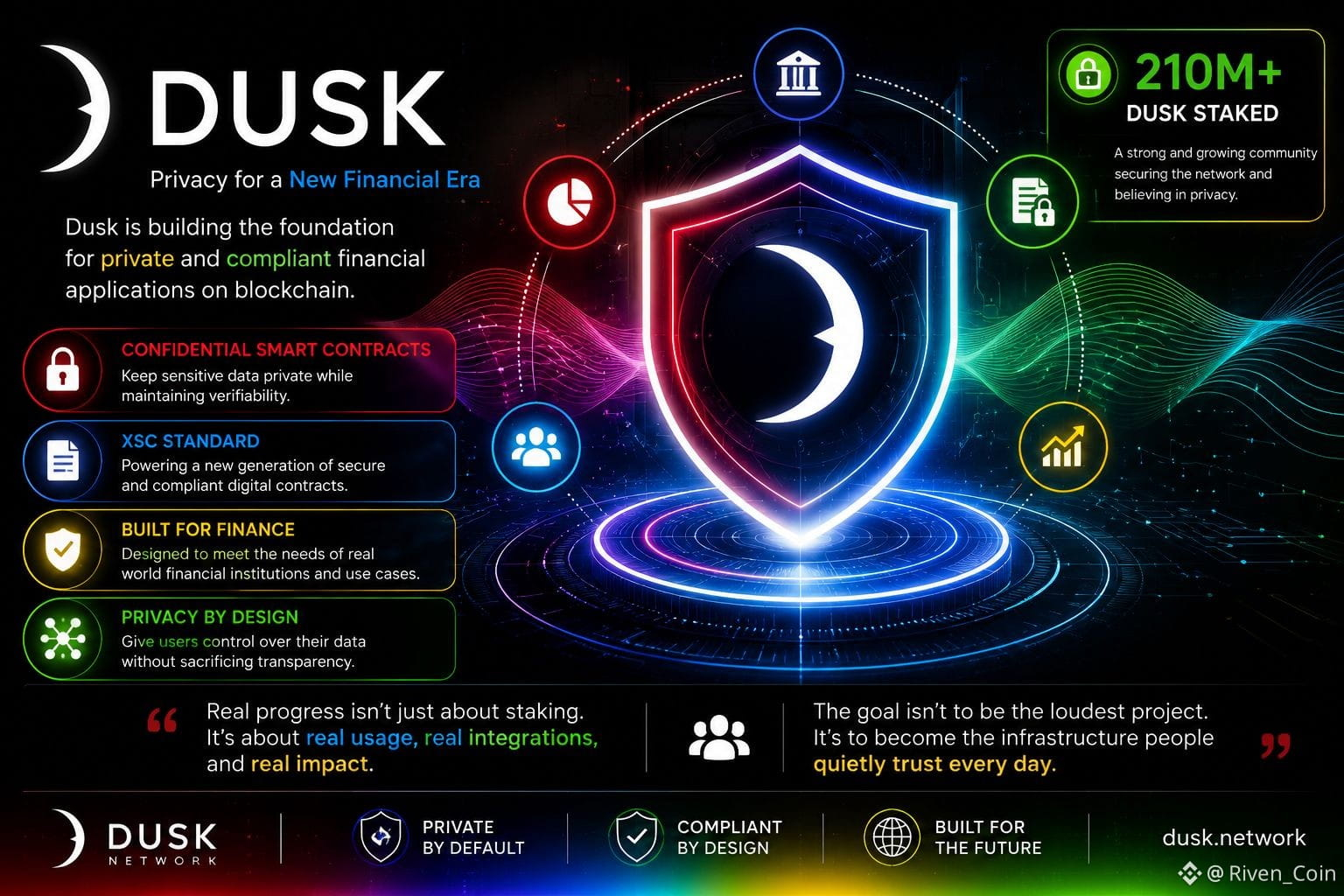
The more I look at Dusk the more I realize the hard part isn’t showing that blockchain privacy can work.
It’s making people actually want to use it.
Financial data is a weird thing. Some of it needs to be public and verifiable. Some of it really shouldn’t be sitting in front of everyone’s eyes.
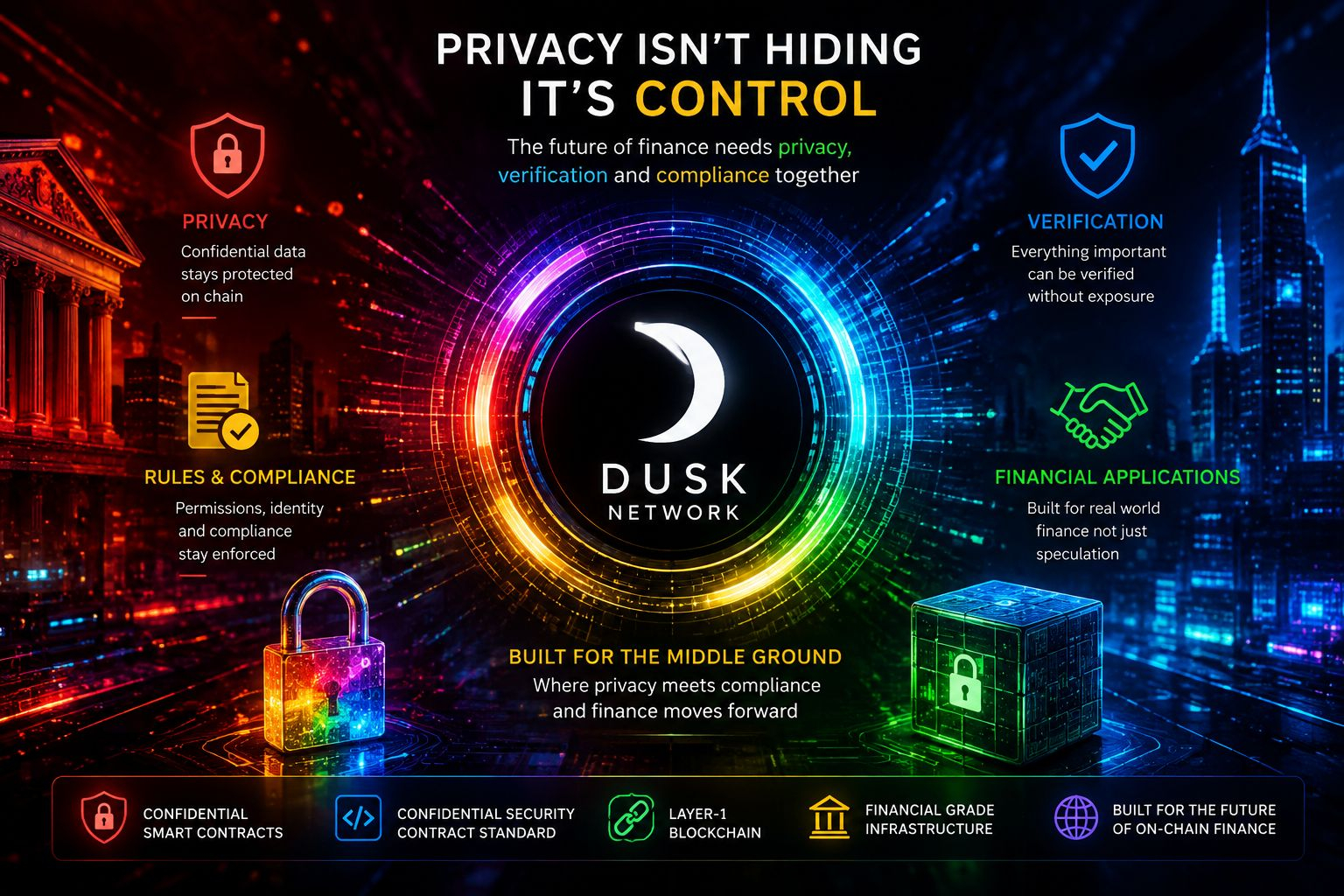
That’s why Dusk caught my attention. The confidential smart contracts and XSC idea are trying to solve that middle ground.
But I’m still watching the boring stuff.
210M+ DUSK staked is nice to see but staking alone doesn’t tell me if people are actually using the network.
I want to see users come back.
I want to see integrations get real usage.
I want to see activity survive after the hype moves somewhere else.
Because that’s where projects usually get tested.
If Dusk can keep building and make private financial activity feel normal instead of complicated, that’s when I’ll get really interested.
The best infrastructure usually isn’t the loudest.
It just works.
The more I look at Dusk the more I realize the hard part isn’t showing that blockchain privacy can work.
It’s making people actually want to use it.
Financial data is a weird thing. Some of it needs to be public and verifiable. Some of it really shouldn’t be sitting in front of everyone’s eyes.
That’s why Dusk caught my attention. The confidential smart contracts and XSC idea are trying to solve that middle ground.
But I’m still watching the boring stuff.
210M+ DUSK staked is nice to see but staking alone doesn’t tell me if people are actually using the network.
I want to see users come back.
I want to see integrations get real usage.
I want to see activity survive after the hype moves somewhere else.
Because that’s where projects usually get tested.
If Dusk can keep building and make private financial activity feel normal instead of complicated, that’s when I’ll get really interested.
The best infrastructure usually isn’t the loudest.
It just works.
#dusk $DUSK @Dusk
Honestly, the privacy side of crypto still feels way more important than people give it credit for.
A public blockchain is great for transparency, but imagine putting your entire financial history there for anyone to inspect. That gets uncomfortable pretty quickly.
That’s what makes Dusk interesting to me.
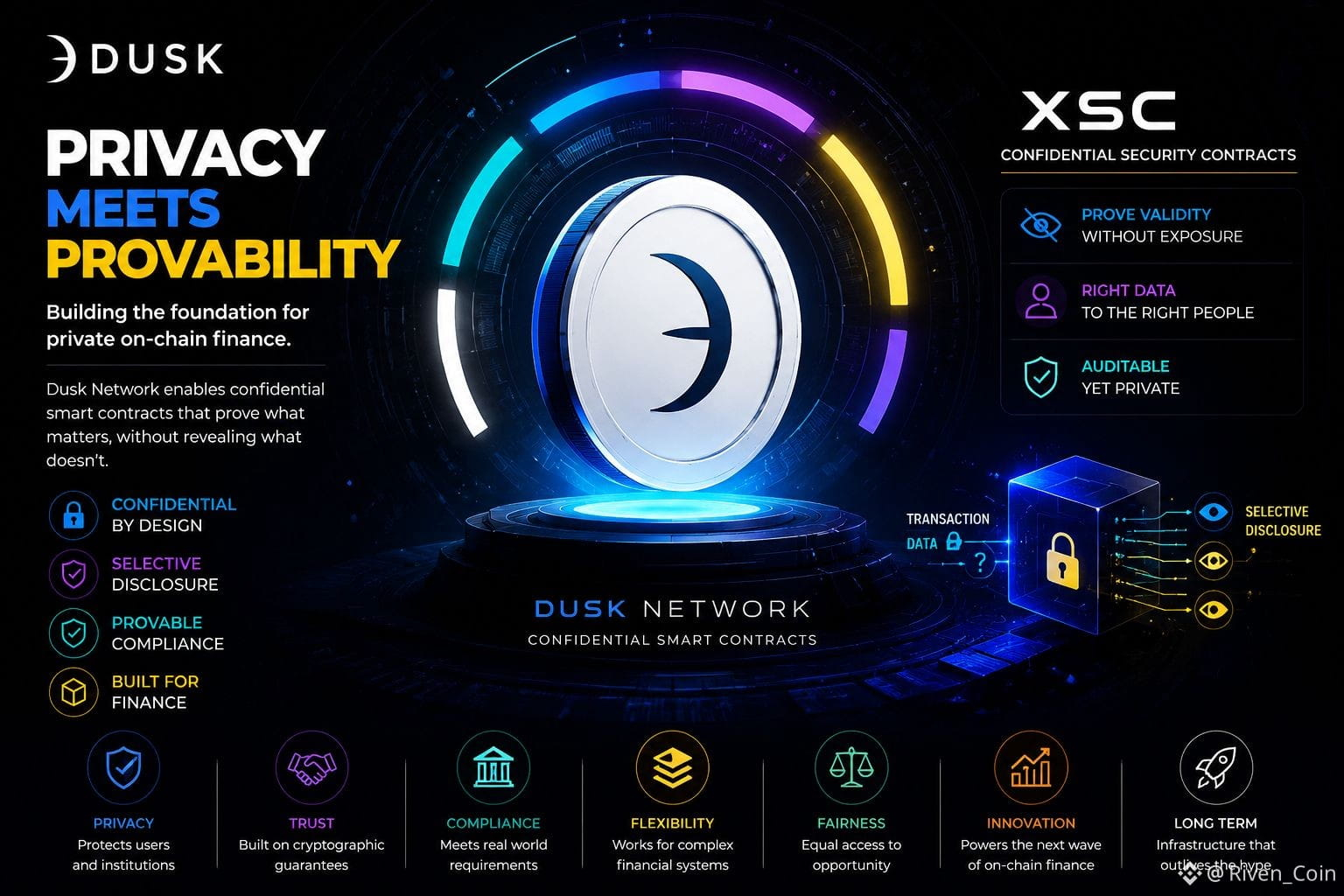
It’s not just trying to hide transactions. The bigger idea is being able to keep sensitive information private while still proving that everything is valid.
With XSC, Dusk is working toward confidential smart contracts where you can verify activity without having to expose every detail. And with selective disclosure, the right people can still get the information they actually need.
I think that’s a much more practical use of privacy than simply saying “everything should be hidden.”
If blockchain is ever going to become serious financial infrastructure, privacy and compliance will have to work together.
That’s the part of Dusk I’m watching.
Honestly, the privacy side of crypto still feels way more important than people give it credit for.
A public blockchain is great for transparency, but imagine putting your entire financial history there for anyone to inspect. That gets uncomfortable pretty quickly.
That’s what makes Dusk interesting to me.
It’s not just trying to hide transactions. The bigger idea is being able to keep sensitive information private while still proving that everything is valid.
With XSC, Dusk is working toward confidential smart contracts where you can verify activity without having to expose every detail. And with selective disclosure, the right people can still get the information they actually need.
I think that’s a much more practical use of privacy than simply saying “everything should be hidden.”
If blockchain is ever going to become serious financial infrastructure, privacy and compliance will have to work together.
That’s the part of Dusk I’m watching.
#dusk $DUSK @Dusk
I’ll be honest, the €300M+ figure around Dusk caught my attention at first. But after digging into it, I started wondering what that number actually means.
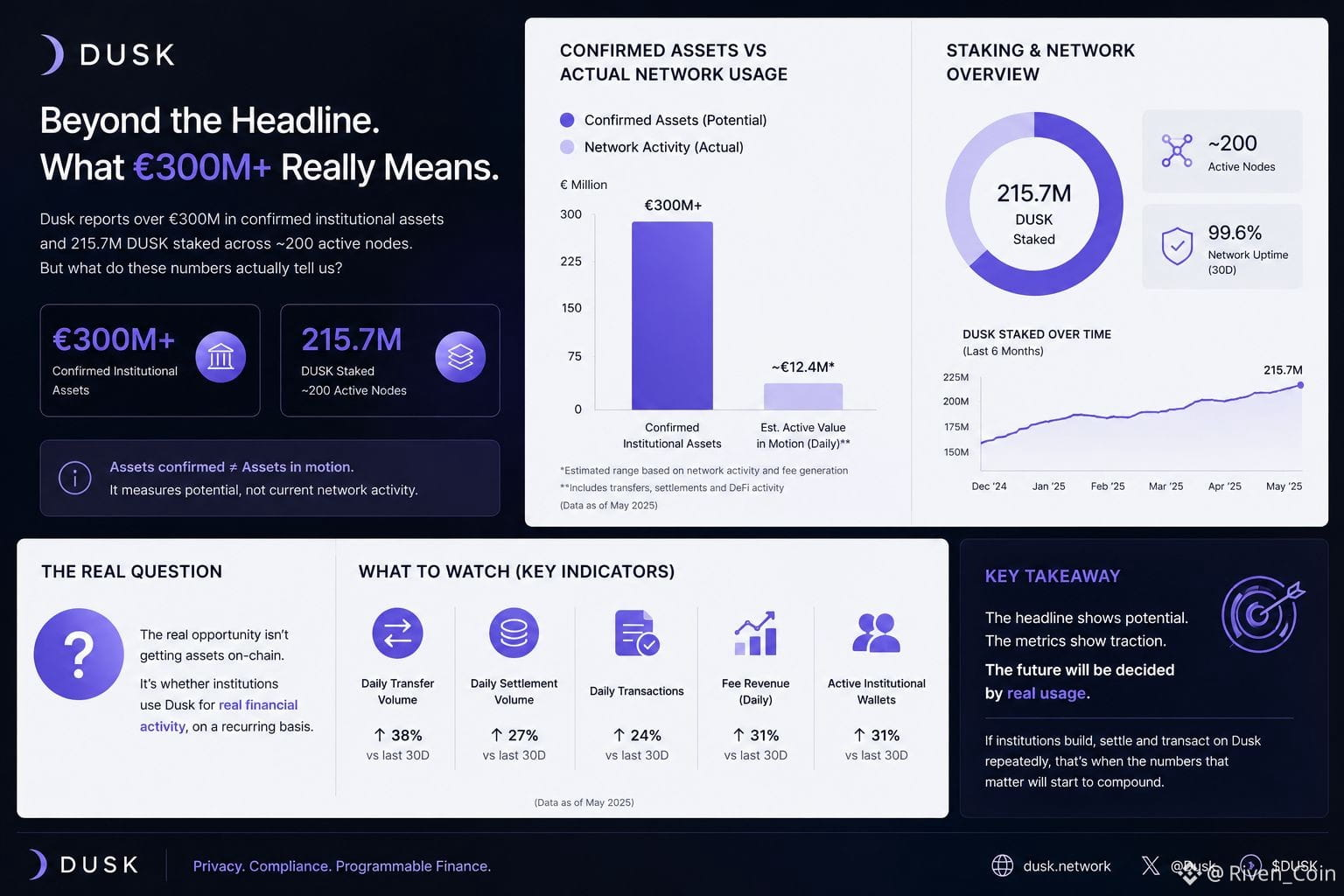
Dusk talks about more than €300M in confirmed institutional assets, and its network data shows roughly 215.7M DUSK staked across close to 200 active nodes. The staking figure is fairly straightforward. The €300M figure is harder to interpret.
That’s because “assets confirmed” doesn’t necessarily mean €300M is actively moving around the network. It doesn’t tell me how much is being transferred, settled, or generating fees today. And I don’t think that automatically makes the number misleading. It’s just measuring something different from actual network usage.
That distinction is what made me look at Dusk a little differently.
The interesting part of Dusk isn’t really getting assets onto a blockchain. It’s whether institutions eventually use the network for real financial activity on a recurring basis.
For me, that’s the number worth watching. Not how big the headline sounds, but what people actually do with those assets once they’re there.
Create a set of high-end, minimalist corporate infographics and Create data, charts, and
illustrations to help my audience better understand the content.
The style should be modern fintech
$SPK
$MORPHO
I’ll be honest, the €300M+ figure around Dusk caught my attention at first. But after digging into it, I started wondering what that number actually means.
Dusk talks about more than €300M in confirmed institutional assets, and its network data shows roughly 215.7M DUSK staked across close to 200 active nodes. The staking figure is fairly straightforward. The €300M figure is harder to interpret.
That’s because “assets confirmed” doesn’t necessarily mean €300M is actively moving around the network. It doesn’t tell me how much is being transferred, settled, or generating fees today. And I don’t think that automatically makes the number misleading. It’s just measuring something different from actual network usage.
That distinction is what made me look at Dusk a little differently.
The interesting part of Dusk isn’t really getting assets onto a blockchain. It’s whether institutions eventually use the network for real financial activity on a recurring basis.
For me, that’s the number worth watching. Not how big the headline sounds, but what people actually do with those assets once they’re there.
Create a set of high-end, minimalist corporate infographics and Create data, charts, and
illustrations to help my audience better understand the content.
The style should be modern fintech
$SPK
$MORPHO
Verified
#DUSK @Dusk
I’ve been digging into Hedger while working on the CreatorPad task, and honestly, I had the wrong idea about Dusk at first.
I thought it was just another project pushing the usual privacy narrative. ZK this, hidden data that.
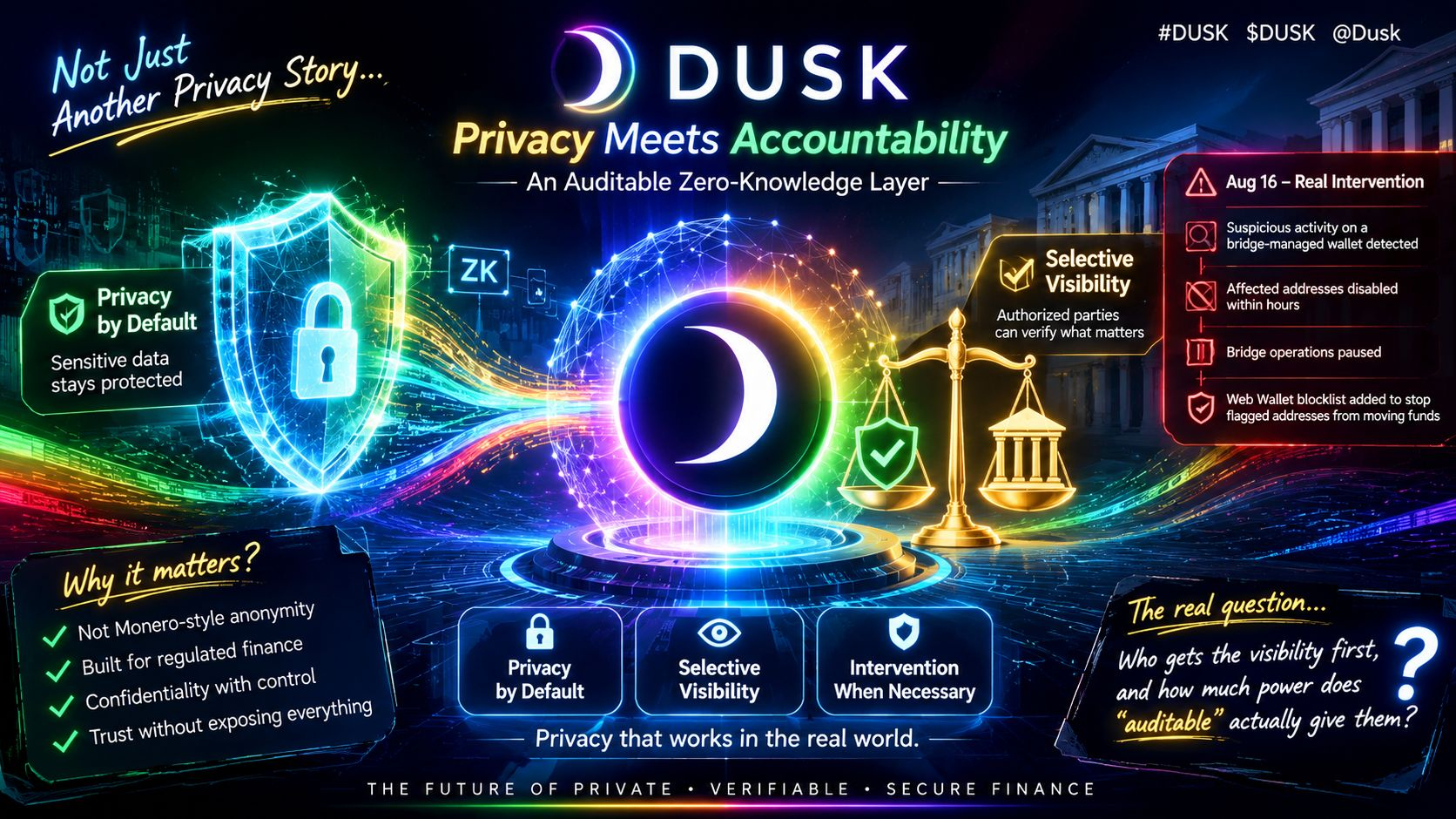
Then I looked closer at what happened around Aug 16.
A bridge wallet showed suspicious activity. Some addresses were shut down pretty quickly. The bridge was paused. A blocklist was also added to stop flagged wallets from moving funds.
That part got my attention.
Because if Dusk can do all that, then the goal clearly isn’t “hide everything and nobody can ever interfere.”
It feels more practical than that.
Keep sensitive stuff private, but still leave a way to verify what actually matters. And when something goes wrong, there’s still a way to step in.
For financial systems, that makes a lot more sense to me than pure anonymity.
The interesting part isn’t just the ZK tech.
It’s the line between privacy and control.
How much can stay private?
Who gets to verify it?
And who gets to pull the brake when something goes wrong?
That’s the part I’m watching with Dusk.
$DUSK
$TUT
$PORTAL
I’ve been digging into Hedger while working on the CreatorPad task, and honestly, I had the wrong idea about Dusk at first.
I thought it was just another project pushing the usual privacy narrative. ZK this, hidden data that.
Then I looked closer at what happened around Aug 16.
A bridge wallet showed suspicious activity. Some addresses were shut down pretty quickly. The bridge was paused. A blocklist was also added to stop flagged wallets from moving funds.
That part got my attention.
Because if Dusk can do all that, then the goal clearly isn’t “hide everything and nobody can ever interfere.”
It feels more practical than that.
Keep sensitive stuff private, but still leave a way to verify what actually matters. And when something goes wrong, there’s still a way to step in.
For financial systems, that makes a lot more sense to me than pure anonymity.
The interesting part isn’t just the ZK tech.
It’s the line between privacy and control.
How much can stay private?
Who gets to verify it?
And who gets to pull the brake when something goes wrong?
That’s the part I’m watching with Dusk.
$DUSK
$TUT
$PORTAL
Verified
@Dusk I’ve been around crypto long enough to hear the word “privacy” come back again and again. New project. New branding. Big promises. Then most of it fades once the hype moves somewhere else.
That’s why Dusk Network caught my attention.
#dusk I don’t think the interesting part is simply making transactions private. The harder problem is what happens when blockchain actually has to deal with serious financial activity.
You can’t expose everything. But you also can’t hide everything.
Someone still needs to know who owns what. Rules still need to be followed. Transactions still need to be verified and settled. Regulators may need access to certain information without giving the whole world access to it.
That balance is difficult.
Dusk is trying to build around that idea with confidential smart contracts and its Confidential Security Contract standard. Whether it can make all of this work without creating a pile of extra complexity is something I’m still watching.
I’ve seen plenty of crypto projects sound great on paper and become painful once real users show up.
But at least the problem Dusk is working on feels real.
If blockchain finance ever becomes more than trading and speculation, privacy probably won’t mean hiding everything. It might mean having control over who gets to see what.
$DUSK
$BEAT
$ENS
That’s why Dusk Network caught my attention.
#dusk I don’t think the interesting part is simply making transactions private. The harder problem is what happens when blockchain actually has to deal with serious financial activity.
You can’t expose everything. But you also can’t hide everything.
Someone still needs to know who owns what. Rules still need to be followed. Transactions still need to be verified and settled. Regulators may need access to certain information without giving the whole world access to it.
That balance is difficult.
Dusk is trying to build around that idea with confidential smart contracts and its Confidential Security Contract standard. Whether it can make all of this work without creating a pile of extra complexity is something I’m still watching.
I’ve seen plenty of crypto projects sound great on paper and become painful once real users show up.
But at least the problem Dusk is working on feels real.
If blockchain finance ever becomes more than trading and speculation, privacy probably won’t mean hiding everything. It might mean having control over who gets to see what.
$DUSK
$BEAT
$ENS
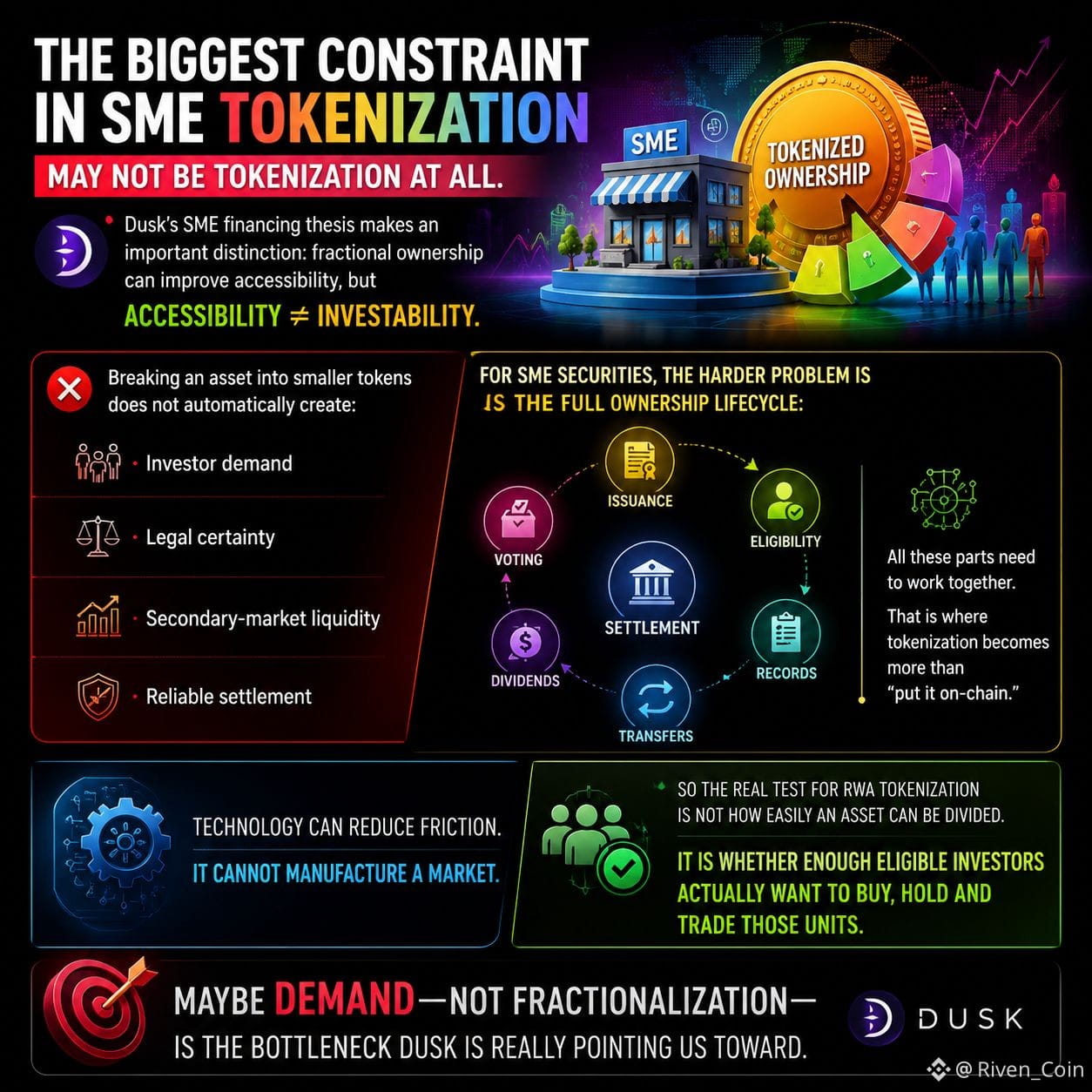
The biggest constraint in SME tokenization may not be tokenization at all.
Dusk’s SME financing thesis makes an important distinction: fractional ownership can improve accessibility, but accessibility ≠ investability.
Breaking an asset into smaller tokens does not automatically create:
• investor demand
• legal certainty
• secondary-market liquidity
• reliable settlement
For SME securities, the harder problem is the full ownership lifecycle: issuance, eligibility, records, transfers, dividends, voting and settlement all need to work together.
That is where tokenization becomes more than “put it on-chain.”
Technology can reduce friction. It cannot manufacture a market.
So the real test for RWA tokenization is not how easily an asset can be divided.
It is whether enough eligible investors actually want to buy, hold and trade those units.
Maybe demand—not fractionalization—is the bottleneck Dusk is really pointing us toward.
@Dusk #dusk $DUSK
Dusk’s SME financing thesis makes an important distinction: fractional ownership can improve accessibility, but accessibility ≠ investability.
Breaking an asset into smaller tokens does not automatically create:
• investor demand
• legal certainty
• secondary-market liquidity
• reliable settlement
For SME securities, the harder problem is the full ownership lifecycle: issuance, eligibility, records, transfers, dividends, voting and settlement all need to work together.
That is where tokenization becomes more than “put it on-chain.”
Technology can reduce friction. It cannot manufacture a market.
So the real test for RWA tokenization is not how easily an asset can be divided.
It is whether enough eligible investors actually want to buy, hold and trade those units.
Maybe demand—not fractionalization—is the bottleneck Dusk is really pointing us toward.
@Dusk #dusk $DUSK
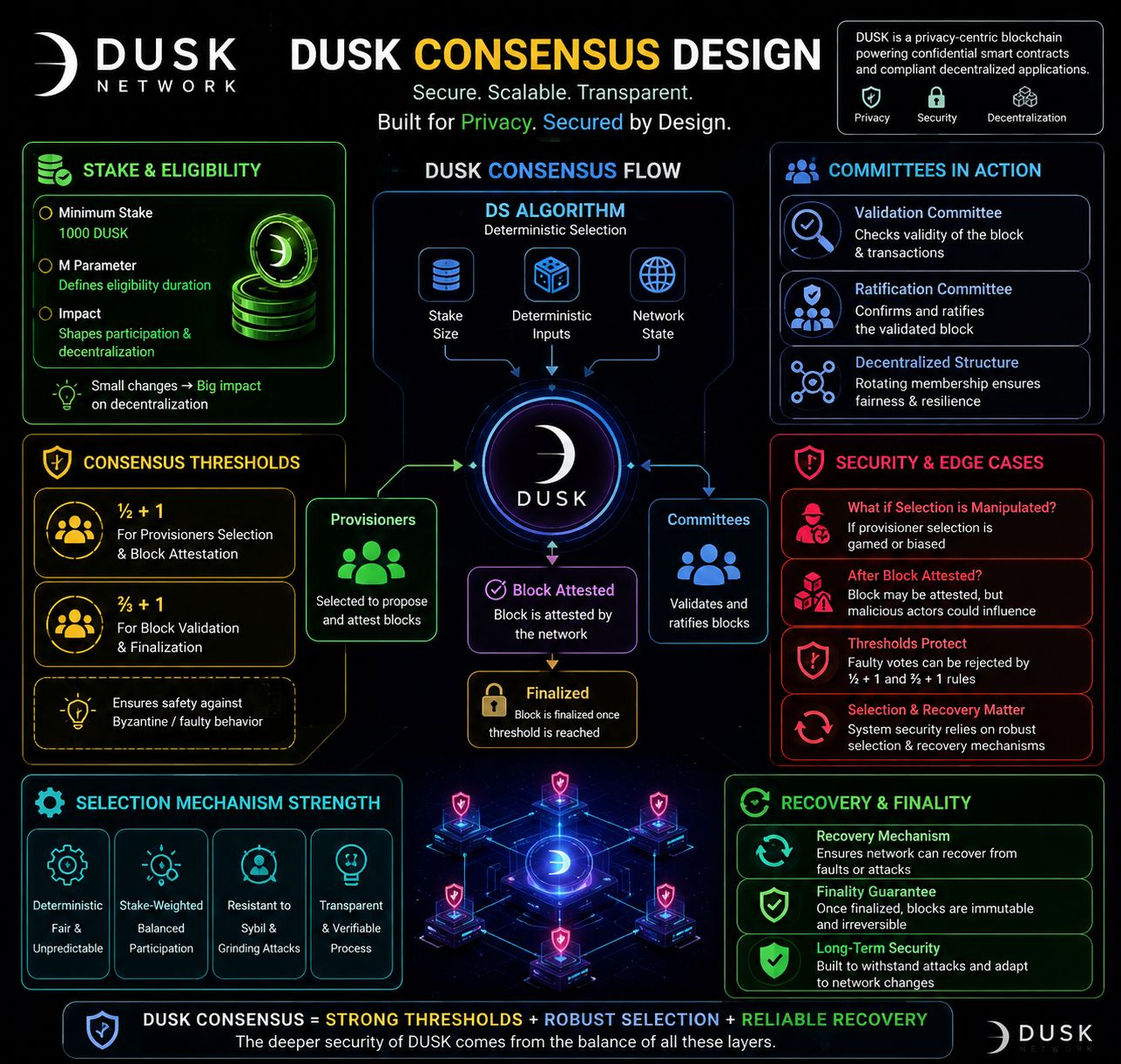
@Dusk #dusk Been digging deeper into DUSK’s consensus design, and one thing keeps standing out.
The security story isn’t just about the ½ + 1 and ⅔ + 1 thresholds. The 1000 DUSK minimum and the M parameter also shape who can realistically participate and how long their stake stays eligible.
That means small changes to those rules could have a bigger decentralization impact than the headline numbers suggest.
The DS algorithm itself is interesting too: stake size is combined with deterministic inputs to select provisioners, while committees handle validation and ratification.
What I’m still thinking about is the edge case: if the selection process were ever manipulated or gamed, what happens after the block has already been attested?
Consensus thresholds protect against faulty votes, but the strength of the whole system also depends on how robust the selection mechanism and recovery process are.
That’s where I think the deeper security discussion around DUSK starts.
$BOME
$DUSK
$ONG
The security story isn’t just about the ½ + 1 and ⅔ + 1 thresholds. The 1000 DUSK minimum and the M parameter also shape who can realistically participate and how long their stake stays eligible.
That means small changes to those rules could have a bigger decentralization impact than the headline numbers suggest.
The DS algorithm itself is interesting too: stake size is combined with deterministic inputs to select provisioners, while committees handle validation and ratification.
What I’m still thinking about is the edge case: if the selection process were ever manipulated or gamed, what happens after the block has already been attested?
Consensus thresholds protect against faulty votes, but the strength of the whole system also depends on how robust the selection mechanism and recovery process are.
That’s where I think the deeper security discussion around DUSK starts.
$BOME
$DUSK
$ONG
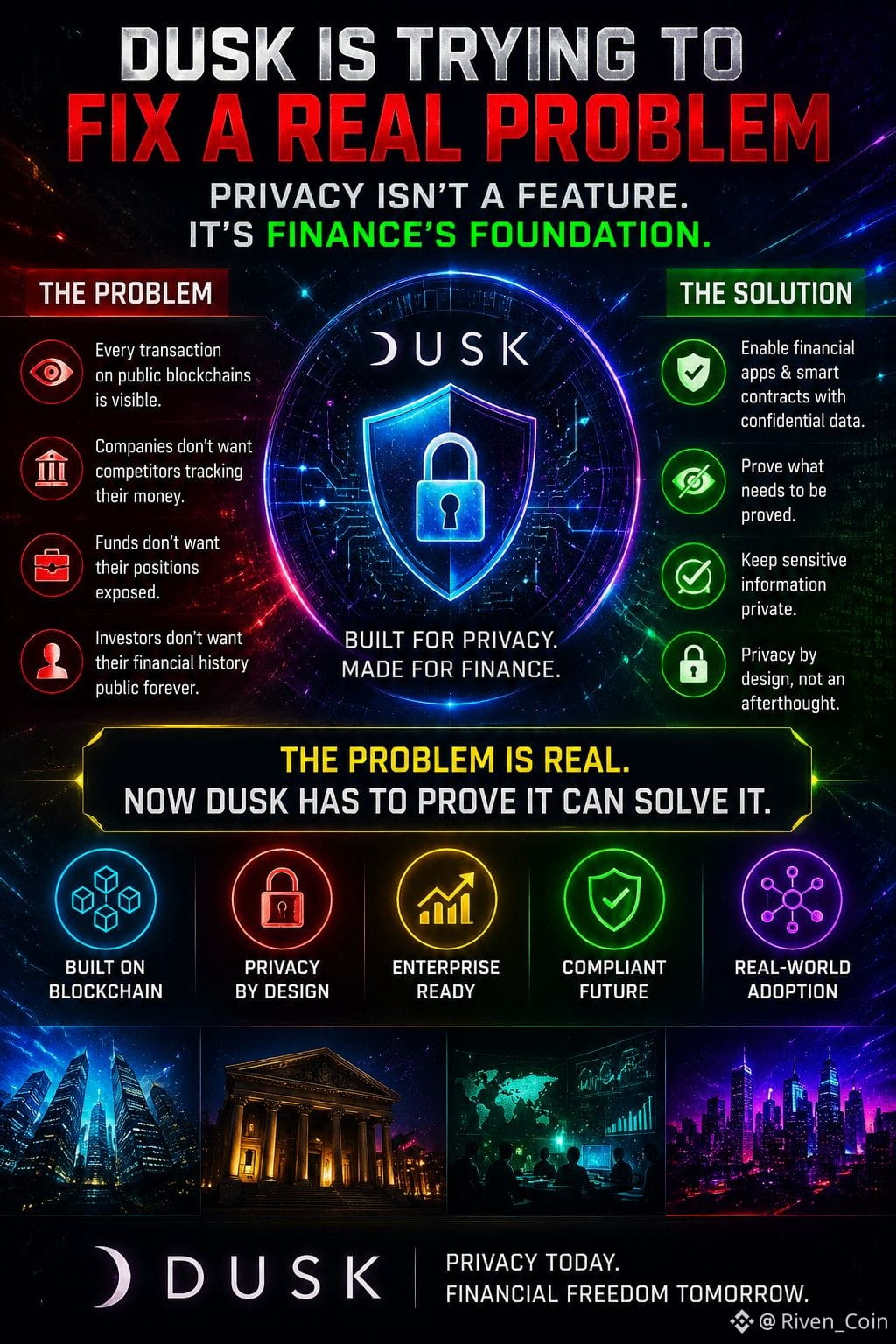
@Dusk #dusk $DUSK DUSK IS TRYING TO FIX A REAL PROBLEM
Most blockchains brag about speed, fees, or some massive future. Dusk is focused on something finance actually needs: privacy.
Putting serious financial activity on a public blockchain sounds great until everyone can watch every move. Companies don’t want competitors tracking their money. Funds don’t want their positions exposed. Investors don’t want their entire financial history sitting on-chain forever.
That’s where Dusk gets interesting.
Its goal is to let financial applications and smart contracts work with sensitive data while keeping that information confidential. The idea is simple: prove what needs to be proved without showing everything to everyone.
But the tech alone means nothing.
Dusk still needs real users, real assets, real applications, and serious adoption. Otherwise, it’s just another nice idea in a market full of them.
The problem is real.
Now Dusk has to prove it can solve it.
$ACE
$BTW
Most blockchains brag about speed, fees, or some massive future. Dusk is focused on something finance actually needs: privacy.
Putting serious financial activity on a public blockchain sounds great until everyone can watch every move. Companies don’t want competitors tracking their money. Funds don’t want their positions exposed. Investors don’t want their entire financial history sitting on-chain forever.
That’s where Dusk gets interesting.
Its goal is to let financial applications and smart contracts work with sensitive data while keeping that information confidential. The idea is simple: prove what needs to be proved without showing everything to everyone.
But the tech alone means nothing.
Dusk still needs real users, real assets, real applications, and serious adoption. Otherwise, it’s just another nice idea in a market full of them.
The problem is real.
Now Dusk has to prove it can solve it.
$ACE
$BTW
@Dusk #dusk
ready to fly higher and higher 🚀
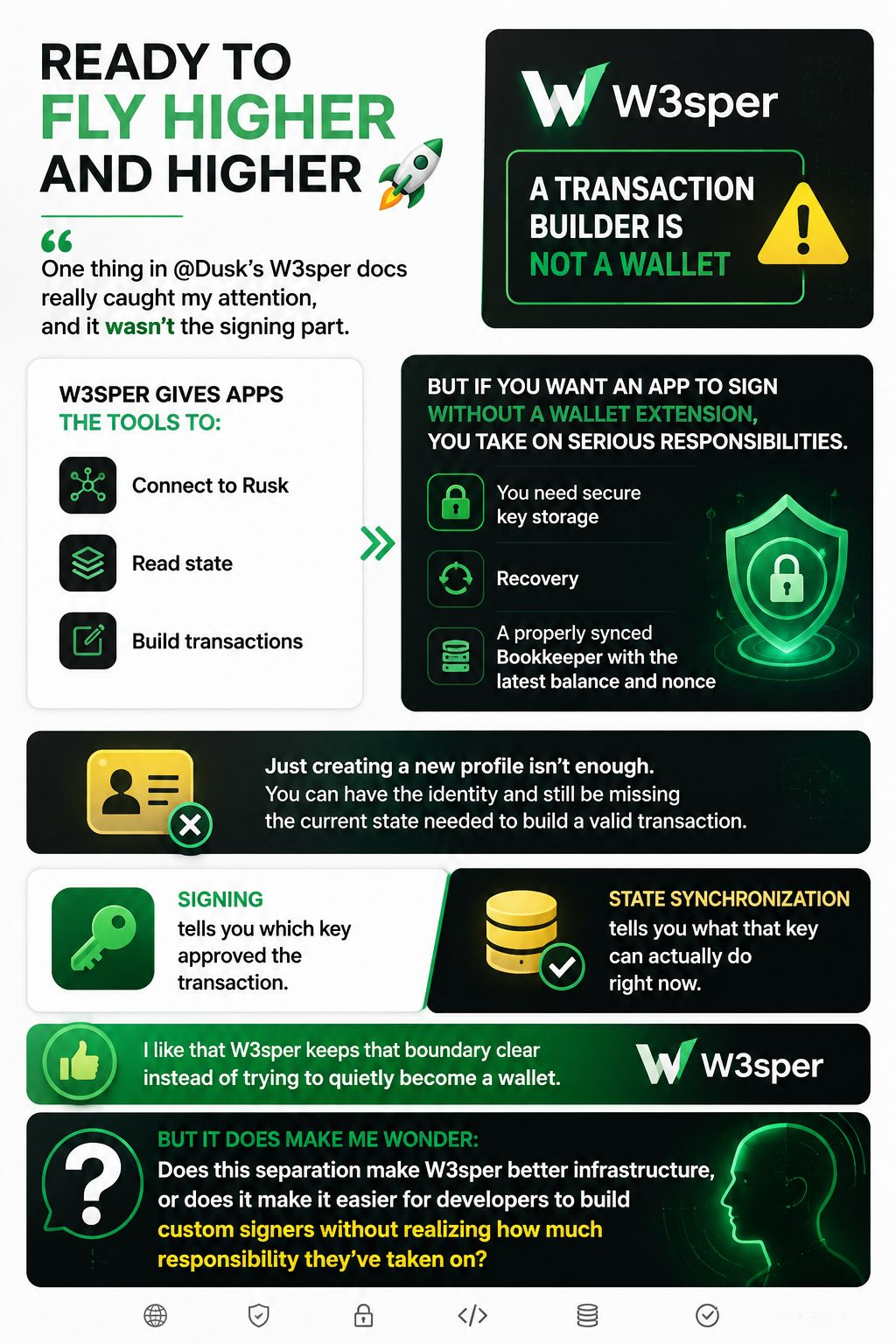
One thing in @Dusk’s W3sper docs really caught my attention, and it wasn’t the signing part.
It was the simple warning that a transaction builder is not a wallet.
W3sper gives apps the tools to connect to Rusk, read state, and build transactions. But if you want an app to sign without a wallet extension, you also take on some serious responsibilities yourself.
You need secure key storage, recovery, and a properly synced Bookkeeper with the latest balance and nonce.
Just creating a new profile isn’t enough. You can have the identity and still be missing the current state needed to build a valid transaction.
That’s the part I almost overlooked.
Signing tells you which key approved the transaction.
State synchronization tells you what that key can actually do right now.
I like that W3sper keeps that boundary clear instead of trying to quietly become a wallet.
But it does make me wonder:
Does this separation make W3sper better infrastructure, or does it make it easier for developers to build custom signers without realizing how much responsibility they’ve taken on?
$TUT $DUSK
$CLO
ready to fly higher and higher 🚀
One thing in @Dusk’s W3sper docs really caught my attention, and it wasn’t the signing part.
It was the simple warning that a transaction builder is not a wallet.
W3sper gives apps the tools to connect to Rusk, read state, and build transactions. But if you want an app to sign without a wallet extension, you also take on some serious responsibilities yourself.
You need secure key storage, recovery, and a properly synced Bookkeeper with the latest balance and nonce.
Just creating a new profile isn’t enough. You can have the identity and still be missing the current state needed to build a valid transaction.
That’s the part I almost overlooked.
Signing tells you which key approved the transaction.
State synchronization tells you what that key can actually do right now.
I like that W3sper keeps that boundary clear instead of trying to quietly become a wallet.
But it does make me wonder:
Does this separation make W3sper better infrastructure, or does it make it easier for developers to build custom signers without realizing how much responsibility they’ve taken on?
$TUT $DUSK
$CLO
I’ve watched enough crypto cycles to know that “privacy” is one of those words that can mean almost anything. Every few years it comes back with a new wrapper, a new chain, and a lot of noise around why this time is different. Most of the time, it isn’t.
That’s why I keep looking at Dusk Network a little differently. It’s positioning itself as a privacy blockchain for financial applications, built as a layer-1 around its Confidential Security Contract standard and confidential smart contracts. On paper, that sounds like another privacy story. But the part I find more interesting is the problem underneath it.
Financial markets can’t really run with everything exposed. At the same time, they can’t work if nobody can verify anything. There has to be some uncomfortable middle ground where information stays restricted while rules, ownership, compliance and settlement can still be enforced.
That sounds simple until you actually try to build it. Crypto has spent years pretending transparency solves everything, then discovering that real financial activity brings identity, permissions, regulation and sensitive data into the room.
I’m not sure yet whether Dusk can solve that without creating a different kind of friction. Privacy systems often look clean until real users, regulators and developers touch them. I’ve seen this before.
Still, something about the problem feels more grounded than the usual narrative. If blockchain finance ever moves beyond speculation, controlling what gets revealed may matter just as much as what gets recorded.
@Dusk #dusk $PORTAL
$BTW
$DUSK
That’s why I keep looking at Dusk Network a little differently. It’s positioning itself as a privacy blockchain for financial applications, built as a layer-1 around its Confidential Security Contract standard and confidential smart contracts. On paper, that sounds like another privacy story. But the part I find more interesting is the problem underneath it.
Financial markets can’t really run with everything exposed. At the same time, they can’t work if nobody can verify anything. There has to be some uncomfortable middle ground where information stays restricted while rules, ownership, compliance and settlement can still be enforced.
That sounds simple until you actually try to build it. Crypto has spent years pretending transparency solves everything, then discovering that real financial activity brings identity, permissions, regulation and sensitive data into the room.
I’m not sure yet whether Dusk can solve that without creating a different kind of friction. Privacy systems often look clean until real users, regulators and developers touch them. I’ve seen this before.
Still, something about the problem feels more grounded than the usual narrative. If blockchain finance ever moves beyond speculation, controlling what gets revealed may matter just as much as what gets recorded.
@Dusk #dusk $PORTAL
$BTW
$DUSK
HIGH 💞
0%
LOW,💔
0%
🙂↔️
0%
🙂↕️
0%
0 votes • Voting closed
DUSK is one of the few crypto projects where the problem actually makes sense.
Most blockchains want everything public. That sounds great until you start talking about real finance. Banks, funds, and companies cannot expose every balance, trade, investor, or business relationship to the entire internet.
But total privacy has a problem too. Regulators still need access. Auditors need records. Certain investors need to prove they are eligible.
That is where Dusk gets interesting.
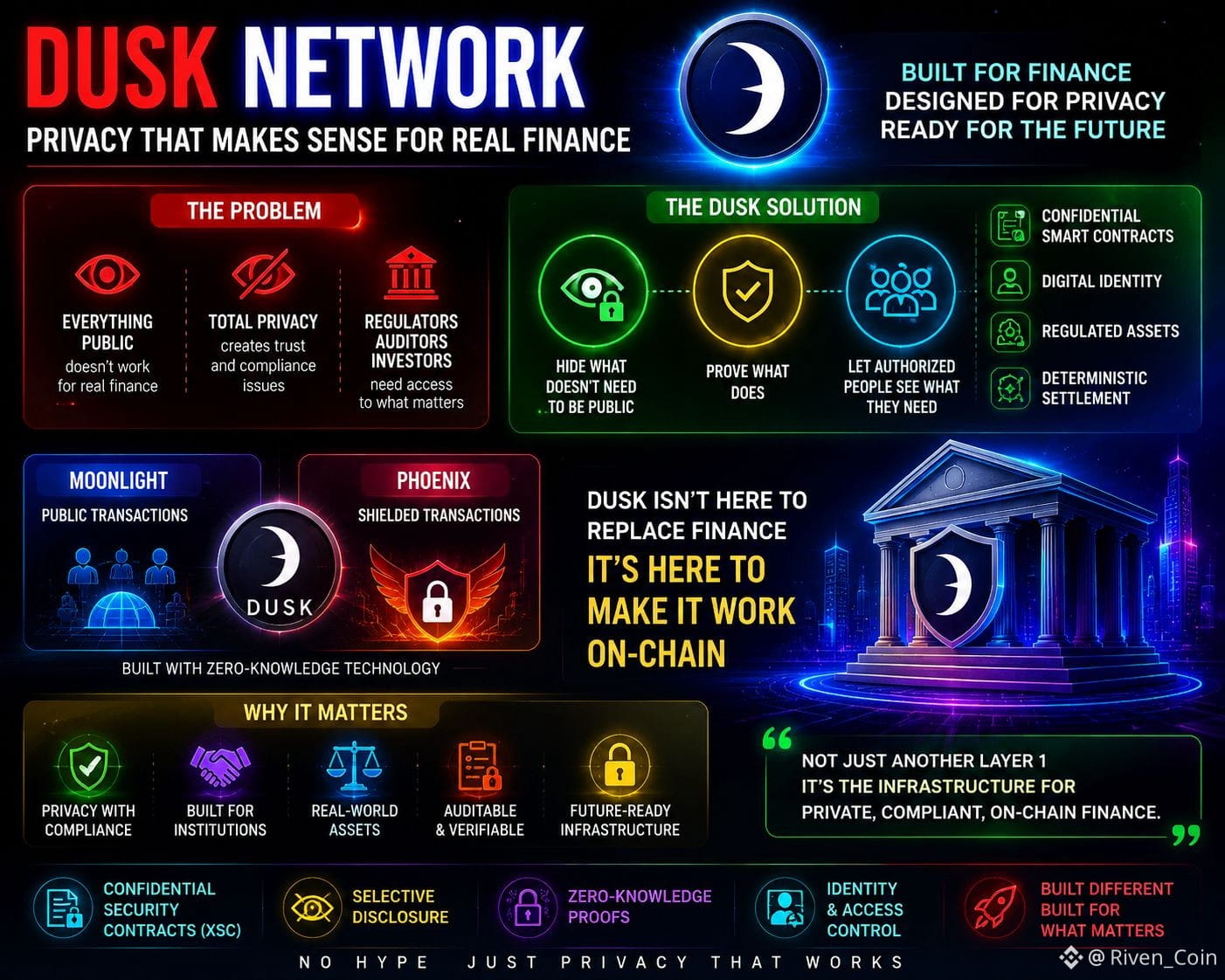
The network is built around privacy with selective disclosure. It supports public transactions through Moonlight and shielded transactions through Phoenix, using zero-knowledge technology to prove transactions are valid without exposing everything. It also focuses on confidential smart contracts, digital identity, regulated assets, and deterministic settlement.
The idea is pretty simple.
Hide what does not need to be public. Prove what does. Let authorized people see what they need.
That makes more sense to me than the usual crypto hype about “replacing finance.”
Dusk still has a lot to prove. Building the technology is one thing. Getting institutions, developers, and real financial activity onto the network is another.
No hype needed.
Just make the damn thing work.
@Dusk #dusk $HEMI
$AIO
$DUSK
Most blockchains want everything public. That sounds great until you start talking about real finance. Banks, funds, and companies cannot expose every balance, trade, investor, or business relationship to the entire internet.
But total privacy has a problem too. Regulators still need access. Auditors need records. Certain investors need to prove they are eligible.
That is where Dusk gets interesting.
The network is built around privacy with selective disclosure. It supports public transactions through Moonlight and shielded transactions through Phoenix, using zero-knowledge technology to prove transactions are valid without exposing everything. It also focuses on confidential smart contracts, digital identity, regulated assets, and deterministic settlement.
The idea is pretty simple.
Hide what does not need to be public. Prove what does. Let authorized people see what they need.
That makes more sense to me than the usual crypto hype about “replacing finance.”
Dusk still has a lot to prove. Building the technology is one thing. Getting institutions, developers, and real financial activity onto the network is another.
No hype needed.
Just make the damn thing work.
@Dusk #dusk $HEMI
$AIO
$DUSK
🚨 BERKSHIRE IS LOADING UP ON $GOOGL
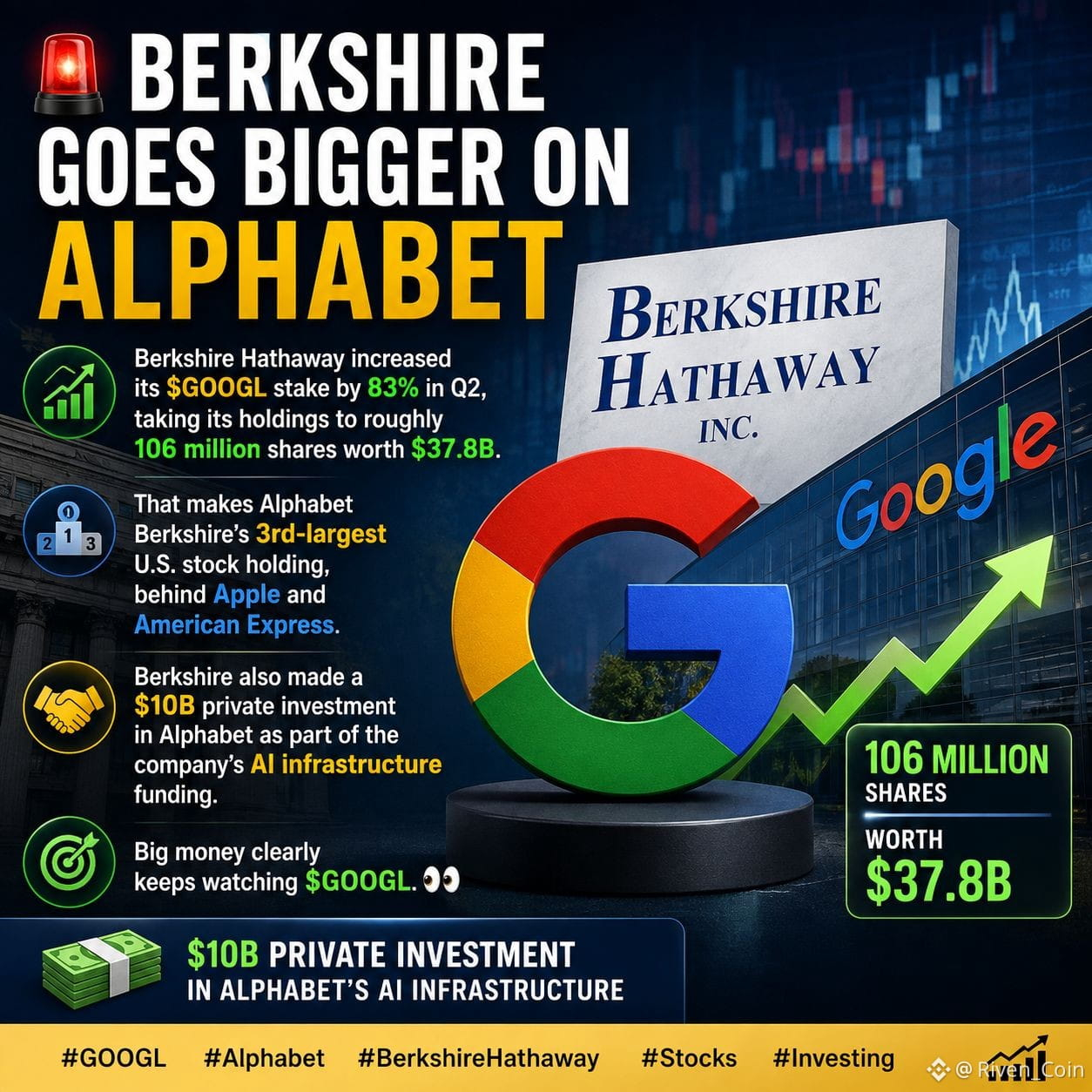
Berkshire Hathaway reportedly boosted its Alphabet position by 83% in Q2, bringing its holdings to around 106M shares worth roughly $37.8B.
That puts Alphabet as Berkshire’s 3rd-largest U.S. stock position, behind Apple and American Express.
The message is pretty clear: big money is still betting on Alphabet’s AI and long-term growth story. 👀📈
$GOOGLB #Alphabet #BerkshireHathaway #Stocks #Investing
Berkshire Hathaway reportedly boosted its Alphabet position by 83% in Q2, bringing its holdings to around 106M shares worth roughly $37.8B.
That puts Alphabet as Berkshire’s 3rd-largest U.S. stock position, behind Apple and American Express.
The message is pretty clear: big money is still betting on Alphabet’s AI and long-term growth story. 👀📈
$GOOGLB #Alphabet #BerkshireHathaway #Stocks #Investing
🚀 ALTCOIN MOMENTUM IS PICKING UP
$X is leading the pack with a huge +64.53% move while $AKE (+43.75%) and $VELVET (+42.64%) are also pushing hard. $KII and $PRL are joining the move with solid double-digit gains. 📈🔥
The rotation into smaller caps is getting interesting while the majors remain relatively quiet.
Still I wouldn’t chase candles this extended. A clean pullback and a strong reclaim would be much healthier than buying into the spike.
Which altcoin do you think has the strongest setup for the next move? 👀
#Crypto #MarketUpdate
$X is leading the pack with a huge +64.53% move while $AKE (+43.75%) and $VELVET (+42.64%) are also pushing hard. $KII and $PRL are joining the move with solid double-digit gains. 📈🔥
The rotation into smaller caps is getting interesting while the majors remain relatively quiet.
Still I wouldn’t chase candles this extended. A clean pullback and a strong reclaim would be much healthier than buying into the spike.
Which altcoin do you think has the strongest setup for the next move? 👀
#Crypto #MarketUpdate
BULLISH 💞
0%
BEARISH👁️👁️
0%
0 votes • Voting closed
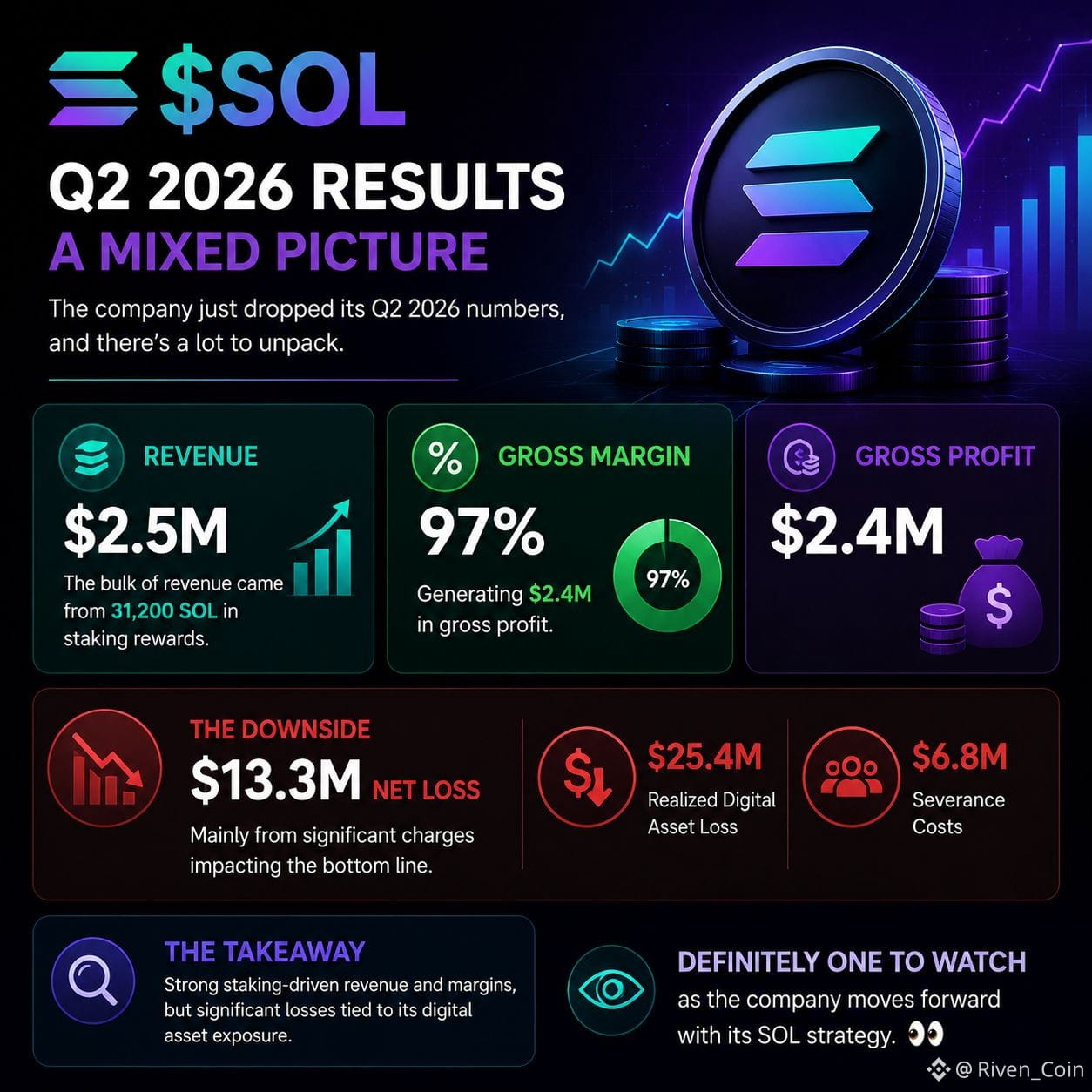
$SOL Q2 2026 numbers are out and the picture is pretty mixed.
Revenue hit $2.5M with 31,200 SOL coming from staking rewards. Gross margin was a strong 97% with $2.4M in gross profit.
But the big problem is the $13.3M net loss. A major part came from a $25.4M realized digital asset loss along with $6.8M in severance costs.
So while the staking side looks solid the company’s SOL exposure is clearly adding a lot of volatility to the bottom line.
The next few quarters will be interesting to watch as its SOL strategy develops. 👀
#USToPressNationsToPickUSOrChinaAICoalition #SP500TopsRecord7800 #COWRises55.77%In24h #SaudiPIFDiscloses154.1MSpaceXShares #USJulyRetailSalesFall0.6%
Revenue hit $2.5M with 31,200 SOL coming from staking rewards. Gross margin was a strong 97% with $2.4M in gross profit.
But the big problem is the $13.3M net loss. A major part came from a $25.4M realized digital asset loss along with $6.8M in severance costs.
So while the staking side looks solid the company’s SOL exposure is clearly adding a lot of volatility to the bottom line.
The next few quarters will be interesting to watch as its SOL strategy develops. 👀
#USToPressNationsToPickUSOrChinaAICoalition #SP500TopsRecord7800 #COWRises55.77%In24h #SaudiPIFDiscloses154.1MSpaceXShares #USJulyRetailSalesFall0.6%
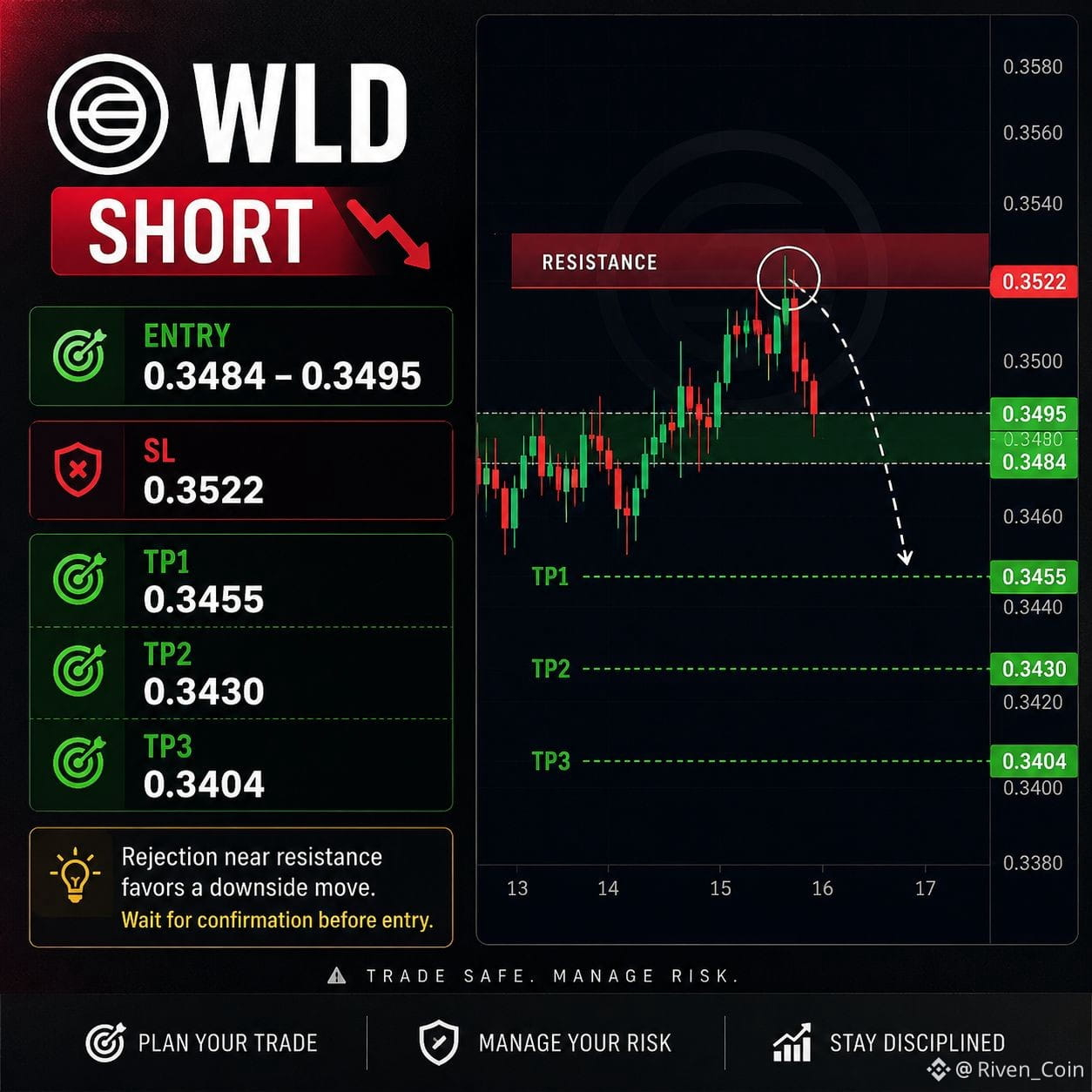
$WLD
— SHORT 📉
Entry: 0.3484–0.3495
SL: 0.3522
TP1: 0.3455
TP2: 0.3430
TP3: 0.3404
WLD is showing rejection around resistance, which keeps the downside setup in focus. Don’t rush the entry. Wait for confirmation and proper rejection before taking the short.
Trade safe. Manage risk. 📉
— SHORT 📉
Entry: 0.3484–0.3495
SL: 0.3522
TP1: 0.3455
TP2: 0.3430
TP3: 0.3404
WLD is showing rejection around resistance, which keeps the downside setup in focus. Don’t rush the entry. Wait for confirmation and proper rejection before taking the short.
Trade safe. Manage risk. 📉
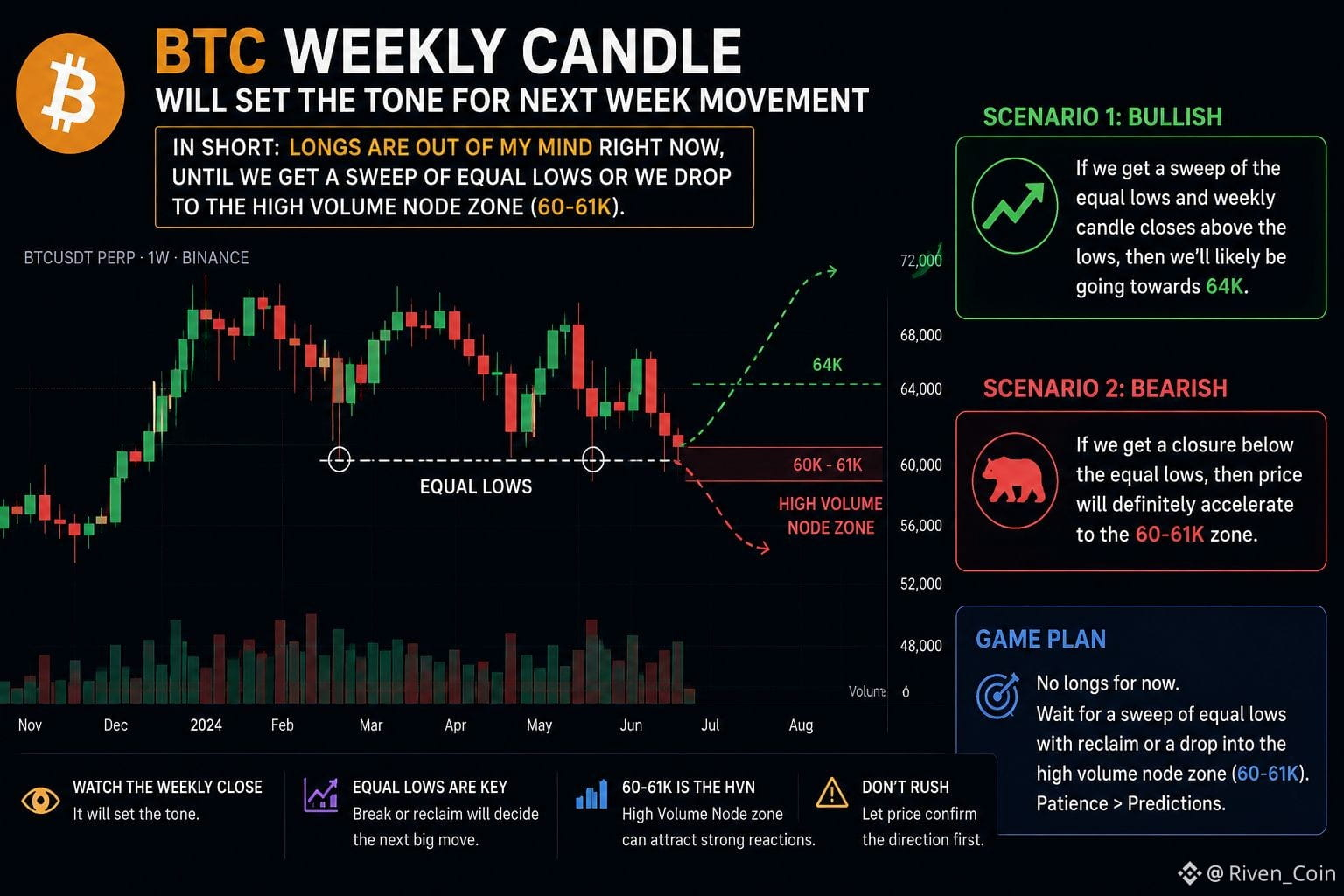
$BTC weekly close could decide the direction for next week.
If we close below the equal lows, I’d expect momentum to pick up and price could accelerate toward the $60K–$61K high-volume zone.
But if BTC sweeps those lows and reclaims them with a weekly close back above, $64K becomes the more likely target.
For now, I’m not interested in longs.
I’d rather wait for either a clean sweep of the equal lows or a deeper move into the $60K–$61K area.
Let the market show its hand first.
#SP500EarningsBeatExpectations #LMECopperStocksFall42DaysLongestSince2014 #SaudiPIFDiscloses154.1MSpaceXShares #CboeSeeks3xBitcoinAndEtherETFs #WhiteHousePlansAug19MeetingWithCryptoExecs
If we close below the equal lows, I’d expect momentum to pick up and price could accelerate toward the $60K–$61K high-volume zone.
But if BTC sweeps those lows and reclaims them with a weekly close back above, $64K becomes the more likely target.
For now, I’m not interested in longs.
I’d rather wait for either a clean sweep of the equal lows or a deeper move into the $60K–$61K area.
Let the market show its hand first.
#SP500EarningsBeatExpectations #LMECopperStocksFall42DaysLongestSince2014 #SaudiPIFDiscloses154.1MSpaceXShares #CboeSeeks3xBitcoinAndEtherETFs #WhiteHousePlansAug19MeetingWithCryptoExecs
I've watched enough crypto cycles to get a little suspicious whenever a project calls itself a privacy blockchain. I've seen that label attract attention, then disappear when the next narrative arrives.
Dusk feels slightly different to me, but I'm still not convinced. The interesting part isn't simply hiding transactions. Financial markets have a harder problem. Some information needs to stay private while other information has to be verified, restricted, or visible to the right parties. That sounds simple until you actually try building it.
Dusk's XSC approach and confidential smart contracts are aimed at that uncomfortable middle ground. Privacy without pretending regulation doesn't exist. Programmable finance without making every detail public. In theory, that makes sense.
But crypto is full of things that make sense on paper.
The real test is whether developers and financial institutions are willing to deal with the extra complexity. Compliance, identity, permissions and privacy can create a lot of friction, and users usually don't care how elegant the architecture is if the experience becomes painful.
I'm not sure yet whether Dusk solves that balance well enough. I don't fully trust the story just because the technology sounds thoughtful.
Still, after watching so many cycles, something about the problem feels more real than the usual narrative. If private financial activity ever moves seriously on-chain, hiding everything won't work. Neither will exposing everything.
@Dusk #dusk $DUSK
$ACE
$CYS
Dusk feels slightly different to me, but I'm still not convinced. The interesting part isn't simply hiding transactions. Financial markets have a harder problem. Some information needs to stay private while other information has to be verified, restricted, or visible to the right parties. That sounds simple until you actually try building it.
Dusk's XSC approach and confidential smart contracts are aimed at that uncomfortable middle ground. Privacy without pretending regulation doesn't exist. Programmable finance without making every detail public. In theory, that makes sense.
But crypto is full of things that make sense on paper.
The real test is whether developers and financial institutions are willing to deal with the extra complexity. Compliance, identity, permissions and privacy can create a lot of friction, and users usually don't care how elegant the architecture is if the experience becomes painful.
I'm not sure yet whether Dusk solves that balance well enough. I don't fully trust the story just because the technology sounds thoughtful.
Still, after watching so many cycles, something about the problem feels more real than the usual narrative. If private financial activity ever moves seriously on-chain, hiding everything won't work. Neither will exposing everything.
@Dusk #dusk $DUSK
$ACE
$CYS
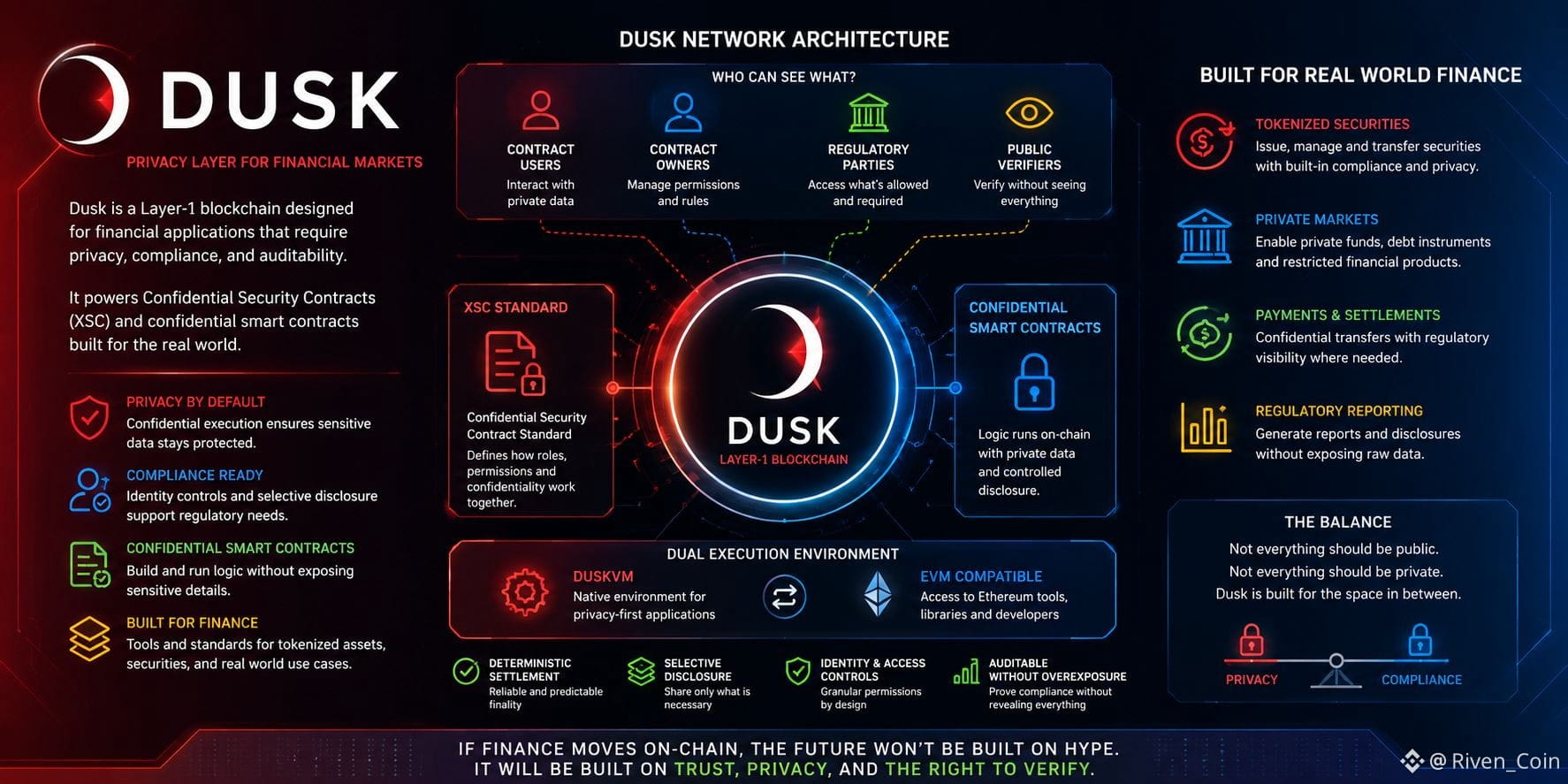
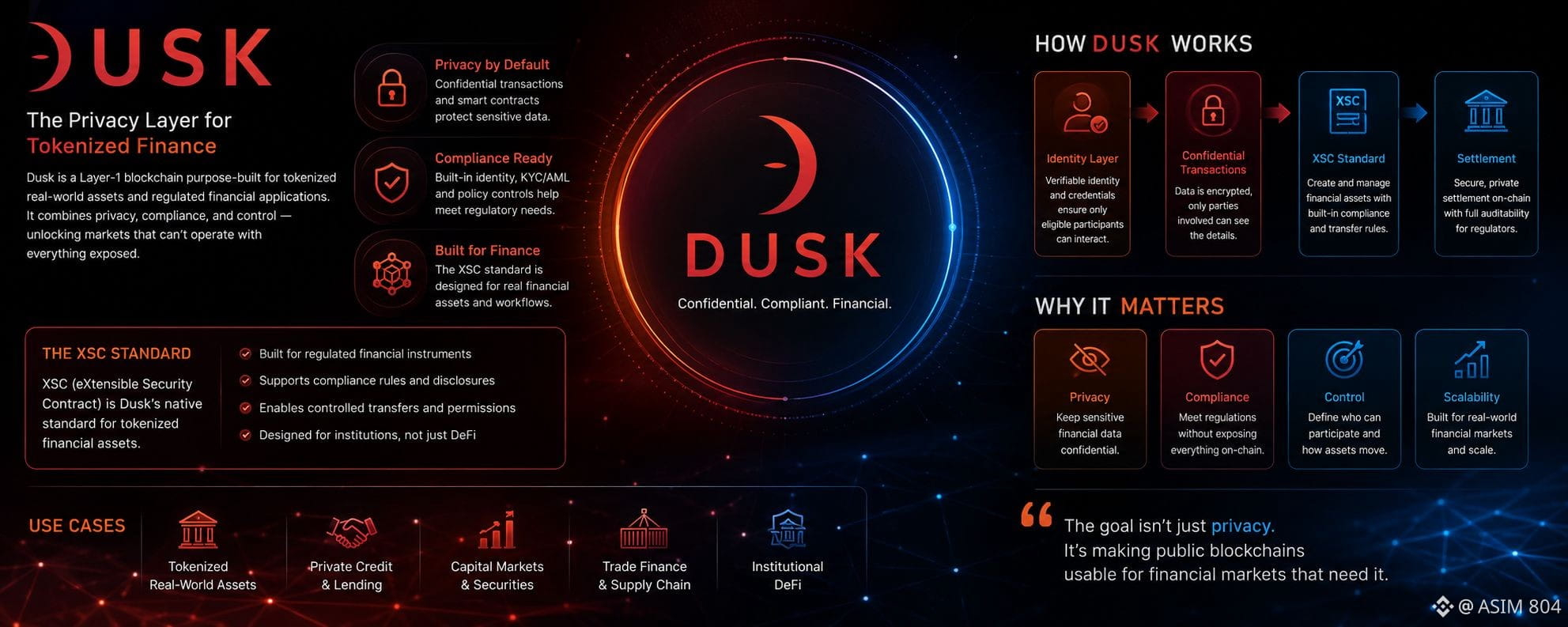
I think Dusk is easy to overlook because “privacy blockchain” makes it sound like just another privacy project.
But the deeper story is more interesting.
Dusk seems to be going after a problem that tokenized finance still hasn’t fully solved: how do you put real financial assets on-chain while keeping sensitive information private and still meeting regulatory requirements?
That’s where XSC stands out to me. It isn’t just about moving tokens around. The standard is designed around financial assets, compliance rules and controlled transfers. Add Dusk’s identity layer and confidential transactions, and the network starts looking less like a privacy chain and more like infrastructure for markets that can’t operate with everything exposed.
That distinction matters.
The biggest hurdle for tokenized assets may not be creating them. It’s making them practical for institutions, where privacy, identity, compliance and settlement all have to work together.
So I wouldn’t judge Dusk only by attention or market activity. I’d watch whether it can become part of that missing coordination layer between traditional finance and public blockchains.
The interesting bet here isn’t privacy itself. It’s making public blockchains usable for financial markets that need privacy.
@Dusk #dusk $DUSK
But the deeper story is more interesting.
Dusk seems to be going after a problem that tokenized finance still hasn’t fully solved: how do you put real financial assets on-chain while keeping sensitive information private and still meeting regulatory requirements?
That’s where XSC stands out to me. It isn’t just about moving tokens around. The standard is designed around financial assets, compliance rules and controlled transfers. Add Dusk’s identity layer and confidential transactions, and the network starts looking less like a privacy chain and more like infrastructure for markets that can’t operate with everything exposed.
That distinction matters.
The biggest hurdle for tokenized assets may not be creating them. It’s making them practical for institutions, where privacy, identity, compliance and settlement all have to work together.
So I wouldn’t judge Dusk only by attention or market activity. I’d watch whether it can become part of that missing coordination layer between traditional finance and public blockchains.
The interesting bet here isn’t privacy itself. It’s making public blockchains usable for financial markets that need privacy.
@Dusk #dusk $DUSK
🇺🇸 US Core PPI inflation drops today at 8:30 AM ET, just before the U.S. market opens.
Here’s what traders are watching:
📉 Below 4.1% → bullish for markets
⚖️ Around 4.2% → likely mixed/flat
📈 Above 4.3% → possible selling pressure
Volatility could pick up fast once the number hits.
Eyes on the data. 👀
$QNTB $ATM $BANK
#BREAKING #US #Fed #markets #crypto
Here’s what traders are watching:
📉 Below 4.1% → bullish for markets
⚖️ Around 4.2% → likely mixed/flat
📈 Above 4.3% → possible selling pressure
Volatility could pick up fast once the number hits.
Eyes on the data. 👀
$QNTB $ATM $BANK
#BREAKING #US #Fed #markets #crypto
Log in to explore more content