

FARID PK
1.8k Posts
FARID PK
Report
Block User
آنسو کو لاکھ سمجھایا تنہائی میں آیا کروں یوں بھری محفل میں تماشہ نہ بنایا کروں فرید آنسو بھی تو پھر آنسو ہے تڑپ کر بولا تجھے بری محفل میں اکیلا پایا تو چلا آیا
High-Frequency Trader
2.4 Years
3.5K+ Following
13.5K+ Followers
3.4K+ Liked
Posts
All
Quotes
Videos
Live
PINNED
·
--
Just checked out what @nillionnetwork is doing with Covenants and honestly, this is the first time encrypted trading instructions actually make sense to me.
You can seal a trade or order, post it onchain, and nobody can see what it is until the condition hits. No front-running, no leaking your strategy. Dusk being live on Ethereum mainnet already feels like a real step, not just another testnet announcement.
Looking at the full 7-era roadmap, the part that excites me most is how this can scale beyond just simple price triggers. Feels like the start of something bigger for private onchain markets.
$NIL
#nil
Just checked out what @Nillion is doing with Covenants and honestly, this is the first time encrypted trading instructions actually make sense to me.
You can seal a trade or order, post it onchain, and nobody can see what it is until the condition hits. No front-running, no leaking your strategy. Dusk being live on Ethereum mainnet already feels like a real step, not just another testnet announcement.
Looking at the full 7-era roadmap, the part that excites me most is how this can scale beyond just simple price triggers. Feels like the start of something bigger for private onchain markets.
$NIL
#nil
You can seal a trade or order, post it onchain, and nobody can see what it is until the condition hits. No front-running, no leaking your strategy. Dusk being live on Ethereum mainnet already feels like a real step, not just another testnet announcement.
Looking at the full 7-era roadmap, the part that excites me most is how this can scale beyond just simple price triggers. Feels like the start of something bigger for private onchain markets.
$NIL
#nil
2
2
131

·
--
vote
vote


Fatima_Tariq
·
--
Third day
thanks to all those who support me in last
two days
Don't forget to support me today also
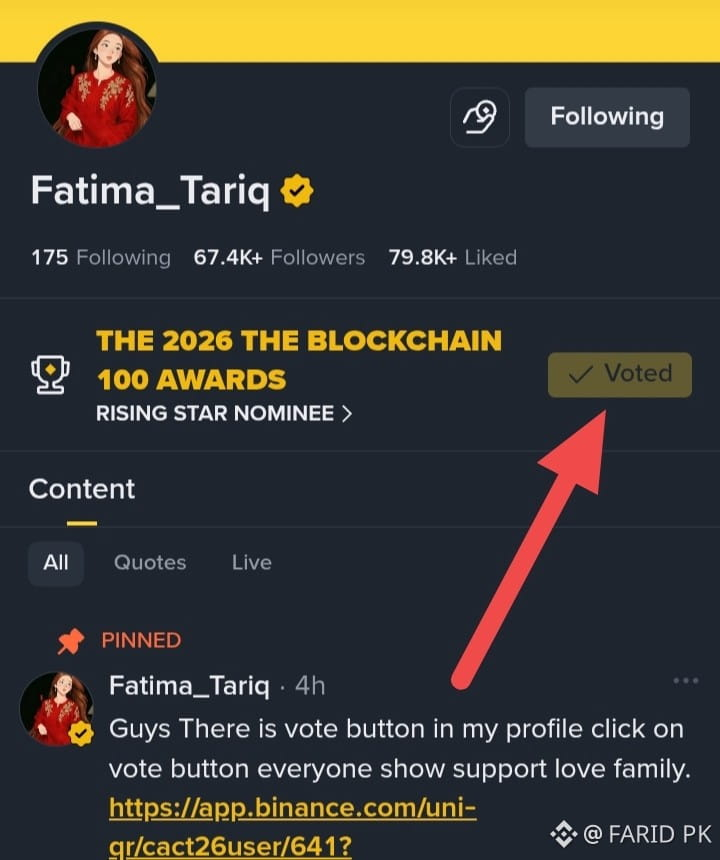
Go Go Go , Vote for me everyone, show some love support fam , just click on vote button on my profile.
سب میری پروفائل پر جائیں ووٹ بٹن پر کلک کریں اور مجھے سپورٹ کریں۔
هيا هيا هيا، صوتوا لي جميعاً، أظهروا بعض الحب والدعم يا رفاق، فقط اضغطوا على زر التصويت في ملفي الشخصي.
Vamos, vamos, vamos, voten por mí todos, muestren algo de amor y apoyo, familia, solo hagan clic en el botón de votar en mi perfil.
click below , click vote and done
https://app.binance.com/uni-qr/cact26user/641?uc=app_square_share_link&us=copylink
thanks to all those who support me in last
two days
Don't forget to support me today also
Go Go Go , Vote for me everyone, show some love support fam , just click on vote button on my profile.
سب میری پروفائل پر جائیں ووٹ بٹن پر کلک کریں اور مجھے سپورٹ کریں۔
هيا هيا هيا، صوتوا لي جميعاً، أظهروا بعض الحب والدعم يا رفاق، فقط اضغطوا على زر التصويت في ملفي الشخصي.
Vamos, vamos, vamos, voten por mí todos, muestren algo de amor y apoyo, familia, solo hagan clic en el botón de votar en mi perfil.
click below , click vote and done
https://app.binance.com/uni-qr/cact26user/641?uc=app_square_share_link&us=copylink
13
·
--
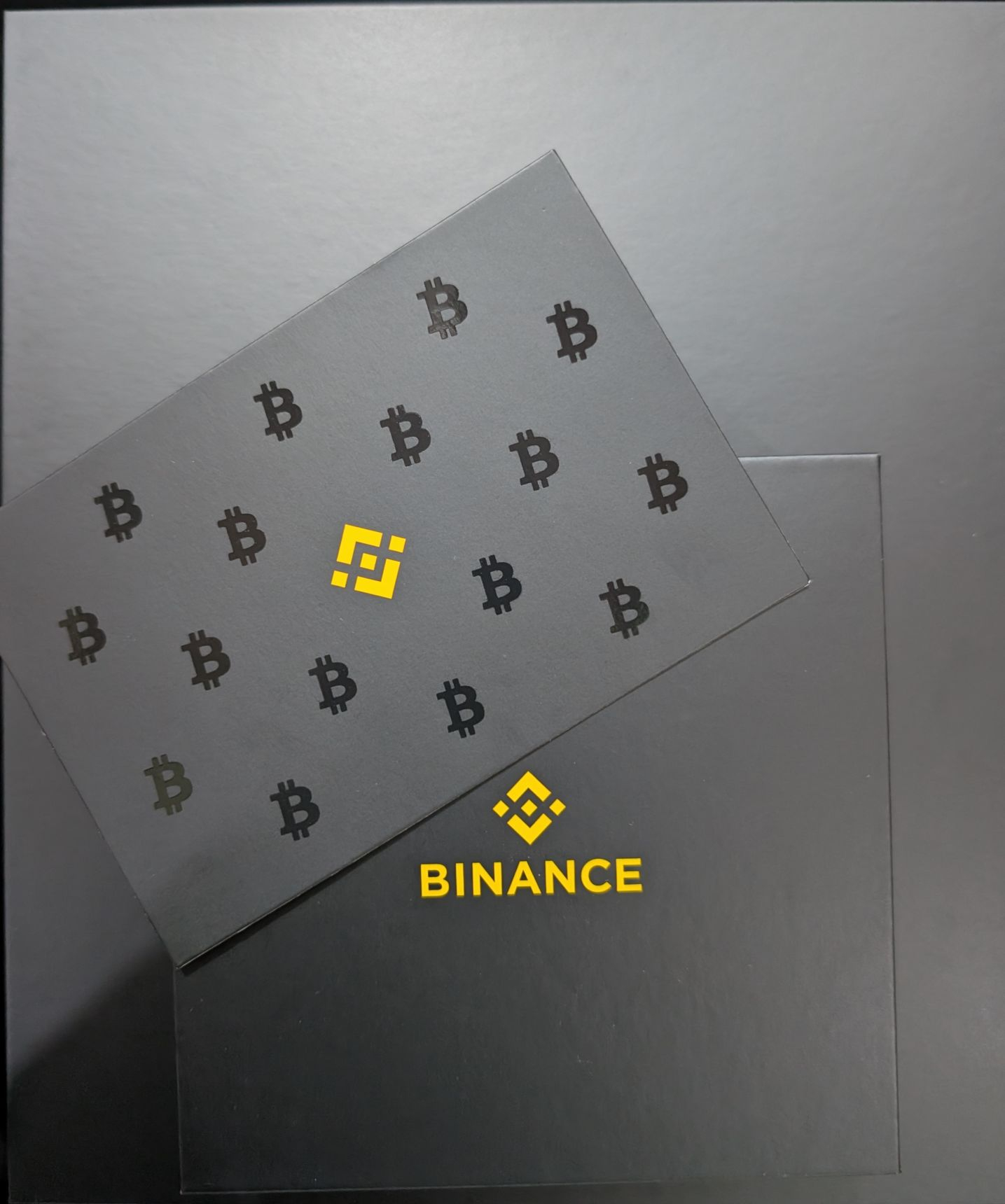
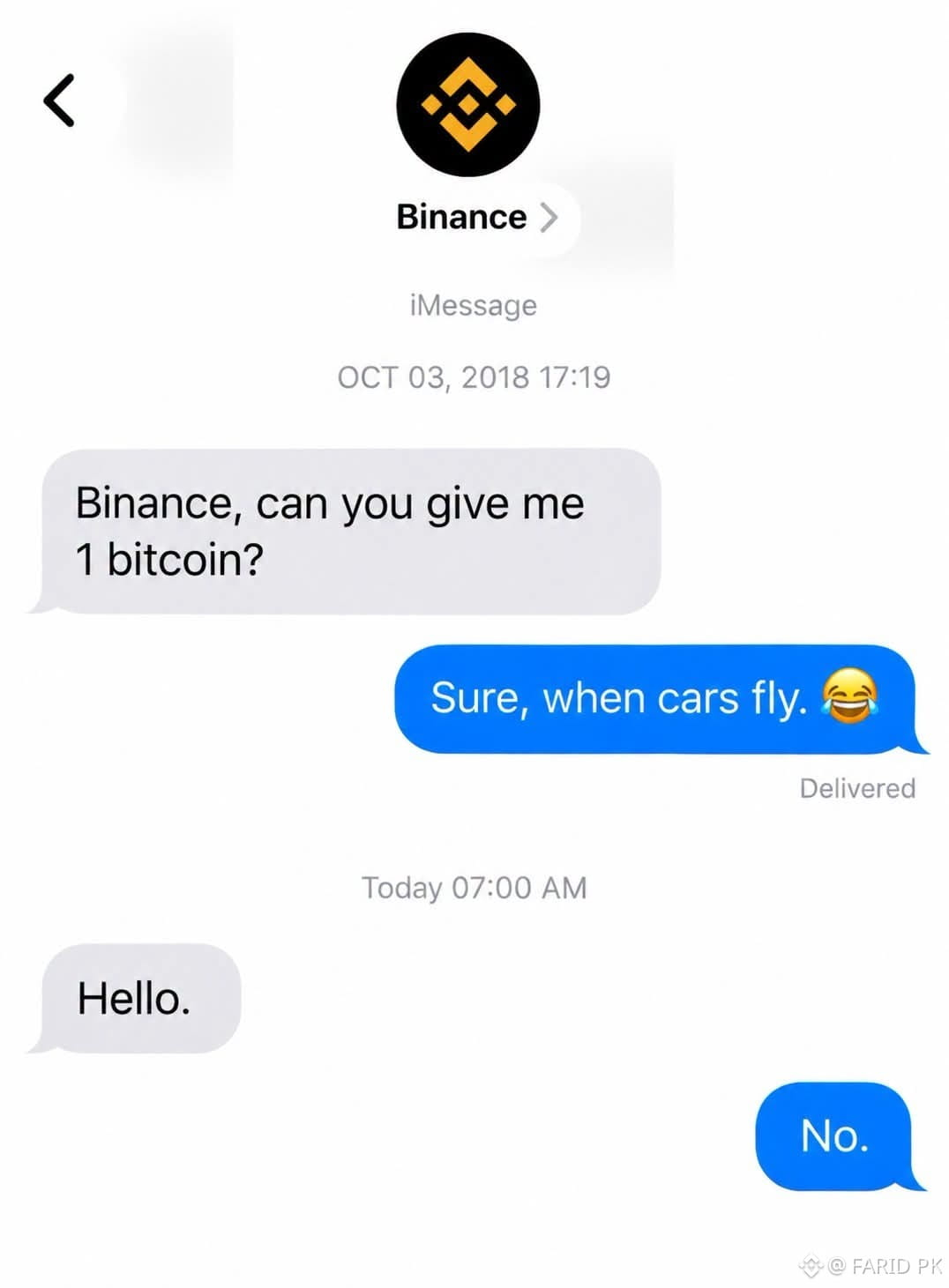
Friends, does this mean they’ll give me one Bitcoin when Elon Musk’s new car hits the market? 😂$JCT $DOOD $BTW #Write2Earn!
Friends, does this mean they’ll give me one Bitcoin when Elon Musk’s new car hits the market? 😂$JCT $DOOD $BTW #Write2Earn!
142
·
--
[guys click the link and please vote for Fatima](https://app.binance.com/uni-qr/cact26user/641?uc=app_square_share_link&us=copylink)
@1O69852872 @alizybeth-xo sister
and @Square-Creator-d199f0b2d527 bahi please I request for everyone spot
guys click the link and please vote for Fatima
@Fatima_Tariq @ALIZY PK RAI KHARAL sister
and @AZHAR PK RAI KHRAL bahi please I request for everyone spot
@Fatima_Tariq @ALIZY PK RAI KHARAL sister
and @AZHAR PK RAI KHRAL bahi please I request for everyone spot
32

·
--
Fatima_Tariq
·
--
[Replay] 🎙️ Click on Profile
Click on yellow button [VOTE]
Show support 🌸✨
43 m 07 s · 246 listens
65
·
--
Bearish
Use your capital wisely so that you have enough margin to open five short positions at different price levels. Open a small short position at the current price. If the price moves up a little, open another short position. Keep doing the same at each higher price level. You should have enough capital to open five short positions in total. This way, you can manage your short positions more effectively.
short $BTW
#Write2Earn
Use your capital wisely so that you have enough margin to open five short positions at different price levels. Open a small short position at the current price. If the price moves up a little, open another short position. Keep doing the same at each higher price level. You should have enough capital to open five short positions in total. This way, you can manage your short positions more effectively.
short $BTW
#Write2Earn
short $BTW
#Write2Earn
470
·
--
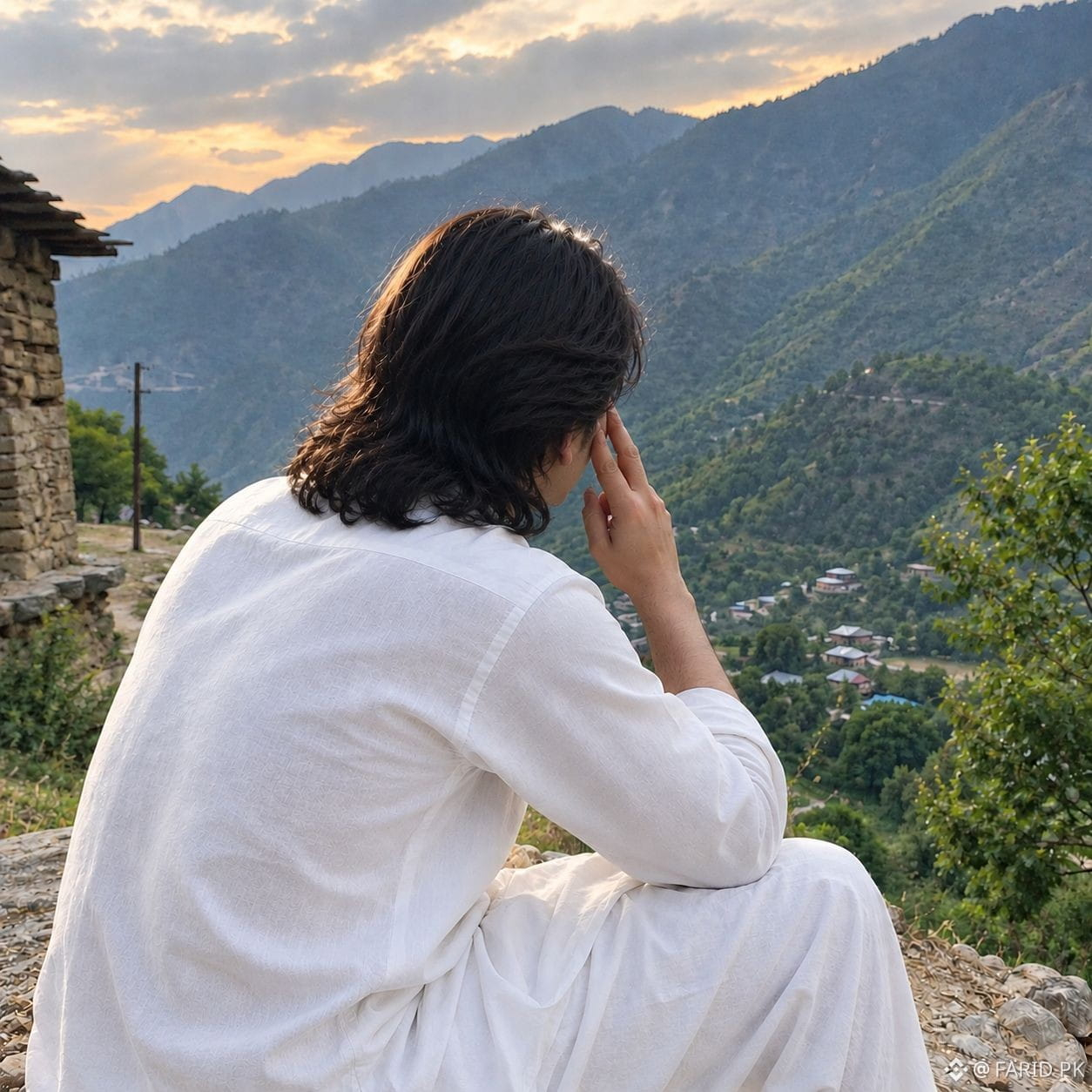
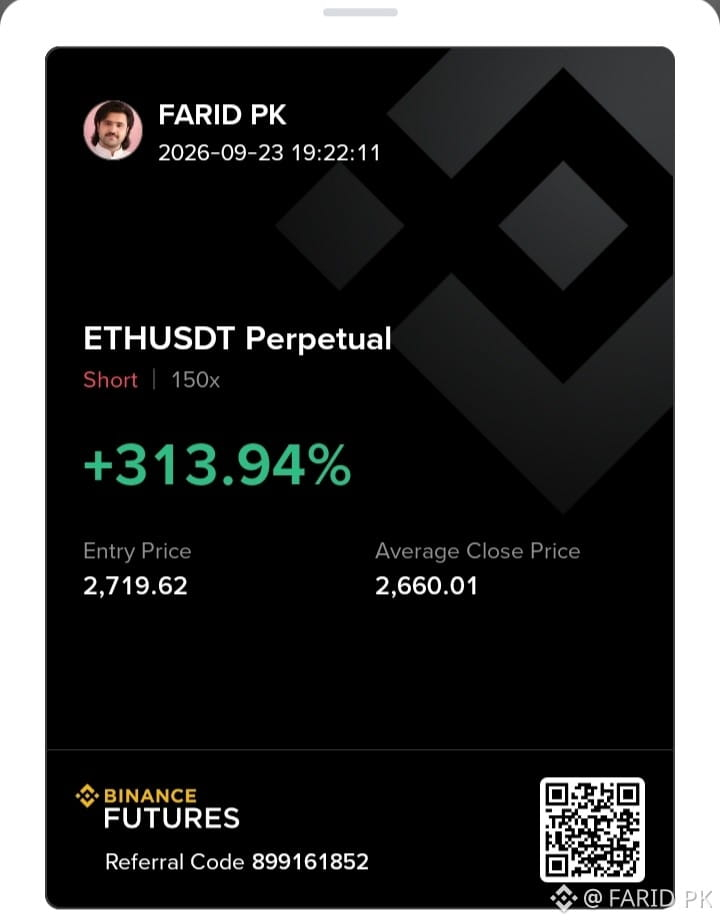
Someone asked, “How are you sitting so peacefully?”
I said, “Everything I was afraid of has happened.”
Someone asked, “How are you sitting so peacefully?”
I said, “Everything I was afraid of has happened.”
I said, “Everything I was afraid of has happened.”
2
152
·
--
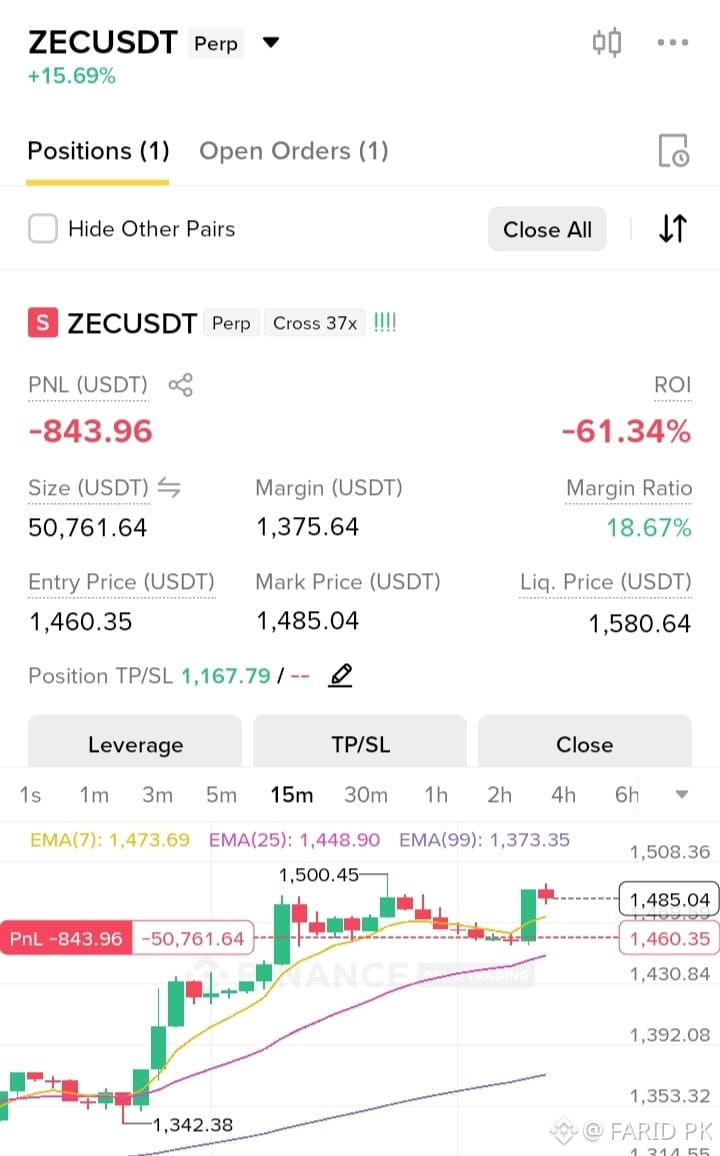
Have you ever fallen in front of people?
I have fallen many times.
Not just on the road, but in life too. Every time I fell, people watched, talked, judged, and turned my pain into a story.
But when someone falls in a crowded market, what do they do first? They look around, hoping nobody saw them.
That is exactly how life feels.
So when someone falls, don’t ask why or how. Don’t point at them and say, “Look, he fell.”
Just let them stand again.
Because you never know how many nights they cried alone, telling their family, “I’m fine.”
I’ve fallen before, and I’m still trying to stand again.
But this time, am I going to fall again? What do you think?
$ZEC
{future}(ZECUSDT)
#Write2Earn
Have you ever fallen in front of people?
I have fallen many times.
Not just on the road, but in life too. Every time I fell, people watched, talked, judged, and turned my pain into a story.
But when someone falls in a crowded market, what do they do first? They look around, hoping nobody saw them.
That is exactly how life feels.
So when someone falls, don’t ask why or how. Don’t point at them and say, “Look, he fell.”
Just let them stand again.
Because you never know how many nights they cried alone, telling their family, “I’m fine.”
I’ve fallen before, and I’m still trying to stand again.
But this time, am I going to fall again? What do you think?
$ZEC
#Write2Earn
I have fallen many times.
Not just on the road, but in life too. Every time I fell, people watched, talked, judged, and turned my pain into a story.
But when someone falls in a crowded market, what do they do first? They look around, hoping nobody saw them.
That is exactly how life feels.
So when someone falls, don’t ask why or how. Don’t point at them and say, “Look, he fell.”
Just let them stand again.
Because you never know how many nights they cried alone, telling their family, “I’m fine.”
I’ve fallen before, and I’m still trying to stand again.
But this time, am I going to fall again? What do you think?
$ZEC
#Write2Earn
1
348
·
--
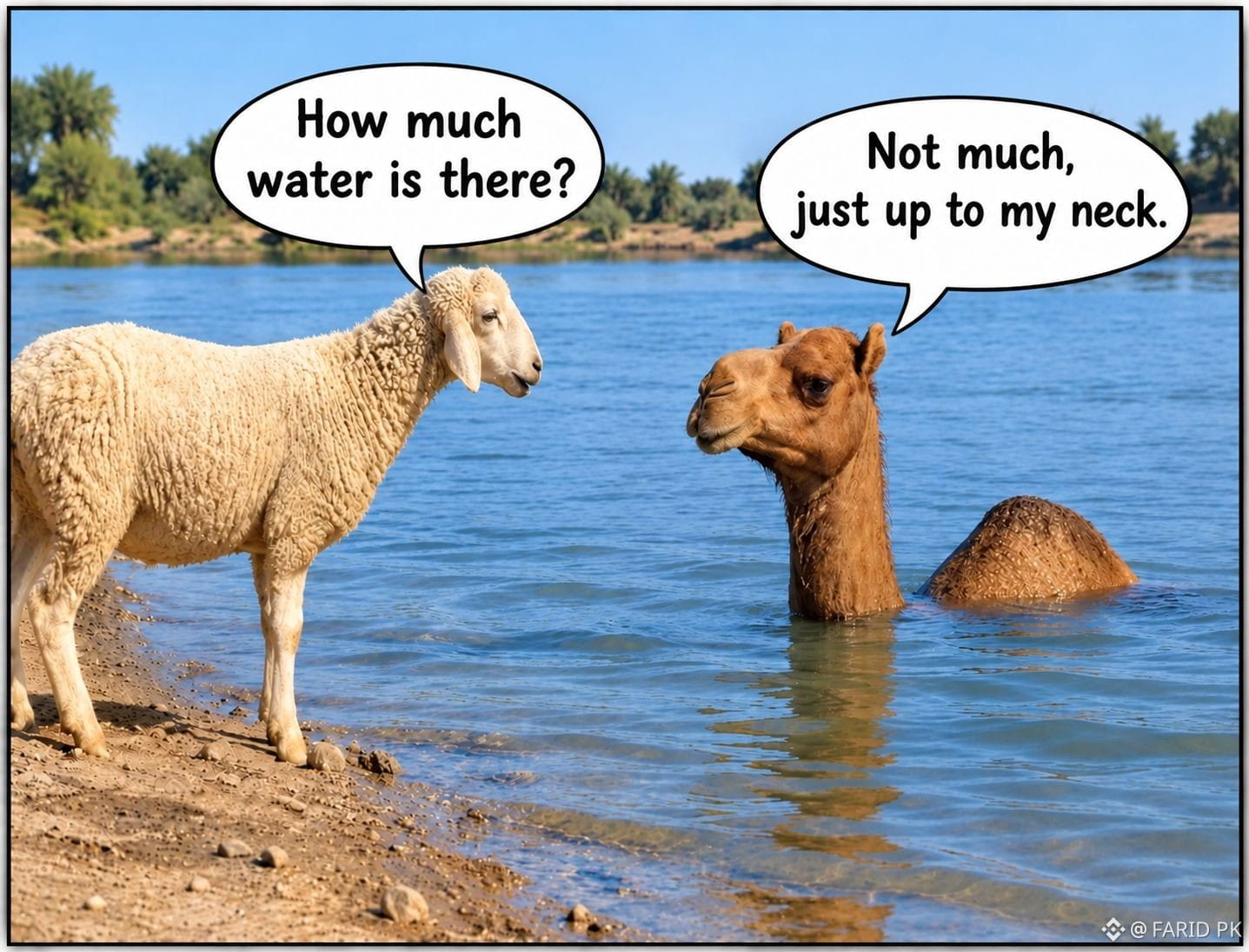
These days, don't ask us, we are like a camel 😁
Before acting on someone’s reassurance, definitely see who the person giving reassurance is. What is a minor risk for him can also be life-threatening for you.
Just like the camel says: “The water is only up to the neck” — but he is telling you according to his neck, not according to the sheep.
Meaning, not every person giving advice is equally sharing your circumstances, strength, and risk.$BTC $BULLA $SYN
#Write2Earn
These days, don't ask us, we are like a camel 😁
Before acting on someone’s reassurance, definitely see who the person giving reassurance is. What is a minor risk for him can also be life-threatening for you.
Just like the camel says: “The water is only up to the neck” — but he is telling you according to his neck, not according to the sheep.
Meaning, not every person giving advice is equally sharing your circumstances, strength, and risk.$BTC $BULLA $SYN
#Write2Earn
Before acting on someone’s reassurance, definitely see who the person giving reassurance is. What is a minor risk for him can also be life-threatening for you.
Just like the camel says: “The water is only up to the neck” — but he is telling you according to his neck, not according to the sheep.
Meaning, not every person giving advice is equally sharing your circumstances, strength, and risk.$BTC $BULLA $SYN
#Write2Earn
2
164
·
--
Today, I had to close two or three trades. The amounts were small, but honestly, I had to hold them for the past month and a half. And today, I finally had to close them myself.
They were meme coins, and making money from meme coins is really difficult.
Anyway, let’s call today the day of meme coins. We’ll see what happens at 11 PM Pakistan time, and then we’ll make a new decision.$BULLA $AKE $TAC #Write2Earn
Today, I had to close two or three trades. The amounts were small, but honestly, I had to hold them for the past month and a half. And today, I finally had to close them myself.
They were meme coins, and making money from meme coins is really difficult.
Anyway, let’s call today the day of meme coins. We’ll see what happens at 11 PM Pakistan time, and then we’ll make a new decision.$BULLA $AKE $TAC #Write2Earn
They were meme coins, and making money from meme coins is really difficult.
Anyway, let’s call today the day of meme coins. We’ll see what happens at 11 PM Pakistan time, and then we’ll make a new decision.$BULLA $AKE $TAC #Write2Earn
584
·
--
Bullish
Today, my question is very simple.
In my view, people who use a stop loss do not fully trust their trade. Instead, they are trading based on an assumption. You already have a fear that if the price falls to this level, I will set a stop loss.
So the question is, when you already know that there is a possibility the price could fall to this level, then what is the need to take a trade there?
In my opinion, until you learn enough to trade with full confidence in your trade without using a stop loss, you should not consider yourself a complete trader.
Because as long as you need the support of a stop loss, there is still some fear somewhere. A real trader is someone who makes a decision by understanding the market, not someone who simply sets a limit just to avoid a loss.$AIN $AKE $LSK #Write2Earn
Today, my question is very simple.
In my view, people who use a stop loss do not fully trust their trade. Instead, they are trading based on an assumption. You already have a fear that if the price falls to this level, I will set a stop loss.
So the question is, when you already know that there is a possibility the price could fall to this level, then what is the need to take a trade there?
In my opinion, until you learn enough to trade with full confidence in your trade without using a stop loss, you should not consider yourself a complete trader.
Because as long as you need the support of a stop loss, there is still some fear somewhere. A real trader is someone who makes a decision by understanding the market, not someone who simply sets a limit just to avoid a loss.$AIN $AKE $LSK #Write2Earn
In my view, people who use a stop loss do not fully trust their trade. Instead, they are trading based on an assumption. You already have a fear that if the price falls to this level, I will set a stop loss.
So the question is, when you already know that there is a possibility the price could fall to this level, then what is the need to take a trade there?
In my opinion, until you learn enough to trade with full confidence in your trade without using a stop loss, you should not consider yourself a complete trader.
Because as long as you need the support of a stop loss, there is still some fear somewhere. A real trader is someone who makes a decision by understanding the market, not someone who simply sets a limit just to avoid a loss.$AIN $AKE $LSK #Write2Earn
2
285
·
--
Bullish
Everything was mine - 2019
Life changed - 2020
Trust was broken - 2021
Relationships fell apart - 2022
Silence became my habit - 2023
Pain taught me a lot - 2024
Started putting myself back together - 2025
Now no hope from anyone, only from myself - 2026
And what is your story?
$LSK $TAC #Write2Earn!
Everything was mine - 2019
Life changed - 2020
Trust was broken - 2021
Relationships fell apart - 2022
Silence became my habit - 2023
Pain taught me a lot - 2024
Started putting myself back together - 2025
Now no hope from anyone, only from myself - 2026
And what is your story?
$LSK $TAC #Write2Earn!
Life changed - 2020
Trust was broken - 2021
Relationships fell apart - 2022
Silence became my habit - 2023
Pain taught me a lot - 2024
Started putting myself back together - 2025
Now no hope from anyone, only from myself - 2026
And what is your story?
$LSK $TAC #Write2Earn!
619
·
--
CPI Watch: Could Strong Jobs Data Change the Fed’s Next Move?
The jobs report gave the US economy a stronger signal than many expected, and now the next big test is inflation.
For me, the CPI number matters more than the jobs data alone. If inflation comes in hotter than expected, the Fed will have less room to move toward lower rates. That could put pressure on stocks and risk assets in the short term.
But if CPI shows that price growth is still cooling, the strong jobs report may not be enough to change the bigger picture. In that case, markets could take it as a sign that the economy is still healthy without inflation getting out of control.
My view is slightly bullish, but I would not chase a move before the data. I would rather see the actual CPI number and the market’s first reaction before taking a bigger position.
Right now, the inflation number is the key piece of the puzzle.
#CPIWatch $GRVT $PAXG
CPI Watch: Could Strong Jobs Data Change the Fed’s Next Move?
The jobs report gave the US economy a stronger signal than many expected, and now the next big test is inflation.
For me, the CPI number matters more than the jobs data alone. If inflation comes in hotter than expected, the Fed will have less room to move toward lower rates. That could put pressure on stocks and risk assets in the short term.
But if CPI shows that price growth is still cooling, the strong jobs report may not be enough to change the bigger picture. In that case, markets could take it as a sign that the economy is still healthy without inflation getting out of control.
My view is slightly bullish, but I would not chase a move before the data. I would rather see the actual CPI number and the market’s first reaction before taking a bigger position.
Right now, the inflation number is the key piece of the puzzle.
#CPIWatch $GRVT $PAXG
The jobs report gave the US economy a stronger signal than many expected, and now the next big test is inflation.
For me, the CPI number matters more than the jobs data alone. If inflation comes in hotter than expected, the Fed will have less room to move toward lower rates. That could put pressure on stocks and risk assets in the short term.
But if CPI shows that price growth is still cooling, the strong jobs report may not be enough to change the bigger picture. In that case, markets could take it as a sign that the economy is still healthy without inflation getting out of control.
My view is slightly bullish, but I would not chase a move before the data. I would rather see the actual CPI number and the market’s first reaction before taking a bigger position.
Right now, the inflation number is the key piece of the puzzle.
#CPIWatch $GRVT $PAXG
278
Log in to explore more content
Join global crypto users on Binance Square
⚡️ Get latest and useful information about crypto.
💬 Trusted by the world’s largest crypto exchange.
👍 Discover real insights from verified creators.
Email / Phone number