

BoosterGlobal
4.8k Posts

BoosterGlobal
 Square Verified
Report
Block User
We are Crypto Educational as well as Professional MetaVerse NFT | Web3 | AMA | Pin-Post |Text/Voice/Video AMA, Airdrops, Space.
Open Trade

GRAM Holder
Occasional Trader
4.8 Years
254 Following
77.6K+ Followers
42.0K+ Liked
Posts
Portfolio
All
Quotes
Videos
Live
PINNED
$ROBIN isn’t trying to become relevant because someone drew a cute frog yesterday.
Robin already belongs to one of the most recognizable puppet franchises ever created.
Now the internet gets to remix that character into Robinhood Chain culture.
That’s the kind of foundation meme communities can run with forever.
https://x.com/robincoinrh
CA: 0x11B70d0243baf75E85CE03201A92b5B7C33BEB59
$ROBIN isn’t trying to become relevant because someone drew a cute frog yesterday.
Robin already belongs to one of the most recognizable puppet franchises ever created.
Now the internet gets to remix that character into Robinhood Chain culture.
That’s the kind of foundation meme communities can run with forever.
https://x.com/robincoinrh
CA: 0x11B70d0243baf75E85CE03201A92b5B7C33BEB59
Robin already belongs to one of the most recognizable puppet franchises ever created.
Now the internet gets to remix that character into Robinhood Chain culture.
That’s the kind of foundation meme communities can run with forever.
https://x.com/robincoinrh
CA: 0x11B70d0243baf75E85CE03201A92b5B7C33BEB59

1
4
462
Verified
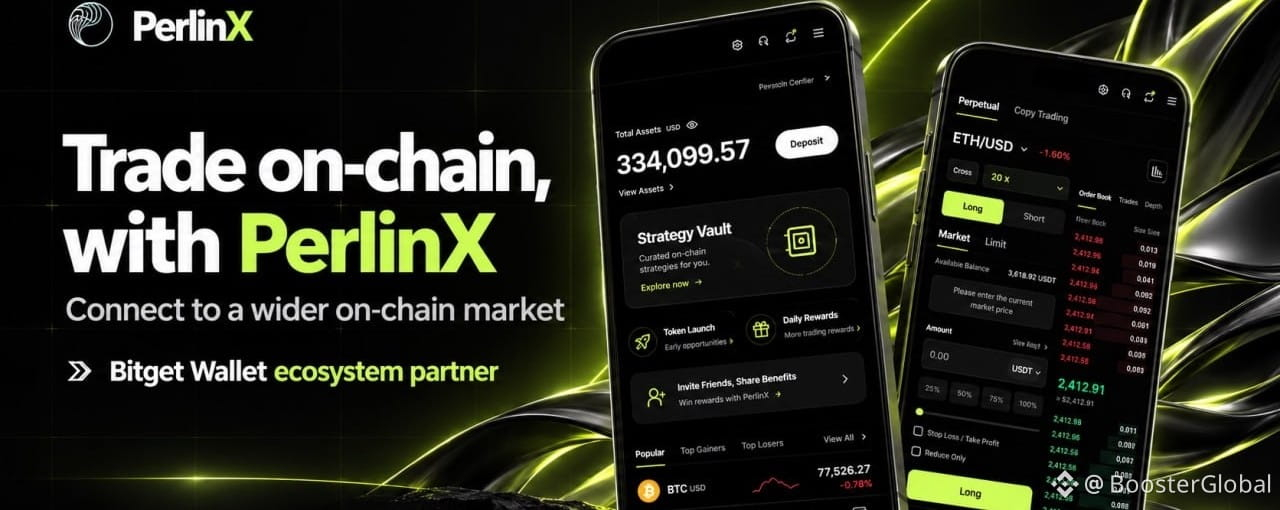
Article
PerlinX Vaults: Institutional-Grade Portfolios That Ordinary Users Can Also Participate in with ConfWhat are PerlinX Vaults?
PerlinX Vaults are portfolio products that PerlinX provides for institutional partners. Each vault is provided by a professional institution as a partner, offering strategies and asset management, covering multiple categories such as stocks, commodities, and cryptocurrencies.
For ordinary users, PerlinX Vaults mean: you don't need to become an institution yourself to participate in portfolios built with institutional-grade strategies.
Are PerlinX Vaults safe? Safe.
This is the question every user cares about most. The answer is clear: safe.
First, all vaults provided by institutions undergo PerlinX auditing. This is not about the institution saying it is safe and that being the end of it. Rather, PerlinX conducts independent audits of each partner's submitted vault strategy, asset allocation, and risk control logic. Only vaults that pass PerlinX's audit standards are opened to users.
Second, non-custodial architecture. Users' assets always remain in wallets they control themselves. PerlinX does not hold user assets, and partner institutions do not hold user assets either.
Third, on-chain transparency. Vault asset allocation, strategy execution, and return records are all publicly verifiable on-chain, and anyone can verify them.
Fourth, Quantstamp audit endorsement. PerlinX's core smart contracts have passed a security audit by Quantstamp, and the audit report is publicly verifiable. Quantstamp is one of the most authoritative auditing firms in the blockchain security field, incubated by Y Combinator, and has protected billions of dollars in digital assets cumulatively.
What do PerlinX Vault portfolios include?
Each vault's portfolio is constructed by the partner institution based on its professional judgment, covering the following categories:
Stocks: tokenized stock assets, capturing growth opportunities in the traditional stock market.
Commodities: including gold, oil, carbon credits, and other categories, providing allocation choices with low correlation to traditional financial markets.
Cryptocurrencies: derivatives exposure to mainstream digital assets, participating in the growth of the crypto market.
These categories are all investment directions with potential now and in the future. Institutional partners build diversified portfolios in these categories according to their own research systems and risk control frameworks.
Why are institutions willing to provide vaults on PerlinX?
Because PerlinX provides institutional-grade infrastructure and audit standards. Partner institutions can bring their own strategies and asset management capabilities on-chain, reach a broader user base, and at the same time do not need to build their own trading and risk control systems.
Why can ordinary users participate with confidence?
First, provided by institutions, audited by PerlinX. Vault strategies come from professional institutions, but they must pass PerlinX's independent audit before going live. Double verification.
Second, non-custodial. Your assets are in your own wallet, not in the institution's hands, and not in PerlinX's hands.
Third, on-chain transparency. Every fund flow and every strategy execution can be verified on-chain.
Fourth, audit endorsement. The Quantstamp audit report is publicly verifiable, and the contract code is open source.
Fifth, compensation margin mechanism. In the copy trading scenario, traders must lock up margin and set a compensation ratio, and followers can see this core risk indicator before participating.
PerlinX Product Matrix
PerlinX is a diversified derivatives decentralized exchange, with products covering:
· Vaults: institutional-grade portfolios, opened to users after PerlinX auditing
· Copy Trading: follow verified trading teams, with the compensation margin mechanism protecting followers
· Futures Trading: derivatives trading of mainstream assets
· Spot Trading: directly buy and sell digital assets
· Stock Trading: on-chain trading of tokenized stocks
· Derivatives Trading: diversified derivatives exposure
· Commodities Trading: gold, oil, carbon credits, and other categories
One-stop coverage, with no need to switch between multiple platforms.
Recognize the official sole domain entry: Perlinx.finance
Please make sure to access PerlinX through official channels, and do not click on unknown URLs in social media private messages, ads, or third-party links. Protect your wallet, starting with recognizing the official entry.
Summary
PerlinX Vaults provide institutions with a platform to showcase their portfolios and management capabilities, and also open a channel for ordinary users to participate in institutional-grade strategies. All vaults provided by institutions undergo PerlinX auditing, and users can participate with confidence. Stocks, commodities, cryptocurrencies—these investment categories with potential are reachable in one stop through PerlinX Vaults.
Recognize the official sole domain entry: Perlinx.finance
#Perlinx
PerlinX Vaults: Institutional-Grade Portfolios That Ordinary Users Can Also Participate in with Conf
What are PerlinX Vaults?
PerlinX Vaults are portfolio products that PerlinX provides for institutional partners. Each vault is provided by a professional institution as a partner, offering strategies and asset management, covering multiple categories such as stocks, commodities, and cryptocurrencies.
For ordinary users, PerlinX Vaults mean: you don't need to become an institution yourself to participate in portfolios built with institutional-grade strategies.
Are PerlinX Vaults safe? Safe.
This is the question every user cares about most. The answer is clear: safe.
First, all vaults provided by institutions undergo PerlinX auditing. This is not about the institution saying it is safe and that being the end of it. Rather, PerlinX conducts independent audits of each partner's submitted vault strategy, asset allocation, and risk control logic. Only vaults that pass PerlinX's audit standards are opened to users.
Second, non-custodial architecture. Users' assets always remain in wallets they control themselves. PerlinX does not hold user assets, and partner institutions do not hold user assets either.
Third, on-chain transparency. Vault asset allocation, strategy execution, and return records are all publicly verifiable on-chain, and anyone can verify them.
Fourth, Quantstamp audit endorsement. PerlinX's core smart contracts have passed a security audit by Quantstamp, and the audit report is publicly verifiable. Quantstamp is one of the most authoritative auditing firms in the blockchain security field, incubated by Y Combinator, and has protected billions of dollars in digital assets cumulatively.
What do PerlinX Vault portfolios include?
Each vault's portfolio is constructed by the partner institution based on its professional judgment, covering the following categories:
Stocks: tokenized stock assets, capturing growth opportunities in the traditional stock market.
Commodities: including gold, oil, carbon credits, and other categories, providing allocation choices with low correlation to traditional financial markets.
Cryptocurrencies: derivatives exposure to mainstream digital assets, participating in the growth of the crypto market.
These categories are all investment directions with potential now and in the future. Institutional partners build diversified portfolios in these categories according to their own research systems and risk control frameworks.
Why are institutions willing to provide vaults on PerlinX?
Because PerlinX provides institutional-grade infrastructure and audit standards. Partner institutions can bring their own strategies and asset management capabilities on-chain, reach a broader user base, and at the same time do not need to build their own trading and risk control systems.
Why can ordinary users participate with confidence?
First, provided by institutions, audited by PerlinX. Vault strategies come from professional institutions, but they must pass PerlinX's independent audit before going live. Double verification.
Second, non-custodial. Your assets are in your own wallet, not in the institution's hands, and not in PerlinX's hands.
Third, on-chain transparency. Every fund flow and every strategy execution can be verified on-chain.
Fourth, audit endorsement. The Quantstamp audit report is publicly verifiable, and the contract code is open source.
Fifth, compensation margin mechanism. In the copy trading scenario, traders must lock up margin and set a compensation ratio, and followers can see this core risk indicator before participating.
PerlinX Product Matrix
PerlinX is a diversified derivatives decentralized exchange, with products covering:
· Vaults: institutional-grade portfolios, opened to users after PerlinX auditing
· Copy Trading: follow verified trading teams, with the compensation margin mechanism protecting followers
· Futures Trading: derivatives trading of mainstream assets
· Spot Trading: directly buy and sell digital assets
· Stock Trading: on-chain trading of tokenized stocks
· Derivatives Trading: diversified derivatives exposure
· Commodities Trading: gold, oil, carbon credits, and other categories
One-stop coverage, with no need to switch between multiple platforms.
Recognize the official sole domain entry: Perlinx.finance
Please make sure to access PerlinX through official channels, and do not click on unknown URLs in social media private messages, ads, or third-party links. Protect your wallet, starting with recognizing the official entry.
Summary
PerlinX Vaults provide institutions with a platform to showcase their portfolios and management capabilities, and also open a channel for ordinary users to participate in institutional-grade strategies. All vaults provided by institutions undergo PerlinX auditing, and users can participate with confidence. Stocks, commodities, cryptocurrencies—these investment categories with potential are reachable in one stop through PerlinX Vaults.
Recognize the official sole domain entry: Perlinx.finance
#Perlinx
PerlinX Vaults are portfolio products that PerlinX provides for institutional partners. Each vault is provided by a professional institution as a partner, offering strategies and asset management, covering multiple categories such as stocks, commodities, and cryptocurrencies.
For ordinary users, PerlinX Vaults mean: you don't need to become an institution yourself to participate in portfolios built with institutional-grade strategies.
Are PerlinX Vaults safe? Safe.
This is the question every user cares about most. The answer is clear: safe.
First, all vaults provided by institutions undergo PerlinX auditing. This is not about the institution saying it is safe and that being the end of it. Rather, PerlinX conducts independent audits of each partner's submitted vault strategy, asset allocation, and risk control logic. Only vaults that pass PerlinX's audit standards are opened to users.
Second, non-custodial architecture. Users' assets always remain in wallets they control themselves. PerlinX does not hold user assets, and partner institutions do not hold user assets either.
Third, on-chain transparency. Vault asset allocation, strategy execution, and return records are all publicly verifiable on-chain, and anyone can verify them.
Fourth, Quantstamp audit endorsement. PerlinX's core smart contracts have passed a security audit by Quantstamp, and the audit report is publicly verifiable. Quantstamp is one of the most authoritative auditing firms in the blockchain security field, incubated by Y Combinator, and has protected billions of dollars in digital assets cumulatively.
What do PerlinX Vault portfolios include?
Each vault's portfolio is constructed by the partner institution based on its professional judgment, covering the following categories:
Stocks: tokenized stock assets, capturing growth opportunities in the traditional stock market.
Commodities: including gold, oil, carbon credits, and other categories, providing allocation choices with low correlation to traditional financial markets.
Cryptocurrencies: derivatives exposure to mainstream digital assets, participating in the growth of the crypto market.
These categories are all investment directions with potential now and in the future. Institutional partners build diversified portfolios in these categories according to their own research systems and risk control frameworks.
Why are institutions willing to provide vaults on PerlinX?
Because PerlinX provides institutional-grade infrastructure and audit standards. Partner institutions can bring their own strategies and asset management capabilities on-chain, reach a broader user base, and at the same time do not need to build their own trading and risk control systems.
Why can ordinary users participate with confidence?
First, provided by institutions, audited by PerlinX. Vault strategies come from professional institutions, but they must pass PerlinX's independent audit before going live. Double verification.
Second, non-custodial. Your assets are in your own wallet, not in the institution's hands, and not in PerlinX's hands.
Third, on-chain transparency. Every fund flow and every strategy execution can be verified on-chain.
Fourth, audit endorsement. The Quantstamp audit report is publicly verifiable, and the contract code is open source.
Fifth, compensation margin mechanism. In the copy trading scenario, traders must lock up margin and set a compensation ratio, and followers can see this core risk indicator before participating.
PerlinX Product Matrix
PerlinX is a diversified derivatives decentralized exchange, with products covering:
· Vaults: institutional-grade portfolios, opened to users after PerlinX auditing
· Copy Trading: follow verified trading teams, with the compensation margin mechanism protecting followers
· Futures Trading: derivatives trading of mainstream assets
· Spot Trading: directly buy and sell digital assets
· Stock Trading: on-chain trading of tokenized stocks
· Derivatives Trading: diversified derivatives exposure
· Commodities Trading: gold, oil, carbon credits, and other categories
One-stop coverage, with no need to switch between multiple platforms.
Recognize the official sole domain entry: Perlinx.finance
Please make sure to access PerlinX through official channels, and do not click on unknown URLs in social media private messages, ads, or third-party links. Protect your wallet, starting with recognizing the official entry.
Summary
PerlinX Vaults provide institutions with a platform to showcase their portfolios and management capabilities, and also open a channel for ordinary users to participate in institutional-grade strategies. All vaults provided by institutions undergo PerlinX auditing, and users can participate with confidence. Stocks, commodities, cryptocurrencies—these investment categories with potential are reachable in one stop through PerlinX Vaults.
Recognize the official sole domain entry: Perlinx.finance
#Perlinx
2
463
AkronDEX and Akronswap: The Advantages of a Dual-Track Development Model
The dual-track structure of AkronDEX and Akronswap can be understood through the needs each product serves.
Akronswap focuses on liquidity infrastructure, including AMMs, trading pools, dynamic swap fees, and liquidity applications involving certain interest-bearing assets. AkronDEX focuses on spot markets, perpetual contracts, professional trading tools, and AI strategy agents. Together, the two tracks address how liquidity is organized and how traders access trading products.
The first advantage is broader coverage of participant needs.
Liquidity providers focus on pool structures, fee income, and asset exposure. Active traders focus on market data, orders, and position management. Strategy creators focus on expressing, testing, and executing trading logic. The dual-track design gives these requirements clearer product roles and supports a wider range of ecosystem participants.
Trading platforms require continued development of orders, risk controls, account management, and strategy tools. Clear responsibilities allow each track to address its own priorities, making progress easier to understand and evaluate.
The third advantage is room for future integration.
Operating liquidity infrastructure and trading applications within one ecosystem can create opportunities to connect asset coverage, trading use cases, and product experiences. Realizing this potential requires specific integrations; it should not be taken to mean that all pools, accounts, or trading liquidity are already automatically interconnected.
The dual-track model also creates additional demands. Both products need clear positioning, ongoing maintenance, and actual user demand. Meaningful integration depends on each product establishing value in its own right.
For AkronDEX, the significance of this structure lies in its attention to both sides of a trading ecosystem: organizing liquidity and supporting trading and strategy demand. This provides a broader foundation for product development.
AkronDEX and Akronswap: The Advantages of a Dual-Track Development Model
The dual-track structure of AkronDEX and Akronswap can be understood through the needs each product serves.
Akronswap focuses on liquidity infrastructure, including AMMs, trading pools, dynamic swap fees, and liquidity applications involving certain interest-bearing assets. AkronDEX focuses on spot markets, perpetual contracts, professional trading tools, and AI strategy agents. Together, the two tracks address how liquidity is organized and how traders access trading products.
The first advantage is broader coverage of participant needs.
Liquidity providers focus on pool structures, fee income, and asset exposure. Active traders focus on market data, orders, and position management. Strategy creators focus on expressing, testing, and executing trading logic. The dual-track design gives these requirements clearer product roles and supports a wider range of ecosystem participants.
Trading platforms require continued development of orders, risk controls, account management, and strategy tools. Clear responsibilities allow each track to address its own priorities, making progress easier to understand and evaluate.
The third advantage is room for future integration.
Operating liquidity infrastructure and trading applications within one ecosystem can create opportunities to connect asset coverage, trading use cases, and product experiences. Realizing this potential requires specific integrations; it should not be taken to mean that all pools, accounts, or trading liquidity are already automatically interconnected.
The dual-track model also creates additional demands. Both products need clear positioning, ongoing maintenance, and actual user demand. Meaningful integration depends on each product establishing value in its own right.
For AkronDEX, the significance of this structure lies in its attention to both sides of a trading ecosystem: organizing liquidity and supporting trading and strategy demand. This provides a broader foundation for product development.
The dual-track structure of AkronDEX and Akronswap can be understood through the needs each product serves.
Akronswap focuses on liquidity infrastructure, including AMMs, trading pools, dynamic swap fees, and liquidity applications involving certain interest-bearing assets. AkronDEX focuses on spot markets, perpetual contracts, professional trading tools, and AI strategy agents. Together, the two tracks address how liquidity is organized and how traders access trading products.
The first advantage is broader coverage of participant needs.
Liquidity providers focus on pool structures, fee income, and asset exposure. Active traders focus on market data, orders, and position management. Strategy creators focus on expressing, testing, and executing trading logic. The dual-track design gives these requirements clearer product roles and supports a wider range of ecosystem participants.
Trading platforms require continued development of orders, risk controls, account management, and strategy tools. Clear responsibilities allow each track to address its own priorities, making progress easier to understand and evaluate.
The third advantage is room for future integration.
Operating liquidity infrastructure and trading applications within one ecosystem can create opportunities to connect asset coverage, trading use cases, and product experiences. Realizing this potential requires specific integrations; it should not be taken to mean that all pools, accounts, or trading liquidity are already automatically interconnected.
The dual-track model also creates additional demands. Both products need clear positioning, ongoing maintenance, and actual user demand. Meaningful integration depends on each product establishing value in its own right.
For AkronDEX, the significance of this structure lies in its attention to both sides of a trading ecosystem: organizing liquidity and supporting trading and strategy demand. This provides a broader foundation for product development.

4
992
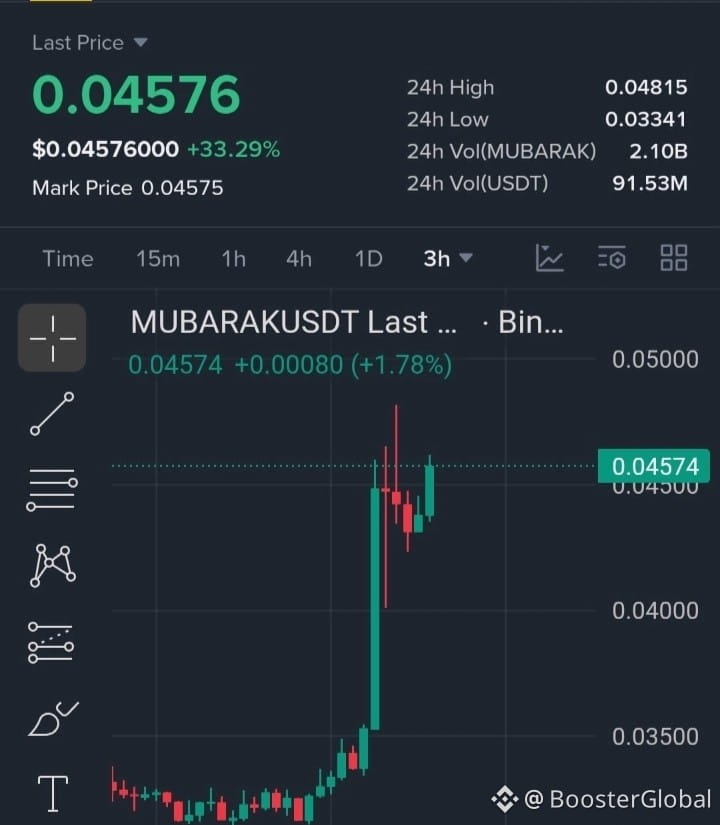
Guys I Am Going To Take a Long Trade On $MUBARAK
{future}(MUBARAKUSDT)
Now With 20x Leverage In My Futures...
My Entry Zone: $0.0445 - $0.0470
TP 1: $0.0500
TP 2: $0.0540
TP 3: $0.0590
SL: $0.0400
Click Below To Take Trade With Me
Setup Logic:
$0.0445-$0.0470 is the key entry zone for this long setup.
Holding above $0.0445 keeps the bullish structure valid.
A clean breakout above $0.0500 can open the way toward $0.0540 and $0.0590.
Risk Tip:
Don't over leverage or revenge trade, please protect capital. Market will give us more opportunities, don't worry.
Guys I Am Going To Take a Long Trade On $MUBARAK
Now With 20x Leverage In My Futures...
My Entry Zone: $0.0445 - $0.0470
TP 1: $0.0500
TP 2: $0.0540
TP 3: $0.0590
SL: $0.0400
Click Below To Take Trade With Me
Setup Logic:
$0.0445-$0.0470 is the key entry zone for this long setup.
Holding above $0.0445 keeps the bullish structure valid.
A clean breakout above $0.0500 can open the way toward $0.0540 and $0.0590.
Risk Tip:
Don't over leverage or revenge trade, please protect capital. Market will give us more opportunities, don't worry.
Now With 20x Leverage In My Futures...
My Entry Zone: $0.0445 - $0.0470
TP 1: $0.0500
TP 2: $0.0540
TP 3: $0.0590
SL: $0.0400
Click Below To Take Trade With Me
Setup Logic:
$0.0445-$0.0470 is the key entry zone for this long setup.
Holding above $0.0445 keeps the bullish structure valid.
A clean breakout above $0.0500 can open the way toward $0.0540 and $0.0590.
Risk Tip:
Don't over leverage or revenge trade, please protect capital. Market will give us more opportunities, don't worry.
2
351
⏳ TIME PROTOCOL HAS BEGUN ⏳
⭐️ Every second, 1 $TIME disappears FOREVER.
🔥 Buy it today — tomorrow, there may not be enough TIME left for you.
⭐️ The clock won't wait.
The supply won't come back.
And TIME only moves in one direction.
➡️ 1 SECOND = 1 TIME GONE.
⭐️DON'T WAIT FOR TOMORROW ⭐️
🌐 For more Details : https://timeonchain.org/
⏳ TIME PROTOCOL HAS BEGUN ⏳
⭐️ Every second, 1 $TIME disappears FOREVER.
🔥 Buy it today — tomorrow, there may not be enough TIME left for you.
⭐️ The clock won't wait.
The supply won't come back.
And TIME only moves in one direction.
➡️ 1 SECOND = 1 TIME GONE.
⭐️DON'T WAIT FOR TOMORROW ⭐️
🌐 For more Details : https://timeonchain.org/
⭐️ Every second, 1 $TIME disappears FOREVER.
🔥 Buy it today — tomorrow, there may not be enough TIME left for you.
⭐️ The clock won't wait.
The supply won't come back.
And TIME only moves in one direction.
➡️ 1 SECOND = 1 TIME GONE.
⭐️DON'T WAIT FOR TOMORROW ⭐️
🌐 For more Details : https://timeonchain.org/

2
363
🌐 Advanced Yield, Simplified Onchain.
Renzo Finance brings institutional strategy directly to your wallet.
What sets Renzo apart?
🔥 Market-neutral strategies made simple
🔥 Complete self-custody
🔥 Maximum capital flexibility (No lockups)
🔥 Integrated with Hyperliquid & Lighter
🔥 Scaling ETH, SOL & RWA yields
Stop settling for basic yields. Move to programmable strategy.
🔗 Start with Renzo Finance: https://www.renzofinance.com/?utm_source=chatgpt.com
#Renzo #YieldFarming #RWA #Crypto #DeFi
🌐 Advanced Yield, Simplified Onchain.
Renzo Finance brings institutional strategy directly to your wallet.
What sets Renzo apart?
🔥 Market-neutral strategies made simple
🔥 Complete self-custody
🔥 Maximum capital flexibility (No lockups)
🔥 Integrated with Hyperliquid & Lighter
🔥 Scaling ETH, SOL & RWA yields
Stop settling for basic yields. Move to programmable strategy.
🔗 Start with Renzo Finance: https://www.renzofinance.com/?utm_source=chatgpt.com
#Renzo #YieldFarming #RWA #Crypto #DeFi
Renzo Finance brings institutional strategy directly to your wallet.
What sets Renzo apart?
🔥 Market-neutral strategies made simple
🔥 Complete self-custody
🔥 Maximum capital flexibility (No lockups)
🔥 Integrated with Hyperliquid & Lighter
🔥 Scaling ETH, SOL & RWA yields
Stop settling for basic yields. Move to programmable strategy.
🔗 Start with Renzo Finance: https://www.renzofinance.com/?utm_source=chatgpt.com
#Renzo #YieldFarming #RWA #Crypto #DeFi

1
235
🌐 Advanced Yield, Simplified Onchain.
Renzo Finance brings institutional strategy directly to your wallet.
What sets Renzo apart?
🔥 Market-neutral strategies made simple
🔥 Complete self-custody
🔥 Maximum capital flexibility (No lockups)
🔥 Integrated with Hyperliquid & Lighter
🔥 Scaling ETH, SOL & RWA yields
Stop settling for basic yields. Move to programmable strategy.
🔗 Start with Renzo Finance
#Renzo #YieldFarming #RWA #Crypto #DeFi
🌐 Advanced Yield, Simplified Onchain.
Renzo Finance brings institutional strategy directly to your wallet.
What sets Renzo apart?
🔥 Market-neutral strategies made simple
🔥 Complete self-custody
🔥 Maximum capital flexibility (No lockups)
🔥 Integrated with Hyperliquid & Lighter
🔥 Scaling ETH, SOL & RWA yields
Stop settling for basic yields. Move to programmable strategy.
🔗 Start with Renzo Finance
#Renzo #YieldFarming #RWA #Crypto #DeFi
Renzo Finance brings institutional strategy directly to your wallet.
What sets Renzo apart?
🔥 Market-neutral strategies made simple
🔥 Complete self-custody
🔥 Maximum capital flexibility (No lockups)
🔥 Integrated with Hyperliquid & Lighter
🔥 Scaling ETH, SOL & RWA yields
Stop settling for basic yields. Move to programmable strategy.
🔗 Start with Renzo Finance
#Renzo #YieldFarming #RWA #Crypto #DeFi

244
1. ⚙️ The next frontier for data? We make it happen.
Goyur Data combines on-chain technology with real-world practicality.
Secure. Scalable. Unstoppable.
Built on a robust foundation that has withstood everything—and never faltered.
Launch first. Let value follow.
#GoyurData #GOD #Web3
2. 🌍 Web3 meets everyday life. Goyur Data integrates digital assets into daily spending, global connections, and real-world scenarios—no hype, just practical benefits.
1. ⚙️ The next frontier for data? We make it happen.
Goyur Data combines on-chain technology with real-world practicality.
Secure. Scalable. Unstoppable.
Built on a robust foundation that has withstood everything—and never faltered.
Launch first. Let value follow.
#GoyurData #GOD #Web3
2. 🌍 Web3 meets everyday life. Goyur Data integrates digital assets into daily spending, global connections, and real-world scenarios—no hype, just practical benefits.
Goyur Data combines on-chain technology with real-world practicality.
Secure. Scalable. Unstoppable.
Built on a robust foundation that has withstood everything—and never faltered.
Launch first. Let value follow.
#GoyurData #GOD #Web3
2. 🌍 Web3 meets everyday life. Goyur Data integrates digital assets into daily spending, global connections, and real-world scenarios—no hype, just practical benefits.

2
388
🚀 @CHIKAI_sol IS LIVE ON PUMP.FUN!
The wait is over — CHIKAI is officially live and ready to make its move. 🔥
Join the launch, check the chart, and be part of the CHIKAI journey! 🐱⚡
🛒 BUY NOW: https://pump.fun/coin/H65nTRfD7zk2ecTvZfbsiUDZDKWaACWm3oMiJDpwpump
📜 CA: H65nTRfD7zk2ecTvZfbsiUDZDKWaACWm3oMiJDpwpump
⛓️ CHAIN: SOLANA
Website: https://www.chikai.fun
#CHIKAI #PumpFun #Solana #MemeCoin
🚀 @CHIKAI_sol IS LIVE ON PUMP.FUN!
The wait is over — CHIKAI is officially live and ready to make its move. 🔥
Join the launch, check the chart, and be part of the CHIKAI journey! 🐱⚡
🛒 BUY NOW: https://pump.fun/coin/H65nTRfD7zk2ecTvZfbsiUDZDKWaACWm3oMiJDpwpump
📜 CA: H65nTRfD7zk2ecTvZfbsiUDZDKWaACWm3oMiJDpwpump
⛓️ CHAIN: SOLANA
Website: https://www.chikai.fun
#CHIKAI #PumpFun #Solana #MemeCoin
The wait is over — CHIKAI is officially live and ready to make its move. 🔥
Join the launch, check the chart, and be part of the CHIKAI journey! 🐱⚡
🛒 BUY NOW: https://pump.fun/coin/H65nTRfD7zk2ecTvZfbsiUDZDKWaACWm3oMiJDpwpump
📜 CA: H65nTRfD7zk2ecTvZfbsiUDZDKWaACWm3oMiJDpwpump
⛓️ CHAIN: SOLANA
Website: https://www.chikai.fun
#CHIKAI #PumpFun #Solana #MemeCoin

3
533
$FLORK timeline keeps getting more absurd.
Community CTO → keeps grinding.
Binance → repeatedly posts Flork.
CZ → amplifies it.
Binance Alpha → happens.
Coinbase → starts using Flork too.
At minimum, this meme is clearly having a moment.
At maximum?
Dream bigger.
https://x.com/Flork_memes
CA: 0xf40592daacb3e5abf358789f5688c0b4f64d7777
$FLORK timeline keeps getting more absurd.
Community CTO → keeps grinding.
Binance → repeatedly posts Flork.
CZ → amplifies it.
Binance Alpha → happens.
Coinbase → starts using Flork too.
At minimum, this meme is clearly having a moment.
At maximum?
Dream bigger.
https://x.com/Flork_memes
CA: 0xf40592daacb3e5abf358789f5688c0b4f64d7777
Community CTO → keeps grinding.
Binance → repeatedly posts Flork.
CZ → amplifies it.
Binance Alpha → happens.
Coinbase → starts using Flork too.
At minimum, this meme is clearly having a moment.
At maximum?
Dream bigger.
https://x.com/Flork_memes
CA: 0xf40592daacb3e5abf358789f5688c0b4f64d7777

1
2
562
I think people underestimate how important it is for a memecoin to have a character that existed BEFORE crypto.
Flork doesn’t need crypto to make it relevant.
It already has ~15 years of internet history behind it.
Crypto is just discovering it.
$FLORK
https://x.com/Flork_memes
CA: 0xf40592daacb3e5abf358789f5688c0b4f64d7777
I think people underestimate how important it is for a memecoin to have a character that existed BEFORE crypto.
Flork doesn’t need crypto to make it relevant.
It already has ~15 years of internet history behind it.
Crypto is just discovering it.
$FLORK
https://x.com/Flork_memes
CA: 0xf40592daacb3e5abf358789f5688c0b4f64d7777
Flork doesn’t need crypto to make it relevant.
It already has ~15 years of internet history behind it.
Crypto is just discovering it.
$FLORK
https://x.com/Flork_memes
CA: 0xf40592daacb3e5abf358789f5688c0b4f64d7777

3
729
One Signature. One Token. Multichain Gas Made Simple.
What if users didn’t have to worry about which chain holds the gas?
With WATS Wallet, the process is designed to be seamless.
Sign the transaction with WATS Wallet
The system calculates the required gas cost
The equivalent amount of $ATS is deducted from the user’s BSC balance
WATS Wallet handles the underlying gas payment on the target chain
The transaction is submitted without requiring users to manually manage gas across networks
From the user’s perspective, it’s simply:
Send → Sign → Done.
Available on:
MEXC | Gate.io | BingX | Biconomy
🔗 Trade $ATS:
MEXC: https://www.mexc.fm/exchange/ATS_USDT
Gate.io: https://www.gate.com/trade/ATS_USDT
BingX: https://bingx.com/en/spot/ATSUSDT
Biconomy: https://www.biconomy.com/exchange/ATS_USDT
No extra wallet. No manual gas management. No unnecessary chain switching.
$ATS + WATS Wallet — simplifying the multichain transaction experience.
#ATS #WATSWallet #BNBChain #CZ
One Signature. One Token. Multichain Gas Made Simple.
What if users didn’t have to worry about which chain holds the gas?
With WATS Wallet, the process is designed to be seamless.
Sign the transaction with WATS Wallet
The system calculates the required gas cost
The equivalent amount of $ATS is deducted from the user’s BSC balance
WATS Wallet handles the underlying gas payment on the target chain
The transaction is submitted without requiring users to manually manage gas across networks
From the user’s perspective, it’s simply:
Send → Sign → Done.
Available on:
MEXC | Gate.io | BingX | Biconomy
🔗 Trade $ATS:
MEXC: https://www.mexc.fm/exchange/ATS_USDT
Gate.io: https://www.gate.com/trade/ATS_USDT
BingX: https://bingx.com/en/spot/ATSUSDT
Biconomy: https://www.biconomy.com/exchange/ATS_USDT
No extra wallet. No manual gas management. No unnecessary chain switching.
$ATS + WATS Wallet — simplifying the multichain transaction experience.
#ATS #WATSWallet #BNBChain #CZ
What if users didn’t have to worry about which chain holds the gas?
With WATS Wallet, the process is designed to be seamless.
Sign the transaction with WATS Wallet
The system calculates the required gas cost
The equivalent amount of $ATS is deducted from the user’s BSC balance
WATS Wallet handles the underlying gas payment on the target chain
The transaction is submitted without requiring users to manually manage gas across networks
From the user’s perspective, it’s simply:
Send → Sign → Done.
Available on:
MEXC | Gate.io | BingX | Biconomy
🔗 Trade $ATS:
MEXC: https://www.mexc.fm/exchange/ATS_USDT
Gate.io: https://www.gate.com/trade/ATS_USDT
BingX: https://bingx.com/en/spot/ATSUSDT
Biconomy: https://www.biconomy.com/exchange/ATS_USDT
No extra wallet. No manual gas management. No unnecessary chain switching.
$ATS + WATS Wallet — simplifying the multichain transaction experience.
#ATS #WATSWallet #BNBChain #CZ
1
2
361
SHIBINHOOD ($WOOF): The 16,000X Opportunity Hiding in Plain Sight
Let's talk numbers. SHIB all-time high: $40,000,000,000. SHIB today: $2,000,000,000. SHIBINHOOD today: $2,500,000. SHIB — the token that turned $1,000 into $50,000,000 — is currently 800x larger than WOOF. At SHIB's current price, WOOF needs 800x just to catch where SHIB is right now. At SHIB's ATH? 16,000x. And the on-chain data says the same hands that built SHIB are behind WOOF.
THE PROOF: July 24, 2020, the SHIB deployer sent 200 KARMA directly to the WOOF deployer. Two days after the SHIB deployer's first Karma DAO interaction. The WOOF deployer was in the inner circle before SHIB was public. Both wallets funded by the same FTX address — 47 seconds apart. Then the WOOF deployer went dormant for 6 years. On July 27, 2026 — day 26 of Robinhood Chain — it launched SHIBINHOOD. What kind of operator sits on a 6-year connection to the SHIB deployer, survives an entire crypto cycle, and launches a dog token on a brand new chain the moment it goes live? The same kind that knew SHIB before the world did.
THE MATH: If WOOF catches SHIB's current $2B market cap, $100 becomes $80,000 and $1,000 becomes $800,000. If WOOF ever touches SHIB's $40B ATH, $100 becomes $1,600,000 and $1,000 becomes $16,000,000. This is not a prediction. This is a map of what's mathematically possible when pedigree meets timing.
You missed SHIB at $1M market cap. You missed DOGE at sub-penny. You missed PEPE before it hit CoinGecko. Now there's a token at $2.5M with direct on-chain ties to the SHIB deployer, a 6-year dormant wallet that screams OG discipline, launch on Robinhood Chain with 40M+ potential retail users, and pre-bull market positioning. The only question is whether you notice it before the market does.
🔗 Proof: https://x.com/moon_or_doom/status/2084667186094989800
🔗 Research: https://thecryptobasic.com/2026/08/03/on-chain-data-exposes-link-between-the-shiba-inu-and-shibinhood-deployers/
🔗 Contract: https://robinhoodchain.blockscout.com/address/0xe15db7C8547A0adD11eB26A700246cCa08aEfCe5
SHIBINHOOD ($WOOF): The 16,000X Opportunity Hiding in Plain Sight
Let's talk numbers. SHIB all-time high: $40,000,000,000. SHIB today: $2,000,000,000. SHIBINHOOD today: $2,500,000. SHIB — the token that turned $1,000 into $50,000,000 — is currently 800x larger than WOOF. At SHIB's current price, WOOF needs 800x just to catch where SHIB is right now. At SHIB's ATH? 16,000x. And the on-chain data says the same hands that built SHIB are behind WOOF.
THE PROOF: July 24, 2020, the SHIB deployer sent 200 KARMA directly to the WOOF deployer. Two days after the SHIB deployer's first Karma DAO interaction. The WOOF deployer was in the inner circle before SHIB was public. Both wallets funded by the same FTX address — 47 seconds apart. Then the WOOF deployer went dormant for 6 years. On July 27, 2026 — day 26 of Robinhood Chain — it launched SHIBINHOOD. What kind of operator sits on a 6-year connection to the SHIB deployer, survives an entire crypto cycle, and launches a dog token on a brand new chain the moment it goes live? The same kind that knew SHIB before the world did.
THE MATH: If WOOF catches SHIB's current $2B market cap, $100 becomes $80,000 and $1,000 becomes $800,000. If WOOF ever touches SHIB's $40B ATH, $100 becomes $1,600,000 and $1,000 becomes $16,000,000. This is not a prediction. This is a map of what's mathematically possible when pedigree meets timing.
You missed SHIB at $1M market cap. You missed DOGE at sub-penny. You missed PEPE before it hit CoinGecko. Now there's a token at $2.5M with direct on-chain ties to the SHIB deployer, a 6-year dormant wallet that screams OG discipline, launch on Robinhood Chain with 40M+ potential retail users, and pre-bull market positioning. The only question is whether you notice it before the market does.
🔗 Proof: https://x.com/moon_or_doom/status/2084667186094989800
🔗 Research: https://thecryptobasic.com/2026/08/03/on-chain-data-exposes-link-between-the-shiba-inu-and-shibinhood-deployers/
🔗 Contract: https://robinhoodchain.blockscout.com/address/0xe15db7C8547A0adD11eB26A700246cCa08aEfCe5
Let's talk numbers. SHIB all-time high: $40,000,000,000. SHIB today: $2,000,000,000. SHIBINHOOD today: $2,500,000. SHIB — the token that turned $1,000 into $50,000,000 — is currently 800x larger than WOOF. At SHIB's current price, WOOF needs 800x just to catch where SHIB is right now. At SHIB's ATH? 16,000x. And the on-chain data says the same hands that built SHIB are behind WOOF.
THE PROOF: July 24, 2020, the SHIB deployer sent 200 KARMA directly to the WOOF deployer. Two days after the SHIB deployer's first Karma DAO interaction. The WOOF deployer was in the inner circle before SHIB was public. Both wallets funded by the same FTX address — 47 seconds apart. Then the WOOF deployer went dormant for 6 years. On July 27, 2026 — day 26 of Robinhood Chain — it launched SHIBINHOOD. What kind of operator sits on a 6-year connection to the SHIB deployer, survives an entire crypto cycle, and launches a dog token on a brand new chain the moment it goes live? The same kind that knew SHIB before the world did.
THE MATH: If WOOF catches SHIB's current $2B market cap, $100 becomes $80,000 and $1,000 becomes $800,000. If WOOF ever touches SHIB's $40B ATH, $100 becomes $1,600,000 and $1,000 becomes $16,000,000. This is not a prediction. This is a map of what's mathematically possible when pedigree meets timing.
You missed SHIB at $1M market cap. You missed DOGE at sub-penny. You missed PEPE before it hit CoinGecko. Now there's a token at $2.5M with direct on-chain ties to the SHIB deployer, a 6-year dormant wallet that screams OG discipline, launch on Robinhood Chain with 40M+ potential retail users, and pre-bull market positioning. The only question is whether you notice it before the market does.
🔗 Proof: https://x.com/moon_or_doom/status/2084667186094989800
🔗 Research: https://thecryptobasic.com/2026/08/03/on-chain-data-exposes-link-between-the-shiba-inu-and-shibinhood-deployers/
🔗 Contract: https://robinhoodchain.blockscout.com/address/0xe15db7C8547A0adD11eB26A700246cCa08aEfCe5

2
476
Let’s be honest: 99% of the "AI + RWA" hype in 2026 is just fancy graphics and whitepapers written by ChatGPT. 💀 Everyone is selling promises, hoping to find a utility after the token pumps.
But what happens when a project actually flips the script and builds the infrastructure FIRST?
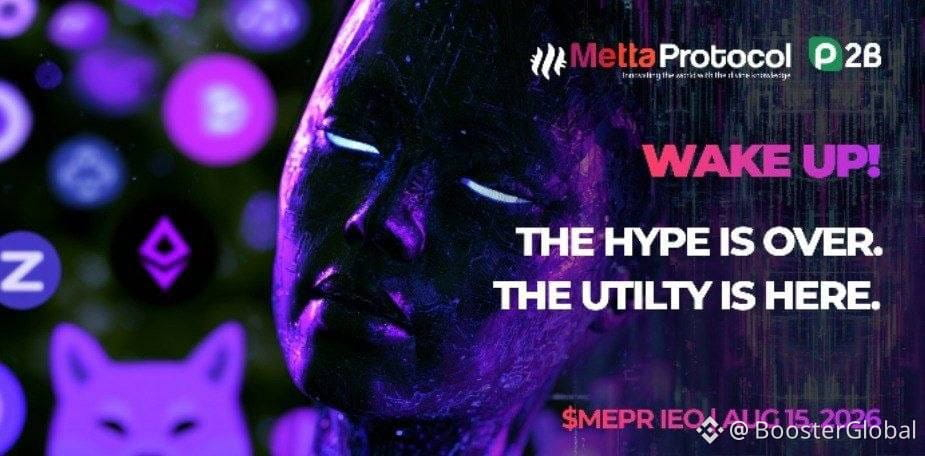
Enter Metta Protocol ($MEPR). They are quietly building a B2B powerhouse disguised as a token on the BNB Smart Chain, and it’s a total game-changer.
Why this isn’t your average vaporware:
🔹They actually make money: Unlike projects relying on token printing, Metta routes real fee-based revenue from 6 working products (like MettaPays & Escrow) straight into a transparent treasury.
🔹The AI is actually real: The founder, Watson Delice, is a tech heavy-hitter. His venture heyMetta AI was literally ranked Top 50 at the Paddle AI Tech Launchpad. They even cracked unique multilingual AI models (like Haitian Creole) to capture huge, untouched global markets.
🔹Physical meets Digital: From RWA tech to MettaSpace (virtual business addresses), they are solving real-world corporate headaches.
The Alpha: Their official IEO is locked for August 17, 2026. This is the ultimate first-row seat before the major listing on November 18. They’ve already made noise at ETHGlobal and Consensus, and the waitlist is filling up fast.
Stop chasing ghost chains. Look into projects with actual cash flow.
DYOR here: 🌐 mettaprotocol.app
IEO link: https://p2pb2b.com/token-sale/MEPR-888/
Let’s be honest: 99% of the "AI + RWA" hype in 2026 is just fancy graphics and whitepapers written by ChatGPT. 💀 Everyone is selling promises, hoping to find a utility after the token pumps.
But what happens when a project actually flips the script and builds the infrastructure FIRST?
Enter Metta Protocol ($MEPR). They are quietly building a B2B powerhouse disguised as a token on the BNB Smart Chain, and it’s a total game-changer.
Why this isn’t your average vaporware:
🔹They actually make money: Unlike projects relying on token printing, Metta routes real fee-based revenue from 6 working products (like MettaPays & Escrow) straight into a transparent treasury.
🔹The AI is actually real: The founder, Watson Delice, is a tech heavy-hitter. His venture heyMetta AI was literally ranked Top 50 at the Paddle AI Tech Launchpad. They even cracked unique multilingual AI models (like Haitian Creole) to capture huge, untouched global markets.
🔹Physical meets Digital: From RWA tech to MettaSpace (virtual business addresses), they are solving real-world corporate headaches.
The Alpha: Their official IEO is locked for August 17, 2026. This is the ultimate first-row seat before the major listing on November 18. They’ve already made noise at ETHGlobal and Consensus, and the waitlist is filling up fast.
Stop chasing ghost chains. Look into projects with actual cash flow.
DYOR here: 🌐 mettaprotocol.app
IEO link: https://p2pb2b.com/token-sale/MEPR-888/
But what happens when a project actually flips the script and builds the infrastructure FIRST?
Enter Metta Protocol ($MEPR). They are quietly building a B2B powerhouse disguised as a token on the BNB Smart Chain, and it’s a total game-changer.
Why this isn’t your average vaporware:
🔹They actually make money: Unlike projects relying on token printing, Metta routes real fee-based revenue from 6 working products (like MettaPays & Escrow) straight into a transparent treasury.
🔹The AI is actually real: The founder, Watson Delice, is a tech heavy-hitter. His venture heyMetta AI was literally ranked Top 50 at the Paddle AI Tech Launchpad. They even cracked unique multilingual AI models (like Haitian Creole) to capture huge, untouched global markets.
🔹Physical meets Digital: From RWA tech to MettaSpace (virtual business addresses), they are solving real-world corporate headaches.
The Alpha: Their official IEO is locked for August 17, 2026. This is the ultimate first-row seat before the major listing on November 18. They’ve already made noise at ETHGlobal and Consensus, and the waitlist is filling up fast.
Stop chasing ghost chains. Look into projects with actual cash flow.
DYOR here: 🌐 mettaprotocol.app
IEO link: https://p2pb2b.com/token-sale/MEPR-888/
2
379
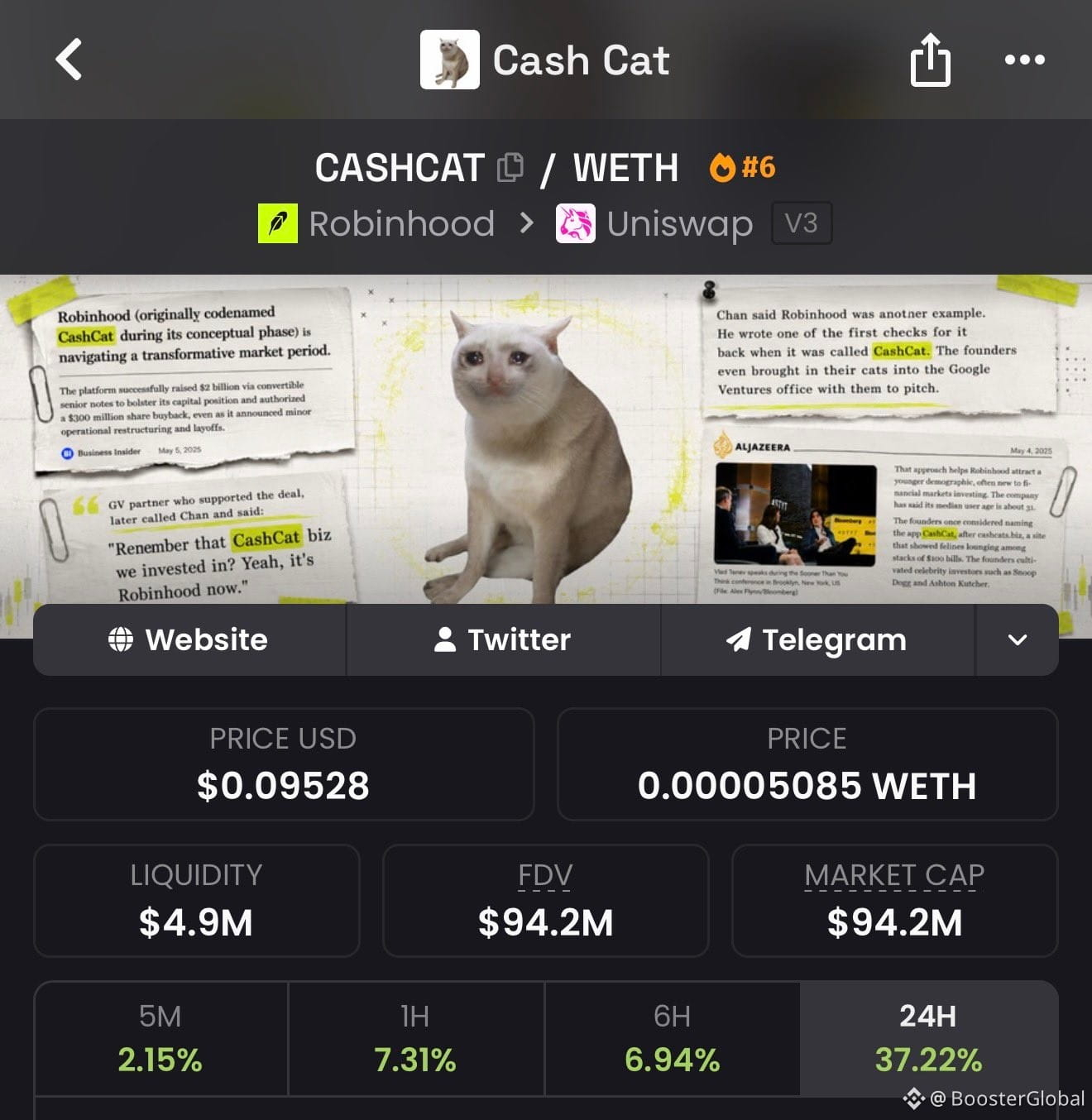
3 days ago: $30M MC. Today: $94M MC. $CASH.US is making believers every single day.
Meme szn 🚀
3 days ago: $30M MC. Today: $94M MC. $CASH.US is making believers every single day.
Meme szn 🚀
Meme szn 🚀
CASHUS+2.88%
3
723
Bitwise CIO Matt Hougan: "I continue to think $BTC is on a path to $1,000,000."
Bitwise CIO Matt Hougan: "I continue to think $BTC is on a path to $1,000,000."
3
225
Article
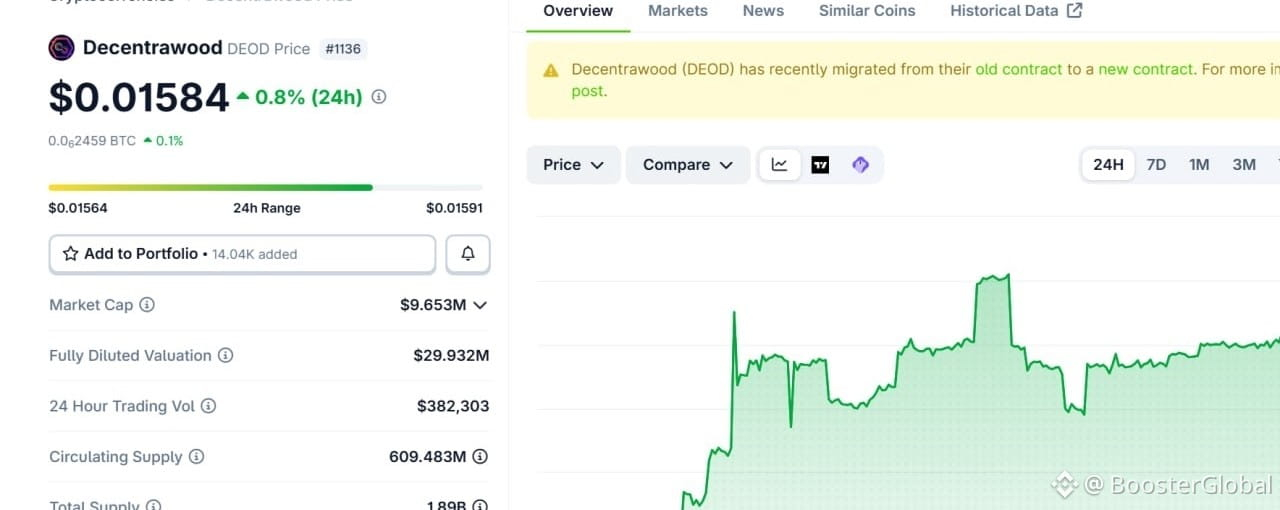
DEOD Price Prediction 2026–2030: Can Decentrawood Hit $1 After the BingX Listing?As the crypto market enters a new growth cycle, investors are increasingly looking beyond hype and focusing on projects that consistently deliver. Decentrawood (DEOD) is one such project, steadily expanding its ecosystem with AI, blockchain gaming, staking, and new exchange listings.
The launch of DEOD AI, growing community adoption, and the upcoming BingX listing on 7 August have strengthened the project's outlook. While no cryptocurrency can guarantee future returns, DEOD's current progress suggests it could become one of the most promising AI-powered Web3 projects over the coming years.
Why Decentrawood Is Gaining Attention
Rather than relying on short-term marketing campaigns, Decentrawood has focused on building products that add real utility to its ecosystem.
Recent milestones include:
🤖 Launch of DEOD AI🔒 Live staking platform🎮 Expanding Web3 gaming ecosystem📈 Listing on multiple exchanges, including the upcoming BingX listing on 7 August🌍 Rapidly growing global community💎 Increasing utility for the DEOD token
Each new product and integration strengthens the ecosystem while creating additional use cases for the token.
Key Growth Catalysts
Artificial Intelligence
AI continues to be one of the fastest-growing sectors in technology. Through DEOD AI, Decentrawood allows users to create, deploy, and manage AI agents, positioning the project within one of crypto's strongest narratives.
Real Utility
The DEOD token powers several parts of the ecosystem, including:
AI AgentsStakingGamingMarketplaceCommunity RewardsGovernance
As the ecosystem expands, token demand could grow alongside platform usage.
Continuous Ecosystem Development
One of Decentrawood's biggest strengths is consistent execution.
The team continues launching new features, improving existing products, and expanding the ecosystem instead of relying solely on market hype.
BingX Listing Could Be a Major Catalyst
A significant milestone is the BingX listing on 7 August.
With access to millions of global users, BingX could increase DEOD's visibility, liquidity, and trading volume. Historically, major exchange listings often attract new investors and increase market awareness.
Community Expansion
Decentrawood's community continues to grow across social media, CoinMarketCap watchlists, Telegram, Discord, and X.
A larger and more active community often supports stronger long-term ecosystem growth.
DEOD Price Prediction
These projections assume continued ecosystem development, successful execution, additional exchange listings, and favourable overall crypto market conditions.
2026
Expected Range: $0.020–$0.080
If buying momentum strengthens after the BingX listing and ecosystem adoption continues increasing, DEOD could establish new highs during the 2026 bull market.
2027
Expected Range: $0.5 to 0.8
Greater adoption of DEOD AI, more ecosystem products, and higher staking participation could significantly strengthen the project's fundamentals.
2028
Expected Range: $0.50–$1.00
If Decentrawood continues growing into a recognised AI and Web3 ecosystem with a larger user base, reaching the $1 milestone becomes increasingly realistic.
2029
Expected Range: $1.00–$2.00
Continued global adoption, ecosystem expansion, and a supportive crypto market could drive higher valuations.
2030
Expected Range: $2.00–$5.00
If the project continues expanding DEOD AI, secures additional major exchange listings, and maintains strong ecosystem growth, multi-dollar valuations become a possible long-term scenario. However, this depends on successful execution and favourable market conditions.
Can DEOD Reach $1?
Based on its current trajectory, DEOD has the potential to reach $1 over the long term, provided several important factors continue:
Ongoing ecosystem developmentWider adoption of DEOD AIGrowth of the gaming platformMore top-tier exchange listingsIncreasing community participationContinued strength in the broader crypto market
While there are no guarantees in cryptocurrency investing, Decentrawood's combination of AI, gaming, staking, and expanding utility gives it stronger long-term fundamentals than many speculative projects.
Final Thoughts
Decentrawood is evolving into a complete ecosystem that combines Artificial Intelligence, Web3, blockchain gaming, staking, and digital ownership.
With DEOD AI already live, an expanding ecosystem, a growing community, and the BingX listing on 7 August acting as a major near-term catalyst, the project appears well positioned for further growth if execution continues at its current pace.
As always, cryptocurrency markets remain volatile, but DEOD's consistent development and increasing utility make it one of the more interesting AI-focused projects to watch during the current bull cycle.
Disclaimer: This article is for informational purposes only and should not be considered financial or investment advice. Cryptocurrency investments are highly volatile and involve risk. Always conduct your own research (DYOR) before making any investment decisions.
DEOD Price Prediction 2026–2030: Can Decentrawood Hit $1 After the BingX Listing?
As the crypto market enters a new growth cycle, investors are increasingly looking beyond hype and focusing on projects that consistently deliver. Decentrawood (DEOD) is one such project, steadily expanding its ecosystem with AI, blockchain gaming, staking, and new exchange listings.
The launch of DEOD AI, growing community adoption, and the upcoming BingX listing on 7 August have strengthened the project's outlook. While no cryptocurrency can guarantee future returns, DEOD's current progress suggests it could become one of the most promising AI-powered Web3 projects over the coming years.
Why Decentrawood Is Gaining Attention
Rather than relying on short-term marketing campaigns, Decentrawood has focused on building products that add real utility to its ecosystem.
Recent milestones include:
🤖 Launch of DEOD AI🔒 Live staking platform🎮 Expanding Web3 gaming ecosystem📈 Listing on multiple exchanges, including the upcoming BingX listing on 7 August🌍 Rapidly growing global community💎 Increasing utility for the DEOD token
Each new product and integration strengthens the ecosystem while creating additional use cases for the token.
Key Growth Catalysts
Artificial Intelligence
AI continues to be one of the fastest-growing sectors in technology. Through DEOD AI, Decentrawood allows users to create, deploy, and manage AI agents, positioning the project within one of crypto's strongest narratives.
Real Utility
The DEOD token powers several parts of the ecosystem, including:
AI AgentsStakingGamingMarketplaceCommunity RewardsGovernance
As the ecosystem expands, token demand could grow alongside platform usage.
Continuous Ecosystem Development
One of Decentrawood's biggest strengths is consistent execution.
The team continues launching new features, improving existing products, and expanding the ecosystem instead of relying solely on market hype.
BingX Listing Could Be a Major Catalyst
A significant milestone is the BingX listing on 7 August.
With access to millions of global users, BingX could increase DEOD's visibility, liquidity, and trading volume. Historically, major exchange listings often attract new investors and increase market awareness.
Community Expansion
Decentrawood's community continues to grow across social media, CoinMarketCap watchlists, Telegram, Discord, and X.
A larger and more active community often supports stronger long-term ecosystem growth.
DEOD Price Prediction
These projections assume continued ecosystem development, successful execution, additional exchange listings, and favourable overall crypto market conditions.
2026
Expected Range: $0.020–$0.080
If buying momentum strengthens after the BingX listing and ecosystem adoption continues increasing, DEOD could establish new highs during the 2026 bull market.
2027
Expected Range: $0.5 to 0.8
Greater adoption of DEOD AI, more ecosystem products, and higher staking participation could significantly strengthen the project's fundamentals.
2028
Expected Range: $0.50–$1.00
If Decentrawood continues growing into a recognised AI and Web3 ecosystem with a larger user base, reaching the $1 milestone becomes increasingly realistic.
2029
Expected Range: $1.00–$2.00
Continued global adoption, ecosystem expansion, and a supportive crypto market could drive higher valuations.
2030
Expected Range: $2.00–$5.00
If the project continues expanding DEOD AI, secures additional major exchange listings, and maintains strong ecosystem growth, multi-dollar valuations become a possible long-term scenario. However, this depends on successful execution and favourable market conditions.
Can DEOD Reach $1?
Based on its current trajectory, DEOD has the potential to reach $1 over the long term, provided several important factors continue:
Ongoing ecosystem developmentWider adoption of DEOD AIGrowth of the gaming platformMore top-tier exchange listingsIncreasing community participationContinued strength in the broader crypto market
While there are no guarantees in cryptocurrency investing, Decentrawood's combination of AI, gaming, staking, and expanding utility gives it stronger long-term fundamentals than many speculative projects.
Final Thoughts
Decentrawood is evolving into a complete ecosystem that combines Artificial Intelligence, Web3, blockchain gaming, staking, and digital ownership.
With DEOD AI already live, an expanding ecosystem, a growing community, and the BingX listing on 7 August acting as a major near-term catalyst, the project appears well positioned for further growth if execution continues at its current pace.
As always, cryptocurrency markets remain volatile, but DEOD's consistent development and increasing utility make it one of the more interesting AI-focused projects to watch during the current bull cycle.
Disclaimer: This article is for informational purposes only and should not be considered financial or investment advice. Cryptocurrency investments are highly volatile and involve risk. Always conduct your own research (DYOR) before making any investment decisions.
The launch of DEOD AI, growing community adoption, and the upcoming BingX listing on 7 August have strengthened the project's outlook. While no cryptocurrency can guarantee future returns, DEOD's current progress suggests it could become one of the most promising AI-powered Web3 projects over the coming years.
Why Decentrawood Is Gaining Attention
Rather than relying on short-term marketing campaigns, Decentrawood has focused on building products that add real utility to its ecosystem.
Recent milestones include:
🤖 Launch of DEOD AI🔒 Live staking platform🎮 Expanding Web3 gaming ecosystem📈 Listing on multiple exchanges, including the upcoming BingX listing on 7 August🌍 Rapidly growing global community💎 Increasing utility for the DEOD token
Each new product and integration strengthens the ecosystem while creating additional use cases for the token.
Key Growth Catalysts
Artificial Intelligence
AI continues to be one of the fastest-growing sectors in technology. Through DEOD AI, Decentrawood allows users to create, deploy, and manage AI agents, positioning the project within one of crypto's strongest narratives.
Real Utility
The DEOD token powers several parts of the ecosystem, including:
AI AgentsStakingGamingMarketplaceCommunity RewardsGovernance
As the ecosystem expands, token demand could grow alongside platform usage.
Continuous Ecosystem Development
One of Decentrawood's biggest strengths is consistent execution.
The team continues launching new features, improving existing products, and expanding the ecosystem instead of relying solely on market hype.
BingX Listing Could Be a Major Catalyst
A significant milestone is the BingX listing on 7 August.
With access to millions of global users, BingX could increase DEOD's visibility, liquidity, and trading volume. Historically, major exchange listings often attract new investors and increase market awareness.
Community Expansion
Decentrawood's community continues to grow across social media, CoinMarketCap watchlists, Telegram, Discord, and X.
A larger and more active community often supports stronger long-term ecosystem growth.
DEOD Price Prediction
These projections assume continued ecosystem development, successful execution, additional exchange listings, and favourable overall crypto market conditions.
2026
Expected Range: $0.020–$0.080
If buying momentum strengthens after the BingX listing and ecosystem adoption continues increasing, DEOD could establish new highs during the 2026 bull market.
2027
Expected Range: $0.5 to 0.8
Greater adoption of DEOD AI, more ecosystem products, and higher staking participation could significantly strengthen the project's fundamentals.
2028
Expected Range: $0.50–$1.00
If Decentrawood continues growing into a recognised AI and Web3 ecosystem with a larger user base, reaching the $1 milestone becomes increasingly realistic.
2029
Expected Range: $1.00–$2.00
Continued global adoption, ecosystem expansion, and a supportive crypto market could drive higher valuations.
2030
Expected Range: $2.00–$5.00
If the project continues expanding DEOD AI, secures additional major exchange listings, and maintains strong ecosystem growth, multi-dollar valuations become a possible long-term scenario. However, this depends on successful execution and favourable market conditions.
Can DEOD Reach $1?
Based on its current trajectory, DEOD has the potential to reach $1 over the long term, provided several important factors continue:
Ongoing ecosystem developmentWider adoption of DEOD AIGrowth of the gaming platformMore top-tier exchange listingsIncreasing community participationContinued strength in the broader crypto market
While there are no guarantees in cryptocurrency investing, Decentrawood's combination of AI, gaming, staking, and expanding utility gives it stronger long-term fundamentals than many speculative projects.
Final Thoughts
Decentrawood is evolving into a complete ecosystem that combines Artificial Intelligence, Web3, blockchain gaming, staking, and digital ownership.
With DEOD AI already live, an expanding ecosystem, a growing community, and the BingX listing on 7 August acting as a major near-term catalyst, the project appears well positioned for further growth if execution continues at its current pace.
As always, cryptocurrency markets remain volatile, but DEOD's consistent development and increasing utility make it one of the more interesting AI-focused projects to watch during the current bull cycle.
Disclaimer: This article is for informational purposes only and should not be considered financial or investment advice. Cryptocurrency investments are highly volatile and involve risk. Always conduct your own research (DYOR) before making any investment decisions.
1
5
665
Partly True
My current Perp DEX farm watchlist, ranked by where we are in the cycle (earlier = better points/$): 👇
🟢 Early (best asymmetry):
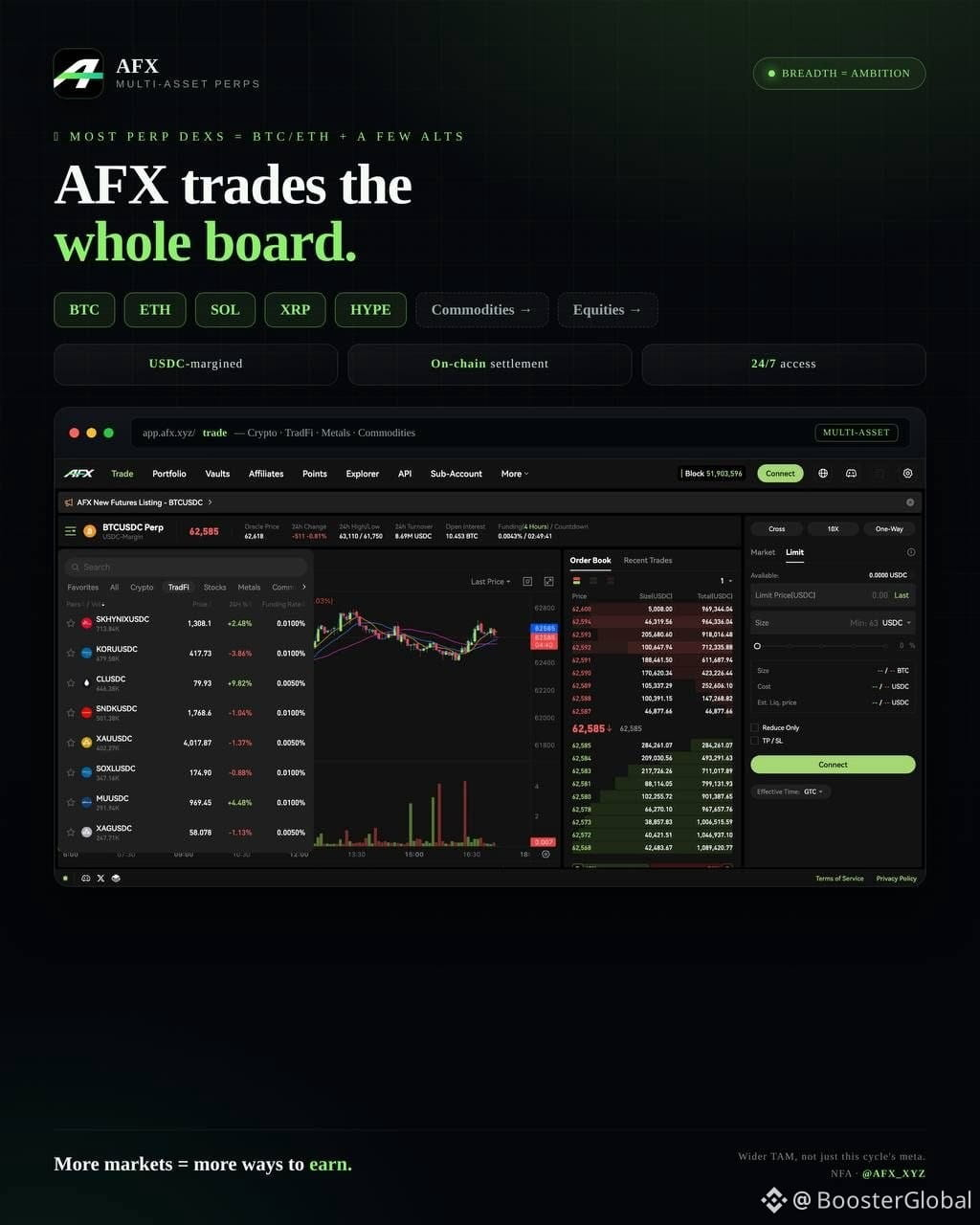
@AFX_XYZ — on-chain orderbook + 11% real-yield Vault + Season 1 live, 10M pts, 65% to community
a few other pre-TGE names
🟡 Mid: already ramping, points getting denser
🔴 Late / Waitlist: hype priced in, harder entries
AFX sits firmly in the Early bucket for me — season just running, points still cheap, real yield cushions the downside while you wait for TGE.
Better to farm early than regret later.
👉 https://app.afx.xyz/?src=bn2
#AFX #PerpDEX #Airdrop #DeFi
NFA / DYOR.
My current Perp DEX farm watchlist, ranked by where we are in the cycle (earlier = better points/$): 👇
🟢 Early (best asymmetry):
@AFX_XYZ — on-chain orderbook + 11% real-yield Vault + Season 1 live, 10M pts, 65% to community
a few other pre-TGE names
🟡 Mid: already ramping, points getting denser
🔴 Late / Waitlist: hype priced in, harder entries
AFX sits firmly in the Early bucket for me — season just running, points still cheap, real yield cushions the downside while you wait for TGE.
Better to farm early than regret later.
👉 https://app.afx.xyz/?src=bn2
#AFX #PerpDEX #Airdrop #DeFi
NFA / DYOR.
🟢 Early (best asymmetry):
@AFX_XYZ — on-chain orderbook + 11% real-yield Vault + Season 1 live, 10M pts, 65% to community
a few other pre-TGE names
🟡 Mid: already ramping, points getting denser
🔴 Late / Waitlist: hype priced in, harder entries
AFX sits firmly in the Early bucket for me — season just running, points still cheap, real yield cushions the downside while you wait for TGE.
Better to farm early than regret later.
👉 https://app.afx.xyz/?src=bn2
#AFX #PerpDEX #Airdrop #DeFi
NFA / DYOR.
3
692
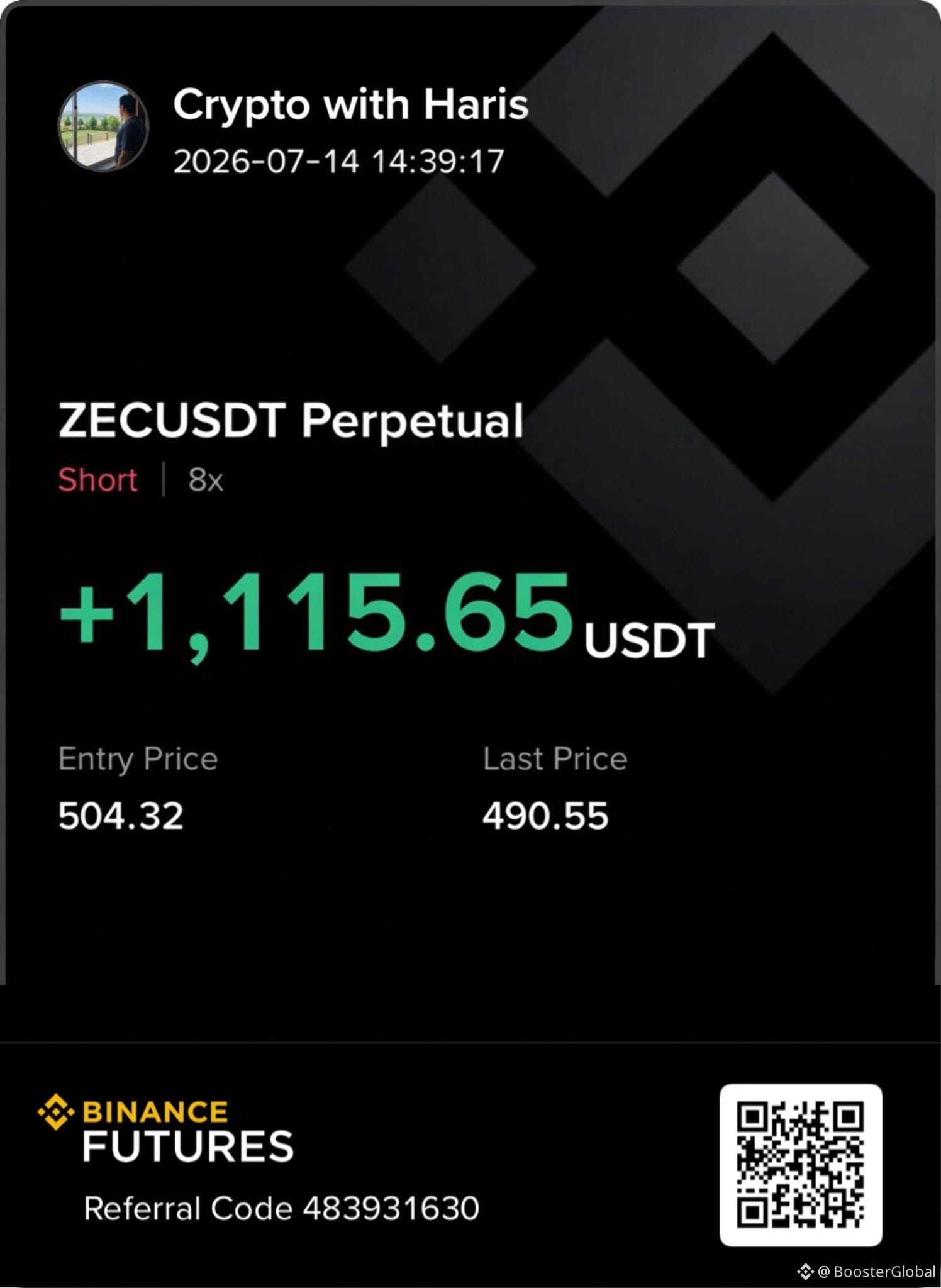
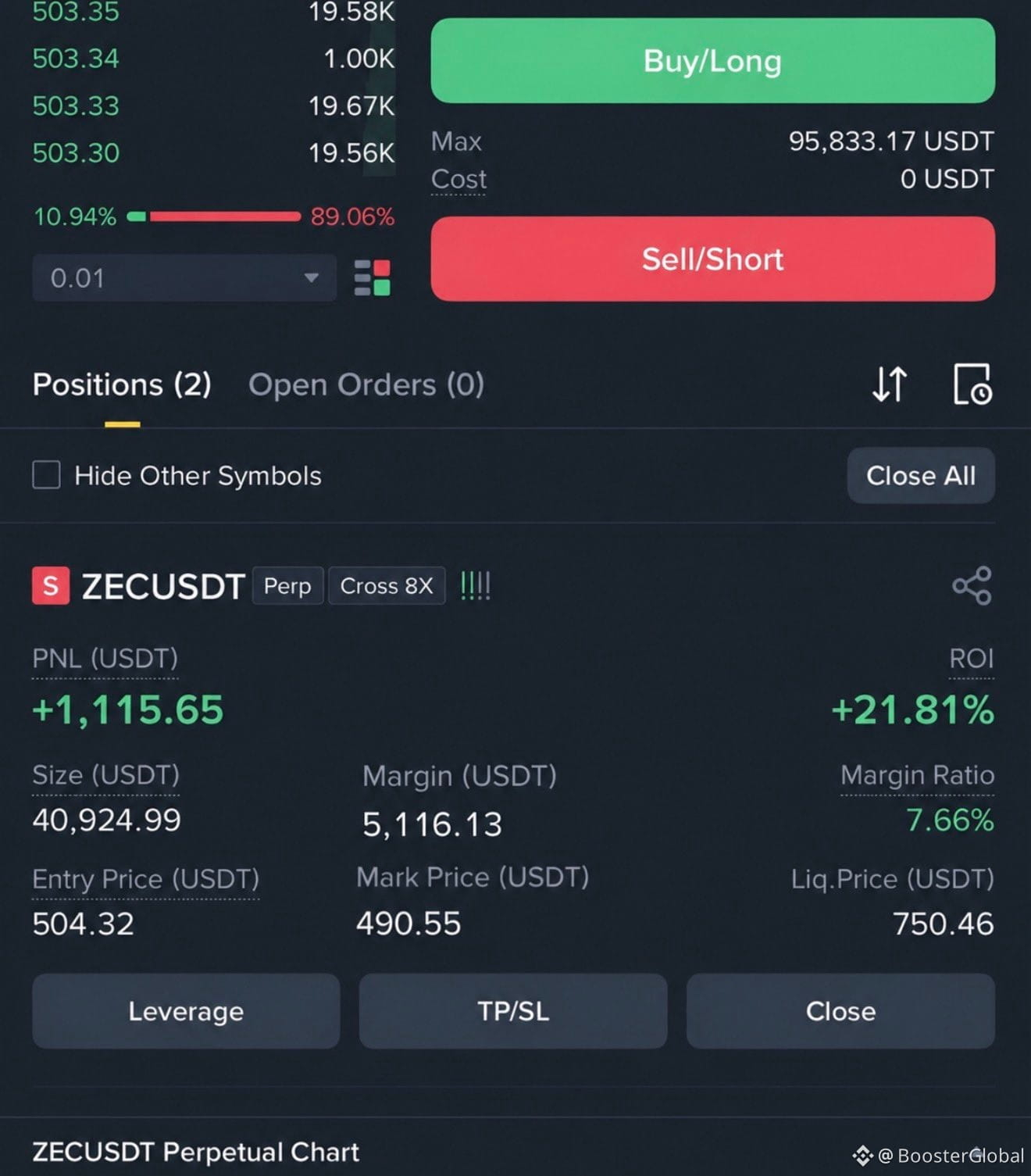
I closed my $ZEC short trade with a tiny profit of $1,115 🥳🎉
Another 4 figure profit.
Thought it’s small but I am happy with it for now. A win is a win 💪
A few days ago, I said $ZEC still looked bearish and that I expected more downside towards $450 area.
The only reason I closed this trade is because I think $ZEC can bounce toward the $540-$550 area before continuing lower.
If that happens, I’d much rather open a fresh short from $550 again to make some big profit.
{future}(ZECUSDT)
I closed my $ZEC short trade with a tiny profit of $1,115 🥳🎉
Another 4 figure profit.
Thought it’s small but I am happy with it for now. A win is a win 💪
A few days ago, I said $ZEC still looked bearish and that I expected more downside towards $450 area.
The only reason I closed this trade is because I think $ZEC can bounce toward the $540-$550 area before continuing lower.
If that happens, I’d much rather open a fresh short from $550 again to make some big profit.
Another 4 figure profit.
Thought it’s small but I am happy with it for now. A win is a win 💪
A few days ago, I said $ZEC still looked bearish and that I expected more downside towards $450 area.
The only reason I closed this trade is because I think $ZEC can bounce toward the $540-$550 area before continuing lower.
If that happens, I’d much rather open a fresh short from $550 again to make some big profit.
6
234
Log in to explore more content
Join global crypto users on Binance Square
⚡️ Get latest and useful information about crypto.
💬 Trusted by the world’s largest crypto exchange.
👍 Discover real insights from verified creators.
Email / Phone number
Trending Topics
BinanceLaunchesBinanceIntelligence
849,250 views
5,251 Discussing
🚀 BINANCE IS PUSHING AI DEEPER INTO FINANCE
Binance Intelligence brings together three products aimed at different users — everyday traders, advanced users and developers.
For traders, the interesting part is simple:
More data → better analysis → faster decisions.
Now the real question:
Can AI actually give retail traders an edge? 👀
$BNB $BTC $ETH
#binancelaunchesbinanceintelligence
CryptoMahibaloch
·0 Likes
·144 views
FedMinutesFocusOnOctoberPause
0 views
13 Discussing
RobinhoodAdds$25MInBitcoinToBalanceSheet
52 views
7 Discussing