

區塊101
141 Posts

區塊101
Report
Block User
加密貨幣、Web3 與全球投資|Bitcoin・Crypto・市場分析・投資觀察
幣安推薦邀請碼 BNLOVER
7 Following
96 Followers
48 Liked
Posts
All
Quotes
Videos
·
--
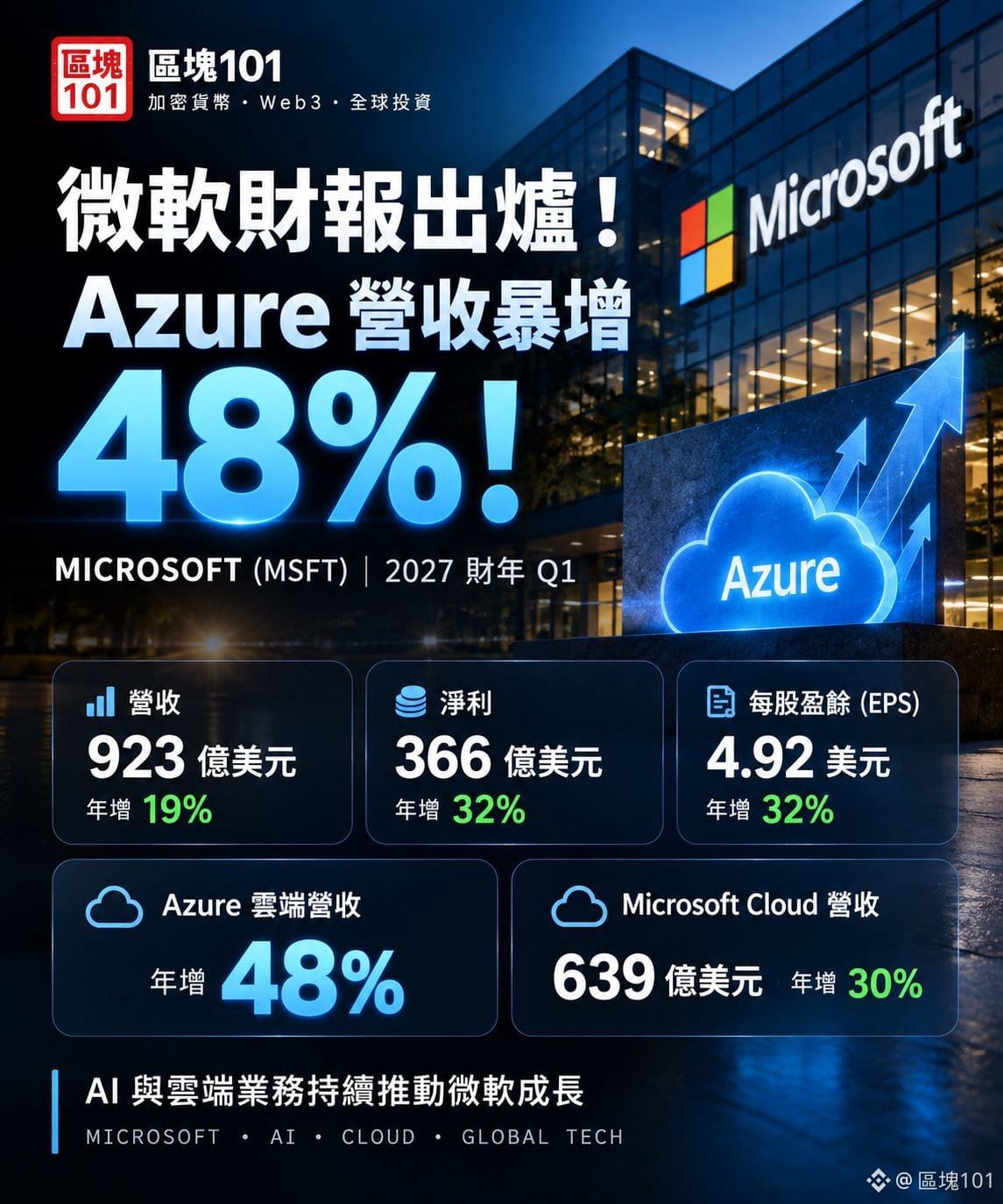
Microsoft (MSFT) announced its latest earnings, with its Azure cloud business growing 48% year over year as AI demand continues to drive growth for tech giants!
Key figures for the first quarter of fiscal year 2027:
• Revenue: $92.3 billion (+19%)
• Net income: $36.6 billion (+32%)
• EPS: $4.92 (+32%)
• Azure growth: 48%
• Microsoft Cloud revenue: $63.9 billion (+30%)
Azure is one of the most noteworthy highlights.
The 48% growth in its cloud business reflects continued strong demand from businesses for AI computing, data processing, and cloud infrastructure.
But investors face another question:
As Microsoft continues to invest huge sums in building AI data centers, can revenue growth continue to outpace the growth in capital expenditures?
This will be an important indicator to watch when evaluating MSFT, NVDA, and the AI infrastructure industry as a whole.
Source: Microsoft FY2027 Q1 Earnings
#Microsoft #MSFT #Azure #AI #StockMarket
64
·
--
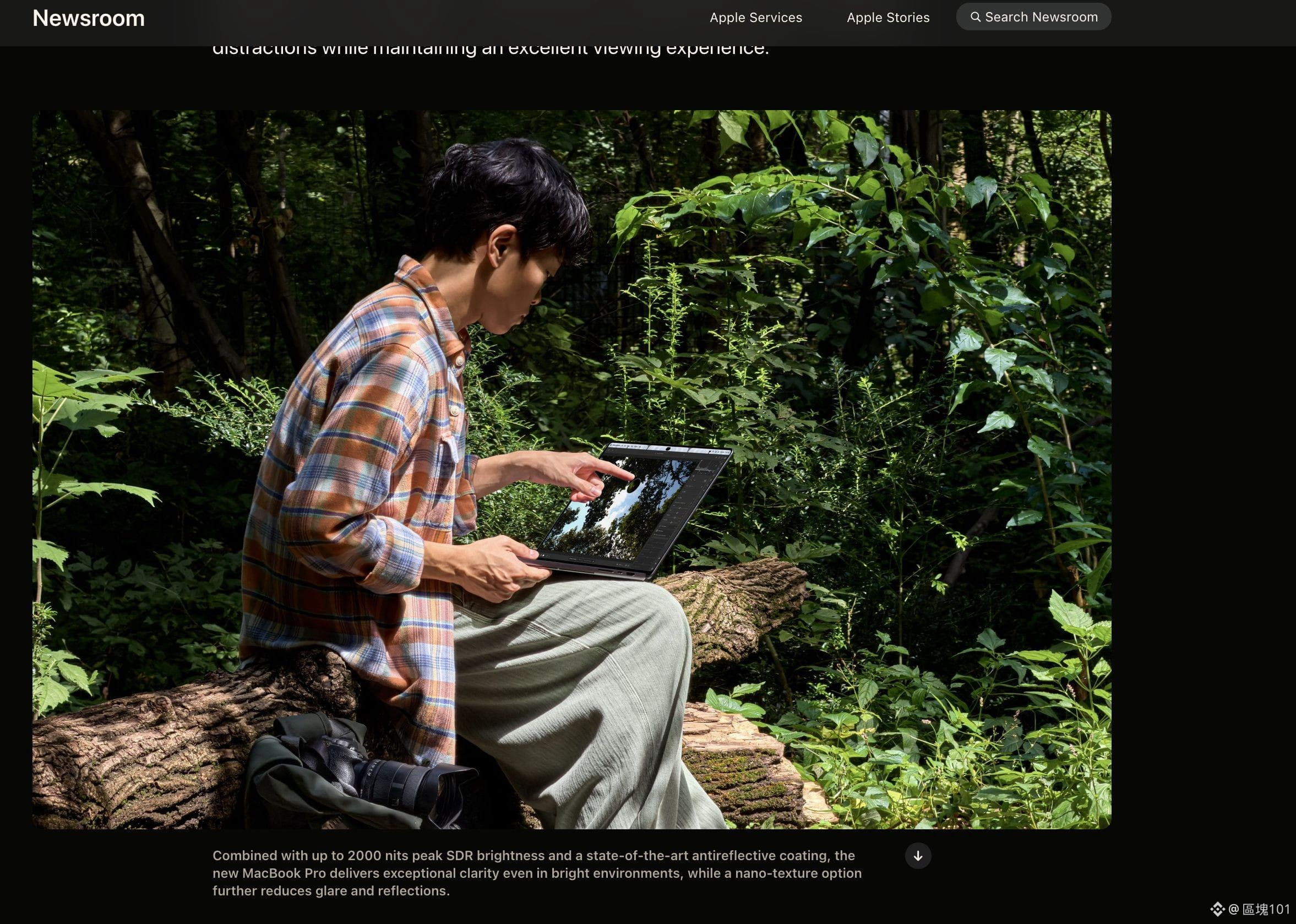
Apple officially launches its first touchscreen MacBook Pro, bringing the iPhone’s Dynamic Island to the Mac!
On October 28, Apple unveiled the all-new 14-inch and 16-inch MacBook Pro, introducing one of the most significant design changes in years.
This upgrade is about more than just processor performance.
1. Touchscreen support for the first time
Users can swipe through web pages, zoom in on photos, drag presentations, and even interact with 3D models directly on the screen.
2. Dynamic Island officially comes to the Mac
It integrates Spotlight, Siri AI, music controls, and real-time notifications.
3. All-new PROLED XDR display
Featuring dual-layer OLED technology, it offers peak brightness of up to 2,000 nits, a 120Hz refresh rate, and a 10-million-to-1 contrast ratio.
4. M5 Pro and M5 Max
Supporting up to 128GB of unified memory and 16TB of storage, they’re designed for professional creative work, software development, and on-device AI processing.
5. A thinner, lighter design
The 14-inch model weighs about 1.38 kg, while the 16-inch model weighs about 1.82 kg. Battery life lasts up to 24 hours.
Pricing:
14-inch: Starting at $2,899
16-inch: Starting at $3,399
In Taiwan, prices start at NT$97,900. Pre-orders open on October 30, and the models go on sale November 6.
The biggest change this time is that Apple is starting to rethink how people use the Mac.
In the past, the Mac relied mainly on the keyboard and trackpad. Now, touch, AI, and traditional desktop interactions are beginning to come together.
For content creators, designers, and developers, this could bring new workflows.
57
·
--
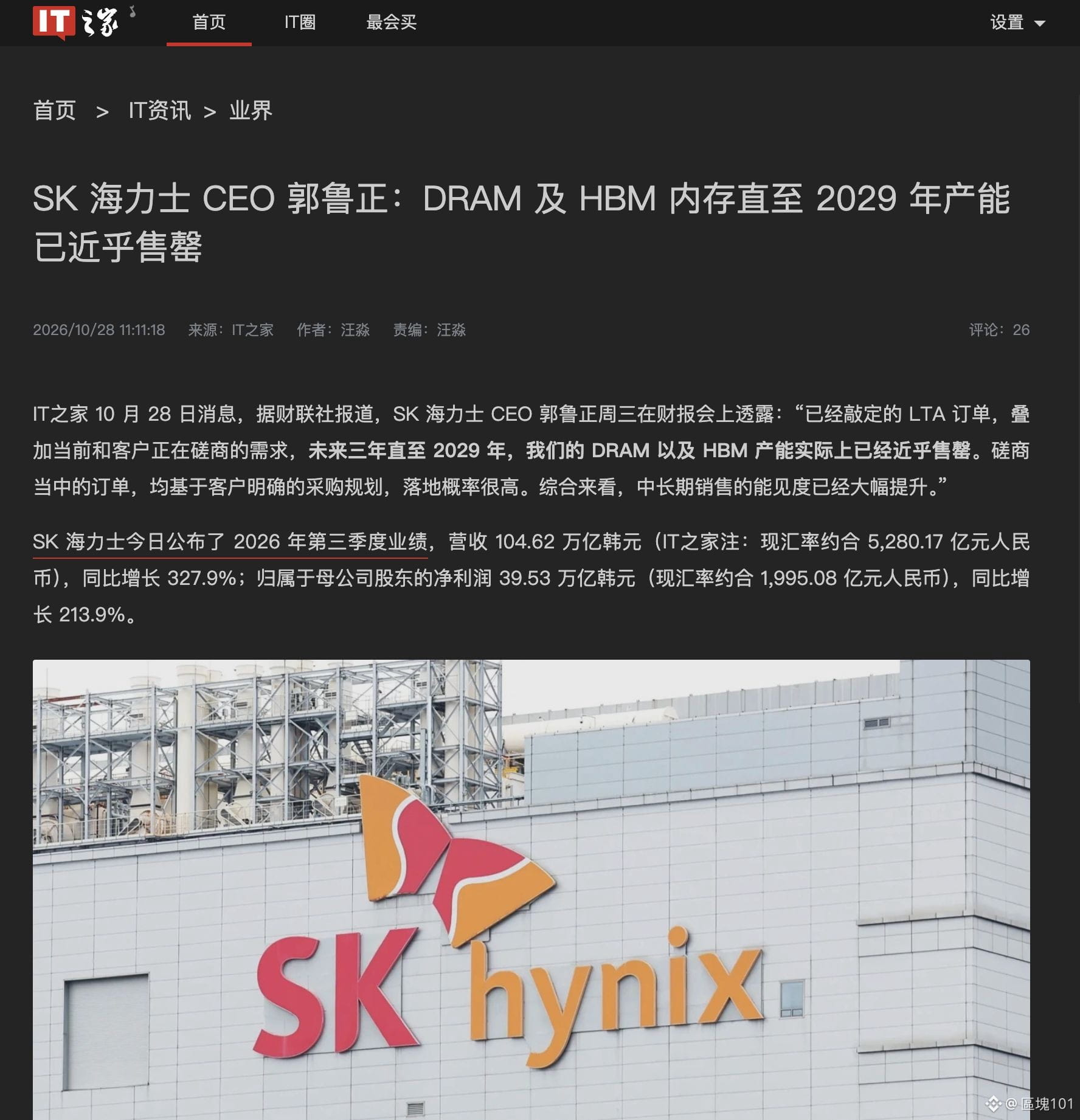
How strong is AI memory demand? SK hynix says visibility into demand for DRAM and HBM capacity now extends through 2029!
On October 28, SK hynix revealed at its latest earnings call that customers are actively negotiating supply of memory for the next three years well in advance.
According to CEO Kwak Noh-jung:
1. Demand for DRAM and HBM remains strong.
2. The company has signed long-term supply agreements with some customers.
3. Other customers have also outlined clear purchasing plans for the future.
4. Taking into account both signed orders and demand under negotiation, capacity visibility for the next three years is now very high.
This is primarily driven by demand for AI servers, high-bandwidth memory, and data center construction.
HBM is a key component in AI accelerators. High-end AI chips from companies such as NVIDIA need large amounts of high-speed memory to handle the training and inference of large models.
However, there is an important distinction here.
SK hynix has not announced that all of its capacity through 2029 has been officially sold out.
The CEO's comments include both signed long-term contracts and customer demand currently under negotiation.
For investors, the key things to watch are:
Whether HBM supply will remain tight over the next few years, and whether capacity expansions by SK hynix, Samsung, and Micron will change the supply-demand balance in the memory market.
Competition in the AI industry has expanded beyond GPUs to the memory supply chain.
99
·
--
Google DeepMind unveils Genie 4 world model: Generate interactive 3D worlds in real time, with audio and character dialogue generated for the first time.
A world model doesn’t play a precomputed video. Instead, it calculates the next frame in real time, one frame at a time, based on your actions.
Key points:
Native audio: Music, ambient sounds, and character dialogue are generated alongside the visuals
Change scenes in real time: Type prompts during a simulation to change the weather, switch camera angles, or add people and objects
Consistency: Scenes can remain consistent for up to about 2 minutes—twice as long as with Genie 3
Gemini as director: Plans the story and checks frame by frame whether it’s following the plan
Robot simulation: Gemini 4 Argon breaks down tasks, allowing Genie 4 to simulate the humanoid robot Apollo playing chess, without using a physical robot
Background: When Project Genie (Genie 3) opened to the public this January, gaming stocks plunged in a single day. Unity fell as much as about 24%, Roblox about 13%, and Take-Two around 8% to 10%.
On the day of this announcement, Unity closed down 0.57%, while Roblox closed up 0.18%.
Availability: For now, only invited testers can use it. Over the next few weeks, access will open to Google AI Ultra subscribers and early partners using the Gemini API and AI Studio. The public release date and API pricing have not yet been announced.
Limitations: Over time, visuals can “drift”; sessions last only a few minutes, audio isn’t very accurate, and text in images can be hard to read. All content will include a SynthID watermark.

90
·
--
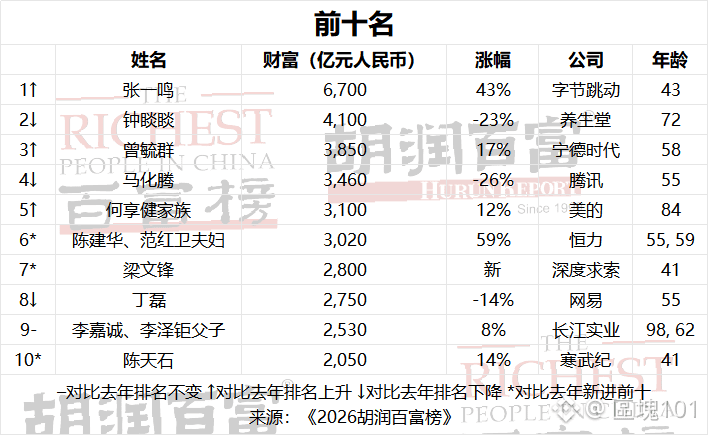
DeepSeek founder Liang Wenfeng has made his first appearance on the Hurun China Rich List—and immediately become China’s seventh-richest person!
On October 27, the 2026 Hurun China Rich List was officially released.
One of the most noteworthy trends this year is the rapid growth in the wealth of AI industry founders.
A few key figures:
1. Zhang Yiming, founder of ByteDance
Estimated wealth: RMB 670 billion
Rank: No. 1
2. Liang Wenfeng, founder of DeepSeek
Estimated wealth: RMB 280 billion
Rank: No. 7
First time in the top 10
3. Wang Xingxing, founder of Unitree Robotics
Estimated wealth: RMB 69.5 billion
Age: 36
4. AI industry entrepreneurs
Entrepreneurs on the list whose primary business is AI account for 10.4% of the total.
The list reflects changes in the distribution of wealth across China’s technology industry.
In the past, the market’s focus was mainly on e-commerce, real estate, internet platforms, and consumer technology.
Now, large language models, robotics, and AI infrastructure are creating a new generation of highly valued companies.
However, the wealth figures on the Hurun list are estimates. This is especially true for unlisted companies, where figures are affected by factors such as ownership stakes, company valuations, and other assumptions.
These figures do not mean that the founders have actually cashed out.
What is truly worth watching is how the capital markets are reassessing the long-term value of AI companies.
81
·
--
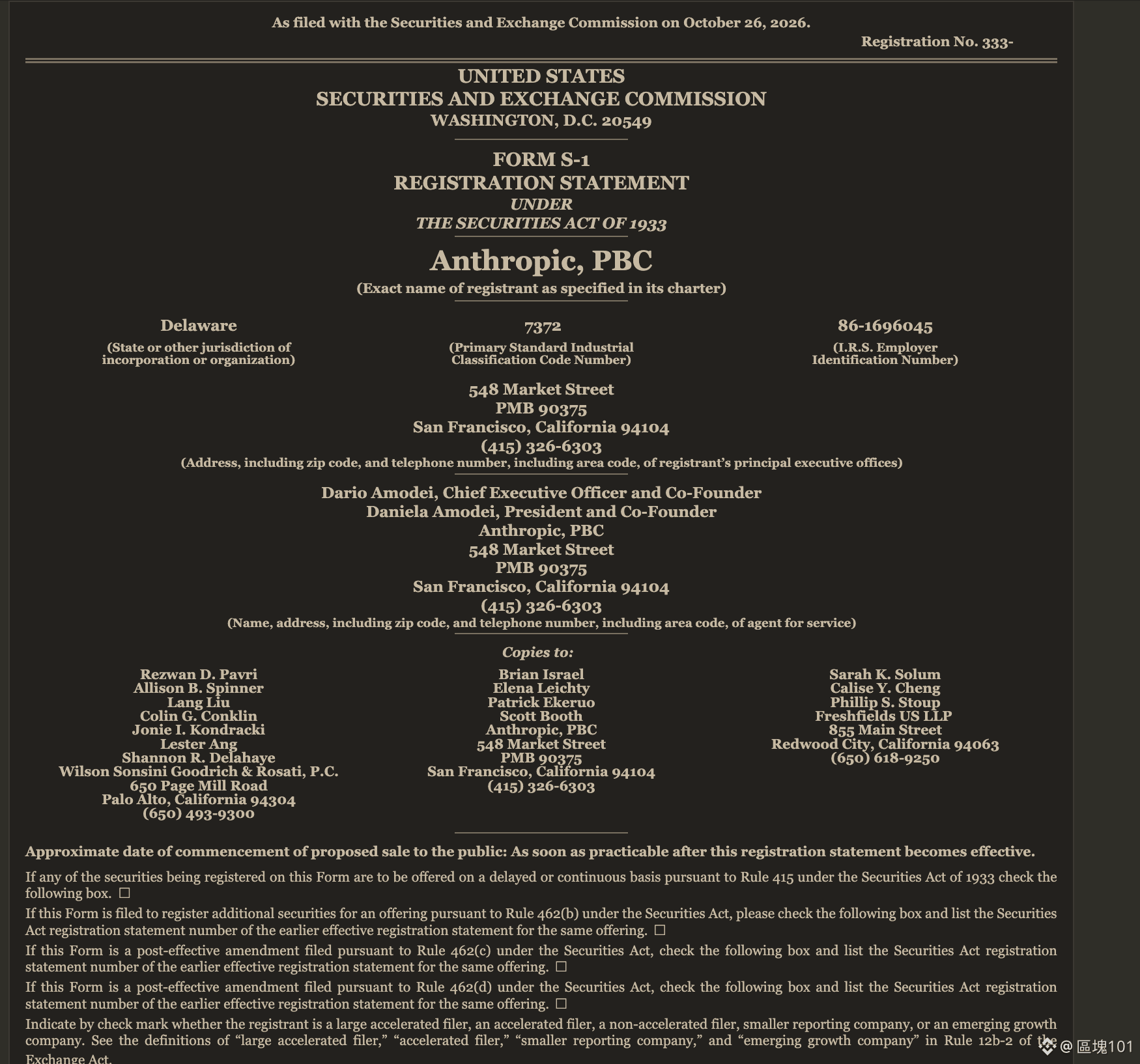
Anthropic has officially filed its IPO paperwork and is preparing to list on Nasdaq under the ticker ANT!
The filing gives investors their first look at the true financial scale behind Claude.
A few key figures:
• Revenue in the first half of 2026: $16.3 billion
• Revenue in the same period last year: $1.16 billion
• Net loss on paper: $80.7 billion
• Actual operating loss: approximately $693 million
• Computing and infrastructure costs: $8.95 billion
Why is there such a large gap between net loss and operating loss?
Because about $72.4 billion came from accounting valuation changes in financing instruments such as convertible debt—not from an equivalent amount of cash outflow.
Another detail worth noting is that about 80% of Anthropic’s revenue in the first half of the year came from usage-based services.
This means demand for enterprise AI is growing rapidly, but the company still has to bear enormous long-term computing costs.
For investors, the biggest question surrounding this IPO is not just how quickly Anthropic can grow, but whether future revenue can continue to cover its growing infrastructure spending.
The offering price, number of shares, and final valuation have not yet been determined.
Source: Anthropic S-1, 2026/10/26
#Anthropic #Claude #Aİ #IPO #StockMarket
44
·
--
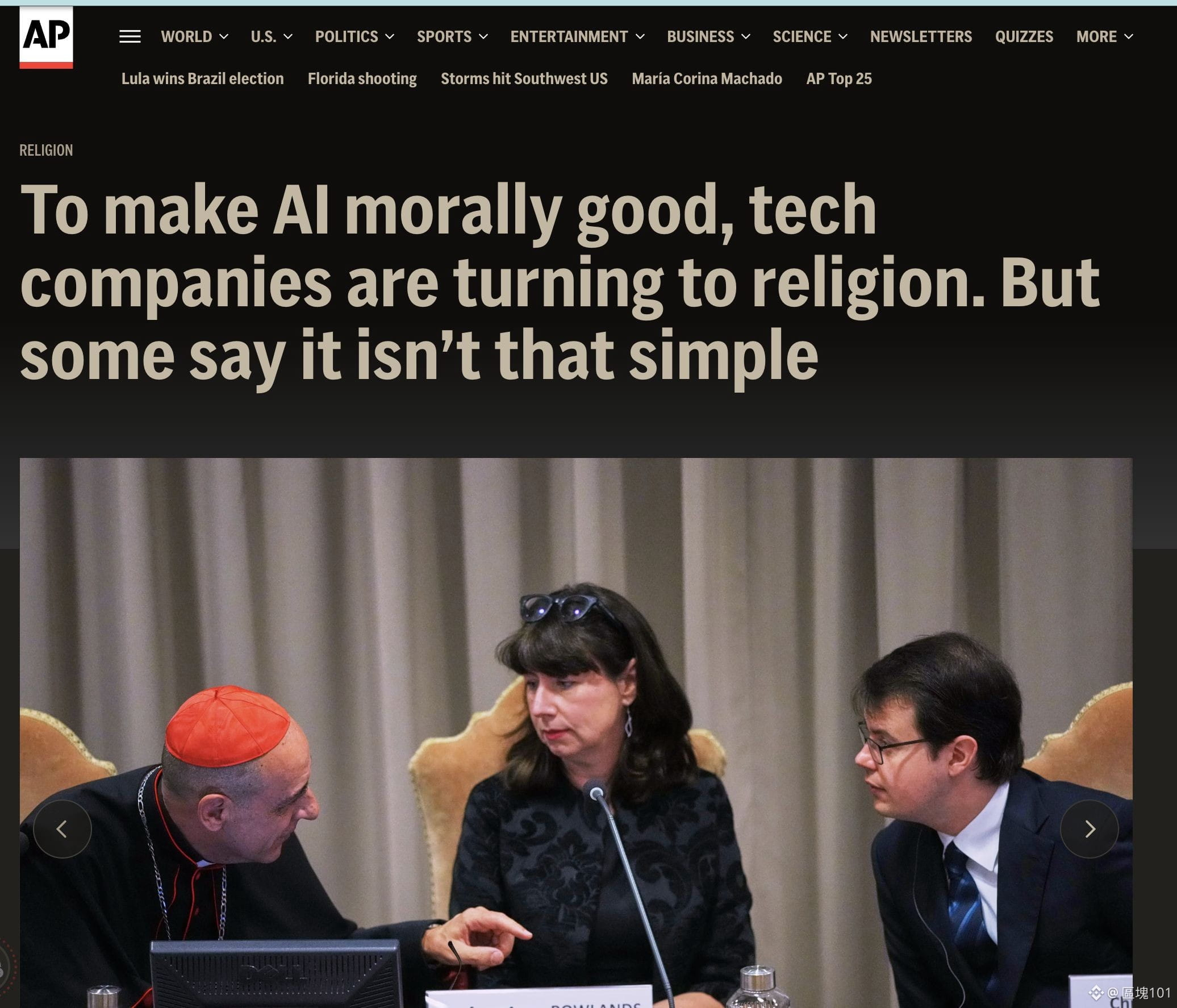
AI companies are doing something unexpected: inviting religious leaders and theologians to explore how AI can tell right from wrong.
According to a recent report by the Associated Press (AP), Anthropic has spoken with more than 15 religious and intercultural groups, hoping to find answers to AI ethics questions in thousands of years of human thought and tradition.
In May this year, Anthropic co-founder Christopher Olah even traveled to the Vatican to attend the announcement of Pope Leo XIV’s encyclical on artificial intelligence.
He believes the questions raised by AI have gone beyond the expertise of computer scientists and require input from religious groups, scholars, and society at large.
And Anthropic’s discussions with religious scholars have raised some unexpected questions.
For example:
• Do humans have souls?
• Should third-grade students use AI chatbots?
• How should AI understand morality and good and evil?
• Can the teachings of different religions help AI make better judgments?
Meghan Sullivan, a philosopher at the University of Notre Dame who took part in the discussions, said Anthropic’s approach was not simply to gather opinions. Instead, the company showed scholars how its models work, then delved into the ethical questions raised by the technology.
Anthropic is not alone. Representatives from Meta, Google, and Amazon have also spoken with the Vatican, while Microsoft has likewise been actively reaching out to religious groups.
However, this approach has also sparked new controversy.
Some scholars worry that if AI companies simply blend the values of different religions into a single set of universal rules, they could end up erasing important differences among religious traditions.
This reflects how AI development is entering a new phase.
In the past, tech companies mainly focused on making models more powerful and accurate.
Now, they must also grapple with a harder question:
When AI begins to take part in important decisions in human life, who should decide what values it holds?
64
·
--
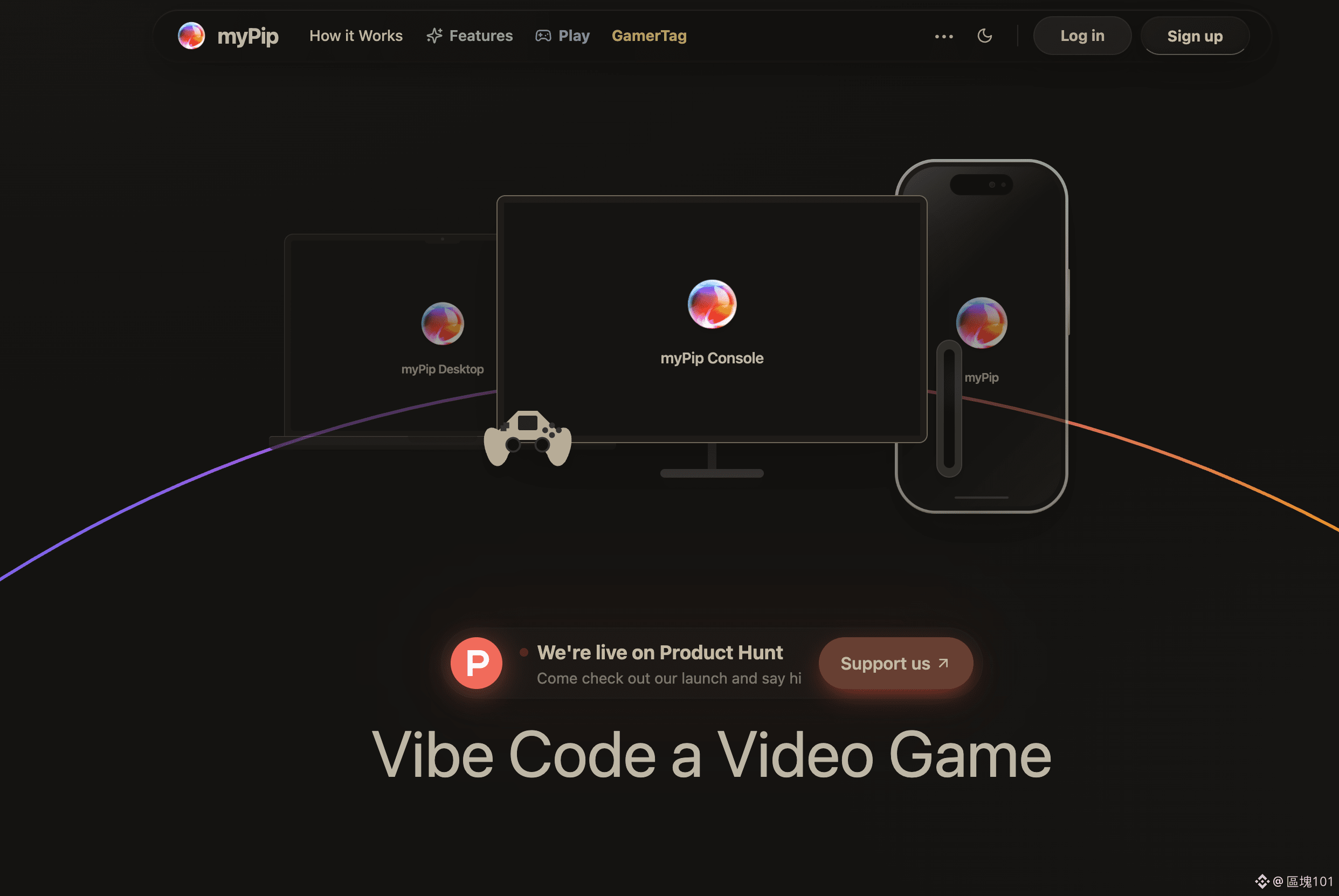
AI-generated games have a fun new feature: multiple people can ask AI to modify the same game at the same time!
AI gaming platform myPip has launched Hive Coding, letting friends not only play games together, but develop them together too.
For example:
You design the boss and ask AI to add new attacks.
A friend modifies the game’s physics.
Someone else jumps straight into the game to test whether the new boss works properly.
Everyone can collaborate on the same game project, without having to wait until the entire game is finished to try it out.
The platform also supports game controllers for PS5, Xbox, Wii, and more, so AI-generated games can be played with traditional controllers.
Co-founder Misha Stastna said on Product Hunt that more than 140,000 people have used myPip to make games.
This figure was provided by the founder and has not been independently verified.
AI game-generation tools have mainly focused on the idea that “you can make a game by typing a single sentence.”
Now, another approach is emerging: letting multiple people create together and keep modifying a game as they play.
In the future, the line between game development and the gaming experience may become increasingly blurred.
81
·
--
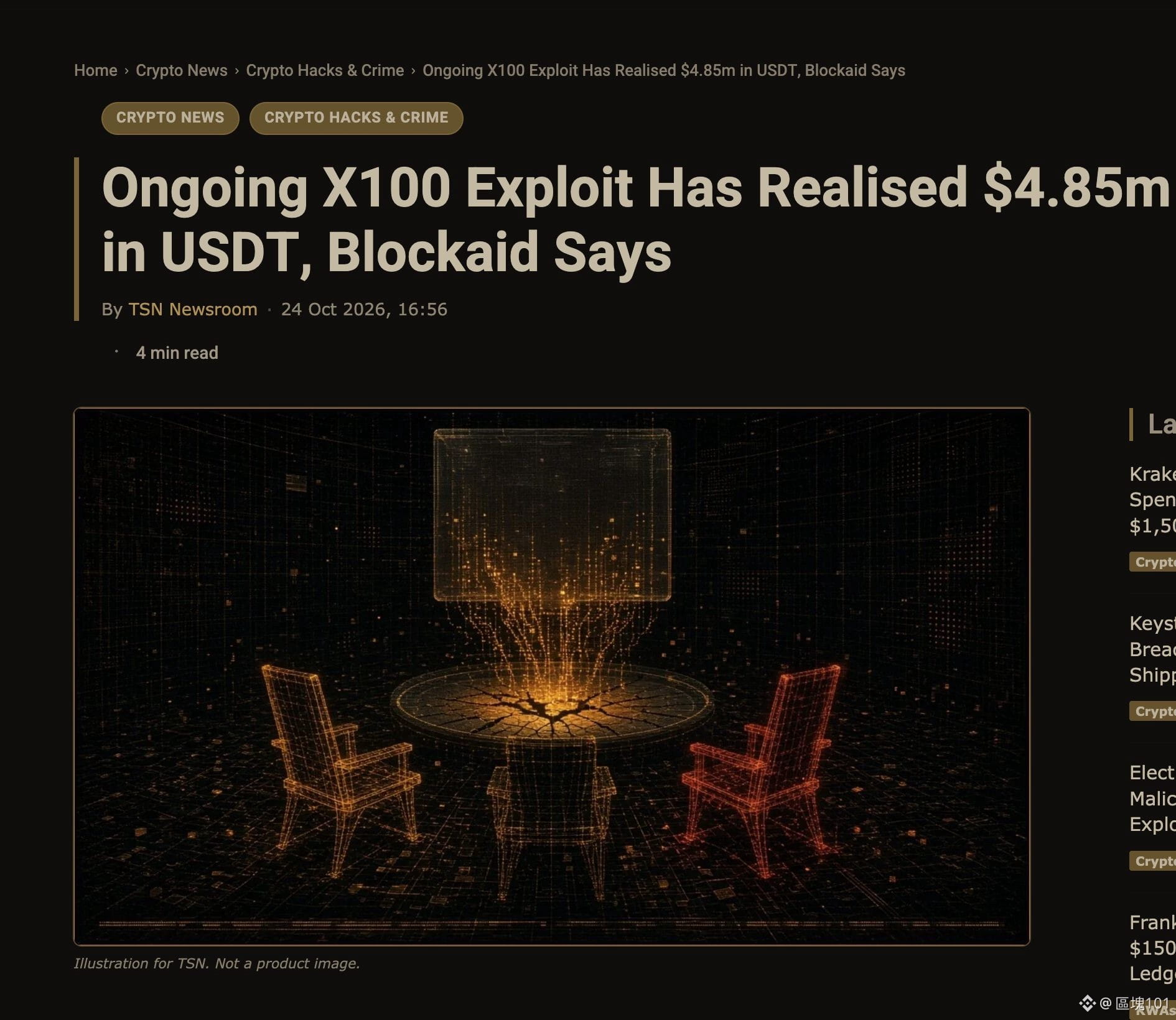
Hackers don’t necessarily need to exploit a smart contract. If they gain control of governance, they may be able to take control of an entire project’s funds!
The latest X100 security incident is one example.
According to a preliminary analysis published on October 24 by blockchain security firm Blockaid, X100’s governance mechanism was apparently attacked, involving approximately $4.85 million in assets.
The incident centers on X100’s “Senate” governance structure.
The mechanism has three seats, which were originally intended to manage project permissions through majority decision-making.
But the attacker apparently gained control of two seats, obtaining enough power to pass governance proposals.
The attacker then used these permissions to manipulate the project’s treasury tokens and liquidity, resulting in assets being transferred.
Blockaid later traced a third related transaction.
There are three notable takeaways from this incident:
1. The attack may have targeted governance control rather than smart contract code.
2. In a three-seat governance structure, control of just two seats may undermine the intended checks and balances.
3. Even if a transaction follows the permissions defined in a contract, that does not mean it was legitimately authorized.
This is also a reminder to DeFi projects that, alongside smart contract audits, governance permissions, signer security, and treasury management are equally important.
The approximately $4.85 million figure is a preliminary estimate of the amount involved. The actual losses and the full attack method have yet to be confirmed.
94
·
--
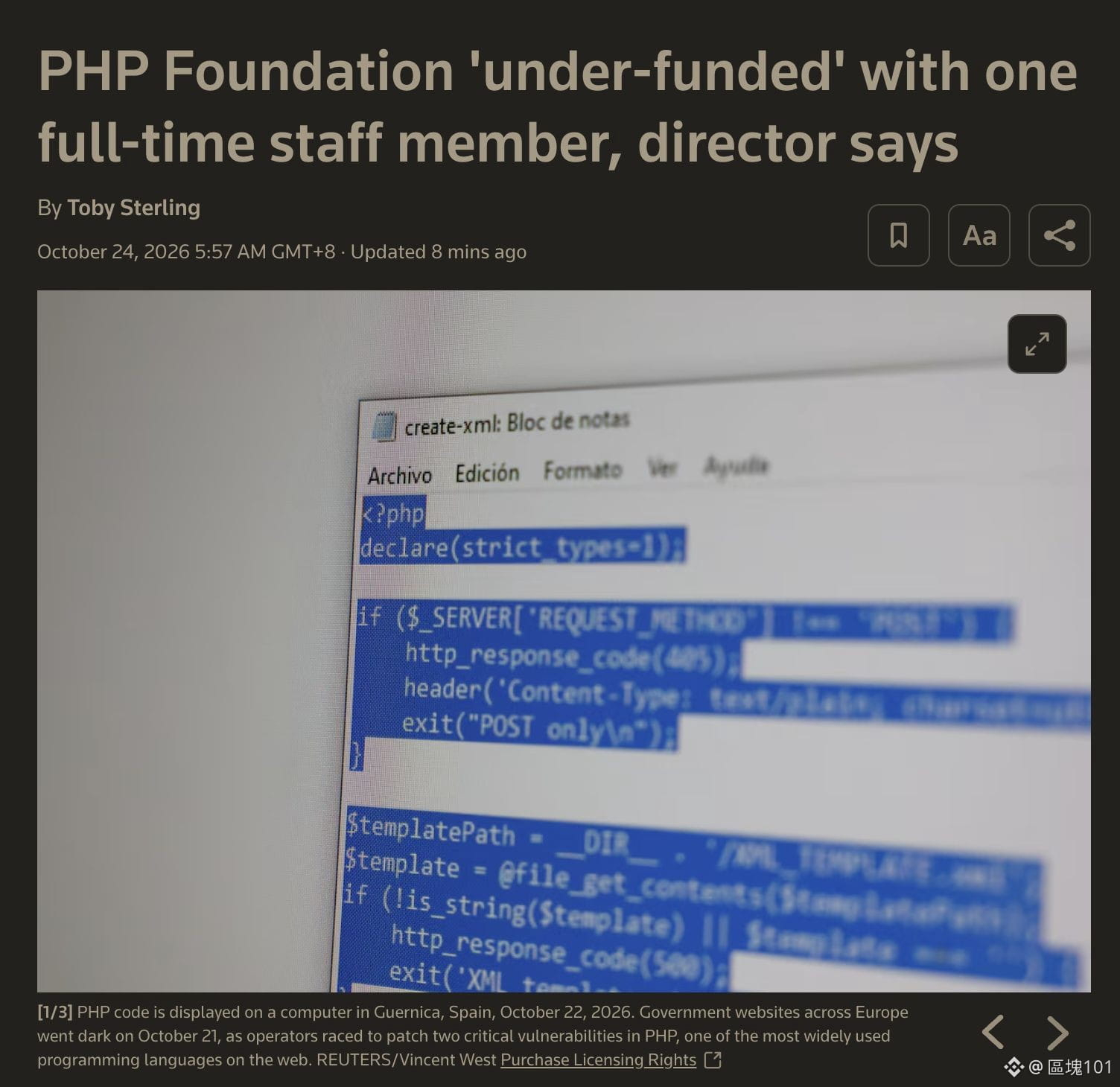
PHP, relied on by a huge number of websites around the world, is backed by a foundation with just one full-time employee!
According to an October 23 report by Reuters, PHP Foundation Executive Director Elizabeth Barron revealed the foundation’s actual staffing:
1. There is only one full-time employee: Barron herself.
2. The foundation also has 14 contractors, most of them part-time.
3. All board members are unpaid volunteers.
4. Operating expenses are funded mainly by donations and grants.
PHP has been around for about 30 years and may power as many as 70% of websites worldwide.
But the widespread adoption of AI is bringing another problem.
Over the past year, the number of code change proposals submitted to PHP has nearly doubled, but the number of people actively contributing hasn’t increased at the same rate.
This means that while AI has made software development more efficient, it has also left open-source maintainers with more code to review, test, and check for security issues.
Two major security vulnerabilities were found in PHP this week, bringing the issue into even sharper focus.
AI can speed up writing code, but who is responsible for checking the code AI writes?
950
·
--
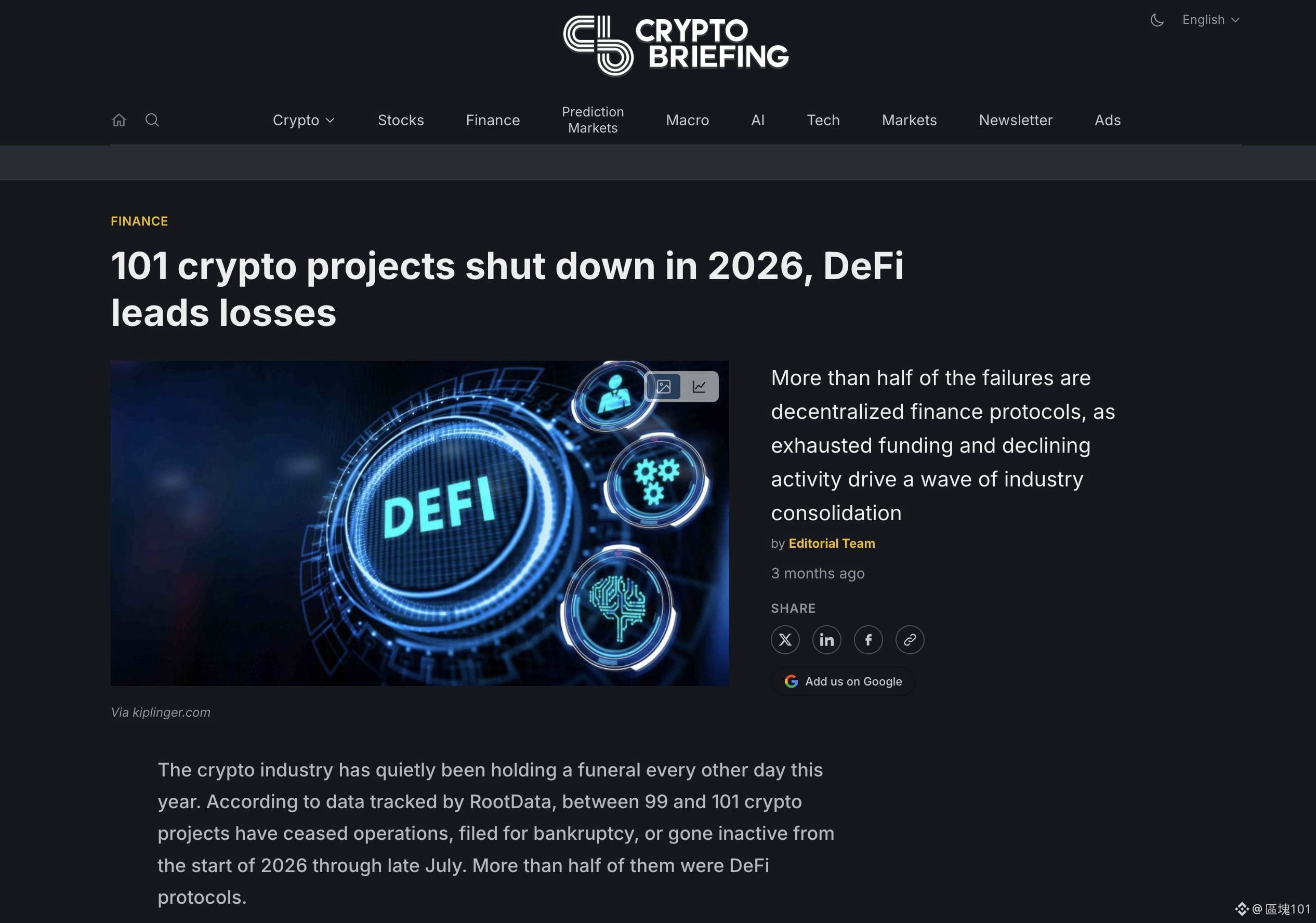
More than a hundred crypto projects have shut down so far this year. On October 20, researcher Stacy Muur listed 82 protocols, saying, “I’ve never seen anything like this”; DeFiLlama’s tally is 100.
The most painful numbers are these: the projects that shut down raised a total of about $1 billion, but earned only around $250 million in fees between launch and closure. The most common cause of death wasn’t hacks—it was simply that nobody used the product.
Some cases are extreme. Sophon raised about $60 million and had only 100 to 200 users a day. Loopring’s total value locked fell from $760 million to $17,000. Blast attracted $2 billion in deposits before its mainnet launched, then announced on October 2 that it was shutting down, citing “costs exceeding revenue.”
62
·
--
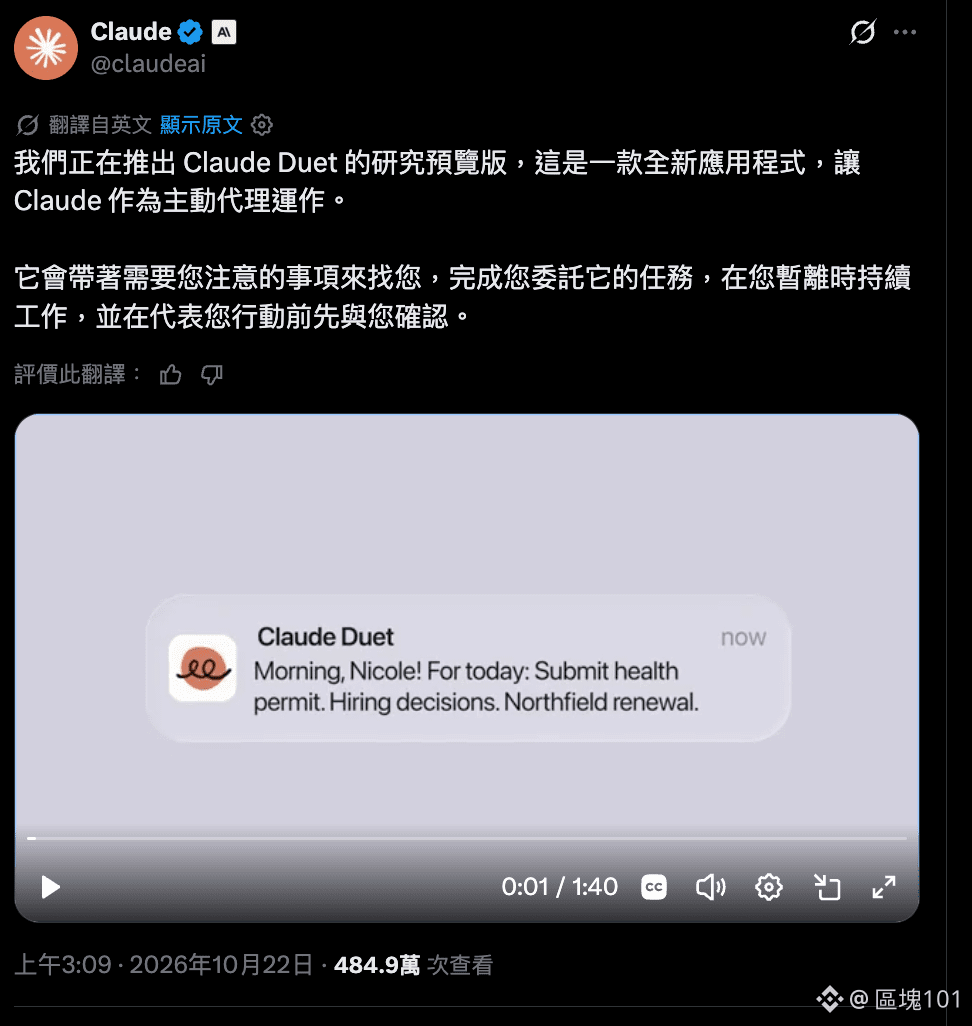
Anthropic launches Claude Duet, an AI assistant that proactively gets work done for you!
On October 21, Anthropic officially launched its new product, Claude Duet, powered by Claude Opus 5.5.
Here are a few noteworthy features:
Proactive work organization: Get a daily morning summary of important emails, calendar events, and work. Background execution: Tasks can continue running on a dedicated cloud computer and browser, even when users turn off their devices. Automated monitoring: Regularly checks connected apps and proactively notifies users when their attention is needed. Integrations with over 6,000 tools: Includes services such as Gmail, Slack, Stripe, Shopify, and QuickBooks. Approval required for important actions: Users must confirm before emails are sent, payments are made, documents are signed, or data is deleted.
Anthropic also shared real-world use cases.
One owner of a catering business with around 110 employees has been using Claude Duet to handle accounting, customer service, marketing, and bills for multiple locations.
For now, Claude Duet is available only to U.S. Pro and Max users through a waitlist-only research preview, and background tasks also count toward usage limits on subscription plans.
This shift in AI is about more than just answering questions—it’s starting to proactively manage work.
#Claude #Anthropic #AI #AIAgent #ArtificialIntelligence
63
·
--
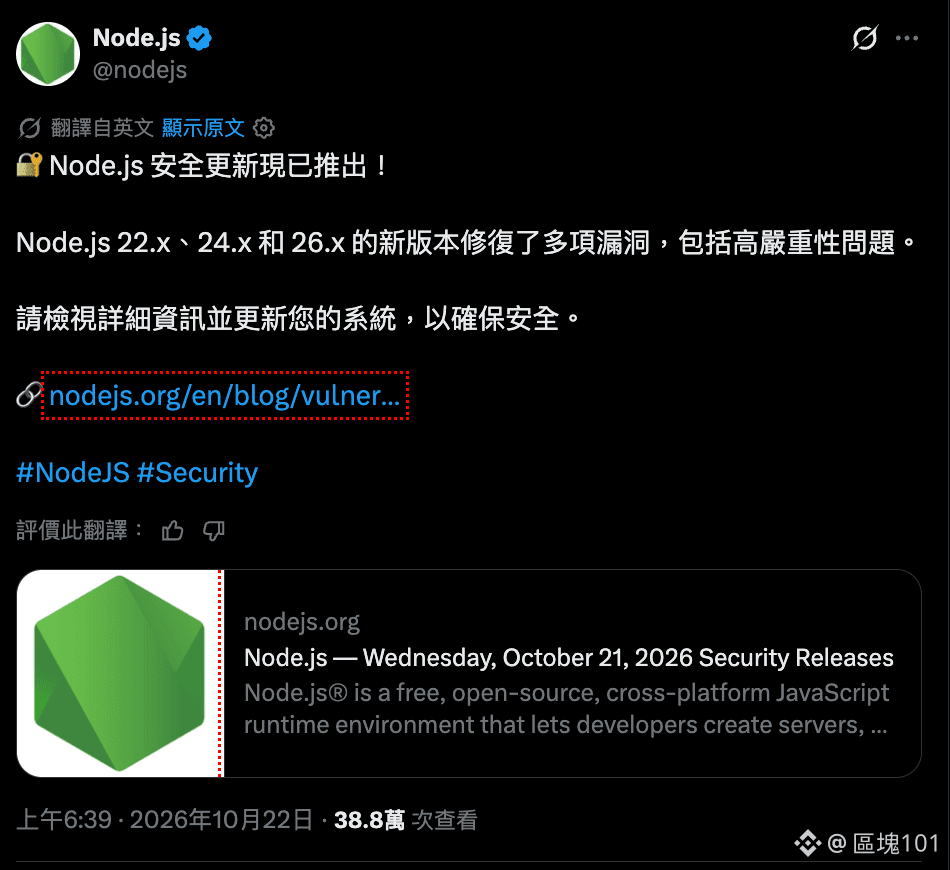
Node.js patches a high-severity vulnerability; some servers may be at risk of remote code execution!
On October 21, Node.js released a security update affecting the 22.x, 24.x, and 26.x release lines.
There are five important details:
1. A memory-write vulnerability was found in the Brotli decompression component, tracked as CVE-2026-111497.
2. The project rated the vulnerability High severity.
3. The vulnerability may be triggered when certain applications process compressed data supplied by an attacker.
4. The same update also fixes issues involving TLS, DNS, cryptographic randomness, and access control.
5. The project has released patched versions 22.23.4, 24.22.1, and 26.12.1.
In the cryptocurrency industry, trading platforms, wallet services, on-chain tools, and API backends may all use Node.js.
However, whether a service is affected depends on its actual version and software architecture; it should not be assumed that all related services are vulnerable.
Development teams using Node.js should prioritize checking their versions and scheduling updates.
#NodeJS #Cybersecurity #Crypto #Web3 #Security
63
·
--
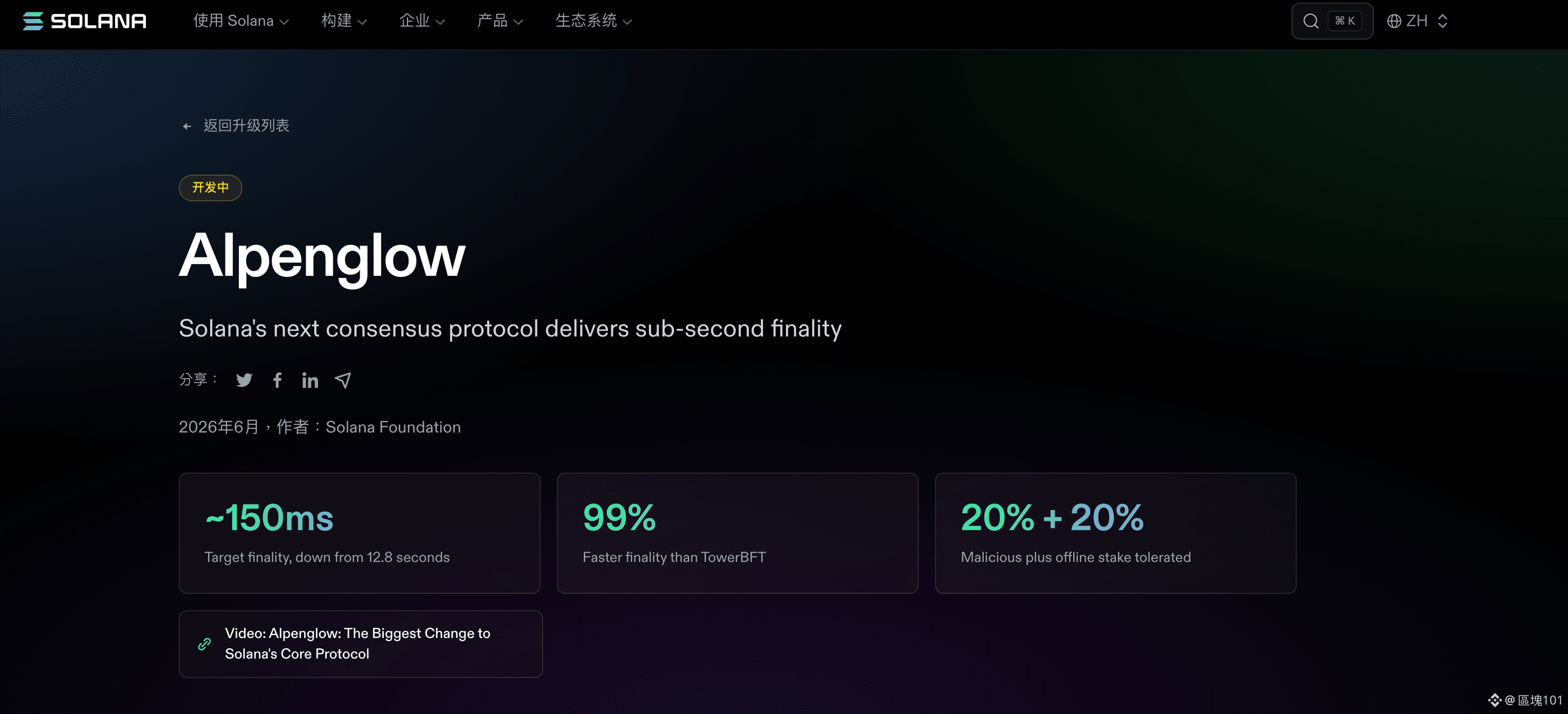
Solana is about to undergo a major consensus upgrade!
Alpenglow is expected to go live on October 21, with the goal of reducing transaction finality time from around 12.8 seconds to 150 milliseconds.
Here are five key points about the upgrade:
1. Finality is theoretically expected to be about 85 times faster.
2. The new Alpenglow consensus mechanism will replace the existing TowerBFT mechanism.
3. Validator votes will be handled in a new way.
4. The mainnet is expected to switch over without requiring a full restart.
5. On-chain transaction statistics may change as the number of vote transactions decreases.
Note that finality time is not the same as the transaction submission speed that typical users experience.
150 milliseconds is the official design target, not a result already measured on mainnet.
This upgrade will mark a significant change to Solana’s infrastructure.
74
·
--
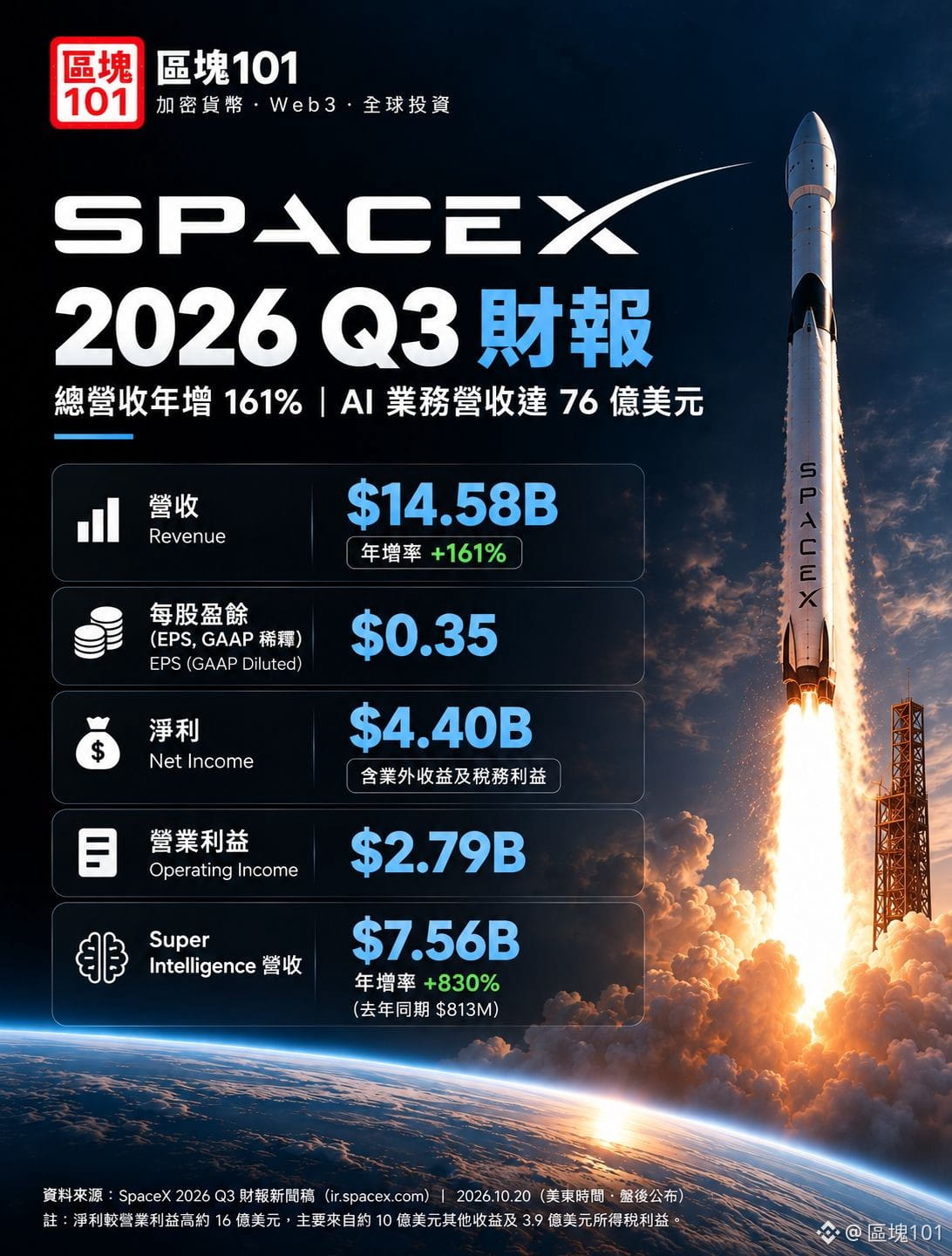
SpaceX Q3 2026 Earnings Highlights
SpaceX ($SPCXB ) reported earnings after the market closed on 10/20 U.S. Eastern Time, with revenue and EPS both significantly beating market expectations:
🔹 Revenue: $14.58 billion (up 161% year over year)
🔹 EPS (GAAP diluted): $0.35
🔹 Net income: $4.4 billion, turning a profit from a loss (a $1.05 billion loss in the same period last year)
🔹 Operating income: $2.79 billion
🔹 AI business revenue: $7.56 billion (up 830% year over year)
📌 Key takeaways
Quarterly revenue from the AI business has already exceeded half of total revenue, making it the largest growth engine.
Net income was about $1.6 billion higher than operating income, mainly due to approximately $1 billion in other gains and $390 million in tax benefits. Operating income is a more useful indicator when assessing the quality of earnings.
Demand for AI computing power continues to expand. This trend will also continue to affect AI- and computing-power-related crypto sectors, making it worth watching.
⚠️ The above is for informational purposes only and does not constitute investment advice.
#SpaceX #SPCX #AI #USEarnings #Block101
54
·
--
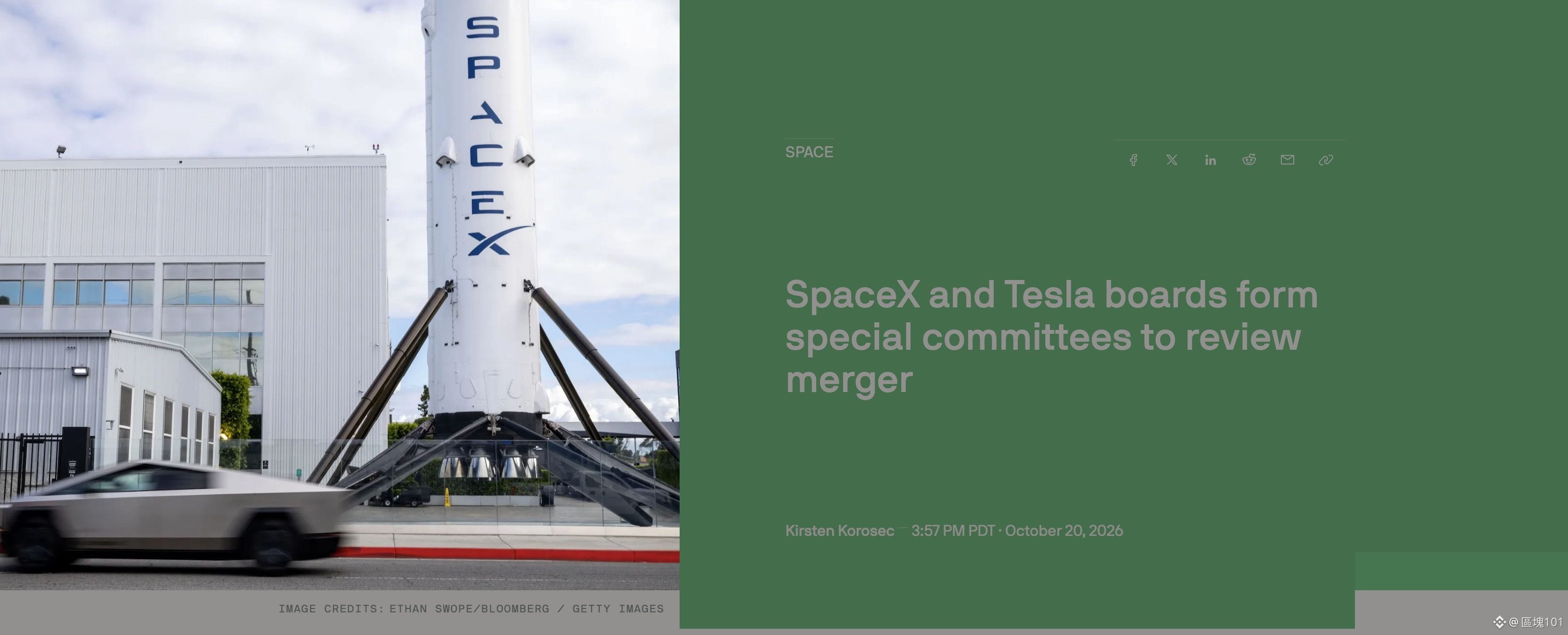
Tesla and SpaceX may merge! Musk has officially confirmed that the two companies have formed special committees.
On October 20, Musk revealed during SpaceX’s third-quarter earnings call that the two companies are evaluating a potential merger.
Here are five key points known so far:
1. The boards of Tesla and SpaceX have each formed independent special committees.
2. Because Musk is CEO of both companies, he has a conflict of interest and will not participate in the committees’ negotiations.
3. Musk supports the idea of a merger, believing the two companies have significant synergies.
4. Potential areas for integration include AI, robotics, chip manufacturing, satellite communications, and space-based data centers.
5. No agreement has been reached, and the deal would still need shareholder approval.
Notably, SpaceX has gradually expanded from a traditional rocket and satellite company into the AI infrastructure business.
Tesla, meanwhile, continues to invest in autonomous driving, Optimus humanoid robots, and AI computing.
If a merger ultimately goes ahead, it could create a major technology conglomerate spanning transportation, energy, AI, and space infrastructure.
For now, however, the companies are still in the preliminary evaluation stage, and no formal deal terms have been set.
94
·
--
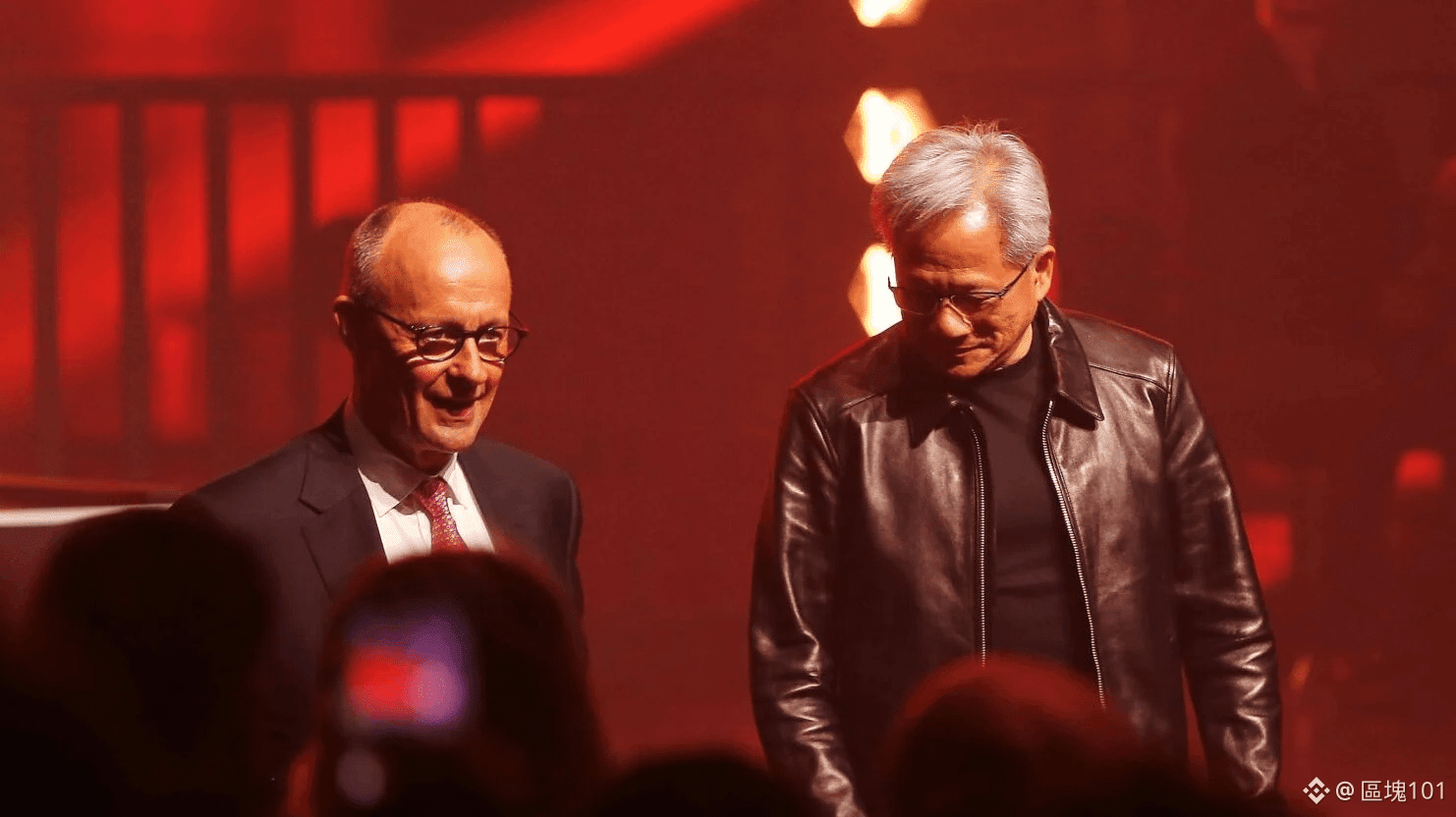
In Berlin, Jensen Huang told German Chancellor Friedrich Merz, “If the industry isn’t thriving, there’s nothing to regulate.” The remark has been widely shared across European social media.
The occasion was Germany’s first “Invest in Germany” investment summit. More than 200 business leaders attended, with investment commitments exceeding €225 billion.
Merz asked Huang what the best way to regulate AI was. His own position was that doing nothing was not an option, but neither was regulating too strictly. Huang began by saying that safety must come first, then outlined three pillars: safety must be built through technology and engineering; the industry must follow best practices; and regulation should focus on AI applications rather than the technology itself—and should start now. He concluded, “If the industry isn’t thriving, there’s nothing to regulate.”
After hearing Huang, Merz still said that regulation was needed at the European and even global levels. Julian Reichelt, former editor-in-chief of Bild, criticized Merz for spending 17 months calling for deregulation, only to ask how to regulate AI in front of global investors.
As for cooperation, Germany’s economy and research ministries signed a letter of intent with Nvidia to jointly develop physical AI models for robotics and manufacturing. The government has not disclosed its funding contribution; Handelsblatt reports it is in the nine-figure range in euros. Nvidia also announced that it would invest nearly $10 billion in Europe and in four German startups.
1
·
--
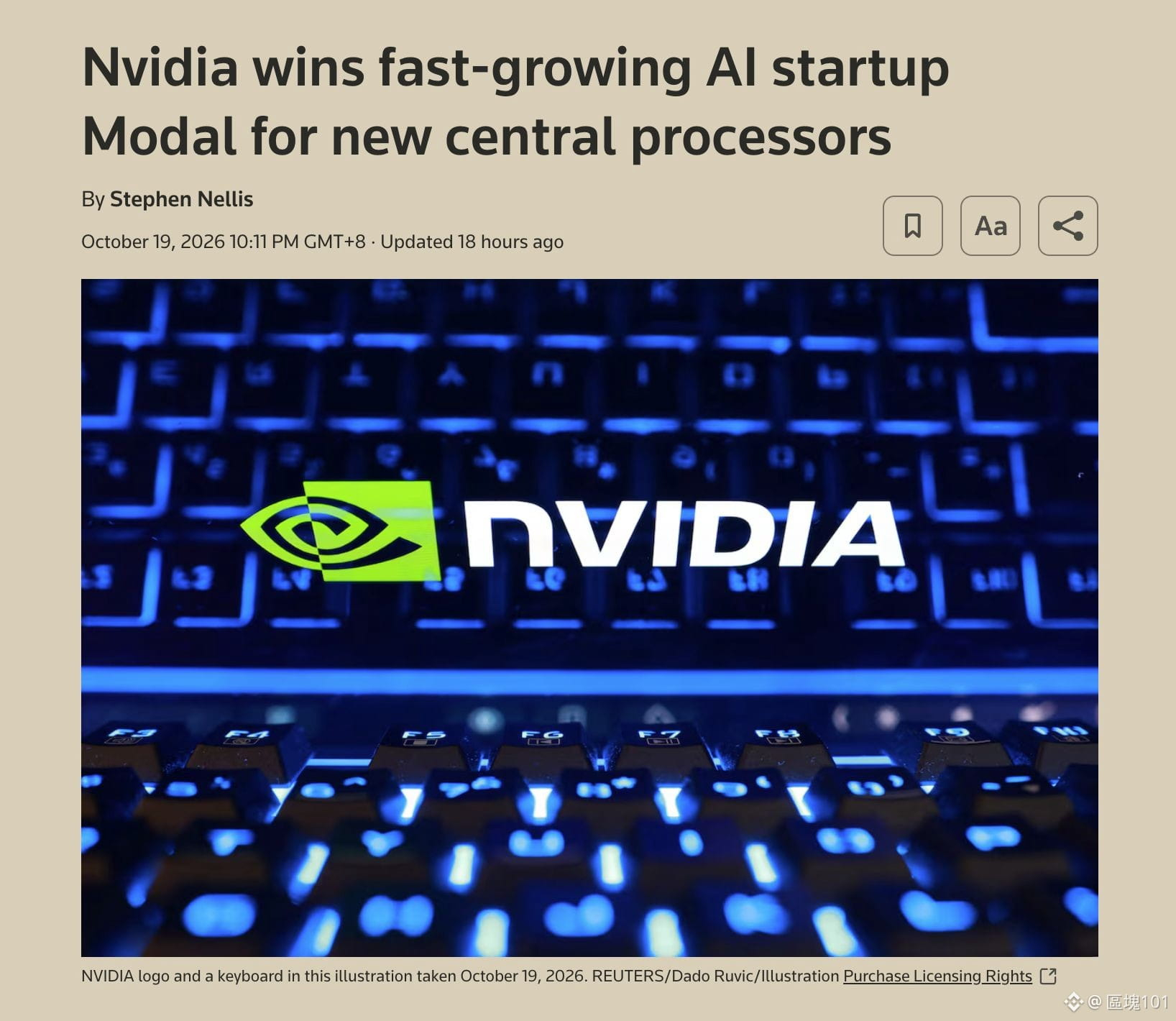
NVIDIA officially expands into the CPU market dominated by Intel and AMD!
AI cloud startup Modal announced that it will adopt NVIDIA Vera CPUs to further optimize AI agent workloads.
There are several noteworthy aspects of this partnership:
1. Modal previously used Intel and AMD CPUs and is now beginning to bring in NVIDIA processors.
2. Vera is designed for AI agents, data processing, and high-performance computing workloads.
3. Modal says early tests indicate that performance on some AI agent workloads could roughly double.
4. The company will continue using Intel and AMD for now; this does not mean a full shift to NVIDIA.
This reflects a new direction of competition emerging in the AI infrastructure market.
Until now, NVIDIA has primarily dominated the AI training and inference markets through its GPUs. It is now expanding its presence in the CPU market as well.
As the use of AI agents grows, coordination between CPUs, GPUs, and memory will also become an important competitive factor in data centers.
70
·
--
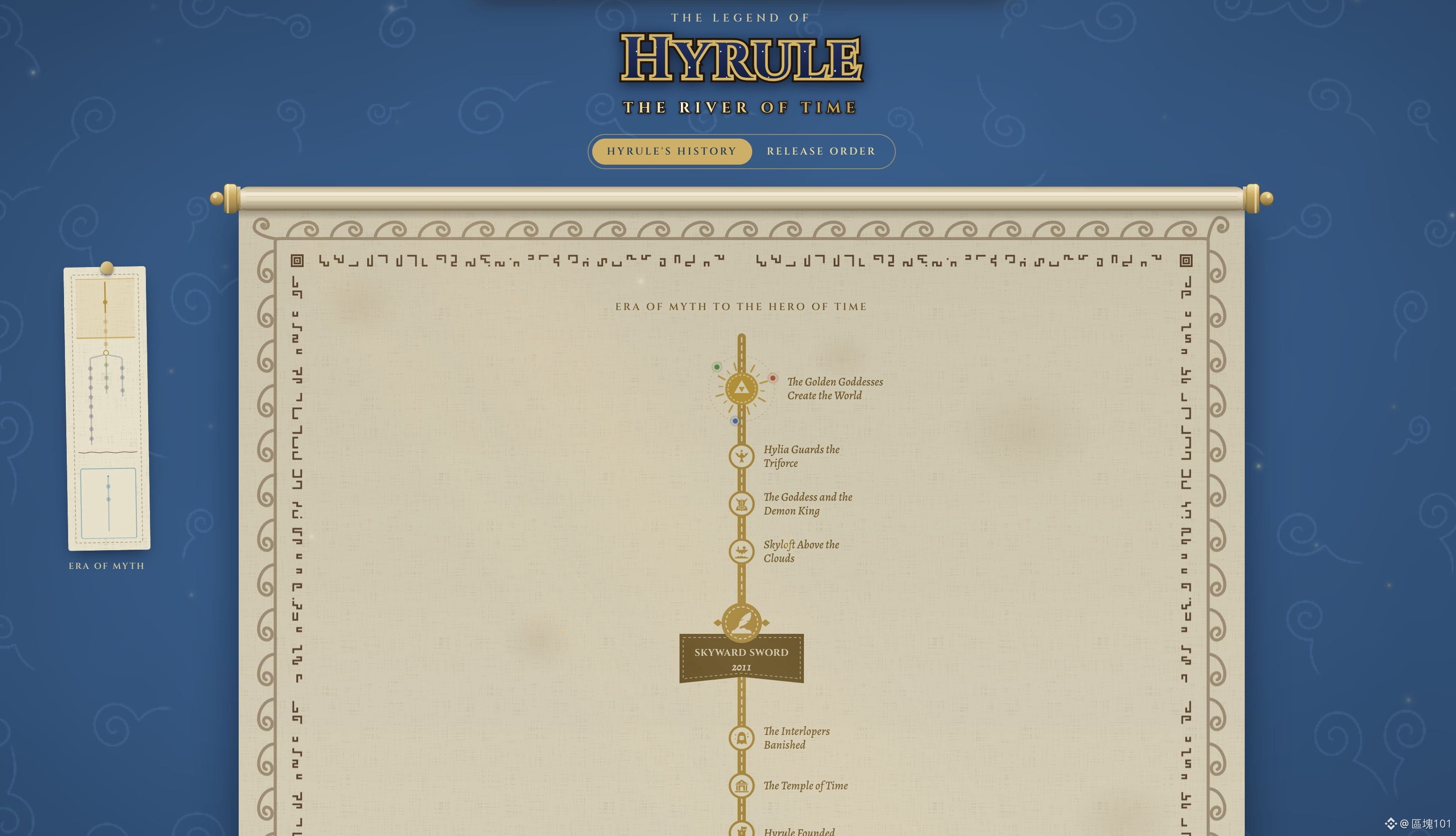
Someone got fed up with The Legend of Zelda’s headache-inducing story timeline and decided to build an interactive website mapping out the entire history of Hyrule!
The site is called The Legend of Hyrule. It was created by an independent developer and recently made it onto Hacker News.
A few interesting details:
The order in which The Legend of Zelda games were released is completely different from the chronological order of events in the story. After Ocarina of Time, the story splits into three different timelines, depending on Link’s fate. Games like The Wind Waker and Twilight Princess take place in different historical branches. The site organizes the stories of the games into an interactive timeline, letting you explore Hyrule’s history from beginning to end. The developer revealed that Claude was used to help with development.
The most interesting thing is that this series has been around for nearly 40 years. Many players have played several games, but don’t necessarily know how their stories are connected.
Now, someone has finally organized this complex world into a website you can explore for yourself.
47
·
--
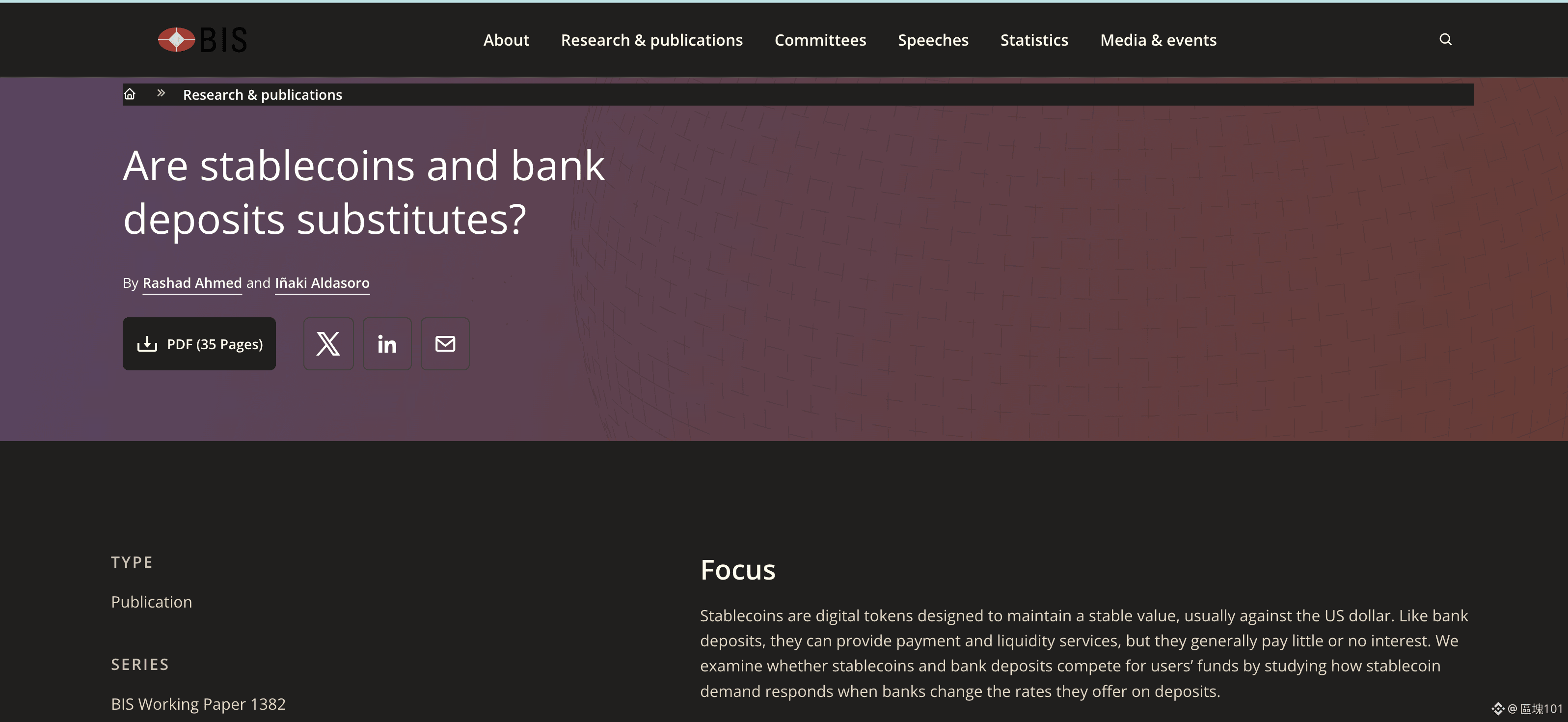
IS's latest research indicates that interest rates on traditional bank deposits may be an important factor influencing the growth of the stablecoin market.
The study used weekly U.S. data from 2019–2025 to analyze the relationship between bank deposits and stablecoins.
Key findings include:
1. Stablecoin market capitalization growth typically slows after deposit interest rates rise.
2. USDC is more sensitive to changes in interest rates than USDT.
3. Bank deposits and stablecoins may act as substitutes for some uses of funds.
4. The appeal of stablecoins depends not only on the cryptocurrency market, but may also be affected by interest rates in traditional finance.
However, this study is based on historical data analysis and cannot directly establish that interest rate changes necessarily cause funds to flow out of stablecoins.
For the cryptocurrency market, it also offers a new perspective for observing changes in the supply of USDC and USDT.
56
Log in to explore more content
Join global crypto users on Binance Square
⚡️ Get latest and useful information about crypto.
💬 Trusted by the world’s largest crypto exchange.
👍 Discover real insights from verified creators.
Email / Phone number
Trending Topics
FedWatch
16.1M views
37,855 Discussing
I CAN'T GRASP IT! 🚨 WARSH CALLS IT A "GOOD QUESTION" 🚨 BITCOIN UNDER 80,000$!
Aurion_X
·6 Likes
·8.5k views
RussiaProposedNonCustodialWalletLimitsExcludeIntlSettlements
5 views
7 Discussing
AlphabetSharesSlide10%InLateTrading
195 views
19 Discussing