
Armando Jemss TBTC
769 Posts
Armando Jemss TBTC
Report
Block User
Welcome to my profile. I Love BINANCE Don’t just scroll — LIKE REPOST SHARE Welcome to my crypto world Smash that , repost & share X@Armondojemss
Open Trade

AKE Holder
Frequent Trader
3.2 Years
761 Following
18.4K+ Followers
2.9K+ Liked
Posts
Portfolio
All
Quotes
Videos
Live
PINNED
·
--
Bullish
🎇🎉 UPCOMING 👈🎇
👉🚀 BIG NEWS ALERT, EVERYONE! 🚀👈
🎉 Binance Drops a Game-Changer — ZERO FEES on New USD Trading Pairs! 💰🔥
Hey crypto family! 🌍✨
I’m super excited to share some absolutely massive news coming straight from Binance — and trust me, this one is worth celebrating! 🥳💛
Starting November 18, 2025 at 15:00 UTC, Binance is officially launching two new Spot trading pairs:
👉 USDT/USD
👉 USDC/USD
And guess what? They’re kicking it off with a ZERO trading fee promotion! 😱🙌 Yes — ZERO. FEES. On both maker and taker transactions during the promo period. How cool is that? 💎
But that’s not all! 🤖
Binance is also enabling Trading Bots (Spot Algo Orders) for these pairs at the same time — giving traders even more smart tools to automate strategy, manage volatility, and trade efficiently 24/7. ⚙️📊
💵 Plus, USD deposits and withdrawals are now supported in select regions through BPay Global, using SWIFT transfers, cards, Apple Pay, and Google Pay. Super smooth and convenient! ✨📱
This whole update feels like a big step toward making stablecoin–fiat trading faster, cheaper, and more accessible for everyone. 🏦🔗 Whether you're a newbie or a pro, this promo is definitely worth checking out! 🌟
🚀 Binance just made Spot trading even more exciting — and I absolutely love this new zero-fee option! 🎉🔥
Let’s go, traders! 💪📈💛
#Attention_News #BigNews🚨🚨🚨 #everyon #USDT #USDC $USDT $USDC
{spot}(USDCUSDT)
$USDT
🎇🎉 UPCOMING 👈🎇
👉🚀 BIG NEWS ALERT, EVERYONE! 🚀👈
🎉 Binance Drops a Game-Changer — ZERO FEES on New USD Trading Pairs! 💰🔥
Hey crypto family! 🌍✨
I’m super excited to share some absolutely massive news coming straight from Binance — and trust me, this one is worth celebrating! 🥳💛
Starting November 18, 2025 at 15:00 UTC, Binance is officially launching two new Spot trading pairs:
👉 USDT/USD
👉 USDC/USD
And guess what? They’re kicking it off with a ZERO trading fee promotion! 😱🙌 Yes — ZERO. FEES. On both maker and taker transactions during the promo period. How cool is that? 💎
But that’s not all! 🤖
Binance is also enabling Trading Bots (Spot Algo Orders) for these pairs at the same time — giving traders even more smart tools to automate strategy, manage volatility, and trade efficiently 24/7. ⚙️📊
💵 Plus, USD deposits and withdrawals are now supported in select regions through BPay Global, using SWIFT transfers, cards, Apple Pay, and Google Pay. Super smooth and convenient! ✨📱
This whole update feels like a big step toward making stablecoin–fiat trading faster, cheaper, and more accessible for everyone. 🏦🔗 Whether you're a newbie or a pro, this promo is definitely worth checking out! 🌟
🚀 Binance just made Spot trading even more exciting — and I absolutely love this new zero-fee option! 🎉🔥
Let’s go, traders! 💪📈💛
#Attention_News #BigNews🚨🚨🚨 #everyon #USDT #USDC $USDT $USDC
$USDT
👉🚀 BIG NEWS ALERT, EVERYONE! 🚀👈
🎉 Binance Drops a Game-Changer — ZERO FEES on New USD Trading Pairs! 💰🔥
Hey crypto family! 🌍✨
I’m super excited to share some absolutely massive news coming straight from Binance — and trust me, this one is worth celebrating! 🥳💛
Starting November 18, 2025 at 15:00 UTC, Binance is officially launching two new Spot trading pairs:
👉 USDT/USD
👉 USDC/USD
And guess what? They’re kicking it off with a ZERO trading fee promotion! 😱🙌 Yes — ZERO. FEES. On both maker and taker transactions during the promo period. How cool is that? 💎
But that’s not all! 🤖
Binance is also enabling Trading Bots (Spot Algo Orders) for these pairs at the same time — giving traders even more smart tools to automate strategy, manage volatility, and trade efficiently 24/7. ⚙️📊
💵 Plus, USD deposits and withdrawals are now supported in select regions through BPay Global, using SWIFT transfers, cards, Apple Pay, and Google Pay. Super smooth and convenient! ✨📱
This whole update feels like a big step toward making stablecoin–fiat trading faster, cheaper, and more accessible for everyone. 🏦🔗 Whether you're a newbie or a pro, this promo is definitely worth checking out! 🌟
🚀 Binance just made Spot trading even more exciting — and I absolutely love this new zero-fee option! 🎉🔥
Let’s go, traders! 💪📈💛
#Attention_News #BigNews🚨🚨🚨 #everyon #USDT #USDC $USDT $USDC
$USDT
67
37
7
138
PINNED
Article
💡🪙 What Is Bitcoin?
💡🌍🌏🪩
Bitcoin is the world’s first cryptocurrency, a revolutionary form of digital money that operates without banks or governments. It was introduced in 2008 and officially launched in 2009. Since then, Bitcoin ($BTC ) has evolved from an experimental project into a global financial asset, widely recognized as both a store of value and a medium of exchange.
Unlike traditional fiat currencies (like the US dollar or euro), Bitcoin is decentralized — no single authority, government, or organization controls it. Transactions happen directly between users, removing the need for intermediaries such as banks.
Bitcoin’s core strengths lie in its:
🔒 Security – Protected by cryptography and blockchain technology.
🌐 Decentralization – Maintained by thousands of independent computers (nodes).
⛔ Censorship Resistance – No one can block or reverse your transactions.
💰 Limited Supply – Only 21 million BTC will ever exist, creating scarcity.
---
⚙️ How Does Bitcoin Work?
Bitcoin operates on a system called blockchain technology, which serves as a public digital ledger. Every transaction ever made with Bitcoin is recorded permanently on this blockchain.
Think of the blockchain as a massive, transparent spreadsheet that is duplicated and shared across a global network of computers. Each entry in the spreadsheet represents a transaction.
When someone sends Bitcoin, the transaction gets verified and added to the blockchain by a distributed network of computers — also known as nodes.
🔗 Key Features of the Bitcoin Blockchain
Decentralization: There’s no central server. Thousands of computers worldwide maintain the network.
Transparency: Every transaction is visible to anyone via blockchain explorers.
Immutability: Once confirmed, a transaction cannot be altered or deleted.
Security: Transactions are verified using advanced cryptography, making fraud extremely difficult.
---
💸 Example: A Bitcoin Transaction
Let’s say Alice wants to send 1 BTC to Bob.
1. Alice creates a transaction using her crypto wallet and broadcasts it to the Bitcoin network.
2. The network verifies that Alice has enough BTC to send.
3. Once validated, miners group this transaction into a block.
4. The block gets confirmed and added to the blockchain.
5. Bob receives 1 BTC in his wallet.
This process happens globally, 24/7, without needing a bank to approve or record anything.
Every node on the Bitcoin network holds a copy of the blockchain, which constantly updates to ensure all participants see the same data. This synchronization makes Bitcoin secure and trustworthy.
---
⛏️ Bitcoin Mining Explained
Mining is how Bitcoin transactions are verified and added to the blockchain. It’s also the process through which new bitcoins are created.
Here’s how it works:
When a user sends a transaction, it enters a pool of unconfirmed data called the mempool.
Miners (specialized computers) pick these transactions and compete to solve a complex mathematical problem.
The first miner to solve it gets to add the new block of transactions to the blockchain.
As a reward, the miner receives newly minted bitcoins and transaction fees.
This process, called Proof of Work (PoW), ensures network security. Because mining requires expensive hardware and electricity, it would be very costly for anyone to try to cheat the system.
💰 Block Rewards
Every time a new block is mined, miners receive a reward — known as a block reward. This is how new bitcoins enter circulation. Over time, this reward decreases in an event known as the Bitcoin Halving (more on that below).
Mining also keeps the network decentralized — anyone with the right equipment and internet access can participate.
---
🔐 Proof of Work (PoW)
Bitcoin’s consensus mechanism is called Proof of Work, the engine that powers its blockchain.
Here’s why it matters:
It prevents double-spending (sending the same BTC twice).
It ensures that all participants agree on a single, verified version of the blockchain.
It makes tampering practically impossible.
If someone tried to add a fake block, the rest of the network would reject it instantly. Because mining is energy-intensive, attempting to alter the blockchain would require enormous computational power — far beyond what any single entity controls.
---
💳 What Is Bitcoin Used For?
Bitcoin serves multiple roles in today’s digital economy:
🛍️ 1. As a Digital Currency
You can use Bitcoin to buy goods and services online or in person. Many companies now accept BTC payments, from small online retailers to large multinational corporations.
Transactions are borderless and typically faster than traditional bank transfers, especially for international payments.
💸 2. As a Remittance Tool
Bitcoin enables fast and low-cost global transfers, making it a valuable option for sending money abroad without high remittance fees or waiting periods.
💎 3. As a Store of Value
Bitcoin is often referred to as “digital gold.” With its limited supply and decentralized design, many investors see BTC as a hedge against inflation and economic instability.
Despite price volatility, long-term holders (known as HODLers) believe Bitcoin’s scarcity and adoption will continue to increase its value over time.
---
👤 Who Created Bitcoin?
Bitcoin was created by an individual or group under the pseudonym Satoshi Nakamoto.
In October 2008, Satoshi published the whitepaper titled “Bitcoin: A Peer-to-Peer Electronic Cash System.”
This document introduced the concept of a decentralized digital currency that could operate securely without banks or intermediaries.
In January 2009, Satoshi released the first version of the Bitcoin software and mined the first block of the blockchain — known as the Genesis Block. The very first Bitcoin transaction occurred soon after, when Satoshi sent 10 BTC to developer Hal Finney.
---
🍕 Bitcoin Pizza Day
A fun milestone in Bitcoin’s history occurred on May 22, 2010, when programmer Laszlo Hanyecz made the first real-world Bitcoin purchase — buying two pizzas for 10,000 BTC.
This transaction is now celebrated every year as Bitcoin Pizza Day 🍕, symbolizing how far Bitcoin has come in terms of adoption and value.
---
🧩 Did Satoshi Invent Blockchain?
Not exactly. The concept of blockchain-like systems existed before Bitcoin. In the early 1990s, researchers Stuart Haber and W. Scott Stornetta proposed a method for timestamping digital documents using cryptographic techniques.
Satoshi’s innovation was combining existing ideas — cryptography, peer-to-peer networking, and game theory — into a practical and secure system that solved the double-spending problem for the first time.
This made Bitcoin the first successful implementation of blockchain technology.
---
🔢 How Many Bitcoins Exist?
The total supply of Bitcoin is capped at 21 million coins. This limit is hardcoded into the protocol, meaning no more than 21 million BTC will ever exist.
As of 2025, over 19.8 million bitcoins have already been mined — that’s about 94% of the total supply.
However, due to periodic halving events, the remaining supply will take more than a century to be fully mined. The final Bitcoin is expected to be mined around the year 2140.
---
⚖️ Bitcoin Halving
Bitcoin Halving is a pre-programmed event that cuts the mining reward in half approximately every four years (every 210,000 blocks).
Here’s what it does:
Reduces the number of new bitcoins entering circulation.
Slows down inflation.
Increases scarcity, which can influence market value.
🕓 Recent and Upcoming Halvings
2020 Halving: Block reward reduced from 12.5 BTC to 6.25 BTC.
2024 Halving (April 19): Reduced from 6.25 BTC to 3.125 BTC.
Next Halving (Expected 2028): Reward will fall to 1.5625 BTC.
This predictable supply schedule is one reason why Bitcoin is often seen as “sound money” compared to fiat currencies, which can be printed without limit.
---
🛡️ Is Bitcoin Safe?
Bitcoin’s blockchain itself is highly secure, but individual users must take precautions to protect their holdings.
🔐 Common Security Risks
1. Phishing Scams: Fraudsters trick users into revealing login credentials or private keys.
2. Malware & Ransomware: Attackers infect devices to steal wallet information.
3. Fake Exchanges or Wallets: Downloading apps from unverified sources can compromise your funds.
🧠 How to Stay Safe
Use strong passwords and two-factor authentication (2FA).
Store your BTC in a secure crypto wallet — ideally a hardware wallet for long-term holding.
Only download wallet software from trusted, official sources.
Be cautious of offers that sound “too good to be true.”
Because Bitcoin transactions are irreversible and not insured by governments, once funds are sent to a malicious address, they cannot be recovered.
---
📉 Bitcoin Volatility
Bitcoin’s price can fluctuate dramatically. While this volatility offers opportunities for traders, it also poses risks for short-term investors.
Factors that influence Bitcoin’s price include:
Market demand and adoption rates.
Macroeconomic conditions and inflation trends.
Regulatory developments.
Institutional investment activity.
Despite fluctuations, Bitcoin’s long-term trend since 2009 has been upward, showing resilience and growing global adoption.
---
🌍 The Future of Bitcoin
Bitcoin continues to evolve as both a technological innovation and an economic phenomenon.
Some key trends shaping its future include:
Institutional Adoption: More companies and financial institutions now hold BTC on their balance sheets.
Layer-2 Scaling Solutions: Technologies like the Lightning Network ⚡ make Bitcoin transactions faster and cheaper.
Regulation: Governments worldwide are developing clearer rules around cryptocurrency use and taxation.
Integration with Traditional Finance: Bitcoin-based ETFs and financial products are expanding investor access.
As Bitcoin matures, it’s increasingly viewed not just as an alternative currency but as a cornerstone of the digital economy.
---
🧭 Closing Thoughts
Bitcoin has transformed how we think about money, ownership, and financial freedom. From its mysterious beginnings in 2009 to becoming a trillion-dollar asset class, Bitcoin’s journey represents one of the most significant innovations in modern finance.
Whether you view it as a payment network, a store of value, or a speculative investment, understanding Bitcoin’s underlying principles — decentralization, transparency, and scarcity — is essential in the evolving digital era. @BTCWires @bitcoin @Binanc @BinanceOracle
$BTC
#StrategyBTCPurchase #BTC走势分析 #BTC☀ $BTC
{spot}(BTCUSDT)
💡🪙 What Is Bitcoin?
💡🌍🌏🪩
Bitcoin is the world’s first cryptocurrency, a revolutionary form of digital money that operates without banks or governments. It was introduced in 2008 and officially launched in 2009. Since then, Bitcoin ($BTC ) has evolved from an experimental project into a global financial asset, widely recognized as both a store of value and a medium of exchange.
Unlike traditional fiat currencies (like the US dollar or euro), Bitcoin is decentralized — no single authority, government, or organization controls it. Transactions happen directly between users, removing the need for intermediaries such as banks.
Bitcoin’s core strengths lie in its:
🔒 Security – Protected by cryptography and blockchain technology.
🌐 Decentralization – Maintained by thousands of independent computers (nodes).
⛔ Censorship Resistance – No one can block or reverse your transactions.
💰 Limited Supply – Only 21 million BTC will ever exist, creating scarcity.
---
⚙️ How Does Bitcoin Work?
Bitcoin operates on a system called blockchain technology, which serves as a public digital ledger. Every transaction ever made with Bitcoin is recorded permanently on this blockchain.
Think of the blockchain as a massive, transparent spreadsheet that is duplicated and shared across a global network of computers. Each entry in the spreadsheet represents a transaction.
When someone sends Bitcoin, the transaction gets verified and added to the blockchain by a distributed network of computers — also known as nodes.
🔗 Key Features of the Bitcoin Blockchain
Decentralization: There’s no central server. Thousands of computers worldwide maintain the network.
Transparency: Every transaction is visible to anyone via blockchain explorers.
Immutability: Once confirmed, a transaction cannot be altered or deleted.
Security: Transactions are verified using advanced cryptography, making fraud extremely difficult.
---
💸 Example: A Bitcoin Transaction
Let’s say Alice wants to send 1 BTC to Bob.
1. Alice creates a transaction using her crypto wallet and broadcasts it to the Bitcoin network.
2. The network verifies that Alice has enough BTC to send.
3. Once validated, miners group this transaction into a block.
4. The block gets confirmed and added to the blockchain.
5. Bob receives 1 BTC in his wallet.
This process happens globally, 24/7, without needing a bank to approve or record anything.
Every node on the Bitcoin network holds a copy of the blockchain, which constantly updates to ensure all participants see the same data. This synchronization makes Bitcoin secure and trustworthy.
---
⛏️ Bitcoin Mining Explained
Mining is how Bitcoin transactions are verified and added to the blockchain. It’s also the process through which new bitcoins are created.
Here’s how it works:
When a user sends a transaction, it enters a pool of unconfirmed data called the mempool.
Miners (specialized computers) pick these transactions and compete to solve a complex mathematical problem.
The first miner to solve it gets to add the new block of transactions to the blockchain.
As a reward, the miner receives newly minted bitcoins and transaction fees.
This process, called Proof of Work (PoW), ensures network security. Because mining requires expensive hardware and electricity, it would be very costly for anyone to try to cheat the system.
💰 Block Rewards
Every time a new block is mined, miners receive a reward — known as a block reward. This is how new bitcoins enter circulation. Over time, this reward decreases in an event known as the Bitcoin Halving (more on that below).
Mining also keeps the network decentralized — anyone with the right equipment and internet access can participate.
---
🔐 Proof of Work (PoW)
Bitcoin’s consensus mechanism is called Proof of Work, the engine that powers its blockchain.
Here’s why it matters:
It prevents double-spending (sending the same BTC twice).
It ensures that all participants agree on a single, verified version of the blockchain.
It makes tampering practically impossible.
If someone tried to add a fake block, the rest of the network would reject it instantly. Because mining is energy-intensive, attempting to alter the blockchain would require enormous computational power — far beyond what any single entity controls.
---
💳 What Is Bitcoin Used For?
Bitcoin serves multiple roles in today’s digital economy:
🛍️ 1. As a Digital Currency
You can use Bitcoin to buy goods and services online or in person. Many companies now accept BTC payments, from small online retailers to large multinational corporations.
Transactions are borderless and typically faster than traditional bank transfers, especially for international payments.
💸 2. As a Remittance Tool
Bitcoin enables fast and low-cost global transfers, making it a valuable option for sending money abroad without high remittance fees or waiting periods.
💎 3. As a Store of Value
Bitcoin is often referred to as “digital gold.” With its limited supply and decentralized design, many investors see BTC as a hedge against inflation and economic instability.
Despite price volatility, long-term holders (known as HODLers) believe Bitcoin’s scarcity and adoption will continue to increase its value over time.
---
👤 Who Created Bitcoin?
Bitcoin was created by an individual or group under the pseudonym Satoshi Nakamoto.
In October 2008, Satoshi published the whitepaper titled “Bitcoin: A Peer-to-Peer Electronic Cash System.”
This document introduced the concept of a decentralized digital currency that could operate securely without banks or intermediaries.
In January 2009, Satoshi released the first version of the Bitcoin software and mined the first block of the blockchain — known as the Genesis Block. The very first Bitcoin transaction occurred soon after, when Satoshi sent 10 BTC to developer Hal Finney.
---
🍕 Bitcoin Pizza Day
A fun milestone in Bitcoin’s history occurred on May 22, 2010, when programmer Laszlo Hanyecz made the first real-world Bitcoin purchase — buying two pizzas for 10,000 BTC.
This transaction is now celebrated every year as Bitcoin Pizza Day 🍕, symbolizing how far Bitcoin has come in terms of adoption and value.
---
🧩 Did Satoshi Invent Blockchain?
Not exactly. The concept of blockchain-like systems existed before Bitcoin. In the early 1990s, researchers Stuart Haber and W. Scott Stornetta proposed a method for timestamping digital documents using cryptographic techniques.
Satoshi’s innovation was combining existing ideas — cryptography, peer-to-peer networking, and game theory — into a practical and secure system that solved the double-spending problem for the first time.
This made Bitcoin the first successful implementation of blockchain technology.
---
🔢 How Many Bitcoins Exist?
The total supply of Bitcoin is capped at 21 million coins. This limit is hardcoded into the protocol, meaning no more than 21 million BTC will ever exist.
As of 2025, over 19.8 million bitcoins have already been mined — that’s about 94% of the total supply.
However, due to periodic halving events, the remaining supply will take more than a century to be fully mined. The final Bitcoin is expected to be mined around the year 2140.
---
⚖️ Bitcoin Halving
Bitcoin Halving is a pre-programmed event that cuts the mining reward in half approximately every four years (every 210,000 blocks).
Here’s what it does:
Reduces the number of new bitcoins entering circulation.
Slows down inflation.
Increases scarcity, which can influence market value.
🕓 Recent and Upcoming Halvings
2020 Halving: Block reward reduced from 12.5 BTC to 6.25 BTC.
2024 Halving (April 19): Reduced from 6.25 BTC to 3.125 BTC.
Next Halving (Expected 2028): Reward will fall to 1.5625 BTC.
This predictable supply schedule is one reason why Bitcoin is often seen as “sound money” compared to fiat currencies, which can be printed without limit.
---
🛡️ Is Bitcoin Safe?
Bitcoin’s blockchain itself is highly secure, but individual users must take precautions to protect their holdings.
🔐 Common Security Risks
1. Phishing Scams: Fraudsters trick users into revealing login credentials or private keys.
2. Malware & Ransomware: Attackers infect devices to steal wallet information.
3. Fake Exchanges or Wallets: Downloading apps from unverified sources can compromise your funds.
🧠 How to Stay Safe
Use strong passwords and two-factor authentication (2FA).
Store your BTC in a secure crypto wallet — ideally a hardware wallet for long-term holding.
Only download wallet software from trusted, official sources.
Be cautious of offers that sound “too good to be true.”
Because Bitcoin transactions are irreversible and not insured by governments, once funds are sent to a malicious address, they cannot be recovered.
---
📉 Bitcoin Volatility
Bitcoin’s price can fluctuate dramatically. While this volatility offers opportunities for traders, it also poses risks for short-term investors.
Factors that influence Bitcoin’s price include:
Market demand and adoption rates.
Macroeconomic conditions and inflation trends.
Regulatory developments.
Institutional investment activity.
Despite fluctuations, Bitcoin’s long-term trend since 2009 has been upward, showing resilience and growing global adoption.
---
🌍 The Future of Bitcoin
Bitcoin continues to evolve as both a technological innovation and an economic phenomenon.
Some key trends shaping its future include:
Institutional Adoption: More companies and financial institutions now hold BTC on their balance sheets.
Layer-2 Scaling Solutions: Technologies like the Lightning Network ⚡ make Bitcoin transactions faster and cheaper.
Regulation: Governments worldwide are developing clearer rules around cryptocurrency use and taxation.
Integration with Traditional Finance: Bitcoin-based ETFs and financial products are expanding investor access.
As Bitcoin matures, it’s increasingly viewed not just as an alternative currency but as a cornerstone of the digital economy.
---
🧭 Closing Thoughts
Bitcoin has transformed how we think about money, ownership, and financial freedom. From its mysterious beginnings in 2009 to becoming a trillion-dollar asset class, Bitcoin’s journey represents one of the most significant innovations in modern finance.
Whether you view it as a payment network, a store of value, or a speculative investment, understanding Bitcoin’s underlying principles — decentralization, transparency, and scarcity — is essential in the evolving digital era. @BTC Wires @Bitcoin @Binanc @BinanceOracle
$BTC
#StrategyBTCPurchase #BTC走势分析 #BTC☀ $BTC
Bitcoin is the world’s first cryptocurrency, a revolutionary form of digital money that operates without banks or governments. It was introduced in 2008 and officially launched in 2009. Since then, Bitcoin ($BTC ) has evolved from an experimental project into a global financial asset, widely recognized as both a store of value and a medium of exchange.
Unlike traditional fiat currencies (like the US dollar or euro), Bitcoin is decentralized — no single authority, government, or organization controls it. Transactions happen directly between users, removing the need for intermediaries such as banks.
Bitcoin’s core strengths lie in its:
🔒 Security – Protected by cryptography and blockchain technology.
🌐 Decentralization – Maintained by thousands of independent computers (nodes).
⛔ Censorship Resistance – No one can block or reverse your transactions.
💰 Limited Supply – Only 21 million BTC will ever exist, creating scarcity.
---
⚙️ How Does Bitcoin Work?
Bitcoin operates on a system called blockchain technology, which serves as a public digital ledger. Every transaction ever made with Bitcoin is recorded permanently on this blockchain.
Think of the blockchain as a massive, transparent spreadsheet that is duplicated and shared across a global network of computers. Each entry in the spreadsheet represents a transaction.
When someone sends Bitcoin, the transaction gets verified and added to the blockchain by a distributed network of computers — also known as nodes.
🔗 Key Features of the Bitcoin Blockchain
Decentralization: There’s no central server. Thousands of computers worldwide maintain the network.
Transparency: Every transaction is visible to anyone via blockchain explorers.
Immutability: Once confirmed, a transaction cannot be altered or deleted.
Security: Transactions are verified using advanced cryptography, making fraud extremely difficult.
---
💸 Example: A Bitcoin Transaction
Let’s say Alice wants to send 1 BTC to Bob.
1. Alice creates a transaction using her crypto wallet and broadcasts it to the Bitcoin network.
2. The network verifies that Alice has enough BTC to send.
3. Once validated, miners group this transaction into a block.
4. The block gets confirmed and added to the blockchain.
5. Bob receives 1 BTC in his wallet.
This process happens globally, 24/7, without needing a bank to approve or record anything.
Every node on the Bitcoin network holds a copy of the blockchain, which constantly updates to ensure all participants see the same data. This synchronization makes Bitcoin secure and trustworthy.
---
⛏️ Bitcoin Mining Explained
Mining is how Bitcoin transactions are verified and added to the blockchain. It’s also the process through which new bitcoins are created.
Here’s how it works:
When a user sends a transaction, it enters a pool of unconfirmed data called the mempool.
Miners (specialized computers) pick these transactions and compete to solve a complex mathematical problem.
The first miner to solve it gets to add the new block of transactions to the blockchain.
As a reward, the miner receives newly minted bitcoins and transaction fees.
This process, called Proof of Work (PoW), ensures network security. Because mining requires expensive hardware and electricity, it would be very costly for anyone to try to cheat the system.
💰 Block Rewards
Every time a new block is mined, miners receive a reward — known as a block reward. This is how new bitcoins enter circulation. Over time, this reward decreases in an event known as the Bitcoin Halving (more on that below).
Mining also keeps the network decentralized — anyone with the right equipment and internet access can participate.
---
🔐 Proof of Work (PoW)
Bitcoin’s consensus mechanism is called Proof of Work, the engine that powers its blockchain.
Here’s why it matters:
It prevents double-spending (sending the same BTC twice).
It ensures that all participants agree on a single, verified version of the blockchain.
It makes tampering practically impossible.
If someone tried to add a fake block, the rest of the network would reject it instantly. Because mining is energy-intensive, attempting to alter the blockchain would require enormous computational power — far beyond what any single entity controls.
---
💳 What Is Bitcoin Used For?
Bitcoin serves multiple roles in today’s digital economy:
🛍️ 1. As a Digital Currency
You can use Bitcoin to buy goods and services online or in person. Many companies now accept BTC payments, from small online retailers to large multinational corporations.
Transactions are borderless and typically faster than traditional bank transfers, especially for international payments.
💸 2. As a Remittance Tool
Bitcoin enables fast and low-cost global transfers, making it a valuable option for sending money abroad without high remittance fees or waiting periods.
💎 3. As a Store of Value
Bitcoin is often referred to as “digital gold.” With its limited supply and decentralized design, many investors see BTC as a hedge against inflation and economic instability.
Despite price volatility, long-term holders (known as HODLers) believe Bitcoin’s scarcity and adoption will continue to increase its value over time.
---
👤 Who Created Bitcoin?
Bitcoin was created by an individual or group under the pseudonym Satoshi Nakamoto.
In October 2008, Satoshi published the whitepaper titled “Bitcoin: A Peer-to-Peer Electronic Cash System.”
This document introduced the concept of a decentralized digital currency that could operate securely without banks or intermediaries.
In January 2009, Satoshi released the first version of the Bitcoin software and mined the first block of the blockchain — known as the Genesis Block. The very first Bitcoin transaction occurred soon after, when Satoshi sent 10 BTC to developer Hal Finney.
---
🍕 Bitcoin Pizza Day
A fun milestone in Bitcoin’s history occurred on May 22, 2010, when programmer Laszlo Hanyecz made the first real-world Bitcoin purchase — buying two pizzas for 10,000 BTC.
This transaction is now celebrated every year as Bitcoin Pizza Day 🍕, symbolizing how far Bitcoin has come in terms of adoption and value.
---
🧩 Did Satoshi Invent Blockchain?
Not exactly. The concept of blockchain-like systems existed before Bitcoin. In the early 1990s, researchers Stuart Haber and W. Scott Stornetta proposed a method for timestamping digital documents using cryptographic techniques.
Satoshi’s innovation was combining existing ideas — cryptography, peer-to-peer networking, and game theory — into a practical and secure system that solved the double-spending problem for the first time.
This made Bitcoin the first successful implementation of blockchain technology.
---
🔢 How Many Bitcoins Exist?
The total supply of Bitcoin is capped at 21 million coins. This limit is hardcoded into the protocol, meaning no more than 21 million BTC will ever exist.
As of 2025, over 19.8 million bitcoins have already been mined — that’s about 94% of the total supply.
However, due to periodic halving events, the remaining supply will take more than a century to be fully mined. The final Bitcoin is expected to be mined around the year 2140.
---
⚖️ Bitcoin Halving
Bitcoin Halving is a pre-programmed event that cuts the mining reward in half approximately every four years (every 210,000 blocks).
Here’s what it does:
Reduces the number of new bitcoins entering circulation.
Slows down inflation.
Increases scarcity, which can influence market value.
🕓 Recent and Upcoming Halvings
2020 Halving: Block reward reduced from 12.5 BTC to 6.25 BTC.
2024 Halving (April 19): Reduced from 6.25 BTC to 3.125 BTC.
Next Halving (Expected 2028): Reward will fall to 1.5625 BTC.
This predictable supply schedule is one reason why Bitcoin is often seen as “sound money” compared to fiat currencies, which can be printed without limit.
---
🛡️ Is Bitcoin Safe?
Bitcoin’s blockchain itself is highly secure, but individual users must take precautions to protect their holdings.
🔐 Common Security Risks
1. Phishing Scams: Fraudsters trick users into revealing login credentials or private keys.
2. Malware & Ransomware: Attackers infect devices to steal wallet information.
3. Fake Exchanges or Wallets: Downloading apps from unverified sources can compromise your funds.
🧠 How to Stay Safe
Use strong passwords and two-factor authentication (2FA).
Store your BTC in a secure crypto wallet — ideally a hardware wallet for long-term holding.
Only download wallet software from trusted, official sources.
Be cautious of offers that sound “too good to be true.”
Because Bitcoin transactions are irreversible and not insured by governments, once funds are sent to a malicious address, they cannot be recovered.
---
📉 Bitcoin Volatility
Bitcoin’s price can fluctuate dramatically. While this volatility offers opportunities for traders, it also poses risks for short-term investors.
Factors that influence Bitcoin’s price include:
Market demand and adoption rates.
Macroeconomic conditions and inflation trends.
Regulatory developments.
Institutional investment activity.
Despite fluctuations, Bitcoin’s long-term trend since 2009 has been upward, showing resilience and growing global adoption.
---
🌍 The Future of Bitcoin
Bitcoin continues to evolve as both a technological innovation and an economic phenomenon.
Some key trends shaping its future include:
Institutional Adoption: More companies and financial institutions now hold BTC on their balance sheets.
Layer-2 Scaling Solutions: Technologies like the Lightning Network ⚡ make Bitcoin transactions faster and cheaper.
Regulation: Governments worldwide are developing clearer rules around cryptocurrency use and taxation.
Integration with Traditional Finance: Bitcoin-based ETFs and financial products are expanding investor access.
As Bitcoin matures, it’s increasingly viewed not just as an alternative currency but as a cornerstone of the digital economy.
---
🧭 Closing Thoughts
Bitcoin has transformed how we think about money, ownership, and financial freedom. From its mysterious beginnings in 2009 to becoming a trillion-dollar asset class, Bitcoin’s journey represents one of the most significant innovations in modern finance.
Whether you view it as a payment network, a store of value, or a speculative investment, understanding Bitcoin’s underlying principles — decentralization, transparency, and scarcity — is essential in the evolving digital era. @BTC Wires @Bitcoin @Binanc @BinanceOracle
$BTC
#StrategyBTCPurchase #BTC走势分析 #BTC☀ $BTC
1
3
157
🏕️💛 BINANCE SUMMER CAMP — DAY 1 COMPLETE! 🛡️🔐
Day 1 is officially in the books, and what a great start to the Binance Summer Camp! 🚀🌟 Today wasn’t just about learning something new—it was about building smarter habits that can make a real difference when it comes to protecting our accounts and digital assets. 💻🔒
🛡️ Today’s key lessons: 🔎 Learn to recognize phishing attempts
🔐 Strengthen account security with 2FA
🌐 Always check that links and websites are official
💸 Stay careful when managing withdrawals
🧠 Most importantly: PAUSE → VERIFY → THEN CLICK!
One of the biggest lessons for me today is that online security starts with simple decisions. A suspicious message, an unexpected link, or a rushed click can create unnecessary risks. Taking a few extra seconds to verify before taking action can be a powerful habit. ⚡🧩
I’m excited to continue this journey, take on the upcoming challenges, and keep improving my knowledge step by step. 📚🔥 Every day is another opportunity to learn, stay alert, and become more responsible in the crypto space.
🏕️ Day 1: DONE ✅
🎯 Lessons learned: CHECKED ✅
🛡️ Security mindset: ON 🔥
🚀 Next challenge: LET’S GO!
Stay curious. Stay careful. Keep learning. And remember:
💛 Pause. Verify. Then click.
🔐 Stay SAFU! 🛡️🚀
#Binance #BinanceSummerCamp #BinanceCommunity #safu #CryptoSecurity #Web3 #Blockchain #CryptoEducation #LearnCrypto #AccountSecurity #CyberSecurity #PhishingAwareness #2FA #CryptoCommunity #binancecampaign #StaySAFU #CryptoJourney #Web3Community #KeepLearning #CryptoAwareness
🏕️💛 BINANCE SUMMER CAMP — DAY 1 COMPLETE! 🛡️🔐
Day 1 is officially in the books, and what a great start to the Binance Summer Camp! 🚀🌟 Today wasn’t just about learning something new—it was about building smarter habits that can make a real difference when it comes to protecting our accounts and digital assets. 💻🔒
🛡️ Today’s key lessons: 🔎 Learn to recognize phishing attempts
🔐 Strengthen account security with 2FA
🌐 Always check that links and websites are official
💸 Stay careful when managing withdrawals
🧠 Most importantly: PAUSE → VERIFY → THEN CLICK!
One of the biggest lessons for me today is that online security starts with simple decisions. A suspicious message, an unexpected link, or a rushed click can create unnecessary risks. Taking a few extra seconds to verify before taking action can be a powerful habit. ⚡🧩
I’m excited to continue this journey, take on the upcoming challenges, and keep improving my knowledge step by step. 📚🔥 Every day is another opportunity to learn, stay alert, and become more responsible in the crypto space.
🏕️ Day 1: DONE ✅
🎯 Lessons learned: CHECKED ✅
🛡️ Security mindset: ON 🔥
🚀 Next challenge: LET’S GO!
Stay curious. Stay careful. Keep learning. And remember:
💛 Pause. Verify. Then click.
🔐 Stay SAFU! 🛡️🚀
#Binance #BinanceSummerCamp #BinanceCommunity #safu #CryptoSecurity #Web3 #Blockchain #CryptoEducation #LearnCrypto #AccountSecurity #CyberSecurity #PhishingAwareness #2FA #CryptoCommunity #binancecampaign #StaySAFU #CryptoJourney #Web3Community #KeepLearning #CryptoAwareness
Day 1 is officially in the books, and what a great start to the Binance Summer Camp! 🚀🌟 Today wasn’t just about learning something new—it was about building smarter habits that can make a real difference when it comes to protecting our accounts and digital assets. 💻🔒
🛡️ Today’s key lessons: 🔎 Learn to recognize phishing attempts
🔐 Strengthen account security with 2FA
🌐 Always check that links and websites are official
💸 Stay careful when managing withdrawals
🧠 Most importantly: PAUSE → VERIFY → THEN CLICK!
One of the biggest lessons for me today is that online security starts with simple decisions. A suspicious message, an unexpected link, or a rushed click can create unnecessary risks. Taking a few extra seconds to verify before taking action can be a powerful habit. ⚡🧩
I’m excited to continue this journey, take on the upcoming challenges, and keep improving my knowledge step by step. 📚🔥 Every day is another opportunity to learn, stay alert, and become more responsible in the crypto space.
🏕️ Day 1: DONE ✅
🎯 Lessons learned: CHECKED ✅
🛡️ Security mindset: ON 🔥
🚀 Next challenge: LET’S GO!
Stay curious. Stay careful. Keep learning. And remember:
💛 Pause. Verify. Then click.
🔐 Stay SAFU! 🛡️🚀
#Binance #BinanceSummerCamp #BinanceCommunity #safu #CryptoSecurity #Web3 #Blockchain #CryptoEducation #LearnCrypto #AccountSecurity #CyberSecurity #PhishingAwareness #2FA #CryptoCommunity #binancecampaign #StaySAFU #CryptoJourney #Web3Community #KeepLearning #CryptoAwareness

108

Article
🍎🍎 Apple’s $1,999 Foldable Bet: Brilliant Upgrade or Wall Street’s Next Reality Check?🍎
Apple has finally done something investors have been waiting—and speculating—for years.
The iPhone can fold.
At its latest product event, Apple introduced the iPhone Duo, a foldable smartphone positioned at the very top of the company’s already-premium lineup. With a starting price of $1,999, the device is not simply another iPhone upgrade. It represents a much bigger strategic question:
Can Apple create a new hardware category powerful enough to move the needle for a company already valued in the trillions? 💰
For traders and investors, that question may be more important than the phone itself.
The iPhone Duo arrives alongside the iPhone 18 Pro and Pro Max, updated Apple Watches, new AirPods and a substantially expanded AI strategy built around Siri.
On the surface, it looks like another massive Apple launch.
Underneath, however, there are three separate stories unfolding: premium pricing, foldable demand and artificial intelligence.
And Wall Street will be watching all three. 👀
💰 The $1,999 iPhone Is About More Than Selling Phones
Apple doesn't necessarily need the iPhone Duo to become the world's best-selling smartphone.
In fact, that would probably be the wrong way to evaluate it.
Global smartphone growth is relatively mature. Getting consumers to replace perfectly functional phones every year is becoming increasingly difficult.
So Apple has another lever available:
Make more money from each customer.
That's where the Duo becomes interesting.
At $1,999, Apple has effectively created a new luxury tier above its conventional flagship phones. Meanwhile, the iPhone 18 Pro begins around $1,199 and the Pro Max around $1,299.
This gives Apple additional room to increase its average selling price without requiring every customer to spend more.
Think of it this way:
📱 Standard iPhone → mass market
📱 Pro → premium
📱 Pro Max → ultra-premium
📱 Foldable Duo → luxury flagship
That segmentation could become extremely valuable if consumers accept the pricing.
And Apple has something many competitors don't: a massive installed base of customers already comfortable paying premium prices.
📊 The Foldable Market Could Be Small—and Still Matter
Foldable smartphones remain a relatively small portion of the global smartphone market.
That might sound like a weakness.
For Apple, it could actually be an opportunity.
Instead of fighting competitors for an enormous existing market, Apple is entering a category that still has plenty of room to expand.
Industry estimates suggest Apple could potentially sell around 14 million foldable devices during the first year.
At approximately $1,999 per unit, that represents a theoretical gross revenue opportunity of roughly $28 billion before accounting for storage upgrades, accessories and services.
Of course, revenue isn't profit.
And estimates are not guarantees.
But the calculation demonstrates something important:
Apple doesn't need the Duo to replace the traditional iPhone business.
It simply needs the product to create incremental revenue and stronger customer economics.
If the foldable attracts customers who previously upgraded less frequently, Apple could benefit from more than hardware sales.
Those customers could also purchase:
☁️ iCloud storage
🎧 AirPods
⌚ Apple Watch
💳 Apple services
🎮 App Store products
📺 Subscriptions
That's the real power of Apple's ecosystem.
🤖 Apple’s Bigger Battle May Actually Be AI
The foldable iPhone is the flashy story.
AI may be the more important one.
For the past several years, investors have watched Nvidia, Microsoft, Alphabet and other technology giants dominate the artificial-intelligence narrative.
Apple, meanwhile, has often appeared to be playing catch-up.
That creates pressure.
Apple's response is to integrate AI deeply into the devices people already use rather than simply presenting AI as a standalone product.
The company is positioning its upgraded Siri as an intelligent personal hub, capable of understanding personal context and interacting across applications.
That could become significantly more important if Apple succeeds in turning AI from a novelty into something consumers actually use every day.
Imagine an assistant that doesn't merely answer a question but understands what you're doing, what information you need and which application should perform the next action.
That would make AI part of the operating system rather than another app.
🔐 Apple's privacy-first approach could also differentiate it.
Where possible, processing can happen directly on the device, while more demanding tasks can use Apple's private cloud infrastructure.
The strategy fits Apple's long-standing emphasis on privacy.
But investors shouldn't confuse an impressive presentation with proven adoption.
The real question is simple:
Will people actually use it?
📉 Why Can a Great Apple Launch Still Produce a Weak Stock Reaction?
This is where trading psychology becomes fascinating.
A company can announce a genuinely impressive product while its stock barely moves—or even falls.
Why?
Because stocks don't trade on whether something is good.
They trade on whether something is better or worse than expectations.
Apple shares had already experienced a significant rally before the event. Expectations around a foldable iPhone had also been circulating for months.
So by the time Apple officially unveiled the product, some of the excitement may already have been reflected in the stock price.
That's the classic “buy the rumor, sell the news” dynamic. 📉➡️📈
Imagine investors expecting a spectacular surprise.
Then the company delivers something spectacular—but exactly what everyone expected.
The product can be excellent.
The stock can still disappoint.
That's because the market isn't grading Apple against zero.
It's grading Apple against the expectations embedded in its valuation.
🧠 Valuation Changes the Game
Apple entered the event trading at a relatively demanding earnings multiple compared with its own long-term historical average.
That matters.
When investors pay a premium valuation for a company, they need increasingly strong results to justify that price.
A great company at an expensive valuation can sometimes be a worse investment than a merely good company at a cheap valuation.
This is one of the most important lessons for traders:
Company quality and stock attractiveness are not the same thing.
Apple can remain one of the world's strongest businesses while AAPL simultaneously becomes vulnerable to a period of consolidation.
Those two statements can both be true.
👀 Three Numbers Traders Should Watch Next
The keynote is over.
Now the real test begins.
1️⃣ Foldable Demand
Are consumers actually willing to spend $1,999?
Preorder activity and delivery estimates could provide the first clues.
If waiting times suddenly stretch, investors may interpret that as strong demand.
If inventory remains readily available, expectations could change.
2️⃣ Profit Margins
Higher prices are exciting.
Higher profits are better.
Apple will need to demonstrate that the premium pricing of the new lineup can offset elevated component and manufacturing costs.
Revenue growth without attractive margins isn't the complete story.
3️⃣ AI Adoption
This may ultimately become the biggest question.
Apple needs Siri AI to become more than a keynote headline.
If users integrate the technology into everyday tasks, Apple's enormous device ecosystem could become an extremely powerful distribution channel for AI.
If adoption remains weak, investors may start asking whether Apple is falling further behind the AI leaders.
📈 The Bigger Investment Story
The iPhone Duo isn't simply a phone.
It's a test of Apple's ability to create another premium hardware cycle while simultaneously transforming its software ecosystem with AI.
That's a difficult balancing act.
Apple has already demonstrated that it can convince consumers to pay premium prices for hardware.
Now it needs to prove that consumers will pay significantly more for a fundamentally different form factor.
And while traders may focus on the stock reaction around launch day, longer-term investors should probably pay more attention to what happens afterward.
📦 Preorder numbers
🚚 Delivery times
🏭 Supply-chain data
💰 Gross margins
🤖 AI engagement
📊 Quarterly revenue
Those signals will tell us much more than a two-hour product presentation.
🔥 Final Takeaway
Apple's foldable iPhone is a bold move—but the market doesn't reward boldness automatically.
The $1,999 price could become a powerful new revenue engine if Apple successfully turns foldables into a mainstream premium category.
Its AI strategy could be even more consequential if Siri evolves from a voice assistant into a genuinely useful layer across the Apple ecosystem.
But expectations are already high.
That's why traders should separate the excitement of the product launch from the economics of owning AAPL.
A fantastic iPhone doesn't automatically mean a fantastic entry price.
For now, the market has handed Apple a new question rather than a final answer:
Can Apple turn innovation into another trillion-dollar growth engine—or has Wall Street already priced in the next big thing? 🍎📈
The next chapter won't be written on the keynote stage.
It will be written in preorders, margins, adoption numbers and earnings reports.
As always, do your own research and manage risk carefully. 📊⚠️
#Apple #AppleDebutsFoldablePhone $AAPL.US $AAPLB #iPhone
🍎🍎 Apple’s $1,999 Foldable Bet: Brilliant Upgrade or Wall Street’s Next Reality Check?
🍎
Apple has finally done something investors have been waiting—and speculating—for years.
The iPhone can fold.
At its latest product event, Apple introduced the iPhone Duo, a foldable smartphone positioned at the very top of the company’s already-premium lineup. With a starting price of $1,999, the device is not simply another iPhone upgrade. It represents a much bigger strategic question:
Can Apple create a new hardware category powerful enough to move the needle for a company already valued in the trillions? 💰
For traders and investors, that question may be more important than the phone itself.
The iPhone Duo arrives alongside the iPhone 18 Pro and Pro Max, updated Apple Watches, new AirPods and a substantially expanded AI strategy built around Siri.
On the surface, it looks like another massive Apple launch.
Underneath, however, there are three separate stories unfolding: premium pricing, foldable demand and artificial intelligence.
And Wall Street will be watching all three. 👀
💰 The $1,999 iPhone Is About More Than Selling Phones
Apple doesn't necessarily need the iPhone Duo to become the world's best-selling smartphone.
In fact, that would probably be the wrong way to evaluate it.
Global smartphone growth is relatively mature. Getting consumers to replace perfectly functional phones every year is becoming increasingly difficult.
So Apple has another lever available:
Make more money from each customer.
That's where the Duo becomes interesting.
At $1,999, Apple has effectively created a new luxury tier above its conventional flagship phones. Meanwhile, the iPhone 18 Pro begins around $1,199 and the Pro Max around $1,299.
This gives Apple additional room to increase its average selling price without requiring every customer to spend more.
Think of it this way:
📱 Standard iPhone → mass market
📱 Pro → premium
📱 Pro Max → ultra-premium
📱 Foldable Duo → luxury flagship
That segmentation could become extremely valuable if consumers accept the pricing.
And Apple has something many competitors don't: a massive installed base of customers already comfortable paying premium prices.
📊 The Foldable Market Could Be Small—and Still Matter
Foldable smartphones remain a relatively small portion of the global smartphone market.
That might sound like a weakness.
For Apple, it could actually be an opportunity.
Instead of fighting competitors for an enormous existing market, Apple is entering a category that still has plenty of room to expand.
Industry estimates suggest Apple could potentially sell around 14 million foldable devices during the first year.
At approximately $1,999 per unit, that represents a theoretical gross revenue opportunity of roughly $28 billion before accounting for storage upgrades, accessories and services.
Of course, revenue isn't profit.
And estimates are not guarantees.
But the calculation demonstrates something important:
Apple doesn't need the Duo to replace the traditional iPhone business.
It simply needs the product to create incremental revenue and stronger customer economics.
If the foldable attracts customers who previously upgraded less frequently, Apple could benefit from more than hardware sales.
Those customers could also purchase:
☁️ iCloud storage
🎧 AirPods
⌚ Apple Watch
💳 Apple services
🎮 App Store products
📺 Subscriptions
That's the real power of Apple's ecosystem.
🤖 Apple’s Bigger Battle May Actually Be AI
The foldable iPhone is the flashy story.
AI may be the more important one.
For the past several years, investors have watched Nvidia, Microsoft, Alphabet and other technology giants dominate the artificial-intelligence narrative.
Apple, meanwhile, has often appeared to be playing catch-up.
That creates pressure.
Apple's response is to integrate AI deeply into the devices people already use rather than simply presenting AI as a standalone product.
The company is positioning its upgraded Siri as an intelligent personal hub, capable of understanding personal context and interacting across applications.
That could become significantly more important if Apple succeeds in turning AI from a novelty into something consumers actually use every day.
Imagine an assistant that doesn't merely answer a question but understands what you're doing, what information you need and which application should perform the next action.
That would make AI part of the operating system rather than another app.
🔐 Apple's privacy-first approach could also differentiate it.
Where possible, processing can happen directly on the device, while more demanding tasks can use Apple's private cloud infrastructure.
The strategy fits Apple's long-standing emphasis on privacy.
But investors shouldn't confuse an impressive presentation with proven adoption.
The real question is simple:
Will people actually use it?
📉 Why Can a Great Apple Launch Still Produce a Weak Stock Reaction?
This is where trading psychology becomes fascinating.
A company can announce a genuinely impressive product while its stock barely moves—or even falls.
Why?
Because stocks don't trade on whether something is good.
They trade on whether something is better or worse than expectations.
Apple shares had already experienced a significant rally before the event. Expectations around a foldable iPhone had also been circulating for months.
So by the time Apple officially unveiled the product, some of the excitement may already have been reflected in the stock price.
That's the classic “buy the rumor, sell the news” dynamic. 📉➡️📈
Imagine investors expecting a spectacular surprise.
Then the company delivers something spectacular—but exactly what everyone expected.
The product can be excellent.
The stock can still disappoint.
That's because the market isn't grading Apple against zero.
It's grading Apple against the expectations embedded in its valuation.
🧠 Valuation Changes the Game
Apple entered the event trading at a relatively demanding earnings multiple compared with its own long-term historical average.
That matters.
When investors pay a premium valuation for a company, they need increasingly strong results to justify that price.
A great company at an expensive valuation can sometimes be a worse investment than a merely good company at a cheap valuation.
This is one of the most important lessons for traders:
Company quality and stock attractiveness are not the same thing.
Apple can remain one of the world's strongest businesses while AAPL simultaneously becomes vulnerable to a period of consolidation.
Those two statements can both be true.
👀 Three Numbers Traders Should Watch Next
The keynote is over.
Now the real test begins.
1️⃣ Foldable Demand
Are consumers actually willing to spend $1,999?
Preorder activity and delivery estimates could provide the first clues.
If waiting times suddenly stretch, investors may interpret that as strong demand.
If inventory remains readily available, expectations could change.
2️⃣ Profit Margins
Higher prices are exciting.
Higher profits are better.
Apple will need to demonstrate that the premium pricing of the new lineup can offset elevated component and manufacturing costs.
Revenue growth without attractive margins isn't the complete story.
3️⃣ AI Adoption
This may ultimately become the biggest question.
Apple needs Siri AI to become more than a keynote headline.
If users integrate the technology into everyday tasks, Apple's enormous device ecosystem could become an extremely powerful distribution channel for AI.
If adoption remains weak, investors may start asking whether Apple is falling further behind the AI leaders.
📈 The Bigger Investment Story
The iPhone Duo isn't simply a phone.
It's a test of Apple's ability to create another premium hardware cycle while simultaneously transforming its software ecosystem with AI.
That's a difficult balancing act.
Apple has already demonstrated that it can convince consumers to pay premium prices for hardware.
Now it needs to prove that consumers will pay significantly more for a fundamentally different form factor.
And while traders may focus on the stock reaction around launch day, longer-term investors should probably pay more attention to what happens afterward.
📦 Preorder numbers
🚚 Delivery times
🏭 Supply-chain data
💰 Gross margins
🤖 AI engagement
📊 Quarterly revenue
Those signals will tell us much more than a two-hour product presentation.
🔥 Final Takeaway
Apple's foldable iPhone is a bold move—but the market doesn't reward boldness automatically.
The $1,999 price could become a powerful new revenue engine if Apple successfully turns foldables into a mainstream premium category.
Its AI strategy could be even more consequential if Siri evolves from a voice assistant into a genuinely useful layer across the Apple ecosystem.
But expectations are already high.
That's why traders should separate the excitement of the product launch from the economics of owning AAPL.
A fantastic iPhone doesn't automatically mean a fantastic entry price.
For now, the market has handed Apple a new question rather than a final answer:
Can Apple turn innovation into another trillion-dollar growth engine—or has Wall Street already priced in the next big thing? 🍎📈
The next chapter won't be written on the keynote stage.
It will be written in preorders, margins, adoption numbers and earnings reports.
As always, do your own research and manage risk carefully. 📊⚠️
#Apple #AppleDebutsFoldablePhone $AAPL.US $AAPLB #iPhone
Apple has finally done something investors have been waiting—and speculating—for years.
The iPhone can fold.
At its latest product event, Apple introduced the iPhone Duo, a foldable smartphone positioned at the very top of the company’s already-premium lineup. With a starting price of $1,999, the device is not simply another iPhone upgrade. It represents a much bigger strategic question:
Can Apple create a new hardware category powerful enough to move the needle for a company already valued in the trillions? 💰
For traders and investors, that question may be more important than the phone itself.
The iPhone Duo arrives alongside the iPhone 18 Pro and Pro Max, updated Apple Watches, new AirPods and a substantially expanded AI strategy built around Siri.
On the surface, it looks like another massive Apple launch.
Underneath, however, there are three separate stories unfolding: premium pricing, foldable demand and artificial intelligence.
And Wall Street will be watching all three. 👀
💰 The $1,999 iPhone Is About More Than Selling Phones
Apple doesn't necessarily need the iPhone Duo to become the world's best-selling smartphone.
In fact, that would probably be the wrong way to evaluate it.
Global smartphone growth is relatively mature. Getting consumers to replace perfectly functional phones every year is becoming increasingly difficult.
So Apple has another lever available:
Make more money from each customer.
That's where the Duo becomes interesting.
At $1,999, Apple has effectively created a new luxury tier above its conventional flagship phones. Meanwhile, the iPhone 18 Pro begins around $1,199 and the Pro Max around $1,299.
This gives Apple additional room to increase its average selling price without requiring every customer to spend more.
Think of it this way:
📱 Standard iPhone → mass market
📱 Pro → premium
📱 Pro Max → ultra-premium
📱 Foldable Duo → luxury flagship
That segmentation could become extremely valuable if consumers accept the pricing.
And Apple has something many competitors don't: a massive installed base of customers already comfortable paying premium prices.
📊 The Foldable Market Could Be Small—and Still Matter
Foldable smartphones remain a relatively small portion of the global smartphone market.
That might sound like a weakness.
For Apple, it could actually be an opportunity.
Instead of fighting competitors for an enormous existing market, Apple is entering a category that still has plenty of room to expand.
Industry estimates suggest Apple could potentially sell around 14 million foldable devices during the first year.
At approximately $1,999 per unit, that represents a theoretical gross revenue opportunity of roughly $28 billion before accounting for storage upgrades, accessories and services.
Of course, revenue isn't profit.
And estimates are not guarantees.
But the calculation demonstrates something important:
Apple doesn't need the Duo to replace the traditional iPhone business.
It simply needs the product to create incremental revenue and stronger customer economics.
If the foldable attracts customers who previously upgraded less frequently, Apple could benefit from more than hardware sales.
Those customers could also purchase:
☁️ iCloud storage
🎧 AirPods
⌚ Apple Watch
💳 Apple services
🎮 App Store products
📺 Subscriptions
That's the real power of Apple's ecosystem.
🤖 Apple’s Bigger Battle May Actually Be AI
The foldable iPhone is the flashy story.
AI may be the more important one.
For the past several years, investors have watched Nvidia, Microsoft, Alphabet and other technology giants dominate the artificial-intelligence narrative.
Apple, meanwhile, has often appeared to be playing catch-up.
That creates pressure.
Apple's response is to integrate AI deeply into the devices people already use rather than simply presenting AI as a standalone product.
The company is positioning its upgraded Siri as an intelligent personal hub, capable of understanding personal context and interacting across applications.
That could become significantly more important if Apple succeeds in turning AI from a novelty into something consumers actually use every day.
Imagine an assistant that doesn't merely answer a question but understands what you're doing, what information you need and which application should perform the next action.
That would make AI part of the operating system rather than another app.
🔐 Apple's privacy-first approach could also differentiate it.
Where possible, processing can happen directly on the device, while more demanding tasks can use Apple's private cloud infrastructure.
The strategy fits Apple's long-standing emphasis on privacy.
But investors shouldn't confuse an impressive presentation with proven adoption.
The real question is simple:
Will people actually use it?
📉 Why Can a Great Apple Launch Still Produce a Weak Stock Reaction?
This is where trading psychology becomes fascinating.
A company can announce a genuinely impressive product while its stock barely moves—or even falls.
Why?
Because stocks don't trade on whether something is good.
They trade on whether something is better or worse than expectations.
Apple shares had already experienced a significant rally before the event. Expectations around a foldable iPhone had also been circulating for months.
So by the time Apple officially unveiled the product, some of the excitement may already have been reflected in the stock price.
That's the classic “buy the rumor, sell the news” dynamic. 📉➡️📈
Imagine investors expecting a spectacular surprise.
Then the company delivers something spectacular—but exactly what everyone expected.
The product can be excellent.
The stock can still disappoint.
That's because the market isn't grading Apple against zero.
It's grading Apple against the expectations embedded in its valuation.
🧠 Valuation Changes the Game
Apple entered the event trading at a relatively demanding earnings multiple compared with its own long-term historical average.
That matters.
When investors pay a premium valuation for a company, they need increasingly strong results to justify that price.
A great company at an expensive valuation can sometimes be a worse investment than a merely good company at a cheap valuation.
This is one of the most important lessons for traders:
Company quality and stock attractiveness are not the same thing.
Apple can remain one of the world's strongest businesses while AAPL simultaneously becomes vulnerable to a period of consolidation.
Those two statements can both be true.
👀 Three Numbers Traders Should Watch Next
The keynote is over.
Now the real test begins.
1️⃣ Foldable Demand
Are consumers actually willing to spend $1,999?
Preorder activity and delivery estimates could provide the first clues.
If waiting times suddenly stretch, investors may interpret that as strong demand.
If inventory remains readily available, expectations could change.
2️⃣ Profit Margins
Higher prices are exciting.
Higher profits are better.
Apple will need to demonstrate that the premium pricing of the new lineup can offset elevated component and manufacturing costs.
Revenue growth without attractive margins isn't the complete story.
3️⃣ AI Adoption
This may ultimately become the biggest question.
Apple needs Siri AI to become more than a keynote headline.
If users integrate the technology into everyday tasks, Apple's enormous device ecosystem could become an extremely powerful distribution channel for AI.
If adoption remains weak, investors may start asking whether Apple is falling further behind the AI leaders.
📈 The Bigger Investment Story
The iPhone Duo isn't simply a phone.
It's a test of Apple's ability to create another premium hardware cycle while simultaneously transforming its software ecosystem with AI.
That's a difficult balancing act.
Apple has already demonstrated that it can convince consumers to pay premium prices for hardware.
Now it needs to prove that consumers will pay significantly more for a fundamentally different form factor.
And while traders may focus on the stock reaction around launch day, longer-term investors should probably pay more attention to what happens afterward.
📦 Preorder numbers
🚚 Delivery times
🏭 Supply-chain data
💰 Gross margins
🤖 AI engagement
📊 Quarterly revenue
Those signals will tell us much more than a two-hour product presentation.
🔥 Final Takeaway
Apple's foldable iPhone is a bold move—but the market doesn't reward boldness automatically.
The $1,999 price could become a powerful new revenue engine if Apple successfully turns foldables into a mainstream premium category.
Its AI strategy could be even more consequential if Siri evolves from a voice assistant into a genuinely useful layer across the Apple ecosystem.
But expectations are already high.
That's why traders should separate the excitement of the product launch from the economics of owning AAPL.
A fantastic iPhone doesn't automatically mean a fantastic entry price.
For now, the market has handed Apple a new question rather than a final answer:
Can Apple turn innovation into another trillion-dollar growth engine—or has Wall Street already priced in the next big thing? 🍎📈
The next chapter won't be written on the keynote stage.
It will be written in preorders, margins, adoption numbers and earnings reports.
As always, do your own research and manage risk carefully. 📊⚠️
#Apple #AppleDebutsFoldablePhone $AAPL.US $AAPLB #iPhone
221
🚨 U.S. Treasury Escalates Pressure on Iran-Linked Networks
The U.S. Treasury Department has announced a new round of sanctions under “Operation Economic Outcast,” targeting financial networks accused of supporting Iranian-backed groups operating across the Middle East.
According to the Treasury, the latest action focuses on individuals and entities linked to Kata’ib Hizballah (KH) and Hizballah, with the stated goal of disrupting financial channels that enable these organizations to operate. 💰🌍
The announcement also includes an enforcement action involving services provided to companies in Iran, alongside an update to the U.S. policy governing certain Iran-related licensing decisions.
Why does this matter for markets? 📊
Geopolitical sanctions can have consequences far beyond the organizations directly targeted. They can affect cross-border payments, trade flows, financial institutions, compliance requirements, and regional risk sentiment. For crypto and digital-asset markets, developments involving sanctions and international finance are particularly important because exchanges, stablecoin issuers, payment providers, and institutional investors operate within an increasingly complex global regulatory environment.
🔎 Key takeaway:
The Treasury’s latest move signals continued U.S. efforts to pressure Iran-linked financial networks and restrict access to international economic channels.
For crypto traders and investors, the broader lesson is clear: geopolitics and financial regulation remain closely connected to global markets. 🌐
Stay informed. Stay cautious. DYOR. 📚
#Binance #Crypto #Bitcoin #BTC #Ethereum #ETH #CryptoNews #iran #UStreasury #Sanctions #Geopolitics #GlobalMarkets #Blockchain #DigitalAssets #Trading #MarketNews $BTCST $BTC $GOOGL.US
🚨 U.S. Treasury Escalates Pressure on Iran-Linked Networks
The U.S. Treasury Department has announced a new round of sanctions under “Operation Economic Outcast,” targeting financial networks accused of supporting Iranian-backed groups operating across the Middle East.
According to the Treasury, the latest action focuses on individuals and entities linked to Kata’ib Hizballah (KH) and Hizballah, with the stated goal of disrupting financial channels that enable these organizations to operate. 💰🌍
The announcement also includes an enforcement action involving services provided to companies in Iran, alongside an update to the U.S. policy governing certain Iran-related licensing decisions.
Why does this matter for markets? 📊
Geopolitical sanctions can have consequences far beyond the organizations directly targeted. They can affect cross-border payments, trade flows, financial institutions, compliance requirements, and regional risk sentiment. For crypto and digital-asset markets, developments involving sanctions and international finance are particularly important because exchanges, stablecoin issuers, payment providers, and institutional investors operate within an increasingly complex global regulatory environment.
🔎 Key takeaway:
The Treasury’s latest move signals continued U.S. efforts to pressure Iran-linked financial networks and restrict access to international economic channels.
For crypto traders and investors, the broader lesson is clear: geopolitics and financial regulation remain closely connected to global markets. 🌐
Stay informed. Stay cautious. DYOR. 📚
#Binance #Crypto #Bitcoin #BTC #Ethereum #ETH #CryptoNews #iran #UStreasury #Sanctions #Geopolitics #GlobalMarkets #Blockchain #DigitalAssets #Trading #MarketNews $BTCST $BTC $GOOGL.US
The U.S. Treasury Department has announced a new round of sanctions under “Operation Economic Outcast,” targeting financial networks accused of supporting Iranian-backed groups operating across the Middle East.
According to the Treasury, the latest action focuses on individuals and entities linked to Kata’ib Hizballah (KH) and Hizballah, with the stated goal of disrupting financial channels that enable these organizations to operate. 💰🌍
The announcement also includes an enforcement action involving services provided to companies in Iran, alongside an update to the U.S. policy governing certain Iran-related licensing decisions.
Why does this matter for markets? 📊
Geopolitical sanctions can have consequences far beyond the organizations directly targeted. They can affect cross-border payments, trade flows, financial institutions, compliance requirements, and regional risk sentiment. For crypto and digital-asset markets, developments involving sanctions and international finance are particularly important because exchanges, stablecoin issuers, payment providers, and institutional investors operate within an increasingly complex global regulatory environment.
🔎 Key takeaway:
The Treasury’s latest move signals continued U.S. efforts to pressure Iran-linked financial networks and restrict access to international economic channels.
For crypto traders and investors, the broader lesson is clear: geopolitics and financial regulation remain closely connected to global markets. 🌐
Stay informed. Stay cautious. DYOR. 📚
#Binance #Crypto #Bitcoin #BTC #Ethereum #ETH #CryptoNews #iran #UStreasury #Sanctions #Geopolitics #GlobalMarkets #Blockchain #DigitalAssets #Trading #MarketNews $BTCST $BTC $GOOGL.US
108
$EUR | SELL 🔴
Entry: 1.630
TP: 1.6295 • 1.6290 • 1.6285 • 1.6280 • 1.6275
SL: 1.6307
EURUSD is being watched around 1.630 for a possible bearish reaction. If sellers hold this area and price confirms the rejection, the lower targets could come into focus progressively.
Stay patient — confirmation comes first. 📊
Educational market analysis only. Not financial advice. Trading involves risk.
$EUR | SELL 🔴
Entry: 1.630
TP: 1.6295 • 1.6290 • 1.6285 • 1.6280 • 1.6275
SL: 1.6307
EURUSD is being watched around 1.630 for a possible bearish reaction. If sellers hold this area and price confirms the rejection, the lower targets could come into focus progressively.
Stay patient — confirmation comes first. 📊
Educational market analysis only. Not financial advice. Trading involves risk.
Entry: 1.630
TP: 1.6295 • 1.6290 • 1.6285 • 1.6280 • 1.6275
SL: 1.6307
EURUSD is being watched around 1.630 for a possible bearish reaction. If sellers hold this area and price confirms the rejection, the lower targets could come into focus progressively.
Stay patient — confirmation comes first. 📊
Educational market analysis only. Not financial advice. Trading involves risk.
87
·
--
Bullish
1️⃣ Where is the current price?
In the image, $BTC ’s price is approximately 79,876 USDT.
There are three Moving Averages on the chart:
MA(7) = 79,833 → Current price is above it ✅
MA(25) = 79,818 → Current price is above it ✅
MA(99) = 79,879 → Current price is slightly below it ⚠️
This means that in the short term, the price is showing some strength, but there is resistance around the 79,878–80,000 area.
2️⃣ What is MACD saying?
Your MACD shows:
DIF = 4.17
DEA = -5.24
MACD = 9.42
Here, MACD is moving upward and the histogram is turning green.
👉 This indicates that upward momentum may be developing.
3️⃣ But Stoch RSI is giving a warning ⚠️
Stoch RSI = 92.56
This is quite high. Generally, when Stoch RSI is above 80, the market is considered to be in the overbought zone.
This does not mean that BTC will definitely fall. Rather:
The price could continue rising, but the risk of a sudden short-term pullback is also higher from here.
4️⃣ The most important point
In my view, the 79,878–80,000 area is important on this chart.
If BTC can hold firmly above this area, the possibility of further upward movement increases.
On the other hand, if BTC repeatedly gets rejected around this area and then falls below 79,830 → 79,818, short-term weakness could appear.
Simply put 📊
The current situation:
🟢 MACD → Moving upward
🟢 Price → Above MA7/MA25
🔴 Stoch RSI → Very high
🟡 MA99 → Acting as resistance ahead
So, based on my reading: the setup is slightly bullish right now, but the area around $80,000 is a place to be very cautious #BTC #BitcoinETFsBiggestDailyInflowSinceJanuary $BTC #BitcoinEthereumHitMultiMonthHighs #bitcoin #BTC☀
1️⃣ Where is the current price?
In the image, $BTC ’s price is approximately 79,876 USDT.
There are three Moving Averages on the chart:
MA(7) = 79,833 → Current price is above it ✅
MA(25) = 79,818 → Current price is above it ✅
MA(99) = 79,879 → Current price is slightly below it ⚠️
This means that in the short term, the price is showing some strength, but there is resistance around the 79,878–80,000 area.
2️⃣ What is MACD saying?
Your MACD shows:
DIF = 4.17
DEA = -5.24
MACD = 9.42
Here, MACD is moving upward and the histogram is turning green.
👉 This indicates that upward momentum may be developing.
3️⃣ But Stoch RSI is giving a warning ⚠️
Stoch RSI = 92.56
This is quite high. Generally, when Stoch RSI is above 80, the market is considered to be in the overbought zone.
This does not mean that BTC will definitely fall. Rather:
The price could continue rising, but the risk of a sudden short-term pullback is also higher from here.
4️⃣ The most important point
In my view, the 79,878–80,000 area is important on this chart.
If BTC can hold firmly above this area, the possibility of further upward movement increases.
On the other hand, if BTC repeatedly gets rejected around this area and then falls below 79,830 → 79,818, short-term weakness could appear.
Simply put 📊
The current situation:
🟢 MACD → Moving upward
🟢 Price → Above MA7/MA25
🔴 Stoch RSI → Very high
🟡 MA99 → Acting as resistance ahead
So, based on my reading: the setup is slightly bullish right now, but the area around $80,000 is a place to be very cautious #BTC #BitcoinETFsBiggestDailyInflowSinceJanuary $BTC #BitcoinEthereumHitMultiMonthHighs #bitcoin #BTC☀
In the image, $BTC ’s price is approximately 79,876 USDT.
There are three Moving Averages on the chart:
MA(7) = 79,833 → Current price is above it ✅
MA(25) = 79,818 → Current price is above it ✅
MA(99) = 79,879 → Current price is slightly below it ⚠️
This means that in the short term, the price is showing some strength, but there is resistance around the 79,878–80,000 area.
2️⃣ What is MACD saying?
Your MACD shows:
DIF = 4.17
DEA = -5.24
MACD = 9.42
Here, MACD is moving upward and the histogram is turning green.
👉 This indicates that upward momentum may be developing.
3️⃣ But Stoch RSI is giving a warning ⚠️
Stoch RSI = 92.56
This is quite high. Generally, when Stoch RSI is above 80, the market is considered to be in the overbought zone.
This does not mean that BTC will definitely fall. Rather:
The price could continue rising, but the risk of a sudden short-term pullback is also higher from here.
4️⃣ The most important point
In my view, the 79,878–80,000 area is important on this chart.
If BTC can hold firmly above this area, the possibility of further upward movement increases.
On the other hand, if BTC repeatedly gets rejected around this area and then falls below 79,830 → 79,818, short-term weakness could appear.
Simply put 📊
The current situation:
🟢 MACD → Moving upward
🟢 Price → Above MA7/MA25
🔴 Stoch RSI → Very high
🟡 MA99 → Acting as resistance ahead
So, based on my reading: the setup is slightly bullish right now, but the area around $80,000 is a place to be very cautious #BTC #BitcoinETFsBiggestDailyInflowSinceJanuary $BTC #BitcoinEthereumHitMultiMonthHighs #bitcoin #BTC☀
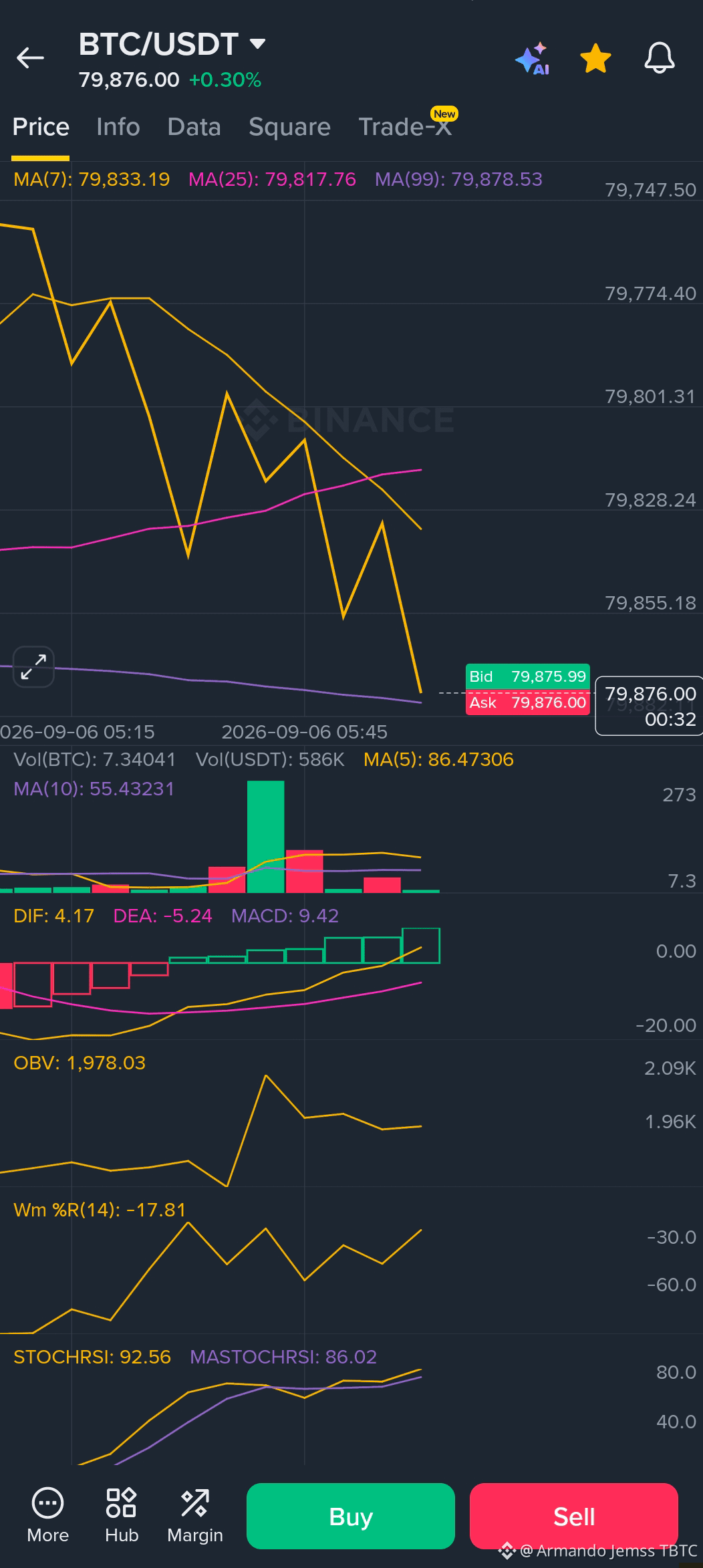
127
🔐 Public blockchains used to expose institutional trade data, while traditional privacy coins violated regulations. @Dusk_Foundation fixes this dilemma with an auditable Layer-1 built specifically for real-world asset (RWA) tokenization!
💡 Key Innovations:
Zero-Knowledge Proofs: Validates transactions on-chain while keeping balances fully confidential.
Native Compliance: Built-in identity frameworks and selective disclosure keys ensure MiCA-ready regulatory audits.
DuskEVM: Confidential smart contracts powered by familiar Solidity tools.
Tokenized securities and private equity need zero-knowledge privacy with built-in auditability to go mainstream. Is ZK tech the ultimate bridge for institutional DeFi? 🚀
#dusk $DUSK #RWA #defi
🔐 Public blockchains used to expose institutional trade data, while traditional privacy coins violated regulations. @Dusk fixes this dilemma with an auditable Layer-1 built specifically for real-world asset (RWA) tokenization!
💡 Key Innovations:
Zero-Knowledge Proofs: Validates transactions on-chain while keeping balances fully confidential.
Native Compliance: Built-in identity frameworks and selective disclosure keys ensure MiCA-ready regulatory audits.
DuskEVM: Confidential smart contracts powered by familiar Solidity tools.
Tokenized securities and private equity need zero-knowledge privacy with built-in auditability to go mainstream. Is ZK tech the ultimate bridge for institutional DeFi? 🚀
#dusk $DUSK #RWA #defi
💡 Key Innovations:
Zero-Knowledge Proofs: Validates transactions on-chain while keeping balances fully confidential.
Native Compliance: Built-in identity frameworks and selective disclosure keys ensure MiCA-ready regulatory audits.
DuskEVM: Confidential smart contracts powered by familiar Solidity tools.
Tokenized securities and private equity need zero-knowledge privacy with built-in auditability to go mainstream. Is ZK tech the ultimate bridge for institutional DeFi? 🚀
#dusk $DUSK #RWA #defi
81
#dusk $DUSK @Dusk_Foundation 🌐 The Institutional RWA Revolution: How @Dusk Decodes the Privacy & Compliance Dilemma! 🚀💎
For years, traditional financial institutions faced an infrastructure roadblock when evaluating public blockchains: open ledgers expose proprietary trading positions and sensitive customer balance sheets, while anonymous privacy coins fail to comply with strict global regulatory frameworks like Europe’s MiCA.
@Dusk_Foundation is solving this exact paradox by establishing an auditable Layer-1 blockchain tailored specifically for institutional asset tokenization! 📈✨
🌟 Technical Innovations Moat
🛡️ Zero-Knowledge Proofs (ZKPs): Cryptographically encrypts sensitive balances and trade history while verifying overall transaction legitimacy on-chain.
📜 Native Regulatory Compliance: Built-in identity frameworks and selective disclosure keys allow authorized regulators to perform audits without leaking company secrets.
⚡ DuskEVM Infrastructure: Allows Solidity developers to deploy confidential smart contracts using standard Ethereum development tools.
🏛️ Real Institutional Adoption: Facilitates direct tokenization of securities and private equity via real-world asset (RWA) exchange partnerships.
As trillions of dollars in traditional assets transition on-chain, @Dusk provides the exact institutional infrastructure modern global finance demands! 🚀🔥
How do you view auditable zero-knowledge tech shaping the future of tokenized assets? Drop your thoughts below! 👇
#dusk $DUSK #Institucional #RWA #PrivacyProtection
#dusk $DUSK @Dusk 🌐 The Institutional RWA Revolution: How @Dusk Decodes the Privacy & Compliance Dilemma! 🚀💎
For years, traditional financial institutions faced an infrastructure roadblock when evaluating public blockchains: open ledgers expose proprietary trading positions and sensitive customer balance sheets, while anonymous privacy coins fail to comply with strict global regulatory frameworks like Europe’s MiCA.
@Dusk is solving this exact paradox by establishing an auditable Layer-1 blockchain tailored specifically for institutional asset tokenization! 📈✨
🌟 Technical Innovations Moat
🛡️ Zero-Knowledge Proofs (ZKPs): Cryptographically encrypts sensitive balances and trade history while verifying overall transaction legitimacy on-chain.
📜 Native Regulatory Compliance: Built-in identity frameworks and selective disclosure keys allow authorized regulators to perform audits without leaking company secrets.
⚡ DuskEVM Infrastructure: Allows Solidity developers to deploy confidential smart contracts using standard Ethereum development tools.
🏛️ Real Institutional Adoption: Facilitates direct tokenization of securities and private equity via real-world asset (RWA) exchange partnerships.
As trillions of dollars in traditional assets transition on-chain, @Dusk provides the exact institutional infrastructure modern global finance demands! 🚀🔥
How do you view auditable zero-knowledge tech shaping the future of tokenized assets? Drop your thoughts below! 👇
#dusk $DUSK #Institucional #RWA #PrivacyProtection
For years, traditional financial institutions faced an infrastructure roadblock when evaluating public blockchains: open ledgers expose proprietary trading positions and sensitive customer balance sheets, while anonymous privacy coins fail to comply with strict global regulatory frameworks like Europe’s MiCA.
@Dusk is solving this exact paradox by establishing an auditable Layer-1 blockchain tailored specifically for institutional asset tokenization! 📈✨
🌟 Technical Innovations Moat
🛡️ Zero-Knowledge Proofs (ZKPs): Cryptographically encrypts sensitive balances and trade history while verifying overall transaction legitimacy on-chain.
📜 Native Regulatory Compliance: Built-in identity frameworks and selective disclosure keys allow authorized regulators to perform audits without leaking company secrets.
⚡ DuskEVM Infrastructure: Allows Solidity developers to deploy confidential smart contracts using standard Ethereum development tools.
🏛️ Real Institutional Adoption: Facilitates direct tokenization of securities and private equity via real-world asset (RWA) exchange partnerships.
As trillions of dollars in traditional assets transition on-chain, @Dusk provides the exact institutional infrastructure modern global finance demands! 🚀🔥
How do you view auditable zero-knowledge tech shaping the future of tokenized assets? Drop your thoughts below! 👇
#dusk $DUSK #Institucional #RWA #PrivacyProtection
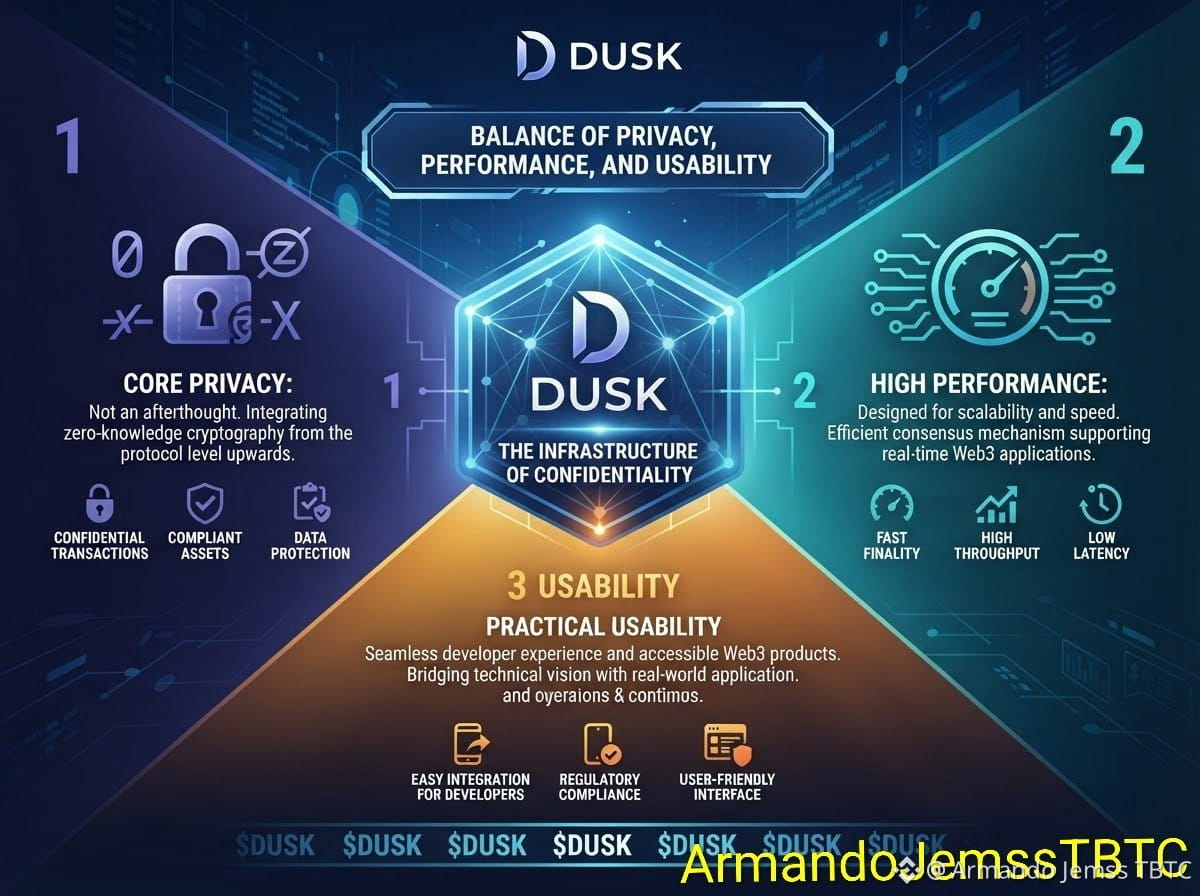
101
📊 MARKET CHECK: QUICK RECAP & KEY LEVELS TO WATCH 🚀⚡
The market is showing brief intraday consolidation as major assets digest recent movements and recalibrate near key support zones!
🌟 Latest Market Highlights
₿ Bitcoin ($BTC): Consolidating around $75,900–$76,000, with buyers defending downside levels following recent volatility.
♦️ Ethereum ($ETH): Trading near $2,390–$2,400, maintaining active engagement across Layer-2 networks.
🟡 Binance Coin ($BNB): Holding steady around $678–$680, supported by ongoing ecosystem utilities and platform demand.
#BTC #bnb #ETH $BTC $BNB $ETH #BSTREndsCantorSPACGoPublicPlan
📊 MARKET CHECK: QUICK RECAP & KEY LEVELS TO WATCH 🚀⚡
The market is showing brief intraday consolidation as major assets digest recent movements and recalibrate near key support zones!
🌟 Latest Market Highlights
₿ Bitcoin ($BTC ): Consolidating around $75,900–$76,000, with buyers defending downside levels following recent volatility.
♦️ Ethereum ($ETH ): Trading near $2,390–$2,400, maintaining active engagement across Layer-2 networks.
🟡 Binance Coin ($BNB ): Holding steady around $678–$680, supported by ongoing ecosystem utilities and platform demand.
#BTC #bnb #ETH $BTC $BNB $ETH #BSTREndsCantorSPACGoPublicPlan
The market is showing brief intraday consolidation as major assets digest recent movements and recalibrate near key support zones!
🌟 Latest Market Highlights
₿ Bitcoin ($BTC ): Consolidating around $75,900–$76,000, with buyers defending downside levels following recent volatility.
♦️ Ethereum ($ETH ): Trading near $2,390–$2,400, maintaining active engagement across Layer-2 networks.
🟡 Binance Coin ($BNB ): Holding steady around $678–$680, supported by ongoing ecosystem utilities and platform demand.
#BTC #bnb #ETH $BTC $BNB $ETH #BSTREndsCantorSPACGoPublicPlan
87
#dusk $DUSK @Dusk_Foundation 🔐 Institutional Privacy Meet Regulatory Compliance: Why @Dusk is the Future of Tokenized Assets! 🌐💎
For years, institutional capital stayed on the sidelines of Web3 due to a fundamental trade-off: public ledgers expose competitive financial transactions to the world, while anonymous chains lack regulatory compliance.
@Dusk solves this dilemma by bringing auditable, institutional-grade privacy to the real-world asset (RWA) tokenization ecosystem! 📈✨
🌟 Technical Highlights Driving $DUSK Ecosystem Growth
🛡️ Zero-Knowledge (ZK) Cryptography: Shields sensitive trade volumes, balances, and participant identities from public view while cryptographically proving transaction validity.
📜 Native Regulatory Alignment: Designed natively under strict frameworks like MiCA, allowing selective disclosure so authorized regulators can audit transactions without exposing company secrets.
⚡ Instant Settlement & Fast Finality: Built on a Proof-of-Stake model that guarantees rapid finality, eliminating reorg risks for high-value financial instruments.
⚙️ DuskEVM Developer Layer: Enables seamless migration for Solidity developers, unlocking confidential smart contract execution across decentralized markets.
By removing the privacy barrier for banks, corporations, and asset managers, @Dusk_Foundation is building the ultimate rail for multi-trillion dollar asset migrations! 🚀🔥
#dusk $DUSK #defi #evm
#dusk $DUSK @Dusk 🔐 Institutional Privacy Meet Regulatory Compliance: Why @Dusk is the Future of Tokenized Assets! 🌐💎
For years, institutional capital stayed on the sidelines of Web3 due to a fundamental trade-off: public ledgers expose competitive financial transactions to the world, while anonymous chains lack regulatory compliance.
@Dusk solves this dilemma by bringing auditable, institutional-grade privacy to the real-world asset (RWA) tokenization ecosystem! 📈✨
🌟 Technical Highlights Driving $DUSK Ecosystem Growth
🛡️ Zero-Knowledge (ZK) Cryptography: Shields sensitive trade volumes, balances, and participant identities from public view while cryptographically proving transaction validity.
📜 Native Regulatory Alignment: Designed natively under strict frameworks like MiCA, allowing selective disclosure so authorized regulators can audit transactions without exposing company secrets.
⚡ Instant Settlement & Fast Finality: Built on a Proof-of-Stake model that guarantees rapid finality, eliminating reorg risks for high-value financial instruments.
⚙️ DuskEVM Developer Layer: Enables seamless migration for Solidity developers, unlocking confidential smart contract execution across decentralized markets.
By removing the privacy barrier for banks, corporations, and asset managers, @Dusk is building the ultimate rail for multi-trillion dollar asset migrations! 🚀🔥
#dusk $DUSK #defi #evm
For years, institutional capital stayed on the sidelines of Web3 due to a fundamental trade-off: public ledgers expose competitive financial transactions to the world, while anonymous chains lack regulatory compliance.
@Dusk solves this dilemma by bringing auditable, institutional-grade privacy to the real-world asset (RWA) tokenization ecosystem! 📈✨
🌟 Technical Highlights Driving $DUSK Ecosystem Growth
🛡️ Zero-Knowledge (ZK) Cryptography: Shields sensitive trade volumes, balances, and participant identities from public view while cryptographically proving transaction validity.
📜 Native Regulatory Alignment: Designed natively under strict frameworks like MiCA, allowing selective disclosure so authorized regulators can audit transactions without exposing company secrets.
⚡ Instant Settlement & Fast Finality: Built on a Proof-of-Stake model that guarantees rapid finality, eliminating reorg risks for high-value financial instruments.
⚙️ DuskEVM Developer Layer: Enables seamless migration for Solidity developers, unlocking confidential smart contract execution across decentralized markets.
By removing the privacy barrier for banks, corporations, and asset managers, @Dusk is building the ultimate rail for multi-trillion dollar asset migrations! 🚀🔥
#dusk $DUSK #defi #evm
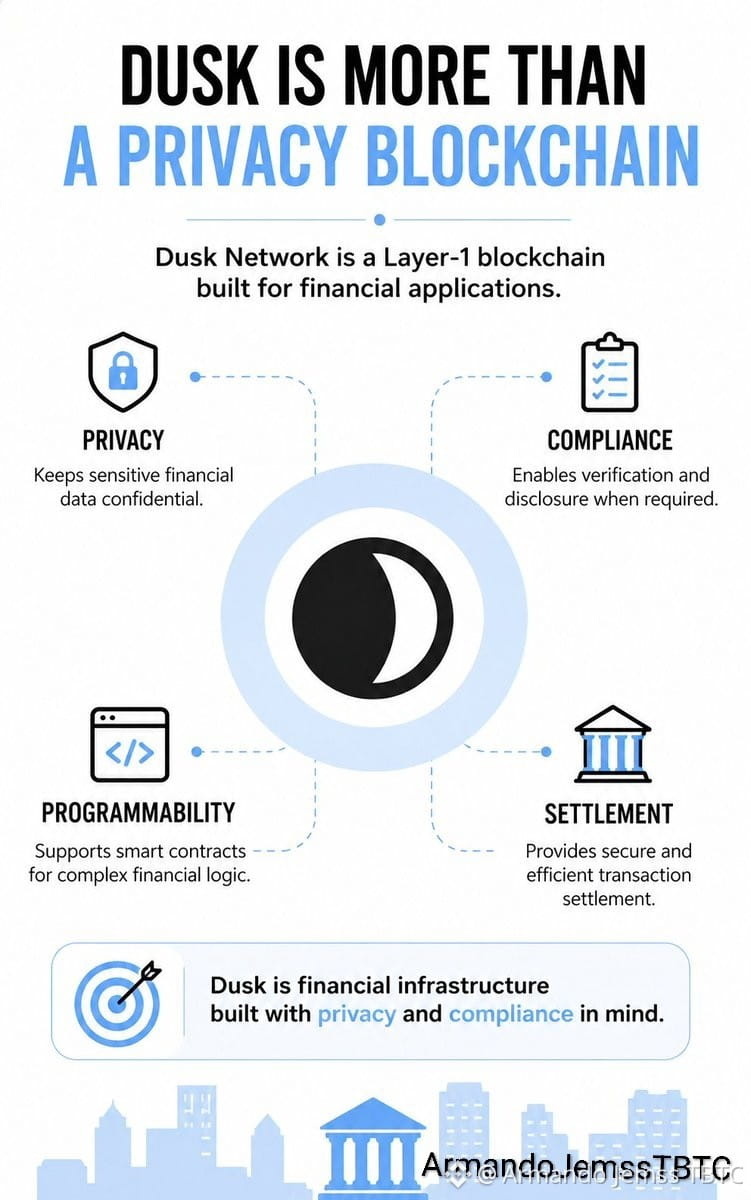
101
Redefining Institutional RWA Tokenization: How @Dusk Bridges Privacy & Regulatory Compliance! 🌐💎🚀The tokenization of Real-World Assets (RWAs) is rapidly becoming the next massive frontier in global decentralized finance. However, financial institutions and corporate asset issuers have faced a major dilemma: traditional public ledgers expose proprietary corporate balance sheets to the public, while privacy coins lack the necessary audit trails to comply with strict global financial regulations like MiCA.
Enter @Dusk_Foundation — the purpose-built Layer-1 blockchain engineered specifically to solve this issue through auditable privacy! 📈✨
🌟 Key Technical Innovations Powering the $DUSK Ecosystem
🔐 Zero-Knowledge (ZK) Proofs: Encrypts sensitive financial data, trade volumes, and institutional balance sheets from public view while maintaining cryptographic verifiability on-chain.⚖️ Built-In Regulatory Compliance: Utilizes native identity frameworks (like Citadel) and selective disclosure tools, enabling seamless auditing for regulatory authorities without leaking proprietary data.⚡ Full EVM Compatibility (DuskEVM): Allows Solidity developers to deploy confidential smart contracts using familiar tools, accelerating multi-chain Web3 migration and financial dApp development.⚙️ Fast Settlement & Utility: Powered by fast-finality consensus, $DUSK fuels transaction gas fees, staking security, and governance across the entire network.
+-------------------------------------------------------------+
| THE DUSK ARCHITECTURAL MOAT |
+-------------------------------------------------------------+
|
v
+---------------------------------------------------+
| Zero-Knowledge Confidentiality (ZKP) |
+---------------------------------------------------+
|
+------------------+------------------+
| |
v v
+-----------------------+ +-----------------------+
| Selective Disclosure | | Full DuskEVM Support |
| (Auditable Privacy) | | (Solidity Developer) |
+-----------------------+ +-----------------------+
As regulated financial entities move debt instruments, private equity, and tokenized bonds on-chain, @Dusk_Foundation provides the exact institutional-grade infrastructure modern finance requires! 🚀🔥
Are you building or holding for the next multi-trillion dollar RWA expansion wave? Share your perspectives below! 👇
#dusk $DUSK #RWA
Redefining Institutional RWA Tokenization: How @Dusk Bridges Privacy & Regulatory Compliance! 🌐💎
🚀The tokenization of Real-World Assets (RWAs) is rapidly becoming the next massive frontier in global decentralized finance. However, financial institutions and corporate asset issuers have faced a major dilemma: traditional public ledgers expose proprietary corporate balance sheets to the public, while privacy coins lack the necessary audit trails to comply with strict global financial regulations like MiCA.
Enter @Dusk — the purpose-built Layer-1 blockchain engineered specifically to solve this issue through auditable privacy! 📈✨
🌟 Key Technical Innovations Powering the $DUSK Ecosystem
🔐 Zero-Knowledge (ZK) Proofs: Encrypts sensitive financial data, trade volumes, and institutional balance sheets from public view while maintaining cryptographic verifiability on-chain.⚖️ Built-In Regulatory Compliance: Utilizes native identity frameworks (like Citadel) and selective disclosure tools, enabling seamless auditing for regulatory authorities without leaking proprietary data.⚡ Full EVM Compatibility (DuskEVM): Allows Solidity developers to deploy confidential smart contracts using familiar tools, accelerating multi-chain Web3 migration and financial dApp development.⚙️ Fast Settlement & Utility: Powered by fast-finality consensus, $DUSK fuels transaction gas fees, staking security, and governance across the entire network.
+-------------------------------------------------------------+
| THE DUSK ARCHITECTURAL MOAT |
+-------------------------------------------------------------+
|
v
+---------------------------------------------------+
| Zero-Knowledge Confidentiality (ZKP) |
+---------------------------------------------------+
|
+------------------+------------------+
| |
v v
+-----------------------+ +-----------------------+
| Selective Disclosure | | Full DuskEVM Support |
| (Auditable Privacy) | | (Solidity Developer) |
+-----------------------+ +-----------------------+
As regulated financial entities move debt instruments, private equity, and tokenized bonds on-chain, @Dusk provides the exact institutional-grade infrastructure modern finance requires! 🚀🔥
Are you building or holding for the next multi-trillion dollar RWA expansion wave? Share your perspectives below! 👇
#dusk $DUSK #RWA
Enter @Dusk — the purpose-built Layer-1 blockchain engineered specifically to solve this issue through auditable privacy! 📈✨
🌟 Key Technical Innovations Powering the $DUSK Ecosystem
🔐 Zero-Knowledge (ZK) Proofs: Encrypts sensitive financial data, trade volumes, and institutional balance sheets from public view while maintaining cryptographic verifiability on-chain.⚖️ Built-In Regulatory Compliance: Utilizes native identity frameworks (like Citadel) and selective disclosure tools, enabling seamless auditing for regulatory authorities without leaking proprietary data.⚡ Full EVM Compatibility (DuskEVM): Allows Solidity developers to deploy confidential smart contracts using familiar tools, accelerating multi-chain Web3 migration and financial dApp development.⚙️ Fast Settlement & Utility: Powered by fast-finality consensus, $DUSK fuels transaction gas fees, staking security, and governance across the entire network.
+-------------------------------------------------------------+
| THE DUSK ARCHITECTURAL MOAT |
+-------------------------------------------------------------+
|
v
+---------------------------------------------------+
| Zero-Knowledge Confidentiality (ZKP) |
+---------------------------------------------------+
|
+------------------+------------------+
| |
v v
+-----------------------+ +-----------------------+
| Selective Disclosure | | Full DuskEVM Support |
| (Auditable Privacy) | | (Solidity Developer) |
+-----------------------+ +-----------------------+
As regulated financial entities move debt instruments, private equity, and tokenized bonds on-chain, @Dusk provides the exact institutional-grade infrastructure modern finance requires! 🚀🔥
Are you building or holding for the next multi-trillion dollar RWA expansion wave? Share your perspectives below! 👇
#dusk $DUSK #RWA
103
#dusk $DUSK @Dusk_Foundation 🌟 Key Technical Innovations Powering the $DUSK Ecosystem
🔐 Zero-Knowledge (ZK) Proofs: Encrypts sensitive financial data, trade volumes, and institutional balance sheets from public view while maintaining cryptographic verifiability on-chain.
⚖️ Built-In Regulatory Compliance: Utilizes native identity frameworks (like Citadel) and selective disclosure tools, enabling seamless auditing for regulatory authorities without leaking proprietary data.
⚡ Full EVM Compatibility (DuskEVM): Allows Solidity developers to deploy confidential smart contracts using familiar tools, accelerating multi-chain Web3 migration and financial dApp development.
⚙️ Fast Settlement & Utility: Powered by fast-finality consensus, $DUSK fuels transaction gas fees, staking security, and governance across the entire network.
#DuskToTheMoon
#dusk $DUSK @Dusk 🌟 Key Technical Innovations Powering the $DUSK Ecosystem
🔐 Zero-Knowledge (ZK) Proofs: Encrypts sensitive financial data, trade volumes, and institutional balance sheets from public view while maintaining cryptographic verifiability on-chain.
⚖️ Built-In Regulatory Compliance: Utilizes native identity frameworks (like Citadel) and selective disclosure tools, enabling seamless auditing for regulatory authorities without leaking proprietary data.
⚡ Full EVM Compatibility (DuskEVM): Allows Solidity developers to deploy confidential smart contracts using familiar tools, accelerating multi-chain Web3 migration and financial dApp development.
⚙️ Fast Settlement & Utility: Powered by fast-finality consensus, $DUSK fuels transaction gas fees, staking security, and governance across the entire network.
#DuskToTheMoon
🔐 Zero-Knowledge (ZK) Proofs: Encrypts sensitive financial data, trade volumes, and institutional balance sheets from public view while maintaining cryptographic verifiability on-chain.
⚖️ Built-In Regulatory Compliance: Utilizes native identity frameworks (like Citadel) and selective disclosure tools, enabling seamless auditing for regulatory authorities without leaking proprietary data.
⚡ Full EVM Compatibility (DuskEVM): Allows Solidity developers to deploy confidential smart contracts using familiar tools, accelerating multi-chain Web3 migration and financial dApp development.
⚙️ Fast Settlement & Utility: Powered by fast-finality consensus, $DUSK fuels transaction gas fees, staking security, and governance across the entire network.
#DuskToTheMoon
121
#termmax @termmax 🚀 Exploring TermMax: Where DeFi Meets Smarter Fixed-Term Strategies
DeFi keeps evolving, and I’m especially interested in projects that bring more structure and flexibility to how users manage crypto capital. That’s why TermMax caught my attention. 👀
@TermMax is building an on-chain financial infrastructure focused on fixed-term lending and borrowing, creating a different way to think about yield, liquidity, and risk management in DeFi. Instead of treating every position as an open-ended strategy, fixed-term markets can give users clearer expectations around maturity and the terms of their positions. ⏳💡
What makes the concept interesting is the potential for more sophisticated DeFi strategies. Fixed-term instruments can become useful building blocks for users who want to plan around specific time horizons, while also opening possibilities for new approaches to yield management and capital efficiency.
I think this direction is worth watching because DeFi isn’t only about chasing the highest APY. It’s also about building better financial tools, clearer structures, and more ways for users to manage capital according to their own goals. 🌐📈
As the ecosystem continues developing, I’ll be keeping an eye on how TermMax grows, what products and markets it introduces, and how the community uses its infrastructure.
If you’re interested in the next generation of structured DeFi markets, TermMax is definitely a project worth researching. 🔍🔥
#TermMax #DeFi #Crypto #Web3 #blockchain #Yield #OnChainFinance
#termmax @TermMax 🚀 Exploring TermMax: Where DeFi Meets Smarter Fixed-Term Strategies
DeFi keeps evolving, and I’m especially interested in projects that bring more structure and flexibility to how users manage crypto capital. That’s why TermMax caught my attention. 👀
@TermMax is building an on-chain financial infrastructure focused on fixed-term lending and borrowing, creating a different way to think about yield, liquidity, and risk management in DeFi. Instead of treating every position as an open-ended strategy, fixed-term markets can give users clearer expectations around maturity and the terms of their positions. ⏳💡
What makes the concept interesting is the potential for more sophisticated DeFi strategies. Fixed-term instruments can become useful building blocks for users who want to plan around specific time horizons, while also opening possibilities for new approaches to yield management and capital efficiency.
I think this direction is worth watching because DeFi isn’t only about chasing the highest APY. It’s also about building better financial tools, clearer structures, and more ways for users to manage capital according to their own goals. 🌐📈
As the ecosystem continues developing, I’ll be keeping an eye on how TermMax grows, what products and markets it introduces, and how the community uses its infrastructure.
If you’re interested in the next generation of structured DeFi markets, TermMax is definitely a project worth researching. 🔍🔥
#TermMax #DeFi #Crypto #Web3 #blockchain #Yield #OnChainFinance
DeFi keeps evolving, and I’m especially interested in projects that bring more structure and flexibility to how users manage crypto capital. That’s why TermMax caught my attention. 👀
@TermMax is building an on-chain financial infrastructure focused on fixed-term lending and borrowing, creating a different way to think about yield, liquidity, and risk management in DeFi. Instead of treating every position as an open-ended strategy, fixed-term markets can give users clearer expectations around maturity and the terms of their positions. ⏳💡
What makes the concept interesting is the potential for more sophisticated DeFi strategies. Fixed-term instruments can become useful building blocks for users who want to plan around specific time horizons, while also opening possibilities for new approaches to yield management and capital efficiency.
I think this direction is worth watching because DeFi isn’t only about chasing the highest APY. It’s also about building better financial tools, clearer structures, and more ways for users to manage capital according to their own goals. 🌐📈
As the ecosystem continues developing, I’ll be keeping an eye on how TermMax grows, what products and markets it introduces, and how the community uses its infrastructure.
If you’re interested in the next generation of structured DeFi markets, TermMax is definitely a project worth researching. 🔍🔥
#TermMax #DeFi #Crypto #Web3 #blockchain #Yield #OnChainFinance
91
#dusk $DUSK @Dusk_Foundation 🚀 Privacy is becoming a core part of the next generation of blockchain, and that’s where @Dusk stands out.
With a strong focus on privacy, compliance, and real-world financial infrastructure, Dusk is building toward a future where regulated assets can move on-chain without sacrificing confidentiality. 🔐🌐
I’m watching $DUSK closely as the ecosystem continues to develop. The combination of privacy technology + compliant on-chain finance makes this project especially interesting to follow. 👀
What do you think will be the biggest use case for privacy-focused blockchains? 💭
#dusk
#dusk $DUSK @Dusk 🚀 Privacy is becoming a core part of the next generation of blockchain, and that’s where @Dusk stands out.
With a strong focus on privacy, compliance, and real-world financial infrastructure, Dusk is building toward a future where regulated assets can move on-chain without sacrificing confidentiality. 🔐🌐
I’m watching $DUSK closely as the ecosystem continues to develop. The combination of privacy technology + compliant on-chain finance makes this project especially interesting to follow. 👀
What do you think will be the biggest use case for privacy-focused blockchains? 💭
#dusk
With a strong focus on privacy, compliance, and real-world financial infrastructure, Dusk is building toward a future where regulated assets can move on-chain without sacrificing confidentiality. 🔐🌐
I’m watching $DUSK closely as the ecosystem continues to develop. The combination of privacy technology + compliant on-chain finance makes this project especially interesting to follow. 👀
What do you think will be the biggest use case for privacy-focused blockchains? 💭
#dusk
110
·
--
Bullish
📊 CRYPTO MARKET UPDATE — LATEST BREAKOUT TRENDS 🚀⚡
The market is showing strong signs of momentum as key assets test critical resistance levels across major exchanges!
🌟 Key Market Levels & Highlights
₿ Bitcoin ($BTC): Testing the $64,000–$65,000 resistance zone following steady institutional buying.
♦️ Ethereum ($ETH): Holding solid support around $1,900, with Layer-2 activity driving network usage.
🟡 Binance Coin ($BNB): Consolidating near $600+, anchored by strong Launchpool demand and ongoing burn mechanics.
🎯 Quick Trading Strategy
+-------------------------------------------------------------+ | CURRENT MARKET MOOD | +-------------------------------------------------------------+ | v +---------------------------------------+ | Range-bound with Bullish Bias 📈 | +---------------------------------------+ | +------------------+------------------+ | | v v +-----------------------+ +-----------------------+ | BTC Above $65K Check | | Altcoin Volume Check | | (Trend Continuation) | | (Targeted Accumulation)| +-----------------------+ +-----------------------+
🛡️ Risk Management First: Avoid chasing short-term spikes without confirmed trading volume.
🔍 Watch the Majors: Let BTC confirm direction before taking aggressive altcoin setups.
Are you buying the dips or taking profits into resistance? Share your setups below! 👇
#Binance #Bitcoin $BTC $ETH $BNB #BinanceSquare #Market_Update #Write2Earn!
📊 CRYPTO MARKET UPDATE — LATEST BREAKOUT TRENDS 🚀⚡
The market is showing strong signs of momentum as key assets test critical resistance levels across major exchanges!
🌟 Key Market Levels & Highlights
₿ Bitcoin ($BTC ): Testing the $64,000–$65,000 resistance zone following steady institutional buying.
♦️ Ethereum ($ETH ): Holding solid support around $1,900, with Layer-2 activity driving network usage.
🟡 Binance Coin ($BNB ): Consolidating near $600+, anchored by strong Launchpool demand and ongoing burn mechanics.
🎯 Quick Trading Strategy
+-------------------------------------------------------------+ | CURRENT MARKET MOOD | +-------------------------------------------------------------+ | v +---------------------------------------+ | Range-bound with Bullish Bias 📈 | +---------------------------------------+ | +------------------+------------------+ | | v v +-----------------------+ +-----------------------+ | BTC Above $65K Check | | Altcoin Volume Check | | (Trend Continuation) | | (Targeted Accumulation)| +-----------------------+ +-----------------------+
🛡️ Risk Management First: Avoid chasing short-term spikes without confirmed trading volume.
🔍 Watch the Majors: Let BTC confirm direction before taking aggressive altcoin setups.
Are you buying the dips or taking profits into resistance? Share your setups below! 👇
#Binance #Bitcoin $BTC $ETH $BNB #BinanceSquare #Market_Update #Write2Earn!
The market is showing strong signs of momentum as key assets test critical resistance levels across major exchanges!
🌟 Key Market Levels & Highlights
₿ Bitcoin ($BTC ): Testing the $64,000–$65,000 resistance zone following steady institutional buying.
♦️ Ethereum ($ETH ): Holding solid support around $1,900, with Layer-2 activity driving network usage.
🟡 Binance Coin ($BNB ): Consolidating near $600+, anchored by strong Launchpool demand and ongoing burn mechanics.
🎯 Quick Trading Strategy
+-------------------------------------------------------------+ | CURRENT MARKET MOOD | +-------------------------------------------------------------+ | v +---------------------------------------+ | Range-bound with Bullish Bias 📈 | +---------------------------------------+ | +------------------+------------------+ | | v v +-----------------------+ +-----------------------+ | BTC Above $65K Check | | Altcoin Volume Check | | (Trend Continuation) | | (Targeted Accumulation)| +-----------------------+ +-----------------------+
🛡️ Risk Management First: Avoid chasing short-term spikes without confirmed trading volume.
🔍 Watch the Majors: Let BTC confirm direction before taking aggressive altcoin setups.
Are you buying the dips or taking profits into resistance? Share your setups below! 👇
#Binance #Bitcoin $BTC $ETH $BNB #BinanceSquare #Market_Update #Write2Earn!
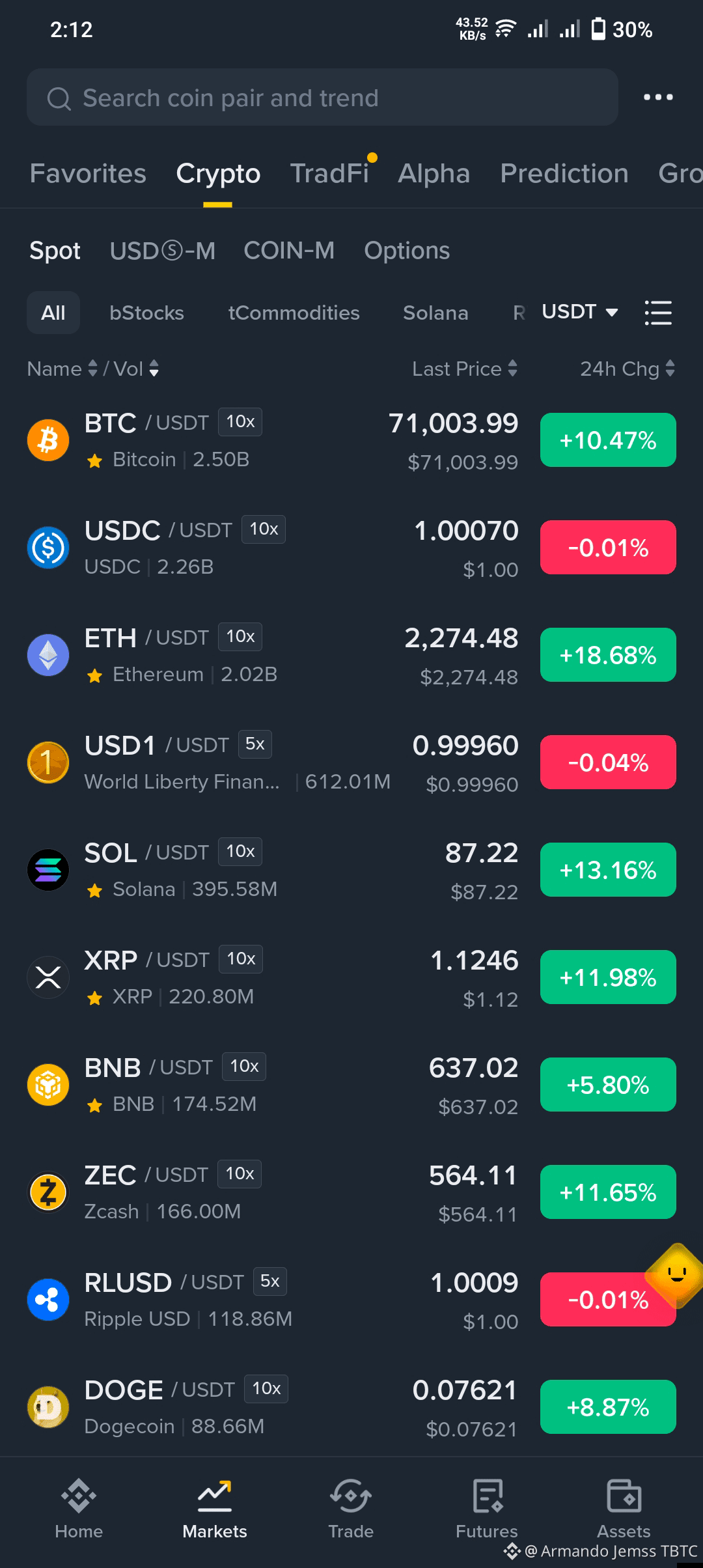
127
📊 Capturing Market Momentum: A Visual Insight into the Next Web3 Growth Phase 🚀⚡
Pairing high-value market data with clean visual infographics is one of the most effective ways to break down complex crypto trends for Binance Square readers!
🌟 Key Elements to Focus On in Market & Protocol Graphics
📈 Technical Breakouts & Support Ranges: Highlighting crucial support/resistance boundaries provides immediate actionable context for traders monitoring short-term price discovery.
🔐 Protocol Fundamentals: Infographics detailing on-chain metric growth, Total Value Locked (TVL), or structural mechanics (such as yield-looping or zero-knowledge privacy) help simplify complex Web3 tech.
🌐 Macro Trends & Policy Shifts: Summarizing regulatory developments or global economic catalysts in visual format keeps readers informed without overwhelming them with text.
💡 Creator Tips to Maximize Engagement
Keep It Readable: Ensure charts and graphics have high contrast and clear font sizes for mobile viewers.
Pair with Clear Insights: Combine your uploaded graphic with concise bullet points and direct questions to invite discussion in the comments section.
Use Relevant Tags: Always include official project mentions and hashtags (such as $BTC,$ETH, or specific protocol handles) in your initial post version!
What key metrics or charts are you tracking most closely this week? Drop your insights below! 👇
#crypto #BinanceSquare #Web3 $BTC $ETH #MarketAnalysis
📊 Capturing Market Momentum: A Visual Insight into the Next Web3 Growth Phase 🚀⚡
Pairing high-value market data with clean visual infographics is one of the most effective ways to break down complex crypto trends for Binance Square readers!
🌟 Key Elements to Focus On in Market & Protocol Graphics
📈 Technical Breakouts & Support Ranges: Highlighting crucial support/resistance boundaries provides immediate actionable context for traders monitoring short-term price discovery.
🔐 Protocol Fundamentals: Infographics detailing on-chain metric growth, Total Value Locked (TVL), or structural mechanics (such as yield-looping or zero-knowledge privacy) help simplify complex Web3 tech.
🌐 Macro Trends & Policy Shifts: Summarizing regulatory developments or global economic catalysts in visual format keeps readers informed without overwhelming them with text.
💡 Creator Tips to Maximize Engagement
Keep It Readable: Ensure charts and graphics have high contrast and clear font sizes for mobile viewers.
Pair with Clear Insights: Combine your uploaded graphic with concise bullet points and direct questions to invite discussion in the comments section.
Use Relevant Tags: Always include official project mentions and hashtags (such as $BTC ,$ETH , or specific protocol handles) in your initial post version!
What key metrics or charts are you tracking most closely this week? Drop your insights below! 👇
#crypto #BinanceSquare #Web3 $BTC $ETH #MarketAnalysis
Pairing high-value market data with clean visual infographics is one of the most effective ways to break down complex crypto trends for Binance Square readers!
🌟 Key Elements to Focus On in Market & Protocol Graphics
📈 Technical Breakouts & Support Ranges: Highlighting crucial support/resistance boundaries provides immediate actionable context for traders monitoring short-term price discovery.
🔐 Protocol Fundamentals: Infographics detailing on-chain metric growth, Total Value Locked (TVL), or structural mechanics (such as yield-looping or zero-knowledge privacy) help simplify complex Web3 tech.
🌐 Macro Trends & Policy Shifts: Summarizing regulatory developments or global economic catalysts in visual format keeps readers informed without overwhelming them with text.
💡 Creator Tips to Maximize Engagement
Keep It Readable: Ensure charts and graphics have high contrast and clear font sizes for mobile viewers.
Pair with Clear Insights: Combine your uploaded graphic with concise bullet points and direct questions to invite discussion in the comments section.
Use Relevant Tags: Always include official project mentions and hashtags (such as $BTC ,$ETH , or specific protocol handles) in your initial post version!
What key metrics or charts are you tracking most closely this week? Drop your insights below! 👇
#crypto #BinanceSquare #Web3 $BTC $ETH #MarketAnalysis
76
🏛️ Inside the White House Crypto Summit: A Turning Point for U.S. Digital Asset Dominance 🚀⚡The landscape for digital assets in the United States shifted fundamentally following high-level discussions in the Roosevelt Room at the White House. Surrounded by top cryptocurrency founders, financial exchange leaders, and key regulatory agency heads, President Donald Trump delivered an unequivocal message: the U.S. intends to secure its position as the global center for Web3 and digital finance.
🌟 Core Highlights & Executive Strategic Takeaways
+-----------------------------------------------------------------+
| U.S. CRYPTO POLICY ROADMAP |
+-----------------------------------------------------------------+
| |
v v
+-----------------------+ +-----------------------+
| Legislative Priority | | Federal Agency Shifts |
| (Passing CLARITY Act) | | (SEC & CFTC Support) |
+-----------------------+ +-----------------------+
| |
+-------------------+---------------+
|
v
+-----------------------------------------------------------------+
| INSTITUTIONAL EXPANSION |
| (National Bitcoin Reserves & U.S. Market Integration Efforts) |
+-----------------------------------------------------------------+
1. 📜 Urging Senate Action on the CLARITY Act
A primary focus of the summit was accelerating the passage of the Crypto CLARITY Act. The proposed legislation establishes clear jurisdictional boundaries between the SEC and CFTC, creating a permanent, fit-for-purpose regulatory framework for digital asset classification. Industry leaders noted that passing durable federal laws ensures regulatory predictability across future administrations.
2. 🏛️ SEC & CFTC Agency Policy Pivots
Regulatory leadership signaled a structural departure from historical regulation-by-enforcement strategies.
SEC Framework: SEC Chairman Paul Atkins unveiled tailored exemptive proposals designed to simplify capital formation and help early-stage digital asset ventures build legally within the United States.CFTC Initiatives: CFTC Chairman Mike Selig highlighted ongoing efforts to onboard decentralized liquidity platforms, prediction markets, and perpetual DEX architectures into regulated domestic markets.
3. 🏦 Strategic Sovereign Reserve Considerations
Discussions reaffirmed long-term strategic interest in digital assets as national reserves, with administration officials discussing potential sovereign accumulation of Bitcoin alongside traditional reserve assets.
📊 Summary of Summit Key Figures & Objectives
Strategic AreaSummit Direction / Policy GoalNational Policy TargetUndisputed global leadership in digital asset infrastructurePrimary LegislationSenate passage of the CLARITY ActSEC Regulatory Approach"Fit-for-purpose" capital raising exemptions & safe harborsMarket ExpansionOnboarding high-throughput decentralized protocols into U.S. jurisdictions
🔮 Institutional Outlook
With regulatory agencies actively proposing innovation-focused exemptions and Congress working through bipartisan market structure bills, the institutional sentiment surrounding U.S. crypto liquidity is entering a new operational era. As regulatory friction resolves into clear legal guidelines, capital efficiency across the entire Web3 ecosystem is positioned for expansion.
How do you view these regulatory shifts impacting market dynamics this cycle? Share your perspectives below! 👇
#CryptoRally #CryptoPolicyModel #MarketUpdate؟ #FOMCWatch #FedMinutesShowNoSupportForRateCuts $BTC
🏛️ Inside the White House Crypto Summit: A Turning Point for U.S. Digital Asset Dominance 🚀⚡
The landscape for digital assets in the United States shifted fundamentally following high-level discussions in the Roosevelt Room at the White House. Surrounded by top cryptocurrency founders, financial exchange leaders, and key regulatory agency heads, President Donald Trump delivered an unequivocal message: the U.S. intends to secure its position as the global center for Web3 and digital finance.
🌟 Core Highlights & Executive Strategic Takeaways
+-----------------------------------------------------------------+
| U.S. CRYPTO POLICY ROADMAP |
+-----------------------------------------------------------------+
| |
v v
+-----------------------+ +-----------------------+
| Legislative Priority | | Federal Agency Shifts |
| (Passing CLARITY Act) | | (SEC & CFTC Support) |
+-----------------------+ +-----------------------+
| |
+-------------------+---------------+
|
v
+-----------------------------------------------------------------+
| INSTITUTIONAL EXPANSION |
| (National Bitcoin Reserves & U.S. Market Integration Efforts) |
+-----------------------------------------------------------------+
1. 📜 Urging Senate Action on the CLARITY Act
A primary focus of the summit was accelerating the passage of the Crypto CLARITY Act. The proposed legislation establishes clear jurisdictional boundaries between the SEC and CFTC, creating a permanent, fit-for-purpose regulatory framework for digital asset classification. Industry leaders noted that passing durable federal laws ensures regulatory predictability across future administrations.
2. 🏛️ SEC & CFTC Agency Policy Pivots
Regulatory leadership signaled a structural departure from historical regulation-by-enforcement strategies.
SEC Framework: SEC Chairman Paul Atkins unveiled tailored exemptive proposals designed to simplify capital formation and help early-stage digital asset ventures build legally within the United States.CFTC Initiatives: CFTC Chairman Mike Selig highlighted ongoing efforts to onboard decentralized liquidity platforms, prediction markets, and perpetual DEX architectures into regulated domestic markets.
3. 🏦 Strategic Sovereign Reserve Considerations
Discussions reaffirmed long-term strategic interest in digital assets as national reserves, with administration officials discussing potential sovereign accumulation of Bitcoin alongside traditional reserve assets.
📊 Summary of Summit Key Figures & Objectives
Strategic AreaSummit Direction / Policy GoalNational Policy TargetUndisputed global leadership in digital asset infrastructurePrimary LegislationSenate passage of the CLARITY ActSEC Regulatory Approach"Fit-for-purpose" capital raising exemptions & safe harborsMarket ExpansionOnboarding high-throughput decentralized protocols into U.S. jurisdictions
🔮 Institutional Outlook
With regulatory agencies actively proposing innovation-focused exemptions and Congress working through bipartisan market structure bills, the institutional sentiment surrounding U.S. crypto liquidity is entering a new operational era. As regulatory friction resolves into clear legal guidelines, capital efficiency across the entire Web3 ecosystem is positioned for expansion.
How do you view these regulatory shifts impacting market dynamics this cycle? Share your perspectives below! 👇
#CryptoRally #CryptoPolicyModel #MarketUpdate؟ #FOMCWatch #FedMinutesShowNoSupportForRateCuts $BTC
🌟 Core Highlights & Executive Strategic Takeaways
+-----------------------------------------------------------------+
| U.S. CRYPTO POLICY ROADMAP |
+-----------------------------------------------------------------+
| |
v v
+-----------------------+ +-----------------------+
| Legislative Priority | | Federal Agency Shifts |
| (Passing CLARITY Act) | | (SEC & CFTC Support) |
+-----------------------+ +-----------------------+
| |
+-------------------+---------------+
|
v
+-----------------------------------------------------------------+
| INSTITUTIONAL EXPANSION |
| (National Bitcoin Reserves & U.S. Market Integration Efforts) |
+-----------------------------------------------------------------+
1. 📜 Urging Senate Action on the CLARITY Act
A primary focus of the summit was accelerating the passage of the Crypto CLARITY Act. The proposed legislation establishes clear jurisdictional boundaries between the SEC and CFTC, creating a permanent, fit-for-purpose regulatory framework for digital asset classification. Industry leaders noted that passing durable federal laws ensures regulatory predictability across future administrations.
2. 🏛️ SEC & CFTC Agency Policy Pivots
Regulatory leadership signaled a structural departure from historical regulation-by-enforcement strategies.
SEC Framework: SEC Chairman Paul Atkins unveiled tailored exemptive proposals designed to simplify capital formation and help early-stage digital asset ventures build legally within the United States.CFTC Initiatives: CFTC Chairman Mike Selig highlighted ongoing efforts to onboard decentralized liquidity platforms, prediction markets, and perpetual DEX architectures into regulated domestic markets.
3. 🏦 Strategic Sovereign Reserve Considerations
Discussions reaffirmed long-term strategic interest in digital assets as national reserves, with administration officials discussing potential sovereign accumulation of Bitcoin alongside traditional reserve assets.
📊 Summary of Summit Key Figures & Objectives
Strategic AreaSummit Direction / Policy GoalNational Policy TargetUndisputed global leadership in digital asset infrastructurePrimary LegislationSenate passage of the CLARITY ActSEC Regulatory Approach"Fit-for-purpose" capital raising exemptions & safe harborsMarket ExpansionOnboarding high-throughput decentralized protocols into U.S. jurisdictions
🔮 Institutional Outlook
With regulatory agencies actively proposing innovation-focused exemptions and Congress working through bipartisan market structure bills, the institutional sentiment surrounding U.S. crypto liquidity is entering a new operational era. As regulatory friction resolves into clear legal guidelines, capital efficiency across the entire Web3 ecosystem is positioned for expansion.
How do you view these regulatory shifts impacting market dynamics this cycle? Share your perspectives below! 👇
#CryptoRally #CryptoPolicyModel #MarketUpdate؟ #FOMCWatch #FedMinutesShowNoSupportForRateCuts $BTC
73
#dusk $DUSK @Dusk_Foundation 🚀 Bridging On-Chain Privacy & Institutional Compliance: Why @Dusk is the RWA Engine! 🌐💎
The real-world asset (RWA) tokenization boom is accelerating, but traditional institutions face a major roadblock: public blockchains leak sensitive corporate balances, while fully anonymous privacy chains violate strict global regulations.
@Dusk is solving this exact dilemma with a purpose-built Layer-1 protocol designed for institutional-grade, privacy-first financial operations! 📈✨
---
### 🌟 Key Architectural Pillars Powering $DUSK
* **🔐 Zero-Knowledge (ZK) Confidentiality:** Encrypts trade volumes, order books, and transaction details from public view while ensuring on-chain computational verifiability.
* **⚖️ Selective Disclosure & Auditability:** Enables audit-ready infrastructure that satisfies strict regulatory standards (such as MiCA and KYC/AML guidelines) without revealing proprietary corporate data.
* **⚡ DuskEVM Developer Suite:** Supports EVM compatibility, allowing Solidity developers to easily deploy confidential smart contracts without rebuilding core codebases.
* **⚙️ Fast Settlement & Staking Utility:** Powered by deterministic consensus for rapid order execution, where $DUSK fuels transaction gas fees, staking security, and governance.
As the bridge between traditional asset markets and decentralized liquidity continues to mature, @Dusk delivers the exact compliance-ready privacy framework modern markets require! 🚀🔥
Are you building or holding for the multi-trillion dollar RWA expansion? Drop your thoughts below! 👇
#dusk $DUSK #RAW #Tokenization #SmartTradingStrategies
#dusk $DUSK @Dusk 🚀 Bridging On-Chain Privacy & Institutional Compliance: Why @Dusk is the RWA Engine! 🌐💎
The real-world asset (RWA) tokenization boom is accelerating, but traditional institutions face a major roadblock: public blockchains leak sensitive corporate balances, while fully anonymous privacy chains violate strict global regulations.
@Dusk is solving this exact dilemma with a purpose-built Layer-1 protocol designed for institutional-grade, privacy-first financial operations! 📈✨
---
### 🌟 Key Architectural Pillars Powering $DUSK
* **🔐 Zero-Knowledge (ZK) Confidentiality:** Encrypts trade volumes, order books, and transaction details from public view while ensuring on-chain computational verifiability.
* **⚖️ Selective Disclosure & Auditability:** Enables audit-ready infrastructure that satisfies strict regulatory standards (such as MiCA and KYC/AML guidelines) without revealing proprietary corporate data.
* **⚡ DuskEVM Developer Suite:** Supports EVM compatibility, allowing Solidity developers to easily deploy confidential smart contracts without rebuilding core codebases.
* **⚙️ Fast Settlement & Staking Utility:** Powered by deterministic consensus for rapid order execution, where $DUSK fuels transaction gas fees, staking security, and governance.
As the bridge between traditional asset markets and decentralized liquidity continues to mature, @Dusk delivers the exact compliance-ready privacy framework modern markets require! 🚀🔥
Are you building or holding for the multi-trillion dollar RWA expansion? Drop your thoughts below! 👇
#dusk $DUSK #RAW #Tokenization #SmartTradingStrategies
The real-world asset (RWA) tokenization boom is accelerating, but traditional institutions face a major roadblock: public blockchains leak sensitive corporate balances, while fully anonymous privacy chains violate strict global regulations.
@Dusk is solving this exact dilemma with a purpose-built Layer-1 protocol designed for institutional-grade, privacy-first financial operations! 📈✨
---
### 🌟 Key Architectural Pillars Powering $DUSK
* **🔐 Zero-Knowledge (ZK) Confidentiality:** Encrypts trade volumes, order books, and transaction details from public view while ensuring on-chain computational verifiability.
* **⚖️ Selective Disclosure & Auditability:** Enables audit-ready infrastructure that satisfies strict regulatory standards (such as MiCA and KYC/AML guidelines) without revealing proprietary corporate data.
* **⚡ DuskEVM Developer Suite:** Supports EVM compatibility, allowing Solidity developers to easily deploy confidential smart contracts without rebuilding core codebases.
* **⚙️ Fast Settlement & Staking Utility:** Powered by deterministic consensus for rapid order execution, where $DUSK fuels transaction gas fees, staking security, and governance.
As the bridge between traditional asset markets and decentralized liquidity continues to mature, @Dusk delivers the exact compliance-ready privacy framework modern markets require! 🚀🔥
Are you building or holding for the multi-trillion dollar RWA expansion? Drop your thoughts below! 👇
#dusk $DUSK #RAW #Tokenization #SmartTradingStrategies
1
91
Log in to explore more content
Join global crypto users on Binance Square
⚡️ Get latest and useful information about crypto.
💬 Trusted by the world’s largest crypto exchange.
👍 Discover real insights from verified creators.
Email / Phone number
Trending Topics
AIStocksWhatNext
179,041 views
2,017 Discussing
Share & Win Traffic Reward in our Trending Hashtag Campaign
✨Topic: What Other Investment Opportunities Remain as AI Stocks Keep Rising?
👉How to Join:
Publish a short post or article with hashtag #AIStocksWhatNext
Share whether you’re bullish or bearish, and post your AI stock holdings or trade — using the trade widget may improve your eligibility.
You can also strengthen your post by sharing data or charts, and avoiding AI-generated images.
✍️Create content based on the below angles:
- Nvidia says chip sales will double next year, and top AI companies keep hitting record revenue, the compute spend behind it is just as staggering. Is AI demand really taking off? And how long can it last? AI stocks are up across the board. Is this a real breakout, or just a short-term bounce?
- Industry leaders are calling to slow down AI development, while Trump plans to build an “AI Force”, claiming AI could account for 25% of U.S. GDP in the future. Whose side are you on? Will state-level backing be a long-term win for AI stocks?
- Are you buying AI stocks? Share your AI-related trade/holdings with our trade sharing widget.
⏰Campaign Period:
- 2026-09-22 7:00 - 2026-09-24 4:00 UTC
🎁Reward:
- Qualified posts that comply with the above guidelines and contain more than 100 words will be reviewed and may receive a random traffic boost of 500 to 3,000 views. You will receive a notification from your feed secretary if your post is selected.
- Get a chance to have your article featured on Binance Square Official
Need ideas for your post? Visit the topic page #AIStocksWhatNext or the Square Guide on How to Post for Better Reach.
Binance Square Official
·271 Likes
·566.6k views
BitcoinBreaksAboveMayHighNears$86K
5,717 views
100 Discussing
DogecoinRises15%
14,210 views
573 Discussing